Ukraine is "ready for elections", President Volodymyr Zelensky has said, after US President Donald Trump repeated claims Kyiv was "using war" to avoid holding them.
Zelensky's five-year term as president was due to end in May 2024, but elections have been suspended in Ukraine since martial law was declared after Russia's invasion.
Speaking to reporters following Trump's comments in a wide-raging Politico interview, Zelensky said he would ask for proposals to be drawn up which could change the law.
Elections could be held in the next 60 to 90 days if security for the vote was guaranteed with the help of the US and other allies, he said.
"I'm asking now, and I'm stating this openly, for the US to help me, perhaps together with our European colleagues, to ensure security for the elections," he told reporters.
"The issue of elections in Ukraine, I believe, depends first and foremost on our people, and this is a question for the people of Ukraine, not the people of other countries. With all due respect to our partners," he said.
"I've heard hints that we're clinging to power, or that I personally am clinging to the presidency" and "that's why the war isn't ending", which he called "frankly, a completely unreasonable narrative".
Russia has consistently claimed Zelensky is an illegitimate leader and demanded new elections as a condition of a ceasefire deal – a talking point which has been repeated by Trump.
"They talk about a democracy, but it gets to a point where it's not a democracy anymore," the US president told Politico. He has suggested without evidence that Zelensky is the main obstacle to peace as US-led efforts to broker a peace deal to end the war in Ukraine continue.
Such a vote would only be fair if all Ukrainians could participate, including soldiers fighting on the front line, a Ukrainian opposition MP told the BBC.
"In order for these elections to be fair all of the People of Ukraine would need to be allowed to vote," Lesia Vasylenko told the BBC World Service's Newsday programme.
She said that "elections are never possible in wartime", alluding to the suspension of elections in the UK during World War Two.
Discussions around holding elections have made headlines since Russia's full-scale invasion of Ukraine in 2022. They have been routinely dismissed by Ukraine's government, opposition and public alike, arguing unity in the war effort must come first.
A poll by the Kyiv International Institute of Sociology (KIIS) in March found about 78% of people opposed holding elections even after a complete settlement of the war.
"Even a year ago, Zelensky said that he was ready for elections as soon as the conditions allow" in the face of previous pressure, Hanna Shelest, a foreign policy analyst with the think tank Ukrainian Prism, told the BBC.
The question was, however, how to create the conditions Zelensky outlined, Shelest told the Newsroom programme on the BBC World Service, given there were around one million soldiers and four million refugees who would be voting - as well as unsecured areas in the country and ongoing strikes.
"You cannot guarantee the security of the polling stations," she said.
Trump says he will "make a phone call" to stop the fighting
The US has asked Thailand and Cambodia to "cease hostilities immediately" as border clashes extended for a third day, killing at least 10 people and displacing hundreds of thousands.
The two nations must follow de-escalatory measures outlined in a peace accord brokered by US President Donald Trump in October, Secretary of State Marco Rubio said.
Trump has also said that he would "make a phone call" to stop the fighting, which is the most serious escalation since clashes in July killed dozens of people.
Both countries have blamed each other for re-igniting the fighting, which has seen air strikes and exchanges of artillery fire.
The death toll over three days of hostilities stands at 10 - seven from Cambodia and three from Thailand. Thai officials said they evacuated more than 400,000 people, while Phnom Penh said 100,000 on the Cambodian side have been moved to shelters.
Thailand's defence ministry said Wednesday military actions were "limited in scope and employed as a last option".
"Peace must come with the safety and security of our citizens, full stop," the ministry's spokesman said.
Cambodia on the other hand accused Thailand of launching "aggressive military attacks" that targeted civilian institutions and "sacred cultural sites", including historic temples along the disputed border.
Also on Wednesday, Cambodia announced it was pulling out from the South East Asian Games that is being hosted in Thailand.
The Cambodian National Olympic Committee cited "serious concerns and requests" from the families of its athletes for the withdrawal. It added that the decision was "not made lightly".
United Nations' Secretary-General António Guterres urged both sides to "exercise restraint and avoid further escalation", noting how their dispute has led to "significant civilian casualties, damage to civilian infrastructure, and displacement on both sides".
The century-old border dispute between the South East Asian neighbours dramatically escalated on 24 July with a Cambodian rocket barrage into Thailand, followed by Thai air strikes.
That set off five days of intense fighting, which left dozens of soldiers and civilians dead. Later that month, Bangkok and Phnom Penh agreed to an "immediate and unconditional ceasefire" brokered by Malaysian Prime Minister Anwar Ibrahim and Trump - who at the time threatened to stop tariff negotiations until the hostilities stopped.
In October, Trump claimed a historic achievement in ending the border conflict after both sides signed a ceasefire agreement, but tensions have continued to simmer.
Violence this week has expanded into at least six provinces in north-eastern Thailand and five provinces in Cambodia's north and north-west.
Thailand and Cambodia have been contesting territorial sovereignty along their 800km land border for more than a century, since the borders of the two nations were drawn after the French occupation of Cambodia.
This week, several countries, including the UK, US and Japan, have issued warnings against travelling to the border areas citing the renewed fighting.
File photo of a South Korea's KF-21 fighter jet during a test flight
South Korea has lodged a complaint with the Chinese and Russian defence attaches based in the country, a day after their warplanes entered its air defence zone.
Seoul said it sent up fighter jets to "take tactical measures in preparation for any emergencies" after seven Russian and two Chinese military aircraft "briefly entered" the zone on Tuesday, but noted they "did not violate" South Korea's airspace.
Some countries delineate air identification defence zones, wherein they require foreign planes to identify themselves. These are not part of sovereign airspaces under international law.
In March this year, Seoul also deployed fighter jets after several Russian warplanes flew into the zone.
The Russian aircraft entered Korea's Air Defense Identification Zone (Kadiz) near Ulleung Island and Dokdo, while the Chinese aircraft entered near Ieodo, a Joint Chiefs of Staff official said, according to South Korean media.
Both sides' aircraft then regrouped in the airspace near Japan's Tsushima Island, the official said.
"Our military will actively respond to aircraft activities from neighbouring countries in the Kadiz in compliance with international law," South Korea's defence ministry said on Wednesday when lodging the complaint.
Both Japan and South Korea have laid claims to the Dokdo island grouping, as has North Korea.
Ieodo - a submerged rock above the South Korean island of Jeju - is a point of dispute between Seoul and Beijing, each of whom have included it in their air defence zones.
China on Wednesday confirmed that its air force had conducted a joint patrol with Russia in the East China Sea and Western Pacific airspace.
The exercise was part of an "annual cooperation plan" between Beijing and Moscow to "address regional challenges and maintain regional peace and stability", said a national defence spokesman.
China and Russia have entered South Korea's air defence zone without notification on several occasions since 2019, often during similar exercises.
Russia does not recognise South Korea's air defence zone, describing it as "unilaterally" established and saying it should therefore not create any legal obligations for other countries.
另外,中国人权捍卫者(Chinese Human Rights Defen诶ers,简称CHRD)亦在国际人权日发表声明,指责中国政府以政权打压为其社群争取利益和推动法治的维族丶藏族和香港人,手法之一是将他们处以十年或以上刑期,令他们襟声,其和平争取工作亦被叫停,CHRD要求中国停止长期羁押人权卫士,并特别点出当中十名被认为是错误判监的维权者,当中包括以民间初选手段来争取更多民主派人士进入议会的香港法律学者戴耀廷。
这两篇文章在《光传媒》刊登后,高瑜被公安上门查问。她周一(8日)在其 X 账号透露,有两名朝阳区和平街派出所的警察上门找她,表示要进行笔录,查问期间,提到她在这两篇与大埔火灾相关文章中所写的内容。她引述说,警察要求她解释为何要写这些文章;高瑜回应说,火灾死伤惨重,不关心还是中国人吗?警察要求她说明文章资料来源,以及提到港府用强硬镇压手段阻挡市民追责的内容。
Ukraine is "ready for elections", President Volodymyr Zelensky has said, after US President Donald Trump repeated claims Kyiv was "using war" to avoid holding them.
Zelensky's five-year term as president was due to end in May 2024, but elections have been suspended in Ukraine since martial law was declared after Russia's invasion.
Speaking to reporters following Trump's comments in a wide-raging Politico interview, Zelensky said he would ask for proposals to be drawn up which could change the law.
Elections could be held in the next 60 to 90 days if security for the vote was guaranteed with the help of the US and other allies, he said.
"I'm asking now, and I'm stating this openly, for the US to help me, perhaps together with our European colleagues, to ensure security for the elections," he told reporters.
"The issue of elections in Ukraine, I believe, depends first and foremost on our people, and this is a question for the people of Ukraine, not the people of other countries. With all due respect to our partners," he said.
"I've heard hints that we're clinging to power, or that I personally am clinging to the presidency" and "that's why the war isn't ending", which he called "frankly, a completely unreasonable narrative".
Russia has consistently claimed Zelensky is an illegitimate leader and demanded new elections as a condition of a ceasefire deal – a talking point which has been repeated by Trump.
"They talk about a democracy, but it gets to a point where it's not a democracy anymore," the US president told Politico. He has suggested without evidence that Zelensky is the main obstacle to peace as US-led efforts to broker a peace deal to end the war in Ukraine continue.
Such a vote would only be fair if all Ukrainians could participate, including soldiers fighting on the front line, a Ukrainian opposition MP told the BBC.
"In order for these elections to be fair all of the People of Ukraine would need to be allowed to vote," Lesia Vasylenko told the BBC World Service's Newsday programme.
She said that "elections are never possible in wartime", alluding to the suspension of elections in the UK during World War Two.
Discussions around holding elections have made headlines since Russia's full-scale invasion of Ukraine in 2022. They have been routinely dismissed by Ukraine's government, opposition and public alike, arguing unity in the war effort must come first.
A poll by the Kyiv International Institute of Sociology (KIIS) in March found about 78% of people opposed holding elections even after a complete settlement of the war.
"Even a year ago, Zelensky said that he was ready for elections as soon as the conditions allow" in the face of previous pressure, Hanna Shelest, a foreign policy analyst with the think tank Ukrainian Prism, told the BBC.
The question was, however, how to create the conditions Zelensky outlined, Shelest told the Newsroom programme on the BBC World Service, given there were around one million soldiers and four million refugees who would be voting - as well as unsecured areas in the country and ongoing strikes.
"You cannot guarantee the security of the polling stations," she said.
Meerkats are incredibly social animals and live in large groups known as 'mobs' or 'clans'
Humans are a bit like meerkats when it comes to pairing up, according to a study that examined the monogamous lifestyles of different species.
In our romantic life, we more closely resemble these social, close-knit mongooses than we do our primate cousins, a "league table" of monogamy compiled by scientists suggests.
At 66% monogamous, humans score surprisingly highly, far above chimps and gorillas – and on a par with meerkats.
However, we are by no means the most monogamous creature. Top spot goes to the Californian mouse - rodents that form inseparable, lifelong bonds.
Getty
Chimpanzees are highly social and form strong bonds but have very different social structures from humans
"There is a premier league of monogamy, in which humans sit comfortably, while the vast majority of other mammals take a far more promiscuous approach to mating," said Dr Mark Dyble at the University of Cambridge.
In the animal world, pairing up has its perks, which may be why it has evolved independently in multiple species, including us. Experts have proposed various benefits to so-called social monogamy, where mates match up for at least a breeding season to care for their young and see off rivals.
Dr Dyble examined several human populations throughout history, calculating the proportions of full siblings – where individuals share the same mother and father – compared with half-siblings, individuals who share either a mother or a father, but not both. Similar data was compiled for more than 30 social monogamous and other mammals.
Humans have a monogamy rating of 66% full siblings, ahead of meerkats (60%) but behind beavers (73%).
Meanwhile, our evolutionary cousins fall at the bottom of the table - with mountain gorillas at 6% rating, while chimpanzees come in at just 4% (alongside the dolphin).
In last place is Scotland's Soay sheep, where females mate with multiple males, with 0.6% full siblings. The Californian mouse came top, at 100%.
Getty
Monogamy is prevalent in birds; such as swans, which form strong pairs
However, being ranked alongside meerkats and beavers doesn't mean our societies are the same - human society is poles apart.
"Although the rates of full siblings we see in humans are most similar to species like meerkats or beavers, the social system that we see in humans is very different," Dr Dyble told BBC News.
"Most of these species live in colony-like social groups or perhaps live in solitary pairs that go around together. Humans are very different from that. We live in what we call multi-male, multi-female groups, within which we have these monogamous, or pair-bonded, units."
Getty
Soay sheep are the most promiscuous of all the animals studied
Dr Kit Opie at the University of Bristol, who is not connected with the study, said this is another piece in the puzzle over how human monogamy arose.
"I think this paper gives us a very clear understanding that across time and across space humans are monogamous," he said.
"Our society is much closer to chimps and bonobos – it just happens that we've taken a different route when it comes to mating."
The Prince of Wales has paid tribute to pioneering elephant conservationist Iain Douglas-Hamilton, who died aged 83 at his home in Nairobi on Monday.
Douglas-Hamilton spent his life studying and campaigning to protect African elephants, becoming a world-leading expert on their behaviour in the wild.
His groundbreaking research exposed the devastating effects of poaching - often at great risk to his own safety - and was instrumental in the banning of the international ivory trade.
Prince William praised the zoologist as "a man who dedicated his life to conservation and whose life's work leaves lasting impact on our appreciation for, and understanding of, elephants".
"The memories of spending time in Africa with him will remain with me forever," added Prince William, who is a royal patron for the African wildlife conservation charity, Tusk, of which Douglas-Hamilton was an ambassador.
"The world has lost a true conservation legend today, but his extraordinary legacy will continue," the charity's founder Charles Mayhew said in a statement.
Oria Douglas-Hamilton
Born in 1942 to an aristocratic British family in Dorset, England, Douglas-Hamilton studied biology and zoology in Scotland and Oxford before moving to Tanzania to research elephant social behaviour.
It was there at Lake Manyara National Park that he began documenting every elephant he encountered, eventually becoming so familiar with the herds he could recognise them by the unique shapes of their ears and wrinkles on their skin.
"The thing about elephants is that they have a lot in common with human beings," he said in a 2024 documentary about his work, A Life Among Elephants.
Friend and fellow conservationist Jane Goodall, who died in October, was featured in the documentary, and said he had shown the world that elephants are capable of feeling just like humans.
"I think his legacy will be one of a man who did so much to help people understand how majestic, how wonderful elephants are, and to learn more about their way of life," Goodall said.
Oria Douglas-Hamilton
But that work did not always come easy: he was charged at by elephants, almost killed by a swarm of bees and shot at by poachers. In 2010, a flood destroyed his research facility in Kenya and years of work was lost.
Despite the hardships, Douglas-Hamilton remained steadfast in his mission to raise awareness of the plight of African elephants, becoming one of the leading voices to alert the world of the ivory poaching crisis, which he described as "an elephant holocaust".
He later campaigned for an international ban on the commercial trade in ivory, and in 1989 the Convention on International Trade in Endangered Species was signed, an international agreement between governments.
After the agreement failed to wipe out the trade completely, Douglas-Hamilton turned his attention to China and the US, the two main markets for ivory. Chinese President Xi Jinping and then-US President Barack Obama agreed to a near-total ban on its import and export in 2015.
Douglas-Hamilton established Save the Elephants in 1993, a charity dedicated to safeguarding the animals and deepening human understanding of their behaviour.
The organisation's CEO Frank Pope, who is also his son-in-law, said: "Iain changed the future not just for elephants, but for huge numbers of people across the globe. His courage, determination and rigour inspired everyone he met."
In his own words, Douglas-Hamilton expressed optimism for the future of his life's work.
"I think my greatest hope for the future is that there will be an ethic developed of human-elephant coexistence," he once said.
Iain Douglas-Hamilton is survived by his wife Oria, children Saba and Dudu, and six grandchildren.
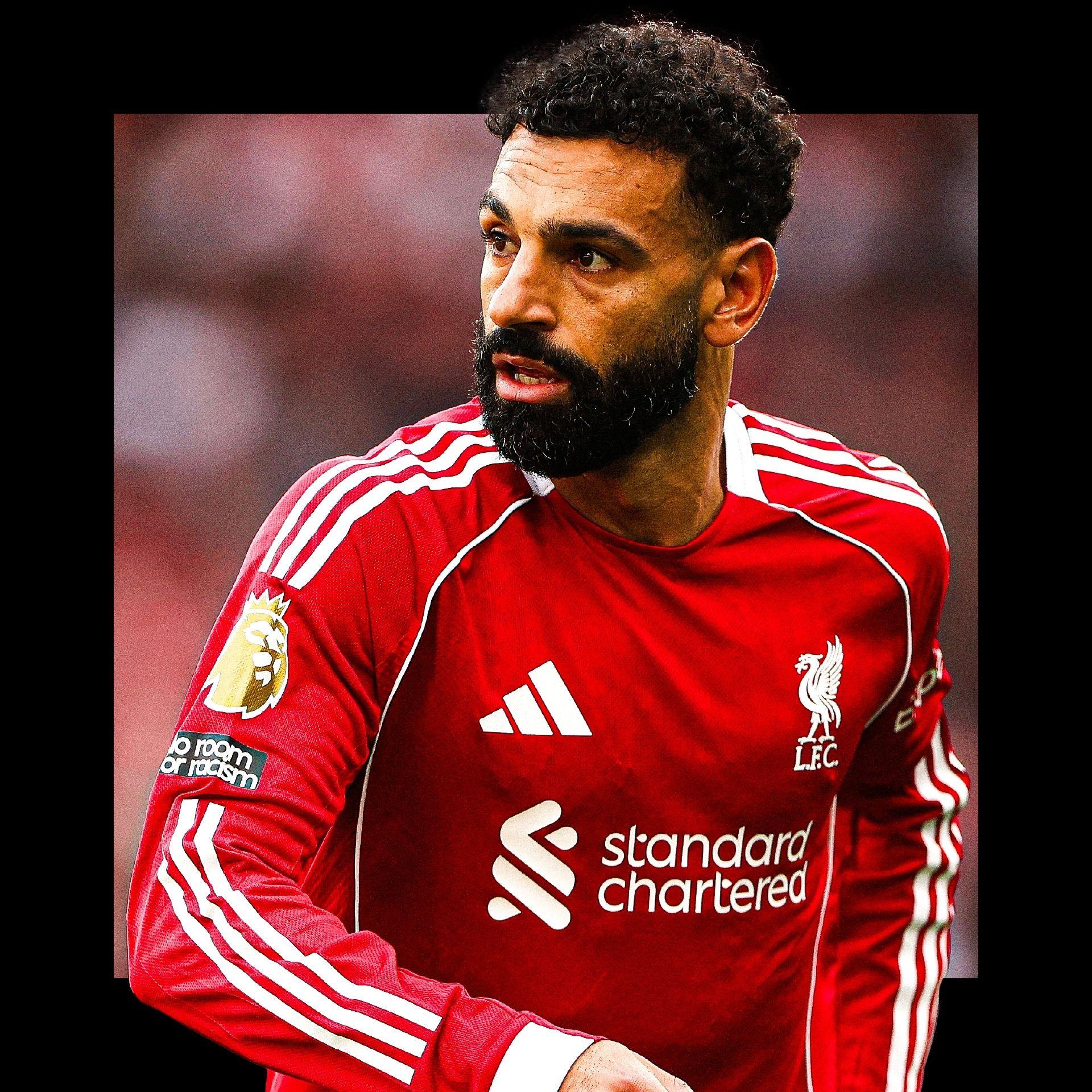
The man behind the headlines - Salah, by Klopp, Diaz and more
Published
Image source, BBC Sport
During the eight-and-a-half years he has spent at Liverpool, Mohamed Salah has been beloved by supporters, who rank the 'Egyptian King' among the club's greatest ever players.
But since his unexpected declaration he feels scapegoated by Liverpool for the club's poor run, having been picked as a substitute for three consecutive matches by manager Arne Slot, Salah's character has been called into question by fans, former players and beyond.
So who is Salah the man - away from the latest headlines?
Over the past few months, BBC Sport has spoken to some of those who know him best to find out more about the personality and resilience of the man behind the goals, the glory, and the gossip.
'You only have problems with Mo if he is not playing'
Salah's relentless intensity and refusal to accept lower standards from himself or those around him have underpinned Liverpool's success, and perhaps also explain why he has found criticism of his diminished role tough to handle.
"We are all massively influenced by our past - how we were raised, where we grew up," says Jurgen Klopp, who won every major trophy in English and European football while managing Salah at Anfield. "Mo knew early on [in his life] that he had to do more than others.
"He always developed. He never stops. That is his mindset.
"After each summer break he came back and had a new skill. It was like he had spent the whole time just practising one particular type of pass.
"We pushed each other, just to make sure that we would never stop. And we never did stop. That moment lifting the Premier League bonded us for life. He will be remembered as one of the greatest of all time.
"I wouldn't say he is easy to manage, but he is also not difficult to manage. You [only] have problems with Mo Salah if he is not playing or you take him off."
Salah has been criticised by some for not giving more frequent media interviews before his intervention in the mixed zone at Leeds' Elland Road, particularly after defeats and poor performances.
He has been accused of demonstrating a lack of leadership. But he has often delivered calls to arms to fans on social media, external in difficult moments, and those who have played alongside him describe Salah as a man who refuses to give up and is capable of inspiring others.
"He will always be trying to prove someone wrong," says former Liverpool team-mate Adam Lallana.
"He is not macho. I would often tell my children about how he behaves, how he doesn't get too high in good moments, doesn't beat himself up too much in low moments. He would always remain completely focused on the job in hand.
"I would look at him and it would make me feel calm because of how in control he would be all the time.
"Knowing Mo, he will always be fighting, being resilient, and trying to find ways to better himself."
Image source, Getty Images
Image caption,
"Never give up - did it ever fit to a situation better than this one?" says Klopp about the T-shirt an injured Salah wore during Liverpool's 4-0 Champions League win over Barcelona in 2019. Lallana says the shirt "inspired" the team. James Milner keeps one at home.
'He wants to be the best at everything'
Salah defended his record when speaking at Elland Road, and compared himself to England captain Harry Kane - delivering what he felt was a reminder to those inside and outside of Liverpool who have forgotten what he is capable of.
A level of arrogance is perhaps to be expected in all elite athletes, and some believe it has powered Salah to the heights he and Liverpool have reached.
"He is a really nice guy, considering the success he has had - being a superstar around the globe," says James Milner - Liverpool's vice-captain during most of Salah's time at the club.
"He plays as if he has a chip on his shoulder. He wants to be the best at everything - he even got a chess teacher to improve his game, and gave me a thumping a good few times.
"You need different types of leaders, and Mo is a big leader in that group, in terms of the standards he set every day. When you have young players come and sign, they see him and it's 'this is what is takes to be a top player, this is what it is to be a Liverpool player'."
That desire to always be the best became competition - fraught at times - with team-mate Sadio Mane, Liverpool's other flying forward who played on the opposite wing to Salah for five seasons.
"Were they best friends? No," Klopp says. "Could Mo have passed the ball a few times when he tried to finish it off himself? Yes. But on the pitch they supported each other, they fought for each other."
Image source, Getty Images
Image caption,
Throughout his time with Liverpool, Salah has demonstrated his competitiveness on and off the pitch
He was born in a rural village - Nagrig - about 100 miles from Cairo, where most of the roughly 15,000 inhabitants work as farmers and more than half live in poverty.
That such a region could produce one of the world's greatest athletes borders on impossible.
"What already set him apart as a kid was his discipline," says Maher Anwar Shtiyeh - mayor of Nagrig. "He remains deeply tied to his roots, despite fame and global recognition.
"He only finds real happiness in his village spending time with his family and friends. He is a role model for the youth of Egypt, the Arab youth, and the youth of the whole Islamic world. He has lifted the heads of all of us."
As a child, Salah would travel up to five hours by minibus from his village to the capital, where he played youth football for top-flight club Arab Contractors.
That helped instil a resilience that has guided him throughout his professional career, alongside support from loved ones.
"You have to be mentally so strong as a young kid following your dream like that," says former international team-mate Ahmed Elmohamady.
"His wife is from the same village. They grew up together, which is great because she knows everything about him and has supported him all the way.
"Now anyone in the village who asks him for support, he supports them. It shows what a great human being he is."
Since leaving Egypt, Salah has maintained close ties with Nagrig and financed an ambulance station, a charitable foundation and a religious institute in the area.
Salah has proudly made his faith visible throughout his career - he prays both when walking onto the pitch and after scoring goals.
"When I first met Mo, he was coming here quite regularly," says Shafique Rahman - Imam at Liverpool Mosque and Islamic Institute. "He would arrive a little bit late after finishing training. We had people waiting outside who wanted to see him, but nobody would bother him during prayer.
"The nature of the religion is that everybody is the same in the eyes of God. When people come to prayers they stand extremely close, touching each other's shoulders. Mo felt very safe here."
To play this video you need to enable JavaScript in your browser.
This video can not be played
Media caption,
'To get up and want to be the best every day – that's a different mindset'
When Salah first moved to England - signed by Jose Mourinho's Chelsea after impressing for Basel in Switzerland - he struggled to impose his personality in a squad full of established stars, and lacked self-belief.
"When I first met him, he was 21 - very innocent," says former team-mate Mark Schwarzer. "He was coming to London - a big city, different culture - and I think he was a bit timid.
"When he signed, he was coming into a changing room packed full of international stars - players that were used to winning, and a manager that was a legend of the club. For new players, it was sink or swim.
"The more he didn't score, the more frustrated he became. There was a moment in the changing room when Jose actually kicked a table, and was directing a lot of his frustration towards Mo, and he took him off. Mo was visibly upset.
"It's credit to him, his determination, his dedication, everything, to go on and deliver what he has done."
Salah rebuilt his career in Italy's Serie A - first in a loan spell with Fiorentina then at Roma, developing a reputation as an on-field leader and ultimate professional.
"He was just different," explains BBC pundit and former England and Manchester City defender Micah Richards, who played alongside Salah at Fiorentina. "You get those characters that just do everything by the book - he was that guy.
"He would always be in bed early, always be eating healthily. He clearly thought, 'I'm going to show everyone exactly what I can do. All those who have doubted me are going to eat their words.' That's exactly what he did."
For a young African man to set standards for European colleagues to follow was a challenge in itself.
"To succeed in Europe you have to understand the culture of where you are playing, where you are living, without losing any of your principles," says former Egypt striker Mido, who played for Tottenham, Roma and Ajax among others. "This is the balance that he has achieved.
"He has made young boys in Africa dream - 'If someone who comes from the background as I do made it to the top, why couldn't I make it?'"
Image source, Getty Images
Image caption,
Football fans in Nagrig were overjoyed when Salah, one of their own, scored the opening goal in the 2019 Champions League final
'Mo has left a profound mark on me'
Even before Salah's comments following the 3-3 draw with Leeds, doubts about his future were arising.
Inside Liverpool, concerns had already been raised about his performances, before transfer rumours were given further encouragement this week, with sources telling the BBC the Reds are open-minded about selling the 33-year-old.
Salah is not the only Liverpool hero whose time at the club - which he and Slot have said could be up in the January transfer window - has (potentially) ended with public denigration.
In different contexts, Javier Mascherano, Fernando Torres and Trent Alexander-Arnold have met similar fates, while shirts bearing the legendary Steven Gerrard's name were set alight in the street when he was on the verge of joining Chelsea in 2005.
If this is the end of Salah and Liverpool's love affair, the human impact he has had on those around him will not be forgotten any time soon.
"He was one of the first people to welcome me, and did so in such an incredible way," says Luis Diaz, who played alongside Salah in Liverpool's forward line for three-and-a-half years before joining Bayern Munich earlier this year.
"He came over to me and said: 'if you ever need my help, I'm here for you.' I remember him telling me on the pitch: 'Let's try this... let's make this move so that it works.' And then it would work in the match.
"To share the moment lifting the Premier League with him, to see how happy he was, how much he was enjoying it, was an incredible feeling.
"He is always wanting to be a better player, to be a better person, and he has left a profound mark on me."
The donor's sperm was used in clinics across Europe (stock image)
A sperm donor who unknowingly harboured a genetic mutation that dramatically raises the risk of cancer has fathered at least 197 children across Europe, a major investigation has revealed.
Some children have already died and only a minority who inherit the mutation will escape cancer in their lifetimes.
The sperm was not sold to UK clinics, but the BBC can confirm a "very small" number of British families, who have been informed, used the donor's sperm while having fertility treatment in Denmark.
Denmark's European Sperm Bank, which sold the sperm, said families affected had their "deepest sympathy" and admitted the sperm was used to make too many babies in some countries.
Getty Images
Up to 20% of the donor's sperm contains the dangerous mutation that increases the risk of cancer (stock image)
The investigation has been conducted by 14 public service broadcasters, including the BBC, as part of the European Broadcasting Union's Investigative Journalism Network.
The sperm came from an anonymous man who was paid to donate as a student, starting in 2005. His sperm was then used by women for around 17 years.
He is healthy and passed the donor screening checks. However, the DNA in some of his cells mutated before he was born.
It damaged the TP53 gene – which has the crucial role of preventing the body's cells turning cancerous.
Most of the donor's body does not contain the dangerous form of TP53, but up to 20% of his sperm do.
However, any children made from affected sperm will have the mutation in every cell of their body.
This is known as Li Fraumeni syndrome and comes with an up to 90% chance of developing cancer, particularly during childhood as well as breast cancer later in life.
"It is a dreadful diagnosis," Prof Clare Turnbull, a cancer geneticist at the Institute of Cancer Research in London, told the BBC. "It's a very challenging diagnosis to land on a family, there is a lifelong burden of living with that risk, it's clearly devastating."
MRI scans of the body and the brain are needed every year, as well as abdominal ultrasounds, to try to spot tumours. Women often choose to have their breasts removed to lower their risk of cancer.
The European Sperm Bank said the "donor himself and his family members are not ill" and such a mutation is "not detected preventatively by genetic screening". They said they "immediately blocked" the donor once the problem with his sperm was discovered.
Children have died
Doctors who were seeing children with cancer linked to sperm donation raised concerns at the European Society of Human Genetics this year.
They reported they had found 23 with the variant out of 67 children known at the time. Ten had already been diagnosed with cancer.
Through Freedom of Information requests and interviews with doctors and patients we can reveal substantially more children were born to the donor.
The figure is at least 197 children, but that may not be the final number as data has not been obtained from all countries.
It is also unknown how many of these children inherited the dangerous variant.
Dr Kasper has been helping some of the families affected
Dr Edwige Kasper, a cancer geneticist at Rouen University Hospital, in France, who presented the initial data, told the investigation: "We have many children that have already developed a cancer.
"We have some children that have developed already two different cancers and some of them have already died at a very early age."
Céline, not her real name, is a single-mother in France whose child was conceived with the donor's sperm 14 years ago and has the mutation.
She got a call from the fertility clinic she used in Belgium urging her to get her daughter screened.
She says she has "absolutely no hard feelings" towards the donor but says it was unacceptable she was given sperm that "wasn't clean, that wasn't safe, that carried a risk".
And she knows cancer will be looming over them for the rest of their lives.
"We don't know when, we don't know which one, and we don't know how many," she says.
"I understand that there's a high chance it's going to happen and when it does, we'll fight and if there are several, we'll fight several times."
The donor's sperm was used by 67 fertility clinics in 14 countries.
The sperm was not sold to UK clinics.
However, as a result of this investigation the authorities in Denmark notified the UK's Human Fertilisation and Embryology Authority (HFEA) on Tuesday that British women had travelled to the country to receive fertility treatment using the donor's sperm.
Those women have been informed.
Peter Thompson, the chief executive of the HFEA, said a "very small number" of women were affected and "they have been told about the donor by the Danish clinic at which they were treated".
We do not know if any British women had treatment in other countries where the donor's sperm was distributed.
Concerned parents are advised to contact the clinic they used and the fertility authority in that country.
The BBC is choosing not to release the donor's identification number because he donated in good faith and the known cases in the UK have been contacted.
There is no law on how many times a donor's sperm can be used worldwide. However, individual countries do set their own limits.
The European Sperm Bank accepted these limits had "unfortunately" been breached in some countries and it was "in dialogue with the authorities in Denmark and Belgium".
In Belgium, a single sperm donor is only supposed to be used by six families. Instead 38 different women produced 53 children to the donor.
The UK limit is 10 families per donor.
'You can't screen for everything'
Prof Allan Pacey, who used to run the Sheffield Sperm Bank and is now the deputy vice president of the Faculty of Biology Medicine and Health at the University of Manchester, said countries had become dependent on big international sperm banks and half the UK's sperm was now imported.
He told the BBC: "We have to import from big international sperm banks who are also selling it to other countries, because that's how they make their money, and that is where the problem begins, because there's no international law about how often you can use the sperm."
He said the case was "awful" for everybody involved, but it would be impossible to make sperm completely safe.
"You can't screen for everything, we only accept 1% or 2% of all men that apply to be a sperm donor in the current screening arrangement so if we make it even tighter, we wouldn't have any sperm donors – that's where the balance lies."
This case, alongside that of a man who was ordered to stop after fathering 550 children through sperm donation, has again raised questions over whether there should be tougher limits.
The European Society of Human Reproduction and Embryology has recently suggested a limit of 50 families per donor.
However, it said this would not reduce the risk of inheriting rare genetic diseases.
Rather, it would be better for the wellbeing of children who discover they are one of hundreds of half-siblings.
"More needs to be done to reduce the number of families that are born globally from the same donors," said Sarah Norcross, the director of the Progress Educational Trust, an independent charity for people affected by infertility and genetic conditions.
"We don't fully understand what the social and psychological implications will be of having these hundreds of half siblings. It can potentially be traumatic," she told BBC News.
The European Sperm Bank said: "It is important, especially in light of this case, to remember that thousands of women and couples do not have the opportunity to have a child without the help of donor sperm.
"It is generally safer to have a child with the help of donor sperm if the sperm donors are screened according to medical guidelines."
What if you are considering using a sperm donor?
Sarah Norcross said these cases were "vanishingly rare" when you consider the number of children born to a sperm donor.
All of the experts we spoke to said using a licensed clinic meant the sperm would be screened for more diseases than most fathers-to-be are.
Prof Pacey said he would ask "is this a UK donor or is this a donor from somewhere else?"
"If it's a donor from somewhere else I think it's legitimate to ask questions about has that donor been used before? Or how many times will this donor be used?"
If you or someone you know has been affected by the issues raised, details of help and support are available at BBC Action Line.
Ronny Chieng dissed new fitness plans from the Trump administration for travelers in American airports: “We can’t even walk to the gate. They had to invent floors that walk for us.”
International talks to revolutionise how the European Court of Human Rights handles migration cases will begin on Wednesday.
The British government is urging partners to modernise the way states tackle the continent-wide illegal migration crisis.
The talks are the most significant sign yet that international human rights law could be reinterpreted to make it easier for states to target people smuggling and set up 'returns hubs' to hold people with no right to be in Europe.
Writing ahead of the major meeting in Strasbourg, Sir Keir Starmer and Danish Prime Minister Mette Frederiksen said other nations should rethink human rights laws to make protecting borders easier.
Critics say the ECHR is getting in the way of removing more illegal migrants, while supporters say claims about the ECHR's role in migration are exaggerated.
The BBC understands that the aim is for member states to reach a political declaration by the spring which would set how the European Convention on Human Rights is applied in migration cases.
If such an agreement was achieved, it could be one of the most important reforms to how human rights law is applied in the 75-year history of the convention.
The meeting at the Council of Europe, the political body that agrees the human rights laws which are then applied by the court, comes after months of pressure over migration.
Nine members of the human rights body, led by Italy and Denmark, called earlier this year for reforms.
The UK did not sign that open letter - but it has been lobbying behind the scenes for talks on reforms.
Membership of the convention has become increasingly contentious in the UK in recent years.
Both the Conservatives and Reform UK have said they would leave it if they won the next election.
Kemi Badenoch has said leaving would not be a "silver bullet" but was a necessary step to "protect our borders, our veterans and our citizens".
Liberal Democrat leader Sir Ed Davey said he would oppose such a move saying the convention "upholds our freedom" and would "do nothing to stop the boats or fix our broken immigration system".
EPA
Danish Prime Minister Mette Frederiksen and British Prime Minister Keir Starmer meeting in London earlier this year
Writing in the Guardian newspaper ahead of the talks, Sir Keir and his Danish counterpart Mette Frederiksen said that the member states meeting on Wednesday must "go further in tackling" the "shared challenges" of "uncontrolled migration" that they said were undermining public confidence in governments.
"Europe has faced big tests before and we have overcome them by acting together. Now we must do so again," said the leaders.
"Otherwise, the forces that seek to divide us will grow stronger.
"So our message is this: as responsible, progressive governments we will deliver the change that people are crying out for.
"We will control our borders to protect our democracies – and make our nations stronger than ever in the years to come."
The UK delegation to the talks will be led by Deputy Prime Minister David Lammy.
He is expected to tell the meeting that the UK remains committed to the ECHR - but its interpretation must not stand in the way of combating people smuggling.
The BBC understands that if the meeting in Strasbourg is a success, officials will begin working with the member states on a political declaration to clarify how human rights laws should be applied to migration challenges - with a deadline of next May for the final wording.
The talks are expected to cover some of the most difficult issues including combating migrant smuggling and how to create human rights compliant 'returns hubs' - centres outside of Europe where migrants could be forcibly housed if they can not be returned to dangerous countries.
The talks are also expected to cover the complex rules of Article 8, the right to family life, and Article 3, the ban on inhumane treatment which features in many migration cases.
That olive branch to member states came after months of diplomatic talks paving the way for Wednesday's meeting.
"The European Convention on Human Rights provides the framework we need to address these issues effectively and responsibly," said Berset ahead of the meeting.
"Our task is not to weaken the Convention, but to keep it strong and relevant — to ensure that liberty and security, justice and responsibility, are held in balance."
The donor's sperm was used in clinics across Europe (stock image)
A sperm donor who unknowingly harboured a genetic mutation that dramatically raises the risk of cancer has fathered at least 197 children across Europe, a major investigation has revealed.
Some children have already died and only a minority who inherit the mutation will escape cancer in their lifetimes.
The sperm was not sold to UK clinics, but the BBC can confirm a "very small" number of British families, who have been informed, used the donor's sperm while having fertility treatment in Denmark.
Denmark's European Sperm Bank, which sold the sperm, said families affected had their "deepest sympathy" and admitted the sperm was used to make too many babies in some countries.
Getty Images
Up to 20% of the donor's sperm contains the dangerous mutation that increases the risk of cancer (stock image)
The investigation has been conducted by 14 public service broadcasters, including the BBC, as part of the European Broadcasting Union's Investigative Journalism Network.
The sperm came from an anonymous man who was paid to donate as a student, starting in 2005. His sperm was then used by women for around 17 years.
He is healthy and passed the donor screening checks. However, the DNA in some of his cells mutated before he was born.
It damaged the TP53 gene – which has the crucial role of preventing the body's cells turning cancerous.
Most of the donor's body does not contain the dangerous form of TP53, but up to 20% of his sperm do.
However, any children made from affected sperm will have the mutation in every cell of their body.
This is known as Li Fraumeni syndrome and comes with an up to 90% chance of developing cancer, particularly during childhood as well as breast cancer later in life.
"It is a dreadful diagnosis," Prof Clare Turnbull, a cancer geneticist at the Institute of Cancer Research in London, told the BBC. "It's a very challenging diagnosis to land on a family, there is a lifelong burden of living with that risk, it's clearly devastating."
MRI scans of the body and the brain are needed every year, as well as abdominal ultrasounds, to try to spot tumours. Women often choose to have their breasts removed to lower their risk of cancer.
The European Sperm Bank said the "donor himself and his family members are not ill" and such a mutation is "not detected preventatively by genetic screening". They said they "immediately blocked" the donor once the problem with his sperm was discovered.
Children have died
Doctors who were seeing children with cancer linked to sperm donation raised concerns at the European Society of Human Genetics this year.
They reported they had found 23 with the variant out of 67 children known at the time. Ten had already been diagnosed with cancer.
Through Freedom of Information requests and interviews with doctors and patients we can reveal substantially more children were born to the donor.
The figure is at least 197 children, but that may not be the final number as data has not been obtained from all countries.
It is also unknown how many of these children inherited the dangerous variant.
Dr Kasper has been helping some of the families affected
Dr Edwige Kasper, a cancer geneticist at Rouen University Hospital, in France, who presented the initial data, told the investigation: "We have many children that have already developed a cancer.
"We have some children that have developed already two different cancers and some of them have already died at a very early age."
Céline, not her real name, is a single-mother in France whose child was conceived with the donor's sperm 14 years ago and has the mutation.
She got a call from the fertility clinic she used in Belgium urging her to get her daughter screened.
She says she has "absolutely no hard feelings" towards the donor but says it was unacceptable she was given sperm that "wasn't clean, that wasn't safe, that carried a risk".
And she knows cancer will be looming over them for the rest of their lives.
"We don't know when, we don't know which one, and we don't know how many," she says.
"I understand that there's a high chance it's going to happen and when it does, we'll fight and if there are several, we'll fight several times."
The donor's sperm was used by 67 fertility clinics in 14 countries.
The sperm was not sold to UK clinics.
However, as a result of this investigation the authorities in Denmark notified the UK's Human Fertilisation and Embryology Authority (HFEA) on Tuesday that British women had travelled to the country to receive fertility treatment using the donor's sperm.
Those women have been informed.
Peter Thompson, the chief executive of the HFEA, said a "very small number" of women were affected and "they have been told about the donor by the Danish clinic at which they were treated".
We do not know if any British women had treatment in other countries where the donor's sperm was distributed.
Concerned parents are advised to contact the clinic they used and the fertility authority in that country.
The BBC is choosing not to release the donor's identification number because he donated in good faith and the known cases in the UK have been contacted.
There is no law on how many times a donor's sperm can be used worldwide. However, individual countries do set their own limits.
The European Sperm Bank accepted these limits had "unfortunately" been breached in some countries and it was "in dialogue with the authorities in Denmark and Belgium".
In Belgium, a single sperm donor is only supposed to be used by six families. Instead 38 different women produced 53 children to the donor.
The UK limit is 10 families per donor.
'You can't screen for everything'
Prof Allan Pacey, who used to run the Sheffield Sperm Bank and is now the deputy vice president of the Faculty of Biology Medicine and Health at the University of Manchester, said countries had become dependent on big international sperm banks and half the UK's sperm was now imported.
He told the BBC: "We have to import from big international sperm banks who are also selling it to other countries, because that's how they make their money, and that is where the problem begins, because there's no international law about how often you can use the sperm."
He said the case was "awful" for everybody involved, but it would be impossible to make sperm completely safe.
"You can't screen for everything, we only accept 1% or 2% of all men that apply to be a sperm donor in the current screening arrangement so if we make it even tighter, we wouldn't have any sperm donors – that's where the balance lies."
This case, alongside that of a man who was ordered to stop after fathering 550 children through sperm donation, has again raised questions over whether there should be tougher limits.
The European Society of Human Reproduction and Embryology has recently suggested a limit of 50 families per donor.
However, it said this would not reduce the risk of inheriting rare genetic diseases.
Rather, it would be better for the wellbeing of children who discover they are one of hundreds of half-siblings.
"More needs to be done to reduce the number of families that are born globally from the same donors," said Sarah Norcross, the director of the Progress Educational Trust, an independent charity for people affected by infertility and genetic conditions.
"We don't fully understand what the social and psychological implications will be of having these hundreds of half siblings. It can potentially be traumatic," she told BBC News.
The European Sperm Bank said: "It is important, especially in light of this case, to remember that thousands of women and couples do not have the opportunity to have a child without the help of donor sperm.
"It is generally safer to have a child with the help of donor sperm if the sperm donors are screened according to medical guidelines."
What if you are considering using a sperm donor?
Sarah Norcross said these cases were "vanishingly rare" when you consider the number of children born to a sperm donor.
All of the experts we spoke to said using a licensed clinic meant the sperm would be screened for more diseases than most fathers-to-be are.
Prof Pacey said he would ask "is this a UK donor or is this a donor from somewhere else?"
"If it's a donor from somewhere else I think it's legitimate to ask questions about has that donor been used before? Or how many times will this donor be used?"
If you or someone you know has been affected by the issues raised, details of help and support are available at BBC Action Line.
Gerry McCann says hounding by press took 'huge toll' on family
Madeleine McCann's father is calling for greater scrutiny of the UK's media, complaining that his family was subjected to "monstering" by sections of the press.
He said the media "repeatedly interfered with the investigation" into his daughter's disappearance in 2007 and believes this has hindered the search for her.
Gerry McCann told BBC Radio 4's Today programme that more than a year on from Labour coming into power, "press regulation is no longer a priority".
He wants a resumption of the cancelled second phase of the Lord Leveson Inquiry, which would have examined unlawful action by the media, plus journalists' relationships with politicians and police. It was scrapped by the Tories in 2018.
Madeleine's disappearance during a family holiday in Portugal has never been solved.
In a rare interview, Mr McCann said that for months after her disappearance his family had "journalists coming to the house, photographers literally ramming their cameras against our car window when we had two-year-old twins in the back who were terrified".
"We are lucky we survived. We had tremendous support - but I can promise you, there were times where I felt like I was drowning. And it was the media, primarily," he told the BBC.
"It was what was happening and the way things were being portrayed, where you were being suffocated and buried, and it felt like there wasn't a way out."
Mr McCann and his wife, Kate McCann, are among more than 30 people to have signed a letter being sent to Prime Minister Sir Keir Starmer and calling on him to reverse the decision not to hold the second phase of the Leveson Inquiry.
Madeleine McCann disappeared in 2007, then aged three
The letter, seen by the BBC, requests a meeting with the prime minister, saying: "We understand that you recently had time to meet News Corp chairman Lachlan Murdoch.
"We hope you will now meet with some of the British citizens whose lives have been upended by the illegal practices and abuses associated with his company."
Mr McCann told the Today programme: "It's quite obvious that press barons can meet the prime minister, but the people who have suffered at the hands of them can't."
News UK, the UK branch of News Corp, declined to comment.
The first part of the Leveson Inquiry was held from 2011 to 2012, in the wake of the phone-hacking scandal.
Its findings were published in 2012, and led to the creation of the industry-funded press regulator Ipso.
Mr McCann told the BBC that the inquiry's second phase had "almost certainly" not happened because he believes that politicians in the UK are fearful of the press.
PA Media
Lord Leveson's report in 2012 recommended a self-regulation body for the press
He said that in the run-up to last year's general election, Labour politicians had committed to implementing the recommendations made in the first part of the Leveson Inquiry, and that he was "extremely disappointed" that they hadn't done so.
"We're over a year into the government, and there haven't been any changes," he said.
"It's not acceptable to me now, more than a year on, that Leveson and press regulation is no longer a priority."
A DCMS spokesperson told the BBC it "recognises that for victims and their families, incidents of harassment and intrusion from the media cause significant distress".
"The Culture Secretary has met with individuals and families who have experienced this intrusion in the past and the government is committed to ensuring that these failings are never repeated," they said.
'We put our morals aside'
Mr McCann added that he and his wife had "supped with the Devil" by working with the Sun in 2011, in order to have the investigation into Madeleine's disappearance reviewed - illustrating the newspaper's influence.
"There was a front page letter published in The Sun, and [then-prime minister] David Cameron ordered the review," he said.
"That's the power they had. So we put our morals aside to work with them to achieve what we wanted."
Criticising media coverage of the investigation, he said: "Published material which should have been confidential, should be passed on to the police, witness statements, many other things that have gone out," he said.
"So if you were the perpetrator, you knew a lot more than you should have done - and as a victim, as a parent, it's absolutely dismaying."
'Making stories up'
Mr McCann gave a witness statement at the Leveson Inquiry on behalf of himself and his wife in November 2011.
In it, he described news outlets "making stories up" about them, as well as a "sustained, inaccurate and malicious series of headlines in a number of papers which gave the impression that we were in some way responsible for or involved in Madeleine's disappearance".
He also said around the time their daughter disappeared, the now-closed News of the World newspaper had published complete transcripts from Kate McCann's personal diary.
That diary had been seized by police in Portugal as part of their investigation into Madeleine's disappearance, and the couple were "unsure as to how the [News of the World] obtained a copy", the inquiry heard.
In his interview with the Today programme, Mr McCann said: "Madeleine's been missing for 18 years, and the bottom line is, we still don't know what's happened to her."
He added that there is "no evidence".
"I don't even mean 'convincing' evidence - there is no evidence to say she's dead," he said.
"Now we fully understand she may be dead, it may even be probable, but we don't know that."
A spokesperson for press regulator Ipso told the BBC that it can intervene directly in cases of press harassment.
"We encourage anyone with concerns about press behaviour to contact us for help," it said.
'Broken bus windows, threatened with a knife - all in a day’s work'
"Would I catch a bus? No, not out of choice now," says Andy Collett. "I feel much happier using my own car."
His sentiment isn't unusual among passengers. But Mr Collett is a bus driver.
"It can be very intimidating," he says. "I've been assaulted twice, spat at numerous times, and I've had incidents of broken windows – it's just part and parcel of the job, unfortunately."
He describes a "lawlessness" among some of the travelling public - mostly younger people - which he believes has got worse in 38 years of driving Birmingham's bus routes.
The BBC has spoken to passengers, transport staff and other bus drivers in the West Midlands about what they say is a growing national trend of antisocial behaviour on public transport.
Buses are the most commonly used form of public transport but they're also where passengers feel least safe, according to a recent Transport for the North survey.
BBC/Andy Alcroft
Andy Collett has driven Birmingham's bus routes for 38 years and says there's a "lawlessness" among some of the travelling public
One incident gives Mr Collett flashbacks.
"I was attacked by about 30 schoolkids," he says. "I had cuts, bruises. They actually bent the fingers back on my hand when I was trying to hold [the door] to stop them getting on the vehicle."
Mr Collett now mostly trains other drivers, warning them of the dangers. When he does get shifts behind the wheel, he tries to avoid routes known for antisocial behaviour.
Antisocial behaviour hotspot Chelmsley Wood in the West Midlands is a snapshot of this national problem. Its interchange has suffered vandalism and graffiti, while drivers have been threatened and buses damaged.
Security camera footage shows masked teenagers aiming barrages of fireworks at buses over Halloween and Bonfire Night.
Passenger Emma Banks, 52, says she has witnessed a similar incident.
"They [were] hitting the bus. I've got learning difficulties and sometimes it does scare you," she tells me on a cold evening, waiting in the interchange.
Ms Banks says she regularly sees overcrowding and people smoking on buses.
She can't drive so relies on public transport but, tonight, Ms Banks doesn't feel confident enough to catch the bus.
"I'll be getting a taxi because I know that I'll get home safely."
A Public Space Protection Order has been imposed at Chelmsley Wood to stop gatherings of young people and to require the removal of masks and hoods. But 17-year-old Elle Furlong says she's still afraid.
"They smash windows, purposely pull the fire alarm, light their lighters on the chairs. It's just horrendous."
The probability of becoming a victim of crime on public transport is very low - Transport for West Midlands estimates one crime for every 50,000 bus journeys. But perceptions can outweigh statistics and drive people like Ms Furlong away.
"If I can walk it, I'll walk it. If it's far enough, I'll get an Uber. If it's really far, I'll get my dad to drop me off. I avoid buses at all costs," Ms Furlong says.
BBC/Andy Alcroft
Chelmsley Wood bus station is a hotspot for antisocial behaviour
The drivers have no choice but to carry on with their jobs, although many are afraid to speak openly about the risks. Even trade union officials have refused to go on the record.
"You come to work not knowing what you're going to face," says a driver who asks to remain anonymous. "It can cause a lot of anxiety and stress. I go home sometimes and just want to break down and cry because it's a horrible job."
They describe the daily grind of disrespectful teenagers, aggressive drug addicts, even passengers defecating on the bus. Then there's the racial abuse.
"You have to hold back. I've known a few drivers who have kicked off, but then they've lost their job because of it."
I saw for myself what drivers and passengers are facing when I sat on the top deck of the 94 from Chelmsley Wood, shortly after the school bell. A group of kids soon boarded without paying.
"I've been driving buses for 33 years and it's changed," driver Neil Evans says through the screen protecting his cab. "Society has changed. No one cares anymore. They just walk onto the bus and do what they want, when they want, how they want, and nothing's done about it."
Today, Mr Evans has backup. Esha Sheemar is one of 13 Transport Safety Officers (TSOs) patrolling the West Midlands. She warns the kids if they don't behave they'll be thrown off the bus.
TSO roles were introduced in 2019. They are not police officers, but they have limited powers to tackle issues on public transport.
BBC/Andy Alcroft
Esha Sheemar is one of 13 Transport Safety Officers (TSOs) patrolling the West Midlands
Across the bus station, Ms Sheemar's colleague Lee Clarke has spotted a face from their most-wanted list: a 13-year-old accused of vandalising a bus shelter. The boy's details are taken but he is allowed to get on the bus, as Mr Clarke's limited powers mean he'll need to pass the case to police officers.
TSOs are funded by the Combined Authority and belong to the West Midlands Safer Travel Partnership, which includes West Midlands Police, British Transport Police, as well as bus and train companies.
At its control room in the city centre, hundreds of screens flicker with security camera images from stations and interchanges across the region's roads and rail lines; they can even get live pictures from most of the buses.
Kerry Blakeman is head of security for the West Midlands Safer Travel Partnership and says they have access to more than 5,000 fixed cameras. He says his staff capture about 30 incidents each day, although he is keen to stress millions of journeys are safe and uneventful.
"We are trying to do our best to keep the travelling public safe. Behind each camera is an operator looking out for your safety whilst you travel around the bus, train and tram network."
Last summer, a teenager was filmed threatening people at Chelmsley Wood bus station with a machete. He was identified and sentenced to six months in juvenile custody.
The footage of the firework attacks has been handed over to West Midlands Police - and efforts to trace the hooded youths are ongoing.
BBC/Andy Alcroft
'Behind each camera is an operator looking out for your safety whilst you travel,' says Kerry Blakeman, head of security at West Midlands Safer Travel Partnership
Bus driver Bryan Cook recently called police after being threatened with a weapon while working. It was one of four times in the past three months that he's phoned for assistance while driving the 72 bus to Chelmsley Wood.
On this chilly evening, he takes his chance to tell the TSOs how their timetable fails to match that of the vandals. "Where are you on the weekends? Where are you on school holidays?" he asks.
TSO Mr Clarke starts to reply, but the driver has more to say.
"We're the ones getting threatened, we're the ones getting stuff thrown at us, broken windows. Where are you lot?"
Mr Clarke emphasises the importance of reporting incidents so patrols can be targeted in problem areas.
"We keep telling everyone. No one does anything," says Mr Cook, in exasperation.
It outlines the challenge for a small team covering such a large area. The number of TSOs doubled a year ago and is set to rise to 25 across the West Midlands. Some areas have similar teams - and others have piloted them - but many places are uncovered, relying on the police. Bus routes can be especially vulnerable.
The anonymous bus driver questions the effectiveness of Transport Safety Officers and urges more support from their employer.
"They [management] know what goes on. Do they care? I don't know. Doesn't feel like it, to be fair."
National Express West Midlands told the BBC that all reports of antisocial behaviour or crime are "fully investigated to ensure perpetrators are held accountable, to identify any learnings, and to provide support for those affected".
It added that antisocial behaviour "will always be a subject we need to keep challenging and working on".
The UK government's recent Bus Services Act allows local authorities to apply for extra powers to deal with issues such as smoking, vaping and fare evasion, the sort of problems TSOs can tackle already on trains.
The legislation also requires bus drivers to receive training in dealing with antisocial behaviour and spotting the signs of harassment and abuse faced by women and girls.
The Department for Transport told the BBC that abuse of passengers and staff is "unacceptable" and pointed to the new powers the Bus Services Act will give to help tackle antisocial behaviour.
Transport for West Midlands promises greater use of drone cameras and AI technology, capable of recognising known troublemakers and even identifying concealed weapons. It recently launched a campaign prioritising the safety of women and girls.
Mr Blakeman insists his team is having a positive impact but says he recognises passenger confidence is fragile.
"I respect why some members of the public wouldn't feel comfortable travelling, but I want them to know that we're actually doing everything we can behind the scenes."
Back on the 72 bus, Mr Clarke is trying to restore Mr Cook's faith. He promises someone will make contact to explain their role and discusses the most efficient way to flag issues.
The West Midlands Safer Travel Partnership is regarded as a model of good practice. And yet, this frosty exchange reveals a clash of perspectives – one that speaks of "intelligence-led tasking" and "visible reassurance"; the other of lone working under the stark reality of sustained abuse and the risk of attack.
Mr Cook sums it up like this: "Two weeks ago I had two windows broken on my bus, I got threatened with a knife - and that's all in a day's work".

 Login
Login