A high-profile Hong Kong pro-democracy activist living in the UK has been the target of a campaign of harassment involving letters containing fake, sexually explicit images of her sent from China to her neighbours.
Carmen Lau, 30, who fled Hong Kong four years ago, told the BBC she was "shocked" as the letters, delivered to addresses in Maidenhead in Kent, included her name and images made to look like she was either naked or in underwear and offering sexual services.
"The letters had a couple of very unpleasant images, AI-generated or photo-shopped, where they put my face on those images, portraying me as a sex-worker," she said.
The existence of the letters was first reported by the Guardian.
The first she knew about the letters was when the local MP, Liberal Democrat Joshua Reynolds, called her to say he had been alerted by some of his constituents who had received them.
Ms Lau had sought sanctuary in the UK in 2021 after opposition politicians and pro-democracy activists in Hong Kong began being arrested following the imposition of a controversial new National Security Law.
Last year up to a dozen of the same neighbours in Kent had received letters sent from Hong Kong, and purporting to come from the police, offering a bounty payment of £95,000 to anyone who would take Ms Lau and hand her over to the Chinese embassy in London.
The new letters were sent last month from the Chinese territory of Macau, close to Hong Kong.
"I was quite shocked because last time it wasn't explicit and so unpleasant to see," Ms Lau told the BBC.
"When I was in Hong Kong pro-Beijing agents were trained to use gender-based harassment targeting pro-democracy activists," she said, "but AI technology has enhanced this sort of intimidation, it is beyond just transnational repression, as a woman it is very worrying".
Reynolds told the BBC "the government need to be very clear that this is not acceptable, we cannot have these letters sent to UK residents".
"We need to find out who sent these letters," he said, adding "officials in Beijing need to be held accountable".
Reynolds said he had raised the issue with both the Home Office and the Foreign Office.
A government spokesperson said "the safety and security of Hong Kongers in the United Kingdom is of the utmost importance".
Ms Lau said police had told her they would be investigating.
The government has previously insisted that any attempt by a foreign power to intimidate, harass, or harm individuals or communities would not be tolerated.
It has said the UK continues to raise concerns about transnational repression directly with the Chinese and Hong Kong authorities, and has publicly condemned the issuing of arrest warrants and bounties by the Hong Kong Police Force.
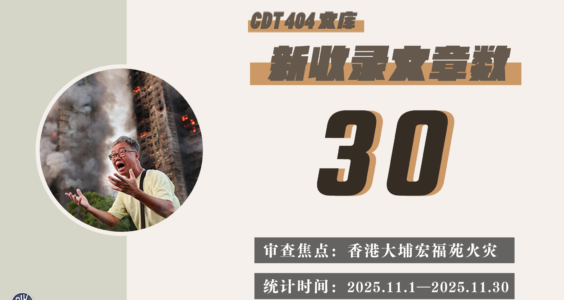
【404文库】是由中国数字时代运营的一个“因审查而被屏蔽或删除(404 not found)文章”的存档项目。在相当长的一段时间内,中国数字时代通过在标题前加注【404文库】的方式,对大量需要抢救性保存的文章进行了归档、发布。自2021年起,为便于列表化呈现与系统化检索,中国数字时代设立了【404文库】专页。(在专页上,您还可以查看文章的原始链接、发布平台、话题分类、删除时间等信息。)
A prominent shogi player says the league's rule forces players to choose between their children and careers
A Japanese chess association has apologised to a prominent 'shogi' player who criticised a rule that bars pregnant players from title matches around their expected due dates.
Under the current rules of shogi - a game similar to chess - such players are replaced, meaning they forfeit all competitions and potential titles during that time.
Kana Fukuma, one of Japan's most decorated shogi players, says this forces players to choose between having a child and developing their careers, and "significantly restricts reproductive rights".
"I hope the body will consider allowing female players to take time off before their due dates without suffering demotion," she told a news conference on Wednesday.
Current rules stipulate that a pregnant women cannot compete within a 14-week period - from six weeks before they give birth, to eight weeks after.
"I hesitated to have a child while pursuing my career in shogi, which is everything to me," Ms Fukuma said, according to Japan's Kyodo News.
The 33-year-old has been playing the popular Japanese board game professionally since 2003. Before giving birth to her first child in December 2024, however, Ms Fukuma was forced to withdraw from several tournaments due to health issues related to her pregnancy.
In a written request submitted on Tuesday, Ms Fukuma urged the association to adjust match dates or venues to accommodate pregnant players, allow competition during pregnancy if the woman's condition allows for it, and ensure women are not stripped of titles during their maternity leave, Kyodo News reported.
The association said it could revise the rules after "discussions with experts while considering the safety of the mother and the fairness of title matches".
This exchange between Ms Fukuma and the shogi association drew mixed responses on social media, with some calling the current rules "misogynistic" and others drawing comparisons to professional sports tournaments.
On Reddit, one user pointed out that tennis players are sometimes given "protected rankings", which allow those returning from long injuries or maternity leave to use their previous rankings to enter major tournaments, including the Grand Slam.
Mexican lawmakers have approved a package of new tariffs, impacting hundreds of products, many of which come from China.
The measures, which President Claudia Sheinbaum has said are needed to boost domestic production, were passed by the Mexican Senate on Wednesday.
The levies are set to take effect on 1 January 2026 and will apply to goods like metals, cars, clothing and appliances. Dozens of countries that do not have a free trade agreement with Mexico will be affected, including Thailand, India and Indonesia.
The move comes as Mexico is in negotiations with the US over steep import taxes that President Donald Trump has threatened to impose on the country.
The BBC has contacted the embassies in Mexico of China, Thailand, India and Indonesia for comment.
The measures will impose tariffs of up to 50% on more than 1,400 products.
Sheinbaum's government is in talks with the Trump administration as it tries to reduce tariffs that the White House has threatened to impose on the country. They include potential 50% duties on Mexican steel and aluminium.
Trump has also threatened to impose extra tariffs on Mexico for various reasons, including a 25% levy as part of Washington's measures to pressure countries to do more to stop the flow of the synthetic opioid fentanyl into America.
On Monday, Trump threatened to impose a new 5% tariff on Mexico, accusing it of violating an agreement that gives American farmers access to water.
"It is very unfair to our US Farmers who deserve this much needed water," he posted on social media.
Trump was referring to a more than 80-year-old treaty that grants the US water from Rio Grande tributaries.
For decades the US has accused Mexico of not meeting the terms of the agreement.
The US is Mexico's largest trading partner.
Beijing previously warned Mexico to "think carefully" before imposing tariffs.
A display of cars by the Chinese automaker BYD in the Mexican city of Ciudad Juarez. China is the second largest exporter to Mexico after the United States.
Juan Carlos I of Spain, in February. He has been mostly left out of recent celebrations of the 50th anniversary of Spain’s transition to democracy, in which he was instrumental.
Tens of thousands of people there and in nearby British Columbia were poised to evacuate as heavy rain caused flooding and sent rivers rising to dangerous levels.
Excessive and severe nausea and vomiting is known as hyperemesis gravidarum and is thought to affect 1-3% of pregnancies
About 80% of pregnant women experience morning sickness, according to the NHS, with some expectant mums having such extreme nausea that they struggle with daily life. After reporter Beth Parsons was diagnosed with hyperemesis gravidarum (HG) during her pregnancy, she has been been speaking to other women affected by the condition.
Drawing the curtains to block out a warm summer's afternoon, I did everything I could to avoid being sick for the 10th time that day and wondered when I'd feel myself again.
It's isolating, lonely and very hard to describe to someone, especially when the "normal" version of morning sickness is seemingly considered a right of pregnancy passage; something that ginger, an early night and just getting past the first trimester will fix.
I've always wanted to be a mum, and my husband and I were over the moon about the positive test, but it wasn't quite the welcome to pregnancy we had in mind.
A hyperemesis gravidarum diagnosis followed.
While books and social media posts were describing the nutritious diet that would best help my growing baby, a lot of the time I couldn't even keep water down.
I would sip ice-cold cordial and suck ice lollies to keep dehydration at bay the best I could. Sometimes I would nibble on toast or dry cereal then try to go to sleep in the hope it would stay down.
Beth Parsons/BBC
Beth Parsons experienced serious HG symptoms from week five to week 17 of her pregnancy
It was all happening at a time when internally I felt so lucky to be starting a family, and was desperate not to come across as ungrateful.
After seeing my GP, I eventually found a medication which helped and it was like a light had finally been turned back on.
For the first time in months, I was able to leave the house, return to work and started to eat and drink with more normality. I'm now in week 26 and I haven't been seriously sick since week 17 of my pregnancy.
After opening up about the issue online and in conversation, other women shared their experiences with me.
I noticed how different they were, especially when it came to what support was available and what treatments they were able to access.
In particular, the drug that helped me, commonly known as Xonvea, was often held back from women who desperately wanted to try it.
Three women shared their stories with me.
Sarah Goddard says she was being ill up to 20 times a day
Sarah Goddard, from North Yorkshire, became pregnant for the second time in August 2024.
Already mum to a four-year-old, she had been fairly sick in her first pregnancy, but HG was never mentioned. The second time round, she was seriously unwell.
"By seven weeks, I wasn't able to keep anything in me at all… I was being sick 15 or 20 times a day. I was retching to the point blood was coming out. There was nothing left in me to give.
"At times I thought I was dying, it definitely felt like that, but I thought maybe I was being dramatic, until my mum said to me, 'I think I'm watching you die'."
The 32-year-old went to hospital three times for anti-sickness injections and intravenous rehydration, but would deteriorate again as soon as she got home. She was offered some medication, but it did not work well enough for her.
"I didn't know how I was going to get through this and ultimately at 10 weeks we made the impossible decision to have a termination."
Sarah said she was "still devastated" about the decision she felt that she had to make when she chose to end her pregnancy due to the severity of HG.
"Giving my daughter a sibling was exactly what I was doing it for, and I tried and then took it away.
"I just didn't see how we were going to make it through because nobody was fighting for us. It's something I will feel guilty about until the end of time."
The NHS says about 80% of women experience morning sickness
She has now received grief counselling and mental health support through the charity Pregnancy Sickness Support.
Sarah also sought advice from a medical consultant who told her about HG and enabled access to medication so she felt able to try a third pregnancy.
She is now due to have a baby in 2026 and has thanked the consultant, saying "without him, I wouldn't be sat here, 31 weeks pregnant, with my little girl's brother".
Millie Fitzsimons was off work for eight months and lost 3st in weight
Millie Fitzsimons, 28, had HG symptoms throughout her pregnancy and experienced how different treatment options could be from one location to another.
In total she thinks she was admitted to hospital about 16 times.
She was living in Boston, Lincolnshire, when she discovered she was pregnant.
"It does just feel like you're dying… it's a feeling you can't explain. I've lost 3st in weight, was being sick 40 times a day. You're just exhausted all the time, and just sleeping on and off all day. Horrific."
Millie Fitzsimons
Millie says she ended up in hospital about 16 times
Millie said support was "really hard to get" and often medical staff would roll their eyes and not listen to her.
She tried lots of medication, including steroids which are not advised as a long-term option.
At about 16 weeks, she got help from Pregnancy Sickness Support who advised her to ask for Xonvea medication.
She said the medical staff had "never heard of it", and it took four months from asking to be able to access the medication. She could only receive one week's worth at a time.
"They just said it was a postcode lottery and it was really expensive."
When she moved to York at the end of her pregnancy in April, she was able to access Xonvea.
Her baby was born in May. She was off work for eight months while she was pregnant and does not think she will ever have another child.
The charity is campaigning for Xonvea to be included on all drug formulary to avoid issues with access.
Ella Marcham says the condition gives a "life-ruining level of sickness"
Ella Marcham from Yeadon in Leeds experienced the first symptoms of HG before she even knew she was pregnant.
Already mum to two toddlers, dealing with the debilitating condition while also taking care of her family was not easy.
"For me, the worst thing was the nausea. It never stopped," the 28-year-old said.
"It was just 24/7 - all the time. It made it really difficult for me to eat and drink properly, to parent my children, to just live my life normally… it's very difficult to describe."
Ella Marcham
Ella struggled to care for her two toddlers while pregnant with her twins
She asked her GP and a hospital in Leeds for Xonvea, but was told they could not prescribe it. Other medication had limited success.
"The midwives tried their hardest, but we were just met with loads of barriers from doctors and it was just 'no, we can't prescribe it in this area'.
"I was at such a low point I didn't push back much because I just didn't have it in me at that point... I just sort of went a bit inside myself because I just didn't have the energy to carry on asking and asking and asking for something."
Ella briefly researched whether she could access the medication privately, but when online prices online started at £86.95 for less than one week's supply, she gave up.
She gave birth to twins in July and immediately stopped feeling sick.
Ella and husband Joe said dealing with newborn twins and two other children was significantly easier than dealing with hyperemesis gravidarum.
What is hyperemesis gravidarum?
HG patients suffer severe nausea and vomiting, which often means being sick multiple times a day, being unable to keep food or drink down, and no longer being able to continue with daily life.
The condition is thought to affect 1-3% of pregnancies, and often results in dehydration and weight loss.
Many sufferers will require medication and intravenous fluids.
If you have had HG before, it's likely you will have it in another pregnancy.
There is a variety of medications available to people experiencing HG.
Pregnancy Sickness Support has broken them down into first, second and third-line medication categories.
It suggests one of the first medications people should be offered is Xonvea, scientifically known as doxylamine succinate and pyridoxine hydrochloride.
It has been licensed in the UK since 2018, and is the only anti-sickness drug licensed for use in pregnancy in the UK.
Beth Parsons/BBC
Xonvea is the only anti-sickness drug licensed for use in pregnancy in the UK
Other first-line medications include cyclizine, promethazine and prochlorperazine.
Second-line medications include metoclopramide, ondansetron and domperidone - some of which can have negative side effects for both mother and baby.
Third-line medications are usually steroids which are often successful for treating HG in people when other measures have failed.
There is a wide variety of possible side effects for both mother and baby, but the charity says it's important to remember that if HG is not treated it may cause more harm to the baby than possible effects of a medicine, including steroids.
Intravenous (IV) fluids can be used during HG to correct dehydration. Medication can also be given through an IV port if medication is unable to be kept down.
'We're extremely cautious'
Doncaster GP Dr Dean Eggitt said he sees a woman suffering from hyperemesis gravidarum "every couple of weeks".
"When women present with hyperemesis, usually we undertake an assessment of hydration. Are they drinking? Are they weeing? Are they able to go about their daily functions?
"It may be simple things like looking at what is being eaten, what is being drunk, possibly ginger biscuits, simple stuff like that. If none of that's appropriate or it doesn't really work, then we move on to medicines."
He says the first line medicine is cyclizine and Xonvea tends to be a second or third line medication.
"It has a licence to be used in pregnancy, which means that there's been research undertaken to know that it's safe to use but in medicine we doctors are slightly more cautious than that," he says.
"In a pregnant woman and an unborn child we're extremely cautious about using a medicine that's new to the market.
"So in some cases what you will find is that the local medicines management team has sat down and said, well, first of all, is this cost effective?
"Second of all, do our GPs know how to use it? And third of all, do we think that our colleagues are going to be confident to prescribe this new drug or should we let it bed in a bit first just to prove that it's safe?"
"So in theory, yes, it's safe. In reality, we can sometimes be a bit more cautious, but that cautiousness is a postcode lottery."
The Department of Health & Social Care has been contacted for a comment.
If you have been affected by any of the issues raised in this story, information and support can be found at the BBC's Action Line.
The legislation codifies President Trump’s agenda but includes a few measures challenging his policies and insisting on more consultation with Congress.
María Corina Machado, who spent over a year in hiding in Venezuela, greeted supporters in Oslo, hours after her daughter accepted the Nobel Peace Prize in her name.
Venezuelan opposition leader María Corina Machado appeared in Oslo, Norway after winning the Nobel Peace Prize, waving from the balcony of the Grand Hotel after months in hiding.
Machado made the covert journey despite a travel ban, and has mostly laid low since Venezuela's disputed presidential election in 2024. She last appeared in public in January.
From a balcony on Wednesday with a crowd cheering below, Machado placed her hand on her heart and sang with her supporters, before walking outside to greet them in person.
The Nobel Institute awarded Machado the Peace Prize this year for "her struggle to achieve a just and peaceful transition from dictatorship to democracy" in Venezuela.
Afterwards, Machado went the outside to greet her supporters, who waited behind metal barricades on the street.
"Maria!" "Maria, here!" they shouted in Spanish, as many held their phones aloft to record the historic moment.
At one point, Machado climbed over the barriers to join them.
Reuters
Maria Corina Machado jumps over barricades outside the Grand Hotel in Oslo to greet cheering supporters.
Her appearance was preceded by speculation that she would travel to Norway for the award ceremony.
The Nobel committee shared audio of Machado declaring, "I will be in Oslo, I am on my way."
After her Peace Prize win, Machado made a point to praise US President Donald Trump, who is open about his own ambitions for the Peace Prize and is locked in ongoing military tension with Venezuela.
Watch: Video shows US military seizing oil tanker off Venezuela coast
US forces have seized an oil tanker off the coast of Venezuela, President Donald Trump said, marking a sharp escalation in Washington's pressure campaign against Nicolás Maduro's government.
"We have just seized a tanker on the coast of Venezuela - a large tanker, very large, the largest one ever seized actually," Trump told reporters at the White House.
Releasing a video of the seizure, Attorney General Pam Bondi described the vessel as a "crude oil tanker used to transport sanctioned oil from Venezuela and Iran".
Caracas swiftly denounced the action, calling it an act of "international piracy". Earlier, President Maduro declared that Venezuela would never become an "oil colony".
The Trump administration accuses Venezuela of funnelling narcotics into the US and has intensified its efforts to pressure President Maduro in recent months.
Venezuela - home to some of the world's largest proven oil reserves - has, in turn, accused Washington of seeking to take its oil.
Oil prices inched higher on Wednesday as news of the seizure stoked short-term supply concerns. Analysts warn the move could threaten shippers and further disrupt Venezuela's oil exports.
US Attorney General Pam Bondi, who leads the US Department of Justice, said the Federal Bureau of Investigation, Department of Defense, Department of Homeland Security, and the US Coast Guard co-ordinated the seizure.
"For multiple years, the oil tanker has been sanctioned by the United States due to its involvement in an illicit oil shipping network supporting foreign terrorist organizations," the nation's top prosecutor wrote on X.
Footage shared by Bondi showed a military helicopter hovering over a large ship, and troops descending on to the deck using ropes. Uniformed men were seen in the clip moving about the ship with guns drawn.
A senior military official told CBS News, the BBC's US partner, that the mission to seize the tanker was launched from a Department of War vessel.
It involved two helicopters, 10 Coast Guard members and 10 Marines, as well as special forces.
Defence Secretary Pete Hegseth was aware of the operation, and the Trump administration was considering more actions like this, the source said.
When asked by reporters what the US would do with the oil on the tanker, Trump said: "We keep it, I guess... I assume we're going to keep the oil."
Maritime risk company Vanguard Tech has identified the oil tanker as Skipper.
"The vessel is reported to be part of the dark fleet, and was sanctioned by the United States for carrying Venezuelan oil exports," it says.
BBC Verify has located this tanker on MarineTraffic, which shows it was sailing under the flag of Guyana when its position was last updated two days ago.
Watch: Venezuela’s Maduro sings "Don't worry, be happy" as he calls for peace with the US
The Venezuelan government issued a statement denouncing the seizure as a "grave international crime".
"Venezuela will not allow any foreign power to attempt to deprive the Venezuelan people of what belongs to them by historical and constitutional right," it said.
It said the prolonged aggression against Venezuela has always been about "our natural resources, our oil, our energy, the resources that belong exclusively to the Venezuelan people".
Speaking at a rally earlier on Wednesday, Maduro had a message for Americans opposed to war with Venezuela. It came in the form of a 1988 hit song.
"To American citizens who are against the war, I respond with a very famous song: Don't worry, be happy," Maduro said in Spanish before singing along to the lyrics of the 1988 hit.
"Not war, be happy. Not, not crazy war, not, be happy."
It's unclear if Maduro knew about the seizure of the tanker before this rally.
After American forces boarded the vessel, Venezuelan Interior Minister Diosdado Cabello called the US "murderers, thieves, pirates".
He referred to Pirates of the Caribbean, but said that while that film's lead character Jack Sparrow was a "hero", he believed "these guys are high seas criminals, buccaneers".
Cabello said this was how the US had "started wars all over the world".
In recent days, the US has ramped up its military presence in the Caribbean Sea, which borders Venezuela to the north.
The build-up involves thousands of troops and the world's largest warship, the aircraft carrier USS Gerald Ford, being positioned within striking distance of Venezuela, BBC Verify reported.
The move has sparked speculation about the potential for some kind of military action.
Since September, the US has conducted at least 22 strikes on boats in the region that the Trump administration says are smuggling drugs. At least 80 people have died in these attacks.
Ione Wells contributed to this report.
Watch: Trump says US has seized "large tanker" off Venezuela coast
Indigenous prisoners account for more than a third of Australia's total population
The number of Indigenous people who have died in custody in Australia has hit the highest level since records began in 1980.
New data from the Australian Institute of Criminology showed 33 of the 113 people who died in custody in the 12 months to June this year were Indigenous, up from 24 compared to the previous corresponding period.
Aboriginal and Torres Strait Islander people are disproportionately represented in the criminal justice system, making up more than one-third of all prisoners, despite being less than four per cent of the country's population.
The figures come more than three decades after a landmark inquiry into Indigenous deaths in custody which made hundreds of recommendations.
Of the 33 Indigenous deaths in custody between last July and this June, 26 died while in prison custody, an increase from 18 in the previous 12-month period.
One died in youth detention and all except one were male.
The remaining six Indigenous deaths in custody happened in police custody, where someone has died while police were detaining or attempting to detain them.
The main cause of Indigenous deaths was categorised as "self-inflicted" followed by "natural causes," the report found. Hanging was found to be the cause in eight of the deaths.
The Australian state of New South Wales recorded the highest number of Indigenous deaths in prison custody with nine, followed by Western Australia with six. Queensland, South Australia and the Australian Capital Territory each had three deaths.
The NSW state coroner recently described the rising number of Indigenous deaths in custody in her state as a "profoundly distressing milestone".
In October, Magistrate Teresa O'Sullivan said the upward trend was not "mere statistics" and the deaths needed "independent and careful scrutiny, respect and accountability".
The average age of Indigenous deaths in custody was 45 years, and 11 of those who died were awaiting a sentence.
University of Melbourne associate professor of criminal law Amanda Porter told the Australian Broadcasting Corporation (ABC) that the figures reflected a "national crisis" that required "leadership and political action".
Ms Porter, who has attended several coronial inquests with families of those that have died, said little had changed since the royal commission in 1991 that aimed to address the crisis.
"It's maddening to see the number of inquests that I attend, the number of funerals that families have to attend, and the fact that we are 30 years after the royal commission, and the situation is getting increasingly worse," she told the ABC.
Since the royal commission, 600 Indigenous people have died in custody which includes six in youth detention, the report said.
President Donald Trump has launched a scheme offering fast-tracked US visas to wealthy foreigners who can pay at least $1m (£750,000).
The card will give buyers a "direct path to Citizenship for all qualified and vetted people. SO EXCITING! Our Great American Companies can finally keep their invaluable Talent," Trump said on social media on Wednesday.
The Trump Gold Card, which was first announced earlier this year, is a US visa awarded to those who can demonstrate they will provide a "substantial benefit" to the country, according to the scheme's official website.
It comes as Washington intensifies its immigration crackdown, including raising work visa fees and deporting undocumented migrants.
The Gold Card scheme promises US residency in "record time" and will require a $1m fee which is "evidence that the individual will substantially benefit the United States", the programme's website said.
Businesses sponsoring employees are required to pay $2m, along with additional fees. A "platinum" version of the card that offers special tax breaks will also be available soon for $5m, the website said.
Extra fees to the government may be charged depending on each applicant's circumstances, the site said. Individuals are also required to pay a non-refundable $15,000 processing fee before their application is reviewed.
Getty Images
The gold card scheme has faced criticism since it was first announced in February, with some Democrats saying that it would unfairly favour wealthy individuals.
When Trump first unveiled the plan he described the visas as similar to green cards, which allow immigrants of various income levels to live and work permanently in the US. Green card holders typically become eligible for citizenship after five years.
But the Gold Card is aimed specifically at "high-level" professionals, Trump said, emphasising, "we want people that are productive".
"The people that can pay $5m, they're going to create jobs," Trump said. "It's going to sell like crazy. It's a bargain."
The scheme comes as the Trump administration has devoted significant resources to deporting immigrants.
The government has also halted all decisions on asylum applications and said it would review thousands of cases that were approved under the administration of President Joe Biden.
The decision caused panic among overseas student in the US and technology firms. The White House later clarified that the fee would apply only to new applicants who are currently abroad.

 Login
Login