Normal view

There are new articles available, click to refresh the page.
Today — 22 December 2025News

Why Croatia's capital wants to hold Europe's best Christmas market

22 December 2025 at 09:05
AFP via Getty Images Revellers at Zagreb Advent, the city's Christmas marketAFP via Getty Images
Zagreb's Christmas market was voted the best in Europe three years in a row

Christmas markets are not just tradition across Europe, they are big businesses that give cities a huge economic boost every December. For Zagreb, the capital of Croatia, it is an effective way of attracting tourists outside of the country's main summer season.

The words "tourism" and "Croatia" are likely to conjure visons of sparkling Adriatic vistas during the hottest months of the year.

Tourism accounts for more than a fifth of the economy of this Balkan country, and it is keen to encourage more visitors to arrive outside of the height of summer. Yuletide frolics are a key part of that strategy.

"We're making a transformation," says Croatia's Tourism Minister, Tonci Glavina.

"We are developing as a year-round tourism destination – we are not a summer destination anymore. Croatia has really made a significant development. At some point way back it was just sun and sea, but now Croatia offers many tourism products all across the country."

Zagreb Advent, as the capital's Christmas markets and events are collectively known, is the poster child for this approach, with billboards in neighbouring countries urging people to attend. In fact, this year the campaign has spread as far as London's tube stations and Milan's buses.

There are even special trains to bring visitors from Slovenia and Hungary. All of it is part of Zagreb's push, in a very crowded field, to become one of Europe's most popular Christmas markets.

While some cities might limit their offering to a single location, Zagreb Advent is a multi-venue spectacular that takes over large chunks of the centre.

"The entire city has become a festive ground for celebrating Christmas throughout the whole of December," says Slavica Olujic Klapcic, who manages one of the Christmas market areas.

"What's really special around here is that each of the locations has its own theme, and it's a little bit different in decoration, and in the content that it offers. So for a visitor, I think it's a good deal, because by taking a walk through Zagreb, you can see many different spots."

Like other Christmas markets across Europe there are no shortages of the usual seasonal staples, such as sausages and mulled wine. But there are also multiple music stages, craft stalls, vendors offering traditional Croatian food, art installations, and an enormous ice rink.

Slavica Olujic Klapcic, one of the organisers of Zagreb Advent, stands in front of the ice rink at night
Slavica Olujic Klapcic, who manages one of the market areas, says that Zagreb offers festive variety

"It brings life to Zagreb," reckons Zrinka Farina, who is involved with putting on Christmas market events outside the city's historic Hotel Esplanade, as well as a food and music market at nearby Strossmayer Square called Fuliranje – which roughly translates as "fooling around".

But she says that Croatians are deadly serious about trying to offer Europe's best Christmas market. "We are such a sporty nation, we love to compete – and when we do something, we really want to be the best in the world in it."

Such has been the effort that the city has put into Zagreb Advent since it was first held in 2014 that it was voted the best Christmas market in Europe for three years in a row, from 2015 to 2017.

The competition is organised by travel website European Best Destinations, and Zagreb's success has helped to drive visitor numbers to the city every December.

Back in 2014, the city saw 100,198 people stay for at least one night during the last month of the year. By 2024 this had more than doubled to 245,352, which the tourist board says gave the city a €100m ($117m; £88m) economic boost.

Stalls at Zagreb Advent
The Zagreb Advent event is spread across the centre of the city

However, Zagreb has a long way to go if it wishes to catch up with Europe's Christmas market heavyweights.

The one held in the German city of Cologne is widely reported to be the most popular. It is expected to attract four million visitors this year, with an economic impact of €229m.

Meanwhile, Austria's capital Vienna attracts around 2.8 million visitors to its Christmas market, and France's Strasbourg gets two million people.

Zagreb's event also has a limited history – it is only in its 11th year. By contrast, Dresden's Christmas market, widely considered to be the world's oldest, was first held in 1434. Strasbourg's began in 1570, Vienna in 1764 and Cologne in 1820.

Despite its infancy, Zagreb Advent is said to be attracting visitors from across Europe. "They come here from Italy, Spain, Bosnia, Slovenia and even the UK," says Lucija Vrkljan, who is working as a steward at the ice rink.

"It's a great place to be," says Dario Kozul, the founder of BioMania, a bistro with a stall offering vegan and gluten-free food at the Hotel Esplanade Christmas market. "We have a cross-marketing situation all the time," he adds.

"People walk into this event and test our food – they're really very pleased with it. Then we talk about our restaurant, and within the next couple of days, we see them there."

AFP via Getty Images People at Dresden's Christmas marketAFP via Getty Images
Dresden's Christmas market was first held in 1434

Marko Peric, dean of the Faculty of Tourism at Croatia's University of Rijeka, agrees that Zagreb Advent brings "unusually high" numbers of arrivals and overnight stays in December.

But he cautions that the rest of Croatia's heavy reliance on the summer season is a weakness that still needs to be addressed. "We need to work and develop our tourist offer in other parts of the year, including the winter," he says.

"We don't have snow, but we can offer a lot. We should rely on our gastronomy, which is well known, with many tourists arriving just because of that. And we could use other types of events like carnival in February, or sporting events."

Tourism Minister Tonci Glavina insists that Croatia is making moves in the right direction. He points out that visitor numbers over July and August were actually slightly down on the same period in 2024.

But the country is still on course for a record-breaking year, thanks to significant growth either side of the summer peak, with around 5% more arrivals in June and September. This, says the minister, is "just perfect", as is the 10% year-on-year rise over the first week of December.

"We are transforming Croatia to be a sustainable tourism destination, meaning about the same number of guests in peak season, developing the shoulder seasons, and of course developing other parts of the country to be main tourism destinations."

Zagreb Advent has already shown the benefits. Although that may not be the first thing that springs to a visitor's mind with all the traditional Croatian treats on offer.

After all, what could be better than a post-skate fritule doughnut, except perhaps a fritule with chocolate sauce.

浙江将举办首届城市足球联赛

22 December 2025 at 09:38

浙江省首届城市足球联赛拟于2026年4月中旬至7月底举行,目前全省11个设区市已陆续开展市级选拔与联赛组建工作。

综合上观新闻、观察者网等媒体星期天(12月21日)报道,浙江省体育局披露,不仅将持续推进浙BA(浙江省城市篮球联赛)等品牌群众体育赛事,群众期待的浙江省首届城市足球联赛也已徐徐拉开帷幕,多个设区市结合市级城市足球联赛正在组织开展预选赛。

据了解,浙江省城市足球联赛借鉴浙BA成熟做法,坚持“草根足球”赛事定位,坚持“体育搭台、文旅商农唱戏”运行模式。

赛事将分为预选赛和城市争霸赛两个阶段。第一阶段预选赛由各设区市结合现有群众性足球赛事自行举办,由所属各县(市、区)组织群众性足球代表队参加市级群众足球联赛,选拔符合参赛浙江省城市足球联赛资格的运动员名单。

第二阶段城市争霸赛由联赛组委会和各分赛区组织实施,拟于2026年4月中旬至7月底举行。目前,浙江全省11个设区市已陆续开展市级选拔与联赛组建工作,多个城市的筹备工作已进入实质性阶段,选拔与联赛组织稳步推进。

台在野党达共识 弹劾赖清德星期一立院排案

22 December 2025 at 09:15

台湾在野的国民党、民众党两党立法院党团提案弹劾总统赖清德,将于星期一在立法院排案,最快星期五出弹劾日程表草案。

台湾《联合报》报道,国民党(蓝)立法院党团和民众党(白)立法院党团已达成共识,针对赖清德的弹劾提案,星期一(12月22日)会在立法院程序委员会排案。

立法院院会最快可以星期五(26日)提出弹劾日程表草案。蓝白将借立院弹劾程序拉长战线,与赖清德对抗。

台湾行政院长卓荣泰不副署立院三读通过的《财政收支划分法》法案后,蓝白立委宣布提案弹劾总统赖清德。

国民党团书记长罗智强星期六(20日)表示,弹劾日程表草案将包含召开公听会、请被弹劾人赖清德到立法院说明、表决时程等。除立法院外,也可能到全国各地举办,就是要让台湾人民都知道守护台湾民主、弹劾违宪的总统。

民众党团总召黄国昌表示,弹劾文已签署完毕,送至立法院议事处,星期一就会排入程序委员会。未来将先在全国各地举办公听会,之后才会进行弹劾投票表决程序。

他再次强调,会依照《立法院职权行使法》邀请赖清德列席说明。

解放军报:忘记历史就意味着背叛

22 December 2025 at 09:11

中共中央军委机关报《解放军报》刊发评论文章称,如今能够系统、客观呈现日本加害历史的展馆已所剩无几,并指忘记历史就意味着背叛,否认罪责就意味着重犯。

星期一(12月22日)出版的《解放军报》,在国际观察栏目刊发题为《日本历史修正主义肆意践踏正义与良知》的署名评论文章。文章首先写道,2025年是国际社会纪念世界反法西斯战争胜利80周年,而日本多地所谓的“和平”纪念馆却悄然转向,大量揭露日本对外侵略历史和战争真相的展览内容被有意弱化、缩减甚至删除,如今能够系统、客观呈现日本加害历史的展馆已所剩无几。

文章接着称,纪念馆本是铭记历史、传承记忆的神圣场所,但在日本右翼势力操弄下,已沦为其篡改历史的工具和掩盖罪责的遮羞布。

文章指出,日本一方面将侵华战争模糊为“日中战争”,对侵略罪责避而不谈;另一方面又极力渲染大阪遭美军空袭等“受害者”叙事。如此“精心布置”的展陈背后,毫无对历史的敬畏,有的只是用选择性叙事和文字游戏掩饰战争罪责的险恶用心,妄图在世代更迭中彻底篡改侵略史实。

文章续说,然而,历史从不是任人涂抹的画布。从卢沟桥畔宛平城墙的累累弹痕,到南京城内30万遇难同胞的丛葬地;从《拉贝日记》中记录的侵华日军杀戮、掠夺、强奸与毁灭的暴行,到张纯如揭露的南京大屠杀真相;从731部队遗址残存的人体实验器具,到南京利济巷慰安所旧址的血泪印记;从幸存者的泣血证词,到远东国际军事法庭的庄严判决。

文章称:“每一处遗址、每一行文字、每一件文物、每一份档案,都是日本侵略中国的如山铁证,不容篡改,不可磨灭。”

文章也批评,即便面对如此确凿的证据,日本右翼势力依然选择性失明,极力淡化、否认甚至美化侵略行径和反人类罪责。他们或是通过修改教科书扭曲青少年的历史认知,或是借“科学研究”的幌子为战犯开脱,或是公然参拜供奉二战甲级战犯的靖国神社,甚至在国际舞台上扮演“受害者”,将正视历史污蔑为“自虐史观”。

文章指出,这些历史修正主义的操弄,是对历史正义的粗暴亵渎,更是对人类良知的公然挑战。

文章也称,忘记历史就意味着背叛,否认罪责就意味着重犯。时至今日,长崎原子弹爆炸资料馆仍在讨论关于南京大屠杀表述的改陈方案。

文章最后说,那些曾记录历史的展品被撤下、文字被替换,或许能暂时掩盖部分历史、模糊一时记忆,但真相不容否认和抵赖。时间长河奔涌向前,一切篡改历史的行径终将被冲刷殆尽,昭昭真相如日月之光,照鉴未来。

日本首相高市早苗11月7日在国会发表“台湾有事”论后,中日关系持续紧张。

国民党立委翁晓玲赴厦门参加活动 批被绿媒恶意抹黑

22 December 2025 at 08:46

台湾在野国民党立委翁晓玲在社交平台发文说,她受邀参加厦门台商投资企业协会成立33周年庆祝活动,原本是一件好事,没想到又被绿媒《自由时报》恶意抹黑,并批评民进党(绿)政府毫无能力照顾台商和在中国大陆工作生活求学的台湾民众。

据政治立场亲绿的《自由时报》上星期六(12月20日)报道,在大陆的台商圈盛传,大陆正试图接触在野政治人物,盼能确保挡下民进党政府提出的国防特别预算与重要国安修法。报道也提到,最新消息传出,大陆利用近期举行的厦门台商协会成立33周年活动,积极透过管道找国民党立委前往,名为探访台商,确保对台工作“没有意外”。

翁晓玲星期天(12月21日)在脸书发文称,很荣幸受邀参加厦门台商投资企业协会成立33周年庆祝活动,不仅见到厦门台企协会的朋友,还有来自大陆30多个城市的台企协会台商朋友们。

翁晓玲说,看到大家一团和气,齐心齐力,在各自领域认真打拼,而且台湾投资在大陆境外投资占有一席之地;同时对两岸交流作出积极和重要的贡献,为台湾争光,她内心非常感动,以台商朋友们为荣。

翁晓玲接着点名批评,原本是一件好事,没想到又被绿媒《自由时报》恶意抹黑,“竟将参加庆祝活动的事恶意连接到挡国防预算的事,实在可恶”。

翁晓玲指出,民进党政府毫无能力照顾台商和在大陆工作生活求学的台湾民众们,并称她不会因为民进党和绿媒报道抹黑,而失去对促进两岸和平交流,以及服务与维护两岸同胞权益的决心,更不会去讨好那些是非不明、“仇中恨陆胞的青鸟们”。

中国人大前副委员长彭珮云逝世 享年96岁

22 December 2025 at 08:41

中国人大常委会前副委员长彭珮云在北京逝世,享年96岁,她生前在中国计划生育政策史上扮演关键角色。

据新华社报道,中国人口卫生工作、妇女儿童工作和社会主义法制建设的杰出领导人,原国务委员,第九届全国人民代表大会常务委员会副委员长,中华全国妇女联合会原主席、名誉主席彭珮云,因病于星期天(12月21日)早上6时26分在北京逝世,享年96岁。

香港星岛头条报道,彭珮云在中国计划生育史上扮演关键角色。她于1988年至1998年担任国家计划生育委员会主任长达10年,是中国独生子女政策及其调整时期的重要领导者,贡献包括允许农村部分家庭生育二胎、推动《人口与计划生育法》等。

彭珮云的丈夫王汉斌也是中共原副国级领导人,目前100岁高龄,曾任第八届全国人大常委会副委员长。

中国央行陆续发行2026年贺岁纪念币和纪念钞

22 December 2025 at 08:28
中国2026年贺岁纪念钞正面主景为马的造型图案。(取自中国人民银行微信公众号)

中国人民银行星期一(12月22日)起陆续发行2026年贺岁纪念币和纪念钞,其中纪念钞正面主景为马的造型图案,背面主景为儿童欢庆锣鼓图案。

据中国央视新闻报道,中国人民银行陆续发行贺岁纪念币和纪念钞,其中纪念钞一张、双色铜合金纪念币一枚、金质纪念币一枚、银质纪念币一枚,均为中华人民共和国法定货币。

纪念钞正面主景为马的造型图案,上方为中华人民共和国国徽、“中国人民银行”、篆书“马”字印章,下方依次为光彩光变面额数字“20”与汉字“贰拾圆”、动感全息图案、透明视窗、盲文面额标记和冠字号码。

纪念钞背面主景为儿童欢庆锣鼓图案,辅以蒙古包装饰图案,上方为面额数字“20”、汉语拼音字母“YUAN”,下方为花卉与动感全息图案、年号“2026年”、行长章、面额数字“20”“中国人民银行”汉语拼音和蒙、藏、维、壮四种民族文字的“中国人民银行 贰拾圆”字样。

双色铜合金纪念币正面图案为“中国人民银行”“10元”字样,汉语拼音字母“SHIYUAN”及年号“2026”,底纹衬以团花图案。背面图案为中国传统剪纸艺术与装饰年画元素相结合的马形象,衬以花灯和萱草图案,币面左侧刊“丙午”字样。

中国人民银行星期一正式发行2026年贺岁金银纪念币一套,包括1克圆形金币和8克菱形银币各一枚。该套金银纪念币正面图案均为中国传统吉祥纹饰组合图案,并刊国名、年号。

中国人民银行星期一(12月22日)发行2026年贺岁金银纪念币一套,包括1克圆形金币和8克菱形银币各一枚。图为1克圆形普制金质纪念币正面图案。(取自中国人民银行微信公众号)

1克圆形金质纪念币背面图案为“福”字、荷包组合设计,并刊面额。8克菱形银质纪念币背面图案为“福”字、舞鱼灯场景组合设计,并刊面额。

麦当劳实现中国省级行政区门店全覆盖

22 December 2025 at 08:25

快餐巨头麦当劳上周末在中国西北省份宁夏、青海陆续开设当地首店。至此,中国所有省级行政区都开设了麦当劳门店。

综合麦当劳中国官网和青海新闻网消息,麦当劳上星期六(12月20日)宣布在宁夏以“三店齐开”形式入驻银川市,并在隔天星期天(12月21日)于青海开设品牌当地首店。

麦当劳1990年正式进入中国大陆市场,在广东深圳罗湖区开设首店。

据新华社报道,数据显示,截至今年11月,麦当劳餐厅已深入中国280余个地级市,数量超7500家,员工人数超过20万。

另据第一财经报道,麦当劳上星期一(12月15日)起部分产品涨价,涨幅普遍在0.5元(人民币,下同,0.09新元)到1元不等,包括多款汉堡、小食及套餐等。

另一家西式快餐巨头肯德基也在去年12月底进行了涨价,是肯德基近两年来首次产品价格调整;具体调整范围在0.5元至2元不等。

Russia Dismisses Reports of Progress in Ukraine Peace Talks

22 December 2025 at 08:47
Proposals that emerged in recent negotiations with the United States were “rather unconstructive,” a Kremlin official said on Sunday.

© Pool photo by Markus Schreiber

Steve Witkoff, President Trump’s special envoy, met with a representative of Russia’s president, Vladimir V. Putin, in Miami this weekend.

US pursuing third oil tanker linked to Venezuela, official says

22 December 2025 at 07:19
Reuters A helicopter flies over a ship in blue waters Reuters
The US seized another oil tanker off the coast of Venezuela on Saturday

The US Coast Guard is in "active pursuit" of another vessel in international waters near Venezuela, an official has told the BBC's US partner CBS News, as tensions in the region continue to escalate.

US authorities have already seized two oil tankers this month - one of them on Saturday.

Sunday's pursuit related to a "sanctioned dark fleet vessel that is part of Venezuela's illegal sanctions evasion", a US official said. "It is flying a false flag and under a judicial seizure order."

Washington has accused Venezuela of using oil money to fund drug-related crime, while Venezuela has described the tanker seizures as "theft and kidnapping".

US President Donald Trump last week ordered a "blockade" of sanctioned oil tankers entering and leaving the country.

Venezuela - home to the world largest proven oil reserves - has accused the Trump administration of trying to steal its resources.

US authorities have not yet officially confirmed Sunday's pursuit, and the exact location and name of the tanker involved is not yet known.

As of last week, more than 30 of the 80 ships in Venezuelan waters or approaching the country were under US sanctions, according to data compiled by TankerTrackers.com.

Saturday's seizure saw a Panamanian-flagged tanker boarded by a specialised tactical team in international waters.

That ship is not on the US Treasury's list of sanctioned vessels, but the US has said it was carrying "sanctioned PDVSA oil". In the past five years the ship also sailed under the flags of Greece and Liberia, according to records seen by BBC Verify.

"These acts will not go unpunished," the Venezuelan government said in response to Saturday's incident. It added that it intended to file a complaint with the UN Security Council and "other multilateral agencies and the governments of the world".

Venezuela is highly dependent on revenues from its oil exports to finance its government spending.

In recent weeks, the US has built up its military presence in the Caribbean Sea and has carried out deadly strikes on alleged Venezuelan drug-smuggling boats, killing around 100 people.

It has provided no public evidence that these vessels were carrying drugs, and the military has come under increasing scrutiny from Congress over the strikes.

The Trump administration has accused Venezuelan President Nicolás Maduro of leading a designated-terrorist organisation called Cartel de los Soles, which he denies.

Why the railways often seem to be in such chaos over Christmas

22 December 2025 at 08:03
BBC A treated image of a woman in Christmas hat looking at a board of train departuresBBC

At a rail yard near Milton Keynes, a group of men in orange outfits are making final checks on huge slabs of railway track, preparing them so that they are ready to be installed over Christmas and New Year.

At a time when many commuters stop work to enjoy celebrations with friends and family, rail bosses get massive engineering projects and upgrades done.

So, those orange-clad workers are out in force.

Carl Foy has been on duty for roughly 20 of the 27 Christmases in his career. This year will add another to the tally - with his two grown-up sons, who are also rail workers, out there with him. Some friends think he's mad for doing it. But Carl says it's just accepted as part of the job.

"We bring in a few mince pieces, the site offices might have a bit of tinsel around," he says. "We make it as enjoyable as we can and just crack on with the work."

PA A passenger train travels through Worting Junction in Basingstoke, Hampshire in snowy conditionsPA
Major engineering works are taking place on Britain's rail network over the Christmas period

The £26m project they'll be working on this Christmas is one of the biggest scheduled across the country: Hanslope Junction, a crucial part of the West Coast Main Line, which is wearing out.

Each day almost 500 trains use it and an increasing number of faults are causing delays, the repercussions of which ripple throughout the network. Now, the whole thing, comprising four tracks, is to be re-laid.

It's a giant and complicated jigsaw puzzle of 130 separate track panels - not something that can be done when trains are roaring up and down. So, it will leave passengers with no trains between Milton Keynes and Rugby and Milton Keynes and Northampton not just late on Christmas Eve and on Christmas Day (as is usually the case) but up until the morning of 5 January. It means no direct trains linking London Euston with north-west England and Scotland for 11 full days.

It's a similar story up and down the country, with other projects, too, like updating signalling technology. In all, 5% of the rail network will be shut down over the festive period - part of a £160m engineering project organised by Network Rail.

PA A man wears a Network Rail vestPA
Network Rail, a publicly owned body, manages 20,000 miles of track across England, Scotland, and Wales

Many of these are huge jobs, not routine maintenance, that have been long planned, with funding allocated as part of Network Rail's five-yearly business plans.

The question is - with millions travelling across the country over the festive season, causing so much inconvenience to many, why schedule it now? And is it all a case of sensible planning - or an indicator of something amiss with Britain's rail network?

Frustration at Euston station

Chatting to passengers at London Euston station weeks before Christmas, it doesn't take long to find some who are affected.

"My sister-in-law is coming to visit and she's had real trouble trying to get a train," one woman tells me. "Every train's got two or three changes." Unable to find a direct service, and with a longer journey time, she changed the dates of her visit to avoid the disruption.

Another passenger, heading for the North of England, is wondering whether to get the train at all. "It's easier for me to drive rather than run the risk of getting there and not being able to get back.

"Obviously there are a lot less commuters over the Christmas period, I can see why they do it at this time of year, but it's not great if you're trying to get home… to see your friends and family."

Shutterstock Passengers wait for train services to travel from Euston Station Shutterstock
Some passengers have complained about longer journeys caused by the disruption

The debate over why works should be scheduled over Christmas is a complex one: on the one hand, train bosses calculate that the effects on people travelling to work will be minimal, given how many businesses shut for Christmas.

"It's the quietest time of year for the railway and our customers, so we squeeze in as much work then to disrupt as few people as possible," explains Jake Kelly, a route managing director at Network Rail.

But on the other hand it risks causing a "bottleneck", argues Gareth Dennis, a rail engineer, campaigner, and author of How the Railways Will Fix the Future.

He sees another problem too: "It's extremely expensive.

"All those workers, rightly, are getting paid way over the normal rate they would because they are sacrificing extremely important family and personal time working long hours over that period."

Shutterstock A commuter in a Christmas hat waits for a trainShutterstock
Rail bosses argue that doing works over Christmas causes less disruption because fewer people are commuting. But is that the right approach?

Mr Kelly acknowledges there is a price: "It's always a difficult choice, and there is a cost of doing work over Christmas when families across the UK are celebrating."

But, he says, it's a difficult trade-off between minimising disruption for customers versus cost.

Germany and France do it differently

When compared with other European countries, Britain is fairly unique (with the exception of Italy) in its "particularly intensive approach", as Mr Dennis puts it, to doing this sort of rail work at Easter and Christmas.

This is partly because rail networks in other countries, like Germany and France, are laid out differently.

"Where the country's more of a square shape, their rail network isn't kind of north-south, it's much more of a grid," he explains. "So you can dodge around things more easily… and they can spread their engineering work out a bit more."

Getty Images View of the empty main rail station in Dortmund, GermanyGetty Images
In Germany, 'they can spread their engineering work out a bit more,' says Mr Dennis

The high level of passenger demand in Britain also poses a challenge. "It has one of the most intensively used railways in Europe - [it] gets tired, gets worn out".

The West Coast Main Line does not have the capacity to run any more trains, while the East Coast Mainline's new December timetable will make it much busier, he says.

But even this is only part of the story. Another factor that contributes to the network creaking in places is a legacy of underinvestment.

Years of 'mend and make do'

Stewart Palmer spent 38 years working on the railway, including spells at Network Rail's predecessor Railtrack, and as the managing director of what was then called South West Trains.

In the past – as far back as the post-war period - the money wasn't always there to do the work that was needed and for decades there was a tendency, he says, "towards mend and make do".

The fact there is so much work to do now "has emerged over a very long history".

Engineering works have frequently been postponed, he adds. One way of keeping the railway running safely until work can be done has been by imposing speed restrictions on some parts of the track.

But the legacy of a Hertfordshire rail crash that happened 25 years ago is a reminder of the importance of ensuring that deteriorated rail is replaced in good time.

Getty Images  A policeman walks towards the carriages which overturned near HatfieldGetty Images
The Hatfield disaster of October 2000: a train carrying around 200 passengers derailed, killing four people

On a Tuesday in October 2000, a train carrying 12 staff and 170 passengers came to a catastrophic halt outside the town of Hatfield. Four of the nine carriages were derailed and three more were flung over on their side, killing four people.

An official investigation into the crash revealed a series of errors by rail bosses and engineers. One of those causes, highlighted by an inquiry, was a failure to identify and repair or replace the rapidly deteriorating rail.

"This caused us to do loads of engineering investigations, but it also resulted in renewing an enormous amount of rail all at once in a very fast period of time," Mr Dennis explains.

Extreme weather and the 'paperclip' effect

Then there is the impact of the weather. Network Rail has been clear that climate change poses a significant challenge. "Extreme weather caused by climate change is on the rise. This will affect how safely and reliably we can run the railway," it says on its website.

These extreme weather events not only lead to equipment failures but affect how quickly things wear out too.

William Powrie, a professor of Geotechnical Engineering at the University of Southampton, says climate change creates a long list of hazards for the railways. Take the hot summers - these heat railway tracks beyond temperatures they can handle, sometimes causing them to buckle, he says. High winds can also damage overhead lines.

He's particularly worried about what he calls the "paperclip" effect.

Many British railways are built on clay soil that shrinks in the summer as vegetation sucks out water, and expands in the winter. But this expand-and-shrink cycle is becoming more extreme, he warns.

"It's a bit like if you get a paperclip and bend it forwards, bend it backwards. It's OK for a bit - but eventually it will break."

It's not only tracks that need looking after, but embankments and drainage along railway lines. In November, a train travelling from Glasgow to London on the West Coast Main Line derailed near Carlisle after hitting a landslip, leaving four people injured.

Network Rail Engineers asses the site - view from overheadNetwork Rail
In November, a train from Glasgow to London derailed near Carlisle after hitting a landslip

An independent investigation into the cause of a train derailment will look into a raft of potential issues. The Rail Accident Investigation Branch said its preliminary examination found a drainage channel was "unable to accommodate the volume of water which was present".

Network Rail say they are aware of climate change-related hazards - and they are moving money around to cope with it. Their latest five-year business plan earmarked £2.8bn to help deal with extreme weather and climate change.

Cost savings and 'tough choices'

Amid all of this, the organisation has committed to make cost savings of £3.9bn. Bosses have been clear about the financial pressures they face.

"Like many businesses, we continue to feel the impact of inflation and rising supply chain costs," Andrew Haines, Network Rail's then-chief executive said in an update this summer.

This means "tough choices", including "prioritising assets that are located on busier parts of the network," he said.

But the regulator, the Office of Rail and Road, has warned that constrained funding forcing Network Rail to spend "less on renewals and more on life-extending repairs and maintenance" could mean "more asset failures and therefore disruption to train services in the long-term", plus potential higher costs in the future.

Of course, for millions of passengers this Christmas, their main priority will simply be getting home. People are being warned to check and plan ahead before they travel - a message as reliably present at this time of year as Christmas trees or mulled wine.

So, can railway passengers around the country expect a smoother Christmas next year?

Unlikely, argues Jake Kelly of Network Rail. A project like Hanslope Junction near Milton Keynes can be years in the planning.

With "a pipeline that is three or four years long", he says "we're already starting to finalise [plans] for next year".

Additional reporting: Florence Freeman.

Top image credit: Getty Images.

InDepth notifications banner

BBC InDepth is the home on the website and app for the best analysis, with fresh perspectives that challenge assumptions and deep reporting on the biggest issues of the day. You can now sign up for notifications that will alert you whenever an InDepth story is published - click here to find out how.

At least 13 photos removed from justice department Epstein files website

22 December 2025 at 05:14
Watch: Images, cassettes and high-profile figures - What's in the latest Epstein files?

A batch of files, which includes a photo of US President Donald Trump, were removed by the justice department because of concerns raised by victims, the deputy attorney general said on Sunday.

Todd Blanche said the photo that included Trump also showed unredacted images of women, and rejected criticisms that the removal was related to the president.

At least 13 files from the thousands made public on the justice department's website on Friday had disappeared without explanation by Saturday.

Democrats on the House Oversight Committee questioned the images' removal. In a social media post, they asked Attorney General Pam Bondi: "What else is being covered up?"

The US Department of Justice (DOJ) said in a post on X on Sunday that the image of Trump was flagged by the Southern District of New York "for potential further action to protect victims".

They added that they had temporarily removed the image for further review "out of an abundance of caution".

"After the review, it was determined there is no evidence that any Epstein victims are depicted in the photograph, and it has been reposted without any alteration or redaction," the DOJ said.

Blanche said that the suggestion that the photo was removed due to Trump was "laughable". "It has nothing to do with President Trump," he told NBC News.

"There are dozens of photos of President Trump already released to the public seeing him with Mr Epstein."

He added: "So the absurdity of us pulling down a photo, a single photo, because President Trump was in it, is laughable."

Blanche cited a judge in New York who "has ordered us to listen to any victim or victims' rights group if they have concerns" as a reason behind removing some of the previously posted files.

"There were a number of photographs that were pulled down after being released on Friday," he said.

Trump has consistently denied any wrongdoing in relation to Epstein and has not been accused of any crimes by Epstein's victims. There is no suggestion that these pictures imply any wrongdoing.

US Department of Justice An image of lots of framed photos on the desk is released as part of the latest batch of the Epstein filesUS Department of Justice
An image of framed photos was removed from the DOJ website and later reappeared

The DOJ also has been criticised for not releasing all of the files by the Friday deadline, as mandated by law.

Congressman Thomas Massie, a Kentucky Republican who led the charge to release the files, said he was frustrated with the Trump administration's response and his focus is to get justice for the victims.

He said he is drafting inherent contempt charges for Attorney General Pam Bondi.

"They are flouting the spirit and the letter of the law," he told CBS News on Sunday. "It's very troubling the posture that they have taken. I won't be satisfied until the survivors are satisfied."

The image that was included in the removed files showed a credenza desk in Epstein's home with an open drawer filled with other photos, one of which showed the president with Trump, Epstein, first lady Melania Trump and Epstein's convicted associate Ghislane Maxwell. Framed photos also can be seen on top of the credenza desk.

That image has since been restored by early Sunday, available through a link to the website. The other files had not been restored to the site as of Sunday afternoon.

Ten of the missing files include images which appear to show the same room - a small massage parlour with clouds painted on the ceiling, and brown patterned wallpaper studded with multiple nude pictures. Some appear to be photos, others are artwork.

Most of the women pictured on the wall have had their faces redacted. However, one face is redacted in one file but plainly visible in three of the others. Another face remains unredacted in all of the files while a painted image of the same person is visible.

On Saturday, Democrats on the House Oversight Committee questioned the files' removal.

They posted the missing photo of Trump on social media and asked Attorney General Pam Bondi if it was true that the image had been removed.

"What else is being covered up? We need transparency for the American public," the committee wrote.

The files' removal comes at time of increased suspicion surrounding the US government and the so-called Epstein files.

The documents released on Friday came to light as the result of an act of Congress that forced the DOJ to release them.

The DOJ said it would comply with the congressional request to release documents, with some stipulations.

It redacted personally identifiable information about Epstein's victims, materials depicting child sexual abuse, materials depicting physical abuse, any records that "would jeopardise an active federal investigation" or any classified documents that must stay secret to protect "national defence or foreign policy".

But many of the documents that were released were heavily redacted.

There was limited new information about Epstein's crimes and things like internal DOJ memos on charging decisions were not included in the files that were released.

Additional reporting by Alison Benjamin and Benedict Garman.

A memorial ends - but Bondi tragedy has left Australia reeling, again

22 December 2025 at 06:18
Getty Images The image of a candle lit up on the Opera House sailsGetty Images
There's been an outpouring of support from the community - but tension remains

As helicopters circled overhead, sirens descended on her suburb, and people ran screaming down her street on 14 December, Mary felt a grim sense of deja vu.

"That was when I knew there was something seriously wrong – again," she says, her eyes brimming with tears.

Mary - who did not want to give her real name - was at the Westfield Bondi Junction shopping centre last April when six people were stabbed to death by a man in psychosis, a tragedy still fresh in the minds of many.

Findings from a coronial inquest into the incident were due to be delivered this week, but were delayed after two gunmen unleashed a hail of bullets on an event marking the start of the Jewish festival of Hanukkah eight days ago.

Declared a terror attack by police, 15 people were shot and killed, including a 10-year-old girl who still had face paint curling around her eyes.

The first paramedic to confront the bloody scenes at the Chanukah by the Sea event was also the first paramedic on the scene at the Westfield stabbings.

"You just wouldn't even fathom that something like this would happen," 31-year-old Mary, who is originally from the UK, tells the BBC. "I say constantly to my family at home how safe it is here."

This was the overarching sentiment in the days following the shooting. This kind of thing, mass murder, just doesn't happen in Australia.

But it can and it has – twice, in the same community, within 18 months.

A sea of flowers left by shocked and grieving people at Bondi is being packed up. A national day of reflection is over. On Sunday night, Jewish Australians lit candles for the last time this Hannukah.

But the two tragedies have left scores physically scarred and traumatised, and the nation's sense of safety shattered.

'Everyone knows someone affected'

EPA Photos of victims of the deadly shooting at Bondi BeachEPA
Funerals for the victims have drawn thousands of mourners this week

Bondi is Australia's most famous beach - a globally recognised symbol of its way of life.

It's also a quintessential slice of Australian community. There's a bit of "everyone knows everyone" - and that means everyone knows someone affected by the 14 December tragedy, mayor Will Nemesh told the BBC.

"One of the first people I texted was [Rabbi] Eli Schlanger. And I said, 'I hope you're OK. Call me if you need anything'," he said.

But the British-born father of five, also known as the "Bondi Rabbi", was among the dead.

The first responders, police and paramedics would have been working on members of their own community. Others had the task of having to treat the shooters who had taken aim at their colleagues.

"[Westfield Bondi Junction] was horrendous, something we're certainly not used to. And then this again was massive, catastrophic injuries," Ryan Park, health minister for New South Wales, told the BBC.

"They've seen things that are like you would see in a war zone… You don't get those images out of your head," Park added.

Mayor Nemesh fears this will forever be a stain on Bondi, and Australia.

"If this can happen here at Bondi Beach, it really could happen anywhere… the impact has reverberated around Australia."

EPA NSW Minister for Health Ryan Park places flowers at a memorial at Bondi BeachEPA
Ryan Park says healthcare workers will take time to recover from what they've seen

'Warnings ignored'

No one is feeling this more than the Jewish community, for whom Bondi has become a sanctuary.

"I swam here every day for years on end, rain or shine. And this week… I couldn't get in the water. It didn't feel right. It felt sacrilegious in some way," Zac Seidler, a local clinical psychologist, told the BBC.

Many of the victims of the attack moved here over many decades for safety from persecution, including 89-year-old Holocaust survivor Alex Kleytman. Instead, his life was bookended by violent acts of antisemitic hate.

Mr Seidler has spent the past two years trying to convince his grandparents, who are also Holocaust survivors, to hold on to their faltering belief in the good of humanity.

"[My grandmother] kept saying, 'These are the signs. I've seen this before'. And I just kept saying, 'Not in Australia, not here. You're safe', just trying to soothe her.

"But now I kind of feel like the fool."

No community is a monolith, but one thing many Jewish Australians believe is that warnings about a rise of antisemitism in the months preceding this attack were ignored.

The year started with a spate of vandalism and arson incidents on Jewish marks in the suburbs surrounding Bondi. It has ended with mass murder targeting their community.

Watch: Jewish Australians on why Bondi is a 'sanctuary' for them

There has been resistance in the face of fear - some leaders urging Jewish Australians to double down, be more publicly Jewish and display their religious symbols with pride.

One woman perusing the flowers outside the Bondi Pavilion on Sunday admits she is too scared to do that. It took her all week to even work up the courage to visit this site, which is just metres from where many of the victims died.

"I've never felt my Jewishness before. I've never experienced antisemitism in my whole life until now," MaryAnne says. "And now, I don't want to wear my Star of David."

Community, anger and sadness

The shooting triggered a massive outpouring of support from around the nation.

When the news broke, many in the community rallied to help.

Lifeguards - volunteer and paid - put their lives on the line. Restaurants opened their doors and hid people in their store rooms and freezers, and locals ushered lost children into their apartments.

Even the New South Wales opposition leader Kellie Sloane - also the local state member - was at the scene, helping pack bullet wounds.

In the days after the shooting, thousands of ordinary Australians lined up - many for hours on end - to donate blood desperately needed to treat those injured.

Each day, a carpet of petals, handwritten notes, commemorative stones and candles grew out from the gates of the Bondi Pavilion.

Bee motifs - stickers, balloons, even pavement art - are all over the suburb, in remembrance of Matilda, the terror attack's youngest victim.

Surfers and swimmers on Friday paddled out beyond Bondi's iconic breaks to honour those who died.

A day later, surf livesavers and lifeguards stood shoulder to shoulder on the beach in solidarity with the Jewish community.

But amid the platitudes, sadness and shock is calcifying into anger and tension.

Surfers and swimmers pay tribute to victims of Bondi shooting

Last year's Bondi Junction stabbings were devastating for the community - but a shared resolution united it.

Experts say the attacker, who had schizophrenia, was in psychosis at the time of the stabbings, and his family have previously said he was frustrated at being unable to find a girlfriend. The question of whether he targeted women will likely forever go unanswered. But clear failures in the mental health system have been identified.

Last month, families of the victims asked the coroner to refer the doctor who weaned him off medication with limited supervision to regulators for investigation, and they have also argued for a massive boost to mental health service funding.

But last Sunday's events raise more uncomfortable feelings and questions.

There is palpable fury at the government, over a perceived – and admitted – failure to do more to stop antisemitism. Prime Minister Anthony Albanese has been booed during public appearances this week, and talking to people visiting the site of the attack in Bondi, it isn't uncommon to hear them demand his resignation.

Many people the BBC spoke to pointed to his government's decision to recognise Palestinian statehood, alongside countries including the UK and Canada, and regular protests in Australia by members of the pro-Palestinian movement, which though largely peaceful but have been peppered with antisemitic chants and placards.

The state of New South Wales - which has in recent years tightened protest rules - has already announced it will introduce more legislation cracking down on "hateful" chants and give police more powers to investigate demonstrators. The federal government has promised similar.

The blame apportioned to these protests does not sit right with many, even some sections of the Jewish community.

"We need to hold multiple truths," Mr Seidler says. "We can be afraid, we can feel that there is deep antisemitic rhetoric going on in certain circles within Australia… while also understanding that there is a right of people in this country – especially Muslim Australians – to be concerned about what is taking place in Gaza.

"We need to get better at finding that line and calling out when that line has been crossed."

Getty Bouquets and wreaths of flowers in a shopping centre with a Myer sign in the backgroundGetty
A memorial inside the Bondi Junction Westfield shopping centre where six people were stabbed to death in April last year

For others, there is anger at what they feel is the politicisation of a tragedy.

"It's a bloody photo op," one woman tells me on Sunday, as a prominent Australian businesswoman arrives and begins posing with the floral tributes outside the Bondi Pavilion.

Some - including the local federal MP Allegra Spender - worry the attack is being used to fuel anti-immigration sentiment.

"We would not have had the man who saved so many Australians if we had cut off, for instance, Muslim immigration," she said.

Mr Seidler says these arguments fail to recognise that antisemitic views - and other forms of bigotry - are formed here too.

"I heard someone say the other day that Australia thinks it's on a holiday from history, that we're somehow immune to this stuff, that it's not bred here, it's imported," Mr Seidler says.

With the anger, there is also fear: for the Jewish community of other attacks, for the Muslim community of retaliation for an act of terror they have loudly condemned.

There are questions over how Australia's security agency fumbled an alleged terrorist who at one point was on their watch list, prompting a review into federal police and intelligence agencies that was announced on Sunday.

There is frustration at NSW Police, who have for years been warned by the Muslim community of hate preachers poaching their young men.

There is animosity towards the media, driven by hurt among both Jewish and Arab Australians over a belief they and their communities have been misrepresented, and frustration at what some feel is incitement against them.

But there is also a queasiness at the treatment of traumatised victims throughout this week, some of whom were interviewed live on television while the blood of their friends still stained their hands.

Through it all, is an undercurrent of suspicion of institutions and each other.

There are varying opinions on how those rifts can heal – or even if they can. But there is a shared determination to try.

Getty Images A boy wearing a kippah and draped in an Israeli flag walks in BondiGetty Images
Many Jewish Australians are angry at the government

One UK expat who was at the beach at the time of the shooting says everyone he speaks to is adamant this will not change Bondi, or Australia.

"It's seriously unique what you have as a nation… there's a magic about it," Henry Jamieson tells the BBC.

"I'm traumatised… and I'm going to have to deal with that for the rest of my life, I know I am… even people who weren't there were traumatised.

"But I'm not gonna let it shake me and we will not let it shake this community.

"You can't let them win," he says of the alleged terrorists.

At an emotional memorial on Sunday night, seven days since the attack, the same sense of defiance was on show. It ended with the lighting of the menorah, something the crowds gathered for Hannukah last week never got to do.

The shamash, the centre candle, was lit by the father of Ahmed al Ahmed, in honour of his bravery in wrestling a gun off one of the attackers. The children of the two rabbis who were killed lit another. Others were lit by a representative of surf lifesavers and a Jewish community medic who rushed to the scene and began treating the injured before the shots had even stopped. The final candle was lit by Michael, the father of Matilda, who has been described a fountain of joy to all who knew her.

After the parade of diverse Australians had sparked flames on each arm of the menorah, Rabbi Yehoram Ulman of Bondi Chabad made a plea for more love and more unity.

"Returning to normal is not enough," he said.

"Sydney can and must become a beacon of goodness. A city where people look out for one another, where kindness is louder than hate, where decency is stronger than fear, and we can make it happen," he said, stopping for a moment as the crowd applauded.

"But only if we take the feelings we have right now and turn them into action, into continuous action."

Puppy farm ban promised by animal welfare strategy

22 December 2025 at 06:30
Getty Images A close-up shot of puppies in a cage. One has its paw on the wire and is biting the cage.Getty Images
The government has vowed to end puppy farming as part of a wide-ranging animal welfare strategy

An end to puppy farming and a possible ban on the use of electric shock dog collars are promised as part of a new animal welfare strategy being launched by the government on Monday.

The strategy - which packages together new laws with legislative reforms and proposals - will also progress Labour's manifesto pledge to ban trail hunting in the countryside.

The RSPCA has welcomed the plans to outlaw puppy farming but the Countryside Alliance has condemned the ban on trail hunting as "another attack on the countryside".

Environment Secretary Emma Reynolds told the BBC there would be consultation on the trail-hunting ban, which was "sometimes used as a smokescreen" for illegal fox hunting.

Getty Images A huntsman in a red tunic is on horseback following a pack of hounds walking down a country laneGetty Images
The Countryside Alliance said a ban on trail hunting was "completely unnecessary"

Puppy farming is the term used when breeders prioritise profit over animal health and welfare, often keeping large numbers of dogs in small pens and using them to produce multiple litters a year.

Current dog breeding practices will be reformed to tackle puppy farming as part of what the government calls "the biggest animal welfare reforms in a generation".

However, the whole strategy will not be delivered until the end of 2030.

David Bowles, head of public affairs at the RSPCA, said the animal welfare charity was "delighted" at the strategy and added that the plans to ban puppy farming "could be a real game-changer".

"Puppy farming is one of the most insidious problems that the RSPCA faces.

"The government will need to write the legislation on that in this coming year and the RSPCA will work with them to make sure that there are no loopholes," he said.

The government is also looking to ban the use of snare traps in the countryside and on Sunday confirmed it is to carry out a consultation on the proposed ban on trail hunting in the New Year.

Trail hunting involves using a rag with a natural scent on to lay a trail ahead of a hunt, which is then followed by the hounds but live animal scents could be picked up by the pack instead.

The secretary of state told the BBC that while Labour had previously banned fox hunting in 2004 "we have seen that people are trying to get around that ban by using trail hunting in some cases".

"Obviously that's also a problem of enforcement, it's not just the legislation, but we are determined to go further, which is why banning trail hunting is in the animal welfare strategy," she said.

"We know sometimes it is used as a smokescreen for fox hunting."

'Divisive issue'

But Tim Bonner, chief executive of the Countryside Alliance, said it was "unbelievable" that the government would be spending more parliamentary time on hunting.

He said: "Revisiting this pointless and divisive issue is completely unnecessary.

"People across the countryside will be shocked that after Labour's attack on family farms and its neglect of rural communities it thinks banning trail hunting and snares used for fox control are a political priority."

Conservative chairman Kevin Hollinrake called the ban an "attack on rural Britain and British culture", accusing the government of "punishing the law-abiding majority who support legal trail hunting".

The government is also looking at ending the use of "confinement systems" in farming including caged hens and pig farrowing crates, which are used to contain sows during birth and nursing.

The use of slow-growing chickens will be promoted over the use of controversial so-called "Frankenchickens", a term used by animal welfare campaigners to describe fast-growing breeds.

Anthony Field, head of Compassion in World Farming UK, said the government was "raising the bar for farmed animal welfare".

The National Pig Association said it would be "following the next steps closely" on farrowing crates and was itself looking towards more flexible systems.

The British Poultry Council have been approached by the BBC for comment.

Epidural kit shortage could last until March, regulator says

22 December 2025 at 06:03
AFP via Getty Images Baby in neonatal ICU incubator, with only an arm visible. A nurse with a face mask, gloves and glasses, has her hand curled around the babyAFP via Getty Images

A shortage of epidural kits in the UK is expected to last until at least March, the government's medicines regulator has warned.

The Medicines and Healthcare products Regulatory Agency (MHRA) told healthcare providers in a patient safety alert earlier this month that the shortage followed manufacturing issues concerning epidural bags.

Hospitals are being sent substitutes bags for the pain relief drug given to women in labour, while the Royal College of Anaesthetists is working with the NHS to advise hospitals on how to manage the situation.

Medical staff have expressed concern about these plans, the BBC understands, though the NHS said women "should come forward for care as usual".

The shortage arose after a major supplier stopped making epidural infusion bags, it is understood.

The MHRA alert on 2 December said there was a "range of alternative" bags available during the "affected period", which will require a "trust-wide approach to ensure safe implementation".

Hospitals are being sent substitutes - but these have higher drug doses and so need very careful managing.

All trusts have been asked to create teams that ensure mother-and-baby safety.

But hospital staff, pharmacists and anaesthetists - who administer epidurals to women during labour - have expressed concerns over the plans.

The head of the Birth Trauma Association, Dr Kim Thomas, argued that "there hasn't been enough communication" on how to put together these teams.

"Leaving trusts to manage a situation like this is very unfair, because you're going to get different responses in different trusts," she explained.

"It's going to mean added stress and added work for staff who are already overworked particularly at this time of year."

An NHS spokesperson said: "The safety of women in the care of NHS maternity services remains a top priority."

They added: "There are a range of alternatives available and trusts are also sharing supplies with other nearby trusts where appropriate."

Additional reporting by Hafsa Khalil

University threatened with legal action after protest at academic's talk

22 December 2025 at 08:08
Branwen Jeffreys / BBC Alice Sullivan sits in a room looking at the camera. She has short platinum blonde hair, glasses and bright lipstick. She's wearing an emerald green jumper. Branwen Jeffreys / BBC
Prof Alice Sullivan is at the centre of a free speech row with the University of Bristol

A leading academic, who led a recent government review into sex and gender data collection has threatened legal action against the University of Bristol, claiming it failed to protect her freedom of speech.

Prof Alice Sullivan has also written to the university regulator, the Office for Students, after a talk she gave at the university was disrupted by a trans rights protest.

Universities have a legal duty to uphold the right to free speech, while balancing that with the right to protest by those who object.

The University of Bristol rejected her claims and said the talk went ahead safely - despite "unacceptable disruption" - in line with its "strong commitment to upholding free speech".

Universities have a longstanding legal duty to protect the rights of staff, students and visiting speakers to express views which others might find offensive.

That has come into sharper focus with a new freedom of speech law in higher education, which came into force in August in England.

The University of Bristol said every action it had taken was in support of free speech.

Prof Sullivan's review for the government, published in March, recommended that data on biological sex and gender identity should be recorded as distinct categories.

She said she was first invited to speak about her work by an academic at the University of Bristol in July 2024, and agreed to an event that autumn.

In a new letter to the university, which warns she is willing to bring a legal challenge, Prof Sullivan said the university had first suggested the event was held online rather than in person.

When asked by the BBC why she had rejected that offer, Prof Sullivan said she did not realise what the scale of potential protests would be, but accepted that some people might have strongly opposing views on gender identity and had the right to express them.

"Everyone has a right to peaceful protest, but that must never amount to a heckler's veto, which means shutting down other people's right to speak," she said.

"This isn't just about my rights as a visiting speaker, this is about the rights of the university community to hold discussions and to have people come and listen."

After further delay, the event was scheduled for 22 October 2025.

As Prof Sullivan arrived, some attendees filmed the protest on their phones at the front of the building.

Videos - seen and verified by the BBC - show some of the protesters making rude gestures as others held signs.

Prof Sullivan told the BBC it was like a "zombie apocalypse" as some protesters pressed up against the window with placards and loudhailers.

Anonymous An image taken from inside the event shows large paneled windows with a number of placards held up outside, One reads 'Trans Lives Matter'.Anonymous
Prof Sullivan said the protest could be seen from inside the venue

The fire alarm was set off more than once, disrupting the talk, until security staff advised they move to a higher floor.

As she left after the event, Prof Sullivan said she heard "howls of 'shame on you, shame on you'".

The police told the BBC they had attended the event and said no arrests had been made.

The letter that has now been sent by Prof Sullivan's lawyers says the University of Bristol had 15 months to find a secure location on campus for the talk.

It adds that documents disclosed by the university reveal there had been complaints made by its LGBTQ+ staff network against her speaking.

Prof Sullivan says she has raised many of her concerns with the Office for Students, which as regulator of universities in England has the power to fine institutions if they fail to uphold freedom of speech.

Earlier this year, the OfS handed out a record fine of £585,000 to the University of Sussex, warning that its transgender and non-binary inclusion policy had a "chilling effect" on freedom of speech.

Kathleen Stock had previously left her job as professor of philosophy at Sussex following protests against her gender-critical views, which generally say that a person's sex cannot be changed and takes precedence over their gender identity.

Following the Sussex fine, the University of Bristol withdrew a similar policy which said all staff were responsible for removing "transphobic and anti-trans material" from campus.

In August, a new freedom of speech law came into force, strengthening the legal obligations on universities to uphold freedom of speech.

The government has not yet brought in the complaints process promised as part of the stronger powers.

Prof Sullivan has told Arif Ahmed, the OfS's director of free speech, she is concerned that "gender ideology" led to Bristol's "actions to obstruct and frustrate my talk".

She told the BBC that senior managers at the university "could have apologised, and they could have said we intend to do better in future".

"That is what I want from them," she said.

A University of Bristol spokesperson said the talk went ahead safely and in line with its "strong commitment to upholding free speech".

"Although protesters caused unacceptable disruption, appropriate measures were in place to enable the event to continue and to protect the speaker and attendees," they said.

The university added that the vice-chancellor had subsequently met with Prof Sullivan.

"We refute claims that we failed to protect her freedom of speech; every action we took was in support of this and the restrictions she outlines were all necessary for public safety," the spokesperson said.

"Our stance is clear - free speech must be lawful. There is no protection within the law for abusive speech that incites violence, harassment or discrimination.

"Clearly the intimidating behaviour of protesters was not peaceful and we have condemned their unacceptable behaviour.

"We will take disciplinary action if anyone from the university community is identified as being involved."

King's Foundation chair and nominee peer admits 'misleading' doctorate claim

22 December 2025 at 03:33
Getty Images Dame Ann Limb, who wears a navy broad-rimmed hat with a white feather, has a blonde bob and wears a navy long-sleeved top with a pearl necklace, holds up her medal and smiles in a photo Getty Images
Dame Ann Limb after being appointed a dame at Buckingham Palace in 2023

The chair of the King's Foundation Dame Ann Limb has admitted being "misleading" about her doctorate qualification.

The education specialist, who was recently nominated for a life peerage by Labour, told the Sunday Times that she had not completed a PhD at the University of Liverpool, despite this appearing on her since-amended CV.

"To be completely upfront and honest about it, I never completed my PhD at Liverpool University," she told the newspaper, adding that she used the Doctor title because she had been conferred with honorary PhDs by other institutions.

The BBC has contacted Dame Ann for comment. The King's Foundation declined to comment.

Dame Ann was among nominees to the House of Lords announced by Downing Street earlier in December, having held a number of senior public and private roles.

The King's Foundation - which offers courses in practical skills to young people - announced last week that she would be stepping down from her role as chair, which she had held since January, to become a peer.

An old version of her online CV, seen by the BBC, refers to her with the "Dr" honorific and lists a PhD from the University of Liverpool in 1978 as among her qualifications.

She was referred to as Dr Ann Limb by the City & Guilds Foundation, which she also chairs, in 2020, and in the Queen's Birthday Honours list announcing her damehood in 2022.

However, a new version of her CV - made in July 2024 - omits the Dr honorific and the supposed 1978 PhD, stating that she received honorary PhDs from Anglia Ruskin University and the University of Northampton.

Her website still says that she began her teaching career in further education "whilst undertaking a PhD at the University of Liverpool".

She told the Sunday Times: "I have used the word 'Doctor'... because I have got several honorary PhDs and that's been clear to me that they're honorary.

"Perhaps my own website is not very helpful, I don't pay a lot of attention to it, but if there's anything misleading... on that I'm very happy to correct [it]."

The newspaper also reported she claimed to have gained an MA from the Institute of Linguistics, which she also admitted was untrue.

Recipients of honorary doctorates tend not to use the Dr honorific despite technically being able to out of deference to those who have undertaken the academic work to receive a PhD.

When approached for comment, a No 10 spokesperson directed the BBC to a document listing the reasons why Dame Ann had been nominated for a peerage.

That document notes she has been the chair or non-executive director of several public, private and charity bodies.

Dame Ann grew up in Moss Side in Manchester and is currently the pro-chancellor of the University of Surrey and chair of institutions including the Lloyds Bank Foundation.

She was made a dame for services to young people and philanthropy, having spent much of her career in higher education.

Police watchdog may investigate force over Maccabi fan ban

22 December 2025 at 04:35
Christopher Furlong/Getty Images An Israeli flag held by pro-Israeli supporters outside Villa Park ahead of the game on 6 November 2025. It is night and police are escorting themChristopher Furlong/Getty Images

The police watchdog says it may investigate West Midlands Police over its handling of the decision to ban Maccabi Tel Aviv fans from attending an Aston Villa game.

The Independent Office for Police Conduct (IOPC) told the BBC it can exercise its power to investigate "if evidence available to us appears to warrant" it, but that it needed to assess that evidence "before determining our next steps".

Its director Rachel Watson is quoted by the Sunday Times as saying she was willing to use the watchdog's "power of initiative" given the "sensitivities" of the case.

Maccabi fans were prohibited from attending a 6 November match in Birmingham based on reports of hooliganism at other away games they attended.

However, the government's adviser on antisemitism has since said that some of the intelligence the force used to come to the decision was "inaccurate".

Lord Mann told the Home Affairs Committee earlier this month that some facts about the earlier matches had been changed to fit the decision.

West Midlands Police also faced criticism over two of its high-ranking officers appearing to reiterate some of these inaccuracies before the committee.

The IOPC tends to investigate cases that have been referred to it by individual police forces - usually when someone has died due to police action, or if a police officer is accused of a criminal offence.

As such, instigating its own investigation without a referral is relatively rare.

The IOPC is not yet investigating the force's decision, but a spokesperson said on Sunday: "It is right for public confidence and police accountability that the force's involvement in the decision-making process is examined."

They noted HM Inspectorate of Constabulary and Fire and Rescue Services was examining the risk assessment West Midlands Police carried out before the fixture and the extent to which the intelligence it gathered "reflected the full information and intelligence picture".

They added that the Home Affairs Committee has asked the force for "additional evidence" relating to Chief Constable Craig Guildford and Assistant Chief Constable Mike O'Hara's committee appearance earlier this month.

"It is important for us to assess evidence related to these processes before determining our next steps."

The IOPC spokesperson said it had written to West Midlands Police and the region's police and crime commissioner to "seek assurances over what assessments they have made of any conduct".

They said this was important "to understand why a formal referral has not been made".

MPs previously heard that the ban was based on information given to the force by Dutch police commanders concerning violence that broke out in Amsterdam last year during a Europa League match between Ajax and Maccabi.

Following this, Dutch courts said evidence showed fans of the Israeli club faced violence, and also pointed out that the club's supporters pulled down Palestinian flags, vandalised taxis and chanted racist slogans against Arabs.

Despite West Midlands Police saying the decision "wasn't taken lightly", senior MPs, including Prime Minister Sir Keir Starmer, said it amounted to antisemitism.

Lord Mann told the Home Affairs Committee that there were several inaccuracies in West Midlands Police's intelligence report.

He said it cited Maccabi fans "pulling down Palestinian flags" on match day in the Netherlands, when the incident occurred the night before. It also referred to a match between Maccabi and West Ham which never happened.

The force also had to apologise over ACC O'Hara's repeated affirmation to the committee that representatives of the Jewish community had said they did not want Maccabi fans at the match, when they had said no such thing.

This week, Maccabi Tel Aviv was fined €20,000 (£17,550) for "racist and/or discriminatory behaviour" by supporters during their game at Stuttgart in Germany on 11 December.

Fans were also given a suspended one away match ban.

Singing at school shouldn't just be for Christmas, teachers say

22 December 2025 at 08:03
Dan Nelson / BBC Students at Mersey Drive Community Primary School sing in their school hall. It's a close-up shot of three singing primary age children, two boys centre and right, and one girl on the left, all in red school uniform tops. More children stand behind them in rows in the choir. Dan Nelson / BBC

Many children find themselves singing at school in the run up to Christmas - at a nativity play or carol concert, often with parents watching proudly on.

But new data suggests singing is a much less common occurrence throughout the rest of the school year, especially after pupils leave primary school.

Now, an association of music teachers says every school should have a choir, to help pupils embrace music after a years-long decline in its popularity as a GCSE subject.

The government says it is investing in high quality music teaching and that a "renewed curriculum" will encourage more people to study it.

In a recent survey, Teacher Tapp asked just under 10,000 teachers in England how often their whole school sang together in assembly.

Over half of state secondary school teachers (57%) said their pupils never sang together in assembly, while just 13% of private secondary school teachers and only 4% of primary teachers said the same.

Teachers were separately asked whether their schools had a choir. Just over a third (36%) of teachers at state secondaries reported having no choir at their school, compared to just 8% of private school secondary teachers.

Having access to multiple school choirs was much more common at private schools, with three quarters (77%) of private secondary teachers saying their school had more than one choir, compared to 27% of state secondary teachers.

Jackie Bowen, head teacher at The East Manchester Academy, says secondary school pupils can feel "embarrassed - or that maybe it's not cool to sing like it was in primary school".

But she says singing and music are priorities at the school.

Dan Nelson / BBC A woman with blue eyes and shoulder length blonde hair is smiling at the camera. She's wearing a staff lanyard and a black jacket. She's standing in the middle of a school office. Dan Nelson / BBC
Jackie Bowen says music is part of the fabric of school life for her pupils

"We know the intrinsic value of music, but also what it does for students' development, mental health, its impact on academic achievements," she says.

"So we've run lots of initiatives to try and break down barriers to music."

The school offers a music hub at the school once a week, offering pupils time with specialist teachers from the Royal Northern College of Music.

At lesson changeover, students hear classical music instead of the traditional bell.

The school has also established its first gospel choir.

Year 11 student Mercy, who's part of the choir, says she always wanted to continue singing at secondary school.

"In primary they say you have to sing, but when you come to secondary it's a choice, so most people don't do it," she says.

"I feel like we should all release our voices to the world. Whether you're good or not, just sing."

Kate McGough / BBC A teenage girl with long red hair is smiling at the camera. She's wearing a blue school tie, white shirt and blue jacket and sitting on a school stage. Kate McGough / BBC
Mercy is part of her school's gospel choir and says she enjoys singing

There has been a 25% drop in pupils studying GCSE music at schools in England over the last fifteen years, despite an uptick in the most recent stats.

That is partly down to the introduction of a progress measure for schools called the English Baccalaureate in 2010, which assessed schools based on how many pupils took English, maths, sciences, geography or history and a language - and how well they performed.

The government recently announced that it would be changing the school curriculum in England to make it easier for more schools to offer arts subjects like music.

There has been some improvement in recruiting new music teachers this year, but the levels still fall 35% short of government's target for trainee music teachers in the most recent stats.

James Manwaring, president of the Music Teachers Association - which represents music teachers across both state and private schools - says every school should have a choir.

"All you need is a room and you need someone to lead it and you need students," says James, who is also the director of music at Windsor Learning Partnership - a multi-academy trust of six state schools.

"It's a shame to think some state schools aren't capitalising on that."

He says changes to the school curriculum in England are "very exciting" for boosting music in schools, but says more funding and resources will be needed - "as well as retaining the wonderful music teachers we have out there".

Dan Nelson / BBC A male music teacher sits at a piano in a school hall, surrounded by 12 Year 11 pupils in a circle around him. The pupils are singing. Dan Nelson / BBC
Music teacher Rob Hatton set up the gospel choir for students at The East Manchester Academy

A Department for Education spokesperson said the government was committed to ensuring art, music and drama "are no longer the preserve of a privileged few".

Ministers are "investing millions" to help schools invest in musical instruments and equipment, and "supporting high quality music teaching through our Music Hubs", they said.

"Our renewed curriculum will also give every young person the skills, knowledge and experiences needed to achieve and thrive, including encouraging more people to study music and other creative subjects."

White Christmas unlikely for most in UK but a few flakes of snow are possible

18 December 2025 at 09:27

Widespread white Christmas unlikely but parts of the UK still have a chance

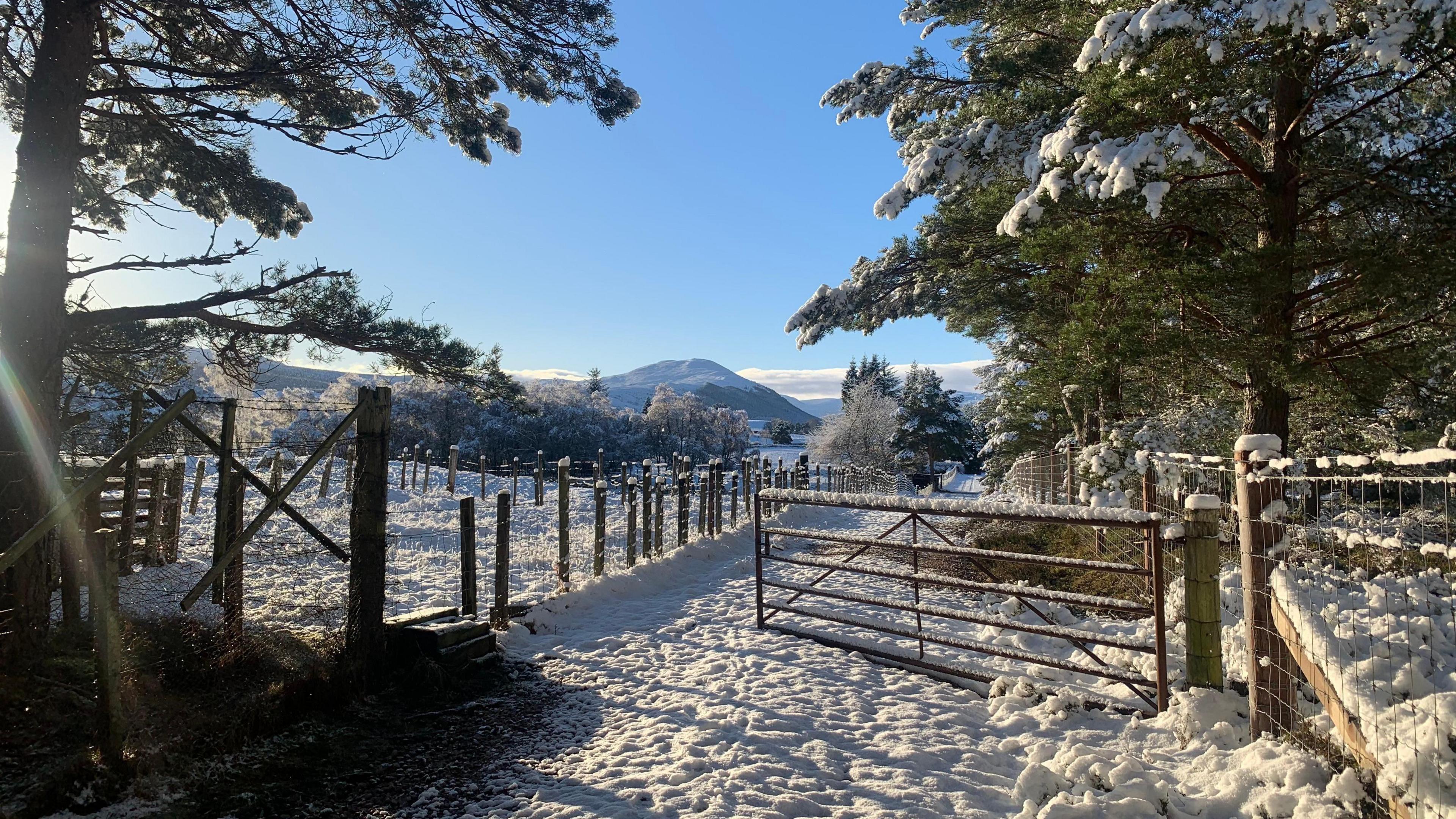
A photo of a snow covered landscape in Scotland
Image source, BBC Weather Watcher / Georgie
Image caption,

Parts of Scotland enjoyed the most recent white Christmas in 2023

Are you dreaming of a white Christmas? With the big day a week away, it is possible that some of us might have some festive snow - but only just.

After a couple of weeks of milder conditions it's about to turn noticeably colder. Temperatures for many parts of the UK may be a degree or two below the average for this time of year, hitting the 6-9C mark.

The drop will be a result of an influx of cold air from eastern Europe.

And if there are some small changes to that, there is a slight chance that even colder air from Scandinavia might come this way, and the possibility that any showers falling in eastern areas might turn to sleet or even snow.

Why is is going to feel so cold?

The change in fortunes is down to a high pressure system which is going to build close to the north of the UK and a low pressure one forming around France or Spain.

Although they will not be directly over the UK, the precise position of the centres of these highs and lows will determine the direction of the wind. In turn, that will influence how cold the air will be and therefore the chances of snow falling.

A weather map of the expected pressure pattern on Christmas Day
Image caption,

A change in wind direction will bring colder weather just in time for Christmas

As well as becoming much colder generally in time for Christmas it will probably be quite cloudy with showers developing over the North Sea and affecting eastern areas.

The best of any sunshine would be in the north and west but there will be also be a risk of some morning frost and fog.

Could it be a white Christmas?

Currently the forecast is for east-southeasterly winds but there is a very small chance that we get east-northeasterlies instead.

This small change in wind direction could then pull in much colder air from Scandinavia resulting in showers over eastern areas that could turn to sleet or snow in places.

Although a white Christmas is still unlikely for most of us, it can't completely be ruled out just yet.

Either way, very wet weather is off the Christmas menu this year. This spell of quieter spell of weather will be very much welcomed in areas which have recently seen heavy rain such as Cumbria and south Wales.

Our experience of Christmas past should tell us that it's rare to see snow actually fall on Christmas day - and getting rarer.

Fussy eaters and TV remote hogs: How to avoid family rows over Christmas

22 December 2025 at 08:03
Getty Images Two sisters with their arms folded, looking cross, at Christmas while wearing father Christmas hatsGetty Images

Christmas is billed as the most wonderful time of the year - but the day itself could have all the ingredients needed for a family row.

There's a reason you haven't seen some of these people all year - you just know someone is going to criticise your cooking, there will be a heated debate over dinner and a tussle over the TV remote.

We spoke to psychologists and parenting experts for their top tips on how to keep the Christmas spirit and avoid a family fallout.

1. Give up on the perfect Christmas

Getty Images A chaotic living room with its Christmas tree knocked over as a potentially guilty dog looks onGetty Images

Begin by refusing to chase the idealised movie version of Christmas, says psychotherapist and author Philippa Perry.

"We need to lower the expectations of what Christmas gives us, and then we won't be so disappointed in it," she told CBeebies' Parenting Helpline podcast.

Unspoken rules like "we must see everybody" only add to the stress, as does social media pressure over what the picture-perfect Christmas Day should look like.

Natalie Costa, a parenting coach, former teacher and host of the Connected podcast, encourages people to remember that nobody's life looks the way it does online. "Behind all the happy family pictures are children - and adults - who've had big meltdowns," she says.

This reality check can help reduce guilt over not measuring up.

Instead of trying to compete with others, she suggests approaching Christmas with the attitude of: "What does my good-enough look like?"

2. Don't compete on gifting

Getty Images Children fight over gifts while their mother sits and tries to solve arguments in the Christmas spiritGetty Images

Exchanging presents is a huge part of Christmas. If there are young kids in the house, giddy early wake-up calls are a given.

But sometimes gift-giving can feel competitive, especially among extended family where budgets can differ, says Prof Perry.

The best way to handle this isn't to try to compete or police kids' relationships with adults, but reframe the situation.

She encourages parents to "let go" if grandparents, aunties and uncles choose to spoil young ones.

Costa adds that this can later become a useful way to discuss values with children - emphasising that bigger presents don't reflect love.

"You cannot buy love," Prof Perry says. "What children like is your attention and being played with. That is better than any gift."

3. Prepare for awkward comments

Getty Images Relatives argue over Christmas dinnerGetty Images

Complicated family dynamics don't disappear just because it's Christmas and festive classics are playing.

One minute you're merrily drinking mulled wine, the next being asked why you're not happily married or whether you are planning children.

Any resentments, tensions and difference in values will remain with the added pressure of fulfilling a fantasy image of happy families.

Passive aggressive comments often come from someone else's stress and insecurity, says psychotherapist Sarah Turner. This doesn't excuse the behaviour, but can make it feel less personal.

When we feel stung our instinct is to defend or withdraw, but Turner advises pausing first. "You have the power to choose how to respond."

Another tip is to ask for clarification. Often loved ones will reframe what they said rather than repeat it - as they are likely to know it's a loaded comment.

If there's a "kernel of truth" in what they say, then acknowledging this can help "emotions de-escalate because they feel heard," Turner adds.

This doesn't mean you agree or give in - it's simply letting that person know you understand where they're coming from. In the heat of family dynamics, this can make all the difference.

3. Make it clear who's in charge

Getty Images Mother scolds her adult daughter while staying at ChristmasGetty Images

Children are naturally excited on Christmas day - but that burst of energy often means big exhausted emotions later on, tantrums and tears included.

To prevent other family members stepping in to try and manage this, Costa suggests having a simple conversation beforehand to establish the rules.

She advises something like: "I know it [how we parent] may be different to what you did… What helps us most is keeping things consistent, so if anything comes up, leave it with us."

Have a few simple non-negotiables, such as screen-time limits and any essential safety boundaries.

Some families also find it useful to have something light-hearted to ease the pressure, explains Costa. One used the codeword "smelly bananas" to signal things were getting too much.

Whoever's home you'll be visiting, managing expectations is crucial. Let children know who will be there, what the day will look like, and what they can do if they start to feel overloaded.

4. Don't comment on food choices

Getty Images A child bargains with her mother over Christmas dinner as family look onGetty Images

Christmas dinner often includes foods such as brussel sprouts, red cabbage and turkey which we rarely eat the rest of the year.

Some adults and many children simply don't enjoy these foods.

What we call "fussiness" with a disapproving tone, is often anxiety and sensitivity, says consultant counselling psychologist Dr Ritika Suk Birah. The key to an enjoyable meal is to remove the emotional charge.

Offer a few predictable options, normalise different preferences, and don't turn food into a moral issue.

"For adults, autonomy is essential, provide alternatives without commentary," she says.

For children, who may be facing things like sprouts for the first time - a "safe plate" alongside festive foods works well, something familiar that grounds them so they can explore new foods at their own pace.

Agree a TV plan beforehand

Getty Images A family watching TV togetherGetty Images

TV can be central to Christmas family time, often when stuffed full of food and slightly sozzled.

But disagreements over what to watch are common.

Older relatives often want shared traditions; younger people want autonomy and novelty, especially in the YouTube age.

The best approach is to decide the viewing plan before emotions are high, says Dr Birah. Agree on a simple rotation: one shared programme, one independent choice and a set period where screens are put away.

If the idea of watching "old people TV" is causing trouble with your teens, acknowledge their perspective, says Costa.

Something like: "I get it. YouTube is exciting and fun, and you really enjoy it."

Then explain what else is happening: "Right now we are spending time together as a family. This part matters too."

Booze, beach, beaten – how England lost the Ashes

21 December 2025 at 14:23
Sport Insight

Booze, beach, beaten – how England lost the Ashes

Ben Stokes looks glumImage source, PA Media

It's been a shocker, hasn't it?

England's latest humiliation down under will be remembered as their worst in recent times not only for its rapid nature, but also because this was supposed to be an opportunity to regain the Ashes from a weakened Australia.

This is how England gave themselves no chance, from selection and preparation, to booze and the beach in Noosa.

Seeds sown long ago

Mark Wood looks frustratedImage source, Getty Images
Image caption,

Mark Wood's Ashes series lasted just 11 overs before he flew back to the UK

Hindsight makes experts of us all, but the failings of this tour began long ago.

It was a missed opportunity not to trial a genuine opener when Zak Crawley got injured in the summer of 2024, instead asking Dan Lawrence to do a job for which he is not suited. Lawrence has not been seen since.

If Jordan Cox's broken thumb in New Zealand 12 months ago was unfortunate – Cox could have been a badly needed reserve keeper in Australia – then the decision to send Mark Wood to the Champions Trophy proved immeasurably costly.

England so badly wanted pace on this tour, then managed to injure their fastest bowler in a tournament they were never going to win.

Assistant coach Paul Collingwood disappeared at the beginning of the home summer and has not been replaced, and there was no clarity on the identity of England's fast-bowling coach for this tour right up to the last minute.

Chris Woakes' dislocated shoulder effectively ruled him out of the Ashes, but there were still two other players in England's squad for the last Test against India that did not make it to Australia: Jamie Overton and Liam Dawson.

Overton took a break from red-ball cricket after using up a spot at The Oval which could have gone to Matthew Potts, Matthew Fisher or Sam Cook. Dawson - or any other frontline spinner – would have been pragmatic cover in Australia for Shoaib Bashir, whose form was an accident waiting to happen.

Even the announcement of the Ashes squad was an anticlimactic foreshadowing of things to come.

Whereas the British & Irish Lions unveiled their Australian tour squad in front of 2,000 fans at the O2 in London, England hustled out their team on a press release with no notice a couple of hours after the death of legendary umpire Dickie Bird was announced.

When it came, the 12-month hokey-cokey over Ollie Pope's place continued as he was replaced as vice-captain, adding further fuel to a Jacob Bethell debate that is still to be settled.

Director of cricket Rob Key did not speak to explain the squad until a full 24 hours later, at which point he ended Woakes' international career, taking the moment away from the man himself.

Fail to prepare, prepare to fail

Joe Root signs an autograph on the boundaryImage source, Getty Images
Image caption,

England's warm-up against their own Lions team in Lilac Hill was a world away from what they encountered in the first Test at Perth Stadium

For all the criticism of England's pre-series plans in Australia, the immovable obstacle to more warm-up matches was a white-ball tour of New Zealand that had been in the diary for years.

Despite England and Wales Cricket Board chairman Richard Thompson claiming the series against the Black Caps was strong Ashes preparation, England lost three of four completed matches, effectively played at the end of the New Zealand winter.

England ultimately got the Ashes warm-up they wanted – an intra-squad match against the England Lions. However, there is evidence of buyer's remorse through their opening of negotiations with Cricket Australia over an agreement to guarantee better preparation on future Ashes tours.

If there was an offer of a match against a state team or Australia A, it was too close to the tour of New Zealand for England to make it work. England insist they asked for time at the Waca, only to be told the ground was not available. When England made the request is not clear. The Barmy Army managed to book a game there.

The Lilac Hill conditions for the warm-up match were slow and low, far removed from the pace and bounce of Perth Stadium.

The overall attitude was laid back. England team analyst Rupert Lewis donned whites to run the drinks and music played from the dressing rooms throughout the three days. Harry Brook's shots demonstrated his disdain for the exercise.

As the Lions players not involved were sent on laps of the park as part of a tough fitness programme, Bashir's bowling was hammered by his own team-mates and Wood had to go for a scan on his hamstring eight overs into his comeback.

A hint of farce came when the scorecard malfunctioned, showing Wood to be batting despite being in hospital at the time.

Perhaps the most memorable moment of the Lilac Hill week came before a ball was bowled, when captain Ben Stokes described critics of England's plans as "has-beens". It was a slip of the tongue, but one that could have been corrected immediately.

Two down in six days

Ben Stokes looks glumImage source, Getty Images
Image caption,

Ben Stokes said his dressing room was "no place for weak men" after the second Test defeat in Brisbane

England dealt well with the build-up to the first Test. Josh Tongue and Jamie Smith swatted away questions about golf, stumpings and moral victories.

Dominant at lunch on day two in Perth, England lost before stumps on the same day.

Stokes said he was shell-shocked in some tetchy post-match media interactions, comments that were used against the captain as England lost the PR battle in the days after the Test.

England were followed by photographers to golf courses and even an aquarium, while housing the squad in a hotel attached to a casino was probably a mistake. Some of the group developed a penchant for an Australian brand of takeaway frozen yoghurt.

The decision not to send more players to the Lions' day-night game against a Prime Minister's XI in Canberra was put down to the difference in conditions between the capital and Brisbane.

However, a week's worth of radio silence did not help the tourists. Former Australia pace bowler Mitchell Johnson accused them of being "arrogant".

England instead opted for five days of training in Brisbane, a workload that head coach Brendon McCullum would later claim left his team "overprepared" for the second Test.

When Stokes finally broke the media blackout, he clarified the "has-beens" comment and responded to Johnson by saying England could be called "rubbish", rather than arrogant.

As the build-up to the Test continued, Stokes and Pope had to respond to pictures of the captain, Wood and Smith riding escooters without helmets – an offence punishable by a fine under Queensland law.

On the field, Root's long-awaited first hundred in Australia was rendered useless by some awful shots by his team-mates and England missed five catches.

Following yet another defeat at the Gabba, Stokes said his dressing room is "no place for weak men" – words that could come back later in the tour.

On the beach

Ben Stokes with MixFM radio hosts Archie and BretzImage source, MixFM
Image caption,

Ben Stokes poses with Archie and Bretz, presenters on Sunshine Coast radio station MixFM

England said their four nights in the beach resort of Noosa had been scheduled for more than a year, which possibly leaves it as one of the best-planned parts of the tour.

Some used it in the spirit it was intended. Root, for example, had accommodation with his family away from the main drag and was never spotted near a bar. It was curious that more family members were not present for what was billed as a break from the Ashes.

For others, it was a glorified stag do. Some members of the team followed two days of drinking in Brisbane with four more in Noosa – six in total, as many days as there had been of Test cricket at this point in the tour.

The England party was hardly inconspicuous, drinking by the side of the road, with plenty wearing traditional Akubra hats that became the uniform of the holiday.

There was a three-line whip issued to attend a kick-about on the beach, where England were sledged by local radio DJs and mingled with other holidaymakers.

Stokes was seen out running, while on another occasion strength and conditioning coach Pete Sim invited the entire group for a run along the coast at 07:45am. Smith, Bashir and Tongue were the only players to turn out.

At the end of the trip, a member of the England security staff was accused of a physical confrontation with a cameraman from TV network Seven following a back-and-forth in Brisbane airport.

Despite the gags and attention from Australian media about their time on the beach, England probably put in their best performance of a bad bunch in the Test after their jollies in Noosa.

All over in Adelaide

The scene at Adelaide Oval after Australia completed victoryImage source, Getty Images
Image caption,

This is the fourth successive Ashes tour in which England have lost the first three Tests

By the third Test, England's messaging had become mixed. Stokes talked of "enjoying the pressure", despite actively looking to remove pressure from his team over the previous three years.

Brook said England had not spoken about cricket in Noosa, whereas Stokes admitted there had been "raw" conversations. Crawley would later claim not to know about the "weak men" comments.

Perhaps aware fielding had let them down, England engaged in some rare fielding drills.

At an Adelaide ground renowned for helping spinners, England left out Bashir, a decision explained by the need for Will Jacks' batting at number eight. Assistant coach Jeetan Patel insisted Bashir had not become "unselectable".

After putting so much emphasis on high pace, England were left with part-time spinner Jacks bowling more overs than anyone else in the match.

Outwardly, England remained relaxed. McCullum's walk to the Adelaide Oval twice passed through BBC Radio 5 live shows being broadcast from outside the team hotel. Patel left a news conference with the words: "Enjoy your evening. Have a pint, because I will be."

England showed some overdue fight and even took the Test into the final day, but the Ashes were lost in 11 days of cricket. It doesn't feel like the squad will fall apart, even if 5-0 seems inevitable.

'You're on standby for Lockerbie' - volunteers recall their role after Pan Am bombing

21 December 2025 at 17:27
BBC An up-to-date image of the four friends, Ross, Tom, Anne and William. A field and a farm are behind the row of four and the sun is shining. BBC
Ross, Tom, Anne and William all revisited Lockerbie earlier in the year to pay their respects

When Anne and Ross Campbell were watching the news on the night of 21 December 1988, they already had "go-bags" ready.

The Ayrshire-based couple were part of the Radio Amateurs' Emergency Network (Raynet), a UK-wide radio communications service.

Staffed by volunteers, it was formed in the aftermath of the North Sea flood in 1953 with a simple aim: during major events and emergencies, licensed Raynet operators would step in to provide essential radio communications.

When news broke that an aircraft had crashed in a small Dumfries and Galloway town, Anne and Ross got the call from their local controller: "You're on standby for Lockerbie."

Ross and Anne Campbell sit on their sofa, a cream wall, a display cabinet and a radiator behind them. Ross has thinning hair, a long bears and glasses and Anne has bobbed blonde/grey hair and glasses and wears a bright lemon T-shirt.
Ross and Anne Campbell were part of the Radio Amateurs' Emergency Network (Raynet)

At the time of the disaster, Anne and Ross, along with friends Tom Stewart and William Jamieson were all keen radio enthusiasts in their 20s and 30s.

And they were all members of Ayrshire's Raynet chapter.

"You worked away, doing exercises for the council and road races, but you always had in the back of your mind, there could come a general emergency," said Ross.

He had been involved in the group for a couple of years at the time but added: "You never imagined something like Lockerbie."

Pan Am 103 was flying from Heathrow to New York when a bomb exploded in the skies above the town, killing all 259 passengers and crew on board – as well as 11 people on the ground.

It remains the biggest terror attack to have taken place on British soil.

Raynet An old snap of Anne and Ross in their youth, both with dark hair and smiling. They wear yellow high visibility Raynet jackets. It's a blurry old image with a very dark background.Raynet
Anne and Ross were both involved in the rescue effort

As part of the search and rescue efforts, hundreds of volunteers arrived at the scene to help – including many from Raynet.

Their expertise – and equipment – was desperately needed.

Ross said: "Strathclyde Police radios had their own frequency.

"Dumfries and Galloway Police had a separate one.

"Every police service had their own, as did ambulance services, so they couldn't communicate with one another."

Each search party at Lockerbie was teamed with a Raynet operator who would send messages back to Lockerbie Academy, the disaster control room.

They accompanied search and rescue dogs, air accident investigation units, the FBI, and the police.

Volunteer Tom, who had been in the fire service for 10 years, made the call to Anne, Ross and William to tell them to report to the scene the following morning.

Raynet An old eighties image of the Ayrshire Raynet volunteers, standing in front of their mobile office - a caravan with the Raynet logo on the side. It appears to have been taken at some kind of public event.Raynet
The young Ayrshire Raynet volunteers were called up to help with the Lockerbie recovery operation

Anne and Ross were both stationed at Tundergarth, in the field where the plane's nose cone lay.

"I still remember the press, with huge lenses, leaning over the fence, trying to get pictures of them bringing the bodies out," said Anne.

"That horrified me, I just thought these people deserve a wee bit of respect."

While Tom was used to scenes of emergency from his time in the fire service, nothing could have prepared him for what he saw.

"The devastation, it was horrendous," he said.

"For other members of the group that didn't have that background, it was harder."

Tom's main role was with search and rescue dog teams, which had been tasked with searching for bodies and collecting debris and evidence from the crash.

"I can still remember the Chinook helicopters flying above.

"They were bringing out body bags and rescue equipment.

"We sent messages back, and the helicopter came with bags, and they came and took them away."

The radio enthusiasts key to the Lockerbie bombing response

For William, one of the most striking moments was passing on the message that his team had found evidence of an explosion.

"We came across a baggage container, and from the damage to the container, they knew instantly there was a bomb.

"I was asked if I could radio in saying we had found evidence of a bomb, but because the press were there, they were going to be listening, and I advised them I couldn't send that message because it would be on the telly before we even got back.

"We changed it to asking for an urgent recovery of that item."

Earlier this year, William returned to Lockerbie for the first time in almost 38 years to pay his respects.

"I'd always meant to go back, but I've never been, because it does bring up memories," he said.

William, who was 22 at the time, said one of his most harrowing memories was finding a passenger still in their seat.

"To find something like that and knowing there was nothing you could do to help them, it was certainly upsetting."

Tom, who returned with his three friends, still struggles with what he experienced.

"I'd still never seen anything on that scale.

"I can still remember seeing people's letters and personal belongings and thinking that was someone's son, someone's daughter."

Anne said: "I'm proud that I managed to have a wee bit of input.

"But there were a lot of people who did a lot more than we did."

Getty Images An archive image of the nose cone section of the plane which crashed in a Lockerbie field shows two policemen walking in front of the wreckage, a police car situated at the left of the plane.Getty Images
Anne and Ross were stationed at Tundergarth, in the field where the plane's nose cone lay.

All four feel the role of volunteers needs to be acknowledged.

Search and rescue teams and their dogs, the Salvation Army, the Women's Royal Voluntary Service, and locals from the town were all involved.

"They gave their free time willingly at Lockerbie and went back home and yet nobody knows of them," Ross said.

Assistant Chief Constable Stuart Houston from Police Scotland's organised crime, counter terrorism and intelligence unit has thanked Raynet for the role they played.

He told BBC Scotland: "The assistance Raynet provided the police and other emergency services in the aftermath of the darkest day Lockerbie has ever endured will never be forgotten.

"We are grateful for their support and expertise that afforded vital communications between emergency services at such a critical time.

"Our thoughts remain with the families and friends of those who lost loved ones in 1988 and who continue to show incredible dignity and strength."

Additional reporting by Charles Ross.

If there are issues you would like to see covered, you can get in touch via BBC Your Voice.

BBC Your Voice banner image.

Waymo Suspended Service in San Francisco After Its Cars Stalled During Power Outage

The self-driving cars came to a halt at intersections when the power outage knocked out traffic signals, causing tie-ups but no accidents or injuries.

© Tayfun Coskun/Anadolu, via Getty

A Waymo driverless car was stalled at an intersection while not able to detect traffic lights after a major power outage in San Francisco on Saturday.

US pursuing third oil tanker linked to Venezuela, official says

22 December 2025 at 07:19
Reuters A helicopter flies over a ship in blue waters Reuters
The US seized another oil tanker off the coast of Venezuela on Saturday

The US Coast Guard is in "active pursuit" of another vessel in international waters near Venezuela, an official has told the BBC's US partner CBS News, as tensions in the region continue to escalate.

US authorities have already seized two oil tankers this month - one of them on Saturday.

Sunday's pursuit related to a "sanctioned dark fleet vessel that is part of Venezuela's illegal sanctions evasion", a US official said. "It is flying a false flag and under a judicial seizure order."

Washington has accused Venezuela of using oil money to fund drug-related crime, while Venezuela has described the tanker seizures as "theft and kidnapping".

US President Donald Trump last week ordered a "blockade" of sanctioned oil tankers entering and leaving the country.

Venezuela - home to the world largest proven oil reserves - has accused the Trump administration of trying to steal its resources.

US authorities have not yet officially confirmed Sunday's pursuit, and the exact location and name of the tanker involved is not yet known.

As of last week, more than 30 of the 80 ships in Venezuelan waters or approaching the country were under US sanctions, according to data compiled by TankerTrackers.com.

Saturday's seizure saw a Panamanian-flagged tanker boarded by a specialised tactical team in international waters.

That ship is not on the US Treasury's list of sanctioned vessels, but the US has said it was carrying "sanctioned PDVSA oil". In the past five years the ship also sailed under the flags of Greece and Liberia, according to records seen by BBC Verify.

"These acts will not go unpunished," the Venezuelan government said in response to Saturday's incident. It added that it intended to file a complaint with the UN Security Council and "other multilateral agencies and the governments of the world".

Venezuela is highly dependent on revenues from its oil exports to finance its government spending.

In recent weeks, the US has built up its military presence in the Caribbean Sea and has carried out deadly strikes on alleged Venezuelan drug-smuggling boats, killing around 100 people.

It has provided no public evidence that these vessels were carrying drugs, and the military has come under increasing scrutiny from Congress over the strikes.

The Trump administration has accused Venezuelan President Nicolás Maduro of leading a designated-terrorist organisation called Cartel de los Soles, which he denies.

In rebel-held Myanmar, civilians face devastating air strikes and a sham election

22 December 2025 at 06:08
BBC Iang Za Kim, sitting in a green shirt on the floor of a community centre in IndiaBBC
Iang Za Kim had to flee her home after the junta launched air strikes nearby

Late one night last month Iang Za Kim heard explosions in a neighbouring village, then fighter jets flying overhead. She ran out of her home to see smoke rising from a distance.

"We were terrified. We thought the junta's planes would bomb us too. So we grabbed what we could – some food and clothes and ran into the jungles surrounding our village."

Iang's face quivers as she recounts the story of what happened on 26 November in K-Haimual, her village in Myanmar's western Chin State, and then she breaks down.

She's among thousands of civilians who've fled their homes in recent weeks after the Burmese military launched a fierce campaign of air strikes, and a ground offensive in rebel-held areas across the country, to recapture territory ahead of elections starting on 28 December.

Four other women sitting around her on straw mats also start crying. The trauma of what they've gone through to make it to safety is clearly visible.

While the air strikes were the immediate cause for Iang to flee, she also doesn't want to be forced to participate in the election.

"If we are caught and refuse to vote, they will put us in jail and torture us. We've run away so that we don't have to vote," she says.

Civilians sit on the floor of a community centre in India
Many civilians have crossed into India to escape the violence in Myanmar

Some from Chin state have described the junta's latest offensive as the fiercest it has launched in more than three years.

Many of the displaced have sought refuge in other parts of the state. Iang is among a group that crossed the border into India's Mizoram state. Currently sheltered in a rundown badminton court in Vaphai village, the group's few belongings they were able to carry are packed in plastic sacks.

Indian villagers have given them food and basic supplies.

Ral Uk Thang has had to flee his home at the age of 80, living in makeshift shelters in jungles for days, before finally making it to safety.

"We're afraid of our own government. They are extremely cruel. Their military has come into our and other villages in the past, they've arrested people, tortured them, and burned down homes," he says.

It isn't easy to speak to Burmese civilians freely. Myanmar's military government does not allow free access in the country for foreign journalists. It took over the country in a coup in February 2021, shortly after the last election, and has since been widely condemned for running a repressive regime that has indiscriminately targeted civilians as it looks to crush the armed uprising against it across Myanmar.

During its latest offensive, the junta last week targeted a hospital in Rakhine State, just south of Chin State. Rebel groups in Rakhine say at least 30 people were killed and more than 70 injured.

The Chin Human Rights Organisation says that since mid-September at least three schools and six churches in Chin State have been targeted by junta airstrikes, killing 12 people including six children.

Myanmar map

The BBC has independently verified the bombing of a school in Vanha village on 13 October. Two students –Johan Phun Lian Cung, who was seven, and Zing Cer Mawi, 12 - were killed as they were attending lessons. The bombs ripped through their classrooms injuring more than a dozen other students.

Myanmar's military government did not respond to the BBC's questions about the allegations.

This is the second time Bawi Nei Lian and his young family – a wife and two young children - have been displaced. Back in 2021, soon after the coup, their home in Falam town was burnt down in an air strike. They rebuilt their lives in K-Haimual village. Now they're homeless again.

"I can't find the words to explain how painful and hard it is and what a difficult decision it was to make to leave. But we had to do it to stay alive," he says.

"I want the world to know that what the military is claiming – that this election is free and fair – this is absolutely false. When the main political party is not being allowed to contest the election, how can there be genuine democracy?"

Bawi Nei Lian and his family sit on the floor of the community centre in India. He's dressed in a white track suit
Bawi Nei Lian (left) says the scheduled elections are a sham

The National League for Democracy party, led by Aung San Suu Kyi, which won landslides in the two elections prior to the coup, will not be contesting as most of its senior leaders including Suu Kyi are in jail.

"We don't want the election. Because the military does not know how to govern our country. They only work for the benefit of their high-ranking leaders. When Daw Aung San Suu Kyi's party was in power, we experienced a bit of democracy. But now all we do is cry and shed tears," says Ral Uk Thang.

Iang Za Kim believes the election will be rigged. "If we voted for a party not allied with the military, I believe they will steal our votes and claim we voted for them."

The election will take place in phases, with a result expected around the end of January. Rebel groups have called it a sham.

At the base of the Chin National Front in Myanmar, the most prominent rebel group operating in the state, the group's Vice Chairman Sui Khar says: "This election is only being held to prolong military dictatorship. It's not about the people's choice. And in Chin State, they hardly control much area, so how can they hold an election?"

He points out the areas where the most intense fighting is ongoing on a map and tells us nearly 50 rebel fighters have been injured in just the past month. There have been deaths too, but so far the groups have not released a number.

"There are columns of hundreds of soldiers trying to advance into the northern part of Chin state from four directions," Sui Khar says. "The soldiers are being supported by air strikes, artillery fire and by drone units."

Abel lies on a hospital bed under a floral blanket with heavily bandaged hands
Abel lost his right left and his hands were severely wounded fighting against the junta

Access to the base is extremely rare. Set amid thickly forested mountains, it is the heart of the resistance against the junta in Chin state.

Sui Khar takes us to the hospital at the base. We see a group of injured fighters who were brought in overnight and had to undergo hours of surgery. Some of them have had to undergo amputations.

Many of them were just schoolboys when the coup occurred in 2021. Just about adults now, they've let go of their dreams to fight on the frontline against the junta.

Abel, 18, is in too much pain to speak. He was with a group of fighters trying to take back territory the junta captured a week ago. They won the battle, but Abel lost his right leg and has serious injuries to his hands as well.

In a bed next to him is Si Si Maung, 19, who's also had a leg amputated.

"As the enemy was retreating we ran forward and I stepped on a landmine. We were injured in the explosion. Then we were attacked from the air. The airstrikes make things very difficult for us," he says. "I've lost a leg, but even if I've to give up my life I'm happy to make the sacrifice so that future generations have a better life."

The impact of the ferocity of the latest offensive is visible in room after room at the hospital.

Yet, it's the support and grit of tens of thousands of youngsters like Si Si Maung, who picked up arms to fight against the junta, that have helped the rebels make rapid advances against a much more powerful rival in the past four-and-a-half years.

Some like 80-year-old Ral Uk Thang hope that after the election, the junta will retreat, and he will be able to go back home.

"But I don't think I will live to see democracy restored in Myanmar," he says. "I hope my children and grandchildren can witness it some day."

Additional reporting by Aamir Peerzada, Sanjay Ganguly and Aakriti Thapar

A memorial ends - but Bondi tragedy has left Australia reeling, again

22 December 2025 at 06:18
Getty Images The image of a candle lit up on the Opera House sailsGetty Images
There's been an outpouring of support from the community - but tension remains

As helicopters circled overhead, sirens descended on her suburb, and people ran screaming down her street on 14 December, Mary felt a grim sense of deja vu.

"That was when I knew there was something seriously wrong – again," she says, her eyes brimming with tears.

Mary - who did not want to give her real name - was at the Westfield Bondi Junction shopping centre last April when six people were stabbed to death by a man in psychosis, a tragedy still fresh in the minds of many.

Findings from a coronial inquest into the incident were due to be delivered this week, but were delayed after two gunmen unleashed a hail of bullets on an event marking the start of the Jewish festival of Hanukkah eight days ago.

Declared a terror attack by police, 15 people were shot and killed, including a 10-year-old girl who still had face paint curling around her eyes.

The first paramedic to confront the bloody scenes at the Chanukah by the Sea event was also the first paramedic on the scene at the Westfield stabbings.

"You just wouldn't even fathom that something like this would happen," 31-year-old Mary, who is originally from the UK, tells the BBC. "I say constantly to my family at home how safe it is here."

This was the overarching sentiment in the days following the shooting. This kind of thing, mass murder, just doesn't happen in Australia.

But it can and it has – twice, in the same community, within 18 months.

A sea of flowers left by shocked and grieving people at Bondi is being packed up. A national day of reflection is over. On Sunday night, Jewish Australians lit candles for the last time this Hannukah.

But the two tragedies have left scores physically scarred and traumatised, and the nation's sense of safety shattered.

'Everyone knows someone affected'

EPA Photos of victims of the deadly shooting at Bondi BeachEPA
Funerals for the victims have drawn thousands of mourners this week

Bondi is Australia's most famous beach - a globally recognised symbol of its way of life.

It's also a quintessential slice of Australian community. There's a bit of "everyone knows everyone" - and that means everyone knows someone affected by the 14 December tragedy, mayor Will Nemesh told the BBC.

"One of the first people I texted was [Rabbi] Eli Schlanger. And I said, 'I hope you're OK. Call me if you need anything'," he said.

But the British-born father of five, also known as the "Bondi Rabbi", was among the dead.

The first responders, police and paramedics would have been working on members of their own community. Others had the task of having to treat the shooters who had taken aim at their colleagues.

"[Westfield Bondi Junction] was horrendous, something we're certainly not used to. And then this again was massive, catastrophic injuries," Ryan Park, health minister for New South Wales, told the BBC.

"They've seen things that are like you would see in a war zone… You don't get those images out of your head," Park added.

Mayor Nemesh fears this will forever be a stain on Bondi, and Australia.

"If this can happen here at Bondi Beach, it really could happen anywhere… the impact has reverberated around Australia."

EPA NSW Minister for Health Ryan Park places flowers at a memorial at Bondi BeachEPA
Ryan Park says healthcare workers will take time to recover from what they've seen

'Warnings ignored'

No one is feeling this more than the Jewish community, for whom Bondi has become a sanctuary.

"I swam here every day for years on end, rain or shine. And this week… I couldn't get in the water. It didn't feel right. It felt sacrilegious in some way," Zac Seidler, a local clinical psychologist, told the BBC.

Many of the victims of the attack moved here over many decades for safety from persecution, including 89-year-old Holocaust survivor Alex Kleytman. Instead, his life was bookended by violent acts of antisemitic hate.

Mr Seidler has spent the past two years trying to convince his grandparents, who are also Holocaust survivors, to hold on to their faltering belief in the good of humanity.

"[My grandmother] kept saying, 'These are the signs. I've seen this before'. And I just kept saying, 'Not in Australia, not here. You're safe', just trying to soothe her.

"But now I kind of feel like the fool."

No community is a monolith, but one thing many Jewish Australians believe is that warnings about a rise of antisemitism in the months preceding this attack were ignored.

The year started with a spate of vandalism and arson incidents on Jewish marks in the suburbs surrounding Bondi. It has ended with mass murder targeting their community.

Watch: Jewish Australians on why Bondi is a 'sanctuary' for them

There has been resistance in the face of fear - some leaders urging Jewish Australians to double down, be more publicly Jewish and display their religious symbols with pride.

One woman perusing the flowers outside the Bondi Pavilion on Sunday admits she is too scared to do that. It took her all week to even work up the courage to visit this site, which is just metres from where many of the victims died.

"I've never felt my Jewishness before. I've never experienced antisemitism in my whole life until now," MaryAnne says. "And now, I don't want to wear my Star of David."

Community, anger and sadness

The shooting triggered a massive outpouring of support from around the nation.

When the news broke, many in the community rallied to help.

Lifeguards - volunteer and paid - put their lives on the line. Restaurants opened their doors and hid people in their store rooms and freezers, and locals ushered lost children into their apartments.

Even the New South Wales opposition leader Kellie Sloane - also the local state member - was at the scene, helping pack bullet wounds.

In the days after the shooting, thousands of ordinary Australians lined up - many for hours on end - to donate blood desperately needed to treat those injured.

Each day, a carpet of petals, handwritten notes, commemorative stones and candles grew out from the gates of the Bondi Pavilion.

Bee motifs - stickers, balloons, even pavement art - are all over the suburb, in remembrance of Matilda, the terror attack's youngest victim.

Surfers and swimmers on Friday paddled out beyond Bondi's iconic breaks to honour those who died.

A day later, surf livesavers and lifeguards stood shoulder to shoulder on the beach in solidarity with the Jewish community.

But amid the platitudes, sadness and shock is calcifying into anger and tension.

Surfers and swimmers pay tribute to victims of Bondi shooting

Last year's Bondi Junction stabbings were devastating for the community - but a shared resolution united it.

Experts say the attacker, who had schizophrenia, was in psychosis at the time of the stabbings, and his family have previously said he was frustrated at being unable to find a girlfriend. The question of whether he targeted women will likely forever go unanswered. But clear failures in the mental health system have been identified.

Last month, families of the victims asked the coroner to refer the doctor who weaned him off medication with limited supervision to regulators for investigation, and they have also argued for a massive boost to mental health service funding.

But last Sunday's events raise more uncomfortable feelings and questions.

There is palpable fury at the government, over a perceived – and admitted – failure to do more to stop antisemitism. Prime Minister Anthony Albanese has been booed during public appearances this week, and talking to people visiting the site of the attack in Bondi, it isn't uncommon to hear them demand his resignation.

Many people the BBC spoke to pointed to his government's decision to recognise Palestinian statehood, alongside countries including the UK and Canada, and regular protests in Australia by members of the pro-Palestinian movement, which though largely peaceful but have been peppered with antisemitic chants and placards.

The state of New South Wales - which has in recent years tightened protest rules - has already announced it will introduce more legislation cracking down on "hateful" chants and give police more powers to investigate demonstrators. The federal government has promised similar.

The blame apportioned to these protests does not sit right with many, even some sections of the Jewish community.

"We need to hold multiple truths," Mr Seidler says. "We can be afraid, we can feel that there is deep antisemitic rhetoric going on in certain circles within Australia… while also understanding that there is a right of people in this country – especially Muslim Australians – to be concerned about what is taking place in Gaza.

"We need to get better at finding that line and calling out when that line has been crossed."

Getty Bouquets and wreaths of flowers in a shopping centre with a Myer sign in the backgroundGetty
A memorial inside the Bondi Junction Westfield shopping centre where six people were stabbed to death in April last year

For others, there is anger at what they feel is the politicisation of a tragedy.

"It's a bloody photo op," one woman tells me on Sunday, as a prominent Australian businesswoman arrives and begins posing with the floral tributes outside the Bondi Pavilion.

Some - including the local federal MP Allegra Spender - worry the attack is being used to fuel anti-immigration sentiment.

"We would not have had the man who saved so many Australians if we had cut off, for instance, Muslim immigration," she said.

Mr Seidler says these arguments fail to recognise that antisemitic views - and other forms of bigotry - are formed here too.

"I heard someone say the other day that Australia thinks it's on a holiday from history, that we're somehow immune to this stuff, that it's not bred here, it's imported," Mr Seidler says.

With the anger, there is also fear: for the Jewish community of other attacks, for the Muslim community of retaliation for an act of terror they have loudly condemned.

There are questions over how Australia's security agency fumbled an alleged terrorist who at one point was on their watch list, prompting a review into federal police and intelligence agencies that was announced on Sunday.

There is frustration at NSW Police, who have for years been warned by the Muslim community of hate preachers poaching their young men.

There is animosity towards the media, driven by hurt among both Jewish and Arab Australians over a belief they and their communities have been misrepresented, and frustration at what some feel is incitement against them.

But there is also a queasiness at the treatment of traumatised victims throughout this week, some of whom were interviewed live on television while the blood of their friends still stained their hands.

Through it all, is an undercurrent of suspicion of institutions and each other.

There are varying opinions on how those rifts can heal – or even if they can. But there is a shared determination to try.

Getty Images A boy wearing a kippah and draped in an Israeli flag walks in BondiGetty Images
Many Jewish Australians are angry at the government

One UK expat who was at the beach at the time of the shooting says everyone he speaks to is adamant this will not change Bondi, or Australia.

"It's seriously unique what you have as a nation… there's a magic about it," Henry Jamieson tells the BBC.

"I'm traumatised… and I'm going to have to deal with that for the rest of my life, I know I am… even people who weren't there were traumatised.

"But I'm not gonna let it shake me and we will not let it shake this community.

"You can't let them win," he says of the alleged terrorists.

At an emotional memorial on Sunday night, seven days since the attack, the same sense of defiance was on show. It ended with the lighting of the menorah, something the crowds gathered for Hannukah last week never got to do.

The shamash, the centre candle, was lit by the father of Ahmed al Ahmed, in honour of his bravery in wrestling a gun off one of the attackers. The children of the two rabbis who were killed lit another. Others were lit by a representative of surf lifesavers and a Jewish community medic who rushed to the scene and began treating the injured before the shots had even stopped. The final candle was lit by Michael, the father of Matilda, who has been described a fountain of joy to all who knew her.

After the parade of diverse Australians had sparked flames on each arm of the menorah, Rabbi Yehoram Ulman of Bondi Chabad made a plea for more love and more unity.

"Returning to normal is not enough," he said.

"Sydney can and must become a beacon of goodness. A city where people look out for one another, where kindness is louder than hate, where decency is stronger than fear, and we can make it happen," he said, stopping for a moment as the crowd applauded.

"But only if we take the feelings we have right now and turn them into action, into continuous action."

日媒民调:近六成受访者认为高市涉台言论影响经济

22 December 2025 at 07:45

日本媒体最新民调显示,近六成日本受访者认为,首相高市早苗涉台言论影响日本经济。

共同社星期六和星期天(12月20日和21日)展开的全国电话舆论调查显示,关于高市围绕“台湾有事”的国会答辩引发的日中关系恶化对日本经济的影响,包括“倾向于”在内59.9%的受访者表示“会带来负面影响”。

关于高市涉台国会答辩,57.0%的受访者“不认为是出言不慎”,占比高于“认为是出言不慎”的37.6%。

对于为应对物价高涨而发放的大米券,认为“效果不大”的受访者占82.4%。

高市内阁支持率为67.5%,较上次11月的调查下降2.4个百分点。不支持率为20.4%。

中日关系因高市早苗的台湾有事论陷入冰点后,两国经贸和民间交流受到冲击。

日本经贸代表团计划下月访华,希望在中日关系恶化下保持经济交流,但中国至今尚未给予明确答复。

❌
❌