Login
LoginStephen Colbert Blames ‘The Bachelorette’ Cancellation for $4 Gas
1 April 2026 at 14:53
The “Late Show” host joked that “Trump attacked Iran” after ABC scrapped the reality show’s latest season.

Any support the government offers to help people with high energy bills pushed up by the Iran war would be based on household income, the chancellor has told the BBC.
Wholesale oil and gas prices have soared over the past month, with supply from the Middle East severely disrupted. While household energy bills are set to fall in April under Ofgem's price cap, there is likely to be a big jump over the summer.
Rachel Reeves said it was "too early" to say exactly who would get help but hinted any support would not arrive until the autumn.
However, she refused to promise any immediate support for drivers, emphasising the need to keep the public finances under control.
Last week, Reeves confirmed that any help with gas and electricity bills would be targeted at "those who need it most", rather than the universal support that was rolled out by Liz Truss's government in 2022.
In a new interview with BBC Breakfast, she said: "I want to learn the lessons of the past because when Russia invaded Ukraine, the richest, the best-off third of households got more than a third of the support. That makes no sense at all."
Reeves acknowledged that gas usage would go up in the autumn – when Ofgem's current price cap for households in England, Scotland and Wales expires. The next price cap is yet to be announced but is expected to increase significantly.
"From July to September, gas usage, especially by families and pensioners, is the lowest of any months of the year because it is the summer months," she said.
When asked if support could go beyond people who receive benefits, Reeves said: "We're looking at ways in which we can support people based on their household income."
But the chancellor refused to commit to cutting fuel duty or VAT on petrol, saying she had to be "careful" with promises to lower prices for everyone because it risked pushing up inflation, interest rates and taxes in the future.
She added that the best way to bring prices down for people was for the conflict to come to an end and for the Strait of Hormuz to reopen. The Strait is a key waterway that usually carries a fifth of the world's oil and liquefied natural gas but has been effectively closed since the war began.
"That is why Keir Starmer is absolutely right to not get us dragged into a war that we didn't start because of the impact it has on people here at home," she said.
The Conservatives have called on the government to remove VAT from household energy bills for the next three years to help ease the cost of living.
Reform UK has also promised to scrap VAT and green levies on household energy bills if the party were to win power.
The Liberal Democrats have said they would cut household energy bills by changing how new renewable projects are paid for, in order to break the link between gas prices and energy costs.
The Green Party has said ministers should guarantee bills will not rise in July, when the price cap is updated, with the costs funded by hiking taxes on capital gains, and tightening an existing tax on energy firms' profits.
Plaid Cymru has also called for broader direct support for households when bills rise above the current price cap. It also supports long-term investment in renewables to break the link between electricity and gas prices.
The SNP argues that Holyrood should control energy policy and claims that independence is the best route to lowering Scotland's energy bills.


 Getty Images
"People going up to the Moon is kind of cool," eight-year-old Isiah says.
He is among the 400,000 people expected to cram the causeways, beaches and motel balconies of Florida's Space Coast for the launch attempt of Artemis II tonight.
They will watch as four astronauts blast into space in the hope of flying around the Moon and potentially travelling further from Earth than anyone has ever been before.
Nasa's 10-day test flight will not land on the Moon. However, the crew may witness views of the lunar landscapes that have never been seen by human eyes.
Amanda Garcia has travelled more than 1,000 miles from New Mexico to witness the launch. "I'm pretty excited about it," she tells us.
"I came out here to see it, and I heard it's gonna be a great show. A lot of people are going to be here."
Kevin Church/BBC NewsBeyond the Kennedy Space Centre launch site, along the lagoon and beaches of Titusville and Cocoa Beach, bars are advertising "moonshots" and hotels are warning guests to expect long delays getting to and from viewing spots.
Local officials talk of a "historic influx" of tourists and an economic impact of around $160m (£121m), putting traffic plans in place for a night when the highway lights will compete with the glow of floodlit launch towers as well as camper van barbecues.
A mile or so from the pads where Artemis II will light up the sky, Brenda Mulberry, owner of Space Shirts, has been selling Nasa T-shirts and souvenirs for 40 years.
In her small shop on Merritt Island, racks of orange, blue and black T-shirts depict hand drawn rockets, mission patches and moonscapes, ready for the crowds who arrive on regular launch days. But this launch is different, she tells us. "We've wanted to go back to the Moon since the '70s. People are excited. People are beyond excited," she said.
Brenda says she has stocked up for the biggest surge of customers she has ever seen.
"I want to have the first T-shirt shop on the Moon," she says. "Because if you've been there, you get the T-shirt, right?" she adds, laughing.
Pallab Ghosh/BBC NewsFuture Artemis missions plan to land humans on the Moon for the first time since 1972. But this time, the goal is to build a permanent Moon base to exploit its natural resources and provide a springboard for an attempt to reach Mars.
Artemis II's mission commander, Reid Wiseman, said he hoped the effort to return to the Moon would inspire a new generation.
"In our lifetime, we've looked at the Moon knowing that people had been there. And now in the Artemis generation, kids will walk out and look at the Moon going, we are there. We are there now, and we are going further into our solar system."
Joe Raedle/Getty ImagesTonight, all attention will turn to Launch Pad 39B - the same historic stretch of concrete from which the US Apollo programme first landed men on the Moon in 1969. Standing on the pad is Nasa's Space Launch System (SLS) rocket.
At 98m (321ft) tall, the white and orange giant is the heaviest rocket the agency has ever launched. At its top sits Orion, a capsule about the size of a small van, where the four astronauts will spend the next 10 days in close proximity. It will be the first time the capsule has been put through its paces with a human crew on board.
If all goes to schedule, the rocket will launch between 18:24-20:24 local time (23:24-01:24 BST) on Wednesday.
The astronauts who will strap into Orion about four hours before launch have spent years training together.
Up front, on the left hand side will be Wiseman, the Artemis II commander, while pilot Victor Glover will sit beside him. Behind them will be Christina Koch and Jeremy Hansen, a Canadian fighter pilot turned astronaut. This will be his first trip into space.
After reaching orbit, Orion spends its first day in high Earth orbit practising manual flying and testing life support before shaping its path towards the Moon.
On Day 2, a long trans-lunar injection burn puts the spacecraft onto a free return trajectory that would naturally loop it around the Moon and back to Earth, with small correction burns fine tuning the course.
AFP via Getty ImagesEach day of the mission involves different tests and challenges for the crew.
Day 6 stands out because Orion is due to fly around the far side of the moon. All radio contact will be lost for about 40 minutes, meaning flight controllers won't know what is happening on board.
Orion will be travelling about 4,000–6,000 miles above the Moon's surface and may slightly exceed Apollo 13's record distance of about 250,000 miles (400,000km) from Earth, depending on the exact trajectory.
In the days that follow, Orion will be pulled naturally back towards Earth by the same free return trajectory that sent it out, with small course adjustment burns ensuring the capsule hits the atmosphere at just the right angle.
On the final day, the crew will strap in for the most brutal part of the trip: re-entry into Earth's atmosphere at about 25,000mph (40,000 km/h), when Orion's heat shield must again face temperatures hot enough to char rock.
NASAAfter the first uncrewed test flight, Artemis I, engineers found that chunks of the heat shield's coating had cracked and broken away during a two‑stage "skip" re‑entry manoeuvre. This saw the capsule dip into the upper atmosphere, briefly climb again, then plunge back in so as to best cope with the heat, G-forces and splashdown accuracy needed.
For Artemis II they are keeping this two‑step re-entry, but changing the angle and timing so Orion spends less time in the initial, gentler dip. Modelling suggests this should reduce the heating and loads that caused extra charring, but this will be the first time the revised descent is flown with a crew.
If Artemis II is a success, the next time the Space Coast fills up like this it will be for another test flight – another step closer to people actually walking on the Moon again, half a century after the last footprints were made.
And somewhere between the marsh grass and the launch pads, there will almost certainly be someone wearing one of Brenda Mulberry's shirts, already dreaming of the day when her logo appears not just on Florida cotton, but in a photograph taken on the Moon.
Getty ImagesRapper Megan Thee Stallion had to be taken to hospital mid-way through her performance of Moulin Rouge! The Musical, in New York on Tuesday night, her representative has confirmed.
"Megan started feeling very ill and was promptly transported to a local hospital, where her symptoms are currently being evaluated," the spokesperson told US media outlets.
"We will share additional updates as more information becomes available."
The musician, 31, is performing as Zidler – the show's eccentric master of ceremonies – marking her highly anticipated Broadway debut.
Her hair stylist, Kellon Deryck, wrote on X: "Everyone say a prayer for Megan, we are all at the hospital."
Megan Thee Stallion, whose real name is Megan Pete, is scheduled to play Zidler until 17 May, the Moulin Rouge website says. Ahead of her premiere, she expressed excitement for briefly substituting concerts with theatre performances.
'HOTTIES IM ON BROADWAY!!" she wrote on social media after her first performance on 24 March, referencing her fanbase, called the "hotties".
Megan Thee Stallion is best-known for hits including Savage, WAP and Body.
In 2021, she won three Grammy awards for Best Rap Song, Best New Artist and Best Rap Performance. The following year she was nominated for Album of the Year.
Harold Zidler was first played by Danny Burstein in the original Broadway cast of Moulin Rouge, and won a coveted Tony award in 2020 for it. More recently, celebrity drag artist Bob the Drag Queen played Zidler in the musical for eight weeks earlier this year.
The BBC has contacted Megan Thee Stallion's team for comment.
NASANasa's target of a March launch for the first crewed mission around the Moon in more than 50 years has been delayed after a fault was detected.
Nasa had set a target of 6 March, but 24 hours later said the newly discovered fault made a March launch "out of consideration".
The Artemis II mission, which will last about 10 days, could take its astronauts further into space than anyone has been before.
It aims to set the stage for an eventual human landing on the lunar surface for the first time since the Apollo missions of the 1960s and 70s.
With a March launch no longer being considered, the next possible dates are April 1, 3, 4, 5 and 6.
A potential February launch was ruled out after a pre‑flight test - known as a wet dress rehearsal - was cut short when hydrogen rocket fuel leaked from an umbilical connection linking the launch tower to the rocket.
Beyond resolving the technical issues, mission planners also have to wait until the Moon is in the right part of its orbit, so launch windows are timed accordingly.
In practice, this creates a pattern of roughly one week at the start of each month when the rocket can be pointed in the right direction, followed by about three weeks with no launch opportunities.
Artemis II's crew of four is made up of Nasa commander Reid Wiseman, pilot Victor Glover and mission specialist Christina Koch. A second mission specialist, Jeremy Hansen of the Canadian Space Agency, will also be on board.
Wiseman is a US Navy veteran of 27 years. A pilot and engineer, he lives in Baltimore, Maryland. He was selected as an astronaut by Nasa in 2009 and served as Flight Engineer aboard the International Space Station (ISS) for Expedition 41 in 2014.
Glover was selected as a Nasa astronaut in 2013. He previously served as the pilot of SpaceX Crew-1 and holds three master's degrees. He was born in California and is married with four children.
Koch grew up in Michigan and became an astronaut in 2013. She worked on the International Space Station in 2019, setting a record for the longest single spaceflight by a woman. She also participated in the first all-female spacewalk.
Hansen joined the Canadian Space Agency in 2009 after a career as a fighter pilot. He became the first Canadian to lead astronaut training at Nasa's Johnson Space Centre and will be the first Canadian to go to the Moon.
The mission involves the first crewed flight of Nasa's gigantic Space Launch System (SLS) rocket and the Orion space capsule.
Once they are safely in orbit, the astronauts will test how the Orion handles. This will involve manually flying the capsule in Earth orbit to practise steering and lining up the spacecraft for future Moon landings.
They will then head out to a point thousands of kilometres beyond the Moon to check Orion's life‑support, propulsion, power and navigation systems.
The crew will also act as medical test subjects, sending back data and imagery from deep space.
They will work in a small cabin in weightlessness. Radiation levels will be higher than on the ISS, which is in low‑Earth orbit, but still safe.
On return to Earth, the astronauts will experience a bumpy return through the atmosphere and a splashdown off the west coast of the US, in the Pacific.
No. This mission is to lay the ground for a lunar landing by astronauts in the Artemis III mission.
Nasa says the launch of Artemis III will take place by 2028. But experts believe that is a very ambitious timeline.
The final choice of a spacecraft to take the crew down to the lunar surface has not yet been made. It will either be SpaceX's Starship lander or a craft designed by Jeff Bezos's Blue Origin.
New spacesuits made by US company Axiom are also not ready.
When Artemis III finally flies, the astronauts will be heading to the Moon's south pole.
After this, the aim is to have a sustained human presence on the Moon.
Artemis IV and V will begin building Gateway, a small space station circling the Moon. That will be followed by more Moon landings, extra sections being added to Gateway, and new robotic rovers operating on the surface.
More countries will be involved in keeping people living and working on and around the Moon for longer periods.
The last crewed Moon mission was Apollo 17, which landed in December 1972 and returned to Earth later that month.
In all, 24 astronauts have travelled to the Moon and 12 of them have walked on its surface, all during the Apollo programme. Of the 24 to have been to the Moon, just five are still alive.
America first went in the 1960s, primarily to beat the Soviet Union to assert its geopolitical and technological dominance. Once that goal was achieved, political enthusiasm and public interest ebbed, as did the money for future Moonshots.
The Artemis programme grew out of a desire to return humans to the Moon, but this time for a longer-term presence built around new technology and commercial partnerships.
Several other countries have ambitions to put people on the Moon in the 2030s.
European astronauts are set to join later Artemis missions and Japan has also secured seats.
China is building its own craft, targeting a first landing near the Moon's south pole by 2030.
Russia continues to talk about flying cosmonauts to the surface and building a small base sometime between about 2030 and 2035. However, sanctions, funding pressures and technical setbacks mean its timetable is highly optimistic.
India has also expressed ambitions to one day see its own astronauts walking on the Moon.
Following the success of Chandrayaan 3's landing near the lunar south pole in August 2023, India's space agency set out a goal of sending astronauts to the Moon by about 2040. This would be part of a push to move its human spaceflight programme beyond low Earth orbit.
Additional reporting by Kevin Church and Emily Selvadurai.
NASAFour astronauts are about to become the most closely watched crew since Apollo.
They will be the first to orbit the moon for more than 50 years, testing the path back for the next generation.
The crew includes three Nasa astronauts - Commander Reid Wiseman, Victor Glover and Christina Koch - along with Jeremy Hansen of the Canadian Space Agency.
Not only are they accomplished pilots, engineers and scientists, they are also spouses and parents balancing a heroic adventure against the risks they and their loved ones will face.
Here's what we know about them.
NASA/BBC NewsReid Wiseman is a US Navy test pilot turned astronaut, who spent six months on the International Space Station in 2014 as a flight engineer on Expedition 40. Wiseman says he has a lifelong love of flying, but on the ground he's afraid of heights.
He will command Artemis II in what is the second flight of the Orion spacecraft, and the first to carry people around the Moon in more than 50 years.
Born in Baltimore, Maryland, Wiseman lost his wife to cancer in 2020 and has raised their two teenage daughters alone. He describes being a single parent as his "greatest challenge and the most rewarding phase" of his life.
He has not shielded his children from the realities of risk, however. While out on a walk with them, he said: "Here's where the will is, here's where the trust documents are, and if anything happens to me, here's what's going to happen to you… That's part of this life."
He says he wishes more families had that conversation – because "you never know what the next day is going to bring".
NASAAlthough he carries the title of commander, he is careful not to make Artemis II sound like his mission alone.
"When I look at Victor, Christina and Jeremy, they want to go do this mission, they are keenly driven, they are humble to a fault. It is so cool to be around them," he says, hoping that in decades to come their flight will be seen as a "tiny step" towards people living on the Moon and, eventually, walking on Mars.
For the personal item Nasa allows astronauts to take up with them, Wiseman plans to take a small notepad so that he can jot down his thoughts during the mission.
NASA/BBC NewsChristina Koch is an engineer and physicist who became an astronaut in 2013 and went on to set the record for the longest single spaceflight by a woman, spending 328 days aboard the International Space Station in 2019. During that mission she also took part in the first all-female spacewalk.
Born in Grand Rapids, Michigan, and raised in North Carolina, she will become the first woman to travel to the Moon.
Her journey to Artemis II began with a photograph. As a child she kept a poster of the Earth rising above the lunar surface – Bill Anders' famous Earthrise picture from Apollo 8 – on her bedroom wall, and decided she wanted to become an astronaut when she learnt that a human, not an automatic camera, had squeezed the shutter.
"The fact that it was a human behind that lens made that picture so much more profound and changed the way we thought of our own home," she says. "The Moon was not just a symbol for thinking about our place in the Universe, it is a beacon for science and understanding where we came from."
Koch has spent more than 25 years around Apollo veterans through a scholarship foundation and Nasa remembrance events, and says that what the former astronauts have really taught her is camaraderie.
Koch is taking handwritten notes from people close to her for her personal item, which she has described as a "tactile connection" to loved ones back on Earth.
NASAAt home, spaceflight is a running conversation with her husband. She says he's inquisitive about "what the big milestones are, what the risky parts are, when he can sigh a sigh of relief, when he needs to be glued to the TV".
One of the more prosaic preparations has been to persuade him that Artemis is not like her ISS mission - there will be no casual phone calls from orbit, no quick check-ins to locate a missing item in a cupboard. "He's not going to be able to ring me and ask where something is in the house," she laughs. "He's going to have to find it."
NASA/BBC NewsJeremy Hansen is a former Royal Canadian Air Force fighter pilot and physicist who joined the Canadian Space Agency in 2009. Although he has never flown in space before, he has played a key role in training new astronauts at Nasa's Johnson Space Centre, becoming the first Canadian to lead that work.
He is married with three children and enjoys sailing, rock climbing and mountain biking.
Like Koch, Hansen traces his fascination with space back to Apollo 8. Growing up in rural Canada, he turned his treehouse into an imaginary spaceship after seeing a photograph of Buzz Aldrin standing on the lunar surface.
The risks the Apollo astronauts took has shaped how he talks to his own family about Artemis II. Over the Christmas holidays they watched footage of the uncrewed Artemis I launch together so he could warn them that, when the main engines light, it can briefly look and sound like the rocket is exploding – and reassure them that this is normal.
He has told them, too, that when they hear engineers on the loop discussing "worst case scenarios" or unusual sensor readings, it will often sound scarier than it is; it is simply how teams probe the edges of safety on a first crewed flight.
If all goes to plan, Hansen will become the first non-American to travel to the Moon – a milestone he sees as a sign of how far international cooperation in space has come since Apollo. "The Artemis missions have set such an ambitious goal for humanity that… nations around the globe are coming together," he says.
Hansen will carry four Moon-shaped pendants for his wife and three children, engraved with the phrase "Moon and back" and set with their birthstones. The Canadian will also be taking maple syrup and maple cookies on his lunar voyage.
NASA/BBC NewsVictor Glover is a former US Navy fighter pilot and test pilot who was selected as a Nasa astronaut in 2013. He served as pilot of Nasa's SpaceX Crew 1 mission and spent nearly six months on the International Space Station as part of Expedition 64. Born in Pomona, California, he is married with four children and is set to become the first black person to travel to the Moon.
Those who know him say he is the most charismatic of the quartet and the most sharply dressed, with designer brown leather boots that somehow look good even with an orange flight suit. His call sign, "IKE", is reputedly short for "I Know Everything", a nod to his three master's degrees in flight test engineering, systems engineering and military operational art and science.
At a red carpet event in 2023, in New York, he looked every inch the modern astronaut celebrity, alongside his wife Dionna.
Preparing for Artemis II, Glover has been working through original Gemini and Apollo journal papers from the 1960s, hunting for engineering and piloting lessons that might still apply. Between the graphs and equations, he says, you glimpse the people behind the missions; what their families were going through, what they knew and did not yet know as they pushed into the unknown.
"Pushing ourselves to explore is core to who we are," he says. "It is part of being human… We go out to explore, to learn where we are, why we are, understanding the big questions about our place in the universe."
Glover has said he will take with him a Bible, his wedding rings and family heirlooms, along with a collection of inspirational quotations compiled by Apollo 9 astronaut Rusty Schweickart.
Getty ImagesIn a Nasa video, each of the astronauts distil the mission into a single phrase. "We are ready," says Koch; "We are going," adds Hansen; "To the Moon," says Glover. Wiseman, completes the sentence: "For all humanity!"
Andrew Harrer/Bloomberg via Getty ImagesThe first journey to deep space since 1972 comes at a crucial time in Donald Trump's presidency.
The US is bitterly divided on topics ranging from the ongoing US strikes in Iran to immigration and the economy.
So a successful Artemis mission, sending four astronauts to the Moon on Wednesday, could give Trump's administration a boost. The potential benefits are huge - a competitive edge with China, the possibility of a lunar gold rush, and a rare moment of national unity.
Officially, the mission - which will take the crew further into space than anyone has ever been before - is a stepping stone, Nasa says, towards a permanent lunar base and eventually, Mars.
While US interest in returning to the Moon pre-dates his entry into politics, Trump directly created what became Artemis in his first term, vowing to "launch American astronauts to plant the Stars and Stripes on the planet Mars". He also saw military opportunities and launched a new arm of the Pentagon, Space Force.
In his second term, however, Trump's goal has shifted to the Moon. In December last year, he signed an executive order calling for a US return to the Moon by 2028 and the establishment of a permanent outpost there by 2030. The order said that US superiority in space was a measure of national vision and willpower, contributing to the nation's strength, security and prosperity.
Miguel J. Rodriguez CARRILLO / AFP via Getty ImagesNot mentioned in the executive order was lunar competition from China - a factor that Nasa administrator Jared Isaacman has laid out explicitly.
"We find ourselves with a real geopolitical rival, challenging American leadership in the high ground of space," Isaacman said at a Nasa event on 24 March. "This time, the goal is not flags and footprints," he added. "This time, the goal is to stay. America will never again give up the Moon."
During the Cold War space race with the Soviets, the point of getting to the Moon was almost entirely geopolitical.
With Washington and Moscow locked in a battle for ideological influence on Earth, space became another arena in which to demonstrate technological superiority, which for the US became increasingly urgent after the 1957 Soviet launch of Sputnik - the world's first satellite - sent shockwaves through the US.
Universal History Archive/Universal Images Group via Getty ImagesJohn F Kennedy made the mission explicitly political, both publicly and in private.
"This is important for political reasons," Kennedy said in a declassified 1962 recorded White House conversation with Nasa administrator James Webb. "This is, whether we like it or not, a race."
The new Moon race is between the US and China, which has its own fast-moving plans to put a crew on the lunar surface in the next few years.
This exploration could have a vast, potentially lucrative economic angle at a time when both countries are locked in trade tensions.
Former Nasa administrator Sean O' Keefe told the BBC that the nations that land on the Moon will have the advantage of exploring and developing the resources that are there.
"After all these years of thinking it was nothing more than a dust bowl, we have come to realise it has a significant amount of helium 3," he said, adding that the element can be potentially used to operate small, compact nuclear fusion reactors with relatively long lifespans. "That opens up all sorts of other opportunities."
Additionally, the moon is home to water ice, which can be used for rocket propulsion, as well as rare earth minerals such as lithium, platinum and other materials critical to electronics and clean energy technology.
On Earth, these markets are currently dominated by Chinese mining operations, a key concern of the Trump administration.
The value of these resources remains unknown, but could be massive. Helium 3 alone currently trades at more than $20,000 per kilogram, making it one of the most valuable resources on earth.
Clayton Swope, a veteran of the CIA's Directorate of Science and Technology and former adviser on space affairs on Capitol Hill, compared the "lunar gold rush" to the Lewis and Clark expedition across the western US in the early 1800s.
"We didn't quite know the value of the western part of the US, or the Pacific Northwest, but we thought it was there," he said. "Part of [the mission] is trying to figure out what that value is. We can't quite put a price tag or a dollar amount on the Moon, but you can't get away from that competition and rivalry with China."
The White House certainly views space as another arena for the US to exert its dominance.
"With President Trump's America-First policies, the United States will lead humanity into space and enter a new era of groundbreaking achievements in space technology and exploration," said spokeswoman Liz Huston.
Trump's generation grew up with images of astronaut Neil Armstrong taking his historic first steps on the moon in July 1969 - they are etched on their collective consciousness.
NASA/NewsmakersAt the time, the US was in turmoil.
American soldiers were fighting and dying in an unpopular war in Vietnam; civil rights tensions were rife; the assassinations of Martin Luther King and Robert Kennedy were still being felt; and the polarising figure of Richard Nixon was sat in the White House.
Despite those divisions, an estimated 125 to 150 million Americans tuned in to watch the Apollo 11 Moon landing, providing a rare moment of collective national pride at a difficult time in US history.
Some experts say that the Artemis mission could replicate that again in 2026, at a time when Americans are polarised once more, and again the US is at war.
"Space is one of the few areas that Americans with different political views can enjoy and watch together," said Esther Brimmer, a senior fellow at the Council of Foreign Relations who specialises in space policy.
"The space programme is something that most Americans have grown up with and see as a point of pride," she added. "It's by and large unifying, in terms of the social impact."
Joe Raedle/Getty ImagesAstrophysicist David Gerdes was five years old when Armstrong walked on the moon.
"One of my very earliest memories was being allowed to stay up way past my usual bedtime, dozing on a blanket in front of our black-and-white television, watching Walter Cronkite report on the Apollo 11 landing," said Gerdes, now a professor at Case Western Reserve University in Ohio.
"Many, many people of all ages were inspired by the technology, the boldness, and the spirit of the astronauts."
For a moment, he adds, it transcended partisan divisions.
"I would certainly hope that a return to the Moon by a group of Americans that is more diverse than those who took part in the 1960s can really help bring the country together."
Getty ImagesIn just a few days Nasa is planning to launch the Artemis II mission, sending four astronauts on their way to the Moon.
Their voyage around our nearest neighbour will pave the way for a lunar landing and, eventually, a Moon base.
Nasa's Artemis programme has taken years of work, involved thousands of people and is estimated to have cost $93bn to date.
But for some, there's a distinct feeling of "been there, done that".
More than 50 years ago, America's Apollo missions made history when the first people set foot on the lunar surface. With six landings in total, it felt like the Moon had been well and truly ticked off the space to-do list.
So why is the US spending so much time, effort and money racing to return?
NASAThe terrain might look dry, dusty and seems rather barren, but it's far from that.
"The Moon has got the same elements in it that we have here on Earth," says Prof Sara Russell, a planetary scientist at the Natural History Museum.
"An example is rare earth elements, which are very scarce on Earth, and there might be parts of the Moon where these are concentrated enough to be able to mine them."
There are metals too, like iron and titanium, and also helium, which is used in everything from superconductors to medical equipment.
But the resource that's the biggest draw is the most surprising: water.
"It has water trapped in some of its minerals, and it also has substantial amounts of water at the poles," says Russell.
There are craters that are permanently in shadow, she says, where ice can build up.
Having access to water is vital if you want to live on the Moon. It not only provides drinking water, but can also be split into hydrogen and oxygen to provide air for astronauts to breathe, and even fuel for spacecraft.
Getty ImagesAmerica's Apollo missions of the 1960s and 1970s were driven by a race for space dominance with the Soviet Union. This time around China is the competition.
China has been making fast progress with its space programme. It's successfully landed robots and rovers on the Moon, and says it will get humans there by 2030.
There's still prestige in being the first to plant your flag in the lunar dust. But now it really matters where you plant it.
Both the US and China want access to the areas with the most abundant resources, which means securing the best lunar real estate.
CNSA HANDOUT via EPAThe United Nations 1967 Outer Space Treaty says that no country can own the Moon. But when it comes to what's found on the Moon, it's not quite so straightforward.
"Although you can't own a piece of the land because of the UN treaty, you can basically operate on that land without anybody interfering with it," says Dr Helen Sharman, the first British astronaut.
"So the big thing right now is to try to grab your piece of land. You can't own it, but you can use it. And once you're there, you've got it for as long as you want it."
NASANasa has its sights set on Mars and wants to send people there by the 2030s.
Given the technological hurdles it needs to overcome, it's a pretty ambitious timeline.
But you have to start somewhere, and the US has decided the Moon is that place.
"Going to the Moon and staying there for a sustained period is much safer, much cheaper and much easier to be a test bed for learning how to live and work on another planet," says Libby Jackson, head of space at the Science Museum.
On a Moon base, Nasa can perfect the tech to provide the air and water astronauts need. They'll have to work out how to generate power and build habitats to protect people from extreme temperatures as well as dangerous space radiation.
"These are all technologies that if you try them for the first time on Mars and they go wrong, it's potentially catastrophic. It's much safer and much easier to try them out on the Moon," Jackson says.
NASAScientists can't wait to get their (gloved) hands on material from the Moon.
The rocks brought home by the Apollo astronauts transformed our understanding of our celestial neighbour.
"They told us that the Moon was formed by this incredibly dramatic event, where a Mars-sized body smashed into the Earth and the bits that came off formed the Moon. We know about that because of the Apollo rocks," says Prof Sara Russell.
But she says there is still much to discover.
Because the Moon was once a part of the Earth, it holds a record of 4.5bn years of our own planet's history. And with no plate tectonics, or wind and rain to wipe this record away, the Moon is a perfect time capsule.
"The Moon is a fantastic archive of the Earth," says Russell. "A new haul of rocks from a different area of the Moon would be amazing."
Joe Raedle/Getty ImagesThe grainy black-and-white footage beamed back from the Apollo missions transformed the dream of space into a reality.
And while only a lucky few watching would become astronauts themselves, many went on to careers in science, technology and engineering.
NASAIt's hoped that the Artemis missions - streamed live and in 4k - will inspire a new generation.
"We live in a world of technology. We need scientists, engineers and mathematicians - and space has a brilliant ability to excite people about those subjects," says Libby Jackson.
New jobs and a thriving space economy will give the US a return on the billions of dollars it's poured into Artemis. As will any spin-offs from the technology developed for the missions that have a use on Earth.
But Helen Sharman says a return to the Moon will also give the world a much-needed boost.
"If we really come together, we can produce so much that's beneficial to humankind," says Sharman.
"It shows us what humans are capable of."
Top image shows a digital illustration of the surface of Mars.
Darren ScottJust before her fourth birthday Sophia Scott's parents were told she had a condition that causes childhood dementia.
They walked away with a single sheet of paper and were advised to make the most of the time they had left with her.
Now 15, Sophia can no longer speak and cannot walk unaided. She may not live past her 16th birthday.
Her dad Darren and mum Amanda are now separated but both help care for Sophia.
Darren juggles this with his job as a hospitality manager while Amanda left her job to look after her.
Darren also campaigns to raise awareness of Sophia's condition, Sanfilippo syndrome.
It is an inherited, rare, progressive and incurable condition.
Darren ScottSophia's early childhood was happy. Darren, from Glasgow, said she loved dancing, cooking, playing and going to school.
Although there were some delays in her development, there was nothing to suggest the scale of what was to come.
"We didn't have any concerns there was something remotely wrong," he told BBC Scotland News.
"There were some delays on her markers, but we didn't think anything this huge.
"We were basically given a life sentence, this progressive incurable disease was going to take our only child.
"We were given a piece of A4 paper, and essentially told to make the most of the time we had."
Darren ScottDarren said the couple were given no support or expertise.
"We were told to make memories," he said.
Darren, and Sophia's mum Amanda, were so shocked and devastated at the news that they threw up in the street outside the hospital.
"We were collapsed outside - we were told our daughter is going to die," Darren said.
"In that moment we both were broken, our lives had been shattered.
"We were in a complete state of shock and left feeling like what do we do now? Our life had changed forever and we felt alone."
Darren ScottWhat made the diagnosis even more difficult for the family was that, for a while, life still felt normal.
The condition is initially very gradual so for the next few years, Sophia, who is an only child, was still very much herself.
It left her family living with the knowledge of what was coming, while trying to hold on to everyday life.
As she got older, the disease began to progress.
Darren said that by the age of six or seven, changes in Sophia's behaviour had become more noticeable, including hyperactivity and mood swings.
Over time, her condition continued to worsen and she can now no longer speak.
"We would look at Sophia, this perfectly happy little girl and think why her? Why? And how is this all going to change?' he said.
"We just kept looking at every little thing she did and thought will that be the last time she does that? Or will this be the last time she says that?"
Darren said it was very hard to cope with the fact that Sophia could no longer tell them when something was wrong.
But he said one of the hardest parts was not hearing her voice anymore.
"As for her last words, like much of her loss, it's all rather cloudy and painful," he said.
"It's all such a slow decline but we would sing together as much as possible as she'd remember the words of her favourite songs and smile.
"She always said I love you a lot and we have a video late on of her still just managing to say this."
Darren ScottDarren ScottCampaigners say childhood dementia remains one of the least understood and least recognised life-limiting conditions affecting children.
The charity says the condition is caused by more than 145 rare genetic disorders, including Sanfilippo syndrome, and that children and families are too often left to navigate it without a clear pathway of care or support.
As well as caring for Sophia, Darren has become an advocate for families affected by childhood dementia, working with Alzheimer Scotland and speaking at the Scottish Parliament to push for better awareness and practical support.
He also raises awareness through his Instagram page @hundredsofpromises and has connected with families around the world facing similar experiences, including in Australia, where he says support for children with dementia and their carers is far more developed.
Darren ScottAlthough Sophia's family receives some support, Darren says it falls far short of what is needed.
They are entitled to about 20 hours of care a week but outside that, the responsibility falls almost entirely on him and Sophia's mum.
The Scottish government recently announced it was providing £118,873 to Alzheimer Scotland to support the employment of two new childhood dementia development officers - making Scotland the first country in the UK to fund this kind of dedicated support.
Darren ScottThe development officers will be responsible for raising awareness of childhood dementia, developing understanding among professionals, and ensuring a support network is in place for families affected by it.
Health Secretary Neil Gray said: "Childhood dementia may still be considered rare but for many it can be life-limiting.
"That's why we're doing all we can to maximise life expectancy and to ensure families have access to the support and care they need."
While Darren welcomed the move, he said it highlighted what little help there had been available to families like his.
Darren ScottIn a report published in December 2025, Alzheimer Scotland called for childhood dementia to be included in the Scottish government's national dementia strategy, alongside a nationally standardised framework of care and increased research investment.
Alzheimer Scotland said the newly funded roles were an important step, but campaigners believe much more still needs to be done.
Jim Pearson, the charity's deputy chief executive and chairman of Childhood Dementia Scotland, said in the report that childhood dementia remained "largely invisible" within health, social care and education systems.
He said: "Families cannot wait. Scotland must act now so every child gets timely, compassionate support."
For Darren, the issue is not only about awareness but about making whatever time Sophia has left as supported and comfortable as possible.
He added that no family should ever receive a diagnosis like his daughter's and be left to face it alone.
3月27日,中国教育部对外发布《关于开展基础教育规范管理巩固年行动的通知》,同步公布《基础教育规范管理负面清单(2026版)》,列出20项“严禁”规定,涉及意识形态、教学安排、考试管理、教师行为及校园收费等多个方面。
观察人士指出,该清单尽管打着“规范管理”的旗号,实则通过设定明确边界,对中国基础教育的运行方式产生影响。其中,将“意识形态”置于首位,也被解读为针对校园思想领域的一次集中整顿。
清单第一条明确,严禁出现反党反社会主义、丑化党和国家形象、诋毁党和国家领导人或英雄模范等言行,并要求不得通过教材、试题、讲座、教辅资料及网络空间传播相关内容。相关规定同时覆盖电子产品及各类公开场合,管控范围较以往明显扩大。
陕西太原中学教师何玲(化名)本周三(4月1日)接受本台记者采访时表示,这20条负面清单中,前两条严格来说并不属于教学层面的具体规范:“我感觉与当局巩固统治根基的需要直接相关。他们把这两条放在最前面,说明基础教育首先要服从这一政治目标,其次才是教学本身。换句话说,是先看政治要求,再谈教学内容。”
文件明确规定,不得通过网络媒介、论坛讲座、试卷试题、教辅材料及电子产品传播被认定为不当的观点。多位受访教师表示,相关要求已从课堂延伸至更广泛的教育场景,甚至从幼儿园开始。
青岛某中学教师黄思维(化名)告诉记者,近年来教育领域对“导向”的要求不断强化。他说:“现在连试卷出题、推荐书目,甚至家校群里的每一句发言,都得慎之又慎。在一些学校内部,会强调所谓’正确的教育观’,要求教学内容与官方导向保持一致。”
黄思维说:“很多时候,我们担心的不是怎么教,而是能不能说。学校不断强调‘政治导向’,而且出了问题要个人负责。在这种情况下,教学空间被压得很紧,老师只能跟着要求走,心理负担也越来越重。”
官方文件第二条,要求校方严格执行国家课程方案,禁止超前教学,并明确不得挤占思想政治、体育、艺术及劳动等课程时间。
贵州大学退休教授梁先生认为,当前将意识形态要求与教学规范并列推进,使基础教育在制度层面表现出更明确的导向。他说:“当局对学生的意识形态和教学管理一直是同时推进的,这在中国的教育体系里一直存在。学校的运作,还是要服从整体体制的需要。”
他表示,在这种安排下,教育体系的空间会受到限制,意识形态要求也较为刚性,也在影响家庭的教育选择。“一些中产家庭会选择把孩子送到国外去,这其实是一种现实反应。”
除前两条外,其余条款主要集中在教学与管理层面的具体行为,包括禁止超标超前教学、控制作业总量、规范考试频次、保障学生睡眠时间,以及严禁节假日补课等。
中学教师黄思维认为,除前两条属于明确的政治性要求、需要严格执行外,其余内容更多是配套性安排,并非核心。他说:“这些规定看起来很细,但在实际操作中,学校最重视的还是前面那几条。只要涉及导向的问题,都会被反复强调,其它教学安排反而是其次。说到底,前面那些要求优先级更高,后面的内容才更多和学生本身有关。”
此外,文件还对教师行为与校园治理提出多项限制,包括禁止体罚学生、有偿补课,以及通过直播或知识付费向家长收费,并对教辅征订、校服采购和校园餐等环节进行整治。在校园安全方面,通知提出完善风险排查和应急处置机制,同时要求对教学内容、讲座活动及网络空间加强管理,并明确将对制造教育焦虑、传播不实信息的行为依法处理。
有受访者认为,通过负面清单方式划定禁止行为,使学校在教学与管理中的边界更加明确。其中,意识形态相关条款被置于首位,被部分观察人士视为当前教育管理中的优先方向。
责编:李诺
© Reuters
© Doug Mills/The New York Times
Getty ImagesRapper Megan Thee Stallion had to be taken to hospital mid-way through her performance of Moulin Rouge! The Musical, in New York on Tuesday night, her representative has confirmed.
"Megan started feeling very ill and was promptly transported to a local hospital, where her symptoms are currently being evaluated," the spokesperson told US media outlets.
"We will share additional updates as more information becomes available."
The musician, 31, is performing as Zidler – the show's eccentric master of ceremonies – marking her highly anticipated Broadway debut.
Her hair stylist, Kellon Deryck, wrote on X: "Everyone say a prayer for Megan, we are all at the hospital."
Megan Thee Stallion, whose real name is Megan Pete, is scheduled to play Zidler until 17 May, the Moulin Rouge website says. Ahead of her premiere, she expressed excitement for briefly substituting concerts with theatre performances.
'HOTTIES IM ON BROADWAY!!" she wrote on social media after her first performance on 24 March, referencing her fanbase, called the "hotties".
Megan Thee Stallion is best-known for hits including Savage, WAP and Body.
In 2021, she won three Grammy awards for Best Rap Song, Best New Artist and Best Rap Performance. The following year she was nominated for Album of the Year.
Harold Zidler was first played by Danny Burstein in the original Broadway cast of Moulin Rouge, and won a coveted Tony award in 2020 for it. More recently, celebrity drag artist Bob the Drag Queen played Zidler in the musical for eight weeks earlier this year.
The BBC has contacted Megan Thee Stallion's team for comment.
© Tierney L. Cross/The New York Times


© Chuck Ramirez
Getty ImagesWeight-loss jab Wegovy will be offered for free on the NHS to more than a million people in England at risk of heart attacks and strokes.
The watchdog NICE says people with these health issues, or serious circulation problems in their legs, and who are overweight, should have the weekly jab "as an extra layer of protection".
A GP or specialist will check if it is the right option for those already taking other heart medicines, such as statins, and alongside a healthy diet.
Drug trials suggest Wegovy can help slash the risk of future heart and circulation problems.
In tests on tens of thousands of people, the jabs - alongside existing heart medicines - were linked to a 20% reduced risk of heart attacks and strokes.
Importantly, benefits were seen early in the clinical trial, before significant weight loss occurred, suggesting the drug works directly on the heart and blood vessels, not just through weight loss, says NICE (the National Institute for Health and Care Excellence).
Each year in the UK, there are around 100,000 hospital admissions due to heart attacks, another 100,000 people experience a stroke and around 350,000 people live with peripheral arterial disease.
People who have already had one of these health issues are at higher risk of experiencing more problems and stand to benefit from medicines that can cut that risk.
Disease might be prevented in around seven in 10 cases, experts estimate, based on best evidence.
Helen Knight, from NICE, said: "We know that people who have already had a heart attack or stroke are living with real fear that it could happen again.
"The evidence from the clinical trial is compelling. It showed that people taking semaglutide alongside their existing heart medicines were significantly less likely to have another heart attack or stroke.
"Today's decision gives thousands of people in that situation an extra layer of protection, on top of the medicines they are already taking."
Patients prescribed Wegovy will be able to self-administer the drug at home using a special pen injector device.
It is recommended for those with a Body Mass Index (BMI) classed as overweight or obese - higher or equal to 27.
Rollout should begin this summer.
The drug, also known as semaglutide, works as an appetite suppressant by mimicking a hormone called GLP-1 that makes people feel fuller, which can help them lose weight.
It also slows down how quickly food is digested. Some people may experience bloating, nausea or discomfort as a side effect.
Doctors should also prescribe lifestyle changes that include eating healthily and getting enough exercise to help people keep the weight off.
Currently, treatment with Wegovy is limited to two years on the NHS through specialist services and its long-term risks are still being studied.
Many say the treatment should be considered life-long, given the risk of relapse.
NICE says the NHS has reached an agreement with the pharmaceutical company Novo Nordisk that makes the treatment, ensuring it will be cost-effective.
Dr Sonya Babu-Narayan from the British Heart Foundation said she hoped the injections could be made available to everyone who could benefit "as soon as possible".
Prof Robert Storey, an expert in heart health at the University of Sheffield, warned GLP-1 drugs could reduce muscle mass as well as fat.
"Physical activity, such as resistance training, is important to counteract potential negative effects on muscle strength," he added.
iStockAround 2.7 million people are set to receive a pay rise this week as the national minimum wage goes up by 50p to £12.71 for over 21s.
Workers aged 18-20 will see an 85p rise to £10.85, and under-18s and apprentices will get 45p more to £8 an hour.
Campaigners have welcomed the increases, but businesses have said the higher wage bills will force them to increase prices or cut staff.
The Low Pay Commission, the government agency which recommended the increases, said previous minimum wage rises for over-21s had "not had a significant negative impact on jobs".
Prime Minister Sir Keir Starmer said wages were going up "for the lowest paid" but said the government "must go further to bear down on costs".
Spencer Bowman is the managing director of of Mettricks, a chain of four coffee shops in Southampton. He says he would normally be "thrilled" to pay staff more, but "the cost increases have got to be sustainable".
"There's nothing that I'd want more than to ensure that my team can earn a really fair amount of money for a fair day's work. And it's been one of my long-term ambitions to see hospitality workers, my employees, paid far more."
But Spencer says his business is being squeezed from every angle – as well as minimum wage, he has had increases in business rates, national insurance, and statutory sick pay. He also expects energy bills to go up because of the war in the Middle East.
"We're running on a minimum number of staff on shift. We can't run on fewer people," he says.
"If something doesn't give somewhere, we will be closing sites.
"It doesn't make any sense. Revenue is up. Our customer numbers are up. But our costs everywhere have hit a point where we're not financially sustainable and if that continues, there's only one outcome for that."
The minimum wage increases are on top of a 6.7% rise for over-21s and a 16.3% rise for 18 to 20-year-olds respectively last year, when there was also a rise in employers' National Insurance contributions.
Ministers are considering slowing down plans to pay adults of all ages the same minimum wage.
Labour committed in their election manifesto to remove "discretionary age bands" and increase the wages of 18 to 20-year-olds so they are paid the same as those over 21.
Ifunanya Ezechukwu, 25, calls the minimum wage rise a "step in the right direction".
"Especially with the cost of living being really bad, people need more money so they can actually afford the basics," she tells BBC Newsbeat.
She doesn't think employers paying staff more will necessarily translate to fewer job opportunities.
"I feel like they're probably just going to up the prices of their services, so I don't think there'll be less job opportunities," she says.
"I just feel like some things might get more expensive, which is unfortunate, and then the cycle just continues."
Alex McCarthy, a university student who works part-time in a pub, says he is feeling "very, very happy" about the rise.
But the 18-year-old says it probably won't be enough for some of his friends, who are working while living at university but are still struggling to do weekly shops and are having to borrow money off their parents.
Amelia Evans, 18, believes the rise is necessary because "everything is going up in price". But she is concerned it will limit her job opportunities.
"So far this year I think I've done maybe 20 applications, and haven't got any. I feel like it's going to impact me even more now."
When Chancellor Rachel Reeves announced the increases in the Budget last year, she said the cost of living was still the biggest issue for working people.
"The economy isn't working well enough for those on the lowest incomes," she added.
At the time, the Treasury said the new minimum wage rates for 2026 struck a balance between "the needs of workers, the affordability for businesses and the opportunities for employment".
The Living Wage Foundation has welcomed the rises but says they do not go far enough.
The Foundation calculates what is known as the Real Living Wage, which it says is a more accurate reflection of the cost of living in the UK. It currently stands at £13.45 across the UK and £14.80 in London.
Kate Chapman, the executive director of the Living Wage Foundation, said one in seven businesses now pay the Real Living Wage.
"That's because they know the Living Wage is good for people, good for society and good for business," she said.
The British Chamber of Commerce has said that tax and labour costs are the biggest concerns for British businesses.
In its quarterly survey of 4,000 firms, 73% said labour costs are putting pressure on them to raise prices.
Additional reporting by Georgia Levy-Collins, Lizzy Bella, and Jemma Crew


 BBC/Wasawat Lukharang
Tirayut Wongsantisuk and his wife moved to Chiang Mai in the 2010s, drawn by the hilly region's cool air and lush greenery.
But worsening air quality in the Thai city, especially during this time of the year, have prompted them to consider relocating for the sake of their children.
Two of their daughters have experienced frequent nosebleeds. "I've been thinking, maybe we really should move during this time... because if something bad happens to our child, we'll feel terrible forever," Tirayut , 41, told the BBC.
Smoke from raging fires have choked parts of northern Thailand this past week, with Chiang Mai ranking among the world's most polluted cities, according to monitoring group IQAir.
A thick blanket of haze hovered over the horizon when BBC Thai visited Tirayut and other families in Chiang Mai, covering what once were mountainous views. There was a persistent burning smell in the air.
Satellite data showed a record number of 4,750 hotspots across Thailand on Tuesday, mostly in forested areas.
As of Wednesday morning, Chiang Mai's PM2.5 level, which refers to the concentration of tiny, hazardous particles smaller than 2.5 micrometres, was classified as "very unhealthy".
The months of November to March mark peak fire season in the region as farmers burn off fields before new seeds are sown. In addition to these are wildfires that break out naturally because of dry conditions in forests and farmlands.
BBC/Wasawat LukharangPhotographs on local media show mountains engulfed by flames, with some residents likening the blazes to "volcanoes erupting", according to local news outlet Khaosod.
Earlier this week, authorities ordered the closure of parks with high fire risk and warned that anyone found entering those areas to start fires would be arrested immediately.
In Thailand, those convicted of illegal forest burning face up to 20 years in prison and a 2m baht ($61,100; £46,200) fine.
Exposure to haze can cause various health issues, from itchy eyes and nose bleeds to heart attacks.
Tirayut says his oldest daughter, six, "had nosebleeds, a rash, and an allergic reaction in her eyes, to the point where her eyelids were swollen".
Benjamas Jaiparkan has sent her children to the neighbouring Phayao province, where the air quality is better, to temporarily live with relatives. But the 35-year-old is thinking of leaving Chiang Mai permanently.
Benjamas, a public school teacher, is especially worried about her four-year-old son, who started getting nosebleeds last year.
"I feel so sorry for him because I don't know how much more his lungs can take," she said.
Over the years, activists and residents in Thailand have filed lawsuits to demand government action against pollution.
In July 2023, about 1,700 people in Chiang Mai brought a case against former Prime Minister Prayut Chan-o-cha and two state agencies for failing to exercise their authority to reduce pollution in the north, which they say was shortening each of their lives by about five years.
In January 2024, a Chiang Mai court ordered the government to come up with an emergency plan to improve air quality within 90 days.
Hazardous haze has also been choking people elsewhere in South East Asia, with the most number of hotspots flaring up across Malaysia and Indonesia in seven years.
© Altaf Qadri/Associated Press
© Joao Silva/The New York Times
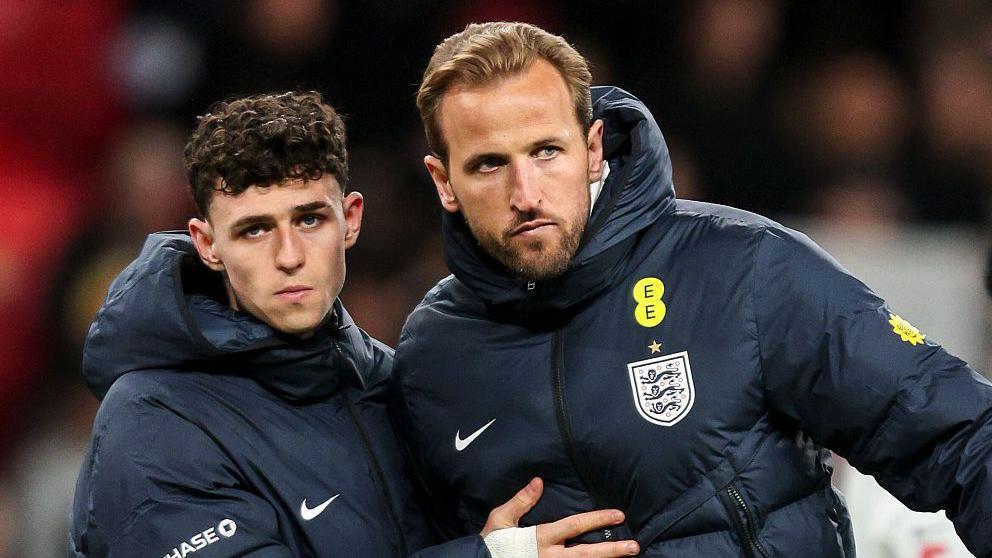
England head coach Thomas Tuchel used Phil Foden as a false nine with captain Harry Kane injured - an experiment that failed in defeat against Japan
Thomas Tuchel and his England team had a taste of what life would be like without Harry Kane as they slumped to a deserved defeat against Japan at Wembley.
On the evidence of this grim spectacle, the presence of the 32-year-old captain and record goalscorer will be the difference between failure and any chance of English success at this summer's World Cup.
Kane was absent from the team list against Japan after suffering "a minor issue in training". He was at Wembley but afforded the night off.
For now, the words "minor issue" are enough to send shudders through England and their followers.
Because the evidence of these 90 minutes tells us that to lose Kane for a game of greater consequence would be a major issue.
Kane's importance simply cannot be overestimated.
Should any misfortune befall England's only world-class striker - perhaps their only high-class striker - in the 78 days between this game and their World Cup opener against Croatia in Arlington on 17 June, that could spell serious trouble.
Kane did not figure in either the draw against Uruguay or this loss to an impressive Japan, who sit 18th in the Fifa rankings, some 14 places below high-flying England.
Without him, England lacked punch, creativity and cutting edge.
Even head coach Tuchel appears to be struggling to find a solution should Kane be unavailable during the World Cup. Quite simply, it is not even worth contemplating from England's viewpoint.
England's threat, without Kane, falls off a cliff.
This is surely not news to Tuchel, but he will have everything crossed that the Bayern Munich striker is fit and well in June.
Alternatives have had try-outs during this camp, but recognised number nines in Dominic Solanke and Dominic Calvert-Lewin did not make their case strongly enough.
And the experiment of using Manchester City's Phil Foden as a false nine looked exactly that against Japan, Tuchel perhaps recognising it was not delivering desired results as it was abandoned inside an hour when he sent on an orthodox striker in Solanke.
Foden was tireless, but this was England's equivalent of an ill-fitting square peg in a round hole. It was a desperate measure, through no fault of Foden's, that should now be forgotten.
England head coach Thomas Tuchel shows frustration during the defeat by Japan at Wembley
In even more desperation, as England tried to offer some belated threat, the bankruptcy of ideas was such that it was back to lumping long balls to substitute Harry Maguire in the hope physical force and height might disrupt a composed Japanese defence.
It was ugly, basic - on this occasion unsuccessful, although Maguire did have a header cleared off the line by Yukinari Sugawara in a rare moment of danger for Japan's defence.
The Football Association labelled these two friendlies a 'Send-Off Series', the last home games before the World Cup.
England got a send-off all right, resounding boos greeting the final whistle before the players went around applauding thousands of empty red seats and the few fans who had bothered to stay.
Tuchel will rightly say Uruguay and Japan are the tough tests England required to tune up for the World Cup, but the burning question is still the same and has not been answered.
Do England really have a chance without Harry Kane? He is irreplaceable, the drop-off after him alarming.
Kane's outstanding record of 78 goals in 112 games is impressive enough, but in the wider context, since his debut against Lithuania in March 2015, he has either scored or assisted in 32% of England's goals in that period, having an involvement in 95 out of 293 goals.
The World Cup represents the short-term future, the most important matter on the horizon, but with Kane turning 33 in July, the long term looks bleak, with few serious contenders as a successor on the horizon.
The great number nine decline - where have England's strikers gone?
Harry Maguire posed a belated threat as England resorted to long balls in the closing stages against Japan at Wembley.
Former England goalkeeper Paul Robinson, at Wembley for BBC Radio 5 Live, said: "This is the exact situation no England fan wants. We've talked about it for over a season with this World Cup coming up. What do England do without Harry Kane?
"This is what England and Thomas Tuchel do not want. He doesn't have an answer to this question. Hence why we're seeing this new formation again, with the interchange and false nine.
"We've spoken about Dominic Calvert-Lewin, Dominic Solanke, Ollie Watkins. Nobody stuck their arm up and said, 'I'll be his replacement'. that's why we're seeing this."
Robinson added: "It was a very disappointing evening for Thomas Tuchel. The experiment that he tried in the first half with the front four clearly didn't work.
"It didn't take him long in the second half to change it. You do give England credit because when those changes were made there was a lot more cohesion.
"The one area that Thomas Tuchel has got a problem is if there is a problem with Harry Kane. If that happens, then England have a real problem after watching that."
Tuchel answered the question about an over-reliance on Kane, saying: "Well, why would Argentina not rely on Lionel Messi, or Portugal not rely on Cristiano Ronaldo? This is totally normal. Key figures left camp for us and we saw that a bit.
"We lacked a punch in the last 20 metres in both matches. We encouraged the players. It was difficult for us."
Kane's potential absence is an immediate concern, leaving Tuchel short of viable alternatives when he needs them most, especially given these two toothless performances without him.
English strikers are suddenly a malaise.
Only 10 English strikers have appeared in the Premier League in the current campaign, with Chelsea's 22-year-old Liam Delap the only one aged under 26.
Brighton's Danny Welbeck, who turns 35 at the end of the month and might just have had a good international break by not being involved, and 33-year-old Callum Wilson from West Ham United, are the only English strikers who have scored more than one goal in a match in the Premier League this season.
Welbeck and Calvert-Lewin are the only English strikers to have scored 10 or more Premier League goals this season – with 43 scored by English strikers.
The cupboard is bare, underscoring just how indispensable Kane is.
This was a sobering night for England and Tuchel. This performance demonstrated that they simple cannot live without Harry Kane.
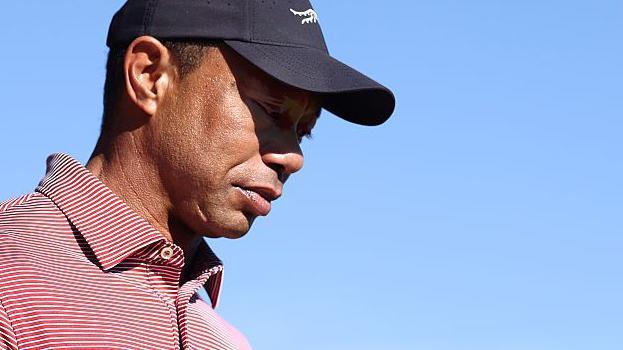
Tiger Woods has won 15 golf majors - only Jack Nicklaus (18) has more
Tiger Woods says he is "stepping away for a period of time to seek treatment and focus on my health" following an arrest after a car crash.
The 50-year-old was arrested and charged with driving under the influence after clipping a truck and rolling his car in Florida on Friday.
He was also charged with property damage and refusal to submit to a lawful test.
The 15-time major champion submitted a written plea of not guilty via his lawyers on Tuesday.
That came after a police report earlier on Tuesday detailed his behaviour after the crash.
It said Woods had two hydrocodone pills in his pocket - an opioid used to treat severe pain - and that officers observed him acting "lethargic and slow" while "sweating profusely" with "extremely dilated" pupils.
Speaking about the incident for the first time, Woods wrote on X: "I know and understand the seriousness of the situation I find myself in today.
"I am stepping away for a period of time to seek treatment and focus on my health. This is necessary in order for me to prioritise my well-being and work toward lasting recovery."
Prior to the crash he had not ruled out playing in next month's Masters - though he has not competed at a major since missing the cut at The Open in July 2024.
"I'm committed to taking the time needed to return in a healthier, stronger and more focused place, both personally and professionally," his statement added.
"I appreciate your understanding and support and ask for privacy for my family, loved ones and myself at this time."
Woods submits not guilty plea after car crash
Woods bailed after arrest following crash
Will crash shake golf from its dependency on Woods?
The PGA Tour also issued its first comment on Woods following the golfer's statement.
"Tiger Woods is a legend of our sport whose impact extends far beyond his achievements on the course," it said.
"But above all else, Tiger is a person, and our focus is on his health and well‑being. Tiger continues to have our full support as he takes this important step."
The golf body's CEO, Brian Rolapp, added: "Tiger Woods is one of the most influential figures the sports world has ever known.
"Over the last year, I have come to deeply appreciate Tiger not only for his impact on the game, but for his friendship and the perspective he has shared with me as I joined the golf industry.
"My thoughts are with him and his family as he takes this step, for which he has my full respect and support."
More to follow.
 AFP via Getty Images
Does your house have a concrete roof or a thatched one?
What is your main cereal? Do you have internet access - or just a basic mobile phone? And how many married couples live under your roof?
These are among the 33 questions that more than a billion Indians will be asked as the country launches the world's largest census on Wednesday, marking the first population count in more than 15 years.
The two-phase exercise, billed as the world's most ambitious of its kind, will see more than three million officials spend a year counting every person in India.
India's 16th census - the eighth since independence in 1947 - will also include caste data and is seen as crucial for policy, welfare delivery and political representation in the world's most populous country.
With more than 1.4 billion people, India overtook China in 2023, according to the United Nations Population Fund.
Yet, falling fertility and a median age of 28 mean it remains one of the world's youngest countries, with nearly 70% of its population of working age.
The last census was held in 2011, with the 2021 round delayed by the pandemic and later pushed back further due to administrative and electoral scheduling - the first time the decennial exercise missed its schedule.
The exercise will span 36 states and federally-administered territories, more than 7,000 sub-districts, over 9,700 towns and nearly 640,000 villages, with fieldwork carried out by enumerators and supervisors - typically schoolteachers, government staff and local officials.
For the first time, the census will be conducted digitally, with enumerators using mobile apps to collect and upload data.
Authorities have introduced self-enumeration, letting residents submit details online via a 16-language portal that generates a unique ID for verification by census workers.
There will be two phases of physical door-to-door surveys.
The first phase, known as the House Listing and Housing Census, will gather information on housing conditions, amenities and household assets.
The second phase - population enumeration - is scheduled for February 2027 and will collect detailed data on demographics, education, migration and fertility.
It will also include caste enumeration, a politically sensitive issue that has long been debated.
AFP via Getty ImagesThe initial rollout will begin in selected regions, including Andaman and Nicobar Islands, Delhi, Goa, Karnataka, Mizoram and Odisha.
In these areas, self-enumeration will run from 1 to 15 April, followed by a house listing and housing survey between 16 April and 15 May.
From its origins as a rudimentary headcount under colonial rule, India's census questionnaire has steadily expanded in scope, mirroring the state's changing priorities.
The first attempt in 1872 contained 17 questions and was essentially a house register - recording who lived where, along with basic markers such as age, religion, caste and occupation.
By 1881, when the first synchronous nationwide census was conducted, the template had stabilised around identity (name, gender, marital status), social markers (caste, religion, language) and rudimentary education and disability categories.
Over the next decades, questions on language, literacy and occupation were refined, adding secondary work and dependency details.
English proficiency - a colonial preoccupation - was one of 16 questions in the 1901 census.
A shift began with the 1941 census, when its 22-question schedule moved from "who you are" to also "how you live".
Fertility, employment status, economic dependency, migration and job search entered the frame, signalling a growing administrative focus on economic behaviour.
After independence, this widened further: the 1951 and 1961 rounds incorporated nationality, displacement (in the shadow of Partition), land ownership and more work categories.
AFP via Getty ImagesFrom the 1970s onwards, the census took on a distinctly socio-economic lens.
Migration histories, duration of residence, fertility patterns and detailed employment classifications became standard.
In more recent decades, especially in 2001 and 2011, the census has tracked the modernising economy: commuting patterns, marginal versus main work, education attendance and increasingly detailed disability and fertility data.
That evolving lens is now extending to how households themselves are defined. In the latest census, a couple in a live-in relationship can be recorded as married if they consider their "relationship as a stable union" - signalling a quiet shift towards recognising changing social realities.
But as the scope of data collection has widened, so too have concerns around how such information might be used.
Some analysts say recent efforts to build databases - including the National Population Register (NPR) - and intensive revisions of electoral rolls have sharpened public anxieties around official counting, often linking it to questions of citizenship and inclusion.
"Although the census has nothing to do with citizenship, this can create anxiety, prompting some families to over-report or list absent migrant members during the census to avoid any perceived exclusion," says KS James, an Indian demographer at Princeton University.
Beyond these concerns, there is a more fundamental problem: India has been making policy without a recent population baseline.
In the absence of a fresh census, it has relied on sample surveys - from consumption expenditure to labour force data - with the statistics ministry working to keep them broadly representative.
For economists like Ashwini Deshpande of Ashoka University, the census is essential to update the basic map of India itself - what counts as rural, urban or increasingly peri-urban.
Much of that classification still rests on 2011 data, even though many areas have since transformed, blurring the lines that underpin policy.
"That has real consequences for India's vast welfare and public spending system," says Deshpande.
If eligibility for schemes is based on faulty or outdated data, the number of beneficiaries can be misjudged, distorting delivery. Programmes like the nationwide rural jobs guarantee, for instance, depend on an accurate sense of which areas are still "rural" - a category that may have shifted significantly over 15 years.
Without current data, millions of urban migrants - often in informal jobs and housing - remain poorly captured in policy design, a gap laid bare during the pandemic.
"This census is crucial - it is the definitive snapshot of India, capturing everything from caste and religion to jobs, education and amenities, and offering the most complete picture of how the population lives," says Deshpande.