Trump Says U.S. Will Be Out of Iran Within Two to Three Weeks

© Tierney L. Cross/The New York Times

© Tierney L. Cross/The New York Times


© Chuck Ramirez


Getty ImagesWeight-loss jab Wegovy will be offered for free on the NHS to more than a million people in England at risk of heart attacks and strokes.
The watchdog NICE says people with these health issues, or serious circulation problems in their legs, and who are overweight, should have the weekly jab "as an extra layer of protection".
A GP or specialist will check if it is the right option for those already taking other heart medicines, such as statins, and alongside a healthy diet.
Drug trials suggest Wegovy can help slash the risk of future heart and circulation problems.
In tests on tens of thousands of people, the jabs - alongside existing heart medicines - were linked to a 20% reduced risk of heart attacks and strokes.
Importantly, benefits were seen early in the clinical trial, before significant weight loss occurred, suggesting the drug works directly on the heart and blood vessels, not just through weight loss, says NICE (the National Institute for Health and Care Excellence).
Each year in the UK, there are around 100,000 hospital admissions due to heart attacks, another 100,000 people experience a stroke and around 350,000 people live with peripheral arterial disease.
People who have already had one of these health issues are at higher risk of experiencing more problems and stand to benefit from medicines that can cut that risk.
Disease might be prevented in around seven in 10 cases, experts estimate, based on best evidence.
Helen Knight, from NICE, said: "We know that people who have already had a heart attack or stroke are living with real fear that it could happen again.
"The evidence from the clinical trial is compelling. It showed that people taking semaglutide alongside their existing heart medicines were significantly less likely to have another heart attack or stroke.
"Today's decision gives thousands of people in that situation an extra layer of protection, on top of the medicines they are already taking."
Patients prescribed Wegovy will be able to self-administer the drug at home using a special pen injector device.
It is recommended for those with a Body Mass Index (BMI) classed as overweight or obese - higher or equal to 27.
Rollout should begin this summer.
The drug, also known as semaglutide, works as an appetite suppressant by mimicking a hormone called GLP-1 that makes people feel fuller, which can help them lose weight.
It also slows down how quickly food is digested. Some people may experience bloating, nausea or discomfort as a side effect.
Doctors should also prescribe lifestyle changes that include eating healthily and getting enough exercise to help people keep the weight off.
Currently, treatment with Wegovy is limited to two years on the NHS through specialist services and its long-term risks are still being studied.
Many say the treatment should be considered life-long, given the risk of relapse.
NICE says the NHS has reached an agreement with the pharmaceutical company Novo Nordisk that makes the treatment, ensuring it will be cost-effective.
Dr Sonya Babu-Narayan from the British Heart Foundation said she hoped the injections could be made available to everyone who could benefit "as soon as possible".
Prof Robert Storey, an expert in heart health at the University of Sheffield, warned GLP-1 drugs could reduce muscle mass as well as fat.
"Physical activity, such as resistance training, is important to counteract potential negative effects on muscle strength," he added.

iStockAround 2.7 million people are set to receive a pay rise this week as the national minimum wage goes up by 50p to £12.71 for over 21s.
Workers aged 18-20 will see an 85p rise to £10.85, and under-18s and apprentices will get 45p more to £8 an hour.
Campaigners have welcomed the increases, but businesses have said the higher wage bills will force them to increase prices or cut staff.
The Low Pay Commission, the government agency which recommended the increases, said previous minimum wage rises for over-21s had "not had a significant negative impact on jobs".
Prime Minister Sir Keir Starmer said wages were going up "for the lowest paid" but said the government "must go further to bear down on costs".
Spencer Bowman is the managing director of of Mettricks, a chain of four coffee shops in Southampton. He says he would normally be "thrilled" to pay staff more, but "the cost increases have got to be sustainable".
"There's nothing that I'd want more than to ensure that my team can earn a really fair amount of money for a fair day's work. And it's been one of my long-term ambitions to see hospitality workers, my employees, paid far more."
But Spencer says his business is being squeezed from every angle – as well as minimum wage, he has had increases in business rates, national insurance, and statutory sick pay. He also expects energy bills to go up because of the war in the Middle East.
"We're running on a minimum number of staff on shift. We can't run on fewer people," he says.
"If something doesn't give somewhere, we will be closing sites.


"It doesn't make any sense. Revenue is up. Our customer numbers are up. But our costs everywhere have hit a point where we're not financially sustainable and if that continues, there's only one outcome for that."
The minimum wage increases are on top of a 6.7% rise for over-21s and a 16.3% rise for 18 to 20-year-olds respectively last year, when there was also a rise in employers' National Insurance contributions.
Ministers are considering slowing down plans to pay adults of all ages the same minimum wage.
Labour committed in their election manifesto to remove "discretionary age bands" and increase the wages of 18 to 20-year-olds so they are paid the same as those over 21.
Ifunanya Ezechukwu, 25, calls the minimum wage rise a "step in the right direction".
"Especially with the cost of living being really bad, people need more money so they can actually afford the basics," she tells BBC Newsbeat.
She doesn't think employers paying staff more will necessarily translate to fewer job opportunities.
"I feel like they're probably just going to up the prices of their services, so I don't think there'll be less job opportunities," she says.
"I just feel like some things might get more expensive, which is unfortunate, and then the cycle just continues."


Alex McCarthy, a university student who works part-time in a pub, says he is feeling "very, very happy" about the rise.
But the 18-year-old says it probably won't be enough for some of his friends, who are working while living at university but are still struggling to do weekly shops and are having to borrow money off their parents.
Amelia Evans, 18, believes the rise is necessary because "everything is going up in price". But she is concerned it will limit her job opportunities.
"So far this year I think I've done maybe 20 applications, and haven't got any. I feel like it's going to impact me even more now."
When Chancellor Rachel Reeves announced the increases in the Budget last year, she said the cost of living was still the biggest issue for working people.
"The economy isn't working well enough for those on the lowest incomes," she added.
At the time, the Treasury said the new minimum wage rates for 2026 struck a balance between "the needs of workers, the affordability for businesses and the opportunities for employment".
The Living Wage Foundation has welcomed the rises but says they do not go far enough.
The Foundation calculates what is known as the Real Living Wage, which it says is a more accurate reflection of the cost of living in the UK. It currently stands at £13.45 across the UK and £14.80 in London.
Kate Chapman, the executive director of the Living Wage Foundation, said one in seven businesses now pay the Real Living Wage.
"That's because they know the Living Wage is good for people, good for society and good for business," she said.
The British Chamber of Commerce has said that tax and labour costs are the biggest concerns for British businesses.
In its quarterly survey of 4,000 firms, 73% said labour costs are putting pressure on them to raise prices.
Additional reporting by Georgia Levy-Collins, Lizzy Bella, and Jemma Crew


BBC/Wasawat LukharangTirayut Wongsantisuk and his wife moved to Chiang Mai in the 2010s, drawn by the hilly region's cool air and lush greenery.
But worsening air quality in the Thai city, especially during this time of the year, have prompted them to consider relocating for the sake of their children.
Two of their daughters have experienced frequent nosebleeds. "I've been thinking, maybe we really should move during this time... because if something bad happens to our child, we'll feel terrible forever," Tirayut , 41, told the BBC.
Smoke from raging fires have choked parts of northern Thailand this past week, with Chiang Mai ranking among the world's most polluted cities, according to monitoring group IQAir.
A thick blanket of haze hovered over the horizon when BBC Thai visited Tirayut and other families in Chiang Mai, covering what once were mountainous views. There was a persistent burning smell in the air.
Satellite data showed a record number of 4,750 hotspots across Thailand on Tuesday, mostly in forested areas.
As of Wednesday morning, Chiang Mai's PM2.5 level, which refers to the concentration of tiny, hazardous particles smaller than 2.5 micrometres, was classified as "very unhealthy".
The months of November to March mark peak fire season in the region as farmers burn off fields before new seeds are sown. In addition to these are wildfires that break out naturally because of dry conditions in forests and farmlands.

BBC/Wasawat LukharangPhotographs on local media show mountains engulfed by flames, with some residents likening the blazes to "volcanoes erupting", according to local news outlet Khaosod.
Earlier this week, authorities ordered the closure of parks with high fire risk and warned that anyone found entering those areas to start fires would be arrested immediately.
In Thailand, those convicted of illegal forest burning face up to 20 years in prison and a 2m baht ($61,100; £46,200) fine.
Exposure to haze can cause various health issues, from itchy eyes and nose bleeds to heart attacks.
Tirayut says his oldest daughter, six, "had nosebleeds, a rash, and an allergic reaction in her eyes, to the point where her eyelids were swollen".
Benjamas Jaiparkan has sent her children to the neighbouring Phayao province, where the air quality is better, to temporarily live with relatives. But the 35-year-old is thinking of leaving Chiang Mai permanently.
Benjamas, a public school teacher, is especially worried about her four-year-old son, who started getting nosebleeds last year.
"I feel so sorry for him because I don't know how much more his lungs can take," she said.
Over the years, activists and residents in Thailand have filed lawsuits to demand government action against pollution.
In July 2023, about 1,700 people in Chiang Mai brought a case against former Prime Minister Prayut Chan-o-cha and two state agencies for failing to exercise their authority to reduce pollution in the north, which they say was shortening each of their lives by about five years.
In January 2024, a Chiang Mai court ordered the government to come up with an emergency plan to improve air quality within 90 days.
Hazardous haze has also been choking people elsewhere in South East Asia, with the most number of hotspots flaring up across Malaysia and Indonesia in seven years.

© Altaf Qadri/Associated Press

© Joao Silva/The New York Times

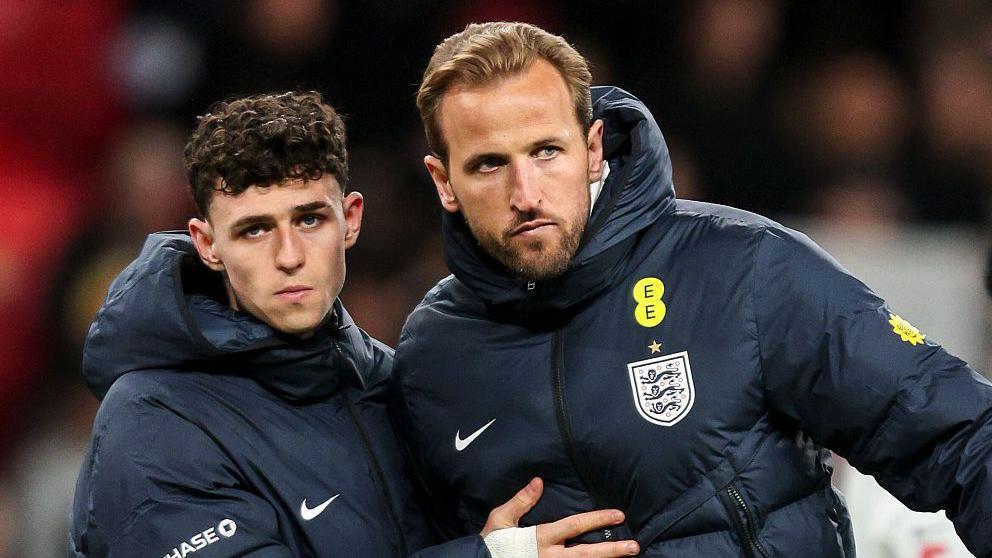
England head coach Thomas Tuchel used Phil Foden as a false nine with captain Harry Kane injured - an experiment that failed in defeat against Japan
Thomas Tuchel and his England team had a taste of what life would be like without Harry Kane as they slumped to a deserved defeat against Japan at Wembley.
On the evidence of this grim spectacle, the presence of the 32-year-old captain and record goalscorer will be the difference between failure and any chance of English success at this summer's World Cup.
Kane was absent from the team list against Japan after suffering "a minor issue in training". He was at Wembley but afforded the night off.
For now, the words "minor issue" are enough to send shudders through England and their followers.
Because the evidence of these 90 minutes tells us that to lose Kane for a game of greater consequence would be a major issue.
Kane's importance simply cannot be overestimated.
Should any misfortune befall England's only world-class striker - perhaps their only high-class striker - in the 78 days between this game and their World Cup opener against Croatia in Arlington on 17 June, that could spell serious trouble.
Kane did not figure in either the draw against Uruguay or this loss to an impressive Japan, who sit 18th in the Fifa rankings, some 14 places below high-flying England.
Without him, England lacked punch, creativity and cutting edge.
Even head coach Tuchel appears to be struggling to find a solution should Kane be unavailable during the World Cup. Quite simply, it is not even worth contemplating from England's viewpoint.
England's threat, without Kane, falls off a cliff.
This is surely not news to Tuchel, but he will have everything crossed that the Bayern Munich striker is fit and well in June.
Alternatives have had try-outs during this camp, but recognised number nines in Dominic Solanke and Dominic Calvert-Lewin did not make their case strongly enough.
And the experiment of using Manchester City's Phil Foden as a false nine looked exactly that against Japan, Tuchel perhaps recognising it was not delivering desired results as it was abandoned inside an hour when he sent on an orthodox striker in Solanke.
Foden was tireless, but this was England's equivalent of an ill-fitting square peg in a round hole. It was a desperate measure, through no fault of Foden's, that should now be forgotten.

England head coach Thomas Tuchel shows frustration during the defeat by Japan at Wembley
In even more desperation, as England tried to offer some belated threat, the bankruptcy of ideas was such that it was back to lumping long balls to substitute Harry Maguire in the hope physical force and height might disrupt a composed Japanese defence.
It was ugly, basic - on this occasion unsuccessful, although Maguire did have a header cleared off the line by Yukinari Sugawara in a rare moment of danger for Japan's defence.
The Football Association labelled these two friendlies a 'Send-Off Series', the last home games before the World Cup.
England got a send-off all right, resounding boos greeting the final whistle before the players went around applauding thousands of empty red seats and the few fans who had bothered to stay.
Tuchel will rightly say Uruguay and Japan are the tough tests England required to tune up for the World Cup, but the burning question is still the same and has not been answered.
Do England really have a chance without Harry Kane? He is irreplaceable, the drop-off after him alarming.
Kane's outstanding record of 78 goals in 112 games is impressive enough, but in the wider context, since his debut against Lithuania in March 2015, he has either scored or assisted in 32% of England's goals in that period, having an involvement in 95 out of 293 goals.
The World Cup represents the short-term future, the most important matter on the horizon, but with Kane turning 33 in July, the long term looks bleak, with few serious contenders as a successor on the horizon.
The great number nine decline - where have England's strikers gone?

Harry Maguire posed a belated threat as England resorted to long balls in the closing stages against Japan at Wembley.
Former England goalkeeper Paul Robinson, at Wembley for BBC Radio 5 Live, said: "This is the exact situation no England fan wants. We've talked about it for over a season with this World Cup coming up. What do England do without Harry Kane?
"This is what England and Thomas Tuchel do not want. He doesn't have an answer to this question. Hence why we're seeing this new formation again, with the interchange and false nine.
"We've spoken about Dominic Calvert-Lewin, Dominic Solanke, Ollie Watkins. Nobody stuck their arm up and said, 'I'll be his replacement'. that's why we're seeing this."
Robinson added: "It was a very disappointing evening for Thomas Tuchel. The experiment that he tried in the first half with the front four clearly didn't work.
"It didn't take him long in the second half to change it. You do give England credit because when those changes were made there was a lot more cohesion.
"The one area that Thomas Tuchel has got a problem is if there is a problem with Harry Kane. If that happens, then England have a real problem after watching that."
Tuchel answered the question about an over-reliance on Kane, saying: "Well, why would Argentina not rely on Lionel Messi, or Portugal not rely on Cristiano Ronaldo? This is totally normal. Key figures left camp for us and we saw that a bit.
"We lacked a punch in the last 20 metres in both matches. We encouraged the players. It was difficult for us."
Kane's potential absence is an immediate concern, leaving Tuchel short of viable alternatives when he needs them most, especially given these two toothless performances without him.
English strikers are suddenly a malaise.
Only 10 English strikers have appeared in the Premier League in the current campaign, with Chelsea's 22-year-old Liam Delap the only one aged under 26.
Brighton's Danny Welbeck, who turns 35 at the end of the month and might just have had a good international break by not being involved, and 33-year-old Callum Wilson from West Ham United, are the only English strikers who have scored more than one goal in a match in the Premier League this season.
Welbeck and Calvert-Lewin are the only English strikers to have scored 10 or more Premier League goals this season – with 43 scored by English strikers.
The cupboard is bare, underscoring just how indispensable Kane is.
This was a sobering night for England and Tuchel. This performance demonstrated that they simple cannot live without Harry Kane.

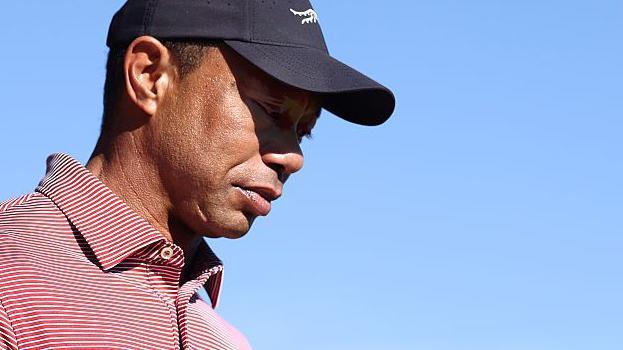
Tiger Woods has won 15 golf majors - only Jack Nicklaus (18) has more
Tiger Woods says he is "stepping away for a period of time to seek treatment and focus on my health" following an arrest after a car crash.
The 50-year-old was arrested and charged with driving under the influence after clipping a truck and rolling his car in Florida on Friday.
He was also charged with property damage and refusal to submit to a lawful test.
The 15-time major champion submitted a written plea of not guilty via his lawyers on Tuesday.
That came after a police report earlier on Tuesday detailed his behaviour after the crash.
It said Woods had two hydrocodone pills in his pocket - an opioid used to treat severe pain - and that officers observed him acting "lethargic and slow" while "sweating profusely" with "extremely dilated" pupils.
Speaking about the incident for the first time, Woods wrote on X: "I know and understand the seriousness of the situation I find myself in today.
"I am stepping away for a period of time to seek treatment and focus on my health. This is necessary in order for me to prioritise my well-being and work toward lasting recovery."
Prior to the crash he had not ruled out playing in next month's Masters - though he has not competed at a major since missing the cut at The Open in July 2024.
"I'm committed to taking the time needed to return in a healthier, stronger and more focused place, both personally and professionally," his statement added.
"I appreciate your understanding and support and ask for privacy for my family, loved ones and myself at this time."
Woods submits not guilty plea after car crash
Woods bailed after arrest following crash
Will crash shake golf from its dependency on Woods?
The PGA Tour also issued its first comment on Woods following the golfer's statement.
"Tiger Woods is a legend of our sport whose impact extends far beyond his achievements on the course," it said.
"But above all else, Tiger is a person, and our focus is on his health and well‑being. Tiger continues to have our full support as he takes this important step."
The golf body's CEO, Brian Rolapp, added: "Tiger Woods is one of the most influential figures the sports world has ever known.
"Over the last year, I have come to deeply appreciate Tiger not only for his impact on the game, but for his friendship and the perspective he has shared with me as I joined the golf industry.
"My thoughts are with him and his family as he takes this step, for which he has my full respect and support."
More to follow.


AFP via Getty ImagesDoes your house have a concrete roof or a thatched one?
What is your main cereal? Do you have internet access - or just a basic mobile phone? And how many married couples live under your roof?
These are among the 33 questions that more than a billion Indians will be asked as the country launches the world's largest census on Wednesday, marking the first population count in more than 15 years.
The two-phase exercise, billed as the world's most ambitious of its kind, will see more than three million officials spend a year counting every person in India.
India's 16th census - the eighth since independence in 1947 - will also include caste data and is seen as crucial for policy, welfare delivery and political representation in the world's most populous country.
With more than 1.4 billion people, India overtook China in 2023, according to the United Nations Population Fund.
Yet, falling fertility and a median age of 28 mean it remains one of the world's youngest countries, with nearly 70% of its population of working age.
The last census was held in 2011, with the 2021 round delayed by the pandemic and later pushed back further due to administrative and electoral scheduling - the first time the decennial exercise missed its schedule.
The exercise will span 36 states and federally-administered territories, more than 7,000 sub-districts, over 9,700 towns and nearly 640,000 villages, with fieldwork carried out by enumerators and supervisors - typically schoolteachers, government staff and local officials.
For the first time, the census will be conducted digitally, with enumerators using mobile apps to collect and upload data.
Authorities have introduced self-enumeration, letting residents submit details online via a 16-language portal that generates a unique ID for verification by census workers.
There will be two phases of physical door-to-door surveys.
The first phase, known as the House Listing and Housing Census, will gather information on housing conditions, amenities and household assets.
The second phase - population enumeration - is scheduled for February 2027 and will collect detailed data on demographics, education, migration and fertility.
It will also include caste enumeration, a politically sensitive issue that has long been debated.

AFP via Getty ImagesThe initial rollout will begin in selected regions, including Andaman and Nicobar Islands, Delhi, Goa, Karnataka, Mizoram and Odisha.
In these areas, self-enumeration will run from 1 to 15 April, followed by a house listing and housing survey between 16 April and 15 May.
From its origins as a rudimentary headcount under colonial rule, India's census questionnaire has steadily expanded in scope, mirroring the state's changing priorities.
The first attempt in 1872 contained 17 questions and was essentially a house register - recording who lived where, along with basic markers such as age, religion, caste and occupation.
By 1881, when the first synchronous nationwide census was conducted, the template had stabilised around identity (name, gender, marital status), social markers (caste, religion, language) and rudimentary education and disability categories.
Over the next decades, questions on language, literacy and occupation were refined, adding secondary work and dependency details.
English proficiency - a colonial preoccupation - was one of 16 questions in the 1901 census.
A shift began with the 1941 census, when its 22-question schedule moved from "who you are" to also "how you live".
Fertility, employment status, economic dependency, migration and job search entered the frame, signalling a growing administrative focus on economic behaviour.
After independence, this widened further: the 1951 and 1961 rounds incorporated nationality, displacement (in the shadow of Partition), land ownership and more work categories.

AFP via Getty ImagesFrom the 1970s onwards, the census took on a distinctly socio-economic lens.
Migration histories, duration of residence, fertility patterns and detailed employment classifications became standard.
In more recent decades, especially in 2001 and 2011, the census has tracked the modernising economy: commuting patterns, marginal versus main work, education attendance and increasingly detailed disability and fertility data.
That evolving lens is now extending to how households themselves are defined. In the latest census, a couple in a live-in relationship can be recorded as married if they consider their "relationship as a stable union" - signalling a quiet shift towards recognising changing social realities.
But as the scope of data collection has widened, so too have concerns around how such information might be used.
Some analysts say recent efforts to build databases - including the National Population Register (NPR) - and intensive revisions of electoral rolls have sharpened public anxieties around official counting, often linking it to questions of citizenship and inclusion.
"Although the census has nothing to do with citizenship, this can create anxiety, prompting some families to over-report or list absent migrant members during the census to avoid any perceived exclusion," says KS James, an Indian demographer at Princeton University.
Beyond these concerns, there is a more fundamental problem: India has been making policy without a recent population baseline.
In the absence of a fresh census, it has relied on sample surveys - from consumption expenditure to labour force data - with the statistics ministry working to keep them broadly representative.
For economists like Ashwini Deshpande of Ashoka University, the census is essential to update the basic map of India itself - what counts as rural, urban or increasingly peri-urban.
Much of that classification still rests on 2011 data, even though many areas have since transformed, blurring the lines that underpin policy.
"That has real consequences for India's vast welfare and public spending system," says Deshpande.
If eligibility for schemes is based on faulty or outdated data, the number of beneficiaries can be misjudged, distorting delivery. Programmes like the nationwide rural jobs guarantee, for instance, depend on an accurate sense of which areas are still "rural" - a category that may have shifted significantly over 15 years.
Without current data, millions of urban migrants - often in informal jobs and housing - remain poorly captured in policy design, a gap laid bare during the pandemic.
"This census is crucial - it is the definitive snapshot of India, capturing everything from caste and religion to jobs, education and amenities, and offering the most complete picture of how the population lives," says Deshpande.

Tiger Woods has won 15 golf majors - only Jack Nicklaus (18) has more
Tiger Woods says he is "stepping away for a period of time to seek treatment and focus on my health" following an arrest after a car crash.
The 50-year-old was arrested and charged with driving under the influence after clipping a truck and rolling his car in Florida on Friday.
He was also charged with property damage and refusal to submit to a lawful test.
The 15-time major champion submitted a written plea of not guilty via his lawyers on Tuesday.
That came after a police report earlier on Tuesday detailed his behaviour after the crash.
It said Woods had two hydrocodone pills in his pocket - an opioid used to treat severe pain - and that officers observed him acting "lethargic and slow" while "sweating profusely" with "extremely dilated" pupils.
Speaking about the incident for the first time, Woods wrote on X: "I know and understand the seriousness of the situation I find myself in today.
"I am stepping away for a period of time to seek treatment and focus on my health. This is necessary in order for me to prioritise my well-being and work toward lasting recovery."
Prior to the crash he had not ruled out playing in next month's Masters - though he has not competed at a major since missing the cut at The Open in July 2024.
"I'm committed to taking the time needed to return in a healthier, stronger and more focused place, both personally and professionally," his statement added.
"I appreciate your understanding and support and ask for privacy for my family, loved ones and myself at this time."
Woods submits not guilty plea after car crash
Woods bailed after arrest following crash
Will crash shake golf from its dependency on Woods?
The PGA Tour also issued its first comment on Woods following the golfer's statement.
"Tiger Woods is a legend of our sport whose impact extends far beyond his achievements on the course," it said.
"But above all else, Tiger is a person, and our focus is on his health and well‑being. Tiger continues to have our full support as he takes this important step."
The golf body's CEO, Brian Rolapp, added: "Tiger Woods is one of the most influential figures the sports world has ever known.
"Over the last year, I have come to deeply appreciate Tiger not only for his impact on the game, but for his friendship and the perspective he has shared with me as I joined the golf industry.
"My thoughts are with him and his family as he takes this step, for which he has my full respect and support."
More to follow.

Getty ImagesThe crews of two military helicopters seen hovering outside musician Kid Rock's home have been suspended from flight duties, the US Army has said.
The Army is reviewing the circumstances surrounding the mission, Spokesman Maj Montrell Russell told the BBC in a statement, including whether the crews complied with federal flying regulations and aviation safety protocols.
Kid Rock, a supporter of President Donald Trump, posted a video of himself gesturing at the AH-64 Apaches above his swimming pool on Saturday, prompting many to question why the helicopters would visit his home.
Trump, when asked about the incident on Tuesday, said in a joking manner: "Maybe they were trying to defend him."
Speaking to reporters in the Oval Office, Trump said the crews "probably shouldn't have been doing it. You're not supposed to be playing games".
"They like Kid Rock. I like Kid Rock," he added.
The Army confirmed that two of its Apache helicopters from the 101st Combat Aviation Brigade at Fort Campbell conducted a flight on 28 March in the Nashville area in the state of Tennessee, where Kid Rock lives and owns two restaurants.
"The Army takes any allegations of unauthorized or unsafe flight operations very seriously and is committed to enforcing standards and holding personnel accountable," Russell said, adding that the crews would be suspended during the ongoing investigation.
Kid Rock told local outlet WKRN-TV on Monday that it is not uncommon for helicopters from the nearby Fort Campbell Army base to fly near his home.
He noted that he has performed for troops at Fort Campbell and overseas.
"I think they know this is a pretty friendly spot," the musician said. "I've talked to some of these pilots. I've told them, 'You guys see me waving when you come by the house?' I'm like, 'You guys are always welcome to cruise by my house, any time.'"
Kid Rock, who also performed at the Republican convention in 2024 insulted California Governor Gavin Newsom, a Democrat who has feuded with him and Trump, in the caption of the footage he posted.
One clip shows Kid Rock, whose real name is Robert Ritchie, standing poolside next to a replica of the Statue of Liberty, clapping and saluting as the aircraft hovers before flying away.
"God Bless America and all those who have made the ultimate sacrifice to defend her," the caption reads.
Another video shows the Born Free singer pumping his fist before a second gunship appears to fly by his mansion, which he has dubbed the Southern White House.

© Doug Mills/The New York Times

© Kenny Holston/The New York Times


© Doug Mills/The New York Times

© Ben Brewer for The New York Times


Getty ImagesWeight-loss jab Wegovy will be offered for free on the NHS to more than a million people in England at risk of heart attacks and strokes.
The watchdog NICE says people with these health issues, or serious circulation problems in their legs, and who are overweight, should have the weekly jab "as an extra layer of protection".
A GP or specialist will check if it is the right option for those already taking other heart medicines, such as statins, and alongside a healthy diet.
Drug trials suggest Wegovy can help slash the risk of future heart and circulation problems.
In tests on tens of thousands of people, the jabs - alongside existing heart medicines - were linked to a 20% reduced risk of heart attacks and strokes.
Importantly, benefits were seen early in the clinical trial, before significant weight loss occurred, suggesting the drug works directly on the heart and blood vessels, not just through weight loss, says NICE (the National Institute for Health and Care Excellence).
Each year in the UK, there are around 100,000 hospital admissions due to heart attacks, another 100,000 people experience a stroke and around 350,000 people live with peripheral arterial disease.
People who have already had one of these health issues are at higher risk of experiencing more problems and stand to benefit from medicines that can cut that risk.
Disease might be prevented in around seven in 10 cases, experts estimate, based on best evidence.
Helen Knight, from NICE, said: "We know that people who have already had a heart attack or stroke are living with real fear that it could happen again.
"The evidence from the clinical trial is compelling. It showed that people taking semaglutide alongside their existing heart medicines were significantly less likely to have another heart attack or stroke.
"Today's decision gives thousands of people in that situation an extra layer of protection, on top of the medicines they are already taking."
Patients prescribed Wegovy will be able to self-administer the drug at home using a special pen injector device.
It is recommended for those with a Body Mass Index (BMI) classed as overweight or obese - higher or equal to 27.
Rollout should begin this summer.
The drug, also known as semaglutide, works as an appetite suppressant by mimicking a hormone called GLP-1 that makes people feel fuller, which can help them lose weight.
It also slows down how quickly food is digested. Some people may experience bloating, nausea or discomfort as a side effect.
Doctors should also prescribe lifestyle changes that include eating healthily and getting enough exercise to help people keep the weight off.
Currently, treatment with Wegovy is limited to two years on the NHS through specialist services and its long-term risks are still being studied.
Many say the treatment should be considered life-long, given the risk of relapse.
NICE says the NHS has reached an agreement with the pharmaceutical company Novo Nordisk that makes the treatment, ensuring it will be cost-effective.
Dr Sonya Babu-Narayan from the British Heart Foundation said she hoped the injections could be made available to everyone who could benefit "as soon as possible".
Prof Robert Storey, an expert in heart health at the University of Sheffield, warned GLP-1 drugs could reduce muscle mass as well as fat.
"Physical activity, such as resistance training, is important to counteract potential negative effects on muscle strength," he added.

Getty Images"People going up to the Moon is kind of cool," eight-year-old Isiah says.
He is among the 400,000 people expected to cram the causeways, beaches and motel balconies of Florida's Space Coast for the launch attempt of Artemis II tonight.
They will watch as four astronauts blast into space in the hope of flying around the Moon and potentially travelling further from Earth than anyone has ever been before.
Nasa's 10-day test flight will not land on the Moon. However, the crew may witness views of the lunar landscapes that have never been seen by human eyes.
Amanda Garcia has travelled more than 1,000 miles from New Mexico to witness the launch. "I'm pretty excited about it," she tells us.
"I came out here to see it, and I heard it's gonna be a great show. A lot of people are going to be here."

Kevin Church/BBC NewsBeyond the Kennedy Space Centre launch site, along the lagoon and beaches of Titusville and Cocoa Beach, bars are advertising "moonshots" and hotels are warning guests to expect long delays getting to and from viewing spots.
Local officials talk of a "historic influx" of tourists and an economic impact of around $160m (£121m), putting traffic plans in place for a night when the highway lights will compete with the glow of floodlit launch towers as well as camper van barbecues.
A mile or so from the pads where Artemis II will light up the sky, Brenda Mulberry, owner of Space Shirts, has been selling Nasa T-shirts and souvenirs for 40 years.
In her small shop on Merritt Island, racks of orange, blue and black T-shirts depict hand drawn rockets, mission patches and moonscapes, ready for the crowds who arrive on regular launch days. But this launch is different, she tells us. "We've wanted to go back to the Moon since the '70s. People are excited. People are beyond excited," she said.
Brenda says she has stocked up for the biggest surge of customers she has ever seen.
"I want to have the first T-shirt shop on the Moon," she says. "Because if you've been there, you get the T-shirt, right?" she adds, laughing.

Pallab Ghosh/BBC NewsFuture Artemis missions plan to land humans on the Moon for the first time since 1972. But this time, the goal is to build a permanent Moon base to exploit its natural resources and provide a springboard for an attempt to reach Mars.
Artemis II's mission commander, Reid Wiseman, said he hoped the effort to return to the Moon would inspire a new generation.
"In our lifetime, we've looked at the Moon knowing that people had been there. And now in the Artemis generation, kids will walk out and look at the Moon going, we are there. We are there now, and we are going further into our solar system."

Joe Raedle/Getty ImagesTonight, all attention will turn to Launch Pad 39B - the same historic stretch of concrete from which the US Apollo programme first landed men on the Moon in 1969. Standing on the pad is Nasa's Space Launch System (SLS) rocket.
At 98m (321ft) tall, the white and orange giant is the heaviest rocket the agency has ever launched. At its top sits Orion, a capsule about the size of a small van, where the four astronauts will spend the next 10 days in close proximity. It will be the first time the capsule has been put through its paces with a human crew on board.
If all goes to schedule, the rocket will launch between 18:24-20:24 local time (23:24-01:24 BST) on Wednesday.
The astronauts who will strap into Orion about four hours before launch have spent years training together.
Up front, on the left hand side will be Wiseman, the Artemis II commander, while pilot Victor Glover will sit beside him. Behind them will be Christina Koch and Jeremy Hansen, a Canadian fighter pilot turned astronaut. This will be his first trip into space.
After reaching orbit, Orion spends its first day in high Earth orbit practising manual flying and testing life support before shaping its path towards the Moon.
On Day 2, a long trans-lunar injection burn puts the spacecraft onto a free return trajectory that would naturally loop it around the Moon and back to Earth, with small correction burns fine tuning the course.

AFP via Getty ImagesEach day of the mission involves different tests and challenges for the crew.
Day 6 stands out because Orion is due to fly around the far side of the moon. All radio contact will be lost for about 40 minutes, meaning flight controllers won't know what is happening on board.
Orion will be travelling about 4,000–6,000 miles above the Moon's surface and may slightly exceed Apollo 13's record distance of about 250,000 miles (400,000km) from Earth, depending on the exact trajectory.
In the days that follow, Orion will be pulled naturally back towards Earth by the same free return trajectory that sent it out, with small course adjustment burns ensuring the capsule hits the atmosphere at just the right angle.
On the final day, the crew will strap in for the most brutal part of the trip: re-entry into Earth's atmosphere at about 25,000mph (40,000 km/h), when Orion's heat shield must again face temperatures hot enough to char rock.

NASAAfter the first uncrewed test flight, Artemis I, engineers found that chunks of the heat shield's coating had cracked and broken away during a two‑stage "skip" re‑entry manoeuvre. This saw the capsule dip into the upper atmosphere, briefly climb again, then plunge back in so as to best cope with the heat, G-forces and splashdown accuracy needed.
For Artemis II they are keeping this two‑step re-entry, but changing the angle and timing so Orion spends less time in the initial, gentler dip. Modelling suggests this should reduce the heating and loads that caused extra charring, but this will be the first time the revised descent is flown with a crew.
If Artemis II is a success, the next time the Space Coast fills up like this it will be for another test flight – another step closer to people actually walking on the Moon again, half a century after the last footprints were made.
And somewhere between the marsh grass and the launch pads, there will almost certainly be someone wearing one of Brenda Mulberry's shirts, already dreaming of the day when her logo appears not just on Florida cotton, but in a photograph taken on the Moon.

iStockAround 2.7 million people are set to receive a pay rise this week as the national minimum wage goes up by 50p to £12.71 for over 21s.
Workers aged 18-20 will see an 85p rise to £10.85, and under-18s and apprentices will get 45p more to £8 an hour.
Campaigners have welcomed the increases, but businesses have said the higher wage bills will force them to increase prices or cut staff.
The Low Pay Commission, the government agency which recommended the increases, said previous minimum wage rises for over-21s had "not had a significant negative impact on jobs".
Prime Minister Sir Keir Starmer said wages were going up "for the lowest paid" but said the government "must go further to bear down on costs".
Spencer Bowman is the managing director of of Mettricks, a chain of four coffee shops in Southampton. He says he would normally be "thrilled" to pay staff more, but "the cost increases have got to be sustainable".
"There's nothing that I'd want more than to ensure that my team can earn a really fair amount of money for a fair day's work. And it's been one of my long-term ambitions to see hospitality workers, my employees, paid far more."
But Spencer says his business is being squeezed from every angle – as well as minimum wage, he has had increases in business rates, national insurance, and statutory sick pay. He also expects energy bills to go up because of the war in the Middle East.
"We're running on a minimum number of staff on shift. We can't run on fewer people," he says.
"If something doesn't give somewhere, we will be closing sites.


"It doesn't make any sense. Revenue is up. Our customer numbers are up. But our costs everywhere have hit a point where we're not financially sustainable and if that continues, there's only one outcome for that."
The minimum wage increases are on top of a 6.7% rise for over-21s and a 16.3% rise for 18 to 20-year-olds respectively last year, when there was also a rise in employers' National Insurance contributions.
Ministers are considering slowing down plans to pay adults of all ages the same minimum wage.
Labour committed in their election manifesto to remove "discretionary age bands" and increase the wages of 18 to 20-year-olds so they are paid the same as those over 21.
Ifunanya Ezechukwu, 25, calls the minimum wage rise a "step in the right direction".
"Especially with the cost of living being really bad, people need more money so they can actually afford the basics," she tells BBC Newsbeat.
She doesn't think employers paying staff more will necessarily translate to fewer job opportunities.
"I feel like they're probably just going to up the prices of their services, so I don't think there'll be less job opportunities," she says.
"I just feel like some things might get more expensive, which is unfortunate, and then the cycle just continues."


Alex McCarthy, a university student who works part-time in a pub, says he is feeling "very, very happy" about the rise.
But the 18-year-old says it probably won't be enough for some of his friends, who are working while living at university but are still struggling to do weekly shops and are having to borrow money off their parents.
Amelia Evans, 18, believes the rise is necessary because "everything is going up in price". But she is concerned it will limit her job opportunities.
"So far this year I think I've done maybe 20 applications, and haven't got any. I feel like it's going to impact me even more now."
When Chancellor Rachel Reeves announced the increases in the Budget last year, she said the cost of living was still the biggest issue for working people.
"The economy isn't working well enough for those on the lowest incomes," she added.
At the time, the Treasury said the new minimum wage rates for 2026 struck a balance between "the needs of workers, the affordability for businesses and the opportunities for employment".
The Living Wage Foundation has welcomed the rises but says they do not go far enough.
The Foundation calculates what is known as the Real Living Wage, which it says is a more accurate reflection of the cost of living in the UK. It currently stands at £13.45 across the UK and £14.80 in London.
Kate Chapman, the executive director of the Living Wage Foundation, said one in seven businesses now pay the Real Living Wage.
"That's because they know the Living Wage is good for people, good for society and good for business," she said.
The British Chamber of Commerce has said that tax and labour costs are the biggest concerns for British businesses.
In its quarterly survey of 4,000 firms, 73% said labour costs are putting pressure on them to raise prices.
Additional reporting by Georgia Levy-Collins, Lizzy Bella, and Jemma Crew

Tiger Woods has won 15 golf majors - only Jack Nicklaus (18) has more
Tiger Woods says he is "stepping away for a period of time to seek treatment and focus on my health" following an arrest after a car crash.
The 50-year-old was arrested and charged with driving under the influence after clipping a truck and rolling his car in Florida on Friday.
He was also charged with property damage and refusal to submit to a lawful test.
The 15-time major champion submitted a written plea of not guilty via his lawyers on Tuesday.
That came after a police report earlier on Tuesday detailed his behaviour after the crash.
It said Woods had two hydrocodone pills in his pocket - an opioid used to treat severe pain - and that officers observed him acting "lethargic and slow" while "sweating profusely" with "extremely dilated" pupils.
Speaking about the incident for the first time, Woods wrote on X: "I know and understand the seriousness of the situation I find myself in today.
"I am stepping away for a period of time to seek treatment and focus on my health. This is necessary in order for me to prioritise my well-being and work toward lasting recovery."
Prior to the crash he had not ruled out playing in next month's Masters - though he has not competed at a major since missing the cut at The Open in July 2024.
"I'm committed to taking the time needed to return in a healthier, stronger and more focused place, both personally and professionally," his statement added.
"I appreciate your understanding and support and ask for privacy for my family, loved ones and myself at this time."
Woods submits not guilty plea after car crash
Woods bailed after arrest following crash
Will crash shake golf from its dependency on Woods?
The PGA Tour also issued its first comment on Woods following the golfer's statement.
"Tiger Woods is a legend of our sport whose impact extends far beyond his achievements on the course," it said.
"But above all else, Tiger is a person, and our focus is on his health and well‑being. Tiger continues to have our full support as he takes this important step."
The golf body's CEO, Brian Rolapp, added: "Tiger Woods is one of the most influential figures the sports world has ever known.
"Over the last year, I have come to deeply appreciate Tiger not only for his impact on the game, but for his friendship and the perspective he has shared with me as I joined the golf industry.
"My thoughts are with him and his family as he takes this step, for which he has my full respect and support."
More to follow.


Getty ImagesUS troops storming a secretive, underground nuclear facility to seize Iran's stockpile of enriched uranium may sound far-fetched, but it is an option President Donald Trump is reportedly considering to achieve his main objective in the war: preventing the regime from developing nuclear weapons.
Such an operation would be extremely challenging and fraught with danger, according to military experts and former US defence officials who spoke to the BBC. They said it would require the deployment of ground troops and could take several days or even weeks to complete.
Removing the uranium stockpile would be one of the "most complicated special operations in history," said Mick Mulroy, a former deputy assistant secretary of defence for the Middle East.
The scenario is just one of several military actions that Trump could take in Iran.
Others include the US taking control of Kharg Island in an effort to pressure Iran to fully reopen the Strait of Hormuz. The administration may also be using the threat of new military operations to pressure Iran to the negotiating table.
In a telephone interview with the BBC's US partner CBS News on Tuesday, President Trump declined to say whether it would be possible to declare victory in the war without removing or destroying Iran's enriched uranium.
But he appeared to play down the significance of the stockpile, pointing to the damage caused in US-Israeli strikes last June. "That's so deeply buried it's gonna be very hard for anybody," Trump said. "It's down there deep. So… it's pretty safe. But, you know, we'll make a determination."
His remarks came after the Wall Street Journal reported that the US was considering an operation to extract the material. The White House said Trump was yet to make a final decision.


An operation targeting Iran's stockpile would face several major logistical challenges, experts said.
At the start of the war, Iran possessed approximately 440kg of uranium enriched to 60%, according to senior US officials. The material can be fairly quickly enriched to the 90% threshold needed for weapons-grade uranium.
Iran also has roughly 1,000kg of uranium enriched to 20%, and 8,500kg that are enriched to the 3.6% threshold accepted for medical research.
Most of the highly enriched uranium that can be easily turned into material for bombs or missiles is believed to be stored at Isfahan. The facility is one of three underground nuclear sites in Iran that were targeted in US-Israeli airstrikes last year.
But it is unclear how much of the highly enriched uranium is stored at other locations.
A military operation to retrieve the material would be easier if the US knew exactly where the stockpile was, said Jason Campbell, a former senior US defence official in the Obama and Trump administrations.
"The ideal scenario is that you know exactly where it is," Campbell said. "If it's been dispersed to four different sites, then you're talking about a whole different" level of complexity.


In addition to Isfahan, some highly enriched uranium could also be stored at Fordo and Natanz, the other two enrichment facilities that were targeted in Operation Midnight Hammer last year.
Rafael Grossi, the director of the International Atomic Energy Agency, said last month that the majority of Iran's highly enriched uranium is stored at Isfahan, with some additional material at Natanz. But Grossi said more detailed information wasn't available because inspectors haven't visited the sites since being evacuated from Iran after the US-Israeli air campaign in 2025.
"There are many questions that we will only elucidate when we are able to go back," Grossi told reporters.
Gaining access to the highly enriched uranium presents another set of challenges, assuming the US knows where it is.
There are signs that Iran fortified an underground complex near one of its nuclear facilities before this year's US-Israeli strikes. At Isfahan, for example, satellite imagery from February indicated all entrances to its tunnel complex appeared to be sealed off with earth, which would make any operation more difficult.


Since the start of the war, the US and Israel have been able to use air strikes alone to decimate Iran's navy, degrade its ballistic missiles and damage its industrial base. But unlike those other military objectives, experts said that securing Iran's enriched uranium could not be done without using ground forces.
The US could use elements of the 82nd Airborne Division - which were deployed to the Middle East - to secure the areas surrounding Isfahan and Natanz. Special operations forces that are trained to handle nuclear material would then be sent in to retrieve the enriched uranium. The uranium itself is in gaseous form and is believed to be stored in large metal containers.
Satellite imagery shows that the entrances to Isfahan and Natanz were badly damaged by US airstrikes. US forces would likely need heavy machinery to dig through rubble in order to locate the enriched uranium, which is believed to be stored in tunnels buried deep underground - all while facing potential counterattacks from Iran.
"You've first got to excavate the site and detect [the enriched uranium] while likely being under near constant threat," Campbell said.


It is an open question how Iran might respond, or how much of a threat it might pose to US ground troops targeting the country's main nuclear facilities.
The US and Israel have been degrading "Iranian defence capabilities to enable this type of operation if it was necessary," said Alex Plitsas, a former US defence official and nonresident senior fellow at the Scowcroft Middle East Security Initiative. Nevertheless, he said it would still be a "high risk" operation.
US ground troops would be isolated at Isfahan, which is located approximately 300 miles (482km) inland from Iran's third largest city. "It makes [medical evacuations] difficult given the distances. It makes [US troops] vulnerable to anti-aircraft fire coming in and out, as well as attacks while they're" at the nuclear facility," Plitsas said.
While the operation could take multiple forms, experts said it would likely involve the seizure of an airfield or landing zone from which US forces could operate - and then remove the enriched uranium from Iran once they have retrieved it.
The 82nd Airborne Division, which is trained to secure airfields and other infrastructure, could be used along with other US forces to stage an operating base for the mission, military experts said. Once the uranium is secured, the US would then face the question of removing it from the country or diluting it on site.
Senior administration officials said at the start of the war that the US might consider diluting Iran's highly enriched uranium on site, rather than removing it from the country. But that would be a large, complex and time-consuming operation, said Jonathan Ruhe, an expert on Iran's nuclear programme at the Jewish Institute for National Security of America, a conservative think tank in Washington DC.
Seizing and taking the uranium out of Iran is faster and would allow the US to dilute the material in the United States, Ruhe said. The operation would be deeply risky no matter how it is done, he added.
"You've got basically a half ton of what's effectively weapons grade uranium that you've got to extricate," Ruhe said.
"And there are a million things that could go wrong."

Getty ImagesAll Norma Tactacon can do is pray as the sirens blare.
The 49-year-old, who works in the Middle East as a domestic worker, is thousands of miles away from her home in the Philippines, where her husband and three children live.
Stuck in Qatar, which is caught in the crossfire of the US and Israel's war on Iran, her only hope is that she makes it home to her family.
"I get scared and nervous every time I see pictures and videos of missiles in the air," she tells the BBC. "I need to be alive to be there for my family. I'm all that they have."
As wealthy Gulf states turned into targets of Iranian strikes because of the US military bases they host, expats left in large numbers, while tourists and travellers have stayed away.
But it has been especially hard for the millions of migrants whose futures have now turned uncertain. From domestic help to construction workers, they have long supported these economies to lift their families back home from poverty.
Tactacon had hoped to pay for her 23-year-old son to graduate from a police academy and for her two daughters, aged 22 and 24, to become nurses, a springboard for high-paying jobs overseas.
That's why she spent a good part of the last two decades working as a maid in Qatar, Saudi Arabia and the United Arab Emirates (UAE).
What is still keeping her there is her salary. Filipino domestic workers in the Middle East earn a minimum wage of $500 (£370) a month, roughly four to five times more than what they would make in a similar job back home.
"I hope the world will be peaceful again and things go back to the way they were. I pray that the war will stop," says Tactacon in Qatar.

Getty ImagesBut the war is making her reconsider. She might return home and start a small business with her husband. She has reason to be worried.
One of the first victims of the conflict was 32-year-old Filipina Mary Ann Veolasquez, who worked as a caregiver in Israel.
The Israeli embassy in Manila said she was injured while leading her patient to safety, after a ballistic missile struck her apartment in Tel Aviv.
According to the International Labour Organisation (ILO), the region hosts 24 million migrant workers, making it the world's top destination for overseas labour. Most of them come from Asia - India, Pakistan, Bangladesh, Sri Lanka, the Philippines and Indonesia. Many of these workers take low paid or precarious jobs, and have little access to things like healthcare, the ILO says.
At least 12 South Asian migrant workers have died so far as a result of the conflict, according to reports.
The war's mounting fatalities include Dibas Shrestha, a 29-year-old Nepali who worked as a security guard in Abu Dhabi. He died in an Iranian strike on 1 March.
"I tried to convince him to move back to Nepal, but he said he liked his job in Abu Dhabi, and that he had a good life," his uncle Ramesh told the BBC.
"We have many relatives who've moved to the Gulf for work, so we were very worried for all of them,"
When the war started, Shrestha assured his family it was safe. In a post on Facebook, he wrote that watching the news had made him "concerned" but he also felt, "The news sometimes presents exaggerated or misleading information".
His uncle said Shrestha had been saving up to rebuild his parents' home after it had been damaged in an earthquake in 2015 that killed hundreds.
"He was their only son," Ramesh added. "So kind, and very smart."

BBC/Dibash Shrestha's familyMore than 120kms away, in Dubai, debris from an intercepted missile killed Ahmad Ali, a 55-year-old water tank supplier from Bangladesh.
His son, Abdul Haque, said he joined his father to work in the UAE but returned to Bangladesh before the war started. His father continued sending money home - $500 to $600 every month, which is a huge sum in the poor South Asia nation.
Ahmad died during Ramadan, and his son was told it happened in the evening, just as people were breaking their fast.
"He really liked the people in Dubai, he said they were welcoming, that it was a great place to live," Abdul told the BBC.
"I don't even think he knew the war was going on. He didn't read the news and didn't have a smartphone."
Abdul's his view of Dubai and the region has changed: "It's not safe now, nobody wants to lose a father."
Governments in Asia have been scrambling to bring migrant workers home.
But the threat of missile strikes has disrupted travel to and from Dubai, Abu Dhabi and Qatar. So people seeking to leave have had to take longer routes home.

Getty ImagesThe last repatriation flight saw 234 Filipino workers from Kuwait, Qatar, and Bahrain travel up to eight hours by land to Saudi Arabia, where 109 others were waiting to join them on a Philippine Airlines flight.
Close to 2,000 Filipino workers and their dependents were flown back to Manila as of 23 March, according to the government.
The Middle East is home to roughly half of the more than two million Filipinos working overseas, and their remittances account for 10% of the economy.
Remittances are just as crucial for Bangladesh - most of its 14 million migrant workers are in the Middle East.
Close to 500 Bangladeshi workers have been repatriated since the conflict started, and the government in Dhaka has arranged for at least two more flights home, departing from Bahrain.
For some leaving is not an option.
Su Su from Myanmar found a safe home in Dubai when she left behind a country gripped by a bloody civil war that has dragged on since 2021.
The 31-year-old, who works as an operations specialist for a real estate company, has been in Dubai for two years.
She says her current work-from-home set-up reminds her of Covid lockdowns - except when she hears the sirens. Then she needs to stay away from her window.
"I have an emergency bag prepared in case I have to evacuate... This is just a habit I got from Myanmar."
And yet, she says, "The feeling here is more calm. I believe at the end of the day, we will be fine".
Additional reporting by BBC Burmese and BBC Indonesian

Supplied"He said to her: 'You're no longer my sister', and she told him to go to hell."
This argument between a man and his sister in a city near Tehran - witnessed and recounted by one of their relatives - gives a telling insight into the painful rows erupting among families and friends as US and Israeli strikes continue.
The relative, who we are calling Sina, says that when his family recently got together at his grandmother's house, emotions quickly exploded, exposing stark divisions.
His uncle, a member of the Basij - a volunteer militia often deployed to suppress dissent in Iran - refused to even greet his own sister, who is opposed to the ruling regime.
After their exchange, the uncle was "very quiet… and left early", Sina says.
He and other young Iranians have described emotional scenes as rifts open up over the war.
Even among those opposed to the government, there are deep divisions over whether the war will help or hinder attempts to bring about change.
Despite the government-imposed internet blackout, the BBC has been able to maintain contact with some of the few Iranians who have found ways to remain online.
Iranians can be sent to prison for speaking to certain international media. But even so, over the month-long war, these contacts have been sharing information through intermittent text messages and occasional voice calls.
Their initial responses of shock and fear have given way to attempts to adapt, switching locations and changing routines. They describe the details of their lives; practising yoga despite the sounds of explosions, eating birthday cake alone and venturing out to near-empty coffee shops.
And, in some surprisingly personal notes, they have shared details about how the conflict is affecting their relationships. All of the names in this article have been changed.

SuppliedTowards the end of March, Iranians celebrated Nowruz, the Persian new year festival that marks the spring equinox and is often a time when families get together.
Sina, who is in his 20s, is opposed to the clerical establishment and continues to support the Israeli and US air strikes, believing that they will help bring the regime down.
He says his uncle, the Basij member, had not attended Nowruz family gatherings in recent years, but turned up this time, to the surprise of his family. Usually, "we don't talk to him, nor to his children", says Sina.
He says he has barely spoken to his uncle since major protests in 2022 following the death in custody of a young woman, Mahsa Amini, who was accused of not wearing the compulsory hijab properly.
More recently, Iran saw an unprecedented crackdown by the Basij and other security forces on protests that swept across the country in December and January. At least 6,508 protesters were killed and 53,000 arrested, according to the US-based Human Rights Activists News Agency (HRANA).
Sina says that, according to other relatives, his uncle was so angered by the protests that he said even if his own children went onto the streets and were killed, he wouldn't go to collect their bodies.
And yet, Sina says, his uncle seems to be "afraid of dying" in the war and appears to have been trying to improve relations with some family members, including his own mother, Sina's grandmother.
At Nowruz, he and his wife "just looked really down and helpless", says Sina. "I didn't get into an argument with them. They should be in prison."

SuppliedAnother young man, Kaveh from Tehran, spent Nowruz alone.
He says his relationship with his sister, who is also a Basij member, was already difficult. After he joined the 2022 protests, he says, she became critical of his activities and unsympathetic over the deaths of friends of his in the January protests.
Kaveh has been providing internet access to friends and family via SpaceX's Starlink, which offers connectivity via satellites. In Iran, owning or using Starlink terminals is punishable by up to two years in prison.
He initially joined his family for the holiday, but he says he left the place where they were staying and later returned to find his sister had disconnected his Starlink and the devices connected to it. When he challenged her, a row broke out, he says.
"I can't stand her anymore… I just had a fight and said I can't stand it and I left," he says.
"I was so excited about Nowruz. I packed my clothes and wanted to be there with the family," Kaveh said over an encrypted line as he travelled home alone. "But now I don't feel it at all."

SuppliedMost Iranians have no internet access. Starlink devices are expensive as well as illegal, so those who have access tend to be relatively wealthy. A few others manage to connect via VPNs.
Most Iranians who agree to speak to BBC Persian are opposed to the Iranian regime. But even among the government's critics, there are deep differences over this war and its impact.
According to the International Federation of Red Cross and Red Crescent Societies, 1,900 people have been killed in Iran by the US and Israeli strikes, while HRANA puts the total at over 3,400, more than 1,500 of them civilians.
Maral, a student in her 20s in the city of Rasht in northern Iran, has become very frustrated with her father for his continued support of the war.
He is an enthusiastic supporter of Reza Pahlavi, the crown prince of Iran before the 1979 revolution.
Pahlavi now lives in the US and has positioned himself as a potential transitional leader of the country. He supports the US and Israeli strikes on Iran despite mounting casualties, describing the attacks as a "humanitarian intervention" and recently urging the US to "stay the course".
He has gained traction in Iran in recent months as an opposition figure, with some demonstrators in the January protests chanting his name.
"I just want this war to end as soon as possible," says Maral. "Many ordinary people have died."
She says she gets "annoyed" because her father is "really optimistic", even as the bombs fall.
"We try to talk to him, but he just keeps going on about 'the Prince, the Prince,'" she says.
"My dad lives in this illusion that Iran will open up its borders and within five years everything will be rebuilt, everything will be fine. He's being influenced by Israeli propaganda that the two countries will be friends."
Her father and mother often argue about Pahlavi, she adds.

SuppliedMeanwhile, Tara, a woman in her 20s in Tehran, says her close family members initially criticised her for being opposed to the war.
"They all support attacks on Iran… My mum and sister told me: 'You haven't lost anyone [during the protests], that's why you are against the strikes. You don't want your routine, exercise and coffee catch-ups to get disrupted… If they [the regime] had killed one of your friends or relatives [during the protests] you would have a different opinion.'"
But Tara says: "Thousands of innocent people could be killed in the war as well, without anyone even remembering them."
However, she says, her sister's view – like that of several other Iranians the BBC has heard from - has softened as the attacks have continued. More recently, after a nearby area was hit, she says her sister simply said: "I hope the war finishes soon."
And despite their differences, the family still try to go everywhere together, Tara says. That way, "we would all die together if they hit us".