
Normal view

There are new articles available, click to refresh the page.
Today — 2 April 2026BBC | World

Peter Magyar, the former Orban ally vying for power in Hungary

1 April 2026 at 21:43
Jakub Porzycki/NurPhoto A man with a blue sweatshirt holds a Hungarian flag with green, white and red stripesJakub Porzycki/NurPhoto

"Now or never," Peter Magyar has been telling Hungarians, in a breathless campaign across the country in the run-up to 12 April elections that opinion polls suggest he can win.

This 45-year-old former Fidesz party insider represents the biggest threat to Viktor Orban's rule in Hungary since he won the first of four consecutive victories in 2010.

Magyar's slogan dates back to a revolutionary poet's 19th Century rallying cry to rise up for the homeland.

After more than 100 campaign stops his message has been shortened to "Now": the words "or never" have been crossed out, adding to the urgency.

Getty Images A Magyar supporter holds up a placard that reads "Now" - with the words "or never" crossed outGetty Images
A Magyar supporter holds up a placard that reads "Now" - with the words "or never" crossed out

He is on course to visit all of Hungary's 106 constituencies, and he has given four, five, even six speeches a day. Magyar has built a powerful support base in more than two years of touring the country, even in the small towns and villages were Fidesz traditionally dominates.

Last year he walked 300km (185 miles) from Budapest to the Romanian border in a campaign to "reunite" the nation, in a bid to bring natural Fidesz voters to his side.

Magyar promises to tackle corruption, improve the economy and he has sought to woo Hungary's disadvantaged Roma community. He has also promised to unlock billions of euros in EU funds, frozen largely because of concerns over Hungary's rule of law.

But Orban has depicted him as a "puppet" of the EU and Ukraine, and he has been wary of getting too close to Brussels and has promised voters "we are the real party of peace".

His self-confidence stems from a deep understanding of the rival he faces.

Until February 2024, Magyar was very much part of the Fidesz family.

He joined the party at university and married one of its rising stars in Judit Varga, with whom he had three children.

Then Magyar stunned Hungarians with a live appearance on a pro-opposition YouTube Channel called Partizán.

In a country of 9.6 million people, a million watched as a solemn Peter Magyar explained why he had had enough of his own party.

"Everyone warned me against it, friends, family people I know," he told presenter Márton Gulyás. "Obviously I've been in this system, in this circle, for a very long time."

ATTILA KISBENEDEK/AFP A man in a white shirt speaks in front of a set showing old TVsATTILA KISBENEDEK/AFP
Large numbers of Hungarians watched Magyar's interview on 14 February 2024 when he tore into Orban's party

Hungary was in the midst of a scandal in which President Katalin Novak had granted a pardon to a man who had helped cover up sexual abuse in a Hungarian state-run children's home.

She resigned, and so did Magyar's ex-wife. Varga had been justice minister and had co-signed the pardon. Two leading Fidesz women were left to carry the can. Varga had been destined for big things in Fidesz, having left her job as minister to spearhead Fidesz European election campaign. That career was over.

Now she was no longer part of the Fidesz machine, Peter Magyar sensed this was his moment.

"I do not want to be part of a system in which the real people in charge hide behind women's skirts," he wrote on Facebook.

Towards the end of his Partizán interview Magyar spoke of his hope for political change, while realising it would be very difficult while Orban was still in power.

The current opposition was totally inept, he complained, so change would have to come from within. But one day there would be change and when it did happen it could be fast, he predicted.

His YouTube appearance went viral.

"It was not a planned move," he later told the BBC. "My mother called me not to go, but I did the opposite. Everybody knew the situation in Hungary - it's not very safe to go against this government."

Peter Magyar's high-profile party marriage had fallen apart in 2023 but he was still an important figure in Fidesz even if he was little known to the wider public.

AFP A man in a dark jacket stands in front of Hungarian flagsAFP
Viktor Orban returned to office in 2010 and has been prime minister ever since

He was a natural fit for Orban's social conservatives.

The son of two lawyers - his mother was as senior judge - Peter Magyar also counts a former Hungarian president as his godfather, and he was very interested in politics from an early age.

Magyar went to an elite Catholic boys' high school near the centre of Budapest before studying law at a Catholic university in Budapest while Orban was serving his first term as prime minister from 1998-2002.

Magyar joined the party after Orban's election defeat, and the woman he married, Judit Varga, was destined for Fidesz success, becoming justice minister in 2019, nine years after Orban's return to office.

Magyar himself became a diplomat at Hungary's permanent mission in Brussels, later running Orban's team working with the European Parliament. He went on to serve on the boards of state-owned companies.

His disaffection with the party was gradual.

"After a while I became more and more critical, openly and just among friends. I can tell you that the Fidesz we see today is very very different from the one I joined in 2002."

"I was always told by the politicians it's necessary to keep power - I accepted it for a time. But of course the turning point was in 2024," he told the BBC's Budapest correspondent Nick Thorpe.

For a while, Magyar worried if he had made a mistake: "I have three kids, I love them very much and I was very much worried about their future as well."

If the YouTube interview was the turning point, the next big moment came on 15 March 2024, a national holiday marking the anniversary of Hungary's failed revolution in 1848.

While Orban spoke from the steps of Budapest's National Museum, condemning the EU and calling for the "occupation of Brussels", Peter Magyar was addressing an estimated 10,000 people, alleging corruption and mishandling the economy at the top.

He announced he was forming a new party, with only weeks to go before Hungarians voted in European elections.

He doubled down on his accusations of corruption, releasing a secret recording made of a conversation with his ex-wife in 2023 in which she speaks about a high-profile trial.

Judit Varga said she was appalled by Magyar's actions, accusing him of abuse which he denied. He also fell out with a former friend, Orban minister Gergely Gulyás - who said Magyar was "one who first betrays his family, then betrays his country as an agent of Brussels".

Asked what he thought of his challenger, Orban told the BBC: "He left Fidesz, that's all."

NurPhoto via Getty Images Judit Varga - a woman with dark hair, stands in front of a microphoneNurPhoto via Getty Images
Magyar's marriage to former Justice Minister Judit Varga ended in 2023

By now Varga's ex-husband was making big strides politically and forming new friendships, among them popular actor Ervin Nagy.

Magyar took over a dormant party called Tisza, and won 29.6% of the vote and seven seats in the European Parliament. Tisza was well behind Orban's ruling Fidesz on 44.8%, but Magyar had made a powerful statement.

By autumn 2024, Magyar's new party was ahead of Fidesz in the polls and he tore into Orban's close ties with Russia as they led rival marches marking Hungary's 1956 uprising against the Soviet Union.

While Orban labelled Tisza as "warmongers" indulging in a "Brussels war march", Magyar taunted the prime minster as the man who had in 1989 called for Russian troops to leave Hungary but now trampled on the legacy of 1956 and was "the most loyal ally of the Kremlin".

"Mr Prime Minister, why won't you say 'Russians go home' any more?" he asked.

Magyar is no liberal. He has openly derided the liberal opposition that tried to take Orban on in the past, only to see the Fidesz leader storm to a two-thirds majority it needed to mould the constitution.

One key to his success has been his demolition of the fragmented, old opposition parties. He sees former Socialist leader Ferenc Gyurcsany as no better than Orban.

And he has not been afraid to take on the pro-Orban new outlets that dominate Hungary's media landscape.

Journalists had been sent a black-and-white surveillance image apparently showing drugs on a table near a bed. The implication was that more footage was to come and Magyar moved to pre-empt it.

He admitted having consensual sex with an ex-girlfriend but was adamant he had not touched anything on the table and said he had been lured into a "honey-trap" set up by the secret services.

"My conscience is clear," he said, adding later that he had taken a drug test on 22 March to prove he had not consumed any drugs during the past months, and pointing out he had had similar negative tests in the past.

Until now, none of the accusations and barbs directed at Peter Magyar have stuck. As a former Fidesz adviser, he believes this gives him an advantage.

"I know them, I know their tricks. I know they're very much frightened," he said.

"This is a once-in-a-lifetime opportunity, not for Peter Magyar but for the country."
Devastated Italians reckon with 'third apocalypse' of World Cup failure

1 April 2026 at 20:05
Getty Images A defeated Pio Esposito Getty Images
Pio Esposito missed the first penalty in Italy's shootout defeat in Bosnia

Leaning against a wall near a news-stand in central Rome, Tommaso Silvestri, 65, scans the morning's front pages, their headlines swinging between "apocalypse," "scandal" and "disaster" after Italy's latest footballing collapse.

"We've made a real mess of it," he says, shaking his head. "We had players who couldn't even find the target."

"The golden days of Italian football are well and truly gone."

On Tuesday night in Zenica, four-time World Cup winners Italy failed to qualify for the tournament for a third consecutive time, losing 4-1 on penalties to Bosnia and Herzegovina after being reduced to 10 men before halftime.

Since winning the World Cup in 2006, the Azzurri have largely disappointed in international tournaments - with the exception of their surprise victory at the Euros in 2021 against England at Wembley.

"We are what our results say we are," Silvestri said. "When you shoot and can't even hit the goal, you're not going to go far. When it comes to taking the game home, Italy just doesn't get there anymore."

Last night's defeat drew swift and emotional reactions across Italian politics and society.

"Everything has a limit," lamented Ignazio La Russa, president of the Senate and a senior figure in Prime Minister Giorgia Meloni's far-right Brothers of Italy party.

In a post on X, he wrote: "We're not going to the World Cup. We supported them, we hoped, we even railed against a couple of questionable refereeing decisions... but deep down we feared it. In fact, we knew it."

Gomorrah author and anti-mafia writer Roberto Saviano also weighed in, pointing to deeper structural failures in Italian football, from governance to youth development.

"Clubs are corrupt and at the mercy of criminal organisations. True laundering vaults. No investment in young players, no care for second-generation talent. It's easier to buy foreign players than to develop new athletes," he said in a post on Instagram.

Getty Images Italian players celebrating the 2021 winGetty Images
Italy won the Euros at Wembley in 2021

Across Italy, a legendary football nation with a rich history of producing world-class talent, many are wondering what went wrong. Giovanni Colli, 71, rolling his eyes while sipping an espresso at a café near the Pantheon, says he feels "betrayed."

"Not going to the World Cup three times in a row, how on earth did it happen? What a huge disappointment. Everyone should resign. Give the young players a chance," he says.

Italy's World Cup heartbreak was crystallised in the tear-streaked face of coach Rino Gattuso, who struggled to hold back his emotions after the national team's defeat.

"We don't deserve this, it's not fair. I'm sorry I couldn't make it happen," Gattuso said, eyes glistening, before retreating to the dressing room.

The legendary 2006 World Cup-winning midfielder was only given the job of coach last June.

Despite the disappointment, Gattuso expressed pride in his players: "I'm proud of my boys and what they gave on the pitch."

The match, decided on penalties after Italy were reduced to 10 men following Alessandro Bastoni's early red card, gave a brief moment of hope to Italians with Moise Kean's goal, only for it to end in dismay.

Getty Images Rino Gattuso with grey hair and a beardGetty Images
"I'm sorry I couldn't make it happen," coach Gattuso said after Tuesday's defeat

Gattuso admitted the team's shortcomings: "When you have chances and don't take them, football punishes you."

Reflecting on their elimination, he added: "This hurts. We gave everything we could. It's a real shock."

Sport journalist Elisabetta Esposito of La Gazzetta dello Sport told the BBC that Italian football was facing a difficult period - one that would take time to overcome, during which loyalty to individual clubs was outweighing support for the national team.

"The risk is that this third consecutive failure to qualify will deepen young people's disengagement from the Azzurri," she said.

"The disappointment is profound, but the country is not only disappointed but almost disillusioned. It's as if a new generation no longer knows what it means to cheer for their country."

Reflecting on Tuesday's match, Esposito added: "From a technical standpoint, everything went wrong. The team hasn't worked together enough. Rebuilding will require a long-term strategy, chasing immediate wins with rushed decisions won't succeed."

On a busy street in central Rome, 56-year-old Teresa is walking her dog among tourists and commuters rushing to work.

"Oh, we are not going to the World Cup?" she asks. "I don't know much about football, but that's a bit of disaster, isn't it?"

Explosions at Burundi ammunition depot kill civilians, witnesses say

1 April 2026 at 23:23
AFP via Getty Images Five pieces of black shrapnel lie on a dusty groundAFP via Getty Images
Remnants of munitions have been discovered in impacted areas of the city

At least four people have been killed by a series of powerful explosions at an ammunitions depot in Burundi's largest city, Bujumbura, local residents have told the BBC.

The blasts erupted late on Tuesday at the facility, located in the suburb of Musaga, due to an electrical fault, an army spokesperson said.

Shrapnel and debris were propelled more than 5km (three miles) and several houses in nearby districts were destroyed by the force of the explosions.

The authorities have not yet provided any casualty figures but family members and eyewitnesses told the BBC of four separate deaths in the city. The AFP news agency quotes security sources as saying that dozens of people had died.

One woman told BBC Gahuza that a relative, who had been detained at Mpimba Central Prison, had died after a bomb hit the facility.

Numerous inmates at the prison, which is located near the ammunitions store, are reported to have been injured.

In the north-eastern neighbourhood of Gisandema, witnesses told BBC Gahuza that a bomb had destroyed a house and killed a domestic worker.

The authorities have said they cannot yet comment on the number of casualties as they are still assessing the extent of the damage.

The explosions sent plumes of smoke rising above the city, sparking panic in the city of more than a million people.

President Evariste Ndayishimiye, in a message on X, expressed his condolences to all Burundians, adding that the authorities are "here to help".

More BBC stories about Burundi:

Getty Images/BBC A woman looking at her mobile phone and the graphic BBC News AfricaGetty Images/BBC

Go to BBCAfrica.com for more news from the African continent.

Follow us on Twitter @BBCAfrica, on Facebook at BBC Africa or on Instagram at bbcafrica

Brazil judge blocks Sugarloaf Mountain zipline

1 April 2026 at 19:17
Emin Sansar/Anadolu via Getty Images A view of Sugar Loaf cable car at Guanabara Bay in November 2024. The steep rocky mountain can be seen against the blue of the bay. At the top of the mountain, the cable car station is visible. 
Cables connect it with Morro da Urca, from which the photo is taken. A cable car can be seen suspended halfway between the two. Emin Sansar/Anadolu via Getty Images
A cable car has been linking Morro da Urca and Sugarloaf Mountain since 1912. The zipwire was planned to run parallel to it.

A judge in Brazil has blocked a project to build a zipline connecting the famous Sugarloaf Mountain in Rio de Janeiro to a nearby hill, Morro da Urca.

The attraction's developer said it would allow visitors to descend from Sugarloaf Mountain at speeds of almost 100km/h (62mph) via four ziplines covering a distance of 755m (0.47 miles).

The project - which started four years ago - had triggered protests from locals and environmentalists, who argued that the construction work was causing irreparable damage to the Unesco World Heritage Site.

The developer is expected to appeal against the decision.

CARL DE SOUZA/AFP via Getty Images A number of people of different ages, some of them holding placards and signs, clap during a protest held at the foot of Sugarloaf Mountain in Rio de Janeiro in March 2023. One sign reads in Portuguese "No to the zipwire" while another reads "A paradise which can't become a private enterprise".CARL DE SOUZA/AFP via Getty Images
Locals and environmentalists organised protests against the project

Gricel Osorio Hor-Meyll, one of the activists who had led the campaign against the zipline told AFP news agency that the ruling was "a huge victory".

Those opposed to the attraction argued that in order to build the platforms needed to access the zipline, the rock on top of Sugarloaf Mountain would have to be excavated.

The company which manages the site said that excavation would be kept to a minimum by using areas with existing construction.

The project had the approval of both Rio City Council and the National Historical and Artistic Heritage Institute (IPHAN).

As part of Tuesday's ruling, the judge ordered that IPHAN and the project's developer pay 30m reals ($5.77m, £4.35m) in damages, stressing the "inestimable value of Sugarloaf Mountain, not only for Brazilians but for people worldwide".

The project has been at the centre of a legal battle for years and construction had been halted on a number of occasions as the company argued its case in court.

In January, construction work restarted after the high court had ruled that stopping would cause more damage than finishing the project at this late stage.

It added that the project was 95% completed.

That decision has now been overturned by Tuesday's ruling.

However, the legal saga is likely to continue with the company behind the project expected to lodge an appeal.

South African army arrive in crime hotspots to help tackle gangs

1 April 2026 at 22:35
AFP via Getty Images Four uniformed soldiers are seen walking through a Cape Town township as part of their deployment to the areaAFP via Getty Images
Soldiers will be deployed to several crime-ridden areas of South Africa for a year

South Africa's army has officially been deployed to several parts of the country to help overwhelmed police clamp down on violent crimes, including illicit mining and gangs.

President Cyril Ramaphosa earlier this year announced the deployment of 2,200 soldiers to five of the country's nine provinces hardest hit by criminal activities.

Authorities say the deployment, set to run for a year, is aimed at restoring order to crime-ridden areas, but critics warn that using the military in civilian policing rarely delivers lasting results.

Illicit mining and gang violence are major problems in South Africa, which has one of the world's highest murder rates.

According to the latest crime statistics, covering the period between October and December 2025, around 71 people were killed each day.

An initial group of soldiers was deployed to several parts of Gauteng province, which includes Johannesburg, in March.

The second, and main cohort, will help with operations in the Eastern Cape, Free State, North West and Western Cape provinces from 1 April for a year.

The BBC spoke to several residents in a Johannesburg suburb, Eldorado Park, a few weeks after soldiers arrived in the area. It is one of the three Johannesburg suburbs targeted in the initial military deployment due to the high levels of gang violence there.

Some of those interviewed expressed scepticism about the soldiers' presence in their neighbourhood.

Leola Davies, a 74-year-old pensioner, described Eldorado Park as a "hell-hole to live in".

"Sodom and Gomorra have nothing on this place. I stay indoors all day because I just don't want to be the next victim. Things are getting worse," she said.

Elviena le Roux, a mother of three, told the BBC she doesn't believe having the military in the area will help, saying it will only "make the violence worse".

Ronald Rabie, 56, said that while seeing the army patrolling the streets makes some difference, as it creates a safer environment for families, this peace is short-lived.

"Once they leave, things return to chaos – they need to be here permanently," the father of three said.

Anadolu via Getty Images Children in school uniform are seen running in front of an armoured vehicle as soldiers patrol in their neighbourhoodAnadolu via Getty Images
There have been mixed reactions to the army's deployment to crime-riddled areas of South Africa

This is not the first time Ramaphosa has deployed troops to help bring down the country's high crime levels.

In 2023, over 3,000 soldiers were roped in to help tackle illicit mining across the country for six months.

In July 2021, the army was also deployed to help quell the deadly riots that had hit the country after the arrest of former South African President Jacob Zuma.

Under South Africa law, soldiers can only arrest civilians under rare circumstances and must then hand the suspect over to the police as soon as possible.

Security experts have repeatedly warned that the military is trained for combat - not for the kind of community-based policing needed to build trust.

And there is also history to contend with. The racist apartheid regime used the military to enforce their rule - a legacy that still shapes how some South Africans view soldiers on their streets today.

Criminologist Guy Lamb told the BBC he was not convinced the deployment would deliver lasting results, saying soldiers are "not designed to engage in policing" but rather to engage in combat and use maximum force.

"There's danger that they will escalate situations or respond very aggressively in... tense situations," he said.

He cited their conduct during the Covid-19 pandemic as an example. The army's deployment during that period, meant to help enforce the curfew and other restrictions, drew sharp criticism as reports came out of soldiers using excessive force, unlawfully detaining and harassing civilians.

Authorities have expressed optimism that the soldiers' presence will make a difference this time around but Lamb is not completely convinced.

He said that without "a dedicated plan... to try and address why crime is so violent in these sort of places", there was a strong likelihood it would flare up again once the soldiers leave.

"So we're likely to see this happening into the foreseeable future, because this plan of addressing what are the root causes of crime [in these] areas is not in place."

Additional reporting by Khanyisile Ngcobo

Getty Images/BBC A woman looking at her mobile phone and the graphic BBC News AfricaGetty Images/BBC

Go to BBCAfrica.com for more news from the African continent.

Follow us on Twitter @BBCAfrica, on Facebook at BBC Africa or on Instagram at bbcafrica

Yesterday — 1 April 2026BBC | World

Mass robotaxi malfunction halts traffic in Chinese city

1 April 2026 at 19:34
Reuters Two white driverless cars with black hoods are stationary on the road, one behind the otherReuters
Apollo Go is Baidu's robotaxi service operating in China

A mass robotaxi outage in the Chinese city of Wuhan caused at least a hundred self-driving cars to stop mid-traffic, sparking renewed debate around the safety of driverless vehicles.

Local police said initial findings suggested a "system malfunction" caused multiple vehicles to stop in the middle of the road on Tuesday.

Videos on social media have documented the outage, with one appearing to show it resulting in a highway collision, although police said no injuries had been reported and passengers exited their vehicles safely.

Baidu did not immediately respond to a request for comment.

According to the police statement, posted on social media site Weibo, the cause of the incident is still under further investigation.

Baidu operates its Apollo Go driverless taxi service in dozens of cities across the world, mostly in China.

In December 2025, ride-sharing apps Uber and Lyft announced partnerships with the Chinese technology giant to test its Apollo Go cars on UK roads, aiming to start trials in 2026.

However, both still need approval from regulators before they can begin the pilot programmes.

Reuters A view of a road at night time with a white and black car stopped in the middle of it - traffic continues further up the road.Reuters
Social media users posted photos and videos of Apollo Go cars stranded in the middle of the roads due to the outage

While driverless tech may be safer on average than human drivers, this incident showed it could "still go wrong in completely new ways," said Jack Stilgoe, professor of science and technology policy at University College London.

"If we're going to make good choices about this technology, we need to understand entirely new types of risk," he told BBC News.

The outage is not the first time self-driving cars have faced technical difficulties.

In December 2025, a large power outage in San Francisco led Waymo taxis to stop working around the city, causing huge traffic jams.

Meanwhile in August 2025, an Apollo Go robotaxi carrying a passenger in Chongqing fell into ​a construction pit.

A green promotional banner with black squares and rectangles forming pixels, moving in from the right. The text says: “Tech Decoded: The world’s biggest tech news in your inbox every Monday.”

Sign up for our Tech Decoded newsletter to follow the world's top tech stories and trends. Outside the UK? Sign up here.

Israel intensifies Lebanon attacks and hits areas not in Hezbollah's control

1 April 2026 at 18:33
Getty Images A man stands in the street next to a building and tree which are both heavily damaged and blackened. Rubble lines the street and cars in the background are also damaged.Getty Images
Strikes on the Lebanese capital of Beirut have continued this week

Israel has intensified its attacks on Lebanon this week, hitting areas outside of Hezbollah's control on Tuesday.

Strikes without warning hit a vehicle north of Beirut and the Jnah neighbourhood in the heart of the capital.

Attacks also continued in the city's southern suburbs and the country's south, both where Hezbollah has a strong presence.

A building was destroyed on the road to Beirut's airport after an evacuation order, and in the south, a strike hit a health facility, killing a paramedic, according to Lebanon's health ministry.

Israel's military said it had hit Hezbollah infrastructure in Beirut and killed a senior commander and another senior figure from the Iran-backed armed group.

Hezbollah joined the ongoing regional war on 2 March, sending missiles towards Israel, after the US and Israel attacked the armed group's ally Iran on 28 February.

Israeli attacks have kept bombarding Lebanon as its troops have moved into the country's south.

On Tuesday, a vehicle was targeted in the Mansourieh area, a predominantly Christian residential neighbourhood north of Beirut.

Meanwhile, the Jnah neighbourhood in the heart of the capital was attacked after midnight. The Lebanese health ministry said the Al-Zahraa Hospital had received and treated "a number of those injured in the air strike".

Hassan Jalwan, who lives near Jnah, told AFP he heard several "big explosions" overnight.

"Nobody knows what's happening," he said, adding that "displaced people have been sleeping in the open" in the area.

The Dahieh neighbourhood to the south of Beirut, where Hezbollah has a strong presence, continues to be a target. A building was destroyed on Tuesday in Ghobeiry on the road to the airport following an evacuation order.

Also on Tuesday, Lebanon's health ministry said at least seven people had been killed by Israeli strikes in the country's south, including the paramedic.

The number of health workers who have been killed since the start of the war has now reached 53.

Earlier, the Lebanese army cleared its last positions in the south, pulling out from Ain Ibel and Rmeish villages a day after an army checkpoint was hit and a soldier was killed by an Israeli air strike, according to the Lebanese Armed Forces. The Israeli military has not appeared to have commented yet on the reported death.

However, some residents of the villages refuse to leave.

In the predominantly Christian village of Rmeish, Father Najib Al Amil appeared in a video on social media, where he said: "There is grass and soil. We rely on God and will stay in our village. We either all die together and lose our land or live and our villages will live with us."

KAWNAT HAJU / AFP via Getty Images A photograph shows the aftermath of an Israeli strike that targeted a house near a Lebanese army checkpoint (unseen) in the area of Aamriyeh, south of Tyre.KAWNAT HAJU / AFP via Getty Images
A photograph shows the aftermath of an Israeli strike in the area of Aamriyeh, south of Tyre in southern Lebanon

Israel has announced its decision to control large swathes of land in southern Lebanon - up to the Litani River, about 30km from the border with Israel - to create a buffer security zone.

Israeli Defence Minister Israel Katz said Israel would keep security control over the territory even after the end of the current war against Hezbollah. The plan has drawn criticism from the UN.

Hundreds of thousands of people have been forced to leave the south, but there are still tens of thousands who have refused to go.

Supply lines to the south have been cut by Israel targeting bridges and infrastructure, making villages in the south uninhabitable.

Katz said more than 600,000 displaced Lebanese residents would be "completely prohibited" from returning to that area until the safety of residents of northern Israel was guaranteed.

The Israeli defence minister also said all houses in villages near the border in Lebanon will be destroyed "according to the model of Rafah and Beit Hanoun in Gaza".

In total, 1,268 people in Lebanon have been killed since the beginning of the attacks, the country's health ministry said on Tuesday.

More than one million people have been displaced, the UN reported.

This is critical time for Lebanon and the residents of the south. Many see Israel's strategy in the south mimicking that of Gaza - destruction, depopulation and occupation.

The government said earlier that this constitutes a violation of the country's sovereignty.

South Lebanon previously lived under Israeli occupation for nearly 18 years, between 1982 and 2000.

Some Lebanese have lived the displacement and loss of land generation after generation.

Many in Lebanon believe that Israel is more powerful than Hezbollah and capable of destroying the south with its advanced missiles and drones. At the same time, if Israel is to stay in the south, Hezbollah is more powerful on the ground and can engage in a guerrilla war to wear out the Israelis and prevent them from staying put.

In short, for the hundreds of thousands who have been forced out of their homes, this war is not ending anytime soon.

Russian military plane crash kills 29 in occupied Crimea

1 April 2026 at 17:55
AirTeamImages Russian Air Force Antonov An-26 plane / military aircraft.AirTeamImages
The An-26 is a Soviet-era aircraft designed primarily for military use (file photo)

A Russian military plane has crashed in the occupied Ukrainian peninsula of Crimea, killing 29 people on board, the Russian defence ministry has said.

Wreckage of the An-26 aircraft was found on Tuesday after the plane lost contact with authorities during a "routine flight", according to the ministry.

It blamed a "technical failure" and reported no external damage to the aircraft, implying that missiles, drones or birds are not suspected of causing the crash.

Seven crew members and 23 passengers had been on board as it flew over the Ukraine's Crimean peninsula, which Russia illegally annexed in 2014.

Russia's Investigative Committee confirmed the crash and said it had opened an inquiry into a flight safety violation.

News agency Tass reported that communication with the plane was lost at about 18:00 local time (15:00 GMT) on Tuesday, and the wreckage was found following a search and rescue effort.

Ukraine has not commented on the crash.

The An-26 is a Soviet-era aircraft mainly used in a military capacity to transport heavy cargo and smaller numbers of passengers over a short-to-medium distance. It is manufactured by the Ukrainian aerospace company Antonov.

The planes have been used since the late 1960s, and have been involved in several deadly crashes.

Twenty-six people, mostly cadets, were killed when a Ukrainian An-26 came down in Kharkiv in 2020. The following year, 28 people were killed in a crash in the Russian Far East and in 2022, one person was killed in a crash in Ukraine's Zaporizhzhia region.

Fighting between Ukrainian and Russian forces has been ongoing in Crimea since Moscow launched its full-scale invasion four years ago.

Ukrainian strikes have largely targeted Russian military bases in the peninsula, which borders the partly Russian-occupied Kherson region in southern Ukraine.

Ukrainian President Volodymyr Zelensky has repeatedly demanded Russia withdraw from Crimea as part of a ceasefire. In November, a US-backed peace plan proposed Kyiv would cede control of Crimea.

DR Congo declares national holiday after reaching World Cup for first time in 52 years

1 April 2026 at 18:55
FIFA via Getty Images Cédric Bakambu celebrates on the pitch with DR Congo's national flagFIFA via Getty Images
Striker Cédric Bakambu said he "can't wait" to return to the capital Kinshasa and join the celebrations

Authorities in the Democratic Republic Congo have declared Wednesday a public holiday after the national football team qualified for their first World Cup in 52 years.

The Leopards reached the finals on Tuesday when Axel Tuanzebe's extra-time goal gave them a 1-0 win over Jamaica in the play-off.

DR Congo's ministry of labour and employment said that as a result of the "historic" victory, the nation could have the day off work to "celebrate in unity, fervour and national pride".

The central African nation has only played in the World Cup once before - in 1974 when the country was named Zaire.

Tuesday's match was an intense affair, with former Manchester United player Tuanzebe only breaking the deadlock in the 100th minute.

Videos of elated football fans celebrating in the capital, Kinshasa, have been circulating on social media. In the neighbourhood of Kingabwa, supporters took to the streets chanting "Christiano Ronaldo is next".

DR Congo's first match will be against Ronaldo's Portugal in the US city of Houston on 17 June.

They will also play Colombia and Uzbekistan in the group stages.

DR Congo are the 10th African nation to reach this year's expanded World Cup finals, hosted by the US, Mexico and Canada.

Additional reporting from Emery Makumeno in Kinshasa

Getty Images/BBC A woman looking at her mobile phone and the graphic BBC News AfricaGetty Images/BBC

Go to BBCAfrica.com for more news from the African continent.

Follow us on Twitter @BBCAfrica, on Facebook at BBC Africa or on Instagram at bbcafrica

Divorced couples in Japan can now share custody of their children

1 April 2026 at 12:11
Getty Images Backview of a mother and her young son holding hands and walking down a streetGetty Images
Before the revision, custody was typically granted to one parent after divorce - in most cases the mother

Divorced couples in Japan are now allowed to share custody of their children, after a landmark revision to Japan's Civil Code took effect on Wednesday.

Before the amendment was approved by parliament in 2024, Japan was the only G7 country that did not recognise the legal concept of joint custody.

Custody was typically granted to one parent - in most cases the mother - who had power to cut off the other parent's access to their children.

Domestic and international criticism has been mounting against the sole custody system in Japan, which critics say led many divorcees to become estranged from their children after losing custody of them.

Previously, divorcing couples in Japan were free to decide custody and visitation arrangements. But if they went to court over it, custody would only be awarded to one parent.

Under the new law, a family court can decide whether to grant sole or joint custody to divorcing couples.

Parents who divorced under the old system are also now eligible to have their custody arrangement reviewed by the family court.

The Civil Code revision also mandates child support payments after divorce, allowing the parent living with the child to claim 20,000 yen (£95; $125) from their ex-spouse every month.

Some are hopeful that the changes will help prevent cases of parental abduction, which have come into the spotlight in recent years - especially after allegations made by foreigners with Japanese ex-spouses.

In 2023, Japanese table tennis star Ai Fukuhara was accused by her Taiwanese ex-husband of abducting their son. He said she had cut off contact with him and refused to bring their son back to Taiwan. The pair later came to a settlement.

During the Tokyo Olympics in 2021, a French father who was based in Japan staged a hunger strike, calling attention to what he said was the kidnapping of his children by his ex-wife.

While some see the joint custody bill as a way to solve such controversies, not everyone is supportive of the revision. Some previously told BBC that they feared joint custody would force women to maintain ties with husbands even in cases of domestic violence.

Under the new law, the court will grant sole custody to divorcing couples if it finds instances of domestic violence or abuse.

Iran war economic shocks will last 'months', says Australia's PM

1 April 2026 at 18:53
AAP via Reuters Prime Minister Anthony Albanese delivering a pre-recorded address to the nation in his office at Parliament House, Canberra. He wears a dark grey suit and pale grey tie. The office he sits in is wooden and behind him there are several flags hanging and picture frames.AAP via Reuters
Anthony Albanese said that no government could fully shield Australians from the global pressures

Australia's Prime Minister has warned the economic shock from the war involving Iran will "be with us for months", as he delivered a rare televised address to the nation.

Speaking on Wednesday, Anthony Albanese said the conflict had driven the biggest spike in petrol and diesel prices in history, and households were already feeling the strain.

"Australia is not an active participant in this war. But all Australians are paying higher prices because of it," he added.

Addresses of this kind have been used at moments of international importance, last seen in the country during the Covid pandemic and before that the 2008 financial crisis.

Australia is among a host of nations that have seen fuel prices increase sharply since the start of the US-Israel war with Iran and the effective closure of the Strait of Hormuz.

The near-total blockade of international shipping in the vital waterway - through which around 20% of the world's oil and natural gas flows - has led governments around the world to begin implementing measures to conserve fuel.

Albanese has previously sought to reassure motorists following reports of panic-buying and petrol stations running dry.

During the address, he acknowledged that the "months ahead may not be easy", and said that no government could fully shield Australians from the global pressures.

The Australian government has announced a series of temporary measures aimed at easing immediate cost pressures, including halving fuel excise - a sales tax - and scrapping road user charges for heavy vehicles for three months.

Officials are also seeking to shore up domestic supply and increase fuel imports through regional partners as part of a newly agreed National Fuel Security Plan.

Alongside government action, Albanese urged Australians to limit unnecessary usage of fuel, including switching to public transport where possible to preserve supplies for essential industries.

"You should go about your business and your life, as normal", he said.

"Enjoy your Easter. If you're hitting the road, don't take more fuel than you need - just fill up like you normally would. Think of others in your community, in the bush and in critical industries.

"And over coming weeks, if you can switch to catching the train or bus or tram to work, do so".

The address ended on a note of unity and said the country will "deal with these global challenges, the Australian way".

"Working together - and looking after each other. As we always have".

Thousands lose their jobs in deep cuts at tech giant Oracle

1 April 2026 at 15:09
Reuters Oracle co-founder Larry Ellison sitting in a chair at the White House wearing a dark grey suit, white dress shirt and deep red neck tie.Reuters
Oracle co-founder Larry Ellison (pictured) is one of the world's richest people

Tech giant Oracle made "significant" job cuts on Tuesday, according to senior employees posting online, as it makes big investments in artificial intelligence (AI).

Some 10,000 people are believed to have lost their jobs so far, one employee told the BBC, citing a drop in the number of staff active on Oracle's internal messaging system Slack.

Oracle declined to comment, but one senior staff member said online the cuts were not performance based.

Oracle has been using AI tools internally and executives have previously said they are seeing fewer employees able to do more work.

"The use of AI coding tools inside Oracle is enabling smaller engineering teams to deliver more complete solutions to our customers more quickly," Mike Silicia, Oracle's other co-chief executive, said earlier this month.

Silica noted at the time that such AI tools had helped create new ways of generating sales leads and the automatic selling of Oracle services. He said the company recently used AI to build out its new company website.

Oracle is one of the largest tech companies in the world and it offers software and cloud computing infrastructure to other companies.

Larry Ellison, one of the richest people in the world, is Oracle's co-founder, chairman, and chief technology officer.

Michael Shepard, a senior manager, was not affected by the job cuts but wrote on LinkedIn on Tuesday "senior engineers, architects, operations leaders, program managers, and technical specialists" had been let go.

Shepard said the "significant reduction in force" was not based on employee performance.

"The individuals affected were not let go because of anything they did or didn't do," he added.

His was one of dozens of such posts describing the layoffs.

Former Oracle employee Kendall Levin said on LinkedIn her role was "eliminated as part of the company's mass reduction in force".

She added that she remains "a genuine believer" in where the firm is headed.

Several others described receiving early morning emails informing them they were no longer employed and would receive one month of severance pay.

Talk inside Oracle of a significant layoff began earlier this year.

Similar claims of being able to use AI tools to do more worth with fewer employees have come from tech leaders like Mark Zuckerberg of Meta and Jack Dorsey of Block.

Both executives have also overseen layoffs at their companies already this year.

However, such leaders in the tech industry have been conducting mass layoffs every year for the last several years. Previous rounds of cuts have not been blamed on AI.

Other tech companies that have cut jobs this year include Amazon, Pinterest and Epic Games.

Stargate Initiative

The job cuts at Oracle come as it has invested heavily in AI, spending both on its own infrastructure and on partnerships with other companies like OpenAI.

It plans to spend at least $50bn (£37.8bn) on infrastructure this year, and it has also raised $50bn in debt in order to "meet demand" for even more AI infrastructure.

Oracle is also part of the Stargate initiative, alongside OpenAI, Softbank and MGX, an AI investment fund backed by US President Donald Trump.

Stargate is a $500bn project to build up data center capacity in the US, which backers say is needed for planned increases in AI processing and power requirements over the next several years.

"Investing in AI infrastructure is capital-intensive, but our operating model is optimized to ensure profitability," Clayton Magouyrk, Oracle's co-chief executive, said earlier this month.

"It's unprecedented to scale a capital-intensive business so quickly."

China is trying to play peacemaker in the Iran war - will it work?

1 April 2026 at 15:16
Getty Images China's President Xi Jinping speaks during a meeting at the Great Hall of the People on November 25, 2025 in Beijing, China.Getty Images
Xi Jinping is trying to mediate in the Middle East conflict

As the war in the Middle East enters its second month, choking the world's energy supply and sending oil prices soaring, China is trying to step in as a peacemaker.

It comes as President Donald Trump says US military action in Iran could end in "two to three weeks", but there is no clear sense yet of how that will happen or what comes after.

China joins Pakistan, which has emerged as an unlikely mediator in the US-Israel war against Iran. Officials in Beijing and Islamabad have presented a five-point plan with the aim of bringing about a ceasefire and re-opening the vital Strait of Hormuz.

Pakistan, which has been a US ally in the past, seems to have won over Trump to mediate this conflict.

Beijing, however, is entering the fray as a rival to Washington, and ahead of a crucial trade talks between Xi Jinping and Donald Trump next month.

China's backing on this is "very important," says Zhu Yongbiao, a Middle East expert and director of the Centre for Afghanistan Studies at Lanzhou University.

"Morally, politically and diplomatically, China is providing comprehensive support with the hope that Pakistan can play a more distinctive role."

It is also a turnaround for Beijing, whose official response to the war has so far been quite muted. So why is China stepping in now?

Getty Images Arleigh Burke-class guided-missile destroyer USS Frank E. Petersen Jr. (DDG 121) fires a Tomahawk Land Attack Missile during operations in support of Operation Epic FuryGetty Images
Conflict across the Middle East continues to rage after the US and Israel launched wide-ranging strikes on Iran on 28 February

The peace plan was drafted after Pakistan's foreign minister flew to Beijing to ask for Chinese support for the country's efforts to negotiate an end to this conflict.

His efforts appear to have worked. China's Foreign Ministry said the two were making "new efforts towards advocating for peace." The joint statement agreed that dialogue and diplomacy were "the only viable option to resolve conflicts", and it called for waterways, including the blockaded strait, to be protected.

It's not just about oil, although that will be a concern. China, the biggest importer of crude oil in the world, has enough stockpiled to get it through the next few months.

Beijing will likely have decided to play the role of peacemaker because the war in Iran jeopardises something Xi covets: stability. China needs a stable global economy as it is heavily reliant on selling goods around the world as it tries to revive an ailing domestic economy.

"If the rest of the world begins to slow down economically because of an energy shock, that's going to be tough for China's factories and exporters," says Matt Pottinger, Chairman of the Foundation for Defense of Democracy's China Program.

"That's why I think when I see China's foreign minister just this week advising Iran that we need to find a way to end this war, I think there's some sincerity there. I think that Beijing is a little bit worried about where this could lead if it turns into a real energy shock that is protracted."

There are already fears that China's industrial heartland, which serves as the factory of the world, will be impacted in the long term if this crisis continues.

Paying a higher price for oil affects the whole supply chain, from the plastics needed to make toys and games, to the raw materials for modern synthetic fabrics, to the hundreds of components that go into phones, electric cars and semiconductors.

Reuters Pakistan's Deputy Prime Minister and Minister for Foreign Affairs Senator Mohammad Ishaq Dar meets with Chinese Foreign Minister Wang Yi, at the Diaoyutai State Guesthouse in Beijing, China, March 31, 2026.Reuters
Pakistan's Foreign Minister Mohammad Ishaq Dar with his Chinese counterpart Wang Yi

The US trade war with China during Trump's first term led many business owners across the country to look for new markets around the world.

As a result, China's exports to the Middle East grew nearly twice as fast as its exports to the rest of the world last year. The region has become the fastest growing market for electric cars, and China is also the largest investor in desalination in the Middle East, where potable water is scarce.

The Power Construction Corporation of China has projects in Saudi Arabia, the Emirates, Oman and Iraq.

As a result of its economic ties, China has cultivated relationships across the region with both US allies, such as Saudi Arabia, and foes, such as Iran.

Tehran and Beijing have a partnership dating back decades. China is Iran's leading trade partner and it buys around 80% of Iranian oil.

The Chinese government has played the role of peacemaker in the Middle East before, with limited success.

In 2023 it brokered a deal between bitter rivals Saudi Arabia and Iran, which lave long stood on opposing sides in proxy wars in the Middle East. They severed ties in 2016 when Saudi Arabia executed a prominent Shia Muslim scholar, triggering protests in Iran with crowds attacking its embassy in Tehran.

After China took up the mantel as mediator, the two sides agreed to re-establish diplomatic relations. This was in China's interest. Beijing will have hoped that better diplomatic relations between Saudi Arabia and Iran would reduce the likelihood for regional tensions.

A year later, Beijing played host to the leaders of 14 Palestinian factions, including Fatah and Hamas. The talks resulted in a national unity government for the occupied West Bank and Gaza.

The declaration was more an expression of intent rather than a comprehensive agreement, but once again, it highlighted the role China can play in the region, and its interest in stability in the Middle East.

NurPhoto via Getty Images A cargo ship loaded with imported crude oil docks at the crude oil terminal berth in Qingdao, Shandong Province, China, on February 16, 202NurPhoto via Getty Images
China is the world's biggest importer of crude oil

China's partnerships across the world come with no security guarantees or military backing.

For Beijing, its economy comes first - and it is this economic interdependence with countries across the region which gives it leverage and helps it project some influence.

"China is cautious about being drawn into broader conflicts," says Zhu. "Its priority, both domestically and in foreign policy, is economic development. There is a broad consensus that China shouldn't recklessly get involved in a war."

But this approach has its limits. China doesn't have the military capabilities in the region to step in even if it wished to do so.

The US has bases in each of the Gulf states. China's closest base is in Djibouti in East Africa and was only established in 2017. It is a logistics hub for anti-piracy operations rather than a base for projecting power.

During the Israel-Iran war in 2025, China stayed on the sidelines and offered minimal support revealing the limitations of its role as a partner.

As for this latest peace plan, both the US and Iran have yet to respond, but pushing forward this initiative allows Xi to play the role of neutral broker and peacemaker - and once again stand in contrast to the leader of the other major superpower, the US.

Beijing's credibility to portray itself as a pragmatic international player comes with plenty of caveats. Its alignment with Russia has consistently sparked questions about its neutrality. Its increasing control of Hong Kong and its repeated threats to take self-governed Taiwan by force if required are still huge concerns.

And China's authoritarian leaders avoid any discussion about human rights, and never condemn regimes for rights abuses or misuse of power. All of this makes it President Xi an unlikely spokesperson for a global rules-based order.

But China is a powerful global player driven by strategic interests. It has shown it has some influence in the Middle East, and it certainly has ambitions to gain more leverage in the future.

Megan Thee Stallion taken to hospital during Moulin Rouge performance

1 April 2026 at 13:30
Getty Images Megan Thee Stallion makes her Broadway debut in Moulin Rouge! The Musical at Al Hirschfeld Theatre on March 24, 2026Getty Images
Megan Thee Stallion wows audiences on opening night of Moulin Rouge! The Musical on 24 March

Rapper Megan Thee Stallion had to be taken to hospital mid-way through her performance of Moulin Rouge! The Musical, in New York on Tuesday night, her representative has confirmed.

"Megan started feeling very ill and was promptly transported to a local hospital, where her symptoms are currently being evaluated," the spokesperson told US media outlets.

"We will share additional updates as more information becomes available."

The musician, 31, is performing as Zidler – the show's eccentric master of ceremonies – marking her highly anticipated Broadway debut.

Her hair stylist, Kellon Deryck, wrote on X: "Everyone say a prayer for Megan, we are all at the hospital."

Megan Thee Stallion, whose real name is Megan Pete, is scheduled to play Zidler until 17 May, the Moulin Rouge website says. Ahead of her premiere, she expressed excitement for briefly substituting concerts with theatre performances.

'HOTTIES IM ON BROADWAY!!" she wrote on social media after her first performance on 24 March, referencing her fanbase, called the "hotties".

Megan Thee Stallion is best-known for hits including Savage, WAP and Body.

In 2021, she won three Grammy awards for Best Rap Song, Best New Artist and Best Rap Performance. The following year she was nominated for Album of the Year.

Harold Zidler was first played by Danny Burstein in the original Broadway cast of Moulin Rouge, and won a coveted Tony award in 2020 for it. More recently, celebrity drag artist Bob the Drag Queen played Zidler in the musical for eight weeks earlier this year.

The BBC has contacted Megan Thee Stallion's team for comment.

'My six-year-old has nosebleeds': Chiang Mai air pollution sparks health fears

1 April 2026 at 11:19
BBC/Wasawat Lukharang A couple standing at a lookout point; haze engulfs the landscape in the horizon BBC/Wasawat Lukharang
Some families are considering moving out of Chiang Mai because of its chronic air pollution

Tirayut Wongsantisuk and his wife moved to Chiang Mai in the 2010s, drawn by the hilly region's cool air and lush greenery.

But worsening air quality in the Thai city, especially during this time of the year, have prompted them to consider relocating for the sake of their children.

Two of their daughters have experienced frequent nosebleeds. "I've been thinking, maybe we really should move during this time... because if something bad happens to our child, we'll feel terrible forever," Tirayut , 41, told the BBC.

Smoke from raging fires have choked parts of northern Thailand this past week, with Chiang Mai ranking among the world's most polluted cities, according to monitoring group IQAir.

A thick blanket of haze hovered over the horizon when BBC Thai visited Tirayut and other families in Chiang Mai, covering what once were mountainous views. There was a persistent burning smell in the air.

Satellite data showed a record number of 4,750 hotspots across Thailand on Tuesday, mostly in forested areas.

As of Wednesday morning, Chiang Mai's PM2.5 level, which refers to the concentration of tiny, hazardous particles smaller than 2.5 micrometres, was classified as "very unhealthy".

The months of November to March mark peak fire season in the region as farmers burn off fields before new seeds are sown. In addition to these are wildfires that break out naturally because of dry conditions in forests and farmlands.

BBC/Wasawat Lukharang Thirayut Wongsantisuk with his wife and two daughters at their residence in Mueang district, Chiang MaiBBC/Wasawat Lukharang
Tirayut (second from left) says his oldest daughter, six, has experienced nosebleeds and developed rashes

Photographs on local media show mountains engulfed by flames, with some residents likening the blazes to "volcanoes erupting", according to local news outlet Khaosod.

Earlier this week, authorities ordered the closure of parks with high fire risk and warned that anyone found entering those areas to start fires would be arrested immediately.

In Thailand, those convicted of illegal forest burning face up to 20 years in prison and a 2m baht ($61,100; £46,200) fine.

Exposure to haze can cause various health issues, from itchy eyes and nose bleeds to heart attacks.

Tirayut says his oldest daughter, six, "had nosebleeds, a rash, and an allergic reaction in her eyes, to the point where her eyelids were swollen".

Benjamas Jaiparkan has sent her children to the neighbouring Phayao province, where the air quality is better, to temporarily live with relatives. But the 35-year-old is thinking of leaving Chiang Mai permanently.

Benjamas, a public school teacher, is especially worried about her four-year-old son, who started getting nosebleeds last year.

"I feel so sorry for him because I don't know how much more his lungs can take," she said.

Over the years, activists and residents in Thailand have filed lawsuits to demand government action against pollution.

In July 2023, about 1,700 people in Chiang Mai brought a case against former Prime Minister Prayut Chan-o-cha and two state agencies for failing to exercise their authority to reduce pollution in the north, which they say was shortening each of their lives by about five years.

In January 2024, a Chiang Mai court ordered the government to come up with an emergency plan to improve air quality within 90 days.

Hazardous haze has also been choking people elsewhere in South East Asia, with the most number of hotspots flaring up across Malaysia and Indonesia in seven years.

India begins counting more than a billion people in massive census

1 April 2026 at 08:11
AFP via Getty Images A man speaks on a mobile phone as he walks across a crowded market in VaranasiAFP via Getty Images
With a median age of 28, India remains one of the world's youngest countries

Does your house have a concrete roof or a thatched one?

What is your main cereal? Do you have internet access - or just a basic mobile phone? And how many married couples live under your roof?

These are among the 33 questions that more than a billion Indians will be asked as the country launches the world's largest census on Wednesday, marking the first population count in more than 15 years.

The two-phase exercise, billed as the world's most ambitious of its kind, will see more than three million officials spend a year counting every person in India.

India's 16th census - the eighth since independence in 1947 - will also include caste data and is seen as crucial for policy, welfare delivery and political representation in the world's most populous country.

With more than 1.4 billion people, India overtook China in 2023, according to the United Nations Population Fund.

Yet, falling fertility and a median age of 28 mean it remains one of the world's youngest countries, with nearly 70% of its population of working age.

The last census was held in 2011, with the 2021 round delayed by the pandemic and later pushed back further due to administrative and electoral scheduling - the first time the decennial exercise missed its schedule.

The exercise will span 36 states and federally-administered territories, more than 7,000 sub-districts, over 9,700 towns and nearly 640,000 villages, with fieldwork carried out by enumerators and supervisors - typically schoolteachers, government staff and local officials.

For the first time, the census will be conducted digitally, with enumerators using mobile apps to collect and upload data.

Authorities have introduced self-enumeration, letting residents submit details online via a 16-language portal that generates a unique ID for verification by census workers.

There will be two phases of ⁠physical door-to-door surveys.

The first phase, known as the House Listing and Housing Census, will gather information on housing conditions, amenities and household assets.

The second phase - population enumeration - is scheduled for February 2027 and will collect detailed data on demographics, education, migration and fertility.

It will also include caste enumeration, a politically sensitive issue that has long been debated.

AFP via Getty Images An Indian census worker (2nd R) gathers data at a village in Lalgarh, some 130 kms west of KolkataAFP via Getty Images
A census worker gathers data at a village in West Bengal state in 2010

The initial rollout will begin in selected regions, including Andaman and Nicobar Islands, Delhi, Goa, Karnataka, Mizoram and Odisha.

In these areas, self-enumeration will run from 1 to 15 April, followed by a house listing and housing survey between 16 April and 15 May.

From its origins as a rudimentary headcount under colonial rule, India's census questionnaire has steadily expanded in scope, mirroring the state's changing priorities.

The first attempt in 1872 contained 17 questions and was essentially a house register - recording who lived where, along with basic markers such as age, religion, caste and occupation.

By 1881, when the first synchronous nationwide census was conducted, the template had stabilised around identity (name, gender, marital status), social markers (caste, religion, language) and rudimentary education and disability categories.

Over the next decades, questions on language, literacy and occupation were refined, adding secondary work and dependency details.

English proficiency - a colonial preoccupation - was one of 16 questions in the 1901 census.

A shift began with the 1941 census, when its 22-question schedule moved from "who you are" to also "how you live".

Fertility, employment status, economic dependency, migration and job search entered the frame, signalling a growing administrative focus on economic behaviour.

After independence, this widened further: the 1951 and 1961 rounds incorporated nationality, displacement (in the shadow of Partition), land ownership and more work categories.

AFP via Getty Images A pedestrian walks past a population clock board displayed outside the International Institute for Population Sciences (IIPS) in Mumbai. AFP via Getty Images
With more than 1.4 billion people, India overtook China in 2023 in terms of population, according to the UN

From the 1970s onwards, the census took on a distinctly socio-economic lens.

Migration histories, duration of residence, fertility patterns and detailed employment classifications became standard.

In more recent decades, especially in 2001 and 2011, the census has tracked the modernising economy: commuting patterns, marginal versus main work, education attendance and increasingly detailed disability and fertility data.

That evolving lens is now extending to how households themselves are defined. In the latest census, a couple in a live-in relationship can be recorded as married if they consider their "relationship as a stable union" - signalling a quiet shift towards recognising changing social realities.

But as the scope of data collection has widened, so too have concerns around how such information might be used.

Some analysts say recent efforts to build databases - including the National Population Register (NPR) - and intensive revisions of electoral rolls have sharpened public anxieties around official counting, often linking it to questions of citizenship and inclusion.

"Although the census has nothing to do with citizenship, this can create anxiety, prompting some families to over-report or list absent migrant members during the census to avoid any perceived exclusion," says KS James, an Indian demographer at Princeton University.

Beyond these concerns, there is a more fundamental problem: India has been making policy without a recent population baseline.

In the absence of a fresh census, it has relied on sample surveys - from consumption expenditure to labour force data - with the statistics ministry working to keep them broadly representative.

For economists like Ashwini Deshpande of Ashoka University, the census is essential to update the basic map of India itself - what counts as rural, urban or increasingly peri-urban.

Much of that classification still rests on 2011 data, even though many areas have since transformed, blurring the lines that underpin policy.

"That has real consequences for India's vast welfare and public spending system," says Deshpande.

If eligibility for schemes is based on faulty or outdated data, the number of beneficiaries can be misjudged, distorting delivery. Programmes like the nationwide rural jobs guarantee, for instance, depend on an accurate sense of which areas are still "rural" - a category that may have shifted significantly over 15 years.

Without current data, millions of urban migrants - often in informal jobs and housing - remain poorly captured in policy design, a gap laid bare during the pandemic.

"This census is crucial - it is the definitive snapshot of India, capturing everything from caste and religion to jobs, education and amenities, and offering the most complete picture of how the population lives," says Deshpande.

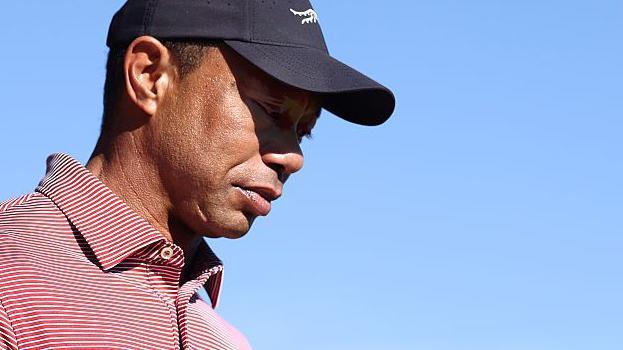
Tiger Woods to 'step away and seek treatment' after crash

1 April 2026 at 07:44

Woods to 'step away and seek treatment' after crash

Tiger WoodsImage source, Getty Images
Image caption,

Tiger Woods has won 15 golf majors - only Jack Nicklaus (18) has more

  • Published

Tiger Woods says he is "stepping away for a period of time to seek treatment and focus on my health" following an arrest after a car crash.

The 50-year-old was arrested and charged with driving under the influence after clipping a truck and rolling his car in Florida on Friday.

He was also charged with property damage and refusal to submit to a lawful test.

The 15-time major champion submitted a written plea of not guilty via his lawyers on Tuesday.

That came after a police report earlier on Tuesday detailed his behaviour after the crash.

It said Woods had two hydrocodone pills in his pocket - an opioid used to treat severe pain - and that officers observed him acting "lethargic and slow" while "sweating profusely" with "extremely dilated" pupils.

Speaking about the incident for the first time, Woods wrote on X: "I know and understand the seriousness of the situation I find myself in today.

"I am stepping away for a period of time to seek treatment and focus on my health. This is necessary in order for me to prioritise my well-being and work toward lasting recovery."

Prior to the crash he had not ruled out playing in next month's Masters - though he has not competed at a major since missing the cut at The Open in July 2024.

"I'm committed to taking the time needed to return in a healthier, stronger and more focused place, both personally and professionally," his statement added.

"I appreciate your understanding and support and ask for privacy for my family, loved ones and myself at this time."

'A legend of our sport but a person above all else'

The PGA Tour also issued its first comment on Woods following the golfer's statement.

"Tiger Woods is a legend of our sport whose impact extends far beyond his achievements on the course," it said.

"But above all else, Tiger is a person, and our focus is on his health and well‑being. Tiger continues to have our full support as he takes this important step."

The golf body's CEO, Brian Rolapp, added: "Tiger Woods is one of the most influential figures the sports world has ever known.

"Over the last year, I have come to deeply appreciate Tiger not only for his impact on the game, but for his friendship and the perspective he has shared with me as I joined the golf industry.

"My thoughts are with him and his family as he takes this step, for which he has my full respect and support."

More to follow.

Related topics

US Army pilots who flew near Kid Rock's home suspended and then reinstated within hours

1 April 2026 at 08:51
Getty Images Kid Rock is seen wearing a cowboy hatGetty Images
Kid Rock, a prominent Trump supporter, held an alternative Super Bowl halftime show this year for conservative group Turning Point USA

The crews of two military helicopters seen hovering outside musician Kid Rock's home have been suspended from flight duties, the US Army has said.

The Army is reviewing the circumstances surrounding the mission, Spokesman Maj Montrell Russell told the BBC in a statement, including whether the crews complied with federal flying regulations and aviation safety protocols.

Kid Rock, a supporter of President Donald Trump, posted a video of himself gesturing at the AH-64 Apaches above his swimming pool on Saturday, prompting many to question why the helicopters would visit his home.

Trump, when asked about the incident on Tuesday, said in a joking manner: "Maybe they were trying to defend him."

Speaking to reporters in the Oval Office, Trump said the crews "probably shouldn't have been doing it. You're not supposed to be playing games".

"They like Kid Rock. I like Kid Rock," he added.

The Army confirmed that two of its Apache helicopters from the 101st Combat Aviation Brigade at Fort Campbell conducted a flight on 28 March in the Nashville area in the state of Tennessee, where Kid Rock lives and owns two restaurants.

"The Army takes any allegations of unauthorized or unsafe flight operations very seriously and is committed to enforcing standards and holding personnel accountable," Russell said, adding that the crews would be suspended during the ongoing investigation.

Kid Rock told local outlet WKRN-TV on Monday that it is not uncommon for helicopters from the nearby Fort Campbell Army base to fly near his home.

He noted that he has performed for troops at Fort Campbell and overseas.

"I think they know this is a pretty friendly spot," the musician said. "I've talked to some of these pilots. I've told them, 'You guys see me waving when you come by the house?' I'm like, 'You guys are always welcome to cruise by my house, any time.'"

Kid Rock, who also performed at the Republican convention in 2024 insulted California Governor Gavin Newsom, a Democrat who has feuded with him and Trump, in the caption of the footage he posted.

One clip shows Kid Rock, whose real name is Robert Ritchie, standing poolside next to a replica of the Statue of Liberty, clapping and saluting as the aircraft hovers before flying away.

"God Bless America and all those who have made the ultimate sacrifice to defend her," the caption reads.

Another video shows the Born Free singer pumping his fist before a second gunship appears to fly by his mansion, which he has dubbed the Southern White House.

Peacekeepers killed by roadside explosion in Lebanon, initial report finds

1 April 2026 at 06:07
Reuters White UNIFIL vehicles drive on a main road in Qlayaa, amid escalating hostilities between Israel and HezbollahReuters
The UN's peacekeeping force patrols the de facto border between Lebanon and Israel, in collaboration with the Lebanese army

Two Indonesian peacekeepers were killed on Monday by a "roadside explosion" in southern Lebanon, UN peacekeeping chief Jean-Pierre Lacroix has said, citing the findings of an initial investigation.

In a separate statement, the United Nations Interim Force in Lebanon (Unifil) said the explosion was of "unknown origin" and "destroyed" the peacekeepers' vehicle near Bani Hayyan.

A third peacekeeper was "severely" injured in the explosion, and a fourth was hurt, Unifil said.

It was the second such fatal incident in 24 hours. Another peacekeeper - who was also Indonesian - was killed on Sunday when a projectile, also of unknown origin, exploded in Adchit Al Qusayr, southern Lebanon.

Unifil said it had launched investigations to determine what happened in both incidents.

The findings of an "initial" investigation into the incident on Monday "point to a roadside explosion striking the convoy", Lacroix told the UN Security Council earlier.

Their deaths had "most likely" been caused by an IED (improvised explosive device), Stéphane Dujarric, spokesperson for the UN secretary-general, later said at a briefing.

Speaking about the other incident, on Sunday, Dujarric said it was likely caused by "an explosive that landed in the position that the Indonesians were holding".

The deaths come shortly after the Israeli military announced it would step up ground and air attacks against the Lebanese armed group Hezbollah.

Hezbollah, an Iranian-backed militia as well as a political party, has fired rockets into Israel in retaliation for the ongoing US-Israeli strikes on Iran.

In a statement on Telegram, the Israel Defense Forces (IDF) said its own review had concluded that the Bani Hayyan explosion "was not caused by IDF activity".

It went on: "A comprehensive operational examination indicates that no explosive device was placed in the area by IDF troops, and that no IDF troops were present in the area at all."

Separately, the IDF said on Tuesday that four of its soldiers had been killed in combat in southern Lebanon. Another soldier was severely wounded and a reservist moderately wounded, the IDF said.

Dujarric, of the UN, said the peacekeepers in Lebanon were "soldiers sent there on behalf of the international community... and everyone needs to ensure that they are protected and never targeted".

He urged Lebanon and Israel to use the Unifil mechanism for dialogue, saying "the bottom line is that the sovereignty and territorial integrity of Lebanon needs to be respected".

Antara, an Indonesian government-owned news agency, named the soldier killed on Sunday as Chief Private Farizal Rhomadhon. The two soldiers killed on Monday were named as Captain Zulmi Aditya Iskandar and First Sergeant Muhammad Nur Ichwan.

In a statement, Unifil said: "We extend our sincerest condolences to the family, friends, and colleagues of those brave peacekeepers who gave their lives in service of peace."

Created by the UN Security Council in 1978, Unifil has since served as a buffer between Israel and Lebanon.

The peacekeeping force patrols the "Blue Line" - the de facto border between Lebanon and Israel, in collaboration with the Lebanese army.

Around 339 peacekeepers have been killed since the mission was established.

Despite a November 2024 ceasefire between Israel and Hezbollah, brokered after violence flared between the two over the war in Gaza, Israel has conducted near-daily strikes on Hezbollah targets.

It says the armed group has not abided by the terms of the ceasefire - under which Hezbollah was meant to disarm and leave its positions in the south - and has accused Unifil and the Lebanese army of not doing enough to remove its militants from the region.

Israel says its latest operation in southern Lebanon was intended to ensure the security of communities in the north.

Since the ceasefire began, 1,268 people have been killed in Lebanon, according to the Lebanese health ministry, including 124 children.

US Army suspends crews who flew helicopters near Kid Rock's home

1 April 2026 at 06:36
Getty Images Kid Rock is seen wearing a cowboy hatGetty Images
Kid Rock, a prominent Trump supporter, held an alternative Super Bowl halftime show this year for conservative group Turning Point USA

The crews of two military helicopters seen hovering outside musician Kid Rock's home have been suspended from flight duties, the US Army has said.

The Army is reviewing the circumstances surrounding the mission, Spokesman Maj Montrell Russell told the BBC in a statement, including whether the crews complied with federal flying regulations and aviation safety protocols.

Kid Rock, a supporter of President Donald Trump, posted a video of himself gesturing at the AH-64 Apaches above his swimming pool on Saturday, prompting many to question why the helicopters would visit his home.

Trump, when asked about the incident on Tuesday, said in a joking manner: "Maybe they were trying to defend him."

Speaking to reporters in the Oval Office, Trump said the crews "probably shouldn't have been doing it. You're not supposed to be playing games".

"They like Kid Rock. I like Kid Rock," he added.

The Army confirmed that two of its Apache helicopters from the 101st Combat Aviation Brigade at Fort Campbell conducted a flight on 28 March in the Nashville area in the state of Tennessee, where Kid Rock lives and owns two restaurants.

"The Army takes any allegations of unauthorized or unsafe flight operations very seriously and is committed to enforcing standards and holding personnel accountable," Russell said, adding that the crews would be suspended during the ongoing investigation.

Kid Rock told local outlet WKRN-TV on Monday that it is not uncommon for helicopters from the nearby Fort Campbell Army base to fly near his home.

He noted that he has performed for troops at Fort Campbell and overseas.

"I think they know this is a pretty friendly spot," the musician said. "I've talked to some of these pilots. I've told them, 'You guys see me waving when you come by the house?' I'm like, 'You guys are always welcome to cruise by my house, any time.'"

Kid Rock, who also performed at the Republican convention in 2024 insulted California Governor Gavin Newsom, a Democrat who has feuded with him and Trump, in the caption of the footage he posted.

One clip shows Kid Rock, whose real name is Robert Ritchie, standing poolside next to a replica of the Statue of Liberty, clapping and saluting as the aircraft hovers before flying away.

"God Bless America and all those who have made the ultimate sacrifice to defend her," the caption reads.

Another video shows the Born Free singer pumping his fist before a second gunship appears to fly by his mansion, which he has dubbed the Southern White House.

Woods to 'step away and seek treatment' after crash

1 April 2026 at 07:44

Woods to 'step away and seek treatment' after crash

Tiger WoodsImage source, Getty Images
Image caption,

Tiger Woods has won 15 golf majors - only Jack Nicklaus (18) has more

  • Published

Tiger Woods says he is "stepping away for a period of time to seek treatment and focus on my health" following an arrest after a car crash.

The 50-year-old was arrested and charged with driving under the influence after clipping a truck and rolling his car in Florida on Friday.

He was also charged with property damage and refusal to submit to a lawful test.

The 15-time major champion submitted a written plea of not guilty via his lawyers on Tuesday.

That came after a police report earlier on Tuesday detailed his behaviour after the crash.

It said Woods had two hydrocodone pills in his pocket - an opioid used to treat severe pain - and that officers observed him acting "lethargic and slow" while "sweating profusely" with "extremely dilated" pupils.

Speaking about the incident for the first time, Woods wrote on X: "I know and understand the seriousness of the situation I find myself in today.

"I am stepping away for a period of time to seek treatment and focus on my health. This is necessary in order for me to prioritise my well-being and work toward lasting recovery."

Prior to the crash he had not ruled out playing in next month's Masters - though he has not competed at a major since missing the cut at The Open in July 2024.

"I'm committed to taking the time needed to return in a healthier, stronger and more focused place, both personally and professionally," his statement added.

"I appreciate your understanding and support and ask for privacy for my family, loved ones and myself at this time."

'A legend of our sport but a person above all else'

The PGA Tour also issued its first comment on Woods following the golfer's statement.

"Tiger Woods is a legend of our sport whose impact extends far beyond his achievements on the course," it said.

"But above all else, Tiger is a person, and our focus is on his health and well‑being. Tiger continues to have our full support as he takes this important step."

The golf body's CEO, Brian Rolapp, added: "Tiger Woods is one of the most influential figures the sports world has ever known.

"Over the last year, I have come to deeply appreciate Tiger not only for his impact on the game, but for his friendship and the perspective he has shared with me as I joined the golf industry.

"My thoughts are with him and his family as he takes this step, for which he has my full respect and support."

More to follow.

Related topics

Tech giant Oracle makes 'significant' job cuts

1 April 2026 at 05:50
Reuters Oracle co-founder Larry Ellison sitting in a chair at the White House wearing a dark grey suit, white dress shirt and deep red neck tie.Reuters
Oracle co-founder Larry Ellison (pictured) is one of the world's richest people

Tech giant Oracle made "significant" job cuts on Tuesday, according to senior employees posting online, as it makes big investments in artificial intelligence (AI).

Some 10,000 people are believed to have lost their jobs so far, one employee told the BBC, citing a drop in the number of staff active on Oracle's internal messaging system Slack.

Oracle declined to comment, but one senior staff member said online the cuts were not performance based.

Oracle has been using AI tools internally and executives have previously said they are seeing fewer employees able to do more work.

"The use of AI coding tools inside Oracle is enabling smaller engineering teams to deliver more complete solutions to our customers more quickly," Mike Silicia, Oracle's other co-chief executive, said earlier this month.

Silica noted at the time that such AI tools had helped create new ways of generating sales leads and the automatic selling of Oracle services. He said the company recently used AI to build out its new company website.

Oracle is one of the largest tech companies in the world and it offers software and cloud computing infrastructure to other companies.

Larry Ellison, one of the richest people in the world, is Oracle's co-founder, chairman, and chief technology officer.

Michael Shepard, a senior manager, was not affected by the job cuts but wrote on LinkedIn on Tuesday "senior engineers, architects, operations leaders, program managers, and technical specialists" had been let go.

Shepard said the "significant reduction in force" was not based on employee performance.

"The individuals affected were not let go because of anything they did or didn't do," he added.

His was one of dozens of such posts describing the layoffs.

Former Oracle employee Kendall Levin said on LinkedIn her role was "eliminated as part of the company's mass reduction in force".

She added that she remains "a genuine believer" in where the firm is headed.

Several others described receiving early morning emails informing them they were no longer employed and would receive one month of severance pay.

Talk inside Oracle of a significant layoff began earlier this year.

Similar claims of being able to use AI tools to do more worth with fewer employees have come from tech leaders like Mark Zuckerberg of Meta and Jack Dorsey of Block.

Both executives have also overseen layoffs at their companies already this year.

However, such leaders in the tech industry have been conducting mass layoffs every year for the last several years. Previous rounds of cuts have not been blamed on AI.

Other tech companies that have cut jobs this year include Amazon, Pinterest and Epic Games.

Stargate Initiative

The job cuts at Oracle come as it has invested heavily in AI, spending both on its own infrastructure and on partnerships with other companies like OpenAI.

It plans to spend at least $50bn (£37.8bn) on infrastructure this year, and it has also raised $50bn in debt in order to "meet demand" for even more AI infrastructure.

Oracle is also part of the Stargate initiative, alongside OpenAI, Softbank and MGX, an AI investment fund backed by US President Donald Trump.

Stargate is a $500bn project to build up data center capacity in the US, which backers say is needed for planned increases in AI processing and power requirements over the next several years.

"Investing in AI infrastructure is capital-intensive, but our operating model is optimized to ensure profitability," Clayton Magouyrk, Oracle's co-chief executive, said earlier this month.

"It's unprecedented to scale a capital-intensive business so quickly."

'You're no longer my sister' - rows erupt as war divides Iranian families

1 April 2026 at 07:25
Supplied Smoke rising from above buildings in two clouds, one above the other. The boom of a red crane can be seen on the left.Supplied
One person the BBC has been in contact with captured this image of an explosion in mid-March in Tehran

"He said to her: 'You're no longer my sister', and she told him to go to hell."

This argument between a man and his sister in a city near Tehran - witnessed and recounted by one of their relatives - gives a telling insight into the painful rows erupting among families and friends as US and Israeli strikes continue.

The relative, who we are calling Sina, says that when his family recently got together at his grandmother's house, emotions quickly exploded, exposing stark divisions.

His uncle, a member of the Basij - a volunteer militia often deployed to suppress dissent in Iran - refused to even greet his own sister, who is opposed to the ruling regime.

After their exchange, the uncle was "very quiet… and left early", Sina says.

He and other young Iranians have described emotional scenes as rifts open up over the war.

Even among those opposed to the government, there are deep divisions over whether the war will help or hinder attempts to bring about change.

Despite the government-imposed internet blackout, the BBC has been able to maintain contact with some of the few Iranians who have found ways to remain online.

Iranians can be sent to prison for speaking to certain international media. But even so, over the month-long war, these contacts have been sharing information through intermittent text messages and occasional voice calls.

Their initial responses of shock and fear have given way to attempts to adapt, switching locations and changing routines. They describe the details of their lives; practising yoga despite the sounds of explosions, eating birthday cake alone and venturing out to near-empty coffee shops.

And, in some surprisingly personal notes, they have shared details about how the conflict is affecting their relationships. All of the names in this article have been changed.

Supplied A figure in a military vest, helmet and fatigues standing in the back of a white pick-up truck, which is driving along a road in Tehran. A damaged building can be seen in the background.Supplied
People in Tehran have described seeing Iranian security forces on the streets

Towards the end of March, Iranians celebrated Nowruz, the Persian new year festival that marks the spring equinox and is often a time when families get together.

Sina, who is in his 20s, is opposed to the clerical establishment and continues to support the Israeli and US air strikes, believing that they will help bring the regime down.

He says his uncle, the Basij member, had not attended Nowruz family gatherings in recent years, but turned up this time, to the surprise of his family. Usually, "we don't talk to him, nor to his children", says Sina.

He says he has barely spoken to his uncle since major protests in 2022 following the death in custody of a young woman, Mahsa Amini, who was accused of not wearing the compulsory hijab properly.

More recently, Iran saw an unprecedented crackdown by the Basij and other security forces on protests that swept across the country in December and January. At least 6,508 protesters were killed and 53,000 arrested, according to the US-based Human Rights Activists News Agency (HRANA).

Sina says that, according to other relatives, his uncle was so angered by the protests that he said even if his own children went onto the streets and were killed, he wouldn't go to collect their bodies.

And yet, Sina says, his uncle seems to be "afraid of dying" in the war and appears to have been trying to improve relations with some family members, including his own mother, Sina's grandmother.

At Nowruz, he and his wife "just looked really down and helpless", says Sina. "I didn't get into an argument with them. They should be in prison."

Supplied Items displayed to mark Nowruz, including a candle, a glass containing the spice sumac and a green, leafy plantSupplied
Nowruz is marked by families coming together and also with symbolic items displayed on a table

Another young man, Kaveh from Tehran, spent Nowruz alone.

He says his relationship with his sister, who is also a Basij member, was already difficult. After he joined the 2022 protests, he says, she became critical of his activities and unsympathetic over the deaths of friends of his in the January protests.

Kaveh has been providing internet access to friends and family via SpaceX's Starlink, which offers connectivity via satellites. In Iran, owning or using Starlink terminals is punishable by up to two years in prison.

He initially joined his family for the holiday, but he says he left the place where they were staying and later returned to find his sister had disconnected his Starlink and the devices connected to it. When he challenged her, a row broke out, he says.

"I can't stand her anymore… I just had a fight and said I can't stand it and I left," he says.

"I was so excited about Nowruz. I packed my clothes and wanted to be there with the family," Kaveh said over an encrypted line as he travelled home alone. "But now I don't feel it at all."

Supplied A close-up image of a plate stacked with small biscuits, each with a distinctive shape like a four-leaf clover.Supplied
Maral sent this image of biscuits baked as her family celebrated Nowruz despite the war

Most Iranians have no internet access. Starlink devices are expensive as well as illegal, so those who have access tend to be relatively wealthy. A few others manage to connect via VPNs.

Most Iranians who agree to speak to BBC Persian are opposed to the Iranian regime. But even among the government's critics, there are deep differences over this war and its impact.

According to the International Federation of Red Cross and Red Crescent Societies, 1,900 people have been killed in Iran by the US and Israeli strikes, while HRANA puts the total at over 3,400, more than 1,500 of them civilians.

Maral, a student in her 20s in the city of Rasht in northern Iran, has become very frustrated with her father for his continued support of the war.

He is an enthusiastic supporter of Reza Pahlavi, the crown prince of Iran before the 1979 revolution.

Pahlavi now lives in the US and has positioned himself as a potential transitional leader of the country. He supports the US and Israeli strikes on Iran despite mounting casualties, describing the attacks as a "humanitarian intervention" and recently urging the US to "stay the course".

He has gained traction in Iran in recent months as an opposition figure, with some demonstrators in the January protests chanting his name.

"I just want this war to end as soon as possible," says Maral. "Many ordinary people have died."

She says she gets "annoyed" because her father is "really optimistic", even as the bombs fall.

"We try to talk to him, but he just keeps going on about 'the Prince, the Prince,'" she says.

"My dad lives in this illusion that Iran will open up its borders and within five years everything will be rebuilt, everything will be fine. He's being influenced by Israeli propaganda that the two countries will be friends."

Her father and mother often argue about Pahlavi, she adds.

Supplied Close-up image showing a green coloured matcha latte in a glass, next to a cup of tea in a glass, resting on a white saucer, with a cheesecake dessert on a plate behind.Supplied
Tara has tried to continue with her day-to-day life, including visiting cafes

Meanwhile, Tara, a woman in her 20s in Tehran, says her close family members initially criticised her for being opposed to the war.

"They all support attacks on Iran… My mum and sister told me: 'You haven't lost anyone [during the protests], that's why you are against the strikes. You don't want your routine, exercise and coffee catch-ups to get disrupted… If they [the regime] had killed one of your friends or relatives [during the protests] you would have a different opinion.'"

But Tara says: "Thousands of innocent people could be killed in the war as well, without anyone even remembering them."

However, she says, her sister's view – like that of several other Iranians the BBC has heard from - has softened as the attacks have continued. More recently, after a nearby area was hit, she says her sister simply said: "I hope the war finishes soon."

And despite their differences, the family still try to go everywhere together, Tara says. That way, "we would all die together if they hit us".

US journalist Shelly Kittleson kidnapped in Baghdad

1 April 2026 at 05:08
Shelly Kittleson/X An undated image of Shelly Kittleson. She wears a hijab and holds a phone while standing in front of a riverShelly Kittleson/X
An undated image of Shelly Kittleson

A US freelance journalist has been kidnapped in the Iraqi capital Baghdad, and one of the suspects is linked to an Iran-backed militia, Iraqi and US officials say.

Shelly Kittleson was abducted on Tuesday evening, said Al-Monitor, a news outlet for which she has contributed articles.

The Iraqi interior ministry said security forces had chased the reporter's abductors in a pursuit that resulted in one of the kidnappers' cars overturning and the arrest of one suspect.

A US state department official said an individual with ties to an Iranian-aligned militia group, Kataib Hezbollah, was detained by Iraqi authorities.

Dylan Johnson, assistant secretary of state for global public affairs, confirmed the abduction of an American journalist, without naming Kittleson.

He posted on X: "The State Department previously fulfilled our duty to warn this individual of threats against them and we will continue to coordinate with the FBI to ensure their release as quickly as possible."

It is understood that US officials had contacted Kittleson a number of times to warn of threats against her, including as late as Monday night.

The US state department said in a statement to the BBC: "Due to privacy and other considerations, we have nothing further to share at this time."

Al-Monitor, which is based in the US, said local news reports indicate Kittleson was taken near a hotel in the heart of the capital.

It added that the state department had confirmed it "is aware of Kittleson's kidnapping and working with the Iraqi government to secure her release".

Al-Monitor said it was "deeply alarmed" by her kidnapping, and called "for her safe and immediate release".

An Iraqi official confirmed to the BBC's US partner CBS that local authorities were working "at the highest level" to release Kittleson.

Kittleson's emergency contact Alex Plitsas, a CNN national security analyst, told CBS that Kittleson had been warned by the US government about a specific threat to her from Iran-backed paramilitaries.

Kataib Hezbollah was said to be plotting to kidnap or kill female journalists.

Plitsas said Kittleson had been warned that her name was on a list in Kataib Hezbollah's possession. A second source confirmed she had been told of a risk, but thought it was false information.

The interior ministry statement said in a statement translated from Arabic: "Security forces immediately launched an operation to apprehend the perpetrators, acting on precise intelligence and through intensive field operations, tracking the kidnappers' movements."

It added: "The pursuit resulted in the interception of a vehicle belonging to the kidnappers, which overturned as they attempted to escape."

The interior ministry did not identify the suspect, calling the abductors "unknown individuals".

"The Ministry affirms that efforts are ongoing to track down the remaining perpetrators and secure the release of the abducted woman, and to take due legal action against all those involved in this criminal act, in accordance with the law," it added.

Kittleson, based in Rome, Italy, has covered conflicts in Afghanistan, Iraq and Syria. According to her bio on social media, she has worked for numerous publications.

The FBI, National Security Council, state department, Delta Force and the Iraqi Counter-Terrorism Service were in contact about her abduction, sources familiar told CBS.

Baghdad was once notorious for kidnappings, but abductions have decreased as the security situation in Iraq has improved in recent years.

Judge temporarily halts construction of Trump's White House ballroom

1 April 2026 at 05:07
Getty Images Construction at the White HouseGetty Images

A US judge has temporarily halted President Donald Trump’s White House ballroom construction project from continuing, ruling that proper procedures were not followed before the building project began.

The ruling comes after the White House was sued by The National Trust for Historic Preservation.

"I have concluded that the National Trust is likely to succeed on the merits because no statute comes close to giving the President the authority he claims to have," said Judge Richard Leon, who was appointed by a Republican president.

Trump has criticised the ruling on his social media site, saying that the project is going well, and "will be the finest Building of its kind anywhere in the World".

The Trump administration has previously said its plan was more economical than renovating the East Wing. It also noted that many presidents had made changes to the White House

Leon's ruling, published on Tuesday, continued: "The President of the United States is the steward of the White House for future generations of First Families. He is not, however, the owner!"

"(U)nless and until Congress blesses this project through statutory authorization, construction has to stop!" he added.

The judge's ruling takes effect in 14 days, allowing a possible appeal.

In the lawsuit, the preservation group argued that the White House broke the law by beginning construction without filing plans with the National Capital Planning Commission, by not seeking an environmental assessment of the project, and by declining to seek authorisation from Congress.

It also alleged Trump was violating the US Constitution, "which reserves to Congress the right to dispose of and make all rules regarding property belonging to the United States".

The East Wing, which was constructed in 1902, was demolished in October to make way for Trump's multi-million dollar ballroom, which he says is being paid for by private donors.

Since then, the proposed blueprint has expanded from a ballroom with a capacity of 500 people to a space that can fit 1,350 guests.

The White House says the project is expected to cost $400m (£302m) and is being funded entirely by private donors.

Reacting to the judge's decision, Trump wrote on his Truth Social site: "The National Trust for Historic Preservation sues me for a Ballroom that is under budget, ahead of schedule, being built at no cost to the Taxpayer, and will be the finest Building of its kind anywhere in the World."

He also criticised the group that brought the lawsuit, noting that they had also sued to stop his renovation of the Kennedy Center, which Trump recently renamed after himself.

"All I am doing is fixing, cleaning, running, and 'sprucing up' a terribly maintained, for many years, Building," Trump wrote about the concert venue in Washington DC.

In his post, Trump also said of the legal action against him: "Doesn't make much sense, does it?"

Italian Christmas meal tragedy turns into murder inquiry

1 April 2026 at 03:52
Antonella Di Ielsi/Facebook Antonella Di Ielsi Antonella Di Ielsi/Facebook
Doctors initially thought Antonella Di Ielsi (pictured) and her daughter had food poisoning

Italian prosecutors have opened a murder investigation following the deaths of a mother and her teenage daughter after a pre-Christmas meal last year.

Sara Di Vita, 15, and her mother Antonella Di Ielsi, 50, fell ill after a lunch in their hometown of Pietracatella, a small municipality 260km (161 miles) south-east of Rome.

Sara's father Gianni - the former mayor of Pietracatella - was also taken to hospital, but he later recovered. The couple's eldest daughter was not there that day.

Doctors initially attributed the symptoms to food poisoning, but the new focus comes after laboratory tests revealed the presence of a deadly poison, ricin, Italian media say - even though police still do not have a suspect.

Doctors are said to have thought the infection originated from either fish or mushrooms and discharged the mother and daughter after they went to hospital.

However, their symptoms quickly worsened and the pair were soon re-admitted.

Dr Vincenzo Cuzzone, head of the intensive care unit at Cardarelli hospital in nearby Campobasso, told Italian media that liver failure occurred first and was followed by multi-organ failure "at truly unparalleled speed".

Di Vita and Di Ielsi's deaths were initially attributed to medical negligence and doctors who discharged them were placed under investigation for manslaughter, Italian media report.

They published the test results carried out at laboratories in Italy and Switzerland.

Ricin, a highly toxic chemical, is a poison found naturally in castor beans.

Ingesting a tiny quantity can cause rapid organ failure and lead to death. There is no known antidote for ricin poisoning.

Wolf bites woman in shock German attack on busy Hamburg shopping street

31 March 2026 at 21:00
Universal Images Group via Getty Images A wolf in woodlandUniversal Images Group via Getty Images
(File pic) Several sightings of the wolf were reported to police before the woman was bitten

A woman has been bitten by a wolf in a major shopping street in Hamburg, according to German authorities.

The highly unusual attack took place in the bustling Grosse Bergstrasse in Hamburg Altona, near an inner-city Ikea store on Monday evening.

The woman appears to have tried to lead the disoriented animal away from the shopping street. The wolf then bit the woman's face, according to local reports and then ran off.

The woman was taken to hospital but has since been discharged.

It's believed to be the first time a person has been attacked by a wolf since the animals began to reestablish themselves in Germany decades ago.

"There has not been a case like this since the reintroduction began in 1998," a spokeswoman for the Federal Agency for Nature Conservation told German press agency dpa.

The wolf was later spotted late on Monday night in the Binnenalster lake in Hamburg. Police managed to pull it out of the water with a rope.

But the animal put up a fight, and police armed with shields are reported to have spent around an hour trying to catch it.

Matthias Hilge, a spokesperson from Hamburg's Ministry for the Environment, Climate, Energy and Agriculture, Bukea, told the BBC that there have been several sightings of the wolf in recent days in the west of the city.

He said the wolf was in safety and being given veterinary care. "Bukea will decide on the animal's future arrangements in the near future, following close consultation with experts," he said.

It was only after the fall of the Berlin Wall in 1989 that wolves began returning to Germany after 150 years of absence.

Initially a few animals returned via Poland and today wolves roam the forests of many German states.

Last week, Germany's Upper House, the Bundesrat, approved measures by Parliament to allow wolves to be hunted.

Under the Federal Hunting law, it will now be possible to hunt wolves in order to manage their populations and protect sheep and other livestock.

Federal Environment Minister Carsten Schneider said wolves "must be allowed to stay".

"It is not a question of driving the wolf away again, but of finding viable ways to live peacefully alongside it," he said.

Wolf hunting season is scheduled to run from 1 July to 31 October.

King's state visit to US to go ahead in April, but no Harry meeting

1 April 2026 at 01:06
Reuters King Charles and US President Donald Trump at Windsor Castle, September 2025 in Windsor Castle. Both are wearing dark suits.
Reuters
President Trump has spoken of his warm relationship with King Charles

King Charles and Queen Camilla will meet US President Donald Trump in late April, as a state visit to the United States has been confirmed by Buckingham Palace.

On the way back, the King will pay a visit to Bermuda, a British Overseas Territory in the North Atlantic.

The US trip has been expected for some time, but such visits are carried out on behalf of the UK government - and an official announcement appeared to have been waiting for a gap in the political tensions over the Iran war.

Details of the itinerary in the US have still to be released, but it will include Washington, in what will be the first UK state visit to the US since Queen Elizabeth II's visit in 2007.

The visit will include a state dinner at the White House and the King will deliver an address to Congress.

The US marks its 250th anniversary of independence this year - and that will be a significant focus of the trip, with Buckingham Palace saying the trip will "celebrate the historic connections and the modern bilateral relationship" between the countries.

There is also likely to be interest in whether the King will meet his son Prince Harry, who lives in the US, during the visit.

Ever since President Trump's visit to the UK last September, there has been speculation about the King carrying out a return visit.

The US president's visit to Windsor Castle seemed to have smoothed UK-US relations, with Trump last week saying of his time with the King: "He honoured me and our country... we had an amazing time."

Trump also spoke of the warmth of his personal relationship with the King - "I think he's fantastic" - and the president said he was looking forward to hosting the King at a state banquet.

Reuters State banquet for US state visit in September 2025 in Windsor CastleReuters
President Trump said he felt "honoured" by his reception in Windsor last year

But there have been political differences, including over the war in Iran, in which Trump publicly criticised UK Prime Minister Sir Keir Starmer as "no Winston Churchill".

And on Tuesday, President Trump said countries like the UK should secure the Strait of Hormuz themselves because "the USA won't be there to help you anymore, just like you weren't there for us" and "go get your own oil!"

That followed a previous dispute when UK veterans were angered by an apparent downplaying by Trump of the UK's military involvement in Afghanistan.

Both rows had raised questions about whether a state visit to the US in April should go ahead - with Lib Dem leader Sir Ed Davey saying it should be cancelled.

A YouGov survey last week suggested that 49% of the British public were against the state visit to the US while 33% wanted it to go ahead.

The visit also comes in the wake of Andrew Mountbatten-Windsor's arrest - and US Congressman Ro Khanna has called for King Charles to meet survivors of the sex offender Jeffrey Epstein.

"As you are aware, this is not solely an American matter," Khanna wrote in a letter to the King on Monday.

Mountbatten-Windsor has always denied any wrongdoing from his links to Epstein.

But while the formal announcement of the state visit might have been delayed, planning seems to have quietly continued in the background, with no signs of the visit being stopped.

The decision to hold a state visit is made by the government, with the King travelling on behalf of the Foreign Office.

Trump appears to be fascinated with the monarchy and to greatly value his relationship with King Charles - and the UK government seems ready to leverage this to improve links with the US and to reduce diplomatic tensions.

How Pakistan won over Trump to become an unlikely mediator in the Iran war

31 March 2026 at 10:33
Getty Images U.S. President Donald Trump and Pakistani Prime Minister Shehbaz Sharif shake hands as they pose for a photo, at a world leaders' summit on ending the Gaza warGetty Images
Pakistan has been making a diplomatic push to position itself as a negotiator in the war

Pakistan's role as intermediary in this conflict took many by surprise.

But perhaps it shouldn't.

The head of its armed forces, Field Marshall Asim Munir, is in US President Donald Trump's favour. The US leader frequently refers to him as his "favourite" Field Marshall and has previously spoken about how Munir knows Iran "better than most".

Iran is not only Pakistan's neighbour with whom it shares a 900km (559 miles) or so border, but by their own messages a "brotherly" relationship with deep cultural and religious ties.

It also has no US air bases.

And unlike many of the usual intermediaries in the Gulf it has not yet been pulled into the conflict.

Crucially, it is willing to wade in - peace between the US and Iran by many accounts would be in its interest.

Still, there have been questions about how a country embroiled in conflict with two of its neighbours - Afghanistan and India - has positioned itself as a bringer of peace.

The country is currently bombing Afghanistan and tensions with India led to a fear of nuclear escalation only last year.

Pakistan has so far walked the tightrope between Iran and the US, passing messages between the two sides, hosting foreign ministers from other concerned Muslim nations and hitting the diplomatic telephones.

But the balancing act is not risk-free.

Much to lose

Pakistan is highly dependent on imported oil, much of it coming through the Strait of Hormuz.

"Pakistan, I'd argue, more than almost any other country outside of the Middle East has a lot of skin in the game here," Michael Kugelman, a senior fellow for South Asia at the Atlantic Council, told the BBC.

"It has a really compelling interest to do what it can to contribute to de-escalation efforts."

Pakistan's government increased the price of petrol and diesel by around 20% at the start of March and has already introduced measures including a four-day working week for government employees to try to save fuel.

"If the war continues, the economic pressures in Pakistan will increase tremendously," says Farhan Siddiqi, Professor of Political Science at the Institute of Business Administration, Karachi.

AFP via Getty Images One man pushing a motorcycle where another man is seated. The motorcycle is carrying large jerrycans.AFP via Getty Images
Iran's effective closure of the Strait of Hormuz has affected Pakistan, which relies heavily on oil imported through that waterway

There's also a fear about what an escalation could bring.

In September last year, Pakistan signed a defence pact with Saudi Arabia, agreeing that "any aggression against either country shall be considered an aggression against both".

It's led to questions about what Pakistan would do if Saudi Arabia joined the war and invoked the pact.

"The problem for us is that if we are asked to join the war on the Saudi side, our entire Western border will be largely insecure," says Siddiqi.

Pakistan is already in "all-out war" with Afghanistan; it accuses the Afghan Taliban of harbouring terrorist groups inside its borders, which the Taliban government deny.

When challenged about its apparent contradictory position to diplomacy when applied to its own conflicts, Pakistan has said that it tried years of talks that did not yield the security it needed.

But Siddiqi points out that opening another front is not the only concern were Pakistan to be pulled into the war, adding that there is also the "domestic reputational cost".

In the days after Iran's Supreme Leader was killed in a joint US-Israeli airstrike, pro-Iran demonstrators took to the streets across Pakistan - several were killed including those who tried to storm the US consulate in Karachi.

"Public sentiment in Pakistan is overwhelmingly pro-Iran," says Maleeha Lodhi, former Pakistan ambassador to the US, UK and UN.

"I'm sure the Pakistan's decision makers have been very sensitive to that."

Something to gain

And then there's the issue of Pakistan's global standing.

"Pakistan is very sensitive to criticism that it doesn't have influence on the global stage," said Kugelman. "I don't think that's its main motivation for positioning itself as it has, but it has something to do with this as well."

"This is high-stakes diplomacy, no question about it," adds Lodhi. "It's high-risk and high-reward. If it succeeds, of course, it catapults Pakistan to the top of the global diplomatic game."

And if it doesn't?

Lodhi doesn't think the damage will be too great.

Turkish Foreign Ministry / Handout/Anadolu via Getty Images Men wearing suits sitting in a room of gold armchairs. The Pakistani flag is standing in the background.Turkish Foreign Ministry / Handout/Anadolu via Getty Images
Pakistan's prime minister Shehbaz Sharif (centre) hosts foreign minister from Egypt, Turkey and Saudi Arabia for talks about the war in the Middle East

"Pakistan would still have been seen to have made a good faith effort. And if it didn't work, it wasn't because of Pakistan's lack of skills, but because you have a man who's terribly whimsical and completely, completely untrustworthy."

However, Kugelman sees some potential for backlash if after all this speculation of talks, both sides simply resume with even more force.

"Pakistan could be susceptible to allegations that it was naive," he says of that scenario. "[And that it was] brought into an effort to try to negotiate while both sides were trying to create some breathing space to think about their next steps toward escalation."

'Unconventional diplomatic games'

It's unclear how things might play out, but what is clear is that Pakistan has been quick to capitalise its relationship with Trump.

Lodhi points to Pakistan nominating Trump for the Nobel Peace Prize '"in recognition of his decisive diplomatic intervention" during the Pakistan-India crisis in 2025, and Kabul handing over the man accused of planning the Kabul airport bombing during the withdrawal from Afghanistan to the US.

"Pakistan gave Trump two early wins, which are very important for him. That got the relationship off the ground and brought about this new warmth," said Lodhi.

"It's willing to play unconventional diplomatic games, unlike India," Kugelman adds.

"The fact that Pakistan's senior leaders have gone out of the way to flatter the president, that's really helped their cause in Washington and has made Pakistan a more attractive facilitator and mediator in the eyes of the administration."

AFP via Getty Images A banner of Trump and Netanyahu laid out on the ground, being stomped by protesters.AFP via Getty Images
In the days after Iran's Supreme Leader was killed in a US-Israeli airstrike, pro-Iran demonstrators took to the streets in Pakistan

But the relationship with America is not Pakistan's only card.

"Pakistan has realized that hedging is the best way to go about in regional diplomacy," said Siddiqi. "The kind of world that we face now is a world where states, especially the middle powers, are more comfortable in engaging with the policy of multi-alignment."

"I think the reason why Pakistan is best positioned to speak to Iran is because it does not carry the perception of being pro-Israeli or even being very pro-American."

Meanwhile, the diplomatic meetings continue.

Pakistan's Foreign Minister Ishaq Dar is on Tuesday travelling to China at the invitation of his Chinese counterpart, Wang Yi.

But there are still big questions for Pakistan; and securing a peace deal is a long shot.

"Let's be fairly clear, the odds of a deal are not that high given how much mistrust there is between the Americans and the Iranians and how maximal the demands are on both the US and the Iranian side," said Kugelman.

"I think that equation is the most difficult one that Pakistan is going to have to think through if its current plans don't work out."

❌
❌