More than $100m worth of medicines were destroyed in a fire caused by a Russian drone strike on Dnipro
Warehouses supplying the vast majority of Ukraine's pharmacies have been destroyed in a series of Russian attacks over recent months.
Medical supplies worth about $200m (£145m) were destroyed in just two strikes in December and October.
A large warehouse storing medicines in the city of Dnipro was destroyed in a Russian air strike on 6 December. As a result, about $110m worth of medicines were destroyed - estimated at up to 30% of Ukraine's monthly supply.
"It was a missile and drone strike against our facility. The missiles flew past, but the drones hit it," said Dmytro Babenko, acting director-general of pharmaceutical distributor BADM.
"They caused a fire which unfortunately proved impossible to contain and the whole facility was destroyed."
BADM is one of two companies that supply about 85% of Ukrainian pharmacies in roughly equal shares.
The other company is Optima Pharm, whose warehouses have been hit three times this year - on 28 August, 25 October and 15 November.
The October attack destroyed its main storage facility in Kyiv, and cost the company more than $100m, says Optima Pharm's chief financial officer Artem Suprun.
Russia denies hitting civilian targets, but when the Optima Pharm warehouse was hit in October, the defence ministry in Moscow said only that it had targeted a factory producing drones.
On the day BADM's warehouse was destroyed, Russia said it had hit "a warehouse storing military equipment" as well as energy and transport infrastructure.
DSNS Ukraine
Optima Pharm lost more than $100m in a Russian attack on its main warehouse
Such attacks significantly complicate the treatment of sick and wounded in Ukraine, after almost four years of Russia's full-scale war.
The International Rescue Committee (IRC), an NGO that had been using the warehouse in Dnipro, says it lost $195,000 worth of medication and supplies, which could have served 30,000 people in need.
"When I arrived at the site I was devastated, the scene was simply awful. All of this medicine could have served people for years, and in a single moment it was all lost," says the IRC's Andriy Moskalenko.
The IRC said the Dnipro facility had served "as a critical hub for hospitals, healthcare providers, pharmacies and humanitarian actors".
Mr Babenko from BADM said the Russian attack had destroyed "vitally important medicines" that had been imported and are not produced in Ukraine.
"It's a pretty complicated situation," he told the BBC.
But he is hopeful that the attack will not leave Ukrainians without medicines.
"There won't be significant shortages, possibly only of certain types of goods. We're hoping to restore all supplies in a month or a month-and-a-half," Mr Babenko said.
Ukrainian authorities accuse Russia of deliberately targeting hospitals, ambulances, medics and rescue workers, claims Moscow has denied.
According to the government in Kyiv, more than 2,500 medical institutions have been damaged or destroyed, and more than 500 civilian doctors, nurses and other medical workers killed.
Earlier this month, the World Health Organization said it had recorded 2,763 attacks on Ukraine's healthcare system since the start of Russia's full-scale invasion, and it said that in 2025 there had been a 12% increase in attacks from the previous year.
US President Donald Trump was among several prominent figures featured in the images released on Friday
More images from the estate of convicted paedophile Jeffrey Epstein have been released by Democrats on the House Oversight Committee.
The Democrats said the 19 images came from a tranche of 95,000 photos the committee received from Epstein's estate as part of its ongoing investigation.
US President Donald Trump, former Prince Andrew Mountbatten-Windsor and former Trump adviser Steve Bannon are among the high-profile figures featured in the photos. The images, many of which have been seen before, do not imply wrongdoing.
It comes one week before a deadline for the US justice department to release all Epstein-related documents, which are separate from the images shared by the committee on Friday.
Watch: Massie and Garcia on latest photos from Epstein estate
The individuals featured in the images have not yet commented. Many of them have previously denied wrongdoing in relation to Epstein.
In a statement, Representative Robert Garcia, the top Democrat on the committee, said: "It is time to end this White House cover-up and bring justice to the survivors of Jeffrey Epstein and his powerful friends."
"These disturbing photos raise even more questions about Epstein and his relationships with some of the most powerful men in the world. We will not rest until the American people get the truth. The Department of Justice must release all the files, NOW" he added.
Republicans, who are in the majority on the committee, have accused Democrats of "cherry-picking photos and making targeted redactions to create a false narrative about President Trump".
The White House called the release a "Democrat hoax" against Trump that has been "repeatedly debunked".
Trump appeared in three of the images released on Friday. One image showed him standing next to a woman whose face has been redacted.
Another showed Trump standing next to Epstein while talking to model Ingrid Seynhaeve at a 1997 Victoria's Secret party in New York – an image that was already publicly available.
House Oversight Committee
A third photo showed Trump smiling with several women, whose faces have also been redacted, flanked on either side of him.
An additional photo showed an illustrated likeness of the president on red packets next to a sign that reads: "Trump Condom".
House Oversight Committee
House Oversight Committee
Among the images released was what appeared to be cropped photo of Andrew Mountbatten-Windsor next to Bill Gates. A fuller version of the photo, which was available on photo agency Getty Images, showed King Charles, the then-Prince of Wales, on the right side of the photo.
The Getty Images' caption said the picture was taken during a summit during the Commonwealth heads of government meeting in London in April 2018.
Getty Images
Former Trump adviser Steve Bannon was also pictured in some of the images. He was shown speaking with Epstein at a desk, and in another, standing beside him in front of a mirror.
House Oversight Committee
A third image showed him speaking with filmmaker Woody Allen.
A photo featuring former US President Bill Clinton's showed him standing next to Epstein and Ghislaine Maxwell, who was convicted in 2021 for her role in facilitating the disgraced financier's abuse.
Two other people the BBC has yet to identify are also in the image, which appeared to have been signed by Clinton.
Clinton has denied any wrongdoing in relation to Epstein. In 2019, a spokesperson said he "knows nothing about the terrible crimes" Epstein pleaded guilty to.
Other prominent figures which appear in the images include US economist Larry Summers, lawyer Alan Dershowitz and entrepreneur Richard Branson. Not all the images show those individuals in the company of Epstein.
Epstein was charged with sex trafficking in July 2019. He died in prison a month later while awaiting trail.
The president was a friend of Epstein's, but has said they fell out in the early 2000s, years before he was first arrested.
Trump has denied any wrongdoing in relation to Epstein.
The justice department is required to release investigative material related to Epstein by 19 December under the Epstein Files Transparency Act, which was signed into law by Trump last month.
Some men are having vast numbers of children through sperm donation. This week the BBC reported on a man whose sperm contained a genetic mutation that dramatically raises the risk of cancer for some of his offspring.
One of the most striking aspects of the investigation was that the man's sperm was sent to 14 countries and produced at least 197 children. The revelation was a rare insight into the scale of the sperm donor industry.
Sperm donation allows women to become mothers when it might not otherwise be possible - if their partner is infertile, they're in a same-sex relationship, or parenting solo.
Filling that need has become big business. It is estimated the market in Europe will be worth more than £2bn by 2033, with Denmark a major exporter of sperm.
So why are some sperm donors fathering so many children, what made Danish or so-called "Viking sperm" so popular, and does the industry need to be reigned in?
Most men's sperm isn't good enough
If you're a man reading this, we are sorry to break it to you, but the quality of your sperm probably isn't good enough to become a donor - fewer than five in 100 volunteers actually make the grade.
First, you have to produce enough sperm in a sample - that's your sperm count - then pass checks on how well they swim - their motility - and on their shape or morphology.
Sperm is also checked to ensure it can survive being frozen and stored at a sperm bank.
You could be perfectly fertile, have six children, and still not be suitable.
Getty Images
Rules vary across the world, but in the UK you also have to be relatively young - aged 18-45; be free of infections like HIV and gonorrhoea, and not be a carrier of mutations that can cause genetic conditions like cystic fibrosis, spinal muscular atrophy and sickle cell disease.
Overall, it means the pool of people that finally becomes sperm donors is small. In the UK, half the sperm ends up being imported.
But biology means a small number of donors can make vast numbers of children. It takes just one sperm to fertilise an egg, but there are tens of millions of sperm in each ejaculation.
Men will come to the clinic once or twice a week while they're donating, which can be for months at a time.
Sarah Norcross, the director of the Progress Educational Trust charity which works on fertility and genomics, said the donor sperm shortage made it "a precious commodity" and "sperm banks and fertility clinics are maximising the use of available donors to meet demand".
Some sperm is more popular
Allan Pacey
Prof Allan Pacey
From this small pool of donors, some men's sperm is just more popular than others.
Donors are not chosen at random. It's a similar process to the savage reality of dating apps, when some men get way more matches than others.
Depending on the sperm bank, you can browse photos, listen to their voice, find out what job they do - engineer or artist? - and check out their height, weight and more.
"You know if they're called Sven and they've got blonde hair, and they're 6 ft 4 (1.93m) and they're an athlete, and they play the fiddle and speak seven languages - you know that's far more attractive than a donor that looks like me," says male fertility expert Prof Allan Pacey, pictured, who used to run a sperm bank in Sheffield.
"Ultimately, people are swiping left and swiping right when it comes to donor matching."
How Viking sperm took over the world
Getty Images
Denmark has become a global exporter of sperm (model not donor)
Denmark is home to some of the world's biggest sperm banks, and has gained a reputation for producing "Viking babies".
Ole Schou, the 71-year-old founder of the Cryos International sperm bank where a single 0.5ml vial of sperm costs from €100 (£88) to more than €1000 (£880), says the culture around sperm donation in Denmark is very different to other countries.
"The population is like one big family," he says, "there is less taboo about these issues, and we are an altruistic population, many sperm donors also donate blood."
Cryos International
Ole Schou founded Cryos International in 1987
And that, Schou says, has allowed the country to become "one of the few exporters of sperm".
But he argues Danish sperm is also popular due to genetics. He told the BBC the Danish "blue-eyed and blonde-haired genes" are recessive traits, which means they need to come from both parents in order to appear in a child.
As a result, the mother's traits, such as dark hair, "might be dominant in the resulting child", Schou explains.
He says demand for donor sperm is coming mainly from "single, highly-educated, women in their 30s who have focused on their careers and left family planning too late". They now make up 60% of requests.
Sperm crossing borders
One aspect of the sperm donor investigation published earlier this week was how a man's sperm was collected at the European Sperm Bank in Denmark and then sent to 67 fertility clinics across 14 countries.
Nations have their own rules on how many times one man's sperm can be used. Sometimes it is linked to a total number of children, others limit it to a certain number of mothers (so each family can have as many related children as they want).
The original argument around those limits was to avoid half-siblings - who didn't know they were related - meeting each other, forming relationships and having children.
But there's nothing to stop the same donor's sperm being used in Italy and Spain and then the Netherlands and Belgium, as long as the rules are being followed in each country.
This creates circumstances where a sperm donor can legally father large numbers of children. Although the man is often in the dark about that fact.
"Many recipients, and also donors, are unaware that a single donor's sperm can be lawfully used in many different countries - this fact should be better explained," says Sarah Norcross, who argues it would be "sensible" to bring down the number of children one donor can have.
Getty
Sperm is frozen until it is needed by families
In response to the investigation into the sperm donor who passed on a gene that led to cancer in some of the 197 children he fathered, officials in Belgium have called on the European Commission to establish a Europe-wide sperm donor register to monitor sperm travelling across borders.
Deputy prime minister Frank Vandenbroucke said the industry was like the "Wild West" and "the initial mission of offering people the possibility of a family has given way to a veritable fertility business".
The European Society of Human Reproduction and Embryology has also proposed a limit of 50 families per donor across the EU. That system would still allow one donor's sperm to make more than 100 children if the families wanted two or more babies each.
Getty
Concerns have been raised about the impact on the children conceived through sperm donation. Some will be happy, others can be profoundly distressed by the double discovery of being made with donor sperm and being one of hundreds of half-siblings.
The same is true of donors, who often have no idea their sperm is being so widely distributed.
These risks are amplified by readily available DNA ancestry tests and social media where people can search for their children, siblings or the donor. In the UK, there is no longer anonymity for sperm donors and there is an official process through which children learn the identity of their biological father.
Mr Schou at Cryos argues more restrictions on sperm donation would just lead families to "turn to the private, totally unregulated, market".
Dr John Appleby, a medical ethicist at Lancaster University, said the implications of using sperm so widely was a "vast" ethical minefield.
He said there are issues around identity, privacy, consent, dignity and more - making it a "balancing act" between competing needs.
Dr Appleby said the fertility industry had a "responsibility to get a handle on the number of times a donor is used", but agreeing global regulations would be undeniably "very difficult".
He added that a global sperm donor register, which has been suggested, came with its own "ethical and legal challenges".
Assistant Attorney General Harmeet Dhillon, of the justice department's Civil Rights Division
The Trump administration has filed a lawsuit against a Georgia county seeking access to 2020 voting records, as Donald Trump continues to assert the presidential election was stolen from him.
The justice department lawsuit asks the state to turn over "all used and void ballots, stubs of all ballots, signature envelopes, and corresponding envelope digital files from the 2020 General Election in Fulton County".
The government accuses Fulton County of violating the Civil Rights Act, after local officials said that the ballots were sealed and could not be produced without a court order.
Trump narrowly lost the state of Georgia to Joe Biden in 2020 - a defeat that cost him the White House.
According to the lawsuit, the justice department sent a subpoena to Fulton County election officials in October demanding the ballot materials, citing a need to investigate "compliance with federal election law".
In a statement on Friday, Assistant Attorney General Harmeet Dhillon said that states must protect against "vote dilution".
"At this Department of Justice, we will not permit states to jeopardize the integrity and effectiveness of elections by refusing to abide by our federal elections laws," she said.. "If states will not fulfil their duty to protect the integrity of the ballot, we will."
The county did not immediately return requests for comment.
The Georgia election interference case was once considered the most threatening of Trump's four criminal indictments, because he could not pardon himself from state-level charges if he returned to office.
The Last Time Is Now. It's the name given to the tournament in which 16 wrestling giants have been competing to be the one opponent in John Cena's final fight before retirement.
And that final fight is now - Saturday night - in Washington DC, bringing the curtain down on an illustrious career that has seen the American become one of wrestling's biggest and most bankable stars.
In the 8,570 days since his debut, Cena has clinched 17 world titles and coined the iconic "You Can't See Me" catchphrase - but the 48-year-old's impact goes far beyond that.
If you were to pose the question "who is John Cena?", depending on who you ask, the answers might vary from legendary WWE (World Wrestling Entertainment) superstar, to successful film actor, while some will say he's Mr Make-A-Wish (more on that later).
Rich Freeda/WWE via Getty Images
John Cena celebrates his win during WrestleMania 41 Sunday in Las Vegas in April 2025
How to watch John Cena's last match:
Start time: WWE Saturday Night's Main Event is scheduled to begin at 01:00 GMT on Sun 14 Dec
Where to watch: In the UK, you can watch for free on WWE's official YouTube channel. Internationally it can be watched on Netflix, and on Peacock in the US
'An exceptional wrestling talent'
Since his 2002 debut, there's been an evolution in his own wrestling character - transitioning from "ruthless aggression" rookie, to a "Doctor of Thuganomics" rapper, and eventually a heroic character known for a "Never Give Up" attitude.
Despite criticism from some fans of his in-ring ability, with occasional chants of "you can't wrestle" through the years, "there's no doubt that he's an exceptional wrestling talent", says Brandon Thurston, editor and owner of wrestling website, Wrestlenomics.
He feels something changed in 2005, after which WWE became "increasingly scripted in a way it had not been" before, as it entered into a more controlled, family friendly PG era. But Cena managed thrive.
"He's definitely been the biggest draw over the time which I would say stretches from 2005 to roughly 2015," Mr Thurston says, with Cena's merchandise also regularly topping sales for the company.
"There's little question that he was WWE's most important economic wrestler throughout that time - in terms of pay-per-view buys, which were still central in that era, TV ratings, and as a house show draw."
Outside the ring too, he's a personality who "people gravitate towards and want to listen to", says Mr Thurston - and wrestling fans like Joe Clarkson and Sabrina Nicole feel just that.
WWE via Getty Images
Cena made his debut against Kurt Angle during SmackDown in June 2002
"To go for such a long time in an industry, which is quite heavily taxing on the body, is absolutely fascinating," says Joe, 24, who was five when he first saw Cena on TV.
"I think over time, the people just gained more and more respect for him, not just as a performer, but also as an individual."
For Sabrina, 37, who remembers Cena's WWE debut in 2002, it's "his charisma".
"He has just always had something about him that makes him a star," she says, adding that for most of his career, he's "always maintained a good guy persona".
"No matter what the crowd, no matter what the fans have thought of him. He has just been the testament to if you have a really good character, you can be on top," she says.
It also seems to be true that, beyond his ability and persona, Cena seized an opportunity.
Getty Images
Cena's signature "You Can't See Me" gesture
With The Rock and Stone Cold Steve Austin no longer full-time performers, WWE bosses were looking for a new star to emerge.
Brandon feels WWE leadershiprecognised Cena "would be a very reliable and extremely hardworking person whom they could entrust with such a spot".
It's widely accepted within wrestling circles that the final decision to have Cena as the chosen star would ultimately have been taken by then-WWE chairman Vince McMahon.
While he was known for following his instincts, there will also have been a judgement on Cena's ability to connect with a passionate crowd on the mic, his marketability and whether he could be in the industry long enough to be profitable.
And when Cena started taking more time away from wrestling in 2015 and working a reduced schedule, Mr Thurston feels there was a "decline" in the WWE product.
Other wrestling experts have suggested Cena's presence over the years helped slow the slide of WWE ratings trending downwards which, according to analysis by wrestling site PWtorch, saw average viewership for its flagship weekly Raw programme fall by a million between 2010 and 2015, to 3.7m.
Having achieved so much within wrestling, Cena could "just come in and be a wrestler and walk out", adds Dr Gillian Brooks, associate professor in marketing at King's Business School, but instead she says he built a personal brand that comes across as real.
An 'authentic' character
Among the brands Cena has worked with is Neutrogena, becoming the face of its sunscreen campaign after revealing he had skin cancer spots - which he attributed to his own lack of sun protection use.
He also holds the Guinness World Record for the number of wishes granted through the Make-A-Wish Foundation, with more than 650 fulfilled wishes for children with critical illnesses. It's a partnership he revealed had started by "accident", but one he's kept since 2002, describing it as "the coolest thing".
"If you think about it from a child's perspective, they're seeing someone that they've seen on TV watching WWE or in films, and they suddenly get to meet him," Dr Brooks says. "The fact that he's doing charity work, he's written a children's book, been in films, made music… all these things illustrate that he's not a one show pony.
"It's coming across in a way that's very authentic and very sort of pure to who he is."
Both Cena's personal brand and his charisma are set to live on, but his time in the ring looks to have come to an end after Cena announced last year that 2025 would be his last as a competitor.
Getty Images
Cena reached his 500th wish-granting milestone in 2015
The retirement run
Explaining his reasoning at the time, he told of the physical toll wrestling had taken on his body.
His career has seen him undergo several operations, including on his neck, pec and triceps, with Cena saying in interviews that his "body hurts" and is "screaming to close the chapter".
While the old saying "never say never" is a popular one, Cena has repeatedly said he will be "100% done" - and has received rousing receptions around the world for his final appearances.
Overall, fan Joe is happy with Cena's "retirement run", with matches against old rivals such as AJ Styles, Randy Orton and CM Punk, and newer stars including Dominik Mysterio and Gunther.
He does feel the "execution" of his final year could have been better though, with Cena's short-term "heel turn" (becoming a villain) at the Elimination Chamber event in March drawing criticism.
"It could have been handled better," Joe says. "[But] he's had such a unique distinction of having a retirement run that no one's ever had before.
"It's very sad to see him retire now. But I think he said it himself - it's the right time."
Not that WWE fans will never see Cena again; he has signed a five-year deal to be an ambassador for the company.
Having won The Last Time Is Now tournament, it's former world heavyweight champion Gunther who will face Cena in his final fight.
With it not being broadcast on terrestrial TV, but rather on streaming platforms, it's been reported that there is no time limit on the match - and Gunther, who has never wrestled Cena before, has been giving much tough talk.
One thing's for sure: "You Can't See Me" might be the taunt Cena gives Gunther, but the last fight will be seen and remembered by many.
WWE via Getty Images
John Cena lands a Five Knuckle Shuffle on AJ Styles in Perth, Australia
Crack open a tub of Celebrations or pull a Terry's Chocolate Orange from a stocking these days, and have you noticed, there seems to be a little less to go around?
Not only that, you might find – no, it is not your imagination – that some popular treats taste a little different, a little less "chocolatey".
To top it all the prices have risen too.
So will your festive favourites still hit the sweet spot this Christmas?
Chocs away
Many of the companies making popular bars and chocolates admit they have been looking for ways to save money. A tried-and-tested one is to replace some of the more expensive ingredients, like cocoa, with cheaper ones, a strategy that's been dubbed "skimpflation".
There is even a debate among some chocolate fans over whether the year-round classic Cadbury's Dairy Milk has changed its recipe.
Becca Amy Stock, a TikTok influencer who goes by the name Becca Eats Everything, set herself the task of reviewing every milk chocolate bar at Britain's major supermarkets. The 29-year-old spent six hours and £100 on her rigorous research.
She concluded Dairy Milk was "more oily" since Cadbury's takeover by the American company Mondelez in 2010. And the brand, famous for its "glass and a half" of milk, was less milky, she said.
"You do notice the difference," Becca says, "Cadbury's does not taste how it used to taste."
Becca Amy Stock
Milk chocolate in the UK must have at least 20% cocoa solids and 20% milk solids to earn the name chocolate. Without that it has to be labelled "chocolate flavour" not chocolate. Cadbury's Dairy Milk still meets that standard.
Mondelez says it has not been fiddling with the recipe, at least not recently.
"Our Cadbury Dairy Milk products continue to be made with the same delicious recipes that consumers know and love," its spokesperson said. "The cocoa content has not changed for many years."
Crunching the numbers
But it is still one which you'll be paying more for.
Plenty of food manufacturers have been reducing the size of their products, without dropping prices, known as shrinkflation.
And some are also putting prices up, too.
Chocolate prices in supermarkets have risen by more than 18% on average from this time last year, according to market researchers Kantar.
We got these figures by analysing price data collected by market researchers Assosia across four of the UK's biggest grocers, Tesco, Sainsbury's, Asda and Morrisons, between December 2021 and December 2025.
They show:
Cadbury's Dairy Milk weighs 10% less, while the cost jumped from £1.86 to £2.75 - a 48% price increase
Mars Celebrations has shrunk by 23%. The price has risen from £4.25 to £6.11 - a 44% jump
Terry's Chocolate Orange is 8% smaller, while the cost has risen from £1.49 to £2.25 - a 51% price rise
Getty Images
Mondelez's spokesperson said putting up prices was a "last resort" but ingredients are costing more - in particular cocoa and dairy.
"This means our products continue to be much more expensive to make.
"As a result of this difficult environment, we have had to make the decision to slightly reduce the weight and increase the list price of some of our Cadbury products," they said.
Mars Wrigley told the BBC higher cocoa prices and manufacturing costs meant they had to "adjust some… product sizes... without compromising on quality or taste."
Sticky costs
So what has caused the price of cocoa and milk to shoot up?
Extreme weather caused by climate change has hit cocoa farmers' crop yields in Africa, says Ghadafi Razak, an academic at Warwick Business School.
Extreme rainfall in India, Brazil and Thailand in 2023, followed by droughts the following year have meant poor harvests in those countries too, pushing up prices.
The extra costs take time to feed through to customers, says Christian Jaccarini, a senior food analyst at the Energy & Climate Intelligence Unit think tank, which means those extra costs are hitting shop shelves now.
"It takes about 18 months for the impact of a shock to be felt by consumers, so we still have quite a long time with higher prices for chocolate," he said.
Milk prices have shot up too. Diarmaid Mac Colgáin, founder of the Concept Dairy consultancy blames the rising cost of feed, fuel and fertilisers as well as farmers facing higher wage bills and production costs.
He says some brands have substituted palm oil and shea oil for some of the milk to make up the fat content of their chocolate.
Bad taste
Shoppers are becoming increasingly aware of these cost-saving tactics, but that does not mean they are happy about it.
It is the element of unwanted surprise that can leave a bad taste, according to Reena Sewraz, retail editor at consumer champion, Which?
It can feel "especially sneaky" when companies shrink products or downgrade their ingredients she said.
"With Christmas not far away, shoppers will be looking to get the best value from what they buy," she said. "Supermarkets and manufacturers should be more upfront about making these changes. Customers may not love the news - but [then] at least they don't feel misled."
Alamy
But there is not much you can do about it. For Becca, who insists she's not "chocolated out" despite her chocolate-tasting marathon, quality not quantity is the way to go.
She suggests fellow chocoholics treat themselves to smaller premium bars such as Tony's Chocolonely. They'll cost more but she finds them more satisfying.
She also plans to treat herself to a selection-box on Christmas day.
Otherwise she generally advises against "food snobbery".
"I think supermarket own-brands are actually a much better way to get better quality chocolate."
"Every moment of that abortion was a surprise to me," says Annie Ernaux.
The French Nobel literature laureate is talking about an illegal abortion that nearly ended her life in 1963.
She was a 23-year-old student with ambitions to become a writer. But as the first in a family of labourers and shopkeepers to go to university, she could feel her future slipping away.
"Sex had caught up with me, and I saw the thing growing inside of me as the stigma of social failure," she wrote later.
Her one-word diary entries, as she waited for her period, read like a countdown to doom: RIEN. NOTHING.
Her options were to induce an abortion herself or find a doctor or backstreet abortionist who would do it at a price. The latter, usually women, were known as "angel-makers".
But it was impossible to get any information. Abortion was illegal and anyone involved - including the pregnant woman herself - could go to prison.
"It was secret, nobody talked about it," the 85-year-old says. "The girls of the time absolutely did not know how an abortion happened."
Ending the silence
Ernaux felt abandoned - but she was also determined. When writing about this time, she wanted to show how much strength it took to face this problem.
"Really it was a battle of life and death," she says.
In plain, factual language, Ernaux describes the events in unflinching detail in her book, Happening.
"It's the detail that matters," she says.
"It was the knitting needle I brought back from my parents' house. It was also that when I finally miscarried, I didn't know that there would be a placenta to pass."
She was rushed to hospital, haemorrhaging, from her university dormitory.
"It was the worst violence that could be inflicted on a woman. How could we have let women go through this?" she says. "I wasn't ashamed to describe all that. I was motivated by the feeling that I was doing something historically important.
"I realised that the same silence that had reigned over illegal abortion was carried over to legal abortion. So I said to myself, 'All this is going to be forgotten.'"
Happening, published in 2000, is now on the school syllabus in France and has been made into a multi-award-winning film.
Getty Images
Annie Ernaux first described her abortion in an autobiographical novel published in 1974 - a year before abortion was legalised in France
Ernaux says it is important for young people to know the dangers of illegal abortion, because politicians sometimes seek to restrict access to legal abortion. She points to recent events in some US states and Poland.
"It is a fundamental freedom to be in control of your body and therefore of reproduction," she says.
Abortions are now a constitutional right in France - the first country to guarantee this - but Ernaux wants recognition for the countless women who died following illegal abortions.
Nobody knows exactly how many, because the cause of death was often disguised. It has been estimated that between 300,000 and one million women had illegal abortions every year in France before it was legalised in 1975.
"I think they deserve to have a monument, like there is to the unknown soldier in France," she says.
Ernaux was part of a delegation to propose such a monument to the Mayor of Paris earlier this year, but whether any action is taken will depend on the outcome of elections in March.
The subject still has the power to shock. Audience members are routinely carried out of the theatre when watching a stage adaptation of Ernaux's book, The Years, which also features an abortion scene.
Ernaux says she has had some funny reactions. One male university professor told her: "it could have been me!"
"That shows up this extraordinary fear of women's power," she says.
In her work, Ernaux fearlessly examines her own life.
Her books touch on shameful subjects that many have experienced, but few dare speak about - sexual assault, dark family secrets, losing her mother to Alzheimer's.
"These things happened to me so that I may recount them," is how she ends Happening.
In A Girl's Story, she recounts her first sexual experience, working at a summer camp, when an older camp leader assaulted her.
At the time, she did not understand what was happening, and was "a bit like a mouse in front of a snake, who doesn't know what to do".
Now, she accepts it would be considered rape, but she says her book does not include this word. "Because what's important to me is to describe exactly what happened, without judgement."
Gamma-Rapho via Getty Images
Ernaux bought a home outside Paris with the money from her first literary prize
These events were recorded in her personal diaries, which Ernaux kept from the age of 16. After she married, these precious items were kept in a box in her mother's loft, together with letters from her friends.
But in 1970, when Ernaux's mother came to live with her and her family, she brought everything from the loft - except that box and its contents.
"I understood that she had read them and thought they should be destroyed," says Ernaux. "She must have been completely disgusted."
It was an incalculable loss, but Ernaux did not want to ruin their relationship with a pointless argument. And as an attempt by her mother to erase the past, it failed.
"The truth survived the fire," Ernaux writes in A Girl's Story.
Without her diaries to refer to she relied on her memory, which proved to be sufficient, she says.
"I can take a walk through my past, as I wish. It's like projecting a film."
This is also how she wrote her seminal book The Years, a collective history of the post-war generation.
"I simply had to ask myself, 'What was it like, after the war?' And I can visualise and hear it," she says.
These memories are not just her own, but those shared by the people around her. Ernaux grew up in her parents' cafe in Normandy, surrounded by customers from morning until night.
It meant she learned about adult problems from a young age - which embarrassed her.
"I wasn't sure if my classmates knew as much about the world as I did," she says. "I hated that I knew about men who were drunk, who drank too much. So I was ashamed of a lot of things."
'I will write to avenge my people'
Ernaux writes in a pared-down, unadorned style. She developed it, she once said, when she started writing about her father, a working man for whom plain language seemed appropriate.
At the age of 22, she wrote in her diary: "I will write to avenge my people," a sentence that has been her guiding light. Her aim was to "redress the social injustice linked to social class at birth", she said in her Nobel lecture in 2022.
As someone who moved from a rural, working-class life to a middle-class life in the suburbs, she calls herself an internal migrant.
For the past 50 years she has lived in Cergy, one of five "new towns" built around Paris, where she moved with her then husband and children. In 1975 it was still under construction, and she has watched the town grow around her.
"We are all equal in this space - all migrants, from within France and from outside." she says. "I don't think I would have the same perspective on French society if I lived in central Paris."
She bought the house she lives in now with money from her first literary prize.
A book about her affair with a Soviet diplomat struck a chord with many readers
The connection with her audience is important for Ernaux.
When a passionate love affair with a married Soviet diplomat ended in 1989, it was writing about it that helped her recover.
After the publication of that book, A Simple Passion, consolation came her way from readers.
"Suddenly I started receiving many many accounts from women, and men, who told me about their own love affairs. I felt like I had allowed people to open up about their secret," she says.
There is a certain amount of shame involved in having an all-consuming affair, she adds, "but at the same time, I have to say that it is the most wonderful memory of my whole life".
This content was created as a co-production between Nobel Prize Outreach and the BBC
Watch: King Charles issues update on his cancer treatment
King Charles has shared "good news" about his cancer, saying in a personal message that early diagnosis and "effective intervention" means his treatment can be reduced in the new year.
In a recorded video message broadcast on Channel 4 for the Stand Up To Cancer campaign, the King said: "This milestone is both a personal blessing and a testimony to the remarkable advances that have been made in cancer care."
According to Buckingham Palace, the King's recovery has reached a very positive stage and he has "responded exceptionally well to treatment", so much so that doctors will now move his treatment "into a precautionary phase".
The regularity of treatment is going to be significantly reduced - but the King, 77, is not described as being in remission or "cured".
"Today I am able to share with you the good news that thanks to early diagnosis, effective intervention and adherence to 'doctors' orders', my own schedule of cancer treatment can be reduced in the new year," the King said in his speech.
The video message, recorded in Clarence House two weeks ago, was played in the Stand Up To Cancer show on Channel 4 on Friday evening, in a fundraising project run with Cancer Research UK.
The campaign encourages more people to get tested for cancer and to take advantage of national screening schemes - and the King's message emphasised the importance of checks to catch cancer at an early stage.
"I know from my own experience that a cancer diagnosis can feel overwhelming. Yet I also know that early detection is the key that can transform treatment journeys, giving invaluable time to medical teams," said the King.
Early detection could be a lifesaver, he said: "Your life, or the life of someone you love, may depend upon it."
PA Media
King Charles had a message of "hope" at an Advent service this week
The King also spoke of how much he had been "profoundly moved by what I can only call the 'community of care' that surrounds every cancer patient - the specialists, the nurses, researchers and volunteers who work tirelessly to save and improve lives".
Until now the King has said little publicly about his illness.
He didn't seem to want to be defined by the disease and his approach has been to keep working, with a busy schedule including overseas trips and hosting state visits, including last week's by the German president.
A couple of days ago he was sending a message of optimism and seasonal "hope", when he attended an atmospheric, candle-lit Advent service at Westminster Abbey.
The Stand Up To Cancer show, presented by celebrities including Davina McCall, Adam Hills and Clare Balding, has urged people not to be frightened of getting cancer checks.
In particular, the show has appealed to the estimated nine million people in the UK who Cancer Research UK says are not up to date with NHS screening schemes, offering an online checker to let people see if they are eligible for tests for breast, bowel and cervical cancer.
The King said it "troubles me deeply" that this represents nine million missed opportunities to catch cancer early - and he urged people to use the screening checker online tool.
"The statistics speak with stark clarity. To take just one example: When bowel cancer is caught at the earliest stage, around nine in 10 people survive for at least five years. When diagnosed late, that falls to just one in 10," he said.
According to royal sources, the King's reference to bowel cancer should not be seen as linked to his own condition, and prostate cancer has previously been ruled out.
In an attempt to demystify cancer checks and show the value of early diagnosis the Stand Up To Cancer show had a live broadcast from cancer clinics at Addenbrooke's and Royal Papworth hospitals in Cambridge.
"I want to take the fear out of cancer screening and show everyone that they are not on their own in this," said McCall, 58, who recently said she was recovering from breast cancer surgery.
Reuters
The King has talked about the shock of receiving a cancer diagnosis
Currently in the UK, there are three NHS cancer screening programmes - for bowel, breast and cervical cancer - available to certain age groups.
A new lung cancer screening programme is also being slowly rolled out for anyone at high risk of developing the disease, specifically targeting people aged 55-74 years old, who currently or used to smoke.
Men may enquire about prostate cancer checks, but there is no national programme in place.
The Stand Up to Cancer project, which has raised £113m since 2012, is funding 73 clinical trials involving 13,000 cancer patients.
Michelle Mitchell, chief executive of Cancer Research UK, said public figures speaking openly about cancer can encourage others to have a check up.
"Spotting cancer early can make a real difference and provides the best chance for successful treatment," she said.
Supporters are continuing to speak of their frustration at the astronomical cost of following the 2026 World Cup.
The Football Supporters' Association has called ticket prices a "laughable insult" to fans.
For some smaller nations, the cost of group-stage tickets is going to be higher than a month's wages in that country. And that is before factoring in travel and accommodation.
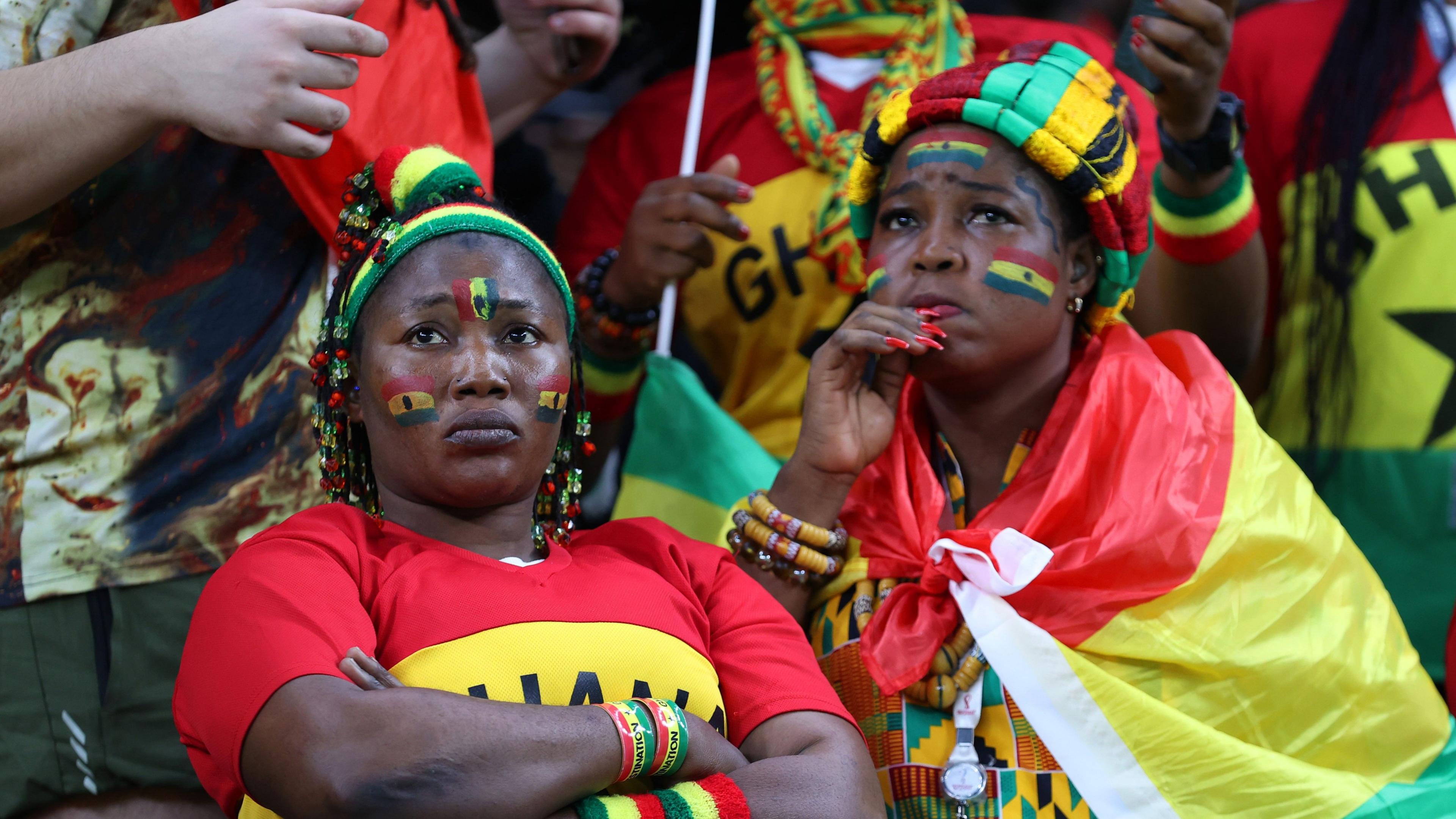
One Ghana fan told the BBC of "anger and disappointment" that Black Stars supporters might now be forced to cancel their plans.
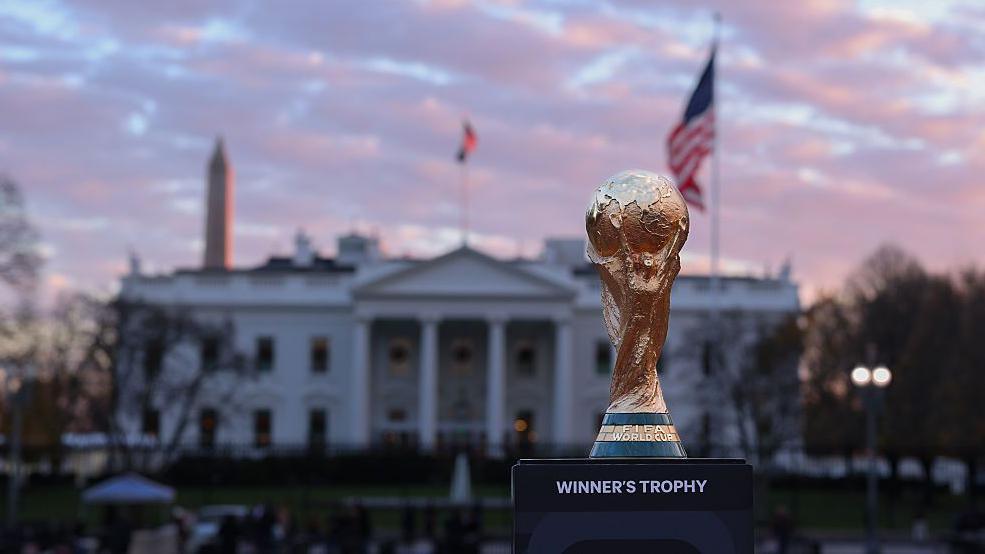
Fifa's ticket price policy was revealed on Thursday, with group-stage tickets up to three times the prices of those for Qatar in 2022. The cheapest ticket for the final will cost £3,119.
BBC Sport has contacted Fifa for comment.
Ticket prices outstrip wages for many countries
Image source, Getty Images
Image caption,
Many Ghana fans are rethinking their plans to support their team at the World Cup
"It's a chance to qualify. It is a chance to participate in a big event," Fifa president Gianni Infantino declared in January 2017.
The Fifa Council had just unanimously voted to expand the World Cup to 48 teams. Nations who had never or rarely reached the finals were being given hope.
Infantino added: "Football is more than Europe and South America. Football is global.
"The football fever you have in a country that qualifies for the World Cup is the most powerful tool you can have, in those nine months before qualifying and the finals."
Yet that "football fever" is falling a little flat after the ticket prices were released.
While the players will be there, the price of tickets could outstrip wages.
Take Haiti, one of the poorest countries in the world. The average wage in the Caribbean nation is around $147 (£110) a month.
The cheapest tickets for Haiti's first game at the World Cup in 42 years, against Scotland, cost $180 (£135).
To attend all three matches - they also play Brazil and Morocco - would cost $625 (£467). That's more than four months' salary for the average Haitian, just to get into the ground.
It's a similar story for Ghana, where the average monthly salary is around $254 (£190).
Ghana supporter Jojo Quansah told BBC World Service that fans would have to cancel their plans.
"It's a bit of a disappointment for those who, for the last three-and-a-half years, have been trying to put some money away in the hope that they can have their first World Cup experience," he said.
"Fifa themselves have gone ahead to increase the number of teams so a lot more smaller football nations will get a chance to have themselves and their fans represented.
"It's been overshadowed by pricing those same fans out of a chance to watch their country play at the World Cup.
"I have a feeling that quite a number of people within the next couple of months, are going to drop out of that desire to be at the next World Cup. Sadly. So sadly."
Other nations could see their fans priced out.
You've bought your tickets, how about the flights?
Any fan wanting to follow their team from the first game to the final - if they get there - will spend a minimum of £5,200 on tickets.
There there's travel. For an England fan planning to attend the group stage, current prices show flights from London to Dallas to Boston to New York/New Jersey and then home are £1,300. Add on £526 if you get the cheapest match tickets.
It gets a lot more expensive if you want to go for the whole tournament. If they were winners of Group L, England would have to go from Atalanta to Mexico City and then to Miami. Those two flights alone would cost £800.
Flights across the tournament could cost £2,600. Add on the cheapest match tickets, and it is £7,800.
What about Scotland fans travelling from Glasgow? Flights across the group stage would cost £1,675 each, with the lowest ticket price bracket £500 on top.
If Scotland were to win Group C, flights through to the final would be £2,357. With tickets that is £7,567.
These prices are as of today. Many supporters would not want to book flights for the knockout rounds before they know they need to travel. By then, it could be a lot more expensive.
What England and Scotland fans are saying
Paul Clegg (61), from Blackburn, says: "This will be my fifth World Cup. I haven't missed a game since 2014.
"I'm in contact with England fans all over the country. I'm a top capper.
"We all plan to boycott games after the group stage.
"Football is dead."
Anne-Marie Carr (54), from York, says: "I have diligently attended England matches so that I can earn the caps to get tickets for major tournaments only to then find that I, as so many others, are being priced out.
"WC 26 will be for the few, the sponsors and the glory hunters who've got the money to attend the big matches when they come along."
Katie, from Glasgow, says: "Buy a ticket, you must be joking!
"These prices are not for the real fans, these are for corporates, bigwigs, sponsors. The real fans cannot afford those glorified prices."
Ian, from Glenrothes, says: "Not sure why anyone is surprised.
"One of the reasons I'm not going, as much as I would want to see my country at a World Cup, is that there are too many practical things negating it.
"Airline and hotel greed, and now ticket prices.
"Not for me!"
Ticket prices have soared since the bid document
Every nation that wants to host the World Cup has to present its case from stadiums, to sustainability, to ticket prices.
The world has changed a lot since the United States, Mexico and Canada set out its plan in 2017.
Covid has placed a great deal of inflationary strain across the globe. But not this much.
In fairness, the ticket prices for the group stage are not vastly higher. For games such as Scotland v Haiti ($180) the prices for the cheapest tickets are in line with the $174 in the bid document.
It's for the quarter-finals, semi-finals and final where Fifa has massively increased the prices.
Category three for the final was proposed to be $695 (£520). Adjusted for inflation, it would cost $890 (£666). Yet Fifa is now charging $4,185 (£3,119).
How do World Cup ticket prices compare to other major events in the United States?
The biggest sporting event of the year in the United States is the Super Bowl - the finale to the NFL season.
Super Bowl tickets are not released for sale to the general public but can be bought via official resale sites.
According to Forbes,, external tickets for the 2025 Super Bowl started at around £3,500 - £5,000 each.
Basketball's NBA finals are not priced as high. Last year, tickets at Oklahoma City Thunder started at £52 in the top tier of their Paycom Center home as they won their first NBA Championship.
Away from sport, tickets for next year's WWE Wrestlemania in Las Vegas are available for between £250 and £1,000.
While musician Taylor Swift's hugely successful Eras Tour tickets at US venues were typically priced at between £37 and £335 each - although the resale market had tickets priced well above £1,000.
Festive forecast: Will we see a white Christmas this year?
Image source, Getty Images
Published
As the mild December continues, are our hopes of a white Christmas melting away?
It's still a little too early to confirm the details of the forecast for Christmas 2025, but there are some signs we may see the weather turning a little cooler and calmer.
Since the turn of the century, more than half of all Christmas Days in the UK have seen snow falling somewhere.
But at this early stage what do we actually know about the chances of this Christmas being "white"?
What is in the Christmas forecast?
Forecasters look at data produced by several different weather supercomputers generated over different timescales.
Not all computer models are in agreement about how the finer details of the Christmas forecast will look, but there are some themes now emerging.
The first half of December has been mild and wet, dominated by rain-bearing Atlantic low pressure systems. This general set-up is expected to continue for the next week or so, but there is a chance of higher pressure building into late December, which would bring a drier spell compared to recent conditions.
Whilst temperatures are likely to drop a little, returning to more typical for the time of year, there is no especially cold weather expected at this stage. Overnight frost and fog could well become more of an issue over the Christmas period. Wintry showers cannot be ruled out, especially over high ground in the north, but there are currently no indications of widespread snow.
Forecasting snow in the UK is notoriously difficult, and it is still too early to know for certain whether we will see a white Christmas in 2025.
The festive forecast will become much clearer about five days before Christmas, so keep an eye on the BBC Weather app or website for the latest updates.
Image caption,
Lying snow looks beautifully festive but a Christmas is only officially 'white' if snow is recorded falling from the sky
What makes a Christmas officially 'white'?
Christmas cards often depict snow that is "deep and crisp and even", but often a "white Christmas" will be much less wintry in reality.
In fact, just a single snowflake has to be recorded falling at any point during the 24 hours of 25 December at any of the Met Office's network of around 300 observing stations.
Snow already lying on the ground on Christmas Day may make things look merry and bright, but it does not count under the official definition.
Will it be a White Christmas?
Join BBC Weather’s Carol Kirkwood, Matt Taylor and Barra Best, along with famous faces Jeremy Vine and Lucy Porter, to explore where our fascination with a white Christmas comes from.
Since 2020, every year except 2024 has officially been a white Christmas. However, in each of these years very few places reported any snow actually settling on the ground.
The last time the UK saw a widespread white Christmas was back in 2010, when snow fell at 19% of weather stations and, very unusually, 83% of stations reported snow lying on the ground.
Whilst snow is more common between January to March than in December, odds are still pretty high that somewhere in the UK will see snow on 25 December.
However, as our climate warms, winters in the UK are becoming milder and wetter. Whilst the Met Office says, "This generally reduces the chances of a white Christmas," it also recognises that, "The natural variability of the weather will not stop cold, snowy winters happening in the future".
Ukraine's president says it is right for Russia's frozen assets to be used to rebuild his country
Ukraine is running out of cash to keep its military and its economy going, after almost four years of Russia's full-scale war.
For Europe, the solution to plugging Kyiv's budget hole of €135.7bn (£119bn; $159bn) for the next two years lies in frozen Russian assets sitting in Belgian bank Euroclear and EU leaders hope to sign that off at their Brussels summit next week.
Russian officials warn the EU plan would be an act of theft and Russia's central bank announced on Friday it was suing Euroclear in a Moscow court even before a final decision is made.
'Only fair' to use Russia's assets
In total, Russia has about €210bn of its assets frozen in the EU, and €185bn of that is held by Euroclear.
The EU and Ukraine argue that money should be used to rebuild what Russia has destroyed: Brussels calls it a "reparations loan" and has come up with a plan to prop up Ukraine's economy to the tune of €90bn.
"It's only fair that Russia's frozen assets should be used to rebuild what Russia has destroyed – and that money then becomes ours," says Ukraine's Volodymyr Zelensky.
German Chancellor Friedrich Merz says the assets will "enable Ukraine to protect itself effectively against future Russian attacks".
Russia's court action was expected in Brussels. But it is not just Moscow that is unhappy.
Belgium is worried it will be saddled with an enormous bill if it all goes wrong and Euroclear chief executive Valérie Urbain says using it could "destabilise the international financial system".
Euroclear also has an estimated €16-17bn immobilised in Russia.
Belgian Prime Minister Bart de Wever has set the EU a series of "rational, reasonable, and justified conditions" before he will accept the reparations plan, and he has refused to rule out legal action if it "poses significant risks" for his country.
What is the EU's plan?
Thierry Monasse/Getty Images
The German chancellor (L) says the EU's plan will enable Ukraine to defend itself
The EU is working to the wire ahead of next Thursday's summit to come up with a solution that Belgium can accept.
Until now the EU has held off touching the assets themselves directly but since last year has paid the "windfall profits" from them to Ukraine. In 2024 that was €3.7bn. Legally using the interest is seen as safe as Russia is under sanction and the proceeds are not Russian sovereign property.
But international military aid for Ukraine has slipped dramatically in 2025, and Europe has struggled to make up the shortfall left by the US decision to all but stop funding Ukraine under President Donald Trump.
There are currently two EU proposals aimed at providing Ukraine with €90bn, to cover two-thirds of its funding needs.
One is to raise the money on capital markets, backed by the EU budget as a guarantee. This is Belgium's preferred option but it requires a unanimous vote by EU leaders and that would be difficult when Hungary and Slovakia object to funding Ukraine's military.
That leaves loaning Ukraine cash from the Russian assets, which were originally held in securities but have now largely matured into cash. That money is Euroclear property held in the European Central Bank.
The EU's executive, the European Commission, accepts Belgium has legitimate concerns and says it is confident it has dealt with them.
The plan is for Belgium to be protected with a guarantee covering all the €210bn of Russian assets in the EU.
Should Euroclear suffer a loss of its own assets in Russia, a Commission source explained that would be offset from assets belonging to Russia's own clearing house which are in the EU.
If Russia went after Belgium itself, any ruling by a Russian court would not be recognised in the EU.
In a key development, EU ambassadors are expected to agree on Friday to immobilise Russia's central bank assets held in Europe indefinitely.
Until now they have had to vote unanimously every six months to renew the freeze, which could have meant a repeated risk to Belgium.
The EU ambassadors are set to use an emergency clause under Article 122 of the EU Treaties so the assets remain frozen as long as an "immediate threat to the economic interests of the union" continues.
Why Belgium is not yet satisfied
Belgium is adamant it remains a staunch ally of Ukraine, but sees legal risks in the plan and fears being left to handle the repercussions if things go wrong.
A usually divided political landscape in this case has rallied behind Prime Minister Bart de Wever, who is under pressure from European colleagues and having talks with UK Prime Minister Sir Keir Starmer in London on Friday.
"Belgium is a small economy. Belgian GDP is about €565bn – imagine if it would need to shoulder a €185bn bill," says Veerle Colaert, professor of financial law at KU Leuven University.
While the EU might be able to secure sufficient guarantees for the loan itself, Belgium fears an added risk of being exposed to extra damages or penalties.
Prof Colaert also believes the requirement for Euroclear to grant a loan to the EU would violate EU banking regulations.
"Banks need to comply with capital and liquidity requirements and shouldn't put all their eggs in one basket. Now the EU is telling Euroclear to do just that.
"Why do we have these bank rules? It's because we want banks to be stable. And if things go wrong it would fall to Belgium to bail out Euroclear. That's another reason why it's so important for Belgium to secure water-tight guarantees for Euroclear."
Europe under pressure from every direction
There is no time to lose, warn seven EU member states including those closest to Russia such as the Baltics, Finland and Poland. They believe the frozen assets plan is "the most financially feasible and politically realistic solution".
"It's a matter of destiny for us," warns leading German conservative MP Norbert Röttgen. "If we fail, I don't know what we'll do afterwards. That's why we have to succeed in a week's time".
While Russia is adamant its money should not be touched, there are added concerns among European figures that the US may want to use Russia's frozen billions differently, as part of its own peace plan.
Zelensky has said Ukraine is working with Europe and the US on a reconstruction fund, but he is also aware the US has been talking to Russia about future co-operation.
An early draft of the US peace plan referred to $100bn of Russia's frozen assets being used by the US for reconstruction, with the US taking 50% of the profits and Europe adding another $100bn. The remaining assets would then be used in some kind of US-Russia joint investment project.
An EU source said the added advantage of Friday's expected vote to immobilise Russia's assets indefinitely made it harder for anyone to take the money away. Implicit is that the US would then have to win over a majority of EU member states to vote for a plan that would financially cost them an enormous sum.
US President Donald Trump was among several prominent figures featured in the images released on Friday
More images from the estate of convicted paedophile Jeffrey Epstein have been released by Democrats on the House Oversight Committee.
The Democrats said the 19 images came from a tranche of 95,000 photos the committee received from Epstein's estate as part of its ongoing investigation.
US President Donald Trump, former Prince Andrew Mountbatten-Windsor and former Trump adviser Steve Bannon are among the high-profile figures featured in the photos. The images, many of which have been seen before, do not imply wrongdoing.
It comes one week before a deadline for the US justice department to release all Epstein-related documents, which are separate from the images shared by the committee on Friday.
Watch: Massie and Garcia on latest photos from Epstein estate
The individuals featured in the images have not yet commented. Many of them have previously denied wrongdoing in relation to Epstein.
In a statement, Representative Robert Garcia, the top Democrat on the committee, said: "It is time to end this White House cover-up and bring justice to the survivors of Jeffrey Epstein and his powerful friends."
"These disturbing photos raise even more questions about Epstein and his relationships with some of the most powerful men in the world. We will not rest until the American people get the truth. The Department of Justice must release all the files, NOW" he added.
Republicans, who are in the majority on the committee, have accused Democrats of "cherry-picking photos and making targeted redactions to create a false narrative about President Trump".
The White House called the release a "Democrat hoax" against Trump that has been "repeatedly debunked".
Trump appeared in three of the images released on Friday. One image showed him standing next to a woman whose face has been redacted.
Another showed Trump standing next to Epstein while talking to model Ingrid Seynhaeve at a 1997 Victoria's Secret party in New York – an image that was already publicly available.
House Oversight Committee
A third photo showed Trump smiling with several women, whose faces have also been redacted, flanked on either side of him.
An additional photo showed an illustrated likeness of the president on red packets next to a sign that reads: "Trump Condom".
House Oversight Committee
House Oversight Committee
Among the images released was what appeared to be cropped photo of Andrew Mountbatten-Windsor next to Bill Gates. A fuller version of the photo, which was available on photo agency Getty Images, showed King Charles, the then-Prince of Wales, on the right side of the photo.
The Getty Images' caption said the picture was taken during a summit during the Commonwealth heads of government meeting in London in April 2018.
Getty Images
Former Trump adviser Steve Bannon was also pictured in some of the images. He was shown speaking with Epstein at a desk, and in another, standing beside him in front of a mirror.
House Oversight Committee
A third image showed him speaking with filmmaker Woody Allen.
A photo featuring former US President Bill Clinton's showed him standing next to Epstein and Ghislaine Maxwell, who was convicted in 2021 for her role in facilitating the disgraced financier's abuse.
Two other people the BBC has yet to identify are also in the image, which appeared to have been signed by Clinton.
Clinton has denied any wrongdoing in relation to Epstein. In 2019, a spokesperson said he "knows nothing about the terrible crimes" Epstein pleaded guilty to.
Other prominent figures which appear in the images include US economist Larry Summers, lawyer Alan Dershowitz and entrepreneur Richard Branson. Not all the images show those individuals in the company of Epstein.
Epstein was charged with sex trafficking in July 2019. He died in prison a month later while awaiting trail.
The president was a friend of Epstein's, but has said they fell out in the early 2000s, years before he was first arrested.
Trump has denied any wrongdoing in relation to Epstein.
The justice department is required to release investigative material related to Epstein by 19 December under the Epstein Files Transparency Act, which was signed into law by Trump last month.
Mina, whose son died last year, says she felt she had to battle the system
Hundreds of parents have contacted the BBC about their struggles with getting support for adopted children - as charities call for a government review.
Mina, who contacted BBC Your Voice about her son who died last year from alcoholism, said: "You're just a lone person battling, trying to battle the system."
The charity Adoption UK said it had raised the issue with England's children's minister this week, calling for permanent funding for therapy and a wider review of the support available.
Mina was one of 700 people who contacted the BBC in response to the story, many of whom said they were adoptive parents who had struggled to get help for their children or had been blamed for their emotional and behavioural difficulties.
She and her husband adopted their son Leighton at the age of three, after he was removed from his birth mother when he was 18 months old. He struggled all his life with his mental health and addiction, she says.
"He turned all this pain inside, like I'm not worthy, I'm not lovable," says Mina. She believes his distress over his adoption led to his heavy drinking and death from liver failure at the age of 26. "He couldn't understand why."
Even as a four-year-old, Leighton would have periods of "deep depression" but his parents' concerns were brushed off by social workers, Mina says. When he was older, she adds, he would self-harm and began taking drugs and abusing alcohol.
She says social workers blamed her and her husband for Leighton's struggles, insisting "it must be something happening at home".
"There's a perception that once a child's adopted, they'll live happily ever after, and there is no platform to complain or to even have your voice," Mina says.
Mina's local authority did not respond to a request for comment.
Children's charity Coram - one of several organisations to call for greater support for adoptive families or to raise concerns about the blaming of parents in response to our story - says the adoption system is "under exceptional strain".
"It's shocking to discover again that adoptive parents, are experiencing blame as the first response when they seek help. That should never be the case," said CEO Dr Carol Homden.
She says "adoption remains an extremely important part of our care system and highly successful for the majority of children" but when children have been removed from their birth families for their own protection, "we need to recognise that they will need potential support for life and ensure that our services are there in a timely and sufficient way".
The adoption system is "under exceptional strain" says Dr Carol Homden from Coram
Coram also runs the largest body representing children's social workers, CoramBAAF, which has joined the call for a review of adoption support, saying: "We must get this right for the children at the heart of this."
James - not his real name - told us he was reassured to learn he was not the only parent to have gone through something like this and now feels he "owes it to our adopted son" to speak out himself.
He says he adopted a child who had severe foetal alcohol spectrum disorder (FASD) - a condition caused by drinking in pregnancy that can lead to physical and mental problems.
As he grew older, James says, his adopted son's behaviour was sometimes violent because of his condition.
'Heavily blamed'
One social worker suggested they should live in separate homes, says James, with one parent living with their adopted son and their other children staying with the other parent in the family home. A social worker also admitted, he adds, that social services staff had not been trained to deal with FASD.
"We took on a child knowing there'd be issues. We didn't expect everything to go perfectly because it doesn't. But when you ask for help, they need to help," he says.
Eventually, he felt his adopted son was no longer safe to live with the other children - James told us - and he arranged for him to be accommodated in care again.
James says they struggled to remain in contact with him.
"It was almost like, me and my children, that we weren't to exist anymore because we'd been heavily blamed," James says. "We were literally removed from from his life. They were more bothered on him seeing family pets than step-siblings."
His local authority said it could not comment on individual cases, but pointed to research which it says shows that outcomes for adopted children are "overwhelmingly successful".
The government says adoptive parents do "an incredible job providing a loving and supportive home" to vulnerable children, and while those arrangements do sometimes break down, support is in place to keep them together where possible.
We also heard from some parents who did receive good support and who say it made a huge difference.
Emma and her husband Geoff says they adopted their daughter, who needed extensive help, when she was nearly six. The local authority had an established relationship with a family therapy provider which specialises in adoption, Family Futures.
Emma and Geoff said specialist family therapy was a huge help to their daughter
"They understood that adoption and therapy need to go together," she says. "When we asked for some help they were very keen to give it. They realised if they don't do it now, things get worse, children go back to care and it all falls apart."
Adopted children who have been moved first into foster care, and then into an adoptive family, struggle to feel safe, says Emma, and the family therapy was aimed at addressing that.
"If you imagine being a small child and being put from pillar to post with different people and then you arrive virtually into a stranger's house, you are going to be very scared," she adds.
Geoff said it took about 10 years of seeing a therapist, on and off, before their daughter trusted them.
Without that support, he says he can't see how she would have been able to achieve as much as she has now that she is 21, having moved into supported living accommodation and still keeping in touch with her parents.
"We used to think that we couldn't imagine how she could ever leave home," says Geoff. "Now she's able to live away from us. She's got a place where she feels she belongs."
A nonprofit organisation tasked by the US Congress with helping preserve historic sites has sued the White House to stop construction on President Donald Trump's new ballroom.
The National Trust for Historic Preservation filed the suit on Friday, arguing that the White House failed to seek necessary reviews before demolishing the historic East Wing in October.
"No president is legally allowed to tear down portions of the White House without any review whatsoever — not President Trump, not President Joe Biden, and not anyone else," the lawsuit says.
The White House has called the project a "much needed and exquisite addition".
The lawsuit represents the first major legal challenge to the ballroom project.
The organisation is asking a federal court in Washington DC to halt construction on the addition until the White House "complies with the law by going through the legally mandated review processes," including a public comment public period, according to a statement.
"The White House is arguably the most evocative building in our country and a globally recognized symbol of our powerful American ideals," said Carol Quillen, President of the National Trust for Historic Preservation, a nonprofit organisation created in 1949 with a congressional charter.
The group said it was "compelled" to go to court after the White House ignored concerns it raised in October.
In the lawsuit, the group argues that the White House broke the law by beginning construction without filing plans with the National Capital Planning Commission, by not seeking an environmental assessment of the project, and by declining to seek authorisation from Congress.
It also alleges Trump is violating the US Constitution, "which reserves to Congress the right to dispose of and make all rules regarding property belonging to the United States".
The White House said in a statement responding to the lawsuit on Friday that "President Trump has full legal authority to modernize, renovate, and beautify the White House - just like all of his predecessors did."
The East Wing was demolished in October to make way for Trump's multi-million dollar ballroom, which he says is being paid for by private donors.
Since then, the proposed blueprint has expanded from a ballroom with a capacity of 500 people to a space that can fit 1,350 guests.
The White House had pledged previously that its construction plan would be assessed by the National Capital Planning Commission before building began, but the lawsuit claims that the site is already undergoing extensive construction.
The lawsuit describes the White House grounds as "a bustling construction site, with dozens of workers driving piles, stockpiling materials, and amassing heavy machinery.
"Just last week, a towering construction crane was erected on the White House grounds, and President Trump recounted that work on the Ballroom Project was audible all night."
Last week, the White House replaced the architect overseeing the project. The previous lead architect had reportedly clashed with Trump officials over the size and scope of the addition.
Angry French farmers are calling for more protests over the government-backed slaughter of cattle herds affected by so-called Lumpy Skin Disease (LSD).
On Thursday there were clashes between riot police and demonstrators in the southern Ariège department, after vets were called in to destroy potentially contaminated cattle at a farm.
Elsewhere in the south, farmers have dumped manure outside government buildings and blocked roads. The offices of several environmentalist groups were ransacked in the Charente-Maritime department.
LSD is a highly contagious bovine disease which is transmitted mainly by fly-bites. The symptoms are fever, mucal discharge and nodules on the skin.
Shutterstock
Though mainly non-fatal, it can badly affect milk-production and the cows are unsaleable.
The government's policy of slaughtering entire herds where a single animal has been infected has run up against bitter opposition from two of the three main farmers' unions.
Conféderation Rurale and Conféderation Paysanne say the policy is being brutally applied, and is in any case unnecessary because a combination of selective culling and vaccination would suffice.
But most vets disagree.
"Right now we are unable to tell the difference between a healthy animal and a symptomless animal carrying the virus. That is the only reason we have to carry out these whole-herd slaughters," said Stephanie Philizot who heads the SNGTV vets' union.
Since June there have been around 110 outbreaks of LSD in France, originally in the east but now increasingly in the south-west. Ministry officials blame the illegal movement of cattle from affected zones. Around 3,000 animals have been slaughtered.
The French government is worried the protests could snowball into a wider movement among a farming population that feels itself under growing threat from the imposition of EU norms and competition from abroad.
A big protest is planned in Brussels next week during the summit of EU leaders. Several French farming sectors are in deep crisis, from wine-growers hit by falling consumption to poultry farmers hit by avian flu.
There is also widespread opposition to the impending signature of an EU free-trade agreement with South American countries, which farmers fear will open France to more cheap food imports, much of it produced under looser environmental and sanitary constraints.
Festive forecast: Will we see a white Christmas this year?
Image source, Getty Images
Published
As the mild December continues, are our hopes of a white Christmas melting away?
It's still a little too early to confirm the details of the forecast for Christmas 2025, but there are some signs we may see the weather turning a little cooler and calmer.
Since the turn of the century, more than half of all Christmas Days in the UK have seen snow falling somewhere.
But at this early stage what do we actually know about the chances of this Christmas being "white"?
What is in the Christmas forecast?
Forecasters look at data produced by several different weather supercomputers generated over different timescales.
Not all computer models are in agreement about how the finer details of the Christmas forecast will look, but there are some themes now emerging.
The first half of December has been mild and wet, dominated by rain-bearing Atlantic low pressure systems. This general set-up is expected to continue for the next week or so, but there is a chance of higher pressure building into late December, which would bring a drier spell compared to recent conditions.
Whilst temperatures are likely to drop a little, returning to more typical for the time of year, there is no especially cold weather expected at this stage. Overnight frost and fog could well become more of an issue over the Christmas period. Wintry showers cannot be ruled out, especially over high ground in the north, but there are currently no indications of widespread snow.
Forecasting snow in the UK is notoriously difficult, and it is still too early to know for certain whether we will see a white Christmas in 2025.
The festive forecast will become much clearer about five days before Christmas, so keep an eye on the BBC Weather app or website for the latest updates.
Image caption,
Lying snow looks beautifully festive but a Christmas is only officially 'white' if snow is recorded falling from the sky
What makes a Christmas officially 'white'?
Christmas cards often depict snow that is "deep and crisp and even", but often a "white Christmas" will be much less wintry in reality.
In fact, just a single snowflake has to be recorded falling at any point during the 24 hours of 25 December at any of the Met Office's network of around 300 observing stations.
Snow already lying on the ground on Christmas Day may make things look merry and bright, but it does not count under the official definition.
Will it be a White Christmas?
Join BBC Weather’s Carol Kirkwood, Matt Taylor and Barra Best, along with famous faces Jeremy Vine and Lucy Porter, to explore where our fascination with a white Christmas comes from.
Since 2020, every year except 2024 has officially been a white Christmas. However, in each of these years very few places reported any snow actually settling on the ground.
The last time the UK saw a widespread white Christmas was back in 2010, when snow fell at 19% of weather stations and, very unusually, 83% of stations reported snow lying on the ground.
Whilst snow is more common between January to March than in December, odds are still pretty high that somewhere in the UK will see snow on 25 December.
However, as our climate warms, winters in the UK are becoming milder and wetter. Whilst the Met Office says, "This generally reduces the chances of a white Christmas," it also recognises that, "The natural variability of the weather will not stop cold, snowy winters happening in the future".
Robert Rhodes, pictured in a police interview in 2016, orchestrated a plot to kill Dawn Rhodes and claim he did so in self-defence
On a bank holiday evening in 2016, Robert Rhodes turned to his child and said: "Do you want to get rid of Mum?"
Those words, the child recalled years later, were the start of a plot for Rhodes to kill his wife, Dawn, in their Surrey home and cover up her death as an act of defence - of himself and his child.
For years, Rhodes painted himself as a victim of an attack in the killing he planned and covered up.
Described as swift and protective, jurors heard accounts of a father who moved to protect his child from their knife-wielding mother, who lost her life in the skirmish that ensued.
Instead, a new trial revealed a complex tale of abuse, control and a murder plot with the coercion of a child at its heart.
On 2 June 2016, the child, who cannot be named for legal reasons, went to their mother and said: "I drew a picture for you, close your eyes and hold out your hands."
Then, with the child leaving the room and locking themselves in the bathroom, Rhodes cut his wife's throat with a kitchen knife.
To cover up the killing, Rhodes once again turned to his child, telling them he "needed a favour".
The favour, the child told police in 2022, was to stab their father in the back of the shoulder, with the same knife used to kill Dawn, and then let him cut their arm.
Surrey Police
Dawn Rhodes was killed in her kitchen in Wimborne Avenue, Earlswood, Surrey
"I didn't want to do any of it. I just felt guilty but I did what I was told," the child said during the police interview.
Despite the child crying and objecting at the time, Rhodes reportedly said: "We've done this now. There's no going back."
The child also told their therapist in 2021 that Rhodes had stabbed himself in the back of the head, causing himself another wound he would claim was caused by his wife.
As they were under 10 years old at the time of the murder, the child bears no criminal responsibility for aiding the attack.
Life insurance
The death of Dawn Rhodes followed the end of a marriage in turmoil, with the couple in the process of separating after revelations of infidelity.
The pair had known each other for more than 20 years, having met when Rhodes was 21 and Mrs Rhodes was 18, the court heard.
Having married in 2003, the couple lived in Epsom and across Surrey, before settling in Wimborne Avenue in Earlswood, near Redhill.
But on Christmas Eve in 2015, Robert Rhodes found out about an affair that Mrs Rhodes had been having with a co-worker.
From that point, Mrs Rhodes would claim to family members that Rhodes would self-harm in front of her and threaten to kill himself.
Internet searches made by Rhodes show him researching methods of suicide, as well as about life insurance.
He told the court: "I didn't see a future in our marriage."
Rhodes also admitted to creating a fake Facebook profile and contacting the wife of Mrs Rhodes' new partner to tell her about the affair.
Later, he would message his wife's partner: "Thank you for screwing my life and wife."
'Like the Hulk'
The child continued in their second set of police interviews: "There was a plan and we went through with it. I was told to lie and I did."
But shortly after the killing, the child originally told police how, after another argument between Rhodes and his wife, they had tried to intervene.
As part of the cover-up of their father's attack, the child said their mother picked up a knife and swung it at their arm, delivering the cut to their arm which was, in fact, administered by Rhodes.
The child described Dawn's "rage" and "anger" in a police interview in May 2017, before being told to run upstairs and "lock yourself in the bathroom".
In his own police interview, an emotional Rhodes told officers how he "grabbed the blade" of the knife and "held it as tight as I could".
Weaving his story together, he told officers: "I was scared, and it takes a lot to scare me.
"It's like one minute she [Dawn] is fine and the next minute she's like the Hulk," he added, referring to the comic book superhero.
Despite the façade put up by the child, witnesses in the trial pointed to signs that the truth lay beneath.
In a conversation while together in a car, when asked about their scar from the incident, the child would tell one adult: "It was the sharp bit [of the knife], that's how dad did it."
The child would later allege that, while on supervised visits, their father would attempt to speak to them, telling them to "stick to the plan".
They would later suggest their father would message them on a phone he had secretly given them, again urging them to continue backing his version of events.
In an unrelated conversation years later, other witnesses revealed how they heard Rhodes tell the child: "Snitches get stitches."
Surrey Police
Robert Rhodes, 52, coerced his child into helping to kill their mother, Dawn Rhodes, in 2016
Years passed, and the child continued at school and made new friends, while the truth of what happened continued to eat at them inside.
In November 2021, the child confided the truth in a close friend, who recalled: "I asked if they felt guilty, they said yes - like this guilt had been bothering them. They were distraught."
The following day, the child would then tell their therapist, who alerted police.
Double jeopardy
Following an appeal to the Court of Appeal in November 2024, Rhodes was retried under the double jeopardy rules.
It meant that, due to the compelling new evidence brought forward by the child, he could be reexamined for the crime he was acquitted of in 2017, as well as charges of child cruelty, perverting the course of justice and perjury.
At his new trial, Rhodes would often sit staring ahead, his eyes occasionally darting over to the 12 people hearing his case.
While the court listened to more gruesome details of the murder, Rhodes would hunch over and stare at the floor and, on one occasion when evidence was being read out, he sat shaking his head and mouthing "nope" out into the courtroom.
As jurors convicted him, he stood silently in the dock.
'Motherhood brought her joy'
Following the trial, Mrs Rhodes' family - mother Liz Spencer, sister Kirsty Spencer and brother Darren Spencer, paid tribute.
Her mother said: "Dawn was a loving daughter, sister and mother. Being a mother was what brought joy to Dawn.
"During her life, Dawn was looking for someone to build a life with. She was looking for someone to love and be loved by someone to trust and be trusted by and someone to respect and be respected by."
Kirsty added: "Dawn was my sister and I loved her dearly.
"I know my sister would want us to find freedom, a freedom that she was deprived of."
Her brother Darren added: "Dawn was a very capable woman, but unfortunately went through hell in the last few years of her life.
"The pressures on her at the time meant that she wasn't the Dawn we all knew, and the last few times we saw her before she was taken from us, she was at the end of her tether."
Rhodes will be sentenced at Inner London Crown Court on January 16.
Author Joanna Trollope has died aged 82, her family has announced.
The writer was affectionately known as the "queen of the Aga saga" because her novels often focused on romance and intrigue in middle England.
In a statement, her daughters Louise and Antonia said their "beloved and inspirational mother" had died "peacefully at her Oxfordshire home" on Thursday.
Trollope's novels include The Rector's Wife, Marrying The Mistress and Daughters in Law.
Trollope's literary agent James Gill said in a statement: It is with great sadness that we learn of the passing of Joanna Trollope, one of our most cherished, acclaimed and widely enjoyed novelists.
"Joanna will be mourned by her children, grandchildren, family, her countless friends and - of course - her readers."
This is a breaking news story, further updates to follow.
Reform said it had more than 268,000 paid-up members, which would mean it has overtaken Labour to become the biggest party by membership in the UK.
Labour refused to comment on the accuracy of the membership figures in the Times, with a spokesperson saying they would be published in the party's annual report.
There is no legal obligation for political parties to publish their membership figures, which are not verified by outside bodies.
Reform UK leader Nigel Farage said: "As we have suspected for some time, Reform has overtaken Labour to become the largest political party in British politics - a huge milestone on our journey to win the next election.
"The age of two-party politics is dead."
The party has consistently been leading in national opinion polls since the spring.
Labour's membership has been steadily falling since Sir Keir Starmer became leader in April 2020, according to the latest publicly available figures.
The party's annual accounts published in August put the party's membership at 333,235 at the end of last year, down from a peak of more than 530,000 under Jeremy Corbyn.
Despite the party's landslide election victory, it shed 37,000 members over the course of 2024 and reports suggest this trend has continued.
In February, the LabourList website reported the party's membership had fallen to around 309,000 and the Times says the figure has now dropped below 250,000.
A Labour Party spokesperson said: "Our membership figures are published in our annual report. We do not give a running a commentary on them throughout the year."
Meanwhile, the Green Party says it has seen a surge in membership since Zack Polanski took over as the party's new leader in September, rising from around 70,000 to more than 180,000.
The Conservatives do not routinely publish their membership figures.
Some 131,680 members were eligible to vote in last year's Tory leadership election but reports suggest the party's membership has fallen to around 123,000 since then.
Hayley Bell and Richard Elkin were convicted at Portsmouth Crown Court
Two funeral directors who kept bodies in an unrefrigerated room for more than a month have been found guilty of preventing lawful burial.
Richard Elkin, 49, and Hayley Bell, 42, were also convicted at Portsmouth Crown Court of intentionally causing a public nuisance and fraud.
Prosecutors said 46 bodies were kept in the uncooled mortuary at Elkin and Bell Funerals in Gosport, Hampshire, in 2022 and 2023.
The pair will be sentenced on 19 February.
Warning: The following report contains distressing details and images
CPS
Elkin and Bell Funerals traded despite being insolvent, prosecutors said
Lesley Bates KC, prosecuting, previously said the bodies of two elderly men were found by court agents who were repossessing the premises because of debts including more than £13,000 in unpaid rent.
Ms Bates said: "Water was coming in through a leak in the roof of the mortuary room, it was running down the walls.
"The room was not refrigerated. The temperature within the mortuary room was no different to elsewhere in the premises."
Ms Bates said one body, of William Mitchell, 87, "showed obvious signs of decomposition" after remaining in the room for 36 days.
She said Mr Mitchell's family were "incredulous" when they learned his body had not been cremated.
CPS
Bodies were left for weeks in a leaky and uncooled mortuary, prosecutors said
Prosecutors said the firm continued to trade despite being insolvent and unable to meet its obligations.
Elkin was additionally convicted of making and using a false instrument by displaying a forged certificate from the National Association of Funeral Directors, they added.
Rachel Robertson from the Crown Prosecution Service (CPS) said the pair, of Nobes Avenue, "showed a grave disregard for the dignity owed to the deceased in their care and the trust placed in them by grieving families".
The CPS said the mortuary was left unrefrigerated between June 2022 and December 2023 and many of the bodies were left there for more than 30 days.
Assistant Chief Constable Paul Bartolomeo said: "Our officers turned over every stone to bring Elkin & Bell to justice using legislation that is hundreds of years old.
"Sadly we are aware of other similar cases across the country
"We need new legislation rather than relying on common law. We also need better regulation.
"This can help ensure that all funeral directors act, as the majority do, with professionalism and compassion."
Iranian security forces have "violently arrested" Nobel Peace Prize winner and women's rights activist Narges Mohammadi, her foundation has said.
The Narges Foundation said her brother confirmed Ms Mohammadi was detained in the eastern city of Mashhad, along with other activists.
It has called for the immediate release of the 53-year-old and the activists detained alongside her. Iran does not appear to have commented.
Ms Mohammadi was awarded the 2023 Nobel Peace Prize for her activism against female oppression in Iran and promoting human rights.
In December 2024, she was given a temporary release from jail for three weeks on medical grounds, after being held in Tehran's notorious Evin prison since 2021.
She was expected to return to prison soon after, where she was serving multiple sentences.
Her latest arrest reportedly came as she attended a memorial ceremony for Khosrow Alikordi, a lawyer found dead in his office last week.
Norway-based group Iran Human Rights had called for an independent inquiry to establish how he died, saying the circumstances around his death were "suspicious".
Several other activists were detained at the ceremony, where it's reported they shouted slogans, including "death to the dictator" and "long live Iran".
Taghi Rahmani, Ms Mohammadi's husband, told BBC Persian: "They arrested Narges violently. The brother of the lawyer witnessed her arrest at the memorial.
"This act is against human rights laws, and amounts to some kind of revenge.
"This happened in Mashhad today and is concerning because the establishment's crackdown has intensified recently."
"The threats conveyed to Ms Mohammadi make it clear that her security is at stake, unless she commits to end all public engagement within Iran, as well as any international advocacy or media appearances in support of democracy, human rights, and freedom of expression," the Nobel committee's statement added.
Over the past year, she has continued to remain defiant, refusing to wear the mandatory headscarf and meeting fellow activists across the country.
Across her lifetime, Mohammadi has been arrested 13 times and been sentenced to more 36 years imprisonment and 154 lashes, according to her foundation.
But for those who knew his work he was a much-loved reminder of a different age - when more than 20 million people would tune into a show and collectively understand and enjoy its references, jokes and songs.
He was born in 1926 in Glasgow and grew up in the city's west end.
His father, Fred, was a quiet insurance executive but the young Stanley inherited a love of all things theatrical from his mother, who encouraged his early attempts at impressions and songs.
A look back at the career of Stanley Baxter
Baxter's younger sister, Alice Dale, became an actor and writer based in Australia and it is clear Bessie was a big influence on both.
"I probably became an entertainer to please mother," he once said. "She was forthright, while father was a retiring man. I was more like him in nature but to please her I pushed myself forward."
She took him round church halls and family gatherings before he made his professional debut on the Scottish edition of the BBC's Children's Hour aged just 14.
The young performer from Glasgow was hooked but world events intervened.
During World War Two he was a "Bevin Boy", conscripted to work in the Lanarkshire coal mines.
He moved from there to National Service in Malaya, where he took to the stage with the Combined Services Entertainments Unit, putting on shows to boost troop morale.
It was during this period that he met Kenneth Williams.
He became a life-long friend of the future Carry On star, though Williams's published diaries reveal their relationship constantly veered between the confessional, supportive and rivalrous.
In the 1970s and 1980s, Baxter's shows became flamboyant and expensive
Back in Glasgow in the late 1940s, Baxter worked at the Citizens Theatre as assistant stage manager, and appeared in Macbeth and in Tyrone Guthrie's 1948 Edinburgh Festival production of The Thrie Estaites.
But he really found his feet and fame in variety theatre.
Over the coming decade he appeared with Jimmy Logan, Rikki Fulton and Jack Milroy on stage at Glasgow's Alhambra Theatre and on the radio show It's All Yours. Early on in his career, Baxter also became a notable panto dame.
Inevitably, London called.
He was cast in On The Bright Side, a comedy sketch show where he first performed what would become one of his most popular sketches.
'Parliamo Glasgow' was a spoof language programme where, instead of teaching Italian, Baxter's earnest presenter tutors the rest of the world in the language of his home city.
Altering words and adding the odd slang term, a typical example was: "Zarra marra onna barra, Clara?"
Baxter would say the phrase in a thick Glasgow accent before providing the translation:
"Is that a marrow on your barrow, Clara?"
That Baxter could pull this off without causing offence or appearing to patronise his Scottish roots for a wider audience was a testament to his brilliance as a performer.
The 1960s saw his TV career bloom.
The Stanley Baxter Show was a huge success on the BBC in 1963 and ran for eight years.
There were films too, such as The Fast Lady and Crooks Anonymous. But cinema comedies, with their need for proper stories and well-rounded, believable characters, never really suited Baxter's talents.
He was best at broader caricatures, impressions and sketch comedy and as his reputation and audiences grew, so did his ambition and control over his programmes.
Getty Images
Baxter delighted in dressing up and drag was a regular feature of his act
Baxter's programmes sometimes contained parodies of the television of the time
He moved to London Weekend Television (LWT) in 1973 with the Stanley Baxter Picture Show. In this series and the Moving Picture Show that followed, his speciality was parodying film and television favourites.
Baxter played most of the parts, bolstered by a riot of colour, fabulous sets, costuming and sharp scripts. He was an exacting performer who insisted on high production values.
That meant relatively few episodes were made, though they won multiple Baftas for Baxter. His portrayal of the Queen (always billed as The Duchess of Brendagh) was perhaps his most lauded impression.
After nine years of specials, he moved to a weekly slot with The Stanley Baxter Series in 1981, although a greater number of programmes per year did not equate to a drop in production values.
And while the high cost of his work was undoubtedly a factor in his subsequent sacking from LWT, his friend Kenneth Williams made a good point in a diary entry in 1981.
He wrote: "We watched the Stanley Baxter show on ITV and again I was struck by Stanley's obsession with the past; it was all about old films, film directors, film stories re-jigged, film personalities (Jimmy Durante etc.) & so was fine for the middle-aged but had nothing for the young."
The show was cancelled and he returned to the BBC with Stanley Baxter's Christmas Hamper in 1985 and Stanley Baxter's Picture Annual the following year.
Getty Images
His final TV role was as the magician Mr Majeika
Alamy
Fifty years on, he returned to BBC radio for a series of programmes
The big budgets and long production schedules were still a part of his process but times had changed and he was followed to the BBC by the man he blamed for his sacking from LWT - John Birt.
According to Baxter it was Birt who once again ended his contract.
He appeared in the children's show Mr Majeika before retiring from television in 1990, gracing the stage in Scotland as a panto dame for a few more years before finally hanging up his wig.
There were occasional specials for BBC Radio 4 and he appeared in a Christmas show on ITV in 2008, in which he introduced archive of his work and performed with guests who had been influenced by him.
Despite his ability to make people laugh, he always considered himself a character actor rather than a comedian.
Off-screen and stage he was something of a reluctant celebrity, giving few interviews and declining to appear on chat shows.
In 1993, he took legal action to ensure nothing about his private life would be revealed by the publication of his late friend Kenneth Williams's diaries.
Baxter had helped Scottish journalist Brian Beacom write a book about his life. He had intended that it would be published posthumously but appeared to change his mind in 2020.
Getty Images
Moira stood by her husband when he was arrested in a public lavatory in 1962
The Real Stanley Baxter described his long struggle with his sexuality. At the age of 94, he confirmed that he had always been gay but had initially hidden the truth to avoid arrest in the years before decriminalisation.
In fact, he had been arrested in 1962 and contemplated suicide rather than see his career in ruins. The charges were subsequently dropped.
He insisted that Moira - his wife of more than 45 years - had been fully aware of the situation. She had even given her blessing to Baxter bringing boyfriends home.
The couple married in 1951 but by the 1970s were living apart. They never divorced and lunched together almost daily.
Moira died in 1997 and Baxter's long-term partner, Marcus, died in 2016.
Baxter never came to terms with his sexuality. He told Brian Beacom: "I never wanted to be gay and I still don't. The truth is, I don't really want to be me."
And he once spoke of his feelings about fame and the work of the actor, telling a journalist:
"All this rubbish about the man behind the mask. I've had it again and again and again. The mask is what's important."
Ukraine's president says it is right for Russia's frozen assets to be used to rebuild his country
Ukraine is running out of cash to keep its military and its economy going, after almost four years of Russia's full-scale war.
For Europe, the solution to plugging Kyiv's budget hole of €135.7bn (£119bn; $159bn) for the next two years lies in frozen Russian assets sitting in Belgian bank Euroclear and EU leaders hope to sign that off at their Brussels summit next week.
Russian officials warn the EU plan would be an act of theft and Russia's central bank announced on Friday it was suing Euroclear in a Moscow court even before a final decision is made.
'Only fair' to use Russia's assets
In total, Russia has about €210bn of its assets frozen in the EU, and €185bn of that is held by Euroclear.
The EU and Ukraine argue that money should be used to rebuild what Russia has destroyed: Brussels calls it a "reparations loan" and has come up with a plan to prop up Ukraine's economy to the tune of €90bn.
"It's only fair that Russia's frozen assets should be used to rebuild what Russia has destroyed – and that money then becomes ours," says Ukraine's Volodymyr Zelensky.
German Chancellor Friedrich Merz says the assets will "enable Ukraine to protect itself effectively against future Russian attacks".
Russia's court action was expected in Brussels. But it is not just Moscow that is unhappy.
Belgium is worried it will be saddled with an enormous bill if it all goes wrong and Euroclear chief executive Valérie Urbain says using it could "destabilise the international financial system".
Euroclear also has an estimated €16-17bn immobilised in Russia.
Belgian Prime Minister Bart de Wever has set the EU a series of "rational, reasonable, and justified conditions" before he will accept the reparations plan, and he has refused to rule out legal action if it "poses significant risks" for his country.
What is the EU's plan?
Thierry Monasse/Getty Images
The German chancellor (L) says the EU's plan will enable Ukraine to defend itself
The EU is working to the wire ahead of next Thursday's summit to come up with a solution that Belgium can accept.
Until now the EU has held off touching the assets themselves directly but since last year has paid the "windfall profits" from them to Ukraine. In 2024 that was €3.7bn. Legally using the interest is seen as safe as Russia is under sanction and the proceeds are not Russian sovereign property.
But international military aid for Ukraine has slipped dramatically in 2025, and Europe has struggled to make up the shortfall left by the US decision to all but stop funding Ukraine under President Donald Trump.
There are currently two EU proposals aimed at providing Ukraine with €90bn, to cover two-thirds of its funding needs.
One is to raise the money on capital markets, backed by the EU budget as a guarantee. This is Belgium's preferred option but it requires a unanimous vote by EU leaders and that would be difficult when Hungary and Slovakia object to funding Ukraine's military.
That leaves loaning Ukraine cash from the Russian assets, which were originally held in securities but have now largely matured into cash. That money is Euroclear property held in the European Central Bank.
The EU's executive, the European Commission, accepts Belgium has legitimate concerns and says it is confident it has dealt with them.
The plan is for Belgium to be protected with a guarantee covering all the €210bn of Russian assets in the EU.
Should Euroclear suffer a loss of its own assets in Russia, a Commission source explained that would be offset from assets belonging to Russia's own clearing house which are in the EU.
If Russia went after Belgium itself, any ruling by a Russian court would not be recognised in the EU.
In a key development, EU ambassadors are expected to agree on Friday to immobilise Russia's central bank assets held in Europe indefinitely.
Until now they have had to vote unanimously every six months to renew the freeze, which could have meant a repeated risk to Belgium.
The EU ambassadors are set to use an emergency clause under Article 122 of the EU Treaties so the assets remain frozen as long as an "immediate threat to the economic interests of the union" continues.
Why Belgium is not yet satisfied
Belgium is adamant it remains a staunch ally of Ukraine, but sees legal risks in the plan and fears being left to handle the repercussions if things go wrong.
A usually divided political landscape in this case has rallied behind Prime Minister Bart de Wever, who is under pressure from European colleagues and having talks with UK Prime Minister Sir Keir Starmer in London on Friday.
"Belgium is a small economy. Belgian GDP is about €565bn – imagine if it would need to shoulder a €185bn bill," says Veerle Colaert, professor of financial law at KU Leuven University.
While the EU might be able to secure sufficient guarantees for the loan itself, Belgium fears an added risk of being exposed to extra damages or penalties.
Prof Colaert also believes the requirement for Euroclear to grant a loan to the EU would violate EU banking regulations.
"Banks need to comply with capital and liquidity requirements and shouldn't put all their eggs in one basket. Now the EU is telling Euroclear to do just that.
"Why do we have these bank rules? It's because we want banks to be stable. And if things go wrong it would fall to Belgium to bail out Euroclear. That's another reason why it's so important for Belgium to secure water-tight guarantees for Euroclear."
Europe under pressure from every direction
There is no time to lose, warn seven EU member states including those closest to Russia such as the Baltics, Finland and Poland. They believe the frozen assets plan is "the most financially feasible and politically realistic solution".
"It's a matter of destiny for us," warns leading German conservative MP Norbert Röttgen. "If we fail, I don't know what we'll do afterwards. That's why we have to succeed in a week's time".
While Russia is adamant its money should not be touched, there are added concerns among European figures that the US may want to use Russia's frozen billions differently, as part of its own peace plan.
Zelensky has said Ukraine is working with Europe and the US on a reconstruction fund, but he is also aware the US has been talking to Russia about future co-operation.
An early draft of the US peace plan referred to $100bn of Russia's frozen assets being used by the US for reconstruction, with the US taking 50% of the profits and Europe adding another $100bn. The remaining assets would then be used in some kind of US-Russia joint investment project.
An EU source said the added advantage of Friday's expected vote to immobilise Russia's assets indefinitely made it harder for anyone to take the money away. Implicit is that the US would then have to win over a majority of EU member states to vote for a plan that would financially cost them an enormous sum.
Author Joanna Trollope has died aged 82, her family has announced.
The writer was affectionately known as the "queen of the Aga saga" because her novels often focused on romance and intrigue in middle England.
In a statement, her daughters Louise and Antonia said their "beloved and inspirational mother" had died "peacefully at her Oxfordshire home" on Thursday.
Trollope's novels include The Rector's Wife, Marrying The Mistress and Daughters in Law.
Trollope's literary agent James Gill said in a statement: It is with great sadness that we learn of the passing of Joanna Trollope, one of our most cherished, acclaimed and widely enjoyed novelists.
"Joanna will be mourned by her children, grandchildren, family, her countless friends and - of course - her readers."
This is a breaking news story, further updates to follow.
FA urged to press Fifa over World Cup ticket prices
Image source, Getty Images
Image caption,
The cost of tickets to the World Cup final in 2026 will be seven times higher than in Qatar
Published
The Football Association has been asked to lobby Fifa to lower the price of World Cup tickets by a leading supporters' group.
The Football Supporters' Association (FSA) says the pricing structure for next year's tournament in the United States, Canada and Mexico is "scandalous".
It has joined Football Supporters Europe (FSE) in demanding that the sales process is stopped so fans' groups can hold talks with world governing body Fifa over its pricing policy.
"We back Football Supporters Europe in calling for a halt in ticket sales and we are calling on the Football Association to work with fellow FAs to directly challenge these disgraceful prices," the FSA said in a statement.
"We call on all national associations to stand up for your supporters, without whom there would be no professional game."
BBC Sport has contacted Fifa, the FA and the Scottish FA but they are yet to comment.
The huge increase in the price of tickets was revealed on Thursday when Fifa released allocation details for the official supporters' groups of each country.
At the 2022 World Cup in Qatar, group stage fixtures all had set prices of £68.50, £164.50 or £219.
But for England v Croatia and Scotland v Brazil next year, tickets cost around £198, £373 or £523.
The cost ramps up considerably in the latter stages.
Quarter-finals for all teams are £507, £757 and £1,073, with the semi-finals £686, £1,819 and £2,363.
The cheapest tickets for the final are £3,119, seven times more expensive than in Qatar.
There are no concessions across any of its tickets for children or other groups.
Ticket prices a 'laughable insult' to supporters
The cheapest tickets are in the 'supporter value' category, which the FSA called "a laughable insult to your average fan".
The FSA added that supporters felt they had been "stabbed in the back" and that the loyal fans will now likely be missing in the US, Mexico and Canada because the matches will be "unaffordable" to most.
"This is a tournament that is supposed to be celebrated by the world, where fans of all nations come together for the love of football," the FSA said. "Fifa has decided to make it all about the money and the elite who can afford it.
"For Fifa, loyalty is not the hard-working fan travelling thousands of miles in support of their team at qualifiers around the continent. A game that should be for all is now only for those who can afford it.
"Who needs to follow England away for disappointment when Fifa can deliver that six months before a ball is kicked? The life has been sucked out of this tournament before it starts."
It will cost about £5,225 for a supporter to follow their team through to the final if they were to attend all eight matches in the cheapest ticket category.
That rises to about £8,850 in the mid-price range, or £12,357 for the top tier.
In 2022, it would have cost £1,466, £2,645 or £3,914, though that was for seven games rather than eight.
FSE demands talks over 'extortionate' ticket prices
Image source, Getty Images
Image caption,
Each household can request up to four tickets per match and a maximum of 40 across the tournament
FSE has called on Fifa to stop the ticket sale process, believing it needs to rethink the pricing policy.
"In the price tables gradually and confidentially released by Fifa, tickets allocated to national associations...are reaching astronomical levels," it said in a statement.
"Adding insult to injury, the lowest price category will not be available to the most dedicated supporters through their national associations [because] Fifa chose to reserve the scarce number of category four tickets to the general sales, subject to dynamic ticket pricing.
"For the first time in World Cup history, no consistent price will be offered across all group stage games. Instead, Fifa is introducing a variable pricing policy dependent on vague criteria such as the perceived attractiveness of the fixture.
"Fans of different national teams will therefore have to pay different prices for the same category at the same stage of the tournament, without any transparency on the pricing structure enforced by Fifa."
The Football Supporters' Association's England Fans' Embassy said: "These prices are a slap in the face to supporters who support their team outside of the flagship tournament that appears every four years.
"A game for supporters, loyalty has been thrown out of the window and supporters of the participating nations have been completely let down."
A Sudanese paramilitary commander, whose role in the el-Fasher massacre was revealed by BBC Verify, has been sanctioned by the UK government.
Brig Gen Al-Fateh Abdullah Idris, also known as Abu Lulu, was filmed shooting dead at least 10 unarmed captives after the Rapid Support Forces (RSF) seized the city in late October.
Thousands of people are believed to have been killed by the RSF after the army withdrew from el-Fasher. UK Foreign Secretary Yvette Cooper said the atrocities taking place in Sudan were "a scar on the conscience of the world" which "cannot, and will not, go unpunished."
The UK has also sanctioned three other RSF commanders, including deputy head Abdul Rahim Hamdan Dagalo.
Dagalo, who was also placed under EU sanctions in November, was shown in verified footage touring an army base in the city in the hours after el-Fasher fell. He is the brother of RSF chief Mohamed "Hemedti" Dagalo.
Sudan's civil war - sparked after the RSF and the military's fragile ruling coalition collapsed - has now raged for more than two years, killing hundreds of thousands of people and displacing millions more.
El-Fasher was the army's last major stronghold in Darfur, the traditional stronghold of the RSF paramilitary.
An investigation by BBC Verify revealed the brutal tactics used by the RSF during the protracted siege, which included detaining and torturing people trying to smuggle supplies into the city and building a massive sand barrier around it to prevent civilians and army troops from escaping.
In its statement announcing the sanctions, the UK foreign office said it believed that Abu Lulu was "responsible for violence against individuals based on ethnicity and religion, and the deliberate targeting of civilians".
Footage confirmed by BBC Verify in October showed Abu Lulu executing several unarmed captives with an AK-style rifle in a sandy, dusty area north-west of the city. RSF troops who witnessed the incidents were later seen celebrating their commander's actions.
UK officials accused Abu Lulu, Dagalo, Gedo Hamdan Ahmed and Tijani Ibrahim Moussa Mohamed of carrying out "heinous" acts of violence, including mass killings, systematic sexual violence and deliberate attacks on civilians. The men have been placed under travel bans and any assets they hold will be frozen.
"Today's sanctions against RSF commanders strike directly at those with blood on their hands, while our strengthened aid package will deliver lifesaving support to those suffering," Cooper said.
Citing satellite images - previously published by Yale University's Humanitarian Research Lab - the foreign office said piles of bodies and mass graves could be seen in el-Fasher after the massacre.
Cooper also pledged an additional £21m to provide food, shelter and health services for civilians impacted by fighting in remote areas.
In the days that followed the el-Fasher massacre, RSF leader Gen Mohamed "Hemedti" Dagalo admitted that his troops had committed "violations" and said the incidents would be investigated.
Among those arrested was Abu Lulu. In a carefully choreographed and edited video posted on the RSF's official Telegram account he is shown being led into a cell at a prison, which was geolocated by BBC Verify to the outskirts of el-Fasher.
The commander, who previously featured heavily in propaganda videos posted online, has not been seen since his arrest. A TikTok account that documented his activities was removed by the company in October after BBC Verify approached the tech giant for comment.
The UK's move comes just two days after the US announced its own set of sanctions against a network of companies and individuals it accused of recruiting former Colombian soldiers and training individuals to fight in Sudan's civil war.
The US Treasury Department said that hundreds of Colombian mercenaries have travelled to Sudan since 2024, including to serve as infantry and drone pilots for the RSF.
Last month, US President Donald Trump pledged to "start working on Sudan" alongside Egypt, Saudi Arabia and the UAE, posting on social media that "tremendous atrocities" were taking place.
The NHS has urged those eligible to get vaccinated against flu to help limit the severity of symptoms
The NHS says it's facing its "worst-case scenario" after the number of people in hospital with flu jumped by 55% in a week.
NHS England chief executive Sir Jim Mackey has warned that between 5,000 and 8,000 hospital beds could be filled with flu patients by the weekend.
Health experts at the King's Fund think tank have said talk of an "unrelenting flu wave" has become worrying familiar over recent years.
How then is winter 2025 really any different and which patients have been affected most by what the NHS is now describing as "super flu"?
An earlier start for flu
The major difference between 2025's flu season and the previous three years is that the virus started spreading around a month earlier.
The first sign of this was in October in data published by the UK Health Security Agency (UKHSA).
When someone goes to their GP or hospital with flu-like symptoms they can be tested for a number of viruses including influenza, Covid and RSV.
UKHSA records the percentage of those tests that come back positive for flu, which can then give a strong indication that rates in the community are either rising or falling.
Virologists have linked the earlier flu season this year to a subtle shift in the genetic makeup of the main flu virus that is circulating - called H3N2.
So-called 'super-flu' is not a medical term and it does not mean the virus is more severe or harder to treat.
But the general public has not encountered this exact version of flu before, which means there may be less immunity built up in society, allowing it to spread more easily.
Children and young people most affected
Children tend to be more susceptible to flu than older adults, partly because their immune systems are still developing and because they tend to spread viruses more quickly through close contact.
The latest breakdown of UKHSA data shows that the proportion of positive tests is currently much higher in children and young people still at school or university.
Some schools have had to bring back Covid-like measures to prevent the spread of the virus, such as cutting back on singing in assemblies and introducing sanitisation stations, while one site in Caerphilly had to close temporarily.
Each year thousands of otherwise healthy children end up in A&E with complications after catching influenza.
But there is another concern: that younger people will go home and then spread the disease to elderly relatives who tend to be more vulnerable.
Flu adds to winter pressure
The NHS records the number of patients in hospital each week with influenza and other types of respiratory illness.
The number has been rising sharply in England with an average of 2,660 flu patients taking up a hospital bed last week, up from 1,717 in the previous week.
Those over 85-years-old are five times more likely to be hospitalised than the general population.
But the patients being admitted now would have been infected with the virus a week or so ago when infection rates were lower.
The greater concern for the health service is what happens over the coming weeks as new cases appear in A&E.
The NHS has roughly 105,000 available hospital beds in England and tends to "run hot" over the winter with 95% of those taken up at any one time.
If the number of flu patients needing overnight treatment jumps to 5,000 or higher, as Sir Jim Mackey predicts, then it could put the whole hospital system under more pressure.
What about vaccine protection?
The message coming from doctors and the NHS is for people in vulnerable groups to continue to come forward for a flu vaccine.
Even though the genetic make-up of the virus has shifted this winter, the main jab is still thought to offer effective protection, particularly against severe disease.
The flu vaccine is free on the NHS for those over 65-years-old, young children, pregnant women, those with certain health conditions, carers, and front line health and social care workers.
People in other groups can get the same vaccine for between £15 and £25 from high street pharmacists.
As of 30 November, just over 40% of people in an at-risk group had taken up the offer of a free flu jab this year.
Flu vaccination rates among NHS workers in England, which have fallen back since the Covid pandemic, appear to have stabilised this year at about the same level - around 42%.
Watch: María Corina Machado on her ' very dangerous' escape from Venezuela
The rescue operation to get Venezuelan opposition leader and Nobel laureate María Corina Machado out of Venezuela involved disguises, two boats through choppy seas and a flight, the man who says he led it told the BBC.
Dubbed Operation Golden Dynamite, the dangerous journey was cold, wet and long - but the "formidable" Machado didn't complain once, said Bryan Stern, a US special forces veteran and founder of the Grey Bull Rescue Foundation.
"The seas are very rough. It's pitch black. We're using flashlights to communicate. This is very scary, lots of things can go wrong."
Despite the risks, they didn't. Machado arrived safely in Oslo, Norway to collect her Nobel Peace Prize just before midnight on Wednesday.
Machado had been living in hiding in her own country since Venezuela's widely disputed elections last year, and hadn't been seen in public since January. Her grown-up children, who she hadn't seen in two years, were in Oslo to greet her.
Grey Bull specialises in rescue missions and evacuations, especially from conflict and disaster zones. A representative from Machado's team confirmed to CBS News, the BBC's US media partner, that the organisation was behind her rescue operation.
Mr Stern said that Grey Bull had been building up a presence in the Caribbean, including inside Venezuela and the neighbouring island of Aruba, for months to get ready for potential operations in Venezuela.
"We've been building infrastructure on the ground in Venezuela designed to get Americans, allies and Brits and other people out should the war in Venezuela start," he told the BBC.
Speculation has been mounting over possible US military action against Venezuela, after US President Donald Trump called on President Maduro to leave office, accusing him of sending narcotics and murderers to the US.
Mr Stern said the challenge in this case was getting somebody out who is as well-known as María Corina Machado - a household name in Venezuela for the opposition.
None of the infrastructure his firm had built up in the country, he said, was "designed for the second most popular person in the damn country with a target on her back."
Grey Bull Rescue/Handout
Bryan Stern's Grey Bull Rescue held missions during Hurricanes Helene and Milton in the US (he is pictured here in Tampa, 2024)
When he was first put in contact with Machado's team, they did not initially disclose her identity, but Mr Stern said he was able to guess.
When they got in touch with him in early December, though a contact who knew Machado's team, it was apparently the second attempt to get her out of Venezuela, after an initial plan "didn't go well," Mr Stern said.
The operation was dubbed "Golden Dynamite" because "Nobel invented dynamite" and Machado was trying to get to Oslo to accept the Nobel Peace Prize award.
Matters moved quickly. Mr Stern said he spoke with the team on a Friday, they deployed on the Sunday, and by Tuesday, their mission was complete.
His team had explored various possibilities to get Machado out of the country, and settled on a plan that involved a tumultuous sea journey.
To protect his future work in Venezuela, Mr Stern can only reveal so much about the trip.
By land, they moved Machado from a house where she was in hiding, to a pick-up spot for a small boat, which took her off the coast to a slightly bigger boat where she met up with him.
The voyage was in "very rough seas" with waves of up to 10ft (3m) in "pitch-black darkness," he said.
"The journey was not fun. It was cold, it was very wet, we were all soaked, the waves were very rough, and we used that to our advantage. We got her to land and to where her plane was, and she flew to Norway."
Amanda Pedersen Giske/NTB via Reuters
Machado was finally pictured landing in Oslo in the early hours of Thursday
Throughout the journey, he added that various steps were taken to mask and disguise Machado's face, as well as her digital profile because she is so well-known.
"The biometric threat is so real," he noted, adding steps were taken to make sure she could not be traced via her phone.
He said that Machado was "formidable" despite the conditions, accepting a jumper for warmth, but not asking for anything else.
"She was soaking wet and freezing cold and didn't complain once," he laughed, acknowledging the operation was very dangerous because water is "unforgiving".
"If I am driving a boat and blow an engine, I'm swimming to Venezuela."
When asked how he could guarantee the safety of Venezuelans who helped with the operation, Mr Stern said they kept their identities secret and "we [Grey Bull] do a lot of deception operations".
Many of those who helped didn't even realise they were working for him, Mr Stern said, while others think they "know the whole story", but they really don't.
"There are people who did things that were benign from their perspective - but mission-critical from our perspective."
Grey Bull Rescue/Handout
Grey Bull Rescue have carried out a number of international missions - including in Ukraine. (Pictured in 2022)
He said the operation was financed by donors, and not by the US government: "We've never had a thank-you note from the US government, let alone a dollar."
Mr Stern said he did coordinate with some nation states, and with intelligence and diplomatic services of several countries. This included alerting the US in an "informal" manner.
Machado has said she intends to return to Venezuela, but Mr Stern said he advised her not to do that.
"I told her, 'don't go back. You're a Mum. We need you.' She's going to do what she's going to do... I understand why she wants to go back because she's a hero to her people.
"I wish she wouldn't go back; I have a feeling she will."
Watch: BBC speaks to Nobel Peace Prize winner María Corina Machado
It was more than a year ago that MPs first gave their backing to proposed legislation which would introduce assisted dying in England and Wales, in an historic House of Commons vote.
In its current form, the Terminally Ill Adults (End of Life) Bill would allow people over the age of 18, who are expected to die within six months, to be given help to end their own life, subject to certain safeguards.
But the legislation continues to generate huge controversy, with passionate arguments for and against.
The House of Lords is on its fourth of 14 days allocated for detailed scrutiny of the bill and it's still some way off becoming law.
So what is causing the hold-up? And is there a chance that it might never come into force?
What's happened so far
The bill was introduced to Parliament by Labour MP Kim Leadbeater back in October 2024.
It is known as a private member's bill because it was put forward by a backbench MP rather than the government.
Peers are now carrying out line-by-line scrutiny of the legislation and proposing their own changes.
Reuters
Kim Leadbeater is the MP behind the bill
What needs to happen before the bill can become law?
The bill can only become law if both Houses of Parliament agree on its final wording.
This must happen before next spring, when the current session of Parliament is expected to end.
Are Lords trying to block the bill?
Members of the House of Lords have proposed more than 1,000 changes to the bill - known as amendments - which experts believe is a record number for a bill proposed by a backbench MP.
Supporters of assisted dying have raised concerns that the number of amendments, as well as the slow progress debating them, is a delaying tactic by opponents aimed at blocking the bill from becoming law.
They argue it would be undemocratic for unelected peers to frustrate a bill which has already been approved by elected MPs.
Leadbeater, the MP behind the bill, told the BBC she welcomes scrutiny by the Lords but claimed many of these amendments are unnecessary and even "cruel".
She pointed to examples such as proposals that someone seeking an assisted death should not have left the country within the last 12 months and that any assisted death should be filmed.
Opponents insist they are not obstructing the bill but say significant changes are needed to make it safe and ensure vulnerable people are protected.
Independent crossbench peer and former Paralympian Baroness Tanni Grey-Thompson told the BBC the bill was "badly written" and had significant gaps, with many of the amendments aimed at preventing coercion.
She pointed out MPs had also put forward large numbers of amendments and peers were simply doing their job by scrutinising the legislation.
EPA
Baroness Tanni Grey-Thompson (centre) has campaigned against assisted dying
However, the government has said it is neutral on the bill and it is being treated by parties as a matter of conscience, meaning they will not instruct their MPs or peers how to vote.
Ministers have ruled out using time set aside for debating government legislation.
Despite the additional days allocated, there is still a real risk the bill could run out time to become law.
There is a possibility even more time could be granted - but if the bill is not passed by both Houses by the end of the current session of Parliament in spring, it will fall.
Unlike government bills, those put forward by backbench MPs cannot be carried over into the next session.
This means any bill to introduce assisted dying would have to start the parliamentary process again from scratch.
Some MPs in favour of assisted dying have raised using the Parliament Act - a rarely-used piece of legislation invoked when MPs and peers cannot agree - as a potential option to allow the bill to be carried over.
By convention, the House of Lords does not block bills which were included in a government's election manifesto from becoming law but this would not apply in this case.
Given MPs have already backed the bill, it would still be controversial for unelected peers to obstruct its passage - but not impossible.

 Login
Login