Policymakers at the Bank of England are expected to cut interest rates - bringing the Bank rate down to its lowest level since February 2023.
Analysts are widely predicting a fall from 4% to 3.75%, although they do not expect a unanimous decision among the nine-member Monetary Policy Committee (MPC).
This would be the sixth cut in interest rates from August last year.
The Bank rate heavily influences the cost of borrowing by consumers, but also the returns given to savers.
The MPC has a target to keep inflation - which charts the rising cost of living - to 2%. The Bank rate is the committee's primary tool for achieving its ambition.
The latest inflation data, published on Wednesday, showed a bigger drop to Consumer Prices Index (CPI) inflation than analysts had been expecting.
The rate of CPI fell to 3.2% in November, from 3.6% in October, the Office for National Statistics (ONS) said.
While inflation remains above the Bank's target, the latest fall in the rate and signs of rising unemployment and a relatively stagnant economy are likely to push the committee towards an interest rate cut.
At the previous meeting in November, the four members of the MPC who voted for a cut were only just outvoted by the five who wanted to keep rates on hold.
At the time, the Bank's governor, Andrew Bailey, said he would "prefer to wait and see" whether inflation continued to drop back.
James Smith, developed market economist for ING, said the sharp drop in the November rate of inflation "green lights" a rate cut.
He said the "latest drop in inflation fits into a broader body of evidence suggesting that price pressures are cooling".
He is forecasting another two cuts to interest rates in February and April next year, although not all analysts agree with this suggestion.
Impact on borrowing and savings
About 500,000 homeowners have a mortgage that "tracks" the Bank of England's rate. If a 0.25 percentage point cut does come, it is likely to mean a typical reduction of £29 in their monthly repayments.
For the additional 500,000 homeowners on standard variable rates, there would typically be a £14 a month fall, assuming there is a cut in the Bank rate and lenders pass on the cut to their customers.
The vast majority of mortgage customers have fixed-rate deals. Rates on these deals have been falling recently, owing to the expectation among lenders of a Bank rate cut in December.
As of 17 December, the average two-year fixed residential mortgage rate was 4.82%, according to financial information company Moneyfacts. A five-year rate was 4.90%.
Mortgage rate cuts should also reduce some financial pressure on landlords, and perhaps ease the likelihood of rent rises for tenants.
However, savers are likely to see a further fall in returns as a result of any Bank rate falls.
The current average rate on an easy-access savings account is 2.56%, according to Moneyfacts.
Belgian Prime Minister Bart De Wever is yet to be convinced that the money held in Belgium should be loaned to Ukraine (file pic)
European Union leaders begin two days of talks in Brussels with a momentous decision to be taken on whether to loan tens of billions of euros in frozen Russian assets to Ukraine to fund its military and economic needs.
Most of Russia's €210bn (£185bn; $245bn) worth of assets in the EU are held by Belgium-based organisation Euroclear, and so far Belgium and some other members of the bloc have said they are opposed to using the cash.
Without a boost in funding, Ukraine's finances are set to run dry in a matter of months.
One European government official described being "cautiously optimistic, not overly optimistic" that a deal would be agreed. Russia has warned the EU against using its money.
It has filed a lawsuit against Euroclear in a Moscow court in a bid to get its money back.
The Brussels summit comes at a pivotal moment.
US President Donald Trump has said a deal to end the war - which began with Russia's full-scale invasion of Ukraine in February 2022 - is "closer now than we have been ever".
Although Russia has not responded to the latest peace proposals, the Kremlin has stressed that plans for a European-led multinational force for Ukraine supported by the US would not be acceptable.
President Vladimir Putin made his feelings towards Europe clear on Wednesday, when he said the continent was in a state of "total degradation" and "European piglets" - a derogatory description of Ukraine's European allies - were hoping to profit from Russia's collapse.
Alexander KAZAKOV/POOL/AFP
Those in favour of loaning Ukraine the money believe it will help deter Putin from continuing the war
The European Commission - the EU's executive arm - has proposed loaning Kyiv about €90bn (£79bn) over the next two years - out of the €210bn of Russian assets sitting in Europe.
That is about two-thirds of the €137bn that Kyiv is thought to need to get through 2026 and 2027.
Until now the EU has handed Ukraine the interest generated by the cash but not the cash itself.
"This is a crunch time for Ukraine to keep fighting for the next year," a Finnish government official told the BBC. "There are of course peace negotiations but this gives Ukraine leverage to say 'we're not desperate and we have the funds to continue fighting'."
Commission chief Ursula von der Leyen says it will also ramp up the cost of war for Russia.
Russia's frozen assets are not the only option on the table for EU leaders. Another idea, backed by Belgium, is based on the EU borrowing the money on the international markets.
However, that would require a unanimous vote and Hungary's Viktor Orban has made it clear he will not allow any more EU money to help Ukraine.
For Ukraine, the hours ahead are significant and President Volodymyr Zelensky is expected to attend the EU summit.
Ahead of the Brussels meeting, EU leaders were keen to stress the momentous nature of the decision.
"We know the urgency. It is acute. We all feel it. We all see it," von der Leyen told the European Parliament.
EPA
Ursula von der Leyen told the European Parliament that two choices were on the table for EU leaders
German Chancellor Friedrich Merz has played a leading role in pushing for the Russian assets to be used, telling the Bundestag on the eve of the summit it was about sending a "clear signal" to Moscow that continuing the war was pointless.
EU officials are confident they have a sound legal basis to use the frozen Russian assets, but so far Belgian Prime Minister Bart De Wever remains unconvinced.
His Defence Minister Theo Francken warned ahead of the talks that it would be a big mistake to loan the Euroclear cash.
Hungary is seen as the biggest opponent of the move and, ahead of the summit, Prime Minister Orban and his entourage even suggested that the frozen assets plan had been removed from the summit agenda. A European Commission official stressed that was not the case and it would be a matter for the 27 member states at the summit.
Slovakia's Robert Fico has also opposed using the Russian assets, if it means the money being used to procure weapons rather than for reconstruction needs.
When the pivotal vote does finally take place, it will require a majority of about two-thirds of member states to go through. Whatever happens, European Council President António Costa has promised not to go over the heads of the Belgians.
"We're not going to vote against Belgium," he told Belgian public broadcaster RTBF. "We'll continue to work very intensively with the Belgian government because we don't want to approve something that might not be acceptable for Belgium."
Belgium will also be aware that ratings agency Fitch has placed Euroclear on a negative watch, partly because of "low" legal risks to its balance sheet from the European Commission's plans to use the Russian assets. Euroclear's chief executive has also warned against the plan.
"There are many hiccups and obstacles of course still on the way. We have to find a way to respond to Belgium's worries," the Finnish official added. "We are on the same side as Belgium. We will find a solution together to make sure all the risks are checked as much as they can be checked."
However, Belgium is not the only country to have doubts, and a majority is not guaranteed.
Italian Prime Minister Giorgia Meloni has told Italian MPs she will endorse the deal "if the legal basis is solid".
"If the legal basis for this initiative were not solid, we would be handing Russia its first real victory since the beginning of this conflict."
Malta, Bulgaria and the Czech Republic are also said to be unconvinced by the controversial proposals.
If the deal is passed and the Russian assets are given to Ukraine, the worst-case scenario for Belgium would be one in which a court would order it to hand the money back to Russia.
Some countries have said they would be prepared to provide billions of euros in financial guarantees, but Belgium will want to see the numbers add up.
At any rate, Commission officials are confident that the only way for Russia to get it back would be by paying reparations to Ukraine - at which point Ukraine would hand its "reparations loan" back to the EU.
The NHS remains on high alert over flu, health bosses say, but there are clear signs the surge in the virus has come to an end for now at least.
Community spread appears to have stabilised, the UK Health Security Agency says.
Meanwhile, the rise in hospital cases has slowed. And with just over 3,000 patients in hospital in England with the virus, the dire prediction by NHS chief executive Sir Jim Mackay of "between 5,000 and 8,000" cases has not materialised.
How serious then is this flu season so far, and how does it really compare to previous outbreaks of the virus?
The major difference between the 2025 flu season and the last three years is that the virus started spreading a few weeks earlier than normal.
When someone goes to their GP or hospital with flu-like symptoms, they can be swabbed and tested for influenza, Covid, RSV and other viruses.
UKHSA then records the percentage of those tests that come back positive for flu.
Figures had been rising quickly over the autumn and at the start of winter.
But last week the spread of the virus appears to have stabilised at a medium level, UKHSA says.
It is too early to say whether this marks the start of the peak. Flu is unpredictable, a lull can be followed by another surge.
The picture across the four nations of the UK is similar.
Some virologists have linked the earlier flu season this year to the type of virus that is circulating - known as H3N2.
Historically, seasons dominated by that strain tend to be more severe, with larger numbers of hospitalisations in older people, in particular.
H3N2 has not been the main form of flu detected in the UK for three years, which may mean that less immunity has been built up in the population.
Scientists also spotted a further shift in the genetic makeup of the virus over the summer.
This seems to have given the virus a head-start in the autumn.
Can we call it super-flu?
The name 'super-flu' has been used by the NHS to describe this latest outbreak.
But that is not a medical term, and it does not mean the virus itself has suddenly become more dangerous or harder to treat.
"It is misleading and a bit frightening to call it super flu; it's just a flu variant that is clearly a little bit more infectious than normal," says Prof Lawrence Young, professor of molecular oncology at the University of Warwick.
"What we're seeing is a flu season that's perhaps two to three weeks earlier than normal."
Separately, the NHS also records the number of the sickest patients in hospital with flu over the winter. Trends in hospital data tends to lag behind community spread as it takes some time for people to get ill enough to seek hospital care.
Figures for last week showed the number hit 3,140, an 18% rise on the week before. But that was after a 55% jump in the week before that.
Although the national figure masks what is happening across different regions with some areas seeing numbers fall and others still seeing steep rises.
Those over 85-years-old are five times more likely to be hospitalised than the general population.
Comparing outbreaks over the decades is difficult because testing has improved in recent years, so a rise in hospital admissions over time might also reflect better detection.
But estimated figures on flu deaths shows that some winters have been particularly serious over the past 20 years.
In 2017-18, for example, it's thought 25,000 people died from the virus in England, with care homes and older adults most affected.
That year an unusual form of the influenza B virus started circulating and the 'beast from the east' cold snap bought freezing temperatures to the UK, creating the ideal environment for the disease to spread.
Just three years before that, in 2014-15, modelling by scientists at UKHSA estimated that 35,000 had died, making it one of the most lethal flu seasons in decades.
Again, that was blamed on an outbreak of the H3N2 form of the virus and a seasonal vaccine that was not well matched to the exact form of the disease circulating.
There is nothing in the data so far which suggests anything comparable in 2025, but we won't know for sure until the first estimates for this season's influenza deaths are published in the new year.
The message coming from doctors and the NHS is for millions of people to continue to come forward for a flu vaccine.
Even though the genetic make-up of the virus has shifted, the main jab is still thought to offer an effective level of protection, particularly against ending up in hospital with severe disease.
The flu vaccine is free on the NHS for those over 65-years-old, young children, pregnant women, those with certain health conditions, carers, and front-line health and social care workers.
All other adults can get the same vaccine for between £15 and £25 from high street pharmacists.
The latest data shows that more than 70% of older people and care home residents had taken up the offer of a free jab by 14 December.
But vaccination rates in some other groups are much lower.
Only 39% of all front-line NHS workers in England have been vaccinated so far this year.
Watch: King Charles pours a pint and opens a new London brewery
King Charles successfully poured a "perfect" pint of Guinness on a Christmas visit to a new brewery in London's Covent Garden, where he tasted his pint-pulling efforts.
The King surprised some shoppers outside the event, wishing them a "Merry Christmas" and shaking hands in an impromptu walkabout in the rain.
The King, who seemed in festive form, joked with carol singers that they must be "moonlighting from the Royal Opera House" and teased reporters that they were not getting to test the drinks on display.
Reuters
The King poured himself a pint as he opened a new London brewery
The King was opening the Guinness Open Gate Brewery, a £73m investment which will be a new London visitor attraction as well as producing a range of beers.
There was a lesson in how to pour a pint, with the King shown how to tilt the glass to 45 degrees, and then to leave it to settle for between 60 to 70 seconds, which he was told allowed 300 million bubbles to rise inside the glass.
It was not clear who had ever counted them, but the King was ready to raise a glass to Christmas and perhaps, he might have been thinking about "good health" in a more personal way.
His pint-pulling trainer, Leo Ravina, said he had poured a "perfect pint".
"If you say so," replied the King, who wiped away a foamy Guinness moustache.
The King seemed less convinced by another piece of hi-tech boozing, where he was shown how an image could be printed, using beetroot or carrot juice, on to the beer's surface.
Although as monarch, he had to avoid sharing his point (or in this case pint) of view.
There was also no mention of the social media fad of "splitting the G", where drinkers try to reach a certain point on a pint glass.
But the King seemed to enjoy some of the less usual beers on offer, including one with an apricot flavour.
This tasting session was in the 232 Bar, named after the temperature at which the barley is roasted to get the distinctive flavour.
Reuters
The King was shown around the microbrewery in London's West End
Guinness also gave the King a tour of the inner workings of the beer-making process.
Despite the rain, the King seemed determined to go outside, where crowds appeared taken aback to see this unexpected visitor and held up their phones in the drizzle. He chatted to a couple about keeping their baby warm in the downpour.
PA Media
This was the King's first visit since his "good news" about his cancer treatment
There was also a tour of a Christmas-themed food market.
And among the guests was movie director Gurinder Chadha, who made Bend It Like Beckham and has now launched a modern version of A Christmas Carol, called Christmas Karma.
It has a message about compassion and multicultural communities, and Ms Chadha said the King had asked for a copy of the film to watch at Christmas in Sandringham.
The King was also introduced to young people who were being trained for the hospitality industry.
Nik Jhangiani of Guinness's parent company Diageo welcomed the seasonal royal visit: "Pubs and restaurants are the heartbeat of the hospitality sector and this is a wonderful show of support for the industry."
William Rush pictured with Angela Griffin at the Inside Soap Awards in 2010
Waterloo Road actor William Rush has died aged 31, his family has announced.
Rush played schoolboy Josh Stevenson in the BBC One drama, appearing in 168 episodes between 2009 and 2013.
As a child actor, he also appeared in Grange Hill and Shameless, and later went on to roles in Casualty and Vera.
His mother, ex-Coronation Street actress Debbie Rush, announced on Instagram that William had died on Wednesday, adding: "As a family, our hearts are completely broken." His cause of death has not been announced.
Rush also auditioned for ITV talent show The X Factor in 2016, and made it as far as the "six-chair challenge", the stage between boot camp and judges' houses.
Debbie Rush, an actress herself who played Anna Windass in Coronation Street for a decade, described William as "our beautiful baby boy", said: "There are no words that can truly capture the depth of our loss."
She also paid tribute to her son's decision to become an organ donor before he died.
"Even in our darkest moment, William gave the most precious gift of all," she said.
"Through being an organ donor, he has given hope and life to other families, thinking of others right to the very end. His kindness and love will forever be part of his legacy.
"We kindly ask that our privacy be respected as we navigate this unimaginable grief. William will always be loved, always missed, and forever in our hearts."
Fellow Coronation Street stars left supportive messages on her post, with Sally Dynevor saying she was "so shocked to hear this news" and describing William as a "beautiful boy".
Actress and former Strictly contestant Katie McGlynn said he "brought a smile to everyone's face and was a very kind soul", and fellow Corrie star Brooke Vincent wrote: "I am so sorry for your loss, sending you so much love."
A majority of US states allow cannabis to be used for some medical purposes, and in 24 states it's allowed for recreational use
President Donald Trump is expected to sign an executive order that would expand access to cannabis, a long anticipated move that would mark the most significant shift in US drug policy in decades.
The order is expected to reclassify cannabis from a Schedule I narcotic, to a Schedule III drug - placing it under the same category as Tylenol with codeine, US media reports suggest.
Even if recategorised, cannabis will remain illegal at the federal level. But classifying it as a Schedule III narcotic would allow expanded research to be conducted into its potential benefits.
Several Republican lawmakers have cautioned against the move, with some arguing it could normalise cannabis use.
The US Drug Enforcement Agency notes that Schedule III narcotics - which also include ketamine and anabolic steroids - have only a "moderate to low potential for physical and psychological dependence".
The executive order could come as early as Thursday, although the timing could shift, CBS, the BBC's US partner, has reported.
The new classification could also have tax implications for state-authorised cannabis dispensaries, as current regulations bar them from some tax deductions if they sell Schedule I products.
Various US news outlets have reported that the announcement may also include a pilot programme that would see some older Americans reimbursed for cannabidiol, commonly known as CBD, for conditions including cancer treatments.
In recent years, a majority of US states have approved cannabis for some medical use, and nearly half - 24 - have legalised recreational use. But since 1971, cannabis has been a Schedule I narcotic, which means it has no accepted medical use and a high potential to be abused.
Earlier this week, Trump said that he was "considering" the re-classification because of "tremendous amounts of research that can't be done unless you reclassify".
The Biden administration proposed a similar reclassification, and in April 2024 the DEA proposed a rule change, but got bogged down under administrative and legal issues.
Trump has long expressed a desire to change US drug policy regarding cannabis.
"I believe it is time to end endless arrests and incarcerations of adults for small amounts of marijuana for personal use," he wrote on Truth Social last year while running for president.
"We must also implement smart regulations, while providing access for adults, to safe, tested products," he said.
The reclassification proposal has met some resistance from Republican lawmakers.
On Wednesday, a group of 22 Republican Senators sent an open letter to the president, arguing that marijuana use would mean that "we cannot re-industrialise America".
The Senators pointed to lingering concerns over the health impact of cannabis, as well as research suggesting that cannabis can be linked to "impaired judgement" and "lack of concentration".
"In light of the documented dangers of marijuana, facilitating the growth of the marijuana industry is at odds with growing our economy and encouraging healthy lifestyles for Americans."
In a separate letter sent to Attorney General Pam Bondi in August, nine Republican representatives argued that "no adequate science or data" exists to support the change.
"Marijuana, while different than heroin, still has the potential for abuse and has no scientifically proven medical value," the letter said. "Therefore, rescheduling marijuana would not only be objectively wrong, but it would also imply to our children that marijuana is safe. That couldn't be further from the truth."
More broadly, polls show that a majority of Americans support efforts to legalise marijuana.
One Gallup poll released in November found that 64% of Americans believe that it should be legalised, although support had drifted slightly from previous years because of a 13-point drop among Republicans.
Belgian Prime Minister Bart De Wever is yet to be convinced that the money held in Belgium should be loaned to Ukraine (file pic)
European Union leaders begin two days of talks in Brussels with a momentous decision to be taken on whether to loan tens of billions of euros in frozen Russian assets to Ukraine to fund its military and economic needs.
Most of Russia's €210bn (£185bn; $245bn) worth of assets in the EU are held by Belgium-based organisation Euroclear, and so far Belgium and some other members of the bloc have said they are opposed to using the cash.
Without a boost in funding, Ukraine's finances are set to run dry in a matter of months.
One European government official described being "cautiously optimistic, not overly optimistic" that a deal would be agreed. Russia has warned the EU against using its money.
It has filed a lawsuit against Euroclear in a Moscow court in a bid to get its money back.
The Brussels summit comes at a pivotal moment.
US President Donald Trump has said a deal to end the war - which began with Russia's full-scale invasion of Ukraine in February 2022 - is "closer now than we have been ever".
Although Russia has not responded to the latest peace proposals, the Kremlin has stressed that plans for a European-led multinational force for Ukraine supported by the US would not be acceptable.
President Vladimir Putin made his feelings towards Europe clear on Wednesday, when he said the continent was in a state of "total degradation" and "European piglets" - a derogatory description of Ukraine's European allies - were hoping to profit from Russia's collapse.
Alexander KAZAKOV/POOL/AFP
Those in favour of loaning Ukraine the money believe it will help deter Putin from continuing the war
The European Commission - the EU's executive arm - has proposed loaning Kyiv about €90bn (£79bn) over the next two years - out of the €210bn of Russian assets sitting in Europe.
That is about two-thirds of the €137bn that Kyiv is thought to need to get through 2026 and 2027.
Until now the EU has handed Ukraine the interest generated by the cash but not the cash itself.
"This is a crunch time for Ukraine to keep fighting for the next year," a Finnish government official told the BBC. "There are of course peace negotiations but this gives Ukraine leverage to say 'we're not desperate and we have the funds to continue fighting'."
Commission chief Ursula von der Leyen says it will also ramp up the cost of war for Russia.
Russia's frozen assets are not the only option on the table for EU leaders. Another idea, backed by Belgium, is based on the EU borrowing the money on the international markets.
However, that would require a unanimous vote and Hungary's Viktor Orban has made it clear he will not allow any more EU money to help Ukraine.
For Ukraine, the hours ahead are significant and President Volodymyr Zelensky is expected to attend the EU summit.
Ahead of the Brussels meeting, EU leaders were keen to stress the momentous nature of the decision.
"We know the urgency. It is acute. We all feel it. We all see it," von der Leyen told the European Parliament.
EPA
Ursula von der Leyen told the European Parliament that two choices were on the table for EU leaders
German Chancellor Friedrich Merz has played a leading role in pushing for the Russian assets to be used, telling the Bundestag on the eve of the summit it was about sending a "clear signal" to Moscow that continuing the war was pointless.
EU officials are confident they have a sound legal basis to use the frozen Russian assets, but so far Belgian Prime Minister Bart De Wever remains unconvinced.
His Defence Minister Theo Francken warned ahead of the talks that it would be a big mistake to loan the Euroclear cash.
Hungary is seen as the biggest opponent of the move and, ahead of the summit, Prime Minister Orban and his entourage even suggested that the frozen assets plan had been removed from the summit agenda. A European Commission official stressed that was not the case and it would be a matter for the 27 member states at the summit.
Slovakia's Robert Fico has also opposed using the Russian assets, if it means the money being used to procure weapons rather than for reconstruction needs.
When the pivotal vote does finally take place, it will require a majority of about two-thirds of member states to go through. Whatever happens, European Council President António Costa has promised not to go over the heads of the Belgians.
"We're not going to vote against Belgium," he told Belgian public broadcaster RTBF. "We'll continue to work very intensively with the Belgian government because we don't want to approve something that might not be acceptable for Belgium."
Belgium will also be aware that ratings agency Fitch has placed Euroclear on a negative watch, partly because of "low" legal risks to its balance sheet from the European Commission's plans to use the Russian assets. Euroclear's chief executive has also warned against the plan.
"There are many hiccups and obstacles of course still on the way. We have to find a way to respond to Belgium's worries," the Finnish official added. "We are on the same side as Belgium. We will find a solution together to make sure all the risks are checked as much as they can be checked."
However, Belgium is not the only country to have doubts, and a majority is not guaranteed.
Italian Prime Minister Giorgia Meloni has told Italian MPs she will endorse the deal "if the legal basis is solid".
"If the legal basis for this initiative were not solid, we would be handing Russia its first real victory since the beginning of this conflict."
Malta, Bulgaria and the Czech Republic are also said to be unconvinced by the controversial proposals.
If the deal is passed and the Russian assets are given to Ukraine, the worst-case scenario for Belgium would be one in which a court would order it to hand the money back to Russia.
Some countries have said they would be prepared to provide billions of euros in financial guarantees, but Belgium will want to see the numbers add up.
At any rate, Commission officials are confident that the only way for Russia to get it back would be by paying reparations to Ukraine - at which point Ukraine would hand its "reparations loan" back to the EU.
Hospitals across the UK are seeing high levels of flu cases this winter.
The NHS in England has said it is on "on high alert" after seeing the highest ever number of flu cases in hospital for this time of year, in the week ending 14 December.
You can use our tool below to find out how many flu patients there are in hospitals near you.
Figures relating to flu cases in hospitals are collected in different ways in each UK nation.
In England it is the weekly number of beds occupied by patients with a laboratory confirmed flu case.
This data is provided at NHS Trust level. Trusts are organisations which include hospitals, community services and providers of other forms of patient care. You can find which trust your local hospital belongs to on the NHS England website.
In Scotland the figures relate to the number of patients admitted to hospital with a laboratory confirmed flu case taken between 14 days before the admission date and 48 hours after the admission date.
In Wales it is the weekly number of patients in hospital with a laboratory confirmed flu case taken from 28 days before the admission date if tested outside of hospital, or within two days after admission.
Figures for Scotland and Wales are provided at NHS Health Board level. Health boards are responsible for all frontline healthcare services. You can find which Health Board your local services belong to on the NHS Scotland or NHS Wales websites.
In Northern Ireland the figures show the number of new flu cases admitted to hospital that were acquired outside of hospital.
This data is provided at Health and Social Care Trust level. Trusts are responsible for providing local and regional health services. You can find which trust your local hospital belongs to on the NI direct website.
Farmers are "bewildered and frightened" with many questioning the future of their businesses because of the government's proposed changes to inheritance tax, an independent review of farm profitability has found.
The long-awaited government-commissioned report was published on Thursday with 57 recommendations designed to improve productivity, investment and resilience in agriculture.
But author Baroness Minette Batters, former president of the National Farmers' Union (NFU), warned there was "no silver bullet" to making farms in England profitable.
Environment secretary Emma Reynolds said the government and the farming and food industries would work much more closely together in the future.
Getty Images
Baroness Batters said that farmers "don't want handouts from the state"
That would be done through a newly created farming and food partnership board made up of senior industry and government leaders that would "drive growth, productivity and long-term profitability across the sector", she explained.
"When farming thrives, the whole country benefits. British farmers are central to our food security, our rural economy and the stewardship of our countryside," the secretary of state added.
"This is about serious action to remove barriers, unlock investment and make the food system work better, so farm businesses can grow, invest and plan for the future with confidence."
Baroness Batters' review called for a "new deal for profitable farming" that would recognise the true cost of producing food and delivering for the environment.
The report did not look in detail at the government's proposed changes to inheritance tax, which are set to apply to farm businesses worth more than £1 million at a rate of 20% from April 2026.
But Baroness Batters said it was raised as the single biggest concern by almost everyone in the farming sector she talked to as part of the review.
'Questioning viability'
She said the sector had faced a sharp rise in costs and increasingly extreme weather, with severe drought this year.
Uncertainty surrounding the closure of applications to the sustainable farming incentive scheme - the post-Brexit agricultural payments scheme - and proposed changes to inheritance tax had created "significant" ongoing concern, with some farmers "questioning viability let alone profitability".
In the review, she said: "The farming sector is bewildered and frightened of what might lie ahead."
The report added that costs would be 30% higher in 2026 than they were in 2020, while the £2.4bn farming budget for England had been almost the same since 2007 - even as farmers and growers are asked to do more to comply with environmental legislation, with less funding and no certainty.
Baroness Batters added: "Farmers don't want handouts from the state, they want nothing more than to run thriving, profitable farming businesses, by earning a fair return for what they produce."
The NFU said it was "a thorough and complex report" which was "right to recognise reform is needed".
President Tom Bradshaw said that of the issues raised, fairness in the supply chain was a "top priority" alongside planning reforms and focus on growing exports.
"But alongside this, there are other immediate actions that are needed to boost British farming like providing much-needed clarity and certainty on the future of the sustainable farming incentive and doing the right thing on the pernicious inheritance tax changes," he added.
Gavin Lane, president of the Country Land and Business Association, which represents rural businesses and landowners, welcomed the review and said it was now time for "urgent action".
"As this report highlights, profitability across the sector is perilously slim, with farmers battling high input costs, low commodity prices and volatile weather conditions.
"Many farm businesses are marginal or loss-making, yet will soon be hit with unaffordable inheritance tax bills, which in many cases will dwarf their annual profit," he explained.
In response to the review, the government said it was also taking action on planning reform to make food production a clearer priority, speed up on-farm reservoirs, polytunnels and farm shops, and make it easier for farmers to invest.
The government is also stepping up action on supply chain fairness, tackling barriers to private finance and supporting exports and new markets, a spokesman for the Department for Environment, Food and Rural Affairs (Defra) said.
An interest rate tells you how much it costs to borrow money, or the reward for saving it.
The Bank of England's base rate is what it charges other banks and building societies to borrow money, which influences what they charge their own customers for mortgages as well as the interest rate they pay on savings.
When inflation is above that target, the Bank can decide to put rates up. The idea is that this encourages people to spend less, reducing demand for goods and services and limiting price rises.
How will the interest rate cut affect mortgages, loans and savings rates?
About 500,000 homeowners have a mortgage that "tracks" the Bank of England's rate.A 0.25 percentage point cut is likely to mean a reduction of £29 in the monthly repayments for the average outstanding loan.
For the additional 500,000 homeowners on standard variable (SVR) rates - assuming their lender passed on the benchmark rate cut - there would typically be a £14 a month fall in monthly payments for the average outstanding loan.
But the vast majority of mortgage customers have fixed-rate deals. While their monthly payments aren't immediately affected by a rate change, future deals are.
Mortgage rates have been falling recently, partly owing to the expectation the Bank would cut rates in December.
As of 18 December, the average two-year fixed residential mortgage rate was 4.82%, according to financial information company Moneyfacts. A five-year rate was 4.90%.
The average two-year tracker rate was 4.66%.
About 800,000 fixed-rate mortgages with an interest rate of 3% or below are expected to expire every year, on average, until the end of 2027. Borrowing costs for customers coming off those deals are expected to rise sharply.
You can see how your mortgage may be affected by future interest rate changes by using our calculator:
Bank of England interest rates also influence the amount charged on credit cards, bank loans and car loans.
Lenders can decide to reduce their own interest rates if Bank cuts make borrowing costs cheaper.
However, this tends to happen very slowly.
Getty Images
Savings
The Bank base rate also affects how much savers earn on their money.
A falling base rate is likely to mean a reduction in the returns offered to savers by banks and building societies.
The current average rate for an easy access savings account is 2.55%, according to Moneyfacts.
Any further cut in rates could particularly affect those who rely on the interest from their savings to top up their income.
Will interest rates fall further?
Most analysts had expected the December cut, but the vote among members of the nine-member monetary policy committee (MPC) was divided. Five were in favour of a cut.
The Bank said rates were likely to continue dropping in the future, but warned decisions on further cuts in 2026 would be contested.
"We still think rates are on a gradual path downward but with every cut we make, how much further we go becomes a closer call," said the Bank's governor Andrew Bailey.
The latest inflation data for November, published the day before the MPC meeting, showed a larger than expected drop to 3.2%.
That means prices are still rising, but by less than seen in the summer.
What is happening to interest rates in other countries?
In recent years, the UK has had one of the highest interest rates in the G7 - the group representing the world's seven largest so-called "advanced" economies.
In June 2024, the European Central Bank (ECB) started to cut its main interest rate for the eurozone from an all-time high of 4%.
More than 79,600criminal cases are now caught in the courts backlog in England and Wales, new figures show.
The Crown Court backlog has been at a record high since early 2023 and is projected to hit 100,000 by 2028, according to the Ministry of Justice (MoJ). The delays mean that for some serious crimes charged today the victims and suspects could be left waiting years for justice as they are unlikely to see the case come to trial before 2030.
This crisis has prompted the government to announce radical reforms to the criminal courts, including removing juries - a fundamental part of our criminal justice system - from a number of trials in England and Wales in an attempt to speed up justice and slash the backlog.
The latest MoJ figures show there has been a huge growth in cases taking two years or more to conclude, something that was a rarity before 2010 budget cuts began to bite, and which was later exacerbated by the pandemic and other factors.
About a quarter of violence and drug offences, many of which do not require the defendant to be detained pre-trial, have been in the backlog for at least a year. More than 30% of sexual offences have been in the system for at least that long. For context, in 2019 there were around 200 sexual offences that had been open for more than a year. Now there are more than 4,000.
It means the situation has become significantly worse for victims, defendants, witnesses and everyone else who works in the system, and shows the scale of the problem the government is now grappling with.
So how did we get here? At the heart of this story is funding - and the lack of it - which started in 2010.
Back then the coalition government pledged to slash spending to balance the books - and the MoJ took a huge cut to its £9bn budget. It means its total spending today is £13bn, which is £4.5bn lower in real terms than it would have been had it kept pace with the average government department, according to the Institute of Fiscal Studies.
Why did that cut happen?
When the coalition government began making austerity cuts, the MoJ took a bigger hit than some other departments such as health and defence. It delivered some of its cuts by shutting court rooms, and by 2022, eight crown court centres and more than 160 magistrates courts were gone, according to ministerial answers to parliamentary questions.
Ministers also introduced a cap on the number of days judges are paid to sit in court and hear cases, to help reduce spending.
In 2016-17 there were 107,863 of these "sitting days" recorded, but that had fallen to 81,899 by the eve of the pandemic. If there's no judge, there's no hearing, which meant individual courtrooms were left idle even if the rest of a court complex was still hearing cases.
Then the Covid pandemic happened, which left all Crown Courts closed for two months during the first lockdown other than for urgent and essential work. When they reopened, many individual courtrooms could not be used for trials because they were too small to comply with social distancing requirements. Everything slowed to a snail's pace and the backlog exploded.
This is when the unintended consequences of earlier closures began to bite harder. Take for example Blackfriars Crown Court in London. Its nine court rooms were once an important centre for serious organised crime cases, but ministers decided to close it in 2019 and hoped to sell the land.
Many of its cases were shifted to Snaresbrook in east London, but since the pandemic it has been overwhelmed. At the end of September 2019 it had 1,500 cases on its books, official figures show, but as of September this year it was juggling more than 4,200.
Before the pandemic, only 5% of outstanding cases for violence across England and Wales had been in the system for more than a year - now a quarter of cases have taken that long. There have been similar increases in the length of time taken for criminal damage, possession of weapons and drug offence cases.
During the Covid pandemic, temporary "Nightingale courts" were introduced to help alleviate pressure on the court system by keeping some cases moving, sitting for 10,000 days between July 2020 and 2024.
But they could not deal with serious crime involving custody because they were often in conference centres or hotels with no cells or appropriate security. Today there are still five Nightingale courts operating, all of which are due to close by March 2026.
Sometimes the MoJ re-opened a court it had closed. Chichester's Crown Court was shut down, despite local opposition, in 2018. It was temporarily re-opened to help deal with the overflow of cases from Guildford 40 miles away - and its future remains uncertain, despite the backlogs.
Getty Images
David Lammy has announced radical reforms to the courts system
But there is another element that has made everything much harder to fix.
The national legal aid system pays for barristers and solicitors to act for a defendant who cannot afford to pay for their own lawyer. It both helps ensure a fair trial and keeps cases moving through the courts, but the funding for this system has been repeatedly cut or frozen over the past 25 years, which in turn has led to a fall in barristers taking criminal cases.
The National Audit Office found there has been a real term reduction in legal aid spending by the MoJ of £728m between 2012-13 and 2022-23.
And there has also been a 12% fall in the number of barristers doing criminal work between 2018-19 and 2024-25, according to the Criminal Bar Association.
In 2021, the government was advised to inject £135m extra funding into legal aid but it did not go far enough for many in the profession and triggered months-long strike action from defence barristers the following year. This created a second wave of chaos in the courts because, just like in the pandemic, cases could not progress through the system.
The shortages in judges and lawyers contrast sharply with what happened to policing. In 2019 former prime minister Boris Johnson promised to hire 20,000 extra police officers across England and Wales, reversing the fall that began during austerity cuts. That meant more suspects charged and sent to trial - but critics said there was no corresponding planning for how this would impact the courts.
Prosecutions can also take longer because of changes to how evidence is gathered by police, particularly involving our digital lives. Many cases today, especially those involving serious sexual offences, involve a huge amount of evidence taken from digital sources such as mobile phone chats, which can take months to comb through ahead of a trial and more time going through it with a jury.
The backlog also has a knock-on effect on prisons. There are nearly 17,700 people on remand in England and Wales, almost double the number in 2019 . This includes people who have been convicted of a crime but have not yet been sentenced, and nearly 12,000 people who are waiting for a trial.
People held on remand accounts for around 20% of the prison population. The number of prisoners in England and Wales is already projected to top 100,000 by 2030 according to the MoJ.
If people on remand don't have their cases completed then they can't be released or sent to serve a sentence, which means prisons will quickly fill up again. But while the courts try to prioritise remand cases at the expense of everyone else entering the system, the growing queue of cases has become ever longer.
Belgian Prime Minister Bart De Wever is yet to be convinced that the money held in Belgium should be loaned to Ukraine (file pic)
European Union leaders begin two days of talks in Brussels with a momentous decision to be taken on whether to loan tens of billions of euros in frozen Russian assets to Ukraine to fund its military and economic needs.
Most of Russia's €210bn (£185bn; $245bn) worth of assets in the EU are held by Belgium-based organisation Euroclear, and so far Belgium and some other members of the bloc have said they are opposed to using the cash.
Without a boost in funding, Ukraine's finances are set to run dry in a matter of months.
One European government official described being "cautiously optimistic, not overly optimistic" that a deal would be agreed. Russia has warned the EU against using its money.
It has filed a lawsuit against Euroclear in a Moscow court in a bid to get its money back.
The Brussels summit comes at a pivotal moment.
US President Donald Trump has said a deal to end the war - which began with Russia's full-scale invasion of Ukraine in February 2022 - is "closer now than we have been ever".
Although Russia has not responded to the latest peace proposals, the Kremlin has stressed that plans for a European-led multinational force for Ukraine supported by the US would not be acceptable.
President Vladimir Putin made his feelings towards Europe clear on Wednesday, when he said the continent was in a state of "total degradation" and "European piglets" - a derogatory description of Ukraine's European allies - were hoping to profit from Russia's collapse.
Alexander KAZAKOV/POOL/AFP
Those in favour of loaning Ukraine the money believe it will help deter Putin from continuing the war
The European Commission - the EU's executive arm - has proposed loaning Kyiv about €90bn (£79bn) over the next two years - out of the €210bn of Russian assets sitting in Europe.
That is about two-thirds of the €137bn that Kyiv is thought to need to get through 2026 and 2027.
Until now the EU has handed Ukraine the interest generated by the cash but not the cash itself.
"This is a crunch time for Ukraine to keep fighting for the next year," a Finnish government official told the BBC. "There are of course peace negotiations but this gives Ukraine leverage to say 'we're not desperate and we have the funds to continue fighting'."
Commission chief Ursula von der Leyen says it will also ramp up the cost of war for Russia.
Russia's frozen assets are not the only option on the table for EU leaders. Another idea, backed by Belgium, is based on the EU borrowing the money on the international markets.
However, that would require a unanimous vote and Hungary's Viktor Orban has made it clear he will not allow any more EU money to help Ukraine.
For Ukraine, the hours ahead are significant and President Volodymyr Zelensky is expected to attend the EU summit.
Ahead of the Brussels meeting, EU leaders were keen to stress the momentous nature of the decision.
"We know the urgency. It is acute. We all feel it. We all see it," von der Leyen told the European Parliament.
EPA
Ursula von der Leyen told the European Parliament that two choices were on the table for EU leaders
German Chancellor Friedrich Merz has played a leading role in pushing for the Russian assets to be used, telling the Bundestag on the eve of the summit it was about sending a "clear signal" to Moscow that continuing the war was pointless.
EU officials are confident they have a sound legal basis to use the frozen Russian assets, but so far Belgian Prime Minister Bart De Wever remains unconvinced.
His Defence Minister Theo Francken warned ahead of the talks that it would be a big mistake to loan the Euroclear cash.
Hungary is seen as the biggest opponent of the move and, ahead of the summit, Prime Minister Orban and his entourage even suggested that the frozen assets plan had been removed from the summit agenda. A European Commission official stressed that was not the case and it would be a matter for the 27 member states at the summit.
Slovakia's Robert Fico has also opposed using the Russian assets, if it means the money being used to procure weapons rather than for reconstruction needs.
When the pivotal vote does finally take place, it will require a majority of about two-thirds of member states to go through. Whatever happens, European Council President António Costa has promised not to go over the heads of the Belgians.
"We're not going to vote against Belgium," he told Belgian public broadcaster RTBF. "We'll continue to work very intensively with the Belgian government because we don't want to approve something that might not be acceptable for Belgium."
Belgium will also be aware that ratings agency Fitch has placed Euroclear on a negative watch, partly because of "low" legal risks to its balance sheet from the European Commission's plans to use the Russian assets. Euroclear's chief executive has also warned against the plan.
"There are many hiccups and obstacles of course still on the way. We have to find a way to respond to Belgium's worries," the Finnish official added. "We are on the same side as Belgium. We will find a solution together to make sure all the risks are checked as much as they can be checked."
However, Belgium is not the only country to have doubts, and a majority is not guaranteed.
Italian Prime Minister Giorgia Meloni has told Italian MPs she will endorse the deal "if the legal basis is solid".
"If the legal basis for this initiative were not solid, we would be handing Russia its first real victory since the beginning of this conflict."
Malta, Bulgaria and the Czech Republic are also said to be unconvinced by the controversial proposals.
If the deal is passed and the Russian assets are given to Ukraine, the worst-case scenario for Belgium would be one in which a court would order it to hand the money back to Russia.
Some countries have said they would be prepared to provide billions of euros in financial guarantees, but Belgium will want to see the numbers add up.
At any rate, Commission officials are confident that the only way for Russia to get it back would be by paying reparations to Ukraine - at which point Ukraine would hand its "reparations loan" back to the EU.
The Duke of Marlborough was due to appear in court on Thursday morning
A court hearing for the Duke of Marlborough on charges of intentional strangulation has been adjourned.
Charles James Spencer-Churchill, 70, formerly known as Jamie Blandford, is accused of attacking the same person in Woodstock, Oxfordshire, three times over an 18-month period.
He was due to appear at Oxford Magistrates' Court on Thursday morning charged with three counts of non-fatal intentional strangulation.
Thames Valley Police said a new court date had yet to be confirmed.
The attacks are alleged to have taken place between November 2022 and May 2024, police said.
The twice-married aristocrat, formerly known as the Marquess of Blandford, was arrested on 13 May 2024.
He inherited his dukedom in 2014, following the death of his father, the 11th Duke of Marlborough.
He is a first cousin, three times removed, of Sir Winston Churchill and a distant relative of the late Princess Diana through the Spencer family.
His ancestral family home is Blenheim Palace in Woodstock – Sir Winston's birthplace - which is owned and managed by Blenheim Palace Heritage Foundation.
The foundation said it was "unable to comment on the charges, which relate to the duke's personal conduct and private life, and which are subject to live, criminal proceedings".
Blenheim Palace
Former Prime Minister Sir Winston Churchill was born at Blenheim Palace
Hospitals across the UK are seeing high levels of flu cases this winter.
The NHS in England has said it is on "on high alert" after seeing the highest ever number of flu cases in hospital for this time of year, in the week ending 14 December.
You can use our tool below to find out how many flu patients there are in hospitals near you.
Figures relating to flu cases in hospitals are collected in different ways in each UK nation.
In England it is the weekly number of beds occupied by patients with a laboratory confirmed flu case.
This data is provided at NHS Trust level. Trusts are organisations which include hospitals, community services and providers of other forms of patient care. You can find which trust your local hospital belongs to on the NHS England website.
In Scotland the figures relate to the number of patients admitted to hospital with a laboratory confirmed flu case taken between 14 days before the admission date and 48 hours after the admission date.
In Wales it is the weekly number of patients in hospital with a laboratory confirmed flu case taken from 28 days before the admission date if tested outside of hospital, or within two days after admission.
Figures for Scotland and Wales are provided at NHS Health Board level. Health boards are responsible for all frontline healthcare services. You can find which Health Board your local services belong to on the NHS Scotland or NHS Wales websites.
In Northern Ireland the figures show the number of new flu cases admitted to hospital that were acquired outside of hospital.
This data is provided at Health and Social Care Trust level. Trusts are responsible for providing local and regional health services. You can find which trust your local hospital belongs to on the NI direct website.
More than 79,600criminal cases are now caught in the courts backlog in England and Wales, new figures show.
The Crown Court backlog has been at a record high since early 2023 and is projected to hit 100,000 by 2028, according to the Ministry of Justice (MoJ). The delays mean that for some serious crimes charged today the victims and suspects could be left waiting years for justice as they are unlikely to see the case come to trial before 2030.
This crisis has prompted the government to announce radical reforms to the criminal courts, including removing juries - a fundamental part of our criminal justice system - from a number of trials in England and Wales in an attempt to speed up justice and slash the backlog.
The latest MoJ figures show there has been a huge growth in cases taking two years or more to conclude, something that was a rarity before 2010 budget cuts began to bite, and which was later exacerbated by the pandemic and other factors.
About a quarter of violence and drug offences, many of which do not require the defendant to be detained pre-trial, have been in the backlog for at least a year. More than 30% of sexual offences have been in the system for at least that long. For context, in 2019 there were around 200 sexual offences that had been open for more than a year. Now there are more than 4,000.
It means the situation has become significantly worse for victims, defendants, witnesses and everyone else who works in the system, and shows the scale of the problem the government is now grappling with.
So how did we get here? At the heart of this story is funding - and the lack of it - which started in 2010.
Back then the coalition government pledged to slash spending to balance the books - and the MoJ took a huge cut to its £9bn budget. It means its total spending today is £13bn, which is £4.5bn lower in real terms than it would have been had it kept pace with the average government department, according to the Institute of Fiscal Studies.
Why did that cut happen?
When the coalition government began making austerity cuts, the MoJ took a bigger hit than some other departments such as health and defence. It delivered some of its cuts by shutting court rooms, and by 2022, eight crown court centres and more than 160 magistrates courts were gone, according to ministerial answers to parliamentary questions.
Ministers also introduced a cap on the number of days judges are paid to sit in court and hear cases, to help reduce spending.
In 2016-17 there were 107,863 of these "sitting days" recorded, but that had fallen to 81,899 by the eve of the pandemic. If there's no judge, there's no hearing, which meant individual courtrooms were left idle even if the rest of a court complex was still hearing cases.
Then the Covid pandemic happened, which left all Crown Courts closed for two months during the first lockdown other than for urgent and essential work. When they reopened, many individual courtrooms could not be used for trials because they were too small to comply with social distancing requirements. Everything slowed to a snail's pace and the backlog exploded.
This is when the unintended consequences of earlier closures began to bite harder. Take for example Blackfriars Crown Court in London. Its nine court rooms were once an important centre for serious organised crime cases, but ministers decided to close it in 2019 and hoped to sell the land.
Many of its cases were shifted to Snaresbrook in east London, but since the pandemic it has been overwhelmed. At the end of September 2019 it had 1,500 cases on its books, official figures show, but as of September this year it was juggling more than 4,200.
Before the pandemic, only 5% of outstanding cases for violence across England and Wales had been in the system for more than a year - now a quarter of cases have taken that long. There have been similar increases in the length of time taken for criminal damage, possession of weapons and drug offence cases.
During the Covid pandemic, temporary "Nightingale courts" were introduced to help alleviate pressure on the court system by keeping some cases moving, sitting for 10,000 days between July 2020 and 2024.
But they could not deal with serious crime involving custody because they were often in conference centres or hotels with no cells or appropriate security. Today there are still five Nightingale courts operating, all of which are due to close by March 2026.
Sometimes the MoJ re-opened a court it had closed. Chichester's Crown Court was shut down, despite local opposition, in 2018. It was temporarily re-opened to help deal with the overflow of cases from Guildford 40 miles away - and its future remains uncertain, despite the backlogs.
Getty Images
David Lammy has announced radical reforms to the courts system
But there is another element that has made everything much harder to fix.
The national legal aid system pays for barristers and solicitors to act for a defendant who cannot afford to pay for their own lawyer. It both helps ensure a fair trial and keeps cases moving through the courts, but the funding for this system has been repeatedly cut or frozen over the past 25 years, which in turn has led to a fall in barristers taking criminal cases.
The National Audit Office found there has been a real term reduction in legal aid spending by the MoJ of £728m between 2012-13 and 2022-23.
And there has also been a 12% fall in the number of barristers doing criminal work between 2018-19 and 2024-25, according to the Criminal Bar Association.
In 2021, the government was advised to inject £135m extra funding into legal aid but it did not go far enough for many in the profession and triggered months-long strike action from defence barristers the following year. This created a second wave of chaos in the courts because, just like in the pandemic, cases could not progress through the system.
The shortages in judges and lawyers contrast sharply with what happened to policing. In 2019 former prime minister Boris Johnson promised to hire 20,000 extra police officers across England and Wales, reversing the fall that began during austerity cuts. That meant more suspects charged and sent to trial - but critics said there was no corresponding planning for how this would impact the courts.
Prosecutions can also take longer because of changes to how evidence is gathered by police, particularly involving our digital lives. Many cases today, especially those involving serious sexual offences, involve a huge amount of evidence taken from digital sources such as mobile phone chats, which can take months to comb through ahead of a trial and more time going through it with a jury.
The backlog also has a knock-on effect on prisons. There are nearly 17,700 people on remand in England and Wales, almost double the number in 2019 . This includes people who have been convicted of a crime but have not yet been sentenced, and nearly 12,000 people who are waiting for a trial.
People held on remand accounts for around 20% of the prison population. The number of prisoners in England and Wales is already projected to top 100,000 by 2030 according to the MoJ.
If people on remand don't have their cases completed then they can't be released or sent to serve a sentence, which means prisons will quickly fill up again. But while the courts try to prioritise remand cases at the expense of everyone else entering the system, the growing queue of cases has become ever longer.
Ukraine forces pictured in combat in the Donbas region - Hayden Davies was reportedly captured in the area in 2024 or early 2025 (file image)
A Briton who fought in Ukraine has been sentenced to 13 years in a maximum-security prison, the Russian Prosecutor-General's office has said.
Hayden Davies, a former British soldier who Russia has called a mercenary, was reportedly captured in Ukraine's Donbas region in late 2024 or early 2025 while serving with the country's foreign legion.
He was tried in a Russian-controlled court in the city of Donetsk, which is currently occupied by Moscow.
The UK Foreign, Commonwealth & Development Office (FCDO) has been contacted for comment. It had previously described charges against Mr Davies and another Briton captured in Ukraine as "false" and said the pair were prisoners of war.
The FCDO condemned the detention of both Mr Davies and James Anderson.
"They are not mercenaries," it said earlier this year. "They are prisoners of war.
"Ukraine has confirmed that both are members of Ukrainian Armed Forces. They must be provided all the rights and protections afforded to prisoners of war under the Geneva Conventions," it added.
In a statement, Russian prosecutors said Mr Davies joined the Ukrainian army in August 2024 and "took part in military operations against the Russian armed forces on the territory of [Donetsk Region]".
In court footage released by prosecutors, a man with a British accent speaks via a translator from inside a barred cage, which is standard practice for many Russian hearings.
The man said he was a member of the Ukrainian Army's foreign legion and travelled to Ukraine by bus via Poland.
He said he was paid $400 (£300) or $500 a month as a salary. When asked if he pleaded guilty to the charge, the man said "yeah" and nodded his head.
It is not clear whether he was speaking under duress.
We're only a few months away from a Scottish election, and we would expect to see in this part of the country a tussle involving SNP and Labour.
The outcome of one local by-election does not represent a complete shift in Scottish politics - of the 33 West Lothian Council seats the SNP and Labour dominate, sharing 26 between them. However, this is a moment nonetheless.
Andy's Coffee House was a popular stop for campaigning candidates
So what has led a former mining town between Glasgow and Edinburgh to turn to the party of Nigel Farage?
In the words of multiple people we spoke to, it's all quite simple - they're "fed up".
Farage's previous political projects - Ukip and the Brexit Party - never got much of a foothold in Scotland. But Reform UK seems to be bucking that trend.
Numerous Scottish opinion polls have suggested that they're in second place behind the SNP, hovering around the same levels of support as Labour. At this point, it seems likely they'll return a decent number of MSPs at the Holyrood election next May.
Small businesses
Our morning began in Andy's Coffee House on Whitburn's main street.
GB News – the favoured channel of Nigel Farage – was on the TV as the owner Andy Valentini made the coffees.
Andy told us that he allowed Labour, the SNP and Reform to leave leaflets out in his café during the by-election campaign.
He wasn't hugely surprised by the result. After all, he explains "the bulk of the customers were actually taking Reform leaflets".
And he's glad to see this new-ish party start to have some electoral success in Scotland, insisting that the country needs "a huge, big change".
Andy accuses Labour of "destroying the country" when it comes to their approach to small businesses.
Owner Andy said his customers picked up Reform UK leaflets more than other parties' literature
He says his electricity bills have gone from £300 a month to £900 in the past few years.
And increases in the minimum wage and employer national insurance have resulted in him "taking a big hit".
Longer term, current costs mean that he doesn't think his business is sustainable.
Migration is also an area that the café owner thinks needs addressed.
He insists he backs legal migration, pointing out his grandfather moved from Italy to Scotland, but says "I'd like to see [Reform] stopping illegal migration full stop".
"Nigel Farage is the man to do it", he adds.
'Everyone's skint'
Darren Ainslie is concerned about small boats and thinks Reform UK are a party of change
Andy isn't alone. There are others we spoke to in Whitburn who like the approach that the Reform UK leader is taking.
Darren Ainslie, who popped in for a roll on his way to pick up waste in his van, complains that "everyone's skint".
He's also concerned about people arriving in the UK via small boats, saying "you don't know who you're getting".
Darren says he'll be voting Reform UK at the next Holyrood election.
"Our governments now are not listening. And if this is what it takes to make them listen then Reform's got to be the way to go."
But Reform are by no means universally popular in this town.
Susan Snow – a retired nursey operator – told us she wasn't pleased when the party won last week's by-election.
She said she doesn't like Nigel Farage and questioned how genuine he is.
Another woman we spoke to said that Reform wanted to "bring things back to the old days, the 1930s" and questioned how inclusive the party was.
Susan Snow is not impressed by Nigel Farage and questioned if he was genuine
Regardless of their view on Reform, no one we spoke to seemed particularly politically satisfied at the moment.
We spent around 90 minutes on the main street talking to passers-by. Some were happy to give their views on camera, others didn't want to be recorded.
But the phrase that came up time and time again was "fed up".
People were "fed up" with the main parties, "fed up" with what they regarded as poor-quality public services, and "fed up" with what they perceived as a lack of change.
And there were specifics. A number of people brought up migration and questioned why asylum seekers were being housed in hotels.
The UK government said it aimed to end this practice by the time of the next general election.
There were also complaints about the NHS, potholes, homelessness and the benefits bill.
We found no shortage of residents who were at least sympathetic to Reform UK's approach.
And they weren't all former Labour or Conservative voters.
The people of Whitburn seem "fed up" with what politics is bringing them
One woman told us that she had been a "massive SNP supporter" until a few years ago, but was now "a wee bit homeless" and understood why local people were opting for Reform.
Though she questioned how much she personally trusted the new right-wing party.
In the aftermath of last week's by-election, the SNP said they had run a campaign focused on "the real challenges faced by our communities".
Scottish Labour acknowledged that voters were frustrated, with Deputy Leader Jackie Baillie saying that "politics must aspire to being more than Reform and the SNP talking up division for their own political gain."
The polls do seem to suggest that Reform UK are now serious players in Scotland, on the verge of delivering a significant number of MSPs next May.
And the mounting evidence that some Scots seem willing to give them a shot injects a massive dose of unpredictability into the looming election campaign.
It might be a neighbour's car blocking your driveway, music vibrating through the walls, or a flashing inflatable Santa lighting up your bedroom at 3am.
Whatever the issue, you're unlikely to be alone. Neighbourly tensions often rise during the festive season and, while raising concerns can feel awkward, there are practical and legal ways to deal with disputes.
Here's how to deal with festive fallouts and keep the peace this Christmas.
Use a light timer
There's no law that specifies when Christmas lights must be turned off. However, artificial light can be classed as a statutory nuisance if it "interferes with the use or enjoyment of a home" or is likely to "injure health".
"Speaking to neighbours in advance or using a timer to switch lights off at unsociable hours can help avoid problems," lawyer Denise Nurse told the BBC's Morning Live.
Some lights are more disruptive than others. Sleep specialist Dr Nerina Ramlakhan says bright, flashing or blue-toned lights are particularly problematic.
"These wavelengths trigger photoreceptors in the eyes that suppress melatonin and shift our sleep-wake cycles," she says.
If you're affected, she recommends starting with a polite conversation. "They may not realise their lights are causing disruption and would be happy to make adjustments once they know," she says.
If that fails, you can complain to your local council, who are obliged to investigate. If the council agrees the lights amount to a statutory nuisance, it can issue an abatement notice which if ignored could result in a fine.
Warn them there will be noise
Even if you're only planning a one-off celebration, Nurse advises letting neighbours know in advance that they can expect some extra noise.
Jon from east London, who enjoys hosting parties with his wife Sharon, says he always does this.
"It's polite to let them know and apologise in advance if it disturbs them. We'll normally turn the music down by 11 or midnight - or sometimes just invite them to join us."
If you're affected by noise, Nurse recommends asking them to turn it down in the first instance. If that doesn't work you can contact your local council under the Environmental Protection Act to report excessive noise.
Parking can also be a point of contention over the festive period.
Doug, who lives in Windsor says neighbours and their visitors often block his driveway or access path. "It really winds me up," he says, explaining how his family have to walk across the garden or struggle to get out.
"I don't approach my neighbours because I always hope they'll realise how inconsiderate it is," he adds. "But it keeps happening."
"Public roads are public roads, but parking on your driveway is trespassing," Nurse says, suggesting putting up signs to help deter the behaviour.
If the problem continues, she suggsts contacting your local council.
Dumping your Christmas tree is fly-tipping
Getty Images
Lobbing a Christmas tree into a park or over a fence might feel tempting once the festivities are over, but it counts as fly-tipping which is illegal and can result in fines, says Nurse.
Not all councils offer a scheme for recycling your Christmas tree but most in the UK do through drop off points or collections.
You can find your local scheme using websites like Recycle now, by entering your post code and finding your local drop-off or collection point or by checking your local council's website.
Alternatively, some charities offer collection for a donation or local garden centres may chip up your old trees for mulch.
It's not just trees that cause problems. Nurse says that households generate around a third more waste during the festive period which can often means bins spill over.
"Talk to your neighbours, and ask them to move anything that's causing an issue," she advises.
If you still can't resolve it
If you've tried talking and things still aren't improving or last beyond the festive period, Nurse recommends seeking help from Citizens Advice.
Each nation has a service that connects neighbours with trained, neutral mediators who help both sides reach a resolution.
Your local council may also be able to help you find a mediator, even if you're not a council tenant.
Citizens Advice advises keeping a detailed record of incidents, noting what happened, how long it lasted and how it affected you. When you report it let them know what steps you've taken to try and resolve it. Ask when you can expect a response and what to do if the problem gets worse.
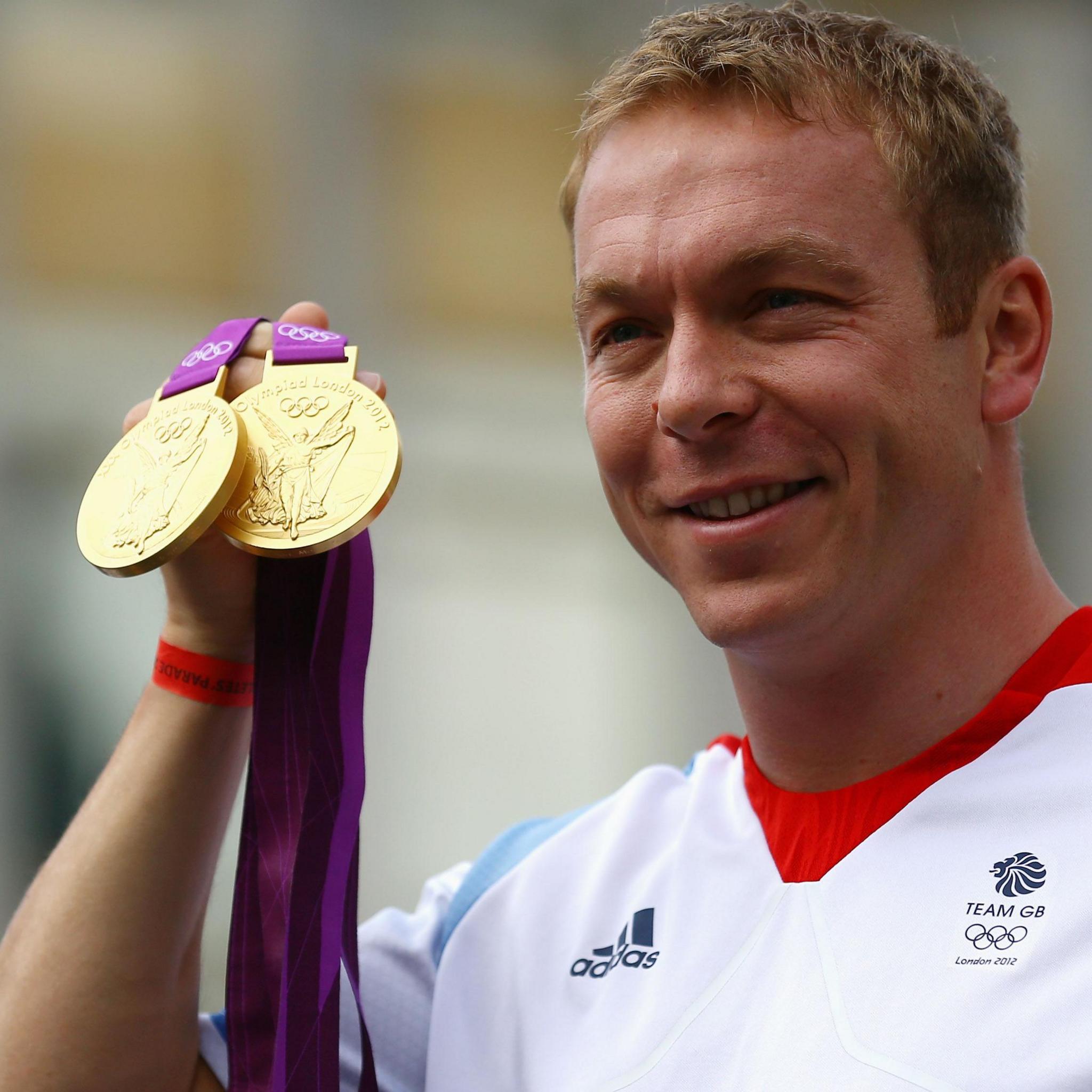
Sir Chris Hoy is in his kitchen, chatting about early-morning coffee and fry-ups.
And mindsets.
An Olympic champion's mindset to be exact.
An exacting, leave-no-stone-unturned, meticulous mindset that defined a career in which he won six gold medals and one silver across four Olympic Games.
This is the same mindset he is relying on more than ever to reframe his entire existence and purpose following a terminal cancer diagnosis.
"We normally have a fry-up for breakfast but, when you guys are here, we need to make an effort," he jokes.
The "you" in this instance are the BBC cameras that have been following Hoy and his family and friends for the past 12 months for the documentary Sir Chris Hoy: Cancer, Courage and Me.
The programme will be broadcast for the first time at 21:00 GMT on Thursday, 18 December on BBC One and available from 22:00 GMT on BBC iPlayer and the BBC Sport website and app.
It shows a hopeful, yet raw, portrayal of the realities of living with stage four cancer, while it also brings to life Hoy's realisation that he can use his platform as a force for raising awareness, and money, for other people living with the illness.
To play this video you need to enable JavaScript in your browser.
This video can not be played
Media caption,
Sir Chris Hoy: Cancer, Courage & Me
As he weighs his coffee – perhaps the number one area where Hoy's obsessive eye for detail manifests itself – the Scot is in an upbeat mood, laughing and joking with wife Sarra about their imagined usual morning scenario of a full English breakfast compared to the omelette and green homemade smoothie they are actually tucking into.
It has not been anywhere near this rosy for much of the past two years, however, as Hoy explains a few minutes later when the cameras are rolling properly.
"It's about five miles from the hospital back home," he says, describing his return journey from seeing doctors after learning of his cancer diagnosis in September 2023. "I just walked back in a daze. I don't remember the walk. I was just thinking, how am I going to tell Sarra? What am I going to say?
"As soon as I said the words, I broke down."
What Hoy had to articulate was a terminal cancer diagnosis. Incurable secondary bone cancer. Between two and four years to live.
"In my sporting career it used to be about process, not outcome," he says. "Focus on what you have control over. But if you win or lose, it's not life and death.
"[After the diagnosis] the stakes have changed dramatically. The principle is the same – but now it is life and death."
Hoy has shrewdly taken on support for this difficult time in his life.
Steve Peters is a man that Hoy knew could make a difference.
The list of sportspeople that Peters has worked with - the public list he is happy to talk about on the record - is a high-profile 'who's who' ranging from Steven Gerrard to Ronnie O'Sullivan.
The donkeys in the front paddock of the psychiatrist's countryside home bely that glitzy, glamourous list.
But their tranquil nature make complete sense when you spend a few hours in the company of Peters and Hoy.
Peters was Hoy's first port of call throughout his career when it came to training and calming his mind to be at its peak in and around Olympic competition.
He was also one of the first people Hoy called when he got his terminal diagnosis last year.
At first Peters was part of the firefighting phase of what Hoy's wife Sarra describes as a "deep grief" in the first few days post-diagnosis.
But in time, with Peters' help, Hoy set about finding a new purpose.
Firstly, it is to raise awareness of the limitations of the current provision for prostate cancer in the UK. Both Hoy's father and grandfather have had prostate cancer.
Understandably, given an earlier diagnosis could have shifted his diagnosis from terminal to manageable, the 49-year-old Scot argues eloquently that a national screening programme should be made a priority for men from their 45th birthday onwards.
But, crucially, his approach is also to show other people living with cancer that sport and exercise can still be a positive part of their lives, even through their treatment.
Peters explains: "What Chris did when he was presented with this illness is he said: 'Right, what's the plan?' After we worked through the initial stages of the shock and grief of it, then he came out the other side and he picked up on the purpose.
"And that was to reach other people. It became a mission for him."
To play this video you need to enable JavaScript in your browser.
This video can not be played
Media caption,
Sir Chris Hoy and his wife Lady Sarra recall the night they met
Peters knows all too well how unstoppable Hoy can be when a mission takes him over.
The pair have now worked together for more than 20 years, with perhaps their crowning moment coming at the Athens 2004 Games.
It was in the Greek capital that Peters' "pink elephant" technique helped Hoy win his first Olympic gold. In the run-up to Athens, Peters had encouraged Hoy to pre-empt a scenario in which his rivals broke the world record in the men's kilometre time trial before the Scot had his chance to ride. The scenario became reality on three occasions, but rather than falter, Hoy, the last to ride, responded with a world record of his own to take gold.
The mindset of that moment is one he is tapping into again with his approach to cancer. Control the controllables, but don't waste time worrying about the end result.
Just like in Athens.
"As I went to the start line, a personal best would have got me third," Hoy remembers.
"Recognising what you have control over is such an important part of life. Focus on what you have control over - but the outcome itself, you don't have control over.
"Steve helped me to access the best of myself, and get the best out of myself."
The BBC Breakfast and BBC Sport cameras witnessed Hoy, with the help of Lady Sarra - who herself is dealing with her own diagnosis of multiple sclerosis - making the best of his cancer diagnosis in the last 12 months.
They have followed Hoy and his family to doctor and physio appointments and out on mountain bike rides in Wales with a GB Olympic cycling A-list group of riders and friends.
That same cast list turned out in Glasgow in September as Hoy and a host of his supporters took his cycling fundraising event the Tour de Four from concept to delivery inside a few months.
'Overwhelming' response to Hoy mission
To play this video you need to enable JavaScript in your browser.
This video can not be played
Media caption,
Murray and Kennys on discovering 'superhero' Hoy’s cancer diagnosis
It is just after 9am in a back room of the Sir Chris Hoy Velodrome in Glasgow – a few minutes before Hoy's charity mass participation cycling event, the Tour de Four, is due to get under way.
The ride was set up, and given its title, in an effort to change perceptions around stage four cancer.
Every time the door opens, a member of British Olympic and Paralympic royalty walks through it.
Sir Mark Cavendish, Sir Jason Kenny, Becky James, Dani King, Sir Ben Ainslie, Sir Steve Redgrave, Dame Sarah Storey...
In and among the clip-clop of cycling cleats comes another sporting knight.
This one is wearing tennis shoes.
Hoy goes over to check in with Sir Andy Murray about his readiness and is met with a typical sardonic quip from his fellow Scot.
Hoy asks: "Are you feeling ready mate?"
"Well, I've got the kit," Murray responds.
As it turns out, the two-time Wimbledon champion was woefully ill-prepared – completing the ride in tennis shoes and boxer shorts. Not typical road cycling gear, but typical of the response of Hoy's friends to his diagnosis.
"The response of friends has been quite overwhelming at times," Hoy says.
The friend response has been mirrored by that of the public.
September's Tour de Four raised more than £3m for cancer charities across the UK.
However, the highs of that success were followed in November by the UK National Screening Committee's recommendation that a prostate screening cancer programme for all men in the UK was not justified.
For Hoy, the fight to raise money and raise awareness is his new Olympic-sized mission and his response therefore was dignified, yet resolutely determined.
"I was quite astonished," he said. "I can't believe that the answer to this situation is to sit on your hands and do nothing. There are 10,000 men a year in the UK who find out they have prostate cancer too late – it's incurable.
"We're failing these men if we don't do something proactive. Regardless, I'm going to keep pushing."
Again, we meet his Olympic-honed mindset, targeted on a bigger mission.
"The Olympics was something that was my life for so many years and drove me on," Hoy says.
"I'm still incredibly proud of it now and I look back with great fondness, but this is something on an entirely different level.
"It's more important than riding bikes in anti-clockwise circles, put it that way."
To play this video you need to enable JavaScript in your browser.
This video can not be played
Media caption,
Sir Chris Hoy on his BBC documentary and 'speaking to the world'
You can watch Sir Chris Hoy: Cancer, Courage & Me on Thursday, 18 December at 21:00 GMT on BBC One, and from 22:00 GMT on BBC iPlayer and the BBC Sport website and app.
Teachers will be given training to spot the signs of misogyny and tackle it in the classroom as part of the government's long-awaited strategy to halve violence against women and girls within the next decade.
Pupils will be taught about issues such as consent, the dangers of sharing intimate images, how to identify positive role models and to challenge unhealthy myths about women and relationships.
The £20m package will also include a new helpline for teenagers to get support for concerns about abuse in their own relationships.
The government hopes that by tackling the early roots of misogyny, it will prevent young men from becoming violent abusers.
Under the new plans, schools will send high-risk students to get extra care and support, including behavioural courses to tackle their prejudice against women and girls.
"Every parent should be able to trust that their daughter is safe at school, online and in her relationships, but too often, toxic ideas are taking hold early and going unchallenged," Prime Minister Sir Keir Starmer said about the new measures.
"This government is stepping in sooner - backing teachers, calling out misogyny, and intervening when warning signs appear to stop harm before it starts."
The taxpayer will foot £16m of the bill, while the government says it is working closely with philanthropists and other partners on an innovation fund for the remaining £4m.
Nearly 40% of teenagers in relationships are victims of abuse, domestic abuse charity Reducing the Risk has said.
Online influencers are partly blamed for feeding this, with nearly one in five boys aged 13 to 15 said to hold a positive view of the self-proclaimed misogynist Andrew Tate, according to a YouGov poll.
In response to the government plans, some teachers said schools are already doing the kind of work the measures outline.
"While we welcome any initiative that prioritises healthy relationships and consent education, it's important to recognise that schools like Beacon Hill Academy in Dudley have been delivering this work effectively for years," Principal Sukhjot Dhami said.
"The challenge isn't starting from scratch: it's ensuring that this £20m pounds is spent wisely and in partnership with schools already leading the way."
Paul Whiteman, general secretary of school leaders' union NAHT, said it was positive the government was recognising the importance of training and support for school staff.
Whiteman said "schools are just part of the solution", with government, health, social care, police and parents all having a "significant contribution to make too".
Pepe Di'Iasio, general secretary of the Association of School and College Leaders, welcomed the government's focus, but added it was also essential that the government "introduces effective measures to prevent at source the spread of online misogynistic content which is served up to young people by social media algorithms".
Nicola Mclafferty, a domestic abuse survivor, is calling for more people to talk to children about their experiences
Nicola Mclafferty, 42, is a victim of domestic violence and said more needs to be done to teach children about abuse.
"Survivors of domestic abuse, men or women, should go into assemblies and speak to the children about it, tell them a bit of your lived experience, enough that it's not going to scare them but be quite factual.
"There needs to be more people talking and they need to know."
The government has already announced a raft of measures in its strategy, including the introduction of specialist investigators to every police force to oversee rape and sexual offence cases.
It says staff will have the right training to understand the mindset of abusers and victims.
Also announced is a roll-out of domestic abuse protection orders, which have been trialled across England and Wales over the past year.
The court-issued orders mean individuals can be banned from contacting a victim, visiting their home or posting harmful content online, and can also be used in cases involving coercive or controlling behaviour. Breaching an order is a criminal offence.
Other measures include better NHS support for child and adult survivors of abuse, and a funding boost for councils to provide safe housing for domestic abuse survivors.
Two television adverts will also be launched on Saturday featuring a string of sports personalities and celebrities calling for the end of violence against women and girls.
Domestic abuse commissioner for England and Wales, Dame Nicole Jacobs, said the commitments "do not go far enough" to see the number of people experiencing abuse start to fall.
She added: "Today's strategy rightly recognises the scale of this challenge and the need to address the misogynistic attitudes that underpin it, but the level of investment to achieve this falls seriously short."
The Prince and Princess of Wales have released a new family portrait which features on the couple's 2025 Christmas card.
The image shows William and Catherine sitting on lush grass surrounded by spring daffodils, alongside by their children Prince George, Princess Charlotte and Prince Louis.
A post shared by the couple on on social media reads: "Wishing everyone a very Happy Christmas."
The family snap was taken by photographer Josh Shinner in Norfolk in April.
The photos appear to be from the same shoot used to capture photos for George's 12th and Louis' seventh birthdays.
Last year, the couple revealed a Christmas card with a personal significance, using a picture taken from the video released when Catherine announced the end of her chemotherapy.
William and Catherine are spending the festive season together and are expected to be joining the King and rest of the royal family at Sandringham in Norfolk on Christmas Day.
Earlier this month, King Charles and Queen Camilla released their own Christmas card, showing themselves taken in Rome.
The photograph, taken in April during their state visit to Italy, shows the smiling couple standing side by side on a garden path.
Diane Abbott is among those warning the prime minister
Nearly 40 Labour MPs have warned the prime minister they are not prepared to support proposals to limit jury trials.
In a letter to Sir Keir Starmer, the MPs, largely but not wholly from the left of the party, say the plans are "not a silver bullet" to reducing the backlog in trials.
"To limit a fundamental right for what will make a marginal difference to the backlog, if any, is madness and will cause more problems than it solves," they write.
Sir Keir has previously answered concerns from MPs about the plans by telling them that jury trials already make up only a small proportion of trials in the criminal courts system.
In the Commons last week, he told Karl Turner - who organised the letter - that "juries will remain a cornerstone of our justice system for the most serious cases".
The 39 MPs include prominent figures such as Diane Abbott, former whip and leading member of the Tribune group of Labour Vicky Foxcroft and Dan Carden, who leads the Blue Labour group of backbenchers.
They suggest a number of other ways to reduce the courts backlog, including increasing sitting days, hiring more barristers as part-time judges called Recorders and asking the Crown Prosecution Service to consider bringing some cases in the backlog on a lower charge.
The Justice Secretary, David Lammy, announced the measure on 3 December. It scraps jury trials in England and Wales for crimes that carry a likely sentence of less than three years, removing the right for defendants to ask for a jury trial where a case can be dealt with by either magistrates or a new form of judge-only Crown Court.
The measure came after retired Court of Appeal judge Sir Brian Leveson was asked by the Lord Chancellor to come up with a series of proposals to reduce the backlog in the courts.
The process started in December 2024. In July of this year, Sir Brian said "fundamental" reforms were needed to "reduce the risk of total system collapse". His proposals also included more out-of-court settlements like cautions.
Announcing the jury trial measure, Lammy said it was necessary as current projections have Crown Court case loads reaching 100,000 by 2028, from the current backlog of almost 78,000.
This means that a suspect being charged with an offence today may not reach trial until 2030. Among the impacts of this are that six out of 10 victims of rape are said to be withdrawing from prosecutions because of delays.
Frédéric Péchier faces a minimum of 22 years behind bars
A former anaesthetist has been jailed for life for intentionally poisoning 30 patients, including 12 who died.
A court in the city of Besançon in eastern France found Frédéric Péchier guilty of contaminating infusion bags with substances that caused cardiac arrest or hemorrhaging.
Péchier was first placed under investigation eight years ago, when he was suspected of poisoning patients at two clinics in Besançon between 2008 and 2017.
"You are Doctor Death, a poisoner, a murderer. You bring shame on all doctors," said prosecutors last week. "You have turned this clinic into a graveyard."
Péchier, who has always denied any wrongdoing, now has 10 days to lodge an appeal.
This breaking news story is being updated and more details will be published shortly. Please refresh the page for the fullest version.
You can receive Breaking News on a smartphone or tablet via the BBC News App. You can also follow @BBCBreaking on X to get the latest alerts.
Lina Chernykh tells the BBC her niece Matilda was a joyous child who spread love everywhere she went
The family of the Bondi shooting's youngest victim Matilda urged the community to not let her death fuel anger, as they said a final goodbye to the 10-year-old on Thursday.
Matilda was among 15 people who were shot dead when two gunmen opened fire on an event marking the start of Hannukah at Sydney's Bondi Beach on Sunday.
Speaking to the BBC at Matilda's funeral, her aunt Lina Chernykh said the Jewish community is right to want more action to stamp out antisemitism – she does too.
But she said Matilda was a joyous child who spread love everywhere she went, and urged the community to do the same in her honour.
"Take your anger and… just spread happiness and love and memory for my lovely niece," Ms Chernykh said.
"I hope maybe she's an angel now. Maybe she [will] send some good vibes to the world."
Jewish community leaders have in recent days suggested the tragedy was an inevitable result of Australia struggling to address rising antisemitism.
The attack on Sunday, which targeted the Jewish community at an event celebrating the first night of Hanukkah, was the country's deadliest incident since 1996, when a gunman killed 35 people during the Port Arthur massacre.
Ahead of Matilda's funeral on Thursday, Ms Chernykh said the family was devastated.
"I look at their faces [and] I don't know if they will be ever happy again," she said of Matilda's parents.
Matilda's younger sister, from whom she was "inseparable", is shattered and confused, she said.
"She doesn't have enough tears to cry."
At a flower memorial on Tuesday, Matilda's mother Valentyna told mourners that the family came to Australia from Ukraine more than a decade ago, thinking it would be a safe place for them.
"I couldn't imagine I'd lose my daughter here... It's just a nightmare," she said.
Ms Chernykh told the BBC she too has struggled to make sense of what is happening.
She was gardening at her home on the Gold Coast when Matilda's mother called on Sunday.
"Truly, I was thinking something happened to my father because he's 84 years old... and she says Matilda was shot," she recalled.
"How [could] someone in Australia understand, if someone tells you your kid was shot… I couldn't understand it. I was thinking I have bad reception. I asked a few times what I'm [hearing]."
Police have designated the attack a terrorist incident, with Australian Prime Minister Anthony Albanese saying it appears to have been "motivated by Islamic State" group ideology.
Police allege that the two gunmen were a father and son. Sajid Akram, 50, was shot dead at the scene, while his son Naveed, 24, has been charged with 59 offences, including 15 counts of murder and one of committing a terrorist act.
Australia on Thursday announced it would strengthen laws to crack down on hate - including by introducing powers to cancel or refuse visas on grounds of antisemitism.
Theo Rose was "misled" into accepting a sanction by West Midlands Police, a review has found
The son of a former police officer was "misled" by a force into accepting a community resolution for violence he did not admit to, an investigation has found.
Theo Rose reported being a victim of an assault at school to West Midlands Police (WMP) but was himself given a sanction over the incident instead.
A report by the Office of the West Midlands Police and Crime Commissioner (OPCC) expressed "concern" the teenager might have agreed to accept it under "false pretences" - even if they were unintended - and was "misinformed" about the potential consequences.
The force rescinded the community resolution in February and apologised to Theo the following month, in a letter seen by the BBC.
Theo, with the help of his then police officer father, Rod Rose, lodged a complaint against the force
Theo made the initial report to Halesowen police station in December 2023 claiming that he had been twice attacked by a fellow student at his sixth form college.
The then-18-year-old said he had been advised to do so on the advice of a lecturer, who had seen the attack, and told officers he had been kicked and punched.
Police asked him to return to the station the following February and the OPCC found in an interview that day, Theo was "misled" into accepting a community resolution for affray - the use or threatening of unlawful violence towards another person.
Theo said it was only afterwards, when he spoke to his parents, that he realised he had potentially been unfairly treated and the sanction could affect his job prospects.
"I was quite fearful for my future," said Theo, from Halesowen.
'I still didn't understand'
His father Rod Rose, a serving detective chief inspector with the force at the time, helped Theo lodge a complaint with its professional standards department.
That investigation found officers told the teenager there was "overwhelming and contradictory evidence" against him.
A further review of the complaint by the OPCC included bodycam footage which showed Theo telling police: "I didn't use or threaten violence towards [the other teenager]".
It also found the "most relevant" witness statement backed up Theo's account.
Theo, now 19, told the BBC he didn't know what affray was and had asked the handling officer.
"He explained it to me and I still didn't really understand," he said.
According to the professional standards department, officers later reclassified the affray as two assaults - one with Theo as a victim and one as an offender - which he did not know and had not admitted to.
The OPCC raised the question as to whether Theo would therefore have been entitled to use "reasonable force" to defend himself.
Its report said: "Although it appears unintended, [we] remain concerned that the document may have been signed under false pretences... It appears that Mr Rose had agreed to a resolution for one crime but it turned out to be another."
Former Det Con Insp Rod Rose worked at Halesowen station, where his son made his initial report
Community resolution orders allow police to deal with low-level offences without going through the courts.
They're usually aimed at first-time offenders but guidelines state there must be a clear admission of guilt and they must have the victim's agreement.
They do not show up on a criminal record but do appear on enhanced Disclosure and Barring service (DBS) checks, which are required by certain jobs and can therefore affect a person's future career options.
According to the OPCC report, officers "misinformed" Theo about the consequences of accepting the sanction.
He told the BBC he asked for assurance several times and only accepted it because he feared being taken to court.
"That was the only reason why I was more than happy to accept a community resolution," Theo said.
'What have you admitted to?'
Mr Rose, who is now retired, was working at Halesowen station at the time and had previously worked in the out-of-court disposals department that dealt with community resolutions.
He realised officers had not followed procedure during the handling of Theo's case.
"My first words were, what have you admitted to Theo? And he said, 'uh, I don't know'," said Mr Rose.
"I was angry because it seemed like they [had] interviewed [Theo] without letting him know they [were] interviewing him and not giving him an opportunity to seek advice."
Following the investigation and OPCC review, which made recommendations, WMP rescinded the community resolution, accepting that "it would appear on review you [Theo] did not take responsibility for the offence of affray or assault".
Theo said "no justice has been served" as his original complaint as a victim of assault had not been resolved.
"My trust in the police has just been diminished," said Mr Rose.
Rod Rose
Mr Rose received a commendation for courage and bravery in 2002
Mr Rose said he was "disheartened" by Theo's experience and said it was the first time in his 30-year career he had "seen this side of policing".
"It's going to take a lot for Theo to have any sort of trust and confidence back in the police. And if he doesn't, he's going to tell his children, don't trust the police because of my experiences."
Two days before his retirement last year, Mr Rose was served gross misconduct papers by the force, the timing of which he described as "malicious".
It was alleged he abused his role over Theo's sanction but the force's professional standards department found there was no case to answer in January.
"I was just a parent supporting and defending my son," he said.
'Decisions can be reviewed'
When asked by the BBC, the force did not comment on Mr Rose's claims about the timing of the misconduct allegations.
A police spokesperson added: "Community resolutions enable officers to make decisions about how to deal proportionately with lower-level crime but interventions agreed within them are voluntary and not legally enforceable.
"As it is an informal disposal which does not create a formal criminal record, we would not confirm the details of any person issued with a community resolution.
"As with all disposal types, it is occasionally appropriate that decisions can be reviewed, and where necessary rescinded."
WMP issued 8,280 community resolutions in 2024, accounting for 77% of total out of court disposals - a 163% increase from 2019, when they accounted for only 47%.
National statistics from the Ministry of Justice for that year showed 164,000 community resolutions were issued, also accounting for 77% of total out of court disposals - a 56% increase on five years ago.
In a Freedom of Information request, the BBC asked WMP and other Midlands forces how many complaints they had received regarding community resolutions and how many had been rescinded.
Theysaidneither datasets were held in a retrievable way.
The National Police Chiefs' Council said out-of-court resolutions were a "highly effective" way of delivering justice.
Its deputy assistant commissioner, Dr Alison Heydari, added: "We regularly review the use of community resolutions and over the next few months will be updating our guidance to reflect several recent and forthcoming significant reports."
WMP was placed in special measures by His Majesty's Inspectorate of Constabulary and Fire & Rescue Services in November 2023 for four points, including "failure to carry out effective investigations leading to satisfactory results for victims".
Sir David Attenborough says London is a "city full of hidden natural wonders"
Lying on his side on a dark summer night earlier this year, Sir David Attenborough is watching a hedgehog snuffling around an urban garden.
"I think they're lovely things," he says softly, with a chuckle.
His voice blends boyish wonder with the wisdom of his 99 years - each in equal measure.
Considered by many as the most famous broadcaster and conservationist of our time, Sir David has circled the globe for 70 years to show us the brilliance of the natural world.
Now, in a new one-off documentary, he has come home - to London.
Sir David has lived in Richmond, south-west London, for seven decades. The borough's royal park, he tells us, has been a "refuge" and "source of inspiration". It is in Richmond he starts and ends his documentary Wild London.
Gaby Bastyra, executive producer at Passion Planet, which made the film, said Sir David "could live anywhere in the world… but he's always come home to London".
The programme, she says, is an "appreciation of his place - and he loves it".
Sir David says that when he used to get the Tube to work, "there was one animal that always brightened up my day"
Well, Wild London is abundant with animal curiosities: from pigeons hopping on to the Hammersmith and City line to a snake colony by a canal.
Sir David also draws our awareness to the dramas happening every day among and above us in this city of about nine million people.
In one scene, there are glimpses of a bullish, noisy beast through the summer leaves.
This is not a preying tiger in the Indian jungle - but a happily mooching Dalmatian dog in Dagnam Park, Romford, unknowingly closing in on a days-old fallow deer fawn.
David Mooney, chief executive of the London Wildlife Trust, which co-produced Wild London, said he was completely "enthralled" by that "juxtaposition".
"That's not to say that dogs are a problem. It's just wildlife is interacting with us at all times," he said.
"The raw experiences of nature are something that at London Wildlife Trust we've been talking about for a long time."
BBC/Passion Planet
Fallow deer are known to roam from Dagnam Park on to streets and front gardens in Harold Hill, Romford
Perhaps the most poignant moments in Wild London, broadcast months before Sir David turns 100 years old, are where he shows particular tenderness towards the animals he meets.
At the Houses of Parliament, he holds a peregrine falcon chick while it is ringed for identification.
It tips its head back to look up at him as he says to it softly: "Now we can recognise you anywhere - yes, yes you."
In Greenford, west London, Sir David gently cradles a tiny harvest mouse before releasing it into a meadow.
He encourages it to scramble on to a wildflower, with an affectionate: "Welcome to your new home - there you go."
It doesn't want to leave the safety of his cupped hands.
Joe Loncraine, director of Wild London, has worked with Sir David on several other nature documentaries.
He said: "There were some moments I think that deliver the kind of interactions with him and an animal that I hadn't seen in a while.
"There was something about the warmth that came across. And I think his enthusiasm for what was happening was so infectious."
BBC/Passion Planet
Sir David delights at the offspring of a peregrine falcon pair that has nested on the Houses of Parliament for a decade
Sir David was greatly impressed by The Ealing Beaver Project, which he says in the film, has had such a "positive impact" in west London.
He observes: "If someone had told me when I first moved here that one day I would be watching wild beavers in London, I would have thought they were mad. But there they are, right behind me."
He uses this as an example of us "securing a brighter future for both animals, and us, too" in our unique metropolis - the world's greenest major city.
Mr Mooney said: "His message is: people have to take note of it - if people notice it, they will begin to love it - if people love it, they'll want to protect it. And if people protect it, we'll be on a path to nature recovery."
Wild London, coming late in such a revered canon of nature documentaries, is Sir David's way of nudging us to marvel at the nature on our doorsteps, amidst the frenzy of daily life.
Mr Loncraine sums up: "We can be rushing about our jobs, commuting to work, picking the kids up from school, going to the shops - and not really notice.
"There can be really quite beautiful animals right there - so it's just about taking that moment to have a look."
Lina Chernykh tells the BBC her niece Matilda was a joyous child who spread love everywhere she went
The family of the Bondi shooting's youngest victim Matilda urged the community to not let her death fuel anger, as they said a final goodbye to the 10-year-old on Thursday.
Matilda was among 15 people who were shot dead when two gunmen opened fire on an event marking the start of Hannukah at Sydney's Bondi Beach on Sunday.
Speaking to the BBC at Matilda's funeral, her aunt Lina Chernykh said the Jewish community is right to want more action to stamp out antisemitism – she does too.
But she said Matilda was a joyous child who spread love everywhere she went, and urged the community to do the same in her honour.
"Take your anger and… just spread happiness and love and memory for my lovely niece," Ms Chernykh said.
"I hope maybe she's an angel now. Maybe she [will] send some good vibes to the world."
Jewish community leaders have in recent days suggested the tragedy was an inevitable result of Australia struggling to address rising antisemitism.
The attack on Sunday, which targeted the Jewish community at an event celebrating the first night of Hanukkah, was the country's deadliest incident since 1996, when a gunman killed 35 people during the Port Arthur massacre.
Ahead of Matilda's funeral on Thursday, Ms Chernykh said the family was devastated.
"I look at their faces [and] I don't know if they will be ever happy again," she said of Matilda's parents.
Matilda's younger sister, from whom she was "inseparable", is shattered and confused, she said.
"She doesn't have enough tears to cry."
At a flower memorial on Tuesday, Matilda's mother Valentyna told mourners that the family came to Australia from Ukraine more than a decade ago, thinking it would be a safe place for them.
"I couldn't imagine I'd lose my daughter here... It's just a nightmare," she said.
Ms Chernykh told the BBC she too has struggled to make sense of what is happening.
She was gardening at her home on the Gold Coast when Matilda's mother called on Sunday.
"Truly, I was thinking something happened to my father because he's 84 years old... and she says Matilda was shot," she recalled.
"How [could] someone in Australia understand, if someone tells you your kid was shot… I couldn't understand it. I was thinking I have bad reception. I asked a few times what I'm [hearing]."
Police have designated the attack a terrorist incident, with Australian Prime Minister Anthony Albanese saying it appears to have been "motivated by Islamic State" group ideology.
Police allege that the two gunmen were a father and son. Sajid Akram, 50, was shot dead at the scene, while his son Naveed, 24, has been charged with 59 offences, including 15 counts of murder and one of committing a terrorist act.
Australia on Thursday announced it would strengthen laws to crack down on hate - including by introducing powers to cancel or refuse visas on grounds of antisemitism.
England's Ashes hopes are vanishing after they were overwhelmed by Australia amid more Snicko controversy on the second day of the third Test.
In temperatures that touched 41 degrees at the Adelaide Oval, England crumbled to 213-8 in blameless batting conditions. They are 158 runs adrift of Australia.
This was not a collapse caused by Bazballing batting, rather a fold in the face of relentless Australia bowling.
Only Ollie Pope, whose Test career is now hanging by a thread, and Jamie Smith were dismissed playing attacking shots – and Smith was at the centre of the Snicko confusion.
A day after Australia's Alex Carey was reprieved by a Snicko error, Smith first survived then was given out on the evidence of the technology, with players on both sides apparently losing faith in the decision review system (DRS).
But the debate surrounding DRS cannot mask the truth that England have wilted in the Ashes cauldron and could lose this series in as few as 10 days of cricket.
After Australia pushed on to 371 all out – the outstanding Jofra Archer with 5-53 – England's reply was in tatters at 42-3 when the tourists lost three wickets for five runs in 15 balls.
Harry Brook reined in his attacking instincts with 45 from 63 balls, while captain Ben Stokes dug a trench with a painstaking 45 not out from 151 deliveries. He found some late support in a stand of 45 with Archer, who is 30 not out.
But England were powerless to withstand the Australian excellence. The returning Pat Cummins claimed 3-54, while Scott Boland and Nathan Lyon took two wickets apiece.
At some point over the weekend, Cummins looks likely to once again become an Ashes-winning captain and the bloodletting of this England regime will begin.
Snicko cannot mask gulf in class
To play this video you need to enable JavaScript in your browser.
This video can not be played
Media caption,
A tale of two balls - Double Snicko controversy as Smith given out
At 2-0 down after two matches, this was the defining day for England. Though they began poorly, leaking 45 runs in 8.2 overs, Australia's total was far from insurmountable.
England had the opportunity to bat themselves back into the series. Instead, it was only Stokes' defiance that prevented them from bowling twice in the day.
While the Snicko controversy is unsatisfactory for a series of this magnitude, it pales in comparison to the substandard nature of England's performance.
Smith first survived when the technology adjudged a Cummins bouncer that ended at first slip came off his helmet, rather than his glove. An Australian voice on the field was heard to say "Snicko should be sacked".
In the next Cummins over, an aggrieved Smith was given caught behind attempting a wild pull shot. BBG Sports, the operators of Snicko, confirmed to the BBC it believed both decisions to be correct.
It matters little. Barring something extraordinary, Australia will bat England out of this match on their way to yet another Ashes series win in this country.
To play this video you need to enable JavaScript in your browser.
This video can not be played
Media caption,
Lyon bowls Duckett for 29 with 'beautiful' delivery
If this really is the end of the Bazball era as we know it, it is symbolic that captain Stokes was in the middle for so much of the day, watching his team crumble around him.
Perhaps the game was up even before Stokes arrived. If Zak Crawley and Ben Duckett were each undone by superb deliveries from Cummins and Lyon respectively, Pope's flick at Lyon was foolish and fatal.
Pope has not repaid the faith shown in him as England's number three. Without a score in the second innings, his place for the fourth Test in Melbourne will be in huge doubt.
Joe Root survived a catch falling short of wicketkeeper Carey before he edged long-term nemesis Cummins for 19, leaving Brook and Stokes to battle through the afternoon heat.
Bar a drive off Boland for six, Brook played sensibly until he edged Cameron Green's second ball. Stokes took a horrible blow to the head off Mitchell Starc, yet was not shaken from his watchful vigil.
Cramping after almost four hours at the crease, he at least had a willing ally in Archer – two of few England players coming through this series with their reputations intact.
Awesome Australia show their class
To play this video you need to enable JavaScript in your browser.
This video can not be played
Media caption,
England suffer big blow as Cummins dismisses Root for 19
After suggestions Australia had a team past its best, or the results of the first two Tests were borne of England errors, this was confirmation the home side are simply far superior.
Despite the stifling heat, the Australia bowling was collectively brilliant, never giving England any respite. Whereas Archer often carried the visitors' attack single-handedly, Australia always had another bowler ready to examine English technique, defence and spirit.
Captain Cummins had not bowled a ball since July because of a back injury, yet was magnificent. He found movement to take the edges of Crawley and Root, then bounced out the discomforted Smith.
Lyon was overlooked for the second Test in Brisbane, but this ground is his home from home. The threat he carried exposed England's lack of a frontline spinner. Pope's gift was Lyon's 564th Test wicket, taking the off-spinner past Australian great Glenn McGrath to sixth on the all-time list.
Starc continued his outstanding series by making 54 with the bat and followed up by bowling with electric pace. An average of 90.7mph is the fastest day of his Ashes career.
Boland nagged away, having Will Jacks athletically caught by Carey, once again up to the stumps. Boland then found a gap in Brydon Carse's defence to hit the stumps. Even Green, the bit-part bowler, took the crucial wicket of Brook.
Parents should lead by example this Christmas and turn their phones off during family time, the children's commissioner for England has said.
Dame Rachel de Souza told the Press Association children were "crying out" for engagement with their relatives over the festive break, and urged them to have "phone-free time".
Nearly half of parents with children aged 18 or younger plan to allow phones at the Christmas dinner table this year, according to a recent survey.
"I can't tell you how many children tell me about sitting at dinner and the parents are on the phone," Dame Rachel said. "So this Christmas, let's turn them off."
Research by More in Common for Yondr found nearly four in 10 adults say smartphones have disrupted their Christmas in some way.
The children's commissioner said while she had been guilty of using her phone at meal times in the past, setting clear guidelines for everyone, not just children, was key.
"We have to lead as adults," Dame Rachel said. "We can't talk about banning for the kids if we're not doing it ourselves."
Her comments came as she launched a new guide offering tips for children's safety online and how to set boundaries for screen time.
Pete Etchells, psychology professor at Bath Spa University, told BBC News Christmas is a good time to lean into conversations with children about developing healthy relationships with tech.
"It's not about feeling guilty or ashamed of our tech use, but noticing it more," he said.
"And striking up conversations about what we're happy with, and what we would like to be doing differently."
'Talk early and often'
The new guide by the commissioner, available online, has been released to support parents who "may feel overwhelmed" by "mixed messages" around online safety, and is informed by child focus groups.
In it, parents can find "practical tips" and "conversation starters" on how to talk around topics such as managing screen time, dealing with negative online experiences, and the use of artificial intelligence (AI).
Teenagers aged 13 to 18 told Dame Rachel they accepted bad things can happen online, feeling it was an inevitable part of the online world.
They also shared how they had been contacted by strangers, seen pornography, and were aware of intimate images of their peers being shared.
Dame Rachel said it was essential for parents to "talk early and talk often" with their children about their presence online.
Arabella Skinner from Health Professionals for Safer Screens told BBC News simple rules can make a difference.
She suggested creating a family plan around device use, or designing a box to store mobiles during meals.
"Children feel most secure and content when they have our full attention, eye contact, and presence," she said.
"It is so important that we, as adults, spend time with our children and not always looking at screens."
It found that children aged between eight and 14 are spending an average of nearly three hours online each day, and that up to a quarter of that time was between 2100 and 0500.

 Login
Login