Lord Mandelson called the late convicted paedophile Jeffrey Epstein his "best pal", according to a letter in an alleged "birthday book" that has been released by US lawmakers.
In the message for Epstein's 50th birthday in 2003, Lord Mandelson - UK ambassador to the US since last year - describes him as an "intelligent, sharp-witted man", who "parachuted" into his life.
The existence of the letter from Lord Mandelson was first reported by the Wall Street Journal in July, when the newspaper published details of the alleged birthday note.
An official spokesperson for Lord Mandelson told the BBC: "Lord Mandelson has long been clear that he very much regrets ever having been introduced to Epstein."
The documents also include a note featuring a drawing of a woman's body allegedly signed by US President Donald Trump. The White House on Monday denied its authenticity and said the president "did not draw this picture, and he did not sign it".
The "birthday book" was put together by Ghislaine Maxwell, Epstein's British co-conspirator and ex-girlfriend who was convicted in 2021 of conspiring to traffic girls for sex. It is dated three years before allegations of sex abuse by Epstein became public in 2006.
When approached by the BBC, Lord Mandelson's spokesperson said that his connection to Epstein "has been a matter of public record for some time".
The spokesperson also referred to previous comments Mandelson made to the Financial Times, in which he said: "I regret ever meeting him or being introduced to him by his partner Ghislaine Maxwell."
The BBC has also approached the Foreign Office for comment.
A 2019 internal report by JP Morgan bank, filed to a New York court in 2023, said that Epstein kept a "particularly close relationship with Prince Andrew, the Duke of York and Lord Peter Mandelson, a senior member of the British government".
In the "birthday book" letter, Mandelson writes that after Epstein appeared in his life, he "would spend many hours just waiting for him to turn up".
"And often, no sooner were you getting used to having him around, you would suddenly be alone... again, leaving you with some 'interesting' friends to entertain instead."
The letter then includes a photo of Mandelson with two women, whose faces are obscured.
Mandelson continues:"But wherever he is in the world, he remains my best pal!"
Following a photo of Mandelson sat with Epstein, he concludes: "Happy Birthday, Jeffrey. We love you!"
Along with the book, lawmakers also released a trove of documents that include Epstein's personal address book and his will.
After the Wall Street Journal first reported on the existence of the "birthday book", Trump filed a lawsuit against the newspaper's reporters, publisher and executives, including News Corp's owner Rupert Murdoch, seeking $10bn (£7.4bn) in damages.
Epstein was first criminally indicted in 2006 in Florida on a state felony charge of solicitation of prostitution. He died in prison in 2019 while awaiting trial.
"It was really peaceful, there was no racism," says Mandy who attended a protest outside an asylum hotel
"I'm angry. My son can't get a house, but they're housing these first. It's not right, this is our country," says Mandy, as she stares at the Holiday Inn on the edge of Warrington that is now being used as an asylum hotel.
Mandy lives in a street across from the hotel, and is one of dozens of locals who have joined weekly peaceful protests to get the hotel shut.
A short drive up the M6, there are different concerns in Wigan, a town without any asylum hotels but 900 homes in multiple occupation - HMOs - some of which now house asylum seekers.
"I've had intimidation, confrontations in the street, illegal working," says local Adrian, anxiously pointing to several redbrick terraced homes in his neighbourhood that he says are such homes. One is next door to his.
"I was never asked. My voice has never been heard," he says in frustration.
Hundreds of people have got in touch with Your Voice Your BBC News about the issue of small boat crossings, illegal immigration and asylum-seeker accommodation.
As pressure builds on the government to speed up its plans to close asylum hotels, there are concerns that it will increase its use of HMOs - rental homes for unrelated groups of people sharing facilities - which could provoke another backlash.
"Be careful what you wish for," said one woman we spoke to in Wigan - a warning to the people protesting 200 miles away in Epping, Essex, for the closure of the Bell Hotel.
Mandy has been protesting outside the hotel in Warrington alongside other locals
The decision to close all asylum hotels will mean the situation will go from "bad to worse", says Faraz Baber from planning consultancy Lanpro, with demand for properties that can be turned into HMOs creating "even further tensions on an already inflamed issue".
While Josh Nicholson, from the Centre for Social Justice think tank, describes "a race to the bottom" as the Home Office and local authorities compete for accommodation. Most deprived areas with the cheapest housing and biggest profits for landlords, he argues, have already taken on an unfair burden of high numbers of HMOs.
In the first quarter of this year, just over 32,000 asylum seekers were in hotels across the UK. Another 66,000 were housed in taxpayer-funded "dispersal" accommodation - which includes HMOs - according to analysis of Home Office figures by the Migration Observatory an independent research centre at University of Oxford.
On Sunday, Defence Secretary John Healey said the government was looking at expanding the use of "military and non-military sites for potential temporary accommodation".
So, if all the asylum hotels close, what happens next?
Getty Images
Protests started earlier in the summer in Epping, with people angry at asylum seekers being housed in the Bell Hotel
On the streets of north-west England, we have spoken to dozens of residents about their current concerns and what the future might hold for them. We also met asylum seekers living in one HMO, who told us they were thankful for their home and new life.
In Warrington, Mandy flicks through videos she filmed on her phone at one of the protests. "It was really peaceful, there was no racism, there were children there," she says, smiling as she points out a woman dressed up as the mythical figure, Britannia.
She is motivated to protest because the asylum-seeker hotel makes her feel unsafe, she says. Then she talks about questions of fairness.
"I've recently lost my husband and I couldn't get any help whatsoever." She believes the country is being taken for a ride.
Many here told us they were never warned or consulted about the hotel becoming asylum-seeker accommodation in the summer of 2023. Warrington Borough Council does not deny this, but says it is the Home Office that makes the decision on the use of a hotel, not the local authority.
There are 240 asylum seekers housed in two hotels in the town currently.
"They [asylum seekers] have been stood there in gangs staring into my house when I've been home alone, with my young daughter," says another local resident, Mary, who no longer feels safe.
"It's been absolutely awful for me. They would stop me in the street, follow me down the road, stop me by the arm. My daughter and a young friend were getting wolf-whistled at."
We spoke to Mary through her smart doorbell
But not everyone feels the same about the protests that have been held here. One woman tells us she worries they could turn violent, while another local, Lee, asks: "Whatever happened to English values of decency and justice?"
He believes the small boats should be stopped - but doesn't support the protests.
"Just by intimidating a load of people in a hotel on the weekend isn't doing anything is it? As far as I can see, by my own interactions with the people in that hotel over the road, they've been nothing but polite."
But the challenge of where to house people if the hotel was to close, poses its own complicated set of problems.
Not far away, in a village outside of Warrington, a former pub has been vandalised, the words "no HMOs" have been spray-painted all over - along with offensive language.
Watch: Pub on the edge of Warrington vandalised after rumours it could house asylum seekers
The vandalism followed speculation and rumours - but Warrington Borough Council told us no planning application for change of use had yet been lodged for it to be turned into an HMO.
The council says it is considering tightening its HMO rules and responding to issues raised by people in the community. It is also working with partners to make sure people seeking asylum have their needs met, it adds.
Most days, Lisa walks her two dogs past the pub, and says she wouldn't be happy if it became asylum accommodation. She would welcome women and children refugees, she says, but they are not the people she sees on the news.
"It's single men on small boats. What are their intentions?" she asks.
"I've never really been frightened living in my own country, but I am now. It's scary."
Lisa told us she was hopes the local pub is not turned into an asylum HMO
In north-west England, in June 2025, there were more than 16,800 asylum seekers in dispersal accommodation, such as HMOs. The Home Office asylum contract for the region is held by Serco - one of whose roles is to procure accommodation to satisfy demand.
One town that has already taken action to control the number of houses in multiple occupation is Wigan - 10 miles north of Warrington.
It has seen about a 160% rise in such accommodation since 2021 - and there are now more than 900 HMOs, with many housing groups of asylum seekers.
"That's a HMO, and that's a HMO… down the street is another HMO," explains local resident Adrian in a street of redbrick terraces. His list goes on.
For the past five years, he says he has been living next door to one such property housing asylum seekers.
"I've had intimidation, confrontations in the street," he tells us - showing photos he took of young men dressed as delivery drivers coming in and out the house.
Asylum seekers generally cannot work in the UK while their claim is being processed.
Adrian (left) speaks to Ed Thomas, he says there are several Asylum seeker HMOs in his street
"I've been made to feel like I'm the problem," he says. "We were never asked, never consulted. They [Serco] just moved them in at 2pm one afternoon. The only reason I knew about it was the voices, screaming and shouting next door."
Serco told the BBC that it is not responsible for the behaviour in the community and that this would be a police or Home Office issue.
We also spoke to two of Adrian's neighbours who said they didn't have a problem with people seeking asylum living close by, however one said they were frustrated the property owner hadn't consulted people in the street before signing a contract to let Serco take the house over.
Just Eat and Uber Eats told us they have introduced several measures to tackle illegal working on their platforms and to verify the identity of couriers.
Adrian showed us photos he took of Just Eat and Uber Eats cyclists leaving an HMO
Wigan Council told the BBC that since 2023, it is one of the few towns in the UK to have an agreement with the Home Office that government contractors will not procure any more properties for asylum seekers in the town.
It said it recognised that housing asylum seekers placed a burden on its resources and that an over-concentration of Serco-run HMOs can have a negative impact on communities. But it added that HMOs are not just accommodation for asylum seekers and they play a role in creating lower-cost housing for people living on their own.
There were 1,193 asylum seekers receiving accommodation support in Wigan at the end of March 2025, according to Home Office figures analysis by the Migration Observatory. This represents 35 asylum seekers per 10,000 people in the local community.
"The government seems to think that asylum hotels are the problem," says Josh Nicholson a senior researcher from the Centre for Social Justice. But he says that polling suggests greater use of HMOs, and ignoring local community concerns "will exacerbate people's feelings of being ignored and having a lack of agency".
If the shift is from hotels to HMOs, then planning consultant Faraz Baber has other concerns. It could encourage landlords to "get genuine family renters to leave their properties" so they can take on better-paid long-term deals with Home Office contractors.
According to the homeless charity, Shelter, Wigan has 11,500 households on the social-housing waiting list and Warrington has 7,600.
In its statement to the BBC, Wigan Council acknowledged there had been "real concerns about rising levels of HMOs in the borough, predominantly driven by private landlords converting properties to maximise rental income".
Two asylum seekers in Wigan told us they preferred living in a house to a hotel
As we knocked on doors in Wigan, we met two asylum seekers who are living in an HMO - a home that once housed a local family.
The men, an Iraqi Kurd whose asylum application is under appeal, and another from Afghanistan, both didn't want to be identified for safety reasons. The Afghan says he fled his country because a family member had fought for the Afghan army against the Taliban.
The asylum HMO had four bedrooms, plus a shared living room, kitchen and bathroom
The three-bedroom terrace has been converted to a four-bedroom HMO. Each bedroom can be locked, with a shared kitchen and bathroom. The two men showed us their bedrooms, living room and kitchen - all were clean and basic, painted white.
They told us they receive about £50-a-week to cover living costs, like food. The money is stored on a Home Office-issued debit card. The men said their utility bills were paid for and they had registered with a local dentist and GP.
With the help of a translator, we asked them about how they feel about the current tensions in the country and the asylum hotel protests.
"I find it strange that people come to protest. Those who come here are people whose lives are in danger or who face serious difficulties," the Iraqi Kurd told us.
The men had both been in asylum hotels - but said they preferred where they lived now. They liked to keep fit, they said. "We want to help everyone, to serve everyone, and we will work hard and contribute positively to this country," the Iraqi Kurd added.
When asked how they felt about some asylum seekers working illegally - and others who had been arrested for crimes, including attacks on women - the Iraqi Kurd shook his head and admitted he had heard some of the stories.
"A person can have toxic behaviour and forget themselves," he told us. "Anyone who understands the law would not behave like this. And if they do, they will face the consequences, because it is a crime in this country."
Barry is worried asylum hotel protests are being exploited by extreme-right groups
For some here, though, the freeze on HMOs in Wigan has come too late.
Barry contacted us through Your Voice Your BBC News. He is in his 70s now, but says he once played professional football for Wigan Athletic.
"It feels like our country has been taken away," he says.
He wants the small boats to be stopped urgently and illegal immigrants deported. He worries that the asylum hotel protests nationally are being exploited by extreme right groups.
The new Home Secretary, Shabana Mahmood - in the job less than a week - has said the small boat crossings are "utterly unacceptable and the vile people smugglers behind them are wreaking havoc on our borders". Protecting UK borders is her priority, she added, and she will explore all options to restore order to the immigration system.
At the end of August, the Conservative leader Kemi Badenoch said Prime Minister Sir Keir Starmer "puts the rights of illegal immigrants above the rights of the British people".
In response to our findings in Warrington and Wigan, the government said it had inherited an asylum system in chaos, with tens of thousands of individuals stuck in hotels waiting for their claims to be heard.
It had taken urgent action, it said, "doubling the rate of asylum decision-making, and reducing the amount of money spent on asylum hotels by almost a billion pounds in the last financial year".
The security of local communities within which hotels are located are its first priority, it added.
Additional reporting Patrick Clahane, James Percy, Bobbi Huyton, photos by Steve Fildes
Vapes at Biffa recycling facility in Aldridge, Staffordshire
The ban on disposable vapes is failing to stop millions being thrown away incorrectly, and the devices are still causing chaos for the waste industry, a boss at a leading firm has said.
"We're seeing more vapes in our system, causing more problems, more fires than ever before," said Roger Wright, the company's strategy and packaging manager.
Vape firms have launched cheap reusable devices so instead of refilling and recycling them, people were binning them and buying more, he said.
A spokesperson for the vape industry said the June ban had been a success, and any rise in devices being thrown away was likely down to black market trade.
In April and May, the last two months before the ban, Biffa's recycling facilities in Suffolk, Teesside and London saw around 200,000 vapes on average incorrectly mixed in with general recycling.
For the three months since the ban in June, the average figure has been 3% higher.
Biffa handles almost a fifth of the UK's waste, and Mr Wright reckons the rest of the industry will be seeing a similar picture, suggesting around a million vapes a month going into general recycling.
This may partly be because large stocks of disposables were sold off cheap before the ban came into force.
But the vape industry's response to the ban has also contributed, says Mr Wright.
Big vape firms launched a range of reusable models which are very similar to the most popular disposable vapes, at similar prices.
By adding a replaceable nicotine pod and a USB recharging port, they can be sold as reusable, but Mr Wright suspects many are still being thrown away.
"We still see a lot of these reusables in the bins, because people have used them as a disposable item," he says.
The ban has also led to a big increase in the number of different kinds of vapes on the market, as firms launched dozens of new products to try to get round the ban.
"The innovation's gone crazy to try and get around the ban. Ironically it makes our job of recycling them - if we collect them - much harder," said Mr Wright.
But Marcus Sexton, chairman of the Independent British Vape Trade Association, argues that the ban has been a success.
"We can see through the data consumers are refilling and recharging devices," he said.
"So actually if Biffa's findings are true, this is about disposable products washing through the system, either through illegal traders or through the illegal black market," he added.
Biffa
A suspected vape fire at a recycling facility in Aldridge, Staffordshire in January
Vapes contain lithium batteries, which can catch fire when crushed. This often happens in bin lorries or recycling centres - one of the reasons they were banned in June.
They call them "bombs in bins" because of the fires they cause. Vapes should be returned to stores or recycling centres for specialist handling, not added to general recycling or general waste.
In June alone, Biffa had to deal with 60 fires caused by vapes and other small electrical items – once the fire has raged, it's hard to pinpoint the exact cause.
Biffa said dealing with this problem cost the UK waste industry a billion pounds a year.
The ban on disposable vapes was partly designed to curb the many millions of devices which were incorrectly thrown away.
Vapes mixed in with general waste, which is often ultimately incinerated, cause less serious problems than those in general recycling.
Mr Wright said collecting vapes and electrical devices directly from people's homes alongside general waste and recycling would be part of the solution.
"I think that would massively improve the collection rates," he said. "You're more likely to put it out on the kerbside than you are to bother to go down to your corner shop and give it back." Some councils already do this.
A government spokesperson said: "Single-use vapes get kids hooked on nicotine and blight our high streets - it's why we've taken tough action and banned them."
It said it has made in compulsory for retailers to provide recycling bins, and its circular economy strategy due later this year aims to increase the reuse and recycling of electrical equipment.
New league tables rating the performance of NHS trusts in England have been published for the first time, with specialist hospitals taking the top slots.
Number one is Moorfields Eye Hospital NHS Foundation Trust, followed by the Royal National Orthopaedic Hospital NHS Trust, and the Christie NHS Foundation Trust.
At the bottom is Queen Elizabeth Hospital, King's Lynn, which has had major problems with its buildings because of structural weaknesses and the need for props to hold up ceilings.
Health Secretary Wes Streeting said the tables will identify where "urgent support is needed".
"Patients know when local services aren't up to scratch," he said, "and they want to see an end to the postcode lottery - that's what this government is doing."
The public will be able to check out the performance of their local hospital, ambulance service or mental health trust.
Trusts in England are ranked every three months and placed in four categories - with the top performers given more power over how they spend their money and those lower down encouraged to learn from the best trusts and receive support from national officials.
A spokesperson for the Queen Elizabeth Hospital said: "Our patients deserve the highest standards of care, and we are sorry that in some of our performance areas... we have fallen short. Immediate steps are being taken to address the issues."
But NHS Providers, representing trusts, said there were question marks over whether the league tables were accurately identifying the best performing organisations.
Chief executive Daniel Elkeles said: "For league tables to really drive up standards, tackle variations in care, and boost transparency, they need to measure the right things, be based on accurate, clear and objective data and avoid measuring what isn't in individual providers' gift to improve.
"Then they will drive improvement and boost performance. Anything less could lead to unintended consequences, potentially damaging patient confidence in local health services, demoralising hardworking NHS staff and skewing priorities."
The Department of Health said that from next year the best performing trusts would have more freedom to develop services around local needs while those facing challenges would receive "enhanced support" with their bosses held accountable with their pay reduced because of poor performance.
The highest rated leaders will be offered bigger pay packets to try to turn around struggling trusts.
The metrics used to draw up the rankings include patient waiting times for planned treatment and A&E care and also the financial performance of the trust. It is possible that a hospital rated highly for clinical care will be marked down if they are running up a larger than expected deficit.
Thea Stein, chief executive of the Nuffield Trust think thank, said it was understandable that the government was focussed on winning back public trust but added a note of caution.
"There's a risk that trusts will focus only on the measures that immediately boost their ranking, even if it's not necessarily best for patients," she said. "As finances have a particular sway on the rankings, this is of limited use for patients trying to choose the best hospital for their care."
Chris McCann from Healthwatch England said any league table must inform and not confuse people.
"It will be essential that the new dashboard clearly communicates the information that is most important to patients and that it is as accessible as possible," he said.
Watch: Moments police say fugitive Tom Phillips was caught on camera
Police have released the first images of what they believe is one of many campsites where a New Zealand father on the run hid with his three children for years.
Two of Tom Phillips' children were found at the site in the Waikato region on Monday, hours after he was killed in a shootout with the police.
Police found them with the help of the third child, who was with Phillips when he died. They said the children are "doing well", but will take time to recover from the ordeal.
Shortly before Christmas in 2021, Phillips disappeared with his children – Jayda, Maverick, and Ember, then aged eight, seven and five respectively. Police believe he did so after losing legal custody of them.
New Zealand Police
Police found two of Tom Phillips' children at a dense bush campsite on Monday
Phillips had "no regard" for the children's safety and "quite literally put [them] in harm's way", Police Commissioner Richard Chambers told the media on Tuesday, adding that they are now in the care of authorities.
A stash of firearms and ammunition were also found at the campsite, which is surrounded by dense vegetation. Two quad bikes are pictured parked among trees.
By the time authorities arrived at the site, the search for the two children had been under way for nearly 12 hours.
In the early hours of Monday, police responded to a report of an attempted burglary at a rural farm supply shop in the small town of Piopio. And that is where they entered into a shootout with Mr Phillips. An officer was seriously injured after Phillips fired at him with a high-powered rifle. Mr Chambers said police have "absolutely no doubt" it was intended to kill the officer.
Watch: New Zealand police say Tom Phillips was ‘no hero’
The injured officer has undergone a series of surgeries but still has a long road to recovery ahead of him, Mr Chambers said.
Phillips' case has gripped New Zealand since the day he became a fugitive nearly four years ago, and although Monday's events suggest the mystery has drawn to a close, police are still looking for answers.
They are trying to find out how Phillips, believed to be in his late 30s this year, evaded capture despite a nationwide search and multiple sightings - and, crucially, how he was able to access firearms.
Authorities did not address reporters' questions on Tuesday about whether the children's mother, known in news reports only as Cat, and members of Phillips' extended family are in touch with the children.
"Our priority is to make sure these children are looked after and that there is a careful plan, with everyone becoming involved at the right time," Police Minister Mark Mitchell said.
"They have seen and been exposed to things that children in our country should not be."
Warwick Morehu from New Zealand's Ministry for Children added, "These children will be provided with whatever help or assistance they need, for however long they may need it".
On Monday, the children's mother was quoted by local media outlet RNZ as saying she was "deeply relieved" that "this ordeal has come to an end" after missing her children dearly "every day for nearly four years".
But, she continued: "We are saddened by how events unfolded today."
Watch: Fire and tear gas as protesters clash with police in Nepal
Nepal has lifted a social media ban after it led to clashes between protesters and police that have left at least 19 people dead.
Thousands of young people had forced their way into the parliament building in the capital Kathmandu on Monday, asking the government to lift its ban on 26 social media platforms, including Facebook and YouTube, and also called on it to tackle corruption.
The decision to lift the ban was made after an emergency cabinet meeting late on Monday to "address the demands of Gen Z", Communications and Information Minister Prithvi Subba Gurung said, according to reports.
More than 100 people were injured in the protests, which also took place in towns outside the capital.
Social media platforms such as Instagram have millions of users in Nepal, who rely on them for entertainment, news and business.
But the government had justified its ban, implemented last week, in the name of tackling fake news, hate speech and online fraud.
Young people who took to the streets on Monday said they were also protesting against what they saw as the authoritarian attitude of the government. Many held placards with slogans including "enough is enough" and "end to corruption".
Some protesters also hurled stones at Prime Minister KP Sharma Oli's house in his hometown Damak.
One protester, Sabana Budathoki had earlier told the BBC that the social media ban was "just the reason" they gathered.
"Rather than [the] social media ban, I think everyone's focus is on corruption," she explained, adding: "We want our country back. We came to stop corruption."
A "nepo kid" campaign - spotlighting the lavish lifestyles of politicians' children and accusing them of being funded by corruption - has taken off on Nepali social media in recent weeks.
Reuters
The protests killed at least 19 people and injured more than 100
On Monday, police in Kathmandu had fired water cannons, batons and firing rubber bullets to disperse the protesters.
Prime Minister KP Sharma Oli said he was "deeply saddened" by the violence and casualty toll, blaming the day's events on "infiltration by various vested interest groups".
The government would set up a panel to investigate the protests, he said, adding that the government would offer financial "relief" to victims and provide free treatment to those injured.
Home Minister Ramesh Lekhak tendered his resignation in the evening following intense criticism over his administration's use of force during the protests.
Last week, authorities ordered the blocking of 26 social media platforms for not complying with a deadline to register with Nepal's ministry of communication and information technology.
Nepal's government has argued it is not banning social media but trying to bring them in line with Nepali law.
Handout photo issued by US Department of Justice of Jeffrey Epstein standing in front of his private plane
A US congressional panel has released a redacted copy of an alleged "birthday book" given to Jeffrey Epstein in 2003 celebrating his fiftieth birthday.
The book was released with a trove of documents that include the late convicted paedophile financier's will and his personal address book - with contacts that include royalty, politicians across the globe, celebrities and models.
The 238-page book contains messages and photos sent by many of Epstein's friends, including a letter carrying a signature resembling US President Donald Trump's. Trump has denied ever writing the birthday note.
Epstein, a well-connected financier and convicted sex offender, was found dead by suicide in 2019 while awaiting a trial for sex trafficking.
What was released and why now?
The House Oversight Committee last month issued a legal summons for the executors of Epstein's estate to produce a number of documents, including a birthday book which contains the note purportedly from Trump.
Lawyers for the estate sent documents to the committee afterwards.
On Monday, the committee released the alleged birthday book as well as Epstein's will, entries from his contact books containing addresses from 1990 to 2019, and a non-prosecution agreement signed by him.
The release came with a note from the committee's chairman James Comer, which criticised Democratic members of the committee who earlier on Monday released pages of the book that purportedly contained Trump's signature. The White House denied Trump was involved with the note and said the signature on the note did not match that of the president.
Comer said the Democracts were "cherry-picking documents and politicizing information received from the Epstein Estate".
Who wrote in the alleged birthday book?
Entries from 40 people, divided into several categories such as "friends", "business", "science" and "Brooklyn", were published, though the names under "family" and "girl friends" were redacted.
These people are not accused of any legal wrongdoing in connection with Epstein's case.
The alleged Donald Trump entry which appears on page 165, contains a signed note, with the final line reading: "Happy Birthday - and may every day be another wonderful secret."
A woman's body was drawn around the text. This matches descriptions by the Wall Street Journal which first reported the letter in July.
The White House said the president "did not draw this picture, and he did not sign it."
The document also contained a message which appears to have been written by former US President Bill Clinton. The author wrote about Epstein's "childlike curiosity" and a "drive to make a difference".
Clinton's office has not responded to a BBC request for comment.
The entry by Lord Peter Mandelson, currently the UK ambassador to the US, calls Epstein "my best pal" and includes several photographs.
Alongside one picture of Lord Mandelson with two women, whose faces are obscured, he writes about meeting Epstein's interesting – in inverted commas – friends.
An official spokesperson for Lord Mandelson has told the BBC that he "has long been clear that he very much regrets ever having been introduced to Epstein," adding: "This connection has been a matter of public record for some time."
There isn't a letter from Prince Andrew. But an entry from an unidentified woman says that thanks to Epstein she had met the Prince, Bill Clinton and Trump. The woman goes on to say she has "seen the private quarters of Buckingham Palace" and "sat on the Queen of England's throne." Prince Andrew has previously denied any wrongdoing.
What are the other entries about?
There's a wide range of content from people from all walks of life - from occupants of the White House to women working as masseuses.
An unidentified woman recalled how she was a 22-year-old restaurant hostess until she met Epstein, after which she travelled the world and met many notable people including royals.
There were also photos of Epstein throughout the years - from his private jet to a random Asian medicine shop, and him embracing women whose faces were redacted.
Others sent him photos, some containing lewd scenes featuring wild animals from a safari including zebras and lions.
Iryna Zarutska, pictured wearing black, was fatally stabbed by Decarlos Brown Jr, wearing a red hoodie, while on a train in Charlotte, police say
The murder of 23-year-old Ukrainian refugee Iryna Zarutska on a train in North Carolina last month has sparked ongoing concerns about crime in the US.
A video released on Friday by the Charlotte Area Transit System shows Ms Zarutska seated on a train when she is stabbed from behind several times in what appears to be a random attack.
The suspect, 34-year-old Decarlos Brown Jr, is charged with first-degree murder. The graphic video has circulated on social media, attracting the attention of influencers, commentators and politicians.
Charlotte's mayor on Monday called the killing "a tragic failure by the courts and magistrates". She vowed to deploy more officers to public transit sites.
President Donald Trump sent "love and hope" to Ms Zarutska's family, saying on Monday that her killing was "horrible".
"There are evil people. We have to be able to handle that. If we don't handle that, we don't have a country," he said.
Outrage at the case comes as President Donald Trump threatens crime crackdowns in Democrat-run cities.
In an online obituary, Ms Zarutska's family wrote that she fled the war in Ukraine along with her mother and siblings in 2022, and had "quickly embraced her new life in the United States".
It said she was a "gifted and passionate artist", loved animals, and was "happiest when surrounded by family and loved ones".
"Her absence leaves a deep void, but her spirit will forever remain in the hearts of those who loved her".
North Carolina Governor Josh Stein said he was "appalled" by the footage of Ms Zarutska's killing.
"We need more cops on the beat to keep people safe," the Democratic governor said on X, and called for the state legislature to pass a law enforcement package to "address vacancies in our state and local agencies so they can stop these horrific crimes and hold violent criminals accountable".
Republicans and right-wing commentators have raised questions about the role of the judicial system in the incident, including why Brown was free despite reportedly having an extensive criminal record.
He was convicted of armed robbery, felony larceny and break and enter, according to records obtained by CNN, and spent eight years in jail for robbery with a dangerous weapon. He also suffers from mental health issues and is homeless, according to media reports.
In her statement, Mayor Lyles said that a solution is needed "to address repeated offenders who do not face consequences for their actions and those who cannot get treatment for their mental illness and are allowed to be on the streets".
Mecklenburg County Sheriff's Office/Family of Iryna Zarutska
Decarlos Brown Jr (L) and Iryna Zarutska (R)
The suspect's mother, who didn't want to be identified, told local news outlet WSOC-TV that she believes the attack could have been prevented.
North Carolina Representative Brenden Jones, a Republican, wrote on X that Ms Zarutska's death "is the result of decades of Democrat DAs and Sheriffs putting their woke agendas above public safety. Violent criminals commit crimes with impunity, while families live in fear."
Republican Florida Congressman Randy Fine said he would "introduce legislation to hold judges accountable when violent repeat offenders they release commit new crimes".
"Those 12+ judges that released Decarlos Brown Jr should have their day in court too," he added.
While declining to comment on the specifics of the case, Mecklenburg County District Attorney Spencer Merriweather outlined the challenges of holding defendants with mental health issues accountable for their actions.
As Westminster ponders what impact last week's reshuffle might have on the direction and instincts of the government, and its capacity to deliver, the resignation of Angela Rayner leaves one still unfilled vacancy.
Her former government jobs, deputy prime minister and housing secretary, have been taken by David Lammy and Steve Reed respectively.
But her role as deputy leader of the Labour Party, a position directly elected by Labour's members, is now being contested.
Westminster likes elections like nothing else, and here comes another one.
The timetable is tight. Nominations open today, with a winner announced on 25 October.
To stand, candidates must have the backing of at least 80 MPs and secure that backing this week, and either 5% of local parties or three Labour affiliated groups.
The left wing Labour MP Richard Burgon, who served on Jeremy Corbyn's front bench, described it as "the mother of all stitch ups" and later added "despite the stitch up, Labour members deserve a Left candidate on the ballot."
But plenty in government and in the wider party want to get the contest done quickly and with minimal noise.
The party's general secretary Hollie Ridley told Labour MPs that it was essential that "we will remain mindful that the Labour Party's primary duty is to serve the country",
Translation: let's not tear ourselves to shreds in public with Labour folk falling over themselves to say why the government hasn't been good enough.
"If there's a contest and you're in government, it is very hard to see how it goes well," one longstanding Labour figure tells me.
"We should take the opportunity to abolish the post altogether. It's existence only feeds factional infighting," another MP texts, just ahead of the timetable for the contest being set out.
This vacancy coincides with a reshuffle that many within the party and beyond regarded as the government tilting to the Right.
When the Telegraph of all news organs heralded what it called "a welcome Rightwards shift," then perhaps it is little wonder that some on the party's soft Left as well as hard Left might be jittery.
And then that they might want those jitters to be expressed and personified in who replaces Angela Rayner.
"If the leadership put forward a serving minister, it could backfire quite badly. The reshuffle was about a particular faction in the party. It eliminated the soft Left from positions of influence," claims a Labour veteran.
Probably the best Downing Street can hope for is a constructive critic of the government, who can act as a pressure valve for party members, but not be too noisy or disloyal.
But does such a person come forward, and do they win the contest?
And in the meantime, how loud does the contest become?
Then afterwards, at the end of next month, the Prime Minister will have to work out what to do with the party's new deputy.
Recent precedent suggests they take a role in government – as Angela Rayner did, and as Harriet Harman did, when she won the deputy leadership in 2007 when Labour was in government.
But perhaps that won't happen this time.
"I think that is less of a consideration actually," the health secretary Wes Streeting has said.
The consequences of the Angela Rayner property saga are not over yet for Labour.
Kemi Badenoch has said she is "really worried" that the UK might be forced to embark on a 1976-style bailout from the International Monetary Fund.
The Conservative leader told BBC Newsnight that the UK could be forced to go "cap in hand" to the IMF unless the government delivers a plan for economic growth.
She made her remarks as she offered to work with Sir Keir Starmer "in the national interest" to cut welfare spending. She said welfare cuts and growth were needed to help the government out of a "doom loop" of rising taxes and precarious public finances.
A Labour Party source said Mrs Badenoch had a "brass neck" for offering such advice, after the Conservative government had "crashed the economy".
The Labour government of the late prime minister Jim Callaghan was forced to apply for a $3.9bn (£2.9bn) emergency loan from the IMF during the 1976 sterling crisis.
That was seen as a seminal event in post war economic history which severely undermined the economic credibility of the Callaghan government.
Asked what made her think the UK is heading towards the need for an IMF bailout, Badenoch said: "A lot of the indicators are pointing in that direction.
"Many very well respected commentators and economists are saying this."
A number of economists, mainly on the right, have in recent weeks raised the prospect of a version of the 1976 sterling crisis repeating itself. Other economists have dismissed this as hyperbole.
Andrew Sentance, a former member of the Bank of England Monetary Policy, wrote of "eerie parallels" between the position of the current chancellor and that of the late Denis Healey, chancellor during the 1976 sterling crisis.
But in an article for the Sun last month, Mr Sentance concluded: "The UK may not end up calling in the IMF."
Governments borrow money from investors by selling bonds - which is a loan the government promises to pay back at the end of an agreed time. The yield on 30-year UK government bonds - which are known as gilts - has been rising for a number of months, although has now fallen back slightly.
Badenoch said there was a "crisis" in UK bond prices.
She pointed to UK borrowing costs hitting a 27-year high last week as "yet another indicator" and stressed "we are not growing enough".
The Tory leader said: "Labour does not have any plan for growth," adding: "They thought that as soon as they got into power, things would just work because they're Labour and they believe in their own righteousness.
"That is not working - they need to get a plan to grow our economy, otherwise we will end up going to the IMF cap in hand."
Dismissing a suggestion she was talking the country down, she claimed that doing nothing "would be a dereliction of duty on my part" and said was instead offering "an olive branch" to the prime minister to work with him.
"If we do get that sort of crisis because of their bad decisions, we're all going to suffer," she said.
"There is no benefit for the opposition party in a country that's doing badly.
"We want our country to do well and we will work with the national interest to get that."
The Conservatives have two key demands for working with Sir Keir, which are maintaining the two child benefit cap and slashing welfare, although the Tories did not support the government when Sir Keir was forced to water down the welfare Bill by a backbench rebellion in July.
"I'm sure that we'll be able to come up with some suggestions, and then if we agree to that - it's not a blank cheque - but if we can find some agreements, then yes, we'll support it," she said of the Bill.
In response to Badenoch's comments, the Labour Party source said: "Kemi Badenoch's Conservatives crashed the economy and sent mortgages spiralling. The brass neck Kemi has to think she can offer advice on the economy now is astonishing. The Tories haven't listened and they haven't learned."
Sign up for our Politics Essential newsletter to read top political analysis, gain insight from across the UK and stay up to speed with the big moments. It'll be delivered straight to your inbox every weekday.
Democrats in Congress have released a note they say US President Donald Trump sent to Jeffrey Epstein for his 50th birthday.
Lawyers for Epstein's estate sent documents to the House Oversight Committee after they were subpoenaed last month.
Democratic members of the committee then posted the letter on X on Monday.
It comes after the Wall Street Journal published details of the note in July. Trump said it was "a fake thing" and denied writing it.
"These are not my words, not the way I talk. Also, I don't draw pictures," he said at the time.
The signed note says: "Happy Birthday - and may every day be another wonderful secret."
The committee last month issued a legal summons for the executors of Epstein's estate to produce a number of documents, including a birthday book which contains the note purportedly from Trump.
Trump filed a lawsuit against the Wall Street Journal's reporters, publisher and executives, including News Corp's owner Rupert Murdoch, after the newspaper published its story in the summer.
The newspaper's publisher Dow Jones said at the time it had "full confidence in the rigour and accuracy of our reporting".
The BBC has reached out to the White House for comment, as well as Trump's personal attorneys.
On X, White House deputy chief of staff Taylor Budowich posted several images of Trump's signature on Monday.
"Time for @newscorp to open that checkbook, it's not his signature. DEFAMATION!" Budowich wrote.
The Wall Street Journal reported in July that Epstein accomplice Ghislaine Maxwell created the birthday book for the financier in 2003.
It contained submissions from various Epstein acquaintances, including a note allegedly bearing the name of Trump, who was then his friend.
Trump and Epstein were friendly for years, but the president has said he fell out with him in the early 2000s after the financier poached employees from his Mar-a-Lago resort in Florida.
Epstein was first criminally indicted in 2006 in Florida on a state felony charge of solicitation of prostitution.
A view of the UN peacekeepers' post on Mount Hermon in the Golan Heights
Israel has carried out air strikes in the central and western parts of Syria, the country's state news agency said on Monday night.
Syria's Foreign Ministry condemned the air strikes as "a blatant infringement" of its sovereignty and regional stability, Reuters reported.
There was no immediate comment from Israel. Previously the defence minister Israel Katz said, "forces are operating in all combat zones day and night for the security of Israel".
Israel has carried out dozens of attacks across Syria after the fall of ex-President Bashar al-Assad in December, which saw an Islamist-led government set up by former rebels.
Israel said at the time it was acting to stop weapons falling "into the hands of extremists".
Attacks were reported near Homs and Palmyra, as well as on the coastal city of Latakia, Sana said late on Monday.
Britain-based war monitor the Syrian Observatory for Human Rights (SOHR) said "the Israeli strike near Homs targeted a military unit south of the city".
There's been no word on casualties.
This year, Israel has conducted 97 attacks - 86 air strikes and 11 land operations - according to the SOHR.
Sana reported earlier this month that Israeli soldiers detained seven people in the southern province of Quneitra, whom the Israeli army said at the time were "suspected of terrorist activity".
In July, Israel bombed Syrian government forces around Suweida in the country's south as the army entered the predominantly Druze city following deadly sectarian clashes.
The sister of Ruth Perry (pictured), who took her own life after an Ofsted inspection, said the plans continue to "pose a risk"
Ofsted has confirmed it will push ahead with plans for a new "report card" system of inspecting schools in England, despite strong criticism from a coalition of school leaders, campaigners and former inspectors.
Last year it scrapped its old, one or two-word grading system, which ranged from "outstanding" to "inadequate", in the wake of the suicide of head teacher Ruth Perry.
Ofsted said the report cards would give parents more detail, and would be brought into inspections from 10 November.
However, a group of those opposed to the plans, including Mrs Perry's sister Prof Julia Waters, said the proposals "continue to pose a risk to the health and wellbeing of teachers and school leaders".
The group has written to Education Secretary Bridget Phillipson, calling on her to intervene and delay the rollout of the plans.
In a joint letter, the group said Ofsted had "failed to learn the lessons" from the death of Mrs Perry, who took her own life in 2023 following an Ofsted inspection. A coroner ruled that the inspection contributed to her death.
"The proven life-threatening risks associated with a grades-based schools accountability system, based on public shaming and the fear of high stakes consequences, have not changed," they added.
Announcing the expansion of a new system for improving schools, which will use the report card inspections, Phillipson said: "Every child deserves a brilliant education - and that means a system that's relentlessly focused on strong accountability that puts children first."
Under the new system, inspectors will use a five-point grading scale to mark schools across several different areas:
Curriculum and teaching
Early years
Achievement
Inclusion
Leadership and governance
Personal development and wellbeing
Attendance and behaviour
These categories will be graded as either "exceptional", "strong standard", "expected standard", "needs attention" or "urgent improvement".
Report cards will also include sections on whether safeguarding standards have been met or not, what it is like to be a pupil at the school, what the next steps are for the school, and details of the inspection itself.
Ofsted said it would also bring in a new monitoring system, to allow schools to be reinspected on areas that need improvement more quickly after those improvements are made.
Announcing the changes on Tuesday, Ofsted's chief inspector Sir Martyn Oliver said: "Children deserve the best possible education, their parents deserve the best possible information and education professionals deserve to have their work fairly assessed by experts."
Addressing the calls for a delay to the new system, he said there would be a "steady and assured start" and that the reforms had been "long in the making".
Sir Martyn said there was "no comparison" to be made between the five new grades being launched in November and the grades used in the previous system.
He said the new report cards would provide a "fairer" assessment by describing all of a school's strengths and areas for improvement.
But Prof Waters said it was "not a new system", and was instead a "cosmetic rebranding, tweaking and expansion of the same unreliable and punishing system as the one before".
"It still includes many of the risks that teachers and head teachers fear, without significant benefits or safeguards," she added.
The leaders of several teaching unions, who signed the letter to the education secretary calling for a delay to the rollout, have also criticised the plans.
Daniel Kebede, general secretary of the National Education Union (NEU) said the new system was "more of the same. More pressure. More ranking and competition. More labels".
Paul Whiteman, from the school leaders' union NAHT, said Ofsted was "perpetuating a high-stakes punitive regime" for teachers, and that the changes "should not go ahead in their current state".
Pepe Di'lasio, from the Association of School and College Leaders (ASCL), warned that the plan for implementing the new system was "far too rushed and gives schools little time to prepare".
He said the new inspections would place "a huge amount of stress on school and college leaders and their staff because they will face so many judgements across so many areas", while inspectors would need to make "a large number of finely balanced judgements in a very short space of time".
'Tools to improve'
David Hughes, chief executive of the Association of Colleges (AoC), said it was "clear that some positive changes have been made" as a result of feedback from staff in further education colleges during Ofsted's consultation.
He said the AoC would support Ofsted and colleges in bringing in the new system, but that he was "concerned about the speed of implementation at the busiest time of the year for colleges".
An independent assessment of the proposed system's impact on the wellbeing of teachers, which was commissioned by Ofsted, was also published on Tuesday.
In it, Sinéad McBrearty, the chief executive of the Education Support charity, recommended that Ofsted make it a priority to reduce the high-stakes accountability of the inspection system.
She also said the government should promote wellbeing support for teachers, as well as increasing the personal help available to school leaders who receive a poor inspection.
The Department for Education has announced that the new report cards will contribute to a school improvement system that will help turn around "stuck" schools, which have received back-to-back negative judgements from Ofsted.
From this term, the new regional improvement teams will reach 377 schools in need of support.
"New school report cards will raise the bar for standards across the board, shining a light on what's working and where change is needed," the education secretary said.
"By providing a fuller picture of school performance - from attendance and behaviour to inclusion - we're giving parents the transparency they deserve and schools the tools to improve."
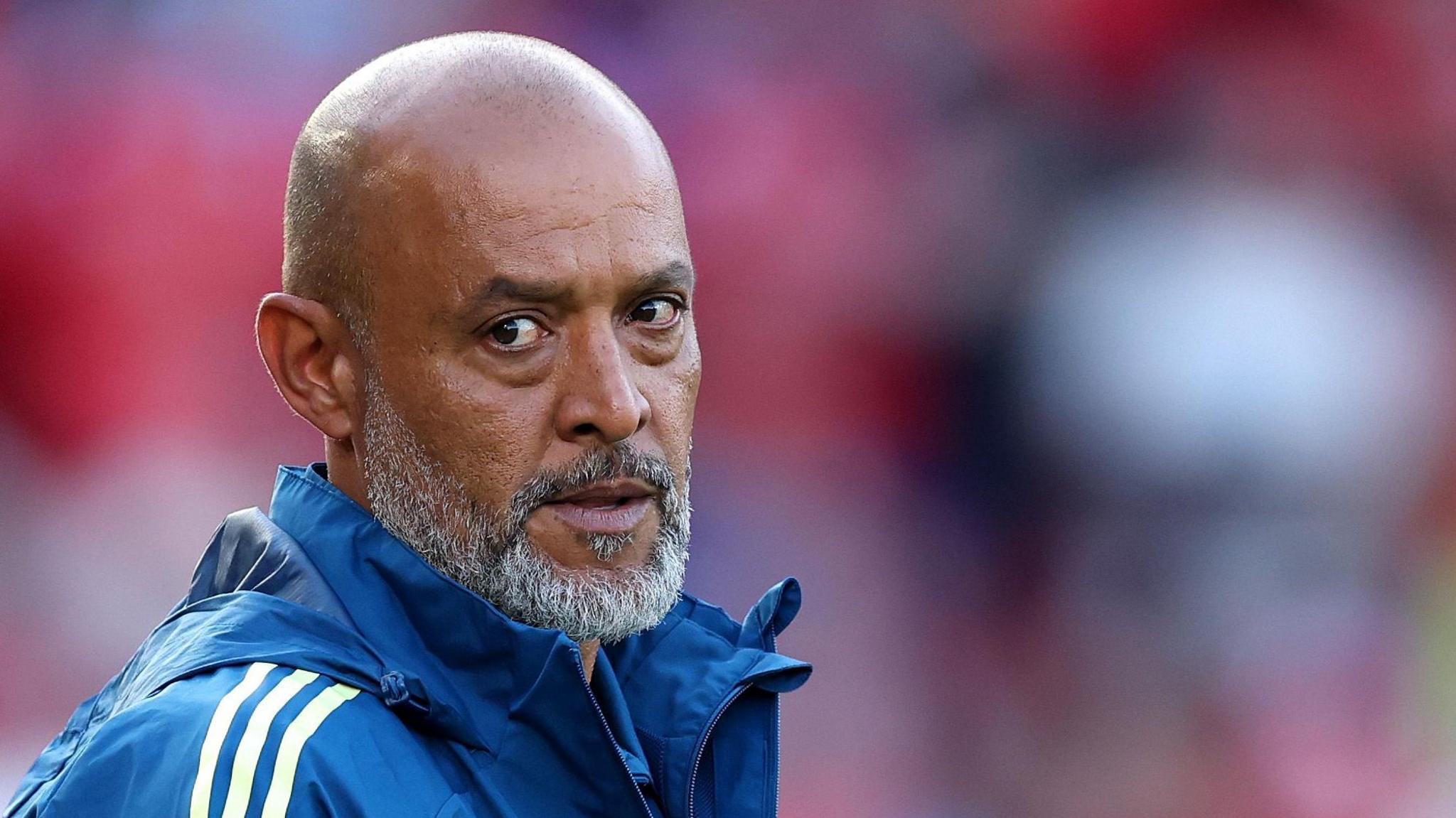
Nottingham Forest head coach Nuno Espirito Santo has been sacked after 21 months in charge.
The position of the Portuguese coach had been uncertain for two weeks since he publicly declared his relationship with owner Evangelos Marinakis had deteriorated.
Talks are under way over Nuno's replacement, with an appointment imminent and former Spurs manager Ange Postecoglou a contender.
In a statement released after midnight, Forest thanked Nuno "for his contribution during a very successful era at the City Ground" and said he would "always hold a special place" in their journey.
The 51-year-old took charge of Forest in December 2023 after the dismissal of Steve Cooper and helped them preserve their top-flight status.
Last term he guided the club to seventh in the Premier League - their highest finish since 1994-95 - as they qualified for Europe for the first time in three decades.
His success saw him sign a new three-year deal in June.
Forest currently sit 10th in the table after suffering a 3-0 home defeat by West Ham before September's international break.
Internal tensions with Marinakis force Nuno out
Despite the club's success on the pitch during Nuno's time as manager, his relationship with Marinakis became increasingly strained.
Internal tensions at the club were believed to centre around disagreements over their transfer business.
Previously, Nuno had criticised the club's activity in the summer transfer window, saying they had wasted a good chance.
Edu was appointed as Forest's global head of football earlier in the summer and has taken firm control over the club's recruitment operation.
"I always had a very good relationship with the owner - last season we were very close and spoke on a daily basis. This season it is not so well," Nuno said.
"Our relationship has changed and we are not as close. Everybody at the club should be together but this is not the reality."
In total, Forest have made 13 signings for about £196m based on reported initial fees.
As for the outgoings, Anthony Elanga, Danilo and Wayne Hennessey were all among the players whose Forest careers ended this window.
In May last season, Marinakis appeared to confront Nuno on the pitch following a 2-2 draw against Leicester at the City Ground.
Forest later said the incident was because of the owner's frustration that striker Taiwo Awoniyi had continued to play following an 88th-minute injury, which subsequently required what was described as "urgent" surgery.
The club said there was "no confrontation" and it was "fake news" to suggest otherwise.
However, those missed points against an already-relegated side were part of a run that saw Forest - who had been in contention for Champions League qualification - only pick up eight points from their last eight matches of the 2024-25 campaign.
Nuno became Forest manager in December 2023, with the club 17th in the Premier League and having lost five of their previous six games.
Despite Forest having four points deducted for a breach of Premier League profit and sustainability rules, Nuno still managed to keep them up with them finishing 17th, six points clear of 18th-placed Luton Town.
He won six league matches in the rest of 2023-24, including two of his first three games in charge: 3-1 away at Newcastle and then 2-1 at home to Manchester United.
But in the following campaign he took the club to seventh in the Premier League to ensure European football returned to the City Ground for the first time since 1996.
A memorable campaign saw Forest take four points off champions Liverpool, including a 1-0 win at Anfield in August 2024, and Forest also beat Manchester United home and away, and won 1-0 at home to Manchester City.
Forest also reached the semi-finals of the FA Cup, before losing 2-0 to Manchester City at Wembley.
Nuno was in charge of Forest for 73 games, winning 28, drawing 20 with 25 defeats.
'He leaves beloved by Forest fans' - analysis
Nick Mashiter
Football reporter
In just under two years Nuno Espírito Santo guided Nottingham Forest from a relegation battle back into Europe for the first time in 30 years.
He leaves beloved by the Forest fans but after a clear breakdown in relationship with owner Evangelos Marinakis.
He created a siege mentality which served Forest well and, despite both being big characters, it appeared a perfect match between him and Marinakis.
Last season's shock European challenge ended in missing out on the Champions League on the final day, a finish which may now have been crucial to Nuno's future.
Forest still finished seventh and reached the Europa League - being promoted to the competition after Crystal Palace's demotion - but for Nuno they did not prepare quick enough this summer.
Successive swipes in press conferences about the club's slow movement in the transfer market included the revelation his relationship with Marinakis had changed.
It was a shock given how guarded the Portuguese usually is.
Forest spent more than £180m this summer but Nuno was unhappy with being unable to integrate new players quickly enough.
Suggestions of a rift with Edu, Forest's global sporting director, lingered and the 3-0 defeat by West Ham last week was the worst performance of his reign, coming before talks with Marinakis about the club's future direction following his comments.
Nuno said, although not entirely convincingly, he expected to be in charge for Saturday's trip to Arsenal after the international break, but Forest's future is now without him.
A search for his replacement is not expected to be a lengthy one with ex-Tottenham boss Ange Postecoglou previously linked.
Vapes at Biffa recycling facility in Aldridge, Staffordshire
The ban on disposable vapes is failing to stop millions being thrown away incorrectly, and the devices are still causing chaos for the waste industry, a boss at a leading firm has said.
"We're seeing more vapes in our system, causing more problems, more fires than ever before," said Roger Wright, the company's strategy and packaging manager.
Vape firms have launched cheap reusable devices so instead of refilling and recycling them, people were binning them and buying more, he said.
A spokesperson for the vape industry said the June ban had been a success, and any rise in devices being thrown away was likely down to black market trade.
In April and May, the last two months before the ban, Biffa's recycling facilities in Suffolk, Teesside and London saw around 200,000 vapes on average incorrectly mixed in with general recycling.
For the three months since the ban in June, the average figure has been 3% higher.
Biffa handles almost a fifth of the UK's waste, and Mr Wright reckons the rest of the industry will be seeing a similar picture, suggesting around a million vapes a month going into general recycling.
This may partly be because large stocks of disposables were sold off cheap before the ban came into force.
But the vape industry's response to the ban has also contributed, says Mr Wright.
Big vape firms launched a range of reusable models which are very similar to the most popular disposable vapes, at similar prices.
By adding a replaceable nicotine pod and a USB recharging port, they can be sold as reusable, but Mr Wright suspects many are still being thrown away.
"We still see a lot of these reusables in the bins, because people have used them as a disposable item," he says.
The ban has also led to a big increase in the number of different kinds of vapes on the market, as firms launched dozens of new products to try to get round the ban.
"The innovation's gone crazy to try and get around the ban. Ironically it makes our job of recycling them - if we collect them - much harder," said Mr Wright.
But Marcus Sexton, chairman of the Independent British Vape Trade Association, argues that the ban has been a success.
"We can see through the data consumers are refilling and recharging devices," he said.
"So actually if Biffa's findings are true, this is about disposable products washing through the system, either through illegal traders or through the illegal black market," he added.
Biffa
A suspected vape fire at a recycling facility in Aldridge, Staffordshire in January
Vapes contain lithium batteries, which can catch fire when crushed. This often happens in bin lorries or recycling centres - one of the reasons they were banned in June.
They call them "bombs in bins" because of the fires they cause. Vapes should be returned to stores or recycling centres for specialist handling, not added to general recycling or general waste.
In June alone, Biffa had to deal with 60 fires caused by vapes and other small electrical items – once the fire has raged, it's hard to pinpoint the exact cause.
Biffa said dealing with this problem cost the UK waste industry a billion pounds a year.
The ban on disposable vapes was partly designed to curb the many millions of devices which were incorrectly thrown away.
Vapes mixed in with general waste, which is often ultimately incinerated, cause less serious problems than those in general recycling.
Mr Wright said collecting vapes and electrical devices directly from people's homes alongside general waste and recycling would be part of the solution.
"I think that would massively improve the collection rates," he said. "You're more likely to put it out on the kerbside than you are to bother to go down to your corner shop and give it back." Some councils already do this.
A government spokesperson said: "Single-use vapes get kids hooked on nicotine and blight our high streets - it's why we've taken tough action and banned them."
It said it has made in compulsory for retailers to provide recycling bins, and its circular economy strategy due later this year aims to increase the reuse and recycling of electrical equipment.
The UK's elections watchdog says it's taken three years and at least a quarter of a million pounds to fully recover from a hack that saw the private details of 40m voters accessed by Chinese cyber spies.
Last year, the Electoral Commission was publicly reprimanded for a litany of security failures that allowed hacking groups to spy undetected, after breaking into databases and email systems.
In the first interview about the hack, the commission's new boss admits huge mistakes were made, but says the organisation is now secure.
"The whole thing was an enormous shock and basically it's taken us quite a few years to recover from it," says chief executive Vijay Rangarajan.
"The culture here has changed significantly now partly as a result of this. It's a very painful way to learn."
The Electoral Commission oversees elections and regulates political finance in the UK to ensure the integrity of the democratic process.
Mr Rangarajan was not CEO when the hack happened but says that colleagues described the chaos of discovering the hackers as "feeling like you'd been burgled whilst still inside the house".
The hackers first breach was in August 2021, using a security flaw in a popular software programme called Microsoft Exchange. The digital hole was being exploited by suspected Chinese spies around the world and organisations were being warned to download a software patch to protect themselves. Despite months of warnings, the commission failed to do so.
Hackers had access to the full open electoral register containing the names and addresses of all 40m UK voters.
They could also read every email sent and received at the commission.
The criminals weren't found until October 2022 during an password system upgrade.
The Electorial Commission's new Chief Executive Vijay Rangarajan spoke to the BBC about the hack
Cyber security failures
Not keeping software up to date was one of several basic security mistakes made including having bad password practices, failing a basic government-run security audit and ignoring advice from the National Cyber Security Centre.
The Information Commissioner's office issued a formal reprimand to the Electoral Commission but if equivalent mistakes were made in a private sector breach it would likely have led to a large fine.
Mr Rangarajan says that as well as the reprimand, stakeholders including in parliament were shocked by the complacency and asked "what were you doing?"
No individual person has been publicly reprimanded for the security lapses.
There were six by-elections during the period that hackers were inside the commission's IT networks but there is no evidence that anything was affected by it.
However the commission says it still doesn't know what the hackers were doing or what information they may have downloaded.
Mr Rangarajan admits that the hackers could have caused major disruption if they have installed malicious software or hampered communications during an election.
"All of this could have caused us amazing problems. It was a dangerous thing to have happened," he said.
Chinese spies were blamed for the attack and received sanctions from British and US authorities. China has always denied any involvement.
Mr Rangarajan said staff at the time didn't seem to think the commission would be targeted by hackers. This was despite high profile elections interference cases like the 2016 US presidential election hack of Hilary Clinton's emails.
"I don't think everyone realised quite how much democratic systems and electoral systems were targets. We tended to be quite comfortable in the way we runs things. We now have to be really up to speed with the threats," he said.
The Electoral Commission was given grants of more then £250,000 to recover from the breach and now says it is spending significantly more of its budget on cyber security.
It has now passed the National Cyber Security Centre's Cyber Essentials certification – the audit that an insider told the BBC it had failed in the build up to the hack. It has also achieved Cyber Essentials Plus – the highest level of certification from the scheme.
John Elkann, pictured at the F1 Grand Prix on the weekend.
The chair of Ferrari and Stellantis has agreed to do one year of community service and jointly pay millions of euros to settle a dispute over inheritance tax in Italy.
John Elkann and his siblings Lapo and Ginerva will pay €183m (£159m) to Italian tax authorities, Italian prosecutors said, according to multiple media reports.
Mr Elkann's lawyer said the agreement did not include an admission of liability from the Ferrari chair and his siblings.
He said the prosecutors' decisions were an opportunity to bring "this painful affair to a swift and definitive close".
Mr Elkann, a member of one of the most powerful families in Italy, is the grandson of Gianni Agnelli, the former boss of Fiat.
The tax dispute relates to the estate of Mr Elkann's grandmother, Marella Caracciolo, who died in 2019.
Mr Elkann will need to suggest where he could do his community service, which Reuters reported could include helping at a centre for the elderly or a centre helping people with drug addiction.
Paolo Siniscalchi, the Elkanns' attorney, said in a statement to the BBC: "John Elkann's request for probation must be viewed in this context and does not entail, just as the settlement with the tax authorities does not, any admission of responsibility.
"If this request is granted, the proceedings against him will be suspended, and upon the successful completion of the probationary period, will conclude with a ruling extinguishing all the charges for which John Elkann is currently under investigation.
"This outcome would mirror that of his siblings Ginevra and Lapo, for whom dismissal of charges has been requested."
Prosecutors had alleged the Elkann siblings failed to declare roughly €1bn in assets and €248.5m in income, on the basis their grandmother was a Swiss resident.
Prosecutors on Monday accepted the agreement to pay millions, and have asked the judge to drop a criminal case against Mr Elkann's brother and sister, which was dismissed.
The case stems from a wider dispute between the Elkann siblings and their mother, Margherita Agnelli over the estate of Gianni Agnelli. A civil case is ongoing.
Mr Agnelli died more than 20 years ago after building Fiat up from a small car manufacturer into a major conglomerate.
Ms Agnelli, who inherited €1.2bn euros, has been fighting to overturn agreements she signed in 2004 after her father's death in an attempt to ensure that money goes to her five children from a second marriage and not to her three eldest.
Ms Agnelli's lawyers said in a statement that they welcomed the outcome of these tax and criminal proceedings.
Mr Elkann is the oldest of Ms Agnelli's children. He has been chair of Stellantis since 2021, and became chair of Ferrari in 2018, according to Stellantis.
He first joined Fiat's board in 1997 and was previously the company's chair.
Anastacia spent years singing at corporate events before hitting the big time with her single I'm Outta Love
"When they first see me, they just think I'm four eyes and blonde hair," said Anastacia, introducing herself on MTV's reality show The Cut in 1998.
"When I sing, it's very different."
She wasn't kidding.
Her TV debut opened with a long wide shot. Audiences heard her before they saw her. That voice is all purr and growl, like a lion clawing its way through velvet.
As the camera zoomed in, Anastacia strutted down the staircase, her hair in pigtails under a candy striped bucket hat, her midriff exposed by a crop top, in accordance with 1990s pop regulations.
By the time she finished her song, Not That Kind, the phone lines were red hot. Even Michael Jackson placed a call, trying to sign her to his record label.
"It was like a clamouring," recalls the Chicago-born star. "Everyone wanted to sign me."
It was a stunning about-turn. For years, record companies had expressed interest, then got cold feet. Anastacia thought she'd used up all her chances.
"I was the most un-signable artist because of the way I sounded and looked," she says. "No-one could work out how to market me".
Executives wanted her to sound more like Celine and look more Britney. She was constantly told to ditch the tinted glasses she's needed since the age of six. One label dismissively told her she looked like a "sexy librarian".
"They didn't understand. I need these glasses to see you at the distance you're sitting now," she says, sitting two feet away from me in a BBC radio studio. "Without them, it's like being blind."
Once she'd appeared on The Cut, "everyone got it".
"Had the show not happened, I don't even know what I'd be doing. I have dyslexia and I'm not really great school-wise, so I think I'd be, at the best, a receptionist."
Anastacia perform at Radio 2's Party In The Park in Chelmsford
Pre-fame, reception work was her bread and butter – most memorably at a hair salon that provided a "first glimpse of what it's like to have a glam squad".
But she was always singing. By her early 20s, Anastacia was in demand at Hollywood functions and parties, including Steven Spielberg's wedding to Kate Capshaw.
"I sang a Celine Dion song – I can't remember which one. Then fast forward a couple of years later, and I'm having dinner in this restaurant in Malibu, and it happens that Spielberg and his wife are there having dinner with Tom Cruise and Penelope Cruz.
"I went over and I said, 'You won't remember this but I sang at your wedding, and what's wild is that my dream came true and I'm actually a singer now.
"And Spielberg said, 'The wildest thing is that I'm still married to her', which was hilarious."
Silver anniversary
Other celebrity encounters were more… er, quirky.
"I played Arnold Schwarzenegger's birthday, and he had me do En Vogue's Whatta Man," she recalls.
"Great song, but he just wanted me to sing it over and over again. I think I sang it 12 times.
"Every time, I was like, 'Oh my God, he wants it again'. It really made me laugh."
Getty Images
Arnold Schwarzenegger: Really into the music of 1990s vocal harmony group En Vogue
After all those years of effort - and infinite encores of Whatta Man - Anastacia finally got to make her debut album at the turn of the millennium.
She was 32. Press releases said she was 27. But if the youth-obsessed pop industry thought age would be a barrier, they were wrong.
Debut single I'm Outta Love was a Top 10 hit in 19 countries, going platinum in the UK, and becoming Australia's best-selling single of 2000.
Anastacia's album, named Not That Kind for the song she performed on The Cut, sold more than four million copies worldwide. This year, the star is touring to celebrate its silver anniversary.
"I pray the songs still sound fresh," she says. "I do feel that they still bring joy for people that have known the songs – whether they were getting over a relationship or whether it was just their party song."
Getty Images
The singer's medically prescribed colour-correcting glasses have become her trademark
With more than 70 dates across the year, including a triumphant performance at Radio 2's Party In The Park this weekend, she's noticed a shift in her audience.
"When I started, a lot of older people loved my voice because it has the nuances of Aretha Franklin and Tina Turner.
"Now that it's 25 years, I'm getting the younger audience that were in single digits [the first time around] . This is their first time ever seeing me in concert and you can feel their excitement."
The tour is particularly fulfilling for the singer because, at the start of her career, she was prevented from playing live.
"It was an internal situation," she says. "In those days it was vitally important to get played on radio and because of an issue that my record company had with the two major radio stations in America at that point, I was blacklisted."
To this day, Anastacia has never troubled the US Billboard charts. At the start of her career, when she was signed to a US label, that made it impossible to bankroll a European tour.
She had to wait 'til her third album (2004's Anastacia) to show fans what she was made of. Years of pent-up demand resulted in an 80-date trek around the continent, including dates at Wembley Arena and outdoor shows in Italy, France and Ireland.
It was pointedly titled the "Live At Last" tour.
Getty Images
The singer is touring throughout 2025 and 2026
Although it stung not to be successful in her home country, these days she "can't even imagine putting America into my life."
"I'm already working enough," she laughs. "I'm exhausted."
She can trace the change of heart back to 2003, when she performed at 46664, an Aids benefit concert organised in South Africa by Nelson Mandela.
"I was backstage and Beyoncé and Bono were talking to me, saying, 'God, I would love to have a country where I could walk around and people would think I was just a regular person'," she recalls.
"I was like, 'I never thought about it that way'. And in hindsight, I'm very grateful."
That glass-half-full optimism has been a hallmark of Anastacia's career. It kept her going through the years where she was considered un-signable; and was the foundation of her comeback after surviving breast cancer, twice.
As fate would have it, the 25th anniversary of Not That Kind has coincided with a resurgence of Anastacia's music on social media.
"I used to think I'm Outta Love would always be my biggest song and, lo and behold, Left Outside Alone has surpassed that.
"And interestingly enough, Paid My Dues gets a very strong reaction at the minute - I think they just like all the sass that comes from that song."
Inspired by that success, the singer has not one but two new albums cooking on the stove. She'll head back to the studio after wrapping up her tour this autumn, but can't confirm when the music will see the light of day.
"After all these years, the music industry is still a mystery," she says.
"It's still a mystery, and it's always like, 'Don't worry, you have plenty of time… Hurry up. We need it tomorrow'."
The Financial Times leads on new Home Secretary Shabana Mahmood's threat that the UK could suspend visas from countries that do not agree to returns deals for illegal migrants. Mahmood, who the paper reports is known as a "tough political operator", says securing the UK border was her "top priority", and that other countries need to "play ball" on the issue.
Mahmood will "risk spats for more deportations", according to the Times, which also leads with the home secretary's pledge to impose visa restrictions if countries refuse to take back illegal migrants to the UK. The Times is one of several papers to feature a photo of the Duke of Sussex at an event in the UK, but adds that he had "no plans to see his brother".
The Dukes of Cambridge and Sussex were at times less than 15 minutes' drive away from each other on the third anniversary of the late Queen's death, but "the estranged brothers did not meet", according to the Daily Mail. "There's still a chasm between the warring Princes" is the headline.
Prince Harry also appears on the front page of the Daily Telegraph, but the paper leads with new league tables ordered by the health secretary which show four in five NHS hospitals in England are "failing". The rankings show that more than 100 of England's 134 acute hospitals are "off-track" on performance or running financial deficits.
The i Paper reports that the Labour Party's left wing is plotting "revenge" on Prime Minister Sir Keir Starmer, as they scramble to find a candidate for the deputy leadership election. Lucy Powell and Emily Thornberry have emerged as early front-runners to replace Angela Rayner, the paper reports, while new housing minister Alison McGovern is understood to be Downing Street's preferred candidate.
The Guardian reports that a trove of leaked data from Boris Johnson's private office allegedly reveals how the former prime minister - who has so far not commented on the claims - has been profiting from contacts and influence he gained in office in a possible breach of ethics and lobbying rules. The BBC has not verified the existence or content of what the Guardian calls the Boris Files.
Civil servants at HMRC offices have taken more than 500,000 sick days in each of the last three years, according to the Daily Express, a situation which Conservative MPs have criticised as "unfair on taxpayers". It follows an earlier Daily Express story which reported tax officials failed to collect more than £46bn annually because they miss phone calls from businesses trying to pay taxes.
Chancellor Rachel Reeves will today describe Reform UK as a "clown show" with a "fantasy economic plan", according to the Daily Mirror. Reeves is expected to address cabinet on Tuesday on her plans to drive growth ahead of an Autumn Budget where tax hikes are expected. "Don't be fooled by Farage" is the Mirror's headline.
Up to 100 huge drug shipments a year are reaching the UK and Europe because investigators are "too stretched" to intercept them, Metro reports. The recent £135m bust of a cargo ship carrying cocaine through the Irish Sea is the "tip of the iceberg", according to the paper.
The Sun focuses on the Madeleine McCann case, reporting that a former German intelligence officer who helped secure the release of Christian Brueckner, a prime suspect in the disappearance of the British girl in Portugal in 2007, has said she "felt sorry for him". The Sun reports that she was concerned that Brueckner's "human rights might have been infringed".
"Fool's gold" is the headline for the Daily Star, which reports that US President Donald Trump's claims to have decorated the Oval Office with real gold have been "exposed" as fake. The paper says some of the decorations in the office are "plastic moulds sprayed gold".
A years-long succession battle for control of Rupert Murdoch's conservative media empire has drawn to a close, with his son Lachlan set to control the news empire.
The deal, which the family announced on Monday, will ensure the ongoing conservative leaning of Fox News, The Wall Street Journal and The New York Post even after 94-year-old Rupert's death.
Under the agreement Lachlan will control a new trust while siblings Prue MacLeod, Elizabeth Murdoch and James Murdoch will cease being beneficiaries of any trust with shares in Fox or News Corp.
It follows years of tension between the media mogul and three of his children over the future of the family-owned newspapers and television networks.
Father Ted co-creator Graham Linehan has told BBC News he stands by his posts on X which led to his arrest last week, over his views on challenging "a trans-identified male" in "a female-only space".
"I don't regret anything I've tweeted - sometimes I've tweeted a bit more out of anger, because of the frustration that no-one's paying attention to this issue," he told BBC special correspondent Lucy Manning.
Speaking about his arrest, he said: "I got very, very angry, because for eight years now, I've been standing up for women's rights and trying to get people's attention about what's happening to kids in gender clinics."
Last week the writer was arrested by five officers after arriving at Heathrow on a flight from the US.
Graham Linehan told Lucy Manning what happened when he was arrested last week
The arrest sparked a backlash from some public figures and politicians, and prompted a fierce debate about policing and free speech.
Recalling his flight, which landed in the UK on 1 September, he said he "realised something was up" when no one on the plane was allowed to stand up.
"I didn't expect it to be what it turned out to be. And then they called my name out and I think I immediately knew what was going to happen," he said.
He was then met by five armed police officers, who explained he was going to be arrested because of his online posts.
He said he had a strong reaction to being arrested because "for eight years I've been harassed, often by the same small group of men, but also by a wider community online".
'A slap in the face'
When asked if the tone he took in his posts could be described as "vicious and personal to trans people" and if he had tried to "lower the temperature a bit" in what he writes, he said: "I've tried several times, but you always get met by a slap in the face.
"So if people come to me in good faith, I will speak back to them in good faith. If people insult me, I will insult them."
Last week Linehan shared screen shots of the three X posts from April he said he was arrested for on Substack, the subscription-based online platform.
The first post, from his X feed, said: "If a trans-identified male is in a female-only space, he is committing a violent, abusive act. Make a scene, call the cops and if all else fails, punch him in the balls."
It was put to him that what he wrote was insulting and violent, and he agreed, but said: "Women have a right to defend themselves from strange men in their spaces."
'I had my career destroyed'
Linehan said he would be suing the police "for wrongful arrest and false imprisonment."
On 3 September the head of the Metropolitan Police, Sir Mark Rowley, defended the officers involved, but said he recognised "concern caused by such incidents given differing perspectives on the balance between free speech and the risks of inciting violence in the real world".
He called on the government to "change or clarify" the law following Linehan's arrest, while Prime Minister Sir Keir Starmer said police must "focus on the most serious issues", when asked about the arrest.
Green Party leader Zack Polanski called the posts "totally unacceptable", saying the arrest seemed "proportionate", while Shami Chakrabarti, a Labour peer and ex-director of Liberty, a civil liberties group, said "the public order statute book and speech offences in particular do need an overarching review".
"But inciting violence must always be a criminal offence," she added.
Linehan told the BBC he did not feel he had a future in the UK.
"I find the UK culturally a desert. I am disgusted with all my old colleagues in comedy and theatre who have just watched as I've been beaten up in the dark by these people," he said.
"So I don't really want to have anything to do with them, I don't think there really is anything for me here."
He said the US "really feels like it values free speech", adding: "It just feels like I can relax a little bit more in America. I know I won't get my collar felt for telling a joke."
The Irish comedy writer, who also created TV comedies The IT Crowd and Black Books, spoke about the impact of being "cancelled".
"I had my career destroyed, I had my [upcoming Father Ted] musical taken away, I had my marriage taken away. I don't know why people expect me to be all sunshine and roses," he said.
Linehan is also facing a separate charge of harassment - which he denied in Westminster Magistrates Court last week.
The prosecution alleges he "relentlessly" posted abusive comments about Sophia Brooks, 18, on social media last October, before throwing her phone in a road.
But the writer told the court court his life has been "made hell" by transgender activists, including one he is accused of harassing.
The case was adjourned until 29 October, with Linehan released on bail.
Heathrow Terminal 4's departure hall was evacuated as a precaution
No trace of any "adverse substance" has been found after emergency services were called to Heathrow airport, the Metropolitan Police has said.
Terminal 4 was partially evacuated on Monday as fire crews investigated "possible hazardous materials" at the airport.
Heathrow's spokesperson apologised for the disruption and said they were working with airlines to ensure flights departed on time.
The London Fire Brigade (LFB) said crews were called to the terminal at about 17:00 BST to carry out an assessment of the scene, and Terminal 4 check-in was evacuated as a precaution.
Junior Jones
Hundreds of people waited outside the terminal while fire crews dealt with the incident
Firefighters were stood down at around 20:20 and both the LFB and Metropolitan Police have said the cause of the incident remains under investigation.
In a statement, the Met said: "Specialist officers attended the scene alongside the London Fire Brigade and London Ambulance Service and conducted a thorough search of the area.
"No trace of any adverse substance was found."
Twenty-one people were assessed by the London Ambulance Service. None were deemed to be in a life-threatening or life-changing condition, with 20 discharged at the scene and one taken to hospital.
A Heathrow spokesperson said it reopened to passengers shortly after 20:00 and they were "very sorry for the disruption caused".
In a post on X, the airport said it was doing "everything we can to ensure flights depart as planned today".
Disruption to flights landing and departing from Terminal 4 appeared minimal while the evacuation was under way, according to flight data.
Watch: Key moments from Shigeru Ishiba's time as Japanese prime minister
Japan's Prime Minister Shigeru Ishiba has announced his resignation after less than a year in the role - following two crushing election losses.
His resignation came a day before his opponents in his Liberal Democratic Party (LDP) were expected to vote him out.
His departure sets the stage for yet another leadership contest in Tokyo, the third in four years.
But the country's future leader faces a daunting task - balancing fraught US-Japan relations, rising inflation and a cost of living crisis, and a government that has lost its majority in both houses of parliament.
Why did Ishiba resign?
Getty Images
Ishiba resisted calls for him to step down at first
In 2024, Ishiba replaced then outgoing prime minister Fumio Kishida, whose popularity plunged in the wake of a corruption scandal involving the LDP, rising living costs and a slumping yen.
Just days after being elected, Ishiba announced plans for a snap election, saying it was "important for the new administration to be judged by the people as soon as possible".
And judge him they did.
Many in the electorate were still furious over the corruption scandal that implicated senior members of the LDP, and were struggling to deal with rising inflation and a cost of living crisis. They delivered the LDP its worst result in over a decade and caused it to lose its single-party majority in the powerful lower house.
Earlier this year, the LDP suffered another defeat in the upper house parliamentary elections where it also lost its majority.
Ishiba resisted calls for him to step down at first, saying he needed to take responsibility for the LDP's losses and to deal with a trade deal with Washington.
But on Sunday - ahead of an internal leadership vote that could have forced him out - he bowed out, announcing his resignation.
"Voices had been mounting from within the party that the PM must take responsibility... [and] the writing was on the wall," said Tomohiko Taniguchi, a specially appointed professor at the University of Tsukuba and previously a special advisor to the late PM Shinzo Abe.
"So rather than waiting to endure public humiliation, Ishiba chose to step down," said Dr Taniguchi.
Who might be the country's next leader?
BBC composite/Getty
Shinjiro Koizumi, Yoshimasa Hayashi and Sanae Takaichi could be in the running for the role
The LDP vote is expected in early October, with the winner almost certain to become prime minister.
No one has announced their intention to run, but there are three names that have emerged as possible contenders.
They are: Shinjiro Koizumi, the agricultural minister and son of a popular former prime minister; Yoshimasa Hayashi, the chief cabinet secretary; and Sanae Takaichi, who would be Japan's first female prime minister if she won.
All three had come up against Ishiba in the previous presidential race in 2024 - with Takaichi initially emerging as the strongest candidate in the first round of votes.
However, Takaichi - a close ally to Abe - was later overtaken by Ishiba.
The 64-year-old is a hardline conservative and is known to oppose same-sex marriage. Her positions on women's issues are in line with the LDP's policy of having women serve in traditional roles.
There's also 44-year-old Koizumi, the son of Junichiro Koizumi who was hugely popular when he served as prime minister from 2001 to 2006.
The fresh-faced younger Koizumi is media-friendly and popular online, where he is known for posting cat photos.
Then there's 64-year-old Hayashi, who acts as the government's top spokesperson in his pivotal role as chief cabinet secretary.
"You have an extreme set of candidates where one is very conservative, one is sort of an untested politician," said Dr Taniguchi. "And then there's Hayashi, someone who is not so flamboyant but more experienced and tested."
Other names that have been floated include former foreign minister Toshimitsu Motegi and former economic security minister Takayuki Kobayashi.
What challenges will the next leader face?
The new leader faces the challenge of bringing together a weakened party - and someone who can bring back voters to the LDP.
Japan is currently seeing a drift towards the far-right, with the nationalist Sanseito emerging as one of the biggest winners of Japan's recent upper house parliamentary election.
A large part of Sanseito's voter base were conservative voters that were drawn away from the LDP.
"Prime Minister Ishiba was considered not conservative enough by many supporters of Abe," Jeffrey Hall, a lecturer at Kanda University of International Studies, had earlier told the BBC.
"They think that he just doesn't have the nationalistic views on history, he doesn't have the strong views against China that Abe had."
So many turned to parties like Sanseito as a result.
"The fact that they succeeded in getting more votes shows the frustration of voters who would have ordinarily supported the LDP, but chose to leave and go to a party that is newly formed and yet to be tested," said Dr Taniguchi.
"The biggest task for the next leader of the LDP would be to bring back these voters."
Getty Images
Prices of everyday items have remained high in Japan as inflation challenges persist
It also comes as the country is dealing with a rising cost of living crisis amid a weakened yen.
"Japanese people are not accustomed to inflation so even a small amount feels shocking. For many ordinary voters, Japan just feels like its becoming a poorer country - prices are rising but wages are not going up, and with the yen being so weak, those going abroad would find everything so expensive," said Professor James Brown of Temple University Japan.
The next PM will also have to navigate Tokyo's tricky relationships with its neighbours.
Earlier last week, China celebrated its "Victory Day" parade - marking 80 years since it defeated Japan at the end of World War Two - which was attended by leaders such as North Korea's Kim Jong Un and Russia's Vladimir Putin.
"You're seeing three threatening neighbours, including a nuclear armed state, and a recent celebration [in China] on its victory over Japan," said Prof Brown.
"Whether the leader is more nationalistic like Takaichi or next-generation-minded like Koizumi... the endurance of trilateral cooperation among Tokyo, Washington, and Seoul will be closely watched after Xi, Putin, and Kim so visibly displayed solidarity in Beijing," said Leif-Eric Easley, a professor at Ewha University in Seoul.
Even Japan's relationship with its long-term ally the US can get tense.
US President Donald Trump had earlier this year demanded that Tokyo pay more for stationing American troops in Japan.
"[Amid all this happening], there's a bit of despair in the public. There's no great hope that a different leader would make any major difference. For many people they think it's just the same old story, just with a different LDP leader," says Prof Brown.
Why does Japan see so many PMs?
Japan has over the last two decades seen more than 10 prime ministers.
This is due in part to it being a "one-party democracy", says Prof Brown.
"In terms of government, it's really only ever been the LDP - so that means the main political competition comes from within the party, rather than from external parties.
"So within the LDP there are vicious struggles within different factions - they all want their own faction to get the top job.
"So even though you might be selected as leader, as soon as you're in office, you have dozens of people manoeuvring to try to get you out again."
Whoever takes up the leadership position will almost be drinking from a "poisoned chalice", adds Prof Brown.
As attention now turns to Ishiba's replacement, many are also waiting to see if the next leader can break Japan's cycle of short-lived prime ministers.
France has been plunged into a new political crisis with the defeat of Prime Minister François Bayrou at a confidence vote in the National Assembly.
The defeat – by 364 votes to 194 – means that Bayrou will on Tuesday present his government's resignation to President Emmanuel Macron, who must now decide how to replace him. Macron's office said this would happen "in the coming days".
The options include naming a new prime minister from the centre-right; pivoting to the left and finding a name compatible with the Socialist Party; and dissolving parliament so new elections are held.
Macron's bitter enemies in the far-left France Unbowed party are calling for him personally to resign, but few commentators think it likely.
France is thus on its way to getting a fifth prime minister in less than two years - a dismal record that underscores the drift and disenchantment that have marked the president's second term.
Bayrou (left) lasted nine month's as Macron's prime minister
Bayrou's fall came after he staked his government on an emergency confidence debate on the question of French debt.
He spent the summer warning of the "existential" threat to France if it did not start to tackle its €3.4 trillion (£2.9 trillion) liability.
In a budget for 2026 he proposed to scrap two national holidays and freeze welfare payments and pensions, with the aim of saving €44 billion.
But he was quickly disabused of any hope that his prophesies of financial doom would sway opponents.
Party after party made quite clear they saw Monday's vote as an opportunity to settle accounts with Bayrou - and through him Macron.
Lacking any majority in the National Assembly, Bayrou saw the left and hard-right uniting against him - and his fate was sealed.
Some commentators have described Bayrou's fall as an act of political suicide. There was no need for him to call the early confidence vote, and he could have spent the coming months trying to build support.
In his speech beforehand, Bayrou made clear that he had his eyes set more on history rather than politics, telling MPs that it was future generations who would suffer if France lost its financial independence.
"Submission to debt is the same as submission to arms," he said, warning that current debt levels meant "plunging young people into slavery".
"You may have the power to bring down the government. But you cannot efface reality," he said.
There was no sign that Bayrou's warnings have had any impact on parliament or on France as a whole. Deputies from the left and hard-right accused him of trying to mask his own and Macron's responsibility in bringing France to its current state.
In the country, there has also been little echo to Bayrou's analysis – with polls showing that few regard debt control as a national priority, as opposed to the cost of living, security and immigration.
A movement calling itself Bloquons Tout (Let's Block Everything ) has promised a wave of sit-ins, boycotts and protests against Macron's policies from this Wednesday. On 18 September several unions are also calling for demonstrations.
Most economic analysts agree that France faces a huge financial challenge in the years ahead, as the projected cost of servicing its debt rises from the €30bn spent in 2020 to more than €100bn in 2030.
The need for financial restraint comes as Macron promises extra funds for defence, and as opposition parties of left and hard-right demand the repeal of the latest pension reform that raised the retirement age to 64.
Bayrou took over from Michel Barnier last December after Barnier failed to get his budget through the Assembly.
Bayrou managed to pass a budget thanks to a non-aggression pact with the Socialists, but their relations plunged when a conference on the latest pension reform failed to take account of Socialist demands.
Some speculated that Macron would turn now to a left-wing prime minister, having failed with the conservative Barnier and the centrist Bayrou.
However the Socialist Party says it wants a total break from Macron's pro-business policies as well as a repeal of the pension reform - which would be tantamount to undoing the president's legacy.
It therefore seems likely Macron will look initially to another figure from within his own camp, with Defence Minister Sébastien Lecornu, Labour Minister Catherine Vautrin and Finance Minister Éric Lombard all said to be in the running.
Prime Minister Bayrou before his speech to parliament
François Bayrou, the French prime minister, is set to lose a confidence vote on his stewardship, in the latest twist in a period of chaos inside the National Assembly.
Bayrou, 74, is the fourth prime minister in two years under President Emmanuel Macron, whose second term is office has been overshadowed by political instability.
Bayrou's minority government called for €44bn (£38bn) of budget cuts to tackle France's mounting public debt and is now is heading for collapse.
The BBC looks at what led to this political crisis and what could happen next.
How did we get here?
French President Emmanuel Macron took a gamble in June 2024.
Faced with a bruising loss for his party in the European Parliament vote, he called a snap parliamentary election which he hoped would achieve "a clear majority in serenity and harmony".
Instead, it resulted in a hung, divided parliament that has made it difficult for any prime minister to garner the necessary support to pass bills and the yearly budget.
Macron appointed Michel Barnier last September but within three months the man who negotiated Brexit for the EU was out - the shortest period since France's post-war Fifth Republic began.
Bayrou is set to suffer the same fate, just under nine months since he came to office last December.
Meanwhile some parties – chiefly on the far right and the far left – continue to clamour for an early presidential election.
Macron has always said he will not stand down before his term ends in 2027.
Instead, he will likely have to choose between appointing a fifth prime minister in less than two years - who again risks working on borrowed time - or calling snap elections for parliament, which could result in an even more hostile National Assembly.
There are few good options for the president as the effects of his June 2024 gamble continue to reverberate.
Bayrou's key issue is France's debt crisis, and what he says is the need to slash government spending to head off a catastrophe for future generations.
Why is France in debt crisis?
Simply put, France's government has for decades spent more money than it has generated. As a result, it has to borrow to cover its budget.
The French government says, in early 2025, public debt stood at €3,345 billion, or 114% of GDP.
That is the third highest public debt in the eurozone after Greece and Italy, and equivalent to almost €50,000 per French citizen.
Last year's budget deficit was 5.8% of GDP and this year's is not expected to be 5.4%. So public debt will continue to grow as borrowing covers the shortfall.
France - like many developed nations - is facing the demographic headache of an ageing population - fewer workers being taxed and more people drawing the state pension.
Bayrou is among those French politicians who want to slash the deficit by redefining generous social programmes - such as state pensions.
In his speech to parliament on Monday, Bayrou spoke of a country on "life support" and addicted to spending.
Two years ago France raised the pension age from 62 to 64 for those born in 1968 or afterwards, and Bayrou has warned that the sense that French workers can stop working during their early 60s is now out of date.
However there is much opposition to further cuts. The government of Bayrou's predecessor collapsed in a confidence vote on the issue last December.
Politicians on the left have called for tax rises, rather than budget cuts.
Bayrou has said his piece - what happens next?
If as expected Bayrou loses the vote in the National Assembly early this evening, then France is probably heading for another period of doubt, drift and speculation.
It is possible President Emmanuel Macron will act quickly to appoint a new prime minister – it's certainly in the country's interest that he do so.
But practicalities – and precedent – both suggest this could turn out to be a drawn-out process.
Macron has to find a name sufficiently unobjectionable to at least some of the parliamentary opposition that they won't automatically bring him or her down.
The first two PMs in this benighted parliament – Barnier and Bayrou – took weeks to find. The third won't be any easier.
In the meantime Bayrou would presumably stay on as caretaker head of government.
There is pressure from some quarters – notably Marine Le Pen's National Rally – for a new dissolution of the Assembly and parliamentary elections. But there are also strong voices saying it would be a waste of time, because a new vote would be unlikely to change much.
Beyond that there are also voices – from the far left this time – calling for Macron's resignation as president. But don't watch this space. Knowing the character of the man, it is most unlikely to happen.
Who could replace Bayrou?
If Bayrou falls, pressure will be strong on Macron to name a successor from the left. The last two were from the right and centre, and a left alliance came out numerically top in the 2024 election.
Olivier Faure, the leader of the Socialist Party, would be one possibility. The 57-year-old has a group of 66 deputies in the National Assembly.
Two other possibilities from the left are former PM Bernard Cazeneuve, and the veteran ex-minister Pierre Moscovici, currently head of the Cour des Comptes, the official accounting office.
If Macron decides to stick with the centre and right, his first choice would probably be Sebastien Lecornu, 39, the current defence minister who is a member of Macron's Renaissance party and said to be close to the president.
Another conservative whose name has been mentioned is the current minister of labour and health, Catherine Vautrin.
Two other possibilities from inside government are Interior Minister Bruno Retailleau, who now leads the Republicans, and Justice Minister Gérald Darmanin.
But with all eyes on the 2027 presidential election, would these heavyweights want the electoral kiss-of-death which is to be Macron's next PM?
Democrats in Congress have released a note they say US President Donald Trump sent to Jeffrey Epstein for his 50th birthday.
Lawyers for Epstein's estate sent documents to the House Oversight Committee after they were subpoenaed last month.
Democratic members of the committee then posted the letter on X on Monday.
It comes after the Wall Street Journal published details of the note in July. Trump said it was "a fake thing" and denied writing it.
"These are not my words, not the way I talk. Also, I don't draw pictures," he said at the time.
The signed note says: "Happy Birthday - and may every day be another wonderful secret."
The committee last month issued a legal summons for the executors of Epstein's estate to produce a number of documents, including a birthday book which contains the note purportedly from Trump.
Trump filed a lawsuit against the Wall Street Journal's reporters, publisher and executives, including News Corp's owner Rupert Murdoch, after the newspaper published its story in the summer.
The newspaper's publisher Dow Jones said at the time it had "full confidence in the rigour and accuracy of our reporting".
The BBC has reached out to the White House for comment, as well as Trump's personal attorneys.
On X, White House deputy chief of staff Taylor Budowich posted several images of Trump's signature on Monday.
"Time for @newscorp to open that checkbook, it's not his signature. DEFAMATION!" Budowich wrote.
The Wall Street Journal reported in July that Epstein accomplice Ghislaine Maxwell created the birthday book for the financier in 2003.
It contained submissions from various Epstein acquaintances, including a note allegedly bearing the name of Trump, who was then his friend.
Trump and Epstein were friendly for years, but the president has said he fell out with him in the early 2000s after the financier poached employees from his Mar-a-Lago resort in Florida.
Epstein was first criminally indicted in 2006 in Florida on a state felony charge of solicitation of prostitution.
The Princess and Prince of Wales remembered the legacy of the late Queen
Prince William and Catherine have paid tribute to the late Queen Elizabeth II on the anniversary of her death, as Prince Harry laid a wreath on his return to the UK.
The Prince and Princess of Wales visited a Women's Institute event in Sunningdale, Berkshire, to meet members of an organisation with a long association with the late Queen.
Elsewhere, Prince Harry - who has arrived back in the UK for the first time in five months - privately laid a wreath and paid his respects to the late Queen in Windsor, where she is buried.
The prince has flown from California and will appear at the WellChild charity awards later on Monday, the first in several planned engagements this week.
Queen Elizabeth, Britain's longest reigning monarch, who died at the age of 96, had been president of the Women's Institute branch in Sunningdale.
Prince William was wearing a dark jacket and tie, at a time of royal mourning for the Duchess of Kent, who died last Thursday.
This is also the anniversary of the accession to the throne of King Charles, who is spending the day in Balmoral in Scotland, where the late Queen died.
There has been speculation about whether Prince Harry will meet his father during his UK visit, with the two not having met face to face since February 2024, soon after King Charles had been diagnosed with cancer.
Prince Harry's wife Meghan and their children have remained at their home in California.
Prime Minister Bayrou before his speech to parliament
François Bayrou, the French prime minister, is set to lose a confidence vote on his stewardship, in the latest twist in a period of chaos inside the National Assembly.
Bayrou, 74, is the fourth prime minister in two years under President Emmanuel Macron, whose second term is office has been overshadowed by political instability.
Bayrou's minority government called for €44bn (£38bn) of budget cuts to tackle France's mounting public debt and is now is heading for collapse.
The BBC looks at what led to this political crisis and what could happen next.
How did we get here?
French President Emmanuel Macron took a gamble in June 2024.
Faced with a bruising loss for his party in the European Parliament vote, he called a snap parliamentary election which he hoped would achieve "a clear majority in serenity and harmony".
Instead, it resulted in a hung, divided parliament that has made it difficult for any prime minister to garner the necessary support to pass bills and the yearly budget.
Macron appointed Michel Barnier last September but within three months the man who negotiated Brexit for the EU was out - the shortest period since France's post-war Fifth Republic began.
Bayrou is set to suffer the same fate, just under nine months since he came to office last December.
Meanwhile some parties – chiefly on the far right and the far left – continue to clamour for an early presidential election.
Macron has always said he will not stand down before his term ends in 2027.
Instead, he will likely have to choose between appointing a fifth prime minister in less than two years - who again risks working on borrowed time - or calling snap elections for parliament, which could result in an even more hostile National Assembly.
There are few good options for the president as the effects of his June 2024 gamble continue to reverberate.
Bayrou's key issue is France's debt crisis, and what he says is the need to slash government spending to head off a catastrophe for future generations.
Why is France in debt crisis?
Simply put, France's government has for decades spent more money than it has generated. As a result, it has to borrow to cover its budget.
The French government says, in early 2025, public debt stood at €3,345 billion, or 114% of GDP.
That is the third highest public debt in the eurozone after Greece and Italy, and equivalent to almost €50,000 per French citizen.
Last year's budget deficit was 5.8% of GDP and this year's is not expected to be 5.4%. So public debt will continue to grow as borrowing covers the shortfall.
France - like many developed nations - is facing the demographic headache of an ageing population - fewer workers being taxed and more people drawing the state pension.
Bayrou is among those French politicians who want to slash the deficit by redefining generous social programmes - such as state pensions.
In his speech to parliament on Monday, Bayrou spoke of a country on "life support" and addicted to spending.
Two years ago France raised the pension age from 62 to 64 for those born in 1968 or afterwards, and Bayrou has warned that the sense that French workers can stop working during their early 60s is now out of date.
However there is much opposition to further cuts. The government of Bayrou's predecessor collapsed in a confidence vote on the issue last December.
Politicians on the left have called for tax rises, rather than budget cuts.
Bayrou has said his piece - what happens next?
If as expected Bayrou loses the vote in the National Assembly early this evening, then France is probably heading for another period of doubt, drift and speculation.
It is possible President Emmanuel Macron will act quickly to appoint a new prime minister – it's certainly in the country's interest that he do so.
But practicalities – and precedent – both suggest this could turn out to be a drawn-out process.
Macron has to find a name sufficiently unobjectionable to at least some of the parliamentary opposition that they won't automatically bring him or her down.
The first two PMs in this benighted parliament – Barnier and Bayrou – took weeks to find. The third won't be any easier.
In the meantime Bayrou would presumably stay on as caretaker head of government.
There is pressure from some quarters – notably Marine Le Pen's National Rally – for a new dissolution of the Assembly and parliamentary elections. But there are also strong voices saying it would be a waste of time, because a new vote would be unlikely to change much.
Beyond that there are also voices – from the far left this time – calling for Macron's resignation as president. But don't watch this space. Knowing the character of the man, it is most unlikely to happen.
Who could replace Bayrou?
If Bayrou falls, pressure will be strong on Macron to name a successor from the left. The last two were from the right and centre, and a left alliance came out numerically top in the 2024 election.
Olivier Faure, the leader of the Socialist Party, would be one possibility. The 57-year-old has a group of 66 deputies in the National Assembly.
Two other possibilities from the left are former PM Bernard Cazeneuve, and the veteran ex-minister Pierre Moscovici, currently head of the Cour des Comptes, the official accounting office.
If Macron decides to stick with the centre and right, his first choice would probably be Sebastien Lecornu, 39, the current defence minister who is a member of Macron's Renaissance party and said to be close to the president.
Another conservative whose name has been mentioned is the current minister of labour and health, Catherine Vautrin.
Two other possibilities from inside government are Interior Minister Bruno Retailleau, who now leads the Republicans, and Justice Minister Gérald Darmanin.
But with all eyes on the 2027 presidential election, would these heavyweights want the electoral kiss-of-death which is to be Macron's next PM?

 Login
Login