Normal view

There are new articles available, click to refresh the page.
Today — 18 December 2025BBC | Top Stories

I've realised I can make a difference - Hoy

18 December 2025 at 14:17
Sport Insight

I've realised I can make a difference - Hoy

  • Published
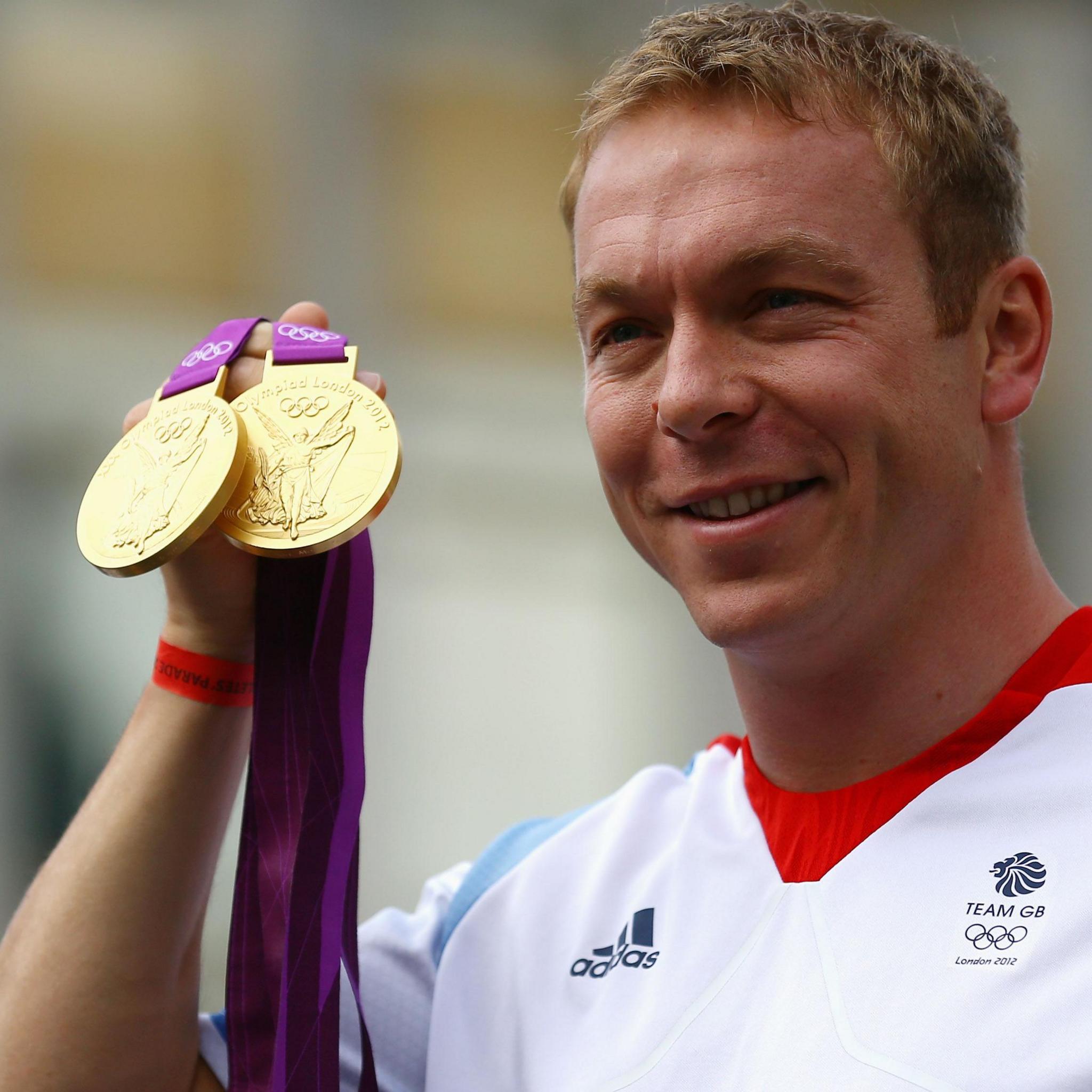
Sir Chris Hoy holding up two Olympic gold medals Image source, Getty Images

Sir Chris Hoy is in his kitchen, chatting about early-morning coffee and fry-ups.

And mindsets.

An Olympic champion's mindset to be exact.

An exacting, leave-no-stone-unturned, meticulous mindset that defined a career in which he won six gold medals and one silver across four Olympic Games.

This is the same mindset he is relying on more than ever to reframe his entire existence and purpose following a terminal cancer diagnosis.

"We normally have a fry-up for breakfast but, when you guys are here, we need to make an effort," he jokes.

The "you" in this instance are the BBC cameras that have been following Hoy and his family and friends for the past 12 months for the documentary Sir Chris Hoy: Cancer, Courage and Me.

The programme will be broadcast for the first time at 21:00 GMT on Thursday, 18 December on BBC One and available from 22:00 GMT on BBC iPlayer and the BBC Sport website and app.

It shows a hopeful, yet raw, portrayal of the realities of living with stage four cancer, while it also brings to life Hoy's realisation that he can use his platform as a force for raising awareness, and money, for other people living with the illness.

To play this video you need to enable JavaScript in your browser.

This video can not be played

Media caption,

Sir Chris Hoy: Cancer, Courage & Me

As he weighs his coffee – perhaps the number one area where Hoy's obsessive eye for detail manifests itself – the Scot is in an upbeat mood, laughing and joking with wife Sarra about their imagined usual morning scenario of a full English breakfast compared to the omelette and green homemade smoothie they are actually tucking into.

It has not been anywhere near this rosy for much of the past two years, however, as Hoy explains a few minutes later when the cameras are rolling properly.

"It's about five miles from the hospital back home," he says, describing his return journey from seeing doctors after learning of his cancer diagnosis in September 2023. "I just walked back in a daze. I don't remember the walk. I was just thinking, how am I going to tell Sarra? What am I going to say?

"As soon as I said the words, I broke down."

What Hoy had to articulate was a terminal cancer diagnosis. Incurable secondary bone cancer. Between two and four years to live.

"In my sporting career it used to be about process, not outcome," he says. "Focus on what you have control over. But if you win or lose, it's not life and death.

"[After the diagnosis] the stakes have changed dramatically. The principle is the same – but now it is life and death."

Hoy has shrewdly taken on support for this difficult time in his life.

Steve Peters is a man that Hoy knew could make a difference.

The list of sportspeople that Peters has worked with - the public list he is happy to talk about on the record - is a high-profile 'who's who' ranging from Steven Gerrard to Ronnie O'Sullivan.

The donkeys in the front paddock of the psychiatrist's countryside home bely that glitzy, glamourous list.

But their tranquil nature make complete sense when you spend a few hours in the company of Peters and Hoy.

Peters was Hoy's first port of call throughout his career when it came to training and calming his mind to be at its peak in and around Olympic competition.

He was also one of the first people Hoy called when he got his terminal diagnosis last year.

At first Peters was part of the firefighting phase of what Hoy's wife Sarra describes as a "deep grief" in the first few days post-diagnosis.

But in time, with Peters' help, Hoy set about finding a new purpose.

Firstly, it is to raise awareness of the limitations of the current provision for prostate cancer in the UK. Both Hoy's father and grandfather have had prostate cancer.

Understandably, given an earlier diagnosis could have shifted his diagnosis from terminal to manageable, the 49-year-old Scot argues eloquently that a national screening programme should be made a priority for men from their 45th birthday onwards.

But, crucially, his approach is also to show other people living with cancer that sport and exercise can still be a positive part of their lives, even through their treatment.

Peters explains: "What Chris did when he was presented with this illness is he said: 'Right, what's the plan?' After we worked through the initial stages of the shock and grief of it, then he came out the other side and he picked up on the purpose.

"And that was to reach other people. It became a mission for him."

To play this video you need to enable JavaScript in your browser.

This video can not be played

Media caption,

Sir Chris Hoy and his wife Lady Sarra recall the night they met

Peters knows all too well how unstoppable Hoy can be when a mission takes him over.

The pair have now worked together for more than 20 years, with perhaps their crowning moment coming at the Athens 2004 Games.

It was in the Greek capital that Peters' "pink elephant" technique helped Hoy win his first Olympic gold. In the run-up to Athens, Peters had encouraged Hoy to pre-empt a scenario in which his rivals broke the world record in the men's kilometre time trial before the Scot had his chance to ride. The scenario became reality on three occasions, but rather than falter, Hoy, the last to ride, responded with a world record of his own to take gold.

The mindset of that moment is one he is tapping into again with his approach to cancer. Control the controllables, but don't waste time worrying about the end result.

Just like in Athens.

"As I went to the start line, a personal best would have got me third," Hoy remembers.

"Recognising what you have control over is such an important part of life. Focus on what you have control over - but the outcome itself, you don't have control over.

"Steve helped me to access the best of myself, and get the best out of myself."

The BBC Breakfast and BBC Sport cameras witnessed Hoy, with the help of Lady Sarra - who herself is dealing with her own diagnosis of multiple sclerosis - making the best of his cancer diagnosis in the last 12 months.

They have followed Hoy and his family to doctor and physio appointments and out on mountain bike rides in Wales with a GB Olympic cycling A-list group of riders and friends.

That same cast list turned out in Glasgow in September as Hoy and a host of his supporters took his cycling fundraising event the Tour de Four from concept to delivery inside a few months.

'Overwhelming' response to Hoy mission

To play this video you need to enable JavaScript in your browser.

This video can not be played

Media caption,

Murray and Kennys on discovering 'superhero' Hoy’s cancer diagnosis

It is just after 9am in a back room of the Sir Chris Hoy Velodrome in Glasgow – a few minutes before Hoy's charity mass participation cycling event, the Tour de Four, is due to get under way.

The ride was set up, and given its title, in an effort to change perceptions around stage four cancer.

Every time the door opens, a member of British Olympic and Paralympic royalty walks through it.

Sir Mark Cavendish, Sir Jason Kenny, Becky James, Dani King, Sir Ben Ainslie, Sir Steve Redgrave, Dame Sarah Storey...

In and among the clip-clop of cycling cleats comes another sporting knight.

This one is wearing tennis shoes.

Hoy goes over to check in with Sir Andy Murray about his readiness and is met with a typical sardonic quip from his fellow Scot.

Hoy asks: "Are you feeling ready mate?"

"Well, I've got the kit," Murray responds.

As it turns out, the two-time Wimbledon champion was woefully ill-prepared – completing the ride in tennis shoes and boxer shorts. Not typical road cycling gear, but typical of the response of Hoy's friends to his diagnosis.

"The response of friends has been quite overwhelming at times," Hoy says.

The friend response has been mirrored by that of the public.

September's Tour de Four raised more than £3m for cancer charities across the UK.

However, the highs of that success were followed in November by the UK National Screening Committee's recommendation that a prostate screening cancer programme for all men in the UK was not justified.

For Hoy, the fight to raise money and raise awareness is his new Olympic-sized mission and his response therefore was dignified, yet resolutely determined.

"I was quite astonished," he said. "I can't believe that the answer to this situation is to sit on your hands and do nothing. There are 10,000 men a year in the UK who find out they have prostate cancer too late – it's incurable.

"We're failing these men if we don't do something proactive. Regardless, I'm going to keep pushing."

Again, we meet his Olympic-honed mindset, targeted on a bigger mission.

"The Olympics was something that was my life for so many years and drove me on," Hoy says.

"I'm still incredibly proud of it now and I look back with great fondness, but this is something on an entirely different level.

"It's more important than riding bikes in anti-clockwise circles, put it that way."

To play this video you need to enable JavaScript in your browser.

This video can not be played

Media caption,

Sir Chris Hoy on his BBC documentary and 'speaking to the world'

  • You can watch Sir Chris Hoy: Cancer, Courage & Me on Thursday, 18 December at 21:00 GMT on BBC One, and from 22:00 GMT on BBC iPlayer and the BBC Sport website and app.


Antony Price, designer for Bowie and Duran Duran, dies at 80

18 December 2025 at 12:45
Getty Images British fashion designer Anthony Price (L) with David Bowie (C) and his wife Angie Bowie at King's Cross station in London in 1973.Getty Images
British fashion designer Anthony Price (L) with singer David Bowie (C) and his wife Angie Bowie at King's Cross station in London in 1973

Antony Price, the British fashion designer responsible for some of the looks favoured by David Bowie, Roxy Music and Queen Camilla among others, has died aged 80.

Price was best known for his sculptured silhouettes and theatrical styles, including pastel suits which featured in rock band Duran Duran's music video Rio.

The band released a statement on social media remembering him as a "visionary" and a "kind, intelligent and razor-witted friend".

Price's death comes less than a month after he unveiled his latest collection in London in more than 30 years, where singer Lily Allen modelled a dress inspired by the black velvet "revenge dress" worn by Diana, Princess of Wales.

Getty Images British pop group Duran Duran wearing pastel suits of bright red, pale blue, beige, and white a photo studio in Tokyo, Japan in 1982.Getty Images
Price styled rock group Duran Duran for their music video Rio in 1982
Getty Images Price with Duran Duran at his 70th birthday party in London in 2015.Getty Images
Price (C) with Duran Duran at his 70th birthday party in London in 2015.

Born in Yorkshire in 1945, Price moved to London in the early 1960s to study at the Royal College of Art.

A year after graduating, he began designing menswear at Stirling Copper and was responsible for the body-hugging, buttoned trousers Sir Mick Jagger wore during The Rolling Stones' Gimme Shelter tour in 1969.

Getty Images Sir Mick Jagger wearing Price's buttoned trousers on tour in New York City in 1969.Getty Images
Sir Mick Jagger wearing Price's buttoned trousers on tour in New York City in 1969

He founded his own label in 1979 and staged his first fashion show a year later, opening the collection with looks from model Jerry Hall, who also wore the dress Price designed for her wedding to Sir Mick.

Getty Images A black and white photo of model Jerry Hall wearing a sparkly jacket sand fashion designer Antony Price wearing a black hat and trench coat in London in 1985.Getty Images
Model Jerry Hall and Price attending an event in 1985

A long-time collaborator of David Bowie, Price designed the jacket the singer wore for his As The World Falls Down music video in 1986.

His signature ability to blend menswear and womenswear along with his technical proficiency to shape body-hugging looks made him a "true original", said the British Fashion Council.

In the 1990s, he began working on pieces for Camilla, Duchess of Cornwall, including several ensembles for her US tour after assuming the title.

After a career spanning more than five decades, Price staged what would be his last show in London last month in collaboration with fashion brand 16Arlington.

Getty Images Antony Price, Lily Allen and Marco Capaldo pose backstage at the 16Arlington x Antony Price Salon Show on 17 November 2025 in London, England.Getty Images
Price (L) with singer Lily Allen (C) at his fashion show in London last month.

'Maybe she's an angel now' says aunt of 10-year-old Bondi victim

18 December 2025 at 09:53
EPA A man holds a balloon reading 'Matilda' during the funeral for 10-year-old Matilda a Bondi Beach shooting victim, at Chevra Kadisha Memorial Hall in SydneyEPA
Lina Chernykh tells the BBC her niece Matilda was a joyous child who spread love everywhere she went

The family of the Bondi shooting's youngest victim Matilda urged the community to not let her death fuel anger, as they said a final goodbye to the 10-year-old on Thursday.

Matilda was among 15 people who were shot dead when two gunmen opened fire on an event marking the start of Hannukah at Sydney's Bondi Beach on Sunday.

Speaking to the BBC at Matilda's funeral, her aunt Lina Chernykh said the Jewish community is right to want more action to stamp out antisemitism – she does too.

But she said Matilda was a joyous child who spread love everywhere she went, and urged the community to do the same in her honour.

"Take your anger and… just spread happiness and love and memory for my lovely niece," Ms Chernykh said.

"I hope maybe she's an angel now. Maybe she [will] send some good vibes to the world."

Jewish community leaders have in recent days suggested the tragedy was an inevitable result of Australia struggling to address rising antisemitism.

The attack on Sunday, which targeted the Jewish community at an event celebrating the first night of Hanukkah, was the country's deadliest incident since 1996, when a gunman killed 35 people during the Port Arthur massacre.

Ahead of Matilda's funeral on Thursday, Ms Chernykh said the family was devastated.

"I look at their faces [and] I don't know if they will be ever happy again," she said of Matilda's parents.

Matilda's younger sister, from whom she was "inseparable", is shattered and confused, she said.

"She doesn't have enough tears to cry."

At a flower memorial on Tuesday, Matilda's mother Valentyna told mourners that the family came to Australia from Ukraine more than a decade ago, thinking it would be a safe place for them.

"I couldn't imagine I'd lose my daughter here... It's just a nightmare," she said.

Ms Chernykh told the BBC she too has struggled to make sense of what is happening.

She was gardening at her home on the Gold Coast when Matilda's mother called on Sunday.

"Truly, I was thinking something happened to my father because he's 84 years old... and she says Matilda was shot," she recalled.

"How [could] someone in Australia understand, if someone tells you your kid was shot… I couldn't understand it. I was thinking I have bad reception. I asked a few times what I'm [hearing]."

Police have designated the attack a terrorist incident, with Australian Prime Minister Anthony Albanese saying it appears to have been "motivated by Islamic State" group ideology.

Police allege that the two gunmen were a father and son. Sajid Akram, 50, was shot dead at the scene, while his son Naveed, 24, has been charged with 59 offences, including 15 counts of murder and one of committing a terrorist act.

Australia on Thursday announced it would strengthen laws to crack down on hate - including by introducing powers to cancel or refuse visas on grounds of antisemitism.

In this secret missile factory, Ukraine is ramping up its domestic arms industry

18 December 2025 at 08:00
Moose Campbell/BBC two men build the new Flamingo missile which is a  long-range Ukrainian cruise missile, designed for deep strikes against Russia with a over a ton warhead and a range up to 3,000 km Moose Campbell/BBC
The Flamingo missile is a new, long-range Ukrainian cruise missile, designed for deep strikes against Russia with a range of up to 3,000km
Jonathan BealeDefence correspondent in Kyiv

We're driven blindfolded to a secret location where Ukraine is making one of its latest weapons.

We're told to turn off our phones - such is the secrecy around the production of Ukraine's Flamingo cruise missile.

For Ukraine, dispersing and hiding the production of weapons like this is key to survival. Two factories belonging to the company that make it - Fire Point - have already been hit.

Inside the one we're visiting we're told not to film any features such as pillars, windows or ceilings. We're also asked not to show the faces of workers on the assembly line - where Flamingo missiles are at various stages of completion.

Even under fire, Ukraine is ramping up its arms industry. President Volodymyr Zelensky says the country now produces more than 50% of the weapons it uses on the front line. Almost its entire inventory of long-range weapons is domestically made.

At the start of the war Ukraine mostly relied on its old Soviet-era arsenal. Western military support helped modernise the country's armed forces, but it now leads much of the world in developing unmanned systems – like robots and drones.

Now, domestically produced cruise missiles are adding to Ukraine's long-range capability.

Moose Campbell/BBC An incomplete Flamingo missile sits in a factory in Kyiv - a long, black body with an engine on topMoose Campbell/BBC
Ukraine builds the missiles in secret factories - the BBC team were blindfolded before they were taken there

Iryna Terekh is the chief technical officer of Fire Point – one of Ukraine's largest drone and missile manufacturers whose Latin motto translates to "if not us, then who".

The 33-year-old once studied architecture, but she is now trying to help dismantle the Russian war machine.

She cuts a tiny figure in front of the giant Flamingo missile, which she tells me is painted black not pink (unlike early prototypes) "because it eats Russian oil".

The end product looks similar to the German V1 rocket from World War Two. It consists of a large jet engine placed on top of a tube the length of a London bus.

They've already been used in combat, though the company won't confirm specific targets.

Moose Campbell/BBC Irena Terekh from Fire Point with an off white background, long black hair and grey jumperMoose Campbell/BBC
Irena Terekh from Fire Point says the Flamingo missile is black because it "eats Russian oil"

The Flamingo is the kind of deep-strike weapon that Western nations have been reluctant to supply.

The cruise missile is said to have a range of 3,000km (1,900 miles). That's similar to a US-made Tomahawk – the more sophisticated and expensive weapon that US President Donald Trump refused to give Ukraine.

But deep strikes are seen as a critical part of the war, for which Ukraine mainly uses long-range drones. It is still losing ground to Russia on a front line that stretches for more than a thousand kilometres. So Ukraine is increasingly trying to target Russia's war economy, to slow those advances.

The head of Ukraine's Armed Forces, General Oleksandr Syrskyi, says Ukraine's long-range strikes have already cost the Russian economy more than $21.5bn this year.

Moose Campbell/BBC A Flamingo is painted on the side of a cupboard at a secret Ukrainian missile factoryMoose Campbell/BBC
The name Flamingo is a reference to early prototypes of the missiles, which were painted pink

Ruslan, an officer in Ukraine's Special Operations Forces, says the strategy is simple: "To reduce the enemy's military capabilities and their economic potential."

He says Ukraine's Special Operations Forces have carried out hundreds of strikes on oil refineries, weapons factories and ammunition dumps - deep inside enemy territory.

Of course Russia has been doing the same, and on a greater scale. On average it has been launching around 200 Shahed drones a day; Ukraine's response has been about half that number.

Nor is Russia limiting its strikes to military targets. Its long-range missile and drone attacks have led to massive power cuts right across the country – making life harder for millions of civilians. "I'd like to launch as many drones as Russia does," Ruslan says. "But we're scaling up very quickly".

Ms Tarekh, of Fire Point, says Ukraine may not be able to match Russia's resources, but, she says, "we are trying to fight with brains and tactics".

Denys Shtilerman, the chief designer and co-founder of the company, admits there is no "Wunderwaffe" – or wonder weapon.

"The game changer is our will to win," he says.

Kevin McGregor/BBC Ruslan, Special Operations Forces  with a hat and snood hiding his face and identity in a dark room wearing a black fleeceKevin McGregor/BBC
Ruslan, in Ukraine Special Operations Forces, says they're quickly scaling up domestic weapons manufacturing

Fire Point didn't even exist before Russia's full-scale invasion. But the start-up is now producing 200 drones a day. Its FP1 and FP2 drones, each the size of a small aeroplane, have carried out 60% of Ukraine's long-range strikes. Each drone costs around $50,000 – three times cheaper than a Russian Shahed drone. Russia is still producing nearly 3,000 of those a month.

Ukraine still needs outside help, not least with intelligence, targeting and money. But it is trying to be more self-sufficient.

Ms Terekh says they've made a deliberate decision to source as many of their components as possible from within Ukraine.

"We are following the principle that no one can influence the weapons we build," she says. They avoid parts from two specific countries – China and the United States.

Asked why there should be no American components, she says "we're on an emotional roller coaster [with the US]. Tomorrow somebody may want to shut it down, and we would not be able to use our own weapons."

Until the end of last year, under President Biden, the United States supplied nearly $70bn-worth of military support to Ukraine. That was soon stopped under President Trump – instead he has set up a scheme to allow European Nato to purchase US weapons. The US is no longer Ukraine's biggest military backer, and Europe has struggled to fill the gap left by America or to match its previous support.

Concerns about future US support spills over into talk of future US security guarantees – a key issue of the current peace talks. Ms Terekh dismisses the ongoing negotiations as "capitulation talks", and says that Ukraine making its own weapons "is the only way to really provide security guarantees".

The former architecture student also hopes that the rest of Europe will be watching, and learning lessons.

"We are a bloody example," she says, "in terms of being prepared for war."

Ms Terekh says she wants to shock them into action, and believes that if any other country had faced the same onslaught as Ukraine "then they'd already have been conquered."

Additional reporting by Volodymyr Lozhko and Kyla Herrmannsen.

Former JD Sports employee awarded £65k after male boss sexually harassed her

18 December 2025 at 08:00
BBC Jayla looking at the camera. She has long blonde hair, brown eyes and a silver hoop nose piercing. She is wearing a cream jacket.BBC
Jayla Boyd worked part time in JD while studying for her A-Levels

A student who worked as a sales assistant has settled a sexual harassment case against her former employer JD Sports for £65,000.

Jayla Boyd worked part time in a Belfast store while studying for her A-levels.

During a shift, Ms Boyd, who was 17 at the time, was slapped on the bottom by a male supervisor and was upset that her employer failed to offer her support after the incident.

In settling the case, JD Sports Fashion PLC acknowledged and apologised for the significant upset to Ms Boyd. It also agreed to liaise with the Equality Commission for Northern Ireland (ECNI), who supported the case, to review its policies.

Muscle memory

A JD Sports Fashion plc spokesperson said the individual involved is no longer employed by the company.

In a statement the company said: "This incident occurred in July 2024 and was promptly addressed in line with our policies."

They also apologised to Ms Boyd.

Following the incident, on the same day, Ms Boyd made a report to her manager and was told that CCTV had captured the incident.

However, the supervisor was allowed to continue to work alongside her for the rest of the shift.

She said he approached her twice during that time to talk to her and apologised for what he had done, explaining that it was "muscle memory".

Despite raising a complaint of sexual harassment, Ms Boyd claimed that while she made a written statement, she was not formally interviewed about her experience.

She said she felt upset and distressed that her employer failed to offer her support after the incident, so she used some annual leave to take time away from her job.

Upon her return, she said no return-to-work meeting was arranged.

Reuters An exterior shop sign, black and white text reading JD, JDSports.comReuters
JD Sports Fashion PLC has agreed to liaise with the Equality Commission to review its policies, practices and procedures

Ms Boyd said she was not updated about the investigation or outcome of her complaint.

"I didn't really ever hear much, I didn't want to ask because I thought it was standard procedure that I was kept out of an investigation... I learned that wasn't really standard procedure and I should have been involved," Ms Boyd told BBC News NI.

She also believes that her personal information relating to the incident was seen by other staff on a manager's computer.

Ms Boyd experienced further embarrassment during a staff training session when an example involving a woman being slapped on the bottom by a supervisor was discussed.

She felt certain the example referred to her own experience.

Ms Boyd later resigned from her job.

'I never expected this to happen to me'

"I never expected this to happen to me. The initial incident was embarrassing, but it was made worse because I felt like they were trying to ignore what had happened to me instead of dealing with it properly," Ms Boyd said.

"I had to remain working with this male supervisor after he had sexually harassed me. Everyone deserves to feel safe and supported at work.

"It took me a long time to understand that it was really serious and I think that came from the stigma around it, I was so worried about what other people thought... because of how people would see me... but now I am so glad I said something," she continued.

"I hope that by speaking out I can give others the confidence to challenge this type of behaviour."

Zero-tolerance approach

In a statement, Chief Commissioner Geraldine McGahey said a "zero-tolerance approach" by employers to sexual harassment in the workplace "will remind everyone how seriously it will be dealt with should any instances arise".

"In order to prevent it, employers must ensure that all staff know what behaviour is acceptable, and unacceptable, in the workplace," she added.

"Employers must have clear policies and procedures in place to deal with harassment, and managers must be trained to use them appropriately. This type of behaviour must be investigated thoroughly, with the complaint dealt with sensitively and in a timely manner."

In settling the case, ECNI said JD Sports Fashion PLC "acknowledged and apologised for the significant upset, distress, and injury to feelings experienced by Ms Boyd".

The company reaffirmed its strong commitment to the principle of equality of opportunity.

It has also agreed to liaise with the commission to review its policies, practices and procedures, the ECNI added.

Bank of England expected to cut interest rates

18 December 2025 at 08:00
Getty Images Bank of England building at dusk with street lamps on.Getty Images

Policymakers at the Bank of England are expected to cut interest rates - bringing the Bank rate down to its lowest level since February 2023.

Analysts are widely predicting a fall from 4% to 3.75%, although they do not expect a unanimous decision among the nine-member Monetary Policy Committee (MPC).

This would be the sixth cut in interest rates from August last year.

The Bank rate heavily influences the cost of borrowing by consumers, but also the returns given to savers.

The MPC has a target to keep inflation - which charts the rising cost of living - to 2%. The Bank rate is the committee's primary tool for achieving its ambition.

The latest inflation data, published on Wednesday, showed a bigger drop to Consumer Prices Index (CPI) inflation than analysts had been expecting.

The rate of CPI fell to 3.2% in November, from 3.6% in October, the Office for National Statistics (ONS) said.

A line chart showing interest rates and CPI inflation in the UK, from January 2021 to December 2025. Interest rates were at 0.1% in January 2021. They were increased from late-2021, reaching a peak of 5.25% in August 2023. They were then lowered slightly to 5% in August 2024, to 4.75% in November, to 4.5% on 6 February 2025, to 4.25% on 8 May 2025, and to 4% on 7 August. At the Bank of England's latest meeting on 6 November, rates were held at 4%. The inflation rate was 0.7% in the year to January 2021. It then rose to a peak of 11.1% in October 2022, before falling again to a low of 1.7% in September 2024 and then starting to rise again. In the year to November 2025, it was 3.2%, down from 3.6% the previous month.

While inflation remains above the Bank's target, the latest fall in the rate and signs of rising unemployment and a relatively stagnant economy are likely to push the committee towards an interest rate cut.

At the previous meeting in November, the four members of the MPC who voted for a cut were only just outvoted by the five who wanted to keep rates on hold.

At the time, the Bank's governor, Andrew Bailey, said he would "prefer to wait and see" whether inflation continued to drop back.

James Smith, developed market economist for ING, said the sharp drop in the November rate of inflation "green lights" a rate cut.

He said the "latest drop in inflation fits into a broader body of evidence suggesting that price pressures are cooling".

He is forecasting another two cuts to interest rates in February and April next year, although not all analysts agree with this suggestion.

Impact on borrowing and savings

About 500,000 homeowners have a mortgage that "tracks" the Bank of England's rate. If a 0.25 percentage point cut does come, it is likely to mean a typical reduction of £29 in their monthly repayments.

For the additional 500,000 homeowners on standard variable rates, there would typically be a £14 a month fall, assuming there is a cut in the Bank rate and lenders pass on the cut to their customers.

The vast majority of mortgage customers have fixed-rate deals. Rates on these deals have been falling recently, owing to the expectation among lenders of a Bank rate cut in December.

As of 17 December, the average two-year fixed residential mortgage rate was 4.82%, according to financial information company Moneyfacts. A five-year rate was 4.90%.

Mortgage rate cuts should also reduce some financial pressure on landlords, and perhaps ease the likelihood of rent rises for tenants.

However, savers are likely to see a further fall in returns as a result of any Bank rate falls.

The current average rate on an easy-access savings account is 2.56%, according to Moneyfacts.

King's Speech set for week after crunch elections

18 December 2025 at 10:14
PA Media An elderly man in a blue suit, white shirt and mauve tie smiles outside a building. PA Media
King Charles III at an Advent Service at Westminster Abbey last week

Prime Minister Sir Keir Starmer is set to unveil the agenda for the next phase of his government in the immediate aftermath of May's crucial elections.

The King's Speech has been pencilled in for May 12 or 13 next year, the BBC has been told, just days after elections across Britain on 7 May.

The elections in May cover the Scottish parliament and the Welsh Senedd as well as thousands of council seats in England and a handful of directly elected mayoralties.

Labour is braced for a bad night at the polls, which many Labour MPs believe could precipitate a challenge to Sir Keir's leadership.

One government source told the BBC: "It will be much harder for somebody to challenge the PM and say we need to go in a different direction when the King is about to come to parliament to announce what we're doing for the next year."

Others dispute that there is any connection between the threat to Sir Keir's leadership and the date selected for the King's Speech, pointing out that in some recent years - most recently 2022 - the speech has taken place in May, when local elections are always held.

The speech also took place very soon after local elections in 2021 and in 2016.

The King's Speech is part of the state opening of Parliament, a ceremonial event marking the start of a parliamentary session, which typically lasts for a year but can run for much longer.

The current session is on the long side, having begun after the general election in July 2024.

The speech is written by the government but read by the Monarch from a throne in the House of Lords.

It sets out the government's agenda for the coming session, specifying what pieces of legislation the government intends to pass.

Cabinet ministers began the process of formally "bidding" for legislation they want to be included in the King's Speech around early October.

Most ministers now know which bills Sir Keir wants to include in his post-May agenda, a source said.

BP names new boss as current CEO leaves after less than two years

18 December 2025 at 08:18
Reuters Newly appointed BP chief executive Meg O'Neill wears a grey suit and blue top while posing sat on the edge of a boardroom table.Reuters

BP has appointed a new chief executive, making Meg O'Neill the first woman to run a major global oil firm.

The London-based energy giant said its current boss Murray Auchincloss would step down less than two years after he replaced Bernard Looney, who was found to have committed "serious misconduct" in failing to disclose relationships with colleagues.

BP executive vice president Carol Howle will serve as interim chief executive until Ms O'Neill, who has led Australian energy firm Woodside Energy since 2021, takes up her new role on 1 April.

Ms O'Neill said she looks forward to helping BP "do our part to meet the world's energy needs".

Mr Auchincloss, who took over from Mr Looney in September 2024, said he had told BP's chairman in September that he was open to stepping down "were an appropriate leader identified".

"I am confident that BP is now well positioned for significant growth and I look forward to watching the company's future progress," he said after Ms O'Neill's appointment was announced. He will serve in an advisory role until December 2026.

Ms O'Neill said she would prioritise re-establishing the oil giant's market leadership, as well as advancing safety and driving innovation and sustainability.

BP praised Ms O'Neill's time as chief executive of Woodside Energy, pointing to the firm's takeover of BHP Petroleum International in 2022.

It said she had grown the business into the largest energy company listed on the Australian Securities Exchange.

Before joining Woodside, Ms O'Neill spent 23 years in technical, operational and leadership positions at Texas-based energy firm ExxonMobil.

Mr Looney was dismissed without notice, and forfeited up to £32.4m ($43.3m) in salary and benefits, after admitting that he was not "fully transparent" about his past personal relationships.

BP's board said they had been "knowingly misled" by Mr Looney.

At the time, Mr Looney said in a statement that he was "disappointed with the way this situation has been handled".

Ms O'Neill's appointment comes as BP is cutting its renewable energy investments and instead focusing on increasing oil and gas production.

In February, the energy giant said it would shift its strategy following pressure from some investors who were frustrated that its profits and share price had lagged behind rivals.

Rivals Shell and Norwegian company Equinor have also scaled back plans to invest in green energy and US President Donald Trump's call to "drill baby drill" has encouraged firms to invest in fossil fuels.

Will it be cold enough to snow this Christmas?

18 December 2025 at 09:27

Widespread white Christmas unlikely but parts of the UK still have a chance

A photo of a snow covered landscape in Scotland
Image source, BBC Weather Watcher / Georgie
Image caption,

Parts of Scotland enjoyed the most recent white Christmas in 2023

Are you dreaming of a white Christmas? With the big day a week away, it is possible that some of us might have some festive snow - but only just.

After a couple of weeks of milder conditions it's about to turn noticeably colder. Temperatures for many parts of the UK may be a degree or two below the average for this time of year, hitting the 6-9C mark.

The drop will be a result of an influx of cold air from eastern Europe.

And if there are some small changes to that, there is a slight chance that even colder air from Scandinavia might come this way, and the possibility that any showers falling in eastern areas might turn to sleet or even snow.

Why is is going to feel so cold?

The change in fortunes is down to a high pressure system which is going to build close to the north of the UK and a low pressure one forming around France or Spain.

Although they will not be directly over the UK, the precise position of the centres of these highs and lows will determine the direction of the wind. In turn, that will influence how cold the air will be and therefore the chances of snow falling.

A weather map of the expected pressure pattern on Christmas Day
Image caption,

A change in wind direction will bring colder weather just in time for Christmas

As well as becoming much colder generally in time for Christmas it will probably be quite cloudy with showers developing over the North Sea and affecting eastern areas.

The best of any sunshine would be in the north and west but there will be also be a risk of some morning frost and fog.

Could it be a white Christmas?

Currently the forecast is for east-southeasterly winds but there is a very small chance that we get east-northeasterlies instead.

This small change in wind direction could then pull in much colder air from Scandinavia resulting in showers over eastern areas that could turn to sleet or snow in places.

Although a white Christmas is still unlikely for most of us, it can't completely be ruled out just yet.

Either way, very wet weather is off the Christmas menu this year. This spell of quieter spell of weather will be very much welcomed in areas which have recently seen heavy rain such as Cumbria and south Wales.

Our experience of Christmas past should tell us that it's rare to see snow actually fall on Christmas day - and getting rarer.

The Papers: 'Abramovich clings on to $2.5bn' and 'Ban doctors strike'

18 December 2025 at 09:48

The headline on the front page of the Metro reads: "Starmer in £2.5bn Chelsea transfer demand".
There is a mix of stories on the front pages of Thursday's papers. Leading the Metro, the prime minister says the UK will sue former Chelsea Football Club owner Roman Abramovich unless he gives victims of the war in Ukraine the £2.5bn he made from the sale of the club. The Russian billionaire pledged in 2022 to donate the funds to benefit victims of the war, but there has been a delay in releasing the money, which is currently frozen in a British bank account, due to a standoff over how exactly it should be used.
The headline on the front page of the Times reads: "Police vow to stamp out chants for 'intifada'".
"Abramovich clings on to $2.5bn" is the Times' take. The paper says the Russian billionaire believes he has "a watertight legal case" to ensure the funds from the sale of Chelsea Football Club are donated on his terms. Alongside, police are vowing to crack down on chants for intifada, an Arabic word for uprising, by pro-Palestinian supporters, saying they will "act decisively" over use of the slogan, the Times reports.
The headline on the front page of the Daily Telegraph reads: "£8 billion cost of EU student exchange".
The UK's deal to rejoin the EU student exchange programme, Erasmus, could cost more than £8bn, according to the Daily Telegraph. The paper says the ongoing membership is set to be a lot pricier than the government previously announced because of Brussels' plans to increase funding for the scheme from 2028. Elsewhere, the Matt cartoon eyes the doctors' strike in the week before Christmas, showing a nurse telling a patient: "Only four more sleeps till you get a visit from a resident doctor."
The headline on the front page of the Daily Mail reads: "£6bn cost of Starmer's new bid to suck up to Brussels".
The Daily Mail also stays with the Erasmus deal, quoting critics of the PM who accuse him of "throwing billions away" on the scheme. Sir Keir's ministers defended the decision, saying it would "provide priceless benefits" to students hoping to study abroad.
The headline on the front page of the Financial Times reads: "Warner Bros board scorns 'illusory' bid by Paramount".
The Financial Times leads with the continued bidding war between Paramount and Netflix to acquire Warner Bros Discovery. The paper reports Warner Bro Discovery's board is urging shareholders to reject Paramount's $108bn offer, calling it "inferior" to the terms agreed with Netflix. In the top picture spot, panda diplomacy is "bearing the brunt" of the political rift between China and Japan. For the first time in more than half a century, a panda at the Toyko zoo due to be returned to China in January will not be replaced by a new furry resident, the paper says.
The headline on the front page of the i Paper reads: "UK peacekeepers getting ready to deploy to Ukraine".
The UK military has begun "advanced preparations" to send a peacekeeping force to Ukraine, the i Paper reports. Officials are hopeful that a peace deal is "closer than ever" and the Ministry of Defence has begun its "notice to move" process to deploy troops if called upon, the paper says.
The headline on the front page of the Daily Express reads: "Stand up to the unions... ban doctors strikes".
The Daily Express shifts its focus to the doctors' strike. The paper features Conservative leader Kemi Badenoch calling on the PM to "show some backbone" and ban doctors from striking. She also accuses the government of "failing patients" as the NHS struggles to cope with the walkouts, the paper says.
The headline on the front page of the Guardian reads: "Russia targeting European finance bosses and politicians over assets".
The Guardian also marks the doctors' strike with their front page picture of resident doctors picketing outside St Thomas' hospital in London. Also prominent is the paper's story on Belgian politicians and senior finance executives being subject to a "campaign of intimidation" allegedly orchestrated by Russian intelligence.
The headline on the front page of the Daily Mirror reads: "Covid heroes join flu fight".
The Daily Mirror spotlights the news that scientists who helped find the first drug to fight Covid have now joined the search for treatment of the super flu that is bearing down on the NHS. The paper quotes one of the leaders of the Recovery trial as saying: "We have got more treatments for Covid than flu."
The headline on the front page of the Sun reads: "Rachel boots Pep up the tapas".
Manchester City boss Pep Guardiola's restaurant is shutting down, says the Sun. The team behind the venue blames the closure on "exceptionally challenging" trading conditions and increased costs, according to the paper.
The headline on the front page of the Daily Star reads: "Herr we throw".
Finally, the Daily Star splashes with plans by German darts fans to take over the World Championships next year as the event moves to a bigger arena at Alexandra Palace. "Herr we throw" is the headline.
News Daily banner

Sign up for our morning newsletter and get BBC News in your inbox.

News Daily banner

All you need to know about Sports Personality of the Year 2025

16 December 2025 at 15:58

All you need to know about Sports Personality of the Year 2025

AMA banner
  • Published

BBC Sports Personality of the Year is back for 2025, celebrating a phenomenal 12 months of sporting drama and triumph.

It has been a year to remember in sport, including England winning the Women's Euros and Women's Rugby World Cup, Team Europe winning the Ryder Cup, Liverpool's Premier League title, Arsenal's Women's Champions League success, and the Lions' series win in Australia.

There were also record-breaking moments in cricket, athletics, golf, tennis, rugby league and many more.

When is Sports Personality of the Year 2025?

Gabby Logan (left), Clare Balding (centre) holding the SPOTY trophy and Alex Scott (right)
Image caption,

Gabby Logan, Clare Balding and Alex Scott will host the event

The star-studded show will be broadcast live from the home of BBC Sport at MediaCity, Salford, on Thursday 18 December from 19:00 GMT.

Get in touch

Send us your questions

How can I watch the awards ceremony?

BBC Sports Personality of the Year 2025 will be broadcast live on BBC One, BBC iPlayer and the BBC Sport website and app (UK only).

Who are the nominees for Sports Personality of the Year?

Chloe Kelly (back left), Lando Norris (back middle), Ellie Kildunne (back right), Luke Littler (bottom right), Hannah Hampton (bottom centre), Rory McIlroy (bottom right)Image source, BBC Sport
Image caption,

A shortlist of six contenders has been announced for the 2025 BBC Sports Personality of the Year award

  • Hannah Hampton (football)

  • Chloe Kelly (football)

  • Ellie Kildunne (rugby union)

  • Luke Littler (darts)

  • Rory McIlroy (golf)

  • Lando Norris (Formula 1)

Full information on the nominees can be found here.

How can I vote for Sports Personality of the Year?

Voting will take place during the show on BBC One and the BBC iPlayer on Thursday, 18 December.

The public can vote online on the night for the main award, with full details announced during the show.

To play this video you need to enable JavaScript in your browser.

This video can not be played

Media caption,

How to vote for SPOTY 2025

Who decides the nominees?

An expert independent panel consisting of 12 representatives from the world of sport - chaired by BBC Director of Sport Alex Kay-Jelski - selects a shortlist.

They are selected on the basis of the following criteria:

  • Reflected UK sporting achievements on the national and/or international stage;

  • Represented the breadth and depth of UK sports; and

  • Took into account 'impact' of the person's sporting achievement beyond the sport in question.

Non-playing coaches or management are not eligible.

The panel produces a shortlist based on reaching a consensus view. If a consensus cannot be reached on all or some of the candidates, the panel will be asked to vote for the remaining candidates. In the event of a tied vote, the decision of the chair is binding.

The panel has the right to amend elements of this or other awards such as the criteria or numbers shortlisted, should a consensus view be reached - provided such changes remain within the spirit of the award.

What are the other award categories?

Seven awards will be presented on the night:

  • Sports Personality of the Year

  • World Sport Star of the Year

  • Helen Rollason award

  • Young Sports Personality of the Year

  • Coach of the Year

  • Team of the Year

  • Lifetime Achievement award

Who are the nominees for BBC World Sport Star of the Year?

Terence Crawford (back left), Shohei Otania (back middle), Mariona Caldentey (back right), Sydney McLaughlin-Levrone (front left), Armand Duplantis (front centre), Mohamed Salah (front right)Image source, BBC Sport
Image caption,

Voting has now closed for the BBC Sports Personality World Sport Star of the Year 2025 award

  • Mariona Caldentey (football)

  • Terence Crawford (boxing)

  • Armand Duplantis (athletics)

  • Sydney McLaughlin-Levrone (athletics)

  • Shohei Ohtani (baseball)

  • Mohamed Salah (football)

Full information on the nominees can be found here.

Voting for this award closed at 12:00 GMT on 14 December.

The award will be presented during the live show on BBC One on Thursday, 18 December.

What is the Helen Rollason award?

This is a special BBC award recognising outstanding achievement in the face of adversity. It will be decided by senior management in BBC Sport.

The award will be presented during the live show.

Who are the nominees for Young Sports Personality of the Year?

Michelle Agyemang (left), Luke Littler (centre) and Davina Perrin (right)Image source, BBC Sport
Image caption,

Agyemang, Littler and Perrin are contenders for this year's award

  • Michelle Agyemang (football)

  • Luke Littler (darts)

  • Davina Perrin (cricket)

More information on the nominees can be found here.

This award goes to the outstanding young sportsperson aged 18 or under on 1 January 2025, with the winner decided by the panel.

Who are the nominees for Team of the Year?

A graphic showing Zoe Aldcroft, Leah Williamson and Luke DonaldImage source, BBC Sport
Image caption,

England's Euro 2025-winning women's football team, the country's Women's Rugby World Cup champions, and the triumphant European Ryder Cup team have been shortlisted for the prize

  • England women's football team (Lionesses)

  • England women's rugby union team (Red Roses)

  • European Ryder Cup team

Voting is now open for the Team of the Year award that will be presented at Sports Personality of the Year 2025.

Voting will close and the winner will be announced during the live show on Thursday, 18 December.

What is the Lifetime Achievement award?

Thierry Henry in an Arsenal shirtImage source, BBC Sport
Image caption,

Thierry Henry scored 228 goals in 377 matches for Arsenal across his two spells with the Gunners

Former Arsenal and France striker Thierry Henry will be honoured with the Lifetime Achievement award this year.

This award honours someone who has made a major impact on the world of sport during their lifetime. It has been decided by senior management in BBC Sport.

The 48-year-old, widely considered to be one of the Premier League's greatest players, retired in 2014.

He will be presented with the award at the live show on Thursday night.

"Football has given me everything and I gave it my all," said Henry.

"To be recognised as part of its history with this Lifetime Achievement award and to have made my mark for the fans and my team-mates is something I'll never take for granted."

This article is the latest from BBC Sport's Ask Me Anything team.

More questions answered...

Related topics

EU leaders face crunch decision on loaning Russia's frozen cash to Ukraine

18 December 2025 at 08:43
Ukrinform/NurPhoto Two men - one in a three-piece suit in grey, the other in black stand in front of colourful flagsUkrinform/NurPhoto
Belgian Prime Minister Bart De Wever is yet to be convinced that the money held in Belgium should be loaned to Ukraine (file pic)

European Union leaders begin two days of talks in Brussels with a momentous decision to be taken on whether to loan tens of billions of euros in frozen Russian assets to Ukraine to fund its military and economic needs.

Most of Russia's €210bn (£185bn; $245bn) worth of assets in the EU are held by Belgium-based organisation Euroclear, and so far Belgium and some other members of the bloc have said they are opposed to using the cash.

Without a boost in funding, Ukraine's finances are set to run dry in a matter of months.

One European government official described being "cautiously optimistic, not overly optimistic" that a deal would be agreed. Russia has warned the EU against using its money.

It has filed a lawsuit against Euroclear in a Moscow court in a bid to get its money back.

The Brussels summit comes at a pivotal moment.

US President Donald Trump has said a deal to end the war - which began with Russia's full-scale invasion of Ukraine in February 2022 - is "closer now than we have been ever".

Although Russia has not responded to the latest peace proposals, the Kremlin has stressed that plans for a European-led multinational force for Ukraine supported by the US would not be acceptable.

President Vladimir Putin made his feelings towards Europe clear on Wednesday, when he said the continent was in a state of "total degradation" and "European piglets" - a derogatory description of Ukraine's European allies - were hoping to profit from Russia's collapse.

Alexander KAZAKOV/POOL/AFP A man with a glass stands on the right of two men in uniformAlexander KAZAKOV/POOL/AFP
Those in favour of loaning Ukraine the money believe it will help deter Putin from continuing the war

The European Commission - the EU's executive arm - has proposed loaning Kyiv about €90bn (£79bn) over the next two years - out of the €210bn of Russian assets sitting in Europe.

That is about two-thirds of the €137bn that Kyiv is thought to need to get through 2026 and 2027.

Until now the EU has handed Ukraine the interest generated by the cash but not the cash itself.

"This is a crunch time for Ukraine to keep fighting for the next year," a Finnish government official told the BBC. "There are of course peace negotiations but this gives Ukraine leverage to say 'we're not desperate and we have the funds to continue fighting'."

Commission chief Ursula von der Leyen says it will also ramp up the cost of war for Russia.

Russia's frozen assets are not the only option on the table for EU leaders. Another idea, backed by Belgium, is based on the EU borrowing the money on the international markets.

However, that would require a unanimous vote and Hungary's Viktor Orban has made it clear he will not allow any more EU money to help Ukraine.

For Ukraine, the hours ahead are significant and President Volodymyr Zelensky is expected to attend the EU summit.

Ahead of the Brussels meeting, EU leaders were keen to stress the momentous nature of the decision.

"We know the urgency. It is acute. We all feel it. We all see it," von der Leyen told the European Parliament.

EPA European Commission President Ursula von der Leyen speaks during a debate on 'Preparation of the European Council meeting of 18-19 DecemberEPA
Ursula von der Leyen told the European Parliament that two choices were on the table for EU leaders

German Chancellor Friedrich Merz has played a leading role in pushing for the Russian assets to be used, telling the Bundestag on the eve of the summit it was about sending a "clear signal" to Moscow that continuing the war was pointless.

EU officials are confident they have a sound legal basis to use the frozen Russian assets, but so far Belgian Prime Minister Bart De Wever remains unconvinced.

His Defence Minister Theo Francken warned ahead of the talks that it would be a big mistake to loan the Euroclear cash.

Hungary is seen as the biggest opponent of the move and, ahead of the summit, Prime Minister Orban and his entourage even suggested that the frozen assets plan had been removed from the summit agenda. A European Commission official stressed that was not the case and it would be a matter for the 27 member states at the summit.

Slovakia's Robert Fico has also opposed using the Russian assets, if it means the money being used to procure weapons rather than for reconstruction needs.

When the pivotal vote does finally take place, it will require a majority of about two-thirds of member states to go through. Whatever happens, European Council President António Costa has promised not to go over the heads of the Belgians.

"We're not going to vote against Belgium," he told Belgian public broadcaster RTBF. "We'll continue to work very intensively with the Belgian government because we don't want to approve something that might not be acceptable for Belgium."

Belgium will also be aware that ratings agency Fitch has placed Euroclear on a negative watch, partly because of "low" legal risks to its balance sheet from the European Commission's plans to use the Russian assets. Euroclear's chief executive has also warned against the plan.

"There are many hiccups and obstacles of course still on the way. We have to find a way to respond to Belgium's worries," the Finnish official added. "We are on the same side as Belgium. We will find a solution together to make sure all the risks are checked as much as they can be checked."

However, Belgium is not the only country to have doubts, and a majority is not guaranteed.

Italian Prime Minister Giorgia Meloni has told Italian MPs she will endorse the deal "if the legal basis is solid".

"If the legal basis for this initiative were not solid, we would be handing Russia its first real victory since the beginning of this conflict."

Malta, Bulgaria and the Czech Republic are also said to be unconvinced by the controversial proposals.

If the deal is passed and the Russian assets are given to Ukraine, the worst-case scenario for Belgium would be one in which a court would order it to hand the money back to Russia.

Some countries have said they would be prepared to provide billions of euros in financial guarantees, but Belgium will want to see the numbers add up.

At any rate, Commission officials are confident that the only way for Russia to get it back would be by paying reparations to Ukraine - at which point Ukraine would hand its "reparations loan" back to the EU.

Teachers to be trained to spot early signs of misogyny in boys

18 December 2025 at 06:30
PA Media A group of year five pupils sat down facing the front of a classroom. The students are wearing blue jumpers and blue polo shirts and none of their faces are visible.PA Media

Teachers will be given training to spot the signs of misogyny and tackle it in the classroom as part of the government's long-awaited strategy to halve violence against women and girls within the next decade.

The plans - which focus on preventing the radicalisation of young men - are due to be unveiled on Thursday, after being pushed back three times this year.

Pupils will be taught about issues such as consent, the dangers of sharing intimate images, how to identify positive role models and to challenge unhealthy myths about women and relationships.

The £20m package will also include a new helpline for teenagers to get support for concerns about abuse in their own relationships.

The government hopes that by tackling the early roots of misogyny, it will prevent young men from becoming violent abusers.

Under the new plans, schools will send high-risk students to get extra care and support, including behavioural courses to tackle their prejudice against women and girls.

"Every parent should be able to trust that their daughter is safe at school, online and in her relationships, but too often, toxic ideas are taking hold early and going unchallenged," Prime Minister Sir Keir Starmer said about the new measures.

"This government is stepping in sooner - backing teachers, calling out misogyny, and intervening when warning signs appear to stop harm before it starts."

The taxpayer will foot £16m of the bill, while the government says it is working closely with philanthropists and other partners on an innovation fund for the remaining £4m.

Nearly 40% of teenagers in relationships are victims of abuse, domestic abuse charity Reducing the Risk has said.

Online influencers are partly blamed for feeding this, with nearly one in five boys aged 13 to 15 said to hold a positive view of the self-proclaimed misogynist Andrew Tate, according to a YouGov poll.

In response to the government plans, some teachers said schools are already doing the kind of work the measures outline.

"While we welcome any initiative that prioritises healthy relationships and consent education, it's important to recognise that schools like Beacon Hill Academy in Dudley have been delivering this work effectively for years," Principal Sukhjot Dhami said.

"The challenge isn't starting from scratch: it's ensuring that this £20m pounds is spent wisely and in partnership with schools already leading the way."

Paul Whiteman, general secretary of school leaders' union NAHT, said it was positive the government was recognising the importance of training and support for school staff.

Whiteman said "schools are just part of the solution", with government, health, social care, police and parents all having a "significant contribution to make too".

Pepe Di'Iasio, general secretary of the Association of School and College Leaders, welcomed the government's focus, but added it was also essential that the government "introduces effective measures to prevent at source the spread of online misogynistic content which is served up to young people by social media algorithms".

A woman with long, straight, dark blonde hair sits speaking to a camera. She is wearing a long-sleeved black jumper and is gesticulating with her hands. She is sitting on a red sofa, in front of a wall made up of wooden panelling.
Nicola Mclafferty, a domestic abuse survivor, is calling for more people to talk to children about their experiences

Nicola Mclafferty, 42, is a victim of domestic violence and said more needs to be done to teach children about abuse.

"Survivors of domestic abuse, men or women, should go into assemblies and speak to the children about it, tell them a bit of your lived experience, enough that it's not going to scare them but be quite factual.

"There needs to be more people talking and they need to know."

The government has already announced a raft of measures in its strategy, including the introduction of specialist investigators to every police force to oversee rape and sexual offence cases.

It says staff will have the right training to understand the mindset of abusers and victims.

Also announced is a roll-out of domestic abuse protection orders, which have been trialled across England and Wales over the past year.

The court-issued orders mean individuals can be banned from contacting a victim, visiting their home or posting harmful content online, and can also be used in cases involving coercive or controlling behaviour. Breaching an order is a criminal offence.

Other measures include better NHS support for child and adult survivors of abuse, and a funding boost for councils to provide safe housing for domestic abuse survivors.

Two television adverts will also be launched on Saturday featuring a string of sports personalities and celebrities calling for the end of violence against women and girls.

Domestic abuse commissioner for England and Wales, Dame Nicole Jacobs, said the commitments "do not go far enough" to see the number of people experiencing abuse start to fall.

She added: "Today's strategy rightly recognises the scale of this challenge and the need to address the misogynistic attitudes that underpin it, but the level of investment to achieve this falls seriously short."

The surprising truth about the generations that suffer loneliness the most

18 December 2025 at 08:05
BBC Lonely people standing apartBBC

It is a chilly October evening in 2021 that Adam Becket remembers most sharply. He was 26, and had moved to Bristol a year earlier to start a "dream job" in the race cycling industry. So far, he had struggled to make friends.

"I wasn't alone all the time, but […] I was a bit of an outsider," he remembers.

As he headed home, the streets were full of Halloween partygoers in monster and cat costumes. "I walked past people turning up to friend's houses, people running into shops to buy beer.

"All the pubs were full. It just [felt] like a different world that you're not part of. And you feel like you can never be part of it."

That night, he felt like the only person experiencing serious loneliness. In fact, it is becoming a defining feature of his generation.

Conversations around social isolation tend to focus on the elderly, especially around Christmas. But by some measures, people in their 20s are the loneliest group in Britain.

Adam Becket Left: an image of Adam Becket on a walk. Right: Adam Becket on a bicycle on a hillAdam Becket
'I wasn't alone all the time, but… I was a bit of an outsider,' says Adam - his loneliness eased after he joined running and cycling clubs

According to Office for National Statistics (ONS) research published last month, 33% of Britons aged 16 to 29 reported feeling lonely "often, always or some of the time" - the highest of all age groups (17% of over-70s said the same thing).

This year, the World Health Organization reviewed various studies published across the world and found that young adults and adolescents report the highest levels of loneliness too.

The data is complex, and there are indications that, in some countries, among the very oldest group (over-85s), loneliness shoots up and could match that of 18-to-30s. But analysts say that in most research, young adults shine through as a particularly isolated group.

"Adults between 18 and 24 are the most lonely - followed by older people," says Prof Andrea Wigfield, director of the Centre for Loneliness Studies at Sheffield Hallam University. "It's a growing problem."

But why has this happened - and is there a solution?

The problem of 'scattering'

Increasingly, experts say the modern world is to blame. Many twenty-somethings live in house-shares where they do not know or like their housemates. Work increasingly is done from home and friends are often spoken to on social media.

It is not all bleak. Thanks to the internet, young adults enjoy access to friendships from all over the world. But broadly speaking, experts say, the image of gregarious twenty-something life presented in sitcoms like Friends needs urgent correction.

NBC Universal via Getty Images A still from the show Friends, with characters standing around in an apartmentNBC Universal via Getty Images
The 1990s sitcom 'Friends' paints a sociable picture of life for twenty-somethings - but according to young adults who have spoken to the BBC, along with academics, charity bosses and doctors, the 20s is a primary decade of loneliness

"We tend to romanticise young adulthood as a carefree time - when it's usually the most miserable time in people's lives," says Prof Richard Weissbourd, a lecturer in education at Harvard University.

In some ways, early adulthood has always been a time of instability. Young adults tend to leave their childhood home and move around. Friends depart, and family ties weaken. These transitory life events can, for some, lead to intense loneliness.

"A big problem is the scattering - everybody you ever knew now lives in a million different places," says Dr Meg Jay, a clinical psychologist and author of The Twenty-Something Treatment.

This "scattering" proved difficult for Adam Becket. He had a rich social life when he lived in London in his early 20s - but after moving to Bristol, he had to make friends from scratch.

"Not only did I not know anyone, I didn't know where to start meeting people either. You can't just go up to someone and be like, 'Can I join in this fun?' It's easy to spiral into self-doubt and self-flagellation - 'I'm clearly not interesting or cool, or the right kind of person.'"

Things improved when he joined running and cycling clubs and met people that he "clicked with" - though he says his loneliness still comes and goes.

The Bowling Alone thesis

Today, there is also a set of new, distinctly modern factors that could be making the problem worse.

In many parts of the world, people are getting married and having children later (or not at all).

The average age of first marriage in the UK is now 31, according to the ONS, up from 1970 when it was 23 for men and 21 for women. Young adults tend to be more reliant on friends for emotional connection - and if those friends don't deliver, loneliness can follow.

Prof Weissbourd points to a broader fragmenting of communities too. In rich countries, membership of civic institutions - like churches, community groups, or trade unions - has dropped since the 1970s.

This is sometimes known as the Bowling Alone thesis, named after an influential 1995 essay by political scientist Robert Putnam, who observed that more young Americans were bowling on their own rather than in teams, a symbol of a wider collapse of social relations.

Twenty-somethings - who might have left their childhood home but not yet started their own family - can feel that decline of community most sharply, says Prof Weissbourd.

"We live in an increasingly individualistic society. I think loneliness is a symptom of our failure to care for each other."

Getty Images A black and white image of young men and women bowling.Getty Images
In the 1950s young Americans mostly bowled in teams; by the 1990s, more people bowled alone - a trend highlighted by Robert Putnam's famous essay

This resonates with Zeyneb, 23, who lives alone in Cheltenham. Her own feelings of loneliness peaked last year during her master's degree. With only a few hours of teaching each week, she struggled to find meaningful connections with her classmates. And with her family far away in Romania, she now spends much of her time alone while she looks for a job.

"It does feel cripplingly lonely when everyone has their own thing to do."

She craves what psychologists call a "third place": a social setting like a park or library that is different from your "first place" (home) or your "second place" (work or university). "We don't really have that space to meet people," she says.

The closest thing she can think of is her gym - but virtually everyone there wears headphones, she tells me, and few make eye contact.

The urban houseshare paradox

Then there is the post-pandemic rise in working from home. Though young adults in the UK don't work from home as often as older generations - 28% of 16-to-29-year-olds worked from home at least some of the time in the first quarter of 2025, compared with 54% of 30-to-49-year-olds, one study suggests - remote work can hit people in their 20s particularly hard.

"Work from home has been, in my opinion, a nightmare for twenty-somethings," says Dr Jay. "It's really hard to make friends when you don't leave the house."

Nor do shared living situations always help. There is something of a paradox here, as young adults are the most likely to live with other people. (In England and Wales only 5% of people in their early 20s live alone, versus 49% of over-85s, suggests the ONS.) But living under the same roof as others doesn't always seem to make young adults any less lonely.

"Some of my most pitiful memories of my 20s were being stuck living with people that I didn't like," recalls Dr Jay. "If I was having a hard time, they didn't care, they were too wrapped up in themselves."

Of course this isn't the case for all house-shares - but she thinks having an emotionally distant flatmate can make people "even more lonely" than if they lived alone.

'Compare and despair' on smartphones

All of this is complicated by smartphones and social media. This year, the average British 18-to-24-year-old spent six hours and 20 minutes online every day, according to the media regulator Ofcom, higher than other adult age groups.

Some might assume that apps like Instagram and Snapchat contribute to feelings of loneliness because they encourage people to speak online rather than in person - but the data doesn't cleanly support this.

What is certainly true, say some experts, is that social media amplifies pre-existing feelings of loneliness because of what Dr Jay calls the "compare and despair" factor.

"You feel like, 'Everybody seems to have best friends and they're all skydiving in Dubai - what's wrong with me, I didn't see anyone all weekend.'"

Getty Images Four men stand in a queue, looking at their smartphones.Getty Images
The average young adult in the UK spends 6 hours and 20 minutes online every day, according to media regulator Ofcom

Yet it is also possible that reporting biases are playing a role.

Studies about loneliness are mostly based on self-report surveys (meaning people are simply asked whether they feel lonely). And Prof Weissbourd says it is plausible that young adults, who tend to be more fluent in the language of mental health and therapy, are more likely than older people to describe themselves as lonely in surveys.

He thinks reporting biases may explain a "piece" of the puzzle - but certainly not all of it.

Prof Wigfield also thinks the high level of young-adult loneliness is a real phenomenon, not a statistical mirage.

The 'lottery' of social prescribing

At first, David Gradon's story was fairly typical. In his late 20s, his friends moved away from London. "My social circle really shrunk," he remembers - and he developed symptoms of depression. It was an NHS counsellor who suggested this could be loneliness.

He tried meeting people over dating apps (a "terrible" idea) and joined a tag rugby club, but injured his leg in the first session. Increasingly despondent, he organised a park walk on social media.

One autumn day in 2021, Mr Gradon and 11 strangers met at Hampstead Heath in north London. He organised more walks and in time this became his full-time job. He now runs The Great Friendship Project, a non-profit group to combat young adult loneliness, which runs social events for under-35s across London.

"Everyone's in that same boat. And actually, that brings down barriers. Because you know you're not going to be judged," he explains.

The Great Friendship Project A group of people stand in a park, some of them wearing dinosaur costumes.The Great Friendship Project
David Gradon's non-profit group organises park walks and other events for under-35s in London

Council-funded youth clubs operate around the country. Most are currently aimed at teenagers and children, but Laura Cunliffe-Hall, head of policy at charity UK Youth, wants to see more clubs for people in their early 20s. She argues that youth work should serve everyone up to the age of 25.

Funding, she says, is the barrier. Local authority spending on youth services in England fell by 73% between 2010/11 and 2023/24, according to the charity YMCA.

Some argue that spending money on friendship services can save money over the long term, because the health consequences of long-term loneliness can be severe. Prof Wigfield says that chronic loneliness is linked to inflammation, and can increase the risk of cardiovascular disease and dementia in later life.

In recent years the NHS has invested in "social prescribing", where GPs connect patients with certain mental health problems to charity-run services in their area - like art classes or gardening.

More than one million people (of all ages) were referred to NHS social prescribing services in 2023, a recent study found.

But Prof Wigfield says infrastructure remains patchy. "It really is a lottery in terms of where you live [and] whether the GP has knowledge of local services."

The Great Friendship Project People walking through a London parkThe Great Friendship Project
Virtually all attendees come alone, meaning everyone's "in the same boat", says David Gradon of The Great Friendship Project

Looking ahead to the next decade, Dr Jay sees signs of hope. For one, she thinks working from home has "lost some of its lustre" among twenty-somethings. (Several large employers - including Barclays and WPP - asked staff to spend longer in the office this year.)

Dr Jay also notes that some high-profile people are turning against social media - though she says there is not yet much evidence of a significant fall in usage among young adults.

"I'd love to see more of a backlash against [social media], but it's just so in our pockets," she adds.

Then there are those who find their solution to loneliness in unexpected places. For Zeyneb, the best antidote to social isolation was adopting a black cat, Olive.

"She's quite cuddly," says Zeyneb. "She knows when I need time with her.

"Without her, I would have been much lonelier."

Top picture credit: Getty.

InDepth notifications banner

BBC InDepth is the home on the website and app for the best analysis, with fresh perspectives that challenge assumptions and deep reporting on the biggest issues of the day. You can now sign up for notifications that will alert you whenever an InDepth story is published - click here to find out how.

Parents of sextortion victim sue Instagram owner Meta

18 December 2025 at 06:36
BBC Murray looking at the camera and smiling while wearing bright orange sunglasses. He appears to be on a boat, with the sea visible behind him and other people sitting alongside him.BBC
Murray Dowey was 16 when he took his own life

A Scottish couple whose teenage son took his own life after being blackmailed on Instagram are suing the platform's owner Meta, in what's thought to be the first UK case of its kind.

Murray Dowey, from Dunblane, was 16 when he became a victim of sextortion in December 2023.

His parents have now launched legal action against Meta in a US court seeking punitive damages claiming that Instagram was not safe.

Meta, which also owns Facebook, has been contacted for comment. It previously said it had made changes to the platform to protect children.

Murray died in his home in Dunblane in December 2023 after he was targeted by scammers posing as a young girl.

He was tricked into sending intimate images of himself and told they would be exposed to his family if he did not pay.

Lawyers for his parents are now claiming Meta "knew of safety features that would prevent sextortion" prior to his death and instead "prioritised profit".

Previously the company has said it had made real changes to Instagram, such as introducing teen accounts with built-in protections and giving parents the power to control their children's online experiences.

Speaking to BBC news, his Murray's mother Ros said: "The worst thing that could possibly happen to us has happened. There's nothing that Meta can do that is worse than what's happened so we're up for the fight.

"We'll take it as far as we can."

The lawsuit, filed by the Social Media Victims Law Center (SMVLC) on behalf of Mark and Ros Dowey, is believed to be the first UK case of its kind.

Mark Dowey in a black polo shirt leans on a table looking off to the side in thought, beside his wife Ros in a white top and black cardigan who is looking into the camera. They sit in a light lounge with a lamp on in the background and the blinds drawn.
Murray's parents, Mark and Ros Dowey, are taking the legal action

Murray's parents are named alongside a woman, Tricia Maciejewski, from Pennsylvania. Her son, Levi Maciejewski, took his own life at 13 years old.

Sextortion has become big business in Nigeria involving thousands of young men nicknamed "yahoo boys".

Guides on how to get involved in the crime are openly for sale online, as a BBC News investigation revealed earlier this year.

Noise and flashing lights - How to avoid Christmas rows with neighbours

18 December 2025 at 08:11
Getty Images Semi detached house pictured at night with various christmas light decorations including a full santas sleigh and reindeer on the front grass surrounded by light up presents and a huge 'merry christmas' sign lit up above the door.Getty Images

It might be a neighbour's car blocking your driveway, music vibrating through the walls, or a flashing inflatable Santa lighting up your bedroom at 3am.

Whatever the issue, you're unlikely to be alone. Neighbourly tensions often rise during the festive season and, while raising concerns can feel awkward, there are practical and legal ways to deal with disputes.

Here's how to deal with festive fallouts and keep the peace this Christmas.

Use a light timer

There's no law that specifies when Christmas lights must be turned off. However, artificial light can be classed as a statutory nuisance if it "interferes with the use or enjoyment of a home" or is likely to "injure health".

"Speaking to neighbours in advance or using a timer to switch lights off at unsociable hours can help avoid problems," lawyer Denise Nurse told the BBC's Morning Live.

Some lights are more disruptive than others. Sleep specialist Dr Nerina Ramlakhan says bright, flashing or blue-toned lights are particularly problematic.

"These wavelengths trigger photoreceptors in the eyes that suppress melatonin and shift our sleep-wake cycles," she says.

If you're affected, she recommends starting with a polite conversation. "They may not realise their lights are causing disruption and would be happy to make adjustments once they know," she says.

If that fails, you can complain to your local council, who are obliged to investigate. If the council agrees the lights amount to a statutory nuisance, it can issue an abatement notice which if ignored could result in a fine.

Warn them there will be noise

Even if you're only planning a one-off celebration, Nurse advises letting neighbours know in advance that they can expect some extra noise.

Jon from east London, who enjoys hosting parties with his wife Sharon, says he always does this.

"It's polite to let them know and apologise in advance if it disturbs them. We'll normally turn the music down by 11 or midnight - or sometimes just invite them to join us."

If you're affected by noise, Nurse recommends asking them to turn it down in the first instance. If that doesn't work you can contact your local council under the Environmental Protection Act to report excessive noise.

Parking can also be a point of contention over the festive period.

Doug, who lives in Windsor says neighbours and their visitors often block his driveway or access path. "It really winds me up," he says, explaining how his family have to walk across the garden or struggle to get out.

"I don't approach my neighbours because I always hope they'll realise how inconsiderate it is," he adds. "But it keeps happening."

"Public roads are public roads, but parking on your driveway is trespassing," Nurse says, suggesting putting up signs to help deter the behaviour.

If the problem continues, she suggsts contacting your local council.

Dumping your Christmas tree is fly-tipping

Getty Images Used christmas tree lying on a concrete pavement after celebration having been dumped on the floor.Getty Images

Lobbing a Christmas tree into a park or over a fence might feel tempting once the festivities are over, but it counts as fly-tipping which is illegal and can result in fines, says Nurse.

Not all councils offer a scheme for recycling your Christmas tree but most in the UK do through drop off points or collections.

You can find your local scheme using websites like Recycle now, by entering your post code and finding your local drop-off or collection point or by checking your local council's website.

Alternatively, some charities offer collection for a donation or local garden centres may chip up your old trees for mulch.

It's not just trees that cause problems. Nurse says that households generate around a third more waste during the festive period which can often means bins spill over.

"Talk to your neighbours, and ask them to move anything that's causing an issue," she advises.

If you still can't resolve it

If you've tried talking and things still aren't improving or last beyond the festive period, Nurse recommends seeking help from Citizens Advice.

Each nation has a service that connects neighbours with trained, neutral mediators who help both sides reach a resolution.

Your local council may also be able to help you find a mediator, even if you're not a council tenant.

Citizens Advice advises keeping a detailed record of incidents, noting what happened, how long it lasted and how it affected you. When you report it let them know what steps you've taken to try and resolve it. Ask when you can expect a response and what to do if the problem gets worse.

Rob Reiner's family speak of 'unimaginable pain' as son Nick faces court for murder charges

18 December 2025 at 04:31
Nick Reiner's lawyer says the case involves "complex and serious issues"

Nick Reiner, the son of celebrated Hollywood director Rob Reiner, has appeared in court for the first time charged with murdering his parents.

The 32-year-old waived his right to enter a plea to two charges of first-degree murder at the hearing, as all sides agreed to delay his arraignment until 7 January when he will once again have the opportunity to enter a plea.

His lawyer, Alan Jackson, told reporters outside court that there were "complex and serious issues" in the case that needed to be worked through in the coming weeks.

Rob Reiner and Michele Singer Reiner were found stabbed to death in their Brentwood home on Sunday. Nick Reiner was charged with their murder on Tuesday.

As he appeared in court in downtown Los Angeles, Mr Reiner only said "yes, your honour" when asked by Judge Theresa McGonigle if he understood that he has the right to a speedy trial.

The judge earlier ordered the assembled media - who gathered outside the courthouse hours prior to the hearing - not to film the defendant, who wore what appeared to be a suicide prevention vest.

Media inside the courtroom could not see Mr Reiner throughout the brief hearing because he was sitting in a corner out of sight.

He was initially slated to make a court appearance on Tuesday but had not been medically cleared to do so, his lawyer and prosecutors said.

"We ask that during this process, you allow the system to move forward in the way that it was designed to move forward," Mr Reiner's lawyer, Alan Jackson, told reporters.

"Not with a rush to judgement, not with jumping to conclusions, but with restraint and with dignity, and with the respect that this system and this process deserves, and that the family deserves," he said.

The delay in Mr Reiner entering a plea could be designed to allow time for a psychiatric evaluation, one criminal defence lawyer told the BBC after the hearing.

"The psychiatric evaluation is generally done before arraignment to see if he is even fit to stand trial," Seth Zuckerman said.

Getty Images Rob Reiner, Michele Singer, Romy Reiner, Nick Reiner, Maria Gilfillan and Jake Reiner at "Spinal Tap II: The End Continues" Los Angeles Premiere held at The Egyptian Theatre on September 09, 2025 in Los Angeles, California.Getty Images
Nick Reiner (right) is accused of killing his parents

Until the next hearing on 7 January, Mr Reiner will remain in custody at the Twin Towers Correctional Facility in Los Angeles.

If he pleads not guilty, he could be sentenced to life without the possibility of parole or the death penalty if convicted. Prosecutors have said no decision has been made yet about whether the death penalty will be pursued.

Rob Reiner directed a handful of iconic films in a variety of genres, including This is Spinal Tap, Misery and A Few Good Men.

Michele Singer Reiner was an actress, photographer and producer, and the founder of Reiner Light, a photography agency and production company.

"This case is heartbreaking and deeply personal, not only for the Reiner family and their loved ones, but for the entire city," LA Police Department chief Jim McDonnell said on Tuesday.

With additional reporting from Sakshi Venkatraman

Family of stabbed girl say she was 'full of life'

18 December 2025 at 02:00
BBC Breaking NewsBBC

A 15-year-old boy has been charged with the murder of nine-year-old Aria Thorpe.

Aria was found dead at a house in Lime Close, Weston-super-Mare, shortly after 18:00 GMT on Monday.

A post-mortem examination found the preliminary cause of her death was a single stab wound, Avon and Somerset Police said.

The teenage suspect, who cannot be named due to his age, remains in custody and is due to appear at Bristol Magistrates' Court later.

This breaking news story is being updated and more details will be published shortly. Please refresh the page for the fullest version.

You can receive Breaking News on a smartphone or tablet via the BBC News App. You can also follow @BBCBreaking on X to get the latest alerts.

Two arrested after police say they will act against intifada chants

18 December 2025 at 05:44
BBC 'Breaking' graphicBBC

The Metropolitan and Greater Manchester police forces have said they will arrest people holding placards and chanting the phrase 'globalise the intifada' - an Arabic word for uprising.

In a statement following Sunday's mass shooting at Bondi Beach in Sydney, they said: "Violent acts have taken place, the context has changed - words have meaning and consequence. We will act decisively and make arrests".

The two forces also referenced the Manchester synagogue attack in October.

The UK's chief rabbi told the BBC this week that chants of 'globalise the intifada' had helped lead to the two attacks.

The police forces said: "We know communities are concerned about placards and chants such as 'globalise the intifada' and those using it at future protests or in a targeted way should expect" the two forces "to take action".

"Frontline officers will be briefed on this enhanced approach. We will also use powers under the Public Order Act, including conditions around London synagogues during services," the statement said.

Visible patrols and protective security measures around synagogues, schools, and community venues have been stepped up in London and Greater Manchester.

Fifteen people were killed and dozens of others were injured in Sunday's Bondi attack, which targeted Australia's Jewish community at an event celebrating the first night of Hanukkah.

Two people died in the knife attack at the Heaton Park Hebrew Congregation Synagogue on 2 October.

The term intifada came into popular use during the Palestinian uprising against Israeli occupation of the West Bank and Gaza Strip in 1987.

It was a largely unarmed and popular uprising that continued until the early 1990s. The intifada also saw the development of groups outside the control of the Palestine Liberation Organisation (PLO) – notably Hamas.

This breaking news story is being updated and more details will be published shortly. Please refresh the page for the fullest version.

You can receive Breaking News on a smartphone or tablet via the BBC News App. You can also follow @BBCBreaking on X to get the latest alerts.

Heavy rains worsen conditions for displaced Gazans, UN warns

18 December 2025 at 04:45
Anadolu via Getty Images Tents - one of them blue with two children outside it - are reflected in floodwater in Nuseirat refugee camp, central Gaza (17 December 2025)Anadolu via Getty Images
Almost 55,000 families have so far been affected by the rains, with their belongings and shelters damaged

Heavy rains over the past week have compounded the already dire living conditions of the hundreds of thousands of displaced Palestinians in the Gaza Strip, UN agencies say.

Unicef spokesman Jonathan Crickx told the BBC that the weather overnight had been "horrendous", with the rain so intense that he had seen up to 15cm (6in) of water on the ground near his office.

He said he was extremely concerned that children living in tents and makeshift shelters in wet clothing would succumb to hypothermia and other illnesses.

Gaza's Hamas-run health ministry has said one baby has died from hypothermia and at least 11 other people have died in building collapses caused by the severe weather.

UN agencies have stepped up deliveries of tents, blankets and clothes since the Gaza ceasefire began nine weeks ago, but they have said there is still not enough aid getting in.

The UN and its partners estimate that almost 55,000 families have so far been affected by the rains, with their belongings and shelters damaged or destroyed.

More than 40 designated emergency shelters were severely flooded following downpours on Monday and Tuesday, forcing many people to relocate again.

"Last night was really horrendous for the families. The heavy rains were so intense that we could see from our office and guest house 10cm, 15cm (4-6in) of water at some point. And the winds were so strong," Jonathan Crickx, chief of communications for Unicef State of Palestine, told the BBC's Today programme on Wednesday.

"When I drove this morning, I could see that many, many people were trying with buckets to remove some of the water."

He noted that most of the estimated one million people living in tents and makeshift shelters had been displaced many times during the two years of war between Israel and Hamas, and that they had no or very few changes of clothes.

"When I was seeing [children] this morning, their clothes were damp. I could see parents trying to dry some of the blankets they had. But it has been raining almost all of the time in the past four or five days, so it is extremely difficult to keep the children dry," he said.

"With temperatures about 7C, 8C (45-46F) at night, we are extremely concerned about children getting sick or even worse, dying from hypothermia."

Many tents were also at risk of being blown away or destroyed by the strong winds accompanying the rain because they were only made from a piece of tarpaulin or plastic sheeting nailed to a fragile wooden structure, he added.

Mr Crickx said Unicef had been able to bring in more aid during the ceasefire to help children cope with the harsh winter conditions, including 250,000 winter clothing kits, 600,000 blankets and 7,000 tents, but that it was not enough.

"We are working relentlessly to bring in that aid and to distribute it, but the scale of the needs is so immense that we still have thousands of people and children who are really suffering every night," he warned.

Reuters People watch a search and rescue operation at the site of a house that collapsed in Shati refugee camp, north-west of Gaza City (16 December 2025)Reuters
One man was killed when a building in Shati refugee camp where he was sheltering collapsed on Tuesday

Gaza's health ministry said a two-week old boy named Mohammed Abu al-Khair had died of hypothermia on Monday, two days after he had been admitted to hospital and placed in intensive care. Another 11 people had so far died after the war-damaged buildings where they were sheltering collapsed, it added.

A spokesman for the Hamas-run Civil Defence agency, Mahmoud Bassal, put the death toll higher. He said in a video that a total of 17 people, including four children, had died because of building collapses and the cold.

He added that 17 residential buildings had collapsed completely because of the wind and rain and that another 90 buildings had collapsed partially.

On Tuesday, video footage showed first responders from the Civil Defence recovering the body of a man from the rubble of a building in Shati refugee camp, north-west of Gaza City. Its roof had collapsed suddenly, according to eyewitnesses.

"We call on the world to solve our problems and rebuild the territory so that people can have homes instead of being displaced and living in the streets," said Ahmed al-Hosari, a relative of the man, told AFP news agency.

The International Committee of the Red Cross (ICRC) said the collapse of damaged buildings due to the severe weather conditions was "deeply concerning".

It stressed the need for "increased and sustained humanitarian assistance to respond to urgent and long-term needs, including food, shelter and equipment for the repair of critical infrastructure".

Cogat, the Israeli military body which controls Gaza's border crossings, has dismissed claims of deliberate aid restrictions as "inconsistent with facts on the ground, and the ongoing co-ordination taking place daily".

It says that between 600 and 800 lorries carrying humanitarian supplies enter Gaza daily, and that almost 310,000 tents and tarpaulins have been delivered since the start of the ceasefire, along with more than 1,800 lorry loads of warm blankets and clothing.

The UN says a total of 67,800 tents, 372,500 tarpaulins and 318,100 bedding items have been collected from crossings over the same period.

The second phase of the ceasefire between Israel and Hamas includes plans for the reconstruction of Gaza, along with post-war governance, the withdrawal of Israeli troops, and the disarmament of Hamas.

Last week, Israel's prime minister said the second phase was close, with only the body of one dead Israeli hostage in Gaza still to be returned by Hamas as part of the first phase.

The war was triggered by the Hamas-led attack on southern Israel on 7 October 2023, in which about 1,200 people were killed and 251 others were taken hostage.

More than 70,600 people have been killed in Israeli attacks in Gaza since then, according to the territory's health ministry.

Family of stabbed girl, 9, say she was 'full of life'

18 December 2025 at 02:00
BBC Breaking NewsBBC

A 15-year-old boy has been charged with the murder of nine-year-old Aria Thorpe.

Aria was found dead at a house in Lime Close, Weston-super-Mare, shortly after 18:00 GMT on Monday.

A post-mortem examination found the preliminary cause of her death was a single stab wound, Avon and Somerset Police said.

The teenage suspect, who cannot be named due to his age, remains in custody and is due to appear at Bristol Magistrates' Court later.

This breaking news story is being updated and more details will be published shortly. Please refresh the page for the fullest version.

You can receive Breaking News on a smartphone or tablet via the BBC News App. You can also follow @BBCBreaking on X to get the latest alerts.

Nick Reiner appears in court for first time charged with murdering parents

18 December 2025 at 02:39
Nick Reiner's lawyer says the case involves "complex and serious issues"

Nick Reiner, the son of celebrated Hollywood director Rob Reiner, has appeared in court for the first time charged with murdering his parents.

The 32-year-old waived his right to enter a plea to two charges of first-degree murder at the hearing, as all sides agreed to delay his arraignment until 7 January when he will once again have the opportunity to enter a plea.

His lawyer, Alan Jackson, told reporters outside court that there were "complex and serious issues" in the case that needed to be worked through in the coming weeks.

Rob Reiner and Michele Singer Reiner were found stabbed to death in their Brentwood home on Sunday. Nick Reiner was charged with their murder on Tuesday.

As he appeared in court in downtown Los Angeles, Mr Reiner only said "yes, your honour" when asked by Judge Theresa McGonigle if he understood that he has the right to a speedy trial.

The judge earlier ordered the assembled media - who gathered outside the courthouse hours prior to the hearing - not to film the defendant, who wore what appeared to be a suicide prevention vest.

Media inside the courtroom could not see Mr Reiner throughout the brief hearing because he was sitting in a corner out of sight.

He was initially slated to make a court appearance on Tuesday but had not been medically cleared to do so, his lawyer and prosecutors said.

"We ask that during this process, you allow the system to move forward in the way that it was designed to move forward," Mr Reiner's lawyer, Alan Jackson, told reporters.

"Not with a rush to judgement, not with jumping to conclusions, but with restraint and with dignity, and with the respect that this system and this process deserves, and that the family deserves," he said.

The delay in Mr Reiner entering a plea could be designed to allow time for a psychiatric evaluation, one criminal defence lawyer told the BBC after the hearing.

"The psychiatric evaluation is generally done before arraignment to see if he is even fit to stand trial," Seth Zuckerman said.

Getty Images Rob Reiner, Michele Singer, Romy Reiner, Nick Reiner, Maria Gilfillan and Jake Reiner at "Spinal Tap II: The End Continues" Los Angeles Premiere held at The Egyptian Theatre on September 09, 2025 in Los Angeles, California.Getty Images
Nick Reiner (right) is accused of killing his parents

Until the next hearing on 7 January, Mr Reiner will remain in custody at the Twin Towers Correctional Facility in Los Angeles.

If he pleads not guilty, he could be sentenced to life without the possibility of parole or the death penalty if convicted. Prosecutors have said no decision has been made yet about whether the death penalty will be pursued.

Rob Reiner directed a handful of iconic films in a variety of genres, including This is Spinal Tap, Misery and A Few Good Men.

Michele Singer Reiner was an actress, photographer and producer, and the founder of Reiner Light, a photography agency and production company.

"This case is heartbreaking and deeply personal, not only for the Reiner family and their loved ones, but for the entire city," LA Police Department chief Jim McDonnell said on Tuesday.

With additional reporting from Sakshi Venkatraman

Fifa video game to return after four years in Netflix exclusive

18 December 2025 at 02:20
Getty Images Back of the head of a man wearing glasses sitting down playing a video game on a mobile phoneGetty Images

Fifa will finally release its much-anticipated return to video games in 2026, several years after its acrimonious split with developer EA.

But it is Netflix, rather than a major game studio, which has secured the rights to the upcoming football game.

Once one of the most profitable brands in gaming history, issues including a costly licence prompted Fifa's previous publisher Electronic Arts to stop using the name in 2023 - instead naming its best-selling game EA Sports FC.

Netflix said the new Fifa would be developed and published by Delphi Interactive - which has yet to release a video game - and released ahead of the 2026 World Cup.

It said subscribers will be able to play online via the Netflix app on iOS and Android devices - or on select TVs by using their phone as the controller.

EA Sports released the first Fifa game in 1993, and ran the franchise for 30 years until moving away from the branding to create its own.

The series was estimated to have around 150 million players.

But the renamed game still connected with fans - with EA FC 24 being the best-selling game in the UK in 2023.

Fifa president Gianni Infantino said the football governing body was "very excited" to team up with Netflix Games ahead of the World Cup in 2026.

"Our reimagined game truly marks the beginning of a new era of digital football," he said.

"It will be available for free to Netflix members and is a great historic step for Fifa."

California-based Delphi Interactive, the studio behind the game, is also working in partnership with IO Interactive on a new James Bond title, 007: First Light.

The firm's boss Casper Daugaard said as "lifelong Fifa fans" it wanted to make the game "the most fun, approachable, and global football game ever created".

Reaction to the announcement has so far been mixed, with some fans questioning whether the mobile-first focus from Netflix was the way forward for the franchise.

"FIFA should never have left EA," said one person on social media site X.

"Let's see what the new game's got."

A green promotional banner with black squares and rectangles forming pixels, moving in from the right. The text says: “Tech Decoded: The world’s biggest tech news in your inbox every Monday.”

Sign up for our Tech Decoded newsletter to follow the world's top tech stories and trends. Outside the UK? Sign up here.

Six southern areas given power to make larger council tax hikes

18 December 2025 at 02:38
Getty Images A row of colourful houses in Notting Hill, west London.Getty Images

Labour has granted six areas in and around London the power to make larger council tax hikes after reducing their share of government funding.

Kensington and Chelsea, Westminster, Wandsworth, Hammersmith and Fulham, City of London, and Windsor and Maidenhead will be allowed to raise rates by more than 5% for two years without local voters needing to sign off the move.

The authorities are among those expected to lose out under a move to shift more government cash towards deprived areas from next year.

Ministers say the shake-up will make England's funding model fairer - but the Conservatives have accused them of wanting to "punish" low-tax councils.

The new system, to be phased in over three years from 2026, aims to shift a greater share of government funding towards councils in England with higher deprivation and a higher share of properties in lower council tax bands.

Labour argues these areas were harder hit when government grants were slashed during the austerity era in the 2010s, and that current funding rules, last updated in 2013, fail to reflect high demand among their residents for council services.

A tweak to the new rules last month was believed to lessen the blow to inner London councils compared with the original proposals, unveiled in June, including by factoring in housing costs when deprivation is calculated.

But the Institute of Fiscal Studies said the six councils granted additional council tax-raising powers were still among those areas facing the largest falls in their share of government funding.

The think tank added that more urban and more deprived areas were set to see much bigger increases overall. It has previously said that outer London boroughs would fare better under the proposals.

'Spend irresponsibly'

The six areas granted additional flexibility over council tax will be able to raise rates by more than 5% in 2026 and 2027 without the usual legal requirement to have it signed off in a local referendum.

The local government department said the areas had been identified because of their "very low" council tax rates, with households in Band D paying between £450 and £1,280 less than the average in England.

No council has ever won a referendum to raise council tax beyond 5% – although councils in precarious financial positions have been granted special permission to do so by the government, increasingly so in recent years.

Residents in Birmingham have seen tax increases of more than 17% to balance the books over the last two years, after facing effective bankruptcy, while Croydon in south London raised its rates by 15% in 2023.

The Conservatives said the funding review would "punish councils that keep council tax low" whilst "moving funding to badly-run Labour councils that spend irresponsibly".

"Inevitably, councils that lose out will be forced to cut services or raise tax - and with referendum principles scrapped, those hikes will be big," added shadow local government secretary Sir James Cleverly.

Reform UK said the settlement would leave rural areas behind, "funnelling money towards Labour-dominated London and city councils".

It comes as the government confirmed the overall level of council funding will go up by £3.9bn next year, 5.8%, assuming that all councils put up council tax by the maximum 5% across the board.

Streeting rejects calls to stop puberty blocker trial

18 December 2025 at 02:43
House of Commons Wes Streeting addresses the House of Commons in a blue suit and red tieHouse of Commons

Health Secretary Wes Streeting has rejected calls to stop a trial of puberty blocking drugs for gender-questioning children.

Streeting permanently banned the prescribing of puberty blockers to under-18s last year.

He told MPs he was "uncomfortable" about such drugs being used on young people but said he had given the go-ahead to a clinical trial as recommended by the Cass Review into children's gender care, because it was the "right thing to do".

Conservative shadow health minister Dr Caroline Johnson, a consultant paediatrician who said she had looked after children with gender dysphoria, asked why the government was funding experiments on "physically healthy children" when Streeting himself had said he was "uncomfortable" about the use of these drugs.

Streeting replied: "The reason why, whatever my discomfort in this extremely sensitive area, I have made this decision is because I am following clinical advice and because, as health secretary, it is my responsibility to follow expert advice."

He added: "Am I uncomfortable about puberty-suppressing hormones for this group of young people, for these particular conditions? Yes, I am, because of risks."

But he said he had also been "uncomfortable" when he introduced a permanent ban "because I had to look children and young people in the eye, and their parents, who told me in no uncertain terms that that decision was harmful to them".

Puberty blockers are drugs used to delay or prevent puberty happening.

The drugs are not prescribed on the NHS to children for the treatment of gender dysphoria outside clinical trials, with the agreement of devolved governments across the UK.

But a trial was recommended by the Cass Review, which concluded that the quality of research claiming to show the benefits of puberty blockers for youngsters with gender dysphoria was "poor".

The PATHWAYS trial, which is due to start in January, will involve children who are being seen at gender clinics in England. The research team says their physical and mental health will be closely monitored and there will be a careful consent process involving both children and their parents. Researchers say they will also monitor bone density and brain development.

Objections to the trial include concerns about the potential impact on brain development, fertility and bone density, and the ability of young children to consent.

Streeting told MPs he had backed the trial because it had been recommended by Dr Cass in her review, which had been commissioned by his Conservative predecessor Sir Sajid Javid.

Conservative leader Kemi Badenoch has joined those calling for the trial, which will involve around 226 people aged between 10 and almost 16, to be stopped to prevent harm to children.

Dr Johnson, who branded it "Streeting's trial", told MPs: "The vast majority of the children in this trial are being unnecessarily experimented on with risky medications under his leadership."

Labour MP Preet Kaur Gill, a former children's services manager, urged Streeting to meet clinicians and academics amid fears "credible safeguarding warnings... are not actually being heard".

Streeting said he was "absolutely open to receiving representations and evidence from clinicians involved in the care of children and young people", including his critics.

Some Labour MPs said that it was important young trans people's health needs were met.

Labour MP Danny Beales said: "We know that young people are seeking out provision. They are seeking out unregulated providers of these drugs. Therefore a clinical trial is appropriate and the best and safest way of managing any potential risks."

Streeting later told MPs: "The parents of trans young people love their children very much, and that has been at the heart of so many of the representations that I have received from parents as well as young people."

Earlier on Wednesday, Streeting told the health and social care select committee the decision to go ahead with the trial was "one that I wrestle with on a daily basis".

He stressed that no child will be able to take part in the clinical trial without parental consent.

Boy, 15, appears in court over murder of girl, 9

18 December 2025 at 02:00
BBC Breaking NewsBBC

A 15-year-old boy has been charged with the murder of nine-year-old Aria Thorpe.

Aria was found dead at a house in Lime Close, Weston-super-Mare, shortly after 18:00 GMT on Monday.

A post-mortem examination found the preliminary cause of her death was a single stab wound, Avon and Somerset Police said.

The teenage suspect, who cannot be named due to his age, remains in custody and is due to appear at Bristol Magistrates' Court later.

This breaking news story is being updated and more details will be published shortly. Please refresh the page for the fullest version.

You can receive Breaking News on a smartphone or tablet via the BBC News App. You can also follow @BBCBreaking on X to get the latest alerts.

True origin of 'first black Briton' revealed

18 December 2025 at 01:00
Graham Huntley A woman. She has black curly hair and brown eyes. Graham Huntley
Mystery has surrounded where the ancient skeleton is from

Scientists have shed light on the true origins of the so-called "first Black Briton".

The skeletal remains - dating from Roman times - were previously thought to belong to a woman from the sub-Saharan region.

This had led her to be dubbed "one of the earliest Africans in Britain".

But scientists have now said they cannot find any signs she was from Africa or had ancestry in that part of the world.

They detailed in a paper published on Wednesday she actually had a strong genetic similarity to individuals from rural Britain.

She likely had blue eyes, between pale and dark skin and light hair, scientists added.

A craniofacial reconstruction of the ancient skeleton had previously depicted her as having curly black hair, brown eyes and dark skin.

'Beachy Head Lady'

The skeleton was first uncovered in 2012 in a box in the basement of Eastbourne Town Hall in East Sussex.

The only information on the remains was a label saying 'Beachy Head (1959)' - gaining her the moniker the "Beachy Head Lady" after the beauty spot.

Multiple attempts to establish her geographical origins and ancestry were made afterwards.

The initial assessment that she was of recent sub-Saharan origin was originally based on analysis of her skull in 2013, scientists said.

"The discovery of the 'first black Briton known to us' gained traction across several media outlets, non-fiction books, educational resources and academic publications," they wrote in the paper.

However, scientists added, this interpretation began to shift.

Graham Huntley A skull. Graham Huntley
Radiocarbon dating suggests her Skeleton is from between 129 and 311 AD

Other scientists later suggested the Beachy Head Lady may have grown up around Eastbourne, but been born in Cyprus.

"Whilst these preliminary results were not published in a scientific journal, they were subsequently reported in the media," the paper's authors said.

Scientists' latest discovery is based on DNA analysis of the skeleton, which has been radiocarbon dated to between 129 and 311 AD.

The Beachy Head Lady is believed to have been aged between 18 and 25 when she died and was an estimated 5ft (1.52m) tall.

Scientists have said they cannot determine her cause of death.

Follow BBC Sussex on Facebook, X and Instagram. Send your story ideas to southeasttoday@bbc.co.uk or WhatsApp us on 08081 002250.

UK will rejoin Erasmus student scheme in 2027

17 December 2025 at 23:09
Getty Images A stock image shows four young people seated at a table in a bright, modern classroom or seminar room with large windows. They are engaged in conversation with notebooks and folders on the table.Getty Images

The UK is set to rejoin the Erasmus scheme, the BBC understands, five years after announcing that it would end its participation as part of the Brexit deal with the European Union.

The EU provides funding through the scheme for people to study, train or volunteer in other European countries for up to a year.

The UK replaced it with its own Turing scheme in 2021, which funds similar placements worldwide.

The government said it would not comment on ongoing talks.

Prime Minister Keir Starmer had suggested in May that a youth mobility scheme could be part of a new deal with the EU.

The Erasmus scheme was scrapped in the UK in December 2020, when the government announced its post-Brexit trade deal with the EU.

Boris Johnson, prime minister at the time, said it was a "tough decision", but the scheme had become "extremely expensive".

He said it would be replaced by the Turing scheme, which has operated since then.

Both schemes are open not just to university students, but also to people doing vocational courses, as well as apprentices and people training at college or school.

In 2020, the last year in which the UK participated in Erasmus, the scheme received 144m euros (£126m) of EU funding for 55,700 people to take part in Erasmus projects overall.

The UK sent out 9,900 students and trainees to other countries as part of the scheme that year, while 16,100 came the other way.

Glasgow, Bristol and Edinburgh were the three universities to send the most students, and Spain, France and Germany were the most popular countries which UK students went to.

In the 2024/25 academic year, the Turing scheme had £105m of funding, which paid for 43,200 placements, with 24,000 of those being in higher education, 12,100 in further education and 7,000 in schools.

The majority (38,000) were from England, with 2,900 from Scotland, 1,000 from Wales and 1,200 from Northern Ireland.

Ministers who introduced the Turing scheme in 2021 said it was designed to benefit more people from disadvantaged backgrounds and provide greater support for travel costs than the Erasmus scheme did.

It is not yet clear what will happen to the Turing scheme once Erasmus is reintroduced for UK students.

'I learned languages and travelled Europe through Erasmus'

18 December 2025 at 02:04
Claire Thomson Claire wearing an orange sundress overlooking the coastline of Nice, France. There are orange buildings in the background the sea on the right.Claire Thomson
The Erasmus and Turing schemes meant I could travel around Germany and France

Living abroad while at university allowed me to become almost fluent in two other languages and have experiences that would never have been possible in Scotland.

While studying at the University of Glasgow in 2021, I moved to Germany aged 19 to work as an English language assistant for nine months - partly funded by the Erasmus scheme.

But just months earlier, former Prime Minister Boris Johnson had pulled the UK out of the scheme as part of a deal to leave the European Union.

The funding lasted until 2021-22, which meant I was in the last cohort of students to receive Erasmus.

Edinburgh and Glasgow were two of the top three universities to send the most students on the scheme.

A year after I came back to Scotland, I moved to Nice in France to work as an intern for three months.

But this time I received funding from the replacement Turing scheme - which is similar to Erasmus but has a wider reach.

Now several years after it was scrapped, students will have more opportunities to study abroad as the UK is set to rejoin the Erasmus student exchange programme from 2027.

What is the Erasmus scheme?

The Erasmus scheme allows students to study, train or volunteer in other European countries for up to a year, without paying any extra fees.

It is also open to those in vocational training, apprentices or people who are retraining through a college or school.

The scheme can cover travel, living and visa costs and course fees, with additional funding available for people with disabilities, additional learning needs and those from disadvantaged backgrounds.

Students pay fees to their home institutions, with additional costs covered by the European Union, funded by taxpayers' money.

The Turing scheme acts as a current replacement for Erasmus.

It has a more global reach than Erasmus, sending students to countries outside of Europe, including Canada, Japan and the US.

It funded nearly 3,000 placements in Scotland in 2024-25, according to data from the UK government.

The Turing scheme targets all students but focuses on the most disadvantaged.

Claire Thomson Claire wearing a white long sleeved t-shirt and black dungarees standing looking over a town square with different styles of traditional German buildings in the background.Claire Thomson
Germany is one of the most popular Erasmus destinations with UK students

The money I received from both the Erasmus and Turing schemes meant most of my expenses were covered and I was able to travel around Germany and France in my free time.

In Germany, I attended local cultural festivals, explored beautiful towns and villages I would never know existed if I had not lived nearby.

I also spent time with colleagues, even helping one of them with the animals in her outhouses.

The accommodation and living costs in France were higher than in Germany which meant I had less freedom.

But I still had the chance to go on boat trips, try local cuisine and go on hikes along the coastline.

Claire Thomson Claire standing in front of high-rise buildings in Monaco. She is wearing a blue top with her hair tied back and black sunglasses on her head.Claire Thomson
The schemes gave me the chance to visit Monaco

Each university has its own eligibility requirements and funding can be limited.

I received funding from both Erasmus and Turing as I studied French and German, and it was compulsory for me to complete three terms abroad.

For Erasmus, the money was split into two payments.

I received 80% of the grant at the start of the placement to help with initial costs, such as accommodation deposits, travel from the UK and visa documents.

The remainder was paid once the placement was complete.

To receive both Erasmus and Turing, I had to set and meet targets, outline responsibilities and provide feedback from my supervisor to show I was making progress and my language skills were improving.

Data from the Higher Education Statistics Agency shows between 2013 and 2023, a total of 2,667 staff and 18,124 students from Scottish institutions took part in the Erasmus scheme.

All 27 EU member states are part of the programme, along with six non-members: Iceland, Liechtenstein, North Macedonia, Norway, Serbia and Turkey.

Spain, France and Germany were the most popular Erasmus destinations for British students and trainees.

The scheme also allows students at European universities to study at a university in the UK.

Almost 1.5 million people and 85,600 organisations took part in the Erasmus scheme in 2024.

'Huge win' for young people

The government confirmed the UK will contribute approximately £570m to the scheme to cover the 2027-28 academic year.

It said it had secured a 30% discount on what it would have paid under its current trade agreement with the EU, which encompasses many other industries.

The EU Relations Minister said it was a "huge win" for young people and will ensure everyone has the opportunity to study and train abroad.

"This is about more than just travel," said Nick Thomas-Symonds.

"It's about future skills, academic success, and giving the next generation access to the best possible opportunities."

Royal Society of Edinburgh's president and former principal of Glasgow University Sir Anton Muscatelli said he welcomed the UK government's decision.

"Anyone who has ever studied abroad will attest that the connections and collaborations fostered through international study reap benefits for many years," he said.

"Erasmus also opens up Scotland to students for all over Europe to come to here and experience the world-class higher education and excellence in research that our nation has to offer."

❌
❌