Normal view

There are new articles available, click to refresh the page.
Today — 1 April 2026BBC | Top Stories

Failed experiment as England get grim glimpse of life without Kane

1 April 2026 at 06:42

Failed experiment as England get grim glimpse of life without Kane

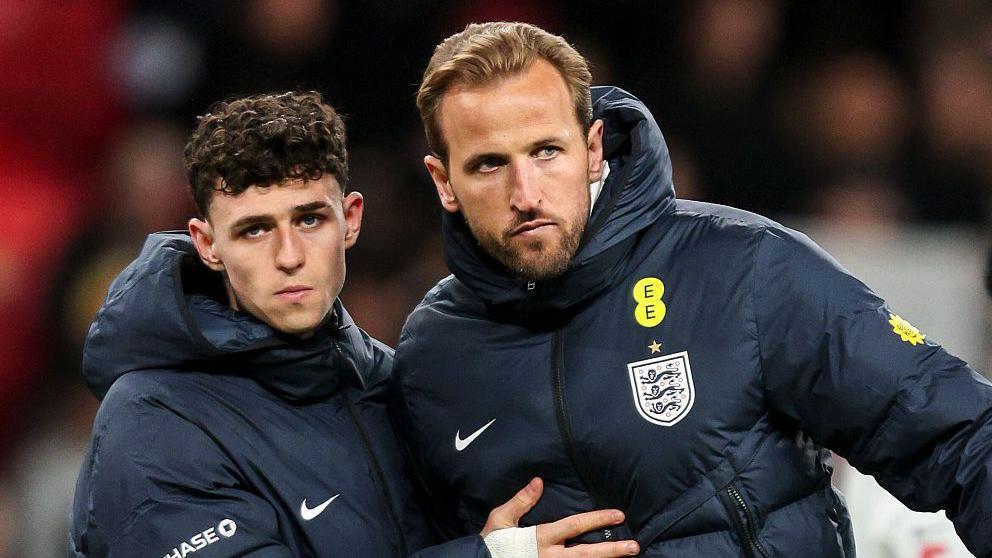
Phil Foden and Harry Kane in England blue coats after the defeat by Japan, with both players stern-facedImage source, Getty Images
Image caption,

England head coach Thomas Tuchel used Phil Foden as a false nine with captain Harry Kane injured - an experiment that failed in defeat against Japan

By
Chief football writer at Wembley

Thomas Tuchel and his England team had a taste of what life would be like without Harry Kane as they slumped to a deserved defeat against Japan at Wembley.

On the evidence of this grim spectacle, the presence of the 32-year-old captain and record goalscorer will be the difference between failure and any chance of English success at this summer's World Cup.

Kane was absent from the team list against Japan after suffering "a minor issue in training". He was at Wembley but afforded the night off.

For now, the words "minor issue" are enough to send shudders through England and their followers.

Because the evidence of these 90 minutes tells us that to lose Kane for a game of greater consequence would be a major issue.

Kane's importance simply cannot be overestimated.

Should any misfortune befall England's only world-class striker - perhaps their only high-class striker - in the 78 days between this game and their World Cup opener against Croatia in Arlington on 17 June, that could spell serious trouble.

Kane did not figure in either the draw against Uruguay or this loss to an impressive Japan, who sit 18th in the Fifa rankings, some 14 places below high-flying England.

Without him, England lacked punch, creativity and cutting edge.

Even head coach Tuchel appears to be struggling to find a solution should Kane be unavailable during the World Cup. Quite simply, it is not even worth contemplating from England's viewpoint.

England's threat, without Kane, falls off a cliff.

This is surely not news to Tuchel, but he will have everything crossed that the Bayern Munich striker is fit and well in June.

Alternatives have had try-outs during this camp, but recognised number nines in Dominic Solanke and Dominic Calvert-Lewin did not make their case strongly enough.

And the experiment of using Manchester City's Phil Foden as a false nine looked exactly that against Japan, Tuchel perhaps recognising it was not delivering desired results as it was abandoned inside an hour when he sent on an orthodox striker in Solanke.

Foden was tireless, but this was England's equivalent of an ill-fitting square peg in a round hole. It was a desperate measure, through no fault of Foden's, that should now be forgotten.

England head coach Thomas Tuchel, leaning back with arms out in front of him, looks frustrated during the defeat to Japan in the friendly at Wembley.Image source, Getty Images
Image caption,

England head coach Thomas Tuchel shows frustration during the defeat by Japan at Wembley

In even more desperation, as England tried to offer some belated threat, the bankruptcy of ideas was such that it was back to lumping long balls to substitute Harry Maguire in the hope physical force and height might disrupt a composed Japanese defence.

It was ugly, basic - on this occasion unsuccessful, although Maguire did have a header cleared off the line by Yukinari Sugawara in a rare moment of danger for Japan's defence.

The Football Association labelled these two friendlies a 'Send-Off Series', the last home games before the World Cup.

England got a send-off all right, resounding boos greeting the final whistle before the players went around applauding thousands of empty red seats and the few fans who had bothered to stay.

Tuchel will rightly say Uruguay and Japan are the tough tests England required to tune up for the World Cup, but the burning question is still the same and has not been answered.

Do England really have a chance without Harry Kane? He is irreplaceable, the drop-off after him alarming.

Kane's outstanding record of 78 goals in 112 games is impressive enough, but in the wider context, since his debut against Lithuania in March 2015, he has either scored or assisted in 32% of England's goals in that period, having an involvement in 95 out of 293 goals.

The World Cup represents the short-term future, the most important matter on the horizon, but with Kane turning 33 in July, the long term looks bleak, with few serious contenders as a successor on the horizon.

Harry Maguire makes a sign with his left hand while playing in England's white shirt during the game against JapanImage source, Getty Images
Image caption,

Harry Maguire posed a belated threat as England resorted to long balls in the closing stages against Japan at Wembley.

Is reliance on Kane 'totally normal'?

Former England goalkeeper Paul Robinson, at Wembley for BBC Radio 5 Live, said: "This is the exact situation no England fan wants. We've talked about it for over a season with this World Cup coming up. What do England do without Harry Kane?

"This is what England and Thomas Tuchel do not want. He doesn't have an answer to this question. Hence why we're seeing this new formation again, with the interchange and false nine.

"We've spoken about Dominic Calvert-Lewin, Dominic Solanke, Ollie Watkins. Nobody stuck their arm up and said, 'I'll be his replacement'. that's why we're seeing this."

Robinson added: "It was a very disappointing evening for Thomas Tuchel. The experiment that he tried in the first half with the front four clearly didn't work.

"It didn't take him long in the second half to change it. You do give England credit because when those changes were made there was a lot more cohesion.

"The one area that Thomas Tuchel has got a problem is if there is a problem with Harry Kane. If that happens, then England have a real problem after watching that."

Tuchel answered the question about an over-reliance on Kane, saying: "Well, why would Argentina not rely on Lionel Messi, or Portugal not rely on Cristiano Ronaldo? This is totally normal. Key figures left camp for us and we saw that a bit.

"We lacked a punch in the last 20 metres in both matches. We encouraged the players. It was difficult for us."

Kane's potential absence is an immediate concern, leaving Tuchel short of viable alternatives when he needs them most, especially given these two toothless performances without him.

English strikers are suddenly a malaise.

Only 10 English strikers have appeared in the Premier League in the current campaign, with Chelsea's 22-year-old Liam Delap the only one aged under 26.

Brighton's Danny Welbeck, who turns 35 at the end of the month and might just have had a good international break by not being involved, and 33-year-old Callum Wilson from West Ham United, are the only English strikers who have scored more than one goal in a match in the Premier League this season.

Welbeck and Calvert-Lewin are the only English strikers to have scored 10 or more Premier League goals this season – with 43 scored by English strikers.

The cupboard is bare, underscoring just how indispensable Kane is.

This was a sobering night for England and Tuchel. This performance demonstrated that they simple cannot live without Harry Kane.

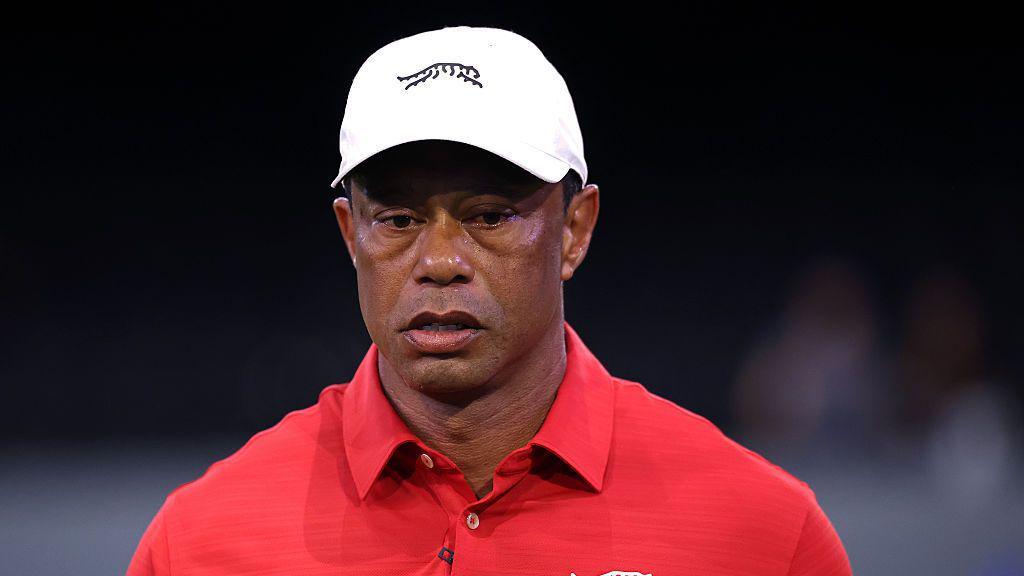
Tiger Woods to 'step away and seek treatment' after crash

1 April 2026 at 07:44

Woods to 'step away and seek treatment' after crash

Tiger WoodsImage source, Getty Images
Image caption,

Tiger Woods has won 15 golf majors - only Jack Nicklaus (18) has more

  • Published

Tiger Woods says he is "stepping away for a period of time to seek treatment and focus on my health" following an arrest after a car crash.

The 50-year-old was arrested and charged with driving under the influence after clipping a truck and rolling his car in Florida on Friday.

He was also charged with property damage and refusal to submit to a lawful test.

The 15-time major champion submitted a written plea of not guilty via his lawyers on Tuesday.

That came after a police report earlier on Tuesday detailed his behaviour after the crash.

It said Woods had two hydrocodone pills in his pocket - an opioid used to treat severe pain - and that officers observed him acting "lethargic and slow" while "sweating profusely" with "extremely dilated" pupils.

Speaking about the incident for the first time, Woods wrote on X: "I know and understand the seriousness of the situation I find myself in today.

"I am stepping away for a period of time to seek treatment and focus on my health. This is necessary in order for me to prioritise my well-being and work toward lasting recovery."

Prior to the crash he had not ruled out playing in next month's Masters - though he has not competed at a major since missing the cut at The Open in July 2024.

"I'm committed to taking the time needed to return in a healthier, stronger and more focused place, both personally and professionally," his statement added.

"I appreciate your understanding and support and ask for privacy for my family, loved ones and myself at this time."

'A legend of our sport but a person above all else'

The PGA Tour also issued its first comment on Woods following the golfer's statement.

"Tiger Woods is a legend of our sport whose impact extends far beyond his achievements on the course," it said.

"But above all else, Tiger is a person, and our focus is on his health and well‑being. Tiger continues to have our full support as he takes this important step."

The golf body's CEO, Brian Rolapp, added: "Tiger Woods is one of the most influential figures the sports world has ever known.

"Over the last year, I have come to deeply appreciate Tiger not only for his impact on the game, but for his friendship and the perspective he has shared with me as I joined the golf industry.

"My thoughts are with him and his family as he takes this step, for which he has my full respect and support."

More to follow.

Related topics

Weight-loss jabs will be offered on NHS for people at risk of further heart attacks

1 April 2026 at 07:01
Getty Images A woman uses a pre-filled injection pen to administer a dose. She is lifting her t-shirt to be able to inject.Getty Images

Weight-loss jab Wegovy will be offered for free on the NHS to more than a million people in England at risk of heart attacks and strokes.

The watchdog NICE says people with these health issues, or serious circulation problems in their legs, and who are overweight, should have the weekly jab "as an extra layer of protection".

A GP or specialist will check if it is the right option for those already taking other heart medicines, such as statins, and alongside a healthy diet.

Drug trials suggest Wegovy can help slash the risk of future heart and circulation problems.

Cutting heart risk

In tests on tens of thousands of people, the jabs - alongside existing heart medicines - were linked to a 20% reduced risk of heart attacks and strokes.

Importantly, benefits were seen early in the clinical trial, before significant weight loss occurred, suggesting the drug works directly on the heart and blood vessels, not just through weight loss, says NICE (the National Institute for Health and Care Excellence).

Each year in the UK, there are around 100,000 hospital admissions due to heart attacks, another 100,000 people experience a stroke and around 350,000 people live with peripheral arterial disease.

People who have already had one of these health issues are at higher risk of experiencing more problems and stand to benefit from medicines that can cut that risk.

Disease might be prevented in around seven in 10 cases, experts estimate, based on best evidence.

Helen Knight, from NICE, said: "We know that people who have already had a heart attack or stroke are living with real fear that it could happen again.

"The evidence from the clinical trial is compelling. It showed that people taking semaglutide alongside their existing heart medicines were significantly less likely to have another heart attack or stroke.

"Today's decision gives thousands of people in that situation an extra layer of protection, on top of the medicines they are already taking."

Patients prescribed Wegovy will be able to self-administer the drug at home using a special pen injector device.

It is recommended for those with a Body Mass Index (BMI) classed as overweight or obese - higher or equal to 27.

Rollout should begin this summer.

The drug, also known as semaglutide, works as an appetite suppressant by mimicking a hormone called GLP-1 that makes people feel fuller, which can help them lose weight.

It also slows down how quickly food is digested. Some people may experience bloating, nausea or discomfort as a side effect.

Doctors should also prescribe lifestyle changes that include eating healthily and getting enough exercise to help people keep the weight off.

Currently, treatment with Wegovy is limited to two years on the NHS through specialist services and its long-term risks are still being studied.

Many say the treatment should be considered life-long, given the risk of relapse.

NICE says the NHS has reached an agreement with the pharmaceutical company Novo Nordisk that makes the treatment, ensuring it will be cost-effective.

Dr Sonya Babu-Narayan from the British Heart Foundation said she hoped the injections could be made available to everyone who could benefit "as soon as possible".

Prof Robert Storey, an expert in heart health at the University of Sheffield, warned GLP-1 drugs could reduce muscle mass as well as fat.

"Physical activity, such as resistance training, is important to counteract potential negative effects on muscle strength," he added.

What it's like to be on Florida's Space Coast ahead of Artemis launch

1 April 2026 at 08:00
Getty Images Employees from the Johnson Space Center hold signs along Brantly Avenue near Ellington Field as they gather to send off the Artemis II astronauts ahead of their mission to the moon in Houston, Friday, March 27, 2026. Getty Images
Hundreds of thousands of people are expected to watch the rocket launch

"People going up to the Moon is kind of cool," eight-year-old Isiah says.

He is among the 400,000 people expected to cram the causeways, beaches and motel balconies of Florida's Space Coast for the launch attempt of Artemis II tonight.

They will watch as four astronauts blast into space in the hope of flying around the Moon and potentially travelling further from Earth than anyone has ever been before.

Nasa's 10-day test flight will not land on the Moon. However, the crew may witness views of the lunar landscapes that have never been seen by human eyes.

Amanda Garcia has travelled more than 1,000 miles from New Mexico to witness the launch. "I'm pretty excited about it," she tells us.

"I came out here to see it, and I heard it's gonna be a great show. A lot of people are going to be here."

Kevin Church/BBC News Split screen showing a woman holding a small dog, and a young man with the beach behind him.Kevin Church/BBC News
Amanda Garcia has travelled more than 1,000 miles to watch the launch, while Isiah, 8, said it was "kind of cool"

Beyond the Kennedy Space Centre launch site, along the lagoon and beaches of Titusville and Cocoa Beach, bars are advertising "moonshots" and hotels are warning guests to expect long delays getting to and from viewing spots.

Local officials talk of a "historic influx" of tourists and an economic impact of around $160m (£121m), putting traffic plans in place for a night when the highway lights will compete with the glow of floodlit launch towers as well as camper van barbecues.

A mile or so from the pads where Artemis II will light up the sky, Brenda Mulberry, owner of Space Shirts, has been selling Nasa T-shirts and souvenirs for 40 years.

In her small shop on Merritt Island, racks of orange, blue and black T-shirts depict hand drawn rockets, mission patches and moonscapes, ready for the crowds who arrive on regular launch days. But this launch is different, she tells us. "We've wanted to go back to the Moon since the '70s. People are excited. People are beyond excited," she said.

Brenda says she has stocked up for the biggest surge of customers she has ever seen.

"I want to have the first T-shirt shop on the Moon," she says. "Because if you've been there, you get the T-shirt, right?" she adds, laughing.

Pallab Ghosh/BBC News Inside a small, crowded NASA gift shop, two people stand behind a grey marble-effect counter. Shelves and walls around them are packed with space souvenirs, mission posters, and astronaut photos. On the left are boxes of mugs; the woman holds two white mugs decorated with NASA-style logos. Next to her, a younger person in a pale T‑shirt leans on the counter near two neat piles of bright yellow folded T‑shirts. To the right, a rack displays beige and orange NASA baseball caps and small astronaut toys, giving the scene a busy, colourful, fan-filled atmosphere.Pallab Ghosh/BBC News
Brenda Mulberry (left) has been selling Nasa souvenirs for 40 years and ambitiously wants to open the first T-shirt shop on the Moon

Future Artemis missions plan to land humans on the Moon for the first time since 1972. But this time, the goal is to build a permanent Moon base to exploit its natural resources and provide a springboard for an attempt to reach Mars.

Artemis II's mission commander, Reid Wiseman, said he hoped the effort to return to the Moon would inspire a new generation.

"In our lifetime, we've looked at the Moon knowing that people had been there. And now in the Artemis generation, kids will walk out and look at the Moon going, we are there. We are there now, and we are going further into our solar system."

Joe Raedle/Getty Images On a grassy patch near water, three Artemis II astronauts in bright blue flight suits crouch down to talk with a group of young children. The children in the centre wear miniature pink spacesuits and caps, facing the astronauts and giving them high‑fives. Other children and parents cluster around them, some holding toddlers, forming a loose semicircle. In the distance, partly blurred, a tall rocket and launch tower rise above the trees. The mood is warm and playful, with astronauts and families smiling and interacting at eye level, turning a serious mission into a friendly, down‑to‑earth moment.Joe Raedle/Getty Images
The astronauts want their mission to inspire a new generation to follow in their footsteps

Tonight, all attention will turn to Launch Pad 39B - the same historic stretch of concrete from which the US Apollo programme first landed men on the Moon in 1969. Standing on the pad is Nasa's Space Launch System (SLS) rocket.

At 98m (321ft) tall, the white and orange giant is the heaviest rocket the agency has ever launched. At its top sits Orion, a capsule about the size of a small van, where the four astronauts will spend the next 10 days in close proximity. It will be the first time the capsule has been put through its paces with a human crew on board.

If all goes to schedule, the rocket will launch between 18:24-20:24 local time (23:24-01:24 BST) on Wednesday.

The astronauts who will strap into Orion about four hours before launch have spent years training together.

Up front, on the left hand side will be Wiseman, the Artemis II commander, while pilot Victor Glover will sit beside him. Behind them will be Christina Koch and Jeremy Hansen, a Canadian fighter pilot turned astronaut. This will be his first trip into space.

After reaching orbit, Orion spends its first day in high Earth orbit practising manual flying and testing life support before shaping its path towards the Moon.

On Day 2, a long trans-lunar injection burn puts the spacecraft onto a free return trajectory that would naturally loop it around the Moon and back to Earth, with small correction burns fine tuning the course.

AFP via Getty Images Four Artemis II astronauts stand side by side on a sunny runway, posing for a group portrait. They all wear bright blue NASA flight suits covered in mission patches and name badges, with dark boots. One astronaut in the centre holds a small mascot or model in both hands. Behind them, two sleek white-and-blue T‑38 training jets sit on the concrete, their pointed noses facing left and right, with the NASA “meatball” logo visible on a tail fin. The sky above is clear and pale blue, giving the scene a crisp, formal but upbeat feel.AFP via Getty Images
Astronauts Jeremy Hansen, Christina Koch, Commander Reid Wiseman and Pilot Victor Glover arrive in style at Kennedy Space Centre on their Nasa jets with shades to match

Each day of the mission involves different tests and challenges for the crew.

Day 6 stands out because Orion is due to fly around the far side of the moon. All radio contact will be lost for about 40 minutes, meaning flight controllers won't know what is happening on board.

Orion will be travelling about 4,000–6,000 miles above the Moon's surface and may slightly exceed Apollo 13's record distance of about 250,000 miles (400,000km) from Earth, depending on the exact trajectory.

In the days that follow, Orion will be pulled naturally back towards Earth by the same free return trajectory that sent it out, with small course adjustment burns ensuring the capsule hits the atmosphere at just the right angle.

On the final day, the crew will strap in for the most brutal part of the trip: re-entry into Earth's atmosphere at about 25,000mph (40,000 km/h), when Orion's heat shield must again face temperatures hot enough to char rock.

NASA A small, round soft toy sits on a white tabletop, about the size of a large grapefruit. Its fabric face is pale cream with big black embroidered eyes, rosy pink cheeks and a simple smiling mouth, giving it a cute cartoon look. On top, it wears a dark blue cap sprinkled with embroidered yellow stars and tiny white rockets. Above the cap is a padded green‑and‑blue globe, like a miniature Earth, with a short dark loop for hanging. The toy’s overall impression is friendly and playful, like a cheerful mascot for a children’s space adventure.NASA
Rise, the Artemis II "zero‑g indicator" – a soft toy the crew will release inside Orion to show when they've reached weightlessness – sits ready for its first trip to space

After the first uncrewed test flight, Artemis I, engineers found that chunks of the heat shield's coating had cracked and broken away during a two‑stage "skip" re‑entry manoeuvre. This saw the capsule dip into the upper atmosphere, briefly climb again, then plunge back in so as to best cope with the heat, G-forces and splashdown accuracy needed.

For Artemis II they are keeping this two‑step re-entry, but changing the angle and timing so Orion spends less time in the initial, gentler dip. Modelling suggests this should reduce the heating and loads that caused extra charring, but this will be the first time the revised descent is flown with a crew.

If Artemis II is a success, the next time the Space Coast fills up like this it will be for another test flight – another step closer to people actually walking on the Moon again, half a century after the last footprints were made.

And somewhere between the marsh grass and the launch pads, there will almost certainly be someone wearing one of Brenda Mulberry's shirts, already dreaming of the day when her logo appears not just on Florida cotton, but in a photograph taken on the Moon.

Minimum wage rises to £12.71 an hour

1 April 2026 at 07:01
iStock A woman working as a cleaner in an office building. She is wearing yellow rubber gloves, a striped top and a blue apron. iStock
The Treasury said around 2.7 million people are on minimum wage

Around 2.7 million people are set to receive a pay rise this week as the national minimum wage goes up by 50p to £12.71 for over 21s.

Workers aged 18-20 will see an 85p rise to £10.85, and under-18s and apprentices will get 45p more to £8 an hour.

Campaigners have welcomed the increases, but businesses have said the higher wage bills will force them to increase prices or cut staff.

The Low Pay Commission, the government agency which recommended the increases, said previous minimum wage rises for over-21s had "not had a significant negative impact on jobs".

Prime Minister Sir Keir Starmer said wages were going up "for the lowest paid" but said the government "must go further to bear down on costs".

Spencer Bowman is the managing director of of Mettricks, a chain of four coffee shops in Southampton. He says he would normally be "thrilled" to pay staff more, but "the cost increases have got to be sustainable".

"There's nothing that I'd want more than to ensure that my team can earn a really fair amount of money for a fair day's work. And it's been one of my long-term ambitions to see hospitality workers, my employees, paid far more."

But Spencer says his business is being squeezed from every angle – as well as minimum wage, he has had increases in business rates, national insurance, and statutory sick pay. He also expects energy bills to go up because of the war in the Middle East.

"We're running on a minimum number of staff on shift. We can't run on fewer people," he says.

"If something doesn't give somewhere, we will be closing sites.

Spencer Bowman, a white man, standing in a coffee shop. He is wearing a blue t shirt with the shop's logo on it.
Spencer Bowman says he may have to close one of his four coffee shops due to cost pressures

"It doesn't make any sense. Revenue is up. Our customer numbers are up. But our costs everywhere have hit a point where we're not financially sustainable and if that continues, there's only one outcome for that."

The minimum wage increases are on top of a 6.7% rise for over-21s and a 16.3% rise for 18 to 20-year-olds respectively last year, when there was also a rise in employers' National Insurance contributions.

Ministers are considering slowing down plans to pay adults of all ages the same minimum wage.

Labour committed in their election manifesto to remove "discretionary age bands" and increase the wages of 18 to 20-year-olds so they are paid the same as those over 21.

Ifunanya Ezechukwu, 25, calls the minimum wage rise a "step in the right direction".

"Especially with the cost of living being really bad, people need more money so they can actually afford the basics," she tells BBC Newsbeat.

She doesn't think employers paying staff more will necessarily translate to fewer job opportunities.

"I feel like they're probably just going to up the prices of their services, so I don't think there'll be less job opportunities," she says.

"I just feel like some things might get more expensive, which is unfortunate, and then the cycle just continues."

Ifunanya Ezechukwu smiles as she speaks in to a green BBC microphone.
Ifunanya says people need more money to afford the basics

Alex McCarthy, a university student who works part-time in a pub, says he is feeling "very, very happy" about the rise.

But the 18-year-old says it probably won't be enough for some of his friends, who are working while living at university but are still struggling to do weekly shops and are having to borrow money off their parents.

Amelia Evans, 18, believes the rise is necessary because "everything is going up in price". But she is concerned it will limit her job opportunities.

"So far this year I think I've done maybe 20 applications, and haven't got any. I feel like it's going to impact me even more now."

When Chancellor Rachel Reeves announced the increases in the Budget last year, she said the cost of living was still the biggest issue for working people.

"The economy isn't working well enough for those on the lowest incomes," she added.

At the time, the Treasury said the new minimum wage rates for 2026 struck a balance between "the needs of workers, the affordability for businesses and the opportunities for employment".

The Living Wage Foundation has welcomed the rises but says they do not go far enough.

The Foundation calculates what is known as the Real Living Wage, which it says is a more accurate reflection of the cost of living in the UK. It currently stands at £13.45 across the UK and £14.80 in London.

Kate Chapman, the executive director of the Living Wage Foundation, said one in seven businesses now pay the Real Living Wage.

"That's because they know the Living Wage is good for people, good for society and good for business," she said.

The British Chamber of Commerce has said that tax and labour costs are the biggest concerns for British businesses.

In its quarterly survey of 4,000 firms, 73% said labour costs are putting pressure on them to raise prices.

Additional reporting by Georgia Levy-Collins, Lizzy Bella, and Jemma Crew

Woods to 'step away and seek treatment' after crash

1 April 2026 at 07:44

Woods to 'step away and seek treatment' after crash

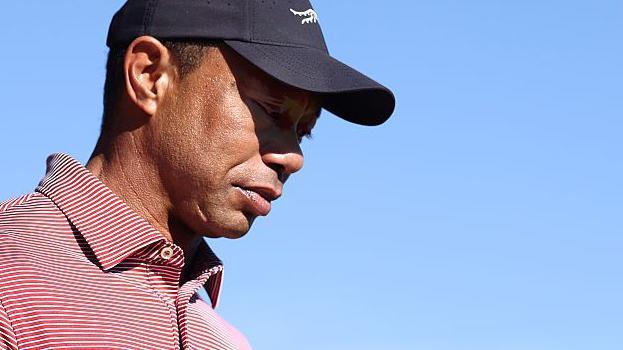
Tiger WoodsImage source, Getty Images
Image caption,

Tiger Woods has won 15 golf majors - only Jack Nicklaus (18) has more

  • Published

Tiger Woods says he is "stepping away for a period of time to seek treatment and focus on my health" following an arrest after a car crash.

The 50-year-old was arrested and charged with driving under the influence after clipping a truck and rolling his car in Florida on Friday.

He was also charged with property damage and refusal to submit to a lawful test.

The 15-time major champion submitted a written plea of not guilty via his lawyers on Tuesday.

That came after a police report earlier on Tuesday detailed his behaviour after the crash.

It said Woods had two hydrocodone pills in his pocket - an opioid used to treat severe pain - and that officers observed him acting "lethargic and slow" while "sweating profusely" with "extremely dilated" pupils.

Speaking about the incident for the first time, Woods wrote on X: "I know and understand the seriousness of the situation I find myself in today.

"I am stepping away for a period of time to seek treatment and focus on my health. This is necessary in order for me to prioritise my well-being and work toward lasting recovery."

Prior to the crash he had not ruled out playing in next month's Masters - though he has not competed at a major since missing the cut at The Open in July 2024.

"I'm committed to taking the time needed to return in a healthier, stronger and more focused place, both personally and professionally," his statement added.

"I appreciate your understanding and support and ask for privacy for my family, loved ones and myself at this time."

'A legend of our sport but a person above all else'

The PGA Tour also issued its first comment on Woods following the golfer's statement.

"Tiger Woods is a legend of our sport whose impact extends far beyond his achievements on the course," it said.

"But above all else, Tiger is a person, and our focus is on his health and well‑being. Tiger continues to have our full support as he takes this important step."

The golf body's CEO, Brian Rolapp, added: "Tiger Woods is one of the most influential figures the sports world has ever known.

"Over the last year, I have come to deeply appreciate Tiger not only for his impact on the game, but for his friendship and the perspective he has shared with me as I joined the golf industry.

"My thoughts are with him and his family as he takes this step, for which he has my full respect and support."

More to follow.

Related topics

'A million things could go wrong' - why seizing Iran's uranium would be so risky for the US

1 April 2026 at 07:16
Getty Images Maxar satellite imagery shows extensive building damage across the Isfahan nuclear technology center in June 2025Getty Images
Most of Iran's uranium that can be turned into material for weapons is believed to be stored at Isfahan, which was damaged in US-Israeli strikes last year

US troops storming a secretive, underground nuclear facility to seize Iran's stockpile of enriched uranium may sound far-fetched, but it is an option President Donald Trump is reportedly considering to achieve his main objective in the war: preventing the regime from developing nuclear weapons.

Such an operation would be extremely challenging and fraught with danger, according to military experts and former US defence officials who spoke to the BBC. They said it would require the deployment of ground troops and could take several days or even weeks to complete.

Removing the uranium stockpile would be one of the "most complicated special operations in history," said Mick Mulroy, a former deputy assistant secretary of defence for the Middle East.

The scenario is just one of several military actions that Trump could take in Iran.

Others include the US taking control of Kharg Island in an effort to pressure Iran to fully reopen the Strait of Hormuz. The administration may also be using the threat of new military operations to pressure Iran to the negotiating table.

In a telephone interview with the BBC's US partner CBS News on Tuesday, President Trump declined to say whether it would be possible to declare victory in the war without removing or destroying Iran's enriched uranium.

But he appeared to play down the significance of the stockpile, pointing to the damage caused in US-Israeli strikes last June. "That's so deeply buried it's gonna be very hard for anybody," Trump said. "It's down there deep. So… it's pretty safe. But, you know, we'll make a determination."

His remarks came after the Wall Street Journal reported that the US was considering an operation to extract the material. The White House said Trump was yet to make a final decision.

Map showing Iran's main nuclear sites

An operation targeting Iran's stockpile would face several major logistical challenges, experts said.

At the start of the war, Iran possessed approximately 440kg of uranium enriched to 60%, according to senior US officials. The material can be fairly quickly enriched to the 90% threshold needed for weapons-grade uranium.

Iran also has roughly 1,000kg of uranium enriched to 20%, and 8,500kg that are enriched to the 3.6% threshold accepted for medical research.

Most of the highly enriched uranium that can be easily turned into material for bombs or missiles is believed to be stored at Isfahan. The facility is one of three underground nuclear sites in Iran that were targeted in US-Israeli airstrikes last year.

But it is unclear how much of the highly enriched uranium is stored at other locations.

A military operation to retrieve the material would be easier if the US knew exactly where the stockpile was, said Jason Campbell, a former senior US defence official in the Obama and Trump administrations.

"The ideal scenario is that you know exactly where it is," Campbell said. "If it's been dispersed to four different sites, then you're talking about a whole different" level of complexity.

Image shows the Isfahan nuclear site=

In addition to Isfahan, some highly enriched uranium could also be stored at Fordo and Natanz, the other two enrichment facilities that were targeted in Operation Midnight Hammer last year.

Rafael Grossi, the director of the International Atomic Energy Agency, said last month that the majority of Iran's highly enriched uranium is stored at Isfahan, with some additional material at Natanz. But Grossi said more detailed information wasn't available because inspectors haven't visited the sites since being evacuated from Iran after the US-Israeli air campaign in 2025.

"There are many questions that we will only elucidate when we are able to go back," Grossi told reporters.

Gaining access to the highly enriched uranium presents another set of challenges, assuming the US knows where it is.

There are signs that Iran fortified an underground complex near one of its nuclear facilities before this year's US-Israeli strikes. At Isfahan, for example, satellite imagery from February indicated all entrances to its tunnel complex appeared to be sealed off with earth, which would make any operation more difficult.

Satellite images from February show Isfahan tunnels sealed with earth

Since the start of the war, the US and Israel have been able to use air strikes alone to decimate Iran's navy, degrade its ballistic missiles and damage its industrial base. But unlike those other military objectives, experts said that securing Iran's enriched uranium could not be done without using ground forces.

The US could use elements of the 82nd Airborne Division - which were deployed to the Middle East - to secure the areas surrounding Isfahan and Natanz. Special operations forces that are trained to handle nuclear material would then be sent in to retrieve the enriched uranium. The uranium itself is in gaseous form and is believed to be stored in large metal containers.

Satellite imagery shows that the entrances to Isfahan and Natanz were badly damaged by US airstrikes. US forces would likely need heavy machinery to dig through rubble in order to locate the enriched uranium, which is believed to be stored in tunnels buried deep underground - all while facing potential counterattacks from Iran.

"You've first got to excavate the site and detect [the enriched uranium] while likely being under near constant threat," Campbell said.

Image shows Natanz nuclear facility

It is an open question how Iran might respond, or how much of a threat it might pose to US ground troops targeting the country's main nuclear facilities.

The US and Israel have been degrading "Iranian defence capabilities to enable this type of operation if it was necessary," said Alex Plitsas, a former US defence official and nonresident senior fellow at the Scowcroft Middle East Security Initiative. Nevertheless, he said it would still be a "high risk" operation.

US ground troops would be isolated at Isfahan, which is located approximately 300 miles (482km) inland from Iran's third largest city. "It makes [medical evacuations] difficult given the distances. It makes [US troops] vulnerable to anti-aircraft fire coming in and out, as well as attacks while they're" at the nuclear facility," Plitsas said.

While the operation could take multiple forms, experts said it would likely involve the seizure of an airfield or landing zone from which US forces could operate - and then remove the enriched uranium from Iran once they have retrieved it.

The 82nd Airborne Division, which is trained to secure airfields and other infrastructure, could be used along with other US forces to stage an operating base for the mission, military experts said. Once the uranium is secured, the US would then face the question of removing it from the country or diluting it on site.

Senior administration officials said at the start of the war that the US might consider diluting Iran's highly enriched uranium on site, rather than removing it from the country. But that would be a large, complex and time-consuming operation, said Jonathan Ruhe, an expert on Iran's nuclear programme at the Jewish Institute for National Security of America, a conservative think tank in Washington DC.

Seizing and taking the uranium out of Iran is faster and would allow the US to dilute the material in the United States, Ruhe said. The operation would be deeply risky no matter how it is done, he added.

"You've got basically a half ton of what's effectively weapons grade uranium that you've got to extricate," Ruhe said.

"And there are a million things that could go wrong."

Watch: Why is it so hard to pass through the Strait of Hormuz?

Asia's migrant workers debate if Gulf jobs are worth deadly risk of Iran war

1 April 2026 at 06:48
Getty Images Three women waving the Philippine flag and wearing face masks, walking from an airplane in the background after being repatriated fro the Middle East due to the US and Israel's war on IranGetty Images
Philippine migrant workers have been returning from the Gulf in the wake of the conflict

All Norma Tactacon can do is pray as the sirens blare.

The 49-year-old, who works in the Middle East as a domestic worker, is thousands of miles away from her home in the Philippines, where her husband and three children live.

Stuck in Qatar, which is caught in the crossfire of the US and Israel's war on Iran, her only hope is that she makes it home to her family.

"I get scared and nervous every time I see pictures and videos of missiles in the air," she tells the BBC. "I need to be alive to be there for my family. I'm all that they have."

As wealthy Gulf states turned into targets of Iranian strikes because of the US military bases they host, expats left in large numbers, while tourists and travellers have stayed away.

But it has been especially hard for the millions of migrants whose futures have now turned uncertain. From domestic help to construction workers, they have long supported these economies to lift their families back home from poverty.

Tactacon had hoped to pay for her 23-year-old son to graduate from a police academy and for her two daughters, aged 22 and 24, to become nurses, a springboard for high-paying jobs overseas.

That's why she spent a good part of the last two decades working as a maid in Qatar, Saudi Arabia and the United Arab Emirates (UAE).

What is still keeping her there is her salary. Filipino domestic workers in the Middle East earn a minimum wage of $500 (£370) a month, roughly four to five times more than what they would make in a similar job back home.

"I hope the world will be peaceful again and things go back to the way they were. I pray that the war will stop," says Tactacon in Qatar.

Getty Images Motorists drive past a plume of smoke rising from a reported Iranian strike in the industrial district of Doha on March 1, 2026. Getty Images
A plume of smoke rises from a reported Iranian strike in Doha, Qatar

But the war is making her reconsider. She might return home and start a small business with her husband. She has reason to be worried.

One of the first victims of the conflict was 32-year-old Filipina Mary Ann Veolasquez, who worked as a caregiver in Israel.

The Israeli embassy in Manila said she was injured while leading her patient to safety, after a ballistic missile struck her apartment in Tel Aviv.

According to the International Labour Organisation (ILO), the region hosts 24 million migrant workers, making it the world's top destination for overseas labour. Most of them come from Asia - India, Pakistan, Bangladesh, Sri Lanka, the Philippines and Indonesia. Many of these workers take low paid or precarious jobs, and have little access to things like healthcare, the ILO says.

At least 12 South Asian migrant workers have died so far as a result of the conflict, according to reports.

The war's mounting fatalities include Dibas Shrestha, a 29-year-old Nepali who worked as a security guard in Abu Dhabi. He died in an Iranian strike on 1 March.

"I tried to convince him to move back to Nepal, but he said he liked his job in Abu Dhabi, and that he had a good life," his uncle Ramesh told the BBC.

"We have many relatives who've moved to the Gulf for work, so we were very worried for all of them,"

When the war started, Shrestha assured his family it was safe. In a post on Facebook, he wrote that watching the news had made him "concerned" but he also felt, "The news sometimes presents exaggerated or misleading information".

His uncle said Shrestha had been saving up to rebuild his parents' home after it had been damaged in an earthquake in 2015 that killed hundreds.

"He was their only son," Ramesh added. "So kind, and very smart."

BBC/Dibash Shrestha's family Nepali worker Dibas ShresthaBBC/Dibash Shrestha's family
Dibas Shrestha worked as a security guard in Abu Dhabi

More than 120kms away, in Dubai, debris from an intercepted missile killed Ahmad Ali, a 55-year-old water tank supplier from Bangladesh.

His son, Abdul Haque, said he joined his father to work in the UAE but returned to Bangladesh before the war started. His father continued sending money home - $500 to $600 every month, which is a huge sum in the poor South Asia nation.

Ahmad died during Ramadan, and his son was told it happened in the evening, just as people were breaking their fast.

"He really liked the people in Dubai, he said they were welcoming, that it was a great place to live," Abdul told the BBC.

"I don't even think he knew the war was going on. He didn't read the news and didn't have a smartphone."

Abdul's his view of Dubai and the region has changed: "It's not safe now, nobody wants to lose a father."

Governments in Asia have been scrambling to bring migrant workers home.

But the threat of missile strikes has disrupted travel to and from Dubai, Abu Dhabi and Qatar. So people seeking to leave have had to take longer routes home.

Getty Images Workers wearing blue uniform and neon green jackets resting on the beardwalk with the Dubai skyline in the background during daytimeGetty Images
The Middle East is a top destination for migrant workrs from South and South East Asia

The last repatriation flight saw 234 Filipino workers from Kuwait, Qatar, and Bahrain travel up to eight hours by land to Saudi Arabia, where 109 others were waiting to join them on a Philippine Airlines flight.

Close to 2,000 Filipino workers and their dependents were flown back to Manila as of 23 March, according to the government.

The Middle East is home to roughly half of the more than two million Filipinos working overseas, and their remittances account for 10% of the economy.

Remittances are just as crucial for Bangladesh - most of its 14 million migrant workers are in the Middle East.

Close to 500 Bangladeshi workers have been repatriated since the conflict started, and the government in Dhaka has arranged for at least two more flights home, departing from Bahrain.

For some leaving is not an option.

Su Su from Myanmar found a safe home in Dubai when she left behind a country gripped by a bloody civil war that has dragged on since 2021.

The 31-year-old, who works as an operations specialist for a real estate company, has been in Dubai for two years.

She says her current work-from-home set-up reminds her of Covid lockdowns - except when she hears the sirens. Then she needs to stay away from her window.

"I have an emergency bag prepared in case I have to evacuate... This is just a habit I got from Myanmar."

And yet, she says, "The feeling here is more calm. I believe at the end of the day, we will be fine".

Additional reporting by BBC Burmese and BBC Indonesian

'You're no longer my sister' - rows erupt as war divides Iranian families

1 April 2026 at 07:25
Supplied Smoke rising from above buildings in two clouds, one above the other. The boom of a red crane can be seen on the left.Supplied
One person the BBC has been in contact with captured this image of an explosion in mid-March in Tehran

"He said to her: 'You're no longer my sister', and she told him to go to hell."

This argument between a man and his sister in a city near Tehran - witnessed and recounted by one of their relatives - gives a telling insight into the painful rows erupting among families and friends as US and Israeli strikes continue.

The relative, who we are calling Sina, says that when his family recently got together at his grandmother's house, emotions quickly exploded, exposing stark divisions.

His uncle, a member of the Basij - a volunteer militia often deployed to suppress dissent in Iran - refused to even greet his own sister, who is opposed to the ruling regime.

After their exchange, the uncle was "very quiet… and left early", Sina says.

He and other young Iranians have described emotional scenes as rifts open up over the war.

Even among those opposed to the government, there are deep divisions over whether the war will help or hinder attempts to bring about change.

Despite the government-imposed internet blackout, the BBC has been able to maintain contact with some of the few Iranians who have found ways to remain online.

Iranians can be sent to prison for speaking to certain international media. But even so, over the month-long war, these contacts have been sharing information through intermittent text messages and occasional voice calls.

Their initial responses of shock and fear have given way to attempts to adapt, switching locations and changing routines. They describe the details of their lives; practising yoga despite the sounds of explosions, eating birthday cake alone and venturing out to near-empty coffee shops.

And, in some surprisingly personal notes, they have shared details about how the conflict is affecting their relationships. All of the names in this article have been changed.

Supplied A figure in a military vest, helmet and fatigues standing in the back of a white pick-up truck, which is driving along a road in Tehran. A damaged building can be seen in the background.Supplied
People in Tehran have described seeing Iranian security forces on the streets

Towards the end of March, Iranians celebrated Nowruz, the Persian new year festival that marks the spring equinox and is often a time when families get together.

Sina, who is in his 20s, is opposed to the clerical establishment and continues to support the Israeli and US air strikes, believing that they will help bring the regime down.

He says his uncle, the Basij member, had not attended Nowruz family gatherings in recent years, but turned up this time, to the surprise of his family. Usually, "we don't talk to him, nor to his children", says Sina.

He says he has barely spoken to his uncle since major protests in 2022 following the death in custody of a young woman, Mahsa Amini, who was accused of not wearing the compulsory hijab properly.

More recently, Iran saw an unprecedented crackdown by the Basij and other security forces on protests that swept across the country in December and January. At least 6,508 protesters were killed and 53,000 arrested, according to the US-based Human Rights Activists News Agency (HRANA).

Sina says that, according to other relatives, his uncle was so angered by the protests that he said even if his own children went onto the streets and were killed, he wouldn't go to collect their bodies.

And yet, Sina says, his uncle seems to be "afraid of dying" in the war and appears to have been trying to improve relations with some family members, including his own mother, Sina's grandmother.

At Nowruz, he and his wife "just looked really down and helpless", says Sina. "I didn't get into an argument with them. They should be in prison."

Supplied Items displayed to mark Nowruz, including a candle, a glass containing the spice sumac and a green, leafy plantSupplied
Nowruz is marked by families coming together and also with symbolic items displayed on a table

Another young man, Kaveh from Tehran, spent Nowruz alone.

He says his relationship with his sister, who is also a Basij member, was already difficult. After he joined the 2022 protests, he says, she became critical of his activities and unsympathetic over the deaths of friends of his in the January protests.

Kaveh has been providing internet access to friends and family via SpaceX's Starlink, which offers connectivity via satellites. In Iran, owning or using Starlink terminals is punishable by up to two years in prison.

He initially joined his family for the holiday, but he says he left the place where they were staying and later returned to find his sister had disconnected his Starlink and the devices connected to it. When he challenged her, a row broke out, he says.

"I can't stand her anymore… I just had a fight and said I can't stand it and I left," he says.

"I was so excited about Nowruz. I packed my clothes and wanted to be there with the family," Kaveh said over an encrypted line as he travelled home alone. "But now I don't feel it at all."

Supplied A close-up image of a plate stacked with small biscuits, each with a distinctive shape like a four-leaf clover.Supplied
Maral sent this image of biscuits baked as her family celebrated Nowruz despite the war

Most Iranians have no internet access. Starlink devices are expensive as well as illegal, so those who have access tend to be relatively wealthy. A few others manage to connect via VPNs.

Most Iranians who agree to speak to BBC Persian are opposed to the Iranian regime. But even among the government's critics, there are deep differences over this war and its impact.

According to the International Federation of Red Cross and Red Crescent Societies, 1,900 people have been killed in Iran by the US and Israeli strikes, while HRANA puts the total at over 3,400, more than 1,500 of them civilians.

Maral, a student in her 20s in the city of Rasht in northern Iran, has become very frustrated with her father for his continued support of the war.

He is an enthusiastic supporter of Reza Pahlavi, the crown prince of Iran before the 1979 revolution.

Pahlavi now lives in the US and has positioned himself as a potential transitional leader of the country. He supports the US and Israeli strikes on Iran despite mounting casualties, describing the attacks as a "humanitarian intervention" and recently urging the US to "stay the course".

He has gained traction in Iran in recent months as an opposition figure, with some demonstrators in the January protests chanting his name.

"I just want this war to end as soon as possible," says Maral. "Many ordinary people have died."

She says she gets "annoyed" because her father is "really optimistic", even as the bombs fall.

"We try to talk to him, but he just keeps going on about 'the Prince, the Prince,'" she says.

"My dad lives in this illusion that Iran will open up its borders and within five years everything will be rebuilt, everything will be fine. He's being influenced by Israeli propaganda that the two countries will be friends."

Her father and mother often argue about Pahlavi, she adds.

Supplied Close-up image showing a green coloured matcha latte in a glass, next to a cup of tea in a glass, resting on a white saucer, with a cheesecake dessert on a plate behind.Supplied
Tara has tried to continue with her day-to-day life, including visiting cafes

Meanwhile, Tara, a woman in her 20s in Tehran, says her close family members initially criticised her for being opposed to the war.

"They all support attacks on Iran… My mum and sister told me: 'You haven't lost anyone [during the protests], that's why you are against the strikes. You don't want your routine, exercise and coffee catch-ups to get disrupted… If they [the regime] had killed one of your friends or relatives [during the protests] you would have a different opinion.'"

But Tara says: "Thousands of innocent people could be killed in the war as well, without anyone even remembering them."

However, she says, her sister's view – like that of several other Iranians the BBC has heard from - has softened as the attacks have continued. More recently, after a nearby area was hit, she says her sister simply said: "I hope the war finishes soon."

And despite their differences, the family still try to go everywhere together, Tara says. That way, "we would all die together if they hit us".

Man charged after seven people hit by car in Derby

1 April 2026 at 06:24
PA Media Shoes and blankets at the scene in Friar Gate, Derby, where a number of people had been injured, some of them seriously, but not life-threatening, after being hit by a car in the city centre on Saturday night. PA Media

A 36-year-old man has been charged after a car struck a number of pedestrians in Derby city centre on Saturday.

Sandhu Ponnachan, from Alvaston, Derby, has been charged with six counts of grievous bodily harm (GBH) with intent and one count of attempted GBH with intent, one count of dangerous driving, and one count of possession of a bladed article.

Seven people were seriously hurt when they were hit by a black Suzuki Swift in Friar Gate at about 21:30 GMT on Saturday.

Ponnachan, who police said was originally from India, is due before magistrates on Wednesday.

In a statement, Ch Supt Emma Aldred called the charge "positive news", but reiterated that the investigation is ongoing and called on the public to come forward with any information.

"This incident has, naturally, sent shockwaves through the community of Derby and the county as a whole," she said.

She added: "My thoughts, and those of the wider force, remain with each of the seven injured people, their families, and witnesses at the scene."

Aldred also urged the public to "allow the judicial process to continue without any speculation" that could impede the "pursuit of justice for all those affected".

Counter-terrorism police had joined the investigation after the incident, but the Derbyshire force earlier said this was "common practice" and officers were "keeping an open mind about the potential motives".

US journalist Shelly Kittleson kidnapped in Baghdad

1 April 2026 at 05:08
Shelly Kittleson/X An undated image of Shelly Kittleson. She wears a hijab and holds a phone while standing in front of a riverShelly Kittleson/X
An undated image of Shelly Kittleson

A US freelance journalist has been kidnapped in the Iraqi capital Baghdad, and one of the suspects is linked to an Iran-backed militia, Iraqi and US officials say.

Shelly Kittleson was abducted on Tuesday evening, said Al-Monitor, a news outlet for which she has contributed articles.

The Iraqi interior ministry said security forces had chased the reporter's abductors in a pursuit that resulted in one of the kidnappers' cars overturning and the arrest of one suspect.

A US state department official said an individual with ties to an Iranian-aligned militia group, Kataib Hezbollah, was detained by Iraqi authorities.

Dylan Johnson, assistant secretary of state for global public affairs, confirmed the abduction of an American journalist, without naming Kittleson.

He posted on X: "The State Department previously fulfilled our duty to warn this individual of threats against them and we will continue to coordinate with the FBI to ensure their release as quickly as possible."

It is understood that US officials had contacted Kittleson a number of times to warn of threats against her, including as late as Monday night.

The US state department said in a statement to the BBC: "Due to privacy and other considerations, we have nothing further to share at this time."

Al-Monitor, which is based in the US, said local news reports indicate Kittleson was taken near a hotel in the heart of the capital.

It added that the state department had confirmed it "is aware of Kittleson's kidnapping and working with the Iraqi government to secure her release".

Al-Monitor said it was "deeply alarmed" by her kidnapping, and called "for her safe and immediate release".

An Iraqi official confirmed to the BBC's US partner CBS that local authorities were working "at the highest level" to release Kittleson.

Kittleson's emergency contact Alex Plitsas, a CNN national security analyst, told CBS that Kittleson had been warned by the US government about a specific threat to her from Iran-backed paramilitaries.

Kataib Hezbollah was said to be plotting to kidnap or kill female journalists.

Plitsas said Kittleson had been warned that her name was on a list in Kataib Hezbollah's possession. A second source confirmed she had been told of a risk, but thought it was false information.

The interior ministry statement said in a statement translated from Arabic: "Security forces immediately launched an operation to apprehend the perpetrators, acting on precise intelligence and through intensive field operations, tracking the kidnappers' movements."

It added: "The pursuit resulted in the interception of a vehicle belonging to the kidnappers, which overturned as they attempted to escape."

The interior ministry did not identify the suspect, calling the abductors "unknown individuals".

"The Ministry affirms that efforts are ongoing to track down the remaining perpetrators and secure the release of the abducted woman, and to take due legal action against all those involved in this criminal act, in accordance with the law," it added.

Kittleson, based in Rome, Italy, has covered conflicts in Afghanistan, Iraq and Syria. According to her bio on social media, she has worked for numerous publications.

The FBI, National Security Council, state department, Delta Force and the Iraqi Counter-Terrorism Service were in contact about her abduction, sources familiar told CBS.

Baghdad was once notorious for kidnappings, but abductions have decreased as the security situation in Iraq has improved in recent years.

Judge temporarily halts construction of Trump's White House ballroom

1 April 2026 at 04:21
Getty Images Construction at the White HouseGetty Images

A US judge has temporarily halted President Donald Trump’s White House ballroom construction project from continuing, ruling that proper procedures were not followed before the building project began.

The ruling comes after the White House was sued by The National Trust for Historic Preservation.

"I have concluded that the National Trust is likely to succeed on the merits because no statute comes close to giving the President the authority he claims to have," said Judge Richard Leon, who was appointed by a Republican president.

Trump has criticised the ruling on his social media site, saying that the project is going well, and "will be the finest Building of its kind anywhere in the World".

The Trump administration has previously said its plan was more economical than renovating the East Wing. It also noted that many presidents had made changes to the White House

Leon's ruling, published on Tuesday, continued: "The President of the United States is the steward of the White House for future generations of First Families. He is not, however, the owner!"

"(U)nless and until Congress blesses this project through statutory authorization, construction has to stop!" he added.

The judge's ruling takes effect in 14 days, allowing a possible appeal.

In the lawsuit, the preservation group argued that the White House broke the law by beginning construction without filing plans with the National Capital Planning Commission, by not seeking an environmental assessment of the project, and by declining to seek authorisation from Congress.

It also alleged Trump was violating the US Constitution, "which reserves to Congress the right to dispose of and make all rules regarding property belonging to the United States".

The East Wing, which was constructed in 1902, was demolished in October to make way for Trump's multi-million dollar ballroom, which he says is being paid for by private donors.

Since then, the proposed blueprint has expanded from a ballroom with a capacity of 500 people to a space that can fit 1,350 guests.

The White House says the project is expected to cost $400m (£302m) and is being funded entirely by private donors.

Reacting to the judge's decision, Trump wrote on his Truth Social site: "The National Trust for Historic Preservation sues me for a Ballroom that is under budget, ahead of schedule, being built at no cost to the Taxpayer, and will be the finest Building of its kind anywhere in the World."

He also criticised the group that brought the lawsuit, noting that they had also sued to stop his renovation of the Kennedy Center, which Trump recently renamed after himself.

"All I am doing is fixing, cleaning, running, and 'sprucing up' a terribly maintained, for many years, Building," Trump wrote about the concert venue in Washington DC.

In his post, Trump also said of the legal action against him: "Doesn't make much sense, does it?"

Israel says it will keep control over part of southern Lebanon after war with Hezbollah ends

1 April 2026 at 02:57
AFP via Getty Images Plumes of smoke rise from the site of an Israeli airstrike on the village of Zawtar al-Sharqiyah in southern Lebanon. AFP via Getty Images

Israel's defence minister has said a buffer zone will be set up inside southern Lebanon and that Israel will keep security control over a swathe of the territory even after the end of the current war against the armed group Hezbollah.

Israel Katz said the area to be occupied would go up to the Litani River in southern Lebanon - about 30km (18.6 miles) from the border with Israel.

He also said all houses in Lebanese villages near the Israeli border would be demolished.

Israel sent ground troops into southern Lebanon on 2 March and has also been launching broad strikes across the country.

The action was taken after Hezbollah fired rockets into northern Israel in retaliation for Israel's assassination of Iran's supreme leader in late February, at the start of the war with Iran.

Israel was also carrying out near-daily strikes on Hezbollah before that despite a ceasefire that was agreed in 2024.

Since early March, at least 1,238 people have been killed in Lebanon, according to the Lebanese health ministry, including at least 124 children. The UN's humanitarian affairs office says 52 health workers have also been killed.

In the same period, 10 Israeli soldiers and two Israeli civilians have been killed by Hezbollah attacks, Israeli authorities say.

Others killed in the south in recent days include three Indonesian peacekeepers, and three Lebanese journalists, according to the UN and the Lebanese health ministry.

The Israel Defense Forces (IDF) confirmed it killed two of the journalists, describing them as "terrorists" without providing evidence to back up its claims. It also said it was aware of reports a female journalist was killed.

It has not yet been established who killed the peacekeepers.

More than a million people - roughly one in every six in the country - have also been displaced, worsening an existing humanitarian crisis in Lebanon.

Israeli officials say the aim is to protect communities in northern Israel from Hezbollah attacks.

Speaking in a video statement published by the defence ministry on Tuesday, Katz gave further details on Israel's military intentions in southern Lebanon.

"At the end of the operation, the IDF will establish itself in a security zone inside Lebanon, on a defensive line against anti-tank missiles, and will maintain security control over the entire area up to the Litani."

"In addition, the return of more than 600,000 residents of southern Lebanon who evacuated northward will be completely prohibited south of the Litani until the safety and security of northern residents are ensured," he added.

"All houses in villages near the border in Lebanon will be destroyed - according to the model of Rafah and Beit Hanoun in Gaza - to remove, once and for all, the threats near the border to northern residents," he said.

Katz had already announced the intention to create a buffer zone in the south of Lebanon earlier in the month. He had also already said displaced residents would not be allowed back until northern Israel was safe and that houses would be demolished.

But his latest statement goes a step further than his last, as he said Israeli troops would stay in the region after Israel's war with Hezbollah ends.

'Our home is gone, everything is gone': BBC speaks to displaced Lebanese families

Southern Lebanon is the heartland of Lebanon's Shia Muslim community, Hezbollah's main support base. But it is also home to other communities, including Christians.

The latest Israeli ground invasion has already caused widespread alarm among the Lebanese.

Under the ceasefire agreement that ended the war in 2024, Hezbollah was meant to disarm and leave its positions in the south. This was to be supervised by the Lebanese government and army.

Progress was made, but it was partial. Israel also maintained several military posts in the south and continued to carry out regular attacks on what it said were Hezbollah targets.

The will may have been there for the Lebanese government to disarm Hezbollah, but it has always lacked the ability to do so. The prospect of a major confrontation between the Lebanese state and Hezbollah has also long been a major concern, reawakening fears of a descent back into civil war.

Katz previously said that Israel was taking action because the Lebanese government had done "nothing".

Lebanon's President Joseph Aoun has described the Israeli plans as a "collective punishment against civilians", and that they could be part of "suspicious schemes" to pursue an expansion of Israel's presence in Lebanese territory.

Diplomatic challenges facing King on US visit

1 April 2026 at 02:08
Reuters King Charles shaking hands with President Trump on a visit to Windsor in September 2025Reuters
King Charles hosted President Trump on a visit to Windsor last autumn

State visits can be uncomfortable, joyful, tense and unifying - in the space of just a few days.

King Charles III and Queen Camilla's visit to the United States next month is likely to be all these.

Planning the trip has taken months, with decisions about dates and locations being made by Buckingham Palace, the Foreign Office, the Trump administration and the UK Embassy in Washington with its new ambassador, Sir Christian Turner. They are not easy things to get right, as there are many stakeholders with a viewpoint.

But the dates and places have not been the biggest problem - the mood of the transatlantic alliance has been the dominant issue.

That special relationship isn't feeling that special right now.

The King is being deployed to the US between 27 and 30 April to sprinkle some royal magic over a president who is a monarchist and appears to soften in front of pomp and ceremony.

And the King will have some heavy lifting to do to make President Donald Trump look more warmly on the UK and its government.

The problem is that royal overseas tours can be exposing. They exist against the backdrop of whatever problem or crisis is engulfing the royal family or government back at home.

State visits are not an escape from problems, they often highlight them. It means that this visit is happening against a heap of background noise.

Front and centre is the fact that the King and Queen will be visiting a president currently leading a difficult and controversial offensive against Iran.

This is a visit to a president at war and one who is happy to lash out at those he feels aren't supporting him.

On a personal level, President Trump's tone will not have pleased the King. On a professional level, as a constitutional monarch, it is not his job to judge but to support the UK government.

And the government wants the King in America to steady a bumpy friendship.

Next up, Andrew Mountbatten Windsor, who is now a central issue for the royal family.

The King and Queen will spend time in Washington DC at the White House. But just a mile and a half up the road stands the US Congress, where several lawmakers want the King's younger brother to give evidence about his relationship with Jeffrey Epstein.

This is a deeply uncomfortable part of the visit.

Buckingham Palace has made no official comment since the former Duke of York's arrest in February. While the legal process continues, that position will not change.

Then enter the Duke and Duchess of Sussex and their two children.

The King will be on a different coast but will be in the same country where his son Prince Harry and daughter-in-law Meghan now live. The King has only met his granddaughter, Lilibet, once.

There was speculation there could be scope for a family reunion Stateside. But the King is not expected to meet the Duke of Sussex, during his stay, the BBC understands.

The US marks its 250th anniversary of independence this year - and that will be a significant focus of the trip, with Buckingham Palace saying the trip will "celebrate the historic connections and the modern bilateral relationship" between the countries.

It is also expected that King Charles will deliver an address to Congress.

It is important to remember that royal visits have regularly taken place when the political mood is turbulent.

Getty Images Queen Elizabeth II, US President Gerald Ford, US First Lady Betty Ford, and Prince Philip, Duke of Edinburgh wave to onlookers in this black and white image Getty Images
The late Queen Elizabeth II and and Prince Philip pictured during the state visit to the US in 1976 - alongside the US President Gerald Ford, the First Lady Betty Ford

In 1957, Queen Elizabeth II visited President Dwight Eisenhower in the aftermath of the damaging Suez Crisis. Her job was to help mend fractured UK-US relations.

Now her son is being asked to do his own bit of royal diplomacy in the shadow of another international conflict.

The late Queen was also in the US in 1976 to mark 200 years of American Independence in a country still reeling after the political fall-out of the Watergate scandal and the resignation of President Richard Nixon.

The visit aimed to lighten the mood.

The state dinner in Washington DC had a very 1970s feel. The menu included a peach ice cream bombe. The entertainment was provided by comedian Bob Hope and actor, Telly Savalas, best known for playing the lollipop-loving, TV detective, Kojak.

The music came from husband and wife duo, Captain and Tennille.

In 2026, the menu and guest list will look different but the Queen's message back then will resonate this time around too.

"Mr President," the Queen told Gerald Ford at the State Banquet, "we live in times of uncertainty… we must never lose sight of our basic values, nor underrate the worth of what we know to be certain."

Fifty years later, her son will find himself carrying a similar message on his first state visit to the US as King.

Soft royal diplomacy continues even in the most turbulent of times.

Thin, purple banner promoting the Royal Watch newsletter with text saying, “Insider stories and expert analysis in your inbox every week”. There is also a graphic of a fleur-de-lis in white.

Sign up here to get the latest royal stories and analysis every week with our Royal Watch newsletter. Those outside the UK can sign up here.

British billionaire to donate £190m to Cambridge University

1 April 2026 at 01:36
Getty Images Three students sit in the foreground by the river Cam, opposite Kings College Cambridge on a sunny day. Two more students are in a punt on the river passing by in front of them. Getty Images

Billionaire hedge fund owner Chris Rokos is to donate £190m to the University of Cambridge.

The university said this will be "the largest single donation made to a British university in modern times".

The money will be used to create a school of government in Cambridge named after him, with the aim of training leaders of the future.

Rokos said he wanted to "give something back" to the UK with the donation.

Rokos will provide an initial £130m in funding to the university, plus an extra £60m that will be matched by the university to create what will be known as the Rokos School of Government.

Rokos is a 55-year-old British investor and philanthropist who lives in the UK and founded global multi-asset investment fund Rokos Capital Management.

According to The Sunday Times Rich List, he's worth an estimated £2.6 billion. He's also one of the UK's biggest tax payers, according to the paper's annual tax list.

He won a scholarship to Eton College after attending a state primary school, and studied mathematics at Pembroke College, Oxford.

Speaking about his donation, Rokos said: "I was fortunate to be given the opportunity of an education which transformed my life, and I would like to give something back to Britain. My hope is that, in time, the influence of the Rokos School of Government across the world becomes an important element of that soft power which has been a great asset to the UK."

He said the discussions to create this new institution began several years ago, with Dr Elisabeth Kendall, who is the President of Girton College, and was friends with Rokos when they were undergraduates together in Oxford.

He said detailed conversations between them led to a shared recognition of the need to prepare leaders of the future to be able to face new challenges.

"It was becoming clear that the world was changing in new and different ways, and that the processes of government needed to adapt accordingly. For me, there can be no better home for the Rokos School of Government than Cambridge University with its long tradition of scientific innovation and synergistic culture", he added.

Nick Saffell/University of Cambridge A middle-aged man wearing glasses, a dark blue zip-up hoodie and blue jeans is sat on a coffee table in a living room. He's holding a phone in his hands and smiling at the camera. Nick Saffell/University of Cambridge
Chris Rokos said he would like "to give something back to Britain"

The new Rokos School of Government is to be built on undeveloped land in the Cambridge West Innovation District, close to the university's science and technology departments.

It is due to begin operations from this autumn, using temporary facilities initially, before a new building is designed and completed.

It will take on PhD and Masters students, as well as establishing a faculty including political scientists, economists and statisticians, as well as experts from the world of business and government.

The Vice-Chancellor of the University of Cambridge, Prof Deborah Prentice, welcomed the donation.

"Thanks to Chris' generous support, the Rokos School of Government will become a place where leaders and governments – both current and future – together with experts from across our institution generate the insights and solutions needed to respond to our rapidly changing world", she said.

The previous largest donation to the university was in 2019, when American billionaire Stephen Schwarzman donated £185m to Oxford University. That was used to create the Schwarzman Centre for the Humanities.

The Times Higher Education website claimed recently that philanthropy to elite UK universities is in decline. It found donations to Russell Group institutions had peaked at just over £650m in 2023/24, and since declined to around £546 million last year.

Prince Harry's latest feud with the press is over (for now). Here are seven key takeaways

1 April 2026 at 02:13
Max Mumby/Indigo/Getty Images Prince Harry, Duke of Sussex (wearing a Household Division regimental tie and navy suit) departs The Royal Courts of JusticeMax Mumby/Indigo/Getty Images
Prince Harry's anger in court was plain to see

It's been a bitter 10-week showdown, which revealed just how angry Prince Harry still is with the press. It involved a witness switching sides, repeated arguments with the judge and tears.

Harry was joined in court by model Elizabeth Hurley, actor Sadie Frost, Sir Elton John and the singer's husband David Furnish, as well as campaigner Baroness Lawrence and Sir Simon Hughes, the former Liberal Democrat MP.

Together, they sued Associated Newspapers Limited over claims it misused their private information. After so many other hacking trials, what did we learn from this one?

This was a bitter court battle

This has been the toughest newspaper court battle yet, and if the key allegations in the case are true, they will shred the reputation of the Daily Mail and Mail on Sunday.

The claims are that the papers' journalists knowingly commissioned shadowy figures to tap phones, hack computers, listen to voicemail and blag or pay for private information. These are criminal offences, so the stakes are high.

Associated Newspapers, the owners of the two papers, flatly denies acting unlawfully.

When the Duke of Sussex embarked on his last legal campaigns, against Mirror Group Newspapers and Rupert Murdoch's News Group, there was already plenty of evidence of media malpractice.

But the judge in this case, Mr Justice Nicklin, wanted a manageable trial. In contrast to previous cases, he decided the seven claimants could not just be able to reheat evidence previously uncovered, or make general accusations against the newspapers.

Instead, they would have to present facts that proved specific stories were the result of what became known as "unlawful information gathering", and that Mail journalists knew it was going on.

This made the claim much harder for Prince Harry and his team.

To the obvious fury of the judge, the prince's stubborn barrister David Sherborne often tested the boundaries of that decision. They repeatedly argued, with raised voices, in front of a watching court.

The seven claimants remain furious

The claimants gave often emotional evidence.

Prince Harry flew in to give evidence in person, spending two hours in the witness box. He accused the two newspapers of subjecting him to "an endless pursuit, a campaign, an obsession with having every aspect of my life under surveillance so they could get the run on their competitors".

His anger plain to see, he had to be reminded to answer questions, not try to make his case.

Dan Kitwood/Getty Images Elizabeth Hurley, wearing sunglasses and leopard-print coat, and her son Damian Hurley, also wearing sunglasses and black leather jacket, arrive at courtDan Kitwood/Getty Images
Former model Elizabeth Hurley, pictured here with her son Damian, was reduced to tears

Hurley was reduced to tears after describing the effect of the reporting of the paternity row about her son with the American businessman Steve Bing.

It was clear the claimants did not accept that the details of their private life were a legitimate subject for the Mail newspapers.

A private investigator dramatically switched sides

Prince Harry's legal team says private investigator Gavin Burrows signed a statement in 2021 confirming he carried out some of the most serious wrong-doing alleged against the Mail newspapers.

But in 2022, he had an argument with a journalist who had been helping to gather evidence against the Mail newspapers. At that point, Burrows turned on Prince Harry's team.

The signature on his main witness statement had been forged, he said. Sherborne was then forced to treat Burrows as a witness who was hostile to their claim, rather than one who supported it.

Jerry Yanover, an ex-police officer sacked for misconduct in public office, told the court he had done unlawful work for Burrows, whom he said had boasted about being commissioned by the Mail.

But the judge may still throw out Burrows' evidence.

More than once he asked Sherborne to explain what would happen to his case "when you remove Burrows?"

Anthony White KC, who represented Associated in court, said many of the most damaging allegations would no longer be sustainable.

Associated Newspapers paid a network of people for information

Weeks of evidence presented to the court showed how the Daily Mail and Mail on Sunday paid large sums to a network of information providers to help journalists write stories.

Freelancers provided tips and information. A South Africa-based reporter got the airline travel details for trips taken by Prince Harry and his then-girlfriend Chelsy Davy.

An experienced UK freelancer sourced stories about Sadie Frost's troubled relationship with Jude Law. The claimants said they used unlawful methods.

The publisher insisted they simply had great sources.

CHRIS RATCLIFFE/AFP via Getty Images Prince Harry in an England rugby top and Chelsy Davy in a bright green coat and black scarf laugh before the game between South Africa and England at the Investec Challenge international rugby match at TwickenhamCHRIS RATCLIFFE/AFP via Getty Images
One reporter got the airline travel details for trips taken by Prince Harry and his then-girlfriend Chelsy Davy...
Dave Benett/Getty Images Sadie Frost in a black dress smiles as she looks across at actor Jude Law, who's seated next to her at an after party at the Dorchester in 2006. Dave Benett/Getty Images
... while another sourced stories about Sadie Frost's relationship with actor Jude Law

Payment records suggest the newspapers used up to 14 private investigators to obtain information. Hampshire-based Steve Whittamore was one, contacting journalists from the email address blag2049@hotmail.com. In a statement he said his contacts got criminal records from the Police National Computer and driver details from the DVLA. Others, he said, were blaggers who convinced phone companies to send them call and billing information.

Associated has already admitted commissioning private investigators (PIs), including Whittamore. Mail journalists giving evidence said they believed PIs had access to legitimate databases allowing them to get public information more quickly, in an era when less was available online. They helped confirm the accuracy of stories, and track down celebrities for a response. Dacre banned their use in 2007 after several were convicted of data protection offences.

Anthony White KC, who represented Associated, pointed out that a string of experienced journalists were willing to come to court to defend their reputations.

This was a civil trial and they could have refused. He argued they would not have been there if they had been guilty of wrong-doing.

The best evidence came on paper, but was there enough?

White said Associated had searched 20,000 boxes of company paperwork looking for relevant evidence, as part of the court disclosure process. However, he said it found very little because the allegations dated back 25 years.

The claimants had a leaked "ledger" of Associated Newspaper payments, invoices from some private investigators and extracts from reporters notepads with cryptic handwritten details of payments to sources.

But often it was hard to prove money had been paid for specific pieces of unlawful information.

"It's a bit like playing pin the tail on the donkey with us being partly blindfolded and there being very little donkey left for us to pin the tail on," Sherborne complained.

Detailing the evidence he said proved each article had been unlawfully obtained, he often admitted there was no killer document. The judge would have to infer guilt from the fact that stories contained private information, and, he claimed, Mail journalists had a "propensity" to use unlawful methods.

But he hit a wall. Mr Justice Nicklin started to ask what the best single piece of evidence for each article was, and Sherborne was forced to say: "We are asking your lordship to extrapolate."

The judge later suggested that, instead of proving his case, Sherborne was trying to get the newspapers to bear the burden of showing how they sourced a story.

Journalists were forced to explain where stories came from

Newspaper reporters rarely have to account for their actions in public, yet this trial saw Daily Mail and Mail on Sunday veterans subjected to detailed cross-examination.

Katie Nicholl, the former Mail on Sunday Mail Royal Editor, and Rebecca English, the Daily Mail's current Royal Editor, were repeatedly asked where information about Prince Harry had come from. They said they, or their sources, were on the fringes of his social circle. And his friends talked.

Stephen Wright, the former Mail crime editor, led his paper's campaign to get justice for Stephen Lawrence and told the court he had been deeply affected by what he called "despicable" allegations that he commissioned unlawful techniques.

He was asked about his relationship with a corrupt police officer he said he kept "warm as a contact". He angrily denied paying the police for information, something that is a criminal offence.

For many of the journalists, their biggest problem was remembering the details of individual stories they had written - often one of thousands - more than a decade ago.

This case could be the last of its kind

It is now 20 years since the term "phone-hacking" entered the public consciousness, and 15 years since the News of the World closed - a tabloid marred by the scandal. Hundreds have been paid compensation for having their voicemails listened to.

The passing of time has made it harder for Prince Harry and his six co-claimants to prove their cases. There are time limits for bringing privacy claims which could still result in the judge rejecting some of the allegations against Associated Newspapers.

It is likely this difficult case will be the end of the road for the Duke of Sussex's campaign against the big newspaper groups. He is trying to rebuild his relationships within the Royal Family, and Buckingham Palace does not like litigation.

These days stars are more likely to reveal their own secrets on social media than have them revealed by a shadowy investigator. And this was a trial about stories printed in ink. Technology has changed everything.

Woman without a womb helps to deliver her own baby

31 March 2026 at 21:14
BBC Laura in a black dress holding George in a cream baby carrier on her front with Daniel with his arm around her wearing shorts and a blue top, standing on a train platformBBC
The couple are hoping George will have a sibling as they prepare for another round of IVF

A woman who was born without a womb and told she would not have children of her own went on to help deliver her biological son - who is about to celebrate his first birthday.

Laura Folan from Sutton Coldfield feared she would never have a family after learning as a teenager she had a rare condition called Mayer Rokitansky Küster Hauser syndrome (MRKH).

But thanks to IVF treatment and a surrogate mum, not only did Laura, in her words, "get the gloves on" and "catch" baby George when he was born, she and partner Daniel Clarke are planning for baby number two with the same surrogate.

"It's incredible, it's just the most selfless act," Folan said. "We can't really thank [our surrogate] enough."

She was 16 when she was told she had MRKH, which the NHS says affects one in every 5,000 women.

She visited doctors when her period had not started in puberty and after tests, they found much of her reproductive system was missing.

Medics explained at the time, she said, that she would never carry a child, and her only options to become a mum were adoption or surrogacy, with chances slim it would be her own child who was delivered.

Later examinations seemed to confirm that if surrogacy was the route, it would not involve her eggs.

George smiling as he is sitting in a swing. He is wearing a cream bobble hat and beige and brown fleece
George will celebrate his first birthday on Sunday

Folan said she had met her partner in 2017 and her MRKH was one of the first things she told him about.

As the relationship progressed over a few years, they sought more information about what starting a family may involve for them.

It was at this point that Folan was told her ovaries were inaccessible, meaning she was never going to be able to produce any eggs.

"That was heartbreaking. It felt like being diagnosed all over again," she remembered.

"It's one thing not being able to carry your own child, but then not being able to have your own biological child felt like a whole new thing to deal with."

But then came a breakthrough.

A black and white image showing Laura standing at the end of a bed as baby George's head is visible as Annie gives birth, with a midwife also standing next to them
Laura Folan described being able to deliver her own biological child as "amazing"

Initially resigned to the assessment they had been given, the couple joined Surrogacy UK in the hope of finding a surrogate who would be willing to use their own eggs.

But Folan and Clarke learned of an IVF treatment at Liverpool Women's University Hospital that had been successful for women in Folan's position.

She underwent fertility treatment to try to stimulate her ovaries to produce as many eggs as possible. It proved to be successful, although a surrogate would still be needed.

After meeting prospective surrogate Annie Peverelle at an earlier Surrogacy UK event, they got to know each other and Peverelle offered to carry the couple's baby for them.

Annie has glasses and a blue top on and is holding newborn George in a towel on a hospital bed with parents Laura, wearing a brown top, and Daniel, who has glasses, standing next to them.
Annie Peverelle with George and parents Laura Folan and Daniel Clarke at the birth last year at University Hospital Coventry

Peverelle, from Rugby, said: "We just really hit it off. It was just amazing getting that positive [pregnancy] test.

"I really love being pregnant... and it was a really easy pregnancy."

Nine months later an unforgettable moment came as Folan helped to deliver her own baby.

She recalled: "The midwife said, 'come on, put the gloves on, you're going to have a baby now'.

"All of a sudden he just landed in my hands... it was amazing but also quite scary at the same time.

"Then we heard that scream and luckily he hasn't screamed too much since."

Laura wearing a black and white dress and a white sash with 'baby shower' on with Annie who is pregnant and wearing a black dress
"Auntie Annie" is now a huge part of the family's life

"We can't really thank [Peverelle and her husband] enough…no words can ever describe what we feel about them and what they've done for us," Folan said.

Clarke added: "It's been a journey but an amazing journey and an exciting one for the last year.

"George is an amazing little boy."

A black and white photograph of Daniel holding baby George in hospital who is wearing a beanie hat and wrapped in towels
George, now one, is starting to find his own voice and trying to walk, dad Daniel Clarke said

The family of three could soon become a family of four, as Peverelle, 47, who has previously had five babies for other couples, has agreed to carry another baby for them.

"If it all goes to plan they'll be two under three, which will be fun," Folan said.

"Annie is just so amazing to offer to help us again. She's absolutely incredible."

Prof Andrew Drakeley, consultant gynaecologist and subspecialist in reproductive medicine at The Hewitt Fertility Centre under Liverpool Women's NHS Trust, said: "We are quite blessed in our field of work... it is really gratifying to do this part of medicine and the patients are so grateful when it works - it does make it worthwhile [doing the job]."

Follow BBC Birmingham on BBC Sounds, Facebook, X and Instagram.

Related internet links

Tiger Woods had pills in pocket at crash scene, say police

1 April 2026 at 01:05

Woods had pills in pocket at crash scene, say police

Tiger Woods in action at the TGL Indoor finalsImage source, Getty Images
Image caption,

Tiger Woods is a 15-time major winner

ByPaul Battison
BBC Sport journalist
  • Published

Tiger Woods had two hydrocodone pills in his pocket as officers observed him acting "lethargic and slow" while "sweating profusely" with "extremely dilated" pupils following his car crash in Florida last week, a police report says.

Woods, 50, was released on bail after being arrested on charges of driving under the influence after clipping a truck and rolling his car. Nobody was injured.

The golfer, who had to crawl out of the passenger door, passed a breathalyser test but refused a urinalysis test for other drugs, according to Martin County Sheriff John Budensiek.

During an interview at the scene of the crash, Woods was "sweating profusely" and his movements were "lethargic and slow", an officer wrote in the arrest affidavit released on Tuesday.

According to the incident report, when asked if he took any prescription medication, Woods replied "I take a few", while adding he had done so earlier in the morning.

The authorities then found two white pills, which were identified as hydrocodone - an opioid used to treat pain.

Woods told authorities he was looking down at his phone while changing radio stations and did not realise the truck in front of him had slowed down before the collision.

Woods, a 15-time major winner, was kept in jail for eight hours after the incident - the minimum allowed under state law - before being released on bail.

He was also charged with property damage and refusal to submit to a lawful test.

The report noted that Woods was observed "limping and stumbling", adding that the American said he had had seven back surgeries and over 20 operations on his leg. Woods underwent multiple surgeries following a serious car crash in 2021.

An officer also noted that Woods was "extremely alert and talkative" and had "hiccups during the entire investigation".

A deputy who walked Woods through a series of field sobriety tests said in the report that based on their training: "I believed that Woods' normal faculties were impaired, and he was unable to safely operate the motor vehicle."

Neither Woods nor the PGA Tour are yet to publicly comment on the arrest and charges.

Woods has been recovering from rupturing an Achilles tendon in March 2025 and back surgery in October.

Last week he competed in the TGL indoor league finals - his first competitive golf for more than a year - and had not ruled out playing in next month's Masters.

He has not competed at a major since missing the cut at The Open in July 2024.

Related topics

Oil nears highest price since start of Iran war

1 April 2026 at 00:48
Getty Images A view of the Motor Oil refinery in Agioi Theodoroi near Corinth, Greece during the evening. Behind the refinery, the sea and hills are visible but dark.Getty Images

The global benchmark brent crude oil price has hit $119 (£90) per barrel, close to its highest since the start of the US-Israel war with Iran.

Responding to the US-Israel air strikes which began on 28 February, Iran has effectively blocked the Strait of Hormuz, a key passage for ships carrying oil.

Wholesale oil prices have surged since and car fuel prices have jumped to their highest in years.

Countries are responding differently to rising oil prices, with Australia making bus travel free while Egypt asks shops, restaurants, and cafes to close early to cut energy use.

In the US, petrol prices at the pump topped $4 a gallon in the US for the first time in nearly four years, according to the AAA motoring organisation.

In the UK, petrol has hit 152.8p a litre, its highest in two years and around 20p more than the start of the war, according to the RAC motoring organisation.

The average diesel price rose to 182.77p, its highest level since December 2022 and 40p more than at the start of the war.

RAC's head of policy Simon Williams said the price of petrol could stabilise "if the cost of oil doesn't increase further, although diesel still looks likely to rise".

Average energy bills in the UK are also forecast to rise an average of £288 a year from July for a typical dual-fuel household.

Airlines meanwhile have also been affected, as the price of jet fuel surges.

The last shipment of jet fuel in transit from the Middle East to the UK is due to arrive this week, according to data firm Vortexa.

The shipment, first reported by the Financial Times, is due to arrive on Thursday or Friday.

"In 2025 there were an average of eight cargoes en route from the Middle East to the UK at any one time, so having none en route is quite unusual," said Mick Strautmann, market analyst at Vortexa.

A UK government spokesperson said jet fuel shipments are continuing to arrive in the country.

"The UK receives imports of jet fuel from India, USA and the Netherlands as well as smaller amounts from a range of other countries," the spokesperson added.

However, Strautmann said while India has historically been a jet fuel supplier to the UK, "they are prioritising exports to Southeast Asia at the moment given very high prices and shorter distances".

"There have been some loads from West Africa, the US and to a smaller extent Netherlands and France heading to the UK, but overall volumes do not make up for the loss from the Middle East," he said.

George Shaw, senior insight analyst at Kpler, said the shipment arriving this week was loaded at a refinery in the Red Sea and did not pass the Strait of Hormuz.

"The last of the vessels that loaded jet fuel and passed the Strait of Hormuz will discharge into Europe this week," he said.

Among European airlines, Air France-KLM has said it plans to increase long-haul fares to counter higher fuel costs, while Scandinavian carrier SAS has raised prices and said it will cut 1,000 flights in April.

British Airways owner IAG has said it has no immediate plans to lift prices as it has hedged its fuel costs with contracts to buy fuel at a price fixed before the conflict began.

EasyJet has said ticket prices might rise towards the end of summer when its hedging deals expire.

More UK troops to be sent to Middle East, defence secretary announces

1 April 2026 at 00:17
UK pool Headshot of John HealeyUK pool

Extra UK troops, along with further UK air defence systems, will be deployed to the Middle East to help with defensive action against Iranian attacks.

On a trip to the Gulf nations, Defence Secretary John Healey said extra air defence teams and systems would be deployed to Saudi Arabia, Bahrain and Kuwait while the use of Typhoon jets in Qatar will be extended.

Healey said around 1,000 British military personnel are now involved in the defence of the Gulf and Cyprus.

"My message to Gulf partners is: Britain's best will help you defend your skies."

The UK's position on the war in the Middle East is to participate in "defensive action" but US President Donald Trump has repeatedly been critical of that stance.

Prime Minister Sir Keir Starmer said on Monday the UK is "not going to get dragged into this war" but would continue to defend its interests and allies in the region.

The defence secretary has been visiting Saudi Arabia, Qatar and Bahrain as the government announced the deployment of further systems, and associated teams, for each of the three nations as well as for Kuwait.

Visiting the UK Armed Forces at Dukhan air base, Healey said the government has extended the deployment of UK Typhoon jets to Qatar.

At the start of the month, Starmer said four additional jets would be sent to Qatar following the deployment of the Royal Air Force's joint UK-Qatari Typhoon squadron in January.

Separately, the defence secretary told Saudi Arabia's defence minister that the UK will deploy air defence missile system Sky Sabre there this week along with teams to operate the system.

The system, composed of radars, control node, and missile launchers, can intercept munitions and aircraft and will integrate within the wider air defences in the region, the ministry said.

Meanwhile, the UK's Lightweight Multirole Missile launcher, a short-range air defence system, has already been deployed to Bahrain along with UK experts who will work to integrate the system into Bahraini defences - and ground-based air defence missile system Rapid Sentry has arrived in Kuwait.

Healey said: "Iran's aggressive attacks continue to threaten our allies and interests in the Middle East.

"That's why the UK has been flying defensive missions since day one of this conflict to protect British interests and allies – and today we're delivering further support by extending our UK jets in Qatar and deploying extra air defence teams and systems to the Kingdom of Saudi Arabia, Bahrain and Kuwait."

He further paid tribute to the "heroic efforts" of partners across the Gulf.

"We will stand by our long-term partners in the Middle East and continue to push for a swift resolution to this conflict."

Speaking on Monday, Starmer reiterated that UK troops will not be deployed on the ground in Iran.

"This is not our war and we're not going to get drawn into it," he said while responding to a question from reporters.

The UK previously gave permission for the US to use British military bases for "defensive" strikes on Iranian missile sites after Starmer denied a request for the use of UK bases for the initial US-Israeli strikes against Iran in February.

President Trump has been critical of the UK's involvement in the war, as well as that of other Nato allies.

On Tuesday, the president specifically referenced the UK as he said countries that did not participate in the initial strikes on Iran should "get your own oil" from the Strait of Hormuz.

In a post on his social media platform Truth Social, the US president said: "All of those countries that can't get jet fuel because of the Strait of Hormuz, like the United Kingdom, which refused to get involved in the decapitation of Iran, I have a suggestion for you: Number 1, buy from the U.S., we have plenty, and Number 2, build up some delayed courage, go to the Strait, and just TAKE IT.

"You'll have to start learning how to fight for yourself."

Amateur rapper whose XL bully killed his mother-in-law jailed for 10 years

31 March 2026 at 21:58
Essex Police A custody photo of Ashley Warren. He is wearing a grey hoodie with a black jacket over the top. He appears worried or concerned, facing the camera.Essex Police
Ashley Warren was told he would serve at least 40% of his sentence behind bars before being eligible for parole

A man has been jailed for 10 years and three months after his XL bully dog mauled his mother-in-law to death.

The pet, named Bear, killed Esther Martin, while she was at Ashley Warren's home in Jaywick, Essex, on 3 February 2024.

The 68-year-old was looking after two adult dogs, eight puppies and a child while Warren, an amateur rapper, was filming a music video in London.

The 41-year-old, who was sentenced at Chelmsford Crown Court earlier, was the first person charged with XL bully offences after new laws came into force.

The court heard Bear had not been walked in the four weeks before the attack.

"I am sure that you could and should have reasonably foreseen the risk," said Mr Justice Jeremy Johnson.

"As well as knowing it was prohibited, you knew it had been pent up in the house for weeks, you knew it was capable of being aggressive and you knew Esther Martin could not control it."

Johnson also banned Warren from owning a dog indefinitely.

Ashley Warren was arrested at Clacton railway station that evening

Martin, a grandmother, had travelled from Woodford Green in east London to Warren's house.

Her daughter Clare had been in a relationship with Warren for 14 years before she died suddenly in 2021.

Prosecutors had said leaving Martin with the dogs was "a tragedy waiting to happen".

Martin was 5ft 3in (1.6m) tall and had restricted movement due to a hip replacement, arthritis and a limp.

Johnson said the puppies "may have started fighting" and jurors had already been told Martin used a broom to try to break them up.

"The two adult dogs responded by attacking her. She was mauled to death," the judge said.

Essex Police Ashley Warren is wearing a grey tracksuit next to two puppies, who are lying on a sofa next to him. Warren is laughing.Essex Police
Warren made a series of unprompted comments about his dogs to police on 23 January 2024

Evidence suggested Warren was aware of the dogs' strength.

He chased Bear outside after the dog escaped from the house on 31 January 2024, and CCTV footage showed him struggling to hold him.

The day before, Warren wrote in a message that the animals were "too much for me".

Police also visited Warren a week before the attack, where he lied, saying he already had exemption paperwork for Bear, purchased on Gumtree.

While giving evidence, he insisted he could not have predicted "in a million years" his "gentle" dogs killing someone.

Bear and Beauty were put down at the scene after police arrived, and the puppies were later destroyed.

Ashley Warren walks outside the bricked frontage of Chelmsford Crown Court, wearing a white coat and dark-coloured beanie hat. He is mouthing something towards people behind the camera.
Ashley Warren said "shut up" as he confronted media outside court on Tuesday

Warren was told about the attack at 15:37 on 3 February, and when he arrived at Clacton railway station, he was arrested.

Jurors found him guilty of being the owner of a dog that caused injury resulting in death while dangerously out of control in a private place.

They found him not guilty in relation to the second adult dog, Beauty, on the basis that she was owned by his girlfriend.

He was also convicted of possessing a knife, which police found upon arrest.

Martin's family clapped and hugged after the sentencing was passed. Someone else from the public gallery cried "yes".

Family handout Esther Martin, who is wearing a red top and white cardigan with a flower pinned to it. She is smiling.Family handout
Statements from Esther Martin's children - Paul Martin, Sonia Martin-Coppen and Kelly Fretwell - were read at court
Laura Foster/BBC Sonia Martin-Coppen and Kelly Fretwell stand outside the concrete Chelmsford police station building. Sonia is brunette wearing a brown coat. Kelly is in a blue coat and has blonde hair. There are microphones in front of them.Laura Foster/BBC
(Left-right) Sonia Martin-Coppen and Kelly Fretwell gave a joint statement outside Chelmsford police station

In a victim impact statement, Sonia Martin-Coppen, Esther Martin's daughter, sobbed: "[The] last conversation I had with her was about setting a date for my wedding… I've missed out on my mum seeing me in my wedding dress."

In a joint statement read outside Chelmsford police station, Martin-Coppen and sister Kelly Fretwell said: "[The sentence] is validation of the pain we have endured and a step towards protecting other families from the same nightmare."

Det Ch Insp Louise Metcalfe, from Essex Police, said it was a "challenging and complex" investigation, noting it was "the first of its kind" after the legislation change.

Follow Essex news on BBC Sounds, Facebook, Instagram and X.

Related internet links

Labour suspends outspoken backbench MP Karl Turner

1 April 2026 at 00:39
BBC Karl Turner the succesful Labour candidate for Hull East pictured on election night in 2024 wearing a dark suit jacket, white shirt, and patterned pink tie, standing indoors against a wooden paneled wall. A large red rosette with the word ‘Labour’ and smaller text is pinned to the left side of the jacket. BBC
Hull East MP Karl Turner is leading calls for a rethink on limiting jury trials

A backbench Labour MP who has been a frequent critic of Prime Minister Keir Starmer's government has been suspended from the parliamentary party.

The BBC understands Karl Turner, the MP for Hull East, had the Labour whip removed over recent comments about colleagues that have been described as "uncollegiate", rather than his criticism of government policy.

In a post on X, Turner said he had not had "any notification from the whips" about his suspension, adding it seemed "journalists have been told but I have not".

Turner has regularly criticised the prime minister's policies, including the government's plans to reform jury trials.

Government sources have told the BBC that Turner has had previous written warnings, but the decision to suspend the whip will be kept under review.

Turner has been one of the most vocal opponents of the government's proposal to limit jury trials in England and Wales.

Last year, the MP branded the reform a "stupid idea" and urged Justice Secretary David Lammy to "please God, stop what you're doing".

Speaking to Times Radio earlier this month, Turner said he was "already on a conduct warning for having the audacity to say that these proposals are ludicrous".

"I'm not going to be bullied around," Turner said.

"If my parliamentary Labour party chief, prime minister, leader of the party or whatever else doesn't want me in the party anymore, fine. I don't mind walking and causing a by-election."

More recently, Turner has commented on the theft of a government phone owned by the prime minister's former chief-of-staff Morgan McSweeney.

Messages relating to Lord Mandelson's appointment as British ambassador to the US could be lost as a result of the theft in October last year.

Posting on X, Turner wrote: "I don't believe McSwindle had his iPhone stolen."

He offered no evidence for this claim.

But in a later post, he said: "I got the memo now. Morgan McSweeney was mugged, reported that to the police, followed all the processes. Any questions around this is just conspiracy theory territory, really. Let's move along now."

Taylor Swift pays homage to Elizabeth Taylor with surprise music video

31 March 2026 at 23:26
TAS Rights Management / Getty Images Taylor Swift and Elizabeth Taylor pictured in a split photograph. On the left, Swift is wearing a bejewelled headpiece and a black wig, while holding a glass of champagne to her lips. On the right, Elizabeth Taylor wears a similar wig, while posing on the set of her 1963 film Cleopatra.TAS Rights Management / Getty Images
Artwork for Taylor Swift's single sees her in a headpiece that recalls one of Elizabeth Taylor's looks in the classic 1960s epic, Cleopatra

Taylor Swift has surprised fans by releasing a new music video for her song Elizabeth Taylor, assembled from hours of footage of the late screen goddess.

Swift does not appear in the video, instead compiling a "supercut" of scenes from the late actress's films, alongside archive clips and newsreels showing the star being hounded by paparazzi.

The clips include shots from films such as Cleopatra, Cat on a Hot Tin Roof, Who's Afraid of Virginia Woolf? and the cult classic Boom!, in which Taylor plays a six-times-divorcee who is visited by the angel of death.

Swift previously spoke of her admiration for the star, saying: "Role models are pretty hard to come by, but I would say she is one of mine."

Born in London in 1932, Taylor was one of the 20th Century's biggest movie stars, noted for her unique beauty and her portrayals of volatile and strong-willed characters.

At one time the highest-paid actress in the world, she also garnered attention for her tangled love life.

Speaking to the Elvis Duran show last year, Swift explained how she was inspired to write about Taylor on her latest album, The Life of a Showgirl.

"She is always someone that I've looked up to as being this very glamorous, very beloved, but for some reason a polarising figure [and] I found myself in that place, too.

"She was under a microscope so, so intense and she handled it with humour and she got along with her life," she added in a separate interview with Amazon Music.

"She continued to make incredible art and so this is a love song kind of through the lens of the motif of what she had to go through in her life and sort of the parallels that I feel in my own life."

Getty Images Elizabeth Taylor in a white top and white and purple scarf with the sea in the background.Getty Images
Elizabeth Taylor was one of the most photographed stars of the 1960s

Lyrics in the song include clear references to Taylor's life. It opens in Portofino, the Italian town where the actor Richard Burton first proposed to her - and where she spent four of her eight honeymoons.

The lyric, "I'll cry my eyes violet", refers to the star's famously entrancing eyes; and the line "what could you possibly get for the girl who has everything" namechecks one of her films.

Swift received permission from the estate of Taylor, who died in 2011 at the age of 73, to release the song and to use her likeness in the music video.

Royalties earned when the video is streamed will go to the actress's estate, which oversees her archive and the Elizabeth Taylor Aids Foundation.

"My family loves the song, and grandma would have loved it, too," said Taylor's grandson, Quinn Tivey, when the song came out last year. "I wish she could have heard it."

He continued: "Taylor Swift not only made a beautiful homage to Elizabeth Taylor, but it feels like she is addressing her directly while invoking her legacy in a way that is dimensional, confessional, honest, and fun.

"It dances across the trappings of fame and the rollercoaster of falling in love and has so many heartfelt references, from the iconic perfume White Diamonds to her jewellery and, of course, her love of love."

TAS Rights Management Taylor Swift, in a pink feathered showgirl outfit, reclines on a chaise longue in a promotional photo for her album The Life Of a Showgirl.TAS Rights Management
Swift's 12th album, The Life of a Showgirl, was the biggest-selling music release of 2025

As with Swift's recent video for Opalite - which starred Graham Norton and Lewis Capaldi - the promotional clip for Elizabeth Taylor is initially exclusive to Spotify and Apple Music.

Industry analysts have speculated that the decision not to upload it to YouTube is due to a change in the US chart rules, which means songs streamed on the site no longer count towards the Top 100.

The BBC has asked Swift's team for clarification but has yet to receive a response.

But in the case of Opalite, the video was uploaded to YouTube after 48 hours, so the same may hold true with Elizabeth Taylor.

At the end of the video, some eagle-eyed fans spotted that, although the song was first released in October 2025, the credits read "©2024 Taylor Swift" - confirming that she wrote the track while on the road with her blockbuster Eras tour.

The release comes 24 hours after Swift was sued by a writer, who says the singer infringed her trademark.

In a lawsuit filed on Monday in California federal court, Maren Wade, who writes a column in the Las Vegas Weekly called Confessions of a Showgirl, alleged that Swift had "eroded" the value of her trademark by releasing an album with a similar title.

"A solo performer who spent 12 years building a brand shouldn't have to watch it disappear because someone bigger came along," Wade said.

Swift has declined to comment on the case.

UK and France extend talks over new small boats deal

1 April 2026 at 00:17
PA Media Three French police officers wearing  stand on the back of a buggy as it speeds along a beach in Graveline, northern FrancePA Media
French police patrol beaches as part of efforts to disrupt smuggling gangs

The UK is locked in last-minute talks with France over the renewal of a deal to pay for beach patrols to intercept small boats in the English Channel.

Under a 2023 agreement signed by then Prime Minister Rishi Sunak, the UK has paid £476m to France for extra patrols to disrupt smuggling gangs.

That agreement expires at midnight.

The UK government has been pushing for ways to ensure France carries out more interceptions as part of a new deal.

But the French authorities are reported by The Guardian to be concerned that UK demands could put the lives of asylum seekers at greater risk.

The BBC understands if no deal is reached by midnight, talks between the UK and France will continue and the policing operation on the French side will also carry on.

When it was announced in 2023, the previous Conservative government said the £476m package would fund a new detention centre in France and hundreds of extra law enforcement officers on France's northern shores.

France agreed to make an unspecified "substantial and continuing" contribution.

Crossings in the Channel have increased over the past three years, with 41,472 people arriving in the UK by small boat in 2025 and Home Secretary Shabana Mahmood is under pressure to bring numbers down.

Mahmood is understood to be pushing for the new arrangement to include performance-related clauses that would link funding to the proportion of boats intercepted by the French, as first reported by the Times.

On Monday, Prime Minister Sir Keir Starmer said the UK was having "good discussions" with France over a new deal.

In August 2025, the Labour government signed a separate "one-in-one-out" deal with France, which allows the UK to return some small boat arrivals to France while admitting an equivalent number of migrants from France who have not attempted to come to the UK.

As of February this year, 305 people had been returned to France and 367 people had arrived in the UK under the scheme.

A Home Office spokesperson said: "France is our most important migration partner and together our joint work is bearing down on small boat crossings.

"We have prevented over 40,000 crossing attempts by illegal migrants since this government took office. Our landmark deal means illegal migrants who arrive on small boats are being sent back to France."

Reform UK leader Nigel Farage said the UK needed to pull out of the European Convention on Human Rights (ECHR) to stop small boat crossings.

Speaking to reporters at a press conference at Heathrow Airport, he said a renewed deal "wouldn't make any difference".

"Even if the French do stop boats from crossing, the same people come back the next time there is a calm day," he added.

He said a Reform UK government would order the Royal Navy to tow small boats back to northern France, which he claimed would be possible if the UK pulled out of the ECHR.

Thin, red banner promoting the Politics Essential newsletter with text saying, “Top political analysis in your inbox every day”. There is also an image of the Houses of Parliament.

Sign up for our Politics Essential newsletter to keep up with the inner workings of Westminster and beyond.

Hegseth calls on US allies to 'step up' over Strait of Hormuz

31 March 2026 at 23:19
Hegseth: ‘Big, bad Royal Navy’ should be prepared to step up

US Defence Secretary Pete Hegseth has called on allies to "step up" over the Strait of Hormuz, echoing earlier comments from President Donald Trump.

On Tuesday morning, Trump wrote on social media to tell countries to "go get your own oil", adding that "the U.S.A. won't be there to help you anymore, just like you weren't there for us".

Hegseth reiterated the president's view during a news conference on Tuesday, saying it was not just the job of the US to secure what he called a "critical waterway".

Iran has effectively closed off the Strait, one of the world's busiest oil shipping channels, since the US and Israel attacked it on 28 February.

Over the last three weeks, as Iran took control of the Strait, the Trump administration has whipsawed from asking Nato and European allies for help, to saying it doesn't need any help, to accusing them of disloyalty, to saying the requests for help were a "test", to now increasingly angrily demanding that allies go and reopen the Strait themselves - implying that it is not America's problem.

This comes with a threat that the US could abandon its alliances, a potentially history-defining shift.

In his Truth Social post on Tuesday, the president said countries "like the United Kingdom" that could not get jet fuel because of the restrictions around the Strait should "build up some delayed courage, go to the Strait, and just TAKE IT".

He said he was addressing countries "which refused to get involved in the decapitation of Iran".

"The hard part is done," the president added.

Trump reiterated his point in an interview with the BBC's US partner CBS News.

"Countries have to come in and take care of it. Iran has been decimated, but they're going to have to come in and do their own work," he said, adding that "there's no real threat" in the Strait.

The Wall Street Journal earlier reported that Trump has told aides he is willing to end the military campaign against Iran even if the Strait remains largely closed.

Instead, he is reportedly considering bringing the current fighting to an end, having severely damaged Iran's navy and missile stocks, and will continue to pressure Iran diplomatically to reopen the flow of trade.

The BBC has contacted the White House for comment on the report.

Watch: Why is it so hard to pass through the Strait of Hormuz?

During his press conference on Tuesday, Hegseth drove home the sentiment of Trump's social media post on Tuesday, arguing that the US had "set the conditions of success" and that the Strait was "not just an American problem set".

"There are countries around the world who ought be prepared to step up on this critical waterway as well. It's not just the United States Navy," he said.

About 20% of the world's oil and liquefied natural gas (LNG) usually passes through the Strait, and the war has sent global fuel prices soaring.

In their recent 15-point peace plan, US negotiators said Iran would be required to reopen the Strait - among other demands - as a precondition for ending the war.

But on Monday, a spokesperson for Iran's foreign minister once again denied there had been talks with US officials. Esmaeil Baqaei said Iran had "had no negotiations with America in these thirty-one days," referring to the duration of the war.

Hegseth did not list reopening the Strait among his war objectives in his prepared statement on Tuesday, but he later described it as "the goal".

Like Trump, he singled out the UK, saying its "big bad Royal Navy" should get involved. The UK has said it won't be "dragged into" the war.

Hegseth said: "A lot has been laid bare. A lot has been shown to the world about what our allies would be willing to do for the United States of America... the president is pointing out you don't have much of an alliance if you have countries that are not willing to stand with you when you need them."

Hegseth also told reporters the timeline of the war could now be six to eight weeks, a break from the previous four-to-six-week timeline that was earlier set out by the administration.

Yesterday — 31 March 2026BBC | Top Stories

Outspoken backbench MP suspended by Labour

31 March 2026 at 21:13
BBC Karl Turner the succesful Labour candidate for Hull East pictured on election night in 2024 wearing a dark suit jacket, white shirt, and patterned pink tie, standing indoors against a wooden paneled wall. A large red rosette with the word ‘Labour’ and smaller text is pinned to the left side of the jacket. BBC
Hull East MP Karl Turner is leading calls for a rethink on limiting jury trials

A backbench Labour MP who has been a frequent critic of Prime Minister Keir Starmer's government has been suspended from the parliamentary party.

The BBC understands Karl Turner, the MP for Hull East, had the Labour whip removed over recent comments about colleagues that have been described as "uncollegiate", rather than his criticism of government policy.

In a post on X, Turner said he had not had "any notification from the whips" about his suspension, adding it seemed "journalists have been told but I have not".

Turner has regularly criticised the prime minister's policies, including the government's plans to reform jury trials.

Government sources have told the BBC that Turner has had previous written warnings, but the decision to suspend the whip will be kept under review.

Turner has been one of the most vocal opponents of the government's proposal to limit jury trials in England and Wales.

Last year, the MP branded the reform a "stupid idea" and urged Justice Secretary David Lammy to "please God, stop what you're doing".

Speaking to Times Radio earlier this month, Turner said he was "already on a conduct warning for having the audacity to say that these proposals are ludicrous".

"I'm not going to be bullied around," Turner said.

"If my parliamentary Labour party chief, prime minister, leader of the party or whatever else doesn't want me in the party anymore, fine. I don't mind walking and causing a by-election."

More recently, Turner has commented on the theft of a government phone owned by the prime minister's former chief-of-staff Morgan McSweeney.

Messages relating to Lord Mandelson's appointment as British ambassador to the US could be lost as a result of the theft in October last year.

Posting on X, Turner wrote: "I don't believe McSwindle had his iPhone stolen."

He offered no evidence for this claim.

But in a later post, he said: "I got the memo now. Morgan McSweeney was mugged, reported that to the police, followed all the processes. Any questions around this is just conspiracy theory territory, really. Let's move along now."

King Charles and Queen Camilla's state visit to US to go ahead in April

31 March 2026 at 20:00
Reuters King Charles and US President Donald Trump at Windsor Castle, September 2025 in Windsor Castle. Both are wearing dark suits.
Reuters
President Trump has spoken of his warm relationship with King Charles

King Charles and Queen Camilla will meet US President Donald Trump in late April, as a state visit to the United States has been confirmed by Buckingham Palace.

On the way back, the King will pay a visit to Bermuda, a British Overseas Territory in the North Atlantic.

The US trip has been expected for some time, but such visits are carried out on behalf of the UK government - and an official announcement appeared to have been waiting for a gap in the political tensions over the Iran war.

Details of the itinerary in the US have still to be released, but it will include Washington, in what will be the first UK state visit to the US since Queen Elizabeth II's visit in 2007.

The visit will include a state dinner at the White House and the King will deliver an address to Congress.

The US marks its 250th anniversary of independence this year - and that will be a significant focus of the trip, with Buckingham Palace saying the trip will "celebrate the historic connections and the modern bilateral relationship" between the countries.

There is also likely to be interest in whether the King will meet his son Prince Harry, who lives in the US, during the visit.

Ever since President Trump's visit to the UK last September, there has been speculation about the King carrying out a return visit.

The US president's visit to Windsor Castle seemed to have smoothed UK-US relations, with Trump last week saying of his time with the King: "He honoured me and our country... we had an amazing time."

Trump also spoke of the warmth of his personal relationship with the King - "I think he's fantastic" - and the president said he was looking forward to hosting the King at a state banquet.

Reuters State banquet for US state visit in September 2025 in Windsor CastleReuters
President Trump said he felt "honoured" by his reception in Windsor last year

But there have been political differences, including over the war in Iran, in which Trump publicly criticised UK Prime Minister Sir Keir Starmer as "no Winston Churchill".

And on Tuesday, President Trump said countries like the UK should secure the Strait of Hormuz themselves because "the USA won't be there to help you anymore, just like you weren't there for us" and "go get your own oil!"

That followed a previous dispute when UK veterans were angered by an apparent downplaying by Trump of the UK's military involvement in Afghanistan.

Both rows had raised questions about whether a state visit to the US in April should go ahead - with Lib Dem leader Sir Ed Davey saying it should be cancelled.

A YouGov survey last week suggested that 49% of the British public were against the state visit to the US while 33% wanted it to go ahead.

The visit also comes in the wake of Andrew Mountbatten-Windsor's arrest - and US Congressman Ro Khanna has called for King Charles to meet survivors of the sex offender Jeffrey Epstein.

"As you are aware, this is not solely an American matter," Khanna wrote in a letter to the King on Monday.

Mountbatten-Windsor has always denied any wrongdoing from his links to Epstein.

But while the formal announcement of the state visit might have been delayed, planning seems to have quietly continued in the background, with no signs of the visit being stopped.

The decision to hold a state visit is made by the government, with the King travelling on behalf of the Foreign Office.

Trump appears to be fascinated with the monarchy and to greatly value his relationship with King Charles - and the UK government seems ready to leverage this to improve links with the US and to reduce diplomatic tensions.

Housing market will soften if Iran war drags on, Nationwide says

31 March 2026 at 17:47
Getty Images A couple looking across an empty room in a new houseGetty Images

The UK's housing market is likely to soften as households face rising mortgage and energy costs due to the impact of the Iran war, Nationwide has said.

The bank's comments came as it reported a jump in house prices for March, up by 0.9%, saying the market "had regained momentum" during the month.

However, Nationwide said the surge in energy prices sparked by the Middle East conflict was a "significant shock to the global economy, clouding the outlook".

Expectations interest rates will rise have caused lenders to push up mortgage rates and pull hundreds of mortgage products over the past few weeks.

Nationwide's figures showed March's increase took the average cost of a property to £277,186. Annual price growth jumped to 2.2%, up from 1% in February.

But the building society warned the market will take a hit in the event of a prolonged conflict in the Middle East.

Mortgage rates have been rising sharply due to a dramatic change in expectations over the future direction of interest rates.

Before the war began, the Bank of England had been expected to cut rates twice this year. However, the surge in energy prices means financial markets are now expecting the Bank to raise rates to counter any rise in inflation.

This change in expectations has led lenders to raise their mortgage rates.

Last week the average two-year fixed rate hit 5.75%, up from 4.83% at the start of March, according to the financial information service Moneyfacts. The average five-year fixed rate has risen from 4.95% to 5.69% over the same period and is now at its highest level since July 2024.

Robert Gardner, Nationwide's chief economist, said if higher rates are sustained, "this could reverse some of the improvement in housing affordability that has taken place in recent years".

"With consumer sentiment also likely to be dented by the uncertain outlook and the prospect of rising energy costs, housing market activity is likely to soften," he said.

Cutting-edge designs of 'unsinkable' Titanic to be made public for first time

31 March 2026 at 17:15
Getty Images A black and white photo of RMS Titanic, a large ocean liner with four funnels, a black hull and a white upper deck. There are masts at the front and rear.Getty Images
Titanic was the largest ship ever built when it was launched in 1912

When Titanic departed on its doomed maiden voyage in April 1912 it was the largest, most luxurious and most technically advanced ship ever to sail the seas.

Its electrical plant could produce more power than an average city power station at the time and its features included Turkish baths, a swimming pool, gymnasium, and - even in third class - some of the best accommodation available at sea.

Now - 114 years after the ship hit an iceberg and sank in the north Atlantic - the technical plans and drawings used to build it will be made available to the public for the first time.

They are among hundreds of thousands of ship plans and documents made widely accessible.

National Museums Northern Ireland A woman with shoulder-length curly brown hair smiles at the camera. She is standing in what looks like a store room holding a large piece of paper, which looks like a blueprint. She is wearing a grey blazer. National Museums Northern Ireland
Project archivist Siobhan McLaughlin said it will unlock Belfast's hidden histories

Titanic - along with her sister ships Olympic and Britannic - was designed at the drawing office of the Harland & Wolff shipyard in Belfast, which is now a hotel.

The designs and drawings are included in the Harland and Wolff ship plans archive.

It is stored at the Ulster Folk Museum and is being made available by National Museums Northern Ireland (NMNI).

When did the Titanic sink?

More than 1,500 people died when Titanic sank on its maiden voyage in 1912.

The vessel struck an iceberg on its way from Southampton to New York and sank within hours.

The story of the sinking later became an Oscar-winning film starring Leonardo Di Caprio and Kate Winslet.

While the ship had enough lifeboats on board to meet maritime regulations of the time they only had the capacity for half of the passengers on board the night it sank.

The ship also had a series of watertight compartments and could remain afloat if up to four were breached.

The safety features led to Titanic being considered by many to be "unsinkable".

After hitting the iceberg, five watertight compartments were breached, leading to Titanic sinking.

Getty Images The Titanic Hotel, formerly the  drawing offices of Harland & Wolff. In the centre is an older building painted a dark cream, flanked by modern glass and metal extensions with pointed roofs. Behind it red brick buildings can be seen.Getty Images
Titanic was designed in this building, once the drawing offices of Harland & Wolff, it is now a hotel

The wreck was discovered on the ocean floor in 1985 by a team led by Dr Robert Ballard.

It lies at a depth of about 2.5 miles (4km), about 370 miles (595km) off the coast of Newfoundland in modern-day Canada.

As well as plans for Titanic, the archive also contains the plans for her sister ships.

HMHS Britannic also met a tragic end, sunk by a German mine in 1916 while serving as a hospital ship during World War One.

But RMS Olympic - launched the year before Titanic - served as a trans-Atlantic liner for the White Star line for 24 years.

National Museums Northern Ireland An old-looking document titled 'HARLAND AND WOLFF, LIMITED' from 8 August 1930. The document has a signature at the bottom of it. National Museums Northern Ireland
The public will be able to access the ship plans online and in-person

Harland and Wolff began operations in 1861 and was once one of the world's largest shipyards.

Its archive contains hundreds of thousands of plans, drawings and documents detailing how ships were designed and built.

The archive is housed at the Cultra Collections Store at the Ulster Folk Museum.

A major project to catalogue the archive, called From Drawing Board to Slipway is also underway, with funding from the Archives Revealed grant programme.

In a statement, project archivist Siobhan McLaughlin said it would "unlock the hidden histories of Belfast's heritage in shipbuilding".

Getty Images A shot of Titanic and sister ship Olympic being built in Belfast. Titanic is on the left and Olympic is on the right, it is painted in a lighter grey than Titanic. A large gantry of steel scaffolding surrounds both ships.Getty Images
Titanic and her sister ships were built at Harland & Wolff in Belfast

The director of collections at NMNI, William Blair, said until now access to the archive had been restricted to academics and researchers.

"This project, however, shows how working with partners can broaden engagement and demonstrates our enhanced commitment to making our collections available to a wider audience than ever before," he said.

The project has also been welcomed by the director of operations at Navantia UK Harland and Wolff, Alex Haley.

The public will be able to access the ship plans online as well as making appointments to visit the plans and the Harland and Wolff collection.

❌
❌