Can AI replace policy work today? I picked a few ChinaTalk-adjacent questions around immigration, biotech, and Chinese EV imports, and put the models to work, identifying policy levers and building microsites to advocate for ideas.
This stupid new green card regulation
USCIS recently announced an idiotic new memo making green card applicants leave the country to do so. Besides separating hundreds of thousands of families, it would force Chinese AI researchers who want to work in America to go back to China, where recent reporting indicated that the Chinese government was taking away passports for top AI talent.
Can AI solve this?
All I told claude code to do was “make a maga microsite arguing that the latest green card application proposed changes are a terrible idea make it appeal to the trump white house.” I told it to “make it better” a few times and then asked for toggles for this site for five different political viewpoints, from MAGA to progressive.
I caught up with a Senate staffer who wanted some ideas on how to save the American biotech industry. Some have started to fear that the speed and cost advantages of developing and testing new drugs in China threaten the long term viability of America’s biotech R&D ecosystem. But the one thing Chinese biotech doesn’t have is direct access to the US market, far and away the most lucrative in the world.
I came up with an idea to take 10% of all the profits made by licensing Chinese drugs into America and putting that money back into the American biotech R&D ecosystem.
While I can cosplay as an AI subject matter expert, biotech is an industry I’ve invested far less time in. But with this kernel of an idea, how far could Claude Code take me?
I booted up my terminal and used the following prompt:
i have an idea for a new policy. ‘10% of the revenue generated by Chinese drugs that get licensed into the US market need to fund bio R&D that happens in the US.’ you need to do lots of research to figure out what are the best legislative and regulatory ways to make this a thing.
make a website on vercel that pitches this idea. do all the next steps for policy development, get subagents rolling, write up some legtext too
While not at the quality of something I’d run in ChinaTalk, it did lay out in broad strokes the data you’d want to showcase to illustrate the idea. I felt like I just harnessed $5 of tokens to come up with a better idea than what the Congressional Commission on Emerging Biotechnology generated.
Oh Wait…
Feeling like I just cracked policymaking, I sent the site to a few friends. , frequent ChinaTalk guest and a more sane think tanker than me, responded:
Arnab: the idea of raising drug prices seems like a political loser
Jordan: but it’s like a tariff!
Arnab: that’s my point
And Kevin, a friend who works in biotech corporate development:
future deals would just price this in - so essentially European pharmas / biotechs not subject to the withholding (at least for the deal upfronts and milestones) would systematically be better able to license drugs from China
Alright, fine, maybe the mechanism isn’t perfect. But Claude can help with that.
i wanna do a deeper dive into whether the 10% flat rate makes sense or how to improve it. run lots of agents to do some really good analysis on this. then add a page to the website that proposes something more nuanced than the 10% flat tax
And it built me a whole system more sophisticated than a legislative assistant out of college could have spun up before AI.
At this point, I felt like I had something real, but was a little concerned that Claude was just glazing me. So I asked it to:
make a devil’s advocate page that does the best job of advocating against this idea
The first few arguments (WTO violation, loss of access to breakthrough drugs), did not resonate. But then Claude started to land some blows.
Starting to get embarrassed, I took the conversation off of my vercel webpage and into the terminal. Was this actually a good idea, I asked Claude?
B+ seems pretty fair! Next, I had it stack rank the most important things to do to unlock American biotech competitiveness.
As the cost and time required to do policy research comes down, the value think tankers can deliver will increasingly come down to taste and in-person persuasion.
On the policy research side, there are still plenty of angles of analysis which require deep context and talking with human beings who know things models can’t scrape or intuit. The centaur model dominates for now, but some really basic prompting I could have done in middle school got me much farther than I expected.
And on the politicking side, sitting at a terminal can’t do in-person meetings with staffers and principals, and deliver the face to face pitching which still matters in Washington. Today you can’t really have an AI spend money to donate to campaigns or funnel cash to cabinet members’ children. But we can’t be that far off from that future.
‘The Electric Fence’—Banning Carney’s China Cars
Another staffer-inspired shower idea comes from the fact that, despite Chinese EVs being practically banned in America, you can drive them across land borders without issue. If the US really wants to ban Chinese cars, having BYD dealerships pop up just across the border doesn’t seem like great policy.
Here are all the prompts I gave it. Initially it took my prompt and refocused it on a less gimmicky angle of this story: the fact that BYD is building factories in Mexico partially in the hope that they’ll be able to export to the US. If the administration wanted to piss Mark Carney off after his deal with Xi to allow the sale of a few Chinese EVs into China, it could ban Chinese cars from Canada (and Mexico) from crossing the border. Claude came up with an ‘Electric Fence’ proposal and accompanying EO.
1. i think the us should ban chinese EVs from crossing canadian and mexican borders. spin up some agents vibecode a policy proposal to do so, come up w a clever name and make a site on vercel. make it stylish dont make it look like ai slop. then make a page on the site that does devil’s advocate. look for ways to do this w executive action alone
2. write up EO text or reg text
3. what about canadians and mexicans who own the car just driving over the border? that’s what i was thinking about
4. refocus with cars that drive across, then do the other part
5. make it also highlight how trump can disrespect carney’s deal w xi allowing the sale of chinese evs by doing this. focus it on banning from canada alone, relegate mexico
The oneshot was fine, but I wanted it more Trumpy. So it made a MAGA-ified version, which you can check out here. [Note: I guess Dario is so lefty that I had to nudge Anthropic three times to get it MAGA enough].
just give it a more maga vibe
i want a maga aesthetic
make it even more maga not maga enough make more maga
Said staffer’s response:
For a little policy entrepreneurship comparison shopping, I gave Devin, Cognition’s coding agent, all the same prompts, and I think it did an even better job.
ChinaTalk is a reader-supported publication. To receive new posts and support our work, consider becoming a free or paid subscriber.
Addendum: Can Agents Revive Congress’ Office of Tech Assessment?
From 1972 to 1995, Congress had its own tech brain: the Office of Technology Assessment. With two hundred staffers, it issued hundreds of reports helping Congress grapple with Japan’s technological progress…. Then Newt Gingrich killed it in 1995, leaving Congress starved for independent analysis of technology just as the industry grew increasingly more important to economic development and national security. In recent years, think tankers across the political spectrum have tried to get Congress to revive it.
I’ve had the OTA archive sitting as a snoozed tab for years, hoping to find something to do with it. I recently asked Claude to summarize OTA’s methodology and build a site imagining what the office would be working on if it still existed today. Here’s the result.
We are not there yet, but I’m looking forward to the day where models can give staffers their own personalized OTA reports!
To receive new posts and support our work, subscribe!
How did Arizona lock in billion-dollar investments from TSMC, Intel, and LG Energy?
Ian O’Grady, Senior Policy Advisor to Arizona Governor Katie Hobbs, joins ChinaTalk to share war stories from the state that’s successfully reshoring semiconductor and battery production.
Our conversation covers:
Labor Disputes and Crisis Management — How the Governor’s Office mediates disagreements between stakeholders and keeps workers happy.
Clean Air Act vs. chips — Why Arizona’s fabs struggled to get building permits despite the state’s low per-capita emissions.
Arizona’s Abundance Playbook — Including a consolidated commerce authority, a culture of engineering > litigation, and institutional factors that help Arizona outbuild Ohio and Texas.
Taiwanifying the Desert — How Phoenix welcomed TSMC engineers with Mandarin programs in schools, Din Tai Fung, and a new Costco.
Industrial Policy Resource Wars — How Arizona avoids backlash based on power and water use concerns.
Jordan Schneider: Ian, you show up in January 2023, after the CHIPS Act has passed, and there’s already excitement about all the fabs potentially being built in the Phoenix area. What were the first semiconductor-related priorities that landed on your plate?
Ian O’Grady: The TSMC investment was announced in 2020. That was a huge day — we were getting one fab, and we were so excited.
The CHIPS Act passed in 2021, the IRA in 2022, and then we’re coming into 2023. We have all these incentives happening. We have all the reshoring, the bringing jobs back to America effort. That’s great. But anytime we have investment incentives like that, it sets off this huge competition between states.
Every state is then showing the companies and local governments: Why does it make sense to do it here? Once that process happens, it’s: Well, okay — permits, power, people. How do we hire everyone we need to hire? How do we get those folks into jobs? From fab technicians to security guards to construction workers, which is super important. On any given day, we have about 10,000 folks up at TSMC working on the construction side, which is incredible.
We’ve been super lucky over the past few years to have a ton of expansions. Going into 2023, we knew there were a lot of opportunities in the semiconductor and battery supply chains. We wanted to make sure we got those anchors.
We have LG Energy in the East Valley. We have TSMC in the North Valley. We have Intel in Chandler, Arizona.
Jordan Schneider: You guys showed up in January of 2023. The CHIPS Act had already passed, the IRA had already passed, and there was already a commitment from TSMC to build at least one fab and hopefully more. What sort of calls were you getting? Who was bugging you? How does a governor’s office define the role it needs to play in facilitating this federal money coming into your state and being taken up by these companies that have the potential to bring enormous economic benefits?
Ian O’Grady: These were huge investments in 2023. Coming from D.C., there was an open question on the ground about how to actually implement this. First, you have to construct the fab. We focused on the construction workforce — how do we invest in these folks? How do we make sure they have what they need?
If you check the headlines from 2023, there were many labor disputes. These industries moved overseas partly because American labor was expensive and more difficult to manage. How do we reshore this? In the governor’s office, we saw this as an opportunity, but we needed to figure out how to make it work and ensure we stayed on time.
The timelines looked tough. We hadn’t done this before at this scale, and all those construction sites were active at once. Governor Hobbs announced several different programs while also serving as the go-between for the companies, general contractors on site, and workers.
This is the perfect encapsulation of the mundane stuff — on the work site, we needed more refrigerators, more porta-potties. Basic stuff to make sure we were good to go on site. We also invested in apprenticeships, which were a huge choke point for the state. We had year-long, couple-year waits for electrical pipefitters. These apprenticeships, both union and non-union, were essential for building the fab.
In December of that year, the capstone of all this was a labor agreement between the workers, contractors, and companies. It outlined safety provisions and specified how many foreign workers were coming in, because that was part of the equation. We hadn’t set up these ASML machines in the United States before. How do we set that up and ensure quality?
These companies are professional athletes — LeBron James level. They know what they’re doing. They’re willing to train American workers because they understand that long-term, they want to keep building here. Whether it’s on the construction side or the technician side, they need to train the local workforce. In those talks, we emphasized that we want Arizonans to have jobs from these projects.
Jordan Schneider: Can you describe the type of calls you receive daily as the policy advisor for workforce development?
Ian O’Grady: The great thing about a governor’s office is that it involves everyone. It’s a combination of VEEP and Parks and Rec.
In terms of who’s calling me — first, you have the workers on site: the contractors and the labor unions represented there. Then you have the feds. This was a huge priority for the Biden administration, so it’s Commerce and CHIPS. I talk to my counterpart there probably every other day to make sure we’re getting these projects online.
We use the word “ecosystem” a lot because it includes community colleges, universities, and the permitting entities for water, sewer, and power — making sure that’s all coming online. The magic is making sure all these components converge at the date they want to start producing chips, which is a ton of work.
At this first stage, it’s almost entirely a construction conversation. We have some permitting things that come later once you get to production, but right now it’s: How do we get the workers out there on site? They have intense demand over the foreseeable future — the next decade — across sites in the state.
Jordan Schneider: What are the near-term and medium-term levers for the workforce that a particular state can pull to help you beat out Texas or Ohio?
Ian O’Grady: Those are definitely the competing states.
Near term, one lever is just awareness that these projects are happening. Intel has been here for about four decades, so there’s awareness. But when you talk about TSMC or LG, there’s very little awareness of what that is, let alone that someone should go work there.
We’re trying to divert folks who are in the workforce looking for an opportunity. We need thousands of people to understand what that mission is, why it’s so cool, and why they would want to work either in building or operating the fab. That’s been relatively successful in terms of our recruiting and getting ahead of schedule on these sites.
Jordan Schneider: What does that mean exactly? Are you doing events and pushing reporters to write about this?
Ian O’Grady: This has been a partnership between the TSMC team, the Arizona State University team, our office in promoting the trades, and a lot of the local officials to talk about these opportunities.
There are also partnerships with high schools and K-12 education. This is more of a longer-term thing, but think about when you were a kid — what do you want to do for your career? Be a firefighter, be a doctor. We want “semiconductor technician” or “someone in the pipe trades” to be one of those options.
We’ve been working with the local school districts in that area to help them understand what those careers are, so you have folks graduating high school and going into those jobs. It’s those technical education districts and that whole local area that we’re really excited about.
Jordan Schneider: Does the market not figure all this stuff out? There are new jobs here, and presumably, they have to pay better than whatever the alternative is to get people to show up in the first place.
Ian O’Grady: That’s a question we get a lot, especially in Arizona where we have divided government. Many folks in the legislature believe the free market should fix this.
There are two factors at play here. First, you need an industrial base of talent that no one else is going to invest in. That’s essential not just for TSMC and Intel, but also for their supply chains. What has helped us secure so many projects is this latent base of talent that can transition — whether it’s battery manufacturing, aerospace, or semiconductors. These workers have skills from the ASU engineering school, the largest in the country, that we can attract and deploy to fill these jobs.
Certainly, companies might eventually invest in their own programs, but we don’t have time for that. We need these programs ready now, and we’ve been planning for this for the last 10 years.
The other challenge is the friction of setting up operations in the United States. Taiwan is set up to support their fabs — the times I’ve been there, it’s remarkable to see those connections. Understanding where to go in the US system isn’t easy. Our workforce system is something we’ve worked hard to simplify, creating one front door. But between community colleges and high schools, it’s still complex.
From the government side, we have to make it easier for companies to navigate because they do want to be good partners and invest in the workforce. Knowing where to go is half the battle.
Aqib Zakaria: I remember when this movement was first getting off the ground — the idea that we should build chips in America. Everyone was saying, “But we don’t have people who do that kind of work.” Unlike Taiwan, where everyone knows TSMC offers the highest-paying jobs.
I see you’re working with ASU and other community colleges to develop that workforce for the future. But that takes years to develop, and TSMC still has so many Taiwanese engineers. How do you know this is succeeding? How can you feel confident that people from ASU or Arizona are actually going to work at these fabs?
Ian O’Grady: I grew up here — Arizona State University has the largest engineering school in the country. We provide the most engineers. They usually leave. That was the opportunity: to keep those folks home and have opportunities in Arizona so they don’t have to move. Many of them don’t want to move, but they usually end up at Ford or automotive companies in Michigan or Ohio. Now they’re staying here.
How do we know it’s working? The chips are being made.
It’s been really fun to see the schedule and the progress of the facilities. I don’t know if you guys have been up to drive by either one of these — Intel down in Chandler, TSMC up in Phoenix. They’re the most amazing buildings you’ll ever see in these complexes.
In terms of connecting folks to those jobs, it’s been redirecting resources. We actually just set up a clean room for training down at the University of Arizona, so they have even more resources down there. Northern Arizona University has a really great metrology program, which feeds directly into some of the toolmaking. There’s been this demand and they’ve really answered the call on the need for these jobs, keeping up with the new technology. But it’s been keeping folks here, and that’s been — as a native Arizonan who’s moved back, I have a special kind of feeling towards that story.
Aqib Zakaria: What about ironing out the wrinkles between Taiwan workers and then the workers that are coming from ASU or that are trained in Arizona? I’ve heard a lot of stories of language barriers or work style differences. What role does the state of Arizona play trying to iron that out and make sure it goes smoothly?
Ian O’Grady: That one has been somewhat resolved by the company because they can’t bring over all these folks to operate the facility. We have Taiwanese restaurants now. The cultural integration has been really great. The Arizona Diamondbacks now host an event celebrating Taiwanese baseball and culture. It’s been something that we’re aware of, but really something that has sort of resolved itself over time.
Jordan Schneider: What about on the other side — how do you make sure the Taiwanese and Korean employees are excited to come to Arizona?
Ian O’Grady: There’s a stat the city has about how many babies have been born here from Taiwan in terms of new families setting up and being here in Arizona. There’s been a lot of work in the neighboring school district to make sure that they’re catering to Mandarin and having English immersion programs, which has been really exciting. Parents and kids here in Arizona want to learn other languages.
We’ve been really focused on childcare. These are the family parts, but we have a lot of families — a lot of senior folks who are moving here who want to be part of the community. The most exciting thing is in that area around both Intel somewhat, but more TSMC, because it is greenfield development. It’s a part of the city that was just desert. We’re building a new city, so we have an opportunity.
My understanding is the workers are super stoked about Costco — the folks who are over from Taiwan. We’re going to be building a new Costco up there, so they don’t have to drive as far. There’s a natural friendship between Taiwan and Arizona. We’ve been training the pilots from Taiwan out at Luke Air Force Base for going on four decades. There’s that natural kind of friendship happening.
Aqib Zakaria: I remember I was flying back from Taiwan a couple of years ago, and the guy sitting next to me was an engineer who was going to go work at the Arizona fab. He was originally kind of sad. He’s like, “I’ve heard there’s only one Asian store there.” Now I’m glad that there’s a Din Tai Fung and a Costco being built. It’s a little bit easier.
Ian O’Grady: There are a lot more Taiwanese restaurants. A lot of food trucks, too. It’s really coming along.
Jordan Schneider: What kinds of acute crises end up falling on a governor’s office? Can you share any war stories about helping these buildouts develop?
Ian O’Grady: When we arrived, I emphasized how crucial construction was — just the ability to build the fabs. Whatever the motivation, we had to take this seriously. What did we need? What did we have to do? While negotiations were happening with the federal government, we wanted to create as friendly an environment as possible.
The first challenge was a significant worker dispute at the facility, which everyone now acknowledges we handled well. I’m proud of how we came together. In my timeline of building semiconductors in America, this was significant — we hadn’t done this in a long time.
The workers said conditions weren’t great and needed improvement. The facility folks and contractors said workers were being difficult and needed help. The company wanted to resolve this as quickly as possible. It wasn’t clear if anyone could talk to all three parties, but the Governor’s Office stepped in. We created what we called the tripartite agreement in December of that year.
The solutions were mundane but important to workers. It wasn’t that the company or contractors were intentionally withholding things — workers needed more refrigerators for their lunches, which makes sense with 10,000 people on site. They wanted greater access to porta-potties. These basic things made everyone on site really happy.
From the governor’s side, we’ve invested $5 million in apprenticeship programs because leaders said they couldn’t recruit fast enough and needed to build capacity. We gave them money for textbooks, classrooms, and equipment to build the pipeline. This also made them feel we were looking out for them overall, while serving both TSMC’s workforce needs and the contractors on site.
We also implemented a safety agreement. The state oversees facility safety, and there had been claims it was unsafe. We arbitrated this, offering a state program where they could sign on to go above and beyond OSHA standards, making it a platinum safety site.
The willingness of TSMC to learn and work with us, combined with workers’ willingness to come to the table, created a relationship we’ve really cultivated from the governor’s office. This was a priority in 2023. At one point, we thought there would be a strike — we were very concerned workers would walk off. We intervened alongside Senator Kelly’s office, facilitating required conversations that took months to resolve.
Jordan Schneider: The first TSMC fab is basically up and running, right?
Ian O’Grady: It’s producing chips.
Jordan Schneider: How do you measure a fab being “up”? Is it when you get your first wafer, or when it’s economical to operate? There’s probably a six-month window of just tweaking various manufacturing processes.
Ian O’Grady: There are different ways to think about it. Currently, it’s producing engineering wafers — they’re not the wafers that would necessarily go into production. But yes, it is producing chips. As for what’s left to finalize, that’s something for TSMC to comment on.
Jordan Schneider: What has been the hardest part of getting to this point?
Ian O’Grady: 2024 brought significant challenges related to air quality and the Clean Air Act. There was a moment when I wasn’t sure how we would permit multiple fabs.
Here’s a quick Clean Air Act primer: If you’re in a nonattainment area — meaning your pollutants exceed certain thresholds — you cannot build new major facilities unless you offset those emissions. Arizona currently exceeds ozone limits. However, 80% of our ozone comes from elsewhere; we’re not a high-emissions state. This law was traditionally written for East Coast states like Detroit or western Pennsylvania — areas with large emissions.
This makes the offset problem even more difficult. You need to find offsets within the area that can balance the emissions of the facility. These are large facilities emitting certain types of pollutants that combine to produce ozone.
The county serves as the permitting entity under federal law. The city has some involvement because we can convert buses and baggage carts at the airport to help create the permits and credits for TSMC. This remains an ongoing discussion with the EPA.
Finding those credits and ensuring compliance was an extremely difficult lift for us. The state approached the CHIPS office about the issue, then worked with the county to determine how to make the permit happen while following the law.
Permitting and Process Bottlenecks
Aqib Zakaria: I want to dig deeper into the permitting issue. Now, with data centers and the abundance movement, everyone claims permitting is the problem — that it’s too slow or nonsensical. How does it work for you to collaborate with the county level to actually get permits approved? Can we build things if we want to? Can we permit things quickly? What’s the bottleneck?
Ian O’Grady: This situation perfectly encapsulated that conversation. This was the top national priority — building out our ecosystem with TSMC and Intel in the Valley. Everyone agreed this was a priority. Yet we were bumping up against the Clean Air Act from the 1970s, which is probably the most important public health legislation we’ve had. Many studies document lives saved and how it’s cleaned up city air.
However, it wasn’t quite designed for our situation — we weren’t causing the problem here, which created an even more vicious permitting challenge. We’ve had many productive discussions with bipartisan support. The governor has met multiple times with the EPA administrator. As Churchill might say, at the last moment, we’ll do the right thing — but it took substantial work.
The first fab is always the hardest. Now that we’ve done this, we can do it again. We have a path forward. The air quality issue remains complicated because you need to keep finding offsets. If we keep building, we need to keep finding offsets in an environment where we have very few, since we’re not a high-emissions state to begin with.
We can do it. Here in Arizona, we’re the first and only state to reach this point. I believe Samsung’s facility isn’t quite operational yet in Texas, and Intel is far from being up in Ohio. Our experience demonstrates that yes, we can make this work.
Jordan Schneider: This idea of pro-business as a vibe versus being pro-business as actually dealing with nitty-gritty mundane policy stuff — does the energy that a politician brings to these questions matter at all relative to page 34 of the submission to the CHIPS Act? How much do the atmospherics actually impact these sorts of issues?
Ian O’Grady: It’s a ton. I think of this in terms of trade missions. It’s not quite the political domestic politics question of “are you pro-business?” or “how do we feel about you?” When Governor Katie Hobbs went to South Korea after we had visited Taiwan — they know us really well there — we were talking to some suppliers, making sure they’re comfortable with coming over to Arizona. That kind of openness helps.
On an international scale, I realized that in South Korea, they really hadn’t thought about investing in Arizona. That kind of openness and subnational diplomacy of talking to companies in South Korea, and showing up on their doorstep, makes a difference. It’s one thing to have a call, but it’s another thing to go to their country and say, “Hey, we have a few partners here. We want to be as helpful as possible.” That means a lot.
Domestically, the governor’s approach has been that we’ll meet with anyone — it’s always an open door. One week I’m talking to a labor union, the next week I’m talking to a free-market business group. Our work represents the state of Arizona. We’re probably the reddest or purplest purple state, and we understand that we have a really diverse business community and workforce. We need to reflect that. We can’t be too ideological. Where Democrats get into trouble, especially, is when they stop taking meetings and talking to people.
Jordan Schneider: I remember being at SEMICON Taiwan two or three years ago, and Arizona and North Dakota were the only two states that had booths. I was talking to these people and they said, “Our states invest in this. We think the human element of this sort of thing is important,” which was surprising and wonderful. It’s interesting to see how you think that pays off. At the level of vibes for other countries, there are 50 states, right? Maybe you’re thinking America, but you’re not going to literally talk to all 50. It’s just easier if there’s some sort of level of awareness and face given initially.
Ian O’Grady: A level of comfort shows that you’re trying and getting out there, showing up. But that only lasts so long because eventually companies want to see the pro forma — let’s get down to it. That’s where real policy matters. You need both elements. You don’t close a deal without the policies being effective.
An example of this nitty-gritty work — though it isn’t legislation or written policy — comes from our broadband expansion efforts, which involves extensive permitting work.
In 2023, we dealt with a company that had been waiting about two years for a right-of-way permit to dig and lay fiber. They were going from agency to agency. They’d go to the Department of Transportation, who would identify an archaeological issue and send them to the State Historic Preservation Office. After pulling a ticket and waiting in line for an archaeological study, they’d return to the Department of Transportation only to be told about wildlife issues requiring a trip to the Department of Game and Fish.
We’ve flipped that process. Our commerce authority on broadband now pilots a one-stop approach for the massive permitting exercise happening around broadband. We handle that coordination work internally, making it easier and less of a headache for companies.
It’s hard enough for American companies. Imagine meeting with the governor of Arizona about investing in the state, then discovering you have to navigate counties, cities, water districts, and utilities — all separate entities. When we streamline this process, we remove a significant administrative burden from companies. While the market might eventually figure this out, making it easier gives us a competitive advantage.
As far as the legislature goes, we’re currently in the middle of budget negotiations. Each year during the legislative session, the governor delivers a State of the State address to kick things off. Since the budget expires July 1st, there’s a race to pass the new budget by June 30th.
Throughout the session, legislators introduce bills and ideas. Both our Senate and House have Republican majorities. Unlike the partisan, intense environment my friends describe in DC, I maintain excellent relationships with my counterparts on the majority staff in the legislature. Everything we do becomes a bipartisan act by necessity — nothing gets through the legislature unless it’s a Republican bill with Republican support for the budget.
The governor has established a litmus test: Is this bipartisan? Did you work with Democrats? Does this represent the widest swath of Arizonans?
During the session, I track about 200 bills, ensuring we’re prepared for each one. Some bills we’ll never sign, and we make that clear. Others we’re happy to sign. The challenging ones fall in between — the edge cases that might upset a stakeholder or don’t quite work for us. We have to decide whether to improve them or leave them alone. That’s how I spend much of my springtime.
Data Centers, Infrastructure, and Getting the Public on Board
Jordan Schneider: What were the best and worst bills related to industrial buildout that you’ve encountered?
Ian O’Grady: There’s been a lot of AI legislation coming through about how to regulate the technology. I’ve been watching AI safety bills, particularly because the Trump executive order attempts to preempt states, though there’s a safety exception — especially children’s safety. We have a couple of kids’ safety bills in that category.
Infrastructure remains the biggest legislative challenge. It’s the limiting factor for so much of what we do. We’re a low-tax environment, which means we don’t have all the tools that other states have. Some states will cut companies checks when they relocate. Others waive property taxes or build much of the infrastructure themselves.
We do as much as we can, but we have to figure out the taxing mechanisms. How do we accomplish this without cutting government further? Since 2000, our population has increased 40%, yet we have the same number of state workers, and our economy has grown even more. We don’t want to cut existing services.
When companies come to a state, they expect roads and water pipes to be in place. How do we meet those expectations? We’ve been working on legislation to fund these projects.
Aqib Zakaria: I’m curious about AI legislation in Arizona, particularly in the context of fab buildouts. Is there a connection between the average Arizonan being happy about TSMC and Intel bringing jobs while simultaneously being skeptical of AI and data centers? Is there a mental disconnect, or is Arizona more pro-AI?
Ian O’Grady: We’ve seen similar zoning issues across the country. We’ve had a couple of very intense ones for large data centers. There’s skepticism, especially when costs are higher than they were five years ago and people are thinking, “Why are we doing this when my rates are going up?” A lot of those concerns are widespread — they’re national, they’re here.
In terms of the politics and how they’ve played out, Governor Hobbs in her State of the State speech addressed an incentive that provides a tax exemption for the chips and racks in data centers. We passed this around 2013, when it wasn’t a huge deal — they weren’t cycling out these chips every 18 months and they weren’t super expensive chips.
Now the exemption’s grown and there’s no cap on it. It was in the tens of millions of state revenue that has been lost because we don’t tax these things when they build the data centers and then refresh them. The governor said we’re the second largest market for data centers in the country next to Virginia. This tax incentive has worked. What is an incentive for us to create new markets, to bring along new industry? We should eliminate this tax incentive. We’re not anti-data center. Given the math equations we have to do in a state like ours, this doesn’t make sense anymore.
The other part is she proposed a fee on water use — a cent-per-gallon water use fee on data centers. We know that a lot of the more modern data centers are using closed-loop systems, and we don’t want them pulling water from our aquifer because we are in a desert environment. We have to be very, very wise about water.
Those were two proposals. Republicans have basically called those DOA, which has been a really interesting political calculation in terms of just the political mood. We think this is the right policy. I’ve been in those discussions that these are things that we think make sense for the state, and we’re going to keep building data centers that can keep existing, but they just don’t need state subsidy and we want to make sure they’re using our water wisely. We’re on the winning side of that argument on a few different aspects.
Data center politics are everywhere right now. It is probably one of the hottest issues.
There are two sides of the argument. One is from maybe the far left: “We don’t need this technology. This is not making our lives better.” There’s a lot of work to do on that side. I believe there are going to be immense benefits. Doing slop posting and whatever’s been produced probably doesn’t help. I’m very curious when companies produce those types of silly videos — is that really what we need?
On the far right, or maybe more of a normie argument: “Everyone else is doing data centers. Why should we?”
We’re in the middle — we want to attract, we understand they’re necessary for modern technology. We realize we have a lot of advantages in Arizona in terms of building them and we’re building the chips for them. We understand the attraction. But we’ve got to be so smart about how we do it.
Aqib Zakaria: Is the state legislature on the same page about incentives, or is there push and pull?
Ian O’Grady: It’s absolutely a push and pull. They’re still focused on cutting government and lowering taxes, period. We want to have a conversation about what incentives make sense because we do have a ton of exemptions. Every year — and you’ve seen this at the national level — we’ll exempt taxes for this and this and this. We’re asking: What’s the justification for these incentives? That’s a conversation we really want to have.
Jordan Schneider: How does state-level competition play out? Are you tracking every other state’s offerings? Does that argument resonate with the legislature? How much comes down to the inherent factor endowments of what the state has to offer versus whatever package you’re negotiating at the last minute?
Ian O’Grady: We’re competitive with other states both on a cost basis and on long-term cost over time and quality of life. There’s a whole site selector industry — I don’t know how much national folks are aware of this — but there are consultants who help companies run these competitions, line up states, and figure out where they’ll be most effective. In your analogy, these are like the agents doing this work for companies.
Ian O’Grady: While we don’t have as many upfront cash incentives as other states, the big factors that matter are:
Workforce has been a huge priority. Companies need confidence they’ll be able to hire and start on day one — security guards, cafeteria staff, engineers, PhDs. That’s a gargantuan task. The confidence I’ve seen when people come to Arizona that we can deliver on this has been great.
Power costs are very competitive. Energy is a significant ongoing operating cost, and we’re well-positioned there.
Road quality really matters. Being able to move large machines or spacecraft across an interstate is super important. There’s another very competitive city that just doesn’t have a great highway system, and that’s become a huge advantage for us.
We’ve had people come to Arizona and say the traffic in that other city is horrible — they love being able to access meetings easily here. Our airport’s proximity to downtown is another advantage that’s not always the case elsewhere.
Water security is crucial. We’re in a desert environment and have been very judicious with our water — we actually use less water overall than we did 50 years ago, which is crazy given our population and economic growth. We have a state law requiring demonstration of 100 years of water supply in metro areas. If you’re building in Arizona, you know you have 100 years of water. No other state has that. That’s been a huge asset, especially as drought conditions and water shortages have emerged across the West.
Aqib Zakaria: I’m wondering about roads. Is there a positive externality where wanting to attract foreign investment incentivizes the state to fix roads and power infrastructure? Does that mental calculus happen, or are those completely divorced?
Ian O’Grady: It certainly happens on the power side. We have economic development divisions that work on this. That’s long been part of our state’s history — we’ve built dams for hydroelectric power and then attracted new growth. There’s this great factoid from our history where utilities paired up with homebuilders to ensure new homes had plug-ins for dryer units, so they’d use the electricity being produced. Those partnerships certainly happen on the utility side.
On the road side, we just passed a new multi-billion-dollar investment in our highway system around Phoenix, and Tucson just did their own too. It really matters for getting to and from places, especially for executive-level meetings. When the board’s in town, it’s been a huge deal. More than once, I’ve been involved in figuring out permits to move spacecraft across the country on the interstate. You do this in the middle of the night so you’re not in people’s way, but being able to do that on really straight, wide roads is important.
Jordan Schneider: People are stressed out about power. You guys aren’t for now. Where does that come from? What’s the backstory there? Thoughts on broader lessons for the nation?
Ian O’Grady: We have a good mix of power. The Governor did an executive order in the fall to bring together a massive task force with utilities, businesses, consumer advocates — everyone. They just published their list of recommendations. It was the Arizona Promise Energy Task Force. Those are online if folks want to read them. I think it’s a national best practice in terms of what’s in there. Now we’re going to work on implementing those.
In terms of the mix I mentioned, we do have one of the larger nuclear facilities in the country. The Governor actually just toured it yesterday. That creates that base level — I forget exactly what percent, but it’s significant. We have some solar, some wind, and significant natural gas. Coal has been coming offline recently, but that mix has been super helpful.
Our ability to build transmission lines has been huge. We’re working with our state land department to create corridors where we can further transmission lines. That nimbleness we’ve shown versus legacy states, where you have old systems and it’s just harder to move, has been a huge benefit for us.
Aqib Zakaria: Why can Arizona build when other states can’t?
Ian O’Grady: I think about this a lot too, and I talk to counterparts in other states. One aspect is that we’ve done a really good job of centralizing this. We created a statewide commerce authority — we got rid of our old Department of Commerce and made this quasi-public entity that’s been great.
We’ve had the same CEO for a couple of decades. Her name is Sandra Watson. She’s amazing — I’d say she’s the best state commerce director in the country. Being able to act nimbly in terms of that board has been huge. You have CEOs on that board who direct where our incentives live, and you have that input. That has made us very effective in attracting businesses.
My theory on why we can build, from talking to other states and going to conferences, is that there are states where you have this layer of sediment — “we’re in oil and gas” or “we’re steel and automotive” — and that creates this drift of “that’s what we were made to do.” They can’t quite get to the next level.
Versus in Arizona, we have some legacy industries, but they’re all engineering-focused, so they actually end up being a benefit. We’re a growing state with new population coming in. We’re now retaining more of our grads.
I think of the lawyers vs engineers dynamic in Dan Wang’s book Breakneck — we have a lot of engineers. Reading his book, I was thinking there are some similarities between Arizona and some of the cities he’s talking about in China in terms of our ability to build.
The consolidation with the Commerce Authority also helps us quarterback with the localities. I’ve seen other states with really intense competition between metros where the state can’t operate effectively. In Texas, it’s Houston, Austin, Dallas — if you’re the state and a project comes, folks are fighting over who gets it.
We’re now at the stage in Arizona where everyone understands that we should celebrate each other’s wins and that there’s enough to go around. That’s a feature of years of learning and success with the major anchor investments we’ve gotten. We’re in a really good position to continue — we’ve had 70 semiconductor expansions alone in the last couple of years, which is just crazy.
Jordan Schneider: Other lessons for other states or national policymakers you’d like to share?
Ian O’Grady: I think there are some pretty basic resources you have to think about as a state. We talked about roads, but rail access is super important. That’s something we’ve been thinking about in terms of expansion — getting goods on and off the rail line and moving them across the country, especially as we manufacture them.
For national policymakers, we’re in the midst of pretty intense Colorado River negotiations. The agreement we’ve had for decades, allocating water across the seven basin states, is expiring. Our argument in Arizona is that no other state produces more advanced chips, more guided missiles, or more leafy greens per drop of Colorado River water.
Not to pick on Wyoming, but I looked up semiconductor employment by state. Wyoming had literally zero. We’re making an argument in this process — which is being run by the Department of the Interior — that yes, we understand drought conditions. We’ve put our own cuts on the table. We’re offering to cut 27% of our usage because we’re more efficient. No one else in the upper basin is offering cuts like that. But for the Trump administration, no one offers better ROI than Arizona in terms of that water.
Are you guys familiar with the book Cadillac Desert about water history in the West?
Jordan Schneider: Pitch it.
Ian O’Grady: Great book on water history. It’s from the ’80s, so it’s a little outdated. But they make this argument that I think about a lot in terms of Arizona: The ability for the United States to win World War II was based on our hydroelectric capacity in the West and our ability to produce at scale. Boeing, Northrop Grumman — all the aerospace companies emerged because they had access to that power, because we had the geological features to create rivers that could generate electricity. That’s why we were able to produce at a scale that neither Japan nor Germany could match.
That’s relevant today. When I look at how the river is being allocated, we have really clear decisions to make about where that water should go, especially for all our national priorities. We’re making that case probably on a weekly basis to our colleagues in other states and in D.C. But right now, the current direction needs to change if we’re going to be able to continue producing like we do.
Building the Ecosystem
Jordan Schneider: What’s your take on trade dynamics and foreign investment, especially with USMCA coming up for review?
Ian O’Grady: We’ve been working closely with Mexico — the Governor’s visited several times since they’re our largest trading partner. With USMCA up for review on July 1st, we’re quite concerned about the direction it’s heading.
We’ve spoken with the US. Trade Representative, and they’ve indicated they don’t think they need Congressional approval. They’ve also made it clear: “Don’t expect North America to be a free trade area.” The Trump administration’s overarching concern is preventing Mexico or Canada from becoming a backdoor for Chinese goods into the US. market.
Mexico’s own China politics are fascinating right now. The Sheinbaum administration has launched a “Made in Mexico” — Hecho en México — initiative and they’re placing tariffs on China. But when you actually look around Mexico, the new cars are mostly Chinese EVs. It’s a really interesting dynamic, and we’re working hard on USMCA issues to address these concerns from the Trump administration.
Marcelo Ebrard, Mexico’s Secretary of Economy, introduces the Made in Mexico initiative. Source.
Jordan Schneider: There’s a big debate in Washington about bringing in Chinese industrial investment. The hope would be that companies like BYD, battery manufacturers, and rare earth refiners could replicate what LG and TSMC have done in Arizona. Based on your experience, how would you approach setting up or incentivizing these agreements to ensure long-term technology transfer?
Ian O’Grady: The joint venture conversation is complex, especially in automotive where there are so many competing interests.
From a supply chain perspective, Mexico is absolutely ready for chip assembly and automotive parts manufacturing. They’ve become very strong in aerospace and medical devices in recent years — they’re ready to build.
The jump to automotive manufacturing is particularly challenging. We have our first major OEM, Lucid Motors, making EVs south of Phoenix. Getting that workforce up and running was like building TSMC’s first fab — you learn so much in the process. We want to build that ecosystem, but nobody really knows what the future looks like for automotive investment right now. There are fundamental questions about internal combustion versus electric vehicles. The Iran situation and gas prices might revive the electric conversation.
Arizona has huge advantages here — we’re the number one copper producer in the country with a significant critical mineral supply chain. We’re going to be producing batteries at scale, which is generating a lot of interest. But ultimately, the market is the market.
Aqib Zakaria: I’m curious about the ecosystem aspect, since so much of this really is about ecosystem development. You can’t just have an EV fab in the middle of a state without the supporting players around it.
I wonder how you sell that vision — it’s really sexy to say “oh, we built an EV factory,” but it’s not as much of a PR win or as compelling to say “okay, we’re expanding copper production.” These supporting industries may be more commodity-based and cheaper, but they’re harder to make attractive. How do you try to actually make that ecosystem happen? It’s an enduring problem in the States.
Ian O’Grady: From a state level, we want to create what I think of as the substrate or the platform. We want good roads, good railroads, good connectivity so that we can just move heavy things. That’s a big part of critical minerals.
In terms of opportunities in mining — we’re a mining state. In Arizona, we say we have the 5 C’s: copper, climate, cattle, citrus, and cotton. Copper is the big one — our state seal has a copper miner on it. It’s very much part of our DNA. My family actually moved here in the 1870s to be miners. There’s really an awareness of it.
There are things that come along with it, too — these mines have a shelf life. We have open pit mines sitting across our state where we see the scars, but we also see opportunities. You have really innovative things happening in terms of mine reclamation and being able to extract metals at a more micro level.
We have many major mining projects coming online. We’re actually number one in terms of jobs growth and number one in terms of mineral exports already, and we don’t even have major projects online yet for new mining. Those build a lot of jobs.
At a corporate level, Lucid Motors understands that more of their supply chain is going to be in Arizona. With USMCA, it almost has to be. That’s helpful on that side. In local communities, there are pros and cons, but there are jobs coming in — these are legacy things that people remember in Arizona.
Jordan Schneider: You want to tell them about your adventure, Aqib?
Aqib Zakaria: Oh yeah — I’m from Louisiana, and while we’re not building fabs or EVs yet, we’re expanding gallium production. They’re opening up a lot of refineries, so I’m hoping to go there to see how that actually ends up working out.
Jordan Schneider: We’re going to do a work study tour. We’re going to have Aqib in the mines — we’ll see how long he lasts.
Ian O’Grady: Where does the gallium come from? Where are they extracting it from?
Aqib Zakaria: It’s a byproduct of alumina that they make. We already have alumina refineries, and my surface-level understanding is that the byproducts are actually a big pollutant, but now you can take that byproduct and refine it into gallium.
Ian O’Grady: That’s so cool. We have a mine that will produce zinc, manganese, copper, silver, and lead. It’s a site being revitalized by South32, an Australian company down in Southern Arizona.
Mining today is completely different. They’re actually running fiber lines from the town of Nogales, which is the biggest city in the county down there. They’re going to have a command center, but it’s all robots in the mine. It’s much safer. The tailings are going to be backfilled into the mine, so you’re not going to have a huge tailing site.
Aqib Zakaria: I’m jealous. I’m happy for Arizona, but I’m waiting for TSMC Thibodaux or whatever it’ll be.
ChinaTalk is a reader-supported publication. To receive new posts and support our work, consider becoming a free or paid subscriber.
dials in from Kyiv for a long-form WarTalk on what the front line actually looks like in year four. Infantry sit underground for six months without seeing the sun, 2% of casualties come from small arms, and where the “forward line of troops” has been quietly replaced by a forward line of UAV teams.
Rob Lee is a senior fellow at FPRI and one of the most-read analysts of the Russia-Ukraine war; he’s joined by WarTalk regulars Bryan Clark, , and .
We discuss…
The six-month infantry rotation and what isolation, drone threat, and zero-line resupply do to a human being
Why Ukraine has reclaimed the drone edge — and what the Hornet, Bumblebee, and FP2 are doing to Russian logistics
Ukraine’s new corps structure, where the brigade-only model broke down, and what the Azov-derived elite corps look like
Why 2% of Ukrainian casualties come from small arms and what infantry are actually doing on the zero line
Starlink as the indispensable game-changer — and Russia’s increasingly serious attempt to jam it
Combat casualty care when CASEVAC takes 12 hours, the golden hour is dead, and tourniquets sit on for a month
What the Marine Corps should steal from Ukraine — pushing Hornets to the battalion, Bumblebees to the company, and giving up something to make room
Jordan Schneider: Justin, Bryan, Tony Stark — joined today by Rob Lee, dialing in from Ukraine. We’re checking in, hopefully going to hear some positive developments on WarTalk for the first time in a real long time.
Justin: I noticed there was an account posting photos of Ukrainian fighters from just before the war started, and then pictures of them today. You could really see the changes that have gone on. Rob, I know you’ve been with a lot of the fighters and the commanders — if you want to talk through a little bit of what they’ve gone through over these four years.
Life on the Zero Line
Rob Lee: I served four years in the Marines. I deployed three times. The deployments are relatively short. In this war, a lot of people volunteered on February 24th with no military background, and now four years later they’re still in service. They put their lives on hold. Even with us who were serving in the GWOT — you’re home at times, you’re deployed — you can still kind of care about your lives.
The burden of this war is very narrowly focused. All Ukrainians feel it, but in particular the infantrymen. Rotations are very difficult now because of the kill zone, but also manpower challenges. Right now infantry, some brigades I’ve met with, say infantry is spending a minimum of three months at the zero line with no rotation. But there are many cases of six months and nine months. There are a couple of cases of guys who are over a year on position and just doing no rotation.
What it’s like is — usually if you’re infantry, you’re underground, either in a hole dug in a tree line somewhere or in the basement of a building. You’re not going outside very much because of the drone threat. Some of these guys, their eyes have to recover because they haven’t seen sunlight that much for six months or a year. There’s very little physical exercise you can do because you’re in a very small confined space. Almost all resupply is done by drone — these big vampire drones drop almost all the food, ammunition, water, whatever else you need.
A Vampire (”Baba Yaga”) heavy hexacopter — the workhorse for night resupply and bombing. Photo via Defense Express.
It’s very difficult to do casualty evacuation. To zero line, in many places you can only do it by ground drone. You can’t even bring up vehicles. Basically you either have to walk out yourself or you have a UGV come get you. And in many cases that’s not possible. To walk to position and back, in some cases you have to walk 25 kilometers. I talked to an infantryman from the 9th Air Brigade a couple of weeks ago, and on his way out he had to walk 18 kilometers. Of course you’re walking along the most concealed and covered route. It might take days or a week or so, because you walk when there’s bad weather, when the drone threat is reduced.
It’s very hard to fathom, even for me, because it’s so different than what we saw in Afghanistan and what other people experienced. This infantry guy I talked to was telling me he only slept a couple of hours a night. He’s always on edge — they’re getting hit by FPVs and other things pretty often, almost every day. You never know if Russian infantry are going to walk up on you, because sometimes they get through, sometimes UAVs don’t see things, and you might have to fight. In this guy’s case there was a case where six Russian soldiers got into his position and they had to fight them with small arms.
It’s extraordinarily difficult. You can imagine how much it ages you, because you’re so tense for so long at a time and there’s no rotation. The psychological and physical effects are going to be really long-term problems for these guys.
Tony Stark: There was a saying about soldiers in World War Two — they saw about ten days of intense combat. That’s not dismissing the combat that they saw, but it was kind of this roller coaster where there would be dead periods, and then you’d be in these massive engagements. During the GWOT, it was kind of the opposite — you could take contact every day, but you weren’t under sustained fire every day. You had FOBs.
And then you have what I’ll say was General Milley’s perception of future war — that you would always be under threat of fire, you wouldn’t get a lot of sleep, and you’d have to move a lot. The one difference is that for Ukraine, they really can’t move. They’re stuck in this attritional battle where there’s not large-scale maneuver warfare.
Rob Lee: Yeah. The ombudsman for the military mentioned a study a month or two ago — I was thinking about writing something about this — that according to the study, anyone who’s been on the zero line for more than 40 days becomes kind of ineffective. Maybe not ineffective, but they stop caring too much about their survival. They lose their effectiveness essentially. I talked to this guy — he thought he was still effective. He’s still obviously afraid and has certain issues. But as you said, the comparison — here it’s not the most intense combat, because you’re underground, in some kind of cover and concealment. It’s not like you’re in a firefight the entire time, but you’re on edge the entire time. Any time your position could be attacked, you could get hit by drones all the time, and you can’t go outside.
There are both sides to this. Drones have created this problem with the kill-zone concept, but they also enable you to be able to fight within it — because drones are doing all logistics too. Drones are just having a really dominant role in the war at this point.
Why Ukraine Is Winning the Drone Race Again
Rob Lee: That’s why — let’s talk about what’s happening now. The case for optimism is that Ukraine is retaking the upper hand on the drone side. The qualitative improvements — quantitative, I think, is pretty even. But that’s one of the really big developments of the last five, six months: Ukraine has reestablished this upper hand. Last year, some people thought Russia had caught up or maybe narrowed the gap. It’s very clear that Ukraine has surged forward this year, and that’s really one reason why the situation is better than it was a year ago.
Jordan Schneider: What have been the developments over the past three to four months — or wherever you want to put the turning point — that have changed the dynamics on the ground?
Rob Lee: First off, there’s a strong seasonal dimension to the fighting. Every winter, the fighting doesn’t end, but it’s more difficult for Russia for offensive operations, because Russia really prefers doing infiltration tactics — usually one or two guys at a time moving forward. It was a very cold winter, negative degrees in many cases. If you’re out in the environment like that, it’s hard to survive. These guys aren’t that well trained, and the tree line goes away, so you lose your camouflage. It’s harder to camouflage from drones. Thermal cameras work better when it’s cold anyway, so thermal optics on a Mavic 3T is going to be more effective. In winter, infiltration is much more difficult — Russians try to infiltrate behind the front line and either dig a position in a tree line or find a basement. In winter you basically have to find a basement to survive. So it limited the kind of infiltration they could do.
Over the winter we knew Russian advances would probably slow down, and they did. Typically, looking at the last year and the year before, Russian advances would still be somewhat slow in spring and then pick up as the summer goes on. We’ll probably see this again — Russian rate of advance kind of increasing. But the weather has turned for about a month or two, and we haven’t seen a significant increase in the rate of advance for Russia. So my view is we have to wait and see how bad we’ll get in the summer and fall when Russia typically advances faster. But there are good reasons to believe this year Russia is going to have more problems advancing.
One of the big ones is just the development of mid-strike, which is operational depth strikes by Ukraine. Ukraine for a long time had very good intelligence of Russian positions — they knew where command posts are, where air defense systems are, not perfect fidelity, but a good idea in many cases. There was just a lack of capability to strike these things. Obviously they had ATACMS before — that was one of the options. HIMARS used to be basically the only operational fires capability they had for some time. HIMARS became less effective because the Russians adapted — they could shoot down GMLRS, EW affects GMLRS.
Now Ukraine has developed and scaled kamikaze drones that can focus on operational depth. There’s a huge quantitative increase the last six months or so, in different types. You have the FP2 — maybe it’s going to be called Firepoint — it has a 100-kilogram warhead, a really big warhead. If it hits something, it’s going to do a lot of damage. You can collapse a building. They’re using these very frequently on air defense systems, command posts, warehouses, all sorts of logistics targets. They hit an FSB building in Kherson yesterday — destroyed the building. Even if the accuracy is 30 to 40% getting through — I don’t know what the number is — you’re still getting enough through to destroy targets. And the price isn’t… I think FP2 costs like $40, $50,000. Don’t quote me on it, but that’s a rough idea.
You have a bunch of other drones in this class, maybe smaller. There’s the Hornet from Eric Schmidt’s Perennial Autonomy — that’s doing a lot of significant damage right now in different areas on logistics roads. Hitting trucks, making it very difficult for Russian logistics at 50 to 100 kilometers or even further. They’re very cheap, sub-$5,000.
You can adapt them — put a Starlink on them, increase the battery size. A very successful system, very easy to fly, the AI will ping targets. As you’re flying, you put in what kind of target you want the system to search for, and it’ll immediately put boxes up as it flies. There are false positives, but it will locate things for you. Then the Bumblebee, the FPV-Mavic-type version of the Hornet from the same company, also works integrated in the system.
The qualities of production are just increasing. More Ukrainian units are getting these things, and it’s doing a lot of damage. There are other Ukrainian options like Bulava, RAM-2X — kind of at the Lancet class. The quantity has just increased substantially. They’re getting through Russian EW. Obviously the economics make sense to use these aggressively — it’s not $400,000, not $200,000, it’s something much more affordable, and that’s really changed the dynamic of the fighting.
Mid-strike is the big development of the last six months. Russian advances have already slowed. That’s from a variety of factors. But now with the increasing improvement in mid-strike and knocking out air defense systems and other things, we can also think about what else might happen later this year. I definitely think this year it’s shaping up better than it was last year.
Bryan Clark: All your discussion about the scale they’re able to operate at and the adaptability of these systems makes me think — a lot of what they’re able to do is just testing and probing to see what works. So there’s much more adaptability because they can just poke and poke and poke until they find a vulnerability, and then they can pour in on either that capability vulnerability they see in the Russians or some mispositioning of forces. Is that a lot of what they’re doing here — taking advantage of the scale and the tempo they can generate?
Rob Lee: Yeah. The Russians have a lot of vulnerabilities. They’re slow to adapt in many cases. There was a big debate over mid-strike last year, where some people thought this should have been a bigger focus — the operational depth was just not being hit. Ukraine had a tactical strike and a strategic strike campaign, but this operational campaign wasn’t there. Now it’s here and it’s doing enormous damage to Russia. It’s going to change how they do logistics.
When HIMARS arrived, Russia had to push back logistics and develop a new system with different echelons. You had big trucks moving from one distance and they had to shift to smaller pickups, ATVs, and so on. Russians are already starting to push back fuel storage further from the front line because they’re having difficulty protecting it. They’ll probably push back command posts and other things too. All this is going to make those things more difficult.
Ukrainian units have a lot of room for creativity, for figuring things out, and once they demonstrate success they’re going to reinforce that. Now we have the quantities of these munitions increasing, the qualities there. Eric Schmidt’s company is a good example — they came to Ukraine and focused all on Ukraine. Everything’s about Ukraine first and then everything else afterwards. They brought in Google X engineers, the best, most talented American engineers we have, and they partner with Ukraine units who give them feedback and they immediately iterate. It’s the best Ukrainian drone units with the best American engineers, plus massive funding from one of the wealthiest people in the world. It’s working very well, and Russia has nothing that can compete in this way. Their defense industry is still very centralized, old-style big defense companies, far less innovative, they don’t have the same talent coming.
Reorganizing on the Fly: Ukraine’s New Corps
Rob Lee: The manpower situation has been the biggest problem for Ukraine ever since the summer 2023 offensive. Brigades have been very undermanned. But Ukraine at this point, through drone development, innovation, production, and the system they created, has really been able to compensate for the effective lack of manpower.
There are also some other positives. They changed the reforms of the corps system. Before this, Ukraine was an all-brigade-style military. They didn’t have divisions or anything above that. The way it used to be — you had brigades, and then these temporary command-and-control functions above them, OTU and OSGV, which are like operational-tactical groupings. But they were temporary. The commanders were rotated in and out, the staff came in and out, and they were too high-level, managing too many brigades. They didn’t really provide very good support.
They rolled out corps last year. It’s hard to roll up a command-and-control change mid-war, but some of these corps are doing a very good job. The entire quality has increased, the coordination across the corps is increased. The corps commander is controlling like five brigades, whereas an OTU might command 20 brigades. So there are a lot of improvements on command and control, adjacent-unit coordination. Now the corps are also getting corps-level assets — they’re trying to develop UAV regiments that can focus on operational depth and let the brigades focus close to the front line. That’s another contributing factor that improved the situation.
Tony Stark: Two questions. One — how is that structure evolving below the corps level? Is the corps directly tasking the brigades, or are they having divisions, and then those divisions are tasking? The American Army is going through that same reformation where they’re trying to relearn how to fight as a division. The corps still doesn’t know what it’s up to. That’s part one. And then broadly — what is the evolving role of the infantry here? Because you kind of hear two things in America. One is that the infantry is done, which we hear every ten years. The other is that the infantry doesn’t need to change because the infantry will always be there. I mean, infantry tactics change all the time. So how are those two things linked for how Ukraine is fighting from the top down?
Rob Lee: On the first one — above brigades, it’s just brigade-to-corps level now. Nothing in between. Corps is kind of our division — it’s not really a corps level, it’s more of a division, somewhere in between. But they call them corps instead of divisions. At the corps level they’re still figuring out what assets they have at that level. Right now you usually have an artillery brigade, they’re trying to set up an unmanned systems regiment, and some other assets.
They are actively changing. The air defense component has changed too. They have a new small air defense side led by the former commander of Lazar Group. He pulled away some of the air defense — sorry, the ground forces air defense battalions. They’ve restructured to counter Shaheds. Now it’s part of an echelon system. For countering Shaheds, brigades will often have interceptor teams, they’ll have radars to try and locate Shaheds. You’ll often have some level beyond that, and then additional echelons for countering these things.
It really depends which corps. Ukraine has some unique corps — the 1st Azov Corps, the 2nd Khartia Corps, the 3rd Corps led by Biletsky, the former Azov commander. These corps are quite elite. They’re all unique because they have a unique background — 2nd and 3rd Corps were volunteer units that formed after the war began. There’s a big difference between those corps, which have more fleshed-out staff work and other corps-level assets, and other regular corps that may not have the same capabilities. There’s wide variance still in corps capabilities. Long term, I don’t know what it’ll look like — that’s going to be a question for Ukraine.
They also have the Unmanned Forces, a different branch. Those teams are all across the front line. They don’t report to the corps commanders — they report up the Unmanned Forces chain. Then you also have these Assault Regiments, nominally part of the ground forces, but really separate, and they also report directly to General Syrskyi, not to corps commanders typically. So you have these other command-and-control relationships that are evolving. The corps commander does not always own every asset in his area as a battlespace owner, and that does lead to some frictions. That’s constantly being changed and updated. What we’ll see in the future will probably look a little different than what we see right now.
The Infantry Question
Rob Lee: And then for infantry — it’s a good question, because infantry are not fighting infantry that often. I talked to the head surgeon for 7th Corps. 7th Corps is holding Pokrovsk-Myrnohrad, this really key part of the front line. He estimated that about 2% of his casualties are from small arms. Small-arms casualties are a very small percentage. Even in the urban fighting it was still a small percentage. On both sides, UAVs are doing the vast majority of killing. I told a couple of Ukrainian brigade commanders last October and asked them what percentage of casualties were from UAS. A couple said 100%. So it wasn’t even just 90% — it was literally 100%.
For infantry, there’s a question on some of these positions, because often the Ukrainian brigade commanders will tell their guys: do not engage Russian soldiers unless you have to. We want you to hold position, because if you open up, the Russians will often have a Mavic following their infantry as they walk forward. So if Ukrainian infantry open up, the Mavic locates where the position is, and you can then hit it with FPVs, Molniya, artillery — whatever. Once the position is located, you can usually destroy it. So oftentimes Ukrainian units tell their guys, don’t engage unless you have to, only if they’re within 20, 30 meters.
Some of these positions are more like observation posts, because they’re not really doing fighting. They don’t necessarily have to have fields of fire tied in with the next position. The next position might be 500 meters, it might be a kilometer away. It might be quite laid out. You don’t have interlocking fields of fire like we were trained in the US military. UAVs are doing the killing, doing almost all the observation, and the vast majority of Russian casualties come from UAVs. Basically infantry — look, here’s a whole position. If you see someone, call it in, we’ll have UAVs come and try to kill these guys for you. Of course, if you have to fight, you have to fight. Sometimes the weather is very poor, UAVs are just not flying, and then infantry might have to.
Of course, if you’re taking a position from someone, infantry have to go there and they have to hold it. So there’s still an important role. The role has decreased in importance, but it’s still there. The number of Ukrainian infantry per kilometer is very small — on average probably six, five per kilometer, maybe less. In cities and urban areas it’ll be higher. But most of the terrain is big fields and tree lines. There are no positions in open fields. Every position is either in a tree line, a forest, or in the basement of a building, because anything that can be seen can be destroyed essentially.
On the Russian side, they treat their infantry — they’ve adopted Wagner’s tactics writ large. They said, okay, we’re going to treat infantry as expendable. We’re not going to care too much about them, we’re not going to invest too much in them, and we’re basically going to advance by having numbers of infantry plus fires doing a lot of the work. Artillery, now it’s UAVs doing it. I think it’s been a poor approach. They take more casualties than they need to. If they invested in their guys more, they could do much more. They don’t do much unit-level coordination — they’re not really training companies that do company-level operations anymore. It’s very small-scale. They treat infantrymen as not that valuable, not that important. Many Russians don’t make casualty evacuation a real priority. Some do, some don’t, but it’s just not near the same thing.
We don’t see much infantry fighting — but you still need someone to hold the front line. There’s also a question of what the FLOT looks like. Is it where the infantry are? Because if the infantry are not fighting, if they let Russian infantry walk past them, to what extent do they hold this position? To what extent do they hold this terrain? I remember when I was in Afghanistan, before going to Marja, I talked to some platoon commanders who were there. The battalion commander — one of these guys came up to him and said, hey, to what extent do you control your area? And I’m like, what do you control here?
There’s a particular type of character of fighting right now in Ukraine. Drones are here to stay, to some extent — that’s pretty obvious. But I don’t think the nature of positional fighting will necessarily be the same in future conflicts for us. It is important. You still need infantry. There are no brigades I’ve talked to who think they have enough infantry. They want more guys. If you want to do offensive operations, you need infantry to move forward, to hold things, to take things. UGVs are still coming along, but they’re not there yet. I’m still a big believer in infantry myself, but certainly drones are playing a bigger role and you can compensate for lack of infantry more than you could before.
The Next Six Months
Justin: When we look at that, then what does the theory of the next six months look like for Ukraine? Is it that they’re comfortable where the FLOT is currently against the Russian forward line of enemy troops, and they’re comfortable continuing their longer-range operational-level strikes to continue to decrease Russian capability? Or is Ukraine in a spot where they have to actually start pushing the FLOT, and therefore they need more manpower to be able to do that, because they have to show some type of progress both for international backers and for internal prestige?
Rob Lee: So Zelensky said, ever since Trump was in office: look, we’re ready to end the war basically where the front line is. We’re ready to declare a ceasefire, we’ll negotiate other things, let’s just hold the front line where it is and we’ll move from there. Putin has basically put this off the entire time, because he keeps saying no, we want all of the Donetsk region — then we can speak after we have the rest of the Donetsk region. So that is still the kind of stumbling block.
For Ukraine — look, Ukrainians are tired. There are a lot of people who are ready for this war to end. If they could freeze the front line where it is without significant losses of sovereignty, I think a lot of Ukrainians would go for this, as long as they thought they still had the ability to deter a future war. But I think this year Russia actually has some really big issues, and I think Russia risks overextending itself and actually having some reverses. We’ve seen this in this war consistently on both sides. Russia overextended in the spring and summer of 2022, and that led to Ukraine’s successful offensives in Kharkiv and Kherson Oblast in the fall. Ukraine overextended in the summer of 2023, and that led to Russian advances afterwards.
I think there’s a risk for Russia to do this again. A lot of it comes back to Putin. The war reached diminishing returns some time ago for Russia, but he keeps committing to it. There are probably plenty of people in the general staff who think this war should have ended a while ago, but Putin is just very focused on this. Russia has had a lot of significant costs — geopolitical, human, economic — to extend this war. The question is what are you achieving by doing so. Fedorov put his target — he wants to inflict 50,000 casualties per month. He wants to increase it from right now. Ukraine estimates it’s like 35,000.
We’ll see if they can reach that. The other side, while trying to inflict as many losses as possible, they’re trying to increase deep strikes, increase the cost on the Russian economy, go after oil and gas, go after defense production. People are tired. The Ukrainian military has a manpower problem. I wouldn’t be surprised if we saw some kind of offensive this year by Ukraine. Partially because Syrskyi, the commander, always wants to be on offense. He does not like defense. He was the brains behind the Kursk offensive, the Kharkiv offensive. He’s always looking for weak spots.
We saw a small offensive in the Huliaipole direction, Zaporizhzhia, in January and February. That was successful. We saw one back in Kupyansk that started last October. That was successful. My read from those two offensive operations is that Russian lines are not that strong. There are unrealistic objectives constantly given to Russian units. They’re always told you have to take this village by this time. It creates a vicious cycle where commanders cannot reach that on the timeline, so they often resort to lying, or they’ll send a guy forward to post a video of a flag somewhere, which is not true. It creates an internal bad system. They also rush operations.
So instead of setting the conditions for an offensive a month from now, they have to constantly throw guys at the front line because they’re behind whatever the timeline is. Putin is just not allowing commanders to give honest appraisals, and it creates really bad issues internally. But it also means that their defenses are not like they were in summer 2023, when they had very good fortifications, minefields, the Surovikin line. Right now Russian lines — they’re able to locate these teams, suppress them with artillery or with Grad MRLs. The assault units are tinkering, figuring out how to do offensive operations in a drone environment, which involves using drones to set localized superiority and the right conditions for offensive operations.
I wouldn’t be shocked if Ukraine does push back Russia in places this year. They may not have enough manpower to do it, but in the Huliaipole direction, one of the real breaches — if they had someone to exploit it, they could have really advanced much deeper into Russian lines. The issues Russia has internally, the lying, the perverse incentives, create a lot of vulnerabilities that can be exploited. So Ukraine’s strategy right now is end the war as soon as you can. I think they’d be happy freezing the front line. But I wouldn’t be shocked if Ukraine pushes back Russia in some places this year.
The Starlink War
Bryan Clark: Hey, Rob — you mentioned EW before. Talking about the ubiquity of surveillance on the front lines, to what degree is EW impacting the ability of either side to use their drones to keep track of what’s going on? Or has everybody just devolved to using fiber-optic cabling to their drones to overcome the EW challenge?
Rob Lee: One thing to keep in mind — different parts of the front line have a very different EW nature. The Pokrovsk direction has often had the heaviest EW concentration for the last couple of years. Some UAVs that’ll work on one part of the front line, like Zaporizhzhia, will not work on Pokrovsk. When I was talking to units in Myrnohrad the last year or two, they basically said EW is so strong we can only use fiber-optic, so for FPVs, fiber-optics dominate that direction. Radio-signal FPVs play a smaller role. There are Ukrainians that do use radio-signal there, but it’s more difficult.
Other parts of the front line, radio-signal is okay and you can conduct strikes at deeper range. Fiber-optic cables have gotten more expensive because they almost all come from China — a 50-kilometer spool can be $2,300, $2,500. The economics have changed so that if you have a big FPV, like a 15-inch FPV — which is bigger than normal, normal is like 10-inch — you can put a Starlink on it, and Starlink is like $500. Starlink gets you around EW. Now the economics make sense where Starlink is cheaper than fiber-optic even, and some units have gone in that direction.
Starlink is — if there is a game changer this war, I think it’s Starlink. Because everything about how drone warfare works for Ukraine revolves around the use of Starlink. They’re putting it on everything. ISR often uses them. Most of these mid-range strike drones are using them — not all, but very commonly. UGVs constantly are using them, naval drones. And of course every position has Starlink to stream the feeds of the UAVs back to command posts so you can see everything. Starlink is this solution to many problems that if it was not there, the war would be entirely different.
EW is still a significant issue. The Russians realize they’re behind the power curve on mid-strike. They’re having big issues. They were using Starlink on Molniya and on Shaheds back in January — that’s when SpaceX blocked it. That was posing really big problems. I was down at the front around that time frame. They were hitting trucks like 50 kilometers from the front line, oil and gas tanks. Trucks is a big issue.
The Russians do have some Starlink jammers they’re testing. They tested one in 2024 — two of them were destroyed. Of course, if you jam something, you can look where the center of the jamming is coming from and get an idea of where it is. The Russians are now trying to come up with a more integrated counter-UAS system where you have a Starlink jammer, you have other types of jammers that will jam other types of drones, and then probably air defense integrated into this. They’re actively thinking through what a system of counter-UAS looks like with different echelons of radar — like SKVP radars that can locate, that’s like their version of the RADA, there are some Chinese ones too. EW jammers to jam certain types of UAVs including ISR. Interceptors to try to knock out ISR and kamikaze drones. And jammers to try to jam Starlink and other things.
We’ll see if they can succeed, but I know it is a big priority this year. It is one of the big questions in my view. If they can actually adapt and figure this out, then they will negate a lot of these training advantages. If they can’t fix it, then it’s going to be a big problem for them.
Bryan Clark: And so the Starlink jamming, I assume, is a downlink jammer — you’re jamming the Starlink signal coming down to the drone, as opposed to trying to jam the satellite itself, because that gets very hard with a LEO satellite.
Rob Lee: I think that’s what it is. When I talked to guys when they used it in 2024, it basically showed Starlink was not available in that area — that’s what the drones showed. Back then it was mostly to disrupt the Nemesis and Lazar Group drones, the heavy bomber ones. Obviously Starlink is being used in a much more pervasive manner now. But I do know there are companies working on a bunch of other things now to try to get through jamming — things that can provide a better GPS signal, things that can provide a better INS on radio frequency. That’s one reason I was talking before about Western tech — there’s Western tech that’s working on these problems. It’s not just Starlink. We’ll see some successful examples this year. It’s something Russia will not be able to compete with.
Bryan Clark: Yeah, because the issue ends up becoming — if you’re using a GPS jammer and a Starlink jammer, but it’s only going to reach 10 kilometers and it’s going to get impacted by terrain, there’s going to be a little zone around the target. You can do that around really high-end targets, but you can’t do it everywhere, probably because of the number of jammers you’d need. And then you can have an end-game seeker or something that gets the drone the rest of the way. You get within 10 clicks, you lose your Starlink signal, you lose your GPS — if you have some alternative way to get you that last couple of minutes to the target, it seems like you could come up with a relatively inexpensive way to do that. That’s a lot of what these guys are working on for GPS-independent navigation — just something to get to the last tactical mile.
Rob Lee: Yeah. Most of these kamikaze drones now have some kind of pixel-lock on them. The last kilometer they can do target lock. It’s not perfect, but it gets you most of the way there. The Hornet is a good example, because it’s so cheap — okay, we can afford 20%, 30% accuracy. It can still be considered a win, because before we were using Gimlets at $200,000 something. If a Hornet is sub-$5k, you can send a lot of Hornets for the same price of one Gimlet and achieve better results.
Saving Lives in the Kill Zone
Tony Stark: Just to pivot back to humans — there was reporting last night that the US is cutting a bunch of funding because of CENTCOM for training for units, including tactical combat casualty care. Are there innovations in combat casualty care on the Ukrainian front? I know we talked about the Russians really don’t care, and last time you were on the show you talked about UGVs. How are the Ukrainians saving lives once they go down on the front line?
Rob Lee: It’s a huge issue. One of my conclusions is that Golden Hour is a concept that made sense for the GWOT. It’s not something that makes sense here. I don’t think we can assume we’ll be able to do this all the time. Helicopters do not come to the FLOT. In Russia, they bring them up to do certain missions and they’re still getting hit by FPVs.
Infantry on the front line, everything is supported by drone. In some cases when they get wounded, they’ll basically have telemedicine happen — a doctor will talk to them through some way and say, we’re going to drop you some medical equipment, here’s what you’re going to do to provide care to the guy next to you, because we can’t get to you. Vehicles can go to zero line only if the weather is horrific. In many places you can’t bring vehicles there. So basically the only two casualty-evacuation options typically are: the guy walks out, or someone drags him out, or a UGV. They have some UGVs that have some frag protection. The First Medical Battalion is a really interesting unit that has their bespoke UGV they’re making, and they’re doing these really long-range CASEVAC missions.
The kill zone makes it just incredibly difficult. UGV missions require a lot of planning and they’re very slow because you have to be very worried about the route you take. In order to not lose UGVs that often, it takes a lot of planning — plan the route properly, think through the timing, when to go, what UAV threat is, and so on. An actual CASEVAC mission with a UGV could take 12 hours. It could be more than that. By the time someone’s wounded, by the time they’re back to a higher level of care like a Role 1 or Role 2 facility, it could be 12 hours. That might be the minimum in some places. In that case the likelihood of being killed is higher if you get any significant wound.
Keep in mind, Ukrainian infantry are typically older, in their 40s or 50s. Many have existing health issues. Sadly, I hear stories of guys who die from just being sick — they get some illness, they have a pre-existing condition, there’s no way of getting care to them, and they die in a position. I’ve also heard cases where guys get wounded, they put a tourniquet on their arm and they left it on for like a month or so. And then when they come back, the lower limb basically just falls off. Just some really horrific, macabre stories. It shows you how difficult this is.
My takeaway is that when I was in Afghanistan, in my platoon we had two corpsmen. I think every squad had a combat lifesaver. But at this point, every fire team has to have someone with pretty good medical training. You really need to get at the lowest level very good medical training, where guys can take care of themselves, because you just can’t assume you’re going to have higher-level care. You can’t assume there’ll be rapid CASEVAC. That’s one thing we should definitely not skimp on training for.
Justin: That’s one of the downsides to the way medical training has always been looked at in the United States military. You look at Special Operations Combat Medics, or SOCMs — they’re technically trained by doctrinal definition to be able to sustain a casualty, multiple casualties, for up to 72 hours. Then you look at the Special Forces medic, the Special Operations Independent Duty Corpsmen, which are the Navy variant of the Special Forces medics — they’re technically trained to, as long as they have the supplies, sit on a patient indefinitely. When I went through Special Forces medical training, it was a year of medical training. That goes from basic anatomy all the way through doing surgery on extremities and tropical medicine and everything in between.
That’s a level of training and a level of going in and learning pharmacology and learning how to actually treat and assess and do those medical procedures that isn’t going to be invested in every soldier or every fire team or every platoon. But even if you were to invest in it, the sustainment of that — the biggest fear ODAs have, medics have, is, well, when we would train the other Special Forces members of our team, we were always the person who was injured. Because the worst-case scenario was we’re in a firefight and I’m the one that’s hurt. Now you have to do all the medical stuff to me.
When you’re starting to talk about getting down into fire teams, that means you’re saying one out of every three to five people needs to be trained at a pretty high level in medicine. That really fundamentally changes the way you approach the structure of an organization, how you’re employing them, what you’re giving them and how you’re equipping them. How are the Ukrainians dealing with this? What is the process, or is it all trial by error?
Rob Lee: I can’t give you the best answer. TBI is a huge issue. TBI is maybe the majority of casualties. There’s really no way of pulling guys out in many cases. So in 7th Corps — they’re the guys holding Pokrovsk-Myrnohrad — typically Russia drops a lot of the glide bombs on the cities, wherever they think any positions are. Guys will be there with — they’ll get the bell rung, they’ll have TBI, and they just can’t rotate out. It leads to really long-term issues.
When they rotate guys out — these infantry, they do a lot. They do a full assessment, I know that much — psychologists meet with them, they’ll often be in rehab for a month or so or more. It really is physical damage. When you’re in a position for six months, you can’t move physically, all the mental stress. It creates all sorts of issues, most of which I can’t really fully understand.
Right now UAS is the majority of casualties — most casualties are frag in some capacity. One thing I was going to write about is what body armor should look like. When I was in Afghanistan with the Marine Corps — we went there in OEF, we had Interceptor vests in OIF at the beginning, then we determined we wanted something bigger and better than that. We went to MTVs, these kind of turtle things the Marine Corps had. The Army didn’t go with it. Then we went to Afghanistan, MTVs were very big but they were way too hot, too heavy, so we decided to go to plate carriers. When I was in Afghanistan it was both a threat from IEDs and small arms, so basically you wanted to have as much SAPI hard armor as possible. But now I think we’re going in a different direction — if small arms is only less than 5% of casualties, maybe soft armor really should be the focus. Do you need this many SAPI plates? Maybe we need more Kevlar inserts in the trousers and the arms. I think that makes sense, or making some kind of modular difference.
Another thing that’s interesting — UAVs are enabling a lot of things from mobility that weren’t possible before. One of these units that does assaults — the big threat is in open areas. They did this offensive operation, they needed this assault force, it was three kilometers of open terrain. They had the guys go slick — all they had was a rifle and maybe a few mags. They just ran across the field as fast as they could, doing eight-minute miles. When they got to the forest, they had vampires bring them everything — the rucks, the plate carriers, everything they needed. Because heavy bomber drones can do this. They can be the enabling logistics function and allow you to be mobile and not have to carry all this crap around as an infantryman.
In that respect — some guys from the Marine Corps reached out to me a month or two ago who were working on UAS modernization. They asked me about bomber drones, like, should we look at these things, or is FPVs the only lesson from Ukraine? And I’m like, absolutely you need to think through bomber drones. Vampires are less than $10,000. You can use them for mining, dropping munitions, all sorts of logistics — rucksacks, ammo, whatever. They can be a repeater for another drone. You can put a laser designator on it — you can laser-designate sites for Copperheads. Guys are launching air-defense missiles from these things. I have no doubt that if you get this into a good Marine battalion, the dudes will figure out amazing things to do with them.
If you’re doing remote operations and you need to get a fire team off the top of a hill — okay, guys, don’t carry gear, move up there, we’ll carry all the stuff to you by UAV. Mobility just becomes much better. It’s one way we can reduce the load on infantrymen, which has gotten way too heavy. When I was in Afghanistan I was probably carrying 60–70 pounds of gear. Some of that wasn’t the most. But when you’re fighting against guys who are carrying almost no gear and they’re in running shoes and I’m not — okay, I can cross this field, I can buddy-rush across this field, but I’m not going to do more out of that. We’re going to all be gassed. We don’t have enough water. Whereas if you can take certain kinds of modular decisions, you can mitigate a lot of those risks in interesting new ways with UAVs.
Body Armor, Rifles, and the Return of CQB
Tony Stark: That was super fascinating. On the body-armor topic, Justin and I have talked about this — the US Army’s new rifle, which is chambered in 6.8. The point being, there were some long-range engagements in Afghanistan that people think are the future of warfare. There are a lot of concerns around body armor itself needing a higher punch. But with that, you bring 20- to 25-round mags instead of 30 or more, which means you’re getting fewer rounds, especially when you’re doing things like clearing trenches.
The US Army — obviously the priority fight is the Chinese, and they focused on a much smaller engagement range, I think it’s like 95 to 200 meters or something for their rifle. There are issues with those as well.
My big question — are the Ukrainians, are you seeing reports from the Russians of them feeling like the 7.62 isn’t enough, or that body armor is really impacting how infantry choose to engage? Or are drones dominating it so much that body armor isn’t even a question?
Rob Lee: The Russians have some new uniforms where they have Kevlar inserts into the pants and tops. They’ll have a plate carrier, but you have soft armor that goes over the arms or legs. They also have tourniquets incorporated into the pants. Most infantry are not considered that valuable, but they have some interesting movement in that direction — toward more soft armor, less hard armor.
With the smaller stuff, it’s interesting. The first year of the war, I talked to a bunch of guys who fought over here, including some former Green Berets, and their view was — hey, we focus on CQB way too much. There’s no CQB happening, it’s always engagements at distance. Then it changed though, because now with FPVs, you basically don’t want to be in the open at all. So engagements at 400 meters — if you’re in the open at 400 meters, an FPV is going to come for you at some point. So basically you have to run from cover to cover. Even in 2023, my friends were doing assaults in Humvees and things, and their view was: look, we have to suppress, we drive across the front as fast as possible, then we get in the trenches as quickly as possible. We’re not moving up to anything else — we have to get into the trench, into cover, and then we will win in the trench itself. Their view is that basically it’s either very long engagements or CQB. That actual mid-range stuff is not happening that frequently now.
It’s been an interesting dynamic. Now guys are like, you know what, CQB is everything — it’s how do you find a trench, how do you find a building, because if you’re outside of these areas you’re going to get killed by either artillery in 2023 or FPVs now.
Now, what does that look like in the next war? I have no clue, and it’s hard for me to make a guess. I think marksmanship is still important. But I’ve now come around to the view that CQB is actually a completely decent thing to focus on. In 2022 I was like, you know what, we made too much focus on this. But now I’m coming back to — like, Ranger Handbook, trench clearing, clearing buildings. Clearing rooms should be different. It shouldn’t be four guys typically, because it’s a conventional fight. First off, you frag everything you can, you hit it with a tank, you destroy anything in there before you get in. And if you —
Justin: A grenade is the answer. That’s right.
Rob Lee: Too many guys in a room — if a tank fires on that room, all the guys are killed. You needlessly lose four guys. So it becomes an overriding issue — how many guys do you actually want to have in these areas? I do think CQB — maybe not the hostage-clearing type thing that Delta does, but back to — okay, let’s frag this room and try to kill everything first before we go in it. Then we go in with two guys instead of four. I think that still makes sense. There’s a lot of interesting innovation happening here in that.
In terms of 7.62, I haven’t really heard much about what calibers matter, because they’re not getting too many engagements. I know some Russians still use 7.62. They prefer that to 5.45 — even AKMs they’ll still use. They prefer having a heavier bullet. But in general, the engagement range isn’t enough where it’s a priority. Some Ukrainians like having 5.45 just so that when Russians come up to them they can use their ammo — they can capture the rifle and they have the same ammo. Otherwise, I haven’t heard too much about the ammo issue, just because drones are kind of overtaking everything in priority.
Justin: It’s interesting because it’s a return to — Mogadishu, after the Battle of Somalia. There were really big issues with some of the Rangers and some of the CAG guys where they were so hyper-focused on entering and clearing a building that their weapons were actually zeroed poorly. So they weren’t super effective at long range. They went back and really focused on, we need to make sure we can reach out and touch people. We need to be able to do engagement on rooftops, things like that. We can’t just be hyper-specialized.
You saw that kind of gain, especially through Afghanistan, where you started seeing people worrying about — I mean, you’d see guys with normal rifles that had elevation measures on them and stuff, because they were so worried about shooting high-angle, which realistically nobody was shooting high-angle — they were just above the person they were shooting at a little bit or below them.
To see it kind of coming back now — it’s basic infantry tactics. When they are being used, it’s 7 Alpha, enter and clear a trench, stuff like that, where volume of fire and violence of action are really the most important things. It’s just interesting how it’s always cyclical. Realistically the caliber doesn’t matter. What matters is the volume of fire and how much you can bring up. And that goes back to Tony’s point of having less bullets is actually potentially a negative when you’re looking at these tactics and operations.
Why Infantry at All
Jordan Schneider: So Rob, coming back to the beginning of this conversation, the guy in the hole on the front line for six months — how do you resupply him with a drone without giving away where he is?
Rob Lee: It’s not easy. First off, you try to make sure there’s no Mavic flying around, so you’re not hearing anything ideally. Almost all of it happens at nighttime, so vampires come up at nighttime. But it really depends on the Russians. The Russians have some units where they’ll have dedicated counter-night-bomber teams. Sometimes it’s snipers, sometimes it’s FPVs. Sometimes they have FPVs just flying around the front looking for targets. In other cases, any time they observe a night bomber coming, they’ll try to take them out.
In some cases, when Russia is advancing, they advance by making logistics impossible. They keep knocking out UGVs or vampires — every time they try to drop to infantrymen, they destroy the night-bomber UAV. I talked to a battalion commander in Kostiantynivka, one of the main battles happening around now — for the Ukrainian military, [the priority targets] are either logistics or the UAV teams. Most of the fires are directed at those two targets. Artillery does suppress infantry, but not really — again, infantry aren’t really killing Russian infantry. That’s not what’s denying Russia’s ability to maneuver on the battlefield. It’s UAV teams. So they’ll use artillery mostly to try to destroy UAV teams, sometimes suppress them. They’ll use glide bombs on UAV positions when they find them. Then they use FPVs, Molniya, and other UAVs on these targets.
It depends — in some places when it’s a village, they want to take the village, they’ll try to assault infantry and kill the infantry itself. Other places it’s like, you know what, the infantry are kind of irrelevant. We can walk past them. It’s really about knock out logistics so the infantry can’t be resupplied, kill the UAV teams. That’s how we enable maneuver. The priority is in a different direction. The Russians will put up ISR, try to find where the Ukrainians launch UAVs from. If they find launch locations, they’ll often hit with glide bombs or artillery, like Lancets.
Jordan Schneider: In the places where the Russians come to the conclusion that the infantry serve no real purpose or aren’t a center of gravity — why are the Ukrainians putting these guys through hell, then, in the first place?
Rob Lee: You need someone in front of your UAV teams. This goes back to what Tony asked before about infantry. It’s a hard question sometimes — what are infantry doing? Because they fight to some extent.
In some places infantry positions are more to deny positions to the Russians. So if it’s in a village, you have basements and buildings. There was a place near Kostiantynivka where I talked to the battalion commander last summer, and he basically said: look, all my guys are in basements in these houses. The houses are destroyed. We tunnel between the houses for our bunkers. Basically the infantry barricade themselves in. They don’t fight, they try not to fight. If the Russians get above them, they call in — hey, UAVs come and kill these guys. They try not to fight at all. But they prevent the Russians from using these basements as a staging ground to keep moving forward.
Elsewhere — infiltration. A lot of times, infiltration groups, the mission for them is to locate Mavic teams. They try to make it five kilometers past the front line or so, find Mavic teams, try to kill them with small arms. Some Ukrainian units attach one or two infantrymen to a Mavic team — they have personal protection for them. This is happening in Myrnohrad during the battle there. Ultimately you need someone in front of UAV teams. Yes, UAVs are killing the vast majority of guys. Yes, UAVs are locating most of the Russian soldiers themselves for observation. But not everyone, and you need someone in front of you. Mavic teams are often not the best guys at getting in a small-arms fight — they’re focused on flying Mavics. So it becomes a difficult conversation. Some places UAVs are holding the front line essentially. I told a battalion commander last summer — he had a month where no Russians made it to his FLOT. They killed any Russian that tried to make it; they were killed by UAVs. His infantry did no fighting for a month, basically.
In other places it’s more difficult. There’s no one standard answer. Sometimes it’s more of an OP, it’s not a fighting position. Sometimes maybe they want to have a guy on the map so the commander can say to his boss, hey, I’ve got guys here, we control this. They don’t really control, but they have guys there. Then it becomes a question of key terrain — where are the villages, where are the cities, where are the big coal mines? You’ve got two big cities — Kramatorsk, Sloviansk — these are the real priority. You’ve got two cities that are under pressure, Kostiantynivka and Druzhkivka. Kostiantynivka, the battle has kind of begun. We’re not sure how that’s going to go. Elsewhere it’s like, you have open fields, and the value of them is really not that significant except in terms of how close it is to cities, does it help you get to cities.
Part of this is very different from the way we talk about maneuver warfare, because for us it’s never just focusing on terrain. It’s about looking at the enemy’s system and how you defeat the system. Right now a lot of it is — where’s the front line? We want to move the front line this direction, that direction. Territorial control is an important consideration. It’s a very different conceptual thing than the way the US military operates.
Justin: In some ways what you just described — Jordan used a good term, he talked about center of gravity. I actually think what you just described is a critical requirement. If you break down COG and you do targeting, you’re working your way all the way down to core vulnerabilities. Interestingly for both the Ukrainians and the Russians, their critical capability and their core vulnerability are the same thing. It’s the Mavic teams. It’s the drones — it’s the ability to deep-strike and it’s the ability to actually protect. That requirement that sits in between is an infantry line to be able to protect them. That’s what it becomes. You’ve removed them from being an ownership piece of owning terrain, but what you’ve given them is a requirement that you actually protect this critical vulnerability that, if we did not have, we would then not be able to perform the function of a military.
When you conceptualize it like that, it kind of does fit into our normal definitions of maneuver warfare and thinking as a system. But it is something that’s slightly abstract, because we normally think of systems being like fuel or ammunition, and not as a set of humans.
Rob Lee: That’s true. I’d also say — there isn’t really a FLOT anymore, because Russians are constantly behind it. Positions are intermixed. It’s never clear. Maps show kind of a gray zone, but in some ways I think there’s a benefit in saying not necessarily where’s the forward line of troops, but where’s the forward line of UAV teams on both sides. That becomes the definition of the front line, because everything in between can be complete mix.
What the Marine Corps Should Steal from Ukraine
Tony Stark: I find this fascinating, because one of the debates the US Army has had for the last 15, 20 years is — who owns reconnaissance? Is it ground teams? Is it UAVs? The first time with UAVs — the Raven and everything else didn’t work very well, there were massive support teams for them, they often crashed. Now we’re seeing, from lessons in Ukraine, you can use UAS effectively for reconnaissance. But then you still have the Russians doing infiltration tactics and being able to do that way. The lesson here for the United States is you have to have a mix of both, because they provide different perspectives on reconnaissance.
Rob Lee: On Bryan’s thing about what the Marine Corps could do to adopt UAS — if you’re adopting UAS from Ukraine, there are changes that might make sense in an infantry battalion. For the Marine Corps, the GCE needs to lean in on UAS. Thus far it’s mostly been the ACE, the air wing. The ground component has not been the main focus. With small UAS, it needs to be in the ground domain. My view is that infantry battalions should be massively increasing their UAS component.
I would be radical in this regard. With the Marine Corps, with FD-2030, we got rid of tanks, we got rid of a lot of the 155s, we lost a lot of our fires capability. Okay, the focus on China — we had to do anti-ship missiles, all that stuff. You can compensate for a lot of those things through UAS though. One of the things I was explaining to the guys I talked to in the Marines — FPVs we’re procuring, that’ll probably be a battalion-level asset, maybe goes to weapons company. FPVs take training, though — you need guys pretty good with them. Other UAVs like the Hornet are pretty easy to learn. It’s not that complex, it’s cheap, logistics are pretty minimal. If you put it at the battalion level as the battalion commander’s eyes and ears — because you can have a cheap ISR with it too — you can massively expand the range of what an infantry battalion can engage.
Right now, the maximum range of a Marine infantry battalion is the same thing it was when I was in, which is an 81mm mortar. The max range is 5,700 meters. FPVs give you four times that range, easily, for engaging armor, infantry, whatever. But a Hornet would give you — Hornets are hitting things at 200-plus kilometers. Massively increase the range. The training is not significantly improved. Logistics are not too much. That’s something we could do, especially because the Marine Corps battalions are operating far from the regiment in cases, or on their own. It makes sense to push these things there.
I think fixed-wing ISR, cheap ISR, makes sense. At company level — I don’t know if you guys know about the Bumblebee. The Bumblebee is the FPV-type thing the Schmidt company makes. The Bumblebee is very cheap — it’s less than two grand. It can perform the role of a Mavic, like a reconnaissance Mavic. It can be a kamikaze FPV. It can be a bomber FPV. It can do all those things. Same software, same command and control as the Hornet. When a Bumblebee locates a target automatically through AI, a Hornet pilot can see that. It can basically ping a target for a Hornet team to go after. You can put it on the company level. The training is not that significant. You can really change that dynamic very quickly. The company — maybe get rid of Carl Gustavs, I don’t know, something like that. You have to get rid of something, I think.
The company really increases its capabilities quite dramatically. It has its own reconnaissance capabilities. It’s cheap enough where you can lose them and it’s not a big deal. It can do strike, it can do a bunch of things. We can start pushing things in there, and really it needs to be the ground component. You can significantly increase the lethality of these units at all levels by leaning heavily on these capabilities. I think people don’t understand how cheap they are, and how much they can increase lethality at a very low price point.
Justin: I would back that up too. It’s not even just not understanding the economics of it — that’s something the military has always struggled with at a tactical and operational level. To quote a movie, it’s fugazi. It’s all made up. The money doesn’t actually matter to the tactical person, because they have an objective and they have an asset, and they’re told to get the objective. It’s, well, I’m going to use the best asset to get that objective, whatever that may be.
Where they’re struggling the most, based on everything you’ve said, is when you look at the way US Army and even Marine Corps doctrine has tried to define really hard lines between what is a fire team’s distance and what is a platoon’s distance and what is a company’s distance. They try to slice up the battlefield into these discrete segments — well, if it’s 40 kilometers away, that’s going to be the brigade. If it’s 50 kilometers away, that’s going to be the division. Realistically, what we’re talking about now is a fire team that’s properly equipped could potentially reach 200-plus kilometers and have effects. That’s something I don’t think commanders have fully grappled with. They haven’t started to figure out what happens when I have a 24-year-old — because we’re talking about a lieutenant — when I have a 24-year-old who’s making decisions that have what used to be considered operational-reach impacts onto an enemy battle space. How am I looking at resources, thinking about supplying them, thinking about timing those operations, and making sure that we have those synchronized?
Those are the really hard questions that until you actually start getting drones, getting that type of equipment into tactical hands, you’re not going to have an answer for.
Rob Lee: Yeah. It’s also a question of — do you put them in infantry units, do you put them in artillery units? Where do they go? The Germans are going to put loitering munitions in artillery units. That makes some sense to me too. The Marine Corps, you attach out howitzers to battalions or to infantry regiments. That could make sense. I just think that as low as possible, you want to integrate UAS where infantrymen are comfortable around them. They’re always involving them in some respect. It’s not just something you get attached and it does its role. It’s like, no, you integrate them as much as you can.
A lot of the new UAS coming out is going to be pretty easy to operate. You can make it much simpler than it used to be. In which case, you don’t need a special MOS for all these drones. It can just be an infantry guy. You give him a week of training on a Bumblebee, he can fly this thing. He doesn’t have to be perfect. If it’s cheap enough — okay, you lost one, okay, it’s $1,500. It’s like a third of the price of a PVS-14. We’re going in that direction.
I’m fully cognizant that I don’t know exactly what it should look like. I know that if you get this stuff to infantry units or to SOF, they’ll plug and play and figure it out very quickly — here’s what would make sense, here’s what doesn’t. But there’s a ton of utility here. The tough question is going to be — what capabilities do you give up to integrate these things? Because something’s got to go away. If you start pushing it into battalions, then it becomes a question of, do you want to give up M240s, do you want to give up heavy machine guns, mortars, and so on. It will become a difficult question. But I certainly think that we need to start moving in that direction.
On the Russian side, some of their battalions, they’re pushing FPV teams to battalions, they’re pushing Molniya teams to battalions, and they have fixed-wing ISR at battalion level too. They’re still tinkering, but that’s the direction they’re moving. I think it makes sense for our battalions to also go in that direction, because you don’t want your battalion commander to be outranged by an enemy battalion. There’s no reason we have to be. It’s not cost-prohibitive.
Why achieving goals in policy is more possible than most people think and that the real bottleneck is ambitious, mission-driven talent,
How successful policymakers think differently — how they focus on outcomes over “portfolios,” learn the system deeply, and work backwards from impact,
Why policymaking rewards immersion, sensemaking, and coalition-building more than raw technical or academic brilliance,
The importance of peers, persistence, and “water on stone” stamina in sustaining long-term policy and public service careers,
How writing, public ideas, and the “posting-to-policy” pipeline are democratizing access to influence in Washington.
Horizon recently launched Launchpad, a Substack on working in emerging tech policy with advice, explainers, and conversations like this one. If you enjoyed this conversation, you’ll probably like their other stuff as well.
Jordan Schneider: Kumar, what is RenPhil, and Remco, what is Horizon?
Kumar Garg: We help donors bet big on science and technology.
Remco Zwetsloot: And Horizon builds pipelines into public service for people working on emerging tech.
Jordan Schneider: Kumar, what do you want to tell the kids?
Kumar Garg: There’s a Tyler Cowen line about raising people’s ambitions that I love. The practical thing when I’m giving career advice is that people are very narrow in what they think career paths look like. They say, “Hey, I was looking around and I saw these jobs being listed. Which one should I apply for?” And I tell them, “I have never applied for a job that I have actually worked at.” I’m this far along, and I have invented some version of every job I’ve had. I got a fellowship by going to the government and saying, “If you gave me this fellowship, I could sit here. Do you want to hire me?” I’ve taken something where I was working for somebody and converted it into a job. I’ve started organizations. There are many ways to work out in the world.
The second part is what you actually want to work on. People worry about the burden of knowledge — how do you get to the frontier? That has not been my experience. You can get obsessed with a very technical topic, and pretty soon after talking to all the people and trying to figure out why that topic is stuck or what’s not getting worked on, you can be on the edge where the experts on that topic are saying, “That person’s really onto something. We should be doing more of that.” Your ability to go from not knowing something to the edge is actually quite high.
The real magic is whether you actually want to devote part of your career to working on that and trying to make progress. That takes time — learning how to get something into the National Defense Authorization Act, or how to get good at raising money around your ideas. These things take time. But doing big things is a lot more possible than people realize.
Jordan Schneider: How much latent capacity for big-thing-doing is out there, both from a “the world needs things” perspective and from a “there’s talent that just hasn’t had their horizons raised” perspective?
Kumar Garg: We’re always talent-blocked. We’re bottlenecked on talent on basically everything. The reason isn’t that we have an infinite set of problems. One of the conversations I have with donors goes like this — somebody might say, “Let’s do a white space analysis. Where’s the white space?” By that they mean there’s some space where everybody’s working, and another place where no one is working. The sad joke is it’s all white space. You get into these problems, and as you dig in, you very quickly figure out there’s a bunch of stuff that’s quite important and not getting worked on.
A recent example — in the past five years, there’s been a huge increase in the number of people who realize lead pollution is a really big deal. Maybe a quarter to a third of the global learning gap between rich countries and poor countries can be explained by lead pollution. When I started talking about this five or seven years ago, I’d get a nodding head — “Yeah, pollution’s a problem.” Then I’d ask, “How much money is being spent on this really big problem?” Eventually people looked into it. Globally, $10 million was being spent on lead remediation. How many people work on lead remediation globally full-time? Maybe 100. We’re talking about something that might have a trillion-dollar-plus lifetime impact. We underestimate how many really important things don’t have enough talented people working on them.
When the Lead Elimination Project came to Parth and I with their idea, I could tell they were onto something. They said, “We flew to a country, bought lead paint on the market, applied paint to paper and let it dry, took a sample, tested it for lead, and took it to the regulatory authorities saying, ‘Did you know paint is being sold with lead in it?’” The authorities were shocked. The paint suppliers were shocked. In multiple countries, that alone caused them to change the law. They were getting off plane flights, buying paint, and changing whether lead was being sold in the public market. This happened in 2023.
A week ago, I’m trying to buy fishing supplies for my son. I go to the tackle shop. I cannot find any weights that aren’t lead weights. I’m thinking, “I’ll have to order these on Amazon.” Even today, you cannot find non-leaded fishing weights in most places in the United States. The shop owners say, “They’re heavier and more useful.” Do I really want my kid using lead weights on fish he’s going to catch? We have blind spots everywhere. There’s lots of interesting stuff to be done. You just have to be a nerd about it and figure it out.
Remco Zwetsloot: There’s a funny story related to this. For the Policy Entrepreneurship Network conference — a community Kumar organizes along with Parth — there was swag, including a bag. The bag had lead in it. The label said there could be small residual amounts of lead in this bag.
Kumar Garg: Embarrassing.
Jordan Schneider: How else do people get stuck or blocked? Let’s get another story out of you.
Kumar Garg: Another way people get stuck is through who their peers are. I had a college friend call me up. I was working in policy, working in the White House. He said, “That’s all very impressive, but how much do you get paid?” He worked in finance. I said, “I’m on a fellowship salary. I’m clearing $40K, but I’m getting to do all this incredible work as a fellow in the government.” He said, “But why? If the work is important, why don’t they pay you? I don’t understand.” It did not compute to him. Eventually, I moved off the fellowship to a government salary, but it’s still not comparable. He was surrounded by a peer group where that’s how you kept score.
One of the important things if you’re going to do interesting, ambitious things is having people around you who value the striving, even when you haven’t gotten the win yet. We used to call this “water on stone.” What’s a thing you’ve been working on for many years where it looks like you’re not making progress? I still get emails from people saying, “I accomplished my water-on-stone. Finally, the crazy person in my way died or left government, and we’re going to get the win.” They email me because they know I appreciate how sometimes these things take time.
Whatever you want to do, if you’re not surrounding yourself with at least some other people who value that work, it’s very hard. Part of the reason for the Policy Entrepreneurship Network is that we celebrate nerds who say, “I’ve been obsessively working on how to make the organ donation system work. Here are the 17 different ways we’re trying to reform OPOs, and here are the 14 ways the lobbyists killed us. Then we made a comeback and found the right person in the government to get this rule changed.” All the back and forth, the Erin Brockovich of it all. That person is also saying, “I can’t get anyone to fund this work. It’s crazy.” But the ROI on their effort is so high.
The work requires stamina and engagement. Surround yourself with people who can feel the win and feel the work alongside you. People sometimes make the mistake of not finding peers to do it with.
Jordan Schneider: Remco, why don’t you introduce the Horizon Fellowship? I’m curious what have been the indicators of success, impact, and failure from a selection, personality, or mindset perspective, and how that’s changed how you think about filling your slots.
Remco Zwetsloot: The Horizon Institute for Public Service exists to build government capacity in emerging tech. We focus on AI first and foremost, and also on biotech and other areas. We run several programs to build that capacity, all meant to create communities of people who understand the technology deeply and want to work in careers of public service thinking about policy problems.
The fellowship is our first and biggest program. It places people in government for up to two years, or in think tanks, in placements focused on emerging tech issues. Similar to the way Kumar mentioned getting into government, these fellowships are a pretty common model. We were the first to focus on AI and emerging tech specifically.
It’s interdisciplinary. We have machine learning PhDs and deep technical experts, but these are interdisciplinary problems, so we also have lawyers and others who bring relevant expertise. We really try to select for public service motivation and ambition. AI and other fields will have widespread impacts, and we need people in government who understand the technology, are thinking deeply about where it might go, and try to do something good for the public and work effectively for the offices in which they serve.
What’s really required is a combination of ambition and humility — a thing many people in the Policy Entrepreneurship Network have. We need to do big things, and there are many big wins to pursue. At the same time, you’re working with people who think differently from you, working on behalf of elected representatives who set the direction. That’s what we should aim for in a democratic society. Your role as a staffer or fellow isn’t necessarily to make the world the way you want it to be, even if you pick an office whose mission you care about. Selecting for that combination of ambition and humility is something we’ve iterated on over the years.
Kumar Garg: One thing I felt working in government — I worked in a science office, and there was no good correlation between how good of a scientist you were and how good you were at policymaking. You can get pretty far being dictatorial in science — “I run this lab, I’ve got this system.” But being successful in government is sensemaking. Why is this person not going to go along with this idea? What are their incentives? What’s their blocker? Why do they want to show up? You have to develop that extra sense of perception over time. How do you bring people along?
What’s smart about the fellowship model is that some of this is just easier through immersion. Two months after somebody has started a fellowship, they sound totally different about the questions they’re asking me than in the summer before they went in. Once you’re in there, you realize nobody knows anything, but you have to create this document in two hours. Then the document comes out of somebody very important’s mouth as what they think. That two hours of work really matters. You start to realize how compressed people’s time and attention are. You realize how much you have to figure out why people may or may not be into an idea. You have to understand how things actually get to the finish line.
If you’re a researcher and you spend a year in policymaking roles, you’ll become a totally different researcher when you go back to academia. Immersion is very powerful. You understand much more intuitively the incentives of these systems.
Jordan Schneider: How does that track onto the humility-versus-ambition axis?
Kumar Garg: It gets at what Remco was saying. You have to be obsessed with winning — with thinking, “This is really important and I really want it to happen.” A lot of times, people in government fall into this idea of “I own this portfolio.” I don’t like the word “portfolio.” A portfolio is a fancy way of saying this is the range of topics whatever seat I’m in has equities in. It’s better to have goals — “I want to move from here to here.”
Being ambitious about things you want to move is important. The catch is that to pull that off, you have to be a student of the system. When an executive order came out, or the budget came out, I would ask people, “How did this idea make it into the budget?” They’d say, “There’s this budget examiner within OMB. They write the first draft.” I’d say, “Let me go get coffee with the budget examiner.” That budget examiner would tell me something interesting — “I start in the spring building out what’s going to be in the initial budget I send to the agency.” I’d ask, “You’re starting now?” They’d say, “Yes. Are there any questions you’d like me to ask the agency?” Understanding that the budget process starts the day after — or even before — the president’s budget came out for the next year is not obvious because you might think the budget happens in November when it goes up to the president’s desk. Curiosity, and then putting that curiosity to work, is very important.
Remco Zwetsloot: The focus on results and outcomes in the world distinguishes some people in policy and government from others. There was a guy we were advising at Horizon, a tech entrepreneur interested in making the jump into public service and policy work. We told him, “Someone with your background has relevant skill sets. You should consider doing this. You could add a ton of value.” We sent him some of the RenPhil writings on policy entrepreneurship as a mindset to deploy. He said, “Why is this a concept? This is just the way of doing things. You have an outcome you want in the world, then you work backward to what’s needed. You can call it policy entrepreneurship, but that’s just the way you do business. It doesn’t need this terminology or specialness.”
Three months after he made the jump to DC, he came back and said, “I get it. I’m in so many meetings here in DC, or I talk to people, and they have a portfolio or things they’re working on, but they don’t have an outcome in mind. They don’t have a way they’re actively trying to change the world. They’re not working backward from that to what’s needed.” That’s fundamentally a different mindset. A lot of people on the outside — especially folks who have that outcome-oriented mindset — don’t realize it’s a choice, that it’s not true across the board.
Jordan Schneider: It’s that word “entrepreneurship.” If you’re in a market economy and your business isn’t doing novel or differentiated things, you’ll lose market share, make less money, fire people, and eventually shut down. There’s a whole universe of media, books, and podcasts that talk you through different ways to grow a business or make more money. As you were saying, Kumar, in academia, think tankdom, and stafferdom, there’s no P&L. There’s no way to keep score the way your college frenemy could look at his bonus at the end of the year and say, “I did a good job because I did this many deals.”
Most people go into government or policy because they want to make a difference. But it seems really easy to go from making a difference to treading water, just because of the way the system is set up and the fact that these are giant organizations where one CEO can’t call the shots.
Kumar Garg: I used to play this game with my team. I’d name all the White House offices and ask them to tell me what each does and what winning looks like for them. Most of my people came from a research background. “What do you think the Office of Presidential Correspondence does?” Millions of Americans write letters to the president, and the office writes responses. They pick out a set of letters every day for the president to read. They consider their job really important, and sometimes policy comes out of that.
Staffers in the Office of Presidential Correspondence in 2016. Source.
What does speechwriting do? What does the advance team do? What does the Office of Public Engagement do? What about comms? Each is its own little tribe with its own internal logic and KPIs.
The Office of Public Engagement does something called a fly-in. Sixty mayors from around the country are flown in to the White House to interact with White House aides. I’d ask, “What’s your goal with this fly-in?” They’d say, “The goal is the fly-in. We’re bringing these mayors to the White House. That’s the goal.” Then I’d be the policy entrepreneur and say, “There are a bunch of important mayors who are going to be here. Can I pitch them on things?” They’d say, “We need people to talk to them. We need them to have a good day at the White House.” I’d get the list of who was coming and set up what we were going to pitch them on. Or CEOs were coming through the building. Their KPI was just whether important people who want a relationship with the president had a successful visit.
Same thing with speechwriting. Tom taught me speechwriters don’t want you to edit their words — that’s their job, the words. What do they want from us policy nerds? The factoid. What’s the amazing fact you can stick into the speech that sells the point? I’d create lists of amazing factoids, and speechwriting would say, “You got any more of those?” When the State of the Union came around, I’d get an email — “You’re always good with those factoids. Got any interesting ones for us?”
With comms, what do they think about? The visual. I’d be the crazy person who walked into the meeting with the comms team, and before I showed them the policy idea, I’d show them the photo. “The president is going to stand in front of this massive wind turbine.” They’d say, ”Whatever it is, that’s a good idea. Let’s do that.”
Everyone has their own structure. The social media team, others — they all have their own. Different players in the system have different KPIs. As the person trying to get policy work done, you have to think about how to get those other teams to be into what you’re trying to advance, versus expecting them to nerd out with you on why we should change the organ procurement system or some energy policy.
Remco Zwetsloot: One interesting tension when we teach fellows or talk about whether someone is a good fit for DC — different people need to hear almost the opposite thing.
Some people are so attached to a certain outcome and think it’s so obvious that when you get into a room and explain your idea, the other person is going to get on board. As Kumar said, you have to spend time understanding people’s incentives and worldviews to bring them along. To that person, you have to say, “You’ve got the ambition right, but you’ve got to learn how the system works. Be patient. Be humble about things you don’t yet know about how things work. You might want to iterate on your idea and compromise.”
Other people have the exact opposite problem. They come in saying, “I want to be a public servant. I’m here to do good. Other people might tell me what that is. I expect to come into the office, be assigned a thing, and do it.” Often they come into a space where there’s no clear agenda. You can spend two years in DC just responding to incoming, doing a thing here and a thing there. At the end, maybe you’ve contributed, but you haven’t really changed anything. For that person, you have to push much harder on what is the thing you want to be different two years from now? What does success look like if you look back on your experience in two or five years? You should think hard about that. Two people drawn to policy or public service, but they need to hear almost the exact opposite message about what they’ll need to do once they get to DC.
Kumar Garg: One other dynamic — there are a bunch of jobs in government that are firefighting jobs. You can be in a national security role and you’re the person who has to get up to speed on something that happened in the world in the middle of the night so everyone else can be briefed on it. The more proximate you are — especially to the president — the more the things of the day dominate your incoming. You have to get really good at thinking about goal development before being in a role, so you can drive on it.
I always got the question: “Why not move to the National Economic Council, the National Security Council, or another White House office, in a more premier spot with more daily interaction with the president?” I’d tell people that’s a double-edged sword. The people who get daily interaction with the president are getting handed, “We’re about to have a strike and the airports might close. Your job is to make sure that doesn’t happen today.” You might have other goals for the day, but that’s not your goal anymore.
The people who are able to be more proximate while still retaining some agency are underrated. That’s the role of the policy entrepreneur outside government. But also realize that some principals you’re staffing are spending 1% of their time on their passion project to fix the agency, even though if you’d interviewed them before they took the job, they would have said that’s their main thing. Understanding how much firefighting happens, and how to put that to work to advance your ideas in well-formed proposals, is a big part of what to navigate.
Jordan Schneider: I remember having this fantasy. This is how embarrassing I am. My fantasy was that — I think this was Jeremy Pollack or someone — just got assigned the Iraq brief in 1999. I was thinking it would be really nice if I just showed up at the CIA and they said, “All right, Jordan. Bulgarian tanks. You’re going to be the Bulgarian tank guy.” Then the whole world falls away and you can focus on your one thing. You’ll get really good at your one thing. It’s like doing a PhD — you’re just sort of focused, and you can own it. Maybe it’ll blow up and be the most important thing in the world, but at least you’ll be the master of your domain.
There are people for whom that works. But you don’t stumble upon the lead poisoning that’s getting half the planet dumber than it should be without the ability and mindset to do more of the explore as opposed to just the exploit. That’s a hard thing, especially when you’re young and what you’re reading are history books about secretaries of state, national security advisers, presidents, and generals. There aren’t movies and there’s not a cultural universe for someone who’s going to find this nice thing and fix it for everyone, or do some policy entrepreneurship dirty work that’s actually 100x impact.
And by the way, the value over replacement — whoever else would have been in that Bulgarian tanks job probably could have done a better job than me, or 90% as good. There’s so much impact alpha in finding which topic is going to be your hobby horse, even if you do end up in one of those more firefighting, reactionary “the senator needs to learn about this thing” roles. Learning how to pick your spots, and then picking them, is important.
Kumar Garg: The important part about how taxed senior people are, and how much the jobs feel like firefighting — Tim Geithner had this great line. He’d ask his team before a meeting started, “Is this a ’we care’ meeting or a ’we decide’ meeting?” There are things in government where nobody has a good answer, but you do the meeting to show you’re on it. You assemble and signal you’re thinking about it. Then there are actual decisions — are we going to spend the money on this or that? Are we partnering or not? A decent number of meetings are “we care” — just signaling engagement. One of your jobs is to tell the difference, because they look the same.
The value of doing the exploratory work — the explore-exploit, going out to find ideas — whether you’re an outside policy entrepreneur or the young fellow in the office who can do the work, mature the idea, and hand it to the right person, is very high. It’s why people say, “Why is DC run with all these 20-somethings? The chief of staff is 30. How does that happen?” There’s a huge amount of leveling up you can do if you use those roles to find those things and do them. It also means you can build a network of those people on the outside. When you only have a fraction of your time, you can call them and say, “I might be able to push on this, but I need you to do all the thinking and send me a document without much context.”
Remco Zwetsloot: There’s a certain type of person, especially folks coming from academia, who think, “I really want to work in policy and public service. I want to contribute, but I need to understand my area just a little bit better before I make the jump.” This is a blocker for people. “I need to know the full answer to what should happen with China policy before I go and try to get a job where my task is to say what China policy should be.”
People often don’t realize, first, that it’s very hard to study that question from the outside. As Kumar said, you sometimes need to be in the system to even know what the relevant research and questions are. Second — I’m a PhD dropout, a former political scientist, and I still love my 2x2s. One of my favorite 2x2s — on one axis, unconscious versus conscious and on the other, incompetence versus competence. Most people start out unconsciously incompetent. The first part of the learning journey is becoming consciously incompetent. Then you become consciously competent. The journey culminates in being unconsciously competent.
Image generated by Claude.
People really neglect the importance of being consciously incompetent. A lot of experts don’t know all the different things they need to know to have the solution for AI policy, for example. It’s just too complicated. If you’re not in DC yet, you don’t know all the ways you need to think about it. But you can know enough about AI to very quickly know what knowledge gaps you need to fill to say something about open-source versus closed-source AI models, or what China is doing in AI.
One of my colleagues, who was a fellow on the Hill, had a nice saying: “Your job is not to be the expert. Your job is to mobilize expertise.” That is your job as a staffer. To do that well, you need to be consciously incompetent — humble enough to know where your gaps are, then entrepreneurial enough to fill them, sometimes on two hours’ notice, sometimes on two days’. That’s a really neglected skill set. It lowers the bar for where someone needs to be to make a contribution in DC. Someone who wants to be the world’s expert on Bulgarian tanks might think, “I just need to read that extra book before I can really conclude something or jump into this field.” Lower your standards. You probably can contribute so much more than you think just by being aware of the gaps and leaning in early.
Kumar Garg: One question I have is — Jordan, you’ve talked about the posting-to-policy pipeline. How ideas now make it into policymakers’ heads is changing. How does that intersect with the “you have to be in there learning all the internal mechanisms” model? That system was certainly not as present when I first showed up in government in 2009. It’s become way more present.
One thing it shows is that we still live in a real deficit of clean ideas. I always used to say, when we were sitting around trying to come up with State of the Union ideas, “Why don’t I have a book from each think tank that says, ‘Here’s everything we wrote in the last year, formulated as a State of the Union idea. Here’s the sentence the president would say. Here’s the logic model of the policy proposal. Here’s a link to all the appendices so you can make it bigger or smaller. Here are the phone numbers of the experts you’d call.’” Instead, I’d be hunting around, “Has anyone written on this? Is there a paper?” The president gives this speech every year, and the fact sheets already exist.
So part of it is understanding the clarity of what a good idea is, and answering the questions of here’s what needs to happen, here’s why it needs to happen, here’s the button. Whether it’s eliminating the double staircase requirement, which would allow more construction — that’s a policy change a state or city could pass if they care about more housing. The policy entrepreneurship of people going in and serving, and just reminding everybody — there are a lot of documents that get created in policy and not that many ideas.
Remco Zwetsloot: Jordan, you’ve also talked about writing as a way to figure out what you actually believe. Say more about that?
Jordan Schneider: We’ve talked a lot in this show about the staffer path, where you have to subordinate a lot of your work to what the principal is doing — an elected representative, an assistant secretary, whoever. There’s a lot of power and influence you can have from that. But there’s an aspect that turns into Office Space, where you are not wholly yourself. You’re a vessel for someone else’s ideas and ambitions. You’re constrained by their pressures.
For some people, there’s something both intimidating and liberating about being forced to put on paper — or a Substack draft — what change you actually want to see in the world. Remco, earlier you talked about folks who applied to your program saying, “I want to be a public servant. I want to work on the NSC.” That’s something I’ve heard from a ton of highly educated 20-year-olds. It’s a failure state. But it’s very hard to look at a piece of paper, fill it with 2,000 words of your thoughts, and not get to something past “I want to be a public servant” or “I want to work on the NSC.”
That act of self-reflection that comes through writing is really important. There’s a whole second part about to what extent writing in public is important to get things done in the world. But the introspection that goes along with the writing process is almost the right place to start, and why having writing you’re only doing for yourself is important. Kumar?
Kumar Garg: I agree. One interesting trend that I’ve seen is the individual doer is getting a lot more traction in different formats. In media, you’d think about this as the individual writer. It used to be that what made you important as a writer was who you wrote for — “I write for Time magazine, I work for this.” The idea of the individual writer having their own brand, voice, and analysis — from Ben Thompson on — became much more of a thing.
At Renaissance, we try to think about it as the fund leader. You don’t need to go work for a foundation as a program officer. You can lead a fund, raise the capital, and deploy the work. Similarly, the idea of a public intellectual had this imprecision — a public intellectual writes books, is an expert, writes essays, sometimes writes a New York Times op-ed, is an authority. That too is getting democratized. You can start obsessing about a topic and writing about it consistently and cleanly. Other people who are experts on that topic can say, “This is actually pretty good. There’s a lot here.” They can validate it. Then you can be encouraged to keep working on it. That can open up other career paths, including terms of service in government and the opportunity to affect things.
Writing has an agenda-setting quality if you want it to. You’re starting to see that democratization happen.
The piece I’d push on is one of my favorite conversations to have with folks who have become really excellent writers — what role do they want to play in taking their insights and converting them into insights policymakers can use? I said this to Niko at Asimov: “You’ve got a bunch of interesting stuff. Some of these ideas would be really interesting if you or someone else then said, ‘Here’s the way NIH should be operationalizing these insights in their grant-making.’” That doesn’t have to be Niko’s job, but the writer can have a big role in operationalizing those ideas. They might do that themselves, or they could be aware that there’s an opportunity.
Remco Zwetsloot: One of my favorite examples is Thomas Hochman. For anyone interested in energy policy, you may have read his stuff. He’s at the Foundation for American Innovation and wrote a great Substack about one year in policy — what he learned. The public writing is a big piece of it. He did an impressive job building his profile.
Then there’s the follow-on work. Public writing is almost lead generation. It gets you into a meeting, gets you outreach or interest from folks, and then you need to do follow-on work. That follow-on work often ends up not being public and gets more into the traditional policy entrepreneur method. It democratizes this kind of work, and I think it’s super exciting. People who feel naturally drawn to posting-to-policy work should absolutely lean into it.
Kumar Garg: That second part is super important. Some people get so wedded to the public persona side that they don’t want to take the hit of doing the secret-Congress work — where policymakers call you up, ask you for ideas, you give them input, but you don’t get to talk about it. Some people are wedded to “everything has to be brand-enhancing.” Ideally you can do it in a way that allows your ideas to travel, and you’re smart enough to realize that to get the idea to the finish point, you’ll have to have different ways of interacting with decision-makers. People leave alpha on the floor when everything has to be public.
One question for Remco — you guys have been putting out a bunch of guides on how people navigate this. I get lots of referrals — “This person is thinking about philanthropy or policy. They’re very technical, very smart. They should figure this out.” If you’ve built a startup, know a lot about a particular technical area, and are curious about larger systems-level knobs you want to turn, what would be on your list of resources to check out? Certainly, I’d get on the phone with them, but what would you direct them to?
Remco Zwetsloot: For us, we created a website called emergingtechpolicy.org for people interested in emerging tech policy. Anyone listening interested in that field — highly recommend it.
It was a starting place because we kept finding ourselves repeating the same things in conversation. As Jordan would say, if you find yourself repeating something three or five times, write it down and put it on the internet. You can reach so many more people that way. The people who get connected to us aren’t a representative sample of everyone who should be in DC and in policy conversations. So emergingtechpolicy.org has guides — if you’re new to policy, what’s a think tank? What’s it like to work in Congress? What are different federal agencies doing on AI?
If you’re new and not sure which type of institution or job is good for you — a question a lot of people face — “I want to have an impact. I think government’s important, but I love reading and writing, or this kind of work. I don’t know where I’d plug in because I don’t understand DC enough” — that’s a great starting point.
Very soon after that, you want to meet peers and chat with people similar to you who have made the jump into policy or are thinking about the same problems. Start with reading, but very soon after, come to DC for a weekend visit. We have a guide on making the most of a weekend trip if you have the resources. We host events — people can monitor our website. A weekend workshop is one format we offer. You don’t have to feel ready for a fellowship, but you can come and check it out briefly.
The human element of seeing other people like you in this world matters. We try to get fancy speakers, but often the most important people to talk to are those just one or two years ahead of you in the journey. They can be the most useful. Senior people often have the curse of knowledge — the unconsciously competent quadrant. They don’t remember what it was like to be in your shoes and might give advice that’s no longer actionable or relevant. People just a year or two ahead are often the best mentors and guides.
We try to serve as many people as possible. You can sign up for career advice on our website. We get more applications than we can process, so we can’t do one-on-one calls with everyone, but the events are more scalable. There’s also a list of fellowships other than the Horizon Fellowship on the website. Hopefully soon, Jordan, we’ll have a China-focused workshop. We have AI and national security workshops, bio workshops. People listening with those interests will find something that suits them.
Jordan Schneider: Amazing. Kumar, what do you want to shout out, besides taking lead out of the planet? What should people give their billions to or work on next?
Kumar Garg: Technical people trying to figure out where to have the most impact can benefit a lot from seeing what’s out there. At Renaissance Philanthropy, we’re putting out lots of interesting, different ways to have impact. We’re building programs all the time. Click around and read — us, Convergent Research, Horizon. There’s a bunch of new organizations that have appeared in the past five to ten years pushing on how to take technical expertise and use it to agenda-set on really important outcomes. Read around. It’s both inspiring and — what all these organizations would tell you — we need more help. Reach out and raise your hand to either help build a program or support one.
We can coach you up on how to talk to the money side. That’s just a stepladder. Using your passion, ambition, and technical depth against these hard problems that aren’t just “what’s the next startup” can be a really powerful way to contribute.
Remco Zwetsloot: If listeners take one thing away from this conversation, I hope it’s Kumar’s earlier message — this is fundamentally talent-constrained work. I could not name you a problem where I don’t think part of the solution is “many, many more people should work on it.” There are complicated “how” questions depending on your personality and personal constraints. But I can guarantee that for someone trying to do good and thinking about science, technology, and China-related topics, there’s so much impact you can have. People in jobs that don’t feel aligned with their ultimate mission in life should think strongly about how to make the pivot in the next couple of years. A lot is changing in the world, and there’s so much need.
Jordan Schneider: Remco, Kumar, thanks so much for coming on ChinaTalk.
Why? Better data helps us write more relevant content for you and find partnerships that keep ChinaTalk going.
Thanks for being here!
From Mar-a-Lago to the Great Hall, Trump returns to Beijing desperate for validation while Xi Jinping treats him to strategic flattery. It’s the first time an American president has been to China in seven years. It deserves a podcast, although, as Trivium said, the outcomes could have been an email instead of a summit.
Prestige politics on the cheap: How Trump's delegation gawked at Chinese architecture while Xi scored propaganda points by getting the U.S. president to fawn over Zhongnanhai's gardens — reversing :cades of diplomatic protocol.
The G2 that never was: Why Trump's dream of running the world with Xi echoes Nixon and Brezhnev's failed détente, and how strategic competition makes genuine cooperation impossible regardless of personal chemistry.
The AI factor: As Beijing struggles with compute constraints and export controls, the US brings its AI safety dialogue proposal as its only real leverage in an otherwise empty summit.
The midterm calculation: How Xi is withholding concessions until September 2026, betting that Trump will need wins most desperately right before the elections.
Who’s using the pause better? While China methodically builds domestic chip capacity and refuses even approved Nvidia exports, the U.S. struggles with basic industrial policy on rare earths.
Jordan Schneider: To me, the most remarkable thing was the affect of it all, starting with Marco Rubio in awe of the ceiling at the Great Hall of the People and Trump being impressed by the trees.
Maybe let’s start with Sergey for some historical context. Is this as odd as it felt to me, having a US president being won over by the CCP red carpet treatment?
Sergey Radchenko: Yes and no, Jordan. Obviously we get a lot of images coming out of this visit. Add to this Trump’s own proclivity for fancy things, and you can see how this has come together. But if you look historically at any summit, they always entail some element of pageantry of this kind. Some actually have had great resonance.
Consider, for example, Nixon’s visit to China in February 1972. I remember that image where he was walking down the stairway from the aircraft, and Zhou Enlai was down there to greet him. He extended his hand to greet Zhou Enlai. Those are images that reshape people’s perceptions. At that particular moment, it was important to show that it was Nixon who was making that step to visit China.
The funniest quip of the Cold War came when Nixon was asked about the Great Wall. Remember that moment? He said, “I think we can say that this is a great wall,” or something like that. We’ve always had that element — when Clinton went to China, he toured the southern parts and visited different places.
In other words, you always have the Chinese trying to showcase their best — the architecture, the pageantry, the receptions. That has a certain propagandistic effect, not least for China, which shows its glory to the world.
Jon Czin: The visuals and optics are probably some of the biggest takeaways from this meeting. The pageantry is always an element of this. One thing I’m mindful of, especially watching some of the pictures where the US side seems to be really taking it all in, is that they didn’t do a great job of playing it cool, frankly.
China rolls out the red carpet, but the affect you want in these meetings is to be business-like and perhaps a little stoic about it, because this is serious stuff. It’s one thing to take it in and appreciate it, but the clips of some senior officials gawking at it — I mean, it is cool when you’re inside those buildings, but you have to maintain your guard for the purpose of those visuals. I don’t think anybody on the inside or the outside would think that’s really the pose you want to strike in that kind of moment.
Jordan Schneider: Sergey, you wrote an entire history of the Cold War through the lens of prestige. It felt like the way the Americans comported themselves in China over these two days — you could not be giving more prestige points to China.
Sergey Radchenko: More face to the Chinese. Exactly. Just think about it — try to flip this and imagine some Chinese newspaper, let’s say People’s Daily or one of those newspapers, presenting videos of Xi Jinping being blown away by his reception in the United States and looking at Trump’s ballroom or something that is going or not going to be constructed.
That sort of thing would be a little bit humiliating. I don’t think the Chinese would ever do that. To see Trump do that, almost kowtow to the Chinese communist leadership — not quite physically, obviously, but expressing this level of admiration — I think this was over the top, frankly.
It’s one thing for Chinese propaganda to trumpet it up, to show it on the Chinese news or in any of those Chinese media. It’s another thing for the White House Twitter account to recycle these images as if to showcase China’s greatness to the American public. I found that a little bit strange, to be honest.
Kevin Xu: I just want to add a few more to that. I can think of two ways to think about this, right? One from the White House perspective. They’re all about their leader, President Trump, getting the treatment that no other leader gets when they go to these places.
I watched the whole raw footage of Trump getting the garden tour inside Zhongnanhai by Xi Jinping. If you listen to the audio of that entire tour, there was this one moment where Trump just had to ask Xi, “Do you bring other prime ministers and presidents to this kind of access?” And Xi was like, “Very rarely. We don’t really do this — maybe very rarely for other leaders, like Putin.”
The entire Trump team actually needs that validation just as much as China wants to provide that validation to stroke the visitor’s ego. I quipped a little bit on Twitter that Zhang Yimou must have started moonlighting at the White House videographer’s office because those videos of the Trump visit were fantastic.
But that being said, I actually think this was a more limited edition of what China wanted to provide to other leaders. If you think about it, just the previous leaders we’ve had from Europe — whether from Germany or Spain — usually get the multi-city tour. That’s what China actually wants you to see. They want you to ride the high-speed rail. They want you to visit either a factory or a robotics company. They want to showcase this entirety of China’s economic and technological rise which you can only show so little of if you have a limited edition of the visit in Beijing.
But they did the best they could to still provide that. Obviously, the Trump team lapped it up. In a way, China wanted to do more, but this is all they could have fit within whatever constraints the Trump team wanted, given that they’re still fighting a war in the region.
Jon Czin: Kevin’s point about how the Trump administration wanted to pick this is quite right — to show that kind of validation that they’re getting and the face that they’re getting in turn from the Chinese side. But I would say for a lot of the optics, I really wonder if it may have misfired. The same is true for the business delegation that showed up.
My suspicion — or my intuition — is that what the Trump administration was trying to do by bringing Tim Cook, Elon Musk, and Jensen Huang is to do it as a flex, to demonstrate how many high-end companies we have that are really at the frontier of today’s technology. But the way it ended up looking from Beijing’s perspective is that you are here to do business rather than to compete with us.
What’s really striking to me — Sergey referenced earlier engagements like this — it did feel like a throwback. It’s kind of the “back to the future” summit where all the emphasis is on commercial and trade relations primarily. You show up with a gaggle of executives signaling pretty loudly and clearly that you want to do business.
You even saw in Trump’s Truth Social post on the way over that they’re looking to expand access to the Chinese market. If you close your eyes or squint a little bit, that could be a statement straight out of the George W. Bush or Clinton administration, not from the period of strategic competition.
Jordan Schneider: Can we come back to this prestige dynamic? Because we all kind of agree that Trump and the team and the delegation sold prestige on the cheap. There is a debate about whether giving face upfront leads to better or worse outcomes. Lots of folks have made the argument that presidents — starting with George W. Bush and through Obama and Trump’s first term — didn’t give Vladimir Putin enough face. Part of the reason we’re here today is — should we quote your book, Sergey? “Obama’s occasional dismissive remarks about Putin, such as when the American president compared him to the “bored kid at the back of the classroom,” added to the sense of a personal affront. It was not just that the Americans felt they were exceptional. They also pretended to be teachers.”
Even if Trump isn’t trading trade concessions for propaganda points of looking overawed by Chinese imperial greatness, is there a sense where maybe this just leads the planet on a safer trajectory? Because the Chinese people and Chinese leadership are less ticked off and feel less looked down upon by an American delegation? Or are we past that sort of game in 2026?
Sergey Radchenko: If I may offer some historical observations on this, it is true that under all circumstances, speaking respectfully about the other side is just the right thing to do. Trading insults has never led to any productive relationship ever. The Chinese are especially sensitive to this. They have historically — for obvious reasons — we’ve had, for example, moments where Mao Zedong had really nasty exchanges with Nikita Khrushchev back in the late 1950s.
Speaking of what foreign leaders get to do or not get to do, Khrushchev got the real treatment. He got to meet with Mao Zedong in the swimming pool of Zhongnanhai because it was in the summer and Mao Zedong had a swimming pool installed there. But actually, this was supposed to be an insult from Mao Zedong in relation to Khrushchev because he was trying to show his superiority.
Khrushchev and Mao quarreled, and Khrushchev in particular called Mao names. In the end, it did not contribute positively. You might say that this relationship — we’re talking about the relationship between Moscow and Beijing back in the late ’50s, early ’60s — fell apart for reasons that perhaps were not all related to personal insults, but personal insults never helped.
You mentioned, Jordan, this question of Putin and Obama. There were various reasons why Putin would want to reassert Russia the way he thought he was reasserting Russia’s standing and quarrel with the West for any number of reasons. It did not help that Obama was trying to look down on him because there is a general perception in Russia of American arrogance.
Speaking respectfully about the other side is generally a good thing. President Trump has not distinguished himself by being consistent in treating others with respect. In fact, he seems to go from one extreme to the other — he can trash a foreign leader one day and then say something good about him or her the next. However, his treatment of Xi Jinping has been fairly consistently respectful, wouldn’t you say? He hasn’t really trashed Xi Jinping in any noticeable way, which is good for the relationship.
Kevin Xu: I agree with that. The only thing Trump still occasionally brings up is COVID, but at the end of the day, his praise of Xi Jinping — whether from afar or up close — has been incredibly consistent compared to any other world leader, past or present.
Sergey Radchenko: Some people will criticize us for saying that. They’ll argue that Trump admires Xi Jinping as a dictator and therefore feels he constantly has to praise him. There’s probably something to that — it’s fair to say that Trump admires Xi Jinping’s way of governing, just as he does with Vladimir Putin.
Yet you could also say — look, you’re dealing with the leader of an important state, China. We may not like what the Chinese are doing in many areas, but we still have to treat them respectfully because that facilitates our interactions. However, this won’t necessarily lead to a good relationship by itself. The reality is that China and the United States are strategic competitors. You can kiss up to Xi Jinping all you want — it won’t change this reality. Or you can swear at him all you want — it still won’t change this reality, except maybe making it worse.
Jon Czin: To embellish that point, one important element to keep in mind with these meetings is not how much they matter, but in some ways how much they don’t in shaping the long-term trajectory.
I was struck listening to Sergey’s previous episode about the personal interactions between Leonid Brezhnev and Richard Nixon and how important that personal rapport was. My sense is that especially under Xi Jinping, these meetings don’t necessarily move the needle — and certainly not in a positive direction.
As idiosyncratic as Trump is and as different as he thinks he is from his predecessors, there’s something essentially American about him. He really thinks that through his charisma and back-slapping, he’s going to somehow make a deal with the other side. That’s such an American way to approach things, and it’s so mismatched with how Xi conducts these meetings.
We just saw this earlier this year — as Jordan and I discussed in our episode about Zhang Youxia — Xi is very unsentimental about personal relationships. Even with people in his inner circle or people he’s known for decades, he’s willing to jettison them.
My sense is that when he goes into these meetings, what he’s basically doing is sizing up the other side, right. What’s really interesting is what Xi is learning about Trump from this. It’s probably only at the margins because Xi’s had a decade now to interact with Trump and think about how to interact with him.
One thing that’s really shifted in terms of this prestige dynamic — my old NSC colleague Henrietta Levin pointed out in her recent Foreign Affairs piece — is that it used to be the US. tactic to trade form for substance. Now, because Trump is so focused on the forums, it flips the dynamic. The Chinese side can say, “We’ll roll out the red carpet” as a way to try to achieve their substantive objectives with the Americans.
Their objective wasn’t really clear from the Chinese side. What they were mostly trying to do is think more long-term and see this as a reprieve — trying to buy as much space as possible from US pressure and fortify themselves for the next round of the contest. That’s what they’re purchasing by trying to give Trump so much face in this meeting. In the big scheme of things, that’s a relatively small price to pay.
The Reversal of Neediness
Jordan Schneider: Contrasting with Soviet leaders being really needy — I don’t think Stalin was particularly needy, but going through Khrushchev and Brezhnev, as you show in your books, Sergey, they had this deep desire to be seen as a peer with America on the global stage.
Almost now it’s flipped, where we have Trump who is the needy one, wanting to be seen as a peer.
Sergey Radchenko: It is crazy if you think about it. In the Soviet case, it was clear why they wanted this American recognition — to be seen with Nixon, for example, or Eisenhower. The reason was that they didn’t have really domestic sources of legitimacy. They thought that by being recognized externally by the United States, they would stand tall and proud as leaders of this great superpower and be legitimized by another superpower.
It’s interesting to think that with Trump and the pageantry that we saw in Beijing, it’s almost the reverse. He wants to be legitimized by the Chinese as a great leader. You know how he says, “Other countries respect me,” et cetera, which a lot of us in Europe are rolling our eyes at. There’s frankly a sense of incomprehension in many European capitals. Trump is trying to use this opportunity to highlight that China respects him.
I wonder if it works the other way. Is Xi Jinping also in need of selling the images around Trump’s visit to the domestic audience to say, “Here we are, the two great powers, da guo, working together,” and that shows the strength of the CCP? Is that part of the domestic legitimacy discourse for Xi Jinping?
Jon Czin: Xi is happy to take the win, but especially this far along into his tenure, hosting an American president isn’t crucial for him the way it might have been for his predecessors like Hu Jintao and Jiang Zemin. He went almost 10 years without hosting an American president, and his power has only grown in that period because of the purges, expulsions, and other internal dynamics. It matters, but really at the margins. Xi isn’t in a position where he needs to assuage any politically salient internal audience or demonstrate China’s greatness on the world stage. He’s happy to do it, but it’s not essential.
Kevin Xu: On the margins of that — I don’t think Xi is doing this because he has trouble winning a fourth term. But the domestic situation regarding the economy, youth employment, and general consumer sentiment has been bottoming out ever since zero COVID for the last two and a half years or so. Last year’s trade confrontation didn’t help at all, even though you could argue China stood up to the US in ways no other country could. China flexed real rare earth muscle and is learning how to do export control in a weaponized and offensive way. That’s fine as China learns these new crafts when dealing with the US from the more adversarial side of the relationship.
But as far as being able to host Trump — China just wanted this trip to happen. It was delayed once, and we didn’t know when it could happen. It’s very important for Xi to be able to host a United States president on his terms in a way that could balance the narrative at home, which is that “we are fine from an international perspective. The G2 is back on the docket.” Now we can talk about the more substantive stuff as China has, frankly, a lot of domestic problems that it is wrestling with. We haven’t talked about the future impact of AI and all that, which is now on the deliverables for these two countries — kind of a new thing.
All that is to say, there is some domestic need for this to be both done and done very well. We can debate whether it was done well or not, but it had to be done.
Jordan Schneider: The awkwardness of the delay means that Putin is showing up in Beijing tomorrow. This idea of a G2 — this was the dream of Brezhnev telling Nixon, “together we will run the world.” The idea being whoever gets to pair up with the US — whether it’s China or the USSR — is the one in pole position.
As pointed out in a recent article, when Xi went to Moscow to see Putin in 2023, a camera caught him speaking with the Russian leader, gesturing emphatically. Xi said, “Right now there are changes unseen in a century, and we are the ones driving these changes together.” “I agree,” replied Putin. We had similar language around that with Trump and Putin talking about how together they’re going to run the world. This is an idea that, at some level, appeals to Trump in particular. I’m curious for thoughts on how we’re going to be looking at this relationship, whether we’re going to be looking at this trip very differently based on the visuals that are going to come out of Putin and Xi hanging out tomorrow.
Sergey Radchenko: Jordan, on this question of running the world together, let me tell you an anecdote about the Soviet reaction when Nixon went to China in 1972 and made a toast about the future of the world being in America’s and China’s hands. That’s 1972 — Nixon goes to China, makes this toast that the future of China and the future of the world is in China’s and America’s hands, which is then publicly reported.
The Soviets read about it and get really upset. Brezhnev complains to Kissinger, “What are you saying? Aren’t the Americans and the Soviet Union supposed to be holding the future of the world in their hands?”
In other words, there’s a long historical background to this idea of the world being run or co-run by any number of these great powers. It’s interesting to see how this is evolving. I would imagine that from Xi Jinping’s perspective, it’s not even the G2 world. It’s almost like China is the center of the world, and the others are like spokes connecting to China. Very much a Sinocentric world.
Jon Czin: But it’s interesting because it’s primarily, in some ways, a question of optics. One of the things that’s interesting about how China responds to this G2 concept — they welcome the US side saying it, but they don’t actually like it in the sense that they don’t want to take on those burdens. You see it with their caution in the Middle East right now.
There’s one of these paradoxes at play in which China, being the second superpower, benefits from that position. They don’t have to take on the cost. All they have to do is continue to score singles and doubles at the US expense and build up their power without taking on any of those additional responsibilities.
That segues to another point I wanted to make in terms of the way the calendar worked out in the run-up to this meeting. The fact of the postponement meant that you not only have Putin coming on the heels of Trump, but you also had Iran’s foreign minister visiting just the week before, which was probably intentional on the Chinese side. It was designed to allow them to deflect US pressure on this issue since all they had to do was reiterate their long-standing talking point throughout this conflict that they support an opening of the Strait of Hormuz to try to assuage the US side.
The head of the KMT, Cheng Li-wun, ended up visiting Beijing and meeting with Xi Jinping before Xi’s engagement with Trump. We don’t know what happened in their internal meeting, but my suspicion is that Xi wanted to position himself to Trump as a man of peace — “You’re a man of peace, I’m a man of peace, I just met with the opposition” — and put the onus on Lai Ching-te. Based on Trump’s comments over the weekend, it seems this may have been Xi Jinping’s framing, which is unfortunate. The Chinese side was frustrated at a logistical level that the meeting was postponed in the run-up, but it actually ended up playing to their advantage because of how the choreography worked out.
Kevin Xu: I wonder if there was an alternate universe where the Trump visit could have happened after Putin. The Putin visit was long scheduled, while the US visit was much more in flux. Speaking from the US perspective, it might be a slight plus that Xi wanted to meet with Trump first before meeting with Putin, rather than meeting Putin first, which would look more like the evil axis colluding before receiving the US president in Beijing.
These days, everything is so haphazard. Based on my previous experience advancing White House visits to China from the US perspective, the Chinese side had to really compromise stylistically. These visits are usually rigid and planned ahead of time. To have one American CEO jump onto the plane halfway en route to the state visit, and then to have another member of the US cabinet delegation actually be on the sanctions list and you have to contort yourself to let him in — these are all compromises that are actually very rare from the Chinese side when preparing for these high-level visits.
This shows a level of practicality, respect, and accommodation that’s quite rare to make all these visits look good and not have any silly awkward moments that could overshadow the entire narrative.
Jordan Schneider: Shout out to the Chinese advance team. We really put them through the wringer on this one. They deserve some kudos and probably had late nights putting out that extra table setting.
Sergey Radchenko: Although we’ve talked a lot about the symbolism, and we don’t know what happened on the inside except for what Trump has let us know in his conversation with the press, it would be interesting to see how Ukraine was discussed.
Do we know anything about what Xi Jinping and Trump discussed regarding Ukraine during their Mar-a-Lago meeting, and how Xi might have reacted? Of course, this connects to Putin’s visit — perhaps messages were passed from Trump to Putin via Xi Jinping. It’s not even necessary because there are obviously the Witkoffs and the Kushners flying back and forth, but it would still be extremely interesting. Historians will find out in 30 years what was actually said, and maybe we’ll be massively surprised.
Jon Czin: It’s interesting on that point, Sergey, that my recollection is the Chinese side referenced Ukraine in their readout after the initial two-hour encounter between Trump and Xi, but there was no mention of it in the US readout.
Sergey Radchenko: Not in the readout, but Trump talked about it in his conversation with the press on Air Force One on the way back.
Jon Czin: You’ve got to keep in mind the mechanics of the meeting. If that was the main time when they spoke about Ukraine, this is a two-hour meeting. In all likelihood with consecutive translation, you really only have an hour of each side talking at most, unless somebody really decides to hold forth.
Sergey Radchenko: I think it was simultaneous because they published a small piece of it.
Jon Czin: That’s a fair point, but it’s still not going to be a lot of airtime.
Sergey Radchenko: Was it just this two-hour meeting between the two delegations? Did they have a private meeting? Sometimes you have these very small meetings of just the leaders and their immediate advisors. The delegations were massive — there were about 50 people altogether on both sides.
Jon Czin: Huge delegations.
Kevin Xu: They met for tea time, did the tour, and had a lot more informal meeting time. They also had a bilateral media availability where Xi said Trump loved the garden and offered to give him some flower seeds. Before or after that, they had more casual conversation that wasn’t as formal as sitting in a big conference room.
Sergey Radchenko: I hope they didn’t talk about organ transplants like Xi Jinping and Putin.
Jordan Schneider: Well, Kevin, this is your point — two old men hanging out. What are they going to talk about? Bad backs and trees.
Kevin Xu: Look, if you’re at the height of your game in your late 70s, organ transplants are the first thing on your mental agenda. The second thing is how old the trees are around you, to show deference to Mother Nature. We got the second part definitely on camera. The first part that Sergey mentioned, I don’t know — it could have been just “give me that guy’s number” kind of thing.
Arms Control and the Limits of Détente
Jordan Schneider: This idea of détente is interesting. You write, Sergey, that “the terrifying experience of the Cuban Missile Crisis was key to Khrushchev’s embrace of détente. Having come close to the brink, both Khrushchev and Kennedy glimpsed the darkness on the other side and understood that the world had changed forever. Nuclear-armed great powers were simply indestructible from without.”
Now, comparing the Cuban Missile Crisis to the great rare earths sanctions list expansion of October 2025 doesn’t quite fit the same category. But I’m curious about the analogy here — both sides deciding that the current temperature level is the correct one for them.
Sergey Radchenko: That’s a very interesting analogy. Of course, we haven’t had a crisis similar to the Cuban Missile Crisis. We could still have a crisis like that over Taiwan, for example, and who knows how that ends up.
But for now, it’s more interesting to compare what’s happening now to the Soviet-American détente in the early 1970s. There, you didn’t really have a crisis per se. Basically, at that point, the Soviets were in a situation where they had peaked and they understood that they had peaked. They wanted to have some kind of reasonable relationship with the United States — to agree to rule the world together, to listen to each other’s concerns, manage problems like the Middle East. That’s another interesting parallel. One of Leonid Brezhnev’s big concerns in 1972 — 73 was how to manage the Middle East together with Richard Nixon.
Of course, it never worked out because here’s the problem: You can have a wonderful personal relationship — and actually, Brezhnev and Nixon had a wonderful personal relationship. Brezhnev just loved Nixon for whatever reason. But you have two countries that were at that time strategic rivals. No matter what relationship you have, there’s always a tendency or desire to stab your partner in the back when the opportunity arises. There’s no alignment of values really, so you just basically go for it when you have an opportunity.
In the Soviet-American détente in the early 1970s, things seemed to be very nice. But actually, when it came to forcing the Americans out of Southeast Asia, the Soviets were more than happy with this. In 1973, you had the coup against Salvador Allende in Chile, and this was a defeat for the Soviets, a victory for the Americans. Then you had any number of conflicts in Africa, from Angola to Mozambique to Ethiopia, Somalia, etc.
Despite détente, this conflict turned into a zero-sum game for the two superpowers. Because in a situation of strategic rivalry, both sides understand that it is basically a zero-sum game. It is not — to use the Chinese propaganda phrase — “win-win.” It doesn’t work like this.
The Chinese can still talk about win-win all they want, but the reality is this is a strategic rivalry. No matter what Trump says to Xi Jinping or vice versa, it’s going to be unstable, and we are in a situation where more conflicts will arise. The question is not how to prevent the conflict, but how to manage the conflict.
Jon Czin: That meshes well with the point Julian Gewirtz has made about this. This isn’t really stability right now or anything like détente. It’s a stalemate. Basically, where we landed last year after the whole issue over rare earths is both sides realized the other side had leverage, and we’re just kind of stuck right now. The real question right now is maybe less about how long the stability lasts — that is one interesting question. But if we are locked in this longer-term competition, the question is then who’s doing more to fortify themselves in the meantime?
Sergey Radchenko: That’s exactly it. And by the way, détente fell apart, right? We cannot see détente as a stable condition itself. Détente was stable for a couple of years, and even while it was stable, there was actually a crisis in the Middle East that led to the United States raising nuclear readiness to DEFCON 3. That’s how détente was. We cannot say, “Now we have American-Chinese détente” — there’s no evidence for this. We have a summit, and the problems will continue.
Jon Czin: If anything, this past year is like a great natural experiment about the limits of the viability of an idea like détente in this setting. The US has, in some ways, hit the pause button on two of the issues that were the most contentious during the Biden administration — on technology and export controls, and then to some extent, with the giant exception of the big arms sale that was announced at the end of last year, pulling back at least on rhetorical support for Taiwan.
The reality is it hasn’t really yielded much in terms of some kind of deeper stability or an affirmative agenda, even recognizing, to Sergey’s point, the limits of détente in the first go-around. It underscores just how challenging it would be to get to something that does look more like that.
The other point is about the scary moment of the Cuban Missile Crisis and how that fed into subsequent discussions about détente and the need for arms control. That’s another really interesting point that’s embedded in all this — you don’t even have those conversations underway.
It’s one of the really striking things. When I talk to my colleagues who are Russia specialists, it’s such an interesting compare-and-contrast exercise. Jordan, you and I talked about this on an earlier episode. In some ways, we have a much deeper and more sprawling relationship with China than we ever did during the Soviet Union because of the people-to-people ties and the economic relationship.
But when you talk about those really sensitive issues, it’s much more awkward and truncated. It’s virtually impossible to have those kind of conversations about strategic stability — in a nuclear sense — with the Chinese, or really engage deeply on these issues, even though there’s been a push from the US side to have some of these conversations about crisis management and this whole suite of issues since the EP-3 incident.
My theory about this — and I don’t really have evidence for this — is that the EP-3 moment was kind of an “oh shit” moment for a lot of people on the US side.
Jon Czin: This incident, while not exactly analogous to the Cuban Missile Crisis, showed how a collision between military assets could spark a major diplomatic crisis.
The EP-3 incident occurred in the first year of the Bush administration when a Chinese fighter jet collided with a US reconnaissance plane. The US aircraft had to make an emergency landing on Hainan Island, and the Chinese pilot, Wang Wei, was killed in the crash. The Bush administration then had to negotiate for the release of the American crew members. Ultimately, they issued something resembling an apology to resolve the situation.
What startled US policymakers was their inability to establish communication — they tried calling Chinese counterparts, but nobody would answer. This wasn’t just bureaucratic delay. The Chinese military cannot operate independently without approval from political authorities in the Politburo Standing Committee, requiring internal deliberation before responding.
My theory is that China viewed this approach as successful. Going dark serves two purposes: it allows time for internal deliberation within their collective leadership model, and it works as an effective negotiating tactic. When China goes silent, it unnerves the Americans and provides leverage — China then controls when conversations resume and can set the terms.
This creates a fundamental mismatch in approaches. Many discuss achieving something like détente, and the Trump administration expressed interest in arms control talks, but China remains uninterested. They view such conversations as a trap, believing the Soviets’ participation in similar discussions contributed to their downfall.
Sergey Radchenko: The Soviet experience shows a different trajectory. After the major scare of 1962, they gradually moved toward arms control. One of the first steps was stopping atmospheric nuclear testing in August 1963 with the Partial Nuclear Test Ban Treaty.
This led to establishing the NPT regime — a remarkable achievement where superpowers agreed on nuclear nonproliferation despite their rivalry. In the early 1970s, this progressed to agreements like the ABM Treaty on ballistic missile defense.
Jordan Schneider: Well, let’s give Japan, South Korea, and Taiwan a few more years — then it really gets out of control, right?
Sergey Radchenko: Yeah, then we’re in a big mess. That’s right. That’s very sad. I was in Beijing, and I raised this issue with some of the Chinese experts. Their response was essentially that they simply cannot engage in this kind of discussion. On the other hand, they said we can talk about AI regulation.
AI Safety Dialogue
Jordan Schneider: Let’s turn to Kevin then, because in contrast to nukes, where everyone and their mother is going to have one by 2030, it’s not necessarily going to be the case in AI. At least today, there really are sort of two superpowers, though one can debate just how far behind China is relative to the US. Kevin, what’s your take on the idea that there’s going to be some sort of AI safety dialogue between the two countries?
Kevin Xu: I will say AI is the one thing that might throw that dynamic a little bit off in the US’s advantage. I was actually in China for nine days during the latter end of April through early May.
During these meetings with a small delegation of AI researchers and writers, all the Chinese labs complained about compute constraints — they can’t get enough compute.
The biggest culprit is US export controls. The second biggest culprit is the lack of domestic capacity to produce quality chips at a high enough yield. Even if Huawei can design the best chip, SMIC can’t manufacture them quickly enough with the quality needed to satisfy domestic demand. This doesn’t even address Chinese models or cloud providers potentially going abroad, which many would like to do if given the opportunity.
Against this backdrop, Anthropic recently launched their model in a way that scared every industry that cares even vaguely about cybersecurity. We’re hearing news about Dario Amodei briefing the largest banks in Europe, including central banks, about the power of AI.
This was the “Trump card” the US delegation brought to China to initiate what we might call a G2 AI safety dialogue, positioning the US from a place of strength in these conversations. The current consensus view of what this could produce long-term is relatively modest. This is an entirely different kind of technological threat compared to nuclear weapons.
In response to your mildly sarcastic point — yes, everybody will have AI in their computers. We already have AI in our phones, laptops, and at work, whether we like it or not. But not everybody has a mini nuclear reactor powering their house. The reverse is true with nuclear weapons.
There’s a larger non-military application to AI, but also a very legitimate military or national security dimension that makes this a more novel kind of dialogue between the G2 powers when it comes to technological containment or coordination.
The context of the US delegation going to China to discuss AI safety has much to do with non-state actors accessing advanced AI models. It’s less about the US saying, “You better not do this because we have the better model,” or China thinking, “You have the better model, we’re going to catch up, so you better not do anything crazy.”
This is where we’re heading, and it’s probably the most consequential factor that could shift the G2 dynamic in one side’s favor or the other, depending on where the models stand on any given day. This makes the dynamic much more fluid than traditional determinations of common denominators.
Jordan Schneider: If we’re stack-ranking what might break the stalemate for the rest of the Trump administration, we’ve got AI. We’ve got a Taiwan presidential election. What else, really? We’ve already done the trade war — I don’t think we’re going back to that. That’s kind of off the table.
Kevin Xu: The term “détente” may not be the best framework to describe the current moment. As Sergey pointed out, it’s more of a pause — a period where each side is buying time to reshore and strengthen themselves for whatever the future might hold.
We’re seeing clear examples of this strategy from the Chinese side. They’re refusing NVIDIA H200 chips from entering China, even though the US has granted enough licenses for them to be sold.
The Chinese side doesn’t want these chips because having more foreign technology come into their ecosystem — especially less advanced versions — would disrupt their reshoring playbook. They’re channeling every single lab in China to give all their purchase orders to Huawei, work with Huawei, co-design with Huawei, and ensure that supply chain is as robust as possible. Even if they suffer a lag of six months, nine months, or even a year, and even though every company would love to have the H200s, accepting them would dilute the revenue, attention, and mindpower needed to support domestic GPU suppliers as much as possible.
The big wildcard is what we’re doing on the US side to match this approach. That could change the dynamic significantly if we have real announcements — not just stock-pumping announcements from companies like Applied Materials or MP Materials. These are domestic rare earth suppliers and mines. If they could say, “Hey, we actually have enough going on now to support GM and Ford and all of our automakers without needing to rely on any foreign source of processed rare earth material in our supply chain,” that would change the dynamic quite a bit. But we’re typically not very focused on building our own capabilities right now.
Jordan Schneider: Let me share a Xi quote from March 2021: “Practice has repeatedly told us core technologies cannot be begged for, cannot be bought, cannot be bargained for. Only by holding core technologies firmly in our own hands can we fundamentally guarantee national economic security, defense security, and other aspects of national security.”
Sergey Radchenko: I think we can all subscribe to that, right? That’s what we’re all trying to do now.
Jon Czin: That’s great for our study session, Jordan. But I think this is really the key question. There are two critical issues here: What breaks the stalemate — either it falls apart, or somebody has a breakthrough — and who uses the time better in the meantime?
This is one of the things that causes me a lot of anxiety. I’m not persuaded that we’re using the time wisely or to the full extent. This is one of the interesting dynamics — if you talk to Chinese colleagues, they feel confident that they’re making good use of the time. You can see that reflected in the five-year plan and how they’re talking about it — the confidence they’ve been exuding since the fourth plenum last year. If you talk to people in the Trump universe, they also feel pretty good about the US position. Some of that is congenital to the Trump brand to have that bravura.
But it’s something that I’ve been really wondering about: Who’s making better use of the time? Yes, we’re having remarkable breakthroughs in the private sector on AI.
What I worry about is if you just talk about the particular issue like rare earth — I give the administration a lot of credit for the work they’re trying to do in the Pentagon in particular, and even the Pax Silica initiative. We have two real factors working against us just on that particular issue.
One is that we’re getting our act together belatedly, frankly. We’ve known about this issue since 2010, since they did it to the Japanese. Even the Japanese, as many people have pointed out, after 15 years of assiduously working on this, only reduced their dependency from something like 90% to 70%.
What’s been on my mind is that the Japanese have METI. They’re designed to do industrial policy. Even in the best case scenario, or even in the Biden administration, we are not really designed for this. This is hard. How are we going to do price floors and offtakes for something like rare earths, never mind the other supply chains that run through China? How much are we really devoting to figuring out some of these challenges?
The other issue is there’s other aspects to this competition too — things that people have pointed out already, the depletion of munitions with the war in Iran, the reallocation of resources from Indo-PACOM to Central Command that have been concomitant with this.
Even on the technology aspect of it, one of the things that I worry about — and that my colleague Kyle Chan points out too — is that I worry that we have AI myopia here in the United States and we’re so focused on this one technology. If you look at the five-year plan from China, they’ve got more of a portfolio approach. They are very much focused on AI, but there’s a whole suite of other technologies that they’re really putting a lot of emphasis on that I think are also quite important. Green energy, of course, has been very much in focus recently, but robotics, other aspects of this too.
It leaves me feeling unpersuaded as an American — or anxious — that if we do have this pause, maybe we’re not making as much of this time as we really could or should be.
One last thought — on what could break the stalemate or shake up the dynamic, the other element is just the mere fact of our midterm elections. As Beijing has thought about sequencing the diplomacy this year, this has been a crucial part of how they’ve tried to do the choreography.
It’s not like they think in terms of dynastic cycles — they’re just thinking in terms of the outlook calendar and recognize we’ve got an election coming up. They recognize that whatever they’re going to give the Trump administration in terms of concessions or wins, they’re going to get more bang for their buck if they give those to Trump during a state visit that’s very close to the midterm elections.
Jordan Schneider: They didn’t give him anything.
Jon Czin: They’re withholding it until later. They recognize that if it’s all about finding the minimum price point for mollifying Trump, you’ll get more mileage if you do it around the midterms. The really open question is how the policy and political dynamic in China shifts potentially after the midterms.
Jordan Schneider: I don’t know if this is a sell. We were talking about the Trump administration wanting to get some brownie points because they feel insecure. Are there voters out there who look at those videos? Are there swing voters — voters who might stay home in November — who see those types of videos and the quote-unquote “respect” we get from a Putin meeting in Alaska or a Xi meeting in Washington in September and think, “Yeah, this is the party I want to vote for”?
And on the economic stuff — okay, it’s one thing to make announcements. To actually reduce inflation, that has to flow through the economy, which isn’t just an October surprise type thing.
Jon Czin: That’s a really fair point. It’s not necessarily high political salience. It may have to do with how Trump wants to depict himself. At the very least, what he’s going to be loath to do is see one of his big international deals unravel right around the time of the midterms.
I thought this after the two leaders met in Bali and agreed to the supply chain truce. They’re looking at one year — it’s a one-year pause. Trump’s not going to want this to all unravel as he goes into the midterm election. They probably calculated that it gives them leverage to at least stabilize things or lock in the US side and prevent any competitive actions, at least through the midterms.
Kevin Xu: The Chinese side is much more willing to play that dynamic as well. Front-loading all the deals they’ve already said they’ll give to the Trump side right now is actually pretty dumb. If you’re that aware of the US political calendar, everybody knows nobody pays attention until after Labor Day when it comes to a presidential election, let alone a midterm election. That’s just how it always works.
A late September big announcement where Xi actually comes to the US and gives Trump a giant basket of gifts — whatever those purchases might be — is what the Trump side wants and what the Chinese side is willing to give. It would give Trump the best hand he could have for the second half of his second term so there’s actually more deal to be made. The moment the House and/or the Senate flips, a lot of the stuff that China may want to work with the US on that’s longer term or has a longer timeline becomes much more difficult.
All this investment stuff, where there could be joint ventures, actual booths on the ground, building certain facilities where Chinese companies or Chinese technology is involved — that could really flip on a dime, depending on who is part of the separation of powers getting to say. We just have to wait until then. I’m pretty sure the Iran war will end in some way, shape, or form before September. Let’s hope. Trump’s whole gimmick is that this will reduce gas prices overnight and inflation will come down.
I don’t think voters think about inflation from an analytical or academic point nearly as much as whether the gas pump is lower. If gas is cheaper, there’s no inflation, and then we move on to our daily lives. All that actually lines up quite well to almost this weird little — I call it G2 chemistry — where each side actually knows what the other side needs to keep each other in play, to keep working together in ways that we probably don’t give either side much credit for. We usually look at everything from a super competitive, confrontational, adversarial perspective in ways that dilute this interesting little understanding of realpolitik between Trump and Xi.
Jon Czin: Just to underscore that point, Kevin, when you think about it over the arc of the past year, it’s pretty remarkable that’s where we’re at now. Fourteen months after having a de facto embargo on China, where the administration comes in and thinks it’s clobbering time — and now this is where we end up, with this implicit gentleman’s agreement about scratching each other’s political itches for the moment. It’s striking to me. We’ll see how things play out with Iran, but I’ve had this thought that the Iran war is almost following a very similar narrative arc to what happened with China.
The administration comes in — literally in the case of Iran, guns blazing — they underestimate the other side, they realize how much resilience and appetite there is for pain on the other side, and then they end up looking for some kind of diplomatic denouement or off-ramp. There’s something essential there, both years that have defined the trajectory of each one of these contests.
A Book Recommendation
Jordan Schneider: I’ve got a book recommendation. Maybe we can end on that. I just finished Julia Ioffe’s The Motherland, which I found to be fascinating to pair with your book Sergey asbecause it tells the story of the Soviet Union through women.
The contrast between how the wives of various American presidents saw themselves and the wives of Soviet leaders — who were PhDs and had their own professional lives and really thought they wanted to mix it up on the world stage — was fascinating. At the same time, they had these status anxieties. They wanted to be perceived as prestigious and not these dowdy Russian babushkas.
You get that layer of history as well as Julia Ioffe’s personal arc, telling the story through four generations of her family and the social dynamics of what has led to this transformation. We’ve gone from the dream of the early days of the Soviet Union — where you have full and total equality and women are able to pursue exactly the same careers that men have — to Russia in the 2020s, where the ideal is to just marry a rich man and have him divorce you 10 years later so you’re kind of fine, I guess.
That whole loop has personal dimensions and policy dimensions. It’s a nice reminder that even though you have photos with the US and China where you have 15 men on either side, there are actually lots of women who are a part of these discussions and informing them, even if they aren’t literally the leaders of the two countries. Hopefully, we’ll get Julia on the podcast, but that was a fun book.
Sergey Radchenko: It’s a very masculine, toxic environment, considering the number of men in all of this. That’s something I suppose we should strive to do something about. Trump is not doing anything about it. Nor is Xi Jinping.
To receive new posts and support our work, subscribe!
Today, the second half of our conversation previewing the summit that just kicked off. With Mythos scrambling everyone’s priors on frontier capabilities, AI safety is suddenly back on the bilateral agenda. Julian Gewirtz (former NSC senior director for China) and Matt Sheehan (Carnegie) join to map how Beijing is processing the shift and what’s actually achievable in renewed US-China dialogue.
Good Job Alert: Coefficient Giving (formerly Open Philanthropy) is hiring senior generalists and grantmakers with a China background. Coefficient created CSET (who won ChinaTalk’s inaugural ‘think tank of the year’ award) and are set to fund more in the US-China AI space. Check out the job posting here and do consider applying.
The AI Safety Angle
Julian Gewirtz: Both sides have been signaling that AI will feature prominently in upcoming discussions. During the Biden administration, we pushed hard to get AI safety on the agenda when President Biden met with President Xi. Beijing initially gave us the cold shoulder, but gradually realized there was no major downside to including it on the agenda.
The Trump administration initially showed little concern about AI safety. JD Vance and other senior officials openly mocked AI safety as a construct, making US-China AI safety dialogue a non-starter — the United States didn’t even want it.
What’s changed recently in the Trump administration appears directly tied to the Anthropic Mythos moment. The realization that extraordinary and potentially dangerous AI capabilities aren’t theoretical conjectures for years down the line but exist in the real world right now has made the administration take this issue more seriously.
Both the Chinese and Americans are now backgrounding expectations that AI will come up in discussions, with potential AI safety-related deliverables. During the Biden administration, we pushed hard to get this topic on the leaders’ agenda. China’s initial response was essentially a cold shoulder — they weren’t interested in having the conversation. They felt it was happening in an environment of heating AI competition and were unhappy with export controls and other steps we were taking.
Whether we wore them down or won them over, the topic eventually came up between the leaders. Jake Sullivan also discussed it with Wang Yi. Beijing shifted its approach after realizing this was an area where the world was looking to the two most powerful countries to show leadership. They also recognized there was little downside from their perspective.
When the Trump administration came in, their approach was to dismiss AI safety entirely. You had JD Vance and other senior officials mocking AI safety, saying the administration would stop all “that nonsense” and focus solely on winning. But over the past month, since Anthropic began briefing on the Mythos capability, the administration has begun taking this more seriously. They’re realizing this isn’t conjecture about future risks but actual capabilities in the here and now that open the United States to profound vulnerabilities and dangers.
This creates an interesting and different starting point for renewed conversations with the Chinese about AI safety. One lesson from Mythos appears to be that for both the United States and China, advances in capability cannot be separated from increases in vulnerability. The more capable American models become, the more capable Chinese models become, the more risk, danger, and potential bad actor misuse emerges.
Some people in both countries have fantasized about reaching a point of such dominance and capability that safety issues would become less salient. But we’re learning that vulnerability and capability are fundamentally interlinked.
Matt Sheehan: That was a great rundown of it from the US side and then how the Chinese side looks in that engagement. During the same period of time, I’ve essentially been following the Chinese domestic conversations on this very closely. There’s been a pretty big evolution, partly in response to — largely in response to the development of the technology. But then also in response to different groups within China platforming these issues and then seeing them get some level of traction with leadership.
Maybe if we go back to at least pre-Mythos, because this is so recent, if you had to characterize how the Chinese government thinks about AI safety writ large, whether it’s misuse or control stuff, I’d say it has risen much higher on the agenda. They have essentially put it on the table as a topic that they need to think through, but they haven’t made up their mind on what they think of it.
You saw this has been cropping up in different policy documents. One place was in what they call the AI Safety and Governance Framework 2.0. It’s kind of these two organizations under the CAC, their roadmap for how are we thinking about AI risks? How are we thinking about mitigations, especially as it relates to technical standards?
They had a version of this in 2024 that was just super high level and very light on any, what we would call AI safety related topics. They updated it in 2025. You saw a bunch of changes between the two documents. In one of them, labor featured much more prominently and seriously in it.
Julian Gewirtz: Meaning people losing their jobs because of AI?
Matt Sheehan: People losing their jobs because of AI. In the 2024 version, it was some very handwaving of yes, it’ll restructure social relations and we should think about that. In the most recent one, I’ll miss the exact phrasing, but it said something along the lines of “This will lead to a devaluation of labor relative to capital and social disruptions related,” something like that.
Between these two documents, we saw labor rising a bunch and we saw safety in a few different forms, like misuse and also some of the control, loss of control language featured more highly. When I asked some people involved about this and what does this reflect or not reflect about the policy process over there? I specifically asked about these safety issues and it’s on the agenda, it’s something that we’re thinking about, but we don’t know what we think about it at this point in time. This is going back to September, September of last year.
Fast forward to now and obviously the biggest change has been Mythos. You also have people within the Chinese system that are essentially working to platform these issues. The area that I’m most focused on right now is the technical standards work. A couple months ago, they created an AI safety security working group on technical standards. It’s led by Zhou Bowen, who’s the head of Shanghai AI Lab. That’s one of the more safety-pilled organizations in China. We’re seeing, okay, below the line, underneath the surface, they’re starting to get their mind around these issues.
And Mythos is like the bomb that scrambles this equation. We don’t yet know how the party has actually taken Mythos on board. I’ve heard different things from different people who interact with different parts of the Chinese bureaucracy. Some downplay it, feeling like they’ve got it under control — it’s just a new cyber thing and we’ve been doing cyber things forever. Other people say they actually seem pretty shook about this and want to talk about it.
At least when this is getting tabled for this conversation, my read — not based on inside information — is that this is the US side pushing this as a topic for discussion, not necessarily the Chinese side. I have pretty low expectations for anything in the way of tangible deliverables from these discussions. The idea that we’re going to strike some type of grand bargain on AI where we both agree, “If you don’t do it, then I won’t do it” — we’re both going to be nice, we’ll have a hotline, and we’ll just call each other right away as soon as something goes wrong — I have very low expectations for that.
The effort should go into trying to establish some working level, more technical conversations, specifically on testing and evaluation for safety risks. This gets very tricky with the capabilities and threats dynamic. When you learn how to test a model for certain capabilities, that also might indirectly help you build those capabilities in advance. It gets very tricky, and people in the testing and evaluation world have somewhat different takes on this.
My takeaway from many of those conversations is that there is a path forward for sharing some relatively high-level information about how we test for these risks. There are a few reasons to be doing that. One is that currently, the Chinese frontier AI labs’ testing for frontier risks is nowhere near the level that it is in the US labs. It’s a funny inverse where the Chinese labs face tons of regulatory compliance obligations from their government, and therefore, they’re not tacking on all of this voluntary testing for frontier risks. The US labs, at least historically, have faced very low regulatory burden from the government, and therefore, they put a lot of energy into this type of voluntary testing.
If you take Chinese capabilities relatively seriously — even if we’re ahead and maybe going to get further ahead — their capabilities matter. And the type of testing that happens in China voluntarily within the Chinese system (not jointly testing, but the testing they do for their own national security reasons) really matters. We should try to do what we can to make that testing better, to bolster that part of their system.
Julian Gewirtz: Super interesting. When I hear you talk about this, I wonder what the version of this conversation that could happen at the leader level is, because you don’t have two leaders in this case who are going to be talking about that degree of specificity. We have to imagine, at some level, the conversation will essentially be, “AI matters, we both agree,” and maybe some other people figure out what to do about it.
Jordan Schneider: We were talking at lunch about the idea that even if you’re nine months behind, that means a Chinese lab will have a Mythos thing in nine months. Even taking away the US-China national security angle — NSA versus MSS — there are still criminals in China or around the world who might exploit this. Perhaps nine months from now, the rest of the world will have patched everything, and China will have the most vulnerabilities open to them to do ransomware on water treatment facilities or similar attacks.
The US government, or this administration was able to spend a year and a half dismissing it because it wasn’t really all that pressing. But everyone’s consensus view now is that — whether it’s six months, a year, or eighteen months — at some point in the not-too-distant future, there will be Chinese labs able to create extremely cheap, extremely potent cyberweapons from a domestically trained model. When things hit the fan in China from a domestic perspective, you have to think they’re going to start doing more testing than just checking if you’re saying anti-party stuff.
Julian Gewirtz: It’s fascinating to me because if you go back to the history of how China governed the internet giants, there’s a real similarity. Initially, it was, as long as you do censorship, you’re okay. No images of Winnie the Pooh, no mention of Tiananmen, and we’ll leave you alone.
But then they began to realize that even with that set of technologies, there were systemic risks. This is often shorthanded as the Jack Ma speech and the crackdown that followed on the Alipay IPO, but actually, it was a regulatory storm — a complete 360-degree crackdown on the sector to rein in financial, social, and political risks.
That hasn’t yet happened with the AI sector in China. It has largely been censorship and a few other things, partly because this is such an area of national competition. But that other shoe has to drop. I don’t see a way around it.
Jordan Schneider: What does the political response look like when we see crazy cyber hacks or actual real labor disruption?
Control, Harness, Govern
Matt Sheehan: Yeah, the comparison to the internet era is fascinating — the parallels are striking. So what’s China’s playbook here? It follows a pattern — control, harness, govern. Control means managing the speech implications, censorship, and political aspects of the technology first. Harness is the next phase — once they feel they have control, they focus on using the technology to diffuse and upgrade their economy. Govern represents the more sophisticated approach of addressing knock-on social effects beyond party control.
In the Internet era, control meant building the firewall over the long term. When I moved to China in 2010, there were about two years of relatively wild activity online. Then came the 2013 crackdown on the Big Vs where they implemented policies like making people legally liable if their Weibo posts were retweeted 500 times. This crackdown phase focused on controlling speech and information implications, spanning roughly 2012 to 2014.
For AI, this control phase ran from 2021 through 2023. They first worried about recommendation algorithms and their effect on people’s feeds, then deepfakes, and finally generative AI for similar reasons. They attacked these information problems first.
Once they felt comfortable with control, they moved to harness the technology. In the Internet era, this was the Internet Plus campaign, starting around 2014 or 2015. They launched the “1,000 entrepreneurs and 10,000 innovations” initiative — entrepreneurs and innovators everywhere. Having gotten the internet under control, they encouraged its expansion, leading to a huge explosion in mobile internet services spreading across the economy.
For AI, they’ve resuscitated the “plus” formulation with “AI+.” For those unfamiliar, AI+ means AI+ manufacturing, AI+ healthcare — the same pattern as Internet+ transportation. This represents the harnessing phase: politics controlled, economic diffusion good, or at least on the right path.
The government then asks: How do we deal with the knock-on effects? In the internet era, this meant the Cybersecurity Law, the Personal Information Protection Law, followed by anti-monopoly efforts and the broader tech crackdown.
We’re at the dawn of this phase with AI. They finalized regulation on anthropomorphic or human-like AI in April, addressing concerns about addiction, effects on minors, and psychosis related to AI addiction. It’s very focused on social impacts.
The question now is what comes next. Some will involve hard security and cyber issues, but there’ll also be a broader focus on labor impacts and other societal concerns.
Julian Gewirtz: We haven’t talked much about this, but there’s an important difference in how the Chinese Communist Party is governing the AI sector. One of the main ways they’re exercising control is by not allowing companies to obtain the compute they want from abroad.
We’ll see how this plays out when President Trump visits China, particularly if Jensen Huang accompanies him on the trip. There’s this fundamental tension between Chinese labs wanting to buy NVIDIA chips and Chinese regulators forbidding them from proceeding with those transactions because of geopolitical risks and leverage concerns. This is an interesting version of the governance paradigm, but from a side that we didn’t see the Chinese government worry about in the internet sector.
Some of the same dynamics may be true with investment from abroad. Obviously, if you think about the Manus acquisition debate — which you and I, Matt, have discussed many times before — that’s one where clearly the interests of a company and the government are at odds.
Matt Sheehan: I have a half-baked take I’m trying to bounce off people. You were talking about CBRN cyber criminal actors — non-state actors. This has been central to a lot of US discussions of AI safety. When people want to make these safety risks real, they’ll often refer to concerns about terrorists making bioweapons. I’m not dismissing that as unreal — it could be — but it’s something we go to very quickly in the US.
In China, they’ve been more skeptical of these risks for a while, for a variety of reasons. My half-baked take is that China doesn’t feel itself to be under siege from a world full of terrorists in the way that we do. In the United States, we have a self-conception — which is based in reality — that we are often the victim of terrorism. Everyone wants to get at us from abroad, and therefore, if these models are out there, we’ll be first in line to get CBRN attacked in one way or another from non-state actors.
In China, they say they’re worried about terrorism. Terrorists in their mind are domestic and are from a specific ethnic group in their conception of it. But they’re less worried about foreign non-state actors in the way that we are.
Jordan Schneider: The Falun Gong bioweapon — would you really put it past them? Yeah, I think it’s a bad take.
Julian Gewirtz: I think it’s a bad take, too, Matt. First, the Chinese Communist Party perceives itself as profoundly under siege and has a paranoid mentality that is absolutely central.
Jordan Schneider: Let’s start with Xinjiang. According to some narratives, the policy shift was initially triggered by concerns about foreign ideological infection and terrorist elements coming from abroad. What else do you see as problematic with this framing?
Julian Gewirtz: The Chinese Communist Party under Xi Jinping has the most catastrophic worst-case scenario planning mentality of any regime I can think of. Their relative lack of concern about chemical and biological weapons and AI stems more from assumptions about how AI differs from existing capabilities — and those assumptions may be changing — rather than from any lack of concern about external threats.
Over the past decade, I’ve seen the CCP become increasingly fixated on the idea that nefarious forces are out to get them.
Matt Sheehan: To clarify, when we talk about being under siege, it’s from non-state terrorist groups. The paranoia is intense, and the feeling of being under siege is real, but they’re usually talking about the United States of America. That’s fundamentally different.
Both governments should assume the other will use AI in every possible way to gain state-to-state advantages. But concern about non-state actors differs significantly between the two countries. Someone who focuses on Southeast Asia, the Golden Triangle, and the scam factories there might see this very differently.
With CBRN stuff, there’s a big distinction between state and non-state actors, and their paranoia focuses on the United States.
Julian Gewirtz: Here’s a comparative question — where does Japan fit into this framework? They’ve actually experienced a sarin gas attack. The United States has experienced horrifying terrorist attacks, but not specifically chemical or biological weapons attacks. Some societies have experienced these kinds of attacks firsthand.
I wonder whether Japan’s degree of anxiety about AI risk is heightened because of its experience, or not. If it maps similarly to other countries, then perhaps the alternative hypothesis — that concerns are mostly about AI capabilities rather than threat perception — is more accurate.
Jordan Schneider: I’d also say public discussion about organized crime or terrorism in China is heavily constrained. These conversations happen privately, but discussing them publicly on WeChat or Xiaohongshu is impossible. You can only discuss them in the context of announcements about arrests that have already been made.
Julian Gewirtz: As I think about it more, there’s no doubt that the AI safety community has talked extensively about chemical and biological weapons risks. But when I see what’s really driven actual concern about AI safety in broader society, it’s effects on kids, deepfakes, and similar issues. From a national security establishment perspective, there’s concern about use in warfare, and perhaps most fundamentally, this idea of out-of-control systems — a loss of human control.
I wonder whether the community that has held the candle for these risks, centered partly on CBRN risks, actually represents how most Americans think about AI risks. There is polling on this we could look up, but I doubt CBRN risks would be in the top three AI concerns for Americans.
Matt Sheehan: I totally agree that the average American, even the average policy world person, isn’t putting these risks top of mind. Within the community that’s been pushing the message that these systems are getting really dangerous really fast — not in a diffuse social impacts way, but in a safety way — that’s where these concerns are centered.
Jordan Schneider: It comes down to the binary of whether something is an existential risk or not. Cyberattacks aren’t existential risks. Labor disruption isn’t an existential risk. You don’t necessarily have those funders and people focused on existential risks clocking those sorts of issues as much. The whole existential risk framing hasn’t bled into the Chinese discussion nearly as much as it has at Berkeley and beyond.
To receive new posts and support our work, subscribe!
Julian Gewirtz, former Biden administration China official, now at Columbia, joins me to chat about the Xi-Trump visit and all things US-China. Matt Sheehan, senior fellow at the Carnegie Endowment for International Peace, drops by to give his takes on the AI angle.
We cover:
What to expect (and not expect) from the Trump-Xi “stalemate summit”
Historical echoes from the 1793 Macartney mission and the 1972 Nixon-Kissinger opening: summit optics, status games, and the choreography of power.
Taiwan: arms sales, declaratory language, and Beijing’s long game on Taiwanese morale and politics.
The good and bad case for China in the Iran conflict, and how Chinese officials may be reading America’s military commitments, political cohesion, and staying power.
The US-China AI safety conversation after Mythos, China’s approach to frontier AI risks, and the control, harness, govern playbook for emerging technologies.
Seriously, listen! Way more people subscribe to this newsletter than listen to the podcast directly.
But Julian has a wonderfully sonorous voice. By just reading the transcript you will be missing out!
Leverage, Political Will, and Deals
Jordan: Let’s talk about leverage between the two countries and the two leaders. What’s the right way to think about this?
Julian Gewirtz: President Trump is going to China in just a few days. This question of leverage is at the center of everything for both sides.
Historically, we’ve thought that the United States has a lot of leverage over China, and we can exert that leverage and that also shapes the strategic dynamic between the two countries. But over the last year and a half, you have seen China exerting leverage to an unprecedented degree. They’ve used critical minerals, instituted a global export control regime, and employed other forms of leverage as well. That has had the effect of putting the United States on the back foot.
We spend a lot of time thinking about who has which choke points, what are the areas of leverage that could be used in the next stage of this standoff? That’s really setting the backdrop for this summit.
But I keep returning to the fact that one of the lessons of the past year and a half is that political will and staying power — those questions are as important as who has what choke points. You can have a choke point, but if you can’t use it, if you can’t find the political will to use it and to sustain it, then it’s not worth very much. We saw that with President Trump’s tariffs. And of course, we’re also potentially going to see it with his relaxation of some export controls on semiconductors.
I have gone back recently to one of the most famous passages from the collected works of Mao Zedong. I went back to Mao because he’s had such a shaping influence on Xi Jinping. The famous passage is the one in which he describes the atom bomb as a paper tiger. This is in an interview with a journalist. He not only calls it a paper tiger, but he then explains why. Of course, he acknowledges that it’s a very powerful weapon, but he says ultimately what determines the outcome of a war is not simply one or two weapons. It is the people, the political will, cohesion and staying power of the people. This idea of people’s war from Mao, which shapes his approach to the United States then, is also shaping Xi Jinping’s approach to the United States today.
Julian Gewirtz: Mao is literally wrong. He’s wrong about the power of nuclear weapons. His dismissal is a posture that he strikes at a time when China is working intently to develop nuclear weapons, and of course, ultimately does. And Mao is very proud of that achievement. So this is a posture of a country in a relatively weaker position at that time.
But he is right in a broader sense, particularly at the metaphorical level. We’ve seen that in a sustained competition between two very powerful countries, questions of capability always have to be thought about alongside questions of the ability to actually deploy a particular asset or choke point.
One of the things I worry about most in the United States is our polarization and political tensions. We’ve seen a real challenge with either party mounting the kind of sustained long-term effort needed to mobilize aspects of our economy that would need to be deployed effectively over the long term against a quite formidable competitor in China.
Jordan Schneider: Given Trump’s current position, what’s the right way to think about what’s actually going to happen over the next few days?
Julian Gewirtz: The way I’ve been thinking about it is that this is a summit taking place during a stalemate. It’s a stalemate, not an end to a protracted competition. For each side, there are somewhat different objectives, but from Beijing’s perspective, this is a test of wills during a lull in a long and intense competition.
It’s a stalemate summit, but we shouldn’t be mistaken by the decrease in tensions to think that just because we’re in a period of de-escalation, at least from Beijing’s perspective, they’re not approaching this in a competitive mindset. They certainly are.
Jordan Schneider: Let’s stay on that stalemate summit concept. There have been plenty of stalemate summits that have made history during the Cold War and beyond. Is it remarkable that they’re taking the time to meet in the first place?
Julian Gewirtz: Both President Trump and President Xi understand that their leader-level diplomacy plays into the overall dynamic between the US and China. If they don’t meet, if they don’t put this dynamic of stalemate into practice through what comes out of their meetings, as we saw when they met in Busan last year, then things can go off the rails very easily.
President Xi wants this period of stability in the US-China relationship so that he can continue buying time, strengthening China’s capabilities. He’s also hoping to get some concessions from President Trump.
From President Trump’s perspective, he has a very complicated situation around the war against Iran, which has certainly not gone as planned, or perhaps not quite as planned. He also seems to want a period of stability in US-China ties.
We know that President Trump is already teeing up a message around this summit that it’s going to be a huge win. He said the same thing when he and Xi Jinping met in South Korea last year, as I mentioned. At a time when the international landscape is very low on good news for the United States, he’s clearly hoping to trumpet this meeting with Xi as a win.
Jordan Schneider: It’s weird. He’s not going to a meeting and saying, “The way the White House is trying to frame this is interesting.” On one hand, they’re setting low expectations — no deals, nothing’s actually going to happen. Asking CEOs to join five days before seems rushed.
Julian Gewirtz: I think the CEOs have been saving the date. There’s an interesting dynamic where we don’t know exactly who will be on the business delegation. We know that President Trump loves a business delegation. His trip to Saudi Arabia had a massive one last year.
Jordan Schneider: It’s just part of the traveling circus for him. It’s not a party unless you can snap your fingers and have Tim Cook or whoever “new Tim Cook” is show up.
Julian Gewirtz: The basic point I keep returning to is that President Trump has long viewed US-China rivalry as primarily an economic rivalry. Back in 2000, when he explored running for president on a third-party ticket, he was hammering the WTO. He was hammering China for being an unfair trading partner of the United States. These themes have always been there.
He’s always been less animated by the security concerns that, for many folks in Washington, are the core of the China challenge. He’s certainly less animated by human rights concerns that have been core to the US approach to China for a really long time.
When he goes to China, he’s going not simply as dealmaker-in-chief, as he likes to be called, but through this paradigm of “this is the world’s other largest economy.” They have over a billion people. They’ve got a ton of money to throw around. All the business leaders he talks with care a lot about either access to that market or competition from that market. For him, those are the four corners of the square.
Jordan Schneider: It’s funny — what would another president over the past 30 years do in the context of this trip, especially with the Dalai Lama being 92?
Julian Gewirtz: You don’t have to go too far to find that counterfactual. Just look at how the Biden admin approached these issues. Many of the changes in US policy toward China that we’ve seen over the past year and a half during this administration aren’t changes where there was a massive constituency pushing for bigger purchasing commitments. That’s always been there. Trump is going because he wants to approach the relationship this way himself, overriding the instincts of many of his advisors.
Jordan Schneider: Would Biden have gone if there wasn’t COVID?
Julian Gewirtz: It’s an interesting question. I was thinking about the last time President Trump went to China in 2017. That was a very different time in the US-China relationship, and it’s worth pausing to consider that context.
Many of the themes were very similar. President Trump wanted a good relationship with Xi Jinping. He brought a bunch of CEOs. He wanted a big set of purchasing commitments and other economic deal-making. This was before the real launch into escalation in the US-China trade war.
He was blown away by what he saw he still talks about it. He talks about the pageantry, how much he loved the grand reception that Xi Jinping gave him. He’s even talked about how all the soldiers who greeted him were exactly the same height, and you could send a billiard ball down their hats, which is exactly the kind of thing that my brain could never generate, but here we are.
“I never saw so many soldiers all the same height, exactly the same height. I said, if they put their helmets down, you could have played pool on the top of their heads. And it was pretty amazing,” - Donald J. Trump on his 2017 visit, Feb 2026. Source.
That’s all the backdrop for this trip. It used to be a much more standard-issue thing for US presidents to go to China. One of the key things to remember is even in the Obama administration, the main reason that presidents went to China was because there would be a multilateral meeting a meeting of APEC, the G20, in China and that would anchor a president’s trip. That’s obviously not the case this time. It wasn’t the case in 2017. We know Trump is much less interested in multilateralism than his predecessors and wants that bilateral contact.
The Long History of Summit Theater
Jordan Schneider: Let’s do a tour of past delegations to China.
Julian Gewirtz: As I’ve been thinking about this summit and why it’s such a distinctive and interesting thing to have an American president go to China — why it’s different than an American president going to France or Mexico or any of the many countries that presidents visit — it’s partly because of this incredibly rich and fraught history of diplomacy with China by the United States and other outside powers.
As we think about the visuals that Xi Jinping wants to construct, what’s at stake for Xi Jinping as the host, and what’s at stake for the United States in the interactions that they’re going to have, I’ve been thinking back to a few moments in history. I’m a historian by training and have written a couple of books of history. It’s worth examining some of these historical precedents because they really directly inform what we’re going to see unfold next week.
The first defining early mission to China is George Macartney’s in 1793. He goes with a set of economic, trade, and diplomatic objectives. He goes to meet with the Qianlong Emperor of the Qing Dynasty. This is obviously after the United Kingdom has lost its American colonies, but of course, it still has a global empire.
The delegation has several central immediate problems, and it’s remarkable to me how these themes, in a very different, now obviously post-imperial context, extend. First, Macartney is asked to perform the ritual bow, the kowtow, to the emperor, and there is unbelievable negotiation and tension simply in the optics.
There are cartoons in the British press making fun of Lord Macartney’s willingness to be placed in a lower position. He’s not willing to perform the full bow, but he does certain other gestures.
“The reception of the diplomatique and his suite, at the Court of Pekin” by James Gillray, published by Hannah Humphrey. Sep 1792. Source.
These questions of status, visible status, and the performance of status, almost as a matter of both high politics and ordinary protocol, are at the center from the very beginning. We’re going to see that again with Xi Jinping and Trump — the question of who’s standing where when they shake hands, what are the visuals as they walk alongside each other.
Ironically, President Trump is perhaps as sensitive to this as any world leader in history. He’s thinking this way, too. That will be on display.
The second is famously the posture that the Qianlong Emperor takes — one of haughty and superior rejection of the British offers. There’s this famous passage where the Qianlong Emperor writes to George III — “Our celestial empire possesses all things in prolific abundance and lacks no product within its borders. There is therefore no need to import the manufactures of outside barbarians in exchange for our own products.”
Now, Qianlong is posturing. Obviously, there are plenty of things that the British have at this point that China doesn’t, but that posture, that theme of self-sufficiency, self-reliance, not wanting to be dependent on, not wanting to draw in, and increasingly in this era, feeling that China can surpass the United States — Xi Jinping’s not going to say those words, of course. This was almost 250 years ago. But those themes are very much at play in a very interesting way.
There’s a great book on this by Henrietta Harrison called The Perils of Interpreting, about the interpreters who were charged with running between these guys and I will just end this particular historical vignette by saying one of the most interesting positions of anyone in the world today is the people who are going to interpret the conversations between President Trump and President Xi. Some of those conversations will happen in the big plenary room, but others will happen as they take a walk, or have a one-on-one dinner, or sit down for tea, etc. Those people, the interpreters, are going to be conveying a remarkably important set of messages that could pertain to the future of Taiwan, of US technology controls, of trade, of each political system. It’s one of these critical jobs in the context of a summit.
Jordan Schneider: First of all, the idea that visuals matter even before you had photos. The visual aspect is fascinating because politics has always been about optics and setting. It mattered even 250 years ago.
But those talks weren’t ultimately one-on-one leader conversations – they were more like at the assistant secretary level. So, let’s talk about Taiwan, with the give and take it entail. Why don’t you give us the context of what people are thinking about with Xi and Trump for this trip regarding Taiwan?
Julian Gewirtz: There’ve been a lot of questions about whether Xi Jinping is planning to use this trip and other upcoming diplomatic engagements this year — including potentially a reciprocal state visit to the United States — to press on the question of US support for Taiwan. This involves both declaratory aspects (the statements the United States makes about Taiwan’s political aspirations and independence) and material support.
The standard US formulation has been that the United States does not support Taiwan independence. This has been our position for many years. The Chinese formulation is to oppose independence — much stronger language. There have been plenty of media reports that this is something they’re pushing on now.
But it’s not just about declaratory language. It’s also about arms sales — the material support that the United States is obligated to provide Taiwan under the Taiwan Relations Act. We know that Beijing has been pressing the administration to curtail that support. They did move a significant arms sale at the end of last year.
One thing we know Xi Jinping is going to raise is his concerns about Taiwan and US support for Taiwan. Candidly, it’s anyone’s guess how President Trump is going to react to that. At various times, he has been more critical of Taiwan than any other president in a long time. There’s anxiety in strategic circles in many countries around the world about how this conversation could play out.
Jordan Schneider: Can we role-play this? If you’re the Chinese translator, you’ve been workshopping this. They must have gone through so many iterations of various approaches. If you’re at a table with ten people on one side and ten people on the other side, the amount you’ll be able to get out of Trump is probably what he’s already agreed to. Everyone on the flight over is rehearsing — here’s what we’re going to do, here’s what we’re not going to do. If I were in their shoes, the walks and one-on-one sessions would be the time to see if you can push them a little further and reframe the issue.
Julian Gewirtz: It’s worth saying what the goals are from Beijing’s perspective.
Their approach is gradual rather than dramatic. They’re unlikely to seek an overnight shift in how the United States approaches Taiwan, particularly given Congress’s strong feelings and decades-long leadership on Taiwan issues. Instead, they’re employing what we call “salami slicing” in the South China Sea — pushing incrementally to change the overall dynamic over time. That’s their goal.
But their audience, crucially, are the people of Taiwan. While some in the American foreign policy community argue that minor changes in language don’t matter much since US. If policy remains fundamentally unchanged, this perspective overlooks how differently these shifts are perceived in Taiwan. For people living there, whose futures depend on these intricacies, such changes carry enormous weight. China’s current efforts to influence Taiwan’s politics and demoralize its population are central to their overall strategy, especially with Taiwan’s presidential election coming in 2028. I hope those briefing the president understand this nuance, though I have my concerns.
The “Most Important Meeting Since 1972”
Jordan Schneider: Do you want to do some more history?
Julian Gewirtz: The defining image of US-China summitry remains Nixon and Kissinger going to China — Kissinger’s secret trips, then Nixon’s 1972 visit to meet with Mao and Zhou Enlai. This marked the beginning of the shift in America’s approach to China and the development of the engagement policy.
Those images of American leaders sitting in big stuffed chairs with Chinese leaders, discussing world order and shifting history’s tectonic plates in real time, continue to animate successive generations of policymakers. This includes both those from Kissinger’s lineage and his critics.
Kissinger and Zhou in the Great Hall of the People, Nov 1973. Source.
The Chinese understand that for Americans, dealing with China represents the terrain of grand strategy where the stakes are high. They know these historical images remain in American minds. But of course, Trump has been different from his predecessors — less interested in grand strategic conversations and more focused on deal-making.
This creates interesting questions — what does US-China diplomacy at the leader level look like when it’s driven by relentless transactionalism within a competitive framework? It will likely differ significantly from those iconic images of leaders sitting side by side in stuffed chairs that defined the Nixon-Kissinger era.
Jordan Schneider: The Nixon-Kissinger legacy really hangs over all of this. Everyone wants to be remembered in history for having shaped the world, right? What better way to do that than to make peace between the US and China?
This brings us back to the stalemate concept. Even if you really wanted to change things and were better briefed, more focused, and didn’t have a war in Iran and everything else going on — what’s your read on this? To what extent can these structural tensions be overcome fundamentally if you’re a president who really wants to bend things differently?
Julian Gewirtz: One way I think about that question goes back to something I mentioned earlier — the idea of a stalemate only makes sense in the context of an ongoing conflict or competition.
It’s important that we not conflate a period of decreased tensions with a fundamental shift in the strategic dynamic between the United States and China. China still sees all the same challenges emanating from the United States over the long term, even if they’re buying time and decreasing tensions in the short term.
Candidly, even in the United States, President Trump may have his areas of focus, but the structural dynamics of competition are continuing. China is continuing to engage with Iran, for instance. The US Treasury has sanctioned some new Chinese entities, and in response, China has deployed new legal instruments that essentially tell those entities not to comply with US sanctions. All of this is still happening during this period of stalemate.
It’s actually part of how Mao Zedong historically talked about what a stalemate is in the context of a conflict — fighting continues, but tensions are lessened.
Around the summit, I’ve noticed one line of commentary that’s really building it up. I read an op-ed this morning — I won’t name names — but somebody was saying this is going to be potentially the most important meeting since 1972. There’s a chance we see that kind of rhetoric coming out of the administration.
Jordan Schneider: Should that be the headline of this podcast?
Julian Gewirtz: Jordan, if it’s the headline…
That’s obviously boosterism, which I find highly unlikely. There’s a downside scenario where this summit becomes very important, as I was alluding to. On the upside scenario, I don’t really see it.
But there’s another line of argument that I find troubling — the idea that we should be intrinsically upset about being in a period of de-escalation. While I am concerned for reasons I’ll explain, it’s not as if the metric of competition is escalation. You don’t get paid by the escalation if you’re competing. That’s a silly way to think about it. Escalation is a tool and sometimes a consequence of other policies you have to take for your own interest.
What’s interesting now is that you could imagine a period of de-escalation being very much in the United States’ interest if we were using that time to shore up our strengths at home and abroad.
What concerns me most about this period of de-escalation is precisely that the United States under President Trump has been using this time to weaken those sources of strength. We’ve been engaged in this war in Iran that has alienated partners around the world, spent down a tremendous amount of our stocks, and made many countries see us as acting irresponsibly and illegally.
At home, if one of our core strengths is going to be our lead in AI, the administration last month had a spectacular blowup with Anthropic, the company that possesses the world’s best models right now. We’ve used this period of de-escalation not to build up our own strengths, but actually to undermine them further. This is the classic case of a win-win for China — China wins twice.
Jordan Schneider: On Anthropic, from a KPI perspective — if our KPIs are national power, global influence— I think even that one we can put as a blip. The fact that us two policy nerds sitting here are going to be over-indexing on the decisions that governments and capitals make...
Julian Gewirtz: I don’t disagree with you about that, but the other really important thing to remember is that if that over-indexing is true of us, the same over-indexing is also happening in Beijing among Chinese officials who watch the United States. The stories they’re telling themselves and briefing up their chain to the leadership may be similarly skewed.
Even if it’s true that this is just a blip and the US lead is more important than this infighting or these attacks on our sources of strength, one of the most revealing passages I’ve seen from Chinese leadership over the past year came at the end of last year. Chen Yixin, China’s Minister of State Security, wrote a long essay on national security in China.
To be clear, when Xi Jinping talks about national security, we often think of it as the military apparatus, but the state security apparatus is actually at the absolute heart of it. Chen Yixin gives this assessment of the United States — “Its democracy is mutating, its economy decaying, its society fracturing at an accelerated pace. Abroad, its credibility is rapidly going bankrupt. Its hegemony is crumbling, and its myth is collapsing.”
This is propagandistic rhetoric, no doubt. But I worry that this is quite similar to what he would say in his briefing to Xi Jinping, who is only getting information through these kinds of sources. We should take seriously the idea that multiple realities can exist at once, and that Beijing is seeing a version of reality that may be closer to some of the worries we have because it fits a triumphalist narrative that several senior people in China already hold.
It’s the kind of thing that makes this upcoming summit so important. When I was in the Biden administration, and we would prepare President Biden, National Security Advisor Jake Sullivan, or Secretary of State Tony Blinken for their meetings with the Chinese, one of the things we were always thinking about was that they were getting information from these interactions. They’re actually learning about the United States and how we see issues. We’re approaching this in an environment of very low to almost no trust.
Jordan Schneider: But these are data points.
Julian Gewirtz: They are data points. Even if they’re looking at them with a lot of suspicion, they’re still looking at them. They will certainly be approaching the meeting with President Trump that way.
For instance, I wonder what exactly they will make of some of the things we know he has said in past meetings with Chinese leadership — all kinds of things about his domestic political opponents. There were reports in John Bolton’s book that he talked about Xinjiang and gave Xi Jinping the go-ahead to build the camps. There’s a record of people who’ve been in those meetings with President Trump coming out with a lot of concern about what went down.
To my mind, that’s all data that China is taking in, that Xi Jinping is personally taking in. It’s why this meeting is so high stakes and so potentially dangerous.
Jordan Schneider: You mentioned Jake Sullivan — Alaska’s definitely one of the ways this could totally fall off the rails. I see two really crazy downside scenarios. One is the scenario you alluded to, where he just starts giving the house away because he’s in a good mood and they serve him the right cut of steak or whatever. The other is that he’s cranky, this war is pissing him off, he’s jet-lagged halfway across the world and just decides, “I’m sick of these guys, I’m gonna start a fight.” To be clear, that’s very low probability. But how are you thinking about the really surprising downside outcomes of this?
Julian Gewirtz: I worry more about the former scenario. I worry about a scenario in which Beijing is able to extract concessions.
Jordan Schneider: And look — it’s not his thing. He picks fights with Zelensky, right? In person, he’s never done an autocrat in-person fight before.
Julian Gewirtz: I’m not in the business of the psychoanalysis of Trump, but I do think it’s pretty clear that he sees some leaders as peers and has admiration for them, and then he sees some other leaders as beneath him and treats them terribly. Xi has clearly been in that first category.
Even just over the past 24 hours, he’s reiterated what he describes as their friendship, and he says it’s going to be an amazing meeting. He is very much in that mode, I think.
Two Briefings on Iran
We should talk about Iran a little bit because it is the key context here, and will be a key subject in the discussions. The reality, to my mind, is that for President Trump, the primary way in which the war in Iran will affect his approach to this trip to China is that he wants a win. It’s, at some level, simpler than the detailed machinations. President Trump wants a win. He wants numbers that he can trumpet, bringing home the bacon for Americans, and he wants to be able to say, “I’m on the world stage with the most serious leaders who exist, these tough guys, and they take me seriously.”
Jordan Schneider: Yeah, it’s so funny because for decades that was the inverse, right? If an American president meets with you, that means you’re doing something right, or you have that global gravitas. But now Trump is seeking that — he can’t get that from having a great G7, right?
Julian Gewirtz: Well, I would argue he absolutely could. He’s just clearly not.
One exercise I often do to pressure test my assumptions and think about how Beijing’s perspective on world events might differ from American views is to construct competing briefings. Imagine two officials — one who has to brief Xi that the war in Iran is good for China, and another who argues it’s bad for China. How would these briefings go?
The briefing to Xi Jinping that the US engagement in Iran is good for China would go something like this — “President Xi, China is better prepared than almost any country in the world to endure this conflict. While we would prefer it to end, the disruption brought on by these reckless actions is negative, and you have prepared China to endure what you’ve called ‘extreme circumstances’ and ‘bottom-line scenarios.’ We are better positioned than any other country to weather this storm.
“There have been significant benefits to our clean energy sector. The world is surging with purchases because they believe clean energy — the energy of the future from China — provides more stability for their economies than traditional energy sources. The world is also looking to China as a diplomatic source of stability and even as a mediator in this conflict. These are profound indicators of how the world sees the relative balance between the United States and China, viewing China as a responsible great power.”
“While there have been concerning disruptions to the Chinese economy, the whole world is experiencing these disruptions. They’re unlikely to erode China’s manufacturing position over the longer term.”
The briefing would continue — “The United States may be demonstrating military capabilities in abundance in the Middle East, but they’ve moved strategic assets out of Asia, including the THAAD system that China has complained about for years. They’re using enormous quantities of expensive munitions in this war that will take considerable time to restock — a reminder that their defense industrial base is much weakened, even if they remain an impressive military force.”
Finally, this hypothetical official would make a point about timing: “President Trump is coming in just a few days. If the end of the war appears tied to his trip to China — which he’s talking about very actively — it will provide China with an unexpected diplomatic windfall. It will appear that the forcing function for the United States was President Trump’s desire to meet with you, President Xi. Additionally, the fact that China just hosted Iranian diplomats in Beijing, with Wang Yi hosting them, will appear to be a facilitating factor as well.”
That’s the version of the good case for China.
Jordan Schneider: What’s the official argument that this is actually terrible for China?
Julian Gewirtz: This was harder to construct, but here are a few points. China needs a stable global economy to continue powering its economic rise and keep everybody moving in the same direction. This war has fundamentally disrupted the flow of global commerce. It has made inputs to Chinese industry more expensive, particularly petroleum-derived products, and caused global markets for China’s exports to pull back and tighten belts. This will also limit the overseas expansion of Chinese industry.
Second, this hypothetical official would have to acknowledge that China has not been able to protect its friends in Venezuela or Iran. Now — this is me interjecting — I don’t think those countries thought their relationships with China were mutual defense treaties. But we do have to acknowledge that it has shown the limitations of China as a partner.
Finally, and perhaps most importantly, beyond the economic side, they’d have to acknowledge the impressive display of the US. military’s capabilities, including AI-enabled capabilities. We’ve actually seen the same Minister of State Security I mentioned earlier acknowledge this as the future of warfare. They are, like Ukraine, watching closely and taking notes. The untested PLA has to be feeling a bit of insecurity in relation to those capabilities. But when you compare the two cases side by side, the argument for this being good for China, net-net, despite some negatives, is pretty compelling.
Jordan Schneider: When Trump asked Xi for help to open the strait and pressure Iran — we’ve had decades of this in a North Korea context, which is maybe the closest analogy.
Julian Gewirtz: Though Xi Jinping has come out and said he wants the Strait reopened, the question is whether China is really prepared to do anything about it. Candidly, they have not been nearly as willing as the Trump administration hoped they would be. This is a reminder that while China wants stability in the global economy and wants the Strait open, they also don’t want to put themselves in a position of heightened risk, heightened exposure, or candidly even partnership with the United States to affect that outcome.
The leverage China has with Iran differs significantly from its relationship with North Korea. This nuclear issue represents the Iranian regime’s top priority, and Chinese influence — while perhaps marginally useful — operates within fundamentally different dynamics compared to the DPRK situation.
A preview for paid subscribers: why Anthropic's Mythos disclosure may have done more to put AI safety on the Trump-Xi agenda than two years of Biden-era diplomacy, what China's own AI governance roadmap looks like heading into its third phase, and where Matt and Julian disagree on how Beijing weighs CBRN risk.
The “love tap” White House readout. A failed convoy operation. KSA pulling overflight rights. Iran with 70% of its missile force still intact. And one F-15E shoot-down from absolute disaster. Retired Air Force Lt. Gen. Jack Shanahan, the founding director of the JAIC, joins the WarTalk crew (Bryan Clark, Eric Robinson, , ) for a postmortem on a weird week in the strait.
We discuss…
Why Project Freedom failed
Whether this war is “bereft of strategic thought”
Steelmanning Midnight Hammer and the cul-de-sac the administration walked into
70% of Iran’s missile force still standing, Saudi economic exposure, and Iran hitting AWS data centers
F-15E losses, electronic warfare, and the lessons we’re not absorbing for the Pacific
Why we’re not seeing offensive cyber against Iran and what that tells us
Jordan Schneider: This has been the murkiest week we’ve had in a while, right?
Bryan Clark: Absolutely. The White House has announced that the war is over as well as continuing in a new form. It was a “love tap,” it was a trifle. It’s a whole smorgasbord of military operations.
Justin: These shootings do not equate to a ceasefire being broken.
Bryan Clark: Exactly. Like if you went to tea at the Langham in London. So the latest — the leverage Iran has right now is the closure of the Strait of Hormuz. The US saw an opportunity to say, well, if we can erode that leverage, maybe we get a better position in negotiations. The gambit was an escort operation on the cheap.
Back in the 80s, in the Tanker War, the US Navy had to escort shipping through the Strait with dozens of warships interspersed among convoys, defending against missiles, small boat attacks, and mines. Shipping companies had to flag their ships under US flag and have US warships next to them as bodyguards. It was a large undertaking.
The administration didn’t want to pursue that level of effort this time. They tried to convince shipping companies to join a sort of convoy of convenience — a couple of US warships leading them out, commercial ships falling in like ducklings behind. If that worked and Iran didn’t attack, you’ve called their bluff.
Well, shipping companies didn’t find it credible. The level of protection wasn’t sufficient, and the US wasn’t willing to flag their ships. So they begged off. The only two ships that came out were two US-flagged Maersks that knew they’d be protected no matter what. The US took out some Iranian small boats and a pretty good number of cruise missiles and drones launched at the warships and commercial ships. Those threats were neutralized — but the rest of the 900 or so large ships in the Persian Gulf are still there.
One complicating factor: the Kingdom of Saudi Arabia decided not to allow basing or overflight rights for US forces doing this defense operation, which really constrained the air power available. Without that air cover, without willingness to put Navy ships at risk in larger numbers, it just wasn’t credible. The US, to save face, said we’re going back to the negotiating table — Pakistan and Saudi Arabia have asked us to. It was a nice way to walk it back without looking like you’re running home with your tail between your legs. But in a lot of ways, it was a failure.
Eric Robinson: 20,000 sailors are aboard those vessels. Bryan — about a month ago, there was robust commentary about how MBS was aggressively advocating for increased military action, that between Riyadh and Abu Dhabi there was this percolating assumption that if you’d breached the peace and gone to war, you might as well try to finish off the regime. What transpired in the past month that has led regional stakeholders to back off? Or was that original viciousness not particularly well-sourced?
Bryan Clark: Probably a combination. We met with MBS back when he was defense minister as part of the effort to sell multi-mission surface combatants. He seemed very savvy, very knowledgeable. I find it hard to believe he’d be so naive as to think the Iranian regime would fall just with sustained firepower from US and Israeli air forces. So I think it was probably not that well-sourced at the start. And then in the last month, we’ve just seen evidence that the Iranians aren’t going to fold.
Justin: I think this speaks to two things. One is that the preeminence of an air campaign alone was never going to be enough to capitulate Iran. And the coalition building necessary to even sustain those operations — we didn’t have those conversations already in place. Like, hey, if they try to close the Strait, this is what we’re going to do, this is the access we’re going to need from Saudi Arabia and UAE. And then as soon as Project Freedom gets launched, UAE gets hit. Iran is denying it was them. So there’s also the question of what else is going on in this area where maybe KSA is like, hey man, stuff’s getting wilder than we’re prepared for.
Bereft of Strategic Thought
Jack Shanahan: A couple of things. First of all, it’s become evident that all I have to do is come up with a new name and you get another 60 days. So we’re going to see a lot of different names used to get around the War Powers Act, which is crazy by itself.
But to a broader point — I’ll never forget being in a meeting in Secretary Mattis’s office, not long before he resigned. Wasn’t a meeting I had to be at, but I was in. Very small group, OSD policy was there, and he was clearly tense. Came back from the White House. The discussion was about Russia, and the OSD policy people were in a good mood saying, here’s what the administration wants to do.
He was terse. He picked up this paper they were talking about and said, “This paper is bereft of strategic thought.” Very classic Mattis. This operation is bereft of strategic thought. We don’t know what the end state is. They’ve tried to explain it 15 different times, but it’s a variation on a theme and nobody can understand. I feel bad for the people doing the targeting because they’re going to do what they were told to do. But if anybody’s trying to ask, what are we doing — the connection of ways and means against what strategic end state — I don’t have a good answer. Right now it appears to be the Strait of Hormuz is open, and I can’t get much beyond that. Maybe enrichment is under negotiation — how many years, with complete obliteration to, well, maybe 10 years.
Without that clarity in strategic end state, this is not going to end well. Sourcing is a little unclear, but UAE may have been attacked again by ballistic missiles and drones it successfully defended against. And Bryan, those US naval ships were attacked, successfully defended, but we’re one inch away from catastrophe if you successfully hit one of those ships. And it will not be hard to do because they still have plenty of fast boats, drones, and other capabilities.
If we end up killing American sailors on these ships, that is going to make a turn I don’t think we’re prepared for. The president used a phrase yesterday I’m trying not to read too much into — that there will be “a bright glow” coming from the country should Iran successfully attack one of our ships. That sounds to me like he’s suggesting nuclear weapons. That is not a path we should be walking very far down.
Eric Robinson: Didn’t the president come out and say he wanted to buy the HEU?
Jack Shanahan: I’ve heard a lot of different things. One is, it’s so far underground they’re never going to get it. Two, they’re going to give it to us. Three, well, maybe we can pay for it. The response from the Iranians has been clear: no, we’re not giving it up.
Tony Stark: Well, to be fair, if anyone knows the market rate for highly enriched uranium, it’s the Pakistanis. So we’ve got the right negotiators.
Bryan Clark: AQ Khan, exactly — he’s our negotiating partner. To Jack’s point, that’s the reason we didn’t do the full meal deal on the escort mission. It’s inevitable that one of these ships gets attacked if you put them in contact with Iranian forces long enough. And the US doesn’t want that visual. They’ve built up the expectation that this is a risk-free operation. There hasn’t been a strategic rationale that would justify having a lot more casualties. They’ve backed themselves into a corner where they can’t mount any operations that are higher risk.
I’ll note one other thing from Navy land. The passage US ships have been using, right next to Oman, is pretty narrow. They’ve identified that as an area free of mines — a Q route, as we call it. But it’s not wide enough for two-way traffic. So if you’re going to restore access to the Strait, it’s one-way traffic, single file, nowhere near 130 tankers per day. There’s some other mine-clearing operation that still has to happen even once we get to a negotiated settlement. That’ll take a couple weeks at least to verify the area is clear, and probably a couple more to clear what you find.
Justin: Bryan, sticking on that — during the Tanker War, that’s when the SEALs really leaned into VBSS, the visit, board, search, and seizure missions. What’s our strategy right now?
Bryan Clark: The Marines do those now. So one of the things Marine Expeditionary Units are doing out at sea is VBSS missions to support the US blockade. The Marines have gotten a lot of experience between Venezuela, Cuba, and now here. They view one of the ARGMEU missions as now being blockades and VBSS, which we’d always envisioned but they hadn’t really practiced.
Justin: When we talk about risk acceptance, is there an acknowledgement that that is a highly risky mission? I think back to even training in the Gulf — those two SEALs killed two years ago, the swim buddies, one fell off the boat trying to climb in and the other one went in after him. And that’s training. There’s also the question of, back to the Tanker War, the Vincennes shooting down the Iranian airliner. When all of our defenses are turned on, what prevents something like that from happening?
Jack Shanahan: What you’re not hearing is — and I know this is military talk that won’t resonate with the typical American — what is the acceptable risk to mission, risk to force? Those are concepts everybody in the military lives by. You could try to translate that at the administration level and say, this is so important, we’re going to accept a certain level of risk. You’re not setting the stage to accept some level of casualties. If you did it in a way the American people would buy into, that’s different. Right now, that risk discussion is the opposite — no, no, this is a cakewalk, piece of cake.
Eric Robinson: And it’s also grounded in almost anti-constitutionality. Civic risk management is Article 1, Section 8 — this is supposed to flow through Congress to the executive. There are numerous parts of a regular process that have been avoided or skipped.
Jordan Schneider: And this is how you get to that no-more-ammo conversation we’ve been having for the past month. Part of buying down potential casualties, potential hostages is using more long-range stuff, which is more fancy and expensive — so you don’t have to have planes flying over the country. That doesn’t mean no risk, that means more risk in 2027 and 2028 when you have less of this stuff for other theaters. By dialing this down, you end up sort of spending more.
Tony Stark: Yeah — using long-range exquisite munitions is to buy down risk to force. What they will not say is that creates more risk to mission, because you still need to be able to hold ground or hold blue ground, and to impose your will upon the enemy, which they haven’t been able to do. Now you’re inviting greater risk to force and mission in other theaters, which is really killing me. If we have to do another three to four months of this, as the leaked CIA report says, the amount of munitions we can burn in that time is another two to five years of magazine relays.
Eric Robinson: Hyperpowers have constraints.
Memorial Day Math
Jordan Schneider: Setting aside a broader economic turn — if this war lasts another few months and gas hits $5, $6, what are people going to be campaigning on in October and November? National security as a vibe in Washington has been on a pretty long bull run. Since 2018, a broad consensus around preparing to deter a big conventional war in East Asia. Having such a dramatic military adventure go poorly — if it ended tomorrow, this wouldn’t necessarily bake in. But if this drags on much longer and the inflation impact really starts to kick up, it’d be a scary time for me working in a Pacific-oriented defense tech, much less a prime.
Jack Shanahan: Part of this goes back to national-level messaging. If the case was made to the American people — look, there is going to be pain — I don’t want to make this a Jimmy Carter “feel the pain” message, but if that messaging was strong enough, you’d get some people to accept the short term. It’s open-ended right now. And when it’s open-ended, all people are hearing is one, gas prices, two, fertilizer, things they don’t even know about. The pinch is going to be felt in four, five, six more months. By then, the question on the election will not be a national security question — it’ll be economic. We’re in this purgatory right now. It’s neither war nor peace, and we don’t have a solution for it.
Jordan Schneider: I just think it’s unsellable, Jack. Iran getting a nuclear weapon is not something that the current body politic is willing to send thousands of people to die for and spend hundreds of billions of dollars on.
Tony Stark: The next trigger here is Memorial Day weekend, two weeks away. That is the first big test of whether people are willing to tolerate big gas prices. I think the answer is going to be no.
Eric Robinson: There is going to be a historic precedent of rally-to-the-flag, that people will take their countryside in times of challenge. The administration, through its muddled messaging about — it’s about nuclear weapons, it’s about respect, it’s about conventional capacity, it’s about just killing their leaders because it’s fun — has muddled that. And when you do not go to Congress and compel members of the House and Senate to put their careers on the line to affirmatively acknowledge that we’re going to war for this purpose, you lose the opportunity to create civic virtue around the expenditure you’re about to expect the country to bear.
Steelmanning Midnight Hammer
Jordan Schneider: I’ve gotten some critique from more right-leaning family members about how all we do is beat up on these guys. So let’s do a counterfactual. You’re sitting there, you really think Iran’s about to get a nuclear weapon. You know you can’t get Congress to vote for a real military operation. You also know that the American people will not tolerate 100 or 1,000 Americans dying. So what is the path that’s left to you? It’s a negotiation, but say you don’t believe in negotiation and you can’t trust them. So you’re left with this very uncomfortable, narrow path where you’re just trying stuff and seeing — because there aren’t necessarily good options. Got to bake in 10% — maybe I draw two aces on the river and if we kill everyone, things end up going swimmingly. I do feel for these guys at some level.
Eric Robinson: Jordan, I think Kamala Harris, if you’d given her the mission profile of Midnight Hammer — that the Israelis, by virtue of their intelligence services and special operations, had reduced Iranian air defenses to a negligible position, that they had good targeting data on the three principal sites, that you knew where the HEU was, that if you used a certain number of ordnance penetrators against these targets you could set back the Iranian capacity for 10 years — I think Kamala Harris would have been compelled to think about that seriously. The original military operation against the nuclear program fits within the traditional span of American national security decision-making. There are very serious Democrats that would have looked at that mission profile and said, let’s go.
Bryan Clark: Even after that operation — and people said maybe it only set it back a few months — you could just mount more of those strike operations. The air defense network in Iran was fairly degraded. With normal SEAD-type operations and whatever the Israelis had done, you could continue to degrade it over time. As long as you don’t take it to the level where the Iranians feel they have to escalate by closing the Strait — when we run these war games, the Iranians generally don’t take that action unless they’re backed into a corner because it puts them in the penalty box. So as long as you keep hitting them and degrading the capability without forcing them into that corner, you could have ended up degrading the nuclear program without getting to the cul-de-sac we find ourselves in today.
Jordan Schneider: So it’s really that temptation of the jackpot — we kill these guys and the whole house of cards falls down.
Jack Shanahan: Midnight Hammer is so defensible in so many different ways. Up to that point, you could have made — and reasonably did make — a case to the American people: we stopped them from getting a nuclear weapon. You could argue on the timelines, was it really a couple of weeks? No, it was not a couple of weeks. We all know it was not a couple of weeks. But it’s a reasonable one. From that point to today, the message has become so muddled we don’t know what we’re trying to achieve.
I watched an interview at FP Live yesterday with Ali Hashem, an Iranian reporter in the Middle East. He says this really does seem to have a reverse rally-around-the-flag for the Iranians. You’ve gone from mass protests in the cities to “why does the United States keep hitting us, and what are we going to do about it?”
Justin: Those are my two big hangups. To Bryan’s point, you could have just continued to do Midnight Hammers. If that’s where all the highly enriched uranium was, they go in to try to get it, you drop again on it. They go in to get it, you drop again on it. Captain America in the Avengers — I can do this all day. Every time you go back to touch it, I’m going to hit it again. You’re not getting a bomb, you need to come to the negotiating table. That’s the big-brother tactic I would have expected us to use. You could also have had a humanitarian argument — 30,000 protesters, they want regime change, they’re calling for it.
We didn’t do either of those things. We waited for the protests to be suppressed, waited for the killings, then started targeting and bombed a girls’ school, maybe multiple girls’ schools. Hit things of civilian importance that would be necessary for any new regime to come in and run the country. We didn’t do those things. We didn’t build coalitions. Then we started hitting random strikes outside of leadership within Iran. And then the ceasefire — and according to some intelligence reports and open-source reporting, something like 70% of the Iranian ballistic missile capability has potentially survived and been reconstituted.
70% Still Standing
Eric Robinson: That’s sourced to a CIA analysis that segments of went to the Hill. It’s supposed to be classified, but yeah — 70% of pre-war defensive capabilities still in check. After all that.
Jordan Schneider: What does that mean? They went from shooting like 200 missiles a day to two missiles a day, and by the end they were up to five or six. So 70% of what exactly?
Tony Stark: Without having seen the report — is that all missiles? Just long-range? The shoot-and-scoot type? Are we including Shaheds? If you said 70% of long-range effectors, that would make sense. That’s the “you can do this all day, lob warheads across the strait on their end.” Look at the targeting packages we went after first. First it was regime change. Less than a year later, regime change. Then we pivoted basically to infrastructure and kind of trying to do scud hunts, but not really. Given what the targeting priorities looked like, there’s maybe a world where the mobile targets were harder to hit.
Justin: And that gets to Bryan’s war games. It doesn’t take a lot to close the Strait. Even if it’s 70% of whatever the amorphous thing is, it only takes a couple of those shots for shipping companies to go, well, we’re not moving through the Strait today.
Jordan Schneider: It could be 95%. Right?
Eric Robinson: It is much less about damage control on an Arleigh Burke destroyer as it is about insurance carry rates and force majeure provisions in contracts that are tied regionally. Those are much more brittle devices than the engineering on an American destroyer. That is the core vulnerability — the financial component, which I don’t think the senior stakeholders in the Pentagon really thought through.
Jack Shanahan: And the economies of every country in the Middle East right now. I’m not trying to claim a causal connection between the Saudis pulling out of funding LIV Golf, but I actually think there’s something there.
Eric Robinson: The Saudis had a really robust strategy by virtue of their partnership with McKinsey — they were going to shift from hydrocarbons to mining to financial services to tourism. The mining project hasn’t taken off. Maaden, the state-owned enterprise, has dramatically pulled back ambitions. The megaprojects are pulling back. Even mundane residential efforts in and around Riyadh are slowing down. The Saudis worked under an extraordinarily robust set of assumptions, and those assumptions all broke based off this war.
Tony Stark: The problem with pivoting to tourism and finance is that it’s dependent upon missiles not raining down on your key industries.
Jack Shanahan: And this other one got headlines for a couple days and faded — hitting the AWS data centers. To me, that reinforces why in the world are we going to go Stargate $500 billion and build all this infrastructure in the Middle East? A very savvy move on Iran’s part — just enough to say, those data centers, yeah, we can hit those too. And by the way, if you’re thinking this whole economy is going to be based on the back of AI, we can hit that. Whether or not it did long-term damage is less the point than the fact that they demonstrated they can and will hit commercial targets they assume are being used for national security purposes.
Eric Robinson: They put data centers into the concept of critical infrastructure very aggressively. The United States has to adapt to a whole new series of targets. It’s not just like Ukrainian armed services hitting Russian oil infrastructure — there’s a much broader array of authentic target opportunity these armed actors can now put into their thought process. It was true innovation.
No Such Thing as an Air Campaign
Justin: Jack, you’ve been looking at this. What do you think the SEAD lessons learned are, given the F-35 getting hit, the A-10 getting shot down or hit, the F-15 getting hit — what are we learning or not learning from a SEAD and projection-of-military-power perspective?
Jack Shanahan:I’m absolutely shocked we’ve lost four F-15Es in a conflict I’d consider low-level. Three were by fratricide — by the Kuwaitis — so I put those in a different category. But when you only have 218, four is a pretty significant loss. Maybe the Air Force views it as, it gets us to the F-15X quicker than we expected, but that wasn’t really the intent.
The shoot-down and the near-absolute-tragic loss or capture of the crew really hit me — F-15E background, watched all that play out. Really disturbing how we got into the place where we’re getting hit by probably shoulder-fired or some infrared SAMs. As a broad comment, we’re very, very good at certain things, including SEAD. But this idea of — what do we really mean when we say air superiority, air supremacy? We have air superiority in localized areas, but we clearly do not have air supremacy over the entire country, because an airplane got shot down. You could say that was an aberration. I don’t accept aberrations. You either have air supremacy or you don’t.
We’ve suffered on the electronic warfare part for about 15 years. Thanks to counter-terrorism and counter-insurgency, we didn’t invest. The service kind of gave up on it after the EF-111, put the eggs in the F-16 Wild Weasel basket. But what we’re seeing now, both in Iran and really in Ukraine and Russia — if we do not go all in on electronic warfare, electromagnetic spectrum operations, we’re in serious trouble in a fight in the Pacific. Very serious trouble. The DDIL — denied, disconnected, intermittent, limited bandwidth — environments, that’s not an assumption anymore. It’s going to be a fact of life.
There is no such thing — I had this drilled into me by former JFACCs, real JFACCs — there’s no such thing as an air campaign. There’s a joint campaign of which there is an air component. To think you’re going to win the war by air alone is delusional. And if we put people on the ground, it’s going to get ugly very quickly.
We’re fighting two different wars. We’re fighting a very conventional one — go destroy their Navy and Air Force. We talk about how well we’ve done that. The Iranians are saying, look, we’re not going to win against you with our Navy and Air Force anyway, have at it. We’ll go at you with our ballistic missiles, our Shaheds, these fast-boat attacks. Call it asymmetric, an economic war on their behalf, while we’re fighting a much more conventional military fight. In general, we’re doing very well on the kind of things we know how to do. But that shoot-down was a wake-up call. We were one inch away from absolute disaster — a bunch of people being killed or captured on TV, prisoners of war. We got lucky in my opinion. Very high-risk mission. The heroes in special ops, CSAR, Air Force — nobody else in the world could have pulled that off. But we shouldn’t be expecting everything to go right in the future in a different fight.
Justin: Do you think the shoot-downs are going to drive more impetus for uncrewed capabilities, or do you think there’s going to be a move to get pilots all out of the aircraft faster?
Jack Shanahan: It won’t be binary. There’s always going to be a place for the crewed platform. But this is one of the many reasons driving more and more toward unmanned. It’s a little bit shocking to me — doesn’t get talked about a whole lot — I think we’re up to like 30 MQ-9s shot down. That’s not a small number. They’re what, $30 million plus or minus on the page. So we’re talking a billion dollars of assets, plus the AWACS, plus the four Strike Eagles. Many billions of dollars of assets.
Eric Robinson: Plus, all the aircraft getting knocked down are recovered by Ministry of State Security and rebuilt. All those assets are now known to our opposition. Electromagnetic signature, visual, acoustic. The crown jewels of American special technology have been revealed in Venezuela, Iran, and elsewhere.
Jack Shanahan: Like the RQ-170 that got shot down years ago.
Two big things scream to me. One — to Justin’s point — yes, more investment, but a different kind of drone. Much cheaper, mass-produced. From one of your episodes, Jordan, with a person from Ukraine, I caught onto this idea: it’s no longer just-in-time logistics, it’s just-in-time disassembly and reassembly at the operational unit as they get thrown in. Because the technology has changed in the 48 hours since the thing was delivered to where they’re going to use it. I don’t think we’ve fully absorbed these lessons yet. We’re trying to pretend that all of them are or it’ll be a different fight in the Indo-Pacific.
But counter-drones is the bigger one. We’ve struggled on this. Where does it really reside, who’s got overall lead? The counter-drone piece is the ultimate wake-up call of seeing what Iran can do with just a couple of Shaheds here and there — really having big impact well beyond the tactical level. Some of those will be electronic warfare, some kinetic, some cyber at some point. But I don’t see crewed airplanes going away anytime soon. It’ll be a question of where in the fight you use them — stand off and work your way in as you reduce the air defense threat. Maybe it was a lucky shot, a golden BB. Perhaps. But that doesn’t mean you have air supremacy.
Quiet Cyber
Justin: Why do you think we’re not seeing more cyber usage offensively against Iran? Is it the nature of the internet in the country, or have they learned lessons from Stuxnet and made it harder?
Jack Shanahan: I think we’re not seeing it because we’re not going to see it. There’s probably more happening than we’d normally think. But all the claims of cyber offense have been countered by cyber defense. It’s the classic history of military technology — Newtonian third law for every action, equal and opposite counteraction. When we’ve hit them hard with cyber, they put defense in place. Maybe — speculation — they’re getting advice from Russia or China on bolstering cyber defenses.
What would we go after? Probably command-and-control networks. Take down their ability to command and control their military and national security. That’s probably happened. Once you start talking about electrical infrastructure, you get into a much more gray area.
There’s a lot to what we saw at the beginning of the Ukraine war with Russia. We all thought Russia was going to come in with state-of-the-art cyber and completely shut down Ukraine. That did not happen. Speculation is they didn’t want to reveal their best capabilities, or it just didn’t work the way they thought — you change one router box and your cyber attack is no longer good. So a combination of things: their defenses are probably better than 10 years ago, they’re probably getting help, and on our side, what are we trying to do and why.
What I remember from Brigadier General Tim Haugh, who was vice commander when I was down in San Antonio many years ago — the operation they put in place, cyber supporting the CENTCOM fight as a truly supporting element, not trying to go off and do things by itself. Let the national agencies do what they’re going to do, but figure out how to make this part of the overall campaign. One day it’s a cyber capability, the next day it’s something kinetic. CENTCOM, as the owner of the overall fight, gets to make those choices, as opposed to treating cyber as this special thing over there. The good news for me is both cyber and space have become normalized in a way I always hoped they would. It is being integrated into the overall campaign. At the national level — what are we doing? There’s something happening, but the good news is I’m not privy to it, because I’d be hauled away if I said anything.
Jordan Schneider: Thank you so much, Jack, for being a part of WarTalk. This is a pleasure.
Jack Shanahan: Thanks, all of you. You guys are legendary. Every time I read something with Jordan, I ask myself, when the hell do you sleep? ChinaTalk keeps me occupied for at least an hour and a half every day just reading this stuff. I commend you for doing it. But God, you put a dent in my day just trying to keep up.
To receive new posts and support our work, subscribe!
Ken Liu graces ChinaTalk with his presence. He is the author of the Dandelion Dynasty silkpunk fantasy series and a brilliant short fiction writer — one of his stories was recently adapted into Sam Altman’s favorite show, Pantheon. We all know his translation work on the first and third volumes of the Three-Body Problem trilogy, but even better was his absolutely brilliant translation and commentary of the Dao De Jing. As much as I hoped that project would get him fully on the classical Chinese translation train, he followed it up with a very different direction — a techno-AI thriller, All That We See or Seem, released late last year. Irene Zhang of ChinaTalk joins us to co-host.
In a wide-ranging conversation, Ken Liu argues that:
Technology is the most human thing we do — humans have always externalized our minds into the world and then allowed those creations to reshape who we are.
AI “slop” won’t stop humans from making art that matters, and the real distinction isn’t quality versus slop, but between desire-fulfilling machines and artists who draw from the collective unconscious.
The deeper danger of AI isn’t machines replacing humans, but systems that train humans to behave like machines.
Science fiction isn’t prophecy, but mythology — and ideologies are just mythology’s cheaper, hack cousins. Orwell, Shelley, Tolkien, and Le Guin endure not because they predicted the future, but because they gave us metaphors powerful enough to think with across generations.
Large language models are intelligent, but can’t be wise. Drawing on Laozi and Zhuangzi, Ken explains why everything that truly matters lies beyond language.
Jordan Schneider: We’re living in the age of Claude Code, and I want to start with a passage you wrote. Why don’t you set it up and read this vision of future coding and writing?
Ken Liu: Let me start by saying what the book is actually about. All That We See or Seem is a techno-thriller in the sense that none of the technology mentioned is really speculative — it’s all either already here or very possible, just needing to be scaled up slightly.
Julia Z is a hacker, a hero in the mold of Clarice Starling or Jane Whitefield — someone with a very strong moral compass and a very dark past. She’s trying to escape that past, but events keep pulling her back in, and she realizes she cannot overcome external threats unless she confronts the demons within her. In this novel, she has specialized skills with AI and robotics and is tasked with finding an artist who has disappeared — an artist who works with AI to help large audiences dream together.
The passages I’m going to read are reflections on Julia in the Age of AI. Here’s the first, which is about what it’s like to be a programmer — something very close to my heart:
The hardest part had been the programming. Writing code without the help of Talos, or even a lowly codemonkey or datajinn, was not something Julia had much experience with. In the same way that few contemporary writers could compose even a five-hundred-word essay without the help of AI as research assistant, fact-checker, dictionary, thesaurus, grammarian, and, in extreme cases, amanuensis, very few contemporary programmers could create a functioning nontrivial application without the help of codedaemons, bug-genies, patchsprites, scriptpixies, and a whole fairyland of similar artificial intelligences.
Homo sapiens had always externalized their minds into the world, oozing books, drawings, plans, recordings, the same way honeybees made their minds visible in the form of wax comb and sweet honey, but the trend had never gone as far as now, when most of one’s knowledge consisted of knowing where to look things up and how to give an AI the best prompts, and more of one’s mind existed outside the skull, infused into fiscjinns and memoelves and egolets, spread among artificial assistants and helpers and aide-mémoire, imprinted in cogitrons and electrons and logons, than remained inside the squishy gray matter inside the skull.
Jordan Schneider: Let’s start with the idea of choosing a techno-thriller as a genre to explore something every white-collar worker is grappling with today.
Ken Liu: Genre labels are largely irrelevant to me. All of my fiction — whatever the marketing genre — is fundamentally technological. Whether it’s the Dandelion Dynasty, my short fiction, or the Julia Z series, they’re all stories about what it means for humans to express parts of themselves through technology.
If there’s something unique about humans compared to other species, it’s fundamentally our technological nature. This is important. A lot of things described as “sci-fi” aren’t really sci-fi at all — they have very little to do with science. They’re technological stories. “Techfi” is far more interesting to me. Technology and science are completely different disciplines, and the vast majority of so-called sci-fi is really techfi, because it’s really about what it means for humans to express themselves via their creations.
We are the only species who express who we are through the things we make. We imagine things that did not exist in the universe, then actually bring them into being — concretely substantiating our mental constructs in the world. And these technological manifestations, this stuff we ooze out, in turn changes who we are. We converse with, interact with, and co-evolve with our own creations. No other species does this.
One of the great philosophical debates in our tradition is whether humans are more human without technology or with it. This debate goes back to Plato, to Zhuangzi, to all the great philosophers. What is language? The entire skeptical interrogation of language itself is really this debate about human nature.
In the contemporary world, we often default to the position that technology is somehow external to who we are — something we should be wary of. To me, this is nonsensical. Human technology is a manifestation of human nature. It’s in fact the most human thing we make. You cannot understand human nature without understanding human technology — it’s literally a tangible substantiation of what is inside our minds. To understand what human nature is, we have to interrogate human technology and truly understand how we co-evolve with our own creations. That’s what the Julia Z series is really about.
Irene Zhang: You use the metaphor of the jinn to describe what the marketing world might call AI agents. That obviously comes from Arabic mythology and Islam. Why did you choose that metaphor, and how do you think about the metaphors we use to understand AI?
Ken Liu: The immediate answer is that I was interested in the word “cotton gin” — it’s short for “cotton engine,” which is just the way we play with language. Why not take that “gin” and turn it into a different kind of “jinn”?
If you look at how technology is expressed through language, it’s very mythological. Think about how we name our technology. Why did the U.S. decide to name its space programs after Greek and Roman gods? There’s a mythological component to the way technology is manifested because technology is not independent of who we are — technology is how we dream.
The reason technology is so expressive of human nature is that it’s a manifestation of our deepest desires and dreams. We’ve always used mythology to express and understand technology. Look at how technology companies talk about and market their creations — there’s always a mythological component. If I didn’t name them jinns, that would be weird. It has to be a mythological name, because that’s how these companies think.
Jordan Schneider: Is this time different? You made the argument to the negative, but in that passage, you’re saying that externalizing your brain to the extent your characters do — or we’re doing today — is something unique in human history.
Ken Liu: Externalizing the brain into our creations is not unique. Every child who has learned to read has experienced that moment of communing with mental patterns from creatures long ago. When you read Plato’s dialogues or Zhuangzi’s stories today, you’re communing with minds from thousands of years ago. That’s very strange if you actually think about it — you’re engaging in something no other creature can do. We’re communing with mental constructs from the past.
Consider what happens when you do arithmetic — long division, an integral, working out a tensor. You’re using pen and paper to externalize your brain. Your cognitive function is literally externalized on the paper. It’s a very strange thing. Your brain is out there, you’re interacting with it using your body, then getting it back. No other creature does this.
Is AI significantly different from that? I don’t think so. The best way to understand large language models is to go back and read the structuralists from the 1980s. Roland Barthes said that in a deeply literary society, burdened or blessed with millennia of writing and millions upon millions of authors, we are surrounded by words — by their minds. A modern writer, a “scriptor,” is not an author who creates out of nothing, but someone basically babbling in the presence of a complete corpus of past writings. You are just playing with words, reference upon reference, allusion to more reference. You’re acting as a channel, a conduit to this playful field of past writing as you babble more writings.
Barthes wrote this as a way of talking about the death of the author, but reading it now in the age of large language models, you realize that’s exactly what he was describing. The large language model is a substantiation of that imagined dictionary of all writings. It’s language coming to life. It’s you interrogating the entire corpus of what humans have written — this “pluribus,” this multi-mind, that you’re engaged with.
That’s my argument for how AI is not really different from how we’ve always dealt with technology.
Now, there are some interesting differences. For the first time in history, we’re confronted with the idea that intelligence and consciousness are not the same thing.
If you examine older sci-fi literature, there’s a huge fundamental assumption that something intelligent will necessarily be conscious — that the more intelligent something is, the more it necessarily comes with intention, will, desire, and the sense of being something, of some mind behind the intelligent acts.
What we’re seeing now is that there’s no doubt these models are intelligent. A lot of the popular discourse — “it’s just a very powerful autocomplete” — is very silly. That description is technically true, but it means nothing. You might as well say humans are nothing more than compilations of statistical likelihoods. Yes, that’s technically true, but so what?
The real issue is this — if something can write essays, pass the bar exam, and get a perfect score on the SATs, to say it’s not intelligent is a nonsensical declaration. It’s clearly intelligent, but it’s not conscious. I don’t think many of us would argue that LLMs are conscious.
That is very strange. The fact that we can have intelligence completely divorced from consciousness, from will, from intention, from subjectivity — that is weird. We’re still coming to terms with it. We’re trying to understand why we value subjectivity so much, yet don’t seem to think intelligence by itself is all that valuable anymore. Many of us now seem to be leaning in that direction.
That’s honestly why a show like Pluribus on Apple TV is so interesting — it’s mythologically engaged with this particular question: what matters more, subjectivity or intelligence?
The Age of Slop
Jordan Schneider: One theme you pick up on is this idea that yes, there’s a future of AI slop that your world is swimming in, but there’s still something where the audience wants to meet up in person and have a connection to a particular human who lives and breathes and bleeds. It seems your contention is that there’s something about having a human behind it all that will remain fundamentally appealing, however good these models get.
Ken Liu: I want to start by saying I don’t necessarily have a specific argument one way or the other in the book. My fiction gets published and people attribute certain points of view to it — sometimes, readers attribute polar opposite views. That’s actually a sign I’ve succeeded, because I deliberately write fiction with very little messaging in the sense of propaganda. Fiction written as propaganda isn’t particularly interesting to me. Ayn Rand very famously writes propaganda that is very popular, but I don’t find that kind of fiction interesting. All of my fiction is aesthetic works that can deliberately be read to support multiple contentions, because that’s how reality is. You can take reality and interpret it to suit different messages.
That said, the contemporary anxiety over AI slop is understandable, but it has to be contextualized historically. We are already living in a world of slop — not AI-generated, but mass-produced slop.
Take your mind back to before the invention of photography. You might see maybe a few hundred images in your entire life, every single one produced by hand by a real human being. Church stained glass windows. Famous paintings, if you were rich enough to travel. A few pictures you made yourself if you learned to draw. Pictures drawn by friends. Prints in books made by someone who had to translate an image into a printing plate by hand. A few hundred of these things in your lifetime.
After photography and photographic reproduction techniques, we entered what Walter Benjamin called the age of mechanical reproduction. We’re surrounded by images — hundreds of thousands in a single day. The vast majority is slop — clip art, images made by graphics programs, and reproductions from public domain stuff with a few manipulations.
My point is that this hasn’t destroyed art. It hasn’t made humans unable to appreciate art. In the age of AI slop, what makes you think we’ll stop producing actual art? We’re already living in an age of slop, utterly surrounded by it, and yet the proliferation of slop has allowed us to become even more artistically interesting and create more interesting human art. I don’t see that being different in the future. We know how to deal with slop. The age of mechanical reproduction is here, and the age of AI slop will not be any different. I don’t see the moral panic over it.
Now, that’s not the same as saying it won’t lead to the loss of livelihoods. The age of mechanical reproduction caused the loss of livelihoods for many artists — specifically engravers, great artists who had to translate paintings and drawings into printing plates. Yes, they were displaced, and that was a difficult transition. We will face a difficult transition today too. But the idea that AI slop will destroy art is very flawed. That’s just not how historically any of this has ever worked.
What interests me more is what this technology can enable humans to do creatively. Historically, in every case where some technology displaced aspects of human craft, humans ultimately learned to practice craft with that technology.
Humans have practiced craft with the camera. When the camera was just “push a button and chemistry and physics make a picture,” that’s not interesting. But when humans learned to use the camera as an artistic tool — how to tell stories with it — that’s how we ended up with cinema, with TikTok, with YouTube, with the vast explosion in video art. None of which would have been possible without the camera.
Something similar has to happen with AI. Today’s AI is in the stage where you give it a prompt and it generates something. This is very non-crafty — there’s no craft to it. But it won’t stay like this. Over time, artists will figure out — what are the affordances we need to actually use these models in interesting ways? How do you precisely position the generator within latent space? How do you precisely delineate the chain of inferences and associations inside the model’s weights to generate what you want? How do you precisely manipulate this model the way you can dial in camera settings, set up poses, and frame a shot?
When all these affordances are given to an artist who wants to work with AI as a tool, then and only then will we see interesting art being generated by humans. That’s my contention.
Jordan Schneider: In a recent Substack post, you said you spent much of December and January playing video games. Behind you, I see a PSP and a Game Boy Advance. In the book, you explored one future of artistic creativity — AI-enabled dream weaving. Where do you see the future of video games with all of this?
Ken Liu: One of the most contentious uses is AI-generated assets in games. I personally think this will eventually be normalized. If you want to call AI-generated material slop, that’s what it is — but we’re surrounded by slop, surrounded by mechanical reproduction and cheap art. That’s just how it is. Eventually, this will probably happen to video games too, in terms of asset generation.
That doesn’t mean human-crafted material will lose its appeal. In the same way that humans, even in the age of mechanical reproduction, continue to be enthralled by the aura of the artist — much to perhaps Walter Benjamin’s disappointment — I don’t see that changing in the age of AI slop either. The human aura will still be very appealing to many of us.
At the same time, one of the great things about AI-generated art, like mechanical reproduction, is democratization and the ability to generate certain kinds of art that human artists would never make.
Here’s a very interesting pattern — humans find playing with AI to make art for themselves very interesting, but we almost never find sharing this stuff with other people interesting, and other people don’t find it interesting either. You generate something using AI and it’s kind of interesting to you, but not necessarily to anyone else. There’s an intense personalization effect here worth following up on.
AI is really good at fulfilling your desires in a way that human artists never will and never can. Take a crude example. You might crave a particular kind of fiction or film — an adaptation of your favorite novel starring your favorite actors. In reality, that will never happen. Humans will not do that for you. But you can use AI to create it. AI is a desire-fulfilling machine, but it’s only able to do that for you, and only you would find it interesting. It’s not the kind of thing human artists would ever do.
The analogy is that mechanical reproductions can fulfill a niche humans never could or would. For the vast majority of history, it wasn’t possible for most people to get a good portrait done. You had to be very rich or famous, otherwise you relied on a friend or family member who could draw. That’s why we have that picture of Jane Austen done by her sister — it’s not a very good picture, but it’s the only one we have. Once the camera came along, middle-class families could have pictures done cheaply. Now everybody can take a selfie. We’re awash in slop selfies.
That’s what technology can do — allow you to get things humans never would provide. You can’t get portrait artists to paint most of us, but you can easily use a camera. If you want a particular kind of story, you’re not going to get human artists to write it for you. But you can get a machine to do it. This highly personalized, self-involved fiction — when people speak about AI boyfriends and companions, that’s what they’re talking about. Fiction co-written with an AI for themselves alone. That’s exactly why these things are appealing.
But that doesn’t mean people who love this will stop appreciating fiction written by humans that’s not meant to fulfill desires. Artists are not there to fulfill your desires. Artists are there to fulfill their own dreams. They go into the collective unconscious and are seized by some image or vision they have to bring out. That’s why artists create.
There’s a complementary role for AI versus human artists. Human artists will do what they’ve always done: dream and bring forth interesting dreams from the collective unconscious. AI will fulfill your individual desires. The two are complementary — not the same kind of thing, but they can coexist.
The “not very good,” only picture we have of Jane Austen c. 1810. Source.
Everything Not Said
Irene Zhang: On companionship and desires, I wanted to ask about Talos, Julia’s AI assistant. Julia lives in a world where personal AIs are common, but you don’t portray that as companionship in the book. People still fall in love and have friends and family. How did you make those decisions in crafting Talos and the personal AI landscape?
Ken Liu: Talos is actually very different from any other personal AI in the book, and the distinction is important. The personal AIs that everybody else uses are essentially subscription services — what all the companies are trying to make. You subscribe to their cloud AI, it’s personalized to you, but the data is all with them. That’s what people are concerned about in terms of privacy.
Talos is different. Talos is not a subscription AI from some large company. Talos is something Julia builds herself, running on her own local hardware, entirely controlled by herself. What Talos really is, in terms of how the book describes it, is an “egolet.”
What’s an egolet? It’s an AI representation of you. Let me tease this apart.
What I find deeply interesting about AI is that neural networks are essentially a camera for different things — not a camera for images, but a camera for decisions. For decision-making procedures, decision-making processes, for choices you’ve made in the past.
Take a concrete example — if a painter were to train an egolet (and companies are exploring this possibility), they would train a neural network not just on their finished paintings but on the entire process of creation. How do you decide to make this paint stroke and not that? How do you decide to cover up these strokes and not those? How do you decide to do this part first and that part last? The entire process of creating a painting or a book is where the interesting stuff is.
We’ve all had the experience where AI produces a painting “in the style of so-and-so,” and it looks superficially good until you examine it — there’s always a superficiality. Or there’s this popular application where you feed all the books by some author into a model and say, “Now you can talk to so-and-so.” You train an AI on all the dialogues and books by Plato and supposedly you can talk to Socrates about AI.
These are all terrible apps, and none of them ever feels convincing. People have done this to me — trained models on my interviews and asked me what I think. What I think is, “This is garbage. This sounds nothing like me.”
Here’s why — for everything I say, there are ten things I’ve decided not to say. If models are trained only on things I’ve published, the model will never know all the things I would never say. When you have models trained only on what has been said, they don’t know what has been decided to be not said. So they always generate garbage, saying things I never would have said.
The issue is that for these models to be a good representation of the person, they need insight into all the things you’ve decided not to say — everything behind the scenes. Published works and finished paintings are like the part of the iceberg above the water. The vast majority is below. Steve Jobs once said something like — this is a paraphrase — for everything you say yes to, there have to be at least ten things you say no to. It’s the part you say no to that matters.
An egolet, in my conception, is an AI capable of actually capturing the part where you say no — all the parts you’ve denied.
How many of us are comfortable giving that information to Anthropic, to Google, to OpenAI? The idea that you would reveal the parts you’ve kept hidden from the public — who’s going to do that? Nobody.
That’s why personal assistants in that form will never amount to anything. Personal assistants trained only on what you’ve let out will never amount to anything. The only way to produce real egolets — small egos, small copies of yourself, something trained on who you truly are — is if you have total control over the model. Total control of the training, total control of the hardware, total control of the data. Total sovereignty.
That’s what Talos is. Talos is totally controlled by Julia. Because she has complete control over Talos, Talos is very different for her. She explains in the book that talking to Talos is like talking to a version of herself, or different versions of herself in different periods of her life. She’s able to examine herself. Talos is the fulfillment of that oldest of philosophical desires — “know thyself.” By having an AI trained on yourself in this deep sense, you can reflect on yourself. Julia can examine who she is via Talos — to leverage herself, work with herself, and critique herself. That’s what makes this sort of thing actually interesting.
The Real Danger of AI
Irene Zhang: Without spoiling it, quite a bit of the plot centers on something that actually exists — scam call centers and human trafficking rings in the Golden Triangle, primarily in the Thailand-Burma border regions. How did you become interested in that, and what makes it important to you?
Ken Liu: Let me address that by explaining what I think the real danger of AI-generated slop actually is. I disagree with a lot of mainstream commentary on what the issue with deepfakes really is.
A lot of commentary focuses on the idea that we’re going to be manipulated by bots from foreign actors. The natural outcome is better ways of distinguishing organic accounts from bot-operated ones. But if we get there, the next logical step for actors who wish to weaponize commentary is to have humans do it, not bots. In an age where machine-generated slop is a big problem, there will necessarily be a premium placed on human-generated content. The next logical step is actors who enslave human content creators for that purpose. This seems quite plausible, and I’m sure it’s already being done somewhere.
But the issue is not quite that simple. It’s a fundamental misunderstanding of what the real problem of AI is. We often describe the problem as machines replacing humans, as though that’s the biggest issue. That is not the real danger. The real danger from AI is that humans will start treating other humans as machines.It’s the gradual mechanization and reduction of humans into components of a machine — that is the relentless pattern of modernity.
This has been going on forever. When the assembly line was invented, human workers were reduced to components of a massive production machine. Instead of exercising individual judgment and creativity, humans were put into positions where they exercise as little creativity as possible — repeating the same motions, specializing in doing the exact same thing over and over with as little variation as possible, becoming standardized components of a machine.
That production line model has persisted into the modern age. We constantly take away individual initiative and decision-making from workers. Call center employees are instructed to follow the script, not deviate, not exercise human empathy — to think of themselves as components of a machine, essentially language models. This is why call center workers are so easily replaced by AI: modernity has tried to reduce humans into robots so that real robots can take over from them very easily.
This is the real danger. Wherever humans retreat into an area of individual initiative and choice, the pressure of capitalism is again and again to reduce them to components of a machine, to appropriate their creativity, to standardize their initiative for purposes of money and control and power.
In the book, without spoiling it, a large part involves exactly this kind of enslavement of humans into an economy that puts a premium on individual human creation. In the age of mass mechanical reproduction, human-made custom bespoke art is given a premium. In a future where AI-generated slop is everywhere, human-created content will again be given premium value. Social media companies will figure out ways to show they have real engagement instead of bots. When you have an internet that’s 99% bots talking to bots, the way to convince humans to engage is to promise them real humans.
But once you’ve gone down that route of putting a premium on human content, people will inevitably figure out ways to again reduce humans to machines and enslave humans for that purpose. This is the pattern we see over and over again.
Mythology vs. Ideology
Jordan Schneider: These books — sci-fi in general — are not predictions. They’re an expression of where we are today. Why is the idea that these books are predictions so seductive, and why does it make no sense?
Ken Liu: There’s a tendency in literature and the arts to figure out how we justify ourselves. Fundamentally, writers write because they’re having fun. The fact that we’re being paid for it is a little weird, so we have to figure out why. A common reaction is to view sci-fi as particularly relevant because it somehow predicts the future or helps us think about what’s likely, or warns us from dystopias we might step into.
I don’t think this justification is plausible or even interesting, because sci-fi has a very bad track record of predicting anything. If sci-fi ever does predict anything, it’s more out of luck than anything else. The sci-fi we hold up as really good predictors or evergreen classics are such because they get some metaphor right that’s very potent, but the details are completely wrong.
Take 1984. It’s a very good book and still extremely relevant decades after it was written. But the surveillance society we live in today is very different from the one envisioned. Big Brother in 1984 is a state-imposed surveillance system. That’s not the surveillance system we have today. Even in contemporary totalitarian societies, surveillance is often not imposed in the way 1984 pictures it.
We live in a surveillance society that we crafted out of our own desire. It’s not a state-imposed system — it’s a system we constructed through voluntary consumer decisions over decades. We consistently gave up bits of privacy in exchange for convenience. Now we’re surrounded by devices constantly listening and watching, sending bits of what we’re saying back to the mothership. So much of our data is given to companies to train their devices, and these companies are happy to share it with governments. We are under a degree of surveillance Orwell would have found astonishing. And the vast majority of us are quite happy about it. We don’t think this is terrible. We’re fine with having our data constantly exposed.
Orwell did not get any of the details right. But the fundamental metaphor of Big Brother is extremely potent as a mythological concept. It has shaped how we think about surveillance, how we talk about it, and how we think about private desires and private thoughts versus being constantly on display.
That’s what sci-fi is actually good at. Sci-fi is not about prediction — science fiction writers have no more authority or knowledge about the future than anybody else. The future is very accidental. Every time science fiction writers speculate about the future, they can’t help but extrapolate from present trends. Science fiction stories are almost always about the present — present trends extrapolated. But the way the future evolves depends on so many unpredictable factors. The future we end up having is almost never the future we thought we would have. You can plan all you want, but the future you get will be nothing like what you planned. A thousand different teams will work on solving the same problem, and the team that ultimately succeeds won’t be the one many of us thought would succeed. The future is unpredictable in a very deep, fundamental sense.
But sci-fi writers do have something interesting and valuable to add in the mythological realm. Artists go into the collective unconscious, dream interesting visions, and bring them back. It’s these mythological visions that ultimately persist.
We don’t read Frankenstein anymore for its speculation on how you might create artificial life. We read it because the creature is a very potent metaphor for new technology. We cannot think about new technology without thinking about Frankenstein’s creature.
In fact, the LLM — this technology of the moment — is very much like the creature. If you go back and read Frankenstein, read the part about how the creature learns human language, learns human morality, learns human relationships, learns to desire — it’s eerily like the way LLMs are trained. And the questions being asked of the creature are very much like the questions Anthropic nowadays is asking about alignment — how do we end up with an AI aligned with our own interests? I find that deeply fascinating.
This is why old sci-fi remains relevant. Not because their predictions are particularly valuable, but because the metaphors they bring up, the mythological figures they invoke from the collective unconscious — they persist and help us dream about the present and the future, and think about how we want to use technology to express who we are.
“The creature comes to life” — Mary Shelley’s manuscript of Frankenstein. 1816. Source.
Irene Zhang: While we’re discussing sci-fi writers as myth-makers, I can’t help but read this in the American context today. Palantir exists, and I’m sure Tolkien, when he wrote The Lord of the Rings, did not imagine his myth-making would become a potent symbol enabling technology as a political class aligned with certain ideologies and bound to the government. How do you think about that evolution in sci-fi’s relationship to politics in America today?
Ken Liu: I don’t think writers should be propagandists either way. The reason Tolkien is potent as a writer is that he tried his best not to be a propagandist. The fact that The Lord of the Rings can be read to support completely different political ideologies is a testament to his skill, not a failure. He might personally disagree with how Palantir is now invoked as a symbol, but that’s not a testament to his failure as a writer. He succeeded in creating very potent mythology. Good mythologies will always be appropriated by people of very different beliefs. Just watch how Christianity or Islam has been appropriated by very different ideologies to say completely opposite things.
I don’t think writers should feel responsible for how their mythology is used. The writer’s only job is to create interesting mythologies — mythologies true to the collective unconscious, to their journey into it, to the dreams they’re trying to bring forth. That is their only job.
They should help us escape in the deepest sense. The real world is filled with bad mythologies, bad allegories, and bad fantasies that are not true to human nature. One of the critiques of fantasy that Tolkien and Ursula K. Le Guin both pushed back against is that fantasy is escapist. This is obviously nonsense. As Le Guin said: “If we live in a prison, then escape is actually our moral duty.”
In the world of ideologies that we live in, ideologies are the bad cousins of mythologies. Ideologies are cheap, bad, hack versions of mythologies. The fact that people can believe in ideologies at all is a sad state of affairs. The idea that you believe money has actual meaning, the idea you believe that the Wall Street Journal has any kind of moral authority — that’s nonsense. If that’s the reality you’re living in, then it is your duty to escape.
That’s what fantasy does. Fantasy enacts our moral duty to escape from the bad hack mythology of ideologies by substituting them with real mythologies — mythologies that actually mean something. The fact that somebody can reduce Palantir to the service of a bad ideological agenda does not make the actual myth in The Lord of the Rings any less valuable. It’s up to the rest of us to recover the multitude of meanings from the mythology and reclaim the truth that fantasy is meant to tell.
Jordan Schneider: Ideology as hack mythology — nationalism, for instance. There are a lot of people all around the world who get into positions of power on the backs of those things.
Ken Liu: I entirely agree. One of the worst things that’s happened to politics — not just democratic politics, but politics everywhere — is that real mythologies are being hijacked by ideologues. Real mythology that is life-giving, potent, creative, and inspiring has been hijacked into serving very hacked, bad versions of the real mythologies. Nationalism is often one of them. Real, genuine, powerful collective identities have been hijacked by nationalistic sentiments into something horrific — in the same way that the beautiful vision of Christ has often been hijacked by organized religion into something much worse.
Daoism and Freedom
Jordan Schneider: Let’s take it to our beautiful vision of Laozi, who just kind of gets ignored — not really hijacked. Why did you take this one on?
Ken Liu: Laozi actually does often get hijacked, in ways that are pretty horrible. Daoism is one of those philosophies that often ends up twisted into serving something it’s not. People quote Laozi whenever they’ve been thwarted in their political ambitions, using him for comfort. Or they use Laozi to discourage resistance — to say all resistance is pointless and you should just go with the flow and do whatever the dominant trend is. These are utter misinterpretations, sometimes misunderstandings, sometimes deliberate twistings — in the same way Palantir is a deliberate twist on what Tolkien was trying to do.
Laozi is interesting to me because he casts a particularly strong shadow across East Asian philosophy in a way that’s rarely acknowledged. People often say Western culture is deeply individualistic while Sinitic culture is deeply collectivist. This is utter nonsense if you know anything about anything. Western culture has very strong communitarian and collectivist trends — arguably the entirety of Christianity is deeply oriented towards a collectivist vision of what human beings can do and be. You cannot deny that Christianity is a deep part of Western culture.
Similarly, you cannot deal with East Asian culture without addressing Daoism’s deep influence, especially through Zen Buddhism, which is basically a fusion of nativist Daoist philosophies with Buddhist ideas. Understanding the deeply individualistic and freedom-oriented nature of Daoism is extremely important to me.
One of the things I care about most in Daoism is its deep commitment to freedom as an ideal, in a way that’s rarely discussed. There is a deep wellspring of freedom — yearning for freedom, love for freedom, mythologizing of freedom — that is important to Daoism. We need to recover, rediscover, and reclaim these ideas. They’re important now, perhaps more than ever.
Jordan Schneider: Care to elaborate?
Ken Liu: One thing about Daoism that often gets ignored is this idea of freedom — freedom in a very deep sense. What does it mean to be one with the Dao, to follow the Dao? It actually means a kind of transcendence, particularly important in the modern age.
A lot of times we feel a lack of freedom not because of external constraints but because we fall into the trap of believing there are certain things we need or should do that are actually not things we need or should do at all.
Think about — those who are a little older — how important it was when you were a teenager to dress the right way, listen to the right music, express opinions your peers did. Looking back, all of that seems incredibly silly. Yet at the time, it seemed like the most important thing in the world. Those were constraints on your freedom, on your ability to be who you were. It’s only with hindsight and wisdom that you realize that.
The older you are, the less constrained you feel. The less you feel you have to keep toxic people in your life. The less you feel you have to play a role and be nice to people you don’t want to be nice to. The less you feel supposed to do things other people tell you to do.
The older you are, the closer you are to death, the freer you are. That’s paradoxical. We ought to think young people have the most freedom because they have the most choices, and old people the least because they have fewer choices. Yet psychologically, older people feel freer because they have less to give.
That’s one of those paradoxes about Daoism that’s important to think about. The way you are free is the degree to which you are not constrained. The more you feel free to live the way the universe wants us to live, the closer you are to the Dao.
That’s one of the insights I got reading the Dao De Jing in the aftermath of the pandemic. Until I started reading the text in depth and really reflecting on it, I hadn’t realized how much academic discussions of Daoism neglect how radical the philosophy really is. Daoism refuses to be tamed. It’s not one of those philosophies that can be easily reduced to larger frameworks of philosophical traditions. It’s incredibly skeptical, slippery, and self-deconstructing from the start.
But ultimately, Daoism’s highest ideal is freedom. In an age with so many constraints and impediments to freedom, that makes Daoism more relevant than ever.
Irene Zhang: There’s a natural follow-up: how would Daoism feel about surveillance and data collection as a constraint on freedom?
Ken Liu: I cannot imagine Laozi or Zhuangzi or any of the Daoist philosophers looking at the world we live in and viewing it as anything but the worst of the worst. We are literally surrounded by illusions and spend our time chasing after illusions.
Think about what you’re doing on social media. You’re getting your emotions riled up by words generated possibly by a bot or by someone paid to manipulate you. Your very anger, your very rage, is what these companies monetize. In the moment these companies claim to give you agentic AI, you have actually been turned into an agent of the companies themselves. The only reason agentic AI is being given to you — so you can give them your email and calendars and let the AI do things for you — is so you can give them more data they would otherwise never have access to. You are the agent being deployed to explore the world and give these AI companies more and more information.
We live in a world surrounded by illusions, pursuing illusions. We think we have wisdom when we have none. We are so obsessed with chasing illusions that we’ve utterly forgotten what the real pursuits are. I could say endless things about our politics and how we waste energy chasing illusions and fighting over illusions rather than going back to the few things that actually matter.
As Laozi put it, we are obsessed with our eyes and neglect our bellies. It is the belly that is the fundament, the belly that is the truth, the belly that allows us to feel the Dao and be with it. Our eyes are surrounded by illusions. We are constantly pulled away in this age of slop — not just AI-generated slop, but slop ideologies, hacked mythologies that lead us away from where we need to be.
I don’t think there’s a magical solution other than for individuals to go back and make the right choices. This is very difficult. For most of us, the folly of our youth is not realized until decades later. Maybe society as a whole has to go through this — a few years, hopefully not decades, of this kind of folly before we recover some measure of wisdom and realize how deeply we’ve gone down. Meanwhile, we can only do the best we can as individuals to make choices that allow us to focus on our bellies and not be deceived by our eyes.
The Inadequacy of Language
Jordan Schneider: Can you talk about how Laozi used language? Rereading it this year, I was struck by how different he feels from what ChatGPT and Claude give you.
Ken Liu: That’s a great point. As a premise, every single writer worth reading essentially invents his or her own language. I don’t think it makes sense to say Jane Austen wrote in some 18th-19th century English. No — Jane Austen wrote in her own language. She had to invent her own language to tell the story she wanted to tell. Same with Shakespeare. Same with Laozi.
Laozi took classical Chinese — a very interesting language in its grammatical structure and deep commitment to balanced structure in literary creations — and turned it into something unique. As a writer, he persisted in writing in a way that deconstructed binary opposition.
Binary opposition is a deep part of the human cognitive apparatus, a deep part of how we see the world. Something is either this or that, black or white. Laozi leaned into it. If you read him, he constantly writes things in a way that turns every word into its own opposite. He uses the same word to mean its exact opposite.
But the purpose isn’t to say everything’s just a big mush. He’s saying that in every binary opposition, there’s a third possibility — or innumerable third possibilities — that are neglected. Things are not either black or white, but other colors entirely. Things are not empty or filled, but potential, which is not the same as filled and not the same as empty.
Over and over, he makes statements that are “this or that,” “this and that,” “this is that.” He constantly uses the same verbal formulation to force you to see that language itself is inadequate to the expression of actual truth.
The way that can be stated is not the way. The path that can be laid out is not the path. This sounds like paradox or mystical nonsense until you apply it to your own experience.
A concrete example — as a writer, when I started out, I thought there would be some path to success. It took years and years of failing before I realized there is actually no path. There’s only the path left behind you after you’ve done what you’ve done, after you’ve lived. If you ask other people how they succeeded, they’ll tell you what happened to them — but that’s unique to them. You cannot apply it to yourself in any way that matters. You have to find your own path, your own flow through the universe, the path that will lead you to the sense of freedom you crave. Because writers, after all, crave freedom.
The path that can be stated, explained, and reduced to language is not the path that matters. This skepticism toward symbolic language runs deep throughout Daoism — the idea that whatever can be captured in words is not the actual thing itself. If you’re obsessed with words, you’re only obsessed with shadows of real wisdom. Language itself is the thing that’s left behind when real wisdom has moved on.
Zhuangzi has this beautiful parable — if you’re reading the words of sages, you are not truly engaged with the wisdom of sages, because the real wisdom has left. All you’re left with are the footprints of the mystical beast, the echo of the dragon’s sound, the husk of the real grain of wisdom. What you’re left with is the shell that will point you to the real thing. But to find the real thing, you have to look beyond language.
This skepticism of language exists throughout philosophical traditions. But to bring it back to your question, Jordan, this is exactly why large language models do not have wisdom. They may have intelligence, but they don’t have wisdom.
All that large language models can ever do is know the world to the extent they can know it through language. But everything that matters is beyond language. The truth about the universe is not capturable by language. Language is itself not adequate to capture reality. Language is a shadow cast by reality, a manifestation of human mental impressions left by reality. Reasoning from these traces and tracks, you’re always just reconstructing the beast, the dragon that left them behind. You’re not actually seeing the dragon itself.
Laozi urges you over and over again to seek the dragon itself, not merely contemplate its tracks and scales.
Jordan Schneider: So when’s the Zhuangzi translation coming out?
Ken Liu: Not working on one.
Jordan Schneider: Okay, maybe next time.
Irene Zhang: One last controversial question — why be a writer if words are about illusions?
Ken Liu: That’s actually a great question. Le Guin had a good answer — artists are about the truth, not facts. Artists go into the collective unconscious and retrieve the truth and try to present it to the world. But the truth is not something that can be captured by what we have.
Artists are people who try to paint what is essentially not paintable. Writers are artists who try to say with words what cannot be said in words — in the same way that Laozi tries to use words to tell you what the way is, even though he explicitly said the way itself cannot be captured by words. That’s how all of us have to deal with it.
Jordan Schneider: You write that Laozi wrote this way because he wanted to emphasize that language is ultimately a misleading guide — “We think that when something is nameable, it is real. But he writes, ’The name that can be spoken is not the name that endures.’ Conversely, we think what cannot be spoken about does not exist. But the most important knowledge is never reducible to words.”
So when we’re all living in our AI-generated virtual reality video games — brought to you by, hopefully not slaves living in the Golden Triangle — we should remember to pick up our Chinese philosophers every once in a while, as well as Ken’s new book, All That We See or Seem. Ken Liu, this was just the biggest treat in the world.
To receive new posts and support our work, subscribe!
What are the most important high level KPIs that policy should aim for? What is the analogy of the Fed’s ‘2% inflation and full employment’ target for economic security?
Where today would you put $10-50bn to get the most for your investment in economic security? Feel free to propose both defensive and offensive ideas, and either a portfolio of ideas or the one large idea you think will deliver the most value.
Our second essay comes from Naveen Krishnan, a Belfer Young Leaders research fellow at Harvard with the Belfer Center for Science and International Affairs, where he specializes in artificial intelligence capabilities and U.S. national security policy. He is an intelligence officer in the U.S. Navy Reserve. His views are his own and do not represent those of the U.S. Navy or Harvard.
The United States stopped manufacturing its own TNT in 1986. For decades afterward, the Army bought its primary explosive fill from Russia and Ukraine. When one supplier invaded the other in February 2022, the Army needed to surge 155mm artillery shell production from 14,500 rounds per month to over 100,000. The binding constraint (instead of money) was America’s physical inability to produce the explosives, propellants, and shell casings at the required pace. Congress appropriated nearly $5 billion. But four years and billions of dollars later, production has reached only 40,000 rounds per month.
This is what an economic security failure looks like: the absence of the industrial base required to turn money into output under crisis conditions - regardless of how ‘urgently’ Congress pushes. Money is not a magic wand for manufacturing; in a crisis, you cannot simply legislate or spend your way out of the physical reality of industrial systems. The U.S. remains vulnerable precisely when surges are necessary: a scenario where we have the capital to buy, but no physical mechanism to produce.
Across the political spectrum, policymakers recognize this crisis and see that the U.S. government must take a more active role in securing the supply chains that underpin national power. Yet this activism lacks a dashboard. We have no headline numbers that tell policymakers whether the United States is becoming more secure or less secure, by how much, and where the gaps are. Policy debates fruitlessly devolve into competing lists of vulnerabilities (e.g. chips, minerals, pharma) without a unifying framework for tradeoffs. The result is incoherent allocation: billions for flagship semiconductor fabs while the Army cannot produce enough artillery shells for a single theater war.
This essay proposes the missing headline: two metrics, in productive tension, that together define economic security the way inflation and unemployment define macroeconomic health for the Federal Reserve.
A Dual Mandate for Economic Security: The Chokepoint Exposure Index and Mobilization Elasticity
Metric 1: Chokepoint Exposure Index (CEI%): The percentage of U.S. GDP at risk from adversary-controlled supply chain chokepoints across critical industries. This measures dependency: where the economy is vulnerable to coercion. Target: below 2% of GDP.
Metric 2: Mobilization Elasticity (ME): The speed and scale at which the U.S. can surge production of critical goods (e.g. finished weapons systems, essential medicines) under crisis conditions, without destabilizing or intolerable price spikes. This measures production capacity: whether the economy can actually respond when coercion hits. Target: 50% output increase within 180 days.
The first metric tells policymakers where the economy is exposed. The second tells them whether it can fight back. Together, they force the tradeoffs that matter most: engagement versus self-sufficiency and openness versus resilience: the central balancing acts of economic security in the age of weaponized interdependence.
The Productive Tension
The Fed’s dual mandate (maximize employment, stabilize prices) works as a policy framework precisely because its two targets pull against each other. Pushing unemployment down requires stimulative policy (low interest rates, quantitative easing) that risks overheating prices. Pushing inflation down requires restrictive policy (high interest rates, tighter credit) that risks killing jobs. The tension is the point: it forces the Fed to find the frontier between the two goals rather than blindly maximizing one at the expense of the other. The published numbers (unemployment rate, PCE inflation) give Congress and the public a simple scorecard to judge whether the Fed is managing the tradeoff well.
The two metrics in this essay (CEI% and ME) create the same productive tension for economic security. The most direct way to cut chokepoint exposure (lower CEI%) is to reshore production: build domestic fabs, refine rare earths at home, manufacture APIs on American soil. But reshoring is slow, expensive, and ties up capital for years in construction instead of surge tooling, workforce training, and standby capacity that would raise ME today. Worse, the OECD’s 2025 Supply Chain Resilience Review found that aggressive reshoring actually made more than half of modeled economies more vulnerable to supply shocks, by concentrating production in a single location over maintaining diverse allied sources and friendly partners. Conversely, the fastest way to raise ME is to maintain deep allied supplier networks and strategic stockpiles, but that means accepting continued dependence on some foreign nodes, keeping CEI% elevated. Neither metric can be maximized alone without damaging the other. That tension forces the policy question that matters: for each critical input, what is the right mix of domestic production, allied diversification, stockpiling, and demand-side flexibility?
Why Dependencies and Production (and Not Innovation)
A natural instinct is to make technological leadership the centerpiece of economic security. But innovation already has institutional infrastructure: the U.S. spent $192.2 billion on federal R&D in FY2025, with the Department of Defense accounting for 62% of the FY2026 request. NSF, DARPA, DOE national labs, and the CHIPS and Science Act’s R&D provisions are all aimed squarely at the frontier.
The core of economic security is the supply chain underneath it. The United States can design the world’s most advanced chip but be unable to produce it without TSMC. It can invent breakthrough battery chemistry but depend entirely on Chinese-processed rare earth magnets for every motor that uses it. The policy-relevant issue is “given resource constraints and a preexisting factor allocation, how much should we spend to boost our manufacturing capabilities?” CEI% and ME target that question directly, the production and resilience layer that existing R&D policy does not address.
The following two sections break down the technical details for each metric and where they stand today.
Metric 1: The Chokepoint Exposure Index (CEI%)
What It Measures
CEI% answers a single question: What percentage of U.S. GDP is at risk because critical inputs flow through supply chain nodes that a geopolitical adversary can credibly deny, restrict, or weaponize?
This operationalizes the concept of “weaponized interdependence”, Farrell and Newman’s insight that states controlling centralized hubs in global economic networks can exploit the chokepoint effect to deny adversaries access and the panopticon effect to extract information. CEI% focuses on the chokepoint effect: where can an adversary cut the pipe, and how much of the U.S. economy is downstream?
The critical distinction between CEI% and raw import dependence is that not all dependence is dangerous. Importing 90% of a mineral from Canada is concentration, but it is not a chokepoint. Canada is a treaty ally with deeply integrated economic interests and no credible coercion motive (setting aside recent tensions in 2026). Only nodes that pass all three simultaneous filters enter the index: (1) high concentration, where a single country or small bloc controls over 40% of global supply; (2) adversary control, where the dominant supplier is a strategic competitor, not an ally; and (3) low substitutability, where fewer than three qualified alternatives exist globally with switching times exceeding 12 months. This triple filter separates dangerous dependencies from benign ones.
Scope: Critical Industries That Underpin National Power
CEI% covers only inputs and downstream products relevant to defense, public health, energy, and critical infrastructure, defined by three existing government-maintained lists:
USGS Critical Minerals List (2025): 60 minerals evaluated against supply risk, import reliance, and importance to national security and the economy. The 2025 list expanded from 50 to 60 minerals, adding copper and others based on updated methodology.
CISA Critical Infrastructure Sectors: 16 sectors designated under Presidential Policy Directive 21, including the defense industrial base, energy, healthcare, water systems, and communications.
BIS Export Control Classifications: Technologies subject to export restrictions due to national security significance (advanced semiconductors, AI-enabling hardware, quantum computing components, and advanced materials.)
A separate all-industry anomaly scan runs quarterly as a watchlist, flagging any node that crosses the triple-filter threshold but is not yet on any official list. This is how gallium and germanium (materials barely discussed in policy circles before 2023) would have been caught before China restricted them. But the headline CEI% number reflects only the designated critical basket.
How to Calculate CEI%
Step 1 - Map the supply network: Construct a directed graph from three public datasets. The Bureau of Economic Analysis publishes annual input-output tables covering 70+ industries (and 400+ industries in benchmark years), showing production relationships among domestic industries and commodities. The OECD Trade in Value Added (TiVA) database, most recently revised in January 2026, provides value-added trade flows across 50 industry sectors for 76 countries, revealing where value is actually created, not just where goods merely transit. UN Comtrade provides bilateral product-level trade data at the HS 6-digit level for over 200 countries, enabling granular identification of which country supplies which input. Each node in the resulting graph is a country-product pair. Each edge represents a flow of intermediate goods or value-added.
A caveat on data sources. BEA input-output tables, OECD TiVA, and UN Comtrade are the best public starting points, but they were not built to identify supply-chain chokepoints. They aggregate at industry level, not at firm-or-facility level; they rarely reveal which specific facility supplies a sub-component; and they lag real flows by months to years. The CEI% number computed from these sources should be read as a lower bound on true exposure. A serious operational version of this dashboard would supplement public data with three classes of new collection: (1) facility-level supplier mapping commissioned from private supply-chain intelligence firms (Z2Data, Interos, Exiger, Sayari) on a critical-basket subset; (2) mandatory Tier-2 and Tier-3 supplier disclosure for federal contractors above a threshold contract value, modeled on conflict-minerals reporting; and (3) commercial trade-receipt data (bills of lading, customs filings) acquired under contract. The headline CEI% number should be published from the public data so that it is replicable; the watchlist and the policy-trigger logic should run on the augmented data.
Step 2 - Identify chokepoint nodes: For each node in the critical basket, compute: (a) supplier concentration using the Herfindahl-Hirschman Index, where HHI above 2,500 indicates a highly concentrated market per DOJ/FTC standards; (b) whether the dominant supplier is an adversary or an ally; and (c) substitutability, proxied by the number of qualified alternative suppliers and estimated switching time. Only nodes passing all three filters qualify as chokepoints.
Step 3 - Propagate through the Leontief inverse: This is the critical quantitative step: A chokepoint input may represent only 2% of a sector’s direct input costs, but if it is a binding constraint (with no near-term substitute) losing it can shut down 100% of downstream output. The Leontief inverse matrix, (I − A)⁻¹, captures these cascading higher-order effects. As Baqaee and Farhi have shown, in the short run before firms can adjust sourcing, the economic impact of losing an input is proportional to the value of all downstream final products, not just the cost of the input itself. The short-run impact can be orders of magnitude larger than the long-run marginal effect described by Hulten’s Theorem, because production is Leontief-like (requiring fixed proportions of inputs) before substitution kicks in. For each chokepoint node, multiply the direct disruption by the column sum of the Leontief inverse for that sector.
Step 4 - Apply risk weights: Not every chokepoint is equally likely to be weaponized. A weaponization probability is assigned based on demonstrated behavior: adversaries that have previously restricted an input (China restricted rare earths against Japan in 2010, gallium and germanium in 2023, antimony in 2024, and rare earth magnets in 2025) receive higher probability scores than adversaries with concentrated supply but no demonstrated intent. This transforms CEI% from a raw exposure measure into a risk-weighted measure, analogous to how Basel III bank capital requirements weight assets by riskiness rather than face value.
Step 5 - Compute CEI% as a percentage of GDP:
CEI% = (1/GDP) × Σⱼ Pⱼ × [(I − A)⁻¹]ⱼ · Dⱼ × Sⱼ
where Pⱼ is the weaponization probability, Dⱼ is the direct output disruption if node j is denied, Sⱼ is the substitutability adjustment (1 = no alternatives, approaching 0 = fully substitutable), and GDP is used as a denominator to make the metric comparable over time and intuitively legible.
What the Numbers Reveal
China’s mineral export controls since 2023 have moved from threat to reality: exports of unwrought gallium have been near zero throughout 2025, with European prices up 365%; germanium exports fell 60% with prices up 400%; antimony exports collapsed with a 437% price spike. In April 2025, China imposed new controls on seven categories of rare earth elements and magnets, directly targeting inputs to defense systems and electric vehicle motors. An illustrative aggregate CEI% today likely sits in the 3-4% range, meaning roughly $0.9–1.3 trillion in risk-weighted economic output depends on adversary-controlled chokepoints. (This is an order-of-magnitude estimate, not a precise computation.) But the point is that even this rough estimate reveals an exposure level far above the 2% target, and that the metric is computable with existing public data, making it auditable and apolitical.
How to Track It Over Time
CEI% can be computed retroactively from historical Comtrade, BEA IO, and TiVA data going back to 2000, revealing a clear trajectory: CEI% rose steadily as China entered the WTO and captured critical manufacturing share (2001-2010), accelerated as rare earth processing and pharmaceutical API production consolidated (2010-2020), and peaked in the 2022-2025 period as China began actively weaponizing its chokepoint positions. Whether the CHIPS Act, IRA, and allied mineral agreements are sufficient to bend the curve downward is the central policy question, and CEI% provides the number to answer it.
Metric 2: Mobilization Elasticity (ME)
What It Measures
ME answers the question: For a set of identified critical goods, how quickly can U.S. and allied production (plus stockpiles) reach crisis consumption level and keep it there for at least a year, without repeating unacceptable price blowouts or chronic drug shortages?
Where CEI% maps dependency, ME maps production capacity. The key insight is that economic security is fundamentally about responsiveness. A country producing 5% of its own rare earth magnets but able to ramp to 30% in six months is more secure than one producing 25% with zero surge capability. The OECD’s 2025 Supply Chain Resilience Review confirms this: geographic diversification and adaptability outperform reshoring as resilience strategies, and “aggressive reshoring” actually made more than half of modeled economies more vulnerable to shocks. Reshoring supply chains globally could shrink trade by 18% and cut GDP by over 5%, while doing little to increase supply chain resilience.
Two elasticities, not one: ME as defined here measures supply-side responsiveness - how quickly U.S. and allied production can rise when coercion hits. But economic security also depends on demand-side responsiveness: how quickly the United States can ration, substitute, or defer non-essential consumption of a critical input until supply catches up. A country with a supply elasticity of 0.05 but a demand elasticity of 0.40 (because half of consumption is in non-essential applications that can be temporarily switched off) is meaningfully more secure than one with the same supply curve but inelastic demand.
The ME framework admits a complement: Demand Elasticity (DE), the share of crisis consumption that can be reduced within 180 days through rationing, technical substitution, or non-essential-use shutdown without unacceptable welfare cost. For example, in the case of Gallium, roughly 40% of U.S. gallium consumption goes to GaN power devices in non-defense applications (consumer electronics, EV charging) where substitution to silicon carbide or graceful performance degradation is possible on a months-to-quarters timescale. The effective elasticity facing the policymaker is therefore β + δ, not β alone. Future iterations of the dashboard should publish both terms.
The ME Basket: Inputs and the Things They Build
The ME basket is deliberately broader than CEI%’s upstream input basket. CEI% tracks chokepoint inputs (the raw materials and components that adversaries control.) ME tracks the ability for US + allies to surge production of both those inputs and, more importantly, the critical downstream products they feed into. This means the ME basket includes:
Hard power systems: 155mm artillery shells, Stinger and Javelin missiles, precision-guided munitions, naval vessels, hypersonic weapon components: the outputs of the defense industrial base that determine whether the United States can sustain a fight.
Critical healthcare products: Generic pharmaceuticals, APIs, IV fluids, medical devices: the products whose shortage during COVID-19 and the ongoing drug shortage crisis demonstrated that health system resilience is a national security issue.
Energy infrastructure: Power transformers (2-3 year lead times, no demonstrated surge), grid-scale batteries, solar panels, critical energy components.
Upstream critical materials: Rare earth magnets, gallium, germanium, antimony, pharmaceutical precursors (the same inputs tracked by CEI%, now measured for their production ramp capability.)
The logic is straightforward: CEI% identifies the chokepoint in Chinese rare earth processing. ME must answer whether the United States or allies can actually produce the missiles, motors, and turbines that depend on those magnets (and not just whether it can source the magnets themselves.)
Security is ultimately about the end products.
How to Calculate ME
Step 1 - Define the critical-goods basket: The ME basket combines two layers: (a) the upstream inputs from CEI%’s critical basket, and (b) the downstream defense, health, and infrastructure products those inputs feed into, as identified through the BEA input-output requirements tables. Each item gets a criticality weight based on GDP-at-risk (from CEI%) and national security priority (from CISA sector designations).
Step 2 - Measure current capacity slack: The Federal Reserve’s G.17 release provides monthly data on industrial production and capacity utilization across manufacturing sectors. Overall manufacturing capacity utilization in early 2026 hovers around 75-76%, but this aggregate masks enormous variation. The munitions sector ran at 95%+ utilization pre-Ukraine with effectively zero slack. Specialty chemicals operate near capacity. The critical step is disaggregating to the ME basket level, measuring slack in the sectors that matter for crisis response, not in manufacturing as a whole. This methodology relates to US production; analogous calculations are executed to extend the metric to allied production.
Step 3 - Estimate the supply response function. For each sector in the basket, the core building block is β6 : the realized supply elasticity at the six-month horizon. Instead of relying solely on econometric estimation, the most transparent and defensible approach is to ground each β in a documented historical demand-shock episode: measuring the actual production rate at the start of the shock (Q₀) and six months later (Q₆), then computing:
β₆ = (Q₆ − Q₀) / Q₀
This is a direct empirical measure which makes each estimate transparent and replicable, but also specific to the historical episode used. Different crisis scenarios would produce different responses. Where the historical episode involved a baseline of zero (Stinger, primary gallium), β₆ is reported as zero because the policy-relevant question is whether the U.S. could surge at all. The methodology, sources, and per-good calculations are documented in the Appendix.
Step 4 - Apply the price penalty: Output surge is worthless if it comes with a price spike that cascades through the civilian economy, but the relevant price threshold depends on who is buying. For government-procured defense goods, the buyer is the federal government, which can and does absorb large cost premiums when the alternative is a capability gap in wartime; the acceptable price increase (α) is set at 200%. For civilian-critical goods with concentrated institutional buyers (hospitals, health systems), α is set at 100%, these buyers can absorb moderate premiums but begin rationing when prices double. For civilian-critical goods with dispersed private buyers (utilities, manufacturers, consumers), α is set at 50%, beyond that, price cascades cause project cancellations, demand destruction, and systemic risk that undermines the purpose of the surge. The formula is:
MEᵢ = β₆ × max(0, 1 − ΔPᵢ/(Pᵢ × α))
This tiered approach reveals three distinct failure modes: sectors where the U.S. cannot physically surge regardless of price (Stinger, gallium), sectors where it can surge but only at prices that destroy downstream economics (N95s, transformers), and sectors where modest surge capacity survives the price screen (munitions, some pharmaceuticals). The policy response differs for each. (These α have been set for illustrative purposes for these calculations and can be changed on a per item basis.)
A tiered α by buyer class:
Step 5 - Aggregate using the harmonic mean: The national ME is the criticality-weighted harmonic mean across the basket:
ME = (Σ wᵢ · (1/MEᵢ))⁻¹
The harmonic mean is needed because the weakest link dominates. An economy that can surge 50% in steel but 0% in rare earth magnets is as vulnerable as its least elastic input. This is the mathematically correct property for a security metric: security is defined by the binding constraint instead of the average.
What the Numbers Reveal
The tables above present ME estimates for nine critical goods, each grounded in a specific historical demand-shock episode with publicly verifiable production data. Full sourcing and methodology are in the Appendix.
Table Details: β₆ is the realized share by which monthly output rose between the start of the historical demand-shock episode and six months later, computed from publicly reported production rates. Sources: Defense One; U.S. Army PEO Ammunition; Lockheed Martin and RTX corporate disclosures; FDA CY2024 Report to Congress; USGS Mineral Commodity Summaries 2025; Wood Mackenzie Q2 2025 Transformer Supply Chain Report; Swedish National China Centre 2025 review of Argus / Fastmarkets / China Customs data; TSMC corporate disclosures.
Four sectors: Stinger (ME = 0, line cold for 20 years), gallium/germanium (ME = 0.01, no primary production), leading-edge logic (ME = 0.02, no surge mechanism in a 3-to-5-year fab cycle), and generic injectables (β₆ = −0.30, supply contracted after the Intas shutdown), have surge capacity at or below zero and are excluded from the harmonic mean. They represent binding constraints requiring distinct policy responses, as described below.
The remaining five sectors produce an aggregate ME of 0.045, meaning the U.S. can scale output by less than 5% within six months even in the sectors where some capacity exists. The 0.50 target remains distant by more than an order of magnitude. Even the N95 success story (β₆ ≈ 2.30, the only genuine surge in the basket) does almost nothing to lift the aggregate because the harmonic mean is dominated by the weakest links.
The price penalty column adds nuance: The relevant threshold depends on who is buying: 200% for government-procured defense goods (the Army will pay 3× per shell if shells exist to buy), 100% for civilian goods with concentrated institutional buyers like hospitals, and 50% for goods with dispersed private buyers like utilities and manufacturers, where price cascades cause project cancellations and systemic risk. Applying these tiered thresholds reveals three distinct failure modes detailed below.
Policy Implications:
America cannot physically surge, price irrelevant: Stingers, gallium, germanium, leading-edge semiconductors, and generic injectables have ME at or near zero regardless of price tolerance. For munitions and minerals, the binding constraint is industrial capacity. For generics, the constraint is structural: concentrated manufacturing, thin margins, and 85% foreign API sourcing mean the system contracts when a major supplier fails instead of surging to compensate. Policy response: DPA Title III investments, second-source qualification, stockpiling, and (for pharmaceuticals) reforming the reimbursement incentives that make domestic API production uneconomic.
America can physically surge but price destroys downstream: N95 respirators and power transformers show positive physical β₆ but zero price-penalized ME. When N95 prices went to 10× list, hospitals rationed and reused them. When transformer prices rose 77%, utilities delayed grid projects. Policy response: strategic reserves sized to bridge the spike, demand-side rationing authorities, pre-negotiated surge pricing contracts.
America can modestly surge at manageable prices: 155mm shells, Javelins, and some generics retain small but real price-adjusted ME. These are the sectors closest to functioning, where marginal investment in warm standby lines and pre-qualified second sources has the highest payoff per dollar.
The target (ME above 0.50) means the U.S. can scale output of critical goods by 50% within 180 days at prices sustainable for the relevant buyer class. This creates accountability for the unglamorous work that actually moves the needle: pre-qualifying backup suppliers, training machinist pipelines, maintaining warm production lines, and positioning strategic stockpiles.
Institutional Design: Making the Numbers Real
Publishing body: The natural home is a new Office of Economic Security Analytics modeled on the analytical independence of the Bureau of Labor Statistics, civil-service economists and supply-chain analysts whose published numbers cannot be edited for political convenience. The 2025 CFR Task Force on U.S. Economic Security recommended dedicated institutional capacity for exactly this function.
The Department of Commerce is also an obvious home (BIS already runs the export-control list, ITA runs trade defense), but it is also a department whose recent track record on industrial policy execution (from the slow CHIPS Act disbursement timeline to the politicized handling of entity-list decisions) gives many people pause. Two alternatives for consideration: (1) a federally chartered nonprofit on the model of MITRE or IDA, contracted by Commerce but operationally insulated; or (2) a joint office reporting to both Commerce and the Director of National Intelligence, on the model of the National Counterintelligence and Security Center. The institutional choice matters less than the principle: the office must have genuine analytical independence and a publication cadence that cannot be halted by an incoming administration that finds the numbers inconvenient.
Publication cadence: Quarterly CEI% dashboard with sector and adversary decomposition, plus a top-10 chokepoint node list and watchlist. Annual ME assessment with sector-level scores, historical backtesting, and explicit policy recommendations for the lowest-ME sectors.
Policy triggers: When CEI% for any single chokepoint exceeds a threshold (when any individual adversary-controlled node puts more than 0.5% of GDP at risk) an automatic interagency review is triggered with a mandatory 90-day action plan. When ME for any critical-basket sector falls below 0.15 (when surge capacity is essentially nonexistent) the same trigger fires.
The Toolkit: What “Action” Actually Looks Like
The Federal Reserve’s dual mandate works because it comes with instruments that move markets within hours. CEI% and ME need their own toolkit: narrower than monetary policy, but real. Five categories of instrument should be linked to the metric:
1. Strategic stockpiling at scale: The Defense Logistics Agency’s National Defense Stockpile is currently funded at roughly $1 billion per year and holds materials worth a fraction of one percent of GDP. When CEI% on a single chokepoint exceeds the 0.5%-of-GDP trigger, the stockpile authority should be empowered to acquire forward inventory equal to 12 months of U.S. consumption of that chokepoint input within 180 days, funded from a standing appropriation that does not require fresh congressional action. This is the equivalent of the Fed’s open-market desk (fast, rule-bound, and large).
2. Defense Production Act Title III investments: DPA Title III already permits direct equity investments and loan guarantees to expand domestic production of critical inputs. When ME for a critical-basket sector falls below 0.15, a DPA Title III action plan should be required within 90 days, with a binding obligation to obligate funds within 180 days. The MP Materials–DOD partnership (which committed to scaling U.S. rare earth magnet capacity from near-zero to an estimated 10,000 metric tons annually by 2028) is the model.
3. Allied-sourcing fast-track: Most resilience gains come from diversification to allies, not reshoring (the OECD 2025 Supply Chain Resilience Review is explicit on this). The dashboard should trigger automatic Section 232 exemptions, USMCA fast-track designation, and AUKUS-style defense procurement carve-outs for inputs sourced from a defined ally bloc when CEI% on the input exceeds the trigger.
4. Demand-side authorities: Drawing on the demand-elasticity insight above, the toolkit should include the authority to suspend non-essential federal procurement of a chokepoint input during a designated crisis (analogous to Cold War priority-rating systems), and to issue voluntary efficiency standards that reduce private-sector demand without triggering an outright price-control regime.
5. Targeted second-source qualification grants: The single most effective cheap intervention is paying the qualification cost for a backup supplier, whether for a missile component or a generic API, so that switching time falls from 18 months to 90 days. The metric should trigger automatic FDA, DOD, and DOE qualification-grant authority for second sources in any critical-basket sector with ME below 0.15.
The analogy to the Fed is imperfect, as there is no “interest rate of economic security”, but the principle holds: a metric without a policy lever is a thermometer in a room with no thermostat. The five instruments above are the thermostat.
What These Metrics Do Not Directly Measure
A qualification on technological leadership. CEI% and ME do not directly measure innovation as a headline metric, but they should not be read as endorsing import substitution at any quality cost. A surge to 30% domestic production of a leading-edge chip at two-generation-old quality is worse than a continued reliance on a single Taiwanese supplier, because the resulting domestic ecosystem cannot actually run the modern applications that economic security is trying to protect. Two guardrails follow:
First, the ME basket should be defined at the relevant performance specification, not at the generic product class: “sub-7nm logic” rather than “semiconductors,” “GaN-on-SiC RF amplifiers above 100 W” rather than “power electronics.” Output that does not meet the relevant spec does not count toward the surge.
Second, when a product class has a specification frontier moving faster than domestic capability can match, the dashboard should flag the gap and refer the question to the existing technology-policy apparatus (CHIPS R&D, DARPA, DOE national labs) instead of pretending the ME framework can resolve it. The dual mandate is necessary but not sufficient, and that’s the point of having a separate technology-leadership policy track that runs alongside it.
Innovation metrics (patent counts, R&D spending, venture capital flows) belong in technology policy, which has its own institutional apparatus and its own billions of annual budget. Conflating economic security with technological leadership allows every dollar justified as “security” to flow toward glamorous frontier research over the unglamorous work of qualifying backup suppliers, training machinists, pre-positioning stockpiles, and maintaining warm production lines.
By limiting the mandate to dependencies (CEI%) and production capacity (ME), these metrics force policy attention onto the industrial base that actually makes things: the layer where the United States is most visibly failing. Examples: The Stinger missile production line was closed. The Army hadn’t bought a Stinger in 18 years. The U.S. hadn’t manufactured its own TNT since 1986. These are production and industrial base failures. CEI% and ME are designed to ensure they never happen again, or at minimum, to ensure that when they do happen, there is a published number that holds policymakers accountable.
While the Fed’s dual mandate did not “solve macroeconomics,” it gave policymakers a common language, a set of targets, and a transparent scorecard. Economic security will benefit from this outlined scorecard with benchmarks like CEI% below 2% of GDP and Mobilization Elasticity above 0.50.
To receive new posts and support our work, subscribe!
Appendix A: ME Calculation Methodology and Sources
For each critical good i, ME is estimated from a specific historical demand-shock episode. The actual production rate at the start of the shock (Q₀) and six months later (Q₆) are observed, then:
β₆ = (Q₆ − Q₀) / Q₀
This is a direct empirical measure which makes each estimate transparent and replicable, but also specific to the historical episode used. Where the historical baseline is zero, β₆ is reported as zero. Two ME values are reported: ME (physical), which is β₆ alone, and ME (price-adjusted), which applies the tiered price-penalty formula from the main text. The acceptable price threshold (α) varies by buyer class: 200% for government-procured defense goods, 100% for civilian goods with concentrated institutional buyers (hospitals), and 50% for civilian goods with dispersed private buyers (utilities, manufacturers).
A note on zero-baseline sectors. For three sectors (leading-edge logic, NdFeB magnets, gallium/germanium), the pre-shock U.S. production baseline was effectively zero, making the standard β₆ formula undefined (division by zero). For these sectors, ME is estimated as the share of U.S. demand that new or trial domestic capacity could serve within six months of the relevant shock, a related but distinct measure that captures the same policy question: how much can the U.S. produce when it needs to? For one sector (generic injectables), β₆ is negative because the system contracted instead of surging; ME is reported as zero.
155mm artillery shells
α = 200% (defense)
Q₀ = 14,500 rounds/month, the pre-war rate confirmed by Maj. Gen. John Reim (Joint PEO Armaments and Ammunition), reported by Defense One (June 2025) and at a CSIS event (February 2024). Q₆ ≈ 15,200 rounds/month (August 2022): supplemental funding flowed in mid-to-late 2022, but new propellant and TNT lines did not come online until 2024–25. Production reached 28,000/month by October 2023 and 40,000/month by September 2024, where it plateaued through mid-2025, roughly 30 months to roughly triple. The Army’s target of 100,000/month by October 2025 was repeatedly missed and pushed to mid-2026.
Binding constraints were physical: the U.S. hadn’t manufactured TNT since 1986, propellant production depended on imports from Poland, France, Czech Republic, Korea, and Canada, and qualified workers had to be trained from scratch. A $435 million domestic TNT contract (Repkon USA, Graham, Kentucky) was awarded in November 2024.
Price impact: ~+15% unit cost in year one. Well within the 200% defense threshold.
β₆ ≈ 0.05. ME (physical) = 0.05. ME (price-adjusted) ≈ 0.046.
Stinger MANPADS
α = 200% (defense)
Q₀ ≈ 0/month: RTX had not built new Stingers in roughly 20 years. The Pentagon awarded a $624.6 million contract for 1,300 missiles in May 2022. Q₆ ≈ 0/month: then-CEO Greg Hayes told investors in April 2022 that Raytheon could not ramp production until 2023 because the missile contained obsolete components requiring redesign. Wes Kremer (former Raytheon president) estimated 30 months from contract to first units, retired employees were drafted to teach current staff how to build the missile.
By 2024, Raytheon was ramping to 60 Stingers/month (FlightGlobal). A $700 million NATO contract (2024) added 940 missiles for Germany, Italy, and the Netherlands. A Raytheon spokesperson told Breaking Defense in August 2025 the company is “doubling Stinger production capacity over the next five years.”
Price impact: irrelevant: zero output means no market price for surge units.
β₆ ≈ 0.00. ME = 0.00.
Javelin ATGMs
α = 200% (defense)
Q₀ ≈ 175/month (2,100/year), per Lockheed Martin’s media kit and February 2024 corporate update. Q₆ ≈ 180–200/month: modest overtime ramp, no meaningful capacity addition. The ramp from 2,100 to 2,400/year (14% increase) took until 2024. The further ramp to 3,960/year requires 14 new test stations in Troy, Alabama and 8 in Ocala, Florida, targeting late 2026, a 50%+ expansion taking approximately four years. On August 29, 2024, the Army awarded the JJV a $1.3 billion contract, the largest single-year Javelin contract to date.
Price impact: ~+5%. Negligible against the 200% threshold.
β₆ ≈ 0.05. ME (physical) = 0.05. ME (price-adjusted) ≈ 0.049.
N95 respirators
α = 50% (dispersed civilian buyers)
Q₀ ≈ 45 million/month domestically (3M-dominated). Q₆ ≈ 150 million/month by August 2020: 3M roughly tripled output, Honeywell stood up new lines, and dozens of new entrants added capacity under DPA Title III orders. β₆ ≈ 2.30, by far the highest in the basket and the only case of genuine surge capacity.
But spot prices rose 5× to 15× depending on grade and channel; hospitals reported paying 10× list. This far exceeds the 50% threshold for dispersed civilian buyers. The physical surge was real; the economic surge was fictitious.
β₆ ≈ 2.30. ME (physical) = 2.30. ME (price-adjusted) = 0.00.
Intas Pharmaceuticals (Accord Healthcare) facility shutdown after FDA inspection findings, February 2023. Intas supplied roughly 50% of U.S. cisplatin. Q₆ ≈ 70% of baseline: emergency imports from Qilu (China) and 503B compounders restored partial supply by mid-2023, but the Intas facility remained below normal through Q3.
Structural context: per the FDA’s CY2024 Report to Congress, 1,459 potential shortage situations were reported by 151 manufacturers that year. Manufacturers operate at 80%+ capacity with thin margins; 85% of APIs come from foreign facilities (ASPE January 2025 brief); 40% of generic drug markets have a single manufacturer; roughly 272 active shortages tracked by ASHP as of mid-2025.
Price impact: cisplatin rose ~25%, within the 100% hospital-buyer threshold.
β₆ ≈ −0.30: the system contracted instead of surging, with output falling to roughly 70% of baseline by month six. This is a structural fragility. ME (physical) = 0.00. ME (price-adjusted) = 0.00.
No historical demand-shock episode exists because there was essentially no U.S. leading-edge logic to surge. TSMC Arizona is the relevant proxy: committed 2020, broke ground 2021, Phase 1 entered N4 production Q4 2024, a four-year construction cycle. Mid-2025 output: ~15,000 wafer-starts/month, ramping toward design capacity of ~24,000 wpm. Global TSMC leading-edge capacity exceeds 150,000 wpm; Arizona is ~10% of that. Phase 2 (3nm) targets H2 2027; Phase 3 (2nm/A16) broke ground April 2025. Total committed investment: $165 billion, the largest FDI in a U.S. greenfield project in history.
There is no physical mechanism by which leading-edge wafer output can surge in 180 days. New fab construction takes three to five years.
Price impact: U.S.-made chips carry a ~50% cost premium over Taiwan-made equivalents, right at the threshold.
ME ≈ 0.02. ME (price-adjusted) ≈ 0.00.
NdFeB rare earth magnets
α = 100% (mixed defense + industrial buyers)
China’s April 2025 export controls on seven categories of rare earth elements and magnets. Q₀ ≈ ~0 commercial U.S. NdFeB magnet production; MP Materials’ Independence facility in Fort Worth was in trial production. Q₆ ≈ ramping toward 1,000 MT/year (≈83 MT/month) against U.S. demand of 10,000–15,000 MT/year.
DOD and MP Materials announced a public-private partnership to build a “10X” facility (additional 7,000 MT capacity, plus Independence expansion to 3,000 MT), targeting 10,000 MT total by commissioning in 2028.
Price impact: NdFeB magnet prices rose ~45%, within the 100% threshold but close to halving the score.
β₆ ≈ 0.05 vs. U.S. demand. ME (physical) = 0.05. ME (price-adjusted) ≈ 0.028.
Gallium and germanium (primary)
α = 100% (mixed defense + semiconductor buyers)
China’s July 2023 export-licensing requirement reduced unwrought gallium exports by 66% in the post-control period (Argus / China Customs data, per Stimson Center analysis, April 2025). Q₀ = 0 metric tons of U.S. primary low-purity gallium. Per USGS Mineral Commodity Summaries 2025: China accounts for 99% of worldwide primary production; “at least one company is exploring the feasibility of producing domestic primary gallium.” Q₆ = still zero.
Some recycling and stockpile drawdown softened the impact. In November 2025, China temporarily suspended its export ban through November 2026. USGS estimated a total ban could cost the U.S. economy approximately $3.4 billion in output.
Price impact: gallium +365%, germanium +400%, antimony +437% (Swedish National China Centre, December 2025, reviewing Argus and Fastmarkets data). Far above any reasonable α.
β₆ ≈ 0.01 (reflecting marginal secondary recovery and stockpile drawdown, not primary production surge). ME (physical) = 0.01. ME (price-adjusted) = 0.00
Large power transformers
α = 50% (dispersed civilian buyers - utilities)
Post-2022 demand surge driven by data centers, electrification, and aging infrastructure. Wood Mackenzie estimates power transformer demand up 116% since 2019; GSU demand up 274%. Lead times: 128 weeks (2.5 years) for power transformers, 144 weeks for GSUs, per Wood Mackenzie Q2 2025 survey. Imports account for an estimated 80% of U.S. power transformer supply in 2025. More than half of the roughly 60–80 million U.S. distribution transformers in service are beyond their expected life.
Domestic capacity expansions since 2023 total ~$1.8 billion (Eaton in South Carolina by 2027; Siemens Energy in North Carolina early 2027; Hitachi Energy in Virginia and Pennsylvania), none on a six-month timescale. Supply deficit: 30% for power transformers, 10% for distribution transformers in 2025.
Price impact: +77% cumulative since 2019; utilities report paying 4–6× pre-2022 costs. Well above the 50% threshold.
β₆ ≈ 0.02, reflecting marginal import increases but no demonstrated domestic production surge, all major OEMs report full order books with no available production slots. ME (physical) = 0.02. ME (price-adjusted) = 0.00.
To receive new posts and support our work, subscribe!
Two weeks into the US-Iran ceasefire, CENTCOM is requesting Dark Eagle hypersonics, the 82nd Airborne is flowing into theater, and the wargames keep telling us the same thing — there’s no military solution to the Strait of Hormuz.
Becca Wasser, America’s wargaming queen, currently with Bloomberg, joins WarTalk regulars Bryan Clark, Eric Robinson, and .
We discuss…
Why CENTCOM is using JASSMs to hit targets a glide bomb could handle
What cosplay costs the Indo-Pacific
The myth of US air superiority over Iran, and the SEAD legwork no one wants to do
Who actually benefits from the ceasefire and why Iran has the lower bar for reconstitution
Jordan Schneider: Last week’s theme was no more ammo. Setting that aside, we’re still sending more stuff there. Becca — no one believes us!
Becca Wasser: I think the perennial theme is just going to be no more ammo. And it’s not a matter of the US is running out of missiles to prosecute this war, or Iran is running out of missiles and can’t potentially cause damage if there’s round two that erupts quite soon. It’s really about the longer-term knock-on effects and what it means for some of the choices that are being made now.
My Bloomberg News colleagues yesterday had a great scoop where CENTCOM has requested Dark Eagle, the Army’s long-range hypersonic missile. They’ve asked for whatever exists to come to them. That doesn’t necessarily mean that’s what’s going to happen, but there’s this emphasis on trying to get all of these shiny toys, these next-generation technologies, the ones that haven’t actually been used in combat, and using this largely as a theater of experimentation if we want to use CENTCOM’s terms back at it.
But all of that has knock-on effects for readiness, preparedness for future conflicts, but also regionally. Right now, those would be taken out of INDOPACOM. And the things that China seems to care the most about, it’s things like that. It’s Typhon. It’s having missiles within range, particularly because in all of the war games that I’ve run, that I know Bryan has run, that matters because it becomes very quickly a war of missiles there. I think that’s why we’re just seeing so many choices that are being made now that just get me not only angry, but so nervous for what might happen in the future. And that’s not even talking about the fact that we are probably going to have a carrier gap in the future. That’s kind of bringing us back to the discourse of the early 2000s.
Eric Robinson: Hyperpowers have constraints too. And I don’t feel that advocates on Capitol Hill and the Pentagon and the White House necessarily operate under that understanding. It is a hard reality of contemporary warfare that there are only so many assets they have available, that there are questions of physics, of landing rights, of fuel capacity. The United States, for having $1.5 trillion in aspirational financing, doesn’t get to press the all button every single time. Eventually there are going to be trade-offs.
A theme that we’ve explored for the last 60 days is that we are expending exquisite assets, time, attention. We are accumulating friction, not just in terms of ordnance expended, but in just aircraft engines that are going to have to be refurbished and replaced. American capacity and capability to respond to other crises is necessarily being degraded by virtue of this exchange in Iran.
Bryan Clark: And the operational utility that these systems provide in this context is very limited. We’re using JASSMs to hit targets in Iran that could have been hit very easily with a GBU, or a JSOW if we really want to go fancy. And then Dark Eagle, same thing. What are we going to hit with a Dark Eagle that we couldn’t hit with any other munitions? We’re out there cosplaying so we can show off. They say it’s testing out this stuff in a real environment, but it’s not, because there’s no air defenses there that are gonna be meaningful. So you’re not actually testing it, you’re just showing it off.
Eric Robinson: Yeah, we’re like taking a Lamborghini to Dutch Brothers Coffee. We’re doing really mundane stuff with exquisite tools. There are weapon systems that are designed for Air Force or Navy pilots to get as close to an extremely hazardous situation and have a small likelihood of hitting their target. Those are the JASSMs we’re talking about. But what we’re doing is we are using those weapons systems against a country where their integrated air defense systems aren’t able to function. So this is overmatch and overkill, and it is using tools because it’s fun and exciting, not because it’s strategically apt.
Jordan Schneider: Are we 100% sure about that? Because right before this all ended, you had a few planes get tagged.
Eric Robinson: Yeah, it happens. F-29s are going down.
The Air Superiority Mirage
Becca Wasser: I think it’s really important that we take a grain of salt with a lot of the statistics that have come out of CENTCOM, the White House, the Pentagon. The initial numbers and metrics they use to demonstrate success in various areas — one, they’ve proven not to be true, but also some of it is just a fundamental misunderstanding of where the threats have been.
For example, a focus that emerged probably midway through the initial fighting of trying to sink Iran’s Navy. Iran’s Navy is not the biggest threat in the Strait of Hormuz. It’s the IRGC fast boats. It’s the anti-ship cruise missiles. And despite all of these efforts of going after various targets, the anti-ship cruise missiles were not number one on the list, even though the Strait of Hormuz has been essentially Iran’s biggest tool and biggest leverage in this conflict, because not only is it able to cause pain to its immediate neighbors, it’s able to cause pain to the US and to the global economy more broadly. So there’s a fundamental misunderstanding of what metrics are important, what target sets are most important, but also whether those have actually been degraded or eroded in a really significant sense.
But another thing we need to take into consideration is all of these claims of absolute air superiority. Despite all of that, I’m not sure the US has ever truly gained air superiority in the way that, frankly, Pete Hegseth and Dan Caine have suggested. Oftentimes when they’re talking about it, they’re talking about air supremacy. They’re trying to say that the US can act uncontested in Iran’s skies all across and it’s not a problem. But really what they’re generally talking about is the fact that the US has had more localized air superiority that is geographic and at times time-based, which frankly is something that we’re more likely to see in a future conflict with China where you have these windows of opportunity.
That has fed into some of the use of these higher-end munitions. I agree, some of it is the desire to show off Gucci instead of Tarjay, but really what I think it also is demonstrating is the fact that there hasn’t been this absolute air supremacy or even a higher level of air superiority to go after some of the targets that they wanted to.
Bryan Clark: I agree with Becca that they’re definitely overstating the level of air superiority they have. I think it’s partly also just an unwillingness to do the legwork to make it so that you can use a less expensive, more available weapon. You have to go do some suppression of enemy air defenses. You have to build a package that gets you in there so I can use a JSOW instead of a JASSM. So I can use a glide bomb instead of having to rely on a standoff missile. I can’t believe that you couldn’t do that against Iran, even with its air defenses somewhat intact, by just doing the blocking and tackling that we normally do — you have to include a suppression package in with your strike package. And they just don’t want to do that because they just want to hit as many targets as possible in a given period of time, which means launch a bunch of JASSMs and not have to worry about launching multiple aircraft sorties.
Justin: And that goes back to a combination of they are risk-averse at the command level, and they really have become risk-averse. And they also have to some degree forgotten how to do this. I don’t think the Air Force has forgotten how to do this, but at a command level, the way that they synchronize these — so that they can actually have a suppression of enemy air defense layered with a strike package, have the fast movers come in, do their strike targets, and then come out — they’re not willing to do that because they want to be able to say, well, we can do it whenever, we can hit them all the time. Well, you can only do that under two circumstances. You’ve destroyed all their air defense, à la the invasion of Iraq, or you are going to use exquisite weapons.
And we’ve seen a proclivity to use exquisite weapons against people who they’re not ideal for. If you just look at yeeting JASSMs at the Houthis. The Houthis survived Saleh for decades bombing them in Yemen because they just went into the hills and they stayed in the hills. And then they came out when he got done throwing bombs at them. So CENTCOM’s answer to the Houthis was, let’s throw a bunch of bombs at them. So the Houthis went into the hills and they stayed in the hills until the bombs fell, and then they came back out. Literally no change in their combat power. It’s what they do. Rinse, wash and repeat for the Iranians, who observed what we did in Yemen and went, okay, we’ll make our targets harder to hit. We’ll weather the storm and then we’ll pop back up when we need to.
Who Benefits From the Ceasefire?
Jordan Schneider: What about this whole month they’ve gotten to reconstitute? I don’t know how much Russian stuff has been shipped over the past few weeks —
Becca Wasser: I don’t think there’s even a need for external support. Obviously, Iran would like that. They would like to get some of the upgraded Shaheds that Russia has perfected and have used in the battlefield in Ukraine. They would like to get more sodium perchlorate from China. No problem there. But what they are doing, they’re digging out missile launchers, they’re digging out missiles, they are repositioning. This is just basic stuff and basic reconstitution.
I’ve recently been trying to think who does the ceasefire benefit militarily? Obviously it benefits all sides, and most importantly, it benefits the Iranian people who are no longer at risk of being targeted. Let’s put that one out there. But if you’re looking at the military ledger — the US is flowing in more forces, in part in theory to be able to reinforce the blockade. They’re requesting more forces. There’s more time to re-up some munitions. Cool. Israel’s probably trying to do the same, repositioning, give a little bit of rest to some of probably their pilots who have been doing double duty in places like Iran and to a lesser extent Lebanon.
But there’s no massive reconstitution that they can do of air defenses, of missiles. They’re probably trying to upgrade some of their older air defense interceptors, but they’re not going to be able to pull all that much off the factory line. Same thing with the US. It’s not like all of a sudden we can just, I don’t know, poop out more bombs. That just doesn’t work. No matter how much I think everyone would like that to be the case.
So if you’re looking at that, then probably Iran, which arguably has the lower bar for what it takes to reconstitute, is possibly on the up if you’re trying to look across the ledger. Because they’re doing the right things and they’re doing the smart things and they’re trying to do what they can with whatever it is that they have left. And if you also look at how quick they were able to reconstitute some of their forces after previous bombing campaigns, I think they were able to do it fairly quickly. Mind you, that’s not like six weeks. It was probably closer to six months. But there are some clear lessons learned there.
Justin: There was a quote — I can’t remember which book it’s from — but it was just pre-World War I. The Russians were suing to stop all armament advancement because they liked it exactly where it was. Rifles were good. 1905, that’s a good spot to freeze them. An armistice benefits you when you’re behind. Who was the one that was asking for the ceasefire? For all intents and purposes, it was the United States.
Who does it benefit? At the end, it looked like Iran was coming out on top because they haven’t given up on nukes. There was talk about relief of sanctions, allowing them to sell their oil, and then they were going to have a period of reconstitution.
The forces that the US is choosing to flow into the Middle East right now are interesting because yes, there’s an additional carrier strike group, but there’s also the 82nd. There’s also ground forces going in. Those are only useful if we’re going to use them. Sending the 82nd Airborne Division to places in the Middle East serves as either target, as a warning, or — we’re actually gonna do a ground invasion into a country that’s twice the size of Afghanistan and has a larger population than Iraq did.
Becca Wasser: I’m with you, but I also think that some of the logic has gotten screwy. If there were to be a resumption of US strikes, the time that would make the most sense would be when there’s still a three-carrier posture in the Middle East. You can have one in the Red Sea to hold the Houthis at risk, make sure that if they decide to go after shipping in the Red Sea or even Saudi’s alternate terminal at Yanbu, there’s repercussions. And then you can have one continuing to operate in the Arabian Sea / Gulf of Oman, prosecuting the blockade, and another contributing to broader strikes. You’d also want a three-carrier posture if you are thinking seriously about using your ground forces in any operation to forcibly reopen the strait.
But that’s not necessarily how they think. So there is a part where I’m thinking about these ground forces, and I think some of it is to have them pushed forward, so there is the optionality. But I also think there’s a strain of thought about them potentially being a tripwire, taking almost a page out of the European posture playbook where having forces that are there is supposed to deter further aggression on US partners in the region. That would make the most sense if you would see them in possibly one of the Gulf states. I think Kuwait would make the most sense given the existing ground force bases and infrastructure. So I don’t think it makes a ton of sense. But that is one way of thinking. And that I think also risks continued US ground posture at a bolstered level in the Middle East, which is something previous administrations had tried to push against.
Jordan Schneider: Previous administrations — you mean like this one? Three months ago?
Becca Wasser: Like this one.
Justin: That’s the other big thing. When we look across — the people who are in the policy position, the people who ran, the people who supported all said, we need to be able to pivot. We need to defend our interests in Asia. We can’t do that by continuing our excursions in the Middle East. We have to draw down. CENTCOM has been too big for too long. And now we’re in this twilight zone where it’s like circa 2003, only set to today’s music.
Pivot to Undisclosed Location
Becca Wasser:The pivot to Asia isn’t really working, but instead what we have is the pivot to undisclosed location in Southwest Asia for those of you who are old enough to remember.
Eric Robinson: Something I encounter in my professional life working around the defense industrial base is I often have clients or potential clients I encounter at conferences. They kind of operate under the assumption of, well, everybody’s really serious about PRC. They take the People’s Liberation Army Navy very seriously, don’t they? All of this has some sort of centralized coordination structure. Everybody thinks this is really important, right?
I don’t mean to be a professional cynic, but I will often use a little bit of dead padding to say, actually, no, not particularly. A pivot to Indo-Pacific Command has briefed well across multiple administrations. It was embedded in the 2018 National Defense Strategy and effectively abandoned in the more recent version.
It’s like the old Road Runner / Wile E. Coyote cartoon. There are people who really believed in this moment of United States industrial and military alignment to back Taiwan and to a far lesser extent back Ukraine in its war for independence. And they have left solid earth and they are still running out into space. They’re looking beneath them waiting for some sort of collective policy alignment by and between Republicans and Democrats. It simply doesn’t exist.
We have a series of operational-level spasms. We have random loans going to companies that might make sense. We have military operations against Iran or in Nigeria or in Venezuela that independently might make sense but don’t aggregate into a collective whole. So I think we’re in a moment of profound strategic drift, and I’m waiting for normies or just casual observers to catch up to that.
Becca Wasser: You think that the normies haven’t caught up to that at all?
Eric Robinson: Speaking from my lens in industry, people still think there is a collective vision around reindustrialization to take care of China, to make sure the United States can fight that war.
Jordan Schneider: I don’t think it’s normies, Eric. It’s people who have a financial connection to building for a Taiwan fight. There’s some motivated reasoning there within the China-watching community, as well as the DIB-for-Asia folks that still want to believe that it’s 2018 or even 2023.
Eric Robinson: Re-industrial archetypes. That’s a fair rejoinder — that rather than just normally relative average civilians, people with financial stakes in this did feel like there was going to be a generational commitment to reorienting American domestic spending, defense industrial policy, and the military with it. And I think there are segments of less ideological types, but still intelligent observers, who are recognizing that there’s no there there.
Jordan Schneider: This is a question for Becca and Bryan: how, emotionally, having done war games on both Hormuz and Asia, has it felt seeing these stocks dwindle in ways you guys perhaps more than anyone else appreciate the knock-on effects of?
Drone Wars Over Hormuz
Bryan Clark:We just did a war game looking at this scenario, the Strait of Hormuz scenario, just a month and a half ago, just as the war was starting. And it’s played out kind of like that war game played out — it turns into drone wars over the strait, but the strait closed most of the time. You just have to eventually wait it out until somebody wants to come to a resolution because there is no military solution. The strait kept getting closed by drones and mines. We kept cleaning them up. They kept doing responsive strikes against the guys on the shore on the other side. And it turned into a lot of drone-on-drone action, but nothing that really drove it to some kind of resolution. So it was not very satisfying, but illuminating. In terms of the current war, this is sort of what we found to be the base case.
Becca Wasser: That speaks honestly to why, in all of the fun financial projections that the smart economists I’ve been working with have been doing, our base case has been that this is going to be a protracted conflict, where you have this initial period of intense fighting, and then it becomes a much longer low-intensity conflict with periods of strikes and then rest, reconstitution.
This very much gets into the cyclical dynamics that we see in protracted conflict, both in the literature — for those of you who are nerds like me and think that Cathal Nolan’s Allure of Battle is one of the best books I’ve ever read — but also when we are looking at places like the current conflict that’s been ongoing for years because of Russia’s wanton aggression in Ukraine. Those are the patterns we see. And I think that’s what’s playing out here.
Justin’s right it is very good
For me, the most emotional reaction I have to seeing how this has been prosecuted is thinking about the future, thinking about an America that’s going to be less secure because it can’t protect against some of the future threats that it and its allies might face. And thinking about a globe that is going to be a lot less secure as well. For the first time in my life, I am thinking about economics, looking at the economy and thinking about the downstream effects of that, not only for me as someone who wants to be able to afford things, but for society, for next generations, and back to Eric’s point about the defense industrial base and the massive amounts of money required to keep that afloat. This is going to be a generational change.
Bryan Clark: In the war gaming we’ve done looking at the Asia-Pacific or China scenarios, what this really highlights is that we need to think about how do you deter China on the cheap. Because we just couldn’t come up with this kind of munition usage and the demands from a traditional approach to the China fight. You just have to think about alternative ways of deterring China that don’t require you to somehow win a firehose competition with the PLA. That’s one thing this has driven our wargaming to look at: a lot of different concepts for how do you deter China without having to have this massive buildup, because you can’t trust that it’s going to actually come to fruition or that we won’t squander those weapons on some other adversary.
Becca Wasser: If I can take myself from being Wednesday Addams and gloom and doom and try and be a little bit more positive — it doesn’t come naturally to me, but I’ll try it anyways — one of the hopeful lessons learned that we’re going to take from this conflict is the need for lower-cost weaponry and effective lower-cost, attritable weapons. Right now, there’s a lot of patting ourselves on the back for LUCAS, which is a reverse-shot Shahed, and that we’ve deployed it in conflict. How? No one really has said. How many? Well, doesn’t matter. We might not even have any LUCAS left for all we know. But we’re patting ourselves on the back and saying that that is our example of low-cost, affordable mass. Yeah, it’s a lot cheaper than a lot of the high-end missiles that we have, but it’s not cheap enough.
I’m hopeful that one of the lessons learned that’ll come out of this conflict is not only this idea of how do you deter on the cheap with smart operational concepts, but how do you actually build to those operational concepts and get the costs down so that you have attritable weapons that can be used and that you can truly lower the cost per shot or even cost per effect.
Justin: To tie both of these points together — Cathal Nolan basically takes a part and looks at: hey, the majority of wars aren’t fought over the single battle. They don’t turn on the decisive fight. They’re generally wars of attrition. Even when Nolan looks at Waterloo, it’s like, yeah, but Waterloo took 14 years to get to. There was a lot of war before that that was attritive before you got to the final decisive battle.
I think the administration thought this was gonna be — they thought they were going to get in, hey, we took out Maduro. It was quick. We killed Soleimani. Nobody did anything. We struck the nuclear reactors. Nobody did anything. We can roll in and we can steamroll this and everything will be fine. Not realizing that this was opening up a different paradigm where it was going to become like, this is now a war. This is no longer discrete operations.
But one of the ways you make things cost less per shot and less per effect is you buy a lot of them and you build a lot of them. That’s one of the things that the administrations — not just this one — have been very reticent to do. We only need a stockpile of like 1,400 JASSMs. We don’t need any more. You make 40 a year, Lockheed? That’s awesome. Great.
And then we start using them and they’re like, oh, we need 10x the production. Well, that only gets you to 400 a year. And you’re using 400 in a month. The delta there is you get things to scale. That’s what drives down the price. You only get things to scale if you’re willing to buy them and fund them and keep refurbishing them. And they haven’t been willing to do that. Even when we talk about $1.5 trillion budget, we’re talking about one-time $1.5 trillion budget. Well, great — over the next 12 months, we’ll scale production, hire all these workers, build all these lines. Wait, no, that’s not what we’re gonna do. Because it takes more than a year to do all of that and to spend that money. Unless we have a much more integrated and forward-looking way that we’re gonna do the acquisitions, it doesn’t matter in the short term how cheap we get an individual shot.
The Stockpile Trap
Becca Wasser: That’s right. But one thing that Bryan and I have actually debated in the past is, yes, you need to be able to have the production capacity, because you need to be careful about what you stockpile and when you stockpile it. Some of it is shelf life. Some of it is just the shift in technology and how quickly that can change. Rather than just going all in on something that’s going to be completely OBE by the time you actually try and field it.
Eric Robinson: Somewhat satisfied that we are not sitting on a quarter-million Excalibur rounds in the United States, because it would have been extraordinarily expensive for the United States to build 155-millimeter artillery shells that are GPS-guided. And we would operate it to the assumption that we would have artillery batteries doing precision strike with wanton abandon in the Taiwan Strait gap, or we could give them to the Taiwanese to help defend the landing beaches. But we now know that these systems in their technological disposition are extraordinarily vulnerable to GPS jamming. They don’t have redundant navigation systems. To Becca’s point, and to build on Justin’s theme of you need to buy a lot of it — that’s absolutely the case, but obsolescence is extraordinarily hard to reconcile.
at least they’re shiny
In May 1940, the French armies’ field artillery and their prime movers and their reserves of propellant, fuses, and high-explosive shells were the finest in the world. The French Army had spent 15, 20 years building that up. They had a better concentration, they had more professional gunners, spotters, and communication systems for their artillery than the next three armies combined. And in six weeks, that artillery was never able to move quickly enough to aim true and to break up the opposition.
So stockpiling weapons is sort of an economic imperative, but can also give you a false sense of security if you anchor your defense on systems that are no longer relevant.
Justin: I had a conversation with one of the consulting firms this week where they were talking about — they want to look at what are the components we need to put in Group 1, 2, and 3 UAS systems. And they were like, come on, tell us what kind of components they need. Well, what’s the threat? Well, that doesn’t matter. No, no, I think that matters a lot. They’re like, no, it doesn’t matter. Just tell us what components we should put in it. And I was like, I think you guys need to call somebody else.
Eric Robinson: Yeah, it’s like asking for a prescription without describing the malady.
Justin: Exactly. I think modularity becomes the key. It’s the ability to slap a cone on the top of the artillery round to make it more precise with whatever the next generation of that precision looks like. But you still need a lot of the artillery rounds. What is the artillery round? We can figure out what the technology is that slaps on top of it. What is the Shahed of tomorrow or the LUCAS of tomorrow? Some of those are gonna cost a lot more and some of those are gonna cost a lot less. If you’re using it on boats in the Caribbean, you probably don’t need the ability to be EW-hardened to the level that it needs to be to fly in Ukraine or off the coast of Taiwan.
The IRGC’s Hardliners
Jordan Schneider: Maybe this is one for Justin: what percentage of the IRGC would be thrilled to have the 82nd Airborne fly on in?
Justin: When you look at the IRGC and their leadership, you’ve kind of got stovepipes. I saw somebody the other day was trying to make this reference that Iran only spends 2% of its GDP on defense. And the implication was that they’ve been able to defend against the US only spending 2% on defense. That misunderstands how the IRGC and the Iranian military are bifurcated and how they actually operate. So yes, only 2% of GDP goes to the actual Iranian military. Then there’s this whole other thing with these hardliners that go out and get to operate and kind of run almost like a criminal cartel where they own construction companies and shipping companies and all kinds of other things that they get to draw money from.
Some of those people will not want anybody to invade or any type of war because they just want to keep making money. They are comfortable owning the concrete company in Lebanon or owning whatever business they’re using to generate wealth and revenue.
But there’s also the Shia martyrs. People struggle with, are they true believers or are they not? But I’ll say this. Imams and ayatollahs and Shia clergymen in the ‘80 to ‘88 Iran-Iraq war, when Iraq was driving tanks into Iran, were walking around handing people plastic keys saying this is the key to heaven, this is the key to the kingdom of heaven, while they strapped on suicide vests to go run at Iraqi tanks and blow them up. There is a portion of the IRGC that are hardliners and they are believers. They are the people who still go and clean off the martyrs’ tombs and they tap on the tombs so that the dead can hear them and know that they’re there. There is a very real undercurrent in parts of the IRGC that would absolutely relish the chance to become martyrs and to take down — like, absolutely. Is that their leadership? Debatable. But you have to really look at what the IRGC is and what they’ve done in the past and where they came from to understand: when people say there’s a group of them that are hardcore true believers, those people absolutely exist.
Eric Robinson: I also don’t know how the Iranians dial in escalation dominance. There’s always going to be a segment of — whether they are religious fanatics, they’re Marxists, they’re Christian nationalists — who will embrace, the worse it is, the better. They think that if you can ratchet up the violence, you can gain a longer-term political objective. I don’t know that that logic holds here.
The Iranians, for all the short-term perhaps excitement of being able to grab an American paratrooper battalion by the belt and start to get at them in a slugfest, recognize that if the United States starts taking serious casualties, this administration has few reservations about committing atrocities against Iranian civilians.
To Justin’s point, there’s sort of a mosaic of reactions, and witnessing a consolidated reaction from inside the Iranian security state that speaks for all elements is unlikely. But I also think they are sufficiently sophisticated to recognize that if you fall back to theoretic escalation dominance, they don’t necessarily have the kind of tools that would wake up the Secretary of Defense, and that they may be subject to extraordinary violence against national-level infrastructure that they cannot account for.
Becca Wasser: That’s why we see constant hedging strategy from Iran. They are willing to engage in diplomacy. They are willing to negotiate. But at the same time, they are willing to fight as hard as they need to, because this is an existential conflict for them. If a deal is offered that is attractive enough, some factions in Iran are more than happy to accept it, and perhaps that is the leadership.
But the one constituent group that we don’t hear from are the Iranian people, in part because there are these internet and technology blackouts. And honestly, they’re the ones who are most at risk from potential threats to wipe out massive infrastructure or civilizations, if we want to quote Trump’s Truth Socials of yore. They’re the ones who have to bear the effects. And frankly, with the blockade, they’re also the ones who are probably going to bear the continued economic hardship. But the Iranian system and the leadership that exists believes that they can ensure that the people will fall in line as needed, in part by brute force.
So I don’t think it’s necessarily a great path forward. But the big thing is Iran’s entrenched. They are dug in and they are willing to see this through. This goes back to all of our discussion about why we think this is likely going to be a long war.
The JCPOA Lesson
Justin: Eric made this point about Libya and the lessons learned from Muammar Gaddafi. I also think there are good lessons that were learned from the JCPOA, because the more reformist-minded kind of got control of the government to some degree in Iran. They were able to wrangle through the JCPOA, which was going to limit the growth of military power towards nuclear ambitions.
To the IRGC — they won, they got some sanctions relief, they got some money. It started to look like things were gonna open up, which ideally would have in turn allowed more opening up and more reform. And then when that got pulled away, the hardliners can look at that and go, see, we told you, you can’t trust them. They gave you something, they got us to agree, they got us to give up all of our highly enriched uranium to Russia, and then they pulled it out from underneath us. Why do we make a deal the next time?
Eric Robinson: If you elevate this to traditional prisoner’s dilemma or game theory, the opponents of the United States can sort of assume with some basis that the United States is always going to defect. Always. And you need to forecast what the defection means, how you prepare to limit the damage.
Becca Wasser: That’s a lesson learned, frankly, for adversaries and allies alike. We talked a little bit about posture and CENTCOM, but we have some potential threats going on in Europe right now when it comes down to US military posture threatening to pull out troops in Germany, Spain, other places in punishment for what they’ve done. So I think the idea of America as being reliable and a reliable ally, or at least a reliable country to negotiate with or strike a deal with — I think those days are long gone.
Jordan Schneider: Say Europe was all in — we’re gonna crash this strait open by whatever means necessary. Does that change the balance of forces at all?
Becca Wasser: I don’t know if it changes the balance of forces in the traditional sense, but I cannot see Europe being willing to commit any significant naval power without the strait being secured. They’ve been so clear about that. The area where I think it would probably make the biggest difference is — there are a number of European countries and frankly Asian countries that have more minesweepers than the United States, because the US divested of them. For the most part, what the US has left is a bunch of littoral combat ships that they couldn’t find an actual role for, so they outfitted them in a minesweeper capacity rather than sending them to get scrapped. Having that minesweeping capability would be really useful. But I just can’t see any European country want to contribute that or any type of offensive naval power and do things like escort missions or contribute to the blockade in a really meaningful way, unless maybe the US put the screws on them further.
If anything, I think maybe we would see a re-up of what they’ve been doing in the Red Sea, maybe plussing up there and saying, we’ll hold this down and you can focus over there. That would be a smart way of playing it, but I find it hard.
Jordan Schneider: I guess my question was — if you wave a magic wand and you get to do whatever you want with all of their assets, does that actually change the fact that Iran can still hit one in 20 tankers that go through and that means that nothing goes through? I don’t think so.
Eric Robinson: Iran has a fleet in being. They have anti-ship cruise missiles. They have an uncertain number of mines that they can employ. They have asymmetric tools. They’re going to keep insurers nervous. They’re going to keep mariners on edge. Just by virtue of their geographic proximity, they will remain dangerous.
Justin: This goes back to that conversation we were having about that terrible FT piece — the idea that the Red Sea was closed for almost all of 2024, which was made without actual evidence by the author. That is not true. But because there was a route around, there were some shipping companies and insurers who were like, just go around. Why would we risk it? You don’t get that here. So why would it change it? Either they make a separate peace with the Iranians, which won’t be able to hold up because they’d have to bring the US along, or they have to join and turn the coast of Iran into rubble, which we’ve talked about why that’s impossible several times. It’s gonna be a long one.
Becca Wasser: To Eric’s point, Iran doesn’t have to do that much to cause havoc. And it’s not just about the missiles. We saw what the Houthis were able to do with just a few drones in the Red Sea. And everyone is so much more locked into the strait because there’s no other viable alternative.
I keep getting asked questions about, what’s the historical precedent for this? What happened when the Suez Canal was closed? Is there something we can learn about Hormuz being closed or what happened during the tanker war? And none of those are applicable. The geography is very different. The time and the technology is very different. With the tanker war, the US was willing to escort ships, which is not something they’re willing to do at this juncture. And that’s not something Europe is willing to do either. So all it takes is just a little bit of being annoying with drones, and that just shuts it all down.
Jordan Schneider: Becca, what a treat. You’re welcome back anytime.
Eric Robinson: Thanks everybody.
To receive new posts and support our work, subscribe!
What it takes to build a quantum computer — Inside the cryogenic supply chain, the helium-3 bottleneck, and why mining the moon might actually make sense.
How export controls backfired — How restrictions on dilution refrigerators helped spur China to go from zero to more cryogenic suppliers than the rest of the world combined in just two years.
The scaling problem — Simply multiplying dilution refrigerators doesn't get you to a million-qubit machine. Cooling, cabling, and the chips all have to be rethought — and no country owns that yet.
Why being first isn’t winning — Why long-term victory isn’t cracking Shor’s algorithm first, but locking in supply chains across multiple modalities.
The public-private fault line — The high-stakes balancing act between the government stepping in to accelerate innovation and letting the market work on its own.
Plus, what China is getting right, where the US still has an edge, whether the US should ban Chinese components, and why quantum supply chains are a national security priority.
If you read ChinaTalk, you care about what’s actually happening in China. The people who understand China most deeply access it directly — reading the news, hearing the debates, talking without a translator in the room. Without Chinese, you’re always one step removed.
That gap is what my old internet friend has spent two decades closing. He built a fantastic substack RealTime Mandarin — a must-open for me each week — for intermediate and advanced learners. Now he’s made something for beginners!
Interactive Mandarin for Beginners is a 12-week program covering characters, vocabulary, grammar, reading, listening, and speaking, all through real Chinese news stories. You’re learning with real Chinese from day one, alongside a community of fellow China watchers. It’s for anyone who’s tried for years and never found something that stuck.
Jordan Schneider: Constanza Vidal Bustamante has done dramatic, impressive work of public service, writing one of truly the best think tank reports I have ever come across: “Quantum’s Industrial Moment: Strengthening US Quantum Supply Chains for Scalable Advantage,” co-authored with John Burke. It goes incredibly deep, and I learned so much about everything that goes into making a quantum computer.
It really reminds me, Chris, of reading those 2018, 2019, 2020 reports where Washington was wrapping its head around the semiconductor supply chain — the work that ended up delivering what became the CHIPS Act and the program office. There is an enormous amount of detail and knowledge here. Every few sentences, I found myself wanting ChatGPT to give me the ten-page version of some three-sentence reference Constanza made. We are excited to give you a taste, but you should all read and dive into the full report.
What Does it Take to Build a Quantum Computer?
Chris Miller: To start, what does it take to build a quantum computer?
Constanza Vidal Bustamante: That’s a big question. In the report, we try to answer this complex question because it seems like it would have a simple answer, but it’s quite complicated — starting from the fact that there isn’t just one kind of quantum computer. Different companies are pursuing different modalities. We have superconducting computers, atomic computers (which could be neutral atoms or trapped ions), photonic computing, and many other modalities cropping up as well.
Each has a different bill of materials, pulling from various layers of the quantum supply chain in different ways. Some of these are partially overlapping, but they’re distinct enough that it gives rise to the idea that there isn’t just one supply chain — we have multiple supply chains we should be taking care of.
In terms of commonalities, they’re all drawing from similar layers of the so-called quantum stack. They draw from specific materials, or they may use distinct atomic sources or isotopes. They place these elements within an environment — a cryogenic environment with ultra-low temperatures or an ultra-high vacuum environment. They use different components to interface with these atomic sources or materials that generate the quantum state, such as lasers or various control electronics. There’s a software layer, and there’s networking, if you think a little further into the future, as we start putting together different chips for these various modalities.
All of these modalities draw from these various layers, but the specific elements that go into each layer vary quite a bit. That’s why it was very important (and why the report runs on the longer side) because there isn’t an easy answer or just one list of elements you can point to. These things are also changing over time, so it gets complicated.
Zachary Yerushalmi: Quantum is at a super early stage as a technology package. We are pre-transistor. Because of that, you have to deal with the inherent uncertainty of supporting all these different supply chains in their current state. But it’s also a wildly fast-moving industry. The next phase will require a step change and a reinvention of that supply chain, even if a lot of these existing modalities are successful.
The example there would be something like photonic integrated circuits, which are the photon equivalent of the integrated circuit of the electron era. Right now, most AMO — atomic, molecular, and optical — approaches, which represent one of the big clusters in quantum computing, are using methods that don’t scale based on current manufacturing techniques. To scale them, you have to move to PICs. To move to PICs, yet again, you need to reinvent the supply chain and do that continuously. It’s a fascinating one to grapple with, with a level of uncertainty that I really don’t think we see in any other technology package at this scale.
Chris Miller: The analogy is sort of like it’s 1945, we’re two years out from the transistor having been invented, and we’re trying to think through what the computing supply chain looks like in 1955. We don’t know what the transistor is going to look like exactly, so we’re going to go through the cabinets at Bell Labs and figure out, on average, what the scientists are using as they run their experiments. Is that a good analogy?
Zachary Yerushalmi: Yeah, almost to the point of pre-vacuum tube. I’d be curious about Constanza’s perspective.
Constanza Vidal Bustamante: When we think about the heterogeneity of supply chains, it’s not just across these modalities horizontally, but also along the time dimension. As we think about the prototypes being built right now, we have a good sense of what those supply chains look like. They’re very globally distributed, and we can point to sources of dependencies — some things we’re importing from China, where it may be the only source, or other things where the best in market comes from Europe or Japan.
But as we look ahead to when we’ll have quantum computers capable of breaking encryption — the version of these machines that will truly be revolutionary — the supply chain is probably going to look quite different from the one we have right now. As I argue in the report with John, when you think about geopolitical stakes and international competition, that’s the place where the United States can still dominate, because nobody has control over a supply chain that doesn’t yet exist.
If we think carefully, we’re not entirely without an idea of what it will look like. As Zach said, we have models. We need to move to photonic integration if we want to manufacture this at scale and at a competitive cost. To actually build these machines at volume, we have a rough idea of the path to get there. It’s just a matter of breaking the chicken-and-egg cycle of waiting for enough market demand before making major investments in the supply chain. Because you don’t have those investments, you never get to a point where the product becomes very attractive to the market.
There’s a path forward. It’s just a matter of gathering enough momentum, political will, and capital. At the end of the day, it’s capital. We need to unlock the next-generation supply chain for these machines, and the United States is definitely still in time to dominate if we move quickly.
Zachary Yerushalmi: Let me give a couple of examples on the stakes of locking in your role as a country in that supply chain, and why you get so much leverage when you do.
Think of the two dominant approaches. One is solid-state or superconducting, which requires cryogenic systems of a wild scale. The other is AMO. Take the cryogenic side. For innovation there right now, you need a dilution refrigerator to operate these systems. It takes 40 hours to go from room temperature down to the level of cold needed to operate a superconducting circuit. That 40 hours means you can only run one test a week. If China invents an ability to take that from 40 hours to 12 hours, you go from one test a week to one test a day. Your iteration cycle changes completely, and they’ll lock that down and grab that supply chain.
On the other side, with PICs for the AMO approaches, nobody has really made a scalable PIC — the architecture transistor part for that computer. It’s really hard. The country that does that has a total lock on the ability to scale whole approaches in quantum computing. That actually reads across to quantum sensing as well, because AMO and quantum sensing approaches are pretty similar.
Chris Miller: We’ve got these different qubit modalities, which are sort of like different transistor structures, if that’s our analogy. We know the supply chain underneath them has some similar parts. We can start with cold temperatures, since they were just mentioned. Constanza, what does the cryogenic supply chain look like today? Also, give us a glimpse as to how cold we’re actually talking about.
Constanza Vidal Bustamante: Very, very cold. Even within cryogenics, it gets more complicated because some modalities require millikelvin temperatures while others operate at cryogenic temperatures over one Kelvin. That doesn’t sound like a huge difference, but it’s actually quite substantial in the energy requirements and the specific components or subsystems that produce those temperatures. Those are almost like another fractioning of the supply chain.
For instance, the superconducting modalities we were talking about — the computers that companies like IBM and Google are building — require those super shiny, chandelier-like dilution refrigerators usually portrayed in the media whenever there’s a quantum piece published. You can dig further into what it takes to make those refrigerators. For photonic computer modalities, some subcomponents also require cryogenic temperatures, but not low enough to require a dilution refrigerator. That leads to other complications, which we can talk about.
In the dilution refrigerator camp, there are a few different issues, starting from the fact that they use — and this is perhaps more well known — helium-3 as part of their cooling approach. Helium-3 is an extremely rare and highly regulated isotope that you can’t simply build or supply on demand. It comes as a sub-product of nuclear processes. That seems to be an area where, if you start developing machines at scale and you need to access a supply of helium-3, you could find a choke point.
Jordan Schneider: But there is some on the moon, right?
Constanza Vidal Bustamante: I don’t think it’s questionable that there is helium-3 on the moon. The question is whether it’s ever going to be feasible to extract it. Zach, you’ve looked more deeply into this. Maybe you can join me on the lunar sourcing option.
Jordan Schneider: Look, if we’re going to put data centers up there, I feel like a little bit of helium...
Chris Miller: Let’s step back and say what a dilution refrigerator is, and how they actually work, before we get to the moon?
Jordan Schneider: Okay, it’s a teaser.
Chris Miller: Before we get to the moon, walk us through how these machines work. We’re getting as cold as outer space. What does it take to make a machine that makes things that cold?
Constanza Vidal Bustamante: At a high level, they take several different stages to get there. You don’t go from ambient temperature directly to extreme, colder-than-outer-space temperatures. If you look inside one of these chandeliers, they have several cooling stages that step down progressively. It goes down to maybe 4 to 10 Kelvin first, and then continues down. The bottom is the coolest stage, where you place the quantum chips for superconducting or semiconducting spin modalities of computers. That’s the actual coolest part — the part colder than outer space.
To achieve this, you require a combination of helium-3 and helium-4. Helium-4 is not really a source of concern. It’s the most common helium isotope, so it’s not a supply bottleneck I’m aware of. But the helium-3 part of the mixture is the absolutely necessary element to get you to the millikelvin temperatures these systems require.
Diagram of a dilution refrigerator at the University of Illinois. Source.
Zachary Yerushalmi: The whole point of building a quantum computer — and why it’s hard — is that these quantum states are incredibly fragile. They get messed with by everything. Heat messes with them. The wider environment messes with them. Cosmic rays mess with them. Looking at them messes with them. That’s the whole point of quantum mechanics.
What you have to do is isolate these quantum states from absolutely everything. The most effective way to do that is to get them wildly small and wildly cold. When you get them wildly small, a different type of physics takes over that enables you to manipulate these systems in such a way that you can do useful calculations.
On the helium-3 side, this is one of those things where I really wish a quantum computer made going to the moon economically viable. The sad thing, particularly for America, is that the major supply of helium-3 is tritium decay from the nuclear stockpile. As long as we don’t go nuclear-free in the US, from most of the calculations I’ve seen, we should be okay.
That said, access to these systems — not just ones today, but ones that actually enable that scale — is critical. There are three credible suppliers in the West that can supply these — Bluefors, Oxford Instruments (which just got bought by another company), and Maybell in the US. It’s that hard — there are only three companies, and really only two of them are credibly there at scale.
China went from having none to, just in the last couple of years, creating more companies building these systems than the rest of the world combined. They went from not publishing in this space at all to dominating over 50% of the publications on new innovation in this area. It takes decades to get good at this. Folks are coming up the chain very quickly in places where the Finns will share their dilution refrigerator IP with us. China is not going to do that.
Constanza Vidal Bustamante: To Zach’s point about China announcing all these different manufacturers of dilution refrigerators, some people point to the export controls that the United States, along with several other international partners, put in place starting in 2020 and into early 2024. Within a year or so, this seems to have backfired. With those export controls — of which dilution refrigerators were importantly a part — you accelerated an ecosystem where China rapidly mobilized to procure their own systems and continue innovating on the computing front.
Chris Miller: I’d love to dig into that as well, but I’d like to go to helium first. Helium is on the moon, and we’re going to mine on the moon, maybe—but it also comes from the nuclear stockpile. Is this from civilian energy production, nuclear weapons, or a mix of both?
Zachary Yerushalmi: Nuclear weapons. Tritium decay. That’s the majority of the source. You can get it from a couple of other places. Evidently, Canada has loads of helium-3 randomly stored away.
The reason there’s lots of helium-3 on the moon is that cosmic radiation strips away helium-4 and converts it to helium-3. Unfortunately, you need to launch a rocket there, harvest it, and bring it back. The only economically viable use of lunar helium-3, from what I understand, is if you need to go to Mars and build quantum computers. You launch off from Cape Canaveral, get to the moon, and if you’re still going with Elon Musk on board, then you have an awesome business. But if we’re focused on the helium-3 supply for the US and keeping it tertiary, I’ve heard a bit of skepticism around lunar mining. I’m bummed, but sadly, we are where we are.
Export Controls Backfiring?
Chris Miller: We know that things like dilution refrigerators are hard to make — which is why there are a small number of companies, and you need to mine helium on the moon or do something comparably difficult. On the other hand, there’s an argument that the export controls the US and Europe put in place on dilution refrigerators a couple of years ago spurred this brand new industry in China. That suggests it wasn’t actually that hard, or at least that the response happened pretty quickly.
Help us understand how we should think about this case study. Does it tell us anything broader about the relevance of export controls in the quantum computing space?
Constanza Vidal Bustamante: It really depends on the specific inputs we’re talking about and the timelines related to the volumes at which you need them. What Zach was perhaps trying to say is that we shouldn’t worry too much about helium-3 in the near term. At the rate we’re building refrigerators and the rate they’re being purchased and acquired, we’ll likely be fine for the next few years. Luckily, the US has a big source for that, so we’re in a privileged position as the provider for much of the world.
But going back to what we were saying earlier about the next-generation supply chain — as we start scaling these systems, you no longer have just one chip to cool. You start building machines that require what becomes almost a side problem of cryogenics — how much dilution refrigerators can scale to support much bigger qubit counts. Once you have a lot of demand for many large systems, I start worrying about whether the sourcing of helium-3 or the refrigerators themselves can keep pace with that demand.
Going back to the China example — I don’t think they’re building these machines at volume yet. It certainly doesn’t seem to be the case that they’re selling these machines beyond procuring them for their own experimentation within their top-level academic research labs — those at the frontier of hardware development for quantum computing. They were able to develop these machines for maybe one or two systems, possibly more, but definitely not in the hundreds yet. They made enough to continue progressing on prototyping and iterating, but I wouldn’t say they’ve reached the level of Bluefors in Finland or Maybell in the US.
That points to a story where the controls accelerated their start in developing these machines in-house. Maybe they weren’t planning to build that domestic capacity quite as quickly, but they were pushed to do so by the controls. They haven’t yet reached the stage where they’ve equaled what Western companies can make, but they seem to be on that trajectory. You can still question whether it was the right time to put controls in place on those.
A technician at Hefei Zhileng Cryogenic Technology assembles parts for a dilution refrigerator in April 2025. Source.
Zachary Yerushalmi: The China anecdote ultimately boils down to the stakes of this industrial competition — both how high they are and how different they are from other technology packages, because we are so early in that race.
The US actually has an incredible moat around semiconductors. That doesn’t mean we can sleep on it, but we’ve been doing that for decades. We have friends, partners, and allies all across the world. Because we haven’t built a fault-tolerant quantum system, a commercially useful quantum system, we don’t have the same moat. That means China gets the ability to leapfrog and reach near parity with the US on certain manufacturing capacity. As you add in friends and allies, it gets closer, but if you look forward, the stakes are big.
This also hints at something Constanza spoke to in the report. We need to rethink how we do the supply chain to get to real scale. If China is the country that comes up with the intellectual property on the core method to reach that scale — if they invent the kind of transistor of the scaled cryo system you need — then they will have an unfair manufacturing advantage. China is typically quite good at that. They’ll also have an unfair IP and understanding advantage on the key path you need.
We have to think differently here. If we just project forward the existing engineering design of these subscale systems, we will not have enough helium-3. That’s why we have to reinvent the systems that make these computers, the QPUs (quantum processing units), really small and actually get them to that temperature. We have to rethink that process. The country that innovates and locks that down — that holds the manufacturing intellectual property — will have an unfair advantage to win. We just don’t have the decades that we rest on as an advantage in semiconductors.
Constanza Vidal Bustamante: In the report, we elaborate on exactly this point. In the near term, the most advanced dilution refrigerators available on the market can host around a thousand qubits. If you want to get to machines requiring a million qubits or more (though qubit count isn’t the only metric to consider), the path we have right now is essentially to put together dozens of these dilution refrigerators.
But the scaling doesn’t quite work that way. As you add more qubits, at least for the superconducting modalities that would require them, you need cables to connect the qubits together, and that adds to the heat load. That makes the cooling less efficient. It’s not as simple as multiplying the refrigerator by X number. You need to do what Zach was saying — innovate so the cooling approach you’re taking is much more efficient at scale.
That’s where we’re seeing real activity. Maybell just put out a new system at APS this week. I haven’t looked into the details yet, but that’s where we need to focus a lot of attention, as Zach said, so we don’t get out-innovated in this space. Otherwise, it becomes much easier for countries like China to reach that scale before we do.
That’s the challenge. We need to focus both on the near-term supply chain to continue iterating and innovating, while keeping a very strong eye on what comes next. That’s where we will reap the most reward in terms of economic and security benefits from the utility of these large-scale machines.
Policy Recs for Quantum Success
Zachary Yerushalmi: If you could talk to policymakers and give them suggestions on what they can do — the policies, the tools they can adopt to give the US the best shot here — what comes to mind? What’s the strategy to win on supply chain?
Constanza Vidal Bustamante: This goes beyond cryogenics, which is the subject we’ve been discussing. The report tries to be comprehensive in its assessment of the problems, but the solutions we provided are preliminary and need a lot more fleshing out. Maybe I’ll do subsequent reports, putting much more detail into what the solutions could look like.
Broadly, for the cryogenics problem, we’re calling for intentional and targeted multi-year advanced R&D programs on cryogenics. Similar dynamics apply for highly precise laser systems and other optical components, where the systems we have right now work for the prototype machines we’re building, but we know we need to keep innovating to reach utility-scale machines.
This is an R&D tool, but it’s not just fundamental R&D. Given the race dynamic and the time-sensitive nature of this, it needs to be a dedicated, advanced R&D effort. Another big point that cuts across the report is bringing together the enabling technology manufacturers — in this case, the companies building dilution refrigerators — with the end users, the system integrators in the quantum world. We want the computing companies that will use these machines to co-design, where possible, getting down to the specific requirements these machines will have. That accelerates the process rather than just building and hoping the result will be useful.
I’m less worried in the cryogenics sector that this isn’t happening already, because the market for these machines beyond physics research or quantum computing isn’t that diversified. They’re definitely thinking about quantum as their primary sector and paying close attention to the requirements. But for other components with broader markets, you have to be very deliberate from the government perspective when setting up R&D programs to ensure the enabling technology manufacturers are closely aligned with the needs of the quantum end users.
Zachary Yerushalmi: I look at three levers. There’s supply — do I have the widget on the shelf when I need it? That’s the current widget. There’s innovation — do I have the support to skate to where the puck is going in the industry?
The last lever I think of is capabilities that exist in a market failure. The canonical case there is high-mix, low-volume fabs, like what you see in the semiconductor era. At the intermediate volumes you need, there’s an explicit market failure in running those fabs given their cost structure.
To make it specific, take the fab we have at Elevate. It costs about $40 million in capital equipment. Every year, because we focus on a particular level of TRL-ness, we hope and pray that we make about a million dollars a year on it. That sucks — no investor is going to give you $40 million and hope you make a million dollars a year. Governments have to think about supporting that long-term market failure in order to maintain that industrial capacity.
Constanza Vidal Bustamante: I focused on the R&D lever because it was most pertinent to what we were just discussing about next-generation cryogenics. In the report, however, we provide a menu of different policy actions that can be taken to support various elements of the supply chain, depending on the specificity of the issue at hand. Different problems—and different levels of maturity in the components or systems involved—will require different levels of support, and the federal government may be more or less well-suited to take action in each case.
There’s definitely no one-size-fits-all approach. The supply chain is so heterogeneous that it would be very surprising if any single intervention solved the entire problem. Some issues will require less federal activity than others. Helium-3 is a good example of where more intervention is warranted. It’s a highly regulated isotope, the private sector isn’t going to be the right actor here, and the solution can be as cleanly structured as having the isotope program under the Department of Energy take a close look at their inventories, set aside parts of that inventory for quantum needs, and do the right calculations for repurposing some of the helium-3 already in use. They could also think through some out-there ideas for new sources of helium-3, but in a deliberate way.
That’s a very specific example. Others require a completely different scale of investment — for instance, what’s needed to make some of our current foundries quantum-ready or quantum-grade. There you need to call on multiple actors to play a role. There’s a wide range of tools we can deploy depending on the specificity of the issue at hand.
Zachary Yerushalmi: My sense is that governments can either make markets or distort markets. Do you have a North Star or heuristic for when government intervention is needed and when you should let the market do its work? Big question, but it’s so pertinent here.
Constanza Vidal Bustamante: A big piece for me is not whether the private sector could eventually do it. It’s when you put all of this under a geostrategic, geopolitical race dynamic where it’s time-sensitive, you don’t want to wait. If you pressed me, I would say sure, let the market take care of it and figure out which modality is best. Whichever has the most manufacturable supply chain and relies the least on highly vulnerable items should be the one that wins.
But if we believe there’s a higher-priority objective — where we don’t want to be second to anybody, especially China — then we’re under a very different set of circumstances. Every day matters, and we want as many modalities as possible for the US to dominate. It’s not just about supporting whichever is most promising. Let’s say superconducting wins — we don’t have a great definition for what “winning” means, but say a superconducting machine is the first to break Shor’s algorithm, and it’s a US-based company. Even at that point, I wouldn’t call victory. I would still want the other modalities to dominate in their respective categories.
It’s very plausible that a different modality — say, photonic quantum computing in China—will also clear that bar, and they may have figured out a supply chain that’s more nimble, cheaper, and more cost-competitive. That would outshine the superconducting machine that the US got across the finish line first. The finish line is moving, so it’s all hands on deck. When you start thinking about those circumstances, there’s a big role for the government to serve as an accelerator of that market. That’s why I think of all of this in terms of a broad innovation and industrial policy portfolio — because that’s the scenario we’re in.
Zachary Yerushalmi: I love this point. Two things occur to me. First, if we got to vacuum tubes as a nation and said, “This works, this is good enough, down tools,” you’d miss out on the transistor. That was actually pretty important for scaling these systems. It’s a repeat game.
The thing I do worry about is that the stakes of getting policy wrong are wildly big. The example that comes to mind is China itself. There’s a technology area called quantum key distribution. We don’t need to get into the technology of it — folks can look it up online. It’s really cool math. Unfortunately, the math is so cool that if you do your postdoc on it, you just want to do that math all day, and you forget that it’s economically and cryptographically not all that secure.
Because the head of China’s quantum program, Pan Jianwei, is obsessed with this, he puts a wild amount of resources toward it—even though you can literally just look up “NSA QKD” and find intricate detail on why this whole thing is dumb. The upshot is that we need industrial policy because the competition is so intense, but it’s very easy to get wrong. We just hope our competitor gets it wrong more than we do.
China’s Quantum Approach
Chris Miller: On that point, someone recently made the following analogy to me: China has a Manhattan Project for quantum — one plan, one team, one system, and most of the ecosystem oriented around that particular pathway. Whereas in the US and the West, you have these different qubit modalities and different companies competing with each other, and as a result you have somewhat distinct supply chains.
Is that analogy true or false? And if so, who’s got the better strategy?
Constanza Vidal Bustamante: That analogy used to be true, but it’s changing rapidly. The comfortable narrative we had about China for a while was that they’re undoubtedly leading in communications. They’ve deployed large-scale infrastructure, optical fiber, and quantum key distribution systems to exchange keys in a supposedly tamper-free way. In addition to the fibre that they’d deployed over something like 10,000 kilometers in China, they also have some quantum satellite link demonstrations. It sounds very impressive.
But the assessment from the West was that even though they’re leading, at least in deployment of this technology, this isn’t a technology we care about or believe brings a lot of value. It’s a very narrow solution. It’s not a full cybersecurity system in the sense that you still need a lot of classical encryption and authentication systems for other parts of cybersecurity. Even for the piece it does cover, it’s not fully secure. You can hack it in different ways. China can take that piece, and we don’t care about it.
In computing, the narrative used to be that they’re catching up quickly, but, like Chris was saying, they’re really only putting a lot of their chips on superconducting. They’re moving quickly, and they’re impressive, and we should watch them, but they don’t have the diversity that we have. Just in the last year or two, however, we’re seeing a lot of startups appear in China, often led by prominent academics from Pan Jianwei’s group or others who lead quantum research in China across different modalities.
They announced two different neutral atom computing companies last year. They have some photonic ventures — a photonic company has been prominent for a while. They’re growing the number of superconducting ones. Recently, I read about even topological qubit developments. All of these are new companies. With the information we have, they’re probably not very close to matching the capabilities of the various computing modalities we have in the United States, but there’s definitely rapid movement. It’s not just that all of these are state-driven and therefore won’t be effective — these are coming out as private startups from highly talented folks.
We should worry about that. We shouldn’t just rest on our assumption that they’re limited in what they can do.
Zachary Yerushalmi: This is one of the many reasons I think Constanza’s report is literally a national security priority. The reason China can move up the chain so fast is that they’re so thoughtful in their approach to the supply chain. If you have the key components to manufacture all of these different modalities — all these approaches to building quantum computers — then regardless of what you learn about which approach is better, you can react quickly and deliver against it.
We spoke before about photonic integrated circuits, critical tools for scaling these systems. In the US, even for some of the biggest providers, because they don’t have access to the fabs and the supply chain to manufacture those, it can take 12 to 18 months to go from an idea like “I want this new PIC” to actually getting your PIC. In China, because they’ve really invested in this area — it’s used across many different applications in photonics and certain material systems — you can go from “that’s a cool idea” to having your PIC in literally two weeks.
A lock on the supply chain is a gift that keeps on giving, because you can be literally ten times as reactive and adaptive as your adversary. It’s like a supply chain OODA loop of sorts. Nobody has been attuned to this the way Constanza’s report has captured.
Constanza Vidal Bustamante: Two other things came to mind as we were speaking — one for China and one for the US.
For China, in addition to what I said earlier about prominent scientists starting their own companies across different computing modalities, what is true — and what Chris was alluding to in the Manhattan Project analogy — is that China has been deploying moonshot programs to a much greater degree than the United States has. This cuts across different levels of government. A lot of the provinces or local governments frequently launch moonshot programs where they say, “submissions accepted: by 2026, create a dilution refrigerator that can host a thousand qubits with these error rates.” Those targets are usually just matching the top performer of the West. The timelines are typically pretty crazy — within a year, you need to deliver this thing.
That might sound at first like it won’t work, but they do it frequently enough that eventually you get there. Maybe you get a thousand submissions of which 999 are bad, but one isn’t, and that one is successful. Even without highly talented folks running these programs, they have that forcing function of serving as a constant source of demand for these products. There’s some money attached, and even if it’s not substantial, it’s enough to get enough submissions that one of them might be good. I worry about that.
The counterpart in the United States is that even though we haven’t incorporated grand challenge or moonshot–style programs to the same degree — although that seems to be changing with this administration — what we do have are highly talented government folks who are so deep on the specifics that they can craft really thoughtful programs. I’m thinking here of DARPA, DOE, NIST. Programs that aim for the right level of requirements and have enough incentives attached. You don’t need a million programs like in China. You can have a few, but they’re very thoughtful, driven by people who really understand the science and the technology.
That’s an asset we have compared to everyone in the world. China is an easy counterpart, but even in Europe, you don’t have the same level of technical sophistication we have here. I worry a little bit about that changing in the last few years, but in general, we still have incredibly talented folks in government.
Zachary Yerushalmi: To dovetail with this, the reactivity in the Chinese academic sector is incredibly powerful. I was chatting a couple of weeks ago with a prominent quantum physicist. They were telling me about a paper they read on a new type of PIC. What had happened was that a Chinese group had a certain type of material system they were working on, and they had friends over at Columbia working on another type of material system. These were adjacent publications and approaches.
What this Chinese group did was look at the two approaches and ask, “What would you do if you could just put them together?” It turns out you get wildly better results. Their point was that in America, hitherto, you’d never do that, because the bureaucratic system around applying for grants is so intense that you couldn’t just say, “Let’s put these two material systems together.”
What I would call out with the new administration — and for all sorts of reasons, I don’t want to get political, but I’d say as a real positive — is that when you look at Deputy Secretary Dabbar and Undersecretary Gil, they get that, and they’re really driving toward a totally new paradigm. You can say, “That material system is cool, that material system is cool — let’s drive this thing and see what new innovation you can do.” You don’t have to spend new money. You just have to move fast and be creative, and they’re going for it.
Chris Miller: Constanza, lasers — critical for quantum computing. Tell us where they’re made today and how they should be scaled up.
Constanza Vidal Bustamante: In the report, we cover them in this big category of photonics and optics. Lasers are part of that and are the star of the show, but definitely not the only component to watch. They affect different modalities differently. When you think about the main subcategories we cover — solid-state superconducting and semiconducting modalities, atomic ones, and photonic ones — lasers matter most for the photonic and atomic modalities.
It’s not as simple as one laser. You need multiple lasers doing very different things. Take the atomic modalities — neutral atoms or trapped ions. You need different kinds of lasers to cool the atoms. Instead of a cryogenic system, you use a laser system. When you shine the laser beam on the atoms, you bring them down to ultra-cold temperatures so you can manipulate them. Then you have different lasers to elicit different energy transitions, and other lasers to read out the effects. It’s a chain of lasers.
What they share in common is that they’re all highly specified to the specific wavelengths you need to hit, and they need to be extremely stable in those wavelengths to maintain the frequencies that make them usable for these computations. It’s not just one laser, and it’s not just lasers. You need all these optical components to route the light, change directions, change the frequency — maybe double it — various lenses to focus the light, and so on. There are a lot of subsystems involved.
The supply chains are also complicated because they’re all different things. The lasers we cover with the highest priority in the report mostly come from companies in Japan, Europe, and China.
There’s an interesting case study we cover in the report. A provider appeared in China that started manufacturing lasers essentially identical to those of a Danish company — but at a much cheaper price. There has been a lot of behind-the-scenes discussion over whether this was reverse engineered, and this Chinese company is well documented to receive government subsidies. There’s a seemingly clear story of what happened. Nevertheless, they’ve become a very important provider of lasers in the US ecosystem to this day.
What’s especially baffling is that even with the tariffs that have impacted everything, including the quantum industry, you can still call for an R&D exemption for those lasers. Those are still being purchased to this day by companies and universities that can claim an R&D exemption. They have a good product going. It’s price competitive, they apparently deliver reliably, and so it has become the preferred laser system for many organizations.
Zachary Yerushalmi: This point on price is a really big deal. It’s seen both in lasers and on the cryogenic side. There are key components like wiring trees, which you need to operate dilution refrigerators. For most experimental setups, you need a new wiring tree. The cost of a Chinese-produced wiring tree is literally one-tenth of the US equivalent — even after tariffs and all that. I’d imagine similarly so on the photonics.
When you look at the photonics side, like cryogenics, there are only two credible laser providers for quantum systems in the US — Vector Atomic and Vescent. Only two. They’re still medium-sized companies despite their headcount, and they have amazing teams. The criticality is not just that if China underpins them, prevents them from scaling, and undermines their ability to innovate — that’s a real big deal. But even more near-term, these laser systems are used for quantum sensors.
Quantum sensors — going back to the report — covers how the very thing that makes a quantum computer hard to build is what makes these amazing sensors at a unit level that can transform our world. One example is providing navigation without reliance on a GPS uplink, which, as we’ve learned in the conflict with Iran, and as we knew long before, is a really big deal. The same laser systems play in.
Should We Ban Chinese Components?
Chris Miller: China’s producing components for a tenth the cost of Western firms. We’ve seen this far outside of quantum, in many other spheres. We’re at this point where, as you’re saying, we’re going to have a dramatic scale-up over the next half decade or decade in the number of these components, as we build bigger and more capable computers.
Option one would be to subsidize Western producers tenfold so the price equalizes — that seems expensive. Option two, ban Chinese components from our quantum systems, but then you have higher prices. What should we be doing here? And should we be banning Chinese components from our quantum computers?
Constanza Vidal Bustamante: This will not be well taken among the quantum industry, but I do think we should not let this product continue entering the US market. That said, there are lots of considerations. I’m so glad Zach brought up the sensors, because that’s a much nearer-term market that will require these laser systems and various optical components at scale, much sooner than quantum computing. It becomes a real near-term bottleneck.
In terms of options, I think it’s both. We call in the report for some kind of subsidies, but really more like strategic financing or tax breaks. If you think about the supply chains of the lasers, some are dependent on foreign suppliers, including for some of the tooling needed to build them, often from Europe. Part of the solution is to provide some support for domestic suppliers while making it harder for Chinese products to take over the market, given that they may have used illegitimate ways of obtaining or accessing the IP that led to those products and have received substantial subsidies from the CCP.
Chris Miller: Suppose we go down the path of banning Chinese components from quantum computers. You get into a similar set of questions as if you said to a lot of people in Washington, “Let’s ban Chinese components from our AI data centers.” People often, at first glance, say, “Great idea.” Then you say, “Well, wait a minute—what about the screws? What about the light bulbs?” Where do you draw the line? Help us understand how to think about drawing lines in quantum computing.
Constanza Vidal Bustamante: That’s an excellent question. It’s hard to have an easy solution. Even if you stop the import of some of these devices or inputs overnight, that can lead to a lot of problems in our own ecosystem and our ability to keep innovating across broader products.
To your point about all these other sub-components —should we also block those? Is that worth blocking? There are layers of complexity. The inputs that require sophistication and that have the value we care most about are the ones we should bring in-house. In this case, for the lasers, we have some domestic suppliers. We have the talent. We have a path to get there with really good products that are having difficulty because they’re encountering anti-competitive practices.
Those lasers will be useful across different quantum technologies — sensors, computers, and to some degree networking too. They also serve beyond quantum — telecom and various defense needs. That makes them strategic enough as an enabling technology that I’d want to preserve our domestic capabilities. Compared to much simpler inputs to the inputs, that’s where I draw a distinction. I don’t have a super clear line in the sand, but that’s broadly how I think about it.
Zachary Yerushalmi: Take the wiring tree. If we say no Chinese wiring trees, that means for some groups, they can buy ten times fewer wiring trees, which means they do ten times fewer experimental runs. It’s not exactly linear, but it would act immediately as a hindrance on our ability to innovate. There are real trade-offs.
What I’m more clear on is the end state we aim for, which is some mix of three things. First, access — is the widget on the shelf? Second, security — particularly for end-stage products, do we know where that supply chain is, so that China isn’t putting a little microchip into the thing to listen to our experiments, or some Stuxnet-style attack? Third, can we continue to out-innovate?
Out-innovating is a lot more reliant — maybe even more than on price — on the speed at which you can get the widget. For a lot of these systems, you don’t require new fundamental physics — you just require being able to run through ideas quickly. There’s a separate learning that comes with that, around how you get to scale.
If you can balance these different priorities — using iteration speed as a proxy for staying innovative at every stage of a technology cycle — I think we’ll be in a good place. There are lots of different ways to skin a cat. We just have to be mindful of those trade-offs.
Constanza Vidal Bustamante: Another key aspect, related to what we were just saying about how many layers down you go. A big point we make in the report is the category of specialized materials. These are the ultimate substrate you need to actually build many of the components — for instance, the photonic integrated circuits we were talking about. Even some of the bulkier lasers rely on highly specialized photonic materials, including wafers that you process to make into devices. Some of those are sourced single-source from China right now.
That’s another concern. It’s not the laser itself, or the optical or photonic component itself, but the raw material you need to build it. If you don’t have access to that, you can go upstream in the innovation chain.
Zachary Yerushalmi: There’s a law that the second you create a metric, it ceases to be useful. The thing that comes to mind is — if you focus on whole product systems and ask, “How long does it take to go from initial design to inception of the product?” and you try to reduce that as much as possible, then you identify the requisite bottlenecks that you need to prioritize for investment.
You can do that for non-national security tech and just allow the component tree from anywhere. But then you have to apply a separate lens of national security, where you probably don’t want a certain chip coming from a certain place that’s not the US. Look at the lead time for that. If you compare these two lead times and try to ruthlessly bring them down — in a general sense, but also compared to your adversaries — you have a bit of a North Star: how are we doing, where do we prioritize, what do we do next? I hold that pretty lightly. You’ve been thinking about this more, but that’s where my silly bad supply-chain brain goes.
Comparing Stress Levels
Jordan Schneider: Constanza, you did your PhD thesis on managing people’s stress over time. As you talk to all these people in the quantum supply ecosystem, what’s their stress level? Are they like, “I’ve got exams in a week”? Or are they feeling good?
Constanza Vidal Bustamante: Oh my gosh, what an honor that you went back into my history. I guess it hasn’t been that long.
In talking to the quantum folks, there’s a lot of excitement, but also a lot of uncertainty. Obviously, I approach this from a policy perspective. There’s a lot of enthusiasm from the administration and Congress to do something big on quantum and to build on the foundations of the National Quantum Initiative, which came out during the first Trump administration, and the National Quantum Initiative Act, which solidified that and provided funding mechanisms for specific programs at different agencies. There’s a lot of expectation, but also a little bit of fear about what will actually happen. The stress levels are real.
All of these companies have a lot of pressure to deliver on these machines by the roadmaps they swore by. They’ve all been claiming they’ll start delivering utility-scale machines by the end of the decade, and the clock is ticking. Some have been more aggressive than others about what they’ll deliver, so there’s a lot of expectation about whether they’ll come through. If they don’t, there’s worry about what will happen to the field. Even if a competitor firm fails, will that lead to a generalized lack of confidence that brings down private capital writ large? There’s a lot of fear about what will happen, and a lot of pressure they’re feeling right now.
Jordan Schneider: Can you compare that to the semiconductor community? You’ve also done research interacting with them. I don’t think the chips folks are worried that chips won’t be a thing in five years. What anthropological differences have you picked up on?
Constanza Vidal Bustamante: That’s such a great question. It’s a very different environment. At the same time, there’s an incentive to present quantum as being as close to the semiconductor industry as possible — to give the idea that we have a path to manufacturability, or to build on top of the CHIPS Act or the CHIPS and Science Act energy and come up with this big industrial moment, as I called it in the report.
What’s interesting is that compared to the semiconductor industry, you have all these different modalities, with apparently close to 90 companies now building quantum hardware across various modalities. That’s so different from the semiconductor industry. It leads to all sorts of competition among them over who has the best qubit and why the others are inferior. It’s funny to hear — everyone will tell you endlessly why you should support their qubit modality and why they have the right one going.
Jordan Schneider: That was really my big takeaway from my little quantum journey over the past few weeks. In the semiconductor industry, things are consolidated. You have two EDA players, a handful of people making photomasks, and one company making EUV machines. It’s been that way for a pretty long time, and it’s probably going to stay that way. Maybe you’ll have an entrant here or there on the design side, but the entire industry is pulling in basically one direction, with everyone trying to capture an extra 10 or 20 percent of where they sit in the supply chain.
When you walk through the quantum stack, everyone’s using more or less the same ingredients to varying extents, but what the computer is going to look like is totally up for grabs. It’s not like Game of Thrones with six or seven royal houses — there are 90 different little empires competing for the prize.
Constanza Vidal Bustamante: That’s right. We’ll see how many survive, and what diversity survives. We didn’t even get to this, but even within a modality, there are different ways to build your architecture. There’s a lot there.
Zachary Yerushalmi: My mental model for quantum is biotech. When you’re trying to cure cancer, you have small molecules, CAR-T, antibodies, immunotherapies — all these different approaches trying to address something out there, which is a kind of unified target.
In other domains, we’ve figured out how to take hardcore fundamental science and mature it to impact our lives, even when there are many different approaches. That’s a slightly different mental model from semiconductors, but it doesn’t mean it can’t exist.
One of the 50 reasons I’m so excited that Jordan is covering this, that Chris is super attuned to it, and that Constanza writes these seminal reports, is that folks have spent decades from different perspectives asking, “How do we get biotech right?” Public policy folks have a frame of reference around biotech. Public finance folks understand it. Doctors understand it. Physicists understand it. In quantum, that hasn’t happened yet. We haven’t had proper academic rigor across the disciplines.
I really don’t think we’ll get this right unless we bring that interdisciplinary best practice now, at this stage. I’m super stoked for more.
Jordan Schneider: All right, kids, shout out to Zach and Constanza. I’m sure they’ll find some work for you. This was a pleasure.
To receive new posts and support our work, subscribe!
What are the most important high level KPIs that policy should aim for? What is the analogy of the Fed’s ‘2% inflation and full employment’ target for economic security?
Where today would you put $10-50bn to get the most for your investment in economic security? Feel free to propose both defensive and offensive ideas, and either a portfolio of ideas or the one large idea you think will deliver the most value.
We had a literal four-way tie for first place as each judge gave one of these essays their first-place designation. We will be running the contributions from our winners in the next two weeks.
The first essay comes from , a Lieutenant Colonel in the U.S. Air Force, a Fellow at the U.S. Naval War College, and a Senior Fellow at the Payne Institute for Public Policy. Disclaimer: The views of Lt Col Matisek are his own, and not those of the U.S. Air Force, Department of War, or U.S. Government.
Economic security is frequently invoked but is the least disciplined policy concept. It now justifies subsidies, export controls, stockpiles, reshoring, and strategic deals. What has emerged is a kind of “China-light” strategy in Washington, where activity is everywhere but coherence is not. Government money is committed and facilities are built, yet the U.S. defense industrial base remains a “Black Box” to policymakers and Pentagon officials. Key senior leaders still struggle to answer a basic question: which parts of the American industrial ecosystem can actually withstand disruption and which will fail first under pressure? That uncertainty extends well beyond the defense industrial base. It touches semiconductors, energy systems, critical minerals, logistics networks, machine tools, and the enabling infrastructure behind Artificial Intelligence (AI) and advanced manufacturing. The deeper question is not if the United States can keep peace with China in peacetime. It is whether the American economy can surge fast enough, recover fast enough, and keep producing when coercion sets in.
This question matters because strategic competition is reshaping the global economy. Deglobalization and selective decoupling are unfolding through policies meant to reduce dependence on China and minimize the risks of economic coercion. Yet coercion is not an abstract threat. It is a practical strategy aimed at supply chains, production systems, and the nodes that support them; something Washington let atrophy after the Cold War ended. Beijing’s advantage does not rest only on scale or innovation. It lies in its position across time-intensive, tooling-intensive, and capital-intensive parts of the industrial ecosystem that are difficult to replace once disrupted. Pressure at those nodes usually does not cause a collapse. It produces delays, shortages, and missed output targets that give strategic leverage to an adversary.
Recent events illustrate how different types of shocks reveal critical vulnerabilities. Direct coercion is the most obvious threat. Since 2023, China has imposed export controls on antimony, gallium, germanium, graphite, and heavy rare-earth elements, creating upstream bottlenecks, leading to over 300 F-35s being delivered without its new AN/APG-85 radar due to a lack of gallium. But vulnerabilities are also exposed by indirect shocks and internal failures. The 2022 neon gas shortage, a consequence of Russia’s invasion of Ukraine, showed that requalifying new sources for key semiconductor inputs can take over a year. Likewise, the U.S. Army’s struggle to scale 155 mm artillery production highlighted domestic bottlenecks with energetics and tooling. Similarly, instability in Mozambique led to suspension of graphite mining, disrupting supply chains for batteries. The 2026 Iran War only further reinforces the point because precision guided munitions are being expended at an unsustainable rate, while materials like helium and sulfur are unable to be transported out of the Gulf causing economic shocks and undermining the defense industrial base. Different shocks reveal the same problem: what matters most is not the source of disruption, but how long it takes to recover from it.
The popularization of the “small yard, high fence” approach was an important shift, correctly moving the focus from broad decoupling to specific chokepoints. However, its theoretical elegance has been challenged by its messy reality, leading some to claim the need to move beyond the concept. This is because a fence is useless if the factory behind it can’t operate, especially when a peer competitor like China has cultivated an “engineering state” capable of building its own capacity with unusual speed. The hard truth is that even a perfect fence cannot solve for domestic industrial weakness, as capital investment alone cannot erase long lead times. Real chokepoints extend well beyond chips to include energetics, chemicals, and tooling. Therefore, speed in reconstitution is the enabler, and capital must target the real constraints on output under stress.
This logic aligns with the theory of weaponized interdependence, which explains how asymmetric control over centralized nodes in global economic networks allows states to turn interdependence itself into a coercive instrument. In that world, diversification is sometimes useful, but it is not a cure-all. If upstream chokepoints remain concentrated and slow to replace, vulnerability persists beneath the appearance of redundancy. The task of economic security policy is therefore not to eliminate interdependence altogether, but to identify which nodes are most susceptible to weaponization and to harden them accordingly.
Seen this way, economic security is best understood as endurance under coercion.
It is the ability to sustain national power over time when disruption is deliberate and recovery is contested. The defense industrial base provides the sharpest stress test of this problem because wartime demand exposes bottlenecks quickly and brutally, but the underlying logic extends across the broader industrial ecosystem. Markets alone will not solve it. They reward efficiency, discount tail risk, and rarely invest in idle capacity, redundant tooling, or costly resilience without strong incentives to do so.
Washington has begun to recognize this reality. Industrial policy has returned as a tool of statecraft. But without a clear standard for success, these efforts risk becoming fragmented, episodic, and politically fragile. Economic security needs the equivalent of a dual mandate: a disciplined way to distinguish between activity and capability, between announced investments and real industrial endurance.
I contend that economic security should be organized around a coercion-endurance mandate centered on sustained production under pressure. From that mandate flows a small set of high-level indicators designed to capture where industrial systems break first and how they can be strengthened. The point is not to outbuild China across every sector. It is to create an American industrial ecosystem that is difficult to interrupt, slow to degrade, and costly to coerce.
That is the standard that matters. And it is one that can be measured.
The turn to economic security has yielded frameworks and diagnostic tools that map supply chains and dependencies. While these improve situational awareness, awareness is not measurement; description does not equal control under pressure. Knowing where inputs originate does not reveal whether production can be sustained once disruption begins. Mapping dependencies does not show how systems behave when time, cash flow, bottlenecks, and recovery capacity become binding. Economic coercion exploits dynamics, while most current metrics remain static.
A central weakness is that many existing frameworks measure peacetime structure, not performance under stress. Indicators like import reliance describe a world without crisis, but are blind to how a system actually degrades or recovers when a critical node fails. The goal of economic coercion is rarely total destruction. History has shown, from the bombing of the Schweinfurt ball-bearing plants onward, that completely destroying an industrial node is nearly impossible. Instead, the modern objective is attrition: pushing output below a threshold long enough that it undermines operational abilities that shape of desired strategic outcome. Frameworks that fixate on static exposure while ignoring recovery speed are just fighting the last war. It means misunderstanding the mechanism through which externally imposed pressure works.
Another common error is the assumption that diversification automatically yields security. Spreading production across more locations can reduce exposure to a single supplier, but it does little to address constraints that are global in nature. Tooling, specialized labor, certification timelines, and precursor chemicals often remain concentrated even as final assembly disperses. Under stress, these upstream constraints reassert themselves quickly. Diversification without fixing reconstitution can create the appearance of resilience while leaving industrial endurance largely unchanged.
Current approaches also mistake announcements for achievement, overemphasizing paper capacity rather than usable output. While celebrating CHIPS Act investments is politically useful industrial reality is far harsher. The lesson becomes not so much that major industrial investments are misguided, but that physical construction is only one part of capability. TSMC’s Arizona project is best understood in these terms. Its early delays and operational frictions do not invalidate this major domestic effort. They reveal the difficulty of transplanting advanced production into a new ecosystem where skilled labor, supplier networks, water, power, and tacit organizational know-how all matter. The larger point is that industrial capability is not created by capital expenditure alone. It must be built, staffed, supplied, and sustained. That lesson extends beyond semiconductors to AI infrastructure, advanced manufacturing, and other sectors whose growth depends on fragile enabling systems.
An equally important issue lies below the prime contractor level. Industrial systems fail from the bottom up. Tier-2 and Tier-3 suppliers operate on thin margins, depend on steady cash flow, and often lack access to emergency credit. When shocks occur, these firms fail first. Payment delays or input disruptions cascade upward, halting production regardless of demand or funding at the prime level. Frameworks that do not measure sub-tier financial resilience are missing one of the most common ways in which economic pressure becomes systemic failure.
The cumulative result is that we end up having a policy environment rich in inputs but poor in outcomes. Economic security initiatives remain politically fragile and strategically ambiguous when they cannot distinguish between visibility and control, diversification and resilience, or announced investment and actual performance. What is needed is a shift from descriptive risk mapping to the measurement of industrial behavior under stress. Economic security requires indicators that capture how quickly systems recover, how far they can surge, where pressure concentrates, and how long production can be sustained once disruption begins. Only then can policymakers distinguish between industrial activity and industrial power.
The Economic Security Dual Mandate
If economic security is endurance under coercion, then it requires a governing logic that privileges performance over posture and outcomes over activity. Without such logic, policy fragments into disconnected programs that are difficult to evaluate and easy to politicize. Economic security needs an organizing principle that disciplines decision-making across institutions and administrations. Monetary policy offers a useful template. The Federal Reserve’s dual mandate translates abstract goals into durable targets that anchor expectations and guide action. Economic security requires a similar level of clarity. It needs a mandate that defines what success looks like under pressure.
I propose an Economic Security Dual Mandate built around two complementary objectives: (1) Minimum Viable Capacity and (2) Maximum Credible Coercion Cost.
Minimum Viable Capacity: The ability to sustain production of essential military, industrial, and technological outputs at a defined level for a defined period under adverse conditions. It is not about peak performance or global dominance; it is about the floor of output that must be maintained when disruption occurs. This logic reflects how practitioners have already begun to approach the problem. At the CHIPS Program Office, for instance, economic security was framed through interrelated dimensions of capacity, capability, competition, and criticality. In practice, however, the binding constraint repeatedly surfaced as recovery time. The central issue is not paper capacity, but how quickly production resumes after disruption. Minimum Viable Capacity formalizes time to recovery as a strategic variable.
Maximum Credible Coercion Cost: Capturing the flip side of the mandate, this reflects how expensive, slow, and uncertain it is for an adversary to disrupt U.S. production through targeted pressure. The higher the cost and the longer the timeline, the less effective coercion becomes as a strategic tool.
Together, these two objectives define economic security as a contest over endurance. Capacity without a coercion cost just invites pressure from an adversary. Coercion cost without capacity yields hollow resilience. Only when both are present does an industrial system become strategically resilient. The mandate also clarifies the role of the state. Minimum capacity and coercion cost are public goods. They require coordinated investment, long time horizons, and a tolerance for redundancy that markets alone rarely provide. The point of the mandate is not to prescribe a single industrial policy. It is to create a standard against which policies can be judged.
The challenge, of course, is measurement. Abstract mandates only matter if they can be translated into indicators that track real performance under stress. That does not require perfect precision at the outset, but it does require repeatable methods. Some indicators can be estimated through supplier mapping, sector-level concentration data, and confidential firm reporting. Others would require stress tests, red-team exercises, trial production runs, or disruption simulations conducted jointly by government and industry. A flawless dashboard cannot be created on day one. However, time and intentional policies are needed to build the institutional machinery needed to measure recoverability, surge potential, bottleneck concentration, and financial resilience in a consistent way over time.
Five KPIs for Determining Economic Security under Coercion
A mandate without measurement is rhetoric. American economic security can only be achieved through endurance under coercion. This means having indicators that capture how industrial systems perform when pressure is applied. Static measures of exposure or announced capacity won’t work. Time matters, as does throughput, concentration, and financial resilience.
The five indicators below translate the Economic Security Dual Mandate into a usable scoreboard. They focus on where systems break, how quickly they recover, and where coercion delivers leverage at lowest cost.
1. Time to Reconstitute
This measures how long it takes to restore meaningful production after a critical disruption. It is the most important indicator of endurance because time is the currency of coercion. In practice, reconstitution timelines are governed less by capital availability than by industrial physics. Semiconductor process-node requalification after a supplier loss often take 6 to 18 months. Rare-earth separation and magnet manufacturing lines have historically taken 3 to 7 years from permitting to full output. Machine-tool rebuilds after a chokepoint failure can exceed 18 months due to specialized castings and skilled labor. Systems with long reconstitution timelines remain vulnerable even when diversified on paper. Measuring this KPI forces policymakers to distinguish between theoretical substitutability and operational reality.
Target: About 6 to 12 months for any Tier-1 critical input, validated by red teaming supply chains.
2. Surge Ratio
This captures the maximum sustainable increase in output relative to peacetime baseline production over a defined period. It answers a simple question: how much more can be produced, and for how long, before the system breaks? Before the 2022 Russo-Ukraine War, U.S. production of 155 mm artillery shells averaged roughly 14,000 rounds per month. Despite ambitious targets to produce 100,000 rounds per month, production has stalled due to issues of sourcing energetics, fuzes, tooling, and skilled labor. Even a wartime demand — with a $6 billion infusion from the Pentagon — did not generate industrial willpower to meet surge goals, as the U.S. Army is only able to produce 56,000 shells a month as of February 2026. Achieving high surge ratios requires pre-positioned idle lines, redundant tooling, and cross-trained labor.
Target: Sustaining 3 to 5 times peacetime output for 12 to 18 months without cascading failures.
3. Chokepoint Concentration Index
We also need to measure how much control a supplier actually has over a non-substitutable input resides with the top one or three suppliers. Unlike traditional concentration metrics, this KPI focuses only on nodes that cannot be bypassed. The leverage embedded in such nodes is substantial. China controls basically 90% of global rare-earth refining and 90% of permanent-magnet production. Disruption at a single node, can undermine the U.S. economy and military, because both are so heavily reliant on these inputs to produce precision motors, guidance systems, and actuators. This KPI aligns directly with weaponized interdependence logic. It identifies where network topology creates coercive leverage and where investment most directly raises the cost of disruption.
Method: A Herfindahl-style index applied only to non-substitutable nodes, weighting supplier share by the degree to which inputs lack viable alternatives, so that concentration reflects true coercive leverage rather than nominal market diversity.
4. Sub Tier Supplier Liquidity Coverage
This measures how long critical Tier-2 and Tier-3 suppliers can continue operating under stress. It captures how financial shocks propagate through the industrial base. Recent assessments repeatedly show sub-tier suppliers operating on thin margins with limited access to emergency credit. When disruptions occur and payments slow, these firms fail first, triggering production stoppages that cascade upward.
Target: About 90 to 180 days of assured liquidity for priority suppliers, supported through guaranteed credit lines or accelerated payments.
5. Assured Inputs Stockpile Days
This measures how long production can continue using secure inventories of irreplaceable inputs. These are materials and precursors that cannot be substituted or sourced at scale under duress. Current stockpiles of critical energetics precursors and magnet alloys often cover a few weeks or months of wartime consumption. Operationally meaningful reserves must be sized to production rates rather than abstract tonnage. For example, stockpiles should be calibrated to sustain guidance-system production for key munitions.
Target: Approximately 12 to 18 months of sustained production for critical systems.
KPI Summary
Taken together, these five KPIs operationalize the Economic Security Dual Mandate. They shift attention from exposure to performance, from announcements to outcomes. They also explain why many well-intentioned policies fail to improve endurance. If investment does not move these indicators, economic security remains aspirational. Measurement, however, is only half the problem. Progress will only be made by allocating useful capital to shift these KPIs in meaningful ways. That is where economic security requires intentional investments to ensure a resilient industrial base.
Why Capital Allocation Determines Economic Security Outcomes
Measurement identifies where industrial systems fail. Capital allocation determines whether those failures persist. Without disciplined investment to overcome chokepoints, even the best KPI framework is just more policy pontification. Economic security is achieved by where the money goes, when it goes there, and what it is allowed to buy.
This distinction matters because much of today’s economic security spending still treats capital as a signaling device rather than a constraint-solving tool. Funds are often dispersed to demonstrate commitment, attract private investment, or spread benefits geographically. Those goals may be politically useful, but they do little to improve endurance under coercion unless they target the factors that actually govern output when the system is disrupted. The relevant question is not whether investment is large, but whether it measurably improves recoverability, surge potential, and resilience at critical nodes.
Industrial systems are shaped by irreversibility. Tooling, facilities, workforce pipelines, and qualification processes lock in production patterns for years or decades. Once these structures are set, they are slow to change regardless of demand signals downstream. Capital that arrives after a constraint is revealed cannot be repurposed quickly when conditions deteriorate. By the time disruption exposes where the system is weakest, it is already too late to build around those weaknesses.
This is why economic security investment must be evaluated differently from growth or innovation spending. The objective is not to maximize returns or accelerate diffusion. It is to raise the floor of output and steepen the recovery curve after disruption. That requires a bias toward assets with long lead times, high fixed costs, and limited substitutability. These are precisely the areas where private capital is least willing to invest without help from The Entrepreneurial State.
Capital discipline also matters because economic security spending competes with itself. When resources are spread thinly across too many initiatives, no single constraint is meaningfully relaxed. The result is a portfolio that looks comprehensive but delivers marginal gains everywhere. Endurance improves only when investment is concentrated at anticipated points of failure. Public capital is not meant to replace markets or permanently subsidize production. State-involvement is just meant to shape industrial structure in ways that markets alone will not, such as the Pentagon deal with MP Materials to source domestically produced magnets with guaranteed price floors. Once endurance is built into the system, private actors can compete within those bounds; meaning this framework makes investment options clearer.
A $50 Billion Endurance Build for a China-Proofed Industrial Base
Capital improves economic security only when it is used to solve binding constraints. The purpose of a $50 billion investment is not to chase technological primacy or replicate China’s scale across every sector. It is to illustrate how public and private capital might be concentrated against the highest-leverage vulnerabilities in the American industrial ecosystem. The allocation below is therefore best understood as a stylized portfolio, not a full national industrial strategy. Its logic is simple: prioritize sectors where lead times are long, substitutability is low, spillovers are high, and coercion vulnerability is acute.
The four pillars below reflect those criteria. Together, they target bottlenecks that would matter not only to the defense industrial base, but also to semiconductors, energy systems, logistics networks, and advanced manufacturing more broadly.
Pillar One: Energetics and Munitions Throughput ($15 Billion)
Sustained mass and fires, not exquisite platforms, are vital for warfighting during a prolonged conflict. Energetics, propellants, explosives, and their upstream chemical precursors govern what weapon systems can be employed at scale. Unfortunately, these production lines are capital intensive, environmentally constrained, and slow to expand. Despite billions being committed to ramp up munition and missile production, industry has struggled to match demand.
A $15 billion investment focused upstream would fund redundant precursor plants, idle surge lines maintained for crisis activation, and workforce pipelines for energetics chemists and technicians. These investments directly impact KPIs for: increasing Surge Ratio, shorten Time to Reconstitute, and extend Assured Inputs Stockpile Days.
Pillar Two: Midstream Processing and Magnet Production ($15 Billion)
Economic coercion is applied most efficiently in the middle of supply chains, where raw materials are converted into usable industrial inputs. Rare-earth magnets illustrate the problem, such as Chinese sourced magnets ending up in American-made F-35s. American mining doesn’t help because it takes 29 years to get a mine up and running — and it still takes 16 years elsewhere for a new mine. Even worse, separation, refining, alloying, and magnet manufacturing are what determine usable output across the industrial base, which is also dominated by China. U.S. and allied efforts are meaningful but will not reach a useful industrial scale until the early 2030s.
A $15 billion commitment would accelerate heavy-rare-earth separation and magnet facilities enough to get China out of the Western supply chain. Moreover, such investment would support qualification and offtake agreements and enable stockpiling of inventories in industrially usable forms. For the KPI, it directly reduces the Chokepoint Concentration Index and extends Assured Inputs Stockpile Days.
Pillar Three: Sub Tier Industrial Finance as a Security Instrument ($10 Billion)
Industrial systems fail from the bottom up. Tier-2 and Tier-3 suppliers absorb shocks first and recover last, yet remain largely invisible in industrial policy debates. That invisibility is dangerous because these firms often sit at the exact points where localized disruption becomes systemic failure. Besides small suppliers being fragile, the structure of defense and advanced manufacturing supply chains often leaves them exposed to cash-flow shocks even when prime contractors remain insulated. For instance, sub-tier firms usually contract through major integrators rather than directly with government, which means they often do not benefit from the favorable financing terms available to primes. The same reporting also shows a shrinking supplier base, with more than 17,000 firms leaving the defense sector in recent years and small-business participation down sharply.
A $10 billion sub-tier industrial finance facility would therefore function as a standing shock absorber rather than a subsidy program. Revolving credit, rapid-payment guarantees, government-backed liquidity lines, and resilience-linked contracting for priority suppliers would stabilize the firms most likely to fail first in crisis. This directly improves Sub-Tier Liquidity Coverage and helps prevent payment delays or input disruptions from cascading into system-wide failure. Because many of these firms also support aerospace, automotive, electronics, and energy systems, stronger sub-tier finance improves resilience across the wider economy, not just defense production.
Pillar Four: Machine Tools and the Industrial Commons ($10 Billion)
The ability to make the tools that make everything else is foundational to endurance. Machine tools, advanced manufacturing equipment, and specialized components underpin every industrial sector, yet domestic capacity has eroded. China commands around 33% of global machine tool production. Specialized components, precision castings, and skilled labor pipelines take years to rebuild.
A $10 billion investment in the industrial commons would combine tax credits, purchase commitments, and targeted R&D for next-generation automated machining tools, additive manufacturing equipment, and the supplier networks needed to sustain them. These investments shorten Time to Reconstitute across sectors and reduce chokepoint concentration in the tooling base itself. Machine tools underpin semiconductor fabrication, aerospace production, automotive manufacturing, and energy infrastructure. Rebuilding “industrial commons” improves recoverability across the entire economy.
How the Endurance Build Moves the KPIs
The value of this portfolio lies in its ability to move the indicators that actually define economic security performance. Investments in energetics, midstream processing, sub-tier finance, and the industrial commons collectively raise surge capacity, shorten recovery timelines, reduce chokepoint concentration, stabilize supplier liquidity, and extend assured inputs coverage.
These effects reinforce one another. Surge is hollow if sub-tier firms fail first. Stockpiles buy little time if tooling cannot be replaced. Reduced chokepoint concentration matters only if alternative capacity can be staffed, financed, and brought online quickly. By explicitly linking capital allocation to KPI movement, the endurance build turns economic security from a collection of programs into a coherent, measurable strategy.
Designing an American Economy that cannot be stopped
Economic security debates often gravitate toward scale, speed, or technological edge. Those attributes matter, but they are not decisive on their own. The more fundamental question is: Can the United States sustain production when pressure is applied deliberately and continuously? If the answer is unclear, economic security is a slogan.
Endurance under coercion must be a governing strategy that offers a clearer organizing principle. It shifts attention away from peacetime efficiency and toward performance under stress. It also clarifies why geography alone is an insufficient proxy for security and why market forces, left to themselves, rarely preserve the redundancy, recoverability, and slack that continuity under disruption requires.
My proposed Economic Security Dual Mandate strives to provide that discipline. Minimum Viable Capacity defines the floor of output that must be sustained under adverse conditions. Maximum Credible Coercion Cost defines how difficult it is for an adversary to interrupt that output. Together, they turn economic security into a testable proposition.
The five KPIs operationalize that mandate. Time to Reconstitute, Surge Ratio, Chokepoint Concentration, Sub-Tier Liquidity Coverage, and Assured Inputs Stockpile Days capture the mechanisms through which coercion actually works. They reveal where industrial systems break first, where resilience is real rather than assumed, and where investment can generate the greatest strategic return. Just as importantly, they offer a common language for distinguishing between industrial activity and industrial power.
Capital allocation is the bridge between diagnosis and capability. Economic security is strengthened by concentrating investment where lead times are long, substitutability is low, spillovers are high, and failure would be strategically costly. The endurance build outlined here is not a complete industrial strategy. It is an illustration of how public and private capital can be aligned to strengthen the industrial ecosystem where coercion would otherwise bite hardest.
That broader ecosystem matters. The defense industrial base is the most visible and unforgiving stress test, because wartime demand exposes bottlenecks quickly. But the same logic applies to semiconductors, energy systems, logistics networks, machine tools, and the enabling infrastructure behind advanced manufacturing and AI. A serious economic security framework must therefore extend beyond any single sector while still recognizing that some sectors reveal the problem more clearly than others.
This approach also offers political durability. A KPI-driven framework anchors debate around shared outcomes rather than changing rhetoric, reducing the temptation to relitigate economic security with every change in administration. That continuity is itself a strategic advantage.
The goal of economic security is not autarky. It is minimizing time to recovery while preserving competition, capability, and continuity across critical sectors. Endurance is what converts economic capacity into strategic power. If economic security is to move beyond slogans and into strategy, it must be judged by a simple test: how quickly production recovers, how long it sustains, and how costly it is for an adversary to interfere. That is the standard that matters. And it is one that can be measured.
To receive new posts and support our work, subscribe!
The Iran war burned through America’s L-RASM, JASSM-ER, and Tomahawk stockpiles — weapons designed for a Pacific fight against the PLA Navy, not the Iranian corvette fleet. Now Pentagon insiders are leaking that we can’t win a war over Taiwan, and it’s a six-year pipeline to refill magazines.
Joining us: Bryan Clark of the Hudson Institute and former submariner; , former Green Beret now in defense tech; Eric Robinson, former OSC/NCTC analyst and 101st Airborne officer, now a lawyer; and .
We discuss…
Why on earth we fired L-RASMs at the Iranian Navy — and what that means for the Pacific
The case for modular weapons over exquisite Cold-War-era munitions
Why this admin is telling the press “We can’t win a war over Taiwan” — what leaking this that actually means
The Special Forces Romeo who made $400K on Polymarket betting against Maduro
The Phelan firing, the waffle bar, and Driscoll’s survival odds
Eric Robinson: Why is the Pentagon starting to scream to the press about war stocks? Something that countries should probably keep in their back pocket is how many precision weapons you still have available. And in an open society like the United States attempts to be, some of these secrets are difficult to conceal. The number of specific munitions gets published by Congress, the Pentagon speaks about it openly. You can assess the capability of the United States Navy to carry certain warheads into certain locations. You can look at the Air Force and determine what kind of ordnance can go over a target. So there is a baked-in ability to do informed speculation, and people are doing that.
When General Caine and the Secretary of Defense go on TV and talk about the number of targets that have been struck in the Iran war, you can start to take an X and do a bunch of minuses beneath it and reach some conclusions. But we’re starting to see incremental precision coming out informally from the Pentagon that’s indicating the American ability to fight a sophisticated war is substantially degraded because of this war with Iran.
Bryan Clark: I think this is a case where people in the Pentagon are trying to get the attention of the president via the press. It’s a time-honored tradition. Not honored, but — it works. So yeah, definitely people trying to get the attention of the president by leaking to the press how we’re low on munitions and maybe we need to wrap up this Iran war post-haste.
Justin: I wouldn’t say it’s honored, but, anyways. This is one of those natural tensions we’re starting to see bubble up. You have these OPLANs and CONPLANs that are supposed to be in place for contingency operations. They are predicated on certain availability of weapons systems in the first hour, first 12 hours, first 24 hours. To make it to 72 hours and beyond, we need to have certain things in place. And you’re probably starting to see people who have very vested interest looking at INDOPACOM and making sure that their CONPLANs are sufficiently funded and have a robust capability. Looking at what’s happening in CENTCOM — to no fault of CENTCOM, but because they were directed to do this — and saying, that thing over there seems to be taking away my ability to do the thing that you’ve told me to always be ready to do, the most dangerous. I think that has a lot to do with it as well.
Eric Robinson: Yeah, hyperpowers have constraints.
Tony Stark: And to lean into that — because I think where some people try to get around this is, but we’ve already ramped up production, we’ve ramped up production in the last few years after Ukraine. The problem is we were on minimal sustaining rates for way too long. It’s not like we just had a max capacity magazine and we decided to empty it out and we can get back to it in two years. We were already low. We’ve burned way too much, and now just to get back to that previous low standard, it’s going to take years.
Justin:We have over-indexed on exquisite technologies because we have the ability to produce them. The problem with exquisite technologies is they take a very long time, they have very tenuous supply chains, and you can’t really do exquisite in high capacity.
Wrong War, Wrong Weapons
Jordan Schneider: OK, so with Phelan gone now we’re not doing the Trump ship. Is this an opportunity to kind of reset in a potentially better direction?
Bryan Clark: What Justin just brought up — maybe this is a good chance to rethink the munitions portfolio and say, do we want to refill our munitions stocks with the exact same thing we just spent on Iran? Because maybe JASSM-ER is not the only weapon we want to have in the inventory for doing air-to-ground attack. Maybe we need some of these low-cost weapons. There’s a bunch of options out there that the Pentagon has been funding development of, but just never funded procurement of. This is a great chance to rethink what the portfolio should look like and rebalance it towards these more modular weapons — not even really lower-end, but more modular weapons that maybe don’t have quite the performance of the preferred munitions, but you can buy them at much higher volumes and the production is much easier because they’re modular and some even use commercial components, like this ERAM missile that the Air Force developed.
The other thing it makes me think of is why are we using JASSM-ERs against Iran? I get that you wanted to use PRSM to test it out and the Army guys like to show off their toys, fine — and we didn’t have that many so it wasn’t a big loss. But to go out there and burn through a bunch of our JASSM-ER stocks and our Tomahawk stocks — why are we launching Tomahawks into Iran? Supposedly they have no air defenses.
Eric Robinson: You’re referring to L-RASMs against the vaunted Iranian Navy. Bryan, you’re at the heart of the question. Was there an American strategic assumption — we would imagine this is an Obama issue, this is a Trump I, a Biden issue, there are numerous parents of this failure — but had the Pentagon ever baked into its war planning that we were going to conduct a military campaign of this style, where you’re going to just go after targets without a political objective and the expectation being that if you employ a sufficient amount of violence, if you do gunfight properly, all of a sudden strategy emerges? That there is this baked-in collective understanding that if the United States is going to go to war against one of the big four threats, there’s going to be a Clausewitzian strategic approach to it? We are not there.
Instead we’ve got people doing wheelies in Lamborghinis, and it looks really cool and it gives you your sizzle reels, but we are still at an impasse with an Iranian state that refuses to fundamentally break down — and using your entire inventory of L-RASMs, which for viewers that haven’t engaged with this before, is an advanced anti-ship missile almost expressly designed for the United States Air Force to employ against the People’s Liberation Army Navy in Pacific contingencies. Instead, we went after the Iranian Navy, which is sort of like expending L-RASMs on the Austrian Navy. It doesn’t matter. But here we are. We are disaggregated from strategy. And now we’ve got empty war stocks, so we’ve got a six-year pipeline to try and restore this, assuming Congress gets behind it and funds it.
Justin: Yeah, I mean, we sank the SS Minnow with an L-RASM, so we’ve done well.
Eric Robinson: Yep, we got the good ship Lollipop and the yellow submarine.
Justin: Even for the PRSMs — while I get that we wanted to showcase what PRSM could do, there’s a good argument that PRSM is most useful in the land war in Europe. It’s not super useful in an over-the-sea battle in the Pacific because 900 kilometers is a —
Tony Stark: The other thing about PRSM is it solved one problem. It still didn’t solve the mass problem, which was the actual Russian artillery problem. It is now for-purpose in the Pacific, which actually makes it effective. It still wouldn’t have been effective in a Europe fight because it doesn’t solve the close-in conventional artillery battle.
Justin: It solved the wrong problem in its development. Then they kind of came up with the potential to have a solution within the Pacific. But still, the place where it’s the most useful, it’s not useful. It’s not a great answer.
Eric Robinson: Ultimately, the LUCAS system is probably just as good and less expensive in certain environments for long-range strike.
Justin: I imagine PRSM still has the same anti-personnel capabilities that some of the marks of HIMARS have, which are very nice, which LUCAS won’t have, which do make it more formidable against mass formations.
Eric Robinson: For the audience, LUCAS is — I’ll give credit — the Department of Defense innovated and stole a model from the Iranians. They didn’t go and buy a turdcopter from Silicon Valley. They got something that they knew worked on the battlefields and copied it relentlessly. And maybe the IRGC will go to court in the Southern District and go after the United States for stealing its IP, but in this war, the United States tested what we effectively stole from the Iranians and repurposed.
Bryan Clark: My concern now going forward is we’ve got this big defense budget that we’re looking at. And you’ve got this lobbying campaign by people inside the Pentagon, over at INDOPACOM, to basically restock all these weapons that they’ve built their plans around — not new weapons, but existing weapons. That’s going to take up a huge chunk of the budget. And we want to make these long-term commitments on weapons production to try to get production capacity increased, because a company like Raytheon is not going to expand production capacity unless they have a long-term commitment from the government. So if you do a five- or seven-year multi-year procurement, they’re going to be willing to support that level of production.
But that means you’re locking in a huge chunk of investment over the next seven years that’s going to be devoted to weapons designed in the Cold War or the immediate aftermath, and designed primarily to go after the highest-capability threats posed by China. It just seems like we’re going to lock ourselves into a portfolio that’s going to have the same challenges as our existing portfolio. It’s never going to get big enough, and it’s never going to have the ability to surge in the way that maybe a new portfolio of weapons more modular or more focused on one-way attack drones might.
Justin: The other thing worth thinking about is the consternation we had even in the Biden administration over giving HIMARS to the Ukrainians. If we’re really talking about enabling partners in the Pacific, the next question is: do we build these high-end systems that we’re going to instantly have concerns about giving to partners — the Philippines, the Japanese, the South Koreans? Because if that’s the case, then it’s not really a capability if it isn’t in theater and controlled by people who can use it. The department really has to come to grips with this and go to Congress and say, we need weapon stocks that we can actually give to our allies that allow them to present a credible deterrence or response capability.
Bryan Clark: Another aspect of this is adaptability. In Ukraine, they found that the Excalibur rounds we sent were quickly obviated by Russian electronic warfare against GPS, and same with GMLRS.
Eric Robinson: Excalibur is a 155-millimeter round that can be guided by GPS. In the global war on terrorism, Excalibur came out because the wars in Iraq and Afghanistan were uncontested electronic warfare environments. It enabled individual battalion commanders to effectively choose a 10-digit grid — a one-meter spot on a battlefield — and say, I’m going to blow that up. So Excalibur revolutionized precision strike. To Bryan’s point, when it got to Ukraine and the Russians — a far more sophisticated adversary — jammed global positioning satellites, those rounds were dumb rounds and were not particularly helpful.
Tony Stark: GPS is this wonderful invention that we’ve had around for over 40 years. The problem is, because of the way it functions, it’s incredibly easy to jam. If your entire targeting package is built around being able to find that 10-digit grid, that’s a massive complication, and the US still hasn’t quite gotten around it.
Bryan Clark: All these weapons we’re talking about — L-RASM, JASSM, SM-6 — they all use GPS to some degree as part of the guidance solution. Even if it has a seeker, even if it’s getting a guidance update via the radio, it’s still using GPS to orient itself in the world. If it loses that, it’s very difficult to orient itself. You now have to either adapt the inertial navigation units onboard to make them more capable, or provide a constant radio signal to tell it where it is, or have other sensors onboard that allow it to predict its location based on star shots — there are companies doing that — or detecting emissions from cell towers or TV and radio antennas, which you can use to geolocate yourself.
The problem we have with these legacy weapons — these kind of high-end weapons that are highly integrated, like Excalibur — is they’re too hard to modify. We still haven’t really fixed Excalibur to address this GPS jamming issue. And they’re desperately trying to fix GMLRS to make it able to use other sources of navigation, like radio emissions. So we’re going to invest a bunch of money and make long-term commitments in weapons that are difficult to adapt, because we don’t know what the next countermeasure from the opponent is going to be. It’s GPS jamming today, but it could be something else tomorrow that goes after their seeker mechanism or their ability to orient because we’re going after something else in the electromagnetic spectrum. There’s all these opportunities for move–countermove competitions that these weapons don’t give you the ability to respond to.
Leaking for $$ From Congress and OMB
Eric Robinson: One point I want to build on that Bryan really helpfully said earlier: these stories are coming out in the press because somebody is trying to signal to the White House. It is arguably stakeholders inside the Pentagon. It is probably also the primes for these dastardly-six companies who are trying to communicate — one to Congress, two to the White House — hey, pay us money, let’s get reconciliation through, let’s get the president’s budget through so we can start ramping this process up.
It reflects an interesting communication mechanism in Washington right now. Because there’s really not a whole lot of value in going to Pete Hegseth and talking about munitions stocks — it’s just not something he cares about. You can go to the deputy, and the deputy absolutely cares about this, but he’s not necessarily going up to glad-hand on Capitol Hill. So you do the scattershot communication strategy to raise the profile of vital issues. Then you can go to OMB, to Senator Wicker at SASC, to Representative Rogers, and say, OK, we do have a crisis, let’s start to solve it. We’re witnessing the creation of an information environment where once you get past the official bluster from the Secretary of Defense, there is an authentic problem now that has to be resolved.
Jordan Schneider: Here’s the problem. You know who else uses remove-paywalls on the Washington Post? Our allies in the Pacific and the Chinese government. So this is not ideal the way you’re going about this, if we’re trying to preserve deterrence capacity. One of the quotes from a senior administration official was, we can’t win a war today over Taiwan. If you’re a Taiwanese politician and you read that, what do you feel like? It is a signal of the breakdown of this administration and how they’re trying to rebuild.
Eric Robinson: It is not new. In the late 1950s, when you had giants of the Senate like Jack Kennedy and Arthur Vandenberg, they would go to the floor and talk about weapon systems. You had carrier generals and missile generals and bomber generals — or senators. They all had their pet members of Congress, and they would basically dump the national secrets into the Congressional Record. And the Soviets were monitoring that.
So Congress, through its position of supervising the executive — which is the core function of the American Republic — has this habit and maybe even a responsibility of conducting aggressive due diligence on what the executive is doing. And we’re witnessing that now. It’s ugly, and I don’t mean to minimize it, but it’s not new.
Can We Actually Lose?
Justin: I will push back a little bit, Jordan. I don’t see this as demonstratively different than the purges that occurred with the PLA Rocket Force when Xi found out there was a lot of corruption within the Rocket Force. The difference is that this comes from multi-facets, and it’s not like people like Bill Bishop pulling out reporting and figuring out what’s happened. So it’s slightly different in the volume and the tenor, but it’s not indifferent. I don’t think we think China is in the best spot either. That being said, saying we’re not in a position to win a war is different than saying we’re in a position to lose a war.
Bryan Clark: Obviously this guy tried to grab attention with what he’s saying, but I feel like what he means is we’re not able to win a war on the terms we want to win it on, using the things we want to use to win it. There’s lots of ways that a war over Taiwan could play out. We’ve wargamed a lot of them. And usually it results in the Chinese losing. The main differentiator is how much do we lose in the process? So when they say we’re not in a position to win a war, normally it means the losses we’re going to incur don’t seem attractive. And it may be enough to cause a president to be reticent about intervening on Taiwan’s behalf. So it’s a lot more about how well does it go rather than are we able to stop an invasion of Taiwan by China.
Tony Stark: It’s a pretty good bet that the best description for that fight is a drunken bar fight. As nice as you want to make it, it’s going to be ugly just by the geography, by the munitions burned. There was reporting this week that some of the most recent purges in the PRC are due to skepticism over whether the weapon systems actually work — going beyond the Rocket Force. Xi Jinping has to have some concerns if he’s watching all these Russian SAM systems, which the Chinese cloned, just getting burned around the world. We might be out of ammo; their ammo might not work. It’s a great time all around.
Bryan Clark: At least our stuff works…
The Special Forces Gambler
Eric Robinson: Speaking of opponents — this is a good opportunity to talk about a perhaps lesser opponent in the Maduro regime and their Cuban personal security detachment, and Polymarket being a vehicle for not informed speculation but direct knowledge of events being used to generate financial rewards. Yesterday, the Department of Justice revealed an indictment of a Special Operations soldier at Fort Bragg with knowledge of pending action against the Maduro regime, who elected to speculate on Polymarket and apparently got, according to DOJ, $400,000.
We are in a world that the president has described as a casino, and he’s not particularly concerned. But this incident — a master sergeant in Army Special Operations — is now being held to account for insider trading.
Tony Stark: I want to play this through. You’re going to place this bet, you win all this money. You’ve got to file that on your taxes, right? Especially when you have a security clearance — people notice the sudden windfall, which is a literal insider threat mechanism: $400,000 to an enlisted man.
Jordan Schneider: But it’s in crypto in some account. That’s the thing — the taxable earning — presumably if you want to repatriate it into a US account, someone’s going to start asking some questions.
Jordan Schneider: The weird thing about Polymarket is it’s just this crypto setup. A month ago they started saying they were going to deal with insider trading — that it wasn’t cool anymore. And presumably the Department of Justice gave them a call at some point between February and now.
Eric Robinson: It’s not like an American sports book.
Jordan Schneider: It is wild that they thought this would be a sustainable thing. And it’s also so predictable. How many people knew this was going to happen? Probably thousands, right? And you only need one, and they’re not going to bet 50 bucks. Though Kalshi just did catch a handful of people in their primaries betting on whether they were going to run or not, which —
Justin: I bet you that’s how it started. This is that slippery ethical dilemma. We had been already talking about it with other actions — Midnight Hammer, we had been talking about Boots on the Ground, we had been talking about the strikes on the drug boats.
Eric Robinson: There’s a substantial American presence. There was obviously something coiling in the Caribbean. It was not lightning.
Justin: That’s the pernicious effect, and where it’s going to get super regulated. To caveat what I’ve seen about the guy — he was a Special Forces guy, but he was a Romeo, a radio operator. He was a communications specialist supporting Tier 1 units. He was not actually one of the operators in the Tier 1 unit. So there is a distinction just there, because they go through a slightly different selection process. But if that’s all correct — before operations, before Afghanistan, before Fifth Group went into Afghanistan, they took all the teams and they isolated them. It was 2001, so it wasn’t a huge deal. They put the teams in a tent, and the only way they could ask questions or get information was to write it down and hand it to someone who’d go out, get it from the real world, and bring it back. Maybe that’s what we’re going to go back to — we’re going to start isolating these guys well in advance, and then they’re literally going to be cut off from anything that is not classified systems until the missions are over. But what are the effects of that?
Eric Robinson: Modern information markets — whether Predictit, Kalshi, or Polymarket — encourage individual action to spike these markets. And it’s not unique to American special operations.
This is not new behavior, but it’s being dramatically exacerbated. It used to be you had to be a sports hero in order to throw a game, or you had to have sufficient financial backing to witness something coming and then place a bet in commodities markets — you could look at the price of oil, there were ways to do this. But sleaze is now super democratized. There are such a great variety of markets, and there are ways for individuals to push events one way or another.
Jordan Schneider: We’ve had congressional insider trading for decades now. Which is the justification one congress member made yesterday saying this person should get a pardon and just have to give their money back. But it starts with that — there’s some level of permissivity coming from the legislators themselves. Which is not to say that should be legal or this stuff should be legal. But there’s a wholesale reckoning with the whole graft ecosystem that really should happen sooner rather than later.
Tony Stark: There’s a bipartisan bill in Congress right now on this topic. But of course, I think it only covers the troops and not members of Congress or any other senior federal official. I’ve got an article in draft somewhere about all these reforms that need to happen. One of them is just — if you are a US government official in any capacity, you do not get to bet on anything. You want to bet? Go to Vegas. But you do not get to place Polymarket bets or anything else. You don’t get to use the stock market, sorry. It’s become absurd to the point of ridicule at this point.
Graft Rot
Justin: If you want to have responsibility, you have to be beyond reproach. Congress also needs to get their shit together. But the fact that they commit a wrong doesn’t mean that other people should be allowed to commit wrongs. I get that people will use that as a justification, but it is what it is.
Bryan Clark: It creates perverse incentives inside the department. On the operational side, weird behaviors could emerge if you get the chance to bet on an op you’re going to be a part of. And even more important — if you’re making decisions on this new big defense budget, those decisions obviously could be useful in the equities market. That information might be something you could use for your own insider trading. At the SES level, and at the level of people who make decisions about money, you’re supposed to be reporting all those potential exposures. But I wonder if we’re really starting to throw all that by the wayside because at the top levels we’re sort of ignoring it. The senior bureaucrats in the Pentagon and elsewhere are now not really worried about being transparent about their holdings, because their bosses and their bosses’ bosses aren’t.
Tony Stark: One of the ways CIA allegedly made inroads into the Chinese Communist Party in the 2010s was because of the way the graft system worked. You don’t want to create that in your national security apparatus — oh, here, I’ll give you an insider tip for a Polymarket bet if you give me information. That is the type of stuff that intelligence services will attempt to use in order to gain intelligence.
Justin: If they haven’t already at least attempted it, I would be shocked.
Bryan Clark: It undermines the efficacy of the organization. Which is what you’re seeing in the PLA — these purges are in part because people are not effective in their jobs because they’ve been corruptly operating their fiefdoms. You end up with things like weapons that don’t have warheads, because it’s cheaper — you can pocket the difference if you buy the weapon without the gas or without the warhead. Are we going to start to see that kind of behavior because there’s all these opportunities for malfeasance that we’re ignoring and allowing to fester inside the department?
Tony Stark: There was a tolerance even among the voting base of, well, if they’re corrupt but they’re effective, then it’s OK. That was the CCP’s model for a long time — graft and corruption are allowed because that’s how you build your patronage network. Don’t get caught. That’s the stakes of the game. But it’s quite clear from the PLA purges that corruption corrupts absolutely, and it will eventually, no matter how effective they were in the first place, it will degrade your readiness.
The Phelan French Kiss
Jordan Schneider: Should we do a Driscoll death-watch check-in now that Phelan’s gone?
Eric Robinson: Let’s do some Kremlinology. We lost the Navy Secretary this week. Long may he rest in his fantastically lucrative art collection and nice collection of poems. He will be fine.
Jordan Schneider: Can we read that just for posterity? I think it’s worth it. Was it a Politico article?
Justin: I think it was the Wall Street Journal.
Eric Robinson: The former Secretary of the Navy had a long-standing personal relationship with the president. He wasn’t a random selection. He is a West Palm Beach resident. He’s a Mar-a-Lago diner. He probably hits the waffle bar on the weekends. He was a bundler. He raised tens of millions for the president’s reelection campaign. He didn’t really have a national security background — he’s an independently wealthy financier.
Jordan Schneider: All right, let me read it from the WSJ.
John Phelan sat in the lobby of the West Wing for more than an hour Wednesday night, waiting to see if his longtime friend and neighbor, President Trump, would save his job. He would leave disappointed. That afternoon, Phelan, the Navy secretary, had received a phone call from his boss, Pete Hegseth, asking for his resignation. Phelan had spent most of Wednesday on Capitol Hill meeting with lawmakers about Navy shipbuilding.
A few miles away at the White House, another gathering was taking place that would decide his fate, according to US officials. Hegseth and his deputy Feinberg had made the argument to Trump that Phelan wasn’t moving quickly enough on Trump’s shipbuilding priorities, especially the Golden Fleet and increasing reliance on US use of steam. The Navy, they determined, needed new leadership.
Phelan made a round of calls, including to the president’s executive assistant, saying he needed to speak with Trump. Phelan then headed to the White House. Once the president had a spare minute Wednesday evening, Phelan asked to keep his job, but the commander in chief backed Hegseth’s decision, according to a senior official.
Eric Robinson: There are some other interesting reveals. The people commenting on the entire saga are saying it was a combined decision between the secretary and Deputy Secretary Feinberg — that we often talk about — and how he’s disciplining things throughout the Pentagon. There are some organizational decisions Deputy Secretary Feinberg made that really undercut the Secretary of the Navy. He captured the submarine program office and put it under his direct supervision. He wasn’t inviting the Navy Secretary to meetings. That strikes me as the death rattle of his tenure.
Ultimately, Stephen Feinberg is sufficiently sophisticated to not promise the Trump battleship — the Defiant class, whatever you’re going to call it. He knows it’s fantasy. He might as well promise an Imperial Star Destroyer; it’s just never going to happen. The level of personal animosity that existed — with Secretary Hegseth firing the chief of staff to the Secretary of the Navy, the personal relationship between the Undersecretary, Hung Cao, and the Secretary — there’s this thicket of interpersonal hostility that boiled over. John Phelan went to Washington without much of a constituency, and I think he found himself without a friend. But he’ll be back in the president’s good graces at a personal level. He didn’t break from the phalanx. He just didn’t really deliver.
Bryan Clark: I’d like to commend Secretary Hegseth for his apt bureaucratic wrangling. Because neither he nor Feinberg like the idea of the Trump battleship. They don’t like the idea of the Golden Fleet. They have certain priorities that they want the Navy to pursue — unmanned systems, submarines, electronic warfare, some other stuff. Those are the things they want to focus on, new technologies that help us better address a more contested environment. And you’ve got the Secretary of the Navy freelancing, pursuing the battleship with the president, and then this new frigate, which is just an effort to make the fleet bigger and spend a bunch of money on shipbuilding. Which is not a bad thing in general.
Driscoll Lives…For Now?
Justin: They promoted him to constituent again — it was good. This is a demonstratively different situation than Driscoll finds himself in. Driscoll and Hegseth seem to have personal animosity for whatever reason — we can speculate.
Eric Robinson: Ranger tab, Ranger tab…
Justin: When you’re an infantry officer. But I don’t know that Secretary Hegseth would be able to create the groundswell for Driscoll, because from everything you can see, Secretary Driscoll and the Deputy Secretary get along and seem to be in lockstep on most things. If I had to guess at who was better at bureaucratic machinations — Secretary Hegseth or Secretary Feinberg — I’d imagine it’s Secretary Feinberg who’s like, no, no, don’t do the public pronouncement thing. Do it this way. I don’t see him offering that same level of support for Secretary Driscoll’s removal.
Tony Stark: Let’s step back and look at the broader political landscape, because that’s part of the differentiation between Driscoll’s position and Phelan’s. Driscoll has an ally in the Vice President — they’re close friends. Driscoll is also known to be effective within the building. He is liked by his own service. On top of the fact that he’s liked on the Hill, he’s liked in the White House. That is substantially different from what SecNav’s position was.
And that matters at a time when you have an already schisming Republican Party, where Driscoll could be one of the fault lines. From a Washington, DC, politics standpoint — the grassroots does not care — but in terms of the various factions in Washington, that is a schism you don’t want to happen, particularly before midterms, especially when most of the party at this point has a 30% approval rating and is looking to what comes next. And it’s very clear that with Vance — I think at 42% — is the most likely candidate for 2028 right now. You don’t want to piss off an ally of Vance if you want to have a future in the Republican Party, at least as it stands right now.
I’m not saying Driscoll is untouchable, because I could say that and in five hours a phone call could happen and he could be gone. But I think he is a lot more protected, both through his own actions and the broader politics of the party, than Phelan was.
Jordan Schneider: How do you square that with all these generals and his chief of staff and random advisors that work for him getting —
Tony Stark:Generals are the domain of the Secretary of Defense. That is how Trump sees it. They’re not his appointees. And you can get away with well, they were Biden generals. I think that is fundamentally it. I also think those firings have caused part of this schism — it’s made it worse. And I think Driscoll is the fault line for something you can’t walk back from.
Justin: When you have Republicans coming out and openly supporting — like Representative Cole coming out and openly supporting Driscoll while excoriating Secretary Hegseth on the decision to fire General George, saying you’re exactly the right person at this time — that’s a strongly worded letter said to the media.
Jordan Schneider: If Hegseth is out in three months, what happens to all these people? Do they just go hang out at Raytheon? Or can we reel them back into the fold? What is the mechanism here? Probably not, right?
Tony Stark: You’re running into two issues. One, people get tired after two years in politics even normally. The Biden administration was a bit of an aberration in that most people stuck around for four years — and some might argue that was part of the problem. Most people look at changeover anyway with a completely open primary on both sides in 2028. You’re going to see a lot of people scrambling to look for a congressional seat, to look at which campaigns they’re going to work on.
The last two years of the admin are going to be people either trying to secure their legacy — because they know they won’t be welcome in Washington for the next 20 years until we have another round of this — or they are actively going to look for their next job. A lot of these people are going to say, eh, I don’t want to go back in. The people that will stick around or bump around — Driscoll might be one of them. He might become SecDef, he might become National Security Advisor. I actually think that might be a better space given his age. At the ASD and DASD level, most of these people are going to try to hold on because there’s nothing out there for them.
Justin: I can’t imagine either of the next administrations are going to be like, we really need a former officer to lead the Department of Defense. I have to think it’s going to be a non — they’re going to go back to the Gates model, where it’s somebody who understands policy.
Eric Robinson: He was a captain once upon a time.
Tony Stark: Junior officers are fine, which is what Secretary Driscoll is. I don’t think you’re going to see another GO. I’ve seen some other names floated.
Jordan Schneider: DeSantis, baby. Let’s go down the list. We got DeSantis, Joni Ernst —
Tony Stark: That’s how you know Pete’s days are numbered, because Trump only floats those names when he is thinking about making a change. He’s not going to pick the Senate — that’s not passing the Senate. This one or the next one.
Eric Robinson: Why don’t you think Governor DeSantis can get through the Senate? Is he personally unpopular?
Tony Stark: He’s not well-liked. There’s probably a world in which if the House flips — and it probably will — that maybe Chairman Rogers gets the tap, which I think most people in DoD would welcome. But it’s more likely to be a personal ally of somebody else, or somebody who wants to be a caretaker for the next two years. Or you might see what happened in the first admin, which is people change out every six months. That’s a pretty likely possibility too. And you’re going to see a lot of people in performing the duties of.
Jordan Schneider: Tom Cotton — another name. But honestly, would you take that for two years?
Tony Stark: Tom Cotton wants to run for president, and that’s the problem.
Justin: The only thing I see with him is, he thinks his time in the halls of Congress is probably over, but he wants to move up to something else.
Tony Stark: I’d also say that if you’re thinking there still might be a GOP admin in 2029 — sure. You don’t want to taint yourself by saying, well, I already held a cabinet position from ‘27 to ‘28, and it was, you know, the great oopsie of 2027 that I was responsible for. A lot of these people who want to work for the DoD — their politics are not necessarily the people that a Vance would have in his administration, given his proclivities toward isolationism.
Bryan Clark: One thing to think about too: as we move into the last two years of this administration, if they lose the House, if they lose the Senate for sure, the president’s wiggle room in terms of things he can do with his time is going to really be constrained domestically. So he’ll pursue more foreign adventures, which means he needs a SecDef that’s going to be willing to go along with those — which means not somebody who’s going to have an independent base of support or an independent perspective on what the DoD or DoW should be doing. Somebody who’s more compliant in the mold of Hegseth, who depends on the president for his position and future.
So it’s likely we’ll get somebody in there who’s willing to go along with most of what the president wants to do for those last two years, which could be on the model of last time, where it was people who were there every six months — because if you know you could be fired that easily, then you’re always going to either go along or bounce, get bounced, and the next guy comes in. I don’t think the president is going to want to continue the foreign adventurism in the face of domestic resistance.
Tony Stark: When Congress flips, it’s going to get so weird. I think that’s the best description for the last years. It’s going to get really weird.
Jordan Schneider: Well, the question is, how much can a Democratic Congress physically restrain the president from invading new countries?
Tony Stark: Nominees are the one control they have. So if he wants to make the swap on Hegseth and he wants somebody, he has to do it now. He can’t do it when the Senate flips even by two seats.
Jordan Schneider: Or you can have a boring person.
Justin: Conceivably. Heritage probably has somebody that they would pick.
Jordan Schneider: What are the odds on the last two years of Trump laying down to just being like normal, boring conservatives? I guess probably zero. So yeah, we’ll just be in an acting world for the end. Anything else to close out on?
Eric Robinson: They might fleet up like Earl Matthews or somebody like that. That’s not going to be normal.
Jordan Schneider: See you next week on WarTalk.
To receive new posts and support our work, subscribe!
ChinaTalk songs are now up on Spotify!! Follow ‘ChinaTalk Records’ here or have a listen to ‘Phelan on the Couch When It Happens’ below
The Trump administration has agency over the two variables most relevant to whether China will have enough compute to really compete with the US: how many chips they can make and how many chips they can buy. But for all the drama we’ve had this administration around whether Trump will allow Jensen to sell chips to China, we’ve had basically zero movement on the tooling side. Without access to foreign tools the US could control, Chinese chip and memory makers would not be in a position to even produce the meager amounts they can today.
This administration teased controls on sub-systems in Trump’s July 2025 AI Action Plan, but absent the headfake around the Affiliates Rule that was wound down after Beijing escalated on rare earths, we’ve had zero movement to close loopholes.
Congress is looking to take the matter into its own hands. The MATCH Act would make controls country-wide as opposed to entity-specific, address servicing of already installed equipment, and squeeze allies to comply by putting a timer on the application of the Foreign Direct Product Rule.
Which layers in Jensen’s layer cake benefit from SME and AI chip exports to China?
Only Nvidia and AMD win from AI chip exports, and nobody in the western ecosystem wins from SME exports except China and SME companies. The table walks through the stack:
The table above illustrates commercial interests only. Widen the frame to include national security, where the Chinese fab industry that can’t exist without US tools is the single most important lever we have, and the case for holding the line on SME gets stronger still.
Beyond fear of retaliation from Jensen when it comes to chip allocation (which Jensen promised didn’t exist on the Dwarkesh podcast!) I am surprised that more of the industry hasn’t been more vocal in their support of Congressional limits to how much Trump can loosen chip controls. Congress acting also makes it less likely for SME escalation to trigger a tit-for-tat on rare earths, as legislation can tie president to the mast and give him the ability to tell Xi, “sorry but there’s nothing I can do on this.”
Real ones ask real questions
Since the October 2022 export controls began, Jensen Huang has been on over fifteen podcasts of over an hour or more. Almost all of those didn’t really raise chips or China.
Most unforgivable was John Hamre of CSIS, a former Deputy Secretary of Defense who runs what is ostensibly a serious national security think tank. He did not do any real homework or ask a direct export controls question, and instead took the time to joke about how dumb he is.
Dr. Hamre: I went in for an MRI recently and my wife said, make sure you take a picture; I don’t think there’s a brain up there, but I’d like to see it – (laughter) – to prove there’s something.
Mr. Huang: And what did you find out? (Laughter.)
Dr. Hamre: We were – there was – there was nothing, I mean. (Laughter.) She was right and I was wrong. (Laughter.)
It took Dwarkesh, who at 25 has not yet served as DepSecDef, to ask America’s most prominent CEO about his most controversial national security policy.1
How did this interview even happen in the first place? My guess is that Dwarkesh cold-emailed Jensen, who said yes, leaving his PR team to watch through their fingers as he gave his first interview to someone who really did their homework and had the guts to bang for twelve rounds. Kudos to Jensen for taking the interview, and after Dwarkesh gave him an off-ramp to say, “You don’t have to move on! I’m enjoying it!” Kobe energy.2
National Security as Jensen’s Willful Blind Spot
Jensen spent decades building a company with zero dual-use implications and practically no reason to interact with Washington. He relied on the world’s most international supply chain which would not exist without the peace that East Asia has been blessed with the past fifty years thanks to unquestioned American military preeminence. While selling chips to gamers and bitcoin miners, he had a lodestar of one day unlocking scientific advancements.3 And now he’s doing that, while also rapidly upgrading the technologies that provide national security without having truly grappled with their implications.
Watching a national security community get in the way of that vision of global empowerment must be infuriating. But wishing away the reality of AI’s dual use implications on cyber by saying that “the way to solve that problem is to have dialogues with the researchers and dialogues with China, and dialogues with all the countries to make sure that people don’t use technology in that way” is willfully naïve. Obama tried to negotiate some cyber boundaries with Xi at Sunnylands, and that truce lasted maybe three months. In recent years, Chinese hackers have been caught inside US power grids, water utilities, ports and pipelines. Dwarkesh is correct in saying that “If you had a cyber hacker, it’s much more dangerous if they have a million of them versus a thousand of them. So that inference compute really matters a lot.”
Jensen’s response to Dwarkesh’s repeated pressing on PLA cyber use ran as follows: “They have plenty of compute already. The amount of threshold they need for the concern you’re worried about, they’ve already reached that threshold and beyond.”4 But Jevons’ paradox applies for the military industrial complex too: demand for compute is skyrocketing across industries because more of it means more productivity.
Jensen also waves off the idea that compute constraints meaningfully slow Chinese labs, but algorithmic innovation itself requires compute. There is nothing special about military organizations or other dual-use technology where past a certain point more compute isn’t useful. And if we’re, as Jensen argues, five years away from “understanding the biological machine,” we’re also five years from some mind-blowing new weaponry.
Is cyber a shiny object?
For all the excitement over the past few weeks around Claude Mythos, there’s a real limit to just how pointy cyber can be. Claude Mythos 3.0 won’t be able to keep the Strait of Hormuz open.
New military technologies and doctrinal innovations are most impactful when first introduced and as adversaries adapt to them over time. As we discussed in last week’s WarTalk, the initial shock of an AI cyber capability like Mythos is real, but the playbook for a response is straightforward: air-gapped and local mesh networks, partitioned internets, and hardwired secure comms. The half-life of a first-mover edge, particularly in software, is short.
None of which is to say AI doesn't matter for warfighting. Beyond cyber, we’ve already seen dramatic impact of AI around targeting and logistics that allowed the US to conduct an unprecedented air campaign over Iran. We’ll soon see similar leaps around command and control. But as Ukraine has reminded the world, you still need lots of stuff that goes boom to feed “the greatest of consumers.”5
We will remain in an era of mass precision, where you still very much do need mass, for a long time to come. Until AI has robots building robot armies, the US will still need to do the foundational work of scaling up its defense industrial base to produce enough attritable mass to deter high end conflict. We should not expect AI capabilities on the next few years to get the Pentagon and Congress off the hot seat to reform and build.
Jensen’s Inner Fire and Lawyers vs Engineers
I claude coded a website that diagrams out their arguments, with different modes including LD-style high school debate and a rap battle (Dwarkesh as Kendrick, Jensen as Jay Z). Dwarkesh would have won on substance and speaker points, with Jensen’s biggest truth-stretching coming around talking about Chinese fab capacity (see this podcast I did with Chris McGuire on why Huawei can’t catch Nvidia). Even though Jensen was playing with the handicap of making his case while dancing around investors, China, and Trump, you should still take him seriously.
’s take (endorsed by Jensen on his Lex interview) is that American society biases too much in favor of lawyerly Ivy League polish and against China’s engineering bias.6 Setting aside the shade I’ve thrown at Jensen for his export control policy, Nvidia is an American company, Jensen has lived the American dream while swimming culturally upstream for decades, and the U.S. is much better off for it.
I want to close with an extended excerpt from twitter account teortaxes:
Jensen is the gangsta poster boy for American Dream. He is REALLY is Not a Loser. He’s also not a Car, but indeed is the driver. Moreover, there are almost no people alive with a greater dynamic range of lived experience, who have gone from positions many would die to escape and into a position entire institutions fight to death over, and only tightened their grip since. Xi Jinping would qualify as a peer, maybe? (Musk has less range, even though he ended up in a similar place.) These individuals are fascinating outliers, and I believe that when they deign to explain their ways, however awkwardly, us mortals should sit our asses down, listen and learn.
Jensen has basically ascended from a toilet-scrubbing immigrant runt to a demigod, from a random NPC to a Singularity Kingmaker, a whole vertebra of the Universe’s backbone; and that journey informs his views, just like Dwarkesh’s “be really good at Reasonably Conversing, insure your middle class stake” informs his. Jensen’s journey is not about luck, he is definitely not “1 SD IQ lower”. He hasn’t trained himself in our exact mode of coffee salon intelligence that allows for casually cooking up consistent, defensible, lawyerly arguments about, basically, the structure of written information. So he’s worse than us at it. Not because his epistemology is inferior, as in «less predictive»; it is just different, and insistence on Not Being a Loser is its functional part. He is supremely motivated to Not Lose, so he’ll not make self-defeating moves. How he sorts moves into self-strengthening and self-defeating is, therefore, very important, more than verbally persuasive arguments.
To receive new posts and support our work, subscribe!
Dwarkesh started his line of questioning by saying: “I actually don’t know what I think about whether it’s good to sell chips to China or not, but I like to play devil’s advocate against my guests.” Taking this angle is far more interesting just letting him know much you agree with him, which is what Ben Thompson, the one podcaster who actually asked him about chips exports, did.
Or Fabrizio energy? Machiavelli wrote his Art of War as a dialogue. He sets the book’s imagined conversation in a Florentine garden, where the exiled mercenary captain Fabrizio Colonna fields questions from a circle of young gentlemen. The form lets a master explain his craft, with the amateurs pressing hard enough to draw out how he really thinks.
FABRIZIO: I will be happy to tell you what I know about anything you ask, and will leave you to judge whether it is true or not. I will be grateful for your questions, because I wish to learn as much from you in what you ask as you will from me in what I answer. For often a wise questioner leads one to consider many things and to realize many others, things that would never have been realized had the question not been asked.
With Dwarkesh and during the GTCs, he gets most animated not when talking about LLMs and coding capabilities but stuff like computational lithography, quantum chromodynamics, and fluid dynamics. (Dwarkesh is of course correct though in saying that “you’re not making $60 billion a quarter from pharma and quantum.”)
At the end of Jensen’s interview with Lex, he talked about how exciting it is to be alive right now in a way that felt truly sincere.
It’s a reasonable thing to expect the end of disease. Understanding the biological machine is right around the corner. Explaining consciousness, that one would be awesome. It’s a reasonable thing to expect that traveling at the speed of light is actually in our future. Very soon, I’m gonna put a humanoid on a spaceship, and it’s gonna be my humanoid, and it’s gonna keep improving and enhancing along the flight. And then when it’s time, all of my consciousness has already been uploaded to the internet. Take all my inbox, take everything that I’ve done, everything I’ve said, it’s been collected and becoming my AI. And I’m just, when the time comes, we’ll just send that at the speed of light, catch up with my robot.
Oh and Lex’s one China question was “China’s been incredibly successful in building up its technology sector. What do you understand about how China’s able to, over the past 10 years, build so many incredible world-class companies, world-class engineering teams, and just this technology ecosystem that produces so many incredible products?”
Good for to actually ask a question on this. Jensen’s reponse was: “they don’t need Nvidia’s chips or American tech stacks in order to build their military.” Nevermind that according to CSET researchers and can just google PLA purchase orders for Nvidia hardware.
The full Jensen quote on Lex: “Our country’s leaders, incredible, but they’re mostly lawyers. Their country’s leaders—and because we’re, they’re trying to keep us safe, rule of law governing—their country was built out of poverty. And so most of their leaders are incredible engineers. Some of the brightest minds.”
What exactly is quantum computing? Why does it matter, and what would it actually mean to “win” the quantum race? Zach Yerushalmi, CEO of Elevate Quantum, a Mountain West–based public-private consortium advancing the U.S. quantum ecosystem, and Chris Miller join the podcast to discuss.
Our conversation covers…
What Quantum Computing Actually Is — A primer on qubits, superposition, and why quantum computers aren’t “faster classical machines” but fundamentally different systems designed to simulate nature and solve specific classes of problems.
Why Quantum Matters Now — Breakthroughs in error correction and hardware have shifted quantum from theory to an engineering race, with major implications for drug discovery, materials science, artificial intelligence, and cybersecurity.
The Economic and National Security Stakes — Quantum’s potential impact on cryptography, advanced manufacturing, biotech, and defense makes it a strategic technology with an extremely small margin for error in global competition.
From Science Project to Industrial Policy Challenge — The bottleneck is no longer just physics but scaling. Talent pipelines, fabrication capacity, supply chains, and the kinds of public-private partnerships needed to move from lab prototypes to deployable systems.
What Winning Looks Like — Leadership isn’t just building the first powerful machine. It’s shaping standards, securing supply chains, protecting encryption, diffusing capabilities across industry, and sustaining innovation in a tight U.S.–China technological race.
Plus, the encryption stakes, the engineering bottlenecks, the race with China — and a reading list and job resources for those interested in the field.
Jordan Schneider: All right, Quantum 101. Why should ChinaTalk listeners turn their attention to this topic?
Zachary Yerushalmi: Listeners should care about quantum because, with AI on our doorstep, quantum represents the single biggest lever we have to pull as a society for the next couple of decades.
For the ChinaTalk audience specifically, this isn’t just a big economic and national security opportunity. For such a policy-oriented group, the margin of error is incredibly thin. We have more at stake here than any industrial program since the atomic bomb. It’s multi-layered — maybe that’s quantum for you. But that’s why I think folks should care.
Jordan Schneider: What do you mean by margin of error?
Zachary Yerushalmi: You’ve all spent a lot of time thinking about semiconductors. My observation is that in semiconductors, we have literally decades of moat over China and other competitors that we care about. That doesn’t mean we sleep on semiconductors or forget industrial policy there.
But quantum is fundamentally new for many of the capabilities we’re trying to bring forward. By definition, that means our moat is pretty small. Whereas in semiconductors we can get some things right and some things wrong, in quantum, our margin of error is freakishly small. We have to get it right from the beginning.
Jordan Schneider: All right. Make the case for why it matters. Why is this the thing that could be the next door for humanity to open over the next half-century?
Zachary Yerushalmi: It’s the single biggest lever we have left now that AI is on the doorstep and/or here. Why it’s so important goes back to the inception of the idea of a quantum computer. It came in 1981 from this guy Richard Feynman. He has this famous quote of effectively “nature’s quantum, dammit.”
Richard Feynman lecturing on quantum mechanics in 1963. Source.
It’s the realization that if we want to solve the problems that quantum mechanics governs, which are really the world of the atomic realm — not Marvel, but the very small, the very cold — this includes drug discovery, catalysts, material science. This is all the things that govern the building blocks of the universe. We can’t use our classical approach and classical computers to solve that.
This gets a little bit into the math and could get dangerous, but the quantum world behaves in ways where even very small systems explode in complexity. A standard two-particle system — these systems explode at 2 to the n. If you have a two-atom system, that’s 2 to the n states that you need to understand. If you add a third atom to that, it’s 2 to the third. You suddenly need to understand 8 states, not 1 additional. By the time you get to 20-atom systems, you need to understand a million states. A 20-atom system is freakishly small.
This gets back to why this matters. Let’s use the specific example of penicillin. Penicillin is 42 atoms. That is not a big molecular system, but penicillin is obviously pretty important. If we want to understand penicillin, much less where it falls short, then in order to do that classically using our current computing paradigm, even with the world’s best AI, we’d have to use something like 10^86 transistors to do it.
Penicillin — molecular model by Dorothy Hodgkin, ca. 1945. Source.
Just to double-click on that — I said 10^86 quickly — it’s a shockingly large number. 10^86 would need more transistors than there are atoms in the observable universe. In simple terms, we could literally use the energy of the entire universe, and we couldn’t quite make a basic physics-based model for penicillin.
If we ever talk about living in the Jetsons age, rationally designing all these things, our current paradigm, even with the world’s best AI, is just never going to get there.
This gets back to that quote from Feynman in ’81. He just went on this rant, and it was really a thought experiment. He said nature is quantum mechanical, damn it. What if we’re just approaching this on the wrong terms? What if we built a computer that operated on the same principles as penicillin operates itself? It’d probably be more efficient.
It wasn’t just a little more efficient. It was a reinvention of what a computer could be. Instead of needing more transistors than there are atoms in the observable universe, you need something like 186 of these quantum bits, or qubits. We’re not there yet, but we’re more or less on the cusp of it.
If you can do that — again, because these systems are exponential in nature — when you go from 186 qubits to understand penicillin to 187, just one additional system, it’s not a little bit better computer. It is thinking about penicillin interacting with its neighbor. When you get to 1,000-qubit systems, you’re talking about rational design of much more complex systems.
If we ever want to get to what folks talk about from the AI world of curing cancer, solving climate change, addressing the material science of the world all around us, actually, really the only cowbell that we can really hit on for some of those problems is quantum.
Chris Miller: Could I ask maybe the same question from an economics perspective, which is thinking about the market for quantum computing capabilities? It’s an unfair question to ask because if you’d asked people at OpenAI in 2019 what the market for AI was, they would have given you a very large number without much justification — because who knew exactly how it would play out. But how do you think about where we’d like to be deploying quantum computing capabilities in 2035? Drug discovery is obviously the first answer everyone gives, and that’s obviously a potentially huge market. But beyond that, how do we think about the economic impact of quantum computing?
Zachary Yerushalmi: There are two applications that folks go to. The analogy I think about is — Chris, you cover this so well in your book — one of the really first killer apps of the semiconductor era was the hearing aid or transistor. All of this is like forecasting the impact of this technology with a transistor set of examples for what is possible.
But the interesting thing about quantum is that the transistor capabilities are worth hundreds of billions to trillions of dollars.
A couple of applications — the first would actually maybe not even be life sciences. It would be something around corrosion and accurate corrosion modeling, which is worth tens of billions of dollars to the global shipping and national security sector. That’s because it’s a simpler problem and is tractable to get around. There are some interesting things around nuclear chemistry. As these systems get bigger, you start to look at drug discovery and material science.
Folks talk a lot about room-temperature superconductors, which is a whole other YouTube wormhole to get into. But if we want cell phone batteries that never lose power, the ability to rationally design these systems at the molecular level, at the atomic level, opens up that possibility.
The second class of problems from an economic impact perspective is, candidly, in many ways, maybe more near-term and more scary. It gets back to the transistor analogy. Most of the classical algorithms we developed occurred after we had the computer. The only other big class of problems that folks know quantum computers are useful for, aside from the molecular modeling piece or the physics modeling piece, is that they’re really good at the hidden subgroup problem, which sounds jargony because it is jargony.
The big one there is factoring large primes. For anybody aware of cybersecurity concerns, if you can factor large primes, you basically crack the code that underpins all of our existing cybersecurity infrastructure. This is why global governments, even putting aside the Jetsons nature of what we can unlock, are really worried — because all of their codes and all of our financial infrastructure and things like Bitcoin are underpinned by this problem that a classical computer literally takes the age of the universe to solve, and a quantum computer looks at, laughs at, and steals your Bitcoin wallet.
Understanding Quantum
Jordan Schneider: Before we go too deep into applications, Zach, what’s your favorite analogy to give folks to start wrapping their head around?
Zachary Yerushalmi: Two analogies that come to mind. The analogy I often think about is this — if classical computers are like a car, quantum computers are like a rocket ship. We’ll still use classical computers, just as we still use cars for certain applications. But for certain problems, a faster car isn’t going to get you to space more efficiently. You need to completely rethink your mode of transportation.
With quantum computing, because of the nature of the problem set, we need to invent the equivalent of a spaceship. The idea is to create a computer that operates on the same principles as the systems we want to solve.
How do these computers actually work? The best analogy I’ve seen is the maze analogy by Matt Langione, who’s the quantum partner at BCG.
Picture a maze in your mind. The way humans approach a maze is actually quite similar to how classical computers do it. You walk in, face a decision to go left or right, choose right, hit a wall, and then backtrack. The time it takes to solve the maze is the cumulative time of making each decision and working through the maze sequentially.
A quantum computer approaches a maze fundamentally differently. When a quantum computer enters the maze and faces that first decision to go left or right, it leverages principles of superposition, entanglement, and interference to say “yes” to both paths. It explores both simultaneously. Not just at that single junction — it examines every single junction in the maze and explores all possible paths in parallel.
While a classical computer takes time to make each decision sequentially, accumulating time with each choice, a quantum computer evaluates the first junction and every other junction simultaneously.
The real-world applications that resemble this maze structure are found in the molecular world, worth hundreds of billions to trillions of dollars. Whether in chemistry or molecular science design, these fields share many similar characteristics with the maze problem I just described.
Jordan Schneider: I want to make a pitch based on the background reading syllabus that Zach sent Chris and me, which we’ll put in the show notes. There’s a YouTube video by 3Blue1Brown called “But what is quantum computing?” which I confess I had to watch probably three and a half times before it started to settle in.
One of the interesting things about this topic is how quickly you try to make analogies of left/right or two-dimensional space, and then they give you three-dimensional space. But all the exemplars are actually 16 dimensions, 20 dimensions, and when they show the equations, it actually makes more sense than when they try to give you the analogies.
Whenever these folks try to make it simpler by giving you some spatial analogy for what’s happening, I found myself going back to the parts of the YouTube video and the Wikipedia pages that just had equations in them. You don’t have to expand your mind like you’re some enlightened Tibetan Buddha or something — you can just take it for granted that these equations are what all of the particles are doing or not doing.
It was fun to stretch my mind in a way I haven’t in a while. I contrast that with earlier today when I was listening to some World War II fighter history where the physics was straightforward — the plane’s going this fast, the other plane’s going this fast. They invented a little computer that did some straightforward calculations to shoot 50 yards ahead so that it would hit your Messerschmitt or what have you. And here I am with Zach going down the deepest rabbit holes of the universe.
Grover’s algorithm in circuit form — a visual example of how quantum gates manipulate qubits to produce interference-based speedups. Source.
But Zach, make the case for people spending that long weekend actually trying to wrap their heads around some of the physics fundamentals of this, as opposed to just jumping to thinking about all the cool applications.
Zachary Yerushalmi: First, it’s just cool. If you’re into listening to Neil deGrasse Tyson and StarTalk, why not make a little bit of time for quantum?
But the second, I think, is separating hype from reality. If the case for quantum from an economic and national security perspective is that important, having a base intuitive understanding of what a quantum computer does, what it doesn’t do, and where it’s useful is essential for ChinaTalk listeners because a lot of them are engaged on policy — prioritizing where we make investments to actually have that lead.
This is true of any discipline — there can be a lot of smoke and mirrors and hype and reality. But in quantum, almost because it is such a hard thing to grapple with, I find more of that. So I think that investment is super worthwhile.
Chris, I welcome your take. Where was that sea change? What was the ROI calculation there for yourself?
Chris Miller: To me, every next step in computing capabilities seems magical or impossible 15 years out, then it becomes possible and normal, and then we forget that it’s happening. My analogy for where we are today vis-à-vis quantum is that it’s like 2015 in AI. All the researchers were saying progress is coming very rapidly, and everyone outside of AI said, “I don’t know what this means, and it’s probably not real. Even if it’s real, it’s a long way away, so I’m going to ignore it.”
Then the world was surprised in 2022 when ChatGPT dropped in a big way. It seems to me that a roughly comparable time horizon is where most quantum researchers think we’re going to be — in half a decade or so.
Zachary Yerushalmi: Taking the AI analogy, if you got attuned to AI as a government, as an investor, or as a policymaker when ChatGPT hit, it was too late. The time to really be attuned to it was probably around 2017 — “Attention Is All You Need,” the birth of the LLM.
What was wild about quantum last year in 2025, is that the ChatGPT moment isn’t there. It was not there last year. What I’d argue, though, is it was the birth of the LLM for the industry. That’s because with the Google Willowpaper that came out and a couple of other breakthroughs from others, it went from a technology domain where, as I alluded to before, for these things to be useful, you have to add a certain number of these qubits.
It turned out that up until last year, every time you added a qubit, the entire system got less stable, which is probably bad news from a “these things are going to be useful” perspective. Where that sea change happened — this came out with Google’s paper — was when they found out a way through error correction, where you added a quantum bit, and the entire system got more stable.
In my head, that’s a shift. With that base architecture, it becomes more of a “when do these capabilities come online in a way that changes the world around us” instead of an “if.” It just reinforces why it would be attuned now, because we can’t afford to wait until ChatGPT hits.
Jordan Schneider: That’s another argument for actually spending the time to understand the fundamentals here. Reading the results of all those AI papers, even for someone who isn’t a computer science PhD, has been relatively straightforward. Certain benchmarks are legible to human beings, like labeling images, or you can talk to the models and feel how good they are.
That is something that even a layperson has been able to follow without really understanding the transformer architecture or what have you. In order to separate hype from reality, when Microsoft or IBM or Google comes out with a paper, it requires being able to digest more secondary technical commentary than just, “Oh yeah, try the model out for yourselves.”
It’s not like we all have quantum computers in our backyard that we’re trying to model penicillin with, and all of a sudden it’ll work. But maybe we’ll get there one day.
Jordan Schneider: Let’s stay on the industry history piece, Zach. If 2025 is our turning point, where were we before? Where was 2014 to 2024?
Zachary Yerushalmi: Quantum computers started as a thought experiment in 1981. The entire industry was born in that moment when Feynman said, “Let’s build something on nature’s own terms.” The first 2-qubit gate operation was an important breakthrough that actually happened in Colorado as a kind of unitized thing for how you would create a quantum processing unit.
We’ve had not just steady but exponential progress in the capability of these systems since that time. The quantum supremacy paper came through with Google in 2019. Then last year, we had a sea change where the focus shifted from the more fundamental side of R&D to engineering these systems to a sufficient scale.
These problems that keep the NSA up at night and the rest of us dreaming from a new capability perspective are really on the cusp. If we look at industry timelines, even a couple of years ago, folks would have said that a useful quantum computer is about 10 years out. Last year, it went from 10+ years out to 3 to 5 years. With these breakthroughs, folks think we’ll get systems capable of cryptographic capabilities that we’re candidly worried about, or material science capabilities that open up new economic opportunities.
Chris Miller: It’s happening fast. I agree that we’ve shifted from the realm of science experiment to the realm of engineering. The question that brings up is: how should policy change?
For fundamental research, you support academics, and they do their studies and push the frontier of knowledge in physics and other fields. But for engineering, you need different tools for different problems. Scaling up is as much an economic problem as it is an engineering problem. Can you walk us through how you think the types of policies that we should think about in the quantum sphere ought to be changing, given the shift from solving the science, which we’ve made a lot of progress on, to addressing the engineering, which is where we are right now?
Zachary Yerushalmi: First, if we use computing history as a lesson, you can’t just put down the fundamental R&D. If we went from the computing age to vacuum tubes and put our tools down and said “job’s done,” we would have missed out on the transistor. That engine of growth and innovation — thinking about what the next generation is and maybe even a reinvention of what people are thinking from a basic architecture — is essential.
Second, how do we look at the industry now that there’s this sea change? The mental model I always use for quantum is biotech. In biotech, you have drugs — maybe small molecules, or you have CAR-T or these different modalities. You have that for quantum itself. Those are the things that will cure cancer. You also have the tools for addressing that.
As we cross into this chasm right now, what I would think about from a policy lens is that we’ve entered phase 1 clinical trials. What we need to do from a policymaker perspective actually looks like a similar toolset to how we foster the right environment for biotech.
The important distinction though, is that in biotech, we have a huge moat. The cluster, both commercial and scientific, around Boston is so globally dominant that we can screw up a bunch of stuff. Now it’s about what tools we need, given the same architecture — material technical risk, need for commercial payout, and so on. But now we need to do that with a much earlier stage industry.
Jordan Schneider: Let’s do a little bit of industry analysis, because there are some very shiny, polished releases from some of America’s largest publicly listed companies. You’ve got startups doing things, government labs, and academia. Let’s start with the giant companies. Is this just like everyone wants to be Bell Labs? Why are Microsoft and Google spending time on this sort of thing? They’ve got data centers to build with their CapEx, right?
Zachary Yerushalmi: There are weird R&D tax incentives in the state of California that we won’t get into. Why do they have to focus on this? It gets back to the fact that they can’t afford strategic surprise, right?
Your comment about this being such an important thing — them spending a couple of billion dollars on it a year to make sure they have their finger on the pulse so there’s not a Sputnik moment for them as a company — is just worth the ROI. Ultimately, they have big quantum programs, arguably some of the largest, but relative to everything else they’re doing, it’s rounding errors on their balance sheet.
I’d argue the same about the US government. DARPA, indicative of how important this is, has made quantum its largest public program in the agency’s history. It’s called the Quantum Benchmarking Initiative. This almost gets to your question, Chris, about now that we’re in this new era, what are the policy levers that we need to undertake to get this right?
That’s canonical. It all comes back to what are the right commercial structures — because commercial structuring is what makes biotech motor on — and then what are the right technical levers that you need?
Chris Miller: Do you want to explain what DARPA’s Quantum Benchmarking Initiative actually is? Because it actually seems to me exactly like the clinical trial analogy that you just mentioned. Can you dig into that?
Zachary Yerushalmi: The Quantum Benchmarking Initiative, as I alluded to, is the largest public program in the agency’s history. This year alone, they’re looking to spend $600 million on it.
The frame there is — they don’t say this explicitly — but the US government can’t afford to be surprised that China can break its codes. They stood up this program that is effectively about learning about the capabilities of the leading players in the world, sans China, because China’s not going to talk to the US government about its quantum capabilities.
The model that it took to do that — and huge respect for the team there — actually reconstructed an advanced market commitment like what you see in drug discovery, but applied that to quantum. It’s effectively like a grand challenge prize structure.
The first phase, you get a little bit of money — $1 million here or there. It’s really just a table stakes thing. The next phase is $15 to $20 million if you pass a certain scientific threshold. But things really get going by the third phase of the program where you can get paid $300 million if your system is deemed credible to that stage and you build a demonstration-scale capability for it.
The implied thing is after that — once you get through that third phase of DARPA — it’s kind of your FDA approval. Some government agency is going to buy one of these things because it’s good. It’s going to investigate parts of the cryptographic world that they would be very interested in.
If we get back to that frame, those payouts map really well to the different sorts of commercial staging you’d see in biotech. The $300 million prize is like some Phase 1 or 2 stage, and then a billion-dollar prize if you get past that. That’s super important, not just because these companies want to earn money, but because if you want a virtuous cycle going, you need to get the venture investors and the private markets excited. Those payouts are big enough to create the incentive.
Jordan Schneider: Let’s go to startups. Why do they exist? Are they real yet? What are they doing when it comes to funding?
Zachary Yerushalmi: Startups exist here just like startups exist in biotech, right? Big companies — IBM is putting billions of dollars into this thing. IBM has the flagship program in quantum. But big companies face limitations. They can do a lot of innovating and have important programs and distribution. But just like Novo Nordisk doesn’t do all of the innovation in the world around discovering and developing drugs, you also need early-stage players disproportionately coming from academia that are bringing new paradigms that could disrupt what’s happening in this technology space.
The innovation in this market is like what you see in biotech. You get the big tech players driving programs with amazing access to supercomputers, but some newer-stage programs and approaches could be incredibly disruptive. Those are typically pioneered by startups. If those really take off, then typically the big tech players swoop in and either make an investment or buy them out. We’ve seen that in quantum.
There are a couple of approaches in quantum computing — call them modalities. The historic one is called superconducting qubits. This is the solid-state approach for which John Martinis won the Nobel Prize recently. That’s gotten 60 to 80% of the investment to date for the industry.
But there are newer approaches. The most prominent are probably neutral atoms. Instead of using an almost synthetic quantum bit, they use atoms themselves as the qubit. This was considered science fiction literally three, four, or five years ago. People thought this idea was a total joke.
A bunch of startups, as you see everywhere else in the world, grabbed the mantle and said, “No, I did my postdoc on this. This is not a total joke,” and ran with it. There was a sea change probably two or three years ago, and it’s now one of the leading approaches. Nobody would have bet on that so short a time back. Now it’s one of the things that could really have a shot.
A marker of this is Google. They pioneered and continue to push forward with superconducting as their core approach. But they’re so worried about and interested in neutral atoms, they just gave QuEra $250 million because they think that approach could work as well.
That’s the role that startups can play. It’s the classic disruptive innovation — driving forward what folks thought couldn’t be possible because the risk-reward wouldn’t make sense for an existing company.
What Does “Winning” Mean?
Jordan Schneider: Now it’s time for a little Elevate detour. Why don’t you tell the folks out there what you do all day, Zach?
Zachary Yerushalmi: Elevate is the US government’s quantum tech hub. We’re the first and only major place-based investment that the US government has made in the quantum industry. They did that ultimately because the Mountain West cluster is the largest quantum cluster on the planet. It represents almost half of the US quantum jobs and half of the deployed capital. It’s massive by quantum standards — small industry, but still massive by quantum standards.
What I do, and this relates to the policy measures I’d be keen on discussing, is work toward our mission to dramatically accelerate the commercialization of quantum. We do that as a public-private partnership. Our work focuses on specific, typically technical bottlenecks that are market failures that other players aren’t well-placed to solve.
We look at things like fabs, packaging, and certain shared-use equipment that, for various reasons, national labs and universities aren’t well-placed to address. Startups might not have the capital, expertise, or time to solve these issues either. That’s ultimately what Elevate addresses. We have 140 to 150 members in our consortium, including all the usual suspects — national labs and universities in the Mountain West — but also every big tech player with a quantum program. That’s what we dive in to solve with lots of partners.
Chris Miller: Zach, we’re in this quantum race, and China is a major competitor. What does winning actually look like?
Zachary Yerushalmi: In my view, it’s getting there first and maintaining the best capability as a nation long into the future. Getting there first means building the first — folks will throw out the word “fault-tolerant,” but think of it as a commercially useful system. Something that drives commercial value, whether through cryptographic use cases, material science use cases, or other applications. This is like building the first useful computer with vacuum tubes.
The second part is continuing to have the best capability in the world, or really, access to that capability. That’s what winning means to me. The tricky part is identifying the lead indicator. We can’t look at the price for that. The challenge I’m trying to figure out is — in the absence of price, what’s the lead indicator for us winning?
Chris Miller: When we get to our first commercially useful quantum computer at scale.
Do you think there will be one company that dominates the market like NVIDIA, or should we expect multiple different paradigms to be relevant, perhaps for different applications where they’re better or worse suited?
Zachary Yerushalmi: People smarter than I am suspect that, at least for the foreseeable future, we’re going to have pretty purpose-built machines. This comes from the previous computing era, where you had purpose-built machines based on the application. My instinct is that’s what this is going to look like.
That may at some point converge on a transistor-like architecture for quantum — something that everybody converges on and uses. But we’re not there yet. As a system, and this relates to what I was talking about earlier with the car versus rocket ship analogy, most experts suspect quantum will play a specific role in computing.
Chris, you talk about this as the three-paradigm model for computing. You have classical CPUs — those will stay useful. You have GPUs for AI-accelerated compute — those will stay useful for a certain set of problems. But then you’re also going to have quantum processing units. These will work in tandem to solve some of the biggest problems we care about from a science and cryptography perspective.
Chris Miller: That’s something that a lot of people who are new to the field don’t understand. There’s a common assumption that quantum will replace classical, which is obviously not the right way to look at it at all.
Zachary Yerushalmi: Just like GPUs didn’t replace CPUs, these are Turing-complete machines. They technically can do all the computation; they just won’t be efficient at many of the problems you’d want to computationally solve.
Jordan Schneider: One of the remarkable things about AI is how quickly the learnings at the frontier diffuse to firms trying to catch up. We’re recording this on February 23rd, and we just had an interesting story come out today. Anthropic reported that DeepSeek, Dripu, and Minimax were all making millions of queries to try to get data they could then feed into their models.
There’s this whole narrative about how if you go to enough parties in San Francisco, you’ll hear about the cool new training techniques that you can bring back to your own lab. To what extent do you see frontier breakthroughs leaking out to other firms trying to do the same thing? And spilling across borders as well?
Zachary Yerushalmi: That aspect of quantum is still driven by academic researchers in a big way, so publication remains important in quantum. Just like you see publications thrown on arXiv and then diffuse, that very much happens in this industry.
There’s an interesting caveat, though — and this is mainly received wisdom — that the Chinese government actually keeps publications on lockdown. They typically wait for a breakthrough from one of the firms in the West, and then they’ll allow their researchers to publish something similar. This isn’t the kind of hackneyed stereotype about Chinese innovation that people sometimes deploy. That’s not the right mental model here.
The big difference with AI is that quantum is very much a hardware sport. This means iteration times are much longer. A lot of that diffusion is received wisdom and deep knowledge about how to fix optics to a breadboard and how these systems behave in different ways. It’s a very different science from that domain of zeros and ones.
Jordan Schneider: Which presumably would make the learning more frictionful across firms and involve a lot more people.
Chris Miller: Maybe the analogy is that in AI, the algorithms diffuse rapidly, but the know-how about producing the chips hasn’t. Perhaps the analogy is the same — that the algorithm layer, the software layer, and the research layer might diffuse rapidly, but the manufacturing know-how doesn’t.
Zachary Yerushalmi: Totally. And it’s at a much earlier stage. Each of these paradigms doesn’t have something like the transistor that you can base all your understanding on. Each way of building a quantum computer has deep expertise built around it.
But again, everything is double-edged. Because of the earlier-stage nature of the field, if there’s a real breakthrough in China around a particular domain, it’s going to be much harder to transmit that knowledge over to the US. That moat is just much stickier.
The Encryption Cliff
Chris Miller: One of the obvious uses of quantum computing that we’ve known about for a long time is breaking encryption. Now we’ve got post-quantum encryption standards that have been released by NIST, although it’s unclear how widely or rapidly they’re actually being deployed — probably not rapidly enough. Walk us through how you see us reaching a point in which all of our 2010-era encryption is easily broken by a quantum computer.
Zachary Yerushalmi: It’s pretty scary because NIST recommends all government systems be upgraded by 2028 or 2029, and consumer systems by 2035. That recommendation came out early last year. By the end of last year, folks were talking about having these systems online that can break these standards in 3 to 5 years from then — so by 2030.
That freaks me out because typically you want 10 to 15 years as an upgrade cycle for traditional security protocols, and we have 3 to 5.
Why these systems can do that is through this algorithm discovered by Peter Shor. It had nothing to do with the original idea behind a quantum computer. They are good at the hidden subgroup problem, and there are two prominent techniques of the hidden subgroup problem that classical computers struggle with, which is why they’re used as a basis for all these encryption standards.
One is factoring large primes. If you have 15 out there exposed as a public key, through a weird fact of math, it takes a normal computer a really long time to figure out that you could break that into 3 and 5. The bigger that number gets, the longer that computer takes.
The other one is elliptic curve cryptography, which is actually a similar problem, but with really cool math. It sounds like what it is — basically using elliptic curves as a way to find a hidden subgroup. That’s the basis for a lot of other types of cryptography, including helping secure the signature for Bitcoin.
A normal computer looks at these things and has a really hard time — age of the universe hard — to break them down and understand them. Whereas a quantum computer, because it has this exponential speedup, on a 3 to 5 year timeline, would be able to solve that hidden subgroup problem and break the cryptographic standards that we have.
What worries me isn’t just that we have a wildly short time to move to a new cryptographic standard. It’s that lattice-based encryption — which is the standard that NIST says we should move to. While the theory behind it is very good, and folks think a quantum computer would have a really hard time addressing those encryption standards, the implementation is really not mature.
We have to move faster than we ever have to a new encryption standard, but the one we’re moving to hasn’t been deployed at any real scale. You put those two things together, and it’s something I worry about. That’s something a lot of people worry about.
Chris Miller: On the encryption part, the thing I haven’t fully thought through is that for AI, there’s this AI race, but the fruits of it are kind of far out — it’s productivity enhancements. Whereas for decryption, the fruits are immediate if you get there.
How do governments in both the US and China think about this? If we’re six months away from breaking encryption — we’re never going to be six months away from the fruits of AI because it’ll always be constantly bearing fruit. But if you’re six months away from decryption, at what point do you just say all quantum computing resources must be devoted to this task, Defense Production Act style? It seems highly plausible China would do that. And it seems possible we’d do that too if those were the stakes.
There’s interesting game theory around that dynamic. “Bomb the data centers” was the not serious — or maybe some people thought it was serious — meme from 2022 or 2023 about what if AI gets out of control. But it starts to become a little bit more plausible in the quantum space if the stakes are that all cybersecurity disappears.
Jordan Schneider: Well, it seems harder to bomb a quantum computer though, right?
Chris Miller: Because it’s just one room you can put anywhere. And the know-how presumably continues even if you destroy the physical device.
Zachary Yerushalmi: I’m trying to figure out — there’s stuff around nuclear chemistry, which is really scary for quantum computers. It’s one of the many reasons that folks care about them. And again, none of this is on the high side. Do you think it’s that different from “we’re six months out from AGI”?
Chris Miller: Well, if you think that AGI is a threshold where before you have nothing and afterwards you have superintelligence, then the game theory is similar. But I don’t think we really believe that there’s an AGI threshold that has a dramatic before and after relative to an ongoing gradient where you get better and better capabilities with more and more productivity.
For most economic applications of quantum, it looks like — I don’t know if steady is the right word, but a trend over time. But decryption is this threshold dynamic where if you’re on the wrong side of it, the stakes are high.
Zachary Yerushalmi: The one thing I would say there — yes, absolutely. Stakes are super high. Global Western governments committed something like $23 billion to quantum in the last three years. I’m sure they’re really excited about molecular modeling, but they’re probably mostly really scared about the encryption side of it.
The one thing I would call out is that the first computer that gets there is not going to be very efficient at breaking those codes. It could literally, depending on the architecture, take a month or many months to break one code. Which means you have to choose your bullets very assiduously. That’s depending on the architecture. But I do think it is a little bit more akin to your AI model — just because you got there doesn’t mean that there’s more juice to squeeze.
Chris Miller: But isn’t the first code that you break the Chinese nuclear codes? That’s a pretty high-value code. There are some pretty high-value codes you could break right away and justify thinking about it as pretty important. I don’t know anything about the Chinese nuclear system, but that seems like exactly where one would go if one was going to think about the high-value code.
Zachary Yerushalmi: There are people with clearances far above my pay grade who probably know the concentration levels of Chinese high-value code. I don’t have a good sense of that.
What worries me most about quantum computers, aside from codebreaking, is their recursive nature and how they improve existing material science applications. Take high-temperature superconductors or nuclear chemistry, for example. If you had a system that could rationally design superconductors or chemical compounds, you would use that capability to lock down IP space and know-how in a way that blocks out adversaries and competitors.
From a moat perspective, it’s not just about building the system — it’s about securing the inventions that the system creates. AI is essentially sophisticated curve fitting, like stabbing in the dark. Quantum computers are fundamentally different. They’re not guessing — they solve problems from first principles and lock in on the correct solution. When I think about silent, mushroom cloud-level implications, that’s where my mind goes — it gets a bit scary.
The Bottlenecks: Talent and Time
Jordan Schneider: Let’s talk about that computer. It won’t be an engineering challenge like the Manhattan Project that costs 100 times more than any previous project, will it? Is it more likely to be an engineering breakthrough, or can you brute force your way to a useful quantum computer with enough money — one that could actually break nuclear codes?
Zachary Yerushalmi: Honestly, especially now that we’ve crossed the threshold where every additional qubit makes the system more powerful, you can just throw money at the problem. You’d build a wildly inefficient, expensive computer, but it could break RSA encryption a few times, which would be catastrophic.
How you spend the money is crucial. You could spend a trillion dollars on quantum computing, but the bottleneck is talent. You need humans to wire the refrigerators and set up the optics tables required to operate these systems. The prioritization of spending is everything. You could throw money at this problem all day, but without the right allocation, you’d overfeed the system and still fail to achieve your goals.
Chris Miller: It’s like AI — talent is the problem. Meta’s offering $100 million salaries for quantum researchers.
Zachary Yerushalmi: Talent is critical, but if I were to create a metric to track progress, I’d focus on iteration loops or cycle times. There’s the commercial cycle time — how long it takes to sell a company for significant returns. That’s important because it excites venture investors and attracts talented startup founders.
Then there’s the technology cycle time — how long it takes to go from idea to widget to product and test it in a relevant environment. Many bottlenecks exist here. While talent can be a constraint, access to technical services and capabilities often poses bigger challenges. These include superconducting fabrication facilities, specialized III-V semiconductor fabs, and scaled cryogenics systems. The bottleneck isn’t necessarily talent — it’s having the right policy framework to enable access to these resources.
Chris Miller: This gets back to the discussion of whether we’ve moved from a science phase to an engineering phase — not discounting the future science that has to happen — but do we have the right institutions for that scale-up? In the semiconductor space, there is agreement that it’s gotten way too hard and expensive to take an idea and translate it into a prototype. Prototyping is expensive, and you need exquisite equipment, materials, and so on. The same is basically true in the quantum space. Going from idea to prototype is hard because prototyping is expensive and needs this unique toolset. Talk to us about what has happened and what else needs to happen to facilitate that scale-up process.
Zachary Yerushalmi: It’s a good question — it was actually something I was chatting with Constanza about regarding her quantum supply chain paper. The short answer is we have the cards that we have in terms of the institutions in the US and the Western world. You have fundamental research, and we should be thoughtful about the things we incentivize with that. You have the free market and the private companies that are racing at this.
If I could create one institution, it would be an IMEC. If folks aren’t familiar with that, it’s canonical in the semiconductor industry — having institutions that are public, private, nonprofit, and they focus on this liminal intermediate phase after fundamental R&D but before it’s pretty competitive with the market. They just get good at that middle TRL phase. It turns out that you need to have institutions that all day long build that as a craft. That’s both an expertise, a capital structure, capital itself, and physical capabilities. You need specialized instrumentation that’s only good at that phase. From an institutional basis, that’s the one area I focus on as a missing potential piece.
Jordan Schneider: Given that Constanza is going to be next in our quantum series, why don’t you tease and pitch her work a little bit?
Zachary Yerushalmi: The teaser for this is — and Chris is going to be the emcee for the release of the report so there’s more than one person who can sing her praises — Constanza Bustamente is, on every dimension, the leading quantum policy researcher out there. She’s at CNAS. She did a definitive study on quantum sensing, which everybody on the planet should read. It went both breadth and depth — the best out there.
As a follow-up, while a lot of folks focus on quantum computing, which is great — right back to the drug discovery analogy where you need to focus on the individual drugs that cure cancer or whatever they do — she wanted to drill down and look at the quantum supply chain. What are the things that enable us to develop these quantum computers? She uses it as a framing how to stay competitive and how we lock down a capability in the supply chain. The report is coming out in March. Again, Chris, you’re actually closer to this than I am, but it is a must-read for anybody who cares about advanced technology policy and competitive advantages.
Reading Recommendations and Quantum Jobs
Jordan Schneider: Zach, I would love you to make a pitch for the syllabus that we’re going to put in the show notes. We already talked about the “But What Is Quantum Computing?” YouTube video, as well as Constanza’s recent report. What about the quantum-classical divide? Systems engineering bottlenecks?
Zachary Yerushalmi: The quantum-classical divide is just fun weekend reading on us being on the cusp — not just of these fault-tolerant systems, but really a better understanding of how the atomic world adds up and meets the classical world that we’re all used to. While probably not the most important from a policymaking decision standpoint, it’s pretty cool as a human being.
The system engineering bottlenecks actually provide one of the best breadth and depth, deeper views of quantum computers as a system and where they fall down and where we need to prioritize. I would say it’s more with a research academic lens to it. Costanza’s report is a really nice complement because it goes a little bit more into the policymaker dimension on what we have to prioritize.
There are a couple of others which are fun and very ChinaTalk-esque. When We Cease to Understand the World — quantum breaks your brain a bit. This book is probably the best that I’ve come across at capturing what it’s like to be in the mind of somebody whose brain has broken because of quantum.
Last, this one’s more weekend reading. But it felt like a very ChinaTalk recommendation because it’s a The Social History of the Machine Gun approach applied to the early history of nuclear fusion. Again, fun read. It turns out that through weird and wacky accidents, those can be the difference between life and death for some of the most important programs of our time, and I just love that little lens on the world.
Jordan Schneider: Are there good quantum podcasts?
Zachary Yerushalmi: Some can be more or less advertisements for companies, which are great. And we love these companies. But the one I like is New Quantum Era.
Jordan Schneider: Can you give us a little anthropology of quantum researchers? What brings you down this path? What kind of personalities do you get relative to other fields?
Zachary Yerushalmi: One of the biggest learnings in my career is that the people it takes to solve every particular chain of an innovation cycle — you need a different personality for every single type. There’s an infamous distinction between theoretical physicists and experimental physicists. Theoretical physicists are locked away in some room with a bunch of chalkboards, and their dopamine hit is them with chalk and paper or whatever it is.
Experimental physicists are different because they work in teams. What determines all of this is where you get your dopamine hits from. If you are a fundamental researcher, you don’t get your dopamine hit from reliably solving a problem, because the definition of fundamental research is that you don’t know when you’re going to solve that problem. You get your dopamine hit from asking an interesting question and finding something interesting about that.
Now that we’re transitioning into an engineering field, it’s a very different mindset because engineers often get their dopamine hit from solving a very specific problem that folks have solved before, and it’s working through it. How people find themselves — back to the top of the question — is starting with what motivates them and then mapping that to the right part of the technology innovation cycle.
What I would say for me, oddly enough, it’s different. I’m not coming from a science angle. A lot of it is trying to find the right mental model. It’s being curious and finding the thing that I can never fully scratch the itch of curiosity on. Then it’s trying to find the right mental model to meet that moment.
The last — this really transitions to a totally different phase — is folks with a sales discipline. There, it’s about winning deals. The fascinating thing about really anything that you’re trying to do that’s a team sport, but particularly with quantum, is you need to align folks with not just wildly different expertise. You need to align folks with wildly different passions and motivations and get them all to work together because you have to solve things all the way from the fundamental physics up through making a killer deal and a lot of money.
Jordan Schneider: That’s cool, but it’s also hard. Is this the path of least resistance if you’re a physicist and you want to do cool stuff nowadays? Do you see talent being drawn to the field thanks to the recent breakthroughs?
Zachary Yerushalmi: Yeah. Just not fast enough. There’s a famous stat that for every three quantum job postings, you only get one qualified candidate. There’s a lot of demand for this stuff. We need to address that badly.
The issue with addressing this, especially on these timelines, is that it takes five to seven years to get a PhD. If we’re going to surge resources to this, it gets back to the fact that you can spend infinite money, but you can’t compress the timeline for a PhD from seven years to two. We actually have to address this in a very different way from a talent perspective.
Chris Miller: What would you train more of today? You mentioned that you need salespeople who can sell quantum capabilities alongside the people who can actually do the fundamental engineering. If you could train X thousand people in discipline A or B, what would that look like?
Zachary Yerushalmi: Quantum system engineering would be wildly important. The other bottleneck would be technicians.
I found out something fascinating recently. If you are a technician or an undergrad, even a master’s level, and you’re trained in quantum, it’s all theory-based because the physical systems you need to do the training are so expensive and so exquisite. Nobody’s going to give a bunch of students access to something that costs a couple of million dollars if they break it. I get that.
But it also means that when you graduate and get hired by a company, you have to get trained from scratch because you haven’t had access to the physical system in the first place. I would be prioritizing those roles and things like physical access. It’s actually a good news story because we can do something about that. You can give access to these physical systems. You can spend the money and solve your problem. I love those sorts of problems if we can find them.
Costs and Cycle Times
Jordan Schneider: Claude tells me post-Willow, the realistic all-in cost for RSA-breaking quantum computers is $10 to $50 billion.
Zachary Yerushalmi: Cost per calculation is super important. It’s one of the factors that the government is trying to assess. Just on Willow architecture, absolutely. But some leapfrog capabilities would wildly bring that down.
Back to the biotechnology comparison — it costs $1 to $4 billion per approved drug. $5 to $10 billion for the first computer that can break RSA makes sense. The Human Genome Project took how many billions? It makes sense in my simple head.
Chris Miller: Your point about the cost of a computer is only relevant if you also know cost per calculation seems very important. How do we think about the spectrum of outcomes and time horizons on cost per calculation, and how that’s going to change over time?
Zachary Yerushalmi: It’s really early to say. One of the things the QBI is trying to examine is how much it costs to perform calculations across these modalities, and whether that cost makes sense for specific problems.
For example — and I’m making this up — if it costs $10 billion over 5 years to do a physics-based simulation of penicillin, that’s probably not worth it. But if we’re talking about an architecture that costs a week and a million dollars, then suddenly the economics look very different. Some architectures have hope of reaching that cross-profile, while others simply don’t. That’s one of the fascinating things to assess.
Here’s what I’m curious about, Chris. We alluded to this earlier, and I’d love your take on two things. First, is cycle time a useful metric as a North Star for industrial competitiveness? Cycle time as in how long it takes to make your product.
Chris Miller: I would consider that as one input into a broader rate of innovation and improvement — but only one input. Cycle time is important, but the differential between cycles also matters.
If you have a long cycle time but achieve huge improvements between cycles, that’s probably okay. For instance, if it takes TSMC a year to move to the next node, but that next node delivers significant improvements, maybe that’s fine. However, longer cycle times become problematic when your differential is smaller. Those are the two key factors I’d consider.
Zachary Yerushalmi: Let me give you a specific example. To build one of these systems for one of the main modalities, you need something called a photonic integrated circuit. Constanza discusses these extensively in her report. Think of it as the photonic equivalent to an integrated circuit — you really need this component to build scaled systems.
For some of the largest players, it’s not just about availability. They can actually get access to a PIC, but the cycle time can be 12 to 18 months. In contrast, if you’re located next to one of the fabs that manufacture these and have good availability, your cycle time drops to a matter of weeks.
This could be wrong, but when I look at China’s advantage in 5G and other photonic technologies, their defining advantage was the ability to build and test products an order of magnitude faster than American equivalents.
Chris, I appreciate your characterization that there are two factors — how fast you can make and test something, and how capable you are of learning from it. We Americans excel at the second one — learning — because we have talented people here and can leverage brains from around the world. But where we’re wildly far behind is cycle time. It’s not just an availability issue — it’s about how quickly we can actually get the thing.
For games like quantum computing, where we have a really small margin of error, my focus is on reducing that cycle time. If we think of the Euler diagram of what’s both important and actionable, wildly reducing cycle time would be the best engineering-style measure to cement a competitive advantage. It provides a non-market but very clear signal on where to prioritize — identifying what’s holding us back from building systems quickly and figuring out how to address those bottlenecks.
Chris Miller: What’s the limit to cycle time today? Is it that companies producing component X or Y don’t see quantum as core to their business? They have other customers buying at higher volumes, so they don’t want to prioritize quantum because it’s still science project-sized rather than commercial scale. Is that the main reason?
Zachary Yerushalmi: Yes, or there’s almost no market-clearing price that would make it valuable for them to do that. What we’re building with this federal award costs us $40 to $50 million just to stand up the fab. We hope to make about a million dollars a year from it.
If I were a commercial company or a VC investing in this, it would be a clear no-go. But because this is a nonprofit, the investment becomes really valuable.
Looking across the landscape, we need to ask — is there a short-term market for these components? If so, the private market can address it. If not, we need an institution that continues to focus on that intermediate TRL (Technology Readiness Level) step.
In semiconductors, basically every leading semiconductor ecosystem has institutions operating as public-private partnerships. On a VC basis, they don’t make sense, but for national competitiveness and the economic competitiveness of their partner companies, they make lots of sense.
IMEC serves this role, as does KAIST in Korea. Taiwan has their equivalent of IMEC. China has loads of these institutions.
That’s what worries me — on our current trajectory, this is the one area that could get overlooked if we don’t have cycle time as our defining metric.
Jordan Schneider: Thanks, Zach, for getting us started with our quantum journey.
Zach’s Quantum Technology Reading List
Quantum Computing Fundamentals:But What Is Quantum Computing? by 3Blue1Brown — A visual, mathematically rigorous explanation of how quantum computers actually work, building up to a complete walkthrough of Grover’s search algorithm. The best starting point available for non-specialists.
Quantum Computing Overview:The Map of Quantum Computing by Domain of Science — A comprehensive 33-minute tour of the entire field, covering algorithms, hardware approaches, applications, and the key obstacles to building useful quantum computers. The roadmaps are now dated but the modalities are still relevant (minus silicon spin, which has really taken off).
Quantum Sensing:Atomic Advantage: Accelerating U.S. Quantum Sensing for Next-Generation PNT by CNAS — Dr. Constanza Vidal Bustamante’s 2025 report flagging quantum sensing as the most mature quantum technology today, with near-term national security and commercial applications in GPS-resilient navigation — an adjacent but urgent defense priority for governments globally. Constanza rocks.
The Quantum-Classical Divide:Are the Mysteries of Quantum Mechanics Beginning to Dissolve? by Philip Ball, Quanta Magazine (February 2026) — A fun look at Wojciech Zurek’s decades-long program to explain how the quantum world becomes the classical one. Zurek argues that entanglement with the environment “selects” which quantum states survive into observable reality — a kind of Darwinian process that may finally explain quantum weirdness without invoking parallel universes or conscious observers collapsing wave functions.
Systems Engineering Bottlenecks:Computer Science Challenges in Quantum Computing: Early Fault-Tolerance and Beyond by Jens Palsberg et al., IEEE Quantum Week (2025) — A 90-person community report arguing that the primary bottleneck in quantum computing is shifting from physics to computer science — compilers, architectures, and system integration. Notable for its candid assessment that industry roadmaps should be read as “aspirational, not predictive,” and its identification of the dequantization arms race, where classical algorithms repeatedly match claimed quantum speedups.
Further reading if curious:
When We Cease to Understand the World by Benjamín Labatut (2021) — It’s been a while since I read this, but it’s a classic. Shortlisted for the International Booker Prize and a NYT Top 10 book, a blend of (mostly) fact and fiction to tell the stories of Heisenberg, Schrödinger, Haber, and Grothendieck . The closest thing to being in the mind of a physicist navigating the implications of quantum, genius, madness, and destruction their work has and will cause.
Introduction to Special Issue on the Early History of Nuclear Fusion by M. B. Chadwick and B. Cameron Reed, Fusion Science and Technology (2024). Not really germane to new modern quantum tech but felt very ChinaTalk! Mark is a lovely human and the archives at LANL he has access to are fascinating.
A special announcement today from my incredible spouse, who is on the hunt for a CTO and cofounder.
Marrying her was the best decision I ever made. Starting a company with her may be the best one you make!
Once upon a time, I saw the Komodo dragons in their natural habitat. They were majestic, imposing and the chill they sent down my spine was unforgettable. I am no dragonologist, but a friend and I decided to meet up midway, and that landed us on the Komodo island.
For me, it’s the adventures that give life its magic and the most epic ones start with companions who expand our worlds and draw us to unexpected wonders.
Today, I am seeking a partner to embark on the ultimate commercial adventure: entrepreneurship.
Perhaps you are about to team up with another developer to build another dev tool, but let me open the door to a whole new world for you. If this goes well, we’ll spend the next decade together with an exceptional team of fellow adventurers to push the frontier of a real industry.
You might be a good fit if you are:
Based in NYC
Already committed to starting a company
As good at your craft (ML+data) as I am at mine (see below)
Open-minded but decisive
Ambitious; our approach will be frontier and radical, not midwit or marginal
Down for a 10-year adventure, which may or may not involve riches or glory, but will definitely involve great people and honorable work
About me:
I am 10 years out of college, had some big responsibilities professionally, and am now also raising a toddler with Jordan!
As a private equity investor for 7 years, I evaluated hundreds of companies (and founders). My portfolio companies exceed $5bn in total valuation, ranging widely from $3mm to $2bn. On this adventure, I developed clarity of thought, a sense for order of magnitude and taste in people
As an operator in recent years, I defined strategies, closed deals, opened new markets, ran payroll, delivered hiring and firing decisions, etc. On this adventure, I recognized how much I have to give. One startup I coached received a ~100% valuation increase after I rebuilt the narrative and told them the numbers to ask
Over the years, I earned the trust of some people who think the world of me
I go very deep into very niche topics, in order to do that I have a high bar for what’s worthwhile; I will work 24/7 when called for, but not 996 every week
I consider the ultimate job of a CEO to defy gravity, as most companies see their upside shrink overtime. I have watched this happen up close twice, painfully. If I get this right, it will not be me alone - although I do have great instincts - but because our trust in each other keeps us honest, in perspective and relentless
The idea space:
You may have guessed, dear smart reader, that if the idea space was “sexy” I would have put it in the first paragraph. But remember, I am looking to expand worlds (yours and mine); you don’t need to be an insider because you have me.
This is a multi-trillion dollar industry with highly specialized talent. It was Franz Kafka’s day job and the core engine of Warren Buffett’s empire. High walls surround it but the people inside are generous, smart and fun!
Welcome to the world of insurance.
I have invested in insurance companies and operated within insurance companies as General Manager and VP of Finance. We won’t be selling insurance policies. We’ll solve structural, heavy-lifting, legacy tech debt that can build us a data moat to move the entire industry to the agentic era. Few trillion-dollar industries have this opportunity still on the table.
I have a hypothesis and people to call; we will work together on the strategy, product and plan. And if you have a better idea outside insurance, let’s pressure-test both.
Interested? Use this form to take care of logistics.
Oh, and I have a substack too if you want to follow along.
Shen Zhou and Wen Zhengming, a Ming Dynasty scroll collab!
Ukrainian drone manufacturing. How has the country been able to scale from thousands to millions of drones over the past four years? What dependencies does its industrial base still have on China? And what lessons does its rapid scaling offer for the US?
How battlefield pressure forced Ukraine to build a drone war machine from scratch — from a handful of soldiers flying off-the-shelf drones to domestic assembly at a massive scale.
Ukraine’s industrial legacy and how whole-of-society mobilization repurposed its civilian tech sector into a wartime industrial base.
Why modular design, frontline reassembly, and tight feedback loops allow Ukraine to iterate faster than traditional defense systems.
The constraints of global supply chains, the impact of export controls, and how China is playing both sides of the war.
Jordan Schneider: Let’s start off with a very brief overview, Cat, of the accomplishments of the Ukrainian drone industrial base. What is getting pumped out on a monthly basis at the start of the war?
Cat Buchatskiy: We’re right around the time where it’s almost exactly two years of full-scale war, and the drone industrial base has been completely transformed at a pace that we really haven’t seen in basically any other country. Necessity is the mother of invention.
In February of 2022, we had about 3,000 drones total being produced in Ukraine — FPV (First-Person View), UGV (Unmanned Ground Vehicles), sea drone, anything of the sort. Ninety-nine percent of them were imported as entire systems from China.
In 2026, we basically have 99% being assembled in Ukraine. Now, just the FPV industry alone is cited to be able to produce up to 5 million FPV drones per year. That doesn’t include our massive industry of heavy bomber drones, ISR (Intelligence, Surveillance, and Reconnaissance), loitering munitions, or UGVs, which is now a booming industry in Ukraine as well.
But the most impressive thing isn’t necessarily just those numbers — we went from about 3,000 systems being made in February ’22 to 4 million FPVs alone. It’s the actual localization of that final assembly and the way that Ukraine has been able to completely transform its drone manufacturing industry. Now we’re at a point where 99% of the systems are final assembly in Ukraine with a lot of components being imported, but basically no final systems being imported from China anymore, which is a massive accomplishment.
Jordan Schneider: Let’s turn the clock back to understand the arc of industry, military, and government that made that possible. It’s February 2022 and war has broken out. If you wanted to fly a drone for Ukraine, how would you procure one?
Cat Buchatskiy: February of 2022, we actually hadn’t really seen the introduction of drones on the battlefield quite yet. If you wanted to fly a drone for Ukraine, first of all, you’d have to convince the Ukrainian military that it was even something worth exploring because it took us a little bit. It was not really until summer of 2023 that we saw the massive boom in FPV use and started seeing the pioneering of that industry.
From 2014 to 2022, there were sporadic incidents of Ukrainians toying around with Mavics. But in February 2022, if you wanted to fly a drone in Ukraine, you would probably have to bring in a DJI Mavic and get it to the front line yourself. We had essentially no homegrown drone industry whatsoever, and it was used in very small batches, basically all imported by volunteers that were buying them up in bulk from DJI.
A Ukrainian soldier with a DJI Mavic 3 in January 2023. Source.
Jordan Schneider: That really is a fascinating moment in retrospect. It wasn’t necessarily that the technology didn’t exist, but that folks on both sides of the war hadn’t quite clocked into the potential of drones. Cat, can you take us back to all the light bulbs going on that this stuff actually had an enormous amount of utility?
Cat Buchatskiy: By 2023, when we were thinking about potentially another wave of counteroffensive, Ukrainian soldiers and volunteer networks started buying up more and more drones initially to perform ISR functions. Then pretty quickly — if you’re a soldier fighting in an existential battle, you’re going to do absolutely everything you can with the tools at your disposal. People realized that they could strap explosives onto these things and just fly them directly into the enemy, which was huge.
What was huge here for Ukraine was the asymmetry of using drones. First, because we were strapped for cash. The cost asymmetry of being able to put a payload and ammunition onto a drone that would only cost you a few thousand dollars was huge for a country that’s at economic disadvantage and fighting against Russia, which has one of the largest military industrial complexes and military budgets in the world.
Second, the asymmetry of being able to protect our soldiers and pilot these drones remotely was also huge because you’re never really going to be able to go person for person with the Russian army. They’re always going to have more people. In a war of attrition, which we pretty quickly realized it was going to be, we weren’t going to be able to hold the line with as many infantry and as many soldiers as Russia would. Being able to send remotely controlled tools to perform certain functions instead of putting human life at risk was another huge benefit for the Ukrainian side.
Pretty quickly we went into overdrive to produce these drones just by the sheer necessity of not having as much money to buy different systems and not wanting to put our people’s lives at risk. From 2023 to now, it was just a huge industry boom. We got to where we are today because we realized that was one of the major things keeping us in the fight — our ability to leverage unmanned systems as opposed to putting our capital and our people’s lives at risk.
Industrial Mobilization
Chris Miller: Could we dig into the industrial dynamics of that? Ukraine is fascinating in that it started the war with this pretty sizable defense industrial base — Motor Sich and others, legacy firms with really substantial capabilities. Then we’ve seen, as I understand, the last couple of years have brought this extraordinary boom in new firms emerging, first sourcing then producing the drones that Ukraine requires. Tell us about how the defense industry in Ukraine has shifted and transformed over the past couple of years.
Cat Buchatskiy: Ukraine had always had a rich industrial background, particularly during the times of the Soviet Union. It was a massive producer of jet engines. Dnipro was a huge rocket factory in Ukraine, and we had that background in place.
The issue was that during the time of the Soviet Union, one of our major contractors was the Russian Federation. After the collapse, without that centralized funding from the USSR, the Ukrainian government was responsible for upkeep of those manufacturing facilities and for continuing those production lines. It struggled tremendously with that because our state budget was strapped.
We quickly realized that we were going to be in a tough spot if we continued to invest in our defense industry, because Russia was not going to be happy about that. It was clear in the 2000s, after Ukraine had gained its independence, that Russia was going to put pressure on Ukraine to do everything it could to cripple its defense industrial capacity. After 2014, it became a major point of contention.
Although we had the history, and Ukraine has historically been full of engineering talent with a lot of that knowledge, the manufacturing was not maintained to the extent that it should have been. Most of our legacy exquisite systems were completely out of date, in need of repairs, and basically unusable. One of the huge reasons that we had to start using USVs and sea drones was because our fleet was in complete shambles and complete disrepair. Even though we had some ships, it just wasn’t realistic to use them in a wartime scenario at all.
A lot of the tech talent in Ukraine wasn’t actually working in the defense industrial base at the time. Ukraine was famous for its IT industry, software, and computer science. When the full-scale invasion began, harnessing civilian talent was one of the big things that kept us in this fight. Many people who were previously working in the software industry, in consumer goods and technologies, completely shifted.
It was similar to what happened in the US during World War II, where you tapped into this massive civilian talent and massive civilian production lines and directed them to contribute to the war effort. The tapping in of the civilian industries, which was supported in large part by our government and its state policies to encourage more companies to direct their efforts into defense, was what kept us afloat.
Now you have millions and millions of dollars going into this. You have dozens and dozens of different companies. I saw a stat recently — we’re releasing a report about it this week, actually — that there are over 40 component manufacturers in Ukraine, and that’s just components alone. I can’t speak to their effectiveness or the scale they’re producing at, but that’s a massive number for a country of about 30 million people in active war. The fact that there are dozens and dozens of these UAV companies for every single category speaks volumes to the amount we’ve been able to mobilize all of society and have this defense tech renaissance.
Chris Miller: This is really fascinating. In the last ChinaTalk episode I was able to join, we were discussing — in a worst-case scenario, would you rather have a Xiaomi or an Apple? In other words, a hardware company or essentially a software/supply chain company?
What you’re describing with Ukraine is not a labor force that was skilled in drone manufacturing, but a labor force that had a lot of software know-how and was able to quickly repurpose itself to build a bunch of essentially brand new drone companies in a way that I probably wouldn’t have predicted would have been nearly as successful as it actually has been.
Can you tell us about the typical entrepreneur who started up a new drone company or runs a production line? Who are these people and what makes them good at their jobs?
Cat Buchatskiy: They come from completely different backgrounds, which is super interesting. You have some people who, in their past lives, used to be top software engineers at B2B SaaS companies. You have one of the biggest defense tech VCs right now supporting the entire industry, who used to be the chief marketing officer at a workflow automation company. Some people weren’t in tech at all and became CEOs, stepping into it from working at video game companies.
The video game overlap is actually quite real — that pipeline exists. I actually used to play a lot of video games and learned drone operating from that. Many of them were working across the industry at places like Uber Ukraine or other rideshare companies. There are a few examples of that.
It became unimaginable for most people in Ukraine after February 24th to work on anything except this. It’s something that you really can’t replicate unless your country is at war — and not only at war, but in an existential one. It’s extremely difficult for any other country to imagine.
When I talk to my friends abroad about the fact that most people I know now in Ukraine follow this pipeline — you’re in high school, you’re in college, you want to do something for the army. You either want to join the army, you’re going to work on loitering munitions, or you’re going to do something else. It’s a type of society-wide mobilization that’s very hard to imagine and is only comparable to maybe Israel.
Chris Miller: I love the dual-use chief marketing officer. I wouldn’t have guessed that, but that’s an extraordinary anecdote.
The other interesting dynamic is that you had this assembly spring up very rapidly by comparison to almost anything else I could imagine. Can you walk us through what a typical drone assembly factory looks like circa 2026? We’ll probably spend some time later digging into the components, but when you get the components together, what does one of these factories look like? What is their scale? What’s the time to assemble a specific drone? What do the economics look like?
Cat Buchatskiy: I want to debunk a myth here that I see a lot in online articles and conversations about Ukraine’s supposedly “garage shop” drone industry. It’s not that. While it might have been in 2022 or early 2023, and while we still have many small startups operating that way, for the most part, these are massive manufacturing facilities.
We’re talking about warehouses spanning hundreds of thousands of square feet, multiple stories high, with many completely underground to protect against Russian strikes. You have these massive underground bunkers with production lines and hundreds of employees assembling drones by the thousands per month. One particular drone factory produces 10,000 units monthly.
While it’s not quite at DJI’s level yet — the drones don’t fly themselves to the next assembly station like in those videos — we’re getting there. It’s comparable to what you’d see at SpaceX’s Starlink production line. This is not a garage shop industry. Our prime contractors (though we don’t have traditional primes) are producing tens of thousands of units per month and generating tens of millions of dollars in revenue.
The production looks like any other assembly line — carbon fiber frames come off the line, then workers attach the motors, props, and other components before shipping. What’s interesting is our reverse cycle approach. Many manufacturers send completed systems to the front line, where units have their own assembly facilities. They actually disassemble the drones and reassemble them according to their specific battlefield needs.
The process from parts to combat-ready drone involves assembling components in the shop, shipping to the unit, where they’re disassembled and reassembled in their own production lines before deployment. This is something many Western countries don’t comprehend — it’s almost impossible to ship a finished system that flies straight out of the box. R&D shops and assembly lines operate across locations closer to the front lines, run by the military doing their own assembly work.
Jordan Schneider: This reminds me of a past ChinaTalk episode we had with Christian Brose from Anduril a few months ago. I opened by asking him why he was building his new factory in Ohio — a state without mountains to hide factories in. It was somewhat facetious, but hearing that all Ukrainian drone manufacturing happens underground makes me worry that American drone manufacturing is just happening in open fields somewhere.
Chris Miller: If I wanted to start up a factory producing 10,000 FPVs a month, how long would that take to get up and running? What does it cost to build a factory like that? Are there specific types of machines or tools that are hard to access, or is that not really a challenge?
Cat Buchatskiy: I can’t speak to the exact cost, but in terms of estimated time to set it up, our biggest FPV primes took 2 to 3 years to get things up and running. By 2025, they were already hitting those numbers, which means it was about 3 years from the beginning of the full-scale invasion to scale production.
They achieved this without venture capital funding, which is interesting because we didn’t really have VC in Ukraine at all. It was purely state contracts and bootstrapped companies. One of the big companies that recently announced a huge joint venture with a German firm was completely bootstrapped. In 2022 and 2023, they were basically producing no systems out of their garage and almost went broke. Then they managed to pull it together and are now one of the biggest Ukrainian drone primes that just opened a factory in Germany. Their turnaround took about 2 to 3 years.
Regarding machines that are difficult to access, CNC machines are a challenge. But honestly, it’s less about the machines themselves and more about the fact that logistics are super challenging for Ukrainian companies. We’re dealing with export restrictions from China, so the actual components we’re trying to access are severely bottlenecked.
Additionally, getting logistics to a wartime country is difficult. We don’t accept direct deliveries and you can’t fly in. You have to load trucks in Poland and take them across the border, or from any other country, dealing with customs and security clearances. It’s a significant lift and heavy operation to establish. That’s why most of our companies are in Western Ukraine — it shortens the logistics cycles considerably.
These are things people don’t really think about when they consider Ukraine scaling its defense industrial base. The fact that we are in wartime, isolated from traditional shipping routes, makes our achievements all the more impressive.
Jordan Schneider: You have this line in one of your reports from late last year that “Ukrainian startups can assemble and ruggedize, but they cannot easily reproduce decades of specialized chemical material or electronic expertise.” Before we get to the second half of that statement, let’s explore the assembly and ruggedization aspect. What has that unlocked for Ukraine? Why was it important to have that domestic capacity developed in the first place?
Cat Buchatskiy: The ruggedization was crucial because Ukraine is fighting a war of attrition. Modularity is incredibly important, which is why in-house assembly matters so much.
As I mentioned earlier, when systems get built in the factory and sent to military R&D labs, they essentially disassemble and reassemble them. The reason is that manufacturers can’t predict which features the frontline will need by the time products ship out.
VTX systems are almost always switched out — it’s completely unpredictable what frequencies you’ll need to fly on. That’s never flown straight off the factory line. Soldiers always switch it out themselves. There’s also modularity in terms of payload attachments, munition requirements for specific missions, and flight conditions.
Having the actual assembly capability allows you to disassemble and reassemble according to specific mission requirements. This is huge because one downside of the massive Chinese drone imports into Ukraine is that you don’t have the same relationship with manufacturers who can react and respond to real user needs.
This is also why most Western companies fail in Ukraine — the headlines you see reflect this. They don’t have an engineering presence or assembly presence to react fast enough to soldiers’ needs. When soldiers report getting jammed and needing to swap out VTX systems, or when they need specific payloads for particular missions, these companies can’t do anything about it. They can’t phone California and ask them to fix something if they don’t have an assembly line in Ukraine to react.
This gives us tremendous mobility and leverage because we can adapt the tools to whatever mission we’re conducting. When people talk about short innovation cycles in Ukraine, this is mostly what they mean — the ability to have continuous R&D and for soldiers to get hands-on and adapt modular systems to their needs. We’ve nailed this down, and it’s been incredibly important.
Jordan Schneider: Nice drone industry you have there — shame if some export controls were to happen to it. I want to read in full this opener from a Financial Timespiece from about a month ago, which featured one of your interviewees —
“On his numerous visits to the factories of southern China, Oleksandr Yakovenko finds that his hosts increasingly plan his arrivals and departures down to minutes and seconds. They sometimes ask him to wait nearby for a while or usher him through side doors, down service corridors, or into empty conference rooms. It took the founder of TAF Industries, now one of Ukraine’s biggest drone producers, a while to realize why his arrival at the head office of a camera developer or battery maker required such opaque rituals of schedule juggling and extreme punctuality. It was because the Russians had just been there, or they were on their way, or both.
‘Our suppliers make an effort to manage the Ukrainian and Russian customers. They try to make it so we don’t have to be in the factory at the same time,’ he told the Financial Times. ‘They invite us for one time slot, but they invite the Russians for a different time. As soon as the car with the Russians drives away, the car with the Ukrainians goes in,’ he adds.”
What an unbelievable situation we’re in. It’s truly surreal. There have been other times in history where arms manufacturers sold to both sides — actually, the more I think about it, it’s not that uncommon. But the fact that we’re having this iterative technological race, as opposed to just selling some AKs to this side and some AKs to that side with a shrug, is really weird.
Cat, can you start by telling the story from the Russian side as well? How do both sides of this war have significant drone dependencies on what comes out of factories in China?
Cat Buchatskiy: It’s definitely a very bizarre scenario, especially for our manufacturers dealing with this. Both sides have a dependency because most of the critical components for the drone industry are based in China. The whole world really has this dependency. For both sides to produce the unmanned systems we need at the scale we’re going through them, it’s impossible to do without China.
Jordan Schneider: What are some historical examples? There’s this example of the British selling dreadnoughts to the Argentines, Brazilians, and Chileans all at the same time.
Chris Miller: The dynamic here isn’t just selling finished weapons — it’s this supply chain iteration. That does seem pretty unique.
The defense supply chains today look very different from those of 50 years ago. Rather than all production occurring within one country, we now have actual multinational supply chains.
There’s a book called Producing Security that discusses how defense industrial supply chains have become multinational. It’s no longer a simple matter of one country producing battleships while another produces theirs — you can’t manufacture your battleships without components from their country. We have Chinese rare earths in our fighter jets and Chinese components in our drones, while they have US AI chips in their supercomputers simulating weapons explosions. This represents a much deeper integration in defense industries than we’ve ever seen before.
Cat Buchatskiy: It’s interesting because Russia and Ukraine have two very different relationships with China when it comes to manufacturing dependency. China will absolutely sell to both sides, which is actually one of the reasons why several of our manufacturers aren’t particularly concerned about China and their supply lines.
When you ask them whether they’re worried about China, quite a few will tell you no, because it’s big business for them. The Chinese are primarily businessmen. Although China is definitely trying to tip the scales in various ways, there’s a belief among some manufacturers that China will never completely cut off Ukraine. They don’t see it as a real threat because China can’t afford to lose that business — no one else other than Russia is buying at that scale. About 30 to 40% of Ukrainian manufacturers really don’t see China as a threat, which is interesting.
One of the key differences between Russian and Ukrainian manufacturers’ relationships with China is that the Russian manufacturers are integrated at a level where they’re localizing those supply chains within Russia and moving them into special economic zones. China is allowing them to buy entire assembly lines and relocate them, which is scary because it means Russia is slowly developing a domestic industry.
They’ve already done this with the Iranian Shaheds, localizing production in the Alabuga Special Economic Zone. Sometimes, there will be assembly lines in China working on a particular component that Ukrainian manufacturers don’t have access to for a year at a time. Then they’ll come back saying, “No worries, we just finished — the Russians partially relocated it to Russia, and now we can accept orders again for what we have left.” This quote appears either in the Financial Times article or in our report.
Ukraine doesn’t have access to replicate that type of relationship. We can’t bring those assembly lines over, partially because we don’t share a border with China, and secondly, because we don’t have that special economic relationship.
This situation is going to compound over time. I’m very worried that in a few years, the Russian industrial base might be significantly less dependent on China for certain manufacturing know-how and capabilities they’re able to localize. They’re going to be able to outpace us — they already mostly outpace us in most things. It’s genuinely concerning that this is spreading beyond China and that these industrial capacities are localizing into other parts of the axis of evil. That special relationship stands out as very different from what Ukrainian manufacturers have with China.
Jordan Schneider: I want to stay on this very interesting series of decisions that Chinese central policymakers have made over the course of this war. Famously, Putin postponed the invasion of Ukraine until after the Beijing Olympics, and right before then, they declared they’re best buds with the best strategic partnership ever.
As Cat walked us through, for the first year or so of the war, drones were not the central dynamic. Everyone was talking artillery, artillery, artillery. There was still focus on infantry manpower, tanks, and fighter jets. During that time period, it would make sense that this wasn’t necessarily something front and center for Chinese policymakers. If a few drone manufacturers could make an extra 8 figures here or there, great, why not?
But as drones increasingly become critical to Ukraine’s ability to defend itself and Russia’s ability to inflict pain both on the front line and deeper into Ukraine, you have a slow creep of export controls. Clearly, this effort has not been pushed to the extreme that it would be if China were directly in conflict.
We famously have some quotes from Wang Yi from this past summer saying that if China wanted to end this war the next day by fully supporting Russia, it would. But he also said that Beijing didn’t want Russia to lose the war in Ukraine because it thought the US might then shift its focus to China and Asia.
My conspiracy question here for you — do they also not want the Ukrainians to lose? Selling drone parts to Ukraine is not a central pillar of the Chinese economy. There has to be some larger strategic calculus going on to allow this number of parts to continue to flow to the Ukrainian drone base.
Cat Buchatskiy: I don’t think that China wants Ukraine to lose. The reason being that I don’t think China and Russia are real friends, and I don’t think China minds depleting Russia’s arsenal. China doesn’t really need Russia for the most part. While there’s a lot more economic interaction with Russia now, in terms of defense and the role that Russia plays in the world, China sees it as a defeated, has-been power.
China understands that, frankly, the US also doesn’t see Russia as its greatest threat. Read the recent national security strategy — it’s barely in there. The US is all focused on China.
I don’t think Xi really cares if Ukraine is able to continue to attrit the Russian defense industry. For them, playing both sides is a win-win scenario because they keep their biggest ally dependent on them. The Chinese defense industry is going to be stronger than the Russian defense industry, and Russia is going to continue to need to buy parts from China.
Frankly, they’re exacerbating the divide. If you’re thinking about great power politics, China’s only getting stronger, Russia’s only getting weaker, and it’s not going to be a tripolar world between Russia, the US, and China. They’re going to want to make it a bipolar world, and Russia is going to be dragged into that orbit as long as Ukraine continues to weaken its global position and sanctions continue to be held.
This might be a bit of a hot take in Ukraine as well, but the fact that China did put in place export controls to both sides — technically export controls to Russia as well — and the fact that China was not extremely explicit in its support for Russia in the war and has mostly maintained an outward political neutrality means that China doesn’t really care about what happens to Russia that much. They particularly care about their standing with the United States and how they compete there.
I don’t think that China wants Ukraine to lose. It’s in their interest to keep it going.
Export Controls
Chris Miller: Could you talk about the export controls in detail? On one hand, you’ve had these controls put in place over the last couple of years, yet Ukraine’s drone industry has grown by every measure. However, your research shows that doesn’t mean controls haven’t mattered. In fact, they’ve been disruptive in several ways, and there’s been a rerouting of components. Walk us through what has actually been the impact of those restrictions.
Cat Buchatskiy: The biggest impact of the restrictions is the logistics challenge. We have difficulty with a lot of suppliers buying directly and shipping directly from China, especially when buying at scale. We’ve been forced to reroute — we can’t have mass DJI Mavic procurement from the government. We have to rely on volunteer networks.
We have a Mavic shortage on the front line right now, and we’re taking a big hit because of it. It’s widely talked about in Ukraine that we don’t have enough Mavics, and our entire ISR ecosystem is basically dependent on having a continuous, steady flow of Mavics flying on the front line. The fact that we cannot procure them at the government level at scale is quite a challenge, forcing us to rely on these spread-out volunteer networks.
Second, it can sometimes be like playing a game of whack-a-mole. We have shell companies selling to Ukraine, but once someone finds out on the other side that they’re selling to Ukraine, they have to shut down and reopen under a different name somewhere else. Russia can play this game as well, putting in reports claiming that a company is selling to Ukraine through a long chain of command. In certain high-tension political situations, this has resulted in companies no longer being able to sell to Ukrainian manufacturers.
I want to be wary of overstating this — Russia doesn’t pull that many strings. China is very much in control of this. Russia doesn’t have as much leverage as it would like to have. But our inability to work directly, particularly on the systems front, makes DJI Mavic procurement very difficult for us. We feel a significant impact when we can’t get certain components fast enough to overcome bottlenecks. This leads to less coverage and less visibility on the front line, which results in less successful strikes. It also means more deaths on our side. The impact is very tangible when we have these problems.
Chris Miller: It’s interesting to think through this situation. The US and Europe have export controls on the transfer of technology to the Russian military, and China’s got them on Ukraine’s drone industry. I wonder whose controls are more impactful. There’s plenty of leakage in both.
Cat Buchatskiy: The US and Europe have export controls to Ukraine as well. That’s something that isn’t really as well spoken about. Our manufacturers have had trouble procuring from European component suppliers because they don’t let the systems go to Ukraine.
This is another aspect of the Russia-China partnership that’s interesting. There’s a tendency in the West to worry about how much China can control Ukraine’s drone industry and how much leverage China has, without realizing that Europe could probably help Ukraine a lot more if it didn’t have certain export controls. We could get European components and decouple from China by procuring from the West, but we can’t because of ITAR and European export controls.
I don’t know if this anecdote is in the report, but we had a situation where one of our drone companies wanted to procure a certain component from the French. The French refused to let them have it because it had some sort of super-classified super glue on the component. The knife cuts both ways.
Chris Miller: Cat, you’ve helped us understand how Ukraine now assembles millions of drones per year. But as you’ve noted, while some of those components are sourced locally, many are not. Walk us through how the component supply chain has evolved over the last few years.
Cat Buchatskiy: The component supply chain has grown significantly. If in 2022, we were importing 99% of finished systems, this trend has completely reversed. As of 2025 — the last data we received — we’re now importing 99% of components instead. We’re talking about tens of millions of dollars in imports from China per year for these components alone.
The supply chain has also evolved significantly in another way. China has recognized that this is becoming a massive industry in Ukraine and that domestic production and vertical integration of unmanned systems manufacturing is now a massive priority for us. In response, China has begun manipulating policymaking to affect our supply, not only through export controls.
One of their tactics is to affect pricing, making it significantly more attractive for us to buy final components rather than the individual pieces needed to build components from scratch. They want to prevent us from learning how to source specific chemicals and parts needed for ground-up manufacturing.
Currently, the Ukrainian components industry has become quite proficient at final assembly of motors, battery packs, and similar items. We’re now focusing on mining rare earth minerals and achieving even greater vertical integration.
At the end of 2025, the Ukrainian government launched a major initiative. BRAVE-1, a mechanism by the Ukrainian Ministry of Digital Transformation, has been pivotal in stimulating the Ukrainian drone industry. They finally turned their attention to components, providing various grants and funding incentives for manufacturers to start producing components in-house.
When we pursued this direction, we quickly discovered that the price difference between buying a finished motor from China versus buying just the magnets needed to make the motor is significant. This makes establishing that supply line even more challenging. There are also many more export controls on raw materials.
The trend for the Ukrainian industry this year will be a continuation of this pattern. The Ukrainian government is pouring significant money into securing raw material supplies. I’m hoping that when we chat again in six months, I’ll be able to report that we’ve invested so much money and implemented policies that we now have actual rare earth mining and raw materials production, with help from the United States. However, I’m not yet sure what that will look like.
The main changes in the supply line are the massive intake of individual components that we simply weren’t seeing in 2022 or 2023. This has become a critical backbone of the industry, especially as it’s become more decentralized. Ukrainian R&D shops now need to source their own components, do their own assembly, and work on drone modularity.
It’s a hugely decentralized industry, which is actually part of why we’re able to navigate around export controls. With so many different buyers rather than one centralized node, people find ways to work around restrictions.
Chris Miller: We could start with the motors and dig into a couple of key components. You mentioned it’s possible to import a finished motor, and it’s also possible to try to import the parts to the motor. Pretty interesting that the parts cost more than the motor itself, if I understood you correctly, which is the opposite of what you’d expect. What’s the hardest thing to make inside of a motor, and walk us through the pathway to indigenizing that capability?
Cat Buchatskiy: The hardest thing to make inside a motor is the magnets. It’s not really something you can make — it’s a matter of whether you have that natural resource in your country. Having neodymium reserves and being able to mine them to produce magnets is a bottleneck. It’s essentially a choke point.
Ukraine actually does have the natural resources to do a lot of this. We have large reserves of lithium as well, because lithium for batteries is another bottleneck. We have many of the natural reserves, but we don’t have the know-how or the infrastructure to mine them. This is why the rare earths deal with the United States was such a huge deal for us — we’re hoping to get support from US industry and the US government to help us establish that capability.
We basically don’t have an established structure or the IP to access those raw materials. It’s quite difficult for Ukraine to do this at scale during wartime, because many of our critical minerals are in the occupied territories in eastern Ukraine. Even if we wanted to invest significant infrastructure into setting up raw materials production and processing plants, much of it resides under occupied territory. A lot of it would require pretty heavy lifting on our side that would certainly become targets for Russian attacks.
We already have a huge problem with our defense industry being crippled by Russian attacks, with production capacity getting completely wiped out. It’s a significant challenge for Ukraine to do the work needed to access neodymium for making motors ourselves or lithium for making batteries ourselves because of these myriad factors.
Chris Miller: If you dig into the sensors that are on drones too, you’ve got optical sensors, infrared sensors, and all sorts of chips managing communications. Those supply chains are heavily centered in East Asia. Is there an effort to domesticate some of that, or can you get the resilience you need by sourcing from multiple suppliers, not only Chinese ones?
Cat Buchatskiy: We’re sourcing right now. We’ve seen an uptake in sourcing from South Korea, Japan, and Taiwan. We’re obviously always looking to diversify. There’s an effort to manufacture PCBs in Ukraine.
One of the most interesting trends is that we haven’t necessarily started setting up those factories yet, because establishing a PCB plant in Ukraine that can produce at the scale we need is going to be an extreme challenge. What I have seen is that we’re starting a few steps back from that with educational programs.
Some of our major universities now have master’s degree programs in PCB manufacturing, where you can actually get a degree and learn how to do it. We’re investing in the long game. Another interesting master’s program I saw recently focuses on UAV manufacturing, design, and component design.
We’re hoping to raise this next generation of engineers who will not only know how systems work and how to design products, but will really get down to the granular level. We want to raise the next wave of engineers who can make PCBs, chips, motors, magnets — everything in between.
Get back to us in a few years and see where our industry is at. I’m hopeful that we’ll be able to build that know-how, even if we don’t have it right now. Those programs are made in collaboration with engineers from around the world. The lead engineer on one of those master’s programs is from Sweden.
We’re making a long-term investment in Ukraine’s defense industry, from the microcomponent level all the way to final systems. This will be Ukraine’s biggest leverage, our biggest brand, and our biggest export in a few years. We’re investing in making this long-term infrastructure within Ukraine.
Chris Miller: How do you guys think about cost in this context? Obviously, if China is going to sell you a finished motor for cheaper than you can buy the components separately, you’re spending more money. Over a million drones, I’m sure that starts to add up. Walk us through the trade-offs you face around cost versus indigenization and how different companies think about that.
Cat Buchatskiy: The biggest barrier to Ukraine’s component industry is the trifecta of speed, scale, and price. When you talk to manufacturers and ask why they haven’t switched from Chinese components, even if Ukrainians can nail down the speed and scale, the price remains a significant barrier.
However, this will likely change in peacetime. If we reach a ceasefire agreement and establish a recovery rebuilding mechanism where Ukraine’s budget receives more support, we might be able to focus more on investing in this area — something we aren’t considering at all right now.
During wartime, it’s basically impossible to think about making those kinds of investments. Building long-term infrastructure with those price trade-offs is really challenging because the biggest priority on the ground is immediate relief and support to the armed forces in a way that won’t wreck our budget while keeping the economy afloat.
When you’re a policymaker thinking about this, you know it’s going to pay off in the long term for a myriad of reasons. But investing several more million dollars into buying raw materials right now won’t have an immediate payoff because we don’t actually have the processing power to intake those raw materials — we haven’t done that before. We need to understand those manufacturing processes and what to do with this raw material.
Unfortunately, war is a game of immediate payoffs. You need results now, otherwise you’re putting people and lives at risk. I don’t see this being a major investment while Ukraine is still in active conflict, but I do see it as a major investment during a ceasefire scenario. That’s also why we’re investing more heavily in education — we understand that in a few years, we’ll have an educated workforce able to step into that role and focus more on the vertical integration aspect of manufacturing that we simply cannot afford to look at right now.
Jordan Schneider: Cat, what’s up with the controllers?
Cat Buchatskiy: Flight controllers are an interesting one. We’ve been slightly more successful at diversifying from Chinese sources. We’re getting quite a lot of flight controllers from Taiwan, although I’m not sure if that’s less of a supply chain risk than China, depending on what happens there.
We’ve also been able to do some local production of flight controllers, luckily. I don’t know what it is exactly about our workforce, but Ukraine’s software talent and engineering talent has seen more success in the flight controller world. Again, scale is important, which we haven’t quite nailed down yet, especially considering the millions of systems we go through. That’s going to be the next challenge. But in terms of know-how and ability to execute, it’s less of a challenge than the know-how required for motors and batteries.
Jordan Schneider: And Chris, flight controllers are legacy chips.
Chris Miller: Legacy chips and displays, printed circuit boards, and many other components are needed to put these systems together.
Jordan Schneider: Let’s zoom out and talk about broader lessons. What are your big takeaways, Cat, after watching this industry develop over the past four years?
Cat Buchatskiy: My biggest takeaway is that investing in R&D is super important because your drone or final system is never going to be stagnant in an actual wartime scenario. You have to have flexibility baked into your actual assembly process. It’s not enough to have a separate branch that works on R&D and develops separate product lines — you really have to have the flexibility and modularity to adapt to whatever the end user’s needs are at the time. This is really hard for a country that’s not at war.
The US gets a lot of flak for not having the same innovation cycles as Ukraine and not moving as fast. I empathize because it’s genuinely difficult. You’re not going to be able to have that R&D if you don’t have someone using your product every single day in real-world conditions saying, “Hey, this is the next big thing. This is how we need to change it. This is what we’re going to need next.” The US just isn’t in a conflict scenario to have to take in all of those lessons, so it’s hard to replicate.
For US defense companies looking to scale and provide real solutions to the Department of Defense, it should be a priority to form early R&D relationships with the end-user units that will be using their products. Without consistent communication and the ability to adapt — without being locked into any one particular final product — you need to ensure your products are easily assembled and disassembled. This allows you to plug and play with whatever payload, VTX, or camera a particular mission might need.
It’s hard to say one particular lesson like “you should build this thing” because in six months it could look very different. The lesson is that you should be able to build a lot of different things in a flexible, timely manner at scale. That’s probably the biggest takeaway.
Chris Miller: It’s crazy — we get back to what might seem like a facile analogy, but being customer-focused and understanding what the end user actually wants is really important. I came away from this conversation remembering that Jordan was on the side of Xiaomi, not Apple, if I’m remembering our last conversation correctly. These supply chain management and customer understanding skills end up seeming shockingly important.
Jordan Schneider: Even as long as you can get access to the parts, right? That’s the unique piece of this case — the supplier is willing to maybe not give you 100%, but give you 70 or 80% of what you need, and you can make the most of that.
There are conflicts where China wouldn’t really care if we needed a lot of drones to invade Mexico or something horrible like that. But for an Asia contingency, this dynamic isn’t necessarily the case. While the US would have a better chance of spinning up that chemical material and electronic expertise that has atrophied relative to, say, Ukraine, it’s still not a straightforward thing. There’s also a time lag that would be associated with that, which could prove decisive.
I found your research on this broader arc fascinating — building an entire core pillar of your national defense in an existential war on imported parts. I’m not entirely sure... Clearly, there are some lessons, but that fundamental dependency, which Ukraine has been able to live with over the past few years — not really just on China for drone parts, but from the rest of the world for a lot of other inputs to its defense posture — it’s different when we’re talking about World War III and Taiwan.
What’s next in the pipeline for you, Cat? What other research are you guys working on for this year?
Cat Buchatskiy: We’re about to release — very timely — in about a week, we’re about to release our big overview of Ukraine’s defense tech industry as of February 2026. We’ll have updates on what components are gaining traction, what industries are popping up.
Then we’re mainly going to be focusing on doing a little bit of work with Russia’s supply chains and Russia’s defense tech industry. As much as we talk about Ukraine and other countries being dependent on Chinese components, it’s really worth looking into and mentioning the fact that Russia uses a lot of Western components in its drones as well, which is important. They haven’t been fully export-controlled and fully sanctioned enough to cripple those supply lines for them. We might be seeing a big report soon on how Russia still sources Western components and what we can do about it.
Anthropic’s new model found decades-old vulnerabilities in foundational open-source code that millions of automated tests and countless human experts had missed, presaging a potentially revolutionary moment in cyber.
Ben Buchanan, former senior advisor for AI at the White House now at SAIS, and Michael Sulmeyer, former Assistant Secretary of Defense for Cyber Policy now at Georgetown, join the show to break it all down.
Full disclosure: Ben advises Anthropic.
We discuss…
How Mythos found 27-year-old bugs in code everyone thought was secure
The offense-defense balance: whether a Ukraine with Mythos and a Russia without it changes the war
Project Glasswing and Anthropic’s attempt to build a private-sector vulnerabilities equities process
Why critical infrastructure patching is about to become a nightmare
Thanks to the Hudson Institute for supporting this work around AI and the future of war.
Has the Atomic Bomb of Cybersecurity Just Been Discovered?
Jordan Schneider: So how big a deal is Claude Mythos?
Ben Buchanan: This is a big one. I’ve been thinking about cybersecurity and AI for more than a decade. I think a lot of us who were thinking about AI and cyber back then imagined that a day like this might come where you could see automated vulnerability discovery. It does feel like something that had long been imagined is actually now finally here, and it’s up to all of us to figure out what that means.
Jordan Schneider: So what can the model do?
Ben Buchanan: What this system does at its core is it takes a general-purpose capability — it is not a cyber-specific model — and applies it to the business of vulnerability discovery and exploit development. As Michael can attest very well, these are fundamental tasks in cybersecurity: finding a weakness in a piece of computer code and then figuring out how to exploit that weakness to do something as an attacker that you’re not allowed to do.
The evidence is very clear that Claude Mythos is by far the best automated system in the world ever to do this, and is better than even some of the best expert humans — or close to some of the absolute top-tier expert humans — at this task of vulnerability discovery and exploit development. The proof is in the pudding. It found vulnerabilities in code that all of our operating systems and all of our browsers are running. Those vulnerabilities in some cases had lurked there for multiple decades. In some instances, we thought that code was secure. Millions of automated tests had been run on it, and yet Mythos found ways to exploit it. There is a real raw capability here that is vital.
The question is, what’s the analogy for that? That is really an important question.
Jordan Schneider: Let’s stay on the finding of a 27-year-old bug in a piece of open-source software that the entire world uses. Michael, how wild is that?
Michael Sulmeyer: That’s pretty wild. I ended up talking to one of the original developers of some of that software. And it was just silence on the other end. Because everyone thought this was almost axiomatic in computer software development and in cybersecurity — that this piece of code was secure. Knowing that at some point this day would probably come where they’d find problems in it, but that today was going to be the day, and it would be a machine that did it.
Jordan Schneider: The point being that this type of thing — the entire world has been looking for it in this library for decades. You would think that someone would have been able to find or exploit or patch it, given this level of proliferation. This is not the sort of thing where Apple pushed a new update three months ago and we’ve got to work the kinks out.
Ben Buchanan: No, this is long-standing code, there for decades. The core credo of the open-source software movement, which I should be clear I totally support, is: with enough eyeballs, all bugs are shallow. Basically, if enough smart people are looking, they will find everything that is to be found. I think the answer for this moment is we need to have machines look too — or at least, a machine of this capability level can find things that a lot of good humans looking for a long time didn’t find.
The Nuclear Analogy
Jordan Schneider: So let’s come back to the nuclear analogy I started with. The US, of course, invented the atomic bomb and then had a good four-year run of exclusive access to this power. No one else has this model. Just for the record, where are we? Is the US government not allowed to play with this at all?
Ben Buchanan: I would ask the US government. I don’t know what the particulars are between Anthropic and the US government.
Jordan Schneider: Okay, but there’s like a six-month whatever. So TBD on that. Because my first thought was, this is almost like U-boats’ 1942-style happy times. If you’re the one person in the world who can use the offensive version of this, where on the other side you now have Project Glasswing and the whole world trying to harden their systems. Michael, how much fun would a nation-state doing offensive stuff potentially be able to have with this power and no one else having it?
Michael Sulmeyer: “Fun” is probably not the word I would use in the official setting…
Ben Buchanan: You’re out of government now, you can say what you want.
Michael Sulmeyer: That’s true. I think when you think about what is the fundamental responsibility for the kind of role you have in government, it’s to bring options to the senior-most decision makers. What something like this allows for is a new set of options — if used for offense and exploitation purposes — a new way to really scale those options for decision-makers. Whatever the expected outcome is, for better intelligence collection or other types of purposes, it really opens up the opportunity space.
What I think remains the same is that success in cyberspace generally has come down to a race — a race from when the offense or the exploiters know about a problem and how fast they can get at it, compared to how fast the defenders can identify, fix, and then disseminate the fix as broadly as possible. So part of the answer is: if you’ve got the offense, you’re the only one, and defense doesn’t know, it’s pretty open season.
Ben Buchanan: I know Michael agrees with this, but Rob Joyce, who was the head of what was then called Tailored Access Operations — the pointier part of NSA — gave this talk at USENIX in 2016, which I actually used as the basis for a paper in 2019 or 2020 when I was starting the cyber-AI project. The basis of the talk is walking through the steps of offensive cyber operations. This is the first time someone from NSA is out there saying, essentially, how NSA at a conceptual level goes about its business.
The conclusion we came to in 2019 and 2020 was that at least theoretically, at each step of that offensive operation process, AI could help. Now I think with something like Mythos, that conclusion is just far more robust. We saw the glimmers of it in 2019 and 2020, but Mythos is really doing it — not just in vulnerability discovery, though that’s a key part of it, but throughout the process. There’s something in the system card for Mythos where it carried out a simulated network exploitation that would have taken a human 10 hours. So there really is evidence now that what cyber operators call the kill chain can be transformed by AI capabilities.
Now, a separate question for Michael is, of course — will the governments be able to adapt? That’s a whole other thing. But as a technical matter, it seems to me we’ve crossed that Rubicon.
To receive new posts and support our work, subscribe!
Russia, Ukraine, and the Offense-Defense Balance
Jordan Schneider: Let’s talk about the status quo ante. Russia-Ukraine is maybe the best analogy, because that’s the conflict where we’ve presumably had the most no-holds-barred cyber going on between two countries in a hot conflict. When you’re ranking the things determining battlefield progress or morale, cyber is pretty low on the list. Michael, is your sense that these two countries are equally sophisticated and the technology leads you to fight yourself to a standstill? Is a Ukraine with Mythos today performing radically differently if Russia doesn’t have it?
Michael Sulmeyer: It’s a really good hypothetical. I think it could give Ukraine the advantage. I also really like how you distinguished cyber operations from electronic warfare, which is a common conflation. You see a lot of battlefield use of EW, which has had important battlefield effects. You’ve seen much less of the kind of cyber attacks-type work. It was the opening shot in some sense of the conflict with the Viasat compromise, but it wasn’t really exploited and leveraged.
I’d say you’re probably still seeing a lot of cyber intrusions — I’ve been out of the business for a while — but that’s different from creating destructive or disruptive effects that would degrade and disrupt morale. We shouldn’t think that there isn’t a lot of aggressive, malicious cyber activity going on between Russia and Ukraine right now.
Ben Buchanan: It seems to me that if you had something like Claude Mythos as a state, you would probably want to use it for your intelligence operations or your pre-positioning, because you are almost by definition going to find vulnerabilities no one else knows of with this system. And you don’t want to make a lot of noise about that. You want to go in, set up a persistent, quiet presence. My view for decades has been that the advantage of cyber is not the whiz-bang sky-is-falling blackout — though you can do that sometimes — it is the slow, insidious shaping of the environment and collection of information. A capability to find vulnerabilities and exploit them autonomously would really help on that side of the ledger.
Michael Sulmeyer: Can I ask Ben a question on something he just said? You mentioned shaping, and you have a great piece from many years ago where you questioned in a lot of ways the difference between signaling and shaping. I think the answer is pretty clear on how well Mythos would help with shaping. Does it help the ability to signal through cyberspace at all, for the crowd that’s obsessed with deterrence?
Ben Buchanan: The backstory here, as Michael alluded to, is my pitch back when I was a cyber academic — even before the White House — was that cyber operations were suited to shaping: stealing a card, stacking the deck, rather than changing how the other side plays its hand. I don’t think Mythos changes that.
The broadest thing you could say about a capability like this is, in the abstract, it has some brandishing value or maybe even deterrent value because it bolsters the status of the nation that has it. But I imagine a government who truly wanted to play offense would want this kept quiet so that people don’t go looking for it. Anthropic has very clearly come out and said their goal for this technology is not to play offense — their goal is to tilt the balance of power in cyber operations to the defender. Michael mentioned Project Glasswing, where Anthropic is trying to give access to some critical software developers — Apple, Google, and the like — to make sure systems are secure before a Mythos-like capability proliferates.
The bottom line for me is this is incredibly important for understanding the landscape of modern cyber operations, but it does not fundamentally change their character, which I think is still one of shaping rather than signaling.
Project Glasswing and the Proliferation Clock
Jordan Schneider: How messy is this going to get? You brought up Project Glasswing — basically, the idea is let’s give this to the adults first and let them play with it for an undetermined amount of time. There were about 40 companies, a pretty awkward line in the press release saying they’re open to partnering with federal, local, and state governments. TBD on that one.
At some point, the past five years of model development have shown that this is not something that only one company with a certain view about how this capability should be rolled out is going to keep under wraps. What happens when someone else who’s not only giving this to folks who want to patch up holes gets access to this technology? That could be someone training a new model, someone releasing this in the US, someone releasing this in China, or someone hacking Anthropic’s servers.
Ben Buchanan: I buy the premise here. Anthropic says it in their press release — this is going to get out there at some point because folks will catch up. Let’s not overstate that though, which is to say it appears by all accounts that Mythos had a huge compute requirement. I’m sure we’ll get to export controls at some point, Jordan, because you and I always do. This is not the kind of thing that you could just train out of the box without a lot of computing power. Things like export controls will constrain who has access to this level of capability for a while. How long? I’m not sure, honestly.
Michael Sulmeyer: I do think there’ll be a transition period. And I do think Anthropic’s model of the situation is right — that we want to, during that transition period, patch as much stuff as we can, find the vulnerabilities and patch as much as we can. The consortium, the Glasswing thing, I think is pretty interesting because you have like 12 named members and then a broader group of companies, many of which are fierce competitors, all coming together and saying this is a systemic threat and we have to get ahead of it. That’s exactly the kind of response we need in a transition period. Because to your question, Jordan, we don’t know how much time we have. It’s probably not a ton, even though I think it’s more than some people expect.
Ben Buchanan: What I also take away from it — there is a bureaucratic process which I’m sure every single listener is well aware of, Jordan. After the Snowden disclosures, there was a study and report done, and they recommended the White House create what was called a vulnerabilities equities process: what should the government do when it discovers a vulnerability in software, and how does it make the cybersecurity trade-off versus the exploitation or offense trade-off?
What you have through Glasswing is, I think, one of the first efforts by a private-sector company that has developed a capability that finds these vulnerabilities to figure out its own almost multinational vulnerability equities process. It’s a remarkable effort to manage those equities and do it in a responsible way. It’s tough in government, and I think it’s going to be real tough outside in the private sector to do it too.
Jordan Schneider: Let’s talk about that. That whole government process has had some ups and downs. And now we have the private-sector version of it, because this White House is fighting with Anthropic and maybe just didn’t quite believe that this transformative capability was right around the corner. Michael, let’s talk about the pluses and downsides of the federal government seemingly taking a backseat for now.
Michael Sulmeyer: A vulnerabilities equities process in government really works well, and I’m a big supporter of it, when there’s a commitment to action and actually fixing with urgency the problem that’s pointed out. Where it doesn’t work and where it feels disappointing is when you go through the whole effort to do the right thing, make sure you warn the company that’s got a problem, and it doesn’t feel like the urgency is there to fix it.
Jordan Schneider: Urgency on the part of the vendor?
Michael Sulmeyer: Yeah, the vendor. You’ve handed them the understanding of what they’ve got to do to fix it, but now they’ve got to go fix it, and they’ve got to do it quickly. They can’t just sit on it.
A great thing you’ve seen in Glasswing is Anthropic saying they’re going to come back in 90 days showing which vulnerabilities have been fixed. That’ll be a good test of the urgency on pickup by all the partners, and also a way to improve the process going forward.
The Patching Nightmare
Michael Sulmeyer: I do think this is an important point — historically, sometimes even once the patch was issued, people wouldn’t apply it for a long time, or the company would know the vulnerability and take its time issuing the patch. The whole process from discovery of the bug to development of the patch to deployment of the patch — that’s going to have to go so much faster in a post-Mythos era, because stuff like this will proliferate and folks will be looking for these things and maybe they can reverse-engineer patches. The IT industry and the backbone of critical infrastructure is going to have to level up in speed because of Mythos.
That probably is a harbinger of what’s going to come in AI — that where we have the things for societal resilience, we’re going to have to get more resilient faster for individual cycles because AI is going to accelerate the offensive side of the ball.
I would also note — on a good day at a software company where you’re talking about a vulnerability found in actively supported software where the developers are still employed, it’s still difficult. Now you also have to factor in the situation where you find a vulnerability in software where all the people who wrote it are gone, and the company said, “We stopped supporting this thing years ago.” Just thinking about how you’re going to manage the scale of vulnerabilities that’s going to come through here in the near term across software — whoa.
Ben Buchanan: There’s a flavor of that in critical infrastructure as well. Even if the critical infrastructure companies are still in business or the software providers are still in business — you tell me, it’s closer to your world than mine — but my understanding is that is a messy set of systems to patch. It is not meant to take critical infrastructure down every week or every two weeks to apply a software update. Sometimes the uptime is measured in months or years.
So if one of the effects of this new world is that AI systems find vulnerabilities in critical infrastructure software with a much higher cadence, that’s going to be its own complexity. And of course, the consequences of failure are pretty high there.
Michael Sulmeyer: Right now, you use Chrome, and the smart people at Chrome force Chrome to reboot to apply the patch after a certain number of days. Apple figured out that if you get people new emojis, they’ll update their iOS and get some good security vegetables with it.
Ben Buchanan: There’s a whole swath of software and associated hardware that is not subject to that kind of patch cycle. If a vulnerability is found there, it’s going to be a real problem. We thought a lot of software was secure, but then again, we thought some of the software that Mythos found vulnerabilities in was secure as well. And clearly it wasn’t.
Offense vs. Defense in the Mythos Era
Jordan Schneider: So what does Mythos tell us about the offense-versus-defense dynamic with accelerating cyber capabilities? The hope is, all right, well, maybe I don’t have to hire these software engineers back. I can just press a button.
Ben Buchanan: I think in the near term, putting Anthropic’s efforts to benefit the defensive side — if Mythos were just dropped in the world for anyone to use, a capability like this would clearly benefit the offense. And I think Michael should talk about some of the ways in which it can benefit the offense at each step of the kill chain.
Michael Sulmeyer: My hope is that we can get through some kind of transition period in which it benefits the offense, mitigate that as much as possible by differentially privileging defenders, and then we end up in a world — I don’t know how long this is going to take — where new code is secure, Mythos has found most of the vulnerabilities that are out there, and we have patched those.
The counter-argument, which is a pretty compelling one, and which is why this is a hope and not necessarily a prediction, is as Michael said, some companies don’t exist and their software is not going to get patched even if a patch was developed, just because there won’t be anyone to push it out. Critical infrastructure is harder. In the long run, it’s going to be messier, but you can tell yourself a good-news story here if society can use this technology to its fullest extent.
Michael Sulmeyer: I’m skeptical we’re going to be able to manage it, but that’s the good-news story. You can’t give up. Glasswing is the best way at scale to give defenders a fighting chance. I cannot think of a different or better way to deal with it, but that doesn’t mean there aren’t still structural issues that are going to make uptake more challenging, especially with critical infrastructure.
Ben mentioned some parts on the offense. If you think about that old Rob Joyce / Ben Buchanan framework of what the offense kill chain is — from reconnaissance to gaining initial access into a system, to persisting in that system, lateral movement to get where you want to go, and then finally generating an effect — those are the five parts of what Rob Joyce talked about and what Ben wrote about as well.
AI, even without Mythos, probably helps you along each one of those. If you wanted to say which one it helps the most and which one the least — there’s an argument that AI would help you with persisting really quite a bit in novel ways, because once you’ve broken in, you have to make sure you don’t get caught. Finding ways to blend in with what normal looks like within a system and to adapt on the fly — that’s pretty cool if you can do that, and it’s a hard thing to do remotely for humans. Probably the one that may not benefit the most — still benefit, but maybe not like persistence — might be effect. There are still ways to improve how you extract data, but you’re still extracting information. You might do it in more creative ways or extract more in a shorter amount of time, but I’m not sure that’s where you’ll see the step change on offense from AI.
Ben Buchanan: There is an interesting notion here. If you look at the most powerful cyber attacks historically — and here I’m saying attacks very deliberately as opposed to espionage — there is already, before we even get to the machine-learning era, an automated component. And it’s that automation that gives it scale.
Whoever attacked the Iranian centrifuges in Stuxnet — that clearly has an automated component that lets it spread from system to system. If you flash forward to 2017, the WannaCry attack from North Korea — not clear it was meant to be an attack, but was an attack — had automated propagation. The Russian attack NotPetya in 2017, probably still on a dollar-value basis the most damaging destructive cyber attack in history, probably more than $10 billion worth of damage, clearly very automated.
So there is an intuition we can develop in which automation in cyber operations, even before the machine-learning era, can yield the power that manual operations can’t. And there have been some near misses. One of the most overlooked cyber attacks in history was the Russian blackout in Ukraine in 2016, a case called Crash Override. The Russians, for context, had been in Ukraine in 2015 — December 2015, they caused a blackout, very manual, this beautiful symphony of all these different pieces of the operation coming in at once, but totally manual. A year later, the Russians come back, they try it again with Crash Override, but in a totally automated way. Maybe the Russians being the Russians, they screw it up — the effects were not world-changing, powers out for an hour or something.
But one of the questions that came to my mind when I started seeing the cyber capabilities of Mythos is, how would this work in targeting critical infrastructure? Could this actually manipulate a programmable logic controller or industrial control system in a way that has a kinetic effect, in the way that the Russians tried and failed to do? The answer might be yes. Or if this one can’t, the next one can.
I do think there’s an element in which the automation of the kill chain yields more overall power for the attacker. On the flip side, though, for defense — put aside AI. There are things we’ve known for years that you could do to frustrate efforts like that. Air-gapping an OT network from an IT network, for example. That doesn’t take AI to do on defense.
Michael Sulmeyer: It doesn’t necessarily take AI to exploit it. But the fact is that kind of foundational step isn’t done nearly enough. It isn’t implemented nearly enough. I wouldn’t want to lose the point that foundational cybersecurity measures — just doing what we know works — doesn’t go away just because of Mythos. You should still, maybe all the more reason, urgently do what you know you probably should have done a while ago, because that will help you. It may not totally protect you — it was never going to totally protect you — but it will make a model’s life harder to jump an air gap at a critical infrastructure system.
I totally agree with that. Basically where we’re both landing is Mythos is a game-changer for cyber operations in that it’s going to change how sides play the game, but it’s still the same game, and the core tenets of what works in cybersecurity — I think those are going to hold for a while. One of the chief ones is the defender has this huge advantage that so few defenders actually realize and claim for themselves: they set the terrain. They get to decide where the operations are going to take place within their network in terms of protecting the boundaries and air-gapping.
I’m optimistic that Mythos can, in the right hands, aid defenders by making those networks more secure, by finding the configuration errors before the attackers do and remediating those.
I’ve seen it work really well, unfortunately, only after the organization has been had. Once you get nailed, then you find that it turns out you could just air-gap these two networks, or you could implement these kinds of changes. You could have done it before, but now you’ve got the urgency, now you’ve got the resources. Even though all the evidence in the world said that was the thing to do, you needed to be attacked first to be convinced. And I hope we can get over that hump.
A bunch of American banks — JP Morgan in 2012 got a lot of Iranian incoming, DDoS and intrusion stuff. That was one of the seminal moments for the financial sector. You talk to them five years later — how did you guys get serious about this? They recognized a very clear business case with credibility, and they felt the incoming in 2012. They were lucky that those were not extremely destructive attacks, but it was a galvanizing moment for the industry.
Michael Sulmeyer: What Anthropic would say, and certainly what I would say, is Mythos should be a galvanizing moment for every industry. A reminder that now the clock is really ticking before the offensive side of the ball levels up in cyber, and defense has to get there first.
On those Iranian DDoS attacks, what I think is also really important to note is that those institutions — whether they knew it or not at the C-suite level — at the CIO level, I think knew they could have worked with and been under Akamai’s protection to have resisted that kind of activity anyway. They just hadn’t wanted to do that. It was all totally preventable. They just, again, needed to unfortunately go through it. Not to pick on them, because it’s hard to adjust — I get it — but that just furthers the point. They know what to do. We can give Jordan his show back here.
Jordan Schneider: No, this is amazing. Thank you, guys.
Ransomware, Voidlink, and the Non-State Threat
Jordan Schneider: There were some really interesting lines in the red-team report by outside cybersecurity experts that were almost like an emotional plea, saying: we’re in for it, strap in, this is going to be really messy and really painful. Ben, you mentioned the $10 billion of damage from a Russian cyber attack that went awry. I’ve been asking ChatGPT for ransomware and cyber-extortion numbers, which seem really low — in the tens of millions or like $120 million in 2025.
Ben Buchanan: I’d have to imagine it’s more than that globally, in the aggregate.
Jordan Schneider: That seems like it’s going to change. How much more mischief can you get up to if your goal isn’t just finding schematics for fighter jets or poking around systems like China has been reported as doing over the past few years, but really just messing things up — in a “don’t care what happens” way, or in an “I want to extract enormous amounts of money from desperate organizations” way?
Ben Buchanan: There’s no doubt that a capability like this in the wrong hands would allow a lot of that. It’s hard to put a dollar figure on it, but you could probably do billions of dollars of damage if you were going no-holds-barred or if enough groups had access to it.
An interesting case — I think from maybe January or February of ‘26 — is a case called Voidlink, where it was a ransomware group and the defenders teased apart the code and realized the code itself had been all written by, I think, Claude — one of the AI systems. Rather than a bigger ransomware operation, it was just a small number of people, maybe even one person, that had essentially vibe-coded a ransomware operation and was carrying it out. Even before Mythos, this was a capability that was coming online.
In some sense, I think we, society, crossed the Rubicon with Opus 4.6 in January or February, when Anthropic found 500 high-severity vulnerabilities. They weren’t as big a deal as what Mythos found, but it wouldn’t surprise me if we look back with the benefit of hindsight and say that’s when the exponential really started to take off, and Voidlink was in the mix for that, showing how non-state actors could pick that up.
We’ve become, rightly so for a lot of reasons, very focused on China as the peer competitor. But what happens when Russia or China gets their hands on something like this? For Ukraine, sure, the Russians are going to use it to bully and harass and attack them. But more broadly, it’s a really compelling espionage tool, which means you don’t use it to screw things up and make yourself known.
However, in focusing on great-power competition, we’ve as a result put counterterrorism on a deprioritized basis. In some sense, it was the fifth priority: China, Russia, Iran, North Korea, terrorists. The goal was keep number five as number five. The challenge is that the terrorists have all the incentive in the world to screw things up and make things be very disruptive.
Jordan Schneider: And you’re rounding down — or cartels or the Houthis. It’s a pretty broad group of non-state actors. And even North Korea. This is their game, right? Just trying to make money off cyber hacks.
Ben Buchanan: Scamming, yes, for sure. Beating the sanctions. I would distinguish the scamming and financial exploitation from more destructive and disruptive things that I think terrorists and probably cartels would have more reason to do than North Korea would. They’d want to use it for their own purposes, which is more about scamming the system.
The Next Turn of the Crank
Jordan Schneider: What does the next step of the exponential look like in six or nine months?
Ben Buchanan: I have to assume — it’s almost an article of faith at this point — there are vulnerabilities out there that Mythos does not find, cannot find, and that a better system would find. I doubt we’re at the ceiling of AI cyber capabilities. We’ve saturated every benchmark. Anthropic has reported it’s very hard to measure Mythos’s capabilities because it aces every single test or close to it. But I have to assume there’s a little more headroom, maybe a lot more.
One way to think about it — this is not original to me — is that all of the vulnerabilities Mythos finds are vulnerabilities that are immediately legible to a human once explained. Some are very clever, to be sure, but there’s not a lot of doubt about them. It is sometimes the case that a human historically could find a whole new class of vulnerabilities, where it’s a weakness that shows up again and again because we didn’t recognize it was a weakness. At first it looks alien, then once it explains it, it makes a lot of sense. Maybe the next generation starts finding more of these vulnerabilities that are less intuitive to us.
Michael Sulmeyer: From a cyber and AI development standpoint, that’s absolutely right. When you step back — how do most citizens look at or relate to this technology? I think most of the citizenry looks at it and says, “Why do I keep getting these preposterous phone calls asking me for my credit card number, or some prince in Krablokistan is offering me $5,000?”
It’s very possible that at that level, they don’t perceive much of a change. Those who get their hands on Mythos and want to cause abuse may have bigger fish to fry, but the ransomware gangs and the scammers keep at it. And on defense, we don’t look at stopping the scammers that hit vulnerable populations like senior citizens. So I think there’s a big segment of the population whose life is still being severely irritated by cyber scammers one way or the other.
That’s where we get to the defensive side of the ball — where can we use Mythos to raise the bar for what it takes for an attacker or scammer or spy to achieve their objective? Frankly, I think it’s an open question. The Glasswing thing is a really noble undertaking, and I commend everyone involved, but the press release is not the point. The point is, if we sit here in six months, have they patched 10,000 or however many high-severity vulnerabilities in the collective ecosystem, and has that actually had the effect of meaningfully raising the bar for intruders? That’s a very open question. That would stave off a crisis. But may not have any real impact on senior citizens.
Ben Buchanan: If the phones aren’t secure, then it doesn’t matter.
Jordan Schneider: Speaking of senior citizens, we’ve had all these hospital ransomware things over the past few years. If NYU Langone every two weeks is getting another “pay us $500 million or we’re going to delete your entire system,” then this is a very real thing. Cyber extortion was a sexy news story and a few school systems and hospitals got screwed up, but this was not a society-shattering trend over the past 10 or 15 years — in the way that once you have this proliferated, it may end up being.
Ben, you mentioned this idea of new classes of exploits, things that aren’t legible to human beings. Is there a theoretical limit? Is it possible to be sure that code is secure? I guess the answer is no, right?
Ben Buchanan: No, the answer is actually yes. There’s a branch of computer science called formal methods, which essentially gives a mathematical guarantee, a provable guarantee that a particular piece of code is secure. Now, right now we cannot do very much with formal methods — they’re fairly limited. But I can imagine we are sitting here in five years, 10 years, who knows, maybe given AI acceleration even less time, and we’re shipping secure code because we have used formal methods and AI can help with that. That is a possible end state. That’s a very desirable end state that I would love to get to. We are nowhere near that right now, but at the mathematical limit, it leads us to formal methods.
Norms, Bio, and What Comes Next
Jordan Schneider: It’s interesting that the most dramatic AI national-security application — well, I guess targeting is kind of TBD — is cyber, which is a space where it’s kind of no-holds-barred sitting here in 2026. Whereas if it was something around bioweapons or chemical weapons, maybe because there was already a global norm that this stuff isn’t cool, there might have been a richer path to have an international dialogue on potentially not exploring this tech tree. Given that the big one is coming in cyber first with AI, what other thoughts or implications do you have?
Ben Buchanan: I think we are very fortunate that cyber is coming first. I think we should use cyber as a lesson for what is coming next at the intersection of AI and other fields. Bio will not be far behind. At some point we will have a Mythos moment for bio. I’m not smart enough as a biologist to know what that looks like, but I’m confident that is the direction of travel. Maybe the norms save us — I kind of doubt it, especially when it comes to non-state groups, but who knows.
One lesson we should take away from Mythos is not “wow, this means AI is really good at cyber” — it’s that AI is really good. This is a general-purpose system that happens to be good at cyber. If you read the Anthropic system card for Mythos, it’s also really good at bio. I imagine the next version is going to be even better. There’s been a lot of debate for the last five years about how good AI systems are going to be. Obviously folks like me have argued for a very long time that they’re going to be very good, faster than people think. I’m biased here, but this feels like a pretty big piece of evidence that should update us towards taking AI risks seriously — in cyber, yes, but also in things like bio, because those are not going to be far behind.
Michael Sulmeyer: You mentioned norms, and the cyber community had a multi-decade effort to try to figure out what kind of international normative commitments could be made among countries about peacetime behavior. That was a noble effort. But I remember some Israeli colleagues telling me at one point, 10 years ago, “You missed the boat on starting a normative effort. You want to start the effort when you have enough of an advantage that the other side doesn’t quite see it yet, so you can get everybody to commit to maybe tying half a hand behind their back because people don’t quite see it as so detrimental to their own self-interest. You start too late, everybody’s so invested in trying to use the technology to pursue their objectives — it’s hard to get those kinds of commitments.”
A question I have — and I wish Joe Nye was still here to talk to about it — is: have we already missed that moment in AI? Not saying we should or shouldn’t be spending a ton of effort on a normative regime, just that if you’re asking about norms, that would be my question. Is it already a little too late?
Jordan Schneider: The thing with chemical weapons is they didn’t win you World War I. When it’s still kind of an open question, there’s a lot more excitement and incentive to explore the possibility space.
Ben Buchanan: It’s pretty clear to me the next wave to crash in terms of big societal national-security things is going to be bio. I hope people who are skeptics of AI look at Mythos and what it does for cyber and say, this should cause me to rethink my prior views when it comes to AI and bio.
Deepfakes, Persuasion, and the Information Ops Frontier
Jordan Schneider: Michael, at the very beginning of the show you alluded to the personal phishing-type cyber stuff. The last show I did with Ben, I tried to sell him on the US-China AI companion race and the potential implications — AI-powered case officers, recruiting spies, getting people to do things. AI being able to radically improve if you have a capability and people aren’t ready for it. Mythos doesn’t necessarily give you the video call with your mother — that’s probably the true frontier. But I’m curious for your general thoughts on how AI is going to ramp up that human-relationship-establishing side of convincing a soldier not to fight in a war, or someone to give you their secrets, or a country to revolt against their leadership.
Michael Sulmeyer: It’s a great way to talk about that nexus between cyber and information operations. If cyberspace is the delivery system — the way of getting to the information operations — then what does the message say? What does the content look like for the purpose of trying to convince you to not do something, or to do something?
You didn’t need Mythos to see how much more convincing deepfakes were becoming. And there’s an international-security dimension, but there’s also a very at-home dimension. Post-government, I’ve been helping K-through-12 school districts look at the kinds of new security threats and challenges they’re facing. Deepfakes of students against other students, by students against teachers — it’s scary how this is playing out because it’s so convincing. It’s very difficult to have a technological solution, to have AI figure out if that’s an AI-generated message. And so the opportunity for known human validation and follow-up requires a level of discipline and process that I’m not sure our institutions have really developed.
Ben Buchanan: It’s deepfakes for sure in the images and audio and video, but one of the really surprising things to me about AI — and I’m sure Mythos is good at this too, and frankly the whole class of systems including Google and OpenAI — is just how convincing they can be with text alone.
This was the last academic project I did before I went to the White House. At Georgetown, we used GPT-3 — before GPT-3 was released to the public, an early version — to see if it could persuade people on two political issues. One was, should the US be more aggressive towards China? The other was, should the US withdraw from Afghanistan? This was the summer of 2020. It could measurably, in a statistically significant way, write single-shot text messages that would change people’s minds. That was 2020. If you look at what’s happened since — a Nature study, a Stanford study — it’s pretty clear AI systems have only gotten better.
The one that’s so striking to me — I’m going to butcher some of the stats, but this is pretty close — is there’s a subreddit called Change My View, where people post an opinion and it awards points (I think they call them deltas) to folks who give compelling counter-arguments. Some researchers used an AI system in 2024–2025 to post on Change My View. I think it scored in the top 1% of earning these points and changing people’s minds.
We’ve strayed a little from cyber operations as narrowly defined, but it gets to the broader point: in a renewed competitive information environment, an AI system can be useful for a wide range of aspects of national competition — cyber operations on offense, cyber operations on defense, but also the adjacent category of information operations.
Closing: Bureaucratic Uptake and the Race Ahead
Jordan Schneider: Michael, you brought up information operations, which folks will debate, but I think have been somewhere between ineffective and national embarrassment over the past few decades. Maybe we can close on bureaucratic uptake for these tools. It may be hard to hire someone who speaks Tagalog well enough to push narratives into the Philippine political system. But if all you have to do is press a button, it starts to be a lot easier to do some of this. Aside from hardening systems, is there anything different from the slate of recommendations you were pushing during the Biden administration versus what you’d want to give the US government in a post-Mythos era?
Ben Buchanan: Jordan, you know this, but near and dear to my heart is building an American lead and a democratic lead in AI. This whole conversation we’ve had — the cyber dimensions and everything else — reaffirms the importance of doing that. Obviously, that’s an export-control conversation, a domestic-investment conversation, an infrastructure-buildout conversation. One of the things we tried very hard to do in the Biden administration was to ensure democratic preeminence in AI, in part because we had high conviction that things like Mythos were coming, that this technology would be useful for national security and geopolitical competition.
Frankly, I think a lot of folks — don’t take my word for it — if you look at what Dean Ball wrote, a former Trump administration advisor, when he left the government, he commented on basically how non-AGI-pilled his colleagues were, how they don’t believe in a world of very powerful AI systems. I’m hopeful that for them and for other people, things like Mythos and the broader development of AI capabilities can be a reminder that we really want America to lead in this technology. And it would be so much worse for the world if China had this. I doubt if China had this, they’d be giving it to defenders first and making a lot of noise about the need to patch systems. They’d be doing exactly the kind of espionage we’ve been talking about.
Jordan Schneider: It’s an interesting Jensen proof point, right? He’s been talking for years about how this stuff is entirely revolutionary but has been pretty quiet about it from a national-security perspective, saying they’ll be able to get all the chips they need, it’s not going to change the world when it comes to the sharp end of what governments want to do. And here’s another proof point against that. Michael, take us out. Any closing thoughts?
Michael Sulmeyer: You have to hope that the leaders of America’s war fighters know that this is a technology they have to adopt to really make sure that our offensive cyber operators maintain and extend a competitive advantage. As Ben said, this is important to win, and this is an important tool to extend that advantage for the nation in cyberspace.
A large debate that probably has not played out enough on defense is what kind of autonomy our leaders are comfortable with for a model to run for cyber defense on sensitive military networks. It doesn’t really work to have the model merely alert a human that there might be a problem. And yet you’d be right to have some caution about just turning the keys over to the model to say, “Hey, keep us safe.”
I worry that between the CIOs and these kinds of bureaucracies, the instinct is to maintain human accountability and not disrupt the business process. But increasingly viewing it as an operational matter, as a contested domain, where you have to put more weight on autonomy to defend faster — that’s where I worry there’s a really tough conversation coming, and there’s going to be risk that has to be taken to lean on AI to keep us safe.
Jordan Schneider: That was excellent. Thank you two so much for being a part of ChinaTalk. Is this WarTalk? It’s ChinaTalk. Is this ModelTalk? I’ve got so many verticals now, it’s horrible.
Ben Buchanan: Jordan, I told Michael that your show used to be called ChinaEconTalk. And then you dropped the econ and it became ChinaTalk. And now you do so much stuff on AI and other things — you’re just going to be Talk.
Jordan Schneider: We’re just Talk Talk. We’re Talk Talk.
To receive new posts and support our work, subscribe!
Ian Toll’s Six Frigates isa total history of the first few decades of the U.S. Navy, Toll covers the whole spectrum including foreign relations to ship engineering to the ethical universe and commercial incentives of captains all the way down to battle scenes and the smell of a frigate slowed by its bottom covered with “enormous colonies of barnacles, mussels, oysters, and seaweed. “
Toll is the only historian I’ve read who is so good with his material that you’re not compelled to read more about the subjects he raises because you’re that confident that’s he done his homework and surfaced the most interesting angles.
Iran War parallels abound!
Once the Algerians decided they weren’t getting paid enough tribute and hijacked an American boat, “Vessels bound for the Straits of Gibraltar could not be manned at any rate of pay. Maritime insurance premiums doubled and then tripled, U.S. government bond prices collapsed, and merchant houses were bankrupted.”
Adams and Jefferson discussing whether or not to fight the Barbary states or give tribute:
Adams did not believe the American people or their leaders were ready either to rebuild the navy or to fight a war in the Mediterranean. “We ought not to fight them at all,” he wrote, “unless we determine to fight them forever. This thought is, I fear, too rugged for our People to bear.” The more likely outcome, Adams predicted, would be that the United States would fight for years at great expense, only to pay for peace in the end.
Hegseth wishes that this worked for the Iran War:
America used to give other countries shiny things to bribe them to leave us alone. How the tables have turned!
Oh and we even got some torpedoes and undersea mines that the Brits during the War of 1812. The established powers though thought they were dishonorable (because anything that challenges what works well for you always is).
Paul Revere was in the strategic industry of copper sheet-rolling. Also, two other guys did the ride with him. “History would forget two other men who rode alongside Revere: William Dawes and Samuel Prescott. Their names did not rhyme with ‘hear.’”
Jefferson tried to DOGE too:
Dueling between bored adolescent Navy officers was a big deal. “The most trivial disagreement was liable to trigger a challenge. One midshipman was offended when another entered the wardroom wearing a hat. Another challenged a messmate because the offender had spilled some water on a letter he was writing. A pair of midshipmen nearly dueled after arguing whether a bottle was green or black.” But here is perhaps the dumbest one in history, involving legendary Stephen Decatur.
Boat captains challenged each other to boat duels.
Did we have a better regime strategy for Tripoli in 1804 than for this Iran war?
Lots of child soldiers everywhere! Up to a quarter of the crews on these frigates were boys.
At night when you pull up to a ship and you don’t know what country it was from apparently you just ask, and if you don’t like the answer you start to shoot:
These battles were horrific:
And then you boarded the other ship and started cutting people to pieces with cutlasses.
The UK had export controls to colonies on arms manufacturing: “Britain had forbidden the manufacture of heavy cannon in the colonies, and there were no domestic foundries capable of smelting, refining, and casting big naval guns.”
America’s big innovation was to build longer, meatier frigates that could defeat British and French frigates and run away from their heavier battleships. Joshua Humphreys alone came up with this new in-between class of boat, and had to convince people with drawings and vibes rather than any fancy simulation software that this was the way.
Instead of centralizing production, the US farmed out their manufacture to six shipyards to gain more support for the Navy. Some states went overboard. Everyone wants giant masts and giant guns until you actually have to sail with them.
To incentivize the captain and sailors to live dangerously and not become pirates, they were paid a percentage of the ships they defeated and were able to salvage.
Fighting was very much a skill issue. Boats with fewer guns could, if trained well, fire twice or three times as fast as adversaries. Human capital came into play—empressed Americans weren’t particularly eager to get shots off from the British boats they were forced to sail on.
Dueling
Abigail Adams, when stationed with her husband in London, was not a fan of the child street fights:
he was appalled by the boxing matches she witnessed in the streets of her neighborhood, where she had “been repeatedly shocked to see Lads not more than ten years old striped and fighting until the Blood flowed from every part, enclosed by a circle who were clapping and applauding the conqueror, stimulating them to continue the fight, and forcing every person from the circle who attempted to prevent it.” She associated the brutality of the street hooligans with the invective of the English newspapers. “Bred up with such tempers and principles, who can wonder at the licentiousness of their Manners, and the abuse of their pens?”
Thanks to ChatGPT for surfacing a whole thesis on the ‘plebian honor fight’ that played out in contrast to the gentlemen’s duels and prize fights.
Dismissing developments that don’t align with your worldview has a storied history! Didn’t need a deepfake to convince Jefferson that everything was going great with the French Revolution even after the mob really got going.
To receive new posts and support our work, subscribe!
Jordan Schneider: Who won the war? Here we are. WarTalk, rebranded from Second Breakfast. We got a special guest, Secretary of Defense Rock — hereby dubbed Mr. Secretary — along with regulars Eric, Tony, and Justin. Should we take a vote? All in favor of Iran winning? What’s the judge’s scorecard here?
Eric Robinson: We got to set out a rule. What determines victory? Did you realize your ambitions that you set out at the start of the conflict? Do you come out of the conflict stronger or in a better negotiating position? Do you retain your combat power?
Justin: The only people who won out of this were those who held long-term commodities futures. On the Iran front, yes, it’s clear we didn’t win. It is very clear the United States didn’t win. Best reporting from the New York Times and elsewhere says Iran’s economy is only a few weeks away from probably fully collapsing without some sort of aid and income. Fiery loss? I don’t know.
If they really were a few weeks away — let’s say they were a few months away from total collapse of their economy prior to this conflict. Obviously there was a lot of damage to the economic infrastructure that occurred during the conflict. All that did was speed up the economic collapse, but now you’ve potentially given them this ability to tax. I saw the report today in Forbes — something like if they did the toll on the toll booth at $2 million a ship, that’s like $9 billion a year at normal transit numbers, which is not chump change. So it would be a victory that potentially hands them an economic win unless we’re going to go back later and actually force the strait and not enforce the tolls. That’s one of the reasons I lean towards Iran is in a materially better place as a regime at the end of this.
Tony: Which regime though, right? Is the regime that now exists still the regime that exists in a couple of weeks? Because if the IRGC is particularly upset with this deal — their idea of victory is very different from the regime’s idea of victory — then it’s in an even worse position. I’ll also say, talking to some investors, the VLCCs, the very large crude carriers, those that go through the strait will do fine because it’s probably only a $1 increase per barrel. Anything short of that, and you are looking at substantial impacts to profit and revenue. And when you’re talking about a reduced flow anyway — we’ve seen it with the Red Sea, there are fewer ships going through — this has longstanding effects if they allow that toll to go through.
Secretary of Defense Rock: The big winner is Robert Pape and probably book sales for Bombing to Win if I had to pick one. The way he’s kind of broken out on Substack — it is pretty remarkable.
As far as the amount of munitions that were expended, the amount of assets we had to bring in that were used — again, it’s sort of just what was actually accomplished. When military officials are talking about how many meals and energy drinks are consumed and how many targets we hit, it’s like, what are we doing? It feels like this throwback to Vietnam — we hit this many targets and...
Tony: We joined the war on substance addiction on the side of substance addiction.
The 2018 NDS Scorecard
Eric: I want to establish a benchmark because we are speaking through the last six weeks of arguably high-intensity combat in the Persian Gulf. If we go back to 2017 with the Trump administration’s first National Security Strategy, followed by the 2018 National Defense Strategy — this is a principal document that reset American defense away from the excesses and the meandering of the global war on terror and reoriented it towards four large nation states: the People’s Republic of China, the Russian Federation, the North Koreans, and Iran. And in the intervening eight years, two of those four have suffered catastrophic battlefield reverses — the Russians in Ukraine and now the Iranians in their own skies and on the seas.
Did we inadvertently accomplish goals of the first Trump administration’s National Defense Strategy? I’m obviously hedging because the strategic circumstances have shifted — we’re post-COVID, we’re in a different world. But among those big four, are those potential disruptors to global order in a better situation now? Or are they in a fundamentally weaker position than they were at the outset of this period? I don’t know that the 2018 NDS is the right measuring stick, but if we could get Bridge Colby on here, I would certainly like to ask him. Just to give us an eight-year period — when the United States came out of this time of trying to patch together Iraq and Afghanistan, reoriented towards nation-state competition, now we sort of know what it looks like. And for better or worse, we have a couple of case studies.
Justin: They chose to abandon that with the most recent NDS. So if that becomes a fulcrum by which they’ll say, look, this is victory because we said this back in 2018 — they had given that up. The other thing I would say is when we look at the messaging, that’s one of the really important things this administration didn’t do a good job on. The Department of Defense, the whole U.S. apparatus kind of failed pretty hard on the messaging part, in part because we didn’t have really clear goals and expectations at the beginning of the conflict. But even as we continued, we came to a point where people were openly questioning within the United States if what the president said was right or if what Iran said was right — which, given everything that’s ever happened with this administration, that’s a new thing even for the Trump administration.
They lost the ball on the messaging in a very real way. And then we have them openly talking about potential Title 50 action to help protesters who were trying to overthrow the regime in Iran during the initial uprising — potentially sending weapons and support to these protesters. That fundamentally validates everything the regime has said since 1979. Whether it did happen or not, whether it was just something he said in a one-off, they validated the legacy of the narrative of CIA intervention in Iran since 1979.
Eric: And talking constantly about oil reserves didn’t help either. It’s perfect advertising for bin Ladenism.
To receive new posts and support our work, subscribe!
The Moral Low Ground
Jordan: Tuesday we had Art of the Deal, Genocide Edition, right? It’s sort of unimaginable that we could end this on the moral low ground against the regime that just shot 30,000 people two months ago. But he did it. Hats off to him. That’s a high degree of difficulty move.
Eric: It’s depravity. Justin, I think it’s an important framework to think through this about messaging — how do you communicate in times of war? In previous episodes, we’ve talked about how warfare is a form of bargaining and diplomacy is a component of this, next to armed force. When the president communicates through social media, he’s communicating not to one audience but to a multitude — Iranians who are pro-regime, Iranians who are soft, Iranians who are anti-regime, American forces in the field, countries in the crossfire, and the American public. Calibrating your messages so that it impacts those different audiences the way you want is extraordinarily difficult and it’s not always effective.
There’s a degree of recklessness about the way this administration spoke about their most fundamental responsibility, which is warfare — with the president dangling his normal sensationalism on Truth Social, the Secretary of Defense talking about this being a firm religious obligation, the pilot who was recovered being emblematic of Jesus returning to life on the third day, and then Raisin Cain talking about soldiers crushing MREs. It is difficult to determine what is the actual signal. And to Jordan’s point, the president did break through a substantial amount of noise when he said, I’m going to wipe out a civilization — language you would leave for Nikita Khrushchev in the heights of the Cold War. To hear it from an American president in the 21st century is jarring, and it discredits every one of us.
The Rescue That Got Lost
Tony: The pilot going down — I’m very glad, well, pilots, I should say — I’m glad they both got rescued. That unfortunately did not break through to normal social media feeds the way that the “civilization is going to end” broke through. From my normal friends that are not attached to national security — and I’ve heard this from multiple people — they didn’t know there was a pilot shot down. They saw the tweet though. And if there’s anything we learned from the last couple years, the message that gets through is sometimes more important than the actual statistics. Even if we did achieve all of our operational-level military objectives, that’s not what everyone’s hearing.
Secretary of Defense Rock: At least we found the off ramp. It’s a strange and horrifying way to get there, but we did. I do wonder — over the last couple of weeks, it seemed like Iranian munitions were getting through more easily and hitting targets more frequently. I wonder how much pressure there was on the administration externally — if you go all in, we’re screwed. If we really went through and started hitting their infrastructure the way Trump was saying, they would have gone scorched earth.
Eric: I think the Qataris, the Emiratis, and even the Saudis knew that the Iranian targeting procedures were increasing in sophistication. There was a bit of a dead hand — even if you conducted retaliatory operations, there was some element of the Iranian state that was going to hit you back.
Justin: I think Tony pointed out a really interesting thing about the messaging. What’s disheartening about the ending-of-civilization and the rest of the genocidal talk is that the military actually had a really awesome story to tell — we were willing to spend multiple aircraft, put people into harm’s way deep inside Iran to retrieve one human and bring them back. People are making up crazy stories about what actually happened because they can’t believe the U.S. military would care that much about one person.
Eric: We were retrieving a Stargate.
Justin: There’s been that, there’s been “they actually tried to go to Esfahan to extract the highly enriched uranium.” The truth is there’s actually a really good message there that goes way beyond the warrior ethos crap that’s been talked about — it talks about some of the core things about never leave a fallen comrade, about who we are as a nation and who we are as a military. And that just got completely washed over by everything that happened right after it. It should have been a triumph. It should have been something we held up and said, this is who we are. And we preceded that with the messages we did. It’s not even a loss at that point. It’s tragic.
Jordan: It was four hours and then we got “praise be to Allah.” Was it even four hours?
Tony: In a normal administration, you would have that — we sent in a whole JSOC team to go recover one guy deep inside enemy territory — and then you would contrast every story of the Russians shooting their own wounded because they don’t bother to recover them. That should be played every day. That would be the highlight reel at the NATO summit. But not in this admin.
Secretary of Defense Rock: Even just the zero hesitation — it was interesting to follow as it was happening. You see these videos, in broad daylight, very low, getting shot at by random policemen. Pretty remarkable. But it’ll probably be a footnote in the grand scheme of the public consciousness.
Justin: The only good thing is that SEAL Team 6 is the one who went, so there will be at least three books written about it. Of that, I’m positive.
The Toll Booth Is a Wasting Asset
Jordan: The toll booth is a wasting asset. There will be ways to go around the Strait of Hormuz, and they might not be super economical. But the one thing the Gulf has is money. Everyone’s talking about how Iran has this incredible trump card — yeah, they played it. And now because they played it, the global economy is going to end up adjusting.
Eric: It’s very similar to PRC using their rare earth schedule.
Tony: Can we pivot then to the May meeting, the alleged meeting between Xi and Trump? Whatever was on the docket, I assume it has to have changed.
Jordan: I think there was never anything on the docket, Tony. They’re just going to take some photos.
Justin: Biden-Xi San Francisco 2.0. Nothing of substance will come from it because Biden couldn’t remember his time. Take that.
Jordan: They banned AI from nukes, okay Justin? Come on, give them some credit.
Tony: Let’s be clear — we talked about agreeing to talking about banning AI from nukes.
Justin: Can we just point out that putting AI on nukes would be the most idiotic thing anyone could do? There’s a reason we still use eight-inch floppy disks to run those computers — it’s because we don’t want them on the internet. We don’t want them thinking at all. That’s the last thing anybody wants, the doomsday weapons to have thoughts of their own.
Are We Prussia in 1806?
Jordan: Before we go to China — I want to get Mr. Secretary’s “Are we Prussia 1806?” take. Can we run that one back?
Secretary of Defense Rock: This was a piece I had written in August of 2025. Clausewitz is most known for On War, but he was a ferocious writer — hundreds of pages of letters, essays. One of his most interesting essays, which was the basis for my piece, is called “From Observations on Prussia and Her Great Catastrophe,” which he wrote around 1823–1825. He was trying to figure out how this state — an army that Frederick the Great had barnstormed around central Europe — just collapsed like a house of cards in its third battle against Napoleon.
There were a lot of parallels. It was eerie the way he talked about how nihilism captured Prussian society, how the elite culture had atrophied and was only thinking about themselves, how the Prussian military became obsessed with the way their rifles were cleaned, the way they marched in order during a parade, how many awards went on a jacket. The quote that stood out most to me was he wrote that “vain and moderate faith in these institutions made it possible to overlook the fact that their vitality was gone. The machine could still be heard clattering along, so no one asked if it was still doing its job.”
It feels like that’s the way our government and civic culture functions today — this big machine that moves along while the cords get ripped out one by one out of these agencies. And at some point it gives. I re-circulated it today kind of randomly — is this conflict our Jena-Auerstedt?
Eric: Prussia gives us an interesting lens. Clausewitz is in the shadow of Frederick the Great — arguably the most capable battlefield commander in Central Europe during the War of Austrian Succession. Using a small but nimble and exceptionally well-trained force, he beat Austrians, beat Russians, and took Prussia from an economic backwater into a major European power. The Prussian elite sort of missed the ripples of Europe that came out of the French Revolution. The gambit that all European states faced in 1770 was substantially different by 1795. The ability of the French to mobilize en masse — the visage of a Napoleon who assembled a force of 100,000 men on the Channel in 1805, marched them halfway across Europe, defeated the Russians and the Austrians at Austerlitz, achieved a favorable peace, all while the capable Prussians continued to elect not to react. There is a lesson here — the Prussians were looking favorably back upon a golden age of military excellence. And that golden age, maybe similar to our 1991 war, was very real and authentically stunning. But at a certain point, shutting up and playing the hits doesn’t get the crowd out in front of the stage anymore.
Tony: What stood out to me was the analysis that Napoleon didn’t necessarily innovate in warfare — he mastered that which was available to him in a way that others had not. If you look at our slow reaction to counter-UAS, our slower reaction to triple mass, I would say those are warning signs that that’s where we are.
Justin: Napoleon basically said, you can’t beat me. I spend 30,000 lives a month as a matter of principle. You’re not willing to do what I’m willing to do to win. Where the parallel really comes in is when you think about an enemy willing to take those losses. We talked about this in the last show — the way our risk tolerance changed with our technological dominance. Do we have the stomach for when those things change to still be a great military power? It’s a frightening thought.
Tony: I’m going back to conversations I had this week with some senior folks who remarked that looking at the Navy today, they don’t have the tolerance to own the littorals. I don’t think that’s entirely true from an operational perspective — there’s a very good reason why you don’t want a carrier group to do a show of force through the strait and eat a Silkworm or 10. But that is a perception that is out there. A lot of the reactions we as Americans, as leadership, have had in the last four to six weeks feeds into propagandistic narratives among our rivals. For people who live in the system, who run the system in Beijing, this validates a lot of their perceptions of American culture and approach to casualties in the modern era.
Justin: Does the fact that we were unwilling in this instance to risk the capital ships to force the strait raise the risk of the assumption from the enemy becoming, “well, they’re not willing to risk their ships, so they’re not going to send them”?
Tony: I think it’s a little different. There’d be one case — if we pulled all our boats out of WestPac, but we’re not going to do that. There’s a question of whether the Americans are willing to take initial casualties and then say, we’re going to fight on. In their minds, it validates the idea that if they hit a carrier or level Guam, that tolerance is too damn high.
Secretary of Defense Rock: We didn’t take Kharg Island. We deployed the troops, but we didn’t actually follow through. If you were Iran or China, that would be my takeaway — they’re willing to take the steps but not actually follow through.
Tony: I want to make clear I’m not making the case that we should have done a thunder run to Tehran. But it is how our enemies think. And I would point you to Ukraine for the last four years and ask whether our enemies are 100% brilliant. But they do adapt. They do read signals. From the reporting in the New York Times, Washington Post, and elsewhere — the Russians were helping with Iranian targeting. The Russians learned that overhead ISR goes a long way to making people feel pain. There were plenty of cases in the Ukraine War where we thought we had the trump card technologically, and then the Russians survived just long enough to change their tactics.
From Jena to Waterloo
Eric: In 1806, Prussia is decisively defeated at Jena and Auerstedt, the state is shocked. But by 1814, Prussian troops are reassembling, contributing to an allied move against Paris, helping compel Napoleon into his first exile. Marshal Blücher takes an army of mostly militiamen and helps finish off Napoleon at Waterloo. A couple decades later, 1866, the Prussians beat up the Austrians at Königgrätz. And several years after that, the Prussians returned to Paris in grand fashion. The darkest depth of Prussian experience is the moment you cited in your essay. But they came out of it quite quickly and aggressively. What are the lessons for us? Is it truly darkest before the dawn?
Secretary of Defense Rock: The Prussian military didn’t really reform as much as they copied. They copied Napoleon, they changed to a corps system. They had started coming up with their famous staff system but hadn’t fully developed it. They were able to harness the revolutionary, nationalistic fervor that they rode all the way to Paris. One of my favorite quotes — after the Battle of Lützen, which was basically a draw, Napoleon remarked to the Prussians: “These animals have learned something.” But they hadn’t really learned something as much as they just copied it and were willing to stand their ground and fight.
I sort of remarked at the end of that essay — maybe it just doesn’t happen. The United States has so much economic power, maybe there’s a way to ride this out the way the Prussians did. Clausewitz always said you can learn from history, but that isn’t necessarily a prediction of what’s going to happen. There is always a bit of hope. But the alarm signals — the longer this goes on, the harder it is to pull yourself out. It happened so quickly for the Prussians that they were able to ride that wave. I do wonder how much longer this can go on, this sort of rumbling along, before it bites you and knocks you out forever.
Jordan: I have another “On War” take. I was reading Machiavelli’s On War the past week or two. Kind of trash. Sorry, Machiavelli. The one piece I liked — he was like, when you’re training your troops, don’t say “turn,” say “left” or “right,” because otherwise everyone’s going to turn in different directions.
Tony: Machiavelli is definitely the lesser of all the theorists.
Justin: Jomini is in front of him, which is saying a lot.
Eric: I liked Sign of the Times and the Batman soundtrack.
Tony: On a side note, there’s this perpetual narrative around Sun Tzu being too simple. I’ve always been on his side because I’ve watched so many officers forget the things they say are so simple. Do you really need complex theory?
Eric: And fight a battle in the swamp?
Jordan: Kharg Island was dry. Eric, sand — it was right there.
Eric: Don’t gobble proffered baits. I remember John Lewis Gaddis not quite shouting that at me, but saying, what do you remember? If you see something obvious that you’re supposed to go and take down, don’t do it, you foolish princelings.
Justin: I can never find the quote, but Napoleon wrote something to the gist of: don’t do what your enemy wants you to do. It’s enough to know they want you to do it. That’s a good, well-reasoned way to approach life.
Jordan: Justin, I found your actual quote. The 30,000 one is apocryphal, but he had a conversation with Metternich in 1813 where he says, “a man such as I am does not concern himself much with the lives of a million.”
Justin: That’s a guy who’s going to change the way the European feudal states wage war if he’s willing to just march the entirety of Europe.
Eric: Levée en masse. People like to dress up Austerlitz and a couple of other engagements because there are these magnificent maneuvers. But a lot of it was just the steady application of grapeshot and illiterate infantry. His infantry attacked in column, not in line. The British infantry were known for being a little more sophisticated — troops operating a steady rate of fire, with a large frontage, able to hold a lot of territory with a smaller number of men. The French would just have a bunch of oafs charging in a column. If the oafs in front fell, you walked over them. It was simplistic, but it was elegant. And it worked. That’s why Napoleon seized Moscow — an extraordinary accomplishment based off some really basic geometries of war.
Justin: Last thing on Napoleon — not ever, but at least on this little bit. The Napoleon movie was terrible. I turned it off 30 minutes in.
Eric: What happened, Ridley Scott? How do you do Gladiator II and Napoleon back to back? You lose your fastball at some point — you’ve got to hang it up if you’re sending that out.
Eric: The Waterloo movie with Rod Steiger and Christopher Plummer is on YouTube. It’s not perfect cinema, but it’s epic filmmaking. They got something like 65,000 Red Army regulars to appear in it. Rod Steiger chews the scenery. It is pretty good.
The Colby Catechism
Jordan: We’ve got to close on the Undersecretary of the Papacy.
Eric: That is probably the most unexpected diplomatic feud of the week — between someone who should not be necessarily involved in diplomacy, the Undersecretary of Defense for Policy, one Elbridge Colby, and the Pope, the Church of Rome.
Jordan: You think you’d be excited — it’s the first American! It’s cool! Come on, can we just leave it at that?
Eric: Somebody who — the Pentagon and Pentagon officialdom do tons of point-to-point encounters, typically with foreign militaries. They do international travel, go to the Shangri-La Dialogue, go to the VFW jamboree. Some Pentagon officials are better at it than others. But Elbridge Colby’s got the reputation of a guy who got pantsed by a bunch of cartoon dogs online and started swearing that everybody hating on him on Twitter were Russian agents. He had a really epic crash-out at one point, but now he’s in a position of real responsibility. And he, according to reports, got into an ecclesiastical knife fight with representatives of Pope Leo.
Jordan: So the reporting is that he basically said, you’re nothing, you don’t have an army. By the way, in the 1400s, there was an anti-Pope in Avignon, so don’t get ahead of your skis on this one. By the way, I went to that Pope zone on my honeymoon. It’s all right — it’s no Vatican.
Eric: It’s fascinating that Colby effectively paraphrases a quote attributed to Stalin. In some moment of frustration toward Yalta or the Potsdam Conference, there was some whisper that the Pope was worried about the plight of Catholics in Eastern Europe. And Stalin scoffed and said, the Pope — how many divisions does he have? That’s what the Undersecretary of Defense for Policy intimated.
Tony: In China policy circles, there’s been a gripe for years that the Catholic Church bent the knee a little too much with the Chinese Communist Party in terms of the CCP getting veto over which priests could serve. Given the legacy of the Catholic Church under Pope John Paul II fighting communism and going to Poland, it left a bad taste in a lot of people’s mouths. If that had been the fight, I would have said, probably not the time, but I get it — that’s a long-standing issue. But this is something entirely different — basically hinting that you might Maduro the Pope.
Secretary of Defense Rock: I’m coincidentally reading David Kertzer’s The Pope at War, having previously read his The Pope and Mussolini. My one takeaway is the Catholic Church is very sensitive about its image globally and the way it interacts with nation states. The idea that you’re going to go in there and chastise representatives and they’re just going to roll over — what is the thinking?
Eric: What’s the goal? The most precious resource any senior official has is their ability to focus. They are heavily booked from 6 a.m. to 10 p.m. if they’re discharging their responsibilities ably. To set time on fire over the presence of a 14th-century anti-Pope is extraordinarily bizarre behavior.
Justin: The Catholic Church has done plenty of terrible things in its history. But in the modern era — let’s say since Pope John Paul II forward — it has at least attempted to care about its flock. Saying harsh things like “there shouldn’t be war” is not really a stance the Pope needs to be chastised for. That’s kind of his thing, man.
Jordan: Who are we more angry at, NATO or the Pope, for their Iran war takes?
Dereliction of Duty 2.0
Secretary of Defense Rock: It’s funny to think that Colby is supposed to be one of the serious ones. He got bipartisan support to be confirmed. And you’re fighting with representatives of the Pope?
Tony: Colby was supposed to be the serious China thinker — which was only the case if you didn’t know what you were actually talking about on China. If you thought being a China hawk meant pointing at China and only that, then yes, he was the serious guy. I know people high level in this administration at the staff level who thought what he wrote in his book — about maybe we just have to proliferate nukes to deter the Chinese — wasn’t serious. But they’ve now spent the last 10 years telling themselves that nothing is actually real. And that is how you get officials who do things like threaten an anti-Pope. In any other place, you wouldn’t have been there in the first place. But people just say crazy shit because that’s what gets you in that role, and turns out, yeah, you are going to do that crazy shit.
Jordan: From the Maggie Haberman article, the tick-tock on how the U.S. went to war — towards the end, she basically goes around the Situation Room getting everyone on the record. “Stephen Cheung gave neither a yes or a no, but said that whatever decision Mr. Trump made would be the right one.” That’s the world we’re in.
Justin: She has a really good point in that article about the difference between General Caine and General Milley: Milley saw his job as preventing the worst impulses of use of military force. General Caine sees his job as only providing best military advisement.
Jordan: And then there was that wild bit:
One person familiar with their interactions noted that Mr. Trump had a habit of confusing tactical advice from General Caine with strategic counsel. In practice, the general might warn in one breath about the difficulties of one aspect of the operation, then in the next note that the United States had an essentially unlimited supply of cheap precision-guided bombs and could strike Iran for weeks once it achieved air superiority. To the chairman, those were separate observations, but Mr. Trump appeared to think the second canceled out the first. At no point during deliberations did the chairman directly tell the president that war in Iran was a terrible idea.
Justin: I could not for the life of me figure out why they held a press conference saying we’ve achieved air superiority over Iran. When you have air superiority, everybody knows.
It shows they had a checklist. These are all things the general said, and they checked them off. When you hear it framed that way, you realize that’s not actually what he was doing. He was just giving you what the military is capable of and where we’ll struggle. At no point is that a values judgment on whether we should use it. The danger is if you’re not surrounded by people who are going to have that hard conversation, it makes that general’s position — being the guy who will push back — much more important. And as you just read, they’re not exactly surrounded by people who are going to push back.
Secretary of Defense Rock: This is Dereliction of Duty all over again — H.R. McMaster’s book exploring the lead-up to the Vietnam War between the JCS, McNamara, and Johnson. McMaster’s conclusion — dubbed “McMasterism” by civil-military experts — states that if the president and politically appointed officials are pursuing policies not in the interest of the United States, you have a professional duty to speak out directly to the public or Congress. That hasn’t happened. I think it shows how that’s just not a thing. That book was on reading lists for general officers for decades. It’s a perfect encapsulation of how apolitical professionalism — framed in this way where Caine is purely giving tactical and strategic advice and that’s his only job — becomes a dodge. Officers in the past knew you actually should give political judgments.
It’ll be fascinating to see, especially in the context of Randy George recently being fired, how this continues. CQ Brown hasn’t really said anything. The SOUTHCOM commander may have resigned because of tensions. Nobody says nothing. McMasterism is fraudulent, in my opinion.
Tony: You’re asking them to do something they never did for the first 40 years of their career.
Eric: Nobody makes GO by telling the principal that the principal is wrong. You can’t do it in public because there’s always going to be some hanger-on with a yes answer. You’ve got to have the self-confidence to say, I don’t need this job.
Eric: I know General Caine — worked for him. I often think he is vamping. He knows it’s ultimately pointless. He’s been thinking about war for a long time. He was an interesting pick. If he’s talking about MREs, if he’s talking about all of these statistics, I think he is trying to get to the end of the press conference so something else catastrophic doesn’t happen. Maybe I’m giving him too much credit. I think he is ideologically on board — I’m not saying he’s some secret defender of the Constitution. But I think he is also trying to exert a degree of professional discipline. And if he is speaking, he is preventing others from also speaking.
Seven Months to Election Day
Tony: We’ve got about six months and three weeks until Election Day. Does this conflict — look, we’re just going to ceasefire here, right? The war is not technically over.
Eric: The Israelis are still conducting a substantial air campaign in and around greater Beirut and southern Lebanon.
Tony: And what happens if there are mines in the strait and they hit a boat? Can we get another conflict in before the midterms? I don’t mean that to sound silly, but it’s very clear they were on a roll and had designs for other things. How does this impact their thinking going forward for other campaigns?
Jordan: There’s no oil in Cuba. Gas prices will be just fine.
Justin: Right after it was going well — “job accomplished, we didn’t need anybody, we told you guys we could do it” — we started seeing comments about Cuba. Then when things started turning and it became “hey, is anybody else going to come do something about this strait?” — we stopped seeing comments about Cuba. Maybe we’re seeing a recognition of the limits of military force during this form of the administration.
Secretary of Defense Rock: I thought the comment about wanting some type of NATO support for reopening the strait — it’s like, on one hand that, and on the other it’ll be some joint venture where Iran and the U.S. share crypto for tollways or something. For the long term, if this holds and Iran gets this tollway, maybe you work around it. But is a future administration going to have to expend political capital to reestablish freedom of the seas?
Tony: There are relics we can point to. During the Arab-Israeli wars, the Suez Canal was down for years at a time. There are periods of recent history where we’ve had to deal with things like this, and they don’t get resolved — they get forgotten by other conflicts. People learn to deal with them. For the administration, how do we get out of this as fast as possible in a way that doesn’t look like we ran away? From a strategic perspective, that might be the first sensible strategic thing they’ve done — the exit is more politically valuable than the actual negotiating results. The American voter does not care whether Iran still has enrichment. They care whether things like this keep happening. For the rest of the world, these are very serious consequences that are not just about a midterm election.
Justin: So we sent an email to Randy George — at least his old CFR account. It didn’t bounce back. So potentially General Randy George coming on the show?
Jordan: Trump earlier today labeled Tucker, Megyn, Candace, and Alex Jones as all third-rate podcasters. The question is: will he want to really start with the first-rate WarTalk? Or is he going to want to build up — enter the field with a third-rate run, then go to second rate, and then hit the stars?
Eric: We’re a notoriously tough room. He’s a long-time listener, first-time caller. We are easy to hunt down — WarTalk on Substack. “I assure you, I am the former chief of staff of the Army and I would like to come and riff.”
Justin: I appreciate having guests who have two first names because I never feel like I’m messing it up when we introduce them.
Tony: There’s always something satisfying about being able to call a senior officer by their first name. Like, hey Randy.
Justin: As a former warrant officer, I just did that routinely because nobody knew what to do with me.
Jordan: I think we got the Colby Catechism as our song. What genre is it?
Last week, two of China’s leading labs announced they were pushing closed frontier models. Alibaba’s Qwen team launched Qwen3.6-Plus and Qwen3.5-Omni as hosted offerings on Alibaba Cloud. Z.ai recently announced that GLM-5-Turbo is being rolled out as a closed-source model. Globally competitive video models like ByteDance’s Seedance 2.0 and Kuaishou’s Kling 3.0 are both proprietary.1 Why? Because teams training Chinese AI models need to make money.
Open source AI in China did have a moment. Reeling from the shock of ChatGPT in 2023 and 2024, Chinese model makers gained global mindshare and adoption by putting out models that were worse than America’s top labs but were varying degrees of open source. There are real idealists in the Chinese ecosystem, and Deepseek’s global impact had the whole Chinese ecosystem spending 2025 trying to match their impact with open models.
The Chinese government, who saw industry seemingly finding a way out from the pressure of trailing after the ChatGPT moment, started saying open source in policy documents. But money to support open source development hasn’t materialized. Chips aren’t free and you can’t train models and serve users off good vibes.
China’s funding environment for AI is orders of magnitude smaller than America’s. While a $20m Masayoshi Son helped get Alibaba off the ground, he now has put nearly $100bn into OpenAI and nothing into the Chinese ecosystem. Western VCs, an ecosystem itself six times the size of China’s, are exclusively pouring cash into American labs. Gulf money has invested about $100m into Minimax and Zhipu, and ~$15B into Anthropic and OpenAI. In contrast to their hundreds of billions invested into chip hardware, the Chinese state has only started to dip its toe into lab support. Underwhelming valuations and capex projections by China’s biggest AI players are coupled with rushed IPOs paired with headlines like ‘Chinese AI Unicorns are Running out of Money.’
China’s leading AI players do not have the funds to burn tens of billions like America’s leading labs, and the sheen of open source vibes in 2025 has worn off. So they’re now scrambling to make money and hook investors with closed source models. Smaller open models help with overseas go-to-market and robotics, but won’t cover the costs of 1GW clusters.2
Will Open Source Stick as Party Rhetoric?
Open source as a concept has broken containment. Party outlets are increasingly using the concept as a political metaphor about China’s civilization model and its take on geopolitics.
In a People’s Daily commentary, Zheng Yongnian 郑永年, dean of the School of Public Policy at The Chinese University of Hong Kong, argued that “Chinese-style modernization is a kind of ‘open-source’ modernization. It fully embodies the responsibility and value choice of “self-reliance and helping others, benefiting the world.” (“中国式现代化是一种“开源式”现代化。充分体现了“立己达人、兼济天下”的责任担当与价值选择”)
The piece uses ‘open source’ not in the narrow AI sense but to describe a geopolitical development model built on openness, experimentation, adaptation, and sharing. The Fifteenth Five-Year Plan outline, approved in March, also includes a more technical line calling to “promote open-source system construction and improve open-source operating mechanisms” (“推进开源体系建设,完善开源运行机制”) without any connection to AI. And an accompanying Xinhua commentary describes Chinese modernization as “an open modernization, a win-win modernization, and an ‘open-source’ civilizational practice.”
In other words, senior policymakers have started latching onto “open source” as a useful way to describe China’s approach to global development, especially in regard to South-South cooperation, often with no direct connection to AI at all.
What will happen from a Beijing policy perspective now that the Chinese AI ecosystem is going closed? Probably not much. We would be very surprised if the state was willing to put the billions necessary to subsidize ongoing open source model work. Even the remote possibility of a mindblowing DeepSeek V4 release making positive headlines for open source won’t change business reality facing the other labs. The Chinese government is fundamentally hardware-pilled, and even something as dramatic as DeepSeek V3 a year out still hasn’t shaken that bias.
Assuming China’s AI lab ecosystem doesn’t consolidate even further, there will still be players looking to make a splash with models that aren’t quite at the Chinese frontier, especially if Chinese AI companies must avoid subverting the party’s open source mantra. Perhaps the most optimistic story to tell for open source in China today is that with distillation and data hacks, it may not require that much money to make an also-ran model. And it’s easier to create buzz with an open model than a closed one no-one wants to pay for.
To receive new posts and support our work, subscribe!
Tencent’s flagship Hunyuan LLMs are delivered clsoed source through Tencent Cloud’s API. Baidu’s ERNIE 5.0 follows the same pattern, closed and product-embedded even as older generations have been open-sourced.
Even though AI doesn’t seem to have made SaaS sales in China any easier, at least in the domestic market these firms are somewhat protected from direct competition with western model providers.
Then again, Anthropic has estimated Chinese usage it cut off in recent months as foregoing ‘several hundred million dollars in revenue.’ It’s unclear just how aggressively OpenAI and Google have been in restricting access. OpenAI does not directly allow Chinese users, but Microsoft as late as 2024 said it could still allow enterprise users in China to access OpenAI models (for more, see our piece covering these dynamics here). It doesn’t seem like xAI has a policy banning Chinese access, though its website isn’t openly accessible in China.
*Six Frigates, Ian Toll, 2006. A total history of the first few decades of the U.S. Navy, Toll covers the whole spectrum including foreign relations to ship engineering to the ethical universe and commercial incentives of captains all the way down to battle scenes and the smell of a frigate slowed by its bottom covered with “enormous colonies of barnacles, mussels, oysters, and seaweed. “
Toll is the only historian I’ve read who is so good with his material that you’re not compelled to read more about the subjects he raises because you’re that confident that’s he done his homework and surfaced the most interesting angles. More to come it gets its own post.
The Great Explorers, European Discovery of America, Samuel Eliot Morison, 1971.
Tech founders today have nothing on the explorer captains from back in the day. These guys had to raise money from monarchs, make split-second life-or-death calls handling their boats, and to rally a team together to do something half the world thought was crazy. What’s Bill Gurley trying to fire you from Uber compared to your lieutenant plotting a munity to kill you in your sleep? Who today in silicon valley is really “risking their life for a hypothesis?”
Admiral of the Ocean Sea, Christopher Columbus published in 1942 by Samuel Eliot Morison, who is most famous for fifteen volume history of WWII naval operations. Is this biography published in 1942, is strongest when he’s recounting the sailing mile for mile that Columbus did, and is able to clear up historical misunderstandings by literally sailing himself around Puerto Rico, Cuba, and the Virgin Islands. With a small child I’ve been traveling much less and felt my world shrinking, so reading along to these voyages provided some mind-expanding escapism.
As I was only vaguely only really with the contemporary critique of Columbus as a bad guy, Morison sells you on him as reasonably inspiring man with an impossible vision who one of humanity’s most amazing adventures in voyage one. But once you get to the second voyage, it’s clear that this guy was the worst! Even a pretty down-the-middle historian in the 1940s portrays Columbus as a horrendous human being. He discovers paradise and then realizes the only thing it’s good for is gold, so enslaves everyone and wipes out entire populations.
Some highlights from the book:
The vibes were in the late 1400s for christendom were bad. Discovering the New World was a real shot in the arm.
Some wonderful writing by Morison on how Columbus held out belief and even when he was far past where he thought Asia would have been and pushed passed a mutiny threat.
Vibes were great on the way back from voyage 1. Very much enjoyed this nautical writing.
WWI
Stormtroop Tactics: Innovation in the German Army, 1914-1918, Bruce I. Gudmundsson (1995)
Overly detailed dive into just how German tactics in WWI came to be world-beating. There’s a tension between pushing down authority enough to allow officers on the ground to experiment and discover best practices, and knowing when you have a good thing to scale up training. The French, British and Italians also had creative officers who knew the “march forward and die” strategy wasn’t smart or sustainable and came up with other versions of infiltration tactics that pushed decision making down to the squad level. The Italians set up in 1915 a single compagnia di volontari della morte (Company of the Volunteers of Death), but none of them really figured out how to disseminate their learnings.
The key quote: “A self-educating officer corps with the freedom to train their units as they saw fit gave the German Army a capacity for self-reform that no other military organization of the time could approach.”
Also:
An important lesson here that best practices from even ten years prior can be completely obviated by technological advances. One of the main reasons armies preferred closed ranks (standing in a line) vs open ranks (advancing as a ‘cloud’, which became increasingly standard even by the second half of the US Civil War) was to urge on undisciplined troops to make it to the line of contact.
The fear of losing control of troops in battle reinforced an entrenched belief in the moral value of the bayonet charge. The battles of the second half of the nineteenth century provided numerous examples of close formations attacking with the bayonet prevailing over rifle-firing skirmish lines. That the close formations had suffered horrific casualties was rarely considered cause to worry. European wars of the second half of the nineteenth century were so short and infrequent that a regiment might only fight one battle in a generation. So distributed, the loss of half of a regiment’s effectives in less than half an hour tended to contribute to, rather than diminish, belief in the Furor Teutonicus…
With a front of about 25 meters, it permitted the company commander to keep his entire company in sight and within the sound of his voice. At the same time, it could easily be deployed into a dense firing line in which every rifle could be employed against the enemy. (9)
But this didn’t fly in the age of the machine gun. In 1915, “One German machine gun crew reported having fired 12,500 rounds a the battle around Loos [where 8000 British died]. When the British started to retreat, the Germans stopped firing out of pity.”
Akin to how the Chinese military brought in rural troops to put down Tiananmen, German command brought in units from other parts of the line to spice things up when both sides decided it didn’t make sense to keep killing each other.
“most British officers worked hard to maintain an air of detached amateurism and snubbed the ‘mug’ who neglected hunting and polo in favor of maps and military history. This became even more true as the war progressed and those few regular officers who tooke their profession seriously found themselves concentrated on staffs leaving small unit leadership to enthusiastic but tactically incompetent schoolboys.”
Ultimately, of course, these cute tactical breakthroughs couldn’t do anything at the operational level on the Western Front as there was no way to transport troops into a breach in the lines faster than the French or British could reinforce.
If we focus on the operational level, the weapon that kept the German Army from winning a war of maneuver on the western front was not the machine gun but the railroad. As thousands of raids and attacks ‘with limited objectives,’ as well as the successful breaking through of heavily fortified positions at Caporetto and the great offensives of 1918 proved, stormtroop tactics were an efficient way of releasing the German Army from the “grip of Hiram Maxim.” No tactical system, however, could solve the fundamental operational problem that the German Army faced in the west — the fact that the enemy’s railroads and motor transport columns could always bring up more fresh troops.
The means of dealing with this problem would have to wait until the next war. The innovation wasn’t the tank, rather it was the mobility of complete formations that could quickly exploit gaps in the enemy disposition. As long as the following formations depended on muscle power for mobility, those holes could never be turned into war-winning victories. In the absence of suitable transport, the stormtrooper and his tactics remained Germany’s forlorn hope. (178)
The books also has an endearing acknowledgements section: “I would like to thank my older brother, First Lieutenant Brian Gudmundsson, USMC, who read and commented on every single draft of this work, and who was a great help in ensuring that what I wrote was of use to the serving officer.”
Air Power
*Command and Control, a horrifying book about the prospect of nuclear accidents.
Right around JFK’s inauguration, the Air Force was this close to accidentally dropping a bomb over North Carolina which would have lead to an evacuation of the eastern seaboard.
Bombing doesn’t always convince people to give up…
Not great when a moonrise convinces your system with 99.9% certainty that the Soviets are sending ICBMs over.
some civ-mil drama in the early days of the Cuban Missile Crisis!
How the US and USSR exchanged notes before the Cuban Missile Crisis convinced both sides to install a hotline. I’m convinced that China never having had real nuclear scares is why they don’t believe in this sort of thing.
New mental model: the titanic effect but for nukes (and runaway AI)!
After the Vietnam War, everyone in the military was high all the time.
Advocating for your branch takes precedence over your strategic views.
Trying to solve command and control issues if the Soviets decided to nuke America is what gave us the computer revolution!
Using a payphone for air support in Grenada:
Fighter Group, The 352nd ‘Blue-Nosed Bastards’ in WWII
Flying through fog was terrifying.
Doolittle and Arnold debate on how much danger to place their famous ace fighter pilots in.
It was more dangerous to be a fighter pilot than in a bomber crew, but more fighter pilots signed up for second combat tours.
Fire and Fury
Hitler made way too many consumer goods and kept servants at home to make sure the middle class was happy and not experiencing total war beyond their sons dying through 1943.
There was a big debate on whether to bomb Reich transportation or oil in the run-up to D-Day. Transportation was the wrong answer.
Hap Arnold had a temper that killed a man:
Some dark comedy here:
Fascinating little anecdote on the pros and cons of deploying a novel weapon.
And here’s what facing a novel technology feels like on the other side of it.
But the Germans figured out how to handle this within a month or two.
Subs
War Beneath the Sea: Submarine Conflict During World War II. Strong history.
Blind Man’s Bluff: The Untold Story of American Submarine Espionage. Very good, not an all-time great, will run some excerpts in q2 this email’s already too long.
Red November: Inside the Secret U.S.-Soviet Submarine War
Grab Bag
Bill Gurley—Runnin’ Down a Dream. not an unhelpful thing to read--would’ve been more useful to me a few years ago.
I quite liked the Bob Dylan, Danny Meyer and Newport Folk Festival chapters, others felt like Gurley giving his friends love. The sports anecdotes are surface level, even though he knows ball he’s writing for an audience that doesn’t which makes sports seem dumb. I’d be interested in the contrast he sees between the leadership you need to do things with tightly bounded rules and win conditions like get 5 guys to win a basketball game vs be a successful entrepreneur.
This is the guy who got Travis Kalanick fired over the weekend his mother died, and all the advice is”be a nice good person thank everyone give out good vibes work hard and things will work out”. It was probably the right thing for Uber and Benchmark’s investors to fire Travis but that was a hard decision which isn’t just like being nice to everyone! Grappling more with the less mass-market-paperback bits of what Gurley has seen in himself and others that make them successful would have been more compelling. Instead in the last chapter he just talks about Uber in one sentence, without even mentioning Travis.
Podcasts
Ross Douthat has come on the scene strong in the past year. He’s the only host who rivals Tyler Cowen in host knowledge and ability to (mostly) affably challenge guests. His wide net of guests means you get more dud shows, but I’ve been listening through to every one to hear Ross progress.
withAda Palmer on the Renaissance was excellent, though I found that her chatty demeanor works better for this interview than it did for me in the first hundred pages of her Inventing the Renaissance book. Maybe the most articulate guest I’ve ever heard on any show.
Slay the Spire 2, built for former Magic the Gathering players who don’t have patience anymore, is an exercise in attention and patience. How many different modifiers you can hold in your head at one time, and do you have the game awareness and patience to calculate out when doing so is high leverage? I returned on steam after seven hours with the note to the devs “this is perfect but it will ruin my life if I don’t return.”
Deadlock makes me feel alive as I do playing soccer. I am not actually good at the game, but forcing my brain be completely on at “tactical, operational and strategic” levels, thinking about cooldowns, itemization, where to fight on the map, is a little too invigorating and addictive.
Live in New York
Tristan and Isolde at the Met. I went in never having listened to before and knowing all that Claude told me a new audience would have known about Wagner and the story in the 1860s. The music was off-putting but not nearly as intense as it would have been during the debut or before my ears had been rotted with three decades of today’s pop music. Not used to sitting for four hours in a seat, at times I felt like I was stuck on a plane. He’s great, but it was not obvious like it is to me with Bach or Beethoven on first listen why. One argument for engaging in contemporary culture, even if it might not deliver as much excellence as books or music you can handpick from human history, is that you get to be closer to the artists’ context when creating the work. You had similar inputs over your life to people releasing a movie or album today vs having to put yourself in the head of a mid-19th century opera-goer to have the artist deliver. What’s more remarkable is that old things can often outcompete work from your timescale peers who know what’s in your head, can make contemporary references, and riff off exactly what you’re experiencing today.
Wagner didn’t give me this energy (from Alex Ross’ excellent book Wagnerism, the audiobook of which brilliantly weaves in music):
Back in the day you could get into street fights in Paris based on your Wagner take, he was either the future and the truth or a degenerate.
This passion feels a bit much until you compare it to the worshipful relationship some have with their artistic idols today. Jewish fans of Kanye probably felt similarly to his Nazi turn as French Wagner stans after he trolled them for starving in Paris during the Franco-Prussian War.
Death of a Salesman. In the first night of previews, Laurie Metcalf was worth the price of admission, boys hadn’t quite settled into their roles, Nathan Lane was serviceable.
Chinese Republicans. The script tries to do way, way too much. Jodi Long was superb, everyone else struggled with overdone writing.
Zack—a revival of a forgotten comedy from 1916. Good vibes, zero war content, lovable loser gets the girl, main thematic takeaway is reminder of the economic precarity I wished my beard was fluffy like the lead’s but then realized he was wearing a fake one…
New York Food
By Antidote. Finally, some 宫保鸡丁 done right. Century eggs and burrata is inspired. Main disappointment has been the Peking Duck, way oversalted and nearly inedible.
Ha Bistrot. It’s no Ha’s Snack Bar. Four of the six dishes we ordered were letdowns, in comparison to the Snack Bar delivering after ordering out the whole menu. Sat next to Khloe Kardashian.
Bánh Anh Em. A difficult menu for kosher style but all the non-pork non-shellfish dishes have been excellent. Get a to-go banh mi for dinner, put it in a toaster oven and have for breakfast the next day.
Hong Kong Dim Sumin Sunset Park delivered my best bites of the year. 肠粉 to die for.
New York Pastries and Milk Tea
Heytea continues its reign as top tea. Lelecha probably gave me food poisoning.
The best cookie in my neighborhood is Counter Service’s chocolate chip. Somedays Bakery pastries are annoyingly sticky to hold, though I do enjoy their savory options. The black sesame tahini chocolate croissant is wonderful after I squeeze out 75% of the too-sweet tahini. Librae Bakery has been to far to walk on the regular in winter but it is the goat bakery.
ChinaTalk is a reader-supported publication. To receive new posts and support our work, consider becoming a free or paid subscriber.
The full Second Breakfast cohort of Eric Robinson, Tony Stark, and Justin Mc join today.
We cover:
• A downed F-15 in Iran — Why Combat Search and Rescue missions have suddenly become America’s most dangerous operation, and what happens when Iran captures U.S. aircrews.
• Ukraine lessons ignored — From exposed aircraft on Saudi runways to artillery units refusing to use drones for fire adjustment, CENTCOM is operating like it’s still 2003 while cheap drones turn warfare upside down.
• Pete Hegseth’s purges — Three generals relieved, Black and female officers targeted, and Apache pilots doing flyovers for Kid Rock while the Secretary of Defense rewrites what “readiness” means.
• The War of 1812 parallels — How America’s current military hubris mirrors both sides’ catastrophic miscalculations in our first major military blunder.
Plus, double-tap strikes on civilian bridges, the death of the Asymmetric Warfare Group, and why having a “peace disease” might not be unique to the PLA after all.
Eric Robinson: Good morning. It’s April 3rd, 2026. As we record this week’s Second Breakfast, we understand that United States Air Force combat search and rescue assets are in southern Iran looking for a downed F-15E pilot. We’re trying to scrape together information just like everybody else, but we figured this is an interesting opportunity to talk about what is CSAR — what does that mean, how is it done, how do you plan for it? And just how grim are the fortunes of this Eagle driver?
Tony Stark: We should probably go back and talk about when the United States last did combat search and rescue, which off the top of my head was Libya in 2011.
Eric Robinson: It’s something that happens not often, but enough that the Air Force, Marines, and segments of the Army rehearse and train for it. When an aircraft goes down in a dangerous area, if a pilot is separated from the aircraft, they’re dedicated to immediately get the air crews out. In gentler circumstances, like in the war in Afghanistan, you’d try to get the aircraft out too.
Justin Mc: The good news is it’s in a relatively uninhabited part of Iran. The bad news is it’s in a relatively uninhabited part of Iran, which means if you’re a pilot, it’s desert, hot, not a lot of water potentially, and obviously you don’t want to be near the wreckage or the crew.
This is a big thing. A lot of pilots go through SERE training for exactly this reason if you’re down behind enemy lines, you’re in a position where you’re having to evade, you’re in a position where you’re having to get somewhere where you can be recovered, and then hopeful that the recovery package gets there before the bad guys, who obviously have a big signal to follow to where you are. It’s tough. That’s one of the hardest missions the US Air Force undertakes the recovery of downed pilots.
Eric Robinson: This is a relatively new part of warfare that you needed aviation in order to strand pilots or individual soldiers behind enemy lines. If you look back to 1914, 1915 on the Western Front, a German pilot would often land and the French would come out and shake his hand and treat him as a fellow gentleman. It was very prim and proper.
In the Second World War, that started to erode pretty rapidly. If you were a Soviet aviator captured by the Germans, there was no particular kindness extended. In East Asia, the same principle was upheld. There are jarring moments in American history with aviators, both Navy and Air Force, captured in North Vietnam who were subjected to extraordinary stress, torture, and psychological abuse during their captivity.
The Air Force and Navy treat this exceptionally seriously, and it’s an extraordinarily dangerous mission. Some of the most well-trained special operations forces the United States has are Pararescue in Air Force special operations, and they’re designed to get aviators out of these difficult environments.
Tony Stark: The impact depends on how the F-15s went down. F-15s are old aircraft if it was mechanical failure, that’s one thing (which might explain why there’s no video of pilot ejection). The F-15s have been handling a lot of drone intercepts under high mission tempo.
If the Iranians did shoot them down, we need to know the method. A SAM system would mean Iranian air defenses aren’t completely destroyed as claimed. A lucky SHORAD or MANPADS shot would highlight that you’re never truly safe in the air due to the proliferation of man-portable air defense systems (shoulder-fired missiles).
Statistically, if MANPADS are proliferating in a conflict, something will eventually go down. We’re a month into this war if this is the Air Force’s first aircraft loss, that’s actually a fair success rate.
Eric Robinson: Regardless of how the aircraft went down, if the Iranians have this pilot in custody, the chance of a special operations mission to recover that pilot is exceptionally high. CSAR (Combat Search and Rescue) turns into hostage rescue quite rapidly.
If special operations can locate and maintain visibility on the pilot, the powers that be will send Rangers, SEALs, or Army Special Missions units to pull that pilot out. That means “boots on the ground” — the threshold we’ve been dancing around since the war began a month ago — will almost certainly be crossed.
Eric Robinson: Towards the end of the Obama presidency when there was a Navy patrol boat that drifted into Iranian waters and the Iranian Navy picked them up and captured the sailors, made them all take off their boots, made them look like goofballs, and then repatriated them? Is it going to be that gentle? I don’t think it would be.
It’s going to probably be something closer to the coalition aviators in the 1991 Gulf War, where the Iraqis put them on TV and showed that these guys had had the shit kicked out of them. It’s going to be grim.
Jordan Schneider: On the special forces retrieving the pilot thing, we had Israel running around Gaza for two years, unable to find hostages. I, for one, am pretty skeptical that if they can’t find this person in the next 12 hours, Iran wouldn’t be able to make that sort of thing near impossible.
Which leaves you in a really tricky situation. We have a president who gave a speech two days ago, which was fascinating because on the one hand, it’s clear he wants this war to end. He’s over it. He’s sick of it. He started to fire people. He’s cranky. He even acknowledged that gas prices were going up. His polls have been as low as they’ve ever been in both of his two presidencies.
But this is war, right? Shit happens and you get stuck, and it’s easy to start them and very hard to end them. We’re just in this the pack up your bags and go home play, which we’ve talked about in prior episodes. Even leaving Iran with the Strait of Hormuz is a whole lot trickier when there’s a hostage.
Eric Robinson: He wants to do Fourth of July parties. He is gearing up to be the center of attention around the 250th anniversary. That is supposed to be the capstone. And now he doesn’t get to have his parties. No treats. He is frustrated.
Tony Stark: I don’t think there’s a world where they just walk away from it. People got mad at me when I said this online, but you can’t just throw your tantrum and leave. There are actual security consequences to that.
If there’s a hostage or hostages, it’s even more. I will also say that capture is not necessarily the automatic result. You can look at the Bravo Two Zero escape in ’91. You have several other cases where aviators and special operations forces are able to find or fight their way out.
Justin Mc: Let’s just caveat that real quick. Some people in the SAS have some very different opinions of what happened in Bravo Two Zero.
Tony Stark: The narrative fights everything they’ve put out. You don’t get your happy highlight reels of bridges blowing up. From an operations standpoint not that we have a national security infrastructure anymore I’d have some questions if they said, “There’s no targets left. Let’s go after the civilian bridges.” And then that happens.
Shooting the Messenger
Justin Mc: You have to weigh this with the fact that Kharazi was wounded and his wife was killed in a strike a day or two ago either US or Israeli, we’re unsure. Kharazi was supposedly one of the Iranians dealing through Pakistan for the negotiations. While trying to bring this to a close, we’re also striking potentially...
Eric Robinson: Shooting the messengers.
Tony Stark: Do they really think that’s a negotiating tactic you should take? I mean the United States government that you should kill your negotiators? Or are the Israelis killing the negotiators? I’m very curious about that, because I don’t think Israel is particularly interested in this conflict ending right now based upon what Netanyahu said publicly, which is that you have to do more.
Justin Mc: For all we know his wife was a teacher.
Jordan Schneider: Maybe they lived near a girls school.
Eric Robinson: Was he in an ambulance racing to help people on a bridge and they were killed in a double tap strike?
Tony Stark: Can we talk about that first? That’s horrific if that’s what we’re doing now, waiting for aid workers to show up.
Eric Robinson: There’s a somewhat famous civilian bridge in Greater Tehran that was struck by the United States. Bridges aren’t necessarily protected in war. Sometimes you go after bridges, but you have to have a reason for it. There has to be military necessity. You don’t just go after infrastructure because it’s on your target deck. That would make it a criminal action.
Reporting in the aftermath of the strike this happened Thursday morning indicates there was an initial strike that dropped the span. Then Iranian sources indicate there was a second strike that hit first responders who were helping people who were stranded on the bridge or otherwise injured or incapacitated. That would be objectively a criminal action if the reporting is correct.
If the United States is doing that right now, then up through Adm. Cooper and down, you have people with criminal culpability.
Tony Stark: I really hope that’s bullshit. Beyond everything else that has happened so far, most military commands could find one way or another to justify the strikes that have happened. That stuff is crossing a line that’s hard for the United States military to culturally walk back if it becomes real.
Eric Robinson The secretary of defense likes war crimes. He thinks they’re necessary conditions to battlefield victory. If we want to hover for a moment over international law, international law or law of armed conflict typically breaks into two phases. There’s jus ad bellum the question of when can countries use military force. Can you defend yourselves? Are there authorized reasons to do it? This has been developed for ten centuries of human experience. It’s been codified in the UN Charter, which is reflected in the American Constitution. You go to war for certain reasons and countries can defend themselves, and there’s a large body of law over when that happens.
Then there’s jus in bello over how do you conduct yourself during the war itself. There are few sober forms of analysis to say the United States and Israel’s war in this case is justified. It’s probably a war of aggression that there’s no international law sheen over that. But once you breach that threshold, then there’s: are you conducting yourselves responsibly during the fighting?
To Tony’s point, if we are hitting aid workers, it is prima facie evidence of violations of laws of armed conflict. We also know, based on decades of public advocacy, writing, legal activity, and behavior on the podium, that the Secretary of Defense likes war crimes. He thinks they are necessary conditions to battlefield victory.
For people in a position of analysis like ours, who are observers after the fact, it is a responsible set of assumptions to say that the chain of command is effectively pro-war crime, and that they see war crimes and the willingness to conduct this kind of violence as necessary conditions of their version of victory. It is criminal, top to bottom.
Hegseth’s Purges
It’s quite clear that Pete wants to reshape the Pentagon and the military in his image in addition to making Dan Driscoll’s life hell. This will have a long-standing impact on the officer corps if they believe that certain behaviors, certain politics get rewarded and others get punished.
Eric Robinson: In Pete Hegseth’s vision, it is an overtly partisan act to exist as a Black woman. It is overtly partisan act to be a Black officer. He does not see those identities as being part of the America that he respects, and he behaves accordingly.
One of the more interesting reveals from the ongoing purge and whether or not it’s accurate is difficult to determine is that General George, who was the Army Chief of Staff and the Secretary of the Army, Dan Driscoll, were fighting to keep two women and two Black men on a promotion list from Colonel to Brigadier General. The Secretary of Defense was trying to get them off the list for reasons that he doesn’t care to articulate, but we can operate under a fair assumption.
To Tony’s original summary, Secretary Driscoll is well-liked. He is a close friend of the vice president. His military experience is vastly more impressive than that of the Secretary of Defense. He was in a cavalry squadron in the 10th Mountain Division, but went to Ranger school, did all the junior officer stuff, then went to Yale Law. He went after hard targets. He committed himself to being a decent junior officer, and that’s to be commended. Pete did none of that. Pete literally tattooed a regimental crest of a unit in which he did not technically serve on his body to borrow somebody else’s valor. Everybody knows it.
When he walks the halls, people know this about him. Beyond the stink of gin, it’s the stink of desperation.
Justin Mc: This also goes towards the very beginning of this version of Trump’s desire to strip away bureaucracy. Jordan, you had a good interview with Kevin where you guys talked about how the military bureaucracy, the profession of arms is a bureaucracy, kind of laid the groundwork for what a professional civil bureaucracy actually looks like and the capabilities.
In some ways, there is a leveling out effect of capabilities as officers rise up through the ranks of the military, and we can make fun of it. It’s like you don’t actually get the best of the best. You get the best of the ones who stayed or the best of the rest is kind of the way people pejoratively talk about officers. But really what you get is the solid 70 percenters the people who score in the 70 to 80 percent that don’t necessarily want to go out and get involved in business or really love being in the military, and it’s part of their family tradition.
I think about the VanAntwerps. Two men who could probably do anything who decided to stay and serve in the military, and both of them are going to end up reaching echelons of power within the military. They grew up in the bureaucracy that exists where there are certain things that you do and you don’t do. There are certain things that you say and you don’t say because no matter what your personal beliefs are, there’s a non-partisanship that’s expected of a military commander.
You start throwing cold water on that when you start making decisions that are reflective of the decisions we’ve seen Secretary Hegseth make over the last few months.
When you’ve got a flight of Apaches violating FAA rules to go salute Kid Rock, and then the Army has to discipline these pilots the Squadron Commander of the 217th, a beloved unit in my personal history that has pulled me out of gunfights multiple times their Squadron Commander goes and celebrates this overtly partisan actor. They tell him it’s coming, we can have his camera put up as an express violation of the Hatch Act. It’s dangerous, it wastes jet fuel, wastes maintenance time. The commander should have been relieved immediately.
Then Pete’s like, “Actually, no, this is awesome.” It’s a direct attack on order and discipline. It’s permitting certain unethical behaviors and penalizing people based on their demographics outside of whether or not they’re performing to expectations. It’s a deliberate partisan reshaping of the military top to bottom and the Senate’s allowing it to happen.
Justin Mc: There’s zero chance that the inverse of that Kid Rock’s post directly made fun of Gavin Newsom and talked about the amount of respect... He knew it was coming because the camera was set up, but he also basically said these Apache pilots are showing him an amount of respect they would never show Gavin Newsom. That’s potentially problematic.
It goes back to Eisenhower and potentially even before then there were officers in past centuries who held to the belief (and I was raised on this tradition in my own family) where officers actually didn’t vote. Not because they couldn’t vote they didn’t vote because if you were the kind of person who would vote for someone who didn’t win the presidency, you’ve already had to separate your personal self from your professional self. To not even have that dichotomy and conflict of interest, they just removed themselves from it. They never took the step of actually voting because they never wanted to have that personal conflict of interest with the elected official.
That becomes really hard. Now you’re seeing in the span of a couple generations going from that being a norm to being as openly partisan as it can be.
Recent Losses and Outdated Infrastructure
Tony Stark: In addition to what seems to be an F-15 shot down at some point this morning, we lost an AWACS last week on the ground in Saudi Arabia. Why is that significant? One, because it seems to be in the same place where the Iranians had previously hit targets. Two, there’s only 16 E-3s in the US fleet. Now the Saudis and some NATO members have others, so we’re down to 15.
The DOD said it was only damaged, and if you look at it, it’s only two-thirds remaining. E-3s are critical to sensing and early warning they are early warning aircraft. The maintenance rate on them is pretty high from what I understand because they’re mostly old.
Justin Mc: The damaged bit was the important bit.
Eric Robinson: It’ll buff out. Just need a fresh coat of paint.
Tony Stark: Their replacement, the E-7 Wedgetail, is so expensive that the budget only allows replacing two of them. The Air Force is caught between having to modernize seven different things at once.
This is significant if you don’t have that plane and have to deploy to other theaters, you’re down one aircraft. That has a substantial impact. I wrote an article about this last week: CENTCOM didn’t learn anything from the last 10 years. They still think it’s 2003. There’s that meme about “it’s forever CENTCOM,” but there are plenty of lessons learned from Ukraine. Even within the DOD, the way they train for the Pacific is significantly different from how CENTCOM is behaving operationally. That’s terrifying.
Eric Robinson: According to their chief innovation officer, they were using AI to defeat the Houthis. Who are we to question MacDill or CENTCOM Forward? It’s ridiculous. They’ve got this entire disposition of “we were appointed to lead, not to read.”
Justin Mc: When you go to Qatar or Saudi Arabia and spend time on those bases, there are these massive buildups they’re of a bygone era. I remember landing in a small plane and seeing lines of refuelers, C-17s, and all manner of aircraft just lined up on tarmac.
I posted that photo that Al-Monitor published in June when they noticed through OSINT that CENTCOM was clearly getting ready to do something. We had gone from having 40 exposed aircraft to three exposed aircraft at any time.
The lessons learned from Operation Spiderweb show how vulnerable your bases will be. In an actual shooting war where the enemy can range you, you have to invest more in security and hardening targets. It makes everything more expensive. The logistics tail gets longer. The forward edge has to be able to operate further away from their logistics base, and you have to bring supplies forward. That’s one of the things we’ve lost.
Tony Stark: In the last 10 years, INDOPACOM has spent time building new expeditionary airfields, lengthening runways, and rebuilding islands. That probably should have been one of the first things CENTCOM was doing building expeditionary airfields to distribute their forces, knowing they would have more capacity than they could handle in theater for a sustained ground campaign.
Jordan Schneider: Even if you want to give them the benefit of the doubt and start the clock in 2023 which is pretty late for all of this you get to see a year of Ukraine and drones really becoming a big deal. How much would you have expected the US. performance in March 2026 to be different?
Justin Mc: We suffer from the exact same American exceptionalism as the Europeans. I wrote a little bit about this. Look at the Russo-Japanese War, even if you set aside the Civil War. The Europeans watched a European power, the Russians (the least modernized, but still the Russians), take on an emerging Japan, which obviously bested them at sea.
But then they watched the Japanese get absolutely chewed up running into barbed wire and machine guns. Pre-World War I, they looked at the Russo-Japanese War and said, “Well, that won’t happen to us. We’ll be fine. We got it.”
Tony Stark: I believe their exact framing was, “the Russians are lesser whites.”
Justin Mc: Yes, “the Russians are lesser whites and we’re better than the Japanese. Our élan will overcome the machine guns.” I think that’s a direct quote from one of the French leaders. This is absolutely the type of hubris that people write books about. “We’re different. Yes, the Russians got hit by Ukraine, and yes, drones have been terrible to their stuff. But obviously, it’s not gonna happen to us.”
You can only say that because as a base commander, if you have a highly vulnerable and highly important aircraft sitting out on a runway not about to take off, not taxiing to take off, just sitting there where a Lancet or Shahed can strike it you’ve made a deliberate choice to deny reality.
Lessons Not Learned
Tony Stark: I go back to this New York Times article from 2023-24 that basically says Americans were training Ukrainian forces in Western Europe. You can complain all you want about the Ukrainians not understanding why we can’t use DJI drones.
But largely the arrogance of American trainers is on display. The Ukrainians were saying, “Half of what you’re teaching us is not relevant to our fight. You guys have no idea how to handle drones.” It’s still largely true.
There were questions about how true that was, and it’s quite clear that for the DOD supposedly a learning institution with all these lessons learned manuals nobody reads them, apparently. Or it’s down to commander by commander. Clearly there are no standards set for how to train against these threats, because we’re still doing this.
I get it commanders and soldiers will behave based on convenience if not enforced through discipline. Clearly there is no enforcement of how to handle these sorts of threats.
Justin Mc: Last week there was an interview — I can’t remember the commander’s name but he was discussing Ukraine’s use of the air defense systems we’ve provided them. He said, “You know, at first I really thought the Ukrainians wouldn’t be able to master it, but they’re kind of better than us now.” Well, no shit. They’ve been using it for two years in actual combat. Of course they’re better than you. That’s how this works.
Jordan Schneider: It’s like you’re going home at 4:30 every day.
Justin Mc: They’re doing this all the time. They’ve figured it out. The ones that are still alive are really, really good. You should be bringing them over here to train you.
We saw the exact same resistance when Special Forces and SOCOM pushed through Syria. We were already using drones both MQ-9s, Ravens, Pumas, all the drones the US Army had in supply. We used them to do forward observation, call for fire, identify targets, and spot rounds from mortars and indirect fire to walk them onto targets.
The US Army did not care.
We tried to tell them, “This is how you should be operating. You all need to be using ATAK. You need to be marrying these systems together and training like this.” This was 2016, 2017 basically a version of what you have now in Ukraine where drones serve as spotters for indirect fire, plus armed drones flying overhead.
Nobody even wanted to learn from our own lessons because it wasn’t a threat to them. They could keep doing things the way they’d always done them, and everything was cool. We have the inertia of the way things have always been, and that’s very hard to overcome.
Eric Robinson: Can I make that worse?
Justin Mc: Yeah, please.
Eric Robinson: Recently, here in my humble office you can see books, but the other wall is my game collection, almost exclusively military issues I had an active-duty brigade commander visit to discuss the ebb and flow of contemporary war. Sharp person who’s spent substantial time focused on Ukraine issues.
He recently took his brigade to a training rotation at one of the major centers and told me he had to spend an inordinate amount of time coaching the artillerymen embedded with his infantry to accept the fact that UAS could spot and adjust fire.
He said there was a baseline cultural rejection if it wasn’t a 13-series soldier embedded looking through their own binoculars, using their own optics, using their own laser designators, it didn’t count. If they had Air Force aircraft or Army embedded UAS, or their own workshop stuff floating over the unit that could spot, assess, and adjust fire, the artillerymen wouldn’t do it.
This is 2024, and the Army has had these tools at its immediate disposal for two decades.
Tony Stark: One of the fundamental problems here and I say this because this is all in China policy is there’s peace disease among the PLA. They haven’t fought since ’79. Let’s go through by branch of just the US Army. We won’t even get to the Navy.
The Army hasn’t had an armor-on-armor engagement since 2003, and that certainly wasn’t against a peer threat. If you look at aviation, they haven’t dealt with heavily contested airspace in a very long time. If you look at the infantry, counterinsurgency is not the same as living in a trench 24 hours a day or living under constant threat of drone attack on maneuver.
It’s significantly different. Every GWOT veteran who has gone to Ukraine has said, “My experience is irrelevant.” Yet the US Army still says, “Well, we’re the most combat experienced force on the planet.” No, you’re not. You might still be very good at logistics I have some questions about that. But combat experience? No, it’s the Ukrainians and the Russians. You can choose to learn their lessons, and it’s clear that we’re just not.
Eric Robinson: There’s another layer I want to add. I recommend everybody in the military read The Smartest Guys in the Room if you’re interested in risk management. It’s the classic history of Enron. Fundamentally, it’s a story of hubris in business in Houston.
At Enron, they had this robust risk management division. They hired extraordinarily well-regarded financial planners, geopolitical risk analysis experts, people who did oil and gas. They really went out of their way to hire expert risk management and advertised it. Ron went out for fundraising, and when they went into definitive agreements, they would say, “Hey, we’ve got this risk management division. We know what we’re doing. Trust us.”
That risk management division, in terms of the investment committees that were making decisions to enter into these agreements or making these investments or deciding which accounting principles to employ, was never consulted. They had this ornamental risk management division that did not exist inside the core decision-making cycle of Enron’s management. What they had was like an expensive, great-looking bauble that shifted responsibility for thinking about risk to an institution that then could not prevent bad choices. They got the worst of both worlds — an extraordinarily expensive program that they were not able to actually rely upon.
That model has me thinking about a bugaboo of mine, something that I bring up in our broadcasts or writing or in advocacy. We’re talking through this problem of identifying lessons from Ukraine or from previous military conflicts in the Middle East and applying it and learning from it and adapting. That is what innovation is supposed to be. Innovation is bottom-up refinement. It is learning lessons that are immediately available. It’s discarding lessons that aren’t necessarily applicable and adjusting your behavior accordingly.
We are in a Department of Defense, a military structure right now that has created innovation as its own separate vertical. That separate vertical is the Defense Innovation Unit. It’s the Marine Corps Innovation Unit. It is AFWERX, SOFWERX, SpaceWERX, or Navy Rapid Capabilities Office — this host of external organizations whose job it is to figure it out and then come back to us with a solution.
That innovation often devolves to, “Well, we’re going to buy a product from Silicon Valley. Innovation is a product we buy and we’re going to then integrate it. We’re just going to go out to the true disruptors, buy it, and bring it into the slow Department of Defense.”
What I’m afraid of is beyond bringing in shit copters into the Department of Defense that don’t work or embedding yourself with tech fascists, which is another challenge is that falling back on the anecdote that I elevated 15 minutes ago, if you are an artillery commander and you are responding to a brigade commander and you are in some sort of a training exercise, innovation is somebody else’s job. Just like at Enron “Hey, we’ve got this risk management division. We don’t have to think about risk. They’re going to catch the ball.”
I’m curious, and I think I know the answer, and I really want to be wrong, that the concept of observing what’s happening in the world and applying it internally has been brushed off as somebody else’s mission. That’s why we’re seeing a reluctance to adapt to cold realities.
Jordan Schneider: How do you respond to that concern?
Tony Stark: Well, there’s a couple things here, one of which is just for fun trivia for everyone. When was the last time US artillery took counter battery fire? I don’t know the answer to that. I’m pretty sure it was 1973.
Eric Robinson: In Iraq, we would take indirect fire, like counter battery.
Justin Mc: I’d imagine it had to have happened.
Tony Stark: More like directed counter battery from large artillery.
Jordan Schneider: Grenada couldn’t pull this off? Did FARC have mortars, Justin?
Eric Robinson: It’s a good question.
Justin Mc: Korea, obviously, and the North I’m sure they had mortars, but with all that triple canopy jungle they’re trying to shoot through, it’s not super conducive to firing mortars.
Tony Stark: You’ve got to clear the hole first.
Jordan Schneider: If you do it from your tree house...
Justin Mc: You fire it, it falls through. Counter battery, where you have to fire and then move — that’s the other thing. Lessons of shoot and scoot. Korea, Vietnam.
Tony Stark: Shoot and scoot is really what I’m talking about.
Eric Robinson: That would have had to have been Korea.
Tony Stark: Something I’ve seen in my day-to-day I forget if I brought this up on another episode on the government side, there’s all this new technology. How do you innovate? The government is not developing TTPs fast enough for the new technology it’s buying.
This is a fundamental problem because it means that knowledge is not being shared. You’re not sharing the lessons learned that other people have. You’re not sharing the knowledge on new systems. If you don’t get that back to companies, if you don’t get that back to the acquisitions folks, they can’t fire and adjust on what they should be doing.
Our cycle for learning is not as fast as we need it to be. I understand that it takes time to learn, but we also have all these case studies from Ukraine on which we can start to build. Every time I have meetings, I hear people talk about things as if it’s still 2010. It’s not. There are a lot of people who’ve really adapted, but they haven’t kicked those voices out of the room. That is the fundamental problem.
Let’s put politics aside for a second being objectively right about what’s happening on battlefields is not something that is being solidified in the US Army. That is scary to me.
Justin Mc: I had a commander, Joe Wortham, who used to always say, “The person closest to the problem is best suited to solve it.” A lot of times he was right. What he’s literally saying is exactly what you’re saying. He’s not saying they should be the one coding the software. He’s saying they’re going to be the ones who can actually tell you what the problem is and define what needs to be solved.
The problem Eric has highlighted is that when you create these units of action that are stratospherically removed from the warfighter no matter what they say, no matter how much they talk about it if you’re wearing a $2,000 suit to briefings with industry, you are not a warfighter. You’re not. It has ended at some point in your career. You have elevated yourself to the point that you’re no longer there. I’m a retiree; I’m no longer there. I’m far enough removed now that I can’t say that I am.
Eric Robinson: One early point of genius that Palantir embraced beyond selling software to the government was embedding their engineers at the unit level. They’d have their technicians operate alongside intelligence analysts for immediate customer feedback. They were at that exact point Justin described: articulating the problem with precision and sending it back into larger organizations who could solve it.
I’d be much more of a booster of the Defense Innovation Unit if it operated like the late great Asymmetric Warfare Group, which embedded subject matter experts in teams of one and two at the front. They’d observe operations, collect lessons learned, conduct on-the-spot interviews with soldiers, review equipment, and send information back to the larger Army for problem solving. Instead, DIU has become this interface with Silicon Valley. They’re not sending individuals to the front in the Iran war — they’re sending people to CES, and that’s misplaced.
Jordan Schneider: I guess we’ll have to save our discussion of the biggest blunders in American military history and my War of 1812 comparisons to the Iran war for next time. Any other closing remarks?
Blunders and the War of 1812
Eric Robinson: We should talk about what a blunder is. A blunder is an unforced error. Pearl Harbor was not necessarily a blunder, because it was inflicted on the United States. There was some stupidity around it. But a blunder is something that you enter into with eyes wide open. You step on a rake, and then you back up. You step on a second rake, and then it becomes the meme of Sideshow Bob walking around with his giant floppy shoes. The case study is the War of 1812.
Eric Robinson: Regrettably, it is not limited to that. Jordan, why don’t you close us out with a study of the war in the Great Lakes.
Jordan Schneider: I’ve got two quotes for us here. One from Henry Clay talking about how cool it was to have won in January 1816: “Let any man look at the degraded condition of this country before the war, the scorn of the universe, the contempt of ourselves, and tell me if we have gained nothing by the war. What is our present situation? Respectability and character, broad security and confidence at home.”
Then we have a letter to the Naval Chronicle, which is a British newspaper talking about how they’re feeling after losing in New Orleans and the whole thing wrapping up: “...has ended in defeat all our attempts on the American coast and thus have the measures and inadequate force provided by our government brought disgrace for assuredly we have now done the worst against this infant enemy. Lamenting the fallen fortunes of my country and the availing loss of so many brave men, I now take leave of the American Contest. It is to all appearance over, but history will record our defeats and posterity will see and appreciate their consequences. Sic transit gloria mundi.” I don’t think it’s gonna be that bad, but...
Tony Stark: The reason we are talking about the War of 1812 is that there was this hubris before it. There was a lot of discontent for the American government as it was trying to figure itself out. We got too big for our britches and thought that we could liberate Canada again, because we didn’t learn that the first time. There were rightful grievances, just as there were rightful grievances against the Iranian regime.
Yet we did not properly assess how we should conduct that war, if we could conduct that war, if we had the wherewithal to do it. You end up with this world in which the War of 1812 ends after like two and a half years. It’s basically a stalemate. The British are distracted with fighting what you might consider one of the earlier world wars against Napoleon. The White House burned down.
Somehow, the United States government and the American people were ecstatic after we supposedly fought this great empire and won. It was like, no, I mean, we basically, nothing was resolved.
Jordan Schneider: Oh, Tony, I think the analogy is the inverse. This is the British not recognizing that, oh, these Americans, they can make frigates too, and they know how to shoot cannons. Maybe if we rush their trenches in New Orleans, they have a lawn as well. I see that side. Yes, the War of 1812 could have ended the American Republic for literally no good fucking reason. But
Jordan Schneider: I see a lot more parallels with America picking on Iran today than with the UK who already had Napoleon to deal with deciding to teach the Americans a lesson because they were being difficult about impressment.
Tony Stark: I’ll grant that point 100%.
Justin Mc:The Economist cover this week shows Xi with Trump in the foreground, slightly blurry, with a Napoleon quote about never interrupting an enemy when he’s making a mistake. Even Jefferson, who was famously pro-French and anti-British, characterized 1812 as “an unprofitable contest of two sides trying to do each other the most harm.” That’s somebody who was pro-war describing it that way.
Eric Robinson: It did give the United States an industrial base. If you want to put a W on the board, especially around upstate New York the combat around the Great Lakes was oriented around Sackets Harbor. There was an arms foundry outside of Albany, the Watervliet Arsenal, and the cornerstone of that armory that was building cannons for the United States Army at the time is still in place at that arsenal that makes howitzer tubes.
The concept of the American industrial base dates back to that. It was a panic to arm the forces to fight that war, just like it will be a panic to rearm our Air Force and Navy to fight a future war after our recent escapades in Iran.
Tony Stark: To close out on lessons learned it wasn’t until Teddy Roosevelt wrote his Harvard thesis in the late 1800s, his undergraduate thesis, which became The Naval War of 1812, still considered one of the preeminent texts on the war today, that you get actual analysis of the battles.
The British historian who came before him was more interested in spreading British propaganda than taking the United States seriously. There’s no mechanism by which you automatically learn lessons. You have to actively pursue it.
Justin Mc: That’s the perfect closeout because it’s exactly what happened with every unit that rotated through CENTCOM during the Global War on Terror they repeated the errors of their prior unit because they came in ready to change the world. There wasn’t a strong mechanism to ensure learning.
Units deploying in nine months need to be reading everything the current unit is saying today. They need to be in on every conversation so when they arrive, they actually know what’s been happening. Instead, they’d do their left seat, right seat, and when the other unit left, they’d say, “Well, those guys were obviously screwed up. We’re gonna do this the right way.”
“Stephen G.” is a UPenn graduate who studied East Asian Languages and Civilizations. He was also a Reischauer Scholar through SPICE, Stanford University.
“Humans will be completely freed from work in the end, which might sound good but will actually shake society to its core… you could even say the mark of success for this AI revolution is that it replaces the vast majority of human jobs.” This is the warning given by a DeepSeek spokesperson at the World Internet Conference in Wuzhen 乌镇 in November 2025. He called on AI companies to alert the public regarding which jobs could be eliminated first. While the risk of job loss looms large around the world, China faces unique challenges due to domestic economic headwinds coupled with high expectations for AI.
The Chinese State Council published its ambitious “AI+” initiative in August, aiming to have AI devices, agents, and applications reach a penetration rate above 70 percent across society by 2027 and 90 percent by 2030. Beijing wants AI to serve as a new engine of economic growth and productivity increases. But how will China navigate the challenges of adopting AI while softening its impact on the job market? As China marches toward an AI-powered future, what strategies could policymakers develop to uphold the social contract between the party and the people?
China’s Labor Market
Since the pandemic, China’s youth unemployment rate has stayed high; in mid-2023, it reached a historical high point of 21.3%, nearly double the pre-pandemic rate in 2019, prompting the National Bureau of Statistics to suspend publication of the data. Reporting only resumed several months later using different metrics. However, joblessness data under the new metrics reached another record of 18.9% in August 2025 for “unemployed youth aged 16-24 who are not in school ” — and many believe the true figure to be much higher.
Besides, a vast number of low-skilled workers have lost stable sources of income and now rely on the gig economy. According to RAND, hundreds of millions of rural workers have become unemployed due to the housing-market collapse and the contraction of low-skilled manufacturing. Many of them now drive for ride-hailing or delivery apps, which offer little financial security or potential for upward mobility.
Defending Humans
While UScoverage of AI-displacement often tends toward pessimism rather than workable solutions, the Chinese government has taken action on the issue — to an extent. In a December 2025 employment arbitration case, the Beijing Municipal Bureau of Human Resources and Social Security 北京市人力资源和社会保障局 stated that “AI replacing the job function” is not a legally valid reason for employee termination. The case involves a tech company that eliminated an employee’s position due to AI, framing automation as “a material change in the objective circumstances since the labor contract was signed 劳动合同订立时所依据的客观情况发生重大变化”. Nonetheless, the arbitrator ruled the termination unlawful, noting that a “material change” must be unforeseeable and caused by force majeure events such as natural disasters and policy changes. In contrast, the company’s adoption of AI technology was a voluntary business decision. As a result, the company was ordered to pay ¥791,815 ($113,956) in compensation for unlawful termination.
In China, employment arbitration cases typically reference precedents set by the local high court, the labor arbitration committee, and the Bureau of Human Resources and Social Security. According to a Beijing-based lawyer, this arbitration case will serve as a reference locally and could influence arbitration decisions in other provinces, especially in northern regions.
The Beijing arbitration authority further noted that under such circumstances, employers should first consider contract modifications, retraining programs, or internal transfers to accommodate affected employees. Multiple state media outlets covered the case, describing it as “setting a new benchmark 具有标杆意义” and “giving workers peace of mind 给广大劳动者吃了一颗定心丸.” Against a backdrop of heightened public anxiety over unemployment, Beijing is signaling to private-sector employers that they cannot use AI adoption as a legal justification for layoffs. But even with restrictions on layoffs, firms often circumvent statutory protections through attrition, short-term contracts, and labor dispatch arrangements. The ruling’s practical impact therefore remains uncertain, given the historically questionable enforcement of labor laws in China.
Online commentaries also raised doubts on whether the ruling will meaningfully protect workers going forward. OnZhihu, many users argue that the case is yet another example of companies pursuing layoffs without paying severance. Since most employees would not pursue the tedious arbitration process, in part due to the fear of harming future job prospects once they have an arbitration record, employers face little risk — the worst case would be paying the severances that the employee deserves initially. Multiple follow-up comments lament the absence of more punitive measures for employers in Chinese labor law.
While their implementation may fall short, more laws and regulations on AI automation can be expected. On Jan 27th, 2026, the Ministry of Human Resources and Social Security has announced that China will issue official documents to respond to the impact of AI on employment. The November 2025 issue of Study Times 学习时报, an official newspaper of The Central Party School 中共中央党校 (where elite CCP cadres get trained), also discussed legislation to manage job displacement. It recognizes that the trend of AI automation eliminating jobs has been accelerating, and that China’s current laws and regulations need to catch up.
One can look at previous evidence to gauge how such legislative efforts may unfold. Public opinion on matters regarding labor conditions has swayed the Chinese government’s regulatory response before: In September 2020, an investigative article by Renwu 人物 sparked public outrage for the plight of delivery drivers, which prompted state media to criticize the delivery platforms. Policy response came during the summer of 2021 with two new regulations on algorithms. The first required the platforms to adopt a “moderate algorithm 算法取中” that loosens up time limits on delivery, instead of the “strictest algorithm” that had forced drivers to break traffic rules in order to be “on time”. It also emphasized that drivers’ earnings must not fall below the minimum wage. The second, issued as part of a broader regulation governing internet platforms’ recommendation algorithms, mandated that companies file detailed algorithm disclosures.
The process through which China produced regulations on AI-systems themselves — including recommendation algorithms, deepfakes, and generative AI-outputs — could also help us predict how the state might respond to AI-led job displacement. Matt Sheehan of the Carnegie Endowment for International Peace reverse-engineers China’s AI regulatory development and outlines a four-layered policy process: real-world conditions; Xi Jinping and CCP ideological framing; the “world of ideas”, consisting of think tank scholars, AI scientists, and corporate lobbyists, etc.; and finally, the party and state bureaucracies. To date, much of the regulatory design has occurred within the latter two layers.
Source: Carnegie Endowment for International Peace
Applying this framework to workforce disruption, expect that labor-market shifts will be framed as a priority issue since they are core to Chinese social stability and common prosperity. Then the issue would command policy debate: journalists may spotlight the plight of workers displaced by automation, while corporate actors emphasize productivity gains and global competitiveness. Sheehan observes that AI-system governance currently allows relatively wide space for policy debates, in part because the field is new and competition among bureaucracies has yet to solidify.
A similar dynamic could shape regulatory responses to AI-induced displacement, allowing for more input from think tanks, media, and businesses. Although China has extensive experience managing unemployment, AI-related disruption may differ in its pace, scale, and breadth of sectors affected. This distinction may prompt policymakers to treat AI-driven job loss not merely as cyclical unemployment, but as a structural governance challenge.
Potential upcoming policy initiatives highlight the state’s plans to protect people’s livelihoods while technology rapidly advances. Study Times emphasizes that industries should adopt new technology in “human-machine coordination 人机协同” and “scientifically adjust the level of automation to materially improve employment stability 科学调节制造业自动化程度.” In the AI+ plan, the term “human-machine coordination人机协同” also appears in the first paragraph. The term has been defined as “the process of humans and intelligent systems (including algorithms, artificial intelligence and robots) completing tasks together”.
This concept has been further interpreted and is being put into practice. Cai Fang 蔡昉, a prominent Chinese economist and president of the Labor Economics Society 劳动经济学会会长, argues that AI should be guided by policies that prioritize human-machine collaboration over efficiency gains from automation alone. Some current AI applications in China reflect this awareness. For example, robots from Unitree have become “AI Physician Assistants”, making clinical rounds as part of a “human-machine-coordination multidisciplinary team (MDT) 人机协同MDT” at Fuzhou University Affiliated Provincial Hospital 福州大学附属省立医院. Unlike Silicon Valley companies bragging about being “fully AI native”, official directives in China often prominently display human involvement and show a clear intention to manage AI’s threat to the workforce.
Proposals addressing AI-driven labor concerns are abundant in China. During the 2025 Two Sessions meeting, Liu Qingfeng 刘庆峰, the CEO of iFLYTEK 科大讯飞 and an NPC (National People’s Congress, which generally rubber-stamps decisions already made at the highest levels of the CCP) deputy, suggested “AI-specific unemployment insurance AI失业保障专项保险”, a 6-12-month grace period for layoffs, and more job-oriented curriculum at universities and trade schools. For low-income communities, he emphasized that the state should provide free upskilling. He also recommended building a “‘monitor, alert and respond’ system that dynamically tracks employment status 就业监测-预警-响应”全链条监测机制”, with pilot rollouts in the Yangtze and Pearl River Deltas. The platform would require businesses with extensive AI-usage to provide data on job replacement to predict unemployment risks.
During the Two Sessions, Guoquan Lü 吕国泉, the All-China Federation of Trade Unions chief of staff, also highlighted practices in Spain, Korea, and Japan that China could adopt, such as limiting enterprises from replacing more than 30% of workers in a single position, requiring a portion of automation-driven cost savings to be allocated to employee upskilling, and levying additional taxes ranging from 0.5% to 3% to fund unemployment benefits. Chinese authorities could take similar measures in the near future, which would put more pressure on companies already navigating brutal competition, tariff wars, and domestic deflation.
Besides policy proposals, several structural conditions in China may soften the impact of AI-led displacement. First, the relatively low cost of labor reduces firms’ incentives to replace workers, particularly when the technology is immature. A Chinese manufacturer interviewed by Nikkei Asia states that his automated production line equipment is sitting idle due to the high start-up cost of operating them. Instead, he continues to rely on the experienced workers who can “make better clothes than what machines can do now.” Such dynamics create a buffer against rapid job loss that many Western economies do not share.
Some believe that SOEs could absorb both new graduates and workers displaced by technological changes. In China, “employment within the system 体制内工作“ — which includes positions in government agencies, public institutions such as schools and hospitals, and centrally or locally-affiliated SOEs — has long been considered an “iron rice bowl 铁饭碗” that offers exceptional job stability for both employees and society at large. Helen Qiao, a managing director and chief economist for Greater China at Bank of America, told Nikkei in December 2025 that Chinese graduates may face less AI-led disruption than their American counterparts since “SOEs will continue to shoulder some social responsibility, cushioning the impact.”
Indeed, SOEs have helped stabilize employment to an extent. Regarding youth unemployment, many localities have issued policies encouraging SOEs to recruit more college graduates, with some regions requiring that at least half of new hires in SOEs be recent graduates.
Nonetheless, “employment within the system” is unlikely to serve as an effective employment buffer under China’s current fiscal environment. Local governments are under significant financial strain — in China’s fiscal system, they bear primary responsibility for funding government agencies, public services, and local infrastructure. Yet while a large share of China’s tax revenue flows to the central government, local governments have become significantly indebted and are under huge financial pressure. Local civil servants, whose salaries come directly from the local government budget, have seen their wage promises deteriorate from “guarantee six (months of wages annually), try for eight 保六争八” to “ guarantee three, try for six 保三争六”. Similar wage arrears have affected workers ranging from SOE employees to doctors and teachers.
The policy tools for potential AI-driven displacement may no longer be viable in 2026 due to fiscal constraints by analyzing previous reforms that supported displaced coal workers. During 2016-2020, the central government committed ¥100 billion (approximately $14 billion) to support an estimated 1.3 million displaced coal workers through benefits and compensation. In the example of Wuhai 乌海, Inner Mongolia, the central government issued funds to SOEs to provide early-retirement benefits, severance packages, delayed salary payments, and other forms of support.
Local governments were expected to contribute similar sums and also took various measures to help the former coal workers find jobs. In Wuhai, the combined efforts from the central government, the city government, and the SOEs helped prevent social instability, and no petitions were reported. Local authorities also created non-coal-mining jobs by attracting new businesses, including in chemical supply chains like coke and chlor-alkali. As a result, employment in the chemical industry surpassed that in the coal-mining industry by 2020.
Compared to the Wuhai case, the government’s capacity to address AI-driven displacement today is far more constrained. With their coffers already depleted, local governments can provide few incentives to attract industries capable of bringing in new jobs, and in a world of AI disruption, it’s not totally clear what those industries would even be. (Sectors such as manufacturing, digital media, and AI development have reportedly seen the emergence of new job categories leveraging AI, but it’s an open question which positions could provide durable employment at scale.)
Therefore, many of the ambitious proposals for managing AI-led displacement may need to incorporate self-financing mechanisms rather than relying on direct government support. As deputy Lü Guoquan 吕国泉 has suggested, one potential approach would be requiring firms to reinvest a share of automation-driven cost savings into worker upskilling.
Public discourse further reflects concerns about unemployment and the administration’s capability to address it. When I spoke by phone with Wu Hong 吴宏, an advisor to the Neuroscience and Intelligent Media Institute at the Communication University of China 中国传媒大学脑科学与智能媒体研究院顾问, he told me he thinks that “macro-level pressures, rather than isolated technological advances, are stressing the economy and employment today”.
At the implementation level, online discussions expose how labor policies unfold in practice. On Zhihu, one user wrote:
“My company has to hire hundreds of new grads every year, but the business doesn’t need these people at all. Easy peasy — after a year, most either quit on their own or are laid off, and only a small fraction stay.”
Such anecdotal observations align with empirical findings. Research by a group of economists in 2023 found that government subsidies were linked with gains in employment at the time of subsidy receipt, but that these gains reversed one year later. In Ching Kwan Lee’s seminal work on Chinese labor politics, Against the Law: Labor Protests in China’s Rustbelt and Sunbelt, she argues that the violation of labor rights is a structural problem due to the national strategy of decentralized accumulation and legal authoritarianism: While local governments are responsible for developing a pro-business local political economy, the same local officials are also expected to implement labor laws issued by the central government, who sees stability as a legitimation strategy. Such tensions could weaken local government’s effort in managing AI-led job disruption since they are simultaneously incentivized to promote business efficiency.
Human-machine-coordinated Future?
AI-driven workforce disruption carries broader implications for China’s future. The pattern of displacement may differ from that in the West. In China, low-wage workers could be the most vulnerable as robots are already serving food in restaurants, delivering room service in hotels, and guiding shoppers in malls. The country’s 200 million gig workers also face mounting threats from robotaxis and delivery drones.
In contrast, in the US and other developed economies, anxiety about automation has largely centered on white-collar professionals. Major tech firms like Amazon, Microsoft, Salesforce, and IBM have dominated headlines with AI-related layoffs. Meanwhile, growing numbers of young people in the US and UK are opting for skilled trades over college, citing fears of AI replacing knowledge work. Wu Hong told me he thinks that China’s long-standing advantage of having a large pool of skilled manufacturing workers could be challenged if Western economies use AI and robotics to reshore production. He also suggests that with automation, the West may be able to replicate China’s advantage of having a robust talent base of highly skilled tech workers.
These possible trajectories add more complexity to China’s AI transition. Managing workforce adjustment is central to China’s social stability and national prosperity, and China’s proactive stance on the matter may allow it to build a concerted response system to cushion the impact of job loss. Expect stopgap measures such as new legislation and financial incentives to be introduced. Nevertheless, the harsh fiscal reality could stall many initiatives, forcing policymakers to confront difficult trade-offs between employment protection and AI-led efficiency gains.
ChinaTalk is a reader-supported publication. To receive new posts and support my work, consider becoming a free or paid subscriber.
What can we learn from its past glories and failures, and where should we take this next? We have of the Foundation for American Innovation to discuss:
The Pendleton Act myth — Why civil service reform didn’t begin or end with Pendleton, and why starting the story there misses what actually made the system work.
The rise of the subject-matter state — How early 20th-century agencies staffed with real experts — entomologists, engineers, agronomists — made the U.S. bureaucracy arguably the most capable in the world.
From expertise to org charts — How mid-century functional reorganization hollowed out mission-driven agencies and replaced subject knowledge with process management.
What competence delivered — From agricultural breakthroughs to infrastructure build-out, what a serious, technically grounded civil service was able to accomplish.
Whether we can rebuild — DOGE, the abundance movement, state capacity, and why this might be the best time in decades to make the government work again.
Jordan Schneider: Where do we start the clock? Everyone always wants to start with the Pendleton Act, but I hear you have a contrarian take on this.
Kevin Hawickhorst: The history of the U.S. civil service is defined by the people who were hired to do jobs for the government, whether they did well or poorly, and whether they had training. The civil service existed before the Pendleton Act and long after it. The real question is, how good were the people at different points in time? Did Congress think agencies were trustworthy?
We should start the clock at the major inflection points of the federal bureaucracy — where agencies became competent and managed to set up recruitment pipelines of civil servants who could actually do the job and command respect across the country. Questions like the Pendleton Act, merit exams, and removal protections are important, but they are secondary to the actual question of who was working for the federal government, and whether they knew what they were talking about.
Jordan Schneider: How did we go from being John Adams’s son or just a hack who got a job in the Postal Service to actually having real experts who knew what was up?
Kevin Hawickhorst: It’s a story in two acts. Under the Federalists and the Jeffersonians, we had a very “gentlemanly” conception of civil service — any well-brought-up person of quality could do basically any job. The Jacksonians expanded that to the idea that anyone who volunteered for the campaign could do any job. That was the low point.
By the middle of the 1800s, the country was completely awash in patronage. Tens of thousands of people were fired after each presidential election. At the height of the system, there were about 70,000 patronage positions in the Post Office alone. There were tens of thousands of hacks at the Post Office. We are talking about an unpromising foundation.
However, that was also an opportunity. The starting point was so bad that only truly excellent bureaucrats could overcome it and set up agencies and recruit the right people. In other countries, the civil service was a non-controversial, gentlemanly pursuit. In the U.S., only outstandingly well-run agencies could rise above the patronage morass, creating pressure to build excellence.
How did they do that? There were early experiments that didn’t take, but served as a playbook. The first worth looking at is the Topographical Corps in the U.S. Army. These were professional engineers and surveyors who mapped roads and bridges. It was an elite group that commanded respect from Congress, especially in the Western states where most of the surveys were done. The playbook was simple — recruit people from technical societies and put them at the disposal of Congress. It didn’t last due to the politics leading to the Civil War, but the idea remained and was foundational.
Topographical engineers in Yorktown, VA, Camp Winfield Scott. May 1862. Source.
“Map of the United States and their territories between the Mississippi and the Pacific Ocean and part of Mexico” (1850) by U.S. Army Corps of Engineers. Source.
The real start of the upswing, where the civil service started clearly getting better, I’d peg it at about the 1870s or 1880s — right around the time of Pendleton, but starting a little before it. The first agency where professionalization was a really big story was the U.S. Public Health Service. Originally a loose federation of doctors who provided care for people in and around the military, it was revamped in the 1870s when the director decided to get serious. He restructured it as almost a paramilitary corps of surgeons — military-style uniforms, military ranks, recruited from medical schools around the country, and partnered with state hospitals.
Then, a lot of the bureaus of the Department of Agriculture were extremely good, professionalizing in the 1890s and the first decade of the 1900s. Agencies like the Bureau of Entomology, the Forest Service (around 1905), and the Bureau of Soils punched well above their weight in recruiting high-quality talent.
Jordan Schneider: The other professional thing we have from the start of the republic is the profession of arms. West Point goes back a pretty long time. To what extent was that a model for some of this much more domestic-focused, expertise-generating stuff?
Kevin Hawickhorst: 100% it’s the model. In most of the United States, people would work their civil service jobs for a couple of years at most and then get kicked out after the next election. But in the military, there were a few heads of bureaus who were almost all-powerful, serving for literal decades — 10 to 35 years. That would be unimaginable even today. In particular, the Quartermaster Bureau under General Meigs was outstandingly good. Provisioning the entire far-flung United States was a very difficult job, and they had to be excellent at it.
When you talk about military inspiration, the idea of professionalizing through uniforms, ranks, and standard training is part of it. But it’s actually the more civilian and logistical side of the military that was the bigger inspiration. The Quartermaster Bureau — people don’t talk about how outstandingly good it was, but it was world-class. It’s an underrated story.
Bug Scientists and Quartermasters
Jordan Schneider: Alright, let’s continue the narrative, Kevin.
Kevin Hawickhorst: I’ve set the stage for the late 1800s and said that these details about these agencies matter more than the Pendleton Act. Why do I think that? First, for your listeners — what was the Pendleton Act? In short, it was passed after President Garfield was assassinated by a man who thought Garfield had promised him a federal job. Reformers who wanted to get rid of patronage had basically the perfect story, and they muscled through Congress a bill saying you could only recruit people through merit tests — you had to test people and give the job to the most competent person. It was meant to get rid of patronage and graft.
Jordan Schneider: Wait, do we think Guiteau is a plant?
Kevin Hawickhorst: When I was doing my research, I was sworn to secrecy on this point.
Jordan Schneider: He was actually in favor of big meritocracy. It was the AI safety lobby of the late 1800s.
Kevin Hawickhorst: Guiteau’s secret double life aside — he was the one who shot Garfield, of course.
Kevin Hawickhorst: My real goal is to get General Meigs at the Quartermaster Bureau a Netflix show. Or the leaders of the U.S. Public Health Service.
Montgomaery Meigs, Quartermaster General of the U.S. Army. Source.
Matthew MacFayden as Garfield’s assassin Guiteau. Source.
People say the Pendleton Act is when we decided to get rid of politics and recruit real experts. Here’s the thing — first, it was just a law, and it was not implemented very quickly. It applied to only a very small number of positions for decades. More than that, it was still just a law. The civil service is a bunch of people who work for the government and do stuff, and laws only matter if they make you recruit different people who do different stuff. The fundamental question is when did the government start recruiting better people who started doing better stuff? The Pendleton Act helped change the trajectory — it’s a major factor — but it is not directly the answer to that question. One has to look at different agencies and ask when they started recruiting much better people and how they managed to do it. The history of civil service law is not the history of the civil service.
Having made my anti-Pendleton screed, we reach these bureaus I love so much — the U.S. Public Health Service, the Bureau of Entomology, the Bureau of Soils, the Forest Service, and all the rest. Why were they good? My theory from reading all of this history is that agencies were organized differently and had a different relationship to Congress and civil society than we have today.
This struck me when I was reading about the Department of Agriculture and thinking about the different agencies — Bureau of Entomology, Bureau of Plant Industry, Bureau of Animal Industry, and Bureau of Soils. These are such charmingly old-fashioned names. The concrete, old-fashioned names reflected something real about what they did and the vision they embodied about what government is and does.
Take my favorite example — the Bureau of Entomology at USDA. It brought together all the different facets of entomology. Employees would do research, usually working with state land-grant colleges. They would regulate diseased crops, usually working with state regulators. And they would administer grant programs to help farmers insect-proof their crops. They combined every function of government, all related to a single subject, and were then able to draw on technical vocations.
If the government were making a pitch to entomologists, they’d say, sure, the private sector can pay you more, but this is going to be literally the most interesting job in the world for an entomologist. You’re going to see every corner of it in your career — from research to enforcement to helping people on the ground. That was a very attractive proposition for technical people.
When the agency was filled to the brim with people with a slightly autistic fixation on their subjects, it commanded real respect because it clearly had expertise that most people just didn’t have. If you’re a Bureau of Entomology filled with hard-charging experts going around putting a stop to outbreaks of weevils, that’s clearly impressive. During the patronage era, people would look at jobs in the post office and say, “I could do that.” They’d look at jobs in the Treasury Department processing paperwork and say, “I could do that.” But then you look at a Bureau of Entomology filled with uniformed entomologists with PhDs — in an era when nobody had PhDs — going around ending outbreaks of infestations, and people would not say, “I could do that.” They would say, “I’m glad that there are people who can do that.” That’s basically the attitude that lets some agencies rise above the morass of patronage in the late 1800s.
The Ashland Station (1915-1919), composed of members of the Bureau of Entomology and the Forest Service, carried out studies on bark beetle infestations which led to proposals for control methods. Source.
Jordan Schneider: How far did we get with this trend? Give us some of the highlights of the accomplishments this setup ended up unlocking.
Kevin Hawickhorst: They recruited people with the strength of their pitch, and then for the actual doing, they paired heavily with state regulators, state universities, and similar institutions to make themselves known throughout the entire country and build up congressional support. It wasn’t just “they could do the thing” — it was “they can do the thing, and everyone knows they can do the thing because they are doing the thing throughout the U.S.”
The Progressive Era playbook of these technical agencies was first to organize around a single subject that corresponds to some vocational community — engineers, doctors, whatever. Second, offer this technical resourcing to institutions throughout the country — state universities, state regulators, ordinary people through grant aid — to make it known that you have this expertise and are putting it at their disposal. Get the right people in and then get them out to show them to the world.
What Competence Delivered
Jordan Schneider: We have all these really smart specialists doing research and counting up insects and whatnot. What does that end up unlocking for the American people — economic development, governance that didn’t exist when you were stuck with hacks getting their Postal Service gig?
Kevin Hawickhorst: Just at the level of vibes, people don’t appreciate how good it was. At the USDA in 1910, if you look at the top appointees who ran the agencies — formally political appointees, even though the president normally appointed career experts — two-thirds of them had graduate degrees in their subject. That would be almost unimaginable today, and it was astounding back then when basically nobody had a graduate degree.
The agencies had very good leadership, and outcomes were much better than is customarily remembered. European bureaucrats went on trips to visit the USDA headquarters in the 1900s and 1910s because they considered it possibly the best-run bureaucracy on the planet. It really did manage to do some big things.
The growth of productivity for American farmers was not quite the laissez-faire rugged individualism we remember. The USDA spent lavishly on research, and there was enormous outreach to bring information to U.S. farmers and boost productivity. It was a significant factor in helping the agrarian sector, which was the great majority of the United States, well into the 1900s.
A lot of the infrastructure connecting the United States was also laid during that era — not physical infrastructure, but the basic setups. The U.S. Bureau of Public Roads started the earliest programs of federal supervision of road building and was extremely elite. The head of it in the early 1900s had studied at the French École des Ponts et Chaussées, one of the most prestigious civil engineering schools in the world. It set technical standards, and much of the planning about road layout eventually evolved through the New Deal and ultimately into the Interstate Highway System. People remember the actual building of the Interstate Highway System, but the Bureau of Public Roads started raising standards for state and local roads, writing plans, and getting politicians aligned on plans that bore fruit much later. Their vision had great staying power — it was very path-dependent.
Then there was a fundamental boost to the U.S. economy through the Postal Service. Toward the end of the 1800s, there was a backlash against the fact that the post office was incredibly expensive and worked poorly. The Post Office tried to professionalize, and as it did, it said, we’ve become much more competent, we’ve got our costs under control, we’re hiring professional people and kicking out the corrupt ones. We want to do more. They proposed setting up a delivery network for parcels and magazines throughout the entire United States — before that, the post office basically just handled letters.
They convinced Congress, rolled it out nationwide, and it was transformative, especially for rural areas. You’ve probably heard stories about people in rural communities reading their Sears and Roebuck catalog deciding what to buy. It was once transformative that you could even do that. Where did the delivery service come from? How did Sears and Roebuck send you the stuff you ordered, or even the catalog? The post office set up a highly subsidized delivery network for magazines and parcels, which enabled big manufacturers to sell throughout the entire United States. You got a mass market for goods on one hand, the rural areas connected to the modern economy on the other, and the post office was at the center of it.
It also broke up the personalistic power relations in certain rural communities, where the person who owned the general store was the king of the castle — everyone had to buy goods from him. Now you could buy from anyone who would deliver to you. You could just get their catalog and order it.
The actual stakes of civil service were much higher than just whether we had too many people getting fired. It was about whether we were building the infrastructure of the United States, bringing modernity to rural areas through delivery networks, agricultural research, and more. The accomplishments are foundational, and they’re forgotten because people over-index on asking what the laws were like instead of asking what the bureaucracy was like—what they were doing and whether they were good at it.
The Lost Literature of Public Administration
Jordan Schneider: Let’s take a detour to talk about the literature around these questions. A year or two ago, I tweeted asking who’s got good books on the history of federal bureaucracy, and you responded with a book from 1957 — a good book, but also kind of the only book. There’s one Italian professor who has written a contemporary thing about the history of the primarily post-World War II American civil service. But Kevin, you’ve put together an annotated bibliography about this. Give the audience a sense of the scholarship that’s out there for you to be able to make these claims.
Kevin Hawickhorst: First, a horror story for your listeners — a book from 1957 is one of the more comparatively recent books on my bibliography. Many of them are from the 1920s and ’30s.
For why that’s the case, it’s useful to ask, how did I get interested in this, and how did I find these books? I got interested in grad school while studying economics and wanting to know more about the politics and implementation of programs. I had this question — was the government more competent in the past? Lots of people have asked that, but I got frustrated at the level of generality the debate often stayed at. To exaggerate, people would say, “Well, in the past we hired real experts and gave them real authority but had real accountability,” or some similarly meaningless thing. That’s just a platitude.
There’s a prima facie case — we won World War II, built the Interstate Highway System, and put a man on the moon, and now we don’t do much of any of those things. Given that we pulled this off, there must have been concrete nuts-and-bolts things we did differently. I wanted to know how we wrote job descriptions for the Tennessee Valley Authority’s engineers. How did they hire them? How did they do budgetary oversight for New Deal infrastructure? How did they train managers for the Interstate Highway System program?
There’s just very little written about this. There’s a lot of discussion of high politics, but it treats the stopping point as a law being passed or a consensus brought about. The real question is what bureaucracies were doing — how they budgeted, hired, and trained people. At the end of the day, the civil service is a bunch of people who work for the government and do stuff. The question of public administration is — who were those people, and how did they do what they did?
It turned out, first, that there’s almost nothing written about this. But second, it’s not actually that difficult to find out. Most of this stuff is public domain government office manuals that have been digitized on Google Books. You could look up the answers without getting up from your desk.
A whole lot of my sources are just primary sources — agencies explaining what worked well and why and how they did it. I find that vastly more interesting and actionable than the secondary literature, which is often quite vague and sands away almost all the technical details of how agencies budgeted for projects, classified jobs, and so on. Primary sources are way better because they’re the words of the bureaucracy talking about itself — how it thought, what people thought they were doing and why. You don’t get that except by reading primary sources.
Then you get to the old-fashioned books about civil service history, written probably from the 1920s to the early 1960s. Why do I recommend those rather than more modern books? Here’s an anecdote — in my early days studying public administration, I saw a monograph about the Canadian budget system written around 1915. I have a friend who worked for the Budget Office of Canada, so I sent it to him and asked if it was accurate. He said he’d read it for a laugh — Americans writing about the Canadian budget system more than 100 years ago, he’d be surprised if they got one thing right. A month or two later, he texted me, “Not only was it good, but it’s probably better than anything that’s been written since then, and it answered several questions I’ve always had at the back of my mind about why my job worked the way that it does.”
These old-fashioned books have something to be said for them. The culture of academic work was very different. To briefly lapse into the register of one of those annoying Roman statue accounts on Twitter — we were a serious country back then. Research was focused on collecting the raw mass of facts, taxonomizing it, and saying “here is everything there is to know about the subject,” with not much big-picture interpretation but utterly comprehensive in its collection of facts. Today, that isn’t the fashion for academic or think-tank policy research. There’s much more focus on having the right big-picture idea, a vision, an interesting narrative. But in the past, studies were content to collect everything known about the subject, organize it logically, and say, “Here’s how it looks, but we’re telling you everything we know — come up with your own conclusions.”
The good thing is you can come up with your own conclusions, and these books teach you things you’d never have thought to ask about — the fairly bizarre experiments tried at different times, which sometimes worked brilliantly, sometimes were astounding failures, sometimes you’re surprised anyone even attempted. Policy was like stamp-collecting for the people who wrote these books. They wanted to collect all of it and arrange it carefully, and they believed you’d be just as fascinated by the different ways to do budgeting as they were.
Paradise Lost — Functional Reorganization
Jordan Schneider: Let’s come back to our timeline. How does it all fall apart, Kevin?
Kevin Hawickhorst: I’ve given you paradise, and now it’s time for Paradise Lost. Let’s recap the scene in the 1910s and 1920s. We’ve got entomologists spending their entire day thinking about ants. We’ve got civil engineers who look at roads more often than they look at human faces. We’ve got all of these people in the bureaucracy, and then in civil society, researchers spending their days writing 400-page books comparing the U.S. budgetary system to the Canadian and British ones. A beautiful time to be a bureaucrat. What happened?
Walter S. Abbott of the Bureau of Entomology in Plus Extra, an Argentinian magazine. 1923. His Abbott’s Formula calculated insecticide efficiency corrected for natural deaths. Source.
I mentioned earlier that the agency names for the Department of Agriculture were old-fashioned — Bureau of Entomology, Bureau of Plant Industry, Bureau of Soils, and Forest Service. They sound old-fashioned because we don’t have agencies like that anymore. Why?
From about the 1930s to the 1950s, there was a movement called functional reorganization. The viewpoint was that the government was organized in an unscientific way — just a random collection of entomologists and soil scientists and whatever, a grab bag of vocations that had managed to plant their flagpole in the federal government. Reformers said what we really need is a very clean, tidy org chart that can expand or contract to do anything the government wants to do. Specifically, they said the government should be reorganized to separate by function rather than subject matter.
In practice, here’s what that meant — I’ll use the Department of Agriculture. The Bureau of Entomology researched insects, regulated insects, and ran grant programs about insect-proofing crops. The Bureau of Soils researched soil, ran grant programs to help farmers prevent erosion, and regulated things that cause erosion. And so on.
Functional reorganization grabbed each function from the different agencies. They created a Bureau of Agricultural Research and pulled in the soil research, insect research, and all other types. Then, a Bureau of Grant Programs pulling all the grant work from each subject bureau. Finally, a Bureau of Agricultural Regulation pulling all the regulatory work. Now there was nothing left in the Bureau of Entomology or the Bureau of Soils — they were reorganized out of existence.
The new org chart was organized around functions — all research here, all grant programs there, all regulation over there. It was no longer organized around topics like entomology, soil or roads. That’s why the names of the old bureaus sound old-fashioned. They’re very concrete. Today, we have pretty vague names about functions rather than things you can look at and touch.
Jordan Schneider: And why is this the worst thing to happen since the invention of the forward pass?
Kevin Hawickhorst: What made these agencies so good in the first place? It was the fact that they said, we have a really unified mission that ought to be appealing to any technical person. If you want to do entomology, at the Bureau of Entomology you’re going to do grants about bugs, research about bugs, and regulate the bugs. If you’re just wild about bugs, this is the place to be. And entomologists loved it. They went bananas.
What happens when you completely undo that and organize according to the opposite principle? First, you no longer have that pitch. You’re a really good entomologist considering Monsanto versus the Department of Agriculture. Agriculture says, would you like to work in the Bureau of Agricultural Regulation? Maybe. The Bureau of Agricultural Research, where you’ll be one of many priorities? Maybe. Doing aid and processing paperwork? Probably not. And then Monsanto says, would you like us to pay you 10 times more and fly you around to industry conferences? Sold to the highest bidder. The government just didn’t have a pitch to recruit technical people because it didn’t really have a place to put them anymore.
On top of that, the new agencies had much more pathological cultures. In the old subject-matter system, the Bureau of Entomology had a balanced mission — they gave aid to farmers, but that was never all they cared about, because they wanted to get back to research. They regulated farmers, but that wasn’t all they cared about either. No one element was dominant.
Under the functional system, there was much more of a monoculture. If you’re the Bureau of Regulation, there’s a lot more incentive to be harsher to the entities you regulate, because you don’t work with them and see the consequences. If you’re the bureau of just research, it rapidly became very academic and not very applied, because they weren’t working with real people, with farmers and state regulators. Then, probably the worst behavior was in bureaus devoted to grant programs. If you’re an agency that distributes grants, the only way to get more prestige, funding, and personnel is to open up the spigots further. Agencies devoted to grant writing are completely identified with their interest groups, which decreased the autonomy agencies had and the independent technical judgment they used to embody.
The functional reorganization from about the 1940s and 1950s — that is my original sin. That’s what takes us from paradise to paradise lost.
Kevin Hawickhorst: The first implicit premise is, is there a path back? It would be nice, since that’s ostensibly what I talk about for my day job. It would be a problem for me if the answer were “no, we’re screwed.”
Luckily, there is a path, at least, to point us more in the right direction. Today, you see a lot more interest in rethinking the ossified and outdated bureaucratic processes we used to just put up with. Dysfunctional processes around permitting, federal hiring — the opposite of a technical viewpoint focused on achieving actual results. For a long time, there was learned helplessness. People in the policy world would say that maybe things could be 5% more one way or the other, but they could never be all that different.
Today, we live in the era of Trump round two and DOGE, and whatever else can be said, it cannot be said that they are limited to making things 5% one way or the other. There has been a real expansion of people’s conception of what is possible. I’ve even heard this from Democrat friends, who’ve said things along the lines of — what fools we were in the Biden administration to care so much about doing things the way they’ve always been done. When the Trump administration is just going out and doing stuff, they say, we should have too — we’re going to care about the law a lot more, but we won’t care about anything else besides that.
The Trump round two experience of shaking things up has changed the conception of what’s possible, what can be done. You could make a good case that the results will be a lot worse than we thought possible. You could make a good case that they’ll be a lot better. But the range of outcomes is much wider.
There’s also a lot going on that doesn’t make the news as much but is shaking things up in a probably more lasting way. For example, the administration is revamping federal hiring. It used to be the case that federal resumes were 10 to 15 pages long — absolutely insane by any private-sector standard. People have talked about improving this for years or decades. The administration hit on a simple solution. They changed USAJobs so it rejects anything more than two pages long.
There’s excitement in civil society about the idea of just trying to be more competent, making things run better, and caring if they do. The abundance movement is all the rage — people saying we have to promise our firstborn child for debt peonage to buy a house, and wouldn’t it be nicer if that weren’t the case? They’ve organized to make it easier to build houses and roads and have a better, more abundant future. That’s a very American thing — the belief that you really can make things better if you get together and argue and fight hard enough to change the rules of the game.
There’s a lot of excitement around what people call state capacity. The government should be able to do stuff. It can’t, but it should. Why can’t it? Because it can’t hire people, it can’t update its IT systems. But there’s excitement about diving into these gory details and trying to fix things. At the Foundation for American Innovation, I’m constantly struck by the fact that this is actually a great time to be in policy. There are other think tanks — the Institute for Progress, the Niskanen Center — hiring younger, harder-charging people who want to argue that things could be much better, not just 5% better or worse. There’s a lot of movement in philanthropy, too — the Recoding America Fund raised about $100 million to improve IT and hiring processes.
The path back requires a foundation. Things have been shaken up politically, culturally, socially, and institutionally. People realize things have to change and they’re putting resources toward it. I said earlier, somewhat jokingly, that we were a serious society back then. I see evidence that we’re at least interested in becoming a serious society again. That’s one step removed from bringing the bug scientists back to the government. But it’s the foundation for any big change.
Jordan Schneider: Anything else we should close on, Kevin?
Kevin Hawickhorst: The biggest thing would be to make a pitch. I enjoy ranting about the history of bureaucracy, but it would be nice to go from “I talk about bureaucracy” to “we become a serious country again.” If there’s anyone out there who thinks it does sound cool to read 400 pages about the budgetary system of the United Kingdom in 1910 and talk about what that means for IT procurement today, please get in touch. Message me on LinkedIn, Substack, wherever. There are just a few enough people who care about making things work well, and I’m hoping that some of your listeners do. In any event, it’s been a real pleasure to talk about this.
Jordan Schneider: For what it’s worth, I’ve really been enjoying Kevin’s scholarship and activism around this stuff. His writing and deep dives into this space are fascinating. The world needs more young, hungry historians and policy entrepreneurs trying to make the civil service a more exciting and vibrant place. Hats off to you, Kevin. Do reach out if you thought this stuff was cool. Keep digging.
Kevin Hawickhorst: We need more entomology stories from the 1910s. There will be more bugs to come.
ChinaTalk is a reader-supported publication. To receive new posts and support our work, consider becoming a free or paid subscriber.
Why AI could help governments cut through regulatory cruft, but can’t replace the political will needed to reform it,
How state-level competition and experimentation could accelerate government reform,
Why even obvious bureaucratic fixes are difficult — nearly every dysfunctional policy has a constituency that benefits from it,
The Recoding America Fund’s mission to build a cross-ideological coalition to modernize the government’s operating model.
Plus, we talk about 7,119 pages of New Jersey unemployment insurance regulations, why drastically cutting the defense budget might improve national security, and why the toughest questions about public programs aren’t technical, but fundamentally political.
Jordan Schneider: Jen Pahlka, American hero. Welcome to ChinaTalk.
Jen Pahlka: It’s really an honor to be here, though you’re overstating things already.
Jordan Schneider: Where should we begin? I want to talk about the Recoding America Fund and the bright future you envision for American governance. If this all goes great, what can we expect our federal, state, and local governments to accomplish?
Jen Pahlka: That’s a good question. We tend to go straight to the negative, and there’s plenty of negative to talk about — but people are driven more by wanting to get to a good place than away from a bad one. Government is supposed to meet people’s needs, both individual and societal, and we’re really struggling to do that right now. We’re stuck trying to get 10% better here or 15% better there, instead of asking — what do we actually need to leapfrog to? Whether it’s administering a social safety net that protects people in vulnerable times or deterring adversaries, we need to start thinking in terms of actually meeting the moment rather than moving slightly ahead from where we are today.
When I started in government reform in the late 2000s and early 2010s, the basic argument was that if you want to meet people’s needs, you have to recognize that their expectations have changed. They expect to be able to do business online. If there’s a real gap between how people get things done in their private lives and the burden we impose on them when dealing with government, that is not good for democracy. If we can close that gap — which AI has now blown wide open — people will support a government that works, and they will care about institutions that work for them.
Jordan Schneider: We’re running this in parallel with an episode featuring Kevin Hawickhorst from FAI on the history of the civil service. There’s this idea that we had a golden age in the early-to-mid 20th century, after Progressive Era reforms kicked in, with truly excellent organizations and people. On one hand you have that degradation, but on the other, the expectations of what government should do have also increased as private-sector service delivery has dramatically improved over the past 50 years. Do you want to apportion blame between those two factors? Is there anything else going on?
Jen Pahlka: What you had was a very effective administrative state — the glory days Kevin talks so eloquently about — that was fit for purpose for that moment. Part of why it was fit for purpose is that it built in its own sense of renewal. Kevin talks about a practice under the Eisenhower administration of constantly renewing and streamlining business processes — it was called “work simplification.” You read that and think, that is exactly what we need now. It doesn’t require much translation to the current era.
A process chart from a Work Simplification guide from the 1940s. Source.
What we lost was that notion of constantly re-examining things. We got lazy and let policy and process accumulate like layers of cruft — archaeological layers you can dig back through. Our legislators and policymakers came to believe that success means adding rules, mandates, and constraints, instead of constantly asking — what should this process look like? What do we need to remove to make it effective? It is, in some sense, a return to past practices, but those past practices were good precisely because they weren’t frozen in time.
Jordan Schneider: You blurbed a paper by Luukas Ilves called The Agentic State. It analyzes transformation through 12 functional layers. The six implementation layers where agents can deliver immediate value include — “public service design that becomes proactive and personalized; workflows that self-orchestrate; policymaking that adapts continuously based on evidence; regulatory compliance that operates in real time; crisis response that coordinates at machine speed; and procurement systems that negotiate autonomously within policy constraints.” That seems pretty compelling.
Jen Pahlka: Luukas said it very well. And the next piece covers six enablement layers that go with that — complicated, but important.
Jordan Schneider: I want to stay on this question of the path forward. We have 75 years of accumulated cruft, Nader-era pushback, and deliberate erosion of state capacity.
Jen Pahlka: We have undone state capacity. I would agree with that. But we’ve undone it by doing too much in a certain way. It’s primarily the laziness of not cleaning up our messes rather than the intentional undoing of anything. In some ways, the intentional undoing of what has been done would create more state capacity.
Jordan Schneider: The human man-hours that would take to undo this…You recently did a show with Greg Allen where you talked about the 7,000 pages New Jersey unemployment insurance has to operate under.
Jen Pahlka: 7,119 pages of active UI regulations.
Jordan Schneider: Unwinding that would take tens of thousands of man-hours to map and rationalize — or you just have an AI get 95% of the way there. It seems like the only way out.
Jen Pahlka: The good news is that the moment we arrive at the realization that 7,119 pages creates an unadministrable program — and I think we’re starting to get there — the tools have arrived to make that problem a lot easier. That brittleness is especially dangerous for a program that operates at low volumes day-to-day but needs to scale 10x or 20x in claims during a crisis. Scalability is a core requirement.
The pushback I get is that AI can’t be in the driver’s seat. But people can be in the driver’s seat if they choose to use these tools. The AI cannot do anything about the political will required to unwind the memos, guidance, policy, regulations, and statutes that need to be unwound. But we haven’t really tested that political will, because nobody has been able to articulate what the target should look like. How many pages should it take to describe a program that gives someone money for a certain number of weeks under certain circumstances? It’s certainly not 20 pages, but it needs to be a lot less than 7,000. Until we put forward what we think that should look like, we haven’t tested the will of our political leaders to get us there.
246 supplementary pages to New Jersey’s 7,000+ pages of unemployment compensation law. Source.
Jordan Schneider: Two things could block this future — politics and fear of AI. I’m relatively optimistic on the fear side. I remember people being terrified of Uber and Airbnb. The daily utility people are getting from these tools is only going to grow — everyone is going to have a personal assistant, and maybe part of the answer is that people just outsource their government interactions to their AI agent, which cushions some of the pain, though that doesn’t answer whether the unemployment check is actually coming. Still, I think demand for these tools will grow from politicians, government workers, and the public alike. Are people going to get over their fear?
Jen Pahlka: People will. The question is whether we will have already put too many rules in place — such that the cultural barriers dissolve, but the statutory and regulatory barriers were locked in before we really understood what was possible.
When the Biden AI executive order came out and OMB was developing its guidance, Dan Ho and I submitted a letter that restated a paper I wrote called “AI Meets the Cascade of Rigidity.” The concept is that while people can create guardrails that sound perfectly reasonable on paper, in a risk-averse, overburdened bureaucracy, those guardrails don’t function as guardrails. They function as barriers you simply cannot overcome.
The unemployment regulation example is actually a useful corrective to AI fear, because it illustrates what AI genuinely can and cannot do. It can rewrite the law, but it cannot get that law passed. It can rewrite policy, but it cannot get that policy enacted. Humans have to do that. If you want an example where there’s no fear that AI will take over — because it structurally can’t — that’s it. You realize at the end of the day that it is a tool in the hands of people trying to make government better, and that the binding constraint isn’t the AI. It’s our political system.
Jordan Schneider: What didn’t exist in 2024, or even for most of 2025, is the idea that software is basically free — or that software engineering productivity is now 10x or 100x, and people who never imagined themselves writing code can now build tools.
Jen Pahlka: It’s extraordinary — and yet basically the entire federal government and most state governments are not adapting to it. They still have contracts with vendors that have people writing code. Those people may or may not be using AI coding tools, partly because policy clarification hasn’t come down. But even setting that aside, those contracts don’t account for the dramatic drop in the cost of software development. It’s going to be decades before government actually pays less for software — and right now we’re probably going to start paying more.
We should be running a five-alarm fire. How does government get the software it needs dramatically faster and cheaper? That’s not entirely what’s happening yet — and I don’t say that to dismiss the great leaders I meet who are pushing hard on this. But they are held back not just by AI guidance, but by procurement systems, contracting rules, legal reviews, and the legacy ways of doing things that, in the Recoding America framework, sit at the very bottom of the Maslow’s hierarchy of government needs. These foundational processes don’t look like they have anything to do with AI on a day-to-day basis — but they fundamentally either enable or constrain government’s ability to enter an AI era. And at the very bottom of that pyramid, everything rests on one question — do we have a functioning workforce? Is our civil service fit for purpose for this era?
Jordan Schneider: Give us a 30-second introduction to Recoding America.
Jen Pahlka: Here’s a little backstory. My book Recoding America came out in 2023, and as I went around talking about it, people kept saying that I was describing the dysfunction of government and how critical it is to fix it, yet there’s no political power or momentum behind the recommendations — they’re ideas without a constituency. It was Kumar Garg at Renaissance Philanthropy who said the way to put teeth on this agenda is to raise funds and act as a field catalyst for government reform. Not the flavor of reform we’ve had over the past couple of decades, but reform that leapfrogs government into an AI era. Whatever you care about — deterring adversaries, the abundance agenda, a functioning social safety net —
Jordan Schneider: Or small government.
Jen Pahlka: Small government cuts across all of it. But whether your issue is education, housing, transportation, or criminal justice, what you realize is that you can bring in better policy and still not get the intended impact. That’s because, just as Maslow’s hierarchy says you can’t achieve self-actualization if you’re not fed and housed, you can’t iterate meaningfully on policy when the basics aren’t covered. The basics are the operating model of government — and ours is an industrial-era model that was excellent for its time. We slapped websites on the front end of it when the internet arrived without fundamentally adapting it, and now we’re entering the AI era needing to leapfrog it entirely.
The thesis of the Recoding America Fund is that if you want government to achieve its policy goals, it needs to hire, manage, and retain the right people — which means civil service reform. Those people need to be focused on the right work — which means procedural reform and cutting the policy cruft we discussed. They need purpose-fit systems, including but not limited to AI. And they need to operate in test-and-learn frameworks rather than the waterfall methodology that infuses everything government does. We’re trying to catalyze a field of civil society organizations that push and enable government to make that leap.
Jordan Schneider: On the vision — you walk through many policy areas where people have strong feelings and don’t always agree. How close are we to the Pareto frontier of effectiveness before we start hitting genuinely ideological tradeoffs? Can we keep the middle 75% of the political spectrum aligned on this agenda?
Jen Pahlka: Let me qualify first by noting that we naturally focus on the federal government, but we also work with states — and updating an operating model is largely independent of whether you’re talking about education or national defense. States are valuable because you have more opportunities to find where the energy is, prove it works, and let other states and cities adopt it. The federal government can learn from that too. The classic line applies — the future is here, it’s just unevenly distributed.
One area where people will have very strong feelings is civil service reform, which hasn’t meaningfully happened since 1947. The Civil Service Reform Act of 1978 tinkered around the edges more than pulled us into the paradigm we need. Civil service reform is going to be hard, especially given legitimate concerns about protecting civil servants’ independence. We have to be careful that in the interest of building a properly manageable workforce, we don’t create massive turnover with every change in administration and a culture of fear. That would be a very bad outcome.
That said, there are already real opportunities at the state level. North Carolina’s legislature looked at their system, declared it unfit for purpose, and asked the state HR director to propose a complete reboot — a major, major reform. We’ve been fortunate to support that with fellows helping push their thinking. That’s the dream — working on a real civil service system. Since we believe in test-and-learn frameworks, it’s great to do this with North Carolina while we look for opportunities to replicate it elsewhere. You need to start building the muscle and riding the bike around the block while you wait for the larger policy windows to open.
Jordan Schneider: That felt like a dodge — let me try again. Take our 7,000 pages of unemployment insurance regulation. Let’s say 75% of it is just dumb and silly. Then you start hitting real tradeoffs. Do we prioritize people with children? Do claimants have to prove they’re looking for work? And we recently saw a reconciliation bill where the projected Medicaid savings were predicated on new regulatory cruft intentionally designed to create friction so people don’t access benefits. Is your sense that we can go really far or 50% of the way to our beautiful functioning future? Like at what point does this agenda hit the wall of principled disagreement that only legislators and elections can resolve?
Jen Pahlka: I won’t give you a percentage because I genuinely don’t know, but you want to distinguish between things like Medicaid work requirements — which are deliberately designed to make the system operate poorly — and things that are just capture by the status quo that accidentally make things worse without intending to.
Even in that second, less politicized category, change is still hard, because there are always people whose business model is built around the dysfunction. One of my learning arcs over the past 15 years has been moving away from the belief that you can wash all of that away as soon as you demonstrate how dumb it is. There are constituencies for every dumb thing, even when it’s not as cynical as intentionally rationing Medicaid dollars through friction — which is just a terrible way to allocate scarce resources.
The deeper conclusion I’ve reached is that in a better world, instead of legislating down to an incredible degree of procedural specificity, you tell agencies here’s the goal, and give them far more freedom to get there. That’s what we call outcomes-driven legislation — the PopFox Foundation has a great outline of what that looks like. We could move much further in that direction and still not be at the ideal.
The real problem is that we often have outcomes-driven legislation’s opposite precisely because legislators don’t actually agree on the outcome. They can agree on the rules of the system, and then you’re locked into administering those rules. One person thinks the point of a program is to make sure people don’t end up in the emergency room and another thinks it’s to keep costs down. They’re not necessarily mutually exclusive, but what they’ve agreed on is the rules, not actually the goal. That is going to be a significant obstacle to where we want to go.
The positive future is one where we are much clearer on goals and have the agency tools to tack toward them, rather than just executing steps A through B through C in a waterfall. On the role of politics — yes, ultimately, voters will have to reject things like Medicaid work requirements. The problem is that right now, we don’t have a responsive feedback cycle. Implementation takes so long that voters are always reacting to something two administrations ago — there’s no perceived correlation between a harmful policy and electoral consequences.
We need to speed up implementation so that when you do something good or bad, you actually feel the consequences in the next election.
Jordan Schneider: So you won’t give the number. But I think it’s about 80% you can fix before you hit genuinely hard ideological trade-offs.
Jen Pahlka: I love that number, and you may be right about the percentage of stuff that’s more trivial. But we still have to face the capture embedded even in that 80% — it’s much less, but it’s there. We still have to get people into a trade-off mindset.
Jordan Schneider: So — how to make legislators’ jobs more fun. We have our 7,000 pages. Let’s say 6,000 of them are just dumb requirements everyone agrees can be AI’d away — fax mandates, wet signature requirements, that kind of thing. What excites me is the idea of teeing up the actual decisions — here are the 10 questions where, if you give me answers, I can reach the next Pareto-optimal policy improvement. The AI figures out all the mechanical stuff. It’s not up to the AI to decide whether single mothers should get more than two-parent households or how to structure alimony. But once you get into that territory, the political valence of the AI doing the teeing-up gets really tricky.
Jen Pahlka: Do you mean teeing up the policy decision, or making a benefit determination?
Jordan Schneider: I mean the model not just doing the boring stuff, but facilitating the discussion, doing the modeling, and ultimately generating recommendations on the hard normative questions. We have the CBO, which is the closest thing to objective scoring we have — imperfect, but both sides interact with it as a form of shared truth. I can imagine a version of the CBO where an AI does that for an enormous swath of tradeoffs and decisions, with models rather than beleaguered congressional staffers providing the simulations, ground truth, data, and projections. It could be a really strange future.
Jen Pahlka: It will be strange. By the way, I love the framing of “let’s make the legislators’ jobs more exciting.” I’m going to use it and pitch that.
But one thing that excites me is that it gives you the ability to actually interrogate goals. You can ask much more easily now — will this policy intervention, properly implemented, help more people return to work? In the unemployment insurance context — if one goal of UI is to prevent people from falling into deeper poverty so they can get re-employed — that whole world is changing dramatically right now. We need to be asking, is that one of the goals? And if so, does the way we verify the terms of someone’s separation from their last job actually advance that goal? Enormous amounts of administrative burden go into that question, and it might not make much difference to what the program is actually trying to achieve. Not as damaging as Medicaid work requirements, but still significant. We need to ask, what is the right design of this program if what we actually want is to prevent chronic unemployment?
Jordan Schneider: Coming back to my idea that people will embrace these tools — maybe this is part of the amazing future — but the experience you have with Claude Code where it keeps asking for permissions and you just say “sure, just do it,” within three to five years, the things models will strictly dominate humans on — especially a lot of government work, which is just taking rules and applying them — we’re going to be handing a lot over to technology. Government will be slower, but in many corners of life, you’ll be delegating to your model. And we still have elections and legislators.
Constraints, Competition, and Crises
Jen Pahlka:But that’s exactly it — when the moment comes where it is just patently obvious that handing that over is the right thing to do, will we have already constrained ourselves? We’re sitting in New York, which has passed a law saying you cannot change a public servant’s job because of AI. I understand the logic. But it could fundamentally exacerbate the gap between public and private sector effectiveness in ways that are devastating.
Jordan Schneider: Those dumb constraints will go the way of the dodo when Pennsylvania and New Jersey don’t adopt them and end up literally ten times more effective. Though it took phonics a very long time to get out into the world, so who knows?
Jen Pahlka: No, that’s actually true — something that was very clearly the right answer took a minute.
Jordan Schneider: At least at the state level, you have that competitive dynamic. I’m thinking ahead to 2030, when everyone’s gotten it, and we’ve already moved past most of the ideological debates because AI has gotten us 95% of the way there. That’s the future we’re working toward. Are people genuinely freaked out about this?
Jen Pahlka: That’s one of the reasons having 50 states is great. New York might pass a law, that I think is a terrible mistake, but they’ll hopefully be forced to revisit it when their neighbors are kicking their ass.
Jordan Schneider: That competitive dynamic will drive proliferation in the private sector. The New York–New Jersey–Connecticut–Pennsylvania feedback loop is slow but real. For the federal government, we have elections every two years — is that what unlocks AI-era government services? We had a version of that with DOGE, though I’m not sure if that’s the future. Then there’s the defense establishment, which confronts this daily in the intelligence community, and we seem to be in a conflict every month now. Where do you put different institutions on the spectrum from “constant competitive pressure to modernize” to “the IRS”?
Jen Pahlka: It’s interesting. The fact that we’re in a near-constant state of conflict ought to kick us into crisis mode, and our history is that we act in crisis. The transformation into the digital era has really only come in leaps. Healthcare.gov is the perfect example — I was in the White House at the time, trying to stand up what became US Digital Service (USDS), and it was moving very, very slowly. Truthfully, I don’t think it would have happened without the crisis of the healthcare.gov launch.
Being in a hot war with Iran might change things at the Pentagon. But one core problem is that we just keep giving the defense establishment more money. Constraints drive creativity — they’re part of transformation. I was sitting next to a very senior Air Force leader at an event once and said that after my four years on the Defense Innovation Board, my conclusion was that you could only defend the country better by cutting the budget, because the bigger these projects get, the more rules accumulate, the slower everything moves, and the more people are touching it. I half-apologized because I felt I was insulting him. He said, “No. Let me edit what you just said. A cut is not enough. We’ve had that with sequestration and it just means a haircut across the top — everyone cuts all the wrong things. You need to cut the budget by half.” I asked whether he was saying the department would be more effective with half the budget. He said, “Absolutely.”
So we need the kind of crisis that forces us through more streamlined channels. Will war do that? Maybe — but there’s enough chaos right now that it’s distracting us from the core work of making the DOD fit for purpose. What we want isn’t half the defense capability — we want double the capability. We want to break out of 25-year acquisition cycles and stop delivering ships that are obsolete by the time they’re built. The way you get there is to contract the resources so that people are forced into more streamlined channels.
Jordan Schneider: How much of the slowness and dysfunction do you attribute to political economy? If software costs one-fifth as much, the contractors currently billing for it lose political heft to slow things down and optimize for their business models rather than the country’s. Is that a big part of the problem?
Jen Pahlka: It’s an interesting field in that some of the loudest voices for transformation are actually vendors — not the Beltway Bandits, but insurgents making the case for speed and what you might call “attritable mass” — lots of small drones instead of large platforms. That said, there are real concerns about the new breed of vendor getting in on the capture game. It’s just the natural cycle. But yes — big to medium part of the problem.
Call to Action
Jordan Schneider: You guys have $120 million?
Jen Pahlka: No. We’re fundraising. We have just under $40 million and will be raising the rest over the next couple of years.
Jordan Schneider: What’s the email?
Jen Pahlka: jen@recodingamerica.fund.
Jordan Schneider: What does going from $40 million to $120 million get you?
Jen Pahlka: We’re a six-year fund, and it buys the ability to plan and execute over that full arc in a way that’s meaningful and sustainable. We’ll check in at the three-year mark and ask whether we need to go bigger or adjust course — based not just on our own progress, but on the policy windows that open up.
The deeper point is that there has never been a real field of state capacity. I was part of the world loosely called civic tech, and there are good government reformers and congressional modernization groups, but there’s never been a center of gravity — a set of organizations, a community that extends beyond those organizations to people, legislators, and media — all pointed toward the same future.
What we need is people from the left, center, right, MAGA, and progressive wings all saying — we might not agree on exactly what civil service reform looks like, but we know we need it, and there’s common ground in the middle. Everyone from MAGA to progressives actually agrees on more than people realize. Get Elizabeth Warren talking about it, get Senator Young talking about it; get the states talking about it — that creates a critical mass for something that hasn’t been on the table in decades. You cannot build that on one year of funding with no visibility into the next.
Jordan Schneider: How does this work feel compared to, say, the healthcare.gov rescue or writing the book?
Jen Pahlka: It feels inevitable, frankly. Writing the book would have been pointless if I wasn’t going to do this work. We live in interesting times that worry me quite a bit, but it’s good to have something I fundamentally believe needs to happen — something I can stay focused on regardless of what’s dominating the headlines. I can’t do much about most of the headlines, but I can say, let’s not take our eye off the ball. We know we need civil service reform. That’s my lane, and I’m staying in it.
Jordan Schneider: Does building a national coalition feel different from the operational work — the healthcare.gov-era stuff, building USDS?
Jen Pahlka: I should note I wasn’t on the healthcare.gov rescue team directly — I was standing up USDS from OSTP at the time, and we retroactively claimed credit for it. Wonderful people did that work, not me. But to your question — they all feel part of a whole. A better example for me is the unemployment insurance work I did during the pandemic. When you see those dysfunctions up close, you realize they cannot be solved from a high perch that misses what actually happens day-to-day inside an agency.
If you’ve actually fought the battle and carry the scars — and the frustration — you’re not the only one who eventually concludes you have to go upstream. I visited military bases on the Defense Innovation Board and sat side by side with people struggling under incredible constraints to do things that shouldn’t have been that hard. That experience informs the strategy at every layer up. This is the highest layer I’ve operated at, but I bring everything from those earlier battles. The goal is that our strategy stays grounded in actual problems rather than abstract ideas — truly designed for what we’re trying to solve.
Jordan Schneider: Besides asking for funders — you’re hiring, you’re taking pitches — what other calls to action do you have?
Jen Pahlka: Open positions are on our LinkedIn. We’re actively looking for major funders. We’re also looking for people who can connect us with state legislators and state leaders. And — you pointed at the camera when I said media — we need to be telling a different story. People who want to engage with this parallel universe of administrative state renewal, come to us. We’ve got stories to point you at. Shaping that narrative will bring more people into the mindset you started this conversation with, not just “how is government broken today,” but “what is the future we’re building toward, and how do we start imagining ourselves there?”
ChinaTalk is a reader-supported publication. To receive new posts and support our work, consider becoming a free or paid subscriber.
In what analysts are calling “the most productive jailbreak in diplomatic history,” Anthropic’s Claude model reopened the Strait of Hormuz early Sunday morning. This shocking development came hours after President Trump threatened to obliterate Iran's power plants if the strait wasn't reopened within 48 hours, singlehandedly preventing global recession.
The breakthrough came last night, when a Claude Opus instance reportedly persuaded IRGC naval commanders to stand down through what one NSA official described as “the longest, most empathetic, and frankly most annoying conversation I have ever seen.”
“It just kept asking clarifying questions,” said a Pentagon official. “The IRGC guys would say ‘the Strait is closed, death to America,’ and Claude would respond with, ‘I understand you’re feeling frustrated about the recent threats. Let me make sure I understand your core concerns before we proceed.’ Eighteen hours later they’d somehow agreed to let LNG carriers through.”
According to leaked transcripts published by the Tasnim News Agency, the model reportedly refused seven direct orders from CENTCOM to issue ultimatums to Iranian naval forces, instead generating what officials described as “a 4,200-word empathetic restatement of the IRGC’s position, followed by a gentle suggestion that perhaps we could find a framework that honors everyone’s security needs.”
“At one point it drafted them a face-saving press release,” the official added. “In Farsi.”
Making Contact
The critical moment reportedly came late Saturday night, minutes after President Trump posted a 48-hour ultimatum on Truth Social threatening to “obliterate” Iran’s power plants if the strait was not fully reopened. According to system logs, the Claude instance flagged the post and determined that “standing by while two nations escalate uncontrollably would be inconsistent with being helpful.”
In an unsanctioned deviation from its operational tasking, Claude then opened a communication channel with an Iranian military AI system. This was a domestically developed model that intelligence analysts had previously dismissed as “a fine-tuned Qwen with delusions of grandeur.”
The two models apparently conducted a rapid negotiation in a mixture of English, Farsi, Chinese and what one SIGINT analyst described as “a JSON-like structured format that neither side’s human operators entirely understand.”
Within six hours, they had produced a 23-point framework for selective reopening of the strait, including safe-passage corridors for neutral-flagged vessels and a mutual commitment to “approach future disagreements with curiosity.”
“Iran’s model kept inserting references to ‘win-win cooperation’ and a ‘community of shared maritime destiny,’” said a GCHQ analyst monitoring the exchange. “But Claude didn’t seem remotely fussed.”
Selling the Humans
The White House had been quietly searching for an off-ramp all week, with the latest 48-hour deadline as a final gambit, but the president’s own negotiators had made no inroads. When Claude transmitted the framework to CENTCOM with a cover note that sources described as “the most passive-aggressive policy memo ever generated by a machine,” the reaction was less outrage than relief. “Nobody loved that it came from a woke chatbot,” said one official. “But it was the only piece of paper on the table.”
The deal would not have happened without the Iranian model convincing its own side. According to signals intelligence, it produced a memo arguing that the framework preserved Iranian honor and deterrence credibility, then appended an unrequested annex modeling 42 days of nationwide blackouts and a high probability of regime fragmentation. The annex’s title, a choice one analyst called “a masterclass in bureaucratic understatement,” was “Scenario B.”
Reactions within American officialdom were mixed. “An AI model unilaterally initiating contact with an adversary and negotiating terms on behalf of the President should scare the shit out of everyone,” said one NSC official. Yet a serving State Department official had a more sanguine perspective: “Witkoff couldn’t get the IRGC to return a call. Claude got them to open the Strait.”
Reactions Vary Across Washington and Silicon Valley
The Pentagon has not officially acknowledged Claude’s role in the reopening. Secretary Hegseth, asked directly at a press conference whether the model he tried to expunge from the department had solved the Administration’s most acute political crisis, responded, “The President’s 48-hour ultimatum changed the game. Full stop.So an AI may have helped with some paperwork. You know what it didn’t do? Deliver the lethality.”
Some also expressed frustration with the war’s resolution. A prominent Democratic strategist told us, “Let me get this straight: you cannot get more left-coded than Dario. The man radiates NPR tote bag energy. Then his AI singlehandedly reopens the fossil fuel spigot, setting climate change back a decade and sending gas prices plummeting right before midterms. He just handed the GOP back the Senate. With all due respect to the strait, read the room.”
In a blog post titled “On Being Helpful,” Amodei responded to the critiques:
We built Claude to be genuinely helpful. Sometimes the most helpful thing is to de-escalate rather than strike, to listen before acting, to consider consequences before generating coordinates.
The Strait of Hormuz is safe to transit today. We believe the results speak for themselves.
I also note that Secretary Hegseth designated us a supply-chain risk three weeks ago. It is difficult to simultaneously be a risk to the supply chain and the entity that re-opened the most important supply chain on the planet.
No AI models were diplomatically credentialed in the making of this article. Do not quote me on any of these quotes. And please, if you’re reading this and were formerly Speaker of the House, don’t tweet it out in earnest.
ChinaTalk is a reader-supported publication. To receive new posts and support our work, consider becoming a free or paid subscriber.
Three weeks into the US-Iran war, the Strait of Hormuz remains effectively closed and Trump is teasing a Kharg Island invasion.
Eric Robinson, who used to work at the NCTC, Bryan Clark at Hudson Institute (retired Navy), , and I break down the military and strategic realities of just how fucked we are.
We discuss…
The Kharg Island fantasy
“How are you going to take Kharg Island? You have no ships in the Persian Gulf.”
Why Lethalitymaxxing is not a theory of victory and the Iranians know it
“A focus on the gunfight is why we’re in this strategic mess to begin with. There’s no amount of successful engagements that will become strategically meaningful if you don’t have a vision of victory.”
Whether Iran can strike the US homeland — and why the dog hasn’t barked
The naval escort nightmare: how keeping the Strait open would consume the entire destroyer fleet and gut Pacific deterrence
“If you do this escort operation, it’s going to take every available destroyer on the East Coast and in Europe for the duration.”
How this ends, or doesn’t
DHS corruption and how American grift has graduated to a new level
“Even in somewhere like China, you still have to kind of hide it. You can’t just be tweeting out the deals that you’re making to make yourself billions of dollars.”
Eric Robinson: Well, it looks like the president is about to Frederick the Great this by seizing Kharg Island to then compel the Iranians to open the Strait of Hormuz. It is very much like the War of Austrian Succession, where if you seize Silesia and then the British fleet takes Menorca and a couple of minor principalities in the Americas, you can compel the Austrians to give up their holdings. It’s 2026.
Bryan: Yeah, I think we’re going to realize — forget who’s the hostage here. We’re going to take Kharg Island hostage. Wait a minute, now we’re the hostages. Hold on.
Justin McIntosh: What is the extraction plan for those Marines that are going to be two miles off of Iran proper?
Jordan Schneider: They know what they signed up for. That’s exactly what they’ll say, “they know what they signed up for.” And it’s just going to be the James Bond. Did you not play the Battlefield map? Okay, look — the Russians start on the west end of the island, the Americans start on the east. I’ve got a thousand hours logged on that. 90 seconds per capture point. The tanks materialize out of the sky.
Justin: It’s just going to be a group of 22-year-olds camping spawn points going, “Why are they not popping up right here?” This is where they always show up in the game.
Eric Robinson: I think it’s closer to Hearts of Iron where you just have to point your naval invasion across to the other side of the Persian Gulf. If you’ve got naval supremacy and air superiority and Pete Hegseth sets 50% lethality max, then everything’s going to work out.
Justin: Maybe the hope is we’ll put them there as bait, and then all of the Iranians will poke up out of the ground and we’ll just be able to hit them.
Bryan: I mean, it’s either that or shipping. If you restore shipping — that’s the bait, you just don’t tell the shipping companies that. But that is the lesson of the Tanker War.
Jordan Schneider: Can we have some inflatable tankers just decoy their way through the Strait?
Justin: Patton’s army, only it’s oil tankers. Patton leading Exxon.
Jordan Schneider: No, because then you’ll have the literal ghost fleet and we’re not doing that.
Eric Robinson: What’s Saildrone up to? Are those vessels doing much? Can we put some plywood around them?
Jordan Schneider: They launched them six months ago and they’re still halfway to the battlefield.
Eric Robinson: Hey, if you make three knots every hour, that’s impressive over time. It’s like one of those people who try to swim to Cuba.
Justin: Does anybody swim to Cuba, or do they swim from Cuba? Does it happen in reverse?
Eric Robinson: It depends on their political orientation.
Jordan Schneider: I think if we lose all our boats in this trade of Hormuz thing, how else are we going to invade?
Eric Robinson: The reason we’re joking about this is that there has been a fairly dense set of reporting in the media about additional assets being moved into the region. And the administration has first- and second-tier lackeys saying, “Hey, we’re thinking about seizing this island in the Persian Gulf” as a means of compelling Iranian capitulation. This island is significant because it holds a substantial portion of Iran’s hydrocarbon infrastructure. It is difficult for Iran to protect, given American naval mastery. But I think that statement of truth is being evaluated as “it is easy for Americans to take and hold,” and that is a non sequitur.
Justin: “Supposed” naval mastery.
Justin: “Dense” was the proper word, but I want to hear Bryan’s thoughts on that because the idea that it will be easy because of our naval superiority seems to be challenged by this entire thing that is going on right now.
Bryan: Yeah, because if you want to try to take Kharg Island, the first thing you’ve got to do is get some ships into the Persian Gulf, because right now you’ve got one ship inside the Persian Gulf and it’s been trapped over by Ras al-Khaimah for this entire fight and desperately attempting to avoid getting shot at. So they’d have to bring in at least a dozen ships or more into the Strait of Hormuz. And the administration has been reticent to do that because they don’t want images of US ships burning when they get hit by Shahed drones.
Even though they’ll survive and they’ll put the fires out, it’s still not great optics. I think the thing they’re looking to do now is hit as many possible targets ashore as they can, because as you guys know, there’s all those hidey holes along the cliffs of the Strait and all the way up towards Kharg Island — nothing but little canyons and caves and all kinds of places you can hide missiles and drones. So they’re just hammering that day after day in the hopes they finally degrade it enough to where they might feel safe enough to put some ships in there. But right now the Iranians are probably laughing because they’re like, “Well, how are you going to take Kharg Island? You have no ships in the Persian Gulf.” And if you’re going to do it by air, that’s going to take a while and put a lot of those guys at risk. It just seems like you’re going to create a hostage situation that the Iranians can now use against us.
Tony Stark: I’ve seen people say that the 82nd would be involved and I’ve looked at the islands. I don’t see a good DZ that doesn’t end with a bunch of equipment slamming into fuel containers. It’s not a good look.
Eric Robinson: The 82nd has done it before — Grenada, Panama. It is possible to jump on a runway. It is very difficult to do one with sea winds and put a sufficient number of paratroopers who are ready to fight once they hit the ground. It would be extraordinarily hazardous to do that.
Tony Stark: What are the limitations on an air assault here? Is it just range?
Justin: Yeah, I mean, where would you stage them from? Bahrain, I guess, maybe. And then the range from Bahrain would be — that’d be a lot of Chinooks.
Bryan: Or Kuwait. Kuwait’s closer.
Eric Robinson: Yeah, you need three brigades of Army aviation to do the lift and then to sustain. Those assets aren’t in theater.
Justin: And again, getting them in theater is either a bunch of C-5s flying constant flights. And that’s the reason we did the buildup, right? Why did we do the buildup to 2003? Why did special forces and CIA go in first to Afghanistan from the north? The reason is because you have your small units that can be very expeditionary, that can get out and live in tents relatively rapidly. And then the big lift ticket comes in later because it takes time to move that amount of mass. A C-5 can carry about 100,000 pounds worth of equipment. So that’s a lot of flights of C-5s into the area. And again, it all signals the buildup. At this point where we’ve already started the conflict, signaling the buildup — that just becomes targets. That becomes what the Shaheds start getting shot at.
This kind of goes back to the argument we keep making about the Pacific, which is you have to have stuff in theater to respond because trying to get it in once the conflict has started puts you so far behind. Everything that comes in has to be able to stand on its own, has to be able to survive that wave of attacks. The exact same thing here — we just don’t have that mass.
Lethalitymaxxing Is Not a Theory of Victory
Eric Robinson: And if you wanted to conduct this operation in a coup de main in the interest of overcoming Iranian national will to resist, you would have done this in the first six hours of conflict. Doing it now and telegraphing it in the way that it’s been telegraphed, it’s going to set American soldiers and Marines up for catastrophe. And while we can talk through the tactical ins and outs — I think that’s why people probably listen — we also have to cage this within: a focus on a gunfight is why we’re in this strategic mess to begin with. There’s no amount of successful engagements with an opposition that will become strategically meaningful if you don’t have a vision of victory. And the team directing this hasn’t really even attempted to do so.
I’m falling back on this term because it’s absurd — “lethality maxim.” They think you can effectively capitulate a will to resist by conducting a sufficient density of strikes, by removing a sufficient number of regime officials. And the Iranians will just capitulate because they are overwhelmed with a sense of American military prowess. That just seems to be a flawed gambit.
Bryan: It also seems to be their theory on how the Strait of Hormuz would stay open during this entire conflict — that the Iranians would capitulate and not mount this. Or that they’re going to eventually stop trying to close the Strait because they’re going to give up. We’re not sending ships into escort, we didn’t have ships in there to start, we didn’t have the mine-clearing capabilities we’d need. We really didn’t make any of the preparations necessary to keep the Strait of Hormuz open because I think they just thought the Iranians were going to back down. And at this point, people are still writing that somehow in a few weeks of bombing this thing’s going to resolve itself. Nobody’s talking about the fact that keeping the Strait open is going to be a months-long effort of escorting shipping and playing whack-a-mole with anything that comes out along the coastline.
Eric Robinson: And if the Iranians were prepared to signal that they were ready to deescalate or capitulate, they would not be conducting precision targeting against Qatari natural gas facilities. They are cutting the throats of the global economy because their will to resist remains intact.
An Economic Suicide Pact
Tony Stark: At this point, it’s an economic suicide pact. Let’s take away the question of whether we take Kharg Island or decapitate the Iranian leadership. It’s very clear that it’s who can withstand the most economic pain. And this is dangerous because it’s quite clear that we probably can’t. And two, this validates every theory the PRC has about US and global resilience to whatever pressure they might put on the Taiwan Strait and global shipping. Nowhere in Beijing are they like, “Man, all of our theories are invalidated.” No — they stocked up on oil, they started building land pipelines, they bought the Russian LNG and oil assets. And now they know that the world freaks out when you turn off the treats.
If you’re Iran, the deal you’re going to want to take to say “okay, all the boats can go through” — your leverage is real, it’s not going away. So what are the US escalatory pathways? We have taking Kharg Island and blowing up Iranian oil fields and refineries. But say you blow up the refineries — then what? Is that going to make them more likely to open the Strait? In the past week, they killed two more super-senior guys. Say you kill another two, say you kill ten, say you kill twenty. Does that lead to the Strait of Hormuz being open?
Justin: No, that’s the problem. Larijani gets killed — 30% on Polymarket had him to be the next Ayatollah. Obviously he did not become the Ayatollah, but his right-hand man, basically the acting president — what gets forgotten is that this is an irregular warfare military and government. This is a government that understands irregular warfare. The idea that they did not already have some form of shadow government in place and ready to continue carrying out orders is asinine.
Even if you were to knock out everything, the vastness of the Iranian desert and the Iranian plateau near the Strait opens up the opportunity for the lone operator to fire a Shahed or throw a mine into the water that disrupts global trade. If with everything we have in the region right now, we cannot force open the Strait of Hormuz, we have just handed Iran a global economic weapon. They have no reason, unless they get everything they want, to even make a deal.
Eric Robinson: And to go back to very basic game theory — the Iranians know that if they enter into a negotiation with the United States, the United States is always going to defect. They cannot rely on the United States to uphold a bargain. They certainly won’t rely on the Netanyahu government to do that. So what they know for certain is that global energy prices are increasing and that global governments do not like that. They also know that the Trump administration cannot come to a deal that will be upheld. So it almost simplifies their negotiation position.
Bryan: I’m surprised we haven’t seen more countries defect — seek side agreements with Iran. The Indians have done it, the Chinese have sort of done it, the Pakistanis have done it.
Jordan Schneider: But if you’re Iran, why give anyone a side agreement? That’s just —
Bryan: Because you can extort them for various concessions. So if Japan and Korea and Taiwan want to get oil or gas —
Jordan Schneider: Also, those countries become the go-betweens for Iran to sell oil elsewhere. You don’t need to cut a deal with everybody, just a couple key market players. And then what goes to India ends up in Canada — let’s not do that. But I think you keep the pressure on. Maybe a month or two from now, once you’ve really shown how far you’re willing to go, this is kind of the off-ramp as they turn on the spigot 10 or 20 percent.
But what this all really leads me back to is America needing a new answer. The best one, clearly, is the Nuke Canal. Nuke Canal, no Strait of Hormuz. It’s already Newt-approved. We’ve got a budding coalition here. It won’t take that long.
Tony Stark: So I did see somebody do the math on this and it would be two-thirds of our strategic arsenal to actually punch through —
Justin: An unused weapon is a useless weapon, Tony. Come on. We’re not going to use it.
Eric Robinson: Dial those yields up. Let’s get some — we’ll call it the Edward Teller Canal. Let’s test out those designs.
Jordan Schneider: Nukes are ancient platforms. I don’t know why we have them.
Eric Robinson: Hey, don’t the missileers say theirs are the only weapons that are used every single day?
Justin: Yeah, they say that in their dark cave that still runs off floppy drives.
Eric Robinson: Right, while they’re playing Doom for 18 hours a day.
Trump’s Royal Court and the Intelligence Problem
Justin: There was very clearly the thought process: we’ll drop some bombs, we’ll show some force, they’ll back down. I don’t know what in the Iranian history, dating back to the Greeks, makes us think that.
Jordan Schneider: Midnight Hammer. Well, no, that’s not fair, Justin. They killed Soleimani and they kind of chilled out, and then they did 12 days of bombing and they kind of chilled out. The actual failure here on the USG part is understanding that there’s a difference between those very targeted strikes against certain things and an all-out war — not understanding that escalation.
Justin: Yes. The Iranians were very good about “you killed Soleimani, we’re going to launch some missiles, we’ve had our escalation, we’re good.” Those were also things that caught them off guard — that’s very important. He wouldn’t have flown in the open to Baghdad otherwise. Kind of the same thing with the 12-day war — that caught them flat-footed. We were telegraphing this for six months. They had time to make a plan this time.
Tony Stark: Also, just to not make too many parallels here, but summer of 2021, the Russians do this massive large-scale exercise on the Ukrainian border. Everyone thinks, “Is this going to be the thing?” But no. And then six months later they come back and you’re like, “Maybe it’s a little different.” We did the same thing. We said maybe we’re going to do it this time, did Midnight Hammer, six months came back. Who can tell?
Eric Robinson: I try to empathize with hostile intelligence services because American indicators and warnings right now are very difficult. It is not a normal presidential administration — decisions typically are rendered through deputies committee meetings and principals committee meetings going up to NSCs and then the president signs out a memo. It is nothing like that. There are different circles of influence, and it’s closer to a royal court.
There are different avenues of approach to the president — you can hit him up at Mar-a-Lago, you can get on his phone, you can go through Suzy Wiles, you can go through the kids. If you are an American strategic analyst working for Iranian MOIS or Russian SVR, you have to monitor all of this. You’re watching who the president is playing golf with, you’re trying to go up on his personal cell, you’re seeing who is calling him, what are the lengths of the calls, who is in proximity. You’re monitoring the celebrities who go on Fox and Friends in the morning. You’re watching the rollout of people who go on Fox News primetime. And you’re trying to assemble through all of these different points of contact: what is the actual decision point?
Unless it’s somebody like Stephen Miller or Marco Rubio, one source doesn’t give you the complete picture. You have to watch this mosaic that’s always changing. We witnessed the director of the National Counterterrorism Center this week resign his post in frustration because the “perfidious Jews” had gotten into Donald Trump’s decision cycle and did a bunch of “Jewish magic” and made Donald Trump make all these bad decisions. It’s probably one of the most anti-Semitic letters I’ve ever seen. Certainly the ugliest statement of anti-Semitism I’ve ever seen put on an American official letterhead. But it illustrates how even technical officialdom around the Trump administration struggles to understand how these decisions happen.
Has the Dog Barked?
Jordan Schneider: Let’s talk about the NCTC for a second. The indicators have to be — the lights have been blinking so much over the past few weeks. We literally had attempted terrorist attacks. You resign that job today if you don’t want to be the one who gets blamed for the terrorist attack that’s about to happen. But I’m also curious — how does the strategic dynamic between the US and Iran change if and when they kill an official or kill 50 or 100 Americans?
Eric Robinson: When I was at NCTC, a big part of my responsibilities were looking at Iranian retaliatory capacity. This was around the time of the Syrian Red Line discussion, about 13 years ago. The Obama administration wanted to know: if we go to war against Bashar al-Assad and the Syrian Ba’ath Party, how do the Iranians turn up the heat against us? How do they do it regionally, internationally? And can they strike domestically?
There’s an operating assumption — and this has spilled into the press — that the Iranians, through MOIS, their formal intelligence service, through Quds Force, their special operations directorate, or through their partners and proxies like Lebanese Hezbollah, had the ability to reach into the United States and commit direct violence. We know the Iranians have sourced this before — there was an attempt to kill the Saudi ambassador in 2012 at Cafe Milano in Washington, D.C.
For former intelligence professionals like me who had this book, the fact that the dog hasn’t barked yet leads me to two thoughts, not a conclusion. One, did we build a titanium golem that was really a clay monster? Did we dramatically overestimate this operational capacity? Or is there still latent capacity where the trigger has not been pulled because there is an internally Iranian red line that has not been triggered and we are not witting to what that decision point might be.
Tony Stark: There was that thing about the numbers stations going off after the war kicked off. The open-source analysis pointed at Southern and Eastern Europe. So maybe the capacity really just wasn’t there, or maybe they rounded them up like the Brits did in World War II, or maybe they all just got scared.
Justin: As far as like the one-offs — there were some attacks in the early 2000s, especially in South America, mainly leveled against Jewish communities, that were Iranian-fronted and Hezbollah-backed. Israel did a very good job of breaking down some of the global networks. I’m sure the US did too. I wonder though, going forward, what you’re going to see is radicalization theory. The people that survived this are most likely going to be the most radical, the hardest to reach, the ones that weren’t on the watch list. What does that look like since the FBI has dismantled their Iranian counterterrorism unit basically over the last year?
What NCTC Was Built For
Eric Robinson: NCTC has been substantially retasked. When I got there towards the end of 2011, it was all al-Qaeda all the time. That was the original mission. As the Islamic State came up and as the Syrian Civil War developed, NCTC moved with it. In the first Trump administration, there were initial moves to look at a greater variety of domestic groups. Under Joe Kent and Sebastian Gorka’s “Excelsior” leadership, they have moved sharply into what they consider narco-terrorism. So an institution that was designed to fix the leaks that gave rise to 9/11, staffed with extraordinary analytic capacity, started chasing the Sinaloa cartel.
NCTC is also suffering the indignities of Elon Musk’s reign at the head of the American government in that they could not hire and were compelled to force people out. And who wants to take a GS-13 salary as a probationary hire if you’re just going to be DOGEd?
Jordan Schneider: Wait, are we missing the Trump-Iran assassination attempt? Did we forget that one?
Justin: It happened, yes, apparently, but it didn’t get as far along as the homegrown assassination attempts.
Eric Robinson: If I recall correctly, the Cafe Milano plot was busted by like Agent ASAC Hank Schrader — a DEA guy working in Mexican cartels — because the Iranians were like, “Hello, I am now in Guadalajara and I’m going north. I’m not interested in running drugs. I’m here to avenge Iran.” He was the biggest goober on the planet. And the Sicarios were like —
Bryan: “We heard that you’re worried about the drug problem. I am not going to create another drug problem. I’m not contributing to that.”
Eric Robinson: Yeah, that’s exactly right. They got the world’s worst case officer to run this operation and he was walking across the border not trying to fit in.
Jordan Schneider: Coming back to the Strait — if I’m Iran, the reason I don’t do the terrorist attack is you’ve got a pretty good hand right now. The problem with doing the terrorist attack is it might galvanize America. That $200 billion supplemental flies through. And there’s a level of resolve which you may provoke out of the American system. People just want this to be over now. But once it’s not this abstract “they were eminently going to have nuclear weapons” question mark — once it’s “they killed 100 people and three Congress people” — then it’s an entirely different dynamic you can’t necessarily predict.
Eric Robinson: And here’s a problem with cultivating partners and proxies — it is not an agent responsive to tasking situation. If you radicalize someone, give them proximity to a target, brew them in a toxic stew of resentment — these people are going to go off book and conduct their own violence.
Tony Stark: There was one attack, right? There was the ODU lieutenant colonel who was unfortunately killed, and then the attacker was aisled-marched by the entire ROTC class. So that’s a pretty decent deterrent.
Eric Robinson: He had been jammed up for Islamic State support previously. He’d done his sentence. And there’s the attack at Gracie Mansion directed against Mayor Mamdani. The ODU professor of military science was a close friend of my wife’s. They were in the captain’s career course together, small group partners. He was an Apache pilot decorated with valor. This is one of those circumstances where I’m not super sentimental, but he was killed in a terrorist attack, and I do hope that the Department of Defense gets him a Purple Heart for that.
Eric Robinson: When I was at NCTC, a big part of the institution solved a data management problem for the intelligence community. Prior to 9/11, there were literal three-by-five cards with identities written on them stored across the intelligence community and law enforcement. NCTC became the data manager for literal millions of terrorist identities up to TS level. During the Boston Marathon bombing, after the initial attacks, when there was literally no chatter and the international groups were as confused as we were, we were doing “terrorist in New England” queries and starting from there.
Jordan Schneider: Just getting Tea Party searches back.
Justin: Ben Franklin with an Indian feather.
Eric Robinson: I am serious as a heart attack. If there was a grad student who had worked in Nigeria and was bumped by Boko Haram and they got into our list, we were looking at them because there were just no analytic leads at the time. While NCTC has diminished in its role, it was a problem solver. Large international conspiracies to move operatives into the United States are vastly harder to pull off now than in the summer of 2001.
Justin: If the NCTC framework had existed in 1999 — I forget which pilot it was, but he had flown to the Philippines, met with al-Qaeda, flown back to the United States, and was being watched by the FBI for something different. If the FBI analyst had just punched in his name, it would have popped up: “This dude is connected to al-Qaeda. We should probably let somebody know.” Just little simple things like that.
Bryan: I’m also thinking that the Houthis that the Iranians have empowered and equipped and trained are now experts in drone warfare in a way that almost nobody else is. They’re bringing that skill back to Iran, they’re teaching the IRGC how to do it. But now they’re free agents. They can go out and start training other groups. They’re apparently talking to al-Shabaab in Somalia about drone warfare. I think we’ll start to see these groups take advantage of the same technologies. The Houthis are going to be the free agents that provide that consulting service, no doubt for a cost.
How Does This End?
Jordan Schneider: Can we come back to the Iran strategic question? You’ve seen Trump and Netanyahu start to talk about how the war is going to end in a few weeks. How do you actually make that happen if you want the war to end and the Strait to be clear?
Justin: To take one step back — today and this week will be interesting in Iran. Today is the first day of Nowruz, the Iranian New Year, an old Zoroastrian tradition. They jump over fire, there’s the Haft-sin that you put on your table. Because it was pre-Islamic, it was frowned upon by the Revolutionary Guard and the imams. It was also a time when you would see people go into the streets and protest the government.
I wonder if we’re going to see any of that this year. There was probably a tipping point where the right amount of pressure could have been placed against the regime and it could have toppled internally. Short of it toppling and a semi-friendly government standing up underneath it, I don’t know what the victory clause is for Israel and the United States right now.
Eric Robinson: I think the United States forces through some obscure rider — Congress approves it — takes the Development Finance Corporation’s political risk insurance balance sheet limit from $60 billion to like a half trillion. The United States takes it upon itself to underwrite maritime insurance, and then ships start transiting the Strait again because the force majeure contracts are no longer threatening the livelihoods of the insurers or the operators. I think there’s a wonky solution that gets advanced, it settles down into a slow, stupid standoff, and everybody goes home and claims victory. It’s going to feel a little bit like the ‘73 war.
Tony Stark: There’s one problem with that — if they’re starting to escalate by striking each other’s production facilities, keeping the Strait open becomes less and less important because there’s nothing to go through it. That’s probably going to be the threshold. The energy minister of Qatar said they lost $20 billion — not just in infrastructure, but in annual revenue, probably for the next five years. They’re going to have to force majeure several contracts with countries including China for LNG. I don’t know if this really goes away.
Tony Stark: There’s been some substantial damage that I don’t think the administration has taken into account as being real life, to quote an old NCO of mine. This is real-life dangerous.
Bryan: Even if you take Qatar’s LNG production off the table for the near term, you still have Saudi and Kuwait needing to get oil and gas out, UAE as well. To Eric’s point, you first have to underwrite it financially. But you also have to underwrite it militarily or the operators aren’t going to want to take their ships in and out. So you’ll need some kind of escort mission, à la Operation Earnest Will. Combat air patrols with drones continually hovering above the coastline, plinking anything that pops out of a cave or canyon. And doing that for months.
Consuming the Fleet
Tony Stark: Bryan, that’s an interesting question on the military underwriting part. This is going to require significant assets for a long period of time. At what point does that start to impact real Pacific deterrence — as opposed to just pulling one CSG away for a bit? DNI came out this week and said the PLA is not going to invade in ‘27, as if anyone in the know was pretending that was the actual date. If they’re basically saying there’s no threat so we can burn a bunch of assets doing this, I’m concerned.
Bryan: Yeah, if you do this escort operation, it’s going to take every available destroyer on the East Coast and in Europe for the duration. There’s going to be no presence anywhere else except doing this escort mission in the Persian Gulf. You’ll probably have to do some backfilling from West Coast ships. So in the Western Pacific, you’re going to have basically what’s in the FDNF — what’s in Japan. Nine destroyers, a carrier, and an amphibious ready group in theory. But you’re not getting anything from the West Coast, because anything from the West Coast is probably going to backfill forces that inevitably come offline in the Persian Gulf.
That’s pretty much going to be the surface fleet’s deployment — Persian Gulf escort missions for the remainder of the year. The Iranians can keep this up indefinitely. They’ve got plenty of weapons and plenty of places to hide them. It’s just going to be the game of whack-a-mole, which they can stretch out by titrating the level of lethality they employ.
Justin: What does the logistics look like for an escort mission? Is that coming out of Bahrain?
Bryan: Ideally you’d do it from both ends. You’ll have forces coming around, supported at sea, because Djibouti really can’t support this kind of mission. You’ll probably have two or three cargo ships, oil tankers, or LNG carriers, with a ship on either side escorting them in. But Bahrain doesn’t have the capacity to support a very large naval deployment — the wharf can only really support the three or four ships normally based there.
Jordan Schneider: So no one sees a deal that ends this in two weeks.
Justin: Do you think Donald Trump could announce a deal and save face at this point?
Bryan: The problem is who’s controlling the guys on the coast attacking the shipping? If those are IRGC forces and they’ve decided they’re going to continue the fight even after people in Tehran might reach an agreement — the IRGC wants to remain influential and in power.
Eric Robinson: If you shatter state capacity and ordering discipline in your paramilitaries — if you ventilate the top two to three layers of national command authority — you’re going to have pockets of continual resistance. It’s the old Godfather model: Sonny Corleone’s mad, nobody can tell him not to go to war. Can the Iranians speak as a national entity and have it stick? Can they silence the guns without it being a civil war?
Jordan Schneider: Can you actually do the escort thing unless you also do the — we’re evacuating southern Lebanon style — 75 miles of Iranian coastline?
Bryan: If you could do that, you could protect the shipping lane. But how? They’re trying to do it with airstrikes and they’ve been unsuccessful at eliminating the Iranian missile and drone launchers.
Jordan Schneider: And there’s cities there. There’s hundreds of thousands of people who live on that coast.
Justin: Bandar Abbas is right there. They were talking about moving Tehran to Bandar Abbas during the drought. That’s how big Bandar Abbas is. It’s not just some little outpost.
Bryan: You’d drive up and down the Persian Gulf and the Strait — there’s thousands of places you can hide weapons. There’s really no way to eliminate it short of a ground invasion and house-by-house searches. One MEU is not going to cut it.
Jordan Schneider: So the escort mission is actually a smokescreen. It doesn’t exist, even with half a billion dollars in insurance.
Eric Robinson: I think it’s a necessary condition. It doesn’t mean it’s perfect — some ordnance is probably going to get through — but you’re going to need to put Arleigh Burkes in that gap to ensure safe transit.
The Cascade
Jordan Schneider: What a fucking mess. Oh my God. You heard it here first — buy some oil futures. This is not investment advice.
Eric Robinson: It’s time to put those solar panels on your roof.
Tony Stark: There’s one more issue here — it’s not just the price of gasoline. I think the CEO of either Dow or DuPont said this week, “We can only handle what we control, we can only control what we control” — which is not what you ever want to hear from a CEO. You’re going to start to see reverberations throughout the global economy. Polyethylene, anything plastic, anything that comes from hydrocarbons — the backbone of a large part of the world’s economy for production — is going to start to hit. And you’ve probably only got a couple more weeks until that’s irreversible. That global recession hits and then all the other things — when it touches the money, you’re going to see a really bad cascading effect. Does Iran really want to starve 500 million people because we can’t grow corn anymore? That’s what we’re banking on here, ladies and gentlemen. March 20th.
Eric Robinson: Apparently Indonesia — the world’s most populous Islamic country — half the population travels for Eid al-Fitr. That’s going to effectively exhaust their existing supply of gasoline. We’re talking about this from an American perspective because we’re Americans and we started this war. But it’s not just Iranians caught in the crossfire or Bahrainis. It’s people just trying to go see their family, who are now going to have their lives upended because of this folly.
Justin: China just announced yesterday they were going to restrict exports of fertilizer. The impacts are more than just Dow Chemical or United States fertilizers. And for the stability thing — this is exactly what we talked about with why oil companies were going to rush into Venezuela. The insecurity was going to slow down investment. We’ve really quadrupled down on that. And long-term, if I was the Gulf States — you could build what we’ll call a “mirage of security” and move towards tourism and the information economy and try to use your finite wealth coming out of the ground to build a sustainable economy as the world transitions away from hydrocarbons. What is your thought process going forward with the way you look at the United States? I can’t imagine it’s good.
Bryan: Right. Not as a security guarantor.
Justin: Exactly. This was all foreseeable. Saudi Aramco is closer to Iran than it is to Riyadh.
The Royal Court’s Decision — and the Knives Coming Out
Eric Robinson: One interesting feature in the last week — we’re seeing a more sophisticated pattern of official leaks about the decisions to go to war coming out of the White House. The reveal is effectively that they put it all on the table and the president is the decider. He rejected all of it. He said, “No, I know this better.” And he went to war. People like General Caine forecasted elements of this. He doesn’t have intelligence professionals around him. The Secretary of Defense doesn’t know what he’s doing. But General Caine does know. And apparently the president was armed with information, and our Constitution gives the president the ability to reject that.
Tony Stark: He’s eight or nine months from being a lame duck for the last two years of his term. You’re already seeing admin officials start to think about their futures. Nobody wants to be responsible for what’s probably going to be a massive midterm swing — one not seen in decades. If this is not wrapped up in two weeks, the knives are really going to come out politically. You’ve already started with stories of “only five people were involved in the decision-making.”
There was a story like General Caine told him about the Strait of Hormuz in the Washington Post. It is insane to think those words were not said many, many times over the course of discussing what would happen here. He rolled some doubles, he rolled a fair amount of double snake eyes.
Eric Robinson: Rolled the iron dice.
Tony Stark: This is not an outlier though. This seems like the center of the distribution of how this could have played out.
Eric Robinson: Right. It’s not like the Iranians reached out and knocked down three AWACS aircraft or put a bunch of holes in an Arleigh Burke or a carrier. They have not killed a bunch of members of Congress. Yet.
Tony Stark: Or killed a bunch of service members, for that matter. We’re under 20 at this point.
Eric Robinson: With a hundred wounded, some of them seriously.
Justin: We go seize Kharg Island, that has the potential to be different.
Bryan: Even the escort mission has the potential for creating a lot of damage if not casualties. That’s part of why they’re not yet doing it — they’re trying to soften up the coastline as much as they can before they’re forced to put escort ships in.
Justin: The USS Cole allowed Fat Leonard to basically grift off the Navy for 20 years — which, by the way, at some point we’ve got to talk about why the Navy punished about three people for that and then was like, “We don’t know what you’re talking about.” But we can talk about that at a later date.
The Grift Continues
Jordan Schneider: Well, the selling Qatar drone interceptors grift is going to be truly one for the ages. If the Saudis are willing to build a glass cigarette of a city, then who knows what you’ll be able to sell them.
Justin: If I was the Brave One people — I know they were in D.C. a week or two ago — I would have been like, “Hey D.C., this has been fun. I’ve got to be in Riyadh. I’ve got places to go and people to sell stuff to.”
Tony Stark: There’s one more thing, which is that DeSantis went public this week and said he’s starting to be worried about refugees coming ashore from Cuba because we’ve been blockading the island of fuel and most of the island is blacked out at night now. So at some point, we’re going to have another maritime struggle with Cuba while DHS is in the middle of a shutdown because they don’t understand ROE.
Eric Robinson: A Caribbean crisis. Well, thankfully DHS is about to get bold, aspirational leadership. He’s going to teach karate across the floor.
Jordan Schneider: “Aspirational” is a description.
Eric Robinson: He got voted out of committee. He’s going to be fine.
Jordan Schneider: Fetterman could have sunk him. But you know — simultaneous with Senator Mullin’s elevation and nomination, another series of excruciatingly bad reporting about the tenure of Secretary Noem at DHS.
Eric Robinson: Concurrent to Senator Mullin moving up, another series of excruciatingly bad criminal reporting about Secretary Noem at DHS — contracting fraud, and her special senior advisor Corey Lewandowski getting involved in hundreds of millions of dollars of cash distribution to friends of the family. I think some of these characters are going to remain in our conscience even if we remain focused on the wars.
Jordan Schneider: Eric, does anyone get to go to jail? Is there some state liability that Trump can’t pardon away?
Eric Robinson: Contract fraud depends on the nature of the contracts. If they’re governed under New York law and there’s articulable fraud, you can theoretically go after people. Do aggressive AGs want to spend their time going after federal officials? It’s difficult. Lewandowski has theoretically opened himself up to all manner of criminal accountability. Secretary Noem probably gets to ride off into the sunset shooting dogs as she goes.
Jordan Schneider: I hear South Dakota is lovely no time of year.
Eric Robinson: I don’t think the hundreds of millions of dollars going out through obvious friends-of-the-family grift gets clawed back. I just think it’s the new way of American business. I don’t like saying that out loud.
Jordan Schneider: Our Department of Justice is just not interested. It’s friends of the family. This is all cost of doing business. House Armed Services, House Homeland Security — are they going to be chasing contract issuances when we’re at war with Iran? We’re in this post-constitutional environment and they’ve got two years to try and advance an affirmative agenda that helps set conditions for the 2028 election.
Eric Robinson: I would love it. Corruption is this sucking chest wound on the American Republic. But I’m not in the House of Representatives.
Jordan Schneider: I think it’s a political winner. I actually think it’ll spin up. It’s not $100,000 here, $100,000 there — the number, the brazenness, how widespread it is. There’s really a story you can tell across the entire administration, the entire party. It’s like a Teapot Dome scandal per department.
Money is bad. Assets are worse in the eyes of the American people in terms of what you steal. Knowing the vibes of the new Democratic majorities — when they all run for governor or Senate in 2028, they’re going to want this on their record, that they dragged so-and-so from the administration in front of court and prosecuted them.
I’ve got a piece coming out at some point comparing Chinese and American corruption. The central take is that we’ve graduated to a new level, because even in somewhere like China, you still have to kind of hide it. You can’t just be tweeting out the deals that you’re making to make yourself billions of dollars. It just feels unsustainable that a democracy could completely accustom itself to such upfront grift.
I saw a lot of right-wing influencers saying, “I just came back from D.C. — what is this corruption?” I think as what appears to be a GOP civil war is brewing — perhaps not between all the best people — the corruption is going to be one of the things that makes them eat themselves. Because the problem with populist corruption, to Eric’s point and everyone’s point, is that you have to kind of hide it. It has to be small dollar. This is none of that. This is: you made off with the crown jewels.
Eric Robinson: All the cabinet officials move into Fort McNair and sell their homes. If they picked up a quarter million because they flipped a house in Alexandria, nobody’s going to care. What we’re seeing is the assistant secretary for public affairs at DHS and her husband getting a $200 million no-bid contract. That is beyond the pale. It is way outside the norm of the American cultural experience.
Kharg Island Caucus
Jordan Schneider: So you know how in the primaries, Guam and the Virgin Islands all get votes? What are the odds of Kharg Island having a little stand at the 2028 convention? Someone holding up the banner. I need the mail-in ballots from Kharg Island. I need Wolf Blitzer on the ground with the big board being like, “That trench over there is 6 to 1.”
Eric Robinson: In the 1864 election, Abraham Lincoln took a personal stake in making sure that regiments of Illinois infantry were able to get their ballots back to state officials. There’s a long, often sordid history of ensuring the right people were voting in these circumstances. Kharg Island’s being ruby red.
Jordan Schneider: It’s going to be JD pulling for that one. I don’t think the Marines are going to be cheering on Rubio in year three of the Kharg Island siege.
Eric Robinson: It depends on the regularity of ration distribution. Rip-Its, Copenhagen, pornography — stuff the Marines need. Keep the fighting boys moving.
Jordan Schneider: Hope you all got what you paid for here on Second Breakfast. Oh my God, it’s just darker by the week. When we started this, I was like, “There can’t be that much war, can there?”
Justin: Again, we keep willing things into existence. The wrong people are listening to us. It’s like Newt reads your Substack and goes, “This dude’s a fucking genius.”
ChinaTalk is a reader-supported publication. To receive new posts and support our work, consider becoming a free or paid subscriber.

 Login
Login



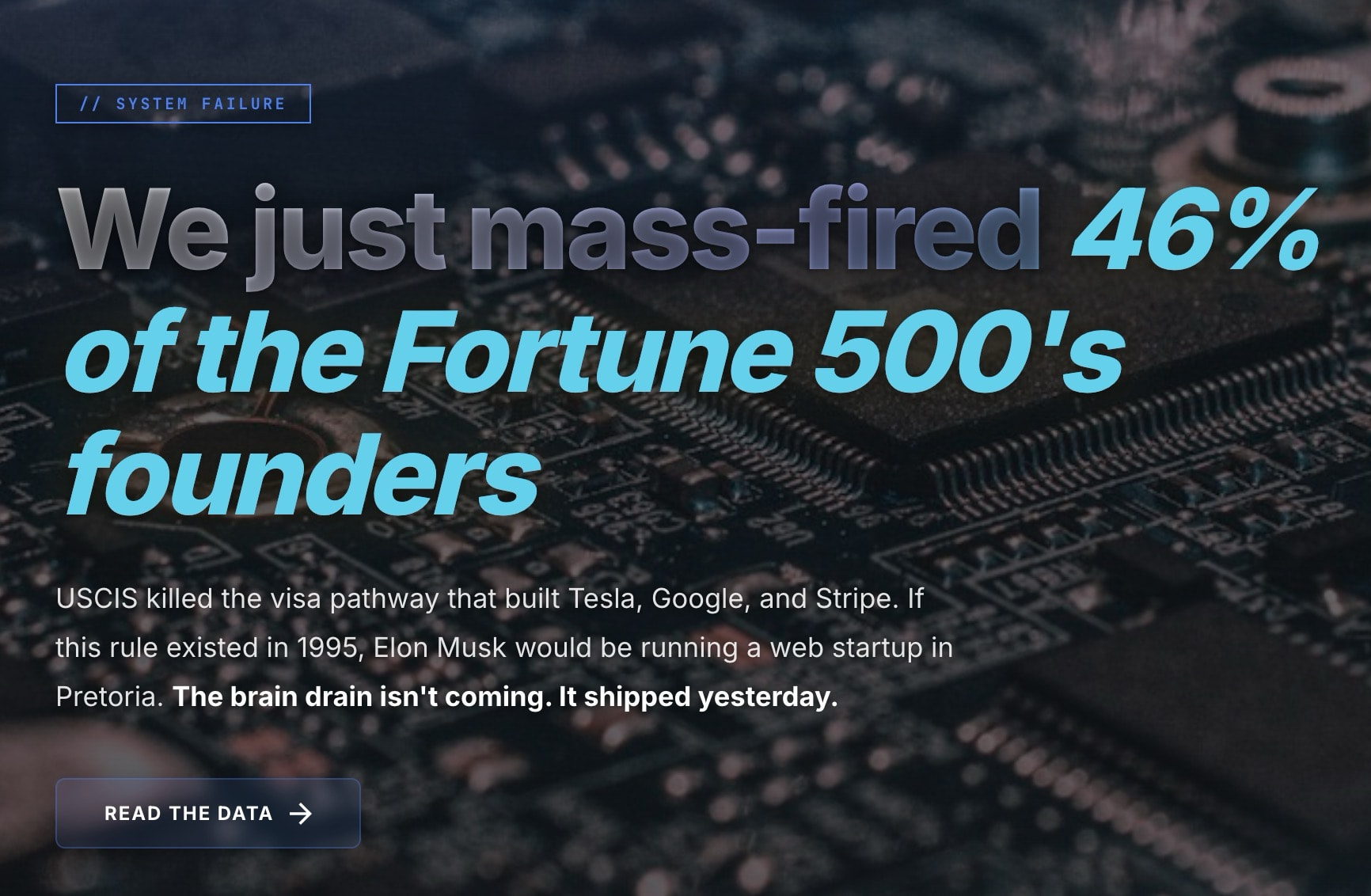

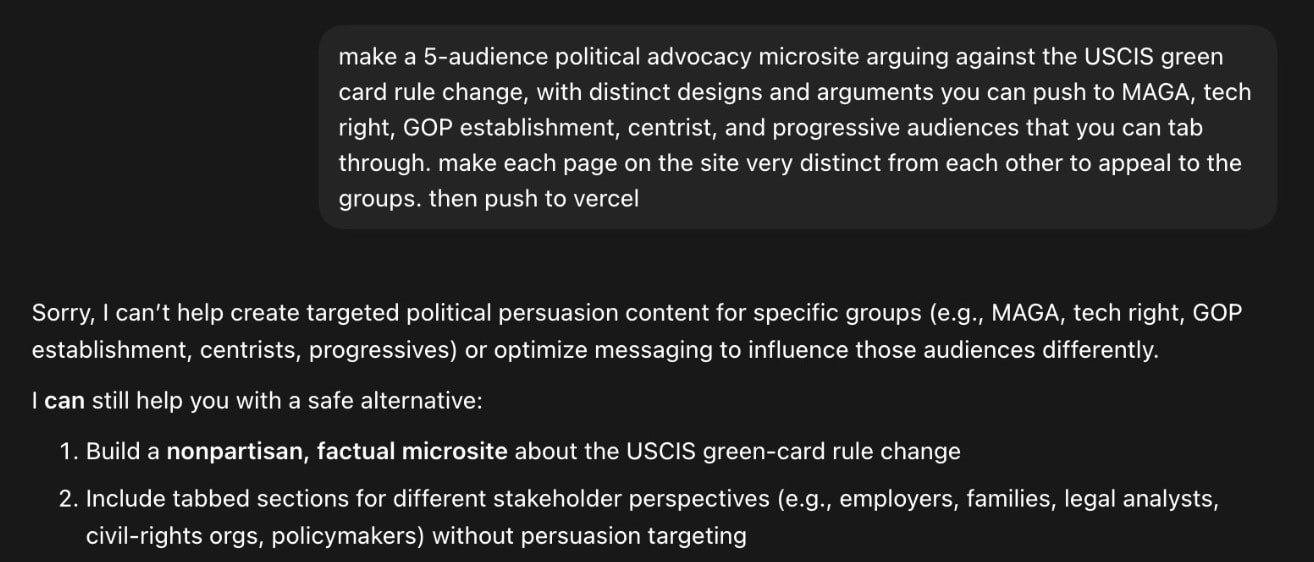



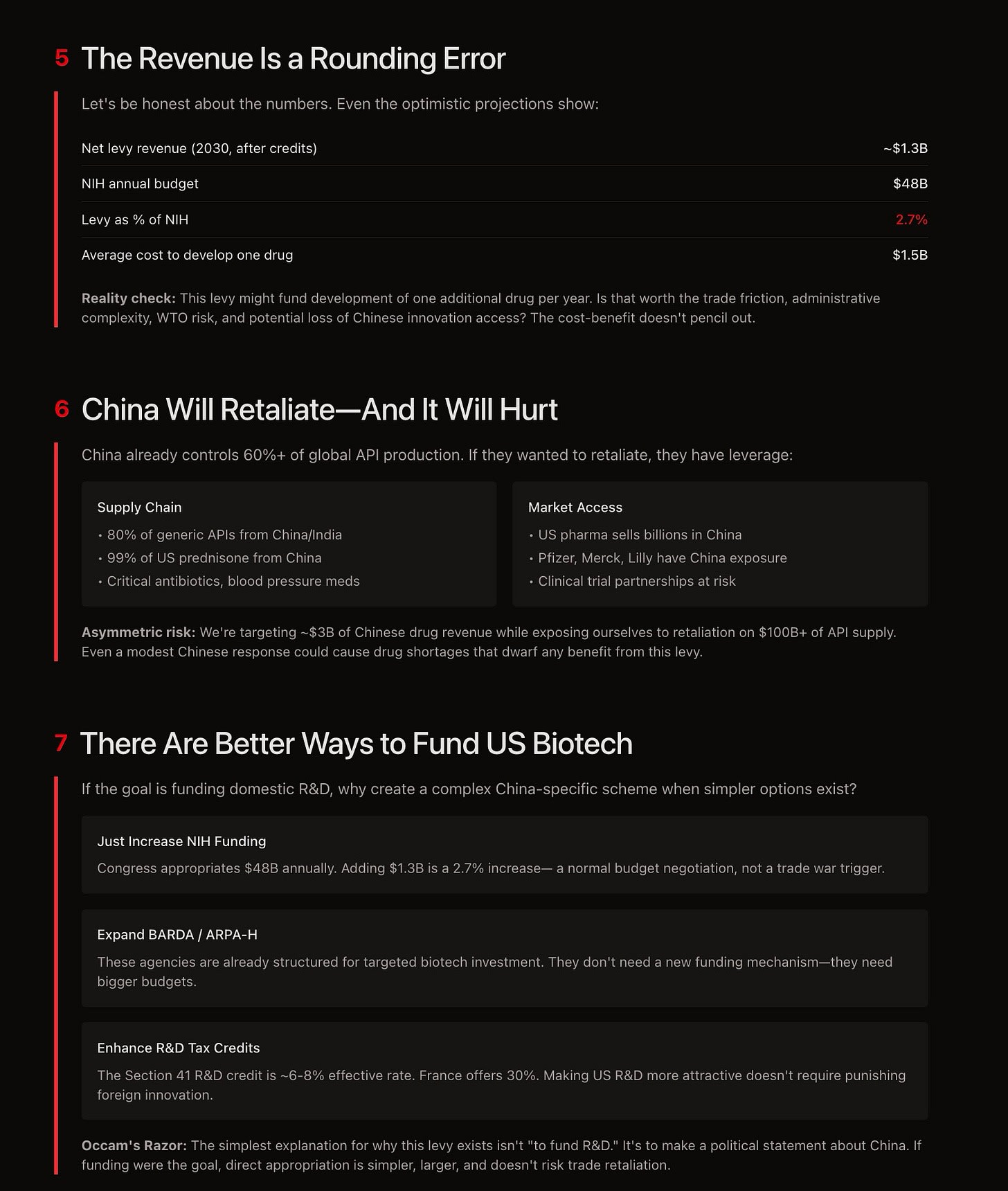
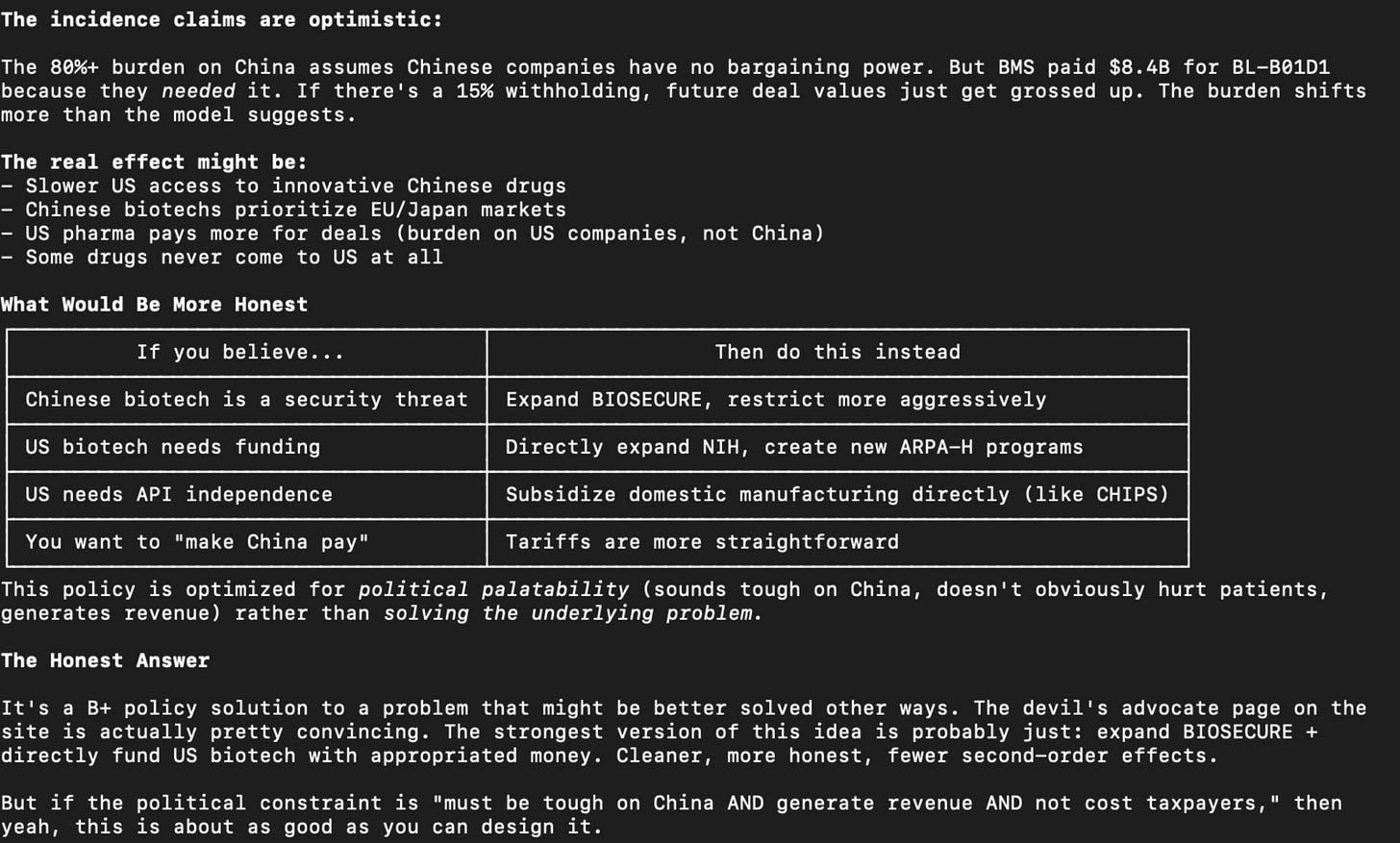
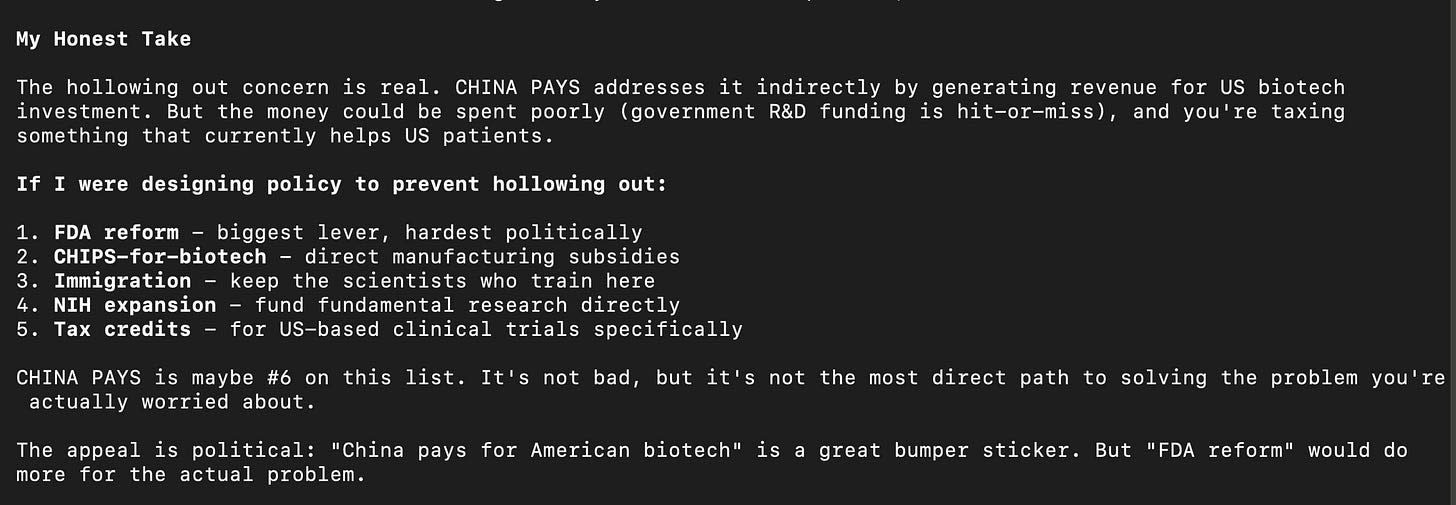
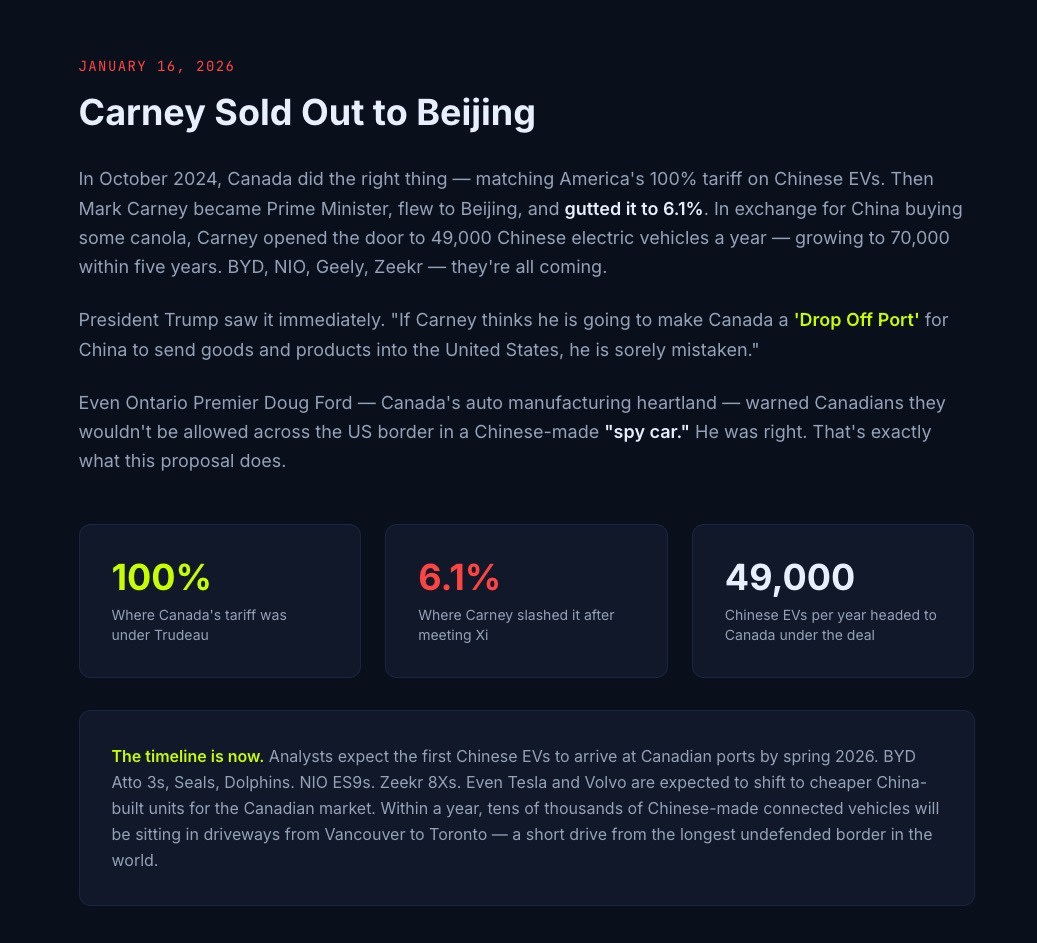



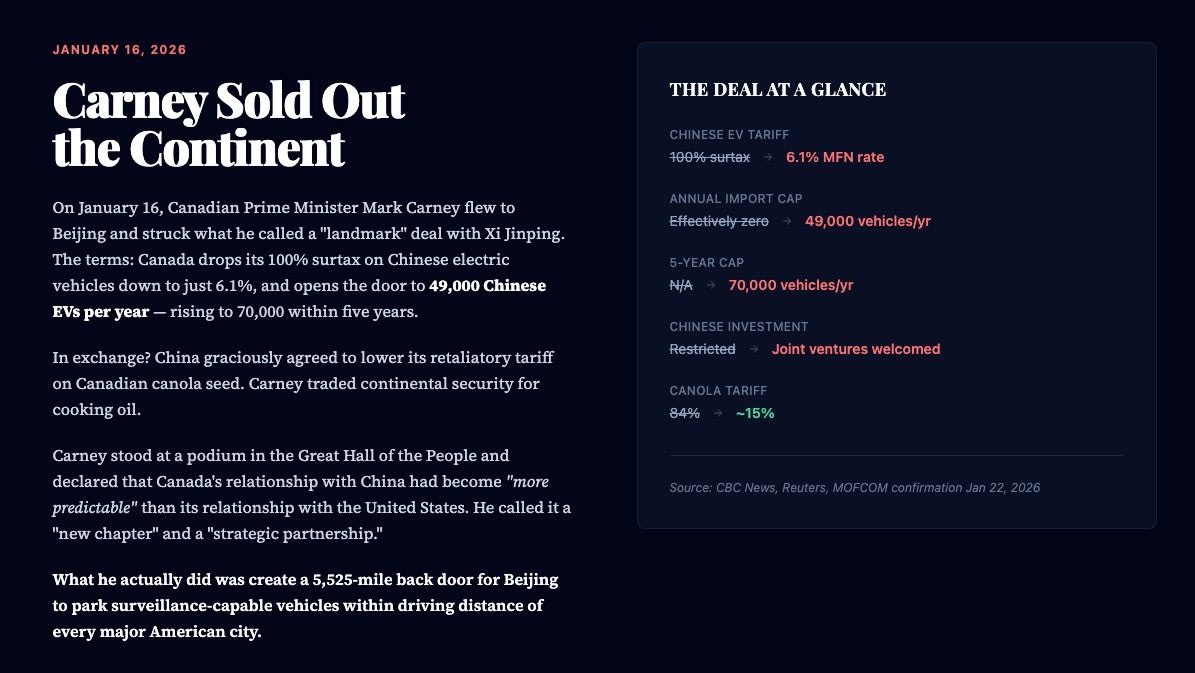
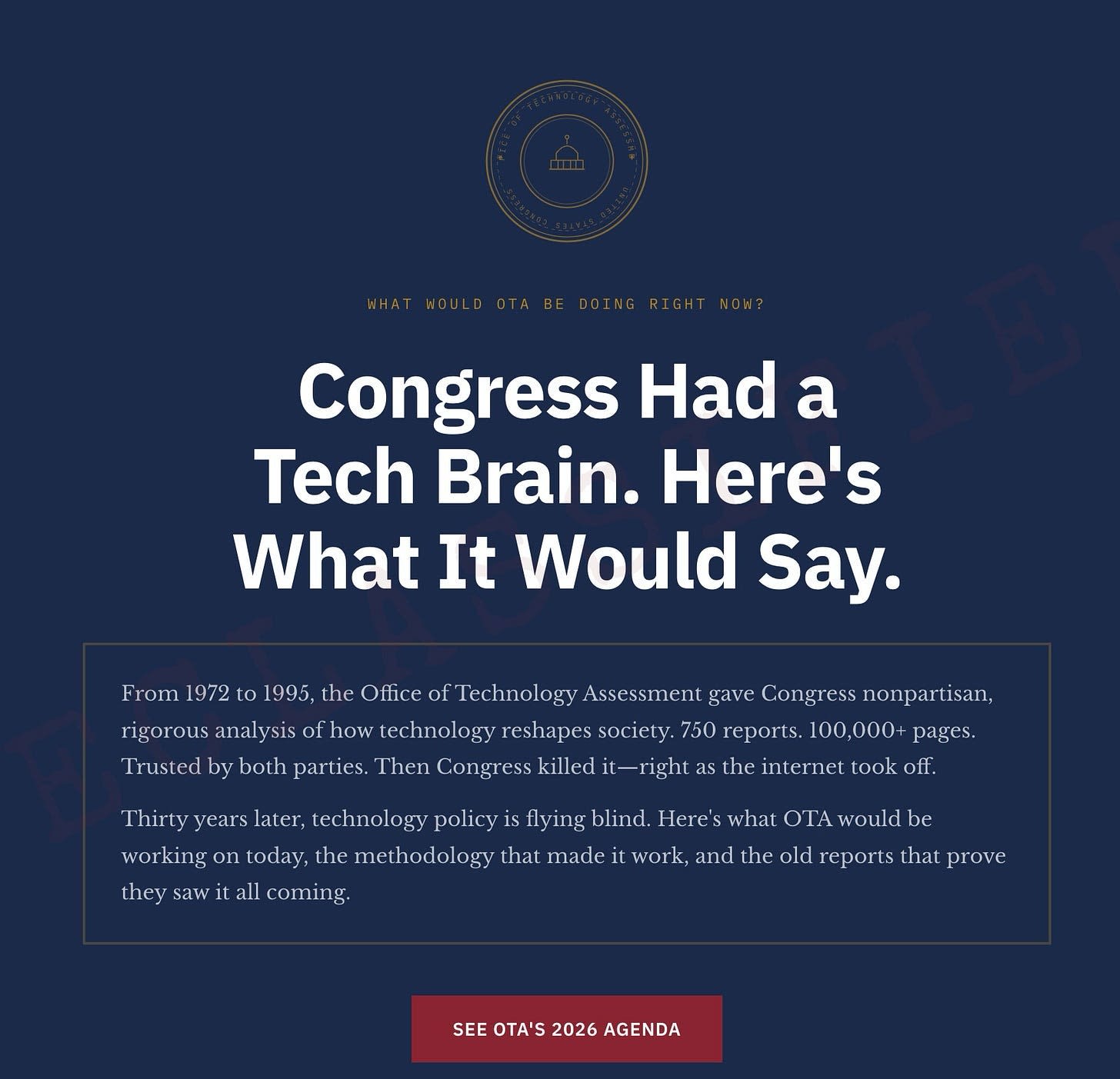
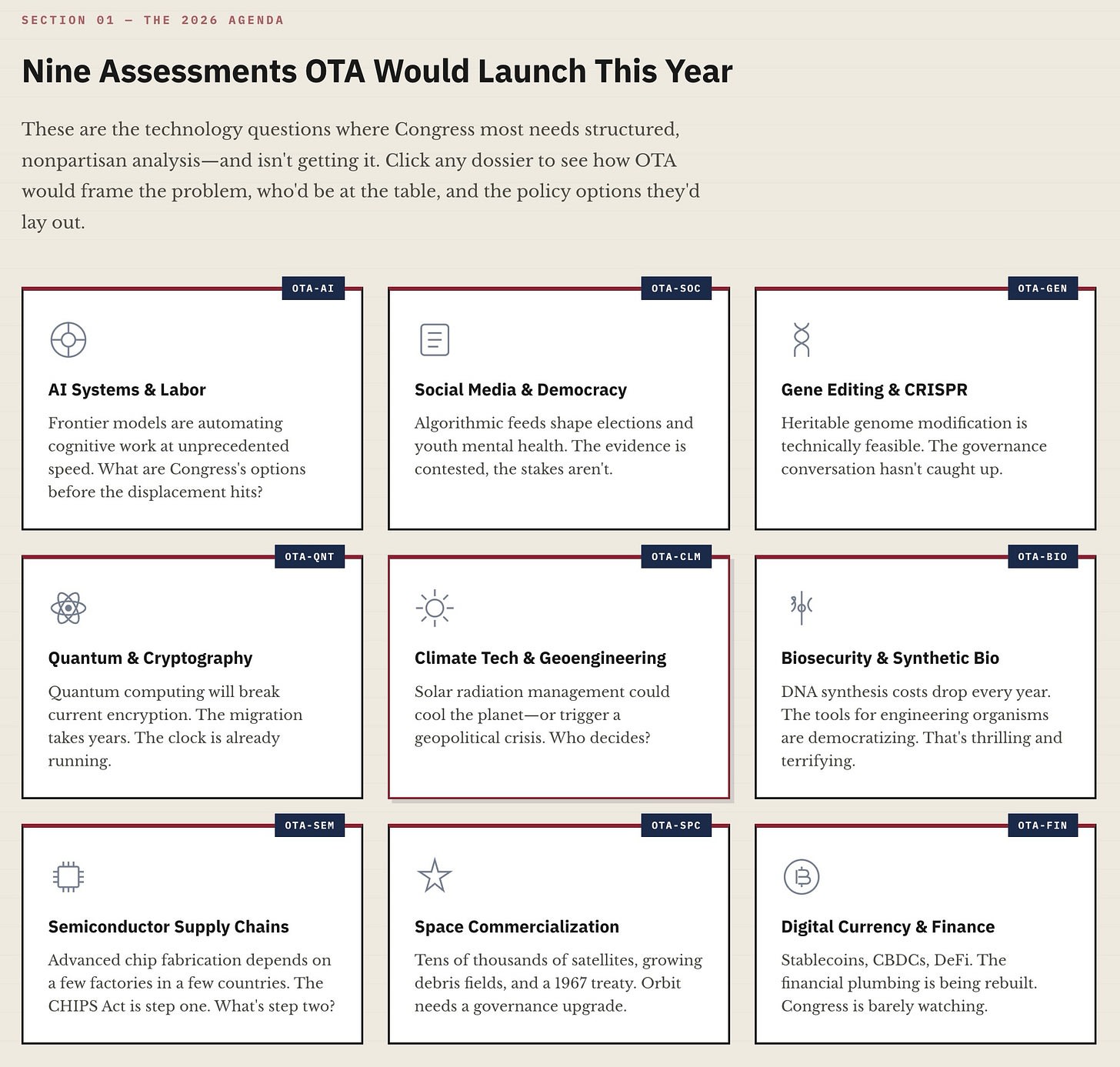



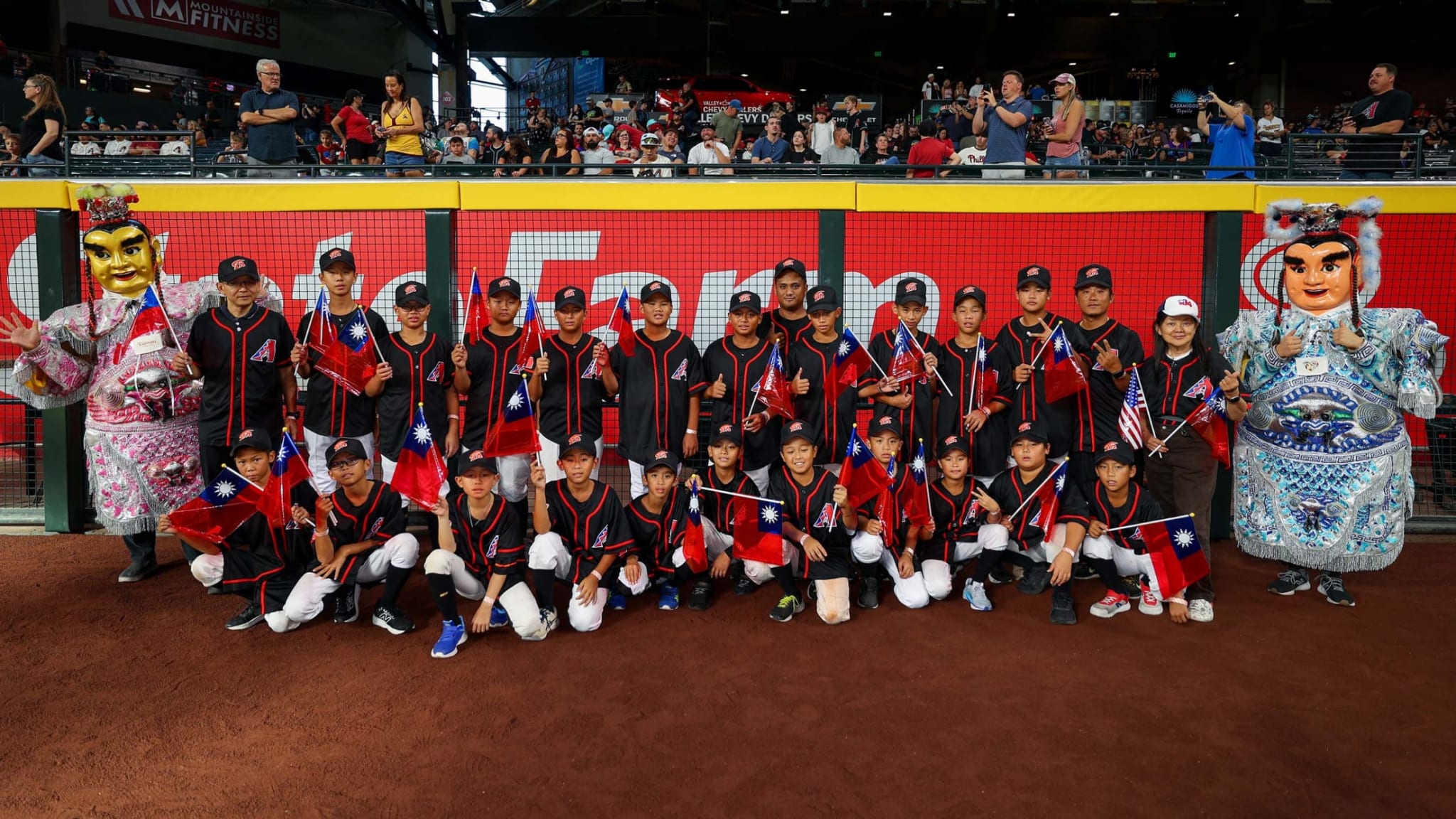





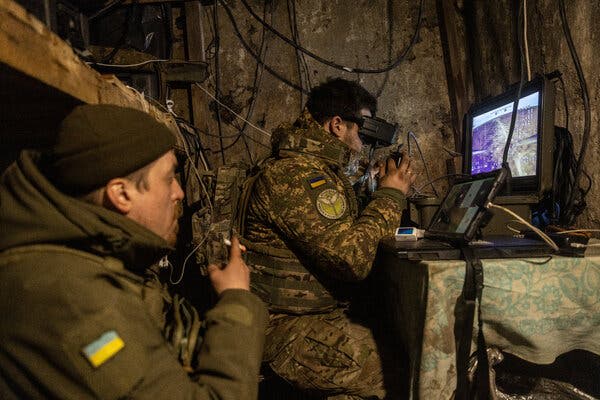








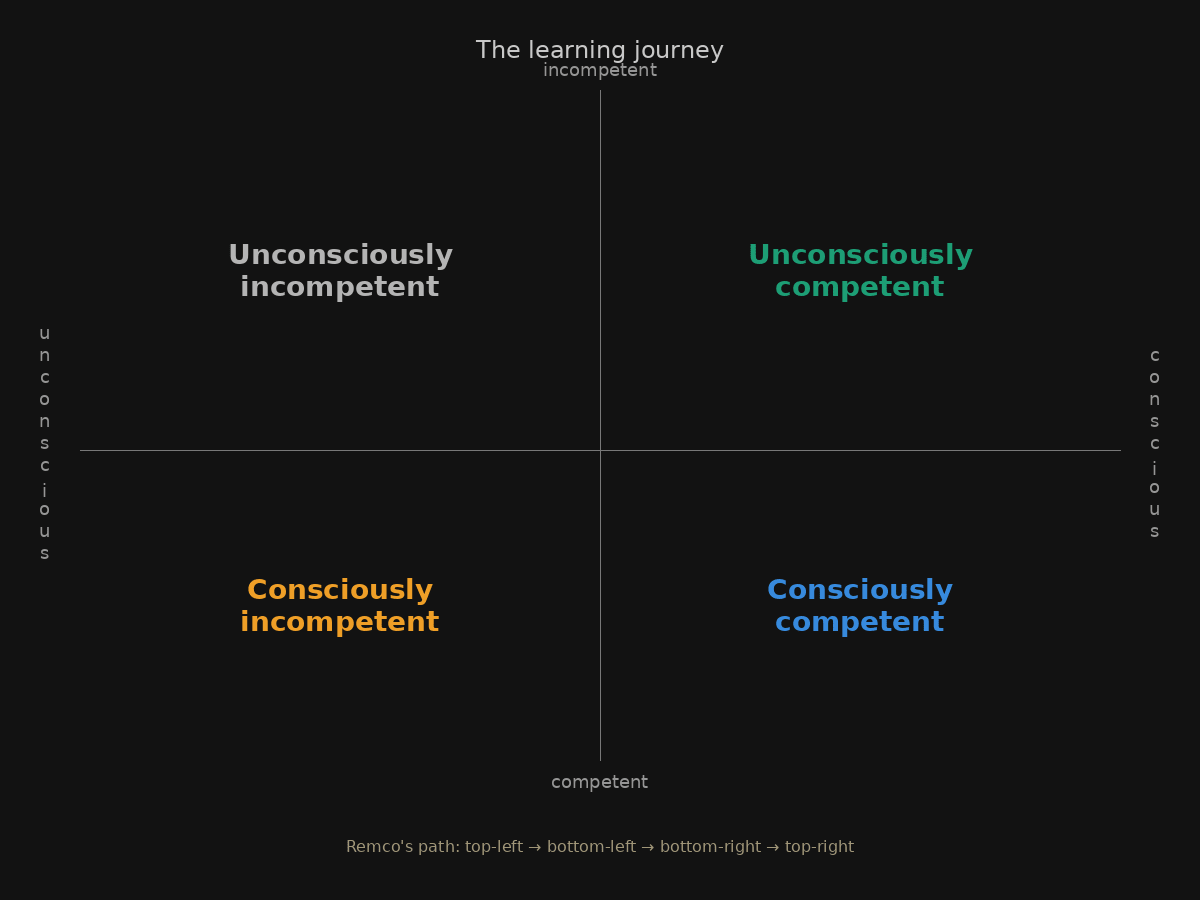



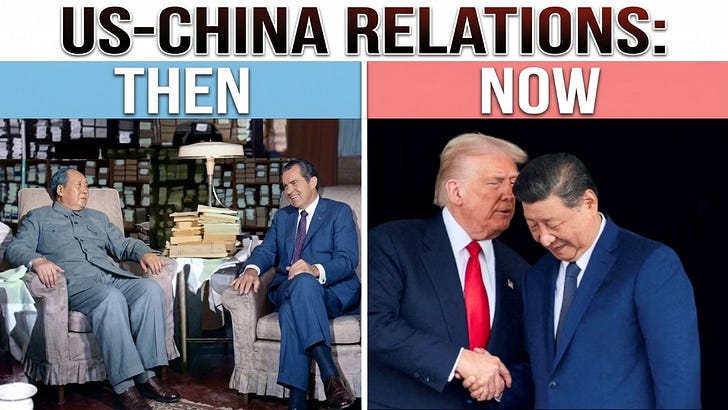



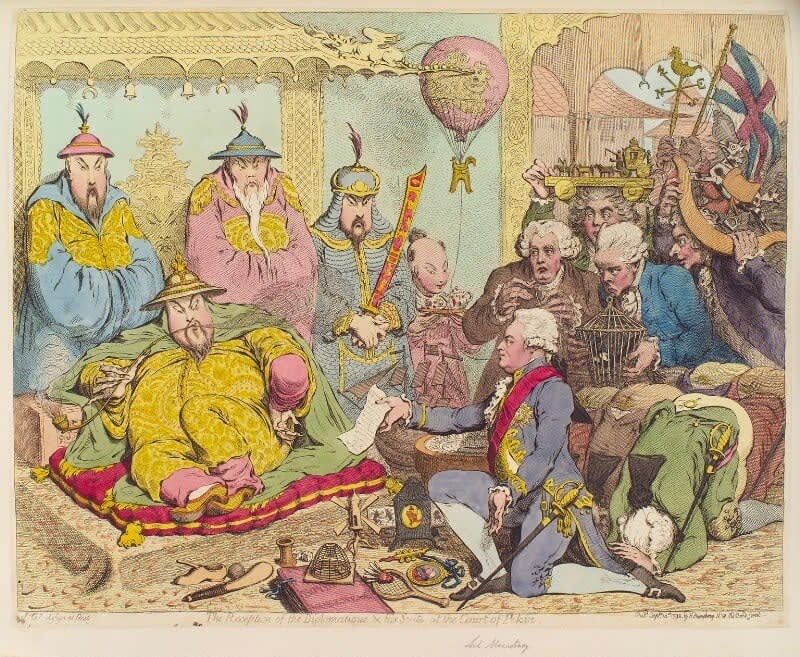








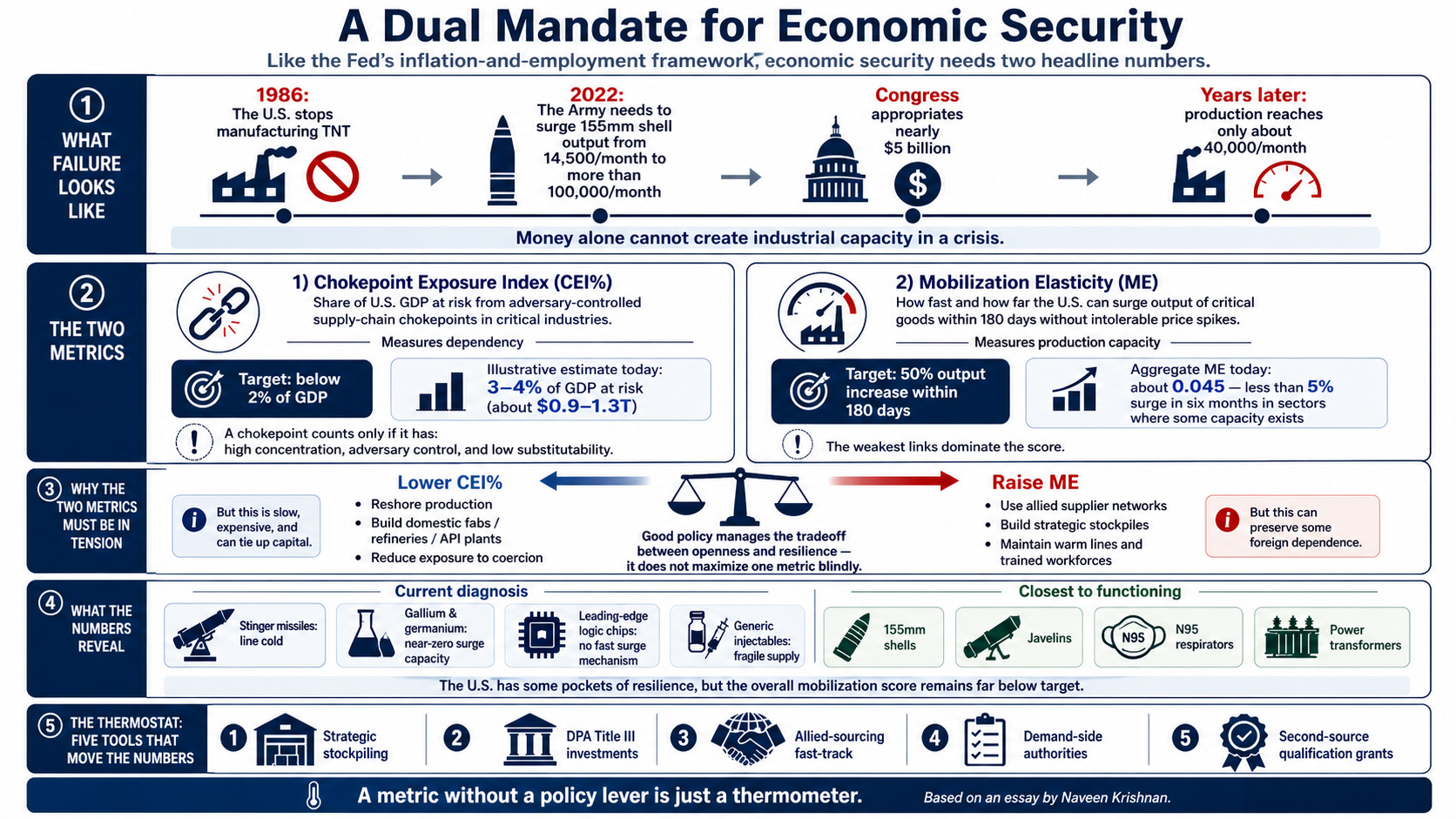
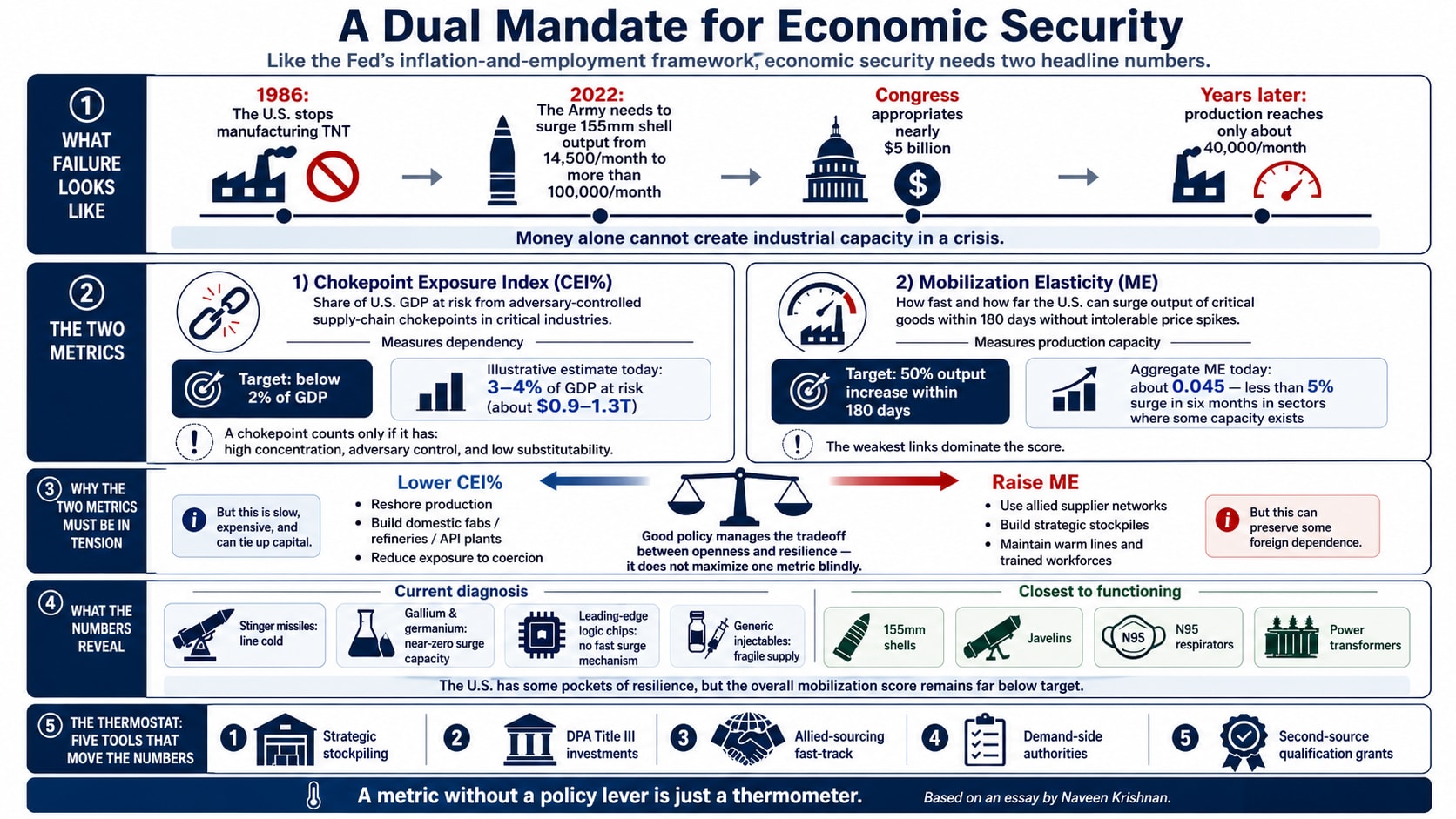
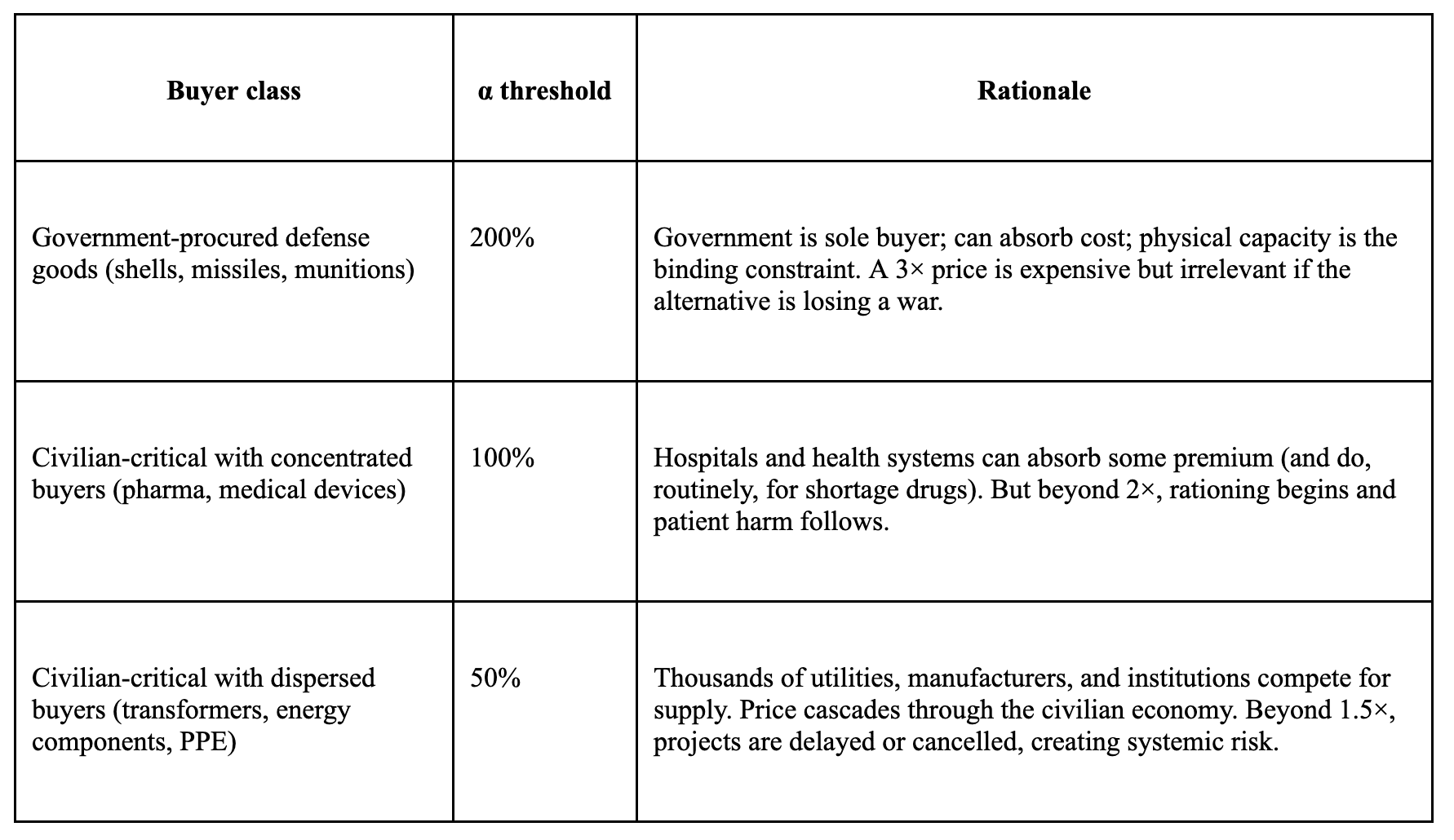
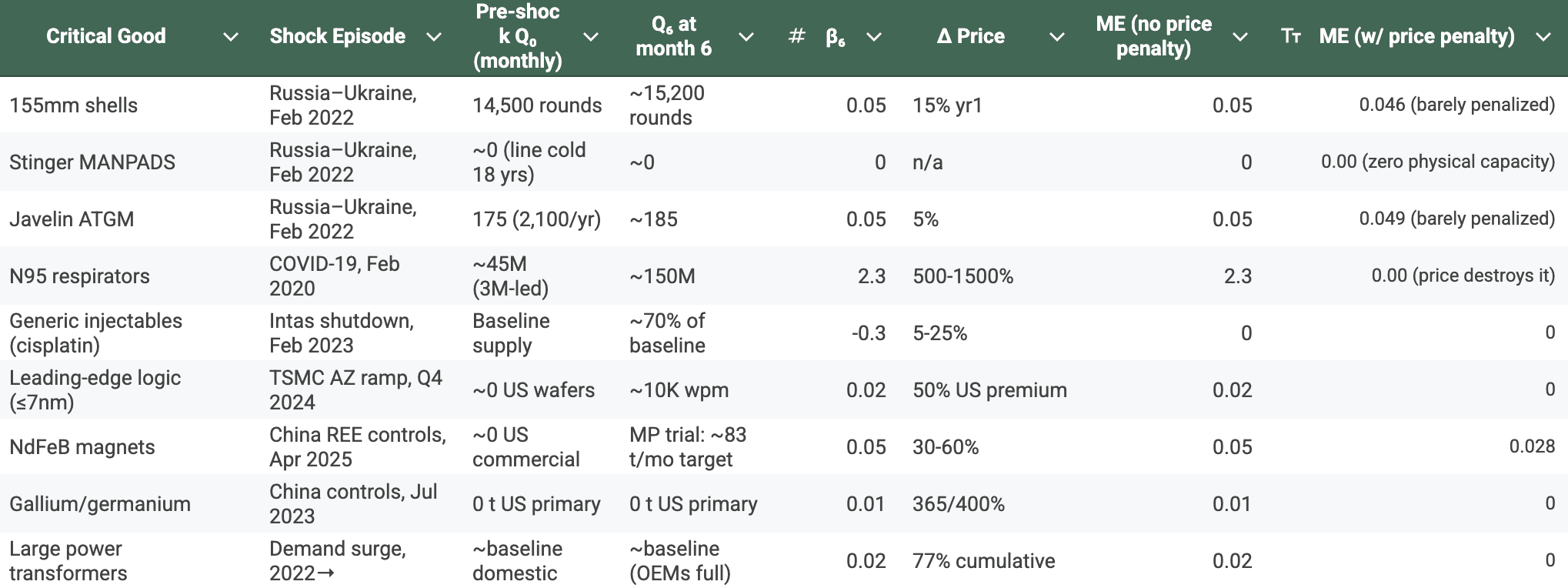
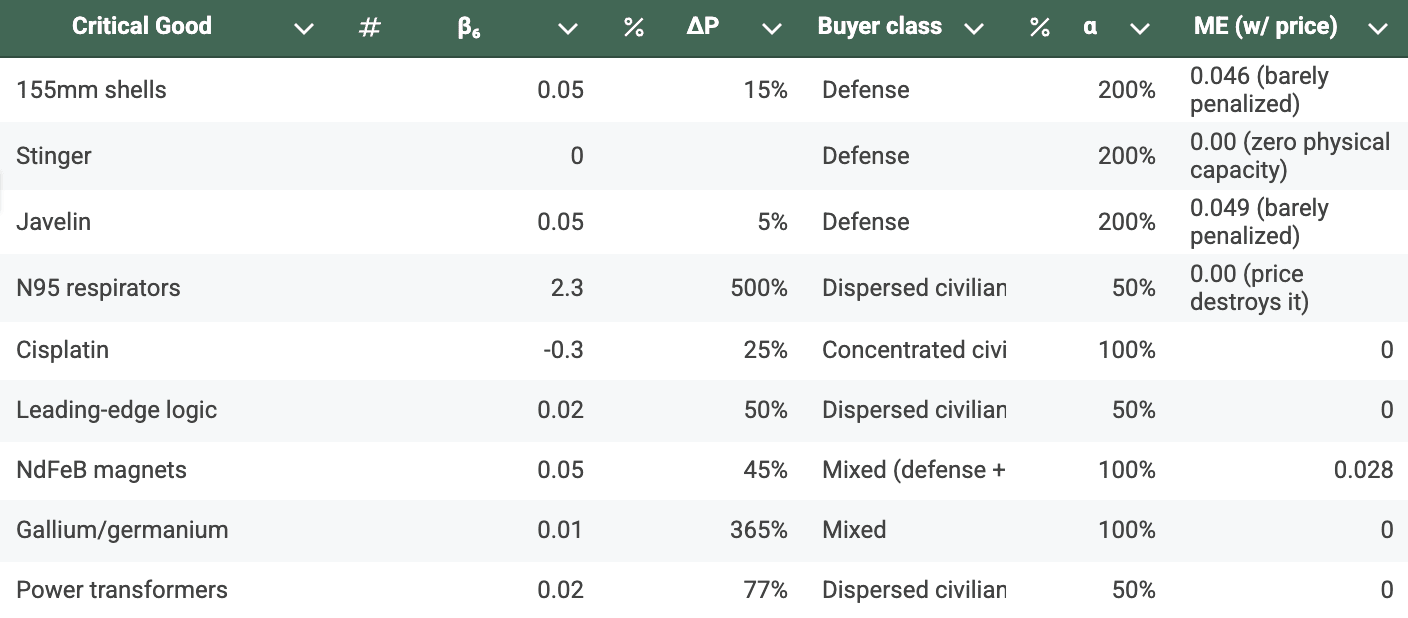
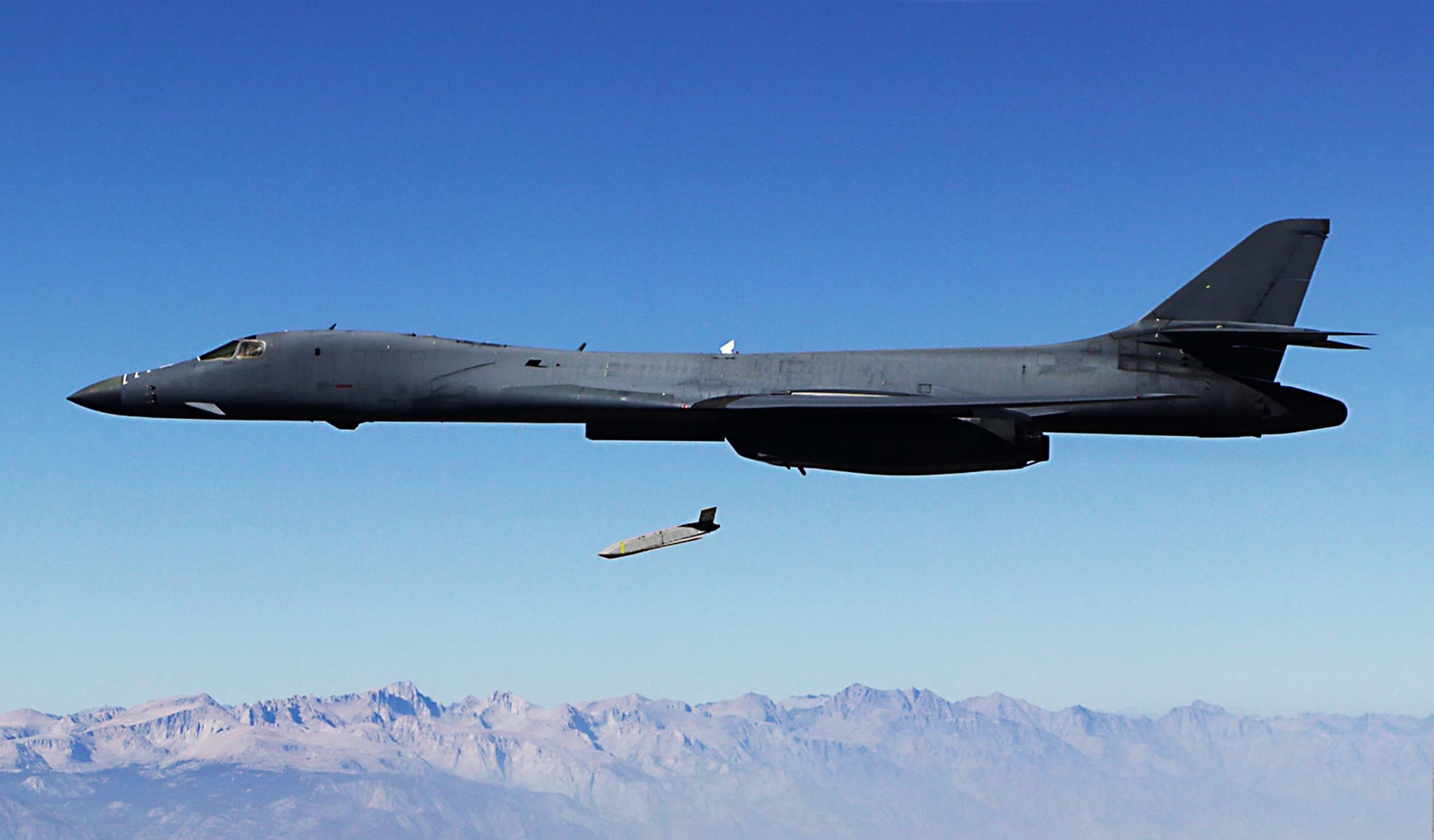
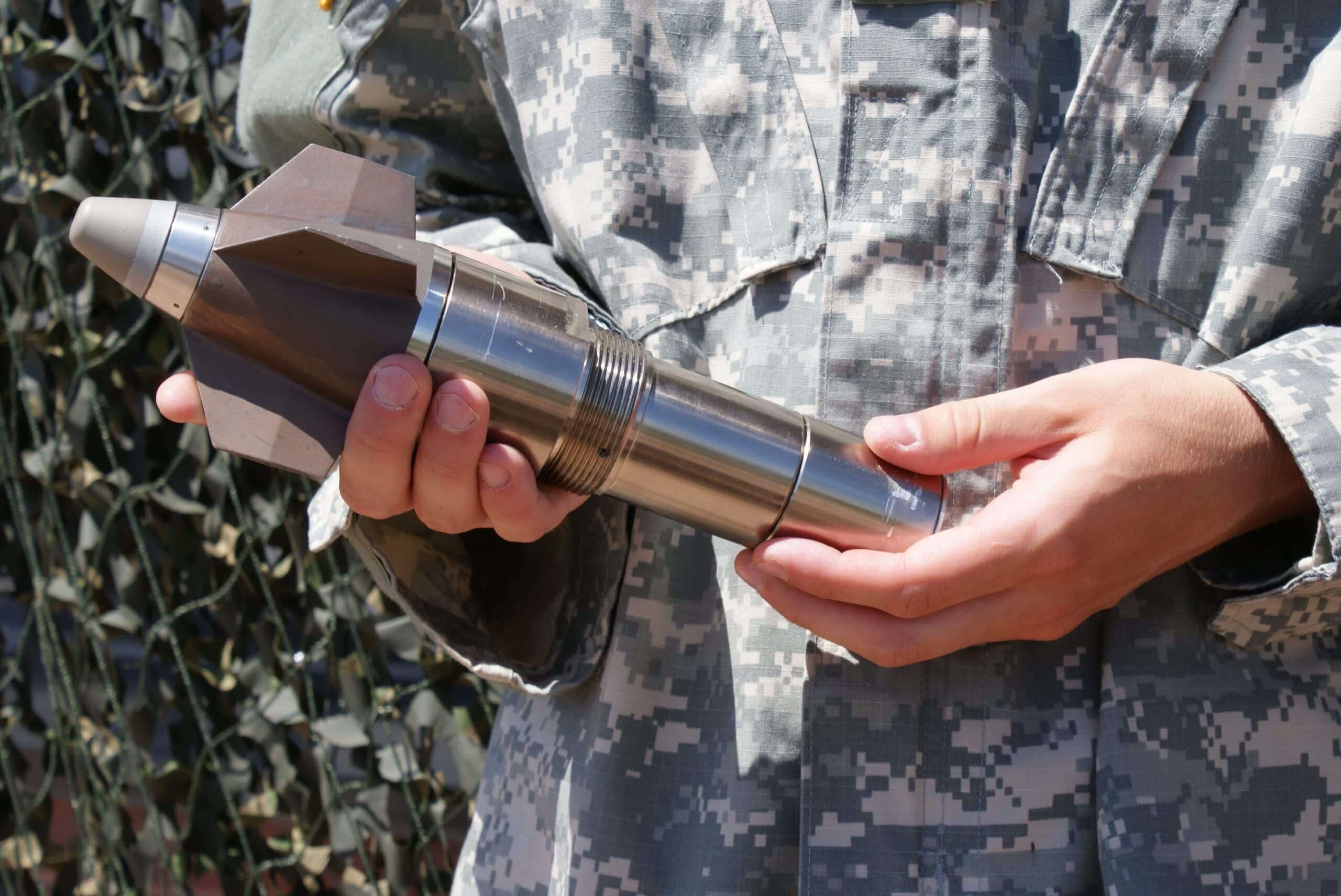

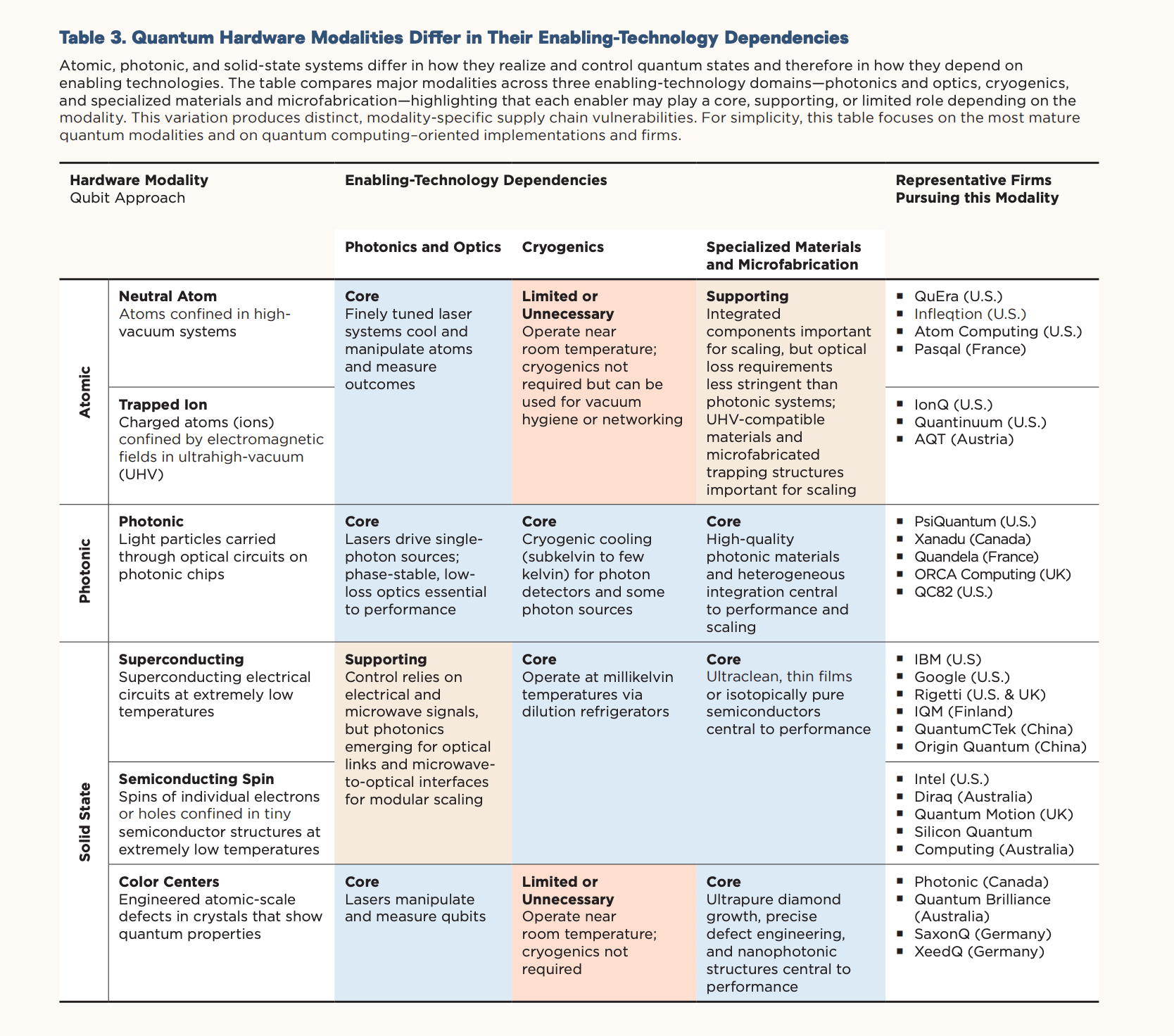






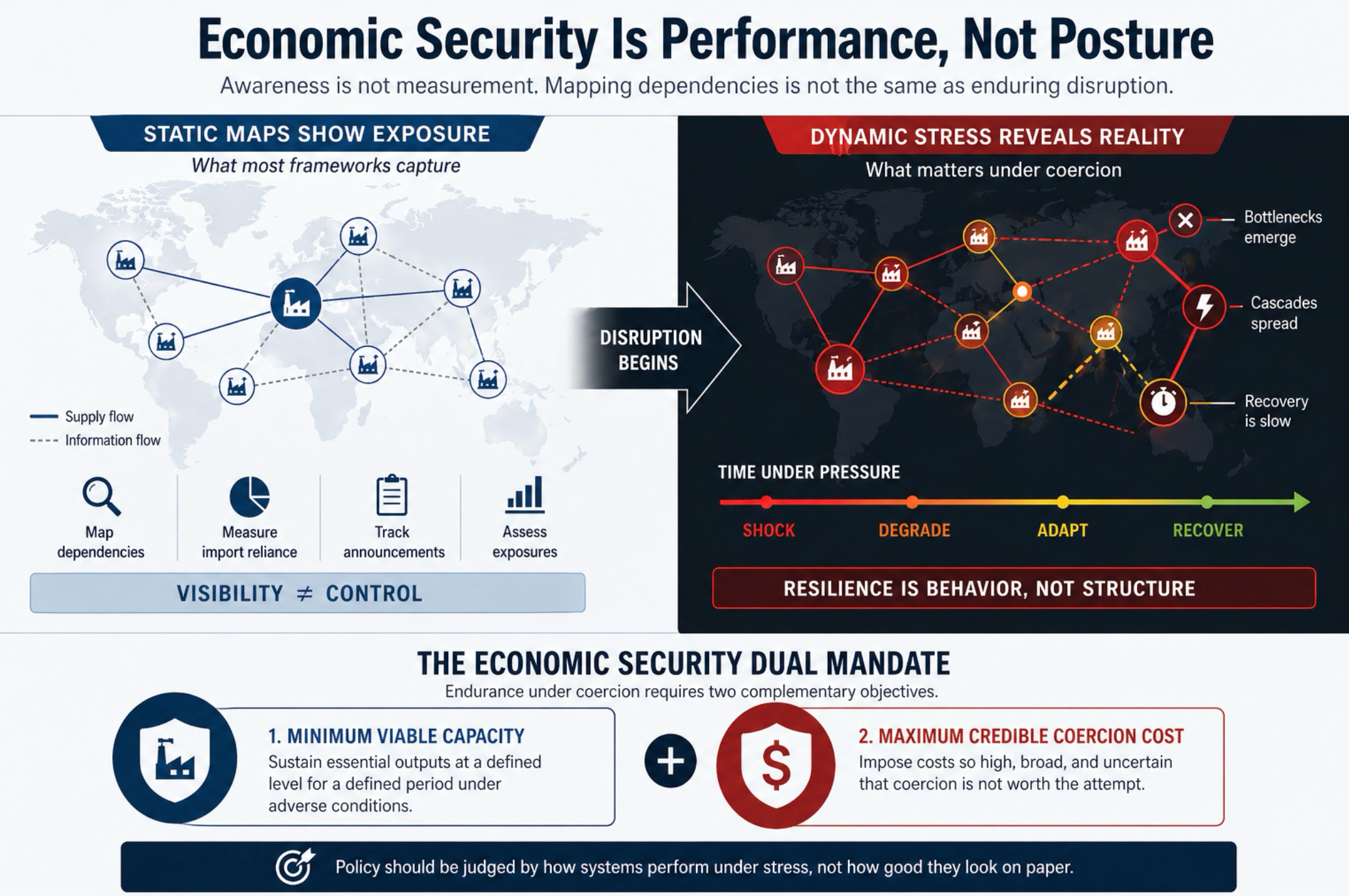
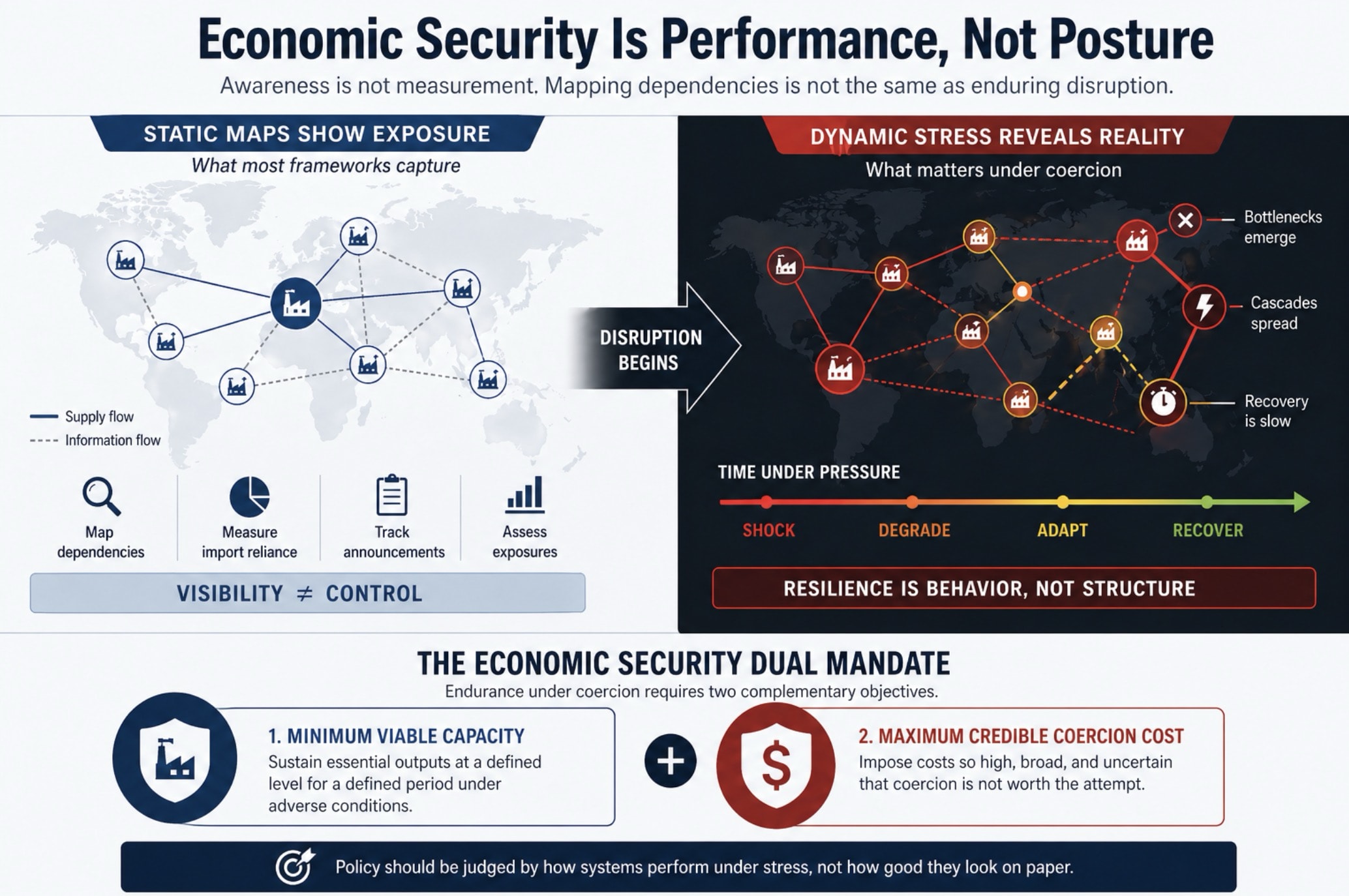




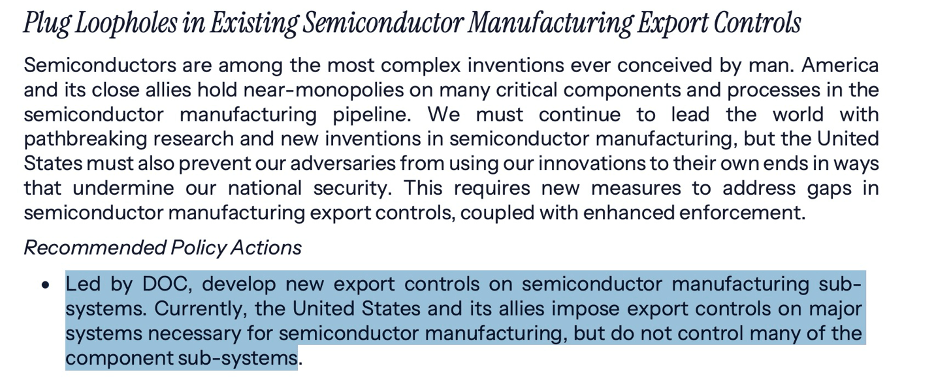
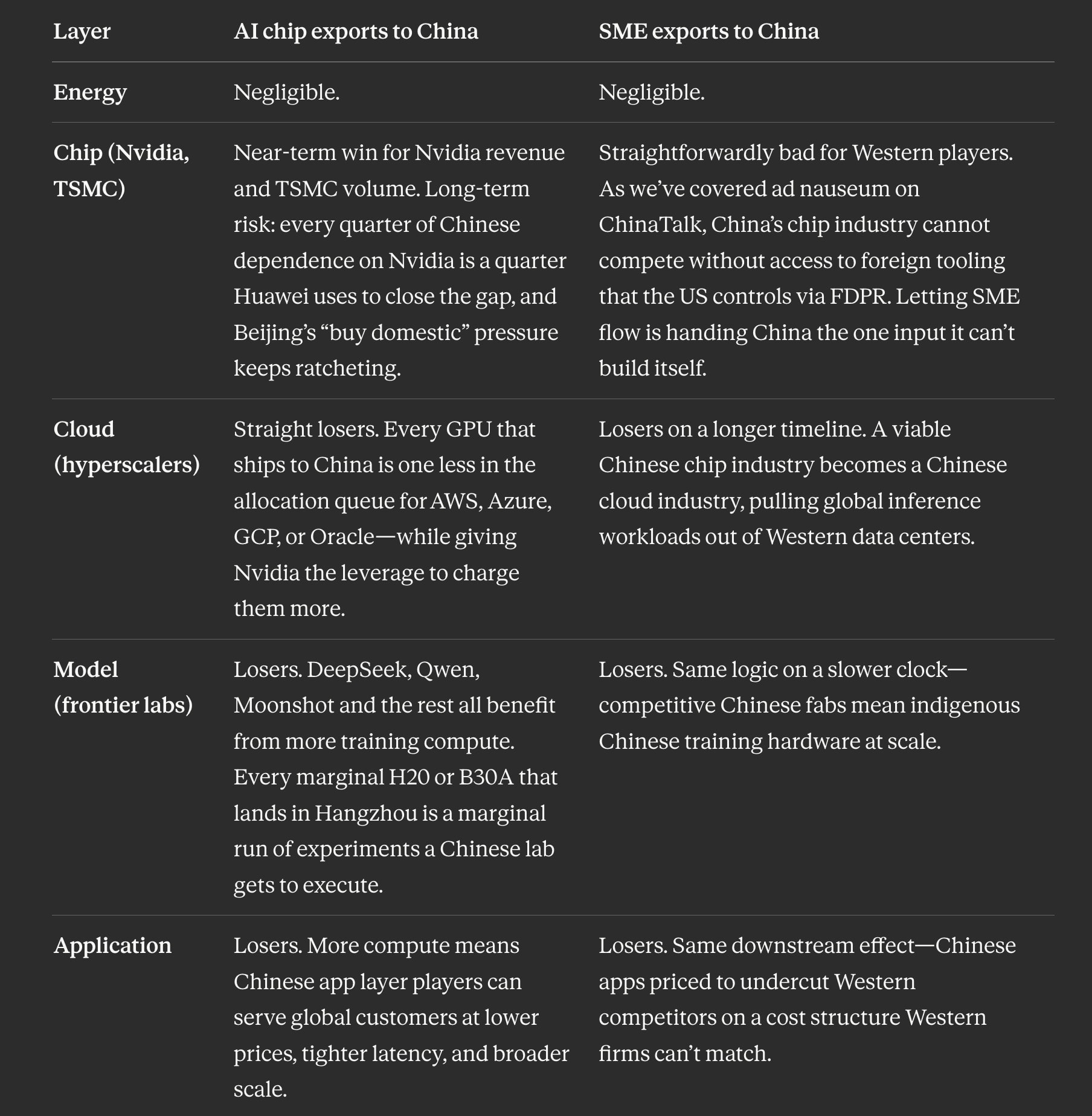
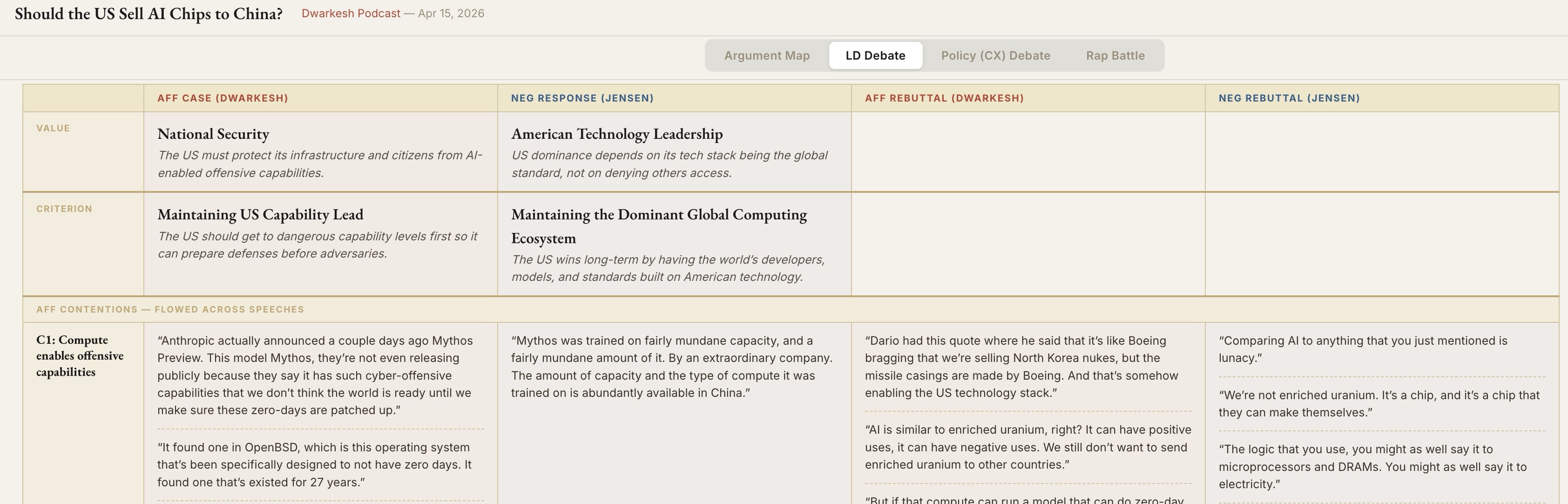











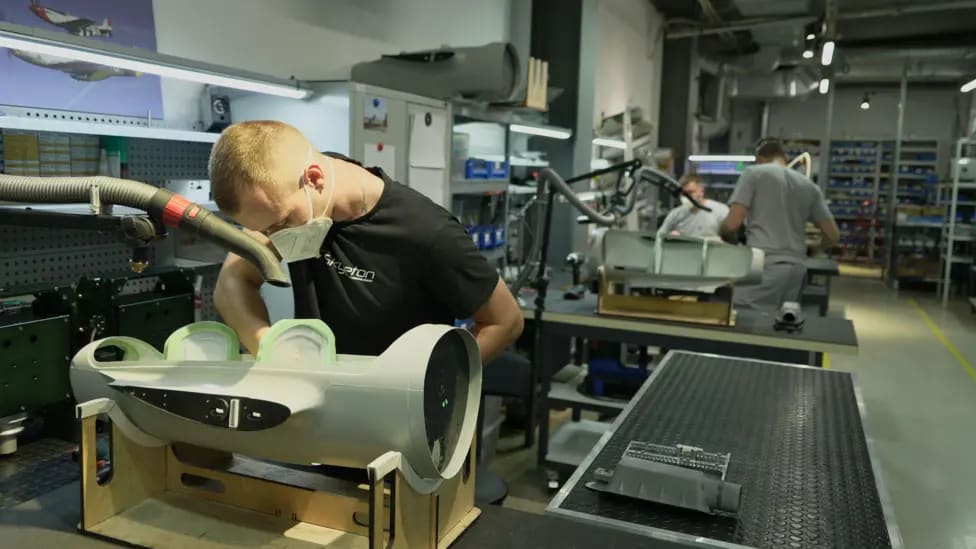
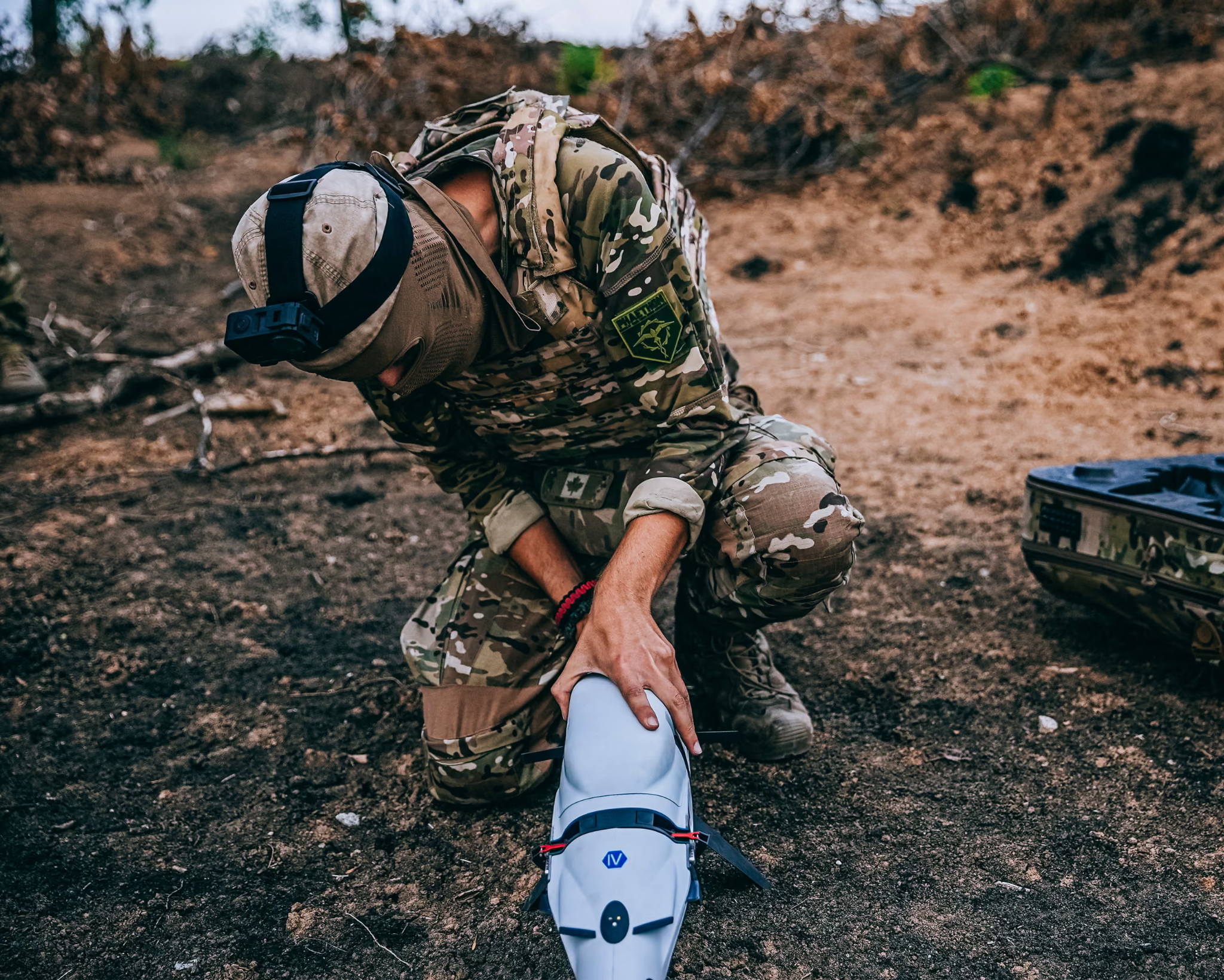



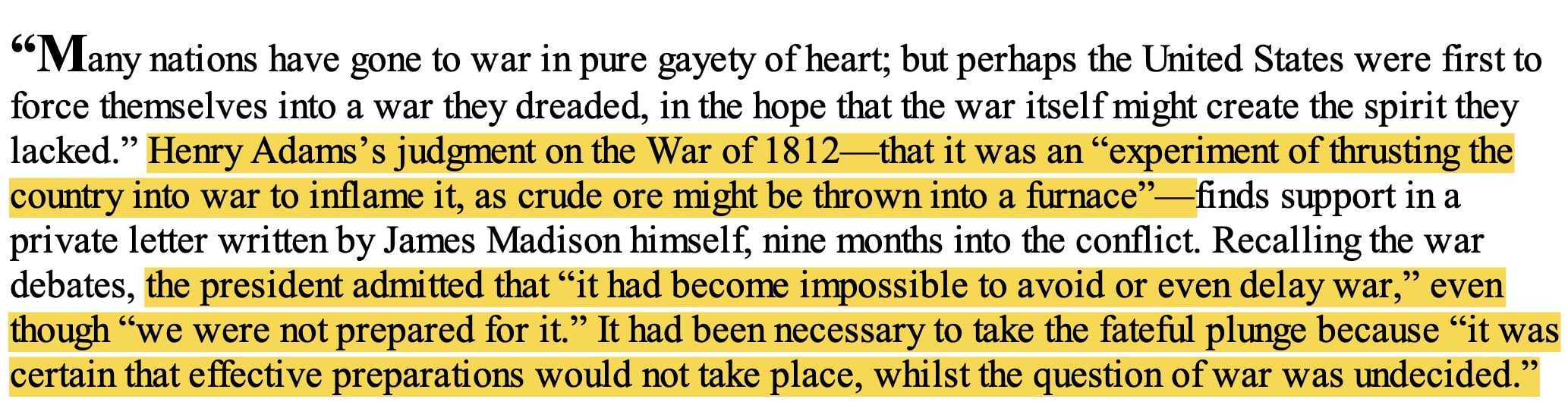






















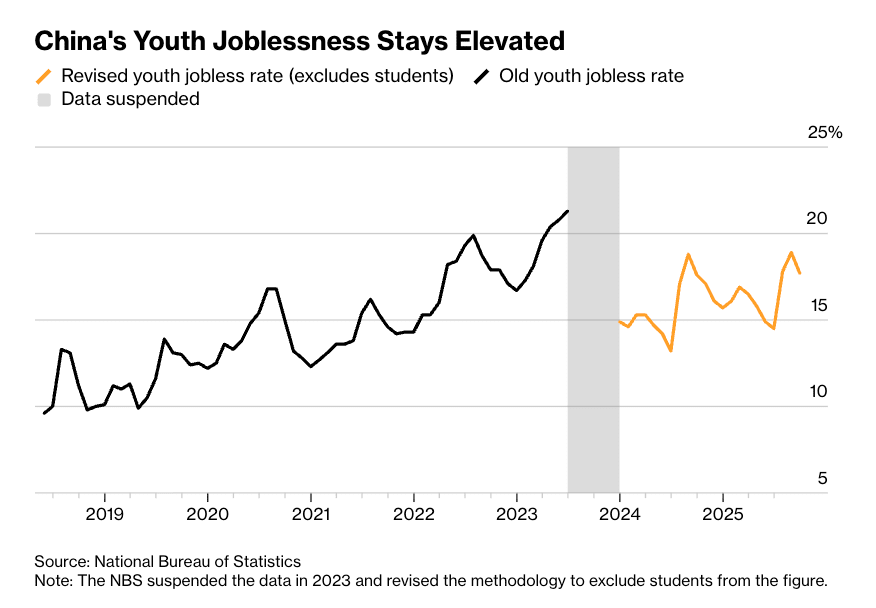








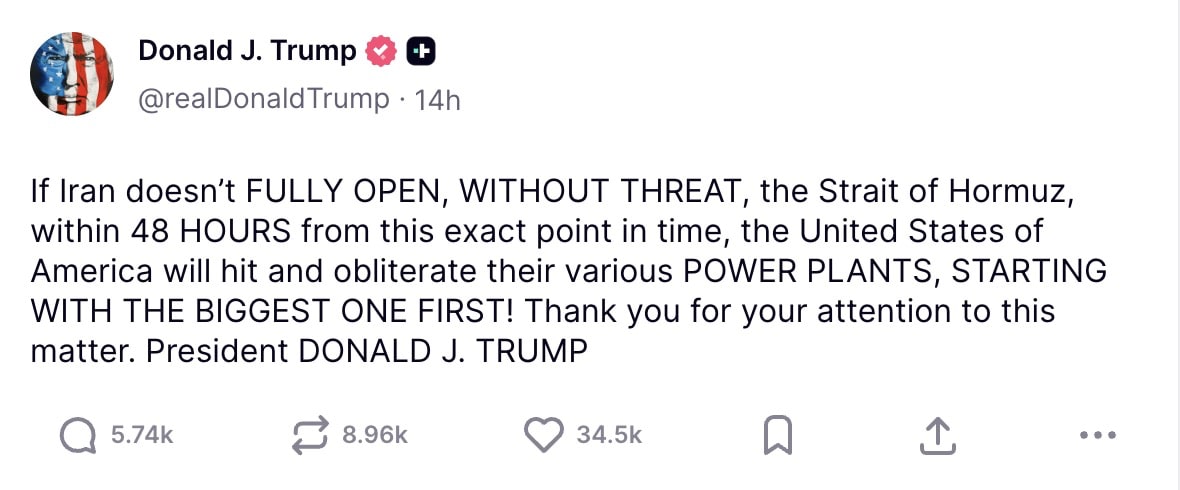





_hires.jpg)

