Login
Login

Silicon Oasis: How Abu Dhabi Plays Both Sides of US-China
Anonymous contributor “Masa Rick” returns to ChinaTalk. Last year, Masa Rick discussed China’s growing interest in the Middle East. Today’s report assesses how the UAE in particular has been responding China’s advances toward the region.
The United Arab Emirates has emerged as a formidable player in artificial intelligence, leveraging its immense financial resources, influence over the Global South, and a deliberate balance between the United States and China.
So when Emarati tech-investment firm MGX joined the likes of OpenAI, SoftBank, and Oracle in pledging $7 billion to Stargate, the move was perceived as the UAE pivoting away from Chinese partnerships and toward the United States. Has the swing vote officially been cast?
The reality is more complex. This report examines China’s strategic interests in the UAE, the UAE’s need for Chinese expertise, and whether Abu Dhabi is genuinely decoupling from Beijing or simply playing both sides to maximize its AI dominance. The evidence shows that the UAE is still probably playing both sides: leaning toward the US for access to chips, while hedging their bets with Chinese brains.
Current landscape: why is the UAE working with China?
The stereotype in China toward the Middle East goes something like this: “the deep-pocketed, oil-rich gulf countries will invest in anything that helps them diversify their economies away from oil.” But that stereotype obscures more than it reveals. The UAE, in particular, is not simply throwing money at Chinese firms. Rather, it demands the best technology, regulatory clarity, and alignment with its national priorities to boost its domestic growth (indigenization). Chinese PE/VC executives who go to Abu Dhabi to raise capital often lament the Western preference that Middle Eastern elites seem to have: after all, most Emirati elites were educated in the UK or other Western countries.
The UAE also prefers sustainability over quick results. As Hazem Ben-Gacem, former co-CEO of Investcorp (a global-investment firm backed by the Abu Dhabi sovereign fund Mubadala), put it, Emirati investment patterns can be summed up in three concepts: “patience,” “strategically distributed,” and “long term.” That approach hardly aligns with the interests of Chinese investors, who have little interest in ending up “trapped” in the UAE.
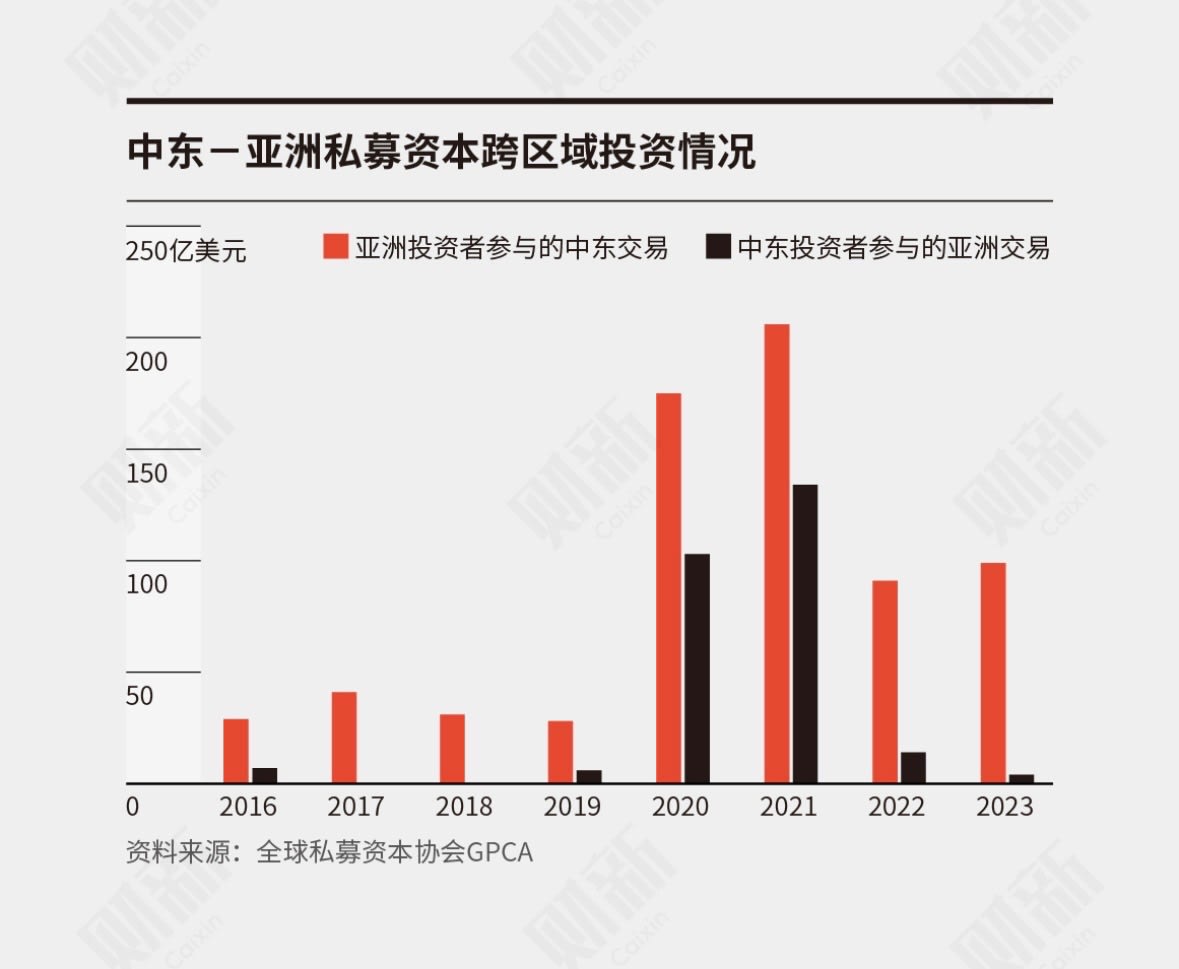
Even so, the UAE’s pickiness does not imply that it will stop engaging with China in developing its AI capacity. The UAE’s sovereign wealth funds, for example, are still prime targets for Chinese firms seeking capital — especially as China’s AI sector faces mounting financial pressures due to US sanctions and chip export controls.
In February 2024, Emirati AI firm G42 was prompted by the US government to divest from China — but that $105 billion investment was simply transferred to another Emirati investment vehicle called Lunate, an arm of the Tahnoun bin Zayed Al Nahyan’s business empire. Given Lunate’s significant investments in Chinese firms, a CSIS team led by Greg Allen argued in a January report that this spinoff represents more of a reorganization than true divestment. So far, their argument has aged well: in the past few weeks, Lunate’s holding in Alibaba has increased to 30.48%.
The UAE government has also continued its engagement with China in the telecom sector — which doesn’t exactly scream divestment from China, either. According to the CSIS report,
Huawei and UAE’s state-owned telecommunications company e& launched a 5G cloud edge computing platform called 5G Edge Box. The announcement came just months after e& launched a similar 5G edge cloud computing platform with Microsoft.
The UAE and other nondemocratic gulf states are also prime targets for Chinese cooperation because of their shared disregard for environmental regulations and human rights (exemplified by recent China-UAE joint military exercises in Xinjiang of all places). Rather than navigating Western restrictions, China and the UAE can remain focused on “pragmatic cooperation” — as well as extending non-Western tech capacity (like building data centers) and norms (like setting data-security standards) to the Global South.
The UAE, in other words, is no bystander in the global AI race.
Is the next DeepSeek going to be Emirati?
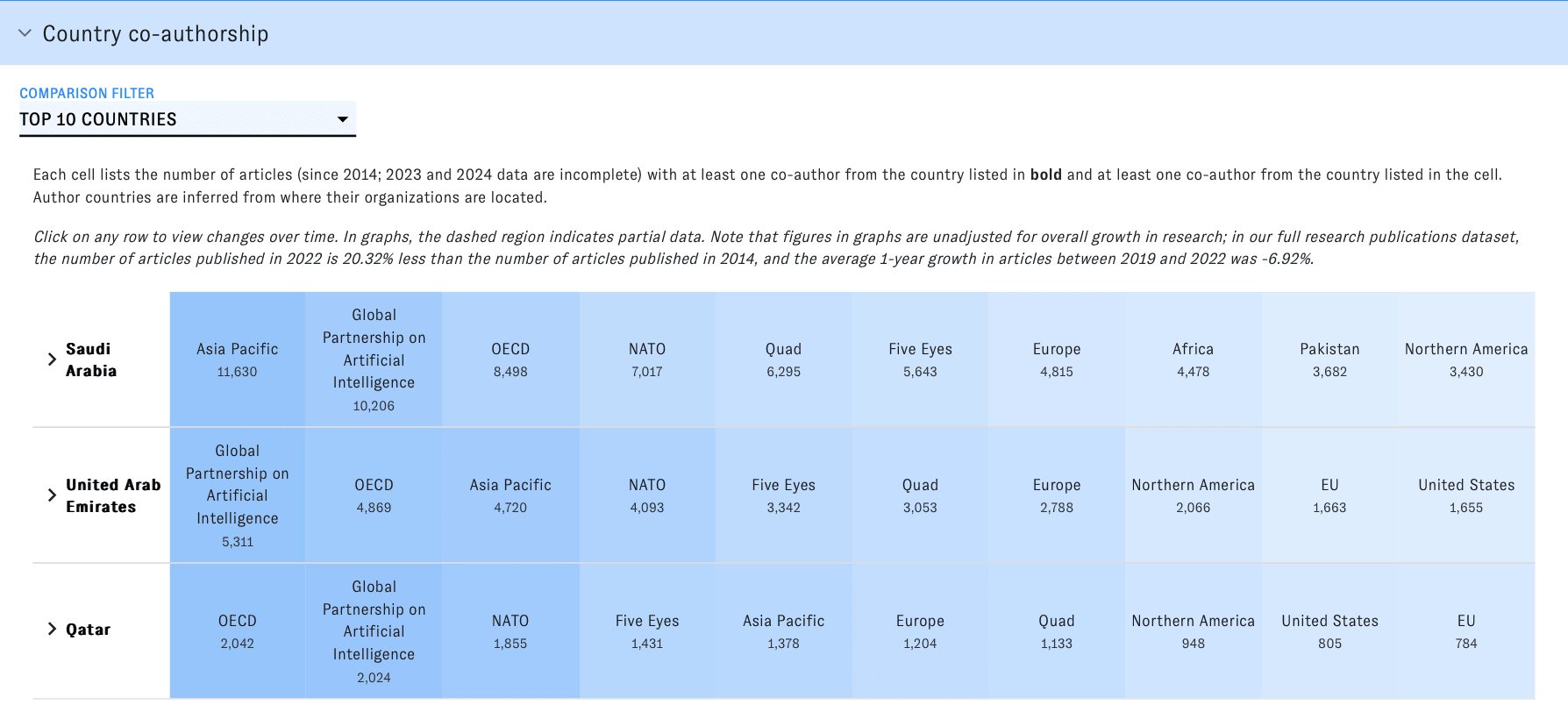
Investment is only half the picture. China and the UAE show no signs of slowing down their academic and research cooperation — as evidenced by Mohamed bin Zayed University of Artificial Intelligence (MBZUAI), the only AI institution in the world where Chinese researchers dominate the academic roster.
The jury is still out on whether MBZUAI’s AI investments will ultimately boost the UAE’s tech capabilities. But in light of DeepSeek’s success with a small team of engineers from a very short list of Chinese universities, it’s not farfetched to imagine a major leap in AI innovation coming out of MBZUAI in the near future.
Since its founding in 2019, MBZUAI has been massively alluring to top-notch Chinese scholars for several reasons:
Chinese researchers, especially in STEM, face growing US scrutiny over espionage and national-security concerns. MBZUAI lets US-trained Chinese researchers work without these constraints.
MBZUAI has resources. A Chinese source claims MBZUAI “is equipped with top-tier GPU facilities, including over 800 NVIDIA GPUs, 400 A100 GPUs, and 400 V100 GPUs.”
And MBZUAI has Eric Xing, the university’s president since 2021 and a leading voice in ML research. With someone of his stature at the helm, his position not only attracts significant talent from top-tier institutions, but also legitimizes UAE’s intentions. For example, Xing was recently spotted in Paris, meeting French officials and forging connections with French institutions to launch their AI initiatives in Europe.
MBZUAI has assembled a star roster of Chinese researchers, some of whom were Professor Xing’s advisees and others well-known within their respective fields. Of the 77 current faculty members on their directory, 25 are from mainland China, and three more are from Taiwan — including a Taiwanese-German “celebrity” scholar. The inclusion of Taiwanese professors seems to be highly intentional, too. Tei-Wei Kuo 郭大維, one of the Taiwanese professors, recently resigned from the board of Foxconn; now he can bring his insights on semiconductor supply chain management to Abu Dhabi. (A full list of all current Chinese and Taiwanese faculty at MBZUAI is produced at the end of this article.)
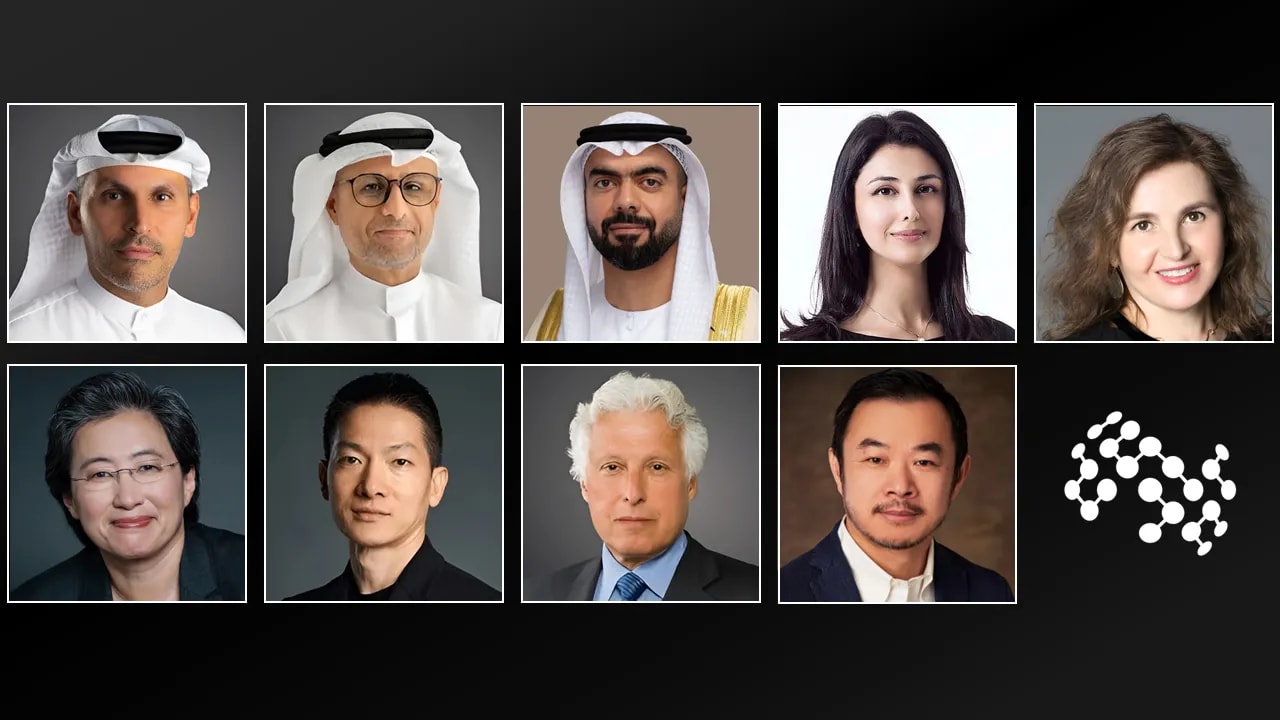
The composition of MBZUAI’s board of trustees also provides insights into UAE’s intentions on AI innovations: it’s a top-down initiative with immense financial resources and unlimited partnership possibilities (as seen by, for instance, Lisa Su’s entry and Li-Kai Fu’s exit).
Khaldoon Khalifa Al Mubarak (chair)
Corporate Positions:
Managing Director and Group Chief Executive Officer, Mubadala Investment Company (sovereign fund)
Board Positions:
Vice Chairman, MGX
G42 (Board Director)
Abu Dhabi Commercial Bank
Emirates Global Aluminium
Abu Dhabi National Oil Company (ADNOC)
Emirates Nuclear Energy Corporation
New York University Board of Trustees (instrumental in establishing NYU Abu Dhabi Campus as well)
Governmental:
Chairman of the Executive Affairs Authority ( Serving as an Advisor of MbZ, President of UAE)
Presidential Special Envoy to China
Jassem Mohamed Bu Ataba Al-Zaabi
Board Positions:
Vice Chairman, e&
Chairman, Modon Holding PJSC
Vice Chairman, Abu Dhabi Holding Company (ADQ) (sovereign wealth fund)
Board member, Abu Dhabi Investment Authority (ADIA) (sovereign wealth fund)
Board member, Abu Dhabi National Oil Company (ADNOC)
Board member, First Abu Dhabi Bank (FAB)
Governmental:
Secretary General, Artificial Intelligence & Advanced Technology Council
Board member, Tawazun Economic Council (the defense and security acquisitions authority for the UAE Armed Forces and Abu Dhabi Police)
Chairman of the Department of Finance
Chairman, Abu Dhabi Pension Fund
Vice Chairman, UAE Central Bank
Saif Saeed Ghobash
Board Positions:
Board Member, Mubadala Investment Company (sovereign fund)
Governmental:
Secretary General, the Abu Dhabi Executive Council
Under-Secretary, the Department of Culture and Tourism - Abu Dhabi
Rima Al Mokarrab Al Muhairi (aka the designated quasi-NGO/think tank person)
NGO:
President, Ideas Abu Dhabi (partnership with a US-based NGO Aspen Institute)
Governmental:
Executive Director, the Executive Affairs Authority of Abu Dhabi (advisor to the President of UAE)
Board Positions:
Chair, Tamkeen LLC
Board of Trustees, NYU
Board Member, the Emirates Centre for Strategic Studies and Research (think a think tank)
Vice Chair, Zayed University
Professor Daniela Rus (aka “the academic”)
Director, the Computer Science and Artificial Intelligence Laboratory (CSAIL) at MIT
Dr. Lisa Su (aka “The Semiconductor Giant”)
Corporate Positions:
CEO of Advanced Micro Devices (AMD)
Peng Xiao
Corporate Positions:
CEO, G42
Board Positions:
Board Member, MGX
Martin Edelman (aka “the lawyer”)
Corporate Positions:
Senior of Counsel, Paul Hastings
Partner, Fisher Brothers
Advisor, Mubadala Investment Company
Board Positions:
Board Member, MGX
Board Member, Lionheart Strategic Management
Professor Eric Xing (aka “the Academic” + face of the university)
Corporate Positions:
CEO and Founder, Petuum Inc.
What about MBZUAI’s students?
MBZUAI offers students free tuition and covers their living stipend. So who’s coming?
So far, it seems the only ones to jump on the bandwagon are US-educated Chinese students: the university’s current student body is about 30% mainland Chinese, according to an admissions officer based in China (private conversation with me). MBZUAI advertises to prospective students funding opportunities for ambitious research projects as well as work opportunities post-graduation: “80% of graduates decided to stay in the UAE, working for companies like ADNOC (UAE national oil company), G42 AIQ (subsidiary of G42) and TII (AI research institute).”
MBZUAI aims to be Abu Dhabi’s Stanford. Before you send in your application, however, it’s probably worth contemplating the following:
Look to NYU Abu Dhabi as an example of an Emirati-led institution, and you might want to reconsider studying there if you value academic freedom at all;
The US chip export restriction designation on the UAE is still not ideal for any organization that is not a Microsoft facility.
What next?
Stay on the lookout for MGX’s next moves on Stargate: Sam Altman is making the rounds to drum up more funding for the $500 billion project, stamping out any skepticism from Elon Musk on the way. And keep an eye out for the conferences that will take place in the AI and technology UAE from October to December — who will be attending and, more importantly, who will be sponsoring.
Current Mainland Chinese Scholars on MBZUAI Faculty
Undergrad: Tsinghua University
PhD: University of California, Berkeley; Rutgers University
Department: Machine Learning
Notes: President
Undergrad: Harbin Institute of Technology
PhD: Italian Institute of Technology and University of Genova, Italy
Department: Robotics
Undergrad: Zhejiang University
PhD: University of California, Berkeley
Department: Robotics
Undergrad: Peking University
PhD: Carnegie Mellon University
Department: Machine Learning
Undergrad: Tsinghua University
PhD: University of California, Los Angeles
Department: Machine Learning
Undergrad: Chongqing University
PhD: National Institute for Research in Computer Science and Automation, Lille, France
Department: Robotics
Undergrad: University of Science and Technology of China
PhD: Chinese University of Hong Kong
Department: Machine Learning
Undergrad: South China University of Technology
PhD: University of Sydney and National ICT, Australia
Post doc: Carnegie Mellon University
Department: Machine Learning
Undergrad: Beihang University
PhD: University of Southern California
Department: Computer Vision
Undergrad: Nanjing University
PhD: University of Technology Sydney, Australia
Post doc: Carnegie Mellon University
Department: Machine Learning
Undergrad: Tsinghua University
PhD: Carnegie Mellon University
Department: Machine Learning
Notes: Eric Xing advisee
Undergrad: University of Science and Technology of China
PhD: University of North Carolina at Chapel Hill
Department: Statistics and Data Science
Undergrad: Carnegie Mellon University
PhD: Carnegie Mellon University
Department: Machine Learning
Notes: Eric Xing advisee
Undergrad: Tsinghua University
PhD: University of Illinois at Urbana-Champaign
Department: Machine Learning
Notes: Associate Vice President of Research
Undergrad: Peking University
PhD: University of Illinois at Urbana-Champaign
Department: Computer Science
Undergrad: University of Science and Technology of China
PhD: University of Technology Sydney, Australia
Department: Machine Learning
Undergrad: Sun Yat-sen University
PhD: Carnegie Mellon University
Department: Computer Vision
Notes: Eric Xing advisee
Undergrad: Northwest University, China
PhD: University of Technology Sydney, Australia
Post doc: Carnegie Mellon University
Department: Computer Vision
Notes: Published with Eric Xing
Undergrad: Peking University
PhD: University of Illinois at Urbana-Champaign
Department: Computer Science
Notes: Department Chair of Computer Science
Undergrad: Wuhan University
PhD: King Abdullah University of Science and Technology (KAUST), Saudi Arabia
Department: Natural Language Processing
Undergrad: Jilin University
PhD: Scuola Superiore Sant’Anna, Italy
Department: Computer Science
Undergrad: Tsinghua University
PhD: Princeton University
Department: Machine Learning
Undergrad: Northwestern Polytechnical University, China
PhD: Northwestern Polytechnical University, China
Post doc: University of Adelaide, Australia
Department: Computer Vision
Undergrad: Unknown
PhD: joint program — University of Illinois Urbana-Champaign and Fudan University
Post doc: Carnegie Mellon University
Department: Machine Learning
Notes: Eric Xing Lab; published with Eric Xing
Undergrad: Unknown
PhD: Nanyang Technological University, Singapore
Department: Machine Learning
Current Taiwanese Scholars on MBZUAI Faculty
Undergrad: National Taiwan University
PhD: University of Michigan
Department: Machine Learning
Undergrad: National Taiwan University
PhD: University of Michigan
Department: Computer Science
Undergrad: Universität Karlsruhe, Germany
PhD: ETH Zurich
Department: Computer Vision
Notes: Director of the MBZUAI Metaverse Center