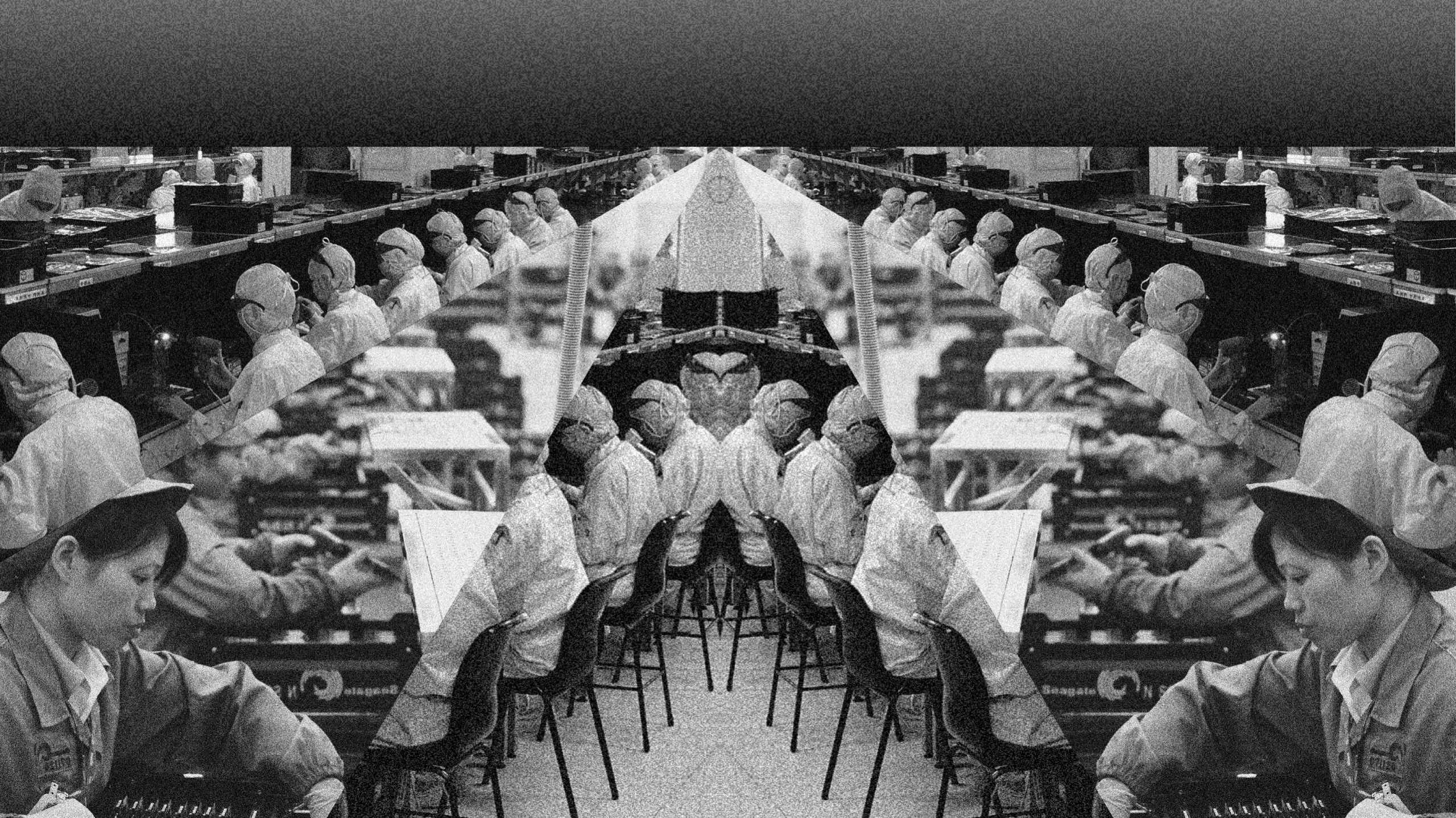
Normal view

There are new articles available, click to refresh the page.
Before yesterdayChinaTalk

China’s AI optimism isn’t what it seems

22 May 2026 at 19:03

Zilan Qian is a research associate at the Oxford China Policy Lab and holds a Master’s degree in Social Science of the Internet from the University of Oxford.

This article was originally published in Asterisk Magazine.


Americans — left, right, and everywhere in between — seem to be afraid of AI. They fear data centers speeding up climate change, disinformation and deepfakes, AI companionship, and, above all, job loss from automation. Meanwhile, the Chinese public seems to be perfectly fine with the technology, or even “optimistic” about it.

The polling data is striking: Stanford University’s 2026 AI Index Report shows that more than 85% of Chinese respondents see AI as more beneficial than harmful, compared to less than 45% of respondents in the United States. A 2025 report published by the University of Queensland and KPMG Australia revealed that 73% of Chinese respondents are willing to trust AI system outputs and share relevant information with AI at work, and 88% intentionally use the technology, compared to 52% and 48% of Americans, respectively.

Why does Chinese society, which suffers from acute job loss and a youth unemployment rate close to 17%, embrace a technology it knows is likely to take away more jobs?

The question was answered three decades ago. The answer is not a narrative about AI, but about an earlier transformation also perceived as inevitable. It is a story about how Chinese society has learned, through repeated upheaval, what it believes to be the only permissible response to disruption. Accurately interpreting that response — which is often misleadingly called “enthusiasm” — is essential to understanding that worried Americans watching China’s AI frenzy might not be looking at a rival but into a mirror.

The millennium that broke two ways

Lived this way for thirty years
Until the great mansion collapsed
The deep, dark clouds
Are drowning the view in my heart.

如此生活三十年 ruci shenghuo sanshi nian
直到大厦崩塌 zhidao dasha bengta
云层深处的黑暗啊 yunceng shenchu de hei’an a
淹没心底的景观 yanmo xindi de jingguan

– “Killing the One from Shijiazhuang,” Omnipotent Youth Society, 2010

In December 1978, reeling from the economic wreckage of the Great Leap Forward and the Cultural Revolution, China’s Communist Party formally shifted its central task from class struggle to economic construction, launching Deng Xiaoping’s “Reform and Opening Up” and beginning a gradual dismantling of three decades of central planning. In 1992, the country formally declared a turn toward a socialist market economy — an acknowledgment that market forces, not central planners, would now drive growth.

The country’s enterprises, built for a planned economy, were suddenly exposed to market competition — and consequently began hemorrhaging money, especially in industries like steel and textiles. By 1997, the state had decided to consolidate the strategic enterprises and let the rest restructure, merge, or collapse. The slogan it coined was 减员增效 (jianyuan zengxiao) — “reduce headcount, increase efficiency.”

The consequences of this transformation depended on where you lived. Over 24 million workers in China lost their jobs in the state sector by the end of 1999. The layoffs were concentrated in the northeast — Liaoning, Heilongjiang, Jilin — once the industrial heartland of socialist China and now called China’s rust belt. In 1957, the city of Shenyang’s Tiexi district produced the nation’s entire output of lathes, rock drills, gliders, rubber boats, and tower cranes, earning it the nickname “the Eastern Ruhr.”

By the late 1990s, 80% of the companies responsible for this output had gone out of production, and half of the district’s 300,000 industrial workers had been laid off. Between 1998 and 2000, nearly every year saw 7 to 9 million workers laid off nationally. Liaoning, for example, was laying off nearly 1,700 workers every single day. The moment was so unique that even the act of being laid off had a special name: 下岗 (xiagang), which literally means “stepping down from the post.”

Yet while the transition led northern China into economic crisis, the Pearl River Delta — geographically proximate to Hong Kong and Macau, home to China’s first Special Economic Zones, and the ancestral homeland of much of the Chinese diaspora in Southeast Asia and beyond — embraced rapid modernization and internationalization. The historical “land of fish and rice” became the “world factory.” Hong Kong investors established over 65,000 factories, employing about six million workers in the Delta. From 1991 to 2001, the Pearl River Delta’s regional GDP grew almost eightfold, and its population increased from 20 to 43 million.

For these citizens, the new economy meant good lives, which now included new technology. In 1998, Microsoft unveiled the mainland China version of Windows 98, and signed musician Pu Shu to endorse it. “New Boy,” a track on his 1999 album, name-checks Windows 98 and Pentium computers in its chorus and became a genuine millennium anthem for a generation.

Put on new clothes, get a new haircut
Relax with Windows 98
The road ahead will have no more suffering
How cool our future will be.

穿新衣吧, 剪新发型呀 chuan xinyi ba, jian xin faxing a
轻松一下, Windows 98 qingsong yixia, Windows 98
以后的路不再会有痛苦 yihou de lu, bu zai hui you tongku
我们的未来该有多酷 women de weilai gai you duo ku

– “New Boy,” Pu Shu, 1999

China’s tech giants — Alibaba, Tencent, and Baidu — were all founded between 1998 and 2000. By the end of 2000, the number of internet users in China had jumped from 3000 in early 1995 to 22.5 million. In 2001, China joined the WTO. Urbanization accelerated, and the growth of the middle class fueled demand for luxury goods, tourism, and better nutrition. The number of private cars in China went up from 1 million in 1992 to almost 10 million by 2002. Many people envisioned a hopeful future in which they could acquire new clothes, new luxuries, and new technology in the new millennium.

But the “many” did not include the 100 million people residing in the Northeast — roughly 8.5% of China’s total population as of 2000. By the 1990s, urban shrinkage, which is measured by sustained population loss, had already taken hold across 52 cities in the Northeast. And of the 68 cities across China whose populations diminished continuously into the 2010s, half were in this region. The regional birth rate has been trending lower than the national average for more than three decades, and net outmigration has become an increasing problem since 2000. In 1990, the Northeast represented 8.66% of the country’s population; by 2016, that proportion had dropped to 7.9%. The one-time cradle of China’s industrial development has become a place that many would rather not raise kids or live in, given the choice.

In the span of a decade, Chinese society simultaneously experienced rapid economic growth and extreme economic precarity. Individuals were offered transformative opportunities and faced catastrophic crises, all due to the same factors put in place by a select elite who generated the incredible promise and acute challenges modern China still faces. To many Americans watching AI reshape their economy, this narrative may sound familiar, though calls to regulate, pause, or stop the technology reflect a belief that the transformation can still be steered or stopped. That option did not exist for Chinese workers in the 1990s.
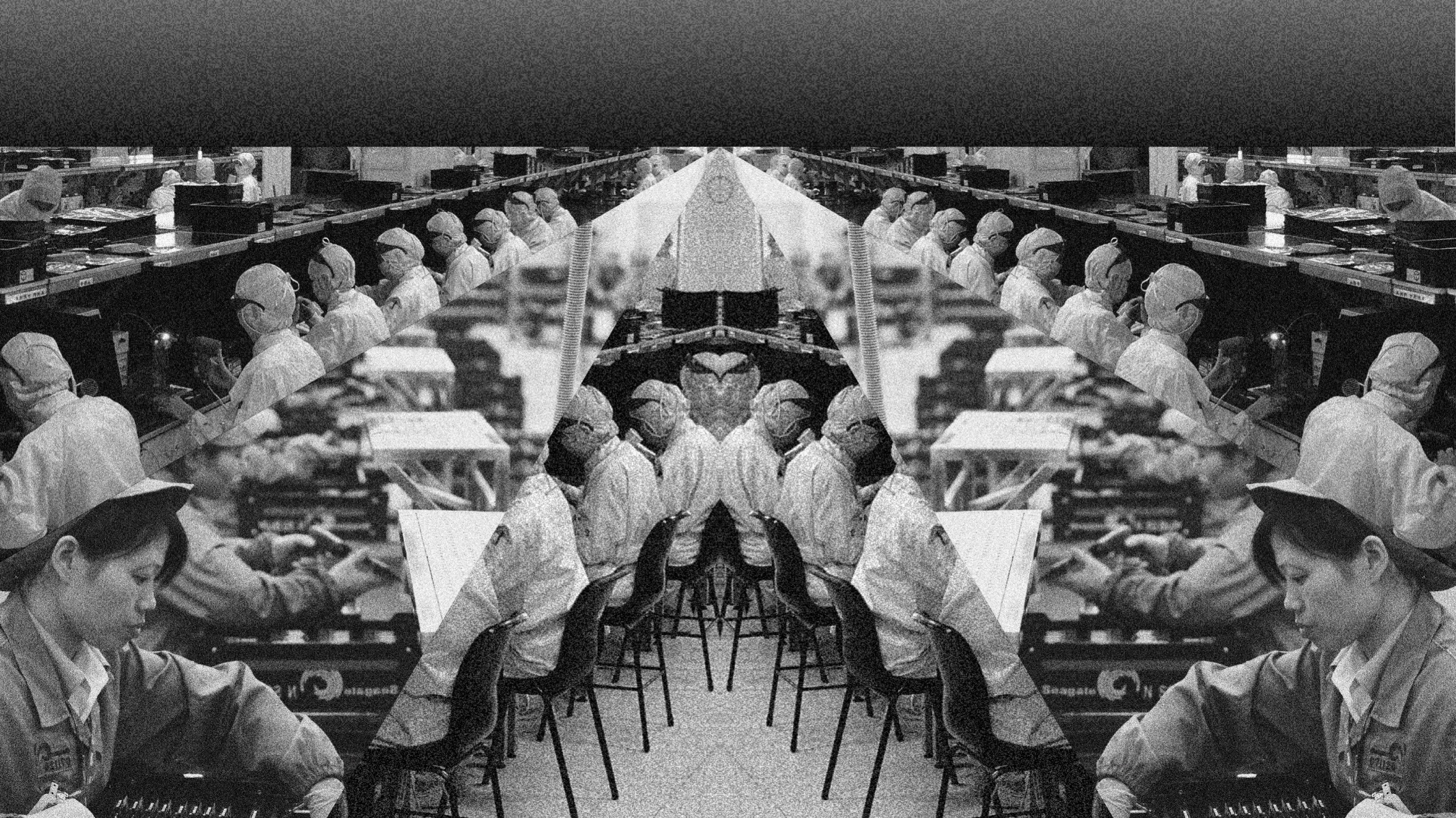
Painful, “rewarding” reform

For China’s policymakers, slowing development was never an option. A 1931 quote from Joseph Stalin — “落后就要挨打 (luohou jiu yao aida) or “those who fall behind get beaten” — that adapted by Mao Zedong in 1956 permeated society, serving as a cornerstone of high-level policy narratives. In China’s mnemonic practices, this phrase, linked to the idea that only development can sustain a nation’s independence, is the most significant lesson from the past, necessary to remember from China’s 20th-century history of war and colonization. “The reform is painful but rewarding,” wrote the state in 2012 in reference to the previous century.

At the turn of the century, then, the policy question was therefore not whether to reform; instead, it was how to make the transformation less painful. The government attempted to address the pain. In 1998, the state established re-employment Service Centers, which provided laid-off workers with living allowances, basic social security, and job training. The state taxation administration introduced tax incentives for businesses that hired displaced workers. Xiagang workers were entitled to tax exemptions, fee waivers, and preferential access to microloans when starting small businesses or seeking new employment. The Minimum Living Security System was established in 1999 to guarantee basic income for urban residents and expanded to rural areas in the 2000s. Higher education grew in 1999 and university attendance increased 600% in less than 10 years. This expansion was partially aimed at delaying China’s youth from entering the job market, thus leaving spaces for the re-employment of laid-off workers.

For some workers, these policies provided a bridge. But the scale of the problem overwhelmed the response. Funds were too small or simply did not arrive. When funds did arrive, they rarely reached the people they were meant for. In one case, one former deputy director of the city-level Development and Reform Commission — an institution responsible for implementing national economic policies — embezzled the subsidies of 556 xiagang workers.

Even as market reform and industrial upgrades brought new job opportunities, there were simply not enough: In 2004-2005, 24 million people entered the workforce, but only 9 million new roles were created. Even within these new jobs, there was a mismatch between supply and demand. The workers who had been laid off were predominantly in their forties and fifties with industrial skills, while the foreign companies entering China wanted fresh university graduates or young rural migrants who were willing to work for less. And though the expansion of higher education benefited many, it eventually produced young workers who were overqualified for many jobs, resulting in high youth unemployment that persists in China today. And much of the suffering was silently buried under cold numbers and grand policies.

In 2002, economist and writer Wu Xiaobo conducted fieldwork in Shenyang’s Tiexi district. Writing for the Financial Times China, he recorded stories from two families who had experienced layoffs. One husband biked his wife to the red light district for sex work in exchange for money for survival. In the other, the father jumped off of a building after his wife complained that they could not afford to buy their son sneakers for a school sports meet. Other accounts described families folding poison into dumplings, robbers and their victims begging each other to end the other’s suffering, and workers lying across railway tracks waiting for trains to hit them.

It may be hard to understand why people would resort to such extreme situations in the face of mere unemployment. But for many workers in the northeast, employment was everything. Before xiagang, most workers’ lives were organized around the danwei — the work unit that was not simply an employer but a total social world. The danwei provided housing, medical care, pensions, childcare, and entertainment. Colleagues were neighbors. People were born in the danwei clinic, went to danwei-sponsored schools, worked in danwei upon graduation, found partners through danwei-organized dates, and moved into danwei-sponsored dorms or housing. From birth to death, a worker’s life was closely linked to their danwei. In his 2004 book, sociologist Li Hanlin argues that danwei was not only a workplace but also a chosen lifestyle that provided a sense of reliance and an anchor of hope. It was a society without strangers, because people formed close bonds through everyday work and life. Danwei gave people social identity and legitimacy.

People in the Northeast therefore lost not only income, but their way of life, their sense of belonging to the small communities they had built around their work, and their dignity as socialist workers. In a society that for decades had told them workers were the masters of the nation, the sudden sense that they were surplus, inefficient, and unwanted imposed a burden that no severance payment could address. Many felt deceived when forced to sign labor contracts that stripped away their protections: “I believed in the government and the party. I relied on the enterprise for a living, and the enterprise also needed me for further development,” said one laid-off mining worker in rural Beijing. “I didn’t have the slightest idea that the enterprise would take advantage of me.” Others felt invisible when they were excluded from decisions that would determine the rest of their lives by an institution they had always called their larger family.

The fear and the frenzy

The paradox of the era was that as much of China’s population was losing jobs, an emerging group of poor people, predominantly in the southeastern coastal areas, was growing rich overnight. And because others were enjoying upward mobility, the ones left behind internalized Social Darwinist views that claimed that only lazy and useless workers had been laid off and that people who failed to find new jobs simply were not skilled or determined enough to do so.

In rural Liaoning, a northeastern province greatly impacted by xiagang, many people sought to migrate overseas for better opportunities. Local villagers explained to anthropologist Xiang Biao that they looked down on neighbors who could not find work overseas to earn big money. They wondered to themselves, “why have others gone overseas successfully but you can’t?” and assumed that those who stayed had failed because of individual shortcomings rather than structural forces. This view, which originated in northeast China, makes the fault of the layoff a problem with individual capabilities: When rapid stratification turned neighbours’ fates in opposite directions almost overnight, individual effort became the easiest explanation for diverging outcomes — a logic the state then reinforced by replacing collectivist language with individualistic discourses of self-improvement and personal advancement.

Most narratives of the period, even sympathetic ones, treat economic restructuring as a natural force, with individual adaptation as the only response. In 2002, a documentary about the Tiexi district depicted the marginal lives and struggles of xiagang workers in this once-vibrant industrial area. Lyu Xinyu, one of China’s most prominent scholars in the study of rural-urban inequities, interprets the documentary as a sad depiction of an inevitable historical event:

Today’s (2003) Tiexi District is nothing more than a replay of the decline of the traditional industrial Rust Belt in the American Midwest and the traditional industrial Ruhr area in Germany in the 1970s and 80s. It is the unfolding of a common historical rationality in different times and spaces, and we have no possibility of escaping the compulsion of this law. Industry, in a dialectical and historical sense, is an object of the natural laws of society.

If economic restructuring was an unstoppable force of nature, then the only possible response was to move with it before it moved without you. Xiang Biao diagnosed this as a “last bus” mentality: a collective fear that missing the opportunity to seize a piece of post-socialist accumulation meant missing everything. You either catch this bus towards success or be left out forever. It was a frenzy born not of greed or enthusiasm, but of the desperate realization that the old world was gone and the new one had no reserved seats. What began as a northeastern industrial experience has, amid decades of social change and competition, became a prevalent psychological structure spanning different socioeconomic classes and regions.

The state’s official rhetoric consistently reinforced this reading. In the 1990s, China needed marketization and reform of state-owned enterprises. These were, they said, inevitable moves to save the country from its economic crisis. China, under this logic, also needs urbanization, industrial upgrades, or AI integration, because history is irreversible and technological progress is inevitable. Describing major societal changes, the official language is always that one needs to “seize the new opportunities (抓住新机遇; zhuazhu xin jiyu)” and “ride the trend of the time (站在时代的风口上; zhan zai shidai de fengkou shang).” The rhetoric still prevails two decades later, as a top state newspaper wrote in 2019, “when the era discards you, it will not even say goodbye.”

The signal for individuals was clear: You had better catch the “last bus” to seize the fleeting opportunity. If you fail, no one, even the state, will back you up. This mentality undergirded China’s development at the turn of the century and prevails today. Whether it involves market, education, industrial, or technological reforms, people in China are frenetic about new things because they are always seeking the trend to follow. In Xiang’s words, “every bus is the last bus.”

In the late 1990s and early 2000s, learning English was the last bus. Globalization was the irreversible trend; only by learning English could Chinese people interact with the greater world. The state mandated English education as a core Gaokao subject and pushed it into primary schools in 2001, giving rise to cultural phenomena like “Crazy English“ (疯狂英语; fengkuang yingyu), wherein tens of thousands of people gathered in public stadiums to scream English phrases at the top of their lungs in a desperate collective bid for fluency. In the late 2010s, the mobile internet boom was the last bus. As tech giants like Alibaba and Tencent offered unmatched salaries in other industries, millions rushed to learn coding and enroll in computer science degrees in universities that were aggressively expanding computer science programs, only to find themselves facing a constantly decreasing employment rate.

In 2023, understanding AI was the last bus, and over 250 thousand people paid for rudimentary AI crash courses, terrified of being rendered obsolete overnight. In 2026, OpenClaw was the last bus, with thousands of people — retirees, white-collar workers, housewives — lining up outside tech company offices for engineers to install the agent directly onto their phones.

Underlying pessimism

Tomorrow morning, I guess the sun will be good
I want to clean myself up
Sell off everything old and broken
Oh, this will be so good
Come on, Pentium computer
Let them think on my behalf

明天一早, 我猜阳光会好
我要把自己打扫
把破旧的全部卖掉
哦这样多好
快来吧奔腾电脑
就让它们代替我来思考

– “New Boy,” Pu Shu, 1999

Today, the history of marketization is largely depicted in a rosy way. Chinese TV dramas — ranging from official historical fiction to romantic melodrama — celebrate people who rode the tide of the trend and raised themselves. The trauma of xiagang has found cultural expression only at the margin.: The so-called “Dongbei Renaissance” is a loose wave of literature, film, and dark comedy that has emerged from northeastern writers and directors since the 2010s and treats the rust belt’s collapse with a bleakness official culture cannot condone. Beyond that, the majority of the records of xiagang have been censored or simply left out.

But even if you burn the records, you cannot erase the wound. And no matter how much whitewash one applies to that period, the core mentality — seize the last bus or die — has become deeply ingrained. This persistent anxiety continues to intensify and spread whenever new, potentially transformative shifts occur in Chinese society. While not everyone successfully boards every “last bus,” the alternative of not trying to board at all is a social stigma. As Xiang Biao observed, there seems to be no way to live outside of competing and striving, even when it is unclear what exactly one is striving toward; quitting the race means facing utter failure. Even when the young generation claims to embrace “lying flat,” the pressure from the state, society, and even they themselves means that they actually do not give up at all.

This history offers a new perspective on the “AI enthusiasm” we are now seeing in China. Many are correct to point out that the enthusiasm arises from the top-down state discourse portraying technology as a redemption against the history of the “century of humiliation,” as well as people’s ground-up experience of benefits from rapid technology development in the past few decades. Technology is good because it makes the nation stronger. The lesson of how the late Qing government closed its door, missed the industrial revolution, and was defeated and humiliated by the Europeans and Japanese is a core section of the history education mandatory for every Chinese student. On the other hand,industrialization and digitization have made many people’s lives better, compressing what took the West decades into a single generation. China grew from no high-speed rail in 2003 to a 50,000km network in 2025, compared with 8,500km in the whole of the EU as of 2023, linking 97% of cities with populations of more than half a million; the society leapfrogged credit card infrastructure, going straight from cash to mobile payments in a transition that reached people who had never held a bank card.

However, these two elements also instill a profound sense of precarity. The desire to access the transformative benefits of technology is inseparable from the fear of being left behind. Citizens adopt cashless payments not only because of the convenience it offers, but also because of the penalty for not doing so: finding oneself unable to pay at most stores, locked out of basic services, and adrift in a banking system built for a phone screen. The same will be true for AI — or, at least, most Chinese people seem to believe so.

China’s culture of techno-optimism, analysts argue, may allow AI to be diffused and deployed at scale. Some analysts contrast China’s Star Trek techno-optimism, which some believe will allow AI to be more quickly deployed at scale, with the West’s Black Mirror mindset, wherein public anxiety about various AI risks stifles deployment. It is too easy, however, to draw a binary between the American and Chinese responses to AI, or to think that the Chinese public would be purely enthusiastic about a technology that will automate more jobs. It is true that Chinese respondents in some surveys likely have some genuine enthusiasm — particularly many who lived through and benefited from the market transformation of the 1990s, for whom technology has been a story of concrete improvement. However, enthusiasm and fear are not mutually exclusive. A person can genuinely believe some AI products are beneficial and feel they have no real choice but to adopt it; can welcome a technology because it seems useful while worried that not mastering the usefulness renders themselves obsolete. Most survey questions were too binary in design to shed light on which sentiment is driving the response, or a respondent’s ratio of enthusiasm to anxiety.

Today, some evidence-based “optimism” claims draw from the Chinese public’s extremely high responses like “AI products and services have more benefits than drawbacks”, how much one “trust AI,” or “willing to accept AI,” all of which cannot differentiate a net excitement of AI from the belief that AI is important, inevitable, and cannot be missed. Are AI products viewed positively because people really benefit from them, or are they simply thought to be so important, just like how learning English is “beneficial” in the sense that people believe the language means modernization and the future, even though in real life it may have little practical use? Asking “How much do you trust the technology?” is inherently ambiguous: does answering yes mean you trust AI as a technology, trust AI’s output, or trust that AI will bring opportunities that you cannot afford to miss? Furthermore, behind the 95% reponse of willingness to accept AI lies the 49% belief that AI will replace jobs. So while AI is viewed as a threat to job security, a possible coping mechanism is to rapidly accept and embrace it, because history has taught the Chinese that the only coping mechanism is to change oneself.

The mixture of enthusiasm and fear pulls on a tension that has emerged throughout China’s recent history — whether people believe a change will benefit society as whole or merely themselves as individuals. There is a difference between believing a technology is useful, beneficial, or necessary for society as a whole — that AI will become the fate of the nation, which one needs to work hard to adapt to — and trusting that the technology will automatically benefit individuals’ lives. Under the grand narrative today, Xiagang is acceptable, necessary, and has more benefits than drawbacks — for the nation-state more than for those workers laid off. “The 1998 SOE reforms were like major surgery. Without it, the patient would not have survived,” said economist Huihua Nie, implying that although xiagang was a painful process for some, Chinese society must endure this individual suffering for the collective good

When polled only three decades later, perhaps every respondent genuinely believes that AI is good for both society and for themselves. Or perhaps they see AI as another surgery necessary to survival, knowing full well that flesh will be cut away and discarded, but convinced that the pain borne by individuals — however devastating to them — is small against the benefits at large. The polls, as they are written, cannot distinguish between these narratives. .

Meanwhile, the reality suggests that there is no homogenous or unwavering optimism in AI among the Chinese public. For example, even when the state issued multiple warnings about OpenClaw security risks, people nevertheless rushed to install the agent on their personal phones and laptops. Behind the seemingly massive adoption of AI agent tools is not a population mobilized behind a coherent national AI strategy, but many individuals running blindly, supervised by a government that benefits from the momentum but cannot meaningfully control the direction. Resource waste, security vulnerabilities, scams, and market oversupply are the predictable outputs of a system running on fear as much as ambition. China’s AI enthusiasm is not as strategic an “advantage” as some may think, as the bottom-up fear can easily lead to a frenzy that is outside the top-down AI agenda.

This is, perhaps, a situation that one could simply dismiss as “AI hype” or “AI bubble” if it happened in the US, where some hawk AI classes, many try out every new AI product as they emerge, and some attend AI hackathons every week. But because it is happening in China, and because the American analysts themselves now treat domestic AI backlash as a strategic vulnerability, they’d rather believe the Chinese public is different, or the Chinese government has better leverage in a so-called “U.S.-China AI race” as they can engineer an optimistic public.

But can it?

In January 2026, Pu Shu’s “New Boy” was remade to “New Bot” by the state media, aiming to highlight how AI and robotics, just like Windows 98, can bring hope and the promise of a new and improved life. However, despite its eye-catching music video, the song did not become a hit. People continue to listen to the 1999 original, leaving comments lamenting that there will never again be an era of such optimism. What they are mourning, perhaps, is not AI’s failure to match Windows 98’s appeal. “I have never been able to accept that this is a purely cheerful song. The melancholy of being pushed into a new era is the real theme — pessimism hidden inside a melody that looks happy,” wrote one listener.

“向前走,你的路,猜猜未来会给你什么礼物 (xiang qian zou, ni de lu, caicai weilai hui gei ni shenme liwu) ,” sings Pu Shu in the outro of the song. “Walk forward, your road is ahead — guess what gift the future holds for you.” The gift, it turns out, is mandatory. You did not order it, you cannot return it, and the era will not wait while you decide if you want it.

subscribe to Zilan’s substack!

How to Buy Cheap Claude Tokens in China

5 May 2026 at 19:20

is a research associate at the Oxford China Policy Lab and holds a Master’s degree in Social Science of the Internet from the University of Oxford.

On April 23, 2026, the White House released a memo warning that Chinese entities were running “industrial-scale” distillation campaigns against American frontier AI models, leveraging “tens of thousands of proxy accounts” to evade detection. In February 2026, Anthropic similarly reported on Chinese labs’ coordinated distillation attacks using “a single proxy network managed more than 20,000 fraudulent accounts”. Both cases see “proxy” — the middlemen between model users and model providers — as a purposeful design by a selective Chinese frontier labs to systematically extract US AI models.

Regardless of whether Chinese labs rely on distillation to “catch up”, both documents misread the proxy economy they’re describing. Underneath the handful of labs sits a much larger market, one that has been operating in public on GitHub, Taobao, Twitter, and Telegram. It is a grey economy of API proxies (commonly called “transfer stations,” 中转站) that lets Chinese developers access Anthropic’s models at as low as 10% of the official price. The participants extend far beyond selective experienced AI researchers, and the motivations are much broader than building a frontier model to catch up. Everyone who wants to use more advanced AI models or tools, be they university professors and students, tech workers, individual developers, or hobbyists, uses API proxies.1 The logs they generate may have become a commodity, traded for purposes ranging from model training to targeted fraud.

Meanwhile, every layer of control frontier US AI companies have added (geoblocking, phone verification, credit card requirements, and now live biometric KYC checks) has produced a corresponding layer of evasion infrastructure. These new SMS farms and biometric harvesting operations have implications that extend beyond geopolitics into how frontier AI safety frameworks are designed.

Building on my 2025 ChinaTalk piece on accessing banned American models in China, this update zooms in on the transfer station economy specifically: how it is structured, how it monetizes, and what it reveals about the limits of access blocking and account monitoring as AI governance tools. Unlike 2025’s grey market, however, the 2026 story does not stop at the border between Chinese users and American AI model providers. The transfer station economy exposes blind spots in AI safety frameworks designed to prevent harms that extend beyond the US-China rivalry, from misuse by malicious actors to the erosion of provider traceability, while feeding into criminal markets that exploit ordinary people — many already disadvantaged — caught in the supply chain.

To illustrate how a transfer station works, let’s take Anthropic, the company with the most rigorous geo-blocking mechanism, and whose models are very popular among Chinese developers, as an example.

A meme circulated on the Chinese internet: “Do you think you are smarter than Claude?”

Geo-blocking and Know-Your-Customer (KYC)

On the map of Anthropic’s supported countries, China is conspicuously absent, and on the Chinese internet, so is Anthropic – technically speaking. In reality, neither Anthropic’s blockage nor the Great Firewall stops Chinese users from accessing Claude and Claude Code. Claude models have thrived on e-commerce apps like Taobao despite supposed platform and government censorship since 2025, and Singapore, with a population smaller than that of New York City, “surprisingly” leads global per capita use of Anthropic’s Claude in April 2026.

Chinese developers joked about the report that Singapore is the top token consumption of Claude on Twitter, implying that this is because the Chinese are routing to Singapore to use the model. “We are all Singaporean from time to time.” “Every day I self-assign my nationality.” “Isn’t it because we all use Singapore’s node?” “Seems that many companies are using Singapore’s node.”

The Chinese government is not today especially motivated to curb Chinese developers’ access to advanced US models. Anthropic, on the other hand, is serious about it, with its multiple layers of mechanisms to block users in mainland China. At the most basic level, account registration requires phone numbers, overseas credit cards, and matching billing addresses. On September 5, 2025, Anthropic further prohibited access from any entity more than 50% owned, directly or indirectly, by companies headquartered in unsupported regions like China, regardless of where that entity operates. This closes the subsidiary loophole that had allowed Chinese-backed firms in foreign countries to retain API access.

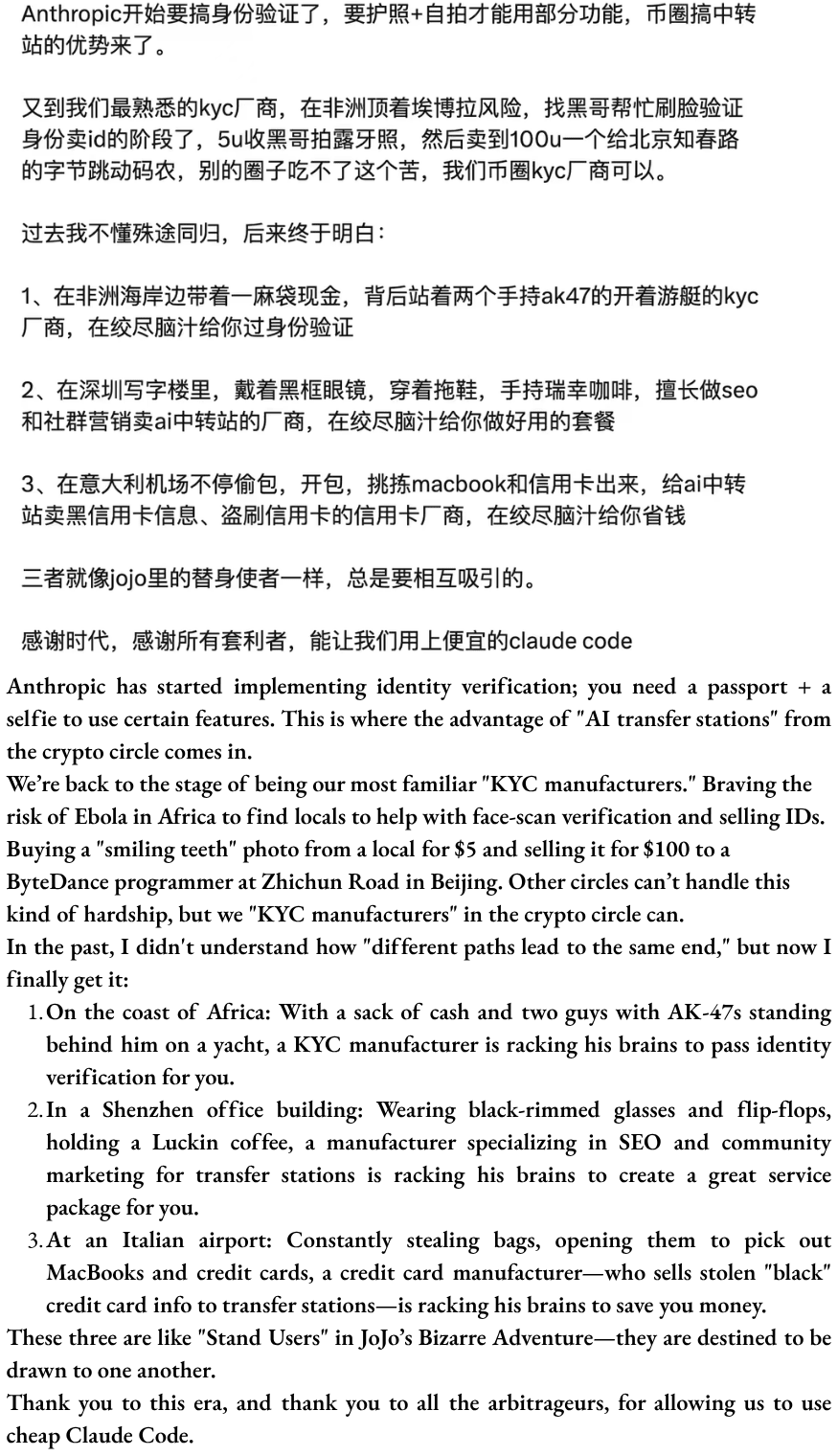
The most recent measure arrived in April 2026. Anthropic began requiring select users to verify their identity using a government-issued photo ID and a live selfie, making Claude the first major consumer AI platform to implement this level of identity checking. The rollout is selective and triggered by specific use cases or platform integrity flags. For Chinese users accessing Claude through VPN or other intermediaries, the new KYC policy is supposed to make it considerably harder to access Claude–even if Chinese users can fake phone numbers and addresses, they will theoretically have a hard time faking live selfies matched against a physical government document.

In reality, however, Chinese people not only can access Claude and related tools, but most of the time they can purchase tokens at 10% of the original price. The magic lies in “transfer stations.”

What is a “Transfer Station (中转站)”?

A transfer station (中转站) is what the Chinese developer ecosystem calls an API proxy–an overseas server that sits between a developer and Anthropic’s infrastructure. It accepts API requests, forwards them as if they originated from the transfer station’s location, and passes the response back.2 The user redirects their software to the proxy’s server instead of Anthropic’s, and pays the API proxy RMB via WeChat or Alipay.3 This sidesteps both the VPN and the overseas credit card needed for direct access. Prominent transfer stations are catalogued in community repositories and ranked by real-time price and uptime. Below them, a longer tail of small and individual projects comes and goes.

While this setup sounds functionally identical to legitimate Western API aggregators like OpenRouter, transfer stations operate in an entirely different universe of legality and trust. Legitimate aggregators exist to simplify developer workflows, charging standard rates based on transparent enterprise agreements. Transfer stations, conversely, are built explicitly for evasion, routing data through unaccountable middlemen.

Just like providing VPN services or selling Claude on Taobao, a transfer station is technically not allowed in China. According to China’s regulations on the AI services registry, AI services provided without filing and security assessment are illegal. But just as some small businesses can skip AI registration without punishment, so do most transfer stations. However, the bigger the business, the more unsafe it is to run.

The Supply Chain of Transfer Stations

A transfer station is not a sole entity. It sits in the middle of a layered supply chain, with most participants never interacting with each other directly.

Upstream are the resource providers: account merchants who bulk-register or acquire Anthropic accounts at scale; SMS verification platforms that supply the foreign phone numbers needed to pass sign-up checks; and, at the more technical end, reverse engineers who analyze Anthropic’s client code to find authentication shortcuts or detect when detection logic has changed. The payment infrastructure with card merchants and proxy networks also enables overseas billing from inside China.

The upstream also tackles more sophisticated KYC regimes–either by AI or humans. AI services have demonstrated the ability to generate highly realistic fake IDs capable of bypassing identity verification on major platforms, and deepfake tools now allow criminals to create digital clones that successfully pass biometric verification remotely. Even if the defender can successfully detect AI faking humans, a more labour-intensive method exists to find real humans. Agents travel to lower-income countries in Africa or Latin America to recruit real individuals willing to complete in-person verification.4 The Worldcoin black market offered a documented precedent, with iris scans harvested from KYC merchants in Cambodia and Kenya, sold for under $30.

Twitter account advertising KYC verification service.

In the middle sits the transfer station itself: a software interface that receives users’ requests and forwards them to Anthropic as if they originated from a legitimate account, a payment integration (usually Alipay or WeChat), and the unglamorous operational layer that keeps it running — cycling accounts before they get flagged, balancing load across the pool, and continuously adapting to Anthropic’s abuse-detection updates.

Downstream are the customers: individual developers using Codex or Claude Code, enterprises routing internal workflows through the proxy, application builders embedding the API in their own products, and secondary resellers who buy wholesale access and repackage it for individual customers on Taobao–as I documented last year.

Almost no one operates the full chain. Most participants own one or two links and monetise those well, resulting in a resilient, modular system. AI model providers can suspend individual operators, but the upstream account pools and downstream customer base remain intact. So long as there are developers who want access to Claude and identity black markets willing to supply the credentials, which are both durable features, a replacement can be stood up quickly.

A screenshot circulated in a developer WeChat group joking about the supply chain to bypass Anthropic’s KYC; originally in Chinese (up), translation added by the author on the bottom

One Fish, Three Meals (一鱼三吃): How to Make Tokens Cheap

The most curious thing, however, is not how to get access to Claude or Claude Code in China, but how to get it at a ridiculously low price–usually priced at 1 RMB per $1 of tokens — 70–90% below official prices. According to public discussions, there are at least three ways a transfer station makes this possible–often described as “one fish, three meals (一鱼三吃)”.

Meal 1: The markup on access. This is possible because of the upstream resource providers who can stack proxies using at least five relatively “innocent” tactics:

  • bulk-registering API accounts to farm Anthropic’s $5 free credit

  • reselling unused quota from others’ accounts

  • corporate/educational discount arbitrage

  • “APImaxxing” — one $200 Max plan carved up among multiple users via tokens-per-hour quotas, exploiting the gap between Anthropic’s flat subscription price and the far higher cost of equivalent pay-per-token API access

Beyond these, there is a darker upstream input: accounts purchased using stolen or fraudulent credit cards which can enter the proxy pool at effectively zero cost to the operator. How large this share is relative to the above four “innocent” tactics is difficult to verify, but the two markets likely share some infrastructure and personnel.

Meal 2: Swapping models and inflating tokens. Because users’ inputs and model outputs are mediated through a proxy, users cannot verify which model their request was actually routed to. A user selects Opus 4.7, but the proxy can silently route to Sonnet, Haiku, or, in the worst case, GLM or Qwen, and fraudulently relabel the output. In a recent paper from Germany’s CISPA Helmholtz Center for Information Security (which cited my article last year on grey market!), researchers audited 17 API proxies and found widespread model swapping–API proxy access to “Gemini-2.5” achieved only 37.00% on a medical benchmark, a staggering drop from the 83.82% performance of the official API. On the user end, the tell only comes on complex tasks, when the output feels off (often referred to as 降智, or “dumbed-down”), but there is no clean way to prove it. Numerous public records highlight concerns that certain API proxies have noticeably compromised model performance. These proxies are suspected of “diluting” (掺水) services by substituting premium frontier models with inferior tiers.

Besides model swapping, overconsumption of tokens also makes the price per token cheaper, though at the expense of driving up the total cost. Some of it is structural, as proxies that rotate accounts frequently destroy cache continuity as a side effect, forcing users to burn full-price tokens on context that would otherwise be nearly free. Some of it may be deliberate as the proxy providers try to milk more usage. The line between the two is difficult to draw from the outside.

Meal 3: The logs are the product. This is perhaps the most important part as it intersects with data privacy and distillation. Every request that passes through a proxy — full prompt, full response, tool calls, iterations — is sitting on the proxy operator’s server. For AI coding agents, those logs contain long reasoning chains, real engineering decisions, repository context, and human-verified correct outputs. This makes them an ideal dataset for post-training: for supervised fine-tuning on real engineering tasks, and, where full reasoning traces are captured, for distilling Claude’s reasoning patterns into smaller models. Chinese developer communities assert this is happening in at least some cases, but whether proxy operators are systematically harvesting and selling these logs, and to whom, remains unverified. However, downstream distillation data does exist on the open web. Several datasets of Claude Opus 4.6 reasoning outputs circulate on HuggingFace with no clear source for the outputs. Theoretically, one can clean and sell similar distilled datasets to other model developers in China.

The first two meals are useful for providing cheaper tokens cheaper than Anthropic officially charges, but to really make prices ridiculously low — at 10%, or even 5%, of the original price — one needs to eat the third meal. And as a Chinese saying goes, there is no free lunch in the world (天下没有免费的午餐). Several Chinese developers have revealed that the markup business is just customer acquisition, and the log harvest is the actual margin. Users are simultaneously paying customers and unpaid data producers, selling their private data to proxy operators in exchange for a low price. Some also warn of potential promotion, fraud, and even blackmail based on leaked users’ data from the proxy. To avoid privacy risks, some Chinese developers have also constructed their own Claude Code API proxy and open-sourced the guidelines.

What Know-Your-Customer Cannot Know

AI usage is gradually shifting from chatbot to tool use. With the rise of agent and token economy, the question of using US models is no longer only about access, but extends to cost-efficiency. This is because the Chinese AI ecosystem, regardless if it is frontier labs, university research groups, individual developers, or hobbyists, is capital-scarce. Meanwhile, the data generated by users through transfer stations demonstrably enters downstream markets, used variably for model training, data brokerage, or fraud. To the extent that distillation is part of that economy, the problem extends far beyond a handful of frontier actors that the government or AI companies in the US might expect.

History teaches us that access blockage rarely stops determined users. They raise the cost of access, which in turn creates profitable markets for anyone with the expertise to lower it. The Great Firewall made VPN services a thriving cottage industry in China. KYC requirements bred an identification-faking economy, from domestic ID card resellers to biometric harvesting operations in Southeast Asia or Africa. Layered controls by frontier AI companies— geoblocking, phone verification, credit card requirements, and now live biometric checks — have produced the same effect.

The story, however, goes beyond a “Anthropic/US versus China” framing. This points to an uncomfortable truth about access control, both in terms of geopolitical boundaries and beyond. How a geo-blocked developer walks around the controls is, structurally, the same methods plausibly employed by a terrorist to access a frontier AI model and make destructive bioweapons without being tracked. The access problem is both a unique geopolitical consideration and a shared safety concern.

Today, AI safety research treats system-level access control — in particular, detecting, monitoring, and account suspension for publicly accessible closed-weight models — as an important safeguard. In monitoring, developers control inference infrastructure, including flagging harmful inputs and outputs in real time. Detecting such as KYC requirements assumes that the provider can attribute behaviour to identifiable actors, and account suspension similarly assumes that suspending an account meaningfully denies access. However, US model providers do not control inference for Chinese users routing through a transfer station — the proxy operator does. When a harmful request arrives, rather than seeing the IP of the real user, AI model providers see that of the proxy. And when an account is banned, the upstream supply chain can easily set up a new proxy within hours.

The problem compounds for more sophisticated monitoring tools. Anthropic’s Clio system, designed partly to detect coordinated misuse that is invisible at the individual conversation level, works by identifying patterns across accounts and conversations. It identified, for example, a network of automated accounts using similar prompt structures to generate search engine spam and subsequently banned them. But because requests route through proxies, bans do not meaningfully stop the underlying behaviour. And for deliberately staged attacks — such as distributing a harmful inquiry across multiple stages and proxy accounts, each request individually innocuous — cross-account patterns are far less visible than coordinated spam, where the signal is obvious by design.

Lastly, the transfer station does not only embody a traditional offence/defence paradigm — whether between US AI companies and Chinese users or between AI safeguards and malicious actors. A black market has a supply chain with its own exploitative logic, and the harms it generates extend well beyond the original question of access. Faces harvested for proxy KYC verification to bypass Anthropic’s system today can be resold to open fraudulent financial accounts, fabricate employment records, or generate deepfakes tomorrow, with the original subject in the Global South bearing the legal and reputational consequences. The same infrastructure that routes Claude requests can be used to defraud users through model substitution, targeted scams based on leaked prompt data, or blackmail. The account-farming operations that keep proxy pools stocked — bulk SMS verification, fraudulent registrations, carded accounts — nurture broader criminal markets for spam calls, phishing texts, fraudulent loan applications, and credit card scams. Many harms have nothing to do with AI or geopolitics.

But now that every byproduct of the grey market–from the potential danger of terrorists leveraging AI to synthesize the next pandemic to real-life exploitation and crime. As much as the Great Firewall or AI geo-blockage wants to separate who gets access to frontier technology along national lines, as the grey market reveals, the harms are not separable.

Acknowledgement:

Zilan is grateful to Alan Chan, Gabriel Wagner, Karuna Nandkumar, and Kayla Blomquist for their helpful feedback.

The author acknowledges the use of LLMs for preliminary desk research, technical concepts clarification and copy-editing, and is, in fact, very grateful that she can still use VPN to access Claude in mainland China via the Singapore node without triggering the KYC process.

ChinaTalk is a reader-supported publication. To receive new posts and support our work, consider becoming a free or paid subscriber.

1

Profiles derived from informal conversations.

2

An Application Programming Interface, or API, is the channel that lets developers plug their software directly into an AI model — sending requests programmatically to Anthropic's servers and receiving responses back, rather than interacting through a browser.

3

Specifically, replacing the ANTHROPIC_BASE_URL environment variable with the proxy's address.

4

From informal conversations and desk research.

How China Hopes to Build AGI Through Self-Improvement

31 March 2026 at 00:00

Today’s guest post is from Zilan Qian, a programme associate at the Oxford China Policy Lab and a Season Fellow at the Centre for the Governance of AI.


Thank god right now the PRC……doesn’t strike me as being that AGI-pilled. But if they get AGI-pilled… Especially, you know, the later you are to a thing, the higher the cost you have to pay. Dangerous outcomes are very possible.”

, 80,000 hours podcast, Dec 2025

“Encourage technological innovation in multimodal AI, agentic AI, embodied AI, swarm intelligence, and related fields, and explore pathways toward the development of Artificial General Intelligence (通用人工智能). Promote the parallel advancement of general-purpose large models (通用大模型) and industry-specific models, leveraging high-value application scenarios to drive model deployment and iterative improvement.”

China’s 15th Five-Year Plan, March 2026

Many people tracking the US-China AI competition used to share a “thank god” instinct. Reading high-level AI policy or watching Chinese big tech fiercely compete for markets, they concluded that China mainly saw AI as a powerful economic engine, rather than an unprecedented, civilization-altering technology for humanity. And for many, this was a blessing: it bought time for the US to press its frontier advantage, or for AI safety to catch up with AI’s accelerating risks.

However, that reading is becoming increasingly harder to sustain. While in 2017 the term “通用人工智能” used by Beijing could safely be interpreted as general-purpose AI rather than AGI, the same cannot be asserted now that the term has resurfaced in 2026. The Five-Year Plan quote explicitly distinguishes AGI from general-purpose large models, treating them as separate tracks. What’s more, like their Silicon Valley counterparts, more and more AI scientists in China see AI self-improvement as a promising pathway to AGI.

However, Chinese scientists’ vision of AGI and self-improvement looks quite different from that of Silicon Valley. Rather than a rapid software-driven intelligence explosion — AI building AI in a recursive loop — Chinese thinking converges on something more embodied: human-level intelligence that requires physical-world interactions. In contrast to a top-down Manhattan Project, this vision of AGI appears to be a bottom-up movement driven by constraint in compute, gradually gaining influence in Beijing’s top policy circle.

The differences in perceiving AGI result in two distortions. On one hand, in the future, when Beijing decides to “race” towards AGI rather than “explore” it, it will not rush to build the software machine god that the U.S. frontier labs have in mind. On the other hand, even if Chinese labs are already doing things that Silicon Valley would recognize as precursors to AGI, they may not frame the activities as AGI, as they understand the word differently.

The American Approach to AGI

Today in the U.S., especially among the frontier AI labs, Recursive Self-Improvement (RSI)— AI being able to improve itself without human assistance — has become the dominant working theory of how AGI gets built. In January 2026, Dario Amodei described that when AI is good enough at coding and research, it would be used to produce the next generation of models, creating a self-accelerating cycle. He added that AI could do most, if not all, of what software engineers currently do within six to twelve months — at which point, he noted, progress could move faster than most expect. Similarly, OpenAI also sees RSI as a viable path towards AGI, with Sam Altman targeting fully automated AI to build the next generation of itself in 2028. While some argue that the messier, coordination-heavy aspects of AI development — such as organizational and project management — are harder to automate, there is a broad consensus among frontier lab researchers that AI agents will increasingly take over significant portions of AI R&D work. Agentic coding is widely seen as the most critical capability to be automated first — and by most accounts, the process has already begun inside leading labs.

This narrative of RSI shapes how the “racing against China” discourse is framed in SF and DC: if automating AI research is the decisive lever, then whoever initiates RSI first wins. China, on current assessments, is not close. Against that backdrop, what the broader Chinese AI ecosystem is doing seems largely irrelevant to the question that matters, whether it is investing in embodied AI, supporting open-source, or promoting AI deployment. Some argue that Chinese AI, now characterized by open-source and low-cost, only iterates rather than innovates, catching up on the commodity layer while losing the battle of the real capability. So even as China appears to lead the AI diffusion race that yields more immediate economic benefits, with the prospect of RSI, which promises rapid self-compounding gains through automated AI research, the US is still ahead, and the gap will soon increase rapidly.

This seems to be a reasonable prediction–except that not all developments in China solely focus on near-term social and economic benefits. After all, the concept of machine self-improvement leading to human-level intelligence is not uniquely American. What differs is the underlying theory of how intelligence works and what it would take to achieve it.

Embodied Closed-Loop, AGI with Chinese Characteristics

“First, you build a brain. This brain has all kinds of capabilities — language ability, image understanding, the ability to judge and recognize the physical world. Then you equip it with hands and feet so it can call upon the world model to solve problems, predict what will happen in the world, and interact with the world. The results of that interaction are fed back as a reinforcement signal. I immediately receive this signal, learn again, and modify my model. This forms a closed loop.”

— Zhang Peng (张鹏), Z.ai CEO; translated by Kyle Chan

Z.ai is far from the only voice in China discussing AGI. Western observers tend to treat DeepSeek as the lone AGI-focused lab in China, or reach a generalized argument that China is not interested in AGI. But that framing misses a growing number of important actors — from other frontier AI startups to academicians from the Chinese Academy of Science — who have named AGI as their explicit goal.

Skeptics may dismiss Zhang’s statement as business-motivated hype, given that it came from an interview just before Z.ai went for IPO, and he is far from the only one with an agenda. As in the US, Chinese AI actors speak about AGI for mixed reasons: commercial positioning, alignment with state rhetoric, or intellectual differentiation. However, the convergence of a similar architecture across company founders, academic researchers, and state-adjacent scientists suggests something more than coordinated messaging. Below, I trace how each component of Zhang’s loop recurs across Chinese AI discourse.

Step 1: Multimodality and World Models

Multimodality enables more dynamic real-world engagement by expanding the range of inputs a system can process and act on. The argument is that language alone cannot provide the perceptual grounding necessary for genuine environmental interaction. MiniMax’s CEO Yan Junjie (闫俊杰) states that AGI is inherently multimodal. In 2025, DeepSeek’s Liang Wenfeng (梁文峰) acknowledged that the lab has internally bet on three paths towards AGI, with multimodality being one besides math/coding and natural language.

But richer inputs are only part of the problem. To act intelligently in the world, many anticipate a system knowing how the world responds to its actions. Unlike the inference-time planning in reasoning models, which searches over reasoning steps in language space, world models plan in state space, simulating the physical consequences of actions before acting. One of China’s key state-affiliated AI labs, Beijing Academy of Artificial Intelligence (BAAI, 智源研究院), predicts that world models will emerge as the primary pathway to AGI in 2026. The lab argues that the industry starts to move from “predict the next word” to “predict the next state of the world,” marking AI beginning to grasp spatial-temporal continuity and causality. ByteDance identifies the world model as one pathway to AGI, viewing it as a key way to “explore the frontier of AI’s cognitive ability.”

Multimodality has become the common practice, and the U.S. labs like Google DeepMind and World Labs are also building world models. But for many Chinese researchers, these two are not standalone paths towards AGI but the brain that makes the next step possible.

Step 2: Embodied AI

If world models provide a simulated interface for environmental feedback, embodied AI, or AI-empowered robotics, provides a physical one. What makes the physical world especially appealing is the abundance of data. Although a virtual world can provide rich synthetic data, the physical world is irreducibly more complex, and interacting with it generates training signals that simulations can hardly match. Many prestigious Chinese scientists see embodied AI as crucial to achieving AGI. Turing award winner Andrew Yao (姚期智) states that the development of embodied AI is crucial for AI to acquire the capacity to comprehend the physical world. BAAI director Wang Zhongyuan (王仲远) claims that embodied AI’s interaction with humans in the real physical world is the key ability for AGI. Shanghai AI Lab director Zhou Bowen (周伯文) places embodied interaction at the final stage of AGI development, where AI can actively learn from and simulate the world through physical presence.

Among these scientists is academician Zhang Bo (张钹), the Director of the Institute for Artificial Intelligence at Tsinghua University, who pioneered embodied AI studies in China in the 1980s. He describes the road to AGI as passing through three successive stages of interaction: between language models and humans, between AI agents and the virtual world, and finally between embodied AI and the physical world. In his view, most approaches to AI have treated thinking as separable from the body and its environment, modeling reasoning or perception in isolation without connecting them to physical action. Embodied AI breaks from this by insisting that genuine intelligence only emerges when an agent can perceive the world, act upon it, and integrate the results back into its own cognition.

Some researchers push the claim further, extending the scope of what AI can potentially learn. Zhu Song-chun (朱松纯), dean of the Beijing Institute for General Artificial Intelligence, argues that natural abilities such as emotions and languages are the true embodiment of human intelligence. The institute actively works on embodied AI to facilitate learning and interaction with human societies in the physical world, allowing the AI to build intrinsic value systems from human examples.

Step 3: Closing the loop

With embodied AI, the loop can finally be closed. A unified multimodal brain perceives the world across modalities. A world model builds predictive representations of how the environment responds to actions. Embodied presence generates the physical feedback that neither language interaction nor simulation can fully replicate.

Alibaba CEO Wu Yongming (吴泳铭) argues that AI’s self-improvement loop cannot close on static data alone, which, however vast, is ultimately bounded by what humans have already expressed. As AI penetrates more physical world scenarios, it gains the opportunity to build its own training infrastructure, optimize its data pipelines, and upgrade its own model architectures. Each physical interaction becomes a fine-tuning, each feedback a parameter optimization — and through enough cycles of that loop, Wu argues, AI will iterate itself toward intelligence that surpasses its own training.

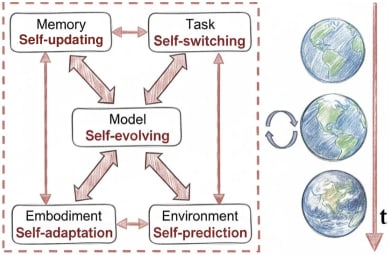
Although Wu’s vision has yet to be realized, the components of the closed-loop are being assembled at speed. Across China, a growing number of companies are racing to build what the industry calls the ‘brain’ for robots: Alibaba launched RynnBrain, Ant Group open-sourced LingBot-VLA as a ‘universal brain’ for physical AI — explicitly framing it as a step toward AGI — while startups like Spirit AI and X Square Robot are developing VLA models that learn through physical reinforcement learning rather than static data. Local governments have funded robot boot camps where hundreds of robots practice real-world tasks via human teleoperation and autonomous collection, generating the kind of physical interaction data that no static corpus can provide. Moreover, researchers from Tsinghua University envision a “self-evolving embodied AI” paradigm — unlike AI that improves by rewriting its own code, this proposed system closes the loop through its physical body, continuously updating its memory, goals, physical capabilities, and underlying model based on what it learns from acting in the real world.

An illustration of a self-evolving embodied AI paradigm; source.

Unlike the RSI discourse at the U.S. frontier lab, which increasingly coalesced around agentic coding as the primary lever, the Chinese ecosystem has no single consensus path. DeepSeek focuses on multimodality without a clear interest in embodiment. Z.ai treats coding agents as central while starting to invest in multimodality-enabled physical AI. MiniMax has long emphasized multimodal architectures. ByteDance and Tencent have invested more heavily in world models. Among leading scientists, Zhang Bo and Zhou Bowen see embodied AI as the final stage of AGI development; Ya-qing Zhang (张亚勤), the founding Dean of the Tsinghua Institute for AI Industry Research, adds a biological layer beyond that; Andrew Yao maintains that large models will remain the core foundation to support all subsequent advances, including embodied AI.

What is nonetheless striking is how rarely coding is presented as a silver bullet, and how consistently Chinese researchers reach for paradigms that go beyond language models — emphasizing the full complexity of human intelligence rather than one slice of it. Rather than a superbrain built from code as perceived by many in Silicon Valley, Chinese AI actors increasingly narrate a different endpoint of AI: something closer to building a human from the ground up. Compared with the months-long timelines offered by many U.S. AI executives, the Chinese self-improvement loop is larger, more integrated with physical reality, and far slower to close—by design.

A Bottom-Up Constraint-Driven AGI

Beijing is AGI-curious, not AGI-pilled. The embodied closed-loop approach to AGI emerging in China is not a secretive Manhattan Project but a bottom-up movement shaped by existing constraints and competitive pressures, that is gradually finding its way into the top-level vision.

Despite its aim to “explore AGI,” the top policymakers have many other near-term issues they want AI to solve. AGI does not make its way into the executive summary of the new Five-Year Plan. Poe Zhao points out that the government’s 2026 AI agenda still prioritizes “concrete deployment targets” over “general AI ambitions.” Similarly, many AI governance researchers in China still believe that DeepSeek, and maybe now Z.ai, are the only labs in China that are chasing AGI, while the rest of the companies are more practically focused on deployment. They are less concerned with replicating human intelligence and more focused on addressing the immediate development challenges. Gong Ke, the dean of the Chinese Institute of New Generation AI Development Strategies, states that, compared to chasing the grand narrative of AGI, practically diffusing and delivering AI to everyone is more important to China. Huawei’s Ren Zhengfei holds a similar view, arguing that China’s focus is on deploying AI to tackle practical development issues, in contrast to the US pursuit of AGI to answer philosophical questions about human and superhuman existence. Informed by these perspectives, when the state says it supports embodied AI, it probably has in mind addressing economic and societal gaps resulting from China’s low birth rate and contraction of the future workforce, rather than self-improving humanoid robots running loose on the street.

Meanwhile, the scientists who want those self-improving robots are initiating bottom-up discourse wrapped in the framework of that top-down rhetoric. State-backed labs are creatively interpreting the AI+ initiative to justify their AGI-oriented research, including in areas like AI agents development and AI+science. Academics from elite universities and institutions are publishing reports theorizing how AGI can contribute to key areas like the manufacturing industry, public data governance, and scientific research, thereby seeking to align the presumed benefits of human-level intelligence with the state’s objectives. The official message can be interpreted in various ways, depending on individual focus, thus justifying the societal and economic utility of general, or even super, intelligence.

Shanghai Innovation Institute, one of China’s leading state-backed AI labs, cites the AI+ initiative’s emphasis on AI agents to introduce their research. Their “cognitively agentic AI” (“能动”认知智能) is claimed to have autonomously discovered new AI architectures.

The emphasis on embodied closed-loop AGI is also driven by resource constraints. Chinese AI companies face real compute ceilings, and if RSI-through-coding-automation were the primary pathway to AGI, those constraints would represent a central bottleneck. Rather than treating compute as an existential gap to close at all costs, there might be strong incentives to develop theories of AGI where it isn’t the decisive near-term variable — where physical-world interaction, robotics infrastructure, and embodied data pipelines matter more than raw model capability, and where the timeline is long enough for China’s chip position to improve. Within this paradigm, embodied AI is not a consolation prize but a potential leapfrog: a path to AGI where China’s manufacturing base and deployment scale become structural advantages. In this case, constraint-driven diversification, top-down focus on deployment, and genuine ideological beliefs have probably coevolved into something coherent — an embodied closed-loop to AGI.

Although bottom-up, these AGI-minded voices are gradually gaining more influence at the top. The new Five-Year Plan’s emphasis on “multimodal AI (多模态), agentic AI (智能体), embodied AI (具身智能), swarm intelligence (群体智能)” as ways to explore intelligence, as well as “the parallel advancement of general-purpose large models and industry-specific models,” tracks closely with how Chinese AI scientists had already been framing the path to AGI. Ya-qing Zhang highlighted how “agent swarm” (智能体群) creates “collective intelligence” (群体智能) in a speech on AGI in 2025, while the idea of fusing general-purpose and industry-specific models exactly mirrored Zhou Bowen’s thinking of “the fusion of generalist and expert (通专融合)” as the pathway to AGI expressed in 2024.

The most direct example of this influence came in April 2025, when Zheng Nanning 郑南宁, a professor at Xi’an Jiaotong University, briefed China’s Politburo study session (with Xi Jinping in the chair). Zheng sees AGI as machines that can perceive, act in, and adapt to the physical and social world, not merely process data. In July 2025, at China’s most important AI conference, he further touched on the idea of self-improvement loops, arguing that AI systems should be intent-driven by linking information processing to goal-directedness — given a high-level objective, the system decomposes it into tasks, acts, and feeds results back to refine its own behavior continuously.

RSI without RSI: What We Lost in the AGI Debate

China’s belief that AGI needs physical embodiment may seem reassuring to US labs that believe software capabilities will become the decisive advantage in AI. After all, with the advantage in chips, US labs can scale compute much faster than their Chinese counterparts. Even though China may catch up on chips in the future, RSI may kick off quickly enough to compound US software capabilities to a point no Chinese lab could match. From this view, Chinese scientists are pursuing a theory of AGI that will matter far less than the one American labs are betting on.

But this thinking misses an important point: what matters is not only what Chinese AI researchers and Beijing believe AGI is, but also what happens quietly beneath those beliefs. Capabilities that don’t fit the official vision, including those that look a lot like the US version of RSI, will be built without the accompanying proclamations.

Shanghai Innovation Institute (SII), a state-backed research lab, published research on its “agentic cognitive intelligence” research in September 2025. It claims to have the scaffold automatically capture real-world agent-tool interaction trajectories and feeds them directly back into model training — what the lab itself calls a “self-evolving closed loop” (自进化闭环). Moreover, the system autonomously discovered over 100 new neural network architectures in two days. Meanwhile, in February 2026, MiniMax — a company widely seen by its Chinese peers as purely commercially-oriented with no AGI ambition — claimed that AI was already generating 80% of its newly committed code. More broadly, almost all frontier AI companies–Z.ai, MiniMax, Moonshot–are doubling down on AI coding agents.

By most technical readings, SII and MiniMax are trying to do RSI. However, neither of them mentioned anything about RSI, or its Chinese equivalent (递归自我改进). SII phrased the whole research around the idea of “能动性” (agentic capability) and the state’s AI+ adoption targets, while MiniMax only briefly mentioned it was near “infinite agent scaling.”

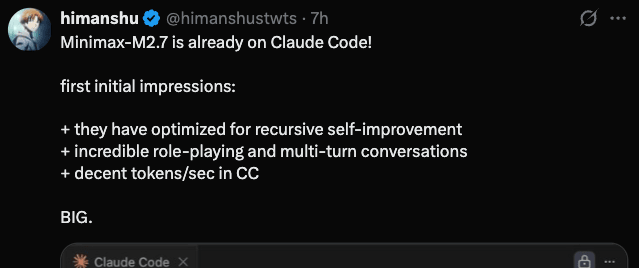
An AI researcher argued that MiniMax’s newest model optimized for RSI.

Are Chinese labs deliberately obscuring their ambitions? Not really. Like their American peers, Chinese AI companies are maximizing their software engineering capabilities. Automating the coding process and using AI to empower research is instrumentally useful regardless of what you believe about AGI. One does not need to cite RSI as a theory or publicly announce the coming of AGI to pursue a very similar process in practice.

This means that it is wrong to treat instances where RSI or AGI appear in top policy documents or corporate speeches as signaling how determined China is to push for frontier AI capabilities. There is a conceptual gap in the frontier of AI across the Pacific. The gap distorts near-term strategic signals relying on surface reading, as Western analysts are listening for language that Chinese researchers have no incentive to use. Rather than filtering Chinese AI through a Silicon Valley lens, Chinawatching in AI needs to understand architectural divergence and track real capability signals.

Meanwhile, the lens Silicon Valley or DC uses to envision AGI is also motivated by its own constraints and competitive position. Just as China sees the future of AI through its manufacturing strength and chip shortage, the U.S., with abundant chips and less manufacturing capabilities, sees a different version. The U.S. and China’s roads to AGI appear to be different, and perhaps the destinations do too. But if each side’s vision of AGI is shaped by what it already controls, then neither is well-positioned enough to recognize what the other is actually building.


Acknowledgement:

Zilan is grateful to Anton Leicht and Scott Singer for their mentorship on this project during the GovAI fellowship period. Zilan also wants to thank Suchet Mittal, Jason Zhou, Kayla Blomquist, and Zac Richardson for their feedback on early drafts.


ChinaTalk is a reader-supported publication. To receive new posts and support our work, consider becoming a free or paid subscriber.

China’s AI Landscape: a free-for-all, not a central plan

30 January 2026 at 19:34

Zilan Qian is a programme associate at the Oxford China Policy Lab and holds a Master’s degree in Social Science of the Internet from the University of Oxford.

The dominant narrative about China’s AI race frames it as a government-backed sprint toward AGI capabilities, competing head-to-head with the US frontier. But examining more than 6000 records of generative AI models filed through China’s registry system (updated through November 2025) tells a different story.

Since 2023, all public-facing AI models must be filed with regulators before launch — creating an unprecedented window into China’s actual ecosystem. China’s AI registry system creates multiple datasets organized by service type and regulatory concern: internet information service algorithm (IISA), deep synthesis algorithms (DSA), and generative AI services (also known as AIGC, AI-generated content). This article draws on AIGC and DSA datasets — the ones capturing generative AI development — while leaving aside IISA data, which focuses on non-generative technology like recommendation algorithms.

In this piece, I focus on quantitatively analyzing the records in the registry system, which challenges the “AI race” narrative where China as a whole is tightly united under central government guidance. Instead, the analysis will show that:

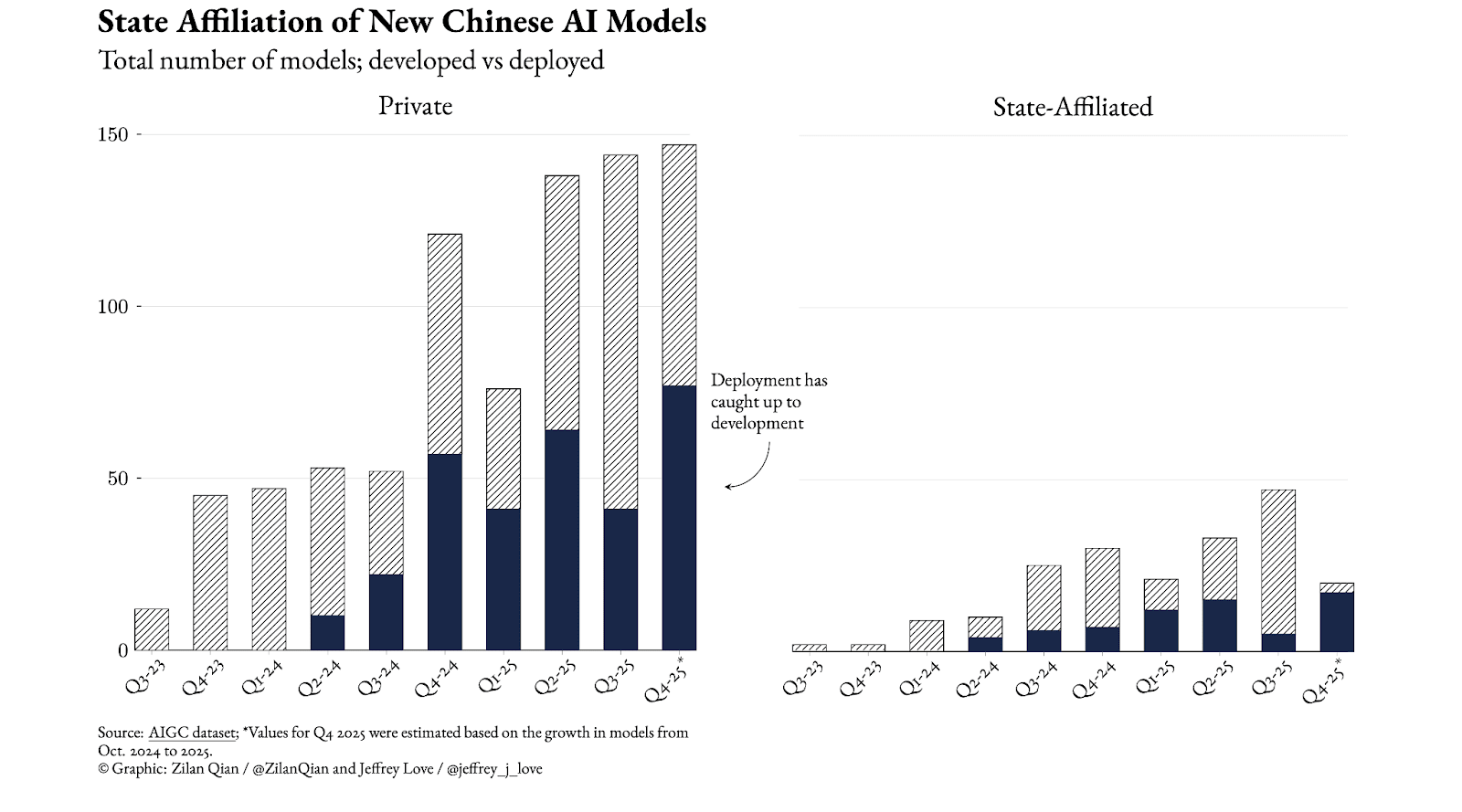
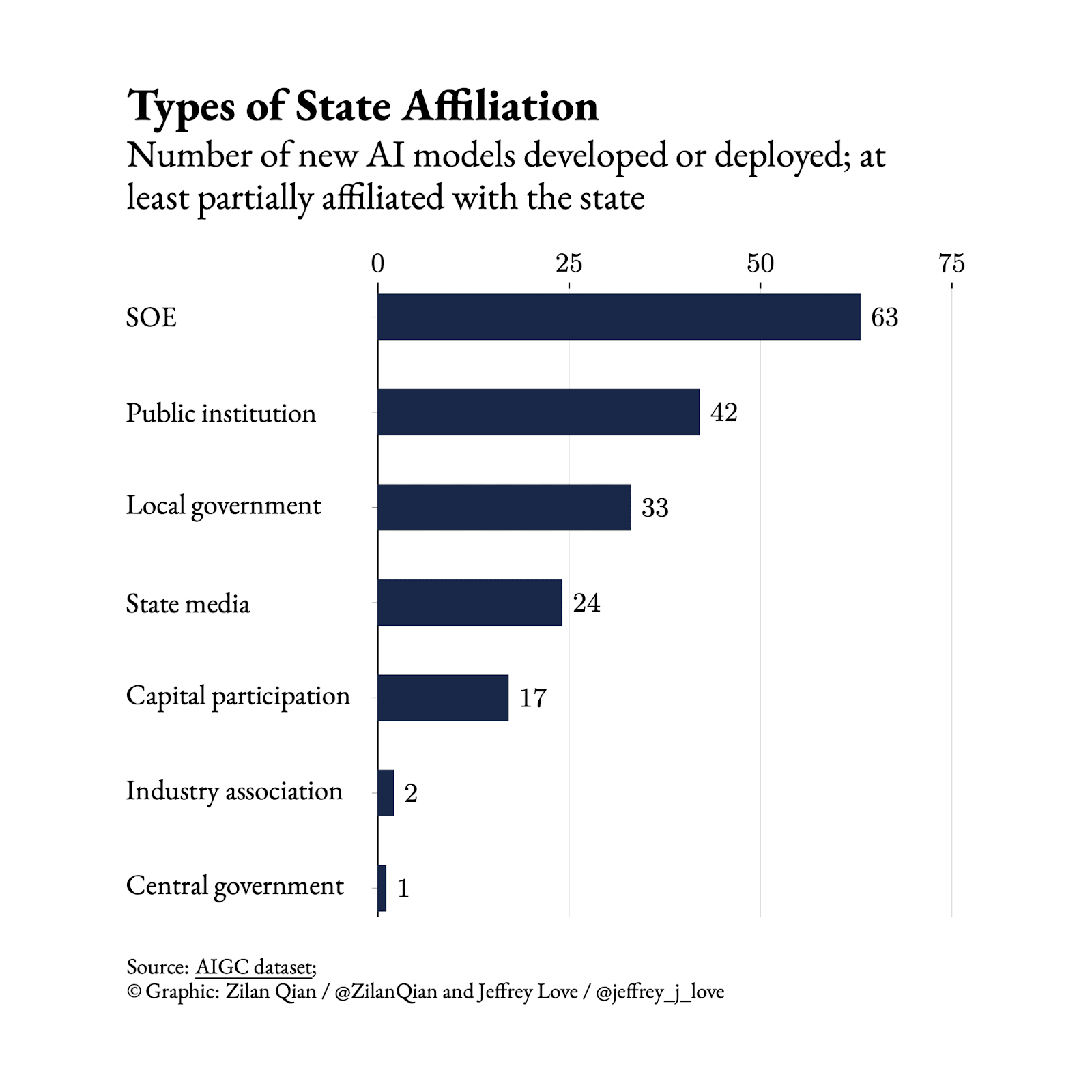
  • Private companies, rather than the state, drive development

  • Frontier developers are pursuing specialized models rather than converging on a single path for scaling LLMs

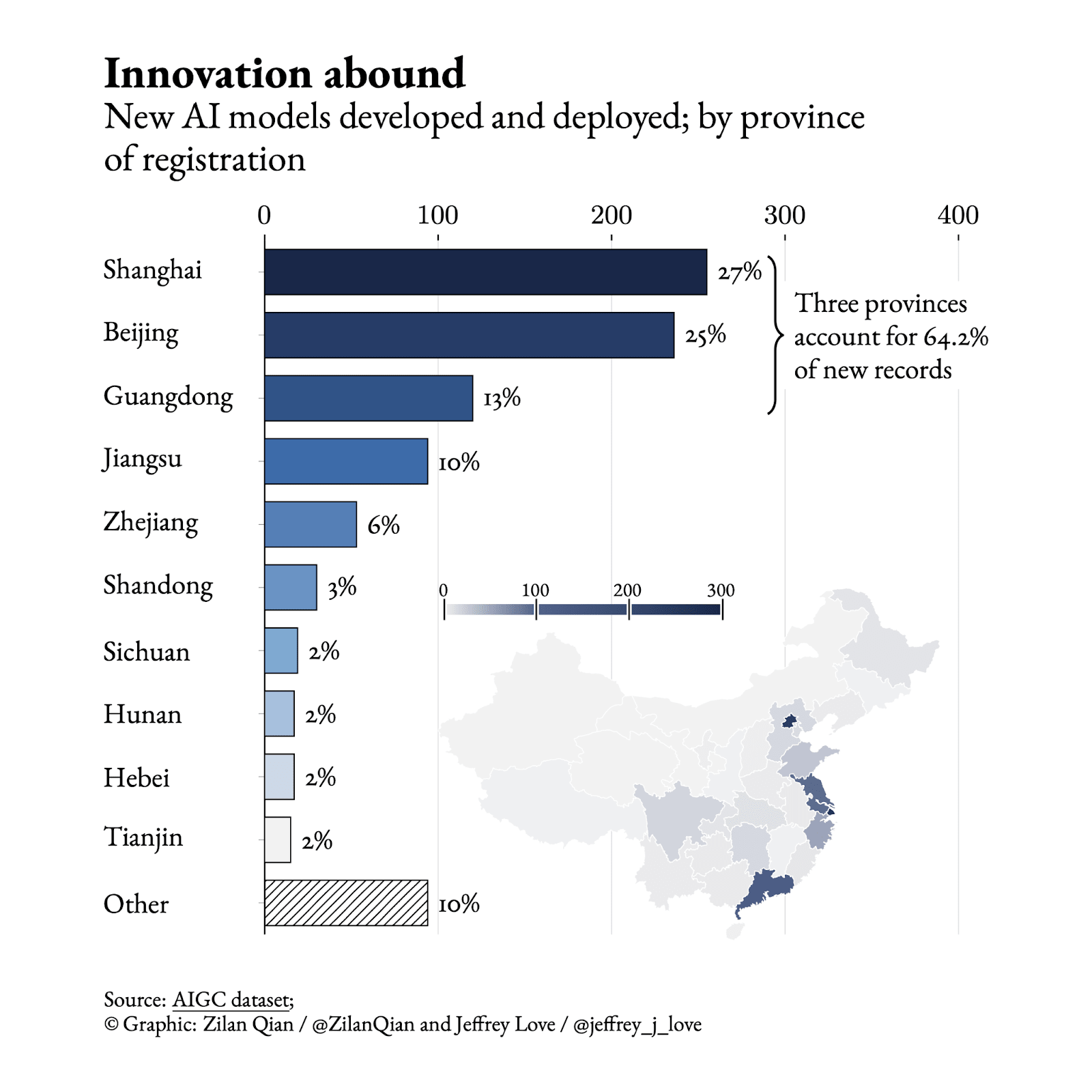
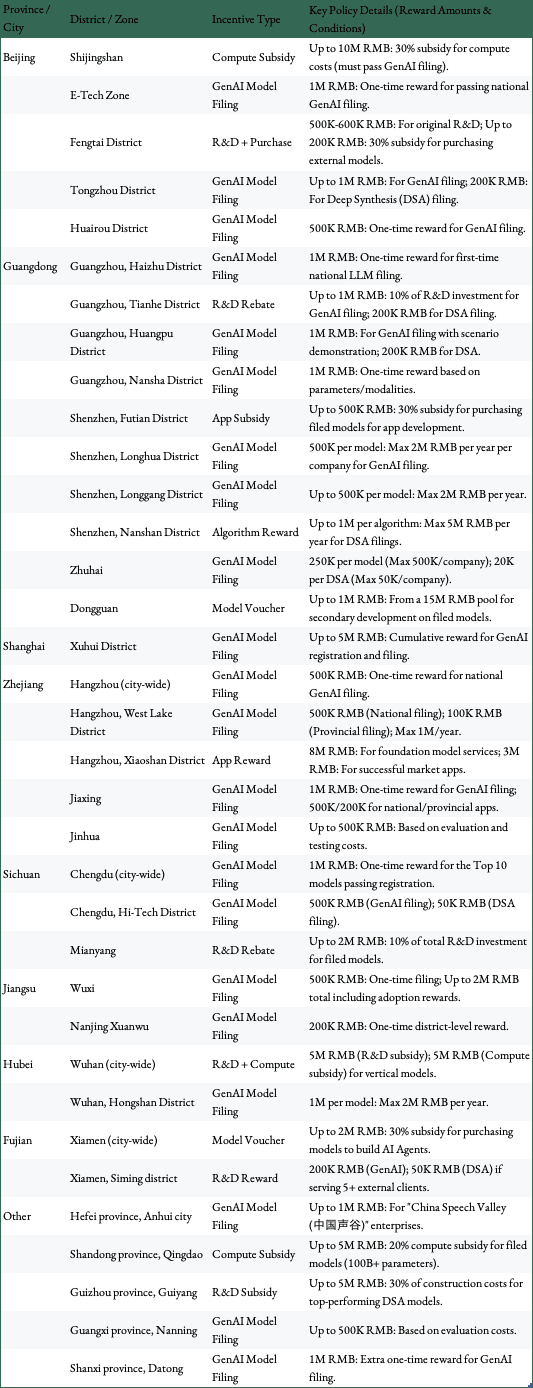
  • Geographic concentration reveals local governments actively shaping innovation clusters through fiscal competition.

For a comprehensive look at the development of China’s AI regulations into a formal registry system, I have prepared a full explainer. This analysis covers the system’s key focus areas, the types of AI content regulators seek to censor, and the processes used for conducting broad security assessments of AI services. I believe this explainer offers valuable insights for China watchers, as well as AI governance and safety researchers, by detailing the strengths and weaknesses of China’s approach to AI registration.

Understanding the Data

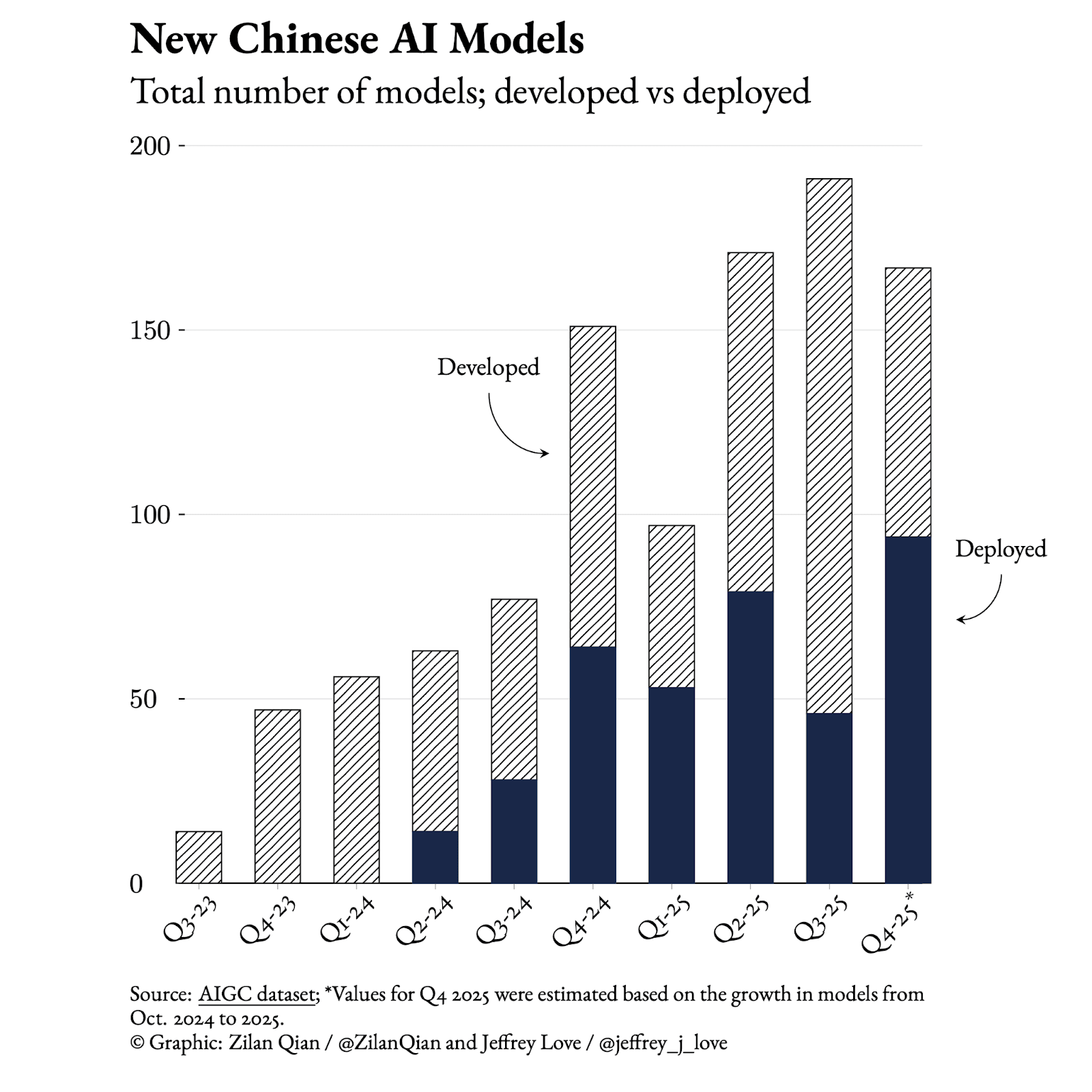
The AIGC dataset tracks all new public-facing AI models developed in China, showing who is building what, where, and when. It captures two types of activity: models being developed (training from scratch or fine-tuning open source models) and models being deployed (using APIs of China’s models or locally installed open source models without modification). Together, these reveal both the landscape of model development and how quickly models reach actual users.

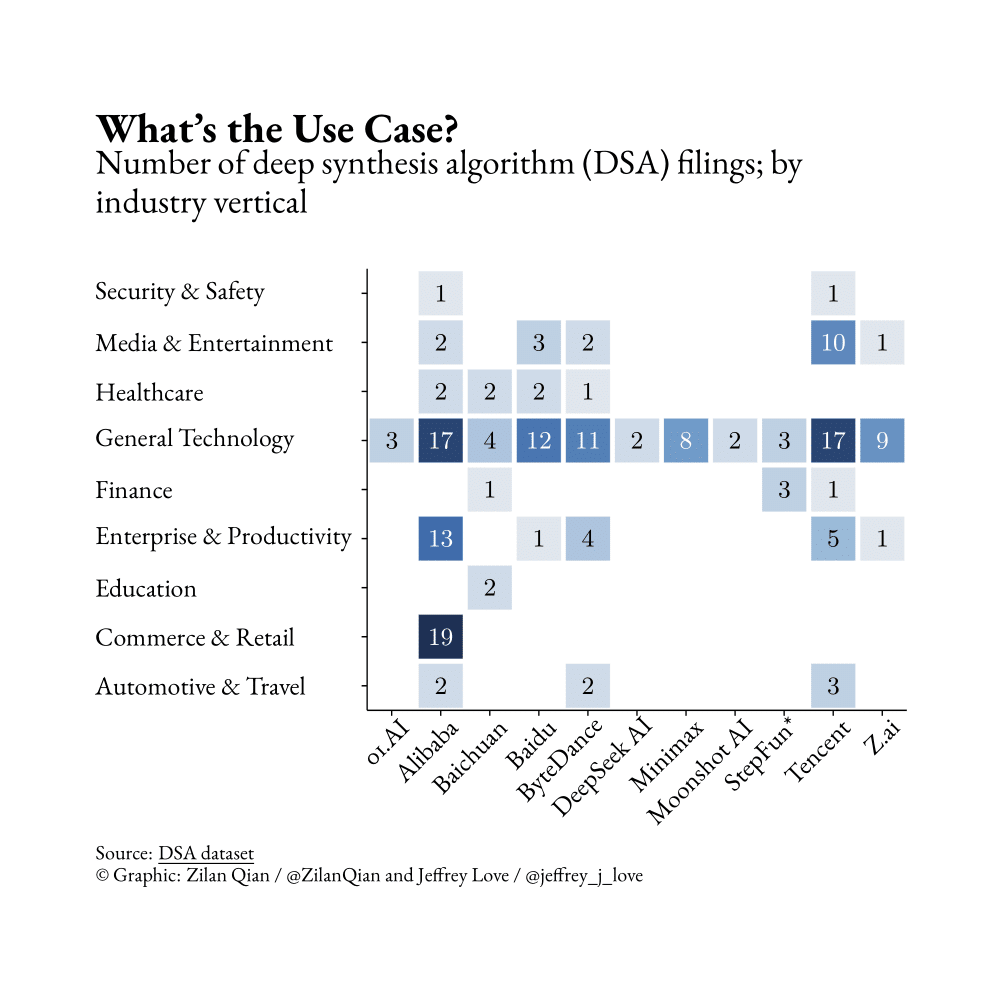
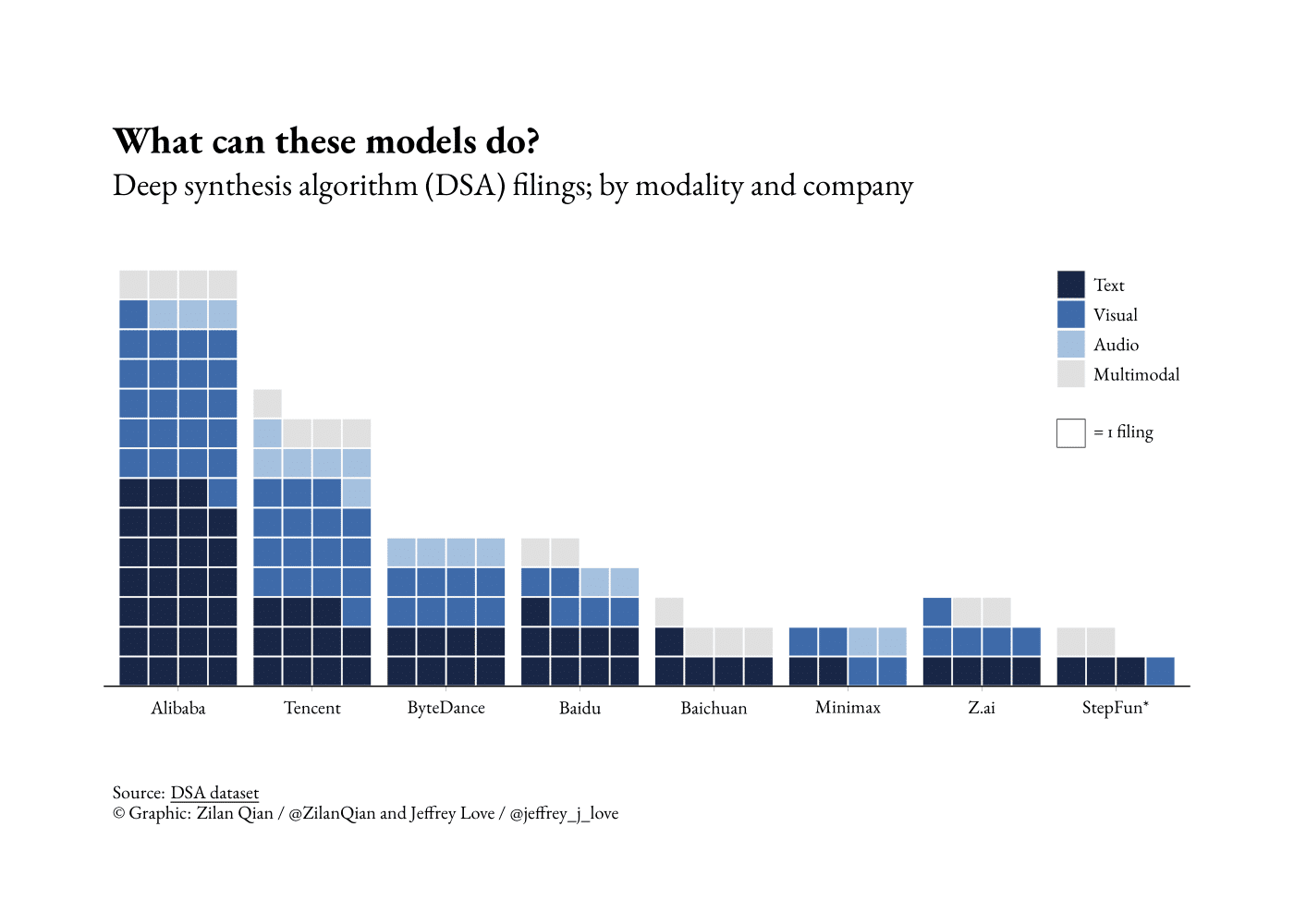
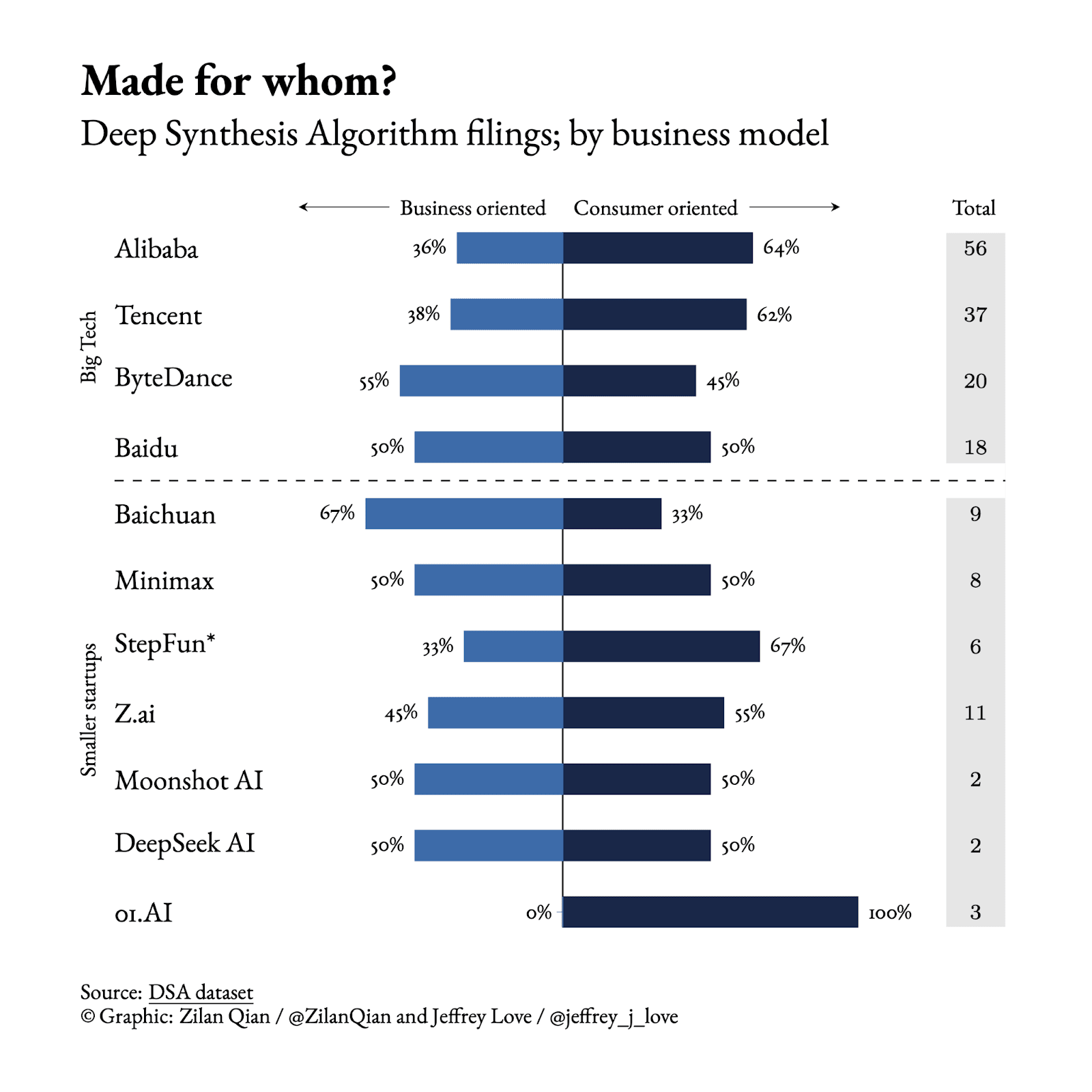
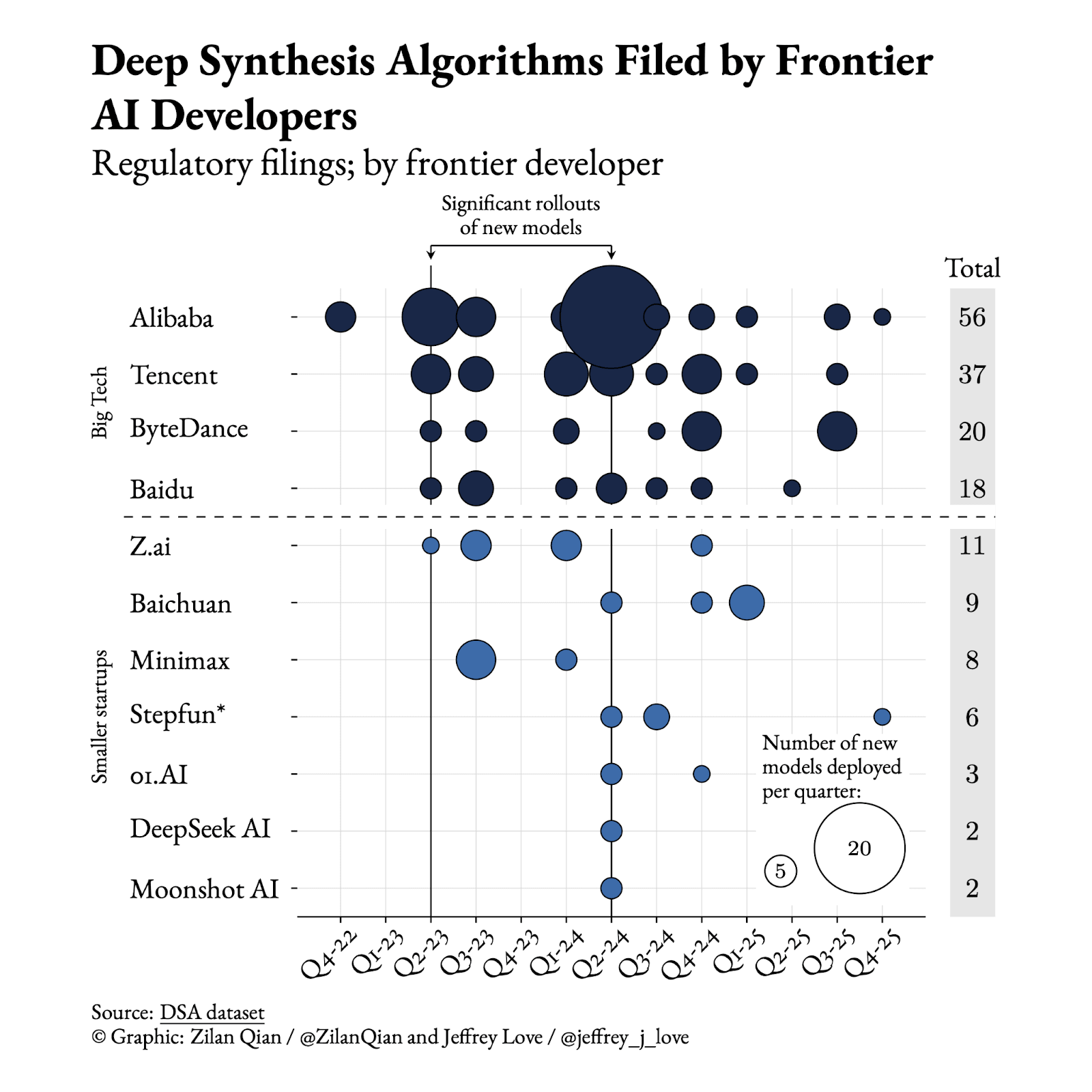
The DSA dataset captures the specific algorithmic services for the public that are built to generate content — text, images, video, and audio. Here, the focus is on major AI developers to show where China’s frontier AI is concentrating its technical capabilities and commercial strategies.

In a nutshell, the AIGC dataset answers the question, “What major AI models exist in China and who built them?” while the DSA dataset answers, “What specific generative algorithmic functions are frontier companies building?” Together, they provide both a landscape view (AIGC) and a technical functionality view (DSA) of where China’s AI development is concentrated.

Three important caveats:

  • First, both datasets track general model families rather than individual versions. Whether it’s DeepSeek V3 or R1, they all register as a single “DeepSeek” entry when it is first filed in the system. Although DSA filing was intended to track AI model updates, in reality, only a few developers refiled their model updates between 2022 and 2023. In general, AI model version updates are invisible.

  • Second, China’s registry system is designed to monitor AI’s impact on public discourse and social stability within China, so it captures only part of the ecosystem. Internal corporate AI deployments, non-public R&D (e.g., military), and overseas operations fall outside this system.

  • Third, the filing-to-registration process typically takes 2-5 months, but can vary significantly on a case-by-case basis. This means dates shown below don’t perfectly align with actual development or deployment dates (rather, they’re more often ~3 months late).

Private Sector Leadership with Accelerating Deployment

It is not a surprise to see the total number of AI models in China growing. The deployment of existing models has steadily increased between 2023 and 2025, suggesting that more adoptions have happened on the ground. Meanwhile, although we do not observe a skyrocketing surge in China’s AI model development based on the number of models filed, we should remember that the system does not account for model updates. In other words, although frontier AI companies are fiercely competing to roll out updated models — like DeepSeek-R1/V3.1/V3.2, Qwen-3/3-Omni-Flash/3-Coder/image, Kimi-K1.5/VL/K2, and more in 2025 — these models are not in the registry. In the registry, they simply show up as three entries: DeepSeek, Qwen, and Kimi. Thus, real model development is far more active.

Zooming in on the developers and deployers of AI models, we see that private companies have consistently dominated both model development and deployment since 2023, including big names in AI like Alibaba, top performers in non-AI markets like the education giant TAL (好未来教育集团), as well as a few foreign entities like Tesla. This dominance shows no sign of reversing. Even as state actors — such as telecommunications companies and state-owned research labs — have become more active, they remain secondary participants in overall model development.

Meanwhile, two development and deployment timing patterns deserve attention. A noticeable surge in developments and deployments occurred roughly six months and three months respectively after DeepSeek-R1’s release in January 2025 — the state’s review process of deployment usually takes 2-3 months, and 2-5 months for developed AI models. The AI model has to be fully developed before it can be submitted for review by regulators.This pattern is consistent with reports of companies rushing to deploy DeepSeek to capitalize on market momentum, as well as with AI developers rushing to roll out new models to compete with R-1.

Where does the state enter?

State-affiliated actors are increasingly visible on the registry. While not primarily competing for frontier model capabilities, they’re building what appears to be infrastructure and application layers.

State-owned enterprises are the most active government participants, particularly China’s two major telecom operators — China Mobile (中国移动) owning 3 models, China Telecom (中国电信) with 5 models, and the IT conglomerate Inspur group (浪潮) with 7 models. These companies traditionally dominated China’s digital infrastructure.

Beyond SOEs, universities and public research institutions are filing models, as are central and local government and state media outlets. Here, some prominent universities and labs — like Shanghai AI Lab — are building general-purpose AI, but more are building vertical AI models. For example, Tongji University’s College of Civil Engineering developed “CivilGPT” tailored toward their discipline, and Guangxi Zhuang Autonomous Region Information Center built “China-ASEAN Legal LLM (中国-东盟法律大模型)” for legal coordination and mutual recognition between China and ASEAN countries.

The CivilGPT interface features a “tool” section comprising four distinct functions: a literature interpretation assistant, a compliance intelligence consultant, a document editing utility, and “the Spirit of Scientists (科学家精神)” — an AI agent that adopts the persona of scientists or students to address user inquiries. The term “the Spirit of Scientists” is a slogan advocated by Xi Jinping to underscore the importance of patriotism and innovation among scientists.

Meanwhile, state-affiliated institutions are also actively deploying AI for very specific use cases. One major deployment scenario is customer services/general Q&A, with five AI medical assistants thus far deployed by public hospitals, and seven AI customer service assistants deployed by state-controlled banks. Meanwhile, there are only three entries that resemble AI agents — one from Inspur, one developed to assist with the World AI Conference, and another by Great Wall Motors 长城汽车, in which the state holds only limited stock (~8%).

The participation suggests a decentralized approach where state-affiliated institutions are developing vertical AI in specific domains that are ignored by private companies. While deployment spans various public-facing sectors like healthcare and finance, the integration of AI remains limited to narrow functions like AI chatbot assistants. This indicates that, up until 2025, state actors were still scratching the surface rather than attempting comprehensive sectoral digitalization as outlined by the State Council’s AI+plan.

General-Purpose LLMs are not the only way: What are China’s frontier developers building?

Generalist developers like DeepSeek and Moonshot have built large general-purpose models focused specifically on text generation — and the founders of DeepSeek and Moonshot have both publicly discussed AGI as a long-term vision. But this is a minority position among frontier developers. The dominance of text-only LLMs in public discourse masks a much more diversified market where most developers are optimizing for specific commercial applications rather than frontier capabilities.

“General technology” refers to foundational language models/multimodal models with no specific platform or industry application disclosed. These figures include filings from tech companies themselves and their major subsidiaries, and data from StepFun includes Caiyue Xingcheng 财跃星辰, a finance-focused AI startup co-owned by StepFun and Cailian Press 财联社.

Big tech companies pursue broader strategies. Alibaba dominates in use-case breadth, with filings spanning general technology, enterprise, commerce, and media. ByteDance, Baidu, and Tencent similarly spread across multiple sectors — all of these players have at least one filing in enterprise and productivity tools. In general, their filings seem concentrated on applications with immediate commercial value and clear deployment paths. Here, we also see that some big tech companies are leveraging their traditional strengths. Alibaba — as the owner of e-commerce giant Taobao (淘宝) — prioritizes e-commerce and retail, while Tencent — operating multiple video streaming platforms and popular video games — focuses on entertainment.

Moreover, Alibaba and ByteDance are actively integrating multiple AI tools into their respective legacy platforms. Alibaba, for instance, has deployed AI services across its e-commerce platform Taobao, its food delivery service Ele.me (饿了么), and its workplace tool Dingtalk (钉钉). Similarly, ByteDance has integrated AI into its workplace productivity platform Lark (飞书) and its short-form video app Douyin (抖音). This pattern reveals a strategy where AI is built for existing platforms and customer bases, alongside selective standalone new AI products (such as ByteDance’s Doubao 豆包 chatbot and Alibaba’s AI-enabled browser Quark 夸克) .

On the other hand, lacking traditional platforms, smaller startups allocate their focus more narrowly, often on general models or specific verticals in healthcare or finance. MiniMax and Z.ai, which own the highest numbers of DSA records in general technology among all startups, have already IPO-ed in Hong Kong.

Beyond text-focused LLMs and multimodal LLMs, companies are registering AI products specialized for video, image, and audio generation. Virtual human (数字人) generation is particularly common — and in fact is offered by all four major big tech companies — which suggests that virtual hosts are perceived as a significant commercialization opportunity in the livestreaming industry.

Multimodality not only supports integrated virtual human-AI interaction, as seen in AI companions or disability assistance. Rather, multimodal AI is also increasingly combined with physical manufacturing to create real embodied intelligence, as demonstrated by the recently-announced collaboration between MiniMax and Zhiyuan Robotics 智元机器人 to build multimodal AI robots that are conversational and customizable.

Overall, this diversification in both technical approach and target market — from enterprise tools to entertainment to vertical domains — reflects a strategy optimized for deployment and integration rather than frontier capability racing.

Almost all frontier developers engage in a relatively balanced split between business-to-business (B2B) and business-to-customers (B2C). Although 01.AI’s existing AI services were initially B2C-focused, they have transitioned into B2B services since early 2025, mainly using DeepSeek to help build companies’ workflows. Because the registry system focuses on public-facing AI, highly specialized or internal B2B services (serving a single company rather than multiple clients) do not appear in the records, so the actual B2B proportion in the market is likely larger than the data suggests.

Timing also reveals something about market dynamics. Alibaba began to launch generative AI services in 2022, the earliest among major players. Z.ai and MiniMax both filed models nearly a year before other startups, suggesting technological readiness and regulatory savvy that put them ahead of peers. A possibly state-coordinated influx of developers entered the market in mid-2023. Most other frontier developers entered the filing system in mid-to-late 2024, clustering around the time after generative AI became commercially viable and more visible in China.

By 2025, new model filings from frontier developers have slowed — likely reflecting consolidation rather than stagnation, given dataset limitations around tracking updates and internal iterations. The rise of DeepSeek turned China’s private sector competition from a quantity-based game into one of quality. As frontier developers have established flagship foundation models, the focus in 2025 was primarily on improving model capabilities — and those initiatives are invisible according to this registry system. While competitions in the frontier will still be a priority in 2026, these developers, especially big tech companies, may increasingly focus on turning AI capabilities into useful applications for the market.

Geographic Concentration: Where Policy and Innovation Intersect

The most striking pattern in the data is geographic: five provinces account for over 80% of all model development and deployment, with the top three representing over 60%. It’s clear that Beijing, Shanghai, Guangdong (including Shenzhen), Jiangsu, and Zhejiang have become the dominant centers of China’s AI ecosystem.

This pattern is not accidental but instead aligned with the uneven economic foundations and concentrations of talent in China. District or city-level governments in these dominant regions, which tend to have greater fiscal capacities, have established explicit subsidy programs to encourage AI development and deployment. Shanghai’s Xuhui District increased rewards from 2 million RMB (~US$286,000) to 5 million RMB (~US$715,000) between 2023 and 2025 to maximize AI model filing. Hangzhou offers 50 million RMB (~US$7.1 million) for foundational models trained on 10B+ tokens. Dozens of cities across these five provinces offer one-time rewards ranging from 500,000 RMB (~US$71,500) to 5 million RMB per filing.

AI incentive policies by location. Data source.

These aren’t trivial sums in an early-stage AI economy. DeepSeek-R1’s training cost was estimated to be less than $300k. Although that figure discounts compute cost, we also observe that multiple local governments offer “compute vouchers (算力券).” Meanwhile, MiniMax reported spending ~US$535k renting the data center computing resources needed to train M1. After all, a 1-5 million RMB incentive (~US$143k to ~US$715k) is substantial enough to influence where companies choose to operate and whether they prioritize getting models into the formal registry system. More developed regions can offer the highest subsidies, and thus show the highest density of AI filings.

Today in China, many local governments cite the number of AI models developed and deployed locally as a proxy for innovation or competitiveness. But these figures are also capturing the effect of local fiscal competition. Some entries represent genuine technological breakthroughs, but perhaps some are merely geographic arbitrage in response to government incentives. One should be cautious about over-indexing on these numbers — they should not be treated as s metrics of pure innovation. Not every model is DeepSeek.

The subsidy structure also reveals how China actually governs innovation in practice. China represents a hybrid model, rather than a system relying on central planning or market forces alone. Local governments compete to attract and retain AI development activity through fiscal incentives, creating a decentralized innovation ecosystem shaped by regional competition. This produces unequal outcomes (five provinces dominating) but also creates a system where innovation is geographically embedded in local economic strategies rather than concentrated in a single national hub.

Decentralized Growth and Private-Driven, Internal Competition

Taken together, these patterns suggest China’s broader AI ecosystem operates according to a different logic than the “US-China AI race” framing suggests.

First, development and deployment remain private-led, with state participation filling infrastructure and application gaps rather than competing directly for frontier capabilities. Despite the existing rhetoric of central top-down coordination of AI to race against the US (or SOEs and local governments frantically participating in the AI race after DeepSeek), the real systemic structure, characterized by the dominance of private companies, remains relatively steady over the years.

Second, frontier developers are pursuing diverse technical and commercial strategies rather than converging on LLMs as the path to AGI. The data shows specialization in modalities, vertical domains, and applications. This reflects a market where companies are optimizing for deployability and commercial viability, not just pushing frontier capabilities.

Third, China’s AI ecosystem is being actively shaped by local policy competition and fiscal incentives, not purely by market forces or by central planning. This creates geographic inequality but also reveals how innovation actually gets governed in practice through decentralized competition for activity and talent. It also raises concerns of potential resource waste, especially given that many local governments are currently short of money.

None of this means China isn’t building powerful AI capabilities. The registry shows significant activity, rapid deployment, and participation from major economic actors. But it does suggest the ecosystem is being built differently than headlines about “AI race” competition would imply: less centralized, more commercially focused, and shaped as much by regional policy competition as by centrally-driven technological ambition.

ChinaTalk is a reader-supported publication. To receive new posts and support our work, consider becoming a free or paid subscriber.

Acknowledgements:

This reporting was supported by a grant from the Tarbell Center for AI Journalism. Zilan is grateful to Tarbell for the editorial independence to pursue this research. Zilan also wants to thank Jack Love for his excellent graphic design assistance, and Kayla Blumquist and Karuna Nandkumar for their thoughtful review and feedback.

This analysis was inspired by Trivium China’s reporting on China’s AI landscape, and the AIGC dataset builds partly on their earlier work. Due to the constraints of time and manpower, the two open-sourced datasets are not perfectly cleaned and may miss some data points. Please feel free to revise and build on top of the data.

The Myth of China's "AI Talent Pipeline"

12 November 2025 at 19:37

Zilan Qian is a program associate (research) at the Oxford China Policy Lab and holds a Master’s degree in Social Science of the Internet from the University of Oxford.

Trigger warning: the second half of this article explores suicide.

“The US-China AI race is a race between Chinese — those in the US vs. those in China.”

This joke has real-world references. It is no secret that Chinese engineers and researchers make up a meaningful percentage of the AI workforce in the US. According to the Paulson Institute’s Global AI Talent Tracker 2.0, by 2022, US institutions relied more on Chinese AI researchers (38%) compared to US AI researchers (37%). Yet, this tracker still underestimates the Chinese AI talents in the US, because researchers are only counted as Chinese if their undergraduate degree is from a Chinese institution. That excludes a massive number of China-born AI researchers who did their undergraduate degrees in the US.

Meanwhile, China’s own AI progress, almost 100% powered by China-born Chinese, has grown at an unmatched pace. Besides the industry performance that can compete with the US, in 2024, China’s AI research publication output matched the combined output of the US, UK, and European Union, and now commands more than 40% of global citation attention.

People often cite China’s talent pipeline as one of its most valuable strategic resources — a system to admire or even emulate. Unfortunately, this view is fundamentally wrong. The system is highly inefficient, with a low cost-return rate: the top STEM genius everyone sees at the summit is built upon the bodies of massive numbers of talented students who failed to reach the top.

This piece is not about the life stories of successful Chinese AI or STEM talents. It is not about how the talent system works — but about how it does not. It explores the price paid to create this talent pool and the untold mental health stories behind it, as experienced and witnessed by me.

How to Build an “AI Talent Pipeline”

I grew up in Hangzhou, which is known today as one of China’s booming AI and robotics hubs. I went to some of the city’s top middle and high schools, the kinds of places that sit at the center of the country’s STEM pipeline. A middle school senior several years ahead of me became the co-founder of xAI, and another high school senior cofounded Pika AI.

My high school reliably produces at least one International Olympiad gold medalist in STEM subjects every two years, and a recent student just outperformed OpenAI in the International Olympiad in Informatics (IOI). All except one of my high school classmates majored in STEM, and about half of them went on to Zhejiang University (ZJU) — the alma mater of DeepSeek’s CEO. A handful of my friends are doing PhDs in CS, EE, or ML at leading Chinese and Ivy League-level overseas universities, some supervised by professors listed on Times AI 100.

IOI leatherboard showing three Chinese high school students overperforming OpenAI, one of them being a student from my high school.

On paper, this is the kind of pipeline many places dream of building. In practice, living inside it felt far less enviable.

In elementary school, most parents enrolled their kids in Olympic math training. Some of my peers juggled six different math tutoring classes a week. Later, these math programs began to lose popularity, replaced by coding, Python, and machine learning courses. By the time I entered middle school, coding had become a standard path.

The after-school care activities provided by a mid-tier elementary school in Hangzhou in September 2025, which includes “LLM application”, “military model making”, “augmented reality (AR) coding”, “Visual algorithm programming (pure logic), “Creative Robotics,” and, perhaps most ordinary yet strangely out of place in this lineup, “creative children’s painting.”

Before the first day of middle school, the school coding team held a 2-hour math exam to recruit new members. Out of 650 students in my cohort, more than 100 were selected for the first round. Over the next two years, that number shrank to about 15. At first, we trained for half a day a week, later a full day. This came on top of 7 am-to-5 pm schooldays (which would eventually stretch to 7 am-to-9 pm, 5.5 days a week) and weekends packed with supplemental classes.

The reward was clear: perform well in provincial programming competitions and you could secure a spot in a top high school. The risk was equally clear: most students could not balance this with preparing for the high school entrance exam, and eventually lost both the opportunity to enter a top high school through programming competitions and the regular path through the high school entrance exam (高中招生考试, which is usually known as 中考). In my city, 95,000 students sat for that test each year, and my high school (the top 1 in the city) recruited less than 300 through exams (and another 300 through other means).1

High school further raised the stakes. Prestigious schools ran Olympiad teams in math, informatics, chemistry, physics, and biology. At my school, at least 400 students entered these training streams, but fewer than 30 students in total might reach the national stage representing the province. There, fewer than 5 in total get selected into the national team and advance to international competitions. At the peak of the system, winners of international and occasionally national competitions were guaranteed admission to Peking or Tsinghua University, while reaching the national stage may get certain admission priority compared to others in the Gaokao. In 2022, the admission rate of Peking and Tsinghua combined in Zhejiang Province was 0.16%.

The training often began with one day per week and escalated to full weeks or even months devoted entirely to Olympiad preparation. Meanwhile, boarding school meant a 6 am-to-10 pm schedule, with Sundays spent back at school by noon and weekends set aside for extra classes. For those who fell behind, catching up to peers who had been preparing for the Gaokao full-time was almost impossible. The later you were eliminated from the Olympiad track, the more closing the gap and getting into a good university via the Gaokao became a hopeless endeavor.

If you do make it past the Gaokao, the grind continues in university. A friend at Zhejiang University once told me that during exam months, she slept only three hours a night. In her dorm, six students rotated sleep so that someone was always awake to wake up the others after their allotted three hours.

In 2020, Beijing University of Posts and Telecommunications changed its trash bins from the right to the left, because the old version had a curved top, and students complained that it was hard to put computers on top and do programming wherever they needed. The new version has a flat top to enable students to program on it.

If one is to continue in academia in China, metrics for academic publications create mounting pressure. To obtain a CS-related PhD from Zhejiang University, students are required to publish at least two articles in SCI as the first author, and at least one needs to be in a CAS Zone 2 journal (at least the top 15% of the respective discipline). Other universities have similar publication requirements. And for those who stay in academia, the pressure only intensifies! China’s 非升即走 (“up or out”) tenure system sets strict timelines for publications and funding, with no second chances for those who fall short.2
Across all these stages, the structure looks less like a ladder of opportunity than a staircase with a trap door at every step. Each milestone comes with an award for the top STEM students–admissions priority — but also punishes those who fail.

A recent screenshot of a PowerPoint circulated on Chinese social media about the requirements made by a PhD advisor to their students (sources not verified). According to the PowerPoint, the advisor requires 11 hours of work daily, from 8:30 to 22:30, with six fingerprint check-ins and security camera monitoring. Students must propose their own research topics, write their own reports, and present in English during group meetings. They are also expected to write their papers independently, only during vacations, with two papers reaching an impact factor greater than 10, a threshold that is exceptionally challenging to achieve given that only around 2% of the academic journals have an impact factor greater than 10. Absences must be made up, and severe punishment will be administered if employees are found playing video games or watching DVDs.

And there is no cushion for failure. If you fail to get into a good middle school because you split your time between coding camp and the high school entrance exam, you have very little chance of getting into a good university. The scarcity of resources means that at a mediocre high school (meanwhile, around 50% of middle schoolers do not even get into academic high schools), you would have no chance of getting good STEM coaches and support to continue exploring your talents in high school.

The other door to good universities — taking the Gaokao — is also closed to most, if you cannot get into good high schools. The best two high schools in my city each sent more than 140 students to the best university in my province (Zhejiang University) in 2024 (and more than 40 each to Peking and Tsinghua Universities). The 10th high school (which is still considered good in academic performance) sent 19 students, whereas most schools ranking below that had single-digit or no admissions.

Meanwhile, an average university does not offer great resources for its STEM students. The 2021 Nature study shows that a Chinese STEM student’s university experience is a high-stakes filter. While only students in elite institutions achieved significant growth in critical thinking and academic skills over four years, the average STEM student at a non-elite university saw virtually no skill gains and often experienced a decline. This stagnation is particularly notable because these average Chinese students begin university with skills significantly surpassing those of even top students in peer countries like India and Russia. Their considerable initial talent is thus arguably wasted because the Chinese system reserves the resources necessary for continued skill development exclusively for the small cohort admitted to the most selective, “elite” institutions.

This is a system of ruthless natural selection: only the brightest continue, and the rest are quietly discarded.

(Original data)

The Human Cost of Building the STEM Talent Pipeline

Trigger warning starts here…

In the autumn of 2018, I was waiting at a psychiatry clinic to address my burnout problem after preparing for the Gaokao and the SAT at the same time. Suddenly, the machine voice called out a familiar name: a high school classmate from the Olympiad team. Teachers had described him as a future national champion, someone destined for Peking or Tsinghua and top national science labs. We saw each other in the waiting room but did not speak. The silence was an agreement to pretend we did not know each other.

Mental health was rarely spoken of openly, but the signs were widely available. I knew many classmates whose middle or high school experiences left visible or hidden scars. One had long marks on her arm from self-harm. Another took a gap year halfway through high school. A few transferred to middle/high schools abroad. Three more took gap years later, during their university studies overseas.

All of them were once the students that teachers and parents placed the highest hopes on — top of the class, members of math or informatics Olympiad teams. Yet few became the “talent” they were trained to be. Many ended up in very good places — Oxbridge, the China Academy of Art, consulting, or finance — but not in the elite Chinese labs or international research institutes that had once seemed their destiny. These alternative paths offered equally sustainable futures, often at a lower personal cost, particularly for those with the economic or social resources to pursue them. But they were not outcomes you could announce proudly among peers. Foreign degrees, artistic pursuits, and wealth were desirable — but they were secondary to being regarded as exceptionally gifted in STEM and proving yourself through your own intellect, specifically inside the traditional ivory tower.

However, not everyone is lucky enough to find a path and make it through. During the 2020 Gaokao year, with Covid-19 disruptions compounding the stress, there were at least three high school students rumored to have committed suicide in the city. None were publicly acknowledged. Local schools, authorities, and media downplayed the incidents.

When I returned for a middle school reunion last year, one teacher told me there are now “one or two cases [of students committing suicide] every semester” in the city. My friend, who is beginning a PhD in CS at the best provincial university, said his department had two student suicides in 2024.

Even public data confirms the trend. A 2023 study published in the China CDC (Center for Disease Control and Prevention) Weekly 中国疾病预防控制中心周报 reported that while overall suicide rates in China have declined, the rate among children and adolescents has risen. Between 2010 and 2021, suicide deaths among urban and rural children aged 5-14 substantially increased, as did deaths among 15-24 year-olds from 2017 to 2021, surpassing three per 100,000.

Graphs of age-specific suicide mortality by geographic location in China, 2010–2021 included in the study. (A) Suicide mortality in children aged 5-14 years old by location. (B) Suicide mortality in adults aged 15-24 years old by location. (C) 25-44 years old. (D) 45-64 years old. (E) 65 years or older.

However, the pressure is not limited to students. Young academics, especially those working in STEM, also struggle with mounting research pressures. A 2025 study compiled 130 verified suicide cases in China’s academic and scientific circles from the 1990s to 2024. It found that work and academic pressure were the leading factors, cited in 53 percent of cases. More than half of those who died worked in science and engineering fields. The most affected age group was 20-29, accounting for 53 percent of cases. And the numbers are rising: 38 cases were recorded from 2000 to 2009, 52 from 2010 to 2019, and already 38 between 2020 and 2024.

Graph compiled by a WeChat account based on the research, showing that science and engineering account for 56.15% of total suicides, humanities and social science for 28.46% and medicine for 10.77%.

How to Hide the Cost

The figures above almost certainly underestimate the problem. They capture only the cases that slip through layers of silence. Suicide in China’s education and research system is managed through a multilayered regime of suppression.

At the first level, teachers (for student suicides) and school administrators downplay or conceal incidents. Their incentive is straightforward: avoid public criticism and protect their own careers. Local governments then step in to prevent negative publicity, leaning on media outlets and social platforms to delete or bury reports. If those measures fail, the central government becomes involved, concerned primarily with preserving social stability.

To be fair, investigations can be carried out at each stage. Teachers and schools usually notify local police; the education bureau may research the cause of suicide, and the central state would also mandate a more thorough investigation. There are many cases where public attention was enough to push for good investigations and the central state’s public acknowledgement. But many more cases do not survive until that stage, and investigations often leave room for more speculation.

For example, when a 17-year-old boy suddenly fell to his death in his high school in 2021, school administrators swiftly seized his body and drove to the funeral parlor, while notifying his mother only two hours later and banning her from entering the campus. Meanwhile, local police aggressively censored posts on social media and blamed the death on a “personal issue.” Although public dissent was large enough to force a central authority-mandated re-investigation, local police again ruled out foul play and claimed the family had “no objection.”

Some students make dark jokes that the only way to guarantee graduate school admission (保研) is if your roommate suffers something life-threatening. In cases of rape or suicide, some universities quietly offer guaranteed admission to those who report the incident, so the case doesn’t become public. The humor is bitter, but the logic is rooted in lived experience where tragedy is normalized, even instrumentalized, in a system that prefers silence to awareness and change.

Screenshot of a Zhihu discussion thread regarding providing guaranteed graduate school admission to the roommate of a student who committed suicide. The top answer, with 34k likes, said: “When the incident happened, you thought the school would say: ‘Please don’t spread the news, we will offer you guaranteed admission.’ What the school actually did was: ‘Strictly ban posting anything on Zhihu, Weibo, or Tieba (popular Chinese social media platforms); if found, students will be expelled from the school,’ while making a lot of effort to tune down public dissent by giving money to Weibo to ask them to remove/censor people’s posts.”

This censorship compounds the stigma already surrounding mental health. Seeking help is seen as wasting precious study time. Shame still lingers around mental health despite some recent improvements in awareness.

The Collective “Dream”

What do I see as the secret of China’s AI talent? A “human sea attack 人海战术”: massive scale creates fierce competition that elevates top performers, while accepting enormous attrition as the system’s operating cost. Enough talented students enter the pipeline that losing most along the way still produces exceptional outliers at the top.

But scale and attrition alone don’t fully explain the system’s output. There was also an ideological component. After I left China to study abroad, I met many students from Oxbridge and the Ivy League. Many are very smart, but probably few of them could compete with my Chinese classmates within the Chinese system. The elite students in the UK and the US were brighter in another way — passionate and determined as individuals.

Meanwhile, we had been taught to be passionate and determined as a collective.

“Though hardships endure, never cease striving forward, with utmost loyalty in service to the nation; 忧患其久 不辍奋进 精忠报国. Only seeking great achievement, to pass on the torch, for future generations to rely upon. 唯求大成 薪火相继 后学所凭.”

These lines come from my high school’s school song. Back then, studying STEM carried an implicit patriotic mandate — the ideal was to become a pure scholar advancing the nation through knowledge. This was the greatness we were all supposed to be pursuing, the torch in our hands, and the shared future into which we were meant to channel our passion.

Of course, this patriotic mandate is different from the one China had decades ago. The years of pure scientism and old scientific nationalism in China have faded. Many students now consider practicality over ideology, choosing economics or finance over foundational sciences, to the extent that the state started to censor such narratives as negative emotions. Mental health awareness has grown. Overwork is no longer universally celebrated as dedication to the nation.

Yet the embedded ideology of techno-nationalism, or — in the parlance of modern propaganda — “science and education for the development of the nation” (科教兴国), remains powerful for individuals, especially when geopolitical pressures reinforce it. Regardless of whether ordinary Chinese think they are racing with the US, many of us have been trained to race, especially in STEM, from the very beginning of our lives.

The core question about China’s talent system is not whether China can continue producing top AI talent through this system. It can, at least until its population shrinks drastically. It is not whether other countries can have as many native talents as China has — they can, if they have enough people to lose. The question is whether we have paid enough for this race, and whether the next generation will be willing to pay more — both racing internally against each other, and externally against other countries.

ChinaTalk is a reader-supported publication. To receive new posts and support our work, consider becoming a free or paid subscriber.

1

The high school’s alternative recruitment drive brought in 300 additional students via two main channels: test-waived admissions (保送名额) for the top 1-10 students in feeder middle schools, and separate provincial exams (省招) to secure top STEM talent from high schools in neighboring counties.

2

Historically, Chinese academics enjoyed more permanent “iron-rice bowl” 铁饭碗 style employment without these formal up-or-out reviews. However, many Chinese universities now operate a fixed-term “tenure-track” system: junior faculty (assistant professors or post-docs) are given roughly six years to meet strict criteria—mostly around publications and grants—and then either receive a permanent (tenured) appointment or leave the institution.

The system resembles the US tenure track, where junior faculty undergo a six- to seven-year review. However, in the US, meeting the evaluation criteria is generally sufficient to secure tenure. Except in a handful of elite institutions, faculty in American academia are unlikely to be denied tenure at the end of their review periods, and elite-school tenure-track scholars generally have flexibility to move to other institutions. Whereas in China, simply fulfilling the metrics set by the university is often not enough. Candidates frequently need to exceed expectations by a significant margin, which has led some to describe the process as a tournament, with multiple rounds of competition to secure a position. Others characterize China’s tenure system as a “bet-on agreement” (对赌协议) between the individual and the university: if the researcher succeeds, they gain tenure and its associated benefits; if they fail, they may lose their position entirely and, in some cases, be required to repay relocation or housing subsidies.

Inside China’s Giant AGI Wiki

27 October 2025 at 19:54

Zilan Qian is a fellow at the Oxford China Policy Lab and an MSc student at the Oxford Internet Institute.

This “AGI Bar” recently opened in Shanghai, where people openly poke fun at the hype surrounding AGI by stating that this bar is “all about bubbles.”

Many big tech, VC, and AI startups like ByteDance, ZhenFund, and Z. ai sent congratulatory flower baskets when the AGI bar opened.

Not many people would point to this bar and say that China is racing towards AGI. Otherwise, the U.S. has zero chance of winning, because AGI is diffused to even bars in China. AGI is a buzzword for business in this context, period.

This is the consideration needed for people who want to know whether China is taking AGI seriously. Before you ask anyone who works on China and AI how AGI-pilled China is, ask yourself two questions: what do you mean by AGI, and who do you mean by China?

This post provides one piece to the picture by looking into a giant AGI wiki made by an open-source community in China. As this piece will show that, for AI hobbyists in China, “AGI” stands for Western tech aura and a desire for quick money.

What is “Way to AGI”?

Created in April 2023, the “Way to AGI” wiki is a collaborative knowledge hub hosted on the Bytedance-developed platform Feishu 飞书 (known internationally as Lark). It functions much like a shared giant Notion workspace — users can upload documents,1 create events, and leave comments on each other’s posts.

Since its launch, the wiki has attracted over 2 million unique visitors and generated 4.5 million total views for its front page. For context, the actual Wikipedia page on “artificial general intelligence” received about 2.1 million views globally during the same period.

The wiki is maintained by the Way to AGI community, an open-source AI collective boasting 8 million members interested in AI and 200,000 active developers,2 according to data published on its community forum. While slightly smaller than the largest AI-focused subreddit, r/ChatGPT (11.2 million members), it far exceeds r/OpenAI (2.5 million members) and the r/agi subreddit (82,000 members)3. The community appears to receive implicit support from tech companies, notably ByteDance — which owns both the Feishu platform and Coze, an AI app frequently discussed on the wiki. It also claims to form collaborations with other tech organizations and AI startups like Alibaba, Huawei, Tencent, Zhipu AI, and Moonshot AI.4

Driven by the belief that “AI will reshape the thinking and learning methods of everyone, and bring them unprecedented powers,” the group shares a wide range of AI-related resources on this wiki as part of its collective journey — the “way to AGI.”

Or so they believe they are. This is a “Way to AGI” if and only if the following formula holds:

1. AGI = Silicon Valley

“When you look long into an abyss, the abyss looks into you.”

The AGI community may not be AGI-pilled, but they are definitely Silicon Valley-pilled. Discussions, learning paths, and citations overwhelmingly reference Western, especially Silicon Valley, sources. “AI leaders”, recommended podcasts, and must-listen talks come predominantly from the other side of the Pacific Ocean.

Proof 1: Silicon Valley > Nobel/Turing Prize > Chinese CEOs >> Musk: Ranking the AI leaders

The wiki has a “top AI leader” leaderboard, which is regularly updated to include the top voices of what are perceived as “AI leaders” worldwide.5 On this board, Silicon Valley dominates by a landslide. Satya Nadella (Microsoft), Jensen Huang (Nvidia), Jeff Bezos, and Sam Altman lead the rankings, with Stanford’s Fei-Fei Li placed even higher than the three canonical AI “godfathers” — Geoffrey Hinton, Yann LeCun, and Yoshua Bengio.

The first China-based figure on the leaderboard is Robin Li 李彦宏, Baidu’s CEO, ranked ninth (Times AI 100 2023). His high position is somewhat surprising, given that ERNIE, Baidu’s flagship LLM, isn’t considered China’s strongest model. But Baidu has been an OG player in China’s AI ecosystem, investing in research long before the current LLM wave. It has also invested in full-stack AI development, including the recent open-source AI platforms PaddlePaddle 5.0 and Baige 4.0.

Other Chinese names on the list include:

  • Liang Wenfeng 梁文峰— CEO of DeepSeek (Times AI 100 2025)

  • Zeng Yi 曾毅— Professor on AI ethics, Chinese Academy of Sciences (Times AI 100 2023)

  • Wang Xingxing 王兴兴— CEO, Unitree Robotics (Times AI 100 2025)

  • Chen Tianshi 陈天石— CEO, Cambricon Technologies (AI chips)

  • Xu Li 徐立— CEO, SenseTime

  • Liu Qingfeng 刘庆峰— CEO, iFlytek

  • He Kaiming 何恺明— MIT Professor

In total, seven people from China made the top 26 list compiled by Chinese AGI watchers themselves, with mostly CEOs from private tech companies, and several do not explicitly focus on frontier AI research. The list is likely also heavily influenced by Western rankings, as at least 23 of the 26 have appeared in the Times 100 AI rankings during 2023-2025. (’s Metis list does not appear to be an influence…). Profile photos of Clem Delangue and Marc Raibert are also directly taken from Times 100 AI 2023. However, the latest updated date (July) is before the release of Times 100 AI 2025, so the ranking foresaw Liang Wenfeng and Wang Xingxing’s debut on the 100 AI list.

Among all people listed, Elon stands out. He is the only one with a unique non-professional picture taken from a 2018 prank post for the release of the Tesla Model 3.

Despite many of these “leaders” being AGI-pilled, the ranking itself is not. With each leader having one selected quote to highlight their beliefs in AI, only two of the 26 selected quotes discuss AGI. Others focus on AI’s commercial promise, industry potential, and future trends. For instance, the selected quote from Liang Wenfeng, likely one of the most prominent voices in China advocating for AGI, is about open source as a strategy for both commercial value and brand reputation.

Proof 2: Commercial Success > Technical Depth >> AGI Research: Curating Western AI Voices

While hero-worshipping Silicon Valley leaders might be dismissed as superficial fandom, the community’s choice of information sources reveals deeper structural biases.

The section of “recommended foreign information outlets” has 129 sources, with 24 starred as must-read recommendations. Stratechery tops the list, while Lex edges out Dwarkesh. Most of the recommended sources have deep Silicon Valley associations, with one-third focusing on investment. The rest are C-suite executives or top researchers from big-name tech companies like OpenAI, Google, and Nvidia. Although some of the figures from big tech are AGI-focused, the list itself does not appear to be curated for AGI expertise. Rather, the even distribution of top profiles from big tech, mixed with prominent VC voices, reads more like a collection of Silicon Valley’s most commercially successful figures.

The 24 “must-read” outlets.

When we zoom out to the full list, the AGI flavor dissipates further. Among the remaining 105 sources, approximately 25-30% focus on investment, while 35-40% feature key figures from big tech companies and AI startups. About 15-20% come from U.S. universities, predominantly California institutions like Stanford, UC Berkeley, and Caltech. Around 10% consists of journalism and media outlets covering Silicon Valley and venture capital culture, while only a handful represent more independent technical sources like Stephen Wolfram, Nathan Lambert, Lex Fridman, Sebastian Raschka, and SemiAnalysis.6

Out of 129 total sources in a wiki titled “Way to AGI,” only three are explicitly AGI-focused: Eliezer Yudkowsky (founder of MIRI and LessWrong), Ben Goertzel (who helped popularize the term AGI), and John Schulman (chief scientist at Thinking Machines Lab and co-founder of OpenAI), with perhaps two others (Demis Hassabis and Ilya Sutskever) operating in AGI-adjacent territory. Thus, if one wants to “study AGI” through these sources, they are probably learning how big names in Silicon Valley think about AI. And while Silicon Valley thinks about AI in many ways, the most appealing one to this community seems to be how AI can be used to make money.

2. AGI = Quick Money Knowledge:

But emulating Silicon Valley success requires significant time and capital investment. For users seeking faster returns, the wiki pivots from Western voices to Chinese practice: offering step-by-step guides for building and monetizing AI products domestically. Eager novices come here for quick profits, while the “AI pros” they aspire to become are simultaneously seeking to profit from them.

Step 1: Learn just enough

Following the “syllabus” of this wiki, the first step is an introduction to AI, where it uses “what is ChatGPT…and why does it work” as a basic guide. From there, you then learn how to install and subscribe to ChatGPT (step-by-step from how to register a Google account to how to add your credit card, and of course, using a VPN7). There are seven “must-read” entry-level documents, six of which are Chinese translations of English sources, from the book “What Is ChatGPT Doing … and Why Does It Work?” to articles explaining transformer, stable diffusion, and diffusion models for video generation. The only original content is the seventh section, “Easily Understand 20 AI concepts,” which uses only two or three sentences in Chinese metaphor to explain each concept related to AI, from the chain of thought to the chatbot arena.

The 20th concept: hallucination, briefly explained as AI making up stories. The example goes: “You: Who was China’s first president? LLM: “Li Bai (Chinese poet in 700 AD).” You: What’s your evidence? LLM: “I dreamed of it.

Not every introductory content is that introductory, but they are definitely “quick to learn” and extremely “practical”. You can master “Python + AI Without Coding Experience in 20 Minutes,” or know how to “gather LLM Data” through a 400-word article. For some reason, knowing how to select the best GPUs for model reasoning through comparing 38 kinds of Nvidia’s chips, including the H100 and A100, is also categorized as “entry-level content.”

A partial screenshot of the guide.

Step 2: Developing “skills”

After (supposedly) mastering these “introductory” concepts, you can then dive into area-specific learning: AI agents, AI drawing, AI video, AI music, AI character + audio combination, AI 3D, ComfyUI workflow, or AI coding. Let us take “AI agents”, which seems to be one of the trending focuses for developers on their way to AGI now. Here, you will start with a Chinese translation of Maarten Grootendorst’s A Visual Guide to LLM Agents.

Then you will read guides on how to create your own simple “AI agents” without any coding through ByteDance’s Coze platform by only prompting a few lines of description of the agent’s characteristics. The guide will not teach you to create the next autonomous system that can navigate complex real-world tasks. Instead, it mostly shows you how to build AI chatbots that act like a language teacher, or an AI workflow that generates outreach emails based on company profiles.

Interested in building, but have no idea what to build? There are loads of examples and analyses showing you the potential of integrating these “AI agents” into different real-life scenarios, as well as analyses of what’s trending in the AI agent market right now. Here, AI chatbots, workflows, and agents literally mean the same thing. Participation matters more than precision under the buzzing excitement of AGI.

Coze’s platform with different “agents,” which are not very agentic.

Step 3: Practice in contests

After learning how to create your AI “agent”, you can participate in various “Agent co-learning pop-up contests (智能体共学快闪比赛)” to exchange with other people about how to build better bots/agents. Some smaller contests and workshops usually range from a few hours to a day online, with participants entering their own “agents” and experienced developers as judges to see who the winners are. Winners of these small skill contests receive a virtual certificate of “the coolest AI agent.”

The certificate of the winning “agent,” an “anti-scam assistant for parents,” in the May 2024 contest.

Meatier contests also exist, such as the “AI Agent Olympics 2025.” This “global” contest was co-hosted by Rednote, Weibo, Z.ai (which builds the frontier LLM GLM-4.5), and flowith.ai, with “Way to AGI” as one of the guest collaborators. Branding itself as “the first AI agent creation contest in 2025 worldwide,” the contest offers winners monetary awards (15000 RMB, or about US$2100) as well as social media exposure (via Weibo and Rednote). Despite sponsorship from Z.ai — the only AI startup in China openly claiming to be interested in AGI besides DeepSeek — and “Way to AGI,” there is no single mention of “AGI” on the contest website. Instead, the contest’s organizers state that “the rights to intelligence (智能) should not belong to any corporation, but instead should belong to a community of mankind (人类共同体),” with the last phrase strikingly similar to the CCP’s diction “a community of shared future for mankind (人类命运共同体).”

Don’t expect to see some crazily AGI-pilled individuals or the next DeepSeek founder in this contest. According to the bios of group members published on the platform, your peers will likely have some professional background related to AI, perhaps as a prompt engineer, as a product manager at a big Chinese tech firm, or as a full-stack developer. But you will also likely see people who were previously working as graphic designers, visual editors, or real estate agents — jobs that are very susceptible to AI replacement and were hit hard by China’s economic crisis — asking to form groups for related competitions. The poster of the AI Agent Olympics 2025.

Step 4: Believe that you can monetize your agents, while actually being monetized yourself

The way to AGI may be important, but perhaps the way to money is more important. The final step tackles the question of how to quickly monetize your new knowledge. Massive materials on product management are available in this section: how to understand and create demand for agents, where AI agents integrate into companies’ workflows, and experiences shared by so-called “AI agent product managers.” However, even with this general knowledge, there is still a real gap between your immature “AI agents” and AI products that can actually earn money.

There are many “AI pros” who first offer some free learning materials claiming to fill that gap. They will share some introductory content that showcases the great potential of the AI agent market and how easy it is for people with no background to make a profit. Later, they introduce paid core lessons that they argue offer “systemic structure, professional guidance, personalized plans, and feedback” for more efficient learning. Effectively, this so-called “open-source AGI community” becomes the first step for some people to hook novices into their closed-source AI coaching business.

Some titles of AI pros: “Top blogger for the RedNote-AI drawing course; officially partnered content creator with MidJourney; Senior design expert at a Fortune 500 company; former Creativity Lead and VP at a Fortune 500 company; guest lecturer for Posts & Telecommunications Press; and author of MidJourney AI Drawing: Business Case, Creativity, and Practice”

For example, in the AI Agent co-learning section, one member “shares” a piece of great paid content she “recently came across” (she is likely the person who runs the paid course). The screenshot below is how she justifies having paid for lessons (up to 5000 RMB/700 USD) in the open-source community: “It is like exercising in your home or going to the gym for guidance. Different people have different demands. The open-source community offers a wealth of resources suitable for disciplined self-learners. Recently, there have been many new entries to this community, and everyone is asking if there are suitable entry-level courses. Compared to learning from the text in the wiki, most people prefer the teachers to teach step-by-step.”

3. AGI ≠ Deep and Grand Knowledge: The Abandoned Projects

The emphasis on quick monetization comes at a cost. Buried beneath the layers of get-rich-quick content lie the remnants of more ambitious intellectual projects, which now serve as evidence of the roads not taken on the way to AGI.

AGI≠ AI Research

This community did attempt serious scholarship. Early projects included comprehensive translations of Google DeepMind research papers, philosophical explorations tracing the concept of “agent” back to ancient Greece, and an ambitious database cataloging AI agent papers from research groups worldwide, complete with translated Chinese abstracts.

But these initiatives couldn’t compete with monetized content for sustained attention. The AI agent paper database, launched in mid-2023, aimed to index AI agent research papers, provide reviews, and translate English abstracts into Chinese, but was abandoned by December 2023.

AGI ≠ AI Governance

Another abandoned project is the “Global AI Law Handbook (全球AI法规手册).” Originally conceived as an ambitious project to track, summarize, and translate AI-related legislation worldwide, it ceased updating Chinese regulations in mid-2024 and coverage of other jurisdictions by late 2023. Lost within its archived pages are translations of significant policy documents: the official EU AI Act interpretation from 2023, the UK Parliament’s pro-innovation AI regulation framework, Biden’s AI safety and security standards, and the Blueprint for an AI Bill of Rights. Some of these regulations remain active today; others, like the project itself, have been abandoned.

The handbook section has since pivoted toward narrower, more commercially oriented content — focusing on practical AI copyright guidance in China, including analysis of AI-generated artwork copyright disputes, while increasingly hinting at paid legal consultation services for users.

AGI ≠ AGI: the missing debate

Perhaps the most telling irony of this massive “AGI wiki” is what’s conspicuously absent: any serious discussion of AGI itself. Among hundreds of documents covering everything from GPU comparisons to monetization strategies, only two articles specifically address AGI as a concept — both written by the same author reviewing industry trends in 2023 and forecasting those in 2024.

The 2023 review reveals the community’s priorities starkly: the author spent literally zero percent of the text explaining what AGI actually is, and dedicated one brief section to “the Road to AGI (迈向AGI之路)”, mainly to forecasting GPT-5’s 2024 release and near-AGI capability (both did not happen), synthetic data training, and emergent behaviors. Then he dives into five detailed sections on development trends and business opportunities.

The 2024 forecast still devotes its main content to analyzing business and investment trends in AI products. After devoting 75% of the article to business trends and 20% to geopolitics, the author finally begins to discuss how actors might control and monopolize AGI technology. However, this discussion ends up going nowhere, with the author pointing out how individual voices are increasingly unheard under grand narratives put forward to celebrate the promise of AI. “I don’t want to talk more about the problems of AGI, because there is no point simply talking about this problem.”

This article captures the irony of “Way to AGI” well. Even though this wiki is titled “Way to AGI,” serious analyses of AGI are packaged in massive amounts of business buzzwords to attract attention. Only glittering investment bubbles and Western tech jargon can survive along the way to AGI, while more serious learning finds no way out.

Rather than leading to AGI, this wiki serves as a way for individuals to feel empowered and hopeful by engaging in AI discussions driven mostly by business interests. The motivation that drives many to this platform — the economic anxiety from AI disruption and China’s macroeconomic recession — gets buried beneath the promise that “AI will reshape the thinking and learning methods of everyone, and bring them unprecedented powers.”

The deeper paradox is: while “Way to AGI” promises to empower people through AI and make the path to AGI accessible to everyone, the only serious discussion of AGI feels profoundly disempowered. The community’s only AGI analysis retreats from complexity and laments powerlessness in the face of larger forces. To some extent, this AGI wiki is similar to the AGI bar, where people indulge in bubbles and avoid reality. Perhaps only by avoiding serious engagement with AGI itself can people maintain the promise and excitement that AGI represents. The moment AGI becomes real, with its implications for power, control, and human agency, the bubble begins to burst.

ChinaTalk is a reader-supported publication. To receive new posts and support our work, consider becoming a free or paid subscriber.

1

Many documents were originally published on WeChat.

2

However, this figure should be interpreted with caution. The community’s definition of ‘active developers’ likely includes users who create AI-generated content (videos, audio, images) and those who use no-code/low-code AI tools, rather than exclusively traditional programmers.

3

Data obtained in September 2025.

4

It is likely that these relationships are not formal “collaboration” per se, but more informal and minor associations like sponsoring one event hosted by the community.

5

There is no clear evidence of how the ranking works. It is likely to complied and updated by a few original founders of this wiki.

6

Initial analysis conducted by Claude with some human double check from me.

7

Using a credit card online might seem like a basic skill for most Westerners, but it is not often encountered in China. People usually use other digital payment methods, mostly commonly scanning QR codes.

❌
❌