Across Ukraine electricity is being rationed – with supplies turned on for a few hours each day
Ukraine's biggest energy provider is living in permanent crisis mode because of Russian attacks on the grid, its chief executive has told the BBC.
Most of Ukraine is suffering from lengthy power cuts as temperatures drop and Maxim Timchenko, whose company DTEK provides power for 5.6 million Ukrainians, says the intensity of strikes has been so frequent "we just don't have time to recover".
President Volodymyr Zelensky said on Tuesday that Russia knew the winter cold could become one of its most dangerous weapons.
"Every night Ukrainian parents hold their children in basements and shelters hoping our air defence will hold," he told the Dutch parliament.
As the fourth anniversary of Russia's full scale invasion approaches, Maxim Timchenko says Russia has repeatedly targeted DTEK's energy grid with "waves of drones, cruise and ballistic missiles" and his company has found it difficult to cope.
Tens of thousands of people in the southern city of Odesa have been without electricity for three days this week, following a co-ordinated Russian attack.
Reuters
Much of Odesa has been without power in recent days
"Life has been difficult, but people are very supportive of each other," says Yana, who is among those lucky enough still to have power. She has invited friends to her home to charge their phones.
Power outages also cut off heat and water supplies and Yana says those still connected to the grid have offered strangers the chance to wash or take a shower.
Across Ukraine electricity is being rationed – with supplies turned on for a few hours each day.
Many Ukrainians rely on power banks and generators as a back-up, and the sound of generators in the capital is now more constant than the air raid warnings.
Kyiv resident Tetiana says the first thing she does in the morning is to check her phone to find out the daily schedule for when her power will be switched on. Like many she has invested in power banks to make life more bearable:
"You need to remember when you leave home to leave the powerbanks on so that you have them charged when you get back home."
Shutterstock
Many Ukrainians rely on powerbanks and generators during regular power cuts
About 50% of Ukraine's energy is currently supplied by three large nuclear power plants in central and western Ukraine. But the network that transfers that power has been severely damaged.
DTEK runs about 10 power stations, most of them fuelled by coal.
One was recently targeted by five 5 ballistic missiles and Mr Timchenko said some of their power plants and sub stations had been attacked "every three or four days".
"I don't remember a single day when I had no reports about some damage to our grid."
Matthew Goddard/BBC
DTEK chief executive Maxim Timchenko says his company has found it hard to cope
Finding spare parts to repair damaged equipment has become a significant challenge.
The energy provider used to be able to source equipment from within Ukraine, but now it has to scour the ret of Europe for replacement parts.
This year DTEK has had to spend $166m (£123m) on repairing its damaged thermal power plants and coal facilities.
"We will not give up," Maxim Timchenko insists: "We have a responsibility to millions of mothers to have power and heat".
DTEK's origins are in the Donbas in Eastern Ukraine where the fighting is fiercest and where power supplies have been disrupted the most.
Eight of its engineers have been killed doing their job.
"Every day they risk their lives to keep power in this area," Mr Timchenko said.
Additional reporting by Anastasia Levchenko and Kyla Herrmannsen.
One of the two men suspected of carrying out a mass shooting at Bondi Beach was originally from southern India but had "limited contact" with his family there, police sources have said.
Sajid Akram, who died at the scene in Sydney on Sunday, was originally from the city of Hyderabad, a police official from the Indian state of Telangana said.
He had travelled to India just six times since moving to Australia in 1998 and his family "expressed no knowledge of his radical mindset or activities," the official added.
Sajid, 50, and his 24-year-old son Naveed are suspected of killing 15 people and injuring dozens more at an event celebrating the Jewish festival of Hanukkah on Sunday.
Hyderabad, where Sajid Akram's family is based, is the capital of Telangana state in southern India.
The Telangana police official told BBC Telugu Sajid had "visited India on six occasions after migrating to Australia, primarily for family-related reasons such as property matters and visits to his elderly parents".
"It is understood that he did not travel to India even at the time of his father's demise," the official said.
"The factors that led to the radicalisation of Sajid Akram and his son, Naveed appear to have no connection with India or any local influence in Telangana."
The official also said Sajid Akram had no criminal record in India, he had completed a degree and had moved to Australia in search of employment before marrying a woman "of European origin".
Sajid Akram was an Indian passport holder, but his children were born in Australia and are Australian citizens, the official added.
Police are currently investigating why the father and son travelled to the Philippines in the weeks leading up to the attack. They arrived on 1 November and left on 28 November, the country's immigration bureau confirmed to the BBC.
Sajid travelled using an Indian passport, while his son used Australian identification, the authorities said.
Citing security sources, the Australian Broadcasting Corporation (ABC) said that the pair travelled to the island nation to receive "military-style training", but officials have not been able to confirm those reports.
Philippines foreign affairs minister Maria Theresa Lazaro and her Australian counterpart, Penny Wong, have agreed to "keep each other closely informed" of any developments related to the investigation into the Bondi Beach shooting, according to a text message Lazaro sent to the media.
It is understood that Naveed Akram was previously investigated over ties to a Sydney-based IS terrorism cell, ABC reported.
IS is an extremist Islamist militant group that has claimed responsibility for a number of terrorist attacks across Europe and America, including the 2015 Paris attacks.
The Australian Prime Minister Anthony Albanese said Naveed Akram first came to the attention of the authorities in 2019 "on the basis of being associated with others".
However, at the time, an "assessment was made that there was no indication of any ongoing threat or threat of him engaging in violence".
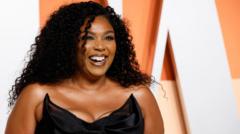
Lizzo said the fat-shaming claims had "haunted" her for the last two years
Pop star Lizzo is celebrating a legal victory after a judge dismissed allegations of fat-shaming from a 2023 lawsuit filed by three of her former dancers.
The singer, whose hits include body positive anthems such as Good As Hell and Juice, marked the development with a video statement posted to her Instagram and TikTok feeds.
"There was no evidence that I fired them because they gained weight," Lizzo said. "They were fired for taking a private recording of me without my consent and sending it off to ex-employees."
While those specific allegations have been dropped, the case against Lizzo and her production company will continue, over claims that three dancers were subject to sexual harassment.
Lizzo's team has called the lawsuit a "fabricated sob story," but a Los Angeles judge ruled that the case could move forward last year.
Arianna Davis, Crystal Williams and Noelle Rodriguez say they were pressured into attending sex shows and interacting with nude performers between 2021 and 2023.
The claims against Lizzo - whose real name is Melissa Viviane Jefferson - include that she "pressured Ms Davis to touch the breasts" of a dancer in a nightclub in Amsterdam.
Although she initially resisted, Ms Davis eventually acquiesced, "fearing it may harm her future on the team" if she didn't do so, according to court documents.
Other incidents cited in the case include the claim that dancers were asked to eat fruit from the naked bodies of sex club workers.
Over the summer, Lizzo's lawyers appealed the decision to let those claims got to trial, arguing that group outings were part of the singer's creative process and thus should be shielded by First Amendment free speech protections.
In response, a lawyer for the dancers rejected that claim, saying it was not enough to say the sex shows had inspired Lizzo's own performances.
"Under that standard," wrote Ari Stiller, "Johnny Cash could shoot 'a man in Reno just to watch him die' and claim protection if he hoped it would inspire his performance".
Stiller urged the court to allow the claims to proceed to trial.
Getty Images
Lizzo said she had worked to celebrate people with larger bodies throughout her career (none of the dancers pictured are thought to be part of the current lawsuit)
Lizzo's attorney, Melissa Glass, claimed that Stiller's brief "regurgitates the false accusations from their [original] complaint".
"As was true two years ago, the dancers cannot find a single person to corroborate their meritless claims," she Glass said in a statement to Billboard magazine.
"In contrast, 18 witnesses who worked with Lizzo on the Special tour submitted sworn statements refuting the claims made by Davis, Williams and Rodriguez. We look forward to the Court of Appeals ruling on this matter."
Lizzo has adamantly denied the allegations against her.
"I am very open with my sexuality and expressing myself but I cannot accept or allow people to use that openness to make me out to be something I am not," she said when the claims first emerged in 2023.
In her latest statement, the singer added that the fat-shaming allegations had "haunted" her for the last two years, adding that it had been "devastating to suffer through this in silence".
She also stressed that she has "only encouraged and supported people with bigger bodies and shared my platform with them."
Thanking her lawyers, Lizzo said she intended to keep fighting the lawsuit.
"I am not settling," she said. "I will be fighting every single claim until the truth is out.
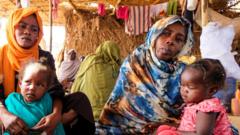
Many of those displaced by the violence in el-Fasher have ended up living in camps
Sudan's paramilitary Rapid Support Forces (RSF) has been trying to cover up mass killings in the city of el-Fasher by burying and burning bodies, a research team from Yale University says.
The RSF had drawn international condemnation amid reports of executions and crimes against humanity when its fighters captured the city in October.
Now, analysis of satellite images by Yale's Humanitarian Research Lab (HRL) shows the RSF likely disposed of tens of thousands of bodies after seizing el-Fasher.
The HRL's report said the RSF "engaged in a systematic multi-week campaign to destroy evidence of its widespread mass killings" and "this pattern of body disposal and destruction is ongoing".
The paramilitary group has been fighting Sudan's regular army since April 2023, when a power struggle between the two parties erupted into a brutal civil war.
The United Nations (UN) has described the conflict as the world's worst humanitarian disaster.
After 18 months of besieging el-Fasher, the RSF captured the city - a major victory pushing the army out of its last foothold in the vast Darfur region.
The UN was among the many global voices accusing the RSF of massacring civilians as el-Fasher fell.
The HRL has been monitoring the situation in the city for months, and its latest report is part of efforts to understand the extent of the violence suffered by the city's residents.
Fresh analysis of satellite imagery found clusters in multiple locations changing in size in the weeks after el-Fasher fell, the HRL says, adding that this demonstrates continued efforts by the RSF to clean up evidence of massacres.
The images also show more than 80 clusters located outside of the city, which, the HRL says, shows that the RSF was killing people as they tried to flee.
Reuters
El-Fasher was repeatedly shelled during the RSF siege - this picture from 7 October shows a wrecked classroom where people were sheltering
Satellite evidence from November suggests limited civilian activity in the city since it was seized, the researchers say.
Following an international backlash, RSF leader Gen Mohamed Hamdan Dagalo declared an investigation into what he called violations committed by his soldiers during the capture of el-Fasher.
However, the group continued to deny widespread allegations that killings in the city are ethnically motivated and follow a pattern of the Arab paramilitaries targeting non-Arab populations.
The latest HRL report follows warnings from aid agencies about the low number of civilians who managed to succesfully flee el-Fasher after the RSF seizure.
The UN estimates roughly 250,000 people were still trapped in the city, with less than half of that number thought to have arrived in external camps for displaced people.
The RSF has used the seizure of el-Fasher to consolidate its power in western Sudan, and has established a parallel government in Darfur's city of Nyala.
Sudan's army still controls most of the country, with fighting between the two groups rumbling on.
More than 13m people are believed to have been displaced since the war began in April 2023.
A memorial in Sydney on Tuesday. The shooting, which left at least 15 dead and scores of others injured, has forced a hard look at gun control in Australia.
Dash cam footage has emerged of Boris and Sofia Gurman trying to disarm one of the suspected attackers. The couple was killed, but their bravery was lauded by Australians.
David Norris, who murdered Stephen Lawrence, has been denied parole, the BBC understands.
He sought release during a parole hearing in October, having been jailed in 2012.
Stephen, 18, was stabbed to death in a racist attack in south London in 1993.
Only two of his killers have been convicted, with police always saying six people were involved.
At the parole hearing, Norris admitted he was part of the attack but refused to name the other killers. He had previously denied involvement.
Norris gave evidence via a video link from prison during the public hearing, in which he was bidding for release on licence.
Stephen's mother, Baroness Doreen Lawrence, said at the hearing that Norris remained a danger to the public and must remain in prison. The justice secretary also opposed Norris's release.
The hearing took place 13 years after Norris was jailed for life, with a minimum sentence of 14 years and three months.
Stephen was stabbed by a gang as he waited at a bus stop in Eltham, south-east London.
Witness evidence in the case records that an extreme racist slur was used towards Stephen just before the gang attacked.
In his evidence to the parole hearing, Norris said he was the last person to punch Stephen. He had tried to hit him two or three times and one of his punches connected.
For decades Norris publicly denied involvement in the murder, giving no-comment interviews to police, and claiming he was innocent during his trial.
However, the hearing heard confirmation that he had admitted involvement since being in prison, but denies stabbing Stephen or using a knife.
It also heard Norris continued to use racist language in prison, with him having been recorded in 2022 using the same racial slur that was hurled at Stephen before he was stabbed.
In a prepared statement that Norris read out, he apologised to the Lawrence family and wider black and ethnic community for the "fear" and "horror" his role in the attack had caused.
In a statement read on her behalf at the hearing, Baroness Lawrence said Norris had "killed my son in the most brutal and callous fashion. In doing so he changed my life and life of my family members forever".
She said she could not forgive Norris because he has not "expressed any acceptance, any contrition and certainly has no humanity".
Stephen's father previously told the BBC that Norris should name the other killers before he could be judged to be safe for release from prison.
Handout
Stephen Lawrence was murdered in a racist attack in 1993, when he was 18
People needing urgent dental treatment and patients requiring complex care will be prioritised under government plans to improve access to NHS dentists in England.
The proposals could mean a saving of £225 for patients requiring numerous appointments for complicated treatments.
For years, many patients have found it increasingly hard to find a dentist, with some towns in England referred to as "dental deserts", with no access to NHS dentists at all.
The British Dental Association (BDA) said that without more funding and real reform, the plans wouldn't solve current issues.
Speaking on Radio 4's Today programme, health minister Stephen Kinnock said the plans were intended to "prioritise" urgent care.
He said there was "a lot of unnecessary routine care going on" in NHS dentistry services at the moment.
If a patient has "good oral health" he said they don't need to see a dentist "more than about once every two years".
He said the current practice of most patients being offered NHS check-ups every six months was "not the right use" of dentists' time, and added that it was "sucking up a lot of money in NHS dentistry".
Under the current system, which dates back to 2006, dentists are paid for what are called Units of Dental Activity, known as UDAs.
Different procedures - fillings, extractions and more complicated work - are assigned a different number of UDAs.
Dentists who provide NHS care have a contract that says how many UDAs they will carry out each year and are paid accordingly.
But this has meant that more money was available to dentists for carrying out simple check-ups, rather than spending longer with patients who needed more complex, time-consuming care.
For years dentists have been complaining that the contract for NHS work fails to cover the costs of what they're being asked to carry out.
As a result many dentists have been walking away from NHS work – meaning it's increasingly hard for people to access care. There are parts of the country where there is simply no access to NHS dentistry.
'Chronic underfunding'
Under the government plans, there would be new incentives for dentists to offer longer-term treatments for major issues such as gum disease and tooth decay through the NHS.
Currently, a patient with tooth decay in several teeth or severe gum disease - both of which require complex treatment - would need to be treated over multiple appointments, which is costly and time consuming.
But under proposed changes to the dental contract for NHS work, dental practices would be able to offer patients a single comprehensive package of treatment over a longer period, tailored to their needs.
And ministers argue that this could save a patient up to £225 in fees.
Shiv Pabary, chair of the BDA's General Dental Practice Committee said "a dental crisis" had come about directly as a result of the contract put in place in 2006.
"The reforms announced today are trying to tweak a system that's broken."
He added that until the "chronic underfunding" and wider systemic problems were addressed, NHS dentistry would continue to fail to work for "dentists and for patients".
"To try and deliver comprehensive care within the same budget that we have at the moment is going to be hugely challenging."
Mr Kinnock said the government had a "massive issue to fix" in dental care and was negotiating with the BDA on a "radical overhaul" of the NHS dentistry contract.
The government has formally begun the process which will decide the future of the BBC.
It has published a consultation document - or green paper - laying out plans to future-proof the BBC, put it on a sustainable financial footing and bolster trust.
This begins the renewal of the BBC charter - the corporation's rulebook and licence to exist - which expires in 2027.
The culture secretary Lisa Nandy said: "The BBC is fundamental to the health of our nation and we want to make sure that we put it on a firm footing for decades to come.
"We're asking everybody to get involved and play their part in helping to shape its future."
Outgoing BBC director general Tim Davie said in a statement: "We welcome the publication of the government's green paper and the start of the public consultation on the future of the BBC. We urge everyone who cares about the success of the UK's world-leading creative industries to have their say.
"At the BBC, we want change, so we can continue to deliver for the UK for generations to come. We want to secure a public service BBC that is independent, sustainably funded for the long term, and meets our audience's needs."
Former BBC controller of editorial policy, Richard Ayre, described the consultation as "the most encouraging start of a charter process in decades, with the government apparently committed to giving the BBC a sustained and financially sustainable future".
The licence fee brought in £3.8 billion last year. Other funding streams - advertising, subscription and fee reform, including charging wealthier people more - are on the table for now, although many media commentators expect the licence fee to remain, with some changes.
Nandy said: "We're keeping all options open. The only option for funding the BBC that we've ruled out is general taxation and that is because it is essential that the BBC can hold governments of any persuasion to account, including ours, without fear or favour and without being heavily reliant on direct funding from government."
She described the BBC as "an institution that matters deeply to the democratic process in this country and to the health of our nation" and said it "has to have sustainable funding in order to thrive".
But she also acknowledged recent issues at the corporation: "There have been serious concerns about developments at the BBC, including editorial standards and about political interference.
"These aren't new challenges for the BBC. Throughout its history it's had to navigate them, but we believe that through this charter we can strengthen the amount of accountability within the BBC."
Former BBC director general Tony Hall suggested there should be careful consideration of a household tax charged in line with council tax bands.
The government rejects that model. It does, however, accept that public funding of the BBC will remain in some form and Lord Hall suggests an independent body, like a pay review body, to "take the politics out of the licence fee debate".
"Give them the task every three years of reviewing whether the money the BBC has got matches our ambitions for the BBC," he said.
He agrees the licence fee needs to be reformed and made "fairer".
The Reform party wants to scrap the licence fee altogether, while Conservative leader, Kemi Badenoch, threatened to withdraw support for it earlier this year.
The Liberal Democrats are supportive of the licence fee up until 2027. The Green Party did not specifically mention the BBC in its 2024 manifesto.
PA Media
Culture Secretary Lisa Nandy has ruled out general taxation but is otherwise keeping "all options open"
There will be a 12-week public consultation and the government is seeking views on how to ensure the BBC commands the public's trust, is accountable to audiences and fully represents communities.
This includes potentially giving the corporation new responsibilities to counter misinformation and disinformation, updating the BBC's mission to put accuracy on the same footing as impartiality and strengthening the BBC's independence, including examining political appointments to the BBC's board.
Labour MPs raised concerns around this issue in Parliament after the recent BBC controversy over the misleading edit of a Donald Trump speech on a Panorama prompted the resignations of the BBC director general and the CEO of News.
Trump is now suing the BBC for defamation over the edit.
Lord Hall told BBC News: "I think trying to take the politics as much as possible out of the organisation would be good. That means really looking carefully at appointments. I don't think there should be any political appointments to the board."
Others argue these appointments (there are five government-appointees on the BBC board including the chairman) ensure accountability and help challenge groupthink.
The BBC has faced a series of controversies in recent months for which it has had to apologise.
Nandy termed the Labour government "unashamedly supporters of the BBC as an institution, even as we've had serious frustrations with some of the decisions and failings that have taken place at the BBC in recent months".
She said the review of the charter was the chance "to make sure that it can not just survive, but thrive. It's an institution that belongs to us all. If it didn't exist, we would have to invent it".
The consultation will also look at how to devolve more commissioning to the regions and whether there should be a new obligation on the BBC to drive economic growth, build skills and support the UK economy.
The BBC is the only organisation operating under a royal charter with an expiry date. In a speech in November 2024, the BBC chairman Samir Shah said "there are more than 1,000 charter bodies, and I am not aware of any other that needs to be renewed like the BBC".
He asked: "Should we consider the BBC also having a permanent charter like the others?"
The government appears to be consulting on this, with some suggesting the threat of a future Reform government is focusing minds on the uncertainty renewal every decade creates and whether it allows too much political interference.
Ayre said: "It's interesting that the government chooses the word 'future-proof' for the BBC. Can that really mean that they're considering not a 10-year charter, which is the norm, but a sort of self-sustaining charter which will see the BBC continuing in its key position as the national broadcaster for what the government calls decades to come?
"Of course future governments can always try to undo that, but actually a royal charter, it's quite difficult to undo because technically it is the will of the monarch rather than of the government of the day".
Hall said "the great thing about the charter review this time is that I believe the government wants to secure the BBC's future for the long term. It could be a great legacy."
Next year, following the consultation, the government will publish its own vision for the BBC.
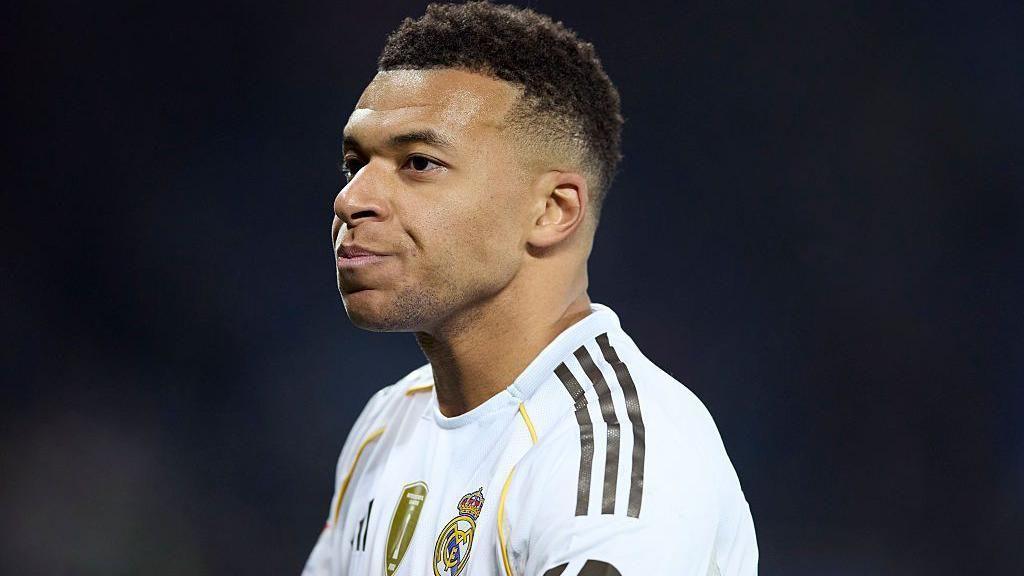
Mbappe spent seven seasons at PSG before moving to La Liga
Published
Paris St-Germain have been ordered to pay former striker Kylian Mbappe 60 million euros (£52.5m) in unpaid salary and bonuses by a French court.
Mbappe had been seeking 263m euros (£231.5m) from his former club after the long-running dispute reached a Paris labour court in November.
The European champions were counter suing the France captain for 240m euros (£211m).
The 26-year-old Real Madrid forward claimed the nine-figure sum, which included 55m euros (£46.3m) in unpaid wages, as damages in response to a contract dispute and ill-treatment by the club.
However, he has only been awarded a fraction of that amount, with the court recognising that PSG had failed to pay three months of his salary between April and June 2024 as well as an ethics bonus and a signing bonus under his contract.
"We are satisfied with this ruling. This is what you could expect when salaries went unpaid," Mbappe's lawyer Frederique Cassereau said.
Police 'put their lives on the line', says New South Wales premier
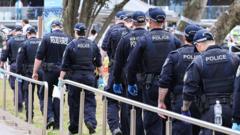
The New South Wales (NSW) premier has strongly rejected criticism of the police response to the attack on a Jewish festival at Bondi Beach, saying officers acted with "bravery and integrity".
Some witnesses have suggested police were too slow to disarm the two gunmen, who killed 15 people and injured dozens at an event celebrating Hanukkah at Australia's best known beach.
"There are two officers in critical care... at the moment," Chris Minns said after sustained questioning from reporters. "They weren't shot in the back as they were running away. They were shot in the front."
There have also been questions about whether adequate security was provided before the shooting took place.
"They shoot, shoot, change magazine and just shoot," one witness, Shmulik Scuri, told reporters the day of the assault, adding he thought officers "froze".
Asked about these criticisms, Minns said the "rush to conclusions" about the police operation was "disrespectful".
"They didn't take a backward step. They engaged the gunmen on the footbridge with handguns. The offenders had long range rifles," Minns said.
"If there's any suggestion that NSW Police didn't live up to their responsibilities to the people of this state, it should be rejected because it's not consistent with the facts."
NSW Police Commissioner Mal Lanyon avoided questions about how many officers had been deployed to police the event in advance. He told reporters police "regularly patrol that area as we did on that day" and that police presence was based "on the threat that exists at the time".
Australia's security agency has said the younger alleged gunman in the father-son duo, Naveed Akram, had come to their attention in 2019 due to his associations, but that there was nothing to suggest he was a risk of violence.
"Had there been intelligence that there was a particular threat at that location, or to that event, we may have had a different policing response," Commissioner Lanyon said.
NSW Police established Operation Shelter after the 7 October 2023 Hamas attack on Israel to investigate antisemitic hate crimes. As part of the operation, regular patrols are conducted of high-risk locations. The eastern suburbs of Sydney, including Bondi, which has a significant Jewish population, is a key focus.
Another taskforce, Strike Force Pearl, was set up later to investigate hate crimes in Sydney.
Getty
NSW Premier Chris Minns says police responding to the attack at Bondi 'didn't take a backwards step'
Police received reports of gunfire at a park in Bondi Beach at 18:47 (07:47 GMT) on Sunday. The gunmen carried out a shooting spree that lasted around ten minutes before police shot both men, killing one and critically injuring the other.
Dr Vincent Hurley, a former police officer who lectures on policing at Macquarie University, told the BBC it was "unrealistic" to expect police to be able to know how to react to every possible scenario.
"To respond to a mass shooting and mass killing event like that, there's no training that can be done."
He pointed out that police officers would have initially been reliant on calls to emergency operators "and everyone would have given them a different story".
"Then they have to fight through traffic at Bondi Beach which is a nightmare at the best of times."
At the scene, police would have been confronted with "absolute chaos" as thousands of people attempted to flee.
Individual officers would also have been faced with difficult choices such as whether to stop and render assistance to injured individuals or to go and look for the gunmen, decisions for which there is no protocol.
And even once the offenders had been identified, he says the risk of hurting bystanders in the crossfire would have complicated responses.
"There would be no way as a police officer, I would have drawn my firearm because all of the innocent individuals", he added. "It's not what you see on Netflix."
At least 15 civilians have been confirmed dead in Sunday's shooting attack at Bondi beach.
Many were attending an event to mark the first day of the Jewish festival of Hanukkah.
Authorities have confirmed that two rabbis, a Holocaust survivor and a 10-year-old girl were among the victims.
This is what we know about those identified so far:
Matilda, 10
Authorities confirmed that a 10-year-old girl, named by her family to local media as Matilda, was among the dead.
Irina Goodhew, who organised a fundraiser for the girl's mother and said she was the child's former teacher, wrote: " I knew her as a bright, joyful, and spirited child who brought light to everyone around her.'
The Harmony Russian School of Sydney also confirmed that she was one of its students.
"We are deeply saddened to share the news that a former student of our school has passed away in the hospital due to injuries sustained from a gunshot," the school wrote on Facebook.
"Our thoughts and heartfelt condolences go out to her family, friends, and everyone affected by this tragic event … Her memory will remain in our hearts, and we honor her life and the time she spent as part of our school family."
Meanwhile her aunt spoke to ABC news and said that Matilda's sister, who was with her when she was shot, was struggling to come to terms with the loss.
"They were like twins — they've never been separated," she told the ABC.
Rabbi Eli Schlanger
Supplied
Eli Schlanger was known as the Bondi rabbi
Known as the "Bondi Rabbi", Eli Schlanger, 41, was one of the key organisers of Sunday's event. He was head of the local Chabad mission, an international Hasidic Jewish organisation based in Brooklyn.
The death of the British-born father of five was confirmed by his cousin, Rabbi Zalman Lewis.
"My dear cousin, Rabbi Eli Schlanger @bondirabbi was murdered in today's terrorist attack in Sydney," Zalman wrote on Instagram. "He leaves behind his wife & young children, as well as my uncle & aunt & siblings … He was truly an incredible guy".
In a post on its website, Chabad said Schlanger's youngest child was just two months old.
"He was the most godly, humane, kind, gracious human being I think I've ever met," Alex Ryvchin of the Executive Council of Australia Jewry, told reporters at Bondi on Monday morning.
Dan Elkayam
The death of French national Dan Elkayam was confirmed by Frances's Foreign Minister Jean-Noël Barrot.
"It's with immense sadness that we have learnt that our compatriot Dan Elkayam was among the victims of the terrorist attack that hit Jewish families gathered on the beach at Bondi in Sydney," he wrote on social media. "We mourn with his family and loved ones, with the Jewish community and the Australian people."
According to his LinkedIn profile, Elkayam worked as an IT analyst for NBCUniversal and had moved to Australia last year.
He was also a keen footballer, and "an integral member" of our premier league squad, the Rockdale Ilindin Football Club in west Sydney wrote on its Facebook page.
He was "an extremely talented and popular figure amongst team mates. Our deepest and sincerest condolances to Dan's family, friends and all that knew him. He will be missed," the club wrote.
Alexander Kleytman
Alexander Kleytman was a holocaust survivor who came to Australia from Ukraine.
"I have no husband. I don't know where is his body. Nobody can give me any answer," his wife Larisa Kleytman told reporters outside a Sydney hospital late on Sunday.
"We were standing and suddenly came the 'boom boom', and everybody fell down. At this moment he was behind me and at one moment he decided to go close to me. He pushed his body up because he wanted to stay near me," she told the Australian.
Chabad wrote on X that Alexander "died shielding her from the gunman's bullets. In addition to his wife, he leaves behind two children and 11 grandchildren."
The couple shared some of their life story with Jewish Care in 2023.
"As children, both Larisa and Alexander faced the unspeakable terror of the Holocaust," the health organisation wrote in its annual report.
"Alex's memories are particularly harrowing; recalling the dreadful conditions in Siberia where he, along with his mother and younger brother, struggled for survival."
How Bondi Beach shooting unfolded minute by minute
Peter Meagher
Former police officer Peter Meagher was working as a freelance photographer at the Hanukkah event when he was killed, his rugby club confirmed.
"For him it was simply a catastrophic case of being in the wrong place and at the wrong time," Mark Harrison, the general manager of Randwick Rugby Club, wrote on its website.
"'Marzo, as he was universally known, was a much loved figure and absolute legend in our club, with decades of voluntary involvement, he was one of the heart and soul figures of Randwick Rugby."
The club said he had spent almost four decades in the NSW Police Force where he was "hugely respected by colleagues".
"The tragic irony is that he spent so long in the dangerous front line as a Police Officer and was struck down in retirement while taking photos in his passion role is really hard to comprehend," the club said.
Reuven Morrison
Reuven Morrison migrated to Australia from the former Soviet Union in the 1970s as a teenager, according to an interview he gave to the ABC exactly a year ago.
"We came here with the view that Australia is the safest country in the world and the Jews would not be faced with such anti-Semitism in the future, where we can bring up our kids in a safe environment," he told the national broadcaster.
Confirming his death, Chabad said that he was a longtime resident of Melbourne, but that he "discovered his Jewish identity in Sydney".
"A successful businessman whose main goal was to give away his earnings to charities dear to his heart, notably Chabad of Bondi," the organisation wrote on X.
Watch: 'Your courage is inspiring' Australian PM tells Bondi shooting 'hero'
Australia's Prime Minister has visited Bondi hero Ahmed al Ahmed in hospital, after the bystander tried to disarm one of the gunmen in the nation's deadliest gun attack since 1996.
"Your heart is strong", PM Anthony Albanese told the father-of-two, later calling him "the best of our country".
The fruit shop owner, who was born and raised in Syria, was shot several times in the shoulder after tackling one of the alleged gunmen. Albanese said Mr Ahmed would "undergo further surgery" on Wednesday.
At least 15 people have been confirmed dead after Sunday's attack in Sydney during an event to mark the first night of Hanukkah.
Police have declared the attack as a terrorist incident targeting the Jewish community.
"He was trying to get a cup of coffee and found himself at a moment where people were being shot in front of him," Albanese said after the bedside visit.
"He decided to take action, and his bravery is an inspiration for all Australians. He is a very humble man."
"At a moment where we have seen evil perpetrated, he shines out as an example of the strength of humanity," the prime minister added.
"We are a brave country. Ahmed al Ahmed represents the best of our country."
He later added: "Ahmed, you are an Australian hero."
There has been nationwide support for the 43-year-old including from US President Donald Trump who commended his courage, and a US billionaire who donated $99,999 (US$ 65,000; £49,000) to Mr Ahmed, calling him a "brave hero".
Watch: Eyewitness captures moment man tackles and disarms Bondi shooter
In the footage, Mr Ahmed is seen hiding behind a parked car before he leaps out.
He runs at the alleged gunman and seizes his weapon, before turning the gun round on him. The suspected attacker then begins to retreat.
Mr Ahmed then lowers the weapon and raises one hand in the air, appearing to show police he was not one of the attackers.
The divisions on the Federal Reserve have forced Jerome H. Powell, the Fed chair, to navigate the difficult task of trying to reach a consensus among his colleagues.

 Login
Login