Login
Login
The Dutch Golden Age: Aelbert Cuyp 2
By about 1650, Aelbert Cuyp (1620–1691) had demonstrated his proficiency in painting a wide variety of subjects and genres, from mythological landscapes to farm animals. He had become influenced by Jan Dirksz Both (c 1610-52), who had recently returned from working with Claude Lorrain in Rome.
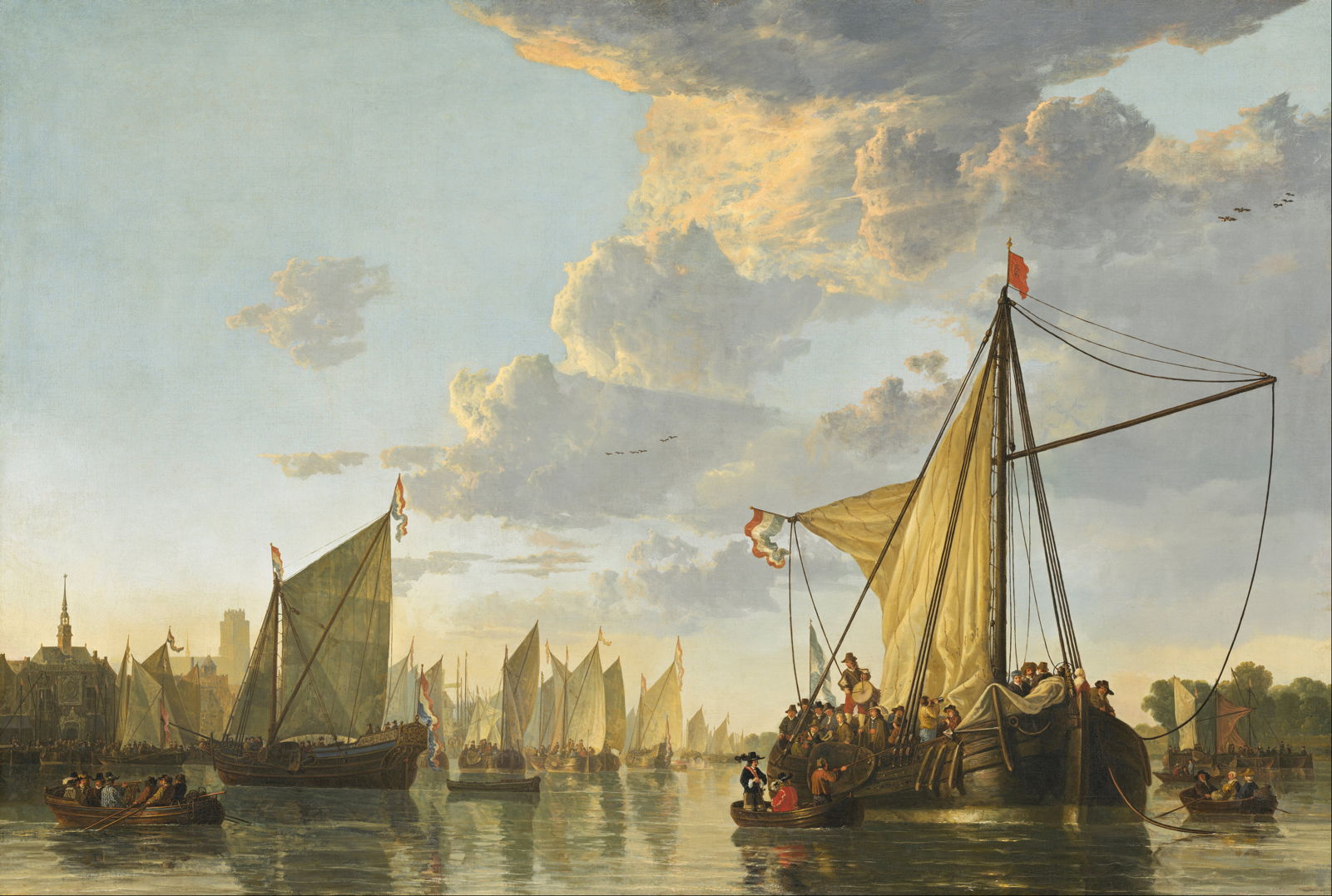
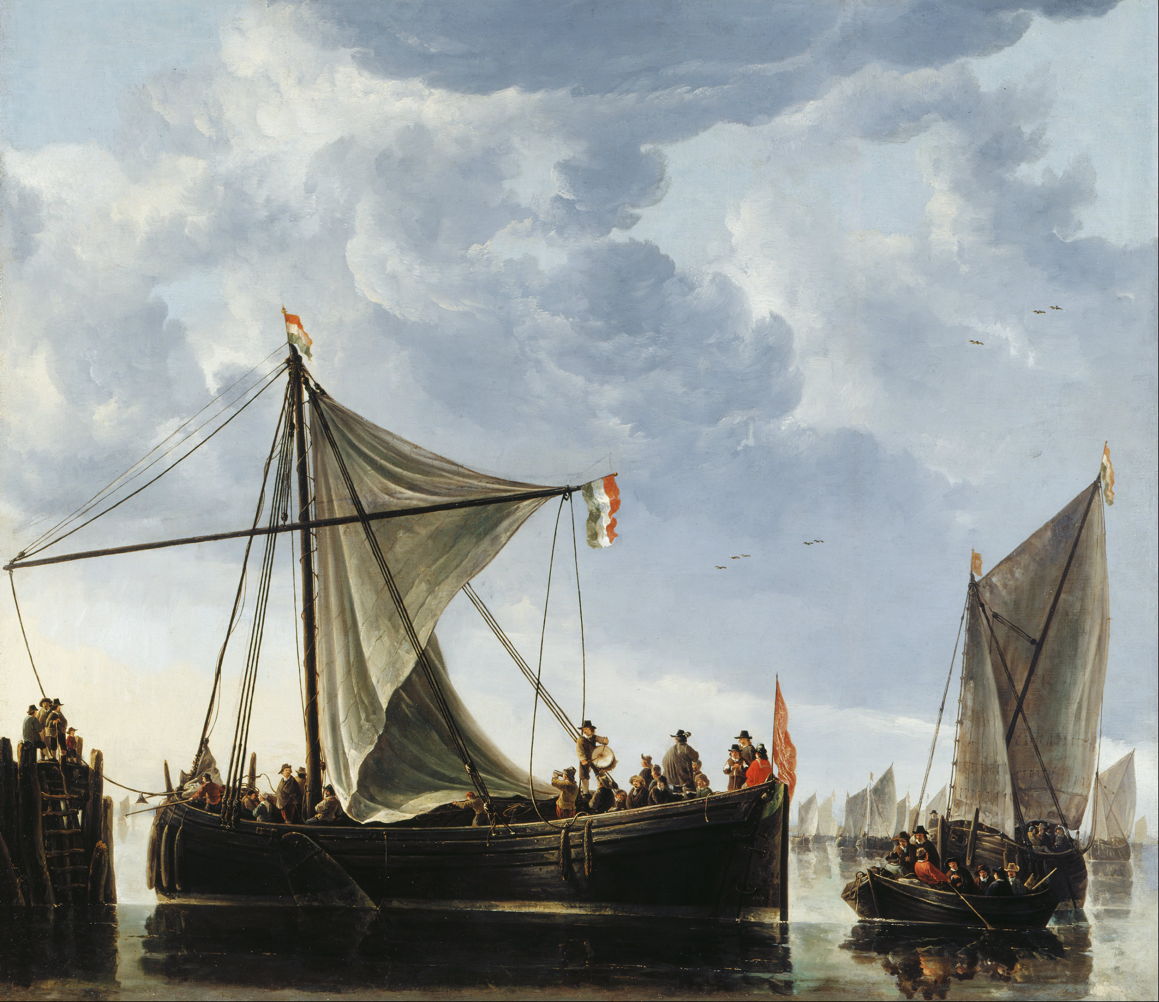
At their best, Cuyp’s coastal landscapes, such as The Maas at Dordrecht from about 1650, are full of rich light, earning him the title of the Dutch Claude Lorrain. This shows another passage boat packed with passengers, together with its drummer.

Also thought to have been painted in about 1650, shortly before his father’s death, it’s possible that Two Cavalry Troopers Talking to a Peasant is a collaboration between father and son. Although there’s a slight awkwardness in the figures, the horses are finely painted with great detail on their saddlery, including glinting buckles.

Some of his landscapes from this period appear to have been painted in very different terrain. His Migrating Peasants in a Southern Landscape from about 1652 shows people dressed for the more temperate climate of northern Europe in a landscape that could be further south.

Cuyp’s grand view of The Valkhof at Nijmegen from about 1652-54 shows the Imperial castle that was demolished in 1798, on its small hill beside the river. The landscape is bathed in golden light, and broken clouds are tinged with similar Claudean colour as they drift through its lucent sky.

In about 1655, Cuyp painted this narrative landscape with the story of Saint Philip Baptising the Ethiopian Eunuch, referring to the account of Philip the Evangelist in chapter 8 of the Acts of the Apostles. Following the instructions of an angel, Philip went to the road between Jerusalem and Gaza, where he met the treasurer to Candace, Queen of the Ethiopians. As the Ethiopian Eunuch was sitting reading Old Testament scripture in his chariot, Philip explained the text and taught him the Gospel of Jesus. The eunuch was converted and baptised as a result.
Cuyp sets this story in a golden Claudean landscape more akin to the south of France or even Italy, with rich detail in the riverside plants, the figures and animals.

Although Cuyp doesn’t appear to have painted many winter scenes, his Ice Scene Before the Huis te Merwede near Dordrecht from about 1655 is up with the leaders. Notable here are his foreground reflections, and another wonderful sky with its warm clouds. This castle was built to the south-east of Dordrecht in the early fourteenth century, and ruined a hundred years later.

A Senior Merchant of the Dutch East India Company is a fascinating double portrait painted during 1650-59. It’s thought to show Jacob Mathieusen and his wife, against a background of the company fleet in Batavia roads. This city in what was then the Dutch East Indies is now the site of Jakarta in Indonesia. There’s no record of Cuyp ever having visited this imagined location, and he appears to have painted the background on the basis of contemporary topographic images, then painted his subjects in the studio.

A Road near a River from about 1660 is the last of Cuyp’s paintings for which I have a date, and perhaps his finest closing summary. It’s a landscape in the style of Claude Lorrain, with long shadows and the warmth of the setting sun. There’s a small flock of sheep and a sleeping dog, the shepherd chatting with a friend. Further down that road are two more figures, one of them sat on a pony. On the other side of the river with its broken reflections, is a cottage and more people. In the distance is a thoroughly alien crag and the ruins of a castle. Above all this is the peaceful sky of settled weather, divided into two by a pair of finely crafted trees.

Cuyp’s undated Interior of a Cowshed is a fine portrait of a cow leading the herd into a shed, with good use made of chiaroscuro and details of the tools, tackle and equipment inside.
In 1658, Cuyp married Cornelia Bosman. Within two years, he had apparently stopped painting completely, and was a deacon of the Reformed Church. It has been speculated that it was his marriage that brought an end to his art. Whether that’s true or not, for the final thirty years of his life he seems not to have made another painting.
Reference