Ronny Chieng dissed new fitness plans from the Trump administration for travelers in American airports: “We can’t even walk to the gate. They had to invent floors that walk for us.”
International talks to revolutionise how the European Court of Human Rights handles migration cases will begin on Wednesday.
The British government is urging partners to modernise the way states tackle the continent-wide illegal migration crisis.
The talks are the most significant sign yet that international human rights law could be reinterpreted to make it easier for states to target people smuggling and set up 'returns hubs' to hold people with no right to be in Europe.
Writing ahead of the major meeting in Strasbourg, Sir Keir Starmer and Danish Prime Minister Mette Frederiksen said other nations should rethink human rights laws to make protecting borders easier.
Critics say the ECHR is getting in the way of removing more illegal migrants, while supporters say claims about the ECHR's role in migration are exaggerated.
The BBC understands that the aim is for member states to reach a political declaration by the spring which would set how the European Convention on Human Rights is applied in migration cases.
If such an agreement was achieved, it could be one of the most important reforms to how human rights law is applied in the 75-year history of the convention.
The meeting at the Council of Europe, the political body that agrees the human rights laws which are then applied by the court, comes after months of pressure over migration.
Nine members of the human rights body, led by Italy and Denmark, called earlier this year for reforms.
The UK did not sign that open letter - but it has been lobbying behind the scenes for talks on reforms.
Membership of the convention has become increasingly contentious in the UK in recent years.
Both the Conservatives and Reform UK have said they would leave it if they won the next election.
Kemi Badenoch has said leaving would not be a "silver bullet" but was a necessary step to "protect our borders, our veterans and our citizens".
Liberal Democrat leader Sir Ed Davey said he would oppose such a move saying the convention "upholds our freedom" and would "do nothing to stop the boats or fix our broken immigration system".
EPA
Danish Prime Minister Mette Frederiksen and British Prime Minister Keir Starmer meeting in London earlier this year
Writing in the Guardian newspaper ahead of the talks, Sir Keir and his Danish counterpart Mette Frederiksen said that the member states meeting on Wednesday must "go further in tackling" the "shared challenges" of "uncontrolled migration" that they said were undermining public confidence in governments.
"Europe has faced big tests before and we have overcome them by acting together. Now we must do so again," said the leaders.
"Otherwise, the forces that seek to divide us will grow stronger.
"So our message is this: as responsible, progressive governments we will deliver the change that people are crying out for.
"We will control our borders to protect our democracies – and make our nations stronger than ever in the years to come."
The UK delegation to the talks will be led by Deputy Prime Minister David Lammy.
He is expected to tell the meeting that the UK remains committed to the ECHR - but its interpretation must not stand in the way of combating people smuggling.
The BBC understands that if the meeting in Strasbourg is a success, officials will begin working with the member states on a political declaration to clarify how human rights laws should be applied to migration challenges - with a deadline of next May for the final wording.
The talks are expected to cover some of the most difficult issues including combating migrant smuggling and how to create human rights compliant 'returns hubs' - centres outside of Europe where migrants could be forcibly housed if they can not be returned to dangerous countries.
The talks are also expected to cover the complex rules of Article 8, the right to family life, and Article 3, the ban on inhumane treatment which features in many migration cases.
That olive branch to member states came after months of diplomatic talks paving the way for Wednesday's meeting.
"The European Convention on Human Rights provides the framework we need to address these issues effectively and responsibly," said Berset ahead of the meeting.
"Our task is not to weaken the Convention, but to keep it strong and relevant — to ensure that liberty and security, justice and responsibility, are held in balance."
The donor's sperm was used in clinics across Europe (stock image)
A sperm donor who unknowingly harboured a genetic mutation that dramatically raises the risk of cancer has fathered at least 197 children across Europe, a major investigation has revealed.
Some children have already died and only a minority who inherit the mutation will escape cancer in their lifetimes.
The sperm was not sold to UK clinics, but the BBC can confirm a "very small" number of British families, who have been informed, used the donor's sperm while having fertility treatment in Denmark.
Denmark's European Sperm Bank, which sold the sperm, said families affected had their "deepest sympathy" and admitted the sperm was used to make too many babies in some countries.
Getty Images
Up to 20% of the donor's sperm contains the dangerous mutation that increases the risk of cancer (stock image)
The investigation has been conducted by 14 public service broadcasters, including the BBC, as part of the European Broadcasting Union's Investigative Journalism Network.
The sperm came from an anonymous man who was paid to donate as a student, starting in 2005. His sperm was then used by women for around 17 years.
He is healthy and passed the donor screening checks. However, the DNA in some of his cells mutated before he was born.
It damaged the TP53 gene – which has the crucial role of preventing the body's cells turning cancerous.
Most of the donor's body does not contain the dangerous form of TP53, but up to 20% of his sperm do.
However, any children made from affected sperm will have the mutation in every cell of their body.
This is known as Li Fraumeni syndrome and comes with an up to 90% chance of developing cancer, particularly during childhood as well as breast cancer later in life.
"It is a dreadful diagnosis," Prof Clare Turnbull, a cancer geneticist at the Institute of Cancer Research in London, told the BBC. "It's a very challenging diagnosis to land on a family, there is a lifelong burden of living with that risk, it's clearly devastating."
MRI scans of the body and the brain are needed every year, as well as abdominal ultrasounds, to try to spot tumours. Women often choose to have their breasts removed to lower their risk of cancer.
The European Sperm Bank said the "donor himself and his family members are not ill" and such a mutation is "not detected preventatively by genetic screening". They said they "immediately blocked" the donor once the problem with his sperm was discovered.
Children have died
Doctors who were seeing children with cancer linked to sperm donation raised concerns at the European Society of Human Genetics this year.
They reported they had found 23 with the variant out of 67 children known at the time. Ten had already been diagnosed with cancer.
Through Freedom of Information requests and interviews with doctors and patients we can reveal substantially more children were born to the donor.
The figure is at least 197 children, but that may not be the final number as data has not been obtained from all countries.
It is also unknown how many of these children inherited the dangerous variant.
Dr Kasper has been helping some of the families affected
Dr Edwige Kasper, a cancer geneticist at Rouen University Hospital, in France, who presented the initial data, told the investigation: "We have many children that have already developed a cancer.
"We have some children that have developed already two different cancers and some of them have already died at a very early age."
Céline, not her real name, is a single-mother in France whose child was conceived with the donor's sperm 14 years ago and has the mutation.
She got a call from the fertility clinic she used in Belgium urging her to get her daughter screened.
She says she has "absolutely no hard feelings" towards the donor but says it was unacceptable she was given sperm that "wasn't clean, that wasn't safe, that carried a risk".
And she knows cancer will be looming over them for the rest of their lives.
"We don't know when, we don't know which one, and we don't know how many," she says.
"I understand that there's a high chance it's going to happen and when it does, we'll fight and if there are several, we'll fight several times."
The donor's sperm was used by 67 fertility clinics in 14 countries.
The sperm was not sold to UK clinics.
However, as a result of this investigation the authorities in Denmark notified the UK's Human Fertilisation and Embryology Authority (HFEA) on Tuesday that British women had travelled to the country to receive fertility treatment using the donor's sperm.
Those women have been informed.
Peter Thompson, the chief executive of the HFEA, said a "very small number" of women were affected and "they have been told about the donor by the Danish clinic at which they were treated".
We do not know if any British women had treatment in other countries where the donor's sperm was distributed.
Concerned parents are advised to contact the clinic they used and the fertility authority in that country.
The BBC is choosing not to release the donor's identification number because he donated in good faith and the known cases in the UK have been contacted.
There is no law on how many times a donor's sperm can be used worldwide. However, individual countries do set their own limits.
The European Sperm Bank accepted these limits had "unfortunately" been breached in some countries and it was "in dialogue with the authorities in Denmark and Belgium".
In Belgium, a single sperm donor is only supposed to be used by six families. Instead 38 different women produced 53 children to the donor.
The UK limit is 10 families per donor.
'You can't screen for everything'
Prof Allan Pacey, who used to run the Sheffield Sperm Bank and is now the deputy vice president of the Faculty of Biology Medicine and Health at the University of Manchester, said countries had become dependent on big international sperm banks and half the UK's sperm was now imported.
He told the BBC: "We have to import from big international sperm banks who are also selling it to other countries, because that's how they make their money, and that is where the problem begins, because there's no international law about how often you can use the sperm."
He said the case was "awful" for everybody involved, but it would be impossible to make sperm completely safe.
"You can't screen for everything, we only accept 1% or 2% of all men that apply to be a sperm donor in the current screening arrangement so if we make it even tighter, we wouldn't have any sperm donors – that's where the balance lies."
This case, alongside that of a man who was ordered to stop after fathering 550 children through sperm donation, has again raised questions over whether there should be tougher limits.
The European Society of Human Reproduction and Embryology has recently suggested a limit of 50 families per donor.
However, it said this would not reduce the risk of inheriting rare genetic diseases.
Rather, it would be better for the wellbeing of children who discover they are one of hundreds of half-siblings.
"More needs to be done to reduce the number of families that are born globally from the same donors," said Sarah Norcross, the director of the Progress Educational Trust, an independent charity for people affected by infertility and genetic conditions.
"We don't fully understand what the social and psychological implications will be of having these hundreds of half siblings. It can potentially be traumatic," she told BBC News.
The European Sperm Bank said: "It is important, especially in light of this case, to remember that thousands of women and couples do not have the opportunity to have a child without the help of donor sperm.
"It is generally safer to have a child with the help of donor sperm if the sperm donors are screened according to medical guidelines."
What if you are considering using a sperm donor?
Sarah Norcross said these cases were "vanishingly rare" when you consider the number of children born to a sperm donor.
All of the experts we spoke to said using a licensed clinic meant the sperm would be screened for more diseases than most fathers-to-be are.
Prof Pacey said he would ask "is this a UK donor or is this a donor from somewhere else?"
"If it's a donor from somewhere else I think it's legitimate to ask questions about has that donor been used before? Or how many times will this donor be used?"
If you or someone you know has been affected by the issues raised, details of help and support are available at BBC Action Line.
Gerry McCann says hounding by press took 'huge toll' on family
Madeleine McCann's father is calling for greater scrutiny of the UK's media, complaining that his family was subjected to "monstering" by sections of the press.
He said the media "repeatedly interfered with the investigation" into his daughter's disappearance in 2007 and believes this has hindered the search for her.
Gerry McCann told BBC Radio 4's Today programme that more than a year on from Labour coming into power, "press regulation is no longer a priority".
He wants a resumption of the cancelled second phase of the Lord Leveson Inquiry, which would have examined unlawful action by the media, plus journalists' relationships with politicians and police. It was scrapped by the Tories in 2018.
Madeleine's disappearance during a family holiday in Portugal has never been solved.
In a rare interview, Mr McCann said that for months after her disappearance his family had "journalists coming to the house, photographers literally ramming their cameras against our car window when we had two-year-old twins in the back who were terrified".
"We are lucky we survived. We had tremendous support - but I can promise you, there were times where I felt like I was drowning. And it was the media, primarily," he told the BBC.
"It was what was happening and the way things were being portrayed, where you were being suffocated and buried, and it felt like there wasn't a way out."
Mr McCann and his wife, Kate McCann, are among more than 30 people to have signed a letter being sent to Prime Minister Sir Keir Starmer and calling on him to reverse the decision not to hold the second phase of the Leveson Inquiry.
Madeleine McCann disappeared in 2007, then aged three
The letter, seen by the BBC, requests a meeting with the prime minister, saying: "We understand that you recently had time to meet News Corp chairman Lachlan Murdoch.
"We hope you will now meet with some of the British citizens whose lives have been upended by the illegal practices and abuses associated with his company."
Mr McCann told the Today programme: "It's quite obvious that press barons can meet the prime minister, but the people who have suffered at the hands of them can't."
News UK, the UK branch of News Corp, declined to comment.
The first part of the Leveson Inquiry was held from 2011 to 2012, in the wake of the phone-hacking scandal.
Its findings were published in 2012, and led to the creation of the industry-funded press regulator Ipso.
Mr McCann told the BBC that the inquiry's second phase had "almost certainly" not happened because he believes that politicians in the UK are fearful of the press.
PA Media
Lord Leveson's report in 2012 recommended a self-regulation body for the press
He said that in the run-up to last year's general election, Labour politicians had committed to implementing the recommendations made in the first part of the Leveson Inquiry, and that he was "extremely disappointed" that they hadn't done so.
"We're over a year into the government, and there haven't been any changes," he said.
"It's not acceptable to me now, more than a year on, that Leveson and press regulation is no longer a priority."
A DCMS spokesperson told the BBC it "recognises that for victims and their families, incidents of harassment and intrusion from the media cause significant distress".
"The Culture Secretary has met with individuals and families who have experienced this intrusion in the past and the government is committed to ensuring that these failings are never repeated," they said.
'We put our morals aside'
Mr McCann added that he and his wife had "supped with the Devil" by working with the Sun in 2011, in order to have the investigation into Madeleine's disappearance reviewed - illustrating the newspaper's influence.
"There was a front page letter published in The Sun, and [then-prime minister] David Cameron ordered the review," he said.
"That's the power they had. So we put our morals aside to work with them to achieve what we wanted."
Criticising media coverage of the investigation, he said: "Published material which should have been confidential, should be passed on to the police, witness statements, many other things that have gone out," he said.
"So if you were the perpetrator, you knew a lot more than you should have done - and as a victim, as a parent, it's absolutely dismaying."
'Making stories up'
Mr McCann gave a witness statement at the Leveson Inquiry on behalf of himself and his wife in November 2011.
In it, he described news outlets "making stories up" about them, as well as a "sustained, inaccurate and malicious series of headlines in a number of papers which gave the impression that we were in some way responsible for or involved in Madeleine's disappearance".
He also said around the time their daughter disappeared, the now-closed News of the World newspaper had published complete transcripts from Kate McCann's personal diary.
That diary had been seized by police in Portugal as part of their investigation into Madeleine's disappearance, and the couple were "unsure as to how the [News of the World] obtained a copy", the inquiry heard.
In his interview with the Today programme, Mr McCann said: "Madeleine's been missing for 18 years, and the bottom line is, we still don't know what's happened to her."
He added that there is "no evidence".
"I don't even mean 'convincing' evidence - there is no evidence to say she's dead," he said.
"Now we fully understand she may be dead, it may even be probable, but we don't know that."
A spokesperson for press regulator Ipso told the BBC that it can intervene directly in cases of press harassment.
"We encourage anyone with concerns about press behaviour to contact us for help," it said.
'Broken bus windows, threatened with a knife - all in a day’s work'
"Would I catch a bus? No, not out of choice now," says Andy Collett. "I feel much happier using my own car."
His sentiment isn't unusual among passengers. But Mr Collett is a bus driver.
"It can be very intimidating," he says. "I've been assaulted twice, spat at numerous times, and I've had incidents of broken windows – it's just part and parcel of the job, unfortunately."
He describes a "lawlessness" among some of the travelling public - mostly younger people - which he believes has got worse in 38 years of driving Birmingham's bus routes.
The BBC has spoken to passengers, transport staff and other bus drivers in the West Midlands about what they say is a growing national trend of antisocial behaviour on public transport.
Buses are the most commonly used form of public transport but they're also where passengers feel least safe, according to a recent Transport for the North survey.
BBC/Andy Alcroft
Andy Collett has driven Birmingham's bus routes for 38 years and says there's a "lawlessness" among some of the travelling public
One incident gives Mr Collett flashbacks.
"I was attacked by about 30 schoolkids," he says. "I had cuts, bruises. They actually bent the fingers back on my hand when I was trying to hold [the door] to stop them getting on the vehicle."
Mr Collett now mostly trains other drivers, warning them of the dangers. When he does get shifts behind the wheel, he tries to avoid routes known for antisocial behaviour.
Antisocial behaviour hotspot Chelmsley Wood in the West Midlands is a snapshot of this national problem. Its interchange has suffered vandalism and graffiti, while drivers have been threatened and buses damaged.
Security camera footage shows masked teenagers aiming barrages of fireworks at buses over Halloween and Bonfire Night.
Passenger Emma Banks, 52, says she has witnessed a similar incident.
"They [were] hitting the bus. I've got learning difficulties and sometimes it does scare you," she tells me on a cold evening, waiting in the interchange.
Ms Banks says she regularly sees overcrowding and people smoking on buses.
She can't drive so relies on public transport but, tonight, Ms Banks doesn't feel confident enough to catch the bus.
"I'll be getting a taxi because I know that I'll get home safely."
A Public Space Protection Order has been imposed at Chelmsley Wood to stop gatherings of young people and to require the removal of masks and hoods. But 17-year-old Elle Furlong says she's still afraid.
"They smash windows, purposely pull the fire alarm, light their lighters on the chairs. It's just horrendous."
The probability of becoming a victim of crime on public transport is very low - Transport for West Midlands estimates one crime for every 50,000 bus journeys. But perceptions can outweigh statistics and drive people like Ms Furlong away.
"If I can walk it, I'll walk it. If it's far enough, I'll get an Uber. If it's really far, I'll get my dad to drop me off. I avoid buses at all costs," Ms Furlong says.
BBC/Andy Alcroft
Chelmsley Wood bus station is a hotspot for antisocial behaviour
The drivers have no choice but to carry on with their jobs, although many are afraid to speak openly about the risks. Even trade union officials have refused to go on the record.
"You come to work not knowing what you're going to face," says a driver who asks to remain anonymous. "It can cause a lot of anxiety and stress. I go home sometimes and just want to break down and cry because it's a horrible job."
They describe the daily grind of disrespectful teenagers, aggressive drug addicts, even passengers defecating on the bus. Then there's the racial abuse.
"You have to hold back. I've known a few drivers who have kicked off, but then they've lost their job because of it."
I saw for myself what drivers and passengers are facing when I sat on the top deck of the 94 from Chelmsley Wood, shortly after the school bell. A group of kids soon boarded without paying.
"I've been driving buses for 33 years and it's changed," driver Neil Evans says through the screen protecting his cab. "Society has changed. No one cares anymore. They just walk onto the bus and do what they want, when they want, how they want, and nothing's done about it."
Today, Mr Evans has backup. Esha Sheemar is one of 13 Transport Safety Officers (TSOs) patrolling the West Midlands. She warns the kids if they don't behave they'll be thrown off the bus.
TSO roles were introduced in 2019. They are not police officers, but they have limited powers to tackle issues on public transport.
BBC/Andy Alcroft
Esha Sheemar is one of 13 Transport Safety Officers (TSOs) patrolling the West Midlands
Across the bus station, Ms Sheemar's colleague Lee Clarke has spotted a face from their most-wanted list: a 13-year-old accused of vandalising a bus shelter. The boy's details are taken but he is allowed to get on the bus, as Mr Clarke's limited powers mean he'll need to pass the case to police officers.
TSOs are funded by the Combined Authority and belong to the West Midlands Safer Travel Partnership, which includes West Midlands Police, British Transport Police, as well as bus and train companies.
At its control room in the city centre, hundreds of screens flicker with security camera images from stations and interchanges across the region's roads and rail lines; they can even get live pictures from most of the buses.
Kerry Blakeman is head of security for the West Midlands Safer Travel Partnership and says they have access to more than 5,000 fixed cameras. He says his staff capture about 30 incidents each day, although he is keen to stress millions of journeys are safe and uneventful.
"We are trying to do our best to keep the travelling public safe. Behind each camera is an operator looking out for your safety whilst you travel around the bus, train and tram network."
Last summer, a teenager was filmed threatening people at Chelmsley Wood bus station with a machete. He was identified and sentenced to six months in juvenile custody.
The footage of the firework attacks has been handed over to West Midlands Police - and efforts to trace the hooded youths are ongoing.
BBC/Andy Alcroft
'Behind each camera is an operator looking out for your safety whilst you travel,' says Kerry Blakeman, head of security at West Midlands Safer Travel Partnership
Bus driver Bryan Cook recently called police after being threatened with a weapon while working. It was one of four times in the past three months that he's phoned for assistance while driving the 72 bus to Chelmsley Wood.
On this chilly evening, he takes his chance to tell the TSOs how their timetable fails to match that of the vandals. "Where are you on the weekends? Where are you on school holidays?" he asks.
TSO Mr Clarke starts to reply, but the driver has more to say.
"We're the ones getting threatened, we're the ones getting stuff thrown at us, broken windows. Where are you lot?"
Mr Clarke emphasises the importance of reporting incidents so patrols can be targeted in problem areas.
"We keep telling everyone. No one does anything," says Mr Cook, in exasperation.
It outlines the challenge for a small team covering such a large area. The number of TSOs doubled a year ago and is set to rise to 25 across the West Midlands. Some areas have similar teams - and others have piloted them - but many places are uncovered, relying on the police. Bus routes can be especially vulnerable.
The anonymous bus driver questions the effectiveness of Transport Safety Officers and urges more support from their employer.
"They [management] know what goes on. Do they care? I don't know. Doesn't feel like it, to be fair."
National Express West Midlands told the BBC that all reports of antisocial behaviour or crime are "fully investigated to ensure perpetrators are held accountable, to identify any learnings, and to provide support for those affected".
It added that antisocial behaviour "will always be a subject we need to keep challenging and working on".
The UK government's recent Bus Services Act allows local authorities to apply for extra powers to deal with issues such as smoking, vaping and fare evasion, the sort of problems TSOs can tackle already on trains.
The legislation also requires bus drivers to receive training in dealing with antisocial behaviour and spotting the signs of harassment and abuse faced by women and girls.
The Department for Transport told the BBC that abuse of passengers and staff is "unacceptable" and pointed to the new powers the Bus Services Act will give to help tackle antisocial behaviour.
Transport for West Midlands promises greater use of drone cameras and AI technology, capable of recognising known troublemakers and even identifying concealed weapons. It recently launched a campaign prioritising the safety of women and girls.
Mr Blakeman insists his team is having a positive impact but says he recognises passenger confidence is fragile.
"I respect why some members of the public wouldn't feel comfortable travelling, but I want them to know that we're actually doing everything we can behind the scenes."
Back on the 72 bus, Mr Clarke is trying to restore Mr Cook's faith. He promises someone will make contact to explain their role and discusses the most efficient way to flag issues.
The West Midlands Safer Travel Partnership is regarded as a model of good practice. And yet, this frosty exchange reveals a clash of perspectives – one that speaks of "intelligence-led tasking" and "visible reassurance"; the other of lone working under the stark reality of sustained abuse and the risk of attack.
Mr Cook sums it up like this: "Two weeks ago I had two windows broken on my bus, I got threatened with a knife - and that's all in a day's work".
'If tomorrow I am the head of government, France will no longer be the target of mass immigration,' Bardella told the BBC's Nick Robinson
The leader of France's far-right National Rally (RN) Jordan Bardella has welcomed "for the most part" concerns raised about Europe in US President Donald Trump's new National Security Strategy.
Speaking to the BBC's Nick Robinson for his Political Thinking podcast, Bardella praised what he said was Trump's "appeal to American pride" - but he made clear he did not want Europe to be "subservient to any major power".
He said there was a "wind of freedom, of national pride blowing all over Western democracies".
In a wide-ranging interview, the 30-year-old, who opinion polls suggest leads in the race to be France's next president, was also challenged on the RN's political history and his stance on immigration.
Bardella said he shared the majority of the concerns outlined by the Trump administration about Europe facing "civilisational erasure", which the White House said is being fuelled by a range of policies, including on migration.
"Mass immigration and the laxity of our governments in the last 30 years with regards to migration policy are shaking the balance of European countries, of Western societies, and namely French society," Bardella said.
Snap parliamentary elections in June 2024 made the RN the largest single force in parliament, although an alliance of left-wing parties clinched victory.
The next French presidential election is due to be held in 2027. A recent poll for Le Figaro suggests Bardella would win with 44% of the vote - just ahead of Marine Le Pen, the RN figurehead whose candidacy is in doubt after she was found guilty of embezzling EU funds and barred from standing in an election for five years.
An appeal due early next year will determine whether Le Pen can run - otherwise, the expectation is that Bardella will step in.
Bardella batted away suggestions this was sparking tensions between them, stating they were united by "trust and friendship".
"I will fight by her side so she can win the appeal. Until the appeal we will campaign together, as we will after, hand-in-hand," he said in his interview.
The RN was founded by Le Pen's father Jean-Marie in 1972. Known then as the National Front (FN), it has since become a decisive force in French politics. Jean-Marie Le Pen was convicted several times for Holocaust denial and was an unrepentant extremist on race.
In his interview with Nick Robinson, Bardella distanced himself from Jean-Marie Le Pen's comments, as have many other RN politicians in recent years.
Reuters
It remains to be seen who leads the RN into the next election: Le Pen or Bardella
"I am fighting against the caricature of my political movement, of my ideas," he said, adding his responsibility was to bring together the French people and present the country with "a project of national recovery".
"My people's expectations for a break with the past are numerous," Bardella added.
Challenged on the racist and antisemitic history of the RN's precursor, Bardella rejected accusations that the National Front had ever put forward arguments that could "offend" some sections of the population
"A lot of Jewish people vote for us and consider us a bulwark against extremism," he said.
The RN is primarily known as an anti-immigration party and has long pushed for France to have stricter immigration rules, including limiting social spending to French citizens.
"If tomorrow I am the head of government, France will no longer be the target of mass immigration," he said, adding that if elected his first provision would be to trigger a referendum on immigration. "It will allow us to take back control of our borders."
However, according to the French constitution, a referendum can only be held on certain subjects which do not include immigration, so the constitution would have to be amended first. In order to do so, the RN would have to clinch the presidency and have either an absolute majority in Parliament or enough allies.
Bardella - who grew up in the Paris region but himself has parents of immigrant origin - drew a clear distinction between people who he said were born in France but "reject republican institutions like the police or values like secularism", and others who "do everything to become French - espouse the language, culture and national patrimony".
When pressed on what it means to be French if being born in the country is not sufficient, Bardella said he felt being French was an "honour" that transcended bureaucracy.
"Being French is adhering to some values and lifestyles, believing in equality between men and women," he argued.
"I defend secularism and I feel that Islamism has today become a separate political project... which wants to impose its rules on French society," Bardella added, before promising to close down radical mosques and banning "hate preachers" from the country if elected.
Although he did not expand on France's frequent and longstanding financial woes - the country's debt is more than €3 trillion, or around 114% of Gross Domestic Product (GDP) - Bardella said the French economy was "sick".
"We face two ailments – excessive taxation and excessive regulation," he said, promising to free the country from the "shackles" that limit growth. The RN has repeatedly voted down the yearly budgets put forward by governments since last year, and has promised to similarly vote down this year's.
Bardella's position on Ukraine also bears some differences with that of the current centrist government. While he stated Russia represented a "multidimensional threat to French and European interests", and that Kyiv will need security guarantees even in the event of a peace deal, he also said that he was "firmly opposed" to sending soldiers to Ukraine.
Emmanuel Macron's government, on the other hand, has proposed deploying a steady military presence, albeit far from the front line.
But such a decision "would contribute to an escalation," Bardella said, "especially given that we have nuclear weapons and that President Putin has intentions whose limits are unclear".
If Bardella does stand at the next presidential election and wins, he will be 31.
Macron was 39 when he became France's youngest ever president in 2017. While Macron was finance minister for two years under François Hollande, Bardella, in comparison, has never been in government.
"It's true I am 30 years old. Unfortunately I can't do anything about that," he argued.
"I recognise the existential questions facing our country... And I'd rather be told that today is 'too soon' rather than tomorrow is 'too late'."
Breanna Easton, 15, now finds herself cut off from social media because of Australia's ban on under-16s
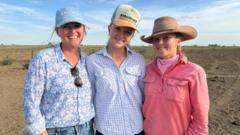
School is out for the year, but the summer holidays aren't exactly a break for 15-year-old Breanna Easton - that is when she's hard at work mustering cattle on the family's station.
"It's the freedom, the space you have to move," Breanna says, listing all the things she loves about her life, 1,600km north-east of Brisbane in Australia's sparsely-populated outback.
With grazier parents and grandparents, the industry runs in her blood. The vast hinterland is her own backyard.
And yet, like most teenagers, she's also attached to her smartphone.
The all-terrain buggy she uses to herd cattle is fitted with an internet extender, enabling her to message friends on Snapchat while working. On days she gets a little bored, she likes to make funny TikTok videos with her siblings.
With nearly all her friends living at least 100km away, social media is a lifeline. But not anymore, now that Australia's social media ban for children has taken effect.
"Taking away our socials is just taking away how we talk to each other," Breanna says.
While she can still text her friends, it's not the same as a quick "snap" or a "like" on a photo that allows her to play a part in their lives even when she is far away.
Throughout, supporters have argued it's for the wellbeing of children who they say are spending too much time online and risk being exposed to uncontrollable pressures, bullying and predators.
Opponents say restricting children's access to the internet runs the risk of pushing them to even less regulated corners of it - and they question the effectiveness of the age-verification tech the ban relies on.
The debate is far from settled but Australia's experiment has now begun, and Breanna is among millions of children under the age of 16 who are no longer allowed to use social media.
And among them are children who are seen as both winning - saved from the potential dangers of social media - and losing out - no longer having the community and connections that may have been harder to forge offline.
Megan Easton with her daughters, Breanna and Olivia - Megan worries the government is overstepping with the ban
For Breanna's mum Megan Easton, the ban is a mixed blessing. While she agrees kids need to be protected, she remembers her own childhood on a cattle station was far more isolating.
"We did feel very behind the other children at school because we had a somewhat sheltered life."
Breanna, her older sister Olivia and younger brother Jacob all did remote classes for children in the outback who are unable to attend a physical school.
For senior grades though, boarding school is the only option for a good education. So from the age of 11 or 12, the siblings have lived six hours away from home during term-time.
"We might be incredibly geographically isolated but we're not digitally illiterate and we have taken great measures in our family to make sure that we educate our children appropriately for the world ahead of them," Ms Easton says. "I do think that it is a bit of government overstepping."
One of her concerns is that delaying access to social media to 16 takes away power from parents to educate their children.
"Usually around 12 is when they start looking for their peers to be more influential than their parents," she says. "Even though it's young to get them on social media, we've staged their experiences with it and it's a great opportunity for us to let them have a few mistakes and then talk them through the processes of self-correcting."
Jacinta Hickey, 14, says she is old enough to know right from wrong
More than 2,000km away, teens in Sydney lead very different, far more connected lives. But they share similar worries.
"It's a bit insulting that they think we can't handle it," says 14-year-old Jacinta Hickey who attends Rosebank College in Sydney's inner west. "I'm definitely mature enough to distinguish right from wrong and to know what's good and bad for me."
Her teachers though couldn't be happier. "I feel really passionate that as long as we can, we should preserve the innocence that comes through childhood," says Iris Nastasi, the principal at Rosebank.
When smartphones started becoming popular in the early 2000s, she thought it would be an opportunity to teach children about technology. She embraced the change. Twenty years later, Ms Nastasi thinks very differently.
"It's two in the morning, he or she does something that they wouldn't normally do and the fallout happens here. Relationships are damaged and we have to look into it."
At 12, Lola Farrugia isn't on social media yet - and with the new law, she now won't be for another four years. But that doesn't faze her. She's happy enough with a flip phone.
"They're my school friends so I see them at school, I see them in sport - they're everywhere," says Lola, who's had coaching from her parents about the ills of social media.
"My mom explained to me that social media is junk food for the brain," she says.
"If you have a pantry and you clear [it], you're not craving anything, you know what I mean?"
Lola, 12, is in favour of the ban
Peter Malinauskas, the Premier of South Australia, is the man credited – or blamed, depending on your age - for clearing out the pantry.
After his wife read The Anxious Generation by Jonathan Haidt, an American psychologist who sets out the ills of the smartphone and how it is rewiring childhood, Malinauskas set out to introduce state-level legislation hoping it could win federal support too.
"She put the book down on her lap and turned to me and said you've really got to do something about this," he told the BBC. "And then I stopped and thought about it and thought maybe we actually can."
Not even Malinauskas expected the speed at which it happened though. The Anxious Generation was published in March 2024. By late November, a federal law banning social media for under-16s was passed.
There's still a High Court challenge brought by two teens pending, possible battles with tech firms and a warning from US President Donald Trump about targeting American companies.
"Of course you think through the potential repercussions of any move like this," Malinauskas says. "But when you are talking about protecting young people, all other considerations become secondary."
But one of the biggest criticisms of the law is that a blanket restriction could do the opposite for minority groups.
According to a survey of nearly 1,000 young people carried out by Minus18, a group that supports under-18 LGBTQ+ communities, 96% of respondents said social media was important to access friends and support, and 82% believed a ban would leave them disconnected.
Brisbane schoolgirl Sadie Angus is one of them. She turned 13 just a few weeks ago and opening an Instagram account was a rite of passage for her. But it was a short-lived one - the law means she's now being kicked off it and she's frustrated.
"I can admit more things on there than I can in real life," says Sadie who often prefers to keep her anonymity online.
"I use it as a safe space to share what I've had to go through and since nobody knows who I am, they can't come to me in real life and talk about it and that feels kind of comforting."
Sadie's mother Kath felt it was an important step in her daughter - the youngest in their family - growing up and now that has been taken away from her.
"She's being exposed to some really amazing role models through social media, particularly in the queer community which I think is really healthy for young adolescents," Ms Angus says.
Other minority groups have also voiced concern over the ban.
"I am quite nervous about what this is going to mean for autistic young people," says Sharon Fraser, the CEO of Reframing Autism.
"We communicate and socialise differently," says Sharon who also has an autistic son. "Online can be a very beneficial place for autistic people and there are ways to connect online that are just not accessible to them in real life."
Watch: 'I don't need laws to teach my kids to be responsible', says Kath Angus
For every young person who feels like they're losing out, campaigner Emma Mason thinks there will be far more winners.
Nearly four years ago, her daughter Tilly killed herself. She was 15.
Emma blames the rise of social media for Tilly's death. Face-to-face bullying started when Tilly was just eight. It moved to messaging and then to platforms including Tiktok, Snapchat and Instagram. But it got worse after a fake image of Tilly was spread by children at her school.
Emma recalls how hysterical Tilly was when she found out: "She was subject to something she had no control over, a harm that was instant, a harm that she could not stop. It was one of those moments in her life where she just lost it, she just thought I can't do this anymore, I can't keep fighting the demons."
Ms Mason doesn't want this to happen to other children, which is why she's been standing alongside Prime Minister Anthony Albanese to support this law.
"These are agents of harm that are unregulated and I think our children have been the social experiment," Emma says. "It's a government's job to protect the vulnerable of our society and to provide guardrails for how things need to go."
She admits though, for those who are already teenagers, they might not be clear winners.
"I don't know that we can save the children that have had access to it already," she says. "But those children that are 13 and below that aren't supposed to be on it now, they won't have to grow up in a world where it's acceptable that you just get on social media and you can say what you want, how you want, to whoever you want."
Additional reporting by Simon Atkinson
Watch: What do teenagers think about Australia's social media ban?
If the Trump administration allows Nicolás Maduro to endure, it would signal that a criminal dictatorship masquerading as a state can stare down the United States and win.
If the Trump administration allows Nicolás Maduro to endure, it would signal that a criminal dictatorship masquerading as a state can stare down the United States and win.
香港《信报》星期三(12月10日)报道称,此次发函由香港证监会主导。有投行人士透露,鉴于业界在过去数年新股发行低潮期时,曾大幅度裁减人手,因此今年复苏后投行人手不足,令整体上市申请质量出现下降,甚至有些文件出现“copy and paste”(复制粘贴)的问题,所以监管决定统一发函,表明态度,以提醒大家“我们仍是国际金融中心,不要为了赶时间而罔顾质素,不要乱来”。
President Trump’s speech in Pennsylvania was meant to alleviate concerns about affordability. But he kept wandering off script and dwelling on his favorite targets, like immigration.
He was both the first Black person and the first educator to hold the cabinet position, but resigned amid discord over George W. Bush’s No Child Left Behind.
Brazil's parliament descended into chaos on Tuesday as conservative lawmakers continued to push a law which would reduce the prison sentence of former president Jair Bolsonaro.
One left-wing lawmaker was forcibly removed by police after trying to disrupt proceedings, while footage showed scuffles breaking out as security tried to restore order.
His conservative allies in Congress have proposed a law which would reduce sentences for coup-related offences, as well as free dozens of Bolsonaro supporters who stormed government buildings shortly after he left office.
Meanwhile, court documents showed that Bolsonaro's legal team filed an official request asking a court to grant him permission to leave prison for surgery.
The fate of Jair Bolsonaro, a right-wing populist who was narrowly beaten by leftist Luiz Inácio Lula da Silva three years ago, continues to be a divisive issue in Brazil, where his allies have explored several avenues to exonerate him.
The latest attempt to cut the 70-year-old's sentence has been to propose a law overhauling punishments for people in elected office, including significantly reducing sentences for the offences that Bolsonaro, and those convicted alongside him, were found guilty of.
One of the lawmakers behind the effort told AFP news agency it would see Bolsonaro's sentence cut to two years and four months in prison.
During Tuesday's heated debate on the proposal, leftist politician Glauber Braga briefly occupied the Speaker's chair, which he said was a protest against a "coup offensive".
The chamber had been due to vote on Braga's expulsion for his role in a previous altercation in Congress, one of a handful of removals proposed as part of a wider package of disciplinary reforms, including the changes to coup-related offences.
Police forcibly removed Braga amid a skirmish in the chamber. The TV feed was cut and reporters were removed from the chamber, a move condemned as censorship by a group representing journalists.
Braga later said he would not "accept as a done deal an amnesty for a group of coup plotters", AFP reported.
As of late Tuesday night, the law cutting Bolsonaro's sentence - which would require ratification by the legislature's second house - had not passed.
EPA
Bolsonaro was given a lengthy prison sentence in September after Supreme Court judges found he had proposed a coup to military leaders, and said that he knew of a plot to assassinate his rival Lula.
Several senior military figures, two former defence ministers and an ex-intelligence chief were also convicted as part of the coup investigation.
Bolsonaro and his supporters have long dubbed the investigation a "witch hunt".
His Liberal Party remains the largest in Congress, where conservative parties outnumber groupings sympathetic to Lula.
Lawmakers loyal to Bolsonaro previously launched an attempt to secure an amnesty, though that floundered in the face of national protests, with a significant cut to sentences now proposed as a compromise.
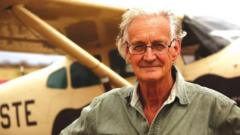
The Prince of Wales has paid tribute to pioneering elephant conservationist Iain Douglas-Hamilton, who died aged 83 at his home in Nairobi on Monday.
Douglas-Hamilton spent his life studying and campaigning to protect African elephants, becoming a world-leading expert on their behaviour in the wild.
His groundbreaking research exposed the devastating effects of poaching - often at great risk to his own safety - and was instrumental in the banning of the international ivory trade.
Prince William praised the zoologist as "a man who dedicated his life to conservation and whose life's work leaves lasting impact on our appreciation for, and understanding of, elephants".
"The memories of spending time in Africa with him will remain with me forever," added Prince William, who is a royal patron for the African wildlife conservation charity, Tusk, of which Douglas-Hamilton was an ambassador.
"The world has lost a true conservation legend today, but his extraordinary legacy will continue," the charity's founder Charles Mayhew said in a statement.
Oria Douglas-Hamilton
Born in 1942 to an aristocratic British family in Dorset, England, Douglas-Hamilton studied biology and zoology in Scotland and Oxford before moving to Tanzania to research elephant social behaviour.
It was there at Lake Manyara National Park that he began documenting every elephant he encountered, eventually becoming so familiar with the herds he could recognise them by the unique shapes of their ears and wrinkles on their skin.
"The thing about elephants is that they have a lot in common with human beings," he said in a 2024 documentary about his work, A Life Among Elephants.
Friend and fellow conservationist Jane Goodall, who died in October, was featured in the documentary, and said he had shown the world that elephants are capable of feeling just like humans.
"I think his legacy will be one of a man who did so much to help people understand how majestic, how wonderful elephants are, and to learn more about their way of life," Goodall said.
Oria Douglas-Hamilton
But that work did not always come easy: he was charged at by elephants, almost killed by a swarm of bees and shot at by poachers. In 2010, a flood destroyed his research facility in Kenya and years of work was lost.
Despite the hardships, Douglas-Hamilton remained steadfast in his mission to raise awareness of the plight of African elephants, becoming one of the leading voices to alert the world of the ivory poaching crisis, which he described as "an elephant holocaust".
He later campaigned for an international ban on the commercial trade in ivory, and in 1989 the Convention on International Trade in Endangered Species was signed, an international agreement between governments.
After the agreement failed to wipe out the trade completely, Douglas-Hamilton turned his attention to China and the US, the two main markets for ivory. Chinese President Xi Jinping and then-US President Barack Obama agreed to a near-total ban on its import and export in 2015.
Douglas-Hamilton established Save the Elephants in 1993, a charity dedicated to safeguarding the animals and deepening human understanding of their behaviour.
The organisation's CEO Frank Pope, who is also his son-in-law, said: "Iain changed the future not just for elephants, but for huge numbers of people across the globe. His courage, determination and rigour inspired everyone he met."
In his own words, Douglas-Hamilton expressed optimism for the future of his life's work.
"I think my greatest hope for the future is that there will be an ethic developed of human-elephant coexistence," he once said.
Iain Douglas-Hamilton is survived by his wife Oria, children Saba and Dudu, and six grandchildren.
Lady Gaga is in Australia for her Mayhem World Tour
An Australian man who was jailed in Singapore and deported for charging at pop star Ariana Grande has been ejected from a Lady Gaga concert in his home country.
Johnson Wen said on Instagram that he was "kicked out" of the Suncorp Stadium in Brisbane on Tuesday night before the Lady Gaga show had started.
The 26-year-old, who has a history of disrupting concerts and celebrity events, was sentenced to nine days in jail by a Singapore court last month for grabbing Grande during the Asian premiere of Wicked: For Good.
Wen, who told the Singaporean judge in mitigation that he would "not do it again", had not disrupted the performance in Brisbane, but was removed because of his history of public nuisance.
Videos on social media showed security guards holding Wen by the arm and leading him out of the venue as the crowd both cheered and booed. The BBC has contacted Suncorp Stadium for comment.
In a statement to the Sydney Morning Herald, the venue said it was made aware that "a known serial offender may attempt to attend and disrupt" the concert by Lady Gaga, who is around halfway through her Mayhem World Tour.
"In the interest of the artist's safety, this individual was deemed a person of interest and not to be allowed to attend," it said.
Wen has gained notoriety since grabbing Grande at the Wicked: For Good premiere in the South East Asian city state, which is known for its strict laws, including on public behaviour.
"You seem to be attention-seeking, thinking only of yourself and not the safety of others when committing these acts," Singaporean judge Christopher Goh reportedly told Wen.
Other videos on Wen's social media accounts show him jumping on stage and disrupting performances by global stars like Katy Perry and The Weeknd.
The incident with Grande sparked outrage in Singapore. Fans accused Wen of "re-traumatising" the pop star and actress.
Grande has spoken of experiencing post-traumatic stress disorder after a suicide bomb attack at her May 2017 concert in Manchester, killing 22 people and injuring hundreds.
Watch: Trump claims "prices are coming down" as he rallies on affordability
President Donald Trump has told a campaign-style rally that consumer prices are falling "tremendously" as he sought to allay voter anxiety about the US cost of living.
In a speech at a casino in the battleground state of Pennsylvania, the president told supporters he had "no higher priority than making America affordable again".
But while gas and egg prices have fallen, other food is more expensive and Americans remain unhappy about the cost of housing, childcare and healthcare.
Democrats have capitalised on Trump's political vulnerability on the economy in recent off-cycle votes, leaving many Republicans uneasy about next year's midterms elections.
Tuesday's event in a swing district of Pennsylvania was the first of what the White House says will be a series of campaign-like rallies aimed at bringing its economic message to voters.
But at one point in his remarks, the Republican president again portrayed concerns about affordability as a Democratic "hoax".
In recent weeks, his administration has removed tariffs from dozens of food products and touted its rollback of fuel efficiency standards and Trump-branded retirement accounts for children as cost-of-living fixes.
In an excerpt from an interview with Politico released on Tuesday, Trump was asked what grade he would give the economy.
"A plus-plus-plus-plus-plus," he said.
In a sign the policy pivot might be cutting through, Trump's approval rating rose three points to 41% in a new Reuters/Ipsos poll.
Charlie Neuenschwander
Alaina Hunt was laid in off in April
But many Americans remain downbeat on the economy.
Alaina Hunt, 37, who lost her job as a designer at a construction company in Oklahoma City, told the BBC her position was in part a casualty of Trump's tariffs on steel and aluminium.
The construction sector "really took a hard hit very early on", she said. Ms Hunt says she has applied for at least 75 jobs in web design and development since April, to no avail, amid a broader slowdown in hiring.
She says rising grocery bills - about $25 extra per week - have added to the strain.
"I was able to scrape by a lot easier in years before," said Ms Hunt, who voted for Kamala Harris. "I don't think that the federal government is listening at all."
Economic data paints a mixed picture.
US consumer confidence fell in November to its lowest level since the spring.
But the stock market continues to hover near record highs. And forecasters expect the economy to expand by 1.9% this year, slower than last year's 2.8% but still better than expected.
Some recent data also indicate the job market may be picking up, after a significant hiring slowdown earlier this year.
As of September, inflation stood at 3%, the same rate as in January when the president took office and stubbornly above the Federal Reserve's 2% target.
It is still way below a peak of 9.1% under former President Joe Biden when the US faced its worst inflation in four decades.
Overall prices have surged 25% over the last five years, generating widespread frustration, despite wage growth over that period.
Beth Richardson
Beth Richardson, a 45-year-old from Kansas, said she had been floored by some of the prices at the grocery store near her, recalling a pack of Mentos gum she picked up recently that rang up to almost $5 with tax.
"I'm like, I'm just going to go die now because this cannot be," she said.
Ms Richardson was laid off from her job in sales support at a tech-related company in late 2023, after the firm shifted jobs overseas. She voted for Kamala Harris last year.
She said while she knew presidents were often blamed for economic forces over which they had little control, she felt in this case Trump and his policies, like tariffs, were "shooting ourselves in the foot".
On Tuesday night, Trump called tariffs his "favourite word", pointing to hundreds of billions of dollars of US revenue from import taxes.
The White House blames Biden and the Fed, arguing high interest rates are hurting the economy.
The US central bank has twice reduced rates to about 3.9% and may cut them again on Wednesday.
Many Trump supporters have said they still back the president, despite feeling the pinch themselves.
John Mohring, 60, of Kenosha, Wisconsin, has backed Trump since 2016, though rising prices worry him.
Mr Mohring, who works in construction and has lived alone since his wife died three years ago, said grocery prices started rising before Trump returned to the White House "and it doesn't seem like it's going down".
He now typically spends $100 on groceries just for himself, even when avoiding buying meat and sticking with cheaper items.
Still, Mr Mohring said he backed the Trump administration's sweeping tariffs on imported goods and his border policies.
"I'm giving him the benefit of the doubt," Mr Mohring added.
Brad Smith, a corn and soybean farmer in north-western Illinois, was hurt earlier this year when China, previously a major buyer of US soybeans, froze its purchases amid a trade war with Washington.
But the market, he said, had been gradually recovering since late October, when the two countries reached a trade agreement and China resumed some purchases.
Trump on Monday also announced a $12bn aid package for US farmers.
Mr Smith said he still believed in Trump's plans for the economy, despite being getting caught in the crossfire.
"There's probably bigger things at play other than just the soybean and corn market," Mr Smith said.
The former chief executive of Nexperia, a Dutch chipmaker, said Dutch officials had known for years that the company’s Chinese owner sought to move its technology to China.

 Login
Login