The shooting at Bondi beach targeted a Jewish Hanukkah event where many families were present
The first day of Hanukkah was a sweltering one in Sydney - a perfect afternoon to spend at Australia's most iconic beach.
More than 1,000 people were enjoying a festival marking the occasion at a grassy stretch in Bondi: kids careened around in facepaint, crowds snaked between food trucks, and many enjoyed live entertainment as they soaked up the last rays of sunshine.
Then, just before 7pm local time, shots rang out.
From a small footbridge - just metres from a children's playground - gunmen fired upon the fenced-in crowds. A car full of improvised bombs was parked nearby, though they never went off.
One attendee, who identified himself only as Barry, described watching people around him get shot as hundreds of beach-goers began screaming and running through the park to get away from the attack.
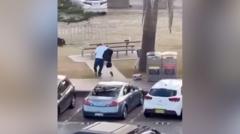
One video showed a man - dubbed a "genuine hero" by state officials - leaping out from behind a parked car to wrestle a gun from one of the attackers and push him away.
"It was simply an unbelievable scene… in today's day and age, that families and kids on Bondi could be completely mowed down for being Jewish," Barry said.
Getty
More than 1,000 people had gathered at the Hanukkah event.
At least 11 people have died and more than two dozen are injured, including a child. One gunman was also killed by police, another is in hospital in a critical condition, and police say they're investigating whether a third person helped stage the attack.
This is an unfamiliar, and devastating, shock for Australia - the deadliest shooting in this country since the Port Arthur massacre in 1996.
That attack, which killed 35 people, was a turning point, famously prompting the government to introduce some of the world's strictest gun control measures.
We've only had a handful of mass shootings since then, most of them horrific acts of domestic violence - not public attacks like today.
Swiftly declared a terrorist attack by police, it comes amid a rise in antisemitic attacks in Australia since the 7 October Hamas attack on Israel and Israel's subsequent offensive on Gaza.
Getty
An injured woman is treated by emergency workers at Bondi beach
Getty Images
Prime Minister Anthony Albanese called it an "act of evil antisemitism" and a "vile act of violence and hate".
But he's been accused by some - including Israel's Prime Minister Benjamin Netanyahu - of failing to address the upward trend of antisemitism here.
"The Australian government, which received countless warning signs, must come to its senses!" Israel's Foreign Minister Gideon Sa'ar wrote on X.
Alex Ryvchin, co-CEO of the Executive Council of Australian Jewry, told Sky News Sunday night that the "worst fears" of the Jewish community had been realised.
"It's been bubbling under the surface for a long time, and now it's actually happened."
In a statement, the Australia Jewish Association's Robert Gregory said many Jews would tonight be pondering whether they have a future in Australia.
"To be confronted with this horrific act of antisemitic violence during the Jewish festival of light and hope is shattering. In moments like this, we hold each other close," the Jewish Council of Australia said in a statement.
Getty
Bondi beach is one of the world's most famous beaches
There's a lot police can't - or won't - say yet. But they have declared this was a terrorist attack.
Who the gunmen are - how many of them even - and their motive is still unclear. They said one of the attackers was known to police, but wasn't on their radar for anything like this.
Officials wouldn't answer any questions about those who died either, out of respect for families who are still being notified.
"It's too early to give that information," was the most frequent refrain uttered at a press conference late on Sunday night.
But where NSW Police Commissioner Mal Lanyon couldn't offer answers, he tried instead to offer reassurance. Police are throwing everything at this investigation, he said.
He urged the community to remain calm, and avoid spreading misinformation online - including speculating on the victims and perpetrators of the attack.
"I want to make sure that there is no retribution," Commissioner Lanyon said.
Local politicians have also asked people not to share graphic footage from the attack on social media.
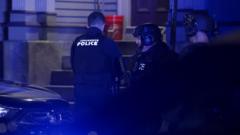
In the aftermath of the shooting, sirens were ringing through the city and the area surrounding Bondi swarmed with police cars, helicopters circling above.
There we found Fin Green, who was on FaceTime with his family in the UK when he saw the shooting unfolding outside his window. Unsure what was happening, he hid in his wardrobe for an hour and a half, until he felt it was safe to go out.
Danny Clayton, a broadcast journalist who was at the beach and witnessed the events from the Bondi Pavilion, said some people crashed their cars as they attempted to flee.
Many others in the area had similar stories. Restaurant worker William Doliente Petty said he was serving someone when he heard the gunshots. "The whole shop just stood up and we ran into the back exit."
Australia prides itself on being a merry, safe country and Bondi Beach has long been a symbol of that. But that image has been shattered and residents are in disbelief.
Sunday's attack also came less than two years after another nearby tragedy. In April last year, a deadly mass stabbing attack took place at nearby Bondi Junction. Shocked, many then uttered the same words we've heard over and over today too: "This sort of thing just doesn't happen here".
Additional reporting by Katy Watson and Tabby Wilson.
The attack targeting the Jewish community at a Hanukkah event in Australia is "sickening", Sir Keir Starmer has said.
At least 11 people were killed in the shooting at Bondi Beach on Sunday and a further 29 taken to hospital, according to police.
In a statement on X, the UK prime minister said: "The United Kingdom will always stand with Australia and the Jewish community." He added that the government was working with Community Security Trust, a Jewish security organisation, on the policing of Hanukkah events in the UK.
The Metropolitan Police said it was increasing its "police presence, carrying out additional community patrols and engaging with the Jewish community to understand what more we can do".
"It is an awful reality that Jewish communities across the world continue to face a higher level of threat," the force said in a statement.
"At a time when London's Jewish communities are coming together to begin the celebration of Hanukkah, we know this attack will be the cause of not just terrible upset but also significant heightened concern about safety."
In October, two people were killed in an attack at a synagogue in Manchester on Yom Kippur, the holiest day in the Jewish religious calendar.
On Sunday, the UK's Jewish Leadership Council (JLC) called on the police and government to protect events celebrating Hanukkah which begins this evening and lasts for eight days.
Hanukkah, also known as Chanukah, is a festival of light usually observed in December.
"We are devastated and angered that in Sydney, Jews appear to have been targeted once again for being Jewish," the JLC said in a statement.
"We know that such hatred also exists in this country, as we are still reeling from the attack on a synagogue in Manchester on Yom Kippur.
"As we prepare to celebrate Chanukah over the next eight nights, we call on government and law enforcement to work with our community to protect Jewish life in the UK and ensure that events this week can go ahead safely. We must not let hatred extinguish the festival of light."
Dan Houser was one of the masterminds behind revolutionary video game series Grand Theft Auto.
Now, after leaving Rockstar Games and launching his own company, he's released a debut novel about a very different type of game.
A Better Paradise is a dystopian vision of the near future in which an AI-led computer game goes rogue.
Set in a polarised world, it finds Mark Tyburn attempting to create a virtual haven for people to find sanctuary and reconnect within themselves against an all-consuming social media hellscape.
But it all goes wrong when it ends up unleashing a mysterious, sentient AI bot named NigelDave into society - "a hyper-intelligence built by humans" - flaws included.
Readers get to see his thought processes as he struggles with "infinite knowledge and zero wisdom".
"What would an incredibly precocious child, who remembers everything he ever thought - because computers don't forget things - feel like when he started talking?" Houser says.
Getty Images
Written before ChatGPT
It feels a bit like A Better Paradise predicted the future.
First released as a podcast, the book comes as AI's continued boom means the sector's big seven companies are now collectively worth more than China's economy.
But Houser says he began writing the book "a good year" before OpenAI's ChatGPT went live to the masses in 2022, complete with a logo eerily similar to his fictional creation.
Instead, it was humanity's technological dependency during Covid - at a scale he'd underestimated - that inspired his thinking.
In his novel - which sometimes feels monologue-heavy - Houser envisions a hyper-digital, alienating world where people retreat from deepening political problems into a spiral of social media and generative AI.
Enter CEO of Tyburn Industria, Mark, who dreams of building the Ark, an immersive gaming experience users can enter in order to reconnect with themselves. It generates a world and mission tailored to each player's innermost wants and needs.
But during testing, the Ark becomes a Pandora's box of addiction. Some players find joy; others encounter terror. One even reconnects with his dead sister.
Meanwhile, a rogue AI bot named NigelDave slips into the real world, controlling minds and engineering realities no one can control.
Mined for advertising, people are left wondering if their thoughts are genuine. Everything is tracked, and nothing is secure. As climate emergencies intensify, society falls to pockets of civil war.
The only way to escape is to "drift"- which means hiding from a thousand algorithms by living off-grid, constantly moving and suppressing maddening paranoia that your thoughts are not your own.
Mirroring our world
To the reader, NigelDave feels like a nightmare ChatGPT gone wrong.
The AI tool recently reached 800 million weekly active users, according to boss Sam Altman, and Houser believes some people are becoming dependent on the technology's affirming "human veneer".
Microsoft's head of AI Mustafa Suleyman has warned of a rise in AI psychosis - a non-clinical term describing incidents where people increasingly rely on chatbots like Claude, Grok and ChatGPT and become convinced that something imaginary has become real.
In response to the increased scrutiny, ChatGPT creator OpenAI recently tightened its welfare protocols, with updates designed to ensure its chatbot responds "safely and empathetically to potential signs of delusion or mania".
Bloomberg via Getty Images
Mustafa Suleyman, chief executive officer of of Microsoft AI
The dizzying algorithm-fuelled society in which NigelDave is unleashed mirrors ours too.
Parents worry about exposing their children to false information or harmful content. Last year national police chiefs described the "quite terrifying" misogynistic radicalisation of boys and young men. And in 2014 Facebook admitted manipulating the news feeds of nearly 700,000 users without their consent to manage the emotions they were exposed to.
"As a parent, you always worry about anything that you expose your kids to that is going to either give them false information or simply bombard them with too much information," Houser says.
But is it bold for a video game creator to be warning of these dangers - given the long history of video games themselves being accused of making young people violent?
Houser insists there's a difference.
"We always had the data about game violence, and it was very clear: as people played more video games, youth violence went down.
"Whatever people were claiming, we knew the opposite was true."
Getty Images
Psychology professor and game violence researcher Pete Etchells says numerous studies have shown "no meaningful effect of playing violent games on aggression".
AI models and social media are another matter - a "new paradigm" in altering behaviour that gaming never threatened, according to Matt Navarra, social media consultant and author of the Geekout Newsletter.
He says dismissing concerns as a GTA-style moral panic "understates what is changing".
"We're talking about external systems that can potentially shape people's beliefs or manipulate attention, personalised experiences, nudge behaviour or even influence identity and emotional states."
Rockstar freedom
Could Houser have pushed forward with A Better Paradise at Rockstar? "I don't know if I would have had the bandwidth to think about it," he tells me.
He's previously described the fatigue of managing vast open-world sandbox games like Red Dead Redemption and GTA as playing a role in his departure.
The goal with his book was to create "something truly different in this era of crazy media saturation".
Rockstar Games
So where next? He's already writing the second instalment of the series, and plans are under way to develop a video game, for which he promises the visuals are ground-breaking.
A key message, he says, is to not let your device - or AI - "tell you what to think". Otherwise, Houser argues, "you're giving up control to your phone".
His biggest fear, as creator of worlds, is losing imagination because of the endless torrent of algorithms. Sometimes after scrolling for hours, he realises: "I've not had an idea all day".
"If you go offline for a bit - sometimes I make myself go for a walk with no phone, you start to have ideas.
"A human is better thinking than not," he says. "Thinking is a privilege."
Little Foot, one of the world’s most complete hominin fossils, may be a new species of human ancestor, according to research that raises questions about our evolutionary past.
Publicly unveiled in 2017, Little Foot is the most complete Australopithecus skeleton ever found. The foot bones that lend the fossil its name were first discovered in South Africa 1994, leading to a painstaking excavation over 20 years in the Sterkfontein cave system.
Prof Ronald Clarke, a paleoanthropologist at the University of the Witwatersrand, who led the team that excavated the skeleton, attributed Little Foot to the species Australopithecus prometheus. Others believed it was Australopithecus africanus, a species first described in 1925 and which had previously been found in the same cave system.
Australopithecus – meaning “southern ape”– was a group of hominins that existed in Africa as early as 4.2m years ago.
But a new study led by Australian researchers, published in the American Journal of Biological Anthropology, has found that Little Foot’s traits differ from both species, raising a third possibility.
“We think it is a formerly unknown, unsampled species of human ancestor,” said Dr Jesse Martin, an adjunct at La Trobe University in Melbourne, who led the research.
“It doesn’t look like Australopithecus prometheus … but it also doesn’t look like all of the africanus to come out of Sterkfontein.”
Martin, also a postdoctoral research fellow at the University of Cambridge, added: “This thing will be part of a lineage of hominins, so it’s possible that we have not just a point in our human family tree that we hadn’t discovered before, but an entire limb of that tree.”
Martin said Clarke was “one of the only people to maintain there were two species of hominin at Sterkfontein”, and had been “proven to be correct” in that regard.
“Where [Clarke] and I depart is I would argue one is definitely not prometheus,” he said.
The researchers identified key differences distinguishing Little Foot from Australopithecus africanus, including a longer nuchal plane – a region at the back of the skull.
“The bottom back of the skull is supposed to be fairly conserved in human evolution, which is to say it doesn’t change that rapidly,” Martin said. “If you find differences between things in the base of the cranium … those differences are more likely to represent different species, because they just don’t change readily, evolutionarily speaking. All of the differences we’ve found are in that region.
“To find evidence hiding in plain sight at Sterkfontain of an entirely new species is kind of remarkable and counterintuitive,” Martin added, given “it is the most complete human ancestral fossil in the record”.
“We should be able to figure out where it sits in the human family tree.”
The study’s authors have not formally reclassified Little Foot, suggesting: “It is more appropriate that a new species be named by the research team that has spent more than two decades excavating and analysing the remarkable Little Foot specimen. We hope they will view our suggestion in this regard as well-intentioned advice.”
There has also been disagreement among scientists about Little Foot’s age. The fossil skeleton has been dated as 3.67m years old, but other scientists have suggested Little Foot cannot be older than 2.8m years.
Prof Ronald Clarke, who discovered the skeleton, has been contacted for comment.
Security has become a top concern for voters across the region who are calling for iron-fisted measures. In Chile, the issue is pushing the country to the right.
A person of interest has been detained in connection with a US shooting at Brown University that left two people dead, police said.
Nine others were injured when a gunman opened fire at the university in Providence on Saturday.
Police confirmed on Sunday a person had been detained, and an earlier order for people on the Brown campus and surrounding areas to shelter had been lifted.
Of those injured, medics said one person was in a critical condition, six were "critical but stable" and two others were less severely hurt.
The gunman opened fire in a classroom at around 16:00 local time (21:00 GMT) on Saturday at the Holley engineering building at the eastern end of Brown's campus, according to officials.
The identities of those killed or injured have not yet been released, but Brown University President Christina Paxson told reporters in a press briefing on Saturday that all the victims, including those killed and wounded, were students.
Police had earlier released CCTV footage of a male suspect walking away from the scene wearing all black clothing. Officers said a firearm was not found in a sweep of the building.
Not once, in the four and a half years I learned at home, did anyone from the state come to assess what sort of education I was receiving, or even just check on me.
Watch: Eyewitness captures moment man tackles and disarms Bondi shooter
Twelve people have died - including one gunman - following a shooting at Australia's Bondi Beach which targeted the Jewish community on the first day of Hanukkah.
According to police, at least 12 others have been injured and two officers were shot during the event, which has since been declared a terror attack by officials. The surviving gunman is in a critical condition.
More than 1,000 people were attending an event on the beach celebrating Hanukkah.
Chris Minns, the premier of New South Wales, said: "Our heart bleeds for Australia's Jewish community tonight.
"I can only imagine the pain that they're feeling right now to see their loved ones killed as they celebrate this ancient holiday".
Mass shootings in Australia are very rare, and the attack at Bondi is the deadliest incident in Australia since the Port Arthur massacre in 1996.
Bondi Beach is located in eastern Sydney in the state of New South Wales, on Australia's east coast.
It is one of Australia's most popular beaches, attracting millions of visitors each year. The area is a significant attraction for tourists.
What happened?
New South Wales (NSW) police responded to reports of gunfire at around 18:47 local time (07:47 GMT), with video showing hundreds of people fleeing from the coastline.
In their initial statement posted on X, NSW Police urged people at the scene to take shelter and other members of the public to avoid the area.
Around the same time, local media began reporting people "on the ground" in the vicinity of Campbell Parade.
A video verified by the BBC appears to shows two gunmen firing from a small bridge which crosses from the car park on Campbell Parade towards the beach itself.
An event to mark the first day of the Jewish celebration Hanukkah was taking place on Bondi Beach, very close to the bridge where the men were firing from. More than 1,000 were in attendance.
Premier Minns also paid tribute to a man filmed wrestling a gun from one of the attackers.
"That man is a genuine hero, and I've got no doubt there are many, many people alive tonight as a result of his bravery," Minns said at a press conference.
In the video, the man is seen sneaking up on the attacker, before grabbing him in a bear hug.
The now-disarmed man then retreats back towards the bridge, where the other attacker is still firing from.
As the video continues, another man appears to be injured and flees the scene, as a policeman arrives behind the attackers and opens fire at them.
A separate video, also verified, shows several policemen on the same bridge. One appears to be administering CPR to a motionless man as someone shouts "he's dead, he's dead".
How many people were killed and injured?
Getty Images
The attack targeted a Hanukkah celebration on the beach, police say
Apart from police confirming one gunman as dead, details on who has been killed and injured are sparse.
Twelve people including one of the armed men have been confirmed dead by police. Another gunman is said to be in a critical condition.
Officials say 29 other people were taken to hospital, and two officers were also shot during the incident.
One eyewitness, Barry, was attending the Hanukkah event on Bondi when with his children when he heard gunshots.
He told the BBC he saw two men on a bridge shooting towards the crowd.
He said there were bodies on the ground. He and his children were able to escape with a friend in a car, he added.
What is the latest?
Getty Images
Police have urged for calm as they carry out their investigation
Police have declared Saturday's shooting a terror attack.
An exclusion zone has been set up around the scene as police use specialist equipment to check improvised explosive devices (IEDs) found in a car linked to the dead gunman, and police are still urging the public to avoid the area."
"No stone will be left unturned" in the investigation, New South Wales Police Commissioner Mal Lanyon said.
He said police would not release any information about the gunmen at this time, and urged for calm while police carry out their duties, adding that this was "not a time for retribution".
Police said they cannot confirm if there was a third gunman involved or if there was anyone else involved in the attack, but enquires are ongoing.
During a televised address, Australian Prime Minister Anthony Albanese called the Bondi Beach shooting "an act of evil antisemitism, terrorism that has struck the heart of our nation".
"We have seen Australians today run towards dangers in order to help others. These Australians are heroes and their bravery has saved lives", he added.
The attack targeting the Jewish community at a Hanukkah event in Australia is "sickening", Sir Keir Starmer has said.
At least 11 people were killed in the shooting at Bondi Beach on Sunday and a further 29 taken to hospital, according to police.
In a statement on X, the UK prime minister said: "The United Kingdom will always stand with Australia and the Jewish community." He added that the government was working with Community Security Trust, a Jewish security organisation, on the policing of Hanukkah events in the UK.
The Metropolitan Police said it was increasing its "police presence, carrying out additional community patrols and engaging with the Jewish community to understand what more we can do".
"It is an awful reality that Jewish communities across the world continue to face a higher level of threat," the force said in a statement.
"At a time when London's Jewish communities are coming together to begin the celebration of Hanukkah, we know this attack will be the cause of not just terrible upset but also significant heightened concern about safety."
In October, two people were killed in an attack at a synagogue in Manchester on Yom Kippur, the holiest day in the Jewish religious calendar.
On Sunday, the UK's Jewish Leadership Council (JLC) called on the police and government to protect events celebrating Hanukkah which begins this evening and lasts for eight days.
Hanukkah, also known as Chanukah, is a festival of light usually observed in December.
"We are devastated and angered that in Sydney, Jews appear to have been targeted once again for being Jewish," the JLC said in a statement.
"We know that such hatred also exists in this country, as we are still reeling from the attack on a synagogue in Manchester on Yom Kippur.
"As we prepare to celebrate Chanukah over the next eight nights, we call on government and law enforcement to work with our community to protect Jewish life in the UK and ensure that events this week can go ahead safely. We must not let hatred extinguish the festival of light."
Specialist rape and sexual offence investigation teams will be introduced to every police force in England and Wales by 2029, the government has pledged.
It is part of a long-delayed plan aimed at halving violence against women and girls within a decade.
The strategy - which will include funding for undercover units operating online, and a roll out of domestic abuse protection orders - is due to be unveiled on Thursday, after being pushed back three times this year.
Home Secretary Shabana Mahmood said the measures will help to "bear down on abusers, stopping them in their tracks. Rapists, sex offenders and abusers will have nowhere to hide."
The government says the new teams will have officers with specialist investigation skills for working on rape and sexual offence cases.
More than 50% of police forces already have these teams in place, but the government says every force will have dedicated officers by 2029.
It says staff will have the right training to understand the mindset of abusers and victims.
Announcing the move, the home secretary said: "This government has declared violence against women and girls a national emergency.
"For too long, these crimes have been considered a fact of life. That's not good enough. We will halve it in a decade."
Also announced is a roll out of domestic abuse protection orders, which have been trialled over the last year, across England and Wales.
They can ban individuals from contacting a victim, visiting their home or posting harmful content online, and can also be used in cases involving coercive or controlling behaviour. Breaching an order is a criminal offence.
There will also be almost £2m in investment for special undercover units of police officers operating online - to target those harassing women and girls on the internet.
It said sexually-motivated crimes against women in public remained widespread, criticised the limited nature of data on them, and called for urgent action to prevent predators from offending.
The publishing of the government's strategy has been long delayed. It was initially expected to be announced in the spring.
In Labour's general election manifesto last year the party pledged to use "every government tool available to target perpetrators and address the root causes of abuse and violence".
A person of interest has been detained in connection with a US shooting at Brown University that left two people dead, police said.
Nine others were injured when a gunman opened fire at the university in Providence on Saturday.
Police confirmed on Sunday a person had been detained, and an earlier order for people on the Brown campus and surrounding areas to shelter had been lifted.
Of those injured, medics said one person was in a critical condition, six were "critical but stable" and two others were less severely hurt.
The gunman opened fire in a classroom at around 16:00 local time (21:00 GMT) on Saturday at the Holley engineering building at the eastern end of Brown's campus, according to officials.
The identities of those killed or injured have not yet been released, but Brown University President Christina Paxson told reporters in a press briefing on Saturday that all the victims, including those killed and wounded, were students.
Police had earlier released CCTV footage of a male suspect walking away from the scene wearing all black clothing. Officers said a firearm was not found in a sweep of the building.
The post box will replace a handmade one currently used at the remote station
A shiny new red post box has been given as a gift from King Charles III to staff at a remote Antarctic research station.
The Royal Mail red lamp post box was sent to staff at the Cambridge-based British Antarctic Survey station at Rothera.
The box, featuring the King Charles III cypher, was delivered after Kirsten Shaw, a station support assistant who runs the British Antarctic Territory Post Office for staff, requested an upgrade to their handmade box.
"Being in Antarctica is incredible, but it's full of extremes, so I think it's a special thing to send post back home, to communicate your experiences. It's a moment of your life that you put down on paper and give to someone else," she said.
The Rothera research station, which opened in 1975, is the largest British Antarctic Survey (BAS) facility, and a renowned global hub for climatic research.
It is situated 1,860km (1,155 miles) south of the Falkland Islands.
Staff work and live at the station for months at a time.
Ms Shaw said: "Getting post is really special for the team at Rothera.
"If you're doing fieldwork for many months, the feeling of receiving a letter — an actual tangible, piece of paper with handwriting from friends and family — is such a lift.
"It's a wonderful way to connect people that goes beyond what an email or text message can do."
BAS/Jake Martin
Kirsten Shaw and Aurelia Reichardt, station leader at Rothera, are pictured with the new post box
The box will replace the handmade and painted one currently used at the station.
The BAS said "the Royal Household worked with Royal Mail to arrange this particularly special delivery".
It was delivered to Rothera by the UK's polar research vessel RRS Sir David Attenborough, along with the first major drop of supplies to the station following the long Antarctic winter.
The post box will be installed in the Discovery Building, a new scientific support and operations hub.
BAS/Aurelia Reichardt
The handmade box will now be replaced by the official one from the Royal Mail
Postal logistics in such a remote area are understandably not straightforward.
Ms Shaw's job is to oversee the formal Post Office logistics of getting mail in and out of Antarctica from Rothera, as well as getting post out to staff to other BAS stations and science field camps.
Post has to be gathered and put on board the RRS Sir David Attenborough or on BAS aircraft to the Falkland Islands, where BAS maintains an office in Stanley.
The final leg involves transport to RAF Brize Norton in Oxfordshire, where letters enter the Royal Mail postal network for onward delivery.
BAS/Jake Martin
The box will be placed in a new building at the station
Jane Rumble, HM Commissioner for the British Antarctic Territory said: "Maintaining a postal service in the British Antarctic Territory is far more than a symbolic gesture.
"It reinforces Britain's presence and heritage in Antarctica and provides a vital link to the wider world."
Two gunman opened fire at dozens of people who were at a Jewish holiday event. At least 11 people were killed in the attack, and so was one of the shooters, the police said.
In the first of these two articles tracing the history of depictions of the temptation of Saint Anthony, I had reached 1650, when the bizarre composite creatures that flourished in Hieronymus Bosch’s triptych of about 1500-10 were becoming common.
David Teniers the Younger (1610–1690), The Temptation of Saint Anthony (c 1660), media and dimensions not known, Palais des Beaux-Arts, Lille, France. Wikimedia Commons.
The prolific David Teniers the Younger painted several versions of the Temptation of Saint Anthony after about 1650. Most, like this painting now in Lille, show an ordinary landscape with the saint, with the addition of his own species of daemons. Some of these re-use ideas first seen in Bosch’s triptych, such as that of a single figure on the back of a flying narwhal; that figure is wearing an inverted funnel on its head.
David Teniers the Younger (1610–1690), The Temptation of Saint Anthony (c 1650), oil on copper, 55 × 69 cm, Museo Nacional del Prado, Madrid. Wikimedia Commons.
Another of Teniers’ paintings, currently in the Prado, shows three fairly normal humans in a menagerie of daemons, some of which clearly have their origins in Bosch’s work. The figure flying on a fish has changed from the previous painting, but still wears its distinctive inverted funnel.
David Teniers the Younger (1610-1690), The Temptation of Saint Anthony (c 1650), oil on canvas, 80 x 110 cm, National Museum of Western Art, Tokyo. Wikimedia Commons.
This third version, now in Tokyo, repeats many of the same daemons in a different setting, retaining the figure wearing the inverted funnel in close aerial combat.
Domenicus van Wijnen (1661–after 1690), The Temptation of Saint Anthony (c 1685), media and dimensions not known, The National Gallery of Ireland, Dublin. Wikimedia Commons.
Almost two centuries after Bosch’s triptych, more radically different and inventive approaches appear, here in Domenicus van Wijnen’s painting of about 1685. Its daemons are much more human in form, and have proliferated in a way more common in the ‘fairie paintings’ seen around 1840, including some by Richard Dadd. Van Wijnen was a prolific painter of scenes of witchcraft and the ‘dark arts’.
Giovanni Battista Tiepolo (1696–1770), The Temptation of Saint Anthony (c 1740), oil on canvas, 40 x 47 cm, Pinacoteca di Brera, Milan. Wikimedia Commons.
Southern European painters were more likely to keep to more traditional figurative compositions, as used by Tiepolo in about 1740. This is surprising, given the presence of Bosch’s paintings in major collections in both Madrid and Venice.
Henri Fantin-Latour (1836–1904), The Temptation of Saint Anthony (c 1875), oil on canvas, 63.5 x 83.5 cm, National Museum of Western Art, Tokyo. Wikimedia Commons.
Depictions of the Temptation of Saint Anthony remained popular even through the 1800s, although by this time Bosch’s triptych seems to have become long forgotten, and painters seemed no longer to need such excuses to exercise their imagination and inventiveness. The long-awaited publication of Gustave Flaubert’s book The Temptation of Saint Anthony, written in 1874 as a script for a play, brought renewed interest, and a succession of paintings from Henri Fantin-Latour (c 1875, above), Paul Cézanne (c 1875, below), Gustave Moreau (a watercolour), and Fernand Khnopff (1883).
Paul Cézanne (1839–1906), The Temptation of Saint Anthony (c 1875), oil on canvas, 47 x 56 cm, Musée d’Orsay, Paris. Wikimedia Commons.
Cézanne shows the shadowy figure of Saint Anthony slumped against a bush at the left, his arms held out to shield himself from the temptations. The devil is shown in stereotypical form, wearing red robes, with an animal head and horns, behind the saint. In front of them is the naked Queen of Sheba, her right arm held high to accentuate her form. Around her are naked children. In front of Saint Anthony is a black bag presumably containing money, and a book.
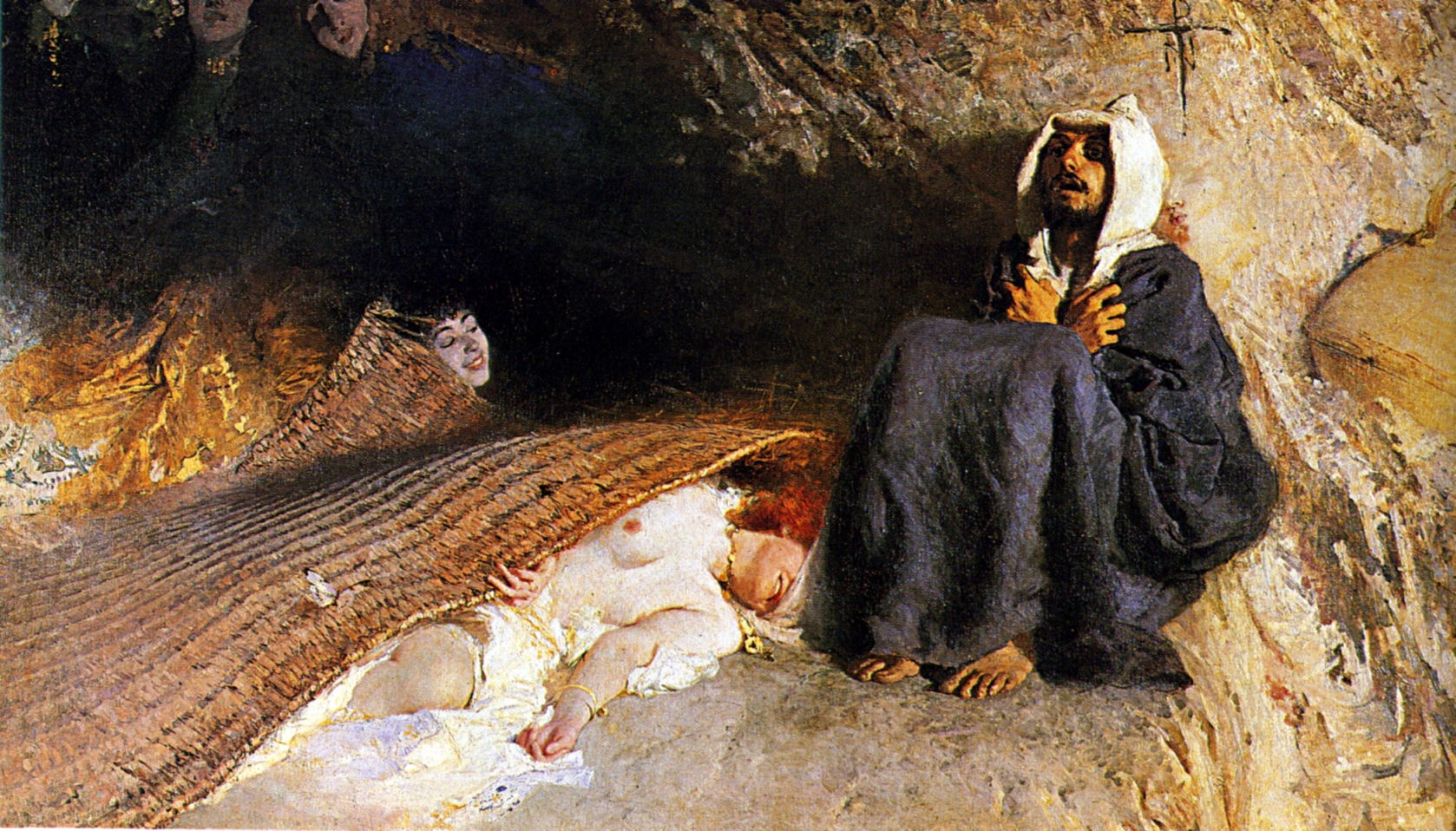
Domenico Morelli (1823–1901), The Temptation of Saint Anthony (1878), oil on canvas, 137 × 225 cm, Galleria Nazionale d’Arte Moderna, Rome. Wikimedia Commons.
The influential Neapolitan realist Domenico Morelli painted this stark work in 1878, perhaps the exact antithesis of the rich imagery that had developed since the Renaissance.
Félicien Rops (1833–1898), The Temptation of Saint Anthony (1878), pastel and gouache on paper, 73.8 × 54.3 cm, Cabinet des estampes, Bibliothèque Royale Albert Ier, Brussels. Wikimedia Commons.
That same year, Félicien Rops painted his satirical and irreverent version with more subtle details. Bound to the cross in Saint Anthony’s tempting vision is a visibly voluptuous woman, the word EROS replacing the normal initialism of INRI (Iēsūs/Iēsus Nazarēnus, Rēx Iūdaeōrum, meaning Jesus of Nazareth, the King of the Jews) shown above Christ’s head. Christ himself, with full stigmata, has been knocked sideways to accommodate the woman’s naked body. Behind the cross the horned devil wears scarlet robes and pulls faces. Behind him is a pig, Anthony’s attribute. The two daemonic putti are most definitely not references to Bosch.
Lovis Corinth (1858–1925), The Temptation of Saint Anthony (1897), oil on canvas, 88 × 107 cm, Bayerische Staatsgemäldesammlungen, Munich. Wikimedia Commons.
Lovis Corinth painted two versions of the Temptation. The earlier, from 1897, shows Anthony surrounded by beautiful and naked women, offering him fruit, other food, and their bodies. The daemons have faded into the background, and are caricatures based on humans.
Lovis Corinth (1858–1925), The Temptation of Saint Anthony (after Gustave Flaubert) (1908), oil on canvas, 135.3 × 200.3 cm, The Tate Gallery, London. Wikimedia Commons.
His later canvas, explicitly painted after Gustave Flaubert, in 1908, brings in the Queen of Sheba, an elephant and monkey, but is also notable for depicting Anthony as a young man. Even Salvador Dalí’s 1946 painting of the Temptation steers clear of Bosch’s imagery, although it does at least return to the concept of an individualistic and inventive vision.

 Login
Login