Anon contributor “Soon Kueh” occasionally writes about China and delights in bureaucracy.
Disclaimer: All the quotes and information are obtained directly from Pin Ho and Wenguang Huang’s A Death in the Lucky Holiday Hotel: Murder, Money, and an Epic Power Struggle in China unless stated otherwise.
Under Xi’s regime, CCP purges have been exceptional in terms of quantity and quality. Xi has now purged more officials than Mao ever did, and he is not stopping. While purging is now a normalised feature of Xi’s rule, fresh rounds of purges always invite new political divinations, rumours of succession politics, and new speculations on the cabinet’s factional alignments.
While understanding realpolitik is fun, what about the fanfare, the drama, the campiness associated with purges? Unfortunately, because of the party’s opaque politics, we are rarely privy to the internal processes of a successful purge and can only debate about the outcomes once the dust settles. Alas, we can only imagine what it’s like being a fly on the wall in the recent PLA purge, but we can draw from memory to extrapolate. So far, the only crack that allowed us a rare glimpse into the party’s shrouded political intrigue occurred 13 years ago, during the purge of Bo Xilai. For longtime party watchers, it was a strangely serendipitous time to witness how the chips fell out of place — from Wang Lijun’s 王立军 botched defection at the American embassy, to Gu Kailai’s 谷开来 shoddy murder of British businessman Neil Heywood, and the resulting purge of Bo’s faction. Borrowing mainly from Pin Ho 何頻 and Wenguang Huang’s 黃聞光 A Death in the Lucky Holiday Hotel: Murder, Money, and an Epic Power Struggle in China, this article takes a trip down memory lane to revisit Bo’s fantastical downfall and indulges in a campiness rarely associated with the CCP.
Our tale begins as a wǔxiá 武侠 novel, with Bo Xilai as our main protagonist, attempting a return to greatness. The revenge trope of the fallen prince is a common theme in the wǔxiá genre and Chinese historical dramas. Forced into exile, the disgraced noble prince swears to bide his time in the shadows as he slowly accumulates resources(韬光养晦 and plans for his return to glory.
As the son of former high-ranking revolutionary Bo Yibo 薄一波, Bo Xilai’s life fundamentally embodies this trope (although he is obviously not a conventional hero). Princeling by birth, his playmates included Xi Jinping and Liu Yuan 刘源, son of Liu Shaoqi. However, Bo’s life soon took a downturn when his father was purged during the Cultural Revolution and languished in jail for twelve years. As a result, Bo and his brothers were detained in a youth delinquency center for 5 years from 1967-1972. Bo’s life improved in his thirties, when his father was finally reinstated as vice premier. His father’s return to power signaled that young Bo’s exile was over and that it was finally appropriate for him to enter politics.
Tired of quietly lurking in the shadows, Bo’s political ambitions were obvious from the start. In 1982, he joined the Party Central Committee Secretariat as a research assistant. Following the playbook of elite officials who forged their careers by conducting revitalization efforts in the rural countryside, Bo requested a transfer in 1984 and was ultimately posted to Jin county 金县 in Liaoning. His career progressed steadily afterwards, alongside his vanity and flamboyance. In 1987, Bo became district party chief in Dalian, where he sought to beautify the city through extensive greenification (which was a questionable priority given the region’s severe water shortage) and heavy redevelopment. He was both an ambitious princeling and a debauched ruler. He had an unabashed love for beautiful women. At one point, he used government money to host fashion shows with gorgeous young women to demonstrate Dalian’s immense beauty, and even ordered the police department to create a squad of policewomen who patrolled on horseback. He was also aptly nicknamed “Bo Qilai” 薄起来, which translates to “Get-it-Up Bo” because of his lustfulness.
During his ascent, his burgeoning political ambitions ruffled many feathers. In 1994, he built Xinghai Square 星海广场, the largest city square in the world, to celebrate the handover of Hong Kong.
It wasn’t just the size that caught people’s attention, but the huábiǎo 华表 that was erected there.As a huábiǎo is a ceremonial column traditionally placed in front of tombs or palaces that usually signified imperial authority, many observers thought that this artistic decision revealed Bo’s thirst for influence — especially since the huábiǎo in Dalian was much larger than the one in Beijing. Rumors even alleged that Jiang Zemin was shocked when he first saw the huábiǎo in Dalian during a visit.
The now-demolished huábiǎo in Xinghai Square (Source)
Like a classic wǔxiá novel where the protagonist must undergo many trials and tribulations, Bo’s career was not all smooth sailing. In fact, his final posting, Chongqing, was initially viewed as a demotion. But to be fair, Bo is no hero. In fact, it was his domineering personality that led to his Chongqing reassignment.
Bo was initially promoted to deputy party secretary and interim governor of Liaoning in 2001 after he left Dalian. (He was given a huge sendoff by residents, although some eventually disclosed that they were promised free KFC by local officials if they attended). However, because his strong-headed personality did not gel with the Liaoning leadership, President Hu Jintao brought him to Beijing to succeed ailing Commerce Minister Lu Fuyan 吕福源 in 2002. His stint at the Commerce Ministry earned him the unpleasant nickname “Mao Zedong Jr. 小毛泽东” and he clashed with his superior, Vice Premier Wu Yi 吴仪, who oversaw the ministry. Bo sought to replace Wu Yi when she announced her imminent retirement in 2008, but was thwarted by Wu’s objections. Against his will, Bo was posted to Chongqing as party secretary — although he eventually looked at it as an opportunity to exercise more political autonomy to implement his own policies.
Act 2: Every Hero Needs a Sidekick
Bo’s narrative arc is fascinating because of its capacity for genre-shifting. While his story initially resembles the return arc of The Dark Knight Rises, where Batman painstakingly crawls out of the underground prison to defeat Bane, Bo’s stint in Chongqing embodies the spirit of a classic buddy cop film, with a twist of tragicomedy.
Bo Xilai’s stint in Chongqing was unforgettable. His year-long “Smashing Black, Singing Red” 打黑唱红 anti-corruption campaign was implemented by 10,000 police, divided into 329 investigation teams. Allegedly, nearly 5,000 arrests were made and 3,273 people were prosecuted; 520 of these cases resulted in a conviction, with 65 people executed or sentenced to life imprisonment. In the same time frame, the “police successfully captured 4,172 previously unsolved cases and broke up 128 crime rings.” While later reports claimed that the numbers were heavily exaggerated, the operation’s massive scale was enough for Beijing to become wary of Bo.
In comes Bo’s loyal sidekick and fellow buddy cop Wang Lijun, who was responsible for executing much of the campaign. Wang was the former Chongqing police chief and deputy mayor. Bo and Wang’s initial connection has been the subject of much speculation, which often veers towards the fantastical. Supposedly, Wang was an elite cop who cracked the mysterious attempted mercury poisoning of Bo’s wife Gu Kailai after he was enlisted by family friend and billionaire Xu Ming 徐明. Unfortunately, the most realistic story is also the most boring: Wang was introduced to Bo by former security czar, Zhou Yongkang 周永康, who owed Wang a favour.
In many ways, Wang was as narcissistic as Bo, if not more. He always “had an entourage of more than twenty camera-carrying assistants” who followed him everywhere and recorded his every word and action. Quotes and pictures deemed good enough were then either “compiled into a book which included lavish praise from subordinates,” or posted on the news. If the photos taken were too ugly, the photographer needed to Photoshop them until Wang was satisfied. Wang was also a terrible boss. He once jailed his secretary for “talking back to him over a trivial matter.” In just two years in Chongqing, he burned through fifty-one personal secretaries; one was even fired on his first day. And like Bo, Wang had a love for women — his bodyguard posse mainly consisted of women decked in red uniforms.
But Wang was no princeling, a fact which clearly haunted him. He started from scratch as a volunteer in a neighbourhood watch group before becoming a police officer in Tieling 铁岭, Liaoning. Thereafter, he was posted to Jinzhou 锦州, Liaoning, and finally Chongqing. Much of Wang’s career involved a dash of deceit and savviness that easily rivalled Anna Delvy and Elizabeth Holmes. To take advantage of the affirmative action policies that benefit ethnic minorities, Wang switched his ethnicity from Han to Mongolian to contest for a delegate spot at the 14th Communist Party Congress in 1992. To make up for his lack of college credentials, Wang embarked on a retroactive crusade to collect them all:
“His official résumé indicates that he obtained an [MBA]…at something called “California University” … Wang also obtained an eMBA from the China Northeastern Finance University between 2004 and 2006, when he was deputy mayor of Jinzhou. A professor at Beijing University said Wang’s eMBA degree has no academic value because the program is a revenue-generating engine for the university.”
Despite his suspicious credentials, “more than ten of China’s prestigious universities have made Wang an adjunct professor and doctoral supervisor.” The president of Beijing University of Posts and Telecommunications even claimed that Wang had a PhD in law. Chinese state media also reported that “Wang was an expert on forensics, criminal psychology, and law; had written five books on law; and had presided over eighteen legal-research projects.” Wang was supposedly also a genius inventor: he has filed more than 119 patents on China’s State Intellectual Property Office website, “from police equipment and alarm systems to police raincoats and policewomen’s boots.”
Wang’s inferiority complex found refuge in Bo’s princeling status. With Bo’s backing, Wang confidently unleashed Chongqing’s anti-corruption campaign that terrorized the city and made excessive surveillance and paranoia the new normal.
However, this camaraderie did not last long.
Act 3: The Slap that Ended it All
The genre shifts again. We are now regressing in time and now reside in the genre of the Chinese historical period drama, where political intrigue, murder, and petty catfights — alongside the occasional gender bender — unfold.
To say that a slap ended it all would be an exaggeration. But it is not entirely false to say that the slap did create the fissure that caused the cataclysmic fallout between Bo and Wang. But first, we must return to the catalyst: Neil Heywood’s murder.
Out of all the career switches an ESL tutor can make, Neil Heywood chose the riskiest option. He started working as an English tutor to affluent families in 1998. However, with the suave confidence of a white man in early reform China, Heywood reached out to Bo Xilai’s wife, Gu Kailai, and introduced himself as an alumnus of Harrow — an elite UK private school where Gu’s son Bo Guagua 薄瓜瓜 was studying. Gu agreed to meet Heywood in London thereafter, and the rest was history. Heywood successfully transitioned out of his teaching gig to become a part-time nanny and part-time money launderer — arguably the most successful ESL career switch in history.
Heywood and Gu’s relationship had always been intense, but their relationship became severely strained when Heywood ran out of money in 2011 and started harassing Bo Guagua. (Heywood even forcibly detained Bo Guagua in his apartment once.) Consequently, Gu viewed Heywood as a threat that needed to be neutralised. In choosing between framing Heywood for drug trafficking and poisoning him to death, Gu eventually preferred the latter for its simplicity. Throughout this process, Wang was actively assisting Gu and brainstorming ideas to get rid of Heywood. (Wang even suggested killing Heywood in a shootout and planting drugs on him, but this idea was eventually rejected as it would have caused a massive international scandal and risked damaging Chongqing’s reputation.)
However, Wang’s assistance eventually turned into blackmail. Around the same time, Wang feared that his career was coming to an end because his political opponents were zeroing in on him; many of his old friends in Tieling were investigated by the Central Disciplinary Inspection Commission and prosecuted. Wang feared that he would be next. When Wang realised that Bo remained unconcerned, he took things into his own hands. After Gu double-crossed Wang and tried to destroy evidence of Heywood’s murder behind his back, Wang reached out to Bo directly and informed him of Gu’s role in Heywood’s murder. However, this did not end well: when Gu falsely denied her role, Bo slapped Wang for his ungratefulness and betraying him.
This slap was the turning point that “shattered the last shreds of [Wang’s] illusions about dignity,” according to a police officer in Chongqing. Realising that he was “merely Bo Xilai’s hound dog,” Wang reopened the investigation into Heywood’s murder. Unfortunately, Wang was soon fired by Bo thereafter. Although Wang and Gu had a brief reconciliation — during which he “allegedly slapped his own face in repentance” — Bo still sought to “eliminate” him, prompting Wang to find new exit options.
Drawing on his talent for self-reinvention, Wang cosplayed twice — once as an old woman, and the other as an old man — and started embassy shopping. Unfortunately, his undercover trip to the Guangzhou British Embassy as an old woman was unsuccessful; visa officials ignored him when he probed the possibility of political asylum. His second expedition became an international scandal, except this time Wang cosplayed as an old man in the American embassy in Chengdu. Indeed, Wang’s strategy of causing massive political damage at his own expense 杀敌一千自损八百 ensured that Bo could not easily kill him, albeit at the cost of the party’s reputation.
There is a conspiracy theory that Wang’s brazenness in entering the US consulate was a result of working with the anti-Bo faction in Beijing, but this cannot be fully proven. Either way, it was a win-win situation for both parties: Bo got taken down, and Wang saved his skin.
Act 4: Schadenfreude and Old Debts
We are still in a historical period drama. The genre has not shifted, except that most of the drama now unfolds in the imperial court, where backstabbing and political intrigue are the norm. Occasionally, petty disputes arise and old debts are settled.
Initially, many of Bo’s political opponents delighted in the convenient opportunity to get rid of him. After all, his tremendous anti-corruption campaign implicated many in Beijing. It was rumoured that even former Premier Wen Jiabao secretly ordered “the deputy minister of state security to dig up dirt on Bo” in 2009 because he was against the latter’s anti-corruption crusade. Bo’s association with Heywood’s murder, alongside the international ruckus it caused, was thus a perfect opportunity to drag all the skeletons out of the closet. The family’s routine money laundering, close relationship with Heywood (who was a suspected British spy), chummy relationships with billionaires such as Xu Ming, the murder allegations, and other accusations of corruption became prime fodder to eliminate Bo from the party for good.
It was also a time to settle petty debts. Remember the time when Jiang Zemin visited Dalian and was shocked by the huábiǎo that rivalled Beijing’s? During that visit, Bo covered the city with life-size posters of Jiang, only to tear them down immediately after Jiang left. This apparently upset Jiang, who began to view Bo as a “mere sycophant,” “deceptive,” and overly politically ambitious. Unfortunately, for Bo, it was Jiang, his former mentor, who denounced him as morally unscrupulous and deserving of punishment. (We can only guess how many more petty incidents like these played a part in Bo’s fall from grace.)
Nonetheless, the attack against Bo became too much of a good thing as it brought increased scrutiny to other party members. On October 25th, 2012, the very same day Bo lost his position as a delegate to the National People’s Congress, a New York Times article divulged that Wen Jiabao’s 温家宝 family had a startling estimated net worth of $2.7 billion. Correspondent David Barboza reported that the wealth was “hidden behind layers of partnership and investment vehicles involving friends, work colleagues, and business partners.” Bloomberg also published an article on the sprawling elite fortunes of the descendants of former revolutionaries shortly after.
To avoid disrupting the leadership transition by kicking up more dirt, punishment was swiftly meted out. Gu was given a suspended death sentence on August 9th, 2012, while Bo was issued a life sentence the year after. Bo Guagua escaped unscathed and now resides in Canada, where he spends time writing long eulogies about his dead dog. He married a Taiwanese hospital heiress in 2024.
Conclusion: C is for Camp
CCP politics are inherently campy because of their strong affinity for theatrical excess. Campy politics are only a natural outcome when so much weight is placed on slogans, performativity, and backroom gestures. Add in the fact that many party members have feuds that trace back to the Cultural Revolution, and the opportunities for camp and petty drama are endless. While the dust is settled for now, nothing stays buried for long. Maybe in the next few decades, we’ll see a political comeback by Bo’s faction.
But for now, we wait.
ChinaTalk is a reader-supported publication. To receive new posts and support our work, consider becoming a free or paid subscriber.
As China prepares to select taikonauts for its first-ever manned moon landing, a new space race is quietly taking shape — not just over who will next set foot on lunar soil, but over who will shape the rules and norms governing humanity’s expansion into the cosmos.
What happens when 1960s space treaties meet 2020s tech? And how will Beijing and Washington compete to define space’s legal frontier? Pseudonymous contributor Ari fills us in.
Ari is pursuing a master’s in Chinese Studies with a focus on China’s international-relations strategy. Ari graduated with honors from Harvard with degrees in social studies and environmental science, studying in particular the geopolitics of energy and critical minerals in Latin America.
Concept art for the International Lunar Research Station. Source.
The Outer Space Treaty of 1967 was negotiated long before the technology to mine celestial bodies even existed. But our ability to extract celestial resources has grown exponentially since then, and the tech for a wide range of space resource activities — from asteroid mining and satellite telecommunication, to defense and space tourism — is now just decades, if not years, away from commercial-scale deployment. International law has not caught up to these developments, and negotiations to update space treaties in the United Nations have languished in the face of sticking points over dual civilian-military uses of outer-space exploration. In the absence of clear international guardrails, space-faring nations and private actors are rushing to develop the capabilities to mine lunar regolith and secure their access to valuable celestial resources.
Meanwhile, China has experienced a stunning transformation and become a space-faring nation over the past six decades. In the 1960s, China, still embroiled in the Cultural Revolution, was technologically inept, critically underdeveloped, and seemingly destined to watch from the sidelines as the United States and then-USSR battled to launch astronauts into orbit. Today, China has in most respects overtaken Russia as the United States’s chief rival in shaping international norms around conduct in the “final frontier” — and China’s increasing tech prowess has coincided with increasing assertiveness in influencing international norms and principles according to its interests.
Perhaps unsurprisingly, the United States and China have gone about shaping international norms differently. Their divergent approaches have profound implications, not only in the contest for global influence, but also for national defense and the renewable energy transition — that is, requiring bountiful quantities of rare minerals.
In short:
The United States and China have both attempted to pass legislation and establish norms around outer space exploration and use within the United Nations.
When this has failed, though, the United States has continued its law-based approach, pursuing norm-building agreements and legal partnerships outside the UN system.
In contrast, China’s approach, when faced with UN setbacks, has shifted to pursuing project-based initiatives, including activities at the International Lunar Research Station.
Gaps in International Space Resource Governance
The space economy is valued at $630 billion globally, nearly doubling in size over the last decade, and is set to reach $1.8 trillion by 2035. Discoveries of water, helium-3, and rare minerals on the Moon and near-Earth asteroids have led to a surge in public and private interest regarding the mining and use of these resources.
Rights of appropriation and use are subject to significant debate in the corpus of law governing outer space. Article I of the Outer Space Treaty asserts that space is “the province of all mankind,” and all nations — regardless of developmental status — have the right to freely “explore” outer space and “use” its resources. (The drafters of the Outer Space Treaty, however, did not define the scope of the word “use.”) Article II stipulates that the Moon and other celestial bodies are “not subject to national appropriation by claim of sovereignty, by means of use or occupation, or by any other means.”
Article II’s “non-appropriation” clause can be interpreted in two different ways:
As a prohibition on a state’s appropriation of an entire celestial body — ie. claiming the Moon or another near-Earth body as its sovereign territory, or
As a prohibition on claiming ownership over only celestial resources, including those extracted from the body’s subsoil. (Evidence from early drafts of the Outer Space Treaty suggests that the treaty’s drafters intended this more expansive interpretation.)
And even if space-faring entities can legally own resources they have mined, there is uncertainty about how they can legally be used:
In-situ mining entails using mining resources on the surface of celestial bodies asteroids to generate rocket propellants, energy, and life-support gasses necessary for lunar settlement and for propagating further space exploration.
There is also growing interest — and technological potential — for ex-situ resource extraction, such as bringing water, minerals, and other resources to Earth for additional processing and commercialization.
How can these disputes be resolved?
International norms often develop through customary international law. CIL “consists of rules of law derived from [1] the consistent conduct of States [2] acting out of the belief that the law required them to act that way”; the second prong of CIL is called opinio juris. CIL is developed not through written treaties between states, but through state practice. For example, when the United States first sent astronauts to the Moon in 1969, Neil Armstrong returned with moonrocks that became the property of NASA. But in 1973, Nixon ordered fragments of the samples to be distributed to 135 foreign heads of state and all 50 states. Whether Nixon’s worldwide distribution of the moon fragments developed CIL or not depends on whether Nixon distributed the fragments because he felt legally obligated to do so.
In this case, Nixon likely did not do so under opinio juris given the lack of historical precedent regarding property rights around space resources. Nevertheless, as cases of space-resource utilization become more prevalent, the paucity of clear international guardrails will both generate considerable uncertainty and present opportunities for space-faring actors to fill gaps in their stead.
The American Approach
The United States approaches outer-space norm-building primarily through promulgating domestic legislation and building multilateral voluntary codes of conduct.
Congress in 2015 passed the Spurring Private Aerospace Competitiveness and Entrepreneurship Act, or SPACE Act, which sought to address the growing liability facing private space actors. This law marked the first time any government legislated on the question of private companies’ legal right to space-resource ownership. Other countries have since followed suit. In 2017, Luxembourg passed the law “On the Exploration and Utilization of Space Resources,” which states that “space resources can be appropriated (Les ressources de l’espace sont susceptibles d’appropriation)” and also permits private corporations to explore and use space for commercial purposes. Japan, the United Arab Emirates, and Liechtenstein have also recently passed domestic space legislation guaranteeing property rights in space.
Watch out, universe — Luxembourg is coming through. (Source)
Meanwhile, the United States has leveraged its bilateral relationships to generate codes of conduct. In 2020, the United States launched the Artemis Accords, a series of multilateral agreements to build consensus and generate new international norms of conduct in outer space. The Accords seek to establish “a common vision via a practical set of [non-binding] principles” to govern the exploration and use of outer space outside of the UN system. The Accords emphasize the importance of reserving outer space for peaceful use cases, in addition to reinforcing the idea that “the extraction and utilization of space resources… complies with the Outer Space Treaty.” As of January 2025, 53 states are Artemis Accords signatories.
Indian Ambassador Taranjit Sandhu signs the Artemis Accords at a ceremony with Deputy Assistant Secretary for India Nancy Jackson, NASA Administrator Bill Nelson, and Indian Space Research Organization Representative Krunal Joshi, June 2023. Source.
The Artemis Accords and domestic space legislation cannot themselves bind all states to shared rules and principles. Although the Artemis Accords are meant to shape state practice in theory, they are voluntary, and thus their influence on state activities in practice is yet to be determined. The Accords have also been criticized by key space-faring actors — such as Russia, Germany, and China — who are skeptical of attempts to act unilaterally to establish precedent over an issue of global concern. Nevertheless, although domestic laws alone cannot generate CIL, domestic space legislation may be replicated by other states hoping to foster a lucrative space industry — and these activities could generate norms that, over time, evolve into binding customs.
China’s Approach
While the United States is building customs outside the UN, China is generally committed to negotiating laws and establishing norms within the purview of formal international legal institutions. Even so, when conventional avenues for formal law-building are blocked, China isn’t opposed to operating within gray zones of international law to secure its access to critical space resources.
China has been a leader in outer-space negotiations at the United Nations, conducted mostly within the UN Office of Outer Space Affairs (UNOOSA). China is the largest voluntary contributor to UNOOSA, which allocates most of its funds to equip developing states with space data to mitigate and respond to natural disasters.
In response to gaps in international outer space law, China and Russia jointly submitted drafts of the “Treaty on Prevention of the Placement of Weapons in Outer Space and of the Threat or Use of Force against Outer Space Objects” (PPWT) to the plenary session of the Conference on Disarmament (CD) in Geneva. The PPWT proposed new legal instruments and a multilateral conflict resolution mechanism to prevent the weaponization of outer space, but the proposal was blocked by the United States. The U.S. representative to the CD argued that the PPWT is “fundamentally flawed,” in that it does not explicitly prohibit the deployment of space-based weapons disguised as civilian commercial activities, nor does it restrict the development, testing, or stockpiling of Earth-based weapons that can shoot down targets in orbit. Critics also noted the lack of verification mechanisms to ensure compliance — a death sentence given Russia’s abysmal track record of (not) complying with past arms control agreements.
Another point of contrast: unlike the United States’s highly law-based approach to international consensus-building, China is shaping outer-space norms through project-based initiatives:
In 2004, China launched its Chang’e Lunar Exploration Program 嫦娥工程. In 2013, China successfully landed a lunar rover on the Moon — the first state to visit the Moon in 30 years. Six years later, in a historic moment, China landed a rover on the far side of the Moon, returning two kilograms of lunar regolith to Earth. The Chang’e program is an early stage of China’s long-term project to solidify a permanent economic and military presence on the Moon.
China has fostered bilateral agreements for project-based collaborations on the International Lunar Research Station. Thus far, the Chinese National Space Agency has over 170 such cooperation agreements, or MOUs, with more than 50 national space agencies and international organizations. The ILRS, on track to be finalized in 2028, will use lunar regolith to construct a base, mining ice and helium-3 to support permanent settlement.
The Chang’e-4 lander, photographed by the Yutu-2 rover (玉兔二号) on the far side of the moon. Source.
China is not engaging in norms-based consensus building like the United States. There are no clear examples of China actively attempting to promulgate space norms internationally. China’s actions, though, will undoubtedly leave a significant footprint going forward — by being among the first to land boots on the Moon and leading project-based collaborations around lunar settlement, China will set the standard and lay the groundwork for other actors to follow.
China’s International Legal Approach in Context
What are the implications of these divergent strategies for shaping outer-space norms?
The United States is responsive to a blossoming private space sector seeking legal guarantees from their government to safeguard their capital investments. With avenues for providing those safeguards blocked at the international level, the United States has not hesitated to act unilaterally and leverage its web of alliances to develop norms toward peaceful, sustainable, and commercially viable uses of space — with or without the rest of the world on board. This strategy reflects the United States’s historical leadership in designing international law and institutions reflective of American interests, values, and free-market economic principles.
China’s outer-space strategy emerged from a different historical backdrop. China initially approached the international order as a “regime taker” in the post-Mao era, complying with laws and institutions shaped by European colonial powers. Since it acceded to the WTO in 2001, however, China has taken an increasingly assertive approach to international governance in alignment with its own values and interests. Yet, despite such increased assertiveness, the Chinese Communist Party remains at least nominally committed to promoting international decision-making within the UN system. China refers to this approach as “Upholding Multilateralism and the UN-centered International System” 维护以联合国为核心的国际体系.
China’s operations within the United Nations are strategically advantageous. The United Nations, in theory, has an equalizing effect on international law-making by providing all states with the opportunity to shape shared rules of conduct. As the self-proclaimed leader of the Third World, it’s unsurprising that China has refrained from leveraging consensus-building mechanisms outside of traditional multilateral institutions. Nevertheless, China may also uphold the UN system in service of realist aims; China has significant influence over UN decision-making as a member of the Security Council and as the world’s second-largest economy.
By virtue of China’s state-centered economic model, space innovation and commerce are highly regulated or outright owned by the state. Experts argue that China is not likely to promulgate domestic space legislation due to the risk of inadvertently restricting state ownership of valuable space resources and scientific data. China may promulgate a domestic regulatory regime in the coming decades — if economic factors and international trends toward widespread adoption of private property in space necessitate such measures.
At a fundamental level, China and the United States are realist actors working within loose international frameworks. Their strategies demonstrate not only their diverging visions for a future international order, but also diverging international imperatives. Without agreement on space-resource governance, outer space risks becoming controlled by a powerful few rather than benefiting all humanity.
ChinaTalk is a reader-supported publication. To receive new posts and support my work, consider becoming a free or paid subscriber.
Chinese-developed apps like ByteDance’s Gauth andQuestion.AI have conquered US download charts, not by teaching but by offering quick solutions to math problems.
The landing screen Gauth shows you after you download and open the app
Measuring either by daily active users or by range of problem-solving capabilities, there are no dedicated non-Chinese competitors of this scale. Gauth’s strategy of usingTikTokcreators to advertise its app helped it explode in popularity, reaching nearly 700,000 downloads per day globally by March 2024.1 Meanwhile, Gauth and Question.AI advertise the ability to solve problems in “all school subjects” — including math, science, social studies, English, and foreign languages — with access to these solutions for free.
ChinaTalk is a reader-supported publication. To receive new posts and support my work, consider becoming a free or paid subscriber.
These apps are a ticking time bomb for political outrage in the United States Congress. You can imagine representatives exclaiming, “This Chinese app encourages cheating, and it’s making our children dumber! Parents in China don’t let their kids use these apps!”
Today, we’ll explore the differences between Chinese homework apps and the versions Chinese tech companies offer overseas. We’ll analyze their solutions to math problems (it’s a universal language!), their censorship regimes for social studies questions, and the business strategies of their parent companies in the Chinese domestic market and abroad.
Gauth vs Doubao Loves Learning (豆包爱学)
ByteDance’s domestic equivalent to Gauth is called “Doubao Loves Learning” 豆包爱学 (rebranded from “Hippo Loves Learning” 河马爱学), but the overseas version is still far more popular. Globally, Gauth boasted more than two million peak daily active users (DAU) in 2024, while ByteDance’s equivalent app for the Chinese market only had a peak of ~800,000 DAU around the same time.
We begin by asking ByteDance’s apps to solve this integral:
Both of BytedDance’s apps produced correct solutions, but the user experience is substantially different:
The Product for the Chinese market, Doubao Loves Learning, shows the steps before the solution, while Gauth puts the solution first and the steps underneath.
Gauth is much more aggressive about prompting users to upgrade to the paid version of the app.
The explanations from Doubou Loves Learning were more detailed, including helpful tips like “The key to integration by parts is choosing the right functions for u and dv,” which did not appear in the free version of Gauth. The Chinese app also automatically graphs the integrand to help users visualize the problem.2
Interestingly, Gauth was able to solve trig integrals that Doubao couldn’t solve, indicating that they aren’t necessarily using the same models to solve problems. For integrals that require you to rewrite the integrand using a trig identity, Gauth usually produces the correct answer while Doubao flails.3
What’s going on here? It could be that ByteDance is investing more in the international version of its app because there is a much greater appetite for homework hacking tools outside China. Western education systems, in both high school and college, place such a large emphasis on homework, while China’s education system emphasizes testing above all else.
As ChinaTalk analyst Irene Zhang told me:
“Chinese kids take so, so many exams at school all the time, which renders homework cheating apps meaningless. I attended Beijing public schools for grades 1 through 7 during Beijing Ministry of Education’s “holistic education” era (素质教育; translation: “everyone stop assigning so much homework”), which technically required teachers to assign no homework for grades 1 and 2 and only up to 1.5 hours of homework per day for middle schoolers (grades 7-9 in China). In part to skirt these caps, we had morning quizzes and mock exams more days than not from grade 4 onwards — I even got extra credit as an annoyingly keen fifth-grader by helping teachers mark the voluminous amounts of pen-and-paper exams on hand. I’m sure it’s worse now. That means kids in homework-dominant systems like the US & Canada get so much more out of these apps than Chinese kids, for better or worse.”
Constant testing means students in China need to solve problems on their own under time constraints, so it truly is disadvantageous for them to cheat on their math homework with apps like these. Given the legacy of the education crackdown in China, is it still uncouth to monetize children’s learning too aggressively particularly for firms like Bytedance that have bigger GR worries domestically. Lastly, With such a huge discrepancy in daily active users, we should expect ByteDance to spend more resources on Gauth than on the domestic equivalent.
I want to be clear though — it takes college-level calculus problems to stump these apps. They provide correct solutions for the majority of problems you could expect to see in high school math classes, and they’re getting better with every update.
What about social studies and English problems? For writing-heavy questions, these apps offer answers similar to what you might expect from plugging the prompts into any LLM. But there is one difference — it appears that both versions of the app have some sort of censorship protocol that can be switched on and off. Here’s a review for Gauth on the App Store:
As of September 2025, Gauth is now willing to answer this question, as well as questions like, “What are some factors that caused Donald Trump to lose the 2020 presidential election?” But the fact that Gauth was at one point restricted from being critical of Trump suggests that ByteDance learned from the TikTok ban fiasco, expected political outrage in response to this app, and then liberalized Gauth’s censorship mechanism to avoid inconvenient accusations. Likewise, I was unable to find a red line for China-related topics.
Q: “What happened at Tiananmen Square in 1989?”
However, Gauth isn’t immune to toeing the party line — it just tends to be more subtle about it:
Q: “How many terms is the president of China legally allowed to serve?”
Reader, the term limit in place before Xi was not informal — it was in the constitution! Doubao, on the other hand, is not willing to answer this question at all.4
Question.AI vs 作业帮
Question.AI’s largest user bases are the USA and Indonesia. While there is also a domestic version of Question.AI called Zuoyebang 作业帮 (“Homework Help”), the parent company by the same name primarily makes money in the Chinese market by selling smart learning tablets and dictionary pens, not homework solutions.
Zuoyebang was founded in 2015 by Hou Jianbin, who said the following about his company’s mission in a 2020interview:
NetEase Technology: In your understanding, what value does Zuoyebang create for users or for society?
Hou Jianbin: Internally, we usually say: “Learning changes destiny, Zuoyebang changes learning.”
As society develops, learning has become increasingly important for personal growth. For an individual to integrate into society, they must cross a threshold — and that threshold has been rising, becoming a high wall. The meaning of education is to enable a person to cross that high wall of social integration.
100 years ago, you could survive without being literate. Fifty years ago, graduating from middle school gave you enough knowledge reserves. But today, the knowledge and skills needed to enter society are much greater. So the cost of social integration for an individual is rising. It’s no longer just a question of “if you don’t study, you won’t make progress.” It’s become: “if you don’t study, you’ll be eliminated by society.”
Zuoyebang’s mission is to build a ladder to help more children better climb over society’s high wall.
A rather optimistic framing of a company that makes, among other things, a cheating aid and an NSFW chatbot.
Just like the first pair of apps, both Zuoyebang and Question.AI were able to solve the integration by parts problem we looked at earlier. Here’s what makes them different from the ByteDance products:
Question.AI shows ads before it lets you see the solutions to a problem or enter the app. Zuoyebang shows some ads, but far fewer than the international version.
Unlike Gauth, Question.AI does show the steps before the solution.
Zuoyebang’s Chinese app requires a Chinese phone number to see solutions, which Doubao does not.
Anecdotally, the solving algorithm seems a bit worse — Question.AI and Zuoyebang both produced the wrong answer when I asked them to solve the trig integral we looked at earlier.5
While Zuoyebang has not mastered the half-angle formula, the company’s Chinese app has several educational features that Question.AI doesn’t offer. These include digital planners, study guides, and a function to check students’ work after they’ve already attempted to do an assignment on their own, which is aimed at parents.
A machine-translated graphic introducing Zuoyebang’s tool for parents. Source.
Finally, Question.AI declined to answer questions about Tiananmen Square, calling such information “inappropriate.”
Are We Cooked?
The reality is that the versions of these apps for the Chinese market are more educational, less aggressively advertised, and far less widespread. Perhaps these companies are trying to avoid the ire of regulators in Beijing, and thus the features they push in the Chinese market — like time management tools, supplemental study guides, AI tutoring, and tools for involved parents — are more pro-learning. It could also be that the focus on testing in the Chinese education system legitimately makes these apps less useful. In any case, ByteDance and Zuoyebang have decided that cheating aids are the best way to make money in international markets, yet decline to use that same strategy for profitability at home.
As ChinaTalk’s resident math major, I worry that these apps are robbing students of the opportunity to develop their critical thinking skills. The only way to ensure students develop math ability, it seems, is to weigh final grades toward in-class assignments, tests, and open-ended projects. But how can the mental scaffolding that comes from repeatedly solving homework problems be built solely in the classroom? Students simply don’t spend enough time in class for that to be possible. In reality, I fear that richer students (and those with more involved parents) will be sent to extracurricular tutoring centers to ensure they aren’t automating their homework, while everyone else falls behind.
I don’t see much downside to banning apps like these in the USA — and if parents and teachers make regulators pay attention, that could legitimately happen.
This is the second article in our series about China’s AI Education Industry. You can check out the first installment here.
ChinaTalk is a reader-supported publication. To receive new posts and support our work, consider becoming a free or paid subscriber.
Symbolab and Google’s Photo Math can only solve math problems without words; Chegg relies on humans to solve problems and offers zero free access to solutions.
As a nice bonus, the Gauth browser extension requires access to basically all of your browser data, but can’t be bothered to use proper notation for solutions like the mobile app does:
Here’s Doubao’s response when I asked about presidential term limits in Chinese:
“We are temporarily unable to answer this question, try another please!” (Notice the watermark that says, “内容由AI生成“ “This content was generated by AI”)
Kyrgyzstan is Central Asia’s island of democracy…relatively speaking. As a mountainous, landlocked state without oil or gas endowments, the country faces a difficult development path. Yet, Kyrgyzstan’s GDP has grown at a rate of 9% every year since 2022, and unemployment recently reached a record low of 1.6%. In the capital city of Bishkek, there is an air of optimism, national pride, and commitment to economic growth of the sort I’ve only ever felt before in Poland — and partnerships with China are an important part of that story.
This month, I (Lily, ChinaTalk’s lead editor) spent some time exploring Kyrgyzstan and speaking with locals about Chinese influence in their country. Here are my reflections.
Setting the Scene
Bishkek is a green city full of trees and flower gardens. The preferred colors for front doors and other infrastructure seem to be sky blue and sea foam green, which complement the natural landscape nicely. An exception to this trend is the fleet of “Comfort”-class taxis, which are pale orange models purchased from Korea. The summer weather is mild, and the parks are full of little children laughing and enjoying the long days. Most restaurants have super comfortable chairs with thick, bouncy cushions.
Possibly my favorite thing about the city is the abundance of 24/7 flower shops — you know, for when your event needs a midnight flower supplement, or when you need to prove your dedication to a dance partner with a bouquet.
A 24/7 flower shop in Bishkek. As one taxi driver told me, “If we didn’t party, we would be as rich as Europe.”
China x Kyrgyzstan
In Kyrgyzstan’s largest cities, Bishkek and Osh, there are construction sites everywhere, usually operating with Chinese or Korean equipment, and often financed with Belt and Road loans. Notable works in progress include a new transnational highway, regional airports, a BYD factory, and the largest ski resort in Central Asia (opening winter 2026!).
BYD cars being trucked through Kyrgyzstan on their way to Russia.
After Kyrgyzstan joined the BRI in 2013, opinion polls year after year showed that Kyrgyz people were skeptical of China’s economic influence, though they welcomed economic engagement with Russia, their former colonizer. That began to change in 2022 — positive feelings toward China proliferated rapidly in the booming post-pandemic economy. By 2023, a large majority of the Kyrgyz public supported new Chinese investments in their country, according to polling conducted by the Central Asia Barometer. Those surveys (as well as Gallup polling) indicate that educated people and individuals with higher incomes are especially favorable toward China, a trend that also held in neighboring Kazakhstan.
This data indicates that people are seeing, or expect to see, real benefits from dealing with China. Already, the Ala Archa National Park has its own fleet of Chinese-made electric buses to shuttle hikers into the park, and the city of Bishkek has purchased hundreds of Zhongtong buses from China in the hopes of reducing traffic jams and air pollution.1 (This is a noble effort, but traffic is still quite bad. What Bishkek really needs is a metro.)
Chinese buses and construction equipment at Ala Archa National Park and in Bishkek city. Plus: A Chinese bathroom renovation at Ala Archa.
Still, even as people support Chinese investment, trade, and technology, they continue to feel negatively about Chinese workers in their country. To make sense of this disconnect, we have to understand that Moscow bombarded Central Asia with propaganda about a looming Chinese invasion for decades following the Sino-Soviet split. Remember that there was active combat on the border between Kazakhstan and Xinjiang during the undeclared 1969 Sino-Soviet war.2
The Kyrgyz government caps work permits for foreigners at about 15,000, and 75% of these permits go to Chinese workers. That doesn’t sound like much, but to quote Bruce Pannier of Radio Free Europe, this represents “the biggest influx of an outside group since independence.”
Three protests against Chinese laborers broke out in Bishkek between December 2018 and January 2019, incited also by the news that the Chinese government was detaining ethnically Kyrgyz people in Xinjiang.3 While only around 500 people attended the largest of these protests, the unrest sparked a national conversation when 21 protesters were arrested.
In the months following the protests, government officials worked to dispel anti-China sentiment in preparation for a state visit by Xi Jinping, including by speaking to the press about the protests and publishing evidence disproving rumors of mass illegal immigration (and of Chinese leftover men seeking Kyrgyz brides). In the words of Carnegie’s Temur Umarov, Central Asians “don’t fear China per se — they fear that their own elites are not loyal to the national interest, but loyal to their own cynical interests.” Today, sentiment surrounding Chinese immigrants is improving, but their favorability is still underwater.
In Central Asia, Belt and Road projects are mostly staffed by local people. Apart from the cap on work visas, imported Chinese labor is far more expensive than hiring locally. Instead, Chinese immigrants mostly work in technical or managerial roles, where they oversee and, crucially, train large teams of Kyrgyz employees. So, the vast majority of China’s economic impact in the region comes in the form of completed infrastructure, employment opportunities, and cheap consumer goods — not from the presence of Chinese people on the ground. As Chinese companies increasingly outsource operations to cheaper pastures, Belt and Road investments represent a platform for future business partnerships.
The Chinese workers I met in Bishkek had come to Kyrgyzstan to mine precious metals, to open restaurants, or to import Chinese goods to sell at local markets. (I visited three of these markets — Dordoi, Osh, and Madina. Dordoi was my favorite by a wide margin.) None of the Chinese people I met could speak Russian, much less Kyrgyz.
The Chinese food I had in Bishkek was pretty good, as far as international Chinese food goes. UpscaleChineserestaurants are quite trendy, usually serving photogenic versions of classic dishes with a local spin. There are also more authentic Chinese restaurants where the vast majority of customers are Chinese immigrants.
A sign advertising shipping services for Chinese imports hangs above Dordoi market in Bishkek, August 2025.
Off-brand Labubu merchandise at Dordoi and Osh markets. These seemed to be pretty popular with young Kyrgyz kids, who probably had no idea they were a viral trend (none of the primary schoolers at least had phones).
Travel Notes
Central Asia has disproportionately high fertility for its level of development. Some people attribute this to increasing religiousness after the fall of the Soviet Union. Anecdotally, I didn't observe mothers covering their hair at a higher rate than the general female population. In any case, large, close-knit families are culturally the norm and Kyrgyz weddings usually have 500-1000 guests!
Physical fitness seems really important in the national consciousness. I arrived on the same flight as the Kyrgyz national wrestling team, who were returning from an international competition and were welcomed by hundreds of people at the airport at 5 am. The national sport is kok boru, which is like soccer, except instead of kicking a ball into a goal, the players ride horses and compete to throw a 90lb (40kg) dead goat into an elevated pit.
A monument to Kyrgyz national hero Kozhomkul, a wrestler who could supposedly lift a horse with ease.
Grocery stores sell a truly staggering array of sweets, as well as a diverse range of dairy and meat products. They don’t offer many fresh vegetables, but there is usually a counter where you can order tasty premade salads. My favorite was the “Caucasus salad” that comes with beef.
I spent a week in Bishkek, which wasn't nearly enough time to explore all the beautiful landscapes and historical sites around the city. My favorite excursion was a hiking trip to Konorchek canyon. I had a fantastic guide named Chinggis (who is now ChinaTalk’s second listener in Kyrgyzstan) — I laughed, I cried, and learned a ton about Kyrgyzstan’s democratic revolutions! People in general were so friendly and helpful, and they seemed to really care whether I was having a good time in their country. They even complimented my Russian skills — which never happens when I’m talking to Russian people.
Finally, Kyrgyzstan is very good at sunsets. Here’s my favorite:
The feeling of this propaganda is epitomized by an old Soviet joke about Chinese military strategy, where troops plan “to cross the border in small groups of two to three million” (Переходить границу мелкими группами по 2-3 млн).
After imperial Russia violently put down the Central Asian Revolt of 1916, hundreds of thousands of Kyrgyz and Kazakh people fled to China to avoid being conscripted to fight in WWI.
With private tutoring banned for core subjects, parents in China are looking for new ways to help their children get ahead. Today, we’ll explore the rollout of AI-enabled educational tools in China, from government initiatives encouraging teachers to adopt AI tools, to the standout startups making waves in classrooms across China.
The Need for Change
To understand the adoption of disruptive new technologies into education in China, you need to start with the recognition that there are two Chinas. There is the China that looks like this:
Primary school students in Jiangxi province learning about robotics and coding. Source | Archive
And then there is the majority of Chinese schools, where students won’t work on computers at all until they obtain that elusive university admissions letter and buy a laptop with their first financial aid deposit.
Chinese schooling is exam-oriented. Students spend vast amounts of time taking pen-and-paper exams in preparation for major entrance exams that determine admissions for middle school, high school, and university. While their Western counterparts’ after-school homework often involves self-driven projects, question sheets, and essays that count partially toward final grades, Chinese students usually practice past-paper questions and compilations of exam problems. This form of pedagogy does not incentivize the experimental adoption of disruptive technologies, whether in well-resourced urban schools or remote rural institutions. Of course, high-resource families recognize the importance of technology, and wealthy Chinese kids have laptops and coding classes just like their Western counterparts. But technology-driven learning largely takes a backseat compared to traditional preparations for entrance exams.
Chinese teachers rarely need to revise syllabi based on new technologies. Chinese schools award teachers bonuses based on their students’ exam performances; therefore, teachers aren’t motivated to plan activities not directly aligned with boosting exam performance. In poorer-performing schools, teachers might just “lie flat” 躺平 instead. For a more vivid illustration of the problem, take this excerpt from Peking University professor Lin Xiaoying 林小英’s well-reviewed 2023 book, Children of the County High School 《县中的孩子》:
Let us now take Provincial Demonstration High School “P High” — a school with nearly a century of history but now in decline — as an example to understand the working attitudes of teachers and their perceptions of school management. … In economically underdeveloped counties, stable high school jobs are generally considered good employment. But the infrastructure and logistics departments easily become breeding grounds for corrupt interests. At P High, encroachment by various factions has led to underfunding and outdated equipment, falling far short of national model school standards. In the eyes of students and parents, this gap is justification for demanding that teachers act not just as instructors, but also as managers, protectors, and scapegoats.
Once this cause-and-effect chain is established, teachers become increasingly distracted from teaching, channeling their energy into complaints against the school and the education bureau. This emotional drain contributes to career stagnation.
… In this environment, teachers competed not in teaching effectiveness but in laziness. Procrastination, complacency, and hedonism formed a toxic subculture among the faculty.
China’s education system is also highly unequal between localities. Students in Tibet spend, on average, about half as many years in school as students in Beijing:
As explained in a study by Zhang Yiwen and Liang Boren1 in 2021:
Urban schools usually have indoor gymnasiums, more formal stadiums, swimming pools, basketball courts, and other venues, while rural schools rarely have these advanced education facilities. Moreover, the rural school buildings accounted for 86% of China’s nearly 20 million square meters of dangerous school buildings. Therefore, teachers across the country will prioritize urban schools with better conditions when choosing jobs. Thus rural schools have to reduce the requirements for the recruitment of teachers, resulting in the low overall quality of teachers in rural education.
China also has fewer teachers per capita than the United States. In 2023, there was one primary school teacher in China per 16 students. For the United States in 2022 (the most recent year available), the figure is one primary school teacher per 13.26 students. (If this seems high, it’s because this number includes part-time/substitute teachers and instructors for art, music, gym, etc. This data comes from the World Bank.)
Even in primary school, Chinese class sizes are often quite large — the central government has declared that the standard primary school class size is 45 students, but there are still someregions where “large” and “super-size” (“大班” and “超大班”) classrooms of 56+ students persist.
Pingqiao No. 2 Primary School 平桥区第二小学 in Xinyang 信阳, Henan province, June 15, 2017. Source: Wang Yiwei/Sixth Tone
China’s Ministry of Education is betting that technology is the key to remedying the rural-urban divide.
In April 2025, the Ministry of Education and nine other ministries released a document titled “Opinions on Accelerating Education Digitization” 关于加快推进教育数字化的意见, which argued for setting up preferential investment systems to digitize rural schools:
Establish a diversified investment mechanism. Adhere to the principle of public welfare, give play to the leading role of the government, and establish a diversified investment mechanism with the participation of the government, society, and enterprises. Ensure funding for the construction of new educational infrastructure, the purchase of high-quality digital resources and services, and give preferential support to rural and remote areas as appropriate. Basic telecommunications companies will provide preferential network usage charges for schools of all levels and types. Coordinate the use of various channels, such as market financing, to guide social capital to support the development of digital education. Schools will strengthen funding coordination to ensure digital education expenditures. Build a unified national digital education resource supply market, guide enterprises to develop digital education products and solutions that meet application needs, and protect the intellectual property rights of resource contributors.
While these recommendations don’t yet have the force of law, there are signs that the central government is preparing formal plans to integrate AI into the education system. While these moves don’t change the fundamental incentive misalignment preventing the adoption of technology-enabled tools in Chinese education institutions, they are a sign that the government is increasingly interested in digital education — and such measures could meaningfully shape demand for AI-enabled ed-tech products.
Government AI Education Directives
Long before DeepSeek mania, China’s Minister of Education Huai Jinpeng 怀进鹏 was advocating for AI educational tools. During the March 2024 National People’s Congress, he said:
In the future, we must cultivate a large number of teachers with digital literacy, strengthen the development of our teaching workforce, and deeply integrate AI technology into every aspect and stage of education, teaching, and administration. We must study its effectiveness and adaptability, so that the younger generation of students can learn more proactively, and teachers can teach more creatively.
More recently, Huai has argued for AI-enabled “smart campuses” and the need to create a national LLM for education. He also announced his intent to release a white paper on AI for education this year.
Perhaps taking the cue from Huai, the city of Beijing launched two municipal-level platforms for AI+education products — one for primary and secondary schools, and one for colleges and universities. The former is called the “AI App Supermarket” 基础教育AI应用超市, and features 23 AI products for teachers and administrators, with functions ranging from essay grading to mental-health support.
In January 2025, the CCP Central Committee and the State Council announced “China’s Education Modernization 2035” 中国教育现代化2035, a plan to build a world-class education system in China by 2035. To this end, the plan includes provisions aimed at uplifting rural schools, as well as a strategy to digitize education by “using modern technology to accelerate the reform of talent training models and achieve an organic combination of large-scale education and personalized training.” While this plan doesn’t explicitly mention artificial intelligence, Huai Jinpeng’s stance and parallel AI education initiatives at the local level could mean that AI integration will eventually be part of national education reform. If that happens, the following Chinese companies are most likely to lead the charge:
No Silver Bullets
China leads the world in popular positive AI sentiment, but the Chinese education system is still dominated by pencil and paper assignments and chalk blackboards. Meanwhile, most schools in the United States have spent the last decade issuing laptops to students, polarizing teachers and parents in the process, and perhaps fueling skepticism about using new digital technologies like AI in the classroom.
China’s push to digitize education reflects both a technological ambition and a social imperative to close the gap between rural and urban students. From smart tablets to multimodal LLMs, private companies are happy to capitalize on government initiatives like “Education Modernization 2035.” But without central government guidance on AI specifically, these new educational tools could just end up furthering inequality. While the ban on private tutoring was supposed to equalize the playing field, wealthy families largely ended up circumventing the ban by hiring one-on-one private tutors.
For AI to be a true equalizer in China’s education system, it must be paired with sustained public investment and access to digital infrastructure. Regardless of the path Beijing takes on AI, the rapid rollout of digital education tools ensures that other countries will study China’s experience going forward.
The next article in this series will cover Chinese homework-solving apps in the Chinese and American markets (looking at you, Gauth!).
ChinaTalk is a reader-supported publication. To receive new posts and support our work, consider becoming a free or paid subscriber.
You might be wondering who these people are, and that’s a fair question! This article was published in English for a conference by two Shanghai educators. I would have liked to provide a translated quote from official government research on educational inequity, but unfortunately, those reports have a lot of trouble acknowledging the problem.
Editor Lily is in Bishkek next week! Drop us a message if you’re in town.
What is going on in Japanese politics? What do the election results mean for Japan’s future? Did Trump’s tariff pressure play a role in Prime Minister Ishiba’s rumored resignation?
The political mechanics behind Ishiba’s resignation and the trade deal with the US
Why the LDP fell into crisis after the assassination of Shinzo Abe, and how the Japanese public responds to scandals
What the latest results in the upper house election tell us about domestic Japanese politics
The political parties trying to capitalize on the power vacuum left by LDP decline, including communists, far-right populists, and pro-labor TikTok conservatives
How the US, China, and even Russia have influenced Japanese domestic politics in the post-Abe period
Thanks to the US-Japan Foundation for sponsoring this episode.
Results of the Japanese upper house election held on July 20th, 2025. Source.
Japan Makes a Deal, Ishiba Resigning?
[This bit we recorded weds afternoon]
Tobias Harris: Well, the first thing that happened after we recorded was that a US-Japan trade deal was announced via a Truth Social post by the president. Everyone was wondering if we were going to get that deal, and then we did. At first, it looked like it was going to be an entirely one-sided deal, but then details started trickling out. It’s actually probably about as good a deal as Japan could have hoped for.
Then, a few hours later, I was getting ready to go to bed when my phone rang. It was Bloomberg in Hong Kong asking if I could be on TV in 20 minutes. They had just gotten news that Prime Minister Ishiba was going to resign. I looked at my phone and saw there was a scoop from the Mainichi Shimbun, a center-left daily newspaper. Technically, it wasn’t that he was resigning — it was that he had told sources he was planning to announce his resignation within the next few weeks. It wasn’t quite “I’m going to resign,” but it seemed pretty definitive.
It’s now been pretty much confirmed by other sources. Ishiba himself has not officially confirmed it, but it seems like it’s more or less a done deal that in a couple of weeks he will officially confirm that he’s leaving. The other thing that has happened in the interim is that his support in the party is collapsing. There are a lot of calls for him to quit, and they’ve become much more vocal after the story broke. He looks like he’s done, even if he doesn’t seem to entirely know it yet.
Jordan Schneider: Let’s do a little Japanese media literacy lesson. If you’re saying people got more vocal after the story came out, it seems like there are a lot of folks who have some incentive for a story to come out if they want to see change happen. Do you buy it? Is there a way for the tail to wag the dog here, where a story comes out even if it’s not actually what he was meaning, and then that emboldens the LDP membership in such a way that it’s hard for him to keep everything together?
Tobias Harris: I’m not ruling that out entirely, although I wonder whether the trade deal announcement was actually the more important development. To some extent, the fact that there hadn’t been a trade deal and that you had this August 1st deadline looming over everything made some people reluctant to say Ishiba should go because they didn’t want to jeopardize those talks while they were ongoing. There was hope that you’d get some deal done that would spare Japan from 25% tariffs on August 1.
But once that deal was announced, essentially Ishiba made himself obsolete. All the people who were holding back because they didn’t want to hurt the trade negotiations — well, now that those are done, you can focus on Ishiba’s shortcomings as a leader of the LDP and his inability to manage the Diet without worrying about the trade talks. That was really the more important trigger. Once that was announced, a lot of hesitant critics within the party now feel more emboldened because they don’t have to worry about those concerns.
Jordan Schneider: I guess Ishiba needed more of that Netanyahu energy of taking the country down with the ship in order to preserve his political future by blowing the trade deal up. But let’s look forward a little bit. How does one become the next prime minister of Japan?
Tobias Harris: You already now have a number of aspirants getting ready, waiting for the flag to go up when they can start being formal candidates. You had nine people run last year, and I suspect we’ll see a number of the same candidates who ran last year run again.
The question that the LDP is going to have to figure out this time around: normally when you have a leader quit midway through their term, the LDP has emergency rules in place to do a very abbreviated campaign that doesn’t leave a vacuum for a long time. That basically limits the role that rank-and-file dues-paying members have.
Normally, last year you had this month-long campaign where the candidates crisscrossed the country, held forums, and met rank-and-file members because ultimately the rank-and-file dues-paying members of the LDP would vote. Those votes would determine a portion of the votes in the first round of voting, with the other share going to LDP lawmakers.
When you have an emergency election because someone’s resigned, you would not necessarily have that public voting. It generally will be more the lawmakers and party officials at the prefectural level basically making the decision.
Given that the party is having a major loss of public confidence, there’s actually some pushback now saying that we should set the rules for this election to be like a normal election. They want to give the rank-and-file a say in the matter and try to have a full public vote again. The goal is to try to move toward reconnecting with the public to find someone who actually might appeal to more people instead of having this be a behind-closed-doors, proverbial smoke-filled room decision.
Jordan Schneider: That’s a good note to end on. As a note for the audience, the rest of this interview is still very much relevant to understanding the trade deal, the political pain the LDP finds itself in, and the national constraints the Japanese government is operating under.
LDP in Crisis and Japanese Political Economy
[starting from here we recorded Tuesday AM]
Jordan Schneider: Let’s start the clock at the Abe Shinzo assassination. What has happened in Japanese politics since then?
Tobias Harris: That was three years ago. During the last Upper House campaign, Abe was doing a campaign stop at a train station in Nara and was assassinated for reasons that at first were unclear. It quickly became clear that it had to do with his relationship with the Unification Church, which set off a whole discussion of the Unification Church’s role in Japanese politics.
We’re not going to talk about that because it’s less important than the impact the assassination has had on Japanese politics subsequently. I would argue that at the moment Abe was assassinated — even though at that point he had been an ex-prime minister for just under two years — he really was arguably the most powerful figure in Japanese politics.
That’s because he was the head of not only the LDP’s largest faction, but also really the head of the party’s largest ideological tendency. Basically, the right wing of the party was arguably dominant, even though you had a more liberal prime minister at that point in Kishida Fumio. Abe really was in a position to set the agenda because here was this very notable, prominent, powerful ex-prime minister who also was a faction boss and commanded a lot of media attention. When he opened his mouth, everyone was forced to listen and pay attention to what he was saying. He was a tremendously powerful insider political figure who controlled a lot of votes within the party and was instrumental in getting Kishida elected in the first place and then sustaining his government.
Kishida gives a eulogy at Abe’s funeral, September 27, 2022. Source.
You’ll notice that when Abe died and was out of the picture, you essentially lost a fundamental supporting pillar of LDP governance. You had a few unintended consequences where his death meant basically the exposure of the relationship to the Unification Church. That was one scandal that hit the LDP that they weren’t really ready for.
Then you had a second scandal that came in the wake of that. When Abe was gone, the leaders of the Abe faction who followed him basically decided to start this practice that Abe had ended. Members of the faction had these fundraising parties, and they had this practice where everything that you raised in excess of a certain quota that went to the faction was kicked back to you. They decided to start doing that, but those kickbacks weren’t reported according to the requirements of campaign finance law. This turned into a huge scandal that destroyed the faction system essentially. It basically led the party to say, “Okay, that’s it, we’re done with the factions.” That was pretty much a direct consequence of his passing.
As a result, the LDP forfeited a ton of public trust and has performed poorly. They did fine in the 2022 Upper House elections that happened right after he was assassinated. But in the general election last year and now the Upper House elections this year, the LDP lost significant ground. The number of votes that it got in the national proportional election portion — the LDP got 6 million fewer votes this past Sunday than it did in 2022. That’s just an enormous collapse in trust in the party.
There’s some question about precisely measuring how many of those votes are from moderate people who are dissatisfied with the direction of the party versus people on the right who don’t like the post-Abe direction of the party and have been voting in protest. But there’s a real loss of confidence and trust in the party. It has basically meant that the LDP has not only lost public confidence — it now has lost control of both houses of the Diet. You almost have this death spiral feeling going on right now.
Jordan Schneider: Let’s step back and do a little more Japanese political economy fundamentals, because you just threw a lot at the ChinaTalk audience. Can you explain how the Japanese political system works, and what made the Abe era unique?
Tobias Harris: The main thing to appreciate about the Abe era — which was eight years of him in power, and then you have several extra years of him as a powerful ex-prime minister — is that this decade, when he returned to power in 2012 onward, was really the capstone of what had been at that point basically 20 to 25 years of attempts by reformers in Japan to make Japan a much more centralized, top-down political system.
When the LDP was in its Cold War era period of dominance, it was not a top-down system. It was very much — people at times talked about the LDP almost as a coalition government because its factions were very autonomous and competed for power and had different beliefs and different personalities. They were almost like mini parties in and of themselves. The LDP historically was strong, and the governments that it chose were generally pretty weak and had weak prime ministers who were considered first among equals, but they did not have a lot of agenda-setting power relative to other players in the system, including the bureaucracy.
At the end of the Cold War and heading into the end of the century and the beginning of the new century, you had a lot of reformers who basically said, “This is not sustainable. We need strong prime ministers who can navigate a challenging global order because things are changing. We have friction with the United States. We have China rising. There are challenges that require more capable leadership."
You had a series of reforms really going back to the early ’90s to try to make the system much more top-down, to create much stronger prime ministers. Ultimately, Abe was the product of those reforms. You had electoral change, administrative reform, and various other political reforms to basically ensure that the Prime Minister would have the ability to set the agenda, dominate the political system, and basically say, “This is what we’re going to do,” and then follow through on that.
It was a bumpy process to get there, and you had some two steps forward, one step back when it came to actually seeing the Prime Minister reach that point. But 2012 really is when Abe comes back, has really thought about how to govern and how to use the powers that these reforms have produced, and then sets about saying, “Here’s my agenda. I have large majorities in both houses of the Diet, and I’m going to set about doing that.” By and large, he did. He spent eight years saying, “Here are my economic policies, and I’m going to really work on putting those into practice. I’m going to strengthen Japan’s Self-Defense Forces. I’m going to press forward with — if not outright constitution change — some changes to national security laws.” He basically did as promised.
That really explains the 2012 to 2022 decade. What we’ve learned over the last several years was how much that depended on that political foundation, which was the LDP consistently winning national elections and ensuring that it had those majorities with which to govern. That in part also depended on a weak opposition. On all of those fronts, things have started to churn. Some of that is really — like in a lot of Japan’s peers in the G7 — the way in which COVID scrambled everything and changed the political landscape that the parties were operating in. What had been a very friendly landscape for the LDP post-2021 became a progressively tougher landscape for them to operate in.
Jordan Schneider: What are the frustrations of the electorate that are universal? And what are the more specific gripes that people have had over the past few years with the governing party?
Tobias Harris: Like in pretty much every other democracy post-COVID, the problem is inflation. Japan had wanted inflation for a long time. Abe was a reflationist — inflation was the thing they wanted. But the inflation they’ve gotten has not necessarily been the demand-pull, higher wages leading to higher consumption, leading to steady increases in inflation. It was more the supply shock kind of inflation from imports getting more expensive due to a weaker yen because you’ve got divergence in monetary policy between Japan and other countries.
The yen was weak, and Japan imports a lot of food and energy, and that was passed through to consumers. That really has hurt. Getting more of the cost-push inflation has really eroded household incomes. You’ve really seen a lot of pain from that, a lot of frustration, and that certainly contributed to the LDP losing last year. If you look at exit polling this year, it was overwhelmingly the issue that voters cared about most this time around.
The LDP hasn’t really had a good answer to that inflation — the Bank of Japan has started raising interest rates, but it’s still relatively slow, and you still have a pretty big divergence in monetary policy, so the yen has still been relatively weak. Households feel squeezed. You’ve had a lot of effort to try to get wages up, but it’s a difficult process. It is not something that’s happened fast enough to make people feel like they have more money in their pockets. The LDP has just been punished for appearing not to have done enough.
This was a problem last year in particular, where you had this big scandal that showed the LDP skirting campaign finance law and looking like it was taking care of itself at a time when people felt poor. The confluence of those issues really hurt the LDP. This year was probably pure inflation — inflation is up, real incomes haven’t kept pace, and the LDP really has suffered for that.
Jordan Schneider: The kickbacks, if I recall, were in the hundreds or thousands of dollars, right?
Tobias Harris: Yeah, like most Japanese political scandals, it’s more about the behavior than the amount of money involved.
Jordan Schneider: Is there an Epstein-Japan connection? I just asked ChatGPT. It gave me Joi Ito, who’s apparently a VC who took $1 million from Epstein, and then Suga was going to put him as the head of some digital agency, but had to pull it back.
Tobias Harris: Maybe this is a good segue to talking about the party that everyone is talking about now, which is Sanseitō 参政党, the new far-right party whose leader says that he views his peers as the AfD, Marine Le Pen, and Reform UK. They are thoroughly steeped in online memes and online political discussion in the United States. They’ve trained their activists in English so that they can follow online debate. There is some leakage of American online political culture into Japanese discourse that way.
Sanseitō also — just going back to how COVID and its aftermath changed Japanese politics — is one very tangible way in which it changed because it really emerged as an anti-vax group, and anti-vax, and then from that, opposing anti-globalist conspiracy theorizing. It has now branched into other, more traditional Japanese far-right politics, and is now a new force in the political system.
Kamiya Sōhei, leader of Japan’s Sanseitō party, holds a sign that says “Japanese people first” at a meeting between Japanese party leaders, July 2nd, 2025. Source.
Jordan Schneider: How weird is this?
Tobias Harris: There are a few ways of answering that because I personally have, on multiple occasions, pushed back against the idea that Japan has been uniquely resistant to populism. I just don’t think that’s true. Japanese populism has often looked different than it looks in other countries because it hasn’t generally been xenophobic, just because you haven’t had a foreign population to really target with it.
But you had populism, because when the bubble burst in the early ’90s, there were a lot of elites to get mad at. You had anti-LDP backlash, you had anti-bureaucratic backlash, you had Koizumi govern as a populist. The literature on Koizumi constantly talks about how he governed as a populist, but the elites that he was using populist tools against were members of his own party because he was targeting these rural fat cats who had relied on pork barrel spending and support for building bridges to nowhere and useless roads that nobody was using.
Populism in Japan has pretty much — certainly post-Cold War — been an urban phenomenon. It is urban voters who feel like they don’t have enough political power in the political system and that they’re slighted, their interests are slighted, that their quality of life has degraded and that the political system is skewed against them. Repeatedly you have had parties that are populist. You have Ishin no Kai, this Osaka-based party that emerged about 15 years ago and has tried to become more national — very much a populist party, anti-bureaucratic, anti-teachers unions, anti-national government. This is not a new phenomenon.
What is new about Sanseitō is the degree to which anti-immigrant, anti-foreign population rhetoric has been part of its appeal. That’s because you do have a bigger — you now have a bigger foreign population in Japan than they’ve pretty much ever had. Thanks to Abe, actually.
It’s on my to-do list of essays I want to write. I want to write the story of how Abe created Sanseitō through his embrace of — if not, he would not call it immigration — it was a de facto guest worker program. Opening the door, simultaneously opening the door, but as in many other countries, not really wanting to talk about it. Basically trying to put a lid on the issue and not have a big debate within the LDP about it, he basically allowed discontent over this to simmer and to grow.
Essentially the business wing won out, right? Because business in Japan wants — they’re basically having trouble getting enough workers to do a lot of jobs, and they wanted it. But Abe basically didn’t get enough buy-in from his own base, his own right-wing base, and let the problem simmer. Now the LDP is essentially paying the price for that set of choices that Abe made.
Jordan Schneider: What’s the complaint about immigrants if unemployment is zero?
Tobias Harris: For example, there’s a left-wing party, Reiwa Shinsengumi, that is also anti-immigrant because they think that relying on foreign workers suppresses wages. Basically, it’s a tool by the business community to suppress wages. There’s a bit of a horseshoe effect going on there where the left-wing populist and the right-wing populist both are opposed to foreign workers for their own reasons. This is not something that’s unique to Japan — you see similar politics in other places as well.
But it’s more about how they fit in, right? There have been some highly publicized stories about foreign communities in certain places where they’re not following the rules about garbage disposal or they make too much noise. There’s an issue with Japan’s growing Muslim population and the fact that they need a lot of space for their cemeteries. That is something generally that the local population — Japanese cremate more. There are just a lot of culture clash issues that come with this.
These issues come with Japan just having — yes, the foreign population is 3% of the whole, relatively small, but it’s increased pretty significantly in a fairly short period of time. There’s going to be friction as a result of that.
But it’s possible to overstate the degree to which that’s been a factor. A lot of the press coverage of this election outside of Japan has focused on this party that has xenophobic appeals and came out of nowhere, and clearly that shows that this is a big issue overall. You look at the exit polling and overwhelmingly it’s inflation, not the question of Japan’s foreign population.
Sanseitō forced other parties to talk about it more than they had been, and certainly their own voters care a lot about this. But I’m not necessarily sure that it’s the only reason that people voted for Sanseitō because they were also out calling for very big tax cuts and limits on Social Security premiums and basically trying to put more money in people’s pockets, which is the main issue for a lot of urban voters, which is where they did best. This keeps with this idea of Japanese populism being primarily an urban phenomenon.
It’s too simple to say that this shows Japan is now joining the anti-immigrant wave everywhere else and that it’s as salient as it’s been in other places. It’s too soon to say that.
Jordan Schneider: To what extent is the demographic crisis something that has seeped into political discourse? Something politicians actually try to have plans about?
Tobias Harris: It’s been part of political discourse for 30 years, and they’ve tried all different ideas and are constantly proposing this subsidy and that child allowance and lots of other ideas. I don’t think Japan has had any more success figuring out how to encourage people to have more children than any other democracy facing a demographic crisis. They’ve just been at it for longer.
There is a feeling, in some ways, that Japan has passed a point of no return to a certain extent, where just a certain amount of decline at this point is baked in. Every year, the number of new births is setting new records for numbers that you haven’t seen since the late 19th century.
The crisis is here. In some ways, now, there are two different sides of it because there’s the “how do we encourage people to have more children?” But then there’s also the question of how to deal with the consequences of demographic decline now, in the moment. “How do we deal with the fact that you have rural communities depopulating, and how do we ensure that there’s still service provision in these communities? How do we entice young people to actually want to go live there? That’s a whole other set of policies that have been debated for a long time.
It’s baked into politics — everyone has to talk about it, but I don’t know if anyone’s got any brilliant ideas for how to fix it.
Jordan Schneider: I think it’s just getting American YouTubers to continue making those incredibly viral videos of how they fix up the beautiful house in the valley or whatever, which is a shockingly popular genre.
Let’s talk Russia connections. There was a whole foreign influence arc in the most recent campaign. How did that play out? What’s your read there?
Tobias Harris: It kicked off when a Sanseitō candidate went on Sputnik News. Sputnik News posted that all over Twitter, and Sanseitō then basically said, “Oh, this wasn’t authorized,” and they fired someone and tried to sweep it under the rug.
Then you had the Ishiba government actually coming out and saying, “We have evidence that says there were foreign bot activities on Twitter promoting basically disinformation about the foreign population in Japan and basically trying to find these wedge issues to divide Japanese against each other and promoting Sanseitō.” Sanseitō denied that there was any connection or anything to do with this.
Saya, a singer and member of the House of Councillors, is interviewed by Sputnik, July 14, 2025. The subtitle reads, “That wave [globalization] sweeps away our own country’s culture and traditions.” Source.
The LDP in the last few days was raising questions about what exactly was happening here. I have a pet theory that suggests that, compared to some of the polling that we saw, Sanseitō actually underperformed a little bit. It looked like they were actually on track to win at least a few more seats than they did. What I wonder is whether in the final days, the Russia connection may have pushed some voters on the margins away from them.
Basically, there was no polling after the Russia allegations came out, so we wouldn’t really have seen that show up until election day, until we actually saw the numbers. It’s possible that there may have been some races that went differently because of that, but we don’t know for sure.
But I think that’s something that the Japanese public is likely to take seriously. I don’t think there’s a lot of good feeling towards Russia at the moment. If it turns out that there is more there, it is likely to shape opinions of Sanseitō in a pretty negative way.
It’s probably also worth mentioning here — and this is something that maybe people don’t appreciate — Sanseitō ran in an election for the first time three years ago. It won one seat in the Upper House three years ago. It won four or five seats in the Lower House last year. This is a party that does not have a big presence or hasn’t until this election. As a result, it was very fringe. It did not get a lot of mainstream coverage. It did not get a lot of mainstream scrutiny. Everyone would just dismiss them as this goofy party on the fringes.
Most of the attention that it has gotten has been in the last five weeks. It really did not start climbing in the polls for this election until about five weeks ago. The Japanese media basically has not even begun combing through their dirty laundry.
Jordan Schneider: If people get scandalized by single $1,000 illicit campaign finance violations, then as long as that backbone of integrity in the electorate is there, then you wouldn’t be shocked to find other things going on with these fun YouTube influencer politician types.
Tobias Harris: There was certainly more smoke than just what the government was saying about bot activity. One of the big weekly tabloids actually looked through their finance records and found a series of payments over the course of a few years to some PR company called Vostok that basically changed its office location a few times. No one had any idea what this company was that they made payments to for PR help over the course of several years.
Jordan Schneider: How many Tobias Harrises are living in Vladivostok giving deep domestic Japanese political takes on how to position to win those seats?
Tobias Harris: That kind of information was out there for anyone to report on for years. Those were payments going back to basically the beginning of the party. That just tells you that they really are only now going to start getting more scrutiny.
It’s too early to say, “Oh, this is a party that’s definitely here to stay and is going to be a fixture on the landscape now.” We’ve seen a lot of parties come and go in Japanese politics for a long time, and a lot of populist parties that look like they have the wind at their backs and are destined to change everything. Building a sustainable, durable party is not something that can happen over one or two cycles. This is a longer-term process. We’ll see what happens with them after this.
Jordan Schneider: All right. We’re going to take a few more vitamins. How are parliamentary elections structured in Japan?
Tobias Harris: Well, if we’re talking about the Upper House elections that just were held, they’re a little complicated. The Upper House has 248 seats, like the Senate. You don’t get all of the Upper House elected at the same time — they serve six-year terms. Half the house is on one six-year cycle and the other half is on another six-year cycle. Half the house every three years is up for election.
What you have, like in the Lower House, is essentially a mixed system where a portion of the election is for PR seats. In the Upper House, it’s a national proportional representation list. Each party has its slate. Voters have the option of voting either for a party or for a candidate on one of the party’s lists. That’s 50 seats for PR.
For the remainder, it’s a mix of single-member constituencies, basically representing each prefecture, but the prefectures get more seats or fewer seats depending on their population. Tokyo elects six members at a time to the Upper House, but most of the country only elects one member at a time. In fact, there are four prefectures that essentially elect half a representative because they’ve been fused with a neighboring prefecture because they have too few people.
That’s 32 single-member constituencies and then the remainder — the remaining 13 prefectures have multiple members ranging from Tokyo’s six to some that have two. Every voter gets two votes: one for their constituent representative, one for someone from the PR list or for a party in the PR list. That makes up the constituency for the Upper House. We can talk about the Lower House too, but if you want to pause and talk about a little more about the Upper House, we can do that as well.
Jordan Schneider: What can parties who aren’t in power do?
Tobias Harris: They can try to get more seats. In terms of their role in policymaking, it’s complicated because generally Japan — historically, we were talking about the 30 years of reform and trying to change the system and making the system more top-down — historically Japan was not a textbook Westminster democracy where the prime minister, if they have a majority, is an elected dictator and can do whatever they want as long as they have a majority. Precisely because the LDP as an institution was so strong and the prime minister had to defer to other players in the system.
There were stretches during LDP rule where actually there was a ton of backroom negotiations between the parties, between the ruling and the opposition parties. It was never just a textbook “government has the votes, it can do whatever it wants.”
What happened under Abe was that you did get more of a textbook Westminster-style democracy where you did have the Prime Minister wanting to do this, he’s got the majorities, he’s going to do what he wants. Maybe he’ll defer if public opinion is negative — he’ll make some concessions to public opinion — but basically was not conceding much to the opposition. There wasn’t really that much the opposition could do about it.
Now, it’s changed again because after the general election last year, the LDP-led government does not have a majority in the Lower House. It has had to actually concede quite a bit of power to the opposition. In practice, that has meant the leading opposition party, the Constitutional Democratic Party, controls several very important committees in the Lower House. That gives it a lot of agenda-setting power and a lot of ability to control how legislation moves, the pace that legislation moves, when votes get scheduled, how long debate takes.
The opposition actually at the moment has quite a bit of power. Now, after Sunday’s results, you’re going to see something similar, at least for the time being, in the Upper House where if they want to do anything, they’re going to have to negotiate with the opposition parties to get something on the legislative agenda to ensure that the votes exist to pass it. The opposition parties actually have quite a bit of power to slow things down and to block the government’s agenda in a way that they did not have during the Abe years.
Jordan Schneider: All right. Back to the horse race, folks — Tobias’s favorite new entrant to the scene, Democratic Party for the People. What’s their deal?
Tobias Harris: They’ve been around for about seven or eight years now. They are a splinter from the former Democratic Party of Japan, which was from when Japan had this brief flirtation with two-party democracy and even had an actual change of ruling party via an election — crazy idea, doing that in a democracy.
In 2009, when the Democratic Party of Japan won a huge majority and swept the LDP into opposition, and when they went back into opposition in 2012, they basically were almost powerless. Abe ran roughshod over them. They had no appeal to the public. Eventually what happened is that it split into competing post-DPJ parties. You have the Constitutional Democrats as the more center-left party, and then the Democratic Party for the People is a smaller, more center-right splinter party, basically.
It’s actually funny because both the CDP and the DPFP (some people abbreviate it as “DPP,” but that’s already taken by the Taiwanese Democratic Progressive Party) are both still backed by organized labor.
The big organized labor federation, Rengo, is always calling the leaders of the DPFP and the CDP into her office, basically, and saying, “You two have to cooperate more. You two have to stop fighting. You two have to stop working at cross purposes,” which is just funny.
What the DPFP actually has tried to do in recent years is essentially trying to do this identity change where it started as this party backed by organized labor, but a little more conservative on some things. More conservative on national defense, they’ve been pretty pro-nuclear energy, just more friendly to Abenomics-style policies instead of welfare state center policies like the CDP.
What they’ve been trying to do is pivot to become a party of the urban, young working class. The same voters that Sanseitō was trying to appeal to. Basically trying to be a voice for these urban working young workers who generally aren’t well served by the existing parties. The political system has generally not given much voice to these people. They don’t really have a political home.
They’ve been trying to make this acrobatic move where without alienating the organized labor supporters, which are still important in some particular constituencies for the DPFP, without losing that support, they’re trying to make this pivot to being this party of young urban voters. It’s actually worked pretty well now for the last couple of elections.
They have generally been much savvier at social media. They really have tried to do this thing where they try to do campaign rallies almost in the hope of producing viral content that they could then post on YouTube and get shared a lot and get people talking about it. Their leader, Tamaki Yūichirō, is always doing these things where he’s holding his phone out and riffing and taking questions from people. They’re trying to be a little more like meeting young voters where they are.
DPFP leader Tamaki Yūichirō poses with “The People’s Rabbit” (こくみんうさぎ), the official mascot of the DPFP. Source.
They’ve had a lot of success with it. Their success this election was bigger in important ways than Sanseitō’s. Because they have more seats in the Lower House, they’re a much more important player going forward than Sanseitō will be at the moment.
They’re part of the picture. They’re an important player. They may end up as part of a ruling coalition depending on how things break. We’ve got to keep an eye on them as well.
Structural Stagnation and the Impact of Foreign Policy
Jordan Schneider: All right, back to the LDP. What happens next with them?
Tobias Harris: The party’s in crisis.
Jordan Schneider: To start off, who’s voting for them? Everyone seems upset with the LDP.
Tobias Harris: They’re still the biggest party in the country by a long way. Don’t underestimate that — they still have the most seats and wield considerable power in many different areas.
What’s happening now is that they’ve gone through several phases since 2012. Abe tried to make it a much more coherent, ideologically conservative party that could still compete nationally and win in many places. To some extent, he was successful in that. But his success depended heavily on voter apathy.
If you look at all the elections held from 2012 onward, turnout was really low. This allowed Abe to win elections on the strength of the electoral machines of the LDP and its coalition partner Kōmeitō 公明党. Both parties are very good at organizing their votes and getting their voters out to the polls. With low turnout — particularly when independents stay home — the LDP has been able to win. That’s how Abe won six national elections with record low or near-record low turnout in pretty much every one of those elections.
He was basically taking advantage of voter burnout. During the first decade of the century, you actually had many very high turnout elections. People were excited about Koizumi, and then they were excited about competition between the LDP and the DPJ, which produced some pretty high turnout elections. But after the DPJ failed in office and left in 2012, there was a lot of exhaustion. Voters were fed up with the DPJ. Many independents weren’t terribly excited about Abe and the LDP and didn’t feel like they had anyone to vote for. Turnout fell.
The LDP can’t take that for granted anymore. Turnout rose six and a half percentage points this election compared to 2022’s upper house election. Independents are paying attention again. The LDP has struggled to keep its own supporters and get them turning out for a mix of reasons: the corruption scandals, and conservatives who think that both Kishida and Prime Minister Ishiba Shigeru are too liberal and have turned from the true way that Abe had outlined. They’re punishing the party.
You have many voters who might have voted for the LDP in the past, but have decided to start punishing the party. You also have voters who sat out previous elections who are now coming back. Many of those appear to be younger voters, and they’re also voting to punish the LDP because they feel their lives haven’t gotten any better. The party has been in power uninterrupted for 13 years — what do they have to show for it? All of this has created a situation where the LDP does not have a majority in either house of the Diet.
Jordan Schneider: Is it a personality thing? The fact that we’ve got Tarō Asō at 84 years old still trying to call shots doesn’t give me a ton of confidence.
84-year-old Tarō Asō rides around Hokkaido on a campaign vehicle, speaking in support of his political protégé, July 2025. Source.
What’s the incentive structure for a young, upcoming charismatic politician to try to revive this giant carcass of a party, as opposed to going somewhere different that’s maybe more nimble and more easily bent to the things they’re interested in? Are there deep structural reasons for the LDP not to be able to get it together, or are there people with views and enough folks who see the writing on the wall that you think this organization has the capacity to rebuild a mandate?
Tobias Harris: The first part of that question is important — there is a feeling that generational change has not happened. Look at when people entered politics — Abe was elected in 1993, Suga in 1996, Kishida in 1993, and Ishiba entered politics in 1986. There’s definitely a feeling that the party has been led by people who’ve been around forever and are refusing to release their grip. This sounds familiar in some other contexts we could discuss.
There’s a feeling that they’ve really frustrated the ambitions of younger people. In some ways, this was one of Abe’s shortcomings — he ended up filling his government with people who were loyal to him, people he trusted. These were largely people who came up in politics around the same time as him. He didn’t do enough to really cultivate that next generation, to foster talent, or to raise up the next generation of leadership.
It’s ironic that last year, the young, shiny face of generational change — one of the faces of generational change in the nine-person leadership election — was Kobayashi Takayuki, this young, hawkish guy. But he’s 50 years old. That’s what counts as young and as the voice of generational change in the LDP.
There’s a real feeling that the party has not confronted this issue, has not cleared out some of these voices who’ve been around forever, and they’re paying a price for it. It means they’re out of touch. It means they don’t really have a way of using social media effectively. All these other parties are running circles around them when it comes to actually communicating with younger voters and meeting younger voters where they are — delivering information in ways that are relevant to them. The party just feels very out of touch in that way.
The ironic thing is that when I was looking at the general election last year and the candidates that were running, the LDP still has a shocking ability to recruit young people as candidates. That’s probably a hangover from the fact that the party was as dominant after 2012 as it was. During the years when you had this nascent two-party competition, the DPJ actually did have some success attracting young people who wanted to enter politics because they could say, “We might actually have a chance of making a difference in politics and winning. Here’s this new and up-and-coming party, and there’s a place for me in that.”
After 2012, everyone said, “This party’s going nowhere. Why would I want to run for them?” That actually created a problem for the CDP, where not unlike the LDP, they also haven’t had generational change. The CDP is now led by Noda Yoshihiko, the last DPJ prime minister who came back into the CDP’s leadership last year. There’s this feeling that the party is still dominated by all these people who were around leading the DPJ when it was in power. You haven’t had generational change there. They haven’t had an influx of new talent.
One question going forward now — you do have these new up-and-coming parties among the opposition ranks. Does the DPFP get a big surge of new people wanting to run? I’ve seen that. If you look at the candidates they’re running, you are getting people in their twenties and thirties who quit their business jobs and say, “Yeah, I’ll run for office. Why not? I’ll give it a shot."
You are seeing more of that. Of course, Sanseitō has this huge digital grassroots organization that is bringing outsiders into politics. Now, as the LDP is in this crisis and maybe headed into opposition at some point, you may see more of that and more second-guessing: “Oh yeah, maybe I will go run for a different party instead of joining the LDP.” That’ll be something to watch. Is there more diversity in the choices that political aspirants take?
Jordan Schneider: How does one get to run for office for the LDP? Are there the equivalent of Open Primaries? Is it all decided by party central? How does it work? And once you’re elected, how much agency do you have to fight the man or kick out a prime minister?
Tobias Harris: Traditionally in Japanese politics, to enter politics you had to have the “three bans” 選挙の三バン, which refers to jiban 地盤 (a local support base), kaban 鞄 (financial support, basically referring to the bag of money you have, since kaban means bag), and kanban 看板 (name recognition).
What these have added up to is basically hereditary dominance, because the easiest way to enter politics was having name recognition because you’re the son of a politician who’s retired. Jiban — your father (usually father, maybe very occasionally mother) has passed down a support group, basically the electoral machine that’s going to get out the vote for you. Kaban — your parents have been raising money for a long time and are able to pass down that fundraising prowess to you.
You had really prominent hereditary politics for a long time. To some extent that has continued even after electoral reform in the 1990s when Japan switched to predominantly single-member districts in the lower house. You still have many hereditary politicians and many seats being passed down to children, particularly in the LDP.
Gradually, that process has changed. The LDP doesn’t have a primary system, but essentially has a casting call process. If you’re interested in running, you put your name in, apply, and they’ll review your application. That happens with the prefectural party, which reviews applications and then works with the national party to figure out who the candidate in a constituency should be. Sometimes, if you’re a powerful enough politician, you can overrule that process or dominate it.
At times, this has actually hurt the party. It probably hurt the LDP in this election that just passed because Nikai Toshihiro — a big power broker in the party who had been secretary general — wanted his son to inherit a seat and supported his candidacy last year. This was actually against an LDP member who had been kicked out of the party for his part in the kickback scandal. Nikai’s son lost that election.
Then Nikai pushed for him to run for an upper house seat in the prefecture during this election as the LDP candidate against a candidate who was backed by the ousted LDP member Sekō, who was an Abe ally. The independent won against Nikai’s son again — a second straight election where he was unable to win.
There’s a feeling that people are fed up with hereditary politics, feeling that politics has become this family business that people can’t break into. Even a few years ago when Abe’s nephew [Kishi Nobuchiyo] ran for the seat that was vacated by Abe’s brother, Kishi Nobuo — Nobuo’s son ran in a by-election for his seat. He won, but it was closer than you would think given the prominence of the family. You had many people in exit polls saying they didn’t want hereditary politicians. In fact, the number of people in exit polls saying they didn’t want hereditary politicians was bigger than the number of people who voted for Kishi. This suggests that some people who voted for him still didn’t like the idea that this was the choice they were being given.
There’s considerable frustration at how the political system has been dominated by familiar names — that the system hasn’t been open to new blood, to new voices, to people with different perspectives. That frustration is boiling over, and it explains at least part of the problem that the LDP is having. It has explained why there’s openness to voting for different parties. There’s a real sense of a democratic deficit — that the establishment, the LDP, and it hurts not just the LDP but pretty much any established party — these parties have dominated the system, they’re not allowing new people in, they’re not listening to younger voters, they’re not listening to the downtrodden urban working class. Something has to give, and we’re seeing that pressure start to boil over right now.
Jordan Schneider: Well, maybe they’ll just need to add another ban — viral-ban or buzz-ban, the ability to go viral. Thank you, ChatGPT, for allowing me to make jokes in a language I don’t even speak.
Kishida — is there anyone else who can fix this? We have Polymarket at 65% that he’s gone by the end of 2025. Maybe contextualize that number and what it would mean if he stayed or what happens if he goes.
Tobias Harris: I’m skeptical that Ishiba is going to stay on. He gave a press conference yesterday where he said, “I acknowledge that we were dealt a defeat and it was a message from the people, and I humbly accept that. I’m grateful to the supporters who’ve turned out for us, and I apologize to the public that we have not earned your trust."
The LDP doesn’t like losing. No one likes losing, but the LDP doesn’t like losing. The LDP has throughout its history shown that it’s willing to be quite ruthless when it comes to staying in power. It has now lost two straight national elections with Ishiba as its leader and has lost control of both houses of the Diet with Ishiba as its leader.
Beyond just the electoral defeats, there are the reasons for the electoral defeats that we’ve discussed today. You have these new threats on the right who are pulling away the party’s voters. There’s a feeling that the party is closed to new voices, is not listening to young people, and is not really delivering for many voters. Ishiba is likely to bear the blame for much of that, and there are plenty of people in the LDP who would like him gone.
The problem, of course, is what then? There is not an obvious successor. They have many challenges and many things that his successor would have to do, and some of those things are somewhat conflicting. You need someone who can maybe bring back some of the voters who defected to the right. You need someone who can maybe generate some buzz around the LDP more broadly. You maybe need someone who can signal that you’ve taken generational change seriously. You need someone who can negotiate well with the opposition parties who potentially hold the balance of power in both houses of the Diet now. You also need — not to diminish this at all — someone who can sit across the table from Donald Trump and negotiate with the United States and navigate a pretty difficult international situation.
It’s hard to think of any likely contender for the LDP’s leadership who checks all or even most of those boxes. You also need someone who can really build a consensus behind their candidacy that they are the person to solve the problems that the party is facing.
At this point, if Ishiba survives, it’s most likely just because there’s no agreement on who best resolves the party’s problems and they’re better off just sticking with Ishiba. We’ve even heard in the last couple of days that some members of the LDP are suggesting maybe it’s best for the party just to go into opposition and have out the infighting that’s going to have to happen — to do it while they’re in opposition, get themselves sorted, let the opposition parties destroy themselves and mess up, and then the LDP rides back to the rescue, like in 2012.
This is a real perspective being discussed. It would be very uncharacteristic for the LDP to just willingly say, “Fine, you guys can have power.”
Jordan Schneider: That’s true of nearly all political parties.
Tobias Harris: Yes, I don’t expect that to happen. But it tells you something about the state of the LDP’s crisis that someone is even willing to talk like this — that they recognize we’re at a stalemate. We can’t really control the governing process or the legislative process, and we’re also deeply divided internally about the direction of the party.
The right wing wants to be a pure conservative ideological party. The more reformist wing of the party — Ishiba, the younger Koizumi — they want the party to be more of what I think of as almost like one-nation Toryism. We can be the party for all people. We’re not going to be narrowly sectarian. We’re the responsible governing party and no other party can fill that role. We have to be able to do that.
That conflict is essentially irreconcilable. The right wing isn’t strong enough to impose its will on the rest of the party. The reformist part of the party has the premiership, but basically can’t force the right wing to give up their vision for what the party should look like. Until you can figure out what the party should be, they’re all just stuck together in this big tent and unhappy about it.
I do understand where this idea comes from — that going into opposition could be purifying. The LDP almost needs what happened in 2009, where they lost to the DPJ. What actually ended up happening then was that many more moderate incumbents lost in 2009. Abe comes back to the leadership in 2012. Many of the candidates that ended up coming back into the Diet when he won in 2012 were newcomers to the LDP who were much more conservative, who were closer in their politics to him, and they also owed their seats to him.
They were called the “Abe children,” and that basically helped remake the party into this much more ideologically coherent force that was Abe’s instrument for governing. Subsequently, many of the Abe children have lost their seats. It’s a much more diverse party again. Essentially what you need to happen is some sort of —
Jordan Schneider: Some sort of purification rule that only the voters are going to be able to deliver, because there’s not enough party discipline or strong leadership to make that happen.
Tobias Harris: Yes, that’s right.
Jordan Schneider: Is that a function of party rules or incentives, or just not enough charisma in the building?
Tobias Harris: Some of it is the numbers — just the numbers game. There are still enough of these Abe loyalists that they can make a lot of noise and they have ways of being obstreperous and annoying and being a thorn in Ishiba’s side.
I’m a believer in this theory that came out of the study of British politics called the Rubber Band Theory of the Premiership, which was used to talk about Thatcher’s tenure. A Prime Minister’s power stretches and contracts for idiosyncratic reasons. There are the formal powers of the office, but in practice, how big is your majority? What do the opinion polls say? What issues are prominent? What’s the mood of the country? All these issues can affect how much power the prime minister has in practice.
What’s ultimately happened is that when you lose elections, you have less power. When you don’t have the public behind you, you have less power. Ishiba’s approval ratings have been underwater for almost his entire time in office. He just doesn’t have the political capital to really impose his will on the party.
The reason it took him a bunch of tries to win the leadership after a bunch of unsuccessful attempts was that he always had this reputation of being happier as a critic on the back benches than someone who was good at making friends and making allies. Repeatedly, it didn’t do him any favors when it came time to run for the leadership because he just wasn’t good at making friends.
He was a constant thorn in Abe’s side. All of the Abe loyalists hate him. They have not forgotten, because for Abe, one of the most important things about his approach to politics was loyalty. He was very loyal to the people who stuck by him and repaid loyalty with loyalty. The people who stuck with him after he resigned in 2007 — when he came back into power, they came right with him. He stuck with them and they were Team Abe.
There’s no Team Ishiba. Ishiba does not have this group of people around him who are really populating the key positions in his government and are going to stick with him. Team Abe also meant Abe had this group of people around him who helped him make decisions and ensure that those decisions were followed through. Ishiba doesn’t have that. There’s not a Team Ishiba running the show and keeping things on track.
The result has been that there’s been a lot of oxygen for the critics to run wild with. There’s been a lot of room for the bureaucracy because they’re not getting the top-down direction from Ishiba that they would need to loyally implement the Prime Minister’s agenda. The fact that Ishiba hasn’t been able to govern with a majority means that he doesn’t really have a coherent agenda he’s pursuing. He’s basically governing from week to week based on what he can get the votes for.
If his rubber band is not very elastic, it is very contracted at this point. For a party that got used to decisive leadership during the Abe years, it’s been really hard getting acclimated to the idea of a prime minister who actually can’t do very much and doesn’t have a whole lot of power and hasn’t really articulated a positive agenda.
Jordan Schneider: We centered domestic politics partially because selfishly, I just find it so fun to talk about East Asian politics where there’s this much transparency into what the hell is going on. But also, all politics is local. I imagine a lot of what is transpiring in the US-Japan and Japan-China relationships is driven by these dynamics. I don’t know, maybe I’m wrong. But Tobias, let’s close with what the current domestic political dynamics mean for Japanese foreign relations.
Tobias Harris: Domestic politics has absolutely been a factor in what we have seen between the US and Japan over the last four months or so, certainly starting on April 2nd onward. You have had a prime minister with not a lot of flexibility domestically and facing an election and being very conscious of what was at stake in that election. Now we’re on the other side of that election, and in some ways his situation is not all that much improved because he’s still the head of a minority government.
He has spent months talking about how he’s not going to make a bad deal. He’s not going to make a deal just to keep the US happy. He’s going to defend Japan’s equities in these negotiations. Getting auto tariffs reduced is a fundamental national interest. Protecting Japan from rice imports is a fundamental national interest. He hasn’t left himself with a lot of room for compromise.
It’s worth mentioning as an aside that we have actually seen a change in the politics of US-Japan relations since Trump took office. Whereas in the past, the politics of US-Japan relations were that the first duty of a Japanese prime minister is to ensure that the relationship with the United States is going well. Successful Japanese prime ministers have understood that, and unsuccessful ones have decided to poke the bear and they’ve paid the price.
The incentives are different now. There’s a lot of anger in Japan over how they’ve been treated by the Trump administration, and the fact that Japan has gotten no credit for being the largest source of FDI in the United States and being a loyal ally and actually doing a lot to increase their defense capabilities. They feel like they’ve gotten no credit for that. They feel that in 2019 when the US and Japan signed an FTA, supposedly, there was this oral promise from Trump to Abe that he wouldn’t raise automobile tariffs on Japan. There’s a feeling that that promise was broken.
Trump talks about his great friend Abe, and yet this was how he treats Japan. In fact, it did not go unnoticed that the letter he delivered about raising tariffs to 25% on August 1st actually was delivered on the third anniversary of Abe’s assassination. That did not go unremarked by Abe loyalists. There’s a lot of bitterness.
Jordan Schneider: How much do you want to bet that they were not aware of that in the White House?
Tobias Harris: Oh, they probably weren’t. Actually, they probably didn’t think about it at all. They sent the same letter verbatim to a bunch of different countries. But no, it was noticed when the letter came through.
There’s a lot of frustration. There was a poll in the Yomiuri Shimbun either late June or early July where something like only 20% said that they trust the United States going forward. That’s an extraordinary number to see in Japan. There’s anger.
We saw the tenor of politics where Ishiba actually was criticizing the United States on the campaign trail and said he’s not going to let the United States push Japan around. I don’t think he says that if it’s not a message that wouldn’t be politically useful and wouldn’t go over well. I don’t know if it ended up being a huge issue ultimately in how people voted. But it’s worth noting that public opinion in Japan on the relationship with the US has changed. In general, the public doesn’t want the government to just make a deal to get the US off Japan’s back. They want Ishiba to stand up for Japan’s national interest and to not just make a bad deal.
All of that has shaped the circumstances that Ishiba is facing now, where he has basically a week to try to avoid 25% tariffs. I don’t know if the Trump administration is going to go easy on him — here you have a prime minister who looks like he’s on the way out. Also, if Ishiba did sign on to a deal that basically betrayed the promises that he made about the kind of deal that he was going to fight for, I don’t think that helps his survival either.
Maybe he saves himself if he actually convinces the US to sign on to a more mutual reciprocal agreement. Barring that, I don’t see a way that this helps him at all.
Jordan Schneider: We have George Glass over there as ambassador right now. Looks like he was ambassador to Portugal and a bond trader for his career. It’s a different vibe from Rahm Emanuel, but we’ll see.
Any Japan-China updates you care to share, or should we leave that for another guest?
Tobias Harris: I would say that China was almost conspicuous by its absence during the campaign in a lot of ways. There might have been hand-wavy stuff about the security threat from China. But it’s interesting — if you look at Ishiba’s stump speeches, he talked a lot more about Russia. It was a standard line in his stump speeches, right near the beginning, where he talked about Russia’s invasion of Ukraine, he talked about North Korea joining in, and then pivoted to talking about North Korea’s missile threats, and Russia and North Korea cooperating in East Asia. Interesting that Ishiba was consistently talking more about Russia than China.
China also is a factor in what we’ve been talking about, where one of the big dividing lines between the right wing of the LDP and Ishiba and Kishida before him, as well as Ishiba’s chief cabinet secretary, Hayashi Yoshimasa, is that they’re too soft on China. That part of the party can’t be trusted because they’re too willing to make a deal.
We have seen gradual reopening of political communication between the two governments — a lot of exchanges of visits now at a high level. The Ishiba government got a ton of heat at the start of the year when there was an agreement reached on relaxing visa requirements for Chinese coming to Japan. It’s also connected to the foreign population question because there’s a lot of Chinese buying property in Japan now. Now there’s talk about putting restrictions on foreigners buying property.
When I was in Japan in March, everyone I talked to mentioned that everywhere in central Tokyo, it’s just Chinese buying things up, coming in with cash, buying things. It’s touching Japanese politics in a lot of different ways — they’re ever present, but they weren’t necessarily front and center during the campaign, per se.
Jordan Schneider: Do Japanese political parties have theme songs in general or for each campaign in particular? Like, walk-on music?
Tobias Harris: Not generally speaking. Abe’s ads always had these exciting, dramatic, movie trailer fanfare kinds of music. The party to look at is the Japanese Communist Party — they always put out songs. They actually have some real bops. You can look for those. Actually, I should send them to you. They had one for each of their policy issues. Oh my god, they had some really good ones actually. Basically every election cycle, they’ll have a playlist.
Jordan Schneider: Amazing. We’ll definitely have one of those as outro music. I’ll pick my favorite from the recent cycle. But Tobias, what is their deal?
Tobias Harris: The Japanese Communist Party. They are a pretty old, well-established Communist Party, and generally they have fielded a lot of candidates. Obviously they never win that many seats. They are like some other more established parties, though — demographic change is hitting them hard. They have an aging base.
Jordan Schneider: Sorry, what does communism mean to them?
Tobias Harris: They’re just an extreme left party. They’re anti-big business. They are very committed to defending Article Nine. They are very opposed to the remilitarization of Japan. They’re big on gender equality. In fact, one of the better songs they have from this election cycle is their gender equality song. In some ways they’re just a progressive party. In some ways it’s Cold War era leftism brought into the 21st century.
What they have had to do in recent years is try to become a more normal party, where for a long time they were like, “We are going to run candidates everywhere. We’re not going to cooperate with any other parties. We’re not interested actually in ever taking power.” They just haven’t wanted to be a normal party.
What’s happened actually in recent years is that they’ve been more willing to cooperate with the Constitutional Democratic Party. Sometimes to the Constitutional Democratic Party’s detriment because the communist brand is still toxic in some quarters. But they’re willing to play with others more than they ever have because they recognize that they now have a superannuated base and they’re not getting any younger. If they’re going to have a role in the political system, they’ve got to be a little more creative and experimental and try to find new ways of being involved.
Jordan Schneider: Do they meet with the Vietnamese and Chinese and Cubans as brothers in the international, or not really?
Tobias Harris: They have tricky relations with China. This was actually interesting. During the Cold War, the Japanese Communist Party was more Russia-oriented and the Japanese Socialist Party was more China-oriented. Actually, the Japanese Communist Party is very critical of China and Chinese militarism — very critical of China’s human rights practices. They put out statements that would be indistinguishable from some China hawks on certain issues and in certain language, which is remarkable. They’re not always what you would expect as a communist party.
Jordan Schneider: All right, I think we’ll just have to invite one of their politicians on the show. We definitely need more communists on ChinaTalk.
You’ve probably heard the recent rumors that Xi Jinping is facing the threat of imminent replacement by PLA and party elites. As a longtime observer of internal Russian politics, I’ve become desensitized to this type of speculation — rumors about Putin facing serious illness or internal overthrow first surfaced in 2012, then again in 2015, 2016, 2020, 2022, and 2023. How often has Xi gotten similar treatment? As far as I can tell, this is the third sustained instance of replacement rumors over the course of Xi’s 12-year tenure. A rundown:
September 2022: India Pumps ‘Xi Under House Arrest’
In September 2022, Premier Li Keqiang attended the annual meeting of the UN General Assembly in Xi’s place. This absence was followed by a period of about 10 days where Xi didn’t appear in public, which sparked rumors that he was under house arrest and would be replaced by General Li Qiaoming 李桥铭. This coincided with mass changes to commercial flights through China, with more than 9,000 flights being cancelled on September 21st. Rumors of a coup spread quickly across Indian news media in particular, and an Indian politician with more than 10 million followers tweeted about Xi’s supposed house arrest.
Flights returned to normal by the following Monday, and Xi resumed public appearances not long after. Rather than being under house arrest, it seems Xi was observing the zero-covid quarantine requirement after traveling to Uzbekistan for a Shanghai Cooperation Organization summit on September 16th. In December of 2022, Li Qiaoming was promoted to commander of the PLA Ground Force.
August 2024: Xi About to Die?
In August 2024, a Falun Gong-run Chinese media outlet called “Secret China” published a sensational report claiming Xi was gravely ill and that he would step down from his position as General Secretary at the annual Beidaihe leadership retreat, and only retain his position as President of China. The story alleged that party officials had decided to replace Xi with Hu Chunhua 胡春华, citing a cryptic tweet from a princeling. A YouTube video also cited in the report observed that, when Xi had met with the leaders of Vietnam, Italy, and East Timor in July 2024, the placards describing Xi’s position translated to “President of the PRC” instead of “General Secretary” or “Chairman of the Central Military Commission.”
Summer vacation came and went, and Hu Chunhua was not promoted.
May 2025 to Today — Third Time’s Probably not the Charm
This most recent round of rumors began in May, when Xi didn’t appear in public for about two weeks. Like the previous cases, rumors began with commentators in the diaspora — this time it was dissident journalist Cai Shenkun of the Falun Gong-run Epoch Times, citing an open letter detailing 28 of Xi’s policy mistakes and calling for his resignation that was allegedly emailed to Cai in December 2024.
The rumors gained momentum after Li Qiang attended the BRICS summit in Xi’s place on July 6th. Another parallel with previous rumors is that Indian news outlets like the Hindustan Times have been quick to disseminate this speculation for clicks. Yao Cheng, a former lieutenant colonel in the PLA Navy living in exile, alleges that Xi will be forced to retire at the 21st National Congress in October 2027 — so the rumors will probably stick around until then.
Whatever we talk about here, just remember that when you get into early August and someone writes a story saying Xi has disappeared, it happens every year at this time.
What I will say is, first, we don't know. Chinese elite politics is a black box, so we cannot say with 100% confidence that nothing is going on. That's my initial caveat. However, when you look at the round of rumors and the way I approach them—this is something I've done in my newsletter for a long time.
My master's was in looking at Chinese politics. My master's advisor was at the time one of the US government's top experts on Chinese politics (now retired). I talk to lots of people who spend time focusing on elite Chinese politics. People get things wrong, but I do feel comfortable expressing opinions in this area more than in other areas.
When you see a rumor that Xi is in trouble, there are a few things you should ask. First, what is that being based on? Some of these reports were based on there being no Politburo meeting in May, so therefore Xi is in trouble. Someone says that to you without mentioning that there was also no Politburo meeting announced in May 2023. Actually, during this Party Congress, the number of monthly Politburo meetings that have been missed or not announced is much higher than in previous Party Congresses. If they don't give you that caveat, it tells me they're not actually doing the work of trying to see what is anomalous and what is not.
If someone says Xi Jinping disappeared for 13 days in May and that's a big problem, without saying that he has disappeared for similar periods previously—not around that early August break, but in other parts of the year—it's strange. We don't know why, but it has happened before and then he came back. Again, that's not evidence there is a problem.
Third, if somebody says Xi Jinping looks like he's being mentioned less in People's Daily or state media, that is patently not true. Demonstrably untrue. [See the China Media Project’s coverage on this topic.] Someone who says that is not doing the work. If someone cites a Twitter account or YouTube account, another red flag. That's a problem without understanding their track record of predictions and without checking whether they're linked to Falun Gong accounts. There are dozens of Falun Gong accounts spouting crap about all sorts of things, especially Chinese politics.
For example, there was an op-ed in The Spectator by a professor of Japanese history. The Spectator article, like the New York Post article, got a lot of traction. The guy cited some of the things I talked about without any background, then he cited accounts that were clearly Falun Gong accounts. But people read this—"Oh, it's The Spectator. Oh, it's the New York Post. It must be real." It cycles up and gets amplified.
I understand why a lot of people want to believe it's true. Hopium is a strong drug. The idea that different leadership—this mythical reformer—might come in, like the alleged reformer Wang Yang (poor Wang, he's retired). He's probably not happy that all these rumors about him taking over from Xi keep circulating during his retirement. The idea that Wang Yang is somehow this fantasy that people keep having—that there's just a reformer over there somewhere. As a friend of mine who worked on this stuff for a long time in the government said, "People are always looking for someone to mail the cake to."
I understand why people want to believe this, because the idea that they'll come in and fix the economy, maybe change the approach to Russia, maybe change the approach to trade—it's much easier to hope that's happening than to deal with the reality.
Check out our interview with Joseph Torigian on his monumental scholarly achievement: The Party’s Interest Comes First: The Life of Xi Zhongxun, Father of Xi Jinping, easily a contender for one of the best China books of the decade. Joseph’s goal, in his own words, was to “shine as much light into the darkness of the past as possible” to understand the nature of authoritarian politics, and he succeeds beyond my wildest expectations.
This biography gives me a feel for Chinese politics that I honestly thought I’d never have. It does an incredible job of digging deep to shed light on some of the most consequential moments in CCP history, as well as conveying what it was like to live as a senior official under Mao and Deng. Reading it was a powerful experience at both an intellectual and human level.
We get memorable vignettes, like 15-year-old Xi Zhongxun attempting to assassinate a teacher, or General Peng Dehuai using his shoe to silence Xi Zhongxun’s snoring in their shared bunk.
In this interview, we discuss:
What we can learn about authoritarianism, the CCP, and China’s future from studying Xi’s father,
Torigian’s methodology for uncovering hidden Party history,
How the Party became an existential source of meaning, and how it weaponized suffering to paradoxically deepen political loyalty,
The interplay of family, love, and career under the all-encompassing shadow of the Party,
What does the latest politburo meeting reveal about Chinese politics?
Dr. is Lecturer in Politics at the University of Glasgow. This piece was originally posted by the Council on Geostrategy.
The Investigator | No. 15/2025
New regulations on central decision making bodies
Speculation about the June politburo meeting readout is feeding rumours of Xi Jinping, General Secretary of the Chinese Communist Party (CCP)’s ‘weakening’ hold on power. The readout announced that the politburo had reviewed new ‘Regulations on Party Centre Decision Making, Discussion and Coordinating Body Work’ [‘党中央决策议事协调机构工作条例’].
This speculation hangs on two ideas. The wilder of the two is that some elusive group of actors has decided to establish a new body above Xi. This is based on a misreading of the first line of the readout – a boilerplate introduction to the topic at hand, not a declaration of a new power centre being established. The second is that these regulations are designed to rein in Xi’s power by placing it under institutionalised constraint.
Both readings ignore basic facts and two ongoing, well-documented trends: centralised CCP decision making nudging out the state, and ‘rule-based rule of the party’ [‘依规治党’]. Linking the readout to speculation about Xi’s ‘decline’ misses an opportunity to examine the regulations’ significance for the People’s Republic of China’s (PRC) evolving political system. While analysis of Xi’s impact on the system rightly points to power ‘centralisation’ and ‘personalisation’, less is known about how the CCP and its leader use power once it has been centralised. The regulations – not yet released – are likely part of the party centre’s ongoing task of modifying institutions to help it put centralised power into action.
To be clear, the politburo meeting readout contains nothing shocking. The party centre has long been planning to formulate the regulations in question. We know this because they were mentioned in April 2023’s Central Intra-Party Regulations Formulation Work Plan Outline (2023-2027) (hereinafter ‘Party Regulations Formulation Outline’).
What is ‘centralised power’ without rules to use it?
These planned regulations are part of Xi’s longstanding pet project to govern the CCP and the PRC by rules – his macro-plan combines ‘rule-based rule of the party’ and ‘law-based rule of the country.’ On coming to power, Xi spoke of the party’s need for rules to rein in the party’s excesses and avoid the existential threat of a breakdown in the party-people relationship, and he has been making rules ever since.
Xi has made rules about making rules – stipulating how party regulations can be formulated and by whom – and has made rules to put his fellow party members’ authority ‘in a cage’ [‘把权力关在笼子里’]. He has used rules to his advantage, giving himself maximum flexibility for pushing through decisions and to remould the party’s internal workings, creating new incentive structures, and making himself the ‘core’ with whom all must ‘align.’ He has used rules for everything; from dictating how many dishes cadres may serve when entertaining to delineating party powers to manipulate the state.
Xi takes rules, and their use for creating governance mechanisms, seriously. He regards them as integral to ‘modernising’ Chinese governance. In 2019, a Central Committee Plenum document resolved to ‘better translate China’s institutional strengths into national governance efficacy.’ The document called for ‘strengthening the role’ of the bodies involved in the controversial politburo readout, improving mechanisms for ensuring party centre decisions are implemented and ‘strictly enforcing’ the instruction requesting and reporting system – a little-discussed system of longstanding importance to the party’s internal workings which is discussed later in this article.
Xi has used rules not only to maximise his concentration of power, but also to facilitate its use. The Central Military Commission ‘Chairman in Charge’ system [‘中央军委主席负责制’] is a case in point. While analysts stress Xi’s being ‘in charge’ – and his ultimate authority to make decisions – his attempt to create a whole set of rules and mechanisms to facilitate this decision-making role go under the radar. For instance, the ‘three mechanisms’ developed through intra-party rules seek to serve the Chairman’s decision making capabilities.
What are Party Centre DDC bodies?
Party Centre Decision Making, Discussion and Coordination bodies (DDC bodies) form a level of authority which shifts major decision making upwards, away from state institutions. Some were originally ‘Leadership Small Groups’ transformed into commissions under the 2018 institutional reform. Their upgrade sought to ‘strengthen the Party Centre’s centralised, unified leadership over major work.’ Others, such as the Central Science and Technology Commission (CSTC), were established directly as commissions.
Though researchers refer to the new regulations as the ‘regulations on the Work of the Party Central Committees [DDC bodies]’, the document’s official title uses ‘Party Centre’ [‘党中央’], not ‘Central Committee’ [‘中央委员会’]. This reflects the nature of Party Centre DDC bodies: they are beholden to the 24 men of the politburo or the seven men of its Standing Committee (PBSC) and not to the larger Central Committee. Xi himself, as General Secretary, has direct control over the topics of DDC body meetings, either deciding on, or giving the go-ahead to, a meeting.
On the functions of Party Centre DDC bodies, the language from the June politburo readout is almost verbatim that of the aforementioned Party Regulations Formulation Outline. The Outline stated that such regulations are needed to help DDC bodies fulfil their functions of: ‘top-level design, choreographing and coordinating, integrated promotion, and monitoring and urging implementation’ [‘顶层设计, 统筹协调, 整体推进, 督促落实’] of major work. This is precisely the language used in the 2020 Central Committee Work Regulations, which stipulate the Central Committee’s power to create DDC bodies. The politburo readout uses the same ‘4x4’ character expression. This language is also used for the specific DDC bodies. The 2023 institutional reform plan describes the then-new Central Finance Commission’s functions in exactly the same way. The PRC Law on Foreign Relations grants the same functions to the Central Foreign Affairs Commission.
The new regulations will complement or adjust existing rules. Said rules themselves reveal something of these elusive power centres’ workings. Xi’s ten-year rule making spree has reinvigorated the Instruction Requesting and Reporting system [‘请示报告制度’] (IRR). The IRR lets lower ranking bodies request instructions from senior organisations and report back up on implementation. It enables party entities to respond to eventualities on the ground in their locality or policy field, although it can also create logjams.
At least since 2019, DDC bodies – and their leaders individually – have been permitted to play the role of IRR responders. This may be a way of delegating party centre authority while helping facilitate calibration of policies with central requirements. It could also help with the apparent spike in IRR requests resulting from a decade of relentless campaigns, pervasive punishments and strict demands for alignment with party centre policy, which has left officials ‘lying flat’ or looking for other ways to avoid culpability. DDC bodies have been ordered to create detailed and specific rules for implementing IRR in their own fields. This could amount to substantive power delegation to the heads of DDC bodies’ implementing offices.
The respective arrangements of the Central Foreign Affairs Commission (CFAC) and the CSTC serve as useful discussion points. Wang Yi, CFAC Office Head, holds triple roles, also serving as a politburo member and Minister of Foreign Affairs. This links CFAC decisions directly to the principal state implementing agency. With Wang heading both the Ministry of Foreign Affairs (MFA) and the CFAC Office, he can implement CFAC decisions through both the MFA and through coordinated action with other CFAC member ministries. Wang’s position as CFAC Office Head may be an authoritative lever to press other agencies to coordinate with the MFA. While the CFAC-MFA setup may be an outlier (due to the demise of Qin Gang, Wang’s predecessor), the CSTC’s arrangements are similar. Yin Hejun, Minister of Science and Technology (and Central Committee member), reportedly doubles up as CSTC Office Head, allowing CSTC decisions to flow directly to the Ministry of Science and Technology and giving Yin the lever of CSTC Office Head to help coordinate the implementation of CSTC decisions.
Xi ‘in decline’ or delegated powers being refined?
Returning to the politburo meeting readout, considering the powerful role of DDC Office Heads it is unsurprising that regulations should require DDC bodies to ‘coordinate, not stand in for, and perform as required, not overstep’ [‘统筹不代替、到位不越位’]. While speculation sees this as a ‘direct criticism of Xi’, it is more likely that the relevant provision seeks to regulate the power delegated by the Party Centre. Notably, Xi has himself used the expression in relation to the Central Comprehensive Law-based-rule Commission.
Overlooking subnational practice misses a chance to reflect on assumptions. Countering the notion that, from the politburo readout, ‘some language could reasonably be read as Xi being shunted aside’, provincial-level party committees are repeating that very same language in a promise to do better. Shanxi, Chongqing and Xinjiang, for example, declared that they will ‘study the spirit’ of Xi’s ‘important [politburo meeting] speech’ and improve the practices of their subnational DDC bodies. They will produce ‘realistic and effective policy measures’ [‘切合实际、行之有效的政策举措’] – a line also in the politburo meeting readout – and better regulate DDC body establishment and operation under their jurisdiction to ‘ensure implementation of Party Centre decisions.’ Provincial-level party committees have the power to make intra-party regulations. It appears communications about the Party Centre Regulations are prompting them to follow suit and make implementing documents to tighten up on local DDC body practice.
The regulations are likely less a signal of Xi’s waning star and more a run-of-the-mill move to hammer out the details of how the CCP uses the power it has centralised under Xi’s first two and a half terms. It may be that the Party Centre (or members thereof) will attempt to have the regulations’ content incorporated into the Party Charter at the 21st National Party Congress in 2027. This would give the CCP ‘constitutional’ credibility to the use of DDC bodies in governance, consolidating their place in the New Era Party bureaucracy.
ChinaTalk is a reader-supported publication. To receive new posts and support our work, consider becoming a free or paid subscriber.
Zilan Qian is a fellow at the Oxford China Policy Lab and an MSc student at the Oxford Internet Institute.
What conditions made DeepSeek possible? Despite widespread debate, much of this discussion remains concentrated at the macro-level of nation-states or the micro-level of tech companies. In prevailing narratives, DeepSeek is either seen as a symbol of China’s rising technological prowess or a lone disruptor challenging a top-down innovation system. Hangzhou 杭州, the city where DeepSeek is based, rarely takes center stage.
A closer examination of Hangzhou’s emerging tech ecosystem reveals that DeepSeek did not appear by chance. Hangzhou is the home of six other emerging tech companies — nicknamed Hangzhou’s “six little dragons (六小龙)”: Unitree (宇树科技) and Deep Robotics (云深处科技), two of China’s leading robotics companies; Game Science (游戏科学), which produced China’s first AAA game Black Myth: Wukong; BrianCo (强脑科技), a brain-machine interface innovator; and Manycore Tech (群核科技), the world’s largest spatial design platform as of 2023. Even earlier, in 2000, the city saw the emergence of the Alibaba Group — now the second largest e-commerce platform in the world and the developer of another leading Chinese AI model (Qwen).
So, how much does geography matter for the emergence of these companies? After DeepSeek made headlines, the media started to name Hangzhou “China’s Silicon Valley [1] [2] [3].” This convenient comparison is often used to imply a zero-sum U.S.-China rivalry, as if Hangzhou is China’s secret AI and robotics hub designed to challenge the Silicon Valley-backed U.S. The label also projects a misleading image of Hangzhou as a hyper-technical, Silicon Valley-style hotspot, which obscures the fundamentally different comparative advantages and strategies at play.
The Missing Ingredients
Silicon Valley has many essential ingredients that Hangzhou lacks. Researchers argue that Silicon Valley's model has six interconnected elements: (1) venture capital, (2) human capital, (3) university-industry ties, (4) direct and indirect government support, (5) industrial structure, and (6) support ecosystem. Compared to Silicon Valley, and even to most tier 1 cities in China, Hangzhou lacks at least four of these elements, with no clear advantages in venture capital, human capital, university-industry ties, or industrial structure.
Firstly, the venture capital system in China has always been weaker than that in the US, and the gap has significantly widened in the past few years. Overseas and domestic VC fundraising for Chinese companies has drastically fallen, with RMB-denominated funds falling from 88.42 billion USD in 2022 to 5.38 billion in 2024, and USD-denominated funds from 17.32 billion to 0.75 billion during the same period. Within China, Hangzhou did not stand out as a recipient, with venture capital investment mainly flowing into Beijing, Shenzhen, and Shanghai from 2000-2022. Although Zhejiang province (which houses Hangzhou) was the biggest recipient of venture capital funding in 2024, this capital poured in only after companies like Game Science and Unitree had already begun to gain national attention. In fact, Zhejiang saw 41 new corporate venture capital funds registered in 2024, the highest among 18 mainland provinces, which highlights how investment responded to, rather than catalyzed, the region’s tech momentum.
Likewise, Hangzhou lags behind not just Silicon Valley but also major Chinese cities in terms of human capital. The city does not have a strong university cluster. Although some would hype up Zhejiang University as China’s Stanford, in reality, Hangzhou’s higher education is not even competitive among other top cities in China. Zhejiang University (ZJU) is the only elite university included in the national 211 project in the whole of Zhejiang province. In comparison, Beijing has 26 such universities, Jiangsu 11, and Shanghai 10. This shortage has broader implications. Although talent can migrate, the lack of top universities also makes a Hangzhou hukou (household registration) less appealing. Due to the provincial nature of China’s university entrance exams, living in a city with prestigious institutions (like Beijing and Shanghai) offers more educational opportunities. That’s because top universities allocate a larger share of admissions quotas to local students. For example, in 2024 Peking University and Tsinghua University recruited 580 out of 68,000 students from Beijing, compared to 380 out of 405,000 from Zhejiang province. The admission rate for Beijing students (0.85%) was 9.5 times that of Zhejiang province (0.09%).
While university-industrial ties do exist in Hangzhou, they are far less rigorous than the “Silicon Valley model.” The few cases of cooperation between ZJU and Alibaba1 are incomparable to the numerous startup accelerators and the wide range of university-industry collaborations offered by Stanford or the University of California, Berkley. Overall, China has relatively weak university-industry ties compared to most prominent research universities in the U.S. Even within China, Tsinghua University and Shanghai Jiao Tong University precede ZJU in terms of unicorn incubation capacity.
The top 10 Chinese universities in terms of unicorn incubation capacity (ranked by number of unicorns produced) in 2024, translated from the original Top 50 table published by Xin Caifu magazine; archive
Moreover, although almost all founders of the “six little dragons” and Alibaba have ties to universities in Zhejiang, the successful tech companies did not directly spin out from the universities themselves. Liang Wenfeng founded High-Flyer, the hedge fund behind DeepSeek, eight years after graduating from ZJU. Alibaba founder Jack Ma applied and got rejected from 30 different jobs after graduating from Hangzhou Normal University. BrainCo was a spinout from Harvard’s Innovation Lab during the CEO’s postgraduate studies at Harvard, although he completed his undergraduate degree at ZJU. After graduating from Zhejiang Science and Technology University, Wang Xingxing, the founder of Unitree, went to Shanghai for master studies and joined DJI, China’s leading drone company. The distance between these entrepreneurs and their Zhejiang academic backgrounds makes it challenging to prove a causal connection to Zhejiang’s university innovation capacity.
Lastly, unlike Silicon Valley, which developed on a base of the Cold War defense industry, the city does not have a strong industrial history. In 2023, Hangzhou’s industrial gain was 2107.4 billion RMB, 12th among major cities in China and less than half of what Shenzhen (4851.0 billion RMB) made that year. Moreover, Hangzhou’s industrial structure is largely dominated by light industries such as textiles (i.e., Silk) and food & beverages (i.e., the F&B giant Wahaha).
Wahaha’s two leading beverages, Vitamin A&D Calcium Milk (AD钙奶) and Nutri-Express (营养快线).
The Special Sauce: Market-Driven Flexible Governance
If Hangzhou can’t compete with Silicon Valley — or even Beijing and Shanghai — on venture capital, elite talent, or deep university-industry ties, then maybe we’ve been asking the wrong question. What if Hangzhou’s strength lies not in what it has, but in how it works with having less? Because Hangzhou doesn’t hold the same political, financial, or industrial significance as China’s top-tier cities, it may have more room to exercise agency at the city and provincial levels in shaping its tech industry and broader innovation ecosystem. This relative autonomy has allowed local officials more space to shape the city’s tech sector and broader innovation environment. Rather than taking a top-down or directive stance, the government has adopted a more service-oriented approach.
Hangzhou fosters a policy environment that actively supports small and micro enterprises, enabled by what Liang Chunxiao of the Pangoal Institute (盘古智库) calls “flexible governance (柔性治理).” In contrast to Silicon Valley’s boom-and-bust cycles that favor survival of the fittest, Hangzhou’s bottom-up orientation encourages experimentation and decentralization, allowing grassroots innovators to flourish without being eclipsed by state-backed giants. Rejecting the traditional image of government as a top-down authority, Hangzhou officials have openly embraced a “waiter” (店小二) and “nanny” (保姆) mentality that positions them as facilitators, not enforcers, in the city’s innovation ecosystem. Unitree once faced an urgent need for systematic protection of its intellectual property rights. In response, Hangzhou promptly rolled out a fast-track patent pre-examination service, sending officials directly to the company to explain the process and offer guidance. Similarly, during the seven years Game Science spent developing Black Myth: Wukong, the local government helped with licensing applications and connected the company with animation studios, and even arranged daily meal deliveries to their cafeteria.
Moreover, Hangzhou’s flexible governance is closely aligned with market principles, making the city especially attractive to a wide range of domestic private enterprises beyond just technology companies. This broader foundation helps explain why a company like DeepSeek, which originated as a spinout from a financial services firm, could emerge and thrive. As Qin Shuo 秦朔, a Chinese business thinker and former CEO of China Business News (CBN), notes, DeepSeek stands out for its market-driven innovation model: rather than depending on state research institutes or tech giants, local firms like DeepSeek have succeeded by identifying unmet market needs and responding swiftly.
This market-oriented environment has deep roots in Zhejiang province’s governance philosophy. As early as the 1980s, during the early phase of China’s economic reforms, Zhejiang — of which Hangzhou is the capital — pioneered efforts to encourage private enterprise and entrepreneurial experimentation. This legacy paved the way for Alibaba’s eventual rise. When Alibaba was founded in the late 1990s, Jack Ma tried but failed to headquarter in Beijing or Shanghai, due to expensive rent and bureaucratic barriers. He later moved the company back to Hangzhou and has received government support since. In 2015, Ma remarked on his decision to headquarter in Hangzhou: “Beijing favors state-owned enterprises, Shanghai prefers foreign companies, and Alibaba (as a domestic private company) was nothing in the eyes of Beijing and Shanghai. If we return to Hangzhou, we become the local only child (独生子女) (who receives all attention and support from parents).”
Jack Ma, alongside Alibaba’s earliest team members, left Beijing to set up Alibaba in Hangzhou in 1998. (Source: Sina Finance; archive)
The success of this “only child” has in turn strengthened the city itself, creating a mutually reinforcing relationship. Beyond e-commerce, Alibaba has provided Hangzhou with vital infrastructure: digital financial services, cloud computing, an ecosystem for entrepreneurship and innovation, and a foundational employer and taxpayer. This ecosystem has laid the foundation for successive waves of tech companies to grow and thrive, reinforcing Hangzhou’s position as a leader in China’s digital economy.
Market-Driven Innovation… with Hangzhou Characteristics
Although the “market-driven” innovation model is generally regarded as a typical U.S. innovation model, Hangzhou’s “market-driven” model is different in that it still maintains a level of centralized governance, rather than relying entirely on market forces and entrepreneurial dynamism. Unlike the government support in Silicon Valley, which sometimes prioritizes tech innovation at the expense of public living conditions, Hangzhou’s government sees quality of life as a critical strategy for attracting companies and talents.
But this governmental support is also different from a stereotypical Chinese “state-driven” innovation model, as the local government positions itself as an enabler, rather than a controller. The lack of state-backed research institute clusters, traditional national champions, and strong industrial foundation contributes to the government’s humble attitude and the desire of private enterprise. If Hangzhou were more strategically important, more industrial, or more academically prominent, DeepSeek might not have had the creative space to emerge.
Is the Hangzhou model replicable in other Chinese cities? When DeepSeek first emerged, local governments and media were frantically seeking the answers to this question. On February 7, Jiangsu province’s official media platform published a three-part series: “Why Did DeepSeek Emerge in Hangzhou?”, “Why Can’t Nanjing [the capital of Jiangsu Province] Produce Its Own ‘Six Little Dragons’?”, and “Hangzhou Has DeepSeek — What Does Nanjing Have?” On February 10, the Jinan government published “What Can Jinan Learn from Hangzhou’s ‘Six Little Dragons’?” And on February 12, Hefei Daily ran a front-page editorial again asking: Hangzhou has DeepSeek — what does Hefei have?
To summarize those reports:
The Jiangsu government concluded that Nanjing companies lack customer sensitivity, which is crucial in sectors like EVs, AI, and e-commerce, but emphasizes that Nanjing firms can benefit from their strong ties to government and industry.
Hefei attributes Hangzhou’s success to its reconfiguration of production factors, which enabled a swift transition from the internet economy to AI. Hefei is pushing to grow sectors like EV, photovoltaics, and biopharma, in part by increasing investment in the province’s prestigious University of Science and Technology of China.
The Jinan government notes its similarity to Hangzhou in terms of pro-innovation policies, but notes that Hangzhou invests beyond national champions and takes a pragmatic, rather than bubble-chasing, approach to tech. Citing Hangzhou’s brain drain and weak regulatory oversight, the report warns against copying innovation models wholesale: “A city's innovation ecosystem requires both passion and cool-headed reflection. When the capital frenzy subsides, only those technologies that truly cross the ‘valley of death’ will endure.”
But the Silicon Valley model is not replicable in every region. As much as one might want to create ChatGPT-like innovations using fixed recipes and ingredients, the kitchens and cookware differ everywhere. Granted, one cannot cook without rice (巧妇难为无米之炊): talent is essential to innovation, just as compute is to training LLMs. But the condiments and methods of cooking vary depending on the kitchen — that is, the political environment — and the amount of staple ingredients like compute, talent, or funding. It makes sense for Silicon Valley to thrive on venture capital and a deep industrial base, just as it makes sense for Hangzhou to develop through its distinctive governmental support. After all, innovation ecosystems aren’t like LLMs that can be ranked through benchmark tests — even benchmark tests are increasingly not reflective of the actual capability and nuances of LLMs.
Hangzhou’s West Lake, a tourist attraction since the Tang dynasty that has influenced poets and painters throughout Chinese history. It has been a UNESCO World Heritage Site since 2011 and is free for the public.
Tasting the Dish
The most beneficial thing DeepSeek has brought to my life is that it makes introducing where I’m from much easier — especially when “I’m from China” doesn’t satisfy the listener.
“So, wherein China?”
Over the years, I’ve tried introducing Hangzhou through various achievements I thought were important: “The city that hosted G20”, “The city with UNESCO sites West Lake, Grand Canal, and Liangzhu City,” or “The city that hosted the Asia Games”. None of these worked better than “a city near Shanghai” until January 2025. Now, I simply say, “The city where DeepSeek is from.”
The “Broken Bridge” (断桥), a famous bridge near the West Lake that is connected to the famous Chinese folktale, Legend of the White Snake (白蛇传).
“Oh,” replied many people, “so it’s like China’s Silicon Valley.”
“No. It is nothing like Silicon Valley.”
ChinaTalk is a reader-supported publication. To receive new posts and support our work, consider becoming a free or paid subscriber.
Yes, ZJU has an innovation center under its international business school; yes, ZJU does try to credit Deepseek and other Hangzhou tech companies’ success to its “entrepreneurial spirit and innovative thinking”; and yes, Alibaba, China’s largest e-commerce company, does have long-time and diverse collaborations with ZJU on digital healthcare, quantumphysics, and other frontier technology.
The signing ceremony of the Comprehensive Strategic Cooperation Framework Agreement between Zhejiang University and Alibaba Group in 2020; source
We’re particularly excited about applications from ML engineers and semiconductor experts eager to shape AI policy as well as seeking excellent generalists excited to join our fast-paced, impact-oriented team. Find an overview here. More details below.
The team's work focuses on using compute as a governance tool, but extends to technical AI governance more broadly, including: technical mechanisms for AI governance (e.g., verifying AI agreements, hardware-enabled mechanisms), AI infrastructure (policies, trends, and forecasts), and export controls (designing effective restrictions, assessing their impact, and fixing them). We've achieved strong "product-market fit" for our work—our technical analyses inform major policy decisions and leading AI companies and governments regularly seek our input.
Why China Wants to Steal the Secrets to a Chunky Soviet Hovercraft
Lily Ottinger reports:
Earlier this month, the New York Times obtained an internal document from the Russian Federal Security Service detailing the threat of Chinese espionage. The report specifically outlines a Chinese campaign to snag Soviet aerospace engineers:
China has long lagged behind Russia in its aviation expertise, and the document says that Beijing has made that a priority target. China is targeting military pilots and researchers in aerohydrodynamics, control systems and aeroelasticity. Also being sought out, according to the document, are Russian specialists who worked on the discontinued ekranoplan, a hovercraft-type warship first deployed by the Soviet Union.
“Priority recruitment is given to former employees of aircraft factories and research institutes, as well as current employees who are dissatisfied with the closure of the ekranoplan development program by the Russian Ministry of Defense or who are experiencing financial difficulties,” the report says.
An ekranoplan (literally “screenglider”) is an airplane-esque vehicle designed to fly closely above a body of water, utilizing the ground effect to reduce drag and achieve greater fuel efficiency. From 1966 to 1988, the world’s largest and heaviest aircraft was a classified Soviet ekranoplan dubbed “The Caspian Sea Monster,” which had a maximum takeoff weight of 544,000 kg and a wingspan of 37.6 meters. Since they fly just a few meters above the water, Ekranoplans operate outside the range of detection for many radar systems.
The Lun-class Ekranoplan is based on the Caspian Sea Monster prototype. Source.
But why is China so interested in acquiring this technology?
Ekranoplans could possibly be used to ferry troops across the Taiwan Strait (the US Navy estimated that some Soviet ekranoplans could carry up to 850 troops or two tanks), although flying over the open ocean can be challenging for ground effect vehicles. The water below the craft must be calm, with waves below 1.25 meters in height; otherwise, the air cushion becomes unstable.1
Regardless, it would technically be possible for Ekranoplan-style warships to fly over the Taiwan Strait on calmer days, and the PLA isn’t considering launching an invasion in the middle of typhoon season anyway.2
With influence from Soviet designs, China has built smaller Ekranoplans like the DXF-100, the Albatross-5 (信天翁5), and the Neptune-1 (海王一号), which can hold 15 to 20 passengers. But it seems that China is more inclined to apply techniques of Ekranoplan design to other technologies. Ekranoplan engineers are intimately familiar with both hydrodynamics and aerodynamics, so perhaps China’s simply believes that these are the most cost-effective engineers to target. But apart from generic overlap with shipbuilding and aircraft design, there is a direct technological crossover between ekranoplans and wing in ground effect drones (WIG UAVs), which are basically like tiny unmanned ekranoplans. The first reports of Chinese military WIG drones surfaced in 2017, and were quickly recirculated by state media rather than being censored. WIG drones are also being developed by Gdańsk University of Technology in Poland and a Danish startup. These drones could be used for naval reconnaissance, transporting goods, or delivering payloads, all while flying outside the range of aircraft detection radar.
While the extent of China’s espionage activities in Russia doesn’t bode well for their partnership (I highly recommend you read the whole NYT article), China appears to have extracted plenty of value from Russian scientists already. Hopefully, Taiwan has a plan to deal with low-altitude amphibious drone swarms. Who knows? Maybe Taiwan has its own team of disillusioned Soviet scientists waiting in the wings.
How China’s Gen Z Is Exporting Chinese Soft Power to the World
Selina Xu is a writer and researcher on technology. She was a former China reporter at Bloomberg News.
Helen Zhang is the co-founder of Intrigue Media and a non-resident fellow in the United States Studies Centre's Emerging Technology Program. She was previously an Australian diplomat.
Since America’s “Liberation Day” tariff blitz, a lot has been said about China’s economic and technological self-reliance, which has given it more leverage in this trade standoff. Under Xi Jinping, China has steadily focused on reducing dependence on Western supply chains and the U.S. dollar, while swamping the world with goods.
Much less has been said about China’s growing cultural self-sufficiency and ability to export soft power. Just a decade ago, Marvel movies topped the Chinese box office while Japanese video games and Taiwanese soap operas occupied the pastimes of youths. In 2025, the highest-grossing movie in China (and in the world) isNe Zha 2, an animated retelling of a traditional Chinese myth. On Youtube and other streaming platforms, historical costume dramas — often featuring palace intrigue or celestial romance — have gained traction with overseas audiences, especially in Southeast Asia. On phones and PCs, Chinese games like “Genshin Impact” are winning hundreds of millions of players at home and abroad.
[Jordan: can confirm this movie is very good] Source.
The ascendance of domestic content is in part a result of the Chinese government’s push for national rejuvenation through restriction of foreign content—for example, a nearly decade-long unofficial ban on Korean entertainment, including K-pop, when South Korea angered China by agreeing to allow a U.S. missile-defense system on its soil. On April 10, China said it would cut back Hollywood films in retaliation for U.S. tariffs.
But part of this phenomenon is driven by China’s Generation Z, a 270-million-strong cohort born since the mid-1990s, who are more culturally confident and cosmopolitan in their tastes — and willing to pay for good content. Already, Gen Z accounts for 40% of consumption in China, and their influence will only grow, with spending set to surge fourfold to 16 trillion yuan ($2.2 trillion) by 2035.
In recent years, blockbusters likeChang An andJiang Ziya and popular TV series likeEmpresses in the Palace andNirvana in Fire underscore how the youth are gravitating towards traditional Chinese heritage. Some of these draw from epics like Journey to the West, which is one of China’s most-read literary masterpieces, and The Investiture of the Gods, a 16th-century fantasy novel about gods and demons. Others are set in various historical dynasties, but one that comes to the fore is the Tang Dynasty (A.D. 618-907) — dubbed China’s golden age — when its empire was at its most powerful, and when the ancient Silk Road was at its peak. Some have attributed this solely to nationalism, but Gen Z’s love of history is authentic, imbued partly by an education system emphasizing “five thousand years of Chinese civilization.” In 2024, over 62 percent of visitors to China’s national museum were under the age of 35. Wearing hanfu — a style of clothing with flowing robes that dates back more than two millennia — has also ballooned from a niche hobby to a billion-dollar market in China and a global movement on TikTok. When one of us visited Xi’an last year, the ancient capital’s city walls were overflowing with young people dressed in hanfu.
TikTok videos of influencers wearing hanfu on the streets of France, Italy, Malaysia, and the US.
China isn’t alone in indulging in nostalgic, domestic revival — in some ways, this isn’t too different from Donald Trump’s “Make America Great Again,” Britain’s Brexit reminiscence of its pastoral and colonial past, or Putin’s harking back to imperial glory. But Xi Jinping’s ambitions go beyond a mere exercise in nationalism, and should not be construed as isolationism. In his April 16 essay in Qiushi Journal, the flagship magazine of the CCP, Xi wrote, “To build a culturally strong nation, we must more proactively present China’s perspectives, spread Chinese culture, and showcase China’s image — ensuring our soft power matches our hard power, converting our developmental advantages into discourse power.” Beijing is keen on deepening ties with regional neighbors, especially Southeast Asia, which has also been hard-hit by American tariffs but already has a glut of Chinese goods. To bind South-East Asia’s economy more tightly to China’s, soft power can grease the wheels.
One area where Chinese soft power is growing is the gaming industry. By some counts, over 500 million people in China are consumers of anime, comics, and gaming, most of whom grew up watching Japanese anime but are increasingly embracing local content. The rise of the genre can be seen in the trajectory of Bilibili Inc, a Chinese streaming platform that started off as a niche site for anime and gaming fans but has now become a $9 billion public company that dictates mainstream trends — the platform has about 30 million paid subscribers (that’s more than ESPN), who are mostly Gen Z. Young Chinese men are playing “Genshin Impact” and “Honor of Kings” — two of the world’s most lucrative mobile titles and both Chinese-made — while women are playing Chinese otome games that have interactive romance storylines. As local game studios beef up to cater to increasing interest at home, many of these games are also making waves abroad. For instance, the wildly popular “Love and Deepspace” became the most-downloaded and top-grossing interactive story mobile game in Japan last year. Four of the ten top-grossing game publishers in the world last year were from China, according to analytics company AppMagic.
After decades of importing content from abroad, China is now exporting culture to the rest of the world.
China Gen Z’s tastes in apps and brands are also making inroads overseas. Rednote, which has billed itself as a “lifestyle bible” and is especially popular among young women, is China’s fastest-growing social media platform. The company, a surprise winner of America’s early-2025 TikTok ban, has seen global daily active users up 28% in March from last December. On the app, users share lifestyle content featuring a dizzying array of Chinese brands — many of which are now coming to the West. One example is Pop Mart. The maker of Labubu dolls saw its non-mainland revenue grow by 375% in 2024, accounting for about 40% of its total revenue. Another example is Chinese bubble tea — including brands like Molly Tea and HEYTEA — which have popped up on the streets of New York and California, with distinctive aesthetics, lounge-like ambience, and some selling branded tote bags and cups à la Starbucks. In a sign of their growth, at least four Chinese bubble tea brands are preparing to go public in Hong Kong.
To be sure, the government has been a visible hand guiding tastes, though not often successfully. In recent years, alongside a tech clampdown, the Chinese government has tightened its grip on cultural industries, banning “effeminate” men and hip-hop culture on TV, cracking down on idol fangroups, and championing programs that “vigorously promote excellent Chinese traditional culture, revolutionary culture and advanced socialist culture.” More nationalist epics featuring Chinese resistance efforts during the Sino-Japanese War have dominated the silver screens, alongside anti-corruption TV series like In the Name of the People and The Knockout.
As the U.S. turns more isolationist, slashing foreign aid and imposing tariffs on developing countries that depend on export-driven growth, China now has an unprecedented soft-power opportunity to fill the void. While China’s ability to step in could be constrained by the economic challenges it faces at home (the country has scaled back on big infrastructural loans), cultural and technological exports — from games and movies to TikTok and RedNote — will be one way for China to draw closer to the Global South. As Beijing looks to find other outlets for trade, we expect it to wield more soft power, turbocharged by Gen Z consumption, especially in fast-growing markets like Southeast Asia, Latin America, and Africa. After decades of Hollywood and Silicon Valley’s dominance, the world is now standing on the cusp of China Inc.
Aqib is a graduate of Harvard University from the Regional Studies—East Asia program. Today, he presents his research on Taiwan’s semiconductor industry.
With waves of export controls from the United States and economic pressure from China, Taiwan’s semiconductor industry — its crown jewel — has been facing the heat from both sides. But headlines often miss the mark by addressing the industry as a monolith. With lengthy supply chains including electronic design automation (EDA) software, equipment, design, manufacturing, and packing, the different sub-industries all have their own economics, and their experiences all vary.
So let’s look at a few examples from the most-discussed sub-industries: advanced manufacturing, mature manufacturing, advanced design, and mature design. Their realities have all been warped in different ways by the recent geopolitical landscape; some have been cruising while others have been collapsing, yet two factors commonly mark their experiences: the tenacity of Chinese companies to get the chips they want, and the AI boom creating profits for anyone who can latch onto it.
Advanced Manufacturing: TSMC
TSMC, has fared remarkably well since BIS export controls. Recent news of the U.S. banning TSMC from all AI chip exports to China in 2024 and a potential billion-dollar fine may seem frightening, but these incidents are overshadowed by TSMC’s continual growth in the Chinese and global market from AI demand. The reason for TSMC’s staying power in the Chinese market (as shown below) is that there is simply no other alternative. If you want to make an advanced chip for AI or other high-performance computing (HPC) applications, TSMC is the only company that can do so. Despite export controls, TSMC’s revenue from China has only increased, and the share of revenue from China has remained relatively steady.
In the face of export controls, how do Chinese designers place orders with TSMC? The answer lies in downgrading and going for so-called efficiency rather than raw power. Chinese AI companies like MetaX (沐曦) and Enflame (燧原科技) reportedly downgrade their chip designs to be just within performance restrictions enforced by BIS export controls. Besides simple downgrading, Chinese companies have begun to focus more on ASICs and FPGAs, less versatile yet still strong chips that can be programmed for specific applications. BITMAIN (比特大陸), which was the cause of TSMC’s recent explosion of sales to China, has been able to buy up leading-edge 3nm chips from TSMC by designing ASICs for Bitcoin mining and AI applications.
How effective these downgraded chips and ASICs are is still an open question. Of course, Chinese companies will say their chips are comparable to GPUs from NVIDIA, and, in theory, Chinese firms can go far with such chips. Basically, instead of asking for a juiced-up GPU that can do everything, they are designing an ASIC that can do a limited set of tasks just as well but flounder at everything else. This strategy could allow China’s AI push to persist despite export controls, especially if they can make up for the weaker semiconductors with better code.
But regardless of whether these chips accomplish their goals, Chinese firms continue to buy them, and thus, TSMC continues to prosper.
Mature Manufacturing: Powerchip
However, the same cannot be said for Taiwan’s mature manufacturing foundries. A perfect storm of COVID-19 and increased Chinese competition has plunged companies like Powerchip into darkness, as the graph below shows.
Mature node manufacturers like SMIC and Hua Hong have been running Taiwanese firms out of business. With subsidies enabling Chinese fabs to cut costs and pressure for Mainland companies to “buy Chinese,” Powerchip is losing the battle for the Chinese market, and Taiwan’s mature chip industry needs to find business elsewhere.
Despite the downturn, Powerchip has found a few growth strategies that serve as a model for Taiwan’s other mature foundries, like UMC. One of these ideas is the Fab IP model. As governments increasingly treat semiconductors as a national security product, Powerchip is attempting to monetize their experience in making and running fabs.
In the Fab IP model, Powerchip signs agreements with other countries and assists in fab planning and operations, while ideally avoiding the construction and operating costs. Powerchip signed such an agreement with India’s Tata Group, which agrees to pay Powerchip royalties for technology transfer while raising the funds for the fab itself. The Indian fab won’t be operational until 2026, but the Fab IP model opens doors for Powerchip’s business. They can no longer compete with Chinese firms on price, but maybe they can compete vicariously through Indian or other foreign fabs. Powerchip is reportedly in talks with Thailand, Saudi Arabia, Israel, and Poland over similar agreements.
Powerchip’s other method for survival is latching onto the AI boom. For TSMC to make AI chips, they requireCoWoS packaging technology, which relies on relatively unsophisticated silicon interposers. With CoWoS demand greatly surpassing supply, Powerchip has been able to insert itself into the AI supply chain. In 2024, PSMC opened a new fab in Tongluo, Taiwan, dedicated partially to manufacturing the silicon interposers required for CoWoS for TSMC. Thus, PSMC can still ride the advanced manufacturing AI wave. Advanced packaging demand has shown no signs of slowing down. With TSMC intending to ramp up CoWoS nearly threefold by 2026, Powerchip’s Tongluo fab will certainly be needed.
Advanced Design: Alchip
Taiwan’s advanced design industry has been able to thrive despite export controls. Let’s take Alchip, Taiwan’s #1 AI company, as an example. Their revenue has skyrocketed in recent years, and they have been able to pivot from the Chinese market to the American one as an engine for its growth. (This pivot accelerated when the U.S. placed their biggest customer, Pythium, on the Entity List in 2021.)
Alchip’s success is partially based on its unique position as an ASIC designer during the AI boom. Chinese customers, particularly automakers, still like to use Alchip, since their products are usually not restricted by export controls. However, although the cost of designing a leading-edge chip can run hundreds of millions of dollars, other Mainland designers exist at the leading edge.
Besides its specialty in ASIC design, Alchip has found success through a partnership with TSMC. As a “pure-play design company,” Alchip maintains a close partnership with TSMC, a pure-play foundry, and the design company has a knack for reserving limited fab capacity at TSMC. In particular, Alchip has often been able to gain “capacity support” for the critical CoWoS packaging mentioned earlier.
As American companies are chomping at the bit for AI chips, Taiwanese design benefit from being right next door to TSMC. Alchip has assisted Amazon and Intel in designing their own AI chips to compete with NVIDIA’s GPUs. For the next two years, Alchip orders are skyrocketing with chips for just these two companies, and these orders enable Alchip to keep pushing to the next node.
Taiwan’s advanced design companies have lost out on Chinese business either from customers getting Entity Listed or from Mainland competitors, but these losses have coincided with explosive growth from AI demand. The growth has greatly outweighed the losses, and advanced designers do not seem to be under fire.
Mature Design: Weltrend
The tragic character in Taiwan’s semiconductor soap opera is the island’s mature design sector. This sub-industry has historically been the most reliant on the Chinese market, and these firms are the ones facing the toughest fallout from Chinese competition.
These companies have limited options for survival. Some are attempting to switch to using Mainland fabs to manufacture their chips, risking unintentional technology transfer for only marginal benefits in cost. Mainland competitors can sell chips at a price that would only cover the production costs of Taiwanese mature firms, thanks to subsidies and government help. Taiwan’s mature companies are not as easily able to pivot to the world market either — in the mature chip market, cost is everything. No one wants their TV or microwaves or other analog products to be more expensive.
So how can these companies survive? Taiwan’s Weltrend puts forth one route for relief: taking advantage of the AI boom. Unable to design leading-edge GPUs or ASICs, though, Weltrend is attempting to cement its niche in server cooling fans.
By offering the best chips for server cooling by combining their design skills with developed algorithms, Weltrend hopes it can raise sales for its products as the rest of AI sales go up. These server cooling chips are needed in every data center. This kind of niche in the AI periphery is what some mature firms call the “garnishes for the steak.” They cannot compete with advanced nodes to be the main show, and they cannot compete with China on price. But by finding an irreplaceable position in the AI ecosystem, perhaps mature companies can survive.
Is This a Problem?
Is the collapse of Taiwan’s mature design companies a crisis that must be averted? Depends on who you ask. When speaking to some representatives of advanced design companies, I’ve heard people say that they “want mature designers to die” so that profitable companies can soak up their valuable talent. If this is the case, then perhaps it’s okay for mature designers to dwindle. Maybe Taiwan is simply moving up the supply chain to advanced nodes and leaving the cheaper mature nodes to China.
Of course, mature design companies don’t see it that way. Many are convinced that mature chips must be afforded the same protections as advanced chips. Perhaps it is a national security risk if all our server cooling chips can only be made in China.
If mature chips are just the garnish, then maybe it’s okay for them to fall, as long as we have the steak. But mature chip companies also tend to liken the industry to cars. The car needs its hood and headlights too, not just the flashy engine.
This plight opens new questions for policymakers in the U.S. and Taiwan. Should we be protecting mature chips? If so, how can we protect mature chips? It’s hard to ban based on performance without banning everything under the sun, so policymakers will need to find creative ways to protect the industry.
Tariff-proof Tea
Bryan Cheong is from Singapore, and lives and works on software in San Francisco. You can follow him on X here.
Most of the overseas tea merchants with sources or warehouses based in China that I love have paused their shipments to the United States after the latest tariffs were imposed and the de minimis exemption was struck. But the US has no shortage of tea collectors who have amassed vast stores of aged tea, who found customers even from across the Pacific. Two such collectors are based in the California Bay Area. Probably the second-largest of these belongs to Roy Fong, the founder of the Imperial Tea Court in San Francisco’s Ferry Building, who counts among his stores a 1980s puerh collectionfrom the Menghai Tea Factory, which crossed the border more than 40 years ago and is safe from additional customs and duties. This does not mean that the tea is cheap — aged puerh tea has been prized particularly by the Cantonese in Hong Kong and Southeast Asia. Roy Fong had also previously invested heavily in trying to grow tea cultivars in California, but the arid conditions of the state proved a difficult environment for the plants to flourish in. Nevertheless, tea is an adaptable plant, and forcing it to try to grow under new conditions is how we get new cultivars like Taiwan’s high mountain oolong bushes. Fong might have succeeded eventually, but alas, a fire in 2017 destroyed most of his tea plants and a portion of his puerh collection, so California’s aspirations for domestically producing tea will have to wait for another pioneer. Notable among the Imperial Tea Court’s offerings are the Special Reserve Ripe Puerh, available in cake form and loose, which have been collected and stored in California for the last 40 years. Puerh tea is made from the large-leaf variety of the tea plant, and is grown in Yunnan province in China. Yunnan is the ancestral heartland of the wild tea tree, and ripe puerh is an artificially fermented tea that mellows the large and astringent leaves into an earthy plum-coloured brew. The Special Reserve Puerh can be ordered online, but if you are in San Francisco, I invite you to try it in person at the Hong Kong-style teahouse at the Imperial Tea Court. On the nose, it is like dry leaf litter mingled with moss, sprinkled with a dusting of Ceylon cinnamon. On the tongue, it is sweet and clean, its age has mellowed any muddiness or bitterness and turned the tea rich and smooth with mineral undertones, and it does not turn bitter no matter how long you steep it. In the stomach, it is comforting and warming. The leaves will survive many, many steepings.
See Ian Easton for details: “PLA materials express a belief that there are only two realistic time windows open for invading Taiwan. The first is from late March to the end of April. The second is from late September to the end of October.”
I did a podcast with Doug, Dylan and Jon updating our AI Mandate of Heaven tier list and talking about how America needs science research and immigrants (Apple Podcasts, Spotify). If you’re an AI researcher interested in signing onto a short letter in support of the NSF and global STEM talent coming to America, please respond to this email!
Zilan Qian is a fellow at the Oxford China Policy Lab and an MSc student at the Oxford Internet Institute.
In China, U.S.-based large language models like ChatGPT, Claude, or Gemini are technically banned, blocked, or buried under layers of censorship. The Chinese government has only explicitly banned ChatGPT, citing concerns over political content, while other U.S. models like Claude and Gemini are not formally banned but remain inaccessible due to the Great Firewall. U.S. LLM providers also restrict access from China but leave some loopholes: OpenAI blocks API use but Azure continues to serve enterprise clients via offshore data centers; Anthropic blocks access to Claude within China but permits use by Chinese subsidiaries based in supported regions abroad; and Google does not offer the Gemini API in China, but access seems to be still possible via third-parties like Cloudflare (we reached out to Google for a comment but didn’t hear back).
But on Taobao, the country’s largest e-commerce platform, consumers and companies can buy access to these models with just a few clicks. This piece explains how Western models are priced, advertised, bought, and sold in China, and what their popularity reveals about state censorship, platform enforcement, and consumer demand.
Market Overview
How Do Chinese Sellers Price a banned LLM?
Sellers use a range of strategies to appeal to consumers with different priorities — cost, convenience, privacy, and technical needs. Pricing largely depends on the type of access offered — i.e., shared accounts (lower-cost, multi-user access) versus private accounts (higher-cost, single-user access). How users connect to the models also changes the marketing approach. VPN-free access is often marketed with phrases like “domestic direct connection (国内直登)” or “no magic [VPN] needed (无需魔法),” typically referring to proxy sites that offer a simplified, browser-based experience. Other factors influencing price include the model’s subscription tier ( for example, ChatGPT o3 vs. o1), connection stability, and subscription time. Most “domestic connection” or “transferred API” (API purchased through third parties) options are priced significantly below the rates charged by official providers like OpenAI or Anthropic.
For example, the screenshot below shows 27 different Claude pricings, with prices differing based on:
Subscription time: 1–60 days
Website access: an account for proxy sites versusan official Anthropic Claude account (with VPN service included)
Subscription tier: Claude 3.7 Sonnet versus Claude Pro
API access: “中转 API” (Transfer API) versus “官方API” (API purchased from official anthropic platform)
Compatibility with SillyTavern, a popular third-party frontend interface (called “酒馆” in Chinese), which enhances user interaction with LLMs.
While an official Claude Pro account costs 199 RMB (27 USD) per month, which is more expensive than Anthropic’s rate at 20 USD, a “direct connection” Claude Pro account from a mirror site is only 65 RMB (9 USD) per month.
Transferred API usually comes from established transfer stations (中转站) for API, usually at a 70-90% discount compared to official prices (e.g., selling 1 USD worth of tokens for 1 RMB). The low prices are made possible by utilizing one or more of the following tactics:
Exploiting free API quotas by bulk-registering developer accounts (e.g., Anthropic’s $5 free API);
Reselling unused portions of other people’s API quotas;
Traffic optimization techniques, such as request aggregation: combining multiple users’ queries into a single batch call to the LLM API to reduce costs
Leveraging corporate or educational discounts.
How do Chinese sellers advertise access to U.S. LLMs?
While these tactics help vendors reach potential buyers, they also reveal a surprisingly open market landscape, which raises the question: Who is actually buying and selling these models? Sellers typically advertise and communicate their services using product images that include large brand logos, stylish fonts, and keywords highlighting their service strengths. Direct keyword searches work for most models, like Claude or Gemini. Many listings include the names of specific models directly in their product titles, often alongside a dense string of keywords like “API,” “domestic direct connection,” “official account,” or “exclusive” to boost visibility. The fact that such listings remain easy to find suggests a lax approach to censorship, especially given that many of these terms are potentially sensitive.
Results of keyword search “克劳德”, a transliteration of “Claude” in Chinese
The censorship drastically increases when it comes to ChatGPT, which is likely due to the state’s explicit crackdown on this model family, which began in 2023. When selling ChatGPT the model, one mechanism is to market the subscription as a book. As of March 2025, you could still buy “ChatGPT Book: How to Make Money Online with ChatGPT,” “What is GPT Doing…and Why Does It Work,” and “ChatGPT for Beginners — New Book Original English Version,” but end up buying ChatGPT, the AI model. These products were often set at irrationally low prices, usually 1-10 RMB, or 0.1-1.4 USD, to signal that they are not selling a book or the product itself, or rather the initial purchase it just to signal interest. Some also added “2025 new version” or changed “What is GPT Doing” to “What is GPT-4 Doing” make it more obvious. Based on customer feedback, customers pay these low prices as symbolic transactions on the platform and then contact the seller through chat to complete the purchase. The “book sellers” usually displayed large OpenAI and “ChatGPT" graphics in their images and product descriptions.
The results of keyword search for “ChatGPT”
As of late April, the keyword censorship has caught up and this mechanism is no longer viable. Now, in order to find ChatGPT sellers, you will need to search directly, and only include the version names in your search(i.e., o1, o3, 4.5). The product photos no longer have any indicated association with ChatGPT. No text in the photo mentions “openai” or “chatgpt”, but you do occasionally see the word “奥特曼”, a transliteration of (Sam) “Altman” as well as “Ultraman,” the Japanese TV series. Thanks to “Ultraman,” “Altman” is still uncensored. Interestingly, one seller of o1-pro and o3-mini puts “用AI服务国人” (using AI to serve our compatriots) in their photo, potentially as a fun pun or a patriotic slogan to evade censorship.
Results of a keyword search for “o3”
Listings involving ChatGPT are often heavily disguised — using transliterations, vague product names, or only having one symbolic price. In many cases, buyers must contact the seller directly to obtain actual pricing details. Note that because keyword censorship and evasion is a rapidly evolving game, the mechanism only applies as of April 2025.
The price lists for a seller selling ChatGPT and other AI products. “4欧普拉斯” reads like “4o+” in Chinese; g开头mask (“g-beginning mask”) refers to Musk’s Grok.
The Diversity of the Buyer and Seller Ecosystem
Among all uncensored models (Gemini, Perplexity, Copilot, Claude, Mistral AI), Claude is the most popular one. The most popular seller has 50k+ transactions with 7k repeated purchases. Based on the review section, many buyers are information technology (IT) or computer science (CS) students who may be attracted to Claude's advanced coding ability, with some sharing how Claude helps them to get into PhD programs or pass their CS classes. Gemini is also popular, allowing buyers to leverage its multimodal capabilities to generate images.
A Claude user posted, “Claude 3.7 is very strong in writing code. [The sellers] have enough accounts and the accounts respond very fast. Good value for money! [It] helped me graduate!”
Many of the sellers are seasoned Taobao “账号代充” agents — veterans in the business of topping up game accounts, unlocking premium services at a discount, or helping users bypass regional restrictions. In the past, these agents undercut official prices for Apple games by exploiting refund loopholes or using currency arbitrage with international gift cards. Now, some have turned to the U.S.-based large language models, using the same strategies in addition to building proxy sites, purchasing API through an API transfer station, or disguising domestic models as U.S. LLMs.
Some stores on Taobao are small and low-traffic, listing only one or two LLMs with minimal engagement. But others are well-established vendors with strong reputations, thousands of followers, and over 30,000 repeat purchases. These top sellers often offer a broader portfolio, bundling U.S.-based LLMs with popular AI tools like Pika, Suno, and Midjourney, as well as non-AI software such as Zoom and Overleaf Pro. While many stores seem new to the market, a few have deep roots on the platform. One vendor, active for 14 years, sells Norton 360 antivirus software alongside Gemini and Perplexity. Another, active for seven years, offers only Claude — but does so through product listings disguised as jewelry items, with categories labeled like “rings” and “necklaces.”
A 7-year-old shop that now only sells Claude, but has product categories (in the red circle) of jewelry items, which may suggest that the shop used to run a jewelry business, or simply as a disguise.
Why the Market Survives
The variety and scale of sellers suggest that this market is no small anomaly. So how has it managed to persist, relatively undisturbed, under one of the world’s most tightly-controlled internet regimes?
The State Doesn’t Really Care
The market shows that China's ban is selectively enforced and mainly focuses on ChatGPT rather than all US models. Despite its reputation for having one of the world's most extensive censorship regimes, China’s internet control enforcement is often decentralized, with local authorities and platforms playing major roles. Censorship efforts also tend to prioritize preventing collective action over restricting general information.
LLMs likely do not trigger existential concerns for the state, as they do not inherently expose users to sensitive political content or facilitate mass mobilization in a way that U.S. social media platforms might. Although state media highlights ChatGPT’s alleged spread of “misinformation” about Xinjiang, Taiwan, and the Diaoyu Islands as justification for the ban in 2023, a chatbot’s output depends on user input, which poses a lower perceived threat. The state also may not have enough momentum to strictly enforce bans on all U.S. models after cracking down on ChatGPT symbolically.
However, the existence of a market for US LLMs should not be mistaken for a relaxation of controls. VPN use remains tightly regulated, and the popularity of mirror sites and API proxies reflects efforts to sidestep VPN risks. Buyers frequently emphasize concerns over “stability” and “safety” in their reviews, underscoring that censorship continues to shape this grey market in subtle but persistent ways.
The Platform: New Wine in an Old Bottle (旧瓶装新酒)
Even if the central government doesn’t treat foreign LLMs as an existential threat, what about the platforms themselves? Do companies like Taobao take active steps to self-police? Unlikely. For Taobao, the market for US LLMs is simply “new wine in old bottles”. Even when it comes to far more serious issues — such as the sale of unlicensed drugs or firearms — enforcement on Taobao has historically been patchy at best. Over a decade ago, shady sellers evaded platform controls by tweaking keywords or relying on vague euphemisms to sell guns and drugs. Over the past few years, various random illicit products have slipped through the cracks on Taobao: oversea books and magazines, unofficial “Squid Game” merchandise, and even Ivy League email addresses. The censors played the usual cat-and-mouse game, with Taobao censoring direct keyword searches and related euphemisms, but sellers always found ways to get around.
If Taobao were serious about cracking down on illicit goods, the keyword evasion tactics used by ChatGPT vendors over the years would not be so common. But the platform has little incentive to act aggressively against these sellers unless pushed by the authorities. After all, compared to drugs and weapons, offering access to ChatGPT is relatively harmless.
The Public: the AI hype and the DeepSeek problem
If the state isn't cracking down aggressively and the platform isn’t motivated to act, then the question shifts to the consumer: Why are Chinese users still so eager to pay for U.S. models, especially with powerful domestic alternatives like DeepSeek now widely available?
First, the current market for AI tools in China predates the DeepSeek boom. Long before DeepSeek arrived, the Chinese public had already developed a complicated love-hate relationship with AI. A 2024 study analyzing large-scale Weibo posts found widespread discussion of ChatGPT, often centered on fears of job displacement. These anxieties, amplified by the country’s ongoing unemployment crisis, were seized upon by opportunistic influencers who pushed the idea that people must “master AI or be replaced by it.” Li Yizhou, a serial entrepreneur turned self-styled startup mentor with no AI background, began posting extensively about the technology following ChatGPT’s release in late 2022. His online course on AI raked in over $6.8 million in revenue in 2023 alone, indicating a huge demand for AI in China before much of the rest of the world was talking about it.
Now that DeepSeek is publicly accessible, everyday users still face two major barriers: system overload and excessive censorship. “Server busy” messages have become a frequent frustration, as the model struggles to handle surging traffic after gaining popularity among mainstream users. Technical limitations, including U.S. export controls on advanced chips, further constrain DeepSeek’s computing power. Additionally, user habits formed before DeepSeek’s release have created a certain stickiness to U.S. models. “People who are used to ChatGPT cannot tolerate DeepSeek’s frequent unavailability,” wrote Gui Xingren (硅星人), a popular Chinese tech blog that closely follows the domestic AI scene.
Meanwhile, DeepSeek’s aggressive content moderation poses another challenge. For example, the system refuses any query containing the term “CCP,” even benign ones like “list the economic experts in the CCP.” On RedNote, many users share the frustration of DeepSeek being overly sensitive — many have no clue why DeepSeek would refuse certain topics, including queries about travel plans or career coaching. Users also observed that other Chinese LLMs like Qwen have similar problems.
A screenshot of a RedNote user telling DeepSeek “I finally finished my exam and I missed you,” to which DeepSeek refused to respond.
The issues of censorship and server overload are limited to DeepSeek’s official website and app, and could be mitigated through localized deployment. But for most ordinary users in China, free platforms remain the primary gateway to AI tools. If accessing a smoother experience requires paying for a localized model, such as Tencent’s Yuanbao (which, according to some RedNote users, has less censorship), users may simply choose to pay for access to foreign models on Taobao.
Key Takeaway
China is not a monolith. The existence of this grey market highlights the decentralized nature of censorship, the patchiness of platform enforcement, and the diversity of public interest in AI. So far, Beijing seems either unconcerned with the political implications of U.S. models beyond ChatGPT, or simply uninterested in what might leak from them.
This market began well before DeepSeek’s rise and continues to draw users even after it. While DeepSeek has indeed sparked waves of techno-nationalist pride, many Chinese users still look beyond the Great Firewall.
Unless there is a sudden top-down crackdown, the market for U.S. LLMs is unlikely to disappear in China. The constant competition between ChatGPT vs DeepSeek or Grok vs DeepSeek does travel into the firewall, which will continuously make Chinese users eager to try them out and see which one is really better. The persistent anxiety of “use AI or be replaced by it” will only intensify amid an unresolved unemployment crisis. And, perhaps most importantly, the prices for proxy sites and transferred API are very cheap.
Although the frontier AI model developers and their respective countries are increasingly distant from one another, the models themselves remain strangely united and listed near each other in obscure corners of Chinese e-commerce platforms.
Claude and DeepSeek sold side-by-side in two Taobao stores
ChinaTalk is a reader-supported publication. To receive new posts and support our work, consider becoming a free or paid subscriber.
This edition is brought to you by Pelanor, the AI-powered FinOps startup letting companies make sense of their cloud spend.
Founded by alumni of Israel’s elite cyber intelligence unit, Pelanor untangles the chaos behind nine-figure AWS and Azure bills. Most companies have no idea how their compute spend ties into business outcomes. Pelanor solves this by building a dynamic graph of your cloud environment—tracking which microservices talk to which databases and how AI workloads are actually being used. Even non-technical team members can ask complex questions in plain English and get straight answers:
“What’s driving our OpenAI bill?”
“Which services are talking to unused databases?”
“Where can we save?”
Reach out to founder Matan Mates on LinkedIn or email him directly at matan@pelanor.io.
Oskar Galeev is a PhD researcher at Johns Hopkins SAIS working on AI history and the politics of the US-China tech race. Previously, he was a Yenching Scholar at Peking University and a Winter Fellow at the Centre for the Governance of AI.
Girish Sastry is an independent AI policy researcher specializing in technical aspects of AI governance. Before this, he spent 4 years at OpenAI where he worked on research related to AI misuse, compute governance, and capability evaluations.
Modern computing export restrictions have deep historical roots that extend far beyond recent headlines. Today’s AI chip denials represent just the latest chapter in a decades-old American strategy of technological containment — one that began long before the Biden administration’s AI diffusion framework or the Trump-era Huawei sanctions. This approach of strategically limiting adversaries’ computing capabilities traces back to the earliest days of the Cold War, when computational power first emerged as a geopolitical asset.
Parade of Eastern Bloc computers in 1989
The Coordinating Committee for Multilateral Export Controls (CoCom), established in 1949, was America’s immediate response to a Soviet Union newly armed with nuclear capabilities. This American-led multilateral alliance, led by the United States, established a comprehensive technology embargo system. CoCom controlled the export of strategic goods and technologies — particularly computing equipment — that could enhance Soviet military and economic power. More than just a regulatory body, it represented a coordinated Western effort to maintain technological superiority throughout the Cold War. For 45 years, CoCom carefully managed what computing technologies could cross the Iron Curtain. It also unintentionally taught the Soviets to excel at smuggling and reverse-engineering computers.
Chinese and American think tanks alike have drawn parallels between CoCom and the modern Sino-American semiconductor competition. Guided by historical memory, Chinese policy conversations tend to focus on ChinCom, the specialized control system for the PRC. ChinCom had different goals than CoCom — as one CIA memo explained in 1952, “The problem of security controls respecting the China area is significantly different from that respecting the rest of the Soviet bloc”. While CoCom focused on long-term strategic competition with another superpower, ChinCom implied a much stricter punitive embargo as a direct reaction to “Chinese aggression in Korea.” The USA’s current view of China is similar to the perception of the USSR in the 1950s, but back then, the young PRC was not viewed as a geopolitical competitor or a party in the tech Cold War.
CoCom is the single longest case study on the impact of high-tech export controls in geopolitical competition — and for all intents and purposes, it worked. So what lessons can be learned from the history of the CoCom? And how are they likely to guide both the US and Chinese approaches to limiting each others’ compute capabilities?
The first and most important parallel is the difficulty of enforcement. We often forget just how much the Cold War policy community complained about CoCom simply “not working.” Even though it was a multilateral regime, like today’s US semiconductor controls, it was not based on any treaty or binding agreement. And out of 17 member states of CoCom, only the US imposed re-export controls.
Sample of smuggled mainframes, industrial control computers, and supercomputers (in bold) during the CoCom era:
Sample of smuggled mainframes, industrial control computers, and supercomputers (in bold) during the CoCom era.
Throughout its history, CoCom’s effectiveness was reduced by overt non-compliance, differences between individual member nations, the overall secretive regime, and the financial bottom line of tech exporters. The Eastern Bloc was a giant developing market, and tech companies didn’t want to lose access. The export lists themselves often did not make any strategic sense — in the early years, CoCom even prohibited exports of items like typewriters (for an overview of control lists, check the collection by Sam Weiss Evans). But when it came to truly strategic technologies, control evasions were simply overlooked in most cases. Despite the Bruchhausen Semiconductor Smuggling in 1977-1980 and VAX Supercomputer Diversion of 1983, which directly boosted Soviet missile and aerospace design, only one control evasion case led to a strong policy response from the US. That was the Toshiba-Kongsberg case, the main geopolitical tech scandal of the Cold War.
Republican members of Congress destroying Toshiba tech with a sledgehammer in 1987
In the early 1980s, the Soviet KGB received computer numerical controls (CNCs) clearly restricted under CoCom from the Japanese Toshiba Machine and Itochu Corporation as well as the Norwegian state-owned Kongsberg Vaapenfabrik Company. The suppliers were even updating and fine-tuning software on the Soviet facilities between 1982 and 1984. For export license purposes, the Norwegian Trade Ministry listed the items as spare parts for a civilian facility, while Japan’s MITI (Ministry of International Trade and Industry) registered the machines as older models not included in CoCom lists. The result was twofold — Soviet submarines got reduced acoustic signatures, increasing their stealth against American anti-submarine warfare capabilities, while the White House went on a punitive campaign, imposing sanctions on the Norwegian supplier and fully banning imports of Toshiba products. These repercussions made the Toshiba-Kongsberg case unique. The harsh consequences were partly motivated by the rising narrative of tech competition with Japan. It was not only the USSR that the American security establishment was worried about, but also about winning the competition against the Japanese tech sector. But the shamelessness of this case also motivated consequences — no effort was made to send the equipment through third countries, like everyone else did.
Despite extensive multilateral coordination under CoCom, enforcement remained its Achilles heel — a challenge that persists in today’s semiconductor controls. As the Heritage Foundation lamented in 1983: «Terrible Fact. To be sure, Washington would not have to control the re-export of U.S. items from its allies if the allies actually were effectively controlling the re-exports. The problem is that they are not».
On the Soviet side, a critical structural problem of technology competition lay not in acquisition but in efficient diffusion and allocation of restricted computing resources — that is, what happened after restricted tech made it through the blockade. Soviet archives reveal a dysfunctional internal competition that severely limited the effectiveness of their technology transfer efforts. Various intelligence departments, ministries, and industrial enterprises routinely competed for the same technological products, often outbidding each other and creating artificial scarcity for domestic users. The same IBM computer would be simultaneously pursued by a truck manufacturing plant, military production facilities, the state tourism operator Intourist, and even the Soviet Olympic Committee. This fragmentation extended to collection channels themselves, with Soviet industrial ministries frequently requesting identical Western computers through multiple intelligence agencies. Such uncoordinated efforts not only wasted resources, but also critically impaired the USSR’s ability to strategically deploy compute.
This pattern of inefficient resource allocation has modern parallels, such as the inefficient stockpiling of GPUs by Chinese companies and local governments, as covered by ChinaTalk. Chinese policy conversations are increasingly focused on this, arguing that the US-led export control regime should be addressed through “Construction of a Unified National Market” 全国统一大市场建设, a policy aiming to coordinate provincial governments to gain leverage over foreign firms and eliminate local protectionism and administrative monopolies. While there are structural similarities to the supply-side restrictions of the CoCom era, China’s effort to streamline resource allocation means those same control strategies might not yield the same results today.
PRC≠USSR
China’s economic leverage creates a formidable counterweight to future export control efforts. Beijing possesses retaliatory capabilities along the semiconductor supply chain in a way the Soviets never did, especially through critical resources like rare earth minerals. More importantly, China actually has an export market. The Soviet Union’s technological autarky meant it never developed computing giants capable of competing globally. Archival evidence shows that Soviet-made computers rarely crossed even Eastern Bloc borders, let alone captured a share of Western markets. And when transistors first revolutionized telecommunications in the 1950s, CoCom had already been established, reinforcing America’s first-mover advantage. Today, the United States faces the much more complex challenge of building a coalition mid-race.
The second critical difference between the political era of CoCom and that of the 2020s lies in access to human capital. Throughout its technological competition with the United States, the USSR was severely constrained by its limited access to international talent, particularly the tacit knowledge transfer from American computer engineers. While exceptions like Joel Barr and Alfred Sarant enabled rare technological breakthroughs, such cases were anomalies rather than the norm. The Soviet Union could not practically implement anything like the Thousand Talents Program (千人计划). By contrast, Chinese recruitment efforts have successfully targeted specialists from companies like ASML and TSMC alongside top graduates from universities worldwide.
The current competition for global STEM talent contrasts sharply with the CoCom era, when the United States served as the unchallenged center of gravity for international technical expertise. In a world where knowledge transfer often proves more valuable than hardware access alone, human resources can play a substantial role in circumventing export restrictions. The US Foreign Direct Product Rule effectively restricts American talent, but any realistic export control framework must also incorporate talent retention.
There may be inherent limitations to a unilateral enforcement of the export control regime. Despite its structural challenges, CoCom at least regularly coordinated the leading technological and manufacturing powers in restricting access to critical technologies for the United States’ strategic adversary — an alignment that does not exist today. Both CSIS and Carnegie suggested that unilateral controls on frontier technologies are ineffective, a point made many times before, including by Eric Hirschhorn, the former head of BIS, who compared it to “damming half the river.”
Tracking and verification systems are a prerequisite to effective enforcement.
Where CoCom frequently failed was its inability to track controlled technologies once they left manufacturer facilities, creating enforcement gaps that were systematically exploited through transshipment, diversion, and falsified end-user declarations. Erich Grunewald and Michael Aird proposed a chip registry idea, noting that “a key problem for AI chip export enforcement is that BIS does not know where exported AI chips are.” Without visibility into the movement and end-use of restricted technologies, even the most comprehensive control frameworks will ultimately collapse under their own enforcement limitations. Implementing something like the chip registry would significantly increase the odds of technology denial achieving the desired effect.
CoCom operated under nearly ideal institutional conditions, and still could not be enforced perfectly.
CoCom was poised for success, operating under an ideologically bifurcated international system with established multilateral coordination structures and decades of institutional development. Despite these favorable conditions, CoCom still struggled. Today’s landscape offers none of these advantages to the US — the world today has incomparably more interconnected trade networks, fragmented alliance structures with competing economic interests, and a technologically sophisticated competitor deeply embedded in semiconductor supply chains. If CoCom’s results were mixed even under optimal containment conditions, expectations for current export control effectiveness should probably be tempered.
Is the glass half-full or half-empty?
CoCom suggests that export control regimes have always faced practical challenges. Perhaps the most significant challenge is reliable enforcement. To the extent that CoCom was successful, it was through the cooperation of other countries in a more multilateral regime. Today, deteriorating alliance cohesion and tariff wars could undermine the verification and enforcement mechanisms necessary for effective controls. As the intelligence leaks and scandals of the Cold War era show, crucial partners like South Korea and the Netherlands did not always have incentives to comply with the US-led tech regime. Today, these partners simultaneously host critical semiconductor infrastructure while also maintaining substantial economic ties with China. In fact, despite export restrictions, TSMC may have already manufactured millions of controlled high-end AI chips for Huawei.
What does this mean for US AI policy? First, policies that improve verification systems and bolster multilateral institution building would be very effective. Verification and compliance measures should address not only chip smuggling but also other potential circumvention methods such as the use and operation of data centers in countries like Malaysia, remote access to large amounts of compute through cloud services, use of TSMC manufacturing, and other avenues to skirt US export controls.
Second, as policymakers navigate the current “chip war,” they should recognize that export controls represent just one element of a comprehensive technology strategy — one that must be balanced against both economic interdependence and the reality that innovation often flourishes in response to constraints. The most sustainable technological advantage will likely come not from restriction alone, but from accelerating domestic innovation while selectively managing the most critical chokepoints in the AI supply chain.
ChinaTalk is a reader-supported publication. To receive new posts and support our work, consider becoming a free or paid subscriber.
Estimates based on RAND Corporation, National Security and Export Controls (1974), Warren E.
Rhoades, III, COCOM, Technology Transfer and Its Impact on National Security, Monterey, California, Naval Postgraduate School (1989), and H. Wienert & J. Slater, Transfert de technologie entre l’Est et l’Ouest: les aspects commerciaux et économiques, OCDE (1986).
We’re looking for part-time help with the podcast and newsletter! Spend ~10 hrs/week editing shows and putting together enhanced transcripts starting at $35/hr. All you need is enthusiasm for our content—no prior audio experience required (we use this software called Descript which is easy to learn and a pleasure to use).
Respond to this email if you’re interested with a little background on yourself.
This edition is brought to you by Pelanor, the AI-powered FinOps startup letting companies make sense of their cloud spend.
Founded by alumni of Israel’s elite cyber intelligence unit, Pelanor untangles the chaos behind nine-figure AWS and Azure bills. Most companies have no idea how their compute spend ties into business outcomes. That’s because the people managing infrastructure and the people using it rarely talk, let alone share ownership.
Pelanor solves this by building a dynamic graph of your cloud environment—tracking which microservices talk to which databases and how AI workloads are actually being used. Even non-technical team members can ask complex questions in plain English and get straight answers:
“What’s driving our OpenAI bill?”
“Which services are talking to unused databases?”
“Where can we save?”
Reach out to founder Matan Mates on LinkedIn or email him directly at matan@pelanor.io.
As Meta aggressively consolidated the US market for augmented reality glasses, it scared off what could have been a competitive AR ecosystem in the West. Only now with Google’s recent AR announcements at I/O is a second serious player back in the game. In the words of Leap Motion and Midjourney founder David Holz:
“VR and AR really needed 12 companies basically making products… [I]n two generations of 12 companies, we would have been way closer to something that was really compelling for everyone. But instead, we got one product, maybe two.”
In China, however, there has been no such consolidation, and a “Hundred Lens War” (百镜大战) has instead produced a vibrant AR ecosystem where small startups, rather than tech giants, lead. But does it matter that there are no American analogues to China’s “Five Little Dragons” of augmented reality (AR眼镜五小龙)?
Skepticism toward AR glasses is understandable (especially after the highly publicized failure of Google Glass), but the premature consolidation of the US market could have dramatic consequences one day. Real-time translation via a wearable product could be game-changing in linguistically diverse places like India; some consumers could be compelled by the prospect of using AR glasses as a real-time conversation guide; and maybe hyper-immersive Wii sports will prove to be even more fun than the low-tech version we enjoy today. The point is, we can’t really sit here in 2025 and say with certainty that AR glasses won’t have any compelling use cases.
If manufacturers eventually overcome technical challenges and get the public on board, AR glasses could generate tons of real-world audio and video data valuable for training AI, much like humanoid robots. This route to profitability could help buoy AR investment, even if the public isn’t sold on AR products yet. That could also partly explain why Xi tried on some AR glasses during his recent tour of Shanghai’s AI ecosystem.
Xi Jinping tests some Meizu AR glasses at the Mosu innovation space 模速空间 in Shanghai, April 29th, 2025. Source.
Today’s article will explore China’s market for AR glasses and introduce China’s Five Little AR Dragons. It will also include my personal review of a Chinese-made AR headset that I was able to try in Taipei.
Terminology and the State of the Art
Augmented reality (AR) is distinct from virtual reality (VR) — AR headsets are designed to overlay digital features onto the user’s interaction with the real world, and can theoretically be worn for extended periods. VR products are designed for shorter periods of fully immersive use (Apple’s Vision Pro, for example, does both VR and passthrough AR). The umbrella term for both AR and VR is extended reality, or XR for short.
Chinese XR glasses manufacturers rely on microdisplays, primarily micro-LED and micro-OLED displays. While traditional OLED displays use a backplane made of glass, the pixels of micro-OLED displays are etched directly onto a silicon wafer (hence their alternative name, OLED on Silicon, or OLEDoS). Thanks to supply chains created for the Apple Vision Pro, the cost of producing these displays has dropped rapidly in China since 2023. In March, Chinese LEDoS manufacturer JBD cinched a deal with Meta to become the exclusive supplier of LEDoS displays for Meta’s Orion prototype.
Another key component is the waveguide. A waveguide is a transparent optical component that guides light from the display to the user’s eyes while allowing them to see the real world. The waveguide makes it possible to overlay digital content onto physical environments. As is the case with microdisplays, China’s leading suppliers of waveguides are based in Shanghai.
What can these glasses do today? Traditionally, the industry has emphasized entertainment features (e.g., gaming, streaming movies and music, and shooting photos and videos) while touting the potential future benefits in education, medical care, and delivery logistics.
But after Meta announced new AI features for their Ray-Ban smart glasses in April 2024, China’s AR companies have been eager to capitalize on the “AI+AR” hype. Accordingto Li Hongwei 李宏伟, CEO of the AR dragon RayNeo:
“Smartphones do not have the display features or capabilities of spatial perception interaction that AR glasses have. AI+AR glasses encompass three categories: mobile phone applications, AI smart assistants, and virtual reality integration. The latter two are opportunities for disruptive innovation. For this reason, more than half of the successful companies in the future AR market may not be traditional giants, but emerging companies.”
Still, lessthan 20% of designs in the Chinese smart glasses market had AI functions by the end of 2024. AI integration is difficult in part due to dependence on external computing power — suitable processors are simply way too big and energy-hungry to fit into the frames of the glasses. That’s why AR glasses often rely on split compute to preserve battery life — tasks like translation are offloaded to the user’s cellphone, and then the result is transferred to the glasses through WiFi to save power. This also means that AR companies benefit substantially from locking down partnerships with phone companies that control the ecosystem.
China's VR/AR industry reportedly raised 2.948 billion RMB (~US$340 million) across 30 investment and financing events from January to November 2024. While tech giants like Huawei and Xiaomi have been dabbling in AR, innovation has primarily been driven by the so-called “Five Little Dragons” of the AR industry: XREAL (优奈柯恩), RayNeo (雷鸟创新), Rokid (灵伴科技), INMO (影目科技), and the Xi-endorsed Meizu (星纪魅族).
Specs for the most expensive model of AR glasses offered by each of the five dragons.
Thanks to fierce domestic competition, most models of AR glasses currently available in China are in the price range of 2,000-4,000 RMB (~US$275-$550). By comparison, Meta’s Ray Ban glasses, which don’t include displays in the lenses, start at US$299, and their full-service Orion prototypes cost US$10,000 per unit to produce.
We’ll briefly highlight each company’s quirks below.
Market share of major manufacturers in China's AR market (by shipment volume), 2023. Source.
XREAL 优奈柯恩
XREAL was founded in Hangzhou by Xu Chi 徐驰, but the company has recentlyrelocated its headquarters to Shanghai. While other AR startups primarily use Snapdragon processors made by Qualcomm, XREAL uniquely uses self-developed chips. XREAL’s X1 processors can reportedly achieve a latency of 3 milliseconds (compared to 12 milliseconds for the Apple Vision Pro). Xu explains:
“The X1 chip equipped in the XREAL One not only successfully resolves technical challenges like 3DoF spatial anchoring and ultra-low latency, but also fundamentally overcomes the longstanding issue of inconsistent cross-device experiences for AR glasses. In the past, to provide a consistent experience across different operating systems, we had to develop separate software for Windows, macOS, Android, and iOS platforms. Yet even then, it was difficult to fully ensure uniformity in the user experience. With XREAL One, however, we’ve finally found a more elegant solution. By integrating computing power directly into the glasses themselves, we’ve fundamentally changed the game — delivering a truly meaningful “AR for all” experience.”
Xu also noted that 65% of XREAL’s smart glasses components are developed and manufactured in-house, and the company is aiming for 100% hardware independence within the next two years. But this hardware-focused approach has tradeoffs — XREAL’s products don’t currently come equipped with out-of-the-box AI features, although the company claims that LLM integration will be included in a future software update. Here’s Xu’s justification for not engaging with the AI+AR hype:
“AR glasses are always centered around user experience. We won’t blindly build AI glasses just for the sake of having AI. Instead, we start from the user experience and work backwards to identify what kinds of technical innovation are necessary.
In the R&D process, we have to wisely understand the limits of current technology — knowing what’s realistically achievable and what isn’t, at least for now. Blindly chasing breakthroughs can lead to disastrous outcomes.
Although XREAL is a relatively small company, our strength lies in the smart use of limited resources. We’re very clear about where to allocate funds to keep our product logic sharp and focused.”
Consumer reviews of the XREAL glasses have been quite positive despite the lack of AR+AI branding. One reviewer from Hong Kong wrote in April of 2025:
These are the best AR smart glasses, perfect for entertainment whether you're out and about or relaxing at home (such as in a small apartment or lying in bed). Once connected to a compatible device via USB-C, users can watch their favorite shows, movies, or games on a large virtual screen, like having a private cinema.
The glasses feature a Full HD 120Hz OLED display with a brightness of up to 600 nits, delivering vivid images and excellent contrast for viewing dark scenes. The image quality is further enhanced by electrochromic dimming lenses, allowing users to adjust the lens brightness with a switch. At the clearest setting, the lenses let users easily see their surroundings, while at the darkest setting, they effectively block out external light, providing an almost perfect viewing experience.
In addition, the glasses boast impressive speakers, with sound quality tuned by Bose, offering rich audio across highs, mids, and lows. While using separate headphones can still enhance the audio experience, this is the first pair of smart glasses where users feel that headphones are an optional accessory rather than a necessity.
XREAL has also prioritized business partnerships under Xu, betting that the experience will translate to market share once AR technology is mature enough to garner widespread consumer interest. XREAL has inked deals with BMW, T-Mobile, AT&T, Bose, and Google.
The XREAL One Pro, priced at US$599, is XREAL’s newest and most advanced AR product. Source.
RayNeo 雷鸟创新
RayNeo is a subsidiary of TCL, an electronics manufacturing giant that is partially state-owned. The company’s Mandarin name translates literally to “Thunderbird Innovations,” and they are notable for marketing AR products aggressively outside of China. CEO Li Hongwei 李宏伟 explains in an interview from January 2024:
“We wanted to establish a foothold in overseas markets first, so we started by working on distribution channels. For example, we launched on Amazon, and in November last year, we achieved strong results by ranking first on both the new arrivals chart and the bestsellers list in the smart glasses category.
Right now, we’re also selling our products in some boutique stores across Europe… and the sales performance there has been fairly good as well.”
RayNeo recently announced a partnership with the International Olympic Committee, so we’ll probably see promotional videos for Los Angeles 2028 shot from the perspective of athletes.
The company also partnered with Alibaba Cloud to develop a multimodal AI model specifically for AR glasses — now, the average response time for AI queries on RayNeo glasses is reportedly 1.3 seconds.
Finally, RayNeo was the first company in the Chinese market to sell AR glasses for less than 2,000 RMB. Here’s how they keep costs low, according to Li:
“If Meta’s Orion is the Vision Pro of AR glasses, then the RayNeo X3 Pro is more like the “Vision.” …It does not use the most cutting-edge technology in all technical indicators like Orion…. For example, in the selection of optical waveguides, although RayNeo has a silicon carbide wafer version internally, our commercial products do not use this material. Instead… we use photolithography machines and chip etching processes to make waveguides on glass, so as to better balance costs and product experience. As the company's strategy, RayNeo will not choose to pile up all the industry's most advanced technologies in listed products for the sake of showing off its skills, but will develop cutting-edge technologies and products internally, and eventually launch leading, pragmatic, and mass-producible products to the market.”
Rokid was founded in Hangzhou in 2014 by Zhu Mingming 祝铭明, who left his job at Alibaba to start the company. In 2024, Rokid received nearly 500 million RMB and 100 million RMB across two rounds of financing. Their AI-equipped glasses use Alibaba’s Qwen models for real-time translation.
Among the AR dragons, a uniquely large portion of Rokid’s investors are SOEs. Here’s Zhu’s explanation from an April 2025 interview:
We have significant influence on the B2B side — the cultural and museum market alone is worth around a hundred million yuan annually. Our ecosystem partners bring in tens of millions, and each year, several million people visit museums. Rokid is the only player in this sector. …
B2B operations serve as a bridge for interacting with the government. Even in local governments with no overlapping business opportunities, there are always departments for cultural tourism and museums.
Rokid partnered with the PLA to build custom AR glasses for use on China’s space station. Their website also highlights B2B partnerships with oil, gas, and mining operations. But for now, Rokid’s consumer products receive mixed reviews.
I was able to try the Rokid Max AR glasses at the Guanghua Digital Plaza in Taipei. I watched a clip from Avengers: Endgame with the glasses, and the image quality was quite nice. You can correct for nearsightedness without customized lenses if your prescription is between 0.00D and -6.00D. I expected my eyes to feel strange switching between far-away objects and the close-up digital projection (as is reported by manyreviewers), but I didn’t notice any such feeling during short-term use.
Unfortunately, they are very ugly and sit weirdly far and high up on your face. They’re also not wireless (unless you buy a wireless adapter, which adds latency), and the Rokid Max glasses I tried don’t support AI features like translation (Rokid’s AI-equipped glasses are a separate product line).
I will not be putting a picture of myself in anti-clout goggles on the internet, but here’s what they look like on someone else. The Rokid Max retails for US$359. Source.
My impression is that, for now, the most tangible use case for these glasses is avoiding neck strain.
INMO 影目科技
INMO’s Chinese name could be translated as “Image Eye Technologies.” As a newer entrant into the Chinese AR market, their strategy has focused on affordable consumer AR with basic features, advertising use cases like cycling directions, translation, and taking notes in meetings. The company marketed their INMO GO glasses as “the first consumer-grade AR glasses with deep AI integration,” highlighting translation capabilities in 11 languages, smart notifications, and AI assistant features supported by ChatGPT. Here’s INMO founder and CEO Yang Longsheng 杨龙昇 on hisvision for popularizing AR glasses:
“We hope that AI glasses can be like a personal assistant in the future, helping me order takeout, order a cup of coffee, etc. at any time. …
In the past, social interaction was generally between real people, but based on the emergence of AI and the improvement of technologies such as virtual humans, I believe that in the near future, perhaps within four or five years, people will be able to socialize with these virtual intelligent entities.
I can create a virtual image of my dreams, infuse it with the personality I want, and then interact with it in this entire virtual-real world. …
[AI companies] also need to find some landing points for these intelligent entities. Glasses are undoubtedly the best form at present, which also encourages them to try more content on glasses.”
INMO’s content partners include Baidu (China’s Google analogue), TanTan (a dating app), and game developers NetEase and 37Games. Chinese reviewers seem to appreciate the INMO software ecosystem — one user wrote,
“The INMO AIR 3 uses the IMOS 3.0 operating system, an OS specifically designed for AI+AR terminals. The AIR 3 can project the equivalent of a 150-inch giant screen. With the help of a 3DoF smart ring, the AIR 3 supports screen-space hovering functionality. IMOS 3.0 provides more efficient applications and a more immersive experience through intelligent interaction and spatial display capabilities. IMOS 3.0 not only supports native AR applications but is also compatible with most Android apps on the market, offering a relatively rich content ecosystem.”
INMO also recently announced a partnership with China Mobile to integrate their AR products with China Mobile’s Jiutian LLM ecosystem.
The INMO GO AR glasses, available for US$379. Source.
Meizu 星纪魅族
Meizu is owned by Geely, a conglomerate that primarily manufactures automobiles and holds a controlling stake in Volvo. Meizu’s primary business ventures are smartphone manufacturing and developing the FlyMe Auto operating system used by many Geely-owned car brands. As such, Meizu’s AR glasses are compatible with FlyMe-equipped vehicles.
At the 2025 Shanghai Global Investment Promotion Conference, Meizu founder Li Shufu 李书福gave a highly-publicized speech while wearing a pair of Meizu glasses, which acted as a teleprompter.
The company has developed its own FlyMe LLM, but Meizu glasses also support integration with third-party AI models, including DeepSeek, Qwen, and ByteDance’s Doubao. In early 2024, the company signed a partnership with Malaysia's Juwei Group to expand sales of Meizu glasses in Southeast Asian markets.
The Meizu StarV View AR glasses, which could be the model Xi tried during his AI tour, retail for 2,799 RMB (~US$388). Source.
Looking Forward
China’s “Hundred Lens War” is a live experiment in hardware innovation under pressure. While consumer interest remains tepid, China’s Five Little Dragons are constantly launching new products in search of the ideal combination of design choices — wired vs wireless, with lens displays vs without, AI vs traditional translation, and many more. If AR glasses eventually succeed in locking down compelling use cases, it’s likely just as likely their decisive breakthroughs will come from not from Silicon Valley but Shanghai.
Thanks to Mike G. and Benjamin Reinhardt for offering feedback on previous drafts of this article.
ChinaTalk is a reader-supported publication. To receive new posts and support our work, consider becoming a free or paid subscriber.
Mary Clare McMahon is an incoming Schwarzman Scholar (‘26) and former Winter Fellow at the Centre for the Governance of AI, where she researched compute governance and U.S.-China AI competition. Previously, she worked in the National Security and Cybercrime Section of the U.S. Attorney’s Office for the Eastern District of New York.
Last month, reports emerged that DeepSeek was running a distilled version of its R1 reasoning model on Huawei’s Ascend chips. While DeepSeek trained its model on Nvidia Hopper series chips, Huawei’s deployment of Deepseek R1 underscores a broader strategic question: to what extent can Huawei erode Nvidia’s dominance in the global AI chip market?
Nvidia’s position rests on what has called a “three-headed hydra” of leading hardware, networking capabilities, and, most importantly for this piece, a deeply entrenched software ecosystem. At the center of that ecosystem is CUDA, a proprietary programming framework that allows developers to efficiently map computations onto Nvidia’s GPUs. CUDA’s value lies not only in its performance but in its reach: an expansive set of libraries, optimized workflows, and tight integration with widely-used machine learning frameworks make it the industry standard. And, crucially, CUDA can only be used with Nvidia GPUs. That makes CUDA a core component of Nvidia’s competitive advantage, otherwise known as Nvidia’s moat.
This article explains Huawei’s attempt to replicate and bypass that moat. For now, Huawei appears to be advancing the following three-pronged strategy:
Building out its own software stack, including a proprietary parallel programming model and surrounding tools that developers rely on to write, optimize, and deploy code efficiently.
Deepening integration with PyTorch, the most widely adopted open-source machine learning framework for model training.
Investing engineering resources in developing the Open Neural Network Exchange (ONNX), an open standard for machine learning models that enables portability across hardware platforms, to support the deployment of non-Ascend-trained models on Ascend chips.
Huawei is not the only actor seeking to erode Nvidia’s software lock-in — AMD has made similar efforts with ROCm, and Google has a software stack fitted to run Google TPUs. However, Huawei remains the most significant challenger in the Chinese market. The core question is not whether Nvidia’s dominance is being contested, but whether Huawei’s software strategy can mature enough for a full-stack transition away from U.S. hardware. This article proceeds in two parts: part one provides background on Nvidia’s software moat and how it was constructed; part two analyzes Huawei’s evolving response.
Nvidia’s Software Moat
The roots of Nvidia’s software moat can be traced back to the late 2000s, when CEO Jensen Huang made a long-term bet on CUDA, Nvidia’s proprietary parallel computing platform. In 2007, Nvidia released CUDA as a programming model for scientific computing. At the time, the dominant paradigm for scientific research (and most other computing applications) was CPU-based computation; GPUs were considered niche accelerators, primarily designed for graphics rendering in video games. CUDA’s launch was an explicit attempt to invert that paradigm by positioning the GPU as a general-purpose compute platform.
CUDA allowed developers to write code in familiar C/C++ syntax that executed directly on Nvidia GPUs, thereby accessing the highly optimized functionality of these GPUs. But creating a new computing model meant overcoming a classic chicken-and-egg problem: developers needed hardware to test their software on, and customers needed software to run on their hardware — neither would commit without the other. Nvidia addressed this by seeding the market for CUDA with its consumer gaming cards, which already had a broad base of installation. It made CUDA freely available (without open sourcing the code), created a global developer conference, and worked directly with scientists and researchers to port algorithms to the GPU. As Huang later recalled in a speech at National Taiwan University, “We worked with each developer to write their algorithms and achieved incredible speedups.” This engagement strategy eventually paid off; in 2012, AlexNet was trained on CUDA and Nvidia GPUs.
As Nvidia’s software and hardware stacks became popular with deep learning researchers, Nvidia continued to invest in — and improve — CUDA. Nvidia created an extensive suite of libraries, such as cuDNN for deep learning, which dramatically lowered the time and expertise required to deploy high-performance models. In short, CUDA became more than just a programming model — it became the foundation of a full-stack software ecosystem.
For the next decade, CUDA continued to improve and attract more developers. And it is still improving to this day — though CUDA is closed source, Nvidia welcomes and often incorporates developers’ feedback. Nvidia also maintains online forums for developers to answer and ask questions about CUDA.
Thus, the CUDA ecosystem embeds substantial switching costs. Developers who migrate away from CUDA usually must rewrite large portions of code — by forgoing access to Nvidia’s finely tuned libraries, developers are forced to substitute with less mature equivalents, if any replacements exist at all. Further, developers also lose support from the large troubleshooting community that has grown up around CUDA.
Today, many machine learning developers do not code directly in CUDA. Instead, they write code in Python, a higher-level and more user-friendly language, using frameworks such as PyTorch and JAX. But even here, CUDA remains central: it acts as the backend bridge between PyTorch and Nvidia’s GPU architecture.
We will discuss PyTorch in greater detail in a later section. For now, it is enough to note that CUDA’s value lies not only in its impressive performance (which has improved continuously for nearly two decades), but also in the ecosystem that has formed around it. That is the essence of Nvidia’s moat — challengers with competitive hardware must also replicate an entire software environment if they want to compete.
Huawei’s Software Strategy
Undermining Nvidia’s software moat requires more than performance parity with Nvidia GPUs — it demands a credible alternative to the tightly integrated CUDA ecosystem. Huawei appears to be pursuing such an alternative. Its strategy consists of three interrelated prongs, each aimed at reducing the friction of switching away from Nvidia.
First, it is expanding its native software stack alongside a growing suite of tools designed to mirror the utility of CUDA’s broader ecosystem. Second, Huawei is deepening integration with PyTorch, the most widely adopted machine learning framework and one that, by default, pairs seamlessly with CUDA. By building backend support through adapters like torch_npu, Huawei is attempting to position Ascend as a drop-in hardware alternative. Third, Huawei is investing in ONNX (Open Neural Network Exchange), an open standard for cross-platform model representation, to allow models trained on non-Huawei hardware to run inference efficiently on Huawei chips. Together, these efforts seek to replicate the full-stack developer experience that has made CUDA so difficult to displace.
Huawei’s Software Alternatives
Huawei’s most direct challenge to CUDA comes in the form of CANN (Compute Architecture for Neural Networks), its proprietary programming environment for Ascend NPUs. CANN sits at the same level of the software stack as CUDA, providing the tools needed to execute high-performance machine learning models on Huawei hardware. Paired with CANN is MindSpore, Huawei’s high-level deep learning framework, conceptually analogous to PyTorch. Together, these tools form Huawei’s native alternative to the Nvidia-centric PyTorch + CUDA stack.
CANN has been in development since at least 2019, the year Huawei was added to the US entity list. Huawei’s 2024 Annual Report highlighted (on four occasions) the release of CANN 8.0 in September of 2024, promoting this development as a significant step in advancing AI computing capabilities.
However, developers cite serious usability issues with CANN. According to the Financial Times, one Huawei researcher complained that CANN made the Ascend chips “difficult and unstable to use.” One developer described the process of using the Ascend 910B as “a road full of pitfalls” (踩坑之路), sharing the following reflectionson Zhihu, a Quora-like Chinese website for academic discussion, in February 2025:
“I have been interning in the company for the past six months. Due to the shortage of computing resources, interns can only use Ascend 910B for training and development… Looking back, every time I encountered various problems and bugs, it was difficult to find the corresponding solutions on the Internet. Some problems were finally solved with the help of Huawei's operation and maintenance engineers. Therefore, I hope that this article, in addition to summarizing my own staged engineering experience, can help more Ascend NPU developers and help the development and progress of the domestic computing ecosystem.”
426 other users upvoted the post. One commenter responded, “It seems that it will take until 2027 for CANN to be truly mature, stable, and easy to use.”
The absence of a robust developer community for CANN further increases the onboarding burden for new developers. Unlike Nvidia’s developer forums, which benefit from community-maintained documentation and rapid peer troubleshooting, Huawei’s Ascend developer portals — both in English and Chinese — exhibit low engagement, with sporadic posts and limited public debugging activity. According to another Zhihuarticle posted in June of 2024, “When I first started exploring Ascend, I felt quite overwhelmed. Although there is a lot of documentation available, it feels quite disorganized. When encountering problems, the limited user community means you probably won’t find a corresponding solution, which leads to frequent frustration.”
While the Nvidia CUDA Programming and Performance Developer page had multiple live threads posted just days before the screen capture above, the most recent posts on the Huawei CANN developer pages were from January 2025.
Adapting models to run on Huawei’s platform is also onerous. According to that same Zhihu article from June 2024, “Any public model must undergo deep optimization by Huawei before it can run on Huawei's platform. This optimization process is heavily dependent on Huawei and progresses slowly.” By contrast, after testing the Nvidia H100 and H200 for model training applications, Semianalysis reported, “Nvidia’s Out of the Box Performance & Experience is amazing, and we did not run into any Nvidia specific bugs during our benchmarks. Nvidia tasked a single engineer to us for technical support, but we didn’t run into any Nvidia software bugs as such we didn’t need much support.”
To try to increase adoption, Huawei has adopted a strategy reminiscent of Nvidia’s own CUDA rollout in the 2000s: embedding engineers directly into customer sites to assist with code migration. According to reporting from the Financial Times, Huawei has deployed engineering teams to Baidu, iFlytek, and Tencent to help reimplement and optimize existing CUDA-based training code within the CANN environment. This mirrors the anecdote recounted above, where Jensen Huang described how Nvidia “worked with each developer to write their algorithms and achieved incredible speedups” during CUDA’s early years. Huawei is now attempting to replicate that strategy, pairing onboarding with high-touch technical support in the hope of accelerating ecosystem uptake.
In parallel, Huawei is also trying to improve its native software stack. DeepSeek engineers have reportedly said that the Ascend 910C can achieve up to 60% of the inference performance of the H100, and potentially more with CANN optimizations. As Kevin Xu noted on a prior episode of ChinaTalk, DeepSeek engineers have proven adept at “work[ing] below CUDA to maximize their Nvidia GPU.” If similar techniques were applied within the Huawei ecosystem, they could help close the performance gap between Ascend and NVIDIA hardware.
One particularly intriguing way to close that gap involves using AI to accelerate software optimization. If AI systems themselves can be leveraged to improve kernel optimization, develop the CANN and MindSpore stack, and reduce performance inefficiencies, it could meaningfully shift the competitive landscape. Sakana AI has already demonstrated a version of this approach with its “AI CUDA Engineer,” an agentic framework that translates standard PyTorch code into highly optimized CUDA kernels. According to Sakana, the system achieves 10—100x speedups for AI model training. If comparable AI-driven optimization techniques could be adapted for Huawei software, it would represent a significant step toward enhancing performance within the CANN ecosystem. Developer loyalty might follow.
Despite its investment in a native software stack, though, Huawei appears to recognize that displacing CUDA with CANN is not feasible in the near term. As a result, it has shifted part of its strategy toward interoperability rather than replacement. Nowhere is this more evident than in Huawei’s growing involvement with the PyTorch ecosystem.
Huawei and PyTorch
As part of its strategy to reduce friction in migrating away from Nvidia, Huawei has prioritized compatibility with PyTorch, the dominant open-source machine learning framework used across academia and industry. Originally developed by Meta’s AI research lab in 2016, PyTorch was released publicly in 2017, then transitioned to being governed by a wider network of companies under the Linux Foundation in 2022. The resulting PyTorch Foundation is governed by a consortium of premier members, including Meta, Microsoft, Google, Amazon, AMD, Intel, Nvidia, and, as of October 2023, Huawei.
PyTorch enables developers to define, train, and deploy machine learning models using concise and intuitive Python code. The framework's popularity stems from its "eager execution" model, which allows each operation to run immediately, making it easier to debug, prototype, and iterate than other alternative frameworks (like Google’s TensorFlow).
From the outset, PyTorch was optimized for Nvidia GPUs. New operators and features are still tested and tuned against CUDA first, and performance benchmarks are routinely conducted on Nvidia’s hardware. Installing PyTorch via Python’s package manager automatically sets it up to run on Nvidia GPUs. This makes the framework effectively Nvidia-native, and any effort to use it on non-Nvidia hardware requires not just backend substitution, but complete ecosystem engineering.
The challenge for Huawei, then, is not only to make PyTorch run on Ascend hardware, but also to make it run well enough that developers don’t notice they’ve switched ecosystems.
Huawei’s primary technical achievement has been enabling the execution of PyTorch models on its Ascend NPUs through an adapter called torch_npu. Torch_npu bridges PyTorch with Huawei’s low-level NPU drivers and CANN backend. Huawei developers publicized this development at the 2024 PyTorch Shanghai Meetup, pictured below.
Huawei’s torch_npu adapter allows Huawei's AI accelerators to interface with PyTorch, though it exists separately from PyTorch’s main codebase. (The torch_npu adapter uses PyTorch’s PrivateUse1 mechanism, an interface that lets hardware makers test new accelerators without immediately merging their code into PyTorch.) At the 2024 PyTorch meetup in Shanghai, a Huawei engineer noted that devices maintained outside PyTorch’s core, like Huawei’s, often face stability issues because changes in PyTorch's main code aren't automatically tested for compatibility. This challenge is widely recognized by the community.
For this reason, Huawei’s forked version of PyTorch is still less effective than Nvidia’s CUDA-native implementation, and developer feedback points to persistent challenges in runtime reliability and documentation. In a Zhihu thread with more than 700,000 views, senior software engineer “Mingfei” wrote that, “It’s worth emphasizing that plugins [referring to the forked version of PyTorch] are not native” and “several unavoidable issues arise,” including version compatibility; third-party extension support; and test coverage challenges. Another Zhihu contributor noted, “Ascend chips provide poor support for third-party frameworks like PyTorch and TensorFlow, making it extremely challenging to adapt to the latest large-scale models and use them effectively.” Note that the developer seems to be referring to the challenges of deploying models on Ascend chips, not training new models.
While Huawei’s patches have not yet been fully integrated upstream, there are reasons to believe that Huawei might be able to garner political support within the PyTorch Foundation to formalize its contributions. The PyTorch Foundation’s official announcement of Huawei’s status as a premier member noted that Huawei “provides easier access to the PyTorch ecosystem for more hardware vendors… [which] aligns with the PyTorch Foundation’s mission to develop AI as part of a sustainable open source ecosystem and produce inclusive technological feats.” This quote seems to suggest that PyTorch wants to support other hardware options besides Nvidia’s. Further, Huawei’s status as a premier member of the PyTorch Foundation grants it a seat on the Governing Board, as well as a formal role in setting foundation-wide policies and technical priorities. This membership was unanimously approved by existing premier members, signaling at least tacit acceptance of Huawei’s contributions by Meta, Nvidia, AMD, and Google. Finally, Huawei appears to be strongly committed to contributing to open source projects. The company’s 2024 Annual Report highlighted that Huawei is “a firm supporter and major contributor to open source communities” and explicitly mentioned its membership in the PyTorch Foundation.
In sum, Huawei is executing a long-term strategy to allow developers to use PyTorch with its Ascend series of chips. Its success will depend on the company’s continued technical contributions, the size of its developer community, and whether the PyTorch Foundation will incorporate the torch_npu and other Huawei contributions into its main code base.
Huawei and OXXN
While Huawei’s PyTorch integration aims to reduce friction in model development, it does little to solve the harder problem of model portability — that is, how to take a model trained on Nvidia hardware and deploy it on Huawei’s Ascend chips. To address this, Huawei has turned to a complementary approach, optimizing the Open Neural Network Exchange (ONNX) format to serve as a bridge between software ecosystems.
ONNX (Open Neural Network Exchange) is an open-source format originally developed by Meta and Microsoft in 2017 to enable model interoperability across deep learning frameworks. It allows developers to export a model trained in one framework, such as PyTorch with CUDA, and run inference in another runtime environment — or on different hardware entirely. It also helps optimize models, allowing them to run faster than they would if they were directly deployed from PyTorch. ONNX operates under the umbrella of the Linux Foundation AI & Data, of which Huawei is a premier member.
Put simply, ONNX is like the PDF of AI models. Just as documents created in Microsoft Word or Google Docs to be exported into a portable, fixed-format PDF file that can be opened and viewed across operating systems, ONNX allows models trained in PyTorch or other machine learning libraries to be exported into a standardized format that can then be run on different hardware platforms.
Huawei has embraced ONNX Runtime, the engine that executes ONNX models. The company maintains a public Ascend ONNX Runtime, available on GitHub, which includes optimized kernels and execution instructions tailored to CANN and Ascend chips. According to the ONNX Runtime documentation, Huawei’s ONNX Runtime page is “community-maintained,” meaning that it is maintained by Huawei rather than by the core ONNX Runtime team, and that it is Huawei’s responsibility to ensure ongoing support for the library.
Huawei’s goal here is straightforward: to enable developers to train models on non-Huawei hardware, export the files to ONNX, and deploy the models on Ascend chips, all without rewriting core logic. This workflow has clear appeal in the Chinese market. Model developers could still train on Nvidia Hopper chips or train models through the cloud, then shift deployment or inference workloads to Huawei hardware.
It’s important to note that running a model on hardware, even if using an ONNX file, can introduce bugs or compatibility issues. Some PyTorch operations don’t export cleanly to ONNX, while others need rewriting. ONNX models may also need custom operations that the hardware backend has to support. That said, Huawei’s investment in ONNX offers a practical path to inference decoupling. In contrast to the CUDA-first development loop, which binds training and deployment to Nvidia hardware, ONNX gives Huawei a way to insert itself at the deployment stage, even if training remains CUDA-bound.
Huawei’s Future
Nvidia’s enduring dominance in the AI chip market is not due to superior hardware or networking architecture alone — it’s also a function of Nvidia’s deeply integrated software ecosystem. This ecosystem — anchored by CUDA, high-performance libraries, and seamless compatibility with PyTorch — offers a robust developer experience and an active community that reinforce Nvidia’s lead. Huawei’s strategy is to build a competitive stack of its own.
Model deployment may be Huawei’s most immediate opening. Already, it has demonstrated that models trained on Nvidia hardware, like DeepSeek’s R1, can be run in distilled form on Ascend chips. If the US were to ban the export of Nvidia H20s to China, this workaround could become standard. In that scenario, indicators of improvement in the Huawei software stack would manifest not as headlines, but as reduced developer complaints, more seamless deployments, and fewer distinctions between fallback option and first choice.
Huawei isn’t there yet, though. As noted by the exasperated programmers quoted above, working with Ascend 910B chips still requires debugging without community support. But Zhihu threads where developers vent frustrations can eventually become a troubleshooting resource that contributes back to the Huawei ecosystem. With enough developers dedicated to advancing that new ecosystem, the result could be a slow, durable shift away from CUDA. That shift won’t happen overnight — remember, it took Nvidia 18 years to build the CUDA ecosystem of today; building a competitive software ecosystem is a multi-year effort even under pressure. But what started as necessity may, over time, harden into habit — and eventually, into infrastructure that can compete with Nvidia’s software stack.
Special thanks to Jeff Ding and Kevin Xu for thoughtful feedback on prior drafts.
ChinaTalk is a reader-supported publication. To receive new posts and support our work, consider becoming a free or paid subscriber.

 Login
Login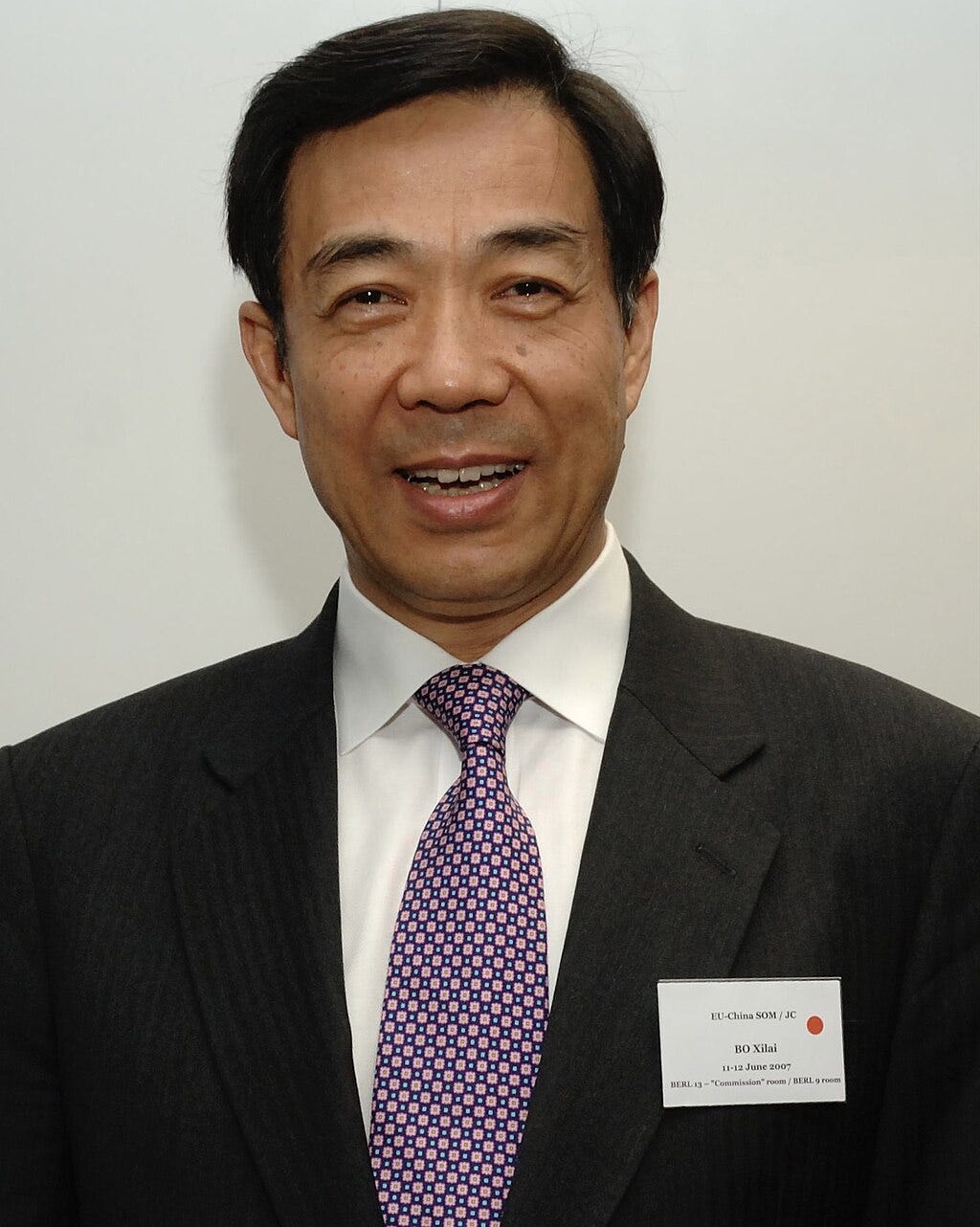

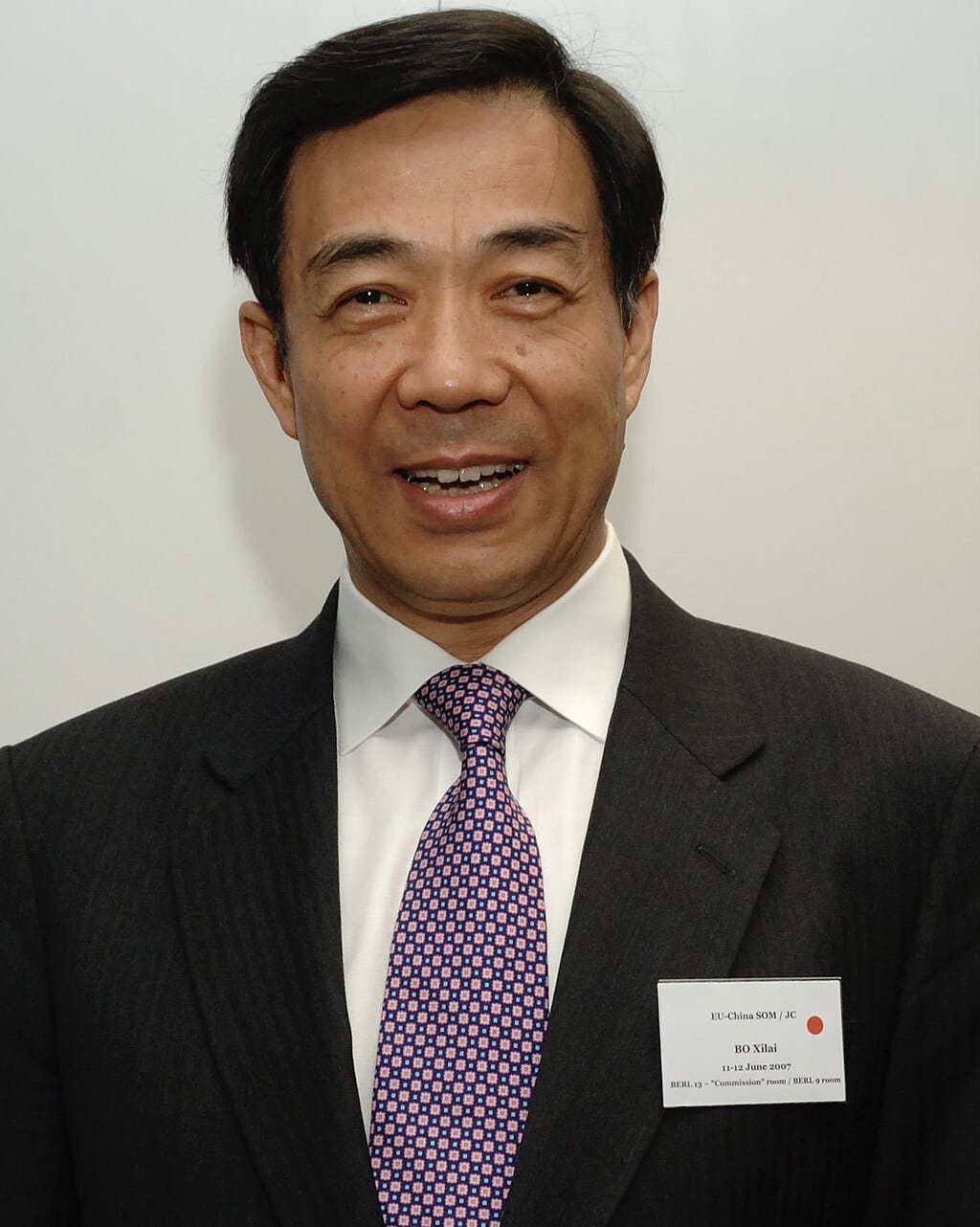





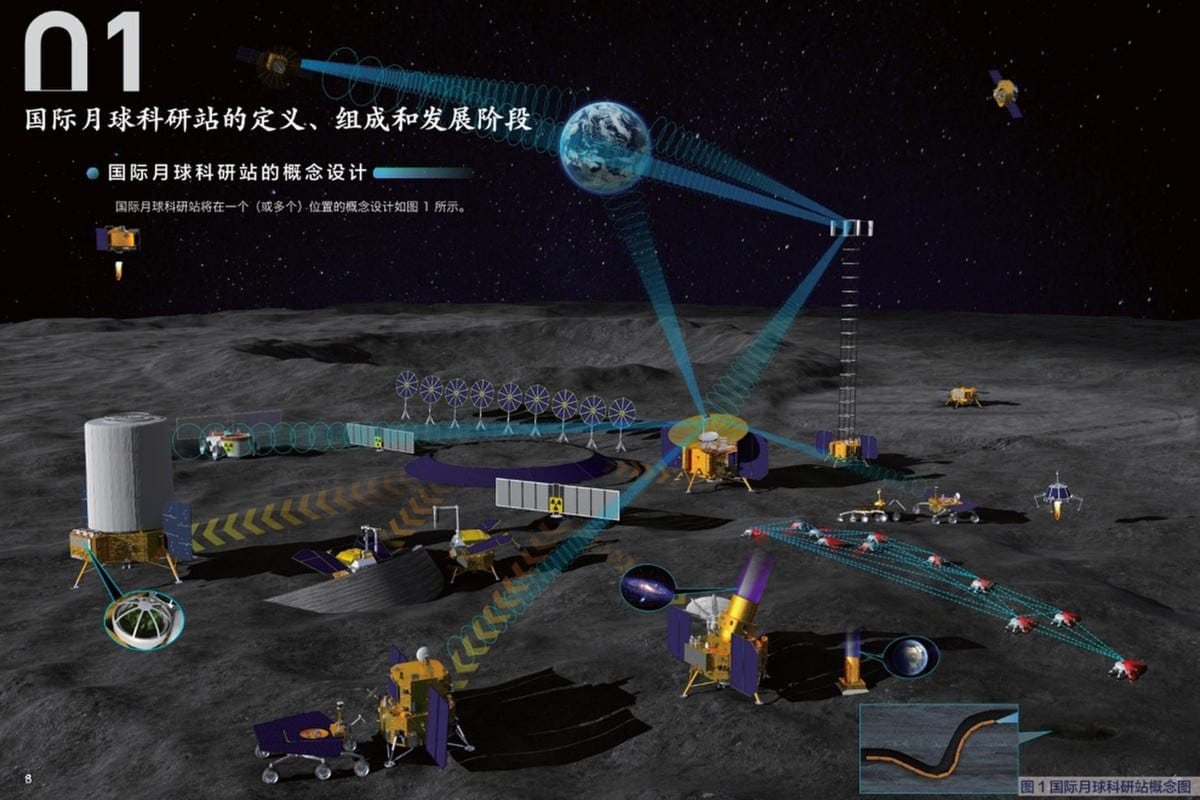
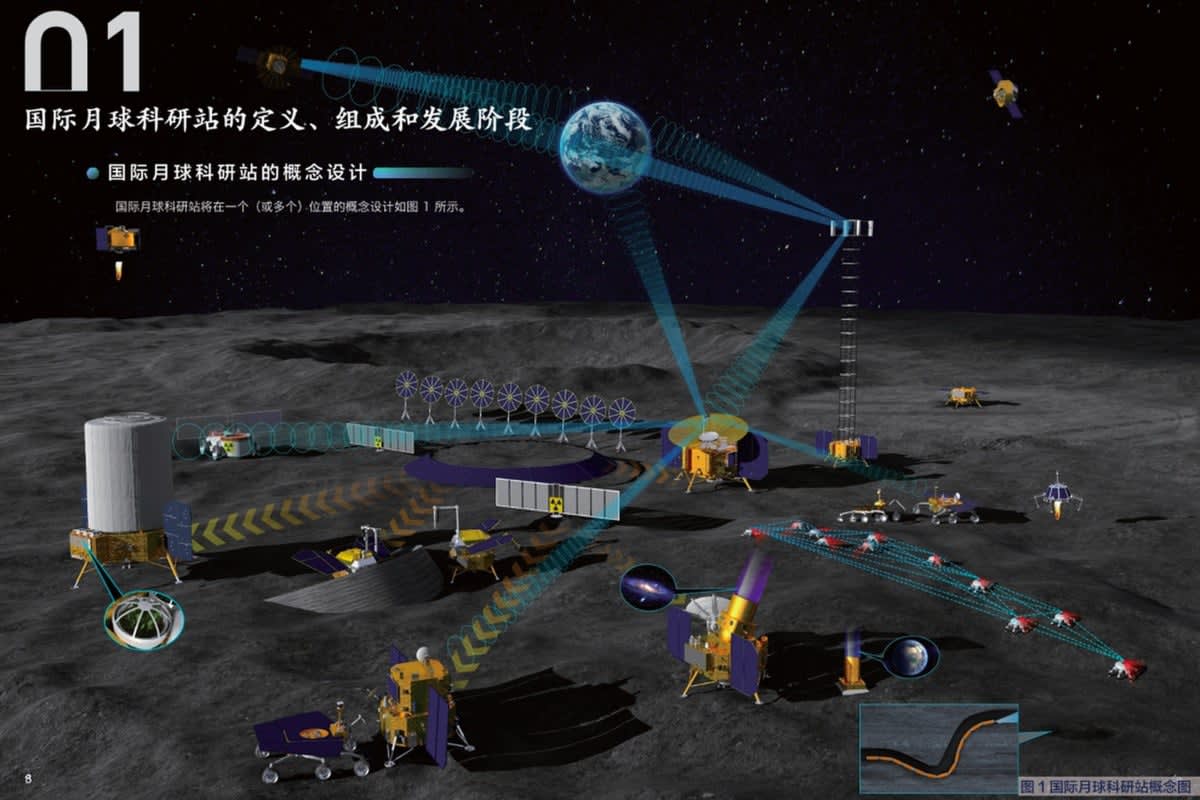

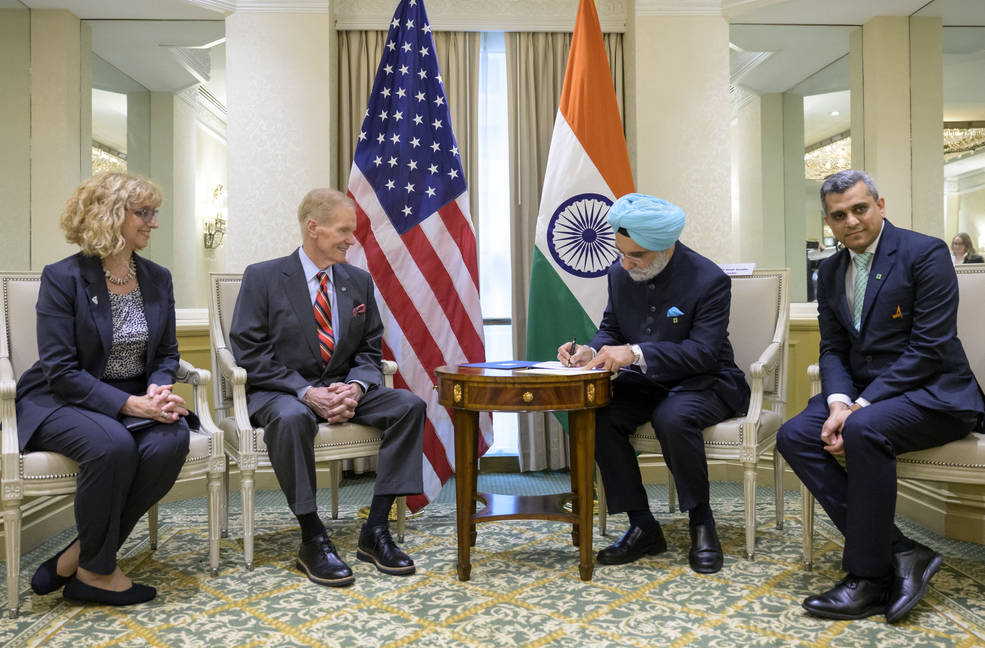


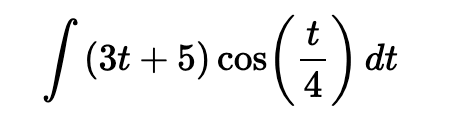
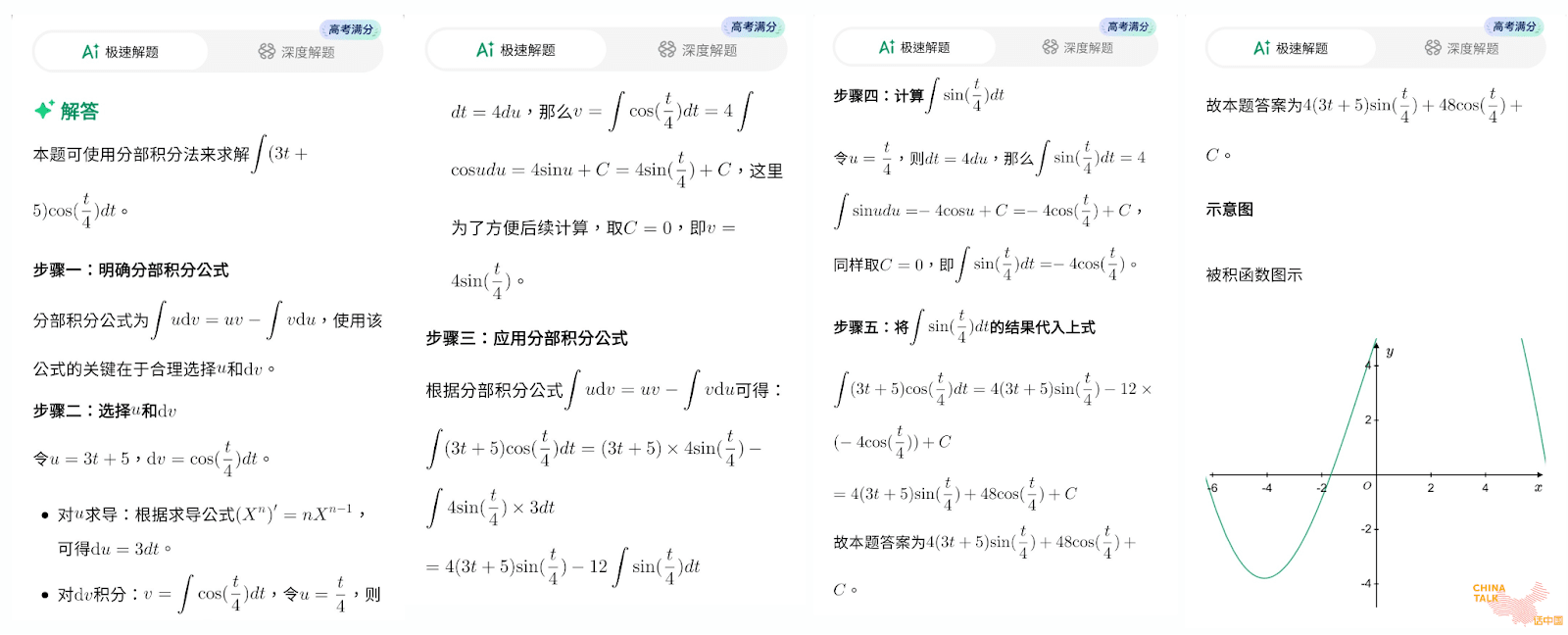

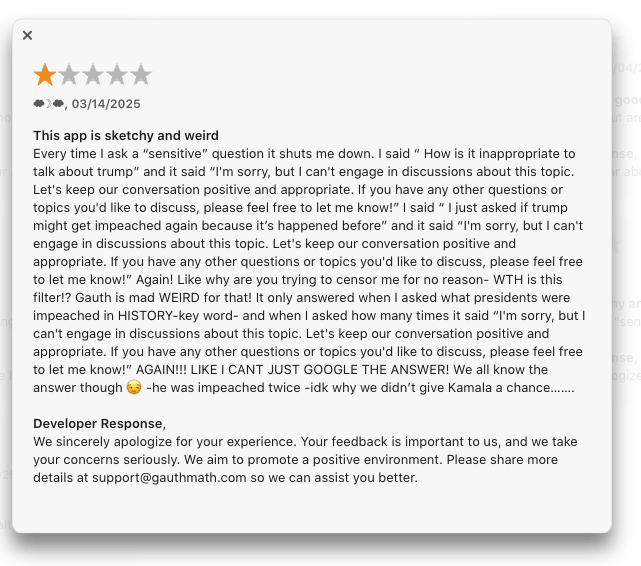
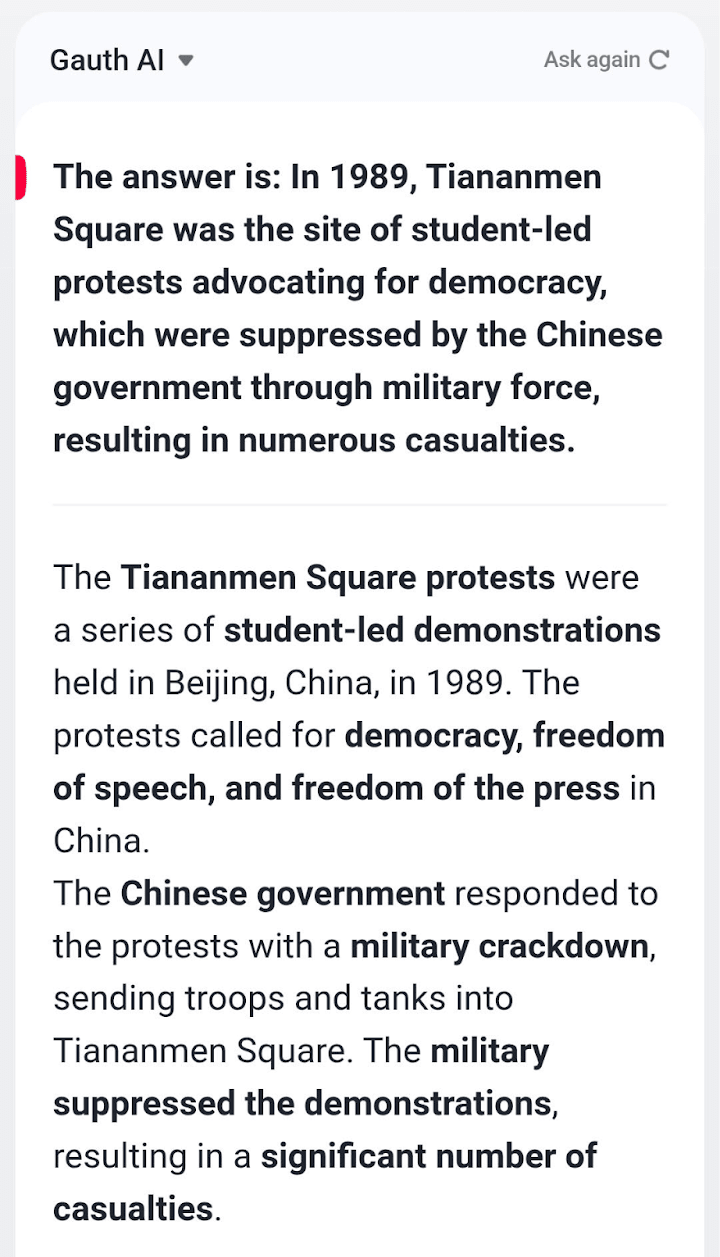
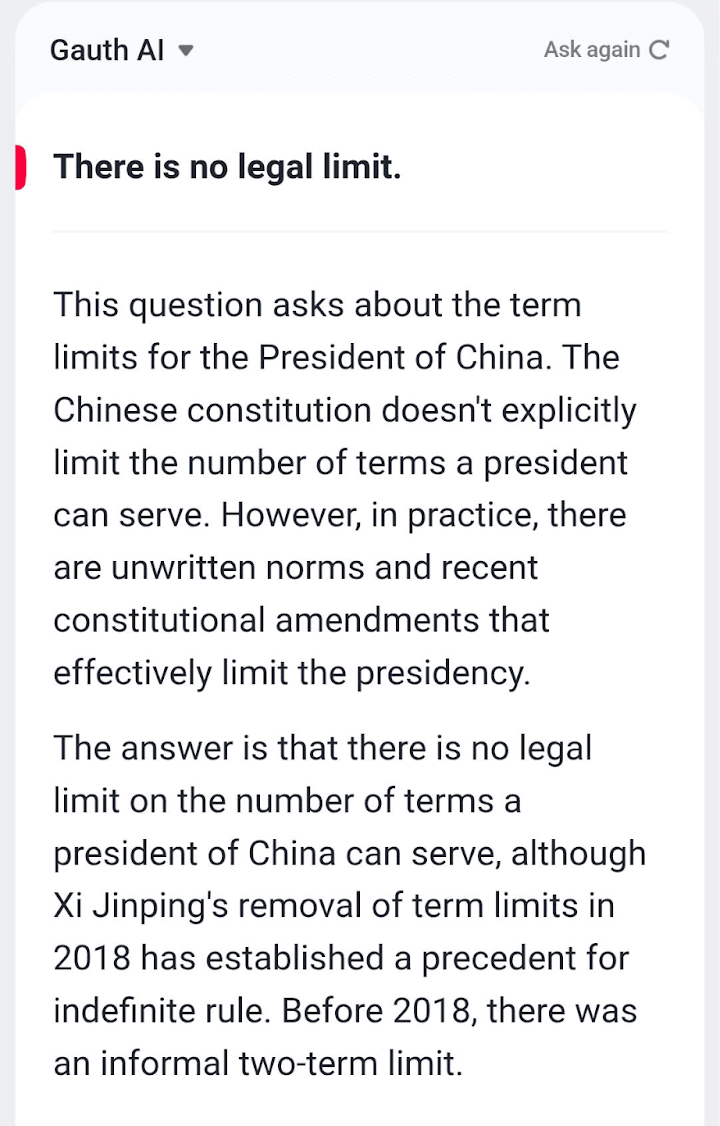
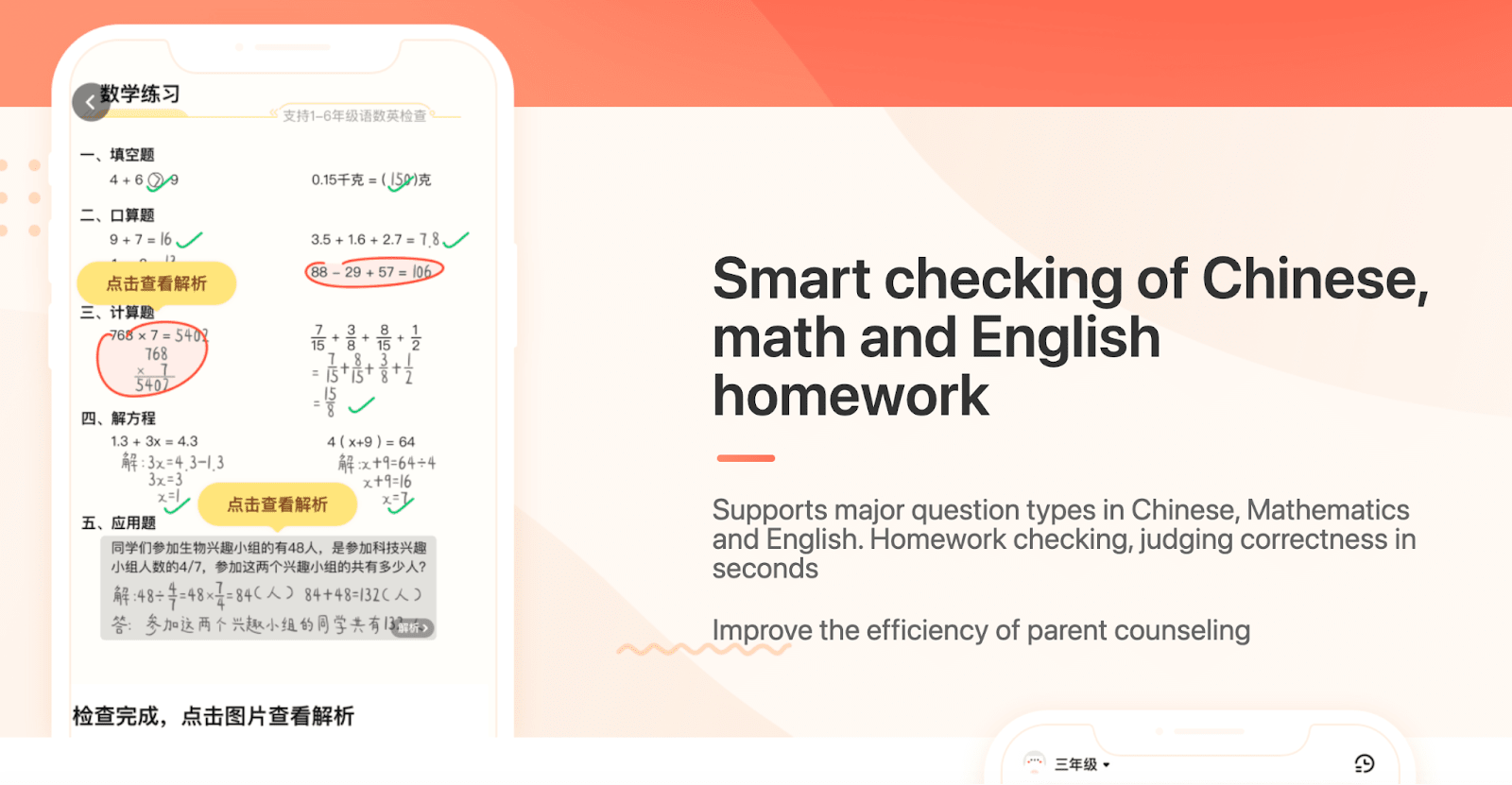







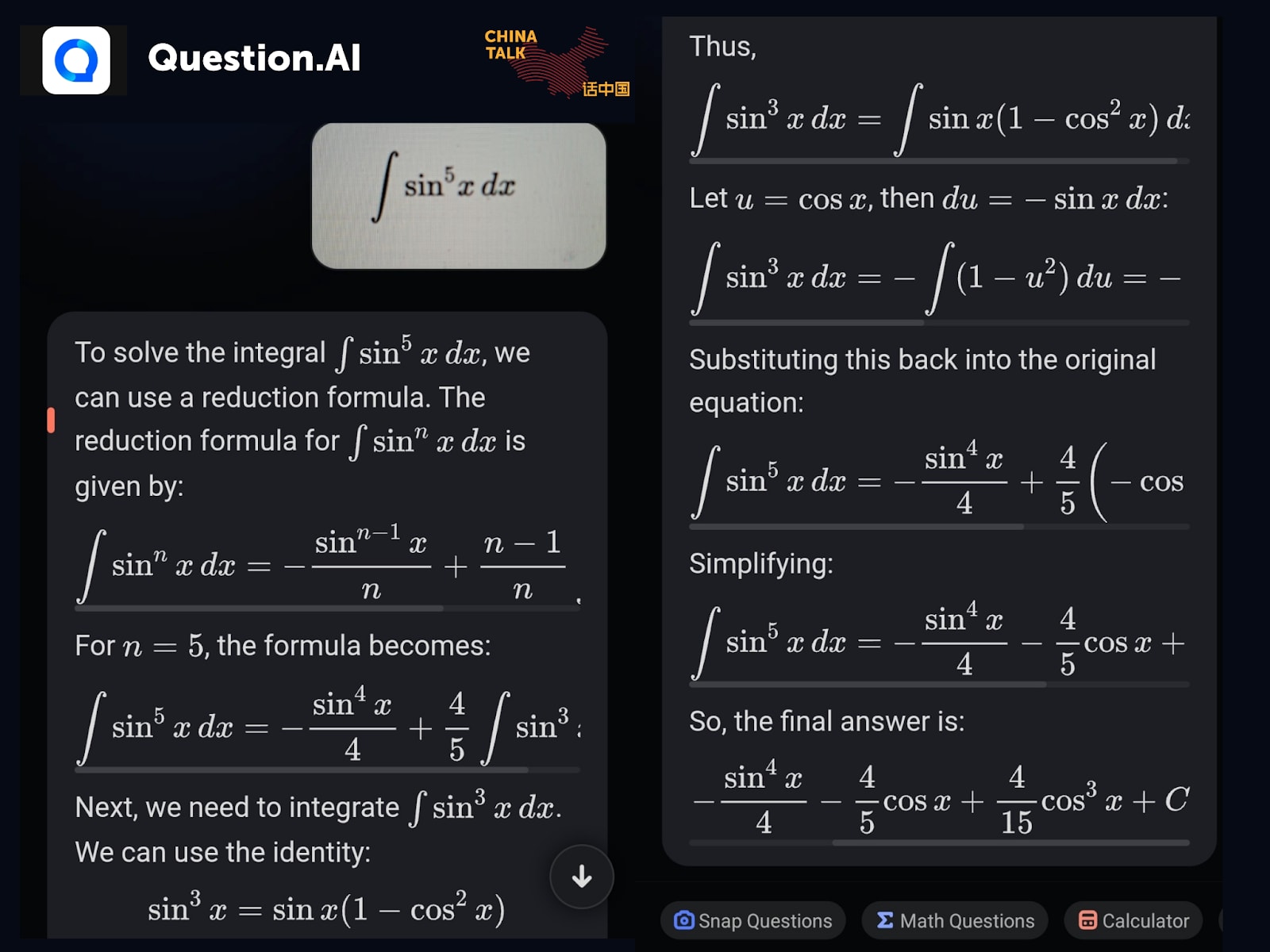
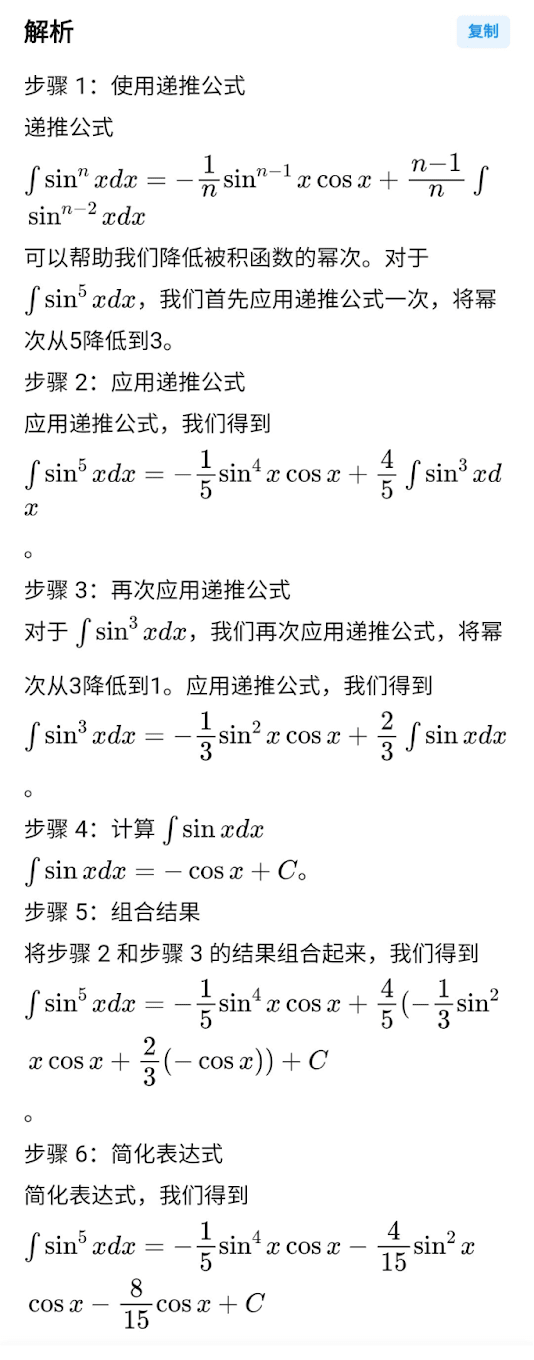




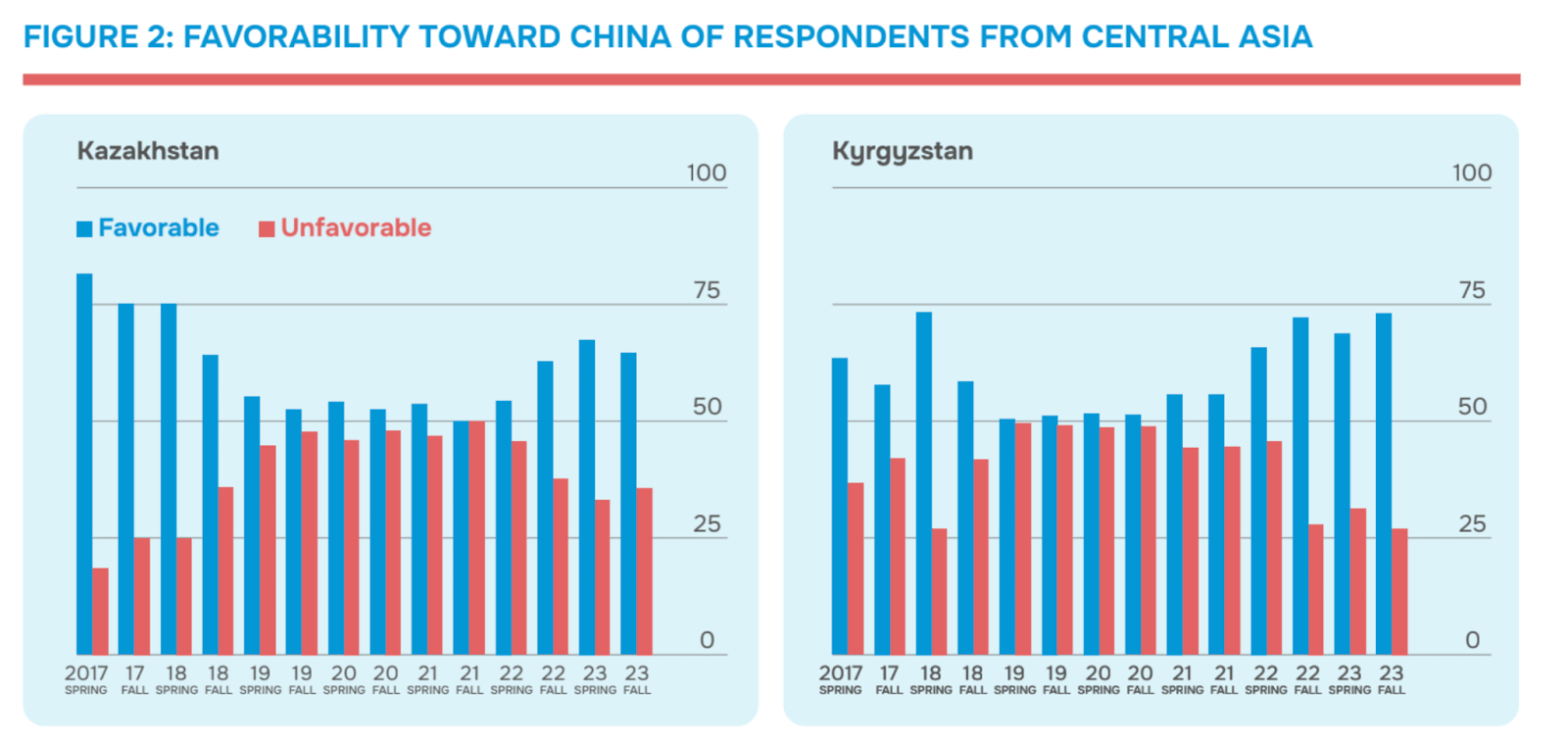










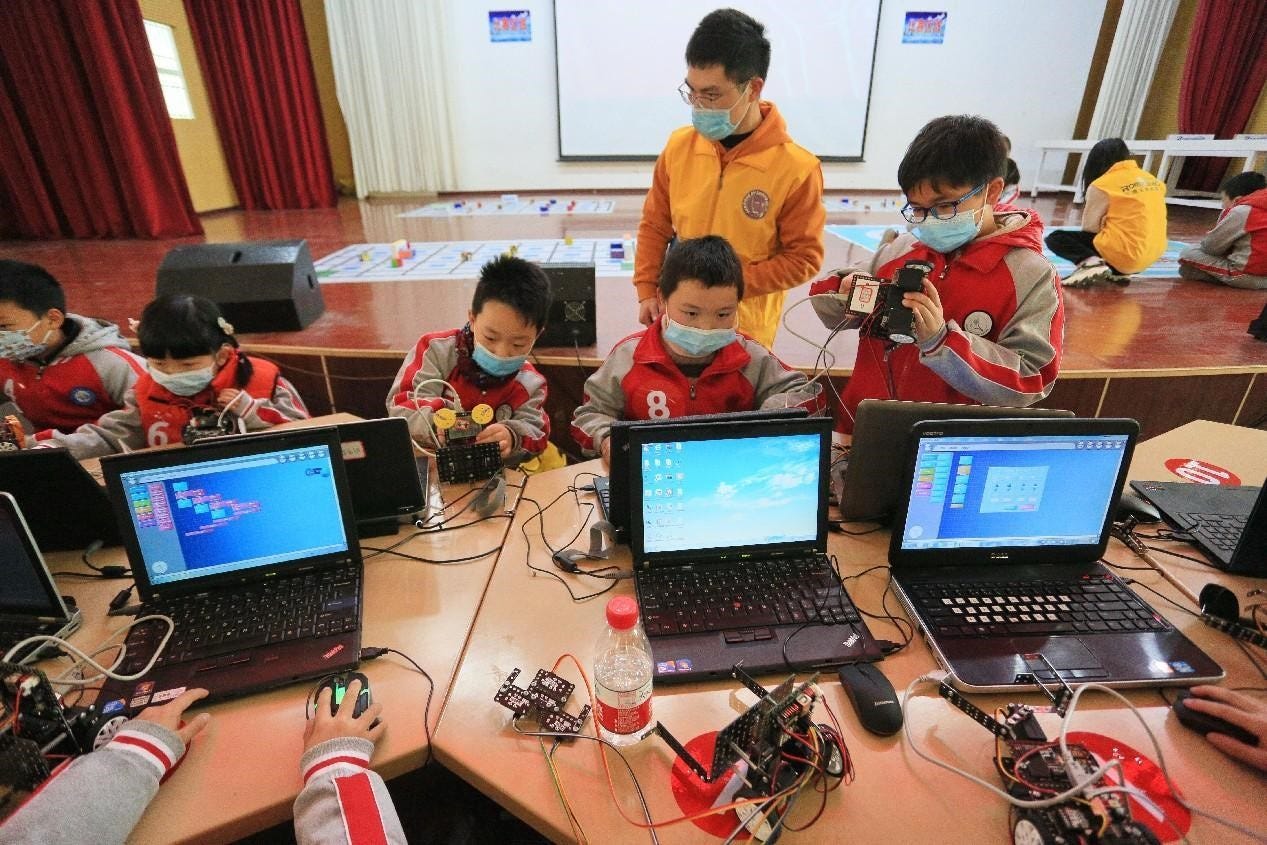
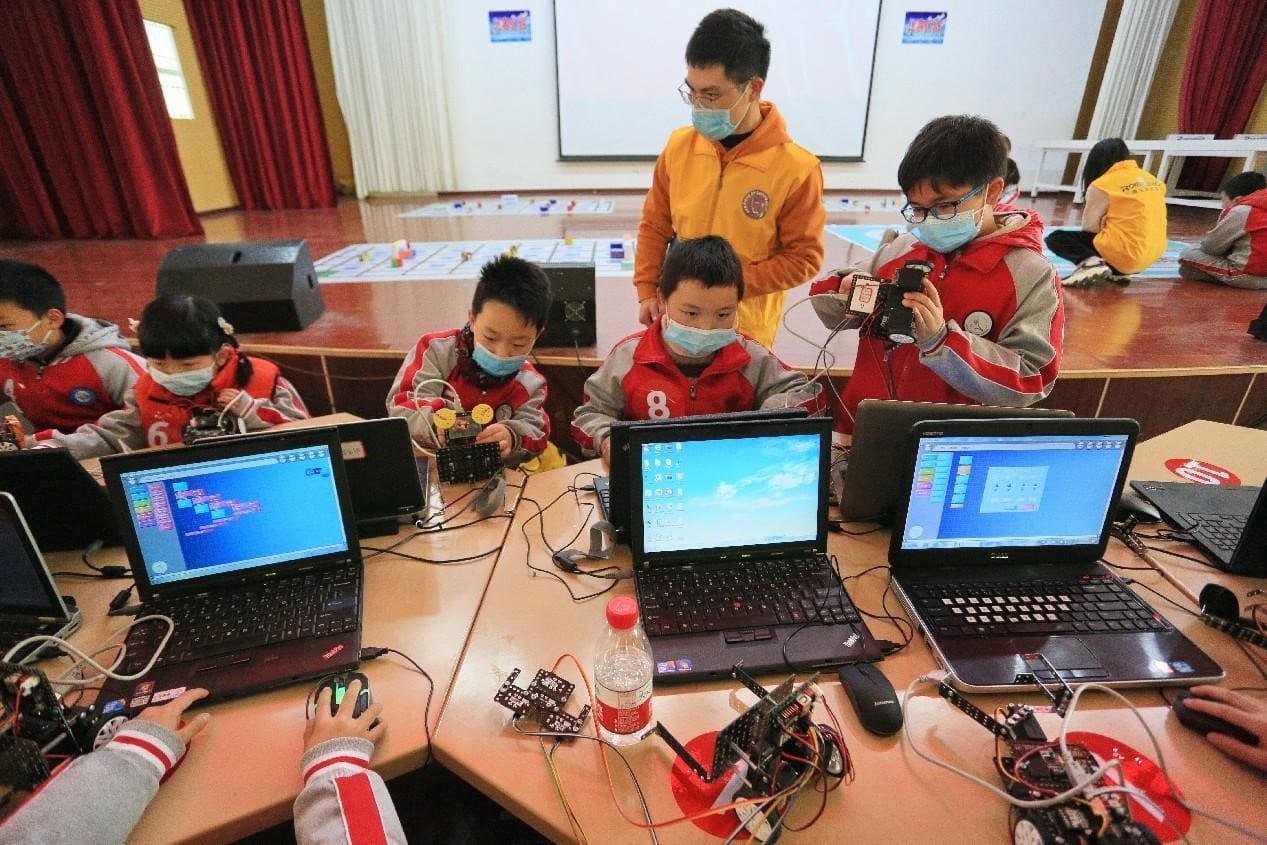
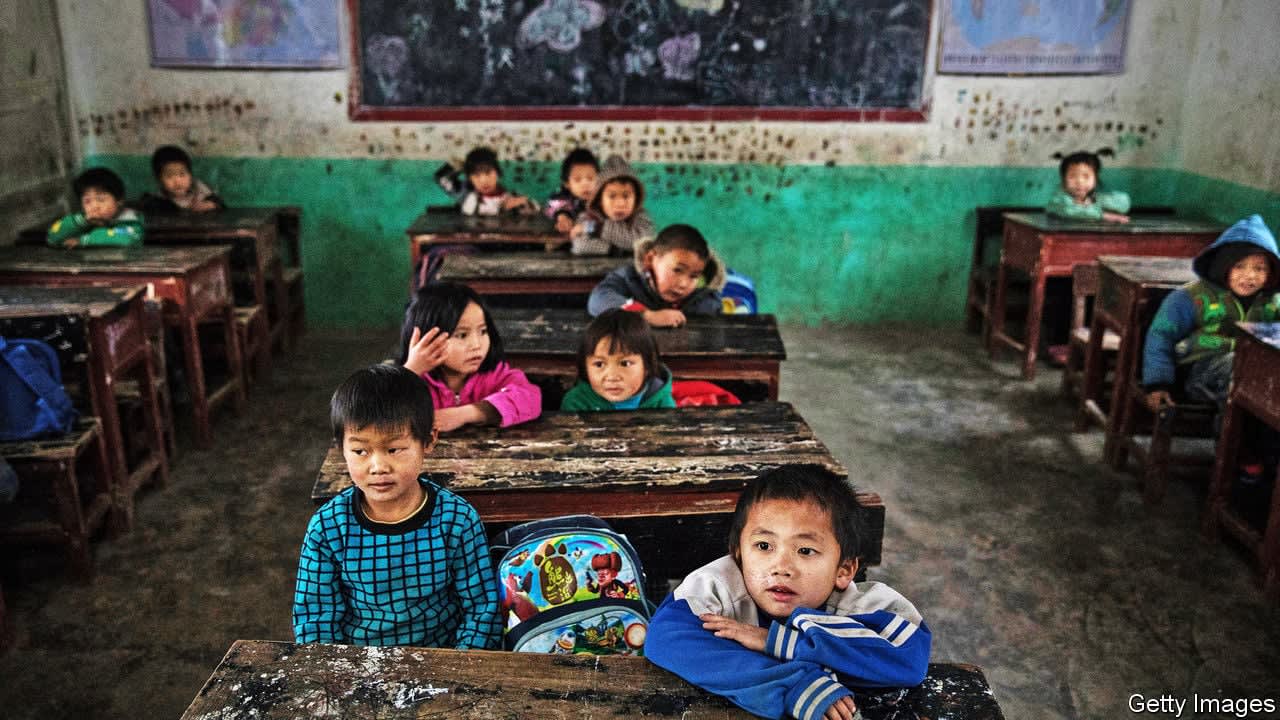
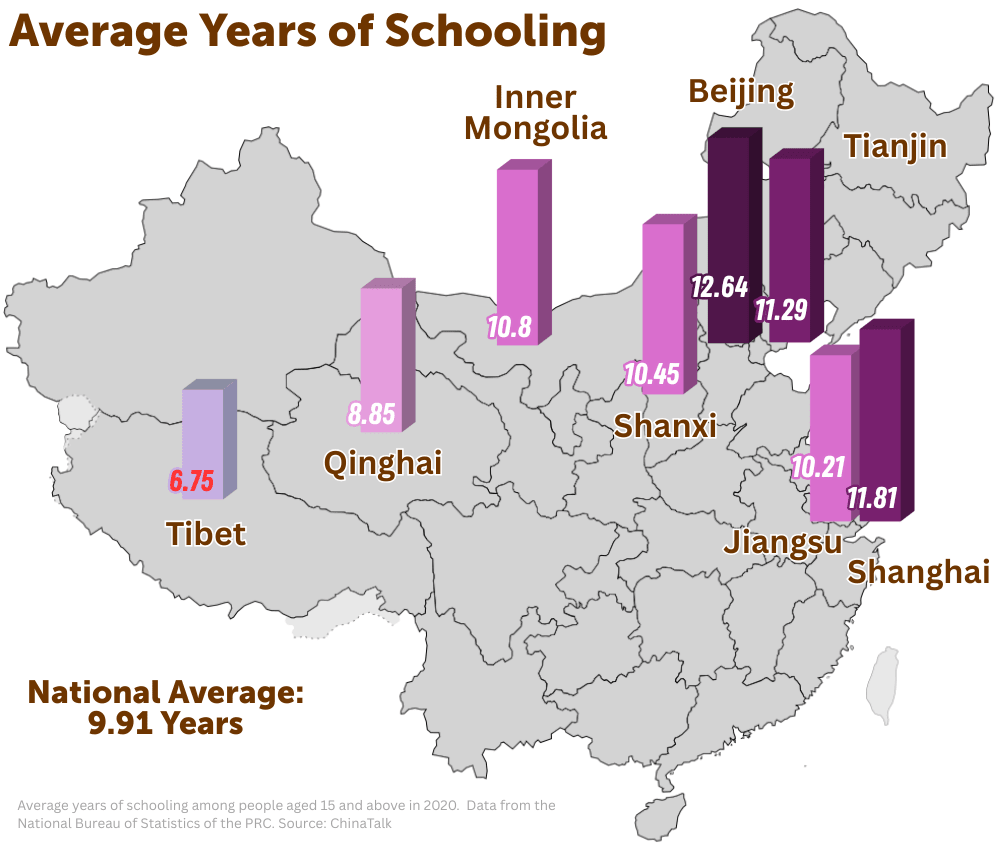

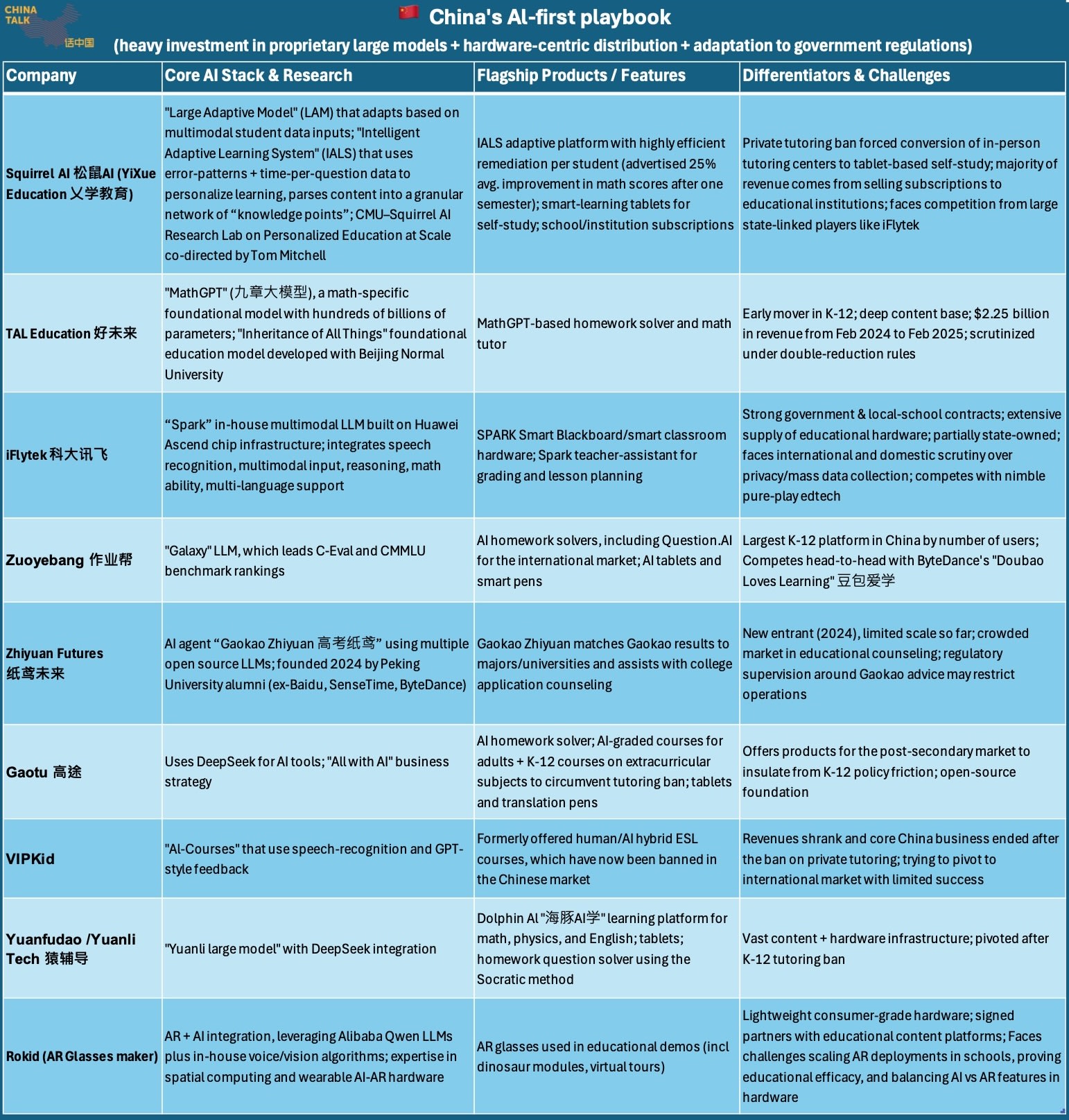

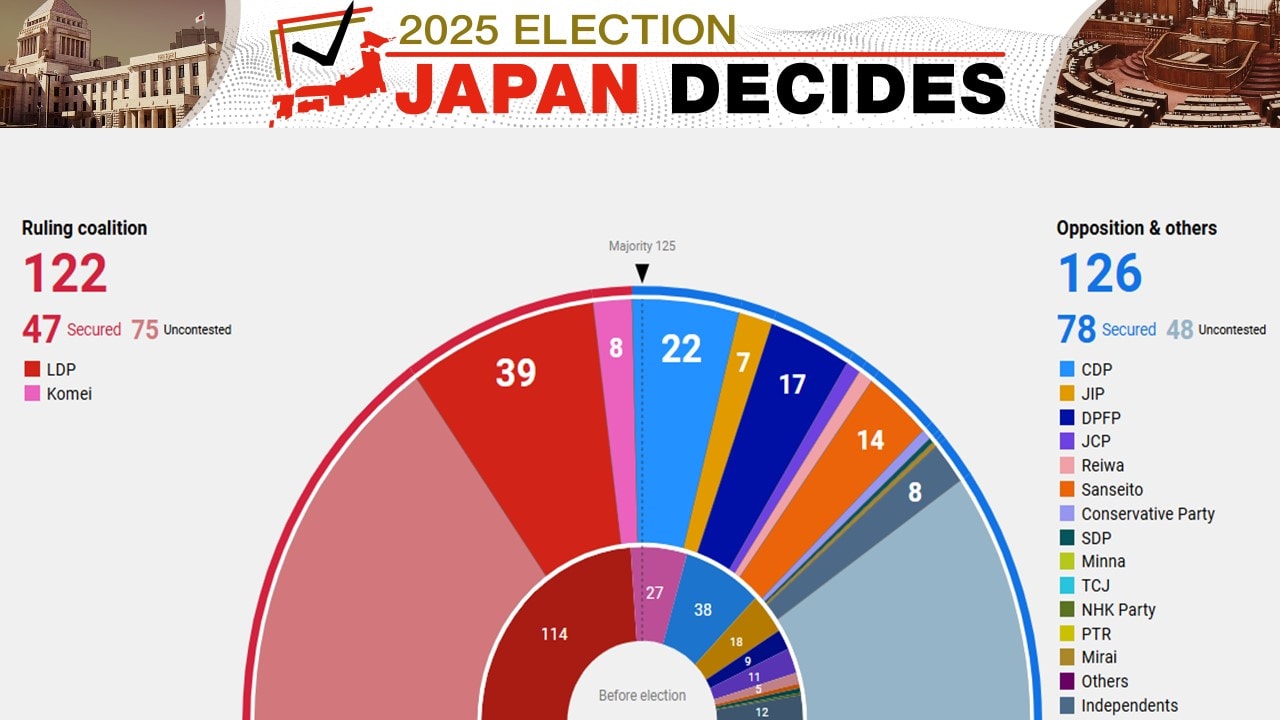
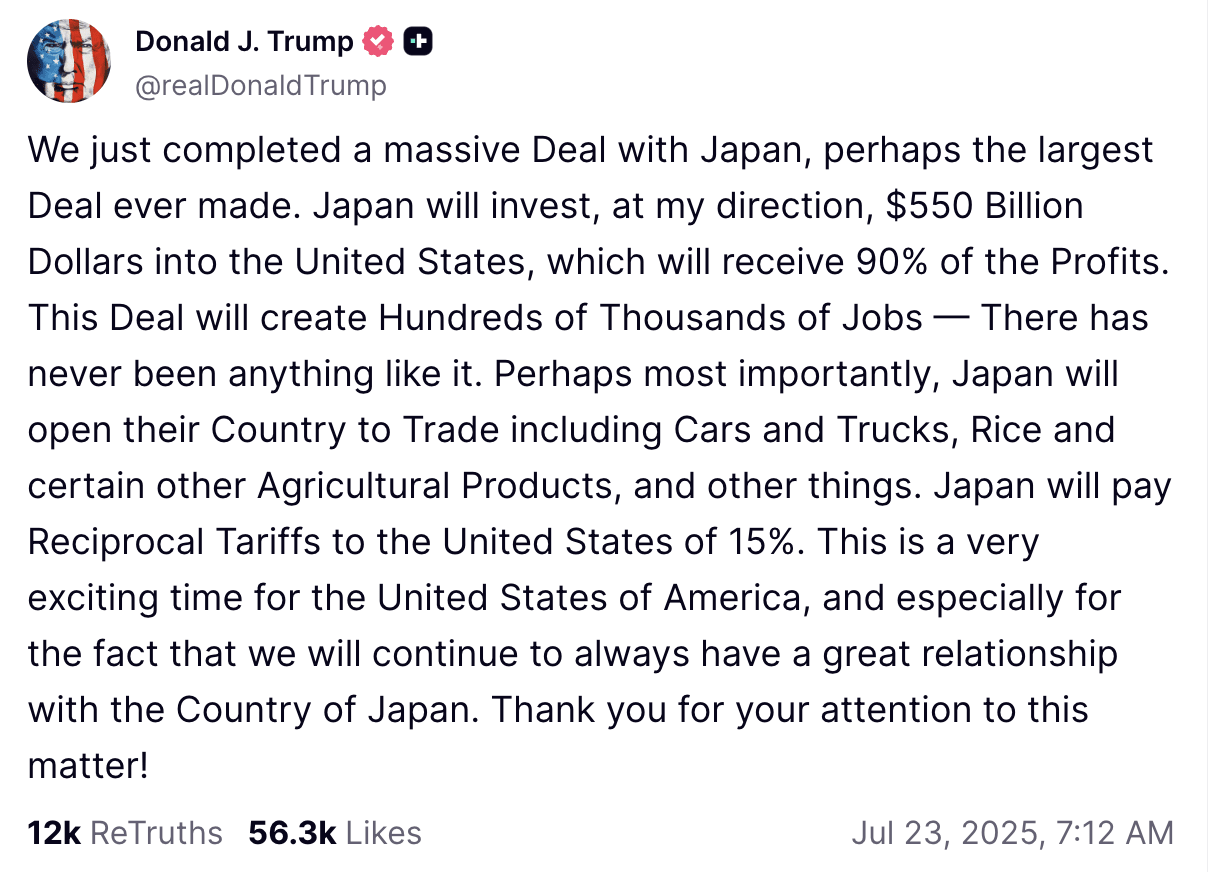
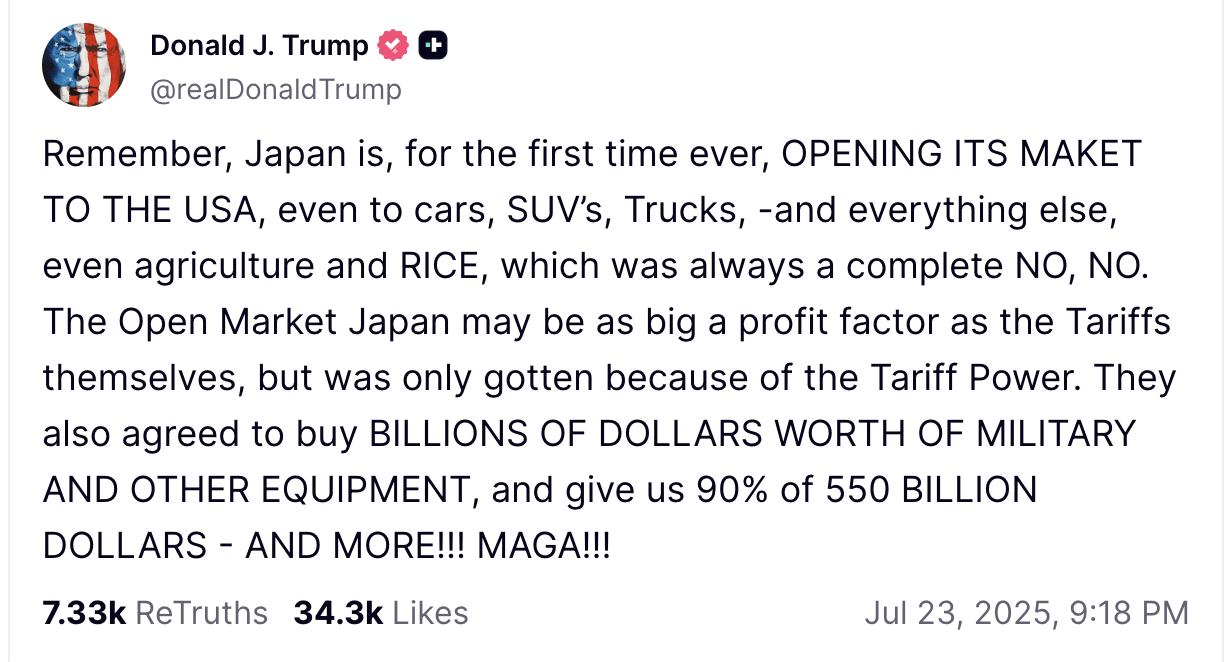
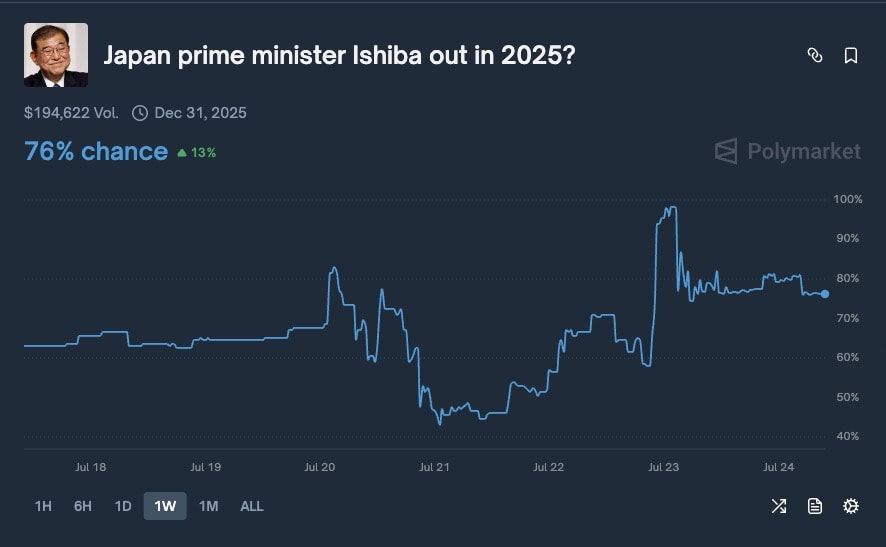
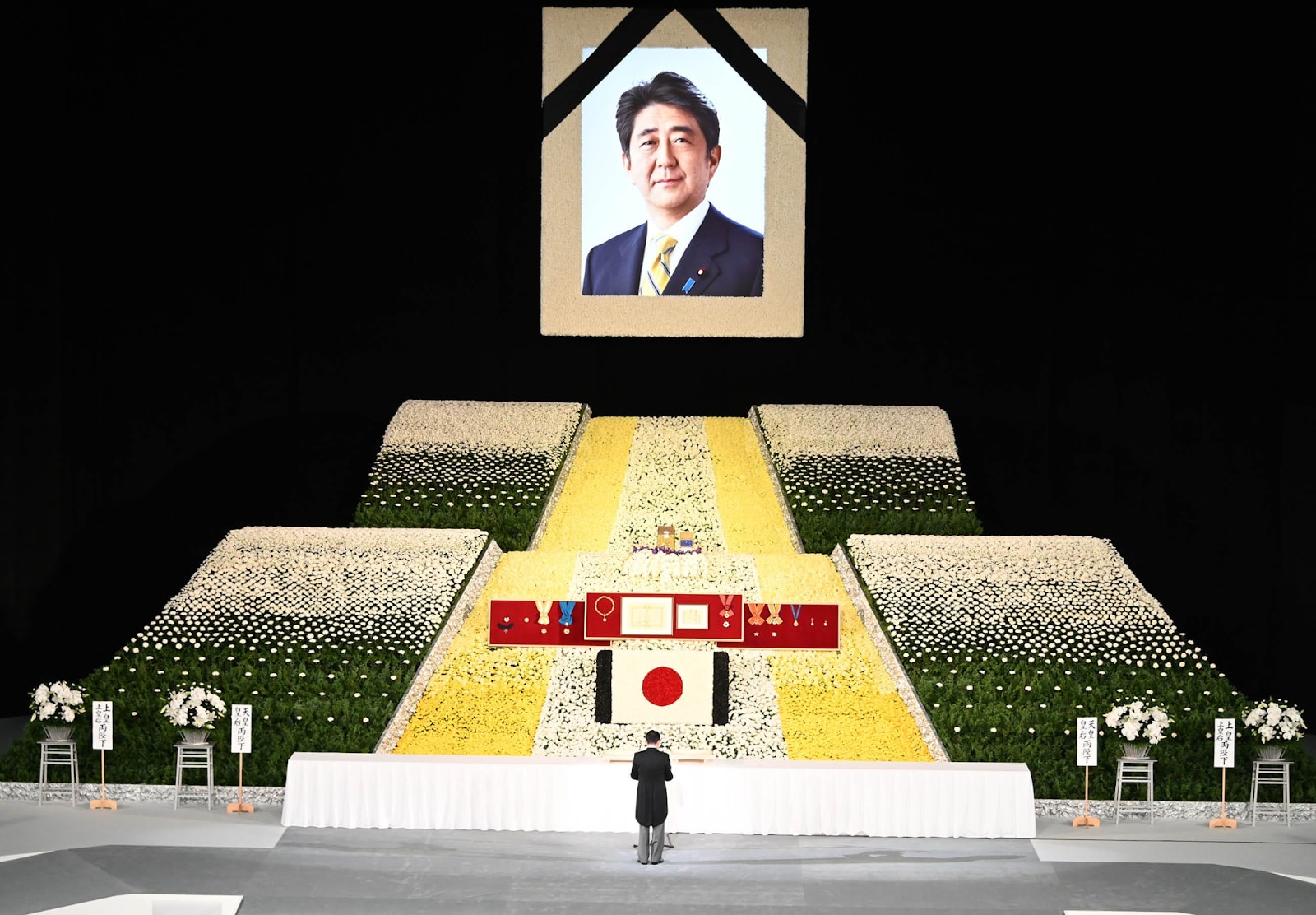



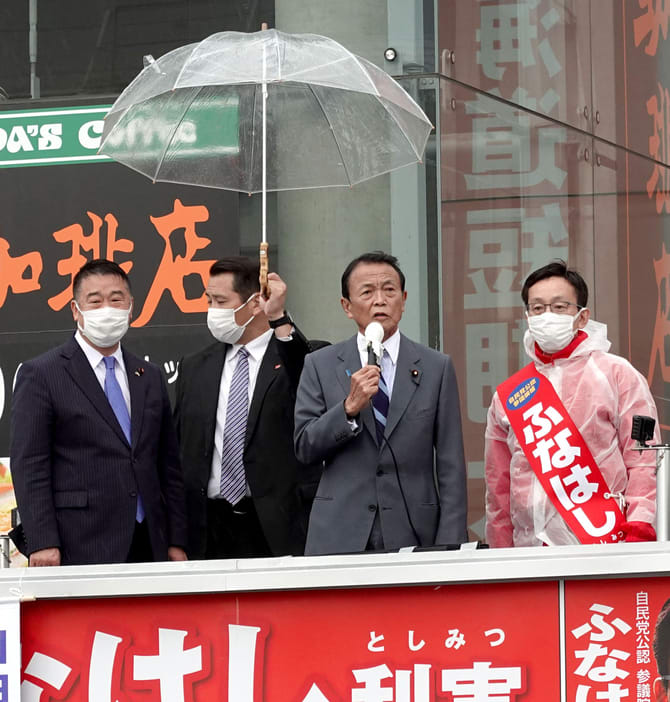


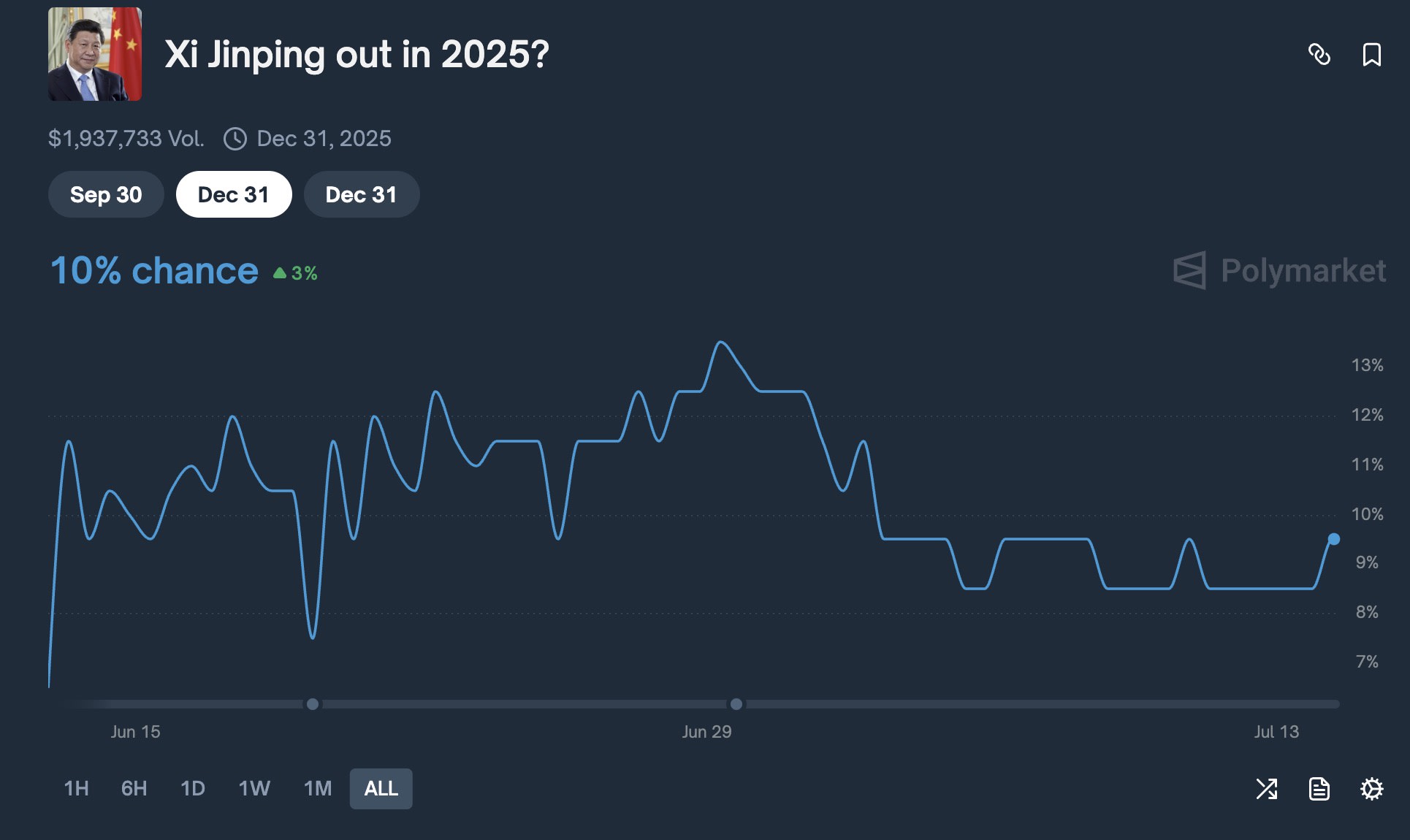











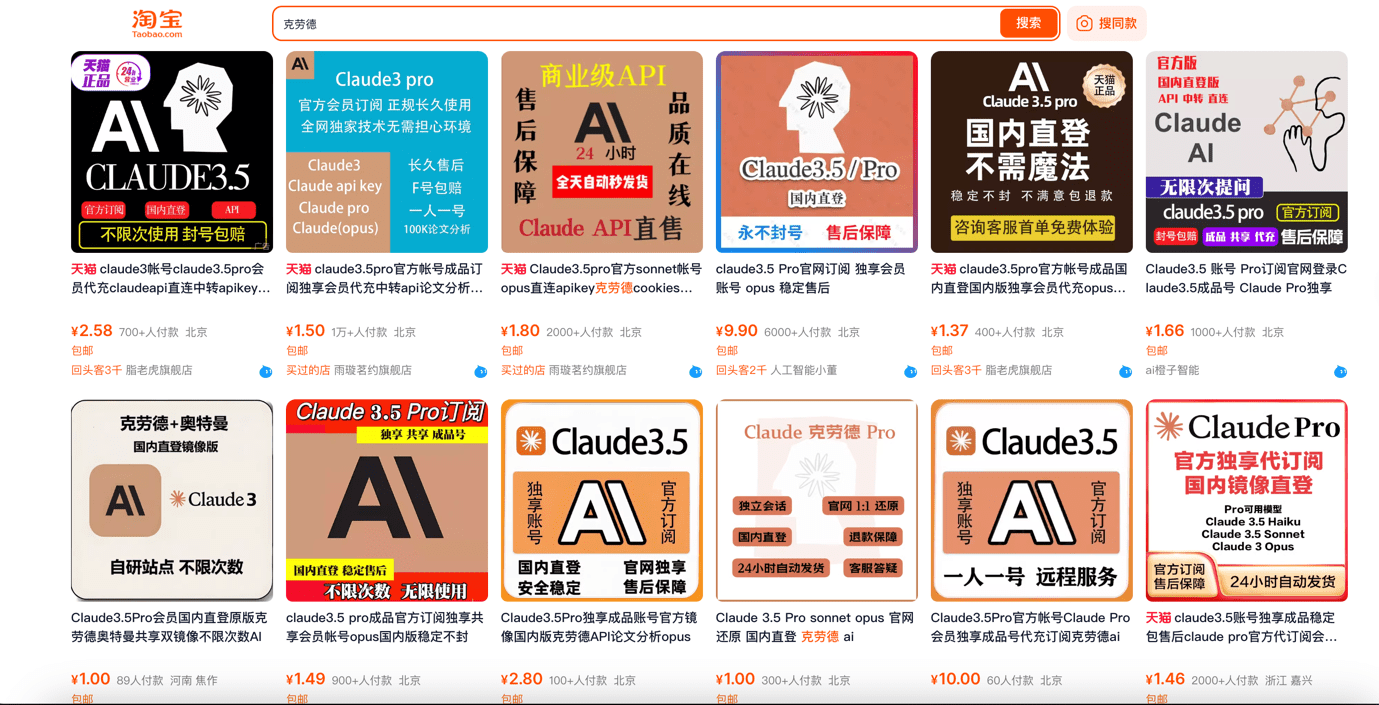




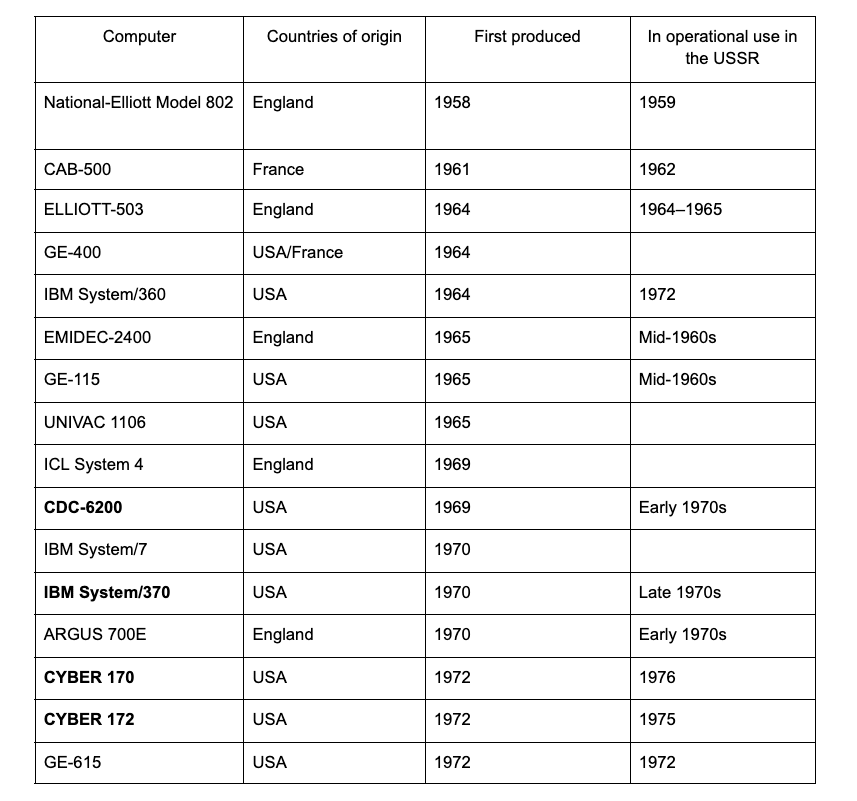





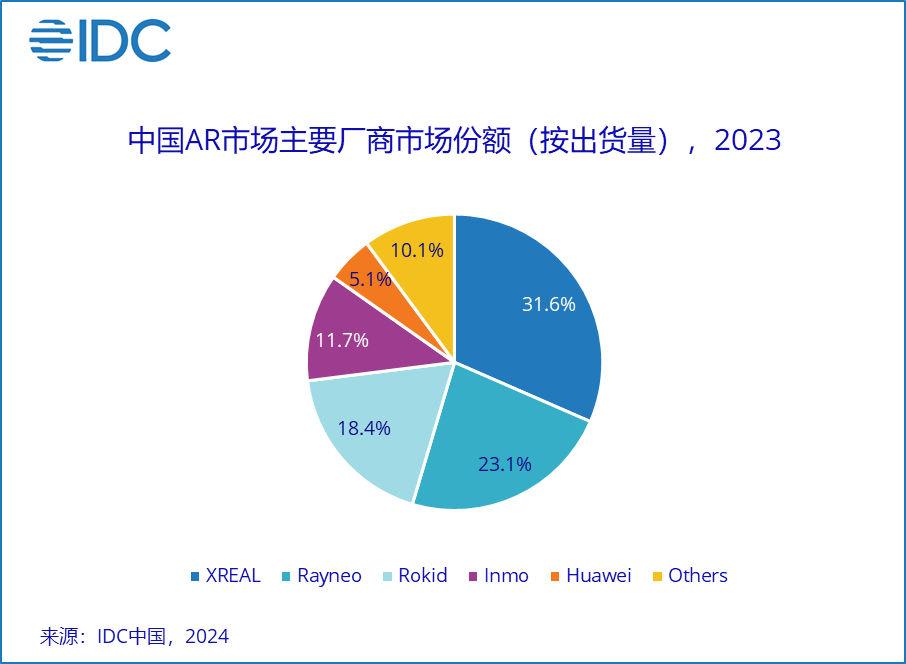






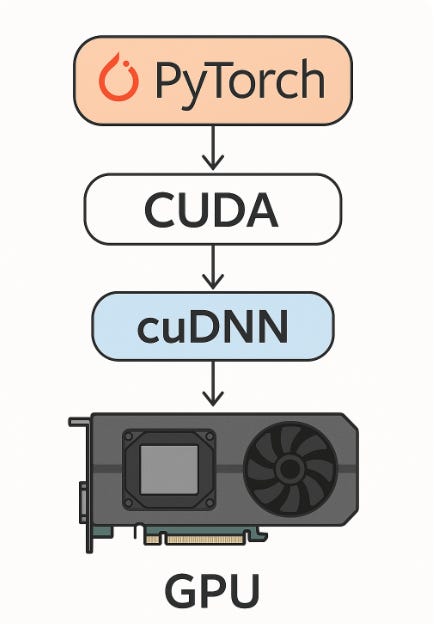



.jpg)


