Login
LoginThe High Cost of ICE’s Low Standards
17 January 2026 at 20:00
By doubling its force while slashing training time, ICE has scaled up its culture of violence into an unrestrained and unaccountable machine.


(德國之聲中文網)南韓前總統尹錫悅因於2024年12月3日宣佈全國進入緊急戒嚴狀態,被檢方以涉嫌內亂罪起訴。特別檢察官於本月13日在首爾中央地方法院一審庭訊中,向法官求處法定最高刑——死刑。根據南韓刑法,內亂罪的刑責僅有死刑、無期徒刑或無期禁錮三種選項。
南韓法律體系深受德國與殖民宗主國日本的影響,採行成文法三審制度。該案一審預計於2月19日宣判。
在求刑陳述中,特別檢察官指控尹錫悅意圖透過派遣無人機至北韓,蓄意引發軍事挑釁,藉此創造實施戒嚴的條件;但該計畫未果後,尹改而以國會多數黨——在野的共同民主黨——對政府高層發動頻繁彈劾、否決政府預算為由,宣佈戒嚴。特檢指出,尹此舉旨在封鎖國會、逮捕國會議員,阻撓國會通過解除戒嚴的決議,進而為其長期執政鋪路。特檢強調,此舉已對南韓的民主制度造成實質損害,加劇社會對立,並導致國際信譽受損。更甚者,尹並未對此表達任何歉意,且在偵查與審理過程中態度消極,因此必須處以最嚴厲的刑罰。
對此,尹在最終陳述中全盤否認內亂指控。他辯稱,宣佈戒嚴是為了向國民警示「國家處於緊急狀態」,並指控國會多數黨與「反國家、顛覆體制勢力」利用彈劾、立法及預算手段癱瘓國家政務,危及國家安全、經濟發展以及與盟友間的關係。他強調,事發當晚國會周邊聚集了數千名民眾,但實際部署的兵力僅約280人,且未攜帶實彈,根本無力阻止國會運作。此外,在國會通過解除戒嚴決議後,部隊立即撤離,因此並未構成內亂。尹甚至反過來指控,無視法律程序、前往總統官邸試圖將其逮捕的行為,才是真正的「內亂」。
一審判決中的核心問題
據《朝鮮日報》分析,法官在一審判決中極有可能針對以下核心問題進行裁決:
第一,戒嚴的目的是否構成內亂。特檢主張,尹並非以固有權限行使戒嚴令,而是將其作為內亂的手段,企圖癱瘓憲法機關國會以實施內亂;尹則辯稱,戒嚴乃是行使憲法保障的總統緊急權,旨在向國民揭露國會橫行霸道的行為,絕非以長期執政為目的。
第二,軍警動用的暴力程度:特檢認為,軍警被部署至國會與選舉管理委員會,意圖對國家機關行使武力;但尹則主張,由於兵力稀少且未攜帶實彈,故未構成暴動所需的武力行使。
第三,逮捕政治人物指令的真實性:特檢主張,尹早在戒嚴實施前一年,便已開始討論逮捕政治人物等行動;對此,尹則反駁稱,他自始即預料掌握國會多數的在野黨勢必會通過決議解除戒嚴,因此並不存在將戒嚴長期化或用以發動內亂的意圖。
針對此案,執政黨共同民主黨發言人朴洙賢國會議員在臉書上表示,對尹求處死刑是「對其極端犯罪行為的合情合理結論」,並強調「對於破壞憲政秩序的行為,不能有任何寬容或例外」。另一方面,在野黨國民力量最高委員金玟甸國會議員則在臉書上反問:「究竟誰才是反國家勢力?又是誰在破壞憲法?」
除了內亂罪外,尹錫悅還因涉嫌動用總統警衛阻撓警方執行逮捕令,於1月15日在一審審判中被求處五年有期徒刑。此外,他還面臨包括向北韓派遣無人機的「叛國行為」、偽證等六起審判。
然而,南韓自1997年以來未曾實際執行死刑,是事實上的廢死國家。此外,歷任入獄的前總統最終都獲得特赦。
在南韓駐點48年的日媒《產經新聞》資深媒體人黑田勝弘曾評論指出,南韓社會反覆上演前總統被定罪與獲釋的政治戲碼,法治主義往往讓位於「情治主義」。他又直言:「幾乎所有南韓人都認為,尹錫悅終究也會被赦免。」
DW中文有Instagram!歡迎搜尋dw.chinese,看更多深入淺出的圖文與影音報導。
© 2026年德國之聲版權聲明:本文所有內容受到著作權法保護,如無德國之聲特別授權,不得擅自使用。任何不當行為都將導致追償,並受到刑事追究。
Iranian leader press office via Getty ImagesIran's Supreme Leader, Ayatollah Ali Khamenei, has accused the US and Donald Trump of being responsible for "casualties, damage and slander" in his country during recent protests.
In a speech on Saturday, Khamenei acknowledged that thousands of people had been killed during recent unrest, "some in an inhuman, savage manner" but blamed the deaths on "seditionists".
The US president has urged Iranian anti-government demonstrators to "keep protesting" and threatened military intervention if security forces kill them.
Protests in Iran have claimed 3,090 lives, according to US-based Iranian Human Rights Activists News Agency (HRANA), in unrest that started over the economy on 28 December.
Since then, the protests have turned into calls for the end of the rule of Iran's supreme leader.
The Iranian government has called the demonstrations "riots" backed by Iran's enemies.
Protesters have been met with deadly force and there has been a near-total shutdown of the internet and communication services.
There have been fewer reports of unrest in recent days but with internet access still restricted developments on the ground remain unclear.
During his speech on Saturday, Khamenei also said Iran considered President Trump to be a "criminal" and said the US must be "held accountable" for recent unrest.
He also claimed on social media that "America's goal is to swallow Iran".
Trump has not yet responded to the supreme leader and the BBC has approached the White House for a comment.
Donald Trump said on Wednesday he had been told "the killing in Iran has stopped", but added that he had not ruled out military action against the country.
His comments came after the US and UK both reduced the number of personnel at the Al-Udeid air base in Qatar.
Officials told CBS, the BBC's US partner, that a partial American withdrawal was a "precautionary measure".
Getty ImagesThe White House has announced the first members of its Gaza "Board of Peace", and the list of names will do little to dispel the criticism from some quarters that the US president's plan resembles, at its heart, a colonial solution imposed over the heads of the Palestinians.
There are still several unknowns - namely who else might be added, and the exact structure of what is currently a rather complicated layout.
So far, no Palestinian names are included on the two separate senior boards that have been officially unveiled.
One is a "founding Executive Board", with a high-level focus on investment and diplomacy. The other, called the "Gaza Executive Board", is responsible for overseeing all on-the-ground work of yet another administrative group, the National Committee for the Administration of Gaza (NCAG).
That committee is made up of supposedly technocratic, apolitical Palestinians, led by Dr Ali Shaath, a civil engineer by training who's held ministerial positions in the Palestinian Authority.
But of the seven members of the founding Executive Board, six are Americans - including US Secretary of State Marco Rubio and other members of Trump's inner circle like his son-in-law Jared Kushner, and Steve Witkoff, who is US Special Envoy to the Middle East, but also a friend of the president and a fellow real estate developer.
Ajay Banga, president of the World Bank, is something of an exception as a dual-national, Indian-born US citizen. Sir Tony Blair, meanwhile, is a former UK Prime Minister, and his inclusion is likely to further fuel concerns about how the Board of Peace will operate.
Over the past few weeks, criticism of Sir Tony's possible inclusion has come from figures like prominent politician Mustafa Barghouti, general secretary of the Palestinian National Initiative, and newspaper reports quoting unnamed officials from Arab states in the region.
Sir Tony's central role in the Iraq war, coupled with Britain's own colonial history in the Middle East, is deemed by his opponents to make him entirely unsuitable.
Francesca Albanese, the United Nations' special rapporteur on human rights in the occupied Palestinian territories, wrote on social media last year: "Tony Blair? Hell no. Hands off Palestine."
Even Trump seemed to acknowledge the issue.
"I've always liked Tony, but I want to find out that he's an acceptable choice to everybody," the president said last October.
There is significant overlap between the two senior boards, with Kushner, Witkoff and Sir Tony appearing on both.
But the Gaza Executive Board does include the names of some senior political figures and diplomats from Turkey, Qatar and the United Arab Emirates. It will be headed by the former Bulgarian politician, Nickolay Mladenov, who's been given the title of High Representative for Gaza.
Yakir Gabay, a businessman born in Israel and now based in Cyprus is the only Israeli member.
In its statement announcing the names, the White House said those chosen will work to ensure "effective governance and the delivery of best-in-class services that advance peace, stability, and prosperity for the people of Gaza".
And whatever the concerns and complexities, the plan remains the only game in town, with many world leaders pledging their support and commitment to helping make it a success.
Its architecture is further complicated by the fact that, sitting above all the structures announced so far, will be the Board of Peace itself, with President Trump as the chairman.
Names of that supreme body have not yet been announced, but the current UK Prime Minister Sir Keir Starmer, Turkish President Recep Tayyip Erdogan, Egypt's Abdel Fattah El-Sisi and Canadian leader Mark Carney have reportedly been invited to join.
In the end, whether the most vocal critics can be assuaged will depend on how quickly the new members of the senior teams can begin to drive change that makes a real difference in both daily life for Palestinians and, crucially, further concrete steps towards a lasting peace.
Getty ImagesMajor challenges remain to both of those goals.
The UN estimates around 80% of buildings in Gaza have been destroyed or damaged and families who have survived the war are now struggling with the winter weather, and a lack of food and shelter.
While aid groups say there has been some improvements, they accuse Israel of imposing continuing restrictions upon their work.
Israel says that it is facilitating humanitarian assistance, and has blamed the UN for failing to distribute supplies already in Gaza. It argues any restrictions are designed to stop Hamas infiltrating and exploiting relief efforts.
Showing meaningful progress towards rebuilding will also be a Herculean task, involving not only the removal of an estimated 60 million tonnes of rubble, but first finding and disposing of the dead bodies and unexploded bombs contained within it.
Perhaps the biggest challenge though is maintaining the fraying ceasefire itself.
Another name has been released by the White House, that of Major General Jasper Jeffers as the Commander of the International Stabilization Force (ISF).
Backed by a UN mandate, it will have the tough job of ensuring the demilitarisation of Gaza.
As yet, there's no clear road map for how Hamas will be persuaded to give up its weapons, nor any clear idea of which country will provide troops for that force or what its remit and rules of engagement will be.
Hamas has said it will only disarm as part of a wider deal establishing a Palestinian state.
Israel, whose ground troops still control more than half of the Gaza Strip, has said it will only withdraw if Hamas disarms.
How that catch-22 can be resolved is perhaps the biggest test of all.
AFP via Getty ImagesPresident Yoweri Museveni has been declared the winner of Thursday's election extending his four decades in power by another five years.
He gained 72% of the vote, the election commission announced, against 25% for his closest challenger Bobi Wine, who has condemned what he described as "fake results" and "ballot stuffing". He has not provided any evidence and the authorities have not responded to his allegations.
Wine has called on Ugandans to hold non-violent protests.
Museveni, 81, first came to power as a rebel leader in 1986 but since then has won seven elections.
The election process was marred by violence and Wine, a 43-year-old former pop star, says that at least 21 people have been killed around the country in recent days.
The authorities have so far confirmed seven deaths.
Access to the internet has been cut in the country since Tuesday, making it hard to verify information.
The authorities say the blackout was necessary to prevent misinformation, fraud and the incitement of violence - a move condemned by the UN human rights office as "deeply worrying".
Wine has demanded that the internet be restored.
Overnight, Wine's party said that he had been abducted from his home in the capital, Kampala - a claim denied by the police.
Wine later issued a statement on Facebook saying that he had managed to evade a night-time raid by security forces and was in hiding.
He had previously said he was under house arrest.
This has not been confirmed by the police but spokesman Kituuma Rusoke said Wine's movements were restricted because his home was an area of "security interest".
"We have controlled access to areas which are security hotspots," Uganda's Daily Monitor paper quoted him as saying.
"We cannot allow people to use some places to gather and cause chaos," he said.
Getty Images/BBCGo to BBCAfrica.com for more news from the African continent.
Follow us on Twitter @BBCAfrica, on Facebook at BBC Africa or on Instagram at bbcafrica
This breaking news story is being updated and more details will be published shortly. Please refresh the page for the fullest version.
You can receive Breaking News on a smartphone or tablet via the BBC News App. You can also follow @BBCBreaking on X to get the latest alerts.
BBCFrom Mariia's 16th-floor flat, the calm waters of the Black Sea stretch out into the horizon beneath the fading twilight.
"Up here you can see and hear when the drones come," she says, standing by a wall-length, floor-to-ceiling window. When they hit buildings and homes in the city of Odesa down below "we see all the fires too".
Her daughter Eva, who is nine, has learned the shapes and sounds of the objects that zoom through the sky on a daily basis. She proudly shows off a list of social media channels she checks when the air raid alerts go off.
"She knows whether what's coming is a risk or a threat, and that calms her down," her father Sergii says.
There is scarcely a place in Ukraine that has not been targeted since Russia launched its full-scale invasion nearly four years ago.
But in recent weeks Odesa – Ukraine's third largest city – has come under sustained attack. Through strikes on port and energy infrastructure, Russia is trying to cripple the region's economy and dent the population's morale.
SuppliedMoscow, however, does not just hit facilities. Its drones, mostly as big as a motorcycle, regularly crash into high-rise buildings like Masha's, exploding on impact and blowing glass and debris inward. The consequences are often deadly.
"A few months ago Eva said she was afraid the drone would come too fast and we wouldn't have time to hide," Mariia says. "But I explained that if it came towards us, it would get louder and louder and then we'd know we have to run."
Mariia, Sergii and Eva are originally from Kherson, a region 200km (125m) to the east of Odesa which is now in large part occupied by Russia.
They left as soon as the invasion started in 2022 and mother and daughter briefly moved to Germany as refugees. But Sergii and Mariia could not bear the distance, so the family reunited in Ukraine and moved to Odesa.
Now, as attacks on the region intensify, Sergii wonders whether the family should prepare to leave again. "War is only about economics, and Odesa for the Russians is about infrastructure, so they will do their best to conquer it," he says.
Tucked in south-western Ukraine, Odesa was an economic powerhouse before the war. But now that Russia occupies the majority of Ukraine's coastline, the region has become even more vital. Its three ports are Ukraine's largest and include the country's only deep-water port. With land crossings disrupted, 90% of Ukraine exports last year were shipped by sea.
But in wartime the region's importance is also its weakness.
Last month, Vladimir Putin threatened to cut off Ukraine's access to the sea in retaliation for Ukrainian strikes on the "shadow fleet" tankers Russia uses to circumvent sanctions.
That threat has translated into concrete impact. For two years, Russia's attempts to thwart Odesa's economy have been near-relentless - but the last few weeks have been particularly difficult.
Aerial attacks on the ports have destroyed cargo and containers and damaged infrastructure; crew members on foreign merchant ships operating in the Gulf of Odesa have been injured or killed by drones; and 800 air-raid alerts in a year repeatedly halted port operations.
Getty ImagesThe result last year was a 45% decrease in exports of agricultural products, vital to Odesa's economy.
The day after a drone strike this week set a Panamanian-flagged ship alight and severely injured one of its crew members, regional government head Oleh Kiper said that shipowners entering Odesa ports "clearly understand that they are entering a war zone" and that the ships were insured.
But if such attacks continue, in the long run foreign companies may be put off trading with the port.
As the strikes surge, air sirens go off frequently, but not everyone heeds them. Standing in front of a destroyed gym the morning after an overnight drone strike that injured seven people, Maryna Averina of the State Emergency Service concedes people have become "very careless about their own safety".
A recent air raid alert lasted for most of the day. "Sitting in a shelter for 16 hours is simply unrealistic," Averina says, as gym staff emerge from the destroyed building with whatever objects they have managed to salvage from the rubble and mangled metal inside.
While many Ukrainians are now sadly accustomed to the drone and missile strikes, they are increasingly frayed by the relentless attacks that cut off electricity and heating in the middle of a particularly biting winter.
In December, almost a million people in Odesa were left with no power. "We were among the first regions to experience what it means to go through the winter period without electricity and without heating," says Oleh Kiper.
A month later, as temperatures hover around -1C, the supply remains severely disrupted.
Ada, 36, is strolling on the beach, unfazed by the wail of air alert sirens mingling with the squawking of seagulls. The drone attacks have ramped up but, she says, "the shelling isn't as scary as this cold is".
Nearby, a young mum named Yana agrees. Recently, she says, the situation across the board "has been really, really difficult". At one point, a drone crashed into her flat, and another one hit the block soon afterwards.
Then came the power cuts. She and her family bought an expensive generator, but running it for seven hours costs around $10 - a significant expense in a country where the average monthly salary is around $500 (£375).
"We've all been living like this for four years now, unfortunately. We're as helpless as flies, and everything is just being decided between the authorities," she says, while struggling to keep her shrieking toddler out of the icy water.
"Maybe we're being punished for something – the whole nation, not just a few, but everyone."
Further down the beach, Kostya is fishing on a jetty stretching out into the sea. He says he is not worried about the Russians advancing to the city. "I don't think they'll make it here. [The Ukrainians] will break their legs first."
But, he adds, things are painful, and scary. And like many Ukrainians he still seems to struggle to accept that war came to his country four years ago, waged by a neighbour he once knew so well.
In his youth, Kostya served in the army and swore an oath to the Soviet Union. "I never imagined that I would see something like this in my old age," he says.
While Russian propagandists have long insisted that Ukraine's independence since 1991 is a historical mistake, Odesa's past role as the jewel in the crown of the Russian empire means it still holds particularly strong symbolic importance for Moscow.
Vladimir Putin has repeatedly referred to Odesa as a "Russian city" and frequently invoked the notion of "liberating Novorossiya", a historical region of the Russian empire that encompassed parts of modern southern and eastern Ukraine, including Odesa.
"They wanted and they still want to seize Odesa, just like many other regions, but today everything possible and impossible is being done by our military to prevent this from happening," insists the regional government leader.
Getty ImagesOleh Kiper has made it a personal mission to sever any perceived remaining ties that Odesa has with Russia. He is a staunch supporter of a 2023 Law on Decolonisation, which directed local authorities to rid their cities of any street names, monuments or inscriptions that could be linked to Russia's imperial past.
Among the statues to be removed was a monument to the founder of Odesa, Russian Empress Catherine the Great, while streets named after Russian and Soviet figures were renamed. Pushkin Street became Italian Street, and Catherine Street is now European Street. Kiper also champions the usage of Ukrainian in a city where Russian is still very widely spoken.
Asked about the resistance he meets from Odesites who are proud of their heritage as a multicultural port to the world, he is defiant.
"The enemy is doing far more than we are to ensure that a Russian-speaking city becomes Ukrainian," says Kiper. "It is forcing people to understand who the Russians are and whether we need them at all."
The following day, as temperatures dropped to -6C, the city marked one month of partial blackouts, and air raid alerts were in force for four hours. The port of Chernomorsk, east of Odesa, was again hit by a ballistic missile, injuring a crew member on a civilian ship.
As is the case with the rest of Ukraine, if Russia cannot have Odesa, it seems determined to continue crippling it.
Additional reporting by Liubov Sholudko
Guinea PresidencyFrom the moment he seized power in September 2021 Guinea's Mamadi Doumbouya struck an imposing figure.
Just 36 years old at the time, the broad-shouldered colonel, standing at well over six feet (1.8m), wearing military fatigues, mirrored sunglasses and a red beret certainly made an impression when announcing the coup.
A relatively unknown member of an elite army unit, he declared that the government of ousted President Alpha Condé had disregarded democratic principles and that citizens' rights were being trampled on.
After more than four years of acting as interim president, and going back on a promise not to run for leadership of the country, Doumbouya, now 41, is set to be sworn in as the elected head of state on Saturday.
The discreet, disciplined and private man won 87% of the vote in December's election against a severely depleted field.
Ex-Prime Minister Cellou Dalein Diallo, now in exile, described the process as a charade which generated "fabricated" results.
While seemingly enjoying some popular support, critics have questioned Doumbouya's democratic credentials as some political parties have been banned, activists have mysteriously disappeared and media outlets been shut down.
ReutersScrolling back through the social media accounts from the president's office there is a sense of a carefully curated image.
The army man, now a general, has, for the main, ditched the camouflage in favour of the baseball cap and tracksuit, or a boubou - traditional Guinean attire of loose-fitting robes with elaborate embroidery. The shades though are still at times in evidence.
Pictures show him at the opening of schools, or transport and mining infrastructure or cycling through the streets of the capital, Conakry. The message is clear: this is a man of action who is working on behalf of the people.
"This was presenting an image of someone who can be close to civilians, someone who is a civilian leader and can be representative of the people," Beverly Ochieng, senior analyst with Dakar-based security intelligence firm Control Risks, told the BBC.
"In some ways this is distancing himself from what brought him to power – a coup - and the fact that his entire career has been in the military."
In the 15 years before he took power, Doumbouya gained extensive international experience, including being educated to master's level in France and serving in the French Foreign Legion. He was also in Afghanistan, Ivory Coast, Djibouti, Central African Republic and worked on close protection in Israel, Cyprus and the UK.
But the donning of civilian clothes may not be entirely sincere, according to some analysts.
"I'm not sure that he has transitioned from a military man. I think that the military costume will remain even if he is conducting the return to civilian order," argued Aïssatou Kanté, a researcher in the West Africa office of the Institute of Security Studies.
She referred to a ban on political demonstrations, the exclusion of Doumbouya's main challengers in December's election and the suspension of key opposition parties.
Human rights campaigners have demanded to know the whereabouts of two activists - Oumar Sylla (known as Foniké Menguè) and Mamadou Billo Bah – who have not been seen since July 2024. They suspect the men were taken by the military.
Press freedom organisation Reporters Without Borders has also expressed concern that journalist Habib Marouane Camara has been missing for more than a year. It has described how journalists are now censoring themselves and are fearful about what might happen to them.
Nevertheless, the 2021 coup was widely welcomed in the country and since then Doumbouya appears to have remained a popular figure.
Polling organisation Afrobarometer found that between 2022 and 2024 the proportion of people who trusted the president either "partially" or "a lot" grew from 46% to 53%.
Guinea PresidencyThe president-elect may not have a clearly defined ideology guiding him but for Kanté his emphasis on Guineans being in control of their own destiny has become very important.
"It's what keeps coming up in official speeches - this affirmation of political and economic sovereignty," she told the BBC.
In his address to the nation a few days into the new year, he struck a conciliatory tone, calling on all Guineans to build a nation of peace and "fully assumed" sovereignty.
In a country that continues to grapple with high levels of poverty despite plentiful natural resources – including the world's largest reserves of bauxite, which is used to make aluminium - this idea strikes a chord.
The government's messaging on the development of the vast iron-ore resources in Simandou underscores the possible benefits for the people.
The three billion tonnes of ore available in a remote southern part of the country, which began to be exported last month, could transform the global iron market, as well as Guinea's fortunes.
The authorities say earnings from the project, partly owned by Chinese miners as well as the British-Australian corporation Rio Tinto, will be invested in new transport infrastructure as well as health and education.
The success or otherwise of Simandou may define Doumbouya's presidency.
AFP via Getty ImagesHe appears determined to keep some of the processing and added-value parts of the industry in Guinea to ensure greater benefits.
Across the broader mining sector, his government has cancelled dozens of contracts over the past year where it was felt that the companies were not investing in Guinea – a move that has led one UAE-based firm to take the country to an international court.
"This move towards resource nationalism makes him look like a local hero. He looks like he's really fighting for the rights of his citizens, even if that means business disruptions," said analyst Ochieng.
The emphasis on sovereignty has also led to a pragmatic approach to international relations, observers say. Unlike coup leaders elsewhere in West Africa, Doumbouya has not outrightly rejected the former colonial power France in favour of Russia.
Neither, despite his background in France and having a French wife, has he been accused of being a puppet of Paris.
Doumbouya very much wants to be seen as someone running things in the interests of the country.
Come Saturday, the president will preach a message of national unity and will hope that he can usher in a new era of prosperity for Guinea.
Getty Images/BBCGo to BBCAfrica.com for more news from the African continent.
Follow us on Twitter @BBCAfrica, on Facebook at BBC Africa or on Instagram at bbcafrica
据台湾国防部表示,周六,一架中国侦察无人机短暂飞越了台湾控制的东沙群岛,该岛位于南海北端。台湾国防部称此举是“挑衅和不负责任的”。
据中央社报道,台湾国防部周六表示,今天1架中共侦查无人机于凌晨5时44分进入东沙岛领空,经台湾以国际频道广播、警告,该侦察机于4分钟后脱离。
台湾国防部表示,共军此种高度挑衅、不负责任的行为,严重破坏区域的和平稳定,违反国际法规范,势将受到谴责。
据路透社的报道说,台湾实行民主治理,中国声称台湾是其领土的一部分。台湾几乎每天都报告中国在其周边地区的军事活动,包括无人机活动,尽管无人机很少进入台湾空域。
中国南方战区发言人在其官方微信公众号上发表声明称,无人机在该空域进行了“正常飞行训练”。
中国也视东沙地区为其领土。
2022年,台湾军方首次在其领空击落一架不明身份的民用无人机。该无人机进入台湾领空、靠近台湾控制的岛屿。
东沙群岛大致位于台湾南部和香港之间,由于距离台湾高雄超过 400 公里(大约250 英里),一些安全专家认为东沙群岛容易受到中国的攻击。
东沙群岛是一个环礁,也是台湾的一个国家公园,台湾军方只对其进行轻微防御,但它位于有争议的南海北端,地理位置极其重要。
© Agence France-Presse — Getty Images
London’s Little Morocco is brimming with pride and anticipation. The Moroccan diaspora in North Kensington is in no doubt that on Sunday the Atlas Lions will triumph against Senegal in the final of the Africa Cup of Nations.
“There’s not just an excitement, it has completely taken over everything else,” said Souad Talsi, who runs the Al-Hasaniya Moroccan women’s centre at the base of 31-storey Trellick Tower, at the north end of Golborne Road.
She added: “There is so much gloom and doom around at the moment and people are depressed about Gaza, but football has given us a respite from all that. It has completely united the Moroccan diaspora and given us a purpose and a sense of belonging.”
Mohamed Chelh said that if Morocco prevail it will be first time they have lifted the Afcon trophy since 1976, a tournament he cannot even remember.
Sipping mint tea in the Trellick Lounge cafe after Friday prayers, he said: “They should win. They’ve got the best team.” He points to Morocco’s success in the last World Cup when they reached the semi-finals and beat Spain and Portugal on the way.
Chelh, who works in a bakery, plans to head to Trafalgar Square to celebrate Morocco’s anticipated victory.
On a big screen at the back of the cafe, the Trellick Lounge has shown all of Morocco’s games in the tournament so far. On Friday, more than 48 hours before Sunday’s game, it was already showing a buildup programme on the satellite channel Maghreb TV. On Sunday there will also be a screen on the street outside the cafe.
Ali Mssr, who runs the cafe, predicts that hundreds will turn up to the watch the final. “Outside there will be even more,” he said.
Mohamed, a retired gardener, said he could hear the celebrations in the cafe from his flat down the street when Morocco scraped through on penalties against Nigeria in the semi-final.
“It was a beautiful atmosphere. They were really happy. And I’m very proud. I love Morocco, my mum and dad are there. And I love it when they play well and win.”
Further down Golborne Road, at Hakim’s cafe, Yassim, a courier, said: “The mood is very good. I have confidence we will win. We beat Nigeria and they are the toughest team in the tournament. We will win whether it is 90 minutes or 120 minutes.”
Talsi is planning to watch the game with her extended family, including her 85-year-old-mother, her brothers and their children, after a meal of couscous.
She said: “Football reminds us that people are not always bad and people can come together and forget their differences. Whether you are an international trader or a cleaner, all they want is for Morocco to win.
“It has also broken the gender barrier. At the semi-final there was an outdoor screen and there were as many loud girls as there were loud boys.”
Lailah Khallouk, a senior outreach worker at the women’s centre, said: “I hate football but I love to watch the Moroccan team. There’s huge excitement and a lot of organising about where to watch the game –in cafes or social clubs or house parties.
“My son Adam, who is 11, is passionate about it, he’s like a professional fan.
“It’s something that brings us all together. Despite where we were born, our ages, our social classes, is a just a great event. Finally we have something to be proud of.”
Mohamed Rhiam, an Uber driver, has just got back from a visit to relatives in Casablanca. “The atmosphere was crazy. There will be great disappointment if they lose, because everyone is into it now. But we’ll win.”
Rhiam witnessed protests before the tournament on the amount of money spent on stadiums rather than public services. “I share those concerns. I believe the money they spent on it they could have done more for the economy. But the football still makes me proud.”
Asked if an Afcon win would make up for the disappointment of the last World Cup, Rhiam said: “It wasn’t a disappointment, we got to the semi-final.”
(德国之声中文网)过去两周,数以千计的伊朗民众走上街头抗议政权,安全部队对示威活动进行了严厉镇压。据总部设在美国的人权组织HRANA统计,已有超过2670人死亡,其中包括160多名亲政府人员。该组织指出,实际死亡人数可能更高。
与此同时,许多人在网上声援伊朗抗议者。年轻女性用燃烧着的政治与宗教领袖哈梅内伊照片点燃香烟的画面被视为视为强有力的抗议象征。其中一段视频被广泛转发,但往往被加上了误导性的背景说明。
这段视频并非拍摄于德黑兰
说法:一段在Instagram上发布的视频写道:“伊朗最勇敢的火光:一名伊朗女孩点燃了残暴、压迫的最高领袖的照片。”视频中,一名女子用燃烧的哈梅内伊照片点燃香烟。配文还称,该视频拍摄于“严冬里的德黑兰”,并表示女子此举违反了“多项法律”。该视频播放量已超92万次,并被翻译成西班牙语、土耳其语等多种语言。
德国之声事实核查:为假
调查显示,这段视频并非如许多人所称拍摄于伊朗,而是在加拿大。德国之声找到了视频中女子在社交平台X上的账号,她使用“Morticia Addams” 这个名字发帖,并声称自己居住在加拿大多伦多。她在一则帖子中写道,视频拍摄于1月7日。
在Instagram视频评论区,也有用户指出该视频并非摄于伊朗。包括路透社在内的媒体报道称,视频拍摄地点是多伦多以北的列治文山(Richmond Hill)。德国之声事实核查团队也对视频进行了地理定位:画面中女子身后可见列治文的橡树岭图书馆。
视频中的女子还接受了西班牙网络杂志《The Objective》的采访,表示自己是一名流亡旅居加拿大的伊朗女性。出于安全考虑,她在网上使用“Morticia Addams”的化名,以引起外界对伊朗抗议活动的关注。她本人已逃离伊朗,但家人仍留在当地。
她表示,是在在社交媒体上看到其他女性发布类似照片和视频后,才拍摄了这段将燃着的伊朗最高领袖照片点烟的视频。值得注意的是,“Morticia Addams”本人并未声称该视频是在伊朗拍摄的。
如果视频是在伊朗拍摄,是否会违法?
这段视频之所以广泛传播,部分原因在于:如果它真的拍摄于伊朗,视频中女子的行为可能会危及生命。
据人权观察等非政府组织指出,伊朗政府尤其严厉压制女性权利。例如,未佩戴头巾或不遵守伊斯兰着装规范的女性可能遭到迫害。因此,如果像视频中的女子那样在伊朗街头不戴头巾,将面临被迫害的风险。人们仍记得,2022年9月,伊朗女性马赫萨·阿米尼(Mahsa Amini)据称因未正确佩戴头巾而在警方拘押期间死亡,引发大规模抗议。
在基于伊斯兰教法的法律体系下,女性被视为不具完全法律行为能力的公民。德国之声波斯语编辑尼洛法尔·戈拉米(Niloofar Gholami)解释称,多年来,女性在伊朗街头吸烟在社会层面被视为禁忌,尽管并无法律明文禁止。但在实际操作中,女性仍可能遭到道德警察警告,甚至面临拘留或判刑。
戈拉米指出,近年来这一长期存在的社会禁忌有所松动,反映出社会观念的转变。但焚烧最高领袖哈梅内伊的照片在伊朗仍被视为“极其危险的行为”,并构成犯罪。根据伊朗法律,这类行为可能被定性为“muharaba”(可大致译为“对真主发动战争”)。近年来,已有因类似行为被判处极重刑罚的案例。
据欧洲新闻台(Euronews)等媒体报道,2025年11月,一名男子发布了一段焚烧伊朗最高领袖照片的视频。数小时后,他的尸体在一辆汽车中被发现,头部中枪。
用香烟与燃烧照片进行抗议多来自流亡者
近期大量女性用燃烧的政权领袖照片点燃香烟的视频与图片,构成了一种反对政权、呼吁自由与解放的抗议形式。引领这一潮流的多为旅居海外的流亡伊朗女性——相比身处伊朗国内的女性,她们面临的风险更低。
专家指出,来自伊朗的信息多年来一直受到政府的严格过滤。自1月8日起实施的互联网封锁及几乎全面的电话通信中断,也使得外界难以核实通过各种渠道流出的影像资料。关于此种信息真空如何助长虚假信息的传播,德国之声在另一篇事实核查中已有说明。
“我没有感觉” :1979年2月1日,霍梅尼乘坐法国航空公司的客机结束流亡生涯,回到久别的德黑兰。一名记者问他“现在什么感觉”,霍梅尼答道:“我没有感觉”。情感属于世俗范畴,而霍梅尼是真主的使者。百万民众切盼霍梅尼:1978年12月10日、11日两天里,估计有600万至900万人在伊朗各大城市走上街头,这些抗议活动基本上是和平的,而同年9月8日举行的抗议活动期间则发生了流血镇压。以巴列维国王为首的政府清楚,政权被推翻已是指日可待,毋庸置疑,将取代自己的将是宗教领袖霍梅尼。伊朗妇女欢迎霍梅尼:还在流亡期间,霍梅尼对伊朗国王为解放妇女颁发的新政发动抨击。新政包括,1963年伊朗妇女获得了普选权。即便如此,大部分伊朗妇女热切盼望霍梅尼回归,希望伊朗君主制就此终结。从古代寻找合法性:1971年伊朗国王和王后在波斯古都波斯波利斯(Persepolis)举行盛大庆典,纪念2500年前诞生的波斯帝国。许多国家元首均到场庆贺。霍梅尼也从流亡地发来“贺电”,称伊朗现行的君主制“残忍、邪恶,同伊斯兰教义背道而驰”。流亡异地,客死他乡:这是巴列维国王和王后1979年6月在流亡地墨西哥库埃纳瓦卡市(Cuerna Vaca)。在伊朗伊斯兰革命的浪潮中,巴列维国王不得不在当年1月16日率王室逃离德黑兰,次年7月27日,因癌症不治死于埃及开罗市。 军队投入革命:1979年1月,伊朗首都德黑兰的街道上,伊朗士兵同平民相互问候。士兵手持象征和平的丁香花迎接和平。2月11日,伊朗军队宣布保持中立。尽管如此,2月与4月间,革命法庭仍然将数名将军判处死刑。在中央墓地发表全国讲话:霍梅尼返回伊朗后,立即宣布迄今的君主制、伊朗政府以及议会为非法。他说,“我将任命一个新政府。我这样做,基于这个民族对我的信任。”伊朗研究学者认为,在1979年年初,霍梅尼的这番话并非自欺欺人,而是当时的现实。革命中的自由派:巴扎甘(Mehdi Bazargan,1908-1995)自上世纪三十年代起就参加反对派运动同巴列维王朝做斗争,因此曾遭到多年的监禁。霍梅尼任命巴扎甘为政府第一总理,但后者却批评霍梅尼,称其是“戴头巾的君主”。巴扎甘在总理的位置上只坐了9个月。伊朗大学生占领美国使馆巩固霍梅尼的地位:1979年11月,伊朗激进大学生占领了美国驻德黑兰大使馆,并将使馆人员扣留作为人质。这一行动前有传言说,美国将保护巴列维国王重返伊朗。霍梅尼巧妙利用这一革命声势,将新宪法的批评者称为“美国的盟友”给予打压。作为宗教最高领袖,霍梅尼也是伊朗宪法制定的最高决定者。哈梅内伊 - 一个僵化制度的维护者:1989年,哈梅内伊(Ali Chamenei)被专家委员会推举为霍梅尼的继承者,直到今天,哈梅内伊的地位凌驾于所有机构之上。现年86岁的他并没有前任霍梅尼的特殊魅力,但他却忠实代表了强硬派的保守立场:拒绝任何制度性改革,毫不留情地镇压反对派人士。DW中文有Instagram!欢迎搜寻dw.chinese,看更多深入浅出的图文与影音报道。
© 2026年德国之声版权声明:本文所有内容受到著作权法保护,如无德国之声特别授权,不得擅自使用。任何不当行为都将导致追偿,并受到刑事追究。
Iranian leader press office via Getty ImagesIran's Supreme Leader, Ayatollah Ali Khamenei, has accused the US and Donald Trump of being responsible for "casualties, damage and slander" in his country during recent protests.
In a speech on Saturday, Khamenei acknowledged that thousands of people had been killed during recent unrest, "some in an inhuman, savage manner" but blamed the deaths on "seditionists".
The US president has urged Iranian anti-government demonstrators to "keep protesting" and threatened military intervention if security forces kill them.
Protests in Iran have claimed 3,090 lives, according to US-based Iranian Human Rights Activists News Agency (HRANA), in unrest that started over the economy on 28 December.
Since then, the protests have turned into calls for the end of the rule of Iran's supreme leader.
The Iranian government has called the demonstrations "riots" backed by Iran's enemies.
Protesters have been met with deadly force and there has been a near-total shutdown of the internet and communication services.
There have been fewer reports of unrest in recent days but with internet access still restricted developments on the ground remain unclear.
During his speech on Saturday, Khamenei also said Iran considered President Trump to be a "criminal" and said the US must be "held accountable" for recent unrest.
He also claimed on social media that "America's goal is to swallow Iran".
Trump has not yet responded to the supreme leader and the BBC has approached the White House for a comment.
Donald Trump said on Wednesday he had been told "the killing in Iran has stopped", but added that he had not ruled out military action against the country.
His comments came after the US and UK both reduced the number of personnel at the Al-Udeid air base in Qatar.
Officials told CBS, the BBC's US partner, that a partial American withdrawal was a "precautionary measure".
Andrea BradyA new system urging doctors to "think again" if they are unable to pin down a diagnosis after seeing a patient three times - named Jess's Rule - is to be advertised in every GP surgery in England from this week.
The NHS initiative is named after Jessica Brady, who died from advanced stage 4 cancer in 2020, at the age of 27.
Before her eventual diagnosis, Jess had contacted her GP on more than 20 occasions after feeling unwell. But she was told her symptoms were related to long Covid and she was "too young for cancer".
Her mother, Andrea Brady, welcomed the government rollout of the posters. She told BBC Breakfast: "We still need to trust our doctors but trust ourselves as well."
Under the patient safety initiative, GPs are asked to take a "fresh eyes" approach if they have been unable to offer a patient a substantiated diagnosis or their symptoms have escalated after three appointments.
Jess, an engineer at Airbus, became ill in June 2020.
Andrea said her family initially assumed it was something minor, "but that wasn't what happened for Jess".
Her symptoms, which included unexplained weight loss, night sweats and vomiting, escalated.
"It was very, very painful... to see the impact on Jess not just physically but the toll it was taking on her mentally," said Andrea.
Jess had contact with six different doctors at her GP surgery and three face-to-face consultations with a family doctor, but no referral to a specialist was made.
Her family then arranged a private appointment and she was referred to a specialist, who gave Jess a terminal cancer diagnosis of adenocarcinoma, cancer of the glands that line the organs, in November.
She died three weeks later, days before Christmas 2020.
The government said posters in consultation rooms would improve patient safety by prompting doctors to "revisit patient records, challenge initial assumptions and remain alert to warning signs that might otherwise be missed".
Health Secretary Wes Streeting said: "Every patient deserves to be heard, and every serious illness deserves to be caught early.
"Jess's Rule makes that possible - reminding clinicians to take a fresh look when symptoms persist, and empowering patients to speak up about their care."
Andrea said the family wanted to follow what Jess had "really wanted to start when she was diagnosed, which was to create some positive change".
"It's taken five years but to know now that Jess's rule is out there and happening and is being received really positively and proactively by primary care colleagues is really, really important," she added.
She said the rule was a "two-way thing" intended to benefit both patients and GPs.
The posters were designed by the Department of Health and Social Care, Jess's mum Andrea and dad Simon, and NHS England.
Dr Claire Fuller, National Medical Director for NHS England, said: "Encouraging GP teams to challenge a diagnosis when it matters most could save lives by avoiding missed or late diagnoses."
Getty Images/EPAThe White House has released the names of the members who will form the Trump administration's new "Board of Peace" for Gaza.
With the US president as chair, the board will oversee the work of a committee of Palestinian technocrats tasked with the temporary governance of Gaza - and its reconstruction.
Each member of the "Board of Peace" is expected to be in charge of a portfolio that will be "critical to Gaza's stabilisation", the White House added. But it is not yet clear who will be responsible for which priorities.
So who is on the board?
BBC/Monika GhoshFormer UK Prime Minister Sir Tony Blair had long been talked about as a potential member of Trump's "Board of Peace, with the US president confirming back in September that he had expressed an interest in joining the body.
The former Labour Party leader was the UK prime minister from 1997 to 2007 and took the country into the Iraq War in 2003, a decision which means some may view his presence on the board as controversial.
After leaving office, he served as Middle East envoy for the Quartet of international powers - the United Nations, European Union, US and Russia - from 2007 to 2015.
Sir Tony is the only founding member of the executive board who is not a US citizen.
Sir Tony previously described Trump's plans for Gaza as the "best chance of ending two years of war, misery and suffering".
EPAAs US Secretary of State, Marco Rubio is central to the Trump administration's approach to foreign policy.
Before Trump's return to office, Rubio had spoken out against a ceasefire in Gaza, saying that he wanted Israel "to destroy every element of Hamas they can get their hands on".
But he has since praised the first phase of the Israel-Hamas ceasefire deal signed in October as the "best" and "only" plan.
Also in October, Rubio criticised a move by the Israeli parliament towards annexation of the occupied West Bank.
ReutersUS Special Envoy to the Middle East Steve Witkoff, a real estate magnate and golf partner to Trump, will also be on the board.
Earlier this month, Witkoff announced the start of phase two of Trump's plan to end the war in Gaza, adding that it would see the reconstruction and full demilitarisation of Gaza - including the disarmament of Hamas.
He added that he expects Hamas to "comply fully with its obligations" under the deal, or face "serious consequences".
Witkoff has been a central figure in US-led efforts to negotiate a peace deal between Russia and Ukraine, including holding a five-hour meeting with Russian President Vladimir Putin in Moscow in December.
EPAJared Kushner, the US president's son-in-law, has also played a key role in the Trump administration's foreign policy negotiations.
Alongside Witkoff, Kushner has often worked as a US mediator for the Russia-Ukraine and Israel-Gaza wars.
In November, he met with Israeli Prime Minister Benjamin Netanyahu to discuss key sticking points in the peace deal.
At a talk at Harvard University in 2024, Kushner said "Gaza's waterfront property could be very valuable... if people would focus on building up livelihoods."
Getty ImagesBillionaire Marc Rowan is the CEO of Apollo Global Management, a large private equity firm headquartered in New York.
Rowan was seen as a contender to become US treasury secretary for Trump's second term.
Getty ImagesAjay Banga, president of the World Bank, has advised a number of senior US politicians, including President Barack Obama, during his lengthy career.
Born in India in 1959, Banga became a US citizen in 2007, and later served as the CEO of Mastercard for more than a decade.
Former US President Joe Biden nominated him to lead the World Bank in 2023.
Robert Gabriel, a US national security adviser, will be the final member of the "founding executive board".
Gabriel has worked with Trump since his 2016 presidential campaign, shortly after which, according to PBS, he became a special assistant to Stephen Miller, another of Trump's key current advisers.
Getty ImagesThe White House statement also said that Nickolay Mladenov, a Bulgarian politician and former UN Middle East envoy, would be the board's representative on the ground in Gaza.
He will oversee a separate 15-member Palestinian technocratic committee, the National Committee for the Administration of Gaza (NCAG), charged with managing the day-to-day governance of post-war Gaza.
The NCAG will be led by Ali Shaath, a former deputy minister in the Palestinian Authority (PA) which governs parts of the occupied West Bank not under Israeli control, will head that new committee.
EPAThe Syrian army is moving into areas east of Aleppo city, after Kurdish forces started a withdrawal.
Syrian troops have been spotted entering Deir Hafer, a town about 50km (30 miles) from Aleppo.
On Friday, the Kurdish Syrian Democratic Forces (SDF) militia announced it would redeploy east of the Euphrates river. This follows talks with US officials, and a pledge from Syrian President Ahmed al-Sharaa to make Kurdish a national language.
After deadly clashes last week, the US urged both sides to avoid a confrontation. President al-Sharaa is seeking to integrate the Kurds' military and civilian bodies into Syrian national institutions.
In a statement to state-run news agency Sana, the Syrian army said its forces "began entering the western Euphrates area", and declared it had established "full military control" of Deir Hafer.
The military urged civilians not to enter the operations area until it is secured and "cleared it of all mines and war remnants".
Images showed Syrian forces advancing towards the area, including with tanks.
The move comes after Kurdish leader Mazloum Abdi agreed to pull back his US-backed SDF "towards redeployment in areas east of the Euphrates", responding to "calls from friendly countries and mediators".
US special envoy Tom Barrack and Mazloum Abdi are set to meet later on Saturday in Erbil, the capital of Iraqi Kurdistan.
In recent days, the Syrian army had urged civilians to flee the Deir Hafer area, with at least 4,000 people leaving, according to Syrian authorities.
EPABefore the Kurdish withdrawal, President al-Sharaa said he would make Kurdish a national language, and recognise the Kurdish new year as an official holiday.
The decree, announced on Friday, is the first formal recognition of Kurdish national rights since Syria's independence in 1946. It stated that Kurds were "an essential and integral part" of Syria, where they have endured decades of oppression under previous rulers.
Despite the apparent easing of tensions, disagreements linger. In response to the decree, the Kurdish administration in Syria's north and north-east said it was "a first step" but called for "permanent constitutions that express the will of the people", rather than "temporary decrees".
Meanwhile, after Syrian troops entered areas east of Aleppo, accusing Damascus of "violating" the agreement by moving in earlier than agreed.
Syria's army also accused the SDF of "violating the agreement", saying two of its soldiers had been killed by Kurdish forces as the military moved in.
Kurdish forces have been controlling swathes of Syria's oil-rich north and north-east, much of it gained during the civil war and the fight against the Islamic State group over the past decade.
Following the ousting of longtime leader Bashar al-Assad in late 2024, President al-Sharaa has been seeking to integrate the Kurdish bodies into Syrian institutions.
In March 2025, the SDF signed a deal with the government to that effect. Almost a year on, the agreement is still not implemented, with each sides blaming the other.
乌克兰代表团周六抵达美国,与美国特使史蒂夫·维特科夫和贾里德·库什纳就华盛顿旨在结束乌克兰与俄罗斯战争的计划,展开新一轮谈判,此时乌克兰正面经历能源危机。
这些新谈判将在佛罗里达州迈阿密举行,此前俄罗斯近几个月来发动了一系列大规模袭击,严重破坏了乌克兰能源网络,导致严寒天气中出现停电和供暖中断的情况。
乌克兰谈判代表团团长基里洛·布达诺夫在电报群Telegram上表示:“抵达美国后(...)我们将与美国伙伴就和平协议的细节进行重要会谈”。
他补充说,陪同他一同前往的还有另一位常与华盛顿打交道的谈判代表——乌克兰安全委员会秘书、前国防部长鲁斯泰姆·乌梅罗夫,以及总统泽连斯基所在政党的领导人戴维·阿拉哈米亚。
布达诺夫补充道,计划与史蒂夫·维特科夫、贾里德·库什纳和(美国陆军部长)丹·德里斯科尔举行联合会议。布达诺夫最近被任命为泽连斯基的幕僚长,此前,泽连斯基的前任幕僚长因腐败丑闻失势。
法新社说,基里洛·布达诺夫是个不动声色,话不多的人,此前曾担任乌克兰军事情报局局长。
美国协议
泽连斯基总统周五宣布其团队将赴美,希望就与美国共同拟定的文件及俄罗斯对此的立场获得“更明确的说明”。
他表示:“如果一切敲定,且美国方面同意(...),那么下周在达沃斯世界经济论坛期间就可能签署协议。”
数月来,美国特使分别与基辅和莫斯科进行谈判,旨在结束近四年的战斗,但包括被占领土和乌克兰安全保障在内的多个问题仍悬而未决。
唐纳德·特朗普周三向路透社保证,俄罗斯总统普京“准备达成协议”,但“乌克兰方面不太愿意这样做”。这位美国领导人将谈判陷入僵局归咎于泽连斯基。
泽连斯基周五则表示,乌克兰“与美国合作非常顺利”,基辅和华盛顿“只是在某些问题上存在分歧”。
根据泽连斯基于2025年11月披露的文件版本,该美国文件计划向俄罗斯作出领土让步(但未解决长期问题),以换取西方对乌克兰的安全保障。经基辅方面谈判修改后,该文件不再包含乌克兰退出北约这一莫斯科的关键要求。
莫斯科曾对这份修订后的文件表示保留意见,弗拉基米尔·普京警告称,如果外交努力失败,莫斯科将通过军事手段实现其在乌克兰的目标。
停电
这些谈判发生之际,乌克兰因能源部门遭受俄罗斯轰炸而宣布进入“紧急状态”。周五,政府命令国有企业增加电力进口以弥补缺口。
之前,泽连斯基曾透露,在最近的空袭中,西方提供的防空系统已耗尽导弹,似乎将这种短缺归咎于乌克兰的盟友。
上周,乌克兰首都遭受重创,半座城市失去了供暖。目前电网已基本恢复,但在气温极低的条件下,仍面临俄罗斯再次袭击的威胁。
基辅能源部表示,夜间俄罗斯的轰炸导致基辅地区(情况最严重)和敖德萨(南部)地区停电。
该部补充道:“由于寒冷天气导致用电量激增,设备过载,多个地区被迫实施紧急停电。”
天然气运营商Naftogaz也报告称,俄罗斯在夜间对其设施进行了袭击。
泽连斯基呼吁:“我们必须尽可能加快增加电力进口,并争取合作伙伴提供更多设备。”
基辅宣布计划近期向西方盟国寻求额外财政支持。
香港大埔宏福苑致168死大火后,港府已开始推展修例工作,将会要求所有地盘禁烟,不容许地盘内设置任何吸烟区。
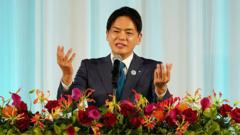
综合香港电台和《文汇报》报道,香港劳工及福利局局长孙玉菡星期六(1月17日)在香港电台《星期六问责》节目上说,目前若地盘有易燃物品、火灾风险高,劳工处人员可在视察后,下令要求有关地盘禁烟,但有关做法与社会当前的强烈共识存在落差。
孙玉菡说,经历宏福苑火灾后,政府已开始推展修例工作,修订有关附例,将会要求所有地盘禁烟,不打算容许地盘内设置任何的吸烟区。
孙玉菡指出,修例后会沿用现有劳工处负责职安健人员巡查,雇主需要有地盘禁烟的流程及程序安排,会视乎承建商采取的预防措施,再决定是否追究。“若工人(吸烟)我们找到控告他,法例下最高罚款15万元(港元,下同,2.48万新元),这是个人。若是雇主,分判商即大判、二判,若我们起诉他,最高罚款是40万元,是告公司。”
他举例,假设人员巡查地盘时当场无法找到有人吸烟,但地盘四处是烟头,工人身上很多烟,只是这刻无人吸烟,人员会了解地盘是否有安排及防范吸烟,包括是否有标示告诉工人不可吸烟,将香烟放在地盘出入口,是否有镜头监测。“如果什么也没有,难免怀疑雇主有否尽责任;若没有,我们便可循这线索控告。”
据香港政府公报,香港警方星期四(15日)公布,宏福苑火灾的遗体身份辨识及科学鉴证工作已经完成,确定共168人死亡,包括58男110女,年龄介于六个月至98岁;四人送院后证实死亡,另外164人的遗体或遗骸在宏福苑现场寻获。
香港第八届立法会星期三(14日)上午举行首次会议。特首李家超重申,将就火灾事故一问到底、问责到底,如果任何人须要负上责任,无论他是政府或非政府人员,无论是基层或高层,都会按事实追责惩处。
法新社17日发自德黑兰的报道引述专家及非政府组织的观察指出,伊朗各地自12月28日开始的大规模抗议示威运动正因为当局的强力镇压而降温。路透社17日引述一家总部设在美国的伊朗人权活动团体(HRANA)报道,可以确认有3090人在这次抗议浪潮中丧生,其中绝大部分是示威者。
根据这个总部设在美国的伊朗海外人权活动团体提供的死亡数字,在三千多已经核实的死亡者中,有2885人为示威者。该组织的数字与此前总部设在挪威的另一家伊朗海外人权组织(IHR)的数字相近。挪威这家人权组织自行核实或通过独立资讯途径核实的死亡人数为3428人,另有近两万人被捕。
由于德黑兰当局切断互联网等信息封锁措施,关于这次抗议示威运动伤亡情况的统计出入甚大。在此之前,一家在海外运营的伊朗反对派媒体引述伊朗政府高层途径的信息,称至少有一万两千人在抗议活动中丧生。美国CBS新闻网近日也引述两个不同来源的信息称,死亡者可能达到两万。
伊朗外长日前接受美国媒体福克斯新闻采访时谴责夸大死亡人数的信息战作为。在他口中,大约有数百人在抗议活动中丧生。另外,伊朗当局在16日首次宣布有大约三千人被捕。
法新社17日综述专家以及不同非政府团体的观察,认为这次抗议示威活动持续近三周后,可能已经在当局的强力打压下大幅降温。一些居民匿名向法新社表示,最近四天来,首都德黑兰基本平静。周四和周五两天没有出现抗议集会的迹象。但可以听到空中有无人机盘旋。一名法新社记者注意到,周四晚间,德黑兰大街小巷可以看到很多安全部队人员部署。。
但人在海外流亡的伊朗巴列维王朝末代君主之子礼萨-巴列维在社交媒体平台上呼吁伊朗人继续努力,呼吁他们今明两天在当地时间晚上八点,喊出他们的愤怒和抗议。
法新社引述美国一名研究员指出,这次抗议活动目前可能已经被镇压下去。但他表示,政府不可能让安全部队长期处于全面动员状态,因此,抗议活动再起也并非不可能。
这次大规模民间抗议运动最初由商界对货币贬值、物价飙升的不满而起,但警方的镇压行动更让活动规模迅速向全国各地扩散。1月8日和9日达到高潮。这是最近三年来,伊朗国内首次出现大规模民间抗议运动。
Iranian leader press office via Getty ImagesIran's Supreme Leader, Ayatollah Ali Khamenei, has accused the US and Donald Trump of being responsible for "casualties, damage and slander" in his country during recent protests.
In a speech on Saturday, Khamenei acknowledged that thousands of people had been killed during recent unrest, "some in an inhuman, savage manner" but blamed the deaths on "seditionists".
The US president has urged Iranian anti-government demonstrators to "keep protesting" and threatened military intervention if security forces kill them.
Protests in Iran have claimed 3,090 lives, according to US-based Iranian Human Rights Activists News Agency (HRANA), in unrest that started over the economy on 28 December.
Since then, the protests have turned into calls for the end of the rule of Iran's supreme leader.
The Iranian government has called the demonstrations "riots" backed by Iran's enemies.
Protesters have been met with deadly force and there has been a near-total shutdown of the internet and communication services.
There have been fewer reports of unrest in recent days but with internet access still restricted developments on the ground remain unclear.
During his speech on Saturday, Khamenei also said Iran considered President Trump to be a "criminal" and said the US must be "held accountable" for recent unrest.
He also claimed on social media that "America's goal is to swallow Iran".
Trump has not yet responded to the supreme leader and the BBC has approached the White House for a comment.
Donald Trump said on Wednesday he had been told "the killing in Iran has stopped", but added that he had not ruled out military action against the country.
His comments came after the US and UK both reduced the number of personnel at the Al-Udeid air base in Qatar.
Officials told CBS, the BBC's US partner, that a partial American withdrawal was a "precautionary measure".
AFP via Getty ImagesPresident Yoweri Museveni has been declared the winner of Thursday's election extending his four decades in power by another five years.
He gained 72% of the vote, the election commission announced, against 25% for his closest challenger Bobi Wine, who has condemned what he described as "fake results" and "ballot stuffing". He has not provided any evidence and the authorities have not responded to his allegations.
Wine has called on Ugandans to hold non-violent protests.
Museveni, 81, first came to power as a rebel leader in 1986 but since then has won seven elections.
The election process was marred by violence and Wine, a 43-year-old former pop star, says that at least 21 people have been killed around the country in recent days.
The authorities have so far confirmed seven deaths.
Access to the internet has been cut in the country since Tuesday, making it hard to verify information.
The authorities say the blackout was necessary to prevent misinformation, fraud and the incitement of violence - a move condemned by the UN human rights office as "deeply worrying".
Wine has demanded that the internet be restored.
Overnight, Wine's party said that he had been abducted from his home in the capital, Kampala - a claim denied by the police.
Wine later issued a statement on Facebook saying that he had managed to evade a night-time raid by security forces and was in hiding.
He had previously said he was under house arrest.
This has not been confirmed by the police but spokesman Kituuma Rusoke said Wine's movements were restricted because his home was an area of "security interest".
"We have controlled access to areas which are security hotspots," Uganda's Daily Monitor paper quoted him as saying.
"We cannot allow people to use some places to gather and cause chaos," he said.
Getty Images/BBCGo to BBCAfrica.com for more news from the African continent.
Follow us on Twitter @BBCAfrica, on Facebook at BBC Africa or on Instagram at bbcafrica
This breaking news story is being updated and more details will be published shortly. Please refresh the page for the fullest version.
You can receive Breaking News on a smartphone or tablet via the BBC News App. You can also follow @BBCBreaking on X to get the latest alerts.
EPAThe Syrian army is moving into areas east of Aleppo city, after Kurdish forces started a withdrawal.
Syrian troops have been spotted entering Deir Hafer, a town about 50km (30 miles) from Aleppo.
On Friday, the Kurdish Syrian Democratic Forces (SDF) militia announced it would redeploy east of the Euphrates river. This follows talks with US officials, and a pledge from Syrian President Ahmed al-Sharaa to make Kurdish a national language.
After deadly clashes last week, the US urged both sides to avoid a confrontation. President al-Sharaa is seeking to integrate the Kurds' military and civilian bodies into Syrian national institutions.
In a statement to state-run news agency Sana, the Syrian army said its forces "began entering the western Euphrates area", and declared it had established "full military control" of Deir Hafer.
The military urged civilians not to enter the operations area until it is secured and "cleared it of all mines and war remnants".
Images showed Syrian forces advancing towards the area, including with tanks.
The move comes after Kurdish leader Mazloum Abdi agreed to pull back his US-backed SDF "towards redeployment in areas east of the Euphrates", responding to "calls from friendly countries and mediators".
US special envoy Tom Barrack and Mazloum Abdi are set to meet later on Saturday in Erbil, the capital of Iraqi Kurdistan.
In recent days, the Syrian army had urged civilians to flee the Deir Hafer area, with at least 4,000 people leaving, according to Syrian authorities.
EPABefore the Kurdish withdrawal, President al-Sharaa said he would make Kurdish a national language, and recognise the Kurdish new year as an official holiday.
The decree, announced on Friday, is the first formal recognition of Kurdish national rights since Syria's independence in 1946. It stated that Kurds were "an essential and integral part" of Syria, where they have endured decades of oppression under previous rulers.
Despite the apparent easing of tensions, disagreements linger. In response to the decree, the Kurdish administration in Syria's north and north-east said it was "a first step" but called for "permanent constitutions that express the will of the people", rather than "temporary decrees".
Meanwhile, after Syrian troops entered areas east of Aleppo, accusing Damascus of "violating" the agreement by moving in earlier than agreed.
Syria's army also accused the SDF of "violating the agreement", saying two of its soldiers had been killed by Kurdish forces as the military moved in.
Kurdish forces have been controlling swathes of Syria's oil-rich north and north-east, much of it gained during the civil war and the fight against the Islamic State group over the past decade.
Following the ousting of longtime leader Bashar al-Assad in late 2024, President al-Sharaa has been seeking to integrate the Kurdish bodies into Syrian institutions.
In March 2025, the SDF signed a deal with the government to that effect. Almost a year on, the agreement is still not implemented, with each sides blaming the other.
ReutersGoogle has appealed a US district judge's landmark antitrust ruling that found the company illegally held a monopoly in online search.
"As we have long said, the Court's August 2024 ruling ignored the reality that people use Google because they want to, not because they're forced to," Google's vice president for regulatory affairs Lee-Anne Mulholland said.
In its announcement on Friday, Google said the ruling by Judge Amit Mehta didn't account for the pace of innovation and intense competition the company faces.
The company is requesting a pause on implementing a series of fixes - viewed by some observers as too lenient - aimed at limiting its monopoly power.
Judge Mehta acknowledged the rapid changes to the Google's business when he issued his remedies in September, writing that the emergence of generative artificial intelligence (AI) had changed the course of the case.
He refused to grant government lawyers their request for a Google breakup that would include a spin-off of Chrome, the world's most popular browser.
Instead, he pushed less rigorous remedies, including a requirement that Google share certain data with "qualified competitors" as deemed by the court.
That data was due to include portions of its search index, Google's massive inventory of web content that functions like a map of the internet.
The judge also called for Google to allow certain competitors to display the tech giant's search results as their own in a bid to give upstarts the time and resources they need to innovate.
On Friday, Mulholland balked at being forced to share search data and syndication services with rivals as she justified the request for a halt to implementing the orders.
"These mandates would risk Americans' privacy and discourage competitors from building their own products — ultimately stifling the innovation that keeps the U.S. at the forefront of global technology," Mulholland wrote.
While the company has invested growing sums of cash into AI, those ambitions have come under scrutiny.
Last month, the EU opened an investigation into Google over its AI summaries which appear above search results.
The European Commission said it would probe whether Google used data from websites to provide the service and failed to offer appropriate compensation to publishers.
Google said the investigation risked stifling innovation in a competitive market.
This week, Google parent Alphabet became the fourth company ever to reach a market capitalisation of $4tn.
Sign up for our Tech Decoded newsletter to follow the world's top tech stories and trends. Outside the UK? Sign up here.

 Guinea Presidency
From the moment he seized power in September 2021 Guinea's Mamadi Doumbouya struck an imposing figure.
Just 36 years old at the time, the broad-shouldered colonel, standing at well over six feet (1.8m), wearing military fatigues, mirrored sunglasses and a red beret certainly made an impression when announcing the coup.
A relatively unknown member of an elite army unit, he declared that the government of ousted President Alpha Condé had disregarded democratic principles and that citizens' rights were being trampled on.
After more than four years of acting as interim president, and going back on a promise not to run for leadership of the country, Doumbouya, now 41, is set to be sworn in as the elected head of state on Saturday.
The discreet, disciplined and private man won 87% of the vote in December's election against a severely depleted field.
Ex-Prime Minister Cellou Dalein Diallo, now in exile, described the process as a charade which generated "fabricated" results.
While seemingly enjoying some popular support, critics have questioned Doumbouya's democratic credentials as some political parties have been banned, activists have mysteriously disappeared and media outlets been shut down.
ReutersScrolling back through the social media accounts from the president's office there is a sense of a carefully curated image.
The army man, now a general, has, for the main, ditched the camouflage in favour of the baseball cap and tracksuit, or a boubou - traditional Guinean attire of loose-fitting robes with elaborate embroidery. The shades though are still at times in evidence.
Pictures show him at the opening of schools, or transport and mining infrastructure or cycling through the streets of the capital, Conakry. The message is clear: this is a man of action who is working on behalf of the people.
"This was presenting an image of someone who can be close to civilians, someone who is a civilian leader and can be representative of the people," Beverly Ochieng, senior analyst with Dakar-based security intelligence firm Control Risks, told the BBC.
"In some ways this is distancing himself from what brought him to power – a coup - and the fact that his entire career has been in the military."
In the 15 years before he took power, Doumbouya gained extensive international experience, including being educated to master's level in France and serving in the French Foreign Legion. He was also in Afghanistan, Ivory Coast, Djibouti, Central African Republic and worked on close protection in Israel, Cyprus and the UK.
But the donning of civilian clothes may not be entirely sincere, according to some analysts.
"I'm not sure that he has transitioned from a military man. I think that the military costume will remain even if he is conducting the return to civilian order," argued Aïssatou Kanté, a researcher in the West Africa office of the Institute of Security Studies.
She referred to a ban on political demonstrations, the exclusion of Doumbouya's main challengers in December's election and the suspension of key opposition parties.
Human rights campaigners have demanded to know the whereabouts of two activists - Oumar Sylla (known as Foniké Menguè) and Mamadou Billo Bah – who have not been seen since July 2024. They suspect the men were taken by the military.
Press freedom organisation Reporters Without Borders has also expressed concern that journalist Habib Marouane Camara has been missing for more than a year. It has described how journalists are now censoring themselves and are fearful about what might happen to them.
Nevertheless, the 2021 coup was widely welcomed in the country and since then Doumbouya appears to have remained a popular figure.
Polling organisation Afrobarometer found that between 2022 and 2024 the proportion of people who trusted the president either "partially" or "a lot" grew from 46% to 53%.
Guinea PresidencyThe president-elect may not have a clearly defined ideology guiding him but for Kanté his emphasis on Guineans being in control of their own destiny has become very important.
"It's what keeps coming up in official speeches - this affirmation of political and economic sovereignty," she told the BBC.
In his address to the nation a few days into the new year, he struck a conciliatory tone, calling on all Guineans to build a nation of peace and "fully assumed" sovereignty.
In a country that continues to grapple with high levels of poverty despite plentiful natural resources – including the world's largest reserves of bauxite, which is used to make aluminium - this idea strikes a chord.
The government's messaging on the development of the vast iron-ore resources in Simandou underscores the possible benefits for the people.
The three billion tonnes of ore available in a remote southern part of the country, which began to be exported last month, could transform the global iron market, as well as Guinea's fortunes.
The authorities say earnings from the project, partly owned by Chinese miners as well as the British-Australian corporation Rio Tinto, will be invested in new transport infrastructure as well as health and education.
The success or otherwise of Simandou may define Doumbouya's presidency.
AFP via Getty ImagesHe appears determined to keep some of the processing and added-value parts of the industry in Guinea to ensure greater benefits.
Across the broader mining sector, his government has cancelled dozens of contracts over the past year where it was felt that the companies were not investing in Guinea – a move that has led one UAE-based firm to take the country to an international court.
"This move towards resource nationalism makes him look like a local hero. He looks like he's really fighting for the rights of his citizens, even if that means business disruptions," said analyst Ochieng.
The emphasis on sovereignty has also led to a pragmatic approach to international relations, observers say. Unlike coup leaders elsewhere in West Africa, Doumbouya has not outrightly rejected the former colonial power France in favour of Russia.
Neither, despite his background in France and having a French wife, has he been accused of being a puppet of Paris.
Doumbouya very much wants to be seen as someone running things in the interests of the country.
Come Saturday, the president will preach a message of national unity and will hope that he can usher in a new era of prosperity for Guinea.
Getty Images/BBCGo to BBCAfrica.com for more news from the African continent.
Follow us on Twitter @BBCAfrica, on Facebook at BBC Africa or on Instagram at bbcafrica
Prime Minister Mark Carney's new approach to Canada's foreign policy can perhaps be distilled in one line: "We take the world as it is, not as we wish it to be."
That was his response when asked about the deal struck with China on Friday, despite concerns over its human rights record and nearly a year after he called China "the biggest security threat" facing Canada.
The deal will see Canada ease tariffs on Chinese electric vehicles that it imposed in tandem with the US in 2024. In exchange, China will lower retaliatory tariffs on key Canadian agricultural products.
Experts told the BBC the move represents a significant shift in Canada's policy on China, one that is shaped by ongoing uncertainty with the US, its largest trade partner.
"The prime minister is saying, essentially, that Canada has agency too, and that it's not going to just sit and wait for the United States," said Eric Miller, a Washington DC based trade adviser and president of the Rideau Potomac Strategy Group.
Carney told reporters on Friday that "the world has changed" in recent years, and the progress made with China sets Canada up "well for the new world order".
Canada's relationship with China, he added, had become "more predictable" than its relationship with the US under the Trump administration.
He later wrote, in a social media post, that Canada was "recalibrating" its relationship with China, "strategically, pragmatically, and decisively".
In Canada, as daylight broke on Friday, reaction to the deal was swift.
Some, like Saskatchewan Premier Scott Moe, hailed it as "very good news". Farmers in Moe's province have been hard hit by China's retaliatory tariffs on Canadian canola oil, and the deal, he said, would bring much needed relief.
But Ontario Premier Doug Ford, whose province is home to Canada's auto sector, was sharply critical of the deal. He said removing EV tariffs on China "would hurt our economy and lead to job losses".
In a post on X, Ford said Carney's government was "inviting a flood of cheap made-in-China electric vehicles without any real guarantees of equal or immediate investment in Canada's economy".
Some experts said the electric vehicle provisions in the trade deal would help China make inroads into the Canadian automobile market.
With the lower EV tariffs, approximately 10% of Canada's electric vehicle sales are now expected to go to Chinese automakers, said Vivek Astvansh, a business professor at McGill University in Montreal.
The expected increase in Chinese EV sales could put pressure on US-based EV makers like Tesla which are seeking to expand their market share in Canada, he said.
"Carney has signalled to the Trump administration that it is warming up to China," Astvansh added.
Reaction from the White House, meanwhile, has been mixed.
In an interview with CNBC on Friday morning, US trade representative Jamieson Greer called the deal "problematic" and said Canada may come to regret it.
President Donald Trump, however, hailed it as "a good thing".
"If you can get a deal with China, you should do that," he told reporters outside the White House.
Since taking office for a second time last year, Trump has imposed tariffs on Canadian sectors like metals and automotives, which has led to swirling economic uncertainty. He has also threatened to rip up a longstanding North American free trade agreement between Canada, the US and Mexico, calling it "irrelevant".
That trade agreement, the USMCA, is now under a mandatory review. Canada and Mexico have both made clear they want it to remain in place.
But the decision to carve out a major new deal with China is a recognition by Carney that the future of North American free trade remains unclear, Miller of the Rideau Potomac Strategy Group told the BBC.
"There's a reasonable chance that we could end up in 2026 without a meaningful, workable trade deal with the United States," he said. "And Canada needs to be prepared."
Getty ImagesThe deal with China drops Canada's levies on Chinese EVs from 100% to 6.1% for the first 49,000 vehicles imported each year. That quota could rise, Carney said, reaching 70,000 in half a decade.
Canada and the US put levies on Chinese EVs in 2024, arguing that China was overproducing vehicles and undermining the ability of other countries to compete.
China is the world's largest producer of EVs, accounting for 70% of global production.
In exchange, China will cut tariffs on Canadian canola seed to around 15% by 1 March, down from the current rate of 84%. Carney said Beijing had also committed to removing tariffs on Canadian canola meal, lobsters, crabs and peas "until at least the end of the year".
China also committed to removing visa requirements for Canadian visitors, Carney said.
Beijing did not corroborate the details in a separate statement, but said "the two reached a preliminary joint agreement on addressing bilateral economic and trade issues".
The introduction of Chinese EVs to Canada's market will likely mean cheaper prices for Canadian consumers, said Gal Raz, an associate professor of Operations Management and Sustainability at Western University and an expert on the EV supply chain.
But Raz acknowledged that the deal Canada struck could hurt Canadian car manufacturers if it comes without further action from the Carney government to help the domestic sector.
He said it was the result of an "unfortunate" deterioration of the Canada-US trade relationship, which he noted has also hurt Canada's automotive industry.
"The US has really put Canada in a corner," he said.
Asked why Canada is giving China access to its automotive market, Carney said that China produces "some of the most affordable and energy-efficient vehicles in the world". He said he expects the deal will spur Chinese investment into Canada's auto industry, though he did not provide further details.
Trump himself has signalled openness to China building plants in the US if it means creating more jobs for Americans, despite his tough-on-China stance.
"If they want to come in and build a plant and hire you and hire your friends and your neighbours, that's great, I love that," Trump said at the Detroit Economic Club on Tuesday. "Let China come in, let Japan come in."
The US president is notably headed to Beijing for his own meeting with President Xi Jinping in April. He has also invited Xi for a state visit to Washington.
For Carney, though, Friday's deal may just be the first step in a "recalibration" of Canada's trade relations.
With additional reporting from Daniel Bush in Washington
© Sara Krulwich/The New York Times