Normal view

There are new articles available, click to refresh the page.
Before yesterdayMain stream

On Reflection: Northern landscapes

By: hoakley
4 March 2026 at 20:30

There are only two ways a painter can depict reflections on water in accordance with optical reality: they can paint exactly what they see when in front of the motif, or they can understand optical principles sufficiently to recreate what they would have seen. This article looks at how those worked out in landscape paintings to the end of the eighteenth century.

Jan van Eyck, The Madonna of Chancellor Rolin (detail) (c 1435) oil on panel, 66 x 62 cm. Musée du Louvre, Paris (WikiArt).
Jan van Eyck (c 1390–1441), The Madonna of Chancellor Rolin (detail) (c 1435) oil on panel, 66 x 62 cm. Musée du Louvre, Paris (WikiArt).

Look in the landscape behind Jan van Eyck’s Madonna of Chancellor Rolin (c 1435) and you’ll see one of the earliest examples of the meticulously accurate depiction of reflections on water. These could only have resulted from careful studies made in front of the motif.
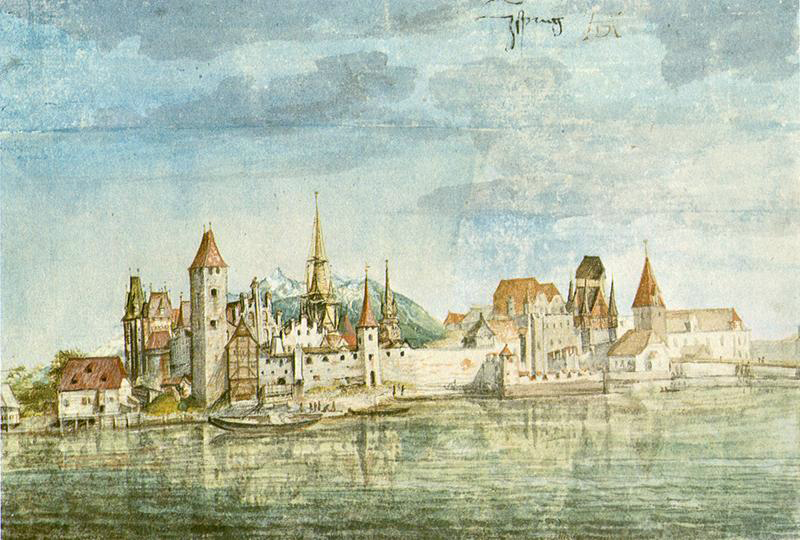
Albrecht Dürer, View of Innsbruck, c 1495, watercolour on paper, 12.7 x 18.7 cm. Albertina, Vienna (WikiArt).
Albrecht Dürer (1471-1528), View of Innsbruck (c 1495), watercolour on paper, 12.7 x 18.7 cm. Albertina, Vienna (WikiArt).

For Albrecht Dürer painting this View of Innsbruck in about 1495, this watercolour is evidence that he both recognised the challenge, and went to the trouble to paint what he actually saw, even though the overall geometry isn’t perfect, with its downward slope to the left.

Following the Northern Renaissance, other landscape painters continued this tradition, into the Dutch Golden Age.

cuyprhine
Aelbert Cuyp (1620–1691), View on the Rhine (c 1645), oil on panel, 27.4 x 36.8 cm, Fondation Custodia, Paris. Wikimedia Commons.

Although Aelbert Cuyp’s View on the Rhine from about 1645 isn’t optically perfect and must at least have been finished in the studio, it demonstrates his care in trying to be faithful in its reflections.
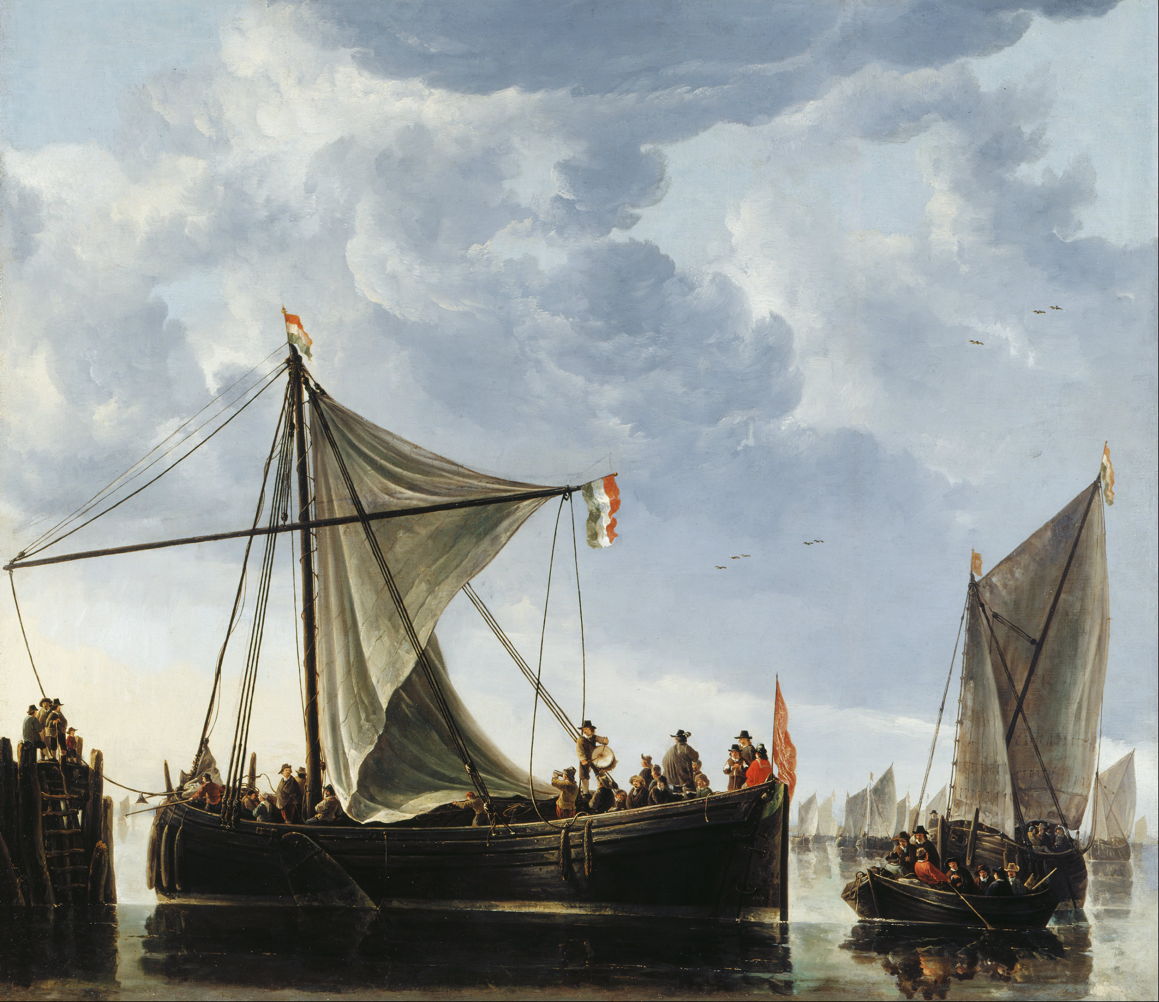
cuyppassageboat
Aelbert Cuyp (1620–1691), The Passage Boat (c 1650), oil on canvas, 124 x 144.4 cm, Royal Collection of the United Kingdom, UK. Wikimedia Commons.

Cuyp’s larger and more detailed painting of The Passage Boat from about 1650 is similarly attentive, implying the use of careful studies made in front of the motif.

cuypvalkhofnijmegen
Aelbert Cuyp (1620–1691), The Valkhof at Nijmegen (c 1652-54), oil on wood, 48.8 x 73.6 cm, Indianapolis Museum of Art, Indianapolis, IN. Wikimedia Commons.

Cuyp’s grand view of The Valkhof at Nijmegen from about 1652-54 is a fine example from later in his career.
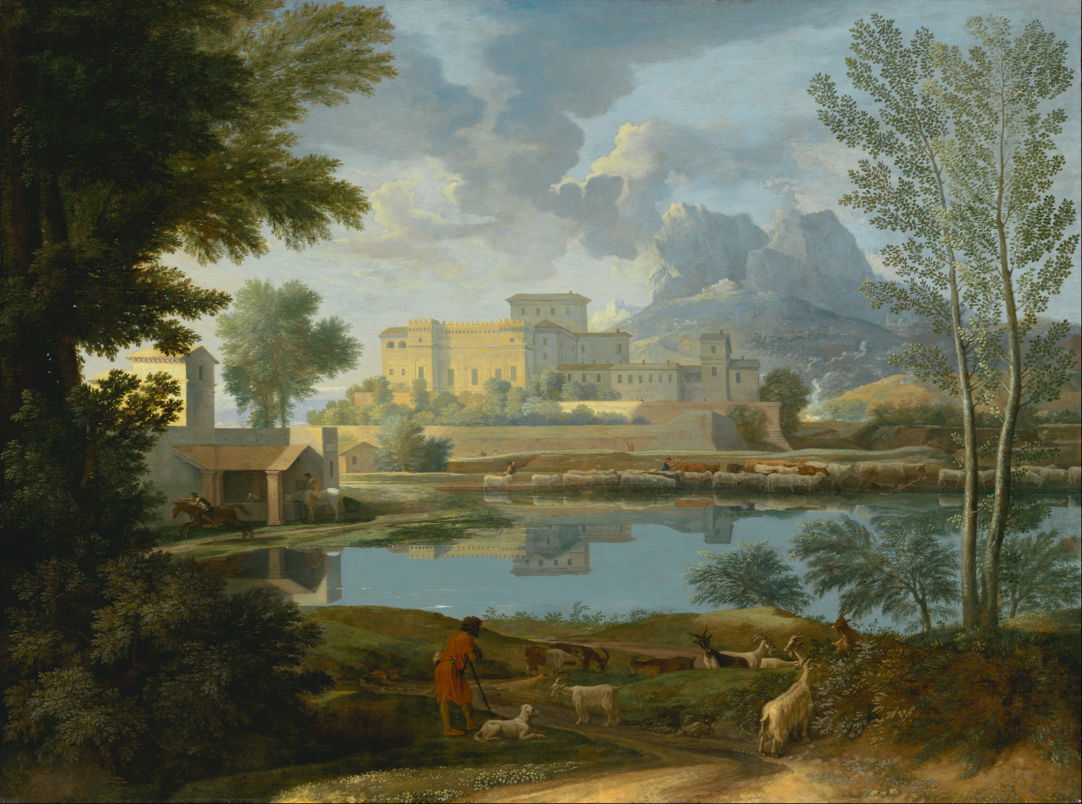
Nicolas Poussin, Landscape with a Calm (c 1651), oil on canvas, 97 x 131 cm, J. Paul Getty Museum, Los Angeles. Digital image courtesy of the Getty's Open Content Program.
Nicolas Poussin (1694-1665), Landscape with a Calm (c 1651), oil on canvas, 97 x 131 cm, J. Paul Getty Museum, Los Angeles. Digital image courtesy of the Getty’s Open Content Program.

At about the same time, Nicolas Poussin used extensive reflections to augment the placid atmosphere in his idealised Landscape with a Calm (c 1651). The upper parts of the Italianate mansion, together with the livestock on the far bank of the lake, are painstakingly reflected on the lake’s surface, telling the viewer that there isn’t a breath of breeze to bring ripples to disturb those reflections.
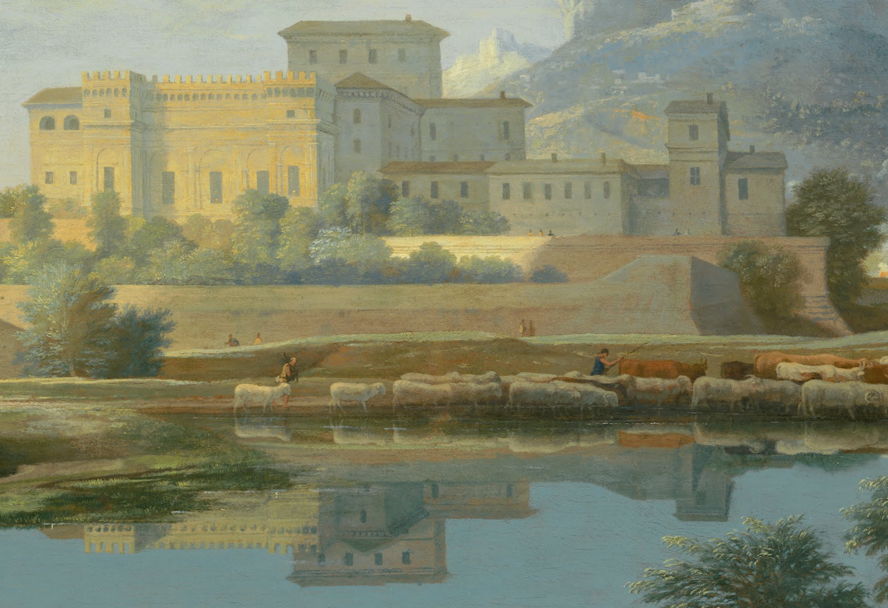
Nicolas Poussin, Landscape with a Calm (detail) (c 1651), oil on canvas, 97 x 131 cm, J. Paul Getty Museum, Los Angeles. Digital image courtesy of the Getty's Open Content Program.
Nicolas Poussin (1594–1665), Landscape with a Calm (detail) (c 1651), oil on canvas, 97 x 131 cm, J. Paul Getty Museum, Los Angeles. Digital image courtesy of the Getty’s Open Content Program.

Closer examination of the reflections reveals small disparities, though. Poussin has broken the rule of depth order in painting the brown reflection of one of the cattle that is well behind the sheep at the edge of the lake, and there are inaccuracies obvious in the reflection of the villa. Those may well be the result of his assembling passages from the original plein air studies he used to build this composite.

Nicolas Poussin, Landscape with a Calm (detail) (c 1651), oil on canvas, 97 x 131 cm, J. Paul Getty Museum, Los Angeles. Digital image courtesy of the Getty's Open Content Program.
Nicolas Poussin (1594–1665), Landscape with a Calm (detail) (c 1651), oil on canvas, 97 x 131 cm, J. Paul Getty Museum, Los Angeles. Digital image courtesy of the Getty’s Open Content Program.

His reflections appear most accurate in the passage showing horsemen at the left end of the lake. These make interesting comparison with Poussin’s contemporary Claude Lorrain, who appears to have avoided tackling the problems posed by reflections.
claudenymphsatyrdancing
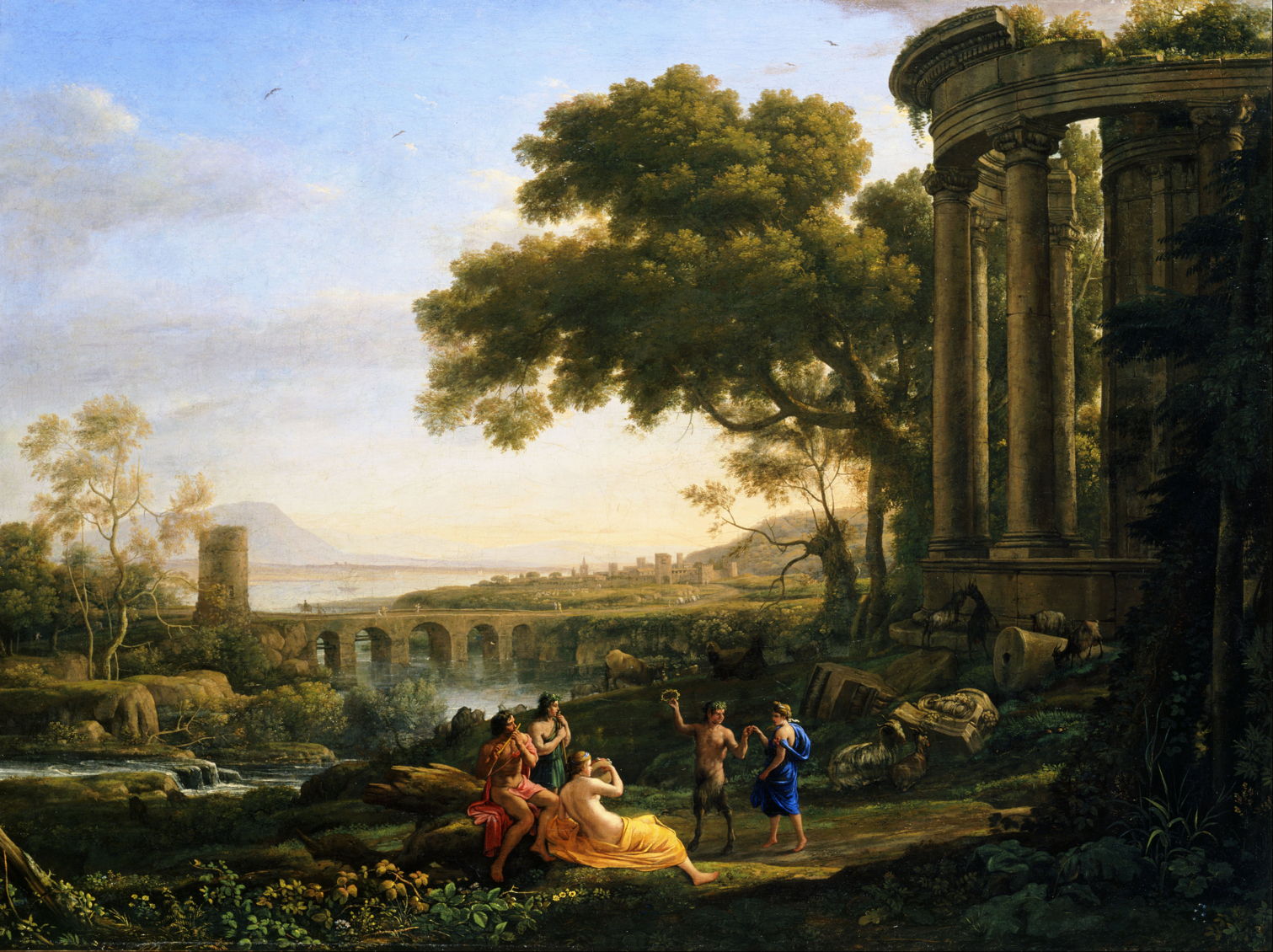
Claude Lorrain (1604/5–1682), Landscape with Nymph and Satyr Dancing (1641), oil on canvas, 99.7 x 133 cm, Toledo Museum of Art, Toledo, OH. Wikimedia Commons.

In Claude’s Landscape with Nymph and Satyr Dancing from 1641, another idealised composite assembled from the artist’s library of sketches, little attempt is made to depict the reflection of the prominent viaduct. What has been shown is unaccountably darker than the original, and vague in form. Most of Claude’s other paintings that could have included reflections show water surfaces sufficiently broken to avoid tackling the problem.
canalettovedutadelcanaledisantachiara
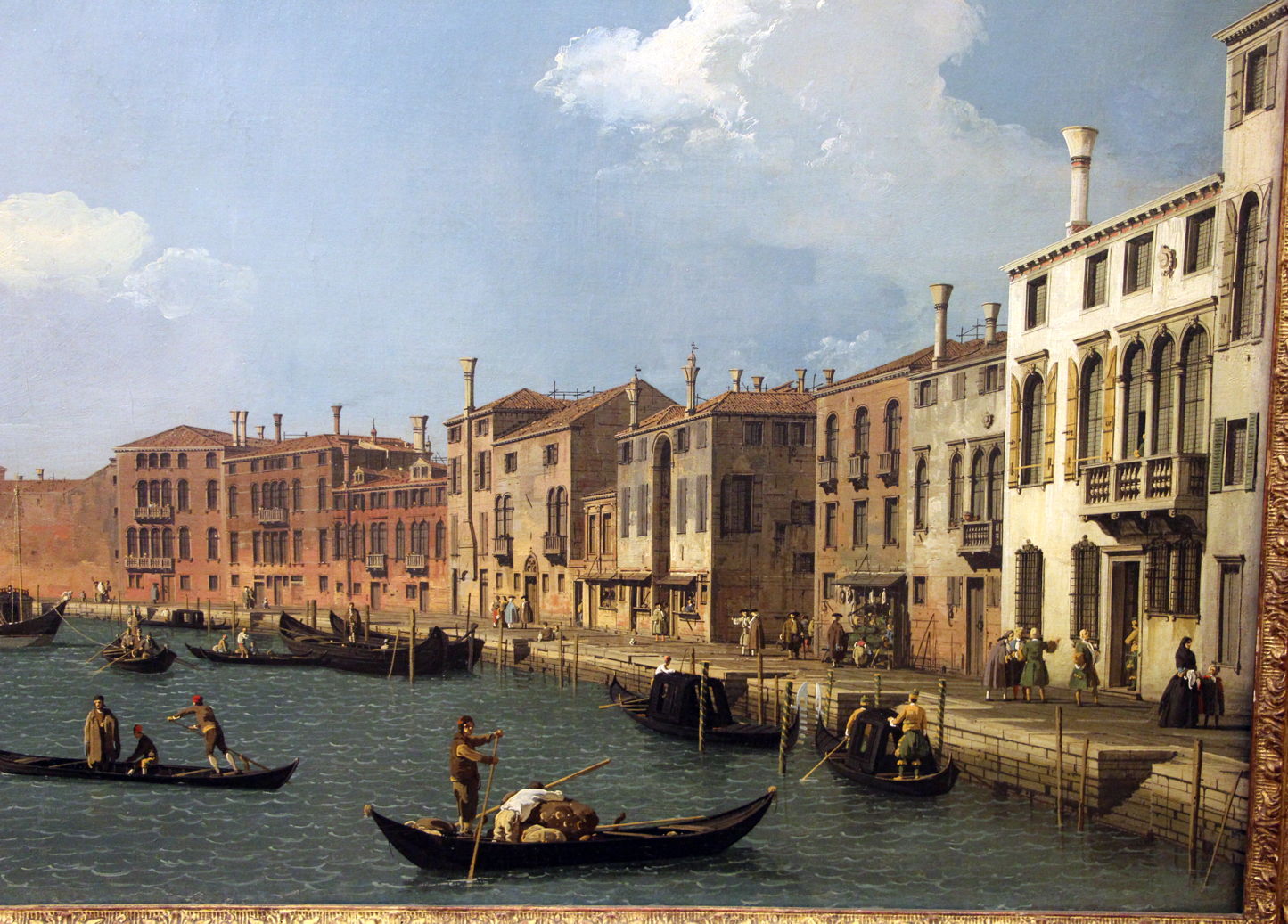
Canaletto (Giovanni Antonio Canal) (1697–1768), Canale di Santa Chiara, Venice (c 1730), oil, dimensions not known, Musée Cognacq-Jay, Paris. Image by Sailko, via Wikimedia Commons.

Paintings of Venice and London by Canaletto in the eighteenth century are also largely devoid of reflections. In his Canale di Santa Chiara, Venice from about 1730 the gondola in the left foreground has no reflection at all, and its three figures are similarly absent from the surface of the water.
vernetseaportmoonlight
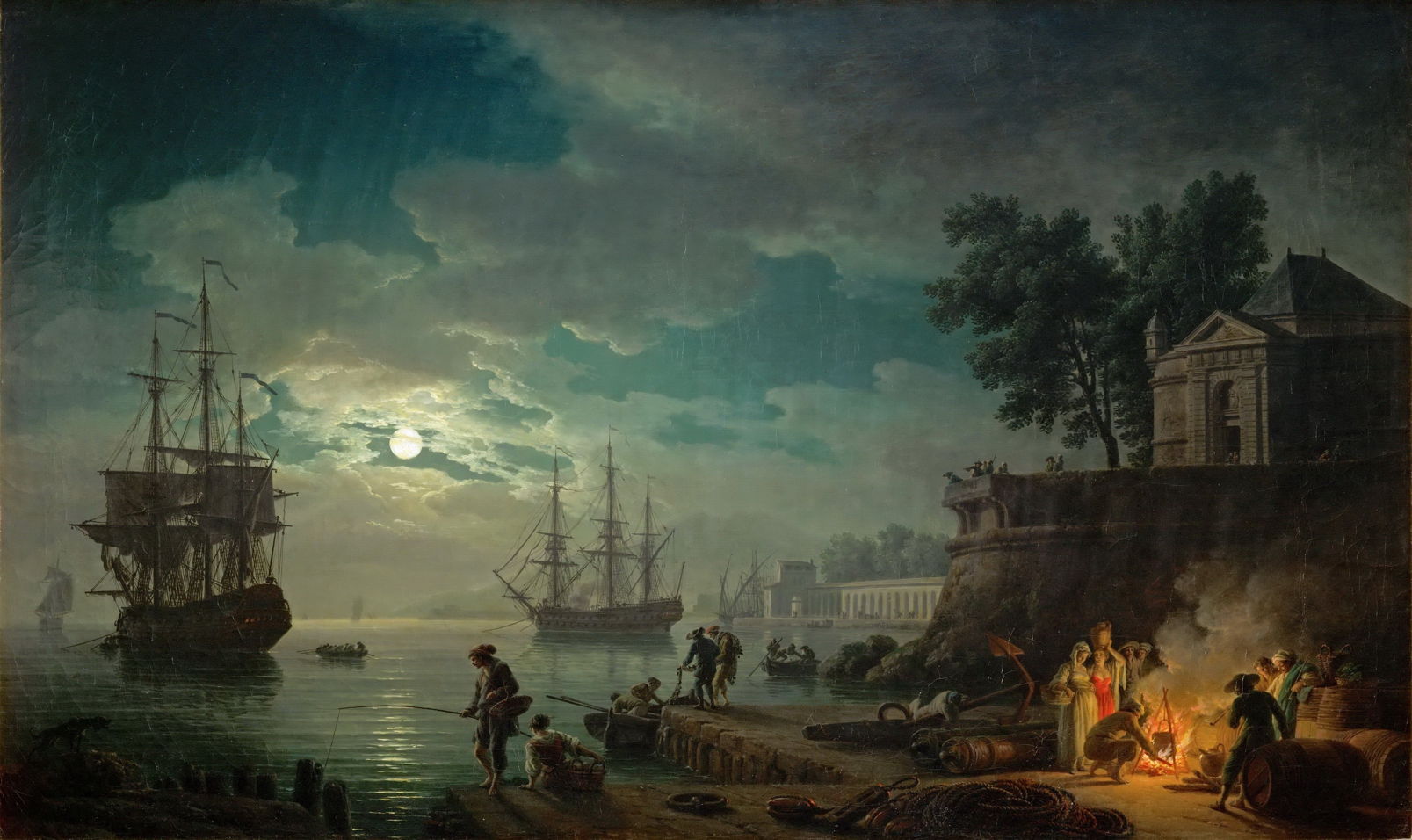
Claude-Joseph Vernet (1714–1789), Seaport by Moonlight (c 1771), oil on canvas, 98 x 164 cm, Musée du Louvre, Paris. Wikimedia Commons.

Reflections return in the studio paintings of those whose sketches made in front of the motif were sufficiently detailed to include them. Among them is Claude-Joseph Vernet, whose Seaport by Moonlight from about 1771 appears faithful. Sadly, none of his preparatory drawings or sketches appear to have survived, although they were a key influence on the next generation of landscape artists.

On Reflection: Introduction

By: hoakley
12 February 2026 at 20:30

Many humans and animals are fascinated by reflections. Whether they’re images of themselves seen in mirrors, or an inverted copy of a landscape seen on the surface of a lake, we can spend embarrassingly long periods just staring at them. For visual artists, those reflections have been a technical challenge and, for those who rise to it, an opportunity to display their painting skills. This series sets out to describe and illustrate how, from the early Renaissance to the twentieth century, masters have painted reflections.

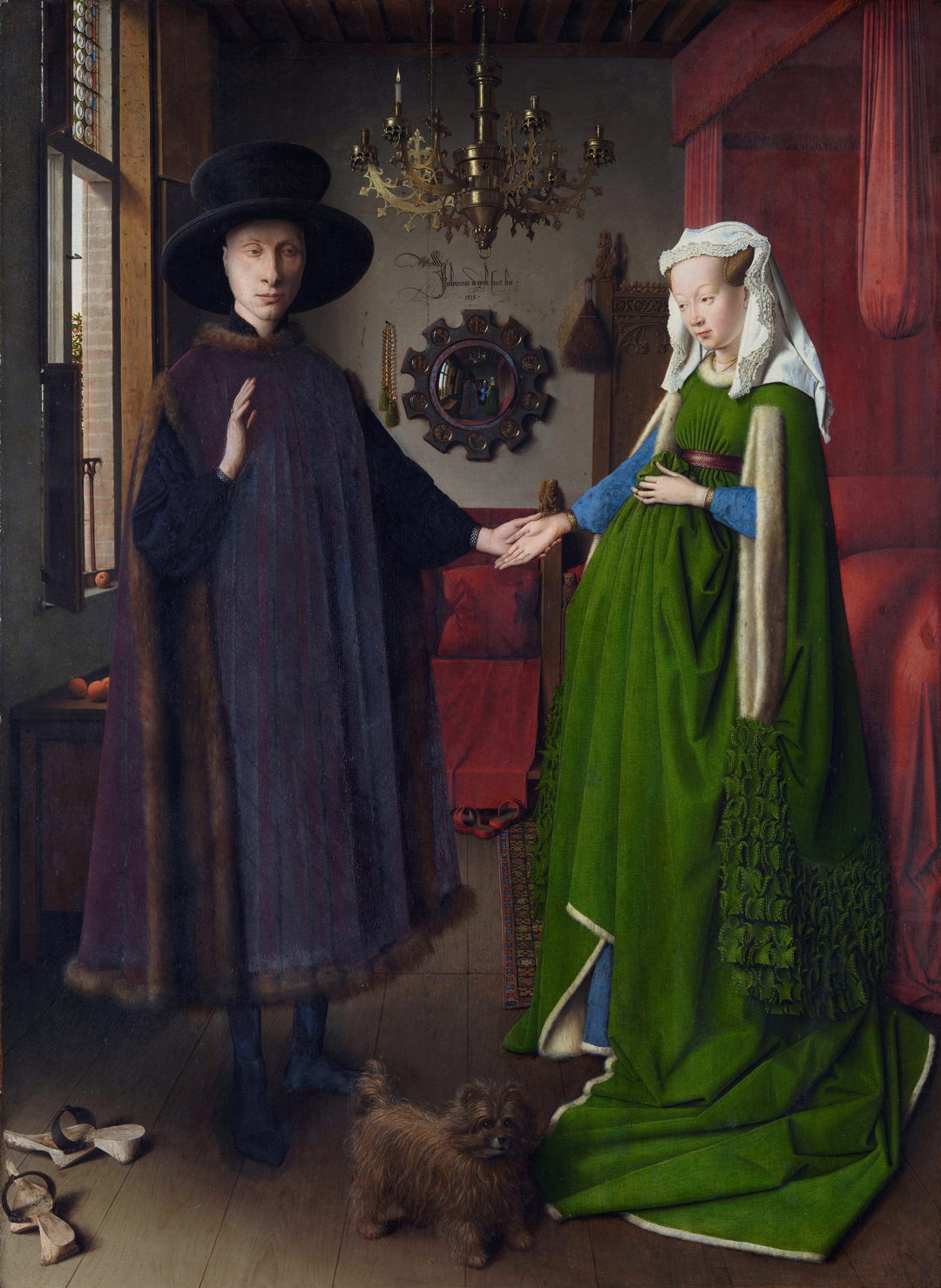
vaneyckarnolfiniportrait
Jan van Eyck (c 1380/90-1441), Portrait of Giovanni Arnolfini (?) and his Wife (1434), oil on oak panel, 82 x 59.5 cm. The National Gallery, London. Wikimedia Commons.

Optical effects are one of the central themes in the Northern Renaissance, as seen in Jan van Eyck’s most famous painting The Arnolfini Wedding (or similar variations), completed in 1434. Between this newly-wed couple holding hands next to their marital bed, in the midline of the painting is a prominent circular convex mirror. The reflection is probably the first example of mirror-play in European art, as it shows a view of the room looking in the opposite direction, past the couple to another two figures, who might be the artist and another.

Jan van Eyck, Portrait of Giovanni(?) Arnolfini and his Wife (detail) (1434), oil on oak panel, 82.2 x 60 cm. National Gallery, London (WikiArt).
Jan van Eyck (c 1380-1441), Portrait of Giovanni(?) Arnolfini and his Wife (detail) (1434), oil on oak panel, 82.2 x 60 cm. National Gallery, London. WikiArt.
Jan van Eyck, The Madonna of Chancellor Rolin (detail) (c 1435) oil on panel, 66 x 62 cm. Musée du Louvre, Paris (WikiArt).
Jan van Eyck (c 1390–1441), The Madonna of Chancellor Rolin (detail) (c 1435) oil on panel, 66 x 62 cm. Musée du Louvre, Paris (WikiArt).

Look in the landscape behind Jan van Eyck’s Madonna of Chancellor Rolin, probably painted the following year, and you’ll see one of the earliest examples of the meticulously accurate depiction of reflections on water.

caravaggionarcissus
Caravaggio (Michelangelo Merisi da Caravaggio) (1571–1610), Narcissus (1594-96), oil on canvas, 110 × 92 cm, Galleria Nazionale d’Arte Antica, Rome. Wikimedia Commons.

In some paintings, reflections are essential to their narrative. Caravaggio’s brilliant Narcissus of 1594-96 uniquely combines chiaroscuro with reflections to provide just enough visual clues to tell this myth so effectively.

The optics of reflections appear to have confounded some painters, while others have deliberately flouted physics for effect, in this case what has become known as the Venus Effect.

velazquezvenus
Diego Velázquez (1599–1660), Venus at Her Mirror, The Toilet of Venus (Rokeby Venus) (1644-48) [101], oil on canvas, 122.5 x 177 cm, The National Gallery, London. Image by Diego Delso, via Wikimedia Commons.

Although often illustrated by one of Titian’s paintings of Venus, the canonical example must be Velázquez’ Venus at Her Mirror, also known as The Toilet of Venus or the Rokeby Venus, from 1644-48. It shows the goddess Venus, whose face is blurred in a false reflection in a mirror being held by her son Cupid. The theme was common, seen in paintings by Titian and Rubens, with Venus sat upright. Giorgione and others had posed her reclining and facing the viewer, making her pose here unusual. Most other paintings of Venus set her in a landscape: here she rests on luxurious even sensuous fabrics.

No matter how convincing her face might appear in the mirror, a moment spent placing yourself in the same position confirms that the image in the mirror is wholly imaginary, and optically incorrect.

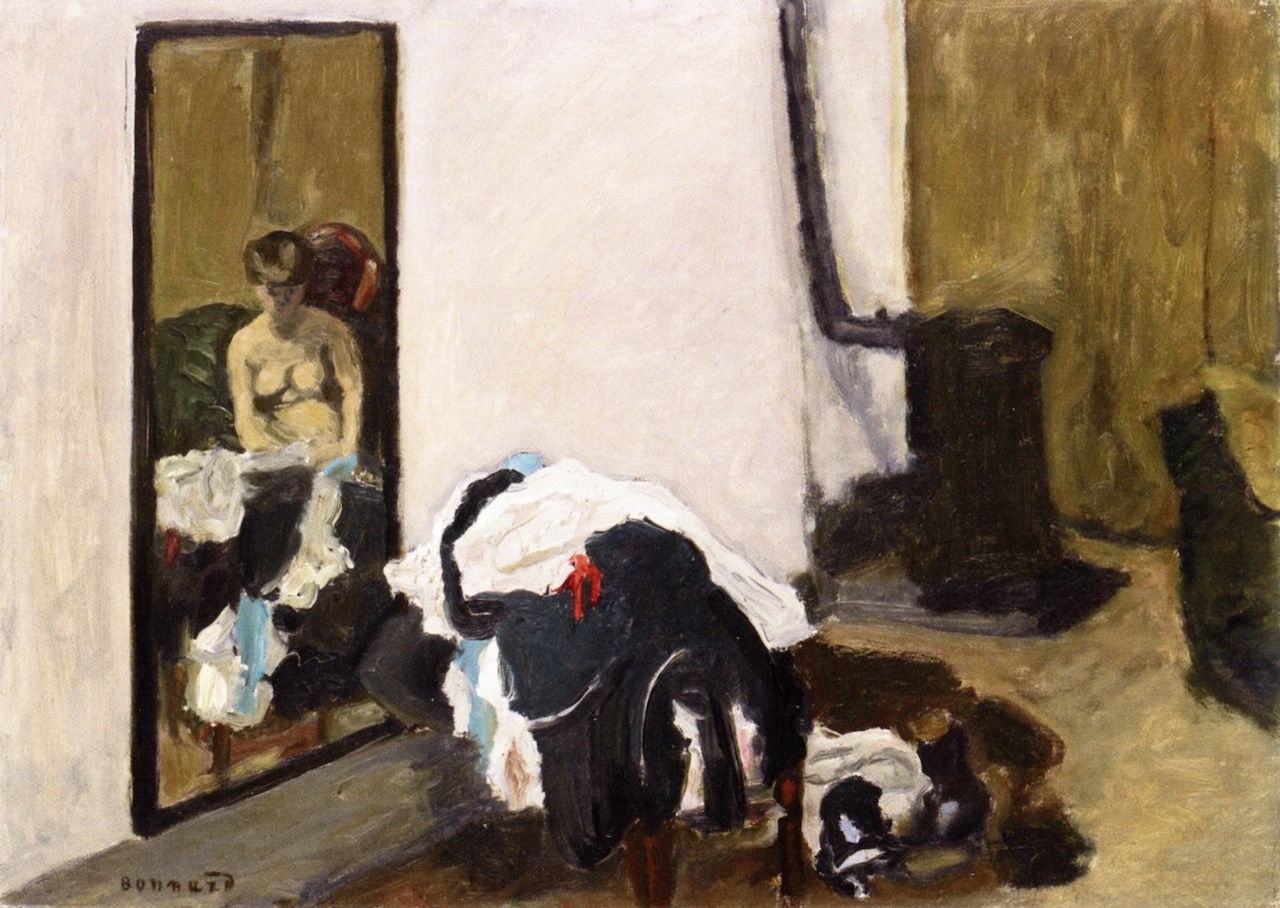
Pierre Bonnard is among the most prolific and inventive of mirror-players.

bonnardwomangettingdressed
Pierre Bonnard (1867-1947), Woman Getting Dressed (1906), oil on canvas, 42 x 58.7 cm, Private collection. The Athenaeum.

In his Woman Getting Dressed from 1906, it’s the mirror at the left that reveals the subject, who is sat beyond the right edge of the painting, getting dressed. Venus has here become a pile of discarded clothing.

As landscape painting became popular, many of the most proficient sought out locations where they could demonstrate their skills at getting them right. Others used reflections as their theme.

Vincent van Gogh, Starry Night over the Rhône (1888), oil on canvas, 72.5 x 92 cm, Musée d'Orsay, Paris. WikiArt.
Vincent van Gogh (1853–1890), Starry Night over the Rhône (1888), oil on canvas, 72.5 x 92 cm, Musée d’Orsay, Paris. WikiArt.

In the last two years of Vincent van Gogh’s life, he painted this landmark nocturne Starry Night over the Rhône (1888) with its many shimmering reflections.

ringaldertrunks
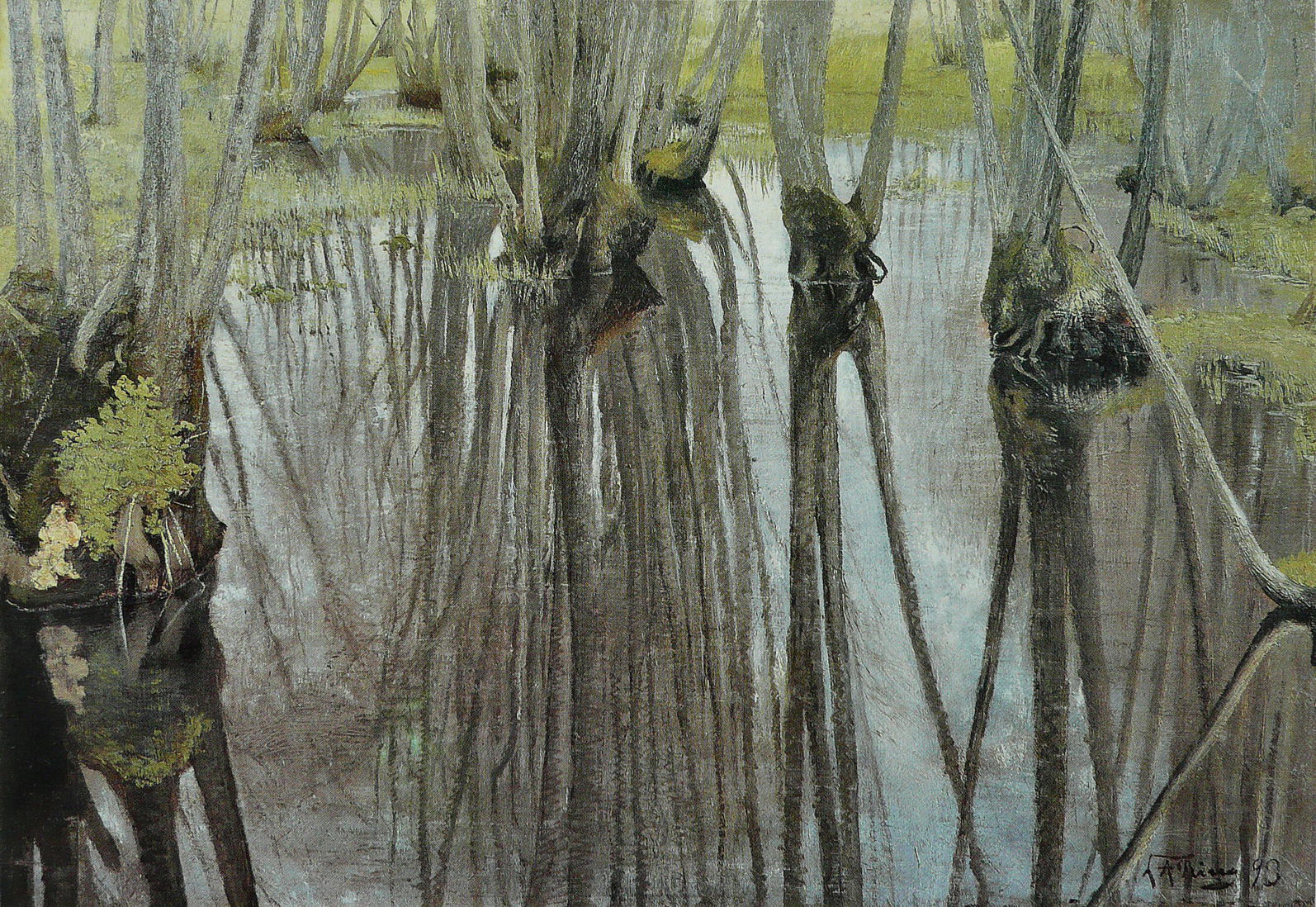
Laurits Andersen Ring (1854–1933), Alder Trunks (1893), oil on canvas, 52.9 x 73.5 cm, Collection of Her Majesty the Queen Margrethe II, Copenhagen, Denmark. Wikimedia Commons.

Alder Trunks from 1893 is one of Laurits Andersen Ring’s finest landscapes, and has earned its place in the Danish Royal Collection. He shows these old coppiced alders almost entirely in reflection.

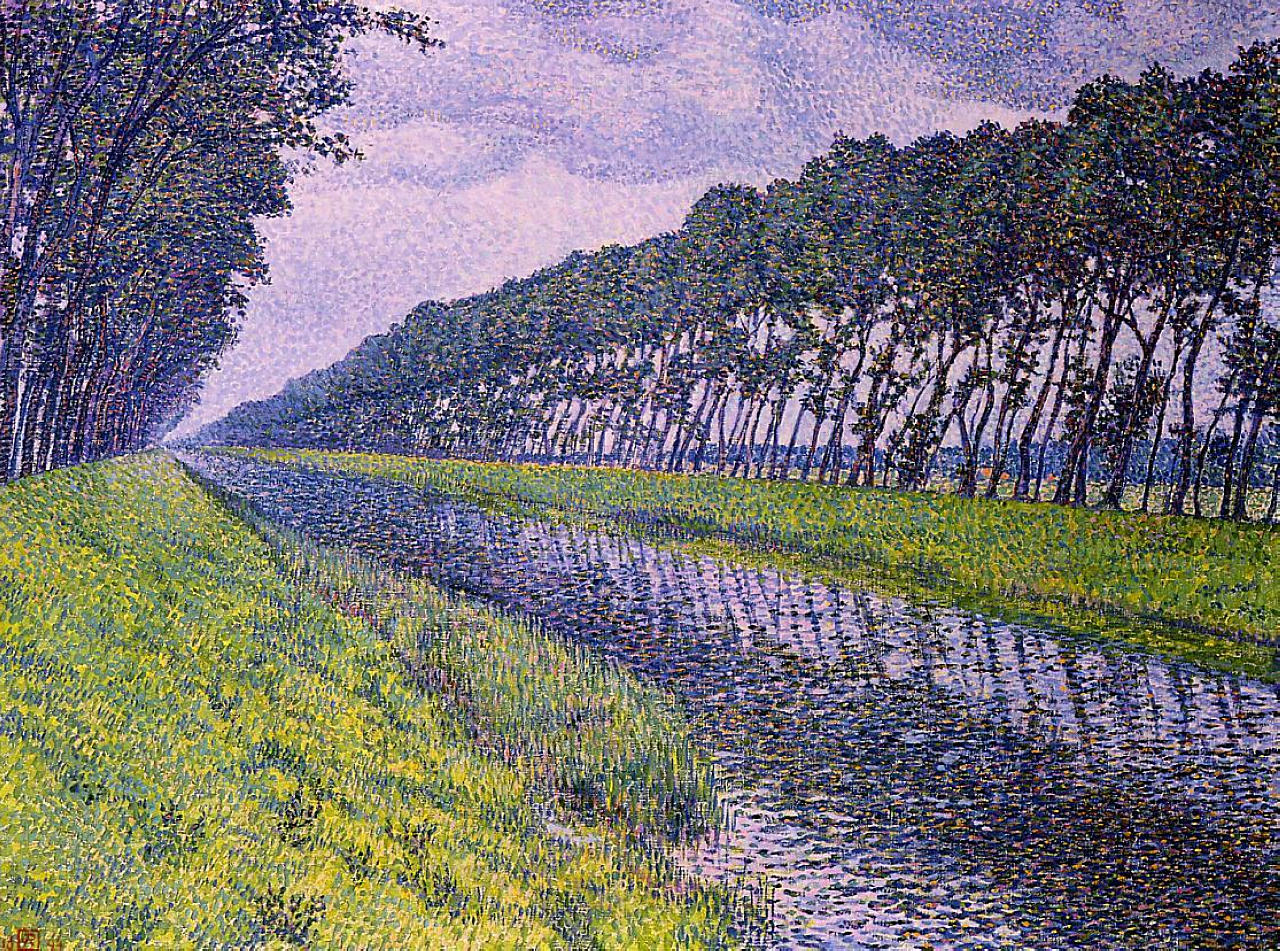
Théo van Rysselberghe (1862-1926), Canal in Flanders (1894), oil on canvas, 152.4 x 203.2 cm, Private collection. WikiArt.

Théo van Rysselberghe’s eye-catching geometry in his Canal in Flanders (1894) combines radical perspective projection, intense rhythm and meticulous broken reflections.

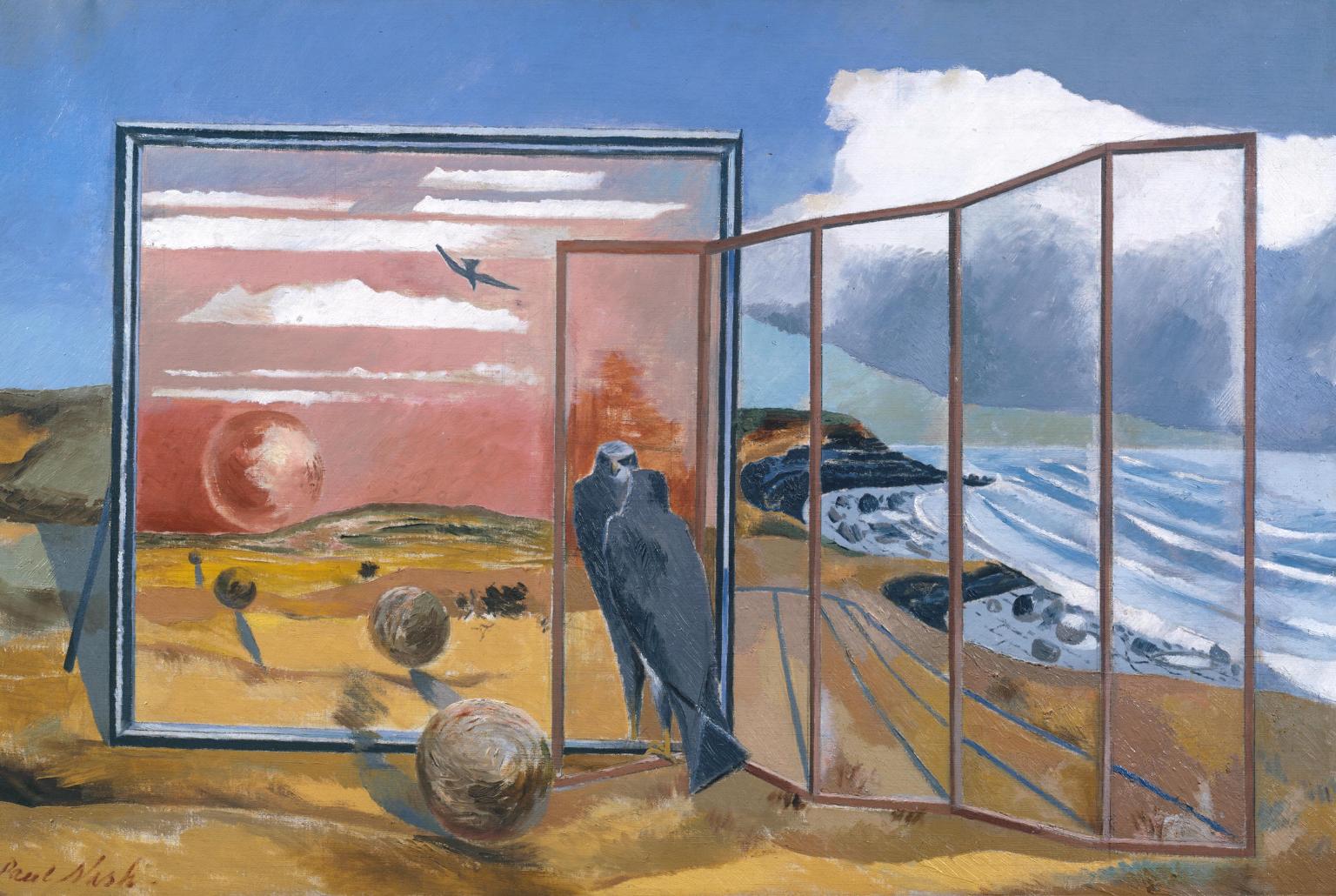
Reflections are also used by some of the Surrealists.

Landscape from a Dream 1936-8 by Paul Nash 1889-1946
Paul Nash (1892–1946), Landscape from a Dream (1936-38), oil on canvas, 67.9 x 101.6 cm, The Tate Gallery (Presented by the Contemporary Art Society 1946), London. © The Tate Gallery and Photographic Rights © Tate (2016), CC-BY-NC-ND 3.0 (Unported), http://www.tate.org.uk/art/artworks/nash-landscape-from-a-dream-n05667

Paul Nash’s Landscape from a Dream (1936-38) was inspired by Freud’s theories of the significance of dreams as reflections of the unconscious. This collection of incongruous objects is gathered on the Dorset coast, a landscape Nash associated with the praeternatural. Dominating the scene is a large framed planar mirror, almost parallel with the picture plane. Stood at the right end of the mirror is a hawk staring at its own reflection, which Nash explained is a symbol of the material world. To the left, the mirror reflects several floating spheres, referring to the soul. The reflection shows that behind the viewer is a red sun setting in a red sky, with another hawk flying high, away from the scene.

I hope you’ll join me in the reflections to come in this series.

❌
❌