Normal view

There are new articles available, click to refresh the page.
Before yesterdayMain stream

Paintings of British Cathedrals and Abbeys: Thomas Girtin

By: hoakley
21 February 2026 at 20:30

This weekend I’m touring the cathedrals and abbeys of Britain in the company of some of their finest artists. Today I concentrate on the best of them, whose life was cut short when he died at the age of just twenty-seven as a result of asthma. Thomas Girtin was a contemporary, friend and competitor of JMW Turner, but when it came to painting cathedrals there was no contest.

girtinrochestern90
Thomas Girtin (1775–1802), Rochester, Kent: from the North (c 1790), watercolour with pen and black ink over graphite on beige, thick, moderately textured, cartridge paper, 31.8 x 46.4 cm, Yale Center for British Art, New Haven, CT. Wikimedia Commons.

Girtin was just fifteen when he painted the fine sky and effective aerial perspective in his view of Rochester, Kent: from the North (c 1790), although some have argued that he might have been a couple of years older. The cathedral shown here was built between 1079-1238, and its central tower was raised in 1343, just before the Black Death struck.

girtinlichfieldcathedral94
Thomas Girtin (1775–1802), Lichfield Cathedral, Staffordshire (1794), watercolour with pen in gray ink over graphite on moderately thick, moderatetly textured, brown, wove paper, 38.3 x 28.9 cm, Yale Center for British Art, New Haven, CT. Wikimedia Commons.

Although he had possibly travelled to paint earlier, Girtin’s first major painting tour with his employer James Moore was of the Midlands in 1794. They visited Warwick, Stratford, Lichfield, Peterborough, and Lincoln; this fine view of Lichfield Cathedral (1794) was one of its successes, and already secured him a place alongside the better watercolour landscape painters of the day. This cathedral was built between the early thirteen century and 1330, and underwent extensive renovation following damage during the English Civil War.

girtinglasgowcathedral95
Thomas Girtin (1775–1802), Glasgow Cathedral (1794-1795), watercolour with pen in brown and black ink over graphite on moderately thick, slightly textured, cream, wove paper mount, 29.8 x 24.9 cm, Yale Center for British Art, New Haven, CT. Wikimedia Commons.

Girtin’s skills of composition were well in advance of his experience and time. This view of Glasgow Cathedral from 1794-5 shows one of the lesser-known cathedrals in Britain, most of whose structure dates from its rebuilding during the thirteenth century, making it the oldest cathedral in mainland Scotland, and the oldest building in the city.
girtinlincolncathedral95
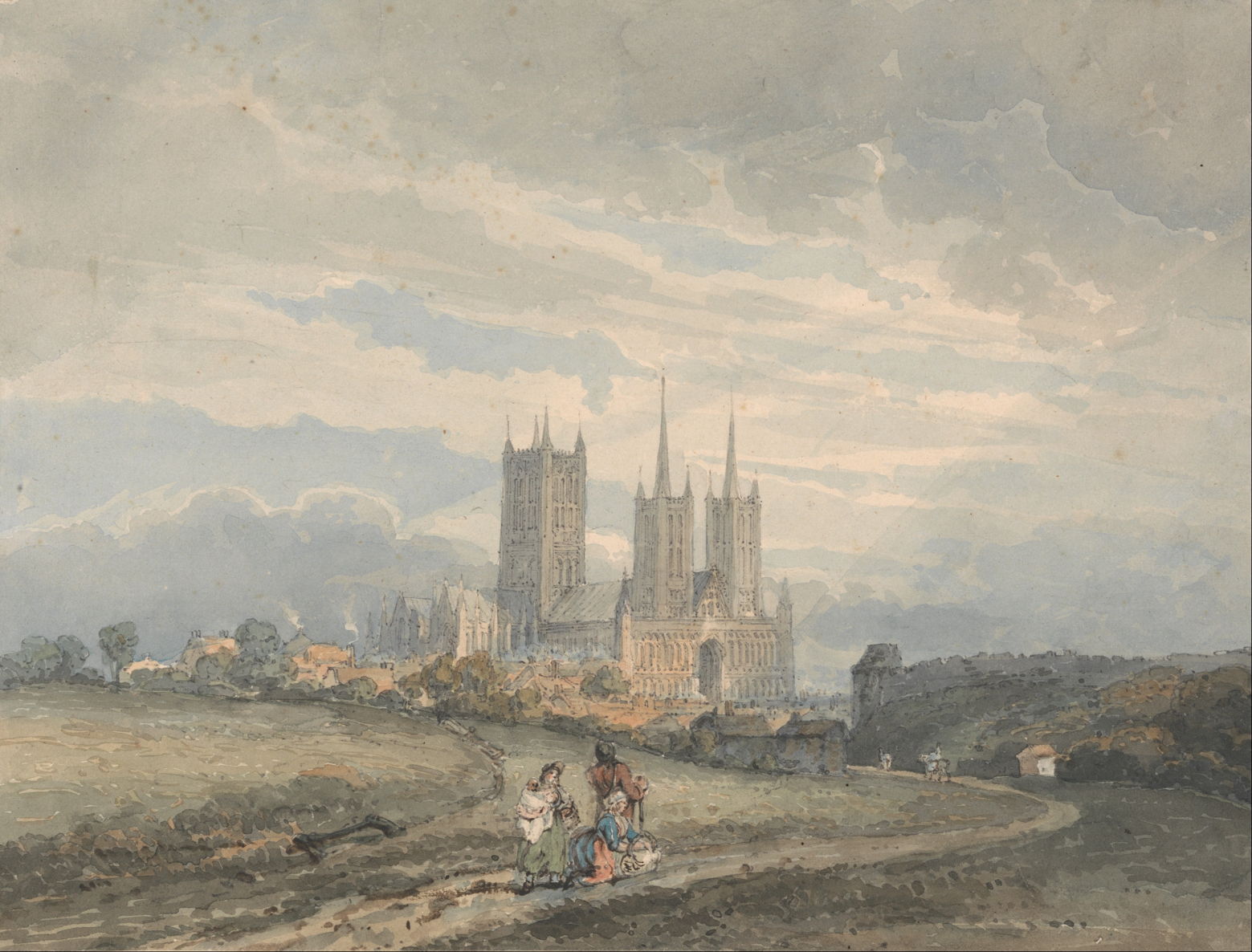
Thomas Girtin (1775–1802), Lincoln Cathedral (c 1795), watercolour with pen in black ink over graphite white gouache on mounted on, moerately thick, moderately textured, beige, laid paper, 23.7 x 28.9 cm, Yale Center for British Art, New Haven, CT. Wikimedia Commons.

Painted in the same tour, this view of Lincoln Cathedral from about 1795 marks his transition from topographic illustration to pure watercolour, with the last vestiges of ink almost gone. This cathedral had first been built in 1092, but was badly damaged by an earthquake in 1185, following which it was rebuilt, and largely completed by 1311.

cooperinteriorlincolncathedral
Colin Campbell Cooper (1856–1937), The Interior of Lincoln Cathedral (c 1905), other details not known. Wikimedia Commons.

A century later, it was visited by the American skyscraper artist Colin Campbell Cooper. The Interior of Lincoln Cathedral shows the area of the organ, which had only recently been installed by the classical organ-builder Henry Willis. Cooper captures particularly well the lofty and distinctive vaulted ceiling and incoming shafts of light.
girtindurhamcathedralcastle00
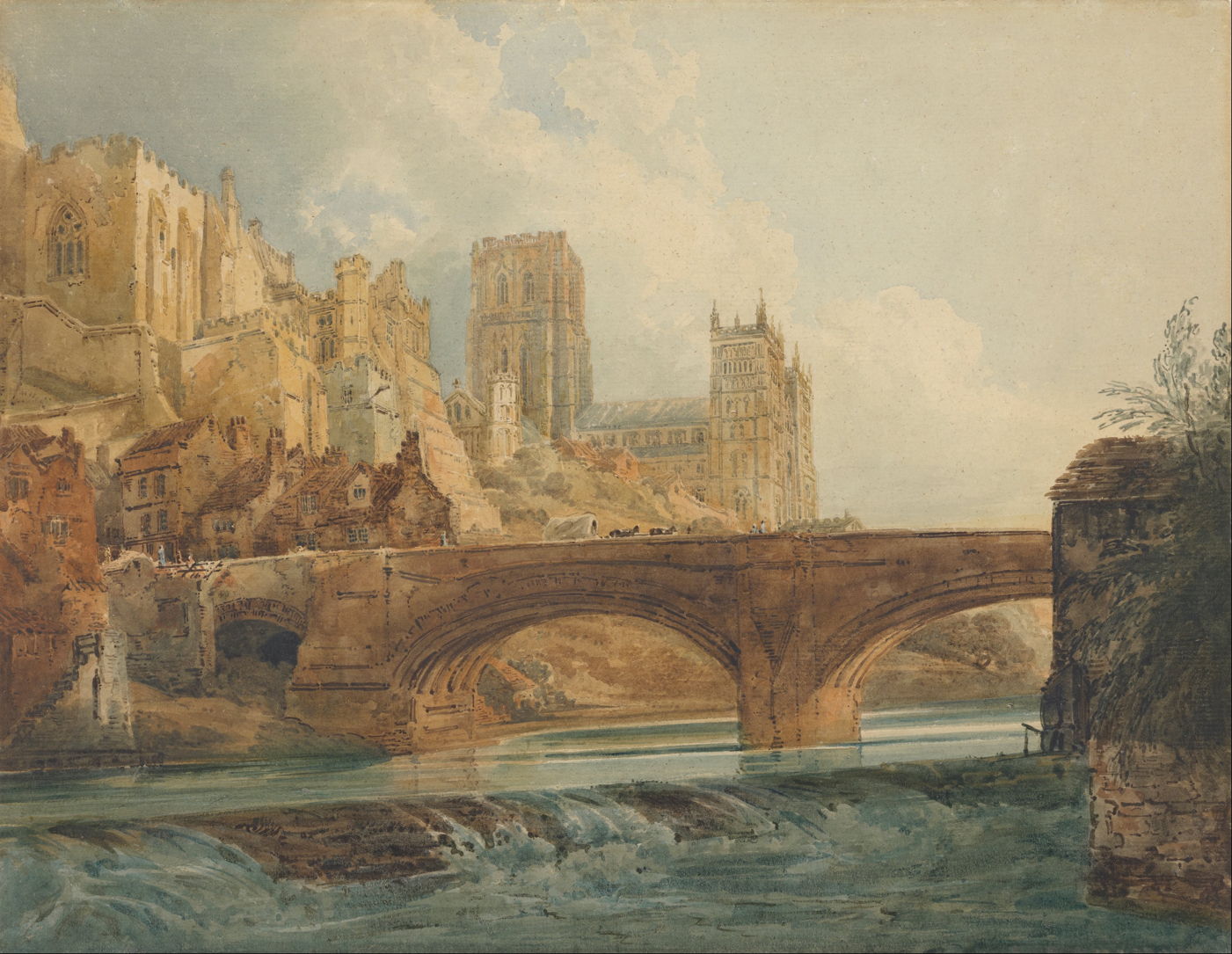
Thomas Girtin (1775–1802), Durham Cathedral and Castle (c 1800), watercolour over pencil heightened with gum arabic, 37.5 x 48.9 cm, Getty Center, Los Angeles, CA. Wikimedia Commons.

Girtin’s wonderful view of Durham Cathedral and Castle from about 1800 contains as much detail as his earlier views, but is better integrated into the whole instead of competing for the viewer’s attention. The cathedral is the more distant of the two massive buildings overlooking the River Wear. Much of it was constructed between 1093-1133, with further additions made until 1490.

girtinjedburghabbey93
Thomas Girtin (1775–1802), Jedburgh Abbey, Roxburghshire (c 1793), watercolour over graphite, and gray wash on moderately thick, slightly textured, beige, wove mount paper, 24.8 x 29.7 cm, Yale Center for British Art, New Haven, CT. Wikimedia Commons.

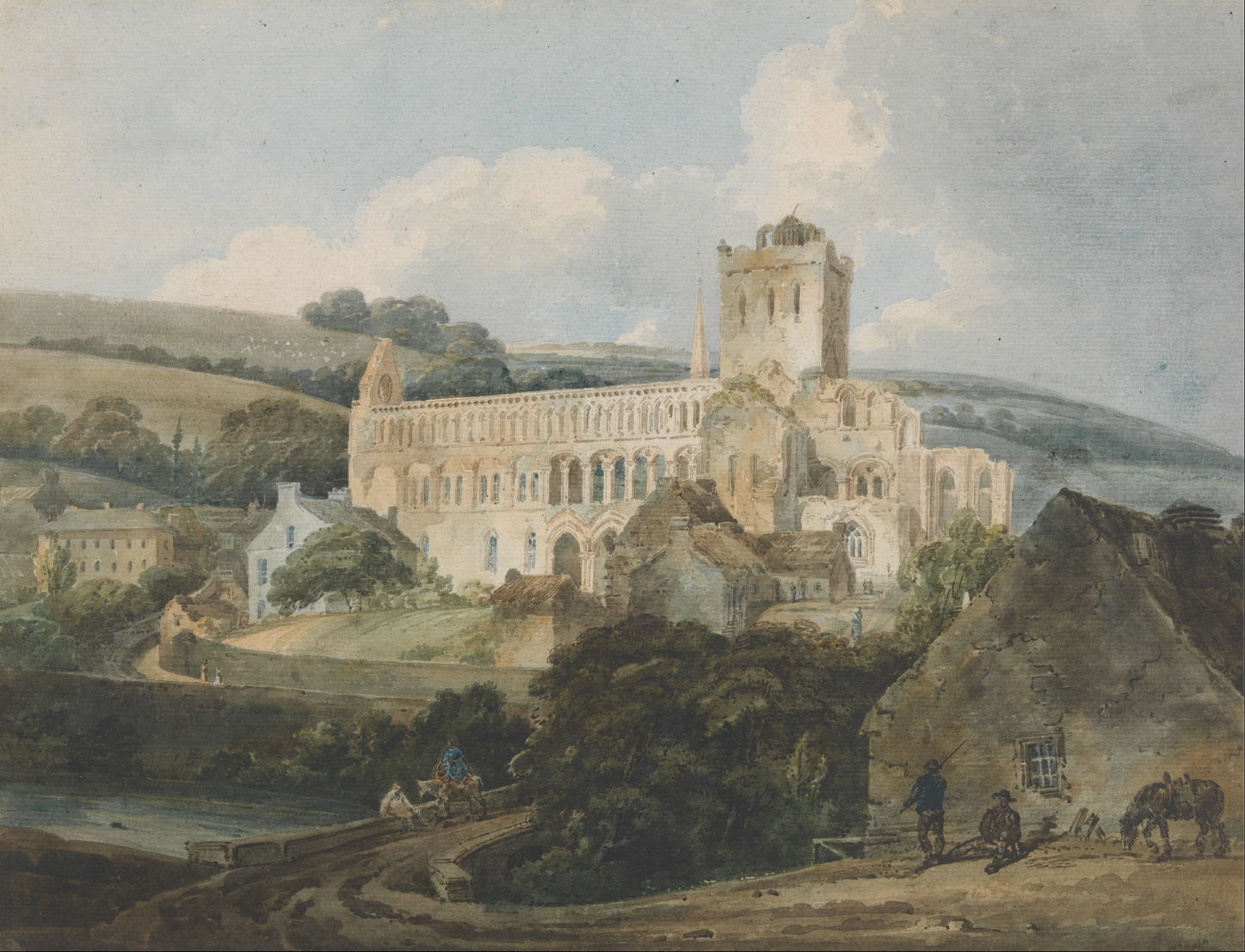
These two paintings of Jedburgh Abbey show how Girtin’s art matured during those years. He painted Jedburgh Abbey, Roxburghshire above in about 1793, when he was just eighteen, and Jedburgh Abbey from the South East below in 1800, when he had reached twenty-five. This is a former Augustinian abbey just north of the border between Scotland and England. Much of it was built between about 1153-1285, and it was disestablished and largely abandoned in 1560, with the Scottish Reformation.
girtinjedburghabbeyse00
Thomas Girtin (1775–1802), Jedburgh Abbey from the South East (1800), watercolour, gouache and graphite on medium, cream, moderately textured laid paper, 66 x 79.1 cm, Yale Center for British Art, New Haven, CT. Wikimedia Commons.
girtinriponminster00
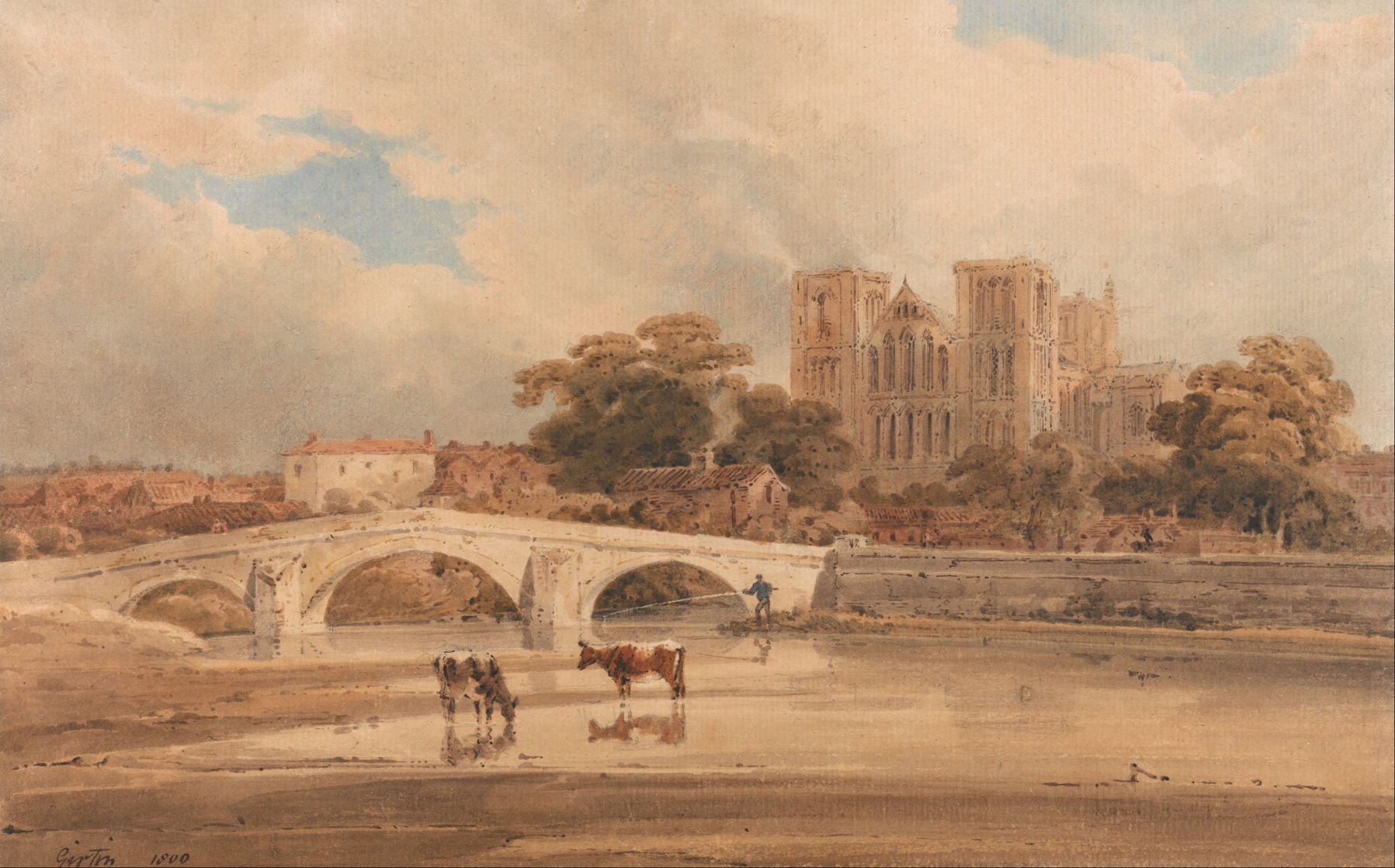
Thomas Girtin (1775–1802), Ripon Minster, Yorkshire (1800), watercolour with pen in black and brown ink, with scraping over graphite on medium, slightly textured, beige, laid paper, 31.4 x 47.6 cm, Yale Center for British Art, New Haven, CT. Wikimedia Commons.

In Girtin’s Ripon Minster, Yorkshire (1800), it’s the features of the river, its bridge, cattle, and a single angler, that steal the gaze, rather than the bulk of the minster behind. Now commonly known as Ripon Cathedral, this was a minster util 1836. The present building was started in 1160, and progressively modified and expanded until 1547.

Japonisme in painting: 1889-1918

By: hoakley
8 February 2026 at 20:30

Hokusai’s woodcuts including The Great Wave of Kanagawa from 1831 may now be most strongly associated with the vogue for Japonisme that swept across Europe in the late nineteenth century, but the prints of others were equally important. Among those were the works of Utagawa Hiroshige (歌川広重) (1797–1858).

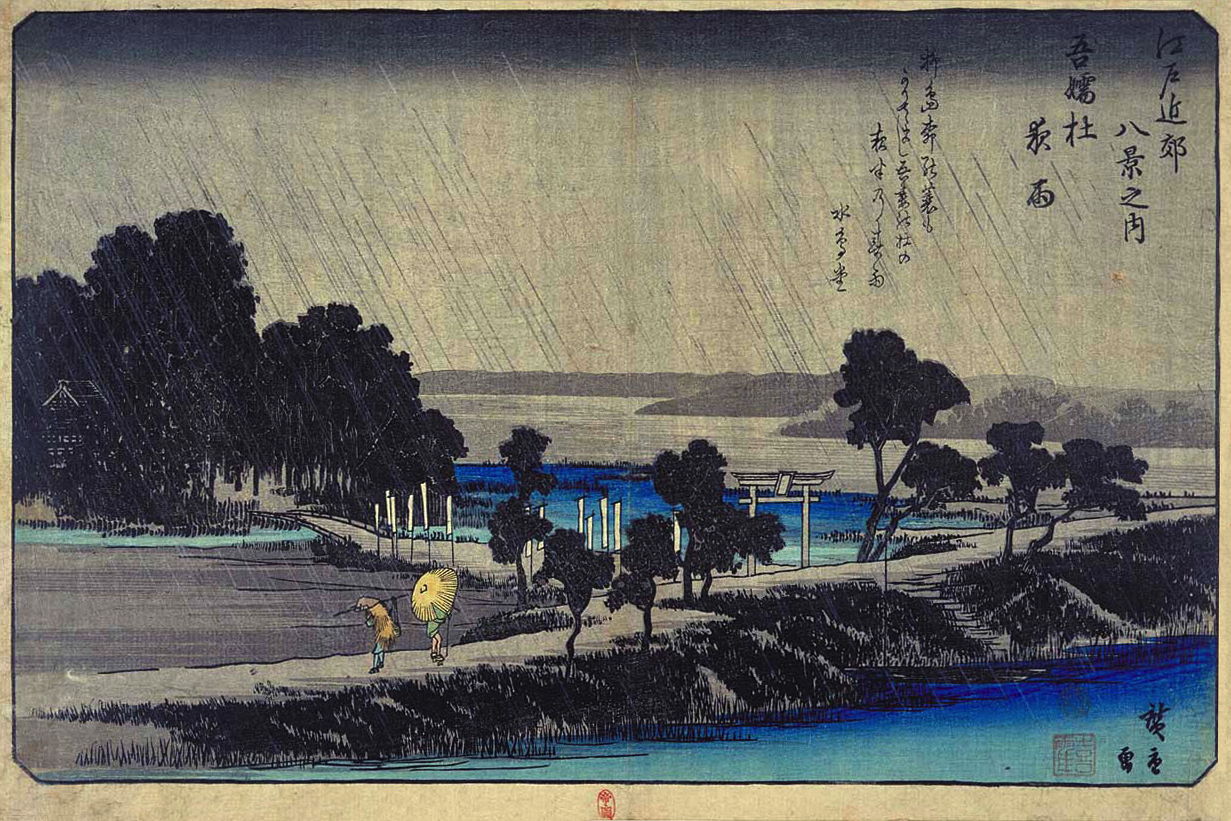
Utagawa Hiroshige (歌川広重) (1797–1858), Evening Rain at Azumi-no Mori (吾嬬杜夜雨) (Edo, 1837-8), woodblock print. Wikimedia Commons.

It’s this print by Hiroshige, Evening Rain at Azumi-no Mori (吾嬬杜夜雨) (Edo, 1837-8), that is now thought to have been influential in Vincent van Gogh’s Rain – Auvers (1890), shown below, that he painted just a few days before his death.

vangoghrainauvers
Vincent van Gogh (1853-1890), Rain – Auvers (1890), oil on canvas, 50.3 x 100.2 cm, National Museum of Wales, Cardiff, Wales. Wikimedia Commons.
bonnardstorkfrogs
Pierre Bonnard (1867-1947), Stork and Four Frogs (c 1889), distemper on red-dyed cotton fabric in a three paneled screen, 159.5 x 163.5 cm, Private collection. The Athenaeum.

Japonisme came to dominate Pierre Bonnard’s early paintings too. Probably the earliest of these is this exquisite three-panelled screen of The Stork and Four Frogs completed around 1889. To mimic the appearance of east Asian lacquerware, Bonnard painted this in distemper on red-dyed cotton fabric. Its story is, though, thoroughly European, based on the fable retold by Jean de la Fontaine of The Frogs who Demand a King.

As Europeans were enthralled by Japanese woodcuts, so more Japanese artists travelled to Europe to learn painting styles and techniques. The son of a samurai in Kagoshima (in the far south-west of Japan), Viscount Kuroda Seiki (黒田 清輝) (Kuroda Kiyoteru) moved to Tokyo, where he first learned English, then switched to French. He went to Paris in 1884 to study law, being supported by his brother-in-law, a member of the Japanese diplomatic mission in France. However after two years there, he changed to study painting in the atelier of Raphael Collin, where he met Kume Keiichirō, also a student of Collin’s; together they explored plein air painting. In 1890 he moved to the international artists’ colony at Grez-sur-Loing, south of Paris, which had been made popular by masters such as Jules Bastien-Lepage.

gauguinseaweedgatherers1
Paul Gauguin (1848–1903), Seaweed Gatherers I (1888-90), gouache and graphite on grey board, 27.6 × 32.4 cm, Private collection. Wikimedia Commons.

In France, Hokusai’s Great Wave found greater interest with Paul Gauguin and his circle who gathered first in Pont-Aven then Le Pouldu in Brittany. Gauguin’s gouache Seaweed Gatherers I (1888-90) shows two Breton women gathering seaweed on the beach. Behind them is a huge wave, its spume formed into a claw, which could only have come from Hokusai.

gauguinondine
Paul Gauguin (1848–1903), In the Waves, or Ondine (I) (1889), oil on canvas, 92.5 x 72.4 cm, Cleveland Museum of Art, Cleveland, OH. Wikimedia Commons.

In 1889, Gauguin painted two works showing Ondine in the sea among waves. The first, known now as In the Waves, or Ondine (I), also refers to Hokusai.

lacombevorhorgreenwave
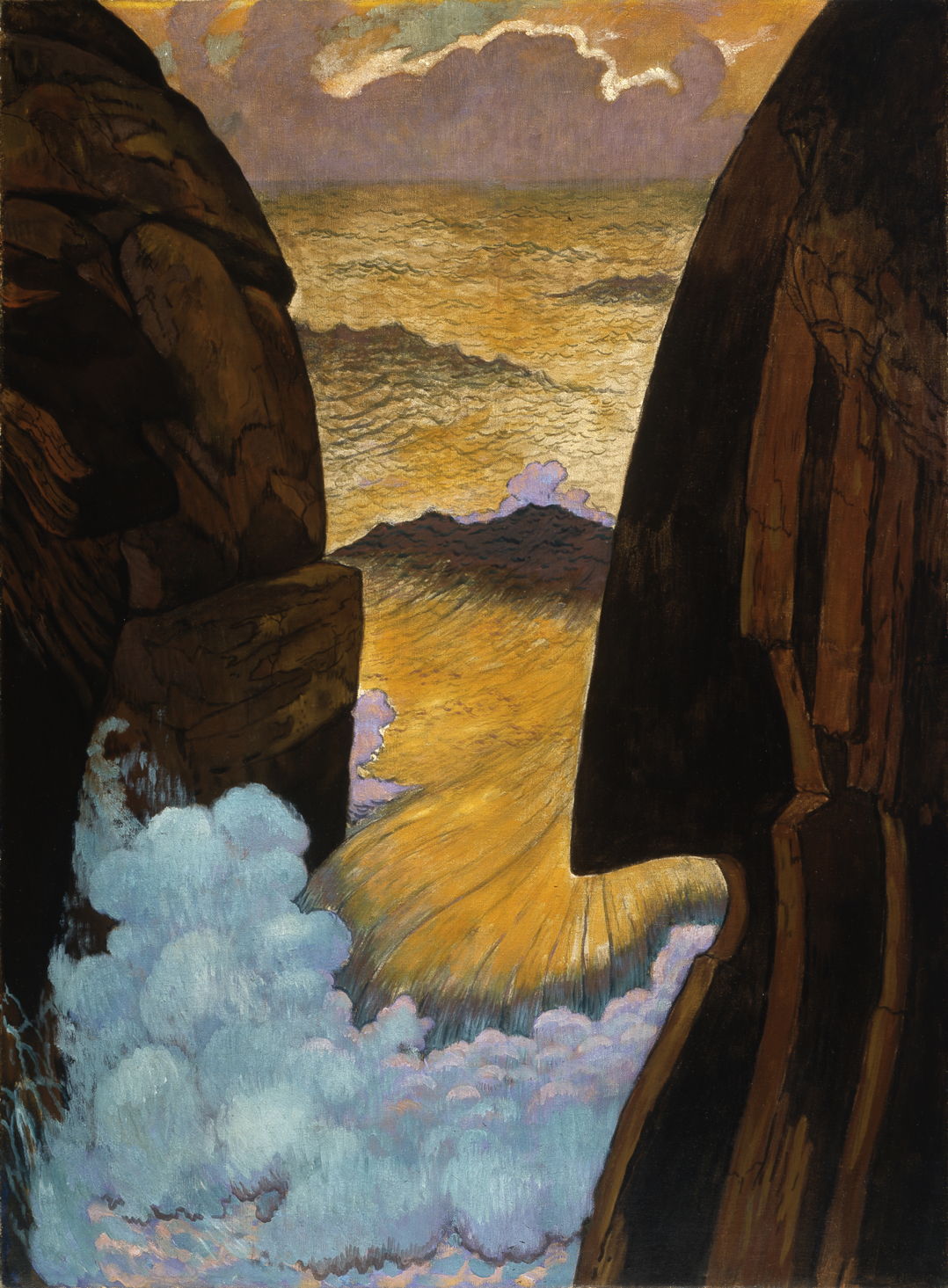
Georges Lacombe (1868–1916), Vorhor, The Green Wave (1896), egg tempera on canvas, 100 x 72 cm, Indianapolis Museum of Art, Indianapolis, IN. Image by Zambonia, via Wikimedia Commons.

The Nabi sculptor, and painter from Gauguin’s school, Georges Lacombe took Hokusai’s motif forward in several of his paintings. This is his treatment of Vorhor, The Green Wave in egg tempera, showing an Atlantic swell coming into the seacliffs of Vorhor near Camaret-sur-Mer in Brittany.

lacombevioletwave
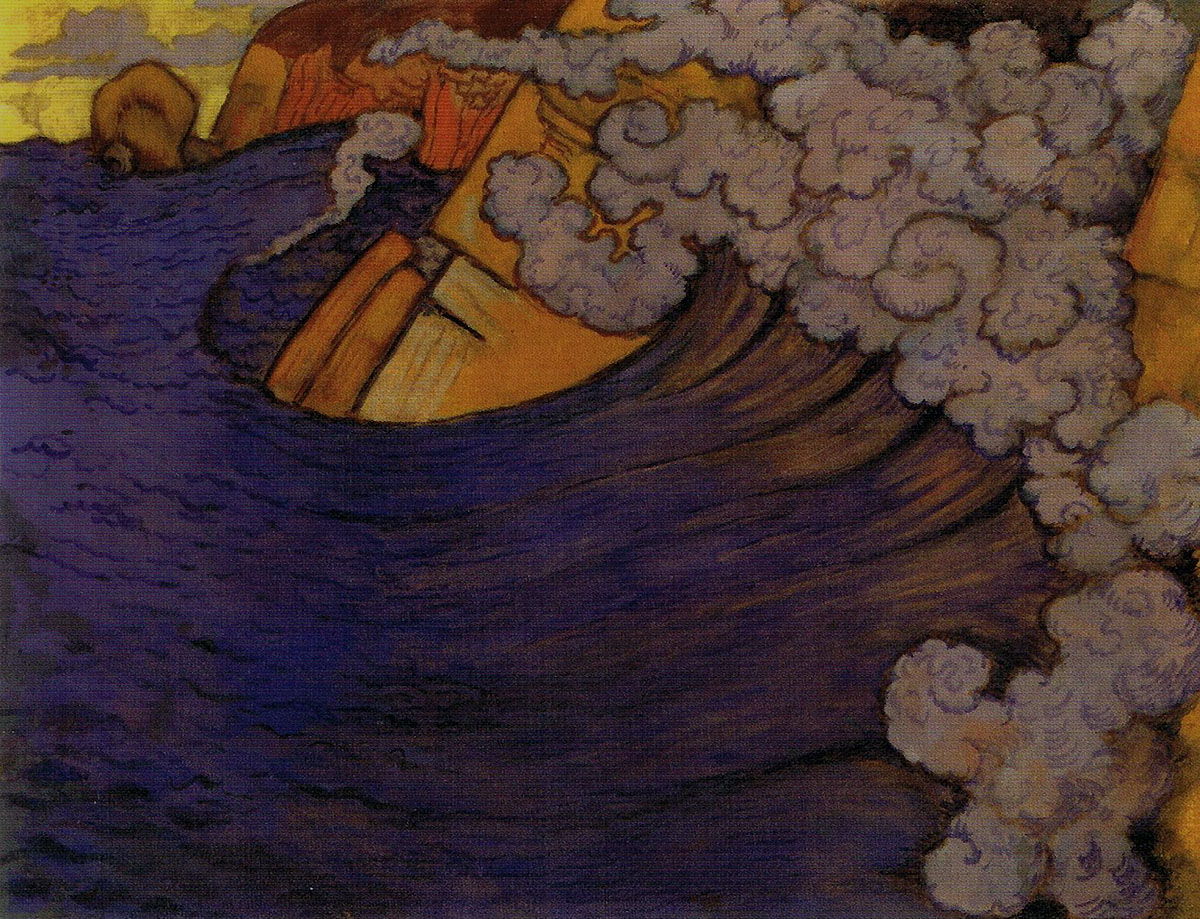
Georges Lacombe (1868–1916), The Violet Wave (1896-97), oil on canvas, 62.5 x 47.5 cm, Private collection. Wikimedia Commons.

Lacombe’s slightly later The Violet Wave also makes its influence abundantly clear.

bouguereauwave
William-Adolphe Bouguereau (1825–1905), The Wave (1896), oil on canvas, 121 x 160.5 cm, Private collection. Wikimedia Commons.

In that same year, even the notorious academic artist William-Adolphe Bouguereau joined Hokusai’s crowd of admirers, in The Wave.

As Japanese artists were studying in Europe, Westerners like Helen Hyde went to Japan. She made friends with an unrelated namesake, Josephine Hyde, and in 1899 the two travelled to Japan to learn Japanese print and painting techniques. Helen Hyde was soon making woodblock prints, which she learned from the Austrian Emil Orlik who was also living in Tokyo at the time.

hydeinteriordecoration
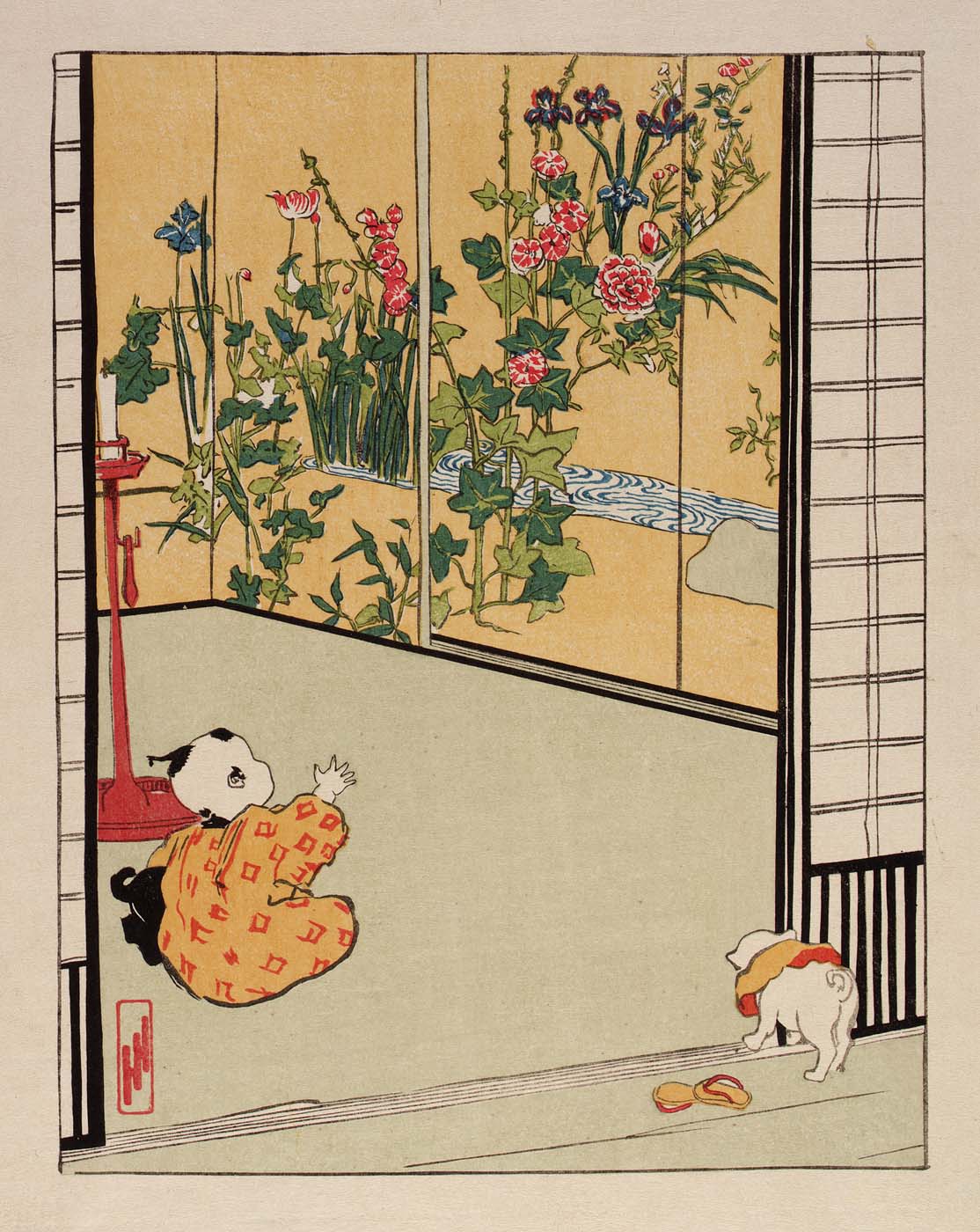
Helen Hyde (1868–1919), Interior Decoration (1900), print, dimensions not known, Smithsonian American Art Museum, Washington, DC. Wikimedia Commons.

Interior Decoration from 1900 shows how quickly Hyde learned the technique, and her fascination for Japanese art in everyday settings.

hydenewyearsdaytokyo
Helen Hyde (1868–1919), New Year´s Day in Tokyo (1912), print, dimensions not known, Smithsonian American Art Museum, Washington, DC. Wikimedia Commons.

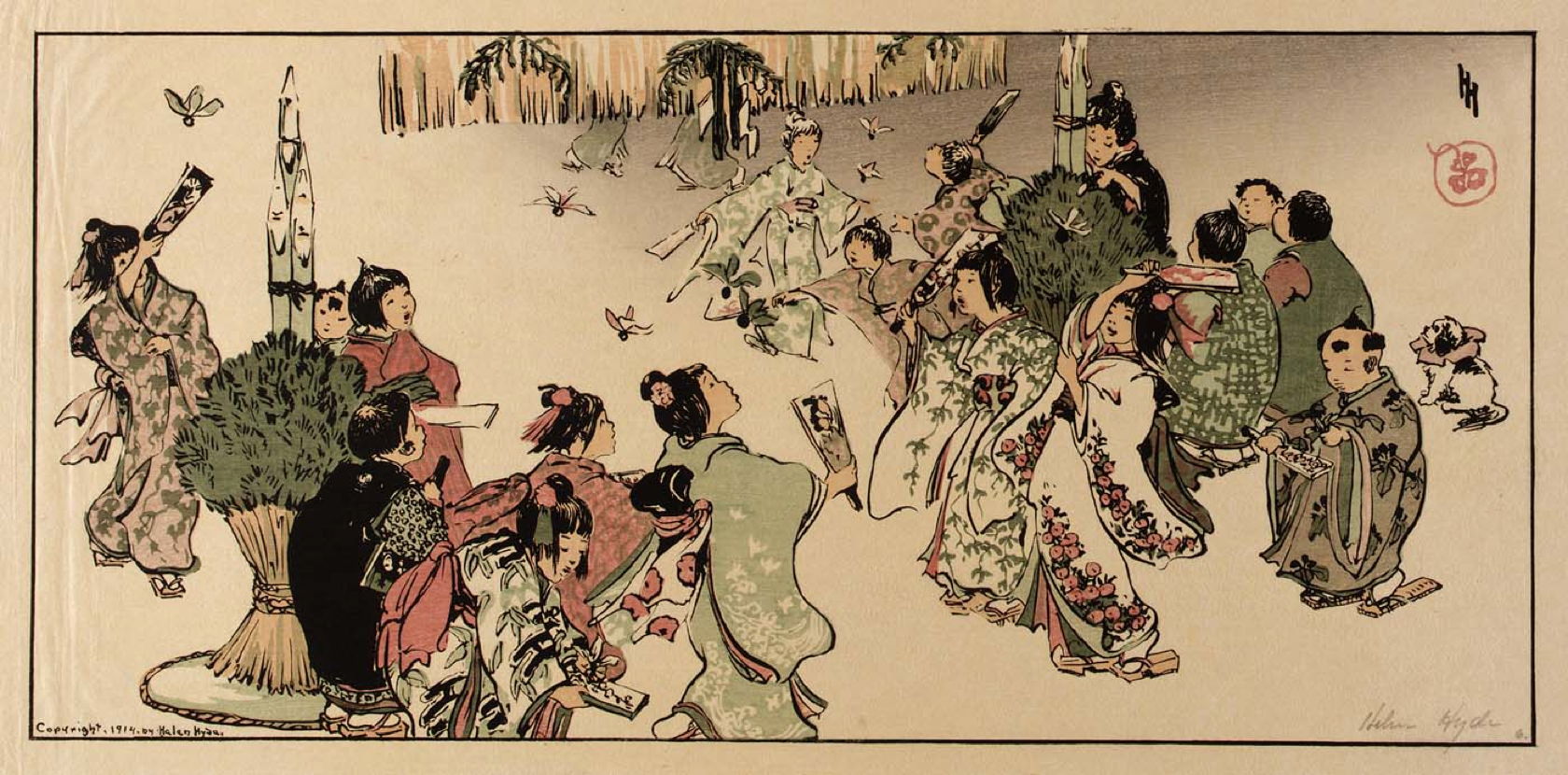
Hyde’s New Year´s Day in Tokyo, from 1912, is grander in conception, and a carefully composed print of key elements in the Japanese New Year celebrations.

coopersummer
Colin Campbell Cooper (1856–1937), Summer (1918), oil on canvas, 127 x 153 cm, Private collection. Wikimedia Commons.

My final example was painted in 1918, at the end of the First World War, far from the mud and blood of Europe’s battlefields. Colin Campbell Cooper’s Summer (1918) is inspired by Japonisme, fortified here by the east Asian influence of California, and by Monet’s paintings of his garden at Giverny, itself based on a Japanese water garden.

抄袭和借鉴的边界:从 SU7、Mega、mini 起,聊聊符号化设计_12.ylog

By: Steven
24 March 2025 at 07:20

这一期节目的录制时间是 2024 年 12 月底,当时 Toby 的新办公室刚装修完,我们从他正在开展的新工作开始,顺着「符号化」这个设计策略,聊到小米 SU7、理想 Mega 和新款 mini 的设计策略与执行。在这次对话中,我和 Toby 作为在设计行业一线做了二十年左右的设计师,一起探讨了各自对于「抄袭」和「借鉴」的理解和边界。

04:15 — 借鉴和抄袭之间有明确的边界吗?理想对 Mega 有信心和决心吗?为什么看上去几乎没变化的新 mini 反而是更激进的设计?小米 SU7 的决心比 Mega 大得多。相机消费者怎么看待和讨论「复刻」和「抄袭」的关系?谁在为「腰平取景器」买单?

21:45 — 为什么经典款的 1:64 小车模型永远最畅销?一句话区分抄袭与借鉴!

41:05 — 工业设计只聊造型是没有价值的!拍立得相纸是一门钻石生意。摄影玩家们对老品牌的溺爱,以及对新品牌的包容程度。符号是沟通和决策。好产品需要有专业认知的团队与设计师一起推进。

69:08 — 设计是沟通:我们跟德国车厂的合作经验。设计公司的模式高度同质化,是分裂复制的循环。未来的设计机构和品牌的区别:工作方式与理念的区别。

82:23 — 有趣的尺度怎么找?创作型 AI 是不是我们的敌人?

录制这期节目时,我嗓子哑了,如果觉得听感不佳,烦请见谅 🙂

欢迎在评论区留言发表你对本期节目的感受与看法。

|登场人物|

郑冬平 TobyBrainON 创始人,上善设计联合创始人

苏志斌:工业设计师,产品/设计咨询顾问

|相关图片|

Tesla Cybertruck

极氪 MIX(宝宝巴士)

新款 mini cooper

理想 Mega

小米 SU7

初照 M1 双反小相机

|拓展阅读|

BrainON 官网:www.brainon.design

初照:xiaohongshu.com/chuzhao

|BGM|

编曲:阿吉

演奏:阿吉

合成:阿吉

|相关链接|

若你所使用的播客客户端未能完整显示插图,或遇网络问题未能正常播放,请访问:

荒野楼阁 WildloG 的地址:https://suithink.me/zlink/podcast/

阅读设计相关的各类文章:https://suithink.me/zlink/idea/

|其他社交网络媒体|

苏志斌 @ 知乎|SUiTHiNK @ 即刻 / 微博

苏志斌SUiTHiNK @ Bilibili / YouTube / 小红书

|联络邮箱|

suithink.su@gmail.com

欢迎在 小宇宙、Spotify、YouTube、Apple Podcast 收听本节目,期待你的留言。

💾

❌
❌