Normal view

There are new articles available, click to refresh the page.
Before yesterdayMain stream

Painted stories of the Decameron: Overview and contents

By: hoakley
19 January 2026 at 20:30

Boccaccio’s Decameron is set in Florence at the height of the Black Death or plague of 1348. A group of seven young women and three young men have fled the piles of corpses in the city and taken refuge in a mansion in the surrounding country. To pass the time while they wait for the epidemic to abate, they agree to tell one another stories, ten each day, for ten ‘working’ days over a fortnight.

This series retells six of those that are well-known in their paintings, with a bonus at the end.

postiglionedecameron
Salvatore Postiglione (1861–1906), Scene of the Narration of the Decameron (date not known), oil on canvas, 100 x 151 cm, location not known. Wikimedia Commons.

Introduction

Day 4, Story 1

Told by Fiammetta about those whose love ended unhappily.

meighismunda
Bernardino Mei (1612-1676), Ghismunda (1650-59), oil on canvas, 66.5 x 47.5 cm, Pinacoteca nazionale di Siena, Siena, Italy. Wikimedia Commons.

Bernardino Mei’s Ghismunda from 1650-59 captures the resolute response of Ghismonda, as she stands squeezing her lover’s heart in her hand, tears still on her face.

A father’s revenge

Day 4, Story 5

Told by Filomena about those whose love ended unhappily.

millaisisabella
John Everett Millais (1829–1896), Isabella (Lorenzo and Isabella) (1848-49), oil on canvas, 103 x 142.8 cm, Walker Art Gallery, Liverpool, England. Wikimedia Commons.

John Everett Millais’ Isabella (Lorenzo and Isabella) from 1848-49 is based on Keats’ poetic retelling, and one of the earliest Pre-Raphaelite paintings.

Set at an imaginary family meal, it shows Lisabetta and her lover Lorenzo, with her three brothers. Lorenzo is sharing a blood orange with Lisabetta, white roses and passion flowers climbing from behind their heads. The dog, a surrogate for Lorenzo, is being petted by Lisabetta, but one of her brothers aims a kick at it. Other symbols are shown of the plot to kill Lorenzo: a brother staring at a glass of red wine, spilt salt on the table, and a hawk pecking at a white feather. The pot of basil is already on the balcony, awaiting Lorenzo’s head.

The pot of basil

Day 5, Story 1

Told by Panfilo about the adventures of lovers who survived calamities or misfortunes and reached a state of happiness.

leightoncymoniphigenia
Frederic, Lord Leighton (1830-1896), Cymon and Iphigenia (1884), oil on canvas, 218.4 x 390 cm, Art Gallery of New South Wales, Sydney, Australia. Wikimedia Commons.

Lord Leighton’s Cymon and Iphigenia from 1884 shows Iphigenia stretched out languidly in her sleep, in the last warm light of the day; behind her the full moon is just starting to rise. Cymon stands in shadow on the right, idly scratching his left knee, gazing intently at Iphigenia. But there is much more to Boccaccio’s story than that.

Abducted brides

Day 5, Story 8

Told by Filomena about the adventures of lovers who survived calamities or misfortunes and reached a state of happiness.

botticellinastagiodeglionesti3
Sandro Botticelli (1445–1510), The Story of Nastagio Degli Onesti III (1482-83), tempera on panel, 84 x 142 cm, Museo Nacional del Prado, Madrid, Spain. Wikimedia Commons.

The third painting in Botticelli’s series of four shows a breakfast banquet at which the ghost of a dead woman is attacked by dogs, and is about to be caught and killed in front of Nastagio’s guests. Nastagio used this ghostly spectacle to persuade the woman he loved to stop spurning his advances.

Nastagio degli Onesti’s breakfast

Day 10, Story 5

Told by Emilia about those who have performed liberal or munificent deeds in the cause of love, or for other reasons.

stillmanenchantedgardenmesseransaldo
Marie Spartali Stillman (1844–1927), The Enchanted Garden of Messer Ansaldo (1889), watercolour and gouache on paper mounted on panel, 72.4 × 102.9 cm, Private collection. Image courtesy of Julian Hartnoll, Pre‑Raphaelite Inc., via Wikimedia Commons.

Marie Spartali Stillman’s The Enchanted Garden of Messer Ansaldo from 1889 shows Madonna Dianora visiting the magical garden set up by Messer Ansaldo with its flowers and fruit, in the midst of snow during harsh January weather.

Ansaldo’s enchanted garden

Day 10, Story 10

Told by Dioneo about those who have performed liberal or munificent deeds in the cause of love, or for other reasons.

This is a re-telling of the folk story of Griselda.
anonstorygriselda2
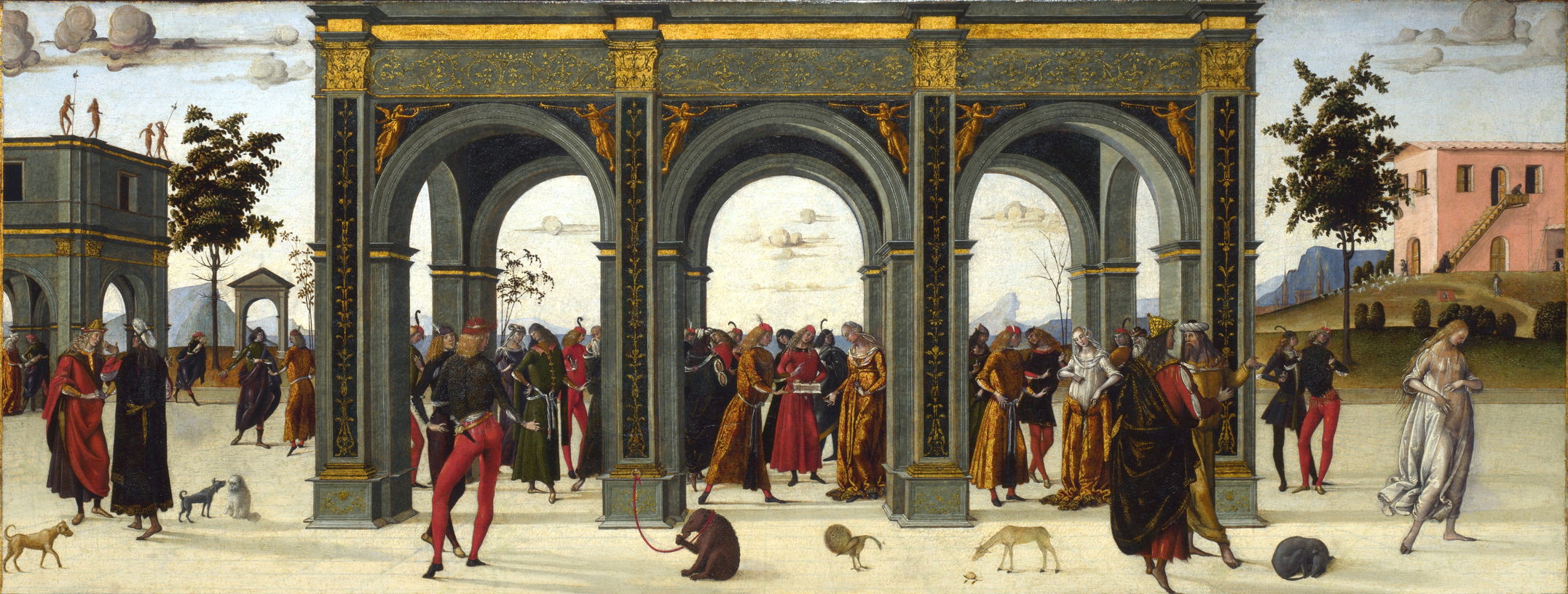
Master of the Griselda Legend (fl 1490-1500), The Story of Griselda, Part 2: Exile (1494), oil and tempera on wood, 61.6 x 154.3 cm, The National Gallery, London. Wikimedia Commons.

The second panel of a series of three is set in the grand surroundings of the house of Gualtieri, Griselda’s husband. At the left edge, Griselda’s infant is taken from her to be killed. In the centre, she is shown a forged Papal dispensation dissolving her marriage, then to the right she is removing her fine clothes prior to leaving Gualtieri’s house. At the far right she is barefoot, wearing just her shift, returning to her father’s house to work as a shepherdess.

Griselda’s suffering

101st Story, Day 4, Introduction

A bonus, the hundred and first story is buried in Filostrato’s introduction to the fourth day. This is the best-known of all the stories in the Decameron as it has made its way into the French language, through one of La Fontaine’s fables.

lancretbrotherphilippesgeese
Nicolas Lancret (1690–1743), Brother Philippe’s Geese (c 1736), oil on copper, 27..3 x 35.2 cm, The Metropolitan Museum of Art (Purchase, Walter and Leonore Annenberg and The Annenberg Foundation Gift, 2004), New York, NY. Courtesy of The Metropolitan Museum of Art.

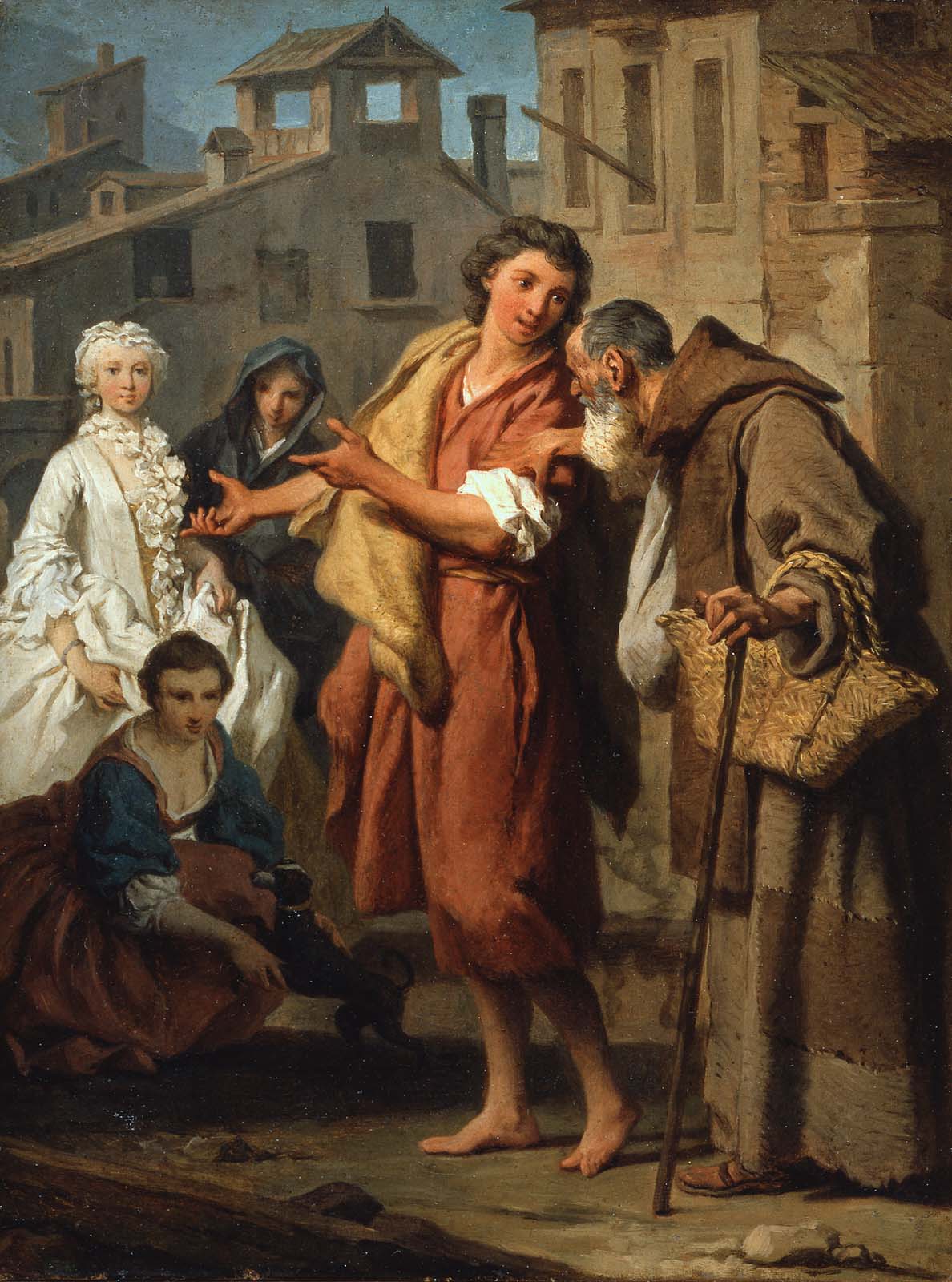
In about 1736, Nicolas Lancret painted this tale in oil on copper, as one of a pair, among a larger group of his paintings of La Fontaine’s fables.

Brother Philippe’s Geese

Painted stories of the Decameron: Brother Philippe’s Geese

By: hoakley
12 January 2026 at 20:30

Boccaccio’s Decameron consists of a hundred stories told ten each day for a total of ten days. But there’s a bonus, the hundred-and-first story buried in Filostrato’s introduction to the fourth day. In some ways, this is the best known of all these stories as it has made its way into the French language, through one of La Fontaine’s fables, and is generally known as Brother Philippe’s Geese. Filostrato, though, claims this isn’t a complete story, only part of one.

Filippo Balducci was a good man, knowledgeable, and deeply in love with his wife, who was equally in love with him. She died tragically young, when their only child, a son, was but two years old. Filippo was broken by this loss, and decided to withdraw from life to devote his remaining years to the service of God.

He therefore gave all his possessions to charity, and went to live in a cave on the slopes of Mount Asinaio with his young son. For many years, he kept his son in the cave, seeing only the walls around him, their meagre possessions, and his father. From time to time, Filippo travelled alone down to the city of Florence, where generous people gave him the small things that he needed to live, but his son always remained in their cave.

When Filippo’s son reached the age of eighteen, and his father was preparing to travel down to Florence again, the son asked his father if he could accompany him. He argued that the time would come when his father was no longer able to undertake the journey, so it was important that the younger man learned what to do. Filippo agreed, and the two went down to the city together.

The son had never seen another living thing apart from his father, and was taken aback when he saw the crowded buildings and bustle of Florence. He repeatedly asked his father about the new things which he saw, and what each was called.

The pair then came across a group of beautiful young ladies who had just been to a wedding. The son asked his father what they were, but Filippo just told him to keep looking at the ground, as they were evil. His son wasn’t content with that, and asked his father again what they were called. At a loss for words, Filippo said that they were goslings.

The son immediately lost interest in everything else in the city, and asked his father to get him one of those goslings. Filippo told him again that they were evil, to which his son said that he couldn’t see any evil in them, and pleaded again for them to take a gosling back so that he could pop things in its bill.

Filippo told his son that their bills are not where the son might think, and that they required a special diet, a very ribald remark that abruptly terminated Filostrato’s story.

La Fontaine’s fable, the first in his second book, is a faithful retelling of this abbreviated story, but omits the double entendre of the punchline, which is perhaps just as well given his readership when it was first published in 1668. As those fables became popular throughout France and Europe, they attracted the attention of artists, and this has been painted at least thrice now.

boucherbrotherphilippesgeese
François Boucher (1703-1770), Brother Philippe’s Geese (c 1720-28), gouache, 21 x 42 cm, Musée des Beaux-Arts et d’Archéologie de Besançon, Besançon, France. The Athenaeum.

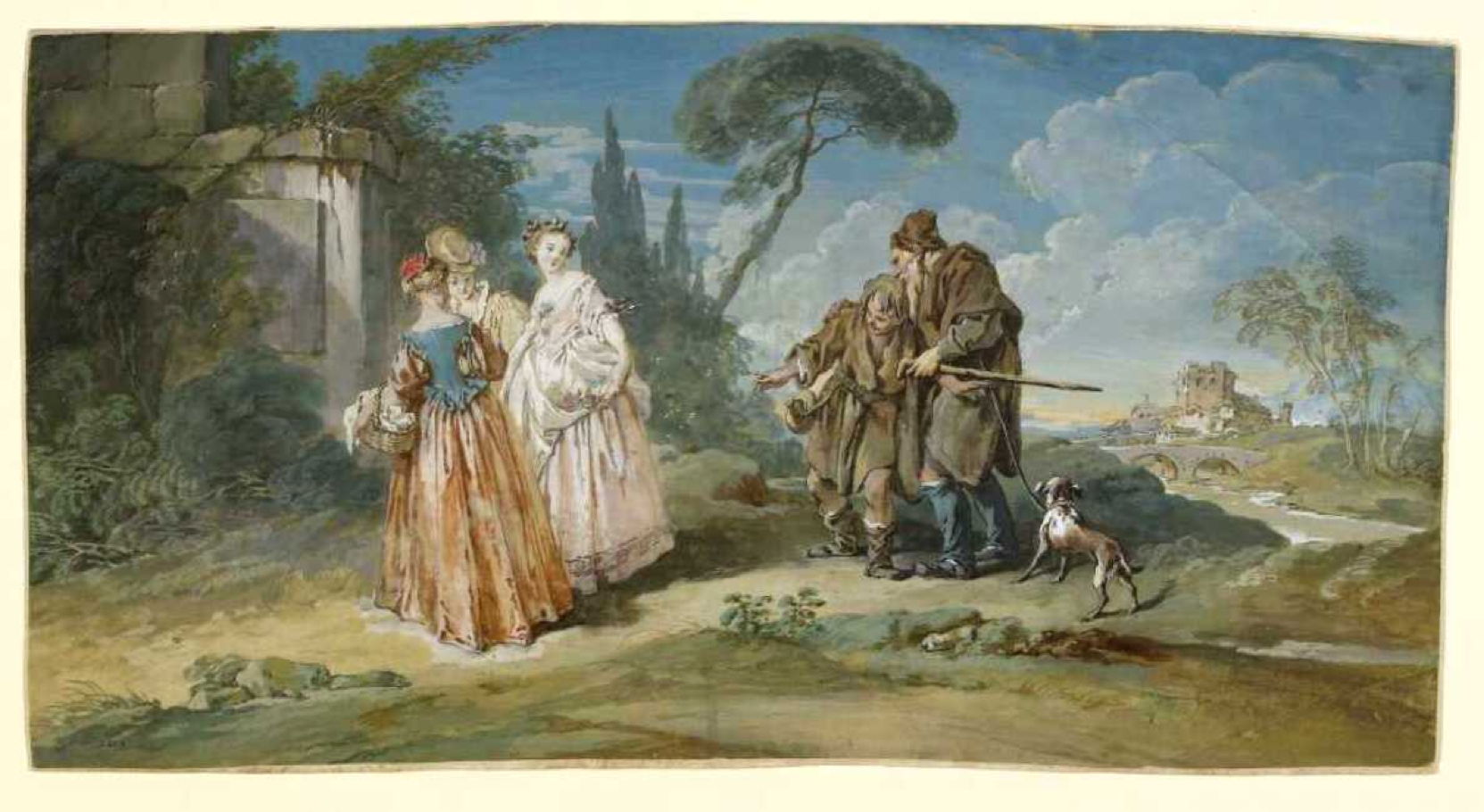
The first painting is this small gouache by François Boucher from about 1720-28, with its marked contrast in the dress between the reclusive pair and the goslings or geese.

lancretbrotherphilippesgeese
Nicolas Lancret (1690–1743), Brother Philippe’s Geese (c 1736), oil on copper, 27..3 x 35.2 cm, The Metropolitan Museum of Art (Purchase, Walter and Leonore Annenberg and The Annenberg Foundation Gift, 2004), New York, NY. Courtesy of The Metropolitan Museum of Art.

Then in about 1736, Nicolas Lancret painted it in oil on copper, as one of a pair, among a larger group of his paintings of La Fontaine’s fables. The father is shown here dressed as a monk, which is more in keeping with La Fontaine’s account than Boccaccio’s original, but the facial expressions are marvellous, particularly that of the son.
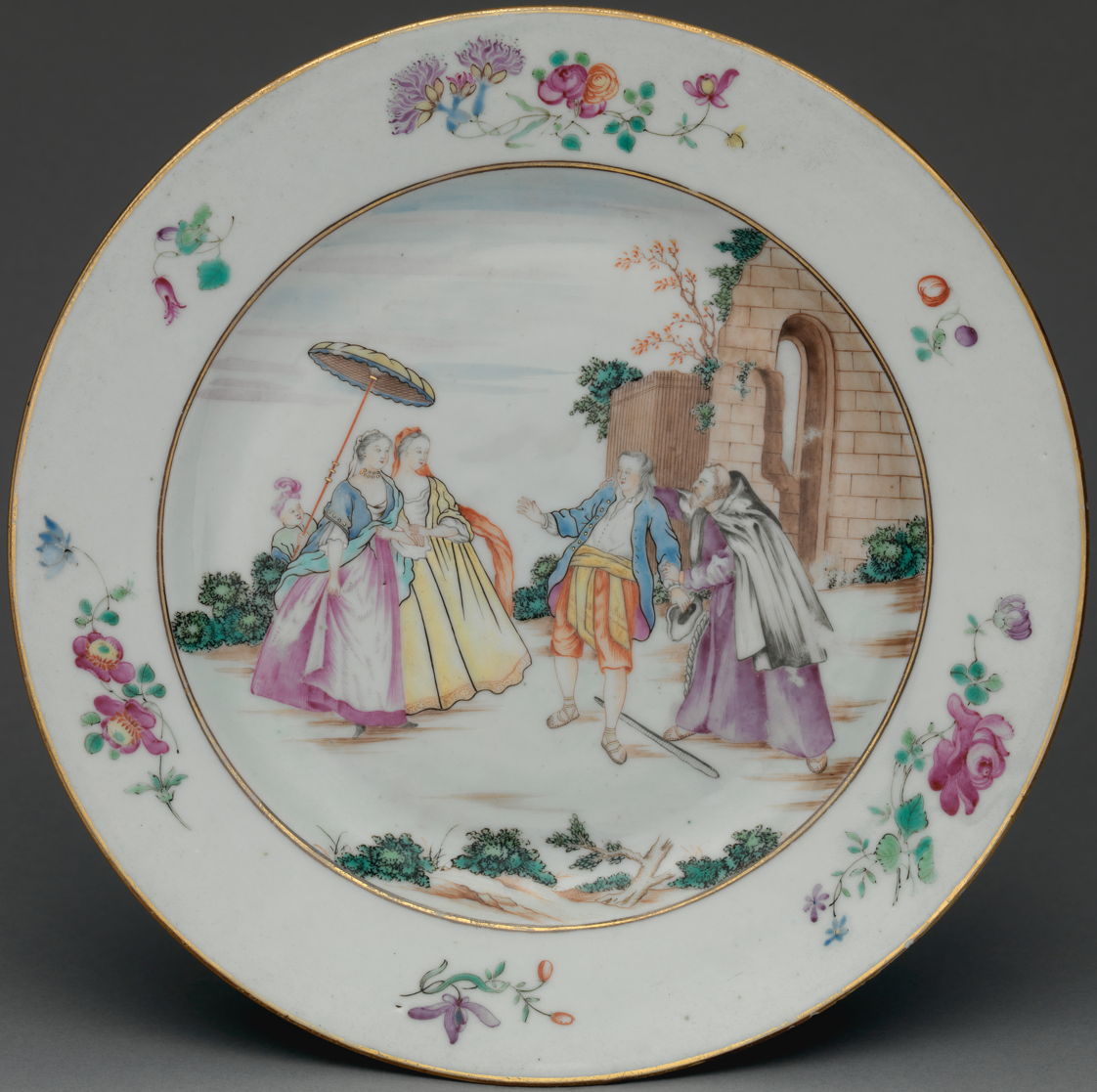
anonafterlancretgeese
Artist not known, Scene from Brother Philippe’s Geese (1745), Chinese painted porcelain plate, 22.9 cm diam, The Metropolitan Museum of Art (Friends of European Sculpture and Decorative Arts Gifts, 2016), New York, NY. Courtesy of The Metropolitan Museum of Art.

That became so popular that it was reproduced in prints, such as those by Nicolas de Larmessin (1684–1755) in which the image is naturally reversed, but here seen unreversed on a porcelain plate exported from China in 1745.

subleyrasbrothephilippesgeese
Pierre Hubert Subleyras (1699–1749), Brother Philippe’s Geese (c 1745), oil on canvas, 29.5 x 21.9 cm, The Museum of Fine Arts, Boston, MA. Courtesy of the Museum of Fine Arts, Boston.

At the same time, Pierre Hubert Subleyras painted a different composition telling the story, short of its punchline of course. He restores a thoroughly rustic appearance to the father and son, but surprisingly the young man isn’t staring in wonder at the goslings or geese.

anonbrotherphilippesgeese
Artist not known, Brother Philippe’s Geese (date not known), hand-coloured etching and engraving, dimensions not known, National Gallery of Victoria, Melbourne, Australia. Courtesy of the National Gallery of Victoria.

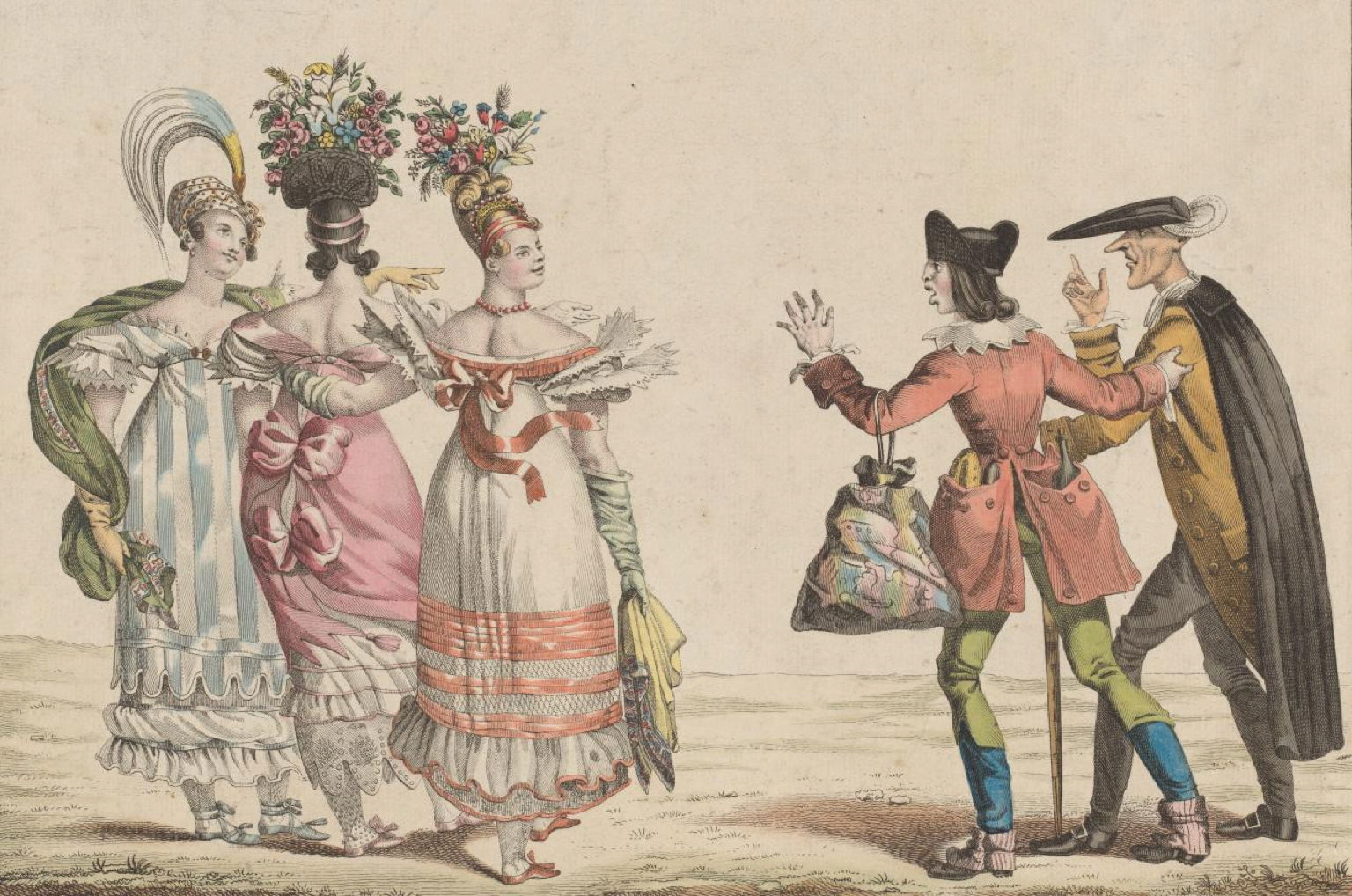
And here’s an undated hand-coloured print apparently based on another composition altogether.

The phrase Brother Philippe’s geese, which in modern English might be best rendered as Philip’s birds, then entered French idiom as a reference to young and pretty women. Abbreviated further to geese, its origins have often been misunderstood as being derogatory. It certainly seems to have been well-understood by Paul Gauguin.

When Gauguin stayed at Le Pouldu in Brittany from 1889, he and others were accommodated by Marie Henry in her inn. Gauguin and his colleagues decorated the interior for her with their paintings. In 1893, when Marie Henry rented the building out, she removed as much as possible of the paintings made there by Gauguin and others, but some were left behind. Over the years, they were covered with wallpaper and vanished, until they were rediscovered in 1924.

gauguingoose
Paul Gauguin (1848-1903), The Goose (1889), tempera on plaster, 53 x 72 cm, Musée des Beaux-Arts de Quimper / Kemper, mirdi an Arzoù-Kaer, Quimper, France. Wikimedia Commons.

Among them is this wonderful painting of a goose, intended as a complement to Marie Henry, in its allusion to the fable of La Fontaine, and its original telling as the hundred-and-first story in Boccaccio’s Decameron.

❌
❌