Normal view

There are new articles available, click to refresh the page.
Before yesterdayMain stream

Portraits of trees: Introduction

By: hoakley
28 May 2026 at 19:30

Trees are prominent features of every continent apart from Antarctica, and even our more densely urban areas find room for a few of them. From our origins in East Africa to the city parks of New York, London and Tokyo, humans and trees have lived together. As a result, trees feature in a great many paintings. This series explores how they have been depicted in European and North American art from before the Renaissance to the early twentieth century.

Peter Paul Rubens (1577–1640), Landscape (c 1635-40), gouache, 24 × 45 cm, Hermitage Museum, Saint Petersburg, Russia. Wikimedia Commons.

Like many artists since, Peter Paul Rubens made studies of trees to support his studio paintings in oils. This one, known simply as Landscape, is a careful and quite detailed sketch in gouache (opaque watercolour) of a group of trees on the bank of a small river, painted during the last five years of his life. The evidence from the tree in the mid-right is that he constructed them anatomically, by putting in the structural curves and lines of the branches, then laying down areas of foliage, a method developed during the Renaissance and still widespread today.

This practice of painting studies from life was recommended by the great landscape artist and teacher Pierre Henri Valenciennes (1750-1819), who wrote in his book Elements of Practical Perspective for the Use of Artists:
“Be sure to make several painted studies of beautiful trees, whether standing alone or in groups. Pay close attention to every detail of the bark, moss, roots, branches, and the ivy that surrounds and clings to them; above all, make good choices and study the variety of wood, bark, and foliage, which is of the utmost importance.” (Second edition, 1820.)

Landscape specialists like John Constable painted studies of trees throughout their career, to inform finished works.
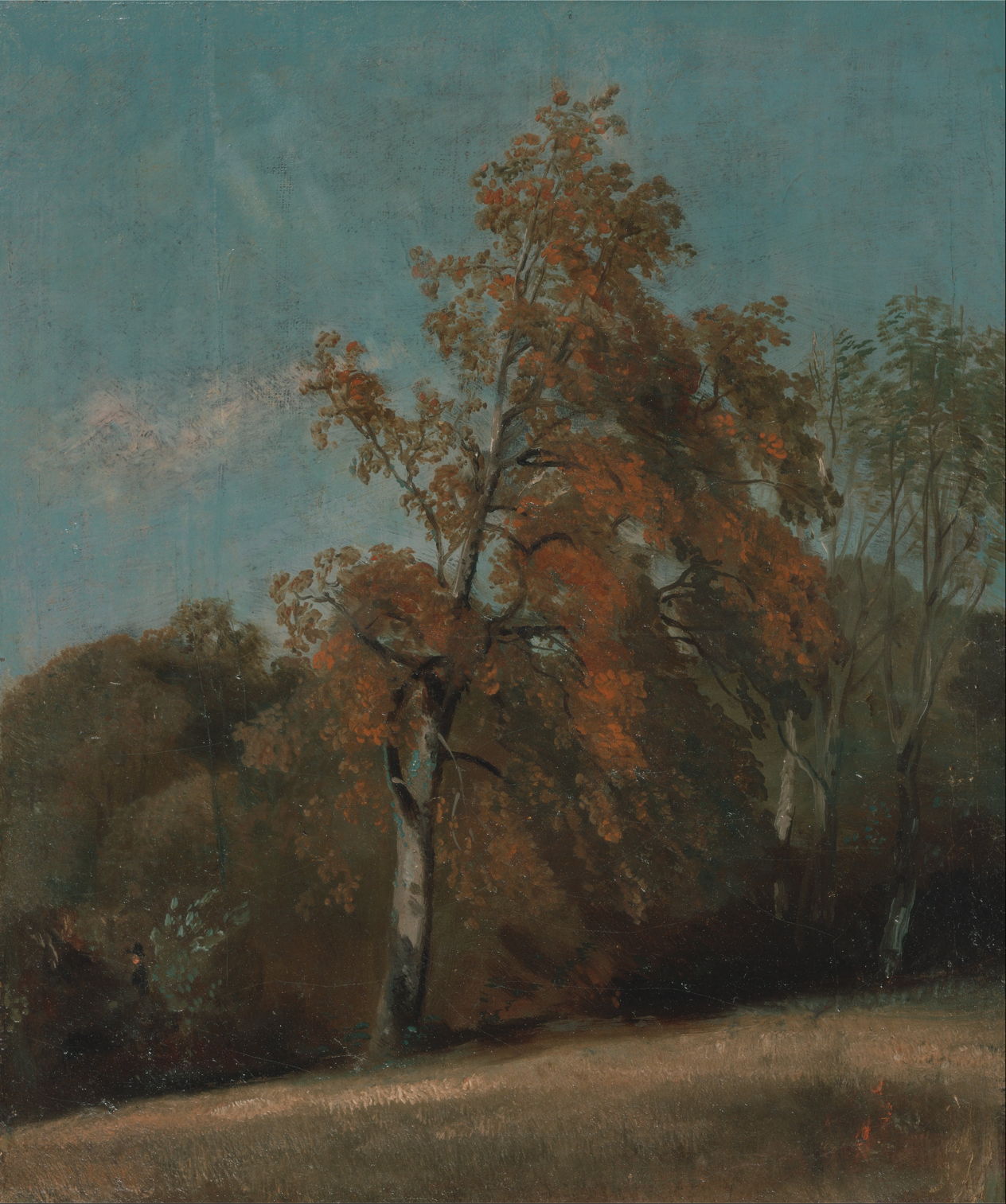
John Constable (1776–1837), Study of an Ash Tree (1801-3 or 1810-30), oil on canvas laid to artist's board, 39.4 x 29.8 cm, Yale Center for British Art, New Haven, CT. Wikimedia Commons.
John Constable (1776–1837), Study of an Ash Tree (1801-3 or 1810-30), oil on canvas laid to artist’s board, 39.4 x 29.8 cm, Yale Center for British Art, New Haven, CT. Wikimedia Commons.

He learned to create plein air sketches in oils, which he used extensively for ‘skying’ particularly around Hampstead Heath near London, and for remarkable studies of trees, such as this ash, seen in its autumn colours. Here he too has taken the time to construct the tree anatomically, and to detail its foliage.

This continued through the middle of the nineteenth century, when landscape painting was evolving towards Impressionism.
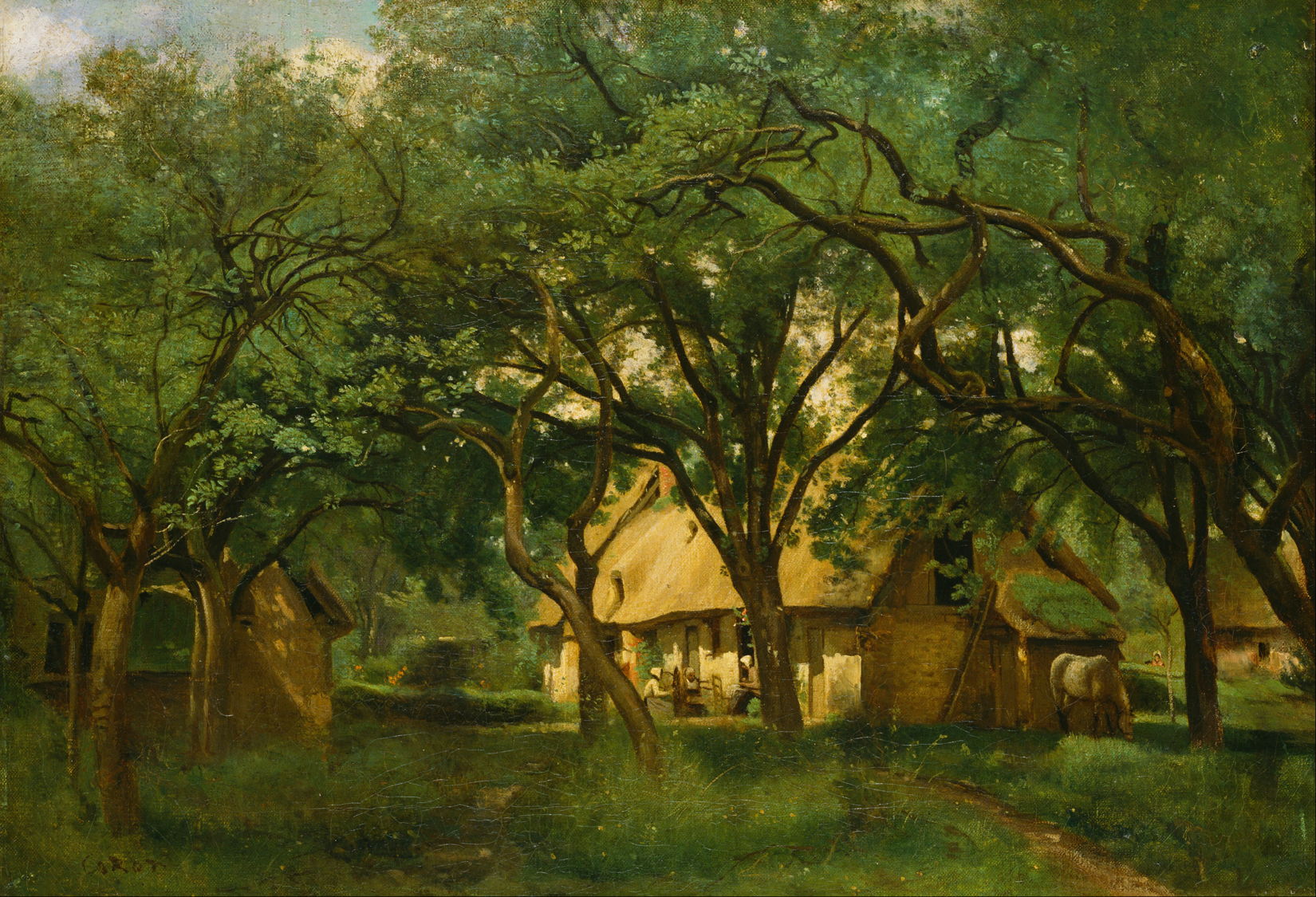
Jean-Baptiste-Camille Corot (1796–1875), The Toutain Farm, Honfleur (c 1845), oil on canvas, 44.4 × 63.8 cm, Bridgestone Museum of Art, Tokyo. Wikimedia Commons.

Camille Corot’s The Toutain Farm, Honfleur from about 1845 appears to be a finished studio painting, perhaps intended for the Salon. Its trees are marvellous and all but obscure and upstage the farmhouse beyond. Their sinuous limbs reflect his structured approach to painting their canopies with a catalogue of ways the trunk can give rise to branches. The canopy itself is shown in careful detail, although at the upper left it seems more vague and sketchy.

Europe has a rich and varied flora of tree species, and one of the challenges in painting its landscapes has been to capture their distinctive characteristics.

vanruisdaelroadthroughoakforest
Jacob Isaakszoon van Ruisdael (1628/9–1682), Road through an Oak Forest (c 1646-7), oil on canvas, 65 x 85 cm, Statens Museum for Kunst, København, Denmark. Wikimedia Commons.

Jacob van Ruisdael gave insight into the stages in the life and looks of oak trees. In Road through an Oak Forest (c 1646-7) he captures the later life of a stag-headed oak on the left, which lost its crown long ago, a flush of new growth on a fallen trunk, and another still clinging onto life despite a great split at its base. Judging by the girth of their trunks, the oaks shown here are around 400 years old, making it likely they were saplings in the thirteenth century, possibly even earlier. They form a remarkable window in time back to the late Middle Ages.

Camille Pissarro (1830-1903), The Big Walnut Tree in Spring, Éragny (1894), oil on canvas, 60 x 73 cm, Private collection. Wikimedia Commons.

Camille Pissarro’s Big Walnut Tree in Spring, Éragny from 1894 celebrates a species that is a source of binder in oil paint, in walnut oil, although it’s used far less frequently than linseed. Its wood is also sought after, making this tree a long-term investment for the landowner’s heirs.

Vincent van Gogh, Cypresses (1889), oil on canvas, 93.4 x 74 cm, The Metropolitan Museum of Art, New York, NY. Wikimedia Commons.
Vincent van Gogh (1853-1890), Cypresses (1889), oil on canvas, 93.4 x 74 cm, The Metropolitan Museum of Art, New York, NY. Wikimedia Commons.

Vincent van Gogh’s Cypresses (1889) are some of the best-remembered of all. As he moved style on beyond Impressionism, his swirling brushstrokes form solid but thoroughly living trees. These are most probably Italian cypresses, which are characteristic of the landscape around the Saint-Paul-de-Mausole asylum where he was living at that time, and throughout Provence.

Vincent van Gogh, Olive Grove (1889), oil on canvas, 72 x 92 cm, Kröller-Müller Museum, Otterlo. WikiArt.
Vincent van Gogh (1853-1890), Olive Grove (1889), oil on canvas, 72 x 92 cm, Kröller-Müller Museum, Otterlo. WikiArt.

In his Olive Grove (1889), those swirling strokes of foliage complement the tortuous curves of the branches and gnarled blue-grey trunks.
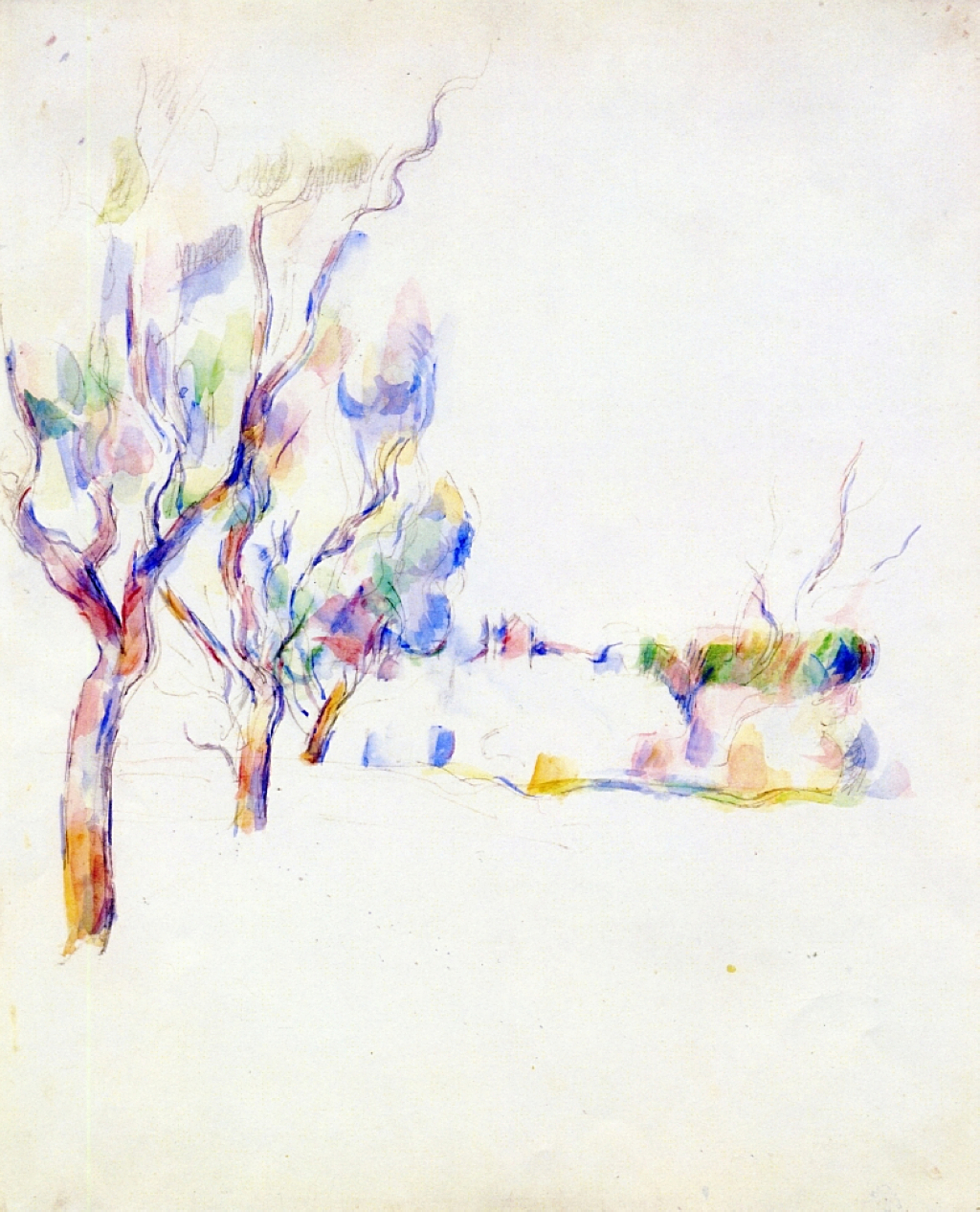
Paul Cézanne, Almond Trees in Provence (1900). Graphite and watercolour on paper, 58.5 x 47.5 cm, private collection (WikiArt).
Paul Cézanne (1839–1906), Almond Trees in Provence (1900). Graphite and watercolour on paper, 58.5 x 47.5 cm, private collection (WikiArt).

Paul Cézanne’s oil paintings of trees, although abundant, show his emphasis on patterned brushstrokes in what is known as his constructive stroke. This isn’t true of his watercolours, as shown in Almond Trees in Provence (1900), where each tree rises in a flare of brilliant colours.
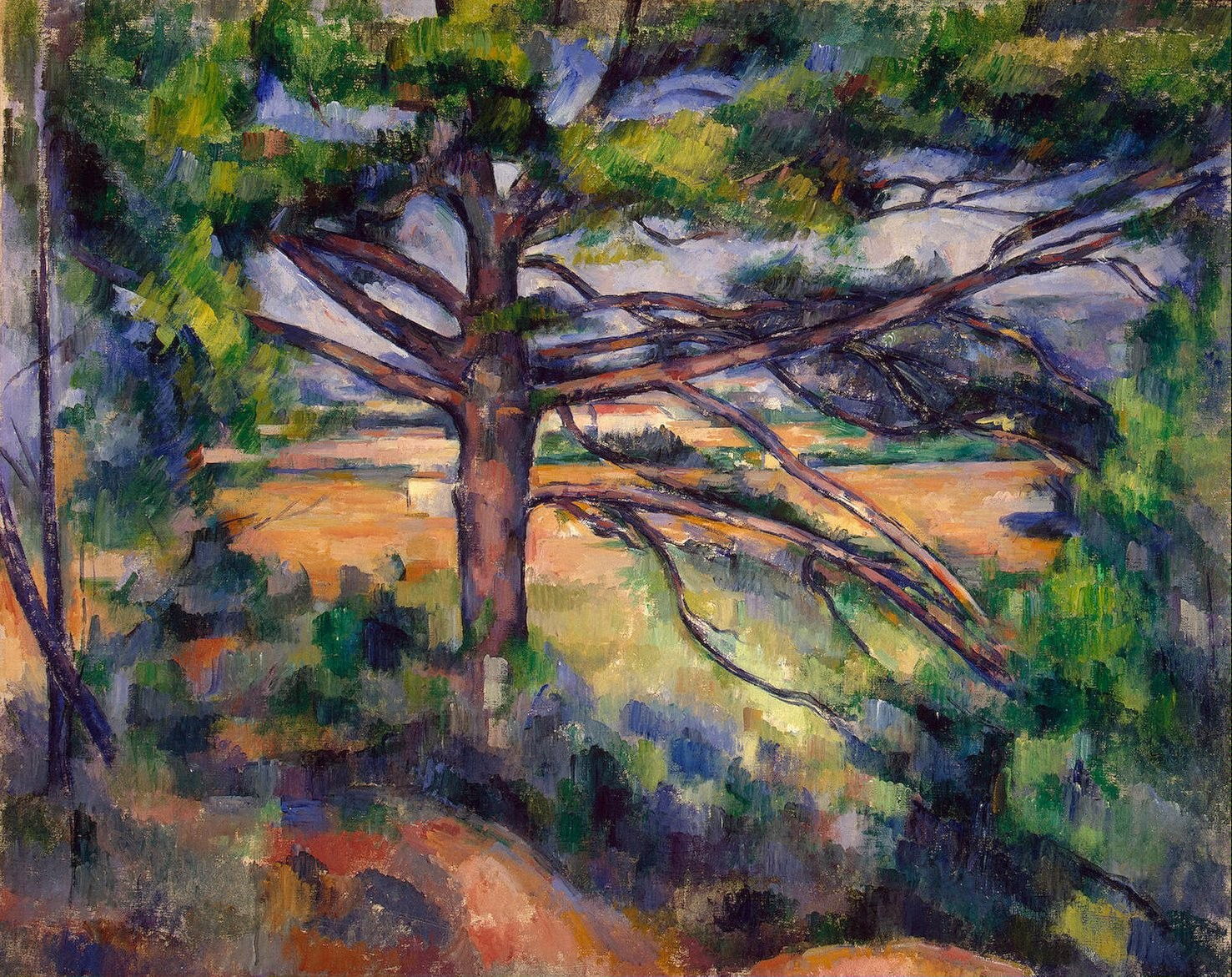
cézannelargepineredearth1895
Paul Cézanne (1839–1906), Grand pin et terres rouges (Large Pine and Red Earth) (1890–95), oil on canvas, 72 x 91 cm, Hermitage Museum, St. Petersburg. Wikimedia Commons.

Cézanne’s constructive stroke became more prominent and started to dominate the structure of his oil paintings after 1890. In Large Pine and Red Earth (1890–5) it’s used throughout the foreground foliage and vegetation, and has even started to appear in some patches on the trunk.

Théo van Rysselberghe, Pine by the Mediterranean Sea (1916), oil on canvas, 81 x 199 cm, Centraal Museum, Utrecht. WikiArt.
Théo van Rysselberghe (1862-1926), Pine by the Mediterranean Sea (1916), oil on canvas, 81 x 199 cm, Centraal Museum, Utrecht. WikiArt.

Finally, Théo van Rysselberghe’s Pine by the Mediterranean Sea (1916) appears almost as substantial as the bleached rocks below it. Contrast between the lit segments and those in cast shadow behind is wide, as is seen on the shores of the Mediterranean.

I hope you will join me in exploring these and many other fine portraits of trees over the coming weeks.

Medium and Message: Oil studies

By: hoakley
17 March 2026 at 20:30

Many of the great Masters are known to have painted preparatory studies prior to starting on full-size finished studio paintings. Unfortunately, most of those studies were either destroyed by the artist in their lifetime, or by their heirs following their death. Seeing studies alongside a finished work tells a great deal about the artist’s intent and methods, and some exhibitions have made a point of including as many studies as possible. This article shows a small selection of some whose images I have been able to gather.

Some of the best surviving studies are the oil sketches made by Peter Paul Rubens, some of which were given to assistants in his studio for completion.

rubensrapehippodamesketch
Peter Paul Rubens (1577–1640), The Rape of Hippodame (sketch) (c 1637-38), oil on panel, 26 × 40 cm, Koninklijke Musea voor Schone Kunsten van België / Musées Royaux des Beaux Arts de Belgique, Brussels, Belgium. Wikimedia Commons.

Towards the end of his life, he painted this brilliant oil sketch of The Rape of Hippodame (c 1637-38). At the right, Eurytus is trying to carry off Hippodame, the bride, with Theseus just about to rescue her from the centaur’s back. At the left, Lapiths are attacking with their weapons, and behind them another centaur is trying to abduct a woman. Rubens typically sketched on small wood panels, here 26 x 40 cm (10 x 16 inches), with wonderfully painterly brushstrokes.

rubensrapehippodame
Peter Paul Rubens (1577–1640), The Rape of Hippodame (Lapiths and Centaurs) (1636-38), oil on canvas, 182 × 290 cm, Museo Nacional del Prado, Madrid, Spain. Wikimedia Commons.

That became this finished painting, The Rape of Hippodame (Lapiths and Centaurs) (1636-38), which remains faithful to the sketch and its composition. Facial expressions, particularly that of the Lapith at the left bearing a sword, are particularly powerful.

Studies were better preserved in the nineteenth century, when tastes changed and some realised worthwhile sums in posthumous sales of the contents of studios.

IF
Jean Louis Théodore Géricault (1791–1824), Study for The Raft of the Medusa (1819), oil on canvas, 36 x 48 cm, Musée du Louvre, Paris. Wikimedia Commons.

Among the most studied are those made by Géricault when he was working up his landmark painting of The Raft of the Medusa. This oil study on canvas was probably made as he was completing his preparations during the autumn of 1818, and reveals some of his compositional thinking, for instance over the size of the ship that rescued the survivors.

gericaultraftofmedusa
Jean Louis Théodore Géricault (1791–1824), The Raft of the Medusa (1818-19), oil on canvas, 491 x 716 cm, Musée du Louvre, Paris. Wikimedia Commons.

The end result is this vast canvas, its figures shown life-sized, which has had huge impact on everyone who has seen it since its completion in 1819. It appears completely authentic, and given the work that Géricault put into making it so, that’s perhaps not surprising. But most gain the impression that the raft was almost square in form, as a result of the tight cropping applied, and that even with those few survivors on board, it was overcrowded. This is because Géricault chose to pack all his figures into one small section of the raft.

I was fortunate enough to visit an exhibition of some of John Constable’s works, in which his studies were shown alongside finished paintings. Here I show just one example. Had Constable lived fifty years later, he might have been persuaded to stop his paintings when they were still late oil studies, rather than take them to their finished conclusions.

constablehadleighcastlesk
John Constable (1776–1837), Hadleigh Castle (sketch) (1828-29), oil on millboard, 20 × 24 cm, Yale Center for British Art, New Haven, CT. Wikimedia Commons.

This early sketch of Hadleigh Castle (1828-29) already contains some surprisingly detailed passages: at the far left, a shepherd, his black dog by his side, with a small flock of sheep grazing near the ruined tower. There’s a brown and white blob on the seaward slope, probably a cow grazing there. Wheeling in wrinkles of impasto above the tower are a few birds resembling small runnels of liquid metal like solder. By this time, many artists were painting their oil studies on cheaper millboard, as Constable did here. Millboard is made by pasting together many sheets of fine paper, so isn’t as durable as cheaper stretched canvas.

constablehadleighcastle
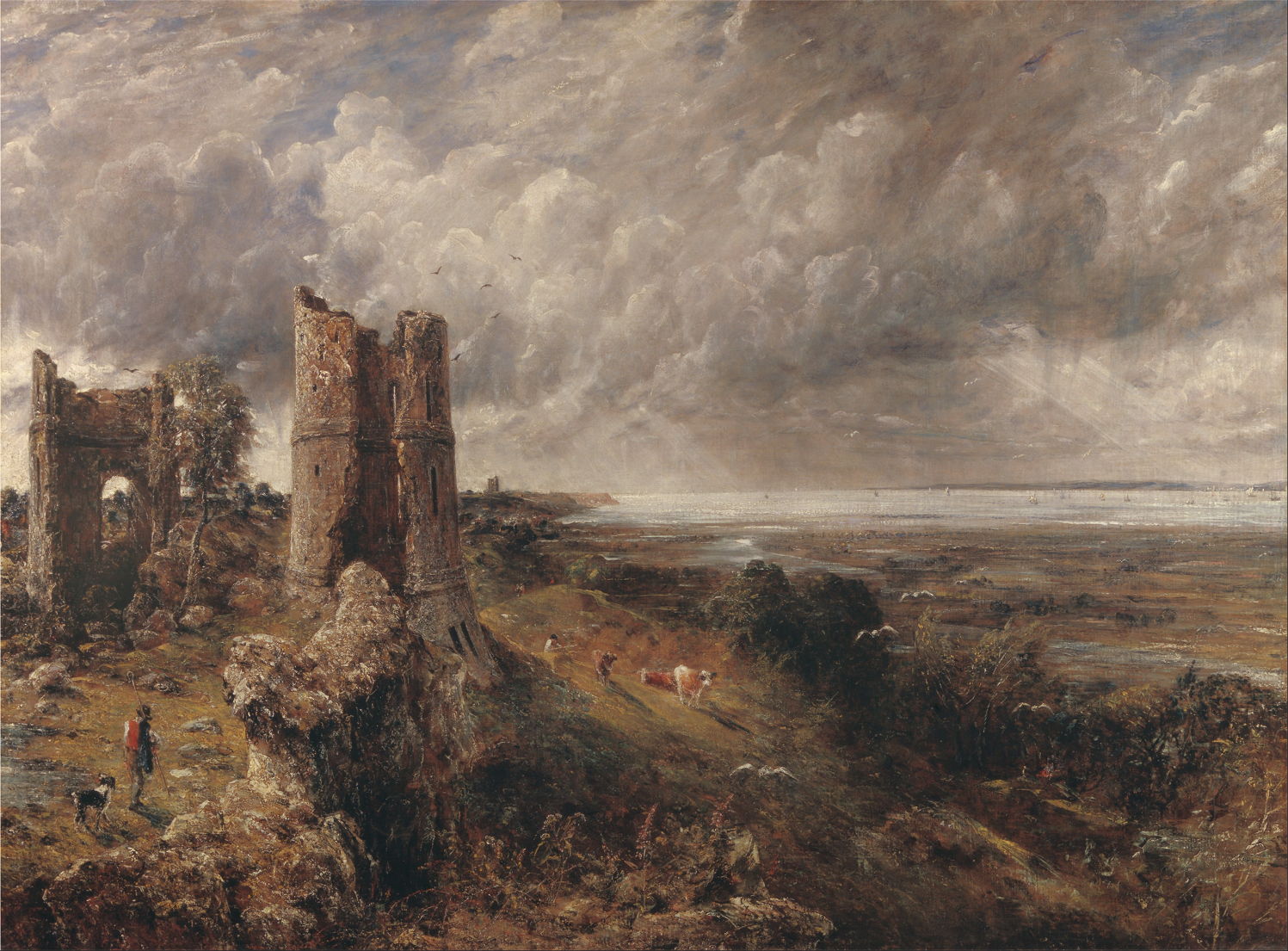
John Constable (1776–1837), Hadleigh Castle, The Mouth of the Thames – Morning after a Stormy Night (1829), oil on canvas, 121.9 x 164.5 cm, Yale Center for British Art, New Haven, CT. Wikimedia Commons.

By the finished work, the splendid Hadleigh Castle, The Mouth of the Thames – Morning after a Stormy Night (1829), the basic disposition of those figures has changed little, but Constable has changed each to suit his image. The shepherd, still carrying his long crook, is separated from his dog, and has lost his sheep, which have become scattered rocks. The single cow on the sloping grass has gained a couple of friends, and a cowherd. Beyond them are another couple of tiny specks of figures, and there are more by the wood in the lower right corner.

frithderbydaystudy
William Powell Frith (1819–1909), Derby Day (study) (before 1857), oil on canvas, 39.4 x 91.1 cm, Private collection. Wikimedia Commons.

William Powell Frith’s late study for Derby Day was probably painted in about 1856, and is very close to the finished work shown below, although covering only about a tenth of its area.

frithderbyday
William Powell Frith (1819–1909), The Derby Day (1856-58), oil on canvas, 140.5 x 264 cm, The Tate Gallery, London. Wikimedia Commons.

Jacob Bell commissioned Frith to paint his finished Derby Day (1856-58) for the huge fee of £1,500, and the artist was paid a further £1,500 for rights to make prints. It was exhibited at the Royal Academy in 1858, and proved so popular that a guard rail had to be installed in front of it to protect the work from the admiring crowds.

Georges Seurat’s preparations are also revealed in his surviving studies, and are very different given his Pointillist technique. Some of the later Divisionists made conventional studies, and there are some experimental examples using larger tiles of colour (see below). Seurat instead rehearsed parts of the overall view when preparing his masterwork.

Georges Seurat, Landscape - the Island of the Grande Jatte (1884), oil on canvas, 69.9 x 85.7 cm, Private collection. WikiArt.
Georges Seurat (1859–1891), Landscape – the Island of the Grande Jatte (1884), oil on canvas, 69.9 x 85.7 cm, Private collection. WikiArt.

Seurat’s first and greatest masterpiece, generally known as La Grande Jatte, uses the technique of optical mixing of colour. Rather than blending pigments on the canvas, it’s constructed of tiny dots that are high in chroma, and allow for optical mixing, one of the fundamental techniques in Seurat’s new scientific painting. His theory was that the mixing of colour would then occur in the retina of the viewer, and he tried this in a pure landscape study (above), and in his huge finished painting (below).

Georges Seurat, Un dimanche après-midi à l'Île de la Grande Jatte (A Sunday Afternoon on the Island of La Grande Jatte) (1884-6), oil on canvas, 207.5 × 308.1 cm, Art Institute of Chicago, Chicago, IL. Wikimedia Commons.
Georges Seurat (1859–1891), Un dimanche après-midi à l’Île de la Grande Jatte (A Sunday Afternoon on the Island of La Grande Jatte) (1884-6), oil on canvas, 207.5 × 308.1 cm, Art Institute of Chicago, Chicago, IL. Wikimedia Commons.

He painted his finished version in three phases. In the first, the dots he applied were mixed from available and fairly conventional pigments, including duller earths. In the second phase, he used a limited number of brighter and higher chroma pigments. In the third and final phase he added coloured borders which are distinctive of his paintings.

By the late nineteenth century oil studies were being supplemented by photographs.

eakinsstudentsatswimminghole
Circle of Thomas Eakins (1844–1916), Eakins’s Students at the “The Swimming Hole” (1884), albumen silver print, 9.3 x 12.1 cm, The Getty Center, J. Paul Getty Museum, Los Angeles, CA. Wikimedia Commons.

Thomas Eakins’ preparatory studies for Swimming (1885) grew from a series of photographs taken by the artist and his friends. But photos never replaced his own sketches: for this work, Eakins made several figure studies, details such as the dog, and different landscape backgrounds, then brought them together in oil sketches.

eakinsstudyswimming
Thomas Eakins (1844–1916), Swimming Hole (sketch) (1884), oil on fiberboard mounted on masonite, 22.1 × 27 cm, The Hirshhorn Museum and Sculpture Garden, Washington, DC. Wikimedia Commons.

Once he was happy, he embarked on his final version. In at least some cases, including his paintings of shad fishing from 1881-82, the figures in his Arcadia (c 1883), and Swimming (1885), he put final photographic images into a ‘magic lantern’ projector, which he then projected at the canvas.

He developed a sophisticated system not only for using the projected image to make a graphite underdrawing, but as the painting progressed, to incise key points and lines of reference in the paint surface. This enabled him to create paintings that were accurately calibrated to his reference images: a great advance on the traditional system of enlargement using grids, and one factor in his detailed realism. This technique was discovered by Mark Tucker and Nica Gutman.

eakinsswimming
Thomas Eakins (1844–1916), Swimming (The Swimming Hole) (1885), oil on canvas, 70.2 × 93 cm, Amon Carter Museum of American Art, Fort Worth, TX. Wikimedia Commons.

Together with other photos and various studies, Eakins then painted Swimming (The Swimming Hole) in 1885.

Albert Bierstadt was more traditional in his preparatory studies for The Last of the Buffalo in 1888.

bierstadtstudylastbuffalo
Albert Bierstadt (1830–1902), Study for ‘The Last of the Buffalo’ (c 1888), oil on canvas, 62.9 x 91.1 cm, De Young Museum, San Francisco, CA. Wikimedia Commons.

This late study was painted on canvas, and is 63 x 91 cm (25 x 36 inches). It concentrates on the action to be embedded in a broader landscape.

bierstadtlastbuffalo
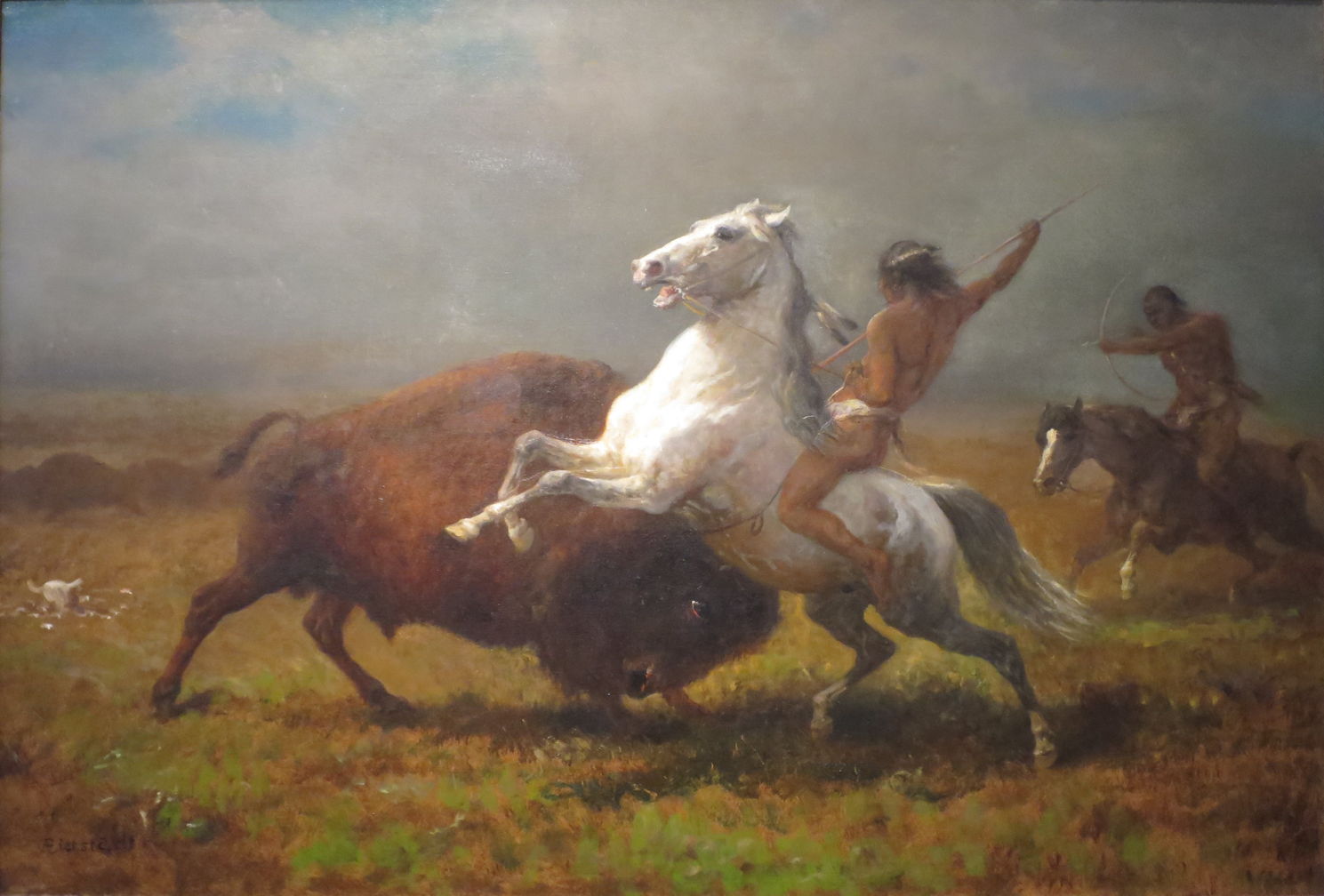
Albert Bierstadt (1830–1902), The Last of the Buffalo (c 1888), oil on canvas, 153 x 245.1 cm, Buffalo Bill Center of the West, Cody, WY. Wikimedia Commons.

Bierstadt’s finished painting is larger still, and sets that action in a more characteristic grand panorama, with bleached skulls and dying buffalo in the foreground. In the middle distance are hundreds of animals in the herd, suggesting that extinction was by no means the only outcome.

Finally, a pair of paintings by the less-known Divisionist Henri-Edmond Cross shows an alternative approach to Seurat’s, where his study is built of small daubs of colour, which are then reduced in size for the Pointillism of his final version.

crossclearingprovence
Henri-Edmond Cross (1856–1910), Clearing in Provence (study) (c 1906), oil on paper mounted on canvas, 56.5 x 44 cm, Israel Museum מוזיאון ישראל, Jerusalem, Israel. Wikimedia Commons.

His Clearing in Provence from about 1906 was painted on paper, and has subsequently been mounted on canvas for display in the Israel Museum, Jerusalem.

crossglade
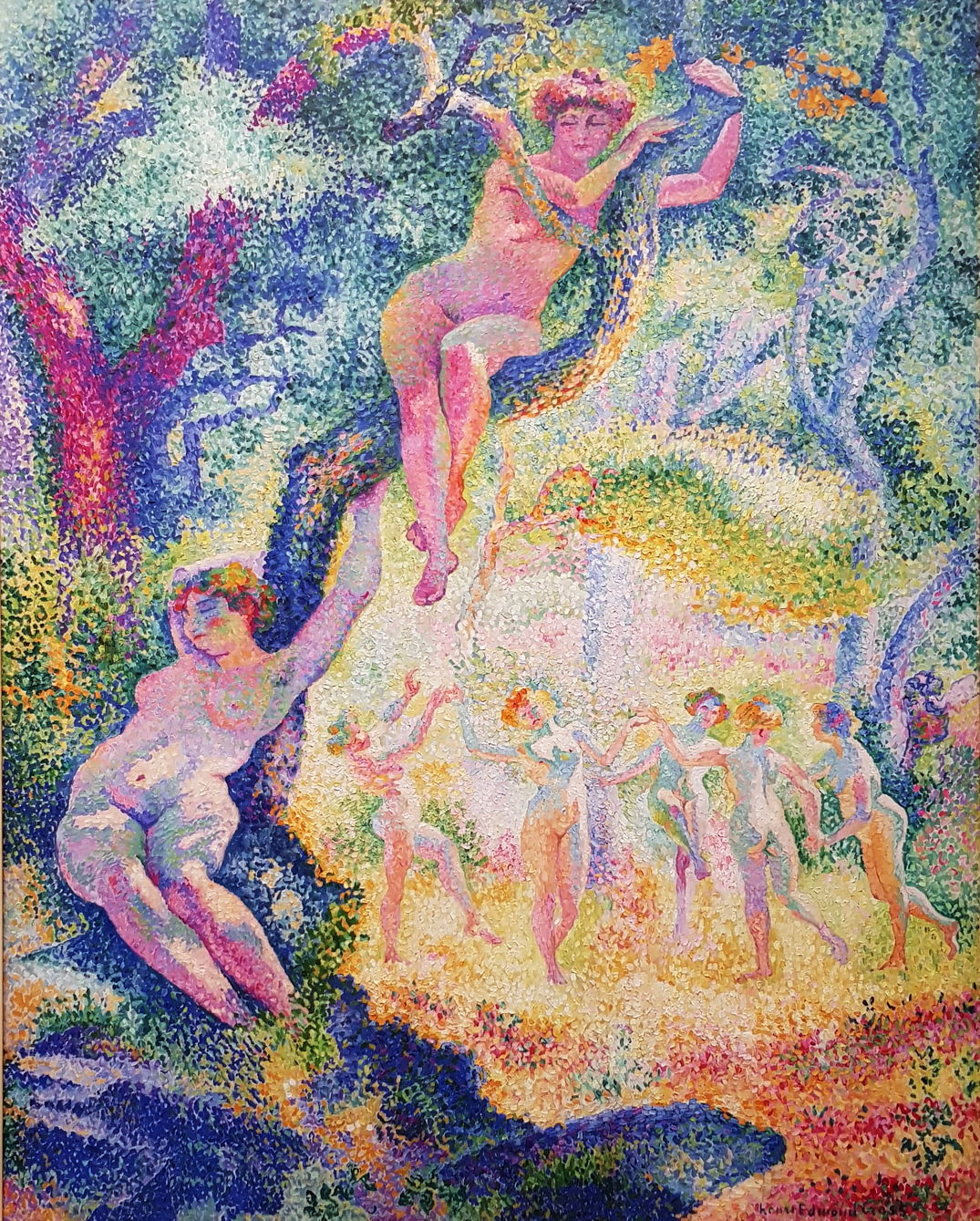
Henri-Edmond Cross (1856–1910), The Glade (1906), oil on canvas, 162 x 130 cm, Wallraf-Richartz-Museum & Fondation Corboud, Cologne, Germany. Image by anagoria, via Wikimedia Commons.

That sketch formed the basis of the woodland setting Cross used in The Glade, painted in oils in 1906. Colour changes are prominent, and the chroma has been considerably enhanced. The size has grown, and it’s on a more permanent support of stretched canvas.

Seen through modern eyes, many of the oil studies of the past deserve to be seen more widely, rather than being kept in storage.

On Reflection: Constable and Turner

By: hoakley
11 March 2026 at 20:30

As landscape painters increasingly came to rely on studies made in front of the motif, and their views came closer to reality, faithful depictions of reflections on water increased. But the fundamental challenges of painting accurate reflections remained. Both John Constable and JMW Turner started their careers drawing, trained in the Royal Academy Schools, and should have had a thorough grounding in 3D projection and reflections, as well as ample experience recording what they saw.

Several of Constable’s major works include reflected passages, painted slowly in the studio following extensive studies made of the motif.

John Constable, Wivenhoe Park, Essex (1816), oil on canvas, 56.1 x 101.2 cm, The National Gallery of Art, Washington, DC. Wikimedia Commons.
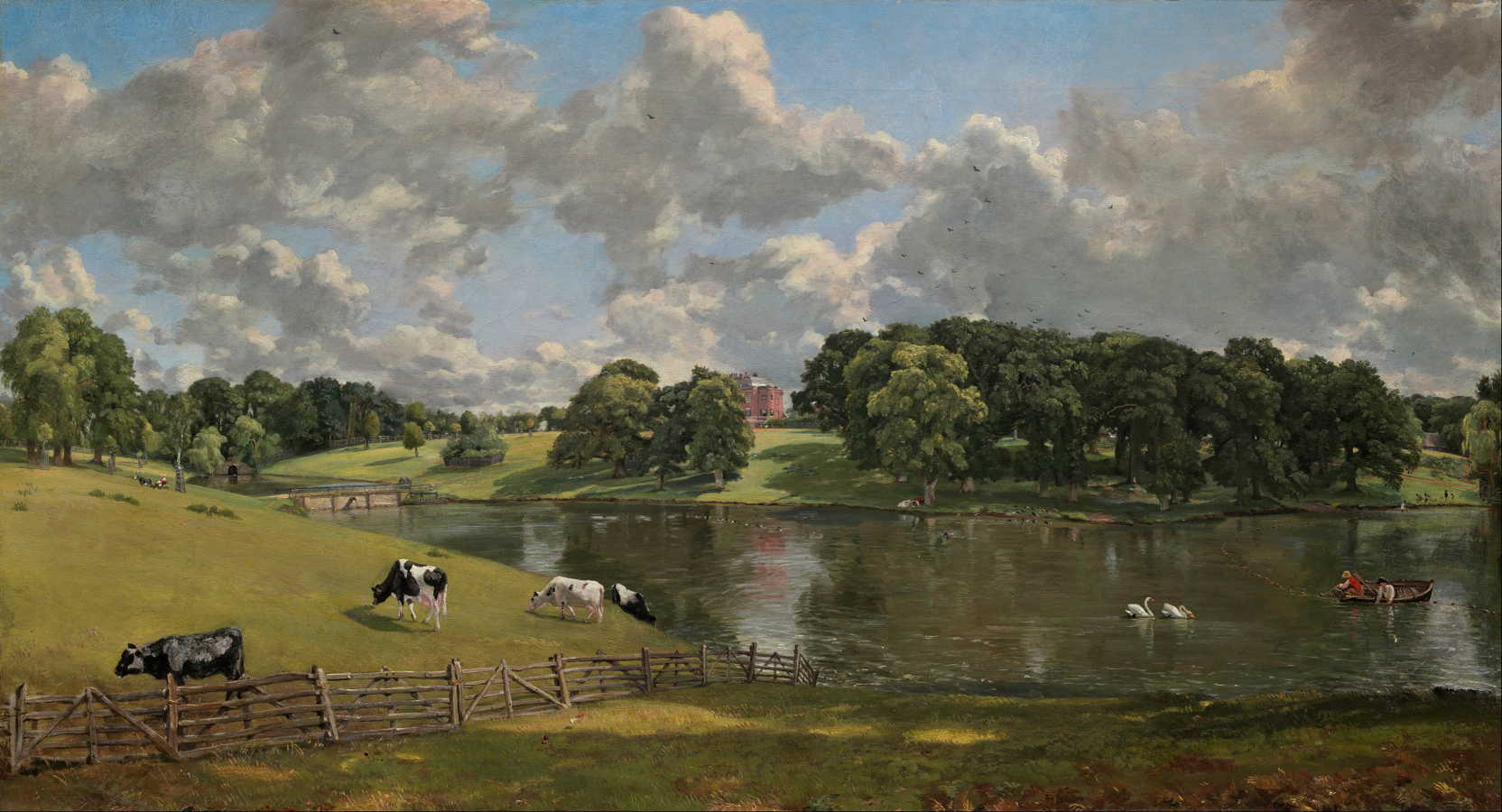
John Constable (1776–1837), Wivenhoe Park, Essex (1816), oil on canvas, 56.1 x 101.2 cm, The National Gallery of Art, Washington, DC. Wikimedia Commons.

Constable’s commissioned painting of the house and estate at Wivenhoe Park, Essex from 1816 is an oddly distant view of Major-General Francis Slater-Rebow’s country seat. Given the expanse of mirror-like lake, he might have been expected to include meticulous reflections. There are obvious anomalies, such as the brick-red reflection of the modest section of the house visible through a break in the trees in the centre of the canvas. The house is sufficiently distant that little or none of it would have been visible in reflection, let alone the two large areas of brick red stretching well over half way across the water. That was in all probability painted for effect.

John Constable (1776–1837), Wivenhoe Park, Essex (detail with reflection) (1816), oil on canvas, 56.1 x 101.2 cm, The National Gallery of Art, Washington, DC. Wikimedia Commons.

Reflections of the pair of swans and boatmen are also out of kilter. Constable may well have neither seen nor sketched them from life, and then struggled to envision their reflections in the studio.

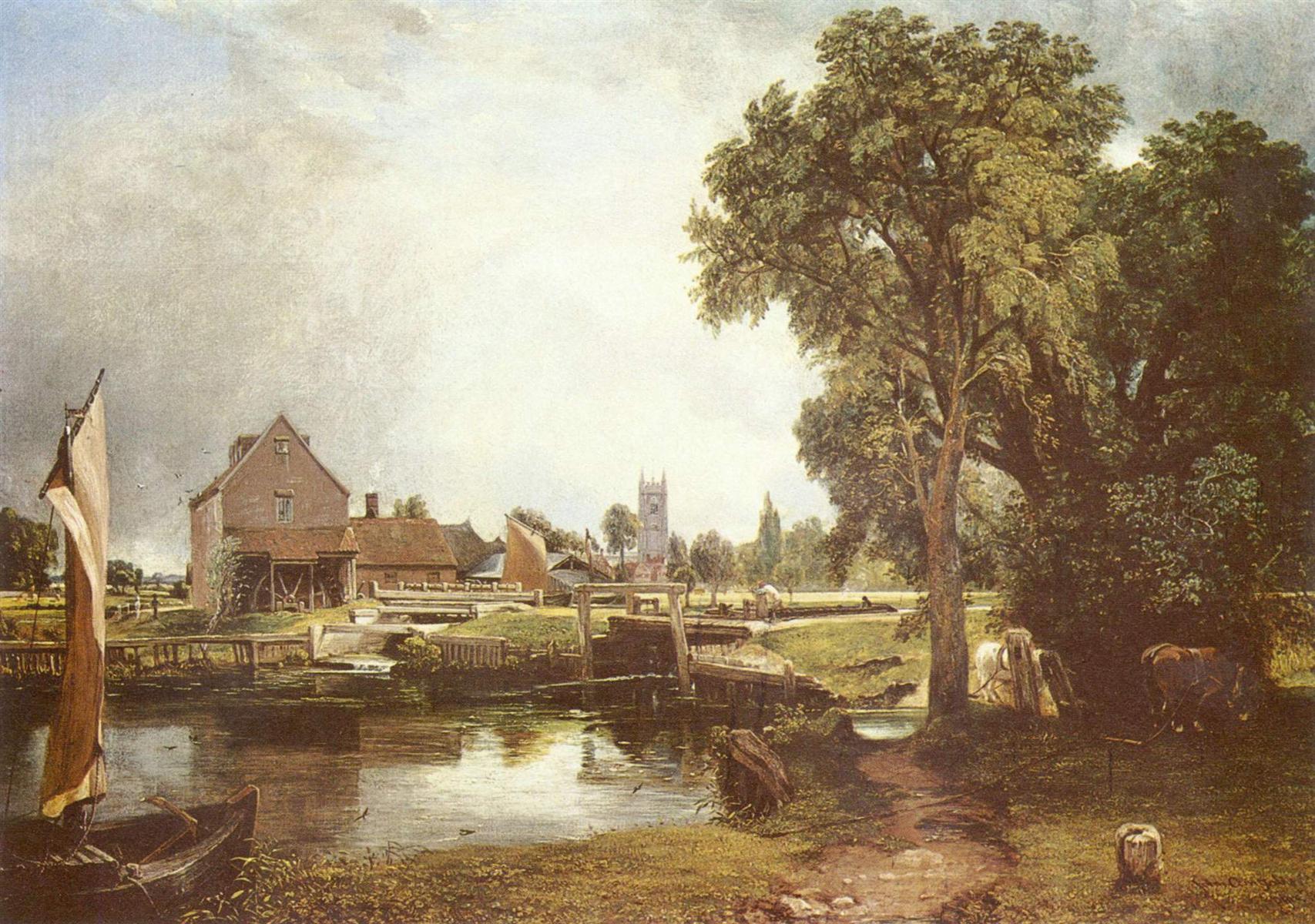
John Constable, "Dedham Lock and Mill", 1820, oil on canvas, 53.7 x 76.2 cm, Victoria and Albert Museum, London. WikiArt.
John Constable (1776–1837), Dedham Lock and Mill, 1820, oil on canvas, 53.7 x 76.2 cm, Victoria and Albert Museum, London. WikiArt.

Four years later, this painting of Dedham Lock and Mill (1820) is more familiar territory from the artist’s home ground. His family owned this lock on the River Stour, and he would have worshipped in the village church of Dedham seen in the distance. His reflections here appear accurate throughout.

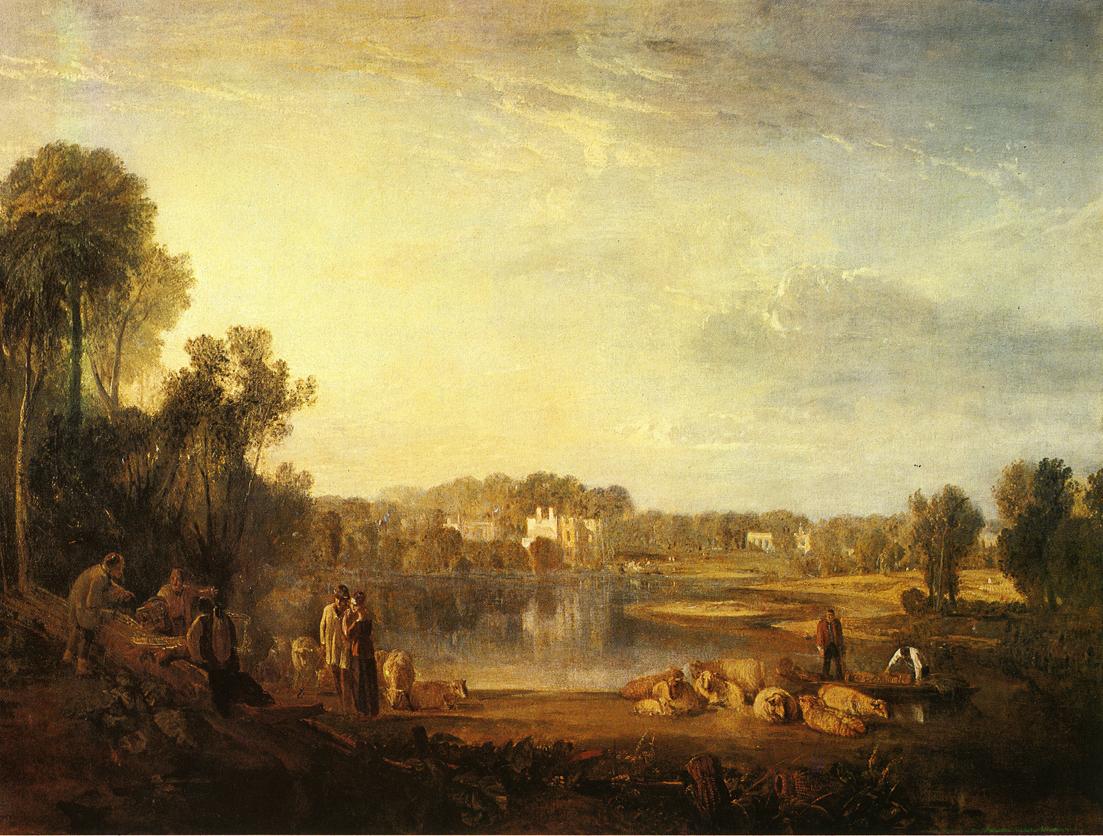
turnerpopesvillatwickenham
Joseph Mallord William Turner (1775–1851), Pope’s Villa, at Twickenham (1808), oil on canvas, 120.6 x 92.5 cm, Private Collection. WikiArt.

Turner’s approach to reflections changed over the course of his career. In Pope’s Villa, at Twickenham from 1808, he depicted complex and intricate reflections in careful detail.

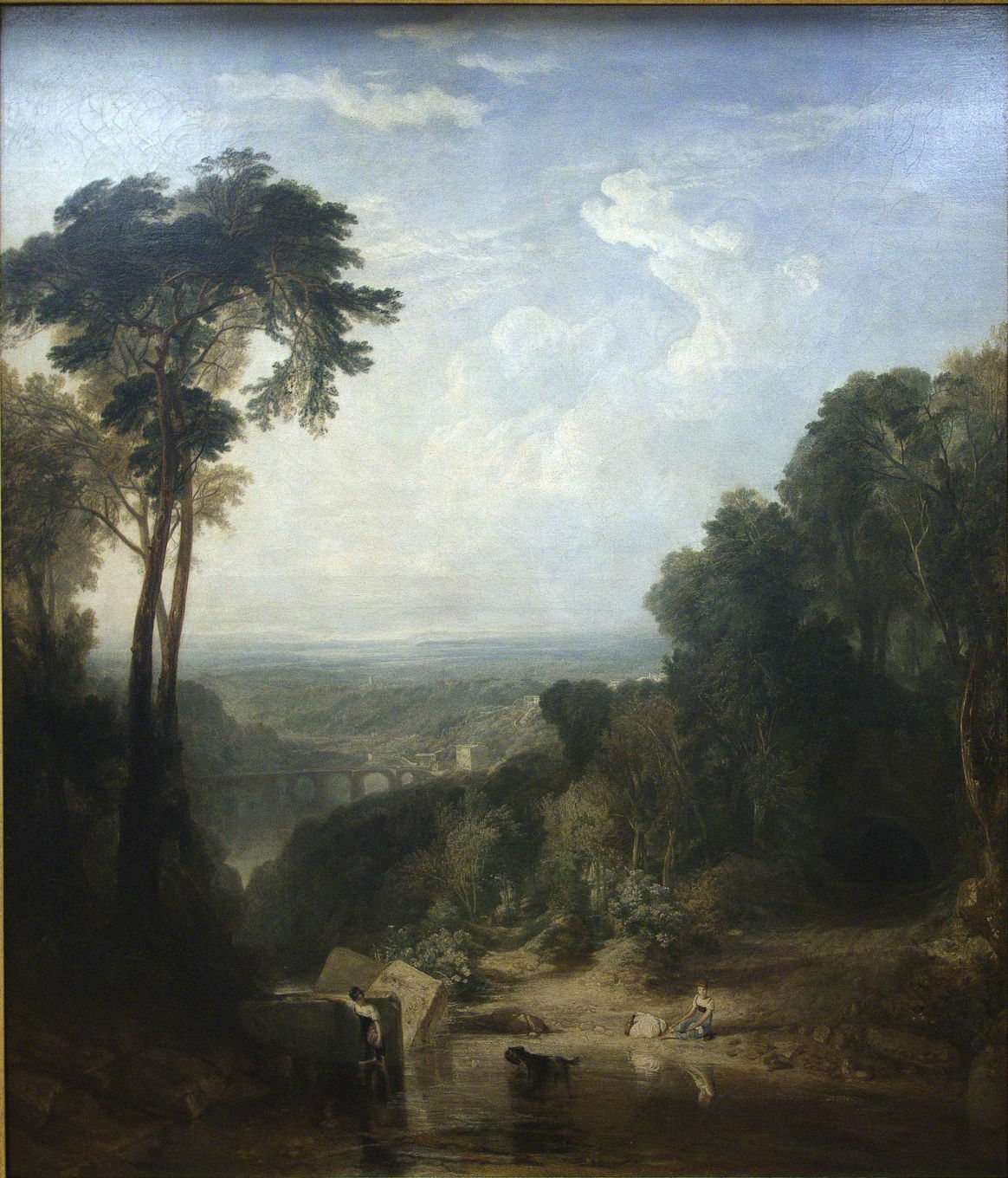
I’ve previously considered the relatively small anomalies in another of his early oil paintings, Crossing the Brook from 1815.

turnercrossingbrook18151
Joseph Mallord William Turner (1775-1851), Crossing the Brook (1815), oil on canvas, 193 x 165.1 cm, Tate Britain, London (N00497). EHN & DIJ Oakley.

These could be accounted for by the figures being staffage added in the studio without the benefit of plein air studies.

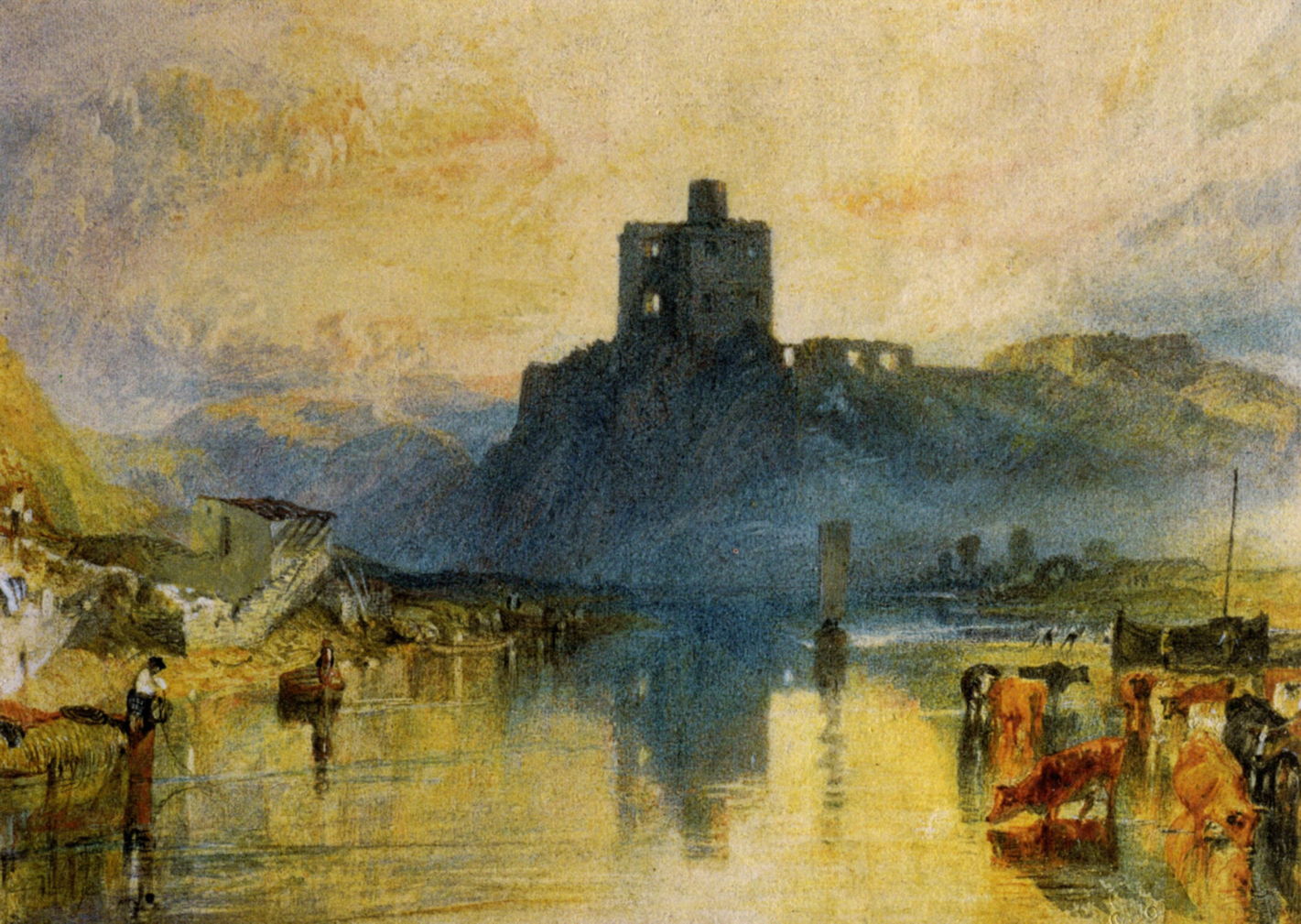
turnernorhamcastlerivertweed
Joseph Mallord William Turner (1775–1851), Norham Castle, on the River Tweed (1823), watercolour on paper, 15.6 x 21.6 cm, British Museum, London. WikiArt.

Some of his later watercolours, such as Norham Castle, on the River Tweed (1823), have obvious quirks in their reflections: here the reflection appears to show another high point at the left edge of the castle that isn’t matched by an equivalent high point in the real castle.

turnerbridgesighscanaletti
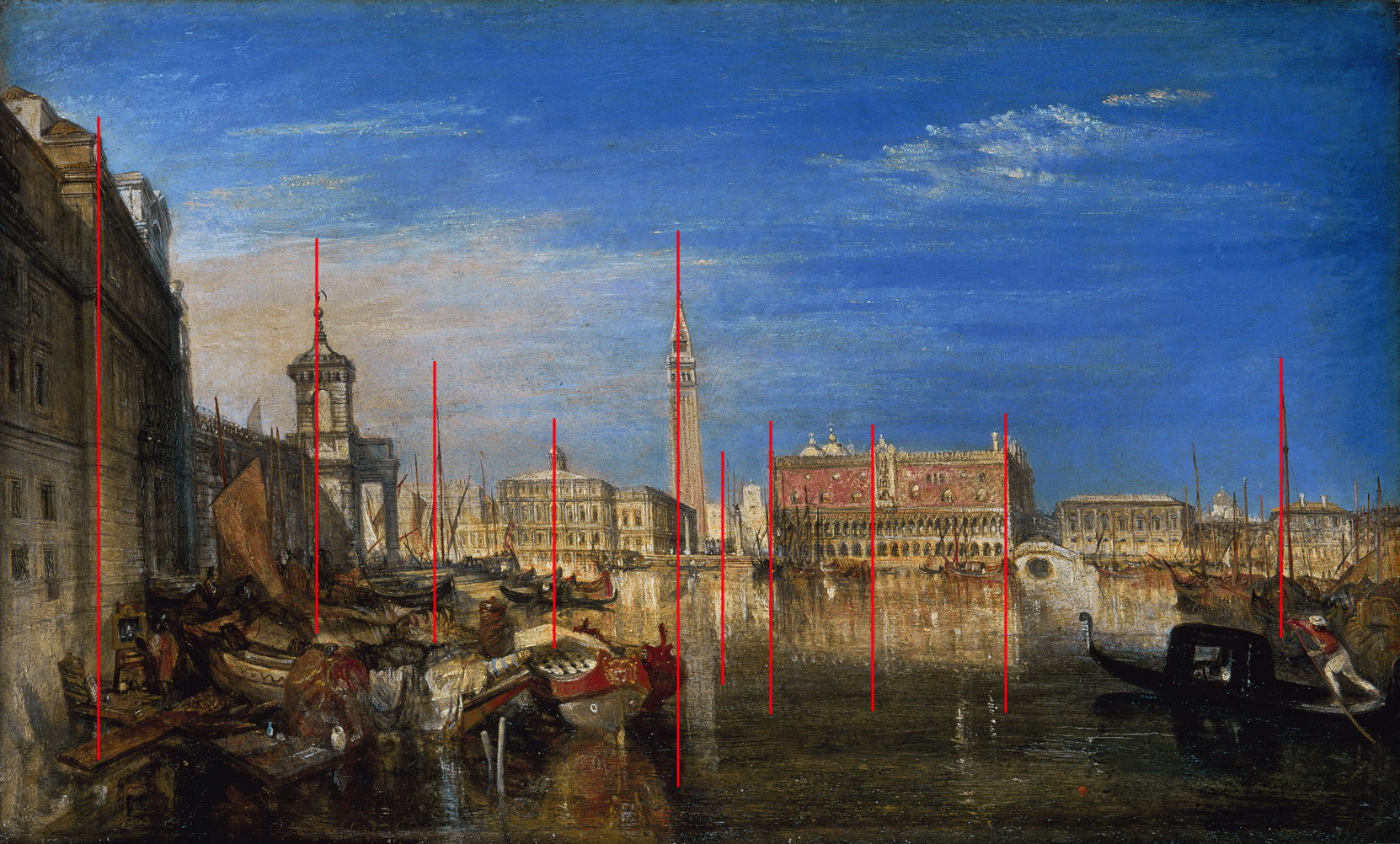
Joseph Mallord William Turner (1775–1851), Bridge of Sighs, Ducal Palace and Custom-House, Venice: Canaletti Painting (1833), oil on mahogany, 51.1 x 81.6 cm, Tate Britain, London (N00370). Wikimedia Commons. Perpendiculars have been superimposed to show failure in vertical alignment of the unreflected and reflected images.

Some of his paintings show other optical oddities. His Bridge of Sighs, Ducal Palace and Custom-House, Venice: Canaletti Painting (1833), his first oil painting of Venice, places all the buildings leaning to the left, with their reflections leaning in the opposite direction. Had this painting been on a canvas support, there might have been distortion applied by its stretching or subsequent treatment, but unusually Turner painted this on a mahogany panel. I have checked this image matches those from other sources, to ensure this isn’t a photographic artefact.

turnerfightingtemeraire
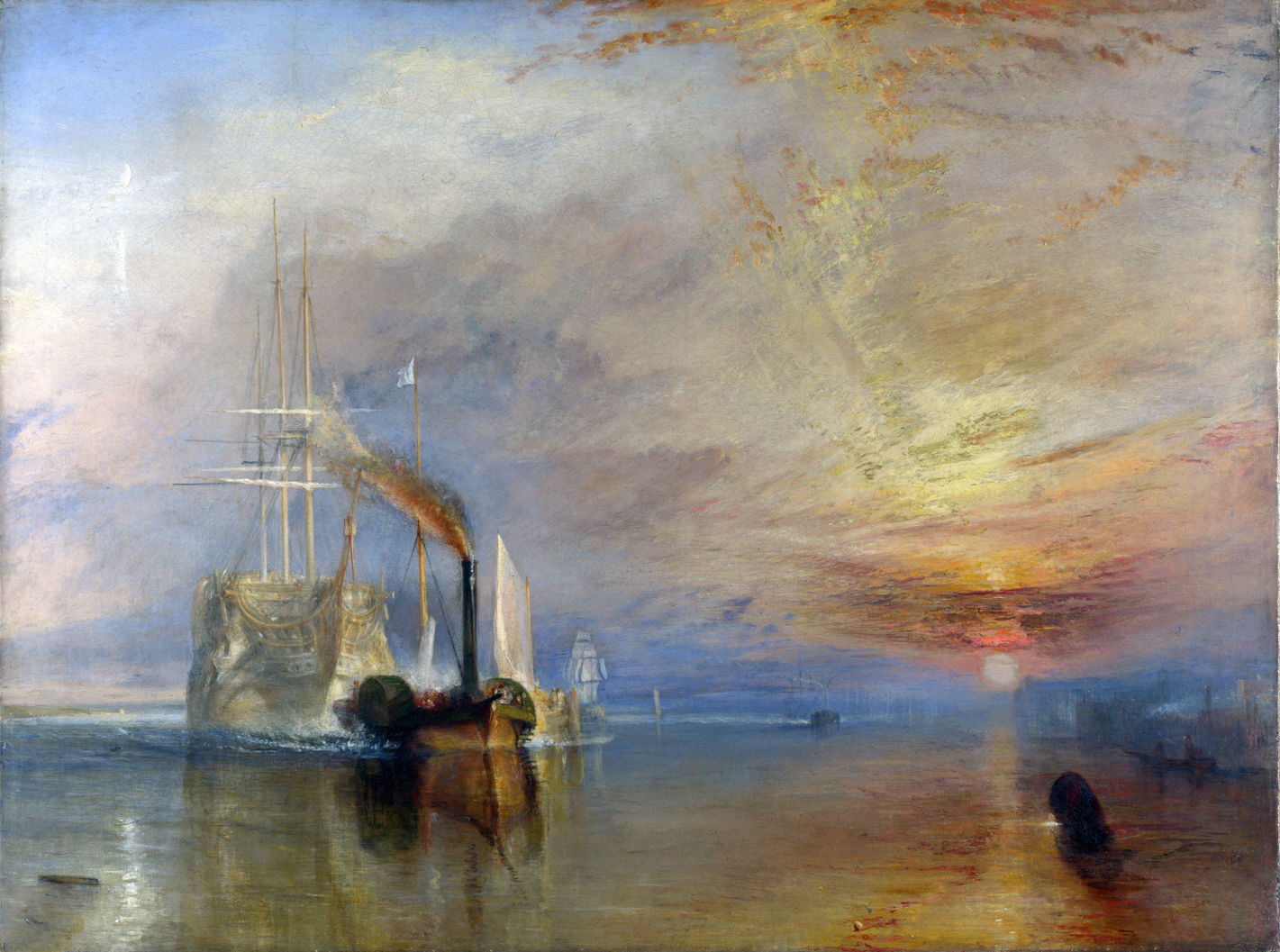
Joseph Mallord William Turner (1775–1851), The Fighting Temeraire tugged to her last Berth to be broken up (1839), oil on canvas, 90.7 × 121.6 cm, The National Gallery, London. Wikimedia Commons.

Turner’s famous Fighting Temeraire from 1839 breaks most of the optical rules of reflections, most obviously in the extraordinary reflected image of the tug’s prow. The tip of the bowsprit isn’t vertically aligned between original and reflection, and there’s gross vertical exaggeration, as there is in the ghostly reflection of the Temeraire under tow.

Joseph Mallord William Turner, Campo Santo, Venice (1842), oil on canvas, 62.2 x 92.7 cm, Toledo Museum of Art, Toledo. WikiArt.
Joseph Mallord William Turner (1775–1851), Campo Santo, Venice (1842), oil on canvas, 62.2 x 92.7 cm, Toledo Museum of Art, Toledo. WikiArt.

Several of Turner’s later paintings appear founded in sound optical principles, then exaggerated for artistic effect. While many of the reflections in his Campo Santo, Venice from 1842 appear faithful, he has grossly exaggerated the vertical axis of the reflections of the white sails to the left of centre. But the effect is wonderful.

The Dogano, San Giorgio, Citella, from the Steps of the Europa exhibited 1842 by Joseph Mallord William Turner 1775-1851
Joseph Mallord William Turner (1775–1851), The Dogano, San Giorgio, Citella, from the Steps of the Europa (1842), oil on canvas, 61.6 x 92.7 cm, The Tate Gallery (Presented by Robert Vernon 1847), London. © The Tate Gallery and Photographic Rights © Tate (2016), CC-BY-NC-ND 3.0 (Unported), http://www.tate.org.uk/art/artworks/turner-the-dogano-san-giorgio-citella-from-the-steps-of-the-europa-n00372

The Dogano, San Giorgio, Citella, from the Steps of the Europa, from the same year, takes a few gentle liberties with optics without becoming too obviously inaccurate. Again this is mainly in vertical scaling, and Turner has been careful to ensure good vertical alignment throughout.

turnerexilerocklimpet
Joseph Mallord William Turner (1775–1851), War. The Exile and the Rock Limpet (1842), oil on canvas, 79.4 x 79.4 cm, Tate Britain, London (N00529). WikiArt.

I have already pointed out some of the apparently deliberate optical anomalies seen in the reflections in Turner’s late oil painting War. The Exile and the Rock Limpet (1842).

Given Turner’s experience and record, I don’t think those discrepancies are errors, but are devices he has successfully used for their effect.

❌
❌