 Login
Login
 大甜甜~~评论: 中国古代文化
评价: 力荐

Rahm Emanuel returns to ChinaTalk with a characteristically blunt assessment of U.S.-China relations and verdict on year one of Trump 2.0.
We discuss:
The “Fear Factor” in Asia: Why Japan and South Korea are ramping up defense spending not because of Trump’s strength, but because his unpredictability and isolationism have forced them to buy “insurance policies” against a U.S. exit,
Corruption and “Own Goals”: How “draining the swamp” has turned into institutional degradation — and why the Trump family’s entanglement of personal business interests with foreign policy damages U.S. credibility and strategic leverage,
Adversary, Not Competitor: Why the U.S. needs to stop viewing China as a strategic competitor and start treating it as a strategic adversary — one whose win-lose economic model is designed to hollow out global industrial bases,
Education as National Security: Why tariffs are a distraction and the only real way to beat China is a massive domestic push for workforce training,
AI and Inequality: Rahm’s evolving thinking on artificial intelligence — why he’s still learning and why a technology that boosts productivity but widens inequality is a political and social risk.
Plus: why Ari Emanuel’s UFC US-China robot rumble is sound policy, Rahm’s case that he’s now the real free-market capitalist in the room, and rapid-fire takes on J.D. Vance, Marco Rubio, and the 2028 Republican field.
Have a listen in your favorite podcast app.
Jordan Schneider: Rahm Emanuel, welcome back to ChinaTalk. What a year for US-Asia policy it has been.
Rahm Emanuel: That is the understatement of the year.
Jordan Schneider: In our 2024 show we started out with me asking you questions about, “Oh, look at all this nice stuff you guys did. Rebuilding alliances. Japan and South Korea are friends again.” And now we’ve got all this.
Rahm Emanuel: How did we go downhill so quickly? Is that what you’re asking?
Jordan Schneider: We now have a year-long sample size of “Trump II” taking a very different take from both Biden and Trump I. Really, it’s a departure from the past 70-plus years of US foreign policy when it comes to relations with our treaty allies. What has it been like watching this, Rahm?
Rahm Emanuel: It’s depressing. It’s infuriating. There are a lot of other emotions. Look, it starts from a premise. China’s view is that they are the rising power. America is receding. Their message is, “Either get in line, or we will give you our full China coercion policy.”
Our message is that we’re a permanent Pacific power and presence and you can bet long on the United States. Unfortunately, everything President Trump’s doing is underscoring China’s message with a bunch of exclamation points because of the way we’re behaving.
When President Biden and his team walked in in 2020, China was on their front foot. When we left, they were on their back heel. They were angry at being isolated and it took a strategy of flipping the script. Rather than them isolating Japan or the Philippines, we isolated the isolator through the United States, Japan, Korea, Australia, New Zealand, the Philippines, and India. They knew it on a political, military, and strategic level.
All our military exercises were multinational. Japan was the number one foreign direct investor in the United States and is a long pole of our policy there. We built an alliance that China thought could never be done — and part of their strategy relied on it not being done — between the United States, Japan, and Korea. This culminated in what we accomplished at Camp David. That was, and remains, China’s worst nightmare. Trump basically took it off the page.
We then extended it to Japan, the United States, and the Philippines. If you look at where the Philippine islands are and where the Okinawa islands are, China’s strategy to quarantine Taiwan becomes much more difficult to achieve.
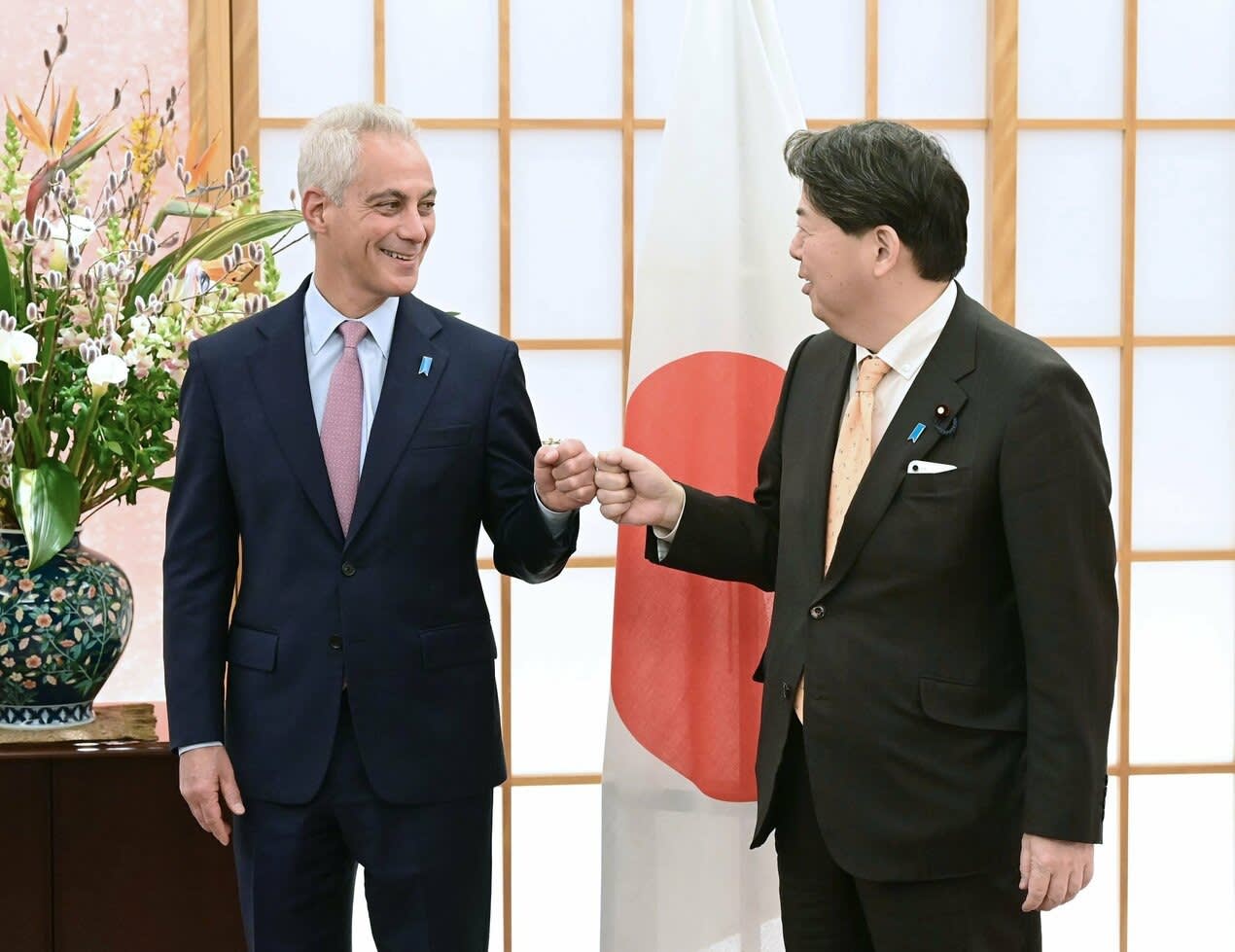
It had a strategic, political, and military level that was unprecedented. Then we had the Quad. We doubled down on the Quad, which Trump had actually pushed along in his first term to his credit. But now he has taken a 35-year project of bringing India into our orbit and totally expelled them for Pakistan’s vanity. It looks like it was done for Pakistan’s economic gifts to the Trump family, the Witkoff family, and the Lutnick family. Specifically to the Trump boys. That’s what it looks like.
China has been trying to force Japan into submission through economic coercion — which they haven’t done since 2010. It took the United States almost two weeks from the get-go to finally do a B-52 air surveillance run with Japan’s F-35s. Crazy. We should have been there immediately to send a direct message, but we didn’t.
At every level, this administration has made America weaker and more vulnerable. It has actually played into China’s message to all the countries we were attempting to pull into the US gravitational pull.
Jordan Schneider: The MAGA retort would be, “Look, we said some mean things, and defense spending in all these countries is going up. What’s not to like about that?”
Rahm Emanuel: First of all, not Japan. Let’s just deal with that. Japan increased their defense budget from the ninth largest to the third largest when I was there. To their credit — I don’t deserve it, and the Biden administration doesn’t deserve it — they did it early on, even before I got there. That wasn’t due to President Trump. They committed to 2% and did it in five years. They were well on their way before President Trump ever put his right hand on the Bible. So that’s calling offsides for what was not true.
Second, they have done things in that defense budget regarding counterstrike capability that pre-date Donald Trump. They just concluded a sale of ships to Australia. They did things they were constitutionally prohibited from doing, also pre-Trump. If anything, their willingness to go above 2% of GDP in defense spending is probably more out of fear of Donald Trump’s failure to show up than it is because of prodding by the Trump administration.
That has also been true to the credit of the new Korean president. His first set of conversations were with the Japanese because of their fear that the United States is AWOL. The facts just don’t bear out.
Plus, I’m right about India. The Trump administration totally punted on a bipartisan project that was succeeding in making China very nervous. Go look at what they were doing in the Himalayas. They haven’t shown up as it relates to the Philippines and the South China Sea islands.
Then last week, the Trump administration validated the AUKUS submarine project between the United States, Great Britain, and Australia. That all predates them as well. If that’s their argument, they better get some facts to back it up because nothing across six different countries adds up to that argument.
Jordan Schneider: There is a part of this that is downstream of this MAGA worldview that America just isn’t up for it anymore. What do you think about this whole idea of defining down what America can accomplish on the global stage?
Rahm Emanuel: I don’t buy it. A superpower doesn’t pick geographies, which is what they’re trying to do. They failed with Canada, they failed with Panama, they failed with Greenland. We’ll see what happens in Venezuela. The only place you could say they had a success was a $40 billion pledge to Argentina in the middle of cutting healthcare for the United States. I don’t think it should be hemispheric.
As a superpower, does that mean they are going to pull up stakes on the Middle East where Russia has now been kicked out and China is a bit player? That is an important geographic, strategic, and resource-rich area. Dumbing down or strategically pulling back only makes the world more dangerous.
Now, there are reforms that should be made to the alliances. But as you and I are talking about this, for 40 years the United States was telling Europe, “Don’t get economically energy-dependent on Russia.” Now the President of the United States is begging Europe to become more of a vassal energy-wise to Russia. This is in direct competition with our own energy policy and interests.
I’m a former ballet dancer, so I’m proud of being flexible. But these guys redefine flexibility. Here you are saying maybe we should dumb down or restrict ourselves, yet you’re telling Europe to get more dependent on Russia — and less dependent on Texas, Oklahoma, North Dakota, Wyoming, and Colorado. I can’t think of anything more stupid than that.

Also, in the Mideast, Russia has been kicked out of Syria. China has no play. It’s a major geographic area strategically. It’s a major purchaser of defense weapons. It’s a major investor in America’s economy. We have an ally both in Israel and in the Gulf countries, and also in the immediate Arab world. That is to our strategic advantage. Pulling back from that would make America more vulnerable politically, economically, and strategically. It’s foolish without even touching the rest of the world.
Would I say that Latin America and Central America in American foreign policy over the years have been stepchildren? 100%. Focusing on it is the right thing to do, but not at the expense of other regions. America can walk, chew gum, and be a superpower that brings a strategic presence to our policies in the Indo-Pacific, as an example.
Jordan Schneider: When I was reading that national strategy document, I was trying to make sense of it. You try to get in their worldview and think about how serious it is. But at the same time, you got everyone’s children making billions of dollars on the side. I really think this is a new thing in American history. It makes it very hard to take this new grand vision of how they want America to play in the world all that seriously.
Rahm Emanuel: Well look, I saw this today — it’s a pivot. When they had the big signing in the Sinai and around this ceasefire in Gaza, the Indonesian president says to Trump, “I need to talk to Donald.” The two boys are very upfront about it — they got caught on tape. In the midst of a tariff negotiation, we are mixing our strategic vision with President Trump’s checkbook. They’re not one and the same.
When I got to Congress, I set up a blind trust. First member to do it. Kept it as Chief of Staff. I had to re-up it and change it to meet the executive branch requirements. As Mayor, I filled out massive financial forms. In fact, I got an email about four months after I left saying, “You have to do your exit financial form.” I said, “You guys must be really lonely because you’re chasing me after I’ve left where I have no conflict.”
Meanwhile, you got a bunch of people who just left prison and are now investors. Crazy. Okay? I don’t know if you noticed, but they just left prison.
But you can go through the country. There was an announcement the other day. A startup company on one of the private equity funds from — I’m not sure which of the sons of Donald Trump — won a $700 million contract out of the Pentagon. A startup.
I wrote about this in the Wall Street Journal. The theory of “Broken Windows”is that small crimes create conditions for big crimes. That’s exactly what’s been happening. It’s not just about streets — it’s also about the corporate suite. The kids of Lutnick, Secretary of Commerce Witkoff, the special advisor for everything and anything, and Donald Trump’s kids — their checkbook is bigger today and yours is smaller today because they’re conducting themselves to enrich themselves.
The only envy Donald Trump has of Putin is that that is their business model, and he would like it to be America’s model. He has to work around some legal boundaries, of which the Supreme Court continues to remove for him. It is unbelievable to me what goes on here, having spent a lot of money with lawyers and accountants.
One of the things I’m proud about, starting from Bill Clinton forward, is that I’ve never hired a lawyer for anything I did when I was in public service. What these guys are doing makes me feel like I was a schmuck. I’ve never seen anything like this, and nor has America in American history. We have a lot of competition — and I’m from the city of Chicago — for corruption. But they have not only corrupted in the sense of the money they’re making in public policy, but they’ve corrupted the process of doing it.
Jordan Schneider: There’s big 17th or 18th-century European aristocracy energy here — like the princes marrying each other and doing deals on the side. [Neo-royalism!]
Rahm Emanuel: Here’s the thing. In the last 48 hours, two people were caught — ethics reports for not selling stock or whatever. Who’s going to investigate them? The FTC? The SEC? The Antitrust Division of the Justice Department? The Supreme Court — John Roberts and the rest of those hacks — gave him a carte blanche to go steal.
You basically can appoint members, fire all the Inspector Generals, and appoint or fire whoever you want at these independent agencies. You have a Justice Department and FBI which is a bunch of Keystone Kops. So of course people are going to break the law. You told them they get to write the law for themselves and nobody will enforce it. That’s what John Roberts did — the genius that he isn’t.
Jordan Schneider: I’m old enough to remember, “Drain the swamp”. And it won an election.
Rahm Emanuel: And what they decided was just to make the swamp a little bigger. Take India and Pakistan and the strategic point here, because there are other things relating to the American family’s checkbook being smaller than the Trump family’s. One is getting bigger and one is shrinking.
We have had a project from George Herbert Walker Bush to Bill Clinton to George Bush to Barack Obama to Donald Trump One to Joe Biden — bring India into a closer strategic alliance. Because Modi did not want to play stooge to Donald Trump, he made peace. Trump gets angry. Pakistan waves a bunch of contracts. The Financial Times has a great story about this regarding crypto and mining for the Trump kids.
We’ve abandoned a 35-plus-year project of America’s strategic interest just so the two Trump boys can have a little gold coin. That is what happened. And I stand by it.
Jordan Schneider: I would be remiss not to bring up Hunter’s pardon.
Rahm Emanuel: Bring it up. It was wrong.
Jordan Schneider: I thought it was really gross. It was really disappointing. I actually thought he wouldn’t do it.
Rahm Emanuel: If you want me to live in a glass house before I throw a stone, I ain’t doing it. But I’m going to say this, I never hired a lawyer for something I did. I believe in what Kennedy said about public service. That is not the virtue of this White House. They are stealing in broad daylight and getting away with it because John Roberts gave him a “get out of jail” card.
Jordan Schneider: Let’s talk US-China. We had Liberation Day, we had Liberation Day v2. We had rare earths thrown on the table twice. Then the Trump administration backing off. What’s your read on all this, Rahm?
Rahm Emanuel: The whole “Tariffs and Liberation Day” was about drugs one day, then manufacturing the next — whatever the moving target was based on the day. I don’t disagree with the desire to build America’s industrial capacity, but three points of fact illustrate the issue.
When the President walked in, there were 50,000 manufacturing jobs with “Help Wanted” signs that nobody could fill. We would be 50,000 manufacturing jobs ahead today if we had focused on the training side — getting Americans ready to do those jobs. Instead, we’ve lost jobs under Trump.
Number two — this went unnoticed, but two weeks ago, the CEO of Ford said he has thousands of empty jobs today paying six figures because people don’t have the skills — mechanics, electricians, etc. These are not in the corporate suite. They’re on the shop floor, and he cannot fill them. He says it’s only going to grow.
There was a story about China being ahead of us on energy production. One of the big problems for us to compete with China on AI and transmission is that we are short 200,000 electricians. Every one of those is a six-figure job with healthcare and retirement. The Merchant Marines — which are key to building up both economic and security capacity — are short 200,000 jobs over the next decade.
If we had focused on the problem analysis — that you need industrial capacity and a base in the United States to compete — that part is true. But tariffs and looking weak? Of the top five choices, that was number ten. We have Americans looking for work, the ability to buy a home, and a way toward economic independence. We have jobs that would give you a start on that independence — six figures — and every one of those companies is short workers.
Nobody covered what the CEO of Ford said. It was treated like a little thing that happened on the side. If the President had dropped 50,000 “Help Wanted” signs on manufacturing the day he walked in, we’d be a hell of a lot farther ahead on manufacturing than with tariffs — which he calls “the most beautiful word in the English language.”
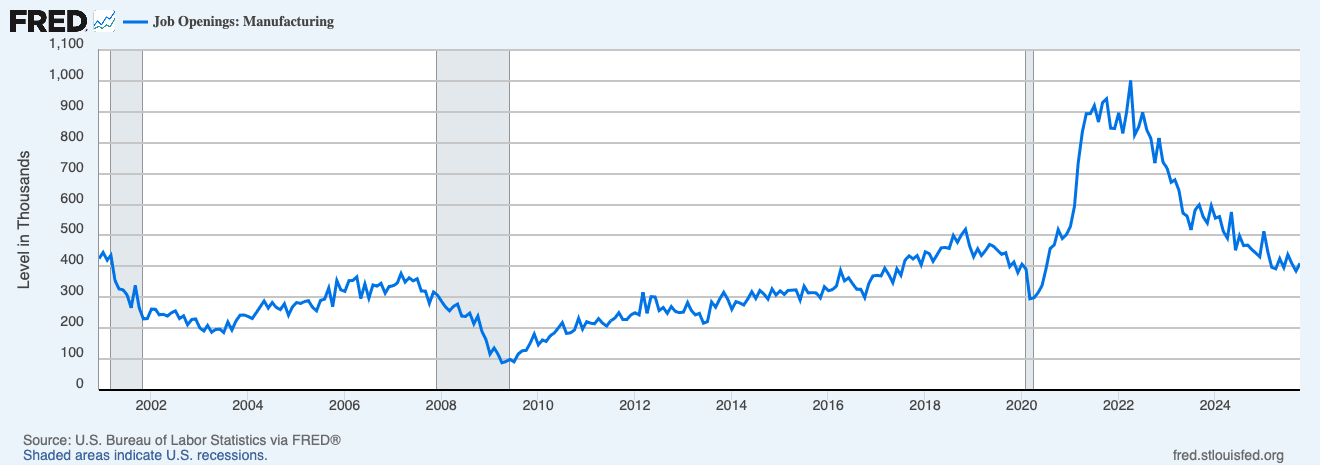
The President continues to do this. He analyzes a problem not entirely wrong — not always right, but not wrong — but then his solution is far worse than the problem he started to try to solve. It didn’t work against China, it made us look weaker, it divided us from our allies, and he is telling Europe to buy oil and gas from Russia, not from us.
In fact, the oil and gas industry in America has fewer wells today — which means fewer people working, drilling, and transporting — than when he walked in. Even his “drill baby drill” strategy is failing. I find this immensely frustrating from an economic renaissance perspective because we have a challenge that is actually an opportunity and our politics, and specifically how this administration is failing America and Americans, is the issue.
Jordan Schneider: So, forward-looking — we’ve had this rare earths saga. It is clear that big parts of the US economy have — and probably will for the foreseeable future — large dependencies. The economic coercion playbook that China has is significant. What is the international strategy to handle them? And also, how do you spend that money to start to ameliorate those vulnerabilities at home?
Rahm Emanuel: Having been Ambassador to Japan, I recall the first critical minerals economic coercion playbook China started was in 2010 against Japan around the Senkaku Islands. We knew about the old playbook and didn’t do squat — both parties. Then, when it came to COVID, they withheld basic medical gloves, masks, etc. That was economic coercion up front, though more for their own self-preservation than just for punishing everyone else. This has been part of their playbook.
You have to look across the system. I wrote a piece in the Washington Post about how we’ve had five helter-skelter national industrial policies. The auto bailout was a national industrial policy. What we did on CHIPS and the IRA under Biden was a national industrial policy. What we did during Warp Speed and COVID was an industrial policy. Some elements of policy are successful and others aren’t.
You quoted the National Security Council producing the NSS. I would have the National Economic Council produce an economic blueprint at the beginning of every administration — that looks out over the horizon. Here are our strengths, here are our weaknesses, here are our vulnerabilities. Today, it’s obviously critical minerals and magnet production. Four years ago it was — and still is — semiconductors and the production of chips, which was the impetus for the CHIPS Act and IRA coming out of the chip wars. Look through the strengths, weaknesses, and vulnerabilities, and then develop a strategy around that.
China has decided that on quantum, AI, life sciences, fusion, and alternative energy, they’re going to kick our ass. They’re not going to compete with America; they’re going to try to beat it. You saw after COVID their vaccine was a debacle. They made a decision that would be the last time. Now, five years later, they are competing, if not superseding us in certain areas, on life sciences and new drugs. You can look at what they did on chips and what they’re doing on alternative energy.
This attack on America’s research foundation, the university system, is an “own goal” of the worst kind. You won’t see the pain today — you’ll see the pain for the next decade. Donald Trump is leaving America far worse off. We should not concede any one of those areas. I spent time as an ambassador helping on quantum computing for America’s competitiveness between the University of Tokyo and the University of Chicago, bringing IBM and Google in to fund that at $150 million.
Pick the areas, compete, and win. Our scientists and our funding mechanism, while not great, keep us at the top of the game. We should not be trying to strangle MIT, Harvard, Stanford, the University of Michigan, or the University of Illinois in competing and winning the innovation war against China. That’s number one.
Number two, the brawn behind the brains. We should be in a massive education push, whether it’s electricians, mechanics, or in jets, so we have the capacity to compete. China’s AI is getting more competitive not because of innovation, but because their electricity is 50% cheaper than ours — because our transmission and energy production are way behind.
Third, related to regulatory reform, there is a place for consensus on legal immigration. We should be very clear about bringing the best scientists, the best engineers, and the best-educated to the United States of America. Each one requires drilling down deeper, but at 10,000 feet, that’s what I would do.
Jordan Schneider: At a principle level, it’s been very interesting to watch. In 2009 and 2010, you guys got screamed at for being socialists for saving GM and Ford. Now we have a Republican administration taking equity bites. We’re doing “national champions” now, I guess. What’s your read on that? And broadly, how far should the government go to mess with these private sector dynamics?
Rahm Emanuel: You have golden shares in Nippon buying US Steel as an example. You have the Intel 10%. I disagreed with Senator Romney on this — then a presidential candidate. He talked about GM and Chrysler going bankrupt. We spent political and financial capital saving the auto industry for a reason. Yes, we were called socialists. We were also called socialists on healthcare. It’s a normal card. I suppose, if you keep playing it, one day you may be right.
Jordan Schneider: We’ll see how many companies Zohran ends up buying.
Rahm Emanuel: What China has done is outright intellectual property theft — some of it explicit, some corrupt. But they invest in certain new technologies and they refuse to let those companies raise money so they can bankrupt them, and then steal all the patents or take them back to China. That is their national strategy. They can’t replicate the beauty of America’s research, innovation, and entrepreneurship, so they steal it through the front door, the back door, and the kitchen window. That’s what’s going on right now.
To me, that’s where we’ve got to sharpen up. To your point about socialism — Solyndra. We invested in this new solar firm and everyone’s like, “Oh my God, oh my God!”, and here are these guys investing in and putting public money in companies with zero operating capacity.
I believe I’m more of a capitalist and a free marketer than the Trump administration and the Republican Party. The Democrats would never take economic stakes in a company. Let me say this — we did bail out GM and Chrysler to save the jobs and the communities that depend on them. We got our money back, plus profit. But the goal was to get out, not to stay in and increase ownership. We did it with AIG, got out, and made a profit.
The goal was not to get in, stay in, and increase your stake. The Secretary of Commerce says we want royalties for our public dollar investments now. I think there’s a way you could pay a system that funds greater research, but what he’s thinking about is ownership — which is the last thing you need. I love politics, but that’s not the type of politics I want.
Jordan Schneider: Here’s a blast from the past. I was a press office intern in the Biden administration. It was during Solyndra, I think it was summer 2012. And what you guys ended up doing was letting journalists see every single email that was sent about it. I had to sit in a room minding all these Politico journalists. We’ve gone from that level of transparency to, like, if Sasha and Malia were on the board of Solyndra or something.
Rahm Emanuel: Let me just be really clear. You had us investing in a startup to jumpstart a technology in America and that was called socialism. Today, you have the United States investing and owning pieces of companies. Back then you had journalists who actually cared about what was going on. Today, if you did that, you’d get fired from your corporate leadership because you were “offensive” to the President. So the world’s gone full circle. You’re not crazy. It’s just gone upside down.
Jordan Schneider: So let’s do the US-China piece a little bit. This idea of America losing escalation dominance — we had a Biden administration that was able to slowly start to boil the frog when it came to a lot of these technology controls without necessarily having China snap back in an aggressive fashion that would affect America’s economy. And now that dynamic has shifted. So what happens next, Rahm? What’s the smart play here?
Rahm Emanuel: Look, I’d just be forthright and honest. I would tell China: “You wanted to be strategic competitors, but you have decided you want to be a strategic adversary. You have decided to go into our entire infrastructure — our utilities, our waters, and our systems. You’re also in our software, in our government agencies. That’s not a competitor — that’s an adversary. So if you want to go back to the competitive era, I’m ready. Everything you’ve done to endanger America — get out of here. We’ll compete, but we’re gonna go to a different level if you want to be adversaries.”
In this challenge, we don’t have an American to waste or a community to overlook. We made a mistake in 2012 thinking that Battle Creek can battle Beijing on their own. It’s going to take an all-country effort. I’m talking about what Ford said. I talked to you about other industries that have job openings and nobody there to fill them. We have thousands of young men and women looking for purpose and looking for economic independence, and every one of these jobs they can do. So I would go on a massive training push.
And I would be clear both on a technological level and a strategic level to our allies — “We have a certain period of time we have to buy. Our allies can play a bigger role in that effort so we can get to a point of competitiveness and a point of making China as deterred as they have done to us under President Trump.”
Don’t lose sight of Liberation Day and how we backed off. How much degradation to our deterrence posture was created when the President — after his talk with Xi, which he does first—then calls the Prime Minister of Japan (our number one ally) and never mentions Taiwan? And then for two weeks, while China is intimidating Japan, we don’t do anything. How much does that deterrence get degraded?
And while it’s being done to Japan, if you’re in the Blue House in Korea, you’re in Melbourne in Australia, you’re in New Delhi in India, you’re in Manila in the Philippines — you’re looking at what the United States doesn’t do with Japan and you’re saying, “There I go but for the grace of God.” So you bet you start to buy your insurance policy. You start to say — “Okay, the United States can’t be trusted. So what do I do?” That’s what’s dangerous here.
Jordan Schneider: The nuclear proliferation arc, which we haven’t quite seen yet, but I mean it’s coming, right?
Rahm Emanuel: When I got back early in February, I wrote this — if you think non-proliferation was expensive, wait till you see the bill for proliferation.
We spent a good time — not me directly, but in the region — convincing South Korea not to go independent on a nuclear weapon. We made a lot of assurances, too. You look at what’s happening now; it’s going to be hard to convince South Korea, given North Korea and China, to stay nuclear-free much longer. Not saying it’s not possible, but they’re going to look around. Part of their strategic overview is a nuclear and military guarantee and support from the United States. You look at what’s been going on in the last year, you’re going to sit there in the Blue House in Seoul and say, “Well, we can’t keep it like this now.”
If South Korea were to go nuclear, other countries like Japan would sit there and go, “Wait a second.” You have China building up nuclear capacity massively. North Korea, we know. And India and Pakistan. What if you add in South Korea and Japan? What could go wrong with six nations in a small geographic space — all who have 800 years of history and animosities — what could possibly go wrong? This is insane at every level.
Jordan Schneider: Well, we haven’t even talked about Iran, Saudi, UAE...
Rahm Emanuel: Can I say one thing that’s underappreciated in the strategic world and doesn’t get a lot of coverage unless you’re like a weirdo like me and read it? Iran is going through one of the biggest social-cultural revolutions since the Ayatollah walked into Tehran in 1979. They’re allowing concerts because they can’t control the youth. Women are openly totally disregarding the cultural norms of the ruling government. Because of a water shortage and corruption, they’re thinking of moving the capital out of Tehran.
I get Tehran has a strategic vision of themselves in that Shiite arc from Tehran to Beirut. There is a slow-boil implosion happening in Tehran right now. I don’t know how it manifests itself, I don’t know where the ball bounces, but there’s a cultural revolution going on — and I use “revolution” with a small ’r,’ not big. Given the demographics of the country — it’s dominated by people aged 30 and younger who so much want to be part of the rest of the world and believe the ruling class is holding them back economically, politically, and culturally.
There’s something going on in Iran and in a year from now, or maybe two —I’m going to look prescient saying what I just said. Something is happening there that we’re not seeing. And one day we’re going to wake up and say, “Who knew?” But you can’t have a ruling class all of a sudden — because of political vulnerability — say to the kids, “Right. You want to have all these concerts and go out and do all this that are not part of the norms? Go ahead.” Once you do that, that genie’s out of the bottle. If that genie’s out of the bottle, there’s going to be another genie out of the bottle. That’s the one thing we know from cultural history.
Jordan Schneider: One more foreign policy one for you. Let’s do a little bureaucratic reform talk. Someone’s going to have to rebuild the civil service. Say you’re Secretary of State 2029. What do you do with the place?
Rahm Emanuel: You know, it’s interesting you say this. I was down in Austin about three weeks ago, and I grabbed lunch with two very, very good top national security former generals. I don’t want to use their names — I don’t want to get them in any trouble if they’re doing any kind of advisory board for the government. Very smart people that I’ve worked with who rose to the highest levels in their roles out of the national security institution.
And I asked this question, “Okay, you got all this chaos. We all operated in this. If we have the opportunity here — you got a clean legal path — how would you reorganize this?” I was thinking, you know, move this here, move that there, which is the thrust behind your question. Basically, I was in the same kind of zeitgeist you are.
Their response was interesting. I’m not saying they’re right, but it was actually interesting and not what I expected. They said, “You hire good people at the top. It does two things — lifts morale and brings the talent that’s left back in. If you start changing things and moving furniture around, it’s just all this energy on something else, when the immediate thing you have to do for the next couple of years is get the intellectual capacity back in. That means the top of the org chart. No B’s, no B-minuses, no B-pluses. You got to get A’s. They’ll get the morale up, and they’ll get talent to come back in and do public service.”
I gotta be honest, I was surprised because I thought, “Oh God, it’s a clean slate. We could do this.” But they said, from a capacity to run while you’re fixing something in chaos, talent is the number one goal. They said some other things which are true, like the intel operation capacity over the State Department, and the anti-terrorism financial end of the Treasury — both underappreciated in the intelligence world and swinging way above their weight class and they should be at the big boys’ table, not at the kids’ table anymore.
Those were just two observations from the national security side that I thought were persuasive. So I posit that that’s how I would approach it. Go with a talent at the top, get morale up, and make it a magnet for other types of talent to come back in.
Jordan Schneider: All right, rapid fire round. Selling chips to China?.
Rahm Emanuel: No.
He is the worst negotiator. I’m going to give you a story. We’re negotiating a balanced budget. It’s Erskine Bowles, myself, Gene Sperling, Bruce Reed, John Podesta, Sylvia Mathews, and I’m senior advisor. So one day in the morning I go to the Oval Office and I said, “Mr. President, every night Gingrich is calling you and you’re giving away the store. We spend the first three hours clawing back stuff you’ve given away. I’m just going to tell you, if you’re negotiating, Rule One is the other side has to know that you can live with the ‘No.’ You want to get to a ‘Yes.’ Everything you do is to convince the other side you are very comfortable with a ‘No’ as much as you are with a ‘Yes.’” I said, “We cannot have you doing this. We’re going to get to a balanced budget agreement. We have the upper hand here, but we are giving it away and diminishing it.”
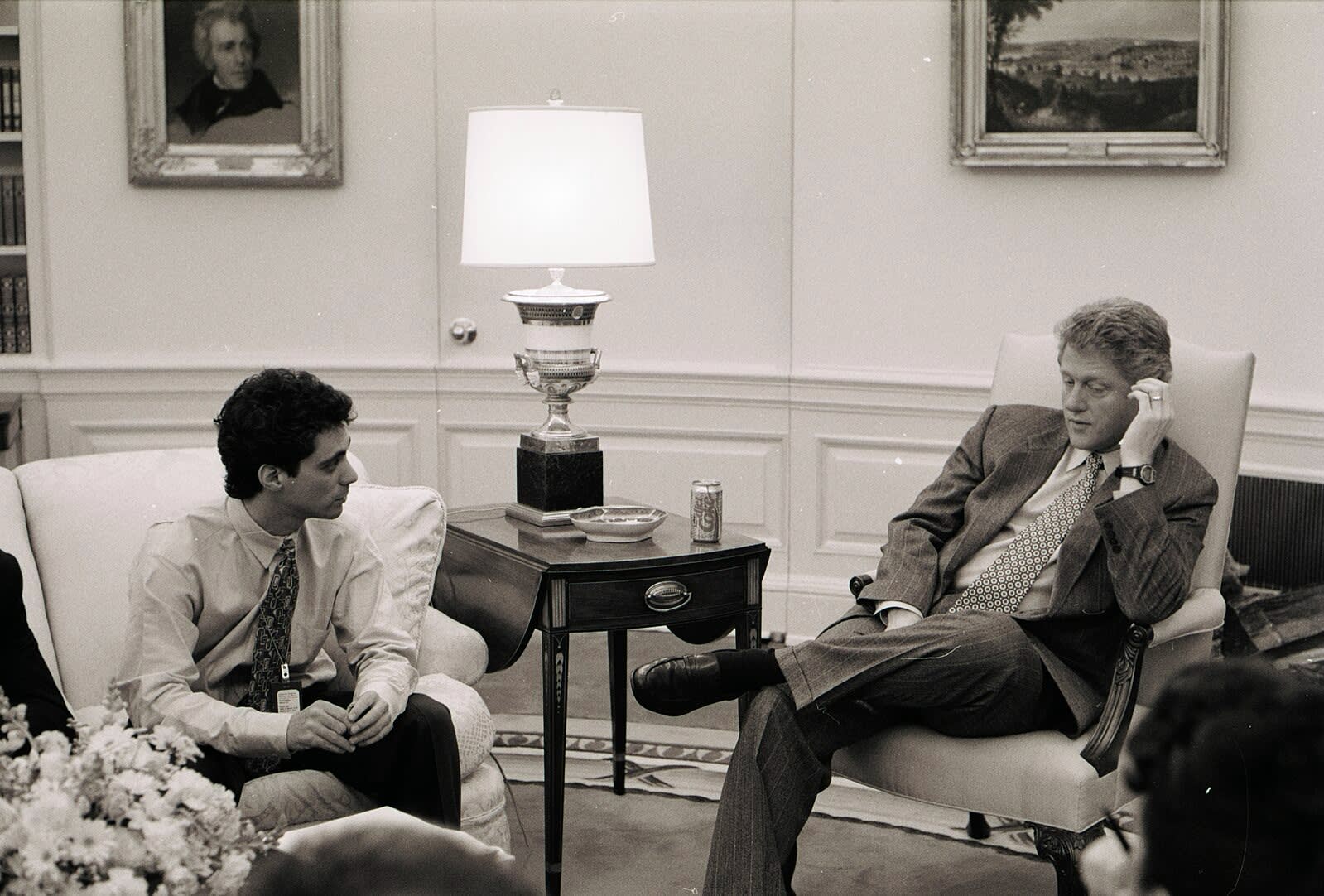
Anyway, the lesson here is Donald Trump is so solicitous of trying to get a deal that he’s selling the family jewels to get it, and the Chinese know it. He’s going to run around on some soybean deal — which is his problem — or fentanyl and a couple other things. I’m not disregarding the fentanyl issue, but he’s so hungry for a deal, the Chinese are going to play him. And they’re playing him now — and they haven’t even gotten to a deal yet. And you can see it.
He just gave away the chips for what? What’d you get? He gave away something he could have gotten at the table for something else. What did we get? They just did a military exercise with Russia around Japan, your ally, forcing you to come out of the closet and finally do your B-52 covers with the F-35s. What did you get for that chip deal? Bupkis. As my grandmother used to say, “Bupkis”. The worst negotiators I’ve ever seen.
Jordan Schneider: Where is the Democratic Party on China?
Rahm Emanuel: There’s no uniformity. Having spent some time on this, I’ve come to the conclusion that we have a fundamental problem. They’re not strategic competitors — they’re strategic adversaries. They’re trying to bury us. Your competitors don’t get buried into the infrastructure, technology, and systems to destroy this country. God forbid we ever get to something kinetic. We don’t steal private information from government officials like they do, or steal from Google. We’re not stealing Huawei’s IP.
Second, we believe(d) — until Trump — in the rule of law. As part of their business model, they’re open to economic espionage and intellectual property theft. It’s very hard to have two economic models integrated where one believes in the rules and one believes the law doesn’t apply.
Third, our economy, even with the tariffs and Liberation Day, is integrated. The world is dependent on America. Their economic model is that the world becomes dependent on China, and China becomes independent of the world. That is why they’re exporting and crushing every other country’s industrial base — developed or developing world — whether it’s steel, toys, or EV cars.
It’s very hard to have an integrated model where destroying the other side is the goal. It’s one thing if you want to trade and it’s one thing if you want to compete. It’s another thing if the goal is “I win, you lose.” There has never been a “win-win” in China’s model. I don’t say that because I’m angry at them. That’s a fact.
Now we have to figure out where we’re going to go from here. They just passed a trillion dollars in trade, and their imports from other countries are down. South Korea’s only steel plant closed. Chile’s only steel plant closed — 20,000 jobs. That’s not the United States. That’s China. They’re doing it across the board. If Europe doesn’t protect itself, its auto industry will be destroyed.
We’re on a win-win model. Sometimes we win, sometimes we lose. They’re on a win-lose model based on economic espionage and intellectual property theft. There’s a case where they were stealing AI secrets from Google and from ASML, which is Dutch. They were caught stealing intellectual property.
I have not seen our companies that are into chip manufacturing stealing intellectual property from companies of other countries. I’m willing to stand corrected and say I’m wrong if there are suits on patents, but not outright government-sanctioned, government-sponsored intellectual property theft. As an example, Tokyo Electron, which makes chip manufacturing machinery, competes against ASML. Neither one has been found cheating and stealing IP from the other. China has been caught stealing and cheating from both of those companies.
Jordan Schneider: Rahm, your brother’s got a role to play in all this. Ari pitched the UFC on having an event in China, and they took him to a robot demo. He said this on a podcast — maybe we should have American and Chinese robots fight in a cage. America needs to see our robots getting their asses handed to them because right now, it’s not salient just how good China is getting at all these emerging technologies. You don’t see the cars on the road, you’re not really using the AI models. It just shows up in trade numbers and in factories closing. Having that as a primetime thing on Paramount Plus — there’s something to this, Rahm.
Rahm Emanuel: Let me just say this. Since I usually tell Ari and Zeke at family meals and holidays to just shut up, I’ll let Ari know that you think he has a good policy idea. But it will not come from me complimenting him, because there’s very little space I’ll give Ari in the policy world. The worst thing to do is tell somebody in Hollywood they have a good idea because they think they’re brilliant.
Jordan Schneider: Unless you’re George Clooney.
Rahm Emanuel: Yeah.
Jordan Schneider: Ok, domestic politics of AI. This dog hasn’t really started biting yet. But by 2028, it’s gotta be one of the top three things just from an education, social change, and job displacement perspective alone. You just pitched that we should be banning social media for kids under 16. What’s your take on all this?
Rahm Emanuel: You wanna talk about kids, poverty — I’ve got ideas. I’m learning about AI. I had a lunch today with somebody I consider very, very smart who discussed the confusion between OpenAI and open weights, and how the real challenge is in open weights where there are no firm protocols.
I want to be clear: I don’t have the answer. I know it’s important. I’m learning as we go. I’m trying to figure out who really knows their stuff.
While AI is important to the future and productivity, I have two cautionary notes. One, we have to figure out our energy production in the United States. China adopted the Obama “all of the above” strategy. We walked away from it in 2016 under “Drill Baby Drill.” We’re now paying the price because our electricity costs are two times China’s. They decided to go with an “all-in” approach, and we decided to go with a singular approach. Full stop.
Two, we’re short of the workforce to build out that energy capacity, to build out this chip capacity, and to build out the AI language capacity because we don’t have the workforce we need — from brawn to brain. Energy is going to be essential to the success, not just how small the chip is, but how much energy you produce.
Third, regarding AI, there is a cautionary note from the last 30 years. While globalization and technology worked, they didn’t work across the board. They worked for you, they worked for me, but they didn’t work for everybody. If you want a new technology to benefit society, it has to benefit everybody in the society. If it doesn’t, then you have to figure out ways to ensure there’s a better level playing field.
And we did. That doesn’t mean you could have stopped the clock and said “no Internet, no trade.” The question is, if you’re going to go forward — to quote President Clinton — how does everybody cross the bridge to the 21st century? You don’t have a queue where just some people make it and other people stand in line. That’s my cautionary note about AI — it will have an impact on productivity, and it will also have an impact on the people that lose their jobs because of that productivity.
What’s the strategy behind that technology to keep America competitive while ensuring all Americans are part of that? I don’t have it figured out yet. If I told you I did, I’d be full of crap. I know what the opportunities are. I know what the challenges are. I know how we have to start to think about it. Who has got the best thoughts on it? I don’t know.
Jordan Schneider: Two pitches for you on that. The education adoption side is the piece I’m most worried about. The productivity diffusion — the free market is going to figure out how to make workers more impactful, do their jobs better and faster. But the promise of having the greatest tutor that humanity has ever invented tailored to every single child, exactly where they are in their learning journey, is a world-historic opportunity. You’re talking about the haves and have-nots here. You fought teachers’ unions in the House. There’s going to be a lot of mess, a lot of hesitancy, and a lot of fear.
Rahm Emanuel: There’s a lot of fear. That’s not illegitimate. When I was mayor, we had the shortest school day and the shortest school year in the entire United States of America. I said, “What are we fighting about? You have great teachers. I want more time with the kids with the great teachers.”
We had no kindergarten, no Pre-K, no recess, no lunchtime, no gym time, and no arts class. I said, “What are you talking about here? It’s the shortest school day. Kids are being cheated.” I said to the head of the union, “I can’t believe we’re arguing about this. We have no recess, no arts education, reading is down to 40 minutes a day. We have no money for kindergarten, no money for Pre-K.” All the things that we eventually took care of. I said, “You believe in this? Why are we arguing? This makes no sense to me.”
Jordan Schneider: When we did our first show, my wife was five months pregnant. We now have a one-and-a-half-year-old. We spent this morning at preschool interviews for twos programs. I came out a little nauseated because, you’re right, Rahm, I have resources that not everyone has in this city. Walking through this incredible place — which is, again, a twos program — Pre-K starts for free in the US when your kid is four. They have the paints and ceramics, and literally, the ceramics are from the nicest ceramic store that you’d find in a $10 million apartment. I’m sitting here thinking, “This is gross.” It’s going to be the same for middle and high school, but it’s going to be an even bigger deal because they’re going to have access to $20,000-a-month AI tutors.
Rahm Emanuel: When I became mayor, there was no universal kindergarten and no Pre-K. We made every five-year-old get a full day across the city and every four-year-old get a full day across the city. But the biggest accomplishment was on the other end, in high school.
We did three things in high school that we haven’t changed since we first brought it along.
One, if you get a B average in high school, we made community college free — tuition, books, and transportation.
Two, we brought college into high school. 50% of our kids were graduating with college credit so they didn’t have to pay for it later on, and they got the confidence they could do college-level work.
Three — the most important thing we did — to receive your high school diploma, you had to have shown us a letter of acceptance from a college, community college, a branch of the armed forces, or a vocational school. It was a requirement. 97.8% of our kids met that requirement. When you walked on graduation day, you had to be able to show us where you were walking to.
Not just your child who is young. Mine are all grown up past those years. Two are in the military — one full time, one reserve. They all went to college. They knew where they were going. I don’t really care whether you’re going to Michigan, or to be a bricklayer, an electrician, the Air Force, or Harold Washington Community College. I don’t care. But you are not stopping when you’re 17. And that to me made my time in public life worth it.
Stanford said that the Chicago public school system was the best of the big 100 — the best. When I walked in, William Bennett had called it to the worst. But what Dr. Janice Jackson and I did in reforming the high school years was fundamental to the trajectory of these kids’ lives. 20,000 went to community college for free.
Jordan Schneider: I got one more pitch and then a final question. You talked about banning social media. The other thing to watch is AI companions. Everyone’s saying these AI are going to be better friends than people. That is a whole different thing from what Instagram was.
Rahm Emanuel: I will keep my eye on it, but I’m going to stake my battle on what I know. Chicago, under my tenure, had the most restrictive policies on tobacco sales to teens, and we took teen smoking down to single digits. As I told you, we did the same with Pre-K and kindergarten. When I was Senior Advisor to President Clinton, I negotiated the Children’s Health Insurance Program for 10 million children whose parents worked but didn’t have health care.
If it relates to kids and teens, that’s where I’m going to put my energy. It’s the future. My dad was a pediatrician — that may be my own desire regarding what I think is important. I’m not saying other issues aren’t important, but that’s where I’m going to spend my time. Given what Australia is doing, and given what I think you can do technologically to turn the algorithm into an ally rather than an adversary, that’s where I’m going to spend my time. I’m not saying the issue you raised isn’t important, but I’m not diffusing my energy.
Jordan Schneider: Everyone on all these other podcasts asks you if you’re running, and they ask you about all the other Dem candidates. I want to talk about the Republican ones. We’re going to just go down the list. Kalshi has J.D. Vance at 50% to be the Republican nominee. What’s your take?
Rahm Emanuel: Politics is crazy these days, but it is very hard to knock off a sitting Vice President. My guess is it’s probably right.
Jordan Schneider: Aside from electability, what do you think of him as a politician?
Rahm Emanuel: Likability is an important factor, and I think that’s a vulnerability for him. That’s all I’ll say.
Jordan Schneider: Rubio, 9% right now.
Rahm Emanuel: Part of leadership, in my view — and I’ve said this repeatedly — is you got to know why you’re doing what you’re doing and have the strength to get it done. You can infer from that anything you want.
Jordan Schneider: DeSantis, 4%.
Rahm Emanuel: That’s generous.
Jordan Schneider: Tucker, also at 4%.
Rahm Emanuel: That’s overly generous.
Jordan Schneider: And how about Donald Jr. rounding out our top five, also at 3%?
Rahm Emanuel: I can’t wait for him to do the financial disclosure form.
Jordan Schneider: Rahm Emanuel, it’s been an absolute pleasure. Thank you so much for being a part of ChinaTalk.
Rahm Emanuel: Can I say one thing?
Jordan Schneider: Yeah, of course.
Rahm Emanuel: I have three kids — 28, 27, and 25. You’re about to experience the greatest journey of life with a lot of hits and a lot of misses. But you have two parents who are role models. You’re going to be great at it, and it’s going to be a great journey. Mazel Tov. Thank you so much.
ChinaTalk is a reader-supported publication. To receive new posts and support our work, consider becoming a free or paid subscriber.
这次西部之行包括El Paso。El Paso是得克萨斯西部荒漠中的一座边城。格兰德河从这里流过,形成得克萨斯跟墨西哥之间的天然边界。河对岸就是墨西哥。一百多年前,一位美国将军,以一己之力,不顾《排华法案》的禁止,把500多名中国人和他们的家眷,从这里带进美国,让他们脱离了墨西哥叛军的枪口和绞索。
这段往事已经很少被人提起,今天,我们把这段被掩埋了一个世纪的往事,重新挖出来,从头到尾讲一讲。这是个关于战争、逃亡、忠诚、偏见、良知、报恩、契约精神和军人荣誉的故事。
现在一说得州的华人,很多人可能首先想到的是休斯顿、达拉斯。但100年前,得州华人最多的城市,既不是休斯顿,也不是达拉斯,而是El Paso。
El Paso的很多华人,可能跟美国任何一个地方的华人都不太一样,他们的爷爷、老爷爷来自中国,但他们的奶奶、老奶奶是墨西哥人。这些华人有个奇特的名字,叫“Pershing Chinese”——“潘兴华人”。
潘兴(John Pershing)是美国历史上最受尊崇的军队将领之一。在第一次世界大战中,他是美国远征军总司令。大家耳熟能详的几位二战名将——艾森豪威尔、麦克阿瑟、巴顿、马歇尔,都曾经是潘兴将军的手下,可以说是潘兴将军的学生。
很多听众可能了解,从1882年到1943年,有61年时间,美国实施《排华法案》,禁止华人劳工入境,禁止境内的华人归化为公民。“潘兴华人”是怎么来的呢?
一边是战功卓著的美国名将,一边是在美国社会夹缝中生存的华人,这两个名字是怎么在El Paso这座荒漠边城连在一起的呢?为什么在排华法案最严酷的时代,500多名华人和他们的家眷,却能被美军用军车浩浩荡荡地接进美国?为什么一位美国将军为了他们,去跟美国总统和国会硬刚?
1881年5月,南太平洋铁路从加州修到El Paso,即将跟贯穿路易斯安那和得州的铁路连通。1200多名修建铁路的华工,跟着铁轨来到这片荒漠,很多人留下来,定居在这里,形成了得克萨斯最早的唐人街。第二年,美国通过《排华法案》,堵上了华人劳工合法入境的渠道。
既然不能合法进入,就会出现非法偷渡,就像前几年的“走线”一样。当时,中国还是满清帝国。大清国的走线客,先坐船到墨西哥,再坐火车北上,到达El Paso边境线另一侧的华亚雷斯落脚,等待时机偷渡进入美国。El Paso自然成了偷渡进入美国的第一站。
南太平洋铁路开通后的几十年,El Paso成了各种冒险家的乐园,汇聚了形形色色的人物,包括各个阶层的华人:有老实巴交的菜农,有精明的商人,也有开杂货店、洗衣店的小业主。
在格兰德河对岸,墨西哥境内的华亚雷斯,也有着规模庞大的华人社区。生活在那里的华人,有些是本来要偷渡进入美国,但却最终留下来,就地谋生的劳工,有些是开杂货铺的店主,也有些是生意人。很多华人精明能干,日子过得比墨西哥本地人要好。这自然会招来一些当地人的羡慕、嫉妒、恨。羡慕、嫉妒、恨,这是人性,在任何地方、任何人群,都避免不了。
当年住在墨西哥的中国人大多是苦力和偷渡客,男多女少。他们到了成家立业的年龄,大多数娶墨西哥本地女子,他们的孩子就成了中墨混血。这当然更会加剧一些当地人的羡慕、嫉妒、恨。在正常情况下,虽然双方关系有点紧张,有点微妙,但总体上能和平相处。
这种微妙的平衡,在1910年代被一场突如其来的风暴打破了。这场风暴就是“墨西哥革命”。
第三世界的革命都少不了打家劫舍的草莽英雄。墨西哥革命的草莽英雄名叫Pancho Villa。革命了,每个人都要选边站,不是站墨西哥政府,就是站Pancho Villa的叛军。很多墨西哥的华人更倾向于站在墨西哥政府一边。很多人因此被叛军杀害。Pancho Villa的叛军不仅杀害当地华人,而且会灭门,把他们的墨西哥太太和孩子一起杀掉。
1916年3月9日,Pancho Villa干了一件令人震惊的事。他率领一小股叛军进攻美国,在新墨西哥的边城哥伦布镇,杀死了18名美国士兵和平民。当时的美国总统是威尔逊,他下令驻扎在得克萨斯布利斯堡基地(Fort Bliss)的约翰·潘兴少将,率军进入墨西哥征讨叛军。
布里斯堡基地就在El Paso旁边,离哥伦布也只有一百多公里。哥伦布是个小镇,坐落在边境线上。边境线另一侧就是墨西哥的Puerto Palomas。几年前,我们骑车穿越美国的时候,曾经在哥伦布越过边境线,到Palomas吃了顿午饭。那里的广场上有Pancho Villa的雕像。我们还在他的雕像下面照了张相。
在那个年代,革命者和匪徒并没有明确的界限。
潘兴将军率领一万多名美军,浩浩荡荡杀进墨西哥北部。但他很快发现,美军面临的最大威胁,并不是Pancho Villa的叛军,而是后勤补给。
Most coverage of China’s pandemic response has focused on its handling of COVID. Far less attention has been paid to what China has done in its aftermath, during which the country has been making interesting moves to prepare for the next large-scale biological threat.
Since 2023, Beijing has revised the Infectious Disease Law (IDL) and the Biosecurity Law and launched new frameworks like the Public Health Emergency Response Law (PHERL). Their rhetoric has also been increasingly telling, with criticism of the US’s pandemic response and self-proclamations of China as a global leader in pandemic oversight.
Pandemic prevention in China has moved from emergency reaction to long-term system design.
Chinese officials appear determined to ensure the next COVID doesn’t start within their borders. That determination increasingly stands in contrast to the United States, where public health institutional capacity has lost steam since 2020, especially during Trump 2.0.
Today’s installment examines governance initiatives, but this is only one part of a much larger ecosystem. Future pieces hope to explore PPE stockpiles, vaccine production, early-warning surveillance, research and lab standards, and the AI-bio crossover.
The CCP looks to be taking pandemic risk seriously. After China’s public-health system was shown unfit for purpose when COVID hit, Beijing has now enacted some of the most actionable steps of any major country to bolster its pandemic-readiness system.
COVID exposed how costly Beijing’s old instincts were: burying early signals, punishing whistleblowers, and relying on improvised crackdowns left the center blind and politically exposed. The new reforms try to fix this by giving local officials clearer rules, reporting guidelines, and more room to act early without fear of punishment. Beijing appears willing to trade some information-control for a more rule-bound, faster-moving system, though whether officials feel empowered to speak up remains uncertain.
A more centralized domestic monitoring and command system gives China greater ability to manage potential outbreaks internally, reducing pressure to depend on international organizations. That avoids reputational costs and protects “face,” which helps explain why China can buy-in heavily to pandemic preparedness while still resisting meaningful collaboration or data sharing with groups like the WHO.
Globally, Chinese state rhetoric casts the U.S. as the country that bungled COVID while downplaying its own early missteps. And Beijing is positioning itself as an international leader on health governance, especially for the Global South.
*Starting with “Recent Government Initiatives,” each section ends with a grade. Taken together, China earns a C+ overall, which is an improvement over the D I would have given it pre-COVID, though still shy of the B- I’d give the US.
Since 2023, the major players in China’s pandemic readiness system have received new mandates, budgets, or planning documents to strengthen their roles.
At a high level, China’s system runs on a clear hierarchy. The State Council directs national strategy, the National Health Commission (NHC) leads implementation, and a network of technical and support agencies (at both federal and provincial levels) executes the work.
Key Players
State Council (国务院) — the top command centre in any outbreak. It activates the “Joint Prevention and Control Mechanism” (联防联控机制), created during COVID, to coordinate ministries across health, industry, and emergency management. Since 2023, the State Council has signalled an effort to bolster its coordinating role for pandemic response.
National Health Commission (国家卫健委, NHC) — China’s main health authority and a cabinet-level executive department of the State Council. It drafts and enforces key laws, oversees the China CDC and the National Health Emergency Response Center, and manages early-warning and emergency-medical systems.
National Administration of Disease Control and Prevention (国家疾控局, NADC) — created in 2021 to strengthen disease control and biosafety. It sets national standards for surveillance and builds modern early-warning/data systems. It’s one of the key additions of China’s post-COVID infrastructure.
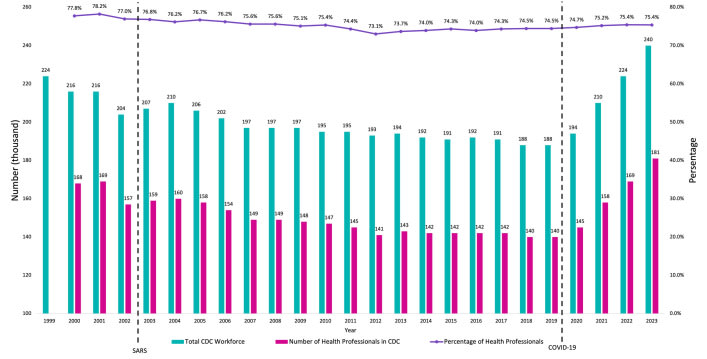
China CDC(中国疾控中心) — the technical core of the system. It collects and analyzes infectious disease data, runs testing labs, and provides guidance to local CDCs. The CDC workforce numbers surged during COVID, increasing by about 20% to reach 240,000 in 2022, the highest level ever. This was preceded by years of post-SARS neglect, which left the system understaffed and unprepared for COVID (see graph below).
There are also many supporting ministries that handle logistics, funding, and research, such as
National Health Emergency Response Center (国家卫生应急中心) - coordinates emergency medical teams and logistics during crises.
National Biosecurity Work Coordination Mechanism (国家生物安全工作协调机制) - coordinates biosecurity-specific policy and emergency response across ministries.
Ministry of Industry and Information Technology (工业和信息化部, MIIT) - manages medical supply production and logistics.
Ministry of Science and Technology (科学技术部, MOST) - supports new R&D programs in pathogen detection and modelling.
National Medical Products Administration (国家药品监督管理局, NMPA) - fast-tracks new countermeasures.
People’s Liberation Army (中国人民解放军, PLA) - deploys medical units and runs military R&D in pandemic-related situations.
In China, authority flows from the State Council through the National Health Commission and its affiliated agencies. Provinces largely mirror this structure, which makes it easier to coordinate and implement national policy quickly once priorities are set in Beijing.
The US system is much less centralized. The Department of Health and Human Services — mainly through the CDC and the Administration for Strategic Preparedness and Response (ASPR) — leads at the federal level, but state and local governments hold most of the practical authority over public health measures. In practice, the federal government provides funding, guidance, and aggregates data, yet in a major pandemic, it’s less clear that the US could quickly coordinate a unified national response.
Centralization, on the other hand, has trade-offs. China’s unified chain of command can move quickly, but a bad call at the top can misdirect the entire system. The U.S.’s decentralized model is more heterogeneous, since one state’s mistakes don’t necessarily drag everyone else down. China’s approach, therefore, relies heavily on accurate information flowing upward and on giving localities enough room to adapt policies to local conditions, which many of the initiatives below attempt to do.
In September 2025, China’s top legislature (NPCSC seventeenth session) passed the Public Health Emergency Response Law (突发公共卫生事件应对法, PHERL). It’s the country’s most significant effort since COVID-19 to overhaul how it manages outbreaks, arriving alongside a substantial revision of the Infectious Disease Law (传染病防治法, IDL) earlier this year. Together, the two laws do a good job of weaving in many of the major pandemic readiness updates in recent years, and are meant to give China a more coordinated and legally coherent framework for handling future epidemics.1
One surprising feature of both PHERL and IDL is that neither substantively mentions the Biosecurity Law (生物安全法). Since its introduction in 2020/2021, the Biosecurity Law has been China’s main legal framework for managing biological risks, specifically, from pathogen labs to zoonotic disease surveillance. The law divides biotechnology research and development activities into three risk categories — high, medium, and low — requiring approval for high-risk and medium-risk activities. It also establishes classified management of pathogenic microorganisms and hierarchical administration of pathogenic microorganism laboratories. The law was mildly amended in 2024, though many of its weak spots remain.
The gist of these recent moves is an attempt to correct the legal and regulatory weaknesses that became apparent during COVID. At the time, SARS-CoV-2 was classified too slowly, lines of authority in emergencies were poorly defined, and rigid central control over information disclosure left local governments hesitant to act.
Do these reforms have any teeth? There are a few ways to parse this out.
The Biosecurity Law, IDL, and PHERL are binding laws (法律) passed by the NPC Standing Committee. This makes them more authoritative than the guiding opinions (指导意见) and plans (方案) that often crowd China’s policy space. Responsibility for their implementation also increasingly falls under the State Council, the top executive body of the land, giving these measures more political backing than if they were purely the responsibility of various lower-ranking ministries.
Still, the NPC passes many laws that aren’t effective. This is because (1) people don’t know they exist, or (2) they are not clear enough to be actionable. Therefore, what’s more important is enforcement clarity. Can local officials, hospitals, and labs actually understand what these laws require and act on them in real time? Here, the picture is mixed.
Many provisions are more explicit than previous drafts, but some remain vague or lack operational detail. For example, Article 74 of the IDL allows private entities to file complaints (申诉) if they believe emergency measures are excessive, a gesture to remediate the lack of voice many people felt during Zero-COVID. However, Article 74 offers little guidance on how such complaints will be handled or whether they provide meaningful recourse, making it unclear to people tempted to complain whether they will face consequences. By contrast, more fleshed-out stipulations like the updated early-reporting requirements (explained in the next section) clearly spell out responsibilities, timelines, and penalties, making them more obviously enforceable.
After reviewing the earlier versions of the IDL and Biosecurity Law and comparing them with the updated texts and the addition of PHERL, the system as a whole has gained some enforcement clarity. My rough sense is that only about 20–30% of the original provisions felt truly actionable, meaning that, as a local official or doctor, you could read them and understand what you were expected to do. In their current form, it feels closer to 40%.
Enforceability is jagged, though. The revised Biosecurity Law doesn’t feel meaningfully clearer to me, while PHERL and IDL seem to have made big strides.
Finally, we can look to historical analogues. The post-SARS reforms significantly reshaped China’s pandemic response system. Before 2003, the public health apparatus was fragmented and underfunded; the China CDC had only been established a year before, and case reports were still handwritten and faxed to Beijing. SARS prompted the government to carry out a wave of initiatives, such as building a real-time reporting network that linked clinics and hospitals across the country. The SARS reforms were incomplete, of course, given China’s lack of preparation for COVID, but it was a significant evolution from what little previously existed. The post-COVID reform wave feels like a similar energy stemming from a similar realization that their pandemic readiness system was far behind where it should have been.
*Graded from Best to Worst: Partly Post-COVID Improvements, Partly Overall Performance
PHERL and IDL stress interagency coordination. The “joint prevention and control mechanism” (联防联控机制) created by the State Council during COVID is now written into law. It brings together more than 30 ministries and agencies across health, industry, and emergency management. At least a dozen civilian and military departments must share surveillance data, coordinate logistics, and build a unified national information platform for early warning. The aim is to keep ministries from working in silos and ensure outbreaks are met with synchronized mobilization.
Before COVID, no comparable command structure existed. Outbreak response rested with the NHC and China CDC, agencies without the authority to pull in heavyweight ministries or compel timely reporting from local governments. Coordination was improvised and slow. By placing the joint mechanism under the State Council, PHERL and the IDL give epidemic response a body that can enforce nationwide logistics and require all relevant ministries and provinces to report upward, ensuring that at least one institution has a complete, real-time picture of the entire situation.
Grade: A-
Mobilizing dozens of ministries and a national response is something the CCP can do better than anyone. The key caution is avoiding excessive uniformity; provincial conditions vary, and a highly centralized system must take care not to impose directives that could overlook unique situational circumstances.
The IDL updates China’s three-tier disease classification system (Classes A, B, C). Class A diseases, such as plague and cholera, trigger the highest-level emergency responses: immediate reporting, mandatory isolation, and broad quarantine powers. Class B diseases, like SARS or COVID (once it was officially listed), require strong but somewhat less sweeping interventions. Class C diseases, being the least concerning, are monitored primarily for trends and local containment, such as influenza or the mumps.
Previously, new or unknown pathogens couldn’t trigger a response until they were formally classified, a flaw made clear by how long it took to classify COVID. The revision tries to fix this by adding “sudden outbreaks of unknown origin [突发原因不明的传染病]” as an event that can be treated as Class A for response purposes. This designation prompts the State Council to rapidly investigate and issue a formal recommendation, allowing containment measures to begin before full classification is complete.
The concern for diseases of unknown origin reflects China’s growing rhetorical emphasis on “Disease X (X疾病)” (coined by the WHO in 2018), which calls for proactive preparation against future, as-yet-unidentified pathogens. As a government white paper put it earlier this year, China now aims to “draw on the experience of COVID-19 prevention and control, and make proactive preparations for future pandemics such as Disease X.”
Grade: A-
This lets officials act preemptively rather than reactively, but I’m docking half a grade as the incentives around sounding the alarm early are still uncertain. It’s unclear whether people will actually feel safe triggering a potential Class A response even when they’re technically allowed to do so.
Surveillance has taken on a more prominent role in the new framework. IDL Article 42 now mandates what’s called “sentinel surveillance” (哨点监测), a system in which selected hospitals and clinics continuously report data on specific diseases or symptoms to detect unusual spikes early. The revisions also strengthen requirements for identifying and reporting clusters of unknown or emerging illnesses, bringing China’s procedures more in line with the World Health Organization’s revised International Health Regulations (IHR).
Article 13 forbids excessive data collection and limits the use of personal information (like digital travel codes) to infectious-disease prevention and control. In theory, that’s a privacy safeguard; in practice, it’s anyone’s guess how strictly those boundaries will be enforced.
More speculatively, China’s ‘AI Plus’ Plan and related AI + Medical/Healthcare guidelines envision using artificial intelligence to enhance this surveillance network. The health-industry guideline lists public health services as one of four key application areas for AI, and pilot programs in cities like Shanghai are experimenting with AI systems that use citizens’ health data for lifelong health monitoring or proactive symptom detection. These efforts, however, remain largely aspirational.
Grade: B+
China already has the world’s most capable general surveillance system, so it will likely be able to implement this effectively. It’s still surprising that disease-specific surveillance measures weren’t firmly in place before COVID.
Under the IDL, local authority is also expanded. County- and city-level governments can now issue early warnings (Arts. 9, 53) and activate emergency responses when dealing with a sudden outbreak of unknown origin (Art. 65). This aligns the IDL with the Emergency Response Law, closing the gap between local initiative and national oversight. In theory, it allows quicker reaction on the ground while keeping reporting lines to Beijing intact.
Grade: B
Local officials can now move faster while Beijing deliberates — just not too fast, given an early move might look bad optically and provoke backlash from Beijing if it turns out to be a false alarm, given how vague the ostensible protections are.
When it comes to checking central government power after some of the most controversial Zero-COVID measures — such as sealing residents in their homes, welding apartment doors shut, mass quarantine transfers, and imposing citywide lockdowns that lasted weeks — the recent reforms offer only modest adjustments. New provisions require local governments to ensure food and water supplies, maintain medical access, protect vulnerable groups, publish emergency hotlines, and keep workers employed during lockdowns (Arts. 64–67).
These steps are intended to prevent the worst excesses, but they do not meaningfully limit the state’s authority to impose sweeping restrictions in the first place. It is stated multiple times that decision-making remains centralized, and local officials must still carry out whatever directives Beijing issues.
Grade: B-
The CCP won’t be publicly apologizing for Zero-COVID anytime soon. But these reforms tacitly acknowledge its excesses and theoretically prevent future worst practices, like quarantined residents being locked in their homes without food.
The revisions further strengthen enforcement but aim to channel it through clear legal authority. Individuals or institutions that refuse to cooperate with legitimate disease-control orders can now face fines of up to 1,000 yuan (~US$140), and entities up to 20,000 yuan (~US$2,810) (Art. 111 of IDL). Previously, Chinese law didn’t penalize most violations of epidemic orders, forcing police to repurpose unrelated statutes — such as those meant for constitutional “states of emergency” — to enforce zero-COVID restrictions. The fine is small, but “refusing to cooperate” is defined so broadly that even something like declining to wear a face mask could trigger a penalty.
Grade: C+
If this were aimed at punishing officials who bury crucial information — like those in Wuhan who hid early COVID signals — it would be a big upgrade. Instead, it mostly adds small fines that feel more suited to policing minor noncompliance, which risks echoing the punitive instincts of Zero-COVID rather than fixing the real failures.
The Regulations on the Export Control of Dual-Use Items (中华人民共和国出口管制法), updated in late 2024, fold biological materials, technologies, and associated equipment into the same export-control framework that governs chemical, nuclear, and other sensitive goods. Under the new update, biological exports are managed through MOFCOM, under the State Council, which now appears to have greater authority over licensing and enforcement. Still, it’s unclear what exactly has changed — the specific list of what qualifies as “dual-use” biological items has yet to be clearly defined.2
Grade: C
This feels more about restricting what China sells abroad than about tightening its own safeguards around creating dual-use biological tools to begin with. It’s good as a nonproliferation measure, but the issue of creating clear research norms and controls over dual-use work inside China is still largely unaddressed.
A core reform is early reporting. Under IDL, hospitals, blood banks, and local CDCs must report suspected outbreaks, clusters of unknown illness, or abnormal health events within two hours through the national Direct Reporting System. Those who report in good faith are protected from punishment (and eligible for some sort of award) even if their alerts later turn out to be wrong (Art. 51), while any official or institution that interferes with or delays reporting can now be penalized.
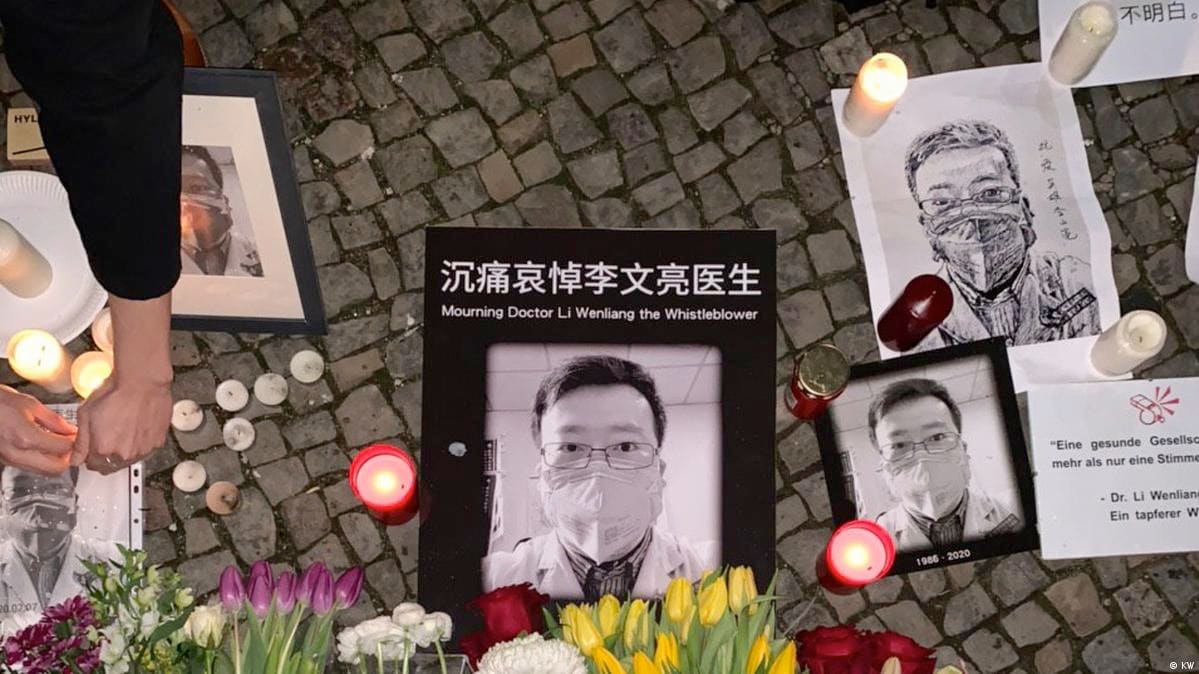
These provisions appear to respond directly to the early weeks of COVID-19, when local officials in Hubei delayed or suppressed information about the emerging virus — most infamously in the case of Dr. Li Wenliang, the Wuhan physician reprimanded by police for spreading “false information” after trying to warn colleagues about an unusual respiratory illness. Tragically, he later died from COVID.
However, it’s never really explained what disease reporting is supposed to include, and the promise of protection for “good-faith” reporting also feels fuzzy, since no one has defined what counts as good faith.
Grade: C-
If I were a doctor, I’d still be somewhat uneasy reporting early warnings. The protections are vague, and the precedent for punishment is much higher than in other countries.
The biggest shortcoming with China’s pandemic readiness system, in my opinion, is that it has not made substantial progress in addressing the safety risks posed by biotechnology — meaning the dangers that arise when genetic engineering, synthetic biology, or laboratory manipulation of organisms could unintentionally create or amplify biological threats.
The 2021 Biosecurity Law was the first statute that gestures at governance in this space. It formally divided biotechnology R&D into three risk tiers — high, medium, and low — with high- and medium-risk projects requiring approval or registration and restricted to legally incorporated domestic entities. The law also established security management rules for human genetic resources and biological resources.
The law was amended with updates that took effect in April 2024, but the changes appear largely procedural rather than substantive. There are still no specific ethical guidelines for biotechnology R&D; the three-tier risk system (high, medium, low) lacks concrete criteria for how projects should be classified; and the vague references to “relevant departments” (有关部门) leave unclear which agencies are responsible for what. In practice, this means ethical oversight is likely to devolve to institutional review boards or ministry-level discretion. These bodies vary widely in capacity, and because biotech research is competitive, institutions may have incentives to adopt more permissive review practices to maintain an edge.
This gap is likely related to the fact that Beijing also views biotechnology as a strategic growth sector. Much of the Biosecurity Law reads more like a biotech development agenda with biosecurity sprinkled on top. Article 5, for instance:
“The state shall encourage innovation in biotechnology, strengthen the building of biosecurity infrastructure and the biotechnology workforce, support the development of the bioindustry, raise the level of biotechnology through innovation, and enhance the capabilities to guarantee biosecurity.”
Grade: D
Synthetic pathogens are one of the most plausible routes to a truly catastrophic outbreak, yet Beijing’s biotech push largely ignores these safety concerns. However, in the US and other countries, ethical oversight also seems to fall to institutional review boards or ministry-level discretion, so I can’t give this a completely failing grade.
To sum up, China’s recent policy initiatives reflect a system trying to learn from its own COVID contradictions. Beijing wants a more unified and legally codified pandemic readiness system, one that detects and contains outbreaks before they spread, but also one that avoids repeating harsh crackdowns and which made provincial authorities feel powerless to national authorities. It’s a tough balance to strike.
Overall Grade: C+
Many of the laws and local incentives are still unclear, but Beijing is at least increasingly turning abstract goals into concrete procedures and has an unmatched capacity to trigger a unified response. And unlike some countries, its rhetoric does not actively denigrate public health measures.
For reference, I would give the US a B-. Even with its issues, the US does better at dual-use tech governance [pdf] and has better incentives for early reporting and information sharing.
Funding is an indicator of whether these statements have backing to them, but data is limited.
Our best piece of evidence comes from the Chinese Ministry of Finance, which shows that major infectious-disease prevention funding rose from about ¥16.98 billion ($2.38 billion) in 2018 to ¥23.82 billion ($3.34 billion) in 2023 — an increase of roughly 40% over five years. These funds are meant to expand things like vaccine-production capacity, surveillance systems, and hospital preparedness.
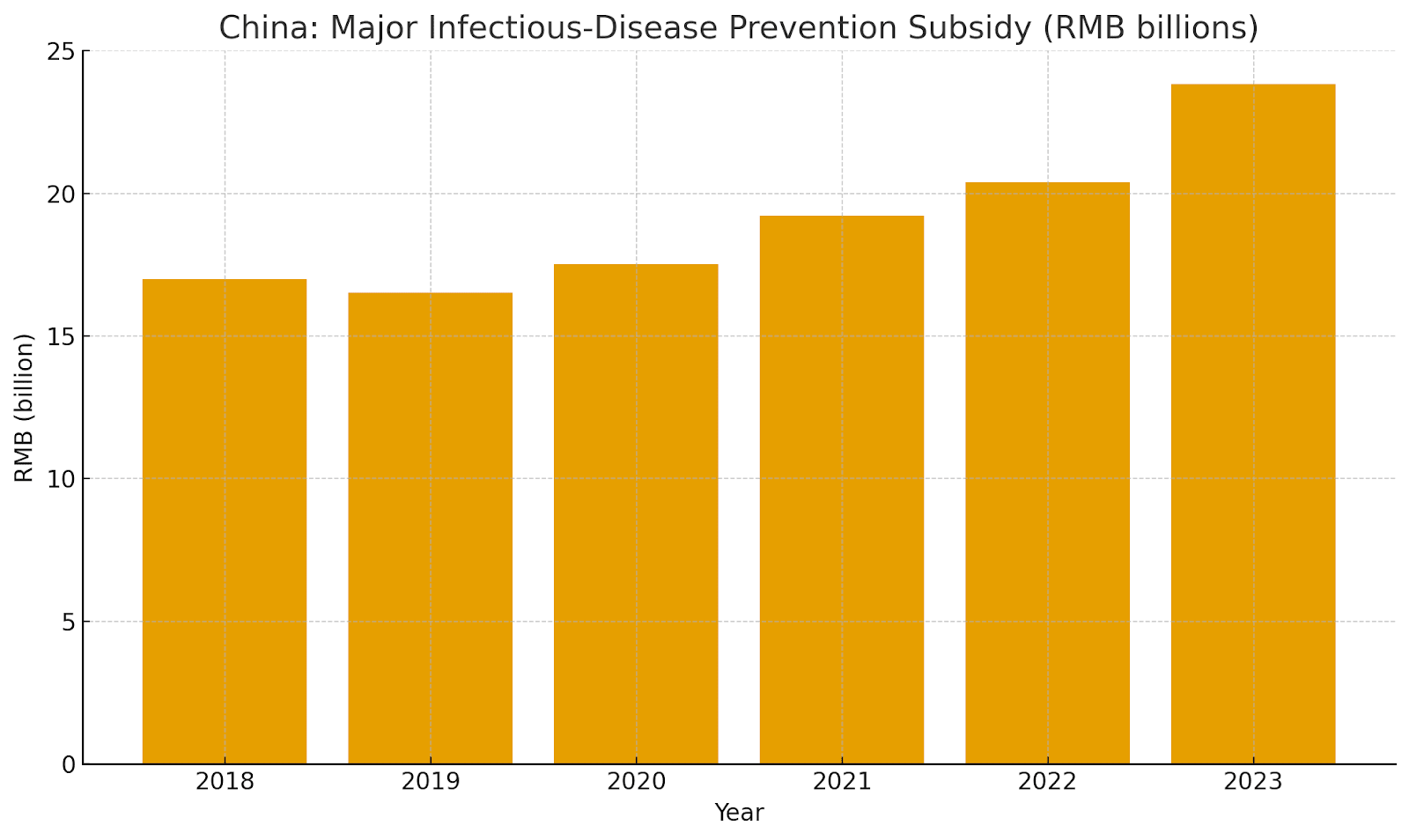
There’s no visible COVID-era spike in 2020–21 because much of that emergency spending flowed through temporary epidemic-response channels — one-off MOF transfers and provincial emergency budgets — rather than this regular subsidy line. The subsidies in the graph instead indicate Beijing’s effort to institutionalize emergency spending within its normal public-health budget.
Small bits of additional evidence tentatively point in the same direction. China launched a multi-billion-dollar reconstruction of the national CDC system in 2023, alongside major provincial investments in places like Shanghai and Guangdong. Data beyond 2023, however, is limited, so drawing further conclusions would be premature.
Grade: B-
They’re on an upward trend, but the total still looks modest relative to China’s GDP and population. In 2023, ¥23.8 billion (~US$3.3 billion) works out to only about US$2–3 per Chinese citizen per year. By contrast, OECD estimates put average pandemic prevention, preparedness, and response spending at around US$101 per capita, with the United States at US$279 and Germany at US$209. The true gap must be smaller, since China adds money through provincial budgets, immunization programs, and other health lines that don’t show up in the MOF subsidies, but I estimate that the sum of these monetary investments still falls well below the OECD average.
One interesting factor shaping China’s pandemic governance has been its rhetorical positioning vis-à-vis the United States.
Beijing has leaned heavily on the narrative that America’s COVID response was chaotic, politicized, and unscientific, using US failings as a foil to validate its own system. The strategy deflects criticism of China’s early missteps and reinforces the idea that China’s centralized model is not only legitimate but superior.
For example:
A People’s Daily editorial from May 2025 calls the US the “全球第一抗疫失败国” (literally: “world’s No. 1 failure in pandemic response”), citing CDC death totals and arguing that the outcome exposes pseudo-science.
A post on the National Health Commission’s website accused the US of “squandering time” and policy ineffectiveness.
A Global Times editorial said, “As the world’s most developed country, its response to the pandemic has been a complete failure, offering no positive lessons.”
This narrative has political uses, but it could also make Beijing overconfident. By defining itself in opposition to the US, China has built a pandemic story that depends on its own perceived success, which could also make addressing institutional shortcomings difficult.
For instance, Chinese state media outlets have often disparaged the effectiveness of US vaccines, framing Western rollout efforts as reckless or unsafe. Yet beneath those critiques lies the unspoken acknowledgment that during COVID-19, China’s vaccine sector fell far behind its Western counterparts in both technology and trust. Beijing’s decision to reject mRNA vaccines like Moderna, despite their demonstrated efficacy, left millions reliant on weaker domestic shots.
Meta-Grade: China is grading its own paper here, and giving itself full marks despite doing a lousy job of handling COVID. Revising history, rather than addressing one’s mistakes, tends to be a bad idea.
China has also engaged in a series of international initiatives on pandemic preparedness, though international communiqués on public health are rarely binding. Xi’s Global Security Initiative, for example, claims China will lead international biosecurity, but says little about how it will actually accomplish this.
Funding is a clearer signal. In May 2025, China pledged $500 million to the WHO over five years, effectively becoming the organization’s largest funder after the US withdrawal. China has also contributed to many other initiatives, like the World Bank’s Pandemic Fund, and hasn’t abstained from other multilateral health financing mechanisms (unlike the US).
A substantial portion of China’s health funding targets the Global South, particularly in Africa. China committed $80 million for constructing an Africa CDC headquarters in Ethiopia, a project that became operational during the pandemic, and $2 billion in assistance for COVID-19 response and economic recovery in developing countries. China’s WHO funding notably includes the condition of “a certain amount of voluntary contribution and projects support through the Global Development and South-South Cooperation Fund” — terminology tied to China’s Health Silk Road initiative, essentially the public health dimension of the BRI. 52 out of 54 African countries have participated in these health programs.

China has also recently convened ASEAN Conferences on biosecurity governance in conjunction with the UN Office of Disarmament Affairs. These talks emphasize lab safety, pathogen-sharing, and early-warning systems between South East Asian countries.
Despite positioning itself as a global health leader, China consistently fails to report the specifics of its assistance activities to international agencies like the OECD’s Common Reporting System or the International Aid Transparency Initiative. Tensions have also flared with organizations like the WHO over China’s lack of timeliness, completeness, and durability of data sharing, especially around origins-relevant evidence for COVID and during recent disease surges. In November 2023, for instance, the WHO formally requested detailed information on pneumonia clusters among children following reports of cases in northern China. Beijing eventually provided data, but only after a significant delay, underscoring a pattern of reactive rather than proactive disclosure. China furthermore does not participate in Joint External Evaluation Assessments, where a team of independent international experts evaluates a country’s health security capabilities across 19 technical areas.
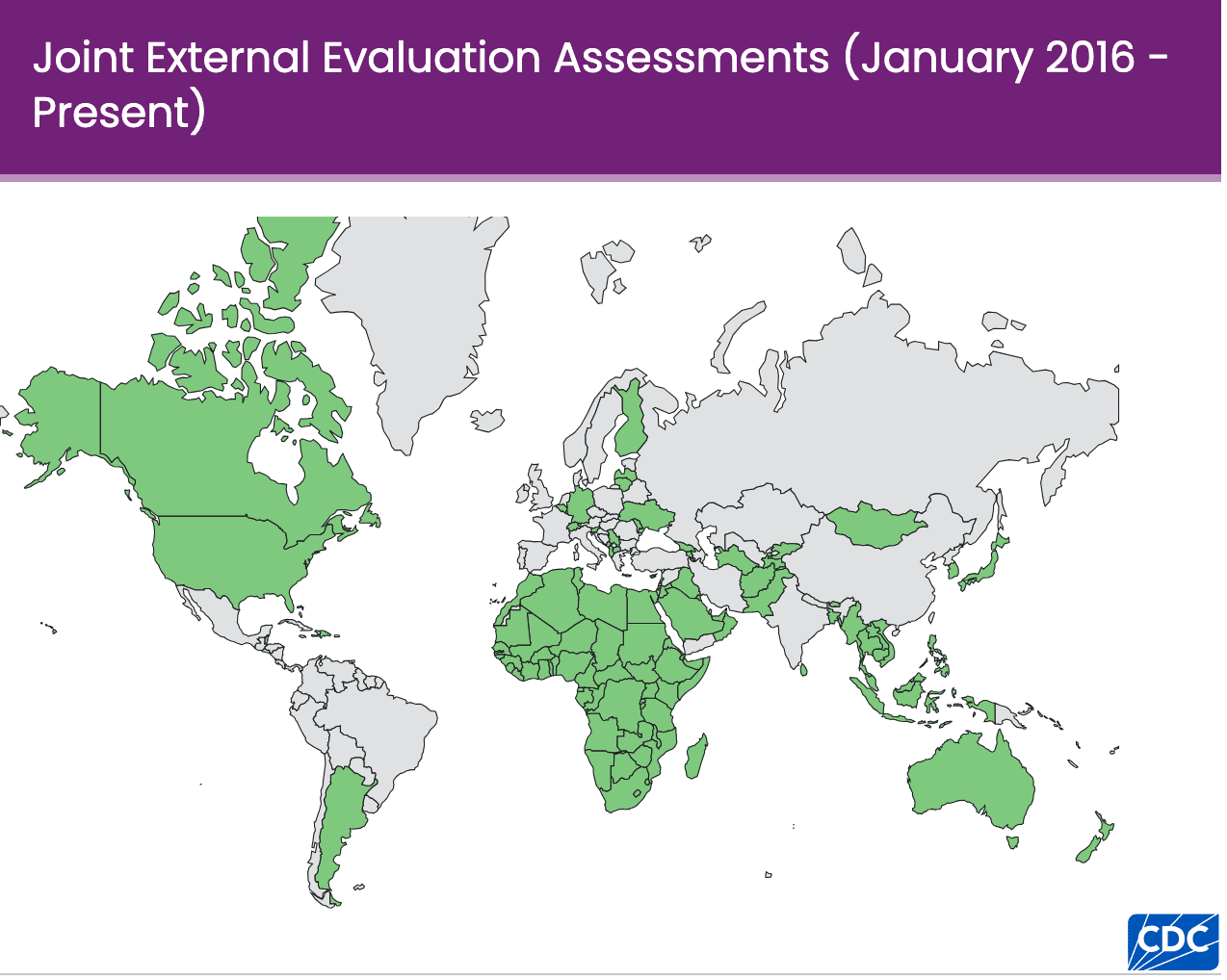
I believe this kind of behavior makes sense when accounting for how central reputation and “saving face” are to China’s public-health motivations. Reporting outbreaks quickly or exposing gaps in its own system can be embarrassing; projecting itself as a global public health advocate and generous benefactor to the Global South is not. If China can manage its own health problems internally and fund other systems externally, it (1) looks good and (2) reduces outside scrutiny — a bit like a boyfriend who pays for dinner so his girlfriend doesn’t go through his phone.
Grade: C
They say all the right things, and it’s good they’re helping the Global South’s public health infrastructure, but they still avoid building the deeper collaborative foundations we’d need for a globally unified response to a major infectious outbreak.
The CCP is taking pandemic readiness seriously, but the through line isn’t a coherent strategy so much as a collection of post-COVID impulses: prevent another global pandemic from originating in China, avoid another round of draconian lockdowns, and do it all without loosening Beijing’s grip while empowering people to speak up.
Call to action
If you know anything about this topic or think I’ve missed something important, please reach out. I’m particularly interested in hearing from people with knowledge about China’s vaccine development capacity, high-end PPE manufacturing, biosurveillance systems, or research and safety standards for future installments.
I did not find nearly as many experts on Biosecurity x China as I would have liked. China’s pandemic preparedness apparatus remains surprisingly under-studied, especially compared to the extensive analysis of its COVID response or the pandemic readiness systems of other countries. The expert on this could be YOU.
Follow up to: nick@chinatalk.media
ChinaTalk is a reader-supported publication. To receive new posts and support our work, consider becoming a free or paid subscriber.
The broader Emergency Response Law (突发事件应对法) still seems to be responsible for certain types of pandemic emergency situations, but the two new laws appear to have taken over many of the responsibilities this law originally covered.
Chloe Lee wrote a strong analysis of the Biosecurity Law and Regulations on the Export Control of Dual-Use Items as they existed before the 2024 updates, laying out some of their weak points.
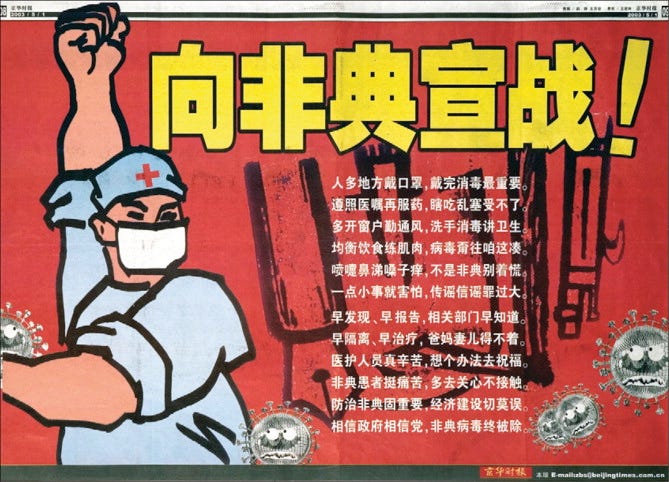
前些年,每逢感恩节过后,会请助理给各地的朋友寄一本事务所的挂历,再附上我的一封信。Lee一直在那个名单上。
我来美国后,先工作了两年,后来去读学位。开学报到之后,学院有个新生招待会,备置了饮料和零食。新生在胸前贴上自己的名字,聚在招待处,吃喝谈笑。Lee在一堆身材高大的新生中略显瘦小,穿着普通,讲话一脸笑容,没有化妆。一个朴实的中西部女孩子。看我站在旁边,她伸出手说:“我叫Lee。”
握手寒暄之后,她问我是韩国人还是中国人。那个学校东亚面孔的学生主要来自这两个地方。我说是中国人,她就问Lee在中文中有什么意思。我说听发音,会有很多意思, 可以是梨,或者犁,也可以是李子、栗子,或者茉莉,还可以是美丽。她说,那就是茉莉吧,很有中国味道。但以后见了面,仍然叫她Lee。
第一学期,课业紧张,大多数日子在两点一线穿梭。在教室碰到Lee,寒喧几句,又各自忙碌。偶尔午饭时遇到,就多聊一会儿。那时候,她是国民卫队现役下士,每月有一个周末去军营训练,日子比我们更紧张。她的任务是驾驶黑鹰直升机,负责运送士兵和装备。
周五下课后,她开四个小时车去军营报到,训练两天,周日晚再开回学校上课。同学中还有另外两位预备役军人,但都是男生。一位戴眼镜,文质彬彬,曾在海军服役。有次聊天,他说服役时军舰曾在香港停泊,上岸逍遥,十分喜欢。另一位有菲律宾血统,曾在陆战队服役,个头不高,但像牛 一样结实。他言语不多,似乎不是太喜欢学校生活。
第二学期,学院贴出告示,说院刊要从学生中招几位编辑,招聘标准是看第一学期成绩,再加一篇命题作文。在走廊看告示的时候,碰到Lee。她问,你去不去应聘?我有点动心,但那篇命题作文也让我犹疑。我三十岁以后才用英文写作业,对这种语言充满隔膜。此前,虽然翻译过一些英文书,但翻译是一回事,写作是另一回事。
我问Lee是否参加,她说是。见我犹疑,她又说:“你也参加吧,即便选不上也损失不了什么,但不试一下,就不知道能不能选上。”我想,是啊,就决定参加了。Lee见自己有说服力,很高兴的样子,话就多起来,说同学中没有几个像你读过那么多福克纳、海明威 ,你肯定写得好。说得我有些飘飘然的感觉,但内心知道,读文学是一回事,写论文是另一回事。
作文比赛的结果出来了。Lee跟我都在榜上,对我来说是个惊喜,但Lee一直胸有成竹。
编辑部要审阅稿子,定期讨论,与Lee见面多起来。她做事很认真,但并不苛求。有时遇到语法、表述和引用格式问题 ,我会向她请教。编辑间常会有不同意见,争执不下,Lee跟我总是站在一方。偶尔,她会报怨个别编辑对作者过于苛求。编辑部的工作,如果认真做,每周要花十几小时。遇到交作业或考试,只好从睡眠时间中往外挤。Lee仍旧去军营训练,要比我们从睡眠中挤出更多的时间。有几次讨论 ,她看上去实在疲惫,坐在角落一言不发。
那年三月,伊拉克战争爆发。同学中很多人反战,也有不少人支持推翻萨达姆。对于大部分同学来说,战火是另外一个世界的事情。但对于预备役军人来说,却随时可以发生在自己身上。菲律宾裔同学被部队召回,送到前线。他发回了一些战斗前后与战 友在一起的照片,学院张贴在布告栏中。
那时候,伊拉克似乎时常有战斗,每天电视上都公布阵亡美军士兵的名单。新闻说,前线兵员紧张,开始从国民卫队中抽调士兵。我问Lee,她说已经有一起训练的战友被送到伊拉克去了,不知道哪一天她就会接到命令。我们尽量避开这个话题,她似乎也不太担忧,反正每天都有做不完的事情。跟大部分同学不同,她从不说是赞成还是反对那场战争。
几个星期后,Lee接到了命令,要开赴伊拉克前线。学院在小教堂举行了一个送别仪式。她讲话仍然一脸笑容,说我们一起入学,但不能一起毕业了。送士兵去前线,爱国是主题。但同学和我只想让Lee平安回来。虽是道别,却不伤感,她脸上仍然是疲惫的笑容。那时候,不能理解为何他们要送一位女生去前线。
Lee走后的几个月,每次看到电视上在伊拉克阵亡士兵的照片和名单,就会想到她,为她担忧。战事时断时续,她的消息越来越少。后来,当地报纸报导了家乡去的军人在伊拉克的情况。在报导中看到了Lee的名字,她说:“到了前线,人生就变了,只想一件事,其他都不再忧虑了。”我们隔着半个世界,一边是战火,一边是和平,都知道那件事是指什么。
最后一学期,大家忙着找工作,为毕业后的生计奔波。编辑部招新人进来,老编辑离校前合影留念,还专门请来摄影师。毕业快二十年了,我的书架上一直放着那张照片,只是Lee不在上面。我们照像的时候,她正在伊拉克前线。当初,如果没有Lee鼓励,我也不会在那张照片上。
同学四散,我一路南下,流落到德克萨斯定居下来。一年后,Lee从伊拉克返回家乡,恢复了学业,毕业留在本地工作。我们相隔千里,偶尔通信问候。几年前,她打电话来,说正在奥斯汀出差,只是路程太紧,来不了休斯顿拜访。相距三个小时车程,算是擦肩而过。
Lee没有孩子。疫情前,她说想从加纳收养个孩子。如今,她也已经年近半百。不知道是否了却了那桩心愿。
感恩节过后,Lee收到挂历,每次都会来信感谢。 记得最清晰的是有一年,她说挂历很好看,但附信更令人感动,她珍藏起来,作为自己写信的样板。唉,那么多年过去了,经历了风风雨雨,甚至战火,Lee依旧本色,不吝惜给人美言和鼓励,真诚而朴实。
旧事随流水,转眼二十几年。青春过后,岁月催人老。念及当年,同学一场,青春还有些余音,还没有被生活压缩得面目全非。如今都成了往昔。人生如萍水相逢,尽是他乡之客。有些美好的记忆挥之不去,让异乡人在漂泊中感到故人的温暖。

学习一门崭新的语言的语言,是感受自己跃跃欲试,一腔热血,许多挫败,无能为力,再把自己收拾起来越过一个个坎的过程。语言学习没有尽头,还好考试有尽头。
花了半年多的时间每天学6-10个小时把荷兰语学到了B1,又抢考位抢不到抢到了被作弊的人搞取消,四门考试从夏天考到了秋天,最后在终于在冬天收到了全部通过的消息!
就我学习英语,西班牙语,荷兰语的经验和广泛看书看youtube视频多语言人士的语言学习方法的总结,这个世界最有效的语言学习方法就是:代尔夫特学习法(delft method),也叫尚雯婕学习法,也叫100LS学习法,也是跟读学习法,也叫婴儿语言学习法。或者说所有人类学会自己的母语,都是这么学会的:通过听和跟说/跟读。
在我们还不识字,不会写字的时候,我们就已经会中文了,学习的方法就是听父母和周围人每天说,我们当“复读机”。所以无论你此刻在学习任何语言,我都建议采用这个人类最自然也最科学的方法来学习:即通过听一句话,跟读它,多次听,多次跟读,记住这句话(不仅大脑皮层记住了单词语法句子搭配,也通过耳朵和口腔的肌肉记住了它)。
多语言者学会语言的核心经验也是:找一个language parent(语言家长),你把自己当baby跟它学。
荷兰语的“代尔夫特学习法”就是这样:一篇精彩有意思的课文,在网上分成了每一句,点击每一句收听后,跟读录音,系统有AI会判定你哪个词读得不准确会标红。你就再一次重听,重读,直到把这句话的每个词读对,整个句子全是绿色。这个AI系统,成了你的language parent.
每次我把一篇文章全部听和跟读完,都需要2-3个小时,下巴和整个口腔都在发麻。跟读完还有文章的填空练习,听写练习,和文章中的语法练习。上课的时候老师就会让把书合上,提问书中的各种问题,需要自己真正搞明白了内容,并使用自己学会的句子和搭配来回答,同时还有写作题目的练习。
因此它把听说读写和语法都全方位练得非常扎实:让你既形成肌肉记忆,也形成理性思考的大脑记忆。不让你背单词,但是几乎让你通过无数次跟读,填空,听写和回答问题(使用你学到的东西)来让你背了所有东西,让你在有context,有上下文的情况下记住了单词和它们的用法。
非常坦诚地说,这是我学习语言以来,遇到的唯一科学的学习方法。而我在中国学习英语的过程,虽然我雅思也考了7.5,四六级都是六百多,过了英语专八,拿了全国大学生英语竞赛二等奖,但是我感受到的我从英语课堂上接受到的学习方法,仿佛生怕我学会英语似的。而我们中的绝大多数人,学了十几年英语,在大学考4级的时候(差不多就是B1水平,甚至还不考口语和写作)依然极其艰辛,归根结底,不是人的问题,而是教学方法的问题。
所以无论你此刻在学哪门语言,只要你是真心想学会的,我都推荐代尔夫特学习法。
在荷兰有专门的delft method荷兰语的课程,当我报这个课程准备半年到1年达到B1水平时,我刚好有一位荷兰语特别好的朋友,她来荷兰七八年了,有荷兰家庭,日常就能进行荷兰对话,还有一位退休的荷兰人一对一每周对她进行荷兰语教学,相当于真的有language parents. 彼时她正在准备荷兰语B1考试,她觉得我这个半年到1年的计划疯了,因为她的老师说没有亚洲人可以做到这件事。但是delft method帮我做到了半年完成B1课程,顺利通过结业考试的目标。
不过坦诚地说,语言的确是靠时间和日常积累的过程。虽然我俩都通过了B1考试,但是她日常生活用荷兰语和荷兰人简直是无缝聊天的水平,而我必须得对方说得慢说得简单,我才可以聊半个小时(且我主说,因为对方一旦说话快,我就听不懂)。
我能半年通过B1国家级考试,不是因为我有语言天赋,而是上课的方法科学+我精心准备考试的结果。

荷兰也有很多免费的荷兰语课程,大家也可以搜索Sagènn这个机构(只有稍大的城市有)和wijk centrum(社区中心),基本都可以获得免费的荷兰语课。倘若你要上学或者上班,就可以上这种比较低强度的课,以一种正常的节奏,达到B1的水平(大概2-3年)。倘若你有半年集中相对空闲的时间,就建议花钱上delft method的课(delft和tilburg都有,估计其它城市也有),学得更有效更扎实。我有一位朋友在其它地方上到了B2才开始学er的用法,我的课简直从B1刚开始就开始学了。而且这个课的课本内容,能帮助你了解荷兰的方方面面,而且相当有思辨力和有趣,有intellectual humor. 而其它的教材我也有看过,它们更偏日常生活。
虽然日常生活在日常更有用,但是日常有用的东西我们迟早会学会的,而用荷兰语呈现的有思辨有趣的内容,我们很难自己主动找着去看,通过课本学到了就会很好。我的一位朋友也是市面主流几乎所有教材都用过,她最后也是发现delft method的教材内容最好。
说完了资源,渠道,和学习方法,我来分享一下我准备考试的具体方法和心得。我对很多人说多次无法通过四级考试一直非常震惊,因为它都和英语能力关系并不大,它本质是一个考试,只要用正确的备考方法,它很难不通过。所以在这里也分享一下大部分语言考试都能用到的备考方法。
这里面有帮助我从一头雾水到开窍听懂以及各种最高效的准备考试的资源素材,以及网上没有我同学发给我的能省巨大功夫的的口语题库。不是所有人都需要考这个考试,我就在这里设置一个分割墙。在准备语言考试的时候倘若心态崩塌,可以看这一篇文章:《如何和挫败感,焦虑及自我怀疑面对面:它们并非高山》。

Tony Stark and Justin Mc return for Second Breakfast.
Our conversation covers…
How strike decisions are made, and the implications for military officers,
Why this is a pivotal point for military ethics,
What Congress may do in response,
Why Hegseth being the TEA breaks the impartial review process.
Listen now on your favorite podcast app.
Jordan Schneider: Let’s talk about the second strike. Justin, you wrote an article on it. What’s your take?
Justin McIntosh: My hope with that article was to clarify some of the language around this topic.
Shortly after the September strike, it was revealed that Secretary Hegseth was the target engagement authority (TEA). Generally, the TEA is a task force commander or a designee vested with the authority to approve strikes.
There are two main types of strikes. Some are status-based strikes, where a person is a known adversary but isn’t actively engaged in hostile acts. The others are action-based strikes, where adversaries are actively threatening friendly forces.
The bar is lower for an action-based strike, but collateral damage estimates are still required. Strikes must adhere to the principles of proportionality and the laws of war, and avoid causing undue damage or suffering or targeting protected sites. The strikes in the Caribbean seem to be status-based until the targets are in a location where they can actively threaten Americans.
If it were a status-based strike, it had to be approved by a TEA following a briefing. Typically, there’s a period of “soak,” where you watch the target — be it a person, building, or something else — to build a pattern of life. You do SLANT counts, which tally the number of men, women, and children. If the count is unfavorable, meaning women and children are present, you do not strike.

All of that information is fed by a ground force commander or a strike cell commander to the TEA in an incredibly detailed briefing. Something like, “Sir, I want to direct your attention to this sensor, under this Unmanned Aerial Vehicle (UAV). We are targeting X. Over the last 48 hours of observation, we have this many reports from signals collection co-locating his phone with him. We had a high SLANT count at his location of 4-1-1, but it is currently 1-0-0. We know who it is. We’ve been watching him for 48 hours, and we have a window of opportunity to conduct this strike without causing collateral damage. This is how we will weaponize the strike to keep collateral damage to an absolute minimum, affecting only that person, building, or vehicle. Pending your questions.”
The TEA will then approve, disapprove, or ask for clarification, and give remarks and restrictions, including re-engagement authority. Then he will sit there and watch the strike, because he has now signed on the dotted line as the Target Engagement Authority.
The first thing that was weird about this situation was that Secretary Hegseth was the TEA for these strikes. Assuming everything happened as reported, the strike did not sink the vessel immediately, though it began to sink. There were apparently two clear survivors. 41 minutes later, there was a re-engagement. That is a long gap for re-engagement, which suggests there were discussions among the various stakeholders about whether they were allowed to re-engage. This probably included watching the vessel sink and realizing the strike was not going as planned.
The fact that the TEA left after the initial strike is important. He had already signed off and conceivably given remarks and restrictions, including for re-engaging. If he’d already authorized that, then it doesn’t matter that he wasn’t watching. The commanders below him have a moral, legal, and ethical responsibility to act appropriately, but he has already signed up for whatever comes next if he’d given that clearance.
If you say something like, “Kill them all,” as the TEA, you have technically signed off on whatever happens next, because, as the Target Engagement Authority, you stated your intent was for all targets to be dead.
Tony Stark: I have two thoughts on this. First, ownership is an issue here — I’m sure they are discussing what leadership ownership is behind the scenes. Second, the ethics here aren’t complicated. Every U.S. Army infantryman is taught a simple, non-negotiable rule — a wounded or surrendering enemy is under your care. You do not execute them. Every soldier is taught what it means to commit war crimes, and this is the baseline.
That rule is drilled into every officer, whether from West Point or Reserve Officer Training Corps (ROTC). Everyone in that decision-making room knew the line between engaging a target and recognizing when they are under your care. This is not complex law. The idea of them debating that for 41 minutes is cartoonish.
Justin McIntosh: My task force commander — he’s now a two-star general — once refused to authorize a strike and pissed off a lot of his junior officers and Special Forces captains. The proposed target was a mosque that was a staging location for insurgents — dozens of men were seen moving weapons out. Everybody was excited about the target, but the SLANT count was in the 60s, and Kurdish forces would arrive the next day.
This commander said, “Guys, I understand why you’re proposing this. But we are going to own that terrain tomorrow, and the negative repercussions of this strike greatly outweigh any potential positive benefit. I have not seen anything that shows an imminent threat to our forces or our partner forces that warrants taking secondary risk.”
This is the nuanced distinction between action-based and status-based strikes. A guy running at you with a weapon — that’s a clear threat. But a radio operator 15 kilometers away in a building you can’t see into? That is a tough call. We endlessly debate what constitutes a valid strike. Most commanders I served with were cautious — unless a target said, “We’re about to kill the Americans,” they didn’t shoot. They didn’t know who else was in that building. Sometimes an adversary put a child on the radio, with an adult feeding them lines, to make sure you knew a kid was there.
Warfare is ugly. I allow for confusion in the heat of the moment. But as a commander, you have to see the bigger picture. Is there an active threat? How do the benefits weigh against the costs? We are seeing those repercussions.
Jordan Schneider: If the Secretary of Defense is making these calls, what happens to the mission? They publicized these strikes to look tough and scare drug dealers — to shift their risk-benefit calculus. But the second strike might cost him his job.
Initially, Congressional oversight on this campaign was surprisingly muted. Now, it’s dialed to 10. Most Americans would be deeply uncomfortable reading that article — there is political grist in that. War crimes aside, striking two shipwrecked guys was a politically dumb decision.
Tony Stark: The Democratic base sees the whole episode as illegal, but most of the country doesn’t care if drug traffickers die. That said, most people don’t care if murderers die either, but we don’t execute people in the streets. The rule of law demands we behave better than our animal instincts.
Once the House and Senate Armed Services Committees (HASC and SASC) are involved, the situation changes. Congress hates being lied to, having its funds misused, and having its power usurped. While Congress has abdicated some of its war powers, once HASC and SASC have their hooks in you, they don’t let go, especially before midterms. That will tie up the administration’s agenda.
Any new budget aligned with the National Security Strategy will be filled with restrictive NDAA items. Six months ago, officials felt immune from investigation — now they are concerned. There’s no clean escape — Congressional staffers will want to talk to everyone. I don’t know if they will need a sacrificial lamb or a leadership change, but I doubt the Senate can confirm a new Secretary of Defense.
This is like a Spider-Man meme, everyone pointing fingers at each other. They can’t change what happened, but they can make it painful. I don’t know what comes next.
Justin McIntosh: The Secretary of Defense acting as decision-maker for the strike creates a problematic chain of review. If he had delegated authority — say, to South Command (SOCOM) commander Mitch Bradley — any questions about a strike would have gone to the Secretary for an impartial review. He could have consulted his council and then absolved Bradley of any accusation.
But who can be the impartial reviewer within the department now? By making himself the decision-maker, the Secretary has removed that layer of internal oversight. This puts the department in a weird position, because now questions go to the Senate. The Secretary can’t tell the Senate he is an impartial reviewer of the events — he was the primary decision-maker.
Jordan Schneider: Why would he do it in the first place? Did he want to feel cool and tough watching explosions on TV?
Justin McIntosh: With the right access, the Secretary could have watched Unmanned Aerial Vehicle (UAV) feeds from anywhere in the world. The question is why he was supervising. Mitch Bradley was the squadron commander for DEVGRU, and commander for JSOC, and SOCOM. He was on SEAL Team Six during the bin Laden raid. His entire career was built on these operations — he knows the process and is fully qualified to make decisions without another TEA. It also doesn’t make sense to include the Secretary as a secondary backup. Bradley didn’t need that level of oversight. Or, perhaps he did.
Tony Stark: More information will come out about this, though Congress is always weird about investigations during the holidays. But the main takeaway should be this — the U.S. military has not abdicated its moral responsibilities. This is not the military’s default setting. Politics aside, we are at a critical point for military ethics. What does good order and discipline look like? Do we still care about these standards?
Justin McIntosh: Warfare is full of gray areas. The Kunduz hospital bombing is a good example. The 3rd Special Forces Group team and their Afghan partners were under fire, likely from the hospital. As protected sites, there is a higher standard for strikes on hospitals, and insurgents exploit that for their advantage.
Some argue we undermine our military by allowing sanctuary sites, but in my service, I was proud that we held ourselves to higher standards than the insurgents. Those standards protect children, sick and wounded people, innocent civilians, and doctors bravely risking their lives to heal.
That said, there are big gray areas. I usually give grace to ground force commanders, who have small optics and are focused on their men under fire. They are directly encountering active threats, and imperfect decisions are understandable.
My grace degrades for commanders removed from danger — secure in a strike cell with cushy leather chairs. That is the problem here. This strike was unnecessarily messy. There was ample time to develop the target and demonstrate our incredible precision. Secretary Hegseth could have justified the first strike by declassifying evidence that they were drug smugglers.
Jordan Schneider: This will not be our last conversation about this strike.
Tony Stark: Certainly not. Some argue ethics of warfare are a new invention, but these norms are shaped by culture and past wars. The many laws that followed WWII were a response to atrocities on the battlefield. Even in the Civil War, there were standards for treating the wounded and negotiating with the enemy to recover the dead.
The question of what defines a valid target is not new. Our modern standards are an important moral evolution.
Justin McIntosh: There is a psychologically strategic advantage to humane treatment. If the enemy knows they will be mistreated or killed if they are captured — like the Bataan Death March or the slave camps of World War II — they will fight harder. If your forces are known to treat POWs well, there will be more enemy defections. That is militarily relevant.
Jordan Schneider: Hegseth is Secretary of War because he defended Eddie Gallagher on Fox News, even though Eddie’s teammates said he did some heinous things. If that is your formative professional experience outside of public service, then you’re learning some twisted lessons. In other contexts, that behavior leads to a dark place. That’s the only logical explanation for what happened in September. It’s disgusting and counterproductive.
This isn’t a sustainable strategy. The American people can tolerate a lot, but celebrating these strikes from the rooftops is a profound misjudgement of the public mood.
Tony Stark: Congress was initially quiet because the American people didn’t care — it was almost a meme. But the public debate around this will change public opinion. Midterms are around the corner — this is a bad time to try to build up support for a military campaign.
DoD will likely be looking for new mission strategies, such as hitting targets at the source — production facilities, for example, anything legally or morally straight, or off camera. If the political fallout worsens, they may even seek congressional authorization to provide official cover.
If Bradley goes down for this, other officers will see that these strikes can cost them their careers. We might reach a critical mass of officers saying, “I am not risking my career, my livelihood, and my pension for this.” Six months ago, that was not a consideration.
Jordan Schneider: It comes back to the SOUTHCOM commander who retired early. How much did he see? Did he hear orders like “kill them all” and decide he wasn’t up for the task? It makes more sense now.
Tony Stark: Has he been called to testify before Congress yet? Bradley testified in a classified hearing this week. I am interested in seeing the former SOUTHCOM commander testify.
Justin McIntosh: I agree. That’ll be the telling moment, because it was around September when he announced he was going to retire early. The timing is weird.
Tony Stark: Congress failed by not immediately saying, “That’s weird, we should ask about that.”
Justin McIntosh: Normally, combatant commanders don’t retire halfway through their command.
Jordan Schneider: Especially when their job suddenly attracts public attention.
Tony Stark: If you’re at SOUTHCOM, you’re thinking, “Oh my God, I finally have assets! This is fantastic.”
Justin McIntosh: They’re in Tampa, so they’re trying to pull CENTCOM guys to fill those roles.
Jordan Schneider: Well, that was some real “SportsCenter for War” action. We’re closing with Grok. I asked it what regimes the paragraph from the National Security Strategy reminded it of.
It answered Fascist Italy, National Socialist Germany, and Franco’s Spain.
Apparently, Fascist Italy had a demographic campaign called the “Battle for Births,” which was intended to boost birth rates. Maybe we’ll cover that next week!
Tony Stark: That’ll really interest our audience.
Jordan Schneider: I’m really excited for the AI song I’m going to make from that paragraph.
ChinaTalk is a reader-supported publication. To receive new posts and support our work, consider becoming a free or paid subscriber.
各位好,在得克萨斯西部转了两周,昨天回到生活世界的日常,继续读书读报,知己、知彼、知天下。在西部旷野中,一周不读报,心情会好很多。得州本地人很多是straight talker,说话直来直去。回家路上,在90号公路边的餐馆,一位服务员大妈,满头白发,身材纤细,声音悦耳。她名叫Betsy。吃饭的时候,电视正在放白宫新闻,她随口说了一句“that bonehead in high court”。这是得克萨斯老乡的土话,土得掉渣,同时又温文尔雅。
回到家,社区已经是家家户户,张灯结彩。圣诞节快到了,街上一片喜庆色彩。看看新闻,美国这边,that bonehead in high court继续制造头条,很多新闻已经成了无意义的噪音。中国那边,红色基因土皇帝在宣布胜利,而中国政府发布的最新经济指标,却是寒风刺骨。
《华尔街日报》的标题说《中国经济指标在多个领域全面恶化》,路透社的标题说《中国经济陷入停滞,改革呼声高涨》,《欧洲新闻》的标题说《消费和投资下滑,中国经济失去动力》。
看一下内容,这些报导都不是标题党,不是空穴来风,而是来自刚刚出炉的11月份中国经济核心数据。中国国家统计局公布的数据显示,11月社会消费品零售总额同比只增长了1.3%,这是过去三年中最差的表现。大家可能还记得,三年前,也就是2022年中国正处在新冠大瘟疫的高峰,全国到处封城清零,整个国家给弄成了一座大监狱。今年11月,中国人的消费增长只比那时候好一点。
不仅老百姓的消费萎靡不振,而且投资也断崖式下跌。尤其是房地产投资,今年前11个月,全国的房地产投资暴跌了15.9%。同时,工业产出增速也降到了15个月来的最低点。中国统计局的这些数字,本身已经包含不少水分。即便是这些注水的数据,也充分说明了中国经济正在进入寒冬。根据这些数字,路透社报导说,中国经济“广泛疲软”,《华尔街日报》直接说“全面恶化”,《欧洲新闻》说是“失去动力”。
从上面的报导和分析来看,这不是某个行业的局部波动,也不是暂时的市场调整,而是一场系统性的、全方位的经济下行。
今天,我们就根据中国统计局的数字和几家主流媒体的报导,来分析一下:中国经济到底怎么了?为什么中国政府过去屡试不爽的刺激政策现在全面失效?更重要的是,在国内经济增长引擎几乎全部熄火的情况下,中国试图通过拼命出口,来把问题甩锅给全世界,这又会带来什么样的后果?出口——中国经济这最后一根救命稻草,还能维持多久?
这些年,中国经济增长有“三驾马车”的说法。所谓“三驾马车”,是比喻拉动中国经济增长的三大动力:投资、消费和出口。投资、消费和出口,支撑了中国改革开放年代的经济增长奇迹。这三驾马车齐头并进,把中国从一个贫穷落后的国家,拉升到世界第二大经济体。
但是,到了2025年冬天,如果仔细审视这三驾马车,就会发现,其中的两驾马车已经散了架,拉车的马不是已经累死在路上,就是已经气喘吁吁,再也跑不动了。只剩下一驾马车还在疯狂奔跑。
is president of the Council on Foreign Relations, former U.S. Trade Representative, and a substacker. He joins ChinaTalk to discuss:
Why his 1992 dissertation on détente is suddenly relevant again – and why “positive linkage” fails to change adversary behavior,
How mutual assured destruction has shifted from nuclear weapons to rare earths, supply chains, and technology, and why the U.S. and China are stuck in a costly, uncomfortable stalemate,
How think tanks work — salary levels, where the money comes from, and what to expect from Mike’s tenure.
Listen now on your favorite podcast app.
Jordan Schneider: We’re going to take it all the way back to 1992. You did your dissertation about this idea of détente and how it evolved from the ’50s all the way through the end of the Reagan administration. Coming to your conclusion, the echoes of where we are today and that theme seem to be very striking. Why don’t you pick a quote and then kick it off from there?
Mike Froman: “To retain the support of the American public, U.S.-Soviet relations must be based on reciprocity. Détente suffered no greater liability than the public’s perception that the Soviets exploited it at the United States’ expense. To be reciprocal, however, U.S. policy must embody reasonable expectations.”
Mike Froman: I thought I was writing a historic piece. The end of the Cold War came. I put the book on the shelf, thought it would never be opened again. And yet, Jordan, there you found it and indeed have highlighted that there might be some relevance to the U.S.-China relationship today.
Jordan Schneider: I played this game with Kurt Campbell. He did his thesis on Soviet relations with South Africa and the tensions of how the U.S. navigated that dynamic. Everything’s coming back.
We’re sitting here in the fall of 2025. We have a president who is probably as far towards the “let’s do détente” mindset as you could have gotten in this political moment. What do you think are the bounds of what an American president today could domestically go towards if they were in a détente mindset?
Mike Froman: The issue of détente back in the old Soviet days was — was it a strategy to transform the Soviet Union by engaging with it, or was it a reflection that we had to engage with it because we had overwhelming common interests? Some of those are the same questions that come up today in the U.S.-China relationship. Do we think we can fundamentally change the trajectory of China, or do we just simply have to accept it and live with it, coexist with it, and create some rules of the road for managing potential conflicts?
Any president right now figuring out how to coexist with China will have to determine — where do we need to cooperate on issues of national security? Where do we have to compete around the economy and technology? And where do we have to be very careful to manage potential conflicts that could blow up and create a kinetic conflict between us — whether around Taiwan, the South China Sea, or otherwise? Balancing those different baskets of interests is the most challenging thing for any administration to deal with.
Jordan Schneider: You wrote, “The theory of using détente as a means of transformation was based largely on the misguided assumption that the U.S. could use cooperation on common interests as a source of leverage over conflicting ones. Positive linkage was not particularly effective, however, because success in areas of common interest did not easily translate into success in areas of divergent ones.”
You published this book in 1992, which is a key moment of translating that kind of — in your estimation — flawed thinking of how we went about this with the Soviet Union to the next 25 or 30 years of American policy towards China. Can you talk about those parallels?
Mike Froman: Yes. The U.S.-China relationship is quite a bit different than the U.S.-Soviet relationship, first and foremost because of our economic interdependence. Russia and the Soviet Union were never terribly significant economic players in the global economy, whereas China very much is. We have developed over the last several decades a great deal of interdependence with them.
The leverage question’s a little bit different. Could you use economic leverage — the fact that we have a common interest in maintaining strong trade relations — as positive linkage into other issues? Or could you cooperate in areas like climate change, which both sides thought at one point were of common interest, and translate that into broader cooperation in other issues?
Having said all that, you’re right to point out that it’s proved to be relatively limited. In China’s view, they in many respects separated areas of common interest from areas of potential conflict and from areas of competition, and were unwilling to allow cooperation in one area to really affect their interests and how they pursue them in the others.
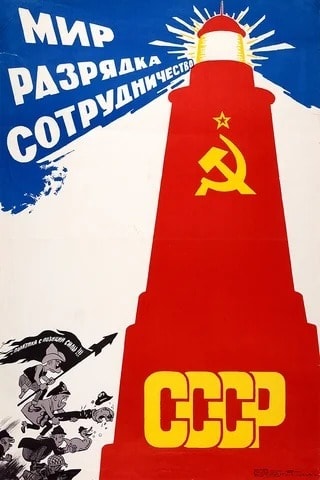
Jordan Schneider: What is your sense of why the theory of the case was so directly ported over to China? The argument through the Clinton administration, Bush administration, first half of Obama was basically — we’re going to develop leverage, develop these common interests and they’ll see the light. We didn’t get that these are both two party-led systems. There are some commonalities, but there are pieces of learning that maybe folks overlooked from that experience. It felt like a brave new world. Given your view over the past 30 years of this arc, what do you think got lost in translation there?
Mike Froman: If the Cold War was defined at least in part by an ideological battle between Western liberal, capitalist, market-oriented, democratic-oriented principles and the communist totalitarian principles of the former Soviet Union, the view at the end of the Cold War was that it was much more of a unipolar moment. Not necessarily U.S. hegemony, but the hegemony of the open liberal democratic capitalist perspective.
That was embraced by China. If you go back to the days of Jiang Zemin and Zhu Rongji and the reform trajectory that they laid out, they were very much on the path towards market-oriented reforms, opening up — not necessarily democracy. Those who thought that opening up on the economic side would lead to political pluralism were probably being overly optimistic. But there was certainly a view that China was on a path towards greater integration in the global economy, which they have been, and greater market-oriented policies to help lead them there.
They were on that trajectory for quite a while. It didn’t go as far or as fast and it wasn’t as linear as people expected. The advent of President Xi, who was willing to either stop or reverse some of those reforms, was probably not as anticipated as proved to be necessary.
There was this dominance of a set of principles that we thought could bring China into the international system and bring the U.S. and China into a more cooperative relationship. What happened was that China changed course and didn’t go as far as we expected. Indeed, China reversed many of the gains that we thought we had seen.
Jordan Schneider: Escalation dominance — a phrase we thought was dead and dusted in the bin of history — is now back. Is this the right mental framework folks should be using when thinking about these trade wars? What is and isn’t useful when trying to take the arms control frameworks and put them onto what you’re seeing with the U.S. and China with respect to economics and technology?
Mike Froman: There certainly is a rigorous competition between the two in technology, economics, and military. The Chinese buildup of both its conventional and nuclear forces is very much top of mind.
Where the analogy may play out — it does come from nuclear weapons, but it’s not necessarily the escalation issues. It’s really back to the notion of mutual assured destruction. What we’ve seen more recently in the U.S.-China relationship is we have leverage in terms of access to our markets and access to our technology, but China too has leverage in terms of their capacity to control critical choke points of key technologies — whether it’s critical minerals, rare earths, magnets, et cetera. That’s, in my view, probably just the tip of the iceberg of the kinds of technologies and products that they control and that they have now demonstrated a willingness to use their leverage with us.
If anything, we’ve reached a stalemate where both sides realize that neither can escalate in a costless way. Indeed, it may require them to sit down and come up with some rules of the road for managing the relationship going forward.
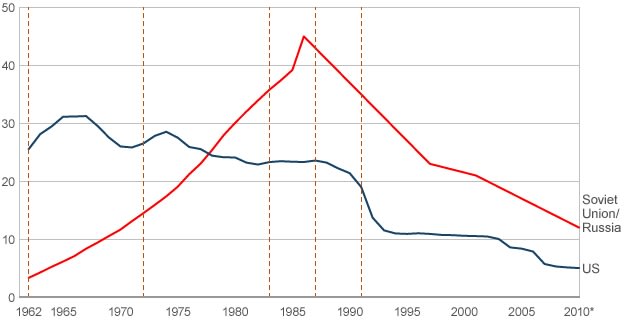
Jordan Schneider: There’s this misreading of the history of the Cold War that once you had mutually assured destruction, everything was cool by the 1970s, which, as you as well as anyone know, was not necessarily the case. You had both countries developing new weapons systems and wrestling for that nuclear primacy and escalation dominance.
If we are in a world now where the U.S. and China both understand that they can take big, painful chunks of GDP without going to war or doing incredibly aggressive cyber attacks, where does that lead us? Because the game doesn’t stop, right? We’re still having different moves that both sides can play.
Mike Froman: Exactly. The competition doesn’t stop. As you said, back in the Cold War, it wasn’t all sweetness and light once you hit mutual assured destruction, but it did prevent a direct nuclear exchange between the two largest nuclear powers. They had to find other ways of positioning vis-à-vis each other, whether through proxy wars or other elements that allowed them to try and gain some advantage over each other.
That’s probably true here in the China relationship as well. It’s likely to lead to a certain degree of selective decoupling, whether it’s on advanced technology issues where we’ll go our way and China will go its way. The question is for the rest of the relationship — to what degree can there be a normalization of trade and other interactions?
There is a lot of non-strategic trade. The Trump administration is evolving in its views towards — what can we actually grow or produce here in the United States and where do we actually need to import from other countries? Can we take T-shirts and sneakers and toys from China without compromising our national security? I would think so. Allowing them in at a decent rate is good for particularly low-income Americans who spend a disproportionate amount of their disposable income on the basics of supporting their family.
But there are likely to be some technologies that we’re going to want to keep out of China’s hands, and China is going to have some choke point technologies that they can control over us. Hopefully that again reaches some sort of balance.
Jordan Schneider: Say we’re in 2028 and both countries have had three years to do more economic securitization and the size and amount of the bites that each country can take out of the other one diminishes. America has a few more mines. China does a better job of making semiconductors. Is the world in a more or less safe place? Or does just the fact that each side is still going to have this leverage — if they are the world’s two largest economies and still do trade — is that still the salient thing? Does playing around the edges even mean all that much?
Mike Froman: It’s unclear at this point because it’s very much a work in progress. It’s only been in the last few months that we’ve seen China’s willingness not only to turn off access to a particular batch of technologies like the magnets back in April 2025, but demonstrate a willingness to put in place a whole export control licensing system which could disrupt global supply chains in fundamental ways. They’ve now demonstrated their capacity to do that. We’ll see how they actually go about implementing it.
This ultimately could be, ironically, a force for stability with each side recognizing that the other side has some significant leverage. But to me, the bigger issue is we’re not really dealing with the other very significant questions in the relationship. The summit that President Trump and President Xi had in Korea — the main issues were fentanyl, soybeans and TikTok. We’re not asking ourselves: how do we get to the fundamental relationship between the two economies around China’s strategy of export-led growth, excess capacity, high subsidization of critical areas? How do we deal with that and the potential ongoing tensions that’s likely to create going forward?
Whether we’re on a more stable or a less stable path, in my view, depends on whether we get to those underlying issues and try and resolve some of those. Those have not yet been put back on the table, let alone issues like Taiwan, South China Sea, North Korea, nonproliferation, et cetera.
Jordan Schneider: We just had a whole conversation about how using international diplomacy as a means of domestic transformation is a bit of a fool’s errand, right?
Mike Froman: It’s not about domestic transformation. If you remember back in the Soviet Union, the idea was if we engaged with them or took other actions vis-à-vis them, somehow their system would collapse. They would see the values of democracy, the values of market orientation and everything would fall apart. They would inevitably collapse.
This isn’t about making China collapse. It’s about seeing whether we can come up with rules of the road so that China and the rest of the global economy can coexist without undue tension. Right now we’re not really dealing with those issues.
Jordan Schneider: If we’re defining “dealing with those issues” — for my first job out of college, I covered trade policy for the Eurasia Group. I was listening to every single one of your speeches trying to figure out if this meant like the U.S.-China BIT was 7% more likely to happen.
With the second Trump administration, there are two disjunctures that we’ve seen from the past 20 years of American foreign policymaking. The biggest one is just the risk tolerance and the ability to take big swings that may end up being either illegal or backfiring horribly, which the presidents that you worked for were a little more reluctant to do, for better or for worse.
If you’re sitting as USTR and you have the threat of putting 50% tariffs on the countries you’re negotiating with — be it China with a U.S.-China BIT or with all the allies that you were talking around with the TPP — to what extent do you think that unlocks new political economies and new negotiating paths that weren’t possible if at the end of the day you have a president who just wants to be nice to the countries that we have treaty allies with?
Mike Froman: The Trump administration’s threat and use of tariffs has created very significant negotiating leverage and has gotten countries to come to the table on a whole range of issues — whether it’s fentanyl, migration, or economic issues — and to agree to things that they previously would very likely not have agreed to. The administration in the short run has very much demonstrated that access to the U.S. market is a source of negotiating leverage and other countries have responded to it. They haven’t been happy about responding to it but that’s okay.
The question is what are the longer-term implications and whether it makes it more difficult to gain their cooperation on some other issue down the road. But only time will tell. In the meantime, if you had asked people a year ago whether we would have this raft of agreements that the administration has rolled out with anywhere between 10% and 25% or 30% tariffs on other countries — quite asymmetric agreements in many respects — most people would have said it was highly unlikely, but it has proven to be the case.
Purely from a negotiating point of view, if you have the capacity with credibility to put tariffs on regardless of your international obligations and regardless of the long-term implications, you can probably get a fair amount done in the short run.
By the way, the Trump administration’s skepticism about some of the mechanisms of engagement with China — like these big bilateral fora that we managed for years: the Strategic and Economic Dialogue, the Security Economic Dialogue, et cetera — I share some of that skepticism. They involved thousands of person-hours of work and produced communiqués which I don’t think necessarily advanced the ball that far and show the limitations of that form of diplomatic engagement.
That doesn’t mean there aren’t other forms of engagement that make sense, including ones backed up by a series of potential actions. But certainly it’s healthy to look back and say, what did these things accomplish and where can we do better?
Jordan Schneider: Looking forward, if there is a Democratic president in 2028 — a president that you would want to work for, who was less scared to play hardball the way the Trump administration has when it comes to access to the American domestic market — a president that you would be more sympathetic to in terms of their ultimate aims, where would you want to see the new leverage that has clearly been brought to the fore when it comes to domestic market access? How would you want to use those cards?
Mike Froman: Ultimately, it’s in the U.S. interest not to go it alone in a lot of areas, but to bring allies and partners into the arena. Using whatever leverage we have to get allies and partners to work with us on difficult issues — including a common approach to competition, a common approach to adversaries, a common approach to national defense, whether it’s support for NATO or engagement vis-à-vis China — those are all very important.
We don’t have to have everything reshored to the United States. If we have coalitions of the willing, coalitions of the ambitious, trusted allies and partners who we can work with to make sure we’ve got adequate supply to critical inputs that we need for our national security and for our competitiveness more broadly — I would use whatever leverage the U.S. has to bring our allies and partners to the table with that goal in mind.
Jordan Schneider: This idea of economic security is very nebulous. The Fed has this clear thing they’re trying to do — 2% inflation, full employment. It feels like all these discussions about what economic security is very quickly go into here’s what we should do for this sector, here’s what we do for that sector, here’s what we should do for this technology. But there’s not an overarching framework of what the end state we’re trying to achieve or work towards is.
I want to run an essay contest around how to define it in more concrete ways with numbers attached. How would you frame that question? If you had an answer or an equation off the top of your head, I’d be curious for that as well.
Mike Froman: First of all, you should read our recently released CFR task force report on economic security. The task force was co-chaired by Gina Raimondo, former Commerce Secretary, Justin Muzinich, former Treasury Deputy Secretary in the Trump administration, and Jim Taiclet, who’s the CEO of Lockheed. We had a couple dozen CFR members with a wide range of backgrounds in technology and defense.
I flag that because one of the fundamental sets of questions that the task force was focused on is — what are the parameters? What are the guardrails? What are the limiting principles on economic security?
For decades, the focus of economic policy really had been on efficiency — the most efficient supply chains around the world. Companies put their factories and sited their suppliers where it made most economic sense to do so. A lot of that ultimately led to China, given not just the labor differential, but also its infrastructure, its management practices, and just how efficient it was as a manufacturing floor for the U.S. We found ourselves overly dependent on one country, or in the case of semiconductors, on Taiwan and China.
What economic security fundamentally means is really proper risk management. The number one principle of risk management is diversification. You want diversified supply chains, resilient supply chains. Particularly when it comes to national security core interests — such as the materials that go into a missile or into an F-16 — we can’t be dependent on our adversary for them. Figuring out where to draw that line is the goal.
It’s easy to say missile parts, F-16 parts — we should not be dependent on China for those. But what about active pharmaceutical ingredients? What about the supply chain for semiconductors? What about PPE that we saw during COVID? Where do you draw the line?
That’s the big challenge for policymakers going forward because each of these involves a trade-off. There’s a reason the manufacturing was sited in China — it was the economically most efficient thing to do. Any other approach is going to be, almost by definition, more expensive, less efficient. That may well be worth the cost. The question is, how much are we willing to pay additional for whatever product it is in order to have more resilience, more redundancy, more diversification, and better national security?
We ought to be willing to pay something. The question is how much. Maybe we’re willing to pay a fair amount to make sure our semiconductors, our missile parts, our F-16 parts are made in the United States or in a close ally’s jurisdiction. But we may not be willing to pay quite as much to make sure our sneakers and our T-shirts and our socks are made in the United States. That’s the kind of conversation we should be having — really about trade-offs.
Jordan Schneider: My question was an implicit critique of that report because I think it skipped the base question and then went pretty quickly to this sector, that sector, the other sector.
Mike Froman: Let me push back on you, Jordan. It decided, instead of focusing just on the theoretical, to say — here are three critical sectors. We could have picked a dozen. Here are three critical sectors. Let’s see what it looks like through the lens of a particular use case. Whether it was AI, quantum, or biotechnology, those each have particular needs that need to be addressed. Everybody would agree that at least in those three areas, we need to be a leader in those technologies. How do we maintain that leadership?
Jordan Schneider: The core issue here is escalation dominance — when can China inflict enough politically visible pain on American policymakers to force them to back down?
When we define it down to even the non-perishable consumables — I am the father of a young child and hit this weird crunch where the tariffs made it such that you couldn’t find car seats because every car seat in the world is made in China, apparently. It just seems to me that there’s just so much that is going to be dependent on the two countries.
Maybe there’s some 80/20 or 90/10 principle where we’re still going to rely on China for 90% of the screws that go into the F-16s, and if they take 10% away, we’ll still have this much of our military capacity back. But closing the loop for all the things like you did in the 1960s relative to the U.S. and Soviet Union is not feasible.
It seems like there are two relevant variables here. One is the long-term GDP cut that China can make from being dominant in something. The other is how much short-term political pain can an adversary use to squeeze American policymakers to do something that they wouldn’t otherwise want to do. Is there another aspect to it? Am I missing something here?
Mike Froman: That captures it. But what you’re pointing out is very much the importance of distinguishing between the strategic and the non-strategic. That points to the broader relationship as well.
In the Biden administration, it was the phrase “small yard, high fence.” What goes in the yard for control, and how small can you keep it? They were pretty selective and pretty targeted in terms of how they viewed that. Maybe some things would need to be added, maybe some things can come out of it. But the question is: what should be deemed as strategic either from the perspective of keeping key technologies out of China’s hands or ensuring that we have redundancy so we’re not overly dependent on China? And what can go anyway? What can be sold anyway?
Even in the height of the Cold War, we were buying wheat from the Soviet Union. Wheat was seen as non-strategic and we could buy wheat from them and still be at odds over various issues. With China, where are we willing to draw that line? To me, that’s really the question for the next phase. As the Trump administration engages now, there’s been a stabilization of escalation and de-escalation. The next phase should be: how are we going to define this relationship going forward?
Jordan Schneider: The ability to cause pain to the other side is always going to be there, but what tool you use to cause pain is the question. We’ve thankfully had some great norms develop around the use of nuclear weapons. We’ve had some norms around the use of conventional forces — TBD on those. All of the cyber stuff between the U.S. and China thus far has been of the snooping, not of the blowing up power plants variety.
But the fundamental question I have around economic security is — say that China wants to retain leverage on the U.S. and get politicians to do things they wouldn’t otherwise do in their druthers. It just seems like there are so many levers that you can pull as a peer competitor in the 2000s. It makes me worried that we’re working toward an end state of being resilient if the other side doesn’t want you to be resilient. It seems like a marathon where the end isn’t even something that’s realistic. You see what I’m getting at, Mike?
Mike Froman: I do. I sense that you’re feeling overwhelmed by the challenge. But that should be our opportunity to rise to the challenge. There’s a certain urgency, I believe, in one, assessing what the key dependencies are. And two, assessing what it takes to address them. Is it a combination of tariffs, industrial policy, investment, and regulatory changes? What is the toolbox that we need?
Thinking very strategically about that — including where allies and partners can play a role because they’ve got capacity in certain areas that we don’t, or because they can supplement our capacity and help us get to scale more quickly — and building a bipartisan, ongoing consensus around what it takes is an urgent need. That helps you get to that point of saying, yes, it may seem overwhelming, but you’ve got to start somewhere.
That’s what we’re doing right now. That’s what the CHIPS and Science Act did during the Biden administration. It said we cannot be 100% dependent on Taiwan and China for the packaging, etc., of chips. We’re going to begin to rebuild chip manufacturing capacity in the United States. The question is, what additional sectors do we need to do?
Take shipbuilding. Everybody believes we need more ships, whether it’s for the Navy or for merchants or otherwise. We don’t have a huge amount of shipbuilding capacity anymore. Can we work with Japan, Korea, and Finland on icebreakers? Who can we partner with to get there?
Jordan Schneider: You gave me a little transition there — building a bipartisan consensus for decades of policymaking going forward. That seems to double as your vision for what the point of a think tank or CFR is, particularly now. What are the KPIs we’re going to give for Mike Froman’s reign as president of the CFR?
Mike Froman: Our mission is to inform U.S. engagement with the world. There are lots of different ways to engage. Our job is to flesh out what are the different mechanisms for engaging with these goals in mind that we’ve just been talking about. What are the trade-offs involved? What are the costs and benefits of going down one path or the other and helping policymakers in their decision of how to pursue that? Also helping opinion leaders and the broader American public understand and get their input on which of those trade-offs they’re comfortable with. That’s an important part of what the Council does.
We’re focused on policymakers like most think tanks, but we’re also focused on the broader American public through broad education efforts and media efforts, digital, etc., programs around the rest of the country with the goal of getting their input into how they view the role of the U.S. in the world and to help inform policymakers accordingly.
Jordan Schneider: How are you going to do things differently? What’s the Mike Froman twist on all this?
Mike Froman: We’re taking a step back and saying, just as the Council did — the Council was founded in 1921 after the end of the First World War, after the defeat of the League of Nations — to organize around trying to push back against trends of isolationism. In 1948, it was a place where the Marshall Plan and NATO were very much being worked on. In 1991, at the end of the Cold War, there was a lot of talk about geoeconomics and bringing economics into the national security sphere as well.
This is another one of those inflection points. As a Council, we’re going to take a step back and say, where do we go from here? We’re going through a major disruption right now. Fundamental questions about the nature of the global economy, of the trading system, of alliances, of how to manage adversaries, how to compete — these are all on the table. How can we help policymakers and the broader public understand different options for pursuing U.S. national interests and the trade-offs involved in each?
It’s a major studies effort, a major research and analysis effort, but also a major education effort — engaging with more audiences, non-traditional audiences, different kinds of media to engage with the rest of the country and get a sense of their input as well.
Jordan Schneider: From an internal organization structure perspective, what do you think of the model? What needs to change?
Mike Froman: The Council’s been around for a long time and is actually well-positioned for this moment in history because we’re not just a think tank focused on trying to influence the couple thousand people in Washington that are sitting in these meetings and trying to make decisions. We’re also focused — as a membership organization, a publisher of Foreign Affairs, an educational organization that provides material to high schools and colleges — on the broader American public. We do events all over the country. We’re relatively well hedged to both work with policymakers on one hand and work with the rest of the country on the other hand.
Jordan Schneider: Let’s talk about money for a second. I assume you were on the other side of this in terms of large corporations funding various research efforts. What do you think about where funding comes from for think tanks in general, CFR in particular, and what makes sense and what doesn’t?
Mike Froman: Our funding’s obviously all public. It’s all on our website. It’s transparent. We don’t take any money from any government institution, including the U.S. government. We don’t take any money from corporations for research. Corporates can be members like other members and send their employees to our events, but they can’t involve themselves or set the agenda or influence our research agenda. That allows us to remain nonpartisan, allows us to remain independent. It’s one of the reasons that both our research and analysis and our publications are viewed highly as being independent and credible in that space.
What that means is we rely on — we’re a membership organization, so individuals pay dues. We’re blessed to have members who are philanthropic. We get money from foundations, some of the standard foundations that work in this area. That’s where our funding comes from. We have an endowment that’s been built up over the years as well, again, because of the generosity of our individual members.
Jordan Schneider: I’ve been on the other side of this, where you have a funder who is a corporation that wants you to write a certain thing. Do you think it’s unseemly? The dance is tricky, right? But without that, it would kind of only be CFR and Heritage left standing. There’s a lot of foreign government money as well.
Mike Froman: I’m not going to criticize my peers. I would just say that we’re lucky and we have a concerted strategy to make sure that we’re able to remain independent. That means no government money, no corporate money for research. That allows our fellows total freedom of speech. They can write whatever they like. As an institution, we take no institutional positions. We try to put our best research and analysis out there and make it available as broadly as possible.
Jordan Schneider: Entry-level research associates come in with a $55K to $58K pay band at CFR. What are your thoughts on that, Mike?
Mike Froman: We would love to — we’re very lucky to have a great set of research assistants and entry-level people. There are a lot of people who want to go into the field of international relations. This is their first job. By the way, we view one of our core objectives of CFR as helping to identify, promote, and develop the next generation of diverse foreign policy expertise. We spend a lot of effort and time — whether it’s our interns, our research assistants, our junior staff, our term members — really focused on who the up-and-coming generation are, and what we can do to help them develop the skills and the expertise to succeed in that field.
As a nonprofit, obviously we’re subject to constraints, but we always look at what the market is and try our best to make sure we’re getting the very best quality people for the resources that we can expend.
Jordan Schneider: But it’s not a lot of money, right? These are really big, hard, important questions. It bums me out that we lose talent because folks who are coming out of school with debt or just see an opportunity to make 4x right out of college look at this field and say, “How can I go down this route?” It breaks my heart, really.
Mike Froman: Having been at the beginning of my career once upon a time, I can relate to that. Luckily, we have a lot of interest in the Council by people coming out of college, coming out of graduate school. There’s significant demand for the openings that we have. We have a great group of junior staff and research assistants. I’m really impressed with them, and we take a lot of effort to make sure we’re doing everything we can to develop them professionally.
But I also say, Jordan, we’d be delighted to take a major donation from you to the Council to help endow a new research assistance endowment program if you like.
Jordan Schneider: That was my next question. I am surprised that there isn’t some rich person out there who doesn’t want to have the next generation all be Mr. and Mrs. X fellows. Then they get to make $10 or $20 grand more. It’s not that much money in the grand scheme of things for all of the kudos and accolades you would get and all of these fresh young faces saying thank you so much, Mr. or Mrs. Whoever.
Mike Froman: We have been very fortunate to have some of those donors participate.
Jordan Schneider: How do you split your time? What’s the weekly daily pie chart? You’re now a take artist on Substack as well. How do you think about where your time should be spent?
Mike Froman: I live in Washington, and I spend about three days a week on average in New York and two days a week at our office here. Every week’s a little different. I travel around the rest of the country as well, doing events for CFR members and others.
I split my time between my own research and writing — as you say, I have a weekly column that I put out on Fridays that then gets posted on Substack. It’s part of our newsletter as well. I spend a lot of time working with our senior leadership team on our programming here, making sure that we are presenting a nonpartisan slate of participants here on our stage for events on all the major issues. I spend a certain amount of my time on internal management. We’ve got a great management team here, so I’ve been able to defer to a lot of them in terms of managing people and systems and things here, budgets, etc. Of course, a certain amount of time on fundraising. I do a bit with the press, a bit with the media to be helpful and out there. That fills a week.
Jordan Schneider: If you took a pill and could sleep 10 fewer hours a week, where do you think you would spend it? Doesn’t have to be on the job.
Mike Froman: On the job, I would probably spend it digging further into our research and analysis and doing more in that area. That’s the direction I’m heading in. I’ve been here for a couple years. I wanted to spend the first couple years really getting my arms around the place as an institution. Now I’m working more closely with the fellows on this big project of taking a step back — our Future of American Strategy initiative — and looking at some of these big questions going forward.
Jordan Schneider: It’s a weird time, right? Doing the work that I do in Trump one or Biden felt like the residence was much more direct to the sorts of wavelengths that the most important decision makers in the country were on. Now we’re in a brave new world. There are lots of strains of thinking in American policymaking.
Going back to the 1940s and the origin story of CFR — man, isolationism is back. We got Nazis going on the most popular right-wing podcasts. Doing things in the normal, mainstream way, trying to optimize for the solutions that you, me, George H.W. Bush would all see as reasonable goals for American policymaking is not shared by a significant chunk of one of the two parties in America.
In this new paradigm we’re in, to what extent do the bounds of thinking, the ways of working in a mainstream foreign policy think tank, have to change? On the other hand, in which ways should things stay the same?
Mike Froman: First of all, I don’t view President Trump or his administration as isolationist. You can’t be isolationist and talk about taking over the Panama Canal, Canada, and Greenland. That’s expansionist. This president has spent more of his first 10 months on foreign policy — whether it’s getting involved in particular conflicts, traveling abroad, hosting foreign leaders — probably more than just about any other president in recent memory. He is deeply engaged in the world.
As I said, our mission is to inform U.S. engagement in the world. There are lots of different ways to engage. He is engaging with it in a different way than several of his predecessors, but he is deeply engaged. For a think tank that’s focused on that, it is to say — this is the way this president is engaged. What are the costs and benefits? What are the trade-offs involved? What are the alternatives? What could be done to ensure ultimately that the U.S. meets its national interests? That’s what our role has always been. That’s what our role is now.
Jordan Schneider: What do you think are the unique challenges of this job relative to others you’ve had in your career?
Mike Froman: That’s a great question. I worked in the public sector. I’ve worked in the private sector. This is the first time I’m running a nonprofit organization, a think tank. The challenge is to maintain its position as a nonpartisan, independent source of research and analysis in what is a very partisan environment. Every day we think, how do we make sure, whether it’s our membership or the people who participate in our meetings and are put on stage or the engagement we have with the administration, how do we make sure that we are fulfilling our obligation as a nonpartisan institution going forward? That is a new and different level of challenge now probably than in the past, just because of the broader nature of the political environment.
Jordan Schneider: Do you spend much time with AI? Have you been using it to research or write at all?
Mike Froman: Not really.
Jordan Schneider: Maybe this is my pitch to you, Mike. The tools are enabling young talent to learn much faster and be much more prolific than they ever were in the past. My critique of the model that I grew up with — you have senior fellows and then you have RAs who hang out for two or three years and then go on their merry way, and most of their job is directly supporting or just serving as a research assistant to someone senior — what the research tools which now exist allow folks who are really sharp and motivated to do is just get up these knowledge hills much more quickly.
Obviously there are things that ChatGPT can’t teach you. A lot of this think tank game is one of relationships, be that with folks in Washington or in the media or what have you, or the subtleties of how to shape an idea so that it will resonate with different audiences. On the more contentful learning stuff, you can run a lot further as a 23-year-old than you could even 10 years ago. I would encourage — challenge, maybe — you and the organization to imagine raising the bar for what the top tier of young talent can aspire to do.
Mike Froman: To that point, Jordan, we started about a year ago opening the door for our RAs to publish on CFR.org in conjunction with their fellows or on their own as well, recognizing, as you say, first of all, we have a terrific group of people with or without AI tools and quite expert in their own way for their stage in their career. We wanted to give them an opportunity to develop their portfolios as well.
Jordan Schneider: Cool. Two thumbs up for that.
It’s clear that demand exceeds supply for policy analysis roles. I see this when I put job descriptions out. I’m sure you guys see it as well. There are people willing to not make a lot of money to do this work because they think it’s really interesting and really important. It seems like we, as a country, are leaving some money on the table from an idea generation perspective. The fact that we don’t just have 10 times as many people trying to understand what makes the Chinese rare earths ecosystem tick… where are we on the production curve of idea generation for think tanks?
Mike Froman: It’s probably always been more applicants than roles for these kinds of jobs. It’s probably particularly acute right now just because changes in the government mean that a lot of people who expected to go into the government or into the intelligence community are probably not seeing the same pathways that they saw before. Same thing for a lot of NGOs or nonprofits, particularly in the development field. People who are planning on going into that area are probably seeing the jobs disappear.
On the positive side, virtually every company is figuring out that they need geopolitical advice. They need to understand the impact of the changing geopolitical environment on their business. Many of them are setting up offices to bring in people with foreign policy interests and ideas into their ecosystem. That’s another avenue that didn’t fully exist five or 10 years ago and now is a much more vibrant part of the market for ideas. It’s think tanks, obviously, being one piece of it. Universities also. But then the private sector is now another place where people can go and develop careers if they have an interest in this area. Can I ask you a question Jordan? Who among the CFR fellows is your favorite.
Jordan Schneider: Oh man, I don’t know if I can choose…
It’s interesting, right, this whole think tank model, because on the one hand, you are these independent atoms, kind of like professors who can do their own thing. But I imagine also as a president, you want to see synergies develop in-house, as opposed to if one’s sitting here and the other is at Brookings.
Given that you have all these stallions who are going to want to run in their different directions, how do you think about to what extent you’re going to want to get them playing together and rowing in the same direction versus going off and optimizing their time how they want?
Mike Froman: What I hear from you, Jordan, is that we have so much great talent that you can’t possibly choose who is the best one. I appreciate that endorsement of CFR.
To answer your question, because it is timely and it is one of the things that I brought to the Council as a bit of an innovation — we’re doing a lot more collaboration among the fellows. runs our China Strategy Initiative and he pulls in a wide range of fellows from CFR, but also from other think tanks and universities into his project to answer questions — What is China thinking? What is China doing? How do we compete and how do we engage? Those are the four pillars of his initiative. It involves dozens of folks across the Council, including our cadre of China fellows.
We’ve done the same, for example, on economics. Our Real Econ initiative, which is Reimagining American Economic Leadership, now has about a dozen or so fellows who touch trade and economics in one form or another and are working together on a whole series of projects. That’s a little bit new for the Council — these clusters of fellows coming together, working on collective projects, as well as working on their own books and their other projects. As you said, it adds that synergy. It’s not about having them all pull in the same direction intellectually because we welcome the diversity of their perspectives, but adding them together and seeing what we can produce on China, on economics, on technology, on energy and climate in ways that are additional is very important.
Jordan Schneider: One person you didn’t name is Tanner Greer, in the Rush Doshi extended universe. The other failure mode, which you have thankfully avoided, is this deification of PhDs as the only way to have relevant credentials or insight that would allow you to play under the bright lights of a CFR fellowship. Tanner has had a classic China arc of living in the PRC, speaking, teaching grade school, being a tutor, and just having a blog on the side. He’s one of the most well-read and thoughtful people. He also provides a little bit of ideological diversity to the building, which is important in these trying times. I’m really excited to see what he does with those extra tools and leverage that you guys can bring to him.
Mike Froman: Thank you for raising him. He’s a great new asset for us. Of course, he’s running our Open Source Observatory, which is this effort to do mass translations of Chinese public documents and make them available to scholars and policymakers so you can read in their own words what they are actually saying, which oftentimes proves to be actually quite relevant to the policy direction they’re taking their country.
ChinaTalk is a reader-supported publication. To receive new posts and support our work, consider becoming a free or paid subscriber.
Anon contributor “Soon Kueh” occasionally writes about China and delights in bureaucracy.
Disclaimer: All the quotes and information are obtained directly from Pin Ho and Wenguang Huang’s A Death in the Lucky Holiday Hotel: Murder, Money, and an Epic Power Struggle in China unless stated otherwise.
Under Xi’s regime, CCP purges have been exceptional in terms of quantity and quality. Xi has now purged more officials than Mao ever did, and he is not stopping. While purging is now a normalised feature of Xi’s rule, fresh rounds of purges always invite new political divinations, rumours of succession politics, and new speculations on the cabinet’s factional alignments.
While understanding realpolitik is fun, what about the fanfare, the drama, the campiness associated with purges? Unfortunately, because of the party’s opaque politics, we are rarely privy to the internal processes of a successful purge and can only debate about the outcomes once the dust settles. Alas, we can only imagine what it’s like being a fly on the wall in the recent PLA purge, but we can draw from memory to extrapolate. So far, the only crack that allowed us a rare glimpse into the party’s shrouded political intrigue occurred 13 years ago, during the purge of Bo Xilai. For longtime party watchers, it was a strangely serendipitous time to witness how the chips fell out of place — from Wang Lijun’s 王立军 botched defection at the American embassy, to Gu Kailai’s 谷开来 shoddy murder of British businessman Neil Heywood, and the resulting purge of Bo’s faction. Borrowing mainly from Pin Ho 何頻 and Wenguang Huang’s 黃聞光 A Death in the Lucky Holiday Hotel: Murder, Money, and an Epic Power Struggle in China, this article takes a trip down memory lane to revisit Bo’s fantastical downfall and indulges in a campiness rarely associated with the CCP.
Act 1: The Hero’s Return to Greatness
Our tale begins as a wǔxiá 武侠 novel, with Bo Xilai as our main protagonist, attempting a return to greatness. The revenge trope of the fallen prince is a common theme in the wǔxiá genre and Chinese historical dramas. Forced into exile, the disgraced noble prince swears to bide his time in the shadows as he slowly accumulates resources(韬光养晦 and plans for his return to glory.
As the son of former high-ranking revolutionary Bo Yibo 薄一波, Bo Xilai’s life fundamentally embodies this trope (although he is obviously not a conventional hero). Princeling by birth, his playmates included Xi Jinping and Liu Yuan 刘源, son of Liu Shaoqi. However, Bo’s life soon took a downturn when his father was purged during the Cultural Revolution and languished in jail for twelve years. As a result, Bo and his brothers were detained in a youth delinquency center for 5 years from 1967-1972. Bo’s life improved in his thirties, when his father was finally reinstated as vice premier. His father’s return to power signaled that young Bo’s exile was over and that it was finally appropriate for him to enter politics.
Tired of quietly lurking in the shadows, Bo’s political ambitions were obvious from the start. In 1982, he joined the Party Central Committee Secretariat as a research assistant. Following the playbook of elite officials who forged their careers by conducting revitalization efforts in the rural countryside, Bo requested a transfer in 1984 and was ultimately posted to Jin county 金县 in Liaoning. His career progressed steadily afterwards, alongside his vanity and flamboyance. In 1987, Bo became district party chief in Dalian, where he sought to beautify the city through extensive greenification (which was a questionable priority given the region’s severe water shortage) and heavy redevelopment. He was both an ambitious princeling and a debauched ruler. He had an unabashed love for beautiful women. At one point, he used government money to host fashion shows with gorgeous young women to demonstrate Dalian’s immense beauty, and even ordered the police department to create a squad of policewomen who patrolled on horseback. He was also aptly nicknamed “Bo Qilai” 薄起来, which translates to “Get-it-Up Bo” because of his lustfulness.
During his ascent, his burgeoning political ambitions ruffled many feathers. In 1994, he built Xinghai Square 星海广场, the largest city square in the world, to celebrate the handover of Hong Kong.

It wasn’t just the size that caught people’s attention, but the huábiǎo 华表 that was erected there. As a huábiǎo is a ceremonial column traditionally placed in front of tombs or palaces that usually signified imperial authority, many observers thought that this artistic decision revealed Bo’s thirst for influence — especially since the huábiǎo in Dalian was much larger than the one in Beijing. Rumors even alleged that Jiang Zemin was shocked when he first saw the huábiǎo in Dalian during a visit.

Like a classic wǔxiá novel where the protagonist must undergo many trials and tribulations, Bo’s career was not all smooth sailing. In fact, his final posting, Chongqing, was initially viewed as a demotion. But to be fair, Bo is no hero. In fact, it was his domineering personality that led to his Chongqing reassignment.
Bo was initially promoted to deputy party secretary and interim governor of Liaoning in 2001 after he left Dalian. (He was given a huge sendoff by residents, although some eventually disclosed that they were promised free KFC by local officials if they attended). However, because his strong-headed personality did not gel with the Liaoning leadership, President Hu Jintao brought him to Beijing to succeed ailing Commerce Minister Lu Fuyan 吕福源 in 2002. His stint at the Commerce Ministry earned him the unpleasant nickname “Mao Zedong Jr. 小毛泽东” and he clashed with his superior, Vice Premier Wu Yi 吴仪, who oversaw the ministry. Bo sought to replace Wu Yi when she announced her imminent retirement in 2008, but was thwarted by Wu’s objections. Against his will, Bo was posted to Chongqing as party secretary — although he eventually looked at it as an opportunity to exercise more political autonomy to implement his own policies.
Bo’s narrative arc is fascinating because of its capacity for genre-shifting. While his story initially resembles the return arc of The Dark Knight Rises, where Batman painstakingly crawls out of the underground prison to defeat Bane, Bo’s stint in Chongqing embodies the spirit of a classic buddy cop film, with a twist of tragicomedy.
Bo Xilai’s stint in Chongqing was unforgettable. His year-long “Smashing Black, Singing Red” 打黑唱红 anti-corruption campaign was implemented by 10,000 police, divided into 329 investigation teams. Allegedly, nearly 5,000 arrests were made and 3,273 people were prosecuted; 520 of these cases resulted in a conviction, with 65 people executed or sentenced to life imprisonment. In the same time frame, the “police successfully captured 4,172 previously unsolved cases and broke up 128 crime rings.” While later reports claimed that the numbers were heavily exaggerated, the operation’s massive scale was enough for Beijing to become wary of Bo.
In comes Bo’s loyal sidekick and fellow buddy cop Wang Lijun, who was responsible for executing much of the campaign. Wang was the former Chongqing police chief and deputy mayor. Bo and Wang’s initial connection has been the subject of much speculation, which often veers towards the fantastical. Supposedly, Wang was an elite cop who cracked the mysterious attempted mercury poisoning of Bo’s wife Gu Kailai after he was enlisted by family friend and billionaire Xu Ming 徐明. Unfortunately, the most realistic story is also the most boring: Wang was introduced to Bo by former security czar, Zhou Yongkang 周永康, who owed Wang a favour.

In many ways, Wang was as narcissistic as Bo, if not more. He always “had an entourage of more than twenty camera-carrying assistants” who followed him everywhere and recorded his every word and action. Quotes and pictures deemed good enough were then either “compiled into a book which included lavish praise from subordinates,” or posted on the news. If the photos taken were too ugly, the photographer needed to Photoshop them until Wang was satisfied. Wang was also a terrible boss. He once jailed his secretary for “talking back to him over a trivial matter.” In just two years in Chongqing, he burned through fifty-one personal secretaries; one was even fired on his first day. And like Bo, Wang had a love for women — his bodyguard posse mainly consisted of women decked in red uniforms.
But Wang was no princeling, a fact which clearly haunted him. He started from scratch as a volunteer in a neighbourhood watch group before becoming a police officer in Tieling 铁岭, Liaoning. Thereafter, he was posted to Jinzhou 锦州, Liaoning, and finally Chongqing. Much of Wang’s career involved a dash of deceit and savviness that easily rivalled Anna Delvy and Elizabeth Holmes. To take advantage of the affirmative action policies that benefit ethnic minorities, Wang switched his ethnicity from Han to Mongolian to contest for a delegate spot at the 14th Communist Party Congress in 1992. To make up for his lack of college credentials, Wang embarked on a retroactive crusade to collect them all:
“His official résumé indicates that he obtained an [MBA]…at something called “California University” … Wang also obtained an eMBA from the China Northeastern Finance University between 2004 and 2006, when he was deputy mayor of Jinzhou. A professor at Beijing University said Wang’s eMBA degree has no academic value because the program is a revenue-generating engine for the university.”
Despite his suspicious credentials, “more than ten of China’s prestigious universities have made Wang an adjunct professor and doctoral supervisor.” The president of Beijing University of Posts and Telecommunications even claimed that Wang had a PhD in law. Chinese state media also reported that “Wang was an expert on forensics, criminal psychology, and law; had written five books on law; and had presided over eighteen legal-research projects.” Wang was supposedly also a genius inventor: he has filed more than 119 patents on China’s State Intellectual Property Office website, “from police equipment and alarm systems to police raincoats and policewomen’s boots.”
Wang’s inferiority complex found refuge in Bo’s princeling status. With Bo’s backing, Wang confidently unleashed Chongqing’s anti-corruption campaign that terrorized the city and made excessive surveillance and paranoia the new normal.
However, this camaraderie did not last long.
The genre shifts again. We are now regressing in time and now reside in the genre of the Chinese historical period drama, where political intrigue, murder, and petty catfights — alongside the occasional gender bender — unfold.
To say that a slap ended it all would be an exaggeration. But it is not entirely false to say that the slap did create the fissure that caused the cataclysmic fallout between Bo and Wang. But first, we must return to the catalyst: Neil Heywood’s murder.
Out of all the career switches an ESL tutor can make, Neil Heywood chose the riskiest option. He started working as an English tutor to affluent families in 1998. However, with the suave confidence of a white man in early reform China, Heywood reached out to Bo Xilai’s wife, Gu Kailai, and introduced himself as an alumnus of Harrow — an elite UK private school where Gu’s son Bo Guagua 薄瓜瓜 was studying. Gu agreed to meet Heywood in London thereafter, and the rest was history. Heywood successfully transitioned out of his teaching gig to become a part-time nanny and part-time money launderer — arguably the most successful ESL career switch in history.

Heywood and Gu’s relationship had always been intense, but their relationship became severely strained when Heywood ran out of money in 2011 and started harassing Bo Guagua. (Heywood even forcibly detained Bo Guagua in his apartment once.) Consequently, Gu viewed Heywood as a threat that needed to be neutralised. In choosing between framing Heywood for drug trafficking and poisoning him to death, Gu eventually preferred the latter for its simplicity. Throughout this process, Wang was actively assisting Gu and brainstorming ideas to get rid of Heywood. (Wang even suggested killing Heywood in a shootout and planting drugs on him, but this idea was eventually rejected as it would have caused a massive international scandal and risked damaging Chongqing’s reputation.)
However, Wang’s assistance eventually turned into blackmail. Around the same time, Wang feared that his career was coming to an end because his political opponents were zeroing in on him; many of his old friends in Tieling were investigated by the Central Disciplinary Inspection Commission and prosecuted. Wang feared that he would be next. When Wang realised that Bo remained unconcerned, he took things into his own hands. After Gu double-crossed Wang and tried to destroy evidence of Heywood’s murder behind his back, Wang reached out to Bo directly and informed him of Gu’s role in Heywood’s murder. However, this did not end well: when Gu falsely denied her role, Bo slapped Wang for his ungratefulness and betraying him.
This slap was the turning point that “shattered the last shreds of [Wang’s] illusions about dignity,” according to a police officer in Chongqing. Realising that he was “merely Bo Xilai’s hound dog,” Wang reopened the investigation into Heywood’s murder. Unfortunately, Wang was soon fired by Bo thereafter. Although Wang and Gu had a brief reconciliation — during which he “allegedly slapped his own face in repentance” — Bo still sought to “eliminate” him, prompting Wang to find new exit options.
Drawing on his talent for self-reinvention, Wang cosplayed twice — once as an old woman, and the other as an old man — and started embassy shopping. Unfortunately, his undercover trip to the Guangzhou British Embassy as an old woman was unsuccessful; visa officials ignored him when he probed the possibility of political asylum. His second expedition became an international scandal, except this time Wang cosplayed as an old man in the American embassy in Chengdu. Indeed, Wang’s strategy of causing massive political damage at his own expense 杀敌一千自损八百 ensured that Bo could not easily kill him, albeit at the cost of the party’s reputation.
There is a conspiracy theory that Wang’s brazenness in entering the US consulate was a result of working with the anti-Bo faction in Beijing, but this cannot be fully proven. Either way, it was a win-win situation for both parties: Bo got taken down, and Wang saved his skin.
We are still in a historical period drama. The genre has not shifted, except that most of the drama now unfolds in the imperial court, where backstabbing and political intrigue are the norm. Occasionally, petty disputes arise and old debts are settled.
Initially, many of Bo’s political opponents delighted in the convenient opportunity to get rid of him. After all, his tremendous anti-corruption campaign implicated many in Beijing. It was rumoured that even former Premier Wen Jiabao secretly ordered “the deputy minister of state security to dig up dirt on Bo” in 2009 because he was against the latter’s anti-corruption crusade. Bo’s association with Heywood’s murder, alongside the international ruckus it caused, was thus a perfect opportunity to drag all the skeletons out of the closet. The family’s routine money laundering, close relationship with Heywood (who was a suspected British spy), chummy relationships with billionaires such as Xu Ming, the murder allegations, and other accusations of corruption became prime fodder to eliminate Bo from the party for good.
It was also a time to settle petty debts. Remember the time when Jiang Zemin visited Dalian and was shocked by the huábiǎo that rivalled Beijing’s? During that visit, Bo covered the city with life-size posters of Jiang, only to tear them down immediately after Jiang left. This apparently upset Jiang, who began to view Bo as a “mere sycophant,” “deceptive,” and overly politically ambitious. Unfortunately, for Bo, it was Jiang, his former mentor, who denounced him as morally unscrupulous and deserving of punishment. (We can only guess how many more petty incidents like these played a part in Bo’s fall from grace.)
Nonetheless, the attack against Bo became too much of a good thing as it brought increased scrutiny to other party members. On October 25th, 2012, the very same day Bo lost his position as a delegate to the National People’s Congress, a New York Times article divulged that Wen Jiabao’s 温家宝 family had a startling estimated net worth of $2.7 billion. Correspondent David Barboza reported that the wealth was “hidden behind layers of partnership and investment vehicles involving friends, work colleagues, and business partners.” Bloomberg also published an article on the sprawling elite fortunes of the descendants of former revolutionaries shortly after.
To avoid disrupting the leadership transition by kicking up more dirt, punishment was swiftly meted out. Gu was given a suspended death sentence on August 9th, 2012, while Bo was issued a life sentence the year after. Bo Guagua escaped unscathed and now resides in Canada, where he spends time writing long eulogies about his dead dog. He married a Taiwanese hospital heiress in 2024.
CCP politics are inherently campy because of their strong affinity for theatrical excess. Campy politics are only a natural outcome when so much weight is placed on slogans, performativity, and backroom gestures. Add in the fact that many party members have feuds that trace back to the Cultural Revolution, and the opportunities for camp and petty drama are endless. While the dust is settled for now, nothing stays buried for long. Maybe in the next few decades, we’ll see a political comeback by Bo’s faction.
But for now, we wait.
ChinaTalk is a reader-supported publication. To receive new posts and support our work, consider becoming a free or paid subscriber.
President Trump announced that he will permit Nvidia’s H200 chips to be sold to China on Monday, December 8th. Beijing’s official response to this is extremely understated. This is the entirety of Spokesperson Guo Jiakun’s response to a question from Bloomberg on the H200 sale at the regular foreign ministry press conference on December 9th:
We have noticed the reports. China always advocates that China and the United States achieve mutual benefit through cooperation.
Since then, however, a range of commentary and opinions have come out of Chinese media, reflecting varied opinions. Some are excited, while others are deeply wary; most lie somewhere in between. We’ve selected four commentaries from the Chinese media landscape to excerpt, translate, and feature, as a way to encapsulate the debate happening inside China regarding GPU reliance. They include…
How cloud providers helped Chinese AI labs access top-tier compute, even while restrictions were in place;
Why transitioning from Hopper to Blackwell is labor-intensive, and how this shapes Chinese compute demand;
How inference differs from training, and where Chinese chipmakers might shine in the market;
And Taiwanese chip makers having a brief panic attack amid the crossfire.
Translations of the original Chinese were done by ChatGPT 5.1 Thinking, then verified manually by the ChinaTalk team for accuracy and fluency. Hyperlinks were added by Irene where context is useful.

This first analysis is by Xinzhi Observatory 心智观察所, a media brand covering high-tech that’s owned by Shanghai-based news site Guancha 观察网. Guancha is on the nationalistic end of the Chinese media spectrum, with a penchant for virality. Xinzhi Observatory’s reporting on tech has a more nuanced style, but its assertions should still be taken with a grain of salt. Nevertheless, the piece is a useful read because it reflects popular mainstream attitudes towards the H200s deal: that it is a temporary compromise that benefits Chinese development in the short run, but does not undercut China’s progress in indigenizing the chip supply chain. Its insights into how Chinese labs have managed to access advanced compute via cloud service providers is also revealing.
In Nvidia’s AI product lineup, the Hopper series (including the H100 and H200) represents the previous-generation “ace,” focused on data-center-class AI acceleration and already widely used in supercomputers and AI training clusters around the world. Although the H200 is not based on the latest Blackwell architecture (B100/B200, released in 2024 and more focused on multimodal AI and energy efficiency), its memory advantage makes it a “transitional trump card.” While it far exceeds the performance threshold of domestic Chinese chips, it does not reach the most sensitive cutting-edge technologies that the United States is trying to protect. It was precisely on the basis of the H200’s “moderate firepower” that Nvidia CEO Jensen Huang persuaded Trump.
But for China, the introduction of this chip fills the performance gap between the H20 (the specially downgraded version for China) and Blackwell. We cannot look only at the talking points Jensen Huang used in his lobbying: the H200 is, after all, the pinnacle of Nvidia’s Hopper architecture. According to estimates by Georgetown University’s Center for Security and Emerging Technology (CSET), the H200’s total processing performance (TPP) is nearly ten times the previous export-control ceiling for sales to China. When training and serving large models with more than 175 billion parameters, the H200’s performance is more than six times that of the H20. It is a “previous-generation flagship,” not a “downgraded product.”
Over the past two years, 99% of Chinese AI companies have only been able to use the neutered H20 or domestic chips. Through CSP channels, however, frontier model makers have already been training at scale on clusters of original, advanced chips. Therefore, when Trump suddenly opened the door to the legal sale of the H200, the market reaction was not particularly dramatic, because China’s top players have been using the highest-end compute available via CSP for quite a while already.
CSP is currently an important business model in China’s AI chip ecosystem; it refers to AI chips sold specifically for Cloud Service Providers. Put simply, Nvidia (and to some extent AMD and Intel) sell their top-of-the-line, uncut AI chips exclusively to a handful of leading Chinese cloud providers through special channels, and these cloud providers then offer the compute power to domestic AI companies and research institutes in a “cloud rental” model. What the United States has banned is “direct sales to Chinese enterprises.” Under the CSP model, however, ownership of the chips resides with the cloud providers, so technically it does not violate the ban.
Former TSMC engineer and current Ronghe Semiconductor CEO Wu Zihao told Xinzhi Observatory: “Based on the current performance of various domestic AI chip manufacturers, none of them have yet broken through shipments of 100,000 cards, with the exception of Ascend. Ascend’s shipments are between 500,000 and 1 million cards, but they rely heavily on the ‘IT indigenization’ (xinchuang) market, and CSP purchases of Ascend are not large. In other words, shipments of domestic chips basically depend on xinchuang, with CSP accounting for a very small share. Nvidia’s H200 mainly targets the CSP market; Nvidia cannot enter the xinchuang market. The only point of overlap between the two is in CSP, and judging from the fact that each domestic GPU vendor has shipped only tens of thousands of cards, not a single Chinese CSP treats domestic chips as its mainstay.”
Wu Zihao believes: “Precisely because the base is low, even if the H200 comes in, domestic GPUs still have considerable room for growth. For example, Cambricon shipped 70,000–80,000 GPUs this year. Next year they are expected to reach 150,000 cards, nearly 100% growth, but a base of 150,000 is still very low, and for domestic CSPs’ total demand of at least 4 million cards, the share is not high. In the short term, this may not affect domestic cards, but Nvidia resuming sales of relatively high-performance high-end GPUs to China is not a good thing for Chinese AI chips in the long run; the dependence on the Nvidia ecosystem may prove impossible to reverse.”
Views like Wu Zihao’s—that Nvidia’s renewed sales are not a good thing for Chinese AI chips in the long term—are somewhat representative. But we need to look at the issue more comprehensively: potential gains always come hand in hand with risks. For AI startups like DeepSeek, being able to rapidly deploy H200 clusters can boost model-training efficiency and help overcome compute bottlenecks. The H200’s 141 GB of memory can easily handle RAG (retrieval-augmented generation) and LoRA fine-tuning for models with more than 175 billion parameters. China has the world’s largest pool of AI researchers, and using more advanced technology allows them to translate research into commercial value more quickly.
After Trump announced that the H200 could be “legally sold directly,” the CSP model will not disappear in the short term; on the contrary, it might be upgraded. Previously, CSP arrangements existed with the United States turning a blind eye. Now that direct sales of the H200 have been legalized, the CSP channel may be further extended to more advanced lines like Blackwell, continuing to serve as a “valve” and “observation window” for the United States to monitor China’s AI development.
In the short term, China can temporarily rely on the H200 to train models, but in the long term it must feed back into domestic chip firms to accelerate their iteration. Chinese companies can use more advanced compute to “nurture” models and “accumulate” data, while at the same time feeding back into the domestic chip ecosystem. If China can substitute a narrative of diversified sourcing for a narrative of “decoupling” from the United States, then a “bad thing” can also be turned into a “good thing.”
This is what it truly means to “sustain war through war.” As a former Council on Foreign Relations official lamented in an interview with the FT, “Selling large numbers of H200s to China will give rocket fuel to the Chinese AI industry,” giving them enough compute to dramatically narrow the gap within two years. [Irene note: The expert quoted here is Chris Mcguire who joined ChinaTalk as a podcast guest to talk about Huawei in October!]
…
As things stand, Trump, for the sake of corporate interests and fiscal revenue, has had to compromise with China—and in doing so has made a crucial choice between the two camps. In terms of performance, the H200 is “the most dangerous yet also the safest compromise product” for the United States, while for China it is “just enough to be usable without forcing a rupture.”
In this piece, Tencent Technology 腾讯科技 writer Su Yang 苏扬 explores why more advanced isn’t always better. Even though Blackwell chips are a generation ahead of Hoppers (including the H200), Su argues that Nvidia’s Chinese customers currently rely heavily on the Hopper architecture. Even in a world where Nvidia gains permission to sell Blackwells to China, it’s possible that demand for Hopper chips will remain much higher for quite a while still.
In November 2023, Nvidia officially launched the H200. Shipments to global customers and cloud service providers began in the second quarter of 2024, with mass production starting in the latter part of that quarter and large-scale deliveries rolling out after the third quarter. A single GPU sells for around $30,000–$40,000, and an 8-GPU server comes in at roughly $300,000.
The chip uses TSMC’s advanced 4N process, with a GH100 GPU at its core, integrating 80 billion transistors and a thermal design power (TDP) of 700W. It is also equipped with NVLink 4 interconnect technology, offering 18 links and 900GB/s of interconnect bandwidth. The GPU paired with HBM3e has 141GB of memory, with memory bandwidth as high as 4.8TB/s.
In 2024, the H200 was an unequivocally cutting-edge product, with FP16 performance reaching 1,979 teraFLOPS, compared to just 148 teraFLOPS for the H20 custom-made for the Chinese market. Its FP8 performance is an even more impressive 3,958 teraFLOPS, while the H20 has only 296 teraFLOPS. The H200’s interconnect bandwidth is also double that of the H20, reaching 900GB/s.
But by the end of 2025, products such as the B200 based on the Blackwell architecture had come online and become the new industry standard at the top end. The H200 was pushed into second place, turning into a product whose performance is “relatively behind the curve.”
“As expected,” an industry analyst said when talking about the lifting of export controls on the H200. “Letting Hopper chips out, but not Blackwell, still allows them to tell their domestic audience, ‘we’re still a generation and a half ahead,’ while Chinese customers can still buy what they want.”
Overall, Trump’s announcement on social media that he would allow H200 exports has basically dispelled most concerns. At its core, it just means that the H200 no longer represents truly cutting-edge computing power.
…
Previously, Jensen Huang had repeatedly stated in various settings that “our market share in mainland China is zero.” The approval of H200 exports will bring new opportunities for Nvidia, especially because its performance is far ahead of the downgraded H20, making it much more attractive to customers.
“Chinese customers’ models are all built to run on Hopper-architecture GPUs,” the aforementioned industry analyst emphasized.
In his view, at this stage Hopper has even more pull than the Blackwell architecture: “No one has adapted their models to the B-series yet. Otherwise you’d have to redo all the operators, the toolchain, and the underlying software from scratch—that’s an even bigger engineering effort.”
Put simply, for model developers, migrating from the Hopper architecture to any new architecture requires redeveloping computation modules, building dedicated tooling pipelines, and restructuring the low-level integration code—all of which demand large amounts of manpower, engineering work, and time.
From Nvidia’s standpoint, the profit margin on H200 sales is also much better than for the H20. The H20 is derived from a cut-down H100, which raises manufacturing costs, whereas the H200 does not need to be “neutered” in any way. As an older product, its average gross margin is expected to approach—or even exceed—80%.

This commentary was published by DeepTech 深科技, the China-specific media brand of MIT Technology Review. The writer is very bullish on economies of scale being favorable for Chinese domestic chipmakers. Most importantly, the piece argues that the impacts of the last two years of American export controls are lasting. China’s technology industry has internalized that it cannot rely on American giants for compute in the long run, and the state will not roll back extensive effects to support indigenization.
The back-and-forth swings of the past two years have already made Chinese companies acutely aware of how important supply chain security is. No one can guarantee that what is allowed today won’t be revoked tomorrow with a single tweet.
Morgan Stanley estimated that China’s AI chip self-sufficiency rate was 34% in 2024 and is expected to reach 82% by 2027. TrendForce data indicate that in China’s AI server market in 2025, domestic chips are likely to account for as much as 40%.
Mizuho Securities forecasts that shipments of Huawei’s Ascend 910 series will exceed 700,000 units this year. Huawei’s own roadmap already extends to 2028, with the Ascend 950, 960, and 970 lined up in sequence, and in-house HBM also on the agenda. Admittedly, domestic chips still have clear shortcomings in areas such as ecosystem maturity, development toolchains, and support for high-end training scenarios. But the industry has already hit its stride: large-scale training and the migration of large models onto domestic platforms are accelerating. The further the market moves forward, the more likely it is that the ecosystem will be backfilled and completed in turn. As a result, this path toward autonomy and control will not be brought to a halt just because a few foreign chips have been cleared for sale.
…
For Nvidia, returning to the Chinese market means a revenue opportunity worth several billion dollars; for the U.S. government, a 25% cut of sales is a sizable source of fiscal income; and for the Chinese market, the H200 provides a channel for obtaining advanced computing power in the short term.
But in the long run, this may be just a minor episode in the larger tech contest between China and the United States. China’s AI industry has already embarked on a path of autonomy and control, and that path will not be reversed by the approval of a few chip models.
On the battlefield of chips, genuine security can only come from one’s own capabilities, not from the grace of a rival. The green light for the H200 is merely the starting point for a new round of competition.
This last take is a commentary from the editorial staff at the Wu Xiaobo Channel 吴晓波频道. Wu Xiaobo is a prominent finance and economics writer in China, having worked for Xinhua, Hangzhou Daily, and the Shanghai-based Oriental Morning Post. Wu Xiaobo Channel is his personal media venture.
The piece is most notable for its discussion of how China’s domestic chip supply is reshaping the inference landscape, providing needed granularity into where H200s fall within the market for compute demand. It echoes many points made by previous commentators about the long shadow of securitization as well, arguing that China will continue to aggressively pursue domesticization regardless of American policy.
Right now, China’s large models and domestic chips have already become deeply intertwined. During the “blockade” phase, the two grew side by side, with their level of mutual adaptation steadily improving.
This relationship has become even closer since DeepSeek burst onto the scene.
If, in the past, training on Nvidia chips was essentially a contest of raw compute, DeepSeek has changed the structure of compute demand: for some smaller companies, compute has shifted from training to inference.
And because inference has lower compute requirements, it has created real room for mid- and lower-end domestic AI chips to shine.
In terms of ecosystem compatibility, it’s difficult during the training phase to build a single resource pool mixing Nvidia and domestic chips, but inference workloads can run on domestic chips.
Data show that in 2024, 57.6% of accelerator cards in Chinese data centers were used for inference, surpassing the 33% used for training. Platforms like Tencent and Baidu integrating DeepSeek have also greatly boosted the growth of inference-oriented chips.
Industrial integration has also brought a shift in market preferences: as China’s large-model and domestic chip industries grow more deeply intertwined, more and more major tech firms and state-owned enterprises are leaning toward buying domestic chips. For example, ByteDance accounts for more than 50% of Cambricon’s total orders; similarly, in 2024, 42% of Moore Threads’ revenue came from government-led intelligent computing center projects, and Huawei’s Ascend chips captured 60% of the orders in such computing centers.
Although these domestic AI chips still lag behind Nvidia’s latest high-end products in absolute top-tier performance, they are sufficient to meet the needs of most inference scenarios. This also means that even if the H200 enters the Chinese market, it will be difficult for it to rapidly achieve “reverse substitution,” and the scale at which it can displace domestic chips will be limited.
Of course, the core advantage of domestic chips at this stage lies precisely in the word “domestic.” These “leading lights of domestic manufacturing” come with no backdoors, are secure and controllable, and leave the power of discourse firmly in Chinese hands—without any need to worry about supplies suddenly being cut off one day.
…
Although the narrative of “domestic substitution” is attractive, once news broke that the U.S. government would allow H200 exports, share prices of domestic chipmakers such as Cambricon and Hygon saw a clear pullback—the challenge is self-evident.
Overall, compared with domestic chips, Nvidia’s products still have advantages in raw compute, ecosystem maturity, and cluster scale—especially the CUDA ecosystem, whose level of development represents a chasm that domestic chips find hard to cross. The migration cost within the CUDA ecosystem is almost zero, whereas domestic chip ecosystems still need another two to three years to catch up.
From the product standpoint itself, the H200’s advantages are also very prominent: not only does its performance far exceed that of the H20, but more importantly, it is highly compatible with existing systems—most of China’s current AI models are already adapted to the Hopper architecture, so there is no need to rebuild operators, toolchains, or underlying software; it can be put to work directly. By contrast, moving straight to the most advanced Blackwell architecture could actually lead to acclimatization problems.
At the same time, from a market and capacity perspective, the current supply of domestic chips is still insufficient to meet the surging demand in the Chinese market. For example, SMIC’s 7 nm chips reportedly have a yield rate of only 20%, which further exacerbates this supply–demand imbalance. Nvidia’s chips, by contrast, are manufactured by TSMC, with a yield rate reaching 60%, providing much stronger assurance on production capacity.
The most direct impact may come from the release of pent-up demand: there were reports that in early 2025, several major companies placed orders worth 16 billion yuan with Nvidia to purchase H20 chips, but these ultimately could not be fulfilled. With the H200 now cleared for export, that demand may be converted into new orders and released in concentrated form in 2026.
But in any case, Nvidia has long since missed the best window to enter the Chinese market—especially China’s AI sector. This approval has come too late.
China is no longer the market that “can’t live without Nvidia.” It’s like a couple separated for a long time who have each grown on their own before meeting again: even if they get back together, it’s hard to recapture the original passion and dependence. Put more plainly, it’s now a relationship where “if it works, we can make it work; if it doesn’t, we can just walk away.”
Regarding how the US government’s 25% cut will be collected, per Reuters:
A White House official said that the 25% fee would be collected as an import tax from Taiwan, where the chips are made, to the United States, where the chips will undergo a security review by U.S. officials before being exported to China.
This vague description inspired some sudden panic among manufacturers in Taiwan, who worried that they would have to pay an additional fee to the US. Tzu-Hsien Tung 童子賢, chairman of Taiwanese electronics giant Pegatron and cofounder of Asus, told Taiwan’s Economic Daily News that this is most likely a confused misinterpretation: “If Taiwanese firms are paying anything at all, it’s only in a pass-through capacity—collecting and remitting on behalf of someone else, since contract manufacturers aren’t the owners of the product. … My instinct is it’s just pass-through payments; they’re not going to count that as ‘Taiwan paying.’”
The confusion is now mostly cleared up, but a lack of effective communication to Taiwan is probably not a positive indicator for US-Taiwan relations.
ChinaTalk is a reader-supported publication. To receive new posts and support our work, consider becoming a free or paid subscriber.



.jpg)
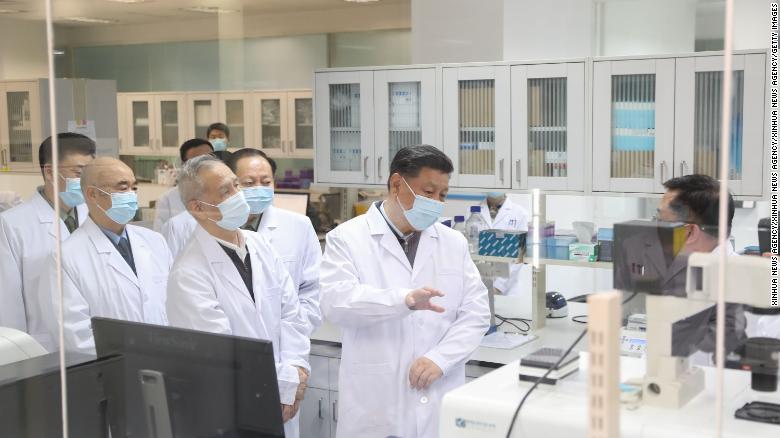
.jpg)


_025.png)