 Login
LoginTrump Said It Would Be Easy to Free Jimmy Lai. He Should Prove It.
The Hong Kong publisher’s fate will reveal whether democracies still have the resolve to defend their own values.


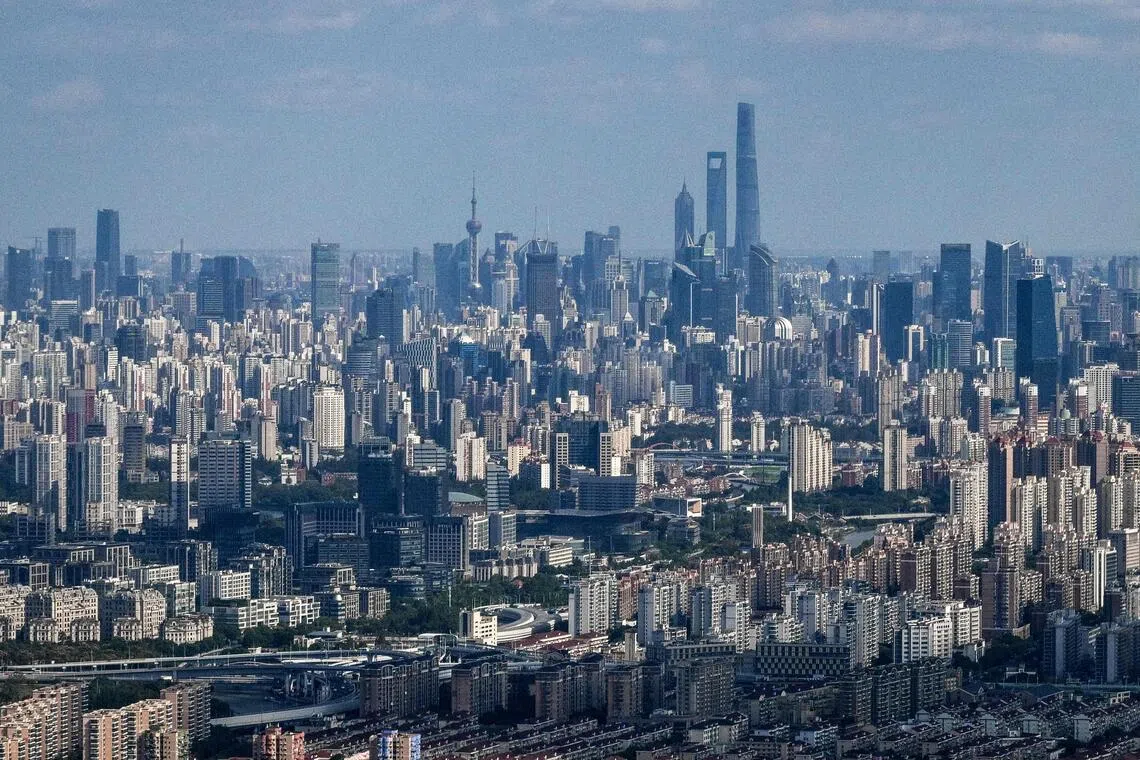
官方数据显示,中国11月70个城市新建商品住宅价格环比下降0.4%,延续此前下跌趋势,显示尽管政府承诺稳定房地产市场,需求复苏仍未显现。
中国国家统计局星期一(12月15日)公布的数据显示,今年11月,剔除保障性住房的70个城市新建住宅价格环比下降0.4%,10月为下降0.45%;11月二手房价格下降0.66%,与上月持平。
彭博社报道称,由于二手房受政府干预较少,它的下跌更能反映市场真实状况。
花旗集团分析师上周在报告中指出,中国楼市在2026年可能面临严酷现实,除非流动性改善,否则全国房屋销售额明年预计将进一步下降约11%。瑞银集团中国房地产研究负责人John Lam则认为,房价至少还将下跌两年。
惠誉评级在10月警告,新建住宅销售面积在行业企稳前可能再下降15%至20%,显示银行房地产相关不良贷款明年可能仍将维持“高位”。
香港法院星期一(12月15日)裁决,壹周刊创办人黎智英涉及串谋勾结外国势力和串谋发布煽动刊物的三项罪名成立。
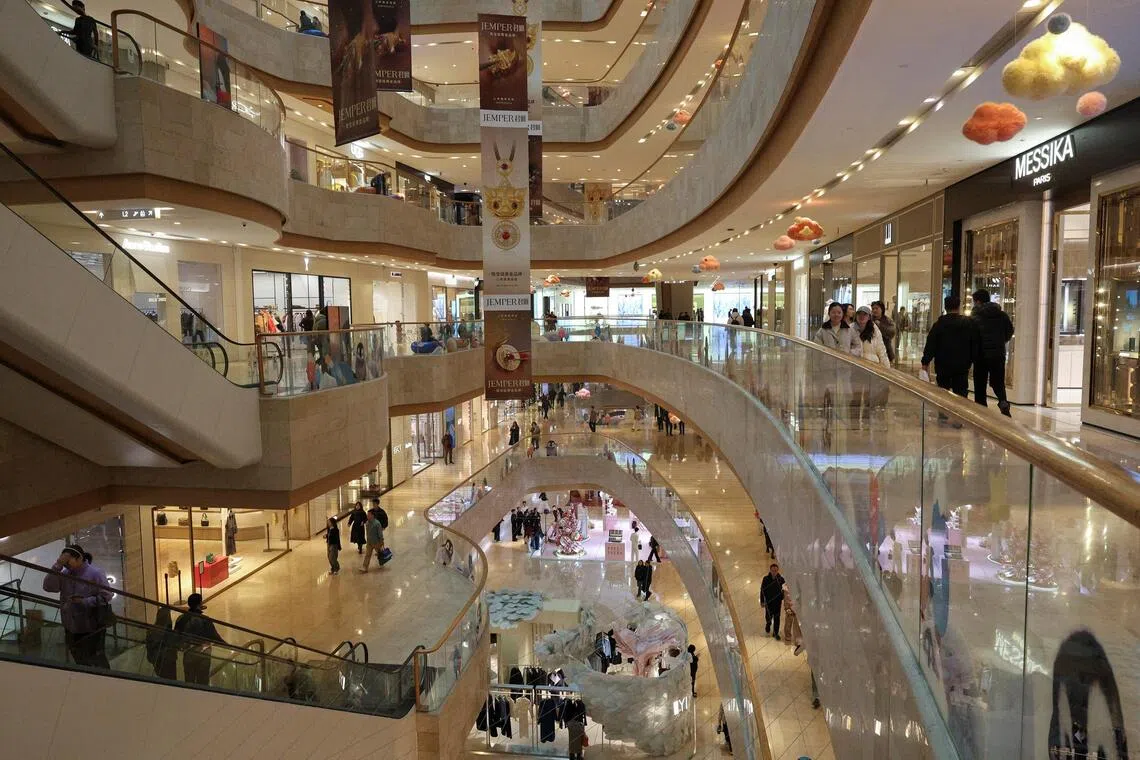
官方数据显示,中国消费品零售总额增速在11月放缓。
中国国家统计局星期一(12月15日)在官网公布,社会消费品零售总额增速从10月的2.9%,放缓至11月的1.3%,低于路透社调查预测的2.8%。
1—11月份全国固定资产投资(不含农户)同比下降2.6%,1-10月份则是下滑1.7%。经济师预测的跌幅为2.3%。
规模以上工业增加值同比实际增长在11月为4.8%,低于路透社经展开调查后预测的5.0%。10月份的增幅为4.9%。
中国外长王毅访问沙特阿拉伯期间,双方同意加强全方位互利合作,在地区和国际事务上加强沟通与协调,并呼吁推动解决巴勒斯坦问题。
据中国外交部网站消息,王毅星期天(12月15日)在利雅得与沙特王储兼首相穆罕默德会面,称中国愿做沙特国家振兴进程中最可信赖、最可依靠的伙伴,同沙方加强全方位互利合作,巩固传统能源合作,拓展新兴产业、未来产业合作,为中沙全面战略伙伴关系开辟新前景。
王毅同日还与沙特外交大臣费萨尔主持召开中沙高级别联合委员会政治分委会第五次会议。他说,中沙互为重要经贸合作伙伴,双方要加强能源、投资等传统领域合作,拓展新能源、绿色转型等新领域合作,打造更多可视化成果。
王毅说,中国欢迎沙特企业加大对华投资,支持中企赴沙特投资兴业,也希望沙特继续为中国企业提供良好营商环境,并呼吁双方要密切文化、旅游等领域交流,进一步便利人员往来,增进相互了解,深化中沙兄弟情谊。
根据中方新闻稿,双方还就共同关心的地区和国际问题交换意见,称将加强沟通和协调。双方强调支持根据“两国方案”原则、联合国有关决议、“阿拉伯和平倡议”,努力推动实现巴勒斯坦问题全面、公正解决,在1967年边界基础上建立以东耶路撒冷为首都的独立的巴勒斯坦国。
日本自卫队前统合幕僚长岩崎茂获聘任台行政院顾问,被中国大陆实施制裁。
据中国央视新闻客户端报道,中国大陆外交部星期一(12月15日)公告,将从即日起,对岩崎茂实施制裁,理由是他同“台独”分裂势力勾连,严重违背一个中国原则和中日四个政治文件精神,严重干涉中国内政,严重损害中国主权和领土完整。
依据《中华人民共和国反外国制裁法》相关规定,中国大陆决定冻结岩崎茂在大陆境内的动产、不动产和其它各类财产;禁止境内组织、个人与他进行有关交易、合作等活动;对他不予签发签证、不准入境(包括香港、澳门)。
香港壹传媒创办人黎智英及3间《苹果日报》公司被控违反国安法两项“串谋勾结外国势力”、及一项“串谋发布煽动刊物“罪案件,15日上午10时于西九龙裁判法院判决,三件被控罪名均罪成。
综合外电报道,黎智英与壹传媒旗下3家公司各被控一项《港区国安法》的“串谋勾结外国或者境外势力危害国家安全”罪,及一项刑事“串谋刊印、发布、邀约发售、分发、展示及或复制煽动刊物”罪。
法官指,法庭信纳黎是指控串谋的主脑,在实行串谋行为时,利用苹果不同平台,并得到公司同意。
黎戴上耳机,听闻裁决时神情平静,亦不时望向法官及家人。
被控公司为苹果日报有限公司、苹果日报印刷有限公司和苹果日报互联网有限公司。而黎智英又因为卷入“反送中”运动支持者、“香港故事”成员李宇轩的案件,被加控一项串谋勾结外国势力罪。
法庭定于明年1月12日安排求情,需时4天。法官表示,求情完成后,再订判刑日期。
这起案件从2020年开始,一直备受国际社会关注,开庭前吸引了大批记者到埸采访,现埸有众多警员戒备。逾百名市民在庭外排队等候入庭旁听。
黎智英的女儿黎采9日曾投书华盛顿邮报,指父亲的健康在狱中急剧恶化,过去几年在探监和旁听审讯时,她近距离观察到父亲指甲脱落、牙齿腐烂、眼睛充血,去年6月上庭时更脸色苍白、不断颤抖。她指出若中国政府不释放父亲,他很有可能成为自由的烈士,更透露若父亲获释,将离开香港,他“为正义奔走的时日已经结束,他只希望与家人和平地度过余生。”

© Reuters

© Allyn Johnston

三大恶意
中共河南省委书记刘宁在与少林寺主持印乐法师交流时,希望宗教界人士处理好少林寺和少林文化的关系,维护好少林寺的声誉和形象。
据《河南日报》微信公众号消息,河南省委书记刘宁星期天(12月14日)到郑州市登封市嵩山少林景区调研检查文旅市场发展情况,强调要深入学习中共二十届四中全会和中央经济工作会议精神,贯彻落实中共总书记习近平在河南考察时重要讲话精神,坚持把文旅事业高质量发展摆在突出位置来抓,全方位提升游客服务质量水平,营造更安全有序的文旅市场环境,让广大游客乘兴而来满意而归。
刘宁到景区主要游览点,察看游客服务设施场所,实地检查景区管理、安全保障、便民服务等情况时强调,要强化游客至上、服务至上理念,提升管理服务效能,不断丰富体验场景,让广大游客更好触摸历史脉搏、体验文化魅力。要加强综合监督管理,畅通举报投诉渠道,针对游客反映强烈的突出问题,加大执法检查力度,严肃查处违法违规行为,保障游客合法权益。
刘宁还与少林寺住持印乐法师深入交流,希望宗教界人士坚持中国宗教中国化方向,带头守法遵规、严持戒律,不断提升宗教修为,处理好少林寺和少林文化的关系,厘清少林寺和嵩山景区、文旅开发的界限,回归宗教本真,维护好少林寺的声誉和形象。要理顺体制机制,强化规范管理,加强文物保护,警惕冬季干燥火灾易发高发,落实落细消防安全措施。
中国古刹河南嵩山少林寺原住持释永信上月因涉嫌职务侵占、挪用资金和受贿三宗罪被捕。中国佛教协会12月2日召开会议,要求强化制度执行与权威,严肃处理违规犯戒行为,清理害群之马,维护佛教健康肌体。
一名五个月大的女婴在中国宁波一所医院接受心脏手术后不幸离世。当地官方通报称,手术存在操作过失、术中突发情况未及时告知家属,医院分管副院长等多人已被免职。
今年11月14日,一名五个月大的早产儿在宁波大学附属妇女儿童医院接受心脏房间隔缺损手术时离世。事发后,女婴母亲邓女士在社交平台发文质疑手术过程及相关医生,称术前预估手术时间为2.5至3小时,但实际手术持续7小时10分钟,连同进出手术室总时长达9小时。
宁波大学附属妇女儿童医院随后回应称,已对涉事医生展开调查,并将配合患者家属依法维权;宁波市卫生健康委也成立调查组,就此事进行彻查。
宁波市卫生健康委员会星期天(12月14日)发布情况通报称,调查组通过调取资料、实地核查、谈话询问等方式开展全面调查,对发现的病历违规问题立案调查,对医疗责任问题启动医疗事故技术鉴定程序,委托患儿家属指定的湖北崇新司法鉴定中心进行尸检。
根据通报,医疗团队对手术风险评估不足、手术操作存在过失、术中出现突发情况未及时告知、术后监护处置有缺陷,具体医疗过错及其责任程度需在医疗事故技术鉴定等完成后予以明确;医院存在医疗质量安全制度落实不到位、风险防范能力不足、应急处置不力、人文关怀缺乏等问题。
通报称,宁波卫健委给予妇儿医院党委书记警告处分、院长记大过处分,给予分管副院长免职处理。妇儿医院免去主刀医师外二科(心胸)主任职务、暂停其诊疗活动;免去麻醉医师的科主任职务、暂停其诊疗活动;暂停儿童重症监护病房主管医师诊疗活动。接下来将根据医疗事故技术鉴定结果对相关人员依法依规严肃处理。
通报在回应家属和网民关切时指出,主刀医师1994年7月毕业于温州医学院儿科医学专业,2014年1月被聘为小儿外科学主任医师,具备开展此次手术的资质。
通报还提到,患儿手术所在手术间配备两个监控摄像头,其中一个为实时监控的广角全景摄像头,但未配置存储介质,不具备回放功能;相关设备已在全程公证下由公安机关完成勘验。另一个摄像头专用于麻醉车监控,配置存储介质,可回放视频。同手术室的其他手术间监控设备配置相同。医院儿童重症监护病房病室内未安装摄像设备。上述监控配置均符合相关规定。
宁波卫健委在通报中再次向家属表示深切慰问和诚挚歉意,并称将深刻吸取教训,切实加强全市医疗卫生行业规范化管理,开展医疗质量安全专项整治,全面排查风险隐患,对存在的问题认真整改。
目前,家属已采取维权行动。11月27日,属地公安机关受理女婴家属报案;12月12日,法院受理家属提出的诉讼。
中国派出卫健委司长级官员出席星期天在韩国首尔举行的韩中日卫生部长会议。
综合韩联社和韩国纽斯频通讯社报道,韩国保健福祉部星期天(12月14日)在首尔召开第18次韩中日卫生部长会议,商定加强三国之间的卫生领域合作。
这次会议由韩国保健福祉部长官郑银敬担任主席,中国国家卫生健康委员会国际合作司负责人冯勇、日本厚生劳动大臣上野贤一郎分别作为中日首席代表出席。世界卫生组织(WHO)西太平洋区域办事处(WPRO)及韩中日三国合作秘书处(TCS)以观察员身份与会。
郑银敬在开幕致辞时说:“过去18年积累的三国卫生合作延续性与信任是极其宝贵的资产,在人工智能(AI)与数字技术引领的医疗环境变化、老龄化与慢性病增加等共同挑战下,三国合作的意义正日益增大。”
三国首席代表围绕全民健康覆盖(UHC)、健康老龄化和精神健康三大议题,分享各国政策经验,并就合作方案进行讨论。
三国一致认同AI与数字技术是提升基本医疗服务可及性与公平性的核心手段,并商定优先加强面向医疗资源匮乏地区的数字医疗合作。
为共同应对人口老龄化,三国同意支持构建基于全生命周期的综合照护体系。在精神健康领域,三国将预防自杀设为最优先公共卫生课题,并将早起识别高危人群与及时干预体系建设作为首要任务。为加强预防自杀能力,三国商定扩大AI预测诊断技术等数字技术的应用范围。
三国代表在会议结束时通过了《第18次韩中日卫生部长会议联合声明》,同意持续加强卫生领域合作。
据日本共同社早前报道,中国将不会派部长参加上述会议。据悉,相关决定与日本首相高市早苗11月7日“台湾有事”论不无关系。中国也在中日韩文化部长会议举行一周通知韩日两国会议延期,但未说明理由。会议原定11月24日在澳门召开。明年1月在日本举行的三国首脑会议也据报取消。

法国BFM电视财经台周日(12月14日)针对台海危机专题报道称,根据《纽约时报》披露的一份机密文件,美国军方在保卫台湾时可能会失败,并且在与中国的军事对抗中遭遇险境。其尖端装备,特别是其最大的航空母舰,面临被摧毁的风险。
法国BFM电视财经台报道指,美国对自身的军事实力产生了疑虑。在五角大楼围绕台湾进行的战争模拟中,“我们每次都输”给中国,如今在美国总统特朗普手下担任国防部长的赫格塞斯去年曾直言不讳地发出这样的警告。而这一次,警报来自一份名为《Overmatch Brief》的机密文件,该报告于本周由《纽约时报》披露。
根据这份国防部在2021年提交给白宫的机密文件,该文件基于与中国对抗的兵推情景,美国军方在保卫台湾时的风险极高,并可能导致军事失败。据《纽约时报》报道,当时拜登总统的一位高级国家安全顾问审阅了这些桌面兵推的结果。据一位目击者称,这位官员在意识到局势的严峻程度后“脸色煞白”。
这位官员向《纽约时报》透露,他惊愕地说:“对于我们手中的每一个计策,中国人都有重复的备用方案。”
如何解释世界上最强大的军队会受到中国的威胁?这份报告描绘了一幅不利的权力平衡图景,并强调美国这个超级大国实际上被其自身耗资巨大的武器库蒙蔽了双眼。五角大楼依赖技术先进但极其昂贵的武器系统,而中国则专注于大规模生产廉价武器系统。桌面兵推结果既简单又令人震惊:北京拥有无数种替代方案,可以替代美国自认为拥有的每一种军事资产。
航母“福特号”的脆弱性
报告特别引起美国决策者对其尖端装备脆弱性的关注。报告尤其警告说,中国凭借其600枚高超音速导弹,可能在“福特号”(Gerald R. Ford)航空母舰——美国海军的旗舰——尚未抵达台湾之前就将其摧毁。
“福特号”航母于2017年服役,目前部署在加勒比海,造价高达130亿美元。该舰能够搭载四个中队的战斗机和5000名水兵,被设计为美国海军战略的核心要素。“福特号”是世界上最先进的航空母舰,象征着美国对全球所有海洋的霸权。
《纽约时报》略带讥讽地评论道:“在《Overmatch》报告所述的军事推演中,像‘福特号’这样的舰船经常被摧毁。然而,海军计划在未来几十年内再建造至少九艘‘福特’级航母。而到目前为止,美国甚至还没有部署任何高超音速导弹。” 纽时将其称之为“概念上的失败”。
法媒报道也同样地提及这份机密报告表明,“五角大楼过度依赖昂贵且易受攻击的武器,而其对手却正在部署廉价且技术先进的武器”。
美国的防御部署主要是为对付较弱的对手而设计的,因此“不可避免地容易受到新型攻击形式的打击”。这份机密报告还强调,美国目前缺乏以支持与大国进行长期冲突所需的速度生产武器和弹药的能力。更何况,美国已投入资源支持乌克兰和以色列。
“不可持续的美国防务战略”
这一结论主要得到了来自乌克兰前线反馈的支持。近年来,要求对美国军事战略进行深刻改革的呼声日益增多。
2023年,为美军提供咨询的兰德公司(Rand Corporation)智库估计,“美国的战略和防御部署已变得不可持续”。该智库认为:“自冷战结束以来,这项战略一直依赖于在全球部署压倒性武力,以彻底击败任何敌人。但多年的战争模拟却表明,这种方法在面对中国,甚至俄罗斯时,都是无效的。”
华盛顿现在正试图迎头赶上:国会已拨款10亿美元用于生产34万架小型无人机,特朗普也任命了一位“无人机首席战略顾问”来监督这项工作。不过,专家警告说,美国永远无法在成本效益方面战胜中国,因为中国的工资更低,监管也更宽松。
法国BFM电视财经台指出,自重返执政以来,特朗普一直对其在台湾受到攻击时支持台湾的决心保持模糊。11月初,他声称习近平理解中国“入侵台湾的后果”,但拒绝明确说明美国是否会进行干预。
另值得关注的是,不同于这份美军机密报告的推论,由美国智库战略与国际研究中心(CSIS)在2023年发布的其他模拟,则得出结论认为,如果发生冲突,美国将占优势。在改智库所研究的24个情景中,美国、台湾和日本在大多数情况下都成功击退了中国的常规两栖入侵,但代价是“巨大的人员和财务成本”。
2027真相之年?
对中国领导人习近平而言,台湾回归中国大陆是“历史的必然”。报道称,他设定了2027年的最后期限,并命令军队做好大规模两栖作战的准备。
但也有分析人士认为,习近平只有在确信能够迅速取得压倒性胜利时才会采取行动;失败将意味着他领导中国政府的终结。

 UK Foreign Office/AP
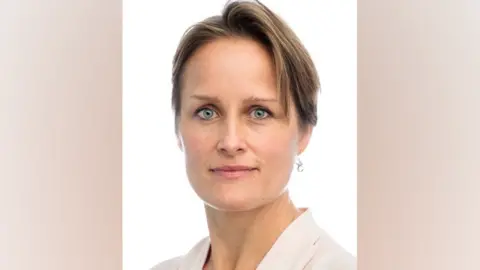
The new chief of MI6, Blaise Metreweli, will warn of "the acute threat posed by Russia" when she makes her first public speech later.
She will highlight so-called hybrid warfare, which includes incidents such as cyber attacks and drones suspected of being launched near critical infrastructure by Russian proxies.
Ms Metreweli will describe this as "an acute threat posed by an aggressive, expansionist and revisionist Russia".
Referring to the war in Ukraine, she will insist that Britain will be keeping up the pressure on President Vladimir Putin on Ukraine's behalf.
Ms Metreweli, who took over as head of the Secret Intelligence Service in the autumn, is the first woman to head Britain's overseas spy agency. She took over from Sir Richard Moore on 1 October.
Monday's speech will point to the recent sanctioning of Russian entities accused of conducting information warfare, as well as two China-based companies sanctioned for their "indiscriminate cyber activities against the UK and its allies".
Western sanctions have certainly damaged Russia's economy, driving its exports eastwards towards China and India. But they have singularly failed to change President Putin's determination to wage war on Ukraine until it gives in to his demands for territory and ultimately, loyalty to Moscow.
It is also clear from Ms Metreweli's speech that a special area of interest for the new spy chief is technology.
Having joined MI6 in 1999, she has arrived at the top job via Q Branch. Named after the fictional MI6 division in Ian Fleming's spy books, this is the real life, in-house, top secret part of the Secret Intelligence Service that designs the sorts of gadgets and gizmos that enable agents to communicate with their handlers, without being detected and caught.
In her speech later she is expected to call on all her intelligence officers to master technology, "not just in our labs, but in the field, in our tradecraft.. We must be as comfortable with lines of [computer] code as we are with human sources, as fluent in Python as we are in multiple languages".
Python, a programming language, may surprise some as an example to pick, since it has been around for more than three decades. But her point will not be lost on the men and women who have chosen to work in the shadowy world of espionage.
In an age where data is key, where spies can no longer rely on false identities when biometric scanning can unmask them in seconds at borders and checkpoints, MI6 needs to prove that it can still be relevant.
Elsewhere, the Chief of the Defence Staff, Sir Richard Knighton, will on Monday call for a "whole of society approach" to building national resilience, in the face of growing threats and uncertainty.
In a speech to the Royal United Services Institute in London, Sir Richard is expected to say that defence and resilience need to be a higher priority for everyone, not just those in the military.
It is the latest in a string of warnings that the UK needs to be more ready than it is now to meet a growing volume of threats.
Sir Richard is expected to say that the situation is more dangerous than he has known during his entire career.
Russia has made it clear that it wishes to challenge, limit, divide and ultimately destroy Nato, he will say.
Britain's response needs to be about more than simply strengthening the armed forces. Deterrence, he will say, involves harnessing the UK's power, from its universities to industry, the rail network and the NHS.
"A new era for defence doesn't just mean our military and government stepping up - as we are - it means our whole nation stepping up," he will say.
Addressing a skills gap highlighted in a recent report by the Royal Academy of Engineering, Sir Richard will talk about the need to work with industry and young people and will announce £50m for new defence technical excellence colleges.
In recent weeks, both France and Germany have outlined plans for voluntary national service.
Last year, the then-Conservative government set out its own compulsory proposals, which Labour dismissed as a gimmick.
But the debate about how Britain as a whole should respond to an increasingly uncertain world is gathering pace.
 BBC
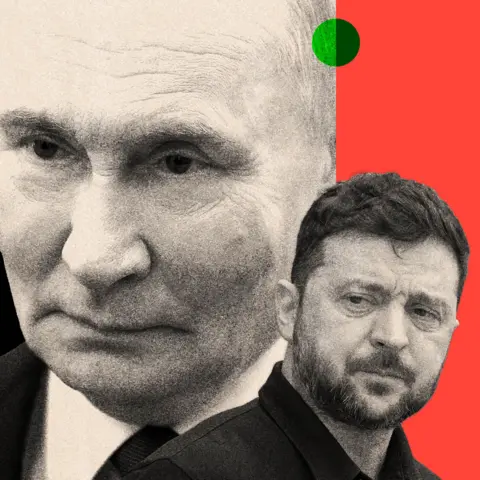
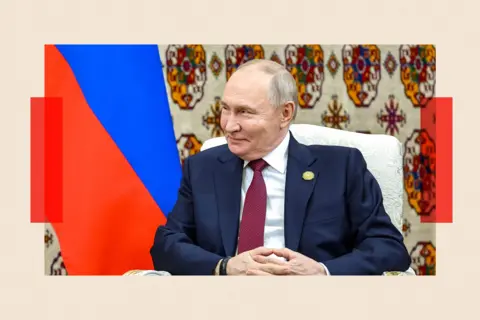
BBCVladimir Putin may have a reputation among some as a ruthless autocrat, a master manipulator of the international scene. But one thing Russia's president does not have is a poker face.
The late US Senator John McCain used to joke that when he looked into Putin's eyes, he saw three things, "a K and a G and a B", a reference to his past life as a Soviet intelligence officer.
I thought of this as I watched footage of Russia's leader sitting opposite American envoys in the Kremlin. He could not hide his emotions; he exuded an air of supreme confidence.
For President Putin reckons the diplomatic tide has turned in his favour, with an improved relationship with America and gains on the battlefield.
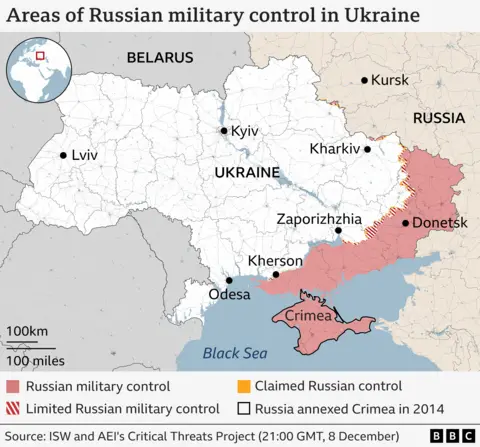
Some analysts say Putin has no incentive to retreat from his demands: that Ukraine gives up the last 20% of Donetsk it still controls; that all occupied territory is recognised internationally as Russian; that Ukraine's army is curtailed to a point of impotence; and Nato membership is ruled out forever.
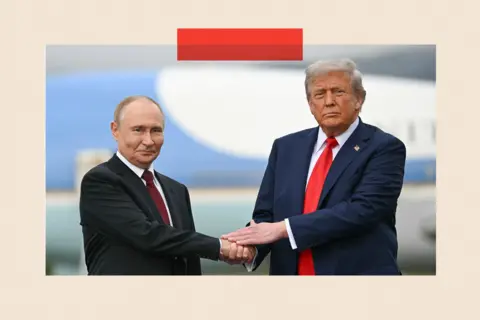
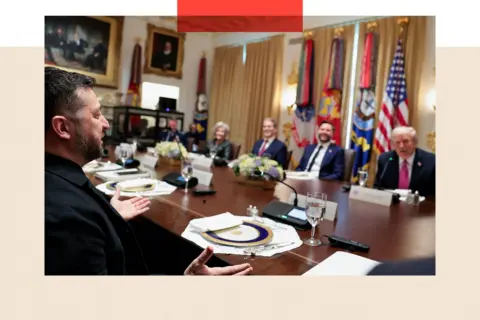
As things stand, there are a few possible scenarios. The first is that US President Donald Trump may try to force Ukraine into a ceasefire on terms unwelcome to its people, one that cedes territory and lacks sufficient security guarantees to deter future Russian aggression.
If Ukraine demurs or Russia vetoes, President Trump has hinted he could wash his hands of the war; last week, he said "sometimes you have to let people fight it out".
 AFP via Getty Images
He could remove the vital US intelligence Ukraine needs to detect incoming Russian drones and target Russian energy facilities.
Another possibility is that the war could just stumble on with Russia's forces continuing to make slow advances in the east.
The Trump administration's new national security strategy implied that Russia is no longer an "existential threat" to the US, and urged the US to "re-establish strategic stability" with Russia.
So, with American support for Ukraine in serious question, what - if anything - could potentially change Putin's mind? And what else could Ukraine, Europe and even China, do differently?
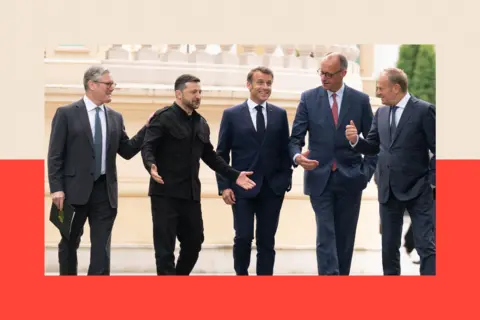
At the moment, the continent is preparing for a ceasefire. Under the banner of the "coalition of the willing", it is preparing an international military force to help Ukraine deter future Russian invasion, alongside a financial effort to help reconstruct the war-ravaged country.
But some officials suggest that Europe should instead prepare for the war to muddle on.
They want to help Ukraine not only "win the fight tonight", with more drones and cash; but also provide longer term support and prepare for a 15 to 20 year war with Russia.
Europe could also do more to help protect Ukrainian skies from drones and missiles. There is already a plan – called the European Sky Shield Initiative – which could be expanded to allow European air defences to protect western Ukraine.
Others argue European troops could be deployed to western Ukraine to help patrol borders, freeing up Ukrainian soldiers to fight on the front line. Most proposals such as this have been rejected for fear of provoking Russia or escalating the conflict.
Keir Giles, senior consulting fellow at the Russia and Eurasia programme at Chatham House think tank, said these fears were based on "nonsense" because Western troops were already present on the ground and Sky Shield could be deployed in western Ukraine with little chance of any clash with Russian aircraft.
European leaders, in his view, had to "insert themselves into the conflict in a manner that will actually make a difference".
 WPA Pool/Getty Images
Mr Giles said: "The only thing that will unarguably, undeniably stop Russian aggression is the presence of sufficiently strong western forces where Russia wants to attack, and the demonstrated will and resolve that they will be used to defend."
This strategy would of course come with huge political difficulty - with some voters in western Europe unwilling to risk a confrontation with Russia.
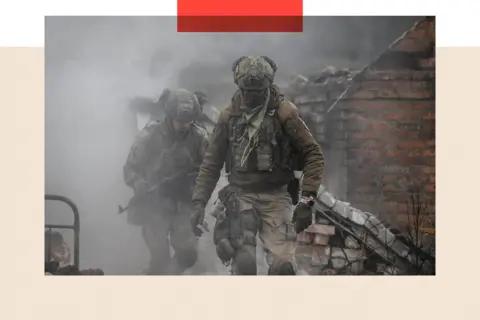
Few analysts expect Ukraine to reverse the tide and make actual territorial gains of its own.
Having spent several weeks in Ukraine recently, I heard no mention of any Spring offensive, only the need to slow Russia's advance and increase the price it pays in blood and treasure.
Some western diplomats claim Russia's generals are lying to the Russian president, pretending the situation on the ground is better than it is - adding to what they see as a deliberate strategy to exaggerate Russian gains, designed to suggest Ukraine is on the back foot and should thus sue for peace.
According to Thomas Graham in Foreign Affairs, in this year, Russia has seized only 1% of Ukrainian territory at a cost of more than 200,000 dead and wounded.
 AFP via Getty Images
Fiona Hill, senior fellow at the Center on the United States and Europe at the Brookings Institution, who served on Trump's national security council during his first term, says the biggest thing Putin has in his favour is that many people believe Ukraine is losing.
"Everyone is talking of Ukraine as the loser when it now has the most potent military in Europe," she says.
"Just think what they have done to Russia. It is remarkable they have held off for so long not least fighting with one hand behind their back."
Then there's the lever of sanctions. Certainly, Russia's economy is suffering. Inflation at 8%, interest rates 16%, growth slowed, budget deficits soaring, real incomes plunging, consumer taxes rising.
A report for the Peace and Conflict Resolution Evidence Platform says Russia's war economy is running out of time. "The Russian economy is substantially less able to finance the war than it was at the beginning of it in 2022," the authors say.
But so far none of this appears to have changed much Kremlin thinking, not least because businesses have found ways of evading restrictions, such as transporting oil on unregistered ghost ships.
 Sputnik/Alexander Kazakov/Pool via Reuters
Tom Keatinge, director of the Centre for Finance and Security at Rusi, said western messaging about sanctions was convoluted and there were too many loopholes.
Russia would, he said, work around recent US sanctions on two Russian oil giants, Lukoil and Rosneft, just by re-labelling the exported oil as coming from non-sanctioned companies.
Mr Keatinge said if the West really wanted to hurt Russia's war economy, it would embargo all Russian oil and fully implement secondary sanctions on countries that still buy it. "We need to stop being cute and go full embargo," he said.
"We need to take our implementation of sanctions as seriously as the Kremlin takes circumvention."
In theory, sanctions could also affect Russian public opinion. In October, a survey by the state-run Public Opinion Research Centre (VCIOM) said 56% of respondents said they felt "very tired" of the conflict, up from 47% last year.
But the consensus among Kremlinologists is that much of the Russian public remains supportive of Putin's strategy.
 Reuters
The European Union could agree to use about €200bn (£176bn) of frozen Russian assets to generate a so-called "reparation loan" for Ukraine. The latest European Commission proposal is to raise €90bn (£79bn) over two years.
In Kyiv, officials are already banking on getting the cash. But still the EU hesitates.
Belgium, where the bulk of the Russian assets are held, has long feared being sued by Russia - and on Friday, the Russian Central Bank announced legal action against Belgian bank Euroclear in a Moscow court.
Belgium says it will not agree the loan unless legal and financial risks are shared more explicitly with other EU members. France has concerns, such is its own vast debts, and fears exploiting the frozen assets could undermine the stability of the eurozone.
EU leaders will make a further attempt to agree a deal when they meet in Brussels on 18 December for their final summit before Christmas. But diplomats say there is no guarantee of success.
There is also disagreement over what the cash should be used for: keeping Ukraine's state solvent now or paying for its reconstruction after the war.
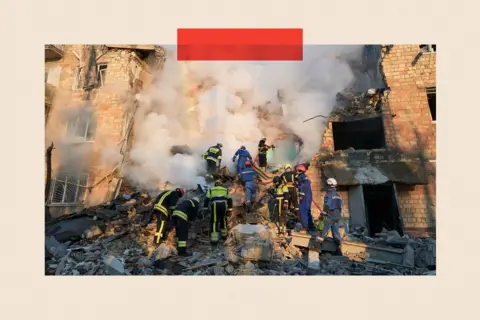
As for Ukraine, it could mobilise more of its armed forces.
It remains the second-biggest army in Europe (behind Russia), and the most technically advanced - but it is nonetheless struggling to defend an 800-mile frontline.
After almost four years of war, many soldiers are exhausted and desertion rates are rising.
 Getty Images
Army recruiters are finding it harder to fill gaps as some younger men hide from press gangs or flee the country. But Ukraine could widen its conscription laws.
Currently only men aged 25 to 60 must be available to fight. This is a deliberate strategy by Kyiv to manage Ukraine's demographic challenges; a country with a low birth rate and millions living abroad cannot afford to lose what have been dubbed "the fathers of the future".
This puzzles outsiders. "I find it incredible that Ukraine has not mobilised its young people," one senior UK military figure told me.
"I think Ukraine must be one of the only countries in history facing an existential threat that has not thrown its mad 20-year-olds into the fight."
Fiona Hill said Ukraine had simply learned the lesson of history and the devastating impact World War One had on 20th Century European empires, which declined after failing to rediscover the population growth that had fuelled their economic rise.
"Ukraine is just thinking of their demographic [future]."
If Ukraine could import and manufacture more long-range missiles, it could hit Russia harder and deeper.
This year it stepped up its air strikes on targets both in occupied territory and the Russian Federation. Earlier this month Ukraine's military commanders told Radio Liberty they had hit more than 50 fuel and military-industrial infrastructure facilities in Russia during the autumn.
Alexander Gabuev, director of the Carnegie Russia Eurasia Center, says some Russians experienced fuel shortages earlier this year. "By late October, Ukrainian drones had hit more than half of Russia's thirty-eight major refineries at least once.
"Production outages spread across multiple regions, and some Russian gas stations began rationing fuel."
But would more deep strikes on Russia make an impact, when both the Kremlin and public opinion in Russia seem indifferent?
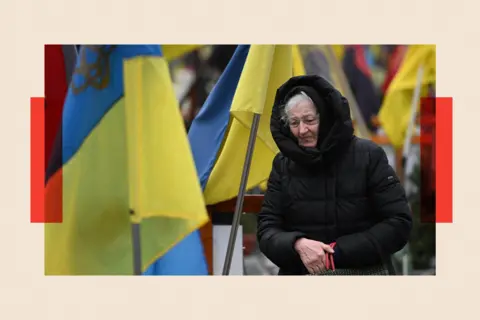 AFP via Getty Images
Mick Ryan, former Australian major general and now fellow of the Center for Strategic and International Studies, says deep strikes are not a magic bullet.
"They are an extraordinarily important military endeavour, but insufficient by themselves to force Putin to the negotiating table or to win the war."
Dr Sidharth Kaushal, senior research fellow in military sciences at the Royal United Services Institute (Rusi) think tank, said more deep strikes would certainly damage Russia's energy and military infrastructure, as well as using up its air defence missiles. But he warned the tactic could be counterproductive.
"It could reinforce the argument the Russian leadership makes that an independent Ukraine poses a massive military threat," he said.
There's also - still - a diplomatic route.
Some analysts argue that if Putin is offered a way out of the war, he may choose it.
The theory goes like this: a deal is agreed that allows both sides to claim victory. Say, a ceasefire along the line of contact; some areas demilitarised; no formal territorial recognition. Compromises all round.
But the deal would require the US to engage hard with Russia, setting up negotiating teams, using its power to drive through agreement.
"The United States… needs to deploy its formidable psychological leverage it possesses over Russia,"
Thomas Graham argues. "One cannot overstate the role the United States – and Trump personally – plays in validating Russia as a great power and Putin as a global leader."
The wild card is China. President Xi Jinping is one of the few world leaders Putin listens to. When Xi warned earlier in the conflict against Russian threats of nuclear weapon use, the Kremlin fell swiftly in line.
Russia's war machine is also huge dependent on China's supply of dual use goods – such as electronics or machinery that can be used for civilian and military purposes.
So if Beijing decided it was no longer in China's interests for the war to continue, then it would have substantial leverage over Kremlin thinking.
For now, the US shows no sign of trying to encourage – or force – China to put pressure on Moscow. So the question is whether President Xi would be willing to apply any leverage off his own bat.
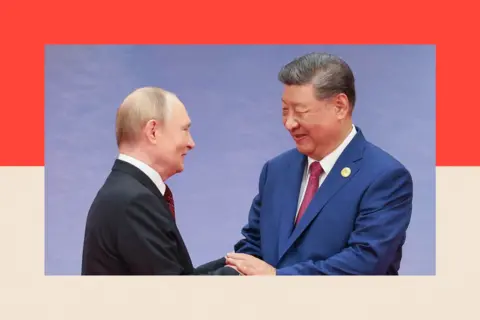 Shutterstock
At the moment China seems happy for the US to be distracted, for transatlantic allies to be divided, and for the rest of the world to view China as a source of stability. But if Russia's invasion escalated, if global markets were disrupted, if the US applied secondary sanctions on China in punishment for its consumption of cheap Russian energy, then the thinking in Beijing might change.
For now though, Putin believes he is sitting pretty, with time on his side. The longer this conflict goes on, analysts say, the more Ukrainian morale will fall, the more divided its allies will become, and the more territory Russia will gain in Donetsk.
"Either we liberate these territories by force of arms or Ukrainian troops leave these territories," Putin said last week.
"Nothing will change his position," Fiona Hill told me. "Unless he exits stage left. Putin is betting right now that he can keep this going for long enough that circumstances play out to his advantage."
Top picture credit: Reuters

BBC InDepth is the home on the website and app for the best analysis, with fresh perspectives that challenge assumptions and deep reporting on the biggest issues of the day. You can now sign up for notifications that will alert you whenever an InDepth story is published - click here to find out how.
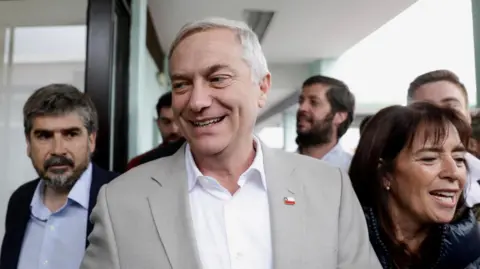 Reuters
Chile has elected the far-right wing José Antonio Kast to be its next president, after an election campaign that was dominated by themes of security, immigration and crime.
Kast won decisively with more than 58% of the vote in his third attempt at running for president.
It marks the biggest shift to the right since the end of Chile's military dictatorship in 1990. Kast has openly praised Chile's former right-wing dictator, Augusto Pinochet.
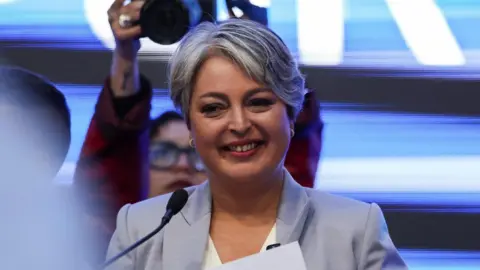
He beat the governing left-wing coalition's candidate, Jeannette Jara, from the Communist Party.
At a gathering of his supporters in the capital Santiago, many draped in Chilean flags, chanting and taking selfies, there was jubilation as the results came through.
"I'm happy we can recover the country's security and patriotism," said Augustina Trancoso, donning a red "Make Chile Great Again" cap.
"We've been trying to win an election for years," said Belem Valdivieso. "In Chile, you used to be able to walk the streets peacefully, lately we've experienced problems with insecurity. I'm hoping his promises will be kept and he'll focus on security."
Throughout the campaign, Kast portrayed Chile as a country that was descending into chaos and insecurity. He pledged to restore order and crack down on irregular immigration, as well as implementing sharp spending cuts.
Kast is an admirer of Donald Trump, who is likely to become a close ally, and his policies echo those of the US president. He has pledged a border wall on Chile's porous frontier with Peru and Bolivia, maximum-security prisons, and mass deportations of irregular migrants, many of whom are from Venezuela.
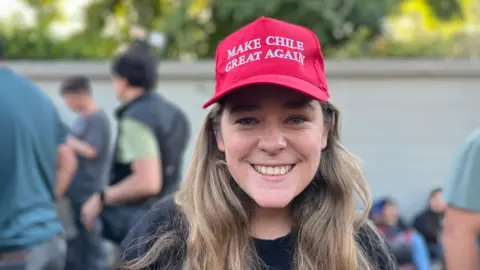
Chile is one of the safest and more stable countries in South America, but a rise in immigration and organised crime in recent years has concerned many voters. Kast regularly drew links between the two.
His critics, though, say the problem is being exaggerated.
One voter in Santiago, Javiera Carrasco, liked some of Kast's policies but ended up voting for Jara. She said she felt "like a false sense of insecurity is becoming widespread."
"In other countries, there are much worse things happening than here. It just doesn't add up for me."
Chile's murder rate is now falling, and some studies suggest those born abroad commit fewer crimes on average. But the perception of growing insecurity was the motivation for many of Kast's voters.
"We are transforming into Colombia, a lot of terrorism, thieves, robbery, society is very unsafe," one voter Max Struber said.
"It may sound harsh to say it, but we need the government to continue Pinochet's work. Human rights abuses existed, that's true. But as a government it was good, we used to have peace and tranquility."
Kast's brother was a minister during Pinochet's dictatorship, and his father was a member of the Nazi party. Pinochet was an army general who led a US-backed military coup in 1973 and established a 17-year-long military dictatorship that was marked by brutal human rights abuses, forced disappearances and free-market economic policies.
 Reuters
Chile's current left-wing President Gabriel Boric, who could not run again, had suffered from low approval ratings. Kast's rival Jeannette Jara may have suffered by being seen as a "continuity vote".
A supporter at his victory party, Francisco Otero, said neither candidate represented everybody perfectly, but that a continuation of the government was seen as "much worse".
After the result Jara posted that "democracy has spoken loud and clear" and wished Kast "success for the good of Chile."
"We will continue working to advance a better life in our country," she added.
Her supporters fear Kast's election marks a return to Chile's far-right past.
"Kast's family helped the dictator Augusto Pinochet," Ricardo Herrera said, adding that he lived through Pinochet's dictatorship and it was "brutal".
Some are sceptical, though, that Kast will actually do what he's pledged.
"Kast says he wants to expel 360,000 undocumented migrants. He won't be able to do that. It's physically impossible," one voter Hector Lunes said.
Kast has also been firmly against abortion, even in cases of rape, and environmental protection policies.
His victory will likely be welcomed by investors as he has pledged a free-market approach to economics to shrink the state and deregulate certain industries.
This was the first presidential election in Chile where voting was mandatory and registration was automatic for those eligible.
This left some voters feeling like they had to pick whichever they say was the "least-worst" option.
"I don't know if I'd say the lesser of two evils, but I think Chile needs a change," Claudio Sanjuez said, "and I clearly think Kast could be that alternative".
"Both candidates were like opposite extremes," Cintia Urrutia said, but added she'd hoped for Jeannette Jara who she perceived as more "centrist".
Kast's victory in Chile follows a string of elections in Latin America that have shifted the region to the Right in recent years – including in Argentina, Ecuador, Costa Rica, and El Salvador.
He will be inaugurated on 11 March 2026. At rallies, he regularly counted down the days until this date warning undocumented immigrants that they should leave before then if they ever want the chance to return.
 Getty Images
At first glance, my emails are polite and warm, after all "I'm just checking" in on a deadline but "no worries either way".
However, a closer look reveals my messages are punctuated by unnecessary apologies, smiley faces, exclamation marks and even kisses.
I like to think I'm being friendly and approachable, but according to experts, these linguistic habits may be quietly undermining how seriously I'm taken at work.
Careers coach Hannah Salton and etiquette coach William Hanson explain why so many of us write like this and the impact it could be having on how we're perceived, and even promoted at work.
"Thanks very much!" I've replied to many an email - my punctuation may be extra but a full stop feels blunt.
People use exclamation marks to show "positivity and enthusiasm," says Hannah.
Women use them three times more often than men, a recent study published in the Journal of Experimental Social Psychology found.
She thinks that’s likely down to the idea that "women are often judged more harshly than men when they are direct and are called bossy and other gendered negative words".
And while a single exclamation mark isn't the problem the cumulative effect can be, warns Hannah.
“If it looks fake or like it's covering up insecurity it could impact credibility,” she explains.
Written communication is notoriously easy to misread, which is why many of us insert an emoji as a picture of our warmth or humour.
But etiquette coach William Hanson warns this can backfire.
"One emoji can mean different things to different people or something entirely unintended," he says.
"It would be better if people used words and a good command of English," he advises.
Emojis can have an "infantile connotation" which could lead to people perceiving you as younger, less senior, capable or responsible, he says.
"I would not put an emoji in an email," he says. "You can be friendly in your writing and remain professional at the same time."
And when it comes to signing off with a kiss, he says: "I would never put a kiss on the end of an email unless I would kiss them on the cheek in real life."
"Just checking that you're following me and this all makes sense?"
Emails containing reassurance checkers can be self-depreciating," Hannah says, adding that over time, that tone can subtly shape how someone is perceived.
"As a manager, it's a difficult balance of being liked and respected and if you're not direct, there's a risk of creating an impression of being less capable," she says.
"There are definitely times where communicating in an overly apologetic or overly measured way can make you come across as less impactful."
"A lot of it is unconscious," Hannah says. "No one reads an email and thinks 'oh, they don't back themselves', it's more subtle than that.
"But if you're consistently communicating in a people-pleasing way, that can build up an impression of someone who doesn't back themselves, or who is potentially less competent."
Here are some of the things you might want to consider losing to appear more professional, our experts suggest:
Hannah and William stress it's not about stripping all warmth or personality from professional communication.
"Personal style is important," Hannah says. "Showcasing personality at work is not a bad thing. You don't want to feel like you have to filter everything you write and remove any personality from it."
But at the same time you shouldn't use certain words and symbols "as a tool to be liked".
A practical way to spot and reduce these habits without losing personality is to pay attention to the emails you receive and notice how different styles make you feel - what sounds clear, confident or reassuring, and what feels excessive, she says.
Salton says AI tools can also be useful for reviewing drafts and removing excess filler or qualifier words.
 BBC
BBCA paramedic "sent flying" by a two tonne car as it ploughed into a dense crowd at Liverpool's Premier League victory parade has described how the "adrenaline took over".
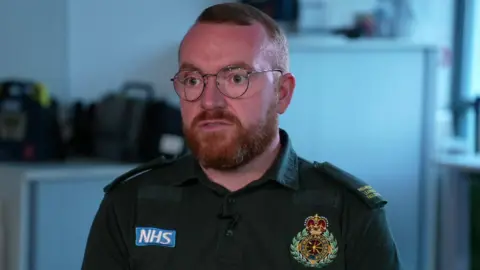
James Vernon did not even hear the Ford Galaxy Titanium, driven by 54-year-old Paul Doyle, coming before he was struck from behind on 26 May.
Mr Vernon, deployed as a cycle paramedic with the North West Ambulance Service (NWAS) during the parade, was on his way to help a patient having a heart attack when he was struck.
Despite being knocked down, he was able to shelter children in the back of an ambulance and rush to the aid of many of Doyle's 134 victims.
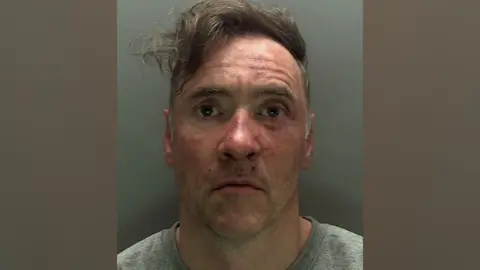
Doyle, of Burghill Road in Croxteth, Liverpool, is due to be sentenced on Monday after pleading guilty to 31 charges including causing GBH with intent, dangerous driving and affray.
Mr Vernon had been walking with his bicycle ahead of an ambulance to help it get to where the man had collapsed outside Hooters bar on Water Street, which was packed with tens of thousands of people.
He said: "There was a lot of people singing, a lot of people chanting, and I had the sirens at the back of me in close proximity, so very, very loud.
"I would say we were making good progress, and then all of a sudden I was struck with almighty force from behind, which has sent me flying over to the right-hand side."
 CPS
CPSMr Vernon said he landed in a gutter and saw the car passing to his left.
"For me, instantly I thought I was in the middle of a terrorist incident," he said.
After Doyle passed the ambulance, he stopped and reversed straight into it, before richocheting back into the middle of the road.
He said it then lurched forward in a "sweeping" motion "throwing members of the public left and right."
Mr Vernon activated the emergency function on his radio and shouted that he and other pedestrians had been "run over" on Water Street.
He and his colleague jumped in the back of the ambulance to take a "10 second breather" before deciding they needed to join the rescue effort.
"We both looked at each other and said 'we need to help here, let's get out, and let's do our jobs'," Mr Vernon said.
Describing the scene as they opened the door, he said: "There were patients lying on the floor, there were push-chairs on their sides, scarves on the floor, empty beer bottles, there was just everything all over the floor.
"There were piercing screams and people running in any direction you can imagine but just not towards the car."
Fearing that a terrorist could still emerge from the vehicle, the paramedics ushered six or seven children into the back of the ambulance.
"I wasn't sure what the incident was outside," he said.
"I knew there was a car. I knew the car ran over a significant amount of people, but I didn't know what was then coming."
Stopping at the "twisted" frame of his bike to grab some medical supplies, Mr Vernon began triaging the stricken fans in the road, including some still trapped under the Ford Galaxy.
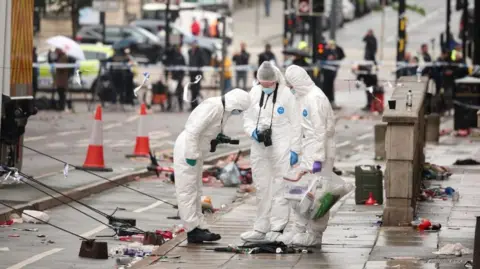 EPA
EPAHe said his while "extensive" training, including in mass casuality events, kicked in, he had never before been caught up in the same incident he was responding to.
"The adrenaline massively took over," he said.
"I'm going to be honest, the next day I woke up very stiff, you know, and that's very suggestive of that force, that whiplash kind of force."
Mr Vernon said after more medics and police officers arrived on scene he was able to go into a makeshift casualty area in the Mowgli restaurant, where he was able to message his family and friends to tell them he was ok.
Asked his reaction to Doyle's guilty pleas, he said: "I think the relief was immeasurable.
"It was like a weight had lifted off my shoulders because I knew that then negated me from having to go to Crown Court [as a witness], and having to go through that process, and ultimately it's him admitting his guilt for what happened that day."
Listen to the best of BBC Radio Merseyside on BBC Sounds and follow BBC Merseyside on Facebook, X, and Instagram, and watch BBC North West Tonight on BBC iPlayer.

© Lam Yik Fei for The New York Times


在阿根廷总统米莱(Javier Milei)下调关税以刺激出口、潘帕斯草原迎来创纪录小麦收成之际,中国正采购数十年来首批阿根廷小麦。
据彭博社报道,中国国企中粮集团正在位于阿根廷巴拉那河沿岸出口枢一处设施装载这批货物。这将是自1990年代以来首次有阿根廷小麦运往中国。这一船只随后还将在另一处港口装载6.5万吨小麦,随后启航赴中国。
此次采购正值阿根廷小麦价格处于全球低位。近乎完美的生长季带来爆量丰收,加上小麦出口税率下调2个百分点至7.5%,进一步提升了阿根廷货源的国际竞争力。
尽管出口关税在许多国家被视为异端,但阿根廷自本世纪初以来一直依赖此类税收以支撑财政支出。奉行自由意志主义、主张松绑市场的米莱,则计划最终彻底取消这些关税。
这笔小麦交易也凸显出一个更广泛的趋势:在与美国长期贸易摩擦的背景下,中国正持续加大从南美采购农产品的力度。
去年,在特朗普就任美国总统前不久,北京开放进口阿根廷小麦和玉米,被视为推动粮食供应多元化的重要一步。特朗普首个总统任期内,中国也批准进口阿根廷豆粕;今年10月期间,至少有两批运往中国的豆粕在巴拉那河装船,但至今仍未见玉米交易落地。
虽然阿根廷小麦产量可观,但它的蛋白含量偏低、品质相对逊色,可能限制米莱政府通过小麦出口关税为央行积累美元储备的空间。罗萨里奥谷物交易所就在报告中指出,虽然小麦单产创高,但蛋白含量偏低,正在压低国际买家的成交价格。
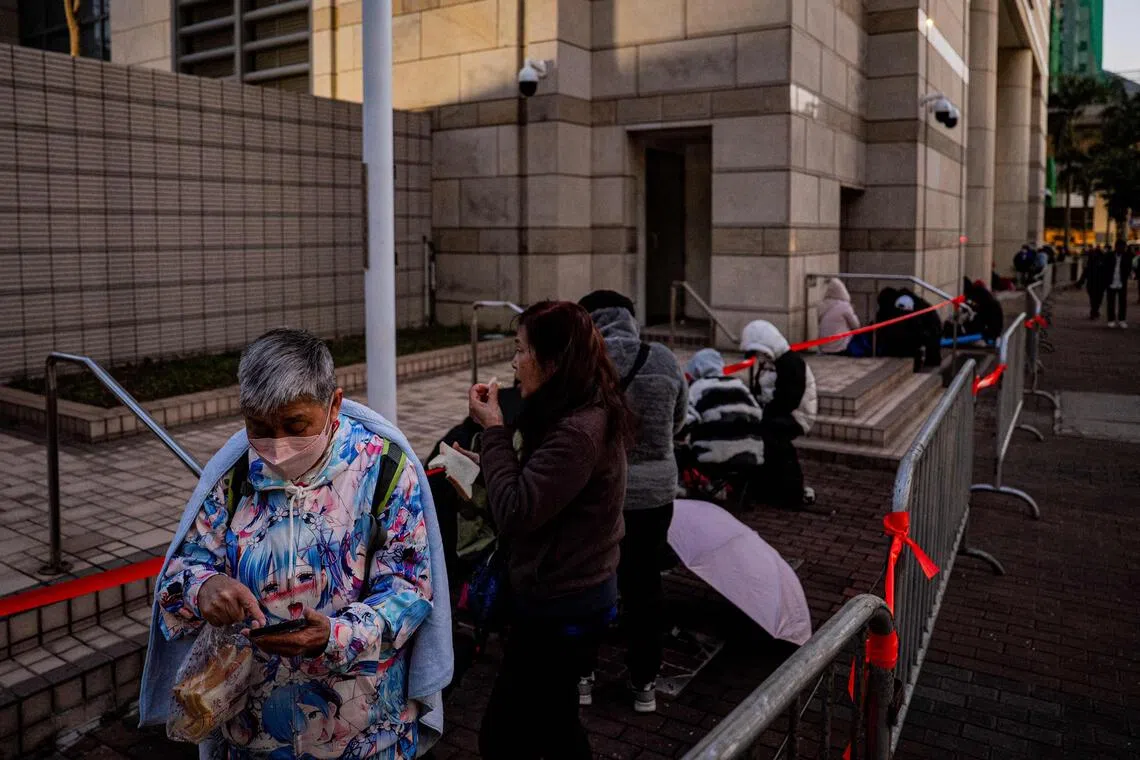
香港壹传媒集团黎智英涉嫌勾结外国势力的案件星期一宣判,有逾80名香港市民当天上午在法院外等候入庭旁听。香港警方在法院外加强部署,多辆警车在场戒备。
综合网媒“香港01”、香港电台和法新社等报道,黎智英与《苹果日报》三家公司涉嫌串谋勾结外国势力案,将于星期一(12月15日)上午10时宣布裁决。
黎智英与《苹果日报》三家公司被控一项串谋发布煽动刊物罪及一项串谋勾结外国或者境外势力罪。黎智英另外被控一项串谋勾结外国或者境外势力罪,是《香港国安法》2020年6月底实施后,首起涉及勾结外国势力的审讯案件,罪成者将面对终身监禁的最高刑罚。

这起高等法院案件移师西九龙裁判法院审理,有80多名香港市民星期一上午在法院大楼外等候入庭旁听。法院外的保安明显加强,停泊多辆警车及装甲车“剑齿虎”,大批警员在法院附近戒备,也出动警犬巡逻,截查驶经法院的车辆。
不少香港市民称,自己是黎智英的支持者,想知道他目前的身体情况。曾为《苹果日报》工作了近20年的张女士称,“我想看看老板怎样了,健康是否变差”。
黎智英案令北京与许多西方国家关系陷入低谷。美国总统特朗普据报曾在10月与中国国家主席习近平会晤时,呼吁北京释放黎智英。
上周度过78岁生日的黎智英,曾形容自己“天生反叛”。他在被捕前接受路透社采访时称,“将战斗至生命最后时刻”。
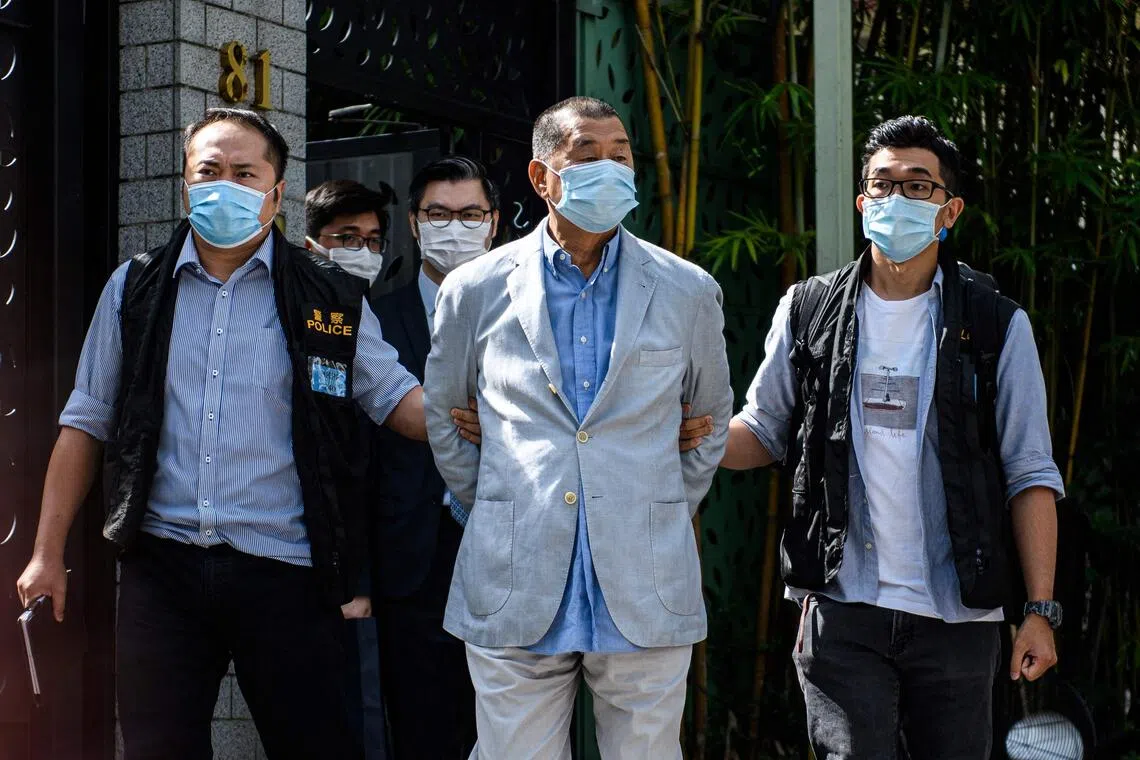
黎智英在2020年8月首次因违反《香港国安法》被捕,同年12月起被还押,期间曾因黎智英想聘用海外律师打官司等事宜引发多起诉讼。此案2023年12月正式开审,今年8月底完成结案陈词,审讯历时156日。
香港司法机构早前宣布,除了正庭外,并开设七个延伸法庭,合共有逾500个旁听席。司法机构网页上星期五(12日)显示案件的裁决日期后,已有逾20家媒体在门外排队获取筹号,也有市民在本周期间到法院外放下凳子或字条等,希望能取得正庭约50个公众席的其中一个座位。

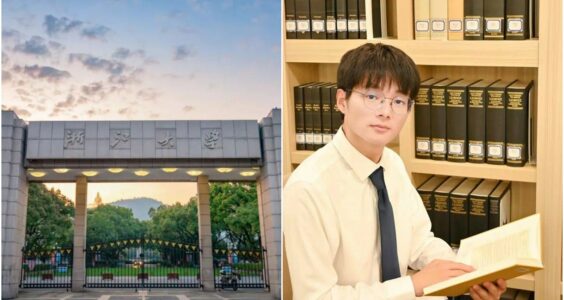
都知道西天取经要经历九九八十一难,走十万八千里才能取得真经,修成正果。现如今的学术之路,其实也颇有类似之处:
从本科开始一路修行打怪,取得硕士、博士学位、获得教职、熬过非升即走的考核期,晋升副教授、成为教授、博士生导师,漫长的晋升路径和巨大的外部压力绝对堪比西天取经。
等熬到博导这一级,绝大多数青年教师都到35岁以上了。这都已经算是非常优秀非常顺利的学术大牛了。
北大的韦东奕够天才吧?以韦东奕的天纵之资,26岁博士毕业,34岁才评上副教授。
晋升学历可以凭天才➕努力提前通关,但晋升教职就不一样了,大家都是既有天分又很努力还顶着名校光环的学术大牛,知名高校的教职坑位就那么多,凭什么就你能一路超车提前拿到博导呢?
除非,你是在浙大读的博士。
是的,浙江大学,尤其是浙江大学的文史哲学科,有一条平步青云之路,可以批量成就30岁以下的超年轻博导。30岁不到就能成为顶尖985高校浙江大学的研究员、博士生导师,足以让大家惊为天人。但仔细盘算一下,顶级的学术天才做到这样也还是有可能的:
22岁本科毕业,硕博连读5年毕业是27岁,再经过3年考核期,在学术新人层次普遍不高的项目基础上做出一些重大科研成果,30岁升个博导,虽然难度极高,但还是存在理论可能性的。
只是万万没想到,还能有26岁的博导!这一般就不是凭借个人能力所能达到的成就了。
闵超,1999年出生,18岁考上郑州大学马哲专业,22岁进入浙大读马克思原理专业硕博连读,4年即拿到博士学位(通常是5至6年)。
近日,26岁的闵超同学,啊不对,是闵超老师被录用为浙江大学“新百人计划”研究员、博士生导师。

对学术圈不了解的读者可能感受不到26岁当博导的震撼程度,我换个大家都好理解的场景打个比方:
一位顶级名校的青年才俊,在大学期间表现优秀,各种奖项拿到手软,做学生干部也表现突出,经学校推荐、组织考核,毕业后直接以选调生身份进入国家部委当公务员。这已经算是极其厉害了吧?选调生跨过三年基层服务期直接进中央部委。这个稀罕程度,相当于26岁博士毕业留在本校当研究员,已经是祖坟冒青烟的福分了。毕竟绝大多数高校招研究员都会从排名更高的大学招博士或者博士后,985的博士能进双非本科做研究员就乐开花了,留在本校的那是凤毛麟角。
但成为研究员,距离博导还远着呢。
26岁博士毕业直接留在本校当博导,相当于应届毕业的选调生直接招进国家部委给安排了一个处长的职位。这中间省去了多少年的努力,一步跨越了几个层级,大家可以掂量一下。
闵超老师,是有怎样突出的能力,做出了怎样卓越的贡献,才能拥有如此惊人的学术晋升速度呢?
我仔细查了几天,恕我眼拙,实在是没有发现。
毋庸置疑,闵超老师在他的专业领域很努力、很厉害,拿过很多奖项,发过不少论文,参与过3项国家社科基金项目……但他所有的这些成绩都是一位名校优秀博士生的正常水平。
首先看奖项
闵超大学期间荣获河南省三好学生、优秀毕业生、省共青团基层基础项目大赛特等奖、省微团课一等奖、教育部“我心中的思政课”微电影展示全国一等奖和最佳表演奖等50余项奖项荣誉。
研究生期间,闵超荣获浙江省2024年度“三助岗位之星”优秀个人典型称号,全省共10人入选。
博士研究生期间,闵超发表的论文荣获学校研究生优秀成果一等奖,这是该院首次获得浙江大学文科类优秀成果奖。
以上这些奖项,一部分是三好学生、优秀毕业生等综合性奖项,一部分是“三助岗位之星”等励志奖项,还有一些是微电影展示最佳表演奖等我也不知道该怎么归类的50余个奖项。
唯一的学术类奖项,是博士期间获得了学校文科研究生优秀成果一等奖。浙大马院在新闻里还特别强调,这是该学院首次获得这一奖项,看起来有点厉害。
但深入看一下,同期获得该奖项一等奖的,有12个人,研究生阶段的也有7人。

并且,这还是浙江大学内部的奖项。
从奖项来看,闵超老师是很厉害,但似乎也没有厉害到成为百年浙大第一人,中国史上最年轻博士生导师的程度?
再看论文
根据浙大官网的介绍,闵超读博期间发表C刊论文5篇,这被认为是学术研究能力拔尖的硬证据。

相对顶尖高校文科博士生普遍2到3篇C刊的水平,闵超的论文发表成绩的确属于领先的那一批。但是,5篇C刊要说遥遥领先那可就够不着了。我简单做了下检索,举几个近两年的发论文高手作为例子:
华中师范大学国际政治专业王承禹,硕博期间发表6篇C刊,现为某省党校讲师、助理研究员。
华东师范大学社会发展学院2021级博士研究生刘雨婷,已发表12篇C刊论文。目前读博第5年,没听说提前毕业,更没听说做了博导。
同为马克思主义专业,复旦大学2020级博士生肖玉飞发表C刊论文12篇,博士读完5年才毕业,2025年入职东南大学马克思主义学院,评定为讲师职称。
当然,学术能力评价不能只看论文,但既然浙大把闵超老师发表C刊论文数量当作评定其博导职称的重要因素,那咱们做个横向比较也算是合理的。
再看论文内容,以闵超博士最重要的获奖论文《马克思1848年法国革命研究与唯物史观的具体化转向》为例,我特意找来论文仔细拜读过。一直读到参考文献的部分,我惊掉的下巴还是没有合上。

一篇研究马克思主义的,与1848年法国革命有关的文章,居然没有任何德文、法文或英文的参考文献。唯一一个德国作者的参考文献,读的还是1958年的中文翻译版。整篇论文只有3条参考文献,3条。
也就是说,闵超博士写作这篇论文没有参考任何与1848年法国革命以及马克思对这场革命之研究的原始文献或一手素材。
我的确是不知道马哲领域是怎么评价论文的,但我非常确定,在其它人文社科领域,这样的研究思路是肯定过不了开题的。
我找个对照论文给大家感受一下,同为浙江大学新百人计划年轻博导的江佳凤老师发表的论文《朱子“尽心”章诠释中的知行问题》,都是一万多字的篇幅,人家的参考文献是这样的:


原始文献,一手素材,再加上多角度的二手素材,这才是一篇正常论文应该有的样子,吧?
最后看项目
对青年社科人才来说,参与各级社科项目也是评定其能力的重要参考因素。
闵超读博期间深度参与3项国家社科基金项目,这在人文社科类博士生里面绝对属于一骑绝尘般的存在。
但有两点背景信息需要补充:
其一,国家社科基金项目的申请与主持,基本上都是由长江学者之类学术界大佬在把持,博士生的威望、资源,以及研究能力对申请国家社科基金几乎是没有任何影响的。
简而言之,导师能申到多高的项目,博士生就有机会参与多高的项目。
其二,在近10年,特别是近5年的国家社科基金项目中,马克思主义相关的项目占比逐年提升,目前已经是毫无争议的人文社科第一大类别。
打个简单粗暴的比方,其它人文社科专业要取国家社科基金的真经得走十万八千里,马克思主义专业只要走二万五千里。
总而言之,闵超作为人文社科领域的青年教师,各方面研究能力都是非常优秀的,但要说成为全国最年轻的26岁文科博士生导师,只怕还有一些努力之外的因素。

12月14日中午,记者注意到,粉丝众多的微信公众号“六神磊磊读金庸”因违规无法关注。已关注该号的网友,可以正常打开他的往期大部分文章;未关注该号的网友,无法通过搜索关注。
14日下午,记者注意到,未关注该账号者已无法通过搜索功能找到“六神磊磊读金庸”的微信公号。
同时记者发现,“六神磊磊”相关视频号仍可正常关注,微博、抖音也可正常关注。当事人的另一个微信公众号“六神磊磊读唐诗”也显示正常,其视频号“六神磊磊说”也可正常搜索关注。
公开资料显示,六神磊磊本名王晓磊,1984年8月17日出生于江西省宜春市铜鼓县,毕业于北京广播学院(现中国传媒大学),自媒体原创作者、腾讯“大家”专栏作家,2016年获中国年度新锐榜“年度新媒体”(个人)等奖项。


