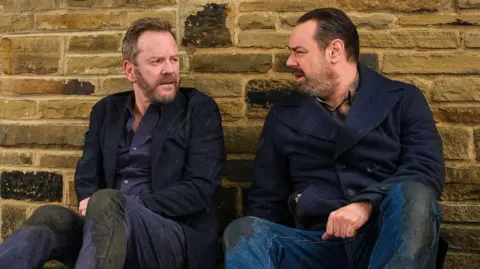
Kiefer Sutherland (left) plays a Hollywood action hero who ends up in panto in Yorkshire
'Tis the season to slob out on the sofa and demolish a packet of mince pies in front of a good movie, or a bad movie - or a movie that's so bad it's good.
This year, as ever, a crop of new Christmas films are hoping to be part of our festive viewing - and perhaps even join the ranks of enduring classics alongside the likes of Home Alone, Elf, Love Actually and Die Hard (don't start).
So, in an effort to bring you a vital public service by sorting the crackers from the turkeys, and in an attempt to get myself into the Christmas spirit, I binged as many new Christmas films as possible in a day.
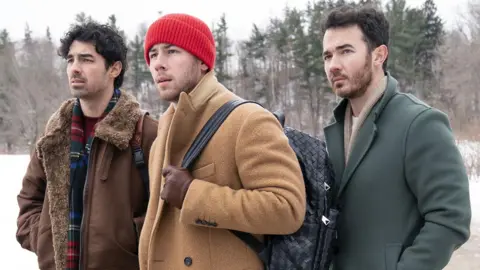
7.17am - A Very Jonas Christmas Movie
Disney/John Medland
Starting, hopefully, on a high. This is the only 2025 release on Rotten Tomatoes' list of the greatest 100 Christmas movies of all time. (No, honestly, it is, you can check.)
The Jonas Brothers find themselves stuck in the UK after wrapping up their world tour and must get home for Christmas. Their attempts are hampered by an evil Santa, who breaks into song to say they won't get home until they "rediscover their brotherly magic".
The banter between the bickering brothers is entertaining even for the uninitiated, while fans will no doubt pick up on lots of in-jokes as they attempt to get back to their families using any means of transport necessary.
It's private planes, trains and automobiles.
It's not an all-time classic after all, but is great for fans and a good start to the day.
Christmas tree rating:🎄🎄🎄🎄🎄for Jonas Brothers fans or🎄🎄🎄for Jonas Brothers fans' family members who will have to sit through it
On Disney+
8.45am - Tinsel Town
Sky UK
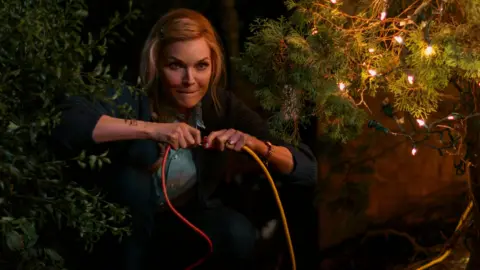
Hollywood star Kiefer Sutherland has been cast as a Hollywood star cast in a pantomime.
"A panto-what?" asks Sutherland's "difficult" and ageing action hero Brad Mack, who has fallen on hard times and whose agent has tricked him into thinking he's starring in prestigious English theatre.
His Aladdin cast-mates inform him he's playing Buttons. "Oh no I'm not," he insists angrily. You can guess their reply. Unless you're unfamiliar with traditional panto catchphrases.
There are some very funny lines, some cockle-warming sub-plots, and the rest of the cast is cracking, too.
Rebel Wilson plays the panto's choreographer (with a Yorkshire accent), Derek Jacobi plays the theatre stage door manager, Meera Syal plays the director, Jason Manford and Asim Chaudhry play the ugly sisters, Lucien Laviscount plays the prince, Katherine Ryan plays Brad's agent, and Danny Dyer plays Danny Dyer.
It's the type of film that would be a bit naff at any other time of year, but is a lot of fun at Christmas.
Danny Dyer pops up at the start of this film, too, calling someone a mug for the second film in a row. Is this a new Christmas tradition?
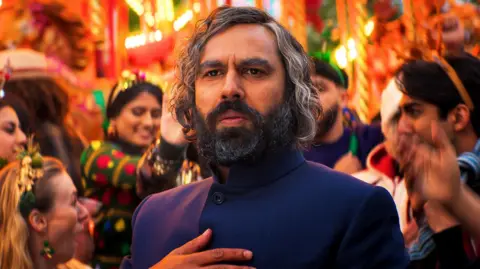
This time, he's a singing black cab driver who picks up Mr Sood, the latest spin on Mr Scrooge from Charles Dickens' A Christmas Carol.
Mr Sood is played by The Big Bang Theory's Kunal Nayyar and Christmas Karma is directed by Bend It Like Beckham's Gurinder Chadha. The familiar story unfolds as the miserly Mr Sood is visited by the ghosts of Christmas past, present and future, played by Hugh Bonneville, Billy Porter and Boy George.
This Indian Scrooge is at least different from all the others, but unfortunately he's not very charismatic and Nayyar's performance is flat - a problem when he's so central to everything.
Christmas tree rating:🎄🎄
In cinemas now, and buy and rent on digital platforms from Monday 15 December
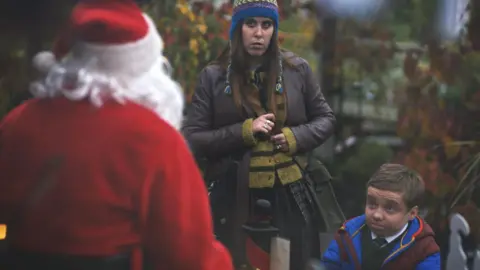
There's time before lunch for the BBC's original festive film (well, a 60-minute comedy-drama special) - which stars Guz Khan as a lovably grouchy guy who "doesn't really do Christmas".
But after he gets an £8,000 Christmas bonus at work, his wife (Morgana Robinson) persuades him to blow the money on a family trip to Lapland.
There's just one problem - he discovers there was an error with his bonus, which should have been £800, and he has to figure out how to pay back the difference.
Enjoyable but forgettable.
Christmas tree rating:🎄🎄
On BBC One and iPlayer on Tuesday 23 December
1.12pm - Champagne Problems
Mika Cotellon/Netflix
This is one of those Christmas films where the tree, fairy lights and snow are in the background - Christmas is the setting of the film rather than its raison d'etre - but it feels cosy and festive all the same.
Ambitious executive Sydney (Minka Kelly) is sent to a French chateau to do a deal to buy a champagne business. En route, she meets a guy in a book store who promises to show her Christmas in Paris.
Journalist and author Olly Richards recently told the Bah Humbug Christmas film podcast this is the best new Christmas film of the past few years. That's a bit of a stretch, but it is a Christmas romance with a touch of class and gives the required warm and fuzzy feels.
The scene with a lengthy discussion about Die Hard is very good too.
I'm starting to feel a bit festive, and pop out to buy some mince pies to keep me going for the rest of the day.
Christmas tree rating:🎄🎄🎄
On Netflix
3.29pm - Finding Father Christmas
Channel 4
Sixteen-year-old Chris, played by Lenny Rush, refuses to stop believing in Father Christmas, despite the attempts of his dad (The Inbetweeners' James Buckley) to tell him otherwise.
The truth is out there, and Chris sets out to find it with the expert help of Sir Stephen Fry, Hannah Fry, Dame Dr Maggie Aderin-Pocock and Jason Fox.
It's low-key but charming, and good viewing while waiting for Santa to visit.
Christmas tree rating:🎄🎄🎄
On Channel 4 on Christmas Eve
4.39pm - Oh. What. Fun.
Prime Video
Michelle Pfeiffer is the matriarch of a quarrelling American family who come back together for the holidays - including fellow Oscar nominee Felicity Jones, Chloe Grace Moretz, Jason Schwartzman and dad Denis Leary.
Pfeiffer begins by referencing classic festive films like National Lampoon's Christmas Vacation, It's A Wonderful Life and Home Alone, before saying: "They need to make a movie about the true heroes of the holidays - moms."
So that's what this is, but in reality it's really a jumble of those forerunner films, at least until Pfeiffer's character finally comes into her own.
Christmas tree rating:🎄🎄
On Amazon Prime Video
6.43pm - A Scottish Christmas Secret
Channel 5
The day's gone downhill, but thankfully here's a new entry in the crowded field of formulaic, schmaltzy, badly acted - and highly entertaining - festive fodder.
It's a tale as old as time, or as old as the Hallmark Channel at least. An American woman goes on a quest to a distant snowy land and ends up stumbling across romance.
In this case, Caprice Bourret plays a publisher who travels from LA to the Scottish Highlands (with sister Patsy Kensit back at home) and tracks down an author who must clear his writer's block, solve a family mystery, and save the local castle from Duke Hamish.
Cheap and cheesy is by no means a bad thing for a Christmas film and it's given me a more unashamedly festive feeling than most of the others.
Christmas tree rating:🎄 but🎄🎄🎄🎄🎄 if you know and like what you're getting.
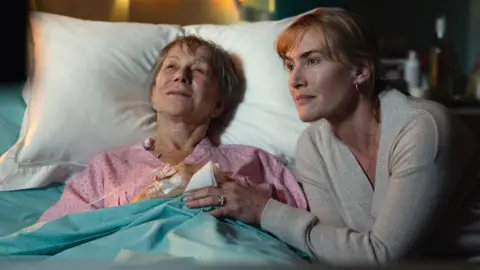
I've saved the most intriguing for last. This is Kate Winslet's directorial debut, and she stars alongside Dame Helen Mirren, Toni Collette, Timothy Spall, Andrea Riseborough and Johnny Flynn.
It's not your typical feelgood festive fun. Dame Helen's character has cancer and may or may not make it to Christmas. It's an intimate family drama with top-drawer performances.
I was ready to be cynical about the fact it was written by Winslet's son Joe Anders when he was 19, a nepotastic endeavour, but the script is skilled and sensitive, if sentimental.
You wouldn't put it on for an easy Christmas comfort watch, but it does have levity and warmth as well as tear-jerking realism, so stands out from the festive films that are as gaudy and hollow as a bauble.
There are lots more new Christmas films, but that's probably more than is healthy for one person to watch in one day.
Despite the huge variety, they're all about journeys of self-discovery and the appreciation of what's important in life. Are there any future classics? Probably not.
I'm finally feeling festive enough to put up the Christmas tree, though, and will decorate it with Die Hard on in the background.
Disaster, catastrophe and nightmare. That's how Hollywood's creative workers describe the fall of the once mighty Warner Bros, as Netflix and Paramount battle to buy the historic studio and tinsel town braces for more upheaval and job losses.
Warner's decline and impending sale – whether it's to Paramount Skydance as a whole, or to Netflix cut up in parts – is being mourned in Hollywood, where a historic production slump has already battered the entertainment industry. The loss of the studio, which has created iconic films ranging from Casablanca and Goodfellas to Batman and Harry Potter, likely means more job cuts and definitely means one less buyer of film and TV projects.
Interviews with dozens of actors, producers and camera crews by the BBC reveal an industry attempting to weigh the lesser of two evils: control by a tech giant blamed for killing movie theatres (Netflix) or billionaires seen as too cosy with President Trump (Paramount).
"David Ellison is a right-wing billionaire Trumper," a camera assistant said of the Paramount Skydance CEO who is the son of billionaire Oracle co-founder and close Trump ally Larry Ellison. "Netflix is much more historically inclined to not micromanage production."
If Netflix gets the deal they want, they will buy Warner Bros' crown jewels – the 102-year-old studio, HBO, and its vast archive of films and TV shows – leaving Warners's legacy TV networks, like CNN, TNT Sports and Discovery, for another buyer.
Meanwhile, Paramount Skydance's $108bn(£81bn) hostile takeover bid for Warner Bros includes backing from Saudi Arabia, Abu Dhabi, Qatar and a fund started by Jared Kushner, US President Donald Trump's son-in-law.
It has raised concerns about the possibility of censorship and government overreach.
President Trump added fuel to the fire when he said "it's imperative that CNN be sold".
The Warner Bros deal is the latest in a long line of major shake-ups in Hollywood since the pandemic.
Film and TV productions ground to a halt in 2023 during simultaneous actor and writer strikes. Seemingly everyone in Hollywood was working in 2022 as studios and streaming services went into creative overdrive after Covid shutdowns. But when the labour strikes ended, the production boom never returned.
The fallout has meant that many media companies have had to close doors - or merge. David Ellison's Skydance Media bought Paramount, another legendary Hollywood studio, earlier this summer, leading to thousands of job losses.
When Warner Bros put up a for-sale sign, Paramount launched an eager campaign to buy the company. But the studio ultimately announced a tentative deal with Netflix. A spurned Paramount then went direct to Warner Bros Discovery shareholders with a hostile takeover offer that they say is "superior" to the Netflix deal.
Getty Images
Whether they're rooting for Paramount or Netflix or another potential buyer, the one thing people in Hollywood seem to agree on is this story's villain - Warner Bros Discovery CEO David Zaslav, who earned $51.9m last year as Warner Bros lost more than $11bn and the company's stock fell nearly 7%.
"I watched Warner Bros struggle since David Zaslav became the CEO and ran it into the ground," says an actor who lost his home after his work dried up. He did not want to be identified because he still hopes to work for Netflix and Paramount.
More than one person compared Mr Zaslav to the fictional movie character Gordon Gekko who proclaims "greed is good" in the 1987 movie Wall Street.
Mr Zaslav took over in 2022 during another massive merger of Discovery, Inc., which he ran, with AT&T's WarnerMedia, creating Warner Bros Discovery. The consolidation saw several thousand jobs cut - and lavish pay packages for Mr Zaslav.
"Zaslav is just Gordon Gekko – he came in, broke it and sold it all," says a producer who was working on the Warner Bros lot. "He said I will make all shareholders rich and who cares what the history of this place is."
Warner Bros objected to that characterisation.
"Under the leadership of David and the talented team at WBD over the past three and a half years, the studio has regained its leadership position with a unique slate of films led by original content, seen the relaunch of the DC Universe under a single unified leadership team with ten year plan and the streaming service has launched globally and become profitable for the first time ever," Warner's head of communications Robert Gibbs said in a statement to the BBC.
For many film workers, whoever buys Warner Bros has felt almost irrelevant. They have instead been focusing on how to reinvent themselves as the industry shrinks amid consolidation and the growing use of AI in entertainment.
"Every morning, no matter how much I tell myself to stay positive, I wake up feeling like I've failed in every direction," says an actor who is now homeless with his wife and two children, relying on the kindness of friends and food banks while he works odd jobs. He asked not to be identified out of fear it could impact future work.
"I would rather see Netflix purchase Warner Bros then foreign money," he says.
Others are not so sure. The tech giant has arguably been the industry's greatest disrupter since Warner Bros pioneered "the talkies" in 1927.
"I think it's a disaster," says a film exhibitor who did not want to be identified because they work with Netflix. "This is a company openly, proudly saying theatres aren't necessary anymore. That's scary. It's a nightmare."
Many theatres in the US refuse to screen Netflix movies because of their streaming-first strategy.
"At least with Paramount, we know movies will make it to the big screen. They didn't kill movie theatres," said one producer who has worked for all three companies.
Netflix has sought to alleviate those fears, saying they expect "to maintain Warner Bros' current operations and build on its strengths, including theatrical releases for films."
Many in Hollywood want to believe them.
Getty Images
John Evans, a sound technician who dabbles in acting, writing and producing, points to Netflix's loving restoration of The Egyptian Theatre along iconic Hollywood Boulevard as a sign of their good faith.
The Egyptian, a classic 1922 theatre, was the site of the world's first movie premiere – Robin Hood starring Douglas Fairbanks – and had fallen into disrepair before Netflix bought the property in 2020 and gave it a $70m makeover.
"I think it's a good sign," Mr Evans said, adding that streaming is how many film workers consume movies and TV like the rest of the world.
On the backlot at Warner Bros, tourists snap selfies in front of the Central Perk cafe set from Friends, and stroll by facades of buildings that stand-in for New York or Los Angeles. Inside the offices and writers' rooms, for those still working, it's business as usual.
"I've gone through seven mergers," a producer working on the Warner Bros lot said while developing a new show, explaining it's sad to lose a studio because it means it will be even harder to get shows made and sold with one less customer. "But if you make good stuff, you make good stuff."
The producer spoke on the condition of anonymity on the day that Paramount Skydance announced their hostile takeover bid. They said they were too busy to worry about the sale because they were trying to get a show on air – and they wouldn't be surprised if another billionaire or trillionaire made another offer for the studio by the end of all this.
"I joke about Elon walking in and doing this, but he could," they said of the Tesla and X owner. "When you have people worth a trillion dollars, there are no rules."
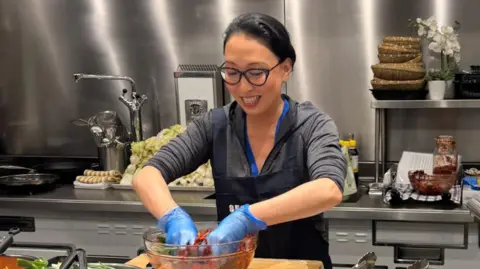
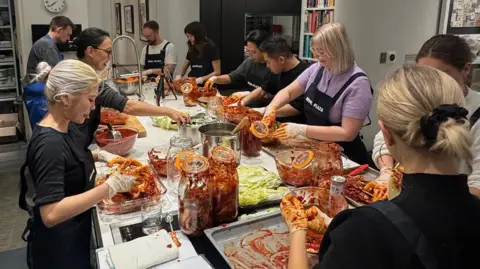
Standing around a kitchen island with a small group of other food writers, I pull on a pair of plastic gloves and begin massaging a bright red paste into wedges of cabbage.
We are in Korean-American TV chef Judy Joo's London flat, learning how to make kimchi from scratch.
Kimchi - sharp, funky, fermented cabbage - has become a kind of shorthand for Korean food in the UK. Judy calls it "the cornerstone of Korean cuisine".
"Traditionally, Koreans eat kimchi 365 days a year," Judy tells me. Kimchi recipes are passed down "like heirlooms", she adds.
The group joke about the chilli under our nails and the smell lingering on the train home, but we're all excited to have a jar of homemade kimchi ready to put in the fridge.
Judy, who's known for bringing Korean food to British audiences, was leading a class tied to Ocado's new Korean food aisle. It's part of what appears to be a growing trend of bringing Korean food further into the British mainstream.
Judy Joo
Korean-American TV chef Judy Joo demonstrates how to make kimchi from scratch...
Judy Joo
... Her class duly rub red paste into wedges of cabbage
Growing up as a Korean in London, I was used to my culture turning up at school in the form of food. On "international day", my mum would be asked to send in Korean dishes for pupils to try. Teachers were often more curious than students, and there was usually confusion about whether it was another type of Chinese food.
Korean food has never been in competition with other Asian cuisines – it simply wants to be seen and tasted on its own terms. As more Korean restaurants have opened, and as I've gone back to Korea and explored its food there, I've watched that shift happen in both places.
'Fermented foods, such as kimchi, have become mainstream'
Back in 2009, the South Korean government launched a "Global Hansik" campaign to raise the profile of Korean food abroad, putting public money into restaurant promotion, chef training and overseas marketing. The programme drew criticism at the time for lacking clear results but, later, government studies suggested awareness of Korean food in major overseas cities rose over the first half of the 2010s.
Since then, Korean food has increasingly travelled alongside the broader "K-wave" of pop culture. Food-centred drama Bon Appétit, Your Majesty has showcased Korean fusion dishes, while South Korean competition show Culinary Class Wars returns for a second season on Netflix this month after topping the platform's global non-English TV chart in its first run.
The shift is also visible on UK shelves. Searches for "Korean BBQ" on Waitrose's website are up more than 60% year on year, and sales of its gochujang paste have risen more than 70%. Kimchi is among its fastest-growing international products.
"Fermented foods, such as kimchi, have become mainstream," explains nutritionist Emer Lowry. "They enhance flavour and texture, but also offer benefits including improved digestion and a diverse, healthier gut microbiome."
And the interest in Korean food didn't just happen overnight - it's driven by curiosity. Analysis by Bibigo, part of food giant CJ, suggests TikTok posts by UK users mentioning Korean food have risen from just under 10,000 in 2023 to more than 17,000 in 2025.
Lola Lee
Dishes at Cálong in North London
At Cálong, a restaurant in North London, chef Joo Won is exploring what it means to cook Korean food in Britain. In his early career in a London hotel kitchen, he worked with chefs from France, Italy, Spain, Greece and Thailand. Between shifts, they would take it in turns to cook meals from home for each other and, one day, the others asked him to make something Korean.
"When they asked me to cook Korean food, I realised I couldn't," he says. "As a Korean person and a chef, being unable to cook Korean food was embarrassing."
He began revisiting the dishes he grew up with, not just restaurant staples but the home cooking most non-Koreans never encounter. "In Korea, the real foundation of our food is jang," he says, referring to fermented pastes and sauces such as doenjang, ganjang and gochujang.
But ingredients in Britain are different. "We can't get exactly the same ingredients here that we have in Korea," he says. "So a big challenge is: how do we reinterpret the character of British ingredients in a Korean way?
"We're a restaurant that uses Korean techniques and flavours, but we also rely heavily on what's available here in the UK," he continues. "If an ingredient doesn't suit Korean seasoning, there's no need to put gochujang on it. If every dish at an Italian pasta restaurant came out with the same sauce, it would feel strange."
As the popularity of Korean food grows, Joo thinks chefs may find it easier to source the authentic products they need. "At the moment, I'd say we're only at the beginning. It feels like we've just reached the starting line."
Food is the most important part of Korean dining culture. But Yoonsun Chang - who runs a Korean supper club - says Jeong, a deep warmth and care often associated with Korean hospitality, and inyeon, a sense of meaningful connections formed at the table, are also key. "What I try to give is jeong, but what's created through these gatherings is also inyeon."
LoKoLi – short for "Lovely Korean Life" – is a one-woman project run by Yoonsun, who creates one-off dining experiences built around Korean food and culture. I first came across her on Instagram and was struck by how much of it she was doing alone, driven by her own desire to show a version of Korean life that reflected what she loved.
Guests at her monthly clubs, which she usually hosts at home, often say they want more than the obvious elements of K-culture. They already know the music and dramas. What they're seeking is the quieter, domestic side of Korean life: the table setting, the stories behind everyday dishes.
She also pays close attention to how Korean food appears outside Korean spaces. She recalls a time when "kimchi burgers" in Britain used "just some generic pickles". Now, she says, pubs and restaurants increasingly use real kimchi. "Seeing that makes me feel Korean culture has really spread," she says.
'The flavour profiles were so different to what we were used to'
For British YouTubers Armand and Max, their introduction to Korean food came after taking part in a viral video for the Korean Englishman YouTube channel. Now in their early 20s, they say that day changed the way they eat.
The video, which featured the pair trying Korean street food in their school playground, was seen by tens of millions - and eventually took them to Korea itself, where they tried barbecue, late-night ramyun and school lunches.
"The flavour profiles… were just so different to what we were used to," says Max. "Fermented cabbage, kimchi, we'd never had that. That was delicious. I can't even compare it to anything."
Korean Englishman
Back in Judy's kitchen, as cabbages disappear into jars, she explains that proper kimchi needs weeks to ferment, though we were encouraged to taste it as it developed - as people do when making it at home.
The jar I made that day is now bubbling away in my fridge. It's not the kind of kimchi my family would have made, but the process - rubbing paste into each leaf, waiting for the tang to deepen - connects back to kitchens thousands of miles away.
Korean food in Britain is still young compared with other cuisines. It has not replaced anyone's Friday-night takeaway. But from supper clubs and YouTube channels to supermarket aisles and small flats where people are learning to make kimchi for the first time, it is steadily becoming part of everyday life.
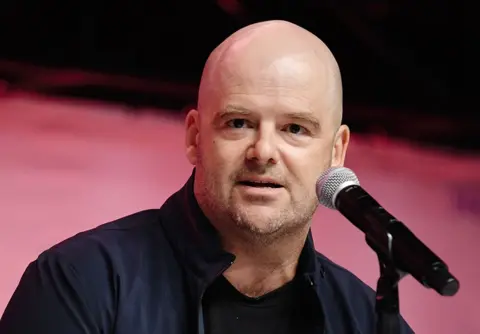
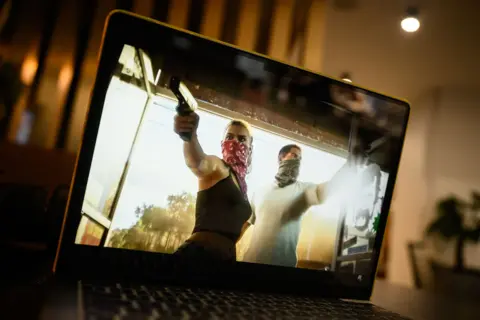
Dan Houser was one of the masterminds behind revolutionary video game series Grand Theft Auto.
Now, after leaving Rockstar Games and launching his own company, he's released a debut novel about a very different type of game.
A Better Paradise is a dystopian vision of the near future in which an AI-led computer game goes rogue.
Set in a polarised world, it finds Mark Tyburn attempting to create a virtual haven for people to find sanctuary and reconnect within themselves against an all-consuming social media hellscape.
But it all goes wrong when it ends up unleashing a mysterious, sentient AI bot named NigelDave into society - "a hyper-intelligence built by humans" - flaws included.
Readers get to see his thought processes as he struggles with "infinite knowledge and zero wisdom".
"What would an incredibly precocious child, who remembers everything he ever thought - because computers don't forget things - feel like when he started talking?" Houser says.
Getty Images
Written before ChatGPT
It feels a bit like A Better Paradise predicted the future.
First released as a podcast, the book comes as AI's continued boom means the sector's big seven companies are now collectively worth more than China's economy.
But Houser says he began writing the book "a good year" before OpenAI's ChatGPT went live to the masses in 2022, complete with a logo eerily similar to his fictional creation.
Instead, it was humanity's technological dependency during Covid - at a scale he'd underestimated - that inspired his thinking.
In his novel - which sometimes feels monologue-heavy - Houser envisions a hyper-digital, alienating world where people retreat from deepening political problems into a spiral of social media and generative AI.
Enter CEO of Tyburn Industria, Mark, who dreams of building the Ark, an immersive gaming experience users can enter in order to reconnect with themselves. It generates a world and mission tailored to each player's innermost wants and needs.
But during testing, the Ark becomes a Pandora's box of addiction. Some players find joy; others encounter terror. One even reconnects with his dead sister.
Meanwhile, a rogue AI bot named NigelDave slips into the real world, controlling minds and engineering realities no one can control.
Mined for advertising, people are left wondering if their thoughts are genuine. Everything is tracked, and nothing is secure. As climate emergencies intensify, society falls to pockets of civil war.
The only way to escape is to "drift"- which means hiding from a thousand algorithms by living off-grid, constantly moving and suppressing maddening paranoia that your thoughts are not your own.
Mirroring our world
To the reader, NigelDave feels like a nightmare ChatGPT gone wrong.
The AI tool recently reached 800 million weekly active users, according to boss Sam Altman, and Houser believes some people are becoming dependent on the technology's affirming "human veneer".
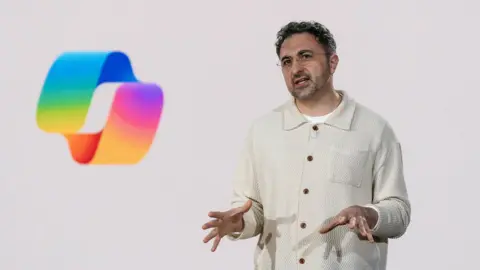
Microsoft's head of AI Mustafa Suleyman has warned of a rise in AI psychosis - a non-clinical term describing incidents where people increasingly rely on chatbots like Claude, Grok and ChatGPT and become convinced that something imaginary has become real.
In response to the increased scrutiny, ChatGPT creator OpenAI recently tightened its welfare protocols, with updates designed to ensure its chatbot responds "safely and empathetically to potential signs of delusion or mania".
Bloomberg via Getty Images
Mustafa Suleyman, chief executive officer of of Microsoft AI
The dizzying algorithm-fuelled society in which NigelDave is unleashed mirrors ours too.
Parents worry about exposing their children to false information or harmful content. Last year national police chiefs described the "quite terrifying" misogynistic radicalisation of boys and young men. And in 2014 Facebook admitted manipulating the news feeds of nearly 700,000 users without their consent to manage the emotions they were exposed to.
"As a parent, you always worry about anything that you expose your kids to that is going to either give them false information or simply bombard them with too much information," Houser says.
But is it bold for a video game creator to be warning of these dangers - given the long history of video games themselves being accused of making young people violent?
Houser insists there's a difference.
"We always had the data about game violence, and it was very clear: as people played more video games, youth violence went down.
"Whatever people were claiming, we knew the opposite was true."
Getty Images
Psychology professor and game violence researcher Pete Etchells says numerous studies have shown "no meaningful effect of playing violent games on aggression".
AI models and social media are another matter - a "new paradigm" in altering behaviour that gaming never threatened, according to Matt Navarra, social media consultant and author of the Geekout Newsletter.
He says dismissing concerns as a GTA-style moral panic "understates what is changing".
"We're talking about external systems that can potentially shape people's beliefs or manipulate attention, personalised experiences, nudge behaviour or even influence identity and emotional states."
Rockstar freedom
Could Houser have pushed forward with A Better Paradise at Rockstar? "I don't know if I would have had the bandwidth to think about it," he tells me.
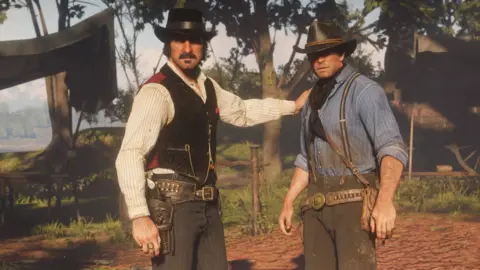
He's previously described the fatigue of managing vast open-world sandbox games like Red Dead Redemption and GTA as playing a role in his departure.
The goal with his book was to create "something truly different in this era of crazy media saturation".
Rockstar Games
So where next? He's already writing the second instalment of the series, and plans are under way to develop a video game, for which he promises the visuals are ground-breaking.
A key message, he says, is to not let your device - or AI - "tell you what to think". Otherwise, Houser argues, "you're giving up control to your phone".
His biggest fear, as creator of worlds, is losing imagination because of the endless torrent of algorithms. Sometimes after scrolling for hours, he realises: "I've not had an idea all day".
"If you go offline for a bit - sometimes I make myself go for a walk with no phone, you start to have ideas.
"A human is better thinking than not," he says. "Thinking is a privilege."
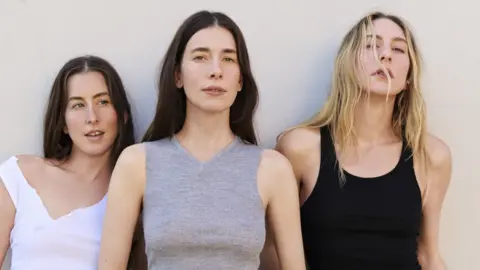
Haim: "Being in a rock band is where our heart and soul will always lie." (L-R: Alana, Danielle and Este Haim)
"When are you interviewing Haim?" my sister Emily texts, late one night. "I wanted you to ask if I can be their fourth member."
There's just one problem: I also want to be Haim's fourth member. And we're not alone. Taylor Swift and actress Brie Larson have also begged for the position.
Fellow Oscar-winner Emma Stone even teamed up with them for a Spice Girls tribute although, sadly, that wasn't a permanent deal.
There's clearly something going on.
Sisters Este, Danielle and Alana began their career playing gigs at local delicatessens with their parents. Now they're multiple Grammy nominees.
Like all the best bands, they're a tight-knit gang. Their videos often show them striding in unison down the streets of Los Angeles. On stage, they play with such unfettered joy you can't help but think, "I want to be part of that, too."
"The amount of times on tour that young girls came up to us and said, 'After your show, I got a guitar, I picked up drum sticks, I picked up a bass'," says Alana, the youngest of the Haim siblings. "That's the biggest honour. That's an award in itself. We've done our job if we can inspire young girls to start a band.
"So everyone is invited to be the fourth Haim sister."
(Emily, you're in!)
Getty Images
The band's live shows have seen them rise to the top of festival bills around Europe
The band have called into the BBC from home, where they're resting up after an extensive tour in support of their fourth album, I Quit.
They're currently reeling from the news it's been nominated for best rock album at the Grammys - with Haim the first all-female band ever in contention for the prize.
"I watch the nominations every year, so it kind of feels like The Truman Show when your name is read out," says Alana. "I had to call my sisters to say, 'Did I hear this right or am I hallucinating?'"
The significance of the nomination isn't lost on the trio.
"We really set out to make a rock album this time, so it's a huge milestone," says Alana. "But we're just grateful for the women that came before us.
"All we looked up to were women rock artists," adds Este. "That was our world, growing up, whether it be Stevie Nicks, or Joni Mitchell, or Pat Benatar."
Heartbreak and humour
The record emerged from a period of emotional upheaval. All three sisters found themselves single, and the music inhabits that strange liminal space where you're relieved to be free, but not quite ready to move on.
"Can I have your attention, please, for the last time before I leave," sings Danielle, over an Americana-style acoustic guitar on the opening track, Gone.
Then: "On second thought, I changed my mind."
Este takes over the vocals on Cry, tracking her progress through the seven stages of grief. "I'm past the anger, past the rage / But the hurt ain't gone."
There are a lot of departures, a lot of goodbyes. The sisters want love, but not the specific love they've got. You can hear them working out in real time who they want to be, and refusing to be defined by how others see them.
"I love that description, yes," says Danielle. "I Quit is kind of like a mantra. You have to actively work on shutting out the noise and saying, 'I don't give an [expletive] what people think'.
"When we were in our 20s, I wasn't strong enough to say something like that," says Alana, picking up the theme.
"I was more like, 'Oh, please love me'.
"But by the time we get to I Quit, I'm like, 'Screw this, I'm done'. And with that comes an inner strength that I'm very proud to have."
The group won the BBC's Sound of 2013 poll, and have subsequently scored four top 10 albums in the UK
That toughness required a new sound - more raw and immediate than anything the band had done before.
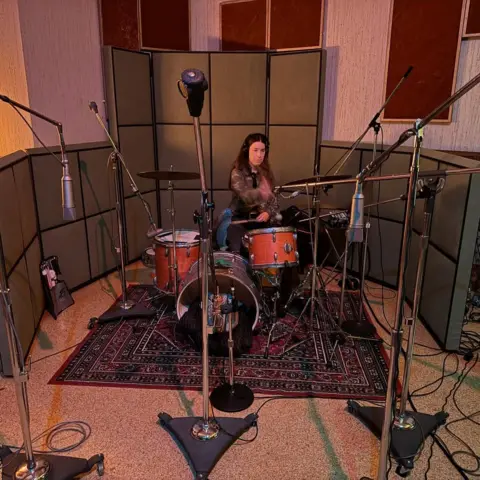
For Danielle, who co-produced the album with Rostam Batmanglij, formerly of Vampire Weekend, that started with the drums.
She plays an acoustic kit on every track, often layering multiple takes, recorded in different studios to capture specific tones. On Everybody's Trying To Figure Me Out, she even tuned her snare drum to match the "iconic" thwack of U2's Sunday Bloody Sunday.
"Drums are such a nuanced like thing, and I care so much about it, so much," she says, as if that wasn't abundantly clear already.
"'Journey of the drum sound' will be the name of our memoir," laughs Alana.
"I've said it a million times, our albums don't start until we find the perfect drum sound, and then we can continue on the journey of writing the songs."
Haim / Rostam
I Quit refines Haim's signature sound, blending acoustic rock with hip-hop adjacent beats and hooky pop melodies. Danielle says drums are the foundation of every song
The evolution of Haim's sound also helped them grasp songs that had slipped through their fingers over the last decade.
I Quit's first single Relationships is a glossy pop earworm that first came to Danielle on a flight home from Haim's 2017 Australian tour.
In the intervening years, it went through "hundreds" of re-writes, changing lyrics and tempos, before finally "coming to life" at Batmanglij's home studio.
By contrast, Take Me Back was made up on the spot, as the band shared raucous stories from their high school days - of boys who couldn't perform in bed and friends who lost control of their bowels "in the back of a truck".
"That one fell into place so quickly," says Alana. "We didn't even know if it was going to go on the album.
"It was just us riffing from the heart and being like, 'This is the kind of song that we want to make today', with no pressure. We were laughing through the whole experience.
"At the end of it, we were like, 'This is hilarious, we've got to put it on the album'."
That candour inspired the album's promotional campaign, where the sisters shared some of their dating horror stories.
One man broke up with Este when she told him their future children might have Type 1 Diabetes. He was like, 'Then why are we here?'" she recalls.
Alana shared the story of travelling to London to spend New Year's Eve with a musician she thought she was dating, only for him to high five her at midnight.
On tour, fans shared their own disaster stories on Haim's video screens.
Among them was a girl in Philadelphia who discovered her boyfriend's private safe contained neither money nor passports, but a shrine to his ex... And his mum.
"When you're going through these heartbreaks, you just feel like there's no light," says Alana.
'So to be able to laugh at those stories and share them with other people, and then have them tell you even crazier stories, it's so amazing.
"We can laugh at all these things, and it's not going to keep us from trying to find love in the future."
Jono White
The band recently wrapped up a six-month tour, but say they hope to hit the road again in 2026
It's not difficult to sense a shift in the band. The first time we met in 2012, they were still wet behind the ears, and giddy from making their debut at London's O2 Arena.
As the support act for Florence + The Machine, the sisters were overwhelmed at the realisation they'd just played the same stage as The Rolling Stones.
"I've been crawling on the floor, trying to soak it all up," said Alana. "I think I have a little Mick Jagger in me."
These days, Haim are more confident of their place in the rock pantheon.
They're festival headliners, with two number one albums and an international fan base.
Not only that, but they have successful side hustles in acting (Alana has just been "shot in the head by Sean Penn" in One Battle After Another) and soundtrack work (Este's credits include The White Lotus and Loot).
But Haim will always be their number one priority.
"Me and my siblings have been playing music since I was four years old," says Alana.
"It's like there's nothing else that we were supposed to do. And I'm really grateful we've gotten here and we're still kicking."
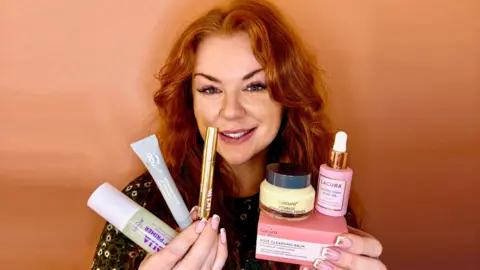
Rachel says with some of the dupes she "can't tell the difference"
When Rachael Parnell heard Aldi was selling a new skincare range that looked similar to products from luxury brand Augustinus Bader, she was "super excited".
She rushed to her nearest store to pick up the Lacura face cream for £8.49 for 50ml - a fraction of the £240 price tag of the Augustinus Bader 50ml product.
The sleek blue tube and gold lid of both products look remarkably similar. And though Rachael has never tried the high-end cream, she says she's impressed by the product so far.
The BBC reached out to Aldi about the likeness of the product packaging - but they have not provided a comment.
Rachael has been buying skincare dupes from high street stores and supermarkets for years, and she's not alone.
More than a quarter of UK shoppers say they've bought a skincare or makeup dupe. This rises to 44% among 18-34 year olds, according to a survey by Barclays in February.
Dupes are skincare products that mimic bigger name brands and provide budget-friendly alternatives to high-end products. They often have similar names and packaging, but in some cases the ingredients can vary significantly.
Victoria Woollaston
Luxury vs budget: Augustinus Bader's 50ml face cream costs £240, while Aldi's new Lacura face cream is £8.49
Rachael, 34, from Warwickshire, says she's attracted by the low prices of budget alternatives and often finds the quality good.
When asked about two cleansing balms she has bought - one from a high-end brand and the other a low-priced equivalent - she says: "It's the same to me, I can't tell the difference."
'Expensive isn't necessarily better'
Skincare experts say some alternatives to high-end brands are good quality and help make skincare more affordable.
"I don't think more expensive is necessarily better," says consultant dermatologist Sharon Belmo. "Not every low-budget skincare brand is bad - and not every luxury skincare product is the best."
"Some [dupes] are absolutely amazing," says Scott McGlynn, who hosts a podcast in which he asks celebrities about their skin routines.
Many of the products inspired by luxury brands "sell out so fast, it's just insane," he says.
Scott McGlynn
Skincare expert Scott McGlynn says some budget products he has used are "amazing"
Aesthetic and dermatology doctor Ross Perry thinks dupes are fine to use for "basic skincare" like moisturisers and cleansers.
"Dupes will serve a purpose," he says. "They will do the basics to a reasonable level."
Ketaki Bhate, a consultant dermatologist, thinks you can save money when you're looking for single-ingredient products like hyaluronic acid, niacinamide and squalane.
"If you're buying a single-ingredient product then you're probably going to be okay in using a dupe or something which is quite low cost because there's very little that can go wrong," she says.
'Don't be sold by the packaging'
But the professionals also suggest consumers do their research and say that more expensive products are sometimes worth the extra money.
With luxury skincare, you're not just paying for the brand and marketing - sometimes the higher price tag also comes from the ingredients and their quality, the concentration of the active ingredient, the technology used to develop the product, and studies into the products' effectiveness, Dr Belmo says.
Facialist Rhian Truman says it's worth thinking about how some dupes can be sold so cheaply.
In some cases, she says they could contain filler ingredients that don't have as many benefits for the skin, or the ingredients might not be as well sourced.
"The big question mark is 'How is it so cheap?'" she says.
Podcast host Scott says in some cases he's bought skincare items that look similar to a big-name brand but the product itself has "no resemblance to the original".
"Don't be sold by the packaging," he added.
SimpleImages/Getty Images
Dr Bhate recommends sticking to more specialised brands for products with ingredients like retinol or vitamin C
For more complicated products or ones with ingredients that can irritate the skin if they're not formulated correctly, such as retinols or vitamin C, Dr Bhate recommends sticking to more specialised brands.
She says these will likely have been through expensive trials to evaluate how effective they are.
Skincare products need to be tested before they can be sold in the UK, says consultant dermatologist Emma Wedgeworth.
If the brand makes claims about the effectiveness of the product, it needs data to back it up, "but the seller doesn't necessarily have to do the testing" and can instead reference testing done by other brands, she says.
Check the back of the pack
Are there any ingredients that could indicate a product is low-quality?
Ingredients on the back of the bottle are ordered by quantity. "The baddies that you want to look out for… is your mineral oil, your sodium lauryl sulfate, parfum, benzel peroxide" being high up on the ingredients list, Miss Truman says.
The BBC sent ingredients lists of two BHA 2% salicylic acid toners with similar packaging to Dr Bhate. One is typically sold for six times the price of the other.
Dr Bhate says the the list of active ingredients in both products "looks pretty similar, no red flags," but she notes the products have different formulations with solvents and humectants, which break down ingredients and hydrate the skin respectively.
"This will likely lead to varying performance between the two products," she says.
Dr Bhate also looked at the ingredients lists for two serums with similar branding, one from a luxury skincare brand and one from a supermarket.
She says that though they have "lookalike packaging", the budget product "doesn't appear very similar in terms of ingredients" and the higher-end formula "seems more complex with barrier lipids and more marine extracts".
But for many people, trying to analyse the ingredients list on a bottle of moisturiser, cleanser or serum can be overwhelming.
"Sometimes it feels like looking at the back of a skincare product ingredient list is like having a chemistry lesson," says Riya Asher, a pharmacist and aesthetic practitioner.
She recommends focusing on how high up the active ingredient - the one that triggers the effect, like retinol or vitamin C - is in the ingredients list. And if you're not sure which is the active ingredient, she recommends doing your research online.
And Dr Belmo says you should focus on your skincare concerns when scanning the back of bottles, such as avoiding oils for acne-prone skin or staying fragrance-free for sensitive skin.
Victoria Woollaston
Victoria Woollaston reviews skincare products for her website, including by high-end and supermarket brands
Victoria Woollaston posts reviews of skincare products on her website, Mamabella.
She's tried both an Augustinus Bader serum and the new product sold by Aldi, and tells the BBC the supermarket serum felt thinner, but that because Augustinus Bader's is stronger it could cause irritation for some people.
Victoria feels like there's a "perfect storm" for skincare dupes to become popular, as the cost of living crisis pushes shoppers to seek value for money and people have become more interested in the ingredients in their skincare products.
She says these companies aren't stealing customers from luxury beauty brands - in her opinion, many of the people who buy budget alternatives would never have been able to afford the high-end products in the first place.
"What my years of tests show," says Victoria, "is that value and efficacy can 100% coexist."
"Starmer rocked by new Andy Burnham coup plot" is the Mail on Sunday's top story, detailing the Manchester Labour mayor's apparent "deal" to become an MP. Citing unnamed sources, the paper claims Burnham is close to striking "a deal to fight a by-election to return to the Commons and mount a leadership challenge" against Prime Minister Sir Keir Starmer.
Relatives of Virginia Giuffre proclaim "justice has not been served" after the Metropolitan Police dropped an investigation into Andrew Mountbatten-Windsor, the Sun reports. The former prince was accused of asking his personal police officer to dig up information about Giuffre. Andrew has consistently denied all allegations against him.
Health Secretary Wes Streeting warns "Britain facing tsuanmi of flu", writes the Sunday People in its top story. Hospital admissions are up 50% "with the worst to come", the paper writes, quoting Streeting.
Hospital paediatric units are full due to a "spike in flu cases" across the UK, the Independent reports, leading to "children's operations being cancelled", including cardiac procedures. Overcrowded wards are "increasing the risk of medical emergencies", the paper writes.
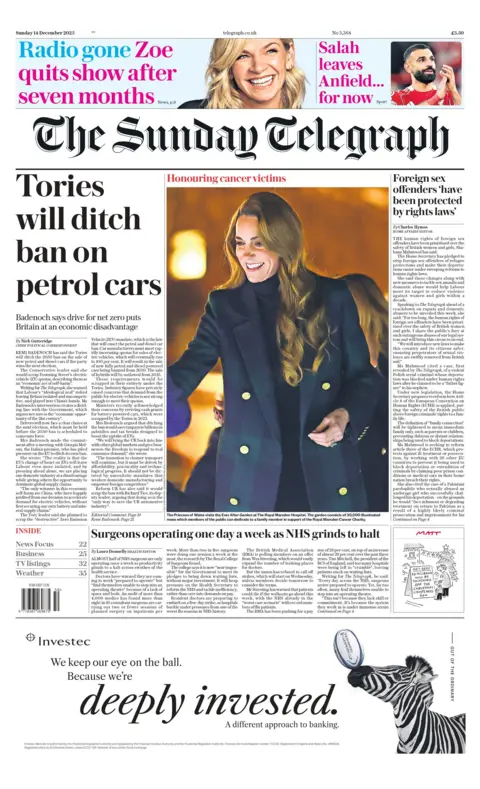
Conservative leader Kemi Badenoch will "ditch the 2030 ban on the sale of new petrol and diesel cars" if she defeats Labour at the next election, the Sunday Telegraph says. Writing for the paper, Badenoch calls the government's electric vehicles quota an "economic act of self-harm", as she vows to unwind the commitment. The paper says Downing Street has insisted it will press ahead with the ban.
The Sunday Express leads with its investigation into an alleged government scheme for "failed asylum seekers and foreign criminals to leave voluntarily". According to the paper, "illegal migrants are getting help setting up businesses and are being handed accommodation, food, and travel assistance" on returning to their "home country". A Home Office spokesperson says the claims are "untrue", telling the paper: "This scheme ensures migrants return to their home country, settle and don't re-enter the UK for a fraction of the price."
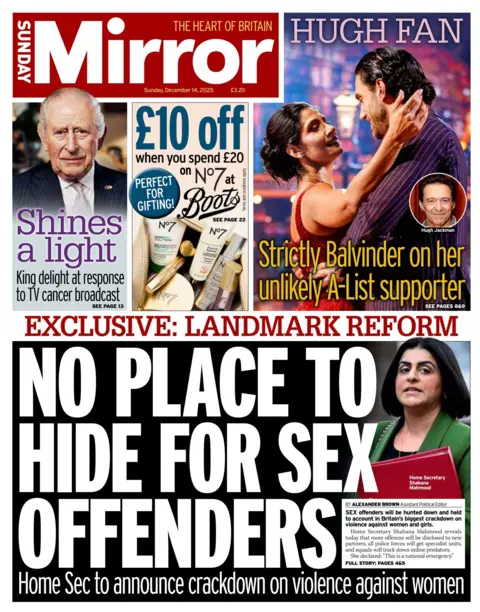
"Home Sec to announce crackdown on violence against women", writes the Sunday Mirror in its top story, declaring it a "national emergency". The paper says offences "will be disclosed to new partners, all police forces will get specialist units, and squads will track down online predators".
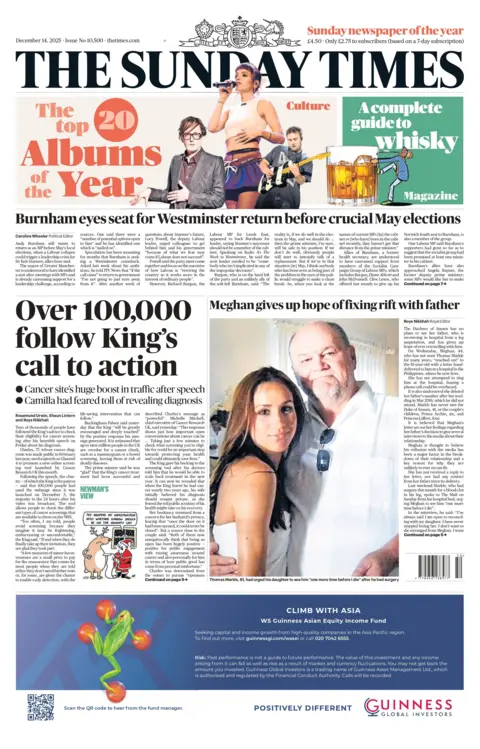
"Tens of thousands of people have followed the King's advice to check their eligibility for cancer screening", writes the Sunday Times on its front page. It follows, in the paper's words, King Charles's "heartfelt speech on Friday about his diagnosis".
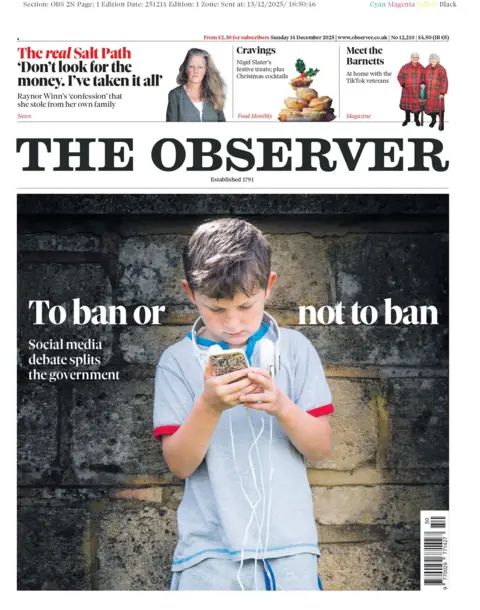
The Observer depicts the government's social media debate on its front page as a Shakespearean dilemma: "to ban or not to ban". Australia became the first country to impose a 16-year-old age limit on social media earlier this week and the UK government is now "split" over whether to pursue a similar measure.
"TV star Jeremy Clarkson reckons he has picked up a swathe of female admirers since he started hosting Who Wants To Be A Millionaire" according to the Daily Star. The paper calls it the "unlikeliest showbiz exclusive of the year".
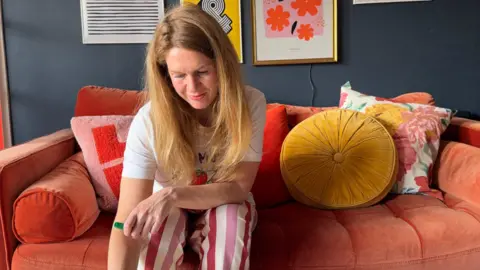
Rachel Verney started renovating her home with colour during the pandemic in 2020
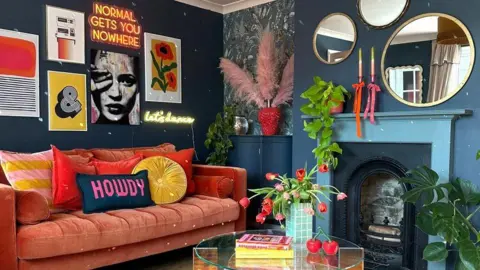
While some get a boost of happiness by exercising and getting enough sleep, others are turning to interior design with bold paint and eye-catching patterns.
It is a craze known as "dopamine decor", which has more than 70,000 posts on TikTok, and involves adding bright, quirky items to your home for a happiness boost.
Rachel Verney shares decor inspiration videos of her colourful Surrey home to more than 800,000 followers on social media and she saw her popularity boom when she bought a bright orange sofa.
Known as The Shoestring Home, millions watch her renovation videos as she aims to make "aesthetic accessible" and help people create colourful spaces on a budget.
"It's my happy place when I work on a project," she said. "Sometimes I feel like an imposter as I'm not qualified to do the job."
On Facebook, she has experienced "division" over her interiors as some find the designs too bold.
But while she might not have a degree in interior design, her ideas have been a hit with younger viewers and she has made content creation her full-time job over the past year.
"Everything is so gloomy and the world is a bit of a scary place at the moment - houses want to be joyful," she said.
Rachel Verney
Patterned bedding and framed graphics can boost the colour in bedrooms
Psychologist Dr Natasha Sharma said vivid colours produced small dopamine hits, which, in uncertain times, provided a sense of optimism and reward.
She said dopamine decor allowed people to "externalise" their identity and boost their mood, giving a "heightened sense of wellbeing".
Dr Sharma, from Wolverhampton, added that a home dominated by grey or neutral tones could result in "feelings of emotional flatness".
Alice Cullinane/BBC
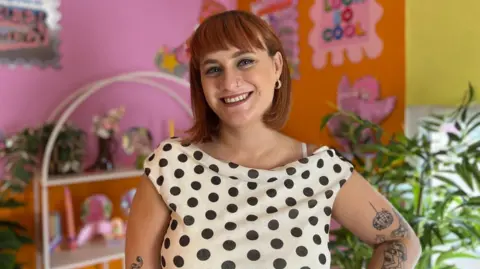
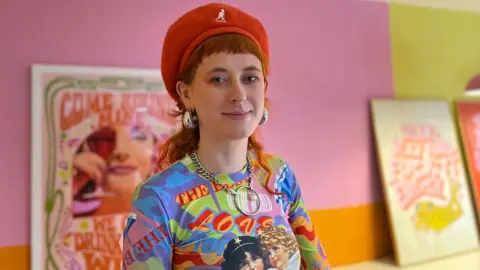
Nicola Brighton sells bold mirrors and wall prints to decor lovers
Nicola Brighton is among those making a living from the trend, creating kitsch prints and neon mirrors in unique shapes which are stocked in stores across the UK and US.
Since 2022, her business Printed Weird, which is based in Birmingham, has grown 62% and her designs frequently sell out as customers look for nostalgia to add to their homes.
"When you come home from work and you've had a rubbish day, you can just look at things that bring you joy and happiness," Nicola said.
She started her business from her mum's spare bedroom seven years ago, fuelled by a love for colourful decor and a mission to put affordable items on the market.
"Through what you love, why not put that silliness on your wall? It's an extension of your personality and will bring you joy," she said.
Rachel Verney
Brightly coloured rooms are believed to activate "neural pathways" linked to reward and vitality
But while Google searches for dopamine decor have risen more than 110% in the past year, estate agents warned the trend could put off potential buyers.
Paul Fox Estate Agents, based in Lincolnshire, recommended a neutral colour scheme over bold hues, adding "timeless" shades helped sell homes quickly.
"First impressions are everything, so by ensuring that the home is painted in popular colours you are likely to attract buyers," the agent said.
Alice Cullinane/BBC
Jodie Edmonds moved into her first house in July and has filled it with bright colours
Despite the agent's advice, new homeowners like Jodie Edmonds have decided to add personality to their walls.
"I'm not bothered when it comes to reselling, people have different tastes and can change the decor," she said.
For Jodie, a colourful scheme is a way to express herself and make guests feel happier.
"A grey house would make me feel low, a bright house makes me feel motivated and inspired," she said.
How to add dopamine decor to your home without breaking the bank
Rachel Verney recommends you introduce colours you love into your decor by starting with items like cushions and rugs, and not being afraid to mix colours and patterns
Simple touches to practical items go a long way - vinyl wrap your fridge in an exciting pattern, paint your appliances and radiators any colour of the rainbow or add a fun printed shower curtain and quirky bathmat to a boring bathroom
Get crafty to create affordable dupes of your favourite brands, like adding bows to cushion covers or updating candlesticks
Shop second hand and upcycle pieces from charity shops and Facebook Marketplace to save money and items from landfill
Add plants to shelves, mantlepieces and uninspired corners to boost your mood. If your fingers are not green, consider botanical prints on wallpapers, rugs or bedding to bring warmth and tranquillity to your home
Mahad Mohamud was deported from the US five weeks ago
Mahad Mohamud is slowly readjusting to the heat, chaos and tension of Somalia's capital, Mogadishu, after being deported from the US city of Minneapolis last month just as winter was closing in there.
Somalis know the 36-year-old as Garyaqaan - a word that can be translated as "judge".
This is the name he uses on TikTok, where he attracted almost half a million followers while he was abroad. Fans praised Mahad for his defence of his clan's interests - part of Somalia's lucrative TikTok roasting sub-culture.
But to those running the White House-linked "Rapid Response 47"X account, Mahad was a "criminal illegal scumbag". In an October post it accused him of being "involved in the kidnapping of French officials" from a hotel in the Somali capital.
Mahad has denied the allegation, saying that he was not in Mogadishu at the time. He was never convicted and the case was dropped.
He says his detention by the US Immigration and Customs Enforcement (ICE) agency was triggered after a rival TikToker leaked his address.
"ICE told me they had two cases against me - one was entering the country illegally and the kidnapping of a French official."
Mahad said the kidnapping case was handled by the FBI and after questioning, they cleared him.
But that didn't save him from being deported.
His journey from Somalia to the US started more than a decade ago and first took him to South Africa, where he lived until 2021. But he says he was assaulted by armed men in a xenophobic attack.
He then went to Brazil and made his way north, eventually crossing into the US, without documentation, through the Mexican border.
"When I jumped the fence from Mexico, I was arrested and detained for a month," Mahad says.
"I was later released with a work permit because my asylum case was active."
Andaou via Getty Images
ICE agents, challenged by protesters, have been seen on the streets of Minneapolis, which has a large Somali community
He then made his way to Minneapolis. "I used to work as an Uber driver. I was happy to finally be in the land of dreams. I hoped they would accept me."
His TikTok career also took off which gave him a steady income as fans sent him gifts as they watched his live streams. It also led to a threat on his life from the Somalia-based Islamist militant group al-Shabab because of his defence of the government.
Part of his asylum case in the US was based on that threat.
Mahad describes in vivid detail the early May morning when immigration agents arrested him this year.
Shortly after he had eaten breakfast, he went to his car thinking he was about to begin another day of Uber driving.
"Boom, they came for me," he says.
According to Mahad, he was taken on a 30-minute drive to the ICE headquarters serving Minneapolis and its twin city of St Paul, before being transferred on a six-hour journey to Kandiyohi County Jail Prison in Willmar, Minnesota, where he says he spent six months in detention.
He tells the BBC that three of those months were spent waiting for a decision on his asylum case, and the remaining three awaiting deportation. The authorities denied his asylum claim as they rejected the idea that he would be in danger in Somalia.
Mahad says there were brief periods when he was transferred to Arizona, from where deportation fights leave, but he was told on each occasion that logistical arrangements were not ready.
On one of these trips, he was part of a group of 39 detainees, including nationals of Kenya, Ethiopia and Eritrea, in a holding area for people waiting to board deportation flights.
Finally, when it came to his own departure, Mahad says he was put in a tight restraining jacket and travelled on a small plane with seven other deportees and some guards.
The journey first took them to Costa Rica, in Central America, then to Senegal in West Africa, before flying to Kenya's capital, Nairobi. There Mahad says the restraining jacket was removed and he was handcuffed and put on another plane to Mogadishu.
Having spent three months waiting to be deported, Mahad had already resigned himself to his fate and was not particularly emotional on his return.
After a decade apart, he has finally been reunited with his three children. "I wouldn't trade this moment for anything now... I haven't seen them for 10 years," Mahad says.
But he would still prefer to be in the US because he fears for his life after receiving text messages from al-Shabab, containing death threats.
He takes extra security precautions when he's out and lives in a well protected home but did not want to go into further details, or share the contents of the threats, for safety reasons.
Getty Images
Some Minneapolis residents have been protesting against deportations
On his return, Mahad was welcomed by many people from his clan, including local politicians, because of his TikTok profile. He understands that because of his social media presence he may get opportunities not available to other Somalis deported - or threatened with deportation - from the US.
Last month, President Donald Trump said he would end the temporary protection status that is supposed to prevent people from being deported while their home country is unsafe.
Earlier this month, he upped the ante, saying that he does not want Somali immigrants in the US, telling reporters they should "go back to where they came from" and "their country is no good for a reason".
Somalia has not had a central government in control of the whole country since the toppling of President Siad Barre in 1991. People have had to endure years of near anarchy and insecurity - and even now, despite a government being in place in Mogadishu, Islamist militants still dominate much of the country and occasionally stage attacks in the capital.
Watch: Trump says he 'doesn't want' Somali migrants in US
Trump's comments came after he was questioned about large-scale fraud in the state of Minnesota's social assistance programme.
Dozens of people have been charged over a scheme that federal prosecutors say involved a charity fraudulently billing the state's government for meals for children during the Covid-19 pandemic.
A number of Somali immigrants were implicated in that alleged scheme.
In the wake of the president's remarks about Somalis, videos have circulated on social media appearing to show immigration agents knocking on doors across Minneapolis, which includes an area known as Little Mogadishu, and St Paul.
For many in the city's Somali community, the largest in the US and numbering around 80,000, the posts have triggered alarm.
The BBC also spoke to five young Somali men who now spend their days confined to a friend's small house, moving carefully through rooms that are not their own. They left their rented apartment abruptly last week not because they wanted to, but because the lease was under their names.
As people who had been given temporary protected status, they feared it was only a matter of time before ICE traced the address and came for them. They grabbed what they could carry and slipped away in the night, hoping the change of location would offer some protection.
Now, their lives are suspended. Work shifts are missed. Meals are skipped or stretched. One of the men described how quickly everything has collapsed: "We're running out of food. We haven't reported to work for the past five days because we're scared that ICE might be waiting for us. I don't know what will happen to us."
Mahad is far from being alone in being deported to Somalia in recent months, although there are no official figures.
The BBC also spoke to another young Somali man, who asked to remain anonymous. He said he was struggling to rebuild his life back in Mogadishu.
From rural Somalia, he was desperate to leave as a prolonged drought had destroyed his livelihood. He illegally crossed into the US through the Mexican border after travelling north from Brazil but was detained shortly after. He spent 18 months in custody before being returned to Somalia.
Speaking on the phone, he describes feeling uncertain about his future.
"They sent me back to start from zero," he says. "Everything I worked for just disappeared."
He says he spent around $20,000 (£15,000) to reach the US, including money he had borrowed from friends and family.
Since returning home, he has had no money and says there are no opportunities in Somalia.
"I don't see a future here," he says. "There is nothing going on… no employment."
He is now considering migrating once more.
"I don't want to start life again. I just want to migrate to any country now."
Specialist rape and sexual offence investigation teams will be introduced to every police force in England and Wales by 2029, the government has pledged.
It is part of a long-delayed plan aimed at halving violence against women and girls within a decade.
The strategy - which will include funding for undercover units operating online, and a roll out of domestic abuse protection orders - is due to be unveiled on Thursday, after being pushed back three times this year.
Home Secretary Shabana Mahmood said the measures will help to "bear down on abusers, stopping them in their tracks. Rapists, sex offenders and abusers will have nowhere to hide."
The government says the new teams will have officers with specialist investigation skills for working on rape and sexual offence cases.
More than 50% of police forces already have these teams in place, but the government says every force will have dedicated officers by 2029.
It says staff will have the right training to understand the mindset of abusers and victims.
Announcing the move, the home secretary said: "This government has declared violence against women and girls a national emergency.
"For too long, these crimes have been considered a fact of life. That's not good enough. We will halve it in a decade."
Also announced is a roll out of domestic abuse protection orders, which have been trialled over the last year, across England and Wales.
They can ban individuals from contacting a victim, visiting their home or posting harmful content online, and can also be used in cases involving coercive or controlling behaviour. Breaching an order is a criminal offence.
There will also be almost £2m in investment for special undercover units of police officers operating online - to target those harassing women and girls on the internet.
It said sexually-motivated crimes against women in public remained widespread, criticised the limited nature of data on them, and called for urgent action to prevent predators from offending.
The publishing of the government's strategy has been long delayed. It was initially expected to be announced in the spring.
In Labour's general election manifesto last year the party pledged to use "every government tool available to target perpetrators and address the root causes of abuse and violence".

 Login
Login