 Login
LoginI.M.F. Prods China, Gently, on Its Weak Currency
Caught between Beijing and the Trump administration, the International Monetary Fund offered mild criticism of China for relying too heavily on exports.

Australia's world-first social media ban for children has taken effect, with throngs of teenagers waking up to find their accounts have gone dark.
Others tell BBC they have already snuck past barriers and will continue scrolling and posting freely until they are caught.
The new law means social media firms - including Meta, TikTok and YouTube - must take "reasonable steps" to ensure Australians aged under 16 don't hold accounts on their platforms.
The ban, eyed with excitement by global leaders and trepidation by tech companies, was justified as necessary to protect children from harmful content and algorithms - though critics have argued blanket prohibition is neither practical nor wise.
This landmark policy has been one of Prime Minister Anthony Albanese's pet projects, and speaking to media on Wednesday he said he believed it has the power to change lives around the world.
"This is a day in which my pride to be prime minister of Australia has never been greater," he said, flanked by parents and media figures who had pushed for the ban.
"This is Australia showing enough is enough."
"I think it will go [down] with the other great reforms that Australia has led the world on."
Various governments, from the US state of Florida to the European Union, have been experimenting with limiting children's use of social media. But, along with a higher age limit of 16, Australia is the first jurisdiction to deny an exemption for parental approval in a policy like this - making its laws the world's strictest.
Countries like Denmark, Malaysia, Singapore, Greece and Brazil are among those who have said they're looking at Australia as a test case.
The Australian government has named 10 social media platforms as a start, including all of the most popular ones, but has also warned others it's coming for them next.
Online safety regulator, Julie Inman Grant, said her agency will start checking compliance from Thursday. Parents and children won't be liable under this law, only social media firms, which face fines of up to A$49.5m ($33m, £24.5m) for serious breaches.
"Tomorrow, I will issue information notices to the 10 major platforms and we will provide information to the public before Christmas on how these age restrictions are being implemented and whether, preliminarily, we see them working," she said.
There is broad agreement in Australia that social media companies are failing to shield users, particularly children, from harm on their platforms.
Tasmanian student Florence Brodribb - known as Flossie - told the press she believed the ban would help kids like her grow up "healthier, safer, kinder, and more connected".
"Our brains are going through one of the biggest rewiring periods of our lives... Social media is designed to take advantage of that," the 12-year-old said.
"Young people deserve better than that."

 BBC/Simon Atkinson
Polling shows the ban is wildly popular with parents, who hope it will also help reduce cyber bullying and child exploitation. But it is far less popular with children.
Backed by some mental health advocates, many have argued it robs young people of connection - particularly those from LGBTQ+, neurodivergent or rural communities - and will leave them less equipped to tackle the realities of life on the web.
"My closest friend would be 30km (18.6 miles) away from me... and my next closest friend is probably over 100km," 15-year-old Breanna told the BBC.
"When our Snapchat is taken away, so is our communication."
Experts are also worried kids are going to circumvent the ban with relative ease - either by tricking the technology that's performing the age checks, or by finding other, potentially less safe, places on the net to gather.
Many critics have been advocating instead for better education and more moderation, with Sydney father-of-two Ian among them.
"There's a good idea behind [the policy], but is it the right way to go about it? I'm not sure," he told the BBC.
Tech firms, which are desperate to stop other countries from implementing similar bans, have argued the government is overreaching, and pointed to recently strengthened parental controls on many of their platforms as a solution.
While the government has insisted the social media companies have the money and the technology to make this ban happen, it has also sought to manage expectations.
"I've been asked... what will success look like? Success is the fact that it's happening. Success is the fact that we're having this discussion," Albanese said on Wednesday.
"We do acknowledge it won't be perfect and we'll work through it."
Ms Inman Grant said Australia is playing the long game, and while stories of kids getting round the ban will make headlines, regulators will not be deterred.
"The world will follow, like nations once followed our lead on plane tobacco packaging, gun reform, water, and sun safety," she said.
 BBC
BBCThe leader of France's far-right National Rally (RN) Jordan Bardella has welcomed "for the most part" concerns raised about Europe in US President Donald Trump's new National Security Strategy.
Last week, the White House published a document which outlined Trump's vision of the world and the state of the European continent, which many have characterised as harshly critical of Europe.
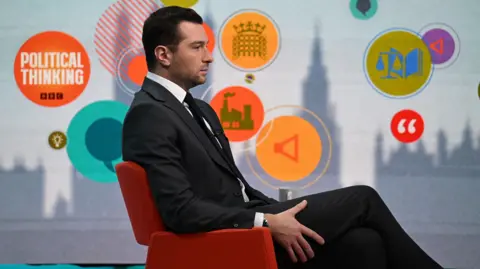
Speaking to the BBC's Nick Robinson for his Political Thinking podcast, Bardella praised what he said was Trump's "appeal to American pride" - but he made clear he did not want Europe to be "subservient to any major power".
He said there was a "wind of freedom, of national pride blowing all over Western democracies".
In a wide-ranging interview, the 30-year-old, who opinion polls suggest leads in the race to be France's next president, was also challenged on the RN's political history and his stance on immigration.
Bardella said he shared the majority of the concerns outlined by the Trump administration about Europe facing "civilisational erasure", which the White House said is being fuelled by a range of policies, including on migration.
"Mass immigration and the laxity of our governments in the last 30 years with regards to migration policy are shaking the balance of European countries, of Western societies, and namely French society," Bardella said.
Snap parliamentary elections in June 2024 made the RN the largest single force in parliament, although an alliance of left-wing parties clinched victory.
The next French presidential election is due to be held in 2027. A recent poll for Le Figaro suggests Bardella would win with 44% of the vote - just ahead of Marine Le Pen, the RN figurehead whose candidacy is in doubt after she was found guilty of embezzling EU funds and barred from standing in an election for five years.
An appeal due early next year will determine whether Le Pen can run - otherwise, the expectation is that Bardella will step in.
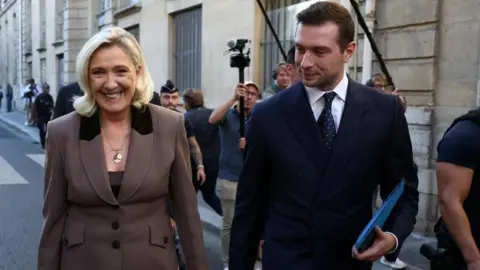
Bardella batted away suggestions this was sparking tensions between them, stating they were united by "trust and friendship".
"I will fight by her side so she can win the appeal. Until the appeal we will campaign together, as we will after, hand-in-hand," he said in his interview.
The RN was founded by Le Pen's father Jean-Marie in 1972. Known then as the National Front (FN), it has since become a decisive force in French politics. Jean-Marie Le Pen was convicted several times for Holocaust denial and was an unrepentant extremist on race.
In his interview with Nick Robinson, Bardella distanced himself from Jean-Marie Le Pen's comments, as have many other RN politicians in recent years.
 Reuters
"I am fighting against the caricature of my political movement, of my ideas," he said, adding his responsibility was to bring together the French people and present the country with "a project of national recovery".
"My people's expectations for a break with the past are numerous," Bardella added.
Challenged on the racist and antisemitic history of the RN's precursor, Bardella rejected accusations that the National Front had ever put forward arguments that could "offend" some sections of the population
"A lot of Jewish people vote for us and consider us a bulwark against extremism," he said.
The RN is primarily known as an anti-immigration party and has long pushed for France to have stricter immigration rules, including limiting social spending to French citizens.
"If tomorrow I am the head of government, France will no longer be the target of mass immigration," he said, adding that if elected his first provision would be to trigger a referendum on immigration. "It will allow us to take back control of our borders."
However, according to the French constitution, a referendum can only be held on certain subjects which do not include immigration, so the constitution would have to be amended first. In order to do so, the RN would have to clinch the presidency and have either an absolute majority in Parliament or enough allies.
Bardella - who grew up in the Paris region but himself has parents of immigrant origin - drew a clear distinction between people who he said were born in France but "reject republican institutions like the police or values like secularism", and others who "do everything to become French - espouse the language, culture and national patrimony".
When pressed on what it means to be French if being born in the country is not sufficient, Bardella said he felt being French was an "honour" that transcended bureaucracy.
"Being French is adhering to some values and lifestyles, believing in equality between men and women," he argued.
"I defend secularism and I feel that Islamism has today become a separate political project... which wants to impose its rules on French society," Bardella added, before promising to close down radical mosques and banning "hate preachers" from the country if elected.
Although he did not expand on France's frequent and longstanding financial woes - the country's debt is more than €3 trillion, or around 114% of Gross Domestic Product (GDP) - Bardella said the French economy was "sick".
"We face two ailments – excessive taxation and excessive regulation," he said, promising to free the country from the "shackles" that limit growth. The RN has repeatedly voted down the yearly budgets put forward by governments since last year, and has promised to similarly vote down this year's.
Bardella's position on Ukraine also bears some differences with that of the current centrist government. While he stated Russia represented a "multidimensional threat to French and European interests", and that Kyiv will need security guarantees even in the event of a peace deal, he also said that he was "firmly opposed" to sending soldiers to Ukraine.
Emmanuel Macron's government, on the other hand, has proposed deploying a steady military presence, albeit far from the front line.
But such a decision "would contribute to an escalation," Bardella said, "especially given that we have nuclear weapons and that President Putin has intentions whose limits are unclear".
If Bardella does stand at the next presidential election and wins, he will be 31.
Macron was 39 when he became France's youngest ever president in 2017. While Macron was finance minister for two years under François Hollande, Bardella, in comparison, has never been in government.
"It's true I am 30 years old. Unfortunately I can't do anything about that," he argued.
"I recognise the existential questions facing our country... And I'd rather be told that today is 'too soon' rather than tomorrow is 'too late'."
 AFP via Getty Images
Sporadic gunfire and explosions have been reported as M23 rebels advance towards a key city in eastern Democratic Republic of Congo, in an offensive that has forced thousands to flee across the border into Burundi.
Residents and military sources said soldiers were fleeing the assault on Uvira, the last government-held city in the mineral-rich region.
US President Donald Trump brokered a peace deal last week between DR Congo's President Félix Tshisekedi and Rwanda's Paul Kagame to end the long-running conflict.
Shops and schools have closed, with terrified residents staying indoors amid fears that rebels had taken control of some government buildings.
But South Kivu Governor Jean-Jacques Purusi dismissed reports that the rebels were in the city as "completely unfounded rumours".
Residents told local media that the rebels were patrolling central Uvira under the cover of darkness on Tuesday night, while the city remained deserted early on Wednesday.
A local rights official told AP news agency that there was a "risk of a massacre" if the remaining soldiers mounted strong resistance.
"It's chaotic, nobody's in charge. Uvira is done for," a Burundian officer told AFP news agency.
"Three bombs have just exploded in the hills. It's every man for himself," a resident told AFP, while another added: "We are all under the beds in Uvira - that's the reality."
Military and security sources said the rebel fighters advanced from the north, near the Burundian border.
In an interview with UN-backed Radio Okapi, Purusi denied Uvira had fallen to the M23, saying the city remained under the control of government forces.
The US, European Union, and eight European nations have accused Rwanda of supporting the rebel offensive, and have called for an immediate halt to the fighting
In a joint statement, they voiced "profound concern" about the violence, and said it had a "destabilising potential for the whole region".
Rwanda has denied any involvement in the fighting, accusing DR Congo's government and its ally, Burundi, of violating a ceasefire.
UN experts say Rwanda's army is in "de facto control of M23 operations".
About 200,000 people have fled their homes in eastern DR Congo since the latest round of fighting started early this month, the UN says.
It said at least 74 people had been killed, mostly civilians, and 83 admitted to hospital with wounds.
A Burundian administrative source told AFP that he had recorded more than 8,000 daily arrivals over the past two days, and 30,000 arrivals in one week.
The latest offensive comes nearly a year after the M23 rebels seized control of Goma and Bukavu, the other two main cities in eastern DR Congo.
The M23 is not part of the US-brokered peace deal, and is in separate talks with DR Congo's government in mediation efforts led by Qatar.
In a national address on Monday, Tshisekedi accused Rwanda of "deliberate violations" of the peace accord.
"This is a proxy war aimed at challenging our sovereignty over a highly strategic area, rich in critical minerals and economic potential that is crucial to the future of our nation," Tshisekedi said.
For its part, Rwanda accused the armies of DR Congo and Burundi of bombing villages near its border, forcing more than 1,000 civilians to flee into its territory.
Eastern DR Congo has been wracked by conflict for more than 30 years, since the 1994 Rwandan genocide. Several peace deals going back to the 1990s have collapsed.
Numerous armed groups have competed with the central authorities for power and control of the potential fortune in this vast nation.
 Getty Images/BBC
Go to BBCAfrica.com for more news from the African continent.
Follow us on Twitter @BBCAfrica, on Facebook at BBC Africa or on Instagram at bbcafrica
President Donald Trump has told a campaign-style rally that consumer prices are falling "tremendously" as he sought to allay voter anxiety about the US cost of living.
In a speech at a casino in the battleground state of Pennsylvania, the president told supporters he had "no higher priority than making America affordable again".
But while gas and egg prices have fallen, other food is more expensive and Americans remain unhappy about the cost of housing, childcare and healthcare.
Democrats have capitalised on Trump's political vulnerability on the economy in recent off-cycle votes, leaving many Republicans uneasy about next year's midterms elections.
Tuesday's event in a swing district of Pennsylvania was the first of what the White House says will be a series of campaign-like rallies aimed at bringing its economic message to voters.
But at one point in his remarks, the Republican president again portrayed concerns about affordability as a Democratic "hoax".
In recent weeks, his administration has removed tariffs from dozens of food products and touted its rollback of fuel efficiency standards and Trump-branded retirement accounts for children as cost-of-living fixes.
In an excerpt from an interview with Politico released on Tuesday, Trump was asked what grade he would give the economy.
"A plus-plus-plus-plus-plus," he said.
In a sign the policy pivot might be cutting through, Trump's approval rating rose three points to 41% in a new Reuters/Ipsos poll.
 Charlie Neuenschwander
But many Americans remain downbeat on the economy.
Alaina Hunt, 37, who lost her job as a designer at a construction company in Oklahoma City, told the BBC her position was in part a casualty of Trump's tariffs on steel and aluminium.
The construction sector "really took a hard hit very early on", she said. Ms Hunt says she has applied for at least 75 jobs in web design and development since April, to no avail, amid a broader slowdown in hiring.
She says rising grocery bills - about $25 extra per week - have added to the strain.
"I was able to scrape by a lot easier in years before," said Ms Hunt, who voted for Kamala Harris. "I don't think that the federal government is listening at all."
Economic data paints a mixed picture.
US consumer confidence fell in November to its lowest level since the spring.
But the stock market continues to hover near record highs. And forecasters expect the economy to expand by 1.9% this year, slower than last year's 2.8% but still better than expected.
Some recent data also indicate the job market may be picking up, after a significant hiring slowdown earlier this year.
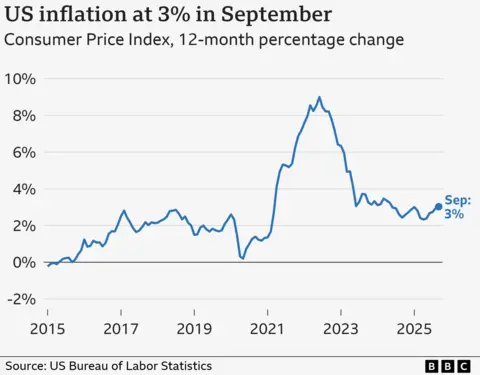
As of September, inflation stood at 3%, the same rate as in January when the president took office and stubbornly above the Federal Reserve's 2% target.
It is still way below a peak of 9.1% under former President Joe Biden when the US faced its worst inflation in four decades.
Overall prices have surged 25% over the last five years, generating widespread frustration, despite wage growth over that period.
 Beth Richardson
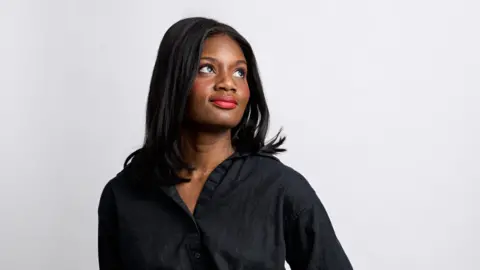
Beth Richardson, a 45-year-old from Kansas, said she had been floored by some of the prices at the grocery store near her, recalling a pack of Mentos gum she picked up recently that rang up to almost $5 with tax.
"I'm like, I'm just going to go die now because this cannot be," she said.
Ms Richardson was laid off from her job in sales support at a tech-related company in late 2023, after the firm shifted jobs overseas. She voted for Kamala Harris last year.
She said while she knew presidents were often blamed for economic forces over which they had little control, she felt in this case Trump and his policies, like tariffs, were "shooting ourselves in the foot".
On Tuesday night, Trump called tariffs his "favourite word", pointing to hundreds of billions of dollars of US revenue from import taxes.
The White House blames Biden and the Fed, arguing high interest rates are hurting the economy.
The US central bank has twice reduced rates to about 3.9% and may cut them again on Wednesday.
Many Trump supporters have said they still back the president, despite feeling the pinch themselves.
John Mohring, 60, of Kenosha, Wisconsin, has backed Trump since 2016, though rising prices worry him.
Mr Mohring, who works in construction and has lived alone since his wife died three years ago, said grocery prices started rising before Trump returned to the White House "and it doesn't seem like it's going down".
He now typically spends $100 on groceries just for himself, even when avoiding buying meat and sticking with cheaper items.
Still, Mr Mohring said he backed the Trump administration's sweeping tariffs on imported goods and his border policies.
"I'm giving him the benefit of the doubt," Mr Mohring added.
Brad Smith, a corn and soybean farmer in north-western Illinois, was hurt earlier this year when China, previously a major buyer of US soybeans, froze its purchases amid a trade war with Washington.
But the market, he said, had been gradually recovering since late October, when the two countries reached a trade agreement and China resumed some purchases.
Trump on Monday also announced a $12bn aid package for US farmers.
Mr Smith said he still believed in Trump's plans for the economy, despite being getting caught in the crossfire.
"There's probably bigger things at play other than just the soybean and corn market," Mr Smith said.
"The whole America First idea is good."

© Matthew Abbott for The New York Times

© Ng Han Guan/Associated Press

柬埔寨与泰国的边界战火蔓延,周三已有逾五十万人被迫撤离。在局势急速升温之际,美国总统特朗普表示将再次介入调停。同时,柬埔寨宣布退出正在泰国举行的东南亚运动会。
柬埔寨与泰国之间的百年边界争端本周再度爆发激烈冲突,造成大规模平民撤离。截至周三,两国共有超过五十万人逃离家园,涌入寺庙、学校以及临时避难所。
双方互指对方首先发动攻击。法新社引用官方数据称,最新一轮交火已造成至少11人死亡,其中包括泰国士兵和柬埔寨平民。战火从周二起扩散至两国的五个省份,边境地区炮声不断,坦克、战机与无人机持续投入战斗。
泰国国防部表示,基于对民众安全的考量,目前已有超过40万人被转移到安全地点。柬埔寨方面也确认,已有超过10万人在五个省份撤离。
许多从冲突区域逃出的民众表示,这次战斗远比今年七月的冲突更为激烈。据法新社报道,一名从柬埔寨乌斯玛克镇逃离的男子称,空投炸弹迫使他和家人连夜寻求庇护;当地寺庙成为许多家庭临时的避风港。
冲突加剧之际,柬埔寨宣布退出正在泰国举行的东南亚运动会,理由是运动员家属强烈要求他们立即返国。
与此同时,美国总统唐纳德·特朗普表示,他计划再次介入危机。他曾在七月协助两国达成一个脆弱的停火协议,并透露将在周三与相关各方通话,希望缓和紧张局势。

(德国之声中文网)据乌克兰国际文传电讯社周二(12月9日)报道,乌克兰总统泽连斯基表示,如果美国和欧洲能为选举提供安全保障,他已准备好在60到90天内举行大选。
泽连斯基对记者表示:“我个人有这样的意愿和准备。”他指出乌克兰选举法需进行修订,并已要求其所属政党的议员准备相关修正案。
乌克兰现行的戒严法禁止举行总统、国会和地方选举。尽管法律本身可以修改,但宪法规定国会选举须待戒严令解除后方能举行,且战时禁止修订宪法。
自2022年2月俄罗斯全面入侵以来,乌克兰一直未举行任何选举。泽连斯基的常规任期已于2024年5月届满,国会任期于2024年8月结束。地方选举原定于2025年10月下旬举行。
在戒严状态下无法举行选举的情况并非乌克兰独有,而是许多国家的标准做法。
特朗普:缺乏民主正当性
美国总统川普近期表态支持在战火肆虐的乌克兰举行选举。今年稍早,特朗普曾指责泽连斯基是“没有经过选举的独裁者”且缺乏民主正当性。
在周二发表的一篇《Politico》杂志的采访中,特朗普指责乌克兰政府以战争为借口避免举行选举。特朗普称:“他们说这是民主,但到某个时候,这就不再是民主了。”
泽连斯基驳斥了关于他紧抓权力的指控,称其“完全不恰当”。基辅当局强调,总统权力在戒严法下依然有效,并指出自1991年以来乌克兰历经六任总统更迭,同期俄罗斯仅有两任总统。
乌克兰国内亦担忧俄罗斯可能操纵选举结果,扶植亲克里姆林宫的傀儡政府。
另一项悬而未决的问题在于如何确保所有符合资格的乌克兰选民参与投票。联合国数据显示,逾580万乌克兰人已逃往国外,另有数百万人居住在俄罗斯占领区。
DW中文有Instagram!欢迎搜寻dw.chinese,看更多深入浅出的图文与影音报道。
© 2025年德国之声版权声明:本文所有内容受到著作权法保护,如无德国之声特别授权,不得擅自使用。任何不当行为都将导致追偿,并受到刑事追究。

© Laetitia Vancon for The New York Times

© Caroline Gutman for The New York Times

© Aleksey Kondratyev for The New York Times

© Sophie Park for The New York Times

© Kim Raff for The New York Times

© Kaiti Sullivan for The New York Times

© Go Nakamura/Reuters

© Eric Lee/The New York Times

© Tony Cenicola/The New York Times

© Ariel Fisher for The New York Times

© Eric Lee for The New York Times

© Kriston Jae Bethel for The New York Times

© Johnathon Kelso for The New York Times

© Juan Barreto/AFP via Getty Images
Americans are struggling with affordability pressures that are squeezing everything from their everyday necessities to their biggest-ticket expenses.
Nearly half of Americans said they find groceries, utility bills, health care, housing and transportation difficult to afford, according to The POLITICO Poll conducted last month by Public First. The results paint a grim portrait of spending constraints: More than a quarter, 27 percent, said they have skipped a medical check-up because of costs within the last two years, and 23 percent said they have skipped a prescription dose for the same reason.
The strain is also reshaping how Americans spend their free time. More than a third — 37 percent — said they could not afford to attend a professional sports event with their family or friends, and almost half — 46 percent — said they could not pay for a vacation that involves air travel.
While President Donald Trump gave himself an “A-plus-plus-plus-plus-plus” grade on the economy during an exclusive interview with POLITICO’s Dasha Burns, the poll results underscore that voters’ financial anxieties have become deeply intertwined with their politics, shaping how they evaluate the White House’s response to rising costs.
Trump insists that “prices are all coming down,” as he told Burns, but the results pose a challenge for Trump and the Republican Party ahead of the 2026 midterms, with even some of the president’s own voters showing signs that their patience with high costs is wearing thin.
POLITICO reporters covering a variety of beats have spent the past few weeks poring over the poll results. We asked some of them to unpack the data for us and tell us what stood out most. Here’s what they said:
The big observation: Trump has struggled to persuade even parts of his base to accept the idea that tariffs will pay off over time. A minority — 36 percent — of Trump voters said tariffs are hurting the economy now but will benefit the U.S. over time.
Even fewer said the strategy is already working: 22 percent of voters who cast their ballots for Trump in 2024 said tariffs are helping the U.S. economy both now and in the long term, according to the poll conducted in November.
What really stood out: Staunch supporters of the president were roughly twice as likely as other Republicans to believe tariffs are a net positive already, although large shares of both groups still said they view them as harmful. Even people who self-identify as MAGA Republicans were split on one of the president’s favorite tools: 27 percent of those MAGA voters said tariffs are boosting the economy both now and in the long term, while 21 percent of them said tariffs are damaging in both the short and long term.
What now? Tariffs represent more than an economic tool to the president, who argues the levies have helped him negotiate peace deals around the globe and nudged corporations to bring investment to American shores.
Trump has frequently urged Americans to be patient with his tariff strategy, much of which could be cut down by the Supreme Court in the coming months, but it remains a delicate political issue when a lot of voters may be more concerned about their everyday expenses rather than a broader global calculus.
– Ari Hawkins
The big observation: The tuition is too damn high. Only a quarter of Americans think college is worth the money, regardless of party, The POLITICO Poll found. Overall, 62 percent of Americans said college isn’t worth it because it either costs too much or doesn’t provide enough benefits — a belief supported most by 18- to 24-year-olds and those aged 65 and up.
The income gap between Americans with college degrees and those with high school degrees widened over the last two decades. And recent research from the U.S. Census Bureau found the median income of households headed by someone with a bachelor’s degree or higher last year was more than double the median income of those with householders with a high school degree but no college.
What really stood out: Despite that economic divide, more than half of people surveyed who graduated from college supported the idea that higher education is either too expensive or not sufficiently useful.
What now? Both former President Joe Biden and Trump have tried to respond to this frustration, pitching efforts to boost technical education programs and federal support for professional degrees in lieu of 4-year universities.
The Trump administration has pressed universities to control their costs — attempting to tie those efforts to the schools’ access to federal funds — but also shed the student loan forgiveness programs Biden championed.
– Juan Perez Jr.
The big observation: Trump attributed his 2024 victory over Biden partly to his pledge to bring down the cost of everyday goods like eggs. But a year later, Americans are more worried about being able to afford groceries than the rising cost of housing or health care, according to The POLITICO Poll.
Half of those surveyed said they find it difficult to pay for food. And a majority, 55 percent, blame the Trump administration for the high prices — even as the White House emphasizes its focus on affordability and the economy ahead of the midterm.
What really stood out: As affordability increasingly becomes a political flashpoint, with Democrats eager to seize on GOP vulnerabilities, a meaningful share of Trump’s own voters — 22 percent — blame the president for the high grocery costs.
What now? Balancing those concerns with a president who has put tariffs on goods imported from all over the world is a challenge for Trump’s administration — and an issue Democrats are certain to keep prodding.
– Rachel Shin
The big observation: Concerns about housing costs — which have represented a major share of inflation in recent years — eclipsed those for health care, utilities, commuting expenses and child care, The POLITICO Poll found.
Only grocery costs bested the issue across more than a dozen expenses when respondents were asked to identify the items they find “the most challenging” to afford. The high cost of housing is also coming through in other metrics: The median age of first-time homebuyers climbed to a record high of 40 this year, according to the National Association of Realtors.
What really stood out: The POLITICO Poll found that homebuying and rental costs were of particular concern for young and Hispanic adults, two constituencies whose support for Trump last year helped Republicans regain control of Washington. There’s also an interesting wrinkle among GOP voters. While only 10 percent of those who identified as MAGA Republicans believe the Trump administration is responsible for the housing costs they see as unfavorable (52 percent of them point to the Biden administration), that figure was three times higher for non-MAGA Republican respondents.
What now? Those surveyed spread the blame for high housing costs across the Trump and Biden administrations, state and local governments and private landlords. But it's Republicans who have to protect their hold on Washington heading into the midterms while the president generally dismissed affordability this week as “a hoax that was started by Democrats.”
– Cassandra Dumay
The big observation: Nearly half of American adults find it difficult to afford health care, according to The POLITICO Poll. Health care ranked as the No. 3 cost concern for respondents.
Democrats are pushing to extend pandemic-era enhanced Affordable Care Act premium tax credits, which are set to expire at the end of the year. If they end, prices will skyrocket for many Americans who buy insurance through the Obamacare marketplace. Democrats, who have struggled since Trump’s victory to coalesce around a campaign message, are banking on health care costs and other affordability concerns being a winning issue for them in the midterms.
What really stood out: The divide between MAGA and non-MAGA. While 84 percent of people who identified as MAGA Republicans said they trusted the GOP to bring down the cost of health care for everyday Americans (7 percent of which actually trusted the Democratic Party more on this issue), 49 percent of non-MAGA Republicans felt the same way. And nearly a quarter — 24 percent — of the non-MAGA respondents put their faith in Democrats on this issue.
What now? While poll respondents overall said they were more likely to trust Democrats to bring down health care costs, the overall split may not be concerning to Republicans running for reelection: 42 percent favored Democrats on the issue, compared with 33 percent favoring Republicans. The question becomes whether the non-MAGA Republicans can be persuaded to break ranks, or undecided voters are wooed.
– Sophie Gardner

© Illustration by Anna Wiederkehr/POLITICO (source images via Getty)
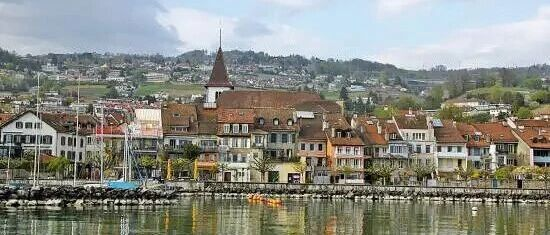
当地时间11月30日,瑞士在公投中以78%对22%的压倒性多数否决了旨在对超级富豪征收50%遗产税的提案。
这项由瑞士极左翼青年社会主义者党发起的提案,原计划对超过5000万瑞士法郎(约合4.4亿元人民币)的遗产与赠与资产引入50%的联邦税,并将所得收入专项用于气候相关支出(包括建筑节能改造、新能源开发等)。公投前,瑞士联邦政府、商业团体和高净值人士就已普遍提出反对态度,警告其可能损害瑞士作为国际财富中心的吸引力。
有人或许会觉得奇怪:有钱人反对这事儿很正常,可提案若落实,仅仅涉及大约2500名瑞士富人,只占该国人口的0.03%,而这次公投的投票率为43%。公投结果如此悬殊,说明绝大多数普通人也不看好这事儿。
在那些崇尚“劫富济贫”的人眼中,对富人课以重税理所应当且正义,虽然提案称这部分税收会专项用于气候相关支出,但富人能把它扛起来,普通人未来就不会有类似征收,政府财政支出也能省下来一部分并用之于民,怎么瑞士人就不乐意呢?
越是缺乏商业传统的地方就越仇富,这是因为一旦缺乏商业传统,富人的发家之路与权力牵扯不清的可能性就大增,普通人因为这些灰色地带的遮蔽,对真正商业体系、契约精神的认知程度也很低,两方面互相作用,就会产生对富人的敌视。但在瑞士,这种现象并不存在。
瑞士人反对向富人征收50%的高额遗产税,当然有利益因素的考量。目前全球经济体对富豪群体的税收政策存在分化,比如阿联酋的迪拜和阿布扎比,还有新加坡等都以税收优惠和宽松监管吸引富人。其中新加坡通过修订《所得税法》下的税收豁免计划,为单一家族办公室(SFO)提供管理财富和投资收益的税收激励,迪拜也通过税收优惠实现人口的迅速增长。南欧的意大利和西班牙等国家则倾向于加大富人的税负。博弈无处不在,今年法国社会党就曾提出对净资产超过1亿欧元的个人征收2%的最低税率,但法国议会于10月否决此方案,其后还推翻了对超过1000万欧元财富征收3%税收的另一份提案。
采用宽松政策吸引富人,当然是看中了富人的钱袋子。在这方面,瑞士一向是“行家”。就算对金融毫不熟悉的人,也在影视剧里见识过“瑞士银行”的出镜频率,美剧里的富豪、港剧里的大鳄,在瑞士银行有账户简直就是标配。可以说,瑞士是无数离岸资产的合法温床,堪称“避险天堂”。
数据显示,瑞士每百万居民拥有超过九位亿万富翁,这一密度是西欧国家平均水平的五倍,瑞士最富有的300位居民总财富高达8500亿瑞士法郎。能够成为富人聚集地,正是因为政策。外国富人在瑞士可享受特殊税收条款,允许在未完全披露所有资产的情况下完成纳税。2023年,瑞士税收占国内GDP的比例,在经合组织(OECD)38个成员国中仅排第31位。
如果向富人征收50%高额遗产税的提案真的在公投中通过,会带来一连串负面效果:很多准备来瑞士的富人可能会转向宽松的阿联酋与新加坡,目前身在瑞士的富人可能会选择移居他国,毕竟有钱人的流动更容易,有无数办法优化税务问题。
这就很可能出现一个结果:这头在富人身上多收了点税,那头一群富人直接选择走人,原先的大笔财产税直接归零,失去的很可能与新增的抵消,甚至造成瑞士整体税收下降。瑞士联邦委员会测算显示,若按此提案征税,理论上可获25-50亿瑞士法郎收入。但以目前制度,在瑞士大多数州,财产税税率采用累进式,资产越多,税率就越高,瑞士最富的10%群体已贡献总财产税的86%之多。如果顶级富豪出现离境潮,瑞士的财产税损失显而易见。
所以,公投结果一出来,有瑞士金融业人士就盛赞“瑞士人的常识占了上风”,瑞士的商业中心地位和声誉也得以保全。
利益考量并非全部,瑞士人的理性也并非仅此一次。
说起公投,很多人会第一时间联想到“民粹”,认为不靠谱。但作为世界上最爱公投的国家,瑞士和“民粹”二字并不沾边,反而诠释着何为理性。
瑞士有直接民主的传统,“联邦民众倡议”制度保障任何瑞士公民都拥有发起意图修改法律的全民公投权利,前提是要在18个月内攒够至少10万个有效签名。瑞士人口数量为800多万,10万签名的门槛不算高,因此每年都起码有几次全民公投。只要多数人投出赞成票,并且多数州为赞成方,达到了双重多数标准,就可成功修订法律。
公投门槛这么低,肯定有人会担心滥用,觉得瑞士会天下大乱,但这显然低估了瑞士人的普遍理性。
公投的定义是指公民就被提议之事案,表明赞成与否时所举行之投票,是一种直接民主制。与广泛使用的代议制相比,公投处于补充地位,但一旦动用,所谋多为大事要事。
瑞士人是公投先行者,早在19世纪中期就已开始尝试全民公投,从1848年至今已经进行过六百多次公投,超过世界上其他所有国家公投次数的总和。
许多人对公投的反感,是因为他们认为公投会形成“多数人的暴政”,形同闹剧。历史上也确实出现过值得深深警惕的全民公投,比如希特勒就喜欢这一套。1936年,希特勒将国会改选与“恢复民族荣耀及国家主权”的公投一并举行,投票率高达99%,纳粹党获得了98.8%的支持率。1938年,希特勒又以全民公投方式并吞奥地利,支持率达到99.08%,有人正是就此得出“公投制造民粹”的结论。
也许正因为希特勒的阴影,在自由主义底蕴深厚的英国,二战后曾有不少反对公投之声。如1945年,首相丘吉尔提出针对是否继续战时联合政府举行全民公决,工党领袖克艾德礼明确反对,认为全民公决违反英国民主传统,是专制可利用的工具,后来的撒切尔夫人同样如此认为。
但这种判断偷换了概念,即将“全民公投”等同于“独裁者控制下的全民公投”。但实际上,宪政制度下的公投,即使有政党政治左右,即使也有舆论引导,但充其量是一种潜移默化式的诱导,不具有强制性。
而且,不应低估宪政制度下的民众智商,也不能滥用“民粹”一词。
2016年,瑞士曾有一次公投引发热议,主题是“无条件基本收入”,即针对瑞士政府是否每月给瑞士成年人发放2500瑞士法郎(当时约合1.7万元人民币)、给儿童发放625瑞士法郎(约合4000多元人民币)这一问题进行公投,最终76.9%的选民对该项提案说不,26个州也全部表示反对。
这个结果在许多中国人看来简直不可思议,政府每个月给你白发钱,简直是天上掉馅饼的好事,可是大多数瑞士人都表示拒绝,这是不是疯了?
这甚至不是瑞士人第一次拒绝“馅饼”。2012年,瑞士人以67%的反对率拒绝将原本4周的带薪假期提高至6周,2014年,瑞士人以76%的反对率否决了每小时22瑞士法郎的最低工资标准。反对者们认为,无论最低工资标准、延长带薪假期还是直接发钱,都会腐蚀年轻人,使之丧失学习与工作的动力,不利于社会的长久发展。
按照某些人对“民粹”的理解,上述几个公投理应获得超高支持率才是。可瑞士人的选择一点也不“民粹”,觉悟之高实在让人感慨。这显然与国民素质和公投传统有关,频繁公投多少磨练了瑞士人的责任感和眼界,从而形成良性循环。
瑞士并非历史上最早进行公投的地方,历史公认的首次公投是法国大革命时期的阿维尼翁公投,在当时的15.3万名投票者中,超过10万人支持阿维尼翁脱离教皇控制,同时并入法国。后来,美国总统威尔逊正是基于阿维尼翁公投所创造的“独立公投”概念,在一战后提出“民族自决”。
同样在瑞士产生公投之前的还有1845年的德克萨斯公投,公投结果为德克萨斯脱离墨西哥,加入美国。1846年,非洲大陆上的利比里亚发起独立公投,52%的投票者选择独立。
如今以高福利著称的斯堪的纳维亚半岛也是热衷公投的地区。1905年,瑞典-挪威举行解体公投,以99.95%的惊人支持率实现解体,诞生了瑞典和挪威这两个独立国家。作为独立国家的瑞典,1922年以来曾发起六次公投,议题涵盖禁酒、改变驾驶方向、以政府税收资助退休金、核能发电、加入欧盟和采用欧元等。不过瑞典的公投为咨询性质,不具约束力,议会也未必按完全按照投票结果制订政策。1944年,冰岛举行独立公投,支持率同样达到了惊人的99.5%。
二战后,亚非拉大陆的独立公投屡见不鲜,如1958年的几内亚公投、1962年的阿尔及利亚公投、1964年的津巴布韦公投、1970年的巴林公投等,支持率都极高。但最有意思的公投来自于欧洲,而且与英国有关。1964年,“地中海心脏”马耳他举行独立公投,但独立支持率仅为54.5%,可算是险胜,这是因为马耳他的前宗主国是英国,民众担心离开英国后自己会变穷。
进入90年代后,因为东欧剧变、巴尔干硝烟,独立公投此起彼伏。如前苏联的各加盟共和国便相继举行独立公投并成为独立国家,仅1991年便诞生了亚美尼亚、阿塞拜疆、爱沙尼亚、格鲁吉亚、拉脱维亚、立陶宛、乌克兰、土库曼斯坦和乌兹别克斯坦等新生国家。同年的斯洛文尼亚独立公投也开启了前南斯拉夫解体的序幕。
此后,分离主义的独立公投越来越多。1980年和1995年,魁北克两次举行公投,决定是否脱离加拿大独立,均未成功。1991年和2014年,克里米亚地区两次举行全民公投,决定地区归属。2008年,巴斯克地区独立公投。该公投被西班牙政府阻止并取消。
如果从历史上公投的频密度和具体效果来看,将之视为“相对多数人的暴政”实在站不住脚。有人将公投的坏处归结为“谁也不能确定自己能赢”,可这个理由只需一句话就能推翻——“谁也不能确定自己一定有道理”。
之前英国的脱欧公投就是个例子,当时结果公布后,我听到不少这样的说法:“连英国这种民主积淀如此深厚、国民素质相对较高的国家,搞起公投来都得到了一个人们不想看到的结果,可见公投绝不等于民主,甚至成为多数人的暴政。如果在民粹主义盛行的国家,公投后果更会不堪设想”,并认为“民主绝不是简单的一人一票,公投这种‘极端民主’行不通”。
这些说法都假设了一个前提,即“留欧好,脱欧不好”,所以公投的结果肯定有问题,进而推导出公投不是真正的民主,也不适合地球。这种预设立场的思维方式显然缺乏逻辑,而且“民粹主义”这一概念的使用也似是而非。
在英国脱欧公投前夕,我曾写过一篇文章,其中有这样一句话:“当一个国家的人民可以通过投票表达自己的意愿时,被嘲笑的肯定不应该是他们。”所谓公投,就是以全体民众的判断力来决定国家大事,结果或可商榷,但过程确实不该被嘲笑。
在英国脱欧一事中,“素质论”是反对意见中最为常见的一种,他们认为普通民众没有能力权衡利弊,无法胜任公投,尤其是像退欧这种关乎政治、经济、事关国家命运的议题,根本不应该让缺乏专业知识的民众来决定。但从公投历史来看,这显然是多余的担心。
关于这一点,英国前财长克拉克算是个反面教材。他在接受采访时表示,“公投从未解决过任何问题,除非是在一个强大的独裁者例如墨索里尼或拿破仑的支持下。”这个说法不但抹杀了历史上各种公投的意义,还将公投与民主对立,其潜台词就是“如果公投的结果没有预先决定,那么公投便是有毒的”,其荒谬性显而易见。
虽然法国大革命时的阿维尼翁公投是公认的史上首次公投,但公投雏形早在古希腊时期便已出现。被视为民主典范的雅典民主制度,其实就是直接民主形式。它由公民大会、500人议事会和陪审法庭等机构组成。公民大会是最高权力机构,一年召开40次,年满20岁的男性公民都有权参加,可自由发言,展开辩论,然后进行表决。在小国寡民的雅典城邦时代,这种制度的好处显而易见。
但也有人认为,恰恰是直接民主形式导致了雅典帝国的覆灭。当雅典城邦成为雅典帝国后,国家实际事务繁多,直接民主形式无法适应这种发展,反而造成了灾难性后果。比如失败的西西里远征就是野心家煽动民众,利用公民大会所促成,这场失败也成为伯罗奔尼撒战争的转折点,导致帝国崩溃。也正因此,美国“宪法之父”、第四任总统詹姆斯·麦迪逊曾声称“即使每个雅典公民都是苏格拉底,雅典公民大会仍将是一群暴民。”这句话也常被喜欢把“民粹”二字挂在嘴边的人士所使用。
可是,一个帝国的覆灭往往是多种因素叠加的结果。如果从政治角度分析,以公民大会为代表的直接民主形式当然有其局限,但更致命的问题是雅典帝国并没有及时发展国家管理的专业机构。换言之,公民大会既是决策者,又是执行者,与现代政治的差距恰恰在此。
现代文明社会的直接民主,与古希腊早已不可同日而语,有着足够丰富的支撑与配套。这种支撑来自宪政和施行已久的间接民主——代议制民主,至于配套,现代国家的各种事务机构已臻完善,具有相对稳定的执行力。在这种情况下,以公投弥补代议制的缺陷,已有足够土壤。比如最热衷公投的瑞士,在国家制度上就相当完善,它有两院制的联邦议会,国民院(下院)代表人民,联邦院(上院)代表瑞士26个州。公投这一直接民主手段,始终与代议制民主相结合。从历史来看,早在1848年首次公投之前,瑞士就已有悠久的“露天议会”历史。也正是因为这种传统,使得人们十分担忧的“多数人暴政”没有出现,反而能始终以妥协和共识为底线。
关于公投,有一种思维差别值得注意:一些人认为,当面对大事时,领导者乃至政府、国会就应该挺身而出,如果他们将决定权交给民众,是一种不负责任的表现。但在另一部分人看来,领导者乃至政府、国会在无法代表民众的情况下擅自决定,才是真正的不负责任,也会使得决策缺乏正当性,此时最需要的便是还权于民。
也有人认为,频繁公投是民众对于精英政治的失望,代议制也将走进死胡同。但如果明白公投是代议制的有效补充,就不会同意这种将公投与代议制直接对立的思维。
特别要指出的是,瑞士是当今世界上为数不多仍然坚守自由主义的国家之一。公投作为瑞士人的常用手段,其实是对国家控制的一种消解。在这背后,是对市场经济的坚守和对自由的捍卫。
(本文部分首发于《周末画报》)
中国多地政府部门文件照搬网络人名的“全网最忙五人组”风波持续延烧,《中国青年报》冰点周刊披露,湖北省十堰市竹溪县七个政府部门的多个采购项目涉嫌评审小组人名造假,项目中标金额总数过亿元(人民币,下同,1亿元人民币约合1800万新元)。相关报道发布后很快被删除。
中国政府采购网12月3日公布的《竹溪县住房和城乡建设局本级机械设备租赁采购中标(成交)结果公告》中提到,评审小组成员包括张吉惟、林国瑞、林玟书、林雅南、江奕云。
有眼尖的中国网民发现,这五个名字和百度文库《10000中国普通人名大全》中列出的头五个名字完全一致,且排列顺序一致,并且这些名字在中国各地不同的官方文件、公示场合中反复出现,引起外界质疑。
中青报冰点周刊星期三(12月10日)披露,在牵出这场“全网最忙五人组”风波的竹溪县,存在评审小组成员疑似照搬网络人名情况的,不止住建局作为采购方的中标结果公告。
据报道,涉嫌照搬网络人名充当评审专家的政府采购项目,共涉及竹溪县七个政府部门,分别是竹溪县城市管理执法局、水利和湖泊局、文化和旅游局、交通运输局、数据局、农业农村局、住建局,每个项目的中标金额均超3000万元,总额过亿元。
报道称,竹溪当地已由市、县纪委监委牵头成立联合调查组,对相关情况展开调查,后续调查结果将对外公布。竹溪县委宣传部一名工作人员受访时说,调查组不会只调查住建局采购程序违规的项目。竹溪县多个政府部门的工作人员透露,所在部门正在被调查。
报道举例,今年1月发布的《竹溪县数据局本级竹溪县智慧城市政务大模型建设及运维中标(成交)结果公告》中,评审小组成员为吴孟钰、蔡国伟、连俊达、林佳蓉、罗依茂。这五个人的名字,均能在百度文库《10000个中国普通人名大全》文档开头部分名字中找到,且顺序一致。
竹溪县数据局党组成员邹春红告诉中青报,数据局的这个项目是由代理公司做的,目前也在被调查,“直到这个事情出现之后,然后我们排查自己以前的一些项目,才发现这个代理公司在做这些材料的时候有问题”。至于具体问题出现哪个环节,邹春红称要看纪委监委的调查。
竹溪县城管局项目办相关负责人受访时也说,事发之后,城管局也在配合调查,“各单位都在开展自查和排查”。
中国人民大学公共管理学院教授、公共资源交易研究中心执行主任王丛虎向中青报分析,按照中国现在的科层制管理,“哪一个东西都得经过领导层层审批,他不审批不敢发出来,但是发出来又出现这些问题,说明一些领导缺少对法律的敬畏与遵循”。
中青报的这则报道星期三下午2时30分在微信公众号“冰点周刊”发布后,很快便被删除。
中国常驻联合国副代表孙磊谈及乌克兰问题时,呼吁有关各方重视并妥善解决彼此合理安全关切,构建均衡、有效、可持续的欧洲安全架构,并争取早日达成一份有约束力的和平协议。
据中国常驻联合国代表团网站消息,孙磊星期二(12月9日)在安理会审议乌克兰问题时说,当前乌克兰问题进入谈判解决的关键阶段,国际社会围绕乌克兰危机的讨论愈发向谈判聚焦、向和平靠拢,各重要利益攸关方提出了一些和谈倡议、举行了一系列接触。
他说,中国对这些进展表示欢迎,支持一切通向和平的努力,希望国际社会共同努力,推动危机早日实现政治解决,并呼吁有关各方抓住积极势头,相向而行,展现政治意愿,持续积累共识,争取早日达成一份公平、持久、有约束力的和平协议。
孙磊指出,有关各方曾达成明斯克协议、新明斯克协议,但最终仍爆发了危机,归根到底是没有妥善解决彼此安全关切,没有解决冲突的根源问题。新的和平协议应以此为鉴。
他呼吁各方秉持共同、综合、合作、可持续的安全观,牢记安全不可分割原则,重视并妥善解决彼此合理安全关切,特别是冲突的根源问题,构建均衡、有效、可持续的欧洲安全架构。
孙磊说,尽管和平呼声十分强烈,但地面战事仍未停歇。中国敦促冲突当事方展现最大程度克制,严格遵守国际人道法,切实保护平民和民用基础设施安全,同时呼吁国际社会加大人道救援力度,帮助受危机影响的民众渡过难关。
他重申,中国在乌克兰问题上的立场客观公正、一以贯之,那就是呼吁停火止战、坚持劝和促谈、推动政治解决。中国也将继续为推动危机政治解决发挥建设性作用。

© The New York Times
