Login
LoginZelensky gives stark warning as EU leaders start crunch talks on Russia's frozen cash

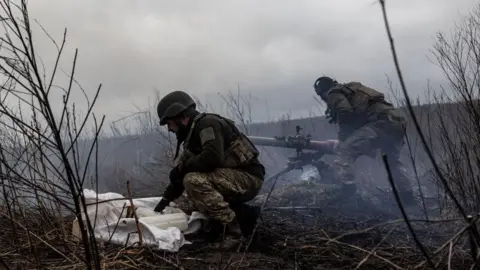
 Ukrinform/NurPhoto
European Union leaders begin two days of talks in Brussels with a momentous decision to be taken on whether to loan tens of billions of euros in frozen Russian assets to Ukraine to fund its military and economic needs.
Most of Russia's €210bn (£185bn; $245bn) worth of assets in the EU are held by Belgium-based organisation Euroclear, and so far Belgium and some other members of the bloc have said they are opposed to using the cash.
Without a boost in funding, Ukraine's finances are set to run dry in a matter of months.
One European government official described being "cautiously optimistic, not overly optimistic" that a deal would be agreed. Russia has warned the EU against using its money.
It has filed a lawsuit against Euroclear in a Moscow court in a bid to get its money back.
The Brussels summit comes at a pivotal moment.
US President Donald Trump has said a deal to end the war - which began with Russia's full-scale invasion of Ukraine in February 2022 - is "closer now than we have been ever".
Although Russia has not responded to the latest peace proposals, the Kremlin has stressed that plans for a European-led multinational force for Ukraine supported by the US would not be acceptable.
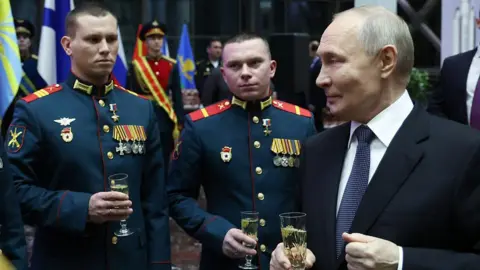
President Vladimir Putin made his feelings towards Europe clear on Wednesday, when he said the continent was in a state of "total degradation" and "European piglets" - a derogatory description of Ukraine's European allies - were hoping to profit from Russia's collapse.
 Alexander KAZAKOV/POOL/AFP
The European Commission - the EU's executive arm - has proposed loaning Kyiv about €90bn (£79bn) over the next two years - out of the €210bn of Russian assets sitting in Europe.
That is about two-thirds of the €137bn that Kyiv is thought to need to get through 2026 and 2027.
Until now the EU has handed Ukraine the interest generated by the cash but not the cash itself.
"This is a crunch time for Ukraine to keep fighting for the next year," a Finnish government official told the BBC. "There are of course peace negotiations but this gives Ukraine leverage to say 'we're not desperate and we have the funds to continue fighting'."
Commission chief Ursula von der Leyen says it will also ramp up the cost of war for Russia.
Russia's frozen assets are not the only option on the table for EU leaders. Another idea, backed by Belgium, is based on the EU borrowing the money on the international markets.
However, that would require a unanimous vote and Hungary's Viktor Orban has made it clear he will not allow any more EU money to help Ukraine.
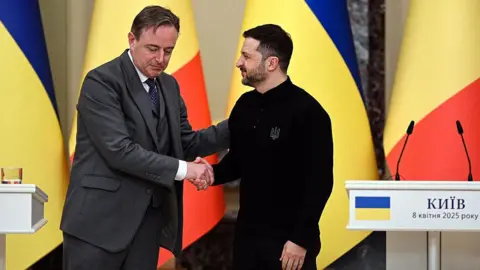
For Ukraine, the hours ahead are significant and President Volodymyr Zelensky is expected to attend the EU summit.
Ahead of the Brussels meeting, EU leaders were keen to stress the momentous nature of the decision.
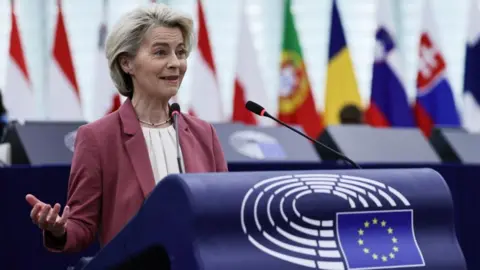
"We know the urgency. It is acute. We all feel it. We all see it," von der Leyen told the European Parliament.
 EPA
EPAGerman Chancellor Friedrich Merz has played a leading role in pushing for the Russian assets to be used, telling the Bundestag on the eve of the summit it was about sending a "clear signal" to Moscow that continuing the war was pointless.
EU officials are confident they have a sound legal basis to use the frozen Russian assets, but so far Belgian Prime Minister Bart De Wever remains unconvinced.
His Defence Minister Theo Francken warned ahead of the talks that it would be a big mistake to loan the Euroclear cash.
Hungary is seen as the biggest opponent of the move and, ahead of the summit, Prime Minister Orban and his entourage even suggested that the frozen assets plan had been removed from the summit agenda. A European Commission official stressed that was not the case and it would be a matter for the 27 member states at the summit.
Slovakia's Robert Fico has also opposed using the Russian assets, if it means the money being used to procure weapons rather than for reconstruction needs.
When the pivotal vote does finally take place, it will require a majority of about two-thirds of member states to go through. Whatever happens, European Council President António Costa has promised not to go over the heads of the Belgians.
"We're not going to vote against Belgium," he told Belgian public broadcaster RTBF. "We'll continue to work very intensively with the Belgian government because we don't want to approve something that might not be acceptable for Belgium."
Belgium will also be aware that ratings agency Fitch has placed Euroclear on a negative watch, partly because of "low" legal risks to its balance sheet from the European Commission's plans to use the Russian assets. Euroclear's chief executive has also warned against the plan.
"There are many hiccups and obstacles of course still on the way. We have to find a way to respond to Belgium's worries," the Finnish official added. "We are on the same side as Belgium. We will find a solution together to make sure all the risks are checked as much as they can be checked."
However, Belgium is not the only country to have doubts, and a majority is not guaranteed.
Italian Prime Minister Giorgia Meloni has told Italian MPs she will endorse the deal "if the legal basis is solid".
"If the legal basis for this initiative were not solid, we would be handing Russia its first real victory since the beginning of this conflict."
Malta, Bulgaria and the Czech Republic are also said to be unconvinced by the controversial proposals.
If the deal is passed and the Russian assets are given to Ukraine, the worst-case scenario for Belgium would be one in which a court would order it to hand the money back to Russia.
Some countries have said they would be prepared to provide billions of euros in financial guarantees, but Belgium will want to see the numbers add up.
At any rate, Commission officials are confident that the only way for Russia to get it back would be by paying reparations to Ukraine - at which point Ukraine would hand its "reparations loan" back to the EU.











 年末再添一笔军售:路透社报道,美国本周宣布了对台2.8亿美元的“野战资讯通信系统”军售,帮助台湾军事现代化,加强防御能力。这是是美国今年第六度对台军售,中国外交部发言人华春莹在周二的例行发布会上敦促美国停止售台武器和美台任何军事联系,她表示,美国对台出售武器装备严重违反一中原则和中美三个联合公报规定,严重损害中美关系。(图为幻影战机资料图片)
 2020年美国对外军售的最大买家:11月28日,美国在台协会台北办事处处长郦英杰(William Brent Christensen)在台湾出席一场研讨会时声称,台湾已是全世界公认的美国武器最大采购方,今年美国对台计划中的军售额总计高达118亿美元,是台湾史上单年最高的年度防务采购。他强调,美国对台军售获得美国两党的支持,这些军售对台湾提升“不对称作战能力”具有相当关键的力量。他还透露,放眼2021年,美国政府已通知国会对台军售52亿美元。
 台北谨慎回应:11月29日,台湾国防部就骊英杰的表态做出了回应。声明指出,美国对台出售防卫性武器,有助强化整体防卫战力,确保台海及印太区域的和平与稳定,国防部对此表示感谢。但同时声明也强调,明年并无规划新增对美提出52亿美元的重大军购项目。(图为台湾空军资料照片)
 特朗普任内军售频繁:10月26日,华盛顿方面公布2020年内第四波对台军售案,表示美国国务院已核准将100枚鱼叉反舰飞弹出售给台湾。据台湾中央社报道,这笔军售交易总额高达23.7亿美元。鱼叉海岸防御系统(HCDS)射程在200到300公里之间,可对沿岸、港湾以及陆上目标实施打击,符合台湾近年机动、不对称战力的诉求。这是也是美国总统特朗普上任以来的第九个对台军售案。
 40余年,上百次对台军售案:美国向台湾出售武器,源于1979年美国与台北断交,转而与北京建交之后,制定的《台湾关系法》。在撤离驻台美军之后,美国开始依照该法律为台湾提供防御性军武。根据1982年时任总统罗纳德·里根建立的备忘录,美国对台提供武器之性能与数量“视中共所构成之威胁而定”。
 具有标志性意义的F16战机:在数十年的历次对台军售案当中,最为引人注目的先进武器之一莫过于美国的F16战斗机。这是由洛克希德·马丁公司研制的轻型战斗机,在战机世代上归类于第四代战斗机,同时也是第四代战机中产量最高的机种。台北方面从70年代就开始要求向美国采购这种先进战机,但是直到90年代才得以达成交易。1997年,台湾采购的首批F16战机进行交付。之后该系列战机又经历了多次升级和换装,美方提供的飞行训练和技术支援也都包括在军售交易之内。
 基隆级驱逐舰:纪德级驱逐舰(Kidd class)是美国海军已除役的飞弹驱逐舰,2005年到2006年期间,美国海军陆续将该系列一共四艘驱逐舰交接给台湾海军,并改称为基隆级驱逐舰。图为台湾总统蔡英文2018年视察该舰。
 爱国者导弹:爱国者导弹(Patriot)是美国雷神公司制造的中程地对空导弹系统,该系统曾在海湾战争中成功拦截了伊拉克军队发射的飞毛腿导弹,从而声名大噪。这款具有代表性的美军武器在之后经多次升级,从90年代起台湾多次向美国采购爱国者导弹。2020年7月达成的美国对台军售案中还包括爱国者三型导弹的零组件相关更换、维修、测试与后勤支援等内容。
 将台湾打造成一个“堡垒”:近年来,随着中国军事装备力量的不断壮大,以及美中关系的日益紧张,美国出售给台湾的武器种类也发生了变化。美国兰德公司的研究员葛莱斯曼 (Derek Grossman)10月中旬在接受德国之声采访时表示:“美国过去卖给台湾许多不同类型的武器,有时是能提升台湾不对称防御战力的武器,有时是像F-16战机这种标志性的武器。不过现在美国的对台军援政策似乎做了一个明显的调整。”他认为,为了要阻止中国透过两栖登陆的方式入侵台湾,美国要协助台湾成为一个“坚不可摧的堡垒”。
 北京如何应对?:历来的美国对台军售案都会引起北京方面的反对,但大多数情况下都仅限于口头抗议。10月26日,中国外交部发言人赵立坚在例行记者会上表示,中国将对参与上周对台军售案的洛克希德·马丁丶波音防务丶雷神等美国企业与个人实施制裁。其实洛克希德·马丁公司鲜少与中国做生意,多年来一直向台湾提供武器和国防设备。然而,如果中国对波音(Boeing)实施制裁,这可能对其造成沉重打击,因为该公司也向中国出售民航飞机。