 Login
Login每日一语 2025.12.17
你最好是在说日本。

你最好是在说日本。
据烟台市人民政府新闻办公室消息,山东省烟台莱州市发现亚洲最大海底巨型金矿。
综合“国是直通车”和每日经济新闻报道,烟台市人民政府新闻办公室星期二(12月16日)举行“回望‘十四五’ 奋楫启新程”主题系列第十六场新闻发布会,会上宣布,莱州市三山岛北部海域新发现中国国内唯一、亚洲最大的海底巨型金矿。
据介绍,莱州市全市累计探明金资源储量3900余吨,约占中国的26%,金矿资源储量和产量均居中国首位。
这也是在山东发现的又一大金矿。据山东省政府介绍,山东省地矿局2023年11月曾探明了中国四分之一的黄金储量,在胶东地区提交金矿资源3500余吨,使胶东地区成为世界第三大金矿区。

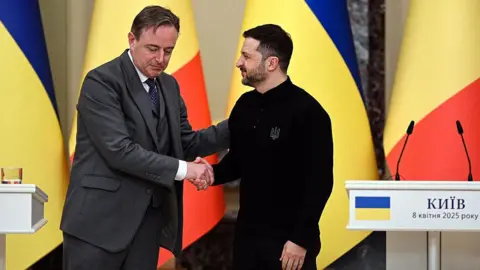 Ukrinform/NurPhoto
European Union leaders begin two days of talks in Brussels with a momentous decision to be taken on whether to loan tens of billions of euros in frozen Russian assets to Ukraine to fund its military and economic needs.
Most of Russia's €210bn (£185bn; $245bn) worth of assets in the EU are held by Belgium-based organisation Euroclear, and so far Belgium and some other members of the bloc have said they are opposed to using the cash.
Without a boost in funding, Ukraine's finances are set to run dry in a matter of months.
One European government official described being "cautiously optimistic, not overly optimistic" that a deal would be agreed. Russia has warned the EU against using its money.
It has filed a lawsuit against Euroclear in a Moscow court in a bid to get its money back.
The Brussels summit comes at a pivotal moment.
US President Donald Trump has said a deal to end the war - which began with Russia's full-scale invasion of Ukraine in February 2022 - is "closer now than we have been ever".
Although Russia has not responded to the latest peace proposals, the Kremlin has stressed that plans for a European-led multinational force for Ukraine supported by the US would not be acceptable.
President Vladimir Putin made his feelings towards Europe clear on Wednesday, when he said the continent was in a state of "total degradation" and "European piglets" - a derogatory description of Ukraine's European allies - were hoping to profit from Russia's collapse.
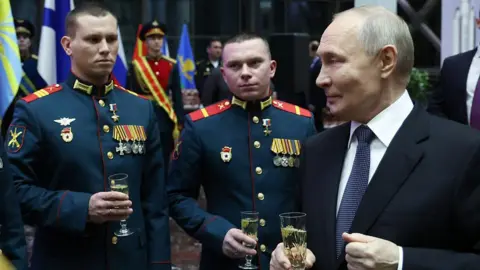 Alexander KAZAKOV/POOL/AFP
The European Commission - the EU's executive arm - has proposed loaning Kyiv about €90bn (£79bn) over the next two years - out of the €210bn of Russian assets sitting in Europe.
That is about two-thirds of the €137bn that Kyiv is thought to need to get through 2026 and 2027.
Until now the EU has handed Ukraine the interest generated by the cash but not the cash itself.
"This is a crunch time for Ukraine to keep fighting for the next year," a Finnish government official told the BBC. "There are of course peace negotiations but this gives Ukraine leverage to say 'we're not desperate and we have the funds to continue fighting'."
Commission chief Ursula von der Leyen says it will also ramp up the cost of war for Russia.
Russia's frozen assets are not the only option on the table for EU leaders. Another idea, backed by Belgium, is based on the EU borrowing the money on the international markets.
However, that would require a unanimous vote and Hungary's Viktor Orban has made it clear he will not allow any more EU money to help Ukraine.
For Ukraine, the hours ahead are significant and President Volodymyr Zelensky is expected to attend the EU summit.
Ahead of the Brussels meeting, EU leaders were keen to stress the momentous nature of the decision.
"We know the urgency. It is acute. We all feel it. We all see it," von der Leyen told the European Parliament.
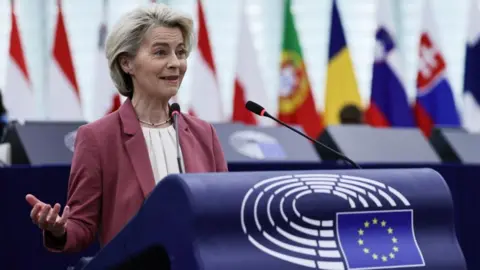 EPA
EPAGerman Chancellor Friedrich Merz has played a leading role in pushing for the Russian assets to be used, telling the Bundestag on the eve of the summit it was about sending a "clear signal" to Moscow that continuing the war was pointless.
EU officials are confident they have a sound legal basis to use the frozen Russian assets, but so far Belgian Prime Minister Bart De Wever remains unconvinced.
His Defence Minister Theo Francken warned ahead of the talks that it would be a big mistake to loan the Euroclear cash.
Hungary is seen as the biggest opponent of the move and, ahead of the summit, Prime Minister Orban and his entourage even suggested that the frozen assets plan had been removed from the summit agenda. A European Commission official stressed that was not the case and it would be a matter for the 27 member states at the summit.
Slovakia's Robert Fico has also opposed using the Russian assets, if it means the money being used to procure weapons rather than for reconstruction needs.
When the pivotal vote does finally take place, it will require a majority of about two-thirds of member states to go through. Whatever happens, European Council President António Costa has promised not to go over the heads of the Belgians.
"We're not going to vote against Belgium," he told Belgian public broadcaster RTBF. "We'll continue to work very intensively with the Belgian government because we don't want to approve something that might not be acceptable for Belgium."
Belgium will also be aware that ratings agency Fitch has placed Euroclear on a negative watch, partly because of "low" legal risks to its balance sheet from the European Commission's plans to use the Russian assets. Euroclear's chief executive has also warned against the plan.
"There are many hiccups and obstacles of course still on the way. We have to find a way to respond to Belgium's worries," the Finnish official added. "We are on the same side as Belgium. We will find a solution together to make sure all the risks are checked as much as they can be checked."
However, Belgium is not the only country to have doubts, and a majority is not guaranteed.
Italian Prime Minister Giorgia Meloni has told Italian MPs she will endorse the deal "if the legal basis is solid".
"If the legal basis for this initiative were not solid, we would be handing Russia its first real victory since the beginning of this conflict."
Malta, Bulgaria and the Czech Republic are also said to be unconvinced by the controversial proposals.
If the deal is passed and the Russian assets are given to Ukraine, the worst-case scenario for Belgium would be one in which a court would order it to hand the money back to Russia.
Some countries have said they would be prepared to provide billions of euros in financial guarantees, but Belgium will want to see the numbers add up.
At any rate, Commission officials are confident that the only way for Russia to get it back would be by paying reparations to Ukraine - at which point Ukraine would hand its "reparations loan" back to the EU.
US President Donald Trump has announced a "warrior dividend" payment to US service members, in a speech in which he also defended his track record on the economy after 11 months back in office.
In a televised address to the nation on Wednesday, Trump said cheques for $1,776 (£1,329) for 1.45 million US service members were already on the way" and should arrive before Christmas. He said they would be paid for, in part, by his tariffs.
In the combative address, Trump also touted his achievements on immigration while railing against opposition Democrats.
Speaking loudly and quickly, he seemed determined to convince Americans that the US was doing well - and things would only get better.
He claimed prices were falling, at a time when polls show that many Americans are unhappy about the cost of housing, childcare and healthcare.
Democrats were critical of the speech. Senate Minority Leader Chuck Schumer said the president's words "showed he lives in a bubble completely disconnected from the reality everyday Americans are seeing and feeling".
Schumer added: "People are feeling squeezed harder and harder every day and tonight Donald Trump took a victory lap."
In the brief, 18-minute address, Trump said the "warrior dividend", which totals $2.57bn (£1.9bn), would be distributed "in honour of our nation's founding in 1776".
Trump added that the funds were drawn from his sweeping tariffs, as well as the "One Big, Beautiful Bill" that he signed into law on 4 July.
"Nobody deserves it more than our military," he said.
The president offered little new information in the speech, and some of his assertions were either exaggerated or unfounded.
Much of Trump's address focused on his economic record and the administration's efforts to bring down prices - which he blamed on former US President Joe Biden and the Democrats. Trump mentioned the former president seven times.
"Now, under our leadership, they [prices] are all coming down and coming down fast," he said. "Democrat politicians also sent the cost of groceries soaring, but we are solving that too."
While fuel and egg prices have indeed fallen, many other food items are more expensive.
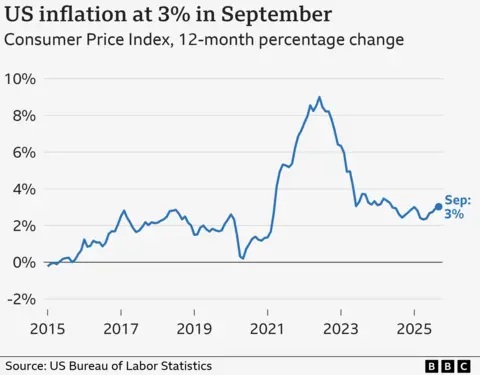
Economic data from September shows the US inflation rate hit 3% for the first time since January, while consumer confidence fell to its lowest level since April due to concerns over the cost of living, jobs and the wider economy.
Trump has previously acknowledged that concerns over rising prices have contributed to a lacklustre performance for candidates from his Republican Party during elections held in November - with the Democrats having success in Virginia, New Jersey and New York City, as well as more recently in Miami and Georgia.
He has also acknowledged that incumbent presidents and their parties often fare poorly in mid-term elections, which will take place next year.
The White House has since been wrestling with how to address voter concerns about the economy, while at the same time pushing back on repeated Democratic criticism over rising prices.
The political dilemma faced by the Trump administration has been highlighted by recent polling.
One poll, from Politico, showed that about half of overall voters - and 4 in 10 people who voted for Trump in 2024 - felt the cost of living was the worst it has been in their lives.
Another poll, released in November by CBS News/YouGov, suggested that Trump's approval on economic issues had dropped 15 points since March - with 36% of Americans approving his handling of the issue.
More broadly, other polls show that Trump is at or near the lowest approval ratings of his second term, with concerns about the economy playing a significant role.
While the president offered little in the way of empathy over prices, he did point to Republican efforts - such as tax reform legislation passed earlier this year - that he said would benefit many Americans in the coming year.
When he ran for re-election last year, Trump promised immediate results. And after 11 months in office, many Americans say they still haven't seen substantive change, and the president's speech might be unlikely to change their minds.
Trump, in part, focused his remarks on the promise of improvements during 250th birthday celebrations for American's founding next year.
"When the world looks at us next year, let them see a nation that is loyal to its citizens, faithful to its workers, confident to its identity, certain to its destiny, and the envy of the entire globe," he said.
"We are respected again, like we have never been respected before," he added.
 Getty Images
Thailand says it has bombed a "logistics centre" near the Cambodian town of Poipet, known for being a major casino hub and the biggest land crossing between the two countries.
The bombings comes as renewed border clashes show no sign of abating.
Cambodia's defence ministry said Thai forces dropped two bombs, while the Thai side said that they targeted a facility storing rocket systems.
The renewed fighting this month has killed at least 21 people in Thailand and 17 in Cambodia, while displacing around 800,000, officials say.
In a statement, the Cambodian defence ministry said Thai forces dropped two bombs in the area of Poipet municipality at around 11:00 am (0400 GMT) Thursday.
Shortly after, Thai Air Force spokesman Air Marshal Jackkrit Thammavichai said that the Thai military had attacked the centre outside Poipet that had been used to store BM-21 rockets and that no civilians were harmed.
BM-21 rockets are weapons that are typically fired in volleys from the back of an armoured vehicle.
The bombings appear to be the first on Poipet, which is known for casinos popular with Thai gamblers and its international border checkpoint.
On Tuesday, Thailand said Tuesday that between 5,000 and 6,000 Thai nationals remained stranded in Poipet after Cambodia closed its land border crossings between the two countries.
Cambodia's interior ministry said the border closures were a "necessary measure" to reduce risks to civilians, adding that air travel remained an option for those seeking to leave.
The century-old border dispute between the South East Asian neighbours dramatically escalated on 24 July with a Cambodian rocket barrage into Thailand, followed by Thai air strikes. That set off five days of intense fighting, which left dozens of soldiers and civilians dead.
The two countries later agreed to an "immediate and unconditional ceasefire" brokered by Malaysian Prime Minister Anwar Ibrahim and US President Donald Trump - who at the time threatened to stop tariff negotiations until the hostilities stopped.
But that ceasefire fell apart again last week, with both sides blaming each other for re-igniting the fighting, which has seen air strikes and exchanges of artillery fire.
Trump claimed last week that he could stop the fighting between Thai and Cambodian forces that broke out by just picking up the phone, but it has continued.
Earlier this week, Cambodia accused Thai forces of bombing Siem Reap province, home to the ancient Angkor temples - the country's top tourist draw - for the first time in the latest round of clashes.
 Nigeria’s foreign affairs ministry
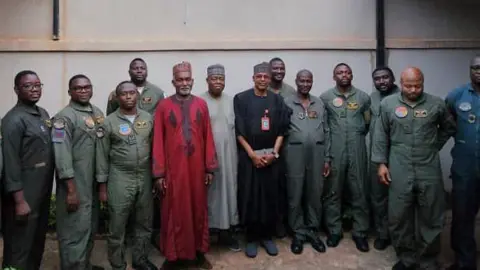
Nigeria's Foreign Minister Yusuf Tuggar has formally apologised to Burkina Faso for the unauthorised entry of a Nigerian military jet into Burkinabè airspace, an incident that led to the detention of 11 Nigerian servicemen.
Tuggar's spokesperson told the BBC that the detained personnel had been released and were due to return to Nigeria, without saying when.
The plane was flying to Portugal when it developed a technical problem and had to land in Burkina Faso, according to the Nigerian Air Force.
The unauthorised landing sparked a diplomatic row with the Alliance of Sahel States (AES) made up of Burkina Faso and its neighbours, Mali, and Niger.
In a statement, AES characterised it as an "unfriendly act" and said member states‘ respective air forces had been put on maximum alert and authorised to "neutralise any aircraft" found to violate the confederation's airspace.
The three AES states, all run by the military, have withdrawn from the West African regional bloc, Ecowas, and moved closer to Russia, while most Ecowas members remain allied to the West.
Tuggar led a delegation to the Burkinabè capital, Ouagadougou, on Wednesday, to discuss the incident with military leader Captain Ibrahim Traoré.
"There were irregularities concerning the overflight authorisations, which was regrettable, and we apologise for this unfortunate incident," Tuggar said on national TV.
It remains unclear when the military personnel, said to be in "high spirits", and the aircraft will return to Nigeria.
According to Nigeria's foreign ministry, both sides agreed to "sustain regular consultations and pursue practical measures to deepen bilateral cooperation and regional integration".
 Getty Images/BBC
Go to BBCAfrica.com for more news from the African continent.
Follow us on Twitter @BBCAfrica, on Facebook at BBC Africa or on Instagram at bbcafrica
 Getty Images
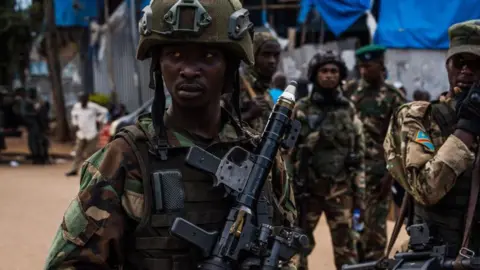
The rebel group which last week seized the Democratic Republic of Congo city of Uvira say they have begun withdrawing, promising to complete the pullout on Thursday, following pressure from the US.
The M23 group captured the strategic city near the border with Burundi, days after a "historic" US-brokered peace deal between Congolese and Rwandan governments aimed at ending the long-running conflict in eastern DR Congo.
However, DR Congo's government says the reported withdrawal is a "diversion" and needs verification.
On Thursday morning some Uvira residents told the BBC it was not clear if the M23 were leaving, with some of their trucks still moving around the city.
The capture of Uvira sparked US condemnation and warning of sanctions against Rwanda. The US accuses Rwanda of backing the rebels, which it denies.
M23 leader Bertrand Bisimwa said on Wednesday that the withdrawal was "under way," with spokesman Willy Ngoma adding that this was "for the sake of peace".
In a post on X, Bisimwa urged mediators and international partners to ensure the city was protected from "reprisals, violence and remilitarisation".
A local civil society member, who did not want to be named for his own safety, told the BBC that some M23 troops had started withdrawing. However, he said police officers from the same group were still moving in.
Another resident expressed doubts about the withdrawal.
"It seems they are still here. In fact, yesterday I saw them bringing in the police trucks," the resident told the BBC on Thursday morning.
DR Congo government spokesman Patrick Muyaya told the BBC Newsday programme that the M23's announcement was meant "to distract the American mediation team, which is preparing to take measures against Rwanda".
Muyaya described the M23's decision to leave Uvira as a "positive sign" but said the government needed to confirm the situation on the ground.
Earlier he had called for "vigilance" in response to the "alleged withdrawal".
"Who can verify it? Where are they going? How many were there? What are they leaving behind in the city? Mass graves? Soldiers disguised as civilians?" he said in a post on X.
The Uvira offensive left dozens dead, at least 100 wounded and more than 200,000 displaced, according to the UN. At least 30,000 civilians fled into Burundi.
It came despite the 4 December peace deal signed in Washington between Rwandan President Paul Kagame and his DR Congo counterpart, Felix Tshisekedi, at a ceremony in Washington hosted by President Donald Trump.
The rebels were not signatories to that peace deal but they have been part of a parallel peace process led by Qatar, a US ally that has strong ties with Rwanda.
Getty Images/BBCGo to BBCAfrica.com for more news from the African continent.
Follow us on Twitter @BBCAfrica, on Facebook at BBC Africa or on Instagram at bbcafrica
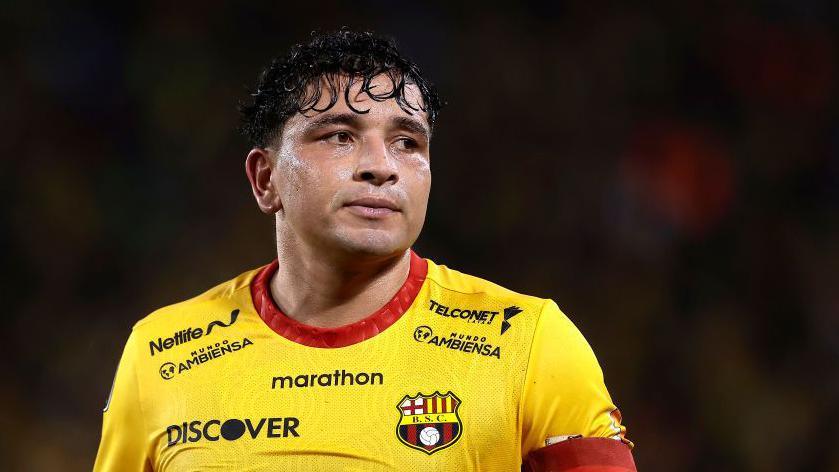
Mario Pineida played for Barcelona SC for nine years
Ecuador defender Mario Pineida has died at the age of 33 after being shot in Guayaquil.
Local media reported that Pineida was shot on Wednesday by two people on motorbikes who opened fire on him, his mother and another woman outside a shop in the north of the city.
Ecuador's interior ministry said it has sent a special police unit to investigate.
Guayaquil has become a hotspot for gang violence and drug trafficking, with 1,900 murders recorded between January and September - the highest in Ecuador.
Three second-tier footballers were killed in September and a local player was wounded in a shooting in October.
Pineida won nine caps for Ecuador between 2014 and 2021.
He began his club career at Independiente DV before moving to Barcelona SC in Guayaquil in 2016.
He also spent time on loan at Fluminese and El Nacional.
Independiente and Fluminese paid tribute to Pineida on social media, while Barcelona SC said "this unfortunate news makes all of us who are part of this institution deeply dismayed".
In a statement, the Ecuadorian Football Federation condemned the violence and passed on condolences to Pineida's family.


© Arash Khamooshi for The New York Times

© Reuters

(德国之声中文网) 中国官方周四(12月18日)宣布,在全球面积最大的自由贸易港——海南自贸港(FTP)正式启动全岛特殊海关监管运作。此举被广泛视为中国在应对全球保护主义升温、推动贸易自由化方面的里程碑式尝试。
根据新安排,海南岛被划定为“特殊海关监管区域”。其运作核心被概括为“一线放开、二线管住”。所谓“一线”,是指海南与境外(包括港澳台)之间的贸易往来将更加自由;“二线”则指从海南进入中国内地的货物,将实施标准的进口监管措施。
“零关税”范围大幅扩张
随着封关运作的启动,海南自贸港的零关税产品比例从原先的21%大幅提升至74%,相关免税项目从1900项扩充至6600项以上。
这意味着,诸如劳力士(Rolex)、路易威登(LV)等国际高端品牌有望逐步在岛内实现零关税销售。此外,一项关键政策规定:凡在海南加工的进口原材料,若加工增值达到或超过30%,其产品在销往中国内地时可免征进口关税。

分析人士指出,尽管海南目前的物价水平相较于邻近的广东省更高,但封关带来的超低关税预计将显著带动当地线下实体消费的增长,特别是对于每年冬季前往海南避寒的庞大游客群体而言。
战略地位:再造“深圳特区”的野心
海南自贸港的建设目标是在本世纪中叶将其打造为具有全球影响力的贸易中心。北京方面对海南的期待往往被解读为试图再造一个“深圳特区”,甚至有观点认为其长远目标是取代香港,成为中国通往东南亚的出口枢纽。
然而,也有分析指出,考虑到目前中国对外汇监管的需求,香港作为国际金融中心的地位短期内仍难以被取代。同时,海南目前作为“社会主义前提下的特殊监管区”,其国际化进程仍面临一些实际挑战。
据包括《风传媒》在内的媒体报道,,虽然海南已为岛内企业开放了国际互联网接入服务,但部分初创企业反映,目前仍存在“费用高昂、流程复杂、访问受限”等问题,实际体验尚待优化。
特殊日期与区域竞争
值得注意的是,封关日期12月18日恰逢1978年中国开启改革开放路线的周年纪念日。
海南曾是中国最早的特区之一,如今则在医疗、教育等服务领域进一步放宽了外资准入。官方数据显示,自2020年总体方案发布以来,已有超过9600家外资企业在海南落户。
在南海局势不断升温的背景下,海南的战略地位也愈发凸显。将海南打造为免税区域,也被视为中国通过经济手段维护地区局势稳定、与邻国越南等东南亚国家进行贸易博弈的重要策略。
DW中文有Instagram!欢迎搜寻dw.chinese,看更多深入浅出的图文与影音报道。
© 2025年德国之声版权声明:本文所有内容受到著作权法保护,如无德国之声特别授权,不得擅自使用。任何不当行为都将导致追偿,并受到刑事追究。

© Marco Postigo Storel for The New York Times

© Dave Sanders for The New York Times

欧洲领导人周四在布鲁塞尔举行高风险峰会,寻求为乌克兰的战争、军队和预算提供资金,但峰会结果仍不明朗。比利时继续拒绝“独自”承担这项欧洲前所未有行动的风险。但据报该决议合法多数通过即可,无需比利时投票。
欧盟外交事务负责人卡雅·卡拉斯抵达时表示:“普京正押注于我们的失败,我们绝不能让他得逞!”
欧盟委员会主席冯德莱恩也表示,27个成员国“不会在未就对乌克兰未来两年的资助达成协议的情况下离开会场”。
但能否达成协议尚无定论。以德国为首的大多数成员国希望动用俄罗斯央行在欧洲冻结的资产,为乌克兰提供900亿欧元的“赔偿贷款”。
“要跳伞大家一起跳”
但这些冻结资产的大部分(约2100亿欧元)位于比利时,而比利时首相巴特·德韦弗(Bart De Wever)仍不愿批准该计划。
他周四在比利时议会说,“明说吧,我从未见过能打动我,并获得比利时同意的文本”,“也许今天能看到,但我至今未见”。
比利时继续拒绝“独自”承担这项在欧洲前所未有行动的风险。
比利时首相巴特·德韦弗今天在该国议会强调:“在跳伞之前,我们需要一个降落伞。如果要求我们跳伞,那就大家一起跳”。
这位保守派首相担心比利时遭受俄罗斯的报复,甚至“永远”遭受报复,因此他要求对本国利益提供强有力的保护,包括保护其在俄罗斯境内的利益。
一位欧洲谈判代表解释说,合作伙伴认为他这一要求过高,他们愿意为乌克兰提供贷款担保,但不会签署“空白支票”。
法新社说,在特朗普决定关闭美国援助闸门后,欧洲各国承诺在未来两年内为基辅提供大部分财政和军事支持。
德国总理弗里德里希·默茨周四抵达布鲁塞尔时表示,“我认为没有比动用俄罗斯资产更好的选择”。
他本周早些时候曾警告说:“如果我们不这样做,欧盟的行动能力将在未来数年甚至更长时间内受到严重损害。”
比利时可以不投票!
动用被冻结的俄罗斯资产的决定可以由欧盟成员国的合格多数票通过,理论上比利时可以不参与,匈牙利也肯定不参,后者与克里姆林宫关系密切,完全反对这一选项。
在布鲁塞尔,今天,欧盟各国元首和政府首脑还可以考虑另一个选项。
那就是:欧盟可以借贷,但这样的决定需全体成员国一致同意。现在包括德国在内的几个国家对此非常犹豫,至少匈牙利完全反对。
如果无法达成协议,乌克兰最早可能在2026年第一季度就面临资金短缺的风险。
泽连斯基总统在前往布鲁塞尔参加峰会前对记者表示:“如果没有这项决定,乌克兰将面临大问题”。
就在他抵达布鲁塞尔前,他宣布将于周五和周六在美国举行新的美乌会谈。
据一位白宫官员透露,俄美两国特使也计划于本周末在佛罗里达州迈阿密举行会晤。
在莫斯科发动大规模进攻近四年后,泽连斯基仍然不相信克里姆林宫有实现和平的意愿,并表示,尽管和平谈判正在进行,他仍在为新的“战争之年”做准备。

(德国之声中文网)美国电影艺术与科学学院在洛杉矶宣布与YouTube已达成一项为期5年的协议,YouTube将从2029年的第101届奥斯卡颁奖典礼开始,拥有奥斯卡颁奖典礼的实况转播全球转播权,截至2033年。
除了奥斯卡颁奖典礼之外,其他活动,比如理事会奖(Honorary Oscars at the Governors Awards)和学生奥斯卡奖(Student Academy Awards)的荣誉奖颁奖典礼,也将在YouTube上播出。这项交易涉及的资金尚未披露。
美国电影艺术与科学学院希望此举吸引全球更广泛的观众。该学院执行主任克莱默(Bill Kramer)和院长泰勒(Lynette Howell Taylor)在一份声明中表示,他们是一个国际性机构,希望有尽可能多的全球观众参与。
在美国,奥斯卡颁奖典礼的收视率近年来不断下降:2016年,美国有近3500万观众观看了颁奖典礼,而今年却只有大约2000万观众。
YouTube在全球拥有超过20亿用户,是目前最大的视频平台。有评论认为,这一庞大的用户群体很可能在谈判转播权的过程中,发挥了决定性作用。此外,年轻人观看传统电视的时间越来越少,这也是原因之一。
自20世纪70年代以来,奥斯卡金像奖颁奖典礼一直由美国广播公司ABC播出。该电视台拥有独家转播权,2028年第100届奥斯卡颁奖典礼过后,这一历史也将终结。
明年,奥斯卡提名名单将于1月22日公布。第98届奥斯卡金像奖颁奖典礼定于2026年3月15日举行。
 奥斯卡的第一位华裔:很多人以为,李安为华语电影敲开了奥斯卡的大门。其实不然,早在1956年,美籍华人黄宗霑就凭借电影《玫瑰纹身》(也译《玫瑰梦》),拿下了奥斯卡最佳摄影奖。不到十年后的1964年,他又凭借影片《赫德》拿了同一个奖项的小金人。这位大清时代就移民美国的华裔曾获得过10次奥斯卡提名,纪录至今无人能打破。
 “新中国”的第一位:到了1988年,随着中国大陆改革开放,奥斯卡也越来越多的将目光转向中国。整个华语电影也迎来了在国际上四面开花,越来越被人们熟悉的黄金年代。生于天津,毕业于中央音乐学院,随后又留学德国,在慕尼黑高等音乐学院深造的苏聪,凭借为影片《末代皇帝》的配乐,成为了历史上第一个来自1949年成立后的新中国,并捧走小金人的中国人。
 李安时代:又过了十几年,奥斯卡迎来了李安时代。电影《卧虎藏龙》在2001年的奥斯卡上一举捧走了最佳外语片、最佳原创音乐、最佳摄影、最佳艺术指导四个奖项。从数目上来说比如今赵婷的《无依之地》还多了一个。
 “中国风”征服奥斯卡:与苏聪同样毕业于中央音乐学院的谭盾,是同样用电影原创音乐捧走小金人的华人。不仅是奥斯卡,《卧虎藏龙》的电影原创音乐还赋予了他一个格莱美奖。从那时开始,谭盾的名字彻底响彻华人音乐界。2008年为北京奥运会创作徽标Logo音乐和颁奖音乐,并为上海世博会创作中英文主题曲。自幼深受中华楚文化的影响的谭盾,擅长借鉴中国传统音乐风格,并运用非常规乐器进行实验音乐的探索。
 对爱的探索:用导演李安的话说,这是美好事物的延续。与《卧虎藏龙》时隔5年,这位已经彻底融入好莱坞的华裔导演又以同性题材《断背山》,拿到了2006年奥斯卡的最佳导演奖。李安在感谢词中表示,这不电影不仅仅是关于男人和男人,女人和女人,同性之间被社会否认的爱,还包括爱本身的伟大。
 功夫巨星的终生成就:成龙……成龙?!没错,这位爱国功夫男星手里不仅有小熊猫,还有一个小金人。奥斯卡组委会2016将厚重的终身成就奖颁发给了这位靠真功夫,真血汗打拼出来的华裔。有人说,这是奥斯卡组委会给的安慰奖。还有人说,就凭卓别林和迪斯尼都拿过这个奖,也能看出它的重要性。事实是,动作片明星在奥斯卡很难获奖。
 墙外开花墙外红:2021年的奥斯卡,肯定是属于华裔导演赵婷的。她的描写美国底层人民游牧生活的《无依之地》,在之前就狂扫了一遍包括金球奖、金狮奖、英国电影学院奖、美国国家影评人奖等在地表上几乎所有重要的电影奖项。如今又一举拿下了奥斯卡最佳影片,最佳导演和最佳女主角。颁奖感言中,赵婷向大家讲述她有关“人之初 性本善”的信念。但由于之前她在采访中曾发表令中国当局不悦的言论,获奖的消息及视频在中国遭遇全面封杀。
 真正的明星:从黄宗霑1956年第一次问鼎奥斯卡到现在,全球华裔华人总共在奥斯卡上发表了21次获奖感言。 除了上述人物之外,还包括1993年首位获得奥斯卡的台湾人江道格(最佳视觉效果),首位香港人鲍德熹(2001年最佳摄影)以及凭借《星球大战IV:新希望》拿到最佳剪辑奖的美籍华人赵汝钜。他们都为后人的成功和被奥斯卡接受奠定了基础。是华光琦影背后真正的明星。
(德新社)
DW中文有Instagram!欢迎搜寻dw.chinese,看更多深入浅出的图文与影音报道。
© 2025年德国之声版权声明:本文所有内容受到著作权法保护,如无德国之声特别授权,不得擅自使用。任何不当行为都将导致追偿,并受到刑事追究。
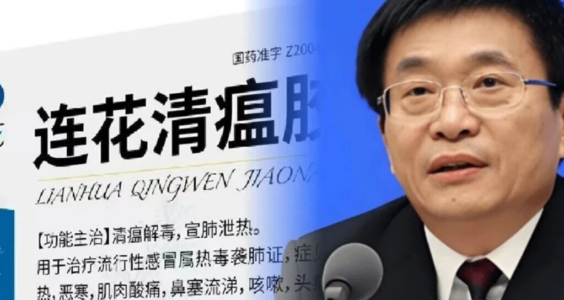
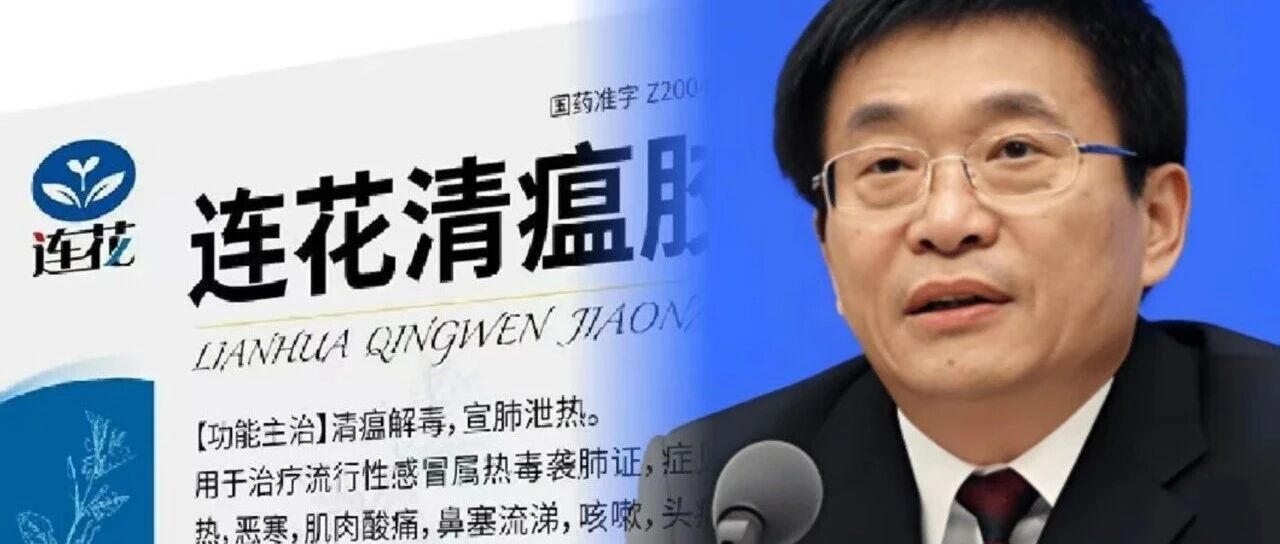
2025年12月16日,国家监委正式通报,国家中医药管理局原局长于文明因严重职务违法并涉嫌受贿犯罪,被依法没收全部违法所得,涉案问题及财物移送检察机关审查起诉。
这则通报,揭开了于文明这位深耕中医药领域35年的行业“掌舵人”的权力寻租的黑幕。
纵观于文明案的核查轨迹,疫情期间“抗疫神药”连花清瘟的非常规上位是关键线索,一步步串联起其违纪违法的完整轨迹,成为撬动该案查办的核心突破口。
从笔杆子到行业掌舵人
于文明的职场生涯,始终与中医药行业深度绑定,从基层记者到全国行业管理者的跨越,既积累了扎实的行业认知,也逐步掌握了足以左右行业走向的核心权力。
1963年出生的于文明,怀揣医学硕士学位踏入职场,1988年入职中国中医药报社,从一线记者、编辑做起,凭借对行业动态的敏锐把握,逐步晋升至中药与通联部副主任,十年的媒体从业经历,让他摸清了中医药行业的宣传逻辑与资源分布,也搭建起初步的行业人脉网络。
1997年,他跳出媒体行业,调任中医药科技开发交流中心主任,深耕十年间,全面参与中医药技术推广、资源对接、项目落地等核心工作,熟悉行业资源调配的关键环节,为后续执掌行业监管权奠定了基础。
2004年,于文明迎来仕途关键跃升,出任国家中医药管理局副局长,自此开启长达19年的行业监管生涯;2018年6月,正式出任国家中医药管理局局长,登顶行业管理核心岗位,手握药品注册审批、诊疗方案制定、科研资金分配、行业政策出台等关键职权,涵盖中医药研发、生产、流通、推广全链条,直至2023年7月卸任。
任职初期,他还能坚守公职人员廉洁底线,聚焦行业发展履职尽责,但随着权力越来越大、话语权越来越重,面对中医药领域巨额的市场利益诱惑,他逐渐迷失了方向,理想信念悄然滑坡,将公权力视为个人谋利的工具。
官方通报显示,其违纪违法行为覆盖2004年任副局长、2018年任局长至2023年卸任的全周期,且在党的十八大后反腐高压态势下仍不收敛、不收手,顶风违纪违法,从最初的接受宴请、收受礼品,逐步演变为主动干预审批、定向输送利益,廉洁防线一步步崩塌,最终深陷腐败泥潭。
更值得关注的是,于文明曾兼任农工党北京市委会主委、农工党中央专职副主席,作为民主党派人士,其跨界任职,体现了多党合作的治理格局,也让他获得了更广阔的权力空间。作为民主党派任职的中管干部,于文明本应恪守公职人员职业操守,却无视党纪国法约束,其腐败行为不仅葬送了个人前程,也损害了民主党派人士参与国家治理的良好形象,性质严重、影响恶劣。
“神药” 的反常操作 暗藏线索
2020年初,新冠疫情突如其来,医疗资源紧张、特效药匮乏,中医药作为抗疫重要力量逐步走进公众视野,连花清瘟系列中药快速崛起。这背后,看似是中医药抗疫的成功实践,实则暗藏诸多不合常理的操作,这些反常之处,成为日后核查于文明违纪违法问题的核心线索。
正常情况下,一款中药新品从配方调整、临床验证到获批生产,需经过严格的安全性、有效性检测,完整流程至少需要1-2年的时间,即便在疫情应急防控期间,应急审批也需要完成核心的临床验证、专家评审等环节,确保药品安全有效;而连花清瘟仅用15天,便完成了从配方优化到规模化生产的全流程,其推进速度远超同期所有应急医疗物资与药品。
行业罕见的“速成奇迹”背后,离不开于文明的直接主导与推动。
更反常的是,连花清瘟的政策背书与审批放行完全“无缝衔接”,且全程绕开常规审核流程。
2020年1月,《新冠病毒肺炎诊疗方案(试行第四版)》首次将连花清瘟纳入医学观察期推荐用药;而此时,该药品尚未完成针对新冠治疗的核心临床验证。此后,连续六版诊疗方案均未剔除该药品,2022年发布的第九版诊疗方案更将其升级为确诊病例轻、普通型推荐用药,政策支持力度持续加码。2020年4月,在缺乏完整大样本双盲实验数据的情况下,火速批准连花清瘟增加“新冠肺炎轻、普通型治疗”新适应症。而双盲随机对照试验,是国际公认的药物有效性金标准,是药品获批新增治疗适应症的核心依据,该环节的缺失,让连花清瘟的疗效始终备受争议。
事实上,这一系列非常规操作,并非行业专家集体决策的结果,而是于文明个人权力干预的产物。
据了解,连花清瘟纳入诊疗方案、获批新增适应症等关键环节,均未按正常程序广泛征求全国多学科医疗专家意见,也未开展全面的疗效论证,而是由于文明直接拍板定调,通过行政指令推动相关部门快速落实,形成了“行政干预替代科学评审”的特殊通道。
期间,于文明还多次亲自为连花清瘟“站台”,在行业研讨会、产品推广会上公开称赞其抗疫效果,称其“为疫情防控作出重要贡献”,刻意放大该药品的临床价值;而同期其他同样具备应急抗疫潜力的中药品种,均未得到同等力度的政策支持;这种明显的差异化对待,让权力寻租的痕迹愈发清晰。
对此,首都医科大学校长饶毅曾公开发声,抨击“疫情期间不容假药趁火打劫,不宜强行派送未经科学验证的中药”,丁香医生等权威医疗平台也明确发文指出“连花清瘟无法实现预防新冠病毒的效果”,但这些专业质疑均未能撼动连花清瘟的官方推荐地位,背后正是于文明的权力庇护,也让外界对二者之间的利益关联产生了强烈怀疑,成为纪检监察机关介入核查的重要契机。
“神药”背后的权力寻租
连花清瘟的非常规上位,直接催生了以岭药业的百亿暴利神话。而这一神话的背后,是于文明利用公权力搭建的“政策背书→市场垄断→资本获利”完整利益链条,也是其涉嫌受贿犯罪的核心事实依据。
数据显示,2019年,连花清瘟的年销售额仅约17亿元,在中药市场中并不起眼;2020年被纳入新冠诊疗方案后,销售额飙升至42.56亿元,同比暴涨近150%;2021年前三季度销售额再创新高,突破30亿元;2022年上海、北京等多地疫情反弹期间,该药品需求激增,单月销售额屡创新高,巅峰时期直接带动以岭药业市值突破千亿,创始人家族财富实现爆发式增长。
销售额的暴涨,完全依赖于于文明主导的政策红利。
纳入国家新冠诊疗方案后,连花清瘟不仅顺利进入医保报销目录,成为各级医疗机构的强制推荐用药,还被纳入多地政府采购清单,成为社区防控、集中隔离点的“标配物资”。2022年上海疫情期间,日均调配400万盒连花清瘟发往上海,大量资源、医保资金向该药品倾斜;而以岭药业则借助这一契机,不断扩大生产规模、提升产品价格,赚取巨额利润。
于文明还利用自身职权,推动连花清瘟在全国范围内的推广销售,要求各地中医药管理部门加大宣传力度,引导医疗机构、药店优先采购、销售该药品,进一步巩固了其市场垄断地位,为以岭药业源源不断输送利益。
随着案件核查的深入,于文明与以岭药业之间的隐秘利益逐步浮出水面,印证了“政策换利益”的核心线索。
于文明任内与以岭药业创始人吴以岭交往密切,多次共同出席行业会议、产品推广活动,私下也存在频繁接触,远超正常的工作往来范畴。同时,于文明的亲属经营活动与中医药行业存在深度关联,其亲属名下企业曾涉及中药产品销售、行业资源对接等业务,而这些业务与以岭药业存在间接的合作关系,疑似通过亲属代持、关联交易等方式,收受以岭药业输送的好处费。
此外,检察机关还重点追踪了以岭药业的销售返利、关联企业资金流向,以及于文明及其亲属的银行账户、房产、理财等资产变动情况,发现多笔资金流向存在异常,与连花清瘟的推广节奏、政策支持节点高度契合,这些线索相互印证,形成了完整的证据链条,成为认定于文明涉嫌受贿犯罪的关键依据。
除了连花清瘟相关的利益输送,以该线索为突破口,纪检监察机关还顺藤摸瓜,查清了于文明在其他领域的违纪违法事实。
在药品注册审批领域,他还为多家中药企业在新品审批、产品注册证书延期等环节提供便利,降低审核门槛、加快审批进度,非法收受企业财物;在科研资金分配领域,他将年规模超百亿的国家级中药创新科研资金,定向倾斜给关联企业,部分资金被违规挪用,最终流向个人及亲属口袋;在廉洁纪律方面,他长期接受管理服务对象安排的高档宴请、异地旅游,收受大量名贵礼品、礼金,纵容亲属利用自身职权谋取私利,形成“家族式腐败”格局;在组织纪律方面,他未按规定如实报告个人有关事项,刻意隐瞒与企业的利益关联,试图规避组织监督,全面触碰纪律红线。
(原文有删节)
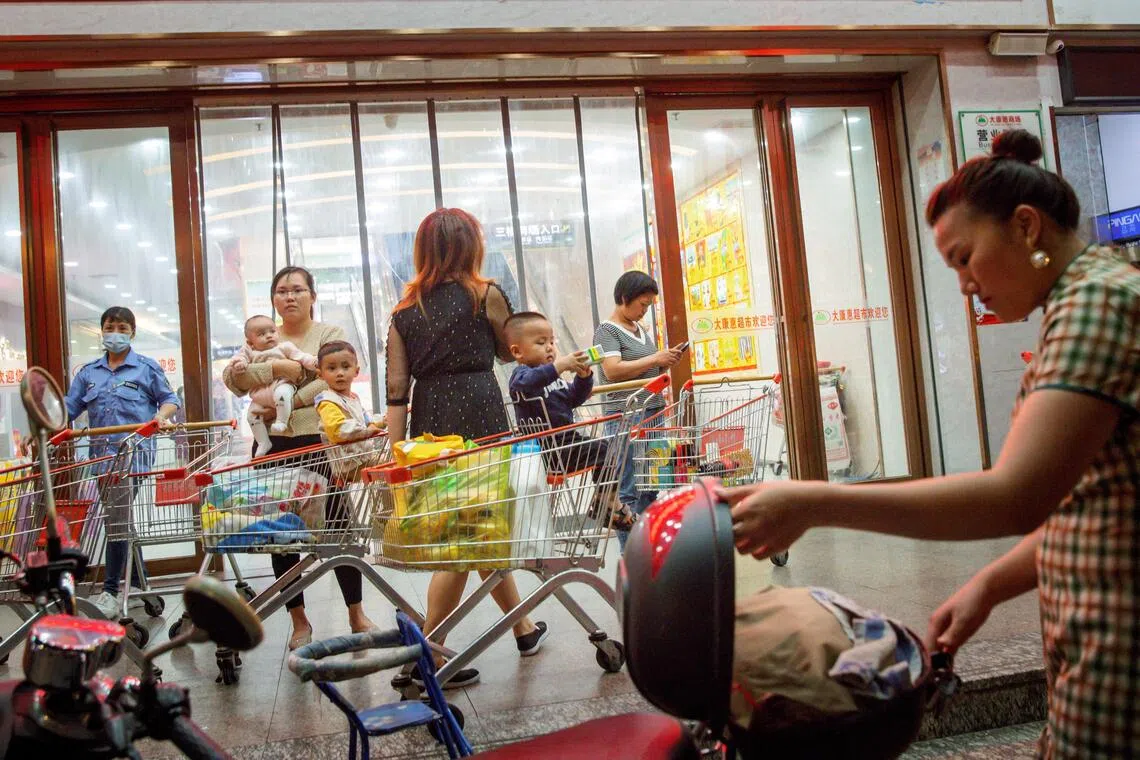
在生育率持续走低的当下,中国知名游戏公司多益网络董事长徐波被曝在美国通过代孕育有大量子女,引发舆论震动,也再次掀起中国舆论对代孕合法性和伦理问题的讨论。
事缘徐波前女友汤敬11月15日在微博爆料,徐波通过代孕方式育有300个孩子;这些孩子没有户口,也未接受系统性的教育,而是被集中安置在封闭空间中生活。
针对网民质疑“300个”是否夸大、“是不是多写了一个零”,汤敬回应称:“没有,只会少写不会多写。”
美国启动逾111亿美元(143亿新元)对台军售案,其中包括82套海马斯多管火箭,台湾学者称,有助于台湾加速淘汰旧式火炮。
据联合新闻网报道,淡江战略所副教授林颖佑星期四(12月18日)分析,美方此次宣布出售达82套海马斯火箭系统,“暴增的数量令战略与安全研究圈都相当惊讶”。
林颖佑研判,台美双方都认为海马斯多管火箭的作战模式,是台海防卫作战所需要的。美方可能也发展出了新的战术战法,牵动台方增购大量海马斯火箭。
他指出,如此一来,台湾陆军现有的老式牵引火炮可能将全数淘汰,尤其在无人机充斥的新战场环境下,牵引式火炮在台湾本岛几乎将无生存空间。
林颖佑指出,未来台军新装备与既有装备如何结合使用,军队的作战准则、教范是否随之检讨调整,是军方必须认真思考的问题。
台湾国防部在官网发布新闻稿时说,美国政府于美东时间星期三(12月17日)下午5时30分,就台湾战术网络(TTN)暨部队觉知应用套件(TAK)、陆军AH-1W型直升机零附件、M109A7自走炮、海马斯远程精准打击系统续购、拖式导弹续购、反装甲型无人机导弹系统、海军标枪反甲导弹续购、鱼叉导弹可修件检修等,总额111亿540万美元对台军售八案,进行知会国会程序,可望于一个月后正式生效。
Ukrinform/NurPhotoEuropean Union leaders begin two days of talks in Brussels with a momentous decision to be taken on whether to loan tens of billions of euros in frozen Russian assets to Ukraine to fund its military and economic needs.
Most of Russia's €210bn (£185bn; $245bn) worth of assets in the EU are held by Belgium-based organisation Euroclear, and so far Belgium and some other members of the bloc have said they are opposed to using the cash.
Without a boost in funding, Ukraine's finances are set to run dry in a matter of months.
One European government official described being "cautiously optimistic, not overly optimistic" that a deal would be agreed. Russia has warned the EU against using its money.
It has filed a lawsuit against Euroclear in a Moscow court in a bid to get its money back.
The Brussels summit comes at a pivotal moment.
US President Donald Trump has said a deal to end the war - which began with Russia's full-scale invasion of Ukraine in February 2022 - is "closer now than we have been ever".
Although Russia has not responded to the latest peace proposals, the Kremlin has stressed that plans for a European-led multinational force for Ukraine supported by the US would not be acceptable.
President Vladimir Putin made his feelings towards Europe clear on Wednesday, when he said the continent was in a state of "total degradation" and "European piglets" - a derogatory description of Ukraine's European allies - were hoping to profit from Russia's collapse.
Alexander KAZAKOV/POOL/AFPThe European Commission - the EU's executive arm - has proposed loaning Kyiv about €90bn (£79bn) over the next two years - out of the €210bn of Russian assets sitting in Europe.
That is about two-thirds of the €137bn that Kyiv is thought to need to get through 2026 and 2027.
Until now the EU has handed Ukraine the interest generated by the cash but not the cash itself.
"This is a crunch time for Ukraine to keep fighting for the next year," a Finnish government official told the BBC. "There are of course peace negotiations but this gives Ukraine leverage to say 'we're not desperate and we have the funds to continue fighting'."
Commission chief Ursula von der Leyen says it will also ramp up the cost of war for Russia.
Russia's frozen assets are not the only option on the table for EU leaders. Another idea, backed by Belgium, is based on the EU borrowing the money on the international markets.
However, that would require a unanimous vote and Hungary's Viktor Orban has made it clear he will not allow any more EU money to help Ukraine.
For Ukraine, the hours ahead are significant and President Volodymyr Zelensky is expected to attend the EU summit.
Ahead of the Brussels meeting, EU leaders were keen to stress the momentous nature of the decision.
"We know the urgency. It is acute. We all feel it. We all see it," von der Leyen told the European Parliament.
EPAGerman Chancellor Friedrich Merz has played a leading role in pushing for the Russian assets to be used, telling the Bundestag on the eve of the summit it was about sending a "clear signal" to Moscow that continuing the war was pointless.
EU officials are confident they have a sound legal basis to use the frozen Russian assets, but so far Belgian Prime Minister Bart De Wever remains unconvinced.
His Defence Minister Theo Francken warned ahead of the talks that it would be a big mistake to loan the Euroclear cash.
Hungary is seen as the biggest opponent of the move and, ahead of the summit, Prime Minister Orban and his entourage even suggested that the frozen assets plan had been removed from the summit agenda. A European Commission official stressed that was not the case and it would be a matter for the 27 member states at the summit.
Slovakia's Robert Fico has also opposed using the Russian assets, if it means the money being used to procure weapons rather than for reconstruction needs.
When the pivotal vote does finally take place, it will require a majority of about two-thirds of member states to go through. Whatever happens, European Council President António Costa has promised not to go over the heads of the Belgians.
"We're not going to vote against Belgium," he told Belgian public broadcaster RTBF. "We'll continue to work very intensively with the Belgian government because we don't want to approve something that might not be acceptable for Belgium."
Belgium will also be aware that ratings agency Fitch has placed Euroclear on a negative watch, partly because of "low" legal risks to its balance sheet from the European Commission's plans to use the Russian assets. Euroclear's chief executive has also warned against the plan.
"There are many hiccups and obstacles of course still on the way. We have to find a way to respond to Belgium's worries," the Finnish official added. "We are on the same side as Belgium. We will find a solution together to make sure all the risks are checked as much as they can be checked."
However, Belgium is not the only country to have doubts, and a majority is not guaranteed.
Italian Prime Minister Giorgia Meloni has told Italian MPs she will endorse the deal "if the legal basis is solid".
"If the legal basis for this initiative were not solid, we would be handing Russia its first real victory since the beginning of this conflict."
Malta, Bulgaria and the Czech Republic are also said to be unconvinced by the controversial proposals.
If the deal is passed and the Russian assets are given to Ukraine, the worst-case scenario for Belgium would be one in which a court would order it to hand the money back to Russia.
Some countries have said they would be prepared to provide billions of euros in financial guarantees, but Belgium will want to see the numbers add up.
At any rate, Commission officials are confident that the only way for Russia to get it back would be by paying reparations to Ukraine - at which point Ukraine would hand its "reparations loan" back to the EU.
 PA Media
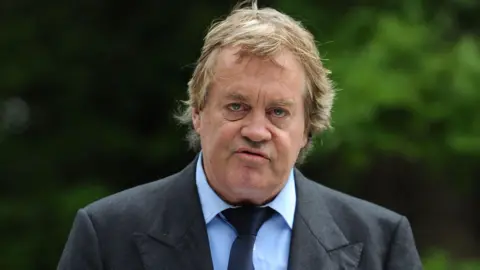
A court hearing for the Duke of Marlborough on charges of intentional strangulation has been adjourned.
Charles James Spencer-Churchill, 70, formerly known as Jamie Blandford, is accused of attacking the same person in Woodstock, Oxfordshire, three times over an 18-month period.
He was due to appear at Oxford Magistrates' Court on Thursday morning charged with three counts of non-fatal intentional strangulation.
Thames Valley Police said a new court date had yet to be confirmed.
The attacks are alleged to have taken place between November 2022 and May 2024, police said.
The twice-married aristocrat, formerly known as the Marquess of Blandford, was arrested on 13 May 2024.
He inherited his dukedom in 2014, following the death of his father, the 11th Duke of Marlborough.
He is a first cousin, three times removed, of Sir Winston Churchill and a distant relative of the late Princess Diana through the Spencer family.
His ancestral family home is Blenheim Palace in Woodstock – Sir Winston's birthplace - which is owned and managed by Blenheim Palace Heritage Foundation.
The foundation said it was "unable to comment on the charges, which relate to the duke's personal conduct and private life, and which are subject to live, criminal proceedings".
 Blenheim Palace
You can follow BBC Oxfordshire on Facebook, X, or Instagram.
 PA Media
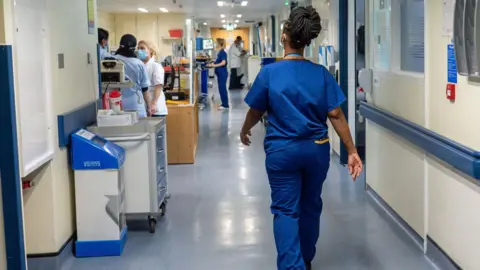
Hospitals across the UK are seeing high levels of flu cases this winter.
The NHS in England has said it is on "on high alert" after seeing the highest ever number of flu cases in hospital for this time of year, in the week ending 14 December.
You can use our tool below to find out how many flu patients there are in hospitals near you.
Figures relating to flu cases in hospitals are collected in different ways in each UK nation.
In England it is the weekly number of beds occupied by patients with a laboratory confirmed flu case.
This data is provided at NHS Trust level. Trusts are organisations which include hospitals, community services and providers of other forms of patient care. You can find which trust your local hospital belongs to on the NHS England website.
In Scotland the figures relate to the number of patients admitted to hospital with a laboratory confirmed flu case taken between 14 days before the admission date and 48 hours after the admission date.
In Wales it is the weekly number of patients in hospital with a laboratory confirmed flu case taken from 28 days before the admission date if tested outside of hospital, or within two days after admission.
Figures for Scotland and Wales are provided at NHS Health Board level. Health boards are responsible for all frontline healthcare services. You can find which Health Board your local services belong to on the NHS Scotland or NHS Wales websites.
In Northern Ireland the figures show the number of new flu cases admitted to hospital that were acquired outside of hospital.
This data is provided at Health and Social Care Trust level. Trusts are responsible for providing local and regional health services. You can find which trust your local hospital belongs to on the NI direct website.
 Getty Images
More than 79,600 criminal cases are now caught in the courts backlog in England and Wales, new figures show.
The Crown Court backlog has been at a record high since early 2023 and is projected to hit 100,000 by 2028, according to the Ministry of Justice (MoJ). The delays mean that for some serious crimes charged today the victims and suspects could be left waiting years for justice as they are unlikely to see the case come to trial before 2030.
This crisis has prompted the government to announce radical reforms to the criminal courts, including removing juries - a fundamental part of our criminal justice system - from a number of trials in England and Wales in an attempt to speed up justice and slash the backlog.
The latest MoJ figures show there has been a huge growth in cases taking two years or more to conclude, something that was a rarity before 2010 budget cuts began to bite, and which was later exacerbated by the pandemic and other factors.
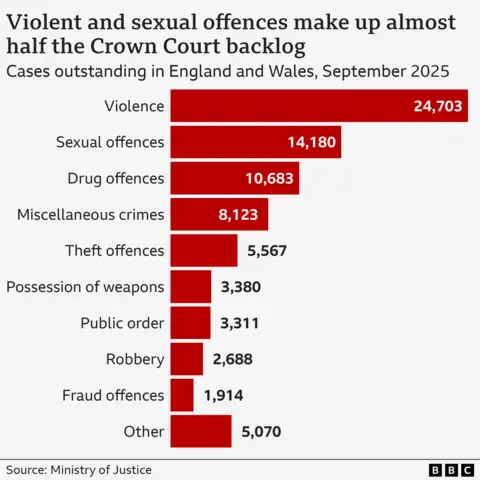
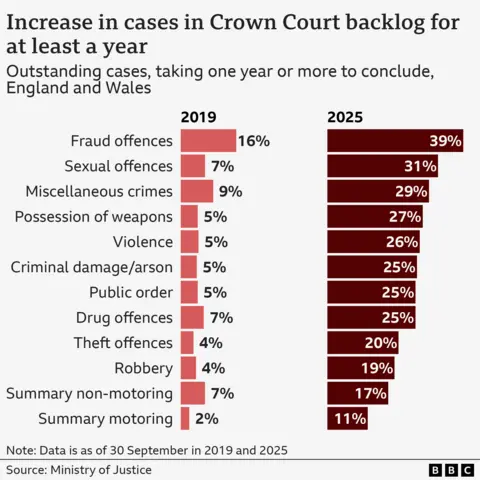
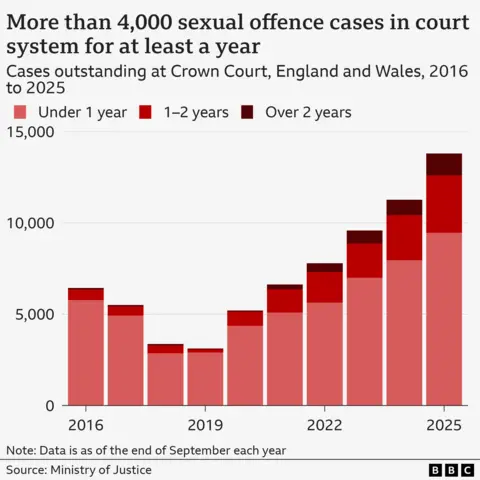
About a quarter of violence and drug offences, many of which do not require the defendant to be detained pre-trial, have been in the backlog for at least a year. More than 30% of sexual offences have been in the system for at least that long. For context, in 2019 there were around 200 sexual offences that had been open for more than a year. Now there are more than 4,000.
It means the situation has become significantly worse for victims, defendants, witnesses and everyone else who works in the system, and shows the scale of the problem the government is now grappling with.
So how did we get here? At the heart of this story is funding - and the lack of it - which started in 2010.
Back then the coalition government pledged to slash spending to balance the books - and the MoJ took a huge cut to its £9bn budget. It means its total spending today is £13bn, which is £4.5bn lower in real terms than it would have been had it kept pace with the average government department, according to the Institute of Fiscal Studies.
Why did that cut happen?
When the coalition government began making austerity cuts, the MoJ took a bigger hit than some other departments such as health and defence. It delivered some of its cuts by shutting court rooms, and by 2022, eight crown court centres and more than 160 magistrates courts were gone, according to ministerial answers to parliamentary questions.
Ministers also introduced a cap on the number of days judges are paid to sit in court and hear cases, to help reduce spending.
In 2016-17 there were 107,863 of these "sitting days" recorded, but that had fallen to 81,899 by the eve of the pandemic. If there's no judge, there's no hearing, which meant individual courtrooms were left idle even if the rest of a court complex was still hearing cases.
Then the Covid pandemic happened, which left all Crown Courts closed for two months during the first lockdown other than for urgent and essential work. When they reopened, many individual courtrooms could not be used for trials because they were too small to comply with social distancing requirements. Everything slowed to a snail's pace and the backlog exploded.
This is when the unintended consequences of earlier closures began to bite harder. Take for example Blackfriars Crown Court in London. Its nine court rooms were once an important centre for serious organised crime cases, but ministers decided to close it in 2019 and hoped to sell the land.
Many of its cases were shifted to Snaresbrook in east London, but since the pandemic it has been overwhelmed. At the end of September 2019 it had 1,500 cases on its books, official figures show, but as of September this year it was juggling more than 4,200.
Before the pandemic, only 5% of outstanding cases for violence across England and Wales had been in the system for more than a year - now a quarter of cases have taken that long. There have been similar increases in the length of time taken for criminal damage, possession of weapons and drug offence cases.
During the Covid pandemic, temporary "Nightingale courts" were introduced to help alleviate pressure on the court system by keeping some cases moving, sitting for 10,000 days between July 2020 and 2024.
But they could not deal with serious crime involving custody because they were often in conference centres or hotels with no cells or appropriate security. Today there are still five Nightingale courts operating, all of which are due to close by March 2026.
Sometimes the MoJ re-opened a court it had closed. Chichester's Crown Court was shut down, despite local opposition, in 2018. It was temporarily re-opened to help deal with the overflow of cases from Guildford 40 miles away - and its future remains uncertain, despite the backlogs.
 Getty Images
But there is another element that has made everything much harder to fix.
The national legal aid system pays for barristers and solicitors to act for a defendant who cannot afford to pay for their own lawyer. It both helps ensure a fair trial and keeps cases moving through the courts, but the funding for this system has been repeatedly cut or frozen over the past 25 years, which in turn has led to a fall in barristers taking criminal cases.
The National Audit Office found there has been a real term reduction in legal aid spending by the MoJ of £728m between 2012-13 and 2022-23.
And there has also been a 12% fall in the number of barristers doing criminal work between 2018-19 and 2024-25, according to the Criminal Bar Association.
In 2021, the government was advised to inject £135m extra funding into legal aid but it did not go far enough for many in the profession and triggered months-long strike action from defence barristers the following year. This created a second wave of chaos in the courts because, just like in the pandemic, cases could not progress through the system.
The shortages in judges and lawyers contrast sharply with what happened to policing. In 2019 former prime minister Boris Johnson promised to hire 20,000 extra police officers across England and Wales, reversing the fall that began during austerity cuts. That meant more suspects charged and sent to trial - but critics said there was no corresponding planning for how this would impact the courts.
Prosecutions can also take longer because of changes to how evidence is gathered by police, particularly involving our digital lives. Many cases today, especially those involving serious sexual offences, involve a huge amount of evidence taken from digital sources such as mobile phone chats, which can take months to comb through ahead of a trial and more time going through it with a jury.
The backlog also has a knock-on effect on prisons. There are nearly 17,700 people on remand in England and Wales, almost double the number in 2019 . This includes people who have been convicted of a crime but have not yet been sentenced, and nearly 12,000 people who are waiting for a trial.
People held on remand accounts for around 20% of the prison population. The number of prisoners in England and Wales is already projected to top 100,000 by 2030 according to the MoJ.
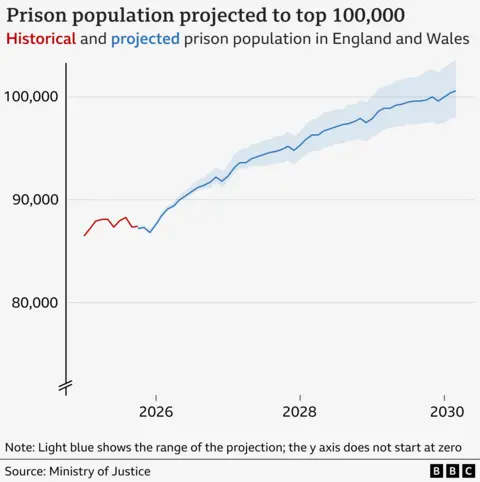
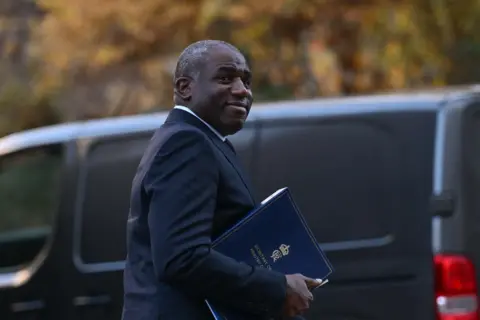
That crisis led Sir Keir Starmer's governent to introduce an early release scheme for some offenders last year and pledge wider justice reforms.
If people on remand don't have their cases completed then they can't be released or sent to serve a sentence, which means prisons will quickly fill up again. But while the courts try to prioritise remand cases at the expense of everyone else entering the system, the growing queue of cases has become ever longer.
 Anadolu via Getty Images
A Briton who fought in Ukraine has been sentenced to 13 years in a maximum-security prison, the Russian Prosecutor-General's office has said.
Hayden Davies, a former British soldier who Russia has called a mercenary, was reportedly captured in Ukraine's Donbas region in late 2024 or early 2025 while serving with the country's foreign legion.
He was tried in a Russian-controlled court in the city of Donetsk, which is currently occupied by Moscow.
The UK Foreign, Commonwealth & Development Office (FCDO) has been contacted for comment. It had previously described charges against Mr Davies and another Briton captured in Ukraine as "false" and said the pair were prisoners of war.
The FCDO condemned the detention of both Mr Davies and James Anderson.
"They are not mercenaries," it said earlier this year. "They are prisoners of war.
"Ukraine has confirmed that both are members of Ukrainian Armed Forces. They must be provided all the rights and protections afforded to prisoners of war under the Geneva Conventions," it added.
In a statement, Russian prosecutors said Mr Davies joined the Ukrainian army in August 2024 and "took part in military operations against the Russian armed forces on the territory of [Donetsk Region]".
In court footage released by prosecutors, a man with a British accent speaks via a translator from inside a barred cage, which is standard practice for many Russian hearings.
The man said he was a member of the Ukrainian Army's foreign legion and travelled to Ukraine by bus via Poland.
He said he was paid $400 (£300) or $500 a month as a salary. When asked if he pleaded guilty to the charge, the man said "yeah" and nodded his head.
It is not clear whether he was speaking under duress.
Mr Anderson was jailed for 19 years in March after being charged with terrorism and mercenary activity.
The 22-year-old was the first British national to be convicted by Russia during the war.
Reform UK threw a Christmas party last weekend, and they had more to celebrate than just the festive season.
A few days earlier the party pulled off a surprise victory in a council by-election in the ward of Whitburn and Blackburn in West Lothian. This was their first win in Scotland.
We're only a few months away from a Scottish election, and we would expect to see in this part of the country a tussle involving SNP and Labour.
The outcome of one local by-election does not represent a complete shift in Scottish politics - of the 33 West Lothian Council seats the SNP and Labour dominate, sharing 26 between them. However, this is a moment nonetheless.
So what has led a former mining town between Glasgow and Edinburgh to turn to the party of Nigel Farage?
In the words of multiple people we spoke to, it's all quite simple - they're "fed up".
Farage's previous political projects - Ukip and the Brexit Party - never got much of a foothold in Scotland. But Reform UK seems to be bucking that trend.
Numerous Scottish opinion polls have suggested that they're in second place behind the SNP, hovering around the same levels of support as Labour. At this point, it seems likely they'll return a decent number of MSPs at the Holyrood election next May.
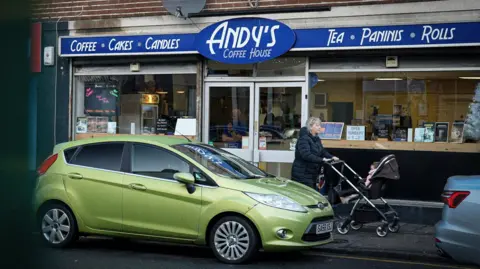
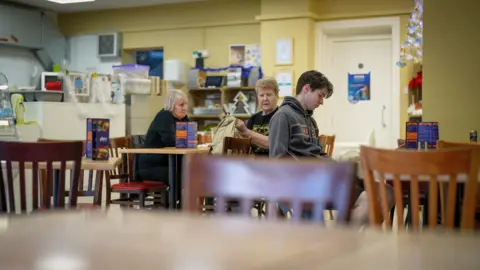
Our morning began in Andy's Coffee House on Whitburn's main street.
GB News – the favoured channel of Nigel Farage – was on the TV as the owner Andy Valentini made the coffees.
Andy told us that he allowed Labour, the SNP and Reform to leave leaflets out in his café during the by-election campaign.
He wasn't hugely surprised by the result. After all, he explains "the bulk of the customers were actually taking Reform leaflets".
And he's glad to see this new-ish party start to have some electoral success in Scotland, insisting that the country needs "a huge, big change".
Andy accuses Labour of "destroying the country" when it comes to their approach to small businesses.
He says his electricity bills have gone from £300 a month to £900 in the past few years.
And increases in the minimum wage and employer national insurance have resulted in him "taking a big hit".
Longer term, current costs mean that he doesn't think his business is sustainable.
Migration is also an area that the café owner thinks needs addressed.
He insists he backs legal migration, pointing out his grandfather moved from Italy to Scotland, but says "I'd like to see [Reform] stopping illegal migration full stop".
"Nigel Farage is the man to do it", he adds.
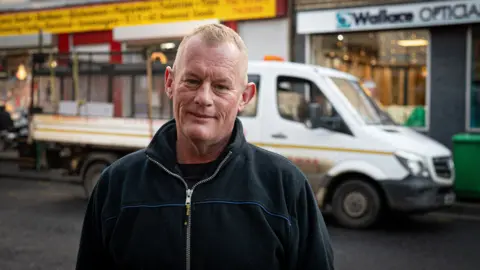
Andy isn't alone. There are others we spoke to in Whitburn who like the approach that the Reform UK leader is taking.
Darren Ainslie, who popped in for a roll on his way to pick up waste in his van, complains that "everyone's skint".
He's also concerned about people arriving in the UK via small boats, saying "you don't know who you're getting".
Darren says he'll be voting Reform UK at the next Holyrood election.
"Our governments now are not listening. And if this is what it takes to make them listen then Reform's got to be the way to go."
But Reform are by no means universally popular in this town.
Susan Snow – a retired nursey operator – told us she wasn't pleased when the party won last week's by-election.
She said she doesn't like Nigel Farage and questioned how genuine he is.
Another woman we spoke to said that Reform wanted to "bring things back to the old days, the 1930s" and questioned how inclusive the party was.
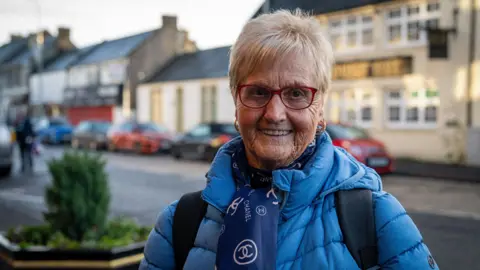
Regardless of their view on Reform, no one we spoke to seemed particularly politically satisfied at the moment.
We spent around 90 minutes on the main street talking to passers-by. Some were happy to give their views on camera, others didn't want to be recorded.
But the phrase that came up time and time again was "fed up".
People were "fed up" with the main parties, "fed up" with what they regarded as poor-quality public services, and "fed up" with what they perceived as a lack of change.
And there were specifics. A number of people brought up migration and questioned why asylum seekers were being housed in hotels.
The UK government said it aimed to end this practice by the time of the next general election.
There were also complaints about the NHS, potholes, homelessness and the benefits bill.
We found no shortage of residents who were at least sympathetic to Reform UK's approach.
And they weren't all former Labour or Conservative voters.

One woman told us that she had been a "massive SNP supporter" until a few years ago, but was now "a wee bit homeless" and understood why local people were opting for Reform.
Though she questioned how much she personally trusted the new right-wing party.
In the aftermath of last week's by-election, the SNP said they had run a campaign focused on "the real challenges faced by our communities".
Scottish Labour acknowledged that voters were frustrated, with Deputy Leader Jackie Baillie saying that "politics must aspire to being more than Reform and the SNP talking up division for their own political gain."
The polls do seem to suggest that Reform UK are now serious players in Scotland, on the verge of delivering a significant number of MSPs next May.
And the mounting evidence that some Scots seem willing to give them a shot injects a massive dose of unpredictability into the looming election campaign.
 Getty Images
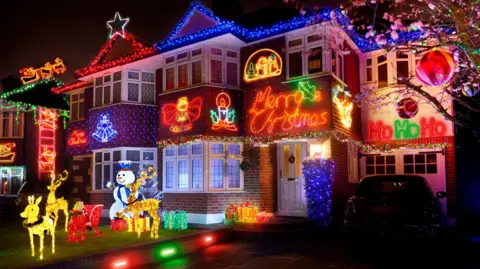
It might be a neighbour's car blocking your driveway, music vibrating through the walls, or a flashing inflatable Santa lighting up your bedroom at 3am.
Whatever the issue, you're unlikely to be alone. Neighbourly tensions often rise during the festive season and, while raising concerns can feel awkward, there are practical and legal ways to deal with disputes.
Here's how to deal with festive fallouts and keep the peace this Christmas.
There's no law that specifies when Christmas lights must be turned off. However, artificial light can be classed as a statutory nuisance if it "interferes with the use or enjoyment of a home" or is likely to "injure health".
"Speaking to neighbours in advance or using a timer to switch lights off at unsociable hours can help avoid problems," lawyer Denise Nurse told the BBC's Morning Live.
Some lights are more disruptive than others. Sleep specialist Dr Nerina Ramlakhan says bright, flashing or blue-toned lights are particularly problematic.
"These wavelengths trigger photoreceptors in the eyes that suppress melatonin and shift our sleep-wake cycles," she says.
If you're affected, she recommends starting with a polite conversation. "They may not realise their lights are causing disruption and would be happy to make adjustments once they know," she says.
If that fails, you can complain to your local council, who are obliged to investigate. If the council agrees the lights amount to a statutory nuisance, it can issue an abatement notice which if ignored could result in a fine.
Even if you're only planning a one-off celebration, Nurse advises letting neighbours know in advance that they can expect some extra noise.
Jon from east London, who enjoys hosting parties with his wife Sharon, says he always does this.
"It's polite to let them know and apologise in advance if it disturbs them. We'll normally turn the music down by 11 or midnight - or sometimes just invite them to join us."
If you're affected by noise, Nurse recommends asking them to turn it down in the first instance. If that doesn't work you can contact your local council under the Environmental Protection Act to report excessive noise.
Parking can also be a point of contention over the festive period.
Doug, who lives in Windsor says neighbours and their visitors often block his driveway or access path. "It really winds me up," he says, explaining how his family have to walk across the garden or struggle to get out.
"I don't approach my neighbours because I always hope they'll realise how inconsiderate it is," he adds. "But it keeps happening."
"Public roads are public roads, but parking on your driveway is trespassing," Nurse says, suggesting putting up signs to help deter the behaviour.
If the problem continues, she suggsts contacting your local council.
 Getty Images
Lobbing a Christmas tree into a park or over a fence might feel tempting once the festivities are over, but it counts as fly-tipping which is illegal and can result in fines, says Nurse.
Not all councils offer a scheme for recycling your Christmas tree but most in the UK do through drop off points or collections.
You can find your local scheme using websites like Recycle now, by entering your post code and finding your local drop-off or collection point or by checking your local council's website.
Alternatively, some charities offer collection for a donation or local garden centres may chip up your old trees for mulch.
It's not just trees that cause problems. Nurse says that households generate around a third more waste during the festive period which can often means bins spill over.
"Talk to your neighbours, and ask them to move anything that's causing an issue," she advises.
If you've tried talking and things still aren't improving or last beyond the festive period, Nurse recommends seeking help from Citizens Advice.
Each nation has a service that connects neighbours with trained, neutral mediators who help both sides reach a resolution.
Your local council may also be able to help you find a mediator, even if you're not a council tenant.
Citizens Advice advises keeping a detailed record of incidents, noting what happened, how long it lasted and how it affected you. When you report it let them know what steps you've taken to try and resolve it. Ask when you can expect a response and what to do if the problem gets worse.
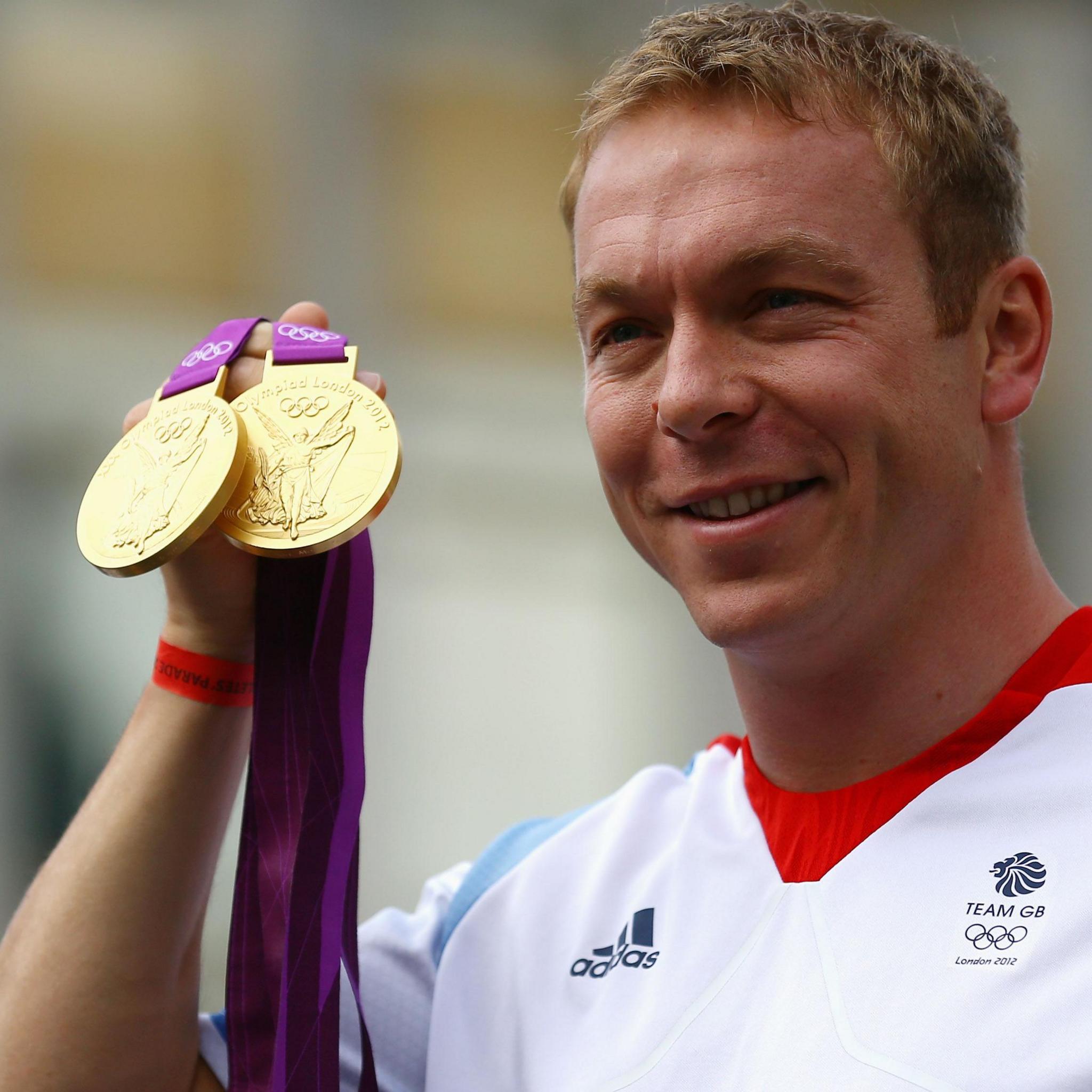
Sir Chris Hoy is in his kitchen, chatting about early-morning coffee and fry-ups.
And mindsets.
An Olympic champion's mindset to be exact.
An exacting, leave-no-stone-unturned, meticulous mindset that defined a career in which he won six gold medals and one silver across four Olympic Games.
This is the same mindset he is relying on more than ever to reframe his entire existence and purpose following a terminal cancer diagnosis.
"We normally have a fry-up for breakfast but, when you guys are here, we need to make an effort," he jokes.
The "you" in this instance are the BBC cameras that have been following Hoy and his family and friends for the past 12 months for the documentary Sir Chris Hoy: Cancer, Courage and Me.
The programme will be broadcast for the first time at 21:00 GMT on Thursday, 18 December on BBC One and available from 22:00 GMT on BBC iPlayer and the BBC Sport website and app.
It shows a hopeful, yet raw, portrayal of the realities of living with stage four cancer, while it also brings to life Hoy's realisation that he can use his platform as a force for raising awareness, and money, for other people living with the illness.
This video can not be played
Sir Chris Hoy: Cancer, Courage & Me
As he weighs his coffee – perhaps the number one area where Hoy's obsessive eye for detail manifests itself – the Scot is in an upbeat mood, laughing and joking with wife Sarra about their imagined usual morning scenario of a full English breakfast compared to the omelette and green homemade smoothie they are actually tucking into.
It has not been anywhere near this rosy for much of the past two years, however, as Hoy explains a few minutes later when the cameras are rolling properly.
"It's about five miles from the hospital back home," he says, describing his return journey from seeing doctors after learning of his cancer diagnosis in September 2023. "I just walked back in a daze. I don't remember the walk. I was just thinking, how am I going to tell Sarra? What am I going to say?
"As soon as I said the words, I broke down."
What Hoy had to articulate was a terminal cancer diagnosis. Incurable secondary bone cancer. Between two and four years to live.
"In my sporting career it used to be about process, not outcome," he says. "Focus on what you have control over. But if you win or lose, it's not life and death.
"[After the diagnosis] the stakes have changed dramatically. The principle is the same – but now it is life and death."
Hoy has shrewdly taken on support for this difficult time in his life.
Steve Peters is a man that Hoy knew could make a difference.
The list of sportspeople that Peters has worked with - the public list he is happy to talk about on the record - is a high-profile 'who's who' ranging from Steven Gerrard to Ronnie O'Sullivan.
The donkeys in the front paddock of the psychiatrist's countryside home bely that glitzy, glamourous list.
But their tranquil nature make complete sense when you spend a few hours in the company of Peters and Hoy.
Peters was Hoy's first port of call throughout his career when it came to training and calming his mind to be at its peak in and around Olympic competition.
He was also one of the first people Hoy called when he got his terminal diagnosis last year.
At first Peters was part of the firefighting phase of what Hoy's wife Sarra describes as a "deep grief" in the first few days post-diagnosis.
But in time, with Peters' help, Hoy set about finding a new purpose.
Firstly, it is to raise awareness of the limitations of the current provision for prostate cancer in the UK. Both Hoy's father and grandfather have had prostate cancer.
Understandably, given an earlier diagnosis could have shifted his diagnosis from terminal to manageable, the 49-year-old Scot argues eloquently that a national screening programme should be made a priority for men from their 45th birthday onwards.
But, crucially, his approach is also to show other people living with cancer that sport and exercise can still be a positive part of their lives, even through their treatment.
Peters explains: "What Chris did when he was presented with this illness is he said: 'Right, what's the plan?' After we worked through the initial stages of the shock and grief of it, then he came out the other side and he picked up on the purpose.
"And that was to reach other people. It became a mission for him."
This video can not be played
Sir Chris Hoy and his wife Lady Sarra recall the night they met
Peters knows all too well how unstoppable Hoy can be when a mission takes him over.
The pair have now worked together for more than 20 years, with perhaps their crowning moment coming at the Athens 2004 Games.
It was in the Greek capital that Peters' "pink elephant" technique helped Hoy win his first Olympic gold. In the run-up to Athens, Peters had encouraged Hoy to pre-empt a scenario in which his rivals broke the world record in the men's kilometre time trial before the Scot had his chance to ride. The scenario became reality on three occasions, but rather than falter, Hoy, the last to ride, responded with a world record of his own to take gold.
The mindset of that moment is one he is tapping into again with his approach to cancer. Control the controllables, but don't waste time worrying about the end result.
Just like in Athens.
"As I went to the start line, a personal best would have got me third," Hoy remembers.
"Recognising what you have control over is such an important part of life. Focus on what you have control over - but the outcome itself, you don't have control over.
"Steve helped me to access the best of myself, and get the best out of myself."
The BBC Breakfast and BBC Sport cameras witnessed Hoy, with the help of Lady Sarra - who herself is dealing with her own diagnosis of multiple sclerosis - making the best of his cancer diagnosis in the last 12 months.
They have followed Hoy and his family to doctor and physio appointments and out on mountain bike rides in Wales with a GB Olympic cycling A-list group of riders and friends.
That same cast list turned out in Glasgow in September as Hoy and a host of his supporters took his cycling fundraising event the Tour de Four from concept to delivery inside a few months.
This video can not be played
Murray and Kennys on discovering 'superhero' Hoy’s cancer diagnosis
It is just after 9am in a back room of the Sir Chris Hoy Velodrome in Glasgow – a few minutes before Hoy's charity mass participation cycling event, the Tour de Four, is due to get under way.
The ride was set up, and given its title, in an effort to change perceptions around stage four cancer.
Every time the door opens, a member of British Olympic and Paralympic royalty walks through it.
Sir Mark Cavendish, Sir Jason Kenny, Becky James, Dani King, Sir Ben Ainslie, Sir Steve Redgrave, Dame Sarah Storey...
In and among the clip-clop of cycling cleats comes another sporting knight.
This one is wearing tennis shoes.
Hoy goes over to check in with Sir Andy Murray about his readiness and is met with a typical sardonic quip from his fellow Scot.
Hoy asks: "Are you feeling ready mate?"
"Well, I've got the kit," Murray responds.
As it turns out, the two-time Wimbledon champion was woefully ill-prepared – completing the ride in tennis shoes and boxer shorts. Not typical road cycling gear, but typical of the response of Hoy's friends to his diagnosis.
"The response of friends has been quite overwhelming at times," Hoy says.
The friend response has been mirrored by that of the public.
September's Tour de Four raised more than £3m for cancer charities across the UK.
However, the highs of that success were followed in November by the UK National Screening Committee's recommendation that a prostate screening cancer programme for all men in the UK was not justified.
For Hoy, the fight to raise money and raise awareness is his new Olympic-sized mission and his response therefore was dignified, yet resolutely determined.
"I was quite astonished," he said. "I can't believe that the answer to this situation is to sit on your hands and do nothing. There are 10,000 men a year in the UK who find out they have prostate cancer too late – it's incurable.
"We're failing these men if we don't do something proactive. Regardless, I'm going to keep pushing."
Again, we meet his Olympic-honed mindset, targeted on a bigger mission.
"The Olympics was something that was my life for so many years and drove me on," Hoy says.
"I'm still incredibly proud of it now and I look back with great fondness, but this is something on an entirely different level.
"It's more important than riding bikes in anti-clockwise circles, put it that way."
This video can not be played
Sir Chris Hoy on his BBC documentary and 'speaking to the world'
You can watch Sir Chris Hoy: Cancer, Courage & Me on Thursday, 18 December at 21:00 GMT on BBC One, and from 22:00 GMT on BBC iPlayer and the BBC Sport website and app.

© Yuvraj Khanna for The New York Times

© Constanza Hevia H. for The New York Times
中国官媒新华每日电讯星期四(12月18日)发文指出,一些企业为博眼球、赚流量,刻意选择最具煽动性的话题切口,通过简单粗暴的标签化叙事,制造矛盾冲突以获取传播热度。文章呼吁监管部门应加强广告的社会影响评估,对渲染矛盾、煽动对立、传播不良价值观的内容加大惩处力度。
文章说,有短视频宣扬男子将同居女友视作 “免费保姆”,有的渲染“父母无退休金等于子女负债”的养老焦虑,有的演绎子女漠视父母健康的尖锐冲突,而正当观众为视频中的情节怒火中烧时,视频的画风骤变,生硬切入广告,让人猝不及防。
文章指出,这类视频看似情节引人入胜,实则是靠渲染矛盾、煽动对立来博流量的 “毒广告”。刻意选取夫妻关系、婆媳矛盾、兄弟背刺等话题,将个别故事引申到某一群体的共同问题,用夸张的剧情放大焦虑,将商业利益凌驾于社会责任之上。
更值得警惕的是,有些视频将社会转型期的敏感议题,用肤浅、极端的方式呈现,将多元诉求简化为二元对立,把结构性矛盾包装为群体冲突。这不仅无助于问题解决,反而会固化偏见、激化矛盾,破坏社会共识。
文章说,广告本质上是一种沟通艺术,其社会影响力不容小觑。然而,一些企业为博眼球、赚流量,刻意选择最具煽动性的话题切口,通过简单粗暴的标签化叙事,制造矛盾冲突以获取传播热度。这种 “黑红也是红”的扭曲逻辑,反映了此类广告价值观的严重偏离——将社会撕裂视为营销代价,将公众情绪当作可操纵资源。
文章说,治理这类 “毒广告”,需要监管、平台、商家、网民的协同努力。监管部门应加强广告的社会影响评估,对渲染矛盾、煽动对立、传播不良价值观的内容加大惩处力度。行业组织需制定更具约束力的伦理准则。平台必须承担起内容审核责任,拒绝为煽动对立内容提供传播渠道。消费者也应提升媒介素养,学会识别广告的操纵手法,用理性批判代替情绪反应。
文章最后说,广告作为社会文化的一部分,应当成为促进理解的“桥梁”,而非制造分裂的“沟壑”。只有各方协同发力,才能让广告的天空少一些硝烟,多一些彩虹。
