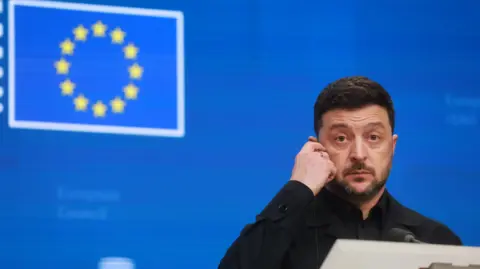
After 17 hours of at times heated debate, EU leaders agreed in the early hours of Friday morning to jointly raise €90bn (£79bn; $105bn) in zero-interest loans to keep Ukraine financially afloat for the next two years.
Kyiv had been clear: the money wasn't a nice-to-have; it was a must-have.
With the US under Donald Trump no longer looking to provide new direct military aid to Ukraine, the war-torn country has turned to Europe.
Without the cash, Volodymyr Zelensky told EU leaders he wouldn't have enough money to pay Ukrainian soldiers or buy the weapons he needed to counter Russian aggression.
The now agreed EU loan will be guaranteed by the bloc's common budget.
But in a blow to Brussels' desire to demonstrate decisive European unity over Ukraine to EU sceptics in Washington and Moscow, Hungary, Slovakia and the Czech Republic only agreed to support the plan - it required unanimity to be passed - if they were exempt from it individually.
Yet another indication of the divisions in Europe over attitudes to Ukraine and to Moscow.
Hungary and Slovakia are known to be closer to the Kremlin.
This brings them into direct confrontation with EU countries geographically nearer to Russia such as Poland and the Baltic States.
They view Ukraine's survival against Russia as existential.
If Kyiv were to lose to Moscow on the battlefield because it was cash or weapons-strapped, they believe that would embolden Russia and would be a disaster for European security and stability more broadly.
Arriving at the start of Thursday's fraught summit, Polish Prime Minister Donald Tusk said EU leaders had a clear decision to make: pay money today, he said, or pay in blood tomorrow.
He said he wasn't talking about Ukraine. He was talking about Europe.
The new EU joint-loan plan for Ukraine replaces a much-debated EU proposal to raise the €90bn using frozen Russian state assets held in the bloc (€210bn euros' worth in total), mostly in Belgium.
Kyiv had described that idea as morally justified, considering the billions of dollars' worth of destruction wreaked by Moscow on Ukraine.
But a number of EU countries feared legal retribution by Russia. They worried too that the eurozone's international reputation as a safe destination for global assets could be damaged.
Brussels said on Friday it was considering using the frozen Russian assets eventually, to repay the EU loan to Ukraine. But that would be something to be worked out in the future - if a peace deal is signed.
For now, on top of the new EU loan, it's estimated Ukraine will need another €45bn euros to cover all its costs for 2026/2027.
Brussels hopes non-EU allies of Ukraine like the UK, Japan and Canada might pick up some of that tab. Not going bankrupt now also opens the door for Kyiv to receive loans from banks like the IMF.
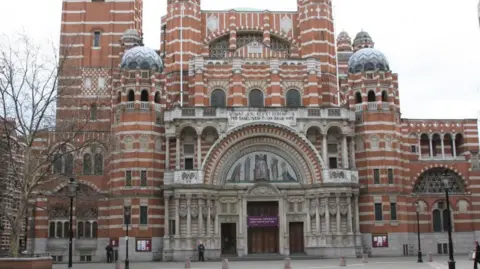
The Vatican has announced that Richard Moth will be the new Archbishop of Westminster, making him the head of the Catholic Church in England and Wales.
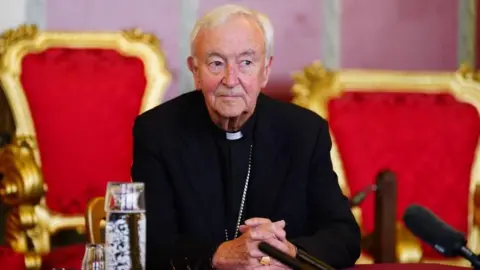
He succeeds Cardinal Vincent Nichols, who has held the role since 2009 and has stepped down aged 80.
For the past 10 years Richard Moth has been Bishop of Arundel and Brighton, and before that served as Bishop to the Forces.
As Archbishop of Westminster he will become president of the Bishops' Conference of England and Wales and lead an estimated six million Catholics.
Cardinal Nichols reached retirement age when he was 75, but was asked to stay on by Pope Francis. In May he took part in the conclave that elected Pope Leo XIV.
The search for a replacement for Cardinal Nichols was led by the Apostolic Nuncio, or papal ambassador to the UK, who presented a list of potential candidates to Pope Leo.
Earlier this week, Archbishop Moth released a joint statement calling for empathy for "those who come to this country for their safety", reminding Catholics that Jesus's family fled to Egypt as refugees.
He has been one of the bishops leading the Church's response to social justice issues in the UK, including praising the scrapping of the two-child benefit cap.
Archbishop Moth will face the challenge of declining numbers of people attending churches nationally, though there is growth in some churches with immigrant Catholics.
In response to the growing use of Christian symbols at, for example, rallies organised by the far-right activist Tommy Robinson, Bishop Moth has talked of his concern.
Last weekend, Robinson held an event in London saying he wanted to "reclaim" the country's heritage and Christian identity.
"We are concerned about the tensions that are growing in society and the desire by some groups to sow seeds of division within our communities. This does not reflect the spirit or message of Christmas," Bishop Moth said in a statement with the Archbishop of Birmingham.
The Catholic Church has been heavily involved in providing assistance to those who have suffered in the cost of living crisis.
PA Media
Cardinal Vincent Nichols is stepping down having held the role since 2009
As archbishop, Richard Moth will also lead the Church's constant challenge of dealing with safeguarding issues.
In 2020, a wide-ranging inquiry into child sexual abuse found that between 1970 and 2015 the Catholic Church in England and Wales received more than 3,000 complaints of child sexual abuse against more than 900 individuals connected to the Church.
In fact, the leadership of Archbishop Moth's predecessor, Cardinal Nichols, was criticised in the inquiry report, which said he cared more about the impact of abuse on the Church's reputation than on the victims.
At the time, Cardinal Nichols apologised and said he accepted the report, adding: "That so many suffered is a terrible shame with which I must live and from which I must learn."
Cardinal Nichols retires having led the Church in England and Wales for 16 years, during which it faced enormous change.
He is the son of two teachers and was born in Crosby. The lifelong Liverpool FC fan took up his first role as a priest in Wigan.
In 2010, he welcomed Pope Benedict XVI to England on an official visit.
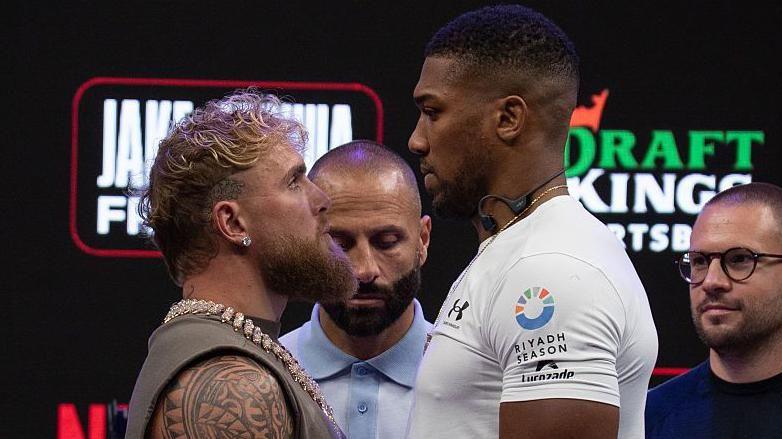
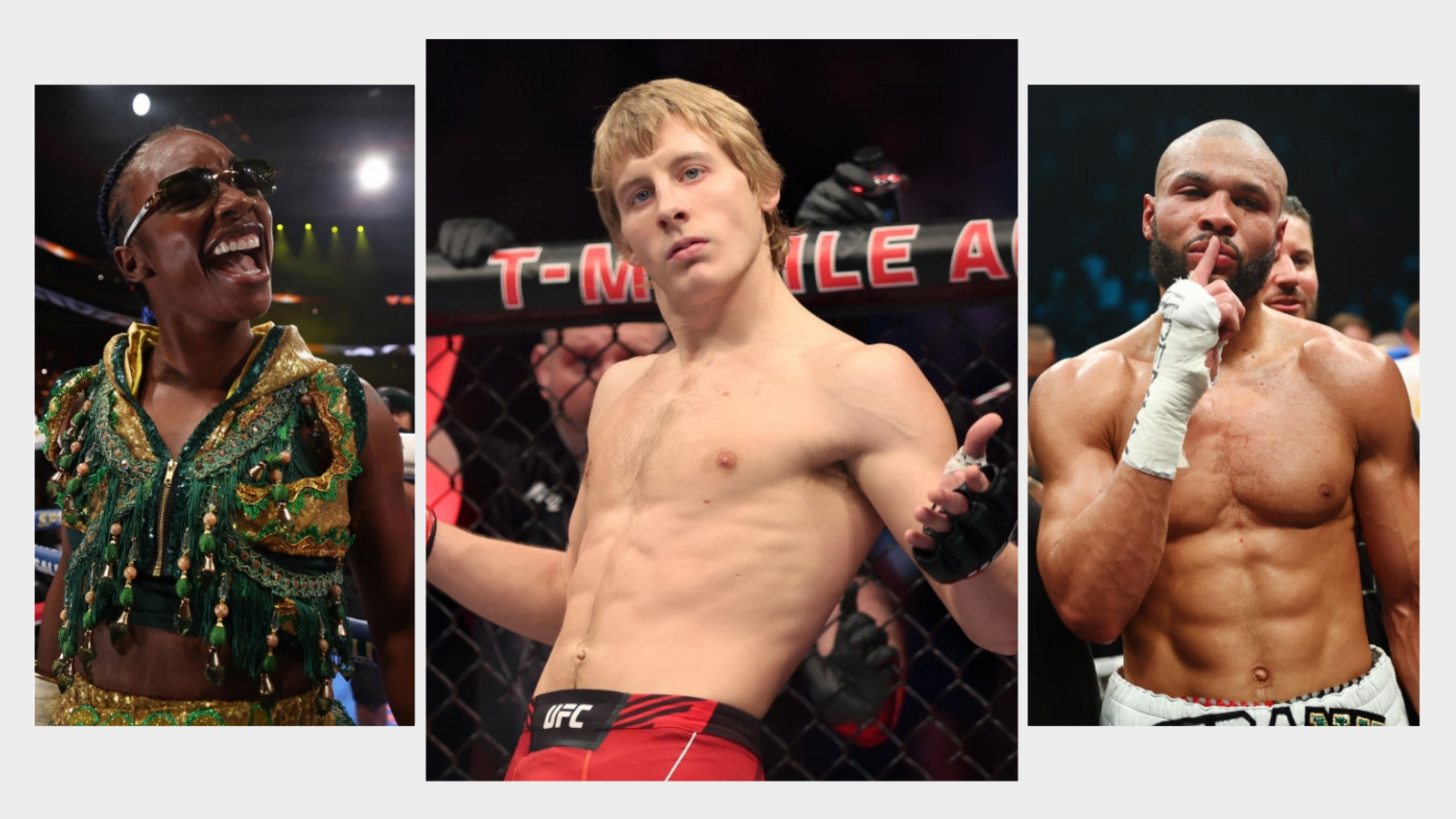
When Anthony Joshua made his professional debut against Emmanuel Leo in 2013, fresh from Olympic gold in London, the boxing world treated it like the start of a coronation.
At roughly the same time, a 16-year-old prankster from Ohio named Jake Paul was posting six-second Vine videos - chatting to pineapples in supermarkets and climbing into strangers' shopping trolleys for a laugh.
More than a decade later, through wildly different routes, the pair have arrived at the same place.
"I'm not worried about what people think about the integrity side, I'm more worried about are they talking?" Joshua says.
"That's the whole point of this fight. It creates conversation."
Paul says he has no fear and will "shock the world" to become the "king of boxing".
They will fight eight three-minute rounds at the Kaseya Center, in standard 10oz gloves, under professional rules. Joshua wasn't allowed to weigh more than 17st 7lb (111kg).
Otherwise, there are no concessions.
BBC Sport explores how this unlikely fight came together, what both men have to gain and lose and why many within the sport are uneasy about the risk it represents.
To play this video you need to enable JavaScript in your browser.
This video can not be played
Media caption,
Paul ready to 'shock the world' by beating Joshua
Joshua and Paul were filmed racing speedboats along the Miami River on Sunday, laughing and waving as the skyline slid past behind them. It looked more like spring break than heavyweight boxing.
Two days later, Joshua changed the tone entirely by saying "if I can kill you, I will kill you".
Joshua doubled down on those remarks a day later. His comments landed as heavily as his trademark right, a reminder that beneath the Instagram gloss, this is still a professional contest where knockouts are allowed.
His power is not a matter of debate, 25 knockouts in 28 wins. Joshua's stoppage of Robert Helenius was a violent, unsettling finish. Francis Ngannou, a former UFC heavyweight champion, was knocked unconscious by a single punch.
Asked directly about safety, Joshua sidestepped the question.
"He's got his groin guard on and his gum shield," Joshua says. "That's the only safety he is allowed."
Joshua has promised fans will see the "full" version of himself against Paul - and that is precisely where the concern lies.
"I've never gone in there and knocked someone out within 10 seconds," he adds.
"There's a methodical process to knocking someone out. But if the opportunity presents itself, I'm not planning on carrying Jake for one second more than I have to."
Money and notoriety - what does Joshua have to gain?
To play this video you need to enable JavaScript in your browser.
This video can not be played
Media caption,
'Unthinkable' that Jake Paul can win - Lennox Lewis
It starts, inevitably, with money.
Paul has quickly become boxing's golden ticket - a measure of where the sport's power now sits. The introduction of Netflix has supercharged his power.
The Ohio fighter claimed on social media there is a combined purse of £210m.
Joshua has been out of the ring since his defeat by Daniel Dubois in September 2024. He was expected to return in a low-key tune-up.
In prizefighting terms, few blame him for fighting Paul for incredible money, but there is more to it.
Joshua remains a popular figure in Britain, a star transcended beyond boxing, but the United States is different. He has boxed in America only once - a shock loss to Andy Ruiz Jr in 2019.
When BBC Sport asked fans along South Beach who Joshua was, many shrugged. Most knew exactly who Paul was.
With a long-awaited fight against Tyson Fury once again being talked up, Paul may be a useful conduit.
The attention he brings could help widen Joshua's global reach and reignite interest in a bout that no longer sells itself quite as effortlessly as it once did.
MVP chief executive Nakisa Bidarian describes it as Joshua's "re-entrance into the biggest market in the world".
He added: "[America] is where the most money is made and where the most eyeballs are. This is a smart move."
Jake Paul v Anthony Joshua
Friday, 19 December
Live text commentary begins at 03:00 GMT on Saturday, 20 December on BBC Sport website & app.
Boxing hierachy to be restored or remade
To play this video you need to enable JavaScript in your browser.
This video can not be played
Media caption,
Paul is 'massively deluded' if he thinks he can beat AJ - Hearn
Paul is clear-eyed about the reality of Friday. "This is the hardest opponent, hardest challenge, most crazy thing I've ever done in my career," he says.
But the discomfort this fight has generated is familiar territory.
Controversy has always been his fuel. He did not flinch at the backlash when he fought a near-pension age Mike Tyson, and he does not appear to care now.
"Who even are these boxing purists?" he jokes. "How pure are they? Do they go to church or something?"
Paul's confidence appears unshakeable. For heavyweight great Lennox Lewis, however, that confidence edges into "delusion".
"Anthony Joshua doesn't have two left feet, and he can punch very hard," Lewis says.
"He's going to find out as soon as he gets hit."
And there has been some unease within the Paul's camp. Bidarian thought his business partner "was crazy" when it was first raised in March.
"Jake and I are constantly thinking about two, three, four years down the road and how we roadmap his rise to the top of the sport and that completely caught me out of left field," Bidarian says.
Paul's fights are frequently accompanied by unsubstantiated claims they are "scripted".
Fans on Miami's beachfront described the fight as "fake" but Paul, as ever, spins the suspicion into his favour.
"I take it as a compliment that I am doing something so outrageous and so crazy that people have to write it off," he said.
Paul has felt like the A-side this week. In public workouts, Joshua walked out before him.
At media events, Joshua hadn't finished speaking before Paul was ushered in.
For some hardcore boxing fans, that inversion is part of the problem.
They want the Paul experiment to end. They want the hierarchy restored. They want proof that boxing still has levels you cannot skip, no matter how many followers you bring with you.
"I'm carrying boxing on my back," has been Joshua's mantra all week.
Friday night will decide whether that hierarchy can be restored.
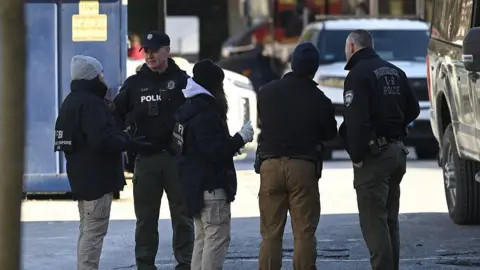
Members of the FBI Evidence Response Team work at the scene of a mass shooting at Brown University in Providence, Rhode Island on 16 December 2025
Police have issued an arrest warrant for the suspect in a mass shooting at Brown University that killed two people and injured nine others, sources close to the investigation told the BBC's US partner, CBS News.
Authorities are now searching for the person and a car the suspect is believed to have rented, according to CBS. They have not publicly identified the suspect.
They also are looking into a possible link between the shooting at Brown and the killing of a professor at Massachusetts Institute of Technology two days later.
The search is now in its sixth day, with investigators knocking on doors, asking for home-security videos, and appealing to the public for tips to find the gunman.
A news conference that police in Providence, Rhode Island, had planned for Thursday afternoon was abruptly cancelled, but they said they expected to give an update later in the day.
On Thursday, authorities told CBS sources that they are investigating possible connections between the shooting and the killing of an Massachusetts Institute of Technology (MIT) nuclear science and engineering professor two days later.
Nuno F Gomes Loureiro, 47, from Portugal, was shot "multiple times" on Monday at his home in Brookline, Massachusetts, which is about 50 miles (80km) from Providence.
Police have obtained an arrest warrant for a suspect, sources told CBS. The sources said a rental car matching the same description was seen at both crime scenes.
Federal authorities had previously said there was no link between the two murders.
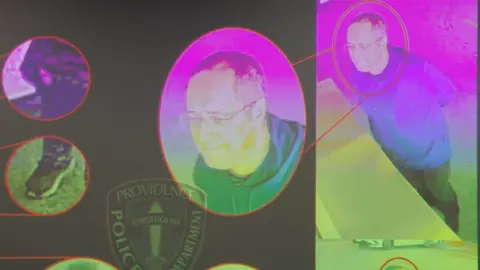
On Wednesday, authorities released a photo of an individual they believe was in close proximity to their primary person of interest.
Providence Police Chief Oscar Perez said they wanted to speak with the person, "who may have information relevant to the investigation".
The chief also said the killer "could be anywhere", adding that "we don't know where the person is or who he is".
A day earlier, police had shown footage of a person of interest where a man was seen walking around the university campus with a black mask over his mouth, possibly "casing" the area before the crime, Perez said.
Members of the public have expressed frustration that the mass shooting investigation has appeared to yield little progress so far.
In response, Rhode Island Attorney General Peter Neronha said he believed the killer would be caught "and it is just a matter of time before we catch him".
The FBI has offered a $50,000 (£37,350) reward for information leading to the identification, arrest and conviction of the person responsible for the attack.
The shooting occurred at Brown University's Barus & Holley engineering building during final exams.
Authorities identified the two students killed as Ella Cook, a sophomore from Alabama, and Mukhammad Aziz Umurzokov, an Uzbek-American freshman student.
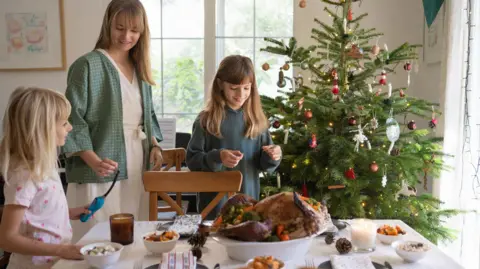
A typical Christmas dinner with all the trimmings will cost slightly more than last year
Turkey and sprouts are synonymous with Christmas dinner and this year a rise in the price of both means the festive feast will cost you slightly more at the supermarket.
A typical turkey dinner with all the trimmings will cost about £32.45, according to research done for the BBC - a £1.24 or nearly4% rise on last year.
It comes after bird flu led to large numbers of turkeys being culled early, while a drier spring and summer hit sprout harvests.
However, the humble but golden potato and parsnip have gone down in price, along with - if you have any room - Christmas pudding and mince pies. Our seasonal snapshot reflects that overall food price rises are beginning to slow down.
The centre piece to the traditional family feast - the turkey - costs £20, for a standard 10lb (4.55kg) frozen one. The same bird was £18.62 last year - that's a 7.37% rise, according to the research from retail tracking platform Assosia.
The ever-divisive Brussels sprouts went up by more than 9% to 94p a bag, it found.
The data is based on prices on 6 December 2025 and the same date in 2024, across own-brand products from Tesco, Sainsbury's, Asda, Morrisons, Aldi and Lidl.
However, every year as supermarkets compete for our Christmas custom many slash the prices of their bags of veg as low as 8p so there are bargains to be had.
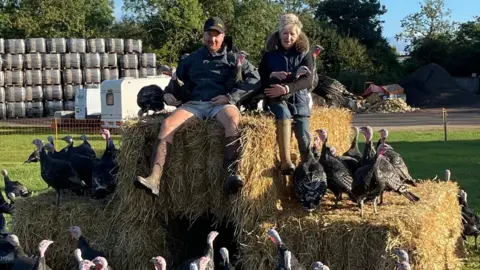
She says turkeys eat more feed when they can't graze outdoors so this pushed up her costs. But she says her customers understand she has to pass this on.
"I think people are now generally expecting an increase on most things year on year," she says.
Susan Gorst
Susan Gorst and her son Freddie on their turkey farm
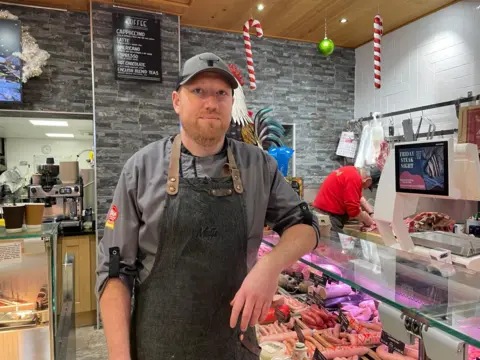
The rising price of turkey "could have been a lot worse," according to John Muff, co-owner of Muff's Butchers in Wirral. He estimates it's up by £1-2 per kilo since last Christmas.
"All year round we've seen price increases, almost on a weekly basis, 5p here, 10p there," he says.
Pork has also gone up in price, with pigs in blankets now £2.59, or 5.3% higher than last year.
John says this didn't surprise him. The cost of making their sausages from scratch has seen a "steady increase throughout the year," he says.
Butcher John Muff said the price of turkey has crept up all year
He says "every aspect is going up," from animal feed, energy, transport and wages.
But he thinks higher supermarket prices might be tempting shoppers into a trip to the butchers.
"They're thinking to themselves: If I'm going to pay that sort of price, I may as well come in here and get the proper stuff," he says.
Sprout prices
Whether you celebrate or shun the sprouts at Christmas, the success of this little green veg is highly dependent on the weather.
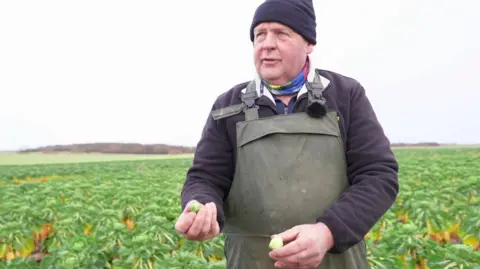
Alan Steven, a sprout farmer in Fife, says this spring the ground was so dry he had to water his fields before he could plant his seeds - for the first time in 10 years.
He had the cost of irrigating twice more over the summer due to prolonged hot weather.
And so far the winter has been milder which means the sprout plants are more prone to disease, he says.
Alan Steven said he had to irrigate his sprout seeds as they were being planted because the ground was so dry
Spud prices hold steady
The price of root vegetables has remained firmly planted - with no change to the cost of carrots - and potatoes and parsnips just a penny cheaper than last year.
Scott Walker, chief executive of GB Potatoes, said planting and harvesting conditions were favourable this year, but the middle of the season, was "one of the driest in modern memory". The summer was the hottest on record in the UK.
Farmers who didn't have irrigation systems would have suffered and those who could water their crops would have had higher electricity and fuel costs, he says.
"We've had more modest rises than we've had over the past couple of years, but costs have still gone up," he says.
Lucy Munns
Lucy Munns grows potatoes, sugar beet, wheat and barley
The trouble with potato prices is you never know what you're going to get, says Lucy Munns, a potato farmer in Cambridgeshire.
She said a good price for her potatoes would be £200 a tonne, but she was anticipating prices as low as £80 in December.
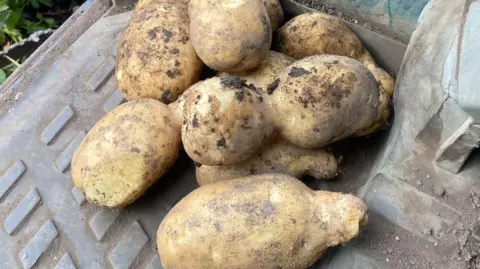
Hot spells while potatoes are growing causes them to be oddly shaped and they can be rejected by supermarkets and fish and chip shops, she says.
Lucy Munns
Hot weather can cause potatoes to grow in odd shapes
Pudding and mince pies fall in price
Another side dish which saw a slight dip in price was stuffing mix - dropping 1.32% to 50p for 170g.
And lashings of gravy will also be cheaper this year, with gravy granules dropping 7.35% to 91p for 200-300g.
If after the Christmas feast you still have appetite for a sweet treat you'll be glad to hear that Christmas pudding and mince pies are cheaper this year.
A pack of six iced mince pies will cost £1.77, which is 2.75% cheaper than in 2024. A standard 400g pudding comes in at £2.35, or a drop of 7.42%.
It's down to falling flour and sugar prices - there is currently a global sugar surplus.
England may well have lost this Ashes anyway. They have barely done anything to suggest otherwise over the past month.
But rather than English preparation decisions or selection meetings, was it a conversation in the Australia dressing room at tea on day two of the first Test that first set the course of this series?
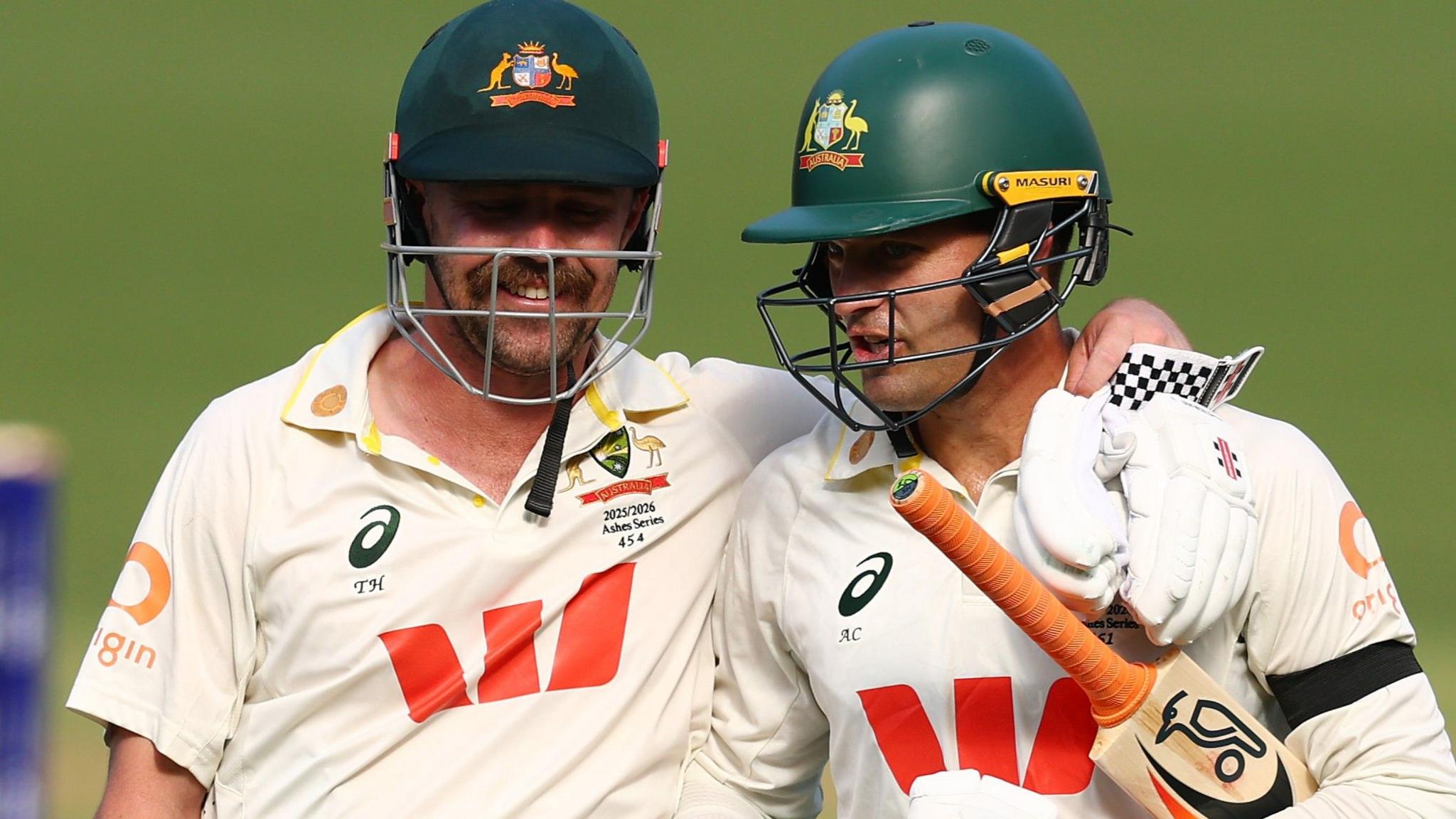
Australia needed an opener in Perth when Usman Khawaja was struck down by back spasms and up went Travis Head's hand.
"It can't be that hard, let's get after them," he said.
Promoted from the middle order, he proceeded to thrash one of the great Ashes centuries and there began England's death by a thousand Travis Head cuts.
In striking his second hundred of this series on day three of the third Test in Adelaide, Head all-but confirmed the home of the urn until the next Ashes in 2027.
He has surely also ended any debate about his batting position for the remainder of this series and beyond.
The solution to Australia's problem of replacing David Warner was sitting in plain sight with a mullet and bristly Australian moustache.
To play this video you need to enable JavaScript in your browser.
This video can not be played
Media caption,
'Wonderful effort from this fine player' - Head reaches second century of the series
Head's struggles before this series - only one score of 40 or more in 20 innings going back to June - are now a distant memory.
Four days training before the series - something the most laidback of 31-year-old's said was "unprecedented" for him - helped find his rhythm and surely banish any doubts.
"When you have a big gap in Test cricket and you're lying in bed a couple of nights before, you're like, 'Can I do it?'" he said.
"Can you still produce it? Can you, as a cricketer each year, keep rolling out good scores in big moments? It's not going to get much bigger than this."
That last point is the most relevant when it comes to Head.
The ultimate big game player, he now has four Ashes hundreds to go with another in the 2023 World Cup final and the World Test Championship final earlier that year.
When Australia battled desperately to win back the Border-Gavaskar Trophy from India last year, Head made scores of 89, 140 and 159 in the first three Tests.
Former India coach Ravi Shastri once gave the South Australian the nickname 'Head-ache' and England's players must be at the point of wishing they could draw the curtains, lie down and close their eyes in a cool room.
They witnessed the birth of Head's reinvention as an uber aggressive batter in 2021 when he crashed a 148-ball 152 in the first Test of the last Ashes series down under.
Since then Head strikes at 80.20 runs per 100 balls, compared to 49.65 in the first part of his career, in a switch in style almost unprecedented across Test cricket's history.
An unintended consequence of Head's move to the top in this series has been England having to alter their plans to the left-hander.
In 2023 they had a clear plan, with 52% of deliveries bowled to Head by pacemen pitched 10m or shorter to target Head's weakness of balls fizzing around his helmet.
This time, because they now have the new ball in hand, England have been forced to push the ball up but have only fed his strength on the cut, not helped by their inability to hold a line.
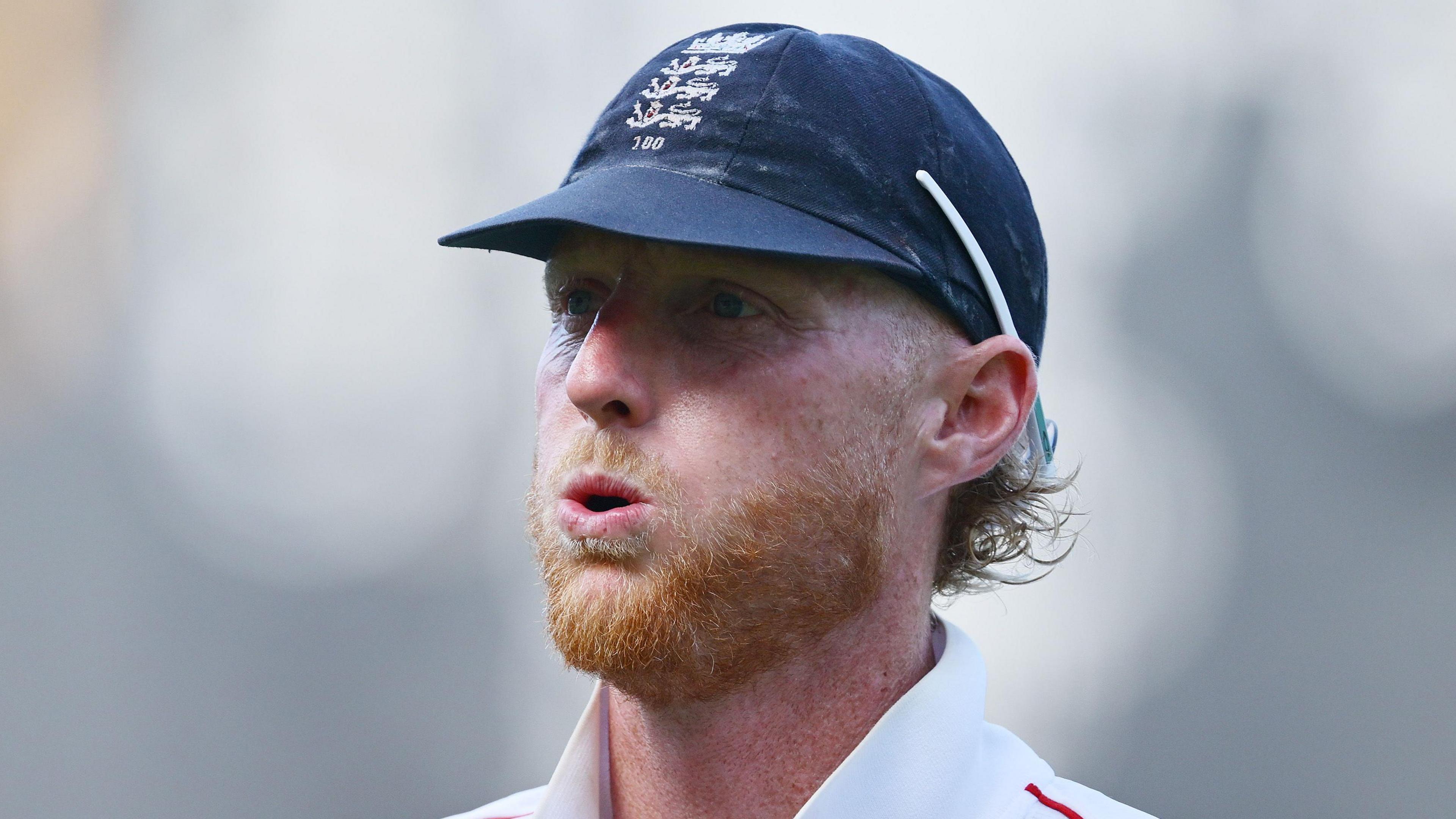
For much of the afternoon they resorted to trying to bore Head out with a field spread far and wide - a tactic that must have hurt Ben Stokes to the core.
"I used to coach against Travis Head for Western Australia and you do not bowl to his cut shot," Head's former Australia coach Justin Langer said on TNT Sports.
"His wagonwheel is completely behind point. It was either England couldn't execute their plan or the plans were poor."
Image source, CricViz
Image caption,
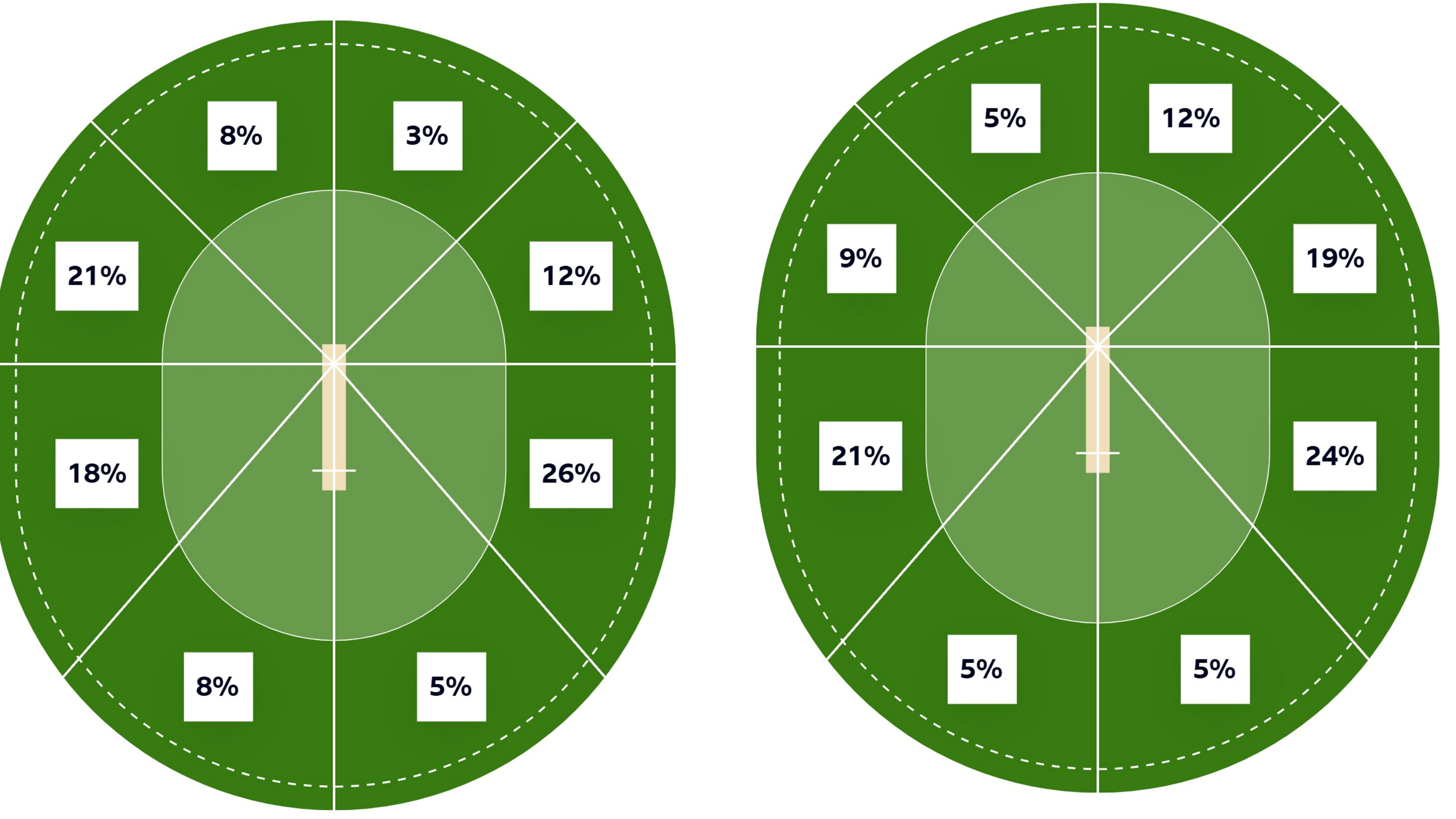
Left-handed Travis Head's scoring behind square on the off side has doubled in this series (right) compared to the rest of his Ashes career (left)
Friday's innings at Adelaide was almost this issue in microcosm.
When England denied Head width, he was kept quiet. When they lost their line outside off stump he cashed in. One of his few false shots came when Brydon Carse lifted a bouncer towards his grille and Head miscued narrowly over fine leg.
Those well-directed balls were all too few.
As a result Head strolled to his hundred on day three - sometimes walking between the wickets to complete singles in an ultimate display of his ease - as his home crowd grew in anticipation.
He has batted his way to cult hero status in Australia but in the city of his birth, where some bowed to him after reaching three figures and others wore TravBall T-shirts, they love him more than anywhere else.
On reaching his hundred, Head saluted the crowd and then knelt to kiss a batting surface that treats him so well.
Only all-time Australian greats Ricky Ponting and Michael Clarke have scored more centuries at the Adelaide Oval than Head's four, while he now averages 87.33 on this ground, putting him fourth on the all-time list of those who have played five or more matches - a list topped by the greatest of them all, Sir Don Bradman.
There is already a statue of Bradman by Adelaide's eastern gates and the head of South Australia's local government has already put forward the idea of erecting one of Head beside it.
"I like to get out in the middle, feel the crowd and expectation," he said.
"I just like playing the game and I have a good time doing it."
Whether Australians remember this series as the summer of Mitchell Starc, Travis Head or someone else will be decided by proceedings remaining in Adelaide, plus what follows in Melbourne and Sydney.
Starc's 19 wickets already make a compelling case but do not forget England felt their bowlers had a good chance of securing victory before Head's century in Perth - a win that would have put this series on an entirely different course.
Head made that view look folly and, with his second century, he has now landed a definitive blow.
Australia may well have won either way but Head's promotion was the masterstroke from which England have been unable to respond.
An aged helicopter fleet and inexperienced pilots from nearby Fort Belvoir had raised “widespread concern” among local pilots before a midair collision killed 67 people.
Helicopter helmets and a model of a Black Hawk helicopter on display in the home of Austin Roth, who served two decades in the Army, including as an instructor at Fort Belvoir in Virginia. The helmet on the top left is one Mr. Roth used while assigned to the 12th Aviation Battalion.
A single suspect carried out the shooting at Brown University and the killing of an M.I.T. professor, and was later found dead in New Hampshire, authorities said.
A single suspect carried out the shooting at Brown University and the killing of an M.I.T. professor, and was later found dead in New Hampshire, authorities said.
An aged helicopter fleet and inexperienced pilots from nearby Fort Belvoir had raised “widespread concern” among local pilots before a midair collision killed 67 people.
Helicopter helmets and a model of a Black Hawk helicopter on display in the home of Austin Roth, who served two decades in the Army, including as an instructor at Fort Belvoir in Virginia. The helmet on the top left is one Mr. Roth used while assigned to the 12th Aviation Battalion.
Many of President Trump’s supporters love his professional-wrestling style of leadership. But some of his recent attacks have sickened even some of his own political allies.
Mr. Trump’s brash personality has been an element of his appeal to supporters, who find it bracingly authentic in contrast to cookie-cutter politicians.
Dr. Marty Makary, the F.D.A. commissioner, has faced intense criticism as the agency undergoes top-level turnover in critical areas like drug approvals.
Students and faculty members at the New School, including Danielle Twiss, a doctoral student studying Marxist political economy, rallied over budget cuts prompted by the university’s budget woes.
Museums and the consultants who advise them have been busy reviewing their own precautions in the aftermath of the brazen daylight break-in at the Louvre.
A member of the security staff at the Metropolitan Museum of Art. Experts say U.S. institutions are reviewing the Louvre heist to ensure they do not share similar vulnerabilities.
They will be eligible for a one-time payment as well as college tuition for their children. The effort is part of a legislative push to address the dangers of working in toxic smoke.
John Koch, a radio reporter, witnesses every execution in Florida to keep close tabs on what he considers one of the most consequential actions the state takes.
Homeland Security Secretary Kristi Noem said the suspect "should never have been allowed in our country"
President Donald Trump has suspended the US green card lottery scheme in the wake of a mass shooting at Brown University last week in which two people were killed.
The suspect, a Portuguese man who was found dead on Thursday, entered the country through the diversity lottery immigrant visa programme (DV1) in 2017 and was granted a green card.
Homeland Security Secretary Kristi Noem said she has paused the visa scheme under Trump's direction to "ensure no more Americans are harmed by this disastrous programme".
US officials said they believe the suspect, 48-year-old Claudio Neves Valente, also killed Portuguese Massachusetts Institute of Technology professor Nuno Loureiro earlier this week.
The programme makes up to 50,000 visas available each year through a random selection process among entries from countries with low rates of immigration to the US.
Writing on social media, Noem said Trump had previously "fought to end" the scheme in 2017 after eight people were killed in a truck-ramming attack in New York City.
Her comments come just hours after Neves Valente was found dead in a storage facility in Salem, New Hampshire, from what police believe is a self-inflicted gunshot wound.
Police said video evidence and tips from the public led investigators to a car rental location where they found the suspect's name and matched him to their person of interest, following a six-day multi-state manhunt.
He was found dead with a satchel and two firearms. Evidence in a car nearby matched to the scene of the shooting at Brown University in Providence, according to Rhode Island Attorney General Peter Neronha.
Reuters
Claudio Neves Valente was matched as the main suspect in last week's mass shooting
Brown University President Christina Paxson said Neves Valente was enrolled at the Ivy League school from the autumn of 2000 to the following spring, and was studying for a PhD in physics.
He had "no current active affiliation" to Brown, she said.
Officials said they believe Neves Valente shot and killed MIT professor Nuno F Gomes Loureiro, 47, on Monday at his home in Brookline, which is about 50 miles (80km) from Providence.
Both men had studied at the same university in Portugal in the late 1990s, police said.
Officials said the cases were linked when the suspect's vehicle was identified via CCTV footage and a witness at Brown University.
The same car was spotted near the scene of the professor's shooting, which happened just two days later.
Authorities have not provided any suspected motive for either of the attacks.
Two students were killed and nine others were injured as a gunman burst into Brown University's engineering building on 13 December and opened fire during final exams.
They have been identified as Ella Cook, 19, a second-year student from Alabama, and Mukhammad Aziz Umurzokov, 18, an Uzbek-American who had just started at the university.
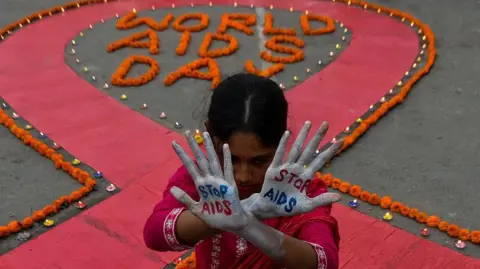
In India, HIV still carries strong social stigma, often leading to discrimination
Parents of children with thalassemia in India say they are devastated after life-saving blood transfusions left their children HIV-positive, confronting them with illness, social stigma, and uncertainty.
Thalassemia is a genetic blood disorder that requires regular transfusions to manage severe anaemia and sustain life.
On Wednesday, authorities in central state of Madhya Pradesh said five children with thalassemia, aged three to 15, have tested positive for HIV, prompting concerns over blood transfusion practices. A committee has been set up to investigate the cases.
The families are from Satna district. Although the infections were detected during routine screening between January and May 2025, they drew wider attention after local media reports earlier this week.
The cases follow a similar incident in the eastern state of Jharkhand weeks earlier, where five children with thalassemia, all under eight, were found to have contracted HIV after blood transfusions at a state-run hospital.
HIV, or human immunodeficiency virus, spreads through unprotected sex, unsafe medical practices, infected blood transfusions, or from mother to child during pregnancy, childbirth or breastfeeding.
While no longer a death sentence, it requires lifelong management. In India, more than 2.5 million people live with HIV, with about 66,400 new infections each year. Over 1.6 million are on lifelong treatment at antiretroviral therapy (ART) centres, government data shows.
Pradeep Kashyap/BBC
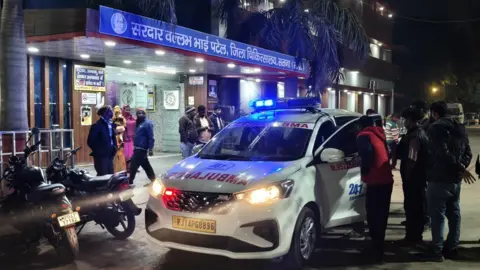
The state-run hospital in Madhya Pradesh where the five children are undergoing treatment
Satna district collector Satish Kumar S said the five children had received blood transfusions at different locations, involving multiple donors.
Health officials said these included government hospitals and private clinics, and that all the children are now receiving treatment.
In one case, officials said both parents of a three-year-old were HIV positive. In the other cases, the parents tested negative, ruling out mother-to-child transmission.
Satna's chief medical and health officer Manoj Shukla said children with multiple transfusions are considered high-risk and are routinely screened for HIV.
"Once detected, treatment was started immediately and is continuing. At present, the children are stable," he said.
Every unit of blood issued by the district hospital's blood bank is tested according to government protocol and released only after a negative report, Dr Shukla says.
However, in rare cases, blood donors who are in the early stages of HIV infection may go undetected during initial screenings but test positive later, he adds.
Cases of thalassemia patients contracting HIV during treatment are not new in India.
In October, after similar incidents in Jharkhand, authorities suspended a lab assistant, the doctor in charge of the HIV unit and the chief surgeon of the state-run hospital involved.
Chief Minister Hemant Soren also announced an assistance of 200,000 rupees ($2,212; £1,655) for each affected family.
In 2011, authorities in Gujarat launched an investigation after 23 children with thalassemia tested positive for HIV following regular blood transfusions at a public hospital.
Last week, thalassemia patients urged India's parliament to pass the National Blood Transfusion Bill 2025, saying it would strengthen regulation of blood collection, testing and transfusion.
Campaigners, including patients who contracted HIV through unsafe transfusions, called the bill a long-awaited step towards safer, quality-assured blood for those reliant on frequent transfusions.
Getty Images
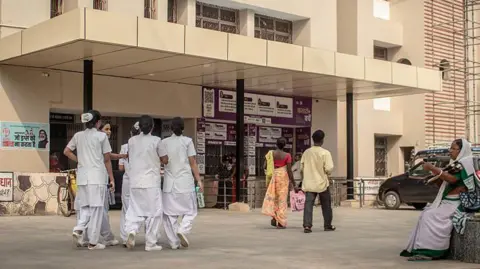
The Jharkhand hospital where five children contracted HIV from blood transfusions in October
In India, where healthcare access can be limited, especially in rural areas and small towns, families of the HIV-infected children in Madhya Pradesh and Jharkhand are deeply concerned.
"My daughter was already suffering from thalassemia. Now she has got HIV, all thanks to the pathetic medical facilities of Madhya Pradesh," said one father, whose child is among those affected.
Another parent said their child was struggling with side-effects of HIV medication, including vomiting and constant fatigue.
In India, HIV still carries strong social stigma, often leading to discrimination. In Jharkhand, the family of a seven-year-old boy was forced to leave their rented home after the landlord learned of the child's HIV status, the father told the BBC.
"I tried to convince them a lot, but they remained adamant on getting the house vacated. So, I had to return to my village, about 27km [17 miles] away," said the father, who is a farmer.
"In the village, it is not only a challenge for my son to get better health facilities, but he is also deprived of a good education."
Additional reporting by Mohammad Sartaj Alam in Jharkhand
Every week political cartoonists throughout the country and across the political spectrum apply their ink-stained skills to capture the foibles, memes, hypocrisies and other head-slapping events in the world of politics. The fruits of these labors are hundreds of cartoons that entertain and enrage readers of all political stripes. Here's an offering of the best of this week's crop, picked fresh off the Toonosphere. Edited by Matt Wuerker.

 Login
Login