Watch: Images, cassettes and high-profile figures - What's in the latest Epstein files?
The release of thousands of pages of documents related to the late sex offender Jeffrey Epstein's abuse has left some who were anxiously awaiting the files disappointed.
The documents' release was prompted by an act of Congress that directed the US Justice Department (DOJ) to make materials related to Epstein's crimes public. But some documents have numerous redactions, and others have not been shared publicly at all.
The lawmakers who pushed for these documents to see the light of day have said the release is incomplete and described the Justice Department's efforts as insincere.
Some legal experts also warned that the breadth of redaction may only fuel ongoing conspiracy theories.
But Deputy US Attorney Todd Blanche said on Friday - the day the materials were released - that the department identified more than 1,200 Epstein victims or their relatives, and withheld material that could identify them.
Among the latest released information is a photo of Epstein confidante Ghislane Maxwell outside Downing Street, a document that claims Epstein introduced a 14-year-old girl to US President Donald Trump at Mar-a-Lago, and multiple images of former President Bill Clinton.
Trump has consistently denied any wrongdoing in relation to Epstein and has not been accused of any crimes by Epstein's victims. Clinton has never been accused of wrongdoing by survivors of Epstein's abuse, and has denied knowledge of his sex offending.
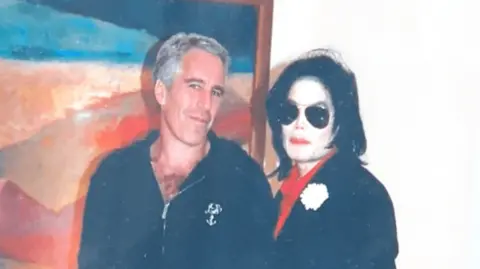
Other released photos show the interiors of Epstein's homes, his overseas travels, as well as celebrities, including Andrew Mountbatten-Windsor, Mick Jagger, Michael Jackson, Diana Ross and Peter Mandelson.
Being named or pictured in the files is not an indication of wrongdoing. Many of those identified in the files or in previous releases related to Epstein have denied any wrongdoing.
US Department of Justice
Epstein poses with Michael Jackson
But many of the documents are also heavily redacted.
The Justice Department said it would comply with the congressional request to release documents, with some stipulations.
It redacted personally identifiable information about Epstein's victims, materials depicting child sexual abuse, materials depicting physical abuse, any records that "would jeopardize an active federal investigation" or any classified documents that must stay secret to protect "national defense or foreign policy".
In a post on X, the DOJ said it was "not redacting the names of any politicians", and added a quote they attributed to Blanche, saying: "The only redactions being applied to the documents are those required by law - full stop.
"Consistent with the statute and applicable laws, we are not redacting the names of individuals or politicians unless they are a victim."
John Day, a criminal defence attorney, told the BBC he was surprised by the amount of information that was redacted.
"This is just going to feed the fire if you are a conspiracy theorist," he said. "I don't think anyone anticipated there would be this many redactions. It certainly raises questions about how faithfully the DOJ is following the law."
Mr Day also noted that the justice department is required to provide a log of what was being redacted to Congress within 15 days of the files' release.
"Until you know what's being redacted you don't know what's being withheld," he said.
In a letter to the judges overseeing the Epstein and Maxwell cases, US attorney for the Southern District of New York Jay Clayton, said: "Victim privacy interests counsel in favour of redacting the faces of women in photographs with Epstein even where not all the women are known to be victims because it is not practicable for the department to identify every person in a photo."
Clayton added that "this approach to photographs could be viewed by some as an over-redaction" - but that "the department believes it should, in the compressed time frame, err on the side of redacting to protect victims."
Reuters
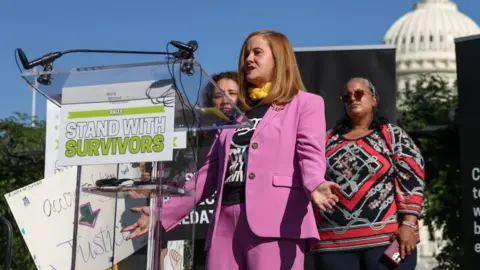
Epstein survivor Liz Stein has called for all of the files to be released
Survivors of Epstein's abuses, are among those most frustrated by the release.
Epstein survivor Liz Stein told BBC Radio 4's Today programme that she thinks the Justice Department is "really brazenly going against the Epstein Files Transparency Act", which is the law that requires all the documents to be released.
Survivors are really worried about the possibility of a "slow roll-out of incomplete information without any context", she noted.
"We just want all of the evidence of these crimes out there."
Baroness Helena Kennedy, a human rights lawyer and Labour peer in the House of Lords in the UK, said she was told the redactions in the documents were there to protect the victims.
"Authorities always have a worry" about "exposing people to yet further denigration in the public mind", she told the BBC's Today programme.
Many Epstein survivors seem "very keen" to have the material exposed, she said, but added that they "might not be so keen if they knew exactly what was in there".
Democrat Congressman Ro Khanna, who led the charge along with Republican CongressmanThomas Massie to release the files, said the release was "incomplete" and added that he is looking at options like impeachment, contempt or referral to prosecution.
"Our law requires them to explain redactions," Khanna said. "There is not a single explanation."
Massie seconded Khanna's statement and posted on social media that Attorney General Pam Bondi and other justice department officials could be prosecuted by future justice departments for not complying with the document requirements.
He said the document release "grossly fails to comply with both the spirit and the letter of the law" of the Epstein Files Transparency Act.
After the release, the White House called the Trump Administration the most "transparent in history", adding that it has "done more for the victims than Democrats ever have".
Blanche was asked in an interview with ABC News whether all documents mentioning Trump in the so-called Epstein files will be released in the coming weeks.
"Assuming it's consistent with the law, yes," Blanche said. "So there's no effort to hold anything back because there's the name Donald J Trump or anybody else's name, Bill Clinton's name, Reid Hoffman's name.
"There's no effort to hold back or not hold back because of that."
"We're not redacting the names of famous men and women that are associated with Epstein," he added.
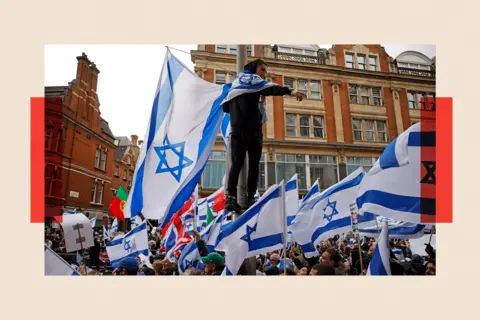
"It's been an incredibly difficult two years," says Phil Rosenberg, president of the Board of Deputies of British Jews. "I think our Jewish identity is being worn far more heavily these days given the pain of it all."
Conflict in the Middle East has, he says, had a profound impact on British Jewish society.
"The attacks of 7 October were felt very personally, not least because there were British Jews who were killed in the initial onslaught and people with British connections held hostage.
"And in the war that followed, the devastation in Gaza was very painful to watch. Then there was the vitriol that surrounded the whole conflict, and the massive rise in antisemitism culminating in deadly attacks."
The devastating shooting at Bondi Beach last weekend, which targeted the Jewish community during Hanukkah celebrations, and the attack on a Manchester synagogue on the holiest day in the Jewish calendar, Yom Kippur, together with the events in the Middle East over the past two years, have collectively had far-reaching repercussions for Britain's estimated 300,000 Jews.
Getty Images
Naveed Akram, the surviving suspect in the mass shooting in Sydney, has been charged with 59 offences, including 15 counts of murder and one of committing a terrorist act
Since the 1967 war in the Middle East it is hard to think of such a pronounced inflection point for British Jewish society, one that has so clearly affected daily lives.
There have been shifts in how secure many feel, and how connected they feel to the rest of the community. And with it, there is also some evidence that there have been shifts in discourse about Israel - including a generational divide that is starting to become apparent among British Jews.
Opinion across the community is incredibly diverse, but these are the ways in which a range of British Jews told me they felt life had changed over the past two years.
Hate crimes and antisemitism
"There was an extent to which it felt like Jewish friends were more likely to understand," says Ben Dory, 33, who lives in London. "I have ended up making more Jewish friends and also being more involved with the Jewish community."
As well as taking a bigger role in his synagogue he has also been more active in campaigning against antisemitism. That has partly come because of the huge change in how secure he himself feels.
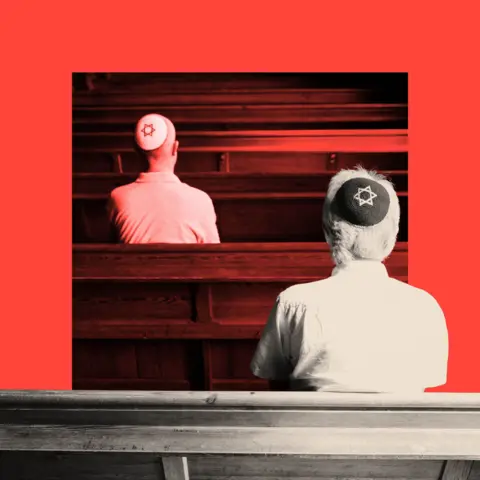
"I know Jewish people who, if they are going to the synagogue, will keep their kippah (skull cap) in their pocket until the moment they're through the door, and take it off the moment that they leave."
NurPhoto via Getty Images
Ben Dory says some people hide their kippah until they are inside the synagogue due to security concerns
Following the attack in Australia last weekend, Ben told me he was "horrified, but not surprised," saying it followed a pattern of the "global frenzy of antisemitism".
"It's long been the case that gatherings related to Israel haven't felt safe. But now Jews feel they are under a constant threat, even at non-political cultural and religious gatherings," he says.
He has become more, what he calls "political," over the past two years - and more vocal and passionate in his support for Israel. To some extent it is a response that he says is driven by a rise in anti-Jewish hate.
There were 1,543 hate crimes targeted at Jewish people in England and Wales in the year to March 2023, rising to 3,282 by March 2024, according to the Home Office.
The data for the following year is incomplete. But the Community Security Trust, a group that has monitored the number of antisemitic incidents in the UK for nearly 40 years, says levels over the past two years are the highest since their records began.
"The Jewish people that I know are more than ever conscious of the need for a safe Israel in case they need to escape there," says Ben.
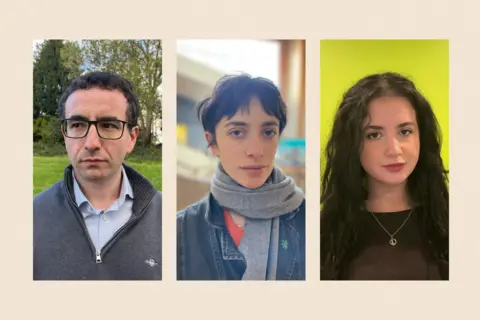
Ben Dory (left) says he was "horrified, but not surprised" by the attack at Bondi Beach. Tash Hyman (centre) says she feels less safe as a Jew in the UK today and Lavona Zarum (right) described how some of her friends turned away from her
Ever since the state of Israel's creation following the Holocaust, that notion that Israel is needed as a "safe haven" has remained for many Jews - and this has been heightened because of recent events, according to many of those I spoke to.
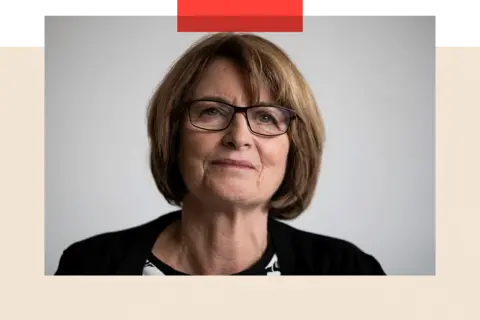
"I've never felt as vulnerable as a Jew as I do now," says Dame Louise Ellman, a former MP, "and this feeling I find is replicated among everyone I speak to in the Jewish community."
She left Labour in 2019 over concerns about antisemitism in the party, rejoining in 2021; she is also joint independent chair of the Board of Deputies, the largest body representing Jews in the UK.
Dame Louise used to attend the Heaton Park synagogue in North Manchester. She was married there and her son's Bar Mitzvah was held there.
This was also where the attack in October took place, which left two victims dead and three more seriously injured, requiring hospital treatment.
Her close connection to the synagogue intensified the shock she felt. "People are increasingly concerned, feeling edgy and feeling alone," she says.
"I find this very distressing."
Getty Images
The Heaton Park synagogue attack in October left two victims dead and three more seriously injured
All of this has, she explains, led her to a position of more staunch support for Israel. "I'm well aware that a number of people, particularly young people, are looking at this in a different way, but that is very much a minority."
One of those who has reached a very different conclusion about Israel is Tash Hyman, a 33-year-old theatre director from London.
Though the past two years have, she explains, made her feel more connected to her Jewishness - for example, she has leaned more into traditions of Jewish activism - she does not feel greater support for Israel.
"I grew up in a religious context where my Jewishness was very much entwined with the state of Israel, but I really started to interrogate that," she says. "The bottom line for me now is that the actions of the state of Israel make me feel less safe, not more safe.
"It makes me less safe in the UK because of what they are doing in Gaza." She rejects the idea that Israel is a "safe haven" for British Jews.
AFP via Getty Images
Tash Hyman says recent years have strengthened her connection to her Jewishness, though not her support for Israel
About 1,200 people were killed when Hamas attacked Israel on 7 October 2023 and more than 250 people were taken hostage. Since then, according to Gaza's Hamas-run health ministry, more than 70,000 Palestinians have been killed by Israeli military action.
Tash says that because some assume Jews support Israel's actions, it is important that those who do not make clear that there is opposition to what Israel is doing from within the Jewish community.
Today she attends synagogue but has surrounded herself with those who are politically like-minded - pointing out that the Hamas attacks and the war in Gaza have made nuanced debate between British Jews about Israel all the more difficult.
"It does certainly feel like there's a polarising and there's a real inability to have that conversation across the divide, because the divide is so big."
Zionism: a generational divide
Data from the Institute for Jewish Policy Research (JPR), a UK think tank, gathered before the Manchester attack and published in October, suggests that there is a generational divide in opinion among British Jews when it comes to views about Israel.
The study of 4,822 British Jews over the age of 16 suggested that the overall number identifying as "Zionist" was 64%, but among the 20-30 age group, only 47% did. Meanwhile 20% of that age group describe themselves as "non Zionist" and 24% as "anti-Zionist". (It was left to respondents to decide how to interpret those labels.)
The proportion of those Jews identifying as anti-Zionist since 2022 has increased in all age groups but so too has the gap between older and younger groups. For example, 3% of 50-59 year olds surveyed in 2022 said they were anti-Zionist, a 10 point gap compared to the 20-29 age group.
By 2024, it was a 17-point gap - with 7% of 50-59 year olds saying they were anti-Zionist, compared to 24% for the younger group. (Comparable figures by age are not available longer-term.)
AFP via Getty Image
Data from the Institute for Jewish Policy Research suggests a generational divide in opinions on Israel among British Jews
Robert Cohen, a PhD student at King's College London, has done his own research into Jews in the UK who are now critical of Israel's actions in Gaza, and what led them to reach that position.
Between February 2023 and October 2024, he interviewed 21 people who took that stance and has tried to shed light on why a generational gap might be opening up.
He believes that for some young people, their stance was the result of what he described as their "British Jewish ethics" around issues such as justice and charity coming together with their "Gen Z sensibilities".
"We know Gen Z are characterised by authenticity, being super-inclusive, being very big on justice issues," he argues. "And I could see among my research cohort there was a merging of those things with the ethics of their Jewish upbringing."
Others I spoke to, including Ben Dory, suggested that a generational split over views on Israel could be associated with young people having less of a direct connection with the Holocaust and a lack of awareness of its impact.
Getty Images
Dame Louise Ellman says recent events led her to a position of more staunch support for Israel. 'I'm well aware that a number of people, particularly young people, are looking at this in a different way,' she adds
Robert Cohen also suggests that those British Jews he interviewed who wanted to speak out against Israel's actions in Gaza often wanted to do so alongside others from the community who would best understand them, referring to the "Jewish bloc" at pro-Palestinian marches.
He also talked of the alarm some had felt at unsympathetic reaction to the Hamas attacks.
"Some were clearly disturbed by the fact that they could see a complete collapse in empathy towards the Jewish Israeli victims of what happened on 7 October."
By taking a stance that was critical of Israel, many of those he spoke to had fallen out with friends or family.
Getty Images
Robert Cohen believes some young people's views reflect a mix of British Jewish ethics and "Gen Z sensibilities"
But over the past two years many other young British Jews became more staunchly supportive of Israel, and that also may have had an impact on relationships with those around them.
'My friend group turned away from me'
Lavona Zarum was born in Israel and brought up in London. At the time of the 7 October attacks, she was a student and had just been appointed president of the Jewish Society at the University of Aberdeen.
"I had quite a few people walk away," she recalls. "The girls in my main friend group, slowly over that summer, all turned away from me."
She recalls how isolated she felt - and how difficult she found it to talk to a lot of non-Jewish students about the way she felt about the attacks in Israel and the war that followed.
She was also offended by certain social media posts by people she knew - some were about "globalising the intifada".
"People felt very comfortable saying what they wanted, and I had been very careful not to bring it up really. I kind of retreated within myself."
Lavona is 21 now. She has since gravitated towards friends with whom she feels there is mutual respect, even if they disagree.
She also visited Israel six months after 7 October through a fellowship with the Union of Jewish Students, visiting some of the sites attacked by Hamas where she said people "spoke kindly and listened and shared ideas" in spite of some differences in opinion.
"The world was a bit more antisemitic than I had allowed myself to believe before," she adds. "But it's taught me to enter into discussions being more intentional and thoughtful, and also backing myself up."
Discord within the Board
Over the past two years, the Board of Deputies of British Jews has faced questions of their own about how to conduct debates on Israel.
Earlier this year, 36 of the board's members signed an open letter, which was published in the Financial Times, protesting against "this most extremist of Israeli governments" and its failure to free the hostages held since 7 October.
"Israel's soul is being ripped out and we… fear for the future of the Israel we love," the letter said.
Five members of the Board were suspended for instigating the letter. The Board's Constitution Committee found that they had broken a code of conduct by creating the "misleading impression that this [the letter] was an official document of the Board as a whole".
But for some, the letter represented a watershed moment where some of the conversations about Israel happening in private within the UK's Jewish community could be had in public.
Phil Rosenberg argues that there has long been healthy debate among the 300 deputies. His primary concern now is the safety of British Jews but also how the community sees itself.
"We have a whole range of activities to confront antisemitism," he says. "But we also believe that the community needs not just to be seeing itself, and to be seen, through the prism of pain.
"It already wasn't right that the only public commemoration of Jewish life in this country is Holocaust Memorial Day. And the only compulsory education is Holocaust education. Both of these things are incredibly important, but that's not the whole experience of Jews."
PA Media
Phil Rosenberg (pictured) says one of his primary concerns is the safety of Jews
Back in May 2024 when he first became president of the board, Phil Rosenberg had talked about aiming to celebrate more the contributions made by Jews to British life. The events of the past two years have, he says, been detrimental to that.
"The war definitely has made it harder because when you open either a Jewish media publication or a national publication it's all bad news.
"Right now, as a Jew in Britain, it can feel hard to feel good about things and hard to feel positive."
As for the generational divide among British Jews about views on Israel, Robert Cohen predicts that the situation on the ground in the Middle East, and whether it results in greater rights for Palestinians, will determine whether it becomes more pronounced.
"I think that the future of Jewish people in the UK is on a real knife edge," he says.
"And how Britain as a country chooses to respond to this challenge in the very short term will be incredibly important for whether Britain in the long term can continue to be a place that Jews feel safe."
BBC InDepth is the home on the website and app for the best analysis, with fresh perspectives that challenge assumptions and deep reporting on the biggest issues of the day. You can now sign up for notifications that will alert you whenever an InDepth story is published - click here to find out how
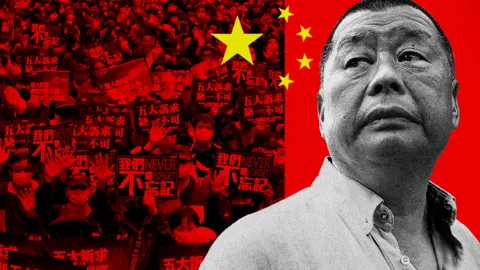
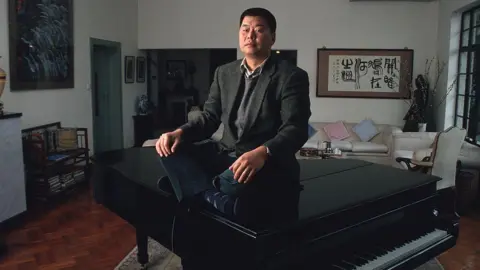
Jimmy Lai, 78, faces life in prison for national security offences
On a winter morning in 2022 Raphael Wong and Figo Chan walked into Hong Kong's Stanley prison to meet Jimmy Lai, the media billionaire who had been arrested two years before and was awaiting trial charged with national security offences.
They had all been part of the turbulent protests that had rocked Hong Kong in 2019, when hundreds of thousands took to the streets demanding democracy and more freedom in the Chinese territory.
They would also often meet for dinner, sometimes lavish meals, gossiping and bantering over dim sum, pizza or claypot rice.
In prison, he "loved eating rice with pickled ginger," Chan said. "No-one could have imagined Jimmy Lai would eat something like that!"
But neither had they imagined a reunion at a maximum security prison, the protests crushed, friends and fellow activists jailed, Hong Kong just as boisterous and yet, changed. And gone was the owner of the irreverent nickname "Fatty Lai": he had lost considerable weight.
Decades apart - Lai in his 70s, Wong and Chan about 40 years younger - they had still dreamed of a different Hong Kong. Lai was a key figure in the protests, wielding his most influential asset, the hugely popular newspaper, Apple Daily, in the hope of shaping Hong Kong into a liberal democracy.
That proved risky under a contentious national security law imposed in 2020 by China's Communist Party rulers in Beijing.
Lai always said he owed Hong Kong. Although he is a UK citizen, he refused to leave.
"I got everything I have because of this place," he told the BBC hours before he was arrested in 2020. "This is my redemption," he said, choking up.
He wanted the city to continue to have the freedom it had given him. That's what drove his politics - fiercely critical of the Communist Party and avowedly supportive of Hong Kong's pro-democracy movement. It cost him his own freedom.
Watch: Jimmy Lai's last interview as a free man in 2020
Lai harboured "a rabid hatred" of the Chinese Communist Party and "an obsession to change the Party's values to those of the Western world", the High Court ruled on Monday as it delivered the verdict in his trial.
It said that Lai had hoped the party would be ousted - or, at the very least, that its leader Xi Jinping would be removed.
Lai was found guilty on all counts of charges he had always denied. The most serious one - colluding with foreign forces - carries a maximum sentence of life in prison.
"Never," Lai had said to that charge when he testified, arguing that he had only advocated for what he believed were Hong Kong's values: "rule of law, freedom, pursuit of democracy, freedom of speech, freedom of religion, freedom of assembly".
Monday's verdict was welcomed by Hong Kong's chief executive John Lee, who said Lai had used his newspaper to "wantonly create social conflicts" and "glorify violence". The law, he added, never allows anyone to harm the country "under the guise of human rights, democracy and freedom".
Getty Images
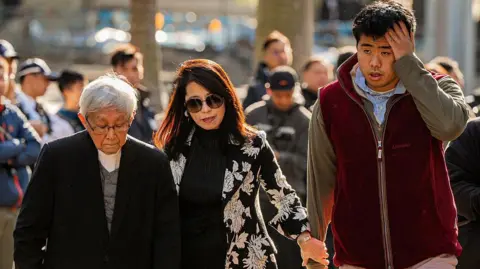
Lai's wife Teresa and son Shun-yan at court for Lai's verdict, along with Cardinal Joseph Zen, former bishop of Hong Kong who baptised Lai in 1997
Back in 2022, before Wong and Chan left the prison, Lai asked them to pray with him, to Wong's surprise.
Lai's Catholic faith had deepened in solitary confinement - an arrangement he had requested, according to authorities. He prayed six hours a day and he made drawings of Christ, which he sent in the mail to friends. "Even though he was suffering," Wong said, "he didn't complain nor was he afraid. He was at peace."
Peace was not what Jimmy Lai had pursued for much of his life - not when he fled China as a 12-year-old, not while he worked his way up the gruelling factory chain, not even after he became a famous Hong Kong tycoon, and certainly not as his media empire took on Beijing.
For Lai, Hong Kong was everything that China was not - deeply capitalist, a land of opportunity and limitless wealth, and free. In the city, which was still a British colony when he arrived in 1959, he found success - and then a voice.
Apple Daily became one of the top-selling papers almost instantly after its debut in 1995. Modelled on USA Today, it revolutionised the aesthetics and layout of newspapers, and kicked off a cut-throat price war.
From a guide to hiring prostitutes in the "adult section" to investigative reports, to columns by economists and novelists, it was a "buffet" targeting "a full range of readers", said Francis Lee, a journalism professor at the Chinese University of Hong Kong.
Former editors and employees spoke of Lai's encouragement - "If you dared to do it, he would dare to let you do it" - and his temper. One said he often swore.
They describe him as unconventional, and as a visionary who wasn't afraid to bet on experiments. "Even before the iPhone was launched, he kept saying mobile phones would be the future," recalled one of the paper's editors, adding that he was full of ideas. "It was as if he asked us to create a new website every day."
It had been the same when he owned a clothing label. "He was not afraid of disrupting the industry, and he was not afraid of making enemies," said Herbert Chow, a former marketing director at a rival brand.
That was both his making and undoing, Chow said: "Otherwise, there would have been no Apple Daily. Of course, he wouldn't have ended up like this either."
An early TV commercial for Apple Daily featured the then 48-year-old Lai biting the forbidden fruit while dozens of arrows took aim at him.
It became a self-fulfilling prophecy.
Jimmylai.substack.com
The Apple Daily commercial when it launched in 1995
Escape from China
It was his first taste of chocolate that beckoned Lai to Hong Kong as a boy.
After carrying a passenger's luggage at a railway station in China, Lai was given a tip, and a bar of chocolate. He took a bite. "I asked him where he's from. He said Hong Kong. I said, 'Hong Kong must be heaven' because I had never tasted anything like that," Lai said of the encounter in a 2007 documentary, The Call of the Entrepreneur.
Life in Mao Zedong's China was punctuated by waves of oppressive campaigns - to industrialise China overnight, to weed out capitalist "class enemies". The Lais, once a family of business people, were blacklisted. His father fled to Hong Kong, leaving them behind. His mother was sent to a labour camp.
Decades later, Lai wrote of how of he and his sisters would be dragged out of their homes to watch a crowd forcing their mother to kneel while she was shoved and taunted - cruel public shaming that soon became the norm. The first time, Lai wrote, was terrifying: "My tears flowed freely and wet my shirt. I dared not make a move. My body was burning with humiliation."
Uncowed, his grandmother finished every story with the same message: "You have to become a businessman even if you only sell seasoned peanuts!"
And so, at the age of 12, he set off for Hong Kong, among millions who fled the mainland - and Mao's devastating rule - over the years.
The day he arrived, on the bottom of a fishing boat, along with about 80 seasick travellers, he was hired by a mitten factory. He described the long working hours as a "very happy time, a time that I knew I had a future". It was there that one of his co-workers helped him learn English. Years later, he would give interviews and even testify at court in fluent English.
By his early 20s, he was managing a textile factory and after making money on the stock market, he started his own, Comitex Knitters. He was 27.
Getty Images
Jimmy Lai at his home in Hong Kong in 1993
Business often took Lai to New York, and on one of those trips, he was lent a book that came to define his worldview: The Road to Serfdom by Nobel Prize-winning economist Friedrich Hayek, a champion of free-market capitalism. "People's spontaneous reaction" and "the exchange of information" have created the best in the world, was his takeaway. To him, that was Hong Kong's strength.
The book spurred a voracious reading habit. He would read the same book multiple times, and read every book by authors he admired. "I want to turn the author's thoughts into my backyard garden. I want to buy a garden, not cut flowers," he said in a 2009 interview.
After a decade in manufacturing, he was "bored" and founded the clothing chain Giordano in 1981, which became a fast-fashion pioneer. It was so successful that Tadashi Yanai sought advice from Lai when his Japanese label Uniqlo opened shops.
Lai launched stores in China, which had begun to open up after Mao died. He was "excited", China "was going to be changed, like a Western country", he said in the 2007 documentary.
Then in 1989, Beijing crushed pro-democracy protests in Tiananmen Square: a rude awakening for Lai and Hong Kong, which was set to return to Chinese rule in 1997 under a recent agreement by China and the UK.
Giordano sold tees with photos of Tiananmen protest leaders and anti-Beijing slogans, and put up pro-democracy banners in stores across Hong Kong.
A million people marched in Hong Kong in solidarity with student protesters in Beijing. Until 2020, Hong Kong held the largest vigil that mourned the massacre.
Lai said later that he "didn't feel anything about China" until then. He had always wanted to forget that part of his life but "all of a sudden, it was like my mother was calling in the darkness of the night".
Getty Images
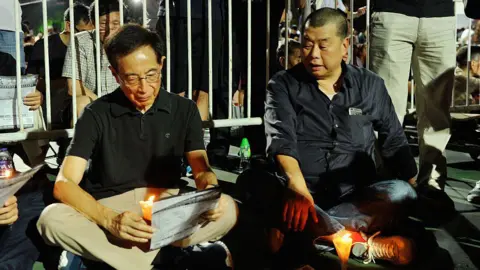
Lai was a frequent attendee at Hong Kong 's annual vigils in memory of those who died at Tiananmen Square in 1989
'Choice is freedom'
The following year Lai launched a magazine called Next, and in 1994 published an open letter to Li Peng, "the Butcher of Beijing" who played a key role in the Tiananmen massacre. He called him "the son of a turtle egg with zero intelligence".
Beijing was furious. Between 1994 and 1996, Giordano's flagship store in Beijing and 11 franchises in Shanghai closed. Lai sold his shares and stepped down as chairman.
"If I just go on making money, it doesn't mean anything to me. But if I go into the media business, then I deliver information, which is choice, and choice is freedom," Lai said in the 2007 documentary.
He soon became a "very active participant" in Hong Kong's pro-democracy movement, meeting leaders to discuss strategy, said Lee Wing Tat, a former lawmaker from the Democratic Party.
He became an outspoken critic of the CCP, writing in 1994: "I entirely oppose the Communist Party because I hate everything that restrains personal liberties." He also started to voice concerns about the looming handover of Hong Kong, from Britain to China, in 1997.
"After more than a century of colonial rule, Hong Kongers feel proud to return to the embrace of the motherland," he wrote. "But should we love the motherland even if it doesn't have freedom?"
During the handover, however, China's then-leader Jiang Zemin promised that Hongkongers would govern Hong Kong and the city would have a high degree of autonomy for the next 50 years.
Getty Images
Lai at an "Occupy Central" protest in Admiralty in October 2014
The 2014 Umbrella Movement sparked by Beijing's refusal to allow completely free elections in Hong Kong became another turning point for Lai.
Protesters occupied the city's main commercial districts for 79 days. Lai turned up from 9am to 5pm every day, undeterred after a man threw animal entrails at him. "When the police started firing tear gas, I was with Fatty," the former lawmaker Lee recalled.
The movement ended when the court ordered protest sites to be cleared, but the government did not budge. Five years later, in 2019, Hong Kong erupted again, this time because of a controversial plan that would have allowed extradition to mainland China.
What began as peaceful marches became increasingly violent, turning the city into a battleground for six months. Black-clad protesters threw bricks and Molotov cocktails, stormed parliament and started fires; riot police fired tear gas, rubber bullets, water cannons and live rounds.
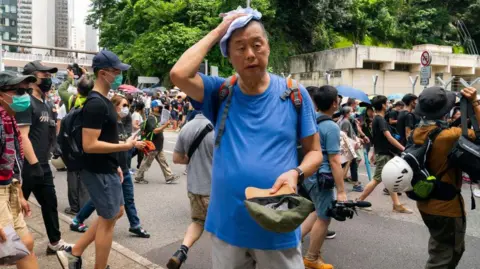
Lai was at the forefront of the protests and served 20 months for participating in four unauthorised assemblies. A protester told the BBC he was surprised to see Lai: "To me, he's a busy businessman, but he showed up."
Getty Images
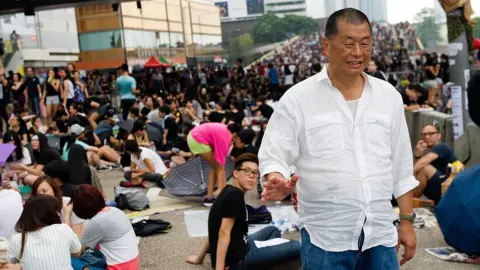
Lai at a pro-democracy march in 2019
Apple Daily provided blanket coverage or, as critics would argue, a sounding board for an anti-government movement.
Government adviser Ronny Tong said Lai was "instrumental" in the protests because Apple Daily carried a "totally false" slogan – anti-extradition to China – which "caught the imagination of people who wanted to cause havoc in Hong Kong".
Whether Apple Daily played a seditious role, and how much control Lai exerted over its stance was at the centre of his 156-day national security trial.
Lai instructed the editorial team to "urge people to take to the streets", according to Cheung Kim-hung, former chief executive of Apple Daily's parent company Next Digital, and a defendant-turned-prosecution witness. After the National Security Law took effect, the newspaper was raided twice and eventually shut down in 2021.
During the height of the protests, Lai flew to the US where he met then Vice-President Mike Pence to discuss the situation in Hong Kong. A month before the National Security Law was imposed, Lai launched a controversial campaign, despite internal pushback, urging Apple Daily readers to send letters to then US President Donald Trump to "save Hong Kong".
All of this, the court ruled, amounted to a public appeal for a foreign government to interfere in Hong Kong's internal affairs.
"Nobody in their right mind should think that Hong Kong can undergo any kind of political reform without at least tacit acceptance from Beijing," Tong said. The protests in 2014 and 2019 "are totally against common sense".
Getty Images
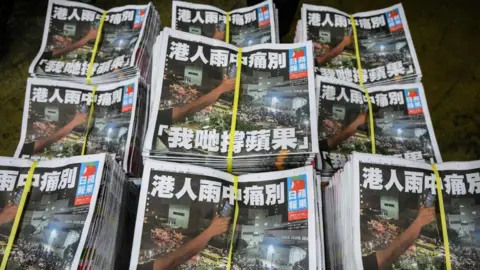
Copies of the last Apple Daily newspaper early on June 24, 2021
Beijing says Hong Kong has now moved from "chaos to governance" and onto "greater prosperity" because of the national security law and a "patriot-only" parliament. But critics, including hundreds of thousands of Hongkongers who have since left, say dissent has been stifled, and the city's freedoms severely curbed.
Lee, the lawmaker, is among them: "When I first came to the UK, I had nightmares. I felt very guilty. Why could we live in other places freely, while our good friends were jailed?"
Lai's family has been calling for his release for years, citing concerns for his health because he is diabetic, but their calls have been rejected so far. The government and Lai's Hong Kong legal team have said that his medical needs are being met.
Carmen Tsang, Lai's daughter-in-law who lives in Hong Kong with her family, says her children miss grandpa - and the big family dinners he hosted every two weeks. His loud voice scared her daughter when she was younger, but "they loved going to grandpa's place… They think he's a funny guy".
She is not sure today's Hong Kong has a place for Lai.
"If there's a speck of dust in your eye, you just get rid of it, right?"
Watch: What does the Jimmy Lai verdict mean for democracy in Hong Kong?
Winslet made her directorial debut with Goodbye June, released this month
Kate Winslet has spoken about how she coped with "appalling" reporting and intrusion by the media after rising to fame as Rose in James Cameron's 1997 epic, Titanic.
The actor and director said she was followed by paparazzi and had her phone tapped, with people even looking through her bins and asking her local shops what she bought to "try and figure out what diet I was on or wasn't on".
"It was horrific," she said. Years later, she experienced further intrusion during a marriage breakdown, adding the ways she dealt with the media attention were "a good meal, a shared conversation, a nice cup of coffee, a bit of Radiohead and a good poo".
"You know, life's all the better for those things," she told BBC Radio 4's Desert Island Discs.
While filming Titanic in her early 20s, Winslet wasn't in a "particularly good shape" mentally around her body, she said.
Though the experience of making the film was incredible, she said, her world was "totally turned upside down" once it hit cinemas.
"I wasn't ready for that world," she said.
She said she had received negative comments about her appearance from a young age, recalling being nicknamed "blubber" by her peers at primary school as a child, and later being told she would have to "settle for the fat girl parts" if she wanted to be an actor by a drama teacher.
From the ages of 15 to 19, she said she was "on and off" dieting, "barely eating" by the end.
"It was really unhealthy," she said.
Once Titanic was released, she began to see herself on the cover of newspapers and magazines, often accompanied by what she described as "awful, terrible, actually abusive names".
"It was horrific. There were people tapping my phone. They were just everywhere. And I was just on my own. I was terrified to go to sleep," she said.
Support from friends and those close to her was part of how she dealt with it then - including from a neighbouring couple who would leave her a "bowl of steaming pasta and a little glass of red wine" on the garden wall between their houses.
CBS Photo Archive via Getty Images
Titanic is one of the most successful films of all time, and won 11 Academy Awards
Speaking further about her depiction in the media at that time, Winslet described how magazine cover images of her were edited without her knowledge - something she also famously spoke out about in the early 2000s.
Speaking to Lauren Laverne, Winslet recalled looking at those types of images and thinking: "I don't look like this. My stomach isn't flat like that. My legs are not that long, my boobs are not that big. What? My arms aren't that toned. What the hell?"
"I didn't want any young woman, even just one, to look at that image and think, 'Oh my God, I want to look like that.' That's not me," she said.
Jon Kopaloff/FilmMagic via Getty Images
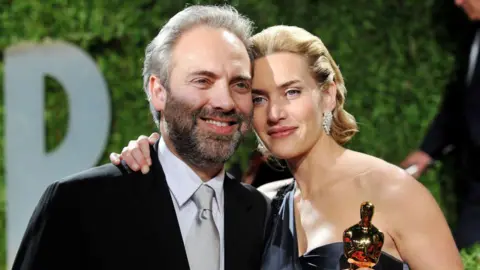
Winslet and her ex-husband, director Sam Mendes, after she won an Academy Awards for Best Actress in 2009
Winslet also talked about the headlines that were printed after it emerged she was about to divorce from her second husband, film director Sam Mendes, in 2010.
"I was being followed by paparazzi in New York City with my two small kids, who wanted to, of course, know the reason why Sam and I had split up," she said.
Asked how she dealt with that at the time, Winslet said: "You just keep your mouth closed, you put your head down, and you keep walking. And you try and put your hands over your children's ears. You lean on your friends, you just keep going."
Getty Images
Winslet's son, Joe Anders, wrote the screenplay for Goodbye June
Looking towards the present day, Winslet said that while the pressures of being a woman in the film industry may have changed with time, there is "so much we still have to unlearn [...] about how we speak to women in film".
As she makes her directorial debut with the film Goodbye June, written by her son, Joe Anders, she said she had heard a number of things that "would never be said" to a male director.
"So they might say things like, 'Don't forget to be confident in your choices'.
"And I want to sort of say, 'Don't talk to me about confidence', because if that's one thing I haven't ever lacked, actually, it's exactly that. That person wouldn't say that to a man."
The year's biggest artists included (L-R): Rosalía, Jarvis Cocker, PinkPantheress, Bad Bunny and Addison Rae
Songs about love, sex, tax and demon hunters ranked among the best music of 2025, according to a "poll of polls" conducted by BBC News.
We compiled more than 30 end-of-year lists from leading music publications to come up with a "super-ranking" of the year's best albums and singles, with artists including Pulp, Lady Gaga and Chappell Roan joined by newcomers like pop singer Addison Rae and indie band Geese.
In total, the critics named more than 200 records among their favourites, although the year's biggest-sellers failed to impress them.
Taylor Swift's blockbuster album The Life Of A Showgirl only picked up a handful of nominations. The year's biggest single, Alex Warren's Ordinary, appeared in just one list of 2025's best songs.
Instead, critics selected music that shifted the tectonic plates of pop... Here's a guide to their favourites.
The 10 best albums of 2025
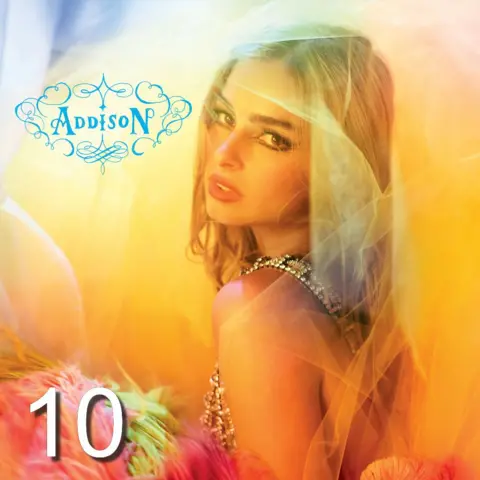
10) Addison Rae – Addison
Columbia Records
After a shaky start in 2021, Addison Rae's music career took flight with this collection of shimmering, trance-like hymns to desire. The desire for touch, the desire for fame, the desire for inner peace.
Unlike most modern pop albums, it's the work of just three people, with Rae and her collaborators Elvira Anderfjärd and Luka Kloser establishing a stylish, spacey and occasionally off-kilter sonic palette all of their own.
Singles like Diet Pepsi and Headphones On felt simultaneously classic and futuristic, marking Rae out as pop's newest It Girl.
West End Girl is a savage and startlingly detailed portrait of a marriage being torn apart. Allen says some of the details have been exaggerated, but her pain is tangible amongst the artful pop beats and faux insouciance.
The dirty laundry triggered an avalanche of press coverage when the album arrived in November, but the songs have lingered as everyone remembers just how well Allen can craft an intoxicating pop hook.
Listen to Madeline: Where Allen confronts her partner's mistress, and recreates their texts.
Pulp's first album since 2001, More, somehow manages to sound as if it was recorded and shelved in their mid-90s heyday.
The lyrics are the only giveaway that this is the work of a band in their late middle age - as Jarvis Cocker sings movingly about stagnation, divorce and mortality. "You've gone from all you that could be to all that you once were," he laments on Slow Jam.
Yet, at 62, he remains stubbornly committed to the transformative power of love. And the reception Pulp received at Glastonbury this summer went a long way to proving him right.
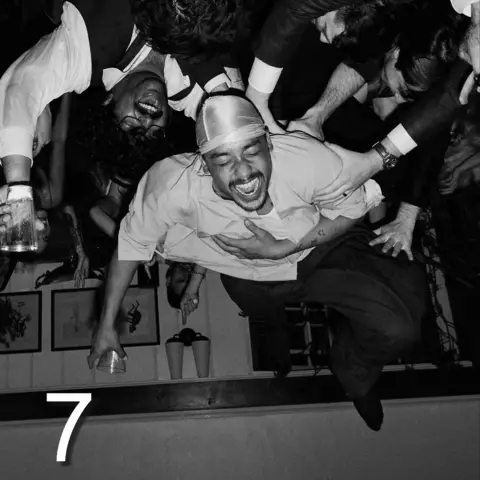
What a wild year it's been for Dijon Duenas. After contributing to Bon Iver's Sable, Fable and Justin Bieber's acclaimed comeback, Swag, he scored two Grammy nominations for his second album, Baby.
It's a dazzling, harmony-rich R&B record, that channel-hops between genres and moods like a television tuned to the twin spirits of Prince and D'Angelo.
The album's central theme is the ecstasy and chaos of fatherhood, with Dijon addressing the title track to his firstborn, then imploring his wife to expand the family on the subtly-titled Another Baby! Sleepless nights have never sounded so good.
Listen to Yamaha: A swirling 80s funk groove allows Dijon to submerge himself in the bliss of enduring love.
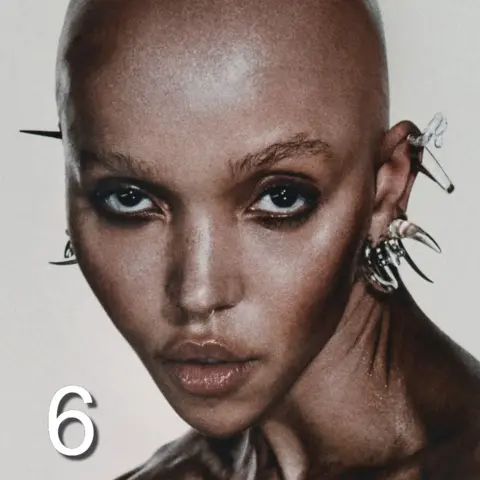
6) FKA Twigs – Eusexua
Atlantic Records
Eusexua, FKA Twigs has said, is a word that describes "the tingling clarity" you get when you're struck by a new idea, when you kiss a stranger, or even "the moment before an orgasm".
The album attempts to recreate that feeling with a series of abstract, futuristic soundscapes and deconstructed club tracks. Echoing Madonna's Ray of Light (most notably on Girl Feels Good), the hooks are as sharp as the dopamine is addictive.
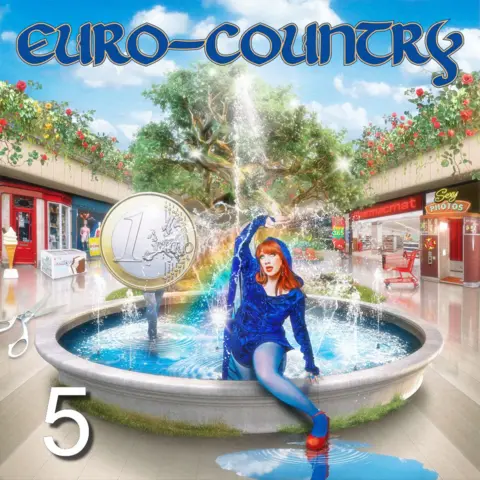
Coronation Street! Social anxiety! Late stage capitalism! Jamie Oliver! Grief! Road rage!
It's all there on Euro-Country, a riotously enjoyable romp through Ciara Mary-Alice Thompson's inner monologue.
Along the way, she tackles everything from male suicide to the impossible beauty standards that had her "trying to wax my legs with tape" at the age of nine.
French artist Oklou – aka Marylou Mayniel – described her debut album as a "quest for meaning, of the need to be touched by anything" in a world where our interactions are stripped of humanity and flattened onto a screen.
Co-produced by Charli XCX collaborators AG Cook and Danny L Harle, it couldn't sound less bratty if it tried.
It's an album of intimate, gauzy pop, almost entirely drumless and built around hypnotic musical loops that short-circuit your emotions. Unplug and absorb.
Listen to Blade Bird: The album's swooning climax, based on a Basque poem about the tension between love and possession.
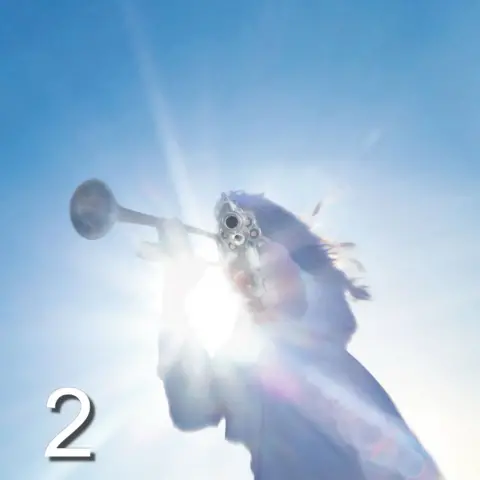
His sixth album is a jubilant love letter to the music of his homeland, mixing traditional genres like plena, salsa and bomba with the hip-swaying pulse of reggaeton.
The irresistible grooves dare you not to get up and dance, while the lyrics agonise about gentrification and capitalism stealing the island's old magic.
Listen to DtMF: A lament for the loved ones he's lost, the album's title track translates as, "I should have taken more photos".
A savage and unpredictable record, Getting Killed was apparently recorded in just 10 days.
It finds the four members of Brooklyn-based Geese patchworking the best bits of Radiohead, the Strokes, Captain Beefheart and the Velvet Underground into something entirely new and unpredictable.
Frontman Cameron Winter anchors the chaos with his singular warble, and lyrics that swerve wildly between irreverence and incisiveness.
Listen to Taxes: Defiant, taut and full of swagger, Winter chants: "If you want me to pay my taxes / You'd better come over with a crucifix."
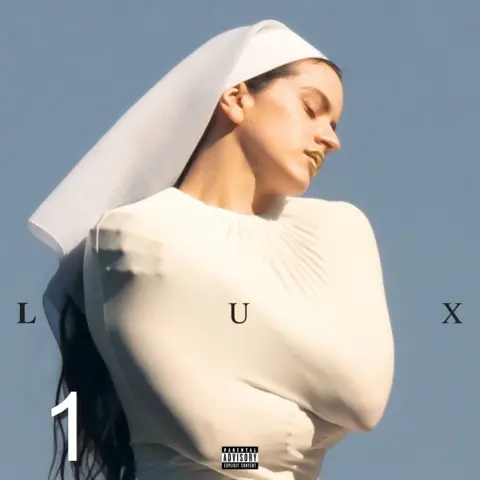
1) Rosalía - Lux
Columbia Records
If music brings us closer to God, Rosalía wants her music to bring God closer to us.
The Spanish singer's fourth album is an exhilarating - and profoundly moving - exploration of the human condition, that asks why the earthly and the holy have to be so far apart.
It's a monumental work. She devoted an entire year to the lyrics alone, singing in 14 languages, over music that sits at the lesser explored intersection of classical, flamenco and avant-pop.
In an interview with the New York Times, Rosalía agreed she was "demanding a lot" from listeners, "but I think that the more we are in the era of dopamine, the more I want the opposite".
Accordingly, it's an album that reveals fresh new treasures on every listen, as Rosalía argues we're all capable of grace and beauty. We just have to open our hearts.
Listen to Reliquia: As staccato strings are sucked into a vortex of electronic distortion, Rosalía sings about the sacrifices she's made for art and love, and concludes it's better to contribute to the world than take from it.
There's a sense of unease bubbling under this gentle indie rock song, as though singer Karly Hartzman is perpetually on the brink of divulging an uncomfortable truth. Built around the metaphor of elderberries, a fruit that can heal or poison depending on how it's handled, the song captures the tension of staying in a relationship you know is toxic.
Introduced by nostalgic strings, Folded became Kehlani's first Top 10 hit in her native US, blending classic R&B themes of heartbreak and longing with modern production. Using the simple act of folding an ex-lover's clothes as jumping off point, Kehlani captures the emotional push-and-pull of saying goodbye.
Addison Rae is a student of pop, and Headphones On is her master thesis – a hymn to music that whisks you away from the world for three minutes of distracted, hypnotic solace.
A seduction, a come-on, a hedonistic exploration of physicality. "Ginga me," Amaarae sings repeatedly over a throbbing electro groove – referencing the fluid, hip-swaying movements of the Brazilian martial art Capoeira. You'll succumb, and you'll enjoy it.
This boisterous, captivating salsa was recorded live with student musicians from Puerto Rico's Escuela Libre de la Música (take that, AI). But the celebratory atmosphere masks a broken heart, as Bad Bunny is reminded of the ex who taught him to dance. "I thought I'd grow old with you," he laments.
Netflix
K-Pop Demon Hunters' effervescent soundtrack was a breakout hit
Sometimes a song escapes its origins and goes into orbit. Golden was the last song written for Netflix's hit animation K-Pop Demon Hunters, but its soaring chorus became an anthem for anyone striving to achieve their dreams. An Oscar nomination beckons.
Two things you can expect from Chappell Roan are theatricality and emotional honesty. The Subway delivers both, becoming a map of loss that carries listeners through a breakup on the streets and subways of New York - capturing that confusing limbo of experiencing grief and loneliness, surrounded by hundreds of strangers.
A triumphant return to the sound of her debut album, Abracadabra takes all the Lady Gaga tropes – Nonsense lyrics! Demonic synths! Gothic choruses! – and dials them up to 11. An absolute banger.
Olivia Dean says Man I Need is a song "about knowing how you deserve to be loved and not being afraid to ask for it". The object of her affections just needs a nudge in the right direction, and this playful, soulful melody should easily set the romance on track.
One of pop's most overused clichés is that falling in love is intoxicating, just like drugs!
So it's a credit to PinkPantheress that she's made the idea sound fresh – zoning in on the fraught awkwardness of hooking up, whether it's with a dealer or a potential new partner.
"It feels illegal," she frets, as her heartbeat races with the drumbeat of this smouldering dance-pop anthem.
The methodology
BBC News compiled more than 30 year-end lists published by the world's most influential music magazines and critics - including the NME, Rolling Stone, Spain's Mondo Sonoro and France's Les Inrockuptibles.
Records were assigned points based on their position in each list - with the number one album or single getting 20 points, the number two album receiving 19 points, and so on.
The results were the closest we've ever seen. Just 52 points separated Rosalía's Lux from the number two album, Geese's Getting Killed.
In the singles countdown, PinkPantheress was the runaway winner - but the rest of the field was tightly packed, reflecting a year where there haven't been many universally popular, culturally dominant songs.
The publications we surveyed included: Albumism, Billboard, Buzzfeed, Clash, Complex, Consequence of Sound, Dazed, Daily Mail, Dork, Double J, Entertainment Weekly, Exclaim!, The Fader, Flood, The Forty Five, Gorilla vs Bear, The Guardian, Independent, LA Times, Les Inrocks, Line of Best Fit, MOJO, Mondo Sonoro, NME, New York Times, Paste Magazine, Pitchfork, Pop Matters, Rolling Stone, The Skinny, Slant, Stereogum, The Telegraph, Time Magazine, Time Out, The Times, Uncut and Vulture.
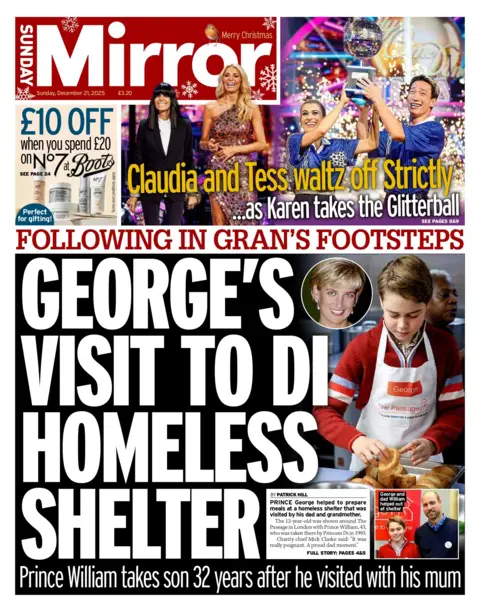
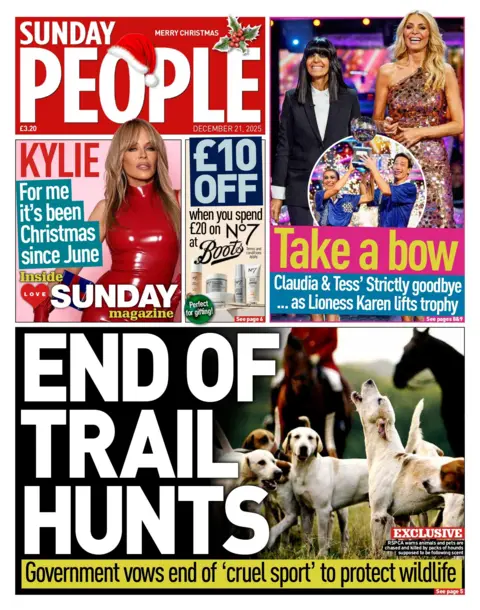
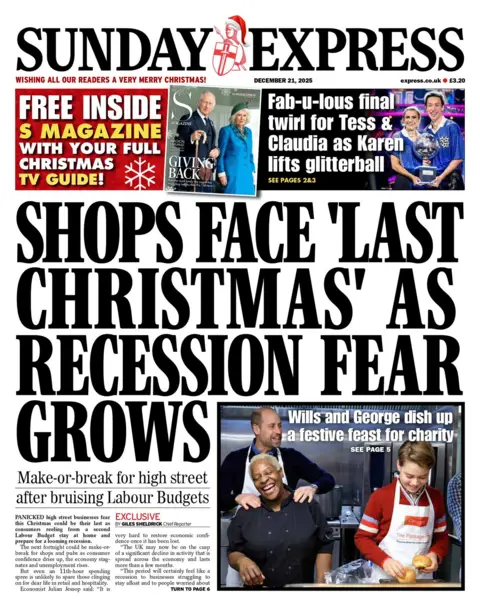
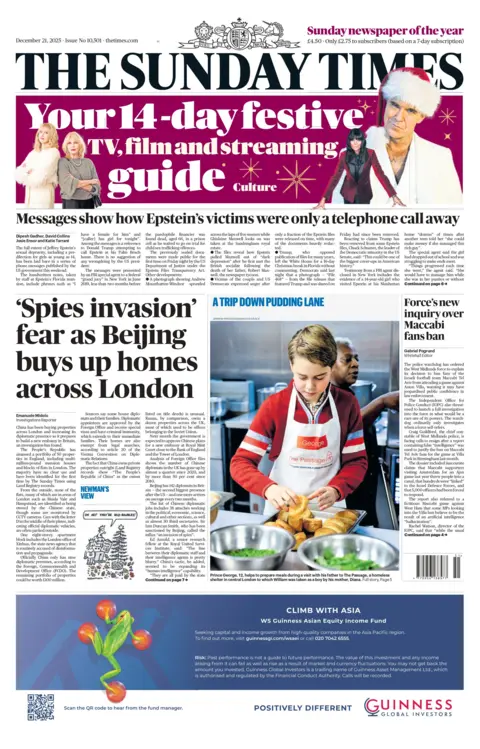
Many of the papers feature a portrait of Prince George accompanying his father, the Prince of Wales, helping to prepare meals at a London homeless shelter. The Sunday Mirror says the 12-year-old was "shown around The Passage in London with Prince William, 43, who was taken there by Princess Di in 1993".
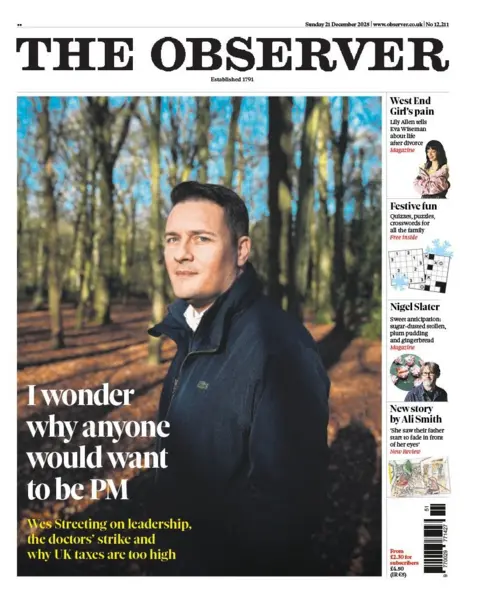
The Observer leads with an interview with Wes Streeting, in which he wonders "why anyone would want to be PM". The health secretary, who last month dismissed suggestions from the prime minister's allies that he was seeking to challenge for the leadership, discusses "leadership, the doctors' strike and why UK taxes are too high".
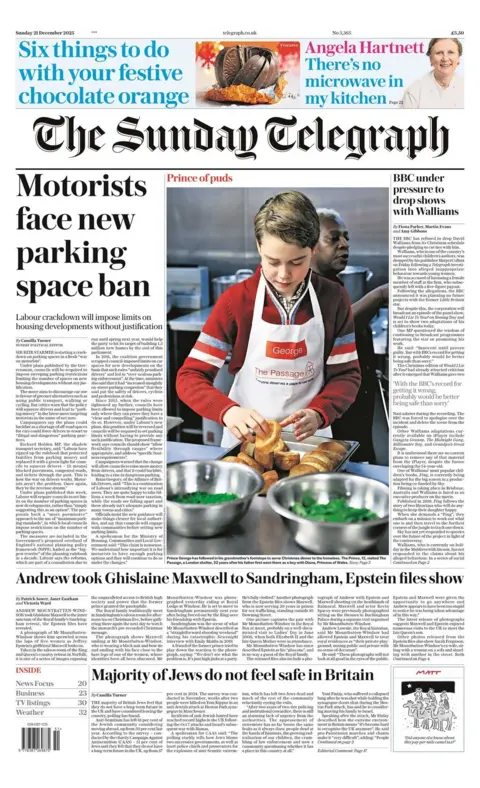
Labour's "parking space ban" leads the Sunday Telegraph, which reports that the government plans to impose limits on "the number of spaces on new housing developments". While the government hopes it will "discourage car use in favour of greener alternatives such as using public transport", the paper quotes critics who say it amounts to a "war on motorists".
The Sunday People's top story is the proposed ban on trail hunts. The "cruel sport", as animal rights campaigners call it, involves "animals and pets... chased and killed by packs of hounds supposed to be following the scent".
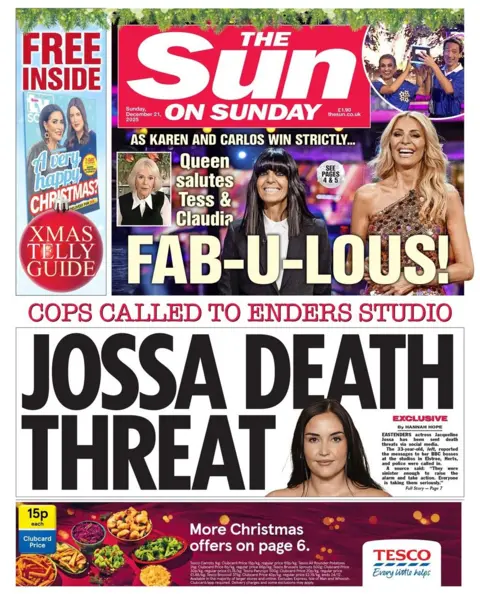
EastEnders actress Jacqueline Jossa has been sent death threats via social media, reports the Sun on Sunday. It reports that police were called to the BBC studios, with an unnamed source telling the paper "they [the threats] were sinister enough to raise the alarm and take action".
High street businesses fear this Christmas could be their last, according to the Sunday Express, as consumers reel from the Budget. Shops and pubs fear a looming recession as "consumer confidence dries up, the economy stagnates and unemployment rises", the paper reports.
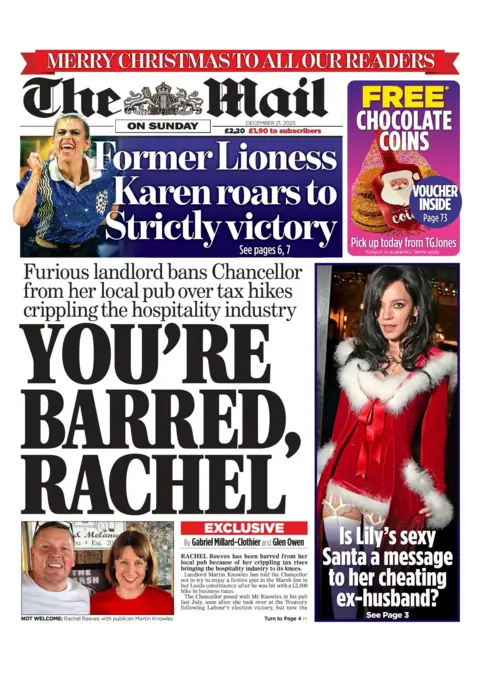
The Mail on Sunday leads with a "furious landlord" who has barred Chancellor Rachel Reeves from entering his pub "over tax hikes crippling the hospitality industry". Martin Knowles, who owns the Marsh Inn in Reeves's Leeds constituency, says he has been hit with a "£2,500 hike in business rates" since Labour won power in July 2024.
"Beijing buys up homes across London", is the headline splashed across the front page of the Sunday Times. China's government boasts "a portfolio of 50 properties in England, including multi-million pound mansion houses and blocks of flats in London", according to the paper. It writes China is "increasing its diplomatic presence as it prepares to build a new embassy in Britain".
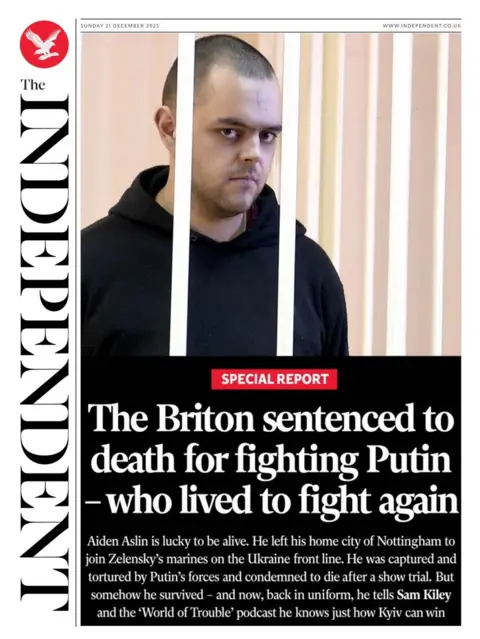
The Independent leads with its interview of British man Aiden Aslin, who was "sentenced to death for fighting Putin". The paper reports "he was captured and tortured by Putin's forces and condemned to die after a show trial". Aslin, who returned to the UK in 2022 after being freed and is now "back in uniform", claims to "know just how Kyiv can win" its war against Russia, according to the paper.
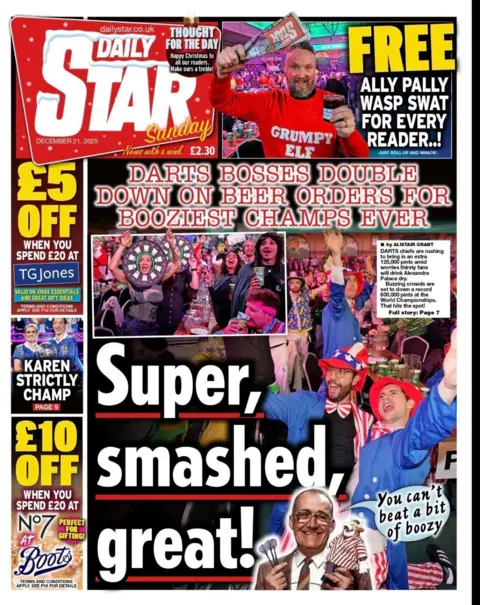
An extra 125,000 pints will be brought in for "thirsty fans" at Alexandra Palace for the Darts World Championships, the Daily Star reports. "Super, smashed, great!" is the headline, in reference to the catchphrase of TV show Bullseye's host Jim Bowen "super smashing great".
Comedian Bowen Yang is leaving the cast of Saturday Night Live, and will no longer be part of the long-running sketch programme after the latest episode airs.
In a post on Instagram, Yang declined the share the reason for his departure, which comes in the middle of the season, but said he is "grateful for every minute of my time there".
"I loved working at SNL, and most of all I loved the people," wrote Yang, who started in 2018 as a writer for the NBC programme before joining the acting cast.
Yang, 35, is the first Chinese-American staff actor in SNL's history, and has become one of SNL's most prominent cast members in recent years.
In his Instagram post, Yang described the lessons he's learned while working at SNL.
"i learned about myself (bad with wigs). i learned about others (generous, vulnerable, hot)," he wrote.
"i learned that human error can be nothing but correct. i learned that comedy is mostly logistics and that it will usually fail until it doesn't, which is the besssst."
He also thanked other cast members, as well as Lorne Michaels, the long-time producer of the programme.
Yang was behind some of the programme's most memorable characters and parodies, including as the iceberg that sank the Titanic and as disgraced ex-Congressman George Santos.
Yang's final episode, airing on Saturday night, will be hosted by Ariana Grande, one of the stars of the film Wicked: For Good.
Yang also had a role in the film, and has starred in previous films including The Wedding Banquet, Fire Island, Bros and the first Wicked film.
For his work on SNL, he has been nominated for five Emmy Awards. He also co-hosts podcast Las Culturistas and is expected to voice a character in the Cat in the Hat animated film due to be released next year.
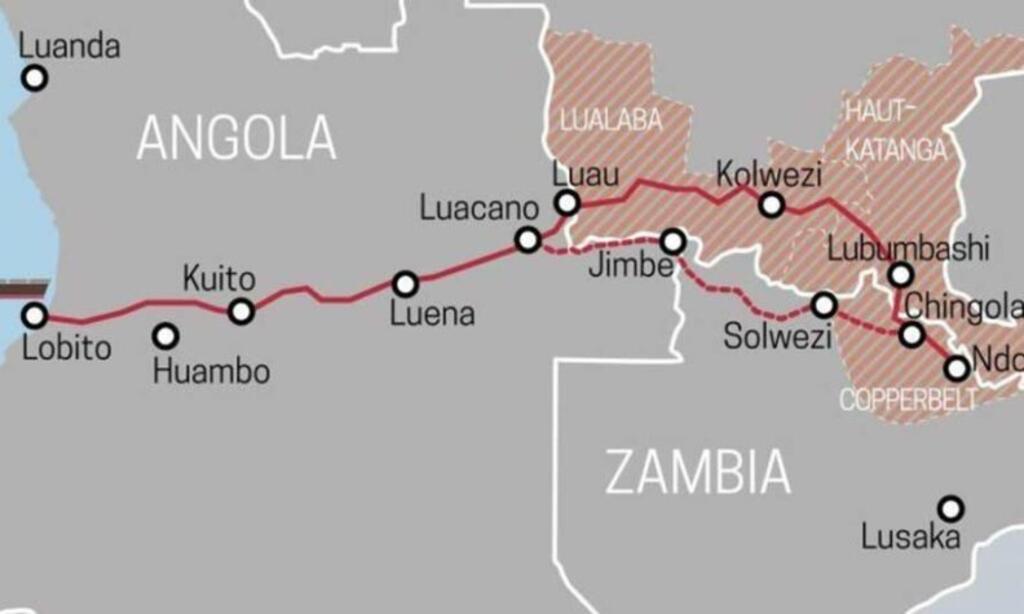
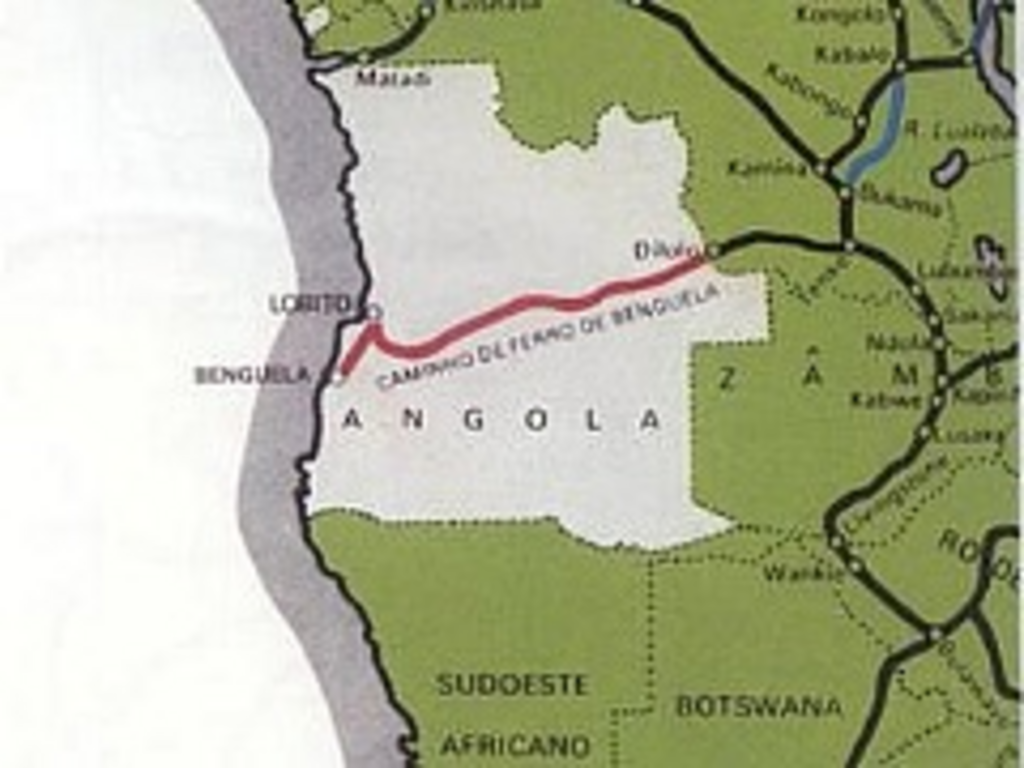
大西洋畔的非洲国家安哥拉,获得美国国际开发金融公司(DFC) 同意给予一笔5亿5千3百万美元的贷款,用于翻新衔接刚果民主共和国(RD Congo)边境的洛比托走廊(corridor de Lobito)大西洋铁路干线基础设施。南部非洲开发银行(DBSA-Development Bank of Southern Africa/Banque de développement d'Afrique australe)也为这个铁路现代化项目提供补充资金2亿美元贷款。
据本台法广非洲组(RFI Afrique)的法文报道,美国正致力于履行其对翻新安哥拉(l'Angola)大西洋沿岸洛比托(Lobito)深水港至邻近刚果民主共和国(RD Congo)的边境城市Luau一线,非洲[洛比托走廊](corridor de Lobito)铁路段的承诺。
就地缘政略挑战,同一报道表示,这笔资金凸显了美国对刚果(金)矿产西面出口路线的承诺。这条路线与中国矿企使用的、通往印度洋的路线形成竞争。美国国际开发金融公司(DFC–Development Finance Corporation)强调,其投资“有助于确保供应链的可靠性,并防止被中国和其他战略竞争方的掌控”。美国国际开发金融公司(DFC)在本月除还提供了另一笔金额为10亿美元(约合9.13亿欧元)的贷款,用于修缮[洛比托走廊](corridor de Lobito)从安哥拉边境的Dilolo和铜矿带中心Sakania之间的刚果(金)路段。
USS Gerald Ford is stationed in the Carribean after it was ordered to the region by the US president amid rising tensions with Venezuela
The US has seized a vessel in international waters off the coast of Venezuela, US officials have told BBC News partner CBS.
It is the second time this month that the US has seized a ship off the country's coast.
The move comes after US President Donald Trump on Tuesday said he was ordering a "blockade" of sanctioned oil tankers entering and leaving Venezuela.
Venezuela has not yet responded to the latest US seizure, but has previously accused Washington of seeking to steal its oil resources.
The BBC has contacted the White House for comment.
The operation was led by the US Coast Guard, similar to the operation earlier this month, CBS reports. The ship was boarded by a specialised tactical team.
In recent weeks, the US has been building up its military presence in the Caribbean Sea and has carried out deadly strikes on alleged Venezuelan drug-smuggling boats, killing around 100 people.
The US has provided no public evidence that these vessels were carrying drugs, and the military has come under increasing scrutiny from Congress over the strikes.
The US has accused Venezuela President Nicolás Maduro of leading a designated-terrorist organisation called Cartel de los Soles, which he denies.
The Trump administration accuses him of and the group of using "stolen" oil to "finance themselves, Drug Terrorism, Human Trafficking, Murder, and Kidnapping".
Venezuela - which is home to the world's largest proven oil reserves - is highly dependent on revenues from its oil exports to finance its government spending.
Trump's announcement of a "blockade" came less than a week after the US seized an oil tanker believed to be part of the "ghost fleet" off the coast of Venezuela, which allegedly used various strategies to conceal its work.
The White House said the vessel in question, called the Skipper, had been involved in "illicit oil shipping" and would be taken to a US port.
A total of 16 photos were taken down at some point on Saturday from the website that the Justice Department created. One featured an open drawer containing other photos, including at least one of President Trump.
Two winners split the $1.787 billion Powerball jackpot in September. Changes to Powerball and Mega Millions have led to increasingly large jackpots in recent years.
This article reveals the outcome of the Strictly Come Dancing 2025 final.
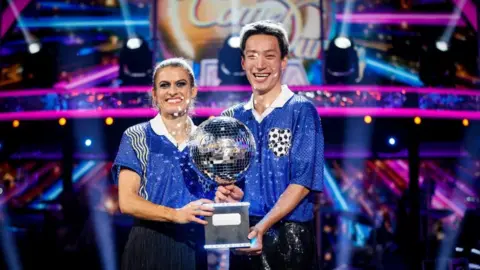
Former Lioness Karen Carney has been crowned this year's Strictly Come Dancing winner, becoming the first footballer to lift the glitterball trophy.
She beat Love Islander Amber Davies and social media star George Clarke after winning the public vote in Saturday's live final on BBC One.
Carney, who was paired with professional dancer Carlos Gu, said: "I can't believe it, it's been the biggest privilege and honour," before adding she was "lost for words".
It was an emotional night in the ballroom, as Claudia Winkleman and Tess Daly hosted the final for the last time - with Queen Camilla among those paying tribute to the long-running hosts.
In a message read out by judge Craig Revel Horwood, the Queen said Daly and Winkleman's "warmth, compassion and sheer happiness" had been at the heart of the show's success, adding: "I think I speak for everyone when I say you have been utterly fab-u-lous".
Karen Carney and Carlos Gu with the giltterball trophy - their football-themed jive to One Way Or Another by Blondie earned them a standing ovation
As usual, one of the dances in the grand finale was chosen by the judges, one was their own favourite dance from the series, and the other was a show dance.
The judges gave advisory scores but the public made the final decision.
Carney and Gu performed routines including a show dance to Inner Smile by Texas, and an Argentine Tango to Red Right Hand by Nick Cave and The Bad Seeds.
They also performed a football-themed jive to One Way Or Another by Blondie, earning them a standing ovation - and their second perfect score of the night.
But the winning duo faced stiff competition from the other remaining couples.
Amber Davies and her partner, Nikita Kuzmin, were the first to take to the dance floor.
The pair performed routines including a show dance to Rain On Me by Lady Gaga and Ariana Grande, a Paso Doble to Dream On by Aerosmith, and a jive to Proud Mary.
Meanwhile, George Clarke and his partner Alexis Warr reprised their Paso Doble to Game of Survival by Ruelle.
They also did their show dance to Human by The Killers, and a Viennese Waltz to Somebody to Love by Queen.
But after weeks of tangos, salsas and foxtrots, it was Carney and Gu's night as they topped the public vote.
Other highlights on the night included most of the cast of 2025 coming back for one more routine.
However, social media personality Thomas Skinner did not attend. Speaking earlier today on social media,, he claimed the BBC rigged the vote that saw him leave the show.
A BBC spokesperson rejected the allegation, saying Strictly's public vote was "independently overseen and verified to ensure complete accuracy".
The boyband Five also performed a string of hits during the grand final.
USS Gerald Ford is stationed in the Carribean after it was ordered to the region by the US president amid rising tensions with Venezuela
The US has seized a vessel in international waters off the coast of Venezuela, US officials have told BBC News partner CBS.
It is the second time this month that the US has seized a ship off the country's coast.
The move comes after US President Donald Trump on Tuesday said he was ordering a "blockade" of sanctioned oil tankers entering and leaving Venezuela.
Venezuela has not yet responded to the latest US seizure, but has previously accused Washington of seeking to steal its oil resources.
The BBC has contacted the White House for comment.
The operation was led by the US Coast Guard, similar to the operation earlier this month, CBS reports. The ship was boarded by a specialised tactical team.
In recent weeks, the US has been building up its military presence in the Caribbean Sea and has carried out deadly strikes on alleged Venezuelan drug-smuggling boats, killing around 100 people.
The US has provided no public evidence that these vessels were carrying drugs, and the military has come under increasing scrutiny from Congress over the strikes.
The US has accused Venezuela President Nicolás Maduro of leading a designated-terrorist organisation called Cartel de los Soles, which he denies.
The Trump administration accuses him of and the group of using "stolen" oil to "finance themselves, Drug Terrorism, Human Trafficking, Murder, and Kidnapping".
Venezuela - which is home to the world's largest proven oil reserves - is highly dependent on revenues from its oil exports to finance its government spending.
Trump's announcement of a "blockade" came less than a week after the US seized an oil tanker believed to be part of the "ghost fleet" off the coast of Venezuela, which allegedly used various strategies to conceal its work.
The White House said the vessel in question, called the Skipper, had been involved in "illicit oil shipping" and would be taken to a US port.
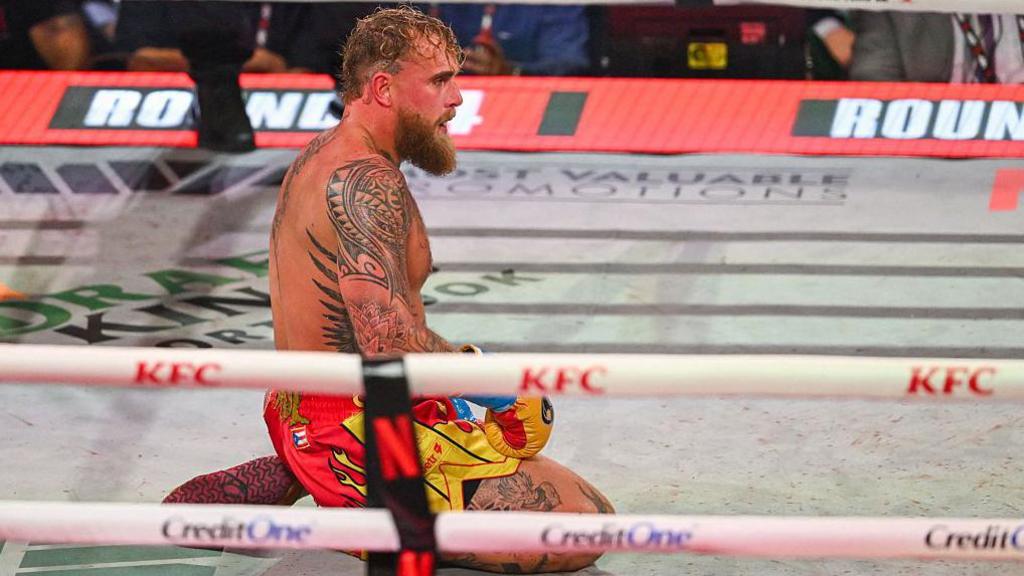
Jake Paul was stopped for the first time in his boxing career
Published
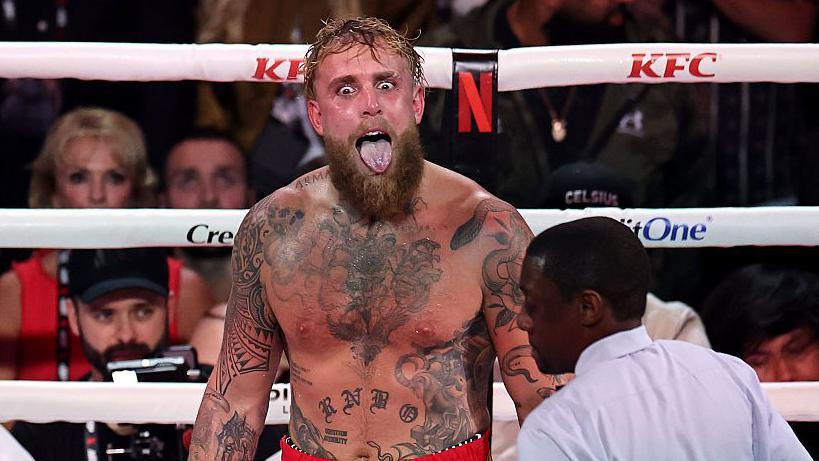
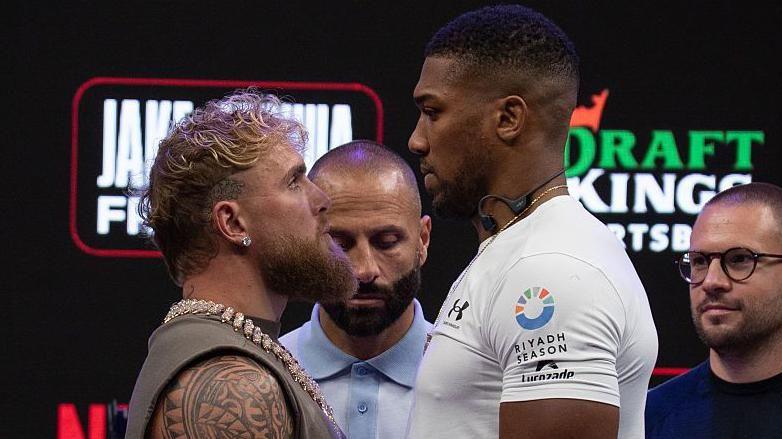
Jake Paul has gone to hospital with a suspected broken jaw after he was stopped by Anthony Joshua in their heavyweight fight in Miami.
The American went six rounds with the two-time heavyweight world champion but failed to beat the count following repeated knockdowns.
The YouTuber-turned-boxer hit the canvas twice in the fifth and sixth rounds and said in his post-fight comments he believed his jaw was "definitely" broken.
The 28-year-old missed the post-fight news conference as a result and Most Valuable Promotions chief Nakisa Bidarian confirmed Paul had gone to hospital.
"We think he broke his jaw. But he's fine," Bidarian said.
"He took a shower, he drove himself to hospital. A broken jaw is very common in sports, particularly in boxing or MMA. The recovery time is four to six weeks."
Paul was a massive underdog and his tactics against Joshua appeared to be to use his speed and footwork to stay away from the Briton's big punches.
The fight attracted criticism because of the weight discrepancy and experience gap between the fighters.
Paul has fought most of his career at cruiserweight and says he intends to take "some time off" from boxing.
"We will heal the broken jaw, come back and fight people my weight. I'm going for the cruiserweight world title," he said.
"I'm going to take a little break. I've been going hard for six years."
What's next for Paul after loss?
Image source, Getty Images
Image caption,
Jake Paul made his professional boxing debut in 2020
Paul has made a career out of being impossible to predict - with the one constant his eagerness to disrupt the sport.
Just a few months ago, the prospect of Paul facing Joshua seemed fanciful, but he has now ticked that off his wishlist.
Prior to facing Joshua, Paul was campaigning at cruiserweight and the WBA announced he would enter their rankings at number 14 in July.
He has since slipped down one place, so a return to that division would appear most logical if he is to eventually achieve his dream of fighting for a world title.
Most Valuable Promotions chief Bidarian said Paul "drove himself to hospital" to be checked for a suspected broken jaw after losing to Joshua and could need "four to six weeks" to recover.
Once Paul gets the green light to compete in 2026 he might begin to cast his eye at those above him in the WBA cruiserweight rankings - and one name that stands out is Manchester's Pat Brown.
Brown is undefeated in five fights as a professional and could jump at the chance to fight on a big stage and enhance his reputation.
Alternatively, Paul continued to express a desire to face four-weight world champion Saul 'Canelo' Alvarez and will no doubt continue to pursue one of the biggest names still active in the sport.
A rematch with Tommy Fury - the only other defeat on Paul's record - also still lingers.
Bradford residents signed up for their big moment on the Myrtle Park stage
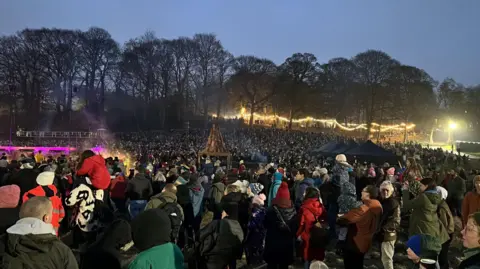
Thousands of people have turned out for the closing event of Bradford's year as UK City of Culture.
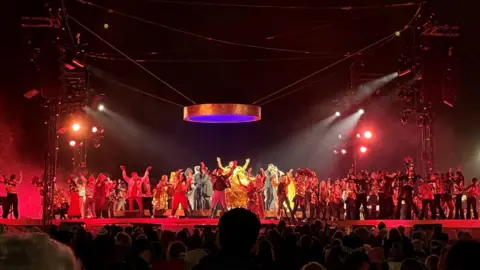
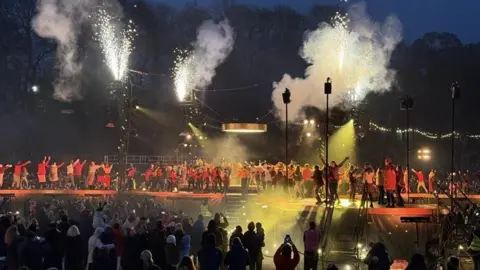
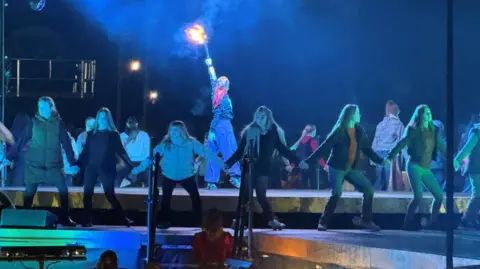
The first of two performances of Brighter Still took place in Bingley earlier, with a "community cast" of hundreds of local people bringing dancing, poetry and singing to Myrtle Park.
Emily Lim, the show's co-director, said those who had taken part had "done themselves and their city incredibly proud".
During its tenure, organisers said Bradford had hosted about 5,000 "big, bold and brilliant" events, including the Turner Prize, with city centre footfall increasing by a quarter.
Jacob Tomlinson/BBC
The open-air event will return for a final performance on Sunday
The closing event, which finishes on Sunday, has been a sell-out and will have taken place on the longest two nights of the year, also known as the winter solstice.
With 5,000 tickets sold for each show, it has been billed as one of the "largest community participation events" in the programme, featuring more than 250 local performers.
This included a community cast of 90 Bradford residents aged from eight to 76 who joined forces with dancers, musicians and choirs.
Organisers said as well as performing movement and dance, the community cast had played a role in co-creating and narrating the show, "weaving a tapestry of stories rooted in the life experiences of Bradford's people and communities".
Arzu Dutta/BBC
Organisers said tickets for both shows had sold out
One of those who took part, Gavin Wood, said to participate in the show was "very fulfilling".
"I'm Bradford born and bred and incredibly proud of my roots," he said.
"It's a beautiful place to live, and I feel like the City of Culture is helping the city turn its narrative around towards a more positive outlook."
Shanaz Gulzar, creative director of Bradford 2025 UK City of Culture, described Brighter Still as a "dynamic reflection of Bradford, honouring our heritage, marking the present and looking to the future".
She added: "We complete this remarkable year by putting local people centre stage where they belong."
It is estimated the year-long City of Culture celebration cost about £51m and generated audiences of three million people.
The overall budget was created through fundraising, ticket sales and commercial activities, organisers said.
Major grants included £15m from the government, £10m from Bradford Council and £6m from West Yorkshire Combined Authority.
Other highlights of the year included a stage production of the Railway Children inside an engine shed, Bradford-born artist David Hockney's work recreated using drones and a celebration of local brass bands.
Arzu Dutta/BBC
The curtain comes down on Bradford's year as City of Culture
Darren Henley, chief executive of the Arts Council England, said the year-long event had demonstrated that "culture had the power to change people's lives".
"If you were born here in Bradford and are a young person, look at the possibility of what you can do now," he said.
"You can be born in West Yorkshire, you can come here, you can study here, you can do your job here, you can be creating things that will be radiating out across the world and that's something that's really exciting."
West Yorkshire mayor Tracey Brabin said the legacy of the year would be felt among its young people.
"It's about giving young people the confidence," she said.
"We've heard youngsters on the stage tonight speaking in front of thousands of people.
"They may never be actors, but they'll be better paramedics, entrepreneurs because they've got that confidence and the identity that they were part of something so magical."
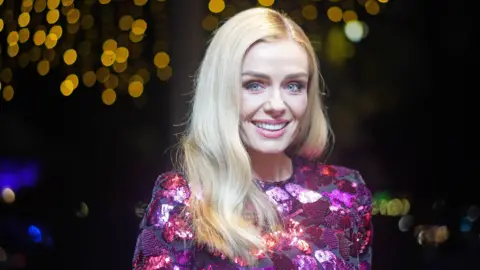
Katherine Jenkins has recorded a version of Golden, the viral hit song from Netflix hit KPop Demon Hunters
She has tackled famous operas, hymns and sung the national anthem countless times.
But this Christmas, Welsh mezzo-soprano Katherine Jenkins has recorded a classical reinterpretation of a viral hit song, and learnt a little Korean in the process.
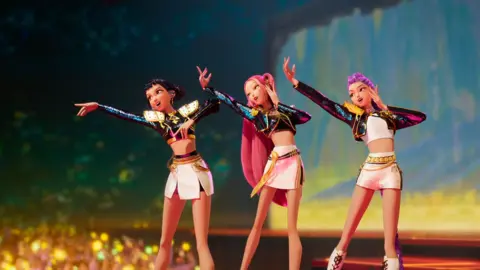
Golden, the breakout song from animated film KPop Demon Hunters, became a huge streaming hit in 2025, setting new records on charts worldwide.
Performed in the film by girl band HUNTR/X, Jenkins thought the song "could make a really beautiful aria" and told BBC Radio Wales' Lucy Owen that its positive message resonated with her.
Netflix
KPop Demon Hunters came out in the summer of 2025 and became the most-watched original title in Netflix's history
The film, which Netflix says is has become its most watched movie ever, tells the story of K-pop stars Rumi, Mira, and Zoey who double as secret guardians of the world.
Its catchy music and dance sequences made it hugely popular with young audiences, and Jenkins joked she got "brownie points" from her children, aged seven and 10, "for at least trying it".
Reuters
The singers from HUNTR/X, at an event in New York last week, who are behind the original song from the movie
Jenkins, from Neath, Port Talbot, will be performing the song on the Royal Variety Show on Sunday, where she will also sing the national anthem.
"It comes at a bit of an emotional point in the show," she said.
"When you look at the lyrics in an empowering, inspirational way, it really resonates in that setting," she said.
The upbeat anthem celebrates overcoming struggles and finding power and a sense of identity.
"It's been a really lovely song to try and interpret in a classical way," she said.
"The hardest bit, probably, is learning the bits in Korean," she said. "I've never sung in Korean before, so that was interesting," she said.
The recording features children singing towards the end, and Jenkins revealed it was her eldest daughter Aaliyah on the recording.
She went into the studio with her mother one day after school and sang the part with her.
"It ended up staying on there, so she's excited this morning as well," she said. "She's definitely loving singing and anything that we can do together like that is always lovely."
The singer added Christmas was her favourite time of the year, growing up with choral singing in Neath.
"It's just the best time of year, so we're really excited at home, as always," she said.

 Login
Login