Steve Witkoff, right, seen here with Ukrainian President Volodymyr Zelensky earlier this month, said negotiations were "productive and constructive"
US and Ukrainian envoys say "productive and constructive" talks have taken place in Miami, but there still appears to be no major breakthrough in efforts to end Ukraine's war with Russia.
Donald Trump's special envoy, Steve Witkoff, issued a joint statement with the top Ukrainian negotiator, Rustem Umerov, after three days of meetings with European allies.
The pair said the meeting focused on aligning positions on a 20-point plan, a "multilateral security guarantee framework", a "US Security guarantee framework for Ukraine" and an "economic & prosperity plan".
Separate talks have been taking place in Miami between the US and the Russian envoy, Kirill Dmitriev.
"Our shared priority is to stop the killing, ensure guaranteed security, and create conditions for Ukraine's recovery, stability, and long-term prosperity," Witkoff and Umerov said in a statement.
The meetings are the latest step in weeks of diplomatic activity, sparked by the leaking of a 28-point US peace plan which shocked Ukraine and its European allies for appearing to favour Russia, which launched a full-scale invasion of Ukraine nearly four years ago.
Witkoff said representatives from Russia had met himself and other US officials in southern Florida, including Trump's son-in-law Jared Kushner.
Witkoff said the meetings with Russian envoy Dmitriev were also "productive and constructive" and that "Russia remains fully committed to achieving peace in Ukraine".
Trump has been pushing Ukraine and Russia to come to an agreement on ending the war, but so far the two countries have been unable to agree on major issues, including Moscow's demand to keep land it has already seized.
US intelligence reports continue to warn that Russian President Vladimir Putin still wants to capture all of Ukraine and reclaim parts of Europe that belonged to the former Soviet empire, six sources familiar with US intelligence told the Reuters news agency.
The renewed fighting this month has displacing around 900,000 on both sides, officials say
South East Asia's top diplomats are meeting on Monday in Malaysia in a bid to end deadly border clashes between Thailand and Cambodia that have killed at least 41 people and displaced close to one million others.
They will seek to revive a ceasefire that was brokered in July by Malaysia as chair of the Association of Southeast Asian Nations (Asean) and US President Donald Trump in July.
This is the first meeting between officials of Thailand and Cambodia since fighting resumed on 8 December. Both countries have blamed each other for the fresh hostilities.
The conflict dates back more than a century, when the borders of the two nations were drawn after the French occupation of Cambodia.
Malaysian Prime Minister Anwar Ibrahim, who presided over the signing of the July ceasefire alongsideTrump, said he was "cautiously optimistic" about Monday's meeting in Kuala Lumpur.
"Our duty is to present the facts, but more importantly, to press upon them that it is imperative for them to secure peace," he said last week.
Cambodia has said that the talks aim to restore "peace, stability and good neighbourly relations", adding that it would reaffirm its position that the disputes should be resolved through peaceful means.
Thailand, while calling the meeting an important opportunity, reiterated its conditions for negotiations, including a declaration of ceasefire from Cambodia first and a "genuine and sustained" ceasefire.
The US and China have also been attempting to mediate a new ceasefire.
US Secretary of State Marco Rubio, who had a phone call with his Thai counterpart on Thursday, said that he hoped a new ceasefire could be reached by Monday or Tuesday.
China's special envoy for Asian affairs, Deng Xijun, visited Phnom Penh last week. A statement from Beijing said he reaffirmed that China would continue to play a constructive role in facilitating dialogue between Cambodia and Thailand.
The US town of Bristol, population around 44,000, is a divided community.
Split between Virginia and Tennessee, the state line runs literally down main street. While both sides have much in common, there is one major difference - abortion is illegal in Tennessee. This has been the case since the 2022 Supreme Court ruling which gave individual states, rather than the federal government, the power to legislate abortion, triggering 12 states to pass near-total bans.
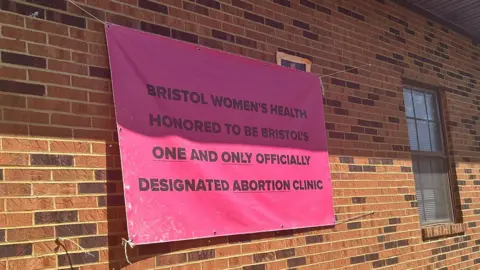
So the city's only abortion clinic, Bristol Women's Health, moved less than a mile down the road to continue practising legally in Virginia.
But just because abortion is legal in Virginia it doesn't mean the battle for abortion access is over.
"It's like whack-a-mole," said Barbara Schwartz, the co-founder of SLAAP, the State Line Abortion Access Partnership. They assist people travelling into Virginia to get an abortion at Bristol Women's Health Clinic.
"As soon as one approach doesn't work, the anti-abortion crowd pops up in Bristol and tries another."
Barbara Schwartz (on right) with other volunteers at the clinic
On 22 December, Bristol's Circuit Court will hear the clinic's case against an eviction notice served by their landlords, brothers Chase and Chadwick King in April 2024.
Lawyers for the clinic argue it has the right to renew its lease for a total of six more years. But if the judge rules in favour of the building's owners, the clinic will be forced to find a new home.
This is not the landlords' first attempt to remove the clinic from their property. The brothers claimed that the clinic fraudulently concealed that they perform abortions, to which they maintain to be "adamantly opposed". The case was dismissed in September last year, with Judge Sage Johnson ruling:
"If [the landlords] had conducted a simple internet search on their tenants, as any reasonably prudent landlord likely would, they would have discovered that the clinic did, in fact, provide abortion services as is plainly stated on their website."
Clinic owner Diana Derzis, who declined to comment on the hearing, previously stated that she hopes to keep the clinic in the city, even if they are evicted. However, she noted there are few other suitable facilities in Bristol, Virginia.
The clinic leaving Bristol would be a "blow" to abortion access, according to Barbara Schwartz, the co-founder of SLAAP, the State Line Abortion Access Partnership.
Since Roe v Wade was overturned, states where abortions are legal have become destinations for out-of-state abortion seekers, with 155,000 people crossing state lines last year, according to the Guttmacher Institute (GI).
The organisation also found that over 9,200 people travelled to Virginia alone to have the procedure done last year.
"Bristol's position means the clinic is the closest place by several hours to get a safe and legal abortion for millions of southerners."
Victoria Cobb, the director of anti-abortion lobbyist the Family Foundation, also notes that Bristol's location places it at the "epicentre of the debate".
Ms Cobb launched the first of several efforts to restrict abortion in Bristol by making use of local bylaws. The tactic is being used by anti-abortion campaigners in states which permit abortion. The logic is simple: If you can't win at Capitol Hill, why not fight at City Hall?
"Locals don't want to see their town turn into an abortion destination location," Ms Cobb states. "We're happy to help them."
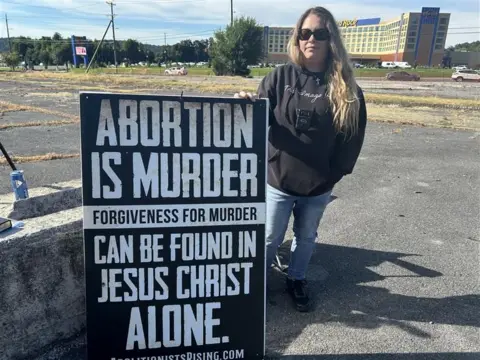
Sammi Cooper is opposed to abortion and protests against the clinic
The Family Foundation has argued in the past that the existence of the clinic goes against zoning regulation, which prohibits buildings from being used in a way that could endanger life.
"Why would this not extend to unborn life?" asked Ms Cobb.
Their ordinance said no new clinics should be allowed to open in Bristol, and expansion of the existing clinic should be blocked.
Similar rules have been used in other parts of the US to restrict abortion, including nearby Washington and Russell counties. But Prof Laura Hermer, an expert on abortion regulations in the US, says these efforts are largely "virtue signalling".
"I'd be surprised if many of these towns have any healthcare, let alone abortion, providers," she said.
The debate became heated in Bristol, as the council agreed to look into the matter.
"It has been more stressful than dealing with a parking lot. It's not something that has really come to the local level before," Jay Detrick, the city's planning director told the BBC.
Ultimately, the city's attorney found that imposing restrictions on a medical facility was not in their remit.
Soon after the city decided not to intervene, another group decided to try and shut the clinic down - this one spearheaded by Texas pastor Mark Lee Dickson.
The pastor has lobbied councils across the US to enforce the Comstock Act, a 152-year-old federal law that prohibits sending or receiving material via post which might induce an abortion.
Ninety-three local authorities have passed ordinances to enforce the Comstock Act, even closing a Planned Parenthood clinic in Lubbock, Texas.
Pastor Dickson is hopeful his ordinance filed in Bristol will have the same result. It has not yet been considered by the Council, but he remains optimistic.
"A local government's tabling or rejecting of such a measure doesn't by any means mean the initiative is dead," he told the BBC.
Kimberly Smith, SLAAP's co-founder, anticipates further campaigns. She says anti-abortion activists target Bristol due to its unusual political make-up:
"They come here because we were a red part of a blue state. If they chip away here, then that weakens the entire framework of a state's rights."
Indeed, even if the clinic wins its case this week and can remain in place, its opponents are undeterred, Pastor Dickson tells the BBC.
"As long as the cries of unborn babies are silenced in Bristol there will be an effort to push the City Council to fulfil their obligation to protect unborn Bristolians."
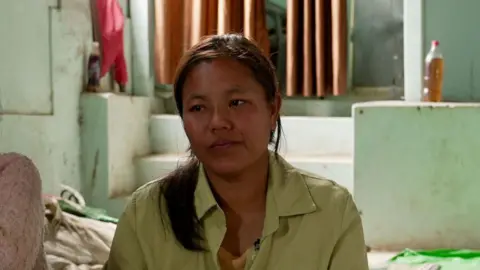
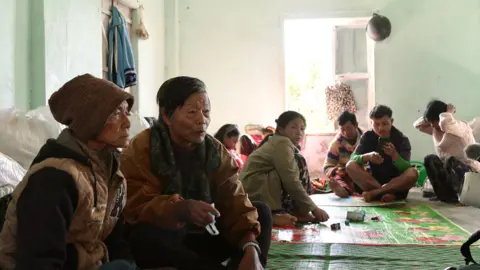
Iang Za Kim had to flee her home after the junta launched air strikes nearby
Late one night last month Iang Za Kim heard explosions in a neighbouring village, then fighter jets flying overhead. She ran out of her home to see smoke rising from a distance.
"We were terrified. We thought the junta's planes would bomb us too. So we grabbed what we could – some food and clothes and ran into the jungles surrounding our village."
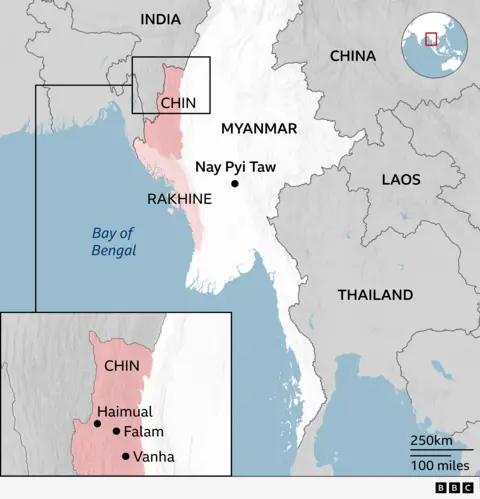
Iang's face quivers as she recounts the story of what happened on 26 November in K-Haimual, her village in Myanmar's western Chin State, and then she breaks down.
She's among thousands of civilians who've fled their homes in recent weeks after the Burmese military launched a fierce campaign of air strikes, and a ground offensive in rebel-held areas across the country, to recapture territory ahead of elections starting on 28 December.
Four other women sitting around her on straw mats also start crying. The trauma of what they've gone through to make it to safety is clearly visible.
While the air strikes were the immediate cause for Iang to flee, she also doesn't want to be forced to participate in the election.
"If we are caught and refuse to vote, they will put us in jail and torture us. We've run away so that we don't have to vote," she says.
Many civilians have crossed into India to escape the violence in Myanmar
Some from Chin state have described the junta's latest offensive as the fiercest it has launched in more than three years.
Many of the displaced have sought refuge in other parts of the state. Iang is among a group that crossed the border into India's Mizoram state. Currently sheltered in a rundown badminton court in Vaphai village, the group's few belongings they were able to carry are packed in plastic sacks.
Indian villagers have given them food and basic supplies.
Ral Uk Thang has had to flee his home at the age of 80, living in makeshift shelters in jungles for days, before finally making it to safety.
"We're afraid of our own government. They are extremely cruel. Their military has come into our and other villages in the past, they've arrested people, tortured them, and burned down homes," he says.
It isn't easy to speak to Burmese civilians freely. Myanmar's military government does not allow free access in the country for foreign journalists. It took over the country in a coup in February 2021, shortly after the last election, and has since been widely condemned for running a repressive regime that has indiscriminately targeted civilians as it looks to crush the armed uprising against it across Myanmar.
During its latest offensive, the junta last week targeted a hospital in Rakhine State, just south of Chin State. Rebel groups in Rakhine say at least 30 people were killed and more than 70 injured.
The Chin Human Rights Organisation says that since mid-September at least three schools and six churches in Chin State have been targeted by junta airstrikes, killing 12 people including six children.
The BBC has independently verified the bombing of a school in Vanha village on 13 October. Two students –Johan Phun Lian Cung, who was seven, and Zing Cer Mawi, 12 - were killed as they were attending lessons. The bombs ripped through their classrooms injuring more than a dozen other students.
Myanmar's military government did not respond to the BBC's questions about the allegations.
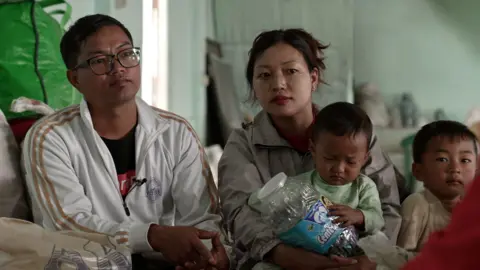
This is the second time Bawi Nei Lian and his young family – a wife and two young children - have been displaced. Back in 2021, soon after the coup, their home in Falam town was burnt down in an air strike. They rebuilt their lives in K-Haimual village. Now they're homeless again.
"I can't find the words to explain how painful and hard it is and what a difficult decision it was to make to leave. But we had to do it to stay alive," he says.
"I want the world to know that what the military is claiming – that this election is free and fair – this is absolutely false. When the main political party is not being allowed to contest the election, how can there be genuine democracy?"
Bawi Nei Lian (left) says the scheduled elections are a sham
The National League for Democracy party, led by Aung San Suu Kyi, which won landslides in the two elections prior to the coup, will not be contesting as most of its senior leaders including Suu Kyi are in jail.
"We don't want the election. Because the military does not know how to govern our country. They only work for the benefit of their high-ranking leaders. When Daw Aung San Suu Kyi's party was in power, we experienced a bit of democracy. But now all we do is cry and shed tears," says Ral Uk Thang.
Iang Za Kim believes the election will be rigged. "If we voted for a party not allied with the military, I believe they will steal our votes and claim we voted for them."
The election will take place in phases, with a result expected around the end of January. Rebel groups have called it a sham.
At the base of the Chin National Front in Myanmar, the most prominent rebel group operating in the state, the group's Vice Chairman Sui Khar says: "This election is only being held to prolong military dictatorship. It's not about the people's choice. And in Chin State, they hardly control much area, so how can they hold an election?"
He points out the areas where the most intense fighting is ongoing on a map and tells us nearly 50 rebel fighters have been injured in just the past month. There have been deaths too, but so far the groups have not released a number.
"There are columns of hundreds of soldiers trying to advance into the northern part of Chin state from four directions," Sui Khar says. "The soldiers are being supported by air strikes, artillery fire and by drone units."
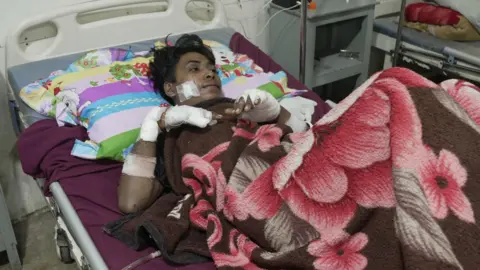
Abel lost his right left and his hands were severely wounded fighting against the junta
Access to the base is extremely rare. Set amid thickly forested mountains, it is the heart of the resistance against the junta in Chin state.
Sui Khar takes us to the hospital at the base. We see a group of injured fighters who were brought in overnight and had to undergo hours of surgery. Some of them have had to undergo amputations.
Many of them were just schoolboys when the coup occurred in 2021. Just about adults now, they've let go of their dreams to fight on the frontline against the junta.
Abel, 18, is in too much pain to speak. He was with a group of fighters trying to take back territory the junta captured a week ago. They won the battle, but Abel lost his right leg and has serious injuries to his hands as well.
In a bed next to him is Si Si Maung, 19, who's also had a leg amputated.
"As the enemy was retreating we ran forward and I stepped on a landmine. We were injured in the explosion. Then we were attacked from the air. The airstrikes make things very difficult for us," he says. "I've lost a leg, but even if I've to give up my life I'm happy to make the sacrifice so that future generations have a better life."
The impact of the ferocity of the latest offensive is visible in room after room at the hospital.
Yet, it's the support and grit of tens of thousands of youngsters like Si Si Maung, who picked up arms to fight against the junta, that have helped the rebels make rapid advances against a much more powerful rival in the past four-and-a-half years.
Some like 80-year-old Ral Uk Thang hope that after the election, the junta will retreat, and he will be able to go back home.
"But I don't think I will live to see democracy restored in Myanmar," he says. "I hope my children and grandchildren can witness it some day."
Additional reporting by Aamir Peerzada, Sanjay Ganguly and Aakriti Thapar
Sir Keir Starmer does not have a "coherent approach to social mobility", the government's social mobility commissioner has said.
Alun Francis, a top adviser to the government, told the Guardian that there was no "overarching narrative" to pull various policy strands together and called on the prime minister to set out a clearer strategy.
A report by the commission released last week warned that "extreme regional disparities exist" in the UK, with many former industrial and mining areas worst affected.
"We have a government that talks quite a lot about social mobility, but mainly about individuals – often about [the] social mobility of themselves or their colleagues," Francis said.
"But what we don't have is a coherent approach to social mobility as a useful concept that you can build a strategy around."
While praising individual policies on housing and skills, he said other proposals had been "stop-start", while almost one million young people are now outside education, work or training.
"We've got other policies like growth, educational improvement where we're just not sure where we're going," Francis said.
Without an overall strategy, he said, the government would "struggle to address some of those issues and have a clear-headed view about what we might do to improve things".
Among the conclusions of week's report were that a child's family background still heavily shapes their education level and future life chances in the UK. It also said there were "extreme regional disparities" within the country.
A government spokesperson called the number of young people outside education, work or training a crisis that couldn't be ignored and said a review by Alan Milburn would help build a system that ensured every young person had an opportunity to make something of their lives.
The report listed North East of England, Yorkshire and the Humber, and the West Midlands as facing "enduring disadvantages", while former mining areas in Wales and Scotland are also "notably disadvantaged".
However, new areas outside London with "favourable conditions for innovation and growth" include Aberdeen, Brighton, Bristol, Chester, Edinburgh, Oxfordshire, Reading and West Berkshire, the report said.
It also noted that almost half of young people aged 25 to 29 years were in professional occupations between 2022 and 2024 - up from 36% between 2014 and 2016.
But people from lower socioeconomic backgrounds "don't benefit as much from these opportunities as their peers", it said.
The US town of Bristol, population around 44,000, is a divided community.
Split between Virginia and Tennessee, the state line runs literally down main street. While both sides have much in common, there is one major difference - abortion is illegal in Tennessee. This has been the case since the 2022 Supreme Court ruling which gave individual states, rather than the federal government, the power to legislate abortion, triggering 12 states to pass near-total bans.
So the city's only abortion clinic, Bristol Women's Health, moved less than a mile down the road to continue practising legally in Virginia.
But just because abortion is legal in Virginia it doesn't mean the battle for abortion access is over.
"It's like whack-a-mole," said Barbara Schwartz, the co-founder of SLAAP, the State Line Abortion Access Partnership. They assist people travelling into Virginia to get an abortion at Bristol Women's Health Clinic.
"As soon as one approach doesn't work, the anti-abortion crowd pops up in Bristol and tries another."
Barbara Schwartz (on right) with other volunteers at the clinic
On 22 December, Bristol's Circuit Court will hear the clinic's case against an eviction notice served by their landlords, brothers Chase and Chadwick King in April 2024.
Lawyers for the clinic argue it has the right to renew its lease for a total of six more years. But if the judge rules in favour of the building's owners, the clinic will be forced to find a new home.
This is not the landlords' first attempt to remove the clinic from their property. The brothers claimed that the clinic fraudulently concealed that they perform abortions, to which they maintain to be "adamantly opposed". The case was dismissed in September last year, with Judge Sage Johnson ruling:
"If [the landlords] had conducted a simple internet search on their tenants, as any reasonably prudent landlord likely would, they would have discovered that the clinic did, in fact, provide abortion services as is plainly stated on their website."
Clinic owner Diana Derzis, who declined to comment on the hearing, previously stated that she hopes to keep the clinic in the city, even if they are evicted. However, she noted there are few other suitable facilities in Bristol, Virginia.
The clinic leaving Bristol would be a "blow" to abortion access, according to Barbara Schwartz, the co-founder of SLAAP, the State Line Abortion Access Partnership.
Since Roe v Wade was overturned, states where abortions are legal have become destinations for out-of-state abortion seekers, with 155,000 people crossing state lines last year, according to the Guttmacher Institute (GI).
The organisation also found that over 9,200 people travelled to Virginia alone to have the procedure done last year.
"Bristol's position means the clinic is the closest place by several hours to get a safe and legal abortion for millions of southerners."
Victoria Cobb, the director of anti-abortion lobbyist the Family Foundation, also notes that Bristol's location places it at the "epicentre of the debate".
Ms Cobb launched the first of several efforts to restrict abortion in Bristol by making use of local bylaws. The tactic is being used by anti-abortion campaigners in states which permit abortion. The logic is simple: If you can't win at Capitol Hill, why not fight at City Hall?
"Locals don't want to see their town turn into an abortion destination location," Ms Cobb states. "We're happy to help them."
Sammi Cooper is opposed to abortion and protests against the clinic
The Family Foundation has argued in the past that the existence of the clinic goes against zoning regulation, which prohibits buildings from being used in a way that could endanger life.
"Why would this not extend to unborn life?" asked Ms Cobb.
Their ordinance said no new clinics should be allowed to open in Bristol, and expansion of the existing clinic should be blocked.
Similar rules have been used in other parts of the US to restrict abortion, including nearby Washington and Russell counties. But Prof Laura Hermer, an expert on abortion regulations in the US, says these efforts are largely "virtue signalling".
"I'd be surprised if many of these towns have any healthcare, let alone abortion, providers," she said.
The debate became heated in Bristol, as the council agreed to look into the matter.
"It has been more stressful than dealing with a parking lot. It's not something that has really come to the local level before," Jay Detrick, the city's planning director told the BBC.
Ultimately, the city's attorney found that imposing restrictions on a medical facility was not in their remit.
Soon after the city decided not to intervene, another group decided to try and shut the clinic down - this one spearheaded by Texas pastor Mark Lee Dickson.
The pastor has lobbied councils across the US to enforce the Comstock Act, a 152-year-old federal law that prohibits sending or receiving material via post which might induce an abortion.
Ninety-three local authorities have passed ordinances to enforce the Comstock Act, even closing a Planned Parenthood clinic in Lubbock, Texas.
Pastor Dickson is hopeful his ordinance filed in Bristol will have the same result. It has not yet been considered by the Council, but he remains optimistic.
"A local government's tabling or rejecting of such a measure doesn't by any means mean the initiative is dead," he told the BBC.
Kimberly Smith, SLAAP's co-founder, anticipates further campaigns. She says anti-abortion activists target Bristol due to its unusual political make-up:
"They come here because we were a red part of a blue state. If they chip away here, then that weakens the entire framework of a state's rights."
Indeed, even if the clinic wins its case this week and can remain in place, its opponents are undeterred, Pastor Dickson tells the BBC.
"As long as the cries of unborn babies are silenced in Bristol there will be an effort to push the City Council to fulfil their obligation to protect unborn Bristolians."
The entrance to the Élysée Palace in Paris. The objects that disappeared from its collection were returned after the investigation, according to prosecutors.
As floodwaters submerged cars and prompted rescues in the state’s far north on Sunday, forecasters warned that Central California would receive heavy rain later in the week.
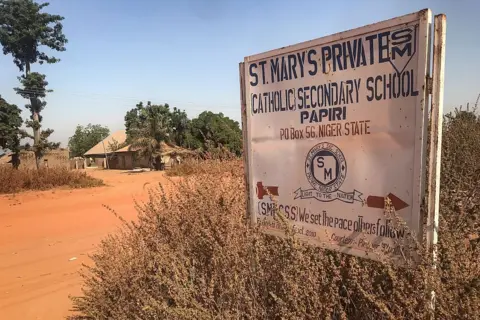
St Mary's Catholic school in central Nigeria where schoolchildren were abducted
Nigerian authorities say they have secured the release of the remaining 130 schoolchildren kidnapped from a Catholic boarding school in the country's central Niger state.
Nigeria's federal government described the latest release as a "moment of triumph and relief", after one of the country's worst mass kidnappings.
More than 250 children and staff were abducted from St Mary's Catholic school in Papiri on 21 November. Earlier this month about 100 of the children were released.
The authorities confirmed "the rescue of the remaining 130 children and staff" in a statement, saying "not a single pupil is left in captivity".
Presidential spokesperson Bayo Onanuga said on Sunday the total of freed students was now 230.
Since the kidnapping, the exact number of people taken and how many have remained in captivity has been unclear.
It has not been formally made public how the government secured the latest release - or whether any ransom was paid.
The announcement by Onanuga included pictures of children smiling and waving. The students are expected to arrive in the Niger state capital, Minna, on Monday.
When the earlier release happened the governor of neighbouring Nasarawa state, Abdullahi Sule, told local media that the federal government had played a key role, adding that the behind-the-scenes efforts could not be disclosed for security reasons.
The Christian Association of Nigeria reported that 50 students managed to escape at the time of the kidnapping.
November's abduction was the latest incident in a growing number of targeted attacks on schools and places of worship in north and central Nigeria.
The attack on St Mary's in November was preceded by mass kidnappings just days earlier.
On 18 November, two people were killed and 38 abducted in an attack on the Christ Apostolic Church in Kwara state, and a day before that, two were killed and 25 Muslim students abducted from Government Girls' Secondary School in Kebbi state.
All those taken in the Kwara and Kebbi attacks have since been freed.
It is not clear who is behind these kidnappings - most analysts believe they are carried out by criminal gangs seeking ransom payments.
On 9 December Nigerian President Bola Ahmed Tinubu said his government would continue to work with Niger and other states "to secure our schools and make the learning environment safer and more conducive for our younger ones".
The vice president’s plea for a big-tent coalition at an annual conservative gathering belied the cracks in his party over antisemitism, racism and conspiracy theories.
Vice President JD Vance speaking during Turning Point’s America Fest in Phoenix on Sunday. This year, the event showcased the intense jostling over the direction of President Trump’s movement and who it would platform.
The US seized another oil tanker off the coast of Venezuela on Saturday
The US Coast Guard is in "active pursuit" of another vessel in international waters near Venezuela, an official has told the BBC's US partner CBS News, as tensions in the region continue to escalate.
US authorities have already seized two oil tankers this month - one of them on Saturday.
Sunday's pursuit related to a "sanctioned dark fleet vessel that is part of Venezuela's illegal sanctions evasion", a US official said. "It is flying a false flag and under a judicial seizure order."
Washington has accused Venezuela of using oil money to fund drug-related crime, while Venezuela has described the tanker seizures as "theft and kidnapping".
US President Donald Trump last week ordered a "blockade" of sanctioned oil tankers entering and leaving the country.
Venezuela - home to the world largest proven oil reserves - has accused the Trump administration of trying to steal its resources.
US authorities have not yet officially confirmed Sunday's pursuit, and the exact location and name of the tanker involved is not yet known.
As of last week, more than 30 of the 80 ships in Venezuelan waters or approaching the country were under US sanctions, according to data compiled by TankerTrackers.com.
Saturday's seizure saw a Panamanian-flagged tanker boarded by a specialised tactical team in international waters.
That ship is not on the US Treasury's list of sanctioned vessels, but the US has said it was carrying "sanctioned PDVSA oil". In the past five years the ship also sailed under the flags of Greece and Liberia, according to records seen by BBC Verify.
"These acts will not go unpunished," the Venezuelan government said in response to Saturday's incident. It added that it intended to file a complaint with the UN Security Council and "other multilateral agencies and the governments of the world".
Venezuela is highly dependent on revenues from its oil exports to finance its government spending.
In recent weeks, the US has built up its military presence in the Caribbean Sea and has carried out deadly strikes on alleged Venezuelan drug-smuggling boats, killing around 100 people.
It has provided no public evidence that these vessels were carrying drugs, and the military has come under increasing scrutiny from Congress over the strikes.
The Trump administration has accused Venezuelan President Nicolás Maduro of leading a designated-terrorist organisation called Cartel de los Soles, which he denies.
At a rail yard near Milton Keynes, a group of men in orange outfits are making final checks on huge slabs of railway track, preparing them so that they are ready to be installed over Christmas and New Year.
At a time when many commuters stop work to enjoy celebrations with friends and family, rail bosses get massive engineering projects and upgrades done.
So, those orange-clad workers are out in force.
Carl Foy has been on duty for roughly 20 of the 27 Christmases in his career. This year will add another to the tally - with his two grown-up sons, who are also rail workers, out there with him. Some friends think he's mad for doing it. But Carl says it's just accepted as part of the job.
"We bring in a few mince pieces, the site offices might have a bit of tinsel around," he says. "We make it as enjoyable as we can and just crack on with the work."
PA
Major engineering works are taking place on Britain's rail network over the Christmas period
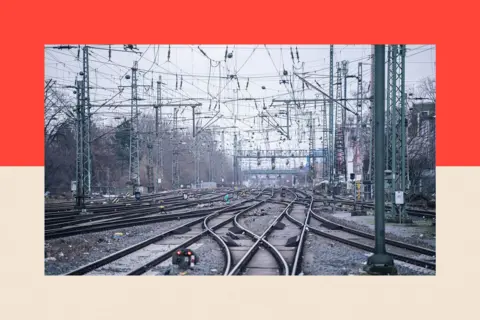
The £26m project they'll be working on this Christmas is one of the biggest scheduled across the country: Hanslope Junction, a crucial part of the West Coast Main Line, which is wearing out.
Each day almost 500 trains use it and an increasing number of faults are causing delays, the repercussions of which ripple throughout the network. Now, the whole thing, comprising four tracks, is to be re-laid.
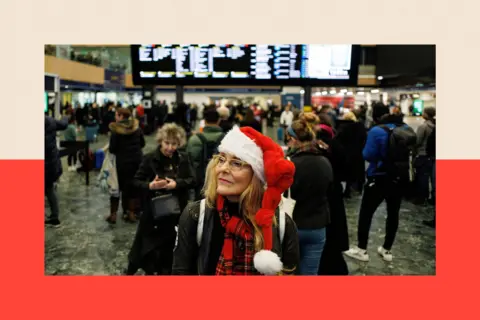
It's a giant and complicated jigsaw puzzle of 130 separate track panels - not something that can be done when trains are roaring up and down. So, it will leave passengers with no trains between Milton Keynes and Rugby and Milton Keynes and Northampton not just late on Christmas Eve and on Christmas Day (as is usually the case) but up until the morning of 5 January. It means no direct trains linking London Euston with north-west England and Scotland for 11 full days.
It's a similar story up and down the country, with other projects, too, like updating signalling technology. In all, 5% of the rail network will be shut down over the festive period - part of a £160m engineering project organised by Network Rail.
PA
Network Rail, a publicly owned body, manages 20,000 miles of track across England, Scotland, and Wales
Many of these are huge jobs, not routine maintenance, that have been long planned, with funding allocated as part of Network Rail's five-yearly business plans.
The question is - with millions travelling across the country over the festive season, causing so much inconvenience to many, why schedule it now? And is it all a case of sensible planning - or an indicator of something amiss with Britain's rail network?
Frustration at Euston station
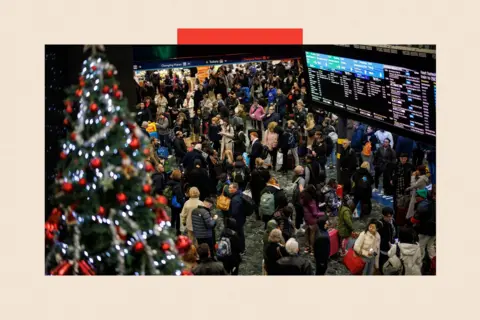
Chatting to passengers at London Euston station weeks before Christmas, it doesn't take long to find some who are affected.
"My sister-in-law is coming to visit and she's had real trouble trying to get a train," one woman tells me. "Every train's got two or three changes." Unable to find a direct service, and with a longer journey time, she changed the dates of her visit to avoid the disruption.
Another passenger, heading for the North of England, is wondering whether to get the train at all. "It's easier for me to drive rather than run the risk of getting there and not being able to get back.
"Obviously there are a lot less commuters over the Christmas period, I can see why they do it at this time of year, but it's not great if you're trying to get home… to see your friends and family."
Shutterstock
Some passengers have complained about longer journeys caused by the disruption
The debate over why works should be scheduled over Christmas is a complex one: on the one hand, train bosses calculate that the effects on people travelling to work will be minimal, given how many businesses shut for Christmas.
"It's the quietest time of year for the railway and our customers, so we squeeze in as much work then to disrupt as few people as possible," explains Jake Kelly, a route managing director at Network Rail.
But on the other hand it risks causing a "bottleneck", argues Gareth Dennis, a rail engineer, campaigner, and author of How the Railways Will Fix the Future.
He sees another problem too: "It's extremely expensive.
"All those workers, rightly, are getting paid way over the normal rate they would because they are sacrificing extremely important family and personal time working long hours over that period."
Shutterstock
Rail bosses argue that doing works over Christmas causes less disruption because fewer people are commuting. But is that the right approach?
Mr Kelly acknowledges there is a price: "It's always a difficult choice, and there is a cost of doing work over Christmas when families across the UK are celebrating."
But, he says, it's a difficult trade-off between minimising disruption for customers versus cost.
Germany and France do it differently
When compared with other European countries, Britain is fairly unique (with the exception of Italy) in its "particularly intensive approach", as Mr Dennis puts it, to doing this sort of rail work at Easter and Christmas.
This is partly because rail networks in other countries, like Germany and France, are laid out differently.
"Where the country's more of a square shape, their rail network isn't kind of north-south, it's much more of a grid," he explains. "So you can dodge around things more easily… and they can spread their engineering work out a bit more."
Getty Images
In Germany, 'they can spread their engineering work out a bit more,' says Mr Dennis
The high level of passenger demand in Britain also poses a challenge. "It has one of the most intensively used railways in Europe - [it] gets tired, gets worn out".
The West Coast Main Line does not have the capacity to run any more trains, while the East Coast Mainline's new December timetable will make it much busier, he says.
But even this is only part of the story. Another factor that contributes to the network creaking in places is a legacy of underinvestment.
Years of 'mend and make do'
Stewart Palmer spent 38 years working on the railway, including spells at Network Rail's predecessor Railtrack, and as the managing director of what was then called South West Trains.
In the past – as far back as the post-war period - the money wasn't always there to do the work that was needed and for decades there was a tendency, he says, "towards mend and make do".
The fact there is so much work to do now "has emerged over a very long history".
Engineering works have frequently been postponed, he adds. One way of keeping the railway running safely until work can be done has been by imposing speed restrictions on some parts of the track.
But the legacy of a Hertfordshire rail crash that happened 25 years ago is a reminder of the importance of ensuring that deteriorated rail is replaced in good time.
Getty Images
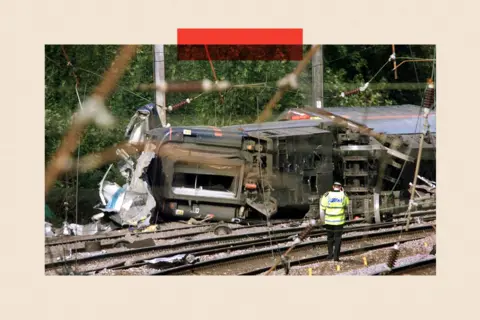
The Hatfield disaster of October 2000: a train carrying around 200 passengers derailed, killing four people
On a Tuesday in October 2000, a train carrying 12 staff and 170 passengers came to a catastrophic halt outside the town of Hatfield. Four of the nine carriages were derailed and three more were flung over on their side, killing four people.
An official investigation into the crash revealed a series of errors by rail bosses and engineers. One of those causes, highlighted by an inquiry, was a failure to identify and repair or replace the rapidly deteriorating rail.
"This caused us to do loads of engineering investigations, but it also resulted in renewing an enormous amount of rail all at once in a very fast period of time," Mr Dennis explains.
Extreme weather and the 'paperclip' effect
Then there is the impact of the weather. Network Rail has been clear that climate change poses a significant challenge. "Extreme weather caused by climate change is on the rise. This will affect how safely and reliably we can run the railway," it says on its website.
These extreme weather events not only lead to equipment failures but affect how quickly things wear out too.
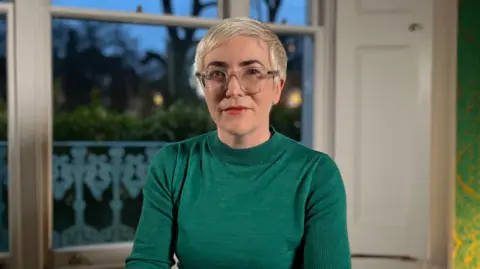
William Powrie, a professor of Geotechnical Engineering at the University of Southampton, says climate change creates a long list of hazards for the railways. Take the hot summers - these heat railway tracks beyond temperatures they can handle, sometimes causing them to buckle, he says. High winds can also damage overhead lines.
He's particularly worried about what he calls the "paperclip" effect.
Many British railways are built on clay soil that shrinks in the summer as vegetation sucks out water, and expands in the winter. But this expand-and-shrink cycle is becoming more extreme, he warns.
"It's a bit like if you get a paperclip and bend it forwards, bend it backwards. It's OK for a bit - but eventually it will break."
It's not only tracks that need looking after, but embankments and drainage along railway lines. In November, a train travelling from Glasgow to London on the West Coast Main Line derailed near Carlisle after hitting a landslip, leaving four people injured.
Network Rail
In November, a train from Glasgow to London derailed near Carlisle after hitting a landslip
An independent investigation into the cause of a train derailment will look into a raft of potential issues. The Rail Accident Investigation Branch said its preliminary examination found a drainage channel was "unable to accommodate the volume of water which was present".
Network Rail say they are aware of climate change-related hazards - and they are moving money around to cope with it. Their latest five-year business plan earmarked £2.8bn to help deal with extreme weather and climate change.
Cost savings and 'tough choices'
Amid all of this, the organisation has committed to make cost savings of £3.9bn. Bosses have been clear about the financial pressures they face.
"Like many businesses, we continue to feel the impact of inflation and rising supply chain costs," Andrew Haines, Network Rail's then-chief executive said in an update this summer.
This means "tough choices", including "prioritising assets that are located on busier parts of the network," he said.
But the regulator, the Office of Rail and Road, has warned that constrained funding forcing Network Rail to spend "less on renewals and more on life-extending repairs and maintenance" could mean "more asset failures and therefore disruption to train services in the long-term", plus potential higher costs in the future.
Of course, for millions of passengers this Christmas, their main priority will simply be getting home. People are being warned to check and plan ahead before they travel - a message as reliably present at this time of year as Christmas trees or mulled wine.
So, can railway passengers around the country expect a smoother Christmas next year?
Unlikely, argues Jake Kelly of Network Rail. A project like Hanslope Junction near Milton Keynes can be years in the planning.
With "a pipeline that is three or four years long", he says "we're already starting to finalise [plans] for next year".
Additional reporting: Florence Freeman.
Top image credit: Getty Images.
BBC InDepth is the home on the website and app for the best analysis, with fresh perspectives that challenge assumptions and deep reporting on the biggest issues of the day. You can now sign up for notifications that will alert you whenever an InDepth story is published - click here to find out how.
Prof Alice Sullivan is at the centre of a free speech row with the University of Bristol
A leading academic, who led a recent government review into sex and gender data collection has threatened legal action against the University of Bristol, claiming it failed to protect her freedom of speech.
Prof Alice Sullivan has also written to the university regulator, the Office for Students, after a talk she gave at the university was disrupted by a trans rights protest.
Universities have a legal duty to uphold the right to free speech, while balancing that with the right to protest by those who object.
The University of Bristol rejected her claims and said the talk went ahead safely - despite "unacceptable disruption" - in line with its "strong commitment to upholding free speech".
Universities have a longstanding legal duty to protect the rights of staff, students and visiting speakers to express views which others might find offensive.
That has come into sharper focus with a new freedom of speech law in higher education, which came into force in August in England.
The University of Bristol said every action it had taken was in support of free speech.
She said she was first invited to speak about her work by an academic at the University of Bristol in July 2024, and agreed to an event that autumn.
In a new letter to the university, which warns she is willing to bring a legal challenge, Prof Sullivan said the university had first suggested the event was held online rather than in person.
When asked by the BBC why she had rejected that offer, Prof Sullivan said she did not realise what the scale of potential protests would be, but accepted that some people might have strongly opposing views on gender identity and had the right to express them.
"Everyone has a right to peaceful protest, but that must never amount to a heckler's veto, which means shutting down other people's right to speak," she said.
"This isn't just about my rights as a visiting speaker, this is about the rights of the university community to hold discussions and to have people come and listen."
After further delay, the event was scheduled for 22 October 2025.
As Prof Sullivan arrived, some attendees filmed the protest on their phones at the front of the building.
Videos - seen and verified by the BBC - show some of the protesters making rude gestures as others held signs.
Prof Sullivan told the BBC it was like a "zombie apocalypse" as some protesters pressed up against the window with placards and loudhailers.
Anonymous
Prof Sullivan said the protest could be seen from inside the venue
The fire alarm was set off more than once, disrupting the talk, until security staff advised they move to a higher floor.
As she left after the event, Prof Sullivan said she heard "howls of 'shame on you, shame on you'".
The police told the BBC they had attended the event and said no arrests had been made.
The letter that has now been sent by Prof Sullivan's lawyers says the University of Bristol had 15 months to find a secure location on campus for the talk.
It adds that documents disclosed by the university reveal there had been complaints made by its LGBTQ+ staff network against her speaking.
Prof Sullivan says she has raised many of her concerns with the Office for Students, which as regulator of universities in England has the power to fine institutions if they fail to uphold freedom of speech.
Earlier this year, the OfS handed out a record fine of £585,000 to the University of Sussex, warning that its transgender and non-binary inclusion policy had a "chilling effect" on freedom of speech.
Kathleen Stock had previously left her job as professor of philosophy at Sussex following protests against her gender-critical views, which generally say that a person's sex cannot be changed and takes precedence over their gender identity.
Following the Sussex fine, the University of Bristol withdrew a similar policy which said all staff were responsible for removing "transphobic and anti-trans material" from campus.
The government has not yet brought in the complaints process promised as part of the stronger powers.
Prof Sullivan has told Arif Ahmed, the OfS's director of free speech, she is concerned that "gender ideology" led to Bristol's "actions to obstruct and frustrate my talk".
She told the BBC that senior managers at the university "could have apologised, and they could have said we intend to do better in future".
"That is what I want from them," she said.
A University of Bristol spokesperson said the talk went ahead safely and in line with its "strong commitment to upholding free speech".
"Although protesters caused unacceptable disruption, appropriate measures were in place to enable the event to continue and to protect the speaker and attendees," they said.
The university added that the vice-chancellor had subsequently met with Prof Sullivan.
"We refute claims that we failed to protect her freedom of speech; every action we took was in support of this and the restrictions she outlines were all necessary for public safety," the spokesperson said.
"Our stance is clear - free speech must be lawful. There is no protection within the law for abusive speech that incites violence, harassment or discrimination.
"Clearly the intimidating behaviour of protesters was not peaceful and we have condemned their unacceptable behaviour.
"We will take disciplinary action if anyone from the university community is identified as being involved."
Christmas is billed as the most wonderful time of the year - but the day itself could have all the ingredients needed for a family row.
There's a reason you haven't seen some of these people all year - you just know someone is going to criticise your cooking, there will be a heated debate over dinner and a tussle over the TV remote.
We spoke to psychologists and parenting experts for their top tips on how to keep the Christmas spirit and avoid a family fallout.
1. Give up on the perfect Christmas
Getty Images
Begin by refusing to chase the idealised movie version of Christmas, says psychotherapist and author Philippa Perry.
"We need to lower the expectations of what Christmas gives us, and then we won't be so disappointed in it," she told CBeebies' Parenting Helpline podcast.
Unspoken rules like "we must see everybody" only add to the stress, as does social media pressure over what the picture-perfect Christmas Day should look like.
Natalie Costa, a parenting coach, former teacher and host of the Connected podcast, encourages people to remember that nobody's life looks the way it does online. "Behind all the happy family pictures are children - and adults - who've had big meltdowns," she says.
This reality check can help reduce guilt over not measuring up.
Instead of trying to compete with others, she suggests approaching Christmas with the attitude of: "What does my good-enough look like?"
2. Don't compete on gifting
Getty Images
Exchanging presents is a huge part of Christmas. If there are young kids in the house, giddy early wake-up calls are a given.
But sometimes gift-giving can feel competitive, especially among extended family where budgets can differ, says Prof Perry.
The best way to handle this isn't to try to compete or police kids' relationships with adults, but reframe the situation.
She encourages parents to "let go" if grandparents, aunties and uncles choose to spoil young ones.
Costa adds that this can later become a useful way to discuss values with children - emphasising that bigger presents don't reflect love.
"You cannot buy love," Prof Perry says. "What children like is your attention and being played with. That is better than any gift."
3. Prepare for awkward comments
Getty Images
Complicated family dynamics don't disappear just because it's Christmas and festive classics are playing.
One minute you're merrily drinking mulled wine, the next being asked why you're not happily married or whether you are planning children.
Any resentments, tensions and difference in values will remain with the added pressure of fulfilling a fantasy image of happy families.
Passive aggressive comments often come from someone else's stress and insecurity, says psychotherapist Sarah Turner. This doesn't excuse the behaviour, but can make it feel less personal.
When we feel stung our instinct is to defend or withdraw, but Turner advises pausing first. "You have the power to choose how to respond."
Another tip is to ask for clarification. Often loved ones will reframe what they said rather than repeat it - as they are likely to know it's a loaded comment.
If there's a "kernel of truth" in what they say, then acknowledging this can help "emotions de-escalate because they feel heard," Turner adds.
This doesn't mean you agree or give in - it's simply letting that person know you understand where they're coming from. In the heat of family dynamics, this can make all the difference.
3. Make it clear who's in charge
Getty Images
Children are naturally excited on Christmas day - but that burst of energy often means big exhausted emotions later on, tantrums and tears included.
To prevent other family members stepping in to try and manage this, Costa suggests having a simple conversation beforehand to establish the rules.
She advises something like: "I know it [how we parent] may be different to what you did… What helps us most is keeping things consistent, so if anything comes up, leave it with us."
Have a few simple non-negotiables, such as screen-time limits and any essential safety boundaries.
Some families also find it useful to have something light-hearted to ease the pressure, explains Costa. One used the codeword "smelly bananas" to signal things were getting too much.
Whoever's home you'll be visiting, managing expectations is crucial. Let children know who will be there, what the day will look like, and what they can do if they start to feel overloaded.
4. Don't comment on food choices
Getty Images
Christmas dinner often includes foods such as brussel sprouts, red cabbage and turkey which we rarely eat the rest of the year.
Some adults and many children simply don't enjoy these foods.
What we call "fussiness" with a disapproving tone, is often anxiety and sensitivity, says consultant counselling psychologist Dr Ritika Suk Birah. The key to an enjoyable meal is to remove the emotional charge.
Offer a few predictable options, normalise different preferences, and don't turn food into a moral issue.
"For adults, autonomy is essential, provide alternatives without commentary," she says.
For children, who may be facing things like sprouts for the first time - a "safe plate" alongside festive foods works well, something familiar that grounds them so they can explore new foods at their own pace.
Agree a TV plan beforehand
Getty Images
TV can be central to Christmas family time, often when stuffed full of food and slightly sozzled.
But disagreements over what to watch are common.
Older relatives often want shared traditions; younger people want autonomy and novelty, especially in the YouTube age.
The best approach is to decide the viewing plan before emotions are high, says Dr Birah. Agree on a simple rotation: one shared programme, one independent choice and a set period where screens are put away.
If the idea of watching "old people TV" is causing trouble with your teens, acknowledge their perspective, says Costa.
Something like: "I get it. YouTube is exciting and fun, and you really enjoy it."
Then explain what else is happening: "Right now we are spending time together as a family. This part matters too."
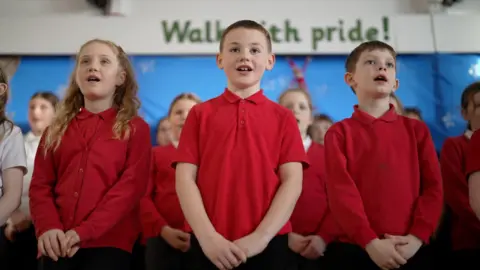
Many children find themselves singing at school in the run up to Christmas - at a nativity play or carol concert, often with parents watching proudly on.
But new data suggests singing is a much less common occurrence throughout the rest of the school year, especially after pupils leave primary school.
Now, an association of music teachers says every school should have a choir, to help pupils embrace music after a years-long decline in its popularity as a GCSE subject.
The government says it is investing in high quality music teaching and that a "renewed curriculum" will encourage more people to study it.
In a recent survey, Teacher Tapp asked just under 10,000 teachers in England how often their whole school sang together in assembly.
Over half of state secondary school teachers (57%) said their pupils never sang together in assembly, while just 13% of private secondary school teachers and only 4% of primary teachers said the same.
Teachers were separately asked whether their schools had a choir. Just over a third (36%) of teachers at state secondaries reported having no choir at their school, compared to just 8% of private school secondary teachers.
Having access to multiple school choirs was much more common at private schools, with three quarters (77%) of private secondary teachers saying their school had more than one choir, compared to 27% of state secondary teachers.
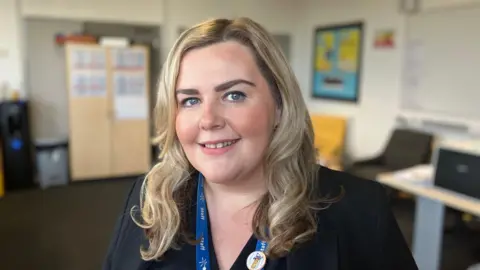
Jackie Bowen, head teacher at The East Manchester Academy, says secondary school pupils can feel "embarrassed - or that maybe it's not cool to sing like it was in primary school".
But she says singing and music are priorities at the school.
Dan Nelson / BBC
Jackie Bowen says music is part of the fabric of school life for her pupils
"We know the intrinsic value of music, but also what it does for students' development, mental health, its impact on academic achievements," she says.
"So we've run lots of initiatives to try and break down barriers to music."
The school offers a music hub at the school once a week, offering pupils time with specialist teachers from the Royal Northern College of Music.
At lesson changeover, students hear classical music instead of the traditional bell.
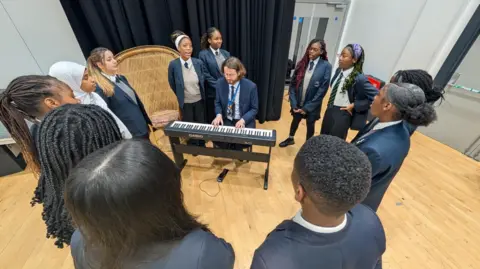
The school has also established its first gospel choir.
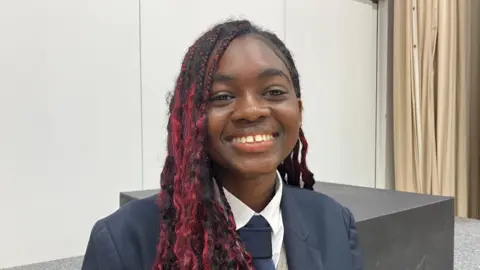
Year 11 student Mercy, who's part of the choir, says she always wanted to continue singing at secondary school.
"In primary they say you have to sing, but when you come to secondary it's a choice, so most people don't do it," she says.
"I feel like we should all release our voices to the world. Whether you're good or not, just sing."
Kate McGough / BBC
Mercy is part of her school's gospel choir and says she enjoys singing
There has been a 25% drop in pupils studying GCSE music at schools in England over the last fifteen years, despite an uptick in the most recent stats.
That is partly down to the introduction of a progress measure for schools called the English Baccalaureate in 2010, which assessed schools based on how many pupils took English, maths, sciences, geography or history and a language - and how well they performed.
There has been some improvement in recruiting new music teachers this year, but the levels still fall 35% short of government's target for trainee music teachers in the most recent stats.
James Manwaring, president of the Music Teachers Association - which represents music teachers across both state and private schools - says every school should have a choir.
"All you need is a room and you need someone to lead it and you need students," says James, who is also the director of music at Windsor Learning Partnership - a multi-academy trust of six state schools.
"It's a shame to think some state schools aren't capitalising on that."
He says changes to the school curriculum in England are "very exciting" for boosting music in schools, but says more funding and resources will be needed - "as well as retaining the wonderful music teachers we have out there".
Dan Nelson / BBC
Music teacher Rob Hatton set up the gospel choir for students at The East Manchester Academy
A Department for Education spokesperson said the government was committed to ensuring art, music and drama "are no longer the preserve of a privileged few".
Ministers are "investing millions" to help schools invest in musical instruments and equipment, and "supporting high quality music teaching through our Music Hubs", they said.
"Our renewed curriculum will also give every young person the skills, knowledge and experiences needed to achieve and thrive, including encouraging more people to study music and other creative subjects."
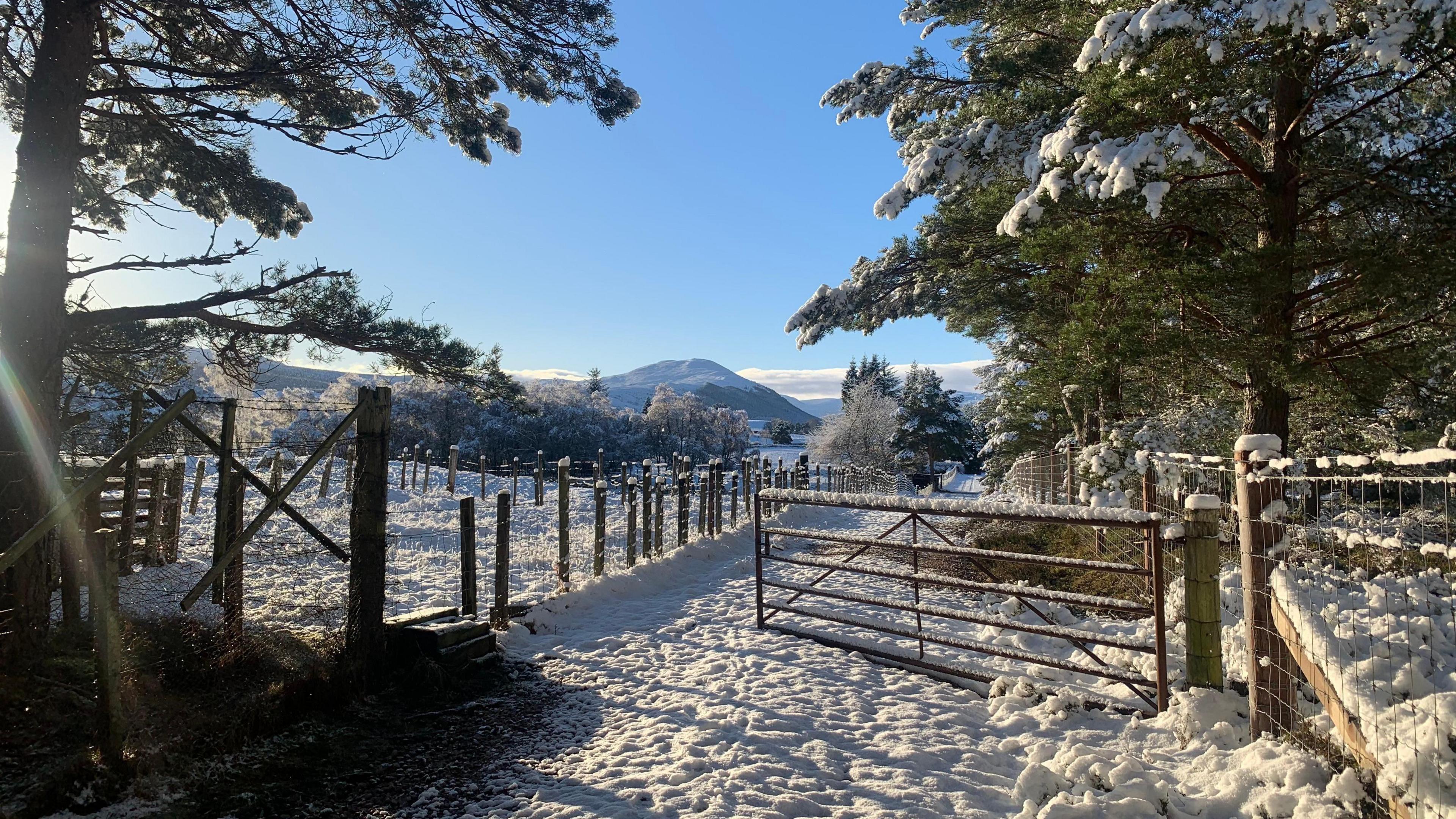
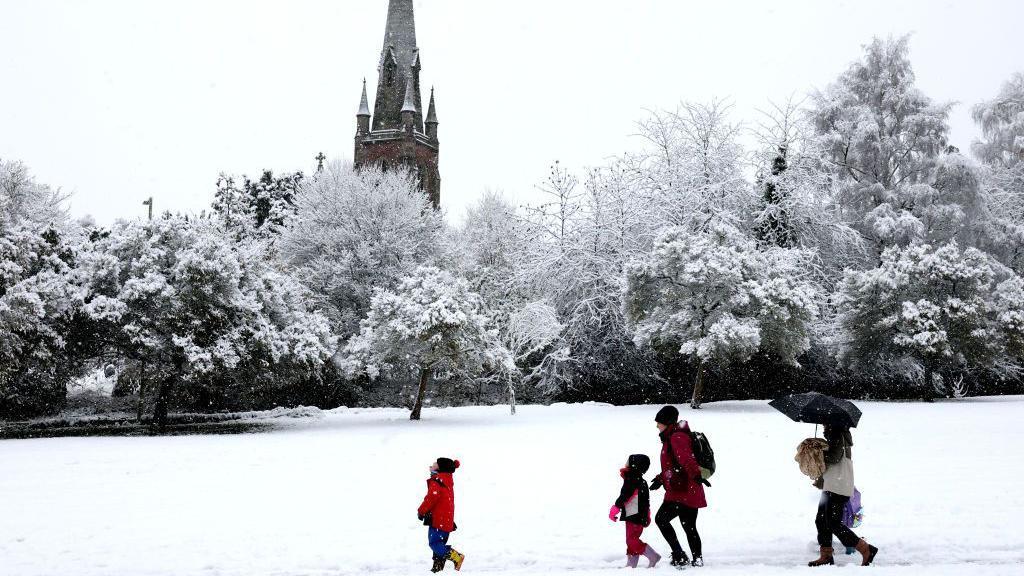
Are you dreaming of a white Christmas? With the big day a week away, it is possible that some of us might have some festive snow - but only just.
After a couple of weeks of milder conditions it's about to turn noticeably colder. Temperatures for many parts of the UK may be a degree or two below the average for this time of year, hitting the 6-9C mark.
The drop will be a result of an influx of cold air from eastern Europe.
And if there are some small changes to that, there is a slight chance that even colder air from Scandinavia might come this way, and the possibility that any showers falling in eastern areas might turn to sleet or even snow.
Why is is going to feel so cold?
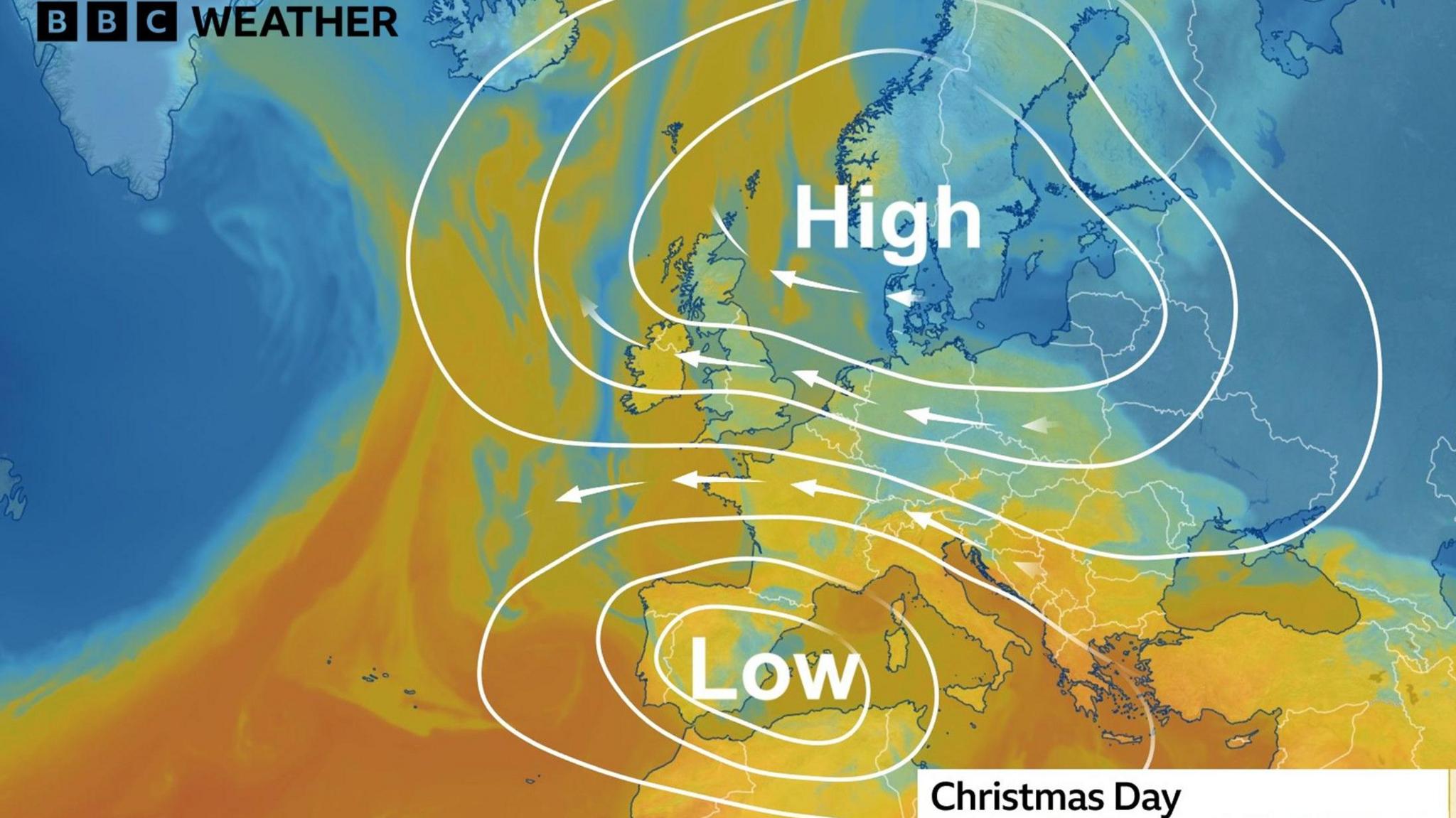
The change in fortunes is down to a high pressure system which is going to build close to the north of the UK and a low pressure one forming around France or Spain.
Although they will not be directly over the UK, the precise position of the centres of these highs and lows will determine the direction of the wind. In turn, that will influence how cold the air will be and therefore the chances of snow falling.
Image caption,
A change in wind direction will bring colder weather just in time for Christmas
As well as becoming much colder generally in time for Christmas it will probably be quite cloudy with showers developing over the North Sea and affecting eastern areas.
The best of any sunshine would be in the north and west but there will be also be a risk of some morning frost and fog.
Currently the forecast is for east-southeasterly winds but there is a very small chance that we get east-northeasterlies instead.
This small change in wind direction could then pull in much colder air from Scandinavia resulting in showers over eastern areas that could turn to sleet or snow in places.
Although a white Christmas is still unlikely for most of us, it can't completely be ruled out just yet.
Either way, very wet weather is off the Christmas menu this year. This spell of quieter spell of weather will be very much welcomed in areas which have recently seen heavy rain such as Cumbria and south Wales.
Our experience of Christmas past should tell us that it's rare to see snow actually fall on Christmas day - and getting rarer.
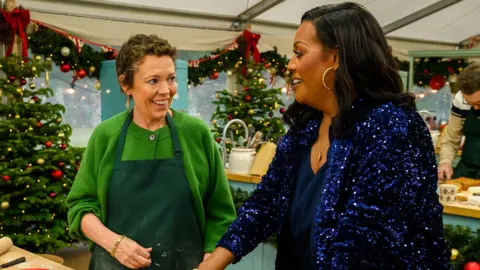
Actress Olivia Colman (pictured with Alison Hammond) will take part in a Peep Show edition of Bake Off
With Mariah Carey fully defrosted and mince pies disappearing at an alarming rate, families everywhere are poring over surely the most important item in any household - the Christmas TV listings guide.
We won't sugarcoat things - this year's offering isn't as strong as 2024's, when new material from Gavin, Stacey, Wallace and Gromit sleighed the schedule.
Nonetheless, there is plenty to look forward to as many of our favourite shows get a festive makeover, while some major new releases launch on streaming.
Here's a selection of highlights to help tide you over until series four of The Traitors launches on 1 January, when O Come All Ye Faithful will take on a whole new meaning.
Christmas Eve
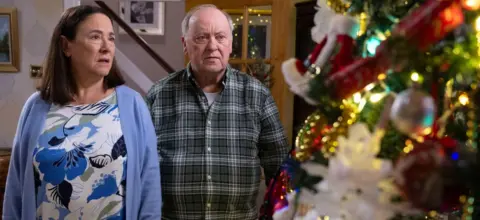
Beth (Arabella Weir) and Eric (Alex Norton) put their tree up early in a new Christmas special
Two Doors Down
Two Doors Down, the delightful comedy about a group of eccentric neighbours, is back for a Christmas special ahead of what we hope will be a full series return (the show took a break in 2023 following the death of co-creator Simon Carlyle).
In a new episode by co-writer Gregor Sharp, Michelle and Alan prepare for the arrival of their first child, while Beth and Eric inadvertently kick off the Christmas celebrations early on Latimer Crescent when they put their tree up in November.
On BBC One and iPlayer at 22:00
Channel 4
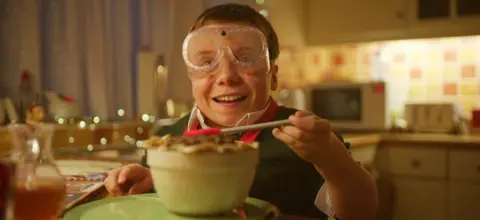
Am I Being Unreasonable? star Lenny Rush stars in Channel 4's new festive film
Finding Father Christmas
One of the many new festive films being screened this year is Finding Father Christmas, which follows 16-year-old Chris (played by Lenny Rush) who still believes in Santa.
When his dad (Inbetweeners star James Buckley) tries to tell him his bearded hero doesn't exist, Chris and his cousin set out to prove him wrong. Also starring Stephen Fry, Hannah Fry and Maggie Aderin-Pocock.
On Channel 4 at 19:30
Getty Images
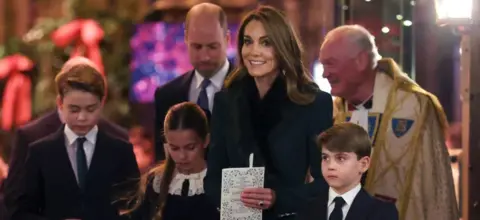
Royal Carols: Together at Christmas
The Princess of Wales hosts her fifth annual carol service at Westminster Abbey, which champions individuals and organisations in the UK who have provided support to local communities.
The programme promises "some of the nation's most beloved carols" (they rolled out some proper bangers last year such as Hark! The Herald Angels Sing) as well as readings from special guests including Katie Melua and Chiwetel Ejiofor.
On ITV at 19:25
Netflix
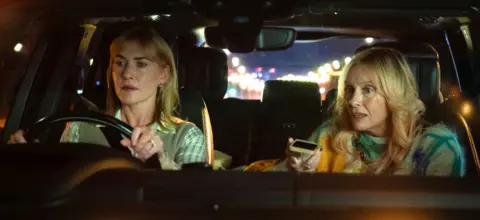
Dame Helen Mirren, Kate Winslet (left) and Toni Collette (right) star in Goodbye June
Goodbye June
Two decades after Kate Winslet starred in Christmas staple The Holiday, she is now directing and appearing in a brand new festive film.
Goodbye June, written by her son Joe Anders, follows siblings trying to put their disputes aside to unite for the sake of their mother (played by Dame Helen Mirren), who is undergoing palliative care at Christmas.
On Netflix from 00:01
Christmas Day
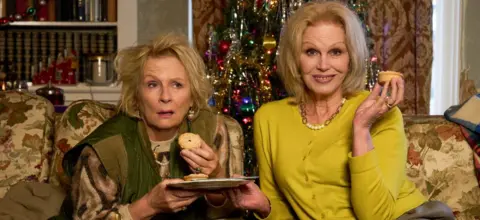
Ab Fab stars Jennifer Saunders and Joanna Lumley will reunite for the Christmas special of Amandaland
Amandaland
Motherland spin-off Amandaland was a roaring success when it arrived in February, and its Christmas makeover will see guest actress Jennifer Saunders reunite with her former Absolutely Fabulous co-star Joanna Lumley.
Saunders plays Aunt Joan, who is hosting Christmas at her country house for the family. But she and her sister Felicity (Lumley) have never got on, and resurfaced family drama threatens to throw a spanner in the works.
On BBC One at 21:15
Strictly Come Dancing
The Strictly festive special might take place every year, but 2025's is particularly significant, for one very obvious reason: the celebrity line-up includes All Saints legend Melanie Blatt.
That aside, it also happens to be the last show featuring presenters Tess Daly and Claudia Winkleman, who announced their exit in October. Expect a lot of smudged mascara as the pair receive a send-off to remember.
On BBC One and iPlayer at 17:30
The Scarecrows' Wedding (and other animated delights)
Julia Donaldson's book The Scarecrows' Wedding, about two devoted scarecrows planning their big day, has been a firm favourite with children since its publication in 2016. Rob Brydon and Jessie Buckley voice characters in the TV adaptation.
On BBC One at 15:10
Meanwhile, Shaun the Sheep: Fleece Navidad is a 10-minute treat which sees the flock help the farmer produce a better Christmas card than his selfie-obsessed neighbours.
On BBC One at 16:35
Other animated highlights include repeats of the delightful screen adaptation of The Tiger Who Came To Tea, and Christmas classic The Snowman.
08:20 and 08:50 respectively, both on Channel 4
Channel 4
The stars of noughties comedy Peep Show will reunite in the Bake Off tent
The Great Christmas Bake Off
It's a Peep Show special in the tent this year, with Olivia Colman and David Mitchell competing for the Star Baker title alongside co-stars Sophie Winkleman, Isy Suttie and Matt King.
The stars will attempt hangable festive biscuit decorations, a Christmas pie technical challenge, and a showstopper round that sees the bakers recreate their favourite Peep Show moments in cake form.
On Channel 4 at 20:00
Boxing Day
Netflix
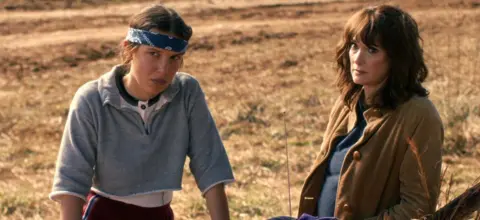
Millie Bobby Brown and Winona Ryder star in Stranger Things
Stranger Things (season five, volume two)
The fictional US town of Hawkins, Indiana has been turned into a military zone, with Eleven being hunted as she and her friends continue to try and find the powerful Vecna. But he has vanished, and his whereabouts and plans are unknown.
The next three episodes of season five are technically released on Christmas Day in the US, but the timezone difference means it will be Boxing Day for UK fans.
On Netflix from 01:00
Julia Donaldson and Dame Helen Mirren will brave the fake snow in a special episode of The Repair Shop
The Repair Shop at Christmas
While Olivia Colman is in the Bake Off tent, another Oscar-winning actress is in the Repair Shop barn.
Dame Helen Mirren hopes to repair a broken cello that belongs to a care home she supports, while author Julia Donaldson seeks to restore a a battered toy farmhouse that inspired her books.
On BBC One at 19:30
Getty Images
The End of an Era
Your bank account might still be recovering from Taylor Swift's record-breaking Eras tour, but Disney+ are now letting fans relive it with a six-part docuseries.
The End of an Era launched earlier this month with new episodes weekly, offering behind-the-scenes insight and interviews with family members and friends including Sabrina Carpenter, Ed Sheeran and Gracie Abrams.
The final two episodes launch on Disney+ from 00:01
Other highlights
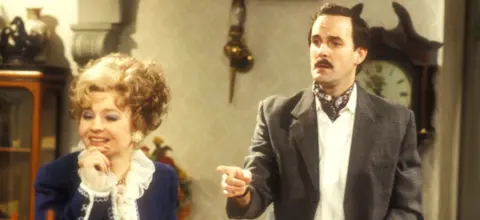
Prunella Scales, who died in October, will appear in a classic episode of Fawlty Towers
Lives well lived
Kirsty Wark will also be remembering some of the celebrities who died this year, including Beach Boys star Brian Wilson, singer Dame Cleo Lane and actress Diane Keaton, in documentary Lives Well Lived (BBC Two, 19:40).
It's part of an entire evening of programming on the channel dedicated to celebrating those we lost in 2025.
Patricia Routledge stars in a classic episode of Keeping Up Appearances (18:35), where plans for a pageant don't go as smoothly as Hyacinth hoped
Gene Hackman appears in the 1992 western Unforgiven (21:00), while Robert Redford stars in 1969 classic Butch Cassidy and the Sundance Kid (23:10)
Prunella Scales appears in possibly the greatest episode of Fawlty Towers, Communication Problems (19:05). BBC Four also dedicates its evening schedule to the actress, starting at 21:00 when Sam West will remember his mother's life and career
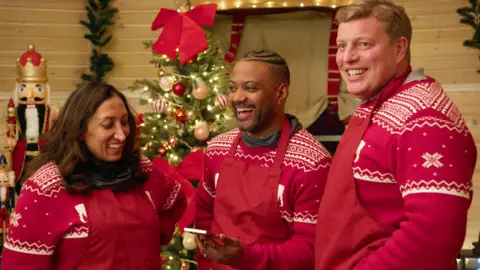
Shazia Mirza, JB Gill and Thomas Skinner will appear in a festive edition of the Apprentice
The Celebrity Apprentice
A new festive edition of The Apprentice, which will air over two nights ahead of a full-length celebrity series next year, will see a group of stars make and market gingerbread biscuits.
The line-up includes Rob Rinder, AJ Odudu, JB Gill and returning contestant Thomas Skinner, who first appeared on the 2019 series.
On BBC One at 21:00 on Monday 29 and Tuesday 30 December
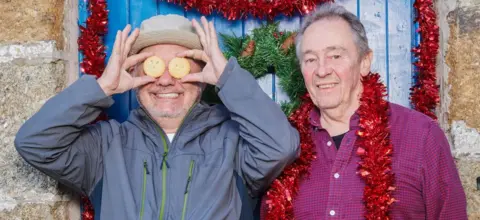
Bob Mortimer and Paul Whitehouse will welcome special guests for a Christmas edition of Gone Fishing
Festive favourites
Elsewhere, many staples of the terrestrial TV schedules receive the Christmas treatment over the holiday period.
ITV has festive specials of The Chase (Christmas Eve, 17:55), Bullseye (Christmas Day, 20:15), The 1% Club (21:15), The Masked Singer (Boxing Day, 19:30) and Wheel of Fortune (27 Dec, 19:30).
BBC One's offerings include The Great British Sewing Bee (Christmas Eve, 19:25), The Wheel (Christmas Day, 18:45), Would I Lie To You? (Boxing Day, 19:00), and dramas including Call The Midwife (Christmas Day, 20:15, and Boxing Day, 20:30).
BBC Two will broadcast Mortimer and Whitehouse: Gone Christmas Fishing (Christmas Eve, 21:00), while Boxing Day sees Christmas editions of Richard Osman's House of Games (19:30), Celebrity Mastermind (20:00), Only Connect (20:30) and University Challenge (21:00).
Channel 4 air a Gogglebox compilation (Christmas Day, 21:15) and The Festive Pottery Throwdown (Boxing Day 19:45) while Channel 5 has The Yorkshire Vet (Christmas Eve, 19:00) and All Creatures Great and Small (21:00).
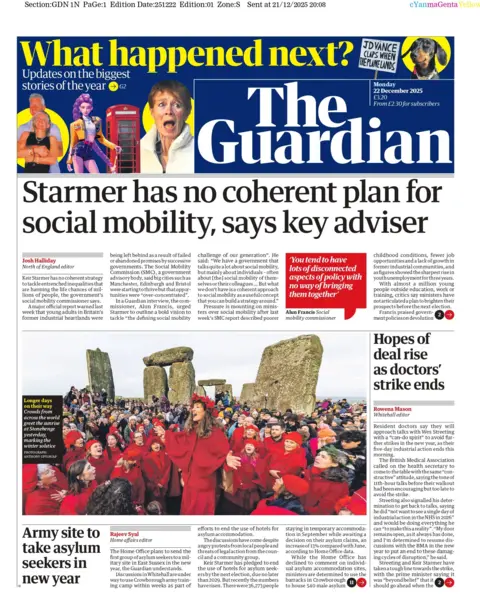
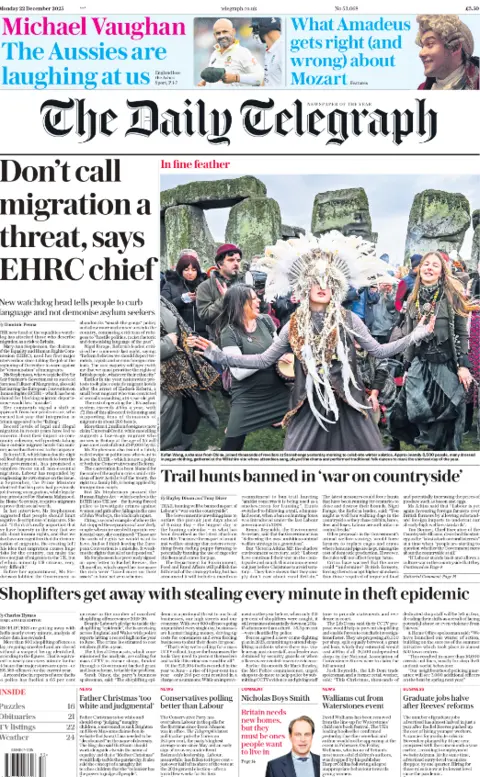
The Guardian leads with an interview with the government's social mobility commissioner, Alun Francis, in which he says that the government lacks an "overarching narrative" to pull various social mobility policy strands together and urges Sir Keir Starmer to set out a clearer strategy. It also features a photo of people celebrating the winter solstice at Stonehenge.
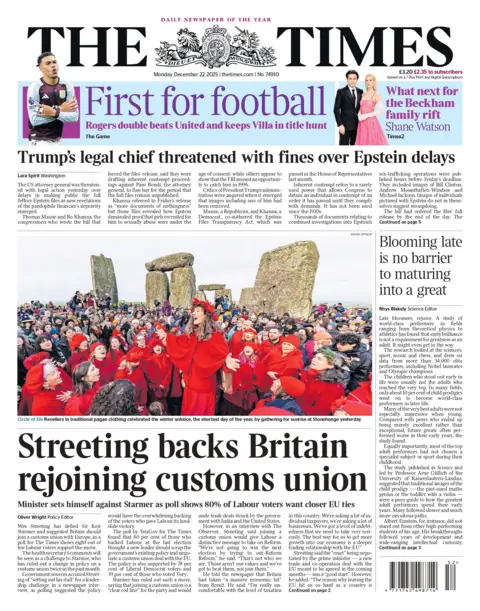
The Times also features a photo from the winter solstice, above a story reporting that Health Secretary Wes Streeting has suggested that the UK should join a customs union with Europe, despite Prime Minister Keir Starmer ruling out a change in policy.
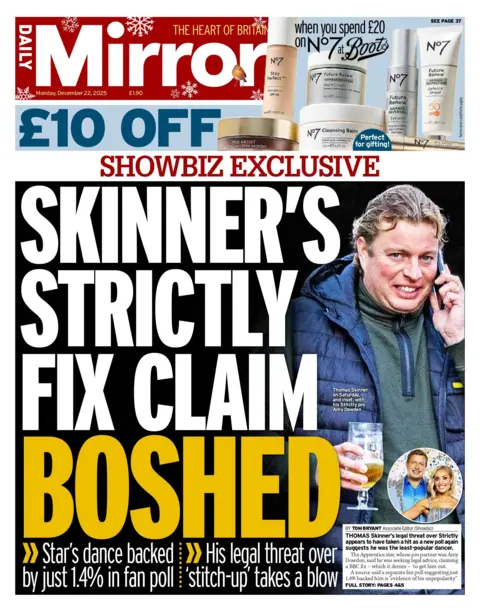
The Daily Mirror leads with a story on how a poll shows that ex-Strictly Come Dancing contestant Thomas Skinner's "legal threat" over his Strictly exit has "taken a hit" after a new poll suggests he was the least-popular dancer. It follows reports Skinner is suing the BBC over claims the vote was rigged against him. The BBC has rejected the allegation, saying Strictly's public vote was "independently overseen and verified to ensure complete accuracy".
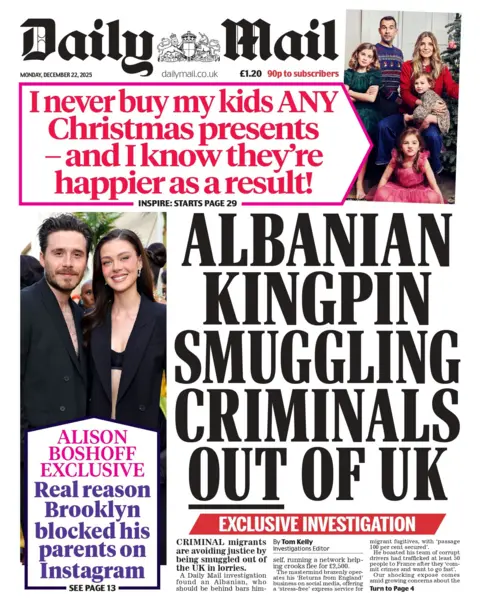
The Daily Mail leads with an investigation on how "criminal migrants" are reportedly avoiding justice by being smuggled out of the UK in lorries. It focuses on an Albanian man who the paper reports has been running a network helping people flee for £2,500.
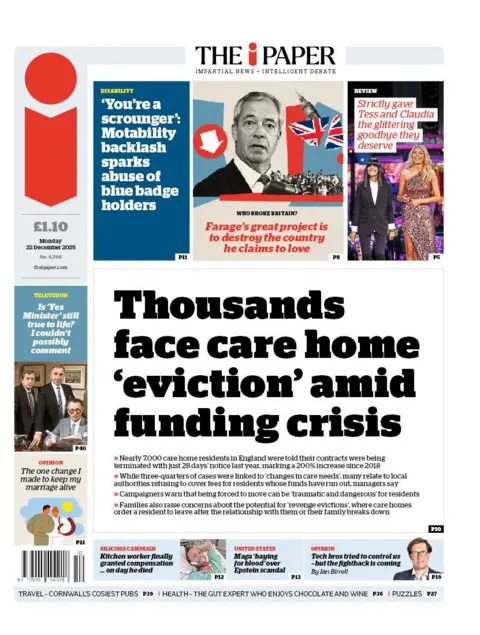
The i leads with a story on how almost 7,000 care home residents in England were told their contracts were being terminated with just 28 days notice last year.
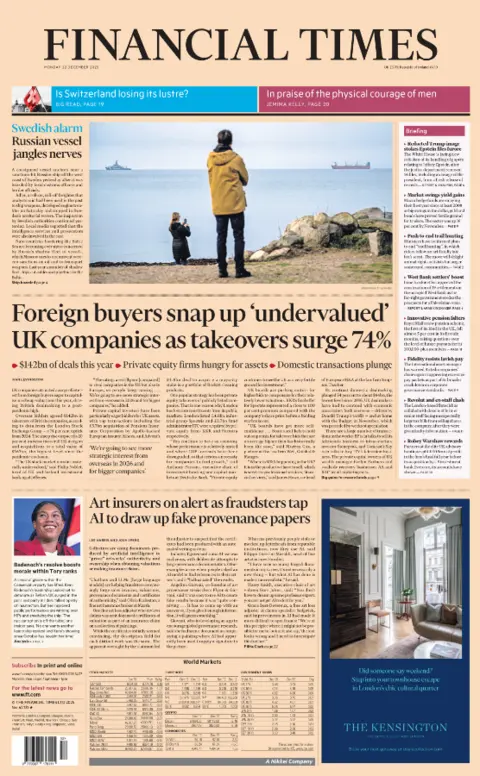
The Financial Times leads with a story on how UK firms attracted interest from international buyers eager to capitalise on cheap valuations this year. Overseas bidders agreed $142bn in takeovers of UK companies, according to data from the London Stock Exchange Group - a 74% rise from 2024.
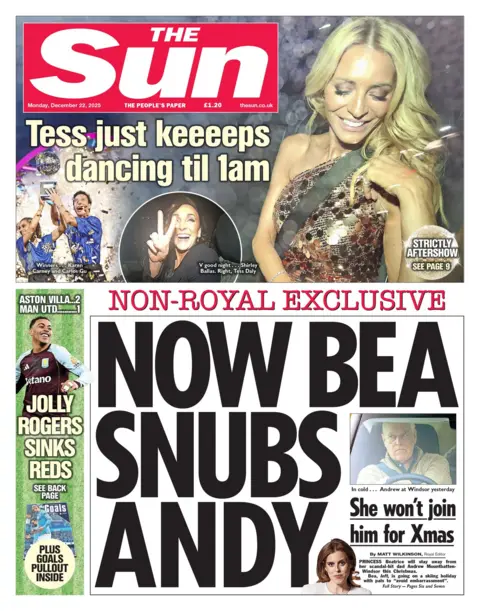
The Sun reports that Princess Beatrice will not join her "scandal-hit dad", Andrew Mountbatten-Windsor, for Christmas this year and will go skiing with friends instead. Andrew has faced years of scrutiny over his past friendship with convicted paedophile Jeffrey Epstein. He has repeatedly denied any wrongdoing in relation to Epstein.
The Daily Telegraph leads with a story on how the new head of the equalities watchdog has criticised people who describe migration as a risk to the UK. It also has a story on how trail hunting will be banned in what the paper calls Labour's "war on the countryside".
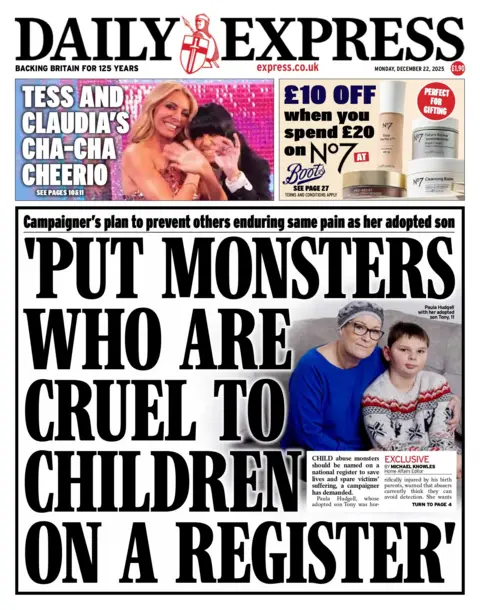
The Daily Express speaks to a woman who is calling for child abuse "monsters" to be named on a national register. Paula Hudgell's adopted son, Tony, was "horrifically injured" by his birth parents, the paper reports.
And the Daily Star says it has "teamed up" with Kenyan darts star David Munyua. The paper has sponsored his shirt for his next clash in World Darts Championship.

 Login
Login
 AFP via Getty Images