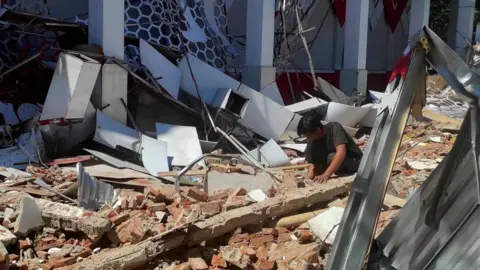
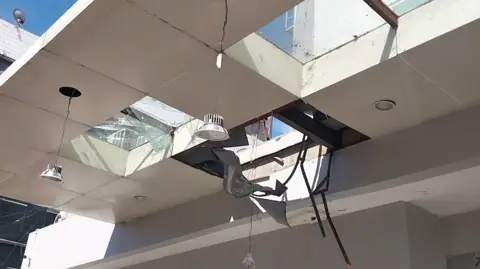
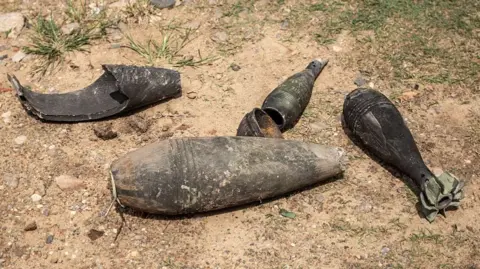
Remnants of munitions have been discovered in impacted areas of the city
At least four people have been killed by a series of powerful explosions at an ammunitions depot in Burundi's largest city, Bujumbura, local residents have told the BBC.
The blasts erupted late on Tuesday at the facility, located in the suburb of Musaga, due to an electrical fault, an army spokesperson said.
Shrapnel and debris were propelled more than 5km (three miles) and several houses in nearby districts were destroyed by the force of the explosions.
The authorities have not yet provided any casualty figures but family members and eyewitnesses told the BBC of four separate deaths in the city. The AFP news agency quotes security sources as saying that dozens of people had died.
One woman told BBC Gahuza that a relative, who had been detained at Mpimba Central Prison, had died after a bomb hit the facility.
Numerous inmates at the prison, which is located near the ammunitions store, are reported to have been injured.
In the north-eastern neighbourhood of Gisandema, witnesses told BBC Gahuza that a bomb had destroyed a house and killed a domestic worker.
The authorities have said they cannot yet comment on the number of casualties as they are still assessing the extent of the damage.
The explosions sent plumes of smoke rising above the city, sparking panic in the city of more than a million people.
President Evariste Ndayishimiye, in a message on X, expressed his condolences to all Burundians, adding that the authorities are "here to help".
The columnist M. Gessen sits down with the writer Harriet Clark to talk through the complexity of maintaining relationships with family members who have done unthinkable things.
Republicans once saw Georgia as the crown jewel of their Senate pickup opportunities. They’re now blaming each other as the GOP primary unravels into an intraparty brawl that could cost them their chance of defeating Democratic Sen. Jon Ossoff.
The party is grappling with a crowded field, no dominant front-runner, no endorsement from President Donald Trump — and the reality that the May 19 primary will very likely extend into an expensive, bruising mid-June runoff.
Rep. Mike Collins (R-Ga.), a close Trump ally, leads in public polling, with fellow Rep. Buddy Carter (R-Ga.) and Gov. Brian Kemp-endorsed former football coach Derek Dooley battling for second. But a large share of voters remain undecided, underscoring how fluid the race is. Meanwhile, incumbent Ossoff — who faces no primary challenge of his own — is keeping his powder dry and has amassed a formidable eight-figure campaign war chest ready to deploy in the general election.
“If Ossoff could write a playbook for how he wants this primary to go, this is exactly it,” said a GOP operative, who, like others interviewed for this story, was granted anonymity to speak candidly about the race’s dynamics. They said that Georgia is like a "red-headed stepchild" not getting any attention from Washington.
Republicans point to several unforced errors that got the party to this point. Some say their current challenges were set in motion last year, when they failed to convince the state’s popular outgoing GOP governor, Kemp, to run for Ossoff’s seat. Others point to a lackluster effort by the National Republican Senatorial Committee to recruit a stronger crop of candidates or unify the field. Many also fault Trump and Kemp, who have had a sometimes-testy relationship, for failing to agree on a candidate they both could support to avoid a costly primary.
“It's not ideal that it looks like it's going to runoff,” said Cole Muzio, president of the conservative Frontline Policy Council. “There was so much talk about Kemp and Trump getting together and finding a nominee together, landing the plane on one person. I'm not going to try to sort out what happened with that, but a unity nominee would have been ideal.”
The early finger-pointing that has emerged in conversations with a dozen GOP strategists and officials in Georgia reflects their deep frustration with the state of their primary — and their chances of holding onto the Senate majority. The party is fending off competitive Democratic candidates in several red states as voters sour on Trump's agenda, making flipping Georgia even more of a priority.
"It's a mess that could have been much less messy if they had figured this out six months ago," said a second Georgia-based Republican strategist unaffiliated with any campaign. "Everybody's resigned to this going to May and then a June runoff and then pick up the pieces after that."
Early general election polling shows Ossoff leading all three potential GOP candidates in a head-to-head matchup. After five years in the Senate, he has built a formidable political operation, churned out razor-thin statewide wins and amassed a sizable fundraising cushion.
“Jon Ossoff has $24 million. Jon Ossoff is on TV all of the time, carefully articulating his positions, grilling Tulsi Gabbard — really being methodical,” said Ryan Mahoney, a GOP strategist unaffiliated in the race. “He has tons of resources — great name ID, a lot of exposure — while the Republicans are fighting against each other, trying to see who can break out and ultimately be the nominee.”
“He's just in a great position,” Mahoney noted.
Still, several Republicans say they’re confident about their prospects in a state that Trump won in 2024, and they expect money and outside support to dramatically ramp up once their nominee is decided.
“Republicans created this problem. We created this problem and it's not any one person,” the second GOP strategist said. "I still think a Republican can win, I just think we're making it way harder.”
With around 40 percent of likely GOP primary voters still undecided, according to recent public polling, the Senate candidates have been jockeying for Trump’s blessing — an endorsement that could be pivotal in deciding the future of the race.
All three candidates have engaged with the White House directly. In an interview with conservative host Clay Travis’ Outkick podcast, Dooley said he met with Trump in the Oval Office last year and had a “very engaging conversation.” Carter, for his part, told POLITICO in a brief interview that his campaign continues “to talk to the administration” about the race. Collins and the president have also met and discussed the race, according to a person familiar with the conversation. In February, Collins appeared onstage with the president during an event in Rome, Georgia, focused on Trump’s economic agenda.
Collins’ campaign recently released a lengthy memo outlining his argument for why the field should coalesce him around the primary. “[Democrats] are watching Republicans turn what should be the best pickup opportunity of the midterms into a needless intraparty squabble that wastes time and resources,” the memo reads. “Instead of spending the majority of 2026 focused on defeating Jon Ossoff, Republicans are on track to not be unified until late June, after a runoff, leaving the Republican nominee only four months to raise money and campaign across the largest state east of the Mississippi to unseat the Democrat.”
Most outside groups have been waiting to line up behind a clear front-runner, though Club for Growth PAC, a major conservative super PAC, has already endorsed Collins’ campaign — an unusual step for a group that usually acts in lockstep with the White House’s political strategy.
The White House did not respond to a request for comment regarding Trump’s thinking about the primary or his conversations with the three candidates.
Then there’s the Kemp factor.
After the governor declined to run, Republicans feared the primary could become a proxy war between himand Trump, who’ve previously clashed over Trump’s insistence that the 2020 election in Georgia was fraudulent. That hasn’t quite played out, with the president staying out of the race so far. But Kemp’s decision to back Dooley, the former football coach, means it’s unlikely they’ll find common ground.
“It's no secret that the profile of a candidate that President Trump would prefer is much different than the profile of a candidate that Governor Kemp would prefer,” said a third local GOP strategist, who is unaffiliated in the race. “The nexus between those two just made it very hard, if not impossible, to come out with a consensus candidate.”
Garrison Douglas, a spokesperson for Kemp, doubled down on the governor’s support for Dooley in a statement and said he isn’t “wasting time worrying about the complaints of anonymous consultants.” Dooley spokesperson Connor Whitney said he’s confident Georgia voters will “choose the only political outsider in this race — not another stale D.C. politician.”
Carter spokesperson Chris Crawford rejected the criticism of running a messy primary, saying that “only in Washington do consultants think voters choosing their nominee is a problem.”
Collins, in a statement, expressed confidence in his ability to win the primary, and added that his campaign “would welcome any help to ensure we could wrap this up in May and get on to the main event."
With Georgia in a holding pattern, some local Republicans worry that Washington’s attention is drifting toward Michigan, where former GOP Rep. Mike Rogers has unified the party — and the president — around him in the state’s key battleground Senate race as a trio of Democrats battle it out in their own messy primary.
“There's offense and defense. I think on offense, [Georgia] is still a top race. I think the only difference is that Michigan is a clear field. Rogers is ready to roll. He's raising money. Dems have a mess on their side over there,” said one national Republican familiar with the party’s midterm strategy, who was granted anonymity to discuss behind-the-scenes planning.
Still, the person said they believe Georgia remains competitive, particularly if Republicans unify.
In a statement, Nick Puglia, a spokesperson for the NRSC, said Ossoff “is the most vulnerable incumbent on the map” and Georgia “has been and remains a top state for Republicans to expand President Trump’s Senate Majority.”
But Republicans in the Peach State are skeptical.
“I sense from some Republicans a feeling that maybe Michigan is a better opportunity, and of course, one of the reasons … for that is, ‘well, the field’s been cleared,’” said a fourth GOP strategist in Georgia.
“It feels like D.C. is shifting to Michigan because of a problem that they could solve today,” said the second Georgia-based GOP strategist.
Watch the moment Artemis II blasts into space on historic mission
Nasa's Artemis II mission thundered away from Florida's coast, taking its four crew members on their historic journey to circle the Moon.
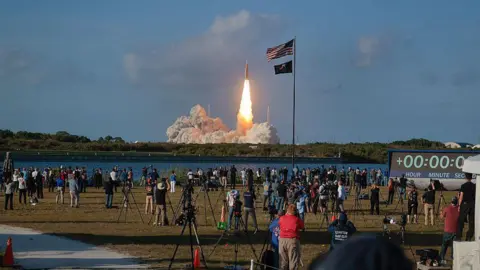
There was a deep rumbling as a sheet of brilliant white flame suddenly erupted, momentarily engulfing the whole launch pad as the mightiest rocket Nasa has ever built rose into the sky.
Nasa's Space Launch System (SLS) majestically crept upwards - slow at first, then gathering pace, riding on two blinding pillars of flame that crackled and roared with increasing volume until the rumbling was almost deafening, a sound we could feel in our bodies as we watched on in amazement, three miles (4.8km) away from the launch pad.
There were small cheers from those in the know as the rocket past the moment of maximum danger - one minute and 10 seconds into the launch. This is where the pressure hits the rocket the hardest, and when engineers know that even a small structural weakness can be disastrous.
There was no weakness, and SLS arced out over the Atlantic like a fiery white angel, leaving a white smoky trail as the sound subsided and the spacecraft disappeared from view, shrinking to a single bright star as it chased the Moon.
Chip Somodevilla/Getty Images
Spectators are kept at a safe distance, but the deep rumbling of the rocket launch can still be physically felt
Afterwards, there was a giddy euphoria among staff at the Kennedy Space Center.
One person told me they felt quite emotional and another said they wanted to cry – no doubt a release of tension built up over the past few months when Artemis II came close to launch, but ended up being scrubbed for various reasons.
Tonight, though, Nasa employees were laughing and clapping - this is the moment that they have spent years working towards. There is still work to do, but for now they are bathing in the moment of triumph.
In the hour before take-off there were issues which threatened the launch.
They concerned the launch abort system, which enables Nasa engineers to eject the astronauts and blow up the rocket if there is a malfunction.
The countdown clock was held at 10 minutes while engineers resolved the problem. They worked quickly, but it was an agonising wait to see if the launch could still go ahead.
Then came the staccato rhythm of the calls by each engineer responsible for the rocket's critical systems: "booster, go", "GNC, go", "range, go" – each reply, a tiny release of tension and a build-up of expectation.
"Artemis II, this is launch director," said Charlie Blackwell-Thompson, the first woman to hold the position at Nasa.
"You are go for launch," she told the crew. "We go for all humanity", Commander Reid Wiseman responded.
Cheesy words in normal circumstances, but that was the moment our spines began to tingle and we knew we were about to witness history.
Gerardo Mora/Getty Images
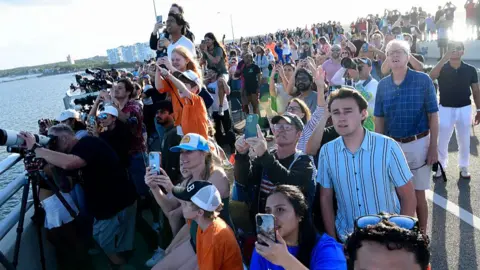
Many thousands of people gathered at viewing locations around the Kennedy Space Center in Florida to watch the launch
The Kennedy Space Center was built to send astronauts to the Moon, but that hasn't happened since 1972 when Apollo 17 blasted off. Today, the centre was back in business, doing what it was made for.
The press corps headed outside, where clouds that had threatened to cancel the launch had evaporated.
As the countdown clock restarted, the atmosphere turned to electric anticipation.
The four RS 25 engines and twin solid rocket boosters lit up, driving more than 8.8 million pounds of thrust into the Florida evening sky.
"God Speed Artemis II" Blackwell-Thompson said in another echo from the past. The same words were used in a launch from here in 1962 to send John Glenn, the first American to orbit the Earth, on his way.
NASA
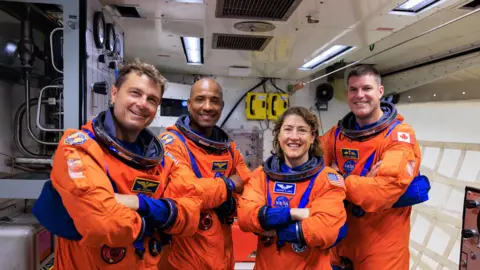
On their way to the Moon: Commander Reid Wiseman, pilot Victor J Glover, and mission specialists Christina Koch and Jeremy Hansen
I have been lucky enough to see launches of the Space Shuttle to the International Space Station from the Kennedy Space Center. Those launches are almost as impressive in flight, surging into space with an enormous bang and rising at the speed of a bullet.
But the SLS launch was not only more beautiful, it meant much more: a moment full of emotion for all those who saw it, perhaps because it reminded us of what humanity can do when it comes together, or perhaps because we may be entering a new era of space travel.
In the 1990s, I had the opportunity to speak to Neil Armstrong, who, in 1969, became the first person to ever walk on the moon.
Our discussion came at a time when the dream of human space travel seemed to be over. I asked him whatever happened to that dream? He smiled and said "the reality may have faded but the dream is still there and it will come back in time".
Trump says US "on the cusp" of ending Iran war in televised address
President Donald Trump's address from the White House on Wednesday evening was - despite some speculation beforehand - largely a rehash of what he has been saying for days about the Iran war.
In a 20-minute primetime speech, he said the "core strategic objectives" of the US-Israeli military operation were "nearing completion" after a month of war and projected it would last another two to three weeks.
There were the usual threats against Iran, too, including a repeated pledge to bomb the country "back to the stone age".
If you were to copy and paste his posts on Truth Social over the last week or so, you would not be far off this address to the nation.
The president did attempt to persuade Americans of the merits of this war. There is good reason for that, as polls suggest a consistent majority of voters disapprove of the military operation he launched on 28 February.
Trump urged Americans to see this war as an "investment" in their future, and suggested it was nothing compared to other conflicts over the past century or more in which the US has ended up being involved for far longer.
But there was little here for those hoping for clear answers on where this war is heading or potential exit ramps for the US. There were glaring omissions which leave a plethora of questions unanswered.
Firstly, Israel is still attacking Iran and taking incoming drone and missile attacks – including earlier on Wednesday in Tel Aviv just hours before the beginning of Passover.
A key question is whether Prime Minister Benjamin Netanyahu's government agrees with the timetable of a few more weeks that was provided by Trump. We simply do not know at this point in time.
Secondly, what happened to the 15-point peace plan the White House was urging Iran to accept just days ago? There was no mention of it by Trump on Wednesday night. Is Washington now ditching many of those demands, including the retrieval of its stockpile of enriched uranium?
That, too, is unclear.
Former Nato ambassador: 'Lack of clarity' in Trump's war aims
The reopening of the Strait of Hormuz, one of the world's busiest oil shipping channels which has been effectively closed off by Iran, is a central issue in this conflict.
The president, however, does not appear to have a settled view on it.
One moment he is demanding Iran allow tankers through, and the next he is telling allies to go and sort it out for themselves. "Go to the strait and just take it, protect it, use it for yourselves," he said on Wednesday. "The hard part is done, so it should be easy."
He then simply said, without expanding further, that the strait would reopen "naturally" when the war was over. That is unlikely to reassure those concerned about oil prices.
Trump's pointed criticism of some allies - he said at one point that they should "build up some delayed courage" and lead an operation to reopen the strait - came after he floated the idea of pulling out of the Nato military alliance in an interview earlier on Wednesday.
But that rhetoric was completely absent from this speech, despite briefings suggesting it would be a key part of his words tonight.
'Something needs to be done' - Americans struggle as gas prices surge
Another key unanswered question relates to ground troops. What are the thousands of marines and paratroopers actually going to be doing in the region as they continue to arrive?
The truth is that after this national address, we are really none the wiser about what the president sees as victory in this war.
And given the often conflicting nature of his statements from one day to the next, everything could change at any time.
Meanwhile, the average price of gas in the US has topped $4 for the first time in nearly four years and the president's approval ratings are cratering, just months before the crucial midterm elections which will determine control of Congress.
This is a US president looking for a way out of this war – and he is still casting about to find one.
The amount of cargo traffic in the Strait of Hormuz has drastically decreased since war broke out
A coalition of about 30 nations are to discuss plans to reopen the vital Strait of Hormuz shipping lane in the Middle East, at a virtual summit hosted by the UK on Thursday.
The virtual summit is expected to consider what diplomatic and political steps could be taken to reopen the important shipping route, though the US was not set to attend.
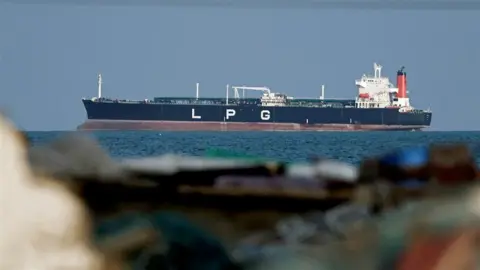
Iran has attacked several vessels in the strait in response to the war waged against it by the US and Israel, severely disrupting energy exports and sending global fuel prices soaring.
On Wednesday, US President Donald Trump said it was for other nations to "build up some delayed courage" and reopen the route.
Trump said allies "should have done it" earlier, adding: "Go to the Strait and just take it. Protect it. Use it for yourselves."
Washington has repeatedly accused allies of not doing enough to secure the shipping route or to support its war effort, leaving the UK and other nations weighing how to contribute to securing the strait without becoming involved in the wider war.
Foreign Secretary Yvette Cooper is set to chair Thursday's virtual meeting.
The summit was expected to involve governments which signed a joint statement in mid-March calling on Iranian forces to halt attacks against commercial ships.
That statement was supported by some Gulf nations, as well as France, Germany, Japan, Australia and others.
The statement says: "We express our readiness to contribute to appropriate efforts to ensure safe passage through the Strait.
"We welcome the commitment of nations who are engaging in preparatory planning."
The talks come a day after Prime Minister Sir Keir Starmer said the UK was "exploring each and every diplomatic avenue that is available" to reopen the route.
He also said British military planners would consider what could be done in the future to "make the Strait accessible and safe after the fighting has stopped".
At the same time, governments around the world are weighing how to respond to cost-of-living pressures triggered by rising energy prices.
About a fifth of the world's oil and gas passes through the Strait of Hormuz.
The price of a barrel of Brent crude, the global benchmark for oil prices, has jumped from $73 (£55) to well over $100 in recent weeks.
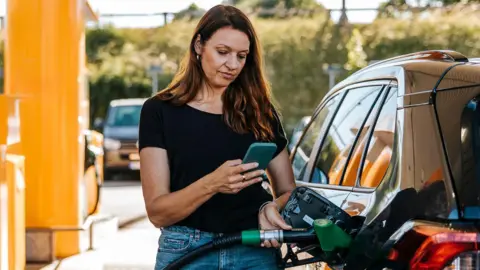
The jump in the price of oil triggered by the conflict in the Middle East has raised the possibility of higher fuel costs for motorists.
Following the attacks by the US and Israel on Iran, the price of oil leapt by 10% and gas prices also surged.
The reason for the jump is that Iran has warned vessels not to pass through the Strait of Hormuz, a crucial waterway in the south of the country through which about 20% of the world's oil and gas is shipped.
If these restrictions persist and oil prices remain high for some time, the worry is this will have knock-on effects on prices of a number of goods.
However, there remains a huge amount of uncertainty at this stage as to whether the conflict will have a lasting effect on the price of oil, gas and wider energy costs.
How quickly will rising oil prices show in fuel prices?
Crude oil is a key ingredient in petrol and diesel, meaning higher oil prices could eventually drive up prices at the pumps.
The AA motoring group says that over the next few weeks fuel costs could return to where they were at the start of the year.
That would be a change to the general trajectory of fuel prices, which have been falling on UK forecourts over the past few weeks.
Further rises will depend on the magnitude and duration of the conflict, the AA said.
Currently, the average price for petrol is 132.6p a litre and 142.3p for diesel, according to AA data.
Simon Williams, from rival motoring group the RAC, said: "If oil were to climb to and stay at the $80 a barrel mark, then drivers could expect to pay an average of 136p for petrol.
"At $90, we'd be looking at over 140p a litre and $100 would take us nearer to 150p, but it's all too soon to know."
What could the impact be on food prices?
As well as affecting prices at the pump, if higher fuel costs persist they could have further knock-on effects on the prices of goods on the shelf.
More expensive petrol and diesel will increase the transport costs of those businesses moving food and other goods around the country.
These increased costs might then be passed on by shops and supermarkets to the consumer. As a result, the cost of living goes up.
There might also be a more direct impact on food. "Some elements of crude oil are used in fertiliser, and so there could be a cost implication in terms of food prices," Benjamin Goodwin, partner at banking advisory firm PRISM Strategic Intelligence told the BBC.
However, if the disruption is short lived then it is unlikely to result in an immediate increase in food prices, he said.
Will my energy bills rise?
In the short-term, millions of UK householders' domestic gas and electricity bills are shielded from any impact on wholesale costs paid by suppliers.
People whose energy bills are governed by the price cap already know what their unit prices are now, and will be for the three months from April. They have already been set.
However, the impacts of the conflict could potentially be seen on domestic variable energy tariffs from the subsequent price cap, for the three months from July.
How will this affect UK inflation and interest rates?
UK inflation, which measures the pace of price rises, has eased relative to the heights reached immediately after Russia launched its full-scale invasion of Ukraine four years ago.
It has meant that the Bank of England has been able to cut interest six times since August 2024 to 3.75%.
The Bank recently said further cuts to borrowing costs are likely this year with another cut widely expected later this month, but if the oil price continues to rise is this now less likely?
Much depends on how long crude prices remain elevated, according to Subitha Subramaniam, chief economist and head of investment strategy at Sarasin & Partners.
If they do, she said: "It will start to cascade into other prices such as food, agriculture, industrial commodities and that's just going to really bleed into inflation."
The Bank's rate-setting committee next meets in a couple of weeks' time which really isn't enough time to assess the impact of higher oil prices on inflation.
So, in the short-term, Subramaniam said: "I would say the prudent course for the Bank of England would be to remain on hold."
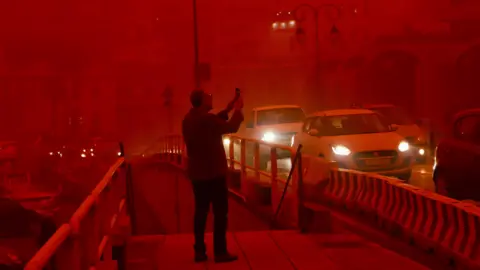
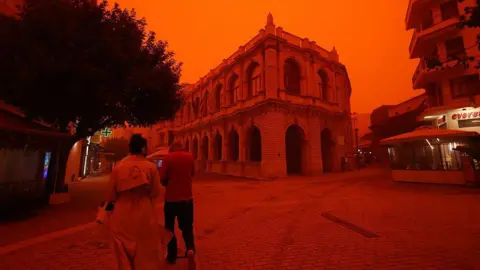
A man takes pictures as the city of Heraklion that is covered in red dust coming from Africa
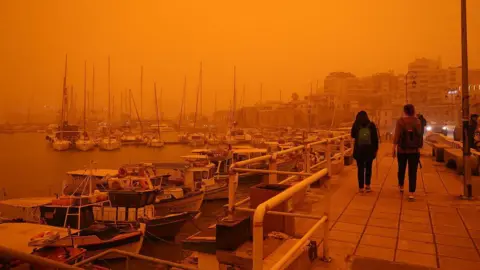
A man has died near Athens as a storm hits parts of Greece with gale-force winds and flooding, while a Saharan dust storm enveloped the island of Crete.
The man was found under a car in the Nea Makri rural area early on Thursday, according to the fire department.
Storm Erminio has flooded streets, closed some schools and moored ferries. Meanwhile, some flights were disrupted on Crete on Wednesday after dust from an African storm filled the air, turning the sky red-orange.
The weather is expected to be bad on Thursday in most areas of the country "with long-lasting and intense rains and storms and possibly with local hail", according to the national meteorological service.
Stefanos Rapanis/Anadolu via Getty Images
Crete cloaked by a Saharan dust storm on 1 April
A red warning is in place in Crete, mainly in the west and south, from midday until late at night on Thursday.
The fire department received 674 calls for assistance from Wednesday through the early hours of Thursday. The majority were in the Attica region that encompasses Athens, with most calls for fallen trees.
High winds have kept ferries moored in ports, with Greek media reporting some departures may resume on Thursday, weather permitting.
Streets as well as the basement of the local police station in Nea Makri were flooded. A bridge was knocked down on the island of Poros and vehicles have reportedly been swept away. Some schools have also been closed.
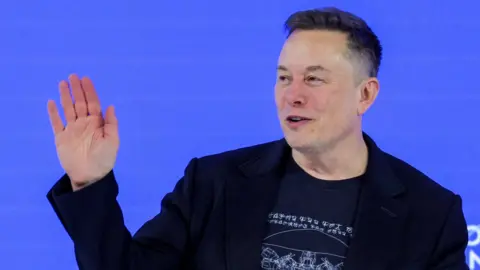
Elon Musk's SpaceX is poised to become one of the most valuable publicly traded companies in the world.
The company, which manufactures rockets, space exploration technology and Starlink satellites, is currently privately held. But on Wednesday it made a confidential filingwith the US Securities and Exchange Commission (SEC) for an initial public offering, which would allow shares to be traded in the stock market.
The value of SpaceX once it goes public is expected to surpass $1tn (£751bn). That would make its eventual stock market debut one of the most financially significant in history.
Musk's own holding in SpaceX would put the billionaire on track to become the world's first trillionaire.
The BBC has contacted SpaceX for comment.
The company is aiming to officially go public sometime in June, according to reports in Bloomberg, Reuters and the New York Times.
A confidential IPO filing with the SEC allows a company to avoid immediately revealing information to the public while it requests feedback from the regulator. The next step will be for company executives to hold "roadshows" - meetings with big investors to convince them to buy shares.
By making shares of SpaceX available for purchase by the public, the company is looking to raise $50bn or more, according to the reports.
Earlier this year, SpaceX took over xAI, Musk's artificial intelligence venture. After that all-stock merger, SpaceX is believed to have become the most valuable private company in the world, with an internal valuation of $1.25tn.
Recently, Musk's various companies have been becoming increasingly intertwined.
Last year, xAI, best known for its chatbot Grok, took over X, the social media platform previously called Twitter that Musk bought in 2022.
This degree of consolidation was a clear sign to investors that SpaceX was preparing to go public.
Emily Zheng, a senior analyst at Pitchbook, earlier told the BBC that by bringing xAI under SpaceX, Musk could show potential investors that he was consolidating costs and able to easily share resources between his companies.
With its large-scale ambitions, SpaceX is in need of a massive cash infusion that going public can provide, Zheng added. The company is racing to keep up with the "sheer cost of compute, infrastructure, and energy" needed to expand, she said.
Earlier this year, Tesla, Musk's electric vehicle company, revealed it had invested more than $2bn in xAI.
The billionaire said a significant share of Tesla's manufacturing would begin to shift toward building robots, which would make use of xAI technology like Grok.
Grok is already included in some Teslas as an AI assistant.
SpaceX would also partner with Tesla and xAI in the massive chipmaking endeavour Musk announced last month, which he is calling Terafab.
"Tesla, xAI and SpaceX have all done amazing things that people did not think could be done before," Musk said in a March presentation discussing Terafab.
Musk started SpaceX in 2002 with the aim of reducing the cost of launching crafts into space, mainly by making rockets that could be launched more than once. It first contracted with Nasa in 2006.
Today, most of SpaceX's work continues to revolve around rockets and the operation of Starlink, a fleet of satellites offering internet connectivity across the globe.
But Musk often discusses grander ambitions for the company, including putting data centers needed for AI in space and building a self-sufficient city on Mars, which many experts have said could be impossible to realise.
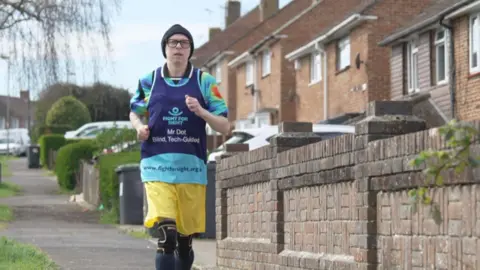
Clarke Reynolds ran the London Marathon with the help of a physical guide - but plans on running the Brighton Marathon relying on people watching and talking through his glasses
A blind runner plans to run a marathon using technology that allows sighted people to see what he sees - and to give him directions - in real time.
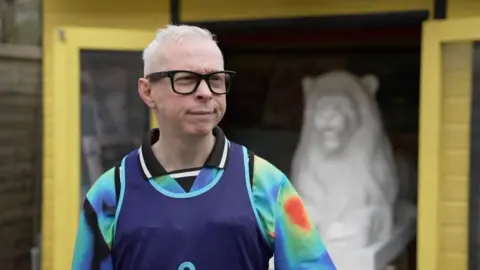
By day, 45-year-old Clarke Reynolds is a creator who turns braille into works of art to raise help raise awareness of sight loss.
But he said that running has given him "another opportunity to spread the word."
He previously completed the London marathon with the help of a physical guide runner - but plans on running his next with the help of a worldwide network of virtual volunteers.
Reynolds is planning on running the Brighton marathon later this month
He is being supported by Fight for Sight, a charity which funds research into sight loss, for which he is an ambassador.
Reynolds, from Havant, is also known as "Mr. Dot" - an alter-ego he employs when he travels around the country teaching braille through art in schools.
He has been visually impaired in his right eye from the age of six, but 13 years ago noticed a shadow in his left eye.
"I went to the hospital and they sat me down and said, 'Mr. Reynolds, do you drive?", he said.
"I said yes, and they said, 'hand over your licence, you're going blind.' And that's how you were told."
He describes his sight now as like "being underwater" - he can see shapes, shadows and some colour.
Despite that, he creates visual art using braille - such as the replica of Nirvana's iconic "Nevermind" album cover.
The braille on a replica of Nirvana's iconic album cover spells out the lyrics to the band's song "Smells Like Teen Spirit".
But he's now found another way to raise awareness.
With the help of a tethered guide runner, he ran the London marathon three years ago to raise funds for charity.
Later this month, he'll be running the Brighton Marathon - but is upping the ante.
Rather than using a physical guide, an app called Be My Eyes will connect him with a worldwide network of sighted volunteers.
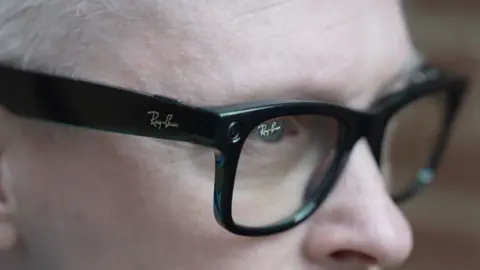
Through the camera and speakers on his smart glasses, they'll be able to see what he sees and speak to him in real time, directing him through the 26.2 miles (42.2km),
"They tell me if there's a bin or there's a parked car through the glasses - but the majority of the time we're just discussing, what is sight loss?", he said.
The Ray-Ban Meta glasses feature an in-built camera (visible on the top left-hand side of the frame) which, with the help of an app, allows sighted people to see what he sees in real time
Be My Eyes is usually used for day-to-day tasks - a volunteer might help a visually impaired person find the right button on a TV remote, for example.
So it can be surprising when they connect and see Reynolds mid-run.
"They probably think, 'oh my god, this is a bit strange'," he said.
He has been training by running laps of the 0.7 mile-long crescent (1.1km) where lives - a route he knows by heart.
And he said he's had over 100 people supporting him - some from as far afield as Jordan.
The volunteers for race day are being organised by the charity Reynolds works with, Fight for Sight, with the help of the company behind Be My Eyes.
There will also be a back-up guide runner in case the technology fails.
And although he said he was "really scared" before taking on the London Marathon, he feels confident about taking on Brighton.
"I'm really excited to do this," he said.
"If you had told me 13 years ago that I'd be an ambassador for a major charity and I'd be inspiring visually impaired children around the world, I'd never have believed you."
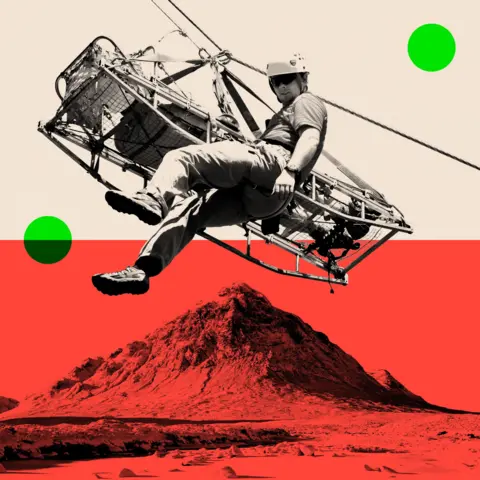
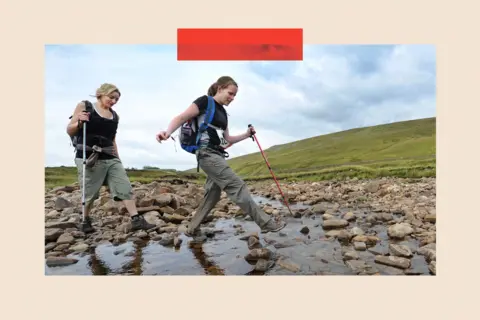
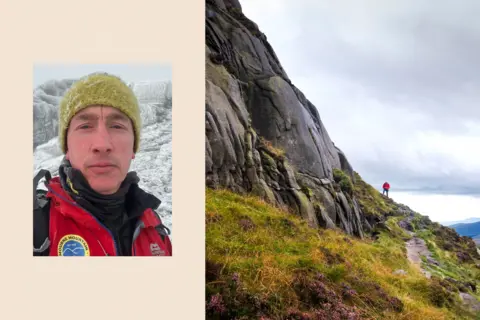
Two walkers find themselves stranded on a remote hillside as night closes in, hundreds of miles from home, after being inspired out into the wilderness by a TikTok video. It might sound like an unusual emergency - but for Mike Park, CEO of Mountain Rescue England and Wales, it's become a familiar story.
"We had two people stuck on a hill at 8pm, no torches. One was in their early 20s and the other was late 30s. It was their first time on a hill. They'd travelled a long way because they'd seen a TikTok route. They set off on their walk at 2pm - too late - wearing shorts, T‑shirts and carrying only a picnic," he recalls.
"They got off‑route, found themselves in unfamiliar ground – but they did the right thing by calling for help."
Park says this recent rescue, just a few days ago in the Lake District, is typical of the kind of callouts many colleagues now see.
Getty Images
Mike Park has spent the past 40 years rescuing people on the hills of the Lake District
His rescue team were able to safely find the pair and walk them off the hill – but the incident perfectly captures some changing behaviours. Their situation was self-inflicted; they weren't prepared and got into trouble, extra layers and some good torches could have seen them rescue themselves - but they were also quick to call for help when they knew something was wrong - a decision Park says saved them from far more severe consequences.
"If we hadn't reached them, they'd have been stuck all night in the dark. By morning, I'm confident they'd be suffering hypothermia - possibly unable to walk."
Over the past few years, mountain rescue teams say there's been a stark rise in the number of people needing to be rescued.
This has ignited a delicate but important debate. Who is responsible for safety on our mountains? And, are increased warning signs and even barriers the answer to saving lives in our most dangerous landscapes, or is risk the price we pay for true adventure?
The rise in callouts
Mountain rescue callouts have been steadily rising for decades. Sport England figures suggest there's been a particular boom in recent years, with the number of us regularly climbing a hill or mountain rising from 2.8m people in 2018 to 3.6m in 2024.
Living an active lifestyle is something the public body estimates could be saving the NHS billions each year, by reducing the number of people developing chronic conditions.
However, it's also contributed to sharp rises in the number of rescues required by the volunteers who make up the UK's so-called "fourth emergency service".
In England and Wales, the number of callouts rescue teams attend has doubled in the past decade, reaching well over 3,000 a year by 2024, according to Mountain Rescue England and Wales.
So what's changed?
One of the key themes rescue teams pick up on is how incidents featuring younger adventurers, aged 18 to 24, have soared in recent years. Callouts for the age group almost doubled in England and Wales between 2019 and 2024, from 166 to 314.
It now makes them the most rescued age group, overtaking walkers in their 50s who had previously needed the most help.
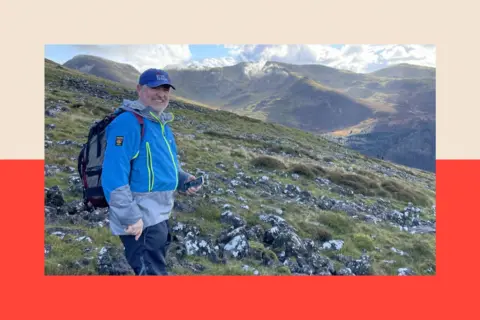
Mike Park has spent the past 40 years on the hills of the Lake District, rescuing those in danger. He has observed a significant shift among younger people in embracing the outdoors - but says he believes better technology and wider social changes in the past few decades have also fed into the overall rise.
"It doesn't matter what age you are - society is more adventurous, more reliant on help, less outdoor‑aware, and less prepared," he says.
"When I first started our team did 10-15 callouts a year. We average around 100 now. The rise hasn't been steady - it's steepened sharply, especially in the last 10 years and after Covid-19."
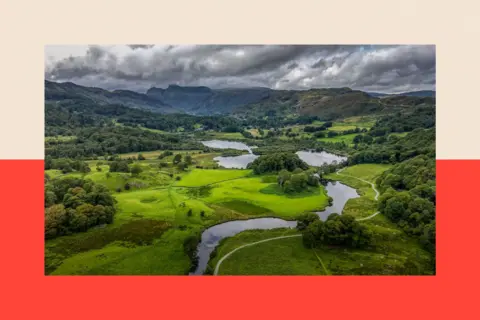
Park believes part of what makes the mountains of the UK so attractive is that most can be easily accessed for a day-trip - at worst a short weekend break. They are on our doorstep, via the same motorways and service stations we might stop at on our way to a theme park or music gig.
This can breed a sense of overfamiliarity - with some misjudging just how alien and dangerous these environments can be, he suggests.
Corbis via Getty Images
Park believes part of what makes the mountains of the UK so attractive is that most can be easily accessed for a day-trip
Park says decades ago, many people who went into the UK's mountains would have it as their sole major pastime, they were "hillwalkers or mountaineers, that was it". Now, outdoor adventures are easy to pick up alongside the many other work and leisure activities people juggle.
"There's so much to do now, we don't concentrate on any one thing. People might do the outdoor environment one week, swimming the next, holiday the week after," he says.
Rescuers say it should be seen as only good news that millions of people are now inspired each year to venture into the outdoors themselves, encouraged by stories of the physical and mental health benefits - and beautiful images spread across social media.
But the reality of having so many novices is also starting to take its toll on some of the UK's busiest rescue teams, who are increasingly grappling with exhaustion and stretched staffing.
It's important to note that no rescue team we spoke to begrudge doing these kinds of rescues - they are grateful they can help those who need it and avoid the situation getting any worse. It doesn't matter how you got there, just that they can help you get down safely.
But according to Park, the fact people are seemingly more willing to take risks in the first place - and then more willing to pick up the phone when things go wrong - has fundamentally changed what kind of rescues his teams do.
"Ten years ago, 70% of callouts were because someone physically couldn't get off a hill," he says.
"Now, most people haven't physically injured themselves - it's that they're mentally unable to get down, because they weren't prepared for the environment."
In other words, people's bodies are capable of getting them off the mountains, but they lack the experience, confidence or equipment to do it safely.
Online influencers
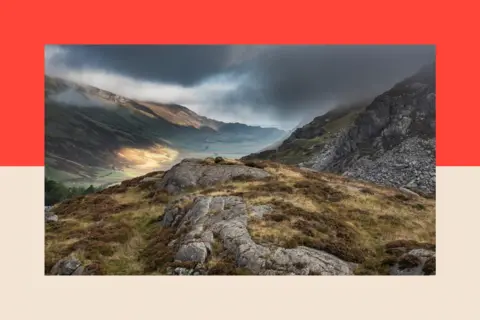
Many mountain rescuers believe the increase in online influencers is playing a role. There are pictures and videos across sites like TikTok and Instagram encouraging people to venture out to beautiful plateaus and waterfalls.
Seeing people influenced by social media "used to be rare, but now it's constant," explains Martin McMullan, from the Mourne Mountain Rescue Team in Northern Ireland.
"People search out iconic locations made popular by influencers. Some go just to experience it - others are trying to create their own content for their platforms."
BBC/ Getty Images
Martin McMullan says: "People search out iconic locations made popular by influencers"
In some rare cases, McMullan says influencers may even be attempting to get rescued - to create more interesting content for their channels. He became suspicious of one case a few years ago, when his team was called to Northern Ireland's highest peak in "very serious" sub-zero winter conditions.
At the summit McMullan says they found a group of young people who they escorted part of the way down, before calling in a helicopter to evacuate them to safety. It was only days later, when a friend alerted him to it, that McMullan realised the whole thing had been filmed by the group, clutching onto their phones as they were rescued.
"They'd been livestreaming parts of it - even when things became dangerous. We were oblivious to it at the time. They probably thought it made great social media content."
McMullen says although being far from the first time he'd had a rescue filmed by members of the public keen to capture the drama of the job, it was the first time his team suspected a group had gone out with the idea of getting rescued, something they denied.
Hotspots
The vast majority of mountain rescue teams, thankfully, rarely find themselves called out to a death. But the spread is far from even and there are certainly hotspots.
The rescue team covering Yr Wydffa, Snowdon, is far and away the busiest in the UK. The team is often called to fatal incidents and has seen a rise in deaths. Across north Wales, there were 14 fatalities in the mountains back in 2015. Last year there were 23.
Getty Images
The rescue team covering Yr Wydffa, Snowdon, is the busiest in the UK
So-called body recovery callouts can have a significant impact on the rescuers, with a growing importance being placed on welfare checks and support for the teams who regularly battle the elements to retrieve bodies so they can be returned to their loved ones.
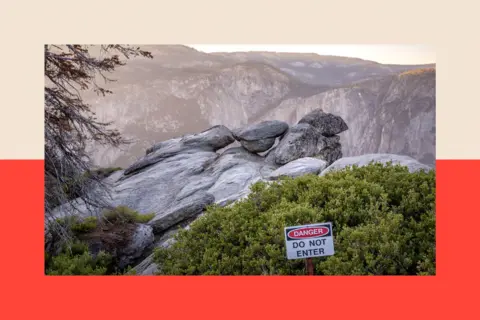
There have been suggestions that putting up physical warning signs, or even fencing, on some of the UK's most dangerous ridges and waterfalls could potentially save lives. The National Trust and conservation project, Fix the Fells, recently decided signs were needed to prevent accidents on England's highest mountain, Scafell Pike.
Over eight years, four people died and more than 40 were rescued from the treacherous ravine known as Piers Gill, before a sign and large rocks were placed on the nearby route to encourage people away from the area.
In mid-Wales, one assistant coroner has recommended multiple times that signs be put up around some of the region's impressive waterfalls. Five people have died at the beauty spots in the past few years, which has prompted the assistant coroner for south Wales central, Rachel Knight, to write three Prevention of Future Death Reports - recommending improvements.
In the most recent one, she argued clearer warning signs were needed for walkers who risked falling from the paths above the waterfalls – suggesting without them, many would fail to understand "the significant risks they face" in the area and more people were likely to die.
So could putting up signs work in other remote areas?
Andy Buchan is due to take over Mike Park's role at Mountain Rescue England and Wales in May.
In some of the most extreme areas, like Crib Goch, a notorious knife edge ridge in north Wales with annual fatalities, Buchan says some ideas should be considered.
Andy Buchan, the incoming CEO of England and Wales Mountain Rescue
"I won't call it signposting in terms of actually putting signs up on the mountain, but certainly signposting towards more information could really help."
Buchan suggests that in rescue hotspots such as Crib Goch, which does already have some warnings placed on the route, more could be done to help walkers access weather forecasts and safety information before they get to an area - potentially by placing additional signs or QR codes in car parks hikers are likely to use before heading out.
However, what Buchan and others I speak to really don't want to see - despite some potential benefits - is the same widespread canvassing of signs and fencing witnessed in other countries.
Buchan does not want to see the same widespread canvassing of signs and fencing witnessed in other countries
"There are other parts of the world that I've travelled, like the US, where you can get to remote places and then all of a sudden, when you want to go and have a look at the view over the cliff, there's a big metal barrier around and there's concrete being put in place and it kind of destroys the remoteness of the location that you're in," Buchan explains.
'The mountain isn't going anywhere'
In preparing for the role, Buchan has had plenty of time to think about the current challenges, but is overwhelmingly positive about seeing more people out on the hills.
"We encourage people to get outside for their physical and mental wellbeing," he says. "People recognise the countryside is a cost‑effective way to have great experiences. It's great - but it does come with risk."
Universal Images Group via Getty Images
Buchan suggests that in rescue hotspots more could be done to help walkers access weather forecasts and safety information
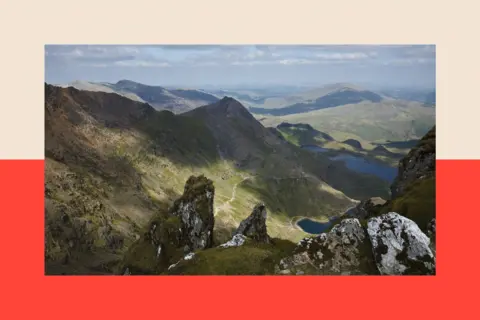
The story of Jack Carne is testament to that. Jack and his two best friends had travelled a few hours from their hometown of Barnsley to reach the mountains of Eryri, also known as Snowdonia, in north Wales. Inspired, after the Covid-19 lockdowns, by the freedom the mountains offered them, the trio in their 20s had been out hiking at every possible opportunity. They were committed, fit and experienced - but on this occasion, just "10 metres from the top" of Glyder Fawr, a peak thousands of feet up, everything went wrong.
A rock Jack had grabbed hold of broke away in his hands. His friends could do nothing as they watched him fall. In just an instant he was gone - disappearing out of sight beneath them. Three friends went up the mountain that day. Only two came back.
It was the starkest reminder possible about the unpredictability and the dangers lurking just beneath the surface of the UK's most picturesque landscapes – even for those who come prepared.
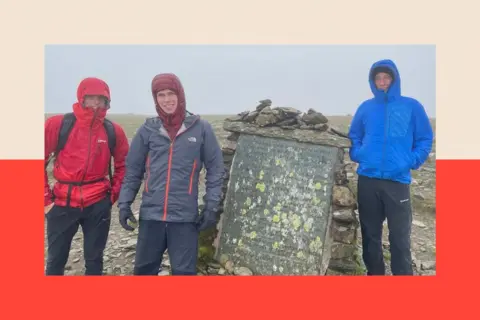
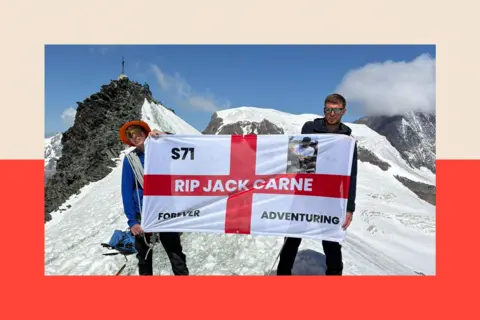
Jack Carne (left) and his two best friends Matty and Brandan
At the inquest into Jack's death, the coroner remarked how the young men were all well-equipped and experienced enough for the route they'd chosen.
"It was a scramble - nothing harder than anything we'd done before," Matty Belcher, one of those three friends, told me. "In fact it was easier than a lot of stuff we'd done," added the 27-year-old.
"Mountain Rescue said the boulder that actually took Jack was a freak accident," adds Brandan Smith, 25, the group's third member.
"That rock could have gone in a week's time, a year's time."
One week after Jack's death, Brandan and Matty were back at the same peak - this time making it the additional 10m to the summit, where they had time to reflect alongside Jack's dad, who they'd brought with them.
"Jack's dad wanted to see it - put his mind at ease, instead of guessing what happened," explains Matty.
For Brandan and Matty, it was a key moment - that inspired them to keep adventuring and not give up on the beauty of our landscape, despite the risks.
Brandan says Jack "was probably the best of us at climbing – he was brilliant"
"Jack was the one who absolutely loved it the most out of us," says Brandan. "He was probably the best of us at climbing - he was brilliant - he always pushed me, believed I could do it even when I didn't.
"If we'd stopped going out after he died, Jack would've kicked us for it."
The key thing, both men say, is for those looking to adventure, to always be aware of the risks.
"For us, if someone isn't feeling safe, we turn back. No question. There's always another day," says Brandan. "It's always going to be there - the mountain isn't going anywhere."
BBC InDepth is the home on the website and app for the best analysis, with fresh perspectives that challenge assumptions and deep reporting on the biggest issues of the day. Emma Barnett and John Simpson bring their pick of the most thought-provoking deep reads and analysis, every Saturday.Sign up for the newsletter here
Watch the moment Artemis II blasts into space on historic mission
Nasa's Artemis II mission thundered away from Florida's coast, taking its four crew members on their historic journey to circle the Moon.
There was a deep rumbling as a sheet of brilliant white flame suddenly erupted, momentarily engulfing the whole launch pad as the mightiest rocket Nasa has ever built rose into the sky.
Nasa's Space Launch System (SLS) majestically crept upwards - slow at first, then gathering pace, riding on two blinding pillars of flame that crackled and roared with increasing volume until the rumbling was almost deafening, a sound we could feel in our bodies as we watched on in amazement, three miles (4.8km) away from the launch pad.
There were small cheers from those in the know as the rocket past the moment of maximum danger - one minute and 10 seconds into the launch. This is where the pressure hits the rocket the hardest, and when engineers know that even a small structural weakness can be disastrous.
There was no weakness, and SLS arced out over the Atlantic like a fiery white angel, leaving a white smoky trail as the sound subsided and the spacecraft disappeared from view, shrinking to a single bright star as it chased the Moon.
Chip Somodevilla/Getty Images
Spectators are kept at a safe distance, but the deep rumbling of the rocket launch can still be physically felt
Afterwards, there was a giddy euphoria among staff at the Kennedy Space Center.
One person told me they felt quite emotional and another said they wanted to cry – no doubt a release of tension built up over the past few months when Artemis II came close to launch, but ended up being scrubbed for various reasons.
Tonight, though, Nasa employees were laughing and clapping - this is the moment that they have spent years working towards. There is still work to do, but for now they are bathing in the moment of triumph.
In the hour before take-off there were issues which threatened the launch.
They concerned the launch abort system, which enables Nasa engineers to eject the astronauts and blow up the rocket if there is a malfunction.
The countdown clock was held at 10 minutes while engineers resolved the problem. They worked quickly, but it was an agonising wait to see if the launch could still go ahead.
Then came the staccato rhythm of the calls by each engineer responsible for the rocket's critical systems: "booster, go", "GNC, go", "range, go" – each reply, a tiny release of tension and a build-up of expectation.
"Artemis II, this is launch director," said Charlie Blackwell-Thompson, the first woman to hold the position at Nasa.
"You are go for launch," she told the crew. "We go for all humanity", Commander Reid Wiseman responded.
Cheesy words in normal circumstances, but that was the moment our spines began to tingle and we knew we were about to witness history.
Gerardo Mora/Getty Images
Many thousands of people gathered at viewing locations around the Kennedy Space Center in Florida to watch the launch
The Kennedy Space Center was built to send astronauts to the Moon, but that hasn't happened since 1972 when Apollo 17 blasted off. Today, the centre was back in business, doing what it was made for.
The press corps headed outside, where clouds that had threatened to cancel the launch had evaporated.
As the countdown clock restarted, the atmosphere turned to electric anticipation.
The four RS 25 engines and twin solid rocket boosters lit up, driving more than 8.8 million pounds of thrust into the Florida evening sky.
"God Speed Artemis II" Blackwell-Thompson said in another echo from the past. The same words were used in a launch from here in 1962 to send John Glenn, the first American to orbit the Earth, on his way.
NASA
On their way to the Moon: Commander Reid Wiseman, pilot Victor J Glover, and mission specialists Christina Koch and Jeremy Hansen
I have been lucky enough to see launches of the Space Shuttle to the International Space Station from the Kennedy Space Center. Those launches are almost as impressive in flight, surging into space with an enormous bang and rising at the speed of a bullet.
But the SLS launch was not only more beautiful, it meant much more: a moment full of emotion for all those who saw it, perhaps because it reminded us of what humanity can do when it comes together, or perhaps because we may be entering a new era of space travel.
In the 1990s, I had the opportunity to speak to Neil Armstrong, who, in 1969, became the first person to ever walk on the moon.
Our discussion came at a time when the dream of human space travel seemed to be over. I asked him whatever happened to that dream? He smiled and said "the reality may have faded but the dream is still there and it will come back in time".
The jump in the price of oil triggered by the conflict in the Middle East has raised the possibility of higher fuel costs for motorists.
Following the attacks by the US and Israel on Iran, the price of oil leapt by 10% and gas prices also surged.
The reason for the jump is that Iran has warned vessels not to pass through the Strait of Hormuz, a crucial waterway in the south of the country through which about 20% of the world's oil and gas is shipped.
If these restrictions persist and oil prices remain high for some time, the worry is this will have knock-on effects on prices of a number of goods.
However, there remains a huge amount of uncertainty at this stage as to whether the conflict will have a lasting effect on the price of oil, gas and wider energy costs.
How quickly will rising oil prices show in fuel prices?
Crude oil is a key ingredient in petrol and diesel, meaning higher oil prices could eventually drive up prices at the pumps.
The AA motoring group says that over the next few weeks fuel costs could return to where they were at the start of the year.
That would be a change to the general trajectory of fuel prices, which have been falling on UK forecourts over the past few weeks.
Further rises will depend on the magnitude and duration of the conflict, the AA said.
Currently, the average price for petrol is 132.6p a litre and 142.3p for diesel, according to AA data.
Simon Williams, from rival motoring group the RAC, said: "If oil were to climb to and stay at the $80 a barrel mark, then drivers could expect to pay an average of 136p for petrol.
"At $90, we'd be looking at over 140p a litre and $100 would take us nearer to 150p, but it's all too soon to know."
What could the impact be on food prices?
As well as affecting prices at the pump, if higher fuel costs persist they could have further knock-on effects on the prices of goods on the shelf.
More expensive petrol and diesel will increase the transport costs of those businesses moving food and other goods around the country.
These increased costs might then be passed on by shops and supermarkets to the consumer. As a result, the cost of living goes up.
There might also be a more direct impact on food. "Some elements of crude oil are used in fertiliser, and so there could be a cost implication in terms of food prices," Benjamin Goodwin, partner at banking advisory firm PRISM Strategic Intelligence told the BBC.
However, if the disruption is short lived then it is unlikely to result in an immediate increase in food prices, he said.
Will my energy bills rise?
In the short-term, millions of UK householders' domestic gas and electricity bills are shielded from any impact on wholesale costs paid by suppliers.
People whose energy bills are governed by the price cap already know what their unit prices are now, and will be for the three months from April. They have already been set.
However, the impacts of the conflict could potentially be seen on domestic variable energy tariffs from the subsequent price cap, for the three months from July.
How will this affect UK inflation and interest rates?
UK inflation, which measures the pace of price rises, has eased relative to the heights reached immediately after Russia launched its full-scale invasion of Ukraine four years ago.
It has meant that the Bank of England has been able to cut interest six times since August 2024 to 3.75%.
The Bank recently said further cuts to borrowing costs are likely this year with another cut widely expected later this month, but if the oil price continues to rise is this now less likely?
Much depends on how long crude prices remain elevated, according to Subitha Subramaniam, chief economist and head of investment strategy at Sarasin & Partners.
If they do, she said: "It will start to cascade into other prices such as food, agriculture, industrial commodities and that's just going to really bleed into inflation."
The Bank's rate-setting committee next meets in a couple of weeks' time which really isn't enough time to assess the impact of higher oil prices on inflation.
So, in the short-term, Subramaniam said: "I would say the prudent course for the Bank of England would be to remain on hold."
The laws will enable people to cancel subscriptions "with the click of a button".
New laws will make it easier to cancel subscriptions and get refunds for unwanted auto-renewals, the government has said.
A crackdown on "subscription traps" could save the average person nearly £170 a year, according to the Department for Business and Trade (DBT).
Consumers will no longer have to make "endless phone calls" to cancel a subscription, and they will be given a 14-day cooling off period after the end of a trial period, or when an annual subscription automatically renews.
The changes are expected to come in to force in spring 2027.
The laws will enable people to cancel subscriptions "with the click of a button", the DBT said.
Companies will be forced to give clear information upfront to prevent consumers from being "silently rolled onto expensive contracts", it added.
Firms will also have to give customers reminders when a free or discounted trial is about to end, or when contracts that are a year or longer are about to be renewed.
The 14-day cooling off period will allow people to get a "full or proportionate refund" if they forget to cancel after a free trial, or the subscription auto-renews.
The changes could save the public a total of £400m a year, the DBT said.
Kim Biggs from Lincolnshire told BBC News she has been "caught out" by annual subscription fees that renew automatically.
Kim was notified that her free trial of AVG, the anti-virus software was about to end..she said trying to cancel the subscription was "exasperating".
"It took quite a lot of time to wade through all the pages, all the information that was presented when you first clicked onto the 'unsubscribe' part on the website.
"Eventually I clicked on the right options to get an online form to request a refund. I completed this but did not receive my refund."
Kim said the phone number for AVG 's support centre was not easy to find online.
When she did speak to a support agent Kim said she was told "the form that I'd sent in is basically disregarded by them, that you have to speak to them through the support centre to get your refund, which was really annoying".
"I had to keep repeating that I just wanted a refund, as she was very persistent in pushing the products available, trying to get me to change my mind."
The BBC has asked AVG for a comment.
'Nothing more frustrating'
Sue Davies, the head of consumer rights policy at Which?, said subscription traps can "wreak havoc on finances".
"These new rules will help put consumers in the driving seat with proper transparency and protection," she said.
Certain memberships for charitable, cultural and heritage organisations will be excluded from the new rules.
The DBT estimates that there are 10 million unwanted, active subscriptions across the UK.
It said that more than 3.5 million people are being "quietly rolled from free or discounted trials into fully costed contracts", while another 1.3 million are caught out by unexpected auto-renewals.
Elon Musk's SpaceX is poised to become one of the most valuable publicly traded companies in the world.
The company, which manufactures rockets, space exploration technology and Starlink satellites, is currently privately held. But on Wednesday it made a confidential filingwith the US Securities and Exchange Commission (SEC) for an initial public offering, which would allow shares to be traded in the stock market.
The value of SpaceX once it goes public is expected to surpass $1tn (£751bn). That would make its eventual stock market debut one of the most financially significant in history.
Musk's own holding in SpaceX would put the billionaire on track to become the world's first trillionaire.
The BBC has contacted SpaceX for comment.
The company is aiming to officially go public sometime in June, according to reports in Bloomberg, Reuters and the New York Times.
A confidential IPO filing with the SEC allows a company to avoid immediately revealing information to the public while it requests feedback from the regulator. The next step will be for company executives to hold "roadshows" - meetings with big investors to convince them to buy shares.
By making shares of SpaceX available for purchase by the public, the company is looking to raise $50bn or more, according to the reports.
Earlier this year, SpaceX took over xAI, Musk's artificial intelligence venture. After that all-stock merger, SpaceX is believed to have become the most valuable private company in the world, with an internal valuation of $1.25tn.
Recently, Musk's various companies have been becoming increasingly intertwined.
Last year, xAI, best known for its chatbot Grok, took over X, the social media platform previously called Twitter that Musk bought in 2022.
This degree of consolidation was a clear sign to investors that SpaceX was preparing to go public.
Emily Zheng, a senior analyst at Pitchbook, earlier told the BBC that by bringing xAI under SpaceX, Musk could show potential investors that he was consolidating costs and able to easily share resources between his companies.
With its large-scale ambitions, SpaceX is in need of a massive cash infusion that going public can provide, Zheng added. The company is racing to keep up with the "sheer cost of compute, infrastructure, and energy" needed to expand, she said.
Earlier this year, Tesla, Musk's electric vehicle company, revealed it had invested more than $2bn in xAI.
The billionaire said a significant share of Tesla's manufacturing would begin to shift toward building robots, which would make use of xAI technology like Grok.
Grok is already included in some Teslas as an AI assistant.
SpaceX would also partner with Tesla and xAI in the massive chipmaking endeavour Musk announced last month, which he is calling Terafab.
"Tesla, xAI and SpaceX have all done amazing things that people did not think could be done before," Musk said in a March presentation discussing Terafab.
Musk started SpaceX in 2002 with the aim of reducing the cost of launching crafts into space, mainly by making rockets that could be launched more than once. It first contracted with Nasa in 2006.
Today, most of SpaceX's work continues to revolve around rockets and the operation of Starlink, a fleet of satellites offering internet connectivity across the globe.
But Musk often discusses grander ambitions for the company, including putting data centers needed for AI in space and building a self-sufficient city on Mars, which many experts have said could be impossible to realise.
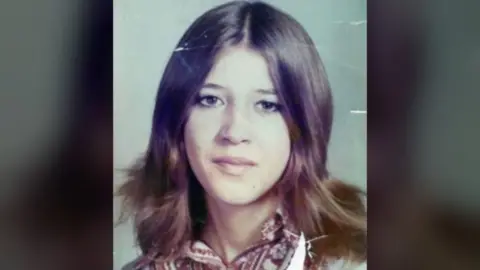
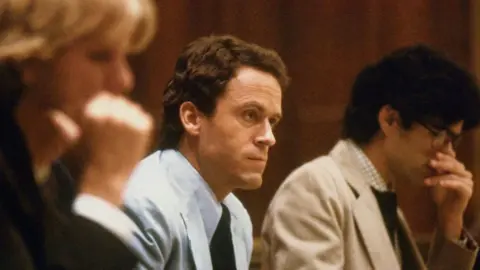
Officials in Utah have formally closed a 51-year-old cold case after using new DNA technology to identify a murdered teenager as a victim of serial killer Ted Bundy.
Laura Ann Aime, 17, disappeared after leaving a party on Halloween in 1974. Her body was discovered about one month later by hikers in the American Fork Canyon.
On Wednesday, the Utah County Sheriff's Office announced that new testing "confirmed irrefutably that DNA evidence recovered from Laura's body verified the existence of DNA belonging to Bundy".
Between February 1974 and February 1978 Bundy murdered at least 30 women. He has also been linked to many more killings throughout the country.
Before he was executed in Florida in 1989, Bundy confessed to Laura's killing, but since he would not elaborate or give any detail to his actual involvement in her death, "the Sheriff's Department elected to keep this case open until investigators could prove, without a shadow of doubt", that he was her killer, the sheriff said in a statement.
"This case is now officially closed," Utah County Sheriff Mike Smith declared during a news conference, according to The Salt Lake Tribune.
The sheriff added that if Bundy were still alive, prosecutors would pursue the death penalty against him.
Bundy is among America's most infamous serial killers, and began his spree by attacking victims throughout the Pacific Northwest of the US. He later killed victims in Colorado, Utah and Florida.
At the time of Laura's death, he was living in Salt Lake City and studying law at the University of Utah.
The sheriff's statement said Laura is remembered as an "outgoing free spirit who enjoyed outdoor activities and shared a passion for riding horses, hunting, and caring for her several siblings".
Getty Images
Bundy was known to often approach women in public places, gain their trust with his charm or a fake injury, and then lure them to secluded areas and kill them.
He was first arrested in 1975 for kidnapping a woman and sentenced to 15 years in jail.
But in 1977 he escaped by jumping out of a prison library window.
He was recaptured for eight days and then escaped again, continuing to kill until he was finally caught in 1978.
While the region sees high levels of seismic activity, some say this was one of the strongest quakes they've experienced in recent years
A 7.4-magnitude earthquake struck in the Molucca Sea off Indonesia's Ternate island early Thursday, killing at least one person.
The quake, which struck at 06:48 local time (22:48 GMT) at a depth of 35km, sparked tsunami warnings which have since been withdrawn.
A 70-year-old woman in North Sulawesi died after being crushed by building debris, and another person broke their leg after jumping off a building, Indonesia's national news agency Antara reported.
While the region experiences high levels of seismic activity, some residents told the BBC this was one of the strongest earthquakes they have felt in at least the past six years.
The Hawaii-based Pacific Tsunami Warning Center initially warned that tsunami waves less than 0.3m (1 ft) "were possible" along the coasts of Guam, Japan, Malaysia, Papua New Guinea, the Philippines and Taiwan. The tsunami alert was lifted after two hours.
Journalist Isvara Safitri, who lives in central Manado, recalled how furniture in her room shook for several seconds.
"It was really strong... My head even felt dizzy," Safitri told BBC Indonesian.
Even the roads outside the house were shaking, she said, adding that the earthquake "feels like the strongest" she's experienced over the past six years.
Yayuk Oktiani, who lives in Bitung, a city on the north-eastern coast of Sulawesi, said she often experiences tremors, "but they're never as strong as this one".
Oktiani was at the market when "everything started shaking". Several stores experienced power outages and as the tremors got stronger, people fled, she told the BBC.
She headed straight for her child's school, which is located "very close" to the sea.
"The situation there was chaotic... The teachers immediately told parents to bring their children home, even though they had only just arrived," she told the BBC.
In Ternate, resident Budi Nurgianto said the walls in his house vibrated for what felt like more than a minute. He rushed outside, into a scene of panic.
"There were many people outside... I even saw some people leaving their house without having finished their shower," he told AFP news agency.
Manado and Bitung are located on the island of Sulawesi, while Ternate is a volcanic island in the North Maluku province.
Abd Rahman Muchtar
Parts of the Siloam Hospital have been badly damaged
The epicentre of the quake was roughly midway between Manado and Ternate.
At least two aftershocks, with magnitudes 5.5 and 5.2, followed the major quake, with authorities warning of more to come.
The national geological agency reported "damage to buildings and injuries" about an hour after the initial tremor, but did not provide further detail.
Footage from a search and rescue team in Manado shows residents and officials walking through the rubble at a sports complex, with some shouting "oh my God".
Large pieces of furniture were flung onto the ground, with some metallic structures bent out of shape.
A patient at Siloam Hospital in Manado recalled the frantic efforts to evacuate staff and patients.
"We were sitting there drinking tea... [Initially we] didn't realise it was an earthquake. And then we heard a child scream, 'Come down, hurry up,' " said Admini, 69.
Nurses and doctors quickly set up makeshift treatment areas, out in the open and inside vehicles.
"Everyone was huddled together outside," Admini said. "Some were in wheelchairs, others were helping each other."

 Login
Login
 AFP via Getty Images
 Getty Images/BBC