Reading view

There are new articles available, click to refresh the page.

【视频】专家解读:特朗普真的能让美国退出北约组织吗? - RFI - 法国国际广播电台

02/04/2026 - 16:29

美国总统唐纳德·特朗普周三(4月1日)威胁称,由于北约欧洲成员国拒绝派遣船只疏通伊朗附近的霍尔木兹海峡,他将带领美国退出北约。与此同时,特朗普加大了对该军事联盟的谴责力度。但特朗普真的会带领美国撤出已有77年历史的跨大西洋联盟吗 ? 在法律层面,2023年美国国会通过的一个法案禁止任何美国总统暂停、终止、谴责或退出建立北约的条约,除非退出北约的动议得到参议院 100 名成员中三分之二多数的支持。专家也分析认为,如果美国退出北约,是送给中俄的一份“大礼“,但特朗普的难以预测性让这个问题的答案也难以预测.....

地缘政治地震

美国外交关系委员会高级研究员、乔治城大学国际事务教授查尔斯·库普坎 (CHARLES KUPCHAN)接受路透社采访时认为:“如果唐纳德·特朗普退出北约,那将是一场地缘政治地震。这将瓦解自二战后黑暗岁月时的北约成立以来,在许多方面都维系着西方世界的联盟。它不仅仅是一个军事联盟,在许多方面也是一个政治联盟,一个反映共同利益、共同价值观以及对自由民主共同承诺的机构。北约自冷战结束以来,尽管苏联解体,依然存在,这证明它不仅仅是权宜之计,而是有着更深层次的意义。所以我认为,如果特朗普政府退出北约,将会改变世界。在某种程度上,它会将世界推向一个地缘政治丛林,而欧洲将身处其中。”孤立无援。美国将孤立无援。在某种程度上,这将使美国回到1949年北约成立之前那种更加混乱、无政府状态的局面。”

“对伊朗战争中缺乏盟友感到失望”

他指出,特朗普最近关于北约的言论与目前在伊朗战争中的艰难处境有关。他说:“特朗普很早就表达过对北约以及美国在欧洲和东亚的盟友关系的遗憾。我认为他并非毫无道理地认为,盟友们在搭美国的便车,没有投入足够的资金来保卫自己。他们利用了美国愿意增加国防开支并提供保护伞的意愿。所以,特朗普的言论中贯穿着这样的主线。但我确实认为,特朗普在伊朗问题上处境艰难。这场战争持续的时间比他预期的要长,对国际经济造成的损害也比他预期的要大。因此,他感到沮丧的是,那些比美国更依赖波斯湾能源的亚洲和欧洲盟友,为什么不参与进来?为什么不参与打通霍尔木兹海峡的努力?所以我认为,他这些新的言论之所以如此激烈,是因为他对伊朗战争中缺乏盟友感到失望。“

库普坎教授也提醒美国的盟友,无论是德国、英国、韩国还是日本,都必须认真对待美国总统的声明,也必须有备选方案,必须质疑美国是否还像几十年来那样是可靠的盟友。话虽如此,但他不认为特朗普会退出北约,因为美国从北约获得了诸多好处。例如,目前一些飞越伊朗的军事行动就是从北约成员国的基地起飞的,比如英国。

“送给中俄的一份大礼”

但这位专家国际问题专家也认为,如果特朗普退出北约,西方的对手,俄罗斯和中国就会暗自窃喜,享受这种局面,因为他们非常乐见北约解体。如果美国撤回对韩国和日本的保护伞,他们也会非常高兴。他们喜欢看到西方分裂。因此,从某种程度上说,这相当于送给了美国及其盟友的对手——俄罗斯和中国——一份大礼。所以他猜测这是唐纳德·特朗普不会对此威胁采取行动的另一个原因。他认为北约仍将继续存在,将继续运转。到特朗普卸任时,美军仍将驻扎在欧洲。但是,这位专家认为,由于特朗普的难以预测性,所以当他说他对特朗普不退出北约的前景有信心时,他更是祈祷如此。

库普坎教授在采访中也强调,美国宪法没有赋予总统退出条约的权利,宪法规定条约需要参议院三分之二的同意。但自乔治·华盛顿以来,历任总统都曾违背过经参议院批准的条约。如果特朗普想要退出北约,他完全可以这样做。即使作为三军统帅,他这样做是否合法存在争议,他也可以命令美军撤出欧洲,这实际上意味着跨大西洋联盟的终结。

据路透社报道,美国宪法规定,总统有权在参议院的建议和同意下缔结条约,但须经参议院100名成员中的三分之二同意。然而,它并未提及退出条约的问题。

美国法律是怎么规定的?

2023 年,美国国会通过了一项法案,时任总统、民主党人乔·拜登签署该法案使其生效。该法案禁止任何美国总统暂停、终止、谴责或退出建立北约的条约,除非退出北约的动议得到参议院 100 名成员中三分之二多数的支持。

路透社报道称,这项立法是以修正案的形式提交给2024财年国防授权法案的,该法案是一项规模庞大的年度法案,旨在为五角大楼制定政策。该修正案的主要发起人是弗吉尼亚州民主党参议员蒂姆·凯恩和当时的佛罗里达州共和党参议员马可·卢比奥。

现任特朗普国务卿兼国家安全顾问的卢比奥周二表示,在伊朗战争爆发后,华盛顿将不得不重新审视与北约的关系。这场战争始于2月28日,由美国和以色列的空袭引​​发。

《国防授权法案》修正案还规定,美国不得动用任何资金退出北约。

北约条约是怎么规定的?

北约由欧洲国家、美国和加拿大组成,成立于1949年,旨在应对苏联的攻击风险,自此成为西方安全的基石。

1949 年《北大西洋公约》第 13 条规定,任何缔约方均可提前一年通知美国政府退出该条约,美国政府随后会将“退出通知”告知其他政府。迄今为止,没有任何北约成员国退出过北约。

接下来会发生什么?

根据国际法,如果条约允许退出,并且该国遵守退出程序,则该国元首通常有权退出条约。

美国法律对此不太明确,尽管历任总统都曾在未经国会批准的情况下退出过几项条约,包括特朗普在 2020 年退出由 35 个国家组成的《开放天空条约》,该条约允许在成员国上空进行非武装侦察飞行。

如果此事最终诉诸法庭,对特朗普决定的挑战将面临重重阻碍。其中包括确定谁有资格——即谁与结果有切身利害关系——来挑战这一决定。

美国最高法院保守派占多数,经常做出有利于特朗普的裁决,但从未就条约退出案件的实质内容进行过审理。

Funeral director who kept bodies for months admits 30 counts of preventing lawful burial

BBC Breaking NewsBBC

A funeral director has admitted preventing the burials of 30 bodies and stealing donations made to charities by mourners.

Robert Bush, 48, was arrested after police investigated Hull-based Legacy Independent Funeral Directors following a report of "concern for care of the deceased" in March 2024.

Bush, formerly of East Yorkshire and now living in West Yorkshire, pleaded guilty at Hull Crown Court to 30 counts of preventing a lawful and decent burial, and one of theft relating to charitable donations.

He previously admitted presenting families with the ashes of strangers and fraudulently selling funeral plans. He will be sentenced at a later date.

This breaking news story is being updated and more details will be published shortly. Please refresh the page for the fullest version.

You can receive Breaking News on a smartphone or tablet via the BBC News App. You can also follow @BBCBreaking on X to get the latest alerts.

We thought we'd buried my grandma, but her body was still at the funeral home

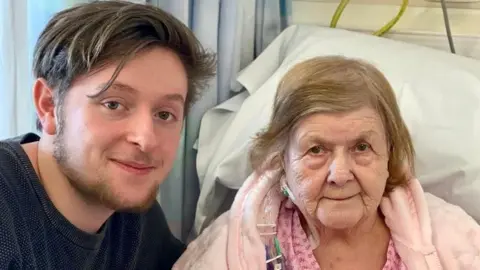
Tristan Essex Tristan Essex on the left next to Jessie Stockdale who is in a hospital bed wearing a pink dressing gown.Tristan Essex
Tristan Essex says his memories of his nana, Jessie Stockdale, are "tainted" after Robert Bush kept her body for five months after her funeral

Warning: This article contains details some people may find distressing.

Tristan Essex says his memories of his nana, Jessie Stockdale, are now "tainted" after funeral director Robert Bush kept her body for five months after her family were told her funeral had taken place.

Bush, who ran Legacy Independent Funeral Directors in Hull, has admitted a series of offences, including preventing the burials of 30 bodies, after police uncovered widespread wrongdoing at the business.

According to Tristan, with the benefit of hindsight, there had been warning signs.

"There was an awful smell in the funeral directors," he recalled. "My grandma was changed into different coffins every time we viewed her, and we obviously picked a specific coffin.

"She was put into larger coffins which were wider, longer, different colours, different trims. She was in at least three or four different coffins.

"We complained because the frill on the coffin was splattered with blood.

"There was black, thick mould around the inside of the coffin as well."

Victims and their families have been waiting for justice since the investigation began two years ago.

Bush, 48, specialised in low-cost funerals and claimed on his company's social media to offer "dignified personal care".

Behind the scenes, officers found a very different picture.

Humberside Police described its inquiry as "complex, protracted and highly sensitive", triggered by a report of "concern for care of the deceased" in March 2024.

Within days, 35 bodies and half a tonne of human ashes were recovered from the firm's premises on Hessle Road in Hull.

The body of Tristan's grandmother, Jessie, was among those discovered.

Tristan, 26, said his family were "knocked off our feet" when they were told Jessie was a victim.

"Thirty-five bodies were found inside Legacy and one of them had an ankle bracelet with my nana's name on," he said.

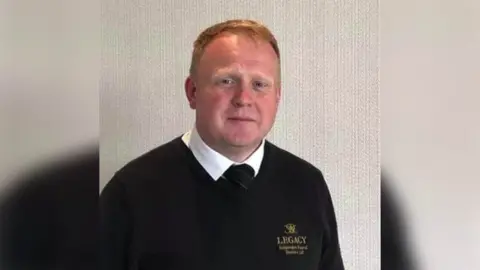
Legacy Independent Funeral Directors Robert Bush has short ginger hair. He is wearing a white shirt, a black tie and a black jumper.Legacy Independent Funeral Directors
Robert Bush, 48, abused the trust of those at their lowest ebb

Bush had been due to stand trial in October, but during a hearing at Hull Crown Court on Thursday he admitted 30 counts of preventing a lawful and decent burial.

He also pleaded guilty to one charge of stealing money from charity collection boxes.

The admissions followed others in October last year, when Bush pleaded guilty to 35 offences of fraud by false representation, relating to the proper care of remains and the return of ashes. Four of the charges related to giving women ashes that he falsely claimed were those of their unborn babies.

He also previously admitted a charge of fraudulently running a business. This related to the sale of funeral plans. There were 172 victims relating to this count alone.

In total, there were 254 victims of Bush's crimes, police said.

Many families were distraught to learn ashes they were given did not belong to their loved ones.

Some had unwittingly worn the ashes of strangers close to their body in the form of specially made jewellery.

One told us how a friend had the ashes mixed with tattoo ink and pushed deep into their skin.

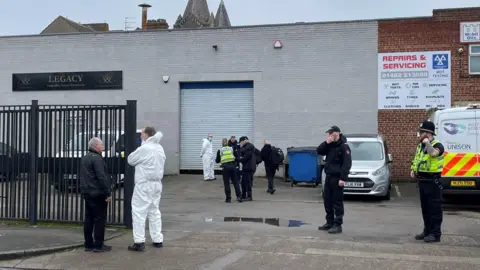
PA Media Police and forensic officers, wearing white suits, stand outside Legacy Independent Funeral Directors off Hessle Road in Hull.PA Media
The parlour in Hessle Road, Hull, has been described as "a hoarder's house"

Bush's disregard for the dead and their families did not end there.

More than 1,000 items, including love letters, baby clothes and treasured possessions belonging to the victims were found on the funeral director's premises, a crisis response team told the BBC.

"It was like a hoarder's house," said Kevin Curreri of Kenyon Emergency Services.

The team is typically brought in by governments in the wake of natural disasters, plane crashes and terrorism incidents.

This time, it was appointed by Hull City Council to recover the scene, after police had finished with it.

According to Curreri, human remains and personal possessions had been treated "so disrespectfully" that it showed "a pretty significant breach of trust".

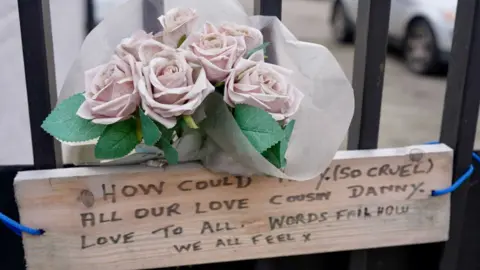
Linsey Smith/BBC A sign and a bunch of fake flowers attached to the black railings around the former Legacy premises.Linsey Smith/BBC
Families left tributes to their loved ones at the former Legacy parlour in Hessle Road, Hull

Following the police searches, floral tributes were left outside the parlour.

Some of the notes attached to them demonstrated the unbridled rage felt towards the person responsible for causing this close-knit community so much heartache.

In stark contrast to Bush's large detached home in Kirk Ella – a desirable village in the East Riding of Yorkshire – his funeral business, which opened in 2010, stood in Hessle Road, a working-class street that was once the beating heart of Hull's fishing industry.

Bush hid behind a veneer of respectability, his neighbours painting a picture of a family man who was willing to run errands and help complete DIY tasks for them.

Professionally, too, nothing appeared to be too much trouble for Bush, with some of his customers telling the BBC how he had offered them the chance to pay him in installments when they told him they were struggling to cover a relative's funeral costs.

One woman said Bush had personally bought their funeral flowers when they ran out of money.

"I just felt so grateful," she said. "I didn't ask questions."

Emma Hardy, MP for Hull West and Haltemprice, said Bush had deliberately pushed low-cost funerals at a vulnerable community.

"He pretended he was their friend," she said.

Bush was anything but.

Kevin Newton sat on a chair looking directly into the camera. He is wearing a blue top.
Kevin Newton bought a funeral plan from Robert Bush to save his children from financial burden

Not even charities escaped his greed.

Bush stole an unknown amount of cash from charity collection boxes. The donations, in memory of loved ones, were made at funeral services Bush organised.

Families believed the money would go directly to causes close to their hearts.

But it did not.

Between September 2017 and 6 March 2024, a number of good causes, including the Salvation Army, Macmillan Cancer Support, Dove House Hospice, Help for Heroes, the RNLI and Oakwood Dog Rescue were deprived of their funds.

More than 170 people bought non-existent funeral plans through Legacy, including 70-year-old Kevin Newton.

He paid £2,239 in 2012 for his plan.

Kevin said he was "mortified" when he contacted a third-party insurer and was told there was no trace of the plan on its database.

His daughter, Kerry, 36, said: "It's absolutely shocking because it's a lot of money for my dad to fork out and it's not like he can [afford it] again.

"It's unforgivable."

Kevin was able to recover the money as he paid using a card.

The funeral business was dissolved at a court hearing in May 2024 with debts of more than £40,000.

Bush has been bailed to be sentenced on 27 July.

Listen to highlights from Hull and East Yorkshire on BBC Sounds, watch the latest episode of Look North or tell us about a story you think we should be covering here.

Related internet links

Artemis II is in orbit - what happens next?

Watch the moment Artemis II blasts into space on historic mission

You could almost hear a sigh of relief from Nasa on Wednesday as its Artemis II rocket finally blasted off.

There's a lot riding on this mission - the safety of its four astronauts, Nasa's reputation, and the credibility of America's claim to be leading the new global space race.

There are mundane questions too: Could the onboard toilet break again? When can the crew nap?

Here's what the next 24 hours should look like for Artemis II.

Where are the astronauts now?

Commander Reid Wiseman, Victor Glover, Christina Koch and Jeremy Hansen are now orbiting Earth about 42,500 miles away, testing out the Orion spacecraft.

The craft's solar wings were fully deployed not long after launch, giving it power to help sustain its journey.

About the size of a minibus, its never been flown in space before by humans so pilot Victor Glover is spending the day pushing it to the extreme.

Nasa want to be sure Orion is voyage-worthy before the crew push on into deep space from where there is no easy return.

They're testing out the life support systems too. But if something goes wrong, the crew has specially-designed suits that could keep them alive for around six days.

What are the crew doing?

Unlike the Apollo missions in the 1960s and 1970s, we can watch a huge amount of what's happening on this voyage as Nasa livestreams the mission.

Cameras above the astronauts' heads show them checking monitors, holding up mobile phones, and pressing buttons.

Then about eight hours after launch, the crew were allowed their first sleep onboard.

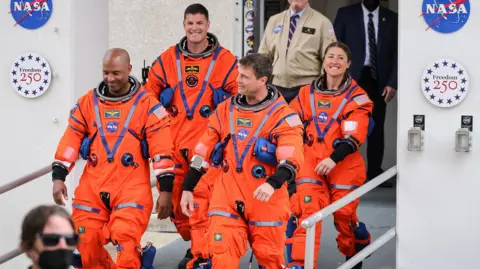
EPA Astronauts Victor Glover, Jeremy Hansen, Reid Wiseman and Christina Koch walk of a Nasa building before launchEPA
The crew are "safe, secure and in great spirits", according to a Nasa official

On the radio the crew use to communicate with mission command, we heard Commander Reid Wiseman asking where are the team's pyjamas.

He asked for their "comfort garments", before the astronauts went into the sleeping area for about four hours.

Schedules in space are incredibly strict. Every minute is accounted for by Mission Control.

The crew can sleep for about four hours at a time, adding up to eight hours over a 24-hour period.

Sleeping in space can be tricky. The crew must strap themselves in, and generally some astronauts struggle to nod off as their bodies adapt to weightlessness.

But others say their best sleep ever is in space.

This crew have strict instructions to exercise for 30 minutes every day to protect their muscle and bone density as they live without gravity.

Reid Wiseman and Victor Glover went first, testing out Orion's "flywheel exercise device", which is about the size of a carry-on suitcase.

Christina Koch and Jeremy Hansen were scheduled to exercise later on - using the wheel for rowing, squats and deadlifts.

We assume they've had their first meals too, from Nasa's tailor-made Artemis II menu.

NASA A view of Earth from Orion spacecraftNASA
The crews' view from the Orion spacecraft during the last few hours

There is no fridge in Orion, so a lot of the food is freeze-dried and activated using water from an onboard tap.

The crew were allowed to pick their meals in advance, which include macaroni cheese, beef brisket, and five different hot sauces.

They're allowed two drinks a day, including coffee or a "chocolate breakfast drink".

And crucially, as far as we know, the toilet is working. During launch, the facilities broke, raising worries that the team would have to spend 10 days in a craft without a toilet.

After giving astronaut Christina Koch instructions on how to fix the specially-designed loo, Mission Control radioed the crew: "Happy to report that toilet is go for use.... We do recommend letting the system get to operating speed before donating fluid".

When do they go to the Moon?

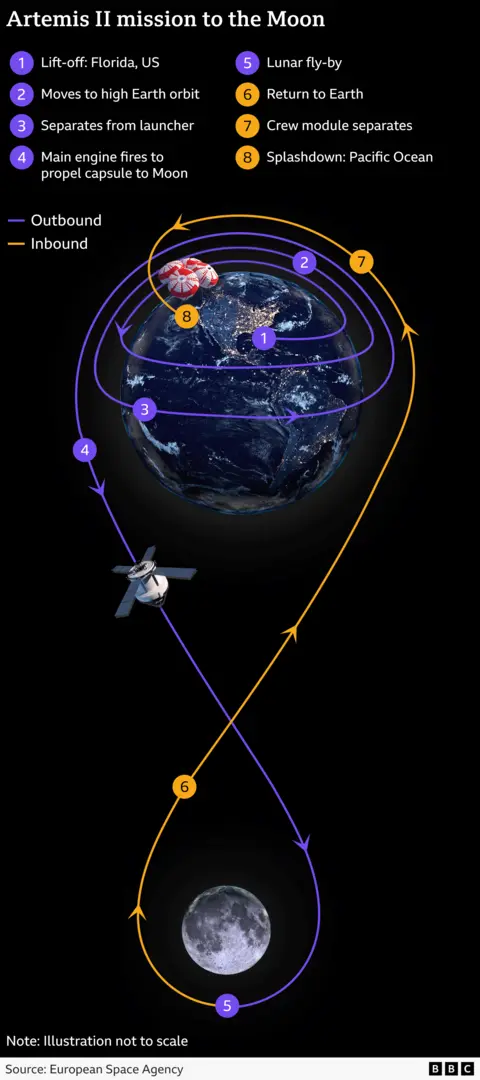
Today is building up to the snazzily named "trans-lunar injection" burn. Basically, it is a massive push that will propel them out of Earth's orbit and on course to the Moon.

It is supposed to happen Thursday night UK time, but if there are problems, it could be postponed or even cancelled.

A cancellation would be a major setback for Nasa and America as it tries to become the first country to land humans again on the lunar surface by 2028.

If it all goes to plan, the burn will fire for six minutes to send them on a trajectory around the Moon that also uses lunar gravity to slingshot them back to Earth.

Eventually they should fly 6,400 miles (10,299km) beyond the far side of the Moon, which always faces away from the Earth.

That's meant to happen on Monday (6 April). The astronauts will be the first people to see some areas of the far side, although probes from countries including India and China have previously documented this region.

They'll be taking photographs and making observations of this mysterious place for us to see and learn from back on Earth.

Fifa is charging up to $10,990 for World Cup final tickets in first open sale

The $11k World Cup final ticket - what we learned from first open sale

The World Cup on display on a white stand prior to the draw in December in Washington with Fifa World Cup 2026 in big gold letters in the background.Image source, Getty Images
Image caption,

World Cup tickets were put on open sale for the first time on Wednesday

By
Football issues correspondent

The first open sale of tickets for the 2026 World Cup showed Fifa is charging up to $10,990 (£8,333) to be at the final.

It is thought to be the most expensive ever general admission to a football match.

In its World Cup bid book, the US, Canada and Mexico said tickets to the final would cost a maximum of $1,550 (£1,174).

Then, when the first batch of tickets went on sale in December, the most expensive was listed at $8,680 (£6,581).

Tickets for the Qatar World Cup final cost the equivalent of $1,604 (£1,214) for the top-priced seat.

Establishing the actual cost of tickets for this summer's tournament is difficult as Fifa has never released its pricing structures.

It is also using a version of dynamic pricing, whereby prices change at the start of each sales point depending on past demand.

Late last year the cost of the initial ticket releases was described as a "monumental betrayal". In December, Fifa announced a small number of $60 (£45) tickets.

On Wednesday tickets were put on open sale for the first time - and gave another glimpse at what is being charged.

What prices have been observed for the final

It is impossible to assess the overall ticket pricing with no information on the prices, or the volume available in each category.

Going through the Fifa ticketing website and seeing what is still available and what is being charged gives a good indication. However, that does not confirm if there are either more expensive tickets still, or if more were available in more affordable categories.

From what has been observed, ticket prices for the World Cup final increased by as much as 38% in the open sale compared to December's release.

Apart from the $10,990 (£8,333) category one ticket:

  • Category two was up 32.78% from $5,575 (£4,227) to $7,380 (£5,596).

  • Category three increased 38.23% from $4,185 (£3,173) to $5,785 (£4,386).

Fifa also gave no advanced notice of which games would be available on Wednesday, or at what prices, as the "last-minute sales" period began.

Those who did get through found that prices had gone up for the most in-demand fixtures - including the top teams and other key knockout games.

What we learned when we joined the queue

BBC Sport joined the queue for World Cup tickets alongside the supporters on Wednesday at about 15:20 BST.

A holding message was in place, and at 16:00 this changed to a red circle with the message: "Almost there…"

By 17:00 a countdown clock had appeared. We were two minutes from the front when the time suddenly jumped back up to 15 minutes.

When we did gain access, we experienced the same technical glitch as thousands of fans.

Supporters who logged on early were wrongly directed into a queue for "PMA tickets", reserved for fans of this week's play-off winners.

Once through, users were sent to a page where a code was required to open up a sale for those fixtures.

By the time the mistake was realised, those supporters were forced to start again at the back of the correct virtual line. Any chance of securing a ticket for one of the more attractive matches had gone.

Fifa did not provide a reason for the error but said that by 17:00 the links were working properly.

Once back in the queue it took six hours and 14 minutes to be granted access to the ticket page.

Of the 72 group games, 35 matches were listed with tickets available - but there was no allocation for the England or Scotland games, or any of the knockout matches, when we initially made it through.

Across the 35 matches, prices ranged from $140 (£106) to $2,985 (£2,261). The average price of those displayed was $358 (£271).

The most expensive group stage match seen was the first of the tournament between Mexico and South Africa at $2,985 (£2,261), with only a tiny proportion of the 87,000 capacity available.

Additionally, we were able to view corporate hospitality packages, including one for England v Panama which was $124,800 (£94,444) for a luxury suite with 24 match tickets, food and drink - $5,200 (£3,935) per person.

The availability of games appears to be changing all the time, and Fifa has indicated new tickets could be released for any game right up to kick-off.

By 08:00 on Thursday, 13 games were still showing - though six of these only had wheelchair companion tickets, which should not be sold to the general public.

Controversially, Fifa has not made free tickets available to the assistants of fans using wheelchairs. Tickets must be bought at full price and they may not be situated next to each other.

The USA's opening game against Paraguay on 13 June had the most tickets still on sale, with 1,406 category one tickets priced at $2,735 (£2,072).

Canada's first match against Bosnia-Herzegovina was the only other match with relatively good supply - 846 category one tickets still on sale at a cost of $2,240 (£1,697).

Fifa's resale platform, which will likely bring even higher prices - with both buyer and seller charged a 15% fee - reopens on Thursday.

Iranian Nobel laureate suffered suspected heart attack in prison, family says

Reuters Narges Mohammadi (file photo)Reuters
Narges Mohammadi was moved to a prison in north-west Iran after being handed an additional seven-year sentence (file photo)

The brother of Iranian Nobel Peace Prize winner Narges Mohammadi says he fears her life is in imminent danger after she suffered a suspected heart attack in prison in north-western Iran.

Hamidreza Mohammadi, who is based in Norway, told the BBC that the 53-year-old human rights activist was found unconscious in her bed by fellow inmates at Zanjan Prison last week.

She was taken to the prison infirmary but officials refused to transfer her to a hospital despite her history of heart and lung problems, he said. She also suffers from severe blood pressure fluctuations.

He demanded that she be released immediately for a thorough medical examination.

He also warned that strikes and explosions near the prison since the start of the US-Israeli war with Iran a month ago had only added to her stress.

"This war has had a terrible effect on prisoners in Iran. If the prison gets hit, if the prisoners need immediate medical attention, they will not get anything and their lives are in danger," he told the BBC's Newsday programme.

"It's been really difficult for her family... Her children have gone through a lot. Now they experience very uncertain time when they don't know even if in the future there will be any peace or if their mother is going to live or die," he added.

Narges Mohammadi, the vice-president of the Defenders of Human Rights Center in Iran, was awarded the 2023 Nobel Peace Prize for her activism against female oppression in Iran and promoting human rights.

She has spent more than a decade of her life in prison. In 2021, she began serving a 13-year sentence on charges of committing "propaganda activity against the state" and "collusion against state security", which she denied.

In December 2024, she was given a temporary release from Tehran's notorious Evin prison on medical grounds.

She continued campaigning while undergoing treatment and was arrested in the north-eastern city of Mashhad last December after giving a speech at the memorial ceremony of a fellow human rights activist. Her family said she was taken to hospital after being beaten on the head and neck during the arrest.

A few weeks later protests against Iran's clerical establishment swept across the country. At least 6,508 protesters were killed and 53,000 others arrested in an unprecedented crackdown by security forces on the unrest, according to the US-based Human Rights Activists News Agency (HRANA).

In early February, Mohammadi was sentenced by a Revolutionary Court in Mashhad to an additional seven and a half years in prison after being convicted of "gathering and collusion" and "propaganda activities", her lawyer said.

She was transferred without warning the following week to Zanjan prison and has been allowed only limited communication with her family since then.

Last Sunday, her legal team and one family member were allowed to visit to visit her in prison under heightened surveillance.

The Free Narges Coalition said in a statement on Tuesday that "her general health was extremely poor, and she appeared pale and weak with significant weight loss when brought to the visitation room by a prison nurse".

It then cited Mohammadi's cellmates as saying that on 24 March she "was found unconscious in her bed, with her eyes rolled back", and that this lasted more than an hour. She was carried to the prison infirmary by fellow inmates, where medication was administered to restore her consciousness, it added.

"Despite this medical emergency, and evident indications of a heart attack, authorities refused to transfer Mohammadi to a hospital or allow her to visit a specialist."

Mohammadi also reported that she had suffered debilitating headaches, nausea, double vision since her violent arrest, and that bruises were still visible on her body, according to the coalition.

"According to the Iranian law, in wartime, when they [authorities] cannot guarantee safety of the prisoners, especially prisoners who are not dangerous to society, they must be allowed to leave the prison until the war is over," Hamidreza Mohammadi said.

"But not only [have they not done] it, they have denied all the political prisoners any medical attention, and their excuse is 'it is wartime'. So our demand is that she immediately be released for a thorough medical examination."

"We know her medical history, we know that she has heart problems and pulmonary problems. She must be in a hospital."

Ancient golden helmet recovered more than a year after Dutch heist

ANP/AFP A gold helmet and two gold braceletsANP/AFP
Two of the recovered bracelets were exhibited with the crown, but one bracelet is still missing

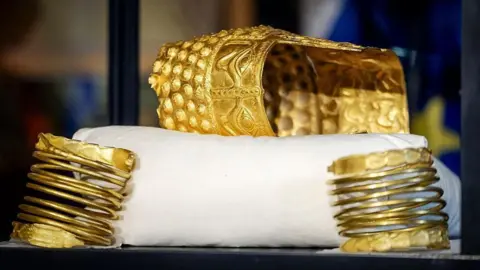
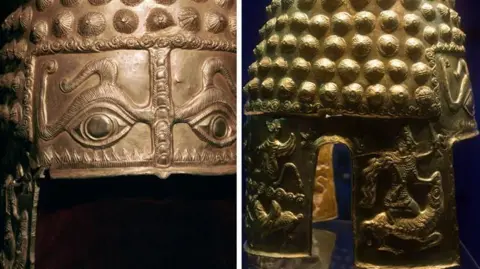
A 2,500-year-old golden helmet considered one of Romania's greatest treasures has been recovered more than a year after it was stolen during a raid on a Dutch museum.

It and two golden bracelets dating back to about 450BC were unveiled as having been returned to the museum on Thursday, secured behind a glass case with two armed police guarding them. A third bracelet has not yet been found.

The theft of the Coțofenești helmet and bracelets by an armed gang who broke into the Drents Museum in Assen caused outrage in Romania and raised questions about security for priceless artefacts on loan to other countries.

"It's a long-awaited result," Romanian prosecutor Daniela Buruiană told journalists.

"We are happy that we are now witnessing here the recovery of the Romanian artefacts," she added.

The treasures, which date from the Dacian era - an Iron Age civilisation that existed roughly where Romania is now - had been on loan from Romania's national history museum when they had been stolen.

Their theft prompted a spat between the two governments that led to the Dutch government paying a reported €5.7m (£5m; $6.5m) in insurance compensation.

Romanian officials refused to discuss what would happen to that money now.

Getty Images A golden helmetGetty Images
The helmet was finally returned to authorities on Tuesday, a year and two months after it was stolen

Robert van Langh, director of the Drents Museum in the northern Netherlands, said the helmet had been slightly dented but could be restored. The bracelets remained in perfect condition, he said.

Romanian prosecutor Rareș-Petru Stan spoke of the "major impact" that the theft had had in his home country, and praised his Dutch colleagues for their "hard work and keeping the faith".

"We are continuing the investigation to find the last bracelet," he added, "and we are grateful that we will be able to return this treasure to the Romanian people."

Dutch public prosecutor Corien Fahner revealed that the helmet and bracelets were handed over to authorities on Wednesday following negotiations involving lawyers for the three suspects.

Two men in their mid-30s and one aged 21 will face trial later this month.

The suspects were arrested within days of the gang using explosives to break into the museum, but by then there was no trace of the priceless items.

Art experts have suggested that the helmet and bracelets were stolen to order by a criminal gang.

Several Dutch provincial museums have been targeted in recent years because of the difficulty in providing adequate security for priceless artefacts. The helmet and bracelets were in a glass case that provided little resistance to the armed group.

In 2024, two works by Andy Warhol were stolen from a gallery in the southern Netherlands, and six years ago a Frans Hals painting called Two Laughing Boys was stolen from a small museum in the central town of Leerdam.

The former head of the national history museum in Bucharest, Ernest Oberländer-Târnoveanu, faced considerable domestic criticism for loaning the gold objects abroad and lost his job within days of the theft.

He spoke of his relief that the helmet had been retrieved.

"This is a unique item in European and even global cultural heritage," he told RTL Nieuws. "The helmet is an important social and political symbol of Dacian civilisation."

Baby shot dead in pram in New York City, police say

NYPD CCTV footage of the two suspects on a moped.NYPD
Police believe they have apprehended the shooter while the driver remains at large

A seven-month-old girl was shot and killed in while sitting in her pushchair in "broad daylight" in New York City's borough of Brooklyn, police have said.

Police believe the baby was the unintended victim of a suspected gang-related shooting.

Footage from the scene shows two men driving against the flow of traffic through the Williamsburg neighbourhood when a man sitting on the back of the motorbike takes out a gun and fires "at least two rounds", New York City Police Commissioner Jessica Tisch told a news conference.

The bike then crashed and the suspected shooter was apprehended, but a "massive" manhunt was under way for the driver, she said.

"A life that had barely begun was taken in an instant," New York City Mayor Zohran Mamdani said.

"Today is a devastating reminder of how much more work there is to be done to combat gun violence across this city."

Several adults and children, two of whom were in buggies, had been on a street corner when the shooting occurred.

The seven-month-old's parents ran for cover in a nearby corner shop, where they realised their child had been shot, the BBC's US partner CBS reported.

"All the kids started ducking in the corner. The family went to the store and the mom started screaming when she noticed the baby was bleeding from [her] head," witness Bernius Maldonado told CBS.

Emergency services were called at around 13:21 local time (17:21 GMT).

The child was taken to the nearby Woodhull Hospital where she was pronounced dead. Police reported no other people killed or injured in the incident.

"As a mother, I cannot imagine the pain that this family is feeling or the grief that they now carry with them," Tisch said. "It is unspeakable."

Footage seen by police showed the suspects crashing into a car shortly after fleeing the scene.

Both suspects were throw from the moped - but the rear passenger landed so hard he lost "both of his shoes", Tisch said.

An ambulance was called for the injured male and was brought to Brooklyn Hospital, where he was then taken into police custody.

Investigators believe he fits the description of the shooter, based on the clothing he was wearing and his appearance, but was taken into custody as part of an unrelated investigation.

Police are working to connect him to the shooting.

What nearly went wrong on Nasa's space mission - and what still could

Getty Images NASA's Artemis II Space Launch System rocket and Orion spacecraft blasts off from the Kennedy Space Center. A vertical pillar of flame erupts from the rocket as it shoots off into the blue sky.Getty Images

In the tense final hours before Nasa's astronauts flew into space, a series of technical issues threatened to ground their landmark mission.

A faulty toilet and issues involving two safety systems were reported over the radio.

Nasa managed to resolve the problems by being "quick on their feet", an official later said.

The Artemis II crew are now hurtling around the Earth's orbit, carrying out final tests and checks before they head towards the Moon.

Here's what nearly went wrong - and what still could.

'Toilet is go'

The crew quickly discovered that even a trip to the Moon comes with very down‑to‑earth plumbing problems.

Sensors in the spacecraft's waste‑management system threw up some readings they did not expect, according to flight controllers.

Astronaut Christina Koch reportedly acted as a plumber, dismantling parts of the toilet under instruction from mission control.

Watch: How will the Artemis astronauts go to the toilet in space?

"Happy to report that toilet is go for use," mission control later said over the radio. "We do recommend letting the system get to operating speed before donating fluid".

The lack of gravity in space means waste management is a key issue in space travel.

Nasa has spent more than $23m (£17.4m) developing the "Universal Waste Management System".

Both men and women are able to use the system, which includes a funnel attached to a hose to process urine while using gentle airflow to eliminate spills.

A specialised seat allows for stools to be sucked into a sealed container, with tethers and restraints being used to stop the crew from floating away.

The Orion - the spacecraft on which they're travelling - also has plenty of backup options, from alternative collection bags to different ways of routing liquids.

Issue with safety systems

There were also issues reported with the flight termination system and the launch abort system - two safety systems that protect astronauts and the public.

The flight termination system allows engineers on the ground to destroy the rocket if it veers off course. It reportedly had a communications issue, which was resolved by using hardware from the previous Space Shuttle programme.

The launch abort system is Orion's emergency escape tower, designed to pull the crew capsule away from the rocket in the event of an emergency during launch or ascent. It reportedly gave a higher-than-expected temperature reading, but it was judged that it wouldn't affect the launch.

With these issues resolved, the countdown clock was held at 10 minutes while engineers went through final preparations.

We then heard the staccato rhythm of the calls by each engineer responsible for the rocket's critical systems.

One by one the voices came back: "Booster, go", "GNC, go", "Range, go" - each reply, a tiny release of tension and a build-up of expectation.

"Artemis II, this is Launch Director – you are go for launch," the crew was told. "We go for all humanity," Commander Reid Wiseman responded.

The rocket then launched into the sky, to the awe of those watching at the Kennedy Space Centre and around the world.

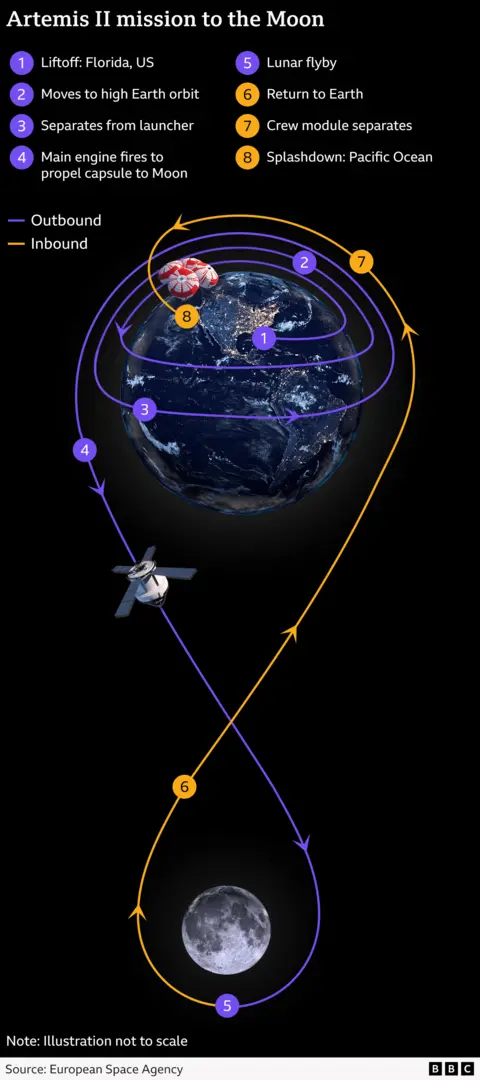
Graphic showing the Earth and the Moon, with the spacecraft’s figure of eight orbital trajectory highlighted. Specific points are labelled. These are: 1. Lift-off at the Kennedy Space Centre, 2. Orbit around the Earth, 3. Rocket separation, 4. Main engine fires to take spacecraft to the Moon, 5. Lunar fly-by, 6. Return to Earth, 7. Crew module separates, 8. Splashdown in Pacific Ocean

Trying to break spacecraft

Now safely in the Earth's orbit, the crew have been directed to spend hours quietly trying to break their spacecraft - on purpose.

They cycle computers through different modes, switch radios between ground stations and relay satellites, and deliberately move around the cabin to see how the life‑support system copes as carbon dioxide and humidity build up.

Engineers also command small thruster firings and check the European‑built service module responds exactly as the models predict.

All of this is designed to answer a simple question: is the ship healthy enough to risk flying hundreds of thousands of kilometres from home with no quick way back?

If any of these tests throws up something they do not understand, Nasa will not hesitate to call off the trans-lunar injection burn and use Orion's engine to bring the astronauts straight back to earth.

Additional reporting by Esme Stallard and Tom Bennett

How a chance meeting shaped Canadian Jeremy Hansen's mission to the Moon

Watch the BBC's interview with Artemis astronaut Jeremy Hansen

Long before he was chosen to orbit the Moon in the ongoing Artemis II mission, Jeremy Hansen was a young cadet at the Royal Military College of Canada. He carried a dream - and had a chance interaction that would help shape his future.

In 1995, during his first year at the military college, Hansen met one of his heroes: Canadian astronaut Chris Hadfield.

That was before Hadfield had served as commander of the International Space Station. But Hansen saw in his compatriot much of what he aspired to be: a fighter pilot and an astronaut.

Hansen asked Hadfield for his email address, and got it on the spot.

The brief encounter marked the beginning of a journey that would see Hansen follow closely in his hero's footsteps - first as a fighter pilot, and then by joining the Canadian Space Agency (CSA) in 2009.

Throughout his astronaut training, his mentor along the way was Hadfield, a young Hansen told the BBC in 2014.

The simple but lasting advice he was given: follow what makes you passionate.

"Jeremy has been getting ready for this flight since he was five years old," Hadfield told Canadian singer Emm Gryner in a podcast in March.

Hansen, now 50, grew up on a farm near London, Ontario, where his fascination with aviation began early.

As a child, he came across a page in an encyclopedia featuring Neil Armstrong and the picture of an astronaut on the Moon from the 1969 Apollo mission.

"That page is still burnt in my brain," Hansen told Spaceflight Now in an interview posted last month.

Soon after, he transformed his childhood treehouse into his own imaginary rocket ship.

In his teens, he went on to join the air cadets youth programme, and to study space science and physics at university.

He eventually became a fighter pilot, flying CF-18s out of the army base in Cold Lake, Alberta, and working with North American Aerospace Defense Command (Norad).

Fourteen years after joining the CSA, Hansen was selected for Artemis II: the first crewed mission to travel around the Moon in more than 50 years.

Over the course of 10 days, the crew of four astronauts will travel farther from Earth than any human before them.

Hansen is the only non-American on board. He is joined by mission commander Reid Wiseman, pilot Victor Glover, and fellow mission specialist Christina Koch.

Watch the moment Artemis II blasts into space on historic mission

In an interview with the CSA, Hansen said he was aware that the Artemis II mission might not go smoothly.

"To do something that has never been done before means that your team is very likely to face failure," Hansen said. "I like the fact that in space, we are committed to bold goals to the extent that we will not let periodic failure stop our forward progress," he said.

For the mission, Hansen is carrying four Moon-shaped pendants, each with a birthstone representing his wife and three teenage children.

His blue spacesuit has a mission patch he commissioned Anishinaabe artist Henry Guimond to design, with contributions from Dave Courchene III of Sagkeeng First Nation, Manitoba.

The heptagonal shape and the animals on it refer to a set of indigenous teachings that guide how people should treat one another - with love, respect, courage and humility.

Hansen has said the patch is his way of recognising the Indigenous peoples in Canada and their traditional knowledge.

Earlier this week, he told the BBC science editor Rebecca Morelle and 13 Minutes podcast presenter Tim Peake that he was excited for his first views of Earth during his first hour of space flight.

He anticipated that the mission would later afford him a view with the Moon in the foreground and Earth hanging in the distance.

"I hope humanity will stop for a moment when four humans are on the far side of the Moon, and just look at some of the imagery that we are sharing - and just be reminded that we can do a better job as humans of just lifting each other up," he said.

"Not destroying but creating together."

Investigators Said to Look at Whether LaGuardia Controller Stepped Away

Officials are said to be examining whether a controller had to use an emergency phone just before the crash at LaGuardia. They have yet to determine the cause of the crash and are also focusing on other avenues.

© Dave Sanders for The New York Times

Investigators are said to be examining whether an air traffic controller stepped away from his console in a critical moment before the deadly accident at LaGuardia Airport on March 22.

马克龙对韩国进行国是访问 纪念建交140周年 凭吊韩战阵亡法军士兵 - RFI - 法国国际广播电台

02/04/2026 - 15:15

法国总统马克龙周四从东京飞抵首尔,对韩国展开为期两天的国是访问,期间他将与韩国总统李在明举行会晤。
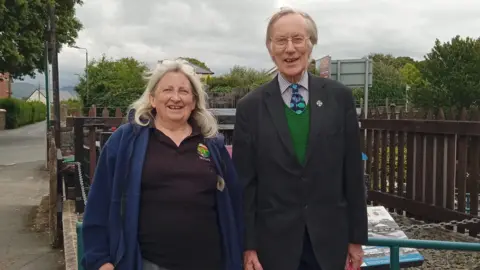
法新社看到,法国总统马克龙飞抵韩国首都,在首尔以南的空军基地,受到身着金黄与黑色传统服饰的弓箭手列队迎接和鸣放礼炮的礼遇。

马克龙随即前往韩战纪念馆,在那里献上花圈,并在纪念碑前默哀,缅怀在1950年至1953年撕裂朝鲜半岛的冲突中,3400名参战法国士兵中阵亡的270余人。他还与一名曾随法军服役的韩国老兵进行了交谈。

这是十五年来首位法国总统访问韩国,随后马克龙将在首尔的总统府“青瓦台”参加工作晚宴。

今年正值法国与韩国建交140周年。

李在明总统为此在法国《费加罗报》发表署名文章,认为这两个“拥有共同价值观的民主国家”之间的伙伴关系“已不再仅仅是可取的,而是已成为战略必需”。

李在明呼吁两国在“人工智能、核能、氢能技术或航天工业等关键领域”进行“深入的战略协调”。

K-pop 安排 

周五的日程将更为紧凑,包括与李在明举行一场更为正式的会谈,随后是国宴,接着法国总统将与延世大学的学生以及韩国投资者进行交流,其中包括三星和现代汽车的高管。

在当晚启程返回巴黎之前,马克龙将出席首尔韩华蓬皮杜中心的揭幕仪式,随后与作为韩国“软实力”重要载体的K-pop代表共进晚餐。

法新社这篇报道说,之前在日本,法国总统强调了双方的战略共识,呼吁共同行动以避免“依赖”中国和美国这两个“霸权大国”,并称其“有时略显难以预测”。

马克龙在日本夸赞了欧洲的“可预测性”,以此暗示美国总统唐纳德·特朗普的不可预测性,后者在未“征询”盟友意见的情况下对伊朗发动战争,而盟友却首当其冲地承受了战争带来的经济冲击。

美国阿耳忒弥斯2号绕月任务成功发射 - RFI - 法国国际广播电台

02/04/2026 - 15:41

美国宇航局阿耳忒弥斯2号任务的四名宇航员于周三搭乘“猎户座”太空舱成功启程,进入地球轨道,展开为期十天的绕地和绕月飞行,此次测试任务旨在为2028年重返月球表面铺平道路。

太空发射系统(SLS)火箭于当地时间18时35分(格林尼治时间22时35分)从佛罗里达州肯尼迪航天中心升空。几分钟后,传来该任务的指挥官里德·怀斯曼(Reid Wiseman)叹道:“我们看到美丽的月亮出来了。”

他的加拿大伙伴杰里米·汉森(Jeremy Hansen)在起飞前十分钟说道   “我们是为了全人类而出发的”。同行的还有美国宇航员维克多·格洛弗(Victor Glover)和克里斯蒂娜·科赫(Christina Koch)。

火箭起飞八分钟后,这四名宇航员乘坐的猎户座太空舱与一级火箭按计划分离,随后进入了地球轨道。

他们将以每小时约2.7万公里的速度绕地球飞行多圈,并逐步提高轨道高度,以验证各项系统是否正常运行。

下一个重要节点将于格林尼治标准时间周四晚23点30分左右到来:届时他们将点燃发动机,驶向月球,并将于周一绕月飞行一圈,但不会登月。

当晚,美国总统特朗普就伊朗问题发表讲话时,首先祝贺了执行阿耳忒弥斯2号任务的4名勇敢宇航员”。

厕所问题

不过,在飞行最初几个小时里,突发了技术问题,包括休斯顿控制中心与宇航员通信短暂中断,且太空舱的洗手间仍无法正常使用。

但在轨道上的一次机动操作进行得非常顺利:宇航员维克托·格洛弗(Victor Glover)接管了“猎户座”飞船的控制,以模拟与另一航天器对接。

在肯尼迪航天中心(Kennedy Space Center),当火箭在晴朗的天空中升空时,人群爆发出掌声和欢呼声。

阿尔忒尼斯(Artemis program)计划已耗资数百亿美元,并经历了多年的延误。

来自行星学会(The Planetary Society)的凯西·德雷尔(Casey Dreier)对法新社表示:“美国航天局NASA确实非常需要让这次任务成功。”他指出,由于预算问题和人员大量流失(尤其是从事气候研究的科学家),该机构士气低落。

欧洲方面如何?

最初,阿尔忒尼斯项目被设计为象征一种新的国际合作与包容精神。

此次任务的机组人员首次包括一名女性、一名黑人以及一名非美国人;而在阿波罗计划(Apollo program时代1968至1972年),宇航员全部是白人美国男性。

欧洲方面也参与其中:他们制造了为“猎户座”提供动力的服务舱,并原计划在未来任务中(包括登月)派遣宇航员。

但美国航天局NASA近期对阿耳忒弥斯计划的后续安排进行了重大调整,取消了原本计划中的月球轨道空间站项目,也未明确说明欧洲是否还能获得登月席位。

在肯尼迪中心,欧洲航天局(European Space Agency)总干事约瑟夫·阿施巴赫(Josef Aschbacher)向法新社表示,他将需要与新任NASA负责人贾里德·艾萨克曼(Jared Isaacman)会面,就相关席位进行谈判。

US lifts sanctions on Venezuelan interim leader Delcy Rodríguez

REUTERS/Leonardo Fernandez Viloria Venezuela's interim leader Delcy Rodríguez speaks into a microphone during a meeting with US Interior Secretary Doug Burgum, on 4 March. She is wearing a red jacket and black-rimmed glasses. REUTERS/Leonardo Fernandez Viloria

The United States has lifted sanctions on Venezuela's interim president, Delcy Rodríguez.

The move comes less than three months after US forces seized the country's previous leader, Nicolás Maduro, and his wife in a military raid in Caracas and took them to New York to face drug trafficking charges.

Rodríguez, a close ally of Maduro who served as his vice-president, had been placed on the sanctions list in 2018, with the US accusing her of undermining democracy.

She was sworn in as interim president by Venezuela's National Assembly, which is dominated by Maduro loyalists, days after the US raid and has been described by Trump as "a terrific person".

Rodríguez welcomed her removal from the Specially Designated Nationals (SDN) List.

Those named on the list have their assets in the United States blocked and US nationals are barred from doing business from them.

In a post on X, Rodríguez called it "a significant step in the right direction to normalise and strengthen relations between our countries".

White House spokeswoman Anna Kelly said the move showed the progress that had been made "between our two countries to promote stability, support economic recovery, and advance political reconciliation in Venezuela".

"As President Trump has said, Delcy Rodríguez is doing a great job and is working with the United States very well," Kelly added.

Opposition activists in the Venezuelan capital, Caracas, however, were critical of the move, arguing that the US should exert pressure on Rodríguez to release all political prisoners still held in the country's jails.

The release of political prisoners had been one of the key demands US Secretary of State Marco Rubio had made of Rodríguez in the wake of Maduro's removal.

And while the National Assembly has passed an amnesty law and hundreds of detainees have been freed, prisoners' rights group Foro Penal says that almost 500 political prisoners remain behind bars.

The lifting of sanctions is the latest sign of warming relations between the Trump administration and Rodríguez's team.

Earlier this week, the US officially reopened its embassy in Caracas, seven years after closing it.

A Venezuelan diplomatic team has also been dispatched to the US to reopen its embassy in Washington.

In the months since Maduro's removal from office, several high-level US delegations have travelled to Venezuela to discuss how the US can expand its access to Venezuela's oil and mineral wealth.

Critics of Rodríguez however have bemoaned the fact that there has been little talk of democratic elections.

Opposition leader María Corina Machado, who has been living in exile since leaving Venezuela to collect the Nobel Peace Prize she was awarded in December, met with US Secretary of State Marco Rubio on Tuesday.

Despite having been sidelined by Trump in favour of Rodríguez, Machado struck an optimistic note, calling the meeting "excellent" and praising the secretary of state's "dedication to democracy, freedom and Venezuelans' well-being".

Speaking to Fox News after the meeting, Rubio insisted that the US was making progress in Venezuela.

Pointing to the three-prong plan he said the US was pursuing, he assured viewers that Venezuela had moved into the second phase: that of recovery.

"Ultimately, there will have to be a transition phase. There will have to be free and fair elections in Venezuela, and that point has to come," he said.

"It's not forever, but we have to be patient, but we also can't be complacent," he said without giving an indication as to when elections could be held in Venezuela.

Iconic 19th Century painting sets Indian art record with $17.9m sale

Saffronart A woman wearing a green blouse and a blue saree is seen milking a cow in the oil portrait. A child, who is Hindu deity Krishna, is seen standing next to her wearing jewellery. Saffronart
Raja Ravi Varma painted Yashoda and Krishna in the 1890s

A 19th Century painting by iconic artist Raja Ravi Varma has become the most expensive Indian artwork ever sold, setting a new auction record.

The painting, Yashoda and Krishna, was sold for 1.67bn rupees ($17.9m; £13.6m) at a Saffronart auction in Delhi on Wednesday. It beat the previous record set by MF Husain's Untitled (Gram Yatra) which fetched $13.8m last year.

The surge in sales and records highlight growing demand for Indian and South Asian art, with collectors pushing prices to new highs.

Varma, who was born in 1848 in what is now the southern state of Kerala, is widely regarded as a pioneer of modern Indian painting and one of the most influential artists from the subcontinent.

The painting was bought by billionaire businessman Cyrus Poonawalla, founder and managing director of Serum Institute of India, one of the world's largest vaccine producers.

In a statement released by Saffronart, Poonawalla described the work as a "national treasure", adding that it "deserves to be made available for public viewing periodically".

"It will be my endeavour to facilitate this going forward," he said.

Varma's works have been classified as "art treasure" under India's Antiquities and Art Treasures Act, which means that they cannot be exported and can be sold only to Indian buyers.

Minal Vazirani, president and co-founder of Saffronart, said that the valuation was a "powerful reminder of the enduring cultural and emotional resonance of Indian art".

Ashish Anand, CEO and managing director of DAG (formerly Delhi Art Gallery), said that the impact of the record sale would percolate down to the art market, "giving rise to Indian art being viewed as a serious financial asset and beyond its value for aesthetics and personal delight".

According to Saffronart's catalogue, the work was put up for auction by a private collector.

Getty Images A week-long exhibition organised commemorating the 174th birth anniversary of Raja Ravi Varma at Institute of Oriental Studies, in Thane, on May 7, 2022 in Mumbai, India.Getty Images
Raja Ravi Varma bridged the gap between European academic techniques and Indian tradition

Varma's realistic depictions of scenes from Hindu epics and mythology are widely recognised in India - so much so that prints of his works are often found in household shrines.

Yashoda and Krishna is an oil-on-canvas painting from the 1890s, when Varma was at the height of his career. It portrays a sweet moment between Hindu deity Krishna as a child and his foster mother Yashoda.

In the painting, Yashoda is seen milking a cow, while Krishna stands beside her holding a cup and waiting. The child has a mischievous look in his eyes while Yashoda's face reflects warmth and care. Their ornaments are minimal, but intricately detailed.

"Varma's genius lies in this very balance: the sacred rendered through the familiar," the Raja Ravi Varma Heritage Foundation, which promotes and preserves Varma's legacy, wrote in an Instagram post last month, before the auction.

"The textures of silk, the gleam of jewellery, the softness of skin and the gentle stillness of the cow together create a scene that is both devotional and intimate."

The image of Krishna and Yashoda has long inspired artists across South Asia, who have depicted them in songs, temple carvings and local painting traditions. But Varma portrayed them in a more natural way, as art historians have noted.

Artist A Ramachandran wrote that while an "iconographical image of god [usually] evoked awe and not love and affection", Varma changed that, breaking the distance between Krishna and the person looking at the painting.

The record sale also spotlights how collectors are increasingly willing to pay a premium for Indian art which has historical and cultural significance.

Anand of DAG told the BBC that there is a "clear shift in how Indian art is being perceived".

"As the market matures and benchmarks rise, collectors are recognising both its cultural and financial value," he said, adding that fundamentally, it was quality that was driving this momentum.

"The best works - those with provenance, rarity and historical significance - are now commanding extraordinary prices, reflecting the maturing of the market."

Experts add that exclusivity is also pushing prices higher. Many masterpieces by artists such as Varma, Amrita Sher-Gil and VS Gaitonde are either in private collections or rarely come up for auction.

There is also a growing recognition of mythology as a serious and desirable genre within the global art market, Anand said.

Follow BBC News India on Instagram, YouTube, X and Facebook.

Iranian Nobel laureate suffered suspected heart attack in prison, family says

Reuters Narges Mohammadi (file photo)Reuters
Narges Mohammadi was moved to a prison in north-west Iran after being handed an additional seven-year sentence (file photo)

The brother of Iranian Nobel Peace Prize winner Narges Mohammadi says he fears her life is in imminent danger after she suffered a suspected heart attack in prison in north-western Iran.

Hamidreza Mohammadi, who is based in Norway, told the BBC that the 53-year-old human rights activist was found unconscious in her bed by fellow inmates at Zanjan Prison last week.

She was taken to the prison infirmary but officials refused to transfer her to a hospital despite her history of heart and lung problems, he said. She also suffers from severe blood pressure fluctuations.

He demanded that she be released immediately for a thorough medical examination.

He also warned that strikes and explosions near the prison since the start of the US-Israeli war with Iran a month ago had only added to her stress.

"This war has had a terrible effect on prisoners in Iran. If the prison gets hit, if the prisoners need immediate medical attention, they will not get anything and their lives are in danger," he told the BBC's Newsday programme.

"It's been really difficult for her family... Her children have gone through a lot. Now they experience very uncertain time when they don't know even if in the future there will be any peace or if their mother is going to live or die," he added.

Narges Mohammadi, the vice-president of the Defenders of Human Rights Center in Iran, was awarded the 2023 Nobel Peace Prize for her activism against female oppression in Iran and promoting human rights.

She has spent more than a decade of her life in prison. In 2021, she began serving a 13-year sentence on charges of committing "propaganda activity against the state" and "collusion against state security", which she denied.

In December 2024, she was given a temporary release from Tehran's notorious Evin prison on medical grounds.

She continued campaigning while undergoing treatment and was arrested in the north-eastern city of Mashhad last December after giving a speech at the memorial ceremony of a fellow human rights activist. Her family said she was taken to hospital after being beaten on the head and neck during the arrest.

A few weeks later protests against Iran's clerical establishment swept across the country. At least 6,508 protesters were killed and 53,000 others arrested in an unprecedented crackdown by security forces on the unrest, according to the US-based Human Rights Activists News Agency (HRANA).

In early February, Mohammadi was sentenced by a Revolutionary Court in Mashhad to an additional seven and a half years in prison after being convicted of "gathering and collusion" and "propaganda activities", her lawyer said.

She was transferred without warning the following week to Zanjan prison and has been allowed only limited communication with her family since then.

Last Sunday, her legal team and one family member were allowed to visit to visit her in prison under heightened surveillance.

The Free Narges Coalition said in a statement on Tuesday that "her general health was extremely poor, and she appeared pale and weak with significant weight loss when brought to the visitation room by a prison nurse".

It then cited Mohammadi's cellmates as saying that on 24 March she "was found unconscious in her bed, with her eyes rolled back", and that this lasted more than an hour. She was carried to the prison infirmary by fellow inmates, where medication was administered to restore her consciousness, it added.

"Despite this medical emergency, and evident indications of a heart attack, authorities refused to transfer Mohammadi to a hospital or allow her to visit a specialist."

Mohammadi also reported that she had suffered debilitating headaches, nausea, double vision since her violent arrest, and that bruises were still visible on her body, according to the coalition.

"According to the Iranian law, in wartime, when they [authorities] cannot guarantee safety of the prisoners, especially prisoners who are not dangerous to society, they must be allowed to leave the prison until the war is over," Hamidreza Mohammadi said.

"But not only [have they not done] it, they have denied all the political prisoners any medical attention, and their excuse is 'it is wartime'. So our demand is that she immediately be released for a thorough medical examination."

"We know her medical history, we know that she has heart problems and pulmonary problems. She must be in a hospital."

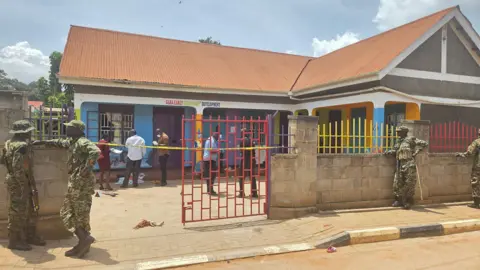
Four children stabbed to death at Ugandan school

Uganda Police Force A low-rise school building with police tape around the gate. Men in military fatigues can be seen standing by the perimeter wall.Uganda Police Force

Four children have been "brutally stabbed and killed" at a school in the Ugandan capital, Kampala, the police have said.

"The suspect has been apprehended, and the motive behind the killings is still under investigation," Uganda's police force added in a brief statement on X.

The school has been named as the Ggaba Early Childhood Development Program school in the capital's Makindye Division.

More details will be provided later, it added.

Uganda's Daily Monitor newspaper is quoting local residents as saying that the suspect posed as a parent to get into the school and then after talking to the administrator attacked the children. The victims were between the ages of two and three, the newspaper adds.

Videos of the aftermath being shared on social media show images of crowds of angry and distressed people.

The suspect was quickly apprehended to "prevent him from being lynched", local journalist Erich Mboowa has reported on X.

Getty Images/BBC A woman looking at her mobile phone and the graphic BBC News AfricaGetty Images/BBC

Go to BBCAfrica.com for more news from the African continent.

Follow us on Twitter @BBCAfrica, on Facebook at BBC Africa or on Instagram at bbcafrica

This breaking news story is being updated and more details will be published shortly. Please refresh the page for the fullest version.

You can receive Breaking News on a smartphone or tablet via the BBC News App. You can also follow @BBCBreaking on X to get the latest alerts.

Artemis II is in orbit - what happens next?

Watch the moment Artemis II blasts into space on historic mission

You could almost hear a sigh of relief from Nasa on Wednesday as its Artemis II rocket finally blasted off.

There's a lot riding on this mission - the safety of its four astronauts, Nasa's reputation, and the credibility of America's claim to be leading the new global space race.

There are mundane questions too: Could the onboard toilet break again? When can the crew nap?

Here's what the next 24 hours should look like for Artemis II.

Where are the astronauts now?

Commander Reid Wiseman, Victor Glover, Christina Koch and Jeremy Hansen are now orbiting Earth about 42,500 miles away, testing out the Orion spacecraft.

The craft's solar wings were fully deployed not long after launch, giving it power to help sustain its journey.

About the size of a minibus, its never been flown in space before by humans so pilot Victor Glover is spending the day pushing it to the extreme.

Nasa want to be sure Orion is voyage-worthy before the crew push on into deep space from where there is no easy return.

They're testing out the life support systems too. But if something goes wrong, the crew has specially-designed suits that could keep them alive for around six days.

What are the crew doing?

Unlike the Apollo missions in the 1960s and 1970s, we can watch a huge amount of what's happening on this voyage as Nasa livestreams the mission.

Cameras above the astronauts' heads show them checking monitors, holding up mobile phones, and pressing buttons.

Then about eight hours after launch, the crew were allowed their first sleep onboard.

EPA Astronauts Victor Glover, Jeremy Hansen, Reid Wiseman and Christina Koch walk of a Nasa building before launchEPA
The crew are "safe, secure and in great spirits", according to a Nasa official

On the radio the crew use to communicate with mission command, we heard Commander Reid Wiseman asking where are the team's pyjamas.

He asked for their "comfort garments", before the astronauts went into the sleeping area for about four hours.

Schedules in space are incredibly strict. Every minute is accounted for by Mission Control.

The crew can sleep for about four hours at a time, adding up to eight hours over a 24-hour period.

Sleeping in space can be tricky. The crew must strap themselves in, and generally some astronauts struggle to nod off as their bodies adapt to weightlessness.

But others say their best sleep ever is in space.

This crew have strict instructions to exercise for 30 minutes every day to protect their muscle and bone density as they live without gravity.

Reid Wiseman and Victor Glover went first, testing out Orion's "flywheel exercise device", which is about the size of a carry-on suitcase.

Christina Koch and Jeremy Hansen were scheduled to exercise later on - using the wheel for rowing, squats and deadlifts.

We assume they've had their first meals too, from Nasa's tailor-made Artemis II menu.

NASA A view of Earth from Orion spacecraftNASA
The crews' view from the Orion spacecraft during the last few hours

There is no fridge in Orion, so a lot of the food is freeze-dried and activated using water from an onboard tap.

The crew were allowed to pick their meals in advance, which include macaroni cheese, beef brisket, and five different hot sauces.

They're allowed two drinks a day, including coffee or a "chocolate breakfast drink".

And crucially, as far as we know, the toilet is working. During launch, the facilities broke, raising worries that the team would have to spend 10 days in a craft without a toilet.

After giving astronaut Christina Koch instructions on how to fix the specially-designed loo, Mission Control radioed the crew: "Happy to report that toilet is go for use.... We do recommend letting the system get to operating speed before donating fluid".

When do they go to the Moon?

Today is building up to the snazzily named "trans-lunar injection" burn. Basically, it is a massive push that will propel them out of Earth's orbit and on course to the Moon.

It is supposed to happen Thursday night UK time, but if there are problems, it could be postponed or even cancelled.

A cancellation would be a major setback for Nasa and America as it tries to become the first country to land humans again on the lunar surface by 2028.

If it all goes to plan, the burn will fire for six minutes to send them on a trajectory around the Moon that also uses lunar gravity to slingshot them back to Earth.

Eventually they should fly 6,400 miles (10,299km) beyond the far side of the Moon, which always faces away from the Earth.

That's meant to happen on Monday (6 April). The astronauts will be the first people to see some areas of the far side, although probes from countries including India and China have previously documented this region.

They'll be taking photographs and making observations of this mysterious place for us to see and learn from back on Earth.

缅甸联邦议会即将选举总统,军政强人敏昂莱几乎胜券在握 - RFI - 法国国际广播电台

02/04/2026 - 14:56

缅甸联邦议会4月2日举行会议,确定三名总统候选人资格,提交议会明日(4月3日)表决。三名总统候选人均为此前联邦议会的民选议员团与军人议员团于3月31日推举出的副总统。2021年2月发动军事政变上台的敏昂莱几乎笃定当选总统。

的确,过去五年间通过军事政变上台掌握政权的军政府正在完成让军政权披上合法外衣的努力。去年年底,军政权在内战尚在继续的背景下,无视许多地区都无法组织投票的现实,坚持组织全国选举。亲军方的政治力量毫无意外地在这场由政权操控的选举中以压倒性优势胜出。

新联邦议会已经在3月中旬宣誓就职。3月31日,议会两院也就是人民院和民族院的民选代表投票推举两名副总统,军人议员团随后也推举出自己的副总统。这三名副总统4月2日经联邦议会确认总统候选资格,将面对4月3日的议员投票。

目前看来,31日在人民院以压倒性多数当选为副总统的军政强人敏昂莱几乎笃定在4月3日的议会投票中胜出,当选总统。这意味着这位2021年2月率领军队推翻昂山素季领导的民选政府的军政强人正通过有名无实的投票活动,完成从政变军官华丽转身为文官总统的努力。

3月30日,最近五年来一直领导军政府的敏昂莱在联邦议会选举副总统程序启动的前夜,退下已经担任15年内之久的国防军总司令职务,交棒给他的亲信、前军队情报部门负责人耶温乌大将。这意味着他将可以继续在幕后控制军队。卸任军职是敏昂莱为出任总统而做的必要准备。

另外两名要面对4月3日联邦议会总统推举投票的候选人分别是民族院3月31日投票产生的副总统南尼尼埃和军人议员团选出的纽梭。楠尼尼埃是巩发党克伦邦主席,也是首次被提名参选副总统的女性。

新政府预计在四月中旬组建并宣誓就职。

缅甸自2021年的军事政变推翻民选政府之后,就陷于内战状态。曾经的民主派活动人士也拿起武器,与常年与中央政府不和的各路民族武装团伙一道,与政府军对抗。

根据联合国估计的数字,五年多来,缅甸境内至少370万人因为这些武装冲突而流离失所,全国近一半人口说在贫困线以下。

Volunteers in Helicopter Rescue Hiker’s Dog After a Week in the Wilderness

A hiker in New Zealand fell 180 feet down a waterfall and was evacuated without her dog. A crowd-funded rescue effort reunited them.

© Precision Helicopters Ltd, via Associated Press

A rescuer carrying Molly, the dog on the right, away from a remote waterfall on the Arahura River on the South Island of New Zealand, where she was found on Tuesday, a week after being separated from her owner.

Funeral director admits preventing 30 burials and theft

BBC Breaking NewsBBC

A funeral director has admitted preventing the burials of 30 bodies and stealing donations made to charities by mourners.

Robert Bush, 48, was arrested after police investigated Hull-based Legacy Independent Funeral Directors following a report of "concern for care of the deceased" in March 2024.

Bush, formerly of East Yorkshire and now living in West Yorkshire, pleaded guilty at Hull Crown Court to 30 counts of preventing a lawful and decent burial, and one of theft relating to charitable donations.

He previously admitted presenting families with the ashes of strangers and fraudulently selling funeral plans. He will be sentenced at a later date.

This breaking news story is being updated and more details will be published shortly. Please refresh the page for the fullest version.

You can receive Breaking News on a smartphone or tablet via the BBC News App. You can also follow @BBCBreaking on X to get the latest alerts.

Storm Dave set to batter UK with gales and blizzards over Easter weekend

Storm Dave set to batter UK with gales and blizzards over Easter weekend

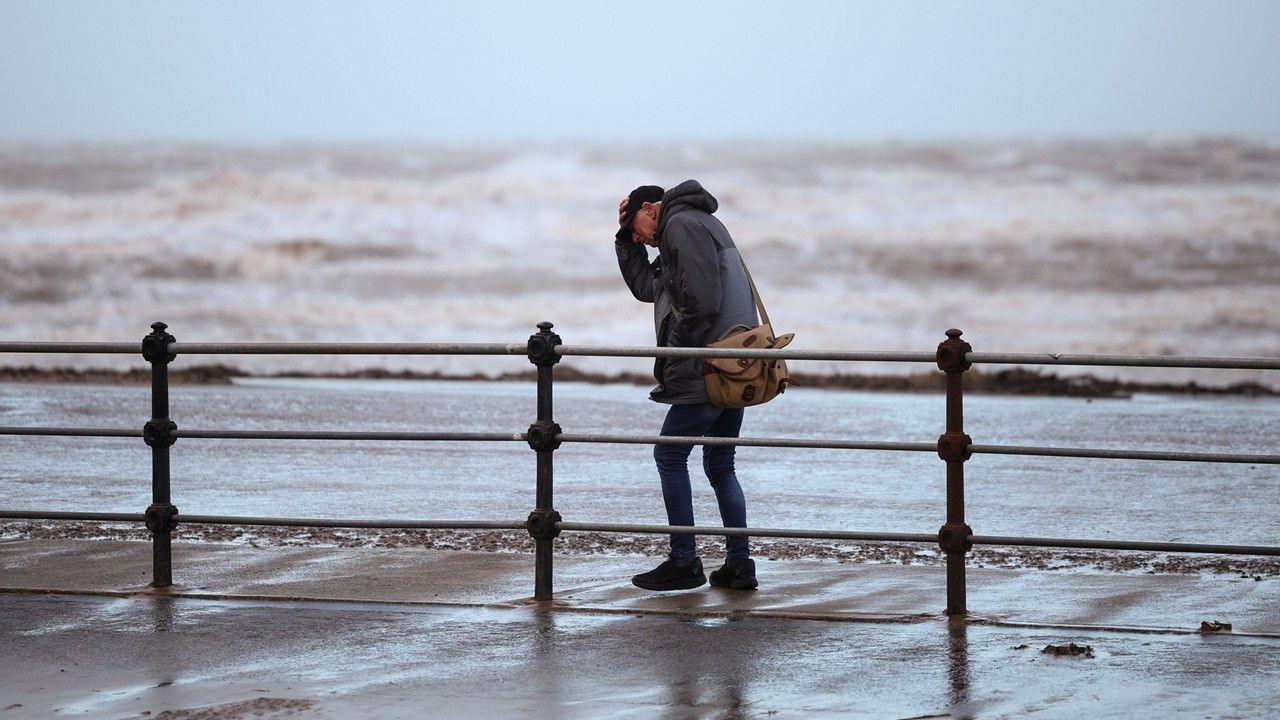
A man clutches his hat while walking along a windy seafront with rough waves in the backgroundImage source, Adam Vaughan/Shutterstock
ByBen Rich
Lead Weather Presenter
  • Published

Storm Dave has been named by the Met Office and threatens to bring severe gales and blizzards in the north of the UK over the Easter weekend.

Yellow warnings for wind and snow have been issued for Saturday night and Sunday with a deep area of low pressure expected to pass across the north-west of the country.

Damage, power cuts and travel disruption are likely.

It is just one part of a very mixed Easter forecast which will bring heavy downpours alongside spells of warm sunshine.

A storm spun up by a powerful jet stream

Huge temperature contrasts across the USA and Canada have helped to supercharge the jet stream - the flow of strong winds high in the atmosphere that spins up weather systems and guides them around the globe.

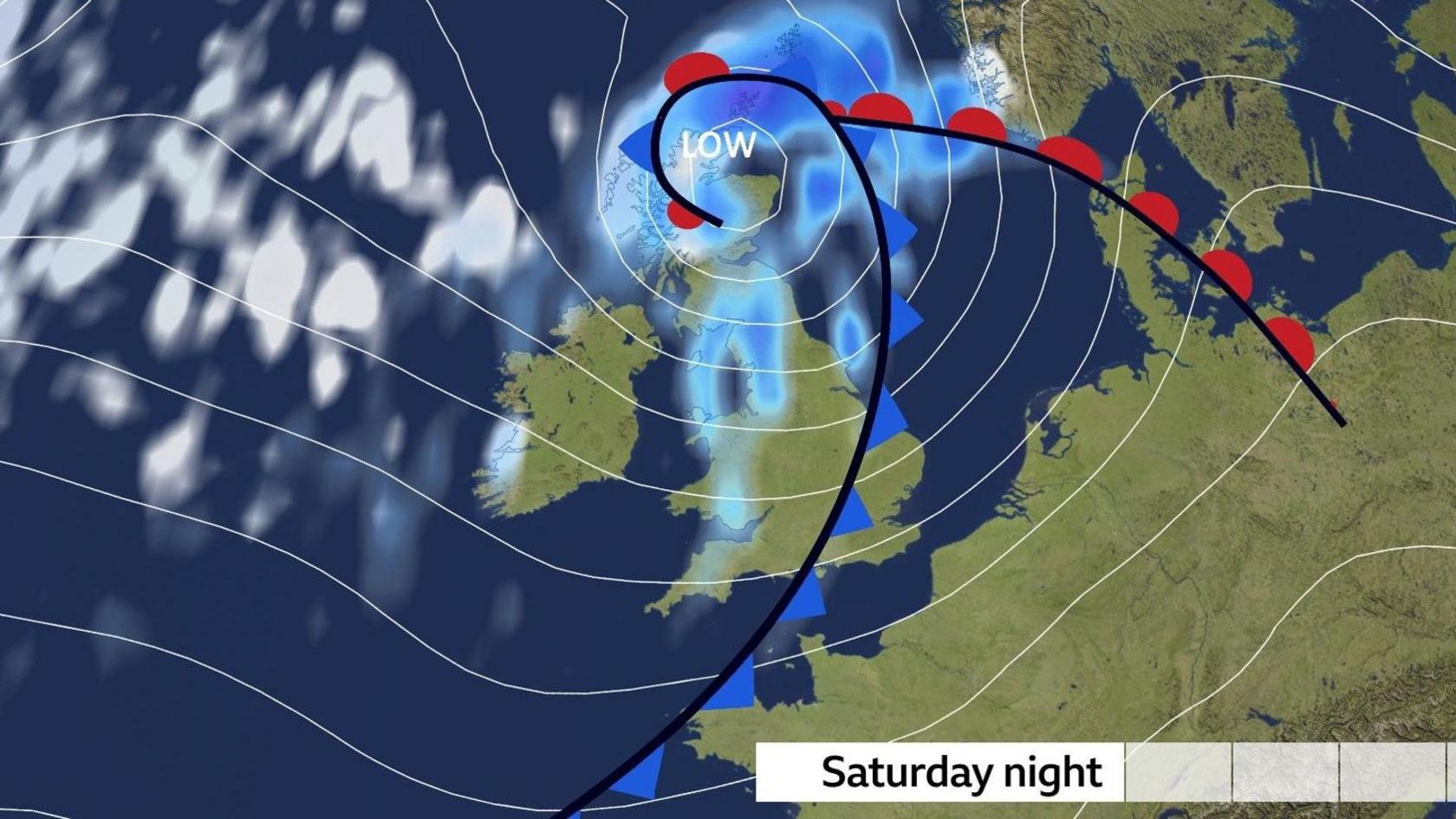
And confidence is growing that this will propel a deep area of low pressure towards the UK on Saturday.

A pressure chart showing a deep low and a set of weather fronts passing across the UK
Image caption,

The centre of Storm Dave is expected to pass across the north of Scotland

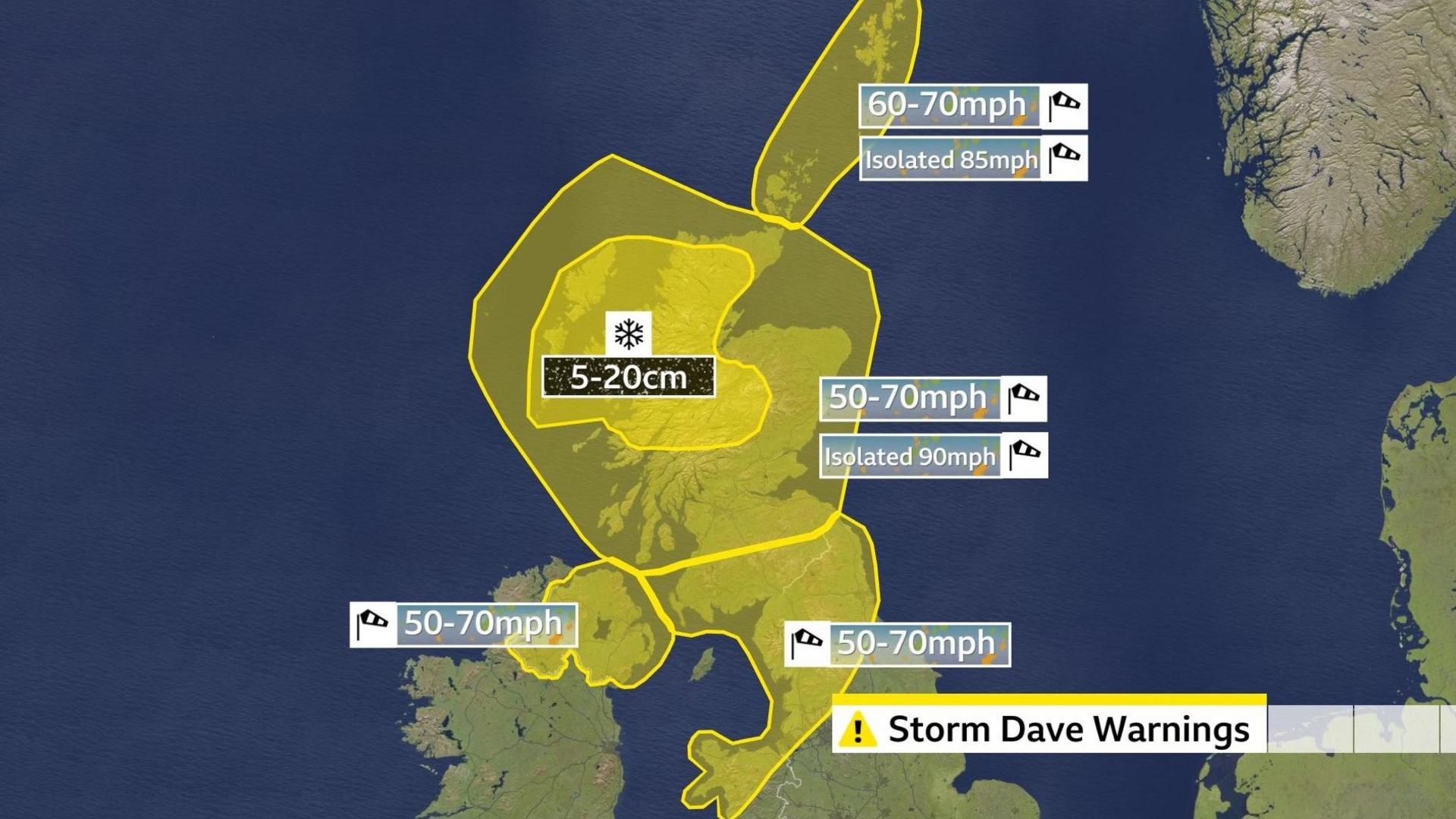
The Met Office has issued yellow warnings for wind covering all of Scotland and Northern Ireland, as well as large swathes of northern England and north Wales.

The warnings are valid at various times on Saturday afternoon, overnight and into Sunday.

Widespread gusts of 50-60mph (80-97km/h) are expected with the chance of 70mph (113km/h) gusts in exposed areas, especially around coasts.

Central and northern parts of Scotland could see winds peaking at 80-90mph (129-144km/h) with large waves bringing dangerous conditions along the coasts.

Winds as strong as these bring the threat of damage, power cuts and significant travel disruption.

Some roads and bridges could close, which could have major impacts on what is predicted to be the busiest Easter in four years for drivers.

Disruption to train and ferry services is also possible.

A weather map showing yellow warnings across the north of the UK
Image caption,

Numerous yellow warnings have been issued by the Met Office for Saturday and Sunday

A Met Office warning for snow has also been issued for parts of north-west Scotland during Saturday evening and overnight.

5-10cm (2-4in) of snow may accumulate, mainly over high ground above 200m (650ft) elevation, with a small chance of 20cm (8in) in a few locations.

Coupled with the strong winds this could give blizzards, drifting and blowing snow, and very poor visibility on the roads.

A mixed bag of Easter weather

Storm Dave is just one part of a weather story that will bring a real variety of conditions across the UK over the long weekend.

Good Friday will start mostly cloudy with outbreaks of rain.

Many parts of England and Wales will hold on to grey and damp weather for much of the day but in Northern Ireland and Scotland some sunny spells should develop - albeit with a scattering of showers.

It will be fairly windy with a wide range of temperatures - from 7C (45F) in northern Scotland to 15C (59F) in eastern England.

A band of cloud and rain will move northwards across the country on Saturday - turning to snow over Scottish mountains - with a few sunny spells either side of this zone of wet weather.

Winds will strengthen through the day ahead of Storm Dave's arrival.

Sun and snow on Easter Sunday

Easter Sunday will be a day of big weather contrasts as the storm begins to loosen its grip.

Strong winds will continue to blow across Scotland, Northern Ireland and northern England, bringing a chilly feel and frequent showers.

Some of these will be wintry over hills and mountains but snow is even possible at low levels in the north of Scotland for a time.

Further south it will be breezy with a few showers, but for large swathes of Wales and southern England it should be predominantly dry with sunny spells.

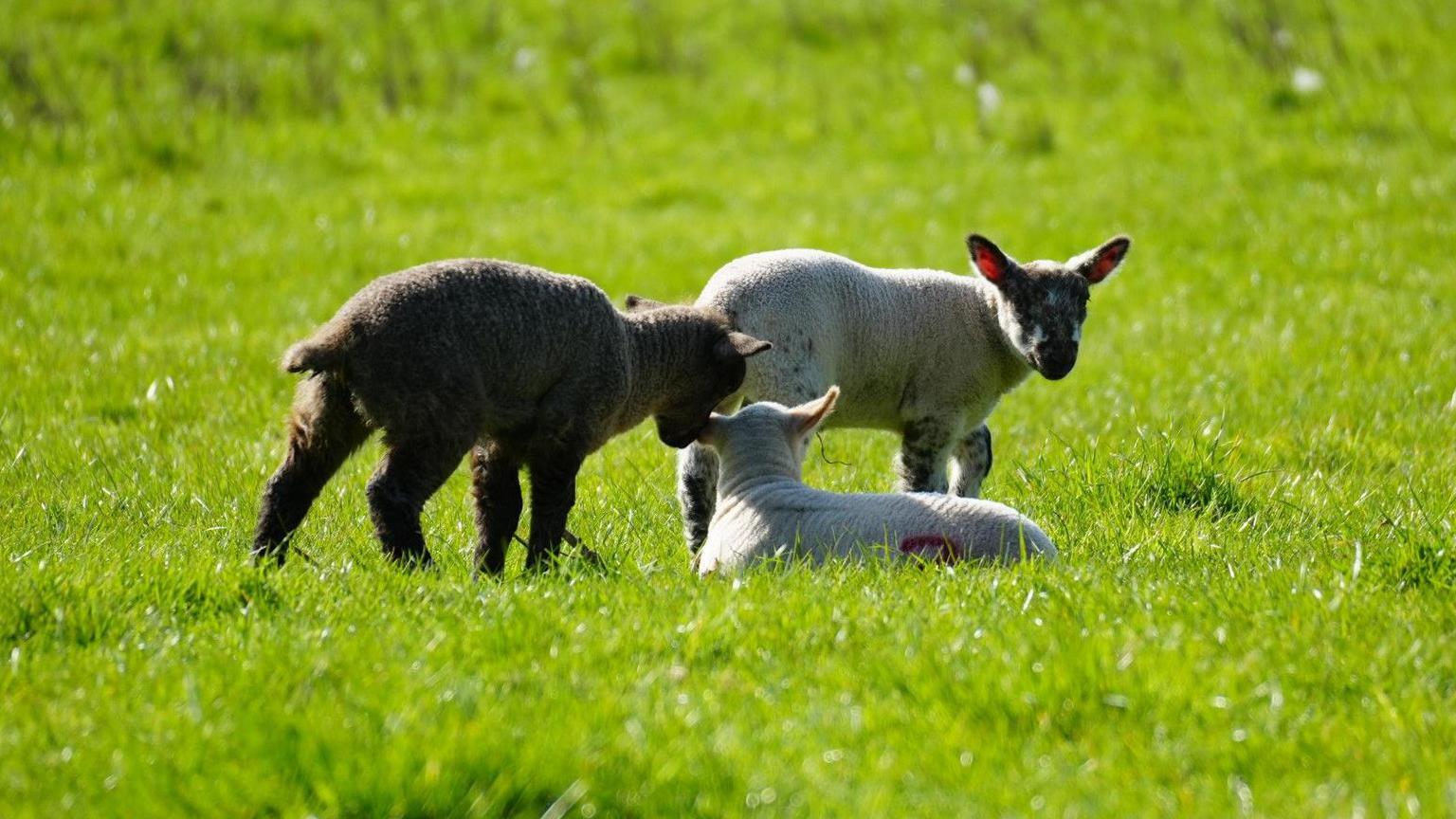
Three lambs in a field of green grass, bathed in sunshineImage source, BBC Weather Watchers / Peter and Leah
Image caption,

Temperatures on Easter Sunday will range from 7C (45F) in northern Scotland to 13C (55F) in southern England

As winds ease on Sunday night things will get cold with a touch of frost developing in many areas.

However after a cold start to Monday temperatures will climb through the day thanks to southerly winds, reaching 11-17C (52-63F) by the afternoon.

Most areas will be dry with patchy cloud and sunny spells, which is expected to bring high or very high pollen levels.

UV levels expected to peak at moderate in the sunniest spots.

Beyond the Easter weekend the forecast looks rather changeable with warmth likely to give way to April showers and perhaps more strong winds - although computer weather models disagree on the details.

You can always keep up-to-date with the longer range prospects with our monthly outlook.

King and Queen give away money in ancient Easter tradition

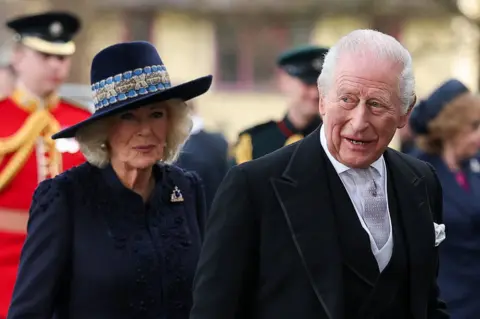
PA Media King Charles III and Queen Camilla arriving at St Asaph Cathedral, DenbighshirePA Media
It is the second time the service has been held in Wales in its 800-year history

King Charles III and Queen Camilla have been taking part in the annual Maundy service in north Wales, only the second time the service has been held in Wales in its 800-year history.

The King and Queen attended the service at St Asaph Cathedral, Denbighshire, in a ceremony featuring music by Welsh composers and musicians.

The event takes place annually on the final Thursday before Easter Sunday and commemorates the Last Supper and the importance of humility and service to others.

The Dean of St Asaph Cathedral, Nigel Williams, said they were "deeply honoured" to host the service, hoping it would be a "memorable experience" for those who attended.

Reuters King Charles and Queen Camilla posing for a group photo outside St. Asaph Cathedral. Four children can be seen stood infront of the royals, each holding flowers.Reuters
King Charles and Queen Camilla posed for a group photo after attending the service

The first recorded Royal Maundy service was held in 1210 by King John and commemorates the Last Supper of Jesus Christ, with the distribution of alms becoming a tradition.

Charles will present gifts to 77 men and 77 women from Wales and other dioceses across the UK in recognition of outstanding Christian service and for helping people in their communities.

Recipients will be given two purses – a white purse including a set of specially minted silver Maundy coins totalling 77 pennies, to match the King's age, and a red pursue containing a £5 coin marking 100 years since the late Queen's birth, as well as a 50p coin celebrating the 50th anniversary of The King's Trust charity.

The last time the Maundy Service was held in Wales was in 1982 in St Davids, Pembrokeshire.

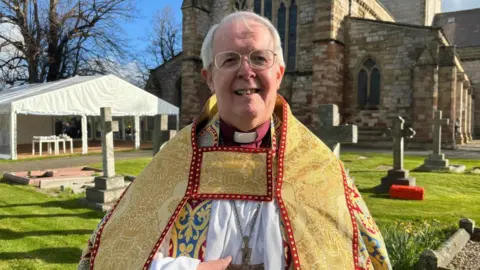
Gregory Cameron bishop of St Asaph stood outside St Asaph Cathedral
The Bishop of St Asaph, the Rt Revd Gregory Cameron admitted he was "nervous" about leading the "ancient" service on Maundy Thursday

Grahame Davies, director of mission for Church in Wales, said it was "hugely significant" for the service to be held in north Wales for the first time.

The Bishop of St Asaph, Gregory Cameron, said the Royal Maundy was a "deeply meaningful occasion which we are pleased to welcome to St Asaph".

He admitted he was "nervous" about leading the "ancient" service on Maundy Thursday which marks the day of the last supper when Jesus washed his disciples' feet.

The Cross of Wales, a gift from the King to the Christians of Wales, will be used in the service. The Cross headed the King's 2023 coronation at Westminster Abbey.

Diocese of Bangor Susan and Roger stood outside standing next to each other. Susan has long grey hair and glasses on top of her head. She is wearing a black polo shirt and navy blue jacket. Roger has short grey hair. He is wearing glasses, a dark grey blazer, green vest, striped shirt and tie with blue, green and purple fish on it.Diocese of Bangor
Husband and wife Susan and Roger Whitehouse from Tywyn are among those who the King will present Royal Maundy gifts to

Among those who will receive gifts from the King are Susan and Roger Whitehouse from Tywyn, Gwynedd.

The couple said they were "very surprised" to be recognised together, having never sought recognition for their service.

"We've simply tried to serve where needed," they said.

"Our faith informs what we do and why we do it, and it has drawn us deeper into the life of the church while also helping us look outward to the wider community."

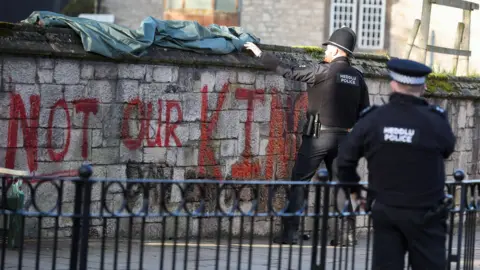
Reuters A police officer pulls a tarp over the words "Not Our King" painted on a wall outside St. Asaph Cathedral.Reuters

Crowds lined the high street in St Asaph ahead of the royal couple's arrival, while graffiti saying "Not our King" was also covered up at the cathedral before the visit.

Workers in hi-vis jackets were seen attempting to remove the message which was sprayed using red paint on a wall in the grounds of the cathedral.

A small group of republican protesters with flags and banners calling for the end of the monarchy also gathered across the road from the cathedral as the King and Queen arrived.

Thin, purple banner promoting the Royal Watch newsletter with text saying, “Insider stories and expert analysis in your inbox every week”. There is also a graphic of a fleur-de-lis in white.

Sign up here to get the latest royal stories and analysis every week with our Royal Watch newsletter. Those outside the UK can sign up here.

Everything you need to know about Nasa's Artemis II mission

NASA The image shows four astronauts in bright orange space suits posing for a formal group portrait against a dark background. The suits are bulky with blue joints, straps and pockets, emphasising their technical design. Three astronauts stand behind one who is seated, all facing the camera. They all have fairly neutral expressions, keeping the focus on the uniforms. Mission-style patches and flags, including US and Canadian flags, are visible on their arms and chests. Soft, focused lighting makes the vivid orange suits stand out dramatically.NASA
Artemis II Crew: left Christina Koch, back Victor Glover (pilot), front Reid Wiseman (commander), right Jeremy Hansen

Nasa's target of a March launch for the first crewed mission around the Moon in more than 50 years has been delayed after a fault was detected.

Nasa had set a target of 6 March, but 24 hours later said the newly discovered fault made a March launch "out of consideration".

The Artemis II mission, which will last about 10 days, could take its astronauts further into space than anyone has been before.

It aims to set the stage for an eventual human landing on the lunar surface for the first time since the Apollo missions of the 1960s and 70s.

When will Artemis II launch?

With a March launch no longer being considered, the next possible dates are April 1, 3, 4, 5 and 6.

A potential February launch was ruled out after a pre‑flight test - known as a wet dress rehearsal - was cut short when hydrogen rocket fuel leaked from an umbilical connection linking the launch tower to the rocket.

Beyond resolving the technical issues, mission planners also have to wait until the Moon is in the right part of its orbit, so launch windows are timed accordingly.

In practice, this creates a pattern of roughly one week at the start of each month when the rocket can be pointed in the right direction, followed by about three weeks with no launch opportunities.

Watch: Timelapse shows Nasa rocket's 12-hour journey to launch pad

Who are the Artemis II crew?

Artemis II's crew of four is made up of Nasa commander Reid Wiseman, pilot Victor Glover and mission specialist Christina Koch. A second mission specialist, Jeremy Hansen of the Canadian Space Agency, will also be on board.

Wiseman is a US Navy veteran of 27 years. A pilot and engineer, he lives in Baltimore, Maryland. He was selected as an astronaut by Nasa in 2009 and served as Flight Engineer aboard the International Space Station (ISS) for Expedition 41 in 2014.

Glover was selected as a Nasa astronaut in 2013. He previously served as the pilot of SpaceX Crew-1 and holds three master's degrees. He was born in California and is married with four children.

Koch grew up in Michigan and became an astronaut in 2013. She worked on the International Space Station in 2019, setting a record for the longest single spaceflight by a woman. She also participated in the first all-female spacewalk.

Hansen joined the Canadian Space Agency in 2009 after a career as a fighter pilot. He became the first Canadian to lead astronaut training at Nasa's Johnson Space Centre and will be the first Canadian to go to the Moon.

What will the Artemis crew do during the Moon mission?

The mission involves the first crewed flight of Nasa's gigantic Space Launch System (SLS) rocket and the Orion space capsule.

Once they are safely in orbit, the astronauts will test how the Orion handles. This will involve manually flying the capsule in Earth orbit to practise steering and lining up the spacecraft for future Moon landings.

They will then head out to a point thousands of kilometres beyond the Moon to check Orion's life‑support, propulsion, power and navigation systems.

Graphic showing the Earth and Moon, with the Artemis II's figure of 8 orbital trajectory highlighted. Specific points are labelled. These are: 1. Lift off at the Kennedy Space Centre, 2. Orbit around Earth, 3. Rocket separation, 4. Main engine fires to take spacecraft to the Moon, 5. Lunar flyby, 6. Return to Earth, 7. Crew module separates, 8. Splashdown in Pacific Ocean.

The crew will also act as medical test subjects, sending back data and imagery from deep space.

They will work in a small cabin in weightlessness. Radiation levels will be higher than on the ISS, which is in low‑Earth orbit, but still safe.

On return to Earth, the astronauts will experience a bumpy return through the atmosphere and a splashdown off the west coast of the US, in the Pacific.

Will Artemis II land on the Moon?

No. This mission is to lay the ground for a lunar landing by astronauts in the Artemis III mission.

Nasa says the launch of Artemis III will take place by 2028. But experts believe that is a very ambitious timeline.

The final choice of a spacecraft to take the crew down to the lunar surface has not yet been made. It will either be SpaceX's Starship lander or a craft designed by Jeff Bezos's Blue Origin.

New spacesuits made by US company Axiom are also not ready.

When Artemis III finally flies, the astronauts will be heading to the Moon's south pole.

After this, the aim is to have a sustained human presence on the Moon.

Artemis IV and V will begin building Gateway, a small space station circling the Moon. That will be followed by more Moon landings, extra sections being added to Gateway, and new robotic rovers operating on the surface.

More countries will be involved in keeping people living and working on and around the Moon for longer periods.

An illustration showing how the Artemis II astronauts will be arranged in the Orion crew module at launch. The four astronauts sit reclined, in two rows of two, facing up with their backs to the ground. During the mission the four crew members will spend 10 days in about nine cubic metres of living space. The image shows that the crew module makes up about half of the Orion spacecraft - with the service module being around the same size - and that, on the launchpad, Orion is only a small section of the 98m (320ft) Space Launch System rocket.

When was the last Moon mission?

The last crewed Moon mission was Apollo 17, which landed in December 1972 and returned to Earth later that month.

In all, 24 astronauts have travelled to the Moon and 12 of them have walked on its surface, all during the Apollo programme. Of the 24 to have been to the Moon, just five are still alive.

America first went in the 1960s, primarily to beat the Soviet Union to assert its geopolitical and technological dominance. Once that goal was achieved, political enthusiasm and public interest ebbed, as did the money for future Moonshots.

The Artemis programme grew out of a desire to return humans to the Moon, but this time for a longer-term presence built around new technology and commercial partnerships.

Do other countries plan to send astronauts to the Moon?

Several other countries have ambitions to put people on the Moon in the 2030s.​

European astronauts are set to join later Artemis missions and Japan has also secured seats.

China is building its own craft, targeting a first landing near the Moon's south pole by 2030.

Russia continues to talk about flying cosmonauts to the surface and building a small base sometime between about 2030 and 2035. However, sanctions, funding pressures and technical setbacks mean its timetable is highly optimistic.

India has also expressed ambitions to one day see its own astronauts walking on the Moon.

Following the success of Chandrayaan 3's landing near the lunar south pole in August 2023, India's space agency set out a goal of sending astronauts to the Moon by about 2040. This would be part of a push to move its human spaceflight programme beyond low Earth orbit.

Additional reporting by Kevin Church and Emily Selvadurai.

How memories of my grandma are tainted by funeral boss's crimes

Tristan Essex Tristan Essex on the left next to Jessie Stockdale who is in a hospital bed wearing a pink dressing gown.Tristan Essex
Tristan Essex says his memories of his nana, Jessie Stockdale, are "tainted" after Robert Bush kept her body for five months after her funeral

Warning: This article contains details some people may find distressing.

Tristan Essex says his memories of his nana, Jessie Stockdale, are now "tainted" after funeral director Robert Bush kept her body for five months after her family were told her funeral had taken place.

Bush, who ran Legacy Independent Funeral Directors in Hull, has admitted a series of offences, including preventing the burials of 30 bodies, after police uncovered widespread wrongdoing at the business.

According to Tristan, with the benefit of hindsight, there had been warning signs.

"There was an awful smell in the funeral directors," he recalled. "My grandma was changed into different coffins every time we viewed her, and we obviously picked a specific coffin.

"She was put into larger coffins which were wider, longer, different colours, different trims. She was in at least three or four different coffins.

"We complained because the frill on the coffin was splattered with blood.

"There was black, thick mould around the inside of the coffin as well."

Victims and their families have been waiting for justice since the investigation began two years ago.

Bush, 48, specialised in low-cost funerals and claimed on his company's social media to offer "dignified personal care".

Behind the scenes, officers found a very different picture.

Humberside Police described its inquiry as "complex, protracted and highly sensitive", triggered by a report of "concern for care of the deceased" in March 2024.

Within days, 35 bodies and half a tonne of human ashes were recovered from the firm's premises on Hessle Road in Hull.

The body of Tristan's grandmother, Jessie, was among those discovered.

Tristan, 26, said his family were "knocked off our feet" when they were told Jessie was a victim.

"Thirty-five bodies were found inside Legacy and one of them had an ankle bracelet with my nana's name on," he said.

Legacy Independent Funeral Directors Robert Bush has short ginger hair. He is wearing a white shirt, a black tie and a black jumper.Legacy Independent Funeral Directors
Robert Bush, 48, abused the trust of those at their lowest ebb

Bush had been due to stand trial in October, but during a hearing at Hull Crown Court on Thursday he admitted 30 counts of preventing a lawful and decent burial.

He also pleaded guilty to one charge of stealing money from charity collection boxes.

The admissions followed others in October last year, when Bush pleaded guilty to 35 offences of fraud by false representation, relating to the proper care of remains and the return of ashes. Four of the charges related to giving women ashes that he falsely claimed were those of their unborn babies.

He also previously admitted a charge of fraudulently running a business. This related to the sale of funeral plans. There were 172 victims relating to this count alone.

In total, there were 254 victims of Bush's crimes, police said.

Many families were distraught to learn ashes they were given did not belong to their loved ones.

Some had unwittingly worn the ashes of strangers close to their body in the form of specially made jewellery.

One told us how a friend had the ashes mixed with tattoo ink and pushed deep into their skin.

PA Media Police and forensic officers, wearing white suits, stand outside Legacy Independent Funeral Directors off Hessle Road in Hull.PA Media
The parlour in Hessle Road, Hull, has been described as "a hoarder's house"

Bush's disregard for the dead and their families did not end there.

More than 1,000 items, including love letters, baby clothes and treasured possessions belonging to the victims were found on the funeral director's premises, a crisis response team told the BBC.

"It was like a hoarder's house," said Kevin Curreri of Kenyon Emergency Services.

The team is typically brought in by governments in the wake of natural disasters, plane crashes and terrorism incidents.

This time, it was appointed by Hull City Council to recover the scene, after police had finished with it.

According to Curreri, human remains and personal possessions had been treated "so disrespectfully" that it showed "a pretty significant breach of trust".

Linsey Smith/BBC A sign and a bunch of fake flowers attached to the black railings around the former Legacy premises.Linsey Smith/BBC
Families left tributes to their loved ones at the former Legacy parlour in Hessle Road, Hull

Following the police searches, floral tributes were left outside the parlour.

Some of the notes attached to them demonstrated the unbridled rage felt towards the person responsible for causing this close-knit community so much heartache.

In stark contrast to Bush's large detached home in Kirk Ella – a desirable village in the East Riding of Yorkshire – his funeral business, which opened in 2010, stood in Hessle Road, a working-class street that was once the beating heart of Hull's fishing industry.

Bush hid behind a veneer of respectability, his neighbours painting a picture of a family man who was willing to run errands and help complete DIY tasks for them.

Professionally, too, nothing appeared to be too much trouble for Bush, with some of his customers telling the BBC how he had offered them the chance to pay him in installments when they told him they were struggling to cover a relative's funeral costs.

One woman said Bush had personally bought their funeral flowers when they ran out of money.

"I just felt so grateful," she said. "I didn't ask questions."

Emma Hardy, MP for Hull West and Haltemprice, said Bush had deliberately pushed low-cost funerals at a vulnerable community.

"He pretended he was their friend," she said.

Bush was anything but.

Kevin Newton sat on a chair looking directly into the camera. He is wearing a blue top.
Kevin Newton bought a funeral plan from Robert Bush to save his children from financial burden

Not even charities escaped his greed.

Bush stole an unknown amount of cash from charity collection boxes. The donations, in memory of loved ones, were made at funeral services Bush organised.

Families believed the money would go directly to causes close to their hearts.

But it did not.

Between September 2017 and 6 March 2024, a number of good causes, including the Salvation Army, Macmillan Cancer Support, Dove House Hospice, Help for Heroes, the RNLI and Oakwood Dog Rescue were deprived of their funds.

More than 170 people bought non-existent funeral plans through Legacy, including 70-year-old Kevin Newton.

He paid £2,239 in 2012 for his plan.

Kevin said he was "mortified" when he contacted a third-party insurer and was told there was no trace of the plan on its database.

His daughter, Kerry, 36, said: "It's absolutely shocking because it's a lot of money for my dad to fork out and it's not like he can [afford it] again.

"It's unforgivable."

Kevin was able to recover the money as he paid using a card.

The funeral business was dissolved at a court hearing in May 2024 with debts of more than £40,000.

Bush has been bailed to be sentenced on 27 July.

Listen to highlights from Hull and East Yorkshire on BBC Sounds, watch the latest episode of Look North or tell us about a story you think we should be covering here.

Related internet links

Dozens more people tell BBC of 'alarming' safety breaches at Travelodge hotels

Wendy Griffith said her "heart aches" for the victim of a sex attack at a Travelodge in Maidenhead

A woman has told the BBC how she was "trapped" in her Travelodge hotel room for an hour last summer while a naked man banged on her door and performed "vile" sex acts in the corridor.

Wendy Griffith is among a growing number of guests who believe the chain has failed to take "alarming" experiences seriously "for years" and has been consistently "fobbing people off".

Dozens of people have shared their stories after the BBC revealed how a woman woke up to a man sexually assaulting her in her bed at the chain's Maidenhead branch in 2022 after staff gave him a key card and her room number.

A Travelodge spokesperson said it was "deeply sorry" to hear about Wendy Griffth's experience. Earlier this week, Travelodge's CEO, Jo Boydell, apologised to people that have had "frightening" experiences.

Outside of Travelodge London Straford hotel. It looks like a block of flats with branding on the first floor
Wendy Griffth was targeted by a man at Travelodge London Stratford in July 2025

The company, which is based in Thame, Oxfordshire, said it had already "strengthened" its room access policy.

Marketing consultant Wendy Griffith, from Norfolk, was staying at Travelodge London Stratford in July 2025 when she said a man started banging on her door.

She then witnessed him through the door's peephole performing sex acts.

She recalled "rising panic" over the hour as she was "essentially trapped" in the middle of the night trying and failing "multiple times" to contact hotel staff.

With no room phone and no emergency contact number in her room, she used her mobile to try and call the Travelodge website number.

She said she was "incredibly traumatised and not able to summon help", then dialled 999 in desperation.

"The police were incredible," she remembered, "given I was a female staying in a hotel room on my own, three cars pulled up within five minutes to arrest the man.

"It was a very dramatic scene, he attempted to run back in his room, barricade the door, the police had to force their way in, use pepper spray."

The man, Trevor Reece, 40, pleaded guilty to outraging public decency in September 2025.

He was sentenced by magistrates to four months of alcohol dependency treatment and ordered to pay £185 court costs and £50 compensation to his victim, which she says has yet to be paid.

In a previous interview with the BBC, Travelodge chief executive Jo Boydell said the company had made changes to its policies

"The impact that has resulted in terms of the psychological impact, the flashbacks, the impact to my business, my livelihood, all of it, and my situation was not as extreme as the lady in the Travelodge Maidenhead hotel," Wendy Griffth told the BBC.

"When I saw the story break recently, I broke down in tears because it was validation - that other people were experiencing these issues with Travelodge - and just complete and utter devastation that that had happened to that woman.

"That could have potentially happened to me and that's what keeps me awake at night."

She subsequently discovered, during a lull in the hour she was targeted, her tormentor - who was also a hotel guest - had gone to reception and asked for a replacement room key but gave her room number instead of his own.

"That moment when the desk clerk said 'he asked for a key to your room' the blood drained from my body," she recalled.

She said he was only refused as the clerk told her he knew the man was a long staying guest and the number he gave was not his own room.

She insisted Travelodge's responses to her subsequent complaints, which the BBC has seen, have been "categorically not good enough" and she feels "dismissed" and "palmed off".

She said no-one from Travelodge "proactively" offered her a refund, she had to chase them and her case was "pushed out" to the firm's insurers which denied liability.

She also believes CEO Jo Boydell's response to the 2022 Maidenhead attack has been "poor" and was shocked to hear her admit to not being aware of it until the attacker's trial at the end of 2025.

"To take so long to respond," she said, "and now only under media scrutiny and pressure and the fact that their business looks bad," she said.

"If there is ever a situation in your hotel where the police have become involved, that should be an automatic escalation to the CEO for a formal investigation."

A Travelodge spokesperson said: "We were deeply sorry to hear about the distressing experience Ms Griffith had at our London Stratford hotel and our handling of her case.

"We have since rolled out training to all of our hotels to ensure that the hotel phone number is on every key card wallet given to a customer so they can reach our team at any time, day or night."

Charlotte Bingley A woman looks straight at the camera. She has curly brown hair and is wearing a pink topCharlotte Bingley
Charlotte Bingley, from Birmingham, is among many people who have contacted the BBC about their Travelodge experiences

A growing number of MPs have also demanded better hotel safety procedures and the privately-owned hotel chain's crisis over guest safety continues to escalate.

The BBC has been contacted by people who have been "terrified" by "strangers" coming into their rooms and many have provided evidence of their subsequent complaints to Travelodge and direct emails to its CEO.

Others have reported accidentally walking into occupied rooms after being given the wrong room key.

The guests said Travelodge's responses had been "lacking", "dismissive", "totally uninterested" and "appalling".

One described three room key mistakes in one night.

Charlotte Bingley, from Birmingham, checked into a Travelodge in the south west of England in February and within an hour an "intimidating" staff member entered her room without knocking.

"I've never been so scared in my life," she said, "I really thought he was going to really hurt me and I was [shouting] 'just get out of the room'."

She said it took "ages for him to leave" and as there was no inside lock on her door, she was "petrified" he would "come back in the middle of the night", so she left.

She described the company's response to her repeated complaints - which the BBC has seen - as "despicable".

A Travelodge spokesperson said: "Our response to Ms Bingley was wholly inappropriate and we are very sorry.

"The team member has since been dismissed and no longer works for the business

"Any case of unauthorised access to a guest's room is a significant cause for concern and what happened to Ms Bingley was very upsetting and shouldn't have happened."

Gordon Hollingsworth A woman and a man appear together in the photo. The man has short grey hair and he is wearing shaded glasses. The woman has blonde hair and is smilingGordon Hollingsworth
Sian and Gordon Hollingsworth said their complaints about a "total failure" of security procedures were "glossed over"

Gordon Hollingsworth, from Essex, said a stranger walked into his and his "horrified" wife's room at midnight at Travelodge Leatherhead in January.

He recalled the unknown man being "as stunned as I was", having been given the key to the couple's room by staff.

He said he rarely writes complaints, but was so shocked by the "lack of organisational care and procedure", he contacted Travelodge because he "could see the very obvious threat".

He "took exception" to how they responded and said: "They just glossed over it. With no mitigations in place to prevent reoccurrence... that will repeat itself."

A Travelodge spokesperson said: "Any case of an unauthorised person entering a guest's room is a significant cause for concern and what happened to Mr Hollingsworth and his family was very upsetting and shouldn't have happened and we have apologised for this."

Sophia Farley, from Bournemouth, was also dissatisfied by Travelodge's reaction to her complaints about "dark figures" appearing in her room at night at the London Belvedere in June 2025.

She emailed CEO Jo Boydell spelling out that she was "shaken and frightened" and stressed her customer service team's initial reply "minimises what was a significant safeguarding failure" and was "wholly insufficient".

She told the BBC when she heard about the Maidenhead attack: "My first thought was, if that happened years ago, why did that then happen to me?

"Nowhere near as bad for me as it was for that poor young woman, but it could have been."

A Travelodge spokesperson said: "Our initial response to Ms Farley was inappropriate.

"In a subsequent response, our Customer Services team apologised profusely to Ms Farley for what happened during her stay, acknowledged her experience and confirmed we had retrained the hotel team. We subsequently processed a full refund of her stay at her request."

Wendy Griffth A Travelodge key card holder which is showing a phone number for staffWendy Griffth
Travelodge London Stratford has since put its direct-to-staff phone number on the front of its key card holders

In response to growing numbers of people reporting safety issues at the hotel chain, Wendy Griffiths said she felt a "responsibility" to speak up.

"If this many incidences are occurring of reported cases, what is not being reported because women are too afraid to come forward?" she said.

"I want compensation for not just myself, but for [other] victims and I want to make sure that this doesn't happen to other women."

She did receive a "profound and sincere apology" from Travelodge London Stratford's manager and her calls for improvements prompted the hotel to print a staff contact number on its key card holders.

A Travelodge spokesperson said: "We have recently commissioned an independent review which will look at every aspect of our room security procedures and in the meantime we have also strengthened our room access policy and brought in additional training for colleagues.

"Our focus remains on ensuring that everyone feels safe when staying in our hotels."

If you have been affected by issues in this story, BBC Action Line has details of available support.

You can follow BBC Berkshire on Facebook, X, or Instagram.

报人刘亚东A|为什么中国人比俄国人更怀念苏联?

file

作者:刘亚东

前几日在北京和几个朋友聚餐时,有位211大学的党委书记给老刘提出一个挺有意思的问题:为什么中国人似乎比俄罗斯人更怀念苏联?借着酒兴,老刘谈了三点看法,在座的人多表认同。事后细想,这确实是一个值得深入琢磨的现象。现把那天所谈整理成文,与大家分享。

上世纪九十年代初的苏联解体,无疑是二十世纪最具震撼性的地缘政治事件之一。三十多年过去,一个耐人寻味的对比愈发清晰:在今日俄罗斯,除俄共等特定群体外,社会整体对苏联解体多持平静和释然的态度,甚至觉得是“翻了篇”的事;而在中国,仍有不少人对苏联的崩塌深感痛惜,视之为巨大的历史遗憾。这种情感的“错位”,并非简单的好恶之别,而是根植于两国不同的历史沿革、身份认同与现实处境。

CDT 档案卡
标题:为什么中国人比俄国人更怀念苏联?
作者:报人刘亚东
发表日期:2026.4.2
来源:微信公众号-报人刘亚东A
主题归类:苏联
CDS收藏:公民馆
版权说明:该作品版权归原作者所有。中国数字时代仅对原作进行存档,以对抗中国的网络审查。详细版权说明

01

记忆的分野:

作为镜鉴的史诗与作为重负的往事

对许多中国人而言,苏联是一段镌刻在集体记忆中的“悲剧史诗”。其鼎盛时期的辉煌与骤然解体的惨烈,构成强烈反差,成为时常回望与深思的历史镜鉴。

苏联的高光时刻,至今仍被许多人铭记。它率先叩开太空时代的大门,把人类第一颗卫星送入苍穹,让第一位航天员翱翔太空;在反法西斯战争中,以数千万人的牺牲铸就了抗击纳粹的中流砥柱;在文学、音乐、科技领域,诞生了影响世界的巨匠与丰碑;更在短短几十年间,建立起完整的重工业体系。这些标志性成就,构成了许多中国人对苏联的核心印象。尤其对经历过国家筚路蓝缕发展历程的一代人而言,苏联的故事承载着对一个强大社会主义国家的复杂想象。

而它崩塌的方式,又为其增添了浓厚的悲剧色彩。一个曾与美国分庭抗礼的超级大国,竟在短时间内分崩离析,国际地位一落千丈,发展道路坎坷曲折。这种“由盛转衰”的宏大叙事,极易引发中国人对自身国家命运的关注与忧思。

反观俄罗斯,苏联对多数民众而言,更多是需要直面和反思的沉重过往,而非值得沉溺的黄金时代。对亲历了苏联后期停滞与解体后震荡的俄罗斯人来说,苏联时代不仅关联着超级大国的荣光,更与计划经济的物资短缺、官僚体系的僵化低效、社会活力的压抑等记忆紧密相连。苏联解体固然带来了转型阵痛,但也常被视为摆脱旧体制束缚、开启新可能的转折。因此,除了特定政治力量,俄罗斯社会整体并未普遍沉浸在对苏联的怀念中,更多人关注的是如何解决现实问题、重振国家实力。

02

身份的差异:

作为参照的他者与作为本体的自我

中国与苏联、俄罗斯与苏联,是两种截然不同的历史关系,这从根本上决定了两国对苏联解体认知视角的本质不同。

img

对中国而言,苏联始终是一个重要的“外部参照系”。两国关系经历了从“以苏为师”到论战对峙,再到关系正常化的复杂历程。在这一过程中,中国既借鉴过苏联的经验,也汲取了其教训。苏联解体后,中国社会对其进行了持续而深入的反思,这种反思的核心在于将其视为一部蕴含着丰富历史教训的“教科书”,思考如何避免类似陷阱,走稳自己的道路。

对俄罗斯而言,苏联是其直接的“历史前身”,解体的过程是国家本体一次深刻而痛苦的重构。俄罗斯民众亲身经历了联盟瓦解带来的地缘政治收缩、经济衰退、身份认同危机等切肤之痛。苏联的解体是“自家的事”,是必须消化和处理的内部遗产。这种“身在其中”的沉浸式体验,使得俄罗斯人更倾向于从内部根源理性剖析苏联解体的原因,而非从外部赋予其浪漫化的怀想。

03

认知的距离:

作为象征的符号与作为经验的亲历

认知的距离感,也塑造了不同的情感投射。

许多中国人对苏联的认知,主要通过历史记载、经典文艺作品、科技成就等媒介完成,这容易形成一种聚焦于其高光时刻的、带有一定距离感和理想化色彩的印象。苏联因而成为一种象征强大、秩序与理想的抽象符号。当面临外部压力或内部转型的挑战时,这种符号化的苏联形象,有时会成为一种情感寄托,象征着对某种确定性、秩序感和宏大叙事的向往。

img

而俄罗斯人的认知,则始终与鲜活、复杂的直接经验与集体记忆交织在一起。他们既承载着超级大国的历史遗产,也背负着旧体制的沉重包袱;既经历了解体初期的混乱与失落,也面对着重建国家认同与尊严的现实任务。这种植根于生活实践的全方位体验,使得他们的态度更为复杂、务实,也更少浪漫滤镜。

总而言之,老刘的结论是:俄罗斯人对苏联解体的相对平静,源于他们作为继承主体,亲身经历并消化了这场变革,将其视为一个必须翻过的历史篇章;中国人对苏联解体的痛惜与深思,则源于我们作为重要的观察者和参照者,始终将其视为一部关乎大国兴衰、治国理政的深刻教科书。苏联的历史已然终结,但它留下的关于改革、发展、稳定与民生的宏大命题,至今仍在叩问着每一个追求长治久安的国家。

❌