Reading view

There are new articles available, click to refresh the page.

Man dies in storm as Saharan dust shrouds Crete

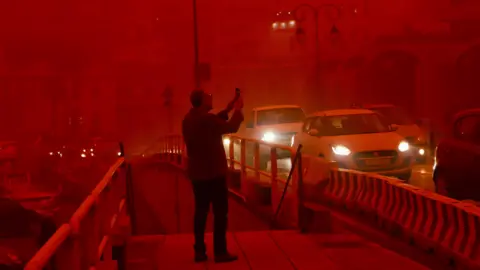
NIKOS CHALKIADAKIS/EPA/Shutterstock A man takes a picture while cars drive with their headlights on in red air.NIKOS CHALKIADAKIS/EPA/Shutterstock
A man takes pictures as the city of Heraklion that is covered in red dust coming from Africa

A man has died near Athens as a storm hits parts of Greece with gale-force winds and flooding, while a Saharan dust storm enveloped the island of Crete.

The man was found under a car in the Nea Makri rural area early on Thursday, according to the fire department.

Storm Erminio has flooded streets, closed some schools and moored ferries. Meanwhile, some flights were disrupted on Crete on Wednesday after dust from an African storm filled the air, turning the sky red-orange.

The weather is expected to be bad on Thursday in most areas of the country "with long-lasting and intense rains and storms and possibly with local hail", according to the national meteorological service.
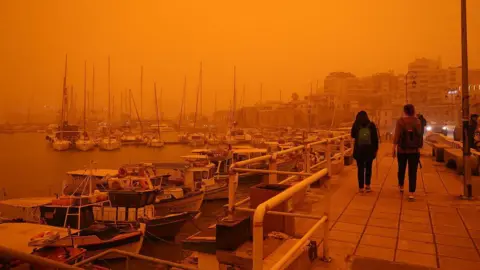
Stefanos Rapanis/Anadolu via Getty Images People walk along a waterfront with boats, buildings and the sea in the background. The sky is orange.Stefanos Rapanis/Anadolu via Getty Images
Crete cloaked by a Saharan dust storm on 1 April

A red warning is in place in Crete, mainly in the west and south, from midday until late at night on Thursday.

The fire department received 674 calls for assistance from Wednesday through the early hours of Thursday. The majority were in the Attica region that encompasses Athens, with most calls for fallen trees.

High winds have kept ferries moored in ports, with Greek media reporting some departures may resume on Thursday, weather permitting.

Streets as well as the basement of the local police station in Nea Makri were flooded. A bridge was knocked down on the island of Poros and vehicles have reportedly been swept away. Some schools have also been closed.
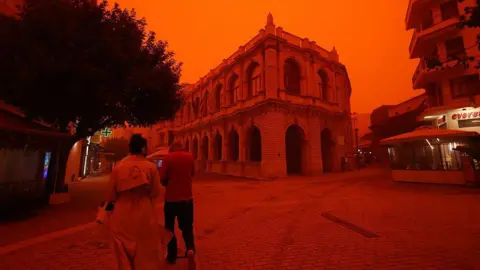
Stefanos Rapanis/Anadolu via Getty Images Two people walk in jackets long a street beside a shop and building. The sky and everything is coloured red-orange.Stefanos Rapanis/Anadolu via Getty Images
Crete cloaked by Saharan dust storm on 1 April

Brazil grants joint custody over pets in new law for separated couples

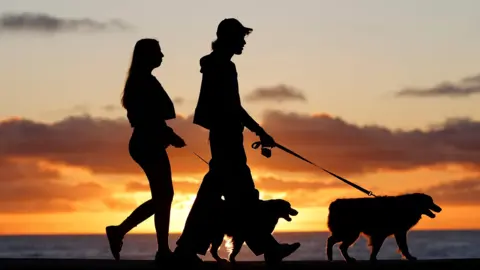
Getty Images A couple walking two dogs in the sunsetGetty Images

Courts in Brazil will be able to determine shared custody arrangements for the pets of separating couples, under new laws.

Lawmakers in the Brazilian Congress on Tuesday viewed the law change as a reflection on the importance people place on their pets.

The legislation means that if a couple separates without reaching an agreement regarding their pet, "a judge will determine the shared custody arrangement and the equitable distribution of the animal's maintenance expenses between the parties".

Currently, the country of 213 million people has about 160 million pets, according to the Instituto Pet Brasil.

For the law to apply to separating couples, the animal must have spent the majority of its life with the pair.

Shared custody will not be granted in cases of prior criminal records or a history or risk of domestic violence.

Members of the congress said there had been an increase in pet custody disputes in courts, while noting the law responds to "changes that have occurred in Brazilian society in recent decades," according to a statement accompanying the law.

The statement added that couples with fewer children tend to have closer relationships with their animals, "often considered true family members".

Currently in the UK, dogs are legally seen as inanimate objects akin to cars, houses or other personal items, meaning custody cases come down to determining who the sole owner is.

In 2014, France changed its law so pets were considered "living and feeling beings" rather than "moveable goods". That change meant couples would be able to fight for shared custody in divorce cases.

Australia currently has no legislation on how the courts should navigate living arrangements for pets after a breakup.

The most recent example of a pet being given joint custody was in Spain in 2021. A judge granted joint custody of a dog to a separated couple who went to court to determine who the pet should live with.

The Madrid court considered that both parties were "jointly responsible" and "co-caretakers" of Panda the dog.

Elon Musk's SpaceX set to go public in $1 trillion share listing

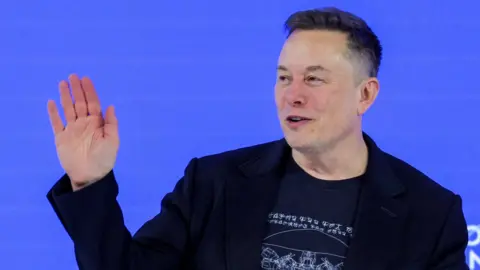
Reuters Elon Musk waving to a crowd from a stage wearing a black blazer and a black t-shirt.Reuters

Elon Musk's SpaceX is poised to become one of the most valuable publicly traded companies in the world.

The company, which manufactures rockets, space exploration technology and Starlink satellites, is currently privately held. But on Wednesday it made a confidential filing with the US Securities and Exchange Commission (SEC) for an initial public offering, which would allow shares to be traded in the stock market.

The value of SpaceX once it goes public is expected to surpass $1tn (£751bn). That would make its eventual stock market debut one of the most financially significant in history.

Musk's own holding in SpaceX would put the billionaire on track to become the world's first trillionaire.

The BBC has contacted SpaceX for comment.

The company is aiming to officially go public sometime in June, according to reports in Bloomberg, Reuters and the New York Times.

A confidential IPO filing with the SEC allows a company to avoid immediately revealing information to the public while it requests feedback from the regulator. The next step will be for company executives to hold "roadshows" - meetings with big investors to convince them to buy shares.

By making shares of SpaceX available for purchase by the public, the company is looking to raise $50bn or more, according to the reports.

Earlier this year, SpaceX took over xAI, Musk's artificial intelligence venture. After that all-stock merger, SpaceX is believed to have become the most valuable private company in the world, with an internal valuation of $1.25tn.

Recently, Musk's various companies have been becoming increasingly intertwined.

Last year, xAI, best known for its chatbot Grok, took over X, the social media platform previously called Twitter that Musk bought in 2022.

This degree of consolidation was a clear sign to investors that SpaceX was preparing to go public.

Emily Zheng, a senior analyst at Pitchbook, earlier told the BBC that by bringing xAI under SpaceX, Musk could show potential investors that he was consolidating costs and able to easily share resources between his companies.

With its large-scale ambitions, SpaceX is in need of a massive cash infusion that going public can provide, Zheng added. The company is racing to keep up with the "sheer cost of compute, infrastructure, and energy" needed to expand, she said.

Earlier this year, Tesla, Musk's electric vehicle company, revealed it had invested more than $2bn in xAI.

The billionaire said a significant share of Tesla's manufacturing would begin to shift toward building robots, which would make use of xAI technology like Grok.

Grok is already included in some Teslas as an AI assistant.

SpaceX would also partner with Tesla and xAI in the massive chipmaking endeavour Musk announced last month, which he is calling Terafab.

"Tesla, xAI and SpaceX have all done amazing things that people did not think could be done before," Musk said in a March presentation discussing Terafab.

Musk started SpaceX in 2002 with the aim of reducing the cost of launching crafts into space, mainly by making rockets that could be launched more than once. It first contracted with Nasa in 2006.

Today, most of SpaceX's work continues to revolve around rockets and the operation of Starlink, a fleet of satellites offering internet connectivity across the globe.

But Musk often discusses grander ambitions for the company, including putting data centers needed for AI in space and building a self-sufficient city on Mars, which many experts have said could be impossible to realise.

Palantir UK boss says it's up to militaries to decide how AI targeting is used in war

Palantir's Louis Mosley says militaries responsible for how AI systems are used

Tech giant Palantir has pushed back against concerns that military use of its AI platforms could lead to unforeseen risks, in an exclusive interview with the BBC, insisting that the way the technology is used is the responsibility of its military customers.

It comes as experts have expressed concern over the use of Palantir's AI-powered defence platform - Maven Smart System - during wartime and its reported use in US attacks on Iran.

Analysts have warned that the military's use of the platform, which helps personnel plan attacks, leaves little time for "meaningful verification" of its output and could lead to incorrect targets being hit.

But the company's UK and Europe head, Louis Mosley, told the BBC in a wide-ranging interview that while AI platforms like Maven have been "instrumental" to the US management of the Iran war, responsibility for how their output is used must always remain "with the military organisation".

"There's always a human in the loop, so there is always a human that makes the ultimate decision. That's the current set-up."

The Maven Smart System was launched by the Pentagon in 2017 and is designed to speed up military targeting decisions by bringing together masses of data, including a range of intelligence, satellite and drone images.

The system analyses this data and can then provide recommendations for targeting. It can also suggest the level of force to use based on the availability of personnel and military hardware, such as aircraft.

But scrutiny has grown over the use of such tools in warfare. In February, the Pentagon announced that it would be phasing out Anthropic's Claude AI system - which helps to power Maven - after the company refused to allow use of its AI in autonomous weapons and surveillance. Palantir says alternatives can replace it.

Since the war with Iran began in February, the US has reportedly used Maven to plan strikes across the country.

Demonstration footage of Palantir's Maven Smart System

Pushed by the BBC on the risk that Maven might suggest incorrect targets - which could include civilians - Mosley insisted that the platform is only meant to serve as a guide to speed up the decision-making process for military personnel and that it should not be seen as an automated targeting system.

"You could think of it as a support tool," Mosley said. "It's allowing them to synthesise vast amounts of information that previously they would have had to do manually one by one."

However, Mosley deferred to individual militaries when challenged by the BBC on the risk of time-pressured commanders ordering their officers to take Maven's output as being rubber-stamped.

"That's really a question for our military customers. They're the ones that decide the policy framework that determines who gets to make what decision," he said. "That's not our role."

Since 28 February, the US has launched more than 11,000 strikes against Iran, many reportedly identified by Maven.

Adm Brad Cooper, head of the US military in the Middle East, has hailed AI systems for helping officers "sift through vast amounts of data in seconds, so our leaders can cut through the noise and make smarter decisions faster than the enemy can react".

But some worry AI's involvement in mission planning creates significant risks.

"This prioritisation of speed and scale and the use of force then leaves very little time for meaningful verification of targets to make sure that they don't include civilian targets accidentally," Prof Elke Schwarz of Queen Mary University of London said.

"If there's a risk of killing and you co-opt a lot of your critical thinking to software that will take care of these things for you, then you just become reliant on the software," she added. "It's a race to the bottom."

In recent weeks, Pentagon officials have faced questions as to whether AI tools such as Maven were used to identify targets in the deadly strike on a school in the Iranian town of Minab. Iranian officials said the strike killed 168 people, including around 110 children, on the opening day of the war.

In Congress, a number of senior Democrats have called for increased scrutiny of AI platforms like Maven. Rep Sara Jacobs - a member of the House Armed Services Committee - called for clearly enforced rules and regulations about how and when AI systems are used.

"AI tools aren't 100% reliable — they can fail in subtle ways and yet operators continue to over-trust them," she told NBC News last month.

"We have a responsibility to enforce strict guardrails on the military's use of AI and guarantee a human is in the loop in every decision to use lethal force, because the cost of getting it wrong could be devastating for civilians and the service members carrying out these missions."

But Mosley pushed back against suggestions that the speed of his company's platform is rushing decision making at the Pentagon and potentially creating dangerous situations. He instead argued that the speed at which commanders are now taking action is a "consequence of the increased efficiency" that Maven has enabled.

Citing "operational security", the Pentagon declined to comment when approached by the BBC on how AI systems like Maven will be used in future or who would be held responsible should something go wrong.

But officials in the US appear to be moving forward with plans to further integrate Maven into its systems.

Last week, the Reuters news agency reported that the Pentagon had designated Maven as "an official program of record" - establishing it as a technology to be integrated long-term across the US military.

In a letter obtained by Reuters, deputy Defence Secretary Steve Feinberg said the platform would provide commanders "with the latest tools necessary to detect, deter, and dominate our adversaries in all domains".

Additional reporting by Jemimah Herd

Over 1,800 killed since junta seized power in Burkina Faso, rights group says

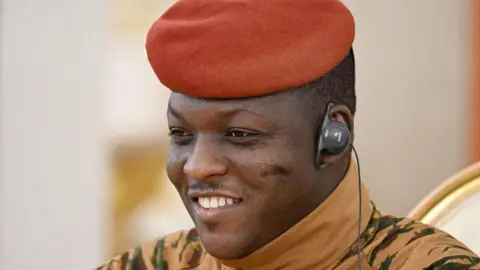
Anadolu via Getty Images Burkina Faso President Ibrahim Traoré in a red beret and military uniformAnadolu via Getty Images
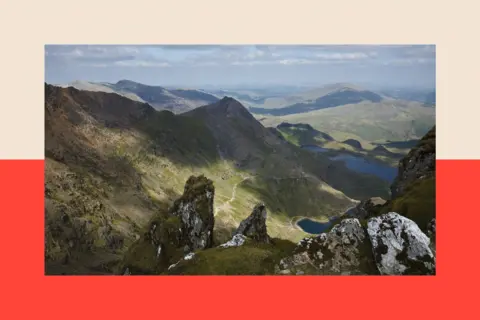
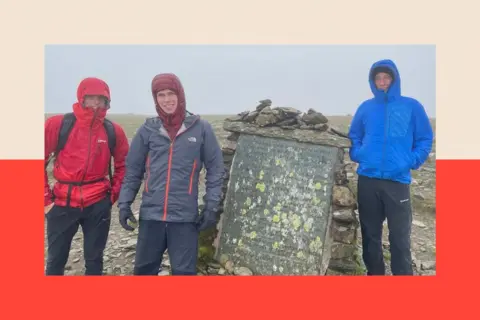
The junta is accused of committing "horrific abuses" since Ibrahim Traoré seized power

More than 1,800 civilians have been killed in Burkina Faso since Ibrahim Traoré seized power three years ago in acts amounting to "war crimes and crimes against humanity", a new report says.

Human Rights Watch (HRW) says about 1,837 civilians, including dozens of children, were killed in 57 incidents between January 2023 and August 2025.

It attributes most of the killings - 1,255 - to the military and allied militias, with the rest blamed on Islamist militants.

HRW finds President Traoré and six senior military commanders "may be liable as a matter of command responsibility for grave abuses and should be investigated". It also says five jihadist leaders may be culpable.

The Burkinabé authorities have not yet commented on the report but have dismissed previous accusations that their forces have killed civilians.

One of the reasons the military gave for seizing power was to tackle the jihadist groups linked to al-Qaeda who have been waging an insurgency in Burkina Faso and neighbouring countries for over a decade and control huge parts of the country.

The report is based on analysis of open-source information, including photos, videos and satellite imagery, and interviews with witnesses and survivors.

"All sides are responsible for the war crimes of willful killing, attacks on civilians and civilian objects, pillage and looting, and forced displacement," the report says.

It accuses the junta of committing "horrific abuses" and failing to hold perpetrators to account while blocking reporting to hide the suffering of civilians caught in the violence.

"The scale of atrocities taking place in Burkina Faso is mind-boggling, as is the lack of global attention to this crisis," says Philippe Bolopion, HRW's executive director.

The report cites one of the deadliest incidents in December 2023 in which it says the military and allied militias killed more than 400 civilians in the northern town of Djibo.

A 35-year-old woman told the rights group that her two daughters died on the spot and bullets injured her and her nine-month-old son.

"Make sure no-one is breathing before heading out," she recounted a militia member as saying.

Survivors described the killings as brutal and said they continue to suffer deep psychological trauma.

"Many survivors described the killings as 'butchery' and said they were left with deep psychological wounds," the report notes.

Since the military government seized power, authorities have been accused of carrying out brutal campaigns increasingly targeting civilians in response to attacks by al-Qaeda affiliate JNIM, the biggest jihadist group in the country.

Civilians described to HRW a feeling of being "caught between a rock and a hard place", threatened with death by JNIM while also being targeted by government forces.

The rights group says JNIM has used widespread threats and violence to dominate and punish communities and has targeted civilians refusing to submit to its authority, whom it accuses of supporting the government.

In August 2024, JNIM attackers "shot dead at least 133 people and injured more than 200 in fewer than two hours", it says.

HRW is now urging the International Criminal Court to open a preliminary investigation into the alleged crimes committed by all the parties since September 2022.

It has also called on Burkina Faso's partners and donors to impose sanctions and to refrain from cooperating with the country's army.

Traoré seized power in September 2022 after overthrowing Paul-Henri Sandaogo Damiba, who had taken over only nine months earlier.

Despite his authoritarian reputation, 37-year-old Traoré has gained a huge following across the continent for his pan-Africanist vision and criticism of Western influence.

Burkina Faso, like its neighbours Mali and Niger which are also under military rule, has moved away from working with Western countries, especially France, in its fight against the Islamist groups. All three have instead turned towards Russia for military assistance, however the violence has continued unabated.

You may also be interested in:

Getty Images/BBC A woman looking at her mobile phone and the graphic BBC News AfricaGetty Images/BBC

Go to BBCAfrica.com for more news from the African continent.

Follow us on Twitter @BBCAfrica, on Facebook at BBC Africa or on Instagram at bbcafrica

Australia to crack down on gambling ads after years of criticism

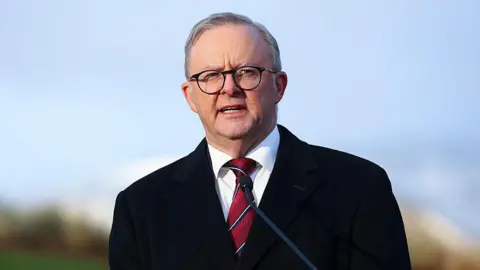
Getty Images Anthony AlbaneseGetty Images
Australia has the highest per capita gambling losses in the world

The Australian government has announced long-awaited gambling advertising reforms, after years of public pressure.

The suite of measures will further limit when and where gambling ads can appear, as well as who can star in them - but it stops short of a full ban, which had cross-party support and the backing of a range of community groups.

Restrictions have been fiercely opposed by powerful gambling agencies, as well as media firms and sports organisations who feared a steep revenue hit.

Australians lose more money to gambling, per capita, than anywhere else in the world.

A number of countries - like Italy, Belgium and Spain - have introduced total or near-total bans on gambling advertising, and a parliamentary inquiry weighing up reform in Australia recommended similar more than 1000 days ago.

In a speech to the National Press Club on Thursday, Prime Minister Anthony Albanese said his government was "getting the balance right" with this package.

"Letting adults have a punt if they want to, but making sure our children don't see betting ads everywhere they look."

Under the reforms, from January 1:

  • TV ads from betting agencies will be capped at three per hour, between 6am and 8:30pm, and banned completely from any live sports broadcasts during those hours
  • Gambling ads will be banned from radio during school pick-up and drop-off times
  • Celebrities and sports players will not be permitted to appear in gambling advertising
  • Gambling ads on online platforms will be banned, unless people have a logged in account, are over 18 and have the option to opt-out
  • Gambling ads will be outlawed in sports venues and on players' and officials' uniforms

The government will also crack down on illegal, offshore gaming sites, and ban more types of online gambling - like Keno and apps and websites modelled on poker machines.

The measures have already prompted backlash from voices in the gambling industry.

In a statement, Responsible Wagering Australia - the peak body for betting agencies - said the new measures are "draconian" and set a "dangerous precedent".

"Today it's gambling advertising, tomorrow it's alcohol, then it's sugary drinks, fast food, critical minerals and who knows what else comes next," chief executive Kai Cantwell said.

He accused the government of blindsiding a sector that supports 30,000 jobs and "provides critical funding to sport, racing and broadcast industries".

A spokesperson from Sportsbet - one of Australia's biggest agencies - said they were concerned the "overly blunt" restrictions could have "unintended consequences", like driving more Australians towards illegal offshore betting which isn't limited by the same conditions.

"Sportsbet recognises changing community sentiment on gambling advertising and has already taken proactive steps."

Many of those advocating for change were also unhappy, believing the proposed changes don't go far enough.

"Imagine three cigarette ads per hour," Reverend Tim Costello said.

"Australian children deserve to grow up in a country that puts their wellbeing before corporate profits."

His Alliance for Gambling Reform were among groups calling for a full gambling advertising ban on the web and broadcast platforms, and the establishment of a national industry regulator.

Similarly, Australian Medical Association vice-president Julian Rait in a statement declared that "partial bans do not work".

"Anything less than a comprehensive ban will continue to expose Australians - especially children - to relentless gambling promotion," he said in a statement.

Alleged Bondi gunman loses court bid to suppress names of his family

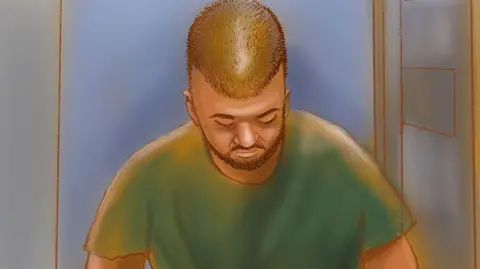
Rocco Fazzari/Getty Images A court sketch of a man with shaved head and green t-shirt with his head bowed.Rocco Fazzari/Getty Images
A sketch shows alleged Bondi gunman Naveed Akram at a court hearing last month

The alleged Bondi gunman has lost his court bid to suppress the names and addresses of his mother, brother and sister due to fears over their safety.

Lawyers for Naveed Akram - who is facing 59 charges over December's attack on a Jewish festival on Bondi Beach that killed 15 people - argued that his family could be targeted by vigilantes and had already experienced abuse.

Last month, details of Akram's family were suppressed under an interim order but on Thursday, a Sydney court lifted it after several media outlets opposed the move.

The case had attracted "unprecedented" attention in Australia and globally, the judge ruled, and information about the family was already widely available online.

"This case has unprecedented public interest, outrage, anger and grief," Judge Hugh Donnelly told the court.

He said the request for a suppression order lasting 40 years did not meet the exceptional circumstances threshold and would have limited impact as it would only apply in Australia and not social media platforms or international media outlets.

The judge said the case was "exceptional by virtue of the sheer magnitude and intensity of the commentary" on overseas platforms, according to the Australian Broadcasting Corporation (ABC).

Donnelly said it was "unfortunate" that Akram's driver's licence had already been posted online but that his lawyers had not properly explained how an order could be enforced.

He also said he was not critical of an interview that Akram's mother gave to a local outlet but that suppressing her identity would do little, the ABC reported.

On the names and workplaces of Akram's siblings, the court said they were unlikely to be part of any court proceedings as they had "little relevance to the case".

Akram, 24, appeared in court via video link from the high security prison where he is being held.

During a hearing last month, the court heard that people had driven past Akram's family home, shouting abuse and death threats.

Family members also reported receiving threatening texts and phone calls.

"We live in constant fear someone will harm us or set our house on fire. I fear for my life and the lives of my children," Akram's mother wrote in a statement.

Lawyers for the media organisations who opposed the suppression order argued that the details of his family were already widely known and there was no evidence of an imminent risk to them, according to the Guardian Australia.

'We go for all humanity' - emotional moment as Artemis II blasts off

Watch the moment Artemis II blasts into space on historic mission

Nasa's Artemis II mission thundered away from Florida's coast, taking its four crew members on their historic journey to circle the Moon.

There was a deep rumbling as a sheet of brilliant white flame suddenly erupted, momentarily engulfing the whole launch pad as the mightiest rocket Nasa has ever built rose into the sky.

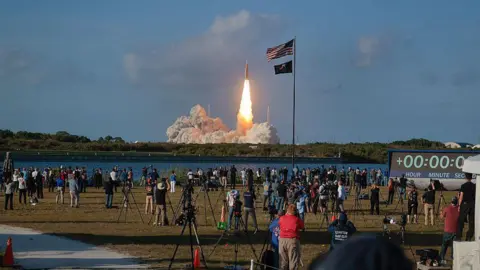
Nasa's Space Launch System (SLS) majestically crept upwards - slow at first, then gathering pace, riding on two blinding pillars of flame that crackled and roared with increasing volume until the rumbling was almost deafening, a sound we could feel in our bodies as we watched on in amazement, three miles (4.8km) away from the launch pad.

There were small cheers from those in the know as the rocket past the moment of maximum danger - one minute and 10 seconds into the launch. This is where the pressure hits the rocket the hardest, and when engineers know that even a small structural weakness can be disastrous.

There was no weakness, and SLS arced out over the Atlantic like a fiery white angel, leaving a white smoky trail as the sound subsided and the spacecraft disappeared from view, shrinking to a single bright star as it chased the Moon.

Chip Somodevilla/Getty Images Artemis is taking off in the distant background, and people watch, many with tripods. The US flag flutters above them on a flag pole.Chip Somodevilla/Getty Images
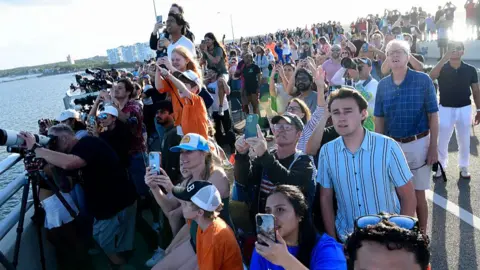
Spectators are kept at a safe distance, but the deep rumbling of the rocket launch can still be physically felt

Afterwards, there was a giddy euphoria among staff at the Kennedy Space Center.

One person told me they felt quite emotional and another said they wanted to cry – no doubt a release of tension built up over the past few months when Artemis II came close to launch, but ended up being scrubbed for various reasons.

Tonight, though, Nasa employees were laughing and clapping - this is the moment that they have spent years working towards. There is still work to do, but for now they are bathing in the moment of triumph.

In the hour before take-off there were issues which threatened the launch.

They concerned the launch abort system, which enables Nasa engineers to eject the astronauts and blow up the rocket if there is a malfunction.

The countdown clock was held at 10 minutes while engineers resolved the problem. They worked quickly, but it was an agonising wait to see if the launch could still go ahead.

Then came the staccato rhythm of the calls by each engineer responsible for the rocket's critical systems: "booster, go", "GNC, go", "range, go" – each reply, a tiny release of tension and a build-up of expectation.

"Artemis II, this is launch director," said Charlie Blackwell-Thompson, the first woman to hold the position at Nasa.

"You are go for launch," she told the crew. "We go for all humanity", Commander Reid Wiseman responded.

Cheesy words in normal circumstances, but that was the moment our spines began to tingle and we knew we were about to witness history.

Gerardo Mora/Getty Images A group of people watches the launch, most holding phones or cameras up to the sky.Gerardo Mora/Getty Images
Many thousands of people gathered at viewing locations around the Kennedy Space Center in Florida to watch the launch

The Kennedy Space Center was built to send astronauts to the Moon, but that hasn't happened since 1972 when Apollo 17 blasted off. Today, the centre was back in business, doing what it was made for.

The press corps headed outside, where clouds that had threatened to cancel the launch had evaporated.

As the countdown clock restarted, the atmosphere turned to electric anticipation.

The four RS 25 engines and twin solid rocket boosters lit up, driving more than 8.8 million pounds of thrust into the Florida evening sky.

"God Speed Artemis II" Blackwell-Thompson said in another echo from the past. The same words were used in a launch from here in 1962 to send John Glenn, the first American to orbit the Earth, on his way.

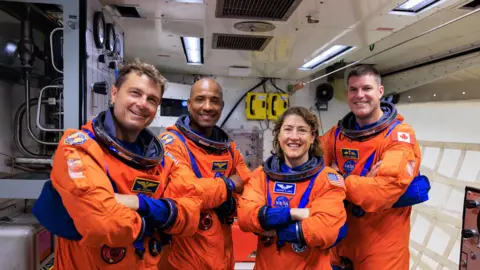
NASA Four astronauts stand side by side inside a cramped white spacecraft or support module, wearing bright orange launch and entry suits with blue trim and mission patches. Their arms are folded confidently across their chests.NASA
On their way to the Moon: Commander Reid Wiseman, pilot Victor J Glover, and mission specialists Christina Koch and Jeremy Hansen

I have been lucky enough to see launches of the Space Shuttle to the International Space Station from the Kennedy Space Center. Those launches are almost as impressive in flight, surging into space with an enormous bang and rising at the speed of a bullet.

But the SLS launch was not only more beautiful, it meant much more: a moment full of emotion for all those who saw it, perhaps because it reminded us of what humanity can do when it comes together, or perhaps because we may be entering a new era of space travel.

In the 1990s, I had the opportunity to speak to Neil Armstrong, who, in 1969, became the first person to ever walk on the moon.

Our discussion came at a time when the dream of human space travel seemed to be over. I asked him whatever happened to that dream? He smiled and said "the reality may have faded but the dream is still there and it will come back in time".

Today was the day the dream returned.

The delicate question of where responsibility lies for safety on UK mountains

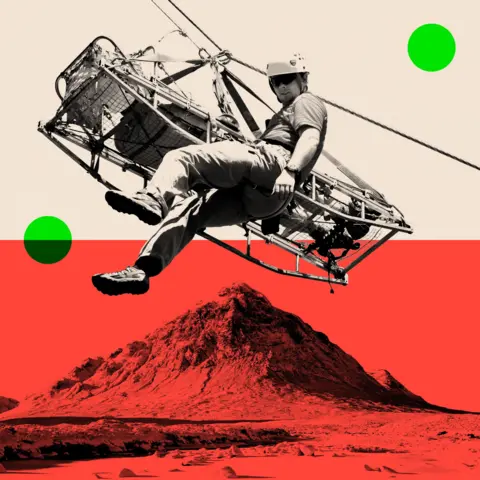
BBC A montage image showing a person from the Langdale Ambleside Mountain Rescue Team bringing a stretcher down and an image from Scotland, Argyll and Bute, Glencoe, Buachaille Etive Mor, frozen mountainous regionBBC

Two walkers find themselves stranded on a remote hillside as night closes in, hundreds of miles from home, after being inspired out into the wilderness by a TikTok video. It might sound like an unusual emergency - but for Mike Park, CEO of Mountain Rescue England and Wales, it's become a familiar story.

"We had two people stuck on a hill at 8pm, no torches. One was in their early 20s and the other was late 30s. It was their first time on a hill. They'd travelled a long way because they'd seen a TikTok route. They set off on their walk at 2pm - too late - wearing shorts, T‑shirts and carrying only a picnic," he recalls.

"They got off‑route, found themselves in unfamiliar ground – but they did the right thing by calling for help."

Park says this recent rescue, just a few days ago in the Lake District, is typical of the kind of callouts many colleagues now see.

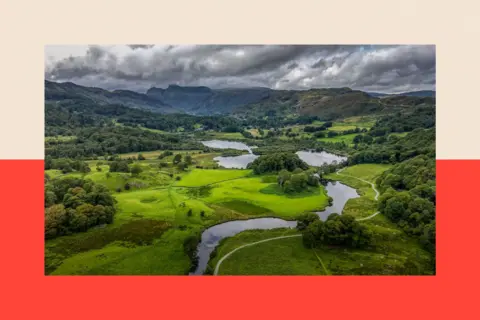
Getty Images A view of the Lake District and the River Brathay 

Getty Images
Mike Park has spent the past 40 years rescuing people on the hills of the Lake District

His rescue team were able to safely find the pair and walk them off the hill – but the incident perfectly captures some changing behaviours. Their situation was self-inflicted; they weren't prepared and got into trouble, extra layers and some good torches could have seen them rescue themselves - but they were also quick to call for help when they knew something was wrong - a decision Park says saved them from far more severe consequences.

"If we hadn't reached them, they'd have been stuck all night in the dark. By morning, I'm confident they'd be suffering hypothermia - possibly unable to walk."

Over the past few years, mountain rescue teams say there's been a stark rise in the number of people needing to be rescued.

This has ignited a delicate but important debate. Who is responsible for safety on our mountains? And, are increased warning signs and even barriers the answer to saving lives in our most dangerous landscapes, or is risk the price we pay for true adventure?

The rise in callouts

Mountain rescue callouts have been steadily rising for decades. Sport England figures suggest there's been a particular boom in recent years, with the number of us regularly climbing a hill or mountain rising from 2.8m people in 2018 to 3.6m in 2024.

Living an active lifestyle is something the public body estimates could be saving the NHS billions each year, by reducing the number of people developing chronic conditions.

However, it's also contributed to sharp rises in the number of rescues required by the volunteers who make up the UK's so-called "fourth emergency service".

In England and Wales, the number of callouts rescue teams attend has doubled in the past decade, reaching well over 3,000 a year by 2024, according to Mountain Rescue England and Wales.

So what's changed?

One of the key themes rescue teams pick up on is how incidents featuring younger adventurers, aged 18 to 24, have soared in recent years. Callouts for the age group almost doubled in England and Wales between 2019 and 2024, from 166 to 314.

It now makes them the most rescued age group, overtaking walkers in their 50s who had previously needed the most help.

Mike Park has spent the past 40 years on the hills of the Lake District, rescuing those in danger. He has observed a significant shift among younger people in embracing the outdoors - but says he believes better technology and wider social changes in the past few decades have also fed into the overall rise.

"It doesn't matter what age you are - society is more adventurous, more reliant on help, less outdoor‑aware, and less prepared," he says.

"When I first started our team did 10-15 callouts a year. We average around 100 now. The rise hasn't been steady - it's steepened sharply, especially in the last 10 years and after Covid-19."

Park believes part of what makes the mountains of the UK so attractive is that most can be easily accessed for a day-trip - at worst a short weekend break. They are on our doorstep, via the same motorways and service stations we might stop at on our way to a theme park or music gig.

This can breed a sense of overfamiliarity - with some misjudging just how alien and dangerous these environments can be, he suggests.

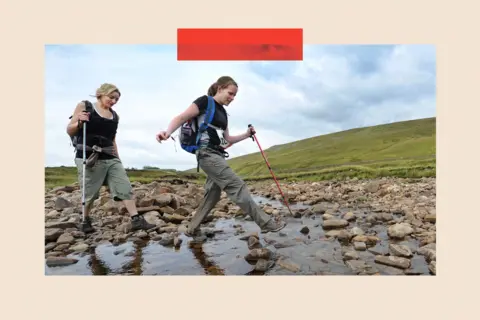
Corbis via Getty Images Participants crossing stepping stones in YorkshireCorbis via Getty Images

Park believes part of what makes the mountains of the UK so attractive is that most can be easily accessed for a day-trip

Park says decades ago, many people who went into the UK's mountains would have it as their sole major pastime, they were "hillwalkers or mountaineers, that was it". Now, outdoor adventures are easy to pick up alongside the many other work and leisure activities people juggle.

"There's so much to do now, we don't concentrate on any one thing. People might do the outdoor environment one week, swimming the next, holiday the week after," he says.

Rescuers say it should be seen as only good news that millions of people are now inspired each year to venture into the outdoors themselves, encouraged by stories of the physical and mental health benefits - and beautiful images spread across social media.

But the reality of having so many novices is also starting to take its toll on some of the UK's busiest rescue teams, who are increasingly grappling with exhaustion and stretched staffing.

It's important to note that no rescue team we spoke to begrudge doing these kinds of rescues - they are grateful they can help those who need it and avoid the situation getting any worse. It doesn't matter how you got there, just that they can help you get down safely.

But according to Park, the fact people are seemingly more willing to take risks in the first place - and then more willing to pick up the phone when things go wrong - has fundamentally changed what kind of rescues his teams do.

"Ten years ago, 70% of callouts were because someone physically couldn't get off a hill," he says.

"Now, most people haven't physically injured themselves - it's that they're mentally unable to get down, because they weren't prepared for the environment."

In other words, people's bodies are capable of getting them off the mountains, but they lack the experience, confidence or equipment to do it safely.

Online influencers

Many mountain rescuers believe the increase in online influencers is playing a role. There are pictures and videos across sites like TikTok and Instagram encouraging people to venture out to beautiful plateaus and waterfalls.

Seeing people influenced by social media "used to be rare, but now it's constant," explains Martin McMullan, from the Mourne Mountain Rescue Team in Northern Ireland.

"People search out iconic locations made popular by influencers. Some go just to experience it - others are trying to create their own content for their platforms."

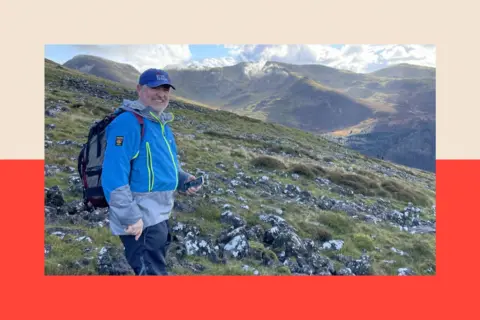
BBC/ Getty Images Martin McMullan on the left and on the right is an image of a man walking in the Mourne mountains in Northern Ireland
BBC/ Getty Images
Martin McMullan says: "People search out iconic locations made popular by influencers"

In some rare cases, McMullan says influencers may even be attempting to get rescued - to create more interesting content for their channels. He became suspicious of one case a few years ago, when his team was called to Northern Ireland's highest peak in "very serious" sub-zero winter conditions.

At the summit McMullan says they found a group of young people who they escorted part of the way down, before calling in a helicopter to evacuate them to safety. It was only days later, when a friend alerted him to it, that McMullan realised the whole thing had been filmed by the group, clutching onto their phones as they were rescued.

"They'd been livestreaming parts of it - even when things became dangerous. We were oblivious to it at the time. They probably thought it made great social media content."

McMullen says although being far from the first time he'd had a rescue filmed by members of the public keen to capture the drama of the job, it was the first time his team suspected a group had gone out with the idea of getting rescued, something they denied.

Hotspots

The vast majority of mountain rescue teams, thankfully, rarely find themselves called out to a death. But the spread is far from even and there are certainly hotspots.

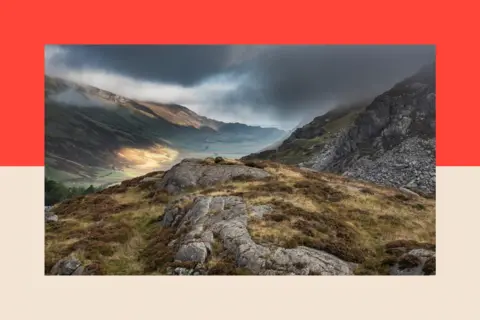
The rescue team covering Yr Wydffa, Snowdon, is far and away the busiest in the UK. The team is often called to fatal incidents and has seen a rise in deaths. Across north Wales, there were 14 fatalities in the mountains back in 2015. Last year there were 23.

Getty Images Autumn landscape image of view along Nant Fracon valley in Yr Wydffa, Snowdonia National Park, with dramatic evening sky 
Getty Images
The rescue team covering Yr Wydffa, Snowdon, is the busiest in the UK

So-called body recovery callouts can have a significant impact on the rescuers, with a growing importance being placed on welfare checks and support for the teams who regularly battle the elements to retrieve bodies so they can be returned to their loved ones.

There have been suggestions that putting up physical warning signs, or even fencing, on some of the UK's most dangerous ridges and waterfalls could potentially save lives. The National Trust and conservation project, Fix the Fells, recently decided signs were needed to prevent accidents on England's highest mountain, Scafell Pike.

Over eight years, four people died and more than 40 were rescued from the treacherous ravine known as Piers Gill, before a sign and large rocks were placed on the nearby route to encourage people away from the area.

In mid-Wales, one assistant coroner has recommended multiple times that signs be put up around some of the region's impressive waterfalls. Five people have died at the beauty spots in the past few years, which has prompted the assistant coroner for south Wales central, Rachel Knight, to write three Prevention of Future Death Reports - recommending improvements.

In the most recent one, she argued clearer warning signs were needed for walkers who risked falling from the paths above the waterfalls – suggesting without them, many would fail to understand "the significant risks they face" in the area and more people were likely to die.

So could putting up signs work in other remote areas?

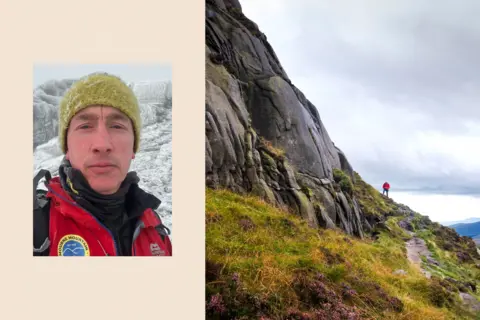
Andy Buchan is due to take over Mike Park's role at Mountain Rescue England and Wales in May.

In some of the most extreme areas, like Crib Goch, a notorious knife edge ridge in north Wales with annual fatalities, Buchan says some ideas should be considered.

Andy Buchan in walking gear on a mountainside
Andy Buchan, the incoming CEO of England and Wales Mountain Rescue

"I won't call it signposting in terms of actually putting signs up on the mountain, but certainly signposting towards more information could really help."

Buchan suggests that in rescue hotspots such as Crib Goch, which does already have some warnings placed on the route, more could be done to help walkers access weather forecasts and safety information before they get to an area - potentially by placing additional signs or QR codes in car parks hikers are likely to use before heading out.

However, what Buchan and others I speak to really don't want to see - despite some potential benefits - is the same widespread canvassing of signs and fencing witnessed in other countries.

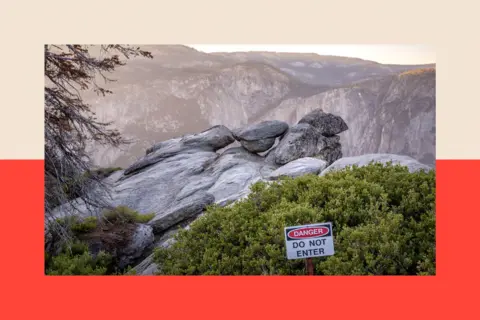
Danger do not enter signal at Yosemite national park at Glacier point with its famous overhanging rock
Buchan does not want to see the same widespread canvassing of signs and fencing witnessed in other countries

"There are other parts of the world that I've travelled, like the US, where you can get to remote places and then all of a sudden, when you want to go and have a look at the view over the cliff, there's a big metal barrier around and there's concrete being put in place and it kind of destroys the remoteness of the location that you're in," Buchan explains.

'The mountain isn't going anywhere'

In preparing for the role, Buchan has had plenty of time to think about the current challenges, but is overwhelmingly positive about seeing more people out on the hills.

"We encourage people to get outside for their physical and mental wellbeing," he says. "People recognise the countryside is a cost‑effective way to have great experiences. It's great - but it does come with risk."

Universal Images Group via Getty Images View to Crib Goch and the Pyg Track with Llyn Glaslyn and Llyn Llydaw from Snowdon summit, Gwynedd, Wales, United Kingdom
Universal Images Group via Getty Images
Buchan suggests that in rescue hotspots more could be done to help walkers access weather forecasts and safety information

The story of Jack Carne is testament to that. Jack and his two best friends had travelled a few hours from their hometown of Barnsley to reach the mountains of Eryri, also known as Snowdonia, in north Wales. Inspired, after the Covid-19 lockdowns, by the freedom the mountains offered them, the trio in their 20s had been out hiking at every possible opportunity. They were committed, fit and experienced - but on this occasion, just "10 metres from the top" of Glyder Fawr, a peak thousands of feet up, everything went wrong.

A rock Jack had grabbed hold of broke away in his hands. His friends could do nothing as they watched him fall. In just an instant he was gone - disappearing out of sight beneath them. Three friends went up the mountain that day. Only two came back.

It was the starkest reminder possible about the unpredictability and the dangers lurking just beneath the surface of the UK's most picturesque landscapes – even for those who come prepared.

Left to right - Jack, Matty and Brandan on one of their trips
Jack Carne (left) and his two best friends Matty and Brandan

At the inquest into Jack's death, the coroner remarked how the young men were all well-equipped and experienced enough for the route they'd chosen.

"It was a scramble - nothing harder than anything we'd done before," Matty Belcher, one of those three friends, told me. "In fact it was easier than a lot of stuff we'd done," added the 27-year-old.

"Mountain Rescue said the boulder that actually took Jack was a freak accident," adds Brandan Smith, 25, the group's third member.

"That rock could have gone in a week's time, a year's time."

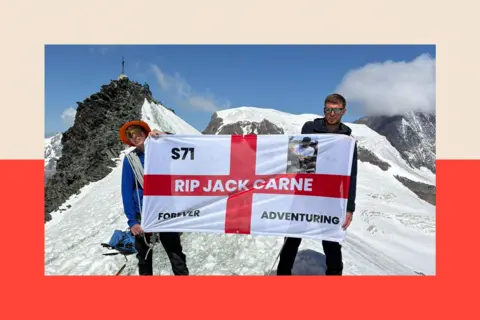
One week after Jack's death, Brandan and Matty were back at the same peak - this time making it the additional 10m to the summit, where they had time to reflect alongside Jack's dad, who they'd brought with them.

"Jack's dad wanted to see it - put his mind at ease, instead of guessing what happened," explains Matty.

For Brandan and Matty, it was a key moment - that inspired them to keep adventuring and not give up on the beauty of our landscape, despite the risks.

Brandan unfurls a flag to remember Jack at a summit
Brandan says Jack "was probably the best of us at climbing – he was brilliant"

"Jack was the one who absolutely loved it the most out of us," says Brandan. "He was probably the best of us at climbing - he was brilliant - he always pushed me, believed I could do it even when I didn't.

"If we'd stopped going out after he died, Jack would've kicked us for it."

The key thing, both men say, is for those looking to adventure, to always be aware of the risks.

"For us, if someone isn't feeling safe, we turn back. No question. There's always another day," says Brandan. "It's always going to be there - the mountain isn't going anywhere."

Top picture credit: Getty Images

Thin, lobster red banner with white text saying ‘InDepth newsletter’. To the right are black and white portrait images of Emma Barnett and John Simpson. Emma has dark-rimmed glasses, long fair hair and a striped shirt. John has short white hair with a white shirt and dark blazer. They are set on an oatmeal, curved background with a green overlapping circle.

BBC InDepth is the home on the website and app for the best analysis, with fresh perspectives that challenge assumptions and deep reporting on the biggest issues of the day. Emma Barnett and John Simpson bring their pick of the most thought-provoking deep reads and analysis, every Saturday. Sign up for the newsletter here

《观点》专栏:中国正蓄势取代美国,抢占全球科研领导地位 - RFI - 法国国际广播电台

02/04/2026 - 12:43

法国《观点》周刊专栏作家 Jean-François Bouvet 日前发文表示,倘若“中央帝国”北京在军事上尚未能与美国比肩,但其科研产出却正迈向全球主导地位。自第二次世界大战结束以来,美国始终是全球研究与开发(R&D)投资的最大资助方。然而,根据加州大学圣地亚哥分校“科学与创新政策前沿”项目(FSIP)为《自然指数》所做的分析,中国有望在两到三年内取而代之,夺得这一领导地位。

文章作者表示,这场变革源自于两股力量的叠加:美国公共投资的停滞不前,与中国当局研发支出的持续攀升。

中国有望成为全球科研中心

根据经合组织(OECD)数据,2023年中国公共研发支出达1330亿美元,十年间增幅高达90%。同期,美国研发支出仅增长12%,总额为1550亿美元。此外,中国计划在2030年前每年至少将整体研发支出提高7%,这意味着每年将投入数以十亿计的额外资金——涵盖公共与私人、基础与应用领域的研究。

据澳大利亚独立智库战略政策研究所(ASPI)运营的技术追踪工具显示,在近90%的关键技术领域,中国已处于领先地位,而这些技术被认为能够"显著增强或威胁一国的国家利益"。

特朗普的反复无常或令美国科学地位下滑

在基础研究领域,FSIP项目的研究人员认为,由于参议院对白宫削减预算的要求持反对态度,美国国家科学基金会(NSF)和国立卫生研究院(NIH)等联邦机构今年的整体资助规模将基本保持稳定。然而,对于未来几年国会能否持续抵制特朗普政府大幅削减预算的意图,他们则不那么乐观。

现任北京大学教授的饶毅(音译 Rao Yi ),主持着一个顶尖脑科学研究实验室。2007年回国后,他将在美国积累的经验用于推动中国生命科学的振兴。在《自然》杂志2025年6月的一篇专题报道中,这位神经科学家阐述了美国的犹豫徘徊如何可能为中国提供追赶国际先进水平的契机——甚至有望在十年内使中国在基础研究领域超越美国。当然,这恐怕并非"让美国再次伟大"选民们最关心的议题。

研发:未来实力的核心驱动力

“基础研究处于发展进程的核心,它是十年后创新与发现得以实现的根基。” 研究政策专家、FSIP项目联合负责人罗伯特·康恩如是说。

不过,尽管中国整体上正逼近并有望超越美国的研发水平,在军事领域却仍远未能与之比肩。

目前,美国引以为傲的国防技术佼佼者众多:世界最大航母福特号、B-2隐形轰炸机、F-35隐形战斗机、高能激光武器…… 美军在中东的部署生动展现了其军事力量的强大与多面性。而特朗普还不满足于此。美国国防预算已接近万亿美元——约为法国的十五倍——他还打算明年再提高50%。

在军事投入上,中国与美国仍相差悬殊:预计2026年中国军费约合2750亿美元,不及美国的四分之一。尽管如此,自2016年以来,中国国防预算每年以7%至8%的幅度递增。习近平着眼长远,但在推进重大工程时同样雷厉风行——5万公里高铁网络的破纪录建设速度,以及中国在航天领域的亮眼表现,无不印证了这一点。

文章总结指,中国同样志存高远:2049年,中华人民共和国将迎来建国100周年。尽管人口形势持续下行,这个“中央帝国”——似乎命中注定——志在届时重回世界第一强国的宝座。凭借“一带一路”、庞大的工业产能、强大的军事力量、登峰造极的研发实力…… 以及硬币的另一面:高科技全面监控体系。

Funeral director admits preventing 30 burials and stealing donations

BBC Breaking NewsBBC

A funeral director has admitted preventing the burials of 30 bodies and stealing donations made to charities by mourners.

Robert Bush, 48, was arrested after police investigated Hull-based Legacy Independent Funeral Directors following a report of "concern for care of the deceased" in March 2024.

Bush, formerly of East Yorkshire and now living in West Yorkshire, pleaded guilty at Hull Crown Court to 30 counts of preventing a lawful and decent burial, and one of theft relating to charitable donations.

He previously admitted presenting families with the ashes of strangers and fraudulently selling funeral plans. He will be sentenced at a later date.

This breaking news story is being updated and more details will be published shortly. Please refresh the page for the fullest version.

You can receive Breaking News on a smartphone or tablet via the BBC News App. You can also follow @BBCBreaking on X to get the latest alerts.

Every Trump Threat to Abandon NATO Hollows It Out

Doubts that the United States would come to the aid of NATO allies increase each time, prompting Europeans to consider an alliance without Washington.

© Daniel Mihailescu/Agence France-Presse — Getty Images

U.S. soldiers in a military exercise with NATO members in Romania in June. The U.S. secretary of state has warned that relations with NATO will need to be re-examined.

ActBlue May Have Misled Congress on Vetting Foreign Donations, Its Lawyers Warned

The Democratic fund-raising group is facing investigations from the Justice Department and congressional Republicans ahead of the midterm elections.

© Todd Heisler/The New York Times

Regina Wallace-Jones, the chief executive of the liberal fund-raising organization ActBlue, at the 2024 Democratic National Convention in Chicago. A 2023 letter from her to Congress later played a role in internal turmoil at ActBlue.

Europe Pushes for a Gentler Internet for Children

The European Union and national capitals are trying to make social media and algorithms less addictive and safer, especially for children.

© Andrea Mantovani for The New York Times

Stéphanie Mistre, whose daughter, Marie Le Tiec, ended her life in 2021 at age 15, has become an activist for children’s online safety.

日法首脑在联合声明中谴责以色列 - RFI - 法国国际广播电台

02/04/2026 - 11:42

日本时间4月1日18时起,约2小时10分钟内,日本首相高市早苗与作为正式工作访问宾客访日的法国总统马克龙举行了日法首脑会谈。随后,双方举行了日法首脑联合声明签署仪式、联合记者会以及工作晚宴。

针对法国拒绝运送针对伊朗军事行动的军需物资的美军飞机飞越其领空,遭到美国总统特朗普批评一事,马克龙于1日对记者表示,美国并未就该行动事先征求法国的意见,法国也未参与其中。

两国领导人在讨论目前的伊朗局势时没有直接批评美国与以色列,但在联合声明中对约旦河西岸以色列定居者针对巴勒斯坦平民的暴力行为的急剧增加表示严重关切,并表示反对包括约旦河西岸定居活动在内的一切违反国际法的单方面行为。

两首脑在联合声明中指出:两国领导人就中东局势进行了磋商。双方重申,伊朗绝不能拥有核武器,并强调通过对话解决该问题的重要性。

两国领导人对该地区局势恶化表示极为严重的关切,包括人员伤亡和财产损失在性质和地理范围上的扩大,以及对能源稳定供应造成的重大影响。

此外,双方再次确认,为促使局势尽早降温,持续开展外交努力至关重要。

在此背景下,两国领导人强烈要求伊朗立即停止对波斯湾非武装商船的攻击、对包括邻国石油和天然气设施在内的民用基础设施的攻击,以及威胁通过霍尔木兹海峡航行的民用船只安全的行为。同时,双方表示愿意为确保霍尔木兹海峡安全通航作出适当贡献。在这一背景下,双方回顾了2026年3月19日发表的有关霍尔木兹海峡的法、英、德、意、荷、日六国联合声明。

关于黎巴嫩问题,两国领导人表达了防止局势进一步升级,并支持政治解决,以避免黎巴嫩人民被进一步卷入其并不希望发生的战争的意志。双方重申支持黎巴嫩政府为加强主权所作的决定,并呼吁以色列尊重黎巴嫩的领土完整。

两国领导人还重申,将根据相关安理会决议及《纽约宣言》,致力于实现全面、公正和持久的和平以及“两国方案”。同时强调,在整个加沙地带,有必要通过联合国及其机构和国际组织等渠道,依据国际人道法,迅速、安全、不受阻碍且持续地大规模提供人道援助。双方再次对针对巴勒斯坦平民的定居者的暴力激增表示严重关切,并反对包括约旦河西岸定居活动在内的一切违反国际法的单方面行为。

4月1日, 正在访日的马克龙在接受NHK采访时表示:“关于美国和以色列发起的这项军事行动,法国事先没有被征求意见,也没有参与,这是毫无疑问的事实。”他并补充说,这一立场自对伊朗军事行动开始以来一直没有改变。

Explosions at Burundi ammunition depot kill 13 civilians - army

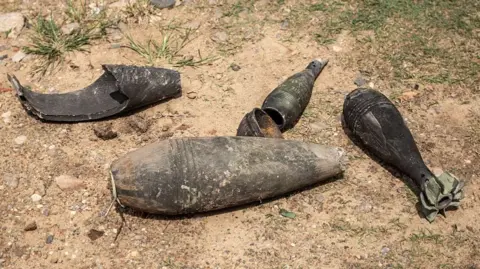
AFP via Getty Images Five pieces of black shrapnel lie on a dusty groundAFP via Getty Images
Remnants of munitions have been discovered in impacted areas of the city

At least four people have been killed by a series of powerful explosions at an ammunitions depot in Burundi's largest city, Bujumbura, local residents have told the BBC.

The blasts erupted late on Tuesday at the facility, located in the suburb of Musaga, due to an electrical fault, an army spokesperson said.

Shrapnel and debris were propelled more than 5km (three miles) and several houses in nearby districts were destroyed by the force of the explosions.

The authorities have not yet provided any casualty figures but family members and eyewitnesses told the BBC of four separate deaths in the city. The AFP news agency quotes security sources as saying that dozens of people had died.

One woman told BBC Gahuza that a relative, who had been detained at Mpimba Central Prison, had died after a bomb hit the facility.

Numerous inmates at the prison, which is located near the ammunitions store, are reported to have been injured.

In the north-eastern neighbourhood of Gisandema, witnesses told BBC Gahuza that a bomb had destroyed a house and killed a domestic worker.

The authorities have said they cannot yet comment on the number of casualties as they are still assessing the extent of the damage.

The explosions sent plumes of smoke rising above the city, sparking panic in the city of more than a million people.

President Evariste Ndayishimiye, in a message on X, expressed his condolences to all Burundians, adding that the authorities are "here to help".

More BBC stories about Burundi:

Getty Images/BBC A woman looking at her mobile phone and the graphic BBC News AfricaGetty Images/BBC

Go to BBCAfrica.com for more news from the African continent.

Follow us on Twitter @BBCAfrica, on Facebook at BBC Africa or on Instagram at bbcafrica

特朗普再次抨击法国总统:称马克龙“被妻子欺负”, 并透露曾在霍尔木兹海峡问题上请求法国协助但未收到满意的回复 - RFI - 法国国际广播电台

02/04/2026 - 10:48

美国总统特朗普在周三(2月3日)晚的一次新闻发布会上再次讽刺法国总统马克龙,并对双方之间的通话表达不满。

这次发言发生在他向全美发表讲话数小时前。特朗普声称这位法国领导人“被妻子欺负,而且刚刚从挨了一记打在下巴上的耳光中恢复过来”。特朗普此言显然是指2025年5月马克龙在东南亚访问期间,马克龙和第一夫人布丽吉特的“家庭纠纷”事件。

当时,马克龙的专机在越南河内机场停机坪上打开舱门时,美联社拍摄的画面显示,马克龙的身影出现在机舱内。就在这时, 布丽吉特的双臂突然出现(虽然她并未完全露面),她迅速抬起双手,似乎轻轻地打了总统一巴掌。马克龙似乎有些惊讶,微微后退,但很快调整情绪转身挥手致意。随后,法国总统夫妇走上舷梯,马克龙按照惯例向妻子伸出手臂,但她没有挽住马克龙。这一视频曾在社交媒体上疯传,随后马克龙被迫否认与妻子存在任何“家庭纠纷”,他还指责是“俄罗斯人”和“极端分子”不择手段地攻击他。这位美国总统频频发表颇具争议的言论,这一次他再次公开提起这件事讽刺马克龙。

值得注意的是,在同一次发言中,特朗普还表示,他曾请求法国协助缓解霍尔木兹海峡的紧张局势,截至目前,该海域仍然处于封锁状态,油价飙升导致全球经济承压。特朗普说自己曾这样询问法国总统:“埃马纽埃尔,我们希望你们能在海湾地区提供一些帮助,即使我们正在消灭坏人并摧毁弹道导弹。你能立即派遣军舰吗?”然后他在白宫的这次新闻发布会上表达了对这通电话结果的不满。

特朗普还暗示,美国为保障这条关键航道安全所做的努力并未得到欧洲盟友足够支持。他讽刺说:“他们很多人都说:‘等战争结束我们会在那里。’我就是这样认识北约的。如果真的发生重大危机,北约是不会出现的。”

这些言论延续了特朗普一贯对欧洲盟友的批评立场,认为他们在防务方面过度依赖美国。

❌