 Login
LoginThe POLITICO Poll - 2026 March
The poll asked respondents about Robert F. Kennedy Jr., MAHA and the politics of both.


 BBC
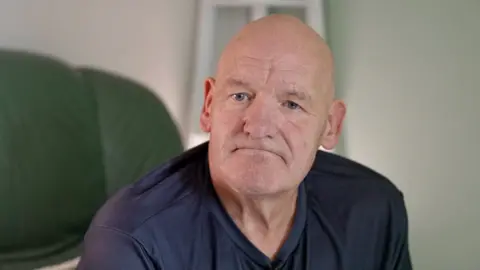
BBC"I think he was living beyond his means," says Patrick Moore about disgraced undertaker Robert Bush.
Moore is trying to explain why his former boss hoarded 30 bodies and half a tonne of human ashes at Legacy Independent Funeral Directors in Hull.
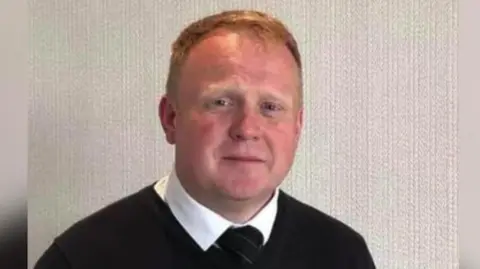
A judge at the city's crown court earlier told Bush he is going to prison for preventing the burials of 30 people and giving grieving families the wrong ashes.
He also fraudulently sold funeral plans and stole from 12 charities, including the Salvation Army and Macmillan Cancer Support.
 Legacy Independent Funeral Directors
Moore, 65, says he was a "general dogsbody" at Legacy.
And he insists he did not know Bush had kept 30 bodies after their families had held funeral services. He says he knew of only three deceased people on the premises.
But the father-of-two says it became clear to him that "there was something wrong" in Bush's business affairs.
"Every time the phone rang, Rob was real jumpy… but I knew that was because he'd been getting phone calls and threats to be cut off from his electric.
"He'd put his laptop in one of these places [a pawnbroker] for a couple of days to get some money.
"Anything that he could sell, he'd sell it."
Although his Facebook account has since been deleted, posts showed Bush was selling a hearse, cars and even trying to give away a mortuary fridge that, according to the advert, "ran cool not cold".
A county court hearing in May 2024 highlighted Bush had debts amounting to almost £55,000, including to local councils for unpaid cremation and burial fees.
 Facebook/Robert Bush
According to Moore, Bush had been making his own coffins to save money – on occasion staying up all night at the firm's Hessle Road parlour.
He advertised these on social media as being "handcrafted" and "special".
Several local funeral businesses have told the BBC they would not supply Legacy with coffins, for fear they would not be paid.
Kevin Moxon, a former police officer who opened a funeral home in Hull six months before the investigation, claims he was warned about Bush.
"Other people within the funeral profession have said, 'don't get involved with him, don't lend cars, don't supply coffins'.
"The rumour was that you wouldn't get paid."
Bush oversaw about 2,000 funerals during his career. He began by working for other undertakers before setting up his own business.
So what happened to the money, paid by bereaved families?
Bush spent it, according to Moore.
 Facebook/Robert Bush
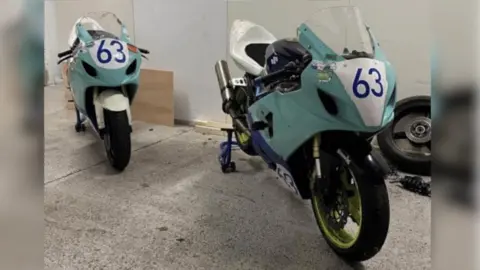
He invested in racing bikes and splashed out on expensive track days, often posting videos of his lap times on social media.
His family home was in an exclusive street where property values reach half a million pounds.
And he enjoyed holidays abroad.
Despite his debts, Bush flew to Los Angeles in March 2024 to watch motorcycle racing.
"Rob was in America and I was looking after things for about four days," says Moore.
"He said if anybody comes just don't answer the door. Simple as that, that was what I got.
"Don't answer the door."
Bush's crimes may never have come to light, but for what happened when he was in America.
Moore says he used a stretcher, borrowed from another funeral service, to collect a body from a local nursing home.
Two men, who came to retrieve the stretcher, saw inside Legacy's premises.
Moore recalls: "While I was talking to one of them, the other one went in the fridge.
"They had seen it shouldn't be like this."
One of the men rang the police. Shortly afterwards, Moore went to the station.
The father-of-two says he had previously challenged Bush about practices at Legacy.
"Just the state of everything and I could see, when I was working with Rob, I could see there's something wrong here."
But Moore says his boss "always had an answer for everything".
"He was good at that."
 PA Media
Moore's account was integral to the investigation – one of the most intricate in Humberside Police's history.
Thirty-five bodies and half a tonne of human ashes were discovered at Legacy's premises by officers in March 2024.
In contrast to the air of respectability which greeted grieving families, Moore says the rear of Legacy's premises was like "something out of a horror movie".
Thirty-one of the remains discovered by police were those of loved ones whose families had already held funerals.
Those families had been told by Bush their relatives had been cremated.
More than 100 families had been presented with the ashes of strangers.
One of those families was that of baby Sunny Beverley-Conlin, who was born prematurely in May 2022. They held a funeral and were given ashes.
In March 2024, police found their son's body, still at the funeral home, and the family were told the ashes were not Sunny's.
Moore insists he had never seen Bush mixing up ashes.
"If I had have known, I would have been [to the police] a lot earlier," he says.
Bush was the only person charged in relation to the Legacy investigation.
One victim's family says Bush operated behind a veneer of respectability.
"He genuinely seemed like a lovely guy. He seemed sad for us. Sympathetic.
"He was a good actor."
Emma Hardy MP, who represents many of the victims in the constituency of Hull West and Haltemprice, describes Bush as a "complete conman" who "made out that he cared".
"Anyone who treats people in that way is utterly without compassion," she adds. "He's a completely selfish individual who was thinking about his business, his money [while] disregarding human life."
Hardy says she does not accept the excuse that Bush was struggling financially, pointing out that he had a "large house" and enough money for holidays "while knowing all the time he was enjoying himself that he had left 35 human bodies in his funeral parlour".
The Legacy case has led to calls for the funeral industry to be regulated. Currently, it is not.
According to Hardy, there are more checks and regulations to set up a sandwich shop.
"You can set up tomorrow as a funeral director. Pop your name on the front of the shop and off you go. And nobody comes to look at anything."
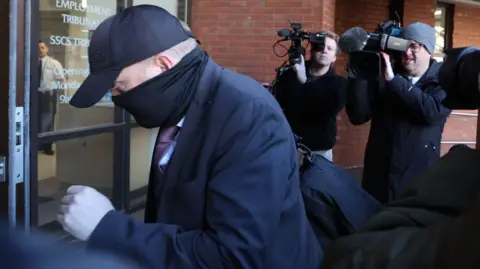
Bush, formerly of East Yorkshire and now living in West Yorkshire, was granted conditional bail until he is sentenced on 27 July.
Listen to highlights from Hull and East Yorkshire or Lincolnshire on BBC Sounds, watch the latest episode of Look North.
Download the BBC News app from the App Store for iPhone and iPad or Google Play for Android devices
This video can not be played
Watch bodycam footage of Tiger Woods' arrest
Police have released body camera footage showing Tiger Woods after he clipped a truck and rolled his car in Florida last month.
The 15-time major winner, 50, was arrested and charged with driving under the influence and submitted a written plea of not guilty via his lawyers on Tuesday.
He was also charged with property damage and refusal to submit to a lawful test.
Woods has been given permission by a judge to seek treatment overseas, and said he will be stepping away from professional golf to focus on his recovery and health.
Woods to 'step away and seek treatment' after crash
Woods declines US Ryder Cup captain role in 2027
Will crash shake golf from its dependency on Woods?
Nobody was injured in the crash, but Woods had to crawl out of the passenger door to free himself. He passed a breathalyser test but refused a urinalysis test for other drugs, according to Martin County Sheriff John Budensiek.
In the arrest affidavit, an officer wrote Woods was "sweating profusely", his pupils were "extremely dilated" and his movements were "lethargic and slow".
In the video, Woods, who is wearing a blue polo shirt, shorts and dark sunglasses, is seen being handcuffed as officers question him.
He is told they suspect his "normal faculties are impaired" by an "unknown substance". Authorities then find two white pills, which were identified as hydrocodone - an opioid used to treat pain - in his pocket.
Woods, who remains still while officers search him, is asked does he have anything else on his person, to which he replies he does not.
On Wednesday, it was announced that Woods had turned down the role of United States Ryder Cup captain when the biennial tournament takes place in Ireland in 2027.
 Reuters
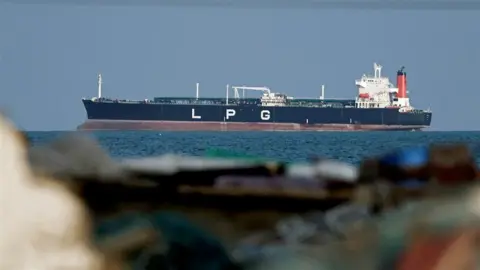
A coalition of about 30 nations are to discuss plans to reopen the vital Strait of Hormuz shipping lane in the Middle East, at a virtual summit hosted by the UK on Thursday.
The virtual summit is expected to consider what diplomatic and political steps could be taken to reopen the important shipping route, though the US was not set to attend.
Iran has attacked several vessels in the strait in response to the war waged against it by the US and Israel, severely disrupting energy exports and sending global fuel prices soaring.
On Wednesday, US President Donald Trump said it was for other nations to "build up some delayed courage" and reopen the route.
Trump said allies "should have done it" earlier, adding: "Go to the Strait and just take it. Protect it. Use it for yourselves."
Washington has repeatedly accused allies of not doing enough to secure the shipping route or to support its war effort, leaving the UK and other nations weighing how to contribute to securing the strait without becoming involved in the wider war.
Foreign Secretary Yvette Cooper is set to chair Thursday's virtual meeting.
The summit was expected to involve governments which signed a joint statement in mid-March calling on Iranian forces to halt attacks against commercial ships.
That statement was supported by some Gulf nations, as well as France, Germany, Japan, Australia and others.
The statement says: "We express our readiness to contribute to appropriate efforts to ensure safe passage through the Strait.
"We welcome the commitment of nations who are engaging in preparatory planning."
The talks come a day after Prime Minister Sir Keir Starmer said the UK was "exploring each and every diplomatic avenue that is available" to reopen the route.
He also said British military planners would consider what could be done in the future to "make the Strait accessible and safe after the fighting has stopped".
At the same time, governments around the world are weighing how to respond to cost-of-living pressures triggered by rising energy prices.
About a fifth of the world's oil and gas passes through the Strait of Hormuz.
The price of a barrel of Brent crude, the global benchmark for oil prices, has jumped from $73 (£55) to well over $100 in recent weeks.

© Jonathan Ernst/Reuters

© Jason Hendardy for The New York Times

© Ben Mckeown/Associated Press
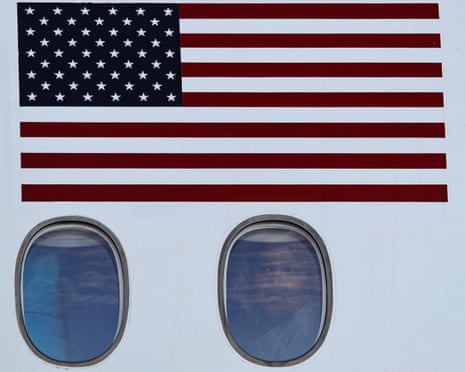
A flight carrying people being deported from the US has landed in Uganda, as Donald Trump’s administration pushes on with its strategy of expelling migrants to countries they have no ties to.
The deported people would stay in the east African country as “a transition phase for potential onward transmission to other countries”, an unnamed senior Ugandan government official told Reuters.
The Uganda Law Society, which condemned the arrivals, said 12 people were on the flight, the first under an agreement Uganda signed with the US in August. No other details of the deportees, including their nationalities, have been made public.
The US has already deported dozens of people to third countries. Other African countries that have accepted or agreed to accept deportees include Eswatini, Ghana, Rwanda and South Sudan which have received people from as far afield as Cuba, Jamaica, Yemen, Vietnam, Laos and Myanmar.
The Uganda Law Society said it would be filing legal challenges to the deportations in Ugandan and regional courts. It criticised “an undignified, harrowing and dehumanising process that has reduced [the deported people] to little more than chattel, for the benefit of private interests on both sides of the Atlantic”.
All deportations “are in full cooperation with the government of Uganda”, said Yasmeen Hibrawi, a public affairs counsellor at the US embassy in Kampala.
Hibrawi said: “We do not, however, discuss the details of our private diplomatic communications and for privacy reasons, we cannot discuss the particulars to their cases.”
In August, Uganda said it had reached a deal with the US to take in people from third countries who might not get asylum in the US but were “reluctant” to be sent back to their home countries.
It said it would not accept people with criminal records or unaccompanied minors and did not specify if the US was paying. Uganda already hosts nearly 2 million refugees and asylum seekers, most from other east African countries including the Democratic Republic of the Congo, Ethiopia, Eritrea and Sudan.
Orders for deportation to Uganda have been issued to hundreds of asylum seekers, according to the Associated Press. Oryem Okello, the Ugandan minister for foreign affairs, said none had arrived yet.
The US may be “doing a cost analysis” and trying to avoid dispatching flights with only a few people onboard, he said. Okello added: “You can’t be doing one, two people at a time. Planeloads – that is the most effective way.”
The US agreed to pay Eswatini $5.1m (£3.8m) to take up to 160 third-country nationals, according to Reuters. Five men were deported by the US to the southern African nation in July, with another 10 sent in October. Two have since been repatriated to Jamaica and Cambodia respectively, while the rest remain in a maximum security prison.
US Immigration and Customs Enforcement (ICE) had detained more than 63,000 people in the US, as of 12 March, according to government data. Toddlers and newborn babies were among the 5,600 people imprisoned at an ICE detention centre in Dilley, Texas, between April 2025 and February 2026, according to a report by the non-profit organisations Human Rights First and Raices.

© Pete Marovich for The New York Times

© Victor J. Blue for The New York Times

© Doug Mills/The New York Times

© Arash Khamooshi for The New York Times

© Anna Rose Layden for The New York Times

© Photo Illustration by The New York Times; Background: Brian Rea; Inset photo: Lisa O’Connor/Agence France-Presse — Getty Images

© A24, via Associated Press
 Reuters
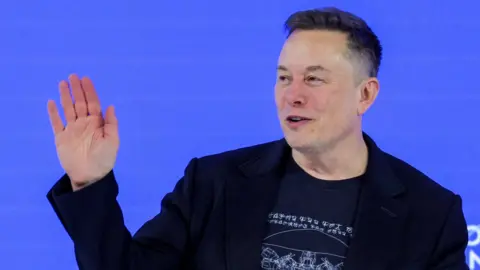
Elon Musk's SpaceX is poised to become one of the most valuable publicly traded companies in the world.
The company, which manufactures rockets, space exploration technology and Starlink satellites, is currently privately held. But on Wednesday it made a confidential filing with the US Securities and Exchange Commission (SEC) for an initial public offering, which would allow shares to be traded in the stock market.
The value of SpaceX once it goes public is expected to surpass $1tn (£751bn). That would make its eventual stock market debut one of the most financially significant in history.
Musk's own holding in SpaceX would put the billionaire on track to become the world's first trillionaire.
The BBC has contacted SpaceX for comment.
The company is aiming to officially go public sometime in June, according to reports in Bloomberg, Reuters and the New York Times.
A confidential IPO filing with the SEC allows a company to avoid immediately revealing information to the public while it requests feedback from the regulator. The next step will be for company executives to hold "roadshows" - meetings with big investors to convince them to buy shares.
By making shares of SpaceX available for purchase by the public, the company is looking to raise $50bn or more, according to the reports.
Earlier this year, SpaceX took over xAI, Musk's artificial intelligence venture. After that all-stock merger, SpaceX is believed to have become the most valuable private company in the world, with an internal valuation of $1.25tn.
Recently, Musk's various companies have been becoming increasingly intertwined.
Last year, xAI, best known for its chatbot Grok, took over X, the social media platform previously called Twitter that Musk bought in 2022.
This degree of consolidation was a clear sign to investors that SpaceX was preparing to go public.
Emily Zheng, a senior analyst at Pitchbook, earlier told the BBC that by bringing xAI under SpaceX, Musk could show potential investors that he was consolidating costs and able to easily share resources between his companies.
With its large-scale ambitions, SpaceX is in need of a massive cash infusion that going public can provide, Zheng added. The company is racing to keep up with the "sheer cost of compute, infrastructure, and energy" needed to expand, she said.
Earlier this year, Tesla, Musk's electric vehicle company, revealed it had invested more than $2bn in xAI.
The billionaire said a significant share of Tesla's manufacturing would begin to shift toward building robots, which would make use of xAI technology like Grok.
Grok is already included in some Teslas as an AI assistant.
SpaceX would also partner with Tesla and xAI in the massive chipmaking endeavour Musk announced last month, which he is calling Terafab.
"Tesla, xAI and SpaceX have all done amazing things that people did not think could be done before," Musk said in a March presentation discussing Terafab.
Musk started SpaceX in 2002 with the aim of reducing the cost of launching crafts into space, mainly by making rockets that could be launched more than once. It first contracted with Nasa in 2006.
Today, most of SpaceX's work continues to revolve around rockets and the operation of Starlink, a fleet of satellites offering internet connectivity across the globe.
But Musk often discusses grander ambitions for the company, including putting data centers needed for AI in space and building a self-sufficient city on Mars, which many experts have said could be impossible to realise.

© Anna Rose Layden for The New York Times

© Norlys Perez/Reuters

美国驻巴格达大使馆周四在社交平台X发布声明警告称,亲伊朗的伊拉克武装组织可能在未来两天内对首都市中心发动袭击。
美国大使馆的声明称:“与伊朗结盟的伊拉克恐怖民兵可能在未来24至48小时内对巴格达市中心发动袭击。” 美国使馆再次呼吁在伊拉克的美国人立即离开该国。
美国大使馆位于巴格达市中心一处高度戒备区域,自伊朗战争开始以来曾多次成为袭击目标。
该声明还对伊拉克政府未能“阻止在其领土上或从其领土发动的恐怖袭击”表示遗憾,并指出“与伊朗结盟的恐怖民兵可能自称代表伊拉克政府”。
前准军事联盟“人民动员部队”(Popular Mobilization Forces)如今已并入伊拉克正规军,但其中包含一些亲伊朗派别,这些派别以独立行动著称。
与此同时,这些武装组织也成为被打击的目标,他们将其部队成员遭到的空袭归咎于美国和以色列。
该组织表示,周三他们的3名成员在伊拉克西北部的一次空袭中死亡,并再次指责美以两国。
五角大楼承认,自伊朗战争开始以来,美军武装直升机确实对伊拉克境内的亲伊朗武装进行过打击。
在伊拉克北部库尔德自治区的埃尔比勒和多胡克省,至少30架无人机进行了夜袭,暂无人员伤亡报告。
此外,美国女记者雪莉-吉特森(Shelly Kittleson)周二在巴格达被绑架。伊拉克安全部门表示,一名嫌疑人已被逮捕,并称,该事件与亲德黑兰的卡塔伊布真主党(Kata'ib Hezbollah)有关。

© Eric Lee for The New York Times

© Andrew Medichini/Associated Press

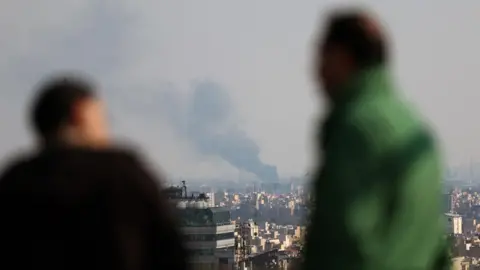
在美国总统周三晚发表有关伊朗战争的讲话后,伊朗发动了新一轮导弹袭击,伊朗军队作战指挥官在国家电视台发布的声明中坚称,这场战争将持续下去,直到伊朗的敌人受到“羞辱”,并威胁将发动“更加毁灭性的”行动。
据以色列军方周四报告称,拦截了来自伊朗的新一轮导弹和无人机攻击。并说,周四凌晨和上午,共发生四次袭击,此前周三也发生过多次打击,尤其是在特拉维夫附近。
据伊朗法尔斯通讯社将科威特、沙特阿拉伯、阿布扎比和约旦的多座桥梁列为伊朗军事行动的潜在目标。
亲伊朗的黎巴嫩真主党民兵也声称对以色列北部发动了袭击,不过以色列方面表示没有造成人员伤亡或损失。
在讲话中,特朗普周三讲话中感谢了美国海湾盟友的合作,称诺不会抛弃这些盟国。包括以色列,沙特,卡塔尔,阿联酋,科威特,巴林。周四,巴林都响起了防空警报。
 EPA
EPAWarning: this article contains details which some readers may find distressing.
Until that moment the war was something happening in other parts of Tehran.
It had not touched the lives of "Setareh" and her colleagues. Then she heard an ominous noise and vibrations reached into the office.
She called out to her workmates: "I think it's a bomb." They left their desks and climbed the stairs to the roof of the building.
"We saw smoke rising into the sky, but we didn't know what place had been targeted," she recalls.
"After that, everyone working in the company panicked. People were shouting and screaming and running away. For one to two hours the situation stayed like that complete chaos." That same day her boss shut the business and laid off his staff.
Despite strict state censorship, the BBC has been able to use trusted sources on the ground to obtain testimony from a range of Iranians in different parts of the country.
We cannot give Setareh's real name or say what kind of work she does - no detail that might possibly identify her to the regime's secret police. But we can say that she is a young woman from Tehran who loved going to work, where she could meet her friends, share stories of their lives and, of course, there was the guarantee of weekly wages.
Now the nightly bombing has stolen her ability to sleep naturally. She lies awake worrying about the present, and the future.
"I can honestly say I haven't slept for several nights and days in a row. I try to relax by taking very strong painkillers so I can sleep. The anxiety is so intense that it has affected my body. When I think about the future and imagine those conditions, I truly don't know what to do."
By "those conditions" she means economic hardship and her fear of future street fighting between the regime and its enemies. The war has cost Setareh her job and she is running out of money.
Millions of Iranians are in a similar position. Even before the war, the economy was in deep crisis, with food prices rising by 60% in the previous year. Setareh describes mounting desperation as people run out of resources to survive.
"We cannot afford even basic food. What's in our pockets does not match market prices... Iran has also been under sanctions for years, and the problems created by the Islamic Republic means that during this time we couldn't build any savings, at least enough to survive now or depend on something. To put it simply, the people I thought might have money to lend also don't have anything."
Economic hardship spurred the huge nationwide protests of late 2025 and early 2026, and Setareh believes it will happen again.
"I don't know how this massive wave of unemployment will be handled. There is no support system and the government will do nothing for all these unemployed people. I believe the real war will start if this war ends without any outcome." The outcome she wants is the end of the regime.
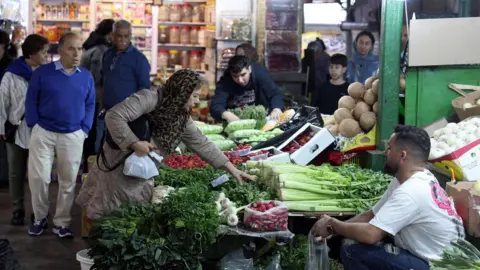
We received information from sources on the ground in six different cities. These were conversations with individuals from a cross-section of society - shopkeepers, taxi drivers, public sector workers and others.
All described growing economic pressure and most spoke of their hope that the war might bring about the fall of the government.
 EPA
EPA"Tina" is a nurse in a hospital outside Tehran and is worried about shortages of medicine.
"The shortage is not yet widespread, but it is starting," she says.
"The most important issue is that this war must not reach hospitals. If the conflict continues and infrastructure is targeted and medicines cannot be imported, then we will face very serious problems."
She is haunted by the images of war that she's witnessed in recent weeks. In the aftermath of bombings, bodies arrived at the hospital "that were not recognisable... some had no hands, some had no legs - it was horrifying".
A recurring memory is the pregnant young woman caught in an air strike early in the war.
"Because of bombardment in her area - her home was close to a military centre - their house was damaged. When they brought her to the hospital, neither the mother nor the foetus was alive.
"Both had died. She had been just two months away from giving birth but sadly neither she nor her baby survived. It was a very terrible situation."
It is an image made more poignant by stories from Tina's childhood. Her mother was pregnant with her during the Iran-Iraq war of the 1980s and told her of having to flee to bomb shelters as Iraqi missiles struck their city. Nearly a million people - Iranians and Iraqis, military and civilian - are estimated to have died in the conflict, with Iran suffering the greatest number of casualties.
The war's legacy made Tina want to work as a nurse.
"Hearing those stories always made me stop and think, to imagine myself in those circumstances and place myself in her situation. Now, I find myself in the same kind of situation my mother once faced. I cannot believe how quickly history repeats itself."
 AFP
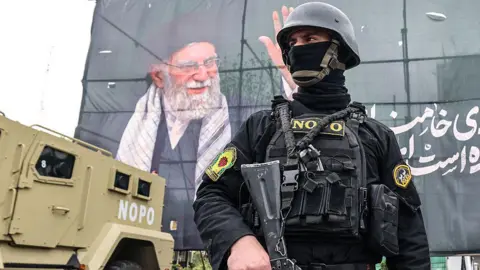
AFPAny public show of dissent in Iran is extremely dangerous. The regime has deployed its internal security forces and loyal supporters to patrol the streets. There are arrests, torture and executions. Iranians have no doubt about the danger they face if they speak out.
During January's anti-government demonstrations, the regime killed thousands of its own citizens and "Behnam" - a former political prisoner - believes it would easily do the same again.
He keeps a supply of antibiotics and painkillers in his flat in case there is renewed street violence. He is still in hiding after being shot during the last protests. Holding up an X-ray of his torso, Behnam shows the metal fragments that remain lodged in his body.
"They ambushed us in one of the alleys - the alley leading to the square. They fired bullets and tear gas," he says.
"Once you see how easily your life can be threatened - that a simple incident or a twist of fate can mean death or survival - after that, your life no longer holds the same value for you. And that experience makes you care less about yourself."
As a child, he listened to his parents' accounts of regime violence. Fear was the defining factor in their lives. There were stories of family members having fingernails pulled out by the Revolutionary Guards. He heard about the humiliation and agony of a male relative who had heavy weights tied to his testicles during torture.
"We all grew up knowing someone talented in our family - a cousin, an uncle, an aunt - whose future was destroyed just because another relative had been involved in banned political activity," he says.
"I will not heal until the day we are free and in a free world [can] look back on the suffering we endured in an unfree world, and in the end laugh at it. I am certain that day will come."
One month into the war, with US President Donald Trump threatening to bomb Iran "back to the stone ages" and regime repression tightening, the time of laughter seems very far away.
Additional reporting by Alice Doyard
 PA Media
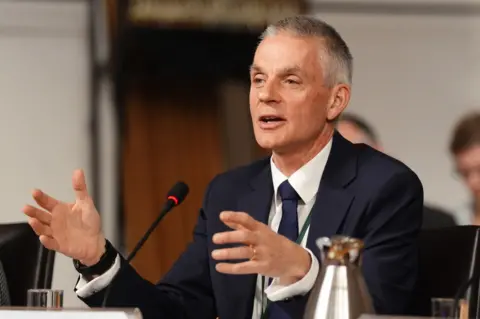
Outgoing director general Tim Davie has ended his tenure at the BBC by saying it became "very clear" the former Radio 2 DJ Scott Mills had to be sacked, after the corporation received "new information".
The ex-radio Breakfast host lost his job earlier this week, after the BBC learned the alleged victim in a police investigation the presenter was involved in was under 16.
"We're trying to act fairly," Davie said when he was asked about Mills during an all-staff call. "It was new information quite recently that we received that made it very clear about the decision we had to make."
Davie, who became director general in September 2020, is replaced by Rhodri Talfan Davies for the next six weeks, before former Google executive Matt Brittin takes over permanently on 18 May.
Davie, who has spent nearly six years in the top job, said Mills' sacking "was a real shock to the organisation".
"When something happens where I think there's a lot of grief, there's a lot of shock, I think all I would say is we're trying to act as the leadership with kindness," he added.
BBC Breakfast's Sally Nugent questioned him about when the organisation had learned there was a problem.
He reiterated a statement from Wednesday, which stated the BBC was made aware in 2017 of the investigation into allegations of serious sexual offences, but that new information had recently come to light that led management to sack Mills last Friday.
"I think people need to look at the statement; we made [it] as clear as we can. We obviously have to be sensitive when you've got personal information, and we work carefully through it, but the statement is really clear," he said.
When asked if staff culture had changed during his tenure at the BBC, he said: "It'll never be fully fully fixed, but I think it's changing, I really do."
He added: "I think if you come in and behave in a way that some of this industry saw 20 years ago, it just would not be acceptable, you want to create an environment where it's just ludicrous to do that."
The executive said he felt "real progress" had been made, adding: " I think the industry is kinder.
He also talked about people in senior positions in the industry "who have had a lot of power - and if they misuse it, that has not been called out, let's face it".
"I do think we've reached a point where people behaving badly now, you can see we're not going to tolerate it," he added.
Davie, who took over from Lord Tony Hall, has faced a number of challenges and controversies during his time in the top job, including the BBC broadcasting a racial slur during last month's Bafta Film Awards.
It later said it was the result of a "genuine mistake", and is examining why it was not removed from iPlayer sooner.
The corporation also apologised last summer, after a livestream of Bob Vylan's Glastonbury set, in which chants of "death, death to the IDF (Israel Defence Force)" was available to watch on BBC iPlayer for more than four hours.
Davie was also in charge when Huw Edwards, one of the BBC's highest paid and well-known newsreaders, pleaded guilty to making indecent images of children.
Davie resigned in November 2025, alongside head of news Deborah Turness, after criticism that a Panorama documentary misled viewers by editing a speech by US President Donald Trump.
Trump is now suing the BBC for several billion dollars, for defamation over the way Panorama spliced together his speech, which he claims made it appear he had directly encouraged his supporters to storm the US Capitol on 6 January 2021.
In March, the corporation urged a Florida court to dismiss the lawsuit, using the defence that the documentary was not available to watch in the US.
Davie also spoke about how it felt to be at the centre of a BBC controversy or crisis.
"There are days when you're in the middle of a crisis, the snappers are outside your house… you do feel fear, and I'm not going to miss that. It's been hard," he said.
"Plus you've also got sometimes editorial mistakes - and they are mistakes, they're not people deliberately doing stuff - that can be really tough."
Davie steps down after more than 20 years at the corporation, having served as the 17th director general.
When asked what he was proudest of, he said it was "all the amazing creative work" produced by the organisation.
"The heartbeat of this operation is journalistic and editorially. I love the work, I love the fact this year we will be celebrating 100 years of David Attenborough - I've met a few [great people] in my job, but you meet David Attenborough and you go 'ok this is it, this is the beating heart'," he added.
 Deborah James
A cancer research fund set up by Dame Deborah James has been hailed as an "incredible milestone" by the Prince of Wales after it hit the £20m mark.
The Bowelbabe Fund, set up in May 2022 shortly before Dame Deborah died of bowel cancer, has reached the milestone in less than four years, having initially aimed to raise £250,000.
Prince William praised the "amazing legacy" of Dame Deborah, from Woking, Surrey, and her fund in a message on Instagram in which he wrote: "Deborah is in our thoughts today, as are all those who loved her."
Dame Deborah's mother, Heather James, added: "Deborah would be absolutely over the moon if she were here today to see this."
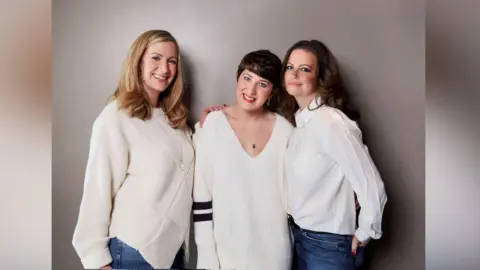 Claire Wood
Heather James added: "She was so passionate about supporting research that would help give more people affected by cancer more time with their loved ones."
Speaking to BBC Breakfast, her father Alistair James said: "She set this up in the last few weeks of her life and if she knew we had managed £20.5m even Deborah with her energy probably wouldn't believe what happened."
A spokesperson for Cancer Research UK, which benefits from the fund, says the money raised had been used to support 16 research projects, including a "Bowelbabe vaccine" aimed at boosting immunity against bowel cancer.
You, Me And The Big C podcast host Dame Deborah was given a damehood for her fundraising efforts, which soared past £1m in the first 24 hours.
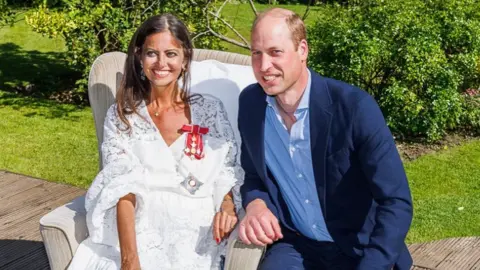
The honour was personally conferred by Prince William, who joined her family for afternoon tea and champagne while she was receiving hospice-at-home care.
Michelle Mitchell, chief executive of Cancer Research UK, said: "Reaching this £20m milestone is a true testament to Deborah's incredible legacy.
"Thanks to research, more than half of people diagnosed with bowel cancer in the UK will survive the disease.
"But there is still much more to do."
Follow BBC Surrey on Facebook, on X, and on Instagram. Send your story ideas to southeasttoday@bbc.co.uk or WhatsApp us on 08081 002250.
