By the early 1920s, the Italian-American painter Joseph Stella had breezed through many styles and schools, including Futurism, Precisionism, Cubism and Surrealism at a breakneck pace.
Joseph Stella (1877–1946), The Birth of Venus (1922), oil on canvas, 215.9 x 134.6 cm, Private collection. The Athenaeum.
In this period he briefly painted mythical narratives, with The Birth of Venus (1922), shown above, and Leda and the Swan (1922), below.
Joseph Stella (1877–1946), Leda and the Swan (1922), oil on copper, 108 x 118.1 cm, Private collection. The Athenaeum.Joseph Stella (1877–1946), The Virgin (1922), oil on canvas, 100.5 x 98.4 cm, Brooklyn Museum, New York, NY. Wikimedia Commons.
In The Virgin from 1922, Stella adopted a traditional religious motif, expressed in his near-Surrealist style with fantastic fruit, flowers and birds.
Although he became a citizen of the USA in 1923, he soon felt unsettled and homesick. He spent much of the next decade travelling in Europe, returning to the US mainly to organise his work for exhibitions.
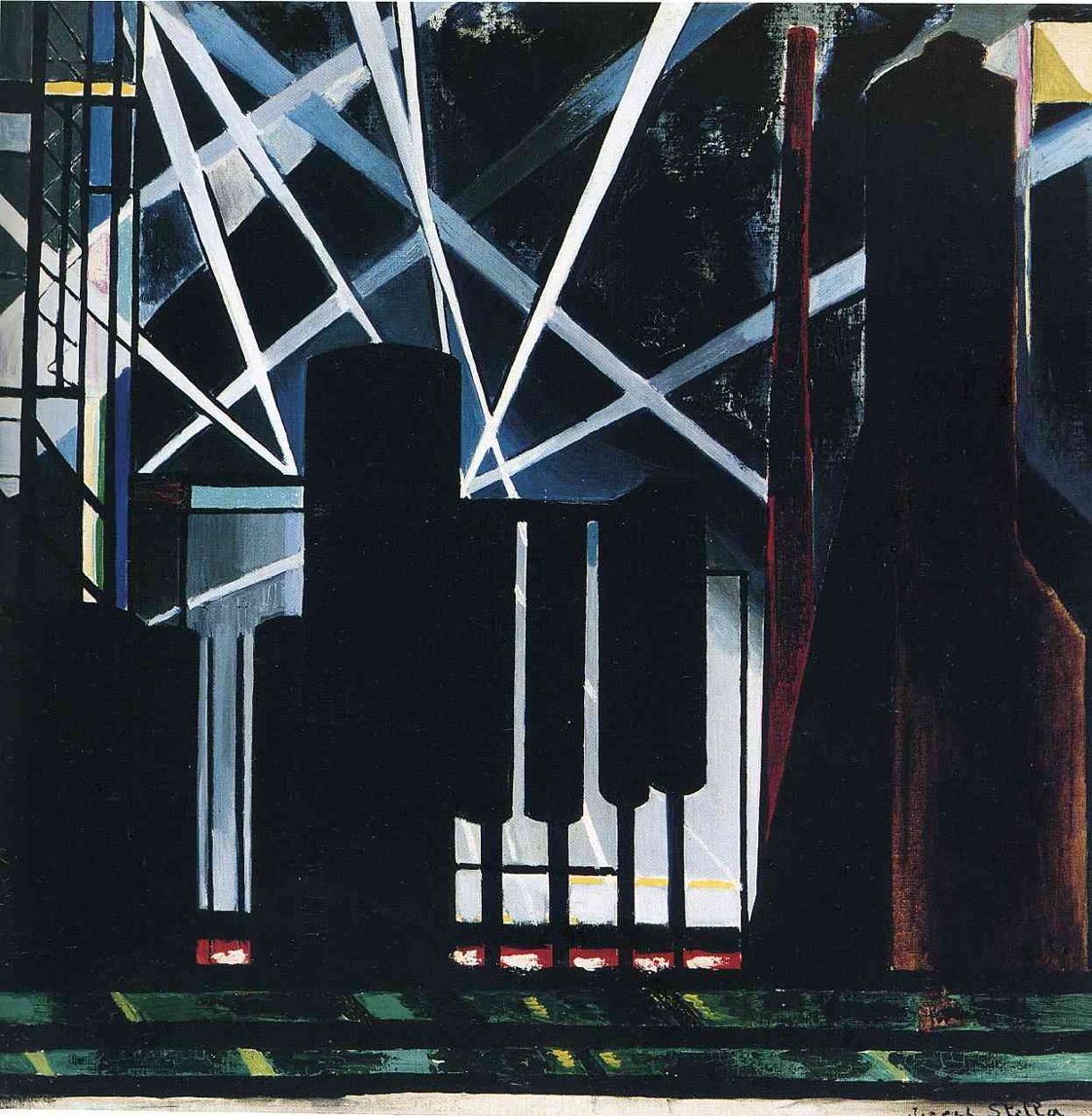
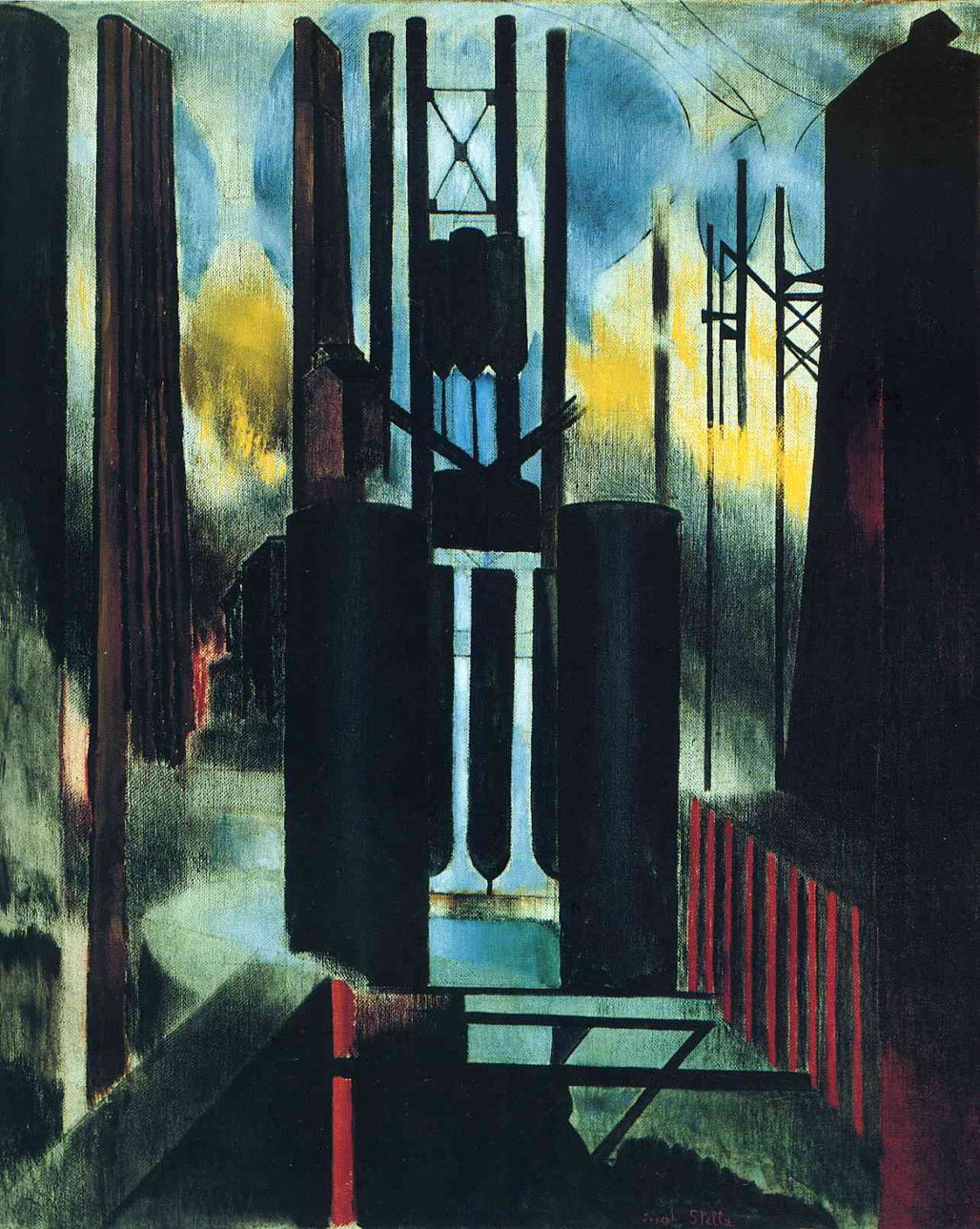
Joseph Stella (1877–1946), By-Products Plants (c 1923-26), oil on canvas, 61 x 61 cm, The Art Institute of Chicago, Chicago, IL. The Athenaeum.
Then, just when you might have thought that Stella was done with factories, smoke and Precisionism, in about 1923-26 he painted this view of By-Products Plants.
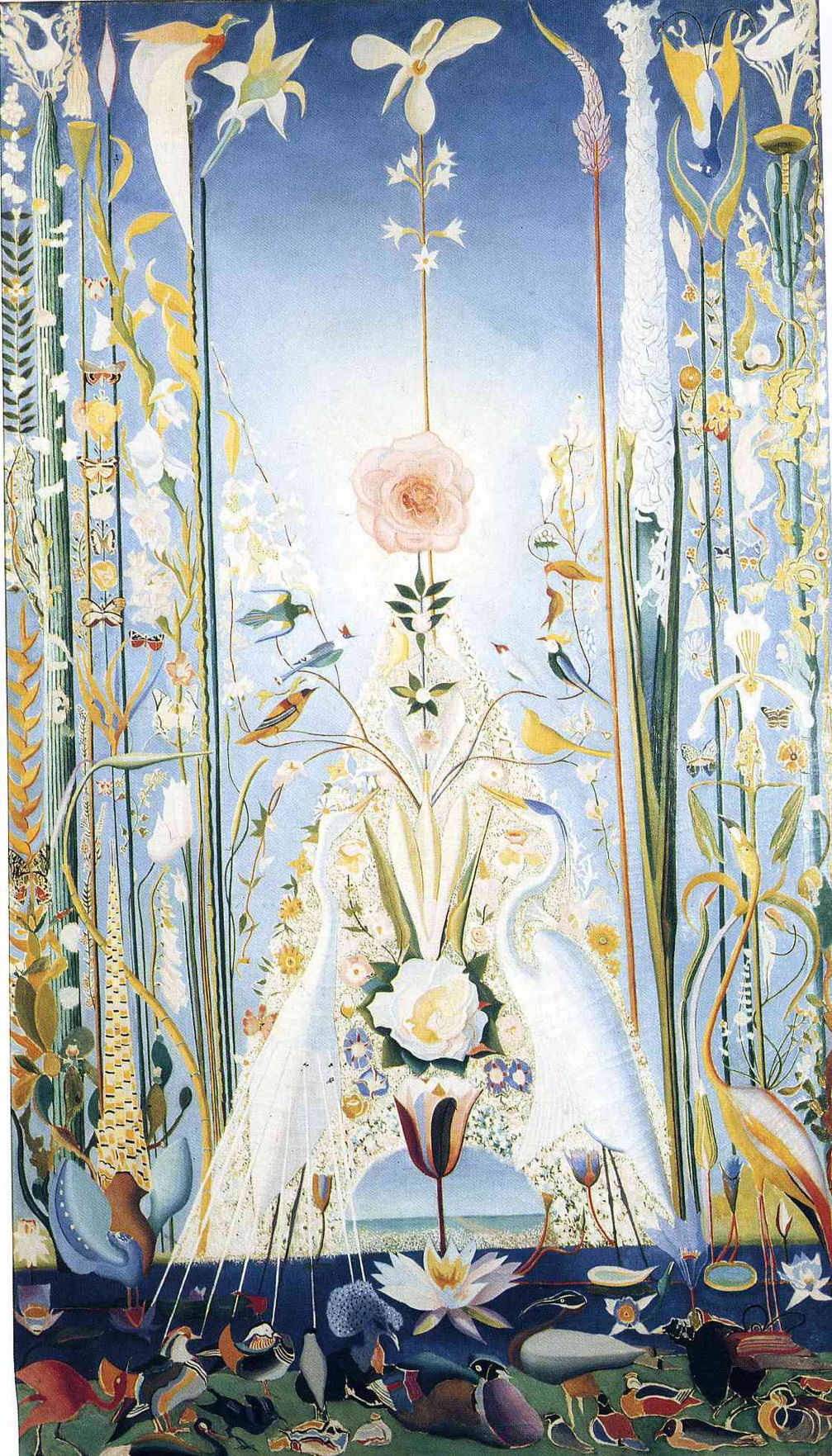
Joseph Stella (1877–1946), The Apotheosis of the Rose (1926), oil on copper, 213.4 x 119.4 cm, Private collection. Wikimedia Commons.
The Apotheosis of the Rose from 1926, painted in oil on copper, is a brilliant example of his neo-Surrealism, with its extensive collection of exotic birds and weird vegetation.
Joseph Stella (1877–1946), Purissima (1927), oil on canvas, dimensions not known, High Museum of Art, Atlanta, GA. Wikimedia Commons.
Stella’s Purissima from 1927 places a mystical woman between the two sacred Ibis birds. In the background is the Bay of Naples, with Mount Vesuvius at the right.
Joseph Stella (1877–1946), Palm Tree and Bird (1927-28), oil on canvas, 137.2 x 102.2 cm, Private collection. Wikimedia Commons.
Later in the 1920s, Stella developed rhythmic palm structures, in Palm Tree and Bird from 1927-28. These were to be a recurrent feature in many of his later works.
Joseph Stella (1877–1946), Neapolitan Song (1929), oil on board, 97.8 x 71.8 cm, Private collection. The Athenaeum.
Neapolitan Song (1929) brings a waterbird and palm in front of the quietly smoking volcano of Vesuvius.
Joseph Stella (1877–1946), Vesuvius III (date not known), oil on canvas, 25.4 x 30.5 cm, oil on canvas, Private collection. Wikimedia Commons.
This undated landscape sketch of Vesuvius III probably dates from this period. It appears to have been made looking south-east across the Bay of Naples, with Castel dell’Ovo nearest.
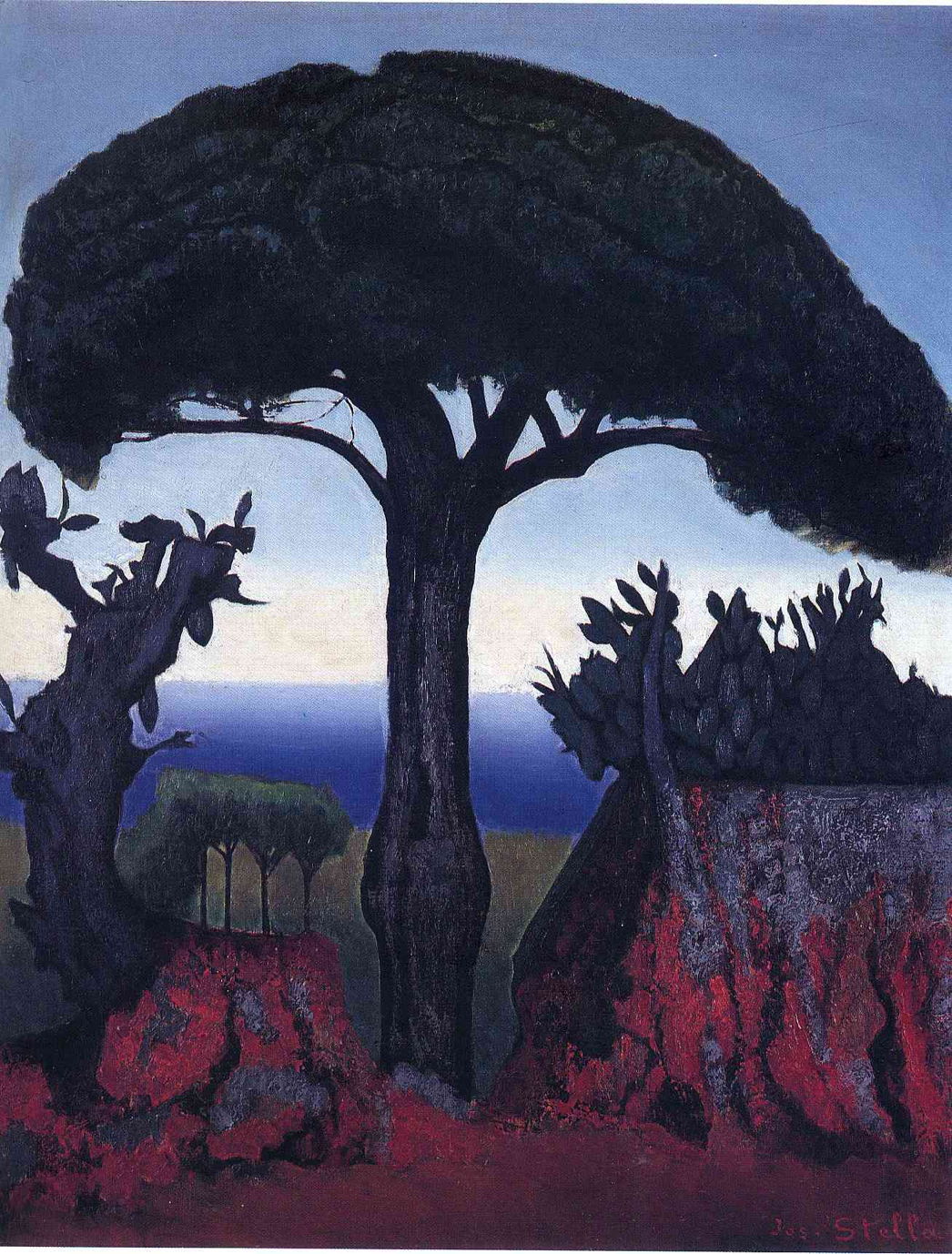
Joseph Stella (1877–1946), Tree of Nice (c 1930), oil on canvas, 81.3 x 66 cm, Private collection. Wikimedia Commons.
He changed again in Tree of Nice from about 1930, which was presumably painted in the south of France.
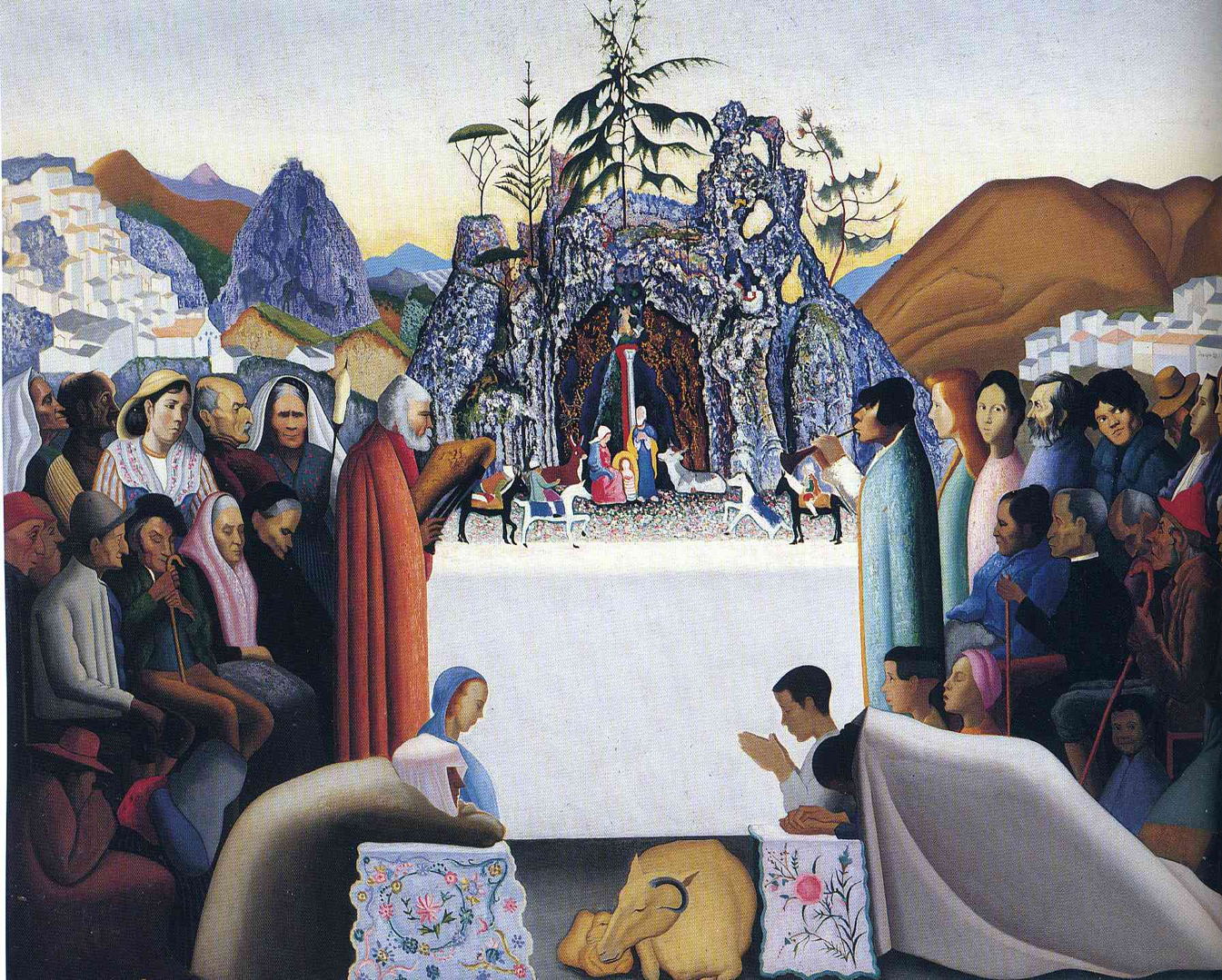
Joseph Stella (1877–1946), The Crèche (1929-33), oil on canvas, 154.9 x 195.6 cm, Newark Museum, Newark, NJ. Wikimedia Commons.
The Crèche from 1929-33 is an ingenious framing of the Nativity. At its centre is the crib so often shown at Christmas, with an audience who appear to have been drawn from Stella’s home city in Italy, playing traditional bagpipes in homage.
In 1934, Stella and his wife finally settled in the Bronx. His popularity steadily faded, and a retrospective exhibition in 1939 failed to revive interest. His personal health also started to deteriorate at this time.
Joseph Stella (1877–1946), Serenade, a Christmas Fantasy (La Fontaine) (1937), oil on canvas, 109.5 x 119.7 cm, Hirshhorn Museum and Sculpture Garden, Washington, DC. Wikimedia Commons.
In 1937, Stella painted Serenade, a Christmas Fantasy, or La Fontaine, one of his last works combining birds and flowers in a fantasy setting. This appears to have been intended as a design for a Christmas card.
In 1942, Stella became mostly confined to his bed because of worsening heart disease, and he died in 1946, just after the end of the Second World War.
This summer I’m celebrating the two hundred and fiftieth anniversary of the American Declaration of Independence with special articles covering American painters and their art. One of the strange facts of life in the UK and Europe is that remarkably few of their paintings are in our public collections, so I hope this will do a little to redress the balance and celebrate the rich cultural history of the USA.
This weekend’s pair of articles show a small selection of the eclectic paintings of an Italian-American who was one of William Merritt Chase’s most brilliant and successful pupils, and one of the fathers of modern American painting, Joseph Stella (1877–1946).
Born into a family of lawyers in southern Italy in 1877 as Giuseppe Michele Stella, his older brother emigrated to the USA to study medicine, and he followed suit in 1896. Like many migrants he stayed in New York City, but soon abandoned his medical training in favour of art. He started attending classes at the Art Students League in 1897, and enrolled in the New York School of Art the following year, where he was taught by William Merritt Chase. He attended Chase’s Shinnecock summer school in 1901, and one of his contemporaries was Marsden Hartley.
Stella proved talented, and a brilliant draftsman and illustrator, but grew unhappy in New York. In 1909 he returned to Italy, where he came into contact with Modernism, which was popular there at the time. After two years in Italy, in 1911 he moved to Paris, which was awash with Fauvism, Cubism, and Futurism all in full swing. Then in the autumn/fall of 1912, he decided to give America a second try, and returned to New York City.
Joseph Stella (1877–1946), Luna Park (1913), oil on composition board, 44.5 x 59.4 cm, Whitney Museum of American Art, New York, NY. Wikimedia Commons.
Stella was soon attracted to the dazzling electric lights of Luna Park (1913) on Coney Island, which had opened a decade earlier. The style he had brought from Paris was startlingly different from his earlier work, and Futurist.
Joseph Stella (1877–1946), Battle of Lights, Coney Island, Mardi Gras (c 1913-14), oil on canvas, 200.3 × 220 cm, Yale University Art Gallery, New Haven, CT. Wikimedia Commons.
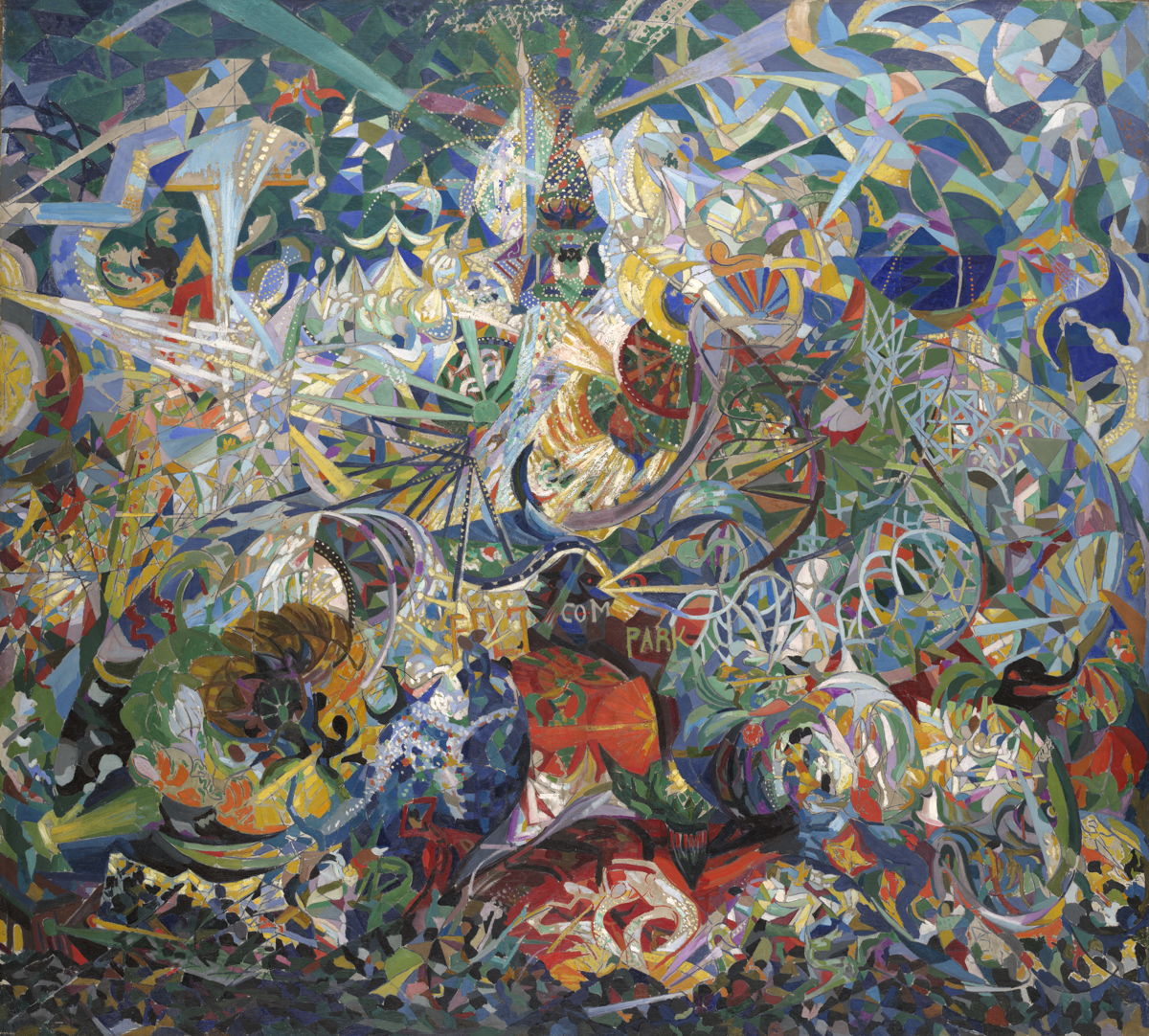
That was followed by Battle of Lights, Coney Island, Mardi Gras (1913), one of the earliest, and still among the greatest, of American Futurist paintings. Although it’s sometimes claimed that it was exhibited at the famous (even notorious) International Exhibition of Modern Art held in New York in early 1913 – known now as the Armory Show – Stella didn’t complete it until the autumn of that year, when it went on display in a private gallery in New York. His reputation among the avant-garde had been secured.
Joseph Stella (1877–1946), Coney Island (1914), oil on canvas, diam 106 cm, Metropolitan Museum of Art, New York, NY. Wikimedia Commons.
The following year, he painted Coney Island (1914).
Stella visited Europe and North Africa in the summer of 1914, just before the outbreak of the First World War.
Joseph Stella (1877–1946), Telegraph Poles with Buildings (1917), oil on canvas, 92.1 x 76.8 cm, Terra Foundation for American Art, Chicago, IL. Wikimedia Commons.
Later during the war, his motifs and style changed to concentrate on the smoky skies and factories of industrial America, for example in Telegraph Poles with Buildings from 1917.
Joseph Stella (1877–1946), Bethlehem (c 1918), pastel on paper, 30.5 x 41.9 cm, Metropolitan Museum of Art, New York, NY. Wikimedia Commons.
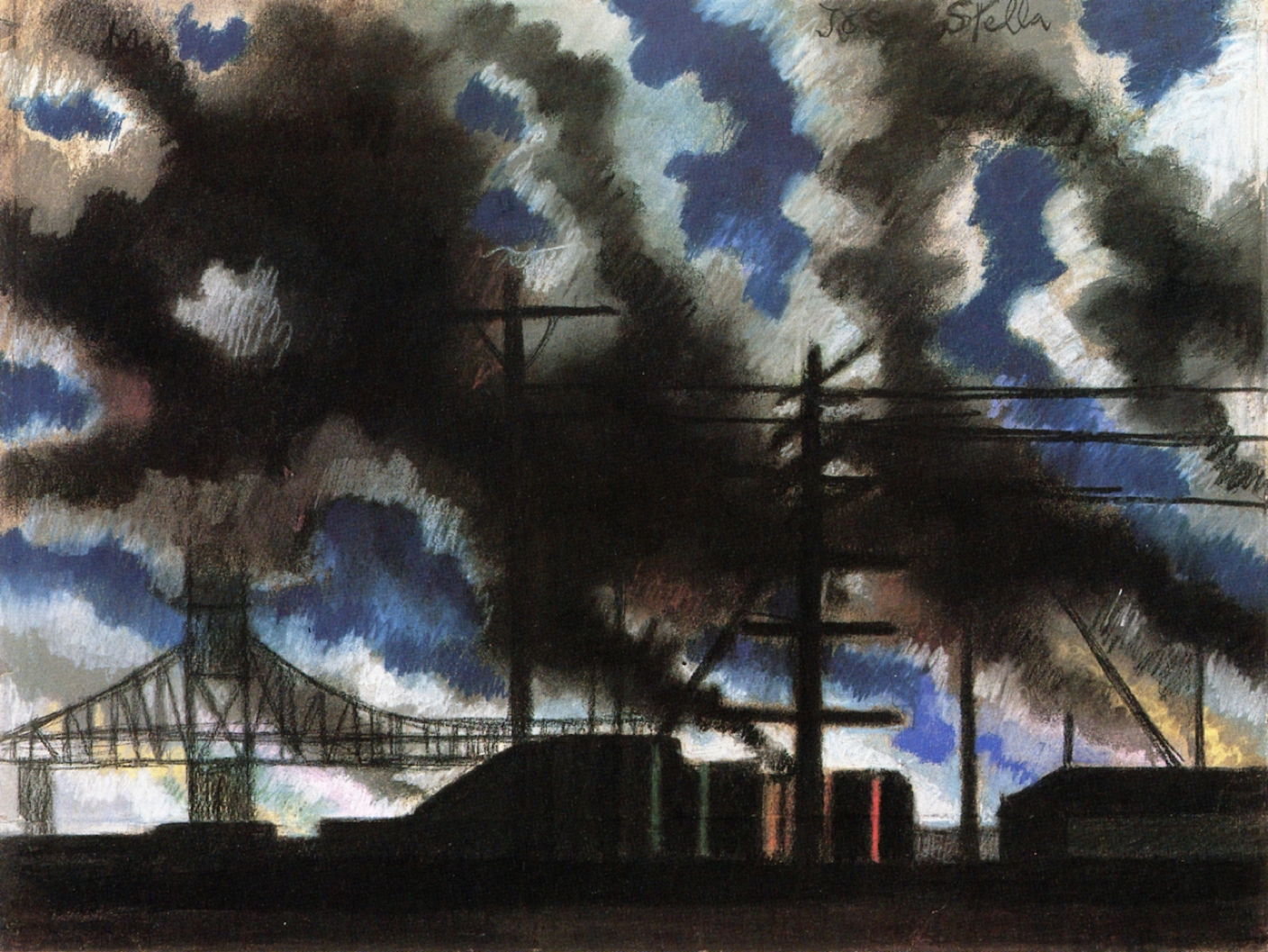
Stella’s Bethlehem, painted in pastel in about 1918, shows the skyline and smoke of this city in Pennsylvania, from the mid-nineteenth century the centre of the US steel industry.
Joseph Stella (1877–1946), Equal Work/Equal Pay (1918), charcoal on paper, 69.8 x 54.6 cm, Metropolitan Museum of Art, New York, NY. Wikimedia Commons.
He also seems to have become involved in social campaigning at that time. Stella’s atmospheric charcoal drawing of Equal Work/Equal Pay from 1918 shows a woman and a man stenographer (typist, or possibly typesetters) working back-to-back in one of the dimly-lit clerical sweatshops.
Joseph Stella (1877–1946), Nocturne II (c 1919), pastel on paper, 43.2 x 61 cm, Private collection. Wikimedia Commons.
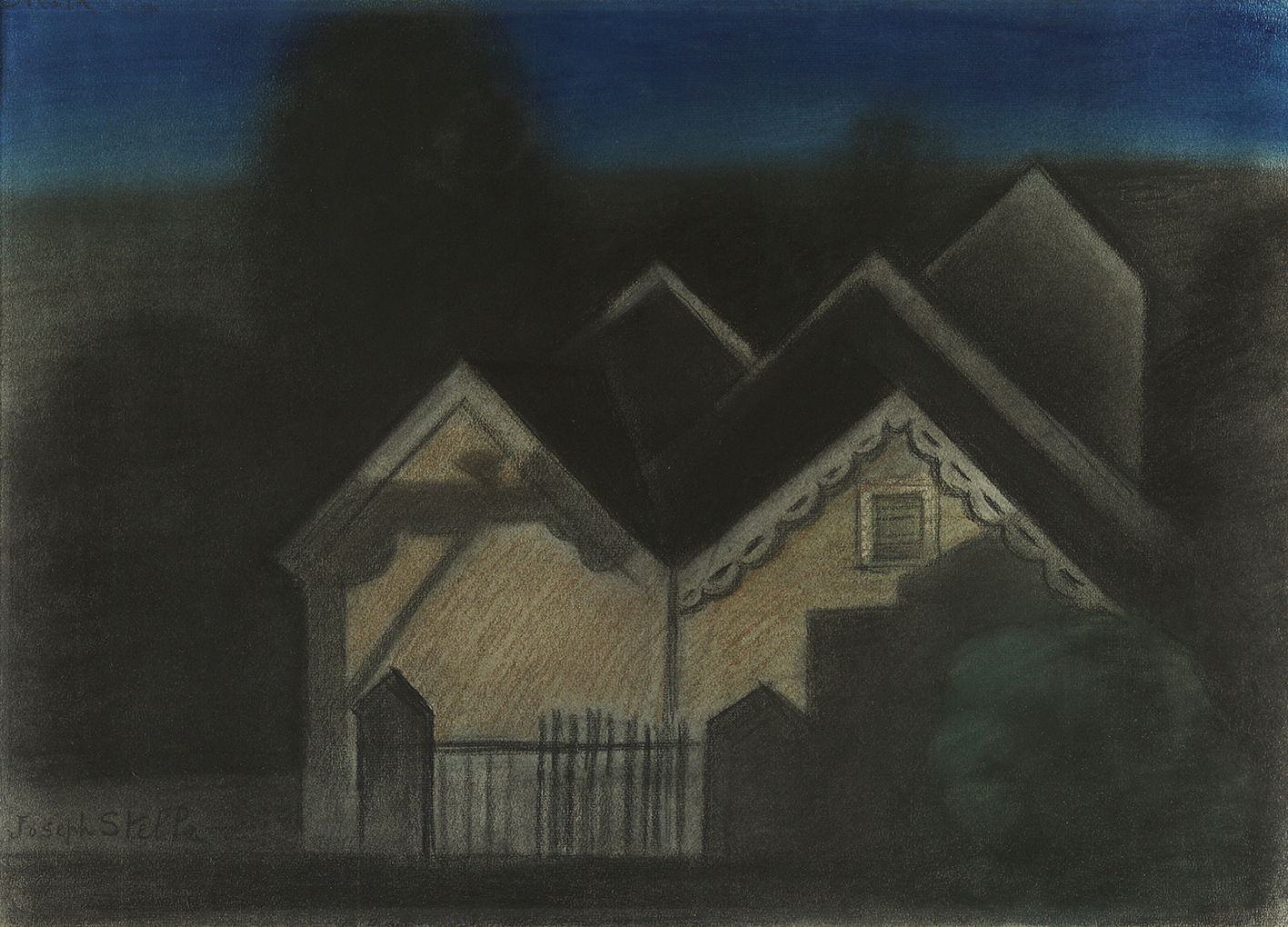
Another pastel, Nocturne II from about 1919, is moving away from those smoky factories, but remains dark and quietly sinister.
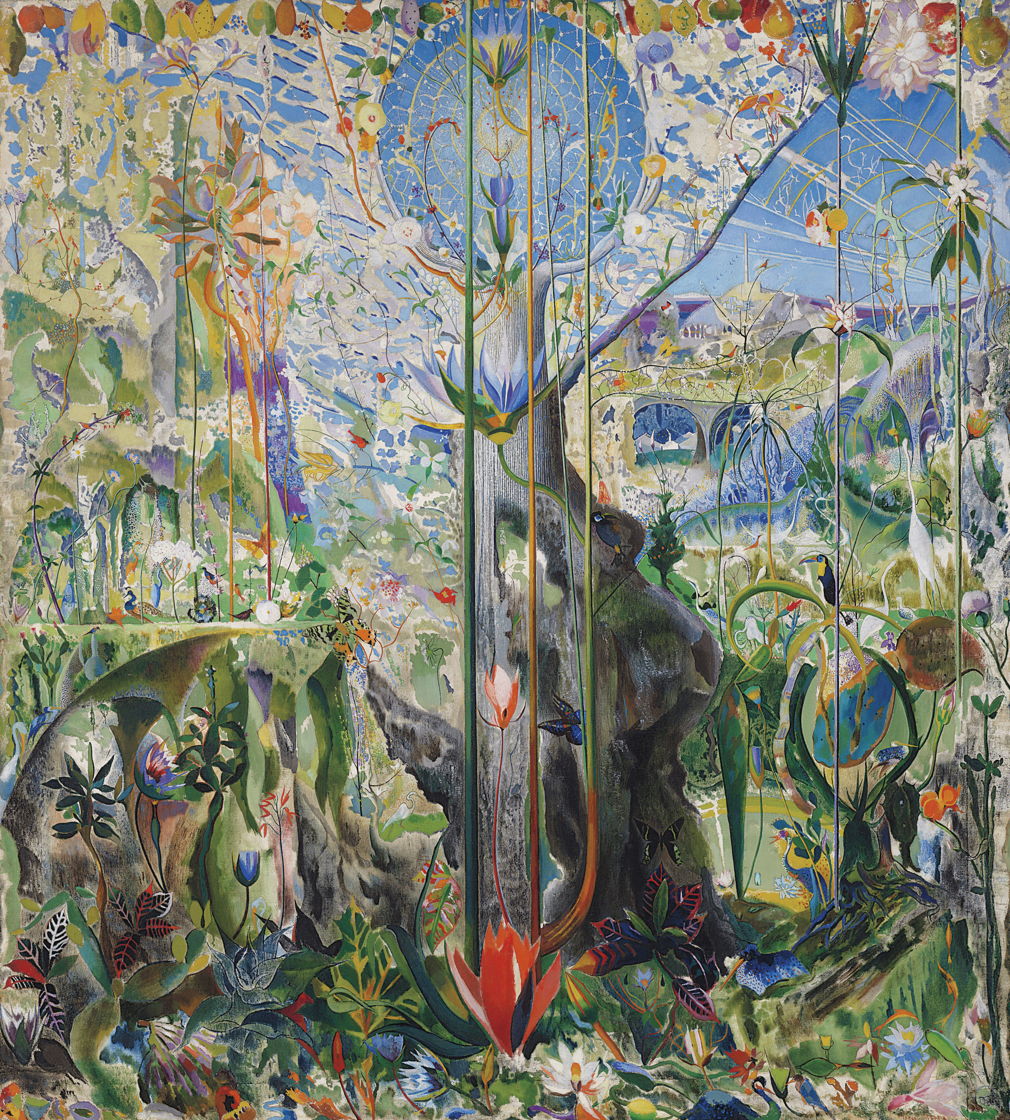
Joseph Stella (1877–1946), Tree of My Life (1919), oil on canvas, 213.4 x 193 cm, location not known. Wikimedia Commons.
That same year he painted this large almost Surrealist fantasy, Tree of My Life, which appears to have been influenced by the extraordinary paintings of Hieronymus Bosch. It’s filled with exotic plants and birds, and passages are densely patterned, as shown in the detail below.
Joseph Stella (1877–1946), Tree of My Life (detail) (1919), oil on canvas, 213.4 x 193 cm, location not known. Wikimedia Commons.
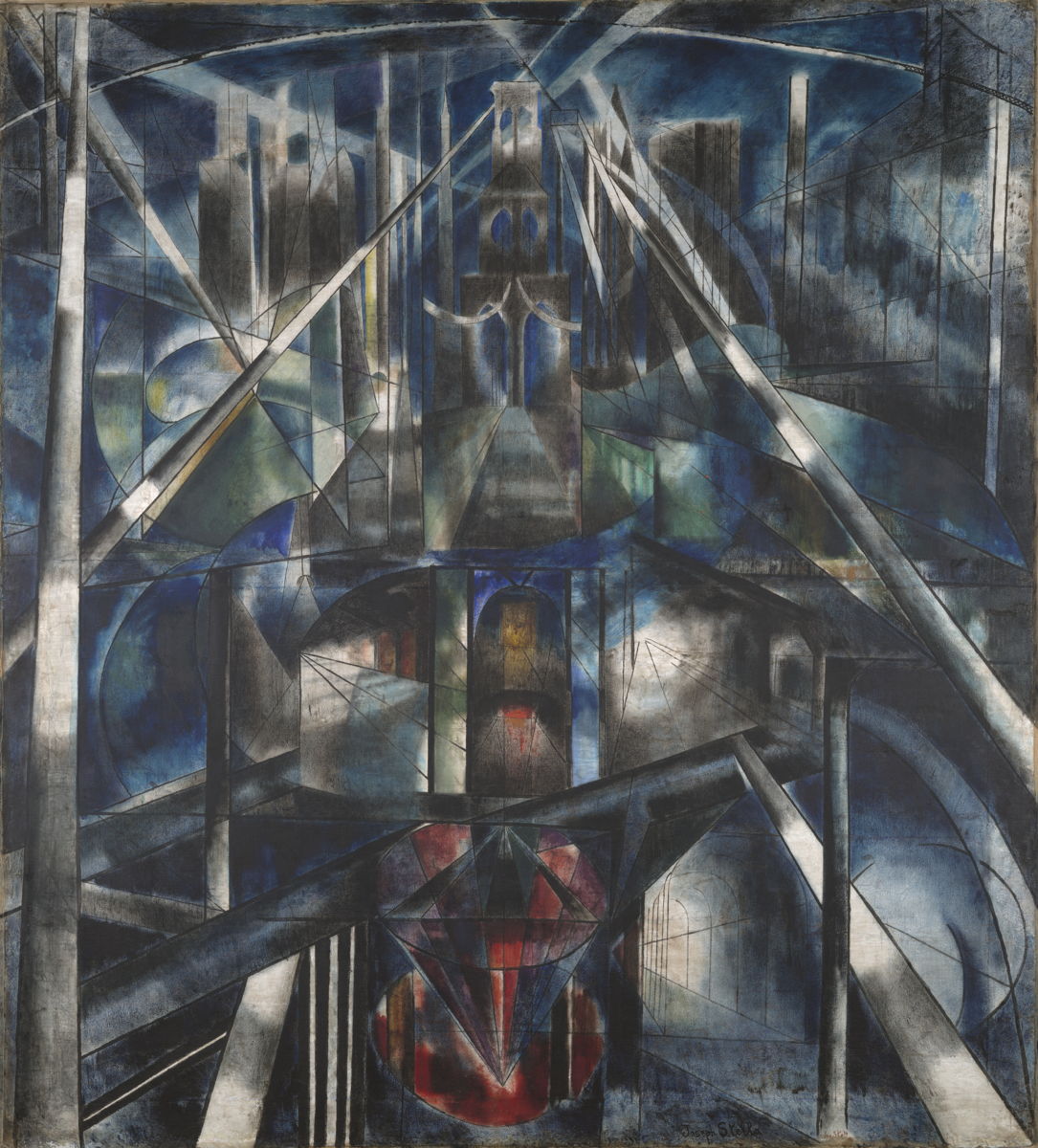
Joseph Stella (1877–1946), Brooklyn Bridge (1919-20), oil on canvas, 215.3 × 194.6 cm, Yale University Art Gallery, New Haven, CT. Wikimedia Commons.
Stella’s eclecticism knew no bounds. After that, he painted probably his best-known work, this Cubist geometric analysis of Brooklyn Bridge (1919-20).
Joseph Stella (1877–1946), Factories (c 1920-21), oil on burlap, 142.2 x 116.8 cm, The Museum of Modern Art, New York, NY. Wikimedia Commons.
His most extraordinary accomplishment is surely the number of different styles he used over any given period. From his earlier industrial settings came the Precisionism of Factories in about 1920-21.
In 1920-22, Stella completed a huge five-panel mural for the Newark Museum, titled New York Interpreted (The Voice of the City). Critics considered it to be the most successful attempt to show city life during the period between the wars.

 Login
Login