Roman Abramovich agreed to sell Chelsea FC in 2022 after Russia invaded Ukraine
The Prime Minister has said Russian oligarch Roman Abramovich must "pay up now" to victims of the war in Ukraine or face court action.
Mr Abramovich, the former owner of Chelsea Football Club, pledged in 2022 that money from the sale of the club would go to benefit victims of the Russian invasion of Ukraine.
The money has been frozen in a British bank account since the sale after he was sanctioned following Russia's invasion of Ukraine.
Speaking in the Commons, Sir Keir Starmer said the UK had issued a licence "to transfer £2.5bn from the sale of Chelsea Football Club that's been frozen since 2022."
Sir Keir said: "My message of Abramovich is clear: the clock is ticking.
"Honour the commitment that you made and pay up now, and if you don't we're prepared to go to court and ensure that every penny reaches those whose lives have been torn apart by Putin's illegal war."
The Treasury said that under the terms of the licence, the money must go to "humanitarian causes" in Ukraine and cannot benefit Mr Abramovich or any other sanctioned individual.
BBC outside Rabbi Schlanger's funeral as mourners pay tribute
The first funeral for one of the victims of the Bondi Beach shooting has taken place in Sydney, with thousands gathering to mourn Rabbi Eli Schlanger.
He was among 15 people killed when two gunmen, alleged to have been motivated by Islamic State ideology, opened fire on a festival marking the first day of Hanukkah.
Rabbi Schlanger, who was known as the "Bondi Rabbi" and had helped organise Sunday's event, was born in the UK. His wife gave birth to their fifth child just two months ago.
Rabbi Levi Wolff, who opened the service, said his death as an "unspeakable loss" for the community, the Chabad of Bondi and "the entire Jewish nation".
Associated Press
The family of Rabbi Eli Schlanger mourn over his coffin during his funeral
"Eli was ripped away from us, doing what he loved best," he said.
"Spreading love and joy and caring for his people with endless self-sacrifice in his life and in his death, he towered above as one of the highest and holiest souls."
He was mourned by his father-in-law as a person beloved by the community. The 41-year-old was "my son, my friend, my confidant," Rabbi Yehoram Ulman told the congregation at the Chabad of Bondi.
"My biggest regret was, apart from the obvious, to tell Eli more often how much we love him, how much I love him, how much we appreciate everything that he does and how proud we are of him," Rabbi Ulman said.
"I hope he knew that but I think it should have been said more often."
Ulman also urged Jewish people not to hide in the aftermath of the attack and said that on Sunday night - the final night of Hanukkah - they would continue a 31-year-old tradition, and light the final candle on Bondi Beach.
"All the rabbis together, under the banner of our Chabat house of Bondi, to which Eli dedicated his life, we are going to gather in Bondi Beach," he said.
The funeral of Rabbi Yaakov Levitan is also expected to take place on Wednesday afternoon, while the funeral of 10-year-old Matilda, the youngest victim, is to take place on Thursday.
Speaking to reporters in Bondi on Wednesday, Matilda's father praised lifesavers, bystanders and police officers who came to their assistance as they struggled to save their daughter's life, and a woman who helped their younger daughter, Summer.
"I must say the biggest thank you to the lady that saved Summer," he said. "I don't know who she was but she literally hugged her for the whole ten minutes of shooting."
Watch: 10-year-old victim's parents speak at Bondi flower tribute
Opposition leader Sussan Ley, New South Wales Premier Chris Minns, former prime minister Scott Morrison and Israeli Ambassador Amir Maimon were among those attending Schlanger's funeral.
Anthony Albanese was not present. Asked on ABC NewsRadio about his absence, the prime minister said, "I would attend anything that I'm invited to. These are funerals that are taking place to farewell people's loved ones."
The Jewish community has criticised Albanese for not taking enough action on antisemitism.
The prime minister defended himself against those accusations on Wednesday, telling ABC NewsRadio he had taken a series of measures including appointing the country's first antisemitism envoy, toughening hate speech laws and increasing funding for social cohesion projects and Jewish institutions.
He also said that one of the two men accused of carrying out Sunday's attack would be charged later on Wednesday, although NSW Police Commissioner Mal Lanyon later said this may depend on his medical condition.
"It's important he has appropriate cognitive ability. For his fairness, we need him to understand what is exactly happening," he told reporters in Sydney.
Naveed Akram reportedly woke from a coma on Tuesday afternoon after being shot and critically injured by police in Sunday's attack. His father, 50-year-old Sajid Akram was shot dead.
The pair, who allegedly fired on people attending the Hanukkah festival for around 10 minutes, reportedly travelled to the Philippines in November and police are investigating whether they met with Islamic extremists.
Two police officers were critically injured in the shooting and police on Wednesday confirmed that one of them had lost the sight in one eye as a result.
Jack Hibbert, 22, had only been in the police force for four months when he was shot, police said in a statement. During the attack he had "responded with courage, instinct, and selflessness, continuing to protect and help others whilst injured, until he was physically no longer able to."
The second officer, constable Scott Dyson, underwent further surgery this morning and is in a critical but stable condition, Lanyon added.
US President Donald Trump has said he is ordering a "a total and complete" blockade of all sanctioned oil tankers going into and out of Venezuela.
In a post on Truth Social, he accused Venezuela of stealing US assets, such as oil and land, and of "Terrorism, Drug Smuggling, and Human Trafficking".
"Therefore, today, I am ordering A TOTAL AND COMPLETE BLOCKADE OF ALL SANCTIONED OIL TANKERS going into, and out of, Venezuela," he added.
His post came a week after the US seized an oil tanker off the coast of Venezuela – a move that marked a sharp escalation Washington's pressure campaign against Venezuelan leader Nicolás Maduro's government.
In the post, the US president said Venezuela was "completely surrounded by the largest Armada ever assembled in the History of South America".
He added that it will "only get bigger" and "be like nothing they have ever seen before".
Trump also accused Maduro's government of using stolen oil to "finance themselves, Drug Terrorism, Human Trafficking, Murder, and Kidnapping".
Venezuela has not yet responded to Trump's latest remarks.
The Trump administration has repeatedly accused Venezuela of drug smuggling and since September the US military has killed at least 90 people in strikes on boats it has alleged were carrying fentanyl and other illegal drugs to the US.
In recent months, the US has also moved warships into the region.
Venezuela - home to some of the world's largest proven oil reserves - has, in turn, accused Washington of seeking to steal its resources.
This breaking news story is being updated and more details will be published shortly. Please refresh the page for the fullest version.
You can receive Breaking News on a smartphone or tablet via the BBC News App. You can also follow @BBCBreaking on X to get the latest alerts.
The US has prioritised white South Africans despite reducing overall refugee numbers
South Africa has accused the US of using Kenyan nationals who did not have work permits at a facility processing applications by white South Africans for refugee status.
Seven Kenyans were arrested after intelligence reports revealed that people "had recently entered South Africa on tourist visas and had illegally taken up work" at the centre, said a statement from South Africa's department of home affairs.
The BBC has approached the US State Department for comment.
While the US is trying to reduce overall levels of migration, it says that members of South Africa's white Afrikaner community can get asylum because they face persecution - a claim South Africa's government strongly rejects.
The US has reduced its yearly intake of refugees from around the world from 125,000 to 7,500, but says it will prioritise Afrikaners, who are mostly descendants of Dutch and French settlers.
South Africa says the Kenyan nationals arrested in Tuesday's raid will now be deported and will be banned from entering the country for five years.
They had previously been denied work visas but were found "engaging in work despite only being in possession of tourist visas, in clear violation of their conditions of entry into the country", the statement said.
South Africa said the raid showcased the commitment that the country shared "with the United States to combating illegal immigration and visa abuse in all its forms", it said.
It added that "formal diplomatic engagements" had been started with both the United States and Kenya.
No US officials were arrested and the operation was not at a diplomatic site, it said.
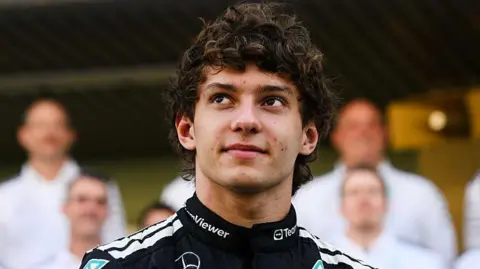
Kimi Antonelli finished seventh in the F1 2025 drivers' championship
F1 driver Kimi Antonelli has surprised local go-karters by going incognito at a packed racing session.
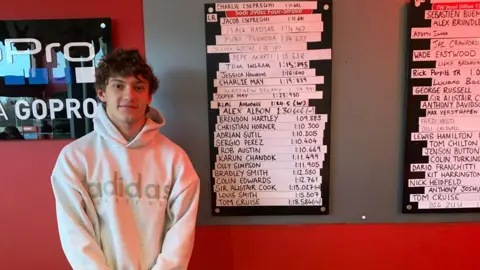
Antonelli attended Daytona Milton Keynes on Saturday and registered under the name "Henry Shovlin".
The 19-year-old Italian, who drives professionally for Mercedes, set the fastest lap of the session in the main race but did not win.
Daniel Prince, from Daytona, said Antonelli failed to make the podium because he got "two penalties" for "pushing too hard" but was happy to pose for a photo until he was mobbed by fans.
Daytona Milton Keynes
Kimi Antonelli clocked a time of 1:25.5 and was happy to pose next to the celebrity leaderboard
Mr Prince said Antonelli did the usual briefing and then raced with everyone else but "no-one had a clue" who he was.
"He actually got two penalties for pushing too hard so didn't finish on the podium at the end of it," he told Roberto Perrone on BBC Three Counties Radio.
"But he did get the fastest lap of the race by at least three seconds."
Mr Prince said the star was not recognised because he was wearing a helmet, but when he went back inside and removed it "everyone realised who they'd been racing against".
"Everyone really mobbed him so a member of staff quickly rescued him and put him behind the desk for a cheeky photo by our celebrity leaderboard, and then he ran away and left."
F1 drivers including Alexander Albon, Isack Hadjar and Yuki Tsunoda have visited the track due to its proximity to Silverstone.
Daytona Milton Keynes
Youngsters competing at the Daytona track in Milton Keynes back in September
The US seized an oil tanker off the coast of Venezuela on 10 December
In a further escalation of tension between the United States and Venezuela, President Donald Trump has ordered a naval blockade to stop sanctioned oil tankers from entering and leaving the South American country.
Venezuela - which has the world's largest proven oil reserves - is highly dependent on revenues from its oil exports to finance its government spending.
But US sanctions targeting Venezuela's state-run oil company PDVSA have made exporting oil difficult for the Venezuelan government, leading them to resort to a fleet of "ghost ships".
So what do we know about these vessels and how they operate?
'Total and complete blockade'
As of last week, more than 30 of the 80 ships in Venezuelan waters or approaching the country were under US sanctions, according to data compiled by TankerTrackers.com.
Trump imposed sanctions on Venezuela's oil industry as far back as 2019, during his first term as president.
That year, Venezuelan crude exports fell by more than half from roughly 1.1 million barrels per day in January to about 495,000 by the end of 2019, according to the US Energy Information Administration.
Six years later, the sanctions remain in place but Venezuela's oil exports have grown again to around 920,000 barrels per day as of November, according to the news agency Reuters.
While this falls far short of the country's peak level of oil exports of 3 million barrels per day in 1998, this partial recovery indicates that the sanctions against Venezuela are not working as the US hoped.
It indicates that the government of Nicolás Maduro has found new ways to sell Venezuelan oil with the "ghost fleet" at their centre.
Not unique to Venezuela
Ghost fleets are a growing phenomenon, used not just by Venezuela but also by two other oil-producing countries under Western sanctions - Russia and Iran.
Financial intelligence firm S&P Global estimates that one in five oil tankers worldwide are used to smuggle oil from sanctioned countries.
Of these, 10% carry only Venezuelan oil, 20% carry Iranian oil, while 50% are exclusively dedicated to Russian oil. The remaining 20% are not tied to any particular country and can transport oil from more than one of these nations.
Oil sanctions aim to discourage countries or companies from buying or dealing with crude oil from sanctioned nations.
Companies and nations caught buying oil from sanctioned countries like Venezuela risk being sanctioned themselves by the US.
Sanctioned countries offer their oil at steep discounts so that companies or nations are willing to take the risk of buying it whilst applying tricks to disguise its origin.
One of the most common strategies ghost tankers use is to frequently change their name or flag - sometimes several times in a month.
For example, the tanker seized this Wednesday is called The Skipper, according to CBS News, the BBC's US partner.
The ship has been sanctioned by the US Treasury since 2022 for its alleged role in an oil-smuggling network that helps finance Iran's Revolutionary Guard and the Lebanese militia Hezbollah, according to CBS.
At that time, the tanker was named Adisa, but it was originally called Toyo. It was one of the vessels linked to Russian oil tycoon Viktor Artemov, who is also under sanctions.
The Skipper is a 20-year-old vessel - another common trait among ghost fleet tankers. Major shipping companies usually dispose of ships after 15 years of service, and after 25 years they are typically scrapped.
Watch: Video shows US military seizing oil tanker off Venezuela coast
'Zombie ships'
Another trick these ships use is to steal the identity of scrapped vessels by using their unique registration numbers assigned by the International Maritime Organization – similar to criminals using the identity of a dead person.
These are known as "zombie ships".
Last April, a ship called Varada arrived in Malaysian waters after a two-month journey from Venezuela.
It raised suspicions because it was a 32-year-old boat and flew the flag of the Comoros, an island nation off east Africa, which is a popular choice among ships that want to avoid detection.
According to a Bloomberg investigation, it was a zombie ship, as the real Varada had been scrapped in Bangladesh in 2017.
The news agency compared satellite images with historical photos to detect four zombie ships carrying Venezuelan crude oil.
Other common tactics include disguising the origin of crude oil by transferring it in international waters to legally compliant tankers with other flags.
These then deliver the oil to its destination, presenting it as coming from a country that is not sanctioned.
This happened with Venezuelan oil exports to China during Trump's first term when sanctions were tightened.
Another common trick among these tankers is disabling the Automatic Identification System, which transmits data including the vessel's name, flag, position, speed or route.
This allows ships to hide their identity and location.
Maritime risk company Vanguard Tech says it believes The Skipper was "spoofing its position for a long time" - that is, transmitting a false signal, making it appear to be in a different location.
Planet Labs PBC / Reuters
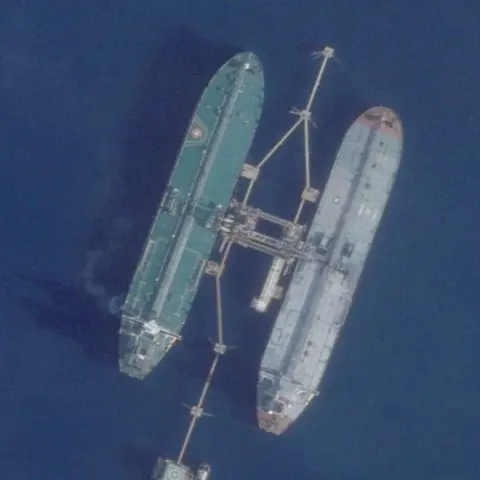
A satellite image taken on 18 November off Venezuelan waters shows The Skipper, on the right, alongside another vessel
According to a report in October by the anti-corruption NGO Transparencia Venezuela, there were 71 foreign tankers at the ports of Venezuelan state oil company PDVSA - of which 15 are under sanctions and nine are linked to ghost fleets.
It found that 24 tankers were operating under stealth, with their mandatory location signals deactivated.
The NGO says it detected six ship-to-ship cargo transfers in waters off western Venezuela.
Most of the ships flew flags of countries considered regulatory havens with lax oversight of sanctions, including Panama, Comoros and Malta.
Many spent more than 20 days without docking at an oil terminal, unlike the Chevron-operated ships that the US has authorised in Venezuela, which load and leave within six days.
"The extended stay in port areas without directly reaching oil terminals raises serious doubts about the type of operations these vessels are conducting," said Transparencia Venezuela in its report.
Given that the operation to seize the ship on 10 December came from the USS Gerald Ford aircraft carrier - the largest in the world - which is now part of the massive US military deployment in Caribbean waters, Maduro's ability to rely on the ghost fleet is likely to be significantly curtailed.
DJ Warras was shot by a man with dreadlocks in broad daylight, police say
A popular South African radio and club DJ has been shot dead in the country's largest city, Johannesburg, sending shockwaves across the nation grappling with entrenched crime.
Warrick Stock, popularly known as DJ Warras, was gunned down in the city centre on Tuesday afternoon.
Police said the 40-year-old media personality was approached by three suspects, one of whom opened fire on him before fleeing on foot.
The motive of the shooting is unknown and no arrests have been made, police said.
Stock was a well-known radio and TV presenter and a podcaster in South Africa.
Fred Kekana, a local police chief, said Stock was attacked as he was leaving Zambesi House near Carlton Centre.
Stock spent several hours at the building overseeing the installation of security systems at the premises, which had been controversially occupied by unknown people, reports the state-run SABC.
"It is alleged the victim was approached by three unknown suspects after parking his vehicle, and they opened fire at him before fleeing the scene on foot," the South African Police Service (SAPS) said in a statement.
CCTV footage showed a man with dreadlocks and dressed in what looked like a security uniform opening fire on Stock before fleeing, said Kekana.
The DJ tried to run away after he was shot but fell down across the street, the police chief added.
He said that Stock had an unused firearmon him and nothing was taken during the attack.
Key evidence, like cartridges, were discovered at the scene, according to the police.
Police have appealed to eyewitnesses and members of the public who may have seen the suspects to come forward.
"We know they walked a long distance after the shooting, and officers have been tracking them to determine their whereabouts," added Kekana.
His sister Nicole Stock told SABC that the family was struggling to process his death.
"I am in shock. I don't have words. I am shattered," she said.
"We know he was a voice for many people around the country. He spoke out bravely about issues not many people were willing to speak about. This is a tremendous loss."
She appealed to the public to refrain from sharing graphic images or videos from the scene, saying this was an incredibly difficult time, especially for Shock's three sons.
Stock was the presenter of Ngicel' iVisa, a reality show that premiered on Mzansi Magic, a South African digital satellite entertainment channel.
Beyond his media career, Stock was involved in various business ventures, including private security, providing elite guarding and VIP protection services and securing high-profile events across South Africa, according to local media.
He was also reportedly involved in property management and assisted with building evictions.
His murder has shocked the country and prompted an outpouring of tributes from his fans, the government and political parties.
Sports, Arts and Culture Minister Gayton McKenzie said he was angry and saddened by Stock's murder.
"He spoke his truth without fear or favour. He even spoke up against me and my decisions as a minister. He was a pure example of who we should be," added McKenzie.
Leader of South African's Build One party Mmusi Maimane said the "brazen murder of DJ Warras in broad daylight is a shock for all South Africans".
"DJ Warras was more than just a face of a reality series. He was a talented storyteller, a passionate music lover and a warm soul who brought joy and energy to every moment on screen. His dedication to creativity left an indelible mark on our channels," said Shirley Adonisi, director of local entertainment Channels (Mnet).
In a statement, Mzansi Magic said Stock was known for his charisma, warmth and sharp wit, adding that his legacy "will live on".
South Africa, the continent's most industrialised nation, has one of the world's highest murder rates, fuelled by robberies and gang violence, with some 63 people killed each day between April and September, according to police data.
Naveed Akram, the surviving alleged suspect in Sunday's mass shooting at Bondi Beach in Sydney, has been charged with 59 offences, including 15 counts of murder and one of committing a terrorist act, according to the New South Wales Police.
The other gunman, his father Sajid Akram, 50, was killed in an exchange of fire with police at the scene.
Fifteen people were killed and dozens of others were injured in the attack, which targeted Australia's Jewish community at an event celebrating the first night of Hanukkah.
It was the country's deadliest shooting since 1996.
Akram also faces 40 charges of causing grievous bodily harm with intent to murder, as well as one charge of causing a public display of a prohibited terrorist organisation symbol.
He was critically injured during the incident on Sunday, and had his first hearing from his hospital bedside, the local New South Wales court said.
The case has been adjourned until April 2026, the court added.
Earlier on Wednesday, New South Wales Police Commissioner Mal Lanyon said they were waiting for medication to wear off before formally questioning Akram.
"For his fairness, we need him to understand what is exactly happening," Lanyon said.
Twenty people injured in the attack remain in hospitals across Sydney, with one person still in a critical condition.
Earlier, New South Wales Police Commissioner Mal Lanyon said they were waiting for medication to wear off before formally questioning Akram.
"For his fairness, we need him to understand what is exactly happening," Lanyon said.
Police have designated the attack a terrorist incident, with Australian Prime Minister Anthony Albanese saying it appears to have been "motivated by Islamic State" group ideology.
Police said "homemade" Islamic State group flags and improvised explosive devices (IEDs) have been found in the vehicle used by the gunmen.
This breaking news story is being updated and more details will be published shortly. Please refresh the page for the fullest version.
You can receive Breaking News on a smartphone or tablet via the BBC News App. You can also follow @BBCBreaking on X to get the latest alerts.
Watch: Prosecutor announces charges against Nick Reiner in parents' deaths
Prosecutors in Los Angeles have filed murder charges against a son of Rob and Michele Reiner, the Hollywood couple who were found dead in their home with multiple stab wounds on Sunday.
Nick Reiner, 32, is facing two counts of first-degree murder and could be sentenced to life in prison if found guilty. He will be brought to court to formally face charges after he is "medically-cleared" by prison officials, District Attorney Nathan Hochman said.
During a news conference on Tuesday, Mr Hochman also said no decision had yet been made about whether to seek the death penalty.
Rob Reiner directed several iconic films in a variety of genres, including This is Spinal Tap, Misery and A Few Good Men.
Michele Singer Reiner was an actress, photographer and producer, and the founder of Reiner Light, a photography agency and production company.
Their son Nick Reiner is facing two counts of first degree murder, "with a special circumstance of multiple murders," according to Hochman. That enhancement could lead to a stiffer sentence if he is later found guilty.
District Attorney Hochman said he also is accused of using a "dangerous and deadly weapon, that being a knife".
The suspect is currently undergoing medical testing to ensure that he can attend court. He is expected to appear before a judge later on Tuesday for an arraignment hearing, where he will be able to enter a plea of guilty or not guilty.
LA Police Department Chief Jim McDonnell also spoke during the news conference, describing how the case has reverberated throughout the city.
"This case is heartbreaking and deeply personal, not only for the Reiner family and their loved ones, but for the entire city," he said.
"We extend our deepest condolences to everyone affected by this tragedy."
Getty Images
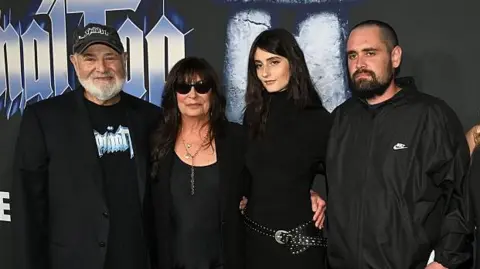
Nick Reiner (right) is accused of killing his two parents
During the news conference, officials declined to say how the suspect was located, attributing his arrest to "good, solid police work".
District Attorney Hochman added that it is too early to say whether any "mental illness" played a role in the crime, and speculated that it could come up at trial.
"If there is evidence of mental illness, it will appear in court, in whatever details the defence seeks to present," he said.
Miss Finland Sarah Dzafce said in the viral photo that she was "eating with a Chinese".
Finland's delegate to last month's Miss Universe pageant held in Thailand has sparked a racism firestorm over a viral photo that showed her pulling the corners of her eyes.
Sarah Dzafce, who has been dethroned, uploaded the photo with the caption "eating with a Chinese". The slanted-eyes pose is often seen as disrespectful to East Asians.
The post drew backlash in Japan, South Korea and China against the 22-year-old and even against her country's flag carrier, Finnair.
Back home in Finland, the prime minister said on Monday making such gestures was "thoughtless and stupid" and that the controversy that ensued was "damaging" to the country.
Ms Dzafce claimed the gesture was her reaction to a headache during dinner. She said a friend added the offensive caption to the 11 December post without her consent, according to local tabloid Ilta-Sanomat.
Ms Dzafce has apologised for the photo, noting it has "caused ill will in many people".
"That was not my intention in any way... One of the most important things for me is respect for people, their backgrounds and differences," she wrote on an Instagram post.
The apology still drew criticism, with some calling it "insincere" given it was written in Finnish.
"Not sure Chinese outside of Finland would understand it. Such considerate and sincere apology," one wrote in a comment on her post.
Another wrote: "That was uncalled for, Asian people didn't do anything to you... We [are] still disappointed in you."
Two right-wing MPs in Finland, Juho Eerola and Kaisa Garedew, posted photos of themselves mimicking Ms Dzafce's gesture to show their support for the beauty queen.
The posts were taken down after backlash. Eerola apologised adding he felt Ms Dzafce was given "disproportionately harsh punishment".
Finnish Prime Minister Petteri Orpo condemned the MPs' actions as "childish", adding that lawmakers should set an example of proper conduct.
The Finns Party is deliberating whether the MPs should face any sanctions for their actions, local media reported.
Finland's flag carrier Finnair told public broadcaster Yle that the controversy had affected the company, and that there had been calls for tourists to boycott Finland.
"The statements or posts mentioned by some Finnish members of parliament do not represent the values of Finnair," the airline wrote on its Japanese X account on Tuesday.
"As an airline supported by employees from diverse backgrounds and customers around the world, we promise to welcome everyone with respect," it wrote.
The debacle has also drawn attention in Japan, South Korea and China, among other East Asian countries.
A Japanese man living in Finland launched an petition calling for an investigation into anti-Asian discrimination, which had gathered more than 7,000 signatures as of Sunday evening, the Asahi Shimbun reported.
The Finnish embassy in Japan said it had received "numerous opinions and questions" on Finland's efforts to address racism.
"Racism remains a challenge in Finnish society, and its resolution requires continuous and resolute efforts," it acknowledged in an X post early this week.
The Miss Finland Organisation said dethroning Ms Dzafce was a "difficult but necessary" move.
"Miss Finland holds a position of role-model status, which requires respecting all people regardless of their origin, background, or appearance," the organisation said in a statement.
"We are deeply sorry for the harm these events have caused. Especially to the Asian community, but also to everyone affected. Racism is never acceptable in any form," it wrote.
US President Donald Trump has said he is ordering a "a total and complete" blockade of all sanctioned oil tankers going into and out of Venezuela.
In a post on Truth Social, he accused Venezuela of stealing US assets, such as oil and land, and of "Terrorism, Drug Smuggling, and Human Trafficking".
"Therefore, today, I am ordering A TOTAL AND COMPLETE BLOCKADE OF ALL SANCTIONED OIL TANKERS going into, and out of, Venezuela," he added.
His post came a week after the US seized an oil tanker off the coast of Venezuela – a move that marked a sharp escalation Washington's pressure campaign against Venezuelan leader Nicolás Maduro's government.
In the post, the US president said Venezuela was "completely surrounded by the largest Armada ever assembled in the History of South America".
He added that it will "only get bigger" and "be like nothing they have ever seen before".
Trump also accused Maduro's government of using stolen oil to "finance themselves, Drug Terrorism, Human Trafficking, Murder, and Kidnapping".
Venezuela has not yet responded to Trump's latest remarks.
The Trump administration has repeatedly accused Venezuela of drug smuggling and since September the US military has killed at least 90 people in strikes on boats it has alleged were carrying fentanyl and other illegal drugs to the US.
In recent months, the US has also moved warships into the region.
Venezuela - home to some of the world's largest proven oil reserves - has, in turn, accused Washington of seeking to steal its resources.
This breaking news story is being updated and more details will be published shortly. Please refresh the page for the fullest version.
You can receive Breaking News on a smartphone or tablet via the BBC News App. You can also follow @BBCBreaking on X to get the latest alerts.
Watch: Prosecutor announces charges against Nick Reiner in parents' deaths
Prosecutors in Los Angeles have filed murder charges against a son of Rob and Michele Reiner, the Hollywood couple who were found dead in their home with multiple stab wounds on Sunday.
Nick Reiner, 32, is facing two counts of first-degree murder and could be sentenced to life in prison if found guilty. He will be brought to court to formally face charges after he is "medically-cleared" by prison officials, District Attorney Nathan Hochman said.
During a news conference on Tuesday, Mr Hochman also said no decision had yet been made about whether to seek the death penalty.
Rob Reiner directed several iconic films in a variety of genres, including This is Spinal Tap, Misery and A Few Good Men.
Michele Singer Reiner was an actress, photographer and producer, and the founder of Reiner Light, a photography agency and production company.
Their son Nick Reiner is facing two counts of first degree murder, "with a special circumstance of multiple murders," according to Hochman. That enhancement could lead to a stiffer sentence if he is later found guilty.
District Attorney Hochman said he also is accused of using a "dangerous and deadly weapon, that being a knife".
The suspect is currently undergoing medical testing to ensure that he can attend court. He is expected to appear before a judge later on Tuesday for an arraignment hearing, where he will be able to enter a plea of guilty or not guilty.
LA Police Department Chief Jim McDonnell also spoke during the news conference, describing how the case has reverberated throughout the city.
"This case is heartbreaking and deeply personal, not only for the Reiner family and their loved ones, but for the entire city," he said.
"We extend our deepest condolences to everyone affected by this tragedy."
Getty Images
Nick Reiner (right) is accused of killing his two parents
During the news conference, officials declined to say how the suspect was located, attributing his arrest to "good, solid police work".
District Attorney Hochman added that it is too early to say whether any "mental illness" played a role in the crime, and speculated that it could come up at trial.
"If there is evidence of mental illness, it will appear in court, in whatever details the defence seeks to present," he said.
President Donald Trump has expanded a US travel ban, barring nationals of five additional countries and people travelling on Palestinian Authority-issued documents from entering the US.
The White House said the restrictions were intended "to protect the security of the United States" and will come into force on 1 January.
Full-entry restrictions will be imposed on people from Burkina Faso, Mali, Niger, South Sudan and Syria as well as Palestinian Authority passport holders.
The administration also moved Laos and Sierra Leone, which were previously subject to partial restrictions, to the full ban list and put partial restrictions on 15 other countries, including Nigeria, Tanzania and Zimbabwe.
Trump, who has tightened immigration controls since returning to the White House in January, said the expanded travel ban was necessary because of what his administration described as failures in screening and vetting systems overseas.
Officials cited high visa overstay rates, unreliable civil records, corruption, terrorist activity and a lack of cooperation in accepting deported nationals.
The announcement followed the arrest of an Afghan national suspected of shooting two National Guard troops over the Thanksgiving weekend, an incident the White House pointed to in highlighting its security concerns.
This is the third time Trump has imposed a travel ban.
During his first term, he introduced a similar order in 2017, which sparked protests and legal challenges at home and abroad. The policy was later upheld by the US Supreme Court.
The White House said the restrictions would remain in place until affected countries show "credible improvements" in identity management, information-sharing and cooperation with US immigration authorities.
A number of exceptions apply and the ban will not affect lawful permanent residents, many existing visa holders, diplomats, or athletes travelling for major sporting events. Officials said case-by-case waivers would also be available where travel is deemed to be in the national interest.
Countries with full restrictions:
Afghanistan
Burkina Faso
Burma
Chad
Equatorial Guinea
Eritrea
Haiti
Iran
Laos
Libya
Mali
Niger
Republic of the Congo
Sierra Leone
Somalia
South Sudan
Sudan
Syria
Yemen
Individuals travelling on Palestinian Authority issued or endorsed travel documents are also subject to a full suspension of entry
Partial restrictions:
Angola
Antigua and Barbuda
Benin
Burundi
Côte d'Ivoire
Cuba
Dominica
Gabon
The Gambia
Malawi
Mauritania
Nigeria
Senegal
Tanzania
Togo
Tonga
Venezuela
Zambia
Zimbabwe
Special case:
Turkmenistan (restrictions remain for immigrants but have been lifted for non-immigrant visas)
The European Union has watered down its plans to ban the sale of new petrol and diesel vehicles by 2035.
Current rules state that new vehicles sold from that date should be "zero emission", but carmakers, particularly in Germany, have lobbied heavily for concessions.
Under the European Commission's new plan, 90% of new cars sold from 2035 would have to be zero-emission, rather than 100%.
According to the European carmakers association, ACEA, market demand for electric cars is currently too low, and without a change to the rules, manufacturers would risk "multi-billion euro" penalties.
The remaining 10% could be made up of conventional petrol or diesel cars, along with hybrids.
Carmakers will be expected to compensate for the extra emissions created by these vehicles by using biofuels and so-called e-fuels, which are synthesised from captured carbon dioxide.
They will also be expected to use low-carbon steel made in the European Union in the vehicles they produce.
Opponents of the move have warned that it risks undermining the transition towards electric vehicles and leaving Europe exposed in the face of foreign competition.
The green transport group T&E has warned that the UK should not follow the EU's lead by weakening its own plans to phase out the sale of conventional cars under the Zero Emission Vehicles Mandate.
"The UK must stand firm. Our ZEV mandate is already driving jobs, investment and innovation into the UK. As major exporters we cannot compete unless we innovate, and global markets are going electric fast", said T&E UK's director Anna Krajinska.
Susie Wiles is the first woman to hold the key office of Chief of Staff at the White House
White House Chief of Staff Susie Wiles has disputed portions of a Vanity Fair article in which she paints an unflattering picture of the Trump administration and many of its top officials.
In the interview, Wiles described Donald Trump as having an "alcoholic's personality" and Vice President JD Vance as having been a "conspiracy theorist" for a decade.
But in a post on X, Wiles said that Vanity Fair disregarded "significant context" to create "an overwhelmingly chaotic and negative narrative" about the administration.
Wiles, 68, played a key part in Trump's successful 2024 presidential campaign before becoming the first woman to be White House Chief of Staff.
Over the course of nearly a dozen interviews with Vanity Fair, Wiles talked about a wide range of issues, including handling of Epstein files, Trump's legal actions against politcal rivals, and also about personalities around the president.
She admitted that "there may be an element of" retribution in Trump's efforts to pursue criminal cases against political adversaries or perceived foes.
"I don't think he wakes up thinking about retribution," she added. "But when there's an opportunity, he will go for it."
Wiles is widely considered among the most powerful members of the Trump White House in his second term.
Prior to becoming Chief of Staff, Wiles had a long history working with Trump, including as his campaign manager in Florida in 2016 and as the head of his fundraising apparatus, Save America.
In the interview, she credits her upbringing with an alcoholic father as what enabled her to work with the president.
"High-functioning alcoholics or alcoholics in general, their personalities are exaggerated when they drink," she said. "So I'm a little bit of an expert in big personalities."
While the president does not drink, she said Trump has "an alcoholic's personality" and governs with the mindset that "there's nothing he can't do. Nothing, zero, nothing".
Vance on report that Susie Wiles called him a 'conspiracy theorist'. Wiles disputes portions of the article.
Among the other figures that Wiles commented on was JD Vance, a one-time critic of Trump who has since become a close ally and vice-president.
Wiles suggested that Vance's shift in perceptions was "sort of political".
Speaking to reporters at an event on Tuesday, Vance said he had not read the article, but that he only believes in conspiracy theories that are "true" - citing reports of former President Joe Biden's ill-health as an example.
Her strongest comments were reserved for tech billionaire Elon Musk, who led cost-cutting efforts at the Department of Government Efficiency - or Doge - before leaving the government in May.
Shortly thereafter, Musk and Trump had a public spat that saw the two men trade barbs and insults over social media.
Wiles described Musk as an "avowed Ketamine [user]" who "sleeps in a sleeping bag in the EOB", the Executive Office Building adjacent to the White House.
"He's an odd, odd duck, as I think geniuses are," she said. "You know, it's not helpful, but he is his own person."
Looking back on Musk's cost-cutting efforts, Wiles said that she was against the gutting of the US Agency for International Development, or USAID, saying she was "initially aghast" at the idea.
"I think that anybody that pays attention to government and has ever paid attention to USAID believed, as I did, that they do very good work," she recalled.
"Elon's attitude is you have to get it done fast. If you're an incrementalist, you just won't get your rocket to the moon," Wiles said. "With that attitude, you're going to break some china. But no rational person could think the USAID process was a good one. Nobody."
On Tuesday morning - hours after the Vanity Fair article was published - Wiles took to X, accusing the magazine of "disingenuously framed hit piece" aimed at her, Trump and other cabinet members.
"Significant context was disregarded and much of what I, and others, said about the team and the President was left out of the story. I assume, after reading it, that this was done to paint an overwhelmingly chaotic and negative narrative about the President and our team," she wrote.
When contacted for comment on the story, the White House also defended Wiles.
In a statement sent to the BBC, Press Secretary Karoline Leavitt said that Wiles "has helped President Trump achieve the most successful first 11 months in office of any President in American history."
"President Trump has no greater or more loyal advisor than Susie," Leavitt added. "The entire administration is grateful to her steady leadership and united fully behind her."
Speaking to reporters outside the West Wing later in the day, Leavitt accused Vanity Fair of "bias of omission" by excluding other interviews conducted with White House staff and taking Wiles' words "wildly out of context".
Trump and Musk have yet to comment on the Vanity Fair piece.
A California doctor who sold ketamine to Friends star Matthew Perry has been sentenced to eight months of home detention and three years of supervised release, making him the second person to be sentenced in the actor's death.
Dr Mark Chavez is among five people - including another doctor and a dealer known as the Ketamine Queen - who have pleaded guilty to drug-related charges stemming from sitcom star's 2023 death at his Los Angeles home.
The San Diego-based physician admitted to obtaining ketamine from his clinic and a wholesale distributor through a fraudulent prescription and sold it to Dr Salvador Plasencia, who supplied the dissociative anaesthetic to Perry.
The multiyear federal investigation into Perry's death examined how the Emmy-winning actor acquired ketamine through an underground drug network in Hollywood.
Ketamine, a surgical anaesthetic, is used as a treatment for depression, anxiety and pain.
Perry, who had battled drug addiction and depression, had been prescribed the drug as part of his treatment but soon started seeking more than what he was allotted.
That ultimately led him to the drug ring that ensnared the two doctors, Perry's live-in assistant, a man named Erik Fleming and American-British dual-national Jasveen Sangha, the dealer known as the Ketamine Queen.
The latter three are due to be sentenced in the coming months.
A post-mortem examination of Perry found a high concentration of ketamine in his blood and determined that "acute effects" of the substance killed him.
Reuters
Mark Chavez, a doctor accused of supplying ketamine to 'Friends' actor Matthew Perry before his death, arrives in federal court in Los Angeles, California, on 2 October 2024.
Prosecutors said Perry's assistant, Kenneth Iwamasa, worked with Chavez and Plasencia to provide the actor with more than $50,000 (£38,000) of ketamine in the weeks before his death.
In his plea agreement, Chavez admitted that he obtained ketamine from both his former clinic and a wholesale distributor through a fraudulent prescription. He submitted a fraudulent prescription for 30 ketamine lozenges under a former patient's name - without her knowledge or consent - to sell to Plasencia to give to Perry.
He confessed to selling 22 vials of liquid ketamine and nine ketamine lozenges to Plasencia, according to his October 2024 plea agreement.
The transaction was part of a broader scheme in which Chavez and Plasencia discussed exploiting Perry's addiction for financial gain by mocking him in their text exchanges.
"I wonder how much this moron will pay," Plasencia wrote to Chavez.
Chavez faced up to 10 years in federal prison. As part of his October 2024 plea deal, he surrendered his medical licence and passport.
US President Trump signed an executive order classifying fentanyl as a "weapon of mass destruction"
The United States has designated a notorious drug-trafficking organisation in Colombia as a terrorist group.
The US Treasury Department added the group, known as Clan del Golfo or Gulf Clan, to its list of Foreign Terrorist Organisations (FTOs).
The designation came just hours after US President Donald Trump signed an executive order classifying the drug fentanyl as a "weapon of mass destruction".
The two moves are seen as a further ramping-up of the Trump administration's war on drugs which has also seen it carry out more than 20 lethal strikes on boats suspected to be carrying drugs in the Caribbean and the Pacific.
Getty
The leader of the Clan del Golfo, Dairo Úsugas. was arrested in 2021, but the gang continued unde the leadership of a man known as Chiquito Malo
More than 90 people were killed in the strikes on the boats, which some legal experts say breach the law.
Clan del Golfo is the latest Latin American criminal group to be added to US Treasury's list of FTOs.
The group has been engaging in criminal activities for decades, mainly trafficking cocaine from Colombia - the largest producer of the drug - to destinations in the US and Europe.
But the Clan del Golfo, which is based in the northern Urabá region of Colombia, also plays a key role smuggling migrants through the Darién Gap, the expanse of jungle linking Colombia to Panama.
In a statement announcing its designation as an FTO, US Secretary of State Marco Rubio said the group was also behind terrorist attacks against public officials, law enforcement and military personnel, and civilians in Colombia.
It is estimated to have thousands of members and is thought to be the largest cocaine-trafficking gang currently operating in Colombia.
It joins three other Colombian criminal groups on the list of FTOs: the left-wing guerrilla group National Liberation Army (ELN), and two groups which broke away from the Revolutionary Armed Forces of Colombia - a Marxist guerrilla force - when it signed a peace agreement with the Colombian government in 2016.
The FTO designation of the Clan del Golfo by the US comes less than a fortnight after Colombia's President, Gustavo Petro, signed a landmark agreement with the criminal group aimed at bringing peace to the areas under its control.
AFP via Getty Images
A Gulf clan negotiator reached a deal with the Colombian government in Doha less than two weeks ago
Petro campaigned on a promise to bring "total peace" to the South American country, which has for decades suffered from cartel and guerrilla violence.
But more than three years after he took office, talks with most of the armed groups in the country have stalled or fallen apart altogether.
The announcement earlier this month that Colombian government officials had reached an agreement with the Clan del Golfo for the group to start taking steps towards laying down their arms was a win for Petro.
Part of that deal was an understanding that members of the Clan del Golfo would not face extradition to the UN.
The US designating Clan del Golfo as an FTO is likely to complicate the talks the Colombian government was having with the group.
Petro has not yet reacted to the move, but relations between the Colombian leader and the Trump administration have been acrimonious.
EPA
Colombia's President, Gustavo Petro, has denounced the US strikes on alleged drug vessels
Petro has called the lethal strikes the US has carried out on alleged drug-smuggling boats in the Pacific "murder".
In turn, Rubio has publicly labelled the Colombian president a "lunatic".
The immediate effect of the FTO designation is that the US will have more powers to punish the group.
Any assets the Clan del Golfo may hold at US financial institutions are frozen and individuals - even US citizens - who knowingly provide "material support" to the group can be prosecuted.
The move comes amid high tension in the region, with Trump repeatedly warning that "strikes on land" against "narco-terrorists" could soon follow those against alleged drug vessels at sea.
So far Trump has mainly homed in on Venezuelan President Nicolás Maduro, whom he accuses of leading another group the US has designated as an FTO: the Cartel of the Suns.
But asked by journalists about his plans for Venezuela on Friday, he not only again invoked the possibility of attacking drug smugglers on land but also appeared to hint at the possibility of doing so in Colombia.
"Colombia has at least three cocaine factories. That's a different country," he said.
And later he added: "But it's not only land strikes on Venezuela, it's land strikes on horrible people that are bringing in drugs and killing our people."
Trump has argued that the strikes on the alleged drug boats are saving US lives by preventing the powerful opioid fentanyl from reaching the US.
Fentanyl abuse has triggered one of the worst public health emergencies to hit the US, with more than 110,000 drug-related deaths in the US in 2023.
While the number of fatal drug overdoses fell by 25% in 2024, tackling this crisis remains one of Trump's priorities.
Trump has said that every strike on an alleged drug boat "saves 25,00 American lives" but US officials have provided no evidence that any of the vessels they struck carried fentanyl, which is 50 times as powerful as heroin and much deadlier than cocaine.
Counternarcotics experts have pointed out that neither Colombia nor Venezuela produce fentanyl and have questioned the Trump administration's focus on those countries.
The executive order Trump signed on Monday classifying fentanyl as a "weapon of mass destruction" suggests he may be engaging in a twin-track approach, continuing to target boats suspected of carrying cocaine as well as expanding his administration's powers to fight fentanyl-smuggling.
However, the move has been met with criticism by Mexico's President, Claudia Sheinbaum.
The Mexican leader insisted that the causes of drug use must be addressed.
She added that fentanyl was also used legally in hospitals for pain relief and questioned what the unintended effects of the classification of fentanyl as a weapon of mass destruction would be.
Watch: Prosecutor announces charges against Nick Reiner in parents' deaths
Prosecutors in Los Angeles have filed murder charges against a son of Rob and Michele Reiner, the Hollywood couple who were found dead in their home with multiple stab wounds on Sunday.
Nick Reiner, 32, is facing two counts of first-degree murder and could be sentenced to life in prison if found guilty. He will be brought to court to formally face charges after he is "medically-cleared" by prison officials, District Attorney Nathan Hochman said.
During a news conference on Tuesday, Mr Hochman also said no decision had yet been made about whether to seek the death penalty.
Rob Reiner directed several iconic films in a variety of genres, including This is Spinal Tap, Misery and A Few Good Men.
Michele Singer Reiner was an actress, photographer and producer, and the founder of Reiner Light, a photography agency and production company.
Their son Nick Reiner is facing two counts of first degree murder, "with a special circumstance of multiple murders," according to Hochman. That enhancement could lead to a stiffer sentence if he is later found guilty.
District Attorney Hochman said he also is accused of using a "dangerous and deadly weapon, that being a knife".
The suspect is currently undergoing medical testing to ensure that he can attend court. He is expected to appear before a judge later on Tuesday for an arraignment hearing, where he will be able to enter a plea of guilty or not guilty.
LA Police Department Chief Jim McDonnell also spoke during the news conference, describing how the case has reverberated throughout the city.
"This case is heartbreaking and deeply personal, not only for the Reiner family and their loved ones, but for the entire city," he said.
"We extend our deepest condolences to everyone affected by this tragedy."
Getty Images
Nick Reiner (right) is accused of killing his two parents
During the news conference, officials declined to say how the suspect was located, attributing his arrest to "good, solid police work".
District Attorney Hochman added that it is too early to say whether any "mental illness" played a role in the crime, and speculated that it could come up at trial.
"If there is evidence of mental illness, it will appear in court, in whatever details the defence seeks to present," he said.
US President Trump signed an executive order classifying fentanyl as a "weapon of mass destruction"
The United States has designated a notorious drug-trafficking organisation in Colombia as a terrorist group.
The US Treasury Department added the group, known as Clan del Golfo or Gulf Clan, to its list of Foreign Terrorist Organisations (FTOs).
The designation came just hours after US President Donald Trump signed an executive order classifying the drug fentanyl as a "weapon of mass destruction".
The two moves are seen as a further ramping-up of the Trump administration's war on drugs which has also seen it carry out more than 20 lethal strikes on boats suspected to be carrying drugs in the Caribbean and the Pacific.
Getty
The leader of the Clan del Golfo, Dairo Úsugas. was arrested in 2021, but the gang continued unde the leadership of a man known as Chiquito Malo
More than 90 people were killed in the strikes on the boats, which some legal experts say breach the law.
Clan del Golfo is the latest Latin American criminal group to be added to US Treasury's list of FTOs.
The group has been engaging in criminal activities for decades, mainly trafficking cocaine from Colombia - the largest producer of the drug - to destinations in the US and Europe.
But the Clan del Golfo, which is based in the northern Urabá region of Colombia, also plays a key role smuggling migrants through the Darién Gap, the expanse of jungle linking Colombia to Panama.
In a statement announcing its designation as an FTO, US Secretary of State Marco Rubio said the group was also behind terrorist attacks against public officials, law enforcement and military personnel, and civilians in Colombia.
It is estimated to have thousands of members and is thought to be the largest cocaine-trafficking gang currently operating in Colombia.
It joins three other Colombian criminal groups on the list of FTOs: the left-wing guerrilla group National Liberation Army (ELN), and two groups which broke away from the Revolutionary Armed Forces of Colombia - a Marxist guerrilla force - when it signed a peace agreement with the Colombian government in 2016.
The FTO designation of the Clan del Golfo by the US comes less than a fortnight after Colombia's President, Gustavo Petro, signed a landmark agreement with the criminal group aimed at bringing peace to the areas under its control.
AFP via Getty Images
A Gulf clan negotiator reached a deal with the Colombian government in Doha less than two weeks ago
Petro campaigned on a promise to bring "total peace" to the South American country, which has for decades suffered from cartel and guerrilla violence.
But more than three years after he took office, talks with most of the armed groups in the country have stalled or fallen apart altogether.
The announcement earlier this month that Colombian government officials had reached an agreement with the Clan del Golfo for the group to start taking steps towards laying down their arms was a win for Petro.
Part of that deal was an understanding that members of the Clan del Golfo would not face extradition to the UN.
The US designating Clan del Golfo as an FTO is likely to complicate the talks the Colombian government was having with the group.
Petro has not yet reacted to the move, but relations between the Colombian leader and the Trump administration have been acrimonious.
EPA
Colombia's President, Gustavo Petro, has denounced the US strikes on alleged drug vessels
Petro has called the lethal strikes the US has carried out on alleged drug-smuggling boats in the Pacific "murder".
In turn, Rubio has publicly labelled the Colombian president a "lunatic".
The immediate effect of the FTO designation is that the US will have more powers to punish the group.
Any assets the Clan del Golfo may hold at US financial institutions are frozen and individuals - even US citizens - who knowingly provide "material support" to the group can be prosecuted.
The move comes amid high tension in the region, with Trump repeatedly warning that "strikes on land" against "narco-terrorists" could soon follow those against alleged drug vessels at sea.
So far Trump has mainly homed in on Venezuelan President Nicolás Maduro, whom he accuses of leading another group the US has designated as an FTO: the Cartel of the Suns.
But asked by journalists about his plans for Venezuela on Friday, he not only again invoked the possibility of attacking drug smugglers on land but also appeared to hint at the possibility of doing so in Colombia.
"Colombia has at least three cocaine factories. That's a different country," he said.
And later he added: "But it's not only land strikes on Venezuela, it's land strikes on horrible people that are bringing in drugs and killing our people."
Trump has argued that the strikes on the alleged drug boats are saving US lives by preventing the powerful opioid fentanyl from reaching the US.
Fentanyl abuse has triggered one of the worst public health emergencies to hit the US, with more than 110,000 drug-related deaths in the US in 2023.
While the number of fatal drug overdoses fell by 25% in 2024, tackling this crisis remains one of Trump's priorities.
Trump has said that every strike on an alleged drug boat "saves 25,00 American lives" but US officials have provided no evidence that any of the vessels they struck carried fentanyl, which is 50 times as powerful as heroin and much deadlier than cocaine.
Counternarcotics experts have pointed out that neither Colombia nor Venezuela produce fentanyl and have questioned the Trump administration's focus on those countries.
The executive order Trump signed on Monday classifying fentanyl as a "weapon of mass destruction" suggests he may be engaging in a twin-track approach, continuing to target boats suspected of carrying cocaine as well as expanding his administration's powers to fight fentanyl-smuggling.
However, the move has been met with criticism by Mexico's President, Claudia Sheinbaum.
The Mexican leader insisted that the causes of drug use must be addressed.
She added that fentanyl was also used legally in hospitals for pain relief and questioned what the unintended effects of the classification of fentanyl as a weapon of mass destruction would be.
Susie Wiles is the first woman to hold the key office of Chief of Staff at the White House
White House Chief of Staff Susie Wiles has disputed portions of a Vanity Fair article in which she paints an unflattering picture of the Trump administration and many of its top officials.
In the interview, Wiles described Donald Trump as having an "alcoholic's personality" and Vice President JD Vance as having been a "conspiracy theorist" for a decade.
But in a post on X, Wiles said that Vanity Fair disregarded "significant context" to create "an overwhelmingly chaotic and negative narrative" about the administration.
Wiles, 68, played a key part in Trump's successful 2024 presidential campaign before becoming the first woman to be White House Chief of Staff.
Over the course of nearly a dozen interviews with Vanity Fair, Wiles talked about a wide range of issues, including handling of Epstein files, Trump's legal actions against politcal rivals, and also about personalities around the president.
She admitted that "there may be an element of" retribution in Trump's efforts to pursue criminal cases against political adversaries or perceived foes.
"I don't think he wakes up thinking about retribution," she added. "But when there's an opportunity, he will go for it."
Wiles is widely considered among the most powerful members of the Trump White House in his second term.
Prior to becoming Chief of Staff, Wiles had a long history working with Trump, including as his campaign manager in Florida in 2016 and as the head of his fundraising apparatus, Save America.
In the interview, she credits her upbringing with an alcoholic father as what enabled her to work with the president.
"High-functioning alcoholics or alcoholics in general, their personalities are exaggerated when they drink," she said. "So I'm a little bit of an expert in big personalities."
While the president does not drink, she said Trump has "an alcoholic's personality" and governs with the mindset that "there's nothing he can't do. Nothing, zero, nothing".
Vance on report that Susie Wiles called him a 'conspiracy theorist'. Wiles disputes portions of the article.
Among the other figures that Wiles commented on was JD Vance, a one-time critic of Trump who has since become a close ally and vice-president.
Wiles suggested that Vance's shift in perceptions was "sort of political".
Speaking to reporters at an event on Tuesday, Vance said he had not read the article, but that he only believes in conspiracy theories that are "true" - citing reports of former President Joe Biden's ill-health as an example.
Her strongest comments were reserved for tech billionaire Elon Musk, who led cost-cutting efforts at the Department of Government Efficiency - or Doge - before leaving the government in May.
Shortly thereafter, Musk and Trump had a public spat that saw the two men trade barbs and insults over social media.
Wiles described Musk as an "avowed Ketamine [user]" who "sleeps in a sleeping bag in the EOB", the Executive Office Building adjacent to the White House.
"He's an odd, odd duck, as I think geniuses are," she said. "You know, it's not helpful, but he is his own person."
Looking back on Musk's cost-cutting efforts, Wiles said that she was against the gutting of the US Agency for International Development, or USAID, saying she was "initially aghast" at the idea.
"I think that anybody that pays attention to government and has ever paid attention to USAID believed, as I did, that they do very good work," she recalled.
"Elon's attitude is you have to get it done fast. If you're an incrementalist, you just won't get your rocket to the moon," Wiles said. "With that attitude, you're going to break some china. But no rational person could think the USAID process was a good one. Nobody."
On Tuesday morning - hours after the Vanity Fair article was published - Wiles took to X, accusing the magazine of "disingenuously framed hit piece" aimed at her, Trump and other cabinet members.
"Significant context was disregarded and much of what I, and others, said about the team and the President was left out of the story. I assume, after reading it, that this was done to paint an overwhelmingly chaotic and negative narrative about the President and our team," she wrote.
When contacted for comment on the story, the White House also defended Wiles.
In a statement sent to the BBC, Press Secretary Karoline Leavitt said that Wiles "has helped President Trump achieve the most successful first 11 months in office of any President in American history."
"President Trump has no greater or more loyal advisor than Susie," Leavitt added. "The entire administration is grateful to her steady leadership and united fully behind her."
Speaking to reporters outside the West Wing later in the day, Leavitt accused Vanity Fair of "bias of omission" by excluding other interviews conducted with White House staff and taking Wiles' words "wildly out of context".
Trump and Musk have yet to comment on the Vanity Fair piece.
A California doctor who sold ketamine to Friends star Matthew Perry has been sentenced to eight months of home detention and three years of supervised release, making him the second person to be sentenced in the actor's death.
Dr Mark Chavez is among five people - including another doctor and a dealer known as the Ketamine Queen - who have pleaded guilty to drug-related charges stemming from sitcom star's 2023 death at his Los Angeles home.
The San Diego-based physician admitted to obtaining ketamine from his clinic and a wholesale distributor through a fraudulent prescription and sold it to Dr Salvador Plasencia, who supplied the dissociative anaesthetic to Perry.
The multiyear federal investigation into Perry's death examined how the Emmy-winning actor acquired ketamine through an underground drug network in Hollywood.
Ketamine, a surgical anaesthetic, is used as a treatment for depression, anxiety and pain.
Perry, who had battled drug addiction and depression, had been prescribed the drug as part of his treatment but soon started seeking more than what he was allotted.
That ultimately led him to the drug ring that ensnared the two doctors, Perry's live-in assistant, a man named Erik Fleming and American-British dual-national Jasveen Sangha, the dealer known as the Ketamine Queen.
The latter three are due to be sentenced in the coming months.
A post-mortem examination of Perry found a high concentration of ketamine in his blood and determined that "acute effects" of the substance killed him.
Reuters
Mark Chavez, a doctor accused of supplying ketamine to 'Friends' actor Matthew Perry before his death, arrives in federal court in Los Angeles, California, on 2 October 2024.
Prosecutors said Perry's assistant, Kenneth Iwamasa, worked with Chavez and Plasencia to provide the actor with more than $50,000 (£38,000) of ketamine in the weeks before his death.
In his plea agreement, Chavez admitted that he obtained ketamine from both his former clinic and a wholesale distributor through a fraudulent prescription. He submitted a fraudulent prescription for 30 ketamine lozenges under a former patient's name - without her knowledge or consent - to sell to Plasencia to give to Perry.
He confessed to selling 22 vials of liquid ketamine and nine ketamine lozenges to Plasencia, according to his October 2024 plea agreement.
The transaction was part of a broader scheme in which Chavez and Plasencia discussed exploiting Perry's addiction for financial gain by mocking him in their text exchanges.
"I wonder how much this moron will pay," Plasencia wrote to Chavez.
Chavez faced up to 10 years in federal prison. As part of his October 2024 plea deal, he surrendered his medical licence and passport.
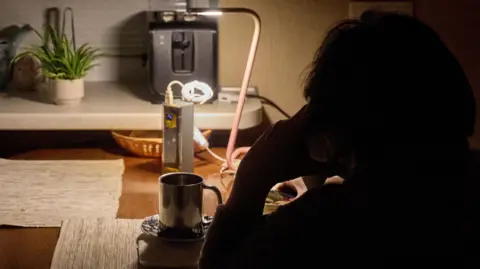
Across Ukraine electricity is being rationed – with supplies turned on for a few hours each day
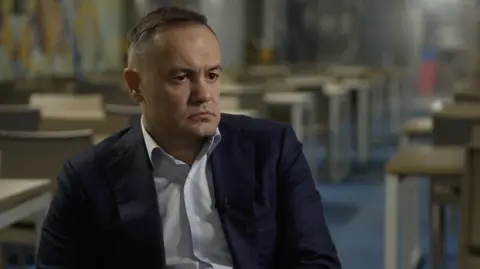
Ukraine's biggest energy provider is living in permanent crisis mode because of Russian attacks on the grid, its chief executive has told the BBC.
Most of Ukraine is suffering from lengthy power cuts as temperatures drop and Maxim Timchenko, whose company DTEK provides power for 5.6 million Ukrainians, says the intensity of strikes has been so frequent "we just don't have time to recover".
President Volodymyr Zelensky said on Tuesday that Russia knew the winter cold could become one of its most dangerous weapons.
"Every night Ukrainian parents hold their children in basements and shelters hoping our air defence will hold," he told the Dutch parliament.
As the fourth anniversary of Russia's full scale invasion approaches, Maxim Timchenko says Russia has repeatedly targeted DTEK's energy grid with "waves of drones, cruise and ballistic missiles" and his company has found it difficult to cope.
Tens of thousands of people in the southern city of Odesa have been without electricity for three days this week, following a co-ordinated Russian attack.
Reuters
Much of Odesa has been without power in recent days
"Life has been difficult, but people are very supportive of each other," says Yana, who is among those lucky enough still to have power. She has invited friends to her home to charge their phones.
Power outages also cut off heat and water supplies and Yana says those still connected to the grid have offered strangers the chance to wash or take a shower.
Across Ukraine electricity is being rationed – with supplies turned on for a few hours each day.
Many Ukrainians rely on power banks and generators as a back-up, and the sound of generators in the capital is now more constant than the air raid warnings.
Kyiv resident Tetiana says the first thing she does in the morning is to check her phone to find out the daily schedule for when her power will be switched on. Like many she has invested in power banks to make life more bearable:
"You need to remember when you leave home to leave the powerbanks on so that you have them charged when you get back home."
Shutterstock
Many Ukrainians rely on powerbanks and generators during regular power cuts
About 50% of Ukraine's energy is currently supplied by three large nuclear power plants in central and western Ukraine. But the network that transfers that power has been severely damaged.
DTEK runs about 10 power stations, most of them fuelled by coal.
One was recently targeted by five 5 ballistic missiles and Mr Timchenko said some of their power plants and sub stations had been attacked "every three or four days".
"I don't remember a single day when I had no reports about some damage to our grid."
Matthew Goddard/BBC
DTEK chief executive Maxim Timchenko says his company has found it hard to cope
Finding spare parts to repair damaged equipment has become a significant challenge.
The energy provider used to be able to source equipment from within Ukraine, but now it has to scour the ret of Europe for replacement parts.
This year DTEK has had to spend $166m (£123m) on repairing its damaged thermal power plants and coal facilities.
"We will not give up," Maxim Timchenko insists: "We have a responsibility to millions of mothers to have power and heat".
DTEK's origins are in the Donbas in Eastern Ukraine where the fighting is fiercest and where power supplies have been disrupted the most.
Eight of its engineers have been killed doing their job.
"Every day they risk their lives to keep power in this area," Mr Timchenko said.
Additional reporting by Anastasia Levchenko and Kyla Herrmannsen.
Watch: Dashcam video shows couple fight with attacker
A couple killed in the Bondi Beach shooting tried to stop one of the alleged attackers by grabbing his gun, dramatic dashcam footage shows.
Boris Gurman, 69, and his wife Sofia, 61, courageously stepped in to try and protect others before being shot themselves, their family said in a statement.
Video of the incident shows Mr Gurman, who was retired, wrestling with one of the alleged gunmen and taking the weapon off him, before they both fall onto the road.
Mr Gurman then gets up and appears to hit the suspected attacker with the gun. The attacker is then thought to have got another gun which he used to kill them.
"While nothing can lessen the pain of losing Boris and Sofia, we feel an overwhelming sense of pride in their bravery and selflessness," the family said.
"This encapsulates who Boris and Sofia were - people who instinctively and selflessly tried to help others."
The Gurman couple, who were Jewish, were the first two people killed in Sunday's attack, the Sydney Morning Herald reported.
At least 15 people have been confirmed dead in the shooting, which happened during an event to mark the first day of Hanukkah.
In their statement, the family said the couple had been married for 34 years.
"We are heartbroken by the sudden and senseless loss of our beloved Boris and Sofia Gurman.
"Boris was a retired mechanic, known for his generosity, quiet strength and willingness to lend a hand to anyone in need.
"Sofia worked at Australia Post and was deeply loved by her colleagues and community.
"Bondi locals, together they lived honest, hardworking lives and treated everyone they met with kindness, warmth and respect. Boris and Sofia were devoted to their family and to each other. They were the heart of our family, and their absence has left an immeasurable void."
GoFundMe
The couple were due to celebrate their 35th wedding anniversary in January, their family said
Witnesses have described Mr Gurman as a "hero".
The woman who owns the dashcam footage told Reuters that Mr Gurman "did not run away - instead, he charged straight toward the danger, using all his strength trying to wrestle away the gun and fighting to the death".
"I can see from my camera that the elderly man was ultimately shot and collapsed. That moment broke my heart," she said.
Another person who said they witnessed the incident told 9News: "He was a hero. He tried, he tried. We need to let his family know.
"Everyone needs to know what he tried, because it was right in the beginning. And he put himself in that face of danger. There were bullets flying already, and he put his self in the face of danger."
Police have described the attack as a terrorist incident targeting the Jewish community.
The other victims killed include a 10-year-old girl, a British-born rabbi, a retired police officer, and a Holocaust survivor.
The ages of the victims range from 10 to 87.
A further 22 people remain in hospital, nine of whom are in a critical condition.
Another bystander named Ahmed al Ahmed, 43, was also hailed a "hero" after he wrestled a gun from one of the attackers. He was shot multiple times and has since undergone surgery for his wounds.
One of the two men suspected of carrying out a mass shooting at Bondi Beach was originally from southern India but had "limited contact" with his family there, police sources have said.
Sajid Akram, who died at the scene in Sydney on Sunday, was originally from the city of Hyderabad, a police official from the Indian state of Telangana said.
He had travelled to India just six times since moving to Australia in 1998 and his family "expressed no knowledge of his radical mindset or activities," the official added.
Sajid, 50, and his 24-year-old son Naveed are suspected of killing 15 people and injuring dozens more at an event celebrating the Jewish festival of Hanukkah on Sunday.
Hyderabad, where Sajid Akram's family is based, is the capital of Telangana state in southern India.
The Telangana police official told BBC Telugu Sajid had "visited India on six occasions after migrating to Australia, primarily for family-related reasons such as property matters and visits to his elderly parents".
"It is understood that he did not travel to India even at the time of his father's demise," the official said.
"The factors that led to the radicalisation of Sajid Akram and his son, Naveed appear to have no connection with India or any local influence in Telangana."
The official also said Sajid Akram had no criminal record in India, he had completed a degree and had moved to Australia in search of employment before marrying a woman "of European origin".
Sajid Akram was an Indian passport holder, but his children were born in Australia and are Australian citizens, the official added.
Police are currently investigating why the father and son travelled to the Philippines in the weeks leading up to the attack. They arrived on 1 November and left on 28 November, the country's immigration bureau confirmed to the BBC.
Sajid travelled using an Indian passport, while his son used Australian identification, the authorities said.
Citing security sources, the Australian Broadcasting Corporation (ABC) said that the pair travelled to the island nation to receive "military-style training", but officials have not been able to confirm those reports.
Philippines foreign affairs minister Maria Theresa Lazaro and her Australian counterpart, Penny Wong, have agreed to "keep each other closely informed" of any developments related to the investigation into the Bondi Beach shooting, according to a text message Lazaro sent to the media.
It is understood that Naveed Akram was previously investigated over ties to a Sydney-based IS terrorism cell, ABC reported.
IS is an extremist Islamist militant group that has claimed responsibility for a number of terrorist attacks across Europe and America, including the 2015 Paris attacks.
The Australian Prime Minister Anthony Albanese said Naveed Akram first came to the attention of the authorities in 2019 "on the basis of being associated with others".
However, at the time, an "assessment was made that there was no indication of any ongoing threat or threat of him engaging in violence".
The European Union has watered down its plans to ban the sale of new petrol and diesel vehicles by 2035.
Current rules state that new vehicles sold from that date should be "zero emission", but carmakers, particularly in Germany, have lobbied heavily for concessions.
Under the European Commission's new plan, 90% of new cars sold from 2035 would have to be zero-emission, rather than 100%.
According to the European carmakers association, ACEA, market demand for electric cars is currently too low, and without a change to the rules, manufacturers would risk "multi-billion euro" penalties.
The remaining 10% could be made up of conventional petrol or diesel cars, along with hybrids.
Carmakers will be expected to compensate for the extra emissions created by these vehicles by using biofuels and so-called e-fuels, which are synthesised from captured carbon dioxide.
They will also be expected to use low-carbon steel made in the European Union in the vehicles they produce.
Opponents of the move have warned that it risks undermining the transition towards electric vehicles and leaving Europe exposed in the face of foreign competition.
The green transport group T&E has warned that the UK should not follow the EU's lead by weakening its own plans to phase out the sale of conventional cars under the Zero Emission Vehicles Mandate.
"The UK must stand firm. Our ZEV mandate is already driving jobs, investment and innovation into the UK. As major exporters we cannot compete unless we innovate, and global markets are going electric fast", said T&E UK's director Anna Krajinska.
Trump provided no evidence or basis for his comments on the deaths of Rob Reiner or his wife Michele
US President Donald Trump has repeated his criticism of Rob Reiner - after his earlier remarks about the killed Hollywood director, a longtime Trump critic, sparked widespread condemnation.
The US president told reporters the director was "very bad for our country", having earlier written on Truth Social that Reiner's death was linked to "Trump derangement syndrome" - a term he often uses to describe his critics.
Reiner and his wife Michele Singer Reiner were found dead at their Los Angeles home on Sunday, and police have arrested their son Nick on suspicion of murder.
They have not suggested any motive in the case, or any evidence that Reiner's politics and criticism of Trump played any role.
In his social media post, which called the couple's deaths "very sad", Trump criticised Reiner, saying: "He was known to have driven people CRAZY by his raging obsession of President Donald J. Trump."
Those comments were widely criticised, including by prominent Republicans.
Kentucky representative Thomas Massie, a Republican who has clashed with Trump since the president returned to the White House in January, wrote on X: "Regardless of how you felt about Rob Reiner, this is inappropriate and disrespectful discourse about a man who was just brutally murdered."
He added: "I guess my elected GOP colleagues, the VP, and White House staff will just ignore it because they're afraid? I challenge anyone to defend it."
Georgia Republican Marjorie Taylor Greene, who was once a staunch supporter of Trump before recently becoming a frequent critic, said that "this is a family tragedy, not about politics or political enemies" and that the murders should be "met with empathy".
Multiple other senior members of Trump's party appeared to distance themselves from the remarks. Senator John Kennedy, a Republican representing Louisiana, said he thought Trump should not have made the comments.
"I think a wise man once said nothing. Why? Because he was a wise man," Kennedy said. "I think President Trump should have said nothing. I think when the president says these sorts of things, it detracts from his policy achievements."
Reiner was a lifelong Democrat and prominent liberal activist, and frequently spoke out against Trump.
In 2017, for example, he called Trump "mentally unfit" for office. And as recently as October, Reiner said he believed Trump was ushering in an age of "full-on autocracy" in the US.
Hours after his social media post, Trump repeated his thoughts on Reiner in comments given in the Oval Office to reporters, describing the director as a "deranged person" who was partly "behind" previous claims of collusion between Russia and Trump's team.
"I was not a fan of Rob Reiner at all, in any way, shape or form," he said.
Trump has in the past criticised political foes after their death.
Following the death of Arizona Senator John McCain - with whom he clashed regularly - in 2019, for example, Trump said he "was never a fan" and "never will be".
In another incident the same year, Trump quipped that the late Democratic lawmaker John Dingell could be "looking up" at him from the grave, a comment which was widely interpreted as a suggestion that Dingell was in hell.
In a statement following the remarks about Dingell, the White House said that the president was "just riffing".
Reiner, who was 78, was known for directing several iconic films in a variety of genres, including This is Spinal Tap, Stand By Me, Misery and A Few Good Men.
He married Michele, an actress, photographer and producer, in 1989, later recalling that they met during the making of one of his best-known films, When Harry Met Sally. The couple had three children together - including Nick, 32.
Michele, 68, owned the Reiner Light photography agency and production house.
Initial research was carried out before snow covered the area
Thousands of dinosaur footprints dating back 210 million years have been found in a national park in northern Italy.
The footprints - some of which are up to 40cm (15in) in diameter - are aligned in parallel rows, and many show clear traces of toes and claws.
It is thought the dinosaurs were prosauropods - herbivores with long necks, small heads and sharp claws.
"I never would have imagined I'd come across such a spectacular discovery in the region where I live," said Milan-based paleontologist Cristiano Dal Sasso.
Illustrazione di Fabio Manucci, Arch. PaleoStelvio
Artist's rendition of a herd of prosauropods walking across a muddy plain during low tide. Smaller footprints suggest the herd also included young specimens
Last September a photographer spotted the footprints stretching hundreds of metres on a vertical mountain wall in the Stelvio national park, north-east of Milan.
In the Triassic period - between about 250 and 201 million years ago - the wall was a tidal flat, which later became part of the Alpine chain.
"This place was full of dinosaurs; it's an immense scientific treasure," Mr Dal Sasso said.
The herds moved in harmony, he added, "and there are also traces of more complex behaviours, like groups of animals gathering in a circle, perhaps for the purposes of defence."
The prosauropods, which could be up to 10m (33ft) long, walked on two legs but in some cases handprints were found in front of footprints, indicating that they probably stopped and rested their forelimbs on the ground.
Elio Della Ferrera, Arch. PaleoStelvio
Photographer Elio Della Ferrera snapped the first picture of the mountain wall showing the footprints
Elio Della Ferrera, the photographer who discovered the site, said he hoped the discovery would "spark reflection in all of us, highlighting how little we know about the places we live in: our home, our planet."
According to a press release from the Italian culture ministry, the area is remote and not accessible by paths, so drones and remote sensing technology will be employed instead.
The Stelvio national park is located in the Fraele valley by Italy's border with Switzerland, near where the Winter Olympics will take place next year.
"It's as if history itself wanted to pay homage to the greatest global sporting event, combining past and present in a symbolic passing of the baton between nature and sport," said the Italian Ministry of Culture.
Watch: 'Your courage is inspiring' Australian PM tells Bondi shooting 'hero'
Australia's Prime Minister has visited Bondi hero Ahmed al Ahmed in hospital, after the bystander tried to disarm one of the gunmen in the nation's deadliest gun attack since 1996.
"Your heart is strong", PM Anthony Albanese told the father-of-two, later calling him "the best of our country".
The fruit shop owner, who was born and raised in Syria, was shot several times in the shoulder after tackling one of the alleged gunmen. Albanese said Mr Ahmed would "undergo further surgery" on Wednesday.
At least 15 people have been confirmed dead after Sunday's attack in Sydney during an event to mark the first night of Hanukkah.
Police have declared the attack as a terrorist incident targeting the Jewish community.
"He was trying to get a cup of coffee and found himself at a moment where people were being shot in front of him," Albanese said after the bedside visit.
"He decided to take action, and his bravery is an inspiration for all Australians. He is a very humble man."
"At a moment where we have seen evil perpetrated, he shines out as an example of the strength of humanity," the prime minister added.
"We are a brave country. Ahmed al Ahmed represents the best of our country."
He later added: "Ahmed, you are an Australian hero."
There has been nationwide support for the 43-year-old including from US President Donald Trump who commended his courage, and a US billionaire who donated $99,999 (US$ 65,000; £49,000) to Mr Ahmed, calling him a "brave hero".
Watch: Eyewitness captures moment man tackles and disarms Bondi shooter
In the footage, Mr Ahmed is seen hiding behind a parked car before he leaps out.
He runs at the alleged gunman and seizes his weapon, before turning the gun round on him. The suspected attacker then begins to retreat.
Mr Ahmed then lowers the weapon and raises one hand in the air, appearing to show police he was not one of the attackers.
Lizzo said the fat-shaming claims had "haunted" her for the last two years
Pop star Lizzo is celebrating a legal victory after a judge dismissed allegations of fat-shaming from a 2023 lawsuit filed by three of her former dancers.
The singer, whose hits include body positive anthems such as Good As Hell and Juice, marked the development with a video statement posted to her Instagram and TikTok feeds.
"There was no evidence that I fired them because they gained weight," Lizzo said. "They were fired for taking a private recording of me without my consent and sending it off to ex-employees."
While those specific allegations have been dropped, the case against Lizzo and her production company will continue, over claims that three dancers were subject to sexual harassment.
Lizzo's team has called the lawsuit a "fabricated sob story," but a Los Angeles judge ruled that the case could move forward last year.
Arianna Davis, Crystal Williams and Noelle Rodriguez say they were pressured into attending sex shows and interacting with nude performers between 2021 and 2023.
The claims against Lizzo - whose real name is Melissa Viviane Jefferson - include that she "pressured Ms Davis to touch the breasts" of a dancer in a nightclub in Amsterdam.
Although she initially resisted, Ms Davis eventually acquiesced, "fearing it may harm her future on the team" if she didn't do so, according to court documents.
Other incidents cited in the case include the claim that dancers were asked to eat fruit from the naked bodies of sex club workers.
Over the summer, Lizzo's lawyers appealed the decision to let those claims got to trial, arguing that group outings were part of the singer's creative process and thus should be shielded by First Amendment free speech protections.
In response, a lawyer for the dancers rejected that claim, saying it was not enough to say the sex shows had inspired Lizzo's own performances.
"Under that standard," wrote Ari Stiller, "Johnny Cash could shoot 'a man in Reno just to watch him die' and claim protection if he hoped it would inspire his performance".
Stiller urged the court to allow the claims to proceed to trial.
Getty Images
Lizzo said she had worked to celebrate people with larger bodies throughout her career (none of the dancers pictured are thought to be part of the current lawsuit)
Lizzo's attorney, Melissa Glass, claimed that Stiller's brief "regurgitates the false accusations from their [original] complaint".
"As was true two years ago, the dancers cannot find a single person to corroborate their meritless claims," she Glass said in a statement to Billboard magazine.
"In contrast, 18 witnesses who worked with Lizzo on the Special tour submitted sworn statements refuting the claims made by Davis, Williams and Rodriguez. We look forward to the Court of Appeals ruling on this matter."
Lizzo has adamantly denied the allegations against her.
"I am very open with my sexuality and expressing myself but I cannot accept or allow people to use that openness to make me out to be something I am not," she said when the claims first emerged in 2023.
In her latest statement, the singer added that the fat-shaming allegations had "haunted" her for the last two years, adding that it had been "devastating to suffer through this in silence".
She also stressed that she has "only encouraged and supported people with bigger bodies and shared my platform with them."
Thanking her lawyers, Lizzo said she intended to keep fighting the lawsuit.
"I am not settling," she said. "I will be fighting every single claim until the truth is out.

 Login
Login
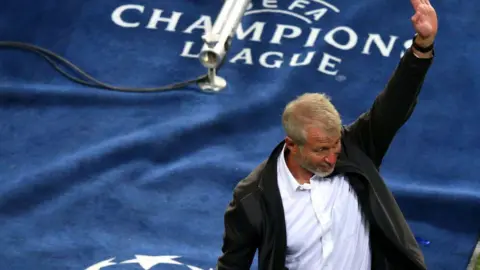 Getty Images