Frédéric Péchier faces a minimum of 22 years behind bars
A former anaesthetist has been jailed for life for intentionally poisoning 30 patients, including 12 who died.
A court in the city of Besançon in eastern France found Frédéric Péchier guilty of contaminating infusion bags with substances that caused cardiac arrest or hemorrhaging.
Péchier was first placed under investigation eight years ago, when he was suspected of poisoning patients at two clinics in Besançon between 2008 and 2017.
"You are Doctor Death, a poisoner, a murderer. You bring shame on all doctors," said prosecutors last week. "You have turned this clinic into a graveyard."
Péchier, who has always denied any wrongdoing, now has 10 days to lodge an appeal.
This breaking news story is being updated and more details will be published shortly. Please refresh the page for the fullest version.
You can receive Breaking News on a smartphone or tablet via the BBC News App. You can also follow @BBCBreaking on X to get the latest alerts.
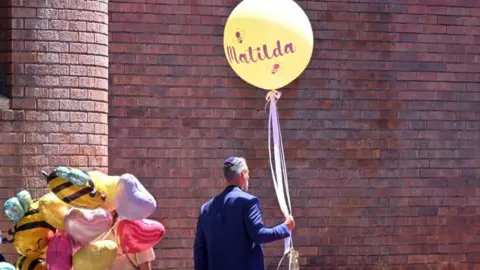
Lina Chernykh tells the BBC her niece Matilda was a joyous child who spread love everywhere she went
The family of the Bondi shooting's youngest victim Matilda urged the community to not let her death fuel anger, as they said a final goodbye to the 10-year-old on Thursday.
Matilda was among 15 people who were shot dead when two gunmen opened fire on an event marking the start of Hannukah at Sydney's Bondi Beach on Sunday.
Speaking to the BBC at Matilda's funeral, her aunt Lina Chernykh said the Jewish community is right to want more action to stamp out antisemitism – she does too.
But she said Matilda was a joyous child who spread love everywhere she went, and urged the community to do the same in her honour.
"Take your anger and… just spread happiness and love and memory for my lovely niece," Ms Chernykh said.
"I hope maybe she's an angel now. Maybe she [will] send some good vibes to the world."
Jewish community leaders have in recent days suggested the tragedy was an inevitable result of Australia struggling to address rising antisemitism.
The attack on Sunday, which targeted the Jewish community at an event celebrating the first night of Hanukkah, was the country's deadliest incident since 1996, when a gunman killed 35 people during the Port Arthur massacre.
Ahead of Matilda's funeral on Thursday, Ms Chernykh said the family was devastated.
"I look at their faces [and] I don't know if they will be ever happy again," she said of Matilda's parents.
Matilda's younger sister, from whom she was "inseparable", is shattered and confused, she said.
"She doesn't have enough tears to cry."
At a flower memorial on Tuesday, Matilda's mother Valentyna told mourners that the family came to Australia from Ukraine more than a decade ago, thinking it would be a safe place for them.
"I couldn't imagine I'd lose my daughter here... It's just a nightmare," she said.
Ms Chernykh told the BBC she too has struggled to make sense of what is happening.
She was gardening at her home on the Gold Coast when Matilda's mother called on Sunday.
"Truly, I was thinking something happened to my father because he's 84 years old... and she says Matilda was shot," she recalled.
"How [could] someone in Australia understand, if someone tells you your kid was shot… I couldn't understand it. I was thinking I have bad reception. I asked a few times what I'm [hearing]."
Police have designated the attack a terrorist incident, with Australian Prime Minister Anthony Albanese saying it appears to have been "motivated by Islamic State" group ideology.
Police allege that the two gunmen were a father and son. Sajid Akram, 50, was shot dead at the scene, while his son Naveed, 24, has been charged with 59 offences, including 15 counts of murder and one of committing a terrorist act.
Australia on Thursday announced it would strengthen laws to crack down on hate - including by introducing powers to cancel or refuse visas on grounds of antisemitism.
Lina Chernykh tells the BBC her niece Matilda was a joyous child who spread love everywhere she went
The family of the Bondi shooting's youngest victim Matilda urged the community to not let her death fuel anger, as they said a final goodbye to the 10-year-old on Thursday.
Matilda was among 15 people who were shot dead when two gunmen opened fire on an event marking the start of Hannukah at Sydney's Bondi Beach on Sunday.
Speaking to the BBC at Matilda's funeral, her aunt Lina Chernykh said the Jewish community is right to want more action to stamp out antisemitism – she does too.
But she said Matilda was a joyous child who spread love everywhere she went, and urged the community to do the same in her honour.
"Take your anger and… just spread happiness and love and memory for my lovely niece," Ms Chernykh said.
"I hope maybe she's an angel now. Maybe she [will] send some good vibes to the world."
Jewish community leaders have in recent days suggested the tragedy was an inevitable result of Australia struggling to address rising antisemitism.
The attack on Sunday, which targeted the Jewish community at an event celebrating the first night of Hanukkah, was the country's deadliest incident since 1996, when a gunman killed 35 people during the Port Arthur massacre.
Ahead of Matilda's funeral on Thursday, Ms Chernykh said the family was devastated.
"I look at their faces [and] I don't know if they will be ever happy again," she said of Matilda's parents.
Matilda's younger sister, from whom she was "inseparable", is shattered and confused, she said.
"She doesn't have enough tears to cry."
At a flower memorial on Tuesday, Matilda's mother Valentyna told mourners that the family came to Australia from Ukraine more than a decade ago, thinking it would be a safe place for them.
"I couldn't imagine I'd lose my daughter here... It's just a nightmare," she said.
Ms Chernykh told the BBC she too has struggled to make sense of what is happening.
She was gardening at her home on the Gold Coast when Matilda's mother called on Sunday.
"Truly, I was thinking something happened to my father because he's 84 years old... and she says Matilda was shot," she recalled.
"How [could] someone in Australia understand, if someone tells you your kid was shot… I couldn't understand it. I was thinking I have bad reception. I asked a few times what I'm [hearing]."
Police have designated the attack a terrorist incident, with Australian Prime Minister Anthony Albanese saying it appears to have been "motivated by Islamic State" group ideology.
Police allege that the two gunmen were a father and son. Sajid Akram, 50, was shot dead at the scene, while his son Naveed, 24, has been charged with 59 offences, including 15 counts of murder and one of committing a terrorist act.
Australia on Thursday announced it would strengthen laws to crack down on hate - including by introducing powers to cancel or refuse visas on grounds of antisemitism.
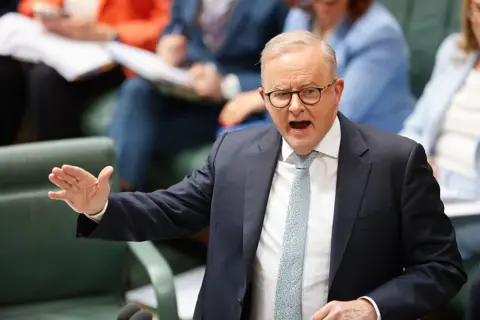
Anthony Albanese has announced new laws that will target 'those who spread hate'
Australian Prime Minister Anthony Albanese says his government will crack down on hate speech following Sunday's deadly shooting at Bondi Beach that targeted a Jewish festival.
Fifteen people were killed when two gunmen opened fire at an event to mark the first day of Hanukkah.
New laws will target "those who spread hate, division and radicalisation", Albanese told reporters in Canberra.
The home affairs minister will also be given new powers to cancel or refuse visas for those who spread hate and a new taskforce will be set up to ensure the education system "prevents, tackles and properly responds to antisemitism".
The new laws will also include penalties for preachers and leaders who promote violence, a new federal offence of "aggravated hate speech", and the introduction of "hate" as an aggravating factor in sentencing crimes for online threats and harassment.
"Every Jewish Australian has the right to feel safe, valued and respected for the contribution that they make to our great nation," Albanese said.
"The terrorists, inspired by ISIS... sought to turn Australians against each other. Australians have responded to that act of hatred with love and sympathy for those in mourning."
Albanese added that his government would be "fully supporting and adopting" the recommendations put forward in July in a report by antisemitism envoy Jillian Segal, who also spoke at the press conference.
She said the country was "at a very important moment not only for our community, but for fighting antisemitism around the world."
Her report was criticised by some upon its release in July due to its implications for free speech, including plans to monitor universities and arts organisations and withhold funding if they were deemed to have failed to act against antisemitism. There were concerns for instance, that the funding could be used to silence pro-Palestinian protests.
Home Affairs Minister Tony Burke said the government was "shifting the threshold".
"There have been individuals who have managed to exploit a nation that had different principles of freedom of speech and have gone right to the limits of language that is clearly dehumanising, unacceptable, having no place in Australia, but have not quite crossed the threshold to violence," he said.
Meanwhile, Albanese acknowledged accusations from the Jewish community that his government had not done enough to prevent antisemitism since the 7 October attack on Israel by Hamas, and said more could have been done.
"I accept my responsibility for the part in that as prime minister of Australia," he said. "But what I also do is accept my responsibility to lead the nation and unite the nation. Because what people are looking for at this time isn't more division."
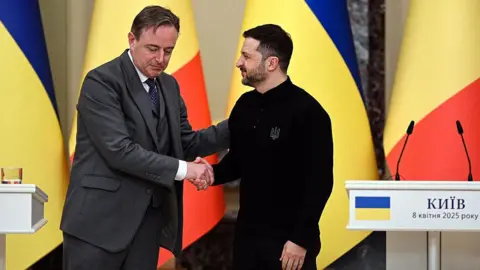
Belgian Prime Minister Bart De Wever is yet to be convinced that the money held in Belgium should be loaned to Ukraine (file pic)
European Union leaders begin two days of talks in Brussels with a momentous decision to be taken on whether to loan tens of billions of euros in frozen Russian assets to Ukraine to fund its military and economic needs.
Most of Russia's €210bn (£185bn; $245bn) worth of assets in the EU are held by Belgium-based organisation Euroclear, and so far Belgium and some other members of the bloc have said they are opposed to using the cash.
Without a boost in funding, Ukraine's finances are set to run dry in a matter of months.
One European government official described being "cautiously optimistic, not overly optimistic" that a deal would be agreed. Russia has warned the EU against using its money.
It has filed a lawsuit against Euroclear in a Moscow court in a bid to get its money back.
The Brussels summit comes at a pivotal moment.
US President Donald Trump has said a deal to end the war - which began with Russia's full-scale invasion of Ukraine in February 2022 - is "closer now than we have been ever".
Although Russia has not responded to the latest peace proposals, the Kremlin has stressed that plans for a European-led multinational force for Ukraine supported by the US would not be acceptable.
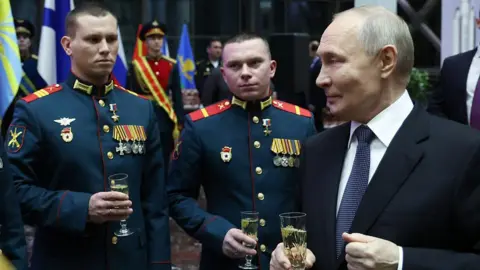
President Vladimir Putin made his feelings towards Europe clear on Wednesday, when he said the continent was in a state of "total degradation" and "European piglets" - a derogatory description of Ukraine's European allies - were hoping to profit from Russia's collapse.
Alexander KAZAKOV/POOL/AFP
Those in favour of loaning Ukraine the money believe it will help deter Putin from continuing the war
The European Commission - the EU's executive arm - has proposed loaning Kyiv about €90bn (£79bn) over the next two years - out of the €210bn of Russian assets sitting in Europe.
That is about two-thirds of the €137bn that Kyiv is thought to need to get through 2026 and 2027.
Until now the EU has handed Ukraine the interest generated by the cash but not the cash itself.
"This is a crunch time for Ukraine to keep fighting for the next year," a Finnish government official told the BBC. "There are of course peace negotiations but this gives Ukraine leverage to say 'we're not desperate and we have the funds to continue fighting'."
Commission chief Ursula von der Leyen says it will also ramp up the cost of war for Russia.
Russia's frozen assets are not the only option on the table for EU leaders. Another idea, backed by Belgium, is based on the EU borrowing the money on the international markets.
However, that would require a unanimous vote and Hungary's Viktor Orban has made it clear he will not allow any more EU money to help Ukraine.
For Ukraine, the hours ahead are significant and President Volodymyr Zelensky is expected to attend the EU summit.
Ahead of the Brussels meeting, EU leaders were keen to stress the momentous nature of the decision.
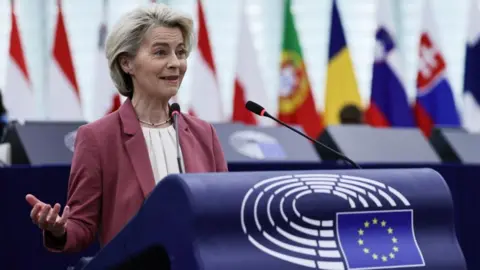
"We know the urgency. It is acute. We all feel it. We all see it," von der Leyen told the European Parliament.
EPA
Ursula von der Leyen told the European Parliament that two choices were on the table for EU leaders
German Chancellor Friedrich Merz has played a leading role in pushing for the Russian assets to be used, telling the Bundestag on the eve of the summit it was about sending a "clear signal" to Moscow that continuing the war was pointless.
EU officials are confident they have a sound legal basis to use the frozen Russian assets, but so far Belgian Prime Minister Bart De Wever remains unconvinced.
His Defence Minister Theo Francken warned ahead of the talks that it would be a big mistake to loan the Euroclear cash.
Hungary is seen as the biggest opponent of the move and, ahead of the summit, Prime Minister Orban and his entourage even suggested that the frozen assets plan had been removed from the summit agenda. A European Commission official stressed that was not the case and it would be a matter for the 27 member states at the summit.
Slovakia's Robert Fico has also opposed using the Russian assets, if it means the money being used to procure weapons rather than for reconstruction needs.
When the pivotal vote does finally take place, it will require a majority of about two-thirds of member states to go through. Whatever happens, European Council President António Costa has promised not to go over the heads of the Belgians.
"We're not going to vote against Belgium," he told Belgian public broadcaster RTBF. "We'll continue to work very intensively with the Belgian government because we don't want to approve something that might not be acceptable for Belgium."
Belgium will also be aware that ratings agency Fitch has placed Euroclear on a negative watch, partly because of "low" legal risks to its balance sheet from the European Commission's plans to use the Russian assets. Euroclear's chief executive has also warned against the plan.
"There are many hiccups and obstacles of course still on the way. We have to find a way to respond to Belgium's worries," the Finnish official added. "We are on the same side as Belgium. We will find a solution together to make sure all the risks are checked as much as they can be checked."
However, Belgium is not the only country to have doubts, and a majority is not guaranteed.
Italian Prime Minister Giorgia Meloni has told Italian MPs she will endorse the deal "if the legal basis is solid".
"If the legal basis for this initiative were not solid, we would be handing Russia its first real victory since the beginning of this conflict."
Malta, Bulgaria and the Czech Republic are also said to be unconvinced by the controversial proposals.
If the deal is passed and the Russian assets are given to Ukraine, the worst-case scenario for Belgium would be one in which a court would order it to hand the money back to Russia.
Some countries have said they would be prepared to provide billions of euros in financial guarantees, but Belgium will want to see the numbers add up.
At any rate, Commission officials are confident that the only way for Russia to get it back would be by paying reparations to Ukraine - at which point Ukraine would hand its "reparations loan" back to the EU.
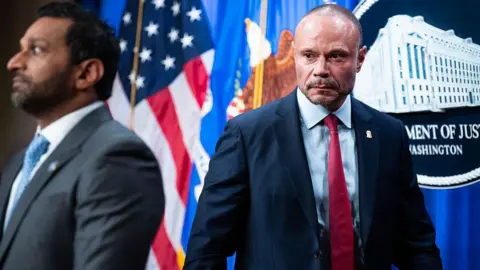
Dan Bongino has said he will leave his role as the FBI's deputy director in January.
In a post on X, he thanked President Donald Trump, as well as the director of the FBI and the attorney general "for the opportunity to serve with purpose".
It comes after Trump said earlier on Wednesday that the former podcast host "did a great job" in office, and "wants to go back to his show".
Bongino, who was appointed to the role by Trump in February, was previously a New York City police officer and a US Secret Service agent assigned to protect Barack Obama. In recent years, he built a large following through his podcast and other media appearances.
Bongino, a staunch Trump ally, was considered a surprise pick for the role – which had previously been held by career agents – because he had no prior experience with the agency.
The FBI Agents Association, which represents around 14,000 current and former agents, had opposed his appointment to the position.
Announcing his decision in a social media post on Wednesday, he said: "I will be leaving my position with the FBI in January. I want to thank President Trump, AG [Pam] Bondi, and Director [Kash] Patel for the opportunity to serve with purpose.
"Most importantly, I want to thank you, my fellow Americans, for the privilege to serve you. God bless America, and all those who defend Her."
Before joining the agency, Bongino had echoed disinformation and conspiracy theories about Trump's false claim that he won the 2020 election, and about the 6 January 2021 pipe bomb investigation.
Bongino had also questioned whether sex offender Jeffrey Epstein had taken his own life in a New York prison cell in 2019 as he awaited trial.
In July, the US justice department and FBI released a memo that said Epstein did take his own life.
The memo frustrated many of Trump's supporters, who echoed the Epstein conspiracy theories and rejected the justice department's findings.
This breaking news story is being updated and more details will be published shortly. Please refresh the page for the fullest version.
You can receive Breaking News on a smartphone or tablet via the BBC News App. You can also follow @BBCBreaking on X to get the latest alerts.
Nick Reiner's lawyer says the case involves "complex and serious issues"
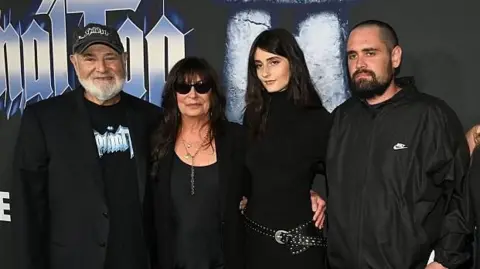
Nick Reiner, the son of celebrated Hollywood director Rob Reiner, has appeared in court for the first time charged with murdering his parents.
The 32-year-old waived his right to enter a plea to two charges of first-degree murder at the hearing, as all sides agreed to delay his arraignment until 7 January when he will once again have the opportunity to enter a plea.
His lawyer, Alan Jackson, told reporters outside court that there were "complex and serious issues" in the case that needed to be worked through in the coming weeks.
Rob Reiner and Michele Singer Reiner were found stabbed to death in their Brentwood home on Sunday. Nick Reiner was charged with their murder on Tuesday.
As he appeared in court in downtown Los Angeles, Mr Reiner only said "yes, your honour" when asked by Judge Theresa McGonigle if he understood that he has the right to a speedy trial.
The judge earlier ordered the assembled media - who gathered outside the courthouse hours prior to the hearing - not to film the defendant, who wore what appeared to be a suicide prevention vest.
Media inside the courtroom could not see Mr Reiner throughout the brief hearing because he was sitting in a corner out of sight.
He was initially slated to make a court appearance on Tuesday but had not been medically cleared to do so, his lawyer and prosecutors said.
"We ask that during this process, you allow the system to move forward in the way that it was designed to move forward," Mr Reiner's lawyer, Alan Jackson, told reporters.
"Not with a rush to judgement, not with jumping to conclusions, but with restraint and with dignity, and with the respect that this system and this process deserves, and that the family deserves," he said.
The delay in Mr Reiner entering a plea could be designed to allow time for a psychiatric evaluation, one criminal defence lawyer told the BBC after the hearing.
"The psychiatric evaluation is generally done before arraignment to see if he is even fit to stand trial," Seth Zuckerman said.
Getty Images
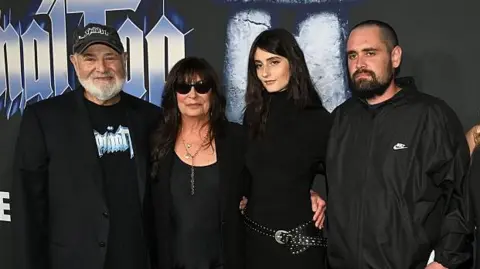
Nick Reiner (right) is accused of killing his parents
Until the next hearing on 7 January, Mr Reiner will remain in custody at the Twin Towers Correctional Facility in Los Angeles.
If he pleads not guilty, he could be sentenced to life without the possibility of parole or the death penalty if convicted. Prosecutors have said no decision has been made yet about whether the death penalty will be pursued.
Rob Reiner directed a handful of iconic films in a variety of genres, including This is Spinal Tap, Misery and A Few Good Men.
Michele Singer Reiner was an actress, photographer and producer, and the founder of Reiner Light, a photography agency and production company.
"This case is heartbreaking and deeply personal, not only for the Reiner family and their loved ones, but for the entire city," LA Police Department chief Jim McDonnell said on Tuesday.
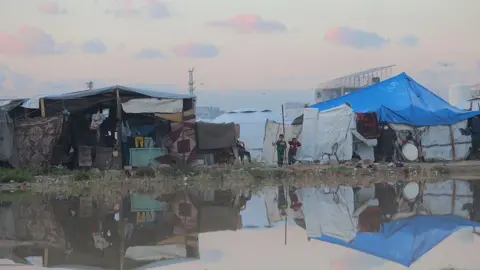
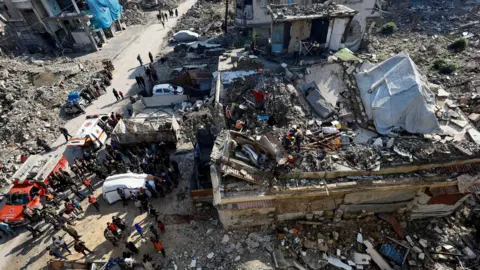
Almost 55,000 families have so far been affected by the rains, with their belongings and shelters damaged
Heavy rains over the past week have compounded the already dire living conditions of the hundreds of thousands of displaced Palestinians in the Gaza Strip, UN agencies say.
Unicef spokesman Jonathan Crickx told the BBC that the weather overnight had been "horrendous", with the rain so intense that he had seen up to 15cm (6in) of water on the ground near his office.
He said he was extremely concerned that children living in tents and makeshift shelters in wet clothing would succumb to hypothermia and other illnesses.
Gaza's Hamas-run health ministry has said one baby has died from hypothermia and at least 11 other people have died in building collapses caused by the severe weather.
UN agencies have stepped up deliveries of tents, blankets and clothes since the Gaza ceasefire began nine weeks ago, but they have said there is still not enough aid getting in.
The UN and its partners estimate that almost 55,000 families have so far been affected by the rains, with their belongings and shelters damaged or destroyed.
More than 40 designated emergency shelters were severely flooded following downpours on Monday and Tuesday, forcing many people to relocate again.
"Last night was really horrendous for the families. The heavy rains were so intense that we could see from our office and guest house 10cm, 15cm (4-6in) of water at some point. And the winds were so strong," Jonathan Crickx, chief of communications for Unicef State of Palestine, told the BBC's Today programme on Wednesday.
"When I drove this morning, I could see that many, many people were trying with buckets to remove some of the water."
He noted that most of the estimated one million people living in tents and makeshift shelters had been displaced many times during the two years of war between Israel and Hamas, and that they had no or very few changes of clothes.
"When I was seeing [children] this morning, their clothes were damp. I could see parents trying to dry some of the blankets they had. But it has been raining almost all of the time in the past four or five days, so it is extremely difficult to keep the children dry," he said.
"With temperatures about 7C, 8C (45-46F) at night, we are extremely concerned about children getting sick or even worse, dying from hypothermia."
Many tents were also at risk of being blown away or destroyed by the strong winds accompanying the rain because they were only made from a piece of tarpaulin or plastic sheeting nailed to a fragile wooden structure, he added.
Mr Crickx said Unicef had been able to bring in more aid during the ceasefire to help children cope with the harsh winter conditions, including 250,000 winter clothing kits, 600,000 blankets and 7,000 tents, but that it was not enough.
"We are working relentlessly to bring in that aid and to distribute it, but the scale of the needs is so immense that we still have thousands of people and children who are really suffering every night," he warned.
Reuters
One man was killed when a building in Shati refugee camp where he was sheltering collapsed on Tuesday
Gaza's health ministry said a two-week old boy named Mohammed Abu al-Khair had died of hypothermia on Monday, two days after he had been admitted to hospital and placed in intensive care. Another 11 people had so far died after the war-damaged buildings where they were sheltering collapsed, it added.
A spokesman for the Hamas-run Civil Defence agency, Mahmoud Bassal, put the death toll higher. He said in a video that a total of 17 people, including four children, had died because of building collapses and the cold.
He added that 17 residential buildings had collapsed completely because of the wind and rain and that another 90 buildings had collapsed partially.
On Tuesday, video footage showed first responders from the Civil Defence recovering the body of a man from the rubble of a building in Shati refugee camp, north-west of Gaza City. Its roof had collapsed suddenly, according to eyewitnesses.
"We call on the world to solve our problems and rebuild the territory so that people can have homes instead of being displaced and living in the streets," said Ahmed al-Hosari, a relative of the man, told AFP news agency.
The International Committee of the Red Cross (ICRC) said the collapse of damaged buildings due to the severe weather conditions was "deeply concerning".
It stressed the need for "increased and sustained humanitarian assistance to respond to urgent and long-term needs, including food, shelter and equipment for the repair of critical infrastructure".
Cogat, the Israeli military body which controls Gaza's border crossings, has dismissed claims of deliberate aid restrictions as "inconsistent with facts on the ground, and the ongoing co-ordination taking place daily".
It says that between 600 and 800 lorries carrying humanitarian supplies enter Gaza daily, and that almost 310,000 tents and tarpaulins have been delivered since the start of the ceasefire, along with more than 1,800 lorry loads of warm blankets and clothing.
The UN says a total of 67,800 tents, 372,500 tarpaulins and 318,100 bedding items have been collected from crossings over the same period.
The second phase of the ceasefire between Israel and Hamas includes plans for the reconstruction of Gaza, along with post-war governance, the withdrawal of Israeli troops, and the disarmament of Hamas.
Last week, Israel's prime minister said the second phase was close, with only the body of one dead Israeli hostage in Gaza still to be returned by Hamas as part of the first phase.
The war was triggered by the Hamas-led attack on southern Israel on 7 October 2023, in which about 1,200 people were killed and 251 others were taken hostage.
More than 70,600 people have been killed in Israeli attacks in Gaza since then, according to the territory's health ministry.
The Academy Awards will begin streaming exclusively on YouTube in 2029, the latest big change in Hollywood.
The Academy of Motion Picture Arts and Sciences made the announcement on Wednesday, saying that it signed a multi-year deal that will give YouTube the exclusive global rights to the Oscars until 2033.
The Oscars, which is planned for March 15, has aired for a half a century on ABC. Starting in 2029, the show will be available live and for free on YouTube.
It's the latest shakeup in Hollywood, which is dealing with studio sales and mergers, along with steep production cuts.
"The Academy is an international organization, and this partnership will allow us to expand access to the work of the Academy to the largest worldwide audience possible — which will be beneficial for our Academy members and the film community," Academy CEO Bill Kramer and Academy President Lynette Howell Taylor said in a statement.
Oscar ratings declined in 2025 compared to the year before, along with several other award shows, including the Golden Globes and the Grammy Awards.
In a statement, YouTube CEO Neal Mohan called the Oscars "one of our essential cultural institutions" and said that partnering with the Academy would "inspire a new generation of creativity and film lovers while staying true to the Oscars' storied legacy".
ABC, meanwhile, said it was looking forward "to the next three telecasts" that it will still host. It has streamed the awards, the highest honour in US film, since 1976.
The move comes as Warner Bros Discovery on Wednesday recommended its shareholders reject a hostile takeover bid from Paramount Skydance for a rival bid from streaming giant Netflix.
Both options were seen as unfavourable for an industry that has seen drastic cuts over the last several years. Like major studios, cable networks have faced issues as the public has opted for streaming services instead.
YouTube winning rights to the Academy Awards further suggests that reliance on streaming sites will continue.
Spain experienced exceptionally warm weather and low rainfall this summer
Spain is to set up a national network of climate shelters in public buildings to offer people refuge from intense heat before next summer, its prime minister has announced.
The move was announced as Pedro Sanchez laid out a plan to address the impact of climate change during a conference in Madrid on Wednesday.
"Devastating droughts and heatwaves are no longer rare. Some summers, it's not separate waves we face, but one long heatwave stretching from June through August. This is now the new normal," he said.
Spain experienced its hottest summer and three heatwaves in 2025. A 16-day heatwave in August saw temperatures exceed 45C (113F), according to the State Meteorological Agency (AEMET).
As part of the national network of shelters, spaces to stay cool will be available to everyone, Sanchez said.
Shelters will be funded by the government in areas "that need them most, where the heat really hits people the hardest," he added.
The rollout will be in addition to existing networks already set up by regional governments including in Catalonia, the Basque Country and Murcia.
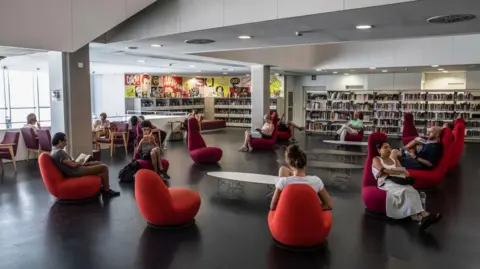
In Barcelona - the capital of the Catalonia region - about 400 climate shelters already exist in buildings including libraries, museums, sports facilities and shopping malls.
The air conditioned spaces, usually with seating and free water, are meant to provide people with a refuge from the heat, particularly those with health problems, older people, babies, and those with limited resources.
Getty Images
Barcelona already has a network of climate shelters in public buildings with air conditioning
Sanchez also announced that the government would fund flood prevention plans in small towns, with €20m (£18m; $24m) also designated for fire prevention plans in small towns, as part of a state pact to address climate change.
The set of proposals are yet to be brought before the Congress of Deputies, lower house of Spain's Parliament. Sanchez has asked other political groups to contribute to the pact, saying it is "not an electoral weapon... it is a shield for Spain".
Heatwaves are becoming more common and intense due to human-caused climate change, according to the UN's Intergovernmental Panel on Climate Change.
More than 3,800 heat-related deaths were recorded in Spain amid searing temperatures this summer - 88% more than in 2024 - according to estimates by the Ministry of Health.
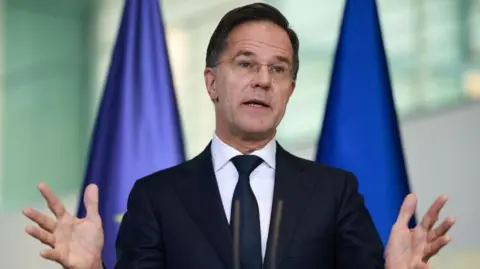
Nato countries' pledge to spend 5% of their economic output on defence is Donald Trump's "biggest foreign policy success," the alliance's chief has said.
In an interview with the BBC, Mark Rutte said it was thanks to Donald Trump that Nato was "stronger than it ever was", adding that Trump "is good news for collective defence, for Nato and for Ukraine".
The US leader has harshly criticised European allies for spending very little on defence - even threatening to withdraw US protection if they fail to do so.
"I've said it repeatedly - it's a lie, nonsense, pure nonsense, about some imaginary Russian threat to European countries," Putin told defence officials in Moscow.
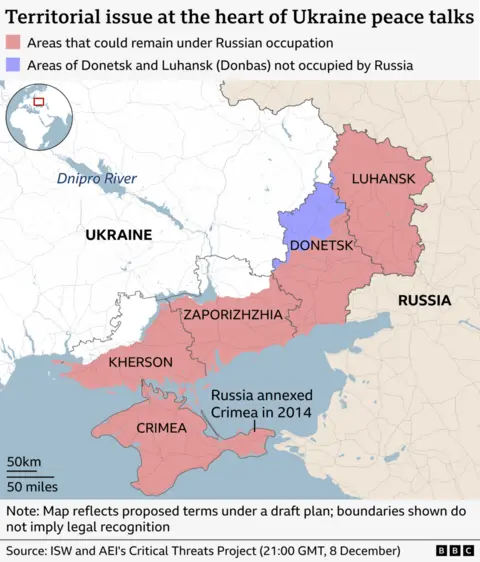
After Putin launched Russia's full-scale invasion of Ukraine in February 2022, he announced the annexation of four Ukrainian regions - Donetsk, Luhansk, Zaporizhzhia, and Kherson. Russia had already annexed Crimea in 2014.
It now occupies most of Luhansk, and is understood to demand Ukraine's withdrawal from all of Donetsk, too, even though Ukraine still controls up to 23% of the eastern region.
Putin said the goals of what he calls "the special military operation" would be achieved.
He said he preferred to do it through diplomacy, before warning that, "if the opposing side and their foreign patrons refuse to engage in substantive discussions, Russia will achieve the liberation of its historical lands by military means".
In his interview with the BBC Radio 4's PM programme, the Nato secretary general said it was "insane" that Putin's pursuit of his "historical idea that you want to regain access to Ukraine" - or over the entire territory that used to constitute the former Soviet Union - had caused the death or serious injury to 1.1m of his people.
Mark Rutte praised Trump's efforts to find an end to the war.
US envoys have been conducting intense negotiations with Ukrainian officials over a Trump-proposed peace plan whose initial draft was seen as favouring Russia.
It envisages ceding control of territory in the east of the country to Russia, as well as security guarantees for Kyiv to forestall future Russian aggression.
US officials say Washington is ready to offer Ukraine guarantees modelled on Nato's Article 5 clause of mutual protection.
European allies who met Ukrainian President Volodymyr Zelensky on Monday in the German capital, Berlin, said a European-led "multinational force Ukraine" was also envisaged to "assist in the regeneration of Ukraine's forces, in securing Ukraine's skies, and in supporting safer seas, including through operating inside Ukraine".
The Nato chief told the BBC that "Russia will see that, with the security guarantees in place, he should never ever try again to attack Ukraine because our reaction will be devastating and that's exactly what we are now discussing".
Putin has opposed any such ideas.
He has also warned that Russia does not seek conflict with Europe, but is ready "right now" if Europe wants to - or starts a war.
Similar reassurances were given by Moscow in 2022, just before 200,000 Russian troops crossed the border and invaded Ukraine.
Russia's economy has been on a war footing for more than three years now - its factories churn out ever more supplies of drones, missiles and artillery shells.
According to a recent report by the Kiel Institute for the World Economy, Russia has been producing each month around 150 tanks, 550 infantry fighting vehicles, 120 Lancet drones and more than 50 artillery pieces.
The UK, and most of its Western allies, are not anywhere near this point.
Analysts say it would take years for Western Europe's factories to come close to matching Russia's mass-production of weapons.
France and Germany have both recently moved to revive a system of voluntary military service for 18-year-olds.
Nato includes 30 European countries - as well as Canada and the US, the alliance's most powerful military member.
Under pressure from Trump, its members pledged during their summit in The Hague in June to increase military spending to 5% of their gross domestic product by 2035 - because of "long-term threat posed by Russia" and terrorism, among others.
"Now we are stronger, but if we do not implement the Hague decisions, we would be weaker than the Russians in a couple of years and that is extremely dangerous," Mark Rutte said in his BBC interview.
Researchers tracking wild polar bears in northern Canada witnessed something exceedingly rare this fall: a mother bear adopting a cub that was not biologically her own.
The five-year-old mother bear and her 10- to 11-month-old cubs were observed and captured on camera during the annual polar bear migration along the Western Hudson Bay near Churchill, Manitoba, a town known for its polar bear population.
"It's unusual," Alyssa McCall, a scientist at Polar Bears International, said in a video. "We don't really know why it happens...but we know it doesn't happen often at all."
It's only the 13th known case of adoption out of the 4,600 bears studied for nearly five decades in the area.
Dave Sandford / Discover Churchill
The mother bear was first captured as she emerged from her maternity den this spring. At the time, she had one cub, which scientists tagged for study.
In the fall, she was seen again, but this time with two cubs - the original cub that had been tagged and another without a tag. Researchers aren't sure what happened to the new cub's biological mother, but they are trying to identify her with genetic samples.
"The bears need all the help they can get these days with climate change," Evan Richardson, a polar bear scientist with Environment and Climate Change Canada, said in a video statement. "If females have the opportunity to pick up another cub and care for it and successfully wean it, it's a good thing for bears in Churchill."
Polar bears in the wild only have a 50% chance of surviving into adulthood, but having a mother caring for them improves their odds.
The cubs appear to be healthy, researchers said, and they will likely stay with their mother until they are about two-and-a-half years old.
Next, the family is expected to head out to sea ice, where the cubs will learn from their mother how to hunt seals and survive on their own.
"It's just nice to know that the bears are looking out for each other," Richardson said.
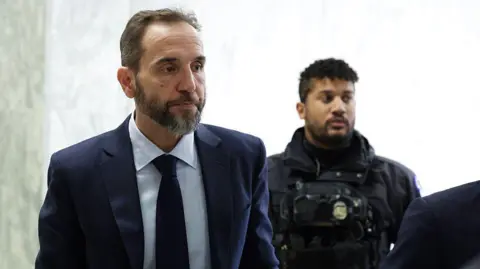
Former Special Counsel Jack Smith (left) arrives on Capitol Hill to testify about his criminal investigations of Donald Trump.
Former Special Counsel Jack Smith appeared on Capitol Hill on Wednesday for a high-stakes, closed door hearing about his two defunct criminal investigations into President Donald Trump.
In his opening statement, he told Congress his team "developed proof beyond a reasonable doubt" that Trump "engaged in a criminal scheme" to overturn the 2020 election results. Smith also charged Trump for allegedly mishandling classified documents.
Trump pleaded not guilty in both cases, and the prosecutions ended after his re-election.
Since returning to office, Trump has demanded investigations of officials who criminally charged him.
House Judiciary Chairman Jim Jordan, a staunch Trump ally, called Smith's investigations "partisan and politically motivated".
In an October letter to Smith, Jordan accused the career prosecutor of using "disturbing tactics".
Republicans also expressed alarm at the decision to subpoena the phone records of several Republican lawmakers as part of his election investigation.
Smith is testifying in a closed setting on Wednesday, meaning that the public will not be able to hear from him in real time.
According to sections of his opening statement obtained by the BBC's US partner CBS News, Smith told lawmakers that in both of his investigations, the "basis for those charges rests entirely with President Trump and his actions".
Smith also said the investigators found "powerful evidence" that Trump had retained classified documents and obstructed efforts to return them to the government.
He will likely face tough questions from the Republican-controlled committee, currently chaired by Jordan, a long-time Trump ally who was a staunch defender of the president during both of his impeachment inquiries.
Democrats on the panel said they wanted to learn more about the results of Smith's inquiries.
"We want to hear exactly what he found, and what he did," Congressman Jamie Raskin the top House Judiciary Democrat, told Politico.
According to Smith's attorney Peter Koski, the special counsel had volunteered to testify in an open hearing.
Smith, was "disappointed that offer was rejected, and that the American people will be denied the opportunity to hear directly from Jack on these topics," Koski told Politico earlier this month.
The stakes are high for Smith, who Trump has deemed a "criminal" and suggested should be "investigated and put in prison" along with other Department of Justice officials involved in the 2020 election inquiry.
In September, the Department of Justice indicted former FBI Director James Comey based on testimony he gave to Congress in 2019. In November, a federal judge tossed out the case after finding the prosecutor who brought it was improperly appointed.
Warner Bros Discovery will urge its shareholders to reject Paramount Skydance's $108.4bn (£80.75bn) takeover bid as soon as Wednesday, according to reports.
Paramount has said its offer is "superior" to a $72bn deal that Warner Bros struck with Netflix for its film and streaming businesses.
At the same time, a key backer of Paramount's attempt to buy Warner Bros, Affinity Partners, has reportedly pulled out of the bid, citing the involvement of "two strong competitors". Affinity was founded by US businessman and President Donald Trump's son-in-law Jared Kushner.
Warner Bros declined to comment when contacted by the BBC. Paramount and Affinity have also been asked for a response to the reports.
Warner Bros will advise its shareholders to reject Paramount's offer for a number of reasons including concerns over how the deal would be financed, according to the Financial Times.
The media giant put itself up for sale in October after receiving "multiple" expressions of interest from potential buyers, including approaches from Paramount Skydance.
Paramount is backed by the billionaire Ellison family, which has close ties to the president.
A takeover of Warner Bros is expected to face scrutiny from competition regulators in the US and Europe.
A new owner of Warner Bros would gain a significant edge in the highly competitive streaming market. It would get a huge library of films and TV shows, including Harry Potter, Friends and the HBO Max streaming service.
Some in the film industry have criticised the deal. The Writers Guild of America's East and West branches called for the merger to be blocked, arguing that it would result in lower wages and job cuts.
The volume of content for viewers would also be reduced, it said.
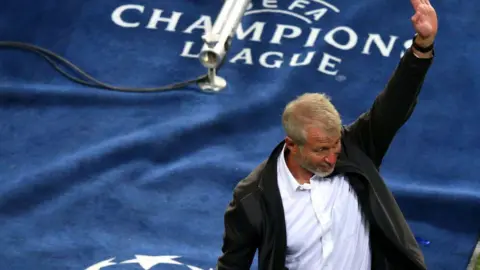
Roman Abramovich agreed to sell Chelsea FC in 2022 after Russia invaded Ukraine
The Prime Minister has said Russian oligarch Roman Abramovich must "pay up now" to victims of the war in Ukraine or face court action.
Mr Abramovich, the former owner of Chelsea Football Club, pledged in 2022 that money from the sale of the club would go to benefit victims of the Russian invasion of Ukraine.
The money has been frozen in a British bank account since the sale after he was sanctioned following Russia's invasion of Ukraine.
Speaking in the Commons, Sir Keir Starmer said the UK had issued a licence "to transfer £2.5bn from the sale of Chelsea Football Club that's been frozen since 2022."
Sir Keir said: "My message of Abramovich is clear: the clock is ticking.
"Honour the commitment that you made and pay up now, and if you don't we're prepared to go to court and ensure that every penny reaches those whose lives have been torn apart by Putin's illegal war."
The Treasury said that under the terms of the licence, the money must go to "humanitarian causes" in Ukraine and cannot benefit Mr Abramovich or any other sanctioned individual.
BBC outside Rabbi Schlanger's funeral as mourners pay tribute
The first funeral for one of the victims of the Bondi Beach shooting has taken place in Sydney, with thousands gathering to mourn Rabbi Eli Schlanger.
He was among 15 people killed when two gunmen, alleged to have been motivated by Islamic State ideology, opened fire on a festival marking the first day of Hanukkah.
Rabbi Schlanger, who was known as the "Bondi Rabbi" and had helped organise Sunday's event, was born in the UK. His wife gave birth to their fifth child just two months ago.
Rabbi Levi Wolff, who opened the service, said his death as an "unspeakable loss" for the community, the Chabad of Bondi and "the entire Jewish nation".
Associated Press
The family of Rabbi Eli Schlanger mourn over his coffin during his funeral
"Eli was ripped away from us, doing what he loved best," he said.
"Spreading love and joy and caring for his people with endless self-sacrifice in his life and in his death, he towered above as one of the highest and holiest souls."
He was mourned by his father-in-law as a person beloved by the community. The 41-year-old was "my son, my friend, my confidant," Rabbi Yehoram Ulman told the congregation at the Chabad of Bondi.
"My biggest regret was, apart from the obvious, to tell Eli more often how much we love him, how much I love him, how much we appreciate everything that he does and how proud we are of him," Rabbi Ulman said.
"I hope he knew that but I think it should have been said more often."
Ulman also urged Jewish people not to hide in the aftermath of the attack and said that on Sunday night - the final night of Hanukkah - they would continue a 31-year-old tradition, and light the final candle on Bondi Beach.
"All the rabbis together, under the banner of our Chabat house of Bondi, to which Eli dedicated his life, we are going to gather in Bondi Beach," he said.
The funeral of Rabbi Yaakov Levitan is also expected to take place on Wednesday afternoon, while the funeral of 10-year-old Matilda, the youngest victim, is to take place on Thursday.
Speaking to reporters in Bondi on Wednesday, Matilda's father praised lifesavers, bystanders and police officers who came to their assistance as they struggled to save their daughter's life, and a woman who helped their younger daughter, Summer.
"I must say the biggest thank you to the lady that saved Summer," he said. "I don't know who she was but she literally hugged her for the whole ten minutes of shooting."
Watch: 10-year-old victim's parents speak at Bondi flower tribute
Opposition leader Sussan Ley, New South Wales Premier Chris Minns, former prime minister Scott Morrison and Israeli Ambassador Amir Maimon were among those attending Schlanger's funeral.
Anthony Albanese was not present. Asked on ABC NewsRadio about his absence, the prime minister said, "I would attend anything that I'm invited to. These are funerals that are taking place to farewell people's loved ones."
The Jewish community has criticised Albanese for not taking enough action on antisemitism.
The prime minister defended himself against those accusations on Wednesday, telling ABC NewsRadio he had taken a series of measures including appointing the country's first antisemitism envoy, toughening hate speech laws and increasing funding for social cohesion projects and Jewish institutions.
He also said that one of the two men accused of carrying out Sunday's attack would be charged later on Wednesday, although NSW Police Commissioner Mal Lanyon later said this may depend on his medical condition.
"It's important he has appropriate cognitive ability. For his fairness, we need him to understand what is exactly happening," he told reporters in Sydney.
Naveed Akram reportedly woke from a coma on Tuesday afternoon after being shot and critically injured by police in Sunday's attack. His father, 50-year-old Sajid Akram was shot dead.
The pair, who allegedly fired on people attending the Hanukkah festival for around 10 minutes, reportedly travelled to the Philippines in November and police are investigating whether they met with Islamic extremists.
Two police officers were critically injured in the shooting and police on Wednesday confirmed that one of them had lost the sight in one eye as a result.
Jack Hibbert, 22, had only been in the police force for four months when he was shot, police said in a statement. During the attack he had "responded with courage, instinct, and selflessness, continuing to protect and help others whilst injured, until he was physically no longer able to."
The second officer, constable Scott Dyson, underwent further surgery this morning and is in a critical but stable condition, Lanyon added.
US President Donald Trump has said he is ordering a "a total and complete" blockade of all sanctioned oil tankers going into and out of Venezuela.
In a post on Truth Social, he accused Venezuela of stealing US assets, such as oil and land, and of "Terrorism, Drug Smuggling, and Human Trafficking".
"Therefore, today, I am ordering A TOTAL AND COMPLETE BLOCKADE OF ALL SANCTIONED OIL TANKERS going into, and out of, Venezuela," he added.
His post came a week after the US seized an oil tanker off the coast of Venezuela – a move that marked a sharp escalation Washington's pressure campaign against Venezuelan leader Nicolás Maduro's government.
In the post, the US president said Venezuela was "completely surrounded by the largest Armada ever assembled in the History of South America".
He added that it will "only get bigger" and "be like nothing they have ever seen before".
Trump also accused Maduro's government of using stolen oil to "finance themselves, Drug Terrorism, Human Trafficking, Murder, and Kidnapping".
Venezuela has not yet responded to Trump's latest remarks.
The Trump administration has repeatedly accused Venezuela of drug smuggling and since September the US military has killed at least 90 people in strikes on boats it has alleged were carrying fentanyl and other illegal drugs to the US.
In recent months, the US has also moved warships into the region.
Venezuela - home to some of the world's largest proven oil reserves - has, in turn, accused Washington of seeking to steal its resources.
This breaking news story is being updated and more details will be published shortly. Please refresh the page for the fullest version.
You can receive Breaking News on a smartphone or tablet via the BBC News App. You can also follow @BBCBreaking on X to get the latest alerts.
The US has prioritised white South Africans despite reducing overall refugee numbers
South Africa has accused the US of using Kenyan nationals who did not have work permits at a facility processing applications by white South Africans for refugee status.
Seven Kenyans were arrested after intelligence reports revealed that people "had recently entered South Africa on tourist visas and had illegally taken up work" at the centre, said a statement from South Africa's department of home affairs.
The BBC has approached the US State Department for comment.
While the US is trying to reduce overall levels of migration, it says that members of South Africa's white Afrikaner community can get asylum because they face persecution - a claim South Africa's government strongly rejects.
The US has reduced its yearly intake of refugees from around the world from 125,000 to 7,500, but says it will prioritise Afrikaners, who are mostly descendants of Dutch and French settlers.
South Africa says the Kenyan nationals arrested in Tuesday's raid will now be deported and will be banned from entering the country for five years.
They had previously been denied work visas but were found "engaging in work despite only being in possession of tourist visas, in clear violation of their conditions of entry into the country", the statement said.
South Africa said the raid showcased the commitment that the country shared "with the United States to combating illegal immigration and visa abuse in all its forms", it said.
It added that "formal diplomatic engagements" had been started with both the United States and Kenya.
No US officials were arrested and the operation was not at a diplomatic site, it said.
Kimi Antonelli finished seventh in the F1 2025 drivers' championship
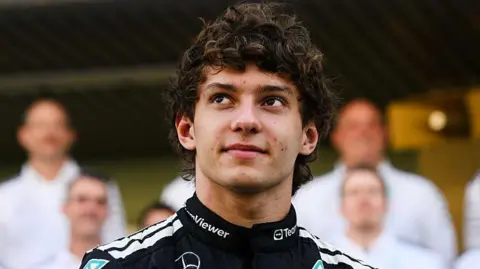
F1 driver Kimi Antonelli has surprised local go-karters by going incognito at a packed racing session.
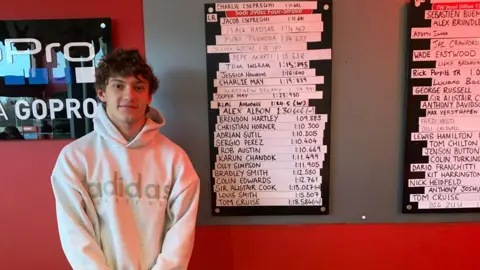
Antonelli attended Daytona Milton Keynes on Saturday and registered under the name "Henry Shovlin".
The 19-year-old Italian, who drives professionally for Mercedes, set the fastest lap of the session in the main race but did not win.
Daniel Prince, from Daytona, said Antonelli failed to make the podium because he got "two penalties" for "pushing too hard" but was happy to pose for a photo until he was mobbed by fans.
Daytona Milton Keynes
Kimi Antonelli clocked a time of 1:25.5 and was happy to pose next to the celebrity leaderboard
Mr Prince said Antonelli did the usual briefing and then raced with everyone else but "no-one had a clue" who he was.
"He actually got two penalties for pushing too hard so didn't finish on the podium at the end of it," he told Roberto Perrone on BBC Three Counties Radio.
"But he did get the fastest lap of the race by at least three seconds."
Mr Prince said the star was not recognised because he was wearing a helmet, but when he went back inside and removed it "everyone realised who they'd been racing against".
"Everyone really mobbed him so a member of staff quickly rescued him and put him behind the desk for a cheeky photo by our celebrity leaderboard, and then he ran away and left."
F1 drivers including Alexander Albon, Isack Hadjar and Yuki Tsunoda have visited the track due to its proximity to Silverstone.
Daytona Milton Keynes
Youngsters competing at the Daytona track in Milton Keynes back in September
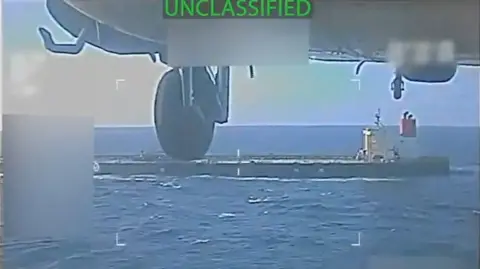
The US seized an oil tanker off the coast of Venezuela on 10 December
In a further escalation of tension between the United States and Venezuela, President Donald Trump has ordered a naval blockade to stop sanctioned oil tankers from entering and leaving the South American country.
Venezuela - which has the world's largest proven oil reserves - is highly dependent on revenues from its oil exports to finance its government spending.
But US sanctions targeting Venezuela's state-run oil company PDVSA have made exporting oil difficult for the Venezuelan government, leading them to resort to a fleet of "ghost ships".
So what do we know about these vessels and how they operate?
'Total and complete blockade'
As of last week, more than 30 of the 80 ships in Venezuelan waters or approaching the country were under US sanctions, according to data compiled by TankerTrackers.com.
Trump imposed sanctions on Venezuela's oil industry as far back as 2019, during his first term as president.
That year, Venezuelan crude exports fell by more than half from roughly 1.1 million barrels per day in January to about 495,000 by the end of 2019, according to the US Energy Information Administration.
Six years later, the sanctions remain in place but Venezuela's oil exports have grown again to around 920,000 barrels per day as of November, according to the news agency Reuters.
While this falls far short of the country's peak level of oil exports of 3 million barrels per day in 1998, this partial recovery indicates that the sanctions against Venezuela are not working as the US hoped.
It indicates that the government of Nicolás Maduro has found new ways to sell Venezuelan oil with the "ghost fleet" at their centre.
Not unique to Venezuela
Ghost fleets are a growing phenomenon, used not just by Venezuela but also by two other oil-producing countries under Western sanctions - Russia and Iran.
Financial intelligence firm S&P Global estimates that one in five oil tankers worldwide are used to smuggle oil from sanctioned countries.
Of these, 10% carry only Venezuelan oil, 20% carry Iranian oil, while 50% are exclusively dedicated to Russian oil. The remaining 20% are not tied to any particular country and can transport oil from more than one of these nations.
Oil sanctions aim to discourage countries or companies from buying or dealing with crude oil from sanctioned nations.
Companies and nations caught buying oil from sanctioned countries like Venezuela risk being sanctioned themselves by the US.
Sanctioned countries offer their oil at steep discounts so that companies or nations are willing to take the risk of buying it whilst applying tricks to disguise its origin.
One of the most common strategies ghost tankers use is to frequently change their name or flag - sometimes several times in a month.
For example, the tanker seized this Wednesday is called The Skipper, according to CBS News, the BBC's US partner.
The ship has been sanctioned by the US Treasury since 2022 for its alleged role in an oil-smuggling network that helps finance Iran's Revolutionary Guard and the Lebanese militia Hezbollah, according to CBS.
At that time, the tanker was named Adisa, but it was originally called Toyo. It was one of the vessels linked to Russian oil tycoon Viktor Artemov, who is also under sanctions.
The Skipper is a 20-year-old vessel - another common trait among ghost fleet tankers. Major shipping companies usually dispose of ships after 15 years of service, and after 25 years they are typically scrapped.
Watch: Video shows US military seizing oil tanker off Venezuela coast
'Zombie ships'
Another trick these ships use is to steal the identity of scrapped vessels by using their unique registration numbers assigned by the International Maritime Organization – similar to criminals using the identity of a dead person.
These are known as "zombie ships".
Last April, a ship called Varada arrived in Malaysian waters after a two-month journey from Venezuela.
It raised suspicions because it was a 32-year-old boat and flew the flag of the Comoros, an island nation off east Africa, which is a popular choice among ships that want to avoid detection.
According to a Bloomberg investigation, it was a zombie ship, as the real Varada had been scrapped in Bangladesh in 2017.
The news agency compared satellite images with historical photos to detect four zombie ships carrying Venezuelan crude oil.
Other common tactics include disguising the origin of crude oil by transferring it in international waters to legally compliant tankers with other flags.
These then deliver the oil to its destination, presenting it as coming from a country that is not sanctioned.
This happened with Venezuelan oil exports to China during Trump's first term when sanctions were tightened.
Another common trick among these tankers is disabling the Automatic Identification System, which transmits data including the vessel's name, flag, position, speed or route.
This allows ships to hide their identity and location.
Maritime risk company Vanguard Tech says it believes The Skipper was "spoofing its position for a long time" - that is, transmitting a false signal, making it appear to be in a different location.
Planet Labs PBC / Reuters
A satellite image taken on 18 November off Venezuelan waters shows The Skipper, on the right, alongside another vessel
According to a report in October by the anti-corruption NGO Transparencia Venezuela, there were 71 foreign tankers at the ports of Venezuelan state oil company PDVSA - of which 15 are under sanctions and nine are linked to ghost fleets.
It found that 24 tankers were operating under stealth, with their mandatory location signals deactivated.
The NGO says it detected six ship-to-ship cargo transfers in waters off western Venezuela.
Most of the ships flew flags of countries considered regulatory havens with lax oversight of sanctions, including Panama, Comoros and Malta.
Many spent more than 20 days without docking at an oil terminal, unlike the Chevron-operated ships that the US has authorised in Venezuela, which load and leave within six days.
"The extended stay in port areas without directly reaching oil terminals raises serious doubts about the type of operations these vessels are conducting," said Transparencia Venezuela in its report.
Given that the operation to seize the ship on 10 December came from the USS Gerald Ford aircraft carrier - the largest in the world - which is now part of the massive US military deployment in Caribbean waters, Maduro's ability to rely on the ghost fleet is likely to be significantly curtailed.
DJ Warras was shot by a man with dreadlocks in broad daylight, police say
A popular South African radio and club DJ has been shot dead in the country's largest city, Johannesburg, sending shockwaves across the nation grappling with entrenched crime.
Warrick Stock, popularly known as DJ Warras, was gunned down in the city centre on Tuesday afternoon.
Police said the 40-year-old media personality was approached by three suspects, one of whom opened fire on him before fleeing on foot.
The motive of the shooting is unknown and no arrests have been made, police said.
Stock was a well-known radio and TV presenter and a podcaster in South Africa.
Fred Kekana, a local police chief, said Stock was attacked as he was leaving Zambesi House near Carlton Centre.
Stock spent several hours at the building overseeing the installation of security systems at the premises, which had been controversially occupied by unknown people, reports the state-run SABC.
"It is alleged the victim was approached by three unknown suspects after parking his vehicle, and they opened fire at him before fleeing the scene on foot," the South African Police Service (SAPS) said in a statement.
CCTV footage showed a man with dreadlocks and dressed in what looked like a security uniform opening fire on Stock before fleeing, said Kekana.
The DJ tried to run away after he was shot but fell down across the street, the police chief added.
He said that Stock had an unused firearmon him and nothing was taken during the attack.
Key evidence, like cartridges, were discovered at the scene, according to the police.
Police have appealed to eyewitnesses and members of the public who may have seen the suspects to come forward.
"We know they walked a long distance after the shooting, and officers have been tracking them to determine their whereabouts," added Kekana.
His sister Nicole Stock told SABC that the family was struggling to process his death.
"I am in shock. I don't have words. I am shattered," she said.
"We know he was a voice for many people around the country. He spoke out bravely about issues not many people were willing to speak about. This is a tremendous loss."
She appealed to the public to refrain from sharing graphic images or videos from the scene, saying this was an incredibly difficult time, especially for Shock's three sons.
Stock was the presenter of Ngicel' iVisa, a reality show that premiered on Mzansi Magic, a South African digital satellite entertainment channel.
Beyond his media career, Stock was involved in various business ventures, including private security, providing elite guarding and VIP protection services and securing high-profile events across South Africa, according to local media.
He was also reportedly involved in property management and assisted with building evictions.
His murder has shocked the country and prompted an outpouring of tributes from his fans, the government and political parties.
Sports, Arts and Culture Minister Gayton McKenzie said he was angry and saddened by Stock's murder.
"He spoke his truth without fear or favour. He even spoke up against me and my decisions as a minister. He was a pure example of who we should be," added McKenzie.
Leader of South African's Build One party Mmusi Maimane said the "brazen murder of DJ Warras in broad daylight is a shock for all South Africans".
"DJ Warras was more than just a face of a reality series. He was a talented storyteller, a passionate music lover and a warm soul who brought joy and energy to every moment on screen. His dedication to creativity left an indelible mark on our channels," said Shirley Adonisi, director of local entertainment Channels (Mnet).
In a statement, Mzansi Magic said Stock was known for his charisma, warmth and sharp wit, adding that his legacy "will live on".
South Africa, the continent's most industrialised nation, has one of the world's highest murder rates, fuelled by robberies and gang violence, with some 63 people killed each day between April and September, according to police data.
Naveed Akram, the surviving alleged suspect in Sunday's mass shooting at Bondi Beach in Sydney, has been charged with 59 offences, including 15 counts of murder and one of committing a terrorist act, according to the New South Wales Police.
The other gunman, his father Sajid Akram, 50, was killed in an exchange of fire with police at the scene.
Fifteen people were killed and dozens of others were injured in the attack, which targeted Australia's Jewish community at an event celebrating the first night of Hanukkah.
It was the country's deadliest shooting since 1996.
Akram also faces 40 charges of causing grievous bodily harm with intent to murder, as well as one charge of causing a public display of a prohibited terrorist organisation symbol.
He was critically injured during the incident on Sunday, and had his first hearing from his hospital bedside, the local New South Wales court said.
The case has been adjourned until April 2026, the court added.
Earlier on Wednesday, New South Wales Police Commissioner Mal Lanyon said they were waiting for medication to wear off before formally questioning Akram.
"For his fairness, we need him to understand what is exactly happening," Lanyon said.
Twenty people injured in the attack remain in hospitals across Sydney, with one person still in a critical condition.
Earlier, New South Wales Police Commissioner Mal Lanyon said they were waiting for medication to wear off before formally questioning Akram.
"For his fairness, we need him to understand what is exactly happening," Lanyon said.
Police have designated the attack a terrorist incident, with Australian Prime Minister Anthony Albanese saying it appears to have been "motivated by Islamic State" group ideology.
Police said "homemade" Islamic State group flags and improvised explosive devices (IEDs) have been found in the vehicle used by the gunmen.
This breaking news story is being updated and more details will be published shortly. Please refresh the page for the fullest version.
You can receive Breaking News on a smartphone or tablet via the BBC News App. You can also follow @BBCBreaking on X to get the latest alerts.
Watch: Prosecutor announces charges against Nick Reiner in parents' deaths
Prosecutors in Los Angeles have filed murder charges against a son of Rob and Michele Reiner, the Hollywood couple who were found dead in their home with multiple stab wounds on Sunday.
Nick Reiner, 32, is facing two counts of first-degree murder and could be sentenced to life in prison if found guilty. He will be brought to court to formally face charges after he is "medically-cleared" by prison officials, District Attorney Nathan Hochman said.
During a news conference on Tuesday, Mr Hochman also said no decision had yet been made about whether to seek the death penalty.
Rob Reiner directed several iconic films in a variety of genres, including This is Spinal Tap, Misery and A Few Good Men.
Michele Singer Reiner was an actress, photographer and producer, and the founder of Reiner Light, a photography agency and production company.
Their son Nick Reiner is facing two counts of first degree murder, "with a special circumstance of multiple murders," according to Hochman. That enhancement could lead to a stiffer sentence if he is later found guilty.
District Attorney Hochman said he also is accused of using a "dangerous and deadly weapon, that being a knife".
The suspect is currently undergoing medical testing to ensure that he can attend court. He is expected to appear before a judge later on Tuesday for an arraignment hearing, where he will be able to enter a plea of guilty or not guilty.
LA Police Department Chief Jim McDonnell also spoke during the news conference, describing how the case has reverberated throughout the city.
"This case is heartbreaking and deeply personal, not only for the Reiner family and their loved ones, but for the entire city," he said.
"We extend our deepest condolences to everyone affected by this tragedy."
Getty Images
Nick Reiner (right) is accused of killing his two parents
During the news conference, officials declined to say how the suspect was located, attributing his arrest to "good, solid police work".
District Attorney Hochman added that it is too early to say whether any "mental illness" played a role in the crime, and speculated that it could come up at trial.
"If there is evidence of mental illness, it will appear in court, in whatever details the defence seeks to present," he said.
Miss Finland Sarah Dzafce said in the viral photo that she was "eating with a Chinese".
Finland's delegate to last month's Miss Universe pageant held in Thailand has sparked a racism firestorm over a viral photo that showed her pulling the corners of her eyes.
Sarah Dzafce, who has been dethroned, uploaded the photo with the caption "eating with a Chinese". The slanted-eyes pose is often seen as disrespectful to East Asians.
The post drew backlash in Japan, South Korea and China against the 22-year-old and even against her country's flag carrier, Finnair.
Back home in Finland, the prime minister said on Monday making such gestures was "thoughtless and stupid" and that the controversy that ensued was "damaging" to the country.
Ms Dzafce claimed the gesture was her reaction to a headache during dinner. She said a friend added the offensive caption to the 11 December post without her consent, according to local tabloid Ilta-Sanomat.
Ms Dzafce has apologised for the photo, noting it has "caused ill will in many people".
"That was not my intention in any way... One of the most important things for me is respect for people, their backgrounds and differences," she wrote on an Instagram post.
The apology still drew criticism, with some calling it "insincere" given it was written in Finnish.
"Not sure Chinese outside of Finland would understand it. Such considerate and sincere apology," one wrote in a comment on her post.
Another wrote: "That was uncalled for, Asian people didn't do anything to you... We [are] still disappointed in you."
Two right-wing MPs in Finland, Juho Eerola and Kaisa Garedew, posted photos of themselves mimicking Ms Dzafce's gesture to show their support for the beauty queen.
The posts were taken down after backlash. Eerola apologised adding he felt Ms Dzafce was given "disproportionately harsh punishment".
Finnish Prime Minister Petteri Orpo condemned the MPs' actions as "childish", adding that lawmakers should set an example of proper conduct.
The Finns Party is deliberating whether the MPs should face any sanctions for their actions, local media reported.
Finland's flag carrier Finnair told public broadcaster Yle that the controversy had affected the company, and that there had been calls for tourists to boycott Finland.
"The statements or posts mentioned by some Finnish members of parliament do not represent the values of Finnair," the airline wrote on its Japanese X account on Tuesday.
"As an airline supported by employees from diverse backgrounds and customers around the world, we promise to welcome everyone with respect," it wrote.
The debacle has also drawn attention in Japan, South Korea and China, among other East Asian countries.
A Japanese man living in Finland launched an petition calling for an investigation into anti-Asian discrimination, which had gathered more than 7,000 signatures as of Sunday evening, the Asahi Shimbun reported.
The Finnish embassy in Japan said it had received "numerous opinions and questions" on Finland's efforts to address racism.
"Racism remains a challenge in Finnish society, and its resolution requires continuous and resolute efforts," it acknowledged in an X post early this week.
The Miss Finland Organisation said dethroning Ms Dzafce was a "difficult but necessary" move.
"Miss Finland holds a position of role-model status, which requires respecting all people regardless of their origin, background, or appearance," the organisation said in a statement.
"We are deeply sorry for the harm these events have caused. Especially to the Asian community, but also to everyone affected. Racism is never acceptable in any form," it wrote.
US President Donald Trump has said he is ordering a "a total and complete" blockade of all sanctioned oil tankers going into and out of Venezuela.
In a post on Truth Social, he accused Venezuela of stealing US assets, such as oil and land, and of "Terrorism, Drug Smuggling, and Human Trafficking".
"Therefore, today, I am ordering A TOTAL AND COMPLETE BLOCKADE OF ALL SANCTIONED OIL TANKERS going into, and out of, Venezuela," he added.
His post came a week after the US seized an oil tanker off the coast of Venezuela – a move that marked a sharp escalation Washington's pressure campaign against Venezuelan leader Nicolás Maduro's government.
In the post, the US president said Venezuela was "completely surrounded by the largest Armada ever assembled in the History of South America".
He added that it will "only get bigger" and "be like nothing they have ever seen before".
Trump also accused Maduro's government of using stolen oil to "finance themselves, Drug Terrorism, Human Trafficking, Murder, and Kidnapping".
Venezuela has not yet responded to Trump's latest remarks.
The Trump administration has repeatedly accused Venezuela of drug smuggling and since September the US military has killed at least 90 people in strikes on boats it has alleged were carrying fentanyl and other illegal drugs to the US.
In recent months, the US has also moved warships into the region.
Venezuela - home to some of the world's largest proven oil reserves - has, in turn, accused Washington of seeking to steal its resources.
This breaking news story is being updated and more details will be published shortly. Please refresh the page for the fullest version.
You can receive Breaking News on a smartphone or tablet via the BBC News App. You can also follow @BBCBreaking on X to get the latest alerts.
Watch: Prosecutor announces charges against Nick Reiner in parents' deaths
Prosecutors in Los Angeles have filed murder charges against a son of Rob and Michele Reiner, the Hollywood couple who were found dead in their home with multiple stab wounds on Sunday.
Nick Reiner, 32, is facing two counts of first-degree murder and could be sentenced to life in prison if found guilty. He will be brought to court to formally face charges after he is "medically-cleared" by prison officials, District Attorney Nathan Hochman said.
During a news conference on Tuesday, Mr Hochman also said no decision had yet been made about whether to seek the death penalty.
Rob Reiner directed several iconic films in a variety of genres, including This is Spinal Tap, Misery and A Few Good Men.
Michele Singer Reiner was an actress, photographer and producer, and the founder of Reiner Light, a photography agency and production company.
Their son Nick Reiner is facing two counts of first degree murder, "with a special circumstance of multiple murders," according to Hochman. That enhancement could lead to a stiffer sentence if he is later found guilty.
District Attorney Hochman said he also is accused of using a "dangerous and deadly weapon, that being a knife".
The suspect is currently undergoing medical testing to ensure that he can attend court. He is expected to appear before a judge later on Tuesday for an arraignment hearing, where he will be able to enter a plea of guilty or not guilty.
LA Police Department Chief Jim McDonnell also spoke during the news conference, describing how the case has reverberated throughout the city.
"This case is heartbreaking and deeply personal, not only for the Reiner family and their loved ones, but for the entire city," he said.
"We extend our deepest condolences to everyone affected by this tragedy."
Getty Images
Nick Reiner (right) is accused of killing his two parents
During the news conference, officials declined to say how the suspect was located, attributing his arrest to "good, solid police work".
District Attorney Hochman added that it is too early to say whether any "mental illness" played a role in the crime, and speculated that it could come up at trial.
"If there is evidence of mental illness, it will appear in court, in whatever details the defence seeks to present," he said.
President Donald Trump has expanded a US travel ban, barring nationals of five additional countries and people travelling on Palestinian Authority-issued documents from entering the US.
The White House said the restrictions were intended "to protect the security of the United States" and will come into force on 1 January.
Full-entry restrictions will be imposed on people from Burkina Faso, Mali, Niger, South Sudan and Syria as well as Palestinian Authority passport holders.
The administration also moved Laos and Sierra Leone, which were previously subject to partial restrictions, to the full ban list and put partial restrictions on 15 other countries, including Nigeria, Tanzania and Zimbabwe.
Trump, who has tightened immigration controls since returning to the White House in January, said the expanded travel ban was necessary because of what his administration described as failures in screening and vetting systems overseas.
Officials cited high visa overstay rates, unreliable civil records, corruption, terrorist activity and a lack of cooperation in accepting deported nationals.
The announcement followed the arrest of an Afghan national suspected of shooting two National Guard troops over the Thanksgiving weekend, an incident the White House pointed to in highlighting its security concerns.
This is the third time Trump has imposed a travel ban.
During his first term, he introduced a similar order in 2017, which sparked protests and legal challenges at home and abroad. The policy was later upheld by the US Supreme Court.
The White House said the restrictions would remain in place until affected countries show "credible improvements" in identity management, information-sharing and cooperation with US immigration authorities.
A number of exceptions apply and the ban will not affect lawful permanent residents, many existing visa holders, diplomats, or athletes travelling for major sporting events. Officials said case-by-case waivers would also be available where travel is deemed to be in the national interest.
Countries with full restrictions:
Afghanistan
Burkina Faso
Burma
Chad
Equatorial Guinea
Eritrea
Haiti
Iran
Laos
Libya
Mali
Niger
Republic of the Congo
Sierra Leone
Somalia
South Sudan
Sudan
Syria
Yemen
Individuals travelling on Palestinian Authority issued or endorsed travel documents are also subject to a full suspension of entry
Partial restrictions:
Angola
Antigua and Barbuda
Benin
Burundi
Côte d'Ivoire
Cuba
Dominica
Gabon
The Gambia
Malawi
Mauritania
Nigeria
Senegal
Tanzania
Togo
Tonga
Venezuela
Zambia
Zimbabwe
Special case:
Turkmenistan (restrictions remain for immigrants but have been lifted for non-immigrant visas)
The European Union has watered down its plans to ban the sale of new petrol and diesel vehicles by 2035.
Current rules state that new vehicles sold from that date should be "zero emission", but carmakers, particularly in Germany, have lobbied heavily for concessions.
Under the European Commission's new plan, 90% of new cars sold from 2035 would have to be zero-emission, rather than 100%.
According to the European carmakers association, ACEA, market demand for electric cars is currently too low, and without a change to the rules, manufacturers would risk "multi-billion euro" penalties.
The remaining 10% could be made up of conventional petrol or diesel cars, along with hybrids.
Carmakers will be expected to compensate for the extra emissions created by these vehicles by using biofuels and so-called e-fuels, which are synthesised from captured carbon dioxide.
They will also be expected to use low-carbon steel made in the European Union in the vehicles they produce.
Opponents of the move have warned that it risks undermining the transition towards electric vehicles and leaving Europe exposed in the face of foreign competition.
The green transport group T&E has warned that the UK should not follow the EU's lead by weakening its own plans to phase out the sale of conventional cars under the Zero Emission Vehicles Mandate.
"The UK must stand firm. Our ZEV mandate is already driving jobs, investment and innovation into the UK. As major exporters we cannot compete unless we innovate, and global markets are going electric fast", said T&E UK's director Anna Krajinska.
Susie Wiles is the first woman to hold the key office of Chief of Staff at the White House
White House Chief of Staff Susie Wiles has disputed portions of a Vanity Fair article in which she paints an unflattering picture of the Trump administration and many of its top officials.
In the interview, Wiles described Donald Trump as having an "alcoholic's personality" and Vice President JD Vance as having been a "conspiracy theorist" for a decade.
But in a post on X, Wiles said that Vanity Fair disregarded "significant context" to create "an overwhelmingly chaotic and negative narrative" about the administration.
Wiles, 68, played a key part in Trump's successful 2024 presidential campaign before becoming the first woman to be White House Chief of Staff.
Over the course of nearly a dozen interviews with Vanity Fair, Wiles talked about a wide range of issues, including handling of Epstein files, Trump's legal actions against politcal rivals, and also about personalities around the president.
She admitted that "there may be an element of" retribution in Trump's efforts to pursue criminal cases against political adversaries or perceived foes.
"I don't think he wakes up thinking about retribution," she added. "But when there's an opportunity, he will go for it."
Wiles is widely considered among the most powerful members of the Trump White House in his second term.
Prior to becoming Chief of Staff, Wiles had a long history working with Trump, including as his campaign manager in Florida in 2016 and as the head of his fundraising apparatus, Save America.
In the interview, she credits her upbringing with an alcoholic father as what enabled her to work with the president.
"High-functioning alcoholics or alcoholics in general, their personalities are exaggerated when they drink," she said. "So I'm a little bit of an expert in big personalities."
While the president does not drink, she said Trump has "an alcoholic's personality" and governs with the mindset that "there's nothing he can't do. Nothing, zero, nothing".
Vance on report that Susie Wiles called him a 'conspiracy theorist'. Wiles disputes portions of the article.
Among the other figures that Wiles commented on was JD Vance, a one-time critic of Trump who has since become a close ally and vice-president.
Wiles suggested that Vance's shift in perceptions was "sort of political".
Speaking to reporters at an event on Tuesday, Vance said he had not read the article, but that he only believes in conspiracy theories that are "true" - citing reports of former President Joe Biden's ill-health as an example.
Her strongest comments were reserved for tech billionaire Elon Musk, who led cost-cutting efforts at the Department of Government Efficiency - or Doge - before leaving the government in May.
Shortly thereafter, Musk and Trump had a public spat that saw the two men trade barbs and insults over social media.
Wiles described Musk as an "avowed Ketamine [user]" who "sleeps in a sleeping bag in the EOB", the Executive Office Building adjacent to the White House.
"He's an odd, odd duck, as I think geniuses are," she said. "You know, it's not helpful, but he is his own person."
Looking back on Musk's cost-cutting efforts, Wiles said that she was against the gutting of the US Agency for International Development, or USAID, saying she was "initially aghast" at the idea.
"I think that anybody that pays attention to government and has ever paid attention to USAID believed, as I did, that they do very good work," she recalled.
"Elon's attitude is you have to get it done fast. If you're an incrementalist, you just won't get your rocket to the moon," Wiles said. "With that attitude, you're going to break some china. But no rational person could think the USAID process was a good one. Nobody."
On Tuesday morning - hours after the Vanity Fair article was published - Wiles took to X, accusing the magazine of "disingenuously framed hit piece" aimed at her, Trump and other cabinet members.
"Significant context was disregarded and much of what I, and others, said about the team and the President was left out of the story. I assume, after reading it, that this was done to paint an overwhelmingly chaotic and negative narrative about the President and our team," she wrote.
When contacted for comment on the story, the White House also defended Wiles.
In a statement sent to the BBC, Press Secretary Karoline Leavitt said that Wiles "has helped President Trump achieve the most successful first 11 months in office of any President in American history."
"President Trump has no greater or more loyal advisor than Susie," Leavitt added. "The entire administration is grateful to her steady leadership and united fully behind her."
Speaking to reporters outside the West Wing later in the day, Leavitt accused Vanity Fair of "bias of omission" by excluding other interviews conducted with White House staff and taking Wiles' words "wildly out of context".
Trump and Musk have yet to comment on the Vanity Fair piece.

 Login
Login
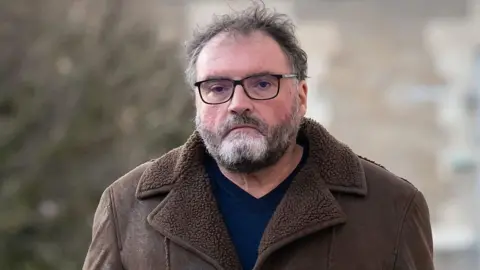 ARNAUD FINISTRE/AFP