Reading view

There are new articles available, click to refresh the page.

US airman injured but safe after rescue from inside Iran, Trump says

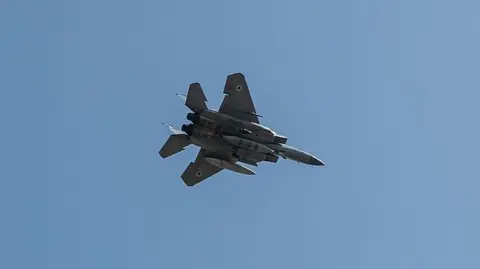
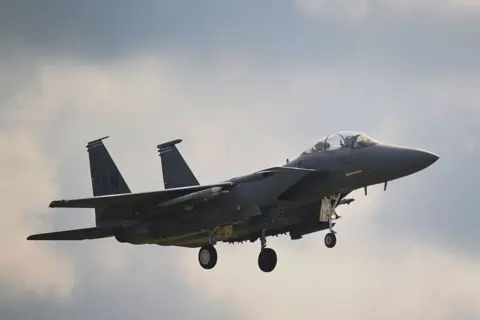
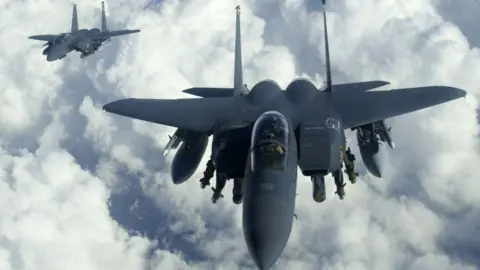
Getty Images An Israeli F-15 fighter jet seen from below - two crew members from a similar plane were rescued from inside Iran over the weekend Getty Images

A second US crew member who was missing in Iran after an American F-15 fighter jet was shot down has been rescued.

Posting to social media, US President Donald Trump said the rescued weapons systems officer had "sustained injuries" but would be "just fine", describing the rescue as "one of the most daring search and rescue operations in US history".

Following the downing of the aircraft on Friday, both the pilot and crew member ejected - with the pilot recovered shortly afterwards.

Following this, both the US and Iran scrambled to locate the missing crew member in a mountainous region of southwestern Iran.

The search presented a serious test for the US, with the possibility of a prisoner of war situation if Iran found the missing airman - something which would have likely involved him being used as part of propaganda material.

Iran's Islamic Revolutionary Guard Corps (IRGC) was said to have launched its own search for the missing American, reportedly using troops and locals, and offering them a reward of about $66,000 (£50,000) to capture him alive.

Videos on social media appeared to show hundreds of people heading to a mountainous area in south-western Iran to search for the missing US airman.

Details of the second airman being rescued emerged in US media late on Saturday night.

A short time later, Trump confirmed the successful mission on Truth Social, writing "WE GOT HIM!", adding the crew member was a "respected colonel".

The US rescue operation was described to the BBC as "huge" by one person familiar with the details.

The BBC understands that there was an engagement between the US and Iranian forces during the rescue, and that the pilot may have been injured during his initial ejection from the aircraft.

Tasnim, the semi-official news agency associated with the IRGC, said five Iranians were killed during the operation.

Trump said dozens of aircraft had been involved in the operation, with the White House not giving an update after the pilot was recovered on Friday to protect the ongoing rescue.

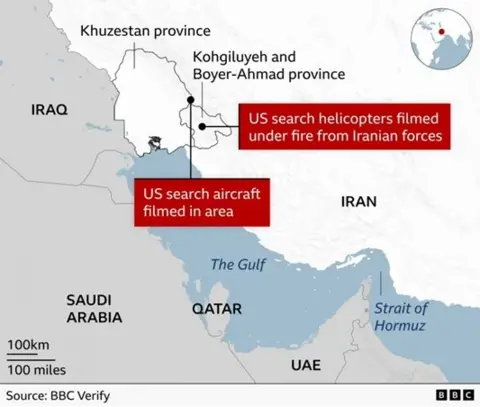
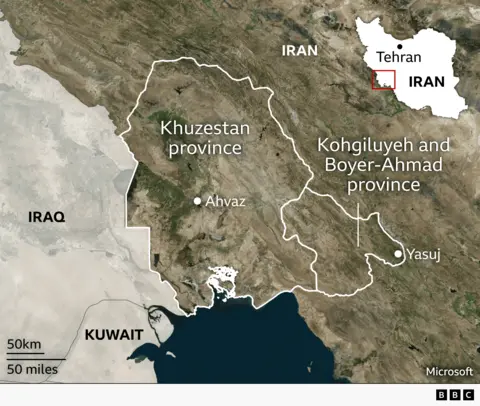
Earlier reports suggested the missing crew member might be in the mountainous area of Kohgiluyeh and Boyer-Ahmad province, in the southwestern regions of Iran.

Officials told the BBC's US partner CBS News that the crew member spent more than 24 hours on his own, hiding in the mountains with a handgun.

A senior official also told CBS that the CIA played a crucial in the rescue mission by tracking the airman in a mountain crevice and passing his exact location to the Pentagon.

The agency engaged in a deception campaign inside Iran, reports said. While the rescue attempt was taking place, the agency spread word the airman had already been found and was being extracted from Iran.

Meanwhile, Iran's IRGC previously said that nomadic tribes living in the country's mountains shot two Black Hawk helicopters that were part of the US rescue mission.

BBC Verify has confirmed a video from Friday showing what appears to be three armed individuals firing towards at least two Black Hawk helicopters.

The rescue operation reportedly included an A-10 Warthog aircraft which was hit over the Gulf, with its pilot ejecting before being rescued.

The recovery of the F-15 crew member comes as intense fighting continues in the region.

On Sunday morning, authorities in Abu Dhabi said they were battling fires at a Borouge petrochemical facility caused by falling debris from an Iranian missile. There were also report of attacks on Kuwait and Israel overnight into Sunday.
How downed F-15 US airman was rescued inside Iran

Watch: What we know so far about the search for missing US airman in Iran

A search is underway for a missing crew member after a US F-15E fighter jet flying over southern Iran was shot down on Friday, US media has reported.

A pilot who was on board was reportedly rescued by US forces, but the search for the second crew member, a weapons system officer, is ongoing, reports say.

Seperately, a US A-10 Warthog aircraft that was part of the search and rescue mission for the downed jet was also shot and damaged, however its pilot was safely rescued, according to the BBC's US partner CBS News.

Iranian officials said the the warplane was shot down by its air defence system, according to state media. The US Central Command is yet to comment.

Where and when was the jet shot down?

Iranian state media first claimed on Friday that the country's forces shot down a US jet over its southern region.

White House Press Secretary Karoline Leavitt then said that US President Donald Trump had been briefed on the incident.

US Central Command has not confirmed the details surrounding the reported downing of the aircraft.

A search and rescue mission successfully recovered the pilot of the jet, but what happened to the jet's second crew member, a weapons systems officer, remains unknown, CBS News has reported.

The rescue operation included an A-10 Warthog plane that was hit over the Gulf, with its pilot ejecting before being rescued, according to CBS.

One helicopter carrying the rescued pilot from the F-15E jet was hit by small arms fire, injuring crew members on board - but it landed safely, CBS reports.

Iran's Islamic Revolutionary Guard Corps (IRGC) has claimed that nomadic tribes living in the country's mountains shot two Black Hawk helicopters that were part of the US rescue mission.

The BBC has requested comment from the US military regarding Iran's claim.

BBC Verify has confirmed a video from Friday showing what appears to be three armed individuals firing towards at least two Black Hawk helicopters.

Iran's top joint military command has credited new Iranian air defence systems with the downing of both US warplanes, according to Iran's state-affiliated IRNA news agency.

A map showing where US aircraft have been filmed in the search for a crew of a plane downed in Iran. It shows locations in the Khuzestan province and the Hohgiluyeh and Boyer-Ahmad province.

What do we know about the jet's purpose?

US Air Force via Getty Images Two F-15E Strike Eagle jets soaring through a cloudy skyUS Air Force via Getty Images
A file photo of two F-15E Strike Eagle jets

The F-15E is a dual-role fighter jet designed for both air-to-ground and air-to-air missions. In Iran, they are most likely to have been involved in Defensive Counter Air roles to shoot down Iranian drones and cruise missiles.

In its air-to-ground strike role, the jet is a weapons platform capable of dropping laser and GPS guided precision munitions, as well as other bombs.

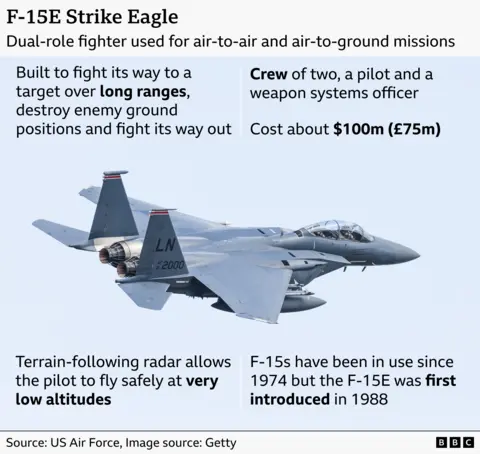
The aircraft has two crew: the pilot in the front who flies the jet and a weapons systems officer in the back seat. The weapons officer, known as a "Wizzo", has four screens in front of them and is responsible for selecting targets and making sure the weapons are properly programmed for the appropriate attack.

This two-crew system allows the workload to be divided up, particularly in a congested air environment where the pilot is trying to evade threats.

We do not know what specifically brought down this US jet, but if it was taken down by the Iranians then the most likely reason is a surface-to-air missile (SAM).

Infographic about the US F‑15E Strike Eagle fighter jet with a photo of the aircraft in flight and text explaining its features: designed for long‑range missions to attack ground targets and fight its way out; has a two‑person crew of a pilot and a weapon systems officer; uses terrain‑following radar to fly safely at very low altitudes. Notes that F‑15s have been in service since 1974, with the F‑15E introduced in 1988. States an approximate cost of $100m (£75m). Source: the US Air Force.

What is happening with the rescue effort?

The rescue of crew members of a downed jet is one of the most complex and time-sensitive operations - known as combat search and rescue (CSAR) missions - that the US military and its allies prepare for.

The elite air force units behind CSAR missions include some of the most highly trained and specialised members of the military.

"It's the most dangerous military mission that I know of," James Jeffrey, a military strategist and top US diplomat for the Middle East, told the BBC.

"These are Air Force special operations people who are trained almost to the level of Delta Force and Navy SEAL Team Six, but they also have medical capabilities," Jeffrey said. "They will not give up until they can find a pilot if they think there's any chance."

CSAR missions are often conducted by helicopters, which fly low over enemy territory, alongside other military aircraft that conduct strikes and patrol the area.

A former commander of a pararescue jumpers squadron told CBS News that a rescue operation like the reported one in Iran would involve at least 24 pararescue jumpers scouring the area in Black Hawk helicopters.

They added the team would be prepared to jump from planes if needed, and once on the ground their priority would be to contact the missing crew member.

The crew of the downed jet are also highly trained for such situations.

"Their number one priority is to stay alive and to avoid capture," Jennifer Kavanagh, a senior fellow and the director of military analysis at think tank Defense Priorities, told the BBC.

"And so they're trained to - assuming that they're physically capable, and not so injured that they can't move - to try to get away from the ejection site as quickly as possible, and to conceal themselves so that they are safe."

They're also trained on survival techniques so that they can go without food or water, or find resources from the local terrain, for as long as possible, Kavanagh said.

Iran is offering rewards of about £50,000 ($66,100) to citizens who help capture the missing airman, state media has reported.

Artemis's stunning Moon pictures - science or holiday photos?

'That is something we have never seen before': Artemis II crew describe far side of Moon

Nasa is releasing a steady stream of stunning pictures of the Moon and Earth taken by the astronauts on its Artemis II Moon mission.

Attracting millions of likes on social media, the images show the two bodies from unusual angles in glorious high definition.

There is no denying the drama: four astronauts are embarking on a mission that will take them further from Earth than any human has ventured since 1972.

But is there unique scientific value in these images, or are these simply the equivalent of holiday photos?

NASA Astronaut Christina Koch watching Earth from the Orion spacecraftNASA
Astronaut Christina Koch watching Earth from the Orion spacecraft (image taken with iPhone 17 Pro Max)

Nasa wants the American public behind them to support the mission. They are live-streaming the 10-day journey, and the four astronauts are doing regular video updates, describing their progress in triumphant tones.

The crew have been so excited to watch the world and Moon go by, Nasa has said, that the window inside the Orion spacecraft got dirty and the astronauts were sent instructions on how to clean it.

This is the first time that digital cameras have been taken this far into space.

Orion has 32 cameras and devices - 15 mounted onto the spacecraft and 17 handheld by the crew.

According to Nasa, the astronauts are using standard 10-year-old cameras, including the Nikon D5, as well as GoPros and smartphones.

Nasa's photostream on flickr even tells you the device used to take each of the published photos.

On Friday we saw the first results of their intense observations.

"Hello, World" was taken by Commander Reid Wiseman when the mission was about equidistant from the Moon and Earth - 142,000 miles (228,500 km) from Earth, and 132,000 miles from the Moon.

It shows two auroras as the Earth eclipses the Sun, and the planet Venus glowing at the bottom of the image.

NASA/Reid Wiseman NASA astronaut and Artemis II Commander Reid Wiseman took this picture of Earth from the Orion spacecraft's window on April 2, 2026, after completing the translunar injection burn.NASA/Reid Wiseman

Our planet appears upside down, with the Sahara desert and the Iberian peninsula visible to the left and the eastern portion of South America to the right.

It's a lovely picture, but nothing new when it comes to science.

In fact, Nasa has a satellite with its Deep Space Climate Observatory with a camera called Earth Polychromatic Imaging Camera (Epic). Launched in 2015, it frequently takes pictures of Earth from close to a million miles away - much further than Artemis II.

Then on Saturday, Nasa released another photo, with the tagline "history in the making".

It shows the Orientale basin, a huge crater on the far side of the Moon, which has a thicker crust and many more impact craters.

It's been released ahead of the lunar fly-by on Monday when the crew will fly around this mysterious far side, passing within 4,066 miles of the surface.

NASA A picture taken on day 4 of Artemis mission showing the Orientale basin on the right edge of the lunar diskNASA
A picture taken on day 4 of Artemis mission showing the Orientale basin on the right edge of the lunar disk

Nasa said its image marked "the first time the entire basin has been seen with human eyes". Even Apollo astronauts didn't see the Orientale basin completely because of their orbit and illumination conditions.

Nasa is emphasising the significance of human eyes rather than robotic explorers.

"Human eyes and brains are highly sensitive to subtle changes in colour, texture, and other surface characteristics," it says.

It says this could "uncover new discoveries and a more nuanced appreciation for the features on the surface of the Moon."

I asked Chris Lintott, Professor of Astrophysics at the University of Oxford and co-host of BBC's series The Sky at Night for his opinion.

"The value of the images coming back from Artemis and its crew is artistic, not scientific," he said.

He explained that since the Apollo program in the 1960s and 1970s, robotic explorers have mapped the far side of the Moon.

In 2023, India sent the probe Chandrayaan-3 and captured detailed images of the same terrain.

ISRO A photo of the moon's far side captured in 2023 by a camera on India's Chandrayaan-3 probe ISRO
A photo of the moon's far side captured in 2023 by a camera on India's Chandrayaan-3 probe

And in 2024, China's Chang'e-6 mission collected the first-ever samples from the far side. It followed China landing the first ever probe in the region, in 2019.

"Unless something very unusual happens, there will be nothing for the [Artemis] astronauts to discover," Lintott says.

"There's a possibility they might see an impact flash if a meteor hits the dark side but it would have to be a pretty big one," he said.

"For science they would need to do a systematic count [of it], best done with a video camera, not looking out the window," he explained.

"The [images] we already have back are beautiful, stunning and iconic - taking by astronauts not by robots. This is a voyage of exploration, not lunar science and that's fine!" he said.

When releasing these images, Nasa is pushing the scientific importance of this mission, but as journalists, we are asked to look at all the facts around a story.

America is locked in a space race with other nations - notably China, with both nations vying to be the first to return humans to the Moon. A successful Artemis II mission would signal that the US has taken a decisive lead, for now

And this is a huge moment for Nasa to shine in the eyes of President Donald Trump, who has gutted the funding of many scientific institutions.

The agency is also under pressure to prove its worth at a time when private operators such as SpaceX are raising the bar.

Science is driven by inquiry and evidence, but it is never immune to politics.

Getty Images The iconic Earthrise photo taken in 1968Getty Images
The iconic Earthrise photo taken in 1968

In 1968 astronaut Bill Anders made history when he took the now-famous picture Earthrise.

Taken from close to the lunar surface, it showed our planet rising in the distance.

It made Earth look vulnerable, and at a time of global division and tension during the Cold War, it reminded many viewers that we share this one planet.

It also demonstrated how a powerful image can write history, and Nasa will be hoping that Artemis II delivers a moment of comparable resonance.

In the meantime, let's enjoy the astronauts' ride and their beautiful pictures.

Pope Leo calls for global leaders to choose peace in his first Easter Mass

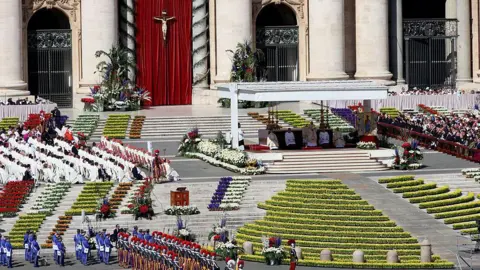
Vatican Media/Reuters Pope Leo XIV waves from the main balcony of St. Peter's BasilicaVatican Media/Reuters

Thousands of worshippers flocked to St Peter's Square on Sunday to hear Pope Leo XIV deliver his first Easter Mass address as pontiff.

Framed by white roses on the central balcony of the Vatican's basilica, the pope called on "those who have the power to unleash wars" to choose peace.

"On this day of celebration, let us abandon every desire for conflict, domination and power, and implore the Lord to grant his peace to a world ravaged by wars," he said.

The first US-born pope has become a vocal critic of the Iran war, and has used recent public addresses to denounce global conflicts and urge de-escalation.

Getty Images St Peter's Square decorated with colourful flowers as Pope Leo XIV presides over Easter Mass Getty Images

Pope Leo waved to the crowd gathered in the square below before delivering his "Urbi et Orbi" blessing - Latin for "to the city and the world".

St Peter's Square was decorated with spring blooms, with rows of daffodils and thousands of purple, red and white flowers arranged for the Easter Mass on Sunday.
Getty Images Easter Mass as part of the Holy Week celebrations, at St Peter's square in the Vatican Getty Images
Reuters Clergy members attend the Easter Mass in St. Peter's Square at the VaticanReuters

"We are growing accustomed to violence, resigning ourselves to it, and becoming indifferent, indifferent to the deaths of thousands of people," the pope said in his address.

"Let those who have weapons lay them down. Let those who have the power to unleash wars choose peace."

In a break with recent tradition, Leo did not explicitly name any country or conflict in his message.

He paid tribute to his predecessor, Pope Francis, who gave his final address on Easter Sunday last year hours before his death.

Referring to the Easter story of Christ's resurrection, three days after he was nailed to the cross, he said Jesus had been "entirely nonviolent" in the face of suffering.

For Christians, Easter is the most important date in the liturgical calendar, marking the resurrection of Christ - a central tenet of the faith.

Reuters Members of the clergy walk among the faithful as Pope Leo XIV leads the Easter Mass in St. Peter's Square at the VaticanReuters
Reuters Swiss guards line up, wearing their traditional, colourful uniforms and helmets with red feather plumesReuters

As bells rang out across the Vatican and the crowd applauded, Leo concluded his blessing by offering Easter greetings in several languages, including Latin, Arabic and Chinese.

The pope also announced that he would return to the basilica on 11 April to lead a prayer vigil for peace.

Leo has repeatedly denounced ongoing global conflicts in recent weeks, using a series of Holy Week addresses to warn against what he has described as a growing indifference to war and suffering.

In his sermon during Saturday night's Easter vigil, the pontiff urged believers not to feel numbed by the scale of global conflicts but to work actively for reconciliation.

He made a rare direct appeal to Donald Trump on Tuesday, urging the US President to find an "off-ramp" to end the conflict with Iran.

Reuters Pope Leo speaks into a microphone with one hand raised in a blessing gestureReuters
Pope Leo blesses the faithful at the end of the Easter Mass

What we know so far about rescue of US airman in Iran

Watch: What we know so far about the search for missing US airman in Iran

A search is underway for a missing crew member after a US F-15E fighter jet flying over southern Iran was shot down on Friday, US media has reported.

A pilot who was on board was reportedly rescued by US forces, but the search for the second crew member, a weapons system officer, is ongoing, reports say.

Seperately, a US A-10 Warthog aircraft that was part of the search and rescue mission for the downed jet was also shot and damaged, however its pilot was safely rescued, according to the BBC's US partner CBS News.

Iranian officials said the the warplane was shot down by its air defence system, according to state media. The US Central Command is yet to comment.

Where and when was the jet shot down?

Iranian state media first claimed on Friday that the country's forces shot down a US jet over its southern region.

White House Press Secretary Karoline Leavitt then said that US President Donald Trump had been briefed on the incident.

US Central Command has not confirmed the details surrounding the reported downing of the aircraft.

A search and rescue mission successfully recovered the pilot of the jet, but what happened to the jet's second crew member, a weapons systems officer, remains unknown, CBS News has reported.

The rescue operation included an A-10 Warthog plane that was hit over the Gulf, with its pilot ejecting before being rescued, according to CBS.

One helicopter carrying the rescued pilot from the F-15E jet was hit by small arms fire, injuring crew members on board - but it landed safely, CBS reports.

Iran's Islamic Revolutionary Guard Corps (IRGC) has claimed that nomadic tribes living in the country's mountains shot two Black Hawk helicopters that were part of the US rescue mission.

The BBC has requested comment from the US military regarding Iran's claim.

BBC Verify has confirmed a video from Friday showing what appears to be three armed individuals firing towards at least two Black Hawk helicopters.

Iran's top joint military command has credited new Iranian air defence systems with the downing of both US warplanes, according to Iran's state-affiliated IRNA news agency.

A map showing where US aircraft have been filmed in the search for a crew of a plane downed in Iran. It shows locations in the Khuzestan province and the Hohgiluyeh and Boyer-Ahmad province.

What do we know about the jet's purpose?

US Air Force via Getty Images Two F-15E Strike Eagle jets soaring through a cloudy skyUS Air Force via Getty Images
A file photo of two F-15E Strike Eagle jets

The F-15E is a dual-role fighter jet designed for both air-to-ground and air-to-air missions. In Iran, they are most likely to have been involved in Defensive Counter Air roles to shoot down Iranian drones and cruise missiles.

In its air-to-ground strike role, the jet is a weapons platform capable of dropping laser and GPS guided precision munitions, as well as other bombs.

The aircraft has two crew: the pilot in the front who flies the jet and a weapons systems officer in the back seat. The weapons officer, known as a "Wizzo", has four screens in front of them and is responsible for selecting targets and making sure the weapons are properly programmed for the appropriate attack.

This two-crew system allows the workload to be divided up, particularly in a congested air environment where the pilot is trying to evade threats.

We do not know what specifically brought down this US jet, but if it was taken down by the Iranians then the most likely reason is a surface-to-air missile (SAM).

Infographic about the US F‑15E Strike Eagle fighter jet with a photo of the aircraft in flight and text explaining its features: designed for long‑range missions to attack ground targets and fight its way out; has a two‑person crew of a pilot and a weapon systems officer; uses terrain‑following radar to fly safely at very low altitudes. Notes that F‑15s have been in service since 1974, with the F‑15E introduced in 1988. States an approximate cost of $100m (£75m). Source: the US Air Force.

What is happening with the rescue effort?

The rescue of crew members of a downed jet is one of the most complex and time-sensitive operations - known as combat search and rescue (CSAR) missions - that the US military and its allies prepare for.

The elite air force units behind CSAR missions include some of the most highly trained and specialised members of the military.

"It's the most dangerous military mission that I know of," James Jeffrey, a military strategist and top US diplomat for the Middle East, told the BBC.

"These are Air Force special operations people who are trained almost to the level of Delta Force and Navy SEAL Team Six, but they also have medical capabilities," Jeffrey said. "They will not give up until they can find a pilot if they think there's any chance."

CSAR missions are often conducted by helicopters, which fly low over enemy territory, alongside other military aircraft that conduct strikes and patrol the area.

A former commander of a pararescue jumpers squadron told CBS News that a rescue operation like the reported one in Iran would involve at least 24 pararescue jumpers scouring the area in Black Hawk helicopters.

They added the team would be prepared to jump from planes if needed, and once on the ground their priority would be to contact the missing crew member.

The crew of the downed jet are also highly trained for such situations.

"Their number one priority is to stay alive and to avoid capture," Jennifer Kavanagh, a senior fellow and the director of military analysis at think tank Defense Priorities, told the BBC.

"And so they're trained to - assuming that they're physically capable, and not so injured that they can't move - to try to get away from the ejection site as quickly as possible, and to conceal themselves so that they are safe."

They're also trained on survival techniques so that they can go without food or water, or find resources from the local terrain, for as long as possible, Kavanagh said.

Iran is offering rewards of about £50,000 ($66,100) to citizens who help capture the missing airman, state media has reported.

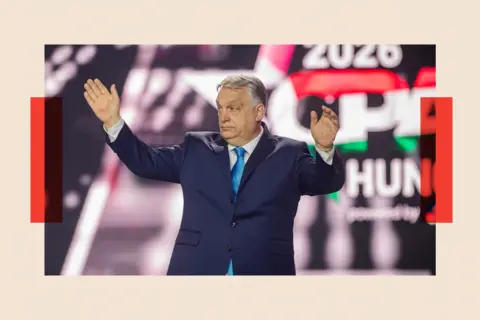
AI videos fuel rhetoric as Orbán bids for four more years in Hungary

Fidesz/Hungary Girl at a window Fidesz/Hungary
The controversial AI-generated video depicts a girl waiting at a window for her father to return from war

Warning: This piece refers to scenes of violence from the start

When a video went viral appearing to show a Hungarian soldier's execution, its disturbing nature came as a shock to anyone who saw it.

Ahead of pivotal Hungarian elections on Sunday 12 April, the AI-generated, fake clip was posted on the social media accounts of Prime Minister Viktor Orbán's Fidesz party in February.

It tells the story of a young girl at a window yearning for her father's return home from war, and then the video cuts to him - blindfolded, bound by the hands, and then shot by his captors.

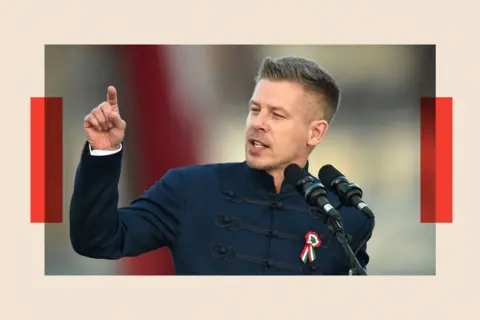
The video targeted Orbán's election rival, Péter Magyar, who could unseat him after 16 years in office.

The Fidesz campaign has made unsubstantiated claims about the war in Ukraine and Magyar's intentions, at times using AI-generated videos like this, even though it makes clear the video is fake.

"The video is an AI video, but the war is really horrible," the video says. "Péter Magyar doesn't want you to see this video. He doesn't want you to see what an irreversible tragedy it is to join a war."

Fidesz alleges that Magyar, from the centre-right party Tisza, will bring Russia's war against Ukraine to its doorstep if elected, even using pension money to support Ukraine and imposing forced conscription.

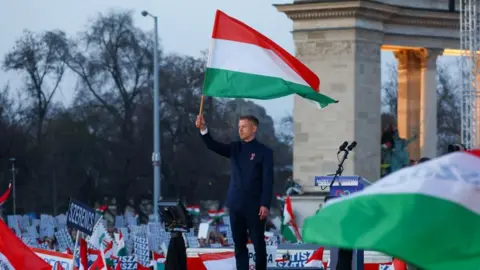
Reuters A man holds a red, white and green Hungarian flagReuters
Péter Magyar's Tisza leads the election race, according to most opinion polls

Such narratives have been widely rejected by Magyar and by his party Tisza. In its manifesto, it pledges it will not send troops to Ukraine and does not plan to revive conscription.

We asked ruling party Fidesz whether it had made the AI execution video and why it had posted it on to its social media channels, but the party has not responded to our questions.

In an interview with a journalist posted to Facebook, Támas Menczer, who is communications director of the Fidesz-KNDP alliance, responded to a question about the AI video saying he believed "the greatest possible danger is that Hungarian people could die if Tisza wins, because Tisza supports the war, Tisza supports sending money".

However, he did not comment on the video being made with AI.

Magyar has condemned the video stating that Fidesz "crossed all limits", and called the video "heartless manipulation".

Zsófia Fülöp, a journalist at Hungary's only dedicated independent fact-checking website, Lakmusz, says while such narratives from the ruling party are not new, the use of generative AI is.

"It is omnipresent in this campaign, especially in the communication of the ruling party and its media and proxies. They've used it before but now it's massive."

The strategy does not appear to have had much of an impact on voters, with Magyar leading in most opinion polls.

NEM/Hungary A woman holds a red phone at a windowNEM/Hungary
Another AI-generated video depicts European Commission chief Ursula von der Leyen

Social media posts by Fidesz's allies have parroted similar anti-Ukrainian narratives.

Last month the National Resistance Movement (NEM) - a pro-Fidesz political activist group - shared a video made using AI that depicts a phone call between European Commission President Ursula von der Leyen and Péter Magyar discussing sending money to Ukraine.

It was viewed more than 3.7 million times.

"When the phone rings and a request comes, then he won't be able to say no," the accompanying caption read. NEM did not disclose the video had been made using AI.

Magyar called it out as fake, but the video had already been shared widely by pro-government media as well as Fidesz politicians, including the prime minister. In his post, Orbán stated that the video had been AI-generated but warned it could become a reality.

We asked NEM why they had posted the AI video and whether they had made it, but they did not comment.

"We're in a state of hallucination," says Éva Bognár, a researcher at the Central European University's Democracy Institute. "In a way the whole campaign is a disinformation campaign because it's all based on a complete false narrative that we're on the brink of war."

In another instance a few weeks ago, Hungary's anti-terrorism police arrested seven Ukrainian bank workers who were transiting through with $80m (£60m) worth of cash and 9kg (20lb) of gold in cash-transport vehicles to Ukraine.

Ukrainian Foreign Minister Andriy Sybiha accused the Hungarian government of taking the group hostage and stealing money.

Ukraine's state savings bank, Oschadbank, said they had a valid licence and that it was a routine journey between Austria and Ukraine.

But the Hungarian government alleged that money laundering was taking place and suggested it might be to "finance pro-Ukraine forces".

Although the Ukrainian bank workers have been released without charges, authorities are yet to return the money and gold.

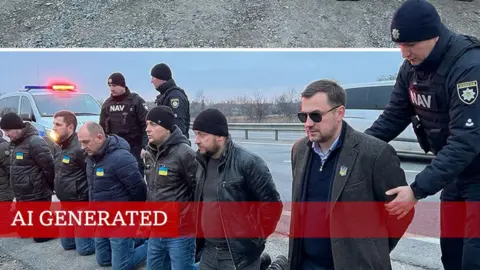
On Facebook, pro-government outlets used AI images to report on the arrests. One pro-government outlet uploaded hyper-realistic images of the arrest, reporting the images as fact.

When compared with images and videos of the event posted on the Hungarian government's official Facebook page, they are wildly different. Inaccuracies can be seen in the uniforms of the officers as well as the clothes of the Ukrainian individuals.

Facebook's third party fact-checking service has labelled the post as "partly false".

Facebook Men kneel on the ground on the road Facebook
One pro-government outlet used AI-generated fake images of Ukrainians being arrested

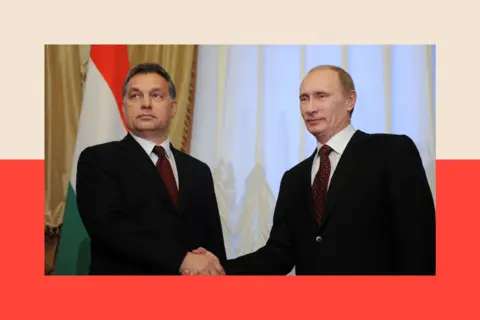
Hungary had better relations with Ukraine in the past, and even backed Ukraine's bid to join the EU until late 2023, but relations deteriorated as Orbán maintained close ties to Russia's Vladimir Putin.

One survey by research institute Policy Solutions suggests the level of anti-Ukrainian feeling in Hungary is barely lower than anti-Russian sentiment, with 64% of Hungarians holding a negative opinion of Ukraine's Volodymyr Zelensky, and 67% disliking Putin.

"One side holds all the cards," says researcher Éva Bognár. "Fidesz has infinite resources at its disposal: from public funds, state agencies and offices to a media conglomerate that operates as a propaganda machine, including the public service media."

Magyar is partly cutting through the fraught media landscape using social media.

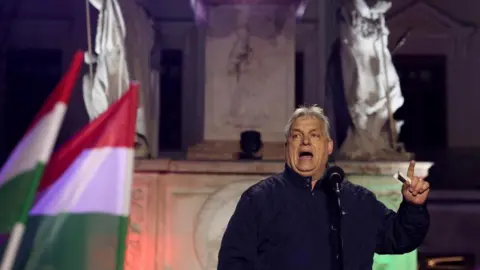
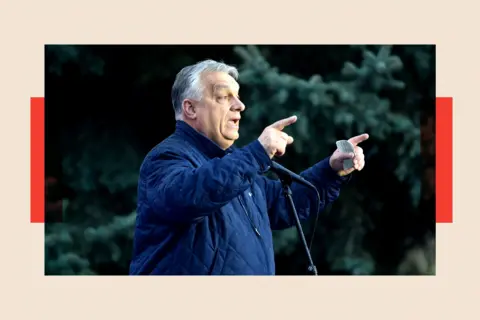
Reuters A man speaks at a microphone in front of statuesReuters
Prime Minister Viktor Orbán has been in office for the past 16 years

According to 20k, a Hungarian election integrity watchdog tracking the social media activity of political actors during the election, Magyar's posts on Facebook, TikTok, and Instagram receive twice the level of engagement of Orbán's.

Magyar posts a mixture of professional content and images portraying himself as a younger and more relatable leader, showing him partying, playing volleyball, flipping burgers at a restaurant, and enjoying water sports.

But the Tisza leader has also engaged in milder forms of misleading rhetoric, including inaccuracies about the number of Hungarian babies born outside of the country in an attempt to evoke a sense of missing national pride.

He has even played the ruling party at their own game, alleging that it is Fidesz, not Tisza, that wants to reintroduce compulsory military service.

Apart from it being briefly mentioned by two Fidesz politicians in 2016, we found no evidence that the party wants to revive compulsory military service.

Péter Krekó, who heads independent political research institute Political Capital, says Magyar has also been able to "exploit... strong public resentment" towards the government.

Much of that is being driven by people between the ages of 18 and 40.

A survey by the Median agency suggests that support for Tisza remains strongest amongst those under 40, while nearly half of people over 65 support Fidesz.

Despite this, Fidesz clings to its anti-Ukrainian narrative, in both traditional media and online, with posters showing Zelensky and Magyar together under the warning "They are dangerous!"

If Fidesz wins, we will see the same disinformation tactics being used beyond the election, says Krekó. But if it doesn't win, there will be a "more tumultuous relationship between the media and politicians".

ICE wanted to build a detention centre - this small farming town said no

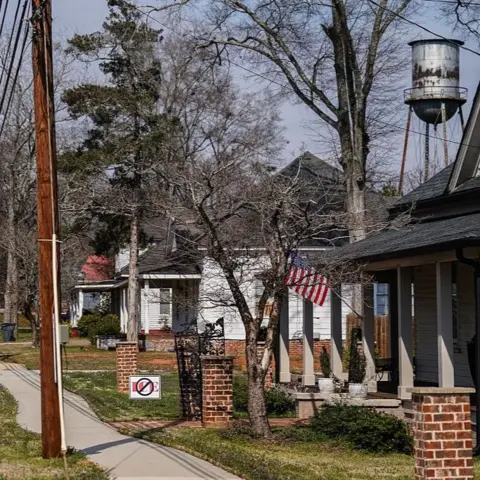
Getty Images A view down a street in Social Circle, with small homes on one side and a white church spire in the distance. On one lawn is a sign that says ICE - crossed outGetty Images
A proposed detention centre would triple the population of Social Circle, Georgia

For months, two neighbours, Democrat Gareth Fenley and conservative John Miller, have been united in the same daily mission.

Each morning the two get into their cars and drive several miles down the farm-lined roads of their small Georgia town to an empty one-million square-foot gray warehouse.

On arrival, they search meticulously for signs of construction, breathing a sigh of relief each time the massive property appears untouched.

The sprawling industrial warehouse, which the US Department of Homeland Security (DHS) bought in February, is part of a $38.3bn (£29bn) plan to open up dozens of immigration detention centres across the US.

Those plans have faced fierce opposition, not just in Democratic communities, but in conservative towns like Social Circle, which overwhelmingly supported Donald Trump in the last election - including his campaign promise to deport millions of undocumented immigrants.

"People have different reasons for aligning with the exact same message," Fenley said. "That message is: 'Detention centre, not welcome here.'"

Watch: Residents from both parties push back against detention center

Many who support the president's immigration policies are concerned the facility would starve the small town of critical resources by tripling its population, turning a place once known for its quaint Blue Willow Inn buffet restaurant into a prison town.

In March, those concerns led City Manager Eric Taylor to shut off the water in the warehouse, a move that made this one-stoplight town the unlikely face of resistance to the administration's plans.

"If you open up that water meter, it gives them full access to the entire supply of the whole city," Taylor told the BBC. "I can't let that happen without knowing what the ultimate impact is going to be."

Now those plans for a 10,000-person detention centre appear to be on hold.

The department also signalled that it is pausing plans to buy more warehouses like the one in Social Circle - though the fate of facilities it already has spent millions on remains unclear. DHS did not directly respond to a comment from the BBC about Social Circle's facility.

"As with any transition, we are reviewing agency policies and proposals," a statement from the department said.

DHS cancelled a scheduled meeting about the Social Circle warehouse because it was planning a "department review of processes" under new leadership, Taylor said.

Residents are cautiously optimistic.

"We're anxious to see what happens out of this review. They have already pulled the trigger on it. They have already bought the building, so there's going to be some effects no matter what's done or not done," Miller said.

"We're still whispering up the chain as much as we can to make sure that if they are indeed reviewing it, we can give input."

Reuters A blue and white mural depicts Social Circle's historic wellReuters

'We don't have the capacity'

In the centre of Social Circle is a replica of a well, a nod to the origins of the town, which was established in 1832. According to a plaque, a group of men sitting around a well enjoying "their usual drink" invited a passing stranger to join them. "This is surely a social circle," the stranger replied.

Nearly 200 years later, Social Circle's wells are at the heart of residents' fight against ICE. They say the town's water system - which serves 5,000 people - has had problems for decades, and the ICE facility would require much more than the fragile system could provide.

Taylor, the city manager, said the town has a permit to pull only one million gallons of water each day from the Alcovy River, south of the town, and during the summer, the town uses about 800,000 gallons at least. ICE has said the facility on its own will require one million gallons a day.
Taylor told the agency as soon as an application for water service was filed that he was not going to turn it on, he said.

"I told them at that time that there was a lock on the water meter, and it was there until we had a better understanding of what the impact was going to be on our water."

John Miller pets his golden-coloured horse while standing by a wooden fence in his field
John Miller's horse farm is across from the proposed detention centre

Miller, whose 50-acre grassy horse farm sits just across the road from the Social Circle warehouse, said officials had not done due diligence on selected locations.

"It's the same story over and over," he said. "Communities weren't informed. They weren't consulted."

"I understand the why, but I just don't understand how they're handling it."

Miller said federal officials have floated several solutions, including either digging a well on the warehouse property or trucking in a million gallons of water a day.
But the father of seven said drilling new wells could take away from the well he uses to nourish his horses, chickens, barn cats and dogs.

Bringing in gallons of water on Social Circle's two-lane roads poses problems too. "That's six or seven trucks every hour, 24 hours a day," Miller said.

DHS did not directly respond to a list of questions from the BBC inquiring about how it would address the water supply.

Taylor also worries about the town's old sewage systems, established in 1962 and in need of replacement for 20 years, he said.

"Where's the sewage supposed to go?" he asked. "We don't have the capacity to support a million gallons of sewer coming off that site."

A country-wide fight against ICE plans

Residents in Social Circle have been waging their battle against the ICE facility ever since they found out, in a Washington Post report last December, that the warehouse was one of 23 sites earmarked to become detention centres.

They quickly appealed to the government and their federal representatives, arguing they did not have resources for the facility - but ICE still purchased it in February for nearly $130m - more than four times its initial estimated worth.

Since then, Miller, Fenley and others have led the charge to slow the project, holding protests and meetings with hundreds of concerned residents. Georgia's Democratic Senator Raphael Warnock visited the facility, and his office participated in a briefing with ICE officials, but "many questions remain unanswered", a spokesperson said.

Other communities who have been tapped for similar projects also have fought back.

In Michigan last week, the state sued to block DHS from converting a warehouse into an ICE facility in Romulus, arguing it was too close to residential neighbourhoods and schools and posed a flooding risk. New Jersey and Maryland also sued to halt ICE projects, while residents in Merrimack, New Hampshire, successfully lobbied elected officials to stop a facility in town.

Gareth Fenley sits in a cafe wearing a blue cardigan over a red shirt
Gareth Fenley, a Democrat, says she is worried about the human-rights issues that a detention centre could bring to the town

For some Social Circle residents, their opposition is not only a question of resources, but of human rights.

Fenley said she and other Democrats in town were concerned about having people "warehoused in a place that was not built for human habitation".

She worries about reports of people being abused in detention centres. At least 13 immigrants died in ICE custody from January 2026 through early March, according to ICE, while civil rights groups have said immigrants are being subjected to unsafe conditions such as a lack of food, overcrowding and medical neglect.

Others raised alarms not only for those inside the facility, but the community around it.

"We have one high school, one zip code, one grocery store, one stoplight. And we are going to triple the size of our town," said Valerie Walthart, who works on a veterinary farm down the road from Miller. "We're going to be overwhelmed."

Walthart added that as a mother, she was concerned about safety, with a detention facility perched just a five-minute drive from the local elementary school.

"It's unnerving," Joy Coker, a mother of three in the area, said of the warehouse's location.

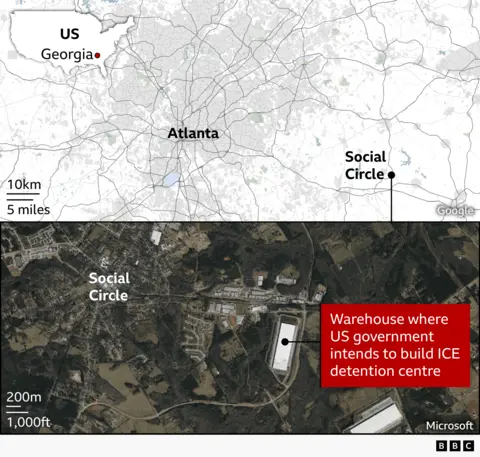
A two-part map showing the location of Social Circle, Georgia, in relation to Atlanta, and a satellite view of the area. The top map highlights Atlanta and the smaller town of Social Circle to its east. The lower satellite image shows Social Circle and marks a large warehouse site where the US government intends to build an ICE detention centre. Scale bars indicate distances on both maps.

'Georgia's greatest little detention centre'

Social Circle's Republican Representative Mike Collins also publicly opposed the ICE project.

"Although I am aligned with the mission of ICE to detain and deport the criminal illegal aliens who have flooded across our border due to Joe Biden's reckless policies, I agree with the community that Social Circle does not have the sufficient resources that this facility would require," he wrote.

Rick Cook, a resident of neighbouring Monroe, said he wasn't in favour of the facility, but believed the US had to clamp down on illegal immigration. He said he and others in his Social Circle church hoped to provide religious counseling to immigrants held in the facility.

"It's going to be what it's going to be, and we're going to try to find the ways to make the best with whatever happens," he said.

To Steven Williford, the owner of a cattle farm in Social Circle who voted for Trump, ICE is a "necessary evil". But he couldn't believe the news when he learned the detention centre was coming to his hometown.

"I just thought it was crazy to put something like that in this community, with no forethought, no prior authorisation, not even asking the community," he said.

"I'm all for doing what's best for the country, but is it best for this community?" he added. "That's the question."

Miller said he understood why some would be confused by the Republican town's reaction. He said detention facilities were necessary to detain people so they could be guaranteed due process.

"You can't say that it's something that's needed and then not be somewhat willing to allow a facility to be there," he said.

But, he said, realistically, no community wants such a facility tarnishing the reputation of their town.

"I miss the days we were known for the Blue Willow Inn," he said, referencing the famous buffet restaurant that closed during Covid, once visited by celebrities including actress Helen Mirren.

"Now," he said, "we're going to be known as Georgia's greatest little detention centre."

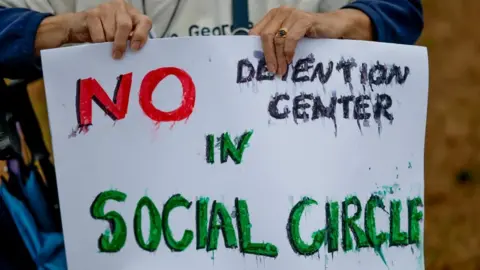
EPA A participant holds a rain-soaked sign saying "NO detention center in Social Circle" at a rally against the proposed US Immigration and Customs Enforcement detention centre.EPA

Some residents had been hoping that a change in federal leadership would put the warehouse plans on pause. Trump fired his Homeland Secretary Kristi Noem at the beginning of March, after backlash for the administration's immigration crackdown in Minneapolis earlier this year, when federal agents shot dead two US citizens.

The president nominated Senator Markwayne Mullin to take her place, which was followed by DHS signalling it may be rethinking its plans.

In its statement to the BBC, DHS referenced remarks from Mullin's confirmation hearing:

"We got to protect the homeland and we're going to do that, but obviously we want to work with community leaders," he said in March. "We want to be good partners."

Joy Coker looks directly at the camera, wearing a white hooded sweatshirt with her hair down and blowing in the wind
Some residents are worried about the safety of having 10,000 detainees move into their town

Social Circle's facility was originally slated to open in April, but work appears to have stalled. The agency has yet to award a contract for the warehouse or begin the massive construction needed to convert the bare warehouse into a sprawling court facility, complete with holding areas, gyms and recreational spaces, court facilities, cafeterias and even a gun range.

Residents have been thrilled about the potential pause, including Walthart, who said the decision gives locals "a little time to breathe, since we wake up nearly every day wondering if today will be the day the trucks start rolling in".

"We can enjoy our small town life," she said, "for at least a little while longer, we hope."

Man charged over fatal shooting of baby in pram in New York

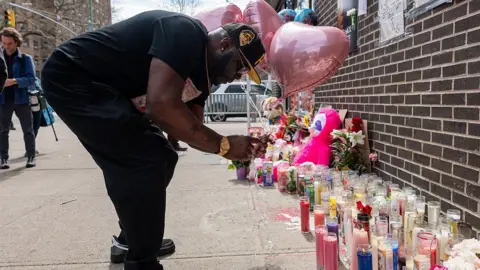
Getty Images A mourner ties balloons to a memorial and vigil where a 7-month-old baby, Kaori Patterson-Moore, was killed by a stray bullet on April 1 while sitting in her stroller in Brooklyn on April 04, 2026, in New York City.Getty Images
A memorial has been growing at the scene of the shooting in Williamsburg

A man has been charged with murder after a seven-month-old baby died after being shot while sitting in her pushchair in New York.

Amuri Greene, 21, has been charged with three counts of murder and one of attempted murder after police accused him of fatally shooting Kaori Patterson-Moore on 1 April.

Greene appeared in court on Friday where he pleaded not guilty, according to CBS News, the BBC's US partner. Officers believe the baby was the unintended victim of a gang-related shooting.

Police said a second suspect, Matthew Rodriguez, 18, had been arrested in connection with the shooting in Pennsylvania and charges were pending.

Footage from the incident appears to show two men on a motorcycle riding against the flow of traffic through the Williamsburg neighbourhood of Brooklyn, before a man on the back of the vehicle took out a gun and fired, police said.

Officers believe Greene carried out the shooting and was on the back of the scooter, CBS reported.

He was thrown from the vehicle following the incident and was taken to hospital for treatment where he was placed in police custody.

Greene also pleaded not guilty to charges of five counts of criminal possession of a weapon, two counts of attempted criminal possession of a weapon, and two counts of assault, CBS reported.

Rodriguez is believed to be the man seen driving the scooter the gunman was on during the shooting. The driver crashed into oncoming traffic after the gunfire and fled, police said.

Family and friends gathered on Friday night for a candlelight vigil at the corner where the shooting took place.

Cambodia unveils statue to honour famous landmine-sniffing rat

Reuters A statue of a giant rat with a black harness and medal dangling from its neck, made from stone, is pictured with trees in the background. Reuters
The statue of Magawa is made from local stone

A famous mine-clearing rat, who was awarded a gold medal for his heroism, has been commemorated with the world's first statue dedicated to a landmine-detecting rat.

Magawa, who lived to eight years old, sniffed out over 100 landmines and other explosives in Cambodia during his five-year career that started in 2016.

A statue of the rodent carved from local stone by artists was unveiled in Siem Reap, Cambodia on Friday, in time for the International Day for Mine Awareness on 4 April.

Landmines remain an ongoing risk to Cambodia, and more than a million people continue to work and live on land contaminated by mines and unexploded ordnance, according to the United Nations.

PA Media A rat trained to detect landmines, wears a gold medal with a blue collar around its neck while perched up on a wooden bench. PA Media
Magawa was pictured in 2010 with his PDSA medal for gallantry - sometimes described as the George Cross for animals.

Magawa, an African giant pouched rat, was trained by the Belgian charity Apopo before moving to Cambodia to begin his bomb-sniffing career in 2016.

Using his acute sense of smell and training to detect a chemical compound within explosives, Magawa would then alert human handlers of mines that could be later safely removed.

During his time, Magawa cleared more than 141,000 square metres (1,517,711 sq ft) of land - the equivalent of 20 football pitches – and could search a field the size of a tennis court in just 20 minutes.

In 2020, Magawa was awarded the PDSA Gold Medal – known as the George Cross for animals – for his "life-saving devotion to duty". He was the first rat to be given the medal in the charity's 77-year history.

Following a short retirement due to old age and "slowing down", Magawa died in 2022.

Apopo's Cambodia Programme Manager, Michael Raine, said on Friday the monument for Magawa "is a reminder to the international community that there's still a job to be done here".

Cambodia now has a target date of 2030 to become mine-free, he added.

The charity has been training its rodents, also known as HeroRATS, since the 1990s.

Because of their small size, the rats are not heavy enough to detonate mines, making them a safer option than humans.

They can even detect tuberculosis, an infectious disease that commonly affects the lungs, far quicker than it would be found in a lab using conventional microscopy, Apopo has said.

They have also been trained to prevent illegal wildlife trafficking in Tanzania.

Another Apopo-trained rat, named Ronin, set a new world record in 2025 by uncovering 109 landmines and 15 items of unexploded ordnance since 2021.

Ronin's impressive work in Cambodia's northern Preah Vihear province surpassed the previous record held Magawa.

Giant rats in tiny vests fight crime

US and Iran trade threats to unleash 'hell' as search for missing US airman continues

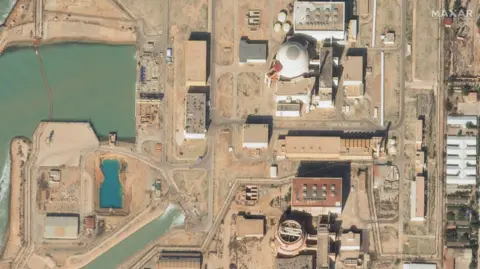
Reuters Satellite image from April 2025 shows various buildings from the Bushehr nuclear plantReuters
Satellite image of the Bushehr plant from before the start of the conflict

The area around Iran's Bushehr nuclear power plant has been attacked for the fourth time during the current war, Iranian officials say, as the US and Israel continue to target energy and other industrial sites.

One of the plant's employees was killed in the attack, Iran's Atomic Energy Organisation said. It blamed the US and Israel for the attack, but neither country has confirmed carrying it out.

Bushehr is Iran's only operational nuclear power plant and was completed with Russia's help.

The International Atomic Energy Agency - the UN's nuclear watchdog - said it had been informed of the strike and had expressed "deep concern".

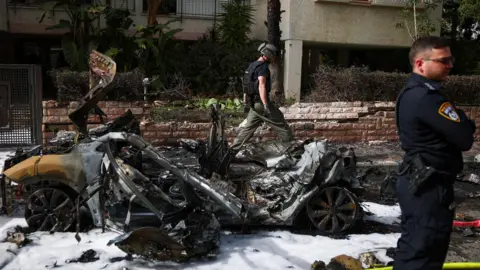
Reuters Uniformed member of Israeli security services stands in the right of the picture looking right. Beside him is the wreckage of a vehicle and behind it another man is walking.Reuters
Iran launched a barrage of missiles at central Israel on Saturday

"No increase in radiation levels was reported," it wrote on X.

It said nuclear power plant sites and nearby areas "must never be attacked" and called for "maximum military restraint" to avoid a nuclear accident.

On 27 March US President Donald Trump announced he was pausing attacks on energy plants for 10 days for Iran to "make a deal", and on Saturday he reiterated his threat on Truth Social that "all Hell will reign down on them" if they failed to do this, or to reopen the Strait of Hormuz, within 48 hours.

Meanwhile, Iran has continued to fire missiles at the Gulf States, Iraq and Israel, with falling debris from intercepted missiles causing damage.

And both Iranian and US forces are continuing to search for a missing American crew member after an F-15 fighter jet was shot down on Friday.

A pilot who was on board has been rescued, according to US media.

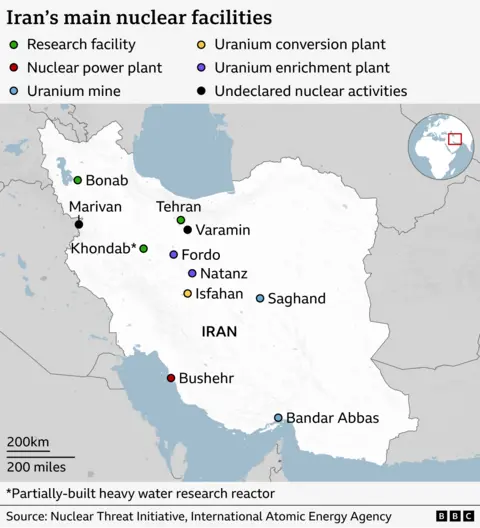
Map showing Iran's main nuclear sites

The Iranian statement on the Bushehr attack said the main parts of the plant did not appear to be damaged and its operation was "not affected".

Moscow has evacuated many of its staff from the plant. The head of Russia's state nuclear corporation, Rosatom, Alexei Likhachev, said on Saturday that the evacuation of 198 people remaining in the plant had started that morning.

Iran's nuclear programme has long been a point of contention, leading to extensive international sanctions. The US-Israeli war with Iran began on 28 February, two days after a third round of indirect US-Iran nuclear talks in Geneva.

Iran's Foreign Minister Abbas Araghchi warned against precipitating a major accident, which would "end life" in Gulf Arab states allied to the US.

He wrote on social media: "Remember the Western outrage about hostilities near Zaporizhzhia Nuclear Power Plant in Ukraine? Israel-U.S. have bombed our Bushehr plant four times now."

EPA A woman in a red top carrying a microphone walks through debris in front of a damaged building at the Shahid Beheshti University, in Tehran.EPA
Tehran's Shahid Beheshti University was attacked on Friday, Iran said

Meanwhile a local Iranian official said that the Mahshahr petrochemical complex and the Bandar Imam petrochemical company in south-western Iran had also been targeted. Five people were injured in the attacks.

And Iranian Science Minister Hossein Simai Sarraf said that more than 30 universities across Iran had been hit by strikes since war broke out.

Visiting Tehran's Shahid Beheshti University - which was attacked on Friday - he said the US and Israel belonged to the "stone age".

"A civilised country, a civilised government never targets institutions of knowledge, laboratories or research centres," he said.

Search for missing airman presents serious test for US

Getty Images A USAF F15 Eagle aircraft in the air, coming in to land at RAF Lakenheath, UK, in July 2025Getty Images
One of two crew members of the downed F15 Eagle is still missing

President Donald Trump had said Iran couldn't "do a thing" about American aircraft operating over its territory, insisting its air defences had been significantly weakened.

His Defence Secretary Pete Hegseth also said the US had achieved "air superiority" over Iran.

So, Friday's downing of a F-15 Eagle is a significant blow to Washington DC.

It suggests Iran is still able to defend its skies, even if at a limited capacity.

The stakes could rise further, though, depending on who the missing weapons systems officer is captured, or rescued, by.

The BBC understands President Trump's national security team spent much of Thursday in the West Wing briefing him on a search-and-rescue mission that also came under Iranian fire. US media report the crew were wounded but managed to escape Iranian airspace.

Publicly, the president has played down this entire incident and suggested it won't affect negotiations with Tehran to end the war that began with US and Israeli strikes on 28 February. But privately, this is likely to be of serious concern - particularly as Iran's Islamic Revolutionary Guard Corps is said to have launched its own search for the missing American, reportedly using troops and locals, and offering them a reward of around $66,000 (£50,000) to capture him alive.

A satellite map marking the boundaries of the Khuzestan province and the Kohgiluyeh and Boyer-Ahmad province along the border with Iraq. In the right hand corner is a smaller map of Iran which locates where the provinces are in relation to the country and also labels Tehran.

If the missing American is found by Iranian forces, the implications could be profound. At the very least, it would be a political embarrassment for Washington.

The US airman could be paraded as a propaganda tool, which would bring back grim reminders of the 1979 Iran hostage crisis, when American diplomats were held for 444 days.

Following a failed military rescue, the US secured their release by lifting some sanctions and unfreezing nearly $8bn worth of Iranian assets. It was an event that left deep political scars in the US.

Successive administrations also went to great lengths to secure the release of detained Americans, at times through controversial means.

For example, in 2014, President Barack Obama's administration exchanged five Taliban detainees, held at Guantanamo Bay detention camp, for Bowe Bergdahl, a US Army soldier captured by the Taliban in Afghanistan in 2009. Critics argued this swap incentivised future hostage-taking.

That history raises difficult questions for this White House.

The capture of a US service member could intensify pressure on President Trump to act decisively and escalate militarily in response, or, on the other hand, it could create an opening to pause operations and pursue backchannel efforts to secure the airman's return.

If the missing American is captured by the Iranians and used as a bargaining chip, it would be a serious test for Washington in this already volatile conflict.

For now, what's unfolding is a high-stakes race on the ground between the two adversaries to find him.

Lawmakers here in Washington have said prayers and expressed support. However, divisions are emerging. Republican Congresswoman Nancy Mace said it was "far past time we bring troops home", while Democratic Senator Tim Kaine urged Iran to treat any captured airman in line with international law.

There is growing concern about the risk to US service personnel in this conflict, particularly amid talk of a possible ground invasion. Across the political spectrum, there is little appetite for another so-called "forever war", or for further American casualties.

On Saturday, President Trump reiterated his deadline for Iran to agree to a deal and reopen the Strait of Hormuz by Monday, 6 April, or face "hell", including strikes on its energy infrastructure. His deadlines have shifted repeatedly, alongside claims that ongoing talks are "very good" and "productive" - talks Tehran denies have taken place.

With promises of further US strikes in the coming weeks, a steady US military build-up in the Gulf, and forewarnings by Trump of further US casualties, the signs increasingly point to an escalation that is already under way.

German males under 45 may need military approval for long stays abroad

EPA German army soldiers march at Hamburg Port terminal during the German Armed Forces and civilian authorities' military exercise 'Red Storm Bravo' in Hamburg, Germany, 25 September 2025EPA
Compulsory military service in Germany was ended in 2011

German men aged between 17 and 45 may need to seek approval for lengthy stays abroad, under changes introduced as part of a a new law which introduced voluntary military service.

The Military Service Modernisation Act, which came into force on 1 January, aims to boost defences following threats from Russian in the aftermath of its full-scale invasion of Ukraine.

In a statement sent to the BBC, a defence ministry spokesman confirmed that males aged 17 and older were required to obtain prior approval for stays abroad lasting longer than three months.

Under the current law, travel approvals must generally be granted and it remains unclear how the rule would be enforced if breached.

The requirement to obtain permission had gone largely unnoticed until it was reported by the Frankfurter Rundschau newspaper on Friday.

The defence ministry spokesman said that the regulation was intended to "ensure a reliable and meaningful military registration system", adding: "In the event of an emergency, we must know who may be staying abroad for an extended period."

The statement acknowledged that consequences for young people could be "far-reaching" and said that regulations on exemptions were being developed "in part to avoid unnecessary bureaucracy".

The legal basis for the requirement lies in Germany's 1956 Conscription Act, which has been amended several times, most recently last December.

Prior to the latest amendment, the obligation to report extended stays abroad applied only if Germany was in a state of national defence or mobilisation.

The defence ministry official said that a similar provision was "in effect during the Cold War and had no practical relevance".

The Military Service Modernisation Act sets out plans to expand the number of active personnel from around 180,000 to 260,000 by 2035.

In December, the German parliament voted to introduce voluntary military service, meaning that from January all 18-year-olds would be sent a questionnaire asking if they were interested in joining the armed forces.

From July 2027, they must also undergo a fitness assessment to determine whether they would be eligible for service should war break out.

Women may volunteer for military service but cannot be compelled to serve under Germany's constitution.

While the plan is for voluntary service, if the security situation worsens or if too few volunteers came forward, a form of compulsory military service could be considered.

When the law was approved by parliament, many young people joined protests against the change.

"We don't want to spend half a year of our lives locked up in barracks, being trained in drill and obedience and learning to kill," one organiser wrote on social media.

Like other European countries, Germany ran down its armed forces during the peacetime years of the 1990s. During the Cold War it had an army of almost half a million.

Compulsory military service in Germany was ended in 2011 under then-chancellor Angela Merkel.

Chancellor Friedrich Merz has pledged to rebuild the Bundeswehr into Europe's strongest conventional army in response to what his government describes as a more dangerous security environment in Europe.

The man who became one of India's greatest stage queens

Debarshi Sarkar for Parama Calcutta Chapal BhadhuriDebarshi Sarkar for Parama Calcutta
Chapal Bhaduri was the reigning "queen" of jatra, a travelling theatre tradition

In mid-20th Century Bengal in eastern India, some of the biggest female stars on stage were actually men.

Foremost among them was Chapal Bhaduri - better known as Chapal Rani - the reigning "queen" of jatra, a travelling theatre tradition that once drew vast, fervent crowds.

Male actors playing female roles were a familiar trope across global theatre, from Europe to Japan and China.

In Bengal, the form flourished in jatra - a rural, open-air spectacle of music, myth and melodrama that often rivalled cinema in reach, though not in rewards. Rooted in epic and devotional storytelling, it played out on all-sided stages, driven by heightened voice, gesture and costume.

In a new book, Chapal Rani: The Last Queen of Bengal, writer Sandip Roy traces Bhaduri's journey from stardom to obscurity - and, in doing so, captures a vanishing world where gender itself was an act.

Courtesy of Debojit Majumder and Sanjay Singha Chapal BhadhuriCourtesy of Debojit Majumder and Sanjay Singha
'Femininity was always a part of me,' Bhaduri says

For decades, female roles in jatra were played by men known as purush ranis, or male queens.

But even at its height, the form carried a certain stigma.

Colonial-era urban elites in Calcutta, influenced by European tastes, often dismissed jatra as rustic or unsophisticated. A 19th-Century Anglo-Indian journal derided the voices of boys playing women as "discordant", comparing them unfavourably to "howling jackals".

By the time Bhaduri entered the stage in the 1950s, that world was already shifting. Women had begun to take up acting roles. The space for female impersonators was narrowing. Still, Bhaduri stood out.

Born in 1939 in north Kolkata to stage actress Prabha Devi, Bhadhuri grew up around performers. He began acting at 16. "I had girlish manners, a girlish voice," he would later say.

On stage, he transformed. He played queens, courtesans, goddesses and brothel madams with a studied grace.

His costumes were carefully assembled and sometimes improvised. Early on, he used rags to shape the silhouette of his bosom. Later, he turned to sponge. His beauty routine included creams, small rituals in pursuit of an illusion he took seriously.

"Femininity was always a part of me," Bhaduri said.

Courtesy of Debojit Majumder and Sanjay Singha Chapal BhaduriCourtesy of Debojit Majumder and Sanjay Singha
Bhaduri recreating one of his iconic roles for a documentary film

His performances were not comic turns or caricatures. They were immersive, often deeply felt. In a theatrical culture where queer-coded characters were frequently played for ridicule, Bhaduri's work carried a different weight.

Roy writes, "In Indian performing art where playing gay or queer was in the form of characters who are ridiculed, Chapal morphed into a woman and played his roles with honesty and an act of bravery."

Off stage, Bhaduri's life was more complicated.

He did not openly identify as gay given the complication of social life in middle class Bengal in the times he lived in. Admiration was not lacking though. He received letters proffering affection and proposals for affairs and offers of relationships came from fans and lovers alike.

Bhaduri was picky and proud but emphatically said, "I refuse to apologise for love."

His one long relationship lasted over three decades, even as his partner married and had children.

Debarshi Sarkar for Parama Calcutta Chapal Rani in goddess costumeDebarshi Sarkar for Parama Calcutta
Bhaduri played queens, courtesans, goddesses and brothel madams with a studied grace

Bhaduri remained on the margins, present, but never fully acknowledged and in the end more of a housekeeper.

The decline of his career came not with a single event, but a series of shifts.

As women became more common on stage, audiences began to reject male actors in female roles. The very convention that had once sustained jatra began to unravel.

In the late 1960s and early 1970s, the "moustachioed queens of jatra" were pushed out, writes Roy.

Bhaduri experienced that rejection first hand. In one performance, playing an older female role, he was booed off stage with a clay cup thrown at him. The audience, now accustomed to female performers, found his presence unsettling.

Many of Bhaduri's contemporaries faded into poverty. One former jatra star became a seamstress. Another ran a tea stall and sold peanuts. Some took to manual labour. One died by suicide. Their stories, for the most part, went unrecorded.

Bhaduri survived through odd jobs like cleaning and dusting in libraries and, at one point, performing as the Sitala - a Hindu folk goddess worshipped as the protector against infectious diseases - on the streets, part of a folk tradition where performers offered blessings in exchange for food or small change.

Naveen Kishore Chapal BhaduriNaveen Kishore
Bhaduri's life has been documented in films, exhibitions and now a book

There were brief returns to visibility in the last decade. Bengali filmmaker Kaushik Ganguly cast Bhaduri in his films.

Earlier, in 1999, Naveen Kishore, theatre impresario and publisher of the Kolkata- based publishers Seagull Books, documented Bhaduri's life in a film and exhibition. A younger generation, encountering him through these works, began to see him differently.

For some, he became a queer elder; a figure who had lived a life outside easy definition.

As Roy writes, "The LGBTQ+ movement was young in India. Hungry for a queer history, it seemed to have seized on Chapal Bhaduri to be its fairy godmother."

Yet, Bhaduri himself resisted labels. He did not identify with terms like "third gender". Off stage, Roy notes, he dressed like any other Bengali man in kurta and pyjamas.

That resistance complicates contemporary readings of his life.

"He was a queer survivor," observes Roy.

Today, as conversations around gender and identity gain visibility worldwide, Bhaduri's story offers a different lens.

It points to histories of performance where gender was fluid in practice, if not always in name.

Debarshi Sarkar for Parama Calcutta Chapal BhaduriDebarshi Sarkar for Parama Calcutta
Bhaduri, 88, now lives in a retirement facility

Bhaduri, 88, now lives in a retirement facility, a few blocks away from his maternal home that is no longer welcoming of him, with nagging geriatric health issues and in the company of memories.

Revisiting Bhaduri's lives for a new generation also raises questions about memory.

Why are some performers remembered, and others forgotten? Why do certain art forms enter the archive, while others disappear with the people who sustained them?

By documenting Bhaduri's life, Roy attempts to answer, or at least confront, those questions.

Bhaduri acted for more than six decades. He was, by any measure, a star. And yet, for years, he lived on the edges of the very culture he had helped shape.

What we know so far about the US fighter jet shot down over Iran

Watch: What we know so far about the search for missing US airman in Iran

A search is underway for a missing crew member after a US F-15E fighter jet flying over southern Iran was shot down on Friday, US media has reported.

A pilot who was on board was reportedly rescued by US forces, but the search for the second crew member, a weapons system officer, is ongoing, reports say.

Seperately, a US A-10 Warthog aircraft that was part of the search and rescue mission for the downed jet was also shot and damaged, however its pilot was safely rescued, according to the BBC's US partner CBS News.

Iranian officials said the the warplane was shot down by its air defence system, according to state media. The US Central Command is yet to comment.

Where and when was the jet shot down?

Iranian state media first claimed on Friday that the country's forces shot down a US jet over its southern region.

White House Press Secretary Karoline Leavitt then said that US President Donald Trump had been briefed on the incident.

US Central Command has not confirmed the details surrounding the reported downing of the aircraft.

A search and rescue mission successfully recovered the pilot of the jet, but what happened to the jet's second crew member, a weapons systems officer, remains unknown, CBS News has reported.

The rescue operation included an A-10 Warthog plane that was hit over the Gulf, with its pilot ejecting before being rescued, according to CBS.

One helicopter carrying the rescued pilot from the F-15E jet was hit by small arms fire, injuring crew members on board - but it landed safely, CBS reports.

Iran's Islamic Revolutionary Guard Corps (IRGC) has claimed that nomadic tribes living in the country's mountains shot two Black Hawk helicopters that were part of the US rescue mission.

The BBC has requested comment from the US military regarding Iran's claim.

BBC Verify has confirmed a video from Friday showing what appears to be three armed individuals firing towards at least two Black Hawk helicopters.

Iran's top joint military command has credited new Iranian air defence systems with the downing of both US warplanes, according to Iran's state-affiliated IRNA news agency.

A map showing where US aircraft have been filmed in the search for a crew of a plane downed in Iran. It shows locations in the Khuzestan province and the Hohgiluyeh and Boyer-Ahmad province.

What do we know about the jet's purpose?

US Air Force via Getty Images Two F-15E Strike Eagle jets soaring through a cloudy skyUS Air Force via Getty Images
A file photo of two F-15E Strike Eagle jets

The F-15E is a dual-role fighter jet designed for both air-to-ground and air-to-air missions. In Iran, they are most likely to have been involved in Defensive Counter Air roles to shoot down Iranian drones and cruise missiles.

In its air-to-ground strike role, the jet is a weapons platform capable of dropping laser and GPS guided precision munitions, as well as other bombs.

The aircraft has two crew: the pilot in the front who flies the jet and a weapons systems officer in the back seat. The weapons officer, known as a "Wizzo", has four screens in front of them and is responsible for selecting targets and making sure the weapons are properly programmed for the appropriate attack.

This two-crew system allows the workload to be divided up, particularly in a congested air environment where the pilot is trying to evade threats.

We do not know what specifically brought down this US jet, but if it was taken down by the Iranians then the most likely reason is a surface-to-air missile (SAM).

Infographic about the US F‑15E Strike Eagle fighter jet with a photo of the aircraft in flight and text explaining its features: designed for long‑range missions to attack ground targets and fight its way out; has a two‑person crew of a pilot and a weapon systems officer; uses terrain‑following radar to fly safely at very low altitudes. Notes that F‑15s have been in service since 1974, with the F‑15E introduced in 1988. States an approximate cost of $100m (£75m). Source: the US Air Force.

What is happening with the rescue effort?

The rescue of crew members of a downed jet is one of the most complex and time-sensitive operations - known as combat search and rescue (CSAR) missions - that the US military and its allies prepare for.

The elite air force units behind CSAR missions include some of the most highly trained and specialised members of the military.

"It's the most dangerous military mission that I know of," James Jeffrey, a military strategist and top US diplomat for the Middle East, told the BBC.

"These are Air Force special operations people who are trained almost to the level of Delta Force and Navy SEAL Team Six, but they also have medical capabilities," Jeffrey said. "They will not give up until they can find a pilot if they think there's any chance."

CSAR missions are often conducted by helicopters, which fly low over enemy territory, alongside other military aircraft that conduct strikes and patrol the area.

A former commander of a pararescue jumpers squadron told CBS News that a rescue operation like the reported one in Iran would involve at least 24 pararescue jumpers scouring the area in Black Hawk helicopters.

They added the team would be prepared to jump from planes if needed, and once on the ground their priority would be to contact the missing crew member.

The crew of the downed jet are also highly trained for such situations.

"Their number one priority is to stay alive and to avoid capture," Jennifer Kavanagh, a senior fellow and the director of military analysis at think tank Defense Priorities, told the BBC.

"And so they're trained to - assuming that they're physically capable, and not so injured that they can't move - to try to get away from the ejection site as quickly as possible, and to conceal themselves so that they are safe."

They're also trained on survival techniques so that they can go without food or water, or find resources from the local terrain, for as long as possible, Kavanagh said.

Iran is offering rewards of about £50,000 ($66,100) to citizens who help capture the missing airman, state media has reported.

US says it has arrested relatives of late Iranian ​general Qasem ​Soleimani

Getty Images A file photo from 2016 showing the late Iranian Quds Force commander Qasem  Soleimani wearing military attire.Getty Images
Gen Qasem Soleimani was killed in 2020 in a US air strike

The niece and grand-niece of the deceased commander of the Iranian Revolutionary Guard Corps, Gen Qasem Soleimani, have been arrested, the State Department has said.

Hamideh Soleimani Afshar and her daughter's lawful US permanent resident status was revoked by Secretary of State Marco Rubio, a statement released on Saturday said.

In a post on social media, Rubio said the two women were in the custody of US Immigration and Customs Enforcement (ICE), pending removal from the country.

Gen Soleimani, who was Iran's most powerful military commander, was killed in 2020 in a US air strike in Iraq which was ordered by then US President Donald Trump.

The State Department said Soleimani Afsha is an "outspoken supporter of the totalitarian, terrorist regime in Iran".

The statement also added that Soleimani Afshar had promoted "Iranian regime propaganda" on her social media account.

Soleimani Afshar's husband has also been barred from the US, the statement said. The state department did not name Soleimani Afshar's daughter or husband.

Rubio also shared a statement on X, saying Soleimani Afshar and her daughter were "green card holders living lavishly in the United States".

Gen Qasem Soleimani spearheaded Iranian military operations in the Middle East as head of Iran's elite Quds Force.

The 62-year-old was killed at Baghdad airport, along with other Iran-backed militia figures.

President Trump spoke about Soleimani during his national address on Wednesday, referencing the strike he ordered on the commander.

"I killed Gen Qasem Soleimani in my first term. He was an evil genius, brilliant person, a horrible human being however, the father of the roadside bomb, and he lived just horrible, what he did," Trump said.

He added that Iran would have been "perhaps in a far better, stronger position" in the war if Soleimani was still alive.

World's oldest leader to get a deputy for first time in 43-year rule

AFP via Getty Images Paul Biya wearing a dark suit and tie sitting in a gold-backed chair. AFP via Getty Images
President Paul Biya, 93, has led Cameroon since November 1982

Cameroon's President Paul Biya, the world's oldest leader, is set to get a vice-president for the first time in his four-decade rule following controversial constitutional changes backed by parliament.

Should anything now happen to Biya, 93, the vice-president will automatically step in and complete the term before a new election is held.

The position was scrapped in 1972. In recent years the leader of the senate was expected to act as president but only until a fresh election was arranged.

The opposition said the amendments were hastily drafted and aimed at consolidating power. Even one senator from Biya's party described the process as "suspicious".

There has been frequent private speculation about the state of Biya's health, but openly discussing it is taboo and he has always defied rumours of his death by appearing in public after long absences.

A joint sitting of both houses of parliament on Saturday passed the bill changing the constitution, which now requires the president's signature, with 200 lawmakers voting in favour, 18 against and four abstaining.

Supporters said the bill would enhance government efficiency as it would elevate the level of representation whenever an official is required to stand in for the president. It would also lift the burden of succession from the Senate to enable it to focus on its legislative functions.

Prior to the amendment, the constitution designated the leader of the Senate to briefly take over in case the sitting president dies or is incapacitated. An election would then be held.

The approved bill now stipulates that the vice-president - appointed by the president rather than elected - will become the head of state to serve out the rest of the seven-year term.

The opposition said it was submitted without broad consultation.

The Social Democratic Front (SDF) party, which has six representatives in parliament, boycotted the vote. It had pushed for a revision in favour of the vice-president being jointly elected with the president, rather than appointed.

The party also sought a constitutional provision that reflects the linguistic split between English and French-speaking regions. The SDF wanted the nation's top two posts to be shared between Cameroon's two communities, which was the position before 1972.

"This constitutional reform could have been a moment of political courage, but it is nothing less than a missed historic opportunity," SDF chairman Joshua Osih said.

Meanwhile, another leading opposition voice, Maurice Kamto of the Cameroon Renaissance Movement said the amendment amounted to a "constitutional and institutional coup" by the ruling party.

In a statement, he argued that the incumbent was seeking a "republican monarchy," and announced his intention to launch an online campaign to denounce the move.

From 1961 to 1972, Cameroon operated under a federal system which respected the autonomy of the francophone and anglophone parts of the country.

During this period, the role of vice-president was in place. However, following a 1972 referendum which moved the country to a unitary state, the office was scrapped.

Biya's long time in power, which began in November 1982, has sparked a debate about his succession. Despite the move to reinstate the vice-president position, the future of Cameroon beyond Biya remains uncertain.

The president won an eighth term in power last October with 53.7% of the vote in an election that the opposition said was rigged.

With the constitutional changes passed, national discussions are now dominated by speculation over the identity of the new vice-president.

Getty Images/BBC A woman looking at her mobile phone and the graphic BBC News AfricaGetty Images/BBC

Go to BBCAfrica.com for more news from the African continent.

Follow us on Twitter @BBCAfrica, on Facebook at BBC Africa or on Instagram at bbcafrica

UN watchdog voices 'deep concern' as Iran reports new attacks on nuclear plant

Reuters Satellite image from April 2025 shows various buildings from the Bushehr nuclear plantReuters
Satellite image of the Bushehr plant from before the start of the conflict

The area around Iran's Bushehr nuclear power plant has been attacked for the fourth time during the current war, Iranian officials say, as the US and Israel continue to target energy and other industrial sites.

One of the plant's employees was killed in the attack, Iran's Atomic Energy Organisation said. It blamed the US and Israel for the attack, but neither country has confirmed carrying it out.

Bushehr is Iran's only operational nuclear power plant and was completed with Russia's help.

The International Atomic Energy Agency - the UN's nuclear watchdog - said it had been informed of the strike and had expressed "deep concern".

Reuters Uniformed member of Israeli security services stands in the right of the picture looking right. Beside him is the wreckage of a vehicle and behind it another man is walking.Reuters
Iran launched a barrage of missiles at central Israel on Saturday

"No increase in radiation levels was reported," it wrote on X.

It said nuclear power plant sites and nearby areas "must never be attacked" and called for "maximum military restraint" to avoid a nuclear accident.

On 27 March US President Donald Trump announced he was pausing attacks on energy plants for 10 days for Iran to "make a deal", and on Saturday he reiterated his threat on Truth Social that "all Hell will reign down on them" if they failed to do this, or to reopen the Strait of Hormuz, within 48 hours.

Meanwhile, Iran has continued to fire missiles at the Gulf States, Iraq and Israel, with falling debris from intercepted missiles causing damage.

And both Iranian and US forces are continuing to search for a missing American crew member after an F-15 fighter jet was shot down on Friday.

A pilot who was on board has been rescued, according to US media.

Map showing Iran's main nuclear sites

The Iranian statement on the Bushehr attack said the main parts of the plant did not appear to be damaged and its operation was "not affected".

Moscow has evacuated many of its staff from the plant. The head of Russia's state nuclear corporation, Rosatom, Alexei Likhachev, said on Saturday that the evacuation of 198 people remaining in the plant had started that morning.

Iran's nuclear programme has long been a point of contention, leading to extensive international sanctions. The US-Israeli war with Iran began on 28 February, two days after a third round of indirect US-Iran nuclear talks in Geneva.

Iran's Foreign Minister Abbas Araghchi warned against precipitating a major accident, which would "end life" in Gulf Arab states allied to the US.

He wrote on social media: "Remember the Western outrage about hostilities near Zaporizhzhia Nuclear Power Plant in Ukraine? Israel-U.S. have bombed our Bushehr plant four times now."

EPA A woman in a red top carrying a microphone walks through debris in front of a damaged building at the Shahid Beheshti University, in Tehran.EPA
Tehran's Shahid Beheshti University was attacked on Friday, Iran said

Meanwhile a local Iranian official said that the Mahshahr petrochemical complex and the Bandar Imam petrochemical company in south-western Iran had also been targeted. Five people were injured in the attacks.

And Iranian Science Minister Hossein Simai Sarraf said that more than 30 universities across Iran had been hit by strikes since war broke out.

Visiting Tehran's Shahid Beheshti University - which was attacked on Friday - he said the US and Israel belonged to the "stone age".

"A civilised country, a civilised government never targets institutions of knowledge, laboratories or research centres," he said.

US arrests relatives of deceased Iranian ​general Qasem ​Soleimani

Getty Images A file photo from 2016 showing the late Iranian Quds Force commander Qasem  Soleimani wearing military attire.Getty Images
Gen Qasem Soleimani was killed in 2020 in a US air strike

The niece and grand-niece of the deceased commander of the Iranian Revolutionary Guard Corps, Gen Qasem Soleimani, have been arrested, the State Department has said.

Hamideh Soleimani Afshar and her daughter's lawful US permanent resident status was revoked by Secretary of State Marco Rubio, a statement released on Saturday said.

In a post on social media, Rubio said the two women were in the custody of US Immigration and Customs Enforcement (ICE), pending removal from the country.

Gen Soleimani, who was Iran's most powerful military commander, was killed in 2020 in a US air strike in Iraq which was ordered by then US President Donald Trump.

The State Department said Soleimani Afsha is an "outspoken supporter of the totalitarian, terrorist regime in Iran".

The statement also added that Soleimani Afshar had promoted "Iranian regime propaganda" on her social media account.

Soleimani Afshar's husband has also been barred from the US, the statement said. The state department did not name Soleimani Afshar's daughter or husband.

Rubio also shared a statement on X, saying Soleimani Afshar and her daughter were "green card holders living lavishly in the United States".

Gen Qasem Soleimani spearheaded Iranian military operations in the Middle East as head of Iran's elite Quds Force.

The 62-year-old was killed at Baghdad airport, along with other Iran-backed militia figures.

President Trump spoke about Soleimani during his national address on Wednesday, referencing the strike he ordered on the commander.

"I killed Gen Qasem Soleimani in my first term. He was an evil genius, brilliant person, a horrible human being however, the father of the roadside bomb, and he lived just horrible, what he did," Trump said.

He added that Iran would have been "perhaps in a far better, stronger position" in the war if Soleimani was still alive.

Russian attack on Ukraine market kills five

Reuters Photo provided by the Ukrainian prosecutor's office showing badly damaged indoor market area - a corridor with kiosks on either side with broken windows, and metal and glass strewn across the floor.Reuters
The attack also caused serious damage to market kiosks

A Russian drone attack on a market in southern Ukraine has killed five people and injured 21, including a 14-year-old girl, the prosecutor general's office says.

The attack took place at 09:50 local time (06.50 GMT) in the town of Nikopol, just across the Dnipro river from land occupied by Russia since their full-scale invasion.

Pictures published by the regional prosecutor show smashed market kiosks strewn with metal, glass and food.

It comes after at least 15 civilians were killed in drone and missile strikes across the country on Friday.

A drone and missile attack by Ukraine on the southern Russian city of Taganrog overnight killed at least one person and seriously injured four, Russia said.

The regional governor Yuri Slyusar said the attack caused a fire to break out in the premises of a logistics company in the city.

A Ukrainian Defence Ministry official blamed the casualties on "Russian air defence operations".

Kyiv also reported hitting a factory in another city, Togliatti, that it said produced parts used by Russia's military.

Ukraine's Nikopol frequently comes under fire, and almost half of the town's 100,000 residents left long ago for safety.

But these drones hit in the middle of Saturday morning – in a busy spot – and the number of casualties is high.

Two men were injured in a second strike on the same location, the prosecutor said, adding that the attacks were being investigated as a war crime.

President Zelensky has offered Russia a truce for the Easter holidays. But so far, Moscow is ignoring that.

Russia launched almost 300 drones against Ukraine again overnight, the Ukrainian air force said, and casualties were also reported in the northeastern city of Kharkiv and the northern Sumy region.

Meanwhile Moscow said it had shot down 85 Ukrainian drones.

Major daytime attacks by Russia, which were once rare, have been increasing.

They are happening as efforts to end the war, led by the US, have stalled since US President Donald Trump and his team shifted focus to the conflict in the Middle East.

Fugitive mafia boss wanted for murder arrested in Amalfi Coast luxury villa

Italian Interior Ministry A close up mug shot of Roberto Mazzarella - just his face is visible and slightly out of focus Italian Interior Ministry

A mafia boss wanted for murder has been arrested at a luxury villa on the Amalfi Coast after more than a year on the run, Italian police have said.

In a statement, Italy's Carabinieri military police force said Roberto Mazzarella had escaped last January when he was supposed to have been arrested on murder charges.

The 48-year-old, arrested in the town of Vietri sul Mare, is considered a powerful figure within the Camorra organised crime group in Naples, and is listed as one of Italy's most dangerous fugitives.

Police said Mazzarella was with his wife and two children at the time of his arrest, and did not resist arrest.

The Mazzarella clan is famed for its involvement in counterfeiting in Naples, which has long been associated with banknote forgery.

A number of patrol boats were also involved in the arrest, positioning themselves off the coast.

Footage of the arrest was released by the Carabinieri, showing heavily armed officers entering the villa.

Police last month detained 16 people allegedly linked to the Mazzarella clan on charges of cyber fraud.

According to Italian news agency Ansa, he was living at the property under a false name.

Police also found three luxury watches, about €20,000, some false documents, and mobile phones at the resort.

Australians told to continue Easter travel plans despite fuel shortages

Reuters Signs displayed on empty fuel dispensers at a Shell petrol station say 'Sorry this hose is not in use' in Sydney, AustraliaReuters

The Australian government has encouraged people to go ahead with their Easter travel plans, despite fuel shortages at hundreds of petrol stations across the country.

"Easter is a very special time of faith and family," energy minister Chris Bowen said on Saturday, adding: "Go take a break - but get no more fuel than you need".

Fuel prices in Australia have soared since the start of the US-Israel war with Iran and the effective closure of the Strait of Hormuz, a key route for global oil and gas shipments.

Bowen said 312 of Australia's roughly 8,000 service stations had run out of diesel, mostly in rural areas where it takes longer to replenish stocks.

In televised remarks, he said the nation had 39 days worth of petrol, 29 days worth of diesel and 30 days worth of jet fuel in reserve.

Australia imports about 90% of its fuel from the Middle East and has been particularly exposed to the disruption caused by the conflict and Tehran's blockade of the Strait of Hormuz.

The near-total suspension of international shipping in the vital waterway - through which around 20% of the world's oil and natural gas flows - has prompted governments around the world to implement measures to conserve fuel.

In a rare televised address to the nation on Wednesday, Prime Minister Anthony Albanese warned that the economic shock from the Middle East conflict would be felt for months.

"Australia is not an active participant in this war. But all Australians are paying higher prices because of it," he said.

He encouraged Australians to limit unnecessary fuel use and switch to public transport where possible.

A small number of vessels have passed through the Strait of Hormuz in recent days.

It is unclear how the vessel secured safe passage and the ship's owners have not yet commented.

Shipping analysts said it was the first vessel owned by a major Western European firm to go through the strait since the conflict began on 28 February.

While Iran has said "non-hostile vessels" can use the waterway, the ongoing conflict - in which several ships have been attacked - has halted normal transport activity.

A Japanese vessel carrying natural gas also successfully crossed the waterway, its operator confirmed.

On Saturday, Turkey's transport minister said that a second Turkish-flagged vessel had crossed the strait - one of 15 that had been waiting to transit since hostilities erupted.

The first crossed, with Iranian permission, on 13 March.

"Two of these 15 made the crossing," Abdulkadir Uraloglu told CNN's Turk channel. "This is explained by our initiatives and also by the fact that they were using Iranian ports or carrying goods coming from or bound for Iran."

About a fifth of the world's oil and liquid natural gas is transported through the Strait of Hormuz from the Gulf countries.

While traffic is down about 95% compared to before the conflict, shipping through the narrow waterway has not stopped altogether.

About 100 vessels have been able to pass through the strait, according to data analysed by BBC Verify in late March.

Russia chose 'Easter escalation' over ceasefire, says Zelensky

EPA Six Ukrainian experts wearing helmets, and some of them wearing dark blue uniforms, work at the site of a drone attack in the Ukrainian city of Kharkiv. Behind them stands a wrecked car. EPA
Kharkiv's mayor described the day of strikes on the city as "one of the biggest"

Ukrainian President Volodymyr Zelensky has accused Moscow of choosing "Easter escalation" over an Easter ceasefire after Russia carried out another deadly large-scale drone and missile attack on Ukraine.

Six civilians were killed and 40 others injured as Russia launched hundreds of drones and missiles across the country.

Major daytime attacks, which were once rare, have been increasing.

It's happening as efforts to end the war, led by the US, have stalled since US President Donald Trump and his team shifted focus to the conflict in the Middle East.

Meanwhile, Zelensky agreed with a British intelligence assessment that the situation on the frontline in the east was the "most favourable" for Ukraine in 10 months, as the advance of Russian troops appears to have slowed.

But there has been no let-up in the air raids.

In the Zhytomyr region, west of Ukraine's capital, Kyiv, rescuers had to search for survivors beneath the rubble of their homes as a whole line of houses was destroyed.

In the Kyiv region, a drone was filmed careering towards a block of flats, then slamming into its side, starting a fire.

In Kharkiv, in north-eastern Ukraine, a woman was killed and other people were critically injured in a day of strikes the mayor called "one of the biggest" on the city so far.

Reuters View of the town of Korosten in Zhytomyr region shows several rows of houses damaged in a missile strikeReuters
Several houses were destroyed in the town of Korosten, in the Zhytomyr region

Zelensky described the barrage as Russia's response to his proposal of a temporary truce for the holidays: Orthodox Christians celebrate Easter next weekend both in Ukraine and in Russia.

"The Russians have only intensified their strikes, turning what should have been silence in the skies into an Easter escalation," he wrote on X.

In recent days, Ukraine has launched multiple deep strikes of its own, targeting energy facilities on the northern coast of Russia in particular. One port, in Ust-Luga, has been hit by drones multiple times, forcing Russia to suspend exports.

Zelensky said the offer of a holiday truce was still on the table if Moscow agreed, and that message had been passed on in a call to Trump's envoys, Steve Witkoff and Jared Kushner.

Plans for further in-person talks with Russia, mediated by the US, have now been postponed twice. Moscow says they are "on hold".

Zelensky said Trump's team were welcome to come to Kyiv, then shuttle to Moscow, to keep the peace process alive.

But there are doubts over whether Moscow is really looking for a deal as the global context has shifted in its favour.

For Ukraine, the potential scarcity of fuel and surge in prices caused by the war on Iran is a worry: its own frontline troops need large amounts of diesel for their tanks and vehicles.

Conversely, it's good news for Russia, which can make more money on energy exports to fund its weapons production and pay for soldiers.

There are also concerns here about a potential shortage of US defensive missiles to shoot down the ballistic missiles that Russia keeps firing at Ukraine, since so many US Patriot systems are now being used in the war with Iran.

"The longer the war in the Middle East continues, the greater the risk that we will receive less weaponry," Zelensky told journalists in Kyiv in recorded messages. "This is extremely difficult – perhaps one of the most challenging tasks."

He did describe the situation on the frontline as "stable", with small territorial gains in places and losses elsewhere, and suggested the threat of a major Russian breakthrough had receded.

Even so, Ukraine's focus appears to be on holding the line now, not major advances of its own.

Trump seeks $152m to reopen notorious Alcatraz prison

Getty Images A stock image of Alcatraz prison, showing a building sitting on an island Getty Images

US President Donald Trump is seeking $152m (£115m) to reopen the infamous Alcatraz prison as part of his proposed budget for the 2027 fiscal year.

Located near San Francisco's Golden Gate Bridge, the site, also known as The Rock, was once regarded as one of America's most notorious prisons, but has served as a tourist attraction in recent years.

The budget request is seeking money "to rebuild Alcatraz as a state-of-the-art secure prison facility", with funds covering the first year of costs.

The plan has been met with scepticism by a number of politicians in California, with questions raised about the final cost of the project and the challenges of running Alcatraz as an active prison.

The maximum security facility was closed in 1963. As a tourist site, it is currently run by the National Park Service.

Former speaker for the US House of Representatives, Nancy Pelosi, said the budget proposal from the Trump administration was "absurd on its face and should be rejected outright".

"Rebuilding Alcatraz into a modern prison is a stupid notion that would be nothing more than a waste of taxpayer dollars and an insult to the intelligence of the American people."

The request will need to be approved by the US Congress.

Previous criticism of Trump's plan has pointed to the lack of running water and sewage on the island, and the fact all supplies are required to be brought in by boat.

By the time Alcatraz closed, it was three times more expensive to operate than any other federal prison, according to the US Bureau of Prisons.

Pelosi also raised a concern echoed by other San Francisco politicians, that turning Alcatraz back into a functioning prison would mean the loss of an iconic landmark.

According to the National Park Service, the facility currently brings in $60m (£45m) in revenue as an attraction.

Money being sought to reopen the prison as an active facility is part of a $1.7bn (£1.3bn) investment into the Bureau of Prisons.

Getty Images A view of a cellblock on Alcatraz Island.Getty Images
There is no running water or sewage system on the island

Announcing his plans on Truth Social last year, Trump said was directing "the Bureau of Prisons, together with the Department of Justice, FBI, and Homeland Security, to reopen a substantially enlarged and rebuilt ALCATRAZ".

The prison would "house America's most ruthless and violent offenders".

Alcatraz was originally a naval defence fort, before being converted first to a military prison and then to a federal prison in the 1930s after being taken over by the Department of Justice.

Some of its most notable inmates have included notorious gangsters Al Capone, Mickey Cohen and George "Machine Gun" Kelly.

Alcatraz has served as a location in a number of films, notably 1962's Birdman of Alcatraz, starring Burt Lancaster, 1979's Escape from Alcatraz, starring Clint Eastwood, and 1996 film The Rock, starring Sean Connery and Nicolas Cage.

Football rally in Peru leaves one dead and dozens injured

Getty Images Crowds of people gathering near an ambulance at one of the entrances of the Alejandro Villanueva Stadium in Lima, Peru. It's night time and some of the fans are hugging, others looked shocked.Getty Images
Fans and an ambulance outside Alejandro Villanueva Stadium in Lima, Peru.

An incident ahead of a local football derby in the Peruvian capital Lima has left one fan dead and dozens injured.

Officials are investigating the cause. Initial reports suggested parts of the stadium's wall and structure had collapsed, which has since been disputed.

Confirming the death, Peruvian Health Minister Juan Carlos Velasco Guerrero told media at a Lima hospital that 47 people were hurt - three of which are in a critical condition.

Hundreds had gathered around Alejandro Villanueva Stadium wearing football shirts and waving flags of the home team, Alianza Lima, ahead of a match against local rivals Universitario de Deportes.

Fire Chief Marcos Pajuelo told reporters that the structure of the southern stands appeared to be in good condition.

"There are no collapsed walls or sections fallen into the pit," Pajuelo said.

Saturday night's match will still go ahead as planned, the football league said.

Earlier, the interior ministry published on X that 40 firefighters responded to an emergency at the stadium "involving people trapped in a structure".

However, Alianza Lima later published a statement, also on X, that said: "According to the preliminary information available, the incident is not related to the collapse of walls or structural facilities of the sports complex".

The Peruvian Professional Football League's said in a statement that authorities are investigating the circumstances of the rally and highlighted its "commitment to the safety and well-being of all attendees at sporting events."

Senegal bans ministers from foreign travel as oil price rise bites

AFP via Getty Images The back of a woman wearing a yellow T-shirt with a Shell logo on the back and a red cap stands by a car as she fills it up with petrol.AFP via Getty Images
The global increase in the price of fuel is putting pressure on the finances of the Senegalese government

Government ministers in Senegal have been banned from all non-essential foreign travel following the rise in the price of oil resulting from the conflict in Iran, the prime minister has announced.

Speaking at a youth rally on Friday, Ousmane Sonko said that the current cost of a barrel of oil was approaching double what had been budgeted for.

Sonko has postponed his own trips to Niger and Spain as part of the restrictions. He said that the mines minister would announce further measures to curb government spending in the coming week.

Senegal's move is the latest response from the continent to the oil price rise, which has seen countries reducing fuel levies and rationing electricity.

In his speech to young people, the prime minister said he did not want to "frighten" his audience or put pressure on them. Instead, he wanted to give them a "sense of this world, which is a difficult world", but added that though things were hard the Senegalese were resilient.

Despite a fledgling oil and gas industry, Senegal relies heavily on importing fuel.

Last year, the International Monetary Fund described the economy as "robust" with a growth rate of almost 8% and low inflation.

But its public debt – standing at more than 130% of the total annual size of the economy - is high. Sonko, installed as prime minister two years ago, blamed the previous government for saddling his administration with the debt, which he said had made the current situation of dealing with the price of oil even more difficult.

Elsewhere on the continent, this week South Africa's government responded to the rising oil price by reducing the tax it charges on petrol in an effort to limit the increase of the cost of fuel at the pumps.

Fuel shortages in Ethiopia have forced some government institutions to send employees on annual leave. South Sudan has started to ration electricity in its capital, Juba, while Zimbabwe is increasing the ethanol content in its petrol.

The effective closure of the Strait of Hormuz in the Persian Gulf as a result of the US-Israeli war on Iran has also led to a restriction of the supply of fertiliser to the rest of the world. An estimated 30% of this essential farming input goes through the Gulf.

Humanitarian organisation the International Rescue Committee warned on Wednesday that this was a "food security timebomb", particularly for East Africa which relies on fertiliser imports from the Middle East.

Getty Images/BBC A woman looking at her mobile phone and the graphic BBC News AfricaGetty Images/BBC

Go to BBCAfrica.com for more news from the African continent.

Follow us on Twitter @BBCAfrica, on Facebook at BBC Africa or on Instagram at bbcafrica

Italy's Uffizi Galleries targeted in cyber-attack but deny security breach

Wirestock  A stunning view of the historic Uffizi Palace in Florence, ItalyWirestock
The Uffizi Galleries are among the most visited in the world

The Uffizi Galleries in Florence has confirmed they were subject to a cyber-attack - but denied that the security systems protecting its famous works had been compromised.

They stressed that nothing had been either damaged or stolen, after hackers were reported to have infiltrated the museum's IT systems and accessed sensitive security data.

Italian newspaper Corriere della Sera reported that hackers had infiltrated the museums' IT systems, allegedly extracting access codes, internal maps and the locations of CCTV cameras and alarms, before issuing a ransom demand.

But the Uffizi Galleries contested this account, saying its security systems were inaccessible from the outside.

The attackers appeared to have moved through interconnected systems, computers and phones, gradually piecing together a detailed picture of the museum's operations, Corriere reported.

A ransom demand was later sent to museum director Simone Verde's personal phone, the newspaper said, with a threat to sell the data on the dark web.

The Uffizi is home to some of Italy's most celebrated artworks, such as Botticelli's Birth of Venus and Primavera.

Corriere said the cyber-attack occurred between late January and early February, affecting not only the Uffizi but also its separate sites at Palazzo Pitti and the Boboli Gardens.

Ever since the Louvre museum in Paris was raided in broad daylight in October and priceless historic treasures stolen, with the masked gang seemingly able to take advantage of its weak and aging CCTV system, all major museums have had to reassess their security.

The Uffizi said work that was already under way had been accelerated "both before and after the cyber-attack".

Its situation was "nothing like the Louvre", it stressed, with analogue cameras replaced with digital ones, following recommendations made by the police in 2024.

Responding to claims that the hackers had found out the location of surveillance cameras and sensors, it said there was "no evidence whatsoever that the hackers possessed any maps of the security systems".

Anyone walking through the museum could see were the cameras were, as was the case with any public space, it said, so there was little surprise that their location had been found out.

"No passwords were stolen - none whatsoever - because the security systems are entirely internal and closed-circuit," it said, adding that employees' phones had also not been compromised by the hack.

Iguana Press/Getty Image Palazzo Pitti Museum external view at Palazzo Pitti on October 29, 2019 in Florence, ItalyIguana Press/Getty Image
The Palazzo Pitti ws the summer residence of the Medici family

Two floors of the Palazzo Pitti normally house the "Medici Treasure", so-called because the powerful Renaissance banking family spent their summers there, and Corriere claimed the hack had led to parts of the palace being closed since 3 February and valuable items being temporarily transferred to a vault of the Bank of Italy for safekeeping.

The museum did not deny that the treasures had been taken to a bank vault but insisted the move was part of planned renovation work.

Some doors and emergency exits at the palace had been sealed with bricks and mortar, and staff instructed not to speak publicly about the incident, according to Corriere.

However, the Uffizi attributed the bricked-up doors in part to fire-safety measures.

For decades, there had been no fire safety certification, it pointed out, and only two days ago it had submitted a safety notice to the fire brigade.

Other doors were sealed, it added, "to prevent excessive permeability of the historic building's spaces - structures dating back to the 1500s - considering their changed functions and the evolving international context".

It also reacted to claims that the intruders had stolen the Uffizi's entire digital photographic archive - a decades-long record of artworks and documents - insisting that its photographic server was intact because a back-up was in place.

Although it appeared to acknowledge the server had been taken down, it said that was necessary for the backup to be restored. That was now complete and no data had been lost, it said.

Despite the controversy, the Uffizi, Italy's second-most visited museum after the Vatican, generating around €60m (£52m; $69m) in annual revenue, remains open to visitors, with ticketing and public areas largely unaffected.

After 16 years in power, could Viktor Orban finally be unseated?

BBC Peter Magyar (left) and Vikor Orban (right) in black and white photographs against a red backdrop with a green dotBBC

"All they stand for is anger, hatred, and destruction," roared a hoarse Viktor Orban. The Hungarian prime minister was speaking at a mass election rally in Györ in western Hungary on 27 March, referring to opposition protesters who chanted "Filthy Fidesz" during his speech. For just a moment, his carefully cultivated image as the voice of calm navigating his country through stormy seas was shattered. His bad-tempered outburst showed a different side of a man used to cracking jokes and charming even his critics.

Most opinion polls put the opposition Tisza party and its leader Peter Magyar far ahead of Orban's Fidesz - the latest by 58% to Orban's 35%. And he is doing everything he can to close the gap. After 16 years of virtually unchallenged rule, Orban has been forced to take to the road again. In the past three elections, he gave few rallies. Now Europe's longest-serving leader is trying to mobilise his supporters and reach the undecided. He has just a week left to rescue his government, and the international populist movement he embodies, from a crushing defeat.

In power since 2010, Orban has had the support of both US President Donald Trump and Russian President Vladimir Putin. He has long been a thorn in the side of the EU - and one of the few EU leaders not supportive on Ukraine. For Europe's growing band of nationalist parties, in power or on the brink of it, he is the model. The 12 April Hungarian parliamentary election is being watched closely all over the world.

NurPhoto via Getty Images Orban points while standing in front of a microphone. He wears a dark blue casual jacket NurPhoto via Getty Images
Orban has a rough, rural style

"We can notice a big change in public perception," said Endre Hann of the Median agency, a public-opinion research firm. In January, 44% of those asked said they thought Fidesz would win, compared with 37% for Tisza. By March, 47% believed Tisza would win, while 35% believed Fidesz would. "This reflects a huge change of trust. People believe that it can be changed," he says.

An intriguing dynamic is playing out in this election - the same voter anger against those seen as "corrupt ruling elites" across Europe, is now working against him. In Hungary, it is now Orban and his Fidesz party who are seen by many, especially the young, as the "corrupt ruling elite".

Getty Images Donald Trump wears a dark blue suit and a yellow tie as he points at Viktor Orban, who is smiling. Orban is wearing a dark blue suit and a red tieGetty Images
Trump has lent Orban his support over the years

The Orban government has been repeatedly accused of draining state coffers and giving state tenders for projects to companies owned by close associates. The government explains this concentration of wealth as an attempt to put wealth in national, instead of foreign hands.

The projects included bridges, football stadiums and motorways. His son-in-law, Istvan Tiborcz, owns a string of prominent hotels. His childhood friend Lörinc Meszaros, a former gas fitter, has become the wealthiest man in the country. Orban refuses to answer questions about the personal wealth of his friends and family. All deny wrongdoing.

Can Orban save himself by blaming Ukraine - and its EU backers - for his country's woes? And can the smooth-talking lawyer who hopes to unseat him convince Hungarians, particularly those in rural areas which make up the Fidesz heartlands, that he can deliver the "more humane, better functioning country" that he promises?

Under pressure

Each day brings a new indication that Orban is in trouble, from alleged voter-intimidation schemes to a dramatic Russian proposal to stage a fake assassination attempt on Orban.

But Fidesz claims the sense that it's in trouble has been cooked up by the opposition. "All these scandals are just the usual suspects trying to build a narrative," says Zoltan Kiszelly, a political analyst from the government think tank Szazadveg. "When the opposition lose the election, this gives them an excuse to allege 'fraud'."

Political analyst Gabor Török - one of the few analysts in this extremely polarised society respected by both sides - wrote recently on his blog: "This is not the 'calm strength' or the 'strategic calm,' image, nor the one carefully cultivated for years and displayed on 'Prime Minister of Hungary' posters.

"If the remaining two weeks unfold like this, it does not bode well for the government side."

Global referendum

The shockwaves of an Orban defeat would reverberate far beyond Hungary's borders.

"Budapest is the headquarters of illiberal democracy in the world," argues Michael Ignatieff, former rector of the Central European University, which was forced out of the Hungarian capital in 2019. "This is not just an election. This is a referendum on that whole model of authoritarian rule that Orban represents."

AFP via Getty Images Viktor Orban (2nd R) is flanked by Deputy Prime Minister of Italy Matteo Salvini (R), former leader of the French far-right National Rally party Marine Le Pen (2nd L), former Deputy Prime Minister of Latvia Ainars Slesers (3rd L) and Leader of the Party for Freedom Dutch Geert Wilders (L) AFP via Getty Images
Orban is backed by other right-wing politicians in Europe

He's referring to the network of think tanks, fellowships, and gatherings of right-wing influencers who zig-zag across the Atlantic to support one another. On consecutive days last month, the American Conservative Political Action Conference (CPAC), a platform for people across the political right to discuss ideas, and Patriots for Europe, the right-wing European Parliament group, held major events in Budapest.

The fact that no leading US politician attended the Hungarian CPAC event this year raised eyebrows within Fidesz, but the Republicans are not leaving Orban in the lurch. US secretary of state Marco Rubio was here in February, and vice president JD Vance is expected in Budapest a few days before the vote.

AFP via Getty Images Orban stands on a stage in front of the CPAC logo. He is wearing a dark blue suit and a light blue tie AFP via Getty Images
Orban transformed Hungary into an international destination for the political right

A victory for Fidesz in this election would add momentum to the chances of far-right parties in France, Germany, Poland, Spain and Portugal. Defeat for Fidesz would take some of the wind out of their sails. "While the rest of Europe is being sucked into the radical nationalist tunnel, we can show the way out," a senior Tisza official told me.

Getting the vote out

Despite a poor showing in the polls, Orban's allies deny that there is panic in the Fidesz camp.

According to Zoltan Kiszelly, the crucial factor will be whether Fidesz can persuade their supporters to get out on polling day.

"We are very optimistic. Nobody believes in the opinion polls, neither our own, nor the opposition ones," he says.

"The majority of the voters are for Fidesz. Of pensioners, of women, of the Gypsies [Roma], of the poor, of the blue collar workers, of the rural people. The question is, will they cast their vote?"

To make sure they do, Fidesz has worked hard to update its database of supporters. Around 4.5 million of the 8.2 million-strong Hungarian electorate live in small towns and villages - the Fidesz heartlands. Since 2002, Fidesz has built a strong system of local patronage in the villages - the mayor decides who receives work, and who gets firewood in winter.

According to an investigative documentary released last week, mayors have been told how many votes each village needs to produce for Fidesz. Those interviewed in the film claim the incentives include cash payments of €120 (£104) per vote, food coupons, prescription medicines and even illegal drugs in exchange for voting for Fidesz. Those who refuse say they are denied the chance to participate in public works schemes, often the only local work available.

Cars and minibuses are organised on election day. "Companions" stand by to accompany voters, who feign illiteracy or illness, into the voting booth, to make sure they vote for Fidesz and get their money, people interviewed in the film claim. There has been no official government reaction to these allegations. One minister told the BBC that any wrongdoing should be dealt with by the appropriate authorities.

Rival parties at previous elections offered potatoes and even small sums for votes, but nothing on the scale of this election, we were told by people who have been involved in elections over the decades.

"Everyone here votes Fidesz," said Nikki, 32, in Tiszabö, a village of 2,000 inhabitants, with a large Roma majority, in the northern Great Plain region of Hungary.

She praises the Fidesz mayor for rebuilding the roads, the kindergarten, and the sports centre. She claims votes won't need to be bought on 12 April, as Fidesz will win "because of the war".

The Russian connection

Orban has told voters that this election is a simple choice between peace and war.

According to Fidesz, only Orban can prevent the "warmongers" in Brussels from dragging the EU, and with it Hungary, into the war in Ukraine against Russia.

Peter Magyar, leader of the opposition Tisza party, is painted as a puppet of Brussels. The Fidesz message is that a vote for the opposition would mean that Hungary, as a Nato member, will be forced to send Hungarian troops either in a future Nato peacekeeping operation, or a full-scale war with Russia, and young Hungarian men will die again on the eastern front. That's a message designed to resonate deeply in a country on the losing side of both World Wars. Since 2022, Orban has argued that Russia cannot be defeated, and that instead of supporting Ukraine militarily and economically, the West should pressure Kyiv to seek peace with Moscow - on Russia's terms, if needed.

AFP via Getty Images Viktor Orban and Vladimir Putin shake hands in front of the Hungarian flag. They both wear dark suitsAFP via Getty Images
Orban and Putin have long had a good relationship

"The Fidesz anti-Ukraine, pro-Russian message is flagging," veteran pollster Endre Hann of the Median agency told me. His latest figures suggest a growing 52% of those asked agreed that "Russia committed a serious and unprovoked act of aggression against Ukraine" with its 2022 full-scale invasion. Just 33% agreed with the Fidesz narrative that "Russia acted legally, to defend its interests and security."

Orban is the most pro-Russian leader in the EU. His government has refused to follow German, Czech and Polish efforts to wean themselves off Russian oil. In this campaign, Fidesz has painted Ukraine and its leader, Volodymyr Zelensky, as the enemy. Giant billboards show a grinning Ukrainian president with the slogan: "Don't let Zelensky have the last laugh!"

NurPhoto via Getty Images Two posters are displayed on a street: the top one shows Zelensky, Magyar and Ursula von der Leyed, and the bottom one shows Zelensky smiling NurPhoto via Getty Images
Fidesz has leant into bashing the EU and the Ukrainian president

Since 27 January, no crude oil from Russia has reached Hungary via Ukraine through the Druzhba pipeline, which translates as the "Friendship pipeline". A major hub and pumping station at Brody in western Ukraine was damaged that day in a Russian attack. Hungarian refineries depend on the pipeline, and Orban accuses Zelensky of deliberately failing to restore the flow of oil in order to harm his election chances.

A map showing two strands of the Druzhba oil pipeline from Russia into Europe in red. One strand goes through Hungary into Ukraine before connecting to another strand going into Russia.

The "peace or war" message, argues Zoltan Kiszelly, the Fidesz analyst, is more sophisticated than it sounds.

"The government aims to connect the current situation, the threat of no oil, with practical issues like the cap on utility bills," he explains. Since 2013, all household and electricity costs have been capped by the government, resulting in the lowest prices for consumers in the EU. That is only possible, the government argues, thanks to cheap oil and gas from Russia.

An unlikely challenger

Magyar, 45, is a former Fidesz insider who joined the party as an enthusiastic student, married the former Fidesz justice minister, and worked as a Hungarian diplomat in Brussels. In February 2024 he suddenly quit the party and all his posts in state companies, and gave an interview which garnered two million views within days, accusing the government of cowardice and corruption. He then founded the Tisza party, named after a tributary of the Danube.

A slight figure in neat shirts and jackets, Magyar seemed too slick and urbane to reach the hearts of the rural electorate, but has proven himself a strong challenger. Orban, 62, is a village boy who speaks village Hungarian, Magyar is a Budapest lawyer by training. Conscious that his status as a member of the metropolitan elite may make him less likely to appeal to rural voters, Magyar has toured the countryside indefatigably for the past two years, drawing large crowds. Unlike Orban, who waxes lyrical on global politics, Magyar focusses on domestic issues such as healthcare, education, transport and rural depopulation in his speeches.

NurPhoto via Getty Images Peter Magyar gesticulates from behind a podium. He wears a high-necked blue suit jacket with brocading on the front, and has a rosette pinned to his chestNurPhoto via Getty Images
Peter Magyar cuts a distinctly metropolitan figure next to Orban

His relationship with Russia is also different. He has pledged that if he wins, "we will study and where needed change the existing contracts with Russia, [and] diversify our energy resources in every possible way". He has also promised to "restore Hungary's seat at the EU and Nato tables."

Magyar says he learnt quickly on his six nationwide tours. He quickly abandoned his notes after being criticised for sounding stilted, and started speaking "from the heart", he told me in an interview earlier this year. "After the first days, I read the criticism and learnt… to go closer to the people, to let them ask questions and reply openly and honestly, which is rare in Hungarian politics."

He has gone from a rank outsider to the man who is widely expected to unseat Orban. While Orban usually visits one city a day on the campaign trail, Magyar visits from three to six, in an effort to reach all 106 individual constituencies by voting day.

He is no stranger to controversy himself. After becoming a politician, his ex-wife depicted him as an unstable figure, prone to bursts of anger and domestic violence. Anti-Tisza protesters once held banners featuring a shoe, which he allegedly once threw at her. More recent attempts by Fidesz to discredit him include convincing a former girlfriend to secretly tape his conversations, and taking him to a party where cocaine was being used. Magyar denies any domestic abuse, and speaks fondly of his ex-wife in public. He denies ever taking drugs, and last week published the negative results of a drug test. He challenges certain Fidesz politicians to do the same.

A poll published by the 21 Research Agency, a pro-democracy think tank, earlier this week showed the Tisza candidate pulling ahead in most of its 20 swing districts. Magyar has spoken of a "tipping point" in the countryside, and if this poll proves right, he has already reached it.

Orban and Fidesz have a media empire to amplify their message, but Magyar instead relies heavily on broadcasting each rally live on Facebook. While previous opposition leaders mustered crowds of a few dozen if they ventured out of Budapest, Magyar attracts hundreds in villages, and thousands or tens of thousands in provincial urban Fidesz strongholds.

A top Fidesz official grudgingly admitted that Magyar has "a brutal energy", which his own camp often lacks. Magyar's promise to build "a more humane, efficient country" resonates with all those fed up with the governing party, especially the young.

Getty Images The table is set for a formal dinner in the White House, with JD Vance, Orban, Trump and Marco Rubio sitting down. They all wear suits. Getty Images
Vance, Trump and Rubio have all gone out to bat for Orban - but will it help this election?

What would a Fidesz victory or defeat mean for Hungary? "What we have now is a state that has been fully captured by a single party," Andras Baka, former president of Hungary's supreme court, told me. If Fidesz wins "we have an ever more rigid autocracy."

If Tisza wins, there will be a big laundry list to tackle, including restoring the independence of the courts, the state prosecution service, the state audit office, the public media, and the intelligence services from the government of the day. Whether a Tisza government can do that, and how quickly, would depend on the margin of victory.

Top image credit: NurPhoto/AFP via Getty Images

Thin, lobster red banner with white text saying ‘InDepth newsletter’. To the right are black and white portrait images of Emma Barnett and John Simpson. Emma has dark-rimmed glasses, long fair hair and a striped shirt. John has short white hair with a white shirt and dark blazer. They are set on an oatmeal, curved background with a green overlapping circle.

BBC InDepth is the home on the website and app for the best analysis, with fresh perspectives that challenge assumptions and deep reporting on the biggest issues of the day. Emma Barnett and John Simpson bring their pick of the most thought-provoking deep reads and analysis, every Saturday. Sign up for the newsletter here

Italy's Uffizi Galleries targeted in cyber-attack but denies security breach

Wirestock  A stunning view of the historic Uffizi Palace in Florence, ItalyWirestock
The Uffizi Galleries are among the most visited in the world

The Uffizi Galleries in Florence has confirmed they were subject to a cyber-attack - but denied that the security systems protecting its famous works had been compromised.

They stressed that nothing had been either damaged or stolen, after hackers were reported to have infiltrated the museum's IT systems and accessed sensitive security data.

Italian newspaper Corriere della Sera reported that hackers had infiltrated the museums' IT systems, allegedly extracting access codes, internal maps and the locations of CCTV cameras and alarms, before issuing a ransom demand.

But the Uffizi Galleries contested this account, saying its security systems were inaccessible from the outside.

The attackers appeared to have moved through interconnected systems, computers and phones, gradually piecing together a detailed picture of the museum's operations, Corriere reported.

A ransom demand was later sent to museum director Simone Verde's personal phone, the newspaper said, with a threat to sell the data on the dark web.

The Uffizi is home to some of Italy's most celebrated artworks, such as Botticelli's Birth of Venus and Primavera.

Corriere said the cyber-attack occurred between late January and early February, affecting not only the Uffizi but also its separate sites at Palazzo Pitti and the Boboli Gardens.

Ever since the Louvre museum in Paris was raided in broad daylight in October and priceless historic treasures stolen, with the masked gang seemingly able to take advantage of its weak and aging CCTV system, all major museums have had to reassess their security.

The Uffizi said work that was already under way had been accelerated "both before and after the cyber-attack".

Its situation was "nothing like the Louvre", it stressed, with analogue cameras replaced with digital ones, following recommendations made by the police in 2024.

Responding to claims that the hackers had found out the location of surveillance cameras and sensors, it said there was "no evidence whatsoever that the hackers possessed any maps of the security systems".

Anyone walking through the museum could see were the cameras were, as was the case with any public space, it said, so there was little surprise that their location had been found out.

"No passwords were stolen - none whatsoever - because the security systems are entirely internal and closed-circuit," it said, adding that employees' phones had also not been compromised by the hack.

Iguana Press/Getty Image Palazzo Pitti Museum external view at Palazzo Pitti on October 29, 2019 in Florence, ItalyIguana Press/Getty Image
The Palazzo Pitti ws the summer residence of the Medici family

Two floors of the Palazzo Pitti normally house the "Medici Treasure", so-called because the powerful Renaissance banking family spent their summers there, and Corriere claimed the hack had led to parts of the palace being closed since 3 February and valuable items being temporarily transferred to a vault of the Bank of Italy for safekeeping.

The museum did not deny that the treasures had been taken to a bank vault but insisted the move was part of planned renovation work.

Some doors and emergency exits at the palace had been sealed with bricks and mortar, and staff instructed not to speak publicly about the incident, according to Corriere.

However, the Uffizi attributed the bricked-up doors in part to fire-safety measures.

For decades, there had been no fire safety certification, it pointed out, and only two days ago it had submitted a safety notice to the fire brigade.

Other doors were sealed, it added, "to prevent excessive permeability of the historic building's spaces - structures dating back to the 1500s - considering their changed functions and the evolving international context".

It also reacted to claims that the intruders had stolen the Uffizi's entire digital photographic archive - a decades-long record of artworks and documents - insisting that its photographic server was intact because a back-up was in place.

Although it appeared to acknowledge the server had been taken down, it said that was necessary for the backup to be restored. That was now complete and no data had been lost, it said.

Despite the controversy, the Uffizi, Italy's second-most visited museum after the Vatican, generating around €60m (£52m; $69m) in annual revenue, remains open to visitors, with ticketing and public areas largely unaffected.

Artemis II crew now halfway to Moon as they take 'spectacular' image of Earth

Nasa/Reid Wiseman A picture of the Earth from space, which centres the planet against the dark background of space. It's a round blue planet. Clouds can be seen and a thin green aurora at the top.Nasa/Reid Wiseman
The image, titled Hello, World, shows the Earth and Venus as seen from the Orion capsule

Nasa has shared the first high-resolution images of the Earth taken by the Artemis II crew as they head on their trip around the Moon.

The mission's commander, Reid Wiseman, took the "spectacular" images, Nasa says, after the crew completed a final engine burn that set them on a trajectory towards our closest celestial neighbour.

The first image, called Hello, World, shows the vast expanse of blue that is the Atlantic Ocean, framed by a thin glow of the atmosphere as the Earth eclipses the Sun and green auroras at either pole.

The Earth appears to us as upside down, with the western Sahara and Iberian peninsula visible to the left and the eastern portion of South America to the right.

Nasa identified the bright planet to the bottom right as Venus.

Nasa/Reid Wiseman An image from inside of the Orion capsule, which shows a small window and part of the Earth outsideNasa/Reid Wiseman
Wiseman also took this picture, titled Artemis II Looking Back at Earth, from one of the Orion spacecraft's four main windows

The images were taken after the crew successfully completed a trans-lunar injection burn in the early hours of Friday.

The burn took the Orion spacecraft out of Earth's orbit as the four astronauts aboard aim to travel the more than 200,000 miles to the Moon.

Artemis II is now on a looping path that will carry the crew around the far side of the Moon and back again. It is the first time since 1972 that humans have travelled outside of the Earth's orbit.

The crew should pass around the far side of the Moon on 6 April and return to Earth on 10 April.

NASA Half of the Earth NASA
Another image taken by the crew shows the divide between night and day, known as the terminator, cutting across Earth

After the burn was completed, the crew were "glued to the windows" taking pictures, mission specialist Jeremy Hansen told mission control in Houston.

"We are getting a beautiful view of the dark side of the Earth, lit by the Moon," he said.

Wiseman later called back down to mission control in Houston to ask how to clean the windows, as the astronauts' enthusiasm to see into space had left them dirty.

Another view captured by Wiseman shows the Earth divided by night and day. That frontier between light and darkness is known as the terminator.

❌