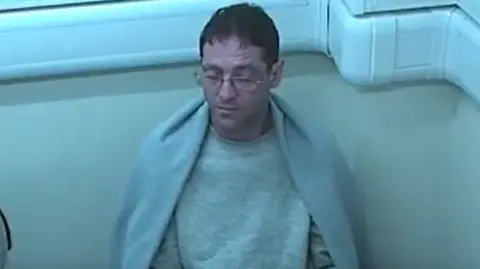
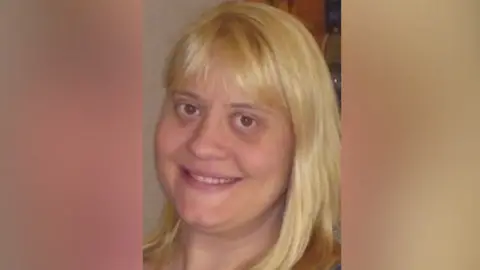
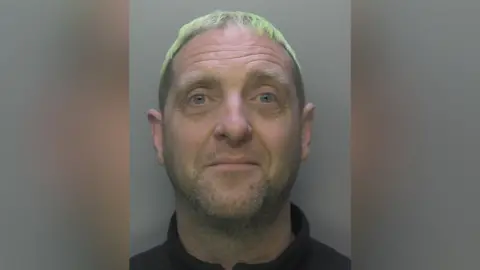
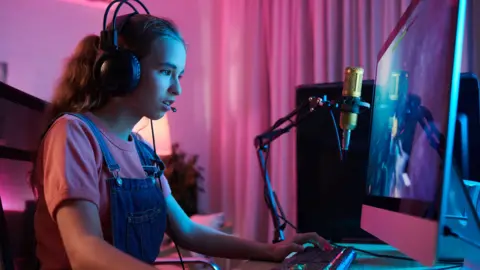
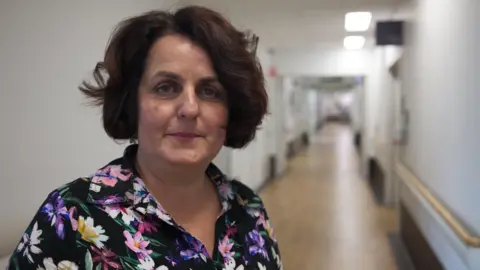
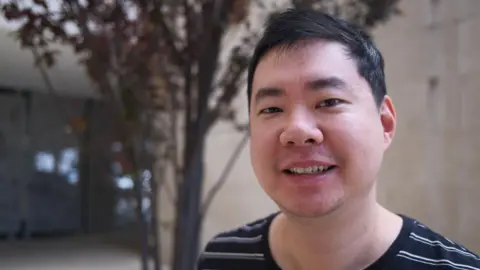
Katie Yates met Jason Smith on a dating app before he subjected her to relentless physical and mental abuse
Handsome, charming, a "gentle giant" - Katie Yates believed Jason Smith was a real catch after meeting him on a dating app.
But within months he had subjected her to relentless physical and mental abuse before raping her and attempting to drown her in the bath just before Christmas.
Katie, 42 and from Cardiff, has waived her anonymity as a victim of sexual assault to warn women to be wary of strangers they meet on dating apps who may pose as nice guys in an attempt to lure them in.
"You scroll on all the profiles with smiling photos and slick words but there are some people who should be looking for a therapist, not a girlfriend," she said.
Warning: This story contains distressing content and discussion of domestic abuse
Wales News Service
Katie gave up her hairdressing course because she "couldn't concentrate on anything" during the abuse
Katie had been single for five years when she signed up to a dating app in February 2018.
At the time she was 35, a single mum of two, and had endured a painful divorce.
Smith, then 29 and a railway maintenance worker, messaged her and things seemed to be going well at first.
"He seemed so warm and friendly - like a gentle giant," Katie said.
"He told me he had a child and loved being a dad. It was a bonus he was handsome, too.
"He complimented me and he asked me lots of questions, like he really wanted to know everything about me."
'He was a real catch'
Warning: Distressing image
Katie, who was a trainee hairdresser at the time, agreed to meet Smith when he asked her to meet him in a local Wetherspoons in his hometown of Pontypridd, Rhondda Cynon Taf.
She said: "He greeted me with a big smile and he had the brightest blue eyes. He was incredibly charming with an infectious demeanour.
"We'd talk for hours about everything. I even introduced him to my children.
"I felt so lucky, I believed Jason was a real catch. I honestly wondered why he hadn't been snapped up already."
Katie Yates
Katie said her dad "didn't recognise" her and her mum was "white with shock"
Katie said Jason turned up at her house weeks into their relationship asked to move in with her temporarily because he'd fallen out with his landlord.
She said she "wasn't ready for things to progress that quickly" but he was "very persuasive and sounded so desperate", so she let him stay.
His behaviour soon changed.
"Jason began accusing me of fancying everyone in sight," she said.
"One day he strangled me until I passed out after accusing me of fancying some random stranger. It was all pure fantasy in his head."
Katie said the abuse and jealousy continued but she struggled to end the relationship.
Smith sometimes called Katie "70 times and demanded" she video-called him so he could see where she was.
On one occasion he told her his ex-girlfriend was "much more beautiful" and another time, Katie found he'd stolen money out of her child's birthday cards.
"I got so used to wearing sunglasses, too, to hide my black eyes," she said.
"I remember one day looking in the mirror and I barely recognised myself. I'd become so thin and fragile with the stress. I even had to give up my hairdressing course because I couldn't concentrate on anything."
'Dad didn't recognise me'
In the week before Christmas in 2018, Smith lost his temper and ripped Katie's clothes and the children's toy elves.
When they returned home from a holiday, he raped her, then four days later he held Katie's head under the water in the bath because he thought she had been flirting with staff at a supermarket.
"He was so strong, my legs splashed frantically in the water. I thought he was going to drown me and I was going to die that moment," she said.
"Finally, he released me as I spluttered and coughed, frantic for breath before he dunked my head under again.
"After he'd finished, I just sat in the bath, shaking and trembling, too terrified to even move."
The following day, Jason beat Katie so badly she contacted her parents in fear of her life.
"My dad didn't recognise me when he saw me. I looked like something out a Halloween movie. When my mum saw me, she broke down and was white with shock," she said.
Wales News Service
Smith was jailed for 15 years in 2019
Katie reported Smith to the police, leading to the end of a 10-month campaign of abuse.
Despite him denying the charges during a trial at Newport Crown Court in 2019, a jury found Smith guilty of rape, assault occasioning actual bodily harm and assault by beating and he was jailed for 15 years. He was also given a restraining order for 10 years.
Katie said she still suffers "terrible flashbacks and nightmares", adding she is terrified Smith will try to find her when he leaves prison when he is eligible for parole in 2027.
"I believe he will come looking for me and that really frightens me but I don't regret speaking out - he was a danger to women.
"I thought I'd struck lucky when I met Jason, but I'd invited a monster into my life.
"For 10 months, my life was a living hell. It's made me think twice about ever going on a dating app ever again.
"I am lucky to be alive. It's taken a long time to rebuild my life."
If you are affected by any of the issues raised in this story, support and advice is available via the BBC Action Line.
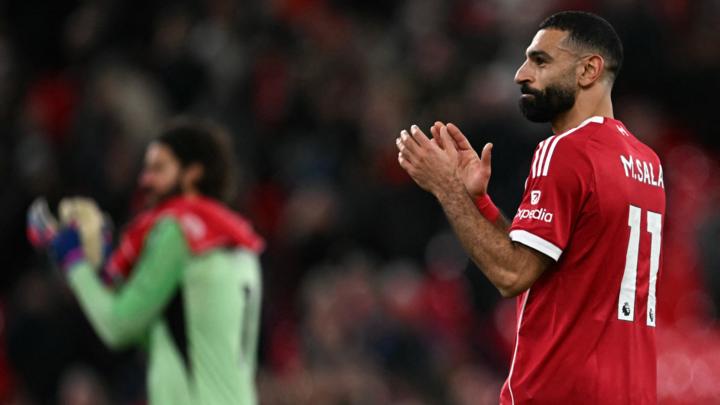
Mohamed Salah took everything in at full-time of Liverpool's 2-0 Premier League win over Brighton, applauding all four sides of Anfield while home fans serenaded their 'Egyptian king' with his familiar song.
By the time he reached the tunnel he was the last player on the pitch, giving a little wave towards the main stand, where his family were sat.
A goodbye perhaps? Only for now, it seems.
Salah will join Egypt in Cairo over the coming days as they prepare for the Africa Cup of Nations - but the message after manager Arne Slot's post-match news conference was clear.
A line has been drawn when it comes to team selection.
"There is no issue for me to resolve," said Slot. "For me, he is now the same as any other player. There is nothing for me to talk about after what happened against Leeds."
In his outburst at Elland Road last Saturday - where he claimed to have been "thrown under the bus" by the club and had no relationship with his Dutch boss - Salah said this game against Brighton could well be his farewell.
Having been left out of the squad for the midweek Champions League win at Inter Milan, he came off the bench against the Seagulls as a 26th-minute replacement for the injured Joe Gomez.
And the expectation now is very much that the 33-year-old will return to Liverpool next month after international duty.
Talks are still planned between both parties while Salah is away but, a week on from his emotional interview at Leeds, he was all smiles in the mixed zone at Anfield as he walked past the media and was asked for a chat.
There was no effort on Salah's part to speak again or publicly apologise, but Slot gave a clear "yes" when asked if he wanted the frontman back after the Africa Cup of Nations. The understanding is their meeting on Friday was positive.
Asked if Salah wanted to stay, the Reds boss added: "That I think you already know the answer. What has been said between us stays between us. He was in the squad and my first substitution."
For the fifth game in a row, Salah wasn't in the starting line-up. But, when defender Gomez was injured, Slot turned to the bench and put on the man who has scored 250 goals for Liverpool in his eight years with the club.
There were no boos. Just applause and appreciation.
Salah didn't add to that goal tally, but did get the assist for Hugo Ekitike's second on the hour mark.
That took him to 277 goal involvements in 302 Premier League appearances for Liverpool - the most by any player for a single club in the competition, overtaking Wayne Rooney (276) at Manchester United.
A remarkable statistic in itself and a measure of how much he has done for the Reds.
Back in the squad and involved in much of Liverpool's positive attacking play, former Wales defender Ashley Williams described his performance against Brighton as "like the old Salah".
"Salah has done extremely well," ex-Liverpool defender Stephen Warnock added on Final Score. "He has had a couple of opportunities where he should and could have done better. This week will have given his confidence a knock, he will been apprehensive coming into the game. He needs to build up his confidence."
To play this video you need to enable JavaScript in your browser.
This video can not be played
Media caption,
There is no issue to resolve - Slot on Salah's return
Speaking after the game, Ekitike described sharing a pitch with Salah as "a blessing", adding he was "the kind of player who makes us like to watch football".
But the French forward and Co won't now share a pitch with their team-mate until January at the earliest, with Salah potentially missing eight games if Egypt go all the way to the final in Morocco on 18 January.
"I suppose everybody will be leaving Anfield with that feeling of what's going to happen next with Mo Salah," ex-Blackburn Rovers striker Chris Sutton said on Final Score. "Is he going to stay or is he going to go? But it's been a good week for Slot.
"I don't think it was a goodbye. There were a couple of moments where we you thought, 'was that a wave or not', but it just looked like he was applauding the fans like he does every week, and as a lot of the other players did.
"It's going to be interesting to see how this situation pans out. If you're a Liverpool fan you want to keep your best players so you'll be hoping it works out."
A major plus for Liverpool is that, without Salah starting in any of the past five games, they are still unbeaten and have shown they can cope without the Egyptian talisman.
That in itself will give Slot confidence. But, in the long-term, having a fit and firing Salah can only be a positive for his side.
"I spoke to him yesterday and as I usually never say anything about what we talk about, I am not going to make an exception now," added Slot.
"But I think actions speak louder than what has been said and he was in the squad again and when I had to make my first substitutions, I brought him in and he performed as every fan including me would like him to."
It is clear Slot is happy to pick Salah again, but also clear there is still no definitive conclusion after a tumultuous week for both parties - and Liverpool.
Two US soldiers and a US civilian interpreter have been been killed in Syria in an ambush by a lone Islamic State gunman, the US military has said.
The Pentagon said three other service members were injured in the attack, during which the gunman was "engaged and killed".
The identities of those killed are being withheld for 24 hours until their next of kin have been informed.
Defence Secretary Pete Hegseth, said: "Let it be known, if you target Americans - anywhere in the world you will spend the rest of your brief, anxious life knowing the United States will hunt you, find you, and ruthlessly kill you."
This breaking news story is being updated and more details will be published shortly. Please refresh the page for the fullest version.
You can receive Breaking News on a smartphone or tablet via the BBC News App. You can also follow @BBCBreaking on X to get the latest alerts.
Watch: Nobody expecting "toilet police", says UK equality chief
Everyone should "follow the rules" when guidance on single-sex spaces is released, the new head of the equality watchdog has told the BBC.
Dr Mary-Ann Stephenson, chair of the Equality and Human Rights Commission (EHRC), said "things could be sorted out if there is goodwill and recognition that everybody has rights", and that "nobody is expecting there to be a toilet police".
The guidance, for businesses and services, was drawn up after a unanimous Supreme Court ruling in April that legally a woman should be defined by biological sex for the purposes of the Equality Act 2010.
The BBC interview, to be broadcast on Sunday with Laura Kuenssberg, is Dr Stephenson's first in her new role.
The EHRC's guidance was passed to the government three months ago, but it has yet to publish it formally, which would give the code of practice legal force.
It aims to provide advice to businesses and services - such as women's refuges, gyms, hospitals or shopping centres - about how the Supreme Court ruling should work.
Seen by the BBC after it was leaked, the 300-page document says single-sex spaces should only be open to people of the same biological sex, otherwise they cease to be single-sex areas.
That would mean, for instance, that a trans woman – a biological male who identifies as a woman - would not be able to use women's toilets and changing rooms.
The guidance says it may be legitimate for businesses or services to ask people to provide confirmation they are of the eligible sex "by proportionate means".
This has all caused controversy and anger among some transgender campaigners.
Dr Stephenson told the BBC: "Nobody is expecting there to be a toilet police.
"But equally if there are situations where there are complaints about regular problems, then people might need to... improve signage, improve explanations, or make sure they have got alternative provision."
She said she expected both service providers and people using these services to "follow the rules".
Dr Stephenson was challenged on what facilities trans people should use if there were no alternatives, or what businesses should do if they did not have the space or resources to make extra provision.
She said: "There's often unisex provision and where there isn't, as I say, we need to think more broadly about how we make sure those that those facilities are available…
"If you've got, you know, two self-contained cubicles, one of which is labelled men and one of which is labelled women, then the most sensible thing in those circumstances for a service provider to do is to make both of those unisex."
Dr Stephenson was appointed to the role in July and she started earlier this month.
It was greeted with hostility by some trans campaigners, in part because she had donated money to the case of lawyer Allison Bailey, who won part of a tribunal claim that she was discriminated against because of her gender-critical views.
In our interview, Dr Stephenson was adamant she could still be objective when considering trans issues.
She said she donated to the case because she was frustrated by situations where "women were being harassed and losing their jobs on the basis of lawfully held beliefs".
She said she had been concerned by the experiences of some women "when trying to have meetings to discuss proposed changes in the law".
"I thought it was important that actually in a democracy, if there is a proposed change to the law, people should be able to meet and discuss those changes without violence or intimidation," she said.
"If that's taking a side, it's taking a side on the side of kind of democratic norms and open discussion and dialogue."
The full interview will be on Sunday with Laura Kuenssberg.
Two US soldiers and a US civilian interpreter have been been killed in Syria in an ambush by a lone Islamic State gunman, the US military has said.
The Pentagon said three other service members were injured in the attack, during which the gunman was "engaged and killed".
The identities of those killed are being withheld for 24 hours until their next of kin have been informed.
Defence Secretary Pete Hegseth, said: "Let it be known, if you target Americans - anywhere in the world you will spend the rest of your brief, anxious life knowing the United States will hunt you, find you, and ruthlessly kill you."
This breaking news story is being updated and more details will be published shortly. Please refresh the page for the fullest version.
You can receive Breaking News on a smartphone or tablet via the BBC News App. You can also follow @BBCBreaking on X to get the latest alerts.
Watch: King Charles issues update on his cancer treatment
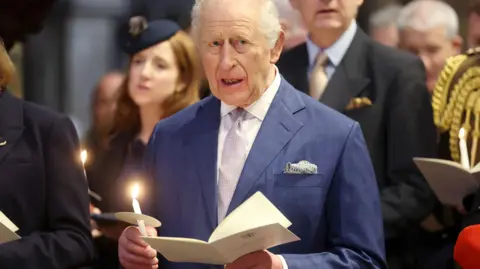
King Charles has been praised for hiscandour in talking about his cancer treatment where he highlighted the importance of early detection and screening.
In a recorded video message, broadcast on Channel 4 for the Stand Up To Cancer campaign, the King said his treatment was being reduced and he urged people to take up offers of cancer screening, saying "early diagnosis quite simply saves lives."
The type of cancer he is being treated for has not been revealed and the King, 77, will continue to receive treatment and monitoring.
Clare Garnsey, associate medical director of Greater Manchester Cancer Alliance, said his message was "very powerful".
The King, who revealed his diagnosis in February last year, is not described as being in remission or "cured" but the regularity of his treatment will be significantly reduced in the new year.
In his video message, recorded in Clarence House two weeks ago, he said that he was "troubled" to learn that nine million people around the UK are not up to date with the cancer screening available to them.
"That is at least nine million opportunities for early diagnosis being missed," he said.
He added: "Too often, I am told, people avoid screening because they imagine it may be frightening, embarrassing or uncomfortable.
"If and when they do finally take up their invitation, they are glad they took part.
"A few moments of minor inconvenience are a small price to pay for the reassurance that comes for most people when they are either told either they don't need further tests or, for some, are given the chance to enable early detection, with the life-saving intervention that can follow."
Speaking to BBC Breakfast, Miss Garnsey said she, "like the majority of health professionals who work in the cancer field" was "really thankful" for what the King said.
"I think the message was very powerful about the importance of early diagnosis and how important it is that we all attend for our screening," she added.
She said it is "really helpful" to healthcare professionals when people in "positions of influence" - such as the King - speak publicly about their experiences with cancer.
These messages highlight that it "can happen to anybody", she said, and raise awareness of the potential symptoms someone may experience.
Royal biographer and friend of King Charles, Jonathan Dimbleby, said the King's message demonstrated the "unique role of the sovereign".
Speaking to BBC Radio 4's Today programme, he said the King's decision to speak openly about his treatment in such "warm, gentle, thoughtful, kind terms" was "quite extraordinary and it has great impact".
Until now the King has said little publicly about his illness.
In his video message, King Charles said he knew how "overwhelming" a diagnosis can feel, but stressed that early detection is "key" to give patients the "precious gift of hope".
Cancer charity Macmillan Cancer Support said it was "incredibly grateful" to the King for sharing his experience "with such openness and honesty".
"The King's reminder of the importance of screening and early detection is an important message for us all," it added in a statement.
The prime minister said the King's message was "powerful" and that he was "glad" that the King's treatment will be reduced in the new year.
According to Buckingham Palace, the King's recovery has reached a very positive stage and he has "responded exceptionally well to treatment", so much so that doctors will now move his treatment "into a precautionary phase".
The regularity of treatment is going to be significantly reduced - but the King, 77, is not described as being in remission or "cured".
Meanwhile, Dr Harrison Carter, director of screening at NHS England, said the health service "fully supported" the King's call for people to attend screening tests.
"So, when your NHS screening invite arrives, whether it's for cervical or breast screening, or a bowel cancer testing kit through the post, please do make time to take it up."
Crack open a tub of Celebrations or pull a Terry's Chocolate Orange from a stocking these days, and have you noticed, there seems to be a little less to go around?
Not only that, you might find – no, it is not your imagination – that some popular treats taste a little different, a little less "chocolatey".
To top it all the prices have risen too.
So will your festive favourites still hit the sweet spot this Christmas?
Chocs away
Many of the companies making popular bars and chocolates admit they have been looking for ways to save money. A tried-and-tested one is to replace some of the more expensive ingredients, like cocoa, with cheaper ones, a strategy that's been dubbed "skimpflation".
There is even a debate among some chocolate fans over whether the year-round classic Cadbury's Dairy Milk has changed its recipe.
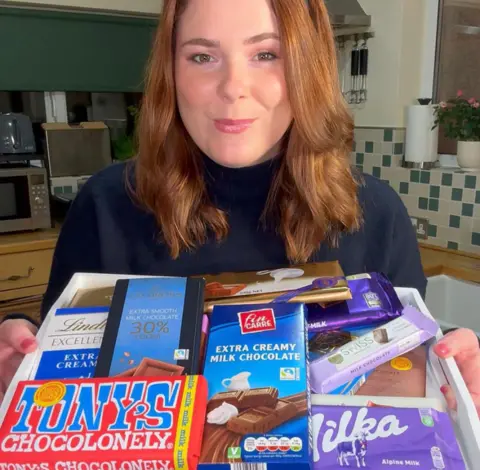
Becca Amy Stock, a TikTok influencer who goes by the name Becca Eats Everything, set herself the task of reviewing every milk chocolate bar at Britain's major supermarkets. The 29-year-old spent six hours and £100 on her rigorous research.
She concluded Dairy Milk was "more oily" since Cadbury's takeover by the American company Mondelez in 2010. And the brand, famous for its "glass and a half" of milk, was less milky, she said.
"You do notice the difference," Becca says, "Cadbury's does not taste how it used to taste."
Becca Amy Stock
Milk chocolate in the UK must have at least 20% cocoa solids and 20% milk solids to earn the name chocolate. Without that it has to be labelled "chocolate flavour" not chocolate. Cadbury's Dairy Milk still meets that standard.
Mondelez says it has not been fiddling with the recipe, at least not recently.
"Our Cadbury Dairy Milk products continue to be made with the same delicious recipes that consumers know and love," its spokesperson said. "The cocoa content has not changed for many years."
Crunching the numbers
But it is still one which you'll be paying more for.
Plenty of food manufacturers have been reducing the size of their products, without dropping prices, known as shrinkflation.
And some are also putting prices up, too.
Chocolate prices in supermarkets have risen by more than 18% on average from this time last year, according to market researchers Kantar.
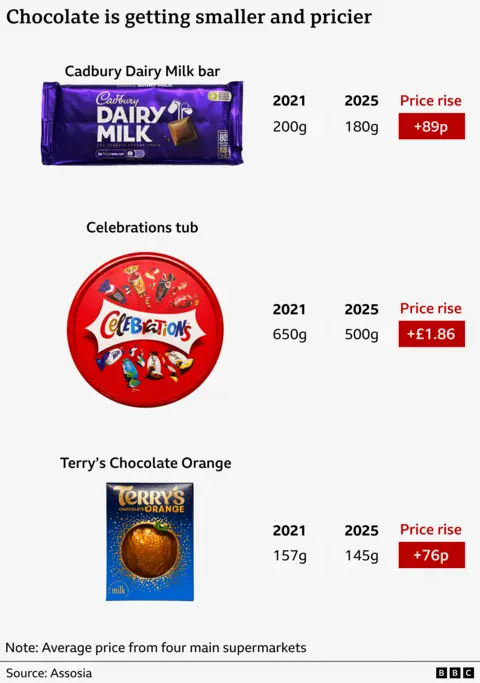
We got these figures by analysing price data collected by market researchers Assosia across four of the UK's biggest grocers, Tesco, Sainsbury's, Asda and Morrisons, between December 2021 and December 2025.
They show:
Cadbury's Dairy Milk weighs 10% less, while the cost jumped from £1.86 to £2.75 - a 48% price increase
Mars Celebrations has shrunk by 23%. The price has risen from £4.25 to £6.11 - a 44% jump
Terry's Chocolate Orange is 8% smaller, while the cost has risen from £1.49 to £2.25 - a 51% price rise
Getty Images
Mondelez's spokesperson said putting up prices was a "last resort" but ingredients are costing more - in particular cocoa and dairy.
"This means our products continue to be much more expensive to make.
"As a result of this difficult environment, we have had to make the decision to slightly reduce the weight and increase the list price of some of our Cadbury products," they said.
Mars Wrigley told the BBC higher cocoa prices and manufacturing costs meant they had to "adjust some… product sizes... without compromising on quality or taste."
Sticky costs
So what has caused the price of cocoa and milk to shoot up?
Extreme weather caused by climate change has hit cocoa farmers' crop yields in Africa, says Ghadafi Razak, an academic at Warwick Business School.
Extreme rainfall in India, Brazil and Thailand in 2023, followed by droughts the following year have meant poor harvests in those countries too, pushing up prices.
The extra costs take time to feed through to customers, says Christian Jaccarini, a senior food analyst at the Energy & Climate Intelligence Unit think tank, which means those extra costs are hitting shop shelves now.
"It takes about 18 months for the impact of a shock to be felt by consumers, so we still have quite a long time with higher prices for chocolate," he said.
Milk prices have shot up too. Diarmaid Mac Colgáin, founder of the Concept Dairy consultancy blames the rising cost of feed, fuel and fertilisers as well as farmers facing higher wage bills and production costs.
He says some brands have substituted palm oil and shea oil for some of the milk to make up the fat content of their chocolate.
Bad taste
Shoppers are becoming increasingly aware of these cost-saving tactics, but that does not mean they are happy about it.
It is the element of unwanted surprise that can leave a bad taste, according to Reena Sewraz, retail editor at consumer champion, Which?
It can feel "especially sneaky" when companies shrink products or downgrade their ingredients she said.
"With Christmas not far away, shoppers will be looking to get the best value from what they buy," she said. "Supermarkets and manufacturers should be more upfront about making these changes. Customers may not love the news - but [then] at least they don't feel misled."
Alamy
But there is not much you can do about it. For Becca, who insists she's not "chocolated out" despite her chocolate-tasting marathon, quality not quantity is the way to go.
She suggests fellow chocoholics treat themselves to smaller premium bars such as Tony's Chocolonely. They'll cost more but she finds them more satisfying.
She also plans to treat herself to a selection-box on Christmas day.
Otherwise she generally advises against "food snobbery".
"I think supermarket own-brands are actually a much better way to get better quality chocolate."
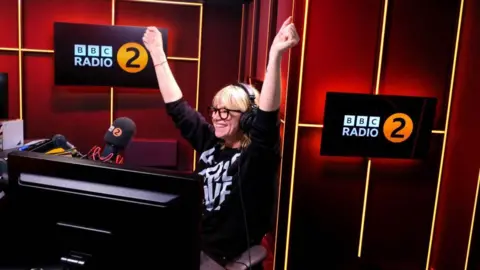
Zoe Ball is stepping down from presenting her BBC Radio 2 Saturday show.
Announcing her departure on air, she said she would be replaced by broadcaster Emma Willis who she described as a "superwoman".
"I love you all to bits, but I'm not disappearing completely," she told listeners.
Ball's final show is set for 20 December, although she will continue to host specials on the station. She left her Radio 2 breakfast show last December after almost six years in the role, before returning to present the 13:00 to 15:00 GMT Saturday programme.
Speaking on the show on Saturday, Ball, 55, said: "I have loved being betwixt my dear friends Romesh (Ranganathan) and Rylan (Clark), and you know, I love you all to bits, but I'm not disappearing completely.
"Obviously, it'll be Christmas Crooners and I'm doing an eras show in the new year, more on that later."
Ball said she was "thrilled" to announce that Willis would take over the Saturday afternoon slot, "a superwoman who is no stranger to you all".
She added that the new host - known for shows including The Voice, Big Brother and Love Is Blind - "will officially become a member of the Radio 2 family".
In a statement, Willis, 49, said "I'm absolutely chuffed to be joining the family - and it's a real honour to follow in the huge footsteps Zoe leaves behind, who's someone I admire and adore."
She said that she would miss listening to Ball but will "happily be the filling to a Romesh and Rylan sandwich".
Willis hosted a show on Heart Radio from 2012 to 2018 and has presented on Radio 2 as a cover presenter since 2019.
Goodbye 2025 - almost. It's not worth saying, "Goodness me, the news is crazy".
"Normal" retired many years ago. But which events of this wild year actually changed us, and our politics? And what might 2026 usher in?
As the UK hurtles towards the holidays, I've been asking contacts from across the political spectrum for the moments that boggled their minds this year, and those daring, perhaps foolish, but fascinating predictions of what might come next.
2025 was chock-a-block with events scriptwriters would have found hard to come up with.
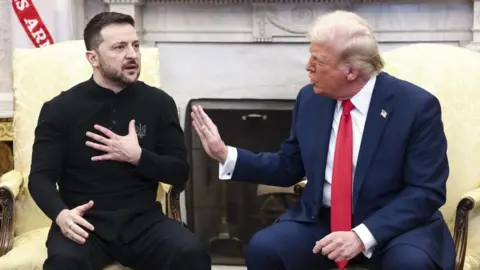
There was the Oval Office showdown when US President Donald Trump seemed deliberately to shame the leader of Ukraine, described by one MP as the "maddest moment".
EPA-EFE/REX/Shutterstock
Ukrainian President Volodymyr Zelensky and US President Donald Trump clashed in the White House in February.
At home: a Labour cabinet minister, Steve Reed, being feted with chants of "build, baby build" and a mini swarm of activists sporting red MAGA-style hats as if, for a moment, Labour's Merseyside conference was like a Make America Great Again rally. You wouldn't have bet on such a surreal scene this time last year.
Chancellor Rachel Reeves crying on camera in the Commons chamber counts too - not just because of the human drama, but because, as one source suggests: "Global investors changed their behaviour as a result."
Yes, the second most senior politician in the land was in tears in public in the bear pit of Prime Minister's Questions.
Yes, the financial markets seemed to react, and secured her job.
And a new force on the left emerging under the Corbynista banner, but falling into disagreements with each other in spectacular style - perhaps sadly, for many on the left, that might have been easier to predict.
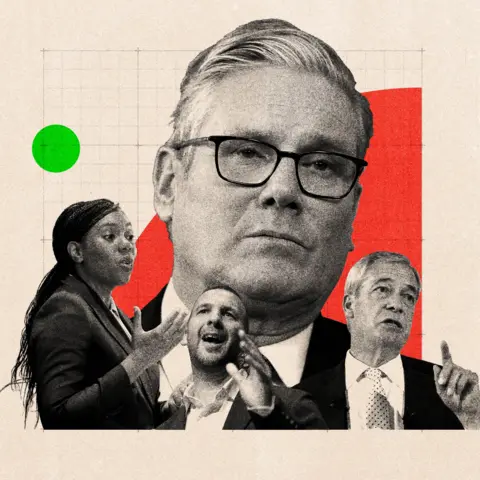
Don't forget, No 10 advertising its own vulnerability by proclaiming that prime minister Sir Keir Starmer would see off any challengers seeking to oust him – before any of the would-be challengers were remotely ready to come out of the shadows. Nigel Farage's insurgent party, Reform, claiming to have more members than the Tories and Labour.
Those crazy bits aside, time and again, insiders point to three factors of 2025 that have really changed where things are at.
The rise of Reform
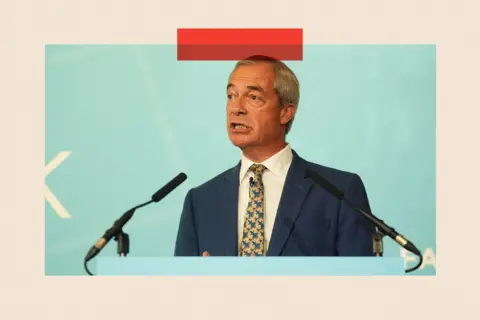
Whether you love, loathe or shrug at the idea of Reform UK prospering, the rise of Farage's party - ahead in the polls for many months - has changed much in the last 12 months.
One former minister says, without question, the most important phenomenon in 2025 is the "rise of Reform and the death of the Tories".
Reform's success in the elections in May gave them power over billions of pounds in local government for the first time. And it put the frighteners on the traditional parties, pushing their policy agendas on immigration in particular.
Getty Images
Labour now walks and talks as if Reform is their main opposition, not the Conservatives, even though their leader Kemi Badenoch's performance has improved in the last few months.
With Reform's polling success comes increased attention, and more scrutiny.
How they handle that, not least allegations of racism, is a question for 2026, but the standard symmetry of politics of Labour v Tories is firmly out of fashion, for now.
When Sir Keir's authority began to drain away
Second, multiple sources cite a specific moment. Cast your mind back to the government's ambition to change the creaking system that leaves too many people on benefits without support to find work or improve their prospects. They also wanted to save cash for the taxpayer.
The government couldn't be sure it would win the votes, so it gave up, even though ministers say they haven't given up on making changes.
But for a government with a majority you can see from space it was an extraordinary state of affairs, the moment when Sir Keir's authority began truly to drain away.
One Whitehall insider agreed it was the biggest moment of the year, because "almost everything else has flowed from it - from then, the government was not in control of its political destiny with its own party since, and we wouldn't have had the budget we did without it".
For the country's balance sheet, the hoped-for savings disappeared, and with this, critics would suggest, any Labour ambition of saving cash from big changes to policy at home.
PA Media
That decision set the backdrop for the late autumn budget which had a traditional Labour clarity, but asked firms and families to pay more tax.
One opposition source said the government has showed this year that benefits are "out of control", adding: "The decision to increase this at the cost of working people will have a consequence at the polls."
Even in the Labour Party the upshot is both welcomed and worried about.
One source called the budget "the most significant as they have dumped austerity at all costs and moved away from welfare cuts".
Another told me the whole affair is why Sir Keir, despite his huge majority, ends this political year with no guarantee he'll keep his job in the next.
If 2024 showed Labour could win but would have a hard time adjusting to power, 2025 has raised questions about the extent to which they were really capable of governing well at all.
The behaviour of Trump 2.0
Whatever has happened at home, 2025 has also been another year of hefty international political moves.
Trump moved back into the White House and really seems to have meant all of the things he told the world he believed in while campaigning.
Sir Keir, while regularly under attack at home, seems to have impressed the American president and some of his home audience. His moment in the Oval Office, proffering the invite from the King for a historic second state visit, "the most heart in mouth" moment of the whole year for some of his allies.
Brokering the most sensitive and the most important diplomatic relationship you have, live on global TV, can't have been the most tempting prospect for a non-showy politician like Sir Keir, who nonetheless, made a success of that moment.
Many insiders suggest the most dramatic and the most important factor of 2025 has been the behaviour of Trump 2.0.
His moves to create a ceasefire after the conflict between Gaza and Israel changed the course of the Middle East.
And that's before we even start to consider his flirtation with the notion of creating an all-out global trade war, which hasn't quite come to pass.
2025 saw the UK political establishment get used to feeling constantly nervous about what Trump might do next, the perpetual guessing game of whether he really meant what he said, and what the consequences might be.
As we prepare to say goodbye to 2025, Reform's rise, Labour's woes and Trump's presence have changed our politics. So what will the next twelve months bring?
The economic fug that has lasted for years might lift, slower inflation and interest rates cuts could shift that stubborn sense that the UK's economic fortunes are characterised by decline.
No 10 hopes its efforts to feed more kids before school by expanding breakfast clubs, cut back NHS waiting lists, provide more childcare and sort out the creaking asylum system could see not just the statistics turn their way but demonstrate that its choices might lead to better experiences for the public and, in time, some political reward - or at least an end to blame and shame.
Breath is already being held ahead of mega-May - a huge set of elections where some predict with confidence Reform will "trounce the others", a former minister says.
Getty Images
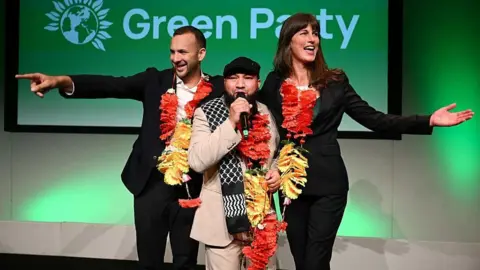
Zack Polanski, Mothin Ali and Rachel Millward are set on taking the Green Party in a new direction.
An ally of Farage says the "sense of disbelief and disappointment is even greater than it was 12 months ago", predicting huge success in England, and in the Welsh and Scottish elections in May too.
But an experienced Conservative source reckons the most important vector of next year is that Reform will "under-perform against expectations".
Perhaps that's more hope than expectation, but it's not impossible that 2025's froth around Reform will subside.
Will the PM last the year?
The anxious wait until May's elections is linked to a very common prediction that would have been almost unimaginable 12 months ago.
You've heard the speculation about whether the PM is the right man for the job.
Even some cabinet ministers tell me the May elections will be followed by an attempt to remove Sir Keir.
Whether you think it would be crackers for Labour to try to get rid of one of the two leaders alive who have won a general election, or whether it makes sense to pull up stumps on a prime minister every poll suggests the public doesn't like, many Labour MPs are convinced 2026 will be defined by a "seemingly inevitable" change at the top.
Inevitable is a word used by many. But that doesn't remotely mean it is automatic.
One Labour source says "a lot of mad stuff is going to happen because everyone is acting really stupidly".
Downing Street is making significant efforts to build up the PM's appeal to his own party. Gags abound in Labour about how many MPs have been invited to the PM's country retreat for small talk and canapes.
But in the face of deep unpopularity there is a widespread belief that a bad performance in mega-May will mean the end for Sir Keir.
There is no consensus on who should be next if the PM was challenged.
Without doubt his leadership doesn't feel permanent, and that casts a genuine shadow over so much of what the government is trying to do.
But, even when politicians say, "We can't go on like this", a less-than-tasty status quo can still be more tempting than an uncertain road.
Whatever happens at home, naturally in our interconnected world what happens elsewhere - and most notably the whims and wherefores of the American president - will have much sway over everything in 2026.
As I write, European leaders are gathering their teams, fretting, planning, hoping.
Worrying that Ukraine's future is at risk, not just because of the original aggression of Putin's invasion, but because of America's attitude – the desire to end the war seemingly stronger than the belief in Ukraine's integrity.
But for the economy, for our continent's security, and the government's relationship with its most powerful ally, one senior official predicts "the most important thing will be the terms on which a Ukrainian peace settlement comes".
The costs to Ukraine could be costs to European security, and us all.
So as we prepare to say goodbye to 2025, 2026 might be even more eventful. It's not impossible the conflict on the edge of our continent will end, although any agreement to bring it to a close might just store up future problems.
It's feasible there'll be an attempt to get rid of the prime minister, and it's not impossible Reform and the smaller parties will grab more actual power. It won't be long till we find out.
Tomorrow, in our last programme of the year, we'll be joined by Home Secretary Shabana Mahmood and the new boss of the Equality and Human Rights Commission, Dr Mary-Ann Stephenson.
Thank you to you for reading, watching and listening, and Happy Christmas!
Top image credit: Getty Images
BBC InDepth is the home on the website and app for the best analysis, with fresh perspectives that challenge assumptions and deep reporting on the biggest issues of the day. You can now sign up for notifications that will alert you whenever an InDepth story is published - click here to find out how.
Israel said it killed a senior Hamas commander on Saturday in a strike on a vehicle inside Gaza.
In a statement, the Israeli military said it had "struck a key Hamas terrorist" in Gaza City.
The Hamas-run Civil Defence spokesman, Mahmoud Basal, told the BBC that four people were killed in the strike. He said multiple passers-by were also injured by the blast.
Local sources said the strike may have targeted Raed Saad, a senior commander in Hamas's armed wing, the Qassam Brigades.
The BBC is prevented by Israel from reporting independently from inside Gaza and is unable to verify details of the incident.
Saad is believed to be a member of the newly formed five-member leadership military council established since a ceasefire took hold in October.
He is regarded as one of the most prominent Qassam commanders and led several brigades during Hamas's 7 October attacks on Israeli communities east of Gaza City.
Israel has attempted to kill him on multiple occasions.
One of the most notable attempts was during a surprise Israeli operation in Gaza City in March 2024, when Israeli forces reportedly sought to arrest or kill him. Sources at the time said Saad had been inside the targeted complex but managed to escape moments before the raid.
He has long been considered one of Israel's most wanted Hamas figures, with Israeli attempts to kill him spanning more than two decades.
Saturday's attack happened on the Palestinian-controlled side of the so-called Yellow Line which has divided Gaza since an unstable US-led ceasefire came into effect on 10 October.
Israeli forces control the area to the east of the line, which includes just over half of the Gaza Strip.
The first phase of US president Donald Trump's 20-point plan for peace in the region required the return of all 20 living and 28 dead hostages taken in the Hamas-led attack on southern Israel on 7 October 2023.
About 1,200 people were killed in the attack and more than 250 people were taken hostage.
All have been returned except for the remains of an Israeli police officer, Ran Gvili, 24, who is believed to have been killed while fighting Hamas gunmen in Kibbutz Alumim.
Since then, according to Gaza's Hamas-run health ministry more than 70,000 Palestinians have been killed by Israeli military action.
The diplomatic focus is now shifting to the next stage of President Trump's plan which would require the disarmament of Hamas as part of what it calls the de-radicalisation and redevelopment of Gaza.
It envisages Gaza being run by the "temporary transitional governance of a technocratic, apolitical Palestinian committee," overseen by a "Board of Peace" chaired by Trump.
Security would be provided by an International Stabilisation Force although its make up remains unclear.
The eventual aim is for a reformed Palestinian Authority to take control of the territory, and for Israeli forces to withdraw, after which "the conditions may finally be in place for a credible pathway to Palestinian self-determination and statehood".
Many aspects of the plan are controversial in Israel where prime minister Benjamin Netanyahu has repeatedly rejected calls for the establishment of a Palestinian state.
Trump is due to meet Netanyahu to discuss the plan in the US on 29 December.
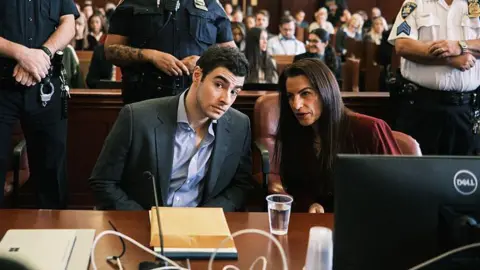
Mr Mangione has watched as the court plays body camera footage from the day of his arrest
Luigi Mangione, the man accused of fatally shooting United Healthcare CEO Brian Thompson in a case that sparked national attention, watched as new testimony and never-before-seen footage from the day of his arrest in a McDonald's was unveiled during a hearing this week.
Mr Mangione has pleaded not guilty to state charges related to the 2024 murder of Mr Thompson, a father of two, as well as federal counts that carry the possibility of the death penalty.
The pre-trial hearing is focused on the defence's attempts to keep certain evidence out of the trial, which has not been scheduled yet, including items found in his backpack during his arrest and statements he made to officers.
During the first two weeks of the hearing, supporters of Mr Mangione - the scion of a prominent Maryland family and Ivy League graduate - filled the back rows of the Manhattan criminal courtroom, some wearing a pin portraying him as a saint-like figure.
Prosecutors and Mr Mangione's legal team are expected to question over a dozen witnesses from the day of his arrest, including the employees who spotted him and the police who arrested him.
Here is a look at some of the key pieces of evidence discussed that offer a window into Mr Mangione's trial.
An eyebrow giveaway
The pre-trial hearing has centred on the small-town McDonald's in Altoona, Pennsylvania, where officers were shocked to find the high-profile suspect days after Mr Thompson was fatally shot - and hours from the busy Midtown Manhattan crime scene.
Witnesses suggested the arrest may never have occurred there if not for one of Mr Mangione's key features: his eyebrows.
During the first day of the hearing, prosecutors played a call to police from a McDonald's employee about a tip from a customer in the restaurant.
The employee said the customer thought a patron looked like the suspect in the United Healthcare CEO shooting. The patron was well covered, wearing a black hoodie, a medical mask and a tan beanie. But one key detail stuck out.
"The only thing you can see is his eyebrows," the employee told police.
It was not the only time Mr Mangione's distinguished eyebrows have come up.
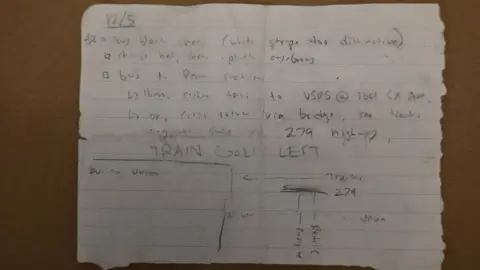
Prosecutors also entered into evidence notecards they say Mr Mangione had, which appeared to be to-do lists for the days after the high-profile shooting.
One card reads: "Keep momentum, FBI slower overnight," while another said: "Change hat, shoes, pluck eyebrows".
New York County District Attorney's Office
Prosecutors said Mr Mangione was carrying a note that appeared to be a to-do list, with instructions to "change hat, shoes, pluck eyebrows"
'Proposterous': An unexpected day at McDonald's
Dozens of videos released by prosecutors show Mr Mangione's encounter with police and his eventual arrest in the McDonald's as other customers watched.
Officers who responded narrated the footage this week, telling the court what was going through their minds as they realised the 27-year-old appeared similar to the suspect in photos.
On Thursday, Altoona Lieutenant William Hanelly said a fellow officer responded sarcastically that he would "get right on it" when he heard the tip about the suspect.
Mr Hanelly told the court that he understood the sarcasm, because it seemed "preposterous" that a shooter from "New York City had found his way to a McDonald's in Altoona, Pennsylvania".
But at the scene, officers said they quickly saw the resemblance to New York Police Department pictures circulated to the public after days without any leads.
"It's him. I'm not kidding. He's real nervous. It's him," one officer can be heard telling Mr Hanelly in a phone call played for the court.
In one video, Mr Mangione eats a McDonald's meal as officers stand guard around him in the restaurant waiting for more officers to arrive.
At the hearing, Mr Mangione watched the videos quietly from the defence table, seated next to his lawyers - wife and husband Karen Friedman Agnifilo and Marc Agnifilo. The latter defended Sean "Diddy" Combs, who was acquitted of sex trafficking and racketeering charges just months earlier.
Wearing a grey suit and button-down shirt most days, Mr Mangione frequently took notes on a legal pad, and occasionally smiled and laughed with his lawyers.
A fake name leads to an arrest
Watch: "What's your name?" - Moment police confront Luigi Mangione at McDonald's
In the series of police body camera videos played for the court, Mr Mangione's interactions with officers eventually lead to his arrest on 9 December as Christmas music plays loudly in the background of the McDonald's.
When officers first speak to Mr Mangione, they ask him to pull his mask down. He listens, and is heard telling officers his name is "Mark Rosario", handing them a New Jersey identification that police later said was false.
That identification gave officers enough cause to arrest Mr Mangione, Mr Hanelly told the court, and in the video, Mr Mangione tells officers his real name is Luigi.
In another body camera video, an officer tells the 27-year-old he is under police investigation for giving a fake identification and Mr Mangione is seen putting his hands on the wall as officers arrest him.
They then take a photo of Mr Mangione with his hands behind his back, an image widely circulated on social media after his arrest.
Bullets, a journal and cash: a peak into Mr Mangione's backpack
The pre-trial hearing also shed light on the items Mr Mangione was carrying when he was arrested.
Mr Mangione's lawyers have argued that a 9mm handgun as well as a notebook should be excluded from trial because officers did not have a warrant to search his backpack. Prosecutors allege that Mr Mangione wrote in his notebook about "the deadly, greed-fuelled health insurance cartel".
During the hearing on Thursday, Mr Hanelly argued that there were exceptions for warrants.
Earlier in the week, Ms Friedman Agnifilo questioned the officer who searched Mr Mangione's backpack, arguing they were searching the bag "because you thought he was the New York City shooter".
"No, we search everyone," said the officer, Christy Wasser.
New York County District Attorney's Office
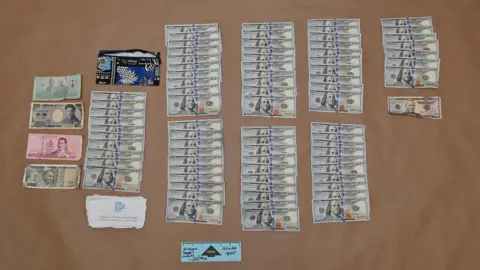
Evidence found during Mr Mangione's arrest
Video played in court shows a police officer pulling a series of items from the backpack, including a handgun magazine that Mr Hanelly said contained 9 mm bullets - all as Holly Jolly Christmas plays over the speaker.
One law enforcement official comes across a journal in the backpack, and can be heard saying it reads like a "manifesto".
Ms Agnifilo objected after the "manifesto" part of the video was played repeatedly in court, arguing the prosecutor wanted to emphasise the line.
Eventually, Mr Hanelly testified, the officers decided to stop searching the backpack and take it to the police station because "it was going to be a mess".
Prosecutors this week entered into evidence images of other items Mr Mangione had with him, including a gun, a silencer, dozens of $100 bills, face masks, a hair trimmer and a passport.
The hearing is expected to continue into next week.
Watch: King Charles issues update on his cancer treatment
King Charles has been praised for hiscandour in talking about his cancer treatment where he highlighted the importance of early detection and screening.
In a recorded video message, broadcast on Channel 4 for the Stand Up To Cancer campaign, the King said his treatment was being reduced and he urged people to take up offers of cancer screening, saying "early diagnosis quite simply saves lives."
The type of cancer he is being treated for has not been revealed and the King, 77, will continue to receive treatment and monitoring.
Clare Garnsey, associate medical director of Greater Manchester Cancer Alliance, said his message was "very powerful".
The King, who revealed his diagnosis in February last year, is not described as being in remission or "cured" but the regularity of his treatment will be significantly reduced in the new year.
In his video message, recorded in Clarence House two weeks ago, he said that he was "troubled" to learn that nine million people around the UK are not up to date with the cancer screening available to them.
"That is at least nine million opportunities for early diagnosis being missed," he said.
He added: "Too often, I am told, people avoid screening because they imagine it may be frightening, embarrassing or uncomfortable.
"If and when they do finally take up their invitation, they are glad they took part.
"A few moments of minor inconvenience are a small price to pay for the reassurance that comes for most people when they are either told either they don't need further tests or, for some, are given the chance to enable early detection, with the life-saving intervention that can follow."
Speaking to BBC Breakfast, Miss Garnsey said she, "like the majority of health professionals who work in the cancer field" was "really thankful" for what the King said.
"I think the message was very powerful about the importance of early diagnosis and how important it is that we all attend for our screening," she added.
She said it is "really helpful" to healthcare professionals when people in "positions of influence" - such as the King - speak publicly about their experiences with cancer.
These messages highlight that it "can happen to anybody", she said, and raise awareness of the potential symptoms someone may experience.
Royal biographer and friend of King Charles, Jonathan Dimbleby, said the King's message demonstrated the "unique role of the sovereign".
Speaking to BBC Radio 4's Today programme, he said the King's decision to speak openly about his treatment in such "warm, gentle, thoughtful, kind terms" was "quite extraordinary and it has great impact".
Until now the King has said little publicly about his illness.
In his video message, King Charles said he knew how "overwhelming" a diagnosis can feel, but stressed that early detection is "key" to give patients the "precious gift of hope".
Cancer charity Macmillan Cancer Support said it was "incredibly grateful" to the King for sharing his experience "with such openness and honesty".
"The King's reminder of the importance of screening and early detection is an important message for us all," it added in a statement.
The prime minister said the King's message was "powerful" and that he was "glad" that the King's treatment will be reduced in the new year.
According to Buckingham Palace, the King's recovery has reached a very positive stage and he has "responded exceptionally well to treatment", so much so that doctors will now move his treatment "into a precautionary phase".
The regularity of treatment is going to be significantly reduced - but the King, 77, is not described as being in remission or "cured".
Meanwhile, Dr Harrison Carter, director of screening at NHS England, said the health service "fully supported" the King's call for people to attend screening tests.
"So, when your NHS screening invite arrives, whether it's for cervical or breast screening, or a bowel cancer testing kit through the post, please do make time to take it up."
Belarus has freed 123 prisoners, including prominent opposition activist Maria Kolesnikova, after the US agreed to lift sanctions on the Eastern European country.
Nobel Peace Prize winner Ales Bialiatski is also among those who have been freed following talks in Minsk with US President Donald Trump's special envoy for Belarus, John Coale.
The US has agreed to lift sanctions on potash, a key ingredient in fertiliser and an important export for the country whose president, Alexander Lukashenko, is a close ally of Russian President Vladimir Putin.
Coale said: "As relations between the two countries normalise, more and more sanctions will be lifted."
The EU has not recognised Lukashenko as president.
Kolesnikova has been in prison since 2020, much of the time in isolation.
Her sister, Tatiana, who campaigned tirelessly for her release was able to speak to her by video call soon after and confirmed the news to the BBC.
A group of those released are expected in Lithiana's capital Vilnius shortly. A crowd is gathering outside the US embassy.
This breaking news story is being updated and more details will be published shortly. Please refresh the page for the fullest version.
You can receive Breaking News on a smartphone or tablet via the BBC News App. You can also follow @BBCBreaking on X to get the latest alerts.
If you're a Jane Austen fan, then Lizzy, Jane, Kitty and Lydia are likely to be the Bennet sisters you remember from Pride and Prejudice.
But in a new follow-on to the story, it's their anxious and awkward sister Mary who takes centre stage.
"I came to [Jane] Austen as a kid from Croydon, in my teens, thinking that she couldn't possibly have anything to say to me," says Sarah Quintrell, screenwriter for the upcoming BBC drama The Other Bennet Sister.
However, after reading the author's works, she couldn't believe how connected she felt to Austen's characters. It was as though she "knew everybody" in the 19th century novels, she says.
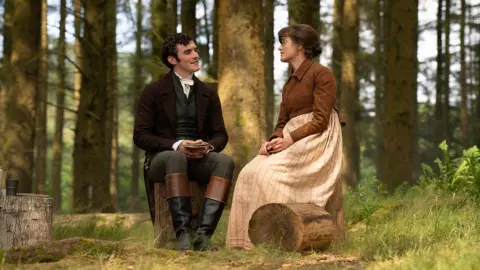
The new TV series, based on the novel of the same name by Janice Hadlow, centres on the Bennet family's middle sister, Mary, as she becomes a governess to the Gardiner family.
BBC/Bad Wolf/James Pardon
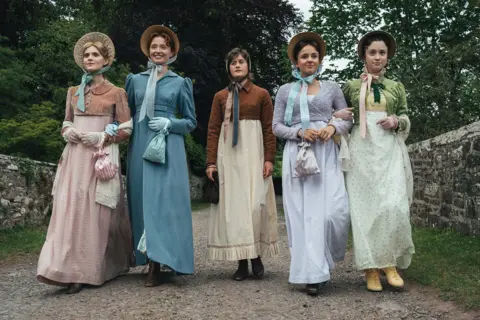
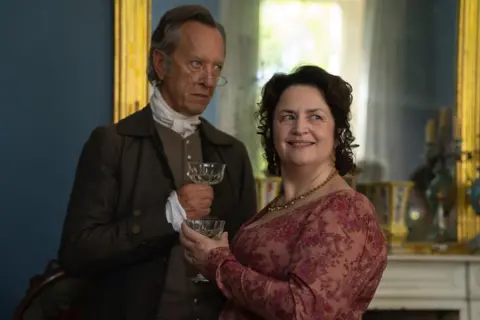
Costume designer Sian Jenkins curated each of the sisters' costumes around a specific flower. Jane's are based on a rose, Lizzy a cornflower, Kitty an iris and Lydia a "wild" primrose to accentuate their personality traits.
It continues on from Austen's Pride and Prejudice - a story that centres on the relationship of Elizabeth Bennet and Mr Darcy, in which Mary's most memorable scene is her awkwardly playing piano at a ball.
Actress Ella Bruccoleri, who plays the teenage Mary, says she was drawn to the character because she's an "atypical period drama heroine" who is anxious, awkward and possesses none of the poise other Regency period protagonists hold.
Quintrell adds: "She's the odd one out. It's really hard for her to find her place in the world. And I think that that will really resonate with a modern audience."
The screenwriter encourages young people to engage with Austen's fictional worlds, as she has. "You will find so much that's recognisable."
On Tuesday, it is Austen's 250th birthday. With Pride and Prejudice published in 1813, why do the cast and crew of this new drama think her work continues to speak to people?
Coming of age
BBC/Bad Wolf/James Pardon
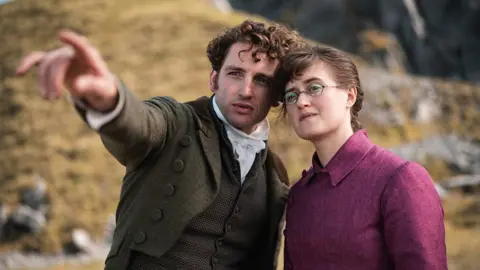
Mary's colour of dress continues to shift and change throughout the series starting with beige tones.
Maddie Close, who plays Jane Bennet in the upcoming series, says Mary's coming-of-age story and journey to self-acceptance is more relevant than ever.
"It is just so beautiful to watch her blossom and find herself," she says, adding that stories like Mary's are especially needed for teenagers trying to navigate the world and social media.
Grace Hogg-Robinson, who plays Mary's sister Lydia Bennet, agrees, and adds that Austen's characters stand the test of time because people often meet them at important junctures in their life - for example, when studying Pride and Prejudice at GCSE.
The actress believes Mary is "much more relatable" to a modern audience than some of the more iconic Austen characters, explaining that "so many people feel like the person that no-one ever quite remembers".
"It's really nice to tell that story," she adds.
Poppy Gilbert, who plays Lizzy Bennet, says Mary is the sister she relates to the most and says others will too, thanks to her experiences of feeling "constantly compared" to others.
Costume designer Sian Jenkins tried to demonstrate Mary's journey to finding herself through her wardrobe, which throughout the series transitions from creams and beiges to bold greens and reds, despite her mother, the infamous Mrs Bennet, berating her at every turn.
Bruccoleri adds that the biggest journey her character goes on in the show is trying to find a way to remove herself emotionally from her overbearing mother.
In order to do this, she has to learn to live without her "approval or validation" and give this to herself instead.
Relationships and society
BBC/Bad Wolf/James Pardon
Richard E Grant plays Mr Bennet and Ruth Jones plays Mrs Bennet in the new series
Bruccoleri says Austen's dry, funny writing provides sharp societal commentary without shoving its message "down your throat".
"Mrs Bennet just doesn't value Mary in the way that she values the other sisters, because she sees their values as so closely linked to their marriageability," she says.
Molly Wright, who plays Kitty adds that Austen is "so ahead of her time" in her views on "marriage and feminism" in Pride and Prejudice.
Hogg-Robinson, who plays Lydia, says that it took her time to realise "how accurate and insightful" Austen's works were after skim-reading them for her GCSEs and then picking them up later as an adult.
She says that Austen's perspective on love and relationships continue to resonate, and points to a TikTok trend which centres on how Mr Darcy changes his behaviour to win over Lizzy in the original novel.
"Everyone was doing that [trend] 'Well, if he wanted to, he would', and Jane Austen got that 250 years ago," she explains.
Modern Austen
BBC/Bad Wolf/James Pardon
Bruccoleri says she would love if people were to finish the show and say "I'm a Mary Bennet"
Screenwriter Quintrell feels very lucky to have contributed to a follow-on story in the world of Pride and Prejudice.
While two centuries may have elapsed, "the characters and the emotional journeys that they go on really feel like they haven't aged at all," she says.
This, she feels, is why people like her and novelist Hadlow want to continue to extend the Bennets' story.
Gilbert says the new series feels like a "behind-the-scenes" Pride and Prejudice, and that viewers can expect to see the siblings not just interact in ballrooms but "yapping in the bathroom" and looking after the family dog.
Ultimately, Quintrell says it's really important to open the story of Pride and Prejudice out, because growing up, she felt the works belonged to scholars and academics and that she was not allowed to "own" the texts.
"Wherever you're from, wherever you grow up, you'll find something to connect to in Austen's work, and hopefully in The Other Bennet Sister," she says.
The Other Bennet Sister is coming soon to the BBC.
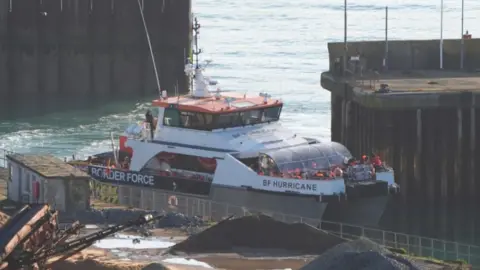
A group of people thought to be migrants were brought in to Dover in Kent by the Border Force
Migrants have been pictured arriving in Dover on Saturday after the longest period without any small boat crossings in seven years.
Photos appeared to show dozens of migrants wearing life jackets being brought in to Dover, Kent, aboard a Border Force vessel.
Before the weekend, no migrants had made the journey for four weeks, according to Home Office figures. The last recorded arrivals before Saturday were on 14 November, marking the longest uninterrupted stretch since 2018.
December is typically a quieter month for crossings due to adverse weather conditions, and this is thought to have contributed to the lull.
Home Office figures on the number of migrants that arrived in the UK on small boats on Saturday will be published on Sunday.
So far this year, 39,292 people have made the Channel crossing, the highest figure for any year other than 2022 when there were 45,774 arrivals.
More than 187,000 people have arrived in small boats since figures were first recorded in 2018.
The UK government has ramped up efforts to tackle small boat crossings in recent months, but the measures are not expected to have an immediate impact.
At the Labour Party conference, Prime Minister Sir Keir Starmer said he would "smash" people smuggling gangs and cut the number of crossings by 2029.
In November, Home Secretary Shabana Mahmood announced asylum changes including making refugee status in the UK temporary and subject to review every 30 months, and sending refugees home if their country is deemed safe.
A "one in, one out" pilot agreed between the UK and France began in August. Under the scheme, for each migrant the UK returns to France, another migrant with a strong case for asylum in Britain comes the other way.
As of 27 November 2025, 153 people had been returned through this arrangement.
US special envoy Steve Witkoff will hold talks with European leaders in Berlin at the weekend
US President Donald Trump's overseas envoy will travel to Germany this weekend to meet Ukrainian President Volodymyr Zelensky and European leaders for the latest round of high-level talks on ending the war.
Steve Witkoff, who has been leading White House attempts to mediate between Ukraine and Russia, will discuss the latest version of the proposed peace agreement in Berlin.
The Trump administration is pushing for a deal to be in place by Christmas and has held several rounds of talks with Ukrainian and Russian representatives in recent weeks, though there has been little sign a breakthrough is imminent.
It has not yet been confirmed which European leaders will attend the Berlin talks.
The Wall Street Journal, which first reported details of the meeting, said UK Prime Minister Sir Keir Starmer, French President Emmanuel Macron and German Chancellor Friedrich Merz would all take part.
The Witkoff-Zelensky meeting comes days after Ukraine gave the US its revised version of a 20-point peace plan, the latest iteration of a proposal which first emerged in late November and has triggered a flurry of diplomatic activity.
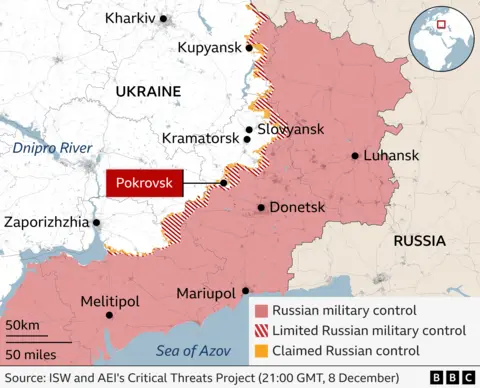
The fate of territory in eastern Ukraine remains one of the most intractable topics in the negotiations, with Kyiv refusing to cede land which has been illegally occupied, and Moscow repeating its intention to take the Donbas region in full by force unless Ukraine withdraws.
The Ukrainian president told reporters that under the US-proposed terms, the Kremlin would undertake not to advance into the areas vacated by Ukraine's forces, with the land between Russian-controlled parts of the Donbas and Ukraine's defensive lines effectively turned into a demilitarised zone.
The proposal, seemingly an attempt to resolve the question of legal ownership by creating a new status for the land, has been publicly questioned by Zelensky, who said: "What will restrain [Russia] from advancing? Or from infiltrating disguised as civilians?"
Ukraine and allies in Europe have said publicly that the US-led talks have been fruitful, and have hailed progress on securing amendments to a plan which was widely viewed as favouring Russia when it first emerged.
But there have been signs in recent weeks that Trump is losing patience with Zelensky and his backers on the continent.
Zelensky said elections could be held within 90 days if the US and Europe provided the necessary security. Elections have been suspended since martial law was declared when Russia launched its full-scale invasion in February 2022.
As the White House's diplomatic push continues, attention in Europe is focused on how to support Ukraine in the event of a peace deal, with talks ongoing over security guarantees and funding.
The Ukrainian government faces a stark financial situation: it needs to find an extra €135.7bn (£119bn; $159bn) over the next two years.
It is hoped that agreement paves the way for the funds to be loaned back to Ukraine if a deal can be reached at an EU summit next week, providing Kyiv with financial help for its military and efforts to rebuild parts of the country left devastated after nearly four years of all-out war.
That move has been condemned as theft by the Kremlin, and Russia's central bank has said it will sue Euroclear, a Belgian bank where the vast majority of Russian assets frozen after the invasion are held.
Officials were still negotiating the exact structure of a deal to repurpose the Russian assets on behalf of Ukraine, with the Belgian government being particularly sceptical due to its particular legal exposure as the main holder.
Elsewhere, it was reported that the latest version of the peace plan being circulated envisions Ukraine rapidly joining the European Union.
The Financial Times said Brussels backed Ukraine's swift accession to the bloc, an idea proposed by Ukraine in the latest draft it has given to Washington.
Ukraine formally applied to join the EU days after the 2022 invasion but despite promises of an accelerated process is still several years away from becoming a member.
Under the plan, Ukraine would become a member as soon as January 2027, AFP reported, citing an unnamed senior official. It was unclear whether Washington had approved that element of the draft.
Trump had already announced a deal to stop the fighting between the neighbours
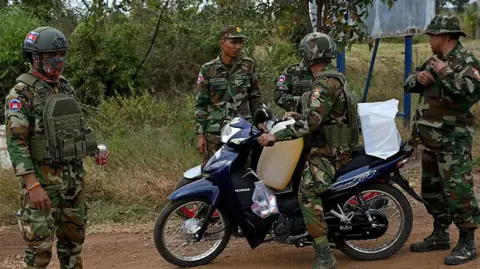
US President Donald Trump has said the prime ministers of Thailand and Cambodia will halt fighting "effective this evening".
Trump made the announcement after telephone conversations with the two leaders following deadly border clashes in recent days which have left at least 20 people dead and half a million displaced.
Neither Thai PM Anutin Charnvirakul nor his Cambodian counterpart Hun Manet has commented.
However, after his call with Trump earlier, Charnvirakul told a news conference that a ceasefire would only come about if "Cambodia will cease fire, withdraw its troops, remove all landmines it has planted".
In a post on his social media platform Truth Social, Trump said both leaders "have agreed to CEASE all shooting effective this evening, and go back to the original Peace Accord made with me.
"Both Countries are ready for PEACE and continued Trade with the United States of America."
The long-standing border dispute escalated on 24 July, as Cambodia launched a barrage of rockets into Thailand, which responded with air strikes.
After days of intense fighting which left dozens dead, the neighbouring South East Asian countries agreed to an "immediate and unconditional ceasefire" brokered by Trump and Malaysian Prime Minister Anwar Ibrahim.
Since then, tensions continued to build.
This week, violence expanded into at least six provinces in north-eastern Thailand and five provinces in Cambodia's north and north-west.
The two countries have been been contesting territorial sovereignty along their 800km land border for more than a century, since the borders of the two nations were drawn after the French occupation of Cambodia.
The British Medical Association (BMA) has warned against public "scaremongering" over the current flu outbreak as its members vote on whether to carry out planned strikes in England next week.
It comes after Health Secretary Wes Streeting said he was "extremely worried" about the "double whammy" of rising numbers of flu patients in hospitals and forthcoming resident doctor strikes.
BMA resident doctors committee chair Dr Jack Fletcher said that while the union was not "diminishing" the impact of flu, Streeting "should not be scaremongering the public into thinking that the NHS will not be able to look after them."
The result of a BMA ballot is due on Monday. If it is rejected, a five-day strike will begin on Wednesday.
The government says a deal offers legislation that prioritises British medical graduates for specialty training jobs starting next year and offers to cover the costs of training expenses such as exam fees.
The deal does not include a pay rise. Writing in the Guardian, Sir Keir said pay for resident doctors - the new name for junior doctors - has increased by 28.9% over the past three years.
In a statement released on Saturday morning, the BMA called on the health secretary to "focus his time and attention on offering a deal that will stop next week's strikes going ahead, rather than making claims that strike action could cause the NHS to collapse."
The BMA has written to chief executives of NHS Trusts in England saying it recognised that, in the event of a strike, resident doctors may be required to return to work to "maintain safe patient care".
The letter, signed by BMA council chair Dr Tom Dolphin, says: "As doctors, we at the BMA wish to ensure that patients remain safe".
Speaking to LBC earlier this week, Streeting said the current situation was "probably the worst pressure the NHS has faced since Covid".
He questioned why the BMA hadn't taken up his offer of pushing the strike back to January "if they wanted to just give me a kicking".
"I can only assume that the reason why they refuse to do that is because they know that this week will be most painful for the NHS," he added.
Echoing the health secretary, the prime minister said the "reckless" strikes "should not happen" while the NHS is facing its "most precarious moment since the pandemic".
Writing in the Guardian on Friday, Sir Keir Starmer said the BMA had been sent a new offer as well as a chance to reschedule the strikes until after Christmas.
"Don't get me wrong – of course I would rather they were cancelled... But under the circumstances, I wanted to be sure we have left no stone unturned in our efforts to protect the NHS," he said.
The BMA said it will ask its members whether the government's offer will be enough to call off Wednesday's strikes.
If members indicate yes, then they will be given time to consider the offer in more detail and a formal follow-up referendum would be held on ending the dispute completely.
Some experts say flu has come early this winter, and it looks to be a particularly nasty season because of a new mutated version of the virus which is circulating.
Many are calling it "super flu", but it is not more severe nor harder to treat.
An average of 2,660 patients per day were in hospital with flu in England last week – the highest for this time of the year since records began in 2021, and up 55% on the week before, NHS England said.
It is important to note that the records only date back to 2021 and so do not capture the two worst flu seasons of the past 15 years, which were seen in 2014-15 and 2017-18.
Flu cases are also rising in Scotland, Wales and Northern Ireland, figures show.
However, the medical director for the NHS in London, Chris Streather, said the flu situation was "well within the boundaries" of what the NHS could cope with and that hospitals were better prepared for large disease outbreaks since the Covid pandemic.
Speculation is probably not helpful and can cause people to worry, he added.
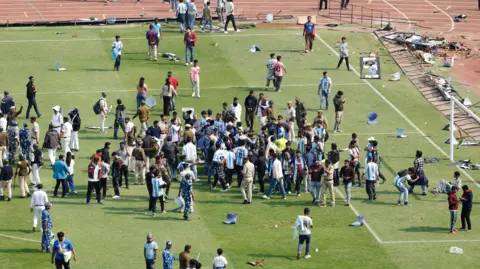
Angry fans attending Lionel Messi's tour of India ripped up seats and threw items towards the pitch after his appearance at Kolkata's Salt Lake Stadium.
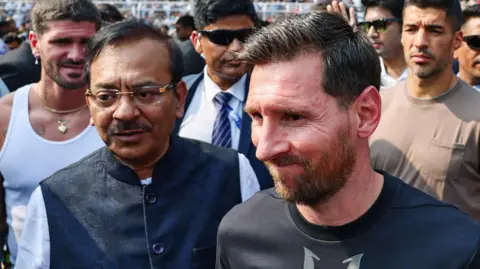
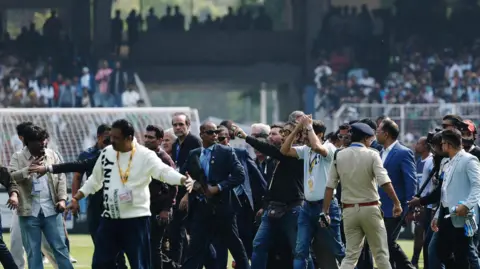
Thousands of adoring supporters had paid up to 12,000 rupees (£100; $133) to catch a glimpse of the football star, but were left disappointed when he emerged to walk around the pitch, and was obscured by a large group of officials and celebrities.
When the Argentina and Inter Miami forward was whisked away early by security after around 20 minutes, elements of the crowd turned hostile.
West Bengal's chief minister, Mamata Banerjee said she was "deeply disturbed and shocked" by the events.
Messi is in India for his 'GOAT tour', a series of promotional events in Kolkata, Hyderabad, Mumbai and New Delhi.
His tour began with the unveiling of a 70ft statue of himself in Kolkata, which had been assembled over the course of 27 days by a 45-strong crew.
It was unveiled virtually due to security reasons, meaning thousands of fans instead travelled to the city's stadium for a chance to see the footballer.
They were chanting, buying jerseys and wearing "I love Messi" headbands.
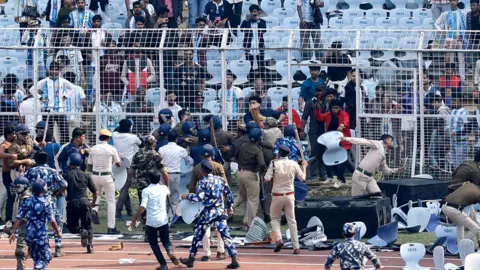
Messi initially walked around the stadium waving to fans, but after his appearance was abruptly ended on Saturday, frustrated fans stormed the pitch and vandalised banners and tents, as others hurled plastic chairs and water bottles.
The 2022 World Cup winner - considered one of football's greatest players of all time - had been expected to play a short exhibition game at the stadium, the AFP news agency reports.
Reuters
As it became apparent Messi's appearance had ended, local media say the scene turned ugly
Reuters
Fans on the pitch in Kolkata after Messi had left
"Only leaders and actors were surrounding Messi ... Why did they call us then ... We have got a ticket for 12 thousand rupees, but we were not even able to see his face", a fan at the stadium told Indian news agency ANI.
One angry fan told the Press Trust of India news agency people had paid the equivalent of a month's salary to see the eight-time Ballon d'Or winner.
"I paid Rs 5,000 for the ticket and came with my son to watch Messi not politicians.
"The police and military personnel were taking selfies, and the management is to blame."
Reuters
Kolkata is the capital of the Indian state of West Bengal and has a large football fanbase in an otherwise cricket-crazed country.
In the city, it is common to see hundreds of thousands of fans gather at stadiums at a derby of local clubs.
Reuters
The Inter Miami forward was mostly obscured by a large entourage at the event
Announcing an enquiry, Banerjee apologised to Messi and "sports lovers" for the incident at the stadium.
"The [enquiry] committee will conduct a detailed enquiry into the incident, fix responsibility, and recommend measures to prevent such occurrences in the future," she said on X.
In the early hours of Saturday, thousands lined the roads and congregated outside the hotel where Messi was staying to try and catch a glimpse of him.
Hitesh, a 24-year-old corporate lawyer, flew nearly 1,900 kilometres from the south Indian city of Bengaluru.
"For me it's personal. You can see I am quite short, and I love to play football with my friends," Hitesh told the BBC, standing in front of the statue.
"Messi is the player I related with the most, no one can match his talent. He gives me hope that with talent you can do anything."
It is just a small part of India's homage to the former Barcelona and Paris St-Germain forward.
Fans can visit 'Hola Messi' fan zone where there is a life-sized replica Messi sat on a throne, a hall adorned with some of his trophies and a recreation of his Miami home complete with mannequins of the player and his family sat on a balcony.
Mr Mangione has watched as the court plays body camera footage from the day of his arrest
Luigi Mangione, the man accused of fatally shooting United Healthcare CEO Brian Thompson in a case that sparked national attention, watched as new testimony and never-before-seen footage from the day of his arrest in a McDonald's was unveiled during a hearing this week.
Mr Mangione has pleaded not guilty to state charges related to the 2024 murder of Mr Thompson, a father of two, as well as federal counts that carry the possibility of the death penalty.
The pre-trial hearing is focused on the defence's attempts to keep certain evidence out of the trial, which has not been scheduled yet, including items found in his backpack during his arrest and statements he made to officers.
During the first two weeks of the hearing, supporters of Mr Mangione - the scion of a prominent Maryland family and Ivy League graduate - filled the back rows of the Manhattan criminal courtroom, some wearing a pin portraying him as a saint-like figure.
Prosecutors and Mr Mangione's legal team are expected to question over a dozen witnesses from the day of his arrest, including the employees who spotted him and the police who arrested him.
Here is a look at some of the key pieces of evidence discussed that offer a window into Mr Mangione's trial.
An eyebrow giveaway
The pre-trial hearing has centred on the small-town McDonald's in Altoona, Pennsylvania, where officers were shocked to find the high-profile suspect days after Mr Thompson was fatally shot - and hours from the busy Midtown Manhattan crime scene.
Witnesses suggested the arrest may never have occurred there if not for one of Mr Mangione's key features: his eyebrows.
During the first day of the hearing, prosecutors played a call to police from a McDonald's employee about a tip from a customer in the restaurant.
The employee said the customer thought a patron looked like the suspect in the United Healthcare CEO shooting. The patron was well covered, wearing a black hoodie, a medical mask and a tan beanie. But one key detail stuck out.
"The only thing you can see is his eyebrows," the employee told police.
It was not the only time Mr Mangione's distinguished eyebrows have come up.
Prosecutors also entered into evidence notecards they say Mr Mangione had, which appeared to be to-do lists for the days after the high-profile shooting.
One card reads: "Keep momentum, FBI slower overnight," while another said: "Change hat, shoes, pluck eyebrows".
New York County District Attorney's Office
Prosecutors said Mr Mangione was carrying a note that appeared to be a to-do list, with instructions to "change hat, shoes, pluck eyebrows"
'Proposterous': An unexpected day at McDonald's
Dozens of videos released by prosecutors show Mr Mangione's encounter with police and his eventual arrest in the McDonald's as other customers watched.
Officers who responded narrated the footage this week, telling the court what was going through their minds as they realised the 27-year-old appeared similar to the suspect in photos.
On Thursday, Altoona Lieutenant William Hanelly said a fellow officer responded sarcastically that he would "get right on it" when he heard the tip about the suspect.
Mr Hanelly told the court that he understood the sarcasm, because it seemed "preposterous" that a shooter from "New York City had found his way to a McDonald's in Altoona, Pennsylvania".
But at the scene, officers said they quickly saw the resemblance to New York Police Department pictures circulated to the public after days without any leads.
"It's him. I'm not kidding. He's real nervous. It's him," one officer can be heard telling Mr Hanelly in a phone call played for the court.
In one video, Mr Mangione eats a McDonald's meal as officers stand guard around him in the restaurant waiting for more officers to arrive.
At the hearing, Mr Mangione watched the videos quietly from the defence table, seated next to his lawyers - wife and husband Karen Friedman Agnifilo and Marc Agnifilo. The latter defended Sean "Diddy" Combs, who was acquitted of sex trafficking and racketeering charges just months earlier.
Wearing a grey suit and button-down shirt most days, Mr Mangione frequently took notes on a legal pad, and occasionally smiled and laughed with his lawyers.
A fake name leads to an arrest
Watch: "What's your name?" - Moment police confront Luigi Mangione at McDonald's
In the series of police body camera videos played for the court, Mr Mangione's interactions with officers eventually lead to his arrest on 9 December as Christmas music plays loudly in the background of the McDonald's.
When officers first speak to Mr Mangione, they ask him to pull his mask down. He listens, and is heard telling officers his name is "Mark Rosario", handing them a New Jersey identification that police later said was false.
That identification gave officers enough cause to arrest Mr Mangione, Mr Hanelly told the court, and in the video, Mr Mangione tells officers his real name is Luigi.
In another body camera video, an officer tells the 27-year-old he is under police investigation for giving a fake identification and Mr Mangione is seen putting his hands on the wall as officers arrest him.
They then take a photo of Mr Mangione with his hands behind his back, an image widely circulated on social media after his arrest.
Bullets, a journal and cash: a peak into Mr Mangione's backpack
The pre-trial hearing also shed light on the items Mr Mangione was carrying when he was arrested.
Mr Mangione's lawyers have argued that a 9mm handgun as well as a notebook should be excluded from trial because officers did not have a warrant to search his backpack. Prosecutors allege that Mr Mangione wrote in his notebook about "the deadly, greed-fuelled health insurance cartel".
During the hearing on Thursday, Mr Hanelly argued that there were exceptions for warrants.
Earlier in the week, Ms Friedman Agnifilo questioned the officer who searched Mr Mangione's backpack, arguing they were searching the bag "because you thought he was the New York City shooter".
"No, we search everyone," said the officer, Christy Wasser.
New York County District Attorney's Office
Evidence found during Mr Mangione's arrest
Video played in court shows a police officer pulling a series of items from the backpack, including a handgun magazine that Mr Hanelly said contained 9 mm bullets - all as Holly Jolly Christmas plays over the speaker.
One law enforcement official comes across a journal in the backpack, and can be heard saying it reads like a "manifesto".
Ms Agnifilo objected after the "manifesto" part of the video was played repeatedly in court, arguing the prosecutor wanted to emphasise the line.
Eventually, Mr Hanelly testified, the officers decided to stop searching the backpack and take it to the police station because "it was going to be a mess".
Prosecutors this week entered into evidence images of other items Mr Mangione had with him, including a gun, a silencer, dozens of $100 bills, face masks, a hair trimmer and a passport.
The hearing is expected to continue into next week.
Watch: King Charles issues update on his cancer treatment
King Charles has been praised for hiscandour in talking about his cancer treatment where he highlighted the importance of early detection and screening.
In a recorded video message, broadcast on Channel 4 for the Stand Up To Cancer campaign, the King said his treatment was being reduced and he urged people to take up offers of cancer screening, saying "early diagnosis quite simply saves lives."
The type of cancer he is being treated for has not been revealed and the King, 77, will continue to receive treatment and monitoring.
Clare Garnsey, associate medical director of Greater Manchester Cancer Alliance, said his message was "very powerful".
The King, who revealed his diagnosis in February last year, is not described as being in remission or "cured" but the regularity of his treatment will be significantly reduced in the new year.
In his video message, recorded in Clarence House two weeks ago, he said that he was "troubled" to learn that nine million people around the UK are not up to date with the cancer screening available to them.
"That is at least nine million opportunities for early diagnosis being missed," he said.
He added: "Too often, I am told, people avoid screening because they imagine it may be frightening, embarrassing or uncomfortable.
"If and when they do finally take up their invitation, they are glad they took part.
"A few moments of minor inconvenience are a small price to pay for the reassurance that comes for most people when they are either told either they don't need further tests or, for some, are given the chance to enable early detection, with the life-saving intervention that can follow."
Speaking to BBC Breakfast, Miss Garnsey said she, "like the majority of health professionals who work in the cancer field" was "really thankful" for what the King said.
"I think the message was very powerful about the importance of early diagnosis and how important it is that we all attend for our screening," she added.
She said it is "really helpful" to healthcare professionals when people in "positions of influence" - such as the King - speak publicly about their experiences with cancer.
These messages highlight that it "can happen to anybody", she said, and raise awareness of the potential symptoms someone may experience.
Royal biographer and friend of King Charles, Jonathan Dimbleby, said the King's message demonstrated the "unique role of the sovereign".
Speaking to BBC Radio 4's Today programme, he said the King's decision to speak openly about his treatment in such "warm, gentle, thoughtful, kind terms" was "quite extraordinary and it has great impact".
Until now the King has said little publicly about his illness.
In his video message, King Charles said he knew how "overwhelming" a diagnosis can feel, but stressed that early detection is "key" to give patients the "precious gift of hope".
Cancer charity Macmillan Cancer Support said it was "incredibly grateful" to the King for sharing his experience "with such openness and honesty".
"The King's reminder of the importance of screening and early detection is an important message for us all," it added in a statement.
The prime minister said the King's message was "powerful" and that he was "glad" that the King's treatment will be reduced in the new year.
According to Buckingham Palace, the King's recovery has reached a very positive stage and he has "responded exceptionally well to treatment", so much so that doctors will now move his treatment "into a precautionary phase".
The regularity of treatment is going to be significantly reduced - but the King, 77, is not described as being in remission or "cured".
Meanwhile, Dr Harrison Carter, director of screening at NHS England, said the health service "fully supported" the King's call for people to attend screening tests.
"So, when your NHS screening invite arrives, whether it's for cervical or breast screening, or a bowel cancer testing kit through the post, please do make time to take it up."
The tree, in the village of Shotton Colliery, was cut down on Wednesday
Two men have been arrested after a Christmas tree which has stood in a village for more than 10 years was cut down, hours after its lights were switched on.
The tree, in Shotton Colliery, County Durham, was felled at some point between 22:00 and 23:00 GMT on Wednesday.
Two men were arrested after an appeal by Peterlee Neighbourhood Police Team.
Police said officers were in the process of charging and remanding a 26-year-old man with criminal damage, while a 23-year-old man has been released under investigation.
On Friday, Shotton Residents Association chairman Steve Maitland said the tree had been put up as a monument to the fallen soldiers of World War One.
He told BBC Radio Tees that members of the public were making a sleeve for the tree's base, so they could bolt it back up as quickly as possible, "just to tide us over for Christmas".
He said: "These people who did this – I don't think they understand the history and the feeling of these things."
Some of the people involved in fundraising for the tree a decade ago had since died, he said.
He called the attack "mindless vandalism" but said he could not "turn the clock back".
The Last Time Is Now. It's the name given to the tournament in which 16 wrestling giants have been competing to be the one opponent in John Cena's final fight before retirement.
And that final fight is now - Saturday night - in Washington DC, bringing the curtain down on an illustrious career that has seen the American become one of wrestling's biggest and most bankable stars.
In the 8,570 days since his debut, Cena has clinched 17 world titles and coined the iconic "You Can't See Me" catchphrase - but the 48-year-old's impact goes far beyond that.
If you were to pose the question "who is John Cena?", depending on who you ask, the answers might vary from legendary WWE (World Wrestling Entertainment) superstar, to successful film actor, while some will say he's Mr Make-A-Wish (more on that later).
Rich Freeda/WWE via Getty Images
John Cena celebrates his win during WrestleMania 41 Sunday in Las Vegas in April 2025
How to watch John Cena's last match:
Start time: WWE Saturday Night's Main Event is scheduled to begin at 01:00 GMT on Sun 14 Dec
Where to watch: In the UK, you can watch for free on WWE's official YouTube channel. Internationally it can be watched on Netflix, and on Peacock in the US
'An exceptional wrestling talent'
Since his 2002 debut, there's been an evolution in his own wrestling character - transitioning from "ruthless aggression" rookie, to a "Doctor of Thuganomics" rapper, and eventually a heroic character known for a "Never Give Up" attitude.
Despite criticism from some fans of his in-ring ability, with occasional chants of "you can't wrestle" through the years, "there's no doubt that he's an exceptional wrestling talent", says Brandon Thurston, editor and owner of wrestling website, Wrestlenomics.
He feels something changed in 2005, after which WWE became "increasingly scripted in a way it had not been" before, as it entered into a more controlled, family friendly PG era. But Cena managed thrive.
"He's definitely been the biggest draw over the time which I would say stretches from 2005 to roughly 2015," Mr Thurston says, with Cena's merchandise also regularly topping sales for the company.
"There's little question that he was WWE's most important economic wrestler throughout that time - in terms of pay-per-view buys, which were still central in that era, TV ratings, and as a house show draw."
Outside the ring too, he's a personality who "people gravitate towards and want to listen to", says Mr Thurston - and wrestling fans like Joe Clarkson and Sabrina Nicole feel just that.
WWE via Getty Images
Cena made his debut against Kurt Angle during SmackDown in June 2002
"To go for such a long time in an industry, which is quite heavily taxing on the body, is absolutely fascinating," says Joe, 24, who was five when he first saw Cena on TV.
"I think over time, the people just gained more and more respect for him, not just as a performer, but also as an individual."
For Sabrina, 37, who remembers Cena's WWE debut in 2002, it's "his charisma".
"He has just always had something about him that makes him a star," she says, adding that for most of his career, he's "always maintained a good guy persona".
"No matter what the crowd, no matter what the fans have thought of him. He has just been the testament to if you have a really good character, you can be on top," she says.
It also seems to be true that, beyond his ability and persona, Cena seized an opportunity.
Getty Images
Cena's signature "You Can't See Me" gesture
With The Rock and Stone Cold Steve Austin no longer full-time performers, WWE bosses were looking for a new star to emerge.
Brandon feels WWE leadershiprecognised Cena "would be a very reliable and extremely hardworking person whom they could entrust with such a spot".
It's widely accepted within wrestling circles that the final decision to have Cena as the chosen star would ultimately have been taken by then-WWE chairman Vince McMahon.
While he was known for following his instincts, there will also have been a judgement on Cena's ability to connect with a passionate crowd on the mic, his marketability and whether he could be in the industry long enough to be profitable.
And when Cena started taking more time away from wrestling in 2015 and working a reduced schedule, Mr Thurston feels there was a "decline" in the WWE product.
Other wrestling experts have suggested Cena's presence over the years helped slow the slide of WWE ratings trending downwards which, according to analysis by wrestling site PWtorch, saw average viewership for its flagship weekly Raw programme fall by a million between 2010 and 2015, to 3.7m.
Having achieved so much within wrestling, Cena could "just come in and be a wrestler and walk out", adds Dr Gillian Brooks, associate professor in marketing at King's Business School, but instead she says he built a personal brand that comes across as real.
An 'authentic' character
Among the brands Cena has worked with is Neutrogena, becoming the face of its sunscreen campaign after revealing he had skin cancer spots - which he attributed to his own lack of sun protection use.
He also holds the Guinness World Record for the number of wishes granted through the Make-A-Wish Foundation, with more than 650 fulfilled wishes for children with critical illnesses. It's a partnership he revealed had started by "accident", but one he's kept since 2002, describing it as "the coolest thing".
"If you think about it from a child's perspective, they're seeing someone that they've seen on TV watching WWE or in films, and they suddenly get to meet him," Dr Brooks says. "The fact that he's doing charity work, he's written a children's book, been in films, made music… all these things illustrate that he's not a one show pony.
"It's coming across in a way that's very authentic and very sort of pure to who he is."
Both Cena's personal brand and his charisma are set to live on, but his time in the ring looks to have come to an end after Cena announced last year that 2025 would be his last as a competitor.
Getty Images
Cena reached his 500th wish-granting milestone in 2015
The retirement run
Explaining his reasoning at the time, he told of the physical toll wrestling had taken on his body.
His career has seen him undergo several operations, including on his neck, pec and triceps, with Cena saying in interviews that his "body hurts" and is "screaming to close the chapter".
While the old saying "never say never" is a popular one, Cena has repeatedly said he will be "100% done" - and has received rousing receptions around the world for his final appearances.
Overall, fan Joe is happy with Cena's "retirement run", with matches against old rivals such as AJ Styles, Randy Orton and CM Punk, and newer stars including Dominik Mysterio and Gunther.
He does feel the "execution" of his final year could have been better though, with Cena's short-term "heel turn" (becoming a villain) at the Elimination Chamber event in March drawing criticism.
"It could have been handled better," Joe says. "[But] he's had such a unique distinction of having a retirement run that no one's ever had before.
"It's very sad to see him retire now. But I think he said it himself - it's the right time."
Not that WWE fans will never see Cena again; he has signed a five-year deal to be an ambassador for the company.
Having won The Last Time Is Now tournament, it's former world heavyweight champion Gunther who will face Cena in his final fight.
With it not being broadcast on terrestrial TV, but rather on streaming platforms, it's been reported that there is no time limit on the match - and Gunther, who has never wrestled Cena before, has been giving much tough talk.
One thing's for sure: "You Can't See Me" might be the taunt Cena gives Gunther, but the last fight will be seen and remembered by many.
WWE via Getty Images
John Cena lands a Five Knuckle Shuffle on AJ Styles in Perth, Australia
Avatar: Fire and Ash is predicted to be one of the year's highest-grossing movies
It's no secret the Avatar films are a gigantic technical feat - pushing the boundaries of cinematography, animation and performance capture.
But you may not be aware that the same applies to the music.
Composer Simon Franglen says work on the third instalment, Avatar: Fire and Ash, took an epic seven years to complete.
Along the way, he wrote 1,907 pages of orchestral score; and even invented new instruments for the residents of the alien planet Pandora to play.
And, with director James Cameron tinkering with the edit until the very last minute, the British musician only finished his final musical cue five days before the film was printed and delivered.
In total, Avatar contains "four times as much" music as a standard Hollywood film, says Franglen, with almost the entirety of its 195-minute running time requiring music.
"But I got 10 minutes off for good behaviour," he laughs.
20th Century Studios
Simon Franglen spent seven years working on the score, with the bulk of the work taking place from 2023-25
Fire and Ash is the third instalment in the record-breaking series, continuing the saga of the blue Na'vi population, who are protecting their planet from human invaders, intent on stripping its natural resources.
The new film, released on 19 December, takes audiences back to the astonishingly vivid landscapes of Pandora, but it also sends them on a visceral emotional journey.
At the start of the film, the two main characters Jake Sully (Sam Worthington) and Neytiri (Zoe Saldana) are mourning the death of their teenage son, Neteyam.
Unable to see eye-to-eye, the grief threatens to tear the couple apart.
Franglen was tasked with creating a score that could reflect the depth of their despair.
"I wanted to make sure that you felt that sense of distance that was growing between them," he says.
"So what I would do is, I would take two lines [of music] and I'd have them moving apart, or I would make them go wrong, so that they felt austere and cold and disconnected."
"Grief is not something that is ever addressed in these sorts of films," he continues, "but for any family, the loss of a child is the worst thing you can go through.
"Musically, the important stuff is often the quiet moments."
A hoedown on a galleon
By contrast, when Franglen composed the music for the Wind Traders - a nomadic clan of salesmen, who travel by airship - he could let his imagination run wild.
Their swashbuckling themes are inspired by the action movies of the 1930s and 40s, but they also feature brand new instruments, unique to Pandora.
"When we meet the wind traders [they're having] a hoedown on their enormous Galleon," says Franglen.
"The problem was that, if you are having a Pandoran party, what do they play? I can't give them guitar, bass and drums. I can't give them a banjo.
"You have to have a real instrument that would be designed for three metre-tall, blue people with four fingers.
"And because Avatar is not animation, when there are instruments on screen, you have to have the real thing," he says, referring to Cameron's rule that everything on screen has to be rooted in reality, even though the film's imagery is largely computer-generated.
"So I sketched out some instruments, and gave them to the art department, who made these beautiful designs."
20th Century Studios
Franglen sketches were turned into actual, playable instruments
Franglen's creations included a long-necked lute, similar to a Turkish saz, with strings that represent the rigging of the Wind Traders' ship.
A percussion instrument was also designed, with the drum head using the same material as the vessel's sails.
The art department's renders were then given to prop master Brad Elliott, who built the instruments on a 3D printers, and the actors played them for real on set.
For now, however, these inventions have no official name.
"They are currently called 'the stringy things' and 'the drummy things'," laughs Franglen.
"I'm sure there's a better name. Somebody said we should have a competition."
20th Century Studios
Franglen says his new instruments could be produced commercially if there is enough demand from fans
Franglen's musical career started when he was just 13 years old- he wrote a letter to the BBC asking how someone would go about becoming a record producer.
Mistakenly assuming he was asking about radio production, the corporation advised him to study electronics - leading him to a course at Manchester University in the early 1980s.
He arrived just as the Hacienda Club opened ("I was member 347") and spent his free time booking bands for the college's concert venue.
"I remember booking Tears for Fears and 11 people came," he says.
After graduating, he was hired to work as a synth programmer, and was introduced to Trevor Horn - who set him to work on pivotal 80s albums by Yes and Frankie Goes To Hollywood.
Eventually, he decided to try his luck in America where, "after six months of doing almost nothing", he became an in-demand session musician and programmer.
Credits started to rack up on hits like Toni Braxton's Unbreak My Heart, All 4 One's I Swear and Whitney Houston's I Have Nothing; and he eventually found himself programming drums for Michael Jackson's HIStory album.
"The pressure was to make it great," he says. "To have that sense of groove, what we call, 'the pocket'.
"And a big part of my career is that I had a good pocket. I understood where things should feel and how they should hit. And that is as important with film scores as it is when you're making a Michael Jackson record."
Franglen's first experience of film scoring came when Bond composer John Barry asked him to assist on Kevin Costner's Oscar-winning Dances With Wolves. He was later hired to do the "dark and nasty stuff" on David Fincher's Se7en.
"My job was to provide the dystopian edge that that score has. So I would take squealing brakes, make samples of them, and then play all the violin lines with squealing brakes underneath.
"There was a lot of experimental stuff, which was incredibly fun."
Getty Images
Franglen says he'll work on some smaller projects before returning to the Avatar universe
Franglen first met Avatar director James Cameron after being hired by legendary film composer James Horner, to work "on a film he had no money for".
The film was Titanic - a notorious white elephant, dismissed as a vanity project, and predicted to bring about the collapse of film studios Fox and Paramount.
The composer had seen the headlines, but when Cameron showed him the scene where the Titanic broke in half and started to sink, he realised the press had got it wrong.
"It was just astonishing, in comparison to anything you'd seen before. I knew it was special."
Even so, there was no budget left for the music, Franglen had to borrow equipment and instruments from the manufacturers, and the majority of the score was recorded on synthesizers in a rented apartment.
"Part of the reason that Titanic sounds the way that it does, is because there wasn't enough money for [an] orchestra everywhere," he says.
Getty Images
The cast posed with director James Cameron ahead of Avatar's European premiere earlier this week (L-R): Sam Worthington, Sigourney Weaver, James Cameron, Zoe Saldana, Oona Castilla Chaplin and Stephen Lang
The opposite is true on Avatar.
"Jim [Cameron] still believes that the good things take time. And as a composer, having that ability to refine and to make something special is something that is rare these days."
The director also went to great lengths to ensure his latest film is free from artificial intelligence.
"He very specifically asked me, 'So, we're not using any AI? We're not putting any real musicians out of work'," Franglen recalls.
"It's fair to say that if you gave a lot of film producers the option to save money, they would take that option.
"Jim is in a situation where he will not compromise, and that's as important when it comes to the music as it is to the live performances of the actors."
As the film prepares to open, Franglen is celebrating a Golden Globe nomination for the theme song, Dream As One, sung by Miley Cyrus.
But he's also thinking about what comes next. Cameron has already completed the scripts for Avatar Four and Five; scheduled to come out in 2029 and 2031.
"Four is… I think it's astonishing," says Franglen. "It goes into whole new territories, and I love it."
Initial footage has already been shot, but Cameron says completing the film will depend on the box office performance of Fire and Ash.
"I really hope that we break even, so that we can make it," says Franglen.
"I think they said after Avatar Two that the break even point was $1.4 billion (£1 billion).
"I have no way of knowing, but I presume that it's a similar number for this one.
"So if the audience tells us that they want an Avatar Four, I'm very much looking forward to doing that."
Watch: King Charles issues update on his cancer treatment
King Charles has shared "good news" about his cancer, saying in a personal message that early diagnosis and "effective intervention" means his treatment can be reduced in the new year.
In a recorded video message broadcast on Channel 4 for the Stand Up To Cancer campaign, the King said: "This milestone is both a personal blessing and a testimony to the remarkable advances that have been made in cancer care."
According to Buckingham Palace, the King's recovery has reached a very positive stage and he has "responded exceptionally well to treatment", so much so that doctors will now move his treatment "into a precautionary phase".
The regularity of treatment is going to be significantly reduced - but the King, 77, is not described as being in remission or "cured".
"Today I am able to share with you the good news that thanks to early diagnosis, effective intervention and adherence to 'doctors' orders', my own schedule of cancer treatment can be reduced in the new year," the King said in his speech.
The video message, recorded in Clarence House two weeks ago, was played in the Stand Up To Cancer show on Channel 4 on Friday evening, in a fundraising project run with Cancer Research UK.
The campaign encourages more people to get tested for cancer and to take advantage of national screening schemes - and the King's message emphasised the importance of checks to catch cancer at an early stage.
"I know from my own experience that a cancer diagnosis can feel overwhelming. Yet I also know that early detection is the key that can transform treatment journeys, giving invaluable time to medical teams," said the King.
Early detection could be a lifesaver, he said: "Your life, or the life of someone you love, may depend upon it."
PA Media
King Charles had a message of "hope" at an Advent service this week
The King also spoke of how much he had been "profoundly moved by what I can only call the 'community of care' that surrounds every cancer patient - the specialists, the nurses, researchers and volunteers who work tirelessly to save and improve lives".
Until now the King has said little publicly about his illness.
He didn't seem to want to be defined by the disease and his approach has been to keep working, with a busy schedule including overseas trips and hosting state visits, including last week's by the German president.
A couple of days ago he was sending a message of optimism and seasonal "hope", when he attended an atmospheric, candle-lit Advent service at Westminster Abbey.
The Stand Up To Cancer show, presented by celebrities including Davina McCall, Adam Hills and Clare Balding, has urged people not to be frightened of getting cancer checks.
In particular, the show has appealed to the estimated nine million people in the UK who Cancer Research UK says are not up to date with NHS screening schemes, offering an online checker to let people see if they are eligible for tests for breast, bowel and cervical cancer.
The King said it "troubles me deeply" that this represents nine million missed opportunities to catch cancer early - and he urged people to use the screening checker online tool.
"The statistics speak with stark clarity. To take just one example: When bowel cancer is caught at the earliest stage, around nine in 10 people survive for at least five years. When diagnosed late, that falls to just one in 10," he said.
According to royal sources, the King's reference to bowel cancer should not be seen as linked to his own condition, and prostate cancer has previously been ruled out.
In an attempt to demystify cancer checks and show the value of early diagnosis the Stand Up To Cancer show had a live broadcast from cancer clinics at Addenbrooke's and Royal Papworth hospitals in Cambridge.
"I want to take the fear out of cancer screening and show everyone that they are not on their own in this," said McCall, 58, who recently said she was recovering from breast cancer surgery.
Reuters
The King has talked about the shock of receiving a cancer diagnosis
Currently in the UK, there are three NHS cancer screening programmes - for bowel, breast and cervical cancer - available to certain age groups.
A new lung cancer screening programme is also being slowly rolled out for anyone at high risk of developing the disease, specifically targeting people aged 55-74 years old, who currently or used to smoke.
Men may enquire about prostate cancer checks, but there is no national programme in place.
The Stand Up to Cancer project, which has raised £113m since 2012, is funding 73 clinical trials involving 13,000 cancer patients.
Michelle Mitchell, chief executive of Cancer Research UK, said public figures speaking openly about cancer can encourage others to have a check up.
"Spotting cancer early can make a real difference and provides the best chance for successful treatment," she said.
Robert Rhodes, pictured in a police interview in 2016, orchestrated a plot to kill Dawn Rhodes and claim he did so in self-defence
On a bank holiday evening in 2016, Robert Rhodes turned to his child and said: "Do you want to get rid of Mum?"
Those words, the child recalled years later, were the start of a plot for Rhodes to kill his wife, Dawn, in their Surrey home and cover up her death as an act of defence - of himself and his child.
For years, Rhodes painted himself as a victim of an attack in the killing he planned and covered up.
Described as swift and protective, jurors heard accounts of a father who moved to protect his child from their knife-wielding mother, who lost her life in the skirmish that ensued.
Instead, a new trial revealed a complex tale of abuse, control and a murder plot with the coercion of a child at its heart.
On 2 June 2016, the child, who cannot be named for legal reasons, went to their mother and said: "I drew a picture for you, close your eyes and hold out your hands."
Then, with the child leaving the room and locking themselves in the bathroom, Rhodes cut his wife's throat with a kitchen knife.
To cover up the killing, Rhodes once again turned to his child, telling them he "needed a favour".
The favour, the child told police in 2022, was to stab their father in the back of the shoulder, with the same knife used to kill Dawn, and then let him cut their arm.
Surrey Police
Dawn Rhodes was killed in her kitchen in Wimborne Avenue, Earlswood, Surrey
"I didn't want to do any of it. I just felt guilty but I did what I was told," the child said during the police interview.
Despite the child crying and objecting at the time, Rhodes reportedly said: "We've done this now. There's no going back."
The child also told their therapist in 2021 that Rhodes had stabbed himself in the back of the head, causing himself another wound he would claim was caused by his wife.
As they were under 10 years old at the time of the murder, the child bears no criminal responsibility for aiding the attack.
Life insurance
The death of Dawn Rhodes followed the end of a marriage in turmoil, with the couple in the process of separating after revelations of infidelity.
The pair had known each other for more than 20 years, having met when Rhodes was 21 and Mrs Rhodes was 18, the court heard.
Having married in 2003, the couple lived in Epsom and across Surrey, before settling in Wimborne Avenue in Earlswood, near Redhill.
But on Christmas Eve in 2015, Robert Rhodes found out about an affair that Mrs Rhodes had been having with a co-worker.
From that point, Mrs Rhodes would claim to family members that Rhodes would self-harm in front of her and threaten to kill himself.
Internet searches made by Rhodes show him researching methods of suicide, as well as about life insurance.
He told the court: "I didn't see a future in our marriage."
Rhodes also admitted to creating a fake Facebook profile and contacting the wife of Mrs Rhodes' new partner to tell her about the affair.
Later, he would message his wife's partner: "Thank you for screwing my life and wife."
'Like the Hulk'
The child continued in their second set of police interviews: "There was a plan and we went through with it. I was told to lie and I did."
But shortly after the killing, the child originally told police how, after another argument between Rhodes and his wife, they had tried to intervene.
As part of the cover-up of their father's attack, the child said their mother picked up a knife and swung it at their arm, delivering the cut to their arm which was, in fact, administered by Rhodes.
The child described Dawn's "rage" and "anger" in a police interview in May 2017, before being told to run upstairs and "lock yourself in the bathroom".
In his own police interview, an emotional Rhodes told officers how he "grabbed the blade" of the knife and "held it as tight as I could".
Weaving his story together, he told officers: "I was scared, and it takes a lot to scare me.
"It's like one minute she [Dawn] is fine and the next minute she's like the Hulk," he added, referring to the comic book superhero.
Despite the façade put up by the child, witnesses in the trial pointed to signs that the truth lay beneath.
In a conversation while together in a car, when asked about their scar from the incident, the child would tell one adult: "It was the sharp bit [of the knife], that's how dad did it."
The child would later allege that, while on supervised visits, their father would attempt to speak to them, telling them to "stick to the plan".
They would later suggest their father would message them on a phone he had secretly given them, again urging them to continue backing his version of events.
In an unrelated conversation years later, other witnesses revealed how they heard Rhodes tell the child: "Snitches get stitches."
Surrey Police
Robert Rhodes, 52, coerced his child into helping to kill their mother, Dawn Rhodes, in 2016
Years passed, and the child continued at school and made new friends, while the truth of what happened continued to eat at them inside.
In November 2021, the child confided the truth in a close friend, who recalled: "I asked if they felt guilty, they said yes - like this guilt had been bothering them. They were distraught."
The following day, the child would then tell their therapist, who alerted police.
Double jeopardy
Following an appeal to the Court of Appeal in November 2024, Rhodes was retried under the double jeopardy rules.
It meant that, due to the compelling new evidence brought forward by the child, he could be reexamined for the crime he was acquitted of in 2017, as well as charges of child cruelty, perverting the course of justice and perjury.
At his new trial, Rhodes would often sit staring ahead, his eyes occasionally darting over to the 12 people hearing his case.
While the court listened to more gruesome details of the murder, Rhodes would hunch over and stare at the floor and, on one occasion when evidence was being read out, he sat shaking his head and mouthing "nope" out into the courtroom.
As jurors convicted him, he stood silently in the dock.
'Motherhood brought her joy'
Following the trial, Mrs Rhodes' family - mother Liz Spencer, sister Kirsty Spencer and brother Darren Spencer, paid tribute.
Her mother said: "Dawn was a loving daughter, sister and mother. Being a mother was what brought joy to Dawn.
"During her life, Dawn was looking for someone to build a life with. She was looking for someone to love and be loved by someone to trust and be trusted by and someone to respect and be respected by."
Kirsty added: "Dawn was my sister and I loved her dearly.
"I know my sister would want us to find freedom, a freedom that she was deprived of."
Her brother Darren added: "Dawn was a very capable woman, but unfortunately went through hell in the last few years of her life.
"The pressures on her at the time meant that she wasn't the Dawn we all knew, and the last few times we saw her before she was taken from us, she was at the end of her tether."
Rhodes will be sentenced at Inner London Crown Court on January 16.
Avatar: Fire and Ash is predicted to be one of the year's highest-grossing movies
It's no secret the Avatar films are a gigantic technical feat - pushing the boundaries of cinematography, animation and performance capture.
But you may not be aware that the same applies to the music.
Composer Simon Franglen says work on the third instalment, Avatar: Fire and Ash, took an epic seven years to complete.
Along the way, he wrote 1,907 pages of orchestral score; and even invented new instruments for the residents of the alien planet Pandora to play.
And, with director James Cameron tinkering with the edit until the very last minute, the British musician only finished his final musical cue five days before the film was printed and delivered.
In total, Avatar contains "four times as much" music as a standard Hollywood film, says Franglen, with almost the entirety of its 195-minute running time requiring music.
"But I got 10 minutes off for good behaviour," he laughs.
20th Century Studios
Simon Franglen spent seven years working on the score, with the bulk of the work taking place from 2023-25
Fire and Ash is the third instalment in the record-breaking series, continuing the saga of the blue Na'vi population, who are protecting their planet from human invaders, intent on stripping its natural resources.
The new film, released on 19 December, takes audiences back to the astonishingly vivid landscapes of Pandora, but it also sends them on a visceral emotional journey.
At the start of the film, the two main characters Jake Sully (Sam Worthington) and Neytiri (Zoe Saldana) are mourning the death of their teenage son, Neteyam.
Unable to see eye-to-eye, the grief threatens to tear the couple apart.
Franglen was tasked with creating a score that could reflect the depth of their despair.
"I wanted to make sure that you felt that sense of distance that was growing between them," he says.
"So what I would do is, I would take two lines [of music] and I'd have them moving apart, or I would make them go wrong, so that they felt austere and cold and disconnected."
"Grief is not something that is ever addressed in these sorts of films," he continues, "but for any family, the loss of a child is the worst thing you can go through.
"Musically, the important stuff is often the quiet moments."
A hoedown on a galleon
By contrast, when Franglen composed the music for the Wind Traders - a nomadic clan of salesmen, who travel by airship - he could let his imagination run wild.
Their swashbuckling themes are inspired by the action movies of the 1930s and 40s, but they also feature brand new instruments, unique to Pandora.
"When we meet the wind traders [they're having] a hoedown on their enormous Galleon," says Franglen.
"The problem was that, if you are having a Pandoran party, what do they play? I can't give them guitar, bass and drums. I can't give them a banjo.
"You have to have a real instrument that would be designed for three metre-tall, blue people with four fingers.
"And because Avatar is not animation, when there are instruments on screen, you have to have the real thing," he says, referring to Cameron's rule that everything on screen has to be rooted in reality, even though the film's imagery is largely computer-generated.
"So I sketched out some instruments, and gave them to the art department, who made these beautiful designs."
20th Century Studios
Franglen sketches were turned into actual, playable instruments
Franglen's creations included a long-necked lute, similar to a Turkish saz, with strings that represent the rigging of the Wind Traders' ship.
A percussion instrument was also designed, with the drum head using the same material as the vessel's sails.
The art department's renders were then given to prop master Brad Elliott, who built the instruments on a 3D printers, and the actors played them for real on set.
For now, however, these inventions have no official name.
"They are currently called 'the stringy things' and 'the drummy things'," laughs Franglen.
"I'm sure there's a better name. Somebody said we should have a competition."
20th Century Studios
Franglen says his new instruments could be produced commercially if there is enough demand from fans
Franglen's musical career started when he was just 13 years old- he wrote a letter to the BBC asking how someone would go about becoming a record producer.
Mistakenly assuming he was asking about radio production, the corporation advised him to study electronics - leading him to a course at Manchester University in the early 1980s.
He arrived just as the Hacienda Club opened ("I was member 347") and spent his free time booking bands for the college's concert venue.
"I remember booking Tears for Fears and 11 people came," he says.
After graduating, he was hired to work as a synth programmer, and was introduced to Trevor Horn - who set him to work on pivotal 80s albums by Yes and Frankie Goes To Hollywood.
Eventually, he decided to try his luck in America where, "after six months of doing almost nothing", he became an in-demand session musician and programmer.
Credits started to rack up on hits like Toni Braxton's Unbreak My Heart, All 4 One's I Swear and Whitney Houston's I Have Nothing; and he eventually found himself programming drums for Michael Jackson's HIStory album.
"The pressure was to make it great," he says. "To have that sense of groove, what we call, 'the pocket'.
"And a big part of my career is that I had a good pocket. I understood where things should feel and how they should hit. And that is as important with film scores as it is when you're making a Michael Jackson record."
Franglen's first experience of film scoring came when Bond composer John Barry asked him to assist on Kevin Costner's Oscar-winning Dances With Wolves. He was later hired to do the "dark and nasty stuff" on David Fincher's Se7en.
"My job was to provide the dystopian edge that that score has. So I would take squealing brakes, make samples of them, and then play all the violin lines with squealing brakes underneath.
"There was a lot of experimental stuff, which was incredibly fun."
Getty Images
Franglen says he'll work on some smaller projects before returning to the Avatar universe
Franglen first met Avatar director James Cameron after being hired by legendary film composer James Horner, to work "on a film he had no money for".
The film was Titanic - a notorious white elephant, dismissed as a vanity project, and predicted to bring about the collapse of film studios Fox and Paramount.
The composer had seen the headlines, but when Cameron showed him the scene where the Titanic broke in half and started to sink, he realised the press had got it wrong.
"It was just astonishing, in comparison to anything you'd seen before. I knew it was special."
Even so, there was no budget left for the music, Franglen had to borrow equipment and instruments from the manufacturers, and the majority of the score was recorded on synthesizers in a rented apartment.
"Part of the reason that Titanic sounds the way that it does, is because there wasn't enough money for [an] orchestra everywhere," he says.
Getty Images
The cast posed with director James Cameron ahead of Avatar's European premiere earlier this week (L-R): Sam Worthington, Sigourney Weaver, James Cameron, Zoe Saldana, Oona Castilla Chaplin and Stephen Lang
The opposite is true on Avatar.
"Jim [Cameron] still believes that the good things take time. And as a composer, having that ability to refine and to make something special is something that is rare these days."
The director also went to great lengths to ensure his latest film is free from artificial intelligence.
"He very specifically asked me, 'So, we're not using any AI? We're not putting any real musicians out of work'," Franglen recalls.
"It's fair to say that if you gave a lot of film producers the option to save money, they would take that option.
"Jim is in a situation where he will not compromise, and that's as important when it comes to the music as it is to the live performances of the actors."
As the film prepares to open, Franglen is celebrating a Golden Globe nomination for the theme song, Dream As One, sung by Miley Cyrus.
But he's also thinking about what comes next. Cameron has already completed the scripts for Avatar Four and Five; scheduled to come out in 2029 and 2031.
"Four is… I think it's astonishing," says Franglen. "It goes into whole new territories, and I love it."
Initial footage has already been shot, but Cameron says completing the film will depend on the box office performance of Fire and Ash.
"I really hope that we break even, so that we can make it," says Franglen.
"I think they said after Avatar Two that the break even point was $1.4 billion (£1 billion).
"I have no way of knowing, but I presume that it's a similar number for this one.
"So if the audience tells us that they want an Avatar Four, I'm very much looking forward to doing that."
Critics say gaming platforms should be included in Australia's ban on social media for under-16s
Wednesday afternoons have become a ritual for 15-year-old Sadmir Perviz. It's a circuitous route from home in Perth to the Fiona Stanley Hospital - but it's worth it, he says, to sit down for a game of Dungeons & Dragons with people he may not know but with whom he shares a great deal in common.
Sadmir and his board game companions are just some of the 300 patients at the gaming disorder clinic, Australia's only publicly-run institution of its type, helping patients wean themselves off excessive online gaming habits.
The room where they meet is a simple space in a faceless hospital but in the corner, there's a pile of boardgames on a chair. Jenga, Uno and Sushi Go are also popular choices at the informal group which is attended by both patients and clinicians.
It's a bit of a departure for the 15-year-old who until a couple of months ago preferred to play games with friends online for 10 hours a day.
"It feels completely different," says Sadmir. "You get to roll the dice instead of clicking a button. You can interact with people, so you actually know who's there rather than just being on a call with random people."
Dr Daniela Vecchio, the psychiatrist who set up the clinic, says that while gaming isn't bad in itself, it can become a problem - an addiction even.
Gaming platforms and social media pose similar risks for children: excessive time spent online, and potential exposure to predators, harmful content or bullying.
So she wonders why gaming platforms have not been included in Australia's "world-first" social media ban for under-16s.
The ban, which came into force on Wednesday, is supposed to prevent teens from having accounts on 10 social media platforms including Instagram, Snapchat and X. Children will still be able to access platforms like YouTube and TikTok, but without accounts.
For Vecchio, the omission of gaming platforms is odd.
"It doesn't make much sense," she says.
"Gaming and social media are so interconnected, it's very difficult to separate.
"The individual who plays games for excessive amounts of time also spends excessive amounts of time on social media platforms where they can see other gamers or can live stream gaming, so it's a way to connect."
Dr Daniela Vecchio runs Australia's only publicly funded clinic for gaming disorder clinic
Sadmir, for example, spent much of his time on the gaming platform Steam, as well as YouTube. Dr Vecchio singles out the platforms Discord and Roblox as particular worries - a concern echoed by many experts and parents the BBC has spoken to in covering the ban and its impact.
Both Roblox and Discord have been dogged by claims that some children are being exposed to explicit or harmful content through them and are facing lawsuits relating to child safety in the US.
Roblox introduced new age assurance features in Australia and two other countries weeks before the social media ban kicked in, with the checks due to be rolled out to the rest of the world in January. The checks will "help us provide positive, age-appropriate experiences for all users on Roblox", the company said.
Discord also introduced age checks on some features earlier this year and on Wednesday said it was introducing a new "teen-by-default" setting for all Australian users.
Former gaming clinic patient Kevin Koo, 35, wonders whether a social media ban could have influenced the access he got at a younger age.
"I was growing up in the wild west of internet usage so, there weren't any restrictions," he says. "I got free rein on the internet basically. So I think that for me, the damage has already been done."
A former quantum finance intern interested in AI, Mr Koo lost his job just before the pandemic. Living in Sydney, he had no family nearby and no regular work. He says he lost confidence and ended up consumed by online gaming, likening his experience to substance abuse.
Dr Vecchio agrees with the comparison - if she had her way, she'd be tempted not just to expand the social media ban to gaming but to raise the age to 18.
Gaming disorder is also now recognised by the World Health Organisation as an official diagnosis and, according to a 2022 Macquarie University study, around 2.8% of Australian children are affected by it. Vecchio thinks the number at risk is higher.
Kevin Koo, 35, wonders whether he might have benefited from a social media ban
The Australian government says its ban is about protecting kids from harmful content, cyberbullying, online grooming and "predatory algorithms" among other things – some or all of which could arguably be said to exist with gaming platforms.
The Australia Federal Police are among those who have warned chatrooms on these sites are hotbeds for radicalisation and child exploitation.
But, as the eSafety Commissioner said last month, the legislation enforcing the ban means platforms were not selected according to "safety, a harms or risk-based assessment".
Instead, platforms have been selected according to three criteria: whether the platform's sole or "significant purpose" is to enable online social interaction between two or more users; whether it allows users to interact with some or all other users; and whether it allows users to post.
Exceptions were made for gaming, for example, because its primary purpose is not social-media style interaction.
The law, say some experts, makes no sense.
"It's incompetence, it's reactionary," says Marcus Carter, professor of human-computer interaction at the University of Sydney.
"Social interaction is not a bad thing… There are a bunch of probably legitimate concerns about these big tech platforms and what they are affording children and what they are exposing them to so as a result we've said we are banning social media.
"I just wish the government was trying to figure out how to help rather than put a band-aid on a bullet wound," he says.
Watch: Australia's social media ban explained... in 60 seconds
Tama Leaver, professor of internet studies at Curtin University and chief investigator at the ARC Centre of Excellence for the Digital Child, also says the ban on social media is too blunt a tool – instead a more nuanced approach is needed, including towards gaming platforms.
"There is such a wide spectrum of gaming from incredibly positive, nurturing, fun, creative, expressive spaces - something like Minecraft comes to mind where it's had so many positive uses." However, platforms like Roblox are at the other end of the spectrum, he says.
"Roblox isn't a game. It's a series of enabling tools for other people to make games. And we know that some of the games that have been made that clearly feel like they're meant for adults have been accessed by very young people."
On Professor Leaver's desk at the university are three plushies with inbuilt ChatGPT inside them. On the box, it says they are suitable for three and above. This, he says, has also gone too far.
"I do think there needs to be age-appropriate regulation," he says, referring to young people going online. "I do think we're at a moment, and it's not just Australia, you look across the EU, there is huge appetite for all sorts of regulation."
A treatment plan, not a cure
In Mr Koo's case, for example, his vice wasn't just gaming. It was AI chatbots, another feature of online life that has come under scrutiny for everything from making things up to allegedly encouraging children to kill themselves.
There is evidence they are designed to manipulate users into prolonging interactions and their use has even given rise to a new phenomenon called AI psychosis, in which people increasingly rely on AI chatbots and then become convinced that something imaginary has become real.
Mr Koo also started googling his mental health issues and relying on AI to help confirm his diagnoses.
"You're Googling stuff that you think you already know and then you kind of tick the box after that saying, oh, I've already done my work for today, my therapy work with ChatGPT," he says. Mr Koo suffered a psychotic episode and after extensive therapy with a professional, he now takes a different approach.
"I might Google or ChatGPT something and then I'll check it with my therapist in person," he says. "I do think being able to read human emotions and having that face-to-face conversation with someone is completely different."
The government has said it will continually review the list of banned platforms and at the end of November added Twitch, a streaming platform where people typically play video games while chatting to viewers.
Communications Minister Anika Wells also told the BBC last week that the eSafety Commissioner "definitely has her eye on Roblox". And, she said, the social media ban "isn't a cure, it's a treatment plan" that will "always evolve".
The demand for platforms to do better is growing. So too are the queues of families waiting to get help at the gaming disorder clinic, but Vecchio has to turn them away.
"[The legislation] is excluding platforms where children interact with many others and some of them can be people who harm them," says Vecchio. "Children need to be protected, they need to be safeguarded."

 Login
Login
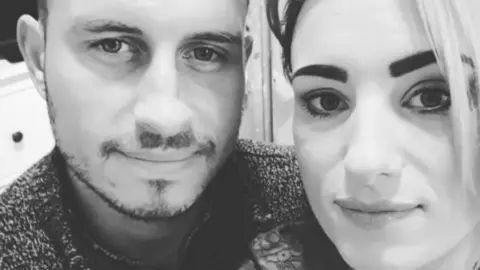 Katie Yates
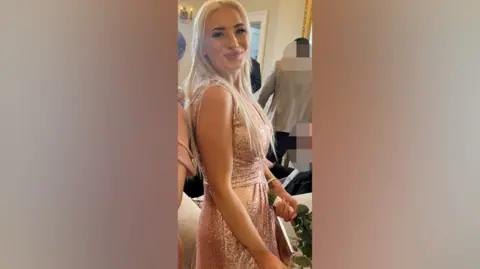 Wales News Service
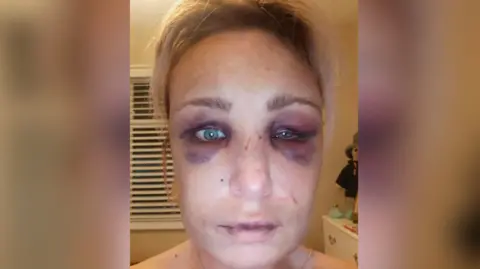 Katie Yates
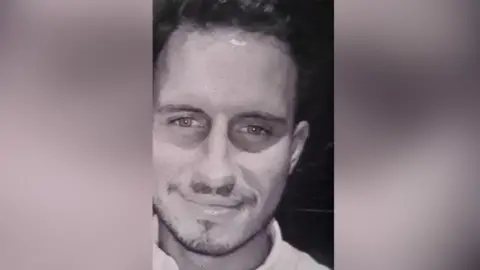 Wales News Service