Reading view

There are new articles available, click to refresh the page.

Elite Coast Guard squad and 'dark fleet' ship - what we know about US seizure of oil tanker

Watch: Video shows US military seizing oil tanker off Venezuela coast

A US helicopter flies low over a hazy blue sea as it approaches a massive ship. It hovers as camouflaged soldiers holding rifles swing down ropes to the vessel's deck.

The video, released by the US government, shows the latest in a series of escalations in Washington's pressure campaign on Nicolás Maduro's government – the seizure of a crude oil tanker.

The US claims the tanker is used to transport sanctioned oil from Venezuela and Iran in an "illicit oil shipping network supporting foreign terrorist organizations".

Venezuelan Foreign Minister Yvan Gil has called the seizure "international piracy" and claims US President Donald Trump wants Venezuela's energy resources.

Here's what we know.

The operation

"We have just seized a tanker on the coast of Venezuela - a large tanker, very large, the largest one ever seized actually," Trump told reporters at the White House on Wednesday.

The footage of the operation was shared by Attorney General Pam Bondi on social media. Bondi said a seizure warrant for the tanker was carried out by the US Coast Guard, FBI, Homeland Security Investigations and the Department of Defence.

The exact location of the tanker at the time of the seizure is not clear, but a senior military official told BBC's US partner CBS News that the vessel had just left a port in Venezuela.

The 45-second video shows a US team walking the deck of the ship with their weapons drawn. No ship crew are visible.

The seizure involved two helicopters, 10 marines and 10 US Coast Guard members, and special operations forces, a source familiar with the operation told CBS.

The boarding of the vessel involved an elite group of the Coast Guard called the Maritime Security and Response Team, the source said.

This team is trained in counterterrorism and high-risk law enforcement boarding procedures – like the fast-rope boarding from a helicopter seen in the video. It was created after the September 11 attacks, during an overhaul of national security.

The Coast Guard led the operation with support from the Navy, officials told CBS.

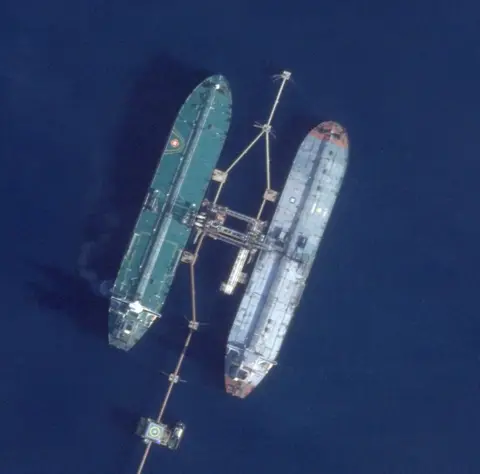
Planet Labs PBC An overhead view of two oil tankers at seaPlanet Labs PBC
The Skipper (the vessel on the right) was filmed by satellite on 18 November at the José Terminal, a facility in Barcelona, Venezuela, which is used by crude oil tankers

The oil tanker

Maritime risk company Vanguard Tech identified the vessel as the Skipper and said it believed the ship had been "spoofing" its position - or broadcasting a false location - for a long time.

The ship has sailed under other names, including Toyo and Adisa, since it was built 20 years ago. The Skipper is 333m (1,092 ft) in length and 60m wide, and is classified as a very large crude carrier (VLCC).

Vanguard Tech said the vessel is "reported to be part of the dark fleet, and was sanctioned by the United States for carrying Venezuelan oil exports". The dark fleet refers to ships used to smuggle sanctioned goods.

It is believed to have left the oil port of Jose on either 4 or 5 December, with about 1.8 million barrels of heavy crude oil on board, with about 200,000 barrels transferred to another vessel before the seizure, Reuters reported, citing analysis from TankerTrackers.com and the Venezuelan state oil company PDVSA.

The US treasury department sanctioned the Skipper in 2022, CBS reported, for alleged involvement in oil smuggling that generated revenue for the Hezbollah group in Lebanon and the Islamic Revolutionary Guard Corps-Quds Force in Iran.

BBC Verify located the tanker on MarineTraffic, which shows that the vessel was sailing under the flag of Guyana when its position was last updated two days prior to the seizure. A statement from Guyana's Maritime Administration Department on Wednesday evening, however, said that the Skipper was "falsely flying the Guyana Flag as it is not registered in Guyana".

MarineTraffic shows it was last near Iran in mid-September before arriving off the coast of Guyana at the end of October and making minimal further movement since then. This data may be partial or incorrect because of spoofing.

The seized oil

When asked by reporters what the US would do with the oil carried by the tanker, Trump said: "We keep it, I guess... I assume we're going to keep the oil."

Global crude oil prices are trading at roughly $61 (£46) a barrel, meaning the stash aboard the skipper could be worth more than $95m - if it does indeed comprise 1.6m barrels after 200,000 were removed. The BBC has not verified how much oil is on board the ship.

Bondi, the top prosecutor in the US, said of the seized vessel: "For multiple years, the oil tanker has been sanctioned by the United States due to its involvement in an illicit oil shipping network supporting foreign terrorist organizations."

Maduro has accused the US of using its ongoing military buildup in the Caribbean and "war on drugs" to try and depose him and get its hands on Venezuela's oil - something the US denies.

Venezuela sits on largest known reserves of crude oil in the world. But Analysts have highlighted the complexities. The oil considered "heavy" and highly viscous, meaning that extracting it needs special equipment and knowledge.

Venezuela's ageing infrastructure and heavy sanctions from the US have also caused difficulties for the nation's efforts to monetise its vast resources.

Graphic about the USS Gerald R Ford, the world’s largest aircraft carrier. The top section shows a photo of the carrier at sea with text noting it carries about 4,600 sailors, travels as part of a “strike group” with other warships, has capacity for up to 90 aircraft, and cost around £13 billion to build. Below, a chart compares the carrier’s length (337m/1,106ft) to the height of The Shard (310m), Eiffel Tower (330m), and Empire State Building (381m). The bottom section shows an aerial photo of the flight deck with dimensions: length 337m (1,106ft), max width 78m (256ft), and flight deck area 18,000 sq m (4.5 acres). Source is US Department of Defense, US Congress
The world's largest warship - the USS Gerald Ford - was used as a staging post for Wednesday's tanker seizure

The wider US pressure campaign

The Trump administration has focused for much of the last year on fighting the influx of drugs - especially fentanyl and cocaine - into the US.

As part of the effort, Trump designated two Venezuelan criminal groups - Tren de Aragua and Cartel de los Soles - as Foreign Terrorist Organisations and has alleged that the latter is led by Maduro himself.

Without providing evidence, Trump has also accused Maduro of "emptying his prisons and insane asylums" and "forcing" its inmates to migrate to the US. Stopping immigration has been another priority for the White House.

As part of the pressure campaign, the US has deployed 15,000 troops and a range of aircraft carriers, guided-missile destroyers, and amphibious assault ships to the Caribbean. Among them is the world's largest warship - the USS Gerald Ford - from which helicopters took off as part of the tanker seizure.

Since early September, US forces have carried out more than 20 strikes in international waters on boats alleged to have been carrying drugs. More than 80 people have been killed.

The Trump administration argues that it is involved in a non-international armed conflict with the alleged drug traffickers, whom it accuses of conducting irregular warfare against the US.

The US has also described those on board as "narco terrorists" but legal experts say the strikes are unlawful as that designation "did not transform them into lawful military targets".
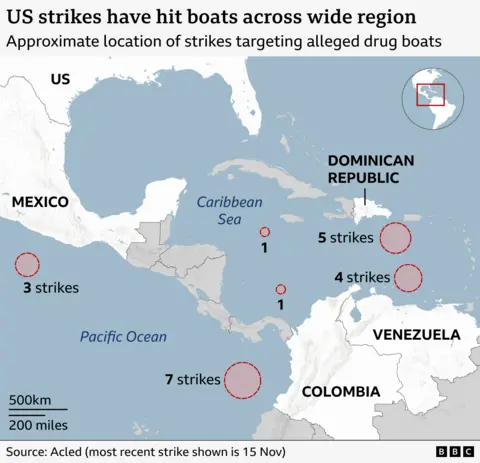
Map showing the approximate locations of US strikes on alleged drug boats across the Caribbean Sea and Pacific Ocean. Red circles mark strike clusters: three strikes off Mexico in the Pacific, seven strikes off the west coast of Colombia, two strikes near Central America in the Caribbean Sea, four strikes off the north coast of Venezuela and five strikes in the central Caribbean south of the Dominican Republic and Puerto Rico. Source: Acled (most recent strike shown is 15 Nov)

Hundreds of 'high value' items taken in Bristol museum raid

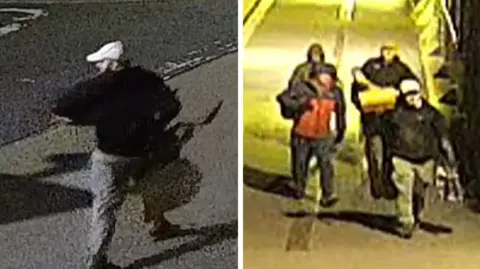
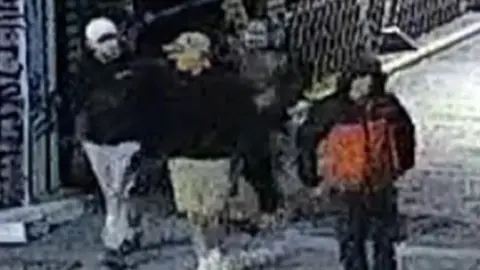
Avon and Somerset Police A blurry CCTV image of four men wearing jackets and baseball caps in a street at night time. Avon and Somerset Police
Police want to speak to these four men after more than 600 artefacts were stolen

More than 600 artefacts "of significant cultural value" have been stolen from Bristol Museum's archive in a "high-value" raid, police say.

Four men gained entry to a building in the Cumberland Basin area of the city in the early hours of 25 September, Avon and Somerset Police said.

Items from the museum's British Empire and Commonwealth collection were stolen and detectives are now trying to trace four males captured in the area on CCTV.

"The theft of many items which carry a significant cultural value is a significant loss for the city," Det Con Dan Burgan said.

Avon and Somerset Police Two CCTV images places side by side. One is a man in a dark jacket, grey trousers and white hat and carrying a bag. The second is a group of all four males in the street, they all have hats or their hoods up. All are carrying bags. Avon and Somerset Police
The men are described as being white and were all wearing jackets and baseball caps

"These items, many of which were donations, form part of a collection that provides insight into a multi-layered part of British history, and we are hoping that members of the public can help us to bring those responsible to justice," he added.

"So far, our enquiries have included significant CCTV enquiries as well as forensic investigations and speaking liaising with the victims."

Police are keen to speak to anyone who recognises the men captured on CCTV, or who may have seen possible stolen items being sold online.

All of the men are thought to be white. The first was described as of medium to stocky build and was wearing a white cap, black jacket, light-coloured trousers and black trainers.

The second was described as being of slim build and was wearing a grey, hooded jacket, black trousers and black trainers.

The third was wearing a green cap, black jacket, light-coloured shorts and white trainers. Police said he appeared to walk with a slight limp in his right leg.

The fourth was described as being of large build and was wearing a two-toned orange and navy or black puffy jacket, black trousers and black and white trainers.

Follow BBC Bristol on Facebook, X and Instagram. Send your story ideas to us on email or via WhatsApp on 0800 313 4630.

Sir Chris Hoy breaks leg in 'worst' crash of his life while riding mountain bike

Hoy breaks leg in 'worst' crash of his life

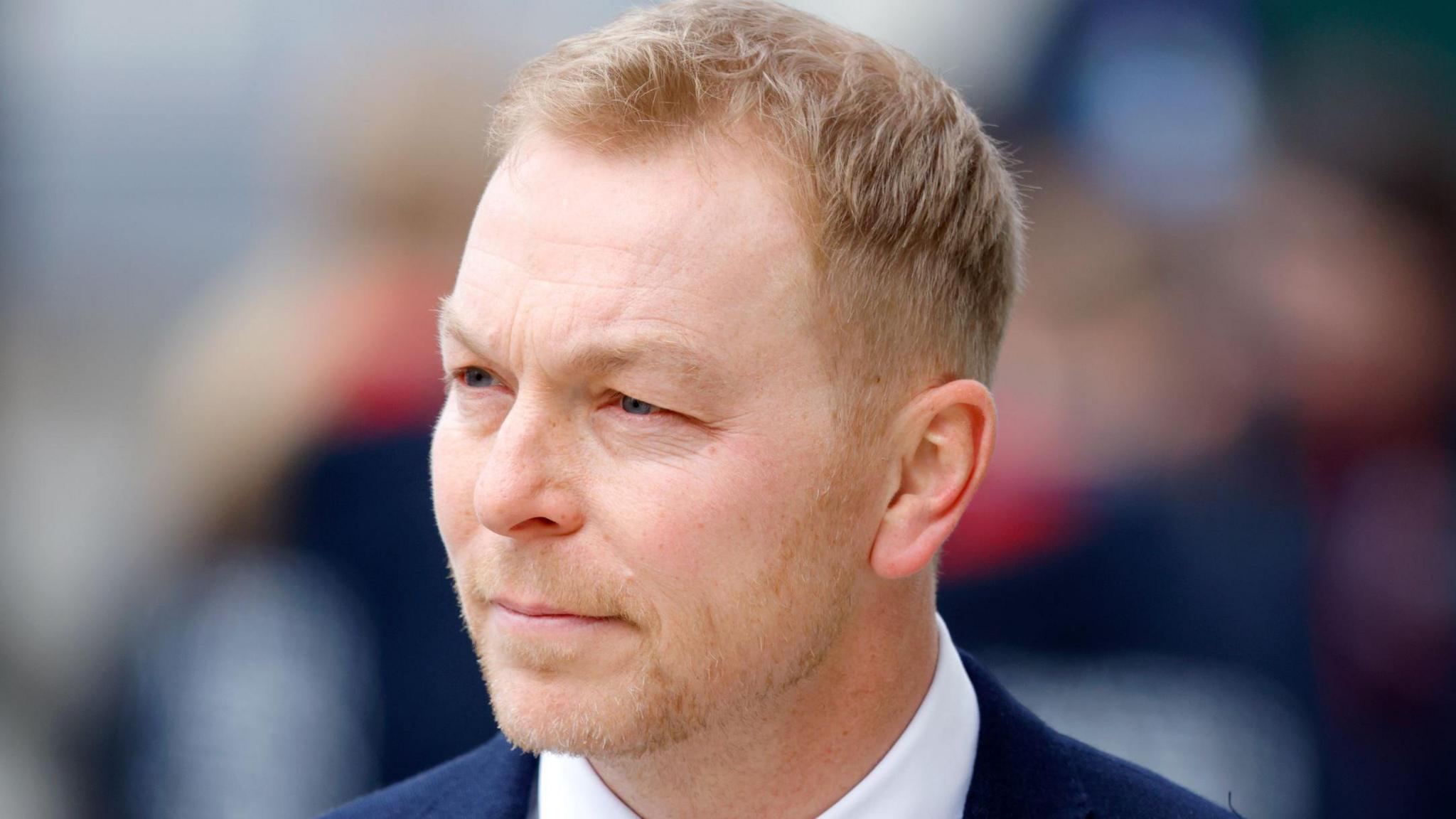
Sir Chris Hoy Image source, Getty Images
Image caption,

Sir Chris Hoy won Olympic gold medals at the Athens 2004, Beijing 2008 and London 2012 Games

  • Published

Sir Chris Hoy says he is on crutches and "hobbling about" after breaking a leg in a cycling crash which he described as the "worst" of his life.

Six-time Olympic champion Hoy announced in October 2024 that his cancer is terminal, but the 49-year-old has continued to ride his mountain bike since entering "a bit of a stability period" in his treatment.

However, in an interview with Sky Sports, the Scotsman said: "I've smashed my leg up, that's the worst thing that's happened recently. You just don't bounce like you do when you're younger.

"It was a big one. I'm doing better now, I'm still on crutches, hobbling about.

"Worse things happen. I've been riding bikes for 43 years and it's the worst crash I've ever had. I'm pretty lucky that's the worst one I've had in all those years of riding."

Hoy, whose seven Olympic medals also include one silver, is Britain's second-most decorated Olympic athlete behind fellow track cyclist Sir Jason Kenny (seven golds).

He also claimed 11 World Championship golds and 34 World Cup titles before retiring in 2013.

"I want to live my life and I want to make the most of it. None of us are here forever so you want to make the most of the time you have and do the things you enjoy," said Hoy.

"I've just had an unfortunate spill and it's the way the cookie crumbles. I'm doing alright now, I wasn't doing so well in the immediate aftermath of it, but looking forward to Christmas."

Hoy announced in February 2024 that he was undergoing treatment for prostate cancer.

He confirmed in October 2024 that his diagnosis was terminal after the primary cancer spread to his bones, with doctors giving him between two and four years to live.

Hoy said his terminal cancer diagnosis has improved his life "in some ways" because it has changed his outlook.

"It's changed my life without question, but I think in some ways it's improved my life," Hoy told BBC Sport in November.

"It's changed my outlook on a lot of things. I'm not as bothered by small things. I think I try and focus on the here and the now, enjoying the moment, making the most of today, and trying to find something positive in any situation.

"I'm doing well. I'm able to keep doing all the things that I enjoy, spend a lot of time with my family, and I hope to be around for a lot longer yet."

Related topics

'I am to be executed like a criminal': Mary Queen of Scots' final letter to go on rare display

BBC The letter surrounded by a white frame, with two people's hands holding on ot the edges of the frameBBC
The letter will go on display at Perth Museum for three months

The public are to be given a rare chance to see the last letter by Mary Queen of Scots, which was written just hours before she was beheaded.

Mary penned the letter in the cell where she had been imprisoned for 19 years by her cousin, Queen Elizabeth I.

Mary tells her brother-in-law, King Henri III of France, that she is "to be executed like a criminal at eight in the morning".

The manuscript will be on show at Perth Museum for three months.

It will be the first time in a generation that the letter will be on prolonged public display.

There were long queues outside the National Library of Scotland's George IV Bridge building in Edinburgh the last time it went on show in 2017.

Mary Queen of Scots was executed on 8 February 1587 for plotting against Elizabeth.

The four-page letter was written in her native French from her prison cell at Fotheringhay Castle, Northamptonshire.

Mary asserts her right to the English crown and her belief that she was being persecuted for her Catholic faith.

She says: "I scorn death and vow that I meet it innocent of any crime."

Mary also asks for her servants' wages to be paid after her death, and signs off: "Your very loving and most true sister, Mary R."

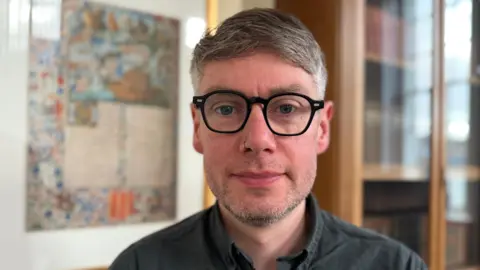
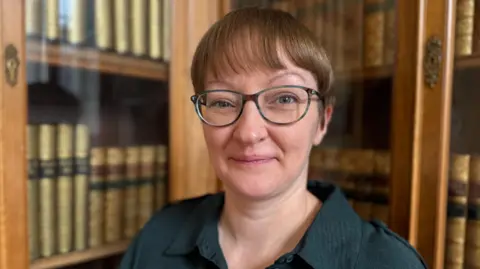
Chris Cassels, a man with short greying hair and glasses, standing in front of a bookcase and a wall chart.
Chris Cassels says the letter has a "relic-like quality"

The manuscript is usually kept in secure storage at the National Library of Scotland (NLS).

Chris Cassels, head of archives and manuscript collections, said it was incredibly special to see it "in the flesh".

"It is really important in that it gives us an insight into Mary's final hours on earth. It is obviously testimony to how she views herself in those final moments," he said.

Mary Stuart was nine months old when she was crowned Queen of Scots following the death of her father, James V, in 1542.

She was raised in France, where she married the heir to the throne, the Dauphin Francis.

Mary was widowed by the age of 18 and returned to Scotland to rule as queen at a time when her Catholicism was viewed with suspicion.

Shona Hunter standing in front of bookcases filled with books. She has short brown hair and glasses and is wearing a green shirt.
Shona Hunter says they want to reduce the amount of light on the letter

Mr Cassels said Mary's "sincerity of religious conviction" stood out in the letter which had a "relic-like quality".

"It's in her own hand. It has her signature. She touched it. She folded it up to be sent off to France in the hours right before her death.

"So it's undeniably a really special document."

The manuscript is kept in a specially-designed mount to protect it from damage.

Shona Hunter, who works conserving documents at the NLS, said they had to strike a balance between giving people access now while also making sure others will be able to see it in the future.

"It's such an important and precious document that we're really careful about who will see it because we want to reduce the amount of light that will fall onto the object," she said.

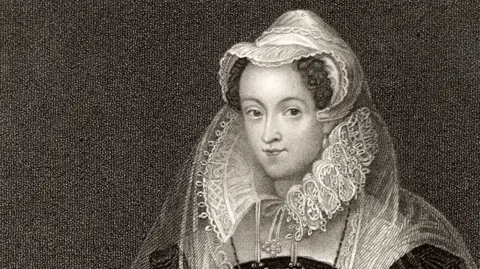
A black and white sketch of Mary wearing formal 16th century dress and head dress.
Mary Queen of Scots was executed in 1587

Bright or ultraviolet light, in particular, could cause irreversible damage to the letter.

"What we need to do is monitor, control and, where possible, just reduce the amount of light exposure and that way we protect it for generations to come."

The letter will be on display for three months as part of an exhibition at Perth Museum which is due to open on 23 January.

Ashleigh Hibbins, head of audiences at the museum, said it was a "huge coup".

She said Mary had many links to the area and spent a lot of time in Perthshire.

"Most famously, she was actually imprisoned for 11 months in Loch Leven Castle, " she said.

This was where she abdicated the throne in favour of her baby son, James VI.

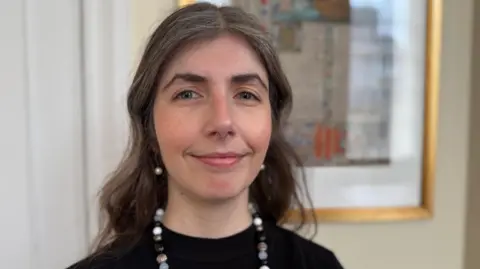
Ashleigh Hibbins, a woman with long wavy brown hair, standing in front of a framed picture. She is wearing a black top and a necklace.
Ashleigh Hibbins, head of audiences at the museum, said it was a "huge coup"

James was estranged from his mother from infancy and raised a Protestant.

In 1603, following the death of Queen Elizabeth I without a direct heir, he became James I of England, uniting the crowns of the two old enemies.

The fractured relationship with his mother Mary was evident in the hours before her death.

She wrote: "As for my son, I commend him to you in so far as he deserves, for I cannot answer for him."

Ms Hibbins said she believed the intrigue around the life and death of the "doomed queen" would attract visitors.

"To have her last words on display for the first time in a generation, and we believe the first time it's been seen north of Edinburgh, is just fantastic for us," she added.

"It feels like a bit of a homecoming."

Why is flu so bad this winter - and should you buy a vaccine?

Getty Images An unwell woman sits on her sofa, coughing Getty Images

Flu has come early this year and experts predict it could be a particularly nasty season because a new strain of the virus is circulating.

The NHS has already sent out a "flu jab SOS" to vulnerable people.

How bad might this winter be, and should you buy a flu jab even if you are generally fit, even if you have to pay for it?

Who needs a flu jab?

The NHS offers a free flu vaccine to people who need it most, including:

  • anyone aged 65 or over
  • those have certain long-term health conditions
  • pregnant women
  • care home residents
  • carers for older or disabled people, or those who receive a carer's allowance
  • people who live with someone who has a weakened immune system

Frontline health and social care workers can also get a flu vaccine through their employer.

A nasal spray version of the flu vaccine is also offered to children aged 2 to 3 years as well as school-aged children (reception to year 11).

Children can catch and spread flu easily. Vaccinating them also helps protect others who are at higher risk of getting seriously ill from flu.

Everyone else has to buy one.

Should I buy a flu shot?

Even if you are healthy, you might still want to buy a flu vaccine this winter.

Vaccines still work against the drifted influenza A(H3N2) strain that some are calling "super flu".

High street chemists sell the vaccine for around £20.

It's best to get vaccinated sooner to protect yourself during winter.

How long does it take for the vaccine to work?

The vaccine usually takes up to 14 days to work.

During this period, you're still vulnerable to catching the virus.

Some people mistakenly think the vaccine has given them flu, but the vaccine does not cause flu - instead, it gives your body the instructions it needs to fight off an infection should you catch it.

There's still a chance you might get flu after getting vaccinated, but it's likely to be milder and not last as long.

Protection decreases over time which is why a vaccine is offered every year.

The vaccine is frequently updated to best match the strain or version of flu that experts expect will be circulating.

Is it a cold, 'super flu' or Covid?

There are lots of coughs and colds doing the rounds. So how do you know if you have flu rather than something else? Your symptoms can give a clue.

Colds

  • Symptoms appear gradually
  • Mostly affect nose and throat
  • Early sign - pressure in your ears
  • Chestier, mucus cough

Flu

  • Comes on suddenly
  • Feel wiped out
  • Fever, muscle aches, exhaustion
  • Need bed rest
  • Dry cough

Covid

  • Typical flu symptoms
  • Loss of taste or smell
  • Diarrhoea or tummy upset

What else can I do to protect myself?

If you're meeting people indoors, open a window for fresh air.

Practise good hygiene:

  • cough into your bent elbow, or use a tissue and dispose of it afterwards in the nearest bin
  • wash your hands frequently with warm water and soap
  • clean your surroundings often, especially areas that are touched frequently such as door handles

If you are unwell but must go out, consider wearing a face mask to help protect others.

Private flu vaccine stocks running low as cases rise in Scotland

Getty Images An older woman with grey hair and glasses blows her nose while sitting on a sofa with a grey blanket round her shoulders. There is a box of tissues on the table in front of her as well as various bottles that may be medicine. Getty Images
The latest figures show Scotland has reached a high level of flu activity

Pharmacies have warned that private stocks of flu vaccines are running low.

It comes as lab-confirmed cases rose by 24% to 2,331 cases, from 1-7 December, compared with 1,875 the previous week.

Hospital admissions for flu increased by 15% from 860 to 986, according to the latest figures from Public Health Scotland (PHS).

Those eligible for a vaccine can access jabs from the NHS, but Community Pharmacy Scotland says people have been paying for the vaccine at pharmacies for convenience.

"It's a mixture," said policy and development head Adam Osprey.

"Some people are saying to us that they are running low while others have completely run out and have not got much hope of getting the stock back in."

PHS said flu activity increased more steadily this week, compared with the sharp rise the week before.

Last week's figures showed cases had more than doubled in the space of a week.

However, it said the high activity threshold had now been reached earlier than previous seasons.

Some health boards have had to close wards and restrict visiting with many asking people to wear masks.

Mr Osprey said it was difficult to get vaccine stocks exactly right, as pharmacists put in orders for flu vaccinations around February so manufacturers know how much to make.

"If you make or order too little then clearly you can't meet demand," he told Radio Scotland Breakfast.

"But if you go the other way then you're left with stock that has to get destroyed because you can't use it the following season. So it's a bit of a balancing game.

"When you're not able to predict these things, it has an impact on your stock and runs it low earlier than expected."

He urged people to try different pharmacies if local ones ran out of stock.

PHS previously warned that the flu season had arrived two weeks earlier than normal.

The dominant strain of flu is also believed to have mutated more than usual this summer, meaning the vaccine may be less effective although it will still offer some protection and prevent people from becoming seriously ill.

PHS said the new data showed that the vaccine was preventing severe flu, with children 78% less likely to be admitted to hospital if vaccinated.

It said vaccinated adults in Scotland aged 65 and over were 37% less likely to be hospitalised.

Under current rules, all over-65s in Scotland, as well as those aged between 18 and 65 defined as at risk due to an underlying health condition, are eligible for a free flu jab from the NHS.

Children aged between two and five and at school age also receive immunisation administered as a nasal spray.

But those aged between 50 and 64 as well as teachers and prison officers are no longer eligible for the vaccination, despite the programme being extended during the Covid pandemic.

People not eligible for a free vaccine can book one privately via a pharmacy.

These usually cost about £18 to £20.

Dr Kim Marsh from PHS said: "Vaccination remains the best way to help protect yourself against serious illness from flu and is also important in reducing the spread of flu in the community, helping to keep everyone from missing out on socialising with friends and family over the festive season."

England's busiest A&E hit by flu wave - hundreds of patients are arriving a day

BBC Paige who is 19 is lying on a hospital bed resting her head on a pillow. She looks ill. She has dark hair and is wearing a T-shirt.
BBC
Paige, who has type 1 diabetes, came into hospital with flu and dangerously high sugar levels

At England's busiest emergency unit, all the beds are full by midday.

As one patient leaves his room at Leicester Royal Infirmary's acute unit, cleaning staff are waiting outside.

He is barely out of the room before the bed is stripped and bleach is sprayed. The next patient is already waiting to come in.

Over two days the BBC was given access to the hospital to witness first-hand how it is coping with an early surge of winter bug cases.

Flu season has hit a month earlier than normal this year, with experts warning there appears to be a more severe strain of the virus - mutated H3N2 - circulating.

Hospitals around the country, like this one in Leicester, are doing all they can to avoid becoming completely overwhelmed.

But staff at the Royal Infirmary say increasing numbers of people coming to hospital with the flu and other winter bugs - together with existing pressures - are hitting the hospital hard.

They already worry about how they will cope this winter.

Patients in every cubical

When 19-year-old Paige arrives at the hospital by ambulance, she's put on a trolley while a resus bed is cleared. She's got the flu but also has type 1 diabetes and has dangerously high sugar levels. She is curled in a ball, pale and shaking.

"There are patients in every cubical," Consultant Saad Jawaid says, as Paige is wheeled in. "Another ambulance has just rocked up."

We watch as he works with colleagues in the resus unit to find desperately needed bed spaces.

"When beds are full we have to move people - sometimes that means those who can sit are moved out of beds and into chairs," he says.

Consultant Saad Jawaid on the right is wearing blue hospital scrubs. He is speaking to female members of the clinical team, also in uniform, who are holding documents. They are in the emergency unit the the Royal Leicester Infirmary.
Consultant Saad Jawaid works with colleagues to try to free up beds

Paige is given insulin and fluids to try to stabilise her sugar levels. The doctors hope her diabetes will be controlled soon. Getting better from the flu will take longer.

The following day, Paige is in a side room on the acute assessment unit.

"I do struggle a lot in winter," she says. "I was maybe in here two or three weeks ago. Infections and stuff just seem to hit harder than usual."

The number of flu patients in hospital has hit a record high in England for this time of year with NHS leaders warning the country is facing an unprecedented flu season.

At its busiest times, the emergency unit here in Leicester saw more than 1,000 patients a day last winter. On one of the days we were here, 932 patients came through the door. That number is expected to rise in the coming weeks.

Attendance levels are already around 8% higher this year than last year. And the unit faces a daily shortage of between 50 to 70 beds.

At the Royal Infirmary around 64 beds are currently taken up by people with respiratory viruses, including flu.

We meet one patient who waited 106 hours for a bed on a ward. Another, Gary, came in with a stomach bug and finally got a bed after 34 hours.

Oscar, aged five months, sits in his mother's arms. He has brown hair with a curl and is wearing a white and brown outfit.
Oscar came into the hospital wheezing and finding it hard to breathe

By late afternoon, the children's waiting area is full. Parents stand rocking crying babies as every seat is taken.

Respiratory cases of flu and bronchiolitis, a condition affecting the lungs of young patients, are rising fast here too.

In just 30 minutes, 30 children arrive at the department.

At five months old this is Oscar's first winter and his first trip to A&E. His mum brought him in because he was wheezing and struggling to breathe. A few hours after arriving, he is finally seen by a doctor and told he has bronchiolitis.

"These bugs are everywhere at the moment - Oscar's older brother brought it home from school and now Oscar has it," says his mum.

Richard Mitchell has been the chief executive of University Hospitals Leicester NHS Trust since 2021 - and has witnessed first-hand how it gets harder to cope with each winter that passes.

"We are already seeing very high levels of flu," he tells us. He expects numbers to climb into January. "That is one of the many things I am concerned about at the moment.

"At this point I feel we are working at the limits of our ability."

Turning minor cases away

The hospital has introduced a new system to manage the flow of patients arriving at its emergency department, as pressure grows on front-line services.

Receptionists, nurses, all the way up to consultants, now sit in a bank of desks at the entrance, assessing patients as they arrive.

This speeds up triage, moving people away from the front door and ensuring those in greatest need receive urgent care.

Staff say the range of cases has become increasingly polarised. Some of the most seriously ill patients are being driven in by relatives because of long waits for ambulances.

Line chart showing that positive tests for flu are climbing this year and are almost at 20% compared to the previous bad flu seasons in 2022 and 2024 when they were at around 13% at the same time. The chart shows that flu cases this year started rising earlier than in 2023 and 2024.
Flu has started early this year

At the other end of the scale, people turn up with minor complaints after struggling to secure GP appointments. "Last week someone came in with a coldsore," one nurse tells us.

Experienced staff can redirect those who do not need urgent care, helping them to book GP appointments or pointing them towards pharmacies and other services. Now one in 10 patients are sent away, although staff admit it can lead to frustration.

Security has been tightened following one violent incident, with glass screens installed and 24‑hour guards now in place.

Leicester Royal Infirmary has introduced new measures each year to boost capacity and manage rising demand. Winter pressures continue to grow, while the quieter summer months have become a thing of the past.

To reduce ambulance queues, prefabricated structures were converted into a permanent unit with 14 beds - all are full during the BBC's visit. Without them that would have been 14 ambulances queueing for hours to unload their patients.

Unlike many hospitals, Leicester's emergency unit is not totally overwhelmed by elderly patients. Frail patients are streamed directly to specialist areas, including a frailty unit, or supported in the community to avoid long hospital stays.

Preston Lodge, a former care home bought by the trust, now provides 25 beds, with 14 more opening on December 15. Patients who no longer need acute care - but still require rehabilitation or support - are moved there while awaiting care packages.

"We aim to get people better ready for going home and hopefully keep them stronger and more independent so they aren't back in hospital so frequently over the winter," says head of nursing, Emma Roberts.

Looking ahead, Mr Mitchell expects waits and delays to only get worse for patients in the coming weeks.

For the first week in January - traditionally the busiest each year - the hospital plans to free up more emergency beds, but that means delaying other operations and procedures.

He says: "We will not be able to provide timely care to every patient this winter but we will continue to do our utmost to ensure that patients are treated with dignity and respect to ensure they receive safe care and we will do everything possible to manage those waiting times."

Hospital leaders here are trying to take proactive steps - rather than simply reacting to each crisis. But staff and patients alike warn that hospitals across the country are caught in the middle of a system, many believe, is close to breaking point.

In a statement, the Department of Health and Social Care said it was "under no illusions this is going to be a tough winter for our NHS".

A spokesman said: "Flu cases are rising, so it is vital that patients can get protected. Almost 17 million vaccines have been delivered this autumn - 350,000 more compared to this time last year.

"There is no national shortage of the flu vaccine and we would urge everyone eligible to get their vaccination to protect themselves and their loved ones."

Banks to tell you where you might invest your money

Getty Images Man and woman sit on a sofa where they are shown something on a tablet computer by a man in a blazer and shirt.Getty Images

People who might otherwise turn to friends, family, or social media influencers for financial advice are to be given new help to invest their money.

Targeted support from registered banks and other financial firms is being given the go-ahead by the City regulator and should start in April.

This will allow firms to make investment and pensions recommendations based on what similar groups of people could do with their money.

It still falls short of individually tailored advice, which can only be provided by an authorised financial adviser for a fee.

Nearly one in five people turned to family, friends or social media for help making financial decisions, according to a survey by the Financial Conduct Authority (FCA).

Sarah Pritchard, deputy chief executive of the FCA, said the new regime would be "game changing".

"It means millions of people can get extra help to make better financial decisions," she said.

"We also hope it will build greater confidence to invest. While investing will not be right for everyone, we know people in the UK invest less compared to the EU or US."

'Advice gap'

Investing money is not an option for millions of people. The regulator said that one in 10 people had no cash savings, and another 21% had less than £1,000 to draw on in an emergency.

However, FCA data suggested about seven million adults in the UK with £10,000 or more in cash savings could receive better returns through investing.

Investing does come with some risk as the value of an investment can go down as well as up, but the spending power of cash savings can be eroded by rising prices.

The regulator said that many consumers who were in a position to invest but chose not to did so because they were unsure of their options, felt overwhelmed,  or needed more support. Only 9% of people surveyed received regulated advice on their pensions and investments in the 12 months to May 2024.

Targeted support aims to bridge a gap between general guidance and information, and financial advisers who charge a fee.

For example, banks could explain how a large pot of cash savings could be invested, or how investments could be spread out to reduce risk.

"The FCA's new rules mark a significant step towards closing the advice gap and will empower millions," said Yvonne Braun, director of policy at the Association of British Insurers.

Some consumer groups have made clear that the new rules must not be a pathway to firms exploiting customers.

The FCA said firms taking part would need to be authorised in advance. They might include banks, building societies, investment platforms and digital wallet providers.

They would also be required to show that their recommendations were suitable and should only be offered when it put people in a better position, the regulator said. Any customer vulnerabilities would need to be identified and taken into account.

Consumers will have the right to take any disputes that arise to the independent financial ombudsman.

There will also be a move to allow people to make more informed decisions with their pensions.

The regulator's new rules will require legislation, but the government has made it a clear objective to encourage people to invest. The Treasury believes this will help to create economic growth.

It was one of the reasons for the decision by Chancellor Rachel Reeves to cut the annual allowance for cash Isas (Individual Savings Accounts) from £20,000 to £12,000 a year for under 65s, from April 2027.

Separately, the FCA has launched a "firm checker" tool to help prevent people from losing money to fraudsters through investment scams.

New Archbishop of Canterbury faces complaint about abuse case handling

AFP via Getty Images Britain's new Archbishop of Canterbury-designate, Sarah Mullally, poses for a photograph in The Corona Chapel at Canterbury Cathedral, south east England on October 3, 2025AFP via Getty Images
Dame Sarah is due to take over the role of Archbishop of Canterbury in January

The Church of England is considering a complaint against the incoming Archbishop of Canterbury over her handling of an abuse allegation.

Dame Sarah Mullally has been accused of improperly handling a complaint against a priest in London, where she currently serves as bishop.

Church authorities said the complaint about her was initially made to Lambeth Palace - the home of the Archbishop of Canterbury - in 2020, but was not followed up due to "administrative errors and an incorrect assumption about the individual's wishes". They said Dame Sarah was not told of the complaint at the time it was made.

She is due to take office on 28 January and said the victim had been "let down".

"While his abuse allegations against a member of clergy were fully dealt with by the Diocese of London, it is clear that a different complaint he subsequently made against me personally in 2020 was not properly dealt with," she said in a statement.

"I am seeking assurance that processes have been strengthened to ensure any complaint that comes into Lambeth Palace is responded to in a timely and satisfactory manner."

Earlier this week the complainant spoke to the Premier Christian website, saying that the way the case was handled had a serious impact on his mental health.

Premier said it had seen evidence that when the complainant filed his original case against an accused priest, Bishop Sarah contacted the priest involved about the allegations, breaching the Church's disciplinary protocols.

The complaint against her was not formally dealt with and Lambeth Palace officials now say that they assumed the complainant no longer wished to proceed but are understood not to have sought confirmation of this with him.

A spokesman for Lambeth Palace said Church authorities had written to the complainant - known as N - to outline the next steps.

"The Bishop of London was unaware of the matter, as the process never reached the stage at which she would have been informed of the complaint or its contents.

"The provincial registrar has apologised to those involved and urgent arrangements are now being made for the complaint to be considered according to the relevant statutory process."

Dame Sarah, a former NHS chief nurse, became a priest in 2006 and was appointed as the first female Bishop of London in 2018 - the third most senior member of clergy in the Church of England.

She was named as the next Archbishop of Canterbury - the first woman to take on the role - in October after Justin Welby resigned over a safeguarding scandal.

He stepped down after a damning report into a prolific child abuser associated with the Church. It found that he "could and should" have reported John Smyth's abuse of boys and young men to police in 2013.

His last day in the role was in January and the Church, as a result, has been without someone in the top job for almost a year. The Archbishop of York, Stephen Cottrell, has been taking on most of Mr Welby's responsibilities in an interim move.

Mr Cottrell was one of the voting members of the body charged with choosing his successor. but has himself faced calls to step down over his handling of an abuse case.

How Race Across the World changed our relationship

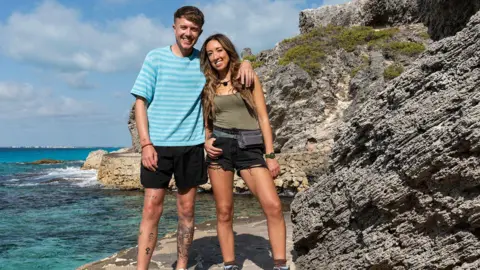
StudioLambert/BBC Tyler West and Molly Rainford hold hands and smile stood on rocks by the shore of the sea.StudioLambert/BBC

Four famous duos have travelled nearly 6,000 km, hitchhiking through mountain towns, foraging in dense jungles, and battling challenges they never imagined, as contestants in Celebrity Race Across the World.

What began on the sun-soaked easternmost tip of Mexico is about to come to a close on Thursday night as the teams race toward the windswept Península de La Guajira in Colombia, the series' final checkpoint.

The budget, £950 per person - the equivalent cost of flying the route - was one limitation, but what else made the trip the challenge of a lifetime?

Molly: 'It's given me so much more confidence'

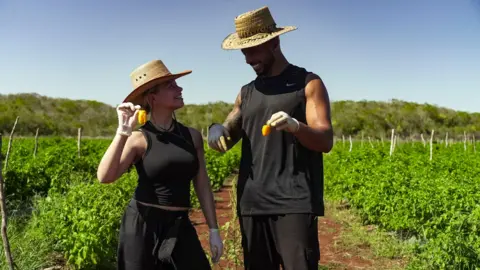
StudioLambert/BBC Partners, presenter and DJ Tyler West and actor and singer, Molly Rainford both holding a chili whilst working at a farm during their travels.StudioLambert/BBC

In the lead-up to the race, Tyler West and Molly Rainford had a flicker of apprehension.

While the couple knew each others' strengths and weaknesses inside out, life in the public eye often left them feeling like "passing ships in the night."

Their occasional holidays tended to have a single goal: complete relaxation.

This challenge offered something entirely different: a chance to push their relationship into new territory, and to reconnect without the usual distractions – for presenter and DJ Tyler, that meant not even his beloved Biscoff biscuits.

"It was a big question mark in our minds whether we'd even make it to the first checkpoint," Tyler admits.

"I remember looking at the final checkpoint on the map and thinking, 'How on earth are we going to get there?' But reaching this far really puts things into perspective - we're not as bad at travelling as we thought."

For actor and singer Molly, one of the biggest takeaways is a new-found confidence.

"Talking to strangers, asking people for help - those are things you just don't do anymore, but the race forces you into it," she says.

"It's given me so much more confidence that now I'm thinking, 'What have I got to lose?'"

And as for their relationship? "It proved to us we can get through anything together," she says.

Dylan: 'There's so much kindness out there'

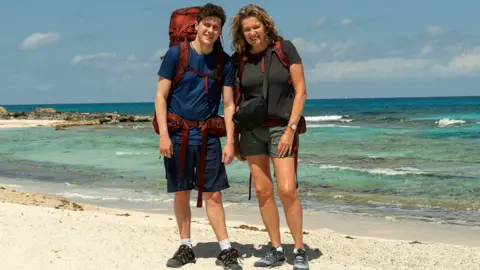
StudioLambert/BBC Dylan Llewellyn and mum Jackie smiling with their backpacks on whilst stood on a white sandy beach in front of the sea.StudioLambert/BBC

For actor Dylan Llewellyn and his mother Jackie, the race was less about crossing the finish line first and more about getting out of their comfort zone.

After three decades of marriage, Jackie had never been away from her husband for more than a weekend. But she filled the freezer with steak-and-kidney pies and set off with her son, determined to embrace the unknown.

They learned lessons from past contestants: save more, spend less, and never - under any circumstances - let go of your moneybelt or passport.

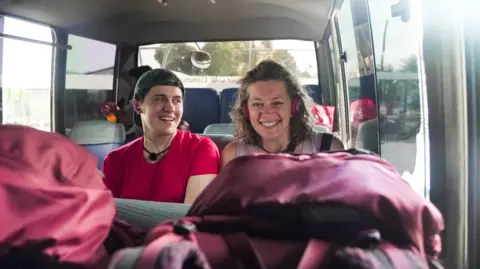
StudioLambert/BBC Actor Dylan Llewellyn and mum Jackie sit on a bus whilst travelling.StudioLambert/BBC

"I can't believe we've got this far. I thought we wouldn't make it after leg one," says Jackie.

"I'm so pleased that we pushed ourselves through the lows, and I'm proud of us both for getting to the end of leg five."

The pair leaned on each other during the toughest moments but also learned the importance of asking for help.

"I don't think we realise how much kindness there is out there. And we felt it a lot," says Dylan.

"We felt so much love and togetherness with families and it was really strong and beautiful to see."

Anita: 'My dad has seen my more vulnerable side'

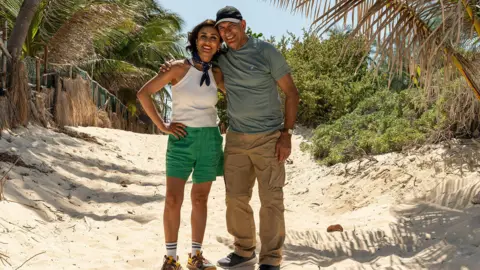
StudioLambert/BBC Anita Rani and dad Bal stand on a sandy beach smiling at the beginning of their journey.StudioLambert/BBC

Before the race began, broadcaster and writer Anita Rani and her father, Bal, were excited at the idea of five uninterrupted weeks in each others' company. They hadn't travelled together since a family trip to India when Anita was just two years old.

As the oldest combined duo in the competition, they worried initially whether they would have the stamina to keep pace with younger teams.

But they know they have what matters most: determination.

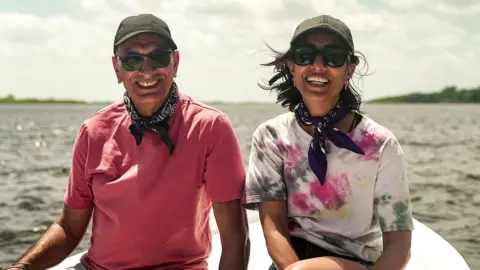
StudioLambert/BBC Anita Rani and dad Bal smiling whilst on a boat wearing matching navy neckerchiefs.StudioLambert/BBC

"We're never going to quit," Anita insists ahead of the final.

"There's obviously been disappointment so far about the things that have been out of our control, but there's a life lesson in that, isn't there?

"When Guatemala closed down, we missed a bus, or whatever, all those things are completely out of your control, and it's very frustrating, but that's part of the journey."

For Anita and Bal, the race has become about far more than reaching the finish line.

They have treasured the time together and the chance to get to know each other better.

"Honestly, this is life, and this is what we've been through," Anita says.

"I think my dad has seen a more vulnerable side of me that I don't normally show."

Roman: 'It makes you realise there's so much more to life'

StudioLambert/BBC Roman Kemp has him arm around sister Harleymoon as they both smile on a path next to the sea next to a large rock.StudioLambert/BBC

Sibling duo Roman Kemp and Harleymoon were candid about their relationship not being as close as they would like: busy careers had reduced their interactions to quick spare-key handovers and dog drop-offs.

They are also, by their own admission, polar opposites. Singer-songwriter Harleymoon is the free-spirited adventure-seeker who is usually the last to leave any party.

Broadcaster Roman, devoted to his work and his beloved Arsenal, is naturally cautious about stepping outside his comfort zone.

For them, the race was an opportunity to become friends again and help them discover new sides of each other.

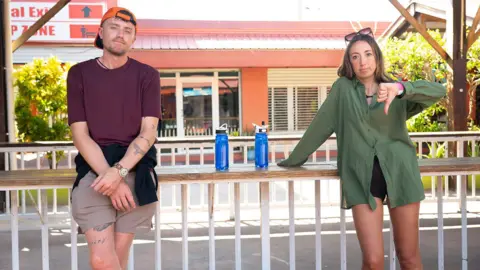
StudioLambert/BBC Broadcaster Roman Kemp and his sister, singer-songwriter, Harleymoon leaning against a wall whilst waiting for transport. Harleymoon signals a thumbs down with her hand.StudioLambert/BBC

Roman and Harleymoon describe their time with a family on Panama's San Blas Islands as truly transformative.

Roman says the race "took me so far from where I am from".

"It was the biggest moment for me.

"It does make you realise that there's so much more to life… You see what makes these people happy and how happy they really are, which is just this family."

For Harleymoon, the experience of having nothing besides a few bananas and a hammock "in the middle of nowhere" sparked deep self-reflection.

"Your life has turned into something so simple but so beautiful — it's an amazing window to reflect and think, wow, we have so much at home, and yet we always strive for more," she said.

"Getting to experience days like that, when you're just so full of gratitude, was really amazing."

I lost 3st and was sick 40 times a day during pregnancy

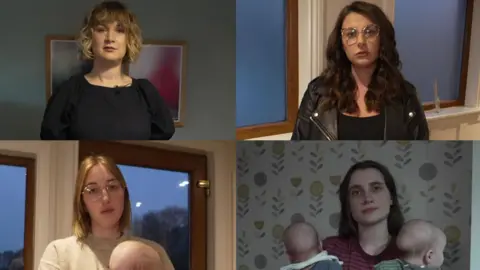
BBC Four women looking at the camera - one is holding a baby, and another is holding two babies. BBC
Excessive and severe nausea and vomiting is known as hyperemesis gravidarum and is thought to affect 1-3% of pregnancies

About 80% of pregnant women experience morning sickness, according to the NHS, with some expectant mums having such extreme nausea that they struggle with daily life. After reporter Beth Parsons was diagnosed with hyperemesis gravidarum (HG) during her pregnancy, she has been been speaking to other women affected by the condition.

Drawing the curtains to block out a warm summer's afternoon, I did everything I could to avoid being sick for the 10th time that day and wondered when I'd feel myself again.

It's isolating, lonely and very hard to describe to someone, especially when the "normal" version of morning sickness is seemingly considered a right of pregnancy passage; something that ginger, an early night and just getting past the first trimester will fix.

I've always wanted to be a mum, and my husband and I were over the moon about the positive test, but it wasn't quite the welcome to pregnancy we had in mind.

A hyperemesis gravidarum diagnosis followed.

While books and social media posts were describing the nutritious diet that would best help my growing baby, a lot of the time I couldn't even keep water down.

I would sip ice-cold cordial and suck ice lollies to keep dehydration at bay the best I could. Sometimes I would nibble on toast or dry cereal then try to go to sleep in the hope it would stay down.

Beth Parsons/BBC Blonde woman with striped T-shirt looking unwell and tired.Beth Parsons/BBC
Beth Parsons experienced serious HG symptoms from week five to week 17 of her pregnancy

It was all happening at a time when internally I felt so lucky to be starting a family, and was desperate not to come across as ungrateful.

After seeing my GP, I eventually found a medication which helped and it was like a light had finally been turned back on.

For the first time in months, I was able to leave the house, return to work and started to eat and drink with more normality. I'm now in week 26 and I haven't been seriously sick since week 17 of my pregnancy.

After opening up about the issue online and in conversation, other women shared their experiences with me.

I noticed how different they were, especially when it came to what support was available and what treatments they were able to access.

In particular, the drug that helped me, commonly known as Xonvea, was often held back from women who desperately wanted to try it.

Three women shared their stories with me.

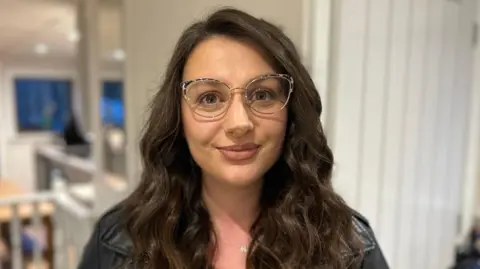
Woman with long wavy dark brown hair smiling at the camera. She is wearing glasses and a black leather jacket.
Sarah Goddard says she was being ill up to 20 times a day

Sarah Goddard, from North Yorkshire, became pregnant for the second time in August 2024.

Already mum to a four-year-old, she had been fairly sick in her first pregnancy, but HG was never mentioned. The second time round, she was seriously unwell.

"By seven weeks, I wasn't able to keep anything in me at all… I was being sick 15 or 20 times a day. I was retching to the point blood was coming out. There was nothing left in me to give.

"At times I thought I was dying, it definitely felt like that, but I thought maybe I was being dramatic, until my mum said to me, 'I think I'm watching you die'."

The 32-year-old went to hospital three times for anti-sickness injections and intravenous rehydration, but would deteriorate again as soon as she got home. She was offered some medication, but it did not work well enough for her.

"I didn't know how I was going to get through this and ultimately at 10 weeks we made the impossible decision to have a termination."

Sarah said she was "still devastated" about the decision she felt that she had to make when she chose to end her pregnancy due to the severity of HG.

"Giving my daughter a sibling was exactly what I was doing it for, and I tried and then took it away.

"I just didn't see how we were going to make it through because nobody was fighting for us. It's something I will feel guilty about until the end of time."

Sonographer scan photo of an unborn baby
The NHS says about 80% of women experience morning sickness

She has now received grief counselling and mental health support through the charity Pregnancy Sickness Support.

Sarah also sought advice from a medical consultant who told her about HG and enabled access to medication so she felt able to try a third pregnancy.

She is now due to have a baby in 2026 and has thanked the consultant, saying "without him, I wouldn't be sat here, 31 weeks pregnant, with my little girl's brother".

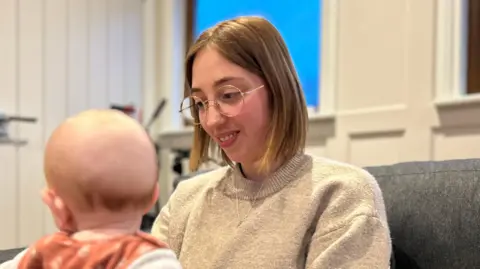
Woman with auburn bob hair smiling at a baby on her knee. She is wearing glasses and a beige wool jumper.
Millie Fitzsimons was off work for eight months and lost 3st in weight

Millie Fitzsimons, 28, had HG symptoms throughout her pregnancy and experienced how different treatment options could be from one location to another.

In total she thinks she was admitted to hospital about 16 times.

She was living in Boston, Lincolnshire, when she discovered she was pregnant.

"It does just feel like you're dying… it's a feeling you can't explain. I've lost 3st in weight, was being sick 40 times a day. You're just exhausted all the time, and just sleeping on and off all day. Horrific."

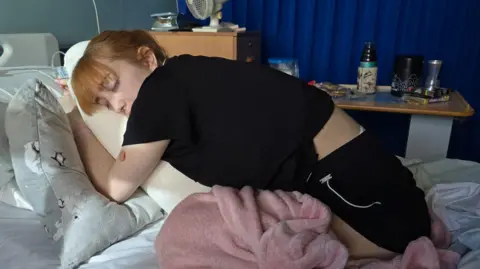
Millie Fitzsimons Woman with ginger hair on a hospital bed crouched over a pillow.Millie Fitzsimons
Millie says she ended up in hospital about 16 times

Millie said support was "really hard to get" and often medical staff would roll their eyes and not listen to her.

She tried lots of medication, including steroids which are not advised as a long-term option.

At about 16 weeks, she got help from Pregnancy Sickness Support who advised her to ask for Xonvea medication.

She said the medical staff had "never heard of it", and it took four months from asking to be able to access the medication. She could only receive one week's worth at a time.

"They just said it was a postcode lottery and it was really expensive."

When she moved to York at the end of her pregnancy in April, she was able to access Xonvea.

Her baby was born in May. She was off work for eight months while she was pregnant and does not think she will ever have another child.

The charity is campaigning for Xonvea to be included on all drug formulary to avoid issues with access.

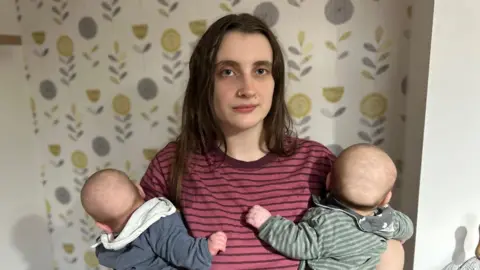
Woman with dark brown hair looking at the camera while holding two babies. She is wearing a red striped T-shirt and the babies are wearing navy and green.
Ella Marcham says the condition gives a "life-ruining level of sickness"

Ella Marcham from Yeadon in Leeds experienced the first symptoms of HG before she even knew she was pregnant.

Already mum to two toddlers, dealing with the debilitating condition while also taking care of her family was not easy.

"For me, the worst thing was the nausea. It never stopped," the 28-year-old said.

"It was just 24/7 - all the time. It made it really difficult for me to eat and drink properly, to parent my children, to just live my life normally… it's very difficult to describe."

Ella Marcham Woman looking unwell with a wet flannel on her forehead.Ella Marcham
Ella struggled to care for her two toddlers while pregnant with her twins

She asked her GP and a hospital in Leeds for Xonvea, but was told they could not prescribe it. Other medication had limited success.

"The midwives tried their hardest, but we were just met with loads of barriers from doctors and it was just 'no, we can't prescribe it in this area'.

"I was at such a low point I didn't push back much because I just didn't have it in me at that point... I just sort of went a bit inside myself because I just didn't have the energy to carry on asking and asking and asking for something."

Ella briefly researched whether she could access the medication privately, but when online prices online started at £86.95 for less than one week's supply, she gave up.

She gave birth to twins in July and immediately stopped feeling sick.

Ella and husband Joe said dealing with newborn twins and two other children was significantly easier than dealing with hyperemesis gravidarum.

What is hyperemesis gravidarum?

HG patients suffer severe nausea and vomiting, which often means being sick multiple times a day, being unable to keep food or drink down, and no longer being able to continue with daily life.

The condition is thought to affect 1-3% of pregnancies, and often results in dehydration and weight loss.

Many sufferers will require medication and intravenous fluids.

If you have had HG before, it's likely you will have it in another pregnancy.

There is a variety of medications available to people experiencing HG.

Pregnancy Sickness Support has broken them down into first, second and third-line medication categories.

It suggests one of the first medications people should be offered is Xonvea, scientifically known as doxylamine succinate and pyridoxine hydrochloride.

It has been licensed in the UK since 2018, and is the only anti-sickness drug licensed for use in pregnancy in the UK.

Beth Parsons/BBC A white tablet with a pregnant woman on it being held in the palm of a hand.Beth Parsons/BBC
Xonvea is the only anti-sickness drug licensed for use in pregnancy in the UK

Other first-line medications include cyclizine, promethazine and prochlorperazine.

Second-line medications include metoclopramide, ondansetron and domperidone - some of which can have negative side effects for both mother and baby.

Third-line medications are usually steroids which are often successful for treating HG in people when other measures have failed.

There is a wide variety of possible side effects for both mother and baby, but the charity says it's important to remember that if HG is not treated it may cause more harm to the baby than possible effects of a medicine, including steroids.

Intravenous (IV) fluids can be used during HG to correct dehydration. Medication can also be given through an IV port if medication is unable to be kept down.

'We're extremely cautious'

Doncaster GP Dr Dean Eggitt said he sees a woman suffering from hyperemesis gravidarum "every couple of weeks".

"When women present with hyperemesis, usually we undertake an assessment of hydration. Are they drinking? Are they weeing? Are they able to go about their daily functions?

"It may be simple things like looking at what is being eaten, what is being drunk, possibly ginger biscuits, simple stuff like that. If none of that's appropriate or it doesn't really work, then we move on to medicines."

He says the first line medicine is cyclizine and Xonvea tends to be a second or third line medication.

"It has a licence to be used in pregnancy, which means that there's been research undertaken to know that it's safe to use but in medicine we doctors are slightly more cautious than that," he says.

"In a pregnant woman and an unborn child we're extremely cautious about using a medicine that's new to the market.

"So in some cases what you will find is that the local medicines management team has sat down and said, well, first of all, is this cost effective?

"Second of all, do our GPs know how to use it? And third of all, do we think that our colleagues are going to be confident to prescribe this new drug or should we let it bed in a bit first just to prove that it's safe?"

"So in theory, yes, it's safe. In reality, we can sometimes be a bit more cautious, but that cautiousness is a postcode lottery."

The Department of Health & Social Care has been contacted for a comment.

  • If you have been affected by any of the issues raised in this story, information and support can be found at the BBC's Action Line.

Listen to highlights from North Yorkshire on BBC Sounds, catch up with the latest episode of Look North.

Related internet links

Are remote teachers and AI deepfakes the answer to schools' recruitment issues?

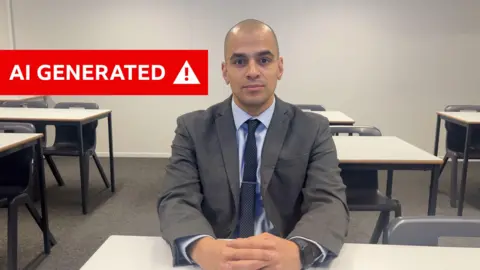
Great Schools Trust AI deepfake of Benjamin Barker, Director of AI at Great Schools Trust and principal of Kings Leadership Academy Wavertree. The deepfake is wearing a suit and tie and there is a red warning sign saying 'AI Generated' top leftGreat Schools Trust
An AI deepfake avatar of Benjamin Barker, Director of AI at Great Schools Trust and principal of Kings Leadership Academy Wavertree

Schools across the UK are trialling the use of deepfake teachers and even employing remote staff to deliver lessons hundreds of miles away from the classroom.

It comes as the use of AI is becoming increasingly prevalent in schools.

The government says AI has the power to transform education, and improve teacher workload, particularly around admin for teachers.

The BBC has spoken to teachers, school leaders and unions who seem divided on what the future of the UK's classrooms should look like.

Emily Cooke Photo shows Emily Cooke hula hooping in a playground. She has long blonde hair and is wearing a grey top, leggings and white trainers.Emily Cooke
Maths teacher Emily Cooke says teaching is about more than just imparting knowledge

Emily Cooke is a maths teacher at The Valley Leadership Academy in Lancashire, which has hired a virtual maths teacher - a decision Mrs Cooke is strongly against.

"Will your virtual teacher be there to dance with you at prom, hug your mum during results day, or high-five you in the corridor because they know you won the match last night?" she says.

Since September, top set pupils in Year 9, 10 and 11 at Mrs Cooke's school have been taught by the remote maths teacher, who is based 300 miles away in Devon.

Teachers went on strike over the move last week and this week.

The school said it was a "small-scale initiative" but the National Education Union (NEU) called it an "unacceptable situation".

Mrs Cooke says: "As a parent, as a teacher, I don't think that teacher-student relationship, which is so important, can be formed or replicated over a screen."

The school told the BBC that its approach is a "win-win", where "pupils benefit from lessons delivered by an outstanding specialist teacher online" who is supported in the classroom by a second teacher.

'It's like having a digital twin'

Watch deepfake video of school teacher, used as part of a trial by the Great Schools Trust

At a different academy, AI experiments are going further than most.

Shane Ierston, CEO of Great Schools Trust, says giving children in his schools in Liverpool, Warrington and Bolton a "top class, world-quality education" is his priority.

Mr Ierston believes clever use of AI can help to free up teachers' time to focus on building students' character, leadership and resilience.

Teachers there can already use its AI system to mark assessments and mock exams, which they say is more accurate.

Director of AI at the trust, Benjamin Barker, says the AI technology can identify gaps in students' learning and help teachers to plan future lessons.

After marking, the AI deepfake will produce a bespoke feedback video for each child.

The technology is due to be trialled this year, before getting feedback from staff, students and parents.

Using AI "as a leveller" will make sure every child gets "personalised tuition", with the teacher in the room making sure they understand, Mr Ierston says.

Having a deepfake will be "completely voluntary for teachers", he adds.

"What we're not trying to do is replace teachers," says Mr Ierston. "We're trying to use technology - things that have got a bad reputation - and see how it can be used to benefit society.

"That's the future."

Deepfakes will also be used to help absent pupils catch up from home, or to translate parent messages into the 46 languages spoken across the schools.

When asked what they would say to those who oppose children interacting with deepfake technology, Mr Ierston says it's "only natural" that people will fear change.

"But we would much rather be leading the change than Silicon Valley doing it for us," he says.

"We know that what we're doing has got children and the right values at the heart."

Nicola Burrows Family photo of Nicola, her children and husband. They are all smiling at the cameraNicola Burrows
Nicola Burrows taught at the Great Schools Trust for many years, where her children also attended

Nicola Burrows works for the trust, and has a daughter, Lucy, in Year 11.

When asked for her thoughts on Lucy getting feedback from an AI deepfake of her teacher, she says it would be "really quite special having that very specific personalisation with a face you know".

But adds that it is "really important that we bring the parents with us" when it comes to new initiatives, including addressing any concerns over safety.

'There's a long way to go to convince parents'

Technology, screens and AI in the classroom are divisive topics, particularly among parents.

"I think it's fair to say that parents are deeply sceptical about AI," says Frank Young, chief policy officer of charity Parentkind, a national charity that aims to give parents a voice in education.

Just 12% think AI should be used in the classroom, according to its annual survey results, which over 5,000 parents responded to in April this year.

"But I think we can get there if parents are provided with reassurance over how this AI will be used and how it will benefit the children," Mr Young says.

There are no official figures on how many schools are using AI in the classroom with students, but Ofsted is gathering evidence about how AI is being used in schools and FE colleges.

Data from survey tool Teacher Tapp, which asks thousands of teachers a series of questions each day, found that in October 2024, 31% of teachers said they'd used AI in the past week to help with their work. By October 2025, that had risen to 58%.

John Roberts, chief executive at Oak National Academy, which provides lesson planning resources for teachers funded by the DfE, says more than 40,000 teachers have used its experimental AI lesson planning tool since it launched in September last year.

The picket line at teacher strikes in Lancashire, over use of a virtual teacher. Photo shows teachers on the picket line holding NEU signs and banners saying 'no virtual teachers'
Emily (front right), says virtual teachers should only be used for children who cannot access school

'This approach is a win win'

Back at The Valley, Mrs Cooke says she does not think online learning is as effective as face to face, pointing to the "huge gaps" in learning from Covid, when schools closed and millions of lessons moved online.

"I thought we were trying to get teenagers off screens, not give them to them for five hours a week in their maths lessons?" she says.

"The fear is, if we do not stop this, if it goes unchallenged at The Valley, it will spread," she says.

"And in 20 years time, what is education going to look like? And are we okay with that?"

A spokesperson for the academy says remote teaching in the school is "not comparable" to pandemic-era teaching, as it is "structured, supported, and takes place in school".

It says hiring a remote teacher is a "small-scale, targeted response to the national shortage of specialist maths teachers. Our priority is, and always will be, to ensure pupils receive the highest quality teaching."

There are now three virtual teachers being used across the trust "deployed in very specific circumstances where recruitment of high-quality subject specialists has been exceptionally difficult", it says.

The Department for Education says technology must be "carefully managed to enhance – not replace - the deep thinking, creativity and critical engagement that underpin effective learning".

But NEU general secretary Daniel Kebede says the union is against remote teaching, and will "never tolerate the imposition of a virtual teacher".

The trust in charge of The Valley says it is committed to working positively with its NEU colleagues to resolve this matter.

Farewell (again) to Neighbours, Australia's longest running soap opera

Getty Images Seven people stand with their arms around each other's shoulders in front of a partition with the graphic of a street sign saying "Ramsay St"Getty Images
Neighbours first hit Australian screens in 1985, and was revived again after a brief cancellation in 2022

It is a classic soap opera plotline. A much-loved character is killed off in spectacular fashion, shockingly resurrected from the dead and then brutally despatched again soon after.

Now one of Australia's most famous shows has gone the same way.

On Thursday, the final episode of Neighbours will be broadcast in the UK and in its homeland.

Officially, the soap is "resting". But the sets have been dismantled and actors have taken other jobs. It looks like it really is goodbye to Ramsay Street.

If this sounds a touch familiar, you're not wrong.

"The feeling is very deja vu," executive producer Jason Herbison tells the BBC.

In 2022 Neighbours was axed after being dropped by Channel 5 in the UK – the country where it had found most of its audience.

Margot Robbie and Guy Pearce, both Hollywood stars who cut their teeth in the fictional suburb of Erinsborough, put in an appearance for the grand farewell. Kylie Minogue's Charlene Mitchell and Jason Donovan's Scott Robinson also featured.

TV crews descended on Pin Oak Court, the real-life suburban cul-de-sac that is the set for outdoor Neighbours scenes.

Hundreds huddled on a freezing Melbourne night to watch the last episode go out live on a big screen in the city's Federation Square.

The BBC even did a live blog on the final episode – both because it was truly a momentous moment in popular culture and to satisfy editors who grew up religiously watching Scott, Charlene and Mrs Mangle at 5.35pm on BBC One every day.

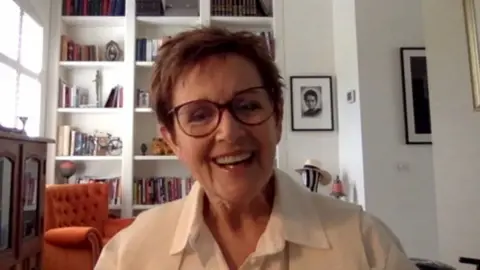
A woman with short hair and glasses smiles into the camera, with an orange chair and a floor-to-ceiling bookcase behind her
Jackie Woodburne has played Australian the iconic character of Susan Kennedy since 1994

But the final signature credits had barely played, before it was announced Neighbours was coming back, after being saved by Amazon MGM Studios.

It was such a rapid return that Pearce joked Robbie might want her farewell gift - a crate of champagne sent to the show's producers - returned.

But, as many predicted, the Neighbours revival has been short-lived.

Earlier this year, without specifying a reason, Amazon confirmed the series would finish at the end of 2025 - 40 years and more than 9,000 episodes after its television debut.

"It was like it was death in stages, I suppose this time," Jackie Woodburne, who has played Australian icon Susan Kennedy since 1994, told the BBC.

"There was very much a sense of 'No, this time we're done'."

How does it feel to say goodbye to a character she's embodied for the past three decades?

"Oh, gosh. Honestly, I'm going to get emotional thinking about that," she says, glancing skyward and blinking rapidly.

"She was the heart, you know? She was the mother - and then the grandmother," Jackie says of Susan. "She was inherently good. But at the same time she… made dreadful decisions."

Human and relatable, she was exactly the kind of character audiences around the globe connected deeply with.

Set and filmed in Melbourne, Neighbours was first broadcast in Australia in 1985 and launched on BBC One a year later, quickly entering the cultural zeitgeist.

It became a "drama school" of sorts for up-and-coming Australian entertainment talent, a springboard for people like Russell Crowe, Natalie Imbruglia, Holly Valance and Liam Hemsworth.

"I would see these kids come, full of hope and promise and talent, and to watch them develop their skills was just an absolute joy for me, and I know Fletch felt the same," said Woodburne, referring to Alan Fletcher, who played her onscreen husband Dr Karl Kennedy.

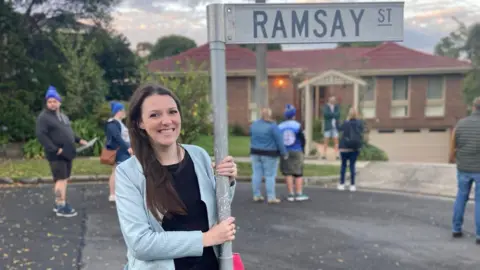
A woman smiles as she holds the pole of a street sign which says "Ramsay St", while seven people, some of them in blue beanies, stand in the street behind her. In the background is a suburban house
Gemma Clement moved to Melbourne from the UK after being inspired by the vibe of the show

The show often reflected for audiences formative parts of their lives too – first loves, first heartbreaks, births, deaths and marriages. In one episode you'd be doing "outrageously stupid", "slapstick" story lines, and the next you'd be sobbing over the coffin of your dead stepchild, Woodburne says.

In recent years those behind the soap have been proud to show more diverse characters and storylines, amid questions over how well it represented modern Australia. Neighbours featured the first same-sex marriage on Australian TV.

"There's a legacy for its audience, but there's also a legacy for our culture… It certainly is leaving a void," Herbison says.

While audience numbers have dwindled, true fans are mourning this like they did the death of Madge Bishop, Sonya Rebecchi or Bouncer the golden labrador retriever, who died in real life only a few months after filming his final scenes.

"I'm devastated," says Gemma Clement, a Brit who moved to Melbourne inspired by the "sunshine and the sound of the birds" on the soap. "I don't think there is any coming back. It feels final this time."

As goes the cliché, Woodburne hadn't realised what they had until the show was gone (the first time). Touring the UK on a farewell-turned-celebration tour, meeting hundreds of fans a day, was one of the most moving experiences of her life.

"I knew that people watched it and enjoyed it and appreciated it, but I don't think I fully understood," she said.

"Times are tough for a lot of people and our show gave them half an hour a day of pure escapism and fun… And to hear them tell us how meaningful that was to them… how much they look forward to it every day was very humbling."

A man with a goatee wearing glasses looks into the camera. Behind him is an indoor plant and a lamp
Jason Herbison worries about what Neighbours' cancellation means for the state of the television industry

That a show so iconic, and so beloved, could be cancelled is a worrying reflection on the state of the industry, Herbison says.

With it, goes 200 odd jobs – in a sector where work is already scarce.

Viewership has dramatically changed, and budgets are getting thinner and thinner. Unapologetically Australian content is getting harder to make. Woodburne wonders if Neighbours would have even got off the ground in today's world.

Herbison acknowledges the criticism that they should have let the show die a more dignified and star-studded death in 2022 – but says continuing to build its legacy, on and off screen, even for a few more years was profoundly worthwhile.

This finale will be different. Herbison says he knew there was no way it could compete with the last one.

"It still has all the heart and all the warmth, but the street is under a bit of threat this time. And it's left kind of a bit of a question of what will happen and what will become of everyone."

So is it possible the soap's ghosts return to haunt TV screens yet again?

Herbison won't rule out another twist: "The door is open. You never know what could happen."

US seizes oil tanker off Venezuela as Caracas condemns 'act of piracy'

Watch: Video shows US military seizing oil tanker off Venezuela coast

US forces have seized an oil tanker off the coast of Venezuela, President Donald Trump said, marking a sharp escalation in Washington's pressure campaign against Nicolás Maduro's government.

"We have just seized a tanker on the coast of Venezuela - a large tanker, very large, the largest one ever seized actually," Trump told reporters at the White House.

Releasing a video of the seizure, Attorney General Pam Bondi described the vessel as a "crude oil tanker used to transport sanctioned oil from Venezuela and Iran".

Caracas swiftly denounced the action, calling it an act of "international piracy". Earlier, President Maduro declared that Venezuela would never become an "oil colony".

The Trump administration accuses Venezuela of funnelling narcotics into the US and has intensified its efforts to pressure President Maduro in recent months.

Venezuela - home to some of the world's largest proven oil reserves - has, in turn, accused Washington of seeking to take its oil.

Oil prices inched higher on Wednesday as news of the seizure stoked short-term supply concerns. Analysts warn the move could threaten shippers and further disrupt Venezuela's oil exports.

US Attorney General Pam Bondi, who leads the US Department of Justice, said the Federal Bureau of Investigation, Department of Defense, Department of Homeland Security, and the US Coast Guard co-ordinated the seizure.

"For multiple years, the oil tanker has been sanctioned by the United States due to its involvement in an illicit oil shipping network supporting foreign terrorist organizations," the nation's top prosecutor wrote on X.

Footage shared by Bondi showed a military helicopter hovering over a large ship, and troops descending on to the deck using ropes. Uniformed men were seen in the clip moving about the ship with guns drawn.

A senior military official told CBS News, the BBC's US partner, that the mission to seize the tanker was launched from a Department of War vessel.

It involved two helicopters, 10 Coast Guard members and 10 Marines, as well as special forces.

Defence Secretary Pete Hegseth was aware of the operation, and the Trump administration was considering more actions like this, the source said.

When asked by reporters what the US would do with the oil on the tanker, Trump said: "We keep it, I guess... I assume we're going to keep the oil."

Maritime risk company Vanguard Tech has identified the oil tanker as Skipper.

"The vessel is reported to be part of the dark fleet, and was sanctioned by the United States for carrying Venezuelan oil exports," it says.

BBC Verify has located this tanker on MarineTraffic, which shows it was sailing under the flag of Guyana when its position was last updated two days ago.

Watch: Venezuela’s Maduro sings "Don't worry, be happy" as he calls for peace with the US

The Venezuelan government issued a statement denouncing the seizure as a "grave international crime".

"Venezuela will not allow any foreign power to attempt to deprive the Venezuelan people of what belongs to them by historical and constitutional right," it said.

It said the prolonged aggression against Venezuela has always been about "our natural resources, our oil, our energy, the resources that belong exclusively to the Venezuelan people".

Speaking at a rally earlier on Wednesday, Maduro had a message for Americans opposed to war with Venezuela. It came in the form of a 1988 hit song.

"To American citizens who are against the war, I respond with a very famous song: Don't worry, be happy," Maduro said in Spanish before singing along to the lyrics of the 1988 hit.

"Not war, be happy. Not, not crazy war, not, be happy."

It's unclear if Maduro knew about the seizure of the tanker before this rally.

After American forces boarded the vessel, Venezuelan Interior Minister Diosdado Cabello called the US "murderers, thieves, pirates".

He referred to Pirates of the Caribbean, but said that while that film's lead character Jack Sparrow was a "hero", he believed "these guys are high seas criminals, buccaneers".

Cabello said this was how the US had "started wars all over the world".

In recent days, the US has ramped up its military presence in the Caribbean Sea, which borders Venezuela to the north.

The build-up involves thousands of troops and the world's largest warship, the aircraft carrier USS Gerald Ford, being positioned within striking distance of Venezuela, BBC Verify reported.

The move has sparked speculation about the potential for some kind of military action.

Since September, the US has conducted at least 22 strikes on boats in the region that the Trump administration says are smuggling drugs. At least 80 people have died in these attacks.

Ione Wells contributed to this report.

Watch: Trump says US has seized "large tanker" off Venezuela coast

Venezuelan Nobel winner emerges to collect prize in Oslo after months in hiding

EPA/Shutterstock Nobel Peace Prize laureate Maria Corina Machado stands on a balcony with photographers and a hanging light fixture in a hotel room behind her. It is nighttime and she has her hand over her heart. She is smiling and wearing dark clothing.EPA/Shutterstock

Venezuelan opposition leader María Corina Machado appeared in Oslo, Norway after winning the Nobel Peace Prize, waving from the balcony of the Grand Hotel after months in hiding.

Machado made the covert journey despite a travel ban, and has mostly laid low since Venezuela's disputed presidential election in 2024. She last appeared in public in January.

From a balcony on Wednesday with a crowd cheering below, Machado placed her hand on her heart and sang with her supporters, before walking outside to greet them in person.

Her daughter, Ana Corina Sosa, accepted the award on her mother's behalf earlier in the day.

The Nobel Institute awarded Machado the Peace Prize this year for "her struggle to achieve a just and peaceful transition from dictatorship to democracy" in Venezuela.

Afterwards, Machado went the outside to greet her supporters, who waited behind metal barricades on the street.

"Maria!" "Maria, here!" they shouted in Spanish, as many held their phones aloft to record the historic moment.

At one point, Machado climbed over the barriers to join them.

Reuters Maria Corina Machado jumps over barricades outside the Grand Hotel in Oslo to greet cheering supporters as security looks on.Reuters
Maria Corina Machado jumps over barricades outside the Grand Hotel in Oslo to greet cheering supporters.

Her appearance was preceded by speculation that she would travel to Norway for the award ceremony.

The Nobel committee shared audio of Machado declaring, "I will be in Oslo, I am on my way."

After her Peace Prize win, Machado made a point to praise US President Donald Trump, who is open about his own ambitions for the Peace Prize and is locked in ongoing military tension with Venezuela.

On Wednesday, Trump announced the US military had seized an oil tanker off the coast of Venezuela. His administration alleges the vessel was under sanction and was involved in an "illicit oil shipping network supporting foreign terrorist organisations".

The Venezuelan government accused the US of theft and piracy.

Flu wave hits England's busiest A&E - hundreds of patients are arriving a day

BBC Paige who is 19 is lying on a hospital bed resting her head on a pillow. She looks ill. She has dark hair and is wearing a T-shirt.
BBC
Paige, who has type 1 diabetes, came into hospital with flu and dangerously high sugar levels

At England's busiest emergency unit, all the beds are full by midday.

As one patient leaves his room at Leicester Royal Infirmary's acute unit, cleaning staff are waiting outside.

He is barely out of the room before the bed is stripped and bleach is sprayed. The next patient is already waiting to come in.

Over two days the BBC was given access to the hospital to witness first-hand how it is coping with an early surge of winter bug cases.

Flu season has hit a month earlier than normal this year, with experts warning there appears to be a more severe strain of the virus - mutated H3N2 - circulating.

Hospitals around the country, like this one in Leicester, are doing all they can to avoid becoming completely overwhelmed.

But staff at the Royal Infirmary say increasing numbers of people coming to hospital with the flu and other winter bugs - together with existing pressures - are hitting the hospital hard.

They already worry about how they will cope this winter.

Patients in every cubical

When 19-year-old Paige arrives at the hospital by ambulance, she's put on a trolley while a resus bed is cleared. She's got the flu but also has type 1 diabetes and has dangerously high sugar levels. She is curled in a ball, pale and shaking.

"There are patients in every cubical," Consultant Saad Jawaid says, as Paige is wheeled in. "Another ambulance has just rocked up."

We watch as he works with colleagues in the resus unit to find desperately needed bed spaces.

"When beds are full we have to move people - sometimes that means those who can sit are moved out of beds and into chairs," he says.

Consultant Saad Jawaid on the right is wearing blue hospital scrubs. He is speaking to female members of the clinical team, also in uniform, who are holding documents. They are in the emergency unit the the Royal Leicester Infirmary.
Consultant Saad Jawaid works with colleagues to try to free up beds

Paige is given insulin and fluids to try to stabilise her sugar levels. The doctors hope her diabetes will be controlled soon. Getting better from the flu will take longer.

The following day, Paige is in a side room on the acute assessment unit.

"I do struggle a lot in winter," she says. "I was maybe in here two or three weeks ago. Infections and stuff just seem to hit harder than usual."

The number of flu patients in hospital has hit a record high in England for this time of year with NHS leaders warning the country is facing an unprecedented flu season.

At its busiest times, the emergency unit here in Leicester saw more than 1,000 patients a day last winter. On one of the days we were here, 932 patients came through the door. That number is expected to rise in the coming weeks.

Attendance levels are already around 8% higher this year than last year. And the unit faces a daily shortage of between 50 to 70 beds.

At the Royal Infirmary around 64 beds are currently taken up by people with respiratory viruses, including flu.

We meet one patient who waited 106 hours for a bed on a ward. Another, Gary, came in with a stomach bug and finally got a bed after 34 hours.

Oscar, aged five months, sits in his mother's arms. He has brown hair with a curl and is wearing a white and brown outfit.
Oscar came into the hospital wheezing and finding it hard to breathe

By late afternoon, the children's waiting area is full. Parents stand rocking crying babies as every seat is taken.

Respiratory cases of flu and bronchiolitis, a condition affecting the lungs of young patients, are rising fast here too.

In just 30 minutes, 30 children arrive at the department.

At five months old this is Oscar's first winter and his first trip to A&E. His mum brought him in because he was wheezing and struggling to breathe. A few hours after arriving, he is finally seen by a doctor and told he has bronchiolitis.

"These bugs are everywhere at the moment - Oscar's older brother brought it home from school and now Oscar has it," says his mum.

Richard Mitchell has been the chief executive of University Hospitals Leicester NHS Trust since 2021 - and has witnessed first-hand how it gets harder to cope with each winter that passes.

"We are already seeing very high levels of flu," he tells us. He expects numbers to climb into January. "That is one of the many things I am concerned about at the moment.

"At this point I feel we are working at the limits of our ability."

Turning minor cases away

The hospital has introduced a new system to manage the flow of patients arriving at its emergency department, as pressure grows on front-line services.

Receptionists, nurses, all the way up to consultants, now sit in a bank of desks at the entrance, assessing patients as they arrive.

This speeds up triage, moving people away from the front door and ensuring those in greatest need receive urgent care.

Staff say the range of cases has become increasingly polarised. Some of the most seriously ill patients are being driven in by relatives because of long waits for ambulances.

Line chart showing that positive tests for flu are climbing this year and are almost at 20% compared to the previous bad flu seasons in 2022 and 2024 when they were at around 13% at the same time. The chart shows that flu cases this year started rising earlier than in 2023 and 2024.
Flu has started early this year

At the other end of the scale, people turn up with minor complaints after struggling to secure GP appointments. "Last week someone came in with a coldsore," one nurse tells us.

Experienced staff can redirect those who do not need urgent care, helping them to book GP appointments or pointing them towards pharmacies and other services. Now one in 10 patients are sent away, although staff admit it can lead to frustration.

Security has been tightened following one violent incident, with glass screens installed and 24‑hour guards now in place.

Leicester Royal Infirmary has introduced new measures each year to boost capacity and manage rising demand. Winter pressures continue to grow, while the quieter summer months have become a thing of the past.

To reduce ambulance queues, prefabricated structures were converted into a permanent unit with 14 beds - all are full during the BBC's visit. Without them that would have been 14 ambulances queueing for hours to unload their patients.

Unlike many hospitals, Leicester's emergency unit is not totally overwhelmed by elderly patients. Frail patients are streamed directly to specialist areas, including a frailty unit, or supported in the community to avoid long hospital stays.

Preston Lodge, a former care home bought by the trust, now provides 25 beds, with 14 more opening on December 15. Patients who no longer need acute care - but still require rehabilitation or support - are moved there while awaiting care packages.

"We aim to get people better ready for going home and hopefully keep them stronger and more independent so they aren't back in hospital so frequently over the winter," says head of nursing, Emma Roberts.

Looking ahead, Mr Mitchell expects waits and delays to only get worse for patients in the coming weeks.

For the first week in January - traditionally the busiest each year - the hospital plans to free up more emergency beds, but that means delaying other operations and procedures.

He says: "We will not be able to provide timely care to every patient this winter but we will continue to do our utmost to ensure that patients are treated with dignity and respect to ensure they receive safe care and we will do everything possible to manage those waiting times."

Hospital leaders here are trying to take proactive steps - rather than simply reacting to each crisis. But staff and patients alike warn that hospitals across the country are caught in the middle of a system, many believe, is close to breaking point.

In a statement, the Department of Health and Social Care said it was "under no illusions this is going to be a tough winter for our NHS".

A spokesman said: "Flu cases are rising, so it is vital that patients can get protected. Almost 17 million vaccines have been delivered this autumn - 350,000 more compared to this time last year.

"There is no national shortage of the flu vaccine and we would urge everyone eligible to get their vaccination to protect themselves and their loved ones."

Sports Personality of the Year shortlist announced

Sports Personality of the Year shortlist announced

Graphic of Lando Norris, Ellie Kildunne, Rory McIlroy, Hannah Hampton, Luke Littler and Chloe KellyImage source, BBC Sport
  • Published

A shortlist of six contenders has been announced for the 2025 BBC Sports Personality of the Year award.

England footballers Hannah Hampton and Chloe Kelly, rugby union player Ellie Kildunne, darts player Luke Littler, golfer Rory McIlroy and Formula 1 driver Lando Norris are the nominees.

Voting will take place during the show on BBC One and the BBC iPlayer on Thursday, 18 December.

The programme - presented by Gabby Logan, Alex Scott and Clare Balding, and broadcast live from MediaCityUK in Salford - will celebrate 12 months of incredible sporting action.

Alex Kay-Jelski, director of BBC Sport, said: "This has been a breathtaking year for sport, driven by athletes whose performances belong in the history books.

"Each one has delivered moments of pure brilliance that have defined 2025.

"It's been incredible to watch, and I can't wait to honour their achievements, and to see who the nation chooses as the BBC Sports Personality of the Year 2025."

The public can vote online on the night for the main award, with full details announced during the show.

The Team of the Year award will also be decided by a public vote, with contenders to be announced later in the month.

Other prizes awarded on the night include Young Sports Personality of the Year, Coach of the Year, Lifetime Achievement and the Helen Rollason Award.

The World Sport Star award, for which voting is open, will also be presented.

Sports Personality of the Year 2025 contenders

Hannah Hampton

Hannah Hampton

Age: 25 Sport: Football

Hampton's spectacular 2025 culminated in her winning the Yashin Trophy, which is given to the world's best female goalkeeper at the Ballon d'Or awards.

Her heroics in saving two spot-kicks in a penalty shootout helped England win the European Championship final, and she was named player of the match.

She was included in the team of the tournament following a string of commanding performances that included another two shootout saves in the quarter-finals.

At club level she played a key role in Chelsea's domestic treble and was the joint winner of the WSL's Golden Glove award with 13 clean sheets in 22 games.

Chloe Kelly

Chloe Kelly

Age: 27 Sport: Football

In January, Kelly was unsure of her place for club and country. Fast forward to the summer and she was a European Championship and Champions League winner.

The hero of the Euro 2022 final showed she is still England's player for the big moments by scoring the decisive penalty as the Lionesses retained the trophy.

Despite not starting a match, her contributions were huge, with another successful penalty in the quarter-final shootout and a last-gasp semi-final winner.

Named in the team of the tournament, she was also integral to Arsenal's Champions League success and was fifth in the Women's Ballon d'Or voting.

Ellie Kildunne

Ellie Kildunne

Age: 26 Sport: Rugby union

Kildunne scored five tries as she played a crucial role as England won the Women's Rugby World Cup on home soil.

After missing the quarter-final with concussion, the full-back returned with gusto for the semi-final - scoring twice for the Red Roses against France.

In the final against Canada, she delighted the 80,000 fans as she scored a trademark dazzling solo try.

Earlier in the year, she scored four tries as England once again recorded a Grand Slam as they retained their Six Nations title. At club level, she scored 14 tries for Harlequins during the 2024-25 season.

Luke Littler

Luke Littler

Age: 18 Sport: Darts

Littler's 2025 began in sensational style as - aged 17 - he became the youngest darts world champion in history with a dominant victory over Michael van Gerwen in the final.

His subsequent victory at the World Matchplay made him only the fifth player to complete the PDC Triple Crown of World Championship, Premier League and Matchplay titles.

And he wasn't finished there - his triumph in November's Grand Slam of Darts meant he climbed to world number one for the first time.

At 18, he is the youngest man to do so - smashing the previous record set by a 24-year-old Van Gerwen.

Rory McIlroy

Rory McIlroy

Age: 36 Sport: Golf

After years of frustration and near misses, McIlroy's victory at the Masters made him only the sixth man in history to complete a Grand Slam of all four major championships.

His dramatic play-off triumph at Augusta was his first victory at a major since 2014.

At the Ryder Cup, he shrugged off a hostile crowd to contribute three-and-a-half points as Europe won in the United States for the first time since 2012.

Further wins came at the Players Championship, the AT&T Pebble Beach Pro-Am and the Irish Open, before he topped off a stellar year with his seventh Race to Dubai title.

Lando Norris

Lando Norris

Age: 26 Sport: Formula 1

In 2025, Norris became the 11th Briton to win a Formula 1 drivers' championship - emerging victorious in the closest finish to a season for 15 years.

The McLaren driver was 34 points behind team-mate Oscar Piastri after 15 races, but a brilliant run of results - including back-to-back wins in Mexico and Brazil - propelled him to the top.

The season came down to a dramatic finale at the Abu Dhabi Grand Prix with Norris, Piastri and four-time champion Max Verstappen all capable of winning the title.

In finishing third in Abu Dhabi, Norris held his nerve to secure McLaren's first drivers' championship since 2008, ending the season just two points clear of Verstappen.

To play this video you need to enable JavaScript in your browser.

This video can not be played

Media caption,

Who's your winner?

Related topics

Campaigners question ethics of puberty-blocker trial in legal letter to Streeting

BBC Keira Bell stands in front of a dark, black curtain, wearing a black hoodie with red and yellow designs near the elbows. She has dark, curly, short hair, dark brown eyes and wears earrings in her ears.BBC
Keira Bell says she regrets taking puberty blocking drugs as a teenager

Campaigner Keira Bell has told the BBC she believes the planned clinical trial of puberty blocking drugs for gender-questioning children is unethical and children "are essentially going to be harmed".

The Pathways trial, run by King's College London researchers, will look at how to improve care for children under 16 at NHS gender clinics.

The UK medicines' regulator has approved the study to begin in January, and the research team says it has been designed "to meet rigorous scientific and ethics standards".

Ms Bell and fellow campaigner, psychotherapist James Esses, have sent lawyers' letters to Health Secretary Wes Streeting and medical research organisations arguing it should be stopped.

The threatened legal action questions the safety and transparency of the clinical trial, if it is necessary, and whether it meets the expected "ethical principles".

The government says the trial will provide evidence that is lacking about the risks and benefits of the drugs, and that there are multiple safeguards in place to protect young people.

Puberty blockers, also known as puberty suppressing hormones (PSH), are drugs used to delay or prevent puberty happening.

They are used to treat some children and young people with gender incongruence - when someone's gender identity doesn't match the sex they were registered at birth - or with gender dysphoria, when it causes significant distress.

The drugs were banned in the UK for gender treatment last year after a major review raised concerns about the lack of clinical evidence over their safety for under-18s.

The same review, carried out by paediatrician Dr Hilary Cass, said a clinical trial was necessary to provide solid evidence as to whether or not the drugs were beneficial.

Dr Cass recently told the BBC she was "really pleased" the KCL team was carrying out the trial.

The study will examine the physical and emotional effects of puberty blockers on about 220 children under the age of 16 attending NHS gender clinics in England, with strict criteria having to be met for any child taking part.

The children will be provided with intensive support. Researchers say they will also monitor bone density and brain development.

Keira Bell was given puberty blockers and cross-sex hormones as a teenager. She regrets that and believes she should have been challenged more by staff at the Tavistock Gender Identity Clinic, which is now closed.

In 2020, she took legal action against the clinic. The High Court ruled that under-16s were "unlikely to be able to give informed consent" to puberty blockers, but this was later overturned by the Court of Appeal, which ruled that doctors can judge whether young people can give consent to the treatment.

Ms Bell, 28, told the BBC: "Children are essentially going to be harmed from this trial."

She said children's fertility and sexual function could be affected.

Her own experience of taking puberty blockers has left her "extremely angry", she added.

"I didn't know that I was essentially trapping my own mind from developing, because puberty doesn't happen in a vacuum - it's your whole body, it's your brain sending signals to your body. So I didn't understand any of that," she said.

"There are children who have already been down this pathway – I'm one of them. Why aren't we doing follow-ups with people like me?"

James Esses told the BBC there were questions around informed consent.

"Some of the children who are going to be taking part in this trial are not even old enough to open a current account or open a Facebook profile," he said.

A head and shoulders photo of a man with a dark, brown hair and beard
James Esses is part of the legal action against the clinical trial

Legal letters from the campaigners have been delivered to the Human Research Authority (HRA) and the Medicines and Healthcare products Regulatory Authority (MHRA), which have given the puberty blockers trial ethical approval.

Mr Streeting, along with NHS England, King's College London and the South West London and Maudsley NHS Trust have also been notified.

A Department of Health and Social Care spokesperson said medical care "must always be based on solid evidence, and children's safety must come first".

They added: "This trial will help provide the evidence that is currently lacking. Its approval came only after extremely rigorous safety checks and with multiple safeguards in place to protect young people's wellbeing - including clinical and parental approval."

In a statement, the MHRA said the safety of participants was "always" its priority and its role was to "rigorously assess" clinical trial submissions to ensure they met "the appropriate regulatory standards of participant safety and scientific integrity".

It said it also continually reviews the approval of the trial as it proceeds.

A spokesperson for the Health Research Authority, said the Pathways trial had "all the necessary regulatory approvals that it needs to begin".

It explained that a Research Ethics Committee, made up of people including healthcare professionals and members of the public, look at research proposals and give opinions about whether they are ethical.

The KCL research team said: "Clinical care should always be underpinned by robust evidence, and this study will help provide a better understanding of how to treat and care for young people with gender incongruence."

The researchers said children taking part in the study would need the consent of their parent or legal guardian, plus the agreement of their lead clinician and a multidisciplinary team.

A spokesperson for charity Stonewall said it was "vitally important" that all LGBTQ+ people, including young people, have access to high-quality, evidence-based and timely healthcare.

Shell facing first UK legal claim over climate impacts of fossil fuels

Getty Images A young woman in a green and white jacket looks on forlornly as a blue car hangs from a tree, with its rear end in the air, having been lifted by floods during Typhoon Rai in the Philippines in 2021Getty Images

Victims of a deadly typhoon in the Philippines have filed a legal claim against oil and gas company Shell in the UK courts, seeking compensation for what they say is the company's role in making the storm more severe.

Around 400 people were killed and millions of homes hit when Typhoon Rai slammed into parts of the Philippines just before Christmas in 2021.

Now a group of survivors are for the first time taking legal action against the UK's largest oil company, arguing that it had a role in making the typhoon more likely and more damaging.

Shell says the claim is "baseless", as is a suggestion the company had unique knowledge that carbon emissions drove climate change.

Typhoon Rai, known locally as Odette, was the most powerful storm to hit the Philippines in 2021.

With winds gusting at up to 170mph (270km/h), it destroyed around 2,000 buildings, displaced hundreds of thousands of people - including Trixy Elle and her family.

She was a fish vendor on Batasan island when the storm hit, forcing her from her home, barely escaping with her life.

"So we have to swim in the middle of big waves, heavy rains, strong winds," she told BBC News from the Philippines.

"That's why my father said that we will hold our hands together, if we survive, we survive, but if we will die, we will die together."

Trixy is now part of the group of 67 individuals that has filed a claim that's believed to be the first case of its kind against a UK major producer of oil and gas.

Getty Images A family of three crouches for shelter under a rusted piece of galvanised roof, by a roadside in the Philippines in the wake of Typhoon Rai in December 2021Getty Images
A family take shelter in the wake of Typhoon Rai which left hundreds of thousands of people homeless

In a letter sent to Shell before the claim was filed at court, the legal team for the survivors says the case is being brought before the UK courts as that is where Shell is domiciled – but that it will apply the law of the Philippines as that is where the damage occurred.

The letter argues that Shell is responsible for 2% of historical global greenhouse gases, as calculated by the Carbon Majors database of oil and gas production.

The company has "materially contributed" to human driven climate change, the letter says, that made the Typhoon more likely and more severe.

The survivors' group further claims that Shell has a "history of climate misinformation," and has known since 1965 that fossil fuels were the primary cause of climate change.

"Instead of changing their industry, they still do their business," said Trixy Elle.

"It's very clear that they choose profit over the people. They choose money over the planet."

Getty Images A tall, multi storey building is seen in the evening light, is the global headquarters of Shell which is why this legal claim has been filed in LondonGetty Images
Shell's global headquarters is in London which is why the claim has been lodged at a UK court

Shell denies that their production of oil and gas contributed to this individual typhoon, and they also deny any unique knowledge of climate change that they kept to themselves.

"This is a baseless claim, and it will not help tackle climate change or reduce emissions," a Shell spokesperson said in a statement to BBC News.

"The suggestion that Shell had unique knowledge about climate change is simply not true. The issue and how to tackle it has been part of public discussion and scientific research for many decades."

The case is being supported by several environmental campaign groups who argue that developments in science make it now far easier to attribute individual extreme weathernevents to climate change and allows researchers to say how much of an influence emissions of warming gases had on a heatwave or storm.

But proving, to the satisfaction of a court, that damages done to individuals by extreme weather events are due to the actions of specific fossil fuel producers may be a challenge.

"It's traditionally a high bar, but both the science and the law have lowered that bar significantly in recent years," says Harj Narulla, a barrister specialising in climate law and litigation who is not connected with the case.

"This is certainly a test case, but it's not the first case of its kind. So this will be the first time that UK courts will be satisfying themselves about the nature of all of that attribution science from a factual perspective."

The experience in other jurisdictions is mixed.

In recent years efforts to bring cases against major oil and gas producers in the United States have often failed.

In Europe campaigners in the Netherlands won a major case against Shell in 2021 with the courts ordering Shell to cut its absolute carbon emissions by 45% by 2030, including those emissions that come from the use of its products.

But that ruling was overturned on appeal last year.

There was no legal basis for a specific cuts target, the court ruled, but it also reaffirmed Shell's duty to mitigate dangerous climate change through its policies.

The UK claim has now been filed at the Royal Courts of Justice, but this is just the first step in the case brought by the Filippino survivors with more detailed particulars expected by the middle of next year.

Tiger teeth, dried seahorses and shark fins sold illegally on Facebook, BBC finds

Facebook A picture of tiger teeth, beside that is a picture of a pile of dead seahorses.  The next image shows shark fins laid out to dry in the sunFacebook
Adverts seen on Facebook showed tiger teeth, dried seahorses and shark fins for sale

Endangered species, including tiger body parts, shark fins and pangolin scales, are being offered for sale on Facebook, BBC News has found.

One Chinese user posted videos of a tiger in a cage that was for sale as well as pictures of tiger bones and teeth, while another included two live tiger cubs in a box.

An image showed a tiger head and bones for sale piled up on scales.

A seller told the BBC his products "can be shipped to the UK".

He said a 10cm-long tooth would cost 2,000 Chines yuan (about £213) and that he could sell me tiger bones for 3,600 yuan per kilo (about £380).

Another seller, who was offering shark fins, claimed to ship from the US to the UK and charged $50 per kilo (about £37).

The sale of endangered species such as tigers and pangolin is illegal in the UK and CITES, the Convention on International Trade in Endangered Species of Wild Fauna and Flora, closely regulates international trade in species under threat.

The voluntary agreement, signed by more than 180 countries and other bodies, only allows the trade if it is both legal and sustainable.

It comes as Interpol has announced the results of a global crackdown on the wildlife trade, which it says led to the seizure of nearly 30,000 live animals.

Meta, which owns Facebook, says it does not allow the sale of endangered species and removes such content.

The UK has strict laws on what species can be imported legally.

However, BBC News also found British companies selling dried seahorses, which can only be traded in the UK if the seller can certify they were sustainably harvested.

In practice, that's not possible and supplying them is likely to break the Wildlife and Countryside Act 1981, punishable by a fine or prison sentence.

One seller was found promoting them as a tonic for mothers who have just given birth and as a medicine for combating coughs. There is no scientific evidence to support this.

When contacted, the seller - based in the north of England - immediately sent pictures of the seahorses they had in stock. Ordering online cost just over £60.

Two days after placing the order three packets containing 15 dead, dried seahorses arrived in the post.

The delivery had no documentation about the origin of the specimens but did include a recipe on how to make soup with them.

In a transparent plastic bag, five seahorses and in the centre a dead male seahorse with a pouch showing he was pregnant when caught.  Males carry seahorse young and can give birth to several hundred.
Five dead seahorses, with a pregnant male in the centre, bought from a supplier in the UK

The BBC showed the samples to Neil Garrick-Maidment, from the Seahorse Trust, who said it "made him sick to his stomach". He said they could only have been supplied illegally.

Three pregnant males were among the order - male seahorses carry as many as 200 young.

Mr Garrick-Maidment says that, kilo for kilo, seahorses are currently worth as much as silver and warned further price rises could mean they are fished to extinction.

Reuters A pangolin on the ground surrounded by leafy plantsReuters
The pangolin are easily recognised by their full armour of scales

The global trade in endangered species is estimated to be worth £17bn per year and Interpol assesses it to be the fourth largest international crime type behind drugs smuggling, people smuggling and arms trafficking.

The pangolin, which is the only mammal completely covered in scales, has become the most trafficked animal on earth and is now critically endangered.

A seller in Laos was found to be offering pangolin scales for sale on Facebook. He told the BBC he charged $150 per kilo.

One user even offered to sell rhino horn and suggested making contact via private message.

In a statement, Meta said: "We do not allow the sale of endangered species on our platforms."

The social media platform says it takes down that kind of material as soon as it becomes aware of it, saying it encourages users to "report any content they think may violate our policies".

Today Interpol announced the result of Operation Thunder, a month-long global initiative to combat the trade in endangered species.

Authorities in 134 countries were involved in the operation which included the seizure of nearly 30,000 live animals and 30 tonnes of animal parts.

Interpol says the growth in live animal seizures is driven by the exotic pet trade, but the market in bushmeat is also on the rise.

Two rhino horns are held up to the camera, with the caption on the Facebook post reading "does anyone want to buy a header" and listing a phone number.  In the second image 5 pangolins are curled up on the floor.
Rhino horn and live pangolins offered for sale by users on Facebook

Kenyan authorities seized 400kg of giraffe meat as part of the global crackdown and, in Belgium, primate flesh was found. More than 4,000 shark fins were also intercepted.

Danny Hewitt, Border Force's director for UK command operations who oversaw the British arm of Op Thunder, said there had been a 73% increase in seizures compared to 2023. That included live snakes, tarantulas and lovebirds found hidden in vehicles stopped at the UK border.

As populations move to the UK they drive demand, he added.

The trade has been driven by organised crime, and in many cases, customers who don't understand the harm they are doing.

Mr Hewitt added: "They may not have been illegal in other parts of the world, but they are illegal in the UK."

Race Across the World has shown we can do something really hard together

StudioLambert/BBC Tyler West and Molly Rainford hold hands and smile stood on rocks by the shore of the sea.StudioLambert/BBC

Four famous duos have travelled nearly 6,000 km, hitchhiking through mountain towns, foraging in dense jungles, and battling challenges they never imagined, as contestants in Celebrity Race Across the World.

What began on the sun-soaked easternmost tip of Mexico is about to come to a close on Thursday night as the teams race toward the windswept Península de La Guajira in Colombia, the series' final checkpoint.

The budget, £950 per person - the equivalent cost of flying the route - was one limitation, but what else made the trip the challenge of a lifetime?

Molly: 'It's given me so much more confidence'

StudioLambert/BBC Partners, presenter and DJ Tyler West and actor and singer, Molly Rainford both holding a chili whilst working at a farm during their travels.StudioLambert/BBC

In the lead-up to the race, Tyler West and Molly Rainford had a flicker of apprehension.

While the couple knew each others' strengths and weaknesses inside out, life in the public eye often left them feeling like "passing ships in the night."

Their occasional holidays tended to have a single goal: complete relaxation.

This challenge offered something entirely different: a chance to push their relationship into new territory, and to reconnect without the usual distractions – for presenter and DJ Tyler, that meant not even his beloved Biscoff biscuits.

"It was a big question mark in our minds whether we'd even make it to the first checkpoint," Tyler admits.

"I remember looking at the final checkpoint on the map and thinking, 'How on earth are we going to get there?' But reaching this far really puts things into perspective - we're not as bad at travelling as we thought."

For actor and singer Molly, one of the biggest takeaways is a new-found confidence.

"Talking to strangers, asking people for help - those are things you just don't do anymore, but the race forces you into it," she says.

"It's given me so much more confidence that now I'm thinking, 'What have I got to lose?'"

And as for their relationship? "It proved to us we can get through anything together," she says.

Dylan: 'There's so much kindness out there'

StudioLambert/BBC Dylan Llewellyn and mum Jackie smiling with their backpacks on whilst stood on a white sandy beach in front of the sea.StudioLambert/BBC

For actor Dylan Llewellyn and his mother Jackie, the race was less about crossing the finish line first and more about getting out of their comfort zone.

After three decades of marriage, Jackie had never been away from her husband for more than a weekend. But she filled the freezer with steak-and-kidney pies and set off with her son, determined to embrace the unknown.

They learned lessons from past contestants: save more, spend less, and never - under any circumstances - let go of your moneybelt or passport.

StudioLambert/BBC Actor Dylan Llewellyn and mum Jackie sit on a bus whilst travelling.StudioLambert/BBC

"I can't believe we've got this far. I thought we wouldn't make it after leg one," says Jackie.

"I'm so pleased that we pushed ourselves through the lows, and I'm proud of us both for getting to the end of leg five."

The pair leaned on each other during the toughest moments but also learned the importance of asking for help.

"I don't think we realise how much kindness there is out there. And we felt it a lot," says Dylan.

"We felt so much love and togetherness with families and it was really strong and beautiful to see."

Anita: 'My dad has seen my more vulnerable side'

StudioLambert/BBC Anita Rani and dad Bal stand on a sandy beach smiling at the beginning of their journey.StudioLambert/BBC

Before the race began, broadcaster and writer Anita Rani and her father, Bal, were excited at the idea of five uninterrupted weeks in each others' company. They hadn't travelled together since a family trip to India when Anita was just two years old.

As the oldest combined duo in the competition, they worried initially whether they would have the stamina to keep pace with younger teams.

But they know they have what matters most: determination.

StudioLambert/BBC Anita Rani and dad Bal smiling whilst on a boat wearing matching navy neckerchiefs.StudioLambert/BBC

"We're never going to quit," Anita insists ahead of the final.

"There's obviously been disappointment so far about the things that have been out of our control, but there's a life lesson in that, isn't there?

"When Guatemala closed down, we missed a bus, or whatever, all those things are completely out of your control, and it's very frustrating, but that's part of the journey."

For Anita and Bal, the race has become about far more than reaching the finish line.

They have treasured the time together and the chance to get to know each other better.

"Honestly, this is life, and this is what we've been through," Anita says.

"I think my dad has seen a more vulnerable side of me that I don't normally show."

Roman: 'It makes you realise there's so much more to life'

StudioLambert/BBC Roman Kemp has him arm around sister Harleymoon as they both smile on a path next to the sea next to a large rock.StudioLambert/BBC

Sibling duo Roman Kemp and Harleymoon were candid about their relationship not being as close as they would like: busy careers had reduced their interactions to quick spare-key handovers and dog drop-offs.

They are also, by their own admission, polar opposites. Singer-songwriter Harleymoon is the free-spirited adventure-seeker who is usually the last to leave any party.

Broadcaster Roman, devoted to his work and his beloved Arsenal, is naturally cautious about stepping outside his comfort zone.

For them, the race was an opportunity to become friends again and help them discover new sides of each other.

StudioLambert/BBC Broadcaster Roman Kemp and his sister, singer-songwriter, Harleymoon leaning against a wall whilst waiting for transport. Harleymoon signals a thumbs down with her hand.StudioLambert/BBC

Roman and Harleymoon describe their time with a family on Panama's San Blas Islands as truly transformative.

Roman says the race "took me so far from where I am from".

"It was the biggest moment for me.

"It does make you realise that there's so much more to life… You see what makes these people happy and how happy they really are, which is just this family."

For Harleymoon, the experience of having nothing besides a few bananas and a hammock "in the middle of nowhere" sparked deep self-reflection.

"Your life has turned into something so simple but so beautiful — it's an amazing window to reflect and think, wow, we have so much at home, and yet we always strive for more," she said.

"Getting to experience days like that, when you're just so full of gratitude, was really amazing."

Panic in France as children fall victim to lethal violence of Marseille drug gangs

AFP via Getty Images This photograph shows graffiti indicating drug prices on the walls of The Bel Horizon tower, located in the 3rd arrondissement of Marseille, on December 3, 2025AFP via Getty Images
Drug crime has skyrocketed in Marseille, France's second largest city

Warning: This article contains disturbing details from the start.

A group of children spotted Adel's body on their way to school, just as his parents were heading to the police station to report him missing. A grotesque, charred silhouette, reclining, with one knee raised, as if lounging on one of Marseille's nearby beaches.

He was 15 when he died, in the usual way: a bullet in the head, then petrol poured over his slim corpse and set on fire.

Someone even filmed the scene on the beach, the latest in a grim series of shoot-then-burn murders linked to this port city's fast-evolving drug wars, increasingly fuelled by social media and now marked by chillingly random acts of violence and by the growing role of children, often coerced into the trade.

"It's chaos now," said a scrawny gang-member, lifting his shirt in a nearby park to show us a torso marked by the scars of at least four bullets - the result of an attempted assassination by a rival gang.

France's Ministry of Justice estimates that the number of teenagers involved in the drugs trade has risen more than four-fold in the past eight years.

"I've been in [a gang] since I was 15. But everything has changed now. The codes, the rules – there are no more rules. Nobody respects anything these days. The bosses start... to use youngsters. They pay them peanuts. And they end up killing others for no real reason. It's anarchy, all over town," said the man, now in his early 20s, who asked us to use his nickname, The Immortal.

The Immortal lifts his shirt to show bullet wounds on his torso
The Immortal, a Marseille gang member, showing his bullet wounds from a rival gang attack

Across Marseille, police, lawyers, politicians and community organisers talk of a psychose – a state of collective trauma or panic – gripping parts of the city, as they debate whether to fight back with ever tougher police action or with fresh attempts to address entrenched poverty.

"It's an atmosphere of fear. It's obvious that the drug traffickers are dominant, and gaining more ground every day," said a local lawyer, who asked to remain anonymous for fear of reprisals against her or her family.

"The rule of law is now subordinate to the gangs. Until we have a strong state again, we have to take precautions," she said, explaining her recent decision to stop representing victims of gang violence.

"There's so much competition in the drugs trade that... people are ready to do anything. So, we have kids aged 13 or 14 who come in as lookouts or dealers. The young see dead bodies, they hear about it, every day. And they're no longer afraid of killing, or being killed," community organiser Mohamed Benmeddour told us.

The trigger for Marseille's current psychose was the murder, last month, of Mehdi Kessaci, a 20-year-old trainee policeman with no links to the drug trade. It is widely believed his death was intended as a warning to his brother, a prominent 22-year-old anti-gang activist and aspiring politician named Ahmed Kessaci.

Under close police protection now, Kessaci spoke to the BBC about Mehdi's death, and the guilt he feels.

"Should I have made my family leave [Marseille]? The struggle of my life is going to be this fight against guilt," he said.

AFP via Getty Images French anti-drug activist Amine Kessaci (C) and his mother Ouassila Benhamdi Kessaci (L) gather to take part in a march in tribute to Mehdi Kessaci at the roundabout where he was murdered and to protest against drug trafficking, in Marseille, southern France on November 22, 2025. AFP via Getty Images
French anti-drug activist Amine Kessaci (centre) is mourning his brother Mehdi, who was murdered in Marseille

Ahmed Kessaci first rose to national prominence in 2020, after his older brother, a gang member named Brahim, was also murdered.

"We've had this psychose for years. We've known that our lives are hanging by a single thread. But everything changed since Covid. The perpetrators are getting younger and younger. The victims are younger and younger," he said.

"My little brother was an innocent victim. There was a time when the real thugs... had a moral code. You don't kill in daytime. Not in front of everyone. You don't burn bodies. First you threaten with a shot to the leg... Today these steps have all disappeared."

Citing today's "unprecedented" levels of violence, French police are responding with what they call security "bombardments" in high-crime areas of Marseille.

Although one gang, the DZ Mafia, now appears to dominate the trade, it operates a kind of franchise system, with a fractious network of small distributors often staffed by teenagers and undocumented immigrants, who clash violently over territory.

According to one estimate, up to 20,000 people may be involved in the city's drug industry. Last year officials confiscated €42m (£36m) in criminal assets from the gangs.

Video footage shared on social media routinely shows gang members, armed with automatic rifles, shooting at each other in Marseille's various cités – poor neighbourhoods characterised by high-rise buildings and a concentration of social housing.

On a cold afternoon last week, we accompanied a group of armed riot police on one of their regular "bombardment" missions.

The officers sped up to a dilapidated block of flats in their vans as a youthful gang look-out on the gate promptly fled on foot. Splitting into two groups, the police ran up either side of the building seeking to catch dealers in the stairwells.

"The aim is to disrupt the drug dealing spots. We've closed more than 40 of them... and we've locked up a lot of people," explained Sébastien Lautard, a regional police chief.

Watch: BBC films arrests in Marseille drug raid

"Turn him round," said an officer, brusquely, as his team pinned an 18-year-old up against a door.

In a filthy cellar nearby, the police found dozens of vials and tiny plastic bags used to distribute cocaine. Later, a policeman explained that the young man they had detained was pleading to be arrested, saying he had come to Marseille from another city, and was now being held against his will and forced to work for a drug gang.

The officers took him away in a van.

"This is not El Dorado. We have a lot of youngsters recruited on social media. They come to Marseille thinking they'll make easy money. They're promised €200 ($233;£175) a day. But it often ends in misery, violence and sometimes death," said the city's chief prosecutor, Nicolas Bessone.

In his office close to the city's old harbour, Bessone described an industry thought to be worth up to €7bn nationwide and characterised by two new developments: a growing emphasis on online recruitment, sales, and delivery; and a rising number of teenagers coerced into the trade.

"We now see how the traffickers enslave these... little soldiers. They create fictional debts to make them work for free. They torture them if they steal €20 to buy a sandwich. It's ultra-violence. The average age of the perpetrators and victims is getting younger and younger," said Bessone.

He urged local people not to succumb to a psychose but instead to "react, to rise up".

The lawyer who asked us to hide her identity described a case she had handled.

"One young person, who absolutely didn't want to be part of a network, was picked up after school, forced to participate in the drugs trade, was raped, then threatened, then his family also threatened. All means are used to create a workforce," she said.

On Tiktok, dozens of videos, set to music, advertise drugs for sale in Marseille's cités, "from 10:00 to midnight", each product with its own emoji, for cocaine, hashish and marijuana. Other adverts seek to recruit new gang members with messages like "recruiting a worker", "€250 for lookouts", "€500 to carry drugs".

For some local politicians, the answer to Marseille's troubles is a state of emergency, and far tougher rules on immigration.

"Authority must be restored. We need to end a culture of permissiveness in our country. We need to give more freedom, more power to the police and the judiciary," said Franck Alissio, a local MP for the populist, far-right National Rally party, and a prospective mayoral candidate.

Although the ancient Mediterranean city of Marseille has, for centuries, been known for its large immigrant community, Alissio argued that "today, the problem is that we are no longer able to integrate economically and assimilate. Too much immigration. It's the number [of immigrants] that's the problem. And in fact, the drug traffickers, dealers, lookouts, the leaders of these mafia, are almost all immigrants or foreigners with dual nationality."

It is a controversial claim that is hard to verify in a country that strives to avoid including such details in official figures.

Alissio claimed that billions of euros had been poured into Marseille's poorest neighborhoods by successive governments to no effect. He blamed parents and schools for allowing children into the drugs trade but added that he was focused on "solving the problem, not doing sociology".

Far-right parties have long enjoyed strong support across the south of France, but less so in the diverse city of Marseille itself. Critics of the RN, like the lawyer whose identity we have concealed, accused the party of "exploiting misery and fear," and wrongly blaming immigrants for a "gangrene" that is widespread across all communities in France.

Philippe Pujol, a local writer and expert on the drug trade in Marseille, was also offered police protection after the murder of Mehdi Kessaci last month.

"I'm not sure if there's a good reason for this terror. But... terror is taking hold. I would rather be afraid and careful than take unnecessary risks," he said.

But he hit back against calls for tougher police action, arguing it was merely nursing the symptoms "of a suffering society", rather than treating the causes of the problem.

Describing entrenched poverty as a "monster," Pujol painted a picture of a society radicalised by decades of neglect.

"The monster is a mixture of patronage, corruption, and political and economic decisions made against the public interest," Pujol said.

"These kids can be jerks when they're in a group, but when you're alone with them, they're still children, with dreams, who don't want this violence."

Exiled Hong Kong activist target of sexually explicit harassment campaign

Getty Images Carmen Lau, activist in exile and former Pro-democratic District Councilor of Hong Kong, seen making speeches during the rally outside Downing Street in 2022.Getty Images

A high-profile Hong Kong pro-democracy activist living in the UK has been the target of a campaign of harassment involving letters containing fake, sexually explicit images of her sent from China to her neighbours.

Carmen Lau, 30, who fled Hong Kong four years ago, told the BBC she was "shocked" as the letters, delivered to addresses in Maidenhead in Kent, included her name and images made to look like she was either naked or in underwear and offering sexual services.

"The letters had a couple of very unpleasant images, AI-generated or photo-shopped, where they put my face on those images, portraying me as a sex-worker," she said.

The existence of the letters was first reported by the Guardian.

The first she knew about the letters was when the local MP, Liberal Democrat Joshua Reynolds, called her to say he had been alerted by some of his constituents who had received them.

Ms Lau had sought sanctuary in the UK in 2021 after opposition politicians and pro-democracy activists in Hong Kong began being arrested following the imposition of a controversial new National Security Law.

While in the UK she has frequently criticised China's Communist leadership and has spoken out about China's controversial plans to build a 'mega embassy' in London, warning that it could become a base for trans-national repression of China's critics abroad.

Last year up to a dozen of the same neighbours in Kent had received letters sent from Hong Kong, and purporting to come from the police, offering a bounty payment of £95,000 to anyone who would take Ms Lau and hand her over to the Chinese embassy in London.

The new letters were sent last month from the Chinese territory of Macau, close to Hong Kong.

"I was quite shocked because last time it wasn't explicit and so unpleasant to see," Ms Lau told the BBC.

"When I was in Hong Kong pro-Beijing agents were trained to use gender-based harassment targeting pro-democracy activists," she said, "but AI technology has enhanced this sort of intimidation, it is beyond just transnational repression, as a woman it is very worrying".

Reynolds told the BBC "the government need to be very clear that this is not acceptable, we cannot have these letters sent to UK residents".
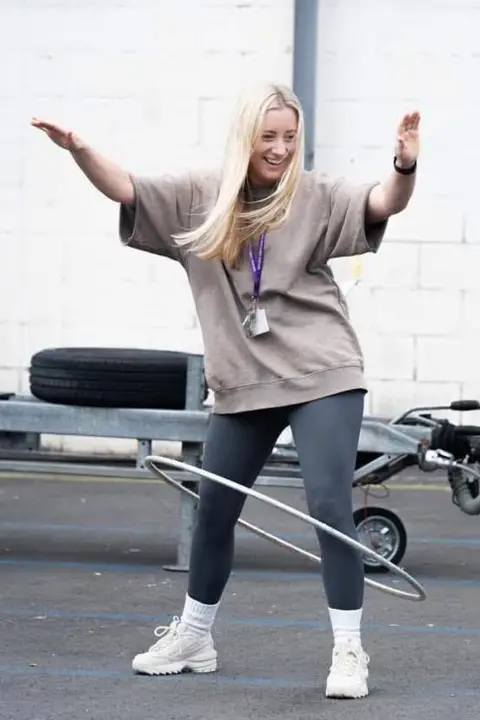
"We need to find out who sent these letters," he said, adding "officials in Beijing need to be held accountable".

Reynolds said he had raised the issue with both the Home Office and the Foreign Office.

A government spokesperson said "the safety and security of Hong Kongers in the United Kingdom is of the utmost importance".

Ms Lau said police had told her they would be investigating.

The government has previously insisted that any attempt by a foreign power to intimidate, harass, or harm individuals or communities would not be tolerated.

It has said the UK continues to raise concerns about transnational repression directly with the Chinese and Hong Kong authorities, and has publicly condemned the issuing of arrest warrants and bounties by the Hong Kong Police Force.

'I lost 3st and was sick 40 times a day during pregnancy'

BBC Four women looking at the camera - one is holding a baby, and another is holding two babies. BBC
Excessive and severe nausea and vomiting is known as hyperemesis gravidarum and is thought to affect 1-3% of pregnancies

About 80% of pregnant women experience morning sickness, according to the NHS, with some expectant mums having such extreme nausea that they struggle with daily life. After reporter Beth Parsons was diagnosed with hyperemesis gravidarum (HG) during her pregnancy, she has been been speaking to other women affected by the condition.

Drawing the curtains to block out a warm summer's afternoon, I did everything I could to avoid being sick for the 10th time that day and wondered when I'd feel myself again.

It's isolating, lonely and very hard to describe to someone, especially when the "normal" version of morning sickness is seemingly considered a right of pregnancy passage; something that ginger, an early night and just getting past the first trimester will fix.

I've always wanted to be a mum, and my husband and I were over the moon about the positive test, but it wasn't quite the welcome to pregnancy we had in mind.

A hyperemesis gravidarum diagnosis followed.

While books and social media posts were describing the nutritious diet that would best help my growing baby, a lot of the time I couldn't even keep water down.

I would sip ice-cold cordial and suck ice lollies to keep dehydration at bay the best I could. Sometimes I would nibble on toast or dry cereal then try to go to sleep in the hope it would stay down.

Beth Parsons/BBC Blonde woman with striped T-shirt looking unwell and tired.Beth Parsons/BBC
Beth Parsons experienced serious HG symptoms from week five to week 17 of her pregnancy

It was all happening at a time when internally I felt so lucky to be starting a family, and was desperate not to come across as ungrateful.

After seeing my GP, I eventually found a medication which helped and it was like a light had finally been turned back on.

For the first time in months, I was able to leave the house, return to work and started to eat and drink with more normality. I'm now in week 26 and I haven't been seriously sick since week 17 of my pregnancy.

After opening up about the issue online and in conversation, other women shared their experiences with me.

I noticed how different they were, especially when it came to what support was available and what treatments they were able to access.

In particular, the drug that helped me, commonly known as Xonvea, was often held back from women who desperately wanted to try it.

Three women shared their stories with me.

Woman with long wavy dark brown hair smiling at the camera. She is wearing glasses and a black leather jacket.
Sarah Goddard says she was being ill up to 20 times a day

Sarah Goddard, from North Yorkshire, became pregnant for the second time in August 2024.

Already mum to a four-year-old, she had been fairly sick in her first pregnancy, but HG was never mentioned. The second time round, she was seriously unwell.

"By seven weeks, I wasn't able to keep anything in me at all… I was being sick 15 or 20 times a day. I was retching to the point blood was coming out. There was nothing left in me to give.

"At times I thought I was dying, it definitely felt like that, but I thought maybe I was being dramatic, until my mum said to me, 'I think I'm watching you die'."

The 32-year-old went to hospital three times for anti-sickness injections and intravenous rehydration, but would deteriorate again as soon as she got home. She was offered some medication, but it did not work well enough for her.

"I didn't know how I was going to get through this and ultimately at 10 weeks we made the impossible decision to have a termination."

Sarah said she was "still devastated" about the decision she felt that she had to make when she chose to end her pregnancy due to the severity of HG.

"Giving my daughter a sibling was exactly what I was doing it for, and I tried and then took it away.

"I just didn't see how we were going to make it through because nobody was fighting for us. It's something I will feel guilty about until the end of time."

Sonographer scan photo of an unborn baby
The NHS says about 80% of women experience morning sickness

She has now received grief counselling and mental health support through the charity Pregnancy Sickness Support.

Sarah also sought advice from a medical consultant who told her about HG and enabled access to medication so she felt able to try a third pregnancy.

She is now due to have a baby in 2026 and has thanked the consultant, saying "without him, I wouldn't be sat here, 31 weeks pregnant, with my little girl's brother".

Woman with auburn bob hair smiling at a baby on her knee. She is wearing glasses and a beige wool jumper.
Millie Fitzsimons was off work for eight months and lost 3st in weight

Millie Fitzsimons, 28, had HG symptoms throughout her pregnancy and experienced how different treatment options could be from one location to another.

In total she thinks she was admitted to hospital about 16 times.

She was living in Boston, Lincolnshire, when she discovered she was pregnant.

"It does just feel like you're dying… it's a feeling you can't explain. I've lost 3st in weight, was being sick 40 times a day. You're just exhausted all the time, and just sleeping on and off all day. Horrific."

Millie Fitzsimons Woman with ginger hair on a hospital bed crouched over a pillow.Millie Fitzsimons
Millie says she ended up in hospital about 16 times

Millie said support was "really hard to get" and often medical staff would roll their eyes and not listen to her.

She tried lots of medication, including steroids which are not advised as a long-term option.

At about 16 weeks, she got help from Pregnancy Sickness Support who advised her to ask for Xonvea medication.

She said the medical staff had "never heard of it", and it took four months from asking to be able to access the medication. She could only receive one week's worth at a time.

"They just said it was a postcode lottery and it was really expensive."

When she moved to York at the end of her pregnancy in April, she was able to access Xonvea.

Her baby was born in May. She was off work for eight months while she was pregnant and does not think she will ever have another child.

The charity is campaigning for Xonvea to be included on all drug formulary to avoid issues with access.

Woman with dark brown hair looking at the camera while holding two babies. She is wearing a red striped T-shirt and the babies are wearing navy and green.
Ella Marcham says the condition gives a "life-ruining level of sickness"

Ella Marcham from Yeadon in Leeds experienced the first symptoms of HG before she even knew she was pregnant.

Already mum to two toddlers, dealing with the debilitating condition while also taking care of her family was not easy.

"For me, the worst thing was the nausea. It never stopped," the 28-year-old said.

"It was just 24/7 - all the time. It made it really difficult for me to eat and drink properly, to parent my children, to just live my life normally… it's very difficult to describe."

Ella Marcham Woman looking unwell with a wet flannel on her forehead.Ella Marcham
Ella struggled to care for her two toddlers while pregnant with her twins

She asked her GP and a hospital in Leeds for Xonvea, but was told they could not prescribe it. Other medication had limited success.

"The midwives tried their hardest, but we were just met with loads of barriers from doctors and it was just 'no, we can't prescribe it in this area'.

"I was at such a low point I didn't push back much because I just didn't have it in me at that point... I just sort of went a bit inside myself because I just didn't have the energy to carry on asking and asking and asking for something."

Ella briefly researched whether she could access the medication privately, but when online prices online started at £86.95 for less than one week's supply, she gave up.

She gave birth to twins in July and immediately stopped feeling sick.

Ella and husband Joe said dealing with newborn twins and two other children was significantly easier than dealing with hyperemesis gravidarum.

What is hyperemesis gravidarum?

HG patients suffer severe nausea and vomiting, which often means being sick multiple times a day, being unable to keep food or drink down, and no longer being able to continue with daily life.

The condition is thought to affect 1-3% of pregnancies, and often results in dehydration and weight loss.

Many sufferers will require medication and intravenous fluids.

If you have had HG before, it's likely you will have it in another pregnancy.

There is a variety of medications available to people experiencing HG.

Pregnancy Sickness Support has broken them down into first, second and third-line medication categories.

It suggests one of the first medications people should be offered is Xonvea, scientifically known as doxylamine succinate and pyridoxine hydrochloride.

It has been licensed in the UK since 2018, and is the only anti-sickness drug licensed for use in pregnancy in the UK.

Beth Parsons/BBC A white tablet with a pregnant woman on it being held in the palm of a hand.Beth Parsons/BBC
Xonvea is the only anti-sickness drug licensed for use in pregnancy in the UK

Other first-line medications include cyclizine, promethazine and prochlorperazine.

Second-line medications include metoclopramide, ondansetron and domperidone - some of which can have negative side effects for both mother and baby.

Third-line medications are usually steroids which are often successful for treating HG in people when other measures have failed.

There is a wide variety of possible side effects for both mother and baby, but the charity says it's important to remember that if HG is not treated it may cause more harm to the baby than possible effects of a medicine, including steroids.

Intravenous (IV) fluids can be used during HG to correct dehydration. Medication can also be given through an IV port if medication is unable to be kept down.

'We're extremely cautious'

Doncaster GP Dr Dean Eggitt said he sees a woman suffering from hyperemesis gravidarum "every couple of weeks".
"When women present with hyperemesis, usually we undertake an assessment of hydration. Are they drinking? Are they weeing? Are they able to go about their daily functions?

"It may be simple things like looking at what is being eaten, what is being drunk, possibly ginger biscuits, simple stuff like that. If none of that's appropriate or it doesn't really work, then we move on to medicines."

He says the first line medicine is cyclizine and Xonvea tends to be a second or third line medication.

"It has a licence to be used in pregnancy, which means that there's been research undertaken to know that it's safe to use but in medicine we doctors are slightly more cautious than that," he says.

"In a pregnant woman and an unborn child we're extremely cautious about using a medicine that's new to the market.

"So in some cases what you will find is that the local medicines management team has sat down and said, well, first of all, is this cost effective?

"Second of all, do our GPs know how to use it? And third of all, do we think that our colleagues are going to be confident to prescribe this new drug or should we let it bed in a bit first just to prove that it's safe?"

"So in theory, yes, it's safe. In reality, we can sometimes be a bit more cautious, but that cautiousness is a postcode lottery."

The Department of Health & Social Care has been contacted for a comment.

  • If you have been affected by any of the issues raised in this story, information and support can be found at the BBC's Action Line.

Listen to highlights from North Yorkshire on BBC Sounds, catch up with the latest episode of Look North.

Related internet links

US seizes oil tanker off the coast of Venezuela, Trump says

Watch: Video shows US military seizing oil tanker off Venezuela coast

US forces have seized an oil tanker off the coast of Venezuela, President Donald Trump said, marking a sharp escalation in Washington's pressure campaign against Nicolás Maduro's government.

"We have just seized a tanker on the coast of Venezuela - a large tanker, very large, the largest one ever seized actually," Trump told reporters at the White House.

Releasing a video of the seizure, Attorney General Pam Bondi described the vessel as a "crude oil tanker used to transport sanctioned oil from Venezuela and Iran".
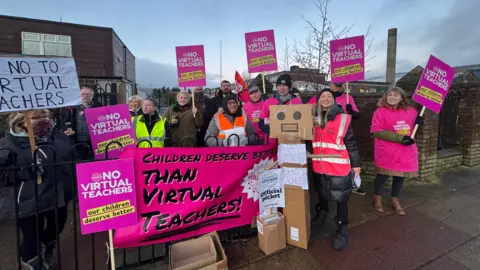
Caracas swiftly denounced the action, calling it an act of "international piracy". Earlier, President Maduro declared that Venezuela would never become an "oil colony".
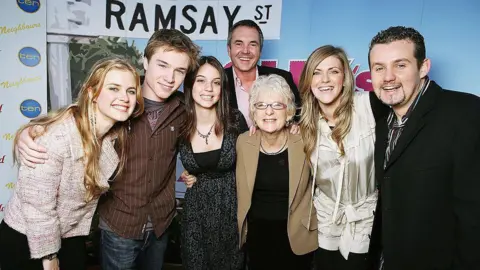
The Trump administration accuses Venezuela of funnelling narcotics into the US and has intensified its efforts to pressure President Maduro in recent months.

Venezuela - home to some of the world's largest proven oil reserves - has, in turn, accused Washington of seeking to take its oil.

Oil prices inched higher on Wednesday as news of the seizure stoked short-term supply concerns. Analysts warn the move could threaten shippers and further disrupt Venezuela's oil exports.

US Attorney General Pam Bondi, who leads the US Department of Justice, said the Federal Bureau of Investigation, Department of Defense, Department of Homeland Security, and the US Coast Guard co-ordinated the seizure.

"For multiple years, the oil tanker has been sanctioned by the United States due to its involvement in an illicit oil shipping network supporting foreign terrorist organizations," the nation's top prosecutor wrote on X.

Footage shared by Bondi showed a military helicopter hovering over a large ship, and troops descending on to the deck using ropes. Uniformed men were seen in the clip moving about the ship with guns drawn.

A senior military official told CBS News, the BBC's US partner, that the mission to seize the tanker was launched from a Department of War vessel.

It involved two helicopters, 10 Coast Guard members and 10 Marines, as well as special forces.

Defence Secretary Pete Hegseth was aware of the operation, and the Trump administration was considering more actions like this, the source said.

When asked by reporters what the US would do with the oil on the tanker, Trump said: "We keep it, I guess... I assume we're going to keep the oil."

Maritime risk company Vanguard Tech has identified the oil tanker as Skipper.

"The vessel is reported to be part of the dark fleet, and was sanctioned by the United States for carrying Venezuelan oil exports," it says.

BBC Verify has located this tanker on MarineTraffic, which shows it was sailing under the flag of Guyana when its position was last updated two days ago.

Watch: Venezuela’s Maduro sings "Don't worry, be happy" as he calls for peace with the US

The Venezuelan government issued a statement denouncing the seizure as a "grave international crime".

"Venezuela will not allow any foreign power to attempt to deprive the Venezuelan people of what belongs to them by historical and constitutional right," it said.

It said the prolonged aggression against Venezuela has always been about "our natural resources, our oil, our energy, the resources that belong exclusively to the Venezuelan people".

Speaking at a rally earlier on Wednesday, Maduro had a message for Americans opposed to war with Venezuela. It came in the form of a 1988 hit song.

"To American citizens who are against the war, I respond with a very famous song: Don't worry, be happy," Maduro said in Spanish before singing along to the lyrics of the 1988 hit.

"Not war, be happy. Not, not crazy war, not, be happy."

It's unclear if Maduro knew about the seizure of the tanker before this rally.

After American forces boarded the vessel, Venezuelan Interior Minister Diosdado Cabello called the US "murderers, thieves, pirates".

He referred to Pirates of the Caribbean, but said that while that film's lead character Jack Sparrow was a "hero", he believed "these guys are high seas criminals, buccaneers".

Cabello said this was how the US had "started wars all over the world".

In recent days, the US has ramped up its military presence in the Caribbean Sea, which borders Venezuela to the north.

The build-up involves thousands of troops and the world's largest warship, the aircraft carrier USS Gerald Ford, being positioned within striking distance of Venezuela, BBC Verify reported.

The move has sparked speculation about the potential for some kind of military action.

Since September, the US has conducted at least 22 strikes on boats in the region that the Trump administration says are smuggling drugs. At least 80 people have died in these attacks.

Ione Wells contributed to this report.

Watch: Trump says US has seized "large tanker" off Venezuela coast

Venezuelan opposition leader makes first public appearance after months in hiding

EPA/Shutterstock Nobel Peace Prize laureate Maria Corina Machado stands on a balcony with photographers and a hanging light fixture in a hotel room behind her. It is nighttime and she has her hand over her heart. She is smiling and wearing dark clothing.EPA/Shutterstock

Venezuelan opposition leader María Corina Machado appeared in Oslo, Norway after winning the Nobel Peace Prize, waving from the balcony of the Grand Hotel after months in hiding.

Machado made the covert journey despite a travel ban, and has mostly laid low since Venezuela's disputed presidential election in 2024. She last appeared in public in January.

From a balcony on Wednesday with a crowd cheering below, Machado placed her hand on her heart and sang with her supporters, before walking outside to greet them in person.

Her daughter, Ana Corina Sosa, accepted the award on her mother's behalf earlier in the day.

The Nobel Institute awarded Machado the Peace Prize this year for "her struggle to achieve a just and peaceful transition from dictatorship to democracy" in Venezuela.

Afterwards, Machado went the outside to greet her supporters, who waited behind metal barricades on the street.

"Maria!" "Maria, here!" they shouted in Spanish, as many held their phones aloft to record the historic moment.

At one point, Machado climbed over the barriers to join them.

Reuters Maria Corina Machado jumps over barricades outside the Grand Hotel in Oslo to greet cheering supporters as security looks on.Reuters
Maria Corina Machado jumps over barricades outside the Grand Hotel in Oslo to greet cheering supporters.

Her appearance was preceded by speculation that she would travel to Norway for the award ceremony.

The Nobel committee shared audio of Machado declaring, "I will be in Oslo, I am on my way."

After her Peace Prize win, Machado made a point to praise US President Donald Trump, who is open about his own ambitions for the Peace Prize and is locked in ongoing military tension with Venezuela.

On Wednesday, Trump announced the US military had seized an oil tanker off the coast of Venezuela. His administration alleges the vessel was under sanction and was involved in an "illicit oil shipping network supporting foreign terrorist organisations".

The Venezuelan government accused the US of theft and piracy.

Why so many people break 20mph speed limits (it's more complicated than you think)

BBC A treated image of a speed dashboardBBC

I like to think of myself as a law-abiding driver. But it was not a total shock earlier this year when I received one of those official notifications in the post, informing me that I had been caught exceeding a speed limit (driving out of Wandsworth in South London, if you're interested).

I had to accept either three driver penalty points, or attend a speed awareness course. Having no points on my licence, and wanting to keep it that way, I chose to take the course (like so many others given the choice).

And so it was, on a warm Saturday morning earlier this year, that I found myself in a London hotel conference room, with about two dozen other people learning about the dangers of speeding.

First thing to say about the course is that it is so good, it should really be compulsory for everybody who drives. It was shocking to learn of some basic confusions about the speed limits that I and others were harbouring.

But my main observation that day was that we are seeing a dramatic change in driving culture.

Evan Davis standing in front of a car
Evan Davis's new car uses Intelligent Speed Assistance, allowing him to cap his speed with a flick of a button

As the course instructors went around the room asking us all why we were there, it turned out that almost none of us had been driving "fast" as you might have once defined the word. Most of us had been speeding at something like 26mph. But we were unarguably guilty as charged, having breached the limit on a 20mph road.

I had not given it much thought until then, but it is clear we are in the midst of a significant lowering of urban speeds. And many motorists are struggling to keep up. (Or more accurately, slow down.)

The number of tickets issued for 20mph speed offences was almost half a million last year, according to data collated from police forces in Great Britain by campaign group, 20's Plenty For Us.

Why do many drivers find it so difficult to keep to 20mph? As a driver myself - but also an occasional cyclist, pedestrian and resident of a neighbourhood of 20mph roads - I am increasingly fascinated by the complicated layers of debate. And how a deeper psychology and sense of habit also plays a part.

So, given the number of 20mph roads around the country, will our brains gradually adjust, making it eventually seem normal - and how can we speed that process up?

'Frankly ludicrous - a war on motorists'

In Wales, no-one can have missed the debate over the Cardiff government's decision to lower speed limits in built-up areas in September 2023. It became a hot political issue.

Mark Drakeford, the former First Minister and Labour politician who introduced the policy, said it would "keep people from losing their lives"; while the Welsh Conservatives called it "disastrous, frankly ludicrous and a war on motorists".

Since then, the change has been partially unwound by the re-introduction of 30mph limits on certain roads. But with far less fanfare, swathes of the rest of the country have also moved towards a 20mph norm.

Getty Images Speed camera sign by a roadGetty Images
The number of tickets issued for 20mph speed offences was almost half a million last year, according to a campaign group

Over half of London's roads now have a 20mph speed limit, according to Transport for London (TfL). In Leeds, dozens of roads are set to become 20mph as part of the council's "Vision Zero 2040" strategy (which aims for zero road deaths or serious injuries by 2040).

Various towns across the country are following the same path.

No-one can say this has been rushed. The first 20mph limit in the country came into effect in 1991 in the Sheffield suburb of Tinsley. Eight years later the law was changed, making it much easier for highway authorities to introduce 20mph zones. In the last decade, that change has accelerated.

And that is not only true in the UK. Across the continent, 30km/h speed limits (equivalent to 19mph) are increasingly common.

Transport planners across the West have evidently been receptive to the same arguments for making an historic change in the relationship between the car and other road users.

Psychological flow at the wheel

Figures from the Department for Transport show that in 2024, while 43% of cars exceeded the 30mph limit (and 44% exceeded 70mph on motorways), 20mph roads, it was 76%. Yes, three-quarters of drivers break the 20mph speed limit. In fact, the average speed on 20mph roads (when they are free-flowing) was 24mph.

It has got a little better over the last few years, but still one in 10 drivers exceed the 20mph speed limit by at least 10mph.

So, what's going on?

When I did my speed awareness course, we were asked - hands-up - why we thought we had driven too fast. People proffered sensible answers like "I was in a hurry" or "I wasn't paying attention to the speed limit" or "someone was tailgating me".

But for me, it was different. I felt almost silly admitting it: it is just that on a free-flowing road in a car, to me 20mph feels unnaturally, uncomfortably, slow.

Evidently, there is a lot of psychology at play.

A graph showing how often different types of vehicles break the 20mph limit

Richard Stephens, senior lecturer in psychology at Keele University, talks of the importance of the "flow state".

"Psychological flow is this state that we can get in when you're on a roll or you're in the zone, you've been totally absorbed in what you're doing," he explains.

To enter flow state, your task needs to be "enough of a challenge to engage us, but not too much of a challenge to stress us out".

It applies to driving too, he says. "Sometimes the speed limit might feel a bit slow for the road you're on, and you might feel a bit under-challenged. And there's a temptation [to] put your foot down.

"In a flow analogy, what you're doing is you're increasing the challenge a little bit to get more into that sweet flow spot and a more enjoyable experience."

But he argues that drivers can help themselves enter that "flow state" while sticking to 20mph. He suggests listening to something stimulating, or even turning driving into a game.

"The car I drive has a display that encourages eco-driving," he says. "It encourages you to not accelerate too sharply, not break too harshly, and things like that. That sort of gamification of the driving experience can add elements that would bring flow in without changing the speed that you're driving."

Evan Davis in a car, holding the driver's wheel
Evan Davis attended a speed awareness course this summer after he was caught speeding on a 20mph road

For some drivers, faster speeds are simply more satisfying.

"I do think there's almost something inherently attractive about speed," admits Dr Stephens. "Once a child learns to walk, then they learn to run, and then they just run everywhere, because it's more fun."

Then there are habits: we can habituate ourselves to speed - so fast can feel slow, and vice versa, depending on what you're used to.

Shaun Helman, Chief Scientist at the Transport Research Laboratory, points out: "If you're barrelling along a motorway at 70mph, the moment you leave on to the slip road and slow right down, you will notice that it suddenly feels a lot slower than you're used to because of that short-term fast speed that you've been doing."

Add to that the fact that modern cars - with their active suspension and their noise-optimised tyres - give some drivers an extra sense of security.

"Quiet cars, finely engineered for a really comfortable drive, will simply give you less perceptual cue that you're travelling at a particular speed. So that makes it easier to slip over a limit."

One-third reduction in collisions

Of course, there's a clear reason why many councils have rolled out 20mph speed limits: safety.

It is obvious to most drivers that slower speeds are generally safer than fast ones. And it's easy to see why many people, including those whose loved ones have died in accidents, might push for a lower limit.

A pedestrian who is hit by a car travelling at between 30mph and 40mph is between three-and-a-half and five-and-a-half times more likely to be killed than if hit by a car driver travelling at below 30mph, according to the Royal Society for the Prevention of Accidents, a charity.

TfL looked at more than 100 roads in London that introduced 20mph limits between 1989 and 2013.

Analysing a period of three years before, and three years after, the limit was lowered, their research suggested that 20mph limits brought a 35% reduction in collisions, as well as a 34% reduction in serious injuries and deaths.

The number of child deaths on those roads fell from a total of four to one.

Getty Images Mark DrakefordGetty Images
Mark Drakeford's Labour government was at the centre of a political hot potato after introducing a default 20mph speed limit in built-up areas in Wales

But, as they concede, other road safety measures were also implemented over that period, and it is difficult to pinpoint exactly what caused the improvements.

In Wales, too, the government has found a 25% reduction in the number of people injured or killed on low-speed roads in the most recent 18 months, compared with the 18 months before a speed limit reduction.

Of course, as with any knotty academic question, there are anomalies.

A study from Queen's University Belfast in 2022 looked at 76 streets in the Northern Irish capital. It found that casualties dropped by 22% three years after 20mph speed limits were introduced - a fall, but not a statistically significant one, the study's authors said (in other words, it could have been explained by mere chance).

Hazel Peacock Left: Hazel Peacock next to a bike. Right: two cyclists on a road.Hazel Peacock
Hazel Peacock, from Harrogate, says she feels more comfortable cycling with her son to school now some of the roads have a 20mph limit

But broadly speaking, the data shows that slower equals safer. A European meta-study from last year at the National Technical University of Athens, reviewed 70 studies of the 30km/h limits in 17 cities and found a 23% reduction in road crashes, and a 38% reduction in fatalities.

Hazel Peacock, a road safety campaigner in Harrogate, was delighted this summer when her council imposed 20mph limits on almost 200 roads in the town. She now feels safer cycling with her nine-year-old son to his school.

"It's less intimidating," she says. "When a driver sees you, they're already going slower. I really think they see you as a human. They're not having to change their behaviour or their speed when they see you."

She also feels more comfortable letting her older son, aged 12, walk to school.

New speed-lowering technology

Looking ahead, there remains one big, unanswered question. Will our brains gradually adjust to 20mph, or will it continue to feel unnaturally slow, ensuring its survival as a hot and sometimes divisive political issue?

Mr Helman predicts most drivers will get used to it.

Getty Images A black and white photo of a roadGetty Images
Slower car speeds can also calm the minds of other road users, reducing that sense of those people in cars inhabiting a different, distant, dangerous world of their own.

"Once you get people behaving in a particular way, they change their outlook and their attitudes on those behaviours," he says. "There's this idea that your attitudes determine how you behave, and there's an element of truth in that.

"But the opposite is also true, your behaviour actually defines your attitudes."

And then of course, there is the really big transformation under way, with which anyone with a newish car is familiar: the technology of speed control.

"Intelligent Speed Assistance", as it's known, may feel like a nuisance, beeping away when you are at the wheel. But use it wisely. It can cap your speed, taking away any need for you to concentrate as you stick to the limit.

I'm happy to say that since my speeding ticket earlier this year, not only have I been schooled in the dangers of speed and the merits of driving slowly, I now have a new car, in which it takes just a quick flick of a finger to cap the speed.

Suddenly 20mph is achievable with little to no effort. My guess is that it is here to stay - if I can handle it, I think most people can.

InDepth notifications banner

BBC InDepth is the home on the website and app for the best analysis, with fresh perspectives that challenge assumptions and deep reporting on the biggest issues of the day. You can now sign up for notifications that will alert you whenever an InDepth story is published - click here to find out how.

The reality facing England's busiest A&E unit as flu wave hits

BBC Paige who is 19 is lying on a hospital bed resting her head on a pillow. She looks ill. She has dark hair and is wearing a T-shirt.
BBC
Paige, who has type 1 diabetes, came into hospital with flu and dangerously high sugar levels

At England's busiest emergency unit, all the beds are full by midday.

As one patient leaves his room at Leicester Royal Infirmary's acute unit, cleaning staff are waiting outside.

He is barely out of the room before the bed is stripped and bleach is sprayed. The next patient is already waiting to come in.

Over two days the BBC was given access to the hospital to witness first-hand how it is coping with an early surge of winter bug cases.

Flu season has hit a month earlier than normal this year, with experts warning there appears to be a more severe strain of the virus - mutated H3N2 - circulating.

Hospitals around the country, like this one in Leicester, are doing all they can to avoid becoming completely overwhelmed.

But staff at the Royal Infirmary say increasing numbers of people coming to hospital with the flu and other winter bugs - together with existing pressures - are hitting the hospital hard.

They already worry about how they will cope this winter.

Patients in every cubical

When 19-year-old Paige arrives at the hospital by ambulance, she's put on a trolley while a resus bed is cleared. She's got the flu but also has type 1 diabetes and has dangerously high sugar levels. She is curled in a ball, pale and shaking.

"There are patients in every cubical," Consultant Saad Jawaid says, as Paige is wheeled in. "Another ambulance has just rocked up."

We watch as he works with colleagues in the resus unit to find desperately needed bed spaces.

"When beds are full we have to move people - sometimes that means those who can sit are moved out of beds and into chairs," he says.

Consultant Saad Jawaid on the right is wearing blue hospital scrubs. He is speaking to female members of the clinical team, also in uniform, who are holding documents. They are in the emergency unit the the Royal Leicester Infirmary.
Consultant Saad Jawaid works with colleagues to try to free up beds

Paige is given insulin and fluids to try to stabilise her sugar levels. The doctors hope her diabetes will be controlled soon. Getting better from the flu will take longer.

The following day, Paige is in a side room on the acute assessment unit.

"I do struggle a lot in winter," she says. "I was maybe in here two or three weeks ago. Infections and stuff just seem to hit harder than usual."

The number of flu patients in hospital has hit a record high in England for this time of year with NHS leaders warning the country is facing an unprecedented flu season.

At its busiest times, the emergency unit here in Leicester saw more than 1,000 patients a day last winter. On one of the days we were here, 932 patients came through the door. That number is expected to rise in the coming weeks.

Attendance levels are already around 8% higher this year than last year. And the unit faces a daily shortage of between 50 to 70 beds.

At the Royal Infirmary around 64 beds are currently taken up by people with respiratory viruses, including flu.

We meet one patient who waited 106 hours for a bed on a ward. Another, Gary, came in with a stomach bug and finally got a bed after 34 hours.

Oscar, aged five months, sits in his mother's arms. He has brown hair with a curl and is wearing a white and brown outfit.
Oscar came into the hospital wheezing and finding it hard to breathe

By late afternoon, the children's waiting area is full. Parents stand rocking crying babies as every seat is taken.

Respiratory cases of flu and bronchiolitis, a condition affecting the lungs of young patients, are rising fast here too.

In just 30 minutes, 30 children arrive at the department.

At five months old this is Oscar's first winter and his first trip to A&E. His mum brought him in because he was wheezing and struggling to breathe. A few hours after arriving, he is finally seen by a doctor and told he has bronchiolitis.

"These bugs are everywhere at the moment - Oscar's older brother brought it home from school and now Oscar has it," says his mum.

Richard Mitchell has been the chief executive of University Hospitals Leicester NHS Trust since 2021 - and has witnessed first-hand how it gets harder to cope with each winter that passes.

"We are already seeing very high levels of flu," he tells us. He expects numbers to climb into January. "That is one of the many things I am concerned about at the moment.

"At this point I feel we are working at the limits of our ability."

Turning minor cases away

The hospital has introduced a new system to manage the flow of patients arriving at its emergency department, as pressure grows on front-line services.

Receptionists, nurses, all the way up to consultants, now sit in a bank of desks at the entrance, assessing patients as they arrive.

This speeds up triage, moving people away from the front door and ensuring those in greatest need receive urgent care.

Staff say the range of cases has become increasingly polarised. Some of the most seriously ill patients are being driven in by relatives because of long waits for ambulances.

Line chart showing that positive tests for flu are climbing this year and are almost at 20% compared to the previous bad flu seasons in 2022 and 2024 when they were at around 13% at the same time. The chart shows that flu cases this year started rising earlier than in 2023 and 2024.
Flu has started early this year

At the other end of the scale, people turn up with minor complaints after struggling to secure GP appointments. "Last week someone came in with a coldsore," one nurse tells us.

Experienced staff can redirect those who do not need urgent care, helping them to book GP appointments or pointing them towards pharmacies and other services. Now one in 10 patients are sent away, although staff admit it can lead to frustration.

Security has been tightened following one violent incident, with glass screens installed and 24‑hour guards now in place.

Leicester Royal Infirmary has introduced new measures each year to boost capacity and manage rising demand. Winter pressures continue to grow, while the quieter summer months have become a thing of the past.

To reduce ambulance queues, prefabricated structures were converted into a permanent unit with 14 beds - all are full during the BBC's visit. Without them that would have been 14 ambulances queueing for hours to unload their patients.

Unlike many hospitals, Leicester's emergency unit is not totally overwhelmed by elderly patients. Frail patients are streamed directly to specialist areas, including a frailty unit, or supported in the community to avoid long hospital stays.

Preston Lodge, a former care home bought by the trust, now provides 25 beds, with 14 more opening on December 15. Patients who no longer need acute care - but still require rehabilitation or support - are moved there while awaiting care packages.

"We aim to get people better ready for going home and hopefully keep them stronger and more independent so they aren't back in hospital so frequently over the winter," says head of nursing, Emma Roberts.

Looking ahead, Mr Mitchell expects waits and delays to only get worse for patients in the coming weeks.

For the first week in January - traditionally the busiest each year - the hospital plans to free up more emergency beds, but that means delaying other operations and procedures.

He says: "We will not be able to provide timely care to every patient this winter but we will continue to do our utmost to ensure that patients are treated with dignity and respect to ensure they receive safe care and we will do everything possible to manage those waiting times."

Hospital leaders here are trying to take proactive steps - rather than simply reacting to each crisis. But staff and patients alike warn that hospitals across the country are caught in the middle of a system, many believe, is close to breaking point.

In a statement, the Department of Health and Social Care said it was "under no illusions this is going to be a tough winter for our NHS".

A spokesman said: "Flu cases are rising, so it is vital that patients can get protected. Almost 17 million vaccines have been delivered this autumn - 350,000 more compared to this time last year.

"There is no national shortage of the flu vaccine and we would urge everyone eligible to get their vaccination to protect themselves and their loved ones."

Rolling Stones finally approve Fatboy Slim sample after 25 years

Getty Images Norman Cook and Mick Jagger, pictured together at a David Bowie after-party in London, 1999Getty Images
Norman Cook and Mick Jagger, pictured together at a David Bowie after-party in London, 1999

One of the world's most bootlegged recordings - Fatboy Slim's Satisfaction Skank - is finally being released, after the Rolling Stones gave belated approval for the song's pivotal sample.

Fatboy Slim, real name Norman Cook, created the track 25 years ago by grafting the riff from the Stones' Satisfaction onto his platinum-selling single The Rockafeller Skank, after he grew "bored" of playing the original.

"It was my secret weapon," he told BBC News. "I had this tune that nobody else had, and it was a really good encore."

In the 2000s, the song spread like wildfire on file-sharing sites like Napster and Kazaa but, until now, The Stones had refused to clear it for commercial release.

Even Cook bought bootleg copies of the song, some of which had been taped off his live sets on BBC Radio 1 and pressed to vinyl.

PA Media Norman Cook DJs for a crowd at the Creamfields festivalPA Media
Norman Cook has more pseudonyms than James Bond - including Fatboy Slim, Pizzaman and Mighty Dub Katz

Over the years, there have been several attempts to get the sample approved.

"I got a call from Mick Jagger and he said he'd heard it and he liked the mix," recalled Cook.

"But his management was just like, 'No, not even negotiable'."

Later, the Stones asked Cook to remix their 1968 single Sympathy For The Devil. Satisfaction Skank was due to be the b-side - but the deal ultimately fell apart.

"We've had a pretty flat 'no' for 20 years," said Cook. "I think we asked four times, and I wouldn't have dared to ask them again."

Instead, the initiative came from the Stones' side. They even gave Cook their master tapes, so he could create a higher-quality version of the original mix.

It's a sign of how the band have become more relaxed about the re-use and re-contextualisation of their songs in recent years.

In 2019, they even signed over their publishing stake in The Verve's Bittersweet Symphony.

Previously, writer Richard Ashcroft had been forced to surrender all his royalties from the song, due to its sample of an orchestral cover of the Rolling Stones' The Last Time. He called the reversal "life-affirming".

Getty Images Keith Richards Getty Images
Keith Richards wrote Satisfaction in his sleep and recorded a rough version of the song's iconic riff on a cassette player. When he woke, he had no recollection of the song.

Satisfaction Skank has been a staple of Fatboy Slim's live set for over a quarter of a century, but Cook says he can't remember the first time he played it.

"That's more of a testament to my state of mind and partying in those days, than to the historical importance of it," he said.

However, he could recall debuting The Rockafeller Skank itself, at Brighton's Big Beat Boutique in early 1998.

"I was so excited, because I'd just finished it," he said. "I remember playing it and everyone just going nuts.

"I got really, really excited and started shouting, 'That's me, that's me! That's my new single!'

"And everyone just went, 'Yeah, we guessed'."

It went on to become a Top 10 hit, with promotional copies of the single describing it as "dance music's Bohemian Rhapsody".

"That was me, but I wasn't being self-aggrandising," he confessed to BBC News.

"As a music production fan, it's famous that Bohemian Rhapsody was made up of three different segments that they had to edit together.

"And with Rockafeller, we had to do the same. It was the early days of the internet, so I had to go round to my engineer's house to do the 'slowy down bit', because he had the software to make it work.

"Then I had to take that file back to my studio and edit all the bits together.

"So it wasn't my Bohemian Rhapsody in terms of being a Stone Cold classic. It's just that it was more complicated to make than everything I'd ever done."

'I'll never retire'

The release of Satisfaction Skank comes at the end of the busiest year of Cook's career.

He's played 115 gigs ("a personal best") in dozens of countries, and published his first book - It Ain't Over... 'Til the Fatboy Sings.

Filled with photos and memorabilia, the coffee table book reflects on the "40 years since I quit my day job and ran off to join the circus".

He first found fame in the indie band The Housemartins, and was also the founder member of the dance music collective Beats International and funk-soul outfit Freak Power.

Cook has also DJ'd and remixed under a variety of monikers, including Pizzaman, Mighty Dub Katz and latterly Fatboy Slim.

Now aged 62, he shows no signs of slowing down. In October, he announced the continuation and expansion of a DJ workshop series for people dealing with serious mental health problems in Sussex - a programme which he helps to fund.

"Music has played a vital role in my own mental health journey, and it's a privilege to share that healing power with others," he told BBC Sussex.

He'll start 2026 with gigs in Indonesia and Bali, followed by an extensive UK tour, and the resurrection of his Big Beach Boutique festival on Brighton's seafront.

"I think I've kind of realised now that my career will never be over," Cook said.

"I got a glimpse of what retirement looked like during lockdown - this abyss of lunches and golf - and I have no interest in that.

"So now I think I'll keep working 'til I drop."

❌