Reading view

There are new articles available, click to refresh the page.

Fed lowers interest rates but future cuts uncertain

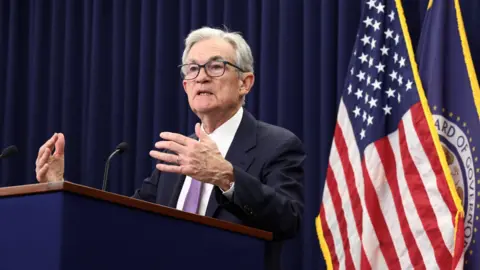
Reuters A man wearing a suit speaks in front of a podium. An American flag hangs in the background.Reuters
U.S. Federal Reserve Chair Jerome Powell holds a press conference after the Fed cut interest rates by quarter of a percentage point, in Washington, D.C., U.S., October 29, 2025.

The US Federal Reserve has lowered interest rates for the third time this year despite growing divisions, as policymakers aim to prop up the slowing labour market.

The central bank said on Wednesday it was lowering the target for its key lending rate by 0.25 percentage points, putting it in a range of 3.50% to 3.75% - its lowest level in three years.

It remains unclear where rates will go in the months ahead. Policymakers disagree about how the Fed should balance competing priorities: a weakening job market on the one hand, and rising prices on the other.

The Fed's economic projection released on Wednesday suggests one rate cut will take place next year, although new data could change this.

The decision to lower rates on Wednesday was not unanimous, suggesting widening divisions among central bankers over the outlook for the US economy.

Three Fed officials broke ranks and dissented.

Stephen Miran, who is on leave from his post leading Trump's Council of Economic Advisers, voted for a larger 0.5 percentage point cut.

Austan Goolsbee, president of the Federal Reserve Bank of Chicago, and Jeffrey Schmid, president of the Federal Reserve Bank of Kansas City, voted to hold rates steady.

A data blackout during the longest-ever US government shutdown, which ended in November, has left policymakers partially in the dark about the state of the economy. But concerns about a slowing job market continue to outweigh inflation fears, at least for now.

The unemployment rate ticked up from 4.3% to 4.4% in September, Labor Department figures showed in a delayed report released last month. Cutting interest rates is aimed at stimulating the job market by creating lower borrowing costs for businesses.

Fears about tariff-driven inflation had taken centre stage earlier this year when Trump pushed forward with sweeping tariffs on many of the country's largest trading partners.

Inflation is still above the Fed's 2% target. In September, it hit 3% for the first time since January.

But while tariffs appear to be boosting some consumer prices, recent milder-than-expected inflation readings have allowed the Fed to focus on boosting the labour market by lowering rates, analysts said.

Dissents and disagreements

Still, policymakers remain divided over the path forward for interest rates.

"The current committee is more divided than it has been in a very long time," said Matthew Pallai, chief investment officer at Nomura Capital Management.

"The Fed's policy over the next few meetings will come down to a risk management exercise where one risk is considered more significant than the other," he added.

The central bank's so-called dot plot, a quarterly anonymous economic forecast, showed on Wednesday a median expectation for one additional 0.25 percentage point cut in 2026.

That prediction was unchanged from the previous dot plot in September.

Central bankers are poised to have a bit more clarity next week, with the expected release of official data on the labour market and inflation for November.

The incoming data could shift policymakers' outlook, potentially bolstering calls for further easing next year if there are new signs that the job market is stalling.

The central bank's latest cut also comes ahead of an expected announcement from the White House about Trump's pick to replace Jerome Powell, whose term as Fed chair ends next May.

Trump could announce his pick as soon as within the next few weeks.

Kevin Hassett, a long-time conservative economist and key Trump economic adviser, is seen as the front-runner to succeed Powell.

A Trump loyalist, Hassett served as chair of the White House Council of Economic Advisers during Trump's first term and now leads the National Economic Council.

He has been a stalwart defender of Trump's economic policies, downplaying data showing signs of weakness in the US economy, doubling down on allegations of bias at the Bureau of Labor Statistics and backing Trump's handling of the Fed.

Hassett's allegiance to the president has drawn questions from analysts about whether he would act independently and how much sway he would have with other members of the board.

Other names that have been floated for the Fed chair include economist Kevin Warsh, current Fed Governor Christopher Waller and even Treasury Secretary Scott Bessent.

Trump is "still making up his mind, and he's looking for someone who will be in his way of thinking," Thomas Hoenig, a distinguished senior fellow at the Mercatus Center, told the BBC.

The candidates, he added, "have to project that they will be independent, or the markets will become quite nervous - and that will create more volatility".
GCHQ Christmas card code-cracking challenge - see the questions and answers

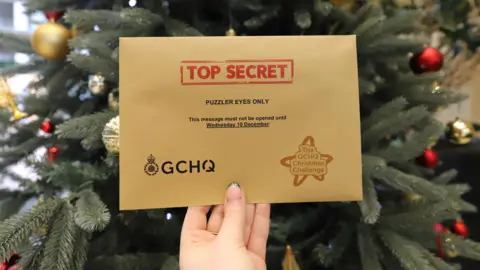
GCHQ A woman's manicured hand holding an envelope in front of a Chrsitmas treeGCHQ

Fans of codebreaking, maths and brainteasers can now try their hand at the latest cryptic Christmas challenge set by GCHQ, the UK's intelligence agency.

GCHQ released their annual Christmas card on Wednesday, filled with puzzles and hidden codes designed to help children aged 11-18 test a range of problem-solving skills.

The card was created by "schoolchildren as well as spies", according to GCHQ, after hundreds of young people entered a design competition in the lead-up to the festive period.

It contains seven puzzles set by "GCHQ's in-house puzzlers", geared towards testing a range of problem-solving skills, including "intuitive reasoning" and "lateral thinking".

The quiz starts with Question 1:

Somewhere on the card is a special seven letter word which has no repeated letters, and no letters which are next to each other in the alphabet. Can you find it? * Answer at the bottom of the page

Students were asked to draw their response to the question: "What do you think GCHQ looks like on Christmas Day?". They were challenged to embed hidden codes, and ciphers into their designs.

Three winners were selected by a panel of judges across three age groups.

The famously tricky puzzles "aren't meant to be solved alone", GCHQ said, adding: "We believe the right mix of minds means we can solve seemingly impossible problems."

"Puzzles are at the heart of GCHQ's work to keep the country safe from hostile states, terrorists and criminals; challenging our teams to think creatively and analytically every day", said GCHQ Director Anne Keast-Butler.

She said she hoped the puzzle encourages the next generation "to explore STEM subjects and consider the rewarding careers available in cybersecurity and intelligence".

Meanwhile, the spy agency's "Chief Puzzler", known only as "Colin", said the puzzles are designed to test "the same blend of skills our teams use every day to keep the country safe."

* The answer is: Special (the clue is written into the text)

Sarkozy releases prison diaries about his 20 days behind bars

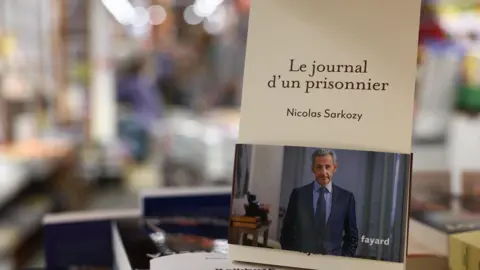
Reuters A copy of former French president Nicolas Sarkozy’s memoir "Journal of a Prisoner" (Le journal d'un prisonnier), which details his time in prison after being jailed for criminal conspiracy, is displayed in Paris, France, December 10, 2025.Reuters
The former French president wrote about his brief imprisonment for criminal conspiracy

Rushed out in under three weeks, Nicolas Sarkozy's new book "A Prisoner's Diary" has plenty of colour about what it's like for a former president to find himself in the isolation wing of a French jail.

We learn that prisoner number 320535 had a 12 square metre cell, equipped with a bed, desk, fridge, shower and television. There was a window, but the view was blocked by a massive plastic panel placed outside.

"It was clean and light enough," writes Sarkozy. "One could almost have thought one was in a bottom-of-the-range hotel – were it not for the reinforced door with an eye-hole for the prison guards to look through."

Sarkozy, 70, was released from La Santé prison in Paris last month after serving 20 days of a five-year jail sentence for taking part in an election campaign funding conspiracy. This is his 216-page memoir.

Told he would have to spend 23 hours out of 24 in his room – and that contact with anyone other than a prison employee was forbidden – the former president chose not to take the option of a daily walk in the yard, "more like a cage than a place of promenade".

Instead he took his daily exercise on a running machine in the tiny sports room, which "became – in my situation – a veritable oasis".

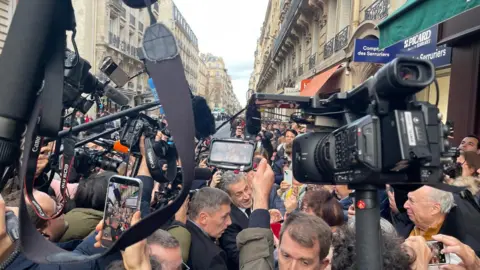
A scrum of photographers surround Nicolas Sarkozy outside a bookshop in Paris, ahead of his book signing
Media thronged Sarkozy's book signing in central Paris on Wednesday

There is plenty more like this: how he was kept awake on his first night by a neighbour in the isolation wing singing a song from The Lion King and rattling his spoon along the bars of his cell.

How he was "touched by the kindness, delicacy and respect of the prison staff… each one of who addressed me by the title Président".

And how he was able to cover the walls of his cell with postcards from all the people writing to express their support.

"Touching and sincere, it bore witness to a deep personal bond even though I'd left office so long ago," he writes.

The details fascinate. Perhaps more consequential are the ruminations on fate, justice and politics.

Sarkozy was sent to jail after a court found him guilty of criminal association for allowing subordinates to try to raise election money 20 years ago from Libya's Colonel Gaddafi.

At the end of the trial in October, the judge – who could have allowed Sarkozy to remain at liberty pending his appeal – ruled instead that he should go to jail. Three weeks after his incarceration, he was allowed out following a plea from his lawyers.

The former president strongly denies the charges against him, and claims to be the victim of a politically-motivated cabal within the French justice system.

This is all rehearsed again in the book. Indeed at one point Sarkozy compares himself with France's most famous victim of justice, Alfred Dreyfus – the Jewish officer who was sent to Devil's Island on a trumped-up espionage charge.

"For any impartial observer who knows their history, the similarities are striking," he writes.

"The Dreyfus affair originated from fake documents. So did mine… Dreyfus was degraded in front of the troops, when they stripped him of his decorations. I was dismissed from the Legion of Honour, in front of the whole nation.

"And Dreyfus was imprisoned in the Santé – a place which I now know well," he writes.

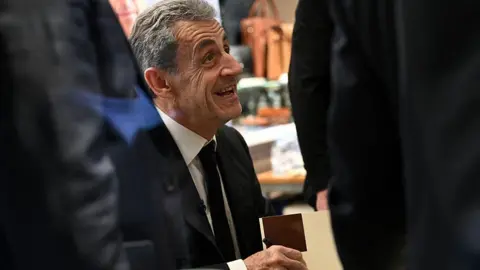
AFP via Getty Images France's former President Nicolas Sarkozy reacts as he takes part in an autograph session of his book "Diary of a Prisoner" on the day of its' release at the Lamartine bookshop in Paris on December 10, 2025. Sarkozy has written a 216-page book entitled "Diary of a Prisoner," released on December 10, 2025 and excerpts of which were published in several French media on December 6, 2025. Nicolas Sarkozy, who was president from 2007 to 2012, was protected in prison by two security officers and remained confined to his cell 23 hours a day, except for visiting hours.AFP via Getty Images
The former French president signed copies of his prison diaries at Lamartine bookshop

Sarkozy's dismissal from the Legion of Honour - in which as president he had served as Grand Master – is the occasion to settle accounts in the book with France's current president Emmanuel Macron.

From being a close supporter of Macron, Sarkozy now says he has "turned the page – without going so far as to enter systematic opposition to his politics or person.

"Emmanuel Macron already has too many declared enemies, vilifiers and disappointed friends for me to add to their number."

Sarkozy's beef is that Macron never had the "courage" to call him in person to explain why he was being discharged from the Legion. "Had he telephoned, I would have understood his arguments and accepted the decision," he writes. "Not doing it showed his motives were at the very least insincere."

But it is Sarkozy's relations with another political leader – Marine Le Pen – which have attracted most attention in France among reviewers of the book. This is because of the unwonted affection that the former president displays to his one-time arch-rival.

"I appreciated the public declarations she made following my conviction, which were brave and totally unambiguous," he writes.

Sarkozy telephoned to thank her and he says they had a friendly conversation, at the end of which he undertook not to be party to any future "Republican Front" designed to keep her National Rally from winning an election.

Later he goes on: "Many voters [for the RN] today were supporters of me when I was politically active… Insulting the leaders of the RN is to insult their voters, that is to say people who are potentially our voters.

"I have a lot of differences with the leaders of the RN… But to exclude them from the Republican fold would be a mistake."

Such accolades from the mainstream are rare for Marine Le Pen and her young co-leader Jordan Bardella.

Coming from a former president who still wields much influence among the traditional French right, the words are like political gold dust.

Italian cooking awarded Unesco cultural heritage status

Getty Images A woman eats a slice of pizza on the street in Rome. She has short hair. Getty Images

Italian cooking has been awarded special cultural heritage status by the United Nations' cultural agency Unesco.

National favourites including pizza are already on Unesco's list of "intangible cultural heritage", but now Italian cooking traditions and the way they are practiced and transmitted have been awarded.

Prime Minister Giorgia Meloni, who has been pushing for her country's cuisine to be recognised since her election, said: "For us Italians, cuisine is not just food or a collection of recipes. It is so much more: it is culture, tradition, work, wealth."

For millions of fans the news confirms what they already believed - from Sicilian Cannoli to Calabrian 'Nduja - Italian is the best.

The announcement was made during a Unesco assembly meeting in the Indian capital Delhi on Wednesday.

The cultural agency described Italian cuisine as a "means of connecting with family and the community, whether at home, in schools, or through festivals, ceremonies and social gatherings".

Koshary, the spicy dish of lentils, rice, and pasta available at countless Egyptian food stalls, was also added to the list of intangible cultural heritage.

Other countries have had their "practices, skills, traditions and social practices related to foodways" recognised by Unesco, a spokesperson from the agency told the BBC.

Previous examples include "Washoku, traditional dietary cultures of the Japanese, notably for the celebration of New Year, Breakfast culture in Malaysia: dining experience in a multi-ethnic society, or the Gastronomic meal of the French," the spokesperson added.

Speaking to La Repubblica, the Rome-based daily newspaper, chef Michelangelo Mammoliti said the news filled him with a great sense of pride both personally as an Italian, as well as professionally as a chef.

"Italy is one of the nations where regional cuisine has a very big impact on culture and traditions," said the chef, whose restaurant La Rei Natura in Piedmont is the only new three-star restaurant in the 2026 Michelin Guide.

Italy's industry leaders and government ministers will be hoping that the move further boosts tourism to the country, which already welcomes 80 million international visitors annually.

Luigi Scordamaglia, CEO of Filiera Italia, which represents all the food and wine companies in the production chain, told Ansa news agency that the move from Unesco marked a success "for the entire Made in Italy supply chain".

Mr Scordamaglia also spoke about the role of the Mediterranean diet in promoting good health.

He added: "When we talk about the Mediterranean diet, we're talking about our wonderful Italian cuisine, which shares its principles, first and foremost those of balance and variety."

Swimming pool culture in Iceland; the practice of Cuban Son music and dance; and the art of playing, singing and making the lahuta from Albania also entered Unesco's list of intangible cultural heritage.

British paratrooper killed in Ukraine 'lived life of courage'

BBC Breaking NewsBBC

A member of the UK armed forces who died in Ukraine has been named as Lance Corporal George Hooley of the Parachute Regiment.

On Tuesday, the Ministry of Defence said the 28-year-old was killed observing Ukrainian forces test "a new defensive capability, away from the front lines".

Paying tribute to the paratrooper in the Commons on Wednesday, Prime Minister Keir Starmer said: "His life was full of courage and determination.

"He served our country with honour and distinction around the world in the cause of freedom and democracy, including as part of the small number of British personnel in Ukraine."

This breaking news story is being updated and more details will be published shortly. Please refresh the page for the fullest version.

You can receive Breaking News on a smartphone or tablet via the BBC News App. You can also follow @BBCBreaking on X to get the latest alerts.

Ex-Olympic swimmer Sharron Davies and Iceland boss Richard Walker among new peers

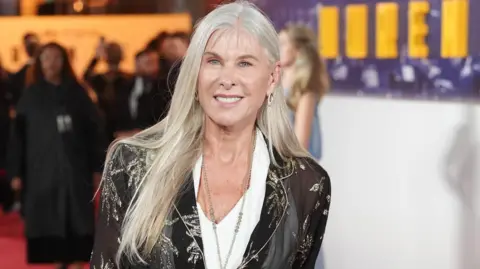
PA Media Sharron Davies wearing a sheer black jacket with metallic floral patterns over a white blouse, paired with light-colored trousers. The individual is standing on a red carpet at an event, holding a light handbag. PA Media

Olympic medal-winning swimmer and campaigner Sharron Davies has been named as one of three new Conservative peers.

Ms Davies, a vocal critic of trans women in women's sport, was nominated by Conservative leader Kemi Badenoch.

The Tories said it was in recognition of her sporting achievements and her campaigning on women's rights.

Iceland supermarket chairman Richard Walker and former Number 10 communications director Matthew Doyle are among 25 new Labour peers nominated by Sir Keir Starmer. Liberal Democrat leader Sir Ed Davey nominated five new peers.

A Labour spokesperson said the new titles would allow the government to "deliver on our mandate from the British people" and "correct" the imbalance against Labour in the House of Lords, where the Tories currently have more representation.

Thin, red banner promoting the Politics Essential newsletter with text saying, “Top political analysis in your inbox every day”. There is also an image of the Houses of Parliament.

Sign up for our Politics Essential newsletter to keep up with the inner workings of Westminster and beyond.

Race across the world has shown us we can get through anything together

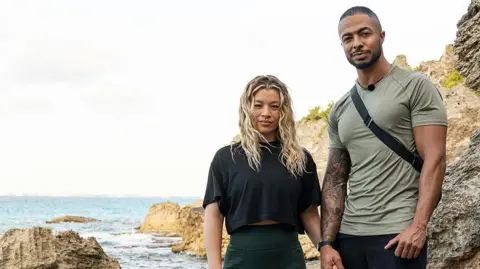
StudioLambert/BBC Tyler West and Molly Rainford hold hands and smile stood on rocks by the shore of the sea.StudioLambert/BBC

Four famous duos have travelled nearly 6,000 km, hitchhiking through mountain towns, foraging in dense jungles, and battling challenges they never imagined, as contestants in Celebrity Race Across the World.

What began on the sun-soaked easternmost tip of Mexico is about to come to a close on Thursday night as the teams race toward the windswept Península de La Guajira in Colombia, the series' final checkpoint.

The budget, £950 per person - the equivalent cost of flying the route - was one limitation, but what else made the trip the challenge of a lifetime?

Molly: 'It's given me so much more confidence'

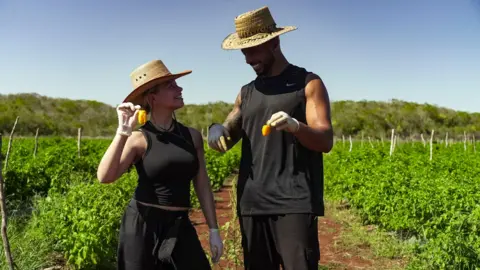
StudioLambert/BBC Partners, presenter and DJ Tyler West and actor and singer, Molly Rainford both holding a chili whilst working at a farm during their travels.StudioLambert/BBC

In the lead-up to the race, Tyler West and Molly Rainford had a flicker of apprehension.

While the couple knew each others' strengths and weaknesses inside out, life in the public eye often left them feeling like "passing ships in the night."

Their occasional holidays tended to have a single goal: complete relaxation.

This challenge offered something entirely different: a chance to push their relationship into new territory, and to reconnect without the usual distractions – for presenter and DJ Tyler, that meant not even his beloved Biscoff biscuits.

"It was a big question mark in our minds whether we'd even make it to the first checkpoint," Tyler admits.

"I remember looking at the final checkpoint on the map and thinking, 'How on earth are we going to get there?' But reaching this far really puts things into perspective - we're not as bad at travelling as we thought."

For actor and singer Molly, one of the biggest takeaways is a new-found confidence.

"Talking to strangers, asking people for help - those are things you just don't do anymore, but the race forces you into it," she says.

"It's given me so much more confidence that now I'm thinking, 'What have I got to lose?'"

And as for their relationship? "It proved to us we can get through anything together," she says.

Dylan: 'There's so much kindness out there'

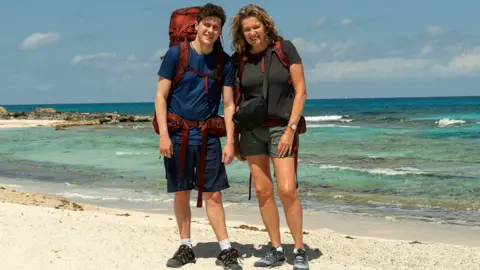
StudioLambert/BBC Dylan Llewellyn and mum Jackie smiling with their backpacks on whilst stood on a white sandy beach in front of the sea.StudioLambert/BBC

For actor Dylan Llewellyn and his mother Jackie, the race was less about crossing the finish line first and more about getting out of their comfort zone.

After three decades of marriage, Jackie had never been away from her husband for more than a weekend. But she filled the freezer with steak-and-kidney pies and set off with her son, determined to embrace the unknown.

They learned lessons from past contestants: save more, spend less, and never - under any circumstances - let go of your moneybelt or passport.

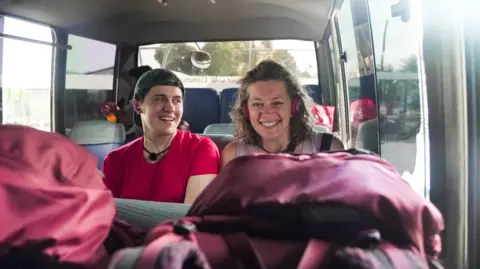
StudioLambert/BBC Actor Dylan Llewellyn and mum Jackie sit on a bus whilst travelling.StudioLambert/BBC

"I can't believe we've got this far. I thought we wouldn't make it after leg one," says Jackie.

"I'm so pleased that we pushed ourselves through the lows, and I'm proud of us both for getting to the end of leg five."

The pair leaned on each other during the toughest moments but also learned the importance of asking for help.

"I don't think we realise how much kindness there is out there. And we felt it a lot," says Dylan.

"We felt so much love and togetherness with families and it was really strong and beautiful to see."

Anita: 'My dad has seen my more vulnerable side'

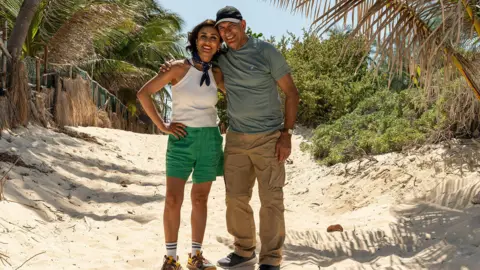
StudioLambert/BBC Anita Rani and dad Bal stand on a sandy beach smiling at the beginning of their journey.StudioLambert/BBC

Before the race began, broadcaster and writer Anita Rani and her father, Bal, were excited at the idea of five uninterrupted weeks in each others' company. They hadn't travelled together since a family trip to India when Anita was just two years old.

As the oldest combined duo in the competition, they worried initially whether they would have the stamina to keep pace with younger teams.

But they know they have what matters most: determination.

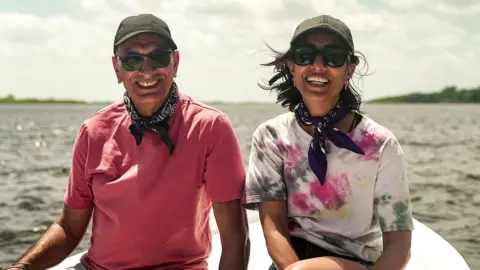
StudioLambert/BBC Anita Rani and dad Bal smiling whilst on a boat wearing matching navy neckerchiefs.StudioLambert/BBC

"We're never going to quit," Anita insists ahead of the final.

"There's obviously been disappointment so far about the things that have been out of our control, but there's a life lesson in that, isn't there?

"When Guatemala closed down, we missed a bus, or whatever, all those things are completely out of your control, and it's very frustrating, but that's part of the journey."

For Anita and Bal, the race has become about far more than reaching the finish line.

They have treasured the time together and the chance to get to know each other better.

"Honestly, this is life, and this is what we've been through," Anita says.

"I think my dad has seen a more vulnerable side of me that I don't normally show."

Roman: 'It makes you realise there's so much more to life'

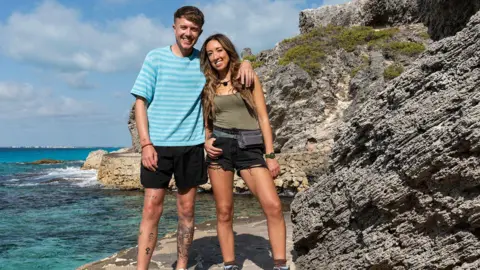
StudioLambert/BBC Roman Kemp has him arm around sister Harleymoon as they both smile on a path next to the sea next to a large rock.StudioLambert/BBC

Sibling duo Roman Kemp and Harleymoon were candid about their relationship not being as close as they would like: busy careers had reduced their interactions to quick spare-key handovers and dog drop-offs.

They are also, by their own admission, polar opposites. Singer-songwriter Harleymoon is the free-spirited adventure-seeker who is usually the last to leave any party.

Broadcaster Roman, devoted to his work and his beloved Arsenal, is naturally cautious about stepping outside his comfort zone.

For them, the race was an opportunity to become friends again and help them discover new sides of each other.

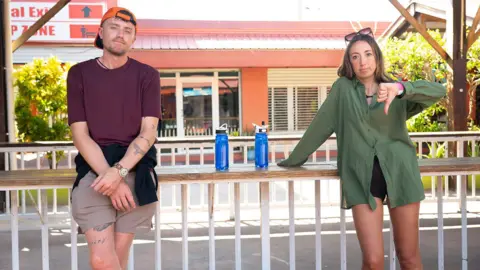
StudioLambert/BBC Broadcaster Roman Kemp and his sister, singer-songwriter, Harleymoon leaning against a wall whilst waiting for transport. Harleymoon signals a thumbs down with her hand.StudioLambert/BBC

Roman and Harleymoon describe their time with a family on Panama's San Blas Islands as truly transformative.

Roman says the race "took me so far from where I am from".

"It was the biggest moment for me.

"It does make you realise that there's so much more to life… You see what makes these people happy and how happy they really are, which is just this family."

For Harleymoon, the experience of having nothing besides a few bananas and a hammock "in the middle of nowhere" sparked deep self-reflection.

"Your life has turned into something so simple but so beautiful — it's an amazing window to reflect and think, wow, we have so much at home, and yet we always strive for more," she said.

"Getting to experience days like that, when you're just so full of gratitude, was really amazing."

Ukraine at critical moment, European leaders say after Trump call

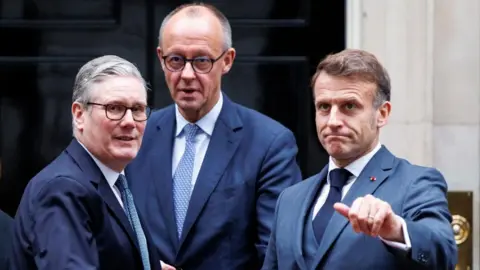
EPA/Shutterstock British Prime Minister Keir Starmer, German Chancellor Friedrich Merz and French President Emmanuel Macron in London. Photo: 8 December 2025EPA/Shutterstock

European leaders say "intensive work" will continue in the coming days on a US-led plan to end the Russia-Ukraine war, after a joint phone call with President Donald Trump.

UK Prime Minister Sir Keir Starmer, French President Emmanuel Macron and German Chancellor Friedrich Merz said they "agreed that this was a critical moment - for Ukraine, its people and for shared security across the Euro-Atlantic region".

A White House official confirmed the call took place but did not give details.

It comes the day after Trump called European leaders "weak", suggesting the US could scale back support for Ukraine.

In the wide-ranging Politico interview published on Tuesday, Trump also claimed Ukraine was "using war" to avoid holding elections, prompting President Volodymyr Zelensky to reply he was "ready" for them.

Russian President Vladimir Putin launched a full-scale invasion of Ukraine in February 2022, and Moscow currently controls about 20% of Ukrainian territory.

The three European leaders issued identical statements shortly after their call with Trump on Wednesday.

They read: "The leaders discussed the latest on the ongoing US-led peace talks, welcoming their efforts to achieve a just and lasting peace for Ukraine, and to see an end to the killing.

"Intensive work on the peace plan is continuing and will continue in the coming days."

Earlier on Wednesday, Zelensky wrote on social media that a 20-point document on how to end the war would be handed over to the US in "the near future" after "our joint work with President Trump's team and partners in Europe".

The Ukrainian leader provided no further details.

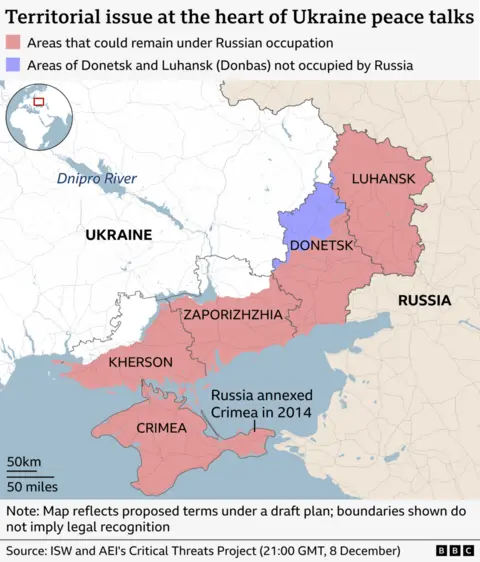
The original US draft peace plan - widely leaked to media last month - had 28 points, and was seen as favouring Russia. Ukraine has since held separate talks with US and European negotiators, seeking to change some key clauses such as territorial issues and security guarantees.

A map of Ukraine's south-eastern territories under Russian occupation

Zelensky is under increasing pressure from Trump to agree to a peace deal to end the war, with the US president urging Kyiv to "play ball" by ceding territory to Moscow.

Zelensky has repeatedly refused to do so, seeking instead an immediate ceasefire on the vast front line and iron-clad security guarantees for Kyiv in any future settlement.

The Ukrainian leader is on a diplomatic tour of Europe following intensive talks between US and Ukrainian negotiators over the weekend which failed to produce a deal to which Kyiv could agree.

Zelensky has been pressing his European allies to help deter the US from backing an agreement that could leave Ukraine exposed to future attacks by Russia.

Meanwhile, the Kremlin said Trump's "very important" statements on Ukraine, including saying Moscow would win the war and that Kyiv would need to hand over land, align with Russia's view.

"In many ways, on the subject of Nato membership, on the subject of territories, on the subjects of how Ukraine is losing land, it is in tune with our understanding," Putin's spokesman Dmitry Peskov said.

Last week, Putin repeated his warning that Ukrainian troops must completely withdraw from Ukraine's eastern Donbas region or Russia will seize it, rejecting any compromise over how to end the war.

Toffee Crisp and Blue Riband can't be called chocolate any more

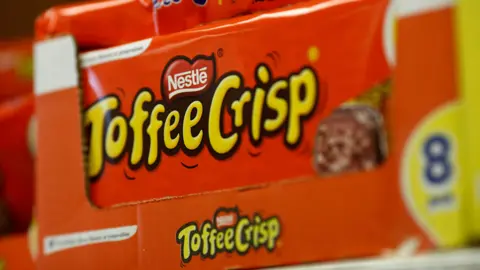
Getty Images A close-up image of a bright orange box of Nestle Toffee Crisp bars on display in a shopGetty Images
Chocolate-flavoured, but no longer chocolate: Toffee Crisp fans may have seen a change in how their confectionery is labelled

Toffee Crisp and Blue Riband bars can no longer be called chocolate after maker Nestle changed their recipes.

To be described as milk chocolate in the UK a product needs to have at least 20% cocoa solids and 20% milk solids, a level each product fell below once a higher amount of cheaper vegetable fat was used.

Nestle said its reformulations were needed due to higher input costs but were "carefully developed and sensory tested" and there were no plans to alter the recipes of other chocolate products.

As many ingredient costs, such as cocoa and butter, increased food companies have altered recipes to use less of the expensive ingredients, as well as shrinking serving sizes.

A spokesperson for Nestle said the food giant had seen "significant increases in the cost of cocoa over the past years, making it much more expensive to manufacture our products. We continue to be more efficient and absorb increasing costs where possible".

The change to the bars' ingredients was first reported by The Grocer.

Nestle is not alone in recent reformulations.

In October, McVitie's Penguin and Club bars switched to be labelled as as "chocolate flavour" because the amount of cocoa they contain has been reduced after parent company Pladis chose to use cheaper alternatives to the main ingredient in chocolate.

Although cocoa commodity prices have recently eased slightly, a surge in costs over the past three years, driven by poor harvests and droughts, has pushed up the cost of chocolate.

Changing ingredient proportions in food and drink manufacturing due to cost is sometimes called "skimpflation".

It has become more recent years as inflation has increased producers' costs.

Supermarkets were found in 2024 to have reduced the amount of costlier ingredients such as beef and chicken in their ready meals.

British paratrooper killed in Ukraine named

BBC Breaking NewsBBC

A member of the UK armed forces who died in Ukraine has been named as Lance Corporal George Hooley of the Parachute Regiment.

On Tuesday, the Ministry of Defence said the 28-year-old was killed observing Ukrainian forces test "a new defensive capability, away from the front lines".

Paying tribute to the paratrooper in the Commons on Wednesday, Prime Minister Keir Starmer said: "His life was full of courage and determination.

"He served our country with honour and distinction around the world in the cause of freedom and democracy, including as part of the small number of British personnel in Ukraine."

This breaking news story is being updated and more details will be published shortly. Please refresh the page for the fullest version.

You can receive Breaking News on a smartphone or tablet via the BBC News App. You can also follow @BBCBreaking on X to get the latest alerts.

Iceland becomes fifth country to boycott Eurovision

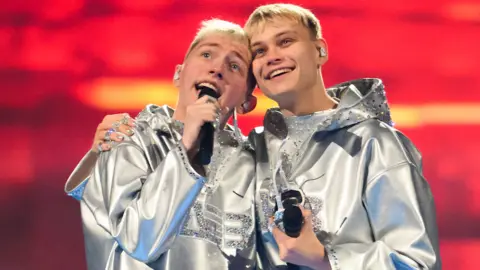
Getty Images The pop band VÆB represented Iceland at the 2025 Eurovision Song ContestGetty Images
The pop band VÆB represented Iceland at the 2025 Eurovision Song Contest

Iceland has joined Spain, Ireland, Slovenia and the Netherlands in saying it will boycott the 2026 Eurovision Song Contest.

All five countries have withdrawn after Israel's participation in the competition was officially confirmed last week.

"Participation of Israeli national broadcaster, KAN, in the contest has created disunity among both members of the European Broadcasting Union (EBU) and the general public," Icelandic broadcaster RÚV said in a statement.

Iceland had previously indicated it intended to skip the 2026 contest, but wanted to wait until the issue could be discussed by its board of directors on Wednesday.

Author Sophie Kinsella remembered as a 'wonderful, warm woman'

Getty Images English author Sophie Kinsella attends a photocall at Edinburgh International Book Festival at Charlotte Square Gardens on August 14, 2016 in Edinburgh, ScotlandGetty Images

Sophie Kinsella, the author of the bestselling Shopaholic series of novels, has died aged 55, her family have announced.

The writer, whose real name is Madeleine Sophie Wickham, was diagnosed with an aggressive form of brain cancer in 2022.

This breaking news story is being updated and more details will be published shortly. Please refresh the page for the fullest version.

You can receive Breaking News on a smartphone or tablet via the BBC News App. You can also follow @BBCBreaking on X to get the latest alerts.

Last minute offer may avert strike by resident doctors

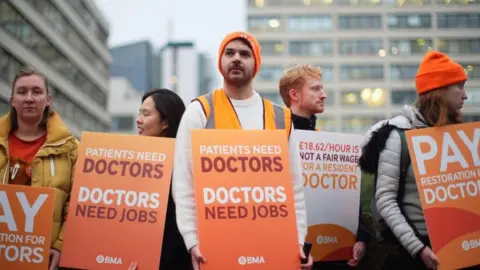
PA Media Resident doctors wearing orange beanie hats and carrying orange placards bearing the wears Doctor Need JobsPA Media

Next week's strike by resident doctors in England may be averted after ministers offered the British Medical Association a fresh deal.

The doctors' union has agreed to put the offer to members over the coming days - if they support it, the five-day walkout starting on Wednesday 17 December could be called off.

The offer includes a rapid expansion of specialist training posts as well as covering out-of-pocket expenses such as exam fees.

But it does not include any promises of extra pay. Health Secretary Wes Streeting has been adamant he will not negotiate on that, given resident doctors - the new name for junior doctors - have had pay rises of nearly 30% over the past three years.

The deal also includes emergency legislation being introduced so that the NHS can prioritise doctors who have studied and worked in the UK for speciality training posts that resident doctors move into in year three of their training.

This year there was intense competition for these roles with 30,000 applicants going for 10,000 posts. Some of those will have been doctors from abroad who under current rules have to be judged on the same basis as UK doctors.

The number of speciality posts will also increase by 4,000 – with the first 1,000 of those available from next year.

The BMA will now consult resident doctor members in England on whether this offer would be sufficient to call off next week's strike. A survey of members will run online, closing on Monday 15 December.

If members indicate it is enough to call off these strikes, a formal referendum of resident doctors would follow, giving members time to consider the details of the offer and whether to accept it and end the current dispute, the BMA said.

If the survey of members decides it is not enough to call off strikes, they will go ahead as planned next week.

BMA resident doctors committee chairman, Dr Jack Fletcher, said: "This offer is the result of thousands of resident doctors showing that they are prepared to stand up for their profession and its future.

"It should not have taken strike action, but make no mistake: it was strike action that got us this far.

"We have forced the government to recognise the scale of the problems and to respond with measures on training numbers and prioritisation.

"However, this offer does nothing to restore pay for doctors, which remains well within the government's power to do."

High Street food chain Leon to close stores and cut jobs in restructure

Getty Images A blurry woman in a red jacket walks past a glass store front with pictures of fast food and a red "LEON" sign.Getty Images

Leon has announced it will close several of its restaurants and cut jobs as part of a major restructure of the High Street food chain.

The company has appointed Quantuma as administrators after Leon's original co-founder John Vincent reacquired the company last month from Asda.

The move places the future of the worst performing of its 71 stores at risk, but so far no closures have been confirmed and all stores remain open.

The company employs about 1,000 staff and Leon has not said how many workers will be affected but added it would try to find jobs in the stores that remain open in the first instance.

Mr Vincent said that after an initial review of the company, the "immediate priority" was to close "the most unprofitable restaurants".

"In many cases we have found other brands to replace us, and in others we will be asking the landlords to take the leases back and find better suited operators themselves," he said.

Leon has also developed a programme with Pret A Manger to help staff that cannot take jobs in other Leon outlets, through which affected staff can apply for jobs with the coffee chain.

The company's plan is to work with Quantuma over the coming weeks to discuss the plans with landlords and work out the options for Leon's future.

Mr Vincent said he believed the company had drifted from its core values under EG and Asda's leadership, but he was also sympathetic to the challenges they faced running the "healthier" fast food chain.

"In the last two years, Asda had bigger fish to fry, and Leon was always a business they didn't feel fitted their strategy", he said.

"If you look at the performance of Leon's peers, you will see that everyone is facing challenges – companies are reporting significant losses due to working patterns and increasingly unsustainable taxes."

Asda has previously said selling Leon back to Mr Vincent would allow it to re-focus on its core retail operations, covering everything from its supermarkets to petrol forecourts.

Asda has been contacted for comment.

Leon also blamed its current issues on internal challenges, changing work patterns driven by the Covid pandemic and tax increases – all of which have affected the broader hospitality sector.

Mr Vincent said the government needed to review the tax burden it had placed on the hospitality industry.

"Today for every pound we receive from the customer, around 36p goes to the government in tax, and about 2p ends up in the hands of the company. It's why most players are reporting big losses," he said.

Known for serving its meals in a cardboard box with brown rice and fresh herbs, Leon has said its mission is to prove that its possible to serve fast food that "tastes good but does you good too" .

It opened its first branch in London in 2004, and at the time stood out against the fried chicken, burger and chips menus of its rival fast food chains.

Leon's administration process comes after Pizza Hut's UK operator DC London Pie announced it was closing 68 restaurants and 11 delivery sites in October, making more than 1,200 workers redundant.

Administrators said DC London Pie had been hit by a combination of "challenging trading conditions and increased costs", including "tax-related obligations".

Toffee Crisp and Blue Riband can't be called chocolate anymore

Getty Images A close-up image of a bright orange box of Nestle Toffee Crisp bars on display in a shopGetty Images
Chocolate-flavoured, but no longer chocolate: Toffee Crisp fans may have seen a change in how their confectionery is labelled

Toffee Crisp and Blue Riband bars can no longer be called chocolate after maker Nestle changed their recipes.

To be described as milk chocolate in the UK a product needs to have at least 20% cocoa solids and 20% milk solids, a level each product fell below once a higher amount of cheaper vegetable fat was used.

Nestle said its reformulations were needed due to higher input costs but were "carefully developed and sensory tested" and there were no plans to alter the recipes of other chocolate products.

As many ingredient costs, such as cocoa and butter, increased food companies have altered recipes to use less of the expensive ingredients, as well as shrinking serving sizes.

A spokesperson for Nestle said the food giant had seen "significant increases in the cost of cocoa over the past years, making it much more expensive to manufacture our products. We continue to be more efficient and absorb increasing costs where possible".

The change to the bars' ingredients was first reported by The Grocer.

Nestle is not alone in recent reformulations.

In October, McVitie's Penguin and Club bars switched to be labelled as as "chocolate flavour" because the amount of cocoa they contain has been reduced after parent company Pladis chose to use cheaper alternatives to the main ingredient in chocolate.

Although cocoa commodity prices have recently eased slightly, a surge in costs over the past three years, driven by poor harvests and droughts, has pushed up the cost of chocolate.

Changing ingredient proportions in food and drink manufacturing due to cost is sometimes called "skimpflation".

It has become more recent years as inflation has increased producers' costs.

Supermarkets were found in 2024 to have reduced the amount of costlier ingredients such as beef and chicken in their ready meals.

Sophie Kinsella, author of the bestselling Shopaholic series, dies aged 55

Getty Images English author Sophie Kinsella attends a photocall at Edinburgh International Book Festival at Charlotte Square Gardens on August 14, 2016 in Edinburgh, ScotlandGetty Images

Sophie Kinsella, the author of the bestselling Shopaholic series of novels, has died aged 55, her family have announced.

The writer, whose real name is Madeleine Sophie Wickham, was diagnosed with an aggressive form of brain cancer in 2022.

This breaking news story is being updated and more details will be published shortly. Please refresh the page for the fullest version.

You can receive Breaking News on a smartphone or tablet via the BBC News App. You can also follow @BBCBreaking on X to get the latest alerts.

Don't let Trump interfere with UK democracy, Davey tells PM

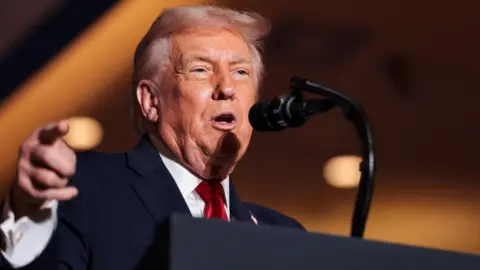
Reuters US President Donald Trump speaks into a microphone behind a podium at an event in Pennsylvania on 9 December.Reuters

Liberal Democrat leader Sir Ed Davey has urged the prime minister to stand up to Donald Trump, describing the US president's new national security strategy as "deeply alarming".

The document, which was published last week, warns Europe faces "civilisational erasure" and says US policy should prioritise "cultivating resistance to Europe's current trajectory".
Sir Ed called on the PM to "make it clear to President Trump that any attempts to interfere with our democracy are totally unacceptable".
In response, Sir Keir Starmer avoided criticising the US President, instead saying he would always stand up for Europe's "longstanding values of freedom and democracy".
The US strategy calls for an end to mass migration and criticises European policies on the issue for "creating strife".

It also raises concerns about "censorship of free speech" and "loss of national identities and self-confidence".

"It is far from obvious whether certain European countries will have economies and militaries strong enough to remain reliable allies," the document states.

Trump continued to attack European leaders in an interview with Politico on Tuesday, when he branded them "weak" and said they had failed to control migration or take decisive action to end the war in Ukraine.

The strategy also adopts softer language towards Russia, blaming the EU for blocking US efforts to end the conflict and saying the US must "re-establish strategic stability with Russia".

The Kremlin has welcomed the document, calling it "largely consistent" with Moscow's vision.

Raising the US strategy during Prime Minister's Questions, Sir Ed told the House of Commons: "Quite apart from the irony of President Trump accusing others of trampling on basic principles of democracy, it repeats far-right tropes of civilisational erasure and threatens that the US government will cultivate resistance in Europe.

"No wonder Vladimir Putin has welcomed that strategy. So will the prime minister pick up the phone and make it clear to President Trump that any attempts to interfere with our democracy are totally unacceptable?"

Sir Keir replied: "On the question of Europe and President Trump's comments, what I see is a strong Europe, united behind Ukraine and united behind our longstanding values of freedom and democracy.

"And I will always stand up for those values and those freedoms."

Sir Ed hit back: "I didn't hear about standing up to President Trump."

The PM has sought to build a close relationship with Trump and the government has pointed to a deal on trade as among the positive results of this.

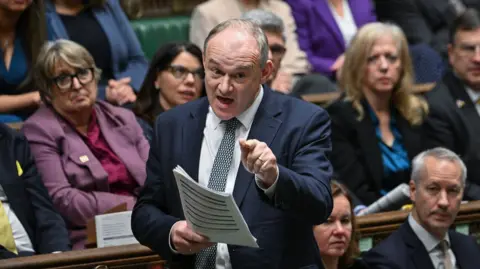
House of Commons Liberal Democrat leader Sir Ed Davey speaking during Prime Minister's Questions, with MPs sitting on green benches behind him. He is pointing with one hand and holding papers in the other.House of Commons
Sir Ed Davey described the US national security strategy as "deeply alarming"

Meanwhile, Downing Street has defended the Labour mayor of London, Sir Sadiq Khan, after he was branded a "disaster" and "incompetent" by Trump.

The US president's latest remarks in his long-running feud with the London mayor came during his Politico interview, where he also claimed Sir Sadiq was elected "because so many people have come in".

On Wednesday, the prime minister's press secretary told reporters Trump's comments were "wrong".

She said the mayor was "doing an excellent job in London", adding: "The prime minister is hugely proud of the mayor of London's record and proud to call him a colleague and a friend."

It comes after Downing Street was forced to deny it was failing to stand up for Sir Sadiq on Tuesday, when a No 10 spokesman declined to criticise the president's attack on the mayor.

Instead the spokesman had said: "The prime minister has a strong relationship with the US president and a strong relationship with the Mayor of London and on both is committed to working together to deliver stronger outcomes for the British people right across the country."

Thin, red banner promoting the Politics Essential newsletter with text saying, “Top political analysis in your inbox every day”. There is also an image of the Houses of Parliament.

Sign up for our Politics Essential newsletter to keep up with the inner workings of Westminster and beyond.

Brief encounter on train leads to marriage proposal

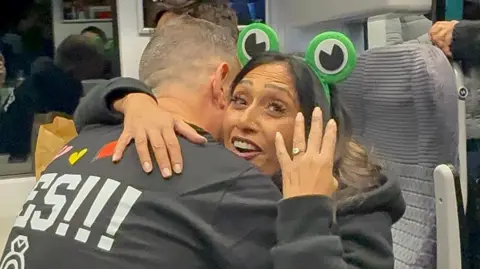
LNR Steve Higgs, hugging Payal Pandya, you can only see his back. Payal has on green ears, on a hairband and is showing up her hand with a ring on it, looking excited. She has long dark hair. LNR
Steve Higgs presented Payal Pandya with a ring and the answer was yes

A couple who had a brief encounter on a late-night train have got engaged on the same service one year later.

Steve Higgs, 56, from Leighton Buzzard, Bedfordshire, set up the surprise proposal to Payal Pandya, from Harrow, London, after a train company got on board with the plans.

He said he first met Ms Pandya, 49, on the 23:09 London Northwestern Railway (LNR) service from Euston towards Milton Keynes in November 2024.

To mark their anniversary the couple boarded the same service and Mr Higgs got down on one knee to ask Ms Pandya to marry him - and wedding plans are now moving full steam ahead.

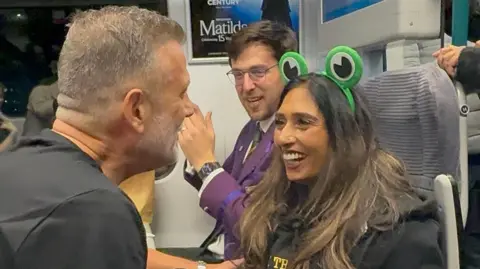
LNR Steve and Payal, both smiling, with a man with a purple jacket, clapping, looking at them. They are all sitting on a train with other passengers on the train. LNR
Train passengers were delighted by the special moment

Mr Higgs contacted LNR to plan the moment to ensure that nothing derailed it.

When the couple were on the train home from a night out in the capital, the conductor made a special announcement hinting at the forthcoming proposal, which gave Mr Higgs the cue to get down on one knee.

Mr Higgs said: "I first met Payal when I offered her my seat after I'd been out for a few drinks with friends.

"I'm always up for chatting with people when I'm travelling and so I struck up a conversation.

"I remember she mentioned she'd just been on a first date where – luckily for me - sparks had failed to fly.

"Although we were only speaking for 20 minutes or so, I knew I wanted to see her again."

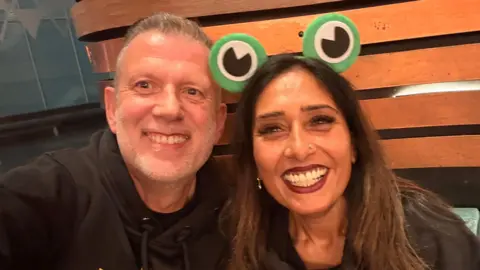
LNR Steve and Payal, smiling and looking at the camera, with wooden slates behind them. Steve has short grey hair and a beard, wearing a black top, Payal, has on green frog ears, has long dark hair, a nose piercing, earrings and a black top. LNR
To ensure the proposal was kept on track, Mr Higgs contacted LNR to plan the special moment

Ms Pandya said by the time she had got off the train last year, her fiancé had found her dating profile and sent her a message.

"We set up our first date not too long after and the rest is history," she said.

"We always joke that the 23:09 LNR service marks our 'encounter-versary' – the moment we first met.

"I can't believe Steve asked me to marry him on that same service and managed to get the conductor involved without me knowing!"

The couple said they hope to get married next year.

Jonny Wiseman, LNR's customer experience director, said: "When Steve got in touch with our customer relations team, we knew we had to help with his request for a special announcement.

"Their story is a brilliant example of the way the railway can connect people, not just to where they need to go, but to the people they're travelling with too."

Follow Beds, Herts and Bucks news on BBC Sounds, Facebook, Instagram and X.

Related internet links

British paratrooper who died in Ukraine named

BBC Breaking NewsBBC

A member of the UK armed forces who died in Ukraine has been named as Lance Corporal George Hooley of the Parachute Regiment.

On Tuesday, the Ministry of Defence said the 28-year-old was killed observing Ukrainian forces test "a new defensive capability, away from the front lines".

Paying tribute to the paratrooper in the Commons on Wednesday, Prime Minister Keir Starmer said: "His life was full of courage and determination.

"He served our country with honour and distinction around the world in the cause of freedom and democracy, including as part of the small number of British personnel in Ukraine."

This breaking news story is being updated and more details will be published shortly. Please refresh the page for the fullest version.

You can receive Breaking News on a smartphone or tablet via the BBC News App. You can also follow @BBCBreaking on X to get the latest alerts.

Man guilty of murdering ex-girlfriend's sister and three children in house fire

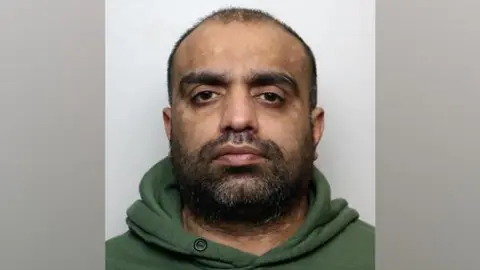
West Yorkshire Police A police mugshot of Sharaz Ali. He has short, fuzzy black hair and a a beard. He is wearing a green hooded top.West Yorkshire Police
Sharaz Ali was convicted of four counts of murder and one of attempted murder

A man has been found guilty of murdering his ex-girlfriend's sister and her three children in a house fire in Bradford.

Sharaz Ali killed Bryonie Gawith, 29, and her children Denisty, nine, Oscar, five, and 22-month-old Aubree Birtle, after deliberately setting fire to their home in a revenge attack when Bryonie's sister, Antonia, ended their relationship.

The 40-year-old was also found guilty of the attempted murder of Antonia Gawith, following a trial at Doncaster Crown Court.

Co-accused Calum Sunderland, 26, was cleared of murder and attempted murder but found guilty of four counts of manslaughter for his role in breaking into the family's house where Antonia had been staying.

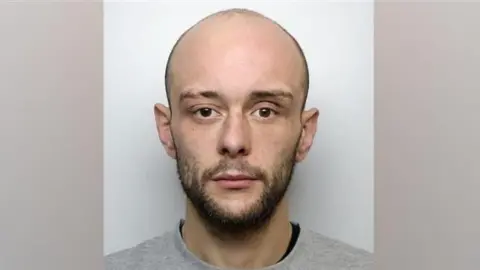
West Yorkshire Police A police mugshot of Calum Sunderland. He is bald with a brown beard. He is wearing a grey jumper.West Yorkshire Police
Calum Sunderland was found guilty of four counts of manslaughter

The trial heard Ali "motivated by jealousy and fuelled by drink and drugs" and Sunderland had arrived at Bryonie's home in Westbury Road, Bradford, in the early hours of 21 August 2024.

Prosecutors said Ali then ordered Sunderland to kick down the door before he went inside and poured petrol around the property.

In her evidence, Antonia told jurors she had confronted Ali on the ground floor of the property.

During a scuffle he poured petrol over her before she managed to run into the garden in the hope he would follow her out of the house.

The court heard he tried to get upstairs but was confronted by Bryonie and forced back down where he took a lighter from his pocket and set the house alight.

Bryonie and her three children, who were asleep upstairs, were unable to escape.

Author Sophie Kinsella dies aged 55

Getty Images English author Sophie Kinsella attends a photocall at Edinburgh International Book Festival at Charlotte Square Gardens on August 14, 2016 in Edinburgh, ScotlandGetty Images

Sophie Kinsella, the author of the bestselling Shopaholic series of novels, has died aged 55, her family have announced.

The writer, whose real name is Madeleine Sophie Wickham, was diagnosed with an aggressive form of brain cancer in 2022.

This breaking news story is being updated and more details will be published shortly. Please refresh the page for the fullest version.

You can receive Breaking News on a smartphone or tablet via the BBC News App. You can also follow @BBCBreaking on X to get the latest alerts.

Taliban warn Afghans who wore 'un-Islamic' Peaky Blinders outfits

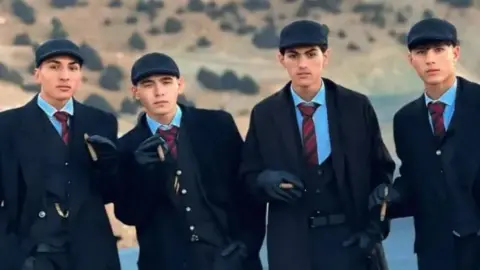
@tomasshelby.0093 Four Afghan men in three piece suits and flat caps hold cigars @tomasshelby.0093

Four Afghan men were ordered to report to the Taliban government's department of vice and virtue for dressing in costumes inspired by the TV series Peaky Blinders.

The friends were told that their clothing was "in conflict with Afghan and Islamic values", a Taliban spokesman told the BBC, adding the values in Peaky Blinders went against Afghan culture.

In videos posted online, the men, who have been released, can be seen posing in flat caps and three-piece suits similar to those worn in the series set in England soon after World War One.

Since the Taliban seized power in 2021, they have imposed a number of restrictions on daily life in accordance with their interpretation of Islamic Sharia law.

"Even jeans would have been acceptable, but the values in the Peaky Blinders series are against Afghan culture," Saiful Islam Khyber, a spokesman for the Taliban government's provincial department of Vice and Virtue in Herat city told the BBC.

The men, all in their early twenties, come from the town of Jibrail in Herat province. They were ordered to report to the Taliban's "morality police" on Sunday, and presented themselves for questioning in Herat the following day.

"They were promoting foreign culture and imitating film actors in Herat," Khyber wrote on social media, adding that they had undergone a "rehabilitation programme".

The were not formally arrested, "only summoned and advised and released", Khyber told the BBC's US partner CBS News.

"We have our own religious and cultural values, and especially for clothing we have specific traditional styles," he said.

"The clothing they wore has no Afghan identity at all and does not match our culture. Secondly, their actions were an imitation of actors from a British movie. Our society is Muslim; if we are to follow or imitate someone, we should follow our righteous religious predecessors in good and lawful matters."

The men could be seen thanking officials for their advice and saying they were unaware they had violated any laws in a video released by the ministry after they were questioned - though it is unclear under what circumstances the interview was recorded.

"I have innocently been sharing content that was against Sharia which had many viewers," one said in the recording.

He said he had been "summoned and advised", and would no longer do "anything like this".

In an interview with YouTube channel Herat-Mic uploaded at the end of November, before they were summoned, the friends said they admired the fashion displayed in the series, adding that they had received positive reactions from locals.

"At first we were hesitant, but once we went outside, people liked our style, stopped us in the streets, and wanted to take photos with us," one of the men said, according to a translation by CBS News.

Nobel Peace Prize winner's daughter accepts award on her behalf

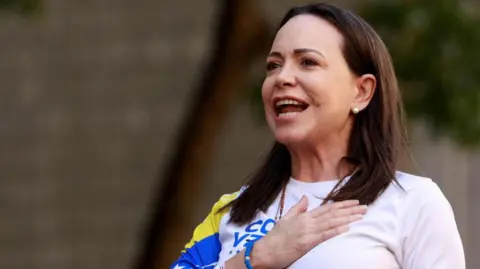
REUTERS/Leonardo Fernandez Viloria Venezuelan opposition leader Maria Corina Machado gestures at a protest ahead of the Friday inauguration of President Nicolas Maduro for his third term, in Caracas, Venezuela January 9, 2025REUTERS/Leonardo Fernandez Viloria
María Corina Machado was last seen in public at a protest on 9 January

María Corina Machado, the winner of this year's Nobel Peace Prize, is "safe" and will come to Oslo, but will not be able to make the awards ceremony scheduled for 12:00 GMT on Wednesday, the Nobel Institute has said.

The Nobel Institute awarded the Venezuelan opposition leader the prize for "her struggle to achieve a just and peaceful transition from dictatorship to democracy" in her home country.

There has been much speculation about whether Machado, who has been living in hiding, would be able to defy a travel ban to attend the ceremony in Norway's capital.

Organisers said her daughter would accept the award in her stead.

In an audio recording shared by the Nobel Institute, Machado said "I will be in Oslo, I am on my way."

However, the director of the Nobel Institute, Kristian Berg Harpviken, said that Machado was expected to arrive "sometime between this evening and tomorrow morning" - too late for the ceremony.

In her mother's absence, Ana Corina Sosa is expected to give the speech Machado had prepared.

Earlier on Wednesday, the Nobel Institute had said they were in the dark about Machado's whereabouts, triggering concern among her supporters.

Two of her children and her mother are in Oslo, hoping to be reunited with Machado after being separated for more than a year.

Machado went into hiding shortly after Venezuela's disputed presidential election in July 2024.

The last time she was seen in public was on 9 January when she spoke to her supporters at a rally protesting against the swearing-in of Nicolás Maduro to a third term as president.

The elections were widely dismissed both by the opposition in Venezuela and on the international stage as rigged, and sparked protests across the country.

Around 2,000 people were arrested in the crackdown which followed, among them many members of Machado's opposition coalition.

Machado, who had managed to unite the bitterly divided opposition ahead of the election, went into hiding for fear of arrest.

She continued to give interviews and uploaded videos onto social media urging her followers not to give up.

The announcement that she had been chosen as this year's Nobel Peace Prize winner galvanised her supporters and triggered immediate speculation as to whether she would be able to travel to Oslo.

Total secrecy has surrounded her travel plans and it is not know how she managed to leave her place of hiding or by what means she has reached Europe.

US jets tracked circling Gulf of Venezuela as tensions mount

Getty Images A US F-18 Super Hornet in flight. It is imposed over the BBC Verify branding and colours. Getty Images

Two US fighter jets were tracked circling the Gulf of Venezuela on Tuesday as tensions continue to escalate between the two countries.

The F/A-18 Super Hornets appeared on flight tracking sites near Maracaibo, Venezuela's second-largest city, at around 13:00 (17:00 GMT), before circling the gulf for about 40 minutes.

A US defence official told the Associated Press the F/A-18 jets had conducted a "routine training flight" in the area.

The incident comes amid a wave of US strikes against boats in the Caribbean Sea, which the White House said were trafficking drugs to the US from Venezuela. Experts have raised questions over the legality of the strikes, which have killed more than 80 people.

Venezuelan President Nicolás Maduro has accused the US of using the strikes to destabilise the country and oust him from power.

In an interview conducted with Politico the day before the jets approached Venezuela's coastline, Trump declared that Maduro's days in power were "numbered", and declined to comment on whether US troops could be deployed to the country.

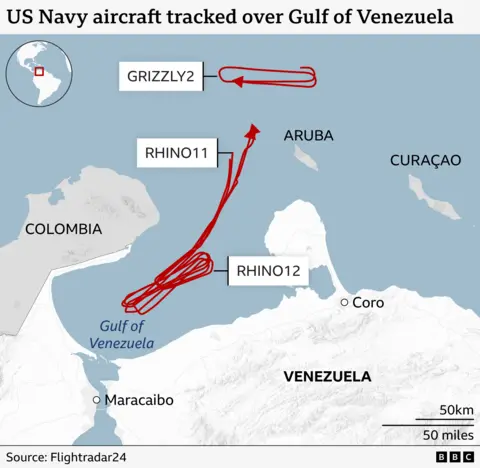
A separate jet, an EA-18G Growler, also appeared just before the F/A-18s on the tracking site FlightRadar24. Data shows the jet flew loops just north of Venezuela's coast.

They are the latest in a number of unusual US air force activities that have been tracked since September. B-52 Stratofortress and B-1 Lancer bombers previously flew up to and along the Venezuelan coast.

But the F/A-18s, which are capable of engaging targets both on the ground and in the air, appear to be the first to approach the Venezuelan coastline so publicly in recent months. The F/A-18s came within 20 nautical miles of the coastline, flight tracking data showed.

Neither the F/A-18s or the Growler showed a point of origin or a destination on FlightRadar24, and all three aircraft only turned on their transponders when they arrived near the Venezuelan coastline. Justin Crump, head of the risk consultancy Sibylline, suggested the move was intended to "support the administration's signalling and put pressure on the [Venezuelan] leadership".

The F/A-18s - which operated under the callsigns RHINO11 and RHINO12 - flew six loops up and down the Gulf of Venezuela. Meanwhile, the Growler jet - flying under the codename GRIZZLY2 - also flew circles along the coast.

A BBC graphic showing the flight path of the F/A-18s and the Growler off the coast of Venezuela. The graphic shows the F/A-18s were marked as RHINO11 and RHINO12, which flew loops in the Gulf of Venezuela. It also shows the Growler as GRIZZLY2 moving further out.

Greg Bagwell, a former RAF air marshall and president of the Air and Space Power Association, told BBC Verify that the flights appeared to be "probing" Venezuelan defence and trying to check for responses such as radio traffic and encrypted signals related to defence systems.

"The Growlers would have been listening for [signals intelligence], whilst the Super Hornets would have been providing air defence cover for the Growlers," Baswell said. He said the Growlers would also detect "active missile sites".

"It could be construed as the early gathering of intelligence for subsequent operations, or just a warning of such," he added.

Crump said the jets also had the capacity to test out "jamming capabilities", adding: "This also helps send a message, when successful, potentially indicating to Venezuela's leadership that these systems cannot or should not be relied upon," he said.

The US has deployed troops, ships and jets to the Caribbean in recent months, which officials have said is to combat drug trafficking in the area.

On Tuesday the US Southern Command published photos of an F/A-18 operating from the USS Gerald Ford, the world's largest aircraft carrier, which has been sent to the Caribbean.

Analysis of satellite images and ship tracking websites by BBC Verify has made it possible to identify at least nine military vessels that have been deployed to the region over recent weeks.

Satellite images also show that an airbase in Puerto Rico, which was closed in 2004 by the Pentagon, has been re-activated. Repairs have been carried out to the runway at Roosevelt Roads base and F-35s - America's most advanced fighter - have been sent to the base.

The BBC Verify banner

'Battle of the Sexes' will not damage women's sport - Sabalenka

'Battle of the Sexes' will not damage women's sport - Sabalenka

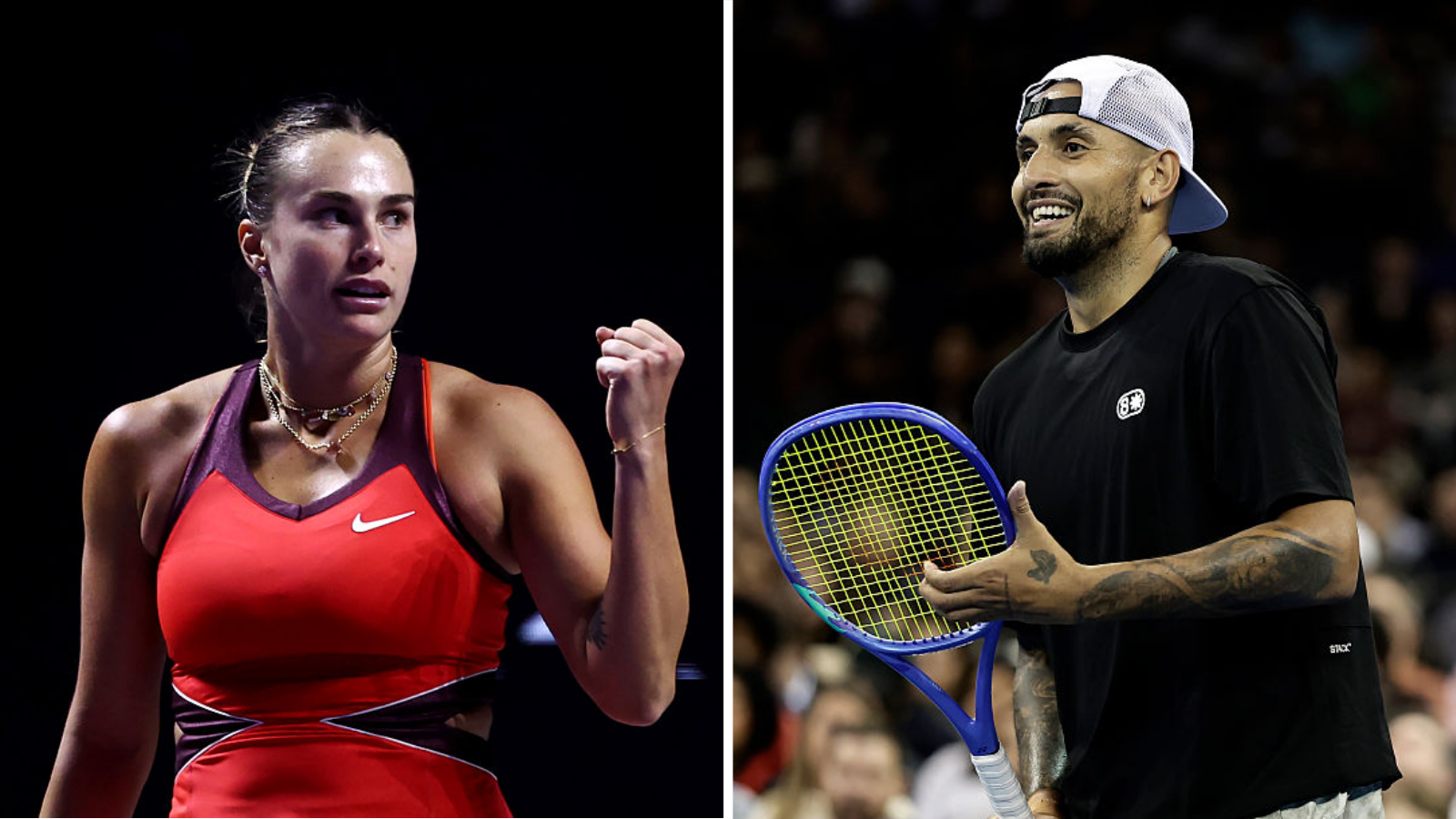
Aryna Sabalenka (left) and Nick Kyrgios (right)Image source, Getty Images
Image caption,

Aryna Sabalenka and Nick Kyrgios took part in an exhibition, alongside Naomi Osaka and Tommy Paul, at a packed Madison Square Garden in New York this week

  • Published

Aryna Sabalenka says her controversial Battle of the Sexes-style match against Nick Kyrgios will not damage women's sport.

Sabalenka, the women's world number one and four-time major champion, faces 2022 Wimbledon runner-up Kyrgios in an exhibition match on 28 December.

The event will be held in Dubai and shown live on the BBC.

Some people see it is as harmless entertainment between two high-profile players, but others believe it could belittle the women's game if Sabalenka loses.

Asked if it could be damaging, Sabalenka told BBC Sport: "I don't agree.

"I am not putting myself at any risk. We're there to have fun and bring great tennis. Whoever wins, wins."

She added: "It's so obvious that the man is biologically stronger than the woman, but it's not about that.

"This event is only going to help bring women's tennis to a higher level."

Belarusian Sabalenka, 27, has been one of the standout players on the WTA Tour over the past few seasons, capping another marvellous season by winning the US Open in September.

Kyrgios, 30, played only five professional matches in 2025 as he attempts to rebuild a career which he feared would be ended by a wrist injury.

The controversial Australian is ranked 672nd in the world and many have questioned what Sabalenka stands to gain from the event.

The concept is the brainchild of the pair's shared agent Stuart Duguid, who said the players will "do fine" financially from the match but that money is "not what is driving this".

It is not known if the winner will receive a cash prize or both players will get appearance fees or a share of revenue.

"It's not going to be an easy match for Nick," Sabalenka said.

"I'm going to be there competing and showing women are strong, powerful and good entertainment.

"He's in a lose-lose situation. I'm in a win-win situation."

In 1973 Billie Jean King faced Bobby Riggs in a match dubbed the 'Battle of the Sexes', attracting a worldwide television audience of 90 million and going down in cultural folklore with the aid of a Hollywood depiction.

King's victory over former Wimbledon champion Riggs - a self-proclaimed chauvinist aged 55 - was a landmark in the fight for gender equality and laid the path for equal pay at the top of the game.

With WTA players now among the world's highest-paid athletes, critics argue that this latest iteration of the 'man versus woman' format is unnecessary.

But Kyrgios and Sabalenka say it will attract a new audience to tennis, with their promises of more entertainment and celebrity fans sitting courtside.

"Tennis doesn't really have that (razzmatazz) that often and I think that when something like this occurs it is pretty special," said Kyrgios.

Sabalenka said: "We are helping tennis to grow.

"It's fun, it's challenging and I think that's what people want to see."

I'm more mature now - Kyrgios

Critics have questioned Kyrgios' suitability as the male protagonist, given he admitted assaulting an ex-girlfriend in 2021 and has made a series of comments which have been considered misogynistic.

Last year Kyrgios shared a post from controversial influencer Andrew Tate before later distancing himself from the self-proclaimed misogynist.

Asked if he understood the criticism given his previous behaviour, Kyrgios told BBC Sport: "Of course. But that's what life is. You make comments when you're younger and you change."

The former world number 13 said he is a "different person" now, adding: "I'm not going to sit here and say I'm an amazing role model, but I've grown and I'm definitely more mature now."

Kyrgios said he has not given "a thought" to the possibility he could become a poster boy for misogynists ready to criticise women's sport if he beats Sabalenka.

"This is the only thing I'm good at - hitting a ball over a net and giving people a show," he said.

"So I can't do anything other than hope me and Aryna play our best tennis and, at the end of the day, whoever wins, that our handshake afterwards solidifies the union between males and females in the tennis world."

Kyrgios, who has been open about his alcohol and drug abuse in the past, said he is not concerned about losing face if he is beaten by Sabalenka.

"I'm never worried. I know how I've responded with things in my life," he said.

"This is all a bonus. I've lost tennis matches before, so it's not really a big deal."

Kyrgios said he sees the event, as well as recent exhibitions in Atlanta and New York alongside Sabalenka, Naomi Osaka, Ben Shelton and Tommy Paul - as crucial preparation for a fuller return to the ATP Tour in 2026.

A knee injury means he has not played on the tour since the Miami Open in March, but he said there are "real positive signs" in his fitness.

Related topics

US could ask UK tourists for five-year social media history before entry

Getty Images A plane flying above the Statue of Liberty with a full moon in the backgroundGetty Images

Tourists from dozens of countries including the UK could be asked to provide a five-year social media history as a condition of entry to the United States, under a new proposal unveiled by American officials.

The new condition would affect people from dozens of countries who are eligible to visit the US for 90 days without a visa, as long as they have filled out an Electronic System for Travel Authorization (ESTA) form.

Since returning to the White House in January, President Donald Trump has moved to toughen US borders more generally - citing national security as a key reason.

Analysts say the new plan could pose an obstacle to potential visitors, or harm their digital rights.

The US expects a major influx of foreign tourists next year, as it hosts the men's football World Cup alongside Canada and Mexico, and for the 2028 Olympics in Los Angeles.

The proposal document was filed by Customs and Border Protection (CBP) and the Department of Homeland Security (DHS), of which the agency is part.

US media reported that it appeared in the Federal Register, which is the official journal of the US government. The BBC has asked DHS for comment.

It says "the data element will require ESTA applicants to provide their social media from the last 5 years", without giving further details of which specific information will be required.

The existing ESTA requires a comparatively limited amount of information from travellers, as well as a one-off payment of $40 (£30). It is accessible to citizens of about 40 countries - including the UK, Ireland, France, Australia and Japan - and allows them to visit the US multiple times during a two-year period.

As well as the collection of social media information, the new document proposes the gathering of an applicant's telephone numbers and email addresses used over the last five and 10 years respectively, and more information about their family members.

The text cites an executive order from Trump in January, titled "Protecting the United States From Foreign Terrorists and Other National Security and Public Safety Threats".

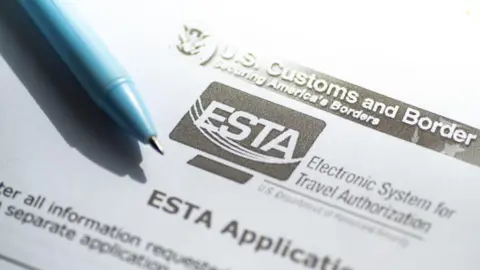
Getty Images A pen laid atop a paper form labelled Electronic System for Travel Authorization (ESTA)Getty Images
The plan would affect people from countries including the UK, which can fill out an ESTA form in lieu of a visa

The Trump administration has previously required foreign nationals to make their social media accounts public if they are applying for student visas or H1B visas for skilled workers - the latter of which now also entail a much higher fee.

A senior state department official said of the student visa policy: "It is an expectation from American citizens that their government will make every effort to make our country safer, and that is exactly what the Trump Administration is doing every single day."

Officers were instructed to screen for those "who advocate for, aid, or support designated foreign terrorists and other threats to national security; or who perpetrate unlawful anti-Semitic harassment or violence".

As part of the administration's broader effort to toughen borders, officials recently said an existing travel ban - affecting 19 countries in Africa, the Middle East and the Caribbean - could soon be expanded.

That move was announced in the wake of a shooting attack on two National Guard members in Washington DC, in which an Afghan man has been named as the suspect.

The new proposal regarding ESTA data collection for tourists invites views from the public for 60 days.

Sophia Cope, of digital rights organisation the Electronic Frontier Foundation, criticised the plan, telling the New York Times that it could "exacerbate civil liberties harms".

Meanwhile, immigration law practice Fragomen suggested there could be practical impacts as applicants could face longer waits for ESTA approvals.

Experts have previously suggested that the changes to travel policies introduced under Trump have had an impact on the American tourism industry.

Earlier this year, the World Travel & Tourism Council said the US was the only one of 184 economies that it analysed that was expected to see a decline in international visitor spending in 2025.

Other Trump administration policies have also appeared to impact tourism to the country, such as many Canadians boycotting US travel as a form of protest against Trump's tariffs.

October marked the 10th straight month of decline in the number of Canadian travellers to the US. In the past, Canadians have made up about a quarter of all international visitors to the US, spending more than $20bn (£15.1bn) a year, according to the US Travel Association.

Can you solve GCHQ's Christmas code-cracking challenge?

GCHQ A woman's manicured hand holding an envelope in front of a Chrsitmas treeGCHQ

Fans of codebreaking, maths and brainteasers can now try their hand at the latest cryptic Christmas challenge set by GCHQ, the UK's intelligence agency.

GCHQ released their annual Christmas card on Wednesday, filled with puzzles and hidden codes designed to help children aged 11-18 test a range of problem-solving skills.

The card was created by "schoolchildren as well as spies", according to GCHQ, after hundreds of young people entered a design competition in the lead-up to the festive period.

It contains seven puzzles set by "GCHQ's in-house puzzlers", geared towards testing a range of problem-solving skills, including "intuitive reasoning" and "lateral thinking".

The quiz starts with Question 1:

Somewhere on the card is a special seven letter word which has no repeated letters, and no letters which are next to each other in the alphabet. Can you find it? * Answer at the bottom of the page

Students were asked to draw their response to the question: "What do you think GCHQ looks like on Christmas Day?". They were challenged to embed hidden codes, and ciphers into their designs.

Three winners were selected by a panel of judges across three age groups.

The famously tricky puzzles "aren't meant to be solved alone", GCHQ said, adding: "We believe the right mix of minds means we can solve seemingly impossible problems."

"Puzzles are at the heart of GCHQ's work to keep the country safe from hostile states, terrorists and criminals; challenging our teams to think creatively and analytically every day", said GCHQ Director Anne Keast-Butler.

She said she hoped the puzzle encourages the next generation "to explore STEM subjects and consider the rewarding careers available in cybersecurity and intelligence".

Meanwhile, the spy agency's "Chief Puzzler", known only as "Colin", said the puzzles are designed to test "the same blend of skills our teams use every day to keep the country safe."

* The answer is: Special (the clue is written into the text)

My dad abused 130 boys - learning the truth was horrifying

'I'm sorry on behalf of my father,' abuser's daughter says

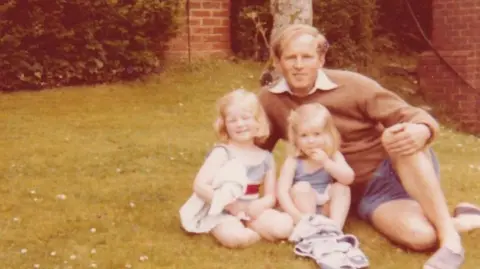
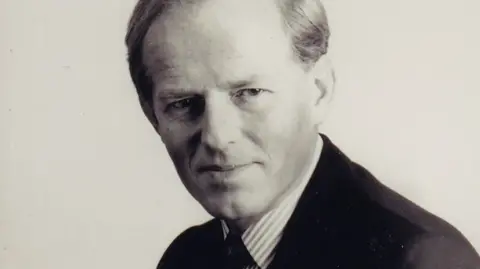
The daughter of the man believed to be the most prolific serial abuser to be associated with the Church of England (CofE) says finally learning the truth about his attacks on 130 boys was shocking and horrifying.

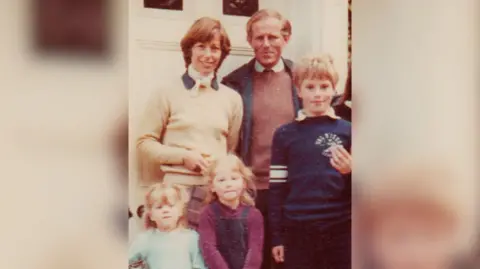
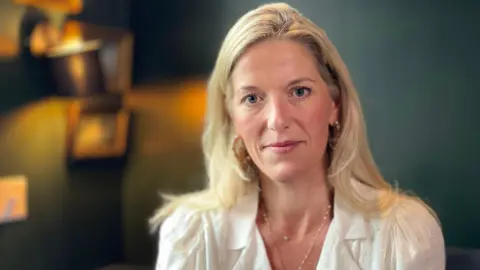
Fiona Rugg, 47, is the youngest daughter of barrister and Christian charity chairman John Smyth QC, who died before he was ever brought to justice.

In the late 1970s and early 1980s, Smyth subjected about 130 boys and young men to extreme physical and sexual abuse under the guise of spiritual discipline.

In the years since, Ms Rugg, who now lives in Bristol, has slowly come to terms with the disturbing truth but has often grappled with feelings of "shame by association".

"I can rationally understand that I'm in no way to blame, but you feel guilty that my father could do this to someone, and of course, he was unrepentant," she said.

"So much of my dad's story and how he got away was cover-up and deception, but I want to fly in the face of that and bring things into the light."

The Makin Review, published in 2024, found the church's handling of the allegations against Smyth amounted to a cover-up, with one cleric admitting: "I thought it would do the work of God immense damage if this were public."

Speaking openly to the BBC for the first time, Ms Rugg said learning the truth about the extent of her father's "shocking" abuse has helped her to heal.

"I have forgiven him, but it doesn't take away the pain or make it OK. I don't feel in the grip of it or feel so ashamed, but it doesn't diminish the horror of what he did," she said.

"There was nothing in his camp coming from him about being sorry. I'm sorry on behalf of my father for what he's done to these boys."

Warning - this story contains distressing content and references to child abuse

Ms Rugg recalls an oppressive childhood plagued by "hypervigilance" of her father's unpredictable moods.

"I think the overriding feeling is actually fear, as long as I can remember," she recalled.

"I felt afraid around dad, who was very volatile.

"He was very angry, and so there was a sense of fragile moods, walking on eggshells, wondering what dad's mood was like. A feeling of guilt as a young child I didn't like dad and sometimes I hated him."

Passion Pictures A black and white professional portrait of John Smyth wearing a stripey collared shirt and dark suit. He is smiling at the camera and appears friendly. Passion Pictures
Ms Rugg said her father evaded suspicion because he was "adored" by so many

Ms Rugg said her father "completely disregarded" her as a child, to the extent she questioned her own judgement of his "volatile" character.

"What I saw was confusing to me," she said. "He was so frightening, so angry and unkind, so hard to stand up to. I wanted to get as far away from him as possible, but what I saw was people who adored him."

While Smyth laughed and played outside with boys and young men in the sun, she would watch from the window, having been told to stay away as an "unwanted distraction".

"We were experiencing a completely different John Smyth to the reputation he presented to the world," she explained.

"The natural conclusion you draw when you are young is 'he must be right and I must be the problem. I'm the one who is not seeing this correctly here'."

Passion Pictures An old family photo showing Smyth wearing blue shorts and a brown jumper, sitting on the grass beside his two young daughters. It appears to be a warm day, and they are smiling at the camera.Passion Pictures
Ms Rugg (R) said it felt like their entire world and family "orbited" around their domineering father

Smyth gained access to Winchester College in 1973 through the school's Christian union and began abusing pupils after inviting them to his family home for Sunday lunch.

He forced his victims to strip naked and endure violent canings in a soundproofed shed at his family home, where he beat them so badly they bled.

Smyth, an evangelical Christian, would frame the abuse as a form of punishment and repentance for "sins" such as pride or masturbation.

An internal review by the Iwerne Trust uncovered the scandal in 1982, describing the attacks as "prolific, brutal and horrific", detailing how eight of the boys had suffered a total of 14,000 lashes.

But rather than alerting authorities, senior evangelical figures in the CoE facilitated Smyth's silent departure from the UK, allowing him to evade justice for decades.

When their family were ushered to Zimbabwe in 1984, Ms Rugg said it was framed by her father as "noble work", sacrificing his "glittering career" to become a missionary.

But his wake of destruction followed them across the globe, and he soon opened Christian camps where he would enforce nudity and beat young boys.

The following year, tragedy unfolded when a 16-year-old boy named Guide Nyachuru was found dead at one of Smyth's camps within 12 hours of arrival, resulting in a manslaughter charge, but the case collapsed.

Passion Pictures A black and white picture of John Smyth wearing a striped shirt and a dark suit. Passion Pictures
Smyth would control his victims by framing the abuse as repentance for "sin"

When Ms Rugg moved back to England aged 18, she started to have more and more questions about her father.

"It would come up that I'm dad's daughter and I would see a shadow pass across someone's face," she recalled.

"People didn't react like 'oh what a great guy', it was the opposite of that. It was a stony silence. There seemed to be so little connection with the UK, which struck me as odd."

She confronted her father with the rumours on Christmas Eve, and he burst into a blind rage, accusing her of being "disloyal" to their family by daring to question his integrity.

"His reaction was so powerfully extreme, I remember thinking 'well now I know for sure'. There's never that much smoke without a fire," she said.

Passion Pictures An old family picture of Smyth, his wife and their three children - two young daughters and an older boy. They are posing in front of a white front door, and smiling at the camera. Passion Pictures
Smyth was completely estranged from his family at the time of his death in 2018

Reports of Smyth's abuse were first made public through an investigation by Channel 4 in February 2017.

Ms Smyth switched on the news one evening to see her father's face staring back at her, his name plastered across the screen against a backdrop of horrendous crimes.

"These were people's young, vulnerable sons whose lives were ruined. I have a son," she added.

"As cruel as I'd seen him to be, I had no idea he had committed this extensive criminal abuse. It was horrifying and so shocking, but it made sense.

"His whole life was about doing 'the Lord's work'. Everything was backed up with his Christian faith, and I found the hypocrisy of that really abhorrent."

In August 2018, Smyth received a summons from Hampshire Police to return to England for questioning, under the threat of extradition.

He died from heart failure just eight days later at the age of 77, and was never brought to justice for the trauma he inflicted upon young boys in his care.

A head and shoulders shot of Fiona Rugg, wearing a white blouse and gold hoop earrings. She has long blonde hair and blue eyes, and is slightly smiling at the camera. Behind her is a dark green wall with framed pictures and warm lighting.
Fiona Rugg says facing the truth of her father's "horrific" acts has helped her to heal

Ms Rugg said she can now speak about her father "without bitterness or hatred" and finally feels at peace.

"In my experience, if you face what dad's done you can heal from it and you can forgive it," she explained.

"There are moments of upset but I no longer feel that knot when I think about my dad, and that is progress. It's not mine to carry and not mine to be controlled by.

"It's changed from something that was imposed on me, to 'I'm choosing what I do with that'."

  • If you would like to learn more about John Smyth's history of abuse, head to Channel 4's two-part documentary titled See No Evil.

Follow BBC Bristol on Facebook, X and Instagram. Send your story ideas to us on email or via WhatsApp on 0800 313 4630.

The 'bold and compelling' sculptures that earned Nnena Kalu a historic Turner Prize win

PA Media Nnena Kalu standing in front of her giant orange swirl pattern drawings after the Turner Prize announcementPA Media
Nnena Kalu has been gaining recognition in the art world in recent years

Nnena Kalu has won this year's Turner Prize, the UK's most high-profile art award, for her "bold and compelling" sculptures and drawings - and has made history as the first artist with a learning disability to win.

The judges praised Kalu's brightly-coloured sculptures - which are haphazardly wrapped in layers of ribbon, string, card and shiny VHS tape - and her drawings of swirling, tornado-like shapes.

Kalu, 59, is an autistic, learning disabled artist with limited verbal communication.

Charlotte Hollinshead, who has worked with her for 25 years, said on stage at the ceremony: "This is a major, major moment for a lot of people. It's seismic. It's broken a very stubborn glass ceiling."

'Idol, legend, winner'

In a moving speech delivered alongside Kalu, she said: "This amazing lady has worked so hard for such a long time.

"It's wonderful she's finally getting the recognition she rightly, rightly deserves."

PA Media Nnena Kalu in the moments after the Turner Prize announcement, standing up with three supporters who are applauding and smilingPA Media
Kalu and her supporters wore rosettes saying "Idol, legend, winner, whatever"

Glasgow-born, London-based Kalu was announced as the winner of the award - and its £25,000 prize money - at a ceremony in Bradford, the UK's current city of culture, on Tuesday.

She accepted the honour while wearing a rosette bearing her photo and the words: "Idol, legend, winner, whatever."

Kalu has been gradually gaining recognition in the art world in recent years after working as a resident artist with Action Space, which supports artists with learning disabilities, since 1999.

Ms Hollinshead, her studio manager and artistic facilitator, said: "We are so happy that Nnena's talent and beautiful work is now out in the world for you all to see this complex artist who creates gorgeous, complex forms - all while listening to disco music, often as loud as possible.

"Nnena's career reflects the long, often very frustrating journey we've been on together... to challenge people's preconceptions about differently abled artists, but especially learning disabled artists, an important creative community so undervalued.

"When Nnena first began working with Action Space in 1999, the art world was not interested.

"Her work wasn't respected, not seen, and certainly wasn't regarded as cool.

"Nnena has faced an incredible amount of discrimination, which continues to this day, so hopefully this award smashes that prejudice away.

"Nnena Kalu, you've made history!"

'Beautiful intricacy'

PA Media A man standing in the centre of a large number of suspended colourful sculptures made of various strips of multi-coloured tape and material in Nnena Kalu's installationPA Media
Tape, ribbons, string and cardboard are among the materials used to make Nnena Kalu's sculptures

Kalu's work has divided opinion among art critics, but the Turner Prize judges were impressed by the "really compelling sculptures and drawings that could only be made by Nnena", according to the jury chairman, Tate Britain director Alex Farquharson.

Her drawings, which come in sets of two or three near-identical shapes, have "a beautiful intricacy to them" and "look like swirling vortexes", he said.

Getty Images Three large yellow paintings by Nnena Kalu in in a row with identical blue and black swirly patterns Getty Images

Her sculptures, meanwhile, are hanging shapes covered in reams of re-purposed materials including fabric, rope, parcel tape, cling film and paper.

They resemble three-dimensional versions of abstract expressionist paintings, Mr Farquharson said.

"But they're not paintings, they're not flat on the wall. They're suspended in the space that you're in, like brightly coloured rocks or creatures.

"They're at almost your eye level. Although there are no figurative features at all, they appear to be communing among themselves and with you.

"The use of materials is highly unusual, including video tape that gets wrapped round and round.

"The colours and the lines the materials make are very like brush marks translated into three dimensions. They're very gestural, they're very expressive, they're very compelling."

Getty Images Nnena Kalu's artworks in the galleryGetty Images

'Quality and uniqueness'

The judges deliberated for two or three hours, Mr Farquharson said, and stressed that their choice of winner was based purely on merit.

"The result wasn't about wanting, first and foremost, to give the prize to Nnena as the first neurodiverse artist. That wasn't a driving factor," he said.

"It was an interest in, and a real belief in, the quality and uniqueness of her practice, which is inseparable from who she is."

It is a historic moment, though, he told BBC News.

"It breaks down walls between, if you like, neurotypical and neurodiverse artists. It becomes really about the power and quality of the work itself, whatever the artist's identity is.

"So maybe what's historic about it is it's one more move to include really great neurodiverse artists in the picture we present of art today."

Getty Images Entrance to Nnena Kalu's room in Cartwright Hall gallery, with her name above the doorGetty Images
All of the shortlisted artists' works are on show at thye Cartwright Hall gallery in Bradford

The result was announced at a ceremony at Bradford Grammar School, the former school of artist David Hockney.

Works by all four shortlisted artists are currently on show at the Turner Prize exhibition at the nearby Cartwright Hall gallery, which will run until 22 February 2026.

The other nominees were Rene Matić, Zadie Xa and Mohammed Sami, who will receive £10,000 each.

The Turner Prize has been the UK's most coveted and controversial art award since it was founded in 1984. Past winners include Lubaina Himid, Jeremy Deller, Grayson Perry, Steve McQueen and Damien Hirst.

❌