Rishi Sunak has said there was no "toolkit" to deal with the economic shock caused by the Covid pandemic.
The former Conservative prime minister, who was chancellor during the crisis, told an inquiry there was "not a playbook" to guide how to respond and deal with the economy being ground to a halt due to the lockdown.
"We were dealing with something no one had dealt with before," he said.
Sunak added job losses as a result of people being told to stay at home were unavoidable, but said the government was "successful in preventing mass unemployment".
The former PM was giving evidence to the public inquiry into the pandemic on Monday, answering questions on the policies he set out to support workers' incomes and keep businesses afloat.
He said that at the outbreak of the crisis, there was an "enormous amount of uncertainty", with policymakers and experts unsure of the scale and duration of the virus and how the population would respond to any measures imposed by the government.
"There was not a toolkit, there was not a playbook that you could pull of the shelf that said this is how you tend to deal with pandemics in the same way you somewhat have with other economic shocks or financial shocks," he said.
Over the past three weeks, the inquiry has been delving into the economic response to the pandemic, hearing from former ministers, treasury officials and central bankers.
Sunak's appearance on Monday was the second time he has taken the stand, after previously giving evidence in December 2023 when he was still prime minister.
He was appointed chancellor of Boris Johnson's government on 13 February, and was preparing to present a Budget before the pandemic hit UK shores and the country was put into lockdown a month later.
Sunak told the inquiry that one of his priorities was to prevent mass unemployment and said "speed was paramount" in the government's response.
He said there was an "acknowledgement" in the Treasury that they were not going to "get everything right straight away".
"We could not let perfect be the enemy of the good," he said. "We had to get things out fast."
Sunak said it was not possible "to save every person's job", but said that "as it turned out, the impact on living standards particularly for the most vulnerable in society... were stronger that I would have perhaps anticipated going into this and I'm very proud of that".
The coronavirus job retention scheme, known as furlough, was announced by Sunak in March 2020.
At his previous appearance in front of the inquiry, Sunak defended his Eat Out to Help Out policy, which was one of the government's policy measures aimed to support businesses reopening after the first lockdown.
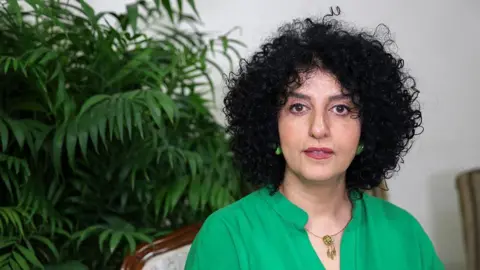
Narges Mohammadi was given temporary release from prison on medical grounds last year (file photo)
Iranian Nobel Peace Prize winner Narges Mohammadi was taken to hospital after being beaten when she was arrested last week, her family says.
The 53-year-old human rights activist told them in a phone call on Sunday that she was brought to an emergency department twice after being "attacked by plain clothed agents with severe and repeated baton blows to the head and neck", according to the Narges Foundation.
There was no comment from Iranian authorities, but they have said she was detained for making "provocative remarks" at a memorial ceremony in the city of Mashhad on Friday.
The Nobel Committee and award-winning film-maker Jafar Panahi are among those calling for her release.
Ms Mohammadi, the vice-president of the Defenders of Human Rights Center in Iran, was awarded the 2023 Nobel Peace Prize for her activism against female oppression in Iran and promoting human rights.
She has spent more than 10 years of her life in prison. Since 2021, she has been serving a 13-year sentence on charges of committing "propaganda activity against the state" and "collusion against state security", which she denied.
In December 2024, she was given a temporary release from Tehran's notorious Evin prison on medical grounds.
She has continued campaigning while undergoing treatment.
On Friday, she gave a speech at a memorial ceremony in Mashhad for Khosrow Alikordi, a human rights activist and lawyer who was found dead earlier this month in what human rights groups described as "suspicious" circumstances.
According to the Narges Foundation, eyewitnesses cited by Ms Mohammadi's family said that she was attacked by around 15 plainclothes agents at the memorial, and that some were seen pulling her hair and beating her with clubs and batons.
On Sunday evening, Ms Mohammadi made a brief phone call to her family and told them that "the intensity of the blows was so heavy, forceful, and repeated that she was taken to the hospital emergency room twice", a statement said.
"She emphasised that she does not even know which security authority is currently detaining her, and that no explanation has been given in this regard. Her physical condition at the time of the call was not good, and she appeared unwell," it added.
The Narges Foundation cited Ms Mohammadi as saying that she was accused of "co-operating with the Israeli government" and that they had made a death threat, telling her: "We will put your mother into mourning."
The statement said that two other activists detained at the memorial ceremony, Sepideh Gholian and Pouran Nazemi, were also beaten by the plainclothes agents.
Mashhad prosecutor Hasan Hematifar told reporters on Saturday that Ms Mohammadi was among 39 people arrested.
He said that she and Khosrow Alikordi's brother, Javad, had encouraged those present "to chant norm-breaking slogans" and "disturb the peace".
The Norwegian Nobel Committee said on Friday that it was deeply concerned by what it called the "brutal arrest" of Ms Mohammadi and called on Iranian authorities to "ensure her safety and integrity, and to release her without conditions".
Mariah Carey has sold more than 200 million albums since her debut in 1990
Published
American singer-songwriter Mariah Carey will perform at the opening ceremony of next year's Winter Olympics.
The five-time Grammy award-winner will be one of the "leading performers" for the event at Milan's San Siro stadium - the home of football clubs Inter and AC Milan - on Friday, 6 February.
The Games in Milan and Cortina run from 6-22 February.
Athletes will be able to participate in the ceremony from other venues in Milan, Cortina, Valtellina and Val di Fiemme.
Carey, 56, has headlined major sporting events in the past, having sung the USA's national anthem before the NFL's Super Bowl in 2002 and at the NBA All-Star game in 2003, and performed her own song at the 2020 US Open women's tennis final.
She will be following in the footsteps of Celine Dion and Lady Gaga, who both performed at the opening ceremony of the 2024 Summer Olympics in Paris.
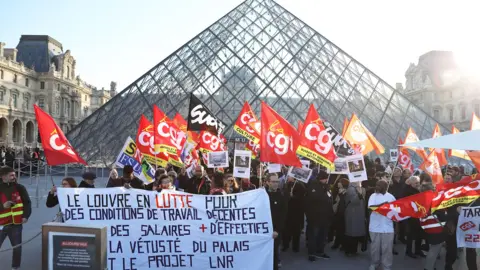
The Louvre museum in Paris was forced to close on Monday as its employees went on strike over working conditions and pay, leaving thousands of would-be visitors disappointed.
The walkout at the world's most visited museum in the French capital was earlier backed unanimously by some 400 staff, trade unions announced.
They said understaffed museum workers were being required to cope with ever increasing flows of people. The management did not comment immediately.
In their strike notice to Culture Minister Rachida Dati, the CFDT, CGT and Sud unions pointed to "deteriorating working conditions" and "insufficient resources" at the Louvre.
"We need a change of approach... regarding the priorities and urgent needs" of the museum, CGT representative Christian Galani was quoted as saying by BFMTV news website.
The Louvre's reception and security sector, he said, had "lost 200 full-time equivalent positions in the space of 15 years, while visitor numbers have increased by half".
Some people had already purchased tickets for Monday.
"I'm very disappointed because the Louvre was the main reason for our visit in Paris, because we wanted to see the Mona Lisa," Minsoo Kim, who travelled from Seoul with his wife for their honeymoon, told AFP news agency.
Natalia Brown, a Londoner, said she was also disappointed. "At the same time, I understand why they're doing it, it's just unfortunate timing for us," she added.
The unions said Louvre employees would gather on Wednesday morning to decide what to do next.
The museum - which is closed on Tuesdays for maintenance - said it welcomed 8.7 million visitors in 2024.
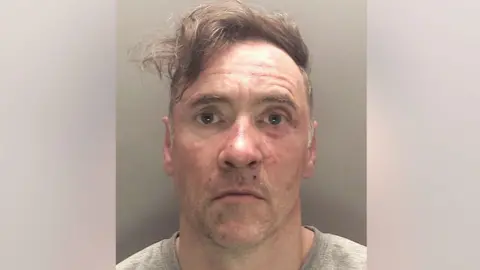
In the back of a police van immediately after the attack, Doyle told officers "I've just ruined my family's life"
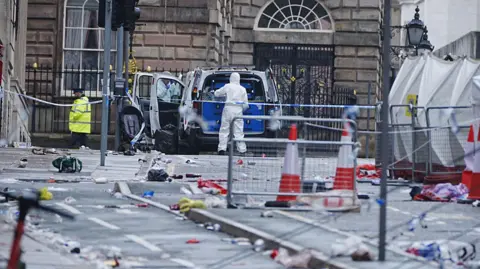
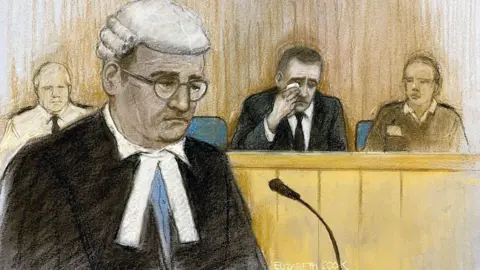
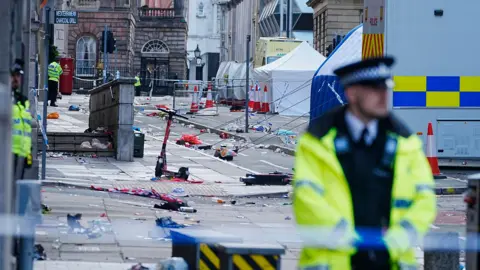
A man who used his car as a "weapon" to plough into more than 100 people at Liverpool's victory parade told police he did it out of fear and panic, a court has heard.
But prosecutors said these were lies told by Paul Doyle and he had lost his temper and driven at crowds in a rage on Water Street during the celebrations.
At Liverpool Crown Court earlier, victims of his Water Street rampage on 26 May spoke about their terror and injuries.
Sheree Aldridge, 37, said she thought her baby son Teddy Eveson had died after his pram was thrown into the air after being hit by Doyle's car, adding that she thought she would "be next".
She said: "I felt an overwhelming pain in my leg and looked up to see Teddy's pushchair on its side further up the road. I thought my Teddy was dead.
"I thought I was next. I thought my children would grow up without a mother."
Hers was one of a number of victim impact statements read during the first day of Doyle's two-day sentencing hearing, with others describing how they have suffered "emotional and psychological injury" as well as "frequent flashbacks".
A 12-year-old boy, who cannot be named for legal reasons, said: "I found myself on the floor having been hit by a car I did not see coming, I have never felt so scared before in my life."
The boy's mother said in her statement her heart sank when she saw her child motionless on the floor.
She said: "The sight of my son lying motionless on the road, not moving for those few seconds, and the sound of the car hitting people will live with me forever."
PA Media
The court heard people were sent "flying in the air"
In the back of a police van immediately after the attack, Doyle told officers "I've just ruined my family's life".
He previously pleaded guilty to 31 offences relating to seriously injuring people during the victory parade when thousands of Liverpool fans were in the city.
The former Royal Marine, of Croxteth, Liverpool, changed his plea on the second day of his trial last month.
He admitted to dangerous driving, affray, 17 charges of attempting to cause grievous bodily harm (GBH) with intent, nine counts of causing GBH with intent and three counts of wounding with intent.
Doyle was picking up friends from the parade when, in the space of two minutes between 17:59 and 18:01 BST, he used his Ford Galaxy "as a weapon" and hit more than 100 supporters, Paul Greaney KC, prosecuting, said.
The 54-year-old cried frequently as horrifying CCTV and dashcam footage was played to the court.
In the footage, Doyle can be heard shouting "move" and swearing at the crowd, including after he struck a 10-year-old girl.
Footage shows car plough into crowd at Liverpool FC parade
Mr Greaney described Doyle as a "man out of control" as a 15-second CCTV clip was played of the moment his vehicle hits Teddy's pram.
The Honorary Recorder of Liverpool, Judge Andrew Menary KC, lifted reporting restrictions preventing the media from publishing the baby's name as his parents had agreed for their son to be identified.
Mr Greaney said Teddy "remarkably" escaped injury.
Five other children, who Doyle either injured or attempted to injure, cannot be named for legal reasons.
Other footage showed the windscreen of his car smashed after a man landed on it.
Mr Greaney told the court: "The strong sense from the dashcam footage is that the defendant regarded himself as the most important person on Dale Street, and considered that everyone else needed to get out of his way so that he could get to where he wanted to get to.
"The truth is a simple one. Paul Doyle just lost his temper in his desire to get to where he wanted.
"In a rage, he drove into the crowd, and when he did so, he intended to cause people within the crowd serious harm.
"He was prepared to cause those in the crowd, even children, serious harm if necessary to achieve his aim of getting through."
PA Media
He told the court that when Doyle was interviewed by police, he claimed he had stopped the car as soon as he realised he had struck someone.
Mr Greaney said: "The defendant could not have failed to see that he had struck very many people on his journey down Dale Street and Water Street, stopping to reverse and then drive on a number of times."
The court was told a man named Daniel Barr, labelled a "hero" by prosecutors, had "bravely" jumped into the back of the Galaxy and placed the vehicle into park.
"In any event, what brought the Galaxy to a halt was a combination of the number of people trapped beneath the vehicle and the actions of Daniel Barr - not the decision of Paul Doyle," Mr Greaney said.
"[Barr] saw the Galaxy weaving and hitting people, who were sent flying into the air.
"All of a sudden, the vehicle stopped right beside him. Daniel Barr instinctively pulled open the rear passenger-side door and climbed in. He did so with the intention of stopping the driver.
"As the car set off again, he leaned forward and moved the gear selector into "park". He held it there as hard as he could. The Galaxy did not stop immediately, but in the end it did.
"However, Daniel Barr describes how even after he had brought the vehicle to a halt, the defendant continued to keep his foot on the accelerator.
"That proposition is supported by other witnesses, too."
The hearing is set to continue on Tuesday morning.
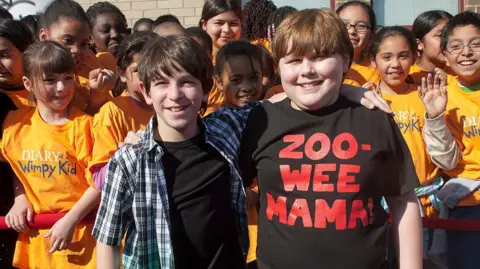
Zachary Gordon (left) and Robert Capron starred in 2010's Diary of a Wimpy Kid, based on the best-selling books
Amazon has apologised after an error meant it showed a child a 15-rated film by mistake when they had tried to watch a PG movie.
The child's parent had paid to rent Diary of a Wimpy Kid from the firm's Prime Video service, but they soon realised it was incorrectly streaming Love & Other Drugs - which the British Board of Film Classification says contains "strong sex and sex references".
They complained to the media regulator Ofcom, which found Amazon in breach of its rules.
Amazon has apologised and fixed the issue, which it said was a result of the firm which licensed the films giving both the same code behind-the-scenes, when it is meant to be unique.
The BBC has approached Amazon for comment.
According to Ofcom's report, the tech giant said the issue was resolved in "less than 48 hours" - but during that time 122 customers had attempted to watch Diary of a Wimpy Kid.
It said it had "updated its existing internal processes" to stop similar mistakes in the future.
Ofcom has not fined Amazon for the error, however it said the firm had breached its rules.
"The complainant said they had rented the film for their young children to watch, but after the selected content began playing, the complainant became aware that the film that had actually played was a different film containing strong sexual content," the regulator said.
"The complainant said they contacted the service provider by telephone three times but received no call back. The complainant then made their complaint to Ofcom.
"Parents and carers would have accessed Diary of a Wimpy Kid on the basis that it was appropriate for their children to view, potentially unaccompanied by an adult (as had the complainant in this case)."
Mr Ahmed managed to wrestle the gun from the attacker in the struggle
A "hero" bystander who was filmed wrestling a gun from one of the Bondi Beach attackers has been named as 43-year-old Ahmed al Ahmed.
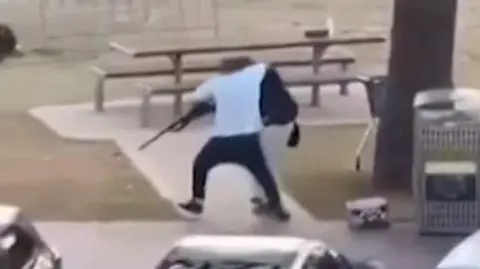
Video verified by the BBC showed Mr Ahmed run at the gunman and seize his weapon, before turning the gun round on him, forcing his retreat.
Mr Ahmed, a fruit shop owner and father of two, remains in hospital, where he has undergone surgery for bullet wounds to his arm and hand, his family told 7News Australia.
Eleven people were killed in the shooting on Sunday night, as more than 1,000 people attended an event to celebrate Hanukkah. The attack has since been declared by police as a terrorist incident targeting the Jewish community.
Mr Ahmed's cousin, Mustafa, told 7News Australia: "Still he is in hospital and we don't know exactly what is going on, the doctor says he is OK.
"We hope he is OK, he is a hero, 100% he is a hero. He has two shots, one in his arm and one in his hand, he has had to have an operation."
Watch: Eyewitness captures moment man tackles and disarms Bondi shooter
Two gunmen are believed to have carried out the attack, with police investigating whether others were involved. One of the gunmen was killed, with a second in "critical condition," police say.
The footage of Mr Ahmed's intervention has been shared widely online.
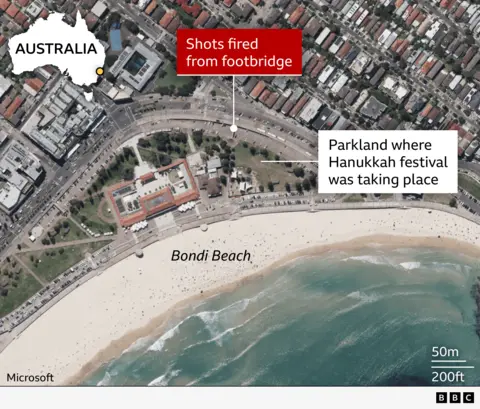
It shows one of the gunmen standing behind a palm tree near a small pedestrian bridge, aiming and shooting his gun towards a target out of shot.
Mr Ahmed, who was hiding behind a parked car, is seen leaping out at the attacker, who he tackles.
He manages to wrestle the gun from the attacker, pushes him to the ground and points the gun towards him. The attacker retreats.
He then lowers the weapon and raises one hand in the air, appearing to show police he was not one of the shooters.
Nearby on the bridge, another gunman continues firing. It's unclear who or what he is aiming at.
At a news conference late on Sunday, New South Wales Premier Chris Minns paid tribute to the bravery of Mr Ahmed, who was unnamed at the time.
"That man is a genuine hero, and I've got no doubt there are many, many people alive tonight as a result of his bravery."
Australian Prime Minister Anthony Albanese said: "We have seen Australians today run towards danger in order to help others.
"These Australians are heroes, and their bravery has saved lives."
How Bondi Beach shooting unfolded minute by minute
It was a night that promised to bring "joy and light" to Sydney's iconic Bondi Beach as crowds of Jewish families gathered at a park to celebrate the first night of Hanukkah, also known as the festival of light.
They were among thousands of other swimmers, surfers and sunbathers who had flocked to Australia's most famous beach on a scorching summer's afternoon.
But not long after the Hanukkah event kicked off at 17:00 local time and the first free donuts were doled out, festive music was drowned out by the sounds of screams and the echo of gunshots.
It's unclear exactly when the first shot was fired, but the initial call to police was made at 18:47. In the minutes that followed, two gunmen would kill at least 15 people, and injure dozens more, authorities said.
A local high school teacher, Chavi, told the BBC she dropped to the ground to protect her baby as "bullets were flying above us".
"It was pandemonium and chaos," another attendee, who identified himself as Barry, said as he described watching a throng of people trying to escape the scene that had suddenly devolved into a nightmare.
In one video verified by the BBC, upbeat music from the Hanukkah event can still be heard in the background as people crouch down and shots are heard, interspersed between shrieks.
The eerily jubilant music continues playing while the camera pans over the grass, revealing prostrate bodies completely still, their condition unclear.
Separate footage shows groups of people lying atop one another on the grass, as one woman tries to cover a young child's head with her hand.
Panic soon spread from the park to the sand, where videos show terrified beach goers sprinting away from the gunfire.
Screams, honking car horns and ambulance sirens fill the air in the next chaotic minutes. Some cars crashed as people desperately tried to get away, witnesses have told the BBC.
Eyewitness video shows people fleeing beach as shots are fired
A nearly 11-minute video, verified by the BBC, provides perhaps the clearest timeline of the attack - though it is unclear exactly how far into it the recording started.
It begins as the two gunmen make their way across Campbell Parade - the long stretch of road, lined with cafes, that curves around the beach - and onto a pedestrian bridge above the park where the Hannukah event was taking place.
It is from there that two men - named as Sajid Akram, 50, and his son Naveed, 24 - allegedly use the elevated position to carry out the remainder of the attack, using what an expert told the BBC were "two sporting shotguns".
One man, believed to be Naveed Akram, remains on the bridge, while the other makes his way towards the park on foot. Shots continue to echo at one-second intervals in some of the footage, while people can be heard screaming.
As the older man, believed to be Sajid Akram, begins to move away from the bridge, he starts firing at people.
Fairfax Media
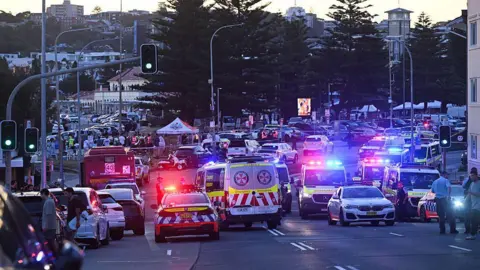
Dozens of emergency services flooded Bondi Beach following the shooting
Just a few minutes later, a passerby - who is seen crouching behind parked cars - catches Sajid off guard and is able to wrestle the firearm off him within a few seconds.
The gunman stumbles away, and the man, who has been identified as Ahmed al Ahmed, points the firearm at him, before laying the weapon down against a tree and putting his hands up to signal to officers that he is not the suspect.
Ahmed, who was shot twice during the attack, has been hailed as a hero and credited by New South Wales Premier Chris Minns for saving "countless lives" with his brave actions.
Less than a minute after being disarmed, however, Sajid Akram returns to the bridge and resumes shooting at people with another weapon.
The shooting stops about two minutes later when it appears both men are hit by police fire.
About seven-and-a-half minutes into the clip, police arrive at the bridge where they are confronted with a highly charged scene - two men with gunshot wounds - the alleged gunmen - and a crowd of bystanders, some of whom appear to kick the men on the ground.
Police later confirmed that one of the gunmen, Sajid Akram, was found dead at the scene, while the other was critically wounded and taken to hospital, where he remains.
Police say both men lived about an hour's drive from Bondi Beach at a house in Bonnyrigg, a suburb in Sydney's west.
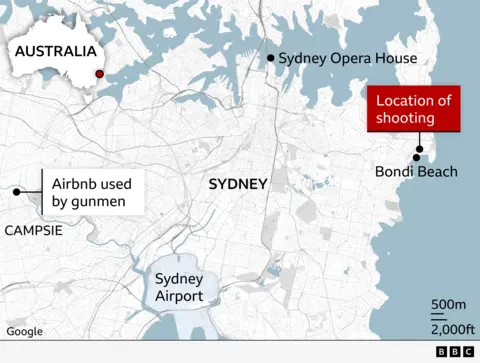
Days before the attack, however, they had decamped to a short-term rental in Campsie - about 30 minutes closer to the beach, media reports said.
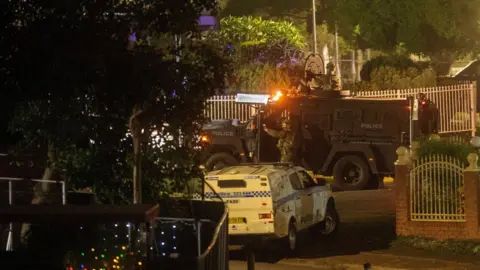
Their family home in Bonnyrigg has become one of the main focuses of the police investigation. Officers raided it on Sunday night.
Footage of the raid shows three people coming out of it with their hands up, while heavily armed police officers in tactical gear surrounded the perimeter.
Those people were arrested, but have since been released without charge.
EPA
Police search the home in Bonnyrigg on Sunday night
It is still unclear if the guns used in the attack were owned by the two men, but Sajid Akram owned six registered firearms and held a recreational gun license.
His son, Naveed, was examined over his close ties to a Sydney-based Islamic State (IS) cell after authorities became aware of his activity in 2019, the ABC reported.
But Australian Prime Minister Anthony Albanese said an "assessment was made that there was no indication of any ongoing threat or threat of him engaging in violence".
Residents on the otherwise quiet, suburban street have described how the tumult of the last 48 hours has unsettled the neighbourhood.
"My daughter was yelling at me, 'mum look outside' and I saw lots of police, lots of cars, sirens and loudspeakers calling them to come out," Lemanatua Fatu, who lives opposite the men, told the BBC.
"Then I saw the news - I thought oh my goodness, it can't be them."
Additional reporting by Gabriela Pomeroy and Thomas Spencer
Watch Panorama's undercover filming: "You'll make no money my friend unless you get all your parcels out. Get them all out."
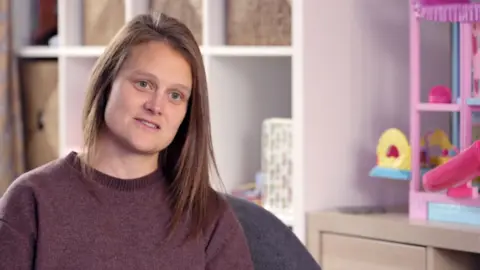
When Becky ordered a Barbie doll for her daughter, she got a notification from delivery firm Evri saying it had arrived. There was just one problem: it was nowhere to be seen.
There was no parcel at her front door, in the Hampshire village of Twyford, and the photo she was sent of its location was not one she recognised.
Becky turned detective - and she discovered that reports of similar incidents nearby had "snowballed".
Around the corner, her neighbour Jonathan had received a similar notification. It showed a photo of a parcel of tools he was expecting - taken inside a car - but nothing had been delivered. He tried to take it up with Evri, but told BBC Panorama that "they don't respond - it's very frustrating".
"You feel like you're playing Russian roulette" as to whether the parcel is going to arrive, says customer Becky
With millions relying on delivery companies to send their parcels this Christmas, we have been investigating Evri, including sending a journalist undercover as a courier.
The company is a market leader, but a recent customer survey of the 11 biggest delivery firms by industry regulator, Ofcom, suggested Evri had the most issues for parcels not being delivered and the highest level of customer dissatisfaction.
Amazon and FedEx came top for customer satisfaction.
While Evri disputes Ofcom's findings, 30 current and former workers have told us problems are being caused by growing pressures on couriers."They have to deliver so much volume now for a decent pay," one told us.
The link between poor service and work pressures was further borne out by Panorama's investigation, which found:
Couriers at an Evri depot in the Midlands describing how to cut corners to complete deliveries on time - with one telling our undercover reporter: "You can even throw the parcel at the back door"
Changes to Evri's pay rates have led some workers to claim they are earning less than minimum wage
New, lower pay rates for so-called "small packets" were also affecting courier earnings, we were told
Larger items being "misbanded" as small packets, some couriers told us, including heavy flatpack furniture and radiators
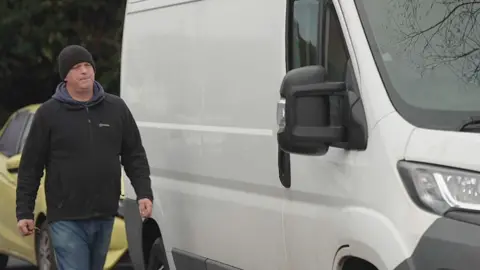
In Hampshire, parcels started to go missing in Twyford six months after a regular courier, Dave, left Evri. He worked as an Evri courier for six years, often with his wife, and they earned about £60,000 a year between them.
Like all Evri couriers, Dave was self-employed. But, because Evri pays couriers by the parcel, and sets the rate per parcel, it felt like the company was in the driving seat.
Changes to Evri's parcel rates last January, meant it no longer made financial sense to carry on, Dave told us. It would have led to him being paid less than the minimum wage, he says.
The amount Evri couriers are paid depends on the size and weight of the parcels they deliver and how far they must travel.
Couriers like Dave, who was on an Evri Plus contract, are supposed to be guaranteed at least the National Minimum Wage - currently £12.21 per hour for those aged 21 and over.
Dave says he estimated that with Evri's changes, including a new "small packets" rate, he would earn £10 an hour.
"You were always looking over your shoulder, wondering what might come next in terms of reducing your rates," he told us. "So that you're paid less for what you're doing even though you're doing the same job."
Another Evri Plus courier told Panorama he could earn as little as £7 or £8 an hour at times, once fuel and his vehicle's running costs had been taken into account.
If I had accepted the pay cut, I would have been earning "well below minimum wage", says ex-Evri driver Dave
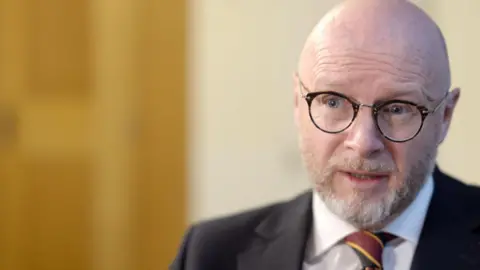
This shouldn't be happening - according to what Evri's legal director, Hugo Martin, told a parliamentary select committee in January. The company's paid-per-parcel model, he told MPs, made sure that "couriers earn well above national minimum wage".
The committee chair, Labour's Liam Byrne, has now told Panorama that because of the "categorical assurances" that people were not paid below the minimum wage, the company should now be recalled to Parliament to investigate the full picture.
His comments come as a separate, cross-party group of MPs expressed their own concerns about Evri's delivery record last week.
Evri gave us "categorical assurances that people were not paid below the minimum wage", says Liam Byrne, chair of the Business and Trade Committee at Westminster
We put Mr Byrne's comments to Evri and a spokesperson said company couriers "generate earnings significantly above the National Living Wage".
The National Living Wage and the National Minimum Wage are currently the same for anyone aged over 21 - £12.21 an hour.
Average courier earnings, the Evri spokesperson continued, "exceeded £20 an hour". The "sector is highly competitive, but we benchmark pay locally", they added.
Small packets, small fees
It wasn't just Dave who told us the introduction of Evri's "small packets" has made it harder to make a living.
Other couriers told us they had started to see more of them in their rounds, and that it was eating into their earnings because they received less money to deliver them.
Rates vary, but Evri pays couriers as little as 35p to deliver one.
The company told us it had introduced the new "small packets" sizing in January to "remain competitive".
However, big parcels, for which couriers would be paid more per delivery, keep getting mislabelled as small packets, some couriers told the BBC.
Getty Images
Evri introduced "small packets" parcel size in January - which it can pay couriers as little as 35p to deliver
Evri does not do enough to check the items are being accurately weighed and measured by senders, they said - with heavy flatpack furniture and radiators listed as examples of large items which had been "misbanded" and paid for as small packets.
One courier told us he delivered "countless numbers of misbands", leaving him short-changed.
Parcels are labelled by clients, not Evri, the company told the BBC. It said that 99.2% of all parcels were correctly banded - and that "couriers can request checks and upgrades via the courier app, if they think a parcel has been misbanded".
'There's a safe space for everything, mate'
An Evri courier of 10 years told us their colleagues were "cutting corners" because they had to deliver so much in terms of volume to get a decent wage.
"They are not doing the job correctly… parcels go missing," he added. "Piles of parcels are found in hedges."
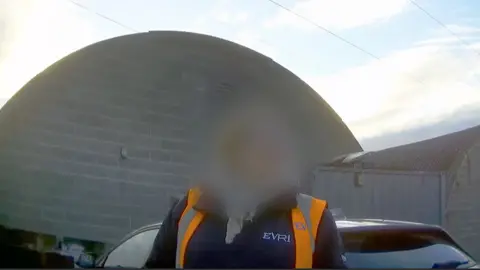
Our undercover reporter, who we are calling Sam because he wants to remain anonymous, was told by another courier, "if you want to earn money, you need to find a safe place and leave it there".
"You can even throw the parcel at the back door, you only get paid if the parcel is delivered," the courier explained during Sam's six-day stint in October at Evri's West Hallam delivery unit near Nottingham.
As a new starter, Sam was put on a Flex contract, which does not include sick or holiday pay and does not commit to paying the minimum wage, unlike the Plus contract.
It can be difficult for new starters to earn the same as more experienced couriers, as they don't know their patch, so they won't be as efficient.
Sam was told he could be eligible for some extra cash. New starters get payments to ensure they earn adequately while they get used to the work, Evri's lawyers told the BBC.
Couriers told us they are not paid extra for the time it takes to scan the parcels and load them into their vehicles at depots - but Evri says it factors this time into its parcel rates.
"You only get paid if the parcel is delivered. Never take it back," said one courier
Couriers are also only paid if a package is delivered and a photograph is taken - which is supposed to mean giving it to the customer, a neighbour, or finding a safe place, and not leaving it in plain sight outside the delivery address.
If drivers cannot deliver a parcel, they should make at least two more attempts to do so - according to Evri rules - but this takes time.
Back at the depot, a courier told Sam there was not much point trying to redeliver because couriers did not get paid for going back.
"You'll make no money, my friend, unless you get all your parcels out. Get them all out," he said. "There's a safe space for everything, mate."
You can deliver 50 parcels an hour on a round, a supervisor tells our undercover reporter
The company says it will deliver about 900 million parcels this year, going to almost every single home in the UK.
But 7% of customers in the six months between January and July said they had reported an Evri parcel not having been delivered - compared to an industry average of 4% - according to Ofcom's recent consumer survey.
The survey also suggested Evri had the most issues for delays in the UK, with 14% of customers reporting a parcel arriving late in the same period. The industry average is 8%, says Ofcom.
Evri told us it provides "a fast, reliable, and cost-effective delivery service" and that its "couriers are local people… and the vast majority do an excellent job and strictly follow our delivery standards".
If "a courier receives a low customer rating for a delivery, this is immediately investigated", it says.
The company, which rebranded from Hermes UK in 2022, has been owned since last year by the American investment firm Apollo Global Management. In the financial year 2023-24, Evri's pre-tax profit almost doubled to nearly £120m.
"I think Evri are making a fortune off the couriers' backs and I think the couriers are being totally ripped off," one courier told us.
For Becky and Jonathan in Hampshire, at least, all was not lost.
Becky started a spreadsheet for other people in the area to list their missing Evri parcels, after seeing how many comments were being left on the village Facebook group.
Almost 90 incidents were reported to the police. A man was arrested but never charged.
Lawyers for Evri told the BBC that this was an isolated incident and that the company took prompt action.
"The performance of our couriers is tracked in real time, with mandatory photo proof for every delivery," the company said.
Becky got a refund from the seller and bought a new Barbie, and Jonathan got his tools replaced by the seller.
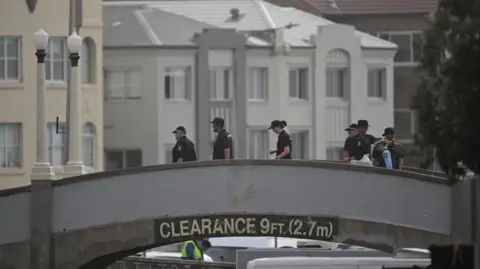
Police inspect a bridge used by the gunmen as a firing-point
Two gunmen - identified by authorities as a father and son - opened fire on hundreds of people marking a Hanukkah event on Sydney's Bondi Beach on Sunday, killing 15 and leaving 27 in hospital with injuries.
The father was killed in an exchange of fire with police at the scene while the son is in hospital with critical injuries.
Among the victims of the country's worst mass shooting in decades, which targeted Jewish people and is being treated as a terrorist incident, are a 10-year-old girl, a Holocaust survivor and two rabbis.
The attackers are both said to have pledged allegiance to the Islamic Sate group. Here is what we know about them.
Minister for Home Affairs Tony Burke confirmed the relationship between the two gunmen without naming them.
Australian public broadcaster ABC did name them as Naveed Akram, 24 - who is in hospital under police guard - and his dead father Sajid Akram, 50.
Burke indicated the father held permanent residency in Australia, without giving details of his nationality.
The minister said he arrived in the country on a student visa in 1998. Later, in 2001, he transferred to a partner visa and subsequently obtained Resident Return Visas after trips overseas.
The son, he said, is an Australian-born citizen.
'Allegiance to Islamic State'
The son first came to the attention of the Australian intelligence agency (ASIO) in 2019, Prime Minister Anthony Albanese has confirmed.
"He was examined on the basis of being associated with others and the assessment was made that there was no indication of any ongoing threat or threat of him engaging in violence," the prime minister said.
Albanese said the two gunmen had acted alone and were not part of a wider extremist cell. They had, he said, been "clearly" motivated by "extremist ideology".
Two IS flags were found in the men's car at Bondi, senior officials told ABC, speaking on condition of anonymity.
A senior JCTT official, again speaking on condition of anonymity, said the ASIO had taken an interest in Naveed Akram in 2019 after police foiled plans for an IS attack.
Naveed Akram, the official said, was "closely connected" to Isaac El Matari, who was jailed in 2021 for seven years in Australia for terrorist offences.
Matari had declared himself the IS commander for Australia.
Firearms licence
The gunmen appear to have used long-barrelled guns during the attack, firing them from a small bridge.
A number of improvised explosive devices were also found in the gunmen's car, Albanese said.
New South Wales Police Commissioner Mal Lanyon said the force had recovered six firearms from the scene and confirmed that six firearms had been licensed to the father.
Sajid Akram had met the eligibility for a firearms licence for recreational hunting, Commissioner Lanyon said.
"In terms of a firearms licence, the firearms registry conducts a thorough examination of all applications to ensure a person is fit and proper to hold a firearms licence," he said.
Eligibility for a game hunting licence in NSW depends on the type of animal individuals wish to hunt, the reason for hunting and the land they want to hunt on.
'Normal people'
Watch: BBC's Katy Watson reports from Bondi gunmen's house
Naveed and Sajid Akram lived in the south-west Sydney suburb of Bonnyrigg, about an hour's drive inland from Bondi.
A few weeks before Sunday's shooting, the two men moved into an Airbnb in the suburb of Campsie, a drive of 15 to 20 minutes.
Three people at the house in Bonnyrigg were arrested overnight during a police raid but released without charge and brought back to the property.
BBC News tried to approach them on Monday but they would not come out to speak to the media.
According to the Sydney Morning Herald, a woman who identified herself as the wife and mother of the gunmen had told them on Sunday evening that the pair had said they were going on a fishing trip before heading to Bondi
Reuters news agency describes Bonnyrigg as a working-class, well-kept enclave with an ethnically diverse population.
Local residents told the agency that the Akram family had kept to themselves but seemed like any other in the suburb.
"I always see the man and the woman and the son," said Lemanatua Fatu, 66. "They are normal people."
'Not everyone who recites the Quran understands it'
Naveed Akram studied the Quran and Arabic language for a year at Al Murad Institute in western Sydney after applying in late 2019, ABC reports.
Institute founder Adam Ismail said the Bondi shooting was a "horrific shock" and such attacks were forbidden in Islam.
"What I find completely ironic is that the very Quran he was learning to recite clearly states that taking one innocent life is like killing all of humanity," he said on Monday.
"This makes it clear that what unfolded yesterday at Bondi is completely forbidden in Islam. Not everyone who recites the Quran understands it or lives by its teachings, and sadly that appears to be the case here."
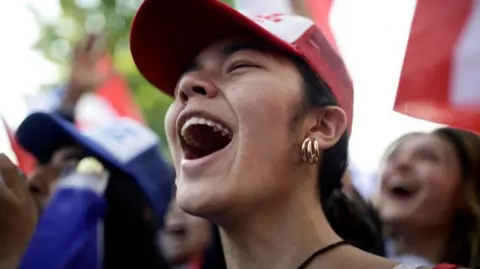
Supporters of José Antonio Kast celebrated his victory
Chile is perceived by many of its neighbours in the Latin American region as a safer, more stable haven.
But inside the country, that perception has unravelled as voters worried about security, immigration and crime chose José Antonio Kast to be their next president.
Kast is a hardline conservative who has praised General Augusto Pinochet, Chile's former right-wing dictator whose US-backed coup ushered in 17 years of military rule marked by torture, disappearances and censorship.
To his critics, Kast's family history, including his German-born father's membership in the Nazi Party and his brother's time as a minister under Pinochet, is unsettling.
However, some of Kast's supporters openly defend Pinochet's rule, arguing that Chile was more peaceful then.
In a nod to Chile's past and to accusations levelled at other right-wing leaders in the region after they imposed military crackdowns on organised crime, the 59-year-old pledged in his first speech as president-elect that his promise to lead an "emergency government" would not mean "authoritarianism".
Sunday's election makes Chile the latest country in Latin America to decisively swing from the left to the right, following Argentina, Bolivia, Costa Rica, Ecuador, El Salvador and Panama.
Peru, Colombia and Brazil face pivotal elections next year.
Kast's victory places Chile within a growing bloc of conservative governments likely to align with US President Donald Trump, particularly on migration and security.
In some cases, like that of Argentina, inflation and economic crisis drove the shift. In others, it was a backlash against leftist governments mired in corruption or infighting.
In Chile, immigration and crime seemed to swing it.
Kast promised a border wall and mass deportations of undocumented migrants.
At rallies, he counted down the days until the inauguration and warned that those without papers should leave by then if they wanted the chance to ever return.
His message resonated in a country which has seen a rapid growth in its foreign-born population. Government figures show that by 2023 there were nearly two million non-nationals living in Chile, a 46% increase from 2018.
The government estimates about 336,000 undocumented migrants live in Chile, many from Venezuela.
The speed of that change has unsettled many Chileans.
"Chile was not prepared to receive the wave of immigration it did," says Jeremías Alonso, a Kast supporter who volunteered to mobilise young voters during the campaign.
He rejects critics' accusations that Kast's rhetoric amounts to xenophobia.
"What Kast is saying is that foreigners should come to Chile, let them come to work, but they should enter properly through the door, not through the window," he says, arguing that undocumented migrants are a strain on taxpayer-funded public services.
He says his working-class neighbourhood has experienced "the social changes that irregular immigration brings in terms of crime, drug addiction and security".
Jeremías Alonso supported José Antonio Kast in the election
Kast has blamed rising crime on immigration, an allegation that resonates politically even as the number of murders has fallen since peaking in 2022, and despite some studies suggesting migrants commit fewer crimes on average.
Many voters cite organised crime, drug trafficking, thefts and carjackings as contributing towards their sense of insecurity.
Kast's victory message is that migrants will be welcome if they comply with the law, criminals will be locked up and order will return to the streets.
He, like Trump, is expected to move quickly to demonstrate an "iron fist" approach, deploying the military to the border and probably promoting his crackdown through social media.
But in practice, large-scale deportations will be difficult.
Venezuela does not accept deportees from Chile and deportations have so far been limited.
Kast seems to hope his rhetoric will encourage irregular migrants to leave voluntarily. But this is unlikely to compel hundreds of thousands to pack up.
Gabriel, who is from Venezuela, felt hurt by comments diners made about migrants
For irregular migrants already in Chile, the future feels uncertain.
Gabriel Funez, a Venezuelan waiter, moved to Chile four years ago, crossing the land border irregularly to escape his country's "very, very bad economic situation".
He has since submitted his documents to police and immigration authorities and received a temporary ID so he can pay taxes but has so far had no response to his visa request.
His salary is currently being paid into a friend's bank account. "I'm basically a ghost here," he says.
While he fears deportation, his bigger concern is a rise in xenophobia, which he says has already increased.
"Kast is expressing what many Chileans want to express. He's validating it," he said.
He recalls how at the restaurant where he works, he served diners who were discussing how migrants should leave.
"It was uncomfortable. I'm a foreigner, and I'm hearing all those super hurtful words."
He explains that about 90% percent of the restaurant's staff are migrants.
With migrants increasingly key to Chilean businesses, Kast could come up against opposition from those relying on foreign labour for their business.
Carlos Alberto Cossio, a Bolivian national who has lived in Chile for 35 years, runs a business making and delivering salteñas, savoury Bolivian pastries.
Carlos Alberto Cossio says migrant workers are key to his business
He says he has often employed workers from Haiti, Colombia and Venezuela and insists that "the migrant workforce is very important".
He explains that migrants are eager to work and less likely to change jobs as they rely on their employer for a contract visa until they are issued with a permanent visa.
"Many companies, especially in fruit harvesting, employ migrant workers who are not necessarily registered," he adds.
Expelling unregistered workers "will impact Chile's export economy and make raw materials more expensive," he warns.
Mr Cossio acknowledges that there has been some friction since large numbers of migrants arrived from Venezuela to escape the economic and political crisis there.
"Many of the customs they have brought haven't been compatible with Chilean customs," he says, lamenting how this has damaged the reputation of migrants who want to work and contribute.
Mr Kast's party lacks a majority in Congress, meaning some of his proposals, from tougher sentencing to maximum-security prisons, may require compromise and negotiation.
But for many voters, the perception of control may matter just as much as delivering results as anxiety over crime, insecurity and migration is sweeping the continent.
At least 15 civilians have been confirmed dead in Sunday's shooting attack at Bondi beach.
Many were attending an event to mark the first day of the Jewish festival of Hanukkah.
Authorities have confirmed that two rabbis, a Holocaust survivor and a 10-year-old girl were among the victims.
This is what we know about those identified so far:
Matilda, 10
Authorities confirmed that a 10-year-old girl, named by her family to local media as Matilda, was among the dead.
Irina Goodhew, who organised a fundraiser for the girl's mother and said she was the child's former teacher, wrote: " I knew her as a bright, joyful, and spirited child who brought light to everyone around her.'
The Harmony Russian School of Sydney also confirmed that she was one of its students.
"We are deeply saddened to share the news that a former student of our school has passed away in the hospital due to injuries sustained from a gunshot," the school wrote on Facebook.
"Our thoughts and heartfelt condolences go out to her family, friends, and everyone affected by this tragic event … Her memory will remain in our hearts, and we honor her life and the time she spent as part of our school family."
Meanwhile her aunt spoke to ABC news and said that Matilda's sister, who was with her when she was shot, was struggling to come to terms with the loss.
"They were like twins — they've never been separated," she told the ABC.
Rabbi Eli Schlanger
Supplied
Eli Schlanger was known as the Bondi rabbi
Known as the "Bondi Rabbi", Eli Schlanger, 41, was one of the key organisers of Sunday's event. He was head of the local Chabad mission, an international Hasidic Jewish organisation based in Brooklyn.
The death of the British-born father of five was confirmed by his cousin, Rabbi Zalman Lewis.
"My dear cousin, Rabbi Eli Schlanger @bondirabbi was murdered in today's terrorist attack in Sydney," Zalman wrote on Instagram. "He leaves behind his wife & young children, as well as my uncle & aunt & siblings … He was truly an incredible guy".
In a post on its website, Chabad said Schlanger's youngest child was just two months old.
"He was the most godly, humane, kind, gracious human being I think I've ever met," Alex Ryvchin of the Executive Council of Australia Jewry, told reporters at Bondi on Monday morning.
Dan Elkayam
The death of French national Dan Elkayam was confirmed by Frances's Foreign Minister Jean-Noël Barrot.
"It's with immense sadness that we have learnt that our compatriot Dan Elkayam was among the victims of the terrorist attack that hit Jewish families gathered on the beach at Bondi in Sydney," he wrote on social media. "We mourn with his family and loved ones, with the Jewish community and the Australian people."
According to his LinkedIn profile, Elkayam worked as an IT analyst for NBCUniversal and had moved to Australia last year.
He was also a keen footballer, and "an integral member" of our premier league squad, the Rockdale Ilindin Football Club in west Sydney wrote on its Facebook page.
He was "an extremely talented and popular figure amongst team mates. Our deepest and sincerest condolances to Dan's family, friends and all that knew him. He will be missed," the club wrote.
Alexander Kleytman
Alexander Kleytman was a holocaust survivor who came to Australia from Ukraine.
"I have no husband. I don't know where is his body. Nobody can give me any answer," his wife Larisa Kleytman told reporters outside a Sydney hospital late on Sunday.
"We were standing and suddenly came the 'boom boom', and everybody fell down. At this moment he was behind me and at one moment he decided to go close to me. He pushed his body up because he wanted to stay near me," she told the Australian.
Chabad wrote on X that Alexander "died shielding her from the gunman's bullets. In addition to his wife, he leaves behind two children and 11 grandchildren."
The couple shared some of their life story with Jewish Care in 2023.
"As children, both Larisa and Alexander faced the unspeakable terror of the Holocaust," the health organisation wrote in its annual report.
"Alex's memories are particularly harrowing; recalling the dreadful conditions in Siberia where he, along with his mother and younger brother, struggled for survival."
How Bondi Beach shooting unfolded minute by minute
Peter Meagher
Former police officer Peter Meagher was working as a freelance photographer at the Hanukkah event when he was killed, his rugby club confirmed.
"For him it was simply a catastrophic case of being in the wrong place and at the wrong time," Mark Harrison, the general manager of Randwick Rugby Club, wrote on its website.
"'Marzo, as he was universally known, was a much loved figure and absolute legend in our club, with decades of voluntary involvement, he was one of the heart and soul figures of Randwick Rugby."
The club said he had spent almost four decades in the NSW Police Force where he was "hugely respected by colleagues".
"The tragic irony is that he spent so long in the dangerous front line as a Police Officer and was struck down in retirement while taking photos in his passion role is really hard to comprehend," the club said.
Reuven Morrison
Reuven Morrison migrated to Australia from the former Soviet Union in the 1970s as a teenager, according to an interview he gave to the ABC exactly a year ago.
"We came here with the view that Australia is the safest country in the world and the Jews would not be faced with such anti-Semitism in the future, where we can bring up our kids in a safe environment," he told the national broadcaster.
Confirming his death, Chabad said that he was a longtime resident of Melbourne, but that he "discovered his Jewish identity in Sydney".
"A successful businessman whose main goal was to give away his earnings to charities dear to his heart, notably Chabad of Bondi," the organisation wrote on X.
Bondi Beach is almost unrecognisable. The sun is out but the surf is empty. The usually heaving main street is hushed.
Helicopters track overhead. Forensic investigators - bright blue figures in the distance - comb over the crime scene from Sunday afternoon when two gunmen opened fire at an event marking the Jewish festival of Hannukah, killing at least 15 people and injuring more than 40 others.
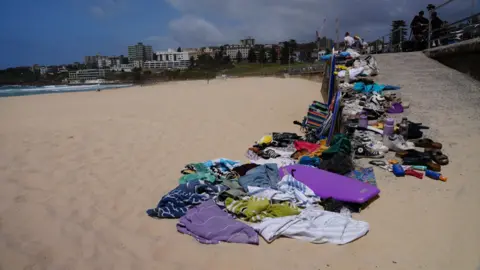
Beach chairs, crumpled towels, wads of clothing, a pair of children's sandals lie in a neat pile at the edge of the sand - all the things people left behind as they fled what police are calling Australia's deadliest terror attack.
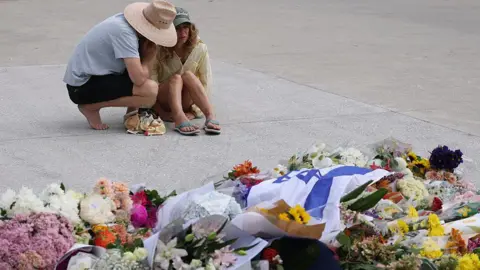
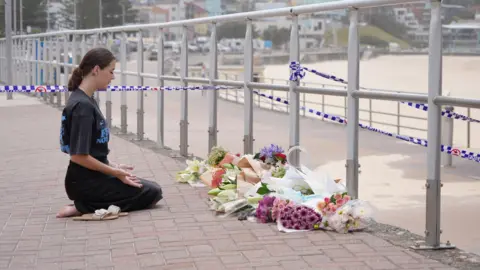
Nearby, a wall of floral tributes has begun to grow over the footpath. Milling around are shocked locals. Hands cover trembling lips. Sunglasses do their best to hide puffy eyes.
"I've grown up in fear my whole life," 22-year-old Jess tells the BBC. As a Jew, this felt inevitable, she adds.
That is the overriding sentiment here today – this is shocking for such a "safe" country and yet predictable for one that has been grappling with rising antisemitism.
"Our innocence is over, you know?" says Yvonne Harber who was at Bondi on Monday to mourn the previous day's horror.
"I think we will be forever changed, a bit like Port Arthur," she adds, referring to the massacre in 1996 – Australia's worst – which prompted sweeping, pioneering gun reform.
Many Australian Jews say they've been fearing an attack like this
More than 24 hours on, the Jewish community is still locating the missing and counting the dead.
Among them is a prominent local Rabbi, Eli Schlanger, who only a month ago had welcomed his fifth child.
"The family broke. They are falling apart," his brother-in-law Rabbi Mendel Kastel told reporters after a sleepless night. "The rabbi's wife, her best friend, [they] both lost their husbands."
The youngest victim is a 10-year-old named Matilda, whose only crime was being Jewish, says Alex Ryvchin, the co-CEO of the Executive Council of Australian Jewry, the main body for the Jewish community here.
"A man who I knew well, in his 90s, survived the Holocaust in the Soviet Union, only to be slaughtered standing next to his wife at a Hannukah event on Bondi Beach."
Mr Ryvchin says he is somehow both numb and distraught. "It's our worst fear, but it's also something that was outside the realm of possibilities."
His organisation has been warning about a spike in recorded antisemitism incidents since Hamas's 7 October 2023 attack on Israel and the subsequent war in Gaza. But, Mr Ryvchin says, authorities didn't heed the alarm.
"I know these people. They get up every morning to try to keep Australians safe. That's all they wanna do. But they failed, and they will know it better than anybody today."
BBC/Isabelle Rodd
Evidence of the night's chaos lingered on Bondi Beach on Monday
From the moment news of this attack broke, leaders including Prime Minister Anthony Albanese, New South Wales premier Chris Minns and the state's Police Commissioner Mal Lanyon have fielded questions to this effect – why wasn't this prevented?
There have been a spate of antisemitism-related offences in Australia recently. A synagogue was set on fire in Melbourne last year, a Jewish MP's office was vandalised and a car was torched in Sydney. A childcare centre in Sydney was also set alight and sprayed with anti-Jewish graffiti in January.
Two Australian nurses were suspended and charged this year after a video appeared to show them threatening to kill Israeli patients and boasting about refusing to treat them. There was also an anti-Jewish protest outside the New South Wales (NSW) parliament in November, organised by a neo-Nazi group.
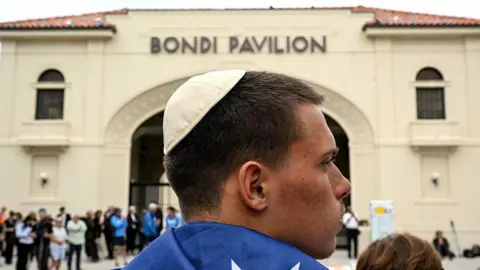
As people began to quietly gather on a grassy slope on Monday in front of the iconic Bondi Pavillion, reflecting on the terror of the night before, Prime Minister Albanese visited to pay his respects.
"What we saw yesterday was an act of pure evil - an act of terror and an act of antisemitism," he said later on Monday, before rattling through a list of things he says his government has done to stamp it out.
This includes setting up a federal police taskforce to investigate antisemitic incidents, and an amendment to hate crime laws. Hate symbols, including performing a Nazi salute, and terror offences are now punishable with mandatory jail terms. NSW set up its own state-level task force because many of the recent incidents were in Sydney.
BBC/Isabelle Rodd
Katherine Pierce is worried about the country's future
But Albanese's words were nowhere near enough to console Nadine Saachs.
Standing side by side with her sister, both draped in Israeli flags, she says the government set the tone in October 2023 on the day after the horrific attack on Israel by Hamas. She points to the official response to a protest outside the Opera House, where some members of the crowd started offensive chants.
"If they had put their foot down straight away this would not have happened. The Albanese government is a disgrace as far as I'm concerned."
"They have blood on their hands," her sister Karen Sher adds.
Down the beach, a young woman kneels, eyes closed, palms up, praying.
Katherine Pierce, 26, tell me she's driven from Tahmoor, about an hour and a half away, to commemorate those who died.
"I just feel concern for our country… I think Australia needs to wake up to be honest," she says.
'Australia has your back'
'All we can do': Sydney residents line up for hours to donate blood after Bondi attack
As the Bondi community and Jewish Australians reeled on Monday, hospital workers were still desperately trying to heal many of the injured.
They include Syrian Ahmed al Ahmed, who was captured on camera valiantly disarming one of the attackers. He was shot multiple times, his parents have told the Australian Broadcasting Corporation.
Police were combing the house where the attackers – now revealed to be a father-son duo, 50-year-old Sajid Akram and 24-year-old Naveed – lived. They also searched a rental property where they are believed to have planned the assault.
Other community leaders tried to quell divisions. What connections the attackers might have had are not clear, but police admitted they're worried about reprisals.
Authorities have been clear there's also been a drastic uptick in Islamophobia since 7 October.
Leaders from every state and territory met to weigh up tougher gun control measures, a lever they pulled the last time Australia experienced something even remotely like this.
"Do we need a gun crackdown like John Howard carried out after Port Arthur? He took leadership on that. Will you?" Albanese was asked by a journalist on Monday.
Getty Images
Mourners gather at the Bondi Pavillion
There has also been an outpouring of support.
When the agency which oversees Australia's blood banks revealed stocks had dipped dangerously low, hundreds of people heeded their call.
The overwhelming demand crashed the booking website, so people like Jim just turned up and joined a queue estimated to be six hours long at some locations.
He says he barely slept, and woke resolved to help.
"I don't necessarily agree with what is happening overseas, but that doesn't mean that you open fire on innocent people here... They cannot justify [it] by saying there are dead children over there, so a… little girl should die here on the beach," he said.
Gesturing to the line stretching out in the sun behind him, 21-year-old Alex Gilders said he hoped the city's reaction was a comfort to the Jewish community.
"Australia has your back."
Additional reporting by Katy Watson.
Watch: BBC's Katy Watson reports from Bondi gunmen's house
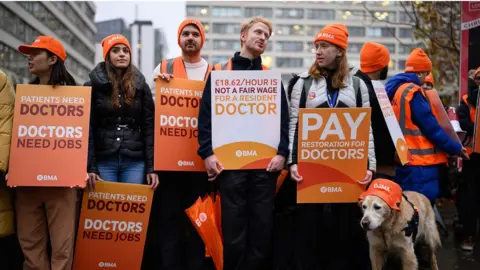
This week's five-day doctor strike in England will go ahead after British Medical Association members voted to continue with a planned walkout despite a new offer from the government.
The strike by resident doctors, the new name for junior doctors, is due to start at 07:00 on Wednesday with ministers warning patients will be put at risk because of the huge pressures on hospitals which are battling a wave of flu.
Some 83% voted for the strike to go ahead in the online poll held over the weekend.
The BMA agreed to the snap poll last week after the government came forward with a fresh deal which included increasing speciality training posts and covering out-of-pocket expenses like exam fees.
But it did not include any promises on pay – Health Secretary Wes Streeting has maintained he will not negotiate on that after resident doctors pay has been increased by nearly 30% in the past three years.
The union argues that, despite the pay rises, resident doctors' pay is still a fifth lower than it was in 2008, once inflation is taken into account.
This will be the 14th strike in the long-running dispute which began in March 2023.
Resident doctors, which represent nearly half the medical workforce, will walk out of both emergency and non-urgent care. Senior doctors will be drafted in to provide cover.
Chris and Ruth Stone-Houghton died at their Portsmouth home in September 2022
The children of a man who killed his wife in a psychotic episode, before taking his own life, have told the BBC they do not blame their father for what happened.
Chris and Ruth Stone-Houghton died in September 2022 at their home in Portsmouth.
An inquest found there had been a "failure to fully support" the family after Chris was discharged from a psychiatric hospital weeks earlier.
Their son Oliver said "we don't need to forgive him. I never once questioned that it was anything other than his illness".
The NHS trust in Hampshire has been approached for comment.
Chris and Ruth were loving and caring parents, Oliver and Abbie Stone-Houghton said, and devoted to one another.
"We had such a brilliant childhood, and even in their adult life we were so close with both of them," explained Abbie.
Chris ran a jewellery business which Ruth had also worked in. He had no previous mental health issues but as the company struggled during the Covid pandemic, eventually closing in April 2022, he began to experience delusional thoughts.
He became increasingly paranoid, wrongly believing he was being listened to by his phone and computer, and terrified someone was out to get him. He became withdrawn, looked noticeably frailer and experienced suicidal thoughts.
"He didn't feel like he had anything to offer anymore," his son Oliver, now 30, remembered.
Oliver and Abbie Stone-Houghton say they did not receive the help they needed to support their father
Chris was eventually diagnosed with psychotic depression, and in July 2022 attempted to take his own life.
He was sectioned and placed on a mental health ward at St James' Hospital in Portsmouth, run by the local NHS trust, where the family believed he would spend several months.
Within four weeks, he was discharged back home against the family's wishes. Ruth was "terrified" that her husband would further self-harm, the inquest heard.
Being a loving family worked against them, Oliver said, believing staff felt "they didn't have to worry so much about him being returned home than perhaps in other cases".
"We didn't really get any advice on what to do, what not to do," said Abbie. "We were just doing what we thought was right and just hoping for the best really."
Consultant psychiatrist Dr Denzel Mitchell, who worked at St James' Hospital, said the decision to discharge was made in large part because Mr Stone-Houghton had not self-harmed or had psychotic episodes on the ward.
Coroner Rachel Spearing found that though the decision was "appropriate", the way it was carried out was "unsafe", with an "inadequate risk assessment".
Chris had a history of refusing anti-psychotic medication at home, and had to be cajoled into taking it in hospital. The family had not been fully supported given the burden placed on them to ensure he took his medication, Ms Spearing added.
She found it was "unlikely" he had taken his medication at the time of the deaths.
Family photo
Chris and Ruth had a "loving" 32-year relationship, the coroner said
There had also been a lack of access to support, the inquest heard. Chris had not received psychological intervention in hospital, because the ward did not have a psychologist.
Once back home, his community crisis team twice asked for Chris to have early intervention for psychosis treatment, the best and quickest option available, but this was denied.
Chris was 66, and the NHS trust's cut-off age was 65.
"Had he had that treatment, we don't know what would have happened," said Oliver.
Chris was instead placed on a year-long waiting list for specialised talking therapy support.
The plan was for the family to alert the crisis team if they noted signs of relapse, the inquest heard, but no formal carer's assessment had been carried out for Ruth, 60, who looked after her husband.
'Extremely close' as a family
On 14 September 2022, Chris killed Ruth at their family home in Portsmouth before taking his own life. Coroner Rachel Spearing concluded he was "in the likely grip of a psychotic episode".
She said the deaths could not have been predicted, and that Chris and Ruth were a "loving and happy" couple.
Oliver and Abbie said they were "extremely close" as a family, and do not hold their father responsible for what happened.
"We both feel very strongly and know in our hearts," said Oliver, "that [dad] wasn't capable of this as a sane, rational person, and that it was the illness that had caused these events to happen in that way.
"We don't let it affect our memories of them both."
Hampshire and Isle of Wight Healthcare NHS Foundation Trust have been approached for comment.
At the inquest, Dr Charlotte Hope, representing the trust, said "as an organisation we are forever improving our services" and that "a lot" of changes had been made since the couple's death.
If you are affected by any of the issues in this article, support is available from organisations listed by BBC Action Line.
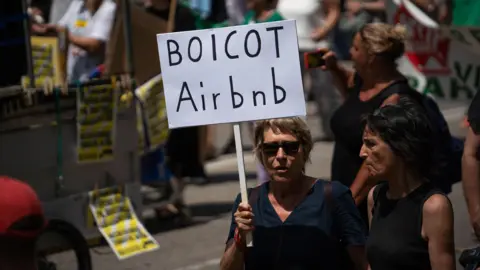
Protests in Spain against Barcelona have grown in popularity
The Spanish government has fined property rentals giant Airbnb €64m (£56m) for advertising unlicensed apartments.
It also said that some of the properties advertised in the popular tourist destination were banned from being rented.
The fine, which cannot be appealed against, means Airbnb has to withdraw the adverts promoting unlicensed properties. The BBC has contacted Airbnb for comment.
Spain, one of the top most visited countries in the world, has a buoyant tourism economy but that has fuelled concerns about unaffordable housing, as high demand from visitors raises the price of housing, pushing local people out of the market.
"There are thousands of families who are living on the edge due to housing, while a few get rich with business models that expel people from their homes," said Spain's consumer rights minister Pablo Bustinduy in a statement.
Like many countries, Spain's government is also concerned about how short-term holiday lets can change a neighbourhood, fuelled by a transient population of holiday-goers.
The country has been fighting a battle with thousands of Airbnb listings, banning them and clamping down on how many properties the firm can advertise. In May, there were demonstrations against the firm ahead of the busy summer season.
Spain's government said 65,122 adverts on Airbnb breached consumer rules, including promotion of properties that were not licensed to be rented, and properties whose licence number did not match with those on official registers.
Writing on social network Bluesky, Mr Bustinduy said: "We'll prove it as many times as necessary: no company, no matter how big or powerful, is above the law. Even less so when it comes to housing."
Globally, several popular tourist cities place heavy restriction on Airbnb, including Barcelona, New York, Berlin, Paris and even San Francisco, where Airbnb was founded.
The tech firm started up in 2007 but became hugely popular around 2014, as tourists looked for cheap accommodation without the tax costs imposed on hotels.
Users swelled as anybody could become a "host" and make some extra cash from renting out their spare room - though many major cities have since placed limits on these types of rentals, as complaints of noisy house parties and absent hosts became an issue.
Kylie Minogue has had seven UK number one singles - but never at Christmas
Pop star Kylie Minogue is leading a three-way race for this year's Christmas number one, says the Official Charts Company.
Her festive single XMAS is currently 7,000 units ahead of the nearest competitor, Wham's Last Christmas - which has topped the charts for the last two years.
In third place, and only 231 sales behind Wham, is the charity single Lullaby, by Together For Palestine - a supergroup featuring Bastille's Dan Smith, Celeste, Neneh Cherry, Nadine Shah, Brian Eno and Little Mix's Leigh-Anne Pinnock, amongst others.
If Kylie maintains her lead, XMAS would become her first number one single since Slow in 2003. "I think I'd cry," she told BBC News.
"It's been an unbelievable year, so that would be the cherry on top."
Kylie's song, which she performed on Strictly Come Dancing on Sunday night, comes complete with a dance routine spelling out the letters X-M-A-S, making it a yuletide YMCA.
More importantly in chart terms, it's an Amazon exclusive. That means every time someone asks their smart speaker to play Christmas songs, Kylie comes first - and every stream is eligible for the charts.
Kylie's Christmas jigsaw
XMAS is a brand new song, recorded for the 10th anniversary edition of the star's Kylie Christmas album, which topped the album charts last week.
It dates back to the original recording sessions, but never quite made the cut. Kylie told the BBC it had always bothered her that the song wasn't finished.
"It's not something I've constantly thought about, but it's had a place in my mind.
"As the years went by, I kept thinking someone else was going to release a song called Xmas - and it would have been so annoying that I didn't get it done in time.
"It's the only song that's ever lived with me this long."
However, it's not the first time that Kylie's been in the running for the festive top spot: In 1988, Especially For You was a close runner-up to Cliff Richard's Mistletoe and Wine.
However, no matter what happens, the star won't be in the UK to celebrate.
"I'm heading home," she told BBC News. "I'm looking forward to spending time with my family and, you know, obsessing over a jigsaw with the cricket on.
"That's about the level I want to get to."
Getty Images
Last Christmas was denied the top spot in 1984 by Band Aid's Do They Know It's Christmas, and eventually rose to number one in 2021
Wham's Last Christmas is the current number one single; and it's huge streaming numbers could allow the band to hold on to the top spot.
If they do, Last Christmas will make history as the first ever song to reach Christmas number one three times.
Meanwhile, the UK's best-selling song of the weekend was Together For Palestine's charity single, which will raise funds for aid for people in Gaza.
It's based on the traditional Palestinian folk song Yamma Mwel El Hawa (Mama, Sing to the Wind), with new English lyrics written by Peter Gabriel.
"The song's really been a part of my life since an early age," says Nai Barghouti, a Palestinian singer who features on the track.
"I remember recording it for the first time when I was 11 years old, and it's been going a lot of places with me since then.
"The lyrics are always a strong confirmation of what it means to be Palestinian - a never-ending sense of resilience, defiance, beauty, dignity and hope."
Getting into the Christmas chart, she says, would represent "a small beam of light in such darkness".
The song has sold just under 10,000 copies so far according to Official Charts Company data. However, it has yet to make Spotify's Top 100 - which means it may fall down the rankings as the week progresses and streams for other contenders accumulate.
Getty Images
Fairytale of New York is another perennial favourite
Those songs include Mariah Carey's All I Want For Christmas Is You (currently predicted to land at number four) and The Pogues and Kirsty MacColl's Fairytale of New York (which is at five).
Fairytale is the third best-selling single of the week thanks to a limited-edition zoetrope vinyl, which was released on Friday.
The song has famously achieved every position in the Top 20 except for number one; and strong streaming numbers could help it leapfrog the competition.
Less than 10,000 "sales" separate the top five, according to the Official Charts Company.
"However, with this also being preliminary data only, expect the picture to evolve as more streaming data arrives throughout the week."
Mr Ahmed managed to wrestle the gun from the attacker in the struggle
A "hero" bystander who was filmed wrestling a gun from one of the Bondi Beach attackers has been named as 43-year-old Ahmed al Ahmed.
Video verified by the BBC showed Mr Ahmed run at the gunman and seize his weapon, before turning the gun round on him, forcing his retreat.
Mr Ahmed, a fruit shop owner and father of two, remains in hospital, where he has undergone surgery for bullet wounds to his arm and hand, his family told 7News Australia.
Eleven people were killed in the shooting on Sunday night, as more than 1,000 people attended an event to celebrate Hanukkah. The attack has since been declared by police as a terrorist incident targeting the Jewish community.
Mr Ahmed's cousin, Mustafa, told 7News Australia: "Still he is in hospital and we don't know exactly what is going on, the doctor says he is OK.
"We hope he is OK, he is a hero, 100% he is a hero. He has two shots, one in his arm and one in his hand, he has had to have an operation."
Watch: Eyewitness captures moment man tackles and disarms Bondi shooter
Two gunmen are believed to have carried out the attack, with police investigating whether others were involved. One of the gunmen was killed, with a second in "critical condition," police say.
The footage of Mr Ahmed's intervention has been shared widely online.
It shows one of the gunmen standing behind a palm tree near a small pedestrian bridge, aiming and shooting his gun towards a target out of shot.
Mr Ahmed, who was hiding behind a parked car, is seen leaping out at the attacker, who he tackles.
He manages to wrestle the gun from the attacker, pushes him to the ground and points the gun towards him. The attacker retreats.
He then lowers the weapon and raises one hand in the air, appearing to show police he was not one of the shooters.
Nearby on the bridge, another gunman continues firing. It's unclear who or what he is aiming at.
At a news conference late on Sunday, New South Wales Premier Chris Minns paid tribute to the bravery of Mr Ahmed, who was unnamed at the time.
"That man is a genuine hero, and I've got no doubt there are many, many people alive tonight as a result of his bravery."
Australian Prime Minister Anthony Albanese said: "We have seen Australians today run towards danger in order to help others.
"These Australians are heroes, and their bravery has saved lives."
Watch: Eyewitness captures moment man tackles and disarms Bondi shooter
Twelve people have died - including one gunman - following a shooting at Australia's Bondi Beach which targeted the Jewish community on the first day of Hanukkah.
According to police, at least 12 others have been injured and two officers were shot during the event, which has since been declared a terror attack by officials. The surviving gunman is in a critical condition.
More than 1,000 people were attending an event on the beach celebrating Hanukkah.
Chris Minns, the premier of New South Wales, said: "Our heart bleeds for Australia's Jewish community tonight.
"I can only imagine the pain that they're feeling right now to see their loved ones killed as they celebrate this ancient holiday".
Mass shootings in Australia are very rare, and the attack at Bondi is the deadliest incident in Australia since the Port Arthur massacre in 1996.
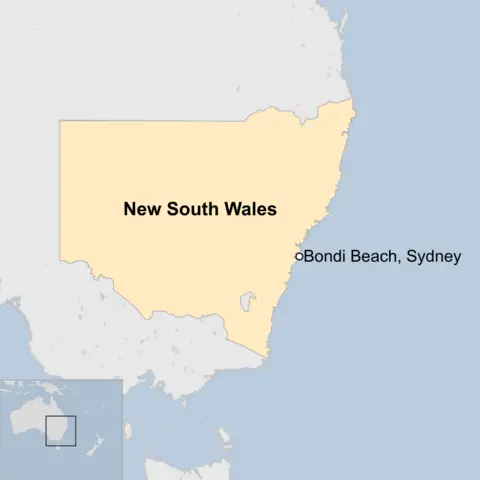
Bondi Beach is located in eastern Sydney in the state of New South Wales, on Australia's east coast.
It is one of Australia's most popular beaches, attracting millions of visitors each year. The area is a significant attraction for tourists.
What happened?
New South Wales (NSW) police responded to reports of gunfire at around 18:47 local time (07:47 GMT), with video showing hundreds of people fleeing from the coastline.
In their initial statement posted on X, NSW Police urged people at the scene to take shelter and other members of the public to avoid the area.
Around the same time, local media began reporting people "on the ground" in the vicinity of Campbell Parade.
A video verified by the BBC appears to shows two gunmen firing from a small bridge which crosses from the car park on Campbell Parade towards the beach itself.
An event to mark the first day of the Jewish celebration Hanukkah was taking place on Bondi Beach, very close to the bridge where the men were firing from. More than 1,000 were in attendance.
Premier Minns also paid tribute to a man filmed wrestling a gun from one of the attackers.
"That man is a genuine hero, and I've got no doubt there are many, many people alive tonight as a result of his bravery," Minns said at a press conference.
In the video, the man is seen sneaking up on the attacker, before grabbing him in a bear hug.
The now-disarmed man then retreats back towards the bridge, where the other attacker is still firing from.
As the video continues, another man appears to be injured and flees the scene, as a policeman arrives behind the attackers and opens fire at them.
A separate video, also verified, shows several policemen on the same bridge. One appears to be administering CPR to a motionless man as someone shouts "he's dead, he's dead".
How many people were killed and injured?
Getty Images
The attack targeted a Hanukkah celebration on the beach, police say
Apart from police confirming one gunman as dead, details on who has been killed and injured are sparse.
Twelve people including one of the armed men have been confirmed dead by police. Another gunman is said to be in a critical condition.
Officials say 29 other people were taken to hospital, and two officers were also shot during the incident.
One eyewitness, Barry, was attending the Hanukkah event on Bondi when with his children when he heard gunshots.
He told the BBC he saw two men on a bridge shooting towards the crowd.
He said there were bodies on the ground. He and his children were able to escape with a friend in a car, he added.
What is the latest?
Getty Images
Police have urged for calm as they carry out their investigation
Police have declared Saturday's shooting a terror attack.
An exclusion zone has been set up around the scene as police use specialist equipment to check improvised explosive devices (IEDs) found in a car linked to the dead gunman, and police are still urging the public to avoid the area."
"No stone will be left unturned" in the investigation, New South Wales Police Commissioner Mal Lanyon said.
He said police would not release any information about the gunmen at this time, and urged for calm while police carry out their duties, adding that this was "not a time for retribution".
Police said they cannot confirm if there was a third gunman involved or if there was anyone else involved in the attack, but enquires are ongoing.
During a televised address, Australian Prime Minister Anthony Albanese called the Bondi Beach shooting "an act of evil antisemitism, terrorism that has struck the heart of our nation".
"We have seen Australians today run towards dangers in order to help others. These Australians are heroes and their bravery has saved lives", he added.
Rob Reiner, the son of the legendary comedian Carl Reiner, was one of Hollywood's best known filmmakers.
As an actor, he became a household name on the 1970s sitcom All in the Family and later appeared as the father of Leonardo DiCaprio's character in The Wolf of Wall Street.
But it was as a director that he'll be best remembered. He made a string of classic films across a range of genres, including the cult mockumentary This Is Spinal Tap, When Harry Met Sally and A Few Good Men, as well as The Princess Bride, Stand By Me and Misery.
Here's a look back at his life through the lens of some of his best-loved movies.
Following his acting stint on All in the Family - where he earned the Emmy Award for best supporting actor twice for portraying Michael "Meathead" Stivic, a 1960s hippy - Brooklyn-born Reiner turned his attentions to directing on the 1974 TV movie Sonny Boy.
But his first big success came with the 1974 mockumentary, This Is Spinal Tap, which chronicled the misadventures of a fake British heavy metal band.
Created alongside comic actors Christopher Guest, Harry Shearer, and Michael McKean, Reiner himself played documentary maker Marty DiBergi.
Much of the deadpan dialogue was improvised and the film became a classic, coining phrases such as "turn it up to eleven".
Reiner told the BFI in 2022 that DiBergi was based on Martin Scorsese's work on the concert film The Last Waltz.
"A lot of it is," he said. "He had put himself in The Last Waltz, and I thought, 'That'll be the way I'll do it.' When he first saw it, he was a little upset I was making fun of him, but now, over the years, he loves it. He's come to love it."
Reiner once said Sting had told him he had seen Spinal Tap 50 times, with the English singer adding: "Every time I watch it, I don't know whether to laugh or cry."
Just a couple of months ago, Reiner reprised his role as DiBergi In Spinal Tap II: The End Continues, which he also directed.
Stand By Me
Everett/Shutterstock
The young cast of Stand By Me included (left-right) Jerry O'Connell, Corey Feldman, River Phoenix and Wil Wheaton
The 1986 coming of age classic, Stand by Me, followed.
Adapted from a Stephen King story, it told the tale of a group of young friends in the 1950s who embark on a two-day journey to find the body of a missing boy,
Concerned with the bittersweet transition from childhood innocence to adulthood, it helped to establish the likes of River Phoenix and Kiefer Sutherland as stars.
He added: "This was the first time that it was something really reflective of my personality - it had humour in it but it also had some melancholy and nostalgia, and so I thought, this is really the kind of thing I want to do."
The Princess Bride
Moviestore/Shutterstock
Cary Elwes and Robin Wright starred in The Princess Bride
His next hit was the 1987 fantasy fairy tale, The Princess Bride, based on a novel by William Goldman.
It threw actors Robin Wright, Cary Elwes, and Billy Crystal into a world of adventure, romance and satire.
A woman once told Reiner how the film had saved her life, recounting how when she and several other skiers had been trapped by an avalanche, she quoted every line from the movie to keep herself and everyone else awake.
"That was the best line I ever got," Reiner told Variety. "The Princess Bride saved my life."
When Harry Met Sally
THA/Shutterstock
Billy Crystal and Meg Ryan were Reiner's lead stars in When Harry Met Sally
In 1989, Reiner effectively set the standard for the rom-com genre with When Harry Met Sally.
It paired Billy Crystal with Meg Ryan as two friends who fall in love, climaxing in one of Hollywood's most iconic restaurant-based scenes.
After Ryan's Sally fakes an orgasm to prove a point, it prompts another customer, played by Reiner's mother Estelle, to declare: "I'll have what she's having!"
Sydney Sweeney recently delivered the line in a Hellmann's Super Bowl advert, which acted as a nostalgic parody of the film.
While directing the film, Reiner was introduced to photographer Michele Singer. The meeting influenced his decision to change the film's ending.
He told Ted Danson's Where Everybody Knows Your Name podcast: "We started seeing each other during [the making of] this film, and one thing led to another and, you know, I changed the ending of the movie. I didn't figure I was ever going to be with anybody, I couldn't figure out how to be with anybody, and I had it where Harry and Sally don't get together. They run into each other in New York, they talk a little bit and then they walk in opposite directions.
"But I meet Michele and I said, 'Well, I see how this works', and I changed it. I reshot the ending where you see Billy running and seeing Meg at the New Year's Eve party."
Reiner and Singer were soon married, going on to have three children together.
He had been married before, to actress and director Penny Marshall in 1971, adopting her daughter, actress Tracy Reiner.
Misery
Getty Images
Kathy Bates won an Oscar for appearing alongside James Caan in Misery
The director's work took a darker turn in 1990 with Misery, another adaptation of a King novel.
It starred Kathy Bates as Annie Wilkes, a crazed woman who imprisons her favourite writer, played by James Caan.
Bates won the best actress Oscar for her chillingly humane performance.
During an appearance at San Diego Comic-Con earlier this year, Reiner recalled how he had a feeling at the time that Misery might be the one and only thriller he would ever do.
"But I studied Hitchcock," he said. "I studied every thriller I could to see what is the grammar for film thrillers. 'Cut to the insert of the key.' 'The foot hits the ground.'"
Bates, then a theatre actor, feared she had blown her big screen audition. But her director had no such reservations.
"She read like two lines, I think, two or three lines, and I said, 'that's enough, you can do this,'" Reiner said, according to Entertainment Weekly. "She was like, 'what do you mean?' I'm cutting her off. I'm like, 'no, no you can do this, I know you can do it.'"
"And she went, 'really?'" he continued. "And as she walked out of the room, she said, 'can I call my mother?'"
A Few Good Men
Getty Images
Reiner directed Tom Cruise, as well as Jack Nicholson, Demi Moore and others, in A Few Good Men
The 1992 courtroom drama, A Few Good Men, concerned the court martial of two marines for the death of a fellow soldier.
It saw Reiner direct the Hollywood stars Tom Cruise, Demi Moore and Kevin Bacon, as well as Jack Nicholson.
Nicholson played a colonel, who, while testifying, delivered the immortal line: "You can't handle the truth!"
The actor enjoyed delivering the line so much he kept doing so with gusto even during every off-camera take when Reiner was shooting Cruise's character's reaction.
"Every time we did the scene, Jack did it perfectly," Reiner laughed. "After a couple of takes, I said, 'Jack, maybe you want to save a little bit for when we've got the camera on you.' And he replied, 'Rob, you don't understand - I love to act.'"
The film received an Oscar nomination for best picture.
'Known for speaking up'
Away from the big screen, Reiner was also known for his political and social activism, often speaking out on issues ranging from climate change to gun control.
Speaking to BBC Radio 5 live on Monday, LA-based entertainment journalist K.J Matthews described him as "a big hearted genius behind so many of the classic stories we love".
"So many people have been touched by him and his generosity," she noted.
"He was really known for speaking up for members of the LGBTQ community, [and] trying to help lower income people in various neighborhoods in Los Angeles."
She added: "So he wasn't just a figure in front of the camera and producing and known for giving us great films throughout the years... He really was a humanitarian."
Reiner campaigned for early childhood education and health care, as well as gay rights.
His other movies included 1994's North, starring Elijah Wood, and 1995's The American President, starring Michael Douglas and Annette Bening; as well as the 1996 film Ghosts of Mississippi about the trial of Byron De La Beckwith, who killed civil rights activist Medgar Evers.
The filmmaker returned to form, following several commercial flops, with 2007's The Bucket List, which starred Nicholson alongside Morgan Freeman as two terminally ill men who set about fulfilling their life ambitions before they die. It helped to popularise the now widespread titular term.
In 2015, the semi-autobiographical Being Charlie, co-written by Reiner's son Nick, looked into the painful relationship between a young man dealing with addiction and his father.
Two years later, Reiner directed and appeared in the 2017 film Shock and Awe, about a group of reporters covering the US invasion of Iraq in 2003.
He also played the father of Zooey Deschanel's character in New Girl and versions of his larger than life self on TV shows like Hannah Montana, Wizards of Waverly Place, 30 Rock, and Happyish.
Reiner, who also appeared as a movie studio executive in the 2020 miniseries Hollywood, was once quoted as saying: "If you are a creative person, you try to create things that are an extension of yourself."
At first glance, my emails are polite and warm, after all "I'm just checking" in on a deadline but "no worries either way".
However, a closer look reveals my messages are punctuated by unnecessary apologies, smiley faces, exclamation marks and even kisses.
I like to think I'm being friendly and approachable, but according to experts, these linguistic habits may be quietly undermining how seriously I'm taken at work.
Careers coach Hannah Salton and etiquette coach William Hanson explain why so many of us write like this and the impact it could be having on how we're perceived, and even promoted at work.
Is your punctuation extra?
"Thanks very much!" I've replied to many an email - my punctuation may be extra but a full stop feels blunt.
People use exclamation marks to show "positivity and enthusiasm," says Hannah.
She thinks that’s likely down to the idea that "women are often judged more harshly than men when they are direct and are called bossy and other gendered negative words".
And while a single exclamation mark isn't the problem the cumulative effect can be, warns Hannah.
“If it looks fake or like it's covering up insecurity it could impact credibility,” she explains.
Would you kiss them in real life?
Written communication is notoriously easy to misread, which is why many of us insert an emoji as a picture of our warmth or humour.
But etiquette coach William Hanson warns this can backfire.
"One emoji can mean different things to different people or something entirely unintended," he says.
"It would be better if people used words and a good command of English," he advises.
Emojis can have an "infantile connotation" which could lead to people perceiving you as younger, less senior, capable or responsible, he says.
"I would not put an emoji in an email," he says. "You can be friendly in your writing and remain professional at the same time."
And when it comes to signing off with a kiss, he says: "I would never put a kiss on the end of an email unless I would kiss them on the cheek in real life."
Softening language can dilute authority
"Just checking that you're following me and this all makes sense?"
Emails containing reassurance checkers can be self-depreciating," Hannah says, adding that over time, that tone can subtly shape how someone is perceived.
"As a manager, it's a difficult balance of being liked and respected and if you're not direct, there's a risk of creating an impression of being less capable," she says.
"There are definitely times where communicating in an overly apologetic or overly measured way can make you come across as less impactful."
"A lot of it is unconscious," Hannah says. "No one reads an email and thinks 'oh, they don't back themselves', it's more subtle than that.
"But if you're consistently communicating in a people-pleasing way, that can build up an impression of someone who doesn't back themselves, or who is potentially less competent."
What to cut out of your emails
Here are some of the things you might want to consider losing to appear more professional, our experts suggest:
Qualifying words such as "just" ("just checking", "just wondering")
Pre-emptive apologies like "sorry to bother you" or "I'm sure you're really busy but…"
Reassurance checkers such as "does that make sense?", "hope that's ok" or "no worries either way"
Exclamation marks
Emojis
Kisses or overly warm sign-offs
Hannah and William stress it's not about stripping all warmth or personality from professional communication.
"Personal style is important," Hannah says. "Showcasing personality at work is not a bad thing. You don't want to feel like you have to filter everything you write and remove any personality from it."
But at the same time you shouldn't use certain words and symbols "as a tool to be liked".
A practical way to spot and reduce these habits without losing personality is to pay attention to the emails you receive and notice how different styles make you feel - what sounds clear, confident or reassuring, and what feels excessive, she says.
Salton says AI tools can also be useful for reviewing drafts and removing excess filler or qualifier words.
At least 15 civilians have been confirmed dead in Sunday's shooting attack at Bondi beach.
Many were attending an event to mark the first day of the Jewish festival of Hanukkah.
Authorities have confirmed that two rabbis, a Holocaust survivor and a 10-year-old girl were among the victims.
This is what we know about those identified so far:
Matilda, 10
Authorities confirmed that a 10-year-old girl, named by her family to local media as Matilda, was among the dead.
Irina Goodhew, who organised a fundraiser for the girl's mother and said she was the child's former teacher, wrote: " I knew her as a bright, joyful, and spirited child who brought light to everyone around her.'
The Harmony Russian School of Sydney also confirmed that she was one of its students.
"We are deeply saddened to share the news that a former student of our school has passed away in the hospital due to injuries sustained from a gunshot," the school wrote on Facebook.
"Our thoughts and heartfelt condolences go out to her family, friends, and everyone affected by this tragic event … Her memory will remain in our hearts, and we honor her life and the time she spent as part of our school family."
Meanwhile her aunt spoke to ABC news and said that Matilda's sister, who was with her when she was shot, was struggling to come to terms with the loss.
"They were like twins — they've never been separated," she told the ABC.
Rabbi Eli Schlanger
Supplied
Eli Schlanger was known as the Bondi rabbi
Known as the "Bondi Rabbi", Eli Schlanger, 41, was one of the key organisers of Sunday's event. He was head of the local Chabad mission, an international Hasidic Jewish organisation based in Brooklyn.
The death of the British-born father of five was confirmed by his cousin, Rabbi Zalman Lewis.
"My dear cousin, Rabbi Eli Schlanger @bondirabbi was murdered in today's terrorist attack in Sydney," Zalman wrote on Instagram. "He leaves behind his wife & young children, as well as my uncle & aunt & siblings … He was truly an incredible guy".
In a post on its website, Chabad said Schlanger's youngest child was just two months old.
"He was the most godly, humane, kind, gracious human being I think I've ever met," Alex Ryvchin of the Executive Council of Australia Jewry, told reporters at Bondi on Monday morning.
Dan Elkayam
The death of French national Dan Elkayam was confirmed by Frances's Foreign Minister Jean-Noël Barrot.
"It's with immense sadness that we have learnt that our compatriot Dan Elkayam was among the victims of the terrorist attack that hit Jewish families gathered on the beach at Bondi in Sydney," he wrote on social media. "We mourn with his family and loved ones, with the Jewish community and the Australian people."
According to his LinkedIn profile, Elkayam worked as an IT analyst for NBCUniversal and had moved to Australia last year.
He was also a keen footballer, and "an integral member" of our premier league squad, the Rockdale Ilindin Football Club in west Sydney wrote on its Facebook page.
He was "an extremely talented and popular figure amongst team mates. Our deepest and sincerest condolances to Dan's family, friends and all that knew him. He will be missed," the club wrote.
Alexander Kleytman
Alexander Kleytman was a holocaust survivor who came to Australia from Ukraine.
"I have no husband. I don't know where is his body. Nobody can give me any answer," his wife Larisa Kleytman told reporters outside a Sydney hospital late on Sunday.
"We were standing and suddenly came the 'boom boom', and everybody fell down. At this moment he was behind me and at one moment he decided to go close to me. He pushed his body up because he wanted to stay near me," she told the Australian.
Chabad wrote on X that Alexander "died shielding her from the gunman's bullets. In addition to his wife, he leaves behind two children and 11 grandchildren."
The couple shared some of their life story with Jewish Care in 2023.
"As children, both Larisa and Alexander faced the unspeakable terror of the Holocaust," the health organisation wrote in its annual report.
"Alex's memories are particularly harrowing; recalling the dreadful conditions in Siberia where he, along with his mother and younger brother, struggled for survival."
How Bondi Beach shooting unfolded minute by minute
Peter Meagher
Former police officer Peter Meagher was working as a freelance photographer at the Hanukkah event when he was killed, his rugby club confirmed.
"For him it was simply a catastrophic case of being in the wrong place and at the wrong time," Mark Harrison, the general manager of Randwick Rugby Club, wrote on its website.
"'Marzo, as he was universally known, was a much loved figure and absolute legend in our club, with decades of voluntary involvement, he was one of the heart and soul figures of Randwick Rugby."
The club said he had spent almost four decades in the NSW Police Force where he was "hugely respected by colleagues".
"The tragic irony is that he spent so long in the dangerous front line as a Police Officer and was struck down in retirement while taking photos in his passion role is really hard to comprehend," the club said.
Reuven Morrison
Reuven Morrison migrated to Australia from the former Soviet Union in the 1970s as a teenager, according to an interview he gave to the ABC exactly a year ago.
"We came here with the view that Australia is the safest country in the world and the Jews would not be faced with such anti-Semitism in the future, where we can bring up our kids in a safe environment," he told the national broadcaster.
Confirming his death, Chabad said that he was a longtime resident of Melbourne, but that he "discovered his Jewish identity in Sydney".
"A successful businessman whose main goal was to give away his earnings to charities dear to his heart, notably Chabad of Bondi," the organisation wrote on X.
Lai has been found guilty of national security offences for his role in the 2019 protests that rocked Hong Kong
Hong Kong pro-democracy campaigner and media tycoon Jimmy Lai has been found guilty of colluding with foreign forces under the the city's controversial national security law (NSL).
The 78-year-old, who has been in jail since December 2020, pleaded not guilty. He faces life in prison and is expected to be sentenced early next year.
Lai used his now-defunct Apple Daily newspaper as part of a wider effortto lobby foreign governments to impose sanctions on Hong Kong and China, the court found.
Hong Kong's chief executive John Lee welcomed the verdict, noting that Lai's actions "damaged the country's interests and the welfare of Hong Kongers", but rights groups called it "a cruel judicial farce".
They say the NSL, which Beijing defends as essential for the city's stability, has been used to crush dissent.
There is "no doubt" that Jimmy Lai "harboured hatred" for the People's Republic of China (PRC), Judge Esther Toh said on Monday, citing his "constant invitation to the US to help bring down the government of the PRC with the excuse of helping the people of Hong Kong".
When Lai testified in November, he denied all the charges against him, saying he had "never" used his foreign contacts to influence foreign policy on Hong Kong.
Asked about his meeting with then US Vice President Mike Pence, Lai said he did not ask anything of him: "I would just relay to him what happened in Hong Kong when he asked me."
He was also asked about his meeting with then secretary of state Mike Pompeo, to which he said he had asked Pompeo, "not to do something but to say something, to voice support for Hong Kong".
Lai, a UK citizen and one of the fiercest critics of the Chinese state, was a key figure in the pro-democracy protests that engulfed Hong Kong in 2019. Beijing responded to the months-long demonstrations, which sometimes erupted into violent clashes with police, by introducing the NSL.
The law was enacted without consulting the Hong Kong legislature and gave authorities broad powers to charge and jail people they deemed a threat to the city's law and order, or the government's stability.
Lai was accused of violating the NSL for his role in the protests and also through his tabloid Apple Daily, which became a standard bearer for the pro-democracy movement.
Monday's ruling also found Lai guilty of publishing seditious material on Apple Daily under a separate colonial-era law.
Lai appeared calm as the verdict was read out and waved goodbye to his family as he was escorted out of the courtroom. Lai's wife Teresa and one of his sons were in court, along with Cardinal Joseph Zen, a long-time friend who baptised Lai in 1997.
Getty Images
Jimmy Lai's wife, Teresa, their son Shun Yan and Cardinal Joseph Zen arrive at court
"Mr Lai's spirit is okay," his lawyer Robert Pang said after the verdict. "The judgement is so long that we'll need some time to study it first. I don't have anything to add at the moment." He did not say whether they would appeal.
"The Chinese government abused Jimmy Lai with the aim of silencing all those who dare to criticise the CCP [Chinese Communist Party]," said Elaine Pearson, Asia Director at Human Rights Watch, following the verdict.
"In the face of the farce of Jimmy Lai's case, governments should pressure the authorities to withdraw the case and release him immediately."
Western governments, including the UK and US, have for years called for Lai's release, which Beijing and Hong Kong have rejected.
US President Donald Trump had earlier vowed to "do everything to save" Lai while UK PM Keir Starmer had said securing his release was a "priority".
A test of judicial independence
Lai's trial came to be widely seen as yet another test of judicial independence for Hong Kong's courts, which have been accused of toeing Beijing's line since 2019, when it tightened its control over the city.
Hong Kong authorities insist the rule of law is intact but critics point to the hundreds of protesters and activists who have been jailed under the NSL - and its nearly 100% conviction rate as of May this year.
Bail is also often denied in NSL cases and that was the case with Lai too, despite rights groups and Lai's children raising concerns about his deteriorating health. He has reportedly been held in solitary confinement.
Lai's son Sebastien told the BBC earlier this year that his father's "body is breaking down" - "Given his age, given his health... he will die in prison."
The Hong Kong government has also been criticised for barring foreign lawyers from working on NSL cases without prior permission. They said it was a national security risk, although foreign lawyers had operated in the city's courts for decades. Subsequently Lai was denied his choice of lawyer, who was based in the UK.
Lai now joins dozens of figures of the city's pro-democracy movement who have been sentenced to prison under the NSL.
The chief of Hong Kong's national security police addressed the media after the verdict, saying Lai had "fabricated news" in pursuit of "political goals".
On the mainland, state-run Global Times quoted a Hong Kong election committee member as saying that the case sends a "clear message": "Any attempt to split the country or undermine Hong Kong's prosperity and stability will be met with severe punishment under the law."
Watch: Jimmy Lai's son speaks to the BBC about China-UK relations
From tycoon to activist
Lai, who was born in mainland China, fled to Hong Kong when he was 12 years old and got his footing as a businessman after founding the international clothing brand Giordano.
His journey as a democracy activist began after China brutally crushed pro-democracy protests in Beijing's Tiananmen Square in 1989.
Lai started writing columns criticising the massacre and went on to launch a string of popular pro-democracy publications, including Apple Daily and Next.
Even now, many Hong Kongers see him as a leading voice for democracy - about 80 people had queued to enter the court ahead of the verdict on Monday.
One of them was Ms Lam who didn't want to share her full name. An apple in hand, she said she started queuing around 11:00 local time on Sunday – nearly a full day before the session – because dozens of people had come before her. It was a cold night, she said, but she did it because she had wanted to wish Lai good luck.
"We all feel frustrated and powerless. Yet, there must be an ending to the whole issue and time comes when it comes," a former Apple daily journalist, who was also in court, told the BBC.
"Jimmy always said that he was indebted to Hong Kong... but I think Hong Kong and most Hong Kongers are so grateful to have him upholding the core values, good faith and integrity for the community at the expense of his well being and personal freedom."
In his testimony, Lai had said that he had "never allowed" his newspaper's staff to advocate for Hong Kong independence, which he described as a "conspiracy" and "too crazy to think about".
"The core values of Apple Daily are actually the core values of the people of Hong Kong," he had said. These values, he added, include the "rule of law, freedom, pursuit of democracy, freedom of speech, freedom of religion, freedom of assembly".
Watch: Eyewitness captures moment man tackles and disarms Bondi shooter
Twelve people have died - including one gunman - following a shooting at Australia's Bondi Beach which targeted the Jewish community on the first day of Hanukkah.
According to police, at least 12 others have been injured and two officers were shot during the event, which has since been declared a terror attack by officials. The surviving gunman is in a critical condition.
More than 1,000 people were attending an event on the beach celebrating Hanukkah.
Chris Minns, the premier of New South Wales, said: "Our heart bleeds for Australia's Jewish community tonight.
"I can only imagine the pain that they're feeling right now to see their loved ones killed as they celebrate this ancient holiday".
Mass shootings in Australia are very rare, and the attack at Bondi is the deadliest incident in Australia since the Port Arthur massacre in 1996.
Bondi Beach is located in eastern Sydney in the state of New South Wales, on Australia's east coast.
It is one of Australia's most popular beaches, attracting millions of visitors each year. The area is a significant attraction for tourists.
What happened?
New South Wales (NSW) police responded to reports of gunfire at around 18:47 local time (07:47 GMT), with video showing hundreds of people fleeing from the coastline.
In their initial statement posted on X, NSW Police urged people at the scene to take shelter and other members of the public to avoid the area.
Around the same time, local media began reporting people "on the ground" in the vicinity of Campbell Parade.
A video verified by the BBC appears to shows two gunmen firing from a small bridge which crosses from the car park on Campbell Parade towards the beach itself.
An event to mark the first day of the Jewish celebration Hanukkah was taking place on Bondi Beach, very close to the bridge where the men were firing from. More than 1,000 were in attendance.
Premier Minns also paid tribute to a man filmed wrestling a gun from one of the attackers.
"That man is a genuine hero, and I've got no doubt there are many, many people alive tonight as a result of his bravery," Minns said at a press conference.
In the video, the man is seen sneaking up on the attacker, before grabbing him in a bear hug.
The now-disarmed man then retreats back towards the bridge, where the other attacker is still firing from.
As the video continues, another man appears to be injured and flees the scene, as a policeman arrives behind the attackers and opens fire at them.
A separate video, also verified, shows several policemen on the same bridge. One appears to be administering CPR to a motionless man as someone shouts "he's dead, he's dead".
How many people were killed and injured?
Getty Images
The attack targeted a Hanukkah celebration on the beach, police say
Apart from police confirming one gunman as dead, details on who has been killed and injured are sparse.
Twelve people including one of the armed men have been confirmed dead by police. Another gunman is said to be in a critical condition.
Officials say 29 other people were taken to hospital, and two officers were also shot during the incident.
One eyewitness, Barry, was attending the Hanukkah event on Bondi when with his children when he heard gunshots.
He told the BBC he saw two men on a bridge shooting towards the crowd.
He said there were bodies on the ground. He and his children were able to escape with a friend in a car, he added.
What is the latest?
Getty Images
Police have urged for calm as they carry out their investigation
Police have declared Saturday's shooting a terror attack.
An exclusion zone has been set up around the scene as police use specialist equipment to check improvised explosive devices (IEDs) found in a car linked to the dead gunman, and police are still urging the public to avoid the area."
"No stone will be left unturned" in the investigation, New South Wales Police Commissioner Mal Lanyon said.
He said police would not release any information about the gunmen at this time, and urged for calm while police carry out their duties, adding that this was "not a time for retribution".
Police said they cannot confirm if there was a third gunman involved or if there was anyone else involved in the attack, but enquires are ongoing.
During a televised address, Australian Prime Minister Anthony Albanese called the Bondi Beach shooting "an act of evil antisemitism, terrorism that has struck the heart of our nation".
"We have seen Australians today run towards dangers in order to help others. These Australians are heroes and their bravery has saved lives", he added.
The UK Chief Rabbi Sir Ephraim Mirvis has said his cousin and cousin's wife "spent fifteen terrifying minutes hiding under a doughnut stand" as gunmen opened fire during the attack at Bondi Beach.
Fifteen people have been killed – including a 10-year-old girl – in an attack by the two gunmen targeting a Jewish Hanukkah celebration on the beach in Sydney.
Speaking on the BBC Radio Four Today programme, Rabbi Mirvis said one of the key messages of Hanukkah is that Jews around the world declare "we belong, and we will not hide who we are", but "that declaration was met with murderous hatred" at Sunday's mass shooting.
The causes of "toxic antisemitism" must be addressed, he said.
Rabbi Mirvis called for people to stand together "against the normalised rhetoric that demonises Jews and the only Jewish State".
At the Hanukkah event on Bondi Beach, Jewish people were "targeted for the simple act of gathering together, visibly and peacefully, as Jews", he said.
The right of Jewish communities to gather safely and publicly is a "test of the moral health of any society".
"Jews have lived with security concerns for as long as I can remember, but the fact that today every public Jewish gathering must be weighed for risk is a sign of something deeply wrong."
A society in which a minority group have to "calculate whether it is safe to be seen together in public" is a society that is "failing all of its citizens".
The shooting began at around 18:47 local time (07:47 GMT) on Sunday as around a thousand people were said to be attending a public event organised by Jewish centre Chabad of Bondi.
Verified videos showed hundreds of people fleeing the beach, screaming and running as a volley of gunshots rang out.
The ages of the victims range from 10 to 87 years old, and include two rabbis and a Holocaust survivor.
The two gunmen have been named in local media as 50-year-old Sajid Akram, who died at the scene, and his 24-year-old son Naveed Akram, who is in hospital in a critical condition.
The chief rabbi told the Today programme that the festival of Hanukkah commemorates the defiance of a small band of Jews some 2,150 years ago who were targeted by Emperor Antiochus Epiphanes. He denied them the right to openly practise their faith, demanding conversion on pain of death.
The message of the festival is about "their refusal to be intimidated or erased".
"Judaism must never be driven into the shadows," Rabbi Mirvis said.
PA Media
British Jews attending a vigil outside the Australian High Commission in central London on Sunday evening
We've had songs written about it, it features on Christmas cards and films - with almost every advert throughout December showing it.
Most of us will dream or romanticise about a white Christmas, but how common or not is it to have one in the United Kingdom?
According to the Met Office, an "official white Christmas" has happened more often than not since 1960, but new analysis of its data by the BBC shows that locally, snow falling on Christmas Day is rare for most of us.
And there have been fewer stations reporting a white Christmas in the past two decades across the UK, according to the data.
The Met Office officially defines a white Christmas as one where snow is reported to fall at any of its weather stations in the 24 hours of Christmas Day.
If there was no snow falling but snow already on the ground, this is not defined as a white Christmas.
On this definition, three out of four Christmases since 1960 have seen at least a flake of snow fall somewhere in the UK.
Analysis of Met Office data by the BBC shows at a very local level it's unlikely you will have experienced many white Christmases where you live.
For example, during the most recent white Christmas in 2023, snowfall was only seen at three stations in the Highlands and one in Aberdeenshire.
Use the tool below to see how many white Christmases have been reported at weather stations near you.
While the official definition of a white Christmas has changed in the past, along with the number of stations and how it is observed, the data will still include all recorded instances of snow falling on Christmas Day.
'It probably frightened Father Christmas'
Ian Currie from London was 12 years old when he was given a weather station for Christmas in 1962. It included a rain gauge, a funnel and a brass container. On Boxing Day, he said it snowed so much, his instruments were buried.
"I remember the milk bottles freezing with a column of ice," said Mr Currie, who went on to become a weather forecaster, author and editor of Weather Eye magazine.
"Couldn't be better timed to encourage a young weatherman in the making."
"The classic white Christmas that I remember was 1970," he added.
"It snowed heavily the day before and over Christmas Day and Boxing Day - metres of snow fell."
He recalled "a terrific flash of lightning and almost instantaneous crash of thunder, which woke quite a few people up - and probably frightened Father Christmas".
Image source, Getty
Image caption,
There is lots of nostalgia about waking up on Christmas Day with a blanket of snow with more falling
Dreaming of a white Christmas?
The classic "white Christmas" idea is thought to originally come from the Victorian era when snowy winter days were much more frequent than today.
Coincidentally this is a period when sending Christmas cards first became widespread, depicting the snow scenes of the time, a tradition that continues to the day.
Christmas movies originating from the United States also show snowfall on Christmas Day, something more common in parts of North America.
While it is likely somewhere in the UK will see snow falling at Christmas, for the majority, this will not be the case.
Most white Christmases are found, perhaps unsurprisingly, in Scotland where over the past 65 years, 43 were "white". Northern Ireland had the least with less than a third of those years recording a white Christmas.
In fact, Northern Ireland has not recorded a white Christmas for 14 years.
Across England you will have most likely experienced a white Christmas in the North West where nearly 40% of years recorded snow on Christmas Day since 1960.
Quite a contrast to the South East where since 1960, London has only seen five Christmas Days where snow fell, the last one more than two decades ago in 2001.
Image source, NASA Worldview
Image caption,
On Christmas Day in 2010 there was widespread lying snow across the UK
You might remember Christmas of 2010 when most of us would have opened the curtains on Christmas Day to a Christmas card scene with snow on the ground.
About 80% of weather stations recorded lying snow that year but only 30 stations had snowfall meeting the definition of a white Christmas. Compare this to 2004 when snow was observed at 146 weather stations.
Francesca Di Giuseppi, principal scientist at the European Centre for Medium-Range Weather Forecasts, was in Reading over the Christmas period in 2010 and remembers having snowball fights with the friends she lived with.
Image source, Francesca Di Giuseppi
Image caption,
Scientist Francesca Di Giuseppi said she had found the snow "actually quite magical"
"We made a snowman - I remember not having a carrot to put on the nose, so we ended up with an apple," she said.
"We were a household of southern Europeans, not very used to snow in our home countries. It was actually quite magical."
She said she believed the excitement over white Christmases stemmed from snow slowing things down, meaning it is an excuse be at home with family and "see the beauty of nature".
White Christmas and climate change
The Met Office data analysed by the BBC suggests there have been fewer widespread white Christmases in past two decades.
While we cannot use what happens on one day of the year to assess whether the decline is due explicitly to climate change, scientists suggest a white Christmas will become less likely in the future.
According to the Met Office, the UK has already warmed by 1C since about the 1950s and we have seen less frost and snow as a result.
In the 1990s and early-2000s there were five years with a widespread white Christmas where more than 100 weather stations reporting falling snow.
But in the past 20 years the most stations reporting a white Christmas was 30 in 2010.
So far in the 2020s there have already been four white Christmases declared with snowfall reported somewhere in the UK but falling snow was only confirmed by at most six stations in a year.
While better technology means recording snowfall at just one location in the UK has increased the likelihood of having a confirmed white Christmas, the number of stations actually seeing snow on Christmas Day appears to have declined.
Our winters are expected to get warmer and wetter and a Met Office spokesperson confirmed snowy spells were "becoming less frequent as our climate warms".
They added "natural variability means cold, snowy periods will still happen", but we can expect "fewer frost and snow days".
The workers have been protesting outside the firm's headquarters in Edinburgh and London
Former staff at the firm behind Grand Theft Auto have told the BBC that a "devastating" mass sacking took place allegedly because they tried to unionise.
Some 31 employees were dismissed in October for what Rockstar North called "gross misconduct".
The majority were based at the gaming giant's Edinburgh headquarters, with former workers claiming they were penalised for discussing working conditions in a private online forum.
Rockstar North said it was incorrect to suggest the dismissals were linked to union membership or activities. It said it took action after staff discussed confidential information, including specific game features from upcoming titles, in a public forum.
The Independent Workers' Union of Great Britain (IWGB) called it a "ruthless act of union-busting".
Rockstar North is one of the UK's largest game developers.
Its upcoming GTA 6 game is expected to be one of the best-selling games of all time when it is released in May 2026.
Information about game development is tightly controlled across the gaming industry, with employees often signing legally binding agreements not to share confidential information.
A group of workers have been routinely protesting outside Rockstar North's Edinburgh and London offices.
BBC Scotland News has now spoken to three of the dismissed Edinburgh workers accused of disclosing company information.
Jordan Garland said staff wanted to unionise to improve the workplace
Jordan Garland, a former senior production co-ordinator, said many staff members wanted to unionise because "we were so passionate about the industry and that workplace in particular".
"We just saw it as something we could do to make it better for everyone," he added.
"So it's a little bit devastating because it's an industry that I love, and I think we all love. We couldn't really see ourselves anywhere else."
'Sleepless nights'
He said members of staff were discussing working conditions at the firm in a private digital forum.
Jordan added: "We were talking about working conditions, policy - not talking about projects or anything like that, just talking about conditions.
"That to me that feels like an essential, necessary part of organising. How can you organise a workplace if you can't talk about the conditions there?"
Jordan has worked at the company for the last three years and believes he was the first employee to be dismissed on the morning of 30 October.
"The first week was definitely difficult," he said. "It was a lot of sleepless nights, a lot of tossing and turning about this.
"But in a kind of macabre way, it's good they fired so many people because there is this really strong community element now."
Jamie Trimmer worked at Rockstar North for about 18 years before he was sacked
Designer Jamie Trimmer worked in the gaming industry for most of his adult life before being sacked from Rockstar North.
"I've worked there, like, 18 years now," he said. "I think I'm the longest serving person that was fired.
"It's all I know really, and then it's just sort of ripped away. I'm left not knowing what to do next really.
"I never would have expected they would hit the nuclear option of firing so many of us in one go. It does highlight the need for unions."
'Deeply concerning'
The group, along with fellow dismissed colleagues, are now hoping to take Rockstar North to an employment tribunal.
However, they may have to wait up to a year for their case to be heard.
In the meantime, they are waiting to learn if they qualify for an intermediate relief hearing, which could see them reinstated in their roles or kept on Rockstar North's payroll.
The issue was also raised at Prime Minister's Questions in Westminster last week by MP Chris Murray.
Sir Keir Starmer said it was "deeply concerning" and promised to look into the issue.
He added: "Every worker has the right to join a trade union, and we're determined to strengthen workers' rights and ensure they don't face unfair consequences for being part of a union."
Sarah Blackburn said she appreciated the support after she lost her job at Rockstar North
Sacked production co-ordinator Sarah Blackburn said the public and political support has helped her deal with the situation.
"It's massively heartening to hear actually and in a way, I'd say validating," she said.
"We've had a lot of support coming from places that I genuinely didn't expect.
"We've had people who were in unions who previously fought fights in different industries basically just expressing solidarity and support. It's a flex of power and it's been painful to be on this side of it, but I think the support has been great."
In a statement, Rockstar North told BBC Scotland News: "Rockstar Games took action against a small group of individuals, across the UK and internationally, who distributed and discussed confidential information (including specific game features from upcoming and unannounced titles) in a public forum, in breach of company policy and their legal obligations.
"Claims that these dismissals were linked to union membership or activities are entirely false and misleading."
Watch Panorama's undercover filming: "You'll make no money my friend unless you get all your parcels out. Get them all out."
When Becky ordered a Barbie doll for her daughter, she got a notification from delivery firm Evri saying it had arrived. There was just one problem: it was nowhere to be seen.
There was no parcel at her front door, in the Hampshire village of Twyford, and the photo she was sent of its location was not one she recognised.
Becky turned detective - and she discovered that reports of similar incidents nearby had "snowballed".
Around the corner, her neighbour Jonathan had received a similar notification. It showed a photo of a parcel of tools he was expecting - taken inside a car - but nothing had been delivered. He tried to take it up with Evri, but told BBC Panorama that "they don't respond - it's very frustrating".
"You feel like you're playing Russian roulette" as to whether the parcel is going to arrive, says customer Becky
With millions relying on delivery companies to send their parcels this Christmas, we have been investigating Evri, including sending a journalist undercover as a courier.
The company is a market leader, but a recent customer survey of the 11 biggest delivery firms by industry regulator, Ofcom, suggested Evri had the most issues for parcels not being delivered and the highest level of customer dissatisfaction.
Amazon and FedEx came top for customer satisfaction.
While Evri disputes Ofcom's findings, 30 current and former workers have told us problems are being caused by growing pressures on couriers."They have to deliver so much volume now for a decent pay," one told us.
The link between poor service and work pressures was further borne out by Panorama's investigation, which found:
Couriers at an Evri depot in the Midlands describing how to cut corners to complete deliveries on time - with one telling our undercover reporter: "You can even throw the parcel at the back door"
Changes to Evri's pay rates have led some workers to claim they are earning less than minimum wage
New, lower pay rates for so-called "small packets" were also affecting courier earnings, we were told
Larger items being "misbanded" as small packets, some couriers told us, including heavy flatpack furniture and radiators
In Hampshire, parcels started to go missing in Twyford six months after a regular courier, Dave, left Evri. He worked as an Evri courier for six years, often with his wife, and they earned about £60,000 a year between them.
Like all Evri couriers, Dave was self-employed. But, because Evri pays couriers by the parcel, and sets the rate per parcel, it felt like the company was in the driving seat.
Changes to Evri's parcel rates last January, meant it no longer made financial sense to carry on, Dave told us. It would have led to him being paid less than the minimum wage, he says.
The amount Evri couriers are paid depends on the size and weight of the parcels they deliver and how far they must travel.
Couriers like Dave, who was on an Evri Plus contract, are supposed to be guaranteed at least the National Minimum Wage - currently £12.21 per hour for those aged 21 and over.
Dave says he estimated that with Evri's changes, including a new "small packets" rate, he would earn £10 an hour.
"You were always looking over your shoulder, wondering what might come next in terms of reducing your rates," he told us. "So that you're paid less for what you're doing even though you're doing the same job."
Another Evri Plus courier told Panorama he could earn as little as £7 or £8 an hour at times, once fuel and his vehicle's running costs had been taken into account.
If I had accepted the pay cut, I would have been earning "well below minimum wage", says ex-Evri driver Dave
This shouldn't be happening - according to what Evri's legal director, Hugo Martin, told a parliamentary select committee in January. The company's paid-per-parcel model, he told MPs, made sure that "couriers earn well above national minimum wage".
The committee chair, Labour's Liam Byrne, has now told Panorama that because of the "categorical assurances" that people were not paid below the minimum wage, the company should now be recalled to Parliament to investigate the full picture.
His comments come as a separate, cross-party group of MPs expressed their own concerns about Evri's delivery record last week.
Evri gave us "categorical assurances that people were not paid below the minimum wage", says Liam Byrne, chair of the Business and Trade Committee at Westminster
We put Mr Byrne's comments to Evri and a spokesperson said company couriers "generate earnings significantly above the National Living Wage".
The National Living Wage and the National Minimum Wage are currently the same for anyone aged over 21 - £12.21 an hour.
Average courier earnings, the Evri spokesperson continued, "exceeded £20 an hour". The "sector is highly competitive, but we benchmark pay locally", they added.
Small packets, small fees
It wasn't just Dave who told us the introduction of Evri's "small packets" has made it harder to make a living.
Other couriers told us they had started to see more of them in their rounds, and that it was eating into their earnings because they received less money to deliver them.
Rates vary, but Evri pays couriers as little as 35p to deliver one.
The company told us it had introduced the new "small packets" sizing in January to "remain competitive".
However, big parcels, for which couriers would be paid more per delivery, keep getting mislabelled as small packets, some couriers told the BBC.
Getty Images
Evri introduced "small packets" parcel size in January - which it can pay couriers as little as 35p to deliver
Evri does not do enough to check the items are being accurately weighed and measured by senders, they said - with heavy flatpack furniture and radiators listed as examples of large items which had been "misbanded" and paid for as small packets.
One courier told us he delivered "countless numbers of misbands", leaving him short-changed.
Parcels are labelled by clients, not Evri, the company told the BBC. It said that 99.2% of all parcels were correctly banded - and that "couriers can request checks and upgrades via the courier app, if they think a parcel has been misbanded".
'There's a safe space for everything, mate'
An Evri courier of 10 years told us their colleagues were "cutting corners" because they had to deliver so much in terms of volume to get a decent wage.
"They are not doing the job correctly… parcels go missing," he added. "Piles of parcels are found in hedges."
Our undercover reporter, who we are calling Sam because he wants to remain anonymous, was told by another courier, "if you want to earn money, you need to find a safe place and leave it there".
"You can even throw the parcel at the back door, you only get paid if the parcel is delivered," the courier explained during Sam's six-day stint in October at Evri's West Hallam delivery unit near Nottingham.
As a new starter, Sam was put on a Flex contract, which does not include sick or holiday pay and does not commit to paying the minimum wage, unlike the Plus contract.
It can be difficult for new starters to earn the same as more experienced couriers, as they don't know their patch, so they won't be as efficient.
Sam was told he could be eligible for some extra cash. New starters get payments to ensure they earn adequately while they get used to the work, Evri's lawyers told the BBC.
Couriers told us they are not paid extra for the time it takes to scan the parcels and load them into their vehicles at depots - but Evri says it factors this time into its parcel rates.
"You only get paid if the parcel is delivered. Never take it back," said one courier
Couriers are also only paid if a package is delivered and a photograph is taken - which is supposed to mean giving it to the customer, a neighbour, or finding a safe place, and not leaving it in plain sight outside the delivery address.
If drivers cannot deliver a parcel, they should make at least two more attempts to do so - according to Evri rules - but this takes time.
Back at the depot, a courier told Sam there was not much point trying to redeliver because couriers did not get paid for going back.
"You'll make no money, my friend, unless you get all your parcels out. Get them all out," he said. "There's a safe space for everything, mate."
You can deliver 50 parcels an hour on a round, a supervisor tells our undercover reporter
The company says it will deliver about 900 million parcels this year, going to almost every single home in the UK.
But 7% of customers in the six months between January and July said they had reported an Evri parcel not having been delivered - compared to an industry average of 4% - according to Ofcom's recent consumer survey.
The survey also suggested Evri had the most issues for delays in the UK, with 14% of customers reporting a parcel arriving late in the same period. The industry average is 8%, says Ofcom.
Evri told us it provides "a fast, reliable, and cost-effective delivery service" and that its "couriers are local people… and the vast majority do an excellent job and strictly follow our delivery standards".
If "a courier receives a low customer rating for a delivery, this is immediately investigated", it says.
The company, which rebranded from Hermes UK in 2022, has been owned since last year by the American investment firm Apollo Global Management. In the financial year 2023-24, Evri's pre-tax profit almost doubled to nearly £120m.
"I think Evri are making a fortune off the couriers' backs and I think the couriers are being totally ripped off," one courier told us.
For Becky and Jonathan in Hampshire, at least, all was not lost.
Becky started a spreadsheet for other people in the area to list their missing Evri parcels, after seeing how many comments were being left on the village Facebook group.
Almost 90 incidents were reported to the police. A man was arrested but never charged.
Lawyers for Evri told the BBC that this was an isolated incident and that the company took prompt action.
"The performance of our couriers is tracked in real time, with mandatory photo proof for every delivery," the company said.
Becky got a refund from the seller and bought a new Barbie, and Jonathan got his tools replaced by the seller.
Vladimir Putin may have a reputation among some as a ruthless autocrat, a master manipulator of the international scene. But one thing Russia's president does not have is a poker face.
The late US Senator John McCain used to joke that when he looked into Putin's eyes, he saw three things, "a K and a G and a B", a reference to his past life as a Soviet intelligence officer.
I thought of this as I watched footage of Russia's leader sitting opposite American envoys in the Kremlin. He could not hide his emotions; he exuded an air of supreme confidence.
For President Putin reckons the diplomatic tide has turned in his favour, with an improved relationship with America and gains on the battlefield.
Some analysts say Putin has no incentive to retreat from his demands: that Ukraine gives up the last 20% of Donetsk it still controls; that all occupied territory is recognised internationally as Russian; that Ukraine's army is curtailed to a point of impotence; and Nato membership is ruled out forever.
As things stand, there are a few possible scenarios. The first is that US President Donald Trump may try to force Ukraine into a ceasefire on terms unwelcome to its people, one that cedes territory and lacks sufficient security guarantees to deter future Russian aggression.
If Ukraine demurs or Russia vetoes, President Trump has hinted he could wash his hands of the war; last week, he said "sometimes you have to let people fight it out".
AFP via Getty Images
The Trump administration's new national security strategy urged the US to 're-establish strategic stability' with Russia
He could remove the vital US intelligence Ukraine needs to detect incoming Russian drones and target Russian energy facilities.
Another possibility is that the war could just stumble on with Russia's forces continuing to make slow advances in the east.
The Trump administration's new national security strategy implied that Russia is no longer an "existential threat" to the US, and urged the US to "re-establish strategic stability" with Russia.
So, with American support for Ukraine in serious question, what - if anything - could potentially change Putin's mind? And what else could Ukraine, Europe and even China, do differently?
Could Europe do more?
At the moment, the continent is preparing for a ceasefire. Under the banner of the "coalition of the willing", it is preparing an international military force to help Ukraine deter future Russian invasion, alongside a financial effort to help reconstruct the war-ravaged country.
But some officials suggest that Europe should instead prepare for the war to muddle on.
They want to help Ukraine not only "win the fight tonight", with more drones and cash; but also provide longer term support and prepare for a 15 to 20 year war with Russia.
Europe could also do more to help protect Ukrainian skies from drones and missiles. There is already a plan – called the European Sky Shield Initiative – which could be expanded to allow European air defences to protect western Ukraine.
Others argue European troops could be deployed to western Ukraine to help patrol borders, freeing up Ukrainian soldiers to fight on the front line. Most proposals such as this have been rejected for fear of provoking Russia or escalating the conflict.
Keir Giles, senior consulting fellow at the Russia and Eurasia programme at Chatham House think tank, said these fears were based on "nonsense" because Western troops were already present on the ground and Sky Shield could be deployed in western Ukraine with little chance of any clash with Russian aircraft.
European leaders, in his view, had to "insert themselves into the conflict in a manner that will actually make a difference".
WPA Pool/Getty Images
Zelensky has offered to drop Ukraine's aspirations to join the NATO military alliance, according to some reports on Sunday. (Pictured: Starmer with Zelensky, Emmanuel Macron, Friedrich Merz and Donald Tusk)
Mr Giles said: "The only thing that will unarguably, undeniably stop Russian aggression is the presence of sufficiently strong western forces where Russia wants to attack, and the demonstrated will and resolve that they will be used to defend."
This strategy would of course come with huge political difficulty - with some voters in western Europe unwilling to risk a confrontation with Russia.
Few analysts expect Ukraine to reverse the tide and make actual territorial gains of its own.
Having spent several weeks in Ukraine recently, I heard no mention of any Spring offensive, only the need to slow Russia's advance and increase the price it pays in blood and treasure.
Some western diplomats claim Russia's generals are lying to the Russian president, pretending the situation on the ground is better than it is - adding to what they see as a deliberate strategy to exaggerate Russian gains, designed to suggest Ukraine is on the back foot and should thus sue for peace.
According to Thomas Graham in Foreign Affairs, in this year, Russia has seized only 1% of Ukrainian territory at a cost of more than 200,000 dead and wounded.
AFP via Getty Images
'It is remarkable they [Ukraine] have held off for so long, not least fighting with one hand behind their back,' says Fiona Hill
Fiona Hill, senior fellow at the Center on the United States and Europe at the Brookings Institution, who served on Trump's national security council during his first term, says the biggest thing Putin has in his favour is that many people believe Ukraine is losing.
"Everyone is talking of Ukraine as the loser when it now has the most potent military in Europe," she says.
"Just think what they have done to Russia. It is remarkable they have held off for so long not least fighting with one hand behind their back."
Trade, sanctions and Russia's economy
Then there's the lever of sanctions. Certainly, Russia's economy is suffering. Inflation at 8%, interest rates 16%, growth slowed, budget deficits soaring, real incomes plunging, consumer taxes rising.
A report for the Peace and Conflict Resolution Evidence Platform says Russia's war economy is running out of time. "The Russian economy is substantially less able to finance the war than it was at the beginning of it in 2022," the authors say.
But so far none of this appears to have changed much Kremlin thinking, not least because businesses have found ways of evading restrictions, such as transporting oil on unregistered ghost ships.
Sputnik/Alexander Kazakov/Pool via Reuters
In this year alone, Russia has seized 1% of Ukrainian territory at a cost of more than 200,000 dead and wounded, according to Thomas Graham in Foreign Affairs
Tom Keatinge, director of the Centre for Finance and Security at Rusi, said western messaging about sanctions was convoluted and there were too many loopholes.
Russia would, he said, work around recent US sanctions on two Russian oil giants, Lukoil and Rosneft, just by re-labelling the exported oil as coming from non-sanctioned companies.
Mr Keatinge said if the West really wanted to hurt Russia's war economy, it would embargo all Russian oil and fully implement secondary sanctions on countries that still buy it. "We need to stop being cute and go full embargo," he said.
"We need to take our implementation of sanctions as seriously as the Kremlin takes circumvention."
In theory, sanctions could also affect Russian public opinion. In October, a survey by the state-run Public Opinion Research Centre (VCIOM) said 56% of respondents said they felt "very tired" of the conflict, up from 47% last year.
But the consensus among Kremlinologists is that much of the Russian public remains supportive of Putin's strategy.
Reuters
The Ukrainian president arrived in Berlin on Sunday for peace talks with Witkoff and Friedrich Merz (Trump and Zelensky pictured on a previous occasion)
The European Union could agree to use about €200bn (£176bn) of frozen Russian assets to generate a so-called "reparation loan" for Ukraine. The latest European Commission proposal is to raise €90bn (£79bn) over two years.
In Kyiv, officials are already banking on getting the cash. But still the EU hesitates.
Belgium, where the bulk of the Russian assets are held, has long feared being sued by Russia - and on Friday, the Russian Central Bank announced legal action against Belgian bank Euroclear in a Moscow court.
Belgium says it will not agree the loan unless legal and financial risks are shared more explicitly with other EU members. France has concerns, such is its own vast debts, and fears exploiting the frozen assets could undermine the stability of the eurozone.
EU leaders will make a further attempt to agree a deal when they meet in Brussels on 18 December for their final summit before Christmas. But diplomats say there is no guarantee of success.
There is also disagreement over what the cash should be used for: keeping Ukraine's state solvent now or paying for its reconstruction after the war.
Ukraine's conscription question
As for Ukraine, it could mobilise more of its armed forces.
It remains the second-biggest army in Europe (behind Russia), and the most technically advanced - but it is nonetheless struggling to defend an 800-mile frontline.
After almost four years of war, many soldiers are exhausted and desertion rates are rising.
Getty Images
Ukraine is defending itself against repeated Russian air attacks
Army recruiters are finding it harder to fill gaps as some younger men hide from press gangs or flee the country. But Ukraine could widen its conscription laws.
Currently only men aged 25 to 60 must be available to fight. This is a deliberate strategy by Kyiv to manage Ukraine's demographic challenges; a country with a low birth rate and millions living abroad cannot afford to lose what have been dubbed "the fathers of the future".
This puzzles outsiders. "I find it incredible that Ukraine has not mobilised its young people," one senior UK military figure told me.
"I think Ukraine must be one of the only countries in history facing an existential threat that has not thrown its mad 20-year-olds into the fight."
Fiona Hill said Ukraine had simply learned the lesson of history and the devastating impact World War One had on 20th Century European empires, which declined after failing to rediscover the population growth that had fuelled their economic rise.
"Ukraine is just thinking of their demographic [future]."
Strikes, diplomacy and Trump
If Ukraine could import and manufacture more long-range missiles, it could hit Russia harder and deeper.
This year it stepped up its air strikes on targets both in occupied territory and the Russian Federation. Earlier this month Ukraine's military commanders told Radio Liberty they had hit more than 50 fuel and military-industrial infrastructure facilities in Russia during the autumn.
Alexander Gabuev, director of the Carnegie Russia Eurasia Center, says some Russians experienced fuel shortages earlier this year. "By late October, Ukrainian drones had hit more than half of Russia's thirty-eight major refineries at least once.
"Production outages spread across multiple regions, and some Russian gas stations began rationing fuel."
But would more deep strikes on Russia make an impact, when both the Kremlin and public opinion in Russia seem indifferent?
AFP via Getty Images
As well as defending its territory, Ukraine has stepped up air strikes in the Russian federation
Mick Ryan, former Australian major general and now fellow of the Center for Strategic and International Studies, says deep strikes are not a magic bullet.
"They are an extraordinarily important military endeavour, but insufficient by themselves to force Putin to the negotiating table or to win the war."
Dr Sidharth Kaushal, senior research fellow in military sciences at the Royal United Services Institute (Rusi) think tank, said more deep strikes would certainly damage Russia's energy and military infrastructure, as well as using up its air defence missiles. But he warned the tactic could be counterproductive.
"It could reinforce the argument the Russian leadership makes that an independent Ukraine poses a massive military threat," he said.
Some analysts argue that if Putin is offered a way out of the war, he may choose it.
The theory goes like this: a deal is agreed that allows both sides to claim victory. Say, a ceasefire along the line of contact; some areas demilitarised; no formal territorial recognition. Compromises all round.
But the deal would require the US to engage hard with Russia, setting up negotiating teams, using its power to drive through agreement.
"The United States… needs to deploy its formidable psychological leverage it possesses over Russia,"
Thomas Graham argues. "One cannot overstate the role the United States – and Trump personally – plays in validating Russia as a great power and Putin as a global leader."
China's leverage
The wild card is China. President Xi Jinping is one of the few world leaders Putin listens to. When Xi warned earlier in the conflict against Russian threats of nuclear weapon use, the Kremlin fell swiftly in line.
Russia's war machine is also huge dependent on China's supply of dual use goods – such as electronics or machinery that can be used for civilian and military purposes.
So if Beijing decided it was no longer in China's interests for the war to continue, then it would have substantial leverage over Kremlin thinking.
For now, the US shows no sign of trying to encourage – or force – China to put pressure on Moscow. So the question is whether President Xi would be willing to apply any leverage off his own bat.
Shutterstock
President Xi Jinping is one of the few world leaders Putin listens to
At the moment China seems happy for the US to be distracted, for transatlantic allies to be divided, and for the rest of the world to view China as a source of stability. But if Russia's invasion escalated, if global markets were disrupted, if the US applied secondary sanctions on China in punishment for its consumption of cheap Russian energy, then the thinking in Beijing might change.
For now though, Putin believes he is sitting pretty, with time on his side. The longer this conflict goes on, analysts say, the more Ukrainian morale will fall, the more divided its allies will become, and the more territory Russia will gain in Donetsk.
"Either we liberate these territories by force of arms or Ukrainian troops leave these territories," Putin said last week.
"Nothing will change his position," Fiona Hill told me. "Unless he exits stage left. Putin is betting right now that he can keep this going for long enough that circumstances play out to his advantage."
Top picture credit: Reuters
BBC InDepth is the home on the website and app for the best analysis, with fresh perspectives that challenge assumptions and deep reporting on the biggest issues of the day. You can now sign up for notifications that will alert you whenever an InDepth story is published - click here to find out how.

 Login
Login
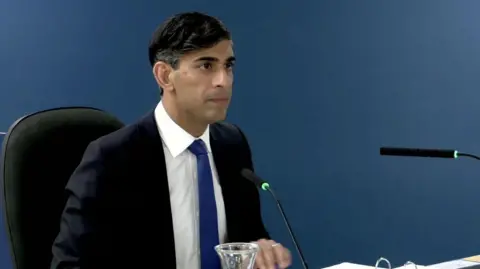 PA Media