Reading view

There are new articles available, click to refresh the page.

Golfer Rory McIlroy wins Sports Personality of the Year

McIlroy wins Sports Personality of the Year 2025

To play this video you need to enable JavaScript in your browser.

This video can not be played

Media caption,

Rory McIlroy crowned Sports Personality of the Year

Golfer Rory McIlroy has been voted BBC Sports Personality of the Year 2025 after clinching the career Grand Slam and playing a key role in Europe's Ryder Cup win.

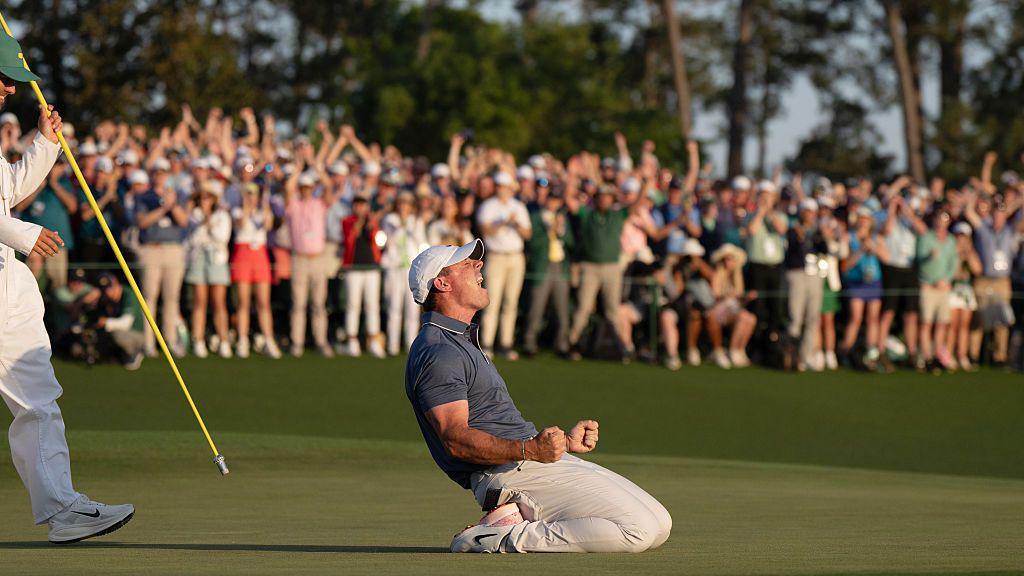
The 36-year-old Northern Irishman achieved golfing immortality in April when he won the Masters at Augusta National to complete the set of all four major trophies.

He became just the sixth man - and first European - to achieve the Slam, joining Americans Gene Sarazen, Ben Hogan, Jack Nicklaus and Tiger Woods, and South Africa's Gary Player, in accomplishing the feat.

Having won the US Open, The Open and US PGA Championship by 2014, McIlroy had to wait another 11 years to make his "dreams come true".

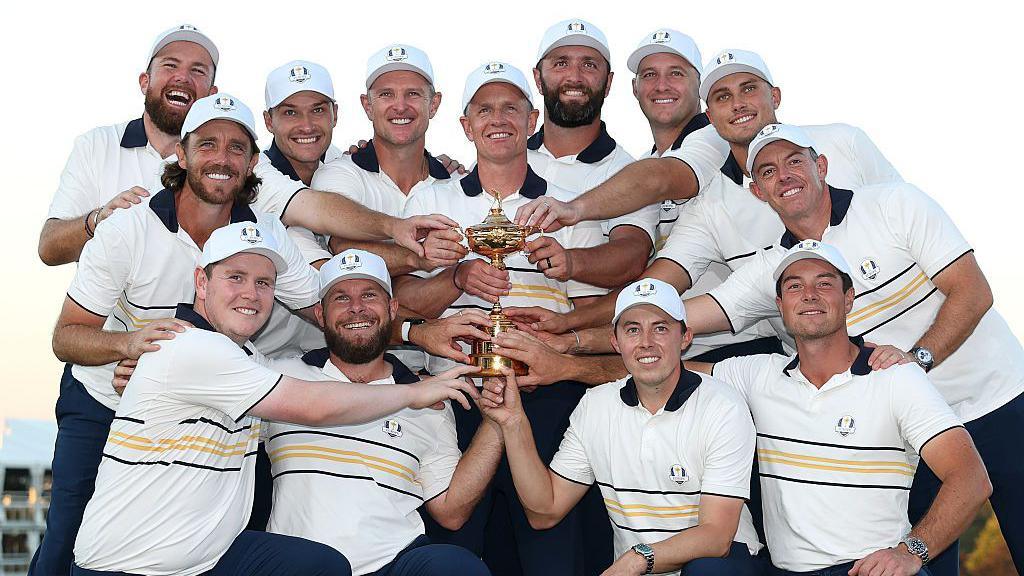
He then played a key role in Europe's first Ryder Cup win in the United States since 2012, contributing three-and-a-half points to his team's triumph.

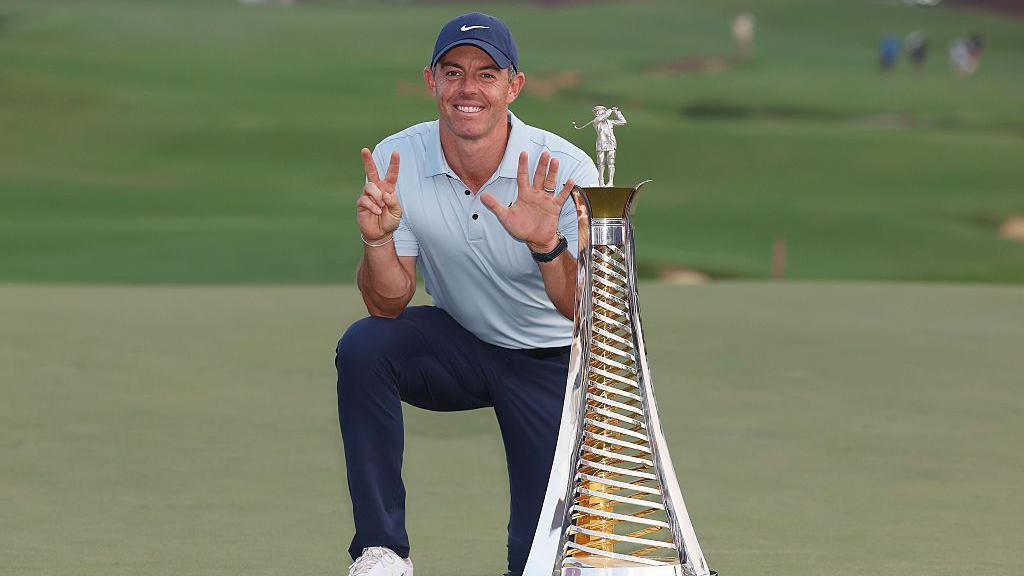
McIlroy also delighted his home crowd by winning the Irish Open for a second time, with further successes at the Players Championship and the AT&T Pebble Beach Pro-Am, before topping off a stellar year with his seventh Race to Dubai title.

"Wow. First of all, I would like to congratulate all of the other finalists. I know how much hard work and dedication it takes, so it is a pleasure to just be in this room. I feel truly honoured to just be a part of it," McIlroy said after receiving the award.

"2025 has been the year I made my dreams come true. From Augusta to the Ryder Cup and everything in between. It's the year dreams are made of."

England rugby union player Ellie Kildunne came second, with Formula 1 driver Lando Norris in third.

England forward Chloe Kelly, Lionesses goalkeeper Hannah Hampton and darts player Luke Littler were also shortlisted for the award by a panel of experts, with the winner decided by a public vote.

McIlroy is just the third golfer to win Sports Personality, after Dai Rees in 1957 and Nick Faldo in 1989.

The Holywood-born McIlroy is the third Northern Irishman to win the award, following boxer Barry McGuigan in 1985 and jockey Sir AP McCoy in 2010.

"I have a lot of people to thank. Firstly, the public, my family, my mum and my dad. They sacrificed so much for me. I wouldn't be here without them, so thank you," McIlroy said.

"My wife Erica and my daughter Poppy, they are what holds me together. My rock. They couldn't be here tonight but I can't wait to get back tomorrow and celebrate this with them. I love you.

"And to the BBC for hosting these awards. It has always been something growing up that I watched on TV.

"It was always a big part of the run-up to Christmas, so I am very honoured to get my hands on this trophy.

"Hopefully I can challenge to get it again next year."

Team Europe were voted the Team of the Year on Thursday after their Ryder Cup success, seeing off competition from England's Euro 2025-winning women's football team and England's Women's Rugby World Cup champions.

Image gallerySkip image gallery
  1. Rory McIlroy falls to the floor after winning a sudden death play-off round to win the Masters
    Image source, Getty Images
    Image caption,

    Rory McIlroy won his first Masters title to become the sixth man to complete the career Grand Slam
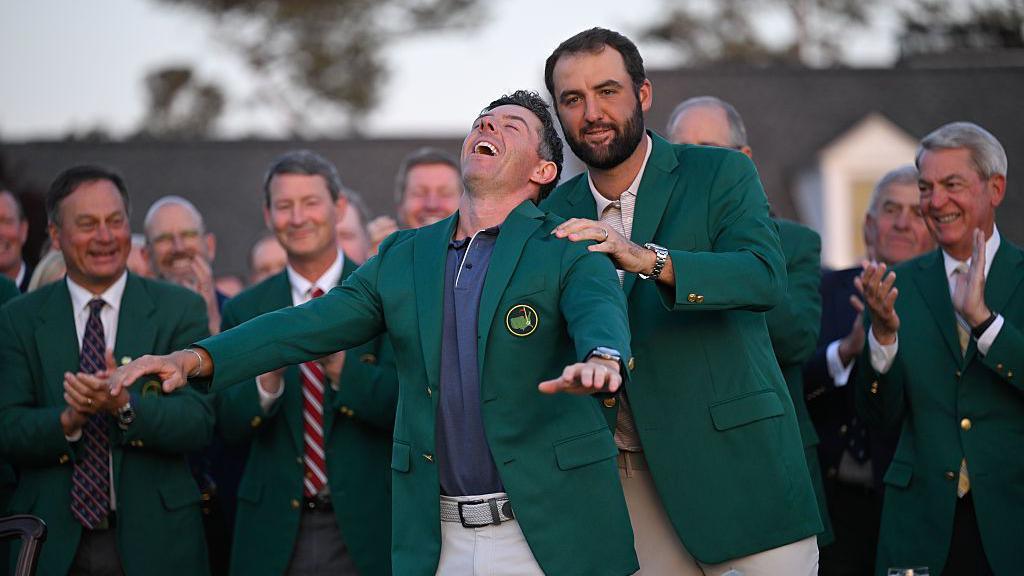
Slide 1 of 5, Rory McIlroy falls to the floor after winning a sudden death play-off round to win the Masters, Rory McIlroy won his first Masters title to become the sixth man to complete the career Grand Slam
End of image gallery

The year McIlroy's dreams came true

McIlroy's long wait to complete a career Grand Slam could not have concluded in a more dramatic fashion.

Having let a four-shot lead slip at the 2011 Masters, history threatened to repeat itself in April.

He held a two-shot lead going into the final round this time around, but memories of recent near-misses came flooding back when his advantage was wiped out on the first with a double bogey.

Three birdies in seven holes gave McIlroy a four-shot lead going into the back nine before he dropped four shots in as many holes from the 11th.

However, the drama was far from finished.

Having missed a putt in regulation to get his hands on the coveted green jacket, McIlroy was taken to a sudden-death play-off after his Ryder Cup team-mate Justin Rose birdied six of his final eight holes.

With the agony of past heartbreak flooding back, McIlroy held his nerve to birdie the first play-off hole and win his first Masters.

McIlroy let out a huge roar before collapsing to the ground and weeping tears of joy at the end of an extraordinary day of sporting theatre.

"A lot of pent-up emotion came out on the 18th green. A moment like that makes all the years and all the close calls worth it," said McIlroy.

At the Ryder Cup, McIlroy contributed three-and-a-half points from five matches as Europe won on American soil for the first time in 13 years.

The 36-year-old bore the brunt of verbal abuse from a hostile crowd throughout the event at Bethpage Black in New York - and hit out at "unacceptable and abusive behaviour" after his wife Erica was hit by a drink thrown by an American fan.

Having won six times in his eight Ryder Cup appearances, the world number two is being tipped to captain the side in the future.

"I would love to be the European team captain at some point," said McIlroy.

"But that will be when I'm not good enough to make the team, or I make way for the new generation to come along."

Ex-Nascar driver and family among seven killed in US plane crash

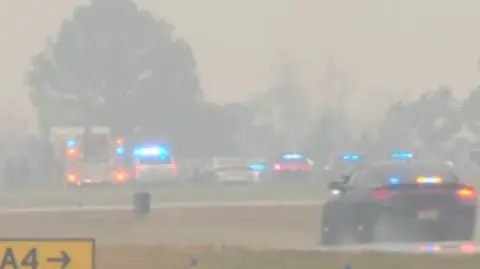
CBS Police car and ambulances near the crash siteCBS

A former Nascar driver is believed to be among seven people who have died in a plane crash at a regional airport in North Carolina, an official says.

The Cessna C550 aircraft is owned by a private company associated with Greg Biffle, a retired Nascar driver, CBS, the BBC's US partner, reported.

The small aircraft crashed while landing at Statesville Regional Airport around 10:20 local time (15:20GMT), aviation officials investigating the incident told reporters.

Congressman Rich Hudson of North Carolina appeared to confirm Biffle's death on X, writing that he was devastated by the loss of the racer, his wife Christina and their children.

"Greg was a great NASCAR champion who thrilled millions of fans. But he was an extraordinary person as well, and will be remembered for his service to others as much as for his fearlessness on the track," Hudson wrote, praising their aid work during hurricanes in North Carolina and Jamaica.

Professional baseball player Mitchell Garret wrote on Facebook that Biffle and his family were on their way to spend the afternoon with him.

"Unfortunately, I can confirm Greg Biffle, his wife Cristina, daughter Emma, and son Ryder were on that plane… because they were on their way to spend the afternoon with us," he wrote on Facebook. "We are devastated. I'm so sorry to share this."

Statesville Airport director John Ferguson described the aircraft as a corporate jet and said that it was already engulfed in flames when he arrived on the scene.

The business jet took off around 10:06 local time and was in the air briefly before the crash.

It crashed on the east end of the runway and authorities do not yet have information on the cause of the crash.

Statesville Airport will remain closed until further notice as crews clear debris off the runway, Mr Ferguson told reporters.

Officials did not provide any information about deaths or people aboard the aircraft during the media conference.

The National Transportation Safety Board, which is leading the investigation, said it was launching a go team to investigate the fatal crash. The team expects to arrive on scene on Thursday night.

The Statesville Regional Airport (KSVH) is owned by the City of Statesville, which is about 45 minutes north of Charlotte.

It also provides aviation facilities for Fortune 500 companies and several Nascar racing teams.

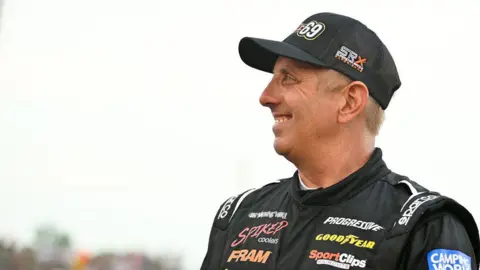
Getty Images Greg Biffle, driver of the #69, looks on from the front stretch before a heat race at a Camping World Superstar Racing Experience at I-55 Raceway on July 9, 2022 in Pevely, Missouri.Getty Images

Biffle, whose racing career spanned two decades, was named one of Nascar's 75 Greatest Drivers in 2023. The 55-year-old won 19 Cup Series races in the Xfinity Series and Craftsman Truck Series.

Known as The Biff, the Vancouver, Washington, native received national notice in 1995 when during that year's Nascar Winter Heat Series., according to his Nascar profile.

He quickly made a name for himself in the Craftsman Truck Series, winning the 1998 Rookie of Year award and the 2000 series championship.

He went on to be named 2001 Rookie of the Year in the Xfinity Series and to win the 2002 championship, becoming the first driver with championships in both the Xfinity Series and the Truck Series.

He also co-founded the organisation's Sand Outlaws Series. Although he scaled back on racing after 2016, he seemingly came out of retirement in 2019 for a one-off race at Texas Motor Speedway, which he won.

"Racing is racing," he told Nascar.com in 2021. "It's that adrenaline, you want to be better than the competition, you want to build a better piece and have a faster car. I just enjoy the competition."
Violence breaks out in Bangladesh after death of youth protest leader

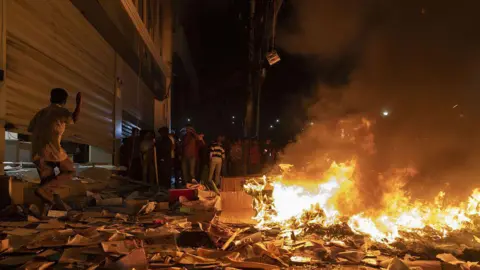
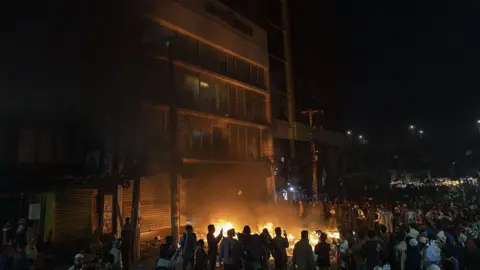
Getty Images A fire can be seen outside a building with a group of people standing behind itGetty Images

Violence has erupted in Bangladesh following the death of a prominent leader of the youth movement that ousted former prime minister Sheikh Hasina.

Sharif Osman Hadi was shot by masked attackers while leaving a mosque in Dhaka last week and died of his injuries on Thursday while being treated in Singapore.

The shooting came a day after Bangladeshi authorities announced a date for the first elections since the uprising in 2024, which Hadi had been planning to contest as an independent candidate.

As news of his death emerged on Thursday, hundreds of his supporters gathered in a square in the capital city to protest.

Later on, demonstrators vandalised the offices of Bangladesh's Prothom Ali and Daily Star newspapers, with one building partly set on fire.

"Hundreds of people have gathered here and carried out the attack," a police officer told BBC Bangla.

Troops were deployed to the scene, while firefighters rescued journalists trapped inside the building.

Hadi, 32, was a senior leader of the student protest group Inqilab Mancha and an outspoken critic of neighbouring India - where Hasina remains in self-imposed exile.

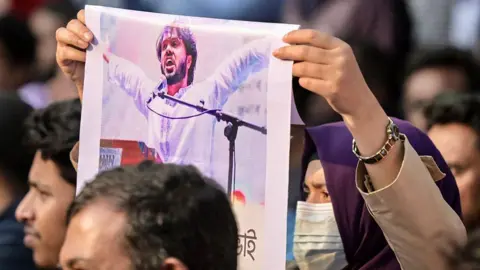
Getty Images A woman wearing a face mask holds up a photo of Sharif Osman Hadi, senior leader of the student protest group Inqilab ManchaGetty Images
Sharif Osman Hadi died while undergoing treatment in Singapore

Bangladeshi political parties have mourned his death and urged the interim government to bring the perpetrators to justice.

Nobel laureate Muhammad Yunus, who heads the caretaker government, called Hadi's death "an irreparable loss for the nation".

"The country's march toward democracy cannot be halted through fear, terror, or bloodshed," he said in a televised speech on Thursday.

The interim government declared a day of national mourning on Saturday.

Getty Images A fire can be seen in front of a building with a group of people stood around itGetty Images

Soon after Hadi was shot, Yunus said it was a premeditated attack and "the objective of the conspirators is to derail the election".

"No form of violence intended to disrupt the election will be tolerated," Yunus said. "The incident is a worrying development for the country's political landscape."

Investigations are ongoing and several people have been detained in connection to the shooting.

Hasina fled to India on 5 August last year, following weeks of student-led protests, bringing an end to 15 years of increasingly authoritarian rule.

In November, she was sentenced to death for crimes against humanity after being found guilty of allowing lethal force to be used against protesters, 1,400 of whom died during the unrest.

Democrats release latest batch of Epstein photos as justice department deadline looms

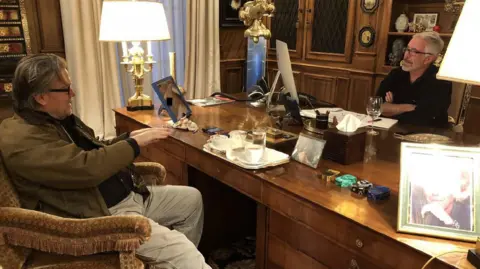
House Oversight Committee Steve Bannon sitting at an ornate desk across from Jeffrey Epstein in a fancy office room House Oversight Committee

The House Oversight Committee has released a batch of around 70 photos from the estate of late convicted sex offender Jeffrey Epstein.

It's the third such release from a tranche of over 95,000 photos the committee has acquired from Epstein's estate. It includes images of quotes from the book Lolita written across a woman's body, and redacted images of women's foreign passports.

It comes hours before the 19 December deadline for the Department of Justice to release all files related to its investigation into Epstein.

"These new images raise more questions about what exactly the Department of Justice has in its possession," said ranking member of the committee, Robert Garcia.

What's in the images released

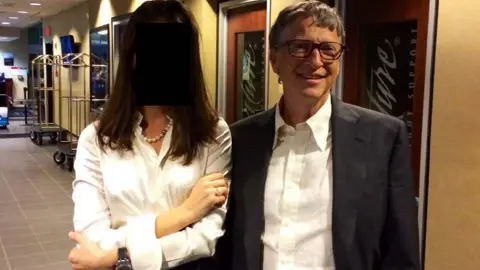
Some of the photos released on Thursday show Epstein speaking with professor and activist Noam Chomsky aboard a private plane; Bill Gates standing beside a woman whose face is redacted; Steve Bannon sitting at a desk across from Epstein, and former Alphabet president Sergey Brin at a dinner event.

These are the latest wealthy, powerful men to be seen in Epstein estate photos released by the House Oversight Committee - previously released photos also show US President Donald Trump and former president Bill Clinton, as well as film director Woody Allen, former US treasury secretary Larry Summers, attorney Alan Dershowitz, Andrew Mountbatton-Windsor, and others.

Appearing in the photos is not evidence of any wrongdoing, and many of the pictured men have said they were never involved in Epstein's illegal activity.

House Oversight Committee Bill Gates smiling and standing beside a woman whose face has been blacked outHouse Oversight Committee

In a statement accompanying the photo release, Democrats on the US House Oversight Committee said the Epstein estate did not provide context or timings for the pictures.

"Photos were selected to provide the public with transparency into a representative sample of the photos received from the estate, and to provide insights into Epstein's network and his extremely disturbing activities," the statement says.

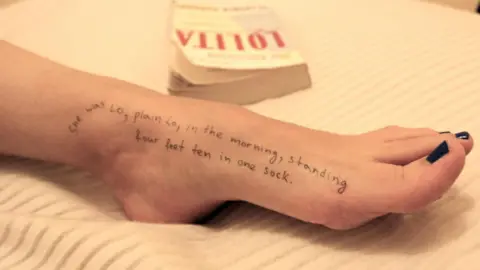
The release also includes several photos of quotes from the Vladimir Nabokov novel Lolita written in black ink across different parts of a woman's body, like her chest, foot, hipbone, and back. Lolita tells the story of a young girl who was groomed by a middle-aged literature professor.

One quote from the book written across a woman's chest reads, "Lo-lee-ta: the tip of the tongue taking a trip of three steps down the palate to tap, at three, on the teeth".

House Oversight Committee a woman's foot laying across a bed with a quote from Lolita written on it "She was Lo, plain Lo, in the morning, standing four feet ten in one sock" with the Lolita book in the backgroundHouse Oversight Committee

There are also a number of photos of female passports and identification documents from countries around the world, including Lithuania, Russia, the Czech Republic, and Ukraine.

Most of the information on the documents, like names and birth dates, is redacted but the House Oversight Committee said in a press release that the passports belong to "women whom Jeffrey Epstein and his conspirators were engaging".

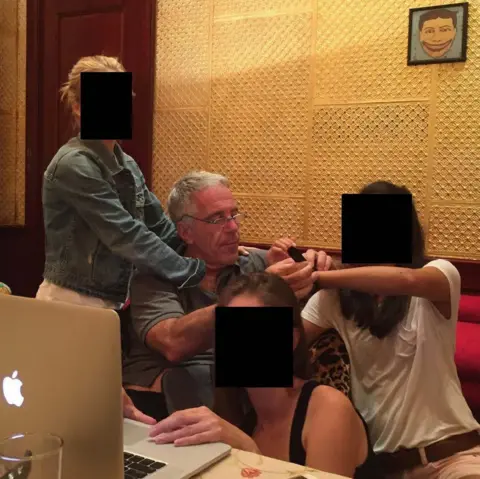
Another photo shows Epstein sitting at a desk closely surrounded by three female figures whose faces have been redacted - one has her hand on Epstein's chest under his shirt, and another is crouching to look at a nearby laptop. Epstein appears to be helping the third put on a bracelet.

House Oversight Committee Epstein sitting at a desk closely surrounded by three female figures - whose faces have been redacted - one of whom has her hand on Epstein's chest under his shirt, and another who is crouching to look at a laptop.House Oversight Committee

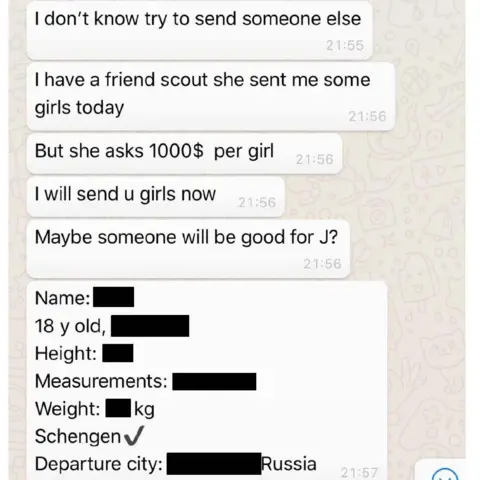
Another image released is a screenshot of text messages from an unknown person who says they have been sent "some girls" and are asking for "$1000 per girl".

House Oversight Committee screenshot of a series of text messages in which someone says "i have a friend scout she sent me some girls today" and "but she asks 1000$ per girl" and "i will send you girls now" and "maybe someone will be good for J?" House Oversight Committee

Photo release comes ahead of DOJ deadline

The committee has thousands of images in its possession from the Epstein estate, which are "both graphic and mundane", its statement on Thursday explained.

The House Oversight Committee first subpoenaed the estate of Epstein, who died in a New York prison in 2019 while awaiting trial on allegations of sex trafficking, in August.

The photos and files the Epstein estate gave to the committee are separate from what is largely referred to as "the Epstein files". Those are documents within the justice department's possession related to its own investigation into Epstein.

Under the Epstein Files Transparency Act, which President Trump signed into law last month, the DOJ has until 19 December to release its files. The extent of what's contained in the DOJ's files is unknown, and it's likely that much of the content will be heavily redacted, similar to House Oversight Committee materials.

UK names Christian Turner as ambassador to US, replacing Peter Mandelson

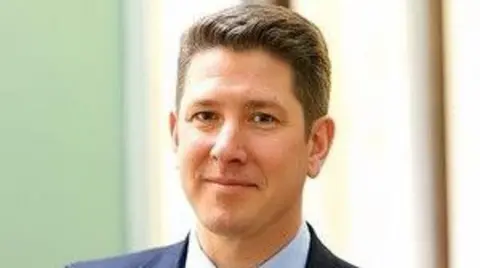
FCDO A headshot of Christian TurnerFCDO

The UK has named Christian Turner as its new ambassador to the US, Downing Street has confirmed.

Turner has spent a nearly 30-year career working across Whitehall and the Foreign Office.

He will now become the man tasked by Prime Minister Sir Keir Starmer with building links to the Trump administration.

The previous ambassador Peter Mandelson was sacked by Starmer after evidence, including emails and photos emerged, showing his continued association with the paedophile Jeffery Epstein.

Lord Mandelson has repeatedly said he regrets his relationship with Epstein, who died in jail in 2019 while awaiting trial on sex trafficking offences.

Turner said he was "honoured" to be nominated for the role.

"At a pivotal time for the transatlantic relationship, I look forward to working with President Trump's administration, and leaders in Congress, business and society to strengthen that bond in the years ahead," he added.

In a statement released by the Foreign Office, Starmer said: "The United Kingdom and United States have a very special relationship, and Christian's extensive experience as an outstanding diplomat will support this uniquely close bond and ensure it continues to flourish."

Turner's previous roles include political director at the Foreign Office, and British High Commissioner to Pakistan. He also previously worked in 10 Downing Street as Private Secretary to the Prime Minister.

Before entering government, he worked in television documentaries.

HR exec in viral Coldplay clip speaks of abuse, threats and trying to find a new job

Awkward moment for couple on screen at Coldplay gig

An HR executive caught on the big screen at a Coldplay concert embracing her boss has described how "the harassment has never ended" following the viral moment.

Kristin Cabot has spoken publicly for the first time about the video in which she was seen hugging Andy Byron, then-CEO of tech company Astronomer, at the show in July, before they abruptly ducked and hid from the camera.

Ms Cabot, 53, who was the company's chief people officer, stepped down following Mr Byron's resignation after the firm announced he would be placed on leave and investigated.

Speaking to the Times, Ms Cabot said she has been looking for another job but been told she is "unemployable".

The video, which showed the pair swaying to music at the concert in Boston, Massachusetts, before trying to hide, quickly went viral, after Coldplay's lead singer Chris Martin said to the crowd: "Either they're having an affair, or they're just very shy."

It was watched millions of times, shared widely across platforms, and the pair became the butt of many jokes. Within a few days, the internet had moved on, but for Ms Cabot, her ordeal had only just begun.

"I became a meme, I was the most maligned HR manager in HR history," Ms Cabot told The Times.

Ms Cabot was separated from her husband, who was also at the concert.

In a separate interview with the New York Times, she explained she was not in a sexual relationship with Mr Byron and the pair had never kissed before that night - although she admits to having had a "crush" on her boss.

"I made a bad decision and had a couple of High Noons and danced and acted inappropriately with my boss," she said, adding she "took accountability and I gave up my career for that".

As to why she chose to speak out now, Ms Cabot told the Times "...it's not over for me, and it's not over for my kids. The harassment never ended".

Her two children are too embarrassed to be picked up from school by their mother, she said, or to go to sports games.

"They're mad at me. And they can be mad at me for the rest of their lives - I have to take that."

Ms Cabot wondered whether Mr Byron had received the same level of abuse throughout the ordeal, the Times reported.

"I think as a woman, as women always do, I took the bulk of the abuse. People would say things like I was a 'gold-digger' or I 'slept my way to the top', which just couldn't be further from reality," she said.

"I worked so hard to dispel that all my life and here I was being accused of it."

At the peak of the scandal, her appearance, body, face and clothes were scrutinised and picked apart, with many high-profile celebrities including Whoopi Golderg piling on. Gwyneth Paltrow, who was once married to Chris Martin, even took part in a tongue-in-cheek promotional video for Astronomer.

Ms Cabot told the New York Times she received threatening messages after the incident, including from a person who said they knew where she shopped and wrote: "I'm coming for you".

She said "my kids were afraid that I was going to die and they were going to die", and that her family began to dread public spaces and social events.

Women were the cruellest critics, she told the New York Times, with all of the in-person bullying, plus most of the phone calls and messages from women.

Her private details were put online (known as doxxing) and for weeks she was bombarded with up to 600 calls a day, the New York Times reported. The paparazzi outside her house was like a "parade" and there were 50 or 60 death threats, she said.

Things are starting to improve, though. Ms Cabot has found therapists for her children and she has started leaving the house to play tennis, she said.

She said that while she and Mr Byron kept in touch for a short while, exchanging "crisis management advice", they decided "speaking with each other was going to make it too hard for everyone to move on and heal," and have not spoken since.

For his part, Mr Byron has not spoken publicly.

A fake statement purporting to be from him, complete with Coldplay lyrics, went viral after the concert and Astronomer had to release its own to say that he had not made any comment.

"Astronomer is committed to the values and culture that have guided us since our founding," the statement read. "Our leaders are expected to set the standard in both conduct and accountability."

It later said: "Andy Byron has tendered his resignation, and the Board of Directors has accepted."

The BBC has tried to contact Andy Byron, via his former employer Astronomer, for comment.

What the latest flu figures tell us about the spread of the virus

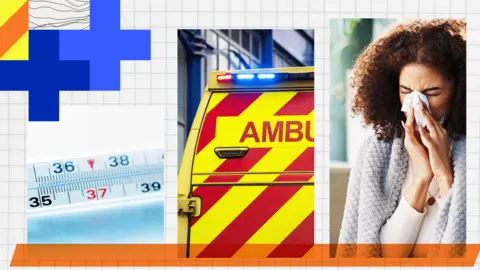
Getty Images A graphic designed image showing an image of part of an ambulance with yellow and red stripes, a tape measure and a person blowing their nose, with 'pharmacy' style crosses overlaid in the top left corner and an orange stripe over the bottom.Getty Images

The NHS remains on high alert over flu, health bosses say, but there are clear signs the surge in the virus has come to an end for now at least.

Community spread appears to have stabilised, the UK Health Security Agency says.

Meanwhile, the rise in hospital cases has slowed. And with just over 3,000 patients in hospital in England with the virus, the dire prediction by NHS chief executive Sir Jim Mackay of "between 5,000 and 8,000" cases has not materialised.

How serious then is this flu season so far, and how does it really compare to previous outbreaks of the virus?

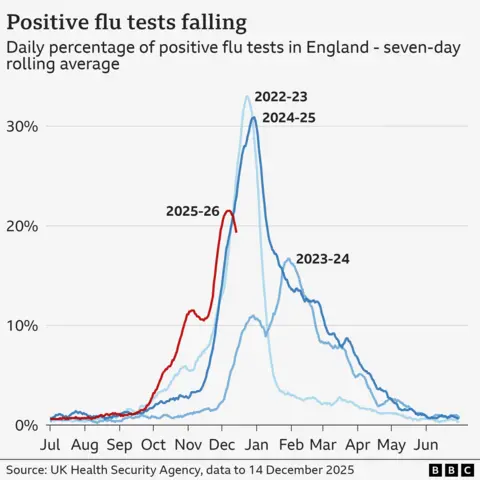
Line chart showing that positive tests for flu fell in the latest week to 14 December, down from over 21% in the previous week to just above 19%. In previous bad flu seasons in 2022 and 2024 they were at around 25% and 23% respectively at the same time. The chart shows that flu cases this year started rising earlier than in 2023 and 2024.

The major difference between the 2025 flu season and the last three years is that the virus started spreading a few weeks earlier than normal.

When someone goes to their GP or hospital with flu-like symptoms, they can be swabbed and tested for influenza, Covid, RSV and other viruses.

UKHSA then records the percentage of those tests that come back positive for flu.

Figures had been rising quickly over the autumn and at the start of winter.

But last week the spread of the virus appears to have stabilised at a medium level, UKHSA says.

It is too early to say whether this marks the start of the peak. Flu is unpredictable, a lull can be followed by another surge.

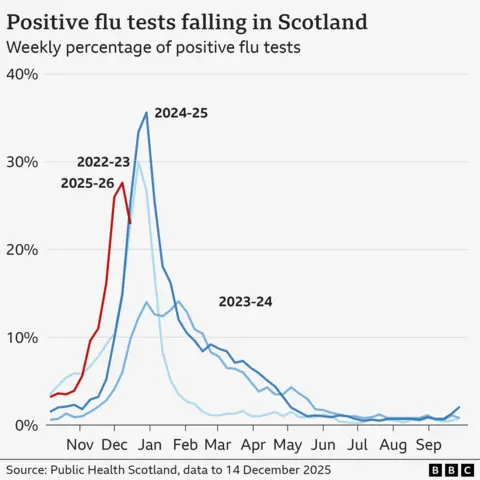
Line chart showing that positive tests for flu fell from 28% to 23% in the week to 14 December in Scotland. Despite the fall, the percentage of positive tests is similar to the previous bad flu seasons in 2022 and 2024 when they were at 23% and 25% at the same time. The chart shows that flu cases this year started rising earlier than in 2023 and 2024.

The picture across the four nations of the UK is similar.

Some virologists have linked the earlier flu season this year to the type of virus that is circulating - known as H3N2.

Historically, seasons dominated by that strain tend to be more severe, with larger numbers of hospitalisations in older people, in particular.

H3N2 has not been the main form of flu detected in the UK for three years, which may mean that less immunity has been built up in the population.

Scientists also spotted a further shift in the genetic makeup of the virus over the summer.

This seems to have given the virus a head-start in the autumn.

Can we call it super-flu?

The name 'super-flu' has been used by the NHS to describe this latest outbreak.

But that is not a medical term, and it does not mean the virus itself has suddenly become more dangerous or harder to treat.

"It is misleading and a bit frightening to call it super flu; it's just a flu variant that is clearly a little bit more infectious than normal," says Prof Lawrence Young, professor of molecular oncology at the University of Warwick.

"What we're seeing is a flu season that's perhaps two to three weeks earlier than normal."

Separately, the NHS also records the number of the sickest patients in hospital with flu over the winter. Trends in hospital data tends to lag behind community spread as it takes some time for people to get ill enough to seek hospital care.

Figures for last week showed the number hit 3,140, an 18% rise on the week before. But that was after a 55% jump in the week before that.

Although the national figure masks what is happening across different regions with some areas seeing numbers fall and others still seeing steep rises.

Those over 85-years-old are five times more likely to be hospitalised than the general population.

Comparing outbreaks over the decades is difficult because testing has improved in recent years, so a rise in hospital admissions over time might also reflect better detection.

But estimated figures on flu deaths shows that some winters have been particularly serious over the past 20 years.

In 2017-18, for example, it's thought 25,000 people died from the virus in England, with care homes and older adults most affected.

That year an unusual form of the influenza B virus started circulating and the 'beast from the east' cold snap bought freezing temperatures to the UK, creating the ideal environment for the disease to spread.

Just three years before that, in 2014-15, modelling by scientists at UKHSA estimated that 35,000 had died, making it one of the most lethal flu seasons in decades.

Again, that was blamed on an outbreak of the H3N2 form of the virus and a seasonal vaccine that was not well matched to the exact form of the disease circulating.

There is nothing in the data so far which suggests anything comparable in 2025, but we won't know for sure until the first estimates for this season's influenza deaths are published in the new year.

The message coming from doctors and the NHS is for millions of people to continue to come forward for a flu vaccine.

Even though the genetic make-up of the virus has shifted, the main jab is still thought to offer an effective level of protection, particularly against ending up in hospital with severe disease.

The flu vaccine is free on the NHS for those over 65-years-old, young children, pregnant women, those with certain health conditions, carers, and front-line health and social care workers.

All other adults can get the same vaccine for between £15 and £25 from high street pharmacists.

The latest data shows that more than 70% of older people and care home residents had taken up the offer of a free jab by 14 December.

But vaccination rates in some other groups are much lower.

Only 39% of all front-line NHS workers in England have been vaccinated so far this year.

Unacceptable waits for adult gender clinic appointments, review says

Getty Images via 24/7Studio A person in a pale green hospital gown sits on a hsopital bed, made up with a lilac bedspread, pillow case and white blanket. They are facing away from the camera towards the window, with a gurney left of them. Getty Images via 24/7Studio

Waiting times for adult gender clinics are "unacceptably long" with patients waiting an average of five years and seven months for a first appointment, according to a review of services.

Dr David Levy, a cancer specialist and former medical director, visited all nine gender clinics in England as part of his inquiry.

He said services for adults seeking gender care were "falling down" with long waits, inconsistent assessments caused by a lack of shared policies across the clinics, and a lack of data about the results of the care people received.

His report, published by NHS England, said unless improvements were made some patients would end up waiting 15 years for a first appointment.

The nine Gender Dysphoria Clinics (GDCs) offer ongoing assessments and treatment for adults who are distressed about a mismatch between their biological sex and the gender they identify with. They can provide medication to patients, including hormones, but they do not carry out surgery.

Dr Levy described the waiting times for patients to be seen at these clinics as "shocking" and said the "distress some patients experience" is often "exacerbated by unclear waiting times and a lack of communication".

He found that the number of referrals to the clinics had more than doubled from 4,331 in 2021/22 to 9,985 in 2024/25, with around 40,000 people waiting for a first appointment by March 2025.

However, the review said it was impossible to get an accurate picture of the numbers waiting as each clinic had its own list, and some people would have been referred to more than one service, either by themselves or by GPs.

The clinics reported that "there have been significant changes" in the age of people referred to them. Previously patients tended to be older, but the "majority of referrals are now 18 to 25 years old".

The review said the clinics found "the new, younger cohort of patients has a higher proportion of additional neurodevelopmental conditions", such as autism spectrum disorder and a range of other conditions, including mental health issues and trauma and abuse during childhood.

The review said about a quarter of referrals were for 17 to 19 years-olds. Some had transferred from children's services, including many who had "aged out" because long waits meant they would not be seen before their 18th birthday.

Criticism of the Tavistock clinic, which used to run the only children's gender services in England, led to its closure in 2023. A number of new multi-disciplinary children's gender clinics are being set up.

The changes followed recommendations made by the Cass review into children's gender care. Its final report, published in April 2024, also called for a review of adult gender services.

Dr Levy who began his review in July 2024, described carrying it out as a "minefield you have to walk through," but said the clinics had been "very good" and that they "talked about this as an improvement journey."

"This is about getting things better for the patients, getting things better for the staff," he said.

The report found a wide variation in services across the country and said while more money had been put in to help them recruit extra staff, that was not always reflected in an increase in the workforce.

It also said some clinics did "little or no improvement work or knowledge-sharing".

Health and Social Care Secretary Wes Streeting welcomed the report, and said that further services would be commissioned, self-referrals would be stopped and existing services would be improved.

Trans rights organisation, TransActual, welcomed recommendations "for a more streamlined, patient-centred care pathway", but raised concerns about ending self-referrals and said requiring a first assessment to be done by a senior clinician "risks unnecessarily hampering efforts to reduce waiting times".

Translucent, a transgender advocacy group, said the report makes clear that "trans healthcare is in crisis" and called for more trained trans-people to be involved in designing and running gender care services.

Sex Matters, a gender critical human rights organisation, said the review failed to consider whether the treatments offered by the clinics were effective. CEO Maya Forstater said: "It is a wasted opportunity to rethink a failed treatment model."

Dr Levy will now chair a new national improvement programme for adult gender services, starting in 2026.

Wiz Khalifa sentenced to nine months jail in Romania for smoking cannabis on stage

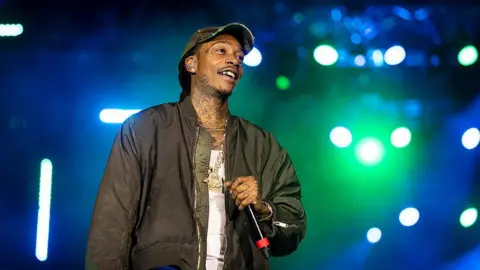
Getty Images Wiz Khalifa wears a vest and jacket with a big chain on stage at Loud Park  in Mumbai Getty Images

A Romanian court has sentenced Wiz Khalifa to nine months in prison for smoking cannabis on stage.

The American rapper, real name Thomaz Cameron Jibril, admitted to smoking a joint during his performance at the Beach, Please! festival last year in Costinesti.

A Romanian appeals court overturned an earlier fine of 3,600 Romanian lei (£619; $829) for drug possession and ruled the rapper must serve the sentence in custody.

However he was sentenced in abstentia, and it is unclear if Jibril is even in Romania - he was last seen on Tuesday, performing with Gunna in California.

The BBC has approached the ten-time Grammy-nominated artist for comment.

Police briefly held and questioned Jibril after the concert on 13 July 2024, and prosecutors later charged him with possession of "risk drugs" for personal use.

Romanian investigators said he was in possession of more than 18 grams of cannabis and consumed an additional amount on stage.

In a written decision, the Constanța Court of Appeal judges said they overturned the original fine because the artist had sent "a message of normalisation of illegal conduct" and thereby encouraged "drug use among young people".

Calling it an "ostentatious act", the judges said the rapper was "a music performer, on the stage of a music festival well known among young people" who "possessed and consumed, in front of a large audience predominantly made up of very young people, an artisanal cigarette".

Jabril said in a post on X a day after the incident that he did not mean to offend the country.

"They [the authorities] were very respectful and let me go. I'll be back soon. But without a big ass joint next time."

Romanian criminologist Vlad Zaha told BBC News that there was little-to-no chance of the US extraditing Jibril, and described the sentence as "unusually harsh".

"Given the defendant's wealth and connections, Romania's lack of real negotiating power on extradition, and the legal and political status of cannabis in the US, it is highly unlikely that Wiz Khalifa will be sent to serve a prison sentence in Constanța, even though a formal judicial request will be submitted to the United States," Mr Zaha said.

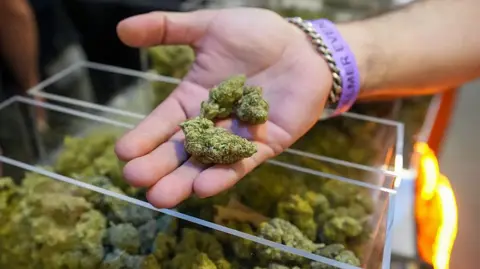
The artist, known for songs like Black and Yellow, See You Again and Young, Wild & Free, is often pictured smoking on his social media and founded his own marijuana brand in 2016.

Cannabis is legal recreational and medical use in some US states, but remains illegal under federal law.

UK names Christian Turner as US ambassador, replacing Peter Mandelson

FCDO A headshot of Christian TurnerFCDO

The UK has named Christian Turner as its new ambassador to the US, Downing Street has confirmed.

Turner has spent a nearly 30-year career working across Whitehall and the Foreign Office.

He will now become the man tasked by Prime Minister Sir Keir Starmer with building links to the Trump administration.

The previous ambassador Peter Mandelson was sacked by Starmer after evidence, including emails and photos emerged, showing his continued association with the paedophile Jeffery Epstein.

Lord Mandelson has repeatedly said he regrets his relationship with Epstein, who died in jail in 2019 while awaiting trial on sex trafficking offences.

Turner said he was "honoured" to be nominated for the role.

"At a pivotal time for the transatlantic relationship, I look forward to working with President Trump's administration, and leaders in Congress, business and society to strengthen that bond in the years ahead," he added.

In a statement released by the Foreign Office, Starmer said: "The United Kingdom and United States have a very special relationship, and Christian's extensive experience as an outstanding diplomat will support this uniquely close bond and ensure it continues to flourish."

Turner's previous roles include political director at the Foreign Office, and British High Commissioner to Pakistan. He also previously worked in 10 Downing Street as Private Secretary to the Prime Minister.

Before entering government, he worked in television documentaries.

Zelensky gives stark warning as EU leaders decide on Russia's frozen assets

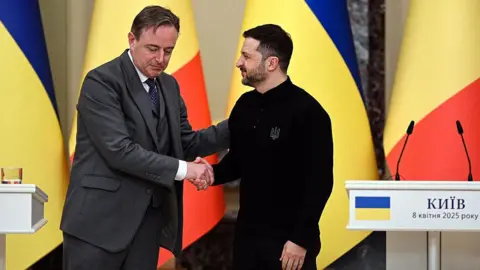
Ukrinform/NurPhoto Two men - one in a three-piece suit in grey, the other in black stand in front of colourful flagsUkrinform/NurPhoto
Belgian Prime Minister Bart De Wever is yet to be convinced that the money held in Belgium should be loaned to Ukraine (file pic)

European Union leaders begin two days of talks in Brussels with a momentous decision to be taken on whether to loan tens of billions of euros in frozen Russian assets to Ukraine to fund its military and economic needs.

Most of Russia's €210bn (£185bn; $245bn) worth of assets in the EU are held by Belgium-based organisation Euroclear, and so far Belgium and some other members of the bloc have said they are opposed to using the cash.

Without a boost in funding, Ukraine's finances are set to run dry in a matter of months.

One European government official described being "cautiously optimistic, not overly optimistic" that a deal would be agreed. Russia has warned the EU against using its money.

It has filed a lawsuit against Euroclear in a Moscow court in a bid to get its money back.

The Brussels summit comes at a pivotal moment.

US President Donald Trump has said a deal to end the war - which began with Russia's full-scale invasion of Ukraine in February 2022 - is "closer now than we have been ever".

Although Russia has not responded to the latest peace proposals, the Kremlin has stressed that plans for a European-led multinational force for Ukraine supported by the US would not be acceptable.

President Vladimir Putin made his feelings towards Europe clear on Wednesday, when he said the continent was in a state of "total degradation" and "European piglets" - a derogatory description of Ukraine's European allies - were hoping to profit from Russia's collapse.

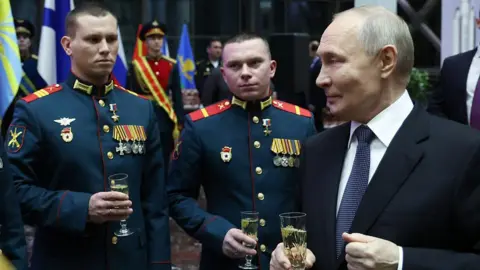
Alexander KAZAKOV/POOL/AFP A man with a glass stands on the right of two men in uniformAlexander KAZAKOV/POOL/AFP
Those in favour of loaning Ukraine the money believe it will help deter Putin from continuing the war

The European Commission - the EU's executive arm - has proposed loaning Kyiv about €90bn (£79bn) over the next two years - out of the €210bn of Russian assets sitting in Europe.

That is about two-thirds of the €137bn that Kyiv is thought to need to get through 2026 and 2027.

Until now the EU has handed Ukraine the interest generated by the cash but not the cash itself.

"This is a crunch time for Ukraine to keep fighting for the next year," a Finnish government official told the BBC. "There are of course peace negotiations but this gives Ukraine leverage to say 'we're not desperate and we have the funds to continue fighting'."

Commission chief Ursula von der Leyen says it will also ramp up the cost of war for Russia.

Russia's frozen assets are not the only option on the table for EU leaders. Another idea, backed by Belgium, is based on the EU borrowing the money on the international markets.

However, that would require a unanimous vote and Hungary's Viktor Orban has made it clear he will not allow any more EU money to help Ukraine.

For Ukraine, the hours ahead are significant and President Volodymyr Zelensky is expected to attend the EU summit.

Ahead of the Brussels meeting, EU leaders were keen to stress the momentous nature of the decision.

"We know the urgency. It is acute. We all feel it. We all see it," von der Leyen told the European Parliament.

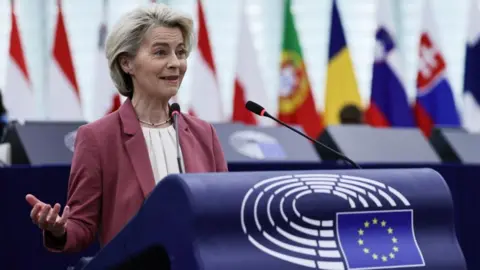
EPA European Commission President Ursula von der Leyen speaks during a debate on 'Preparation of the European Council meeting of 18-19 DecemberEPA
Ursula von der Leyen told the European Parliament that two choices were on the table for EU leaders

German Chancellor Friedrich Merz has played a leading role in pushing for the Russian assets to be used, telling the Bundestag on the eve of the summit it was about sending a "clear signal" to Moscow that continuing the war was pointless.

EU officials are confident they have a sound legal basis to use the frozen Russian assets, but so far Belgian Prime Minister Bart De Wever remains unconvinced.

His Defence Minister Theo Francken warned ahead of the talks that it would be a big mistake to loan the Euroclear cash.

Hungary is seen as the biggest opponent of the move and, ahead of the summit, Prime Minister Orban and his entourage even suggested that the frozen assets plan had been removed from the summit agenda. A European Commission official stressed that was not the case and it would be a matter for the 27 member states at the summit.

Slovakia's Robert Fico has also opposed using the Russian assets, if it means the money being used to procure weapons rather than for reconstruction needs.

When the pivotal vote does finally take place, it will require a majority of about two-thirds of member states to go through. Whatever happens, European Council President António Costa has promised not to go over the heads of the Belgians.

"We're not going to vote against Belgium," he told Belgian public broadcaster RTBF. "We'll continue to work very intensively with the Belgian government because we don't want to approve something that might not be acceptable for Belgium."

Belgium will also be aware that ratings agency Fitch has placed Euroclear on a negative watch, partly because of "low" legal risks to its balance sheet from the European Commission's plans to use the Russian assets. Euroclear's chief executive has also warned against the plan.

"There are many hiccups and obstacles of course still on the way. We have to find a way to respond to Belgium's worries," the Finnish official added. "We are on the same side as Belgium. We will find a solution together to make sure all the risks are checked as much as they can be checked."

However, Belgium is not the only country to have doubts, and a majority is not guaranteed.

Italian Prime Minister Giorgia Meloni has told Italian MPs she will endorse the deal "if the legal basis is solid".

"If the legal basis for this initiative were not solid, we would be handing Russia its first real victory since the beginning of this conflict."

Malta, Bulgaria and the Czech Republic are also said to be unconvinced by the controversial proposals.

If the deal is passed and the Russian assets are given to Ukraine, the worst-case scenario for Belgium would be one in which a court would order it to hand the money back to Russia.

Some countries have said they would be prepared to provide billions of euros in financial guarantees, but Belgium will want to see the numbers add up.

At any rate, Commission officials are confident that the only way for Russia to get it back would be by paying reparations to Ukraine - at which point Ukraine would hand its "reparations loan" back to the EU.

Will pre-Christmas interest rate cut be enough to boost UK economy next year?

Bank of England governor 'encouraged' by falling inflation

The future of the economy can sometimes be seen in minor gestures of a Bank of England governor, such as the arch of his eyebrows. So what to make of Andrew Bailey sporting a rather exuberant festive tie full of Christmas trees at the moment he delivered his so-called "Santa cut"?

It probably means nothing. Just maybe it is a sign that the timing and messaging behind this cut is designed to pump life into a "subdued" economy.

It was a narrow decision, with the governor as the swing voter after he said the UK had "passed the peak of inflation", and the target of 2% now in sight in April rather than early 2027.

Mr Bailey was at pains to say the direction of travel next year remained cuts, but that decisions would now be a closer call.

"We're going to come back to target sooner than we thought. So that's encouraging. All of this is very encouraging, and for me certainly, you know, it was a strong basis to cut today," he said.

"Looking forwards, I do think we'll continue to have something of a gradual downward path... the calls do get closer."

There has been a debate on the Monetary Policy Committee about what a normal level of interest would be, with some members seeing that as low as 3%. Markets interpreted the deliberations of the committee as meaning just two further cuts next year.

Much is up in the air, however, about what the committee said was a "lacklustre" economy, that they forecast is not growing in the current quarter.

The uncertainty around the Budget has now lifted, but businesses told the Bank there had been no rebound yet. The Leader of the Opposition, Kemi Badenoch, said that the cuts showed the economy was on "life support" and rate cuts were "CPR".

Governor Bailey said the Budget measures aimed at containing inflation had helped the Bank's decision to lower interest rates.

"It's part of the reason I can be more confident inflation is going to come down sooner," he said.

The governor has also identified an unusually high rate of savings as holding back the economy, driven by a lack of consumer confidence among older savers in particular. Rate cuts mechanically lower the incentive to save, and help spending.

He said he didn't want to be "judgemental" about how much people save, but that it was true "how confident and cautious" people feel about the global and local economy does affect savings.

More economic policy stability, lower inflation and lower interest rates should help the economy gain some new momentum in the new year. It certainly needs it.

But it might take a lot more for the much-needed jolt of confidence and festive spirit to spread across the economy.

Children hurt in Manchester Arena bombing to get £20m in payouts

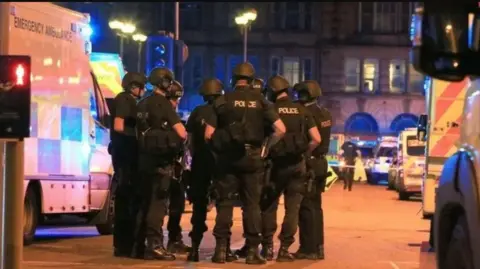
PA Media Armed police officers at the scene of the Manchester Arena attack in May 2017PA Media
A public inquiry into the bombing found chances to stop the attack had been missed

Almost £20m is to be paid out to children injured in the Manchester Arena bombing, a judge has ruled.

Amounts ranging from £11.4m to £2,770 were agreed at a hearing at the Manchester Civil Courts of Justice for 16 people, who were all aged under 16 at the time of the attack.

Some suffered "catastrophic" and life changing injuries while others suffered severe psychological damage after suicide bomber Salman Abedi detonated a homemade bomb after a concert at the venue on 22 May 2017, the court heard.

The damages will be paid by venue manager SMG Europe Holdings, Showsec International Ltd, who provided crowd management, Greater Manchester Police (GMP) and British Transport Police (BTP).

Twenty two people died and hundreds more were injured in the blast after an Ariana Grande concert.

A public inquiry into the bombing, led by Sir John Saunders, later found that chances to stop the attack had been missed along with "serious shortcomings" in security and individual failings.

Judge Nigel Bird approved the 16 claims, agreed between their lawyers and the defendants, as they all involved children or those without mental capacity. A court order bans identifying any of the 16 or their families.

It is understood following the hearing, claims by another 352 people, all adults deemed to have capacity, including the families of the 22 who lost loved ones, will now be agreed between lawyers for the defendants and the claimants.

As those agreements have been made out-of-court, no details of any public money to be paid out by the public bodies - BTP and GMP - will be made public.

Each of the four organisations has apologised to the bereaved families and to the survivors, lawyers for the claimants said, and have acknowledged their failures.

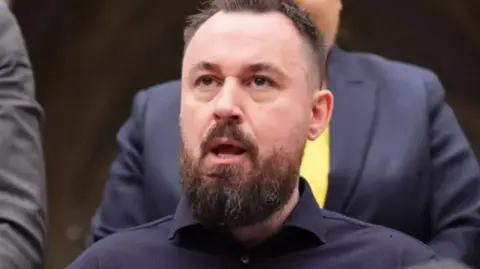
PA Media Martin Hibbert sits speaking. A microphone with a fluffy cover is in the foreground. People in suits stand behind him.PA Media
Survivor Martin Hibbert has been a prominent advocate for the victims of the attack

Judge Bird told the hearing: "Each of these cases has a common link, that is injuries and loss suffered, arising out of a single and unimaginable act of terrorism committed on the evening of May 22 2017 at the end of a concert attended by very many young people and their families.

"Twenty-two innocent lives were lost and and the lives of countless others impacted.

"The love and care a parent gives to an injured child is beyond monetary value."

The judge paid tribute to the "courage, dedication and fortitude" of the families involved in each case.

He added: "Each, through their quiet determination, has brought about promises of change in the hope that in the future, other families need not go through what they have been through."

After the hearing, a joint statement was issued from the legal teams at Hudgell Solicitors, Slater & Gordon and Broudie Jackson Canter, the three lead firms representing the claimants.

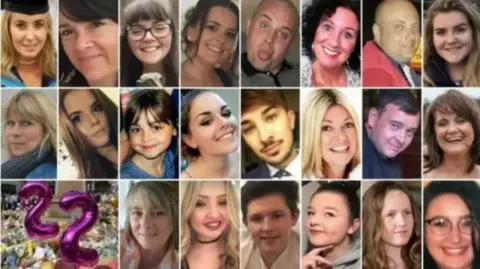
Family handouts A photograph of each victim who was killed in the Manchester Arena bombing has been included in a collage. All the photographs have been released by their families. In the bottom left-hand corner is a picture of the tributes including flowers and balloons that were left in the city centre shortly after the attack.Family handouts
Twenty-two people were killed in the 2017 bombing

The statement said: "This is not a day of celebration. It is a moment to acknowledge the mistakes that were made and the unimaginable suffering our clients have endured over the past eight-and-a-half years.

"Their strength and resilience have been extraordinary, and without that, we would not have reached this settlement.

"We now expect all parties to honour their commitment to do what they can to prevent those same mistakes from happening again.

"It has been a privilege to work on behalf of our courageous clients. We wish them only peace and strength as they look to the future."

Family handout Black and white image of Martyn Hett with black hair and stubble wearing a black long sleeve top.Family handout
Martyn's Law is named after Martyn Hett, who was among 22 people killed

Martyn's Law, named in memory of victim Martyn Hett, 29, has since been brought in to better protect public place from terror attacks - stipulating a range of extra safety measures large venues must undertake.

The public inquiry found a series of "missed opportunities" to spot and stop Abedi.

It heard he should have been identified as a threat and action taken sooner after he was reported as suspicious by a member of the public, who was "fobbed off".

The arena area also had a CCTV "blind spot", patrols of the area by security staff were not adequate and BTP officers took a two-hour lunch break to get a kebab before the attack.

Listen to the best of BBC Radio Manchester on Sounds and follow BBC Manchester on Facebook, X, and Instagram. You can also send story ideas via Whatsapp to 0808 100 2230.

UK to ban deepfake AI 'nudification' apps

Getty Images A close-up of a woman's hands clasping a smartphone in front of her.Getty Images

The UK government says it will ban so-called "nudification" apps as part of efforts to tackle misogyny online.

New laws - announced on Thursday as part of a wider strategy to halve violence against women and girls - will make it illegal to create and supply AI tools letting users edit images to seemingly remove someone's clothing.

The new offences would build on existing rules around sexually explicit deepfakes and intimate image abuse, the government said.

"Women and girls deserve to be safe online as well as offline," said Technology Secretary Liz Kendall.

"We will not stand by while technology is weaponised to abuse, humiliate and exploit them through the creation of non-consensual sexually explicit deepfakes."

Creating deepfake explicit images of someone without their consent is already a criminal offence under the Online Safety Act.

Ms Kendall said the new offence - which makes it illegal to create or distribute nudifying apps - would mean "those who profit from them or enable their use will feel the full force of the law".

Nudification or "de-clothing" apps use generative AI to realistically make it look like a person has been stripped of their clothing in an image or video.

Experts have issued warnings about the rise of such apps and the potential for fake nude imagery to inflict serious harm on victims - particularly when used to create child sexual abuse material (CSAM).

In April, the Children's Commissioner for England Dame Rachel de Souza called for a total ban on nudification apps.

"The act of making such an image is rightly illegal – the technology enabling it should also be," she said in a report.

The government said on Thursday it would "join forces with tech companies" to develop methods to combat intimate image abuse.

This would include continuing its work with UK safety tech firm SafeToNet, it said.

The UK company developed AI software it claimed could identify and block sexual content, as well as block cameras when they detect sexual content is being captured.

Such tech builds on existing filters implemented by platforms such as Meta to detect and flag potential nudity in imagery, often with the aim of stopping children taking or sharing intimate images of themselves.

'No reason to exist'

Plans to ban nudifying apps come after previous calls from child protection charities for the government to crack down on the tech.

The Internet Watch Foundation (IWF) - whose Report Remove helpline allows under-18s to confidentially report explicit images of themselves online - said 19% of confirmed reporters had said some or all of their imagery had been manipulated.

Its chief executive Kerry Smith welcomed the measures.

"We are also glad to see concrete steps to ban these so-called nudification apps which have no reason to exist as a product," she said.

"Apps like this put real children at even greater risk of harm, and we see the imagery produced being harvested in some of the darkest corners of the internet."

However while children's charity the NSPCC welcomed the news, its director of strategy Dr Maria Neophytou said it was "disappointed" to not see similar "ambition" to introduce mandatory device-level protections.

The charity is among organisations calling on the government to make tech firms find easier ways to identify and prevent spread of CSAM on their services, such as in private messages.

The government said on Thursday it would make it "impossible" for children to take, share or view a nude image on their phones.

It is also seeking to outlaw AI tools designed to create or distribute CSAM.

A green promotional banner with black squares and rectangles forming pixels, moving in from the right. The text says: “Tech Decoded: The world’s biggest tech news in your inbox every Monday.”

Sign up for our Tech Decoded newsletter to follow the world's top tech stories and trends. Outside the UK? Sign up here.

Kennedy Center to be renamed Trump-Kennedy Center, White House says

BBC 'Breaking' graphicBBC

The board of the Kennedy Center has voted to rename the performing arts centre the Trump-Kennedy Center, according to the White House.

Press secretary Karoline Leavitt said on social media the board's vote was unanimous and due to "the unbelievable work President Trump has done over the last year in saving the building".

Leavitt also congratulated President John F. Kennedy and said "this will be a truly great team long into the future! The building will no doubt attain new levels of success and grandeur".

The move would be highly controversial, particularly in Washington DC where the centre has been an iconic landmark since constructed and named for Kennedy.

Shorty after taking office, President Donald Trump fired all the centre's board members, and replaced them with allies, who then voted to make Trump chairman of the board.

The president secured about $257 million in congressional funding to pay for major renovations and other costs at the venue.

The idea for a national performing arts centre began in the 1950s and when Kennedy, the 35th president, was assassinated in 1963, the venue was named in his honour.

This breaking news story is being updated and more details will be published shortly. Please refresh the page for the fullest version.

You can receive Breaking News on a smartphone or tablet via the BBC News App. You can also follow @BBCBreaking on X to get the latest alerts.

Fact-checking White House plaques targeting former US presidents

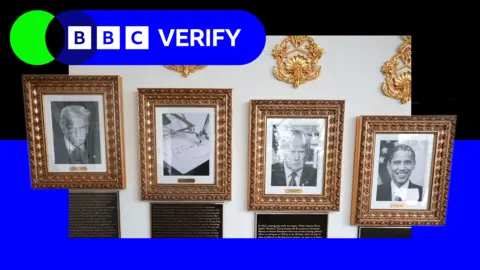
Getty Images Four portraits, Trump on the left, followed by Biden (depicted by an autopen), a second Trump one and then Obama. Underneath each portrait, the plaque can be seenGetty Images

New plaques have appeared under the portraits of former US presidents at the White House.

Unlike Donald Trump's previous statements about his predecessors, which have been delivered through speeches, interviews and social media posts, these plaques - installed outside the West Wing - represent a more permanent attempt to shape the long-term view of past presidents.

The text includes a series of claims and criticisms about past leaders, including Donald Trump's immediate predecessors Joe Biden and Barack Obama.

The descriptions also underscore Trump's willingness to get involved in details especially when it comes to how he and his political opponents are portrayed.

White House Press Secretary Karoline Leavitt said the plaques "are eloquently written descriptions of each president and the legacy they left behind".

BBC Verify has taken a closer look at some of the claims on the so-called "Presidential Walk of Fame".

Biden plaque: Won after 'most corrupt' election ever seen

Every former president has a portrait or photo except for Biden. The 46th US President is instead represented by a photo of an autopen - a reference to Trump's claim that Biden's staff used an automated signature machine to sign off decisions without his knowledge.

The plaque underneath claims Biden took office in January 2021 "as a result of the most corrupt election ever seen in the US".

BBC Verify has looked at previous claims of fraud by Trump and his supporters but there has been no evidence to support allegations of widespread voter fraud or corruption.

We investigated claims of "unexplained" surges in Democrat votes, voting machines that flipped votes from Trump to Biden, and even that thousands of "dead" people had voted in Michigan - none were true.

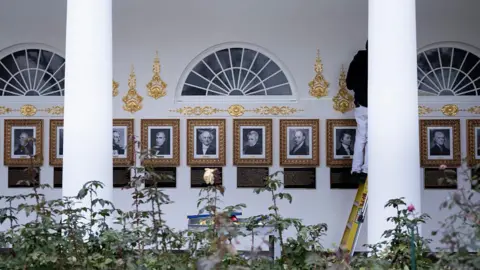
Getty Images A line of portraits of former US presidents outside the West Wing of the White House Getty Images
The portraits and plaques are displayed outside the West Wing

Biden plaque: 21 million people poured into the US

The plaque also claims that Biden "let 21 million people from all over the World pour into the US".

The plaque does not say how these people allegedly entered the country under Biden, but Trump has used variations of the 21 million figure several times when talking about the previous administration's record on the US border.

In a presidential address on Wednesday night, Trump said that under Biden "our border was open, and because of this, our country was being invaded by an army of 25 million people" and earlier this year he claimed Biden allowed 21 million "illegal aliens to invade our country".

The number of migrant crossings at the US border did reach record highs under Biden but not to the level Trump - who has never provided a source for these claims - states.

US border officials record "encounters" with migrants - these include people who attempted to cross illegally and people who tried to enter legally but did not meet entry rules.

Biden was elected at the end of 2020 and during his four years in office there were about 10 million encounters of migrants at the border, with about eight million of those happening at the US southwestern border with Mexico.

These figures do not include people who may have crossed the border undetected.

Last year the US Department of Homeland Security estimated there were 11 million illegal migrants living in the US as of January 2022, with the majority arriving before 2010.

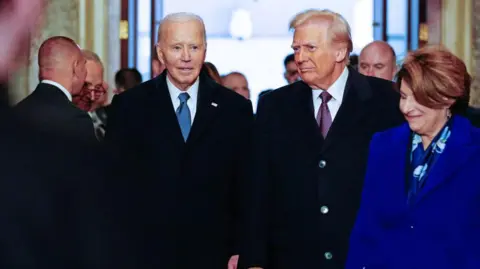
Getty Images Joe Biden with Donald TrumpGetty Images
The plaque was very critical of President Biden's achievements in office

Biden plaque: Highest inflation ever recorded

Biden's economic record also came under attack, with the plaque claiming his policies: "caused the highest inflation ever recorded".

It is correct that inflation - the increase in the cost of living over time - rose significantly during Biden's first two years in office, peaking at 9.1% in June 2022 shortly after Russia's full-scale invasion of Ukraine.

However, it's not true inflation under Biden was the highest ever on record. This occurred in 1920, when inflation reached 23.7%. It was also higher at points in the 1970s and 80s.

Trump plaque: Inflation 'defeated'

As well as former presidents, Trump also added a plaque for his current term.

It includes some bold claims about his record in office since January. For example, it claims Trump has delivered on "defeating inflation".

While inflation is down from the 9.1% peak under Biden in 2022 - a time when many countries around the world experienced high inflation following the Covid-19 pandemic and Russia's invasion of Ukraine - it has not been "defeated" altogether.

Inflation was still at 2.7% year-on-year in November 2025, according to the latest official figures. That's down from 3% in September, when the last inflation update was published.

Average grocery prices in the US rose by 1.9% since the time of the election in November 2024.

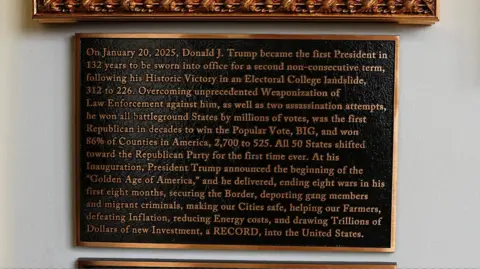
Reuters A close up of the text on Trump's plaque. It includes the phrase "he delivered, ending eight wars in his first eight, securing the Border, deporting gang members and migrant criminals, making our Cities safe, helping our Farmers, defeating inflation..."Reuters
Among his achievements, Trump's plaque claims the president defeated inflation and ended eight wars.

Trump plaque: 'Ended eight wars'

Listing Trump's achievements, the plaque also claims Trump ended "eight wars in his first eight months".

However, some of the conflicts lasted just days and the level of influence Trump played in ending them is disputed.

At least one of the "wars" simply wasn't a war. Egypt and Ethiopia have had some diplomatic tensions, particularly around a dam on the Nile, but there has in no sense been a war between them.

India's defence ministry has also previously rejected Trump's claim of ending its conflict with Pakistan, saying the country had not responded to pressure from anyone.

It is true that Trump has successfully helped broker some peace agreements for some long-standing conflicts, such as between Armenia and Azerbaijan. But it is also unclear whether some of the peace agreements will last, given fighting has broken out on the Thailand-Cambodia border and between Rwanda and the DRC again since.

Other presidential plaques

The plaques do not attack Democrats alone. Former Republican president George W Bush, for example, is criticised over the wars in Iraq and Afghanistan, whereas former Democrat president Jimmy Carter is praised for some of his achievements.

Neither former presidents Biden or Obama have commented on the installation of their plaques.

BBC Verify banner

Interest rates cut to 3.75% but further reductions to be 'closer call'

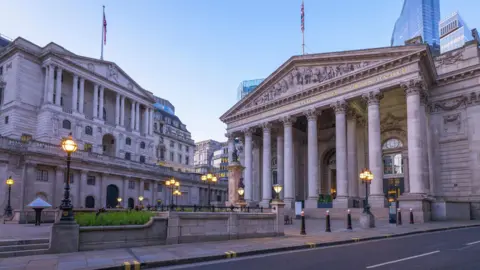
Getty Images Bank of England building at dusk with street lamps on.Getty Images

Policymakers at the Bank of England are expected to cut interest rates - bringing the Bank rate down to its lowest level since February 2023.

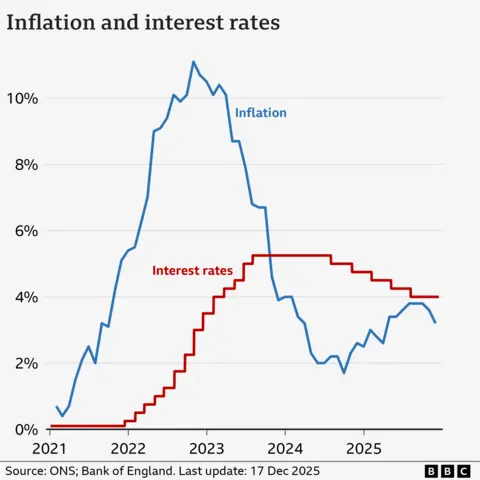
Analysts are widely predicting a fall from 4% to 3.75%, although they do not expect a unanimous decision among the nine-member Monetary Policy Committee (MPC).

This would be the sixth cut in interest rates from August last year.

The Bank rate heavily influences the cost of borrowing by consumers, but also the returns given to savers.

The MPC has a target to keep inflation - which charts the rising cost of living - to 2%. The Bank rate is the committee's primary tool for achieving its ambition.

The latest inflation data, published on Wednesday, showed a bigger drop to Consumer Prices Index (CPI) inflation than analysts had been expecting.

The rate of CPI fell to 3.2% in November, from 3.6% in October, the Office for National Statistics (ONS) said.

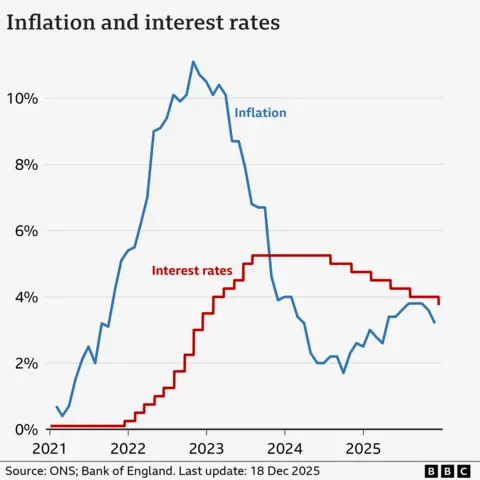
A line chart showing interest rates and CPI inflation in the UK, from January 2021 to December 2025. Interest rates were at 0.1% in January 2021. They were increased from late-2021, reaching a peak of 5.25% in August 2023. They were then lowered slightly to 5% in August 2024, to 4.75% in November, to 4.5% on 6 February 2025, to 4.25% on 8 May 2025, and to 4% on 7 August. At the Bank of England's latest meeting on 6 November, rates were held at 4%. The inflation rate was 0.7% in the year to January 2021. It then rose to a peak of 11.1% in October 2022, before falling again to a low of 1.7% in September 2024 and then starting to rise again. In the year to November 2025, it was 3.2%, down from 3.6% the previous month.

While inflation remains above the Bank's target, the latest fall in the rate and signs of rising unemployment and a relatively stagnant economy are likely to push the committee towards an interest rate cut.

At the previous meeting in November, the four members of the MPC who voted for a cut were only just outvoted by the five who wanted to keep rates on hold.

At the time, the Bank's governor, Andrew Bailey, said he would "prefer to wait and see" whether inflation continued to drop back.

James Smith, developed market economist for ING, said the sharp drop in the November rate of inflation "green lights" a rate cut.

He said the "latest drop in inflation fits into a broader body of evidence suggesting that price pressures are cooling".

He is forecasting another two cuts to interest rates in February and April next year, although not all analysts agree with this suggestion.

Impact on borrowing and savings

About 500,000 homeowners have a mortgage that "tracks" the Bank of England's rate. If a 0.25 percentage point cut does come, it is likely to mean a typical reduction of £29 in their monthly repayments.

For the additional 500,000 homeowners on standard variable rates, there would typically be a £14 a month fall, assuming there is a cut in the Bank rate and lenders pass on the cut to their customers.

The vast majority of mortgage customers have fixed-rate deals. Rates on these deals have been falling recently, owing to the expectation among lenders of a Bank rate cut in December.

As of 17 December, the average two-year fixed residential mortgage rate was 4.82%, according to financial information company Moneyfacts. A five-year rate was 4.90%.

Mortgage rate cuts should also reduce some financial pressure on landlords, and perhaps ease the likelihood of rent rises for tenants.

However, savers are likely to see a further fall in returns as a result of any Bank rate falls.

The current average rate on an easy-access savings account is 2.56%, according to Moneyfacts.

Zelensky gives stark warning as EU leaders hold crunch talks on Russia's frozen assets

Ukrinform/NurPhoto Two men - one in a three-piece suit in grey, the other in black stand in front of colourful flagsUkrinform/NurPhoto
Belgian Prime Minister Bart De Wever is yet to be convinced that the money held in Belgium should be loaned to Ukraine (file pic)

European Union leaders begin two days of talks in Brussels with a momentous decision to be taken on whether to loan tens of billions of euros in frozen Russian assets to Ukraine to fund its military and economic needs.

Most of Russia's €210bn (£185bn; $245bn) worth of assets in the EU are held by Belgium-based organisation Euroclear, and so far Belgium and some other members of the bloc have said they are opposed to using the cash.

Without a boost in funding, Ukraine's finances are set to run dry in a matter of months.

One European government official described being "cautiously optimistic, not overly optimistic" that a deal would be agreed. Russia has warned the EU against using its money.

It has filed a lawsuit against Euroclear in a Moscow court in a bid to get its money back.

The Brussels summit comes at a pivotal moment.

US President Donald Trump has said a deal to end the war - which began with Russia's full-scale invasion of Ukraine in February 2022 - is "closer now than we have been ever".

Although Russia has not responded to the latest peace proposals, the Kremlin has stressed that plans for a European-led multinational force for Ukraine supported by the US would not be acceptable.

President Vladimir Putin made his feelings towards Europe clear on Wednesday, when he said the continent was in a state of "total degradation" and "European piglets" - a derogatory description of Ukraine's European allies - were hoping to profit from Russia's collapse.

Alexander KAZAKOV/POOL/AFP A man with a glass stands on the right of two men in uniformAlexander KAZAKOV/POOL/AFP
Those in favour of loaning Ukraine the money believe it will help deter Putin from continuing the war

The European Commission - the EU's executive arm - has proposed loaning Kyiv about €90bn (£79bn) over the next two years - out of the €210bn of Russian assets sitting in Europe.

That is about two-thirds of the €137bn that Kyiv is thought to need to get through 2026 and 2027.

Until now the EU has handed Ukraine the interest generated by the cash but not the cash itself.

"This is a crunch time for Ukraine to keep fighting for the next year," a Finnish government official told the BBC. "There are of course peace negotiations but this gives Ukraine leverage to say 'we're not desperate and we have the funds to continue fighting'."

Commission chief Ursula von der Leyen says it will also ramp up the cost of war for Russia.

Russia's frozen assets are not the only option on the table for EU leaders. Another idea, backed by Belgium, is based on the EU borrowing the money on the international markets.

However, that would require a unanimous vote and Hungary's Viktor Orban has made it clear he will not allow any more EU money to help Ukraine.

For Ukraine, the hours ahead are significant and President Volodymyr Zelensky is expected to attend the EU summit.

Ahead of the Brussels meeting, EU leaders were keen to stress the momentous nature of the decision.

"We know the urgency. It is acute. We all feel it. We all see it," von der Leyen told the European Parliament.

EPA European Commission President Ursula von der Leyen speaks during a debate on 'Preparation of the European Council meeting of 18-19 DecemberEPA
Ursula von der Leyen told the European Parliament that two choices were on the table for EU leaders

German Chancellor Friedrich Merz has played a leading role in pushing for the Russian assets to be used, telling the Bundestag on the eve of the summit it was about sending a "clear signal" to Moscow that continuing the war was pointless.

EU officials are confident they have a sound legal basis to use the frozen Russian assets, but so far Belgian Prime Minister Bart De Wever remains unconvinced.

His Defence Minister Theo Francken warned ahead of the talks that it would be a big mistake to loan the Euroclear cash.

Hungary is seen as the biggest opponent of the move and, ahead of the summit, Prime Minister Orban and his entourage even suggested that the frozen assets plan had been removed from the summit agenda. A European Commission official stressed that was not the case and it would be a matter for the 27 member states at the summit.

Slovakia's Robert Fico has also opposed using the Russian assets, if it means the money being used to procure weapons rather than for reconstruction needs.

When the pivotal vote does finally take place, it will require a majority of about two-thirds of member states to go through. Whatever happens, European Council President António Costa has promised not to go over the heads of the Belgians.

"We're not going to vote against Belgium," he told Belgian public broadcaster RTBF. "We'll continue to work very intensively with the Belgian government because we don't want to approve something that might not be acceptable for Belgium."

Belgium will also be aware that ratings agency Fitch has placed Euroclear on a negative watch, partly because of "low" legal risks to its balance sheet from the European Commission's plans to use the Russian assets. Euroclear's chief executive has also warned against the plan.

"There are many hiccups and obstacles of course still on the way. We have to find a way to respond to Belgium's worries," the Finnish official added. "We are on the same side as Belgium. We will find a solution together to make sure all the risks are checked as much as they can be checked."

However, Belgium is not the only country to have doubts, and a majority is not guaranteed.

Italian Prime Minister Giorgia Meloni has told Italian MPs she will endorse the deal "if the legal basis is solid".

"If the legal basis for this initiative were not solid, we would be handing Russia its first real victory since the beginning of this conflict."

Malta, Bulgaria and the Czech Republic are also said to be unconvinced by the controversial proposals.

If the deal is passed and the Russian assets are given to Ukraine, the worst-case scenario for Belgium would be one in which a court would order it to hand the money back to Russia.

Some countries have said they would be prepared to provide billions of euros in financial guarantees, but Belgium will want to see the numbers add up.

At any rate, Commission officials are confident that the only way for Russia to get it back would be by paying reparations to Ukraine - at which point Ukraine would hand its "reparations loan" back to the EU.

Has flu peaked? What the figures tell us

Getty Images A graphic designed image showing an image of part of an ambulance with yellow and red stripes, a tape measure and a person blowing their nose, with 'pharmacy' style crosses overlaid in the top left corner and an orange stripe over the bottom.Getty Images

The NHS remains on high alert over flu, health bosses say, but there are clear signs the surge in the virus has come to an end for now at least.

Community spread appears to have stabilised, the UK Health Security Agency says.

Meanwhile, the rise in hospital cases has slowed. And with just over 3,000 patients in hospital in England with the virus, the dire prediction by NHS chief executive Sir Jim Mackay of "between 5,000 and 8,000" cases has not materialised.

How serious then is this flu season so far, and how does it really compare to previous outbreaks of the virus?

Line chart showing that positive tests for flu fell in the latest week to 14 December, down from over 21% in the previous week to just above 19%. In previous bad flu seasons in 2022 and 2024 they were at around 25% and 23% respectively at the same time. The chart shows that flu cases this year started rising earlier than in 2023 and 2024.

The major difference between the 2025 flu season and the last three years is that the virus started spreading a few weeks earlier than normal.

When someone goes to their GP or hospital with flu-like symptoms, they can be swabbed and tested for influenza, Covid, RSV and other viruses.

UKHSA then records the percentage of those tests that come back positive for flu.

Figures had been rising quickly over the autumn and at the start of winter.

But last week the spread of the virus appears to have stabilised at a medium level, UKHSA says.

It is too early to say whether this marks the start of the peak. Flu is unpredictable, a lull can be followed by another surge.

Line chart showing that positive tests for flu fell from 28% to 23% in the week to 14 December in Scotland. Despite the fall, the percentage of positive tests is similar to the previous bad flu seasons in 2022 and 2024 when they were at 23% and 25% at the same time. The chart shows that flu cases this year started rising earlier than in 2023 and 2024.

The picture across the four nations of the UK is similar.

Some virologists have linked the earlier flu season this year to the type of virus that is circulating - known as H3N2.

Historically, seasons dominated by that strain tend to be more severe, with larger numbers of hospitalisations in older people, in particular.

H3N2 has not been the main form of flu detected in the UK for three years, which may mean that less immunity has been built up in the population.

Scientists also spotted a further shift in the genetic makeup of the virus over the summer.

This seems to have given the virus a head-start in the autumn.

Can we call it super-flu?

The name 'super-flu' has been used by the NHS to describe this latest outbreak.

But that is not a medical term, and it does not mean the virus itself has suddenly become more dangerous or harder to treat.

"It is misleading and a bit frightening to call it super flu; it's just a flu variant that is clearly a little bit more infectious than normal," says Prof Lawrence Young, professor of molecular oncology at the University of Warwick.

"What we're seeing is a flu season that's perhaps two to three weeks earlier than normal."

Separately, the NHS also records the number of the sickest patients in hospital with flu over the winter. Trends in hospital data tends to lag behind community spread as it takes some time for people to get ill enough to seek hospital care.

Figures for last week showed the number hit 3,140, an 18% rise on the week before. But that was after a 55% jump in the week before that.

Although the national figure masks what is happening across different regions with some areas seeing numbers fall and others still seeing steep rises.

Those over 85-years-old are five times more likely to be hospitalised than the general population.

Comparing outbreaks over the decades is difficult because testing has improved in recent years, so a rise in hospital admissions over time might also reflect better detection.

But estimated figures on flu deaths shows that some winters have been particularly serious over the past 20 years.

In 2017-18, for example, it's thought 25,000 people died from the virus in England, with care homes and older adults most affected.

That year an unusual form of the influenza B virus started circulating and the 'beast from the east' cold snap bought freezing temperatures to the UK, creating the ideal environment for the disease to spread.

Just three years before that, in 2014-15, modelling by scientists at UKHSA estimated that 35,000 had died, making it one of the most lethal flu seasons in decades.

Again, that was blamed on an outbreak of the H3N2 form of the virus and a seasonal vaccine that was not well matched to the exact form of the disease circulating.

There is nothing in the data so far which suggests anything comparable in 2025, but we won't know for sure until the first estimates for this season's influenza deaths are published in the new year.

The message coming from doctors and the NHS is for millions of people to continue to come forward for a flu vaccine.

Even though the genetic make-up of the virus has shifted, the main jab is still thought to offer an effective level of protection, particularly against ending up in hospital with severe disease.

The flu vaccine is free on the NHS for those over 65-years-old, young children, pregnant women, those with certain health conditions, carers, and front-line health and social care workers.

All other adults can get the same vaccine for between £15 and £25 from high street pharmacists.

The latest data shows that more than 70% of older people and care home residents had taken up the offer of a free jab by 14 December.

But vaccination rates in some other groups are much lower.

Only 39% of all front-line NHS workers in England have been vaccinated so far this year.

King Charles pours 'perfect pint' at new brewery

Watch: King Charles pours a pint and opens a new London brewery

King Charles successfully poured a "perfect" pint of Guinness on a Christmas visit to a new brewery in London's Covent Garden, where he tasted his pint-pulling efforts.

This was his first public visit since the King's video message revealing "good news" about the positive progress of his cancer treatment - and he seemed to be really enjoying the moment.

The King surprised some shoppers outside the event, wishing them a "Merry Christmas" and shaking hands in an impromptu walkabout in the rain.

The King, who seemed in festive form, joked with carol singers that they must be "moonlighting from the Royal Opera House" and teased reporters that they were not getting to test the drinks on display.

Reuters The King poured himself a Guinness as he opened the new London breweryReuters
The King poured himself a pint as he opened a new London brewery

The King was opening the Guinness Open Gate Brewery, a £73m investment which will be a new London visitor attraction as well as producing a range of beers.

There was a lesson in how to pour a pint, with the King shown how to tilt the glass to 45 degrees, and then to leave it to settle for between 60 to 70 seconds, which he was told allowed 300 million bubbles to rise inside the glass.

It was not clear who had ever counted them, but the King was ready to raise a glass to Christmas and perhaps, he might have been thinking about "good health" in a more personal way.

His pint-pulling trainer, Leo Ravina, said he had poured a "perfect pint".

"If you say so," replied the King, who wiped away a foamy Guinness moustache.

The King seemed less convinced by another piece of hi-tech boozing, where he was shown how an image could be printed, using beetroot or carrot juice, on to the beer's surface.

Although as monarch, he had to avoid sharing his point (or in this case pint) of view.

There was also no mention of the social media fad of "splitting the G", where drinkers try to reach a certain point on a pint glass.

But the King seemed to enjoy some of the less usual beers on offer, including one with an apricot flavour.

This tasting session was in the 232 Bar, named after the temperature at which the barley is roasted to get the distinctive flavour.

Reuters The King was shown around the microbrewery in London's West EndReuters
The King was shown around the microbrewery in London's West End

Guinness also gave the King a tour of the inner workings of the beer-making process.

Despite the rain, the King seemed determined to go outside, where crowds appeared taken aback to see this unexpected visitor and held up their phones in the drizzle. He chatted to a couple about keeping their baby warm in the downpour.

PA Media The King wears a suit and holds a black umbrella with a wooden handle. He is smiling as he greets shoppers. They are wearing winter coats, hats and some holding umbrellas as they smile in return and hold up mobile phones to document him, on a walkabout in Covent Garden.PA Media
This was the King's first visit since his "good news" about his cancer treatment

There was also a tour of a Christmas-themed food market.

And among the guests was movie director Gurinder Chadha, who made Bend It Like Beckham and has now launched a modern version of A Christmas Carol, called Christmas Karma.

It has a message about compassion and multicultural communities, and Ms Chadha said the King had asked for a copy of the film to watch at Christmas in Sandringham.

The King was also introduced to young people who were being trained for the hospitality industry.

Nik Jhangiani of Guinness's parent company Diageo welcomed the seasonal royal visit: "Pubs and restaurants are the heartbeat of the hospitality sector and this is a wonderful show of support for the industry."

Thin, purple banner promoting the Royal Watch newsletter with text saying, “Insider stories and expert analysis in your inbox every week”. There is also a graphic of a fleur-de-lis in white.

Sign up here to get the latest royal stories and analysis every week with our Royal Watch newsletter. Those outside the UK can sign up here.

Waterloo Road actor William Rush dies aged 31

Getty Images Actors Angela Griffin (L) and William Rush attend the Inside Soap Awards 2010 at Gilgamesh on September 27, 2010 in London, EnglandGetty Images
William Rush pictured with Angela Griffin at the Inside Soap Awards in 2010

Waterloo Road actor William Rush has died aged 31, his family has announced.

Rush played schoolboy Josh Stevenson in the BBC One drama, appearing in 168 episodes between 2009 and 2013.

As a child actor, he also appeared in Grange Hill and Shameless, and later went on to roles in Casualty and Vera.

His mother, ex-Coronation Street actress Debbie Rush, announced on Instagram that William had died on Wednesday, adding: "As a family, our hearts are completely broken." His cause of death has not been announced.

Rush also auditioned for ITV talent show The X Factor in 2016, and made it as far as the "six-chair challenge", the stage between boot camp and judges' houses.

Debbie Rush, an actress herself who played Anna Windass in Coronation Street for a decade, described William as "our beautiful baby boy", said: "There are no words that can truly capture the depth of our loss."

She also paid tribute to her son's decision to become an organ donor before he died.

"Even in our darkest moment, William gave the most precious gift of all," she said.

"Through being an organ donor, he has given hope and life to other families, thinking of others right to the very end. His kindness and love will forever be part of his legacy.

"We kindly ask that our privacy be respected as we navigate this unimaginable grief. William will always be loved, always missed, and forever in our hearts."

Fellow Coronation Street stars left supportive messages on her post, with Sally Dynevor saying she was "so shocked to hear this news" and describing William as a "beautiful boy".

Actress and former Strictly contestant Katie McGlynn said he "brought a smile to everyone's face and was a very kind soul", and fellow Corrie star Brooke Vincent wrote: "I am so sorry for your loss, sending you so much love."

Trump expected to expand access to cannabis in a major shift in drug policy

Getty Images Man holding green marijuana over a plastic container at a trade show in Florida in September 2025Getty Images
A majority of US states allow cannabis to be used for some medical purposes, and in 24 states it's allowed for recreational use

President Donald Trump is expected to sign an executive order that would expand access to cannabis, a long anticipated move that would mark the most significant shift in US drug policy in decades.

The order is expected to reclassify cannabis from a Schedule I narcotic, to a Schedule III drug - placing it under the same category as Tylenol with codeine, US media reports suggest.

Even if recategorised, cannabis will remain illegal at the federal level. But classifying it as a Schedule III narcotic would allow expanded research to be conducted into its potential benefits.

Several Republican lawmakers have cautioned against the move, with some arguing it could normalise cannabis use.

The US Drug Enforcement Agency notes that Schedule III narcotics - which also include ketamine and anabolic steroids - have only a "moderate to low potential for physical and psychological dependence".

The executive order could come as early as Thursday, although the timing could shift, CBS, the BBC's US partner, has reported.

The new classification could also have tax implications for state-authorised cannabis dispensaries, as current regulations bar them from some tax deductions if they sell Schedule I products.

Various US news outlets have reported that the announcement may also include a pilot programme that would see some older Americans reimbursed for cannabidiol, commonly known as CBD, for conditions including cancer treatments.

In recent years, a majority of US states have approved cannabis for some medical use, and nearly half - 24 - have legalised recreational use. But since 1971, cannabis has been a Schedule I narcotic, which means it has no accepted medical use and a high potential to be abused.

Earlier this week, Trump said that he was "considering" the re-classification because of "tremendous amounts of research that can't be done unless you reclassify".

The Biden administration proposed a similar reclassification, and in April 2024 the DEA proposed a rule change, but got bogged down under administrative and legal issues.

Trump has long expressed a desire to change US drug policy regarding cannabis.

"I believe it is time to end endless arrests and incarcerations of adults for small amounts of marijuana for personal use," he wrote on Truth Social last year while running for president.

"We must also implement smart regulations, while providing access for adults, to safe, tested products," he said.

The reclassification proposal has met some resistance from Republican lawmakers.

On Wednesday, a group of 22 Republican Senators sent an open letter to the president, arguing that marijuana use would mean that "we cannot re-industrialise America".

The Senators pointed to lingering concerns over the health impact of cannabis, as well as research suggesting that cannabis can be linked to "impaired judgement" and "lack of concentration".

"In light of the documented dangers of marijuana, facilitating the growth of the marijuana industry is at odds with growing our economy and encouraging healthy lifestyles for Americans."

In a separate letter sent to Attorney General Pam Bondi in August, nine Republican representatives argued that "no adequate science or data" exists to support the change.

"Marijuana, while different than heroin, still has the potential for abuse and has no scientifically proven medical value," the letter said. "Therefore, rescheduling marijuana would not only be objectively wrong, but it would also imply to our children that marijuana is safe. That couldn't be further from the truth."

More broadly, polls show that a majority of Americans support efforts to legalise marijuana.

One Gallup poll released in November found that 64% of Americans believe that it should be legalised, although support had drifted slightly from previous years because of a 13-point drop among Republicans.

Zelensky gives stark warning as EU leaders start crunch talks on Russia's frozen assets

Ukrinform/NurPhoto Two men - one in a three-piece suit in grey, the other in black stand in front of colourful flagsUkrinform/NurPhoto
Belgian Prime Minister Bart De Wever is yet to be convinced that the money held in Belgium should be loaned to Ukraine (file pic)

European Union leaders begin two days of talks in Brussels with a momentous decision to be taken on whether to loan tens of billions of euros in frozen Russian assets to Ukraine to fund its military and economic needs.

Most of Russia's €210bn (£185bn; $245bn) worth of assets in the EU are held by Belgium-based organisation Euroclear, and so far Belgium and some other members of the bloc have said they are opposed to using the cash.

Without a boost in funding, Ukraine's finances are set to run dry in a matter of months.

One European government official described being "cautiously optimistic, not overly optimistic" that a deal would be agreed. Russia has warned the EU against using its money.

It has filed a lawsuit against Euroclear in a Moscow court in a bid to get its money back.

The Brussels summit comes at a pivotal moment.

US President Donald Trump has said a deal to end the war - which began with Russia's full-scale invasion of Ukraine in February 2022 - is "closer now than we have been ever".

Although Russia has not responded to the latest peace proposals, the Kremlin has stressed that plans for a European-led multinational force for Ukraine supported by the US would not be acceptable.

President Vladimir Putin made his feelings towards Europe clear on Wednesday, when he said the continent was in a state of "total degradation" and "European piglets" - a derogatory description of Ukraine's European allies - were hoping to profit from Russia's collapse.

Alexander KAZAKOV/POOL/AFP A man with a glass stands on the right of two men in uniformAlexander KAZAKOV/POOL/AFP
Those in favour of loaning Ukraine the money believe it will help deter Putin from continuing the war

The European Commission - the EU's executive arm - has proposed loaning Kyiv about €90bn (£79bn) over the next two years - out of the €210bn of Russian assets sitting in Europe.

That is about two-thirds of the €137bn that Kyiv is thought to need to get through 2026 and 2027.

Until now the EU has handed Ukraine the interest generated by the cash but not the cash itself.

"This is a crunch time for Ukraine to keep fighting for the next year," a Finnish government official told the BBC. "There are of course peace negotiations but this gives Ukraine leverage to say 'we're not desperate and we have the funds to continue fighting'."

Commission chief Ursula von der Leyen says it will also ramp up the cost of war for Russia.

Russia's frozen assets are not the only option on the table for EU leaders. Another idea, backed by Belgium, is based on the EU borrowing the money on the international markets.

However, that would require a unanimous vote and Hungary's Viktor Orban has made it clear he will not allow any more EU money to help Ukraine.

For Ukraine, the hours ahead are significant and President Volodymyr Zelensky is expected to attend the EU summit.

Ahead of the Brussels meeting, EU leaders were keen to stress the momentous nature of the decision.

"We know the urgency. It is acute. We all feel it. We all see it," von der Leyen told the European Parliament.

EPA European Commission President Ursula von der Leyen speaks during a debate on 'Preparation of the European Council meeting of 18-19 DecemberEPA
Ursula von der Leyen told the European Parliament that two choices were on the table for EU leaders

German Chancellor Friedrich Merz has played a leading role in pushing for the Russian assets to be used, telling the Bundestag on the eve of the summit it was about sending a "clear signal" to Moscow that continuing the war was pointless.

EU officials are confident they have a sound legal basis to use the frozen Russian assets, but so far Belgian Prime Minister Bart De Wever remains unconvinced.

His Defence Minister Theo Francken warned ahead of the talks that it would be a big mistake to loan the Euroclear cash.

Hungary is seen as the biggest opponent of the move and, ahead of the summit, Prime Minister Orban and his entourage even suggested that the frozen assets plan had been removed from the summit agenda. A European Commission official stressed that was not the case and it would be a matter for the 27 member states at the summit.

Slovakia's Robert Fico has also opposed using the Russian assets, if it means the money being used to procure weapons rather than for reconstruction needs.

When the pivotal vote does finally take place, it will require a majority of about two-thirds of member states to go through. Whatever happens, European Council President António Costa has promised not to go over the heads of the Belgians.

"We're not going to vote against Belgium," he told Belgian public broadcaster RTBF. "We'll continue to work very intensively with the Belgian government because we don't want to approve something that might not be acceptable for Belgium."

Belgium will also be aware that ratings agency Fitch has placed Euroclear on a negative watch, partly because of "low" legal risks to its balance sheet from the European Commission's plans to use the Russian assets. Euroclear's chief executive has also warned against the plan.

"There are many hiccups and obstacles of course still on the way. We have to find a way to respond to Belgium's worries," the Finnish official added. "We are on the same side as Belgium. We will find a solution together to make sure all the risks are checked as much as they can be checked."

However, Belgium is not the only country to have doubts, and a majority is not guaranteed.

Italian Prime Minister Giorgia Meloni has told Italian MPs she will endorse the deal "if the legal basis is solid".

"If the legal basis for this initiative were not solid, we would be handing Russia its first real victory since the beginning of this conflict."

Malta, Bulgaria and the Czech Republic are also said to be unconvinced by the controversial proposals.

If the deal is passed and the Russian assets are given to Ukraine, the worst-case scenario for Belgium would be one in which a court would order it to hand the money back to Russia.

Some countries have said they would be prepared to provide billions of euros in financial guarantees, but Belgium will want to see the numbers add up.

At any rate, Commission officials are confident that the only way for Russia to get it back would be by paying reparations to Ukraine - at which point Ukraine would hand its "reparations loan" back to the EU.

How many flu cases are there in your local hospital? Use our tool to check

PA Media A general view of staff on a NHS hospital ward.PA Media

Hospitals across the UK are seeing high levels of flu cases this winter.

The NHS in England has said it is on "on high alert" after seeing the highest ever number of flu cases in hospital for this time of year, in the week ending 14 December.

You can use our tool below to find out how many flu patients there are in hospitals near you.

About the data

Figures relating to flu cases in hospitals are collected in different ways in each UK nation.

In England it is the weekly number of beds occupied by patients with a laboratory confirmed flu case.

This data is provided at NHS Trust level. Trusts are organisations which include hospitals, community services and providers of other forms of patient care. You can find which trust your local hospital belongs to on the NHS England website.

In Scotland the figures relate to the number of patients admitted to hospital with a laboratory confirmed flu case taken between 14 days before the admission date and 48 hours after the admission date.

In Wales it is the weekly number of patients in hospital with a laboratory confirmed flu case taken from 28 days before the admission date if tested outside of hospital, or within two days after admission.

Figures for Scotland and Wales are provided at NHS Health Board level. Health boards are responsible for all frontline healthcare services. You can find which Health Board your local services belong to on the NHS Scotland or NHS Wales websites.

In Northern Ireland the figures show the number of new flu cases admitted to hospital that were acquired outside of hospital.

This data is provided at Health and Social Care Trust level. Trusts are responsible for providing local and regional health services. You can find which trust your local hospital belongs to on the NI direct website.

Farmers 'bewildered and frightened' over inheritance tax, report finds

Getty Images A green and red tractor is pulling a cultivator and drill across a muddy field. On the hills in the background lie solar panels. A light mist sits in the sky.Getty Images

Farmers are "bewildered and frightened" with many questioning the future of their businesses because of the government's proposed changes to inheritance tax, an independent review of farm profitability has found.

The long-awaited government-commissioned report was published on Thursday with 57 recommendations designed to improve productivity, investment and resilience in agriculture.

But author Baroness Minette Batters, former president of the National Farmers' Union (NFU), warned there was "no silver bullet" to making farms in England profitable.

Environment secretary Emma Reynolds said the government and the farming and food industries would work much more closely together in the future.

Getty Images A close-up head-and-shoulders shot of Baroness Batters as she raise two fingers to illustrate a point while making a speech. The background is a soft-focus shot of the countrysideGetty Images
Baroness Batters said that farmers "don't want handouts from the state"

That would be done through a newly created farming and food partnership board made up of senior industry and government leaders that would "drive growth, productivity and long-term profitability across the sector", she explained.

"When farming thrives, the whole country benefits. British farmers are central to our food security, our rural economy and the stewardship of our countryside," the secretary of state added.

"This is about serious action to remove barriers, unlock investment and make the food system work better, so farm businesses can grow, invest and plan for the future with confidence."

Baroness Batters' review called for a "new deal for profitable farming" that would recognise the true cost of producing food and delivering for the environment.

The report did not look in detail at the government's proposed changes to inheritance tax, which are set to apply to farm businesses worth more than £1 million at a rate of 20% from April 2026.

But Baroness Batters said it was raised as the single biggest concern by almost everyone in the farming sector she talked to as part of the review.

'Questioning viability'

She said the sector had faced a sharp rise in costs and increasingly extreme weather, with severe drought this year.

Uncertainty surrounding the closure of applications to the sustainable farming incentive scheme - the post-Brexit agricultural payments scheme - and proposed changes to inheritance tax had created "significant" ongoing concern, with some farmers "questioning viability let alone profitability".

In the review, she said: "The farming sector is bewildered and frightened of what might lie ahead."

The report added that costs would be 30% higher in 2026 than they were in 2020, while the £2.4bn farming budget for England had been almost the same since 2007 - even as farmers and growers are asked to do more to comply with environmental legislation, with less funding and no certainty.

Baroness Batters added: "Farmers don't want handouts from the state, they want nothing more than to run thriving, profitable farming businesses, by earning a fair return for what they produce."

The NFU said it was "a thorough and complex report" which was "right to recognise reform is needed".

President Tom Bradshaw said that of the issues raised, fairness in the supply chain was a "top priority" alongside planning reforms and focus on growing exports.

"But alongside this, there are other immediate actions that are needed to boost British farming like providing much-needed clarity and certainty on the future of the sustainable farming incentive and doing the right thing on the pernicious inheritance tax changes," he added.

Gavin Lane, president of the Country Land and Business Association, which represents rural businesses and landowners, welcomed the review and said it was now time for "urgent action".

"As this report highlights, profitability across the sector is perilously slim, with farmers battling high input costs, low commodity prices and volatile weather conditions.

"Many farm businesses are marginal or loss-making, yet will soon be hit with unaffordable inheritance tax bills, which in many cases will dwarf their annual profit," he explained.

In response to the review, the government said it was also taking action on planning reform to make food production a clearer priority, speed up on-farm reservoirs, polytunnels and farm shops, and make it easier for farmers to invest.

The government is also stepping up action on supply chain fairness, tackling barriers to private finance and supporting exports and new markets, a spokesman for the Department for Environment, Food and Rural Affairs (Defra) said.

How will the interest rate cut affect my mortgage and savings?

Getty Images A woman wearing a bright red coat walks over a bridge with other commuters during a snow storm in Manchester. Getty Images

The Bank of England has cut interest rates from 4% to 3.75%, the lowest level since February 2023.

Analysts are divided about whether further cuts will follow in 2026.

Interest rates affect mortgage, credit card and savings rates for millions of people.

What are interest rates and why do they change?

An interest rate tells you how much it costs to borrow money, or the reward for saving it.

The Bank of England's base rate is what it charges other banks and building societies to borrow money, which influences what they charge their own customers for mortgages as well as the interest rate they pay on savings.

The Bank moves interest rates up and down in order to keep UK inflation - the rate at which prices are increasing - at or near 2%.

When inflation is above that target, the Bank can decide to put rates up. The idea is that this encourages people to spend less, reducing demand for goods and services and limiting price rises.

How will the interest rate cut affect mortgages, loans and savings rates?

Mortgages

Just under a third of households have a mortgage, according to the government's English Housing Survey.

About 500,000 homeowners have a mortgage that "tracks" the Bank of England's rate. A 0.25 percentage point cut is likely to mean a reduction of £29 in the monthly repayments for the average outstanding loan.

For the additional 500,000 homeowners on standard variable (SVR) rates - assuming their lender passed on the benchmark rate cut - there would typically be a £14 a month fall in monthly payments for the average outstanding loan.

But the vast majority of mortgage customers have fixed-rate deals. While their monthly payments aren't immediately affected by a rate change, future deals are.

Mortgage rates have been falling recently, partly owing to the expectation the Bank would cut rates in December.

As of 18 December, the average two-year fixed residential mortgage rate was 4.82%, according to financial information company Moneyfacts. A five-year rate was 4.90%.

The average two-year tracker rate was 4.66%.

About 800,000 fixed-rate mortgages with an interest rate of 3% or below are expected to expire every year, on average, until the end of 2027. Borrowing costs for customers coming off those deals are expected to rise sharply.

You can see how your mortgage may be affected by future interest rate changes by using our calculator:

Credit cards and loans

Bank of England interest rates also influence the amount charged on credit cards, bank loans and car loans.

Lenders can decide to reduce their own interest rates if Bank cuts make borrowing costs cheaper.

However, this tends to happen very slowly.

Getty Images A woman in a leather jacket paying for her drinks by tapping a card machine with her phoneGetty Images

Savings

The Bank base rate also affects how much savers earn on their money.

A falling base rate is likely to mean a reduction in the returns offered to savers by banks and building societies.

The current average rate for an easy access savings account is 2.55%, according to Moneyfacts.

Any further cut in rates could particularly affect those who rely on the interest from their savings to top up their income.

Will interest rates fall further?

Most analysts had expected the December cut, but the vote among members of the nine-member monetary policy committee (MPC) was divided. Five were in favour of a cut.

The Bank said rates were likely to continue dropping in the future, but warned decisions on further cuts in 2026 would be contested.

"We still think rates are on a gradual path downward but with every cut we make, how much further we go becomes a closer call," said the Bank's governor Andrew Bailey.

The latest inflation data for November, published the day before the MPC meeting, showed a larger than expected drop to 3.2%.

Mr Bailey has also repeatedly warned about the unpredictable impact of US tariffs, and uncertainty around the world.

How have interest rates and inflation changed?

The Bank of England's base rate reached a recent high of 5.25% in 2023. It remained at that level until August 2024, when the Bank started cutting.

Five cuts brought rates down to 4%, before the Bank held rates at its meetings in September and November 2025 before the December cut.

A line chart showing interest rates and CPI inflation in the UK, from January 2021 to December 2025. Interest rates were at 0.1% in January 2021. They were increased from late-2021, reaching a peak of 5.25% in August 2023. They were then lowered slightly to 5% in August 2024, to 4.75% in November, to 4.5% on 6 February 2025, to 4.25% on 8 May 2025, and to 4% on 7 August. At the Bank of England's latest meeting on 18 December, rates were cut to 3.75%. The inflation rate was 0.7% in the year to January 2021. It then rose to a peak of 11.1% in October 2022, before falling again to a low of 1.7% in September 2024 and then starting to rise again. In the year to November 2025, it was 3.2%, down from 3.6% the previous month.

The main inflation measure, CPI, has dropped significantly since the high of 11.1% recorded in October 2022.

The 3.2% figure recorded for the year to November 2025 was down from the 3.6% rate recorded in October.

That means prices are still rising, but by less than seen in the summer.

What is happening to interest rates in other countries?

In recent years, the UK has had one of the highest interest rates in the G7 - the group representing the world's seven largest so-called "advanced" economies.

In June 2024, the European Central Bank (ECB) started to cut its main interest rate for the eurozone from an all-time high of 4%.

At its meeting in June 2025 the ECB cut rates by 0.25 percentage points to 2% where they have remained.

The US central bank - the Federal Reserve - has cut interest rates three times since September 2025, taking them to the current range of 3.5% to 3.75%, the lowest since 2022.

President Trump had repeatedly attacked the Fed for not cutting earlier.

79,600 criminal cases are still outstanding in England and Wales. How did we get here?

Getty Images BBC Verify-branded image showing five barristers, both male and female, facing away from the camera wearing wigs and black robes.Getty Images

More than 79,600 criminal cases are now caught in the courts backlog in England and Wales, new figures show.

The Crown Court backlog has been at a record high since early 2023 and is projected to hit 100,000 by 2028, according to the Ministry of Justice (MoJ). The delays mean that for some serious crimes charged today the victims and suspects could be left waiting years for justice as they are unlikely to see the case come to trial before 2030.

This crisis has prompted the government to announce radical reforms to the criminal courts, including removing juries - a fundamental part of our criminal justice system - from a number of trials in England and Wales in an attempt to speed up justice and slash the backlog.

The latest MoJ figures show there has been a huge growth in cases taking two years or more to conclude, something that was a rarity before 2010 budget cuts began to bite, and which was later exacerbated by the pandemic and other factors.

About a quarter of violence and drug offences, many of which do not require the defendant to be detained pre-trial, have been in the backlog for at least a year. More than 30% of sexual offences have been in the system for at least that long. For context, in 2019 there were around 200 sexual offences that had been open for more than a year. Now there are more than 4,000.

It means the situation has become significantly worse for victims, defendants, witnesses and everyone else who works in the system, and shows the scale of the problem the government is now grappling with.

Violent and sexual offences make up almost half the crown court backlog
Cases outstanding in England and Wales September 2025
Violence: 24,703
Sexual offences: 14,180
Drug offences: 10,683
Miscellaneous crimes: 8,123
Theft offences: 5,567
Possession of weapons: 3,380
Public order: 3,311
Robbery: 2,688
Fraud offences: 1,914
Other: 5,070
Source: Ministry of Justice

So how did we get here? At the heart of this story is funding - and the lack of it - which started in 2010.

Back then the coalition government pledged to slash spending to balance the books - and the MoJ took a huge cut to its £9bn budget. It means its total spending today is £13bn, which is £4.5bn lower in real terms than it would have been had it kept pace with the average government department, according to the Institute of Fiscal Studies.

Why did that cut happen?

When the coalition government began making austerity cuts, the MoJ took a bigger hit than some other departments such as health and defence. It delivered some of its cuts by shutting court rooms, and by 2022, eight crown court centres and more than 160 magistrates courts were gone, according to ministerial answers to parliamentary questions.

Ministers also introduced a cap on the number of days judges are paid to sit in court and hear cases, to help reduce spending.

In 2016-17 there were 107,863 of these "sitting days" recorded, but that had fallen to 81,899 by the eve of the pandemic. If there's no judge, there's no hearing, which meant individual courtrooms were left idle even if the rest of a court complex was still hearing cases.

Then the Covid pandemic happened, which left all Crown Courts closed for two months during the first lockdown other than for urgent and essential work. When they reopened, many individual courtrooms could not be used for trials because they were too small to comply with social distancing requirements. Everything slowed to a snail's pace and the backlog exploded.

This is when the unintended consequences of earlier closures began to bite harder. Take for example Blackfriars Crown Court in London. Its nine court rooms were once an important centre for serious organised crime cases, but ministers decided to close it in 2019 and hoped to sell the land.

Many of its cases were shifted to Snaresbrook in east London, but since the pandemic it has been overwhelmed. At the end of September 2019 it had 1,500 cases on its books, official figures show, but as of September this year it was juggling more than 4,200.

Before the pandemic, only 5% of outstanding cases for violence across England and Wales had been in the system for more than a year - now a quarter of cases have taken that long. There have been similar increases in the length of time taken for criminal damage, possession of weapons and drug offence cases.

Increase in cases in crown court backlog for at least a year
Outstanding cases, taking one year or more to conclude, England and Wales
Fraud offences: 2019: 16%, 2025: 39%
Sexual offences: 2019: 7%, 2025: 31%
Miscellaneous crimes: 2019: 9%, 2025: 29%
Possession of weapons: 2019: 5%, 2025: 27%
Drug offences: 2019: 7%, 2025: 25%
Criminal damage/arson: 2019:5 %, 2025: 25%
Violence: 2019: 5%, 2025: 25%
Public order: 2019: 5%, 2025: 24%
Theft offences: 2019: 4%, 2025: 20%
Robbery: 2019: 4%, 2025: 19%
Summary non-motoring: 2019: 7%, 2025: 17%
Summary motoring: 2019: 2%, 2025: 11%
Source: Ministry of Justice

During the Covid pandemic, temporary "Nightingale courts" were introduced to help alleviate pressure on the court system by keeping some cases moving, sitting for 10,000 days between July 2020 and 2024.

But they could not deal with serious crime involving custody because they were often in conference centres or hotels with no cells or appropriate security. Today there are still five Nightingale courts operating, all of which are due to close by March 2026.

Sometimes the MoJ re-opened a court it had closed. Chichester's Crown Court was shut down, despite local opposition, in 2018. It was temporarily re-opened to help deal with the overflow of cases from Guildford 40 miles away - and its future remains uncertain, despite the backlogs.

Getty Images David Lammy standing in front of a black van and smiling. He is holding a royal blue folder. Getty Images
David Lammy has announced radical reforms to the courts system

But there is another element that has made everything much harder to fix.

The national legal aid system pays for barristers and solicitors to act for a defendant who cannot afford to pay for their own lawyer. It both helps ensure a fair trial and keeps cases moving through the courts, but the funding for this system has been repeatedly cut or frozen over the past 25 years, which in turn has led to a fall in barristers taking criminal cases.

The National Audit Office found there has been a real term reduction in legal aid spending by the MoJ of £728m between 2012-13 and 2022-23.

And there has also been a 12% fall in the number of barristers doing criminal work between 2018-19 and 2024-25, according to the Criminal Bar Association.

In 2021, the government was advised to inject £135m extra funding into legal aid but it did not go far enough for many in the profession and triggered months-long strike action from defence barristers the following year. This created a second wave of chaos in the courts because, just like in the pandemic, cases could not progress through the system.

The shortages in judges and lawyers contrast sharply with what happened to policing. In 2019 former prime minister Boris Johnson promised to hire 20,000 extra police officers across England and Wales, reversing the fall that began during austerity cuts. That meant more suspects charged and sent to trial - but critics said there was no corresponding planning for how this would impact the courts.

Prosecutions can also take longer because of changes to how evidence is gathered by police, particularly involving our digital lives. Many cases today, especially those involving serious sexual offences, involve a huge amount of evidence taken from digital sources such as mobile phone chats, which can take months to comb through ahead of a trial and more time going through it with a jury.

More than 4,000 sexual offences in court system for at least a year
Cases outstanding at crown courts, England and Wales, 2016 to 2025 as of 30 September
A bar chart shows 5,783 outstanding under one year in 2016 with 569 at 1-2 years and 80 over two years.
This decreases until 2019 when there were 2,900 under one year, 163 1-2 years and 52 two years or more.
It then climbs year on year to 9,460 under one year in 2025, 3,151 1-2-years and 1,191 two years or more.

The backlog also has a knock-on effect on prisons. There are nearly 17,700 people on remand in England and Wales, almost double the number in 2019 . This includes people who have been convicted of a crime but have not yet been sentenced, and nearly 12,000 people who are waiting for a trial.

People held on remand accounts for around 20% of the prison population. The number of prisoners in England and Wales is already projected to top 100,000 by 2030 according to the MoJ.

Line chart showing prision population projected to rise to more than 100,000 by 2030. 
The chart has historical data from 2024 and 2025 sitting between 85-90,000 and a projection showing numbers rising steadily to 103,000

That crisis led Sir Keir Starmer's governent to introduce an early release scheme for some offenders last year and pledge wider justice reforms.

If people on remand don't have their cases completed then they can't be released or sent to serve a sentence, which means prisons will quickly fill up again. But while the courts try to prioritise remand cases at the expense of everyone else entering the system, the growing queue of cases has become ever longer.

Zelensky gives stark warning as EU leaders start crunch talks on Russia's frozen cash

Ukrinform/NurPhoto Two men - one in a three-piece suit in grey, the other in black stand in front of colourful flagsUkrinform/NurPhoto
Belgian Prime Minister Bart De Wever is yet to be convinced that the money held in Belgium should be loaned to Ukraine (file pic)

European Union leaders begin two days of talks in Brussels with a momentous decision to be taken on whether to loan tens of billions of euros in frozen Russian assets to Ukraine to fund its military and economic needs.

Most of Russia's €210bn (£185bn; $245bn) worth of assets in the EU are held by Belgium-based organisation Euroclear, and so far Belgium and some other members of the bloc have said they are opposed to using the cash.

Without a boost in funding, Ukraine's finances are set to run dry in a matter of months.

One European government official described being "cautiously optimistic, not overly optimistic" that a deal would be agreed. Russia has warned the EU against using its money.

It has filed a lawsuit against Euroclear in a Moscow court in a bid to get its money back.

The Brussels summit comes at a pivotal moment.

US President Donald Trump has said a deal to end the war - which began with Russia's full-scale invasion of Ukraine in February 2022 - is "closer now than we have been ever".

Although Russia has not responded to the latest peace proposals, the Kremlin has stressed that plans for a European-led multinational force for Ukraine supported by the US would not be acceptable.

President Vladimir Putin made his feelings towards Europe clear on Wednesday, when he said the continent was in a state of "total degradation" and "European piglets" - a derogatory description of Ukraine's European allies - were hoping to profit from Russia's collapse.

Alexander KAZAKOV/POOL/AFP A man with a glass stands on the right of two men in uniformAlexander KAZAKOV/POOL/AFP
Those in favour of loaning Ukraine the money believe it will help deter Putin from continuing the war

The European Commission - the EU's executive arm - has proposed loaning Kyiv about €90bn (£79bn) over the next two years - out of the €210bn of Russian assets sitting in Europe.

That is about two-thirds of the €137bn that Kyiv is thought to need to get through 2026 and 2027.

Until now the EU has handed Ukraine the interest generated by the cash but not the cash itself.

"This is a crunch time for Ukraine to keep fighting for the next year," a Finnish government official told the BBC. "There are of course peace negotiations but this gives Ukraine leverage to say 'we're not desperate and we have the funds to continue fighting'."

Commission chief Ursula von der Leyen says it will also ramp up the cost of war for Russia.

Russia's frozen assets are not the only option on the table for EU leaders. Another idea, backed by Belgium, is based on the EU borrowing the money on the international markets.

However, that would require a unanimous vote and Hungary's Viktor Orban has made it clear he will not allow any more EU money to help Ukraine.

For Ukraine, the hours ahead are significant and President Volodymyr Zelensky is expected to attend the EU summit.

Ahead of the Brussels meeting, EU leaders were keen to stress the momentous nature of the decision.

"We know the urgency. It is acute. We all feel it. We all see it," von der Leyen told the European Parliament.

EPA European Commission President Ursula von der Leyen speaks during a debate on 'Preparation of the European Council meeting of 18-19 DecemberEPA
Ursula von der Leyen told the European Parliament that two choices were on the table for EU leaders

German Chancellor Friedrich Merz has played a leading role in pushing for the Russian assets to be used, telling the Bundestag on the eve of the summit it was about sending a "clear signal" to Moscow that continuing the war was pointless.

EU officials are confident they have a sound legal basis to use the frozen Russian assets, but so far Belgian Prime Minister Bart De Wever remains unconvinced.

His Defence Minister Theo Francken warned ahead of the talks that it would be a big mistake to loan the Euroclear cash.

Hungary is seen as the biggest opponent of the move and, ahead of the summit, Prime Minister Orban and his entourage even suggested that the frozen assets plan had been removed from the summit agenda. A European Commission official stressed that was not the case and it would be a matter for the 27 member states at the summit.

Slovakia's Robert Fico has also opposed using the Russian assets, if it means the money being used to procure weapons rather than for reconstruction needs.

When the pivotal vote does finally take place, it will require a majority of about two-thirds of member states to go through. Whatever happens, European Council President António Costa has promised not to go over the heads of the Belgians.

"We're not going to vote against Belgium," he told Belgian public broadcaster RTBF. "We'll continue to work very intensively with the Belgian government because we don't want to approve something that might not be acceptable for Belgium."

Belgium will also be aware that ratings agency Fitch has placed Euroclear on a negative watch, partly because of "low" legal risks to its balance sheet from the European Commission's plans to use the Russian assets. Euroclear's chief executive has also warned against the plan.

"There are many hiccups and obstacles of course still on the way. We have to find a way to respond to Belgium's worries," the Finnish official added. "We are on the same side as Belgium. We will find a solution together to make sure all the risks are checked as much as they can be checked."

However, Belgium is not the only country to have doubts, and a majority is not guaranteed.

Italian Prime Minister Giorgia Meloni has told Italian MPs she will endorse the deal "if the legal basis is solid".

"If the legal basis for this initiative were not solid, we would be handing Russia its first real victory since the beginning of this conflict."

Malta, Bulgaria and the Czech Republic are also said to be unconvinced by the controversial proposals.

If the deal is passed and the Russian assets are given to Ukraine, the worst-case scenario for Belgium would be one in which a court would order it to hand the money back to Russia.

Some countries have said they would be prepared to provide billions of euros in financial guarantees, but Belgium will want to see the numbers add up.

At any rate, Commission officials are confident that the only way for Russia to get it back would be by paying reparations to Ukraine - at which point Ukraine would hand its "reparations loan" back to the EU.

Duke of Marlborough accused of strangling estranged wife

PA Media The Duke of Marlborough faces the camera, not smiling, in an outdoor location. He wears a dark grey suit, light blue shirt and dark blue tie, and has fair, slightly untidy, hair.PA Media
The Duke of Marlborough was due to appear in court on Thursday morning

A court hearing for the Duke of Marlborough on charges of intentional strangulation has been adjourned.

Charles James Spencer-Churchill, 70, formerly known as Jamie Blandford, is accused of attacking the same person in Woodstock, Oxfordshire, three times over an 18-month period.

He was due to appear at Oxford Magistrates' Court on Thursday morning charged with three counts of non-fatal intentional strangulation.

Thames Valley Police said a new court date had yet to be confirmed.

The attacks are alleged to have taken place between November 2022 and May 2024, police said.

The twice-married aristocrat, formerly known as the Marquess of Blandford, was arrested on 13 May 2024.

He inherited his dukedom in 2014, following the death of his father, the 11th Duke of Marlborough.

He is a first cousin, three times removed, of Sir Winston Churchill and a distant relative of the late Princess Diana through the Spencer family.

His ancestral family home is Blenheim Palace in Woodstock – Sir Winston's birthplace - which is owned and managed by Blenheim Palace Heritage Foundation.

The foundation said it was "unable to comment on the charges, which relate to the duke's personal conduct and private life, and which are subject to live, criminal proceedings".

Blenheim Palace An aerial view of golden sunlight on part of Blenheim Palace, showing tall pillars beneath a carved pediment.Blenheim Palace
Former Prime Minister Sir Winston Churchill was born at Blenheim Palace

You can follow BBC Oxfordshire on Facebook, X, or Instagram.

❌