Protesters in Copenhagen waved Greenland's white and red flag in support of self-determination
Thousands of people in Greenland and Denmark have protested against plans by US President Donald Trump to take over Greenland - an autonomous Danish territory.
Demonstrations were held in Danish cities including the capital, Copenhagen, as well as in Greenland's capital, Nuuk.
The rallies coincide with a visit to Copenhagen by a delegation from the US Congress. Its leader, Democratic Senator Chris Coons, described Mr Trump's rhetoric as "not constructive".
Mr Trump has not ruled out taking Greenland, which he insists is critical for America's national security, by force - and has now announced he will impose tariffs European countries that are opposed to his plan.
Goods from Denmark, Norway, Sweden, France, Germany, the UK, the Netherlands and Finland will be subject to a 10% US tariff from 1 February, he wrote on his Truth Social platform on Saturday.
Accusing these countries of playing "a very dangerous game", he said the tariffs would be raised to 25% on 1 June "until such time as a Deal is reached for the Complete and Total purchase of Greenland".
Greenland is sparsely populated but resource-rich and its location between North America and the Arctic makes it well placed for early warning systems in the event of missile attacks and for monitoring vessels in the region.
Trump has previously said Washington would get the territory "the easy way" or "the hard way" - an apparent reference to buying the island or taking it by force.
AFP via Getty Images
Greenland's Prime Minister Jens-Frederik Nielsen joined Saturday's protests in Nuuk
In Copenhagan on Saturday, placards were held up reading: "Hands Off Greenland" and "Greenland for Greenlanders".
"It's very important that we stay together and show that Greenland is not for sale and we would not like to be an American or won't be annexed by the USA," Greenlandic politician Erik Jensen told the Reuters news agency.
Saturday's protests are organised by Greenlandic and Danish NGOs. "We demand respect for the Danish Realm and for Greenland's right to self-determination," said Camilla Siezing, heads of Inuit, an umbrella group of Greenlandic associations.
In Nuuk, Greenland's Prime Minister Jens-Frederik Nielsen joined protesters holding signs reading "Greenland is not for sale" and "we shape our future" as they headed for the US consulate.
Opinion polls suggest 85% of Greenlanders oppose the territory joining the US.
Other European countries have rallied to Denmark's support, arguing that the security of the Arctic region should be a joint Nato responsibility.
France, Germany, Sweden, Norway, Finland, the Netherlands and the UK have dispatched a small number of troops to Greenland in a so-called reconnaissance mission.
Many in the US have expressed scepticism about acquiring Greenland. Most of the Congressional delegation visiting Denmark are Democrats, but the 11-member team also includes moderate Republicans.
"There are legitimate reasons for us to explore ways to invest better in Arctic security broadly, both in the American Arctic and in our Nato partners," said Coons.
Watch: Why is there so much international interest in Greenland?
The father of a teenager who took her own life after viewing suicide and self-harm content online has said banning under-16s from social media would be wrong.
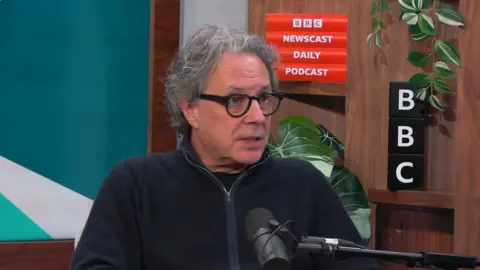
Ian Russell, the father of Molly Russell, told BBC's Newscast that the government should enforce existing laws rather than "implementing sledgehammer techniques like bans".
The foundation he set up in Molly's honour is among a number of children's charities and online safety organisations to sign a joint statement opposing such a move.
Prime Minister Sir Keir Starmer has not ruled out an under-16 social media ban, after Australia imposed one in December.
The House of Lords is set to vote on proposals for a ban next week, which could see an amendment added to the Children's Wellbeing and Schools Bill.
Many Labour MPs and officials have said they expect the UK government to follow Australia's example, with several other European nations weighing similar laws.
Health Secretary Wes Streeting this week indicated was in favour of a ban, while Conservative leader Kemi Badenoch has said she would bring one in if her party won the next election.
"Many of them have said things like: 'this is not something that should be a party political issue'."
The government should instead be enforcing laws already on the books more robustly, he argued.
Russell expressed concerns about the "unintended consequences" of a ban, which he said would "cause more problems".
"At the heart of it are companies that put profit over safety," he said. "That has got to change - and I don't think that we're that far away from it changing it - which is why its slightly exasperating that we're going through these same arguments again now about bans.
"It's not far away - we can build on what we've got far better than simply implementing sledgehammer techniques like bans that will have unintended consequences and cause more problems."
The Molly Rose Foundation, a suicide prevention charity named after his daughter, and organisations including the NSPCC and Childnet, called a ban the "wrong solution".
"It would create a false sense of safety that would see children - but also the threats to them - migrate to other areas online," they wrote in a joint statement.
"Though well-intentioned, blanket bans on social media would fail to deliver the improvement in children's safety and wellbeing that they so urgently need."
Instead of this "blunt response", the statement - which was also signed by two child mental health practitioners - called for a "broader and more targeted" approach.
Existing law should be "robustly enforced" to ensure social media sites, games and AI chatbots were not accessible to under-13s, it said, while all social media platforms should have evidence-based blocks for features that are considered risky for children of different ages.
The statement urged the government to strengthen the Online Safety Act to compel online companies to "deliver age-appropriate experiences".
It suggested: "Just as films and video games have different ratings reflecting the risk they pose to children, social media platforms have different levels of risk too and their minimum age limits should reflect this."
Warning: this story contains discussion of suicide
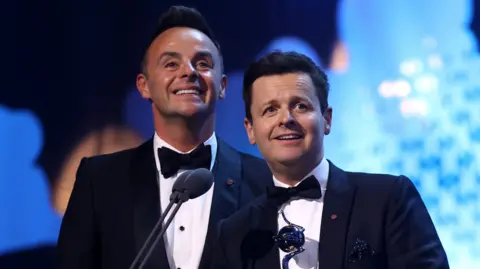
Ant and Dec have apologised for promoting their new podcast with a video that has been criticised for containing imagery that was insensitive and may be triggering for people struggling with mental health.
Social media users characterised the opening shot of the clip - showing a pair of feet dangling above the ground - as evoking "suicide imagery" and was "triggering".
The TV presenters said in a statement: "We did not mean to cause any offence with this promo video and we are sorry if it upset anyone."
The clip was created to promote their podcast, Hanging Out With Ant & Dec, which is due to launch later this month as part of their new digital entertainment channel. It has now been deleted.
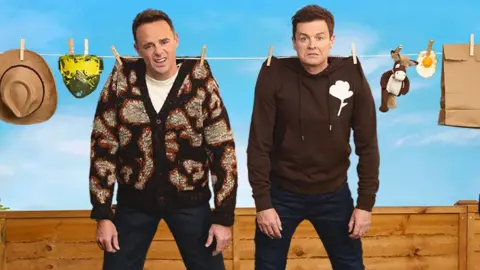
The video, which was shared on Instagram and X on Friday, opened with a close-up image of feet suspended in the air, before showing the duo pegged to a washing line.
Simon Jones PR
Promotional material for the podcast shows the duo pegged to a washing line
Former X Factor contestant and mental health advocate Katie Waissel described the video as "triggering, insensitive and frankly reckless to push out as 'entertainment'".
"This opening visual of feet suspended above the ground is not a harmless 'play on words'," she wrote, adding: "The suicide imagery is impossible to ignore."
Other social media users called the clip "insensitive", "triggering" and in "poor taste".
Ant and Dec said in a statement on Saturday that they had "taken on board comments" and deleted the video.
The podcast will see the duo catch up about their lives as well as taking questions and comments from listeners.
It is part of their new Belta Box brand, which will be on platforms including YouTube, Facebook, Instagram and TikTok, and will also host classic clips from their TV careers as well as "new digital formats".
If you have been affected by any of the issues raised in this story, information and support can be found at the BBC's Action Line.
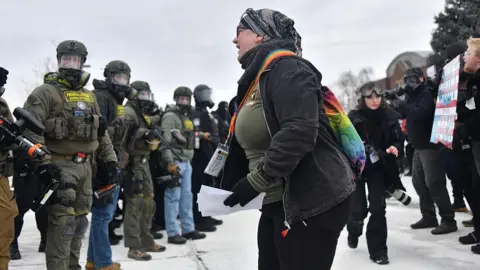
A US federal judge has issued an order limiting the crowd control tactics that can be used by Immigration and Customs Enforcement agents (ICE) towards "peaceful and unobstructive" protesters in Minneapolis.
Judge Katherine Menendez ruled on Friday night that federal agents can't arrest or pepper spray peaceful demonstrators, including those monitoring and observing ICE agents.
The ruling comes ahead of planned weekend protests against the widespread immigration action in the city and follows the fatal shooting of Renee Good by an ICE agent earlier this month.
The US Department of Homeland Security said it is taking measures to protect officers from rioters.
On Friday, Minnesota officials urge protesters expected to take to the streets this weekend to stay orderly and peaceful.
The state's National Guard has been placed on alert and other law enforcement officers have been deployed ahead of both expected anti-ICE demonstrations and a counter march being planned by a conservative influencer.
Judge Menendez's 83-page order bars federal agents from arresting and "using pepper-spray or similar nonlethal munitions and crowd dispersal tools against persons who are engaging in peaceful and unobstructive protest activity".
The ruling, which stems from a lawsuit filed by a group of protesters in December, also limits agents from "stopping or detaining drivers and passengers in vehicles where there is no reasonable articulable suspicion that they are forcibly obstructing or interfering" with their work.
"The act of safely following [immigration agents] at an appropriate distance does not, by itself, create reasonable suspicion to justify a vehicle stop," it says.
In a statement to CBS, the BBC's US partner, in response to the order, a spokesperson for the Department of Homeland Security said the agency "is taking appropriate and constitutional measures to uphold the rule of law and protect our officers and the public from dangerous rioters".
The White House also criticised the ruling.
"This absurd ruling embraces a dishonest, left-wing narrative," spokesperson Abigail Jackson told Politico. "Here's the truth: federal agents have acted lawfully to protect themselves and ensure the integrity of their operations when individuals attempt to intervene."
There have been some reported clashes between protesters and federal officers over the past week.
Additionally on Friday, the justice department announced it was investigating two of the state's leading Democrats - Governor Tim Walz and Minneapolis Mayor Jacob Frey - over alleged attempts to impede federal immigration operations.
Both have condemned the ICE operations in the city.
"A reminder to all those in Minnesota: No one is above the law," US Attorney General Pam Bondi said in an online statement.
The investigation was criticised by Walz and Frey.
"Weaponizing the justice system against your opponents is an authoritarian tactic," Walz said in a statement.
The White House has announced the first members of its Gaza "Board of Peace", and the list of names will do little to dispel the criticism from some quarters that the US president's plan resembles, at its heart, a colonial solution imposed over the heads of the Palestinians.
There are still several unknowns - namely who else might be added, and the exact structure of what is currently a rather complicated layout.
So far, no Palestinian names are included on the two separate senior boards that have been officially unveiled.
One is a "founding Executive Board", with a high-level focus on investment and diplomacy. The other, called the "Gaza Executive Board", is responsible for overseeing all on-the-ground work of yet another administrative group, the National Committee for the Administration of Gaza (NCAG).
That committee is made up of supposedly technocratic, apolitical Palestinians, led by Dr Ali Shaath, a civil engineer by training who's held ministerial positions in the Palestinian Authority.
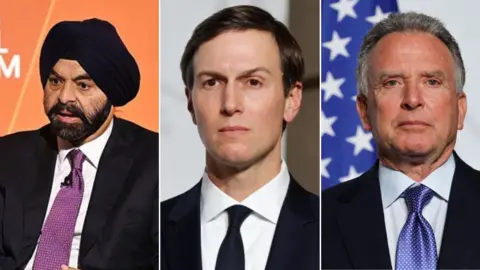
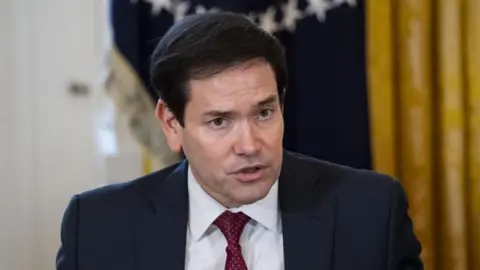
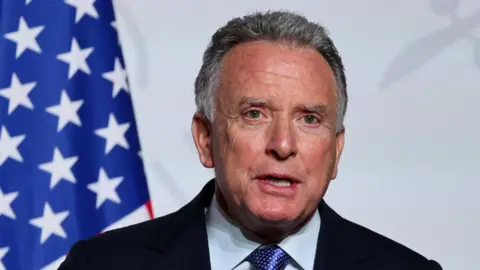
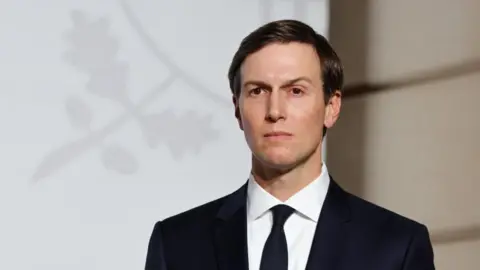
But of the seven members of the founding Executive Board, six are Americans - including US Secretary of State Marco Rubio and other members of Trump's inner circle like his son-in-law Jared Kushner, and Steve Witkoff, who is US Special Envoy to the Middle East, but also a friend of the president and a fellow real estate developer.
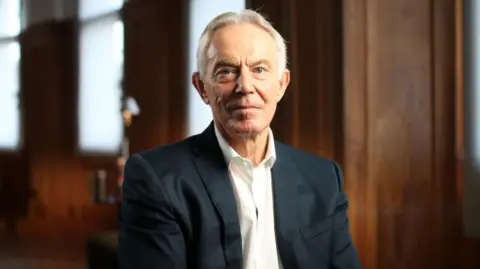
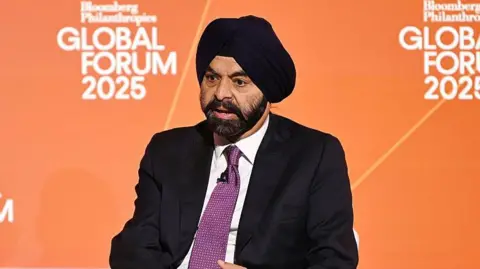
Ajay Banga, president of the World Bank, is something of an exception as a dual-national, Indian-born US citizen. Sir Tony Blair, meanwhile, is a former UK Prime Minister, and his inclusion is likely to further fuel concerns about how the Board of Peace will operate.
Over the past few weeks, criticism of Sir Tony's possible inclusion has come from figures like prominent politician Mustafa Barghouti, general secretary of the Palestinian National Initiative, and newspaper reports quoting unnamed officials from Arab states in the region.
Sir Tony's central role in the Iraq war, coupled with Britain's own colonial history in the Middle East, is deemed by his opponents to make him entirely unsuitable.
Francesca Albanese, the United Nations' special rapporteur on human rights in the occupied Palestinian territories, wrote on social media last year: "Tony Blair? Hell no. Hands off Palestine."
Even Trump seemed to acknowledge the issue.
"I've always liked Tony, but I want to find out that he's an acceptable choice to everybody," the president said last October.
There is significant overlap between the two senior boards, with Kushner, Witkoff and Sir Tony appearing on both.
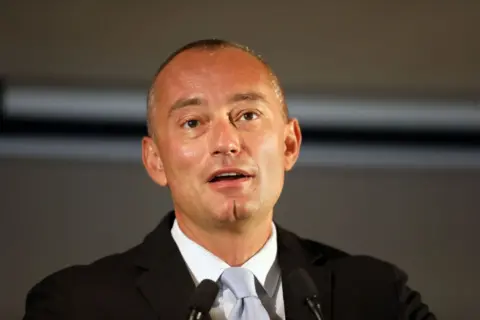
But the Gaza Executive Board does include the names of some senior political figures and diplomats from Turkey, Qatar and the United Arab Emirates. It will be headed by the former Bulgarian politician, Nickolay Mladenov, who's been given the title of High Representative for Gaza.
Yakir Gabay, a businessman born in Israel and now based in Cyprus is the only Israeli member.
In its statement announcing the names, the White House said those chosen will work to ensure "effective governance and the delivery of best-in-class services that advance peace, stability, and prosperity for the people of Gaza".
And whatever the concerns and complexities, the plan remains the only game in town, with many world leaders pledging their support and commitment to helping make it a success.
Its architecture is further complicated by the fact that, sitting above all the structures announced so far, will be the Board of Peace itself, with President Trump as the chairman.
Names of that supreme body have not yet been announced, but the current UK Prime Minister Sir Keir Starmer, Turkish President Recep Tayyip Erdogan, Egypt's Abdel Fattah El-Sisi and Canadian leader Mark Carney have reportedly been invited to join.
In the end, whether the most vocal critics can be assuaged will depend on how quickly the new members of the senior teams can begin to drive change that makes a real difference in both daily life for Palestinians and, crucially, further concrete steps towards a lasting peace.
Getty Images
Aid groups have accused Israel of continuing restrictions on their work
Major challenges remain to both of those goals.
The UN estimates around 80% of buildings in Gaza have been destroyed or damaged and families who have survived the war are now struggling with the winter weather, and a lack of food and shelter.
While aid groups say there has been some improvements, they accuse Israel of imposing continuing restrictions upon their work.
Israel says that it is facilitating humanitarian assistance, and has blamed the UN for failing to distribute supplies already in Gaza. It argues any restrictions are designed to stop Hamas infiltrating and exploiting relief efforts.
Showing meaningful progress towards rebuilding will also be a Herculean task, involving not only the removal of an estimated 60 million tonnes of rubble, but first finding and disposing of the dead bodies and unexploded bombs contained within it.
Perhaps the biggest challenge though is maintaining the fraying ceasefire itself.
Another name has been released by the White House, that of Major General Jasper Jeffers as the Commander of the International Stabilization Force (ISF).
Backed by a UN mandate, it will have the tough job of ensuring the demilitarisation of Gaza.
As yet, there's no clear road map for how Hamas will be persuaded to give up its weapons, nor any clear idea of which country will provide troops for that force or what its remit and rules of engagement will be.
Hamas has said it will only disarm as part of a wider deal establishing a Palestinian state.
Israel, whose ground troops still control more than half of the Gaza Strip, has said it will only withdraw if Hamas disarms.
How that catch-22 can be resolved is perhaps the biggest test of all.
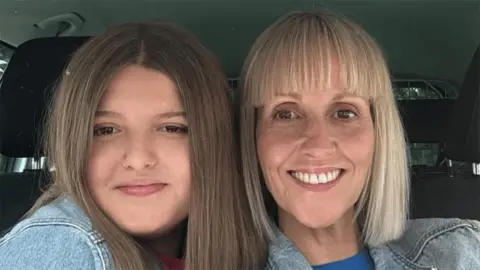
Grace Keeling, left, and Sarah Keeling went into the sea at Withernsea on 2 January
A body has been recovered in the search for a missing girl, 15, who was swept into the sea off the East Yorkshire coast, Humberside Police has said.
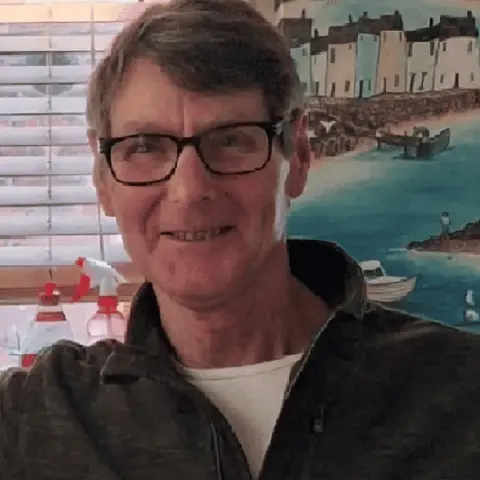
Grace Keeling went into the water at Withernsea on 2 January. Her mother, Sarah Keeling, 45, and passer-by Mark Ratcliffe, 67, both died after trying to save her.
While formal identification is yet to take place, police said they believed this person to be Grace Keeling.
Det Supt Simon Vickers said: "This was a deeply upsetting incident, and I cannot begin to understand the heartbreak felt by all the loved ones of those involved."
Vickers said they had spoken to Grace Keeling's family and updated them, and were continuing to support them with specially trained officers.
"Understandably, they have asked for their privacy, and we would ask that this is respected," he said.
Police said her body was discovered at about 08:30 GMT on Thursday following extensive searches over the past 14 days but said it was not possible to recover the body immediately due to the tide times, conditions and location.
Officers said they were able to do so safely on Saturday morning, with the help of HM Coastguard and Humberside Fire and Rescue Service.
Jasmine Lowe / BBC
One of many heartfelt tributes placed at the scene in Withernsea
Humberside Police thanked everyone who had offered or assisted in the search.
Vickers added: "Our thoughts and sincere sympathies will always remain with the families of Grace and Sarah Keeling, and Mark Ratcliffe following this utter tragedy."
Police had previously said that, from trawling through CCTV and speaking to multiple witnesses, it was understood that Grace Keeling and a friend were on the steps near to the rocks when she was "believed to have fallen into the water after being swept by a wave".
A major operation was launched at 15:10 GMT on Friday 2 January following reports of people in the water. It involved HM Coastguard, emergency services, the RNLI and included helicopters and lifeboats.
Yoweri Museveni first came to power in 1986 as a rebel leader
President Yoweri Museveni has been declared the winner of Thursday's election extending his four decades in power by another five years.
He gained 72% of the vote, the election commission announced, against 25% for his closest challenger Bobi Wine, who has condemned what he described as "fake results" and "ballot stuffing". He has not provided any evidence and the authorities have not responded to his allegations.
Wine has called on Ugandans to hold non-violent protests.
Museveni, 81, first came to power as a rebel leader in 1986 but since then has won seven elections.
The election process was marred by violence and Wine, a 43-year-old former pop star, says that at least 21 people have been killed around the country in recent days.
The authorities have so far confirmed seven deaths.
Access to the internet has been cut in the country since Tuesday, making it hard to verify information.
The authorities say the blackout was necessary to prevent misinformation, fraud and the incitement of violence - a move condemned by the UN human rights office as "deeply worrying".
Wine has demanded that the internet be restored.
Overnight, Wine's party said that he had been abducted from his home in the capital, Kampala - a claim denied by the police.
Wine later issued a statement on Facebook saying that he had managed to evade a night-time raid by security forces and was in hiding.
He had previously said he was under house arrest.
This has not been confirmed by the police but spokesman Kituuma Rusoke said Wine's movements were restricted because his home was an area of "security interest".
"We have controlled access to areas which are security hotspots," Uganda's Daily Monitor paper quoted him as saying.
"We cannot allow people to use some places to gather and cause chaos," he said.
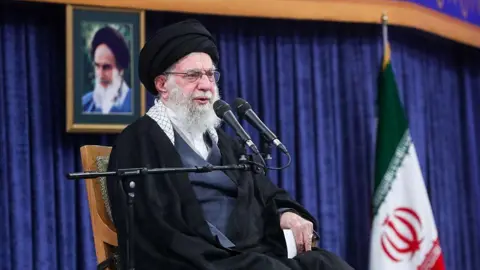
Iran's Supreme Leader, Ayatollah Ali Khamenei, has accused the US and Donald Trump of being responsible for "casualties, damage and slander" in his country during recent protests.
In a speech on Saturday, Khamenei acknowledged that thousands of people had been killed during recent unrest, "some in an inhuman, savage manner" but blamed the deaths on "seditionists".
The US president has urged Iranian anti-government demonstrators to "keep protesting" and threatened military intervention if security forces kill them.
Protests in Iran have claimed 3,090 lives, according to US-based Iranian Human Rights Activists News Agency (HRANA), in unrest that started over the economy on 28 December.
Since then, the protests have turned into calls for the end of the rule of Iran's supreme leader.
The Iranian government has called the demonstrations "riots" backed by Iran's enemies.
Protesters have been met with deadly force and there has been a near-total shutdown of the internet and communication services.
There have been fewer reports of unrest in recent days but with internet access still restricted developments on the ground remain unclear.
During his speech on Saturday, Khamenei also said Iran considered President Trump to be a "criminal" and said the US must be "held accountable" for recent unrest.
He also claimed on social media that "America's goal is to swallow Iran".
Trump has not yet responded to the supreme leader and the BBC has approached the White House for a comment.
Donald Trump said on Wednesday he had been told "the killing in Iran has stopped", but added that he had not ruled out military action against the country.
His comments came after the US and UK both reduced the number of personnel at the Al-Udeid air base in Qatar.
Officials told CBS, the BBC's US partner, that a partial American withdrawal was a "precautionary measure".
Jessica Brady contacted her GP practice more than 20 times feeling unwell
A new system urging doctors to "think again" if they are unable to pin down a diagnosis after seeing a patient three times - named Jess's Rule - is to be advertised in every GP surgery in England from this week.
The NHS initiative is named after Jessica Brady, who died from advanced stage 4 cancer in 2020, at the age of 27.
Before her eventual diagnosis, Jess had contacted her GP on more than 20 occasions after feeling unwell. But she was told her symptoms were related to long Covid and she was "too young for cancer".
Her mother, Andrea Brady, welcomed the government rollout of the posters. She told BBC Breakfast: "We still need to trust our doctors but trust ourselves as well."
Under the patient safety initiative, GPs are asked to take a "fresh eyes" approach if they have been unable to offer a patient a substantiated diagnosis or their symptoms have escalated after three appointments.
Jess, an engineer at Airbus, became ill in June 2020.
Andrea said her family initially assumed it was something minor, "but that wasn't what happened for Jess".
Her symptoms, which included unexplained weight loss, night sweats and vomiting, escalated.
"It was very, very painful... to see the impact on Jess not just physically but the toll it was taking on her mentally," said Andrea.
Jess had contact with six different doctors at her GP surgery and three face-to-face consultations with a family doctor, but no referral to a specialist was made.
Her family then arranged a private appointment and she was referred to a specialist, who gave Jess a terminal cancer diagnosis of adenocarcinoma, cancer of the glands that line the organs, in November.
She died three weeks later, days before Christmas 2020.
Andrea said her daughter was "trying to be really resilient and advocate for herself" before her diagnosis
The government said posters in consultation rooms would improve patient safety by prompting doctors to "revisit patient records, challenge initial assumptions and remain alert to warning signs that might otherwise be missed".
Health Secretary Wes Streeting said: "Every patient deserves to be heard, and every serious illness deserves to be caught early.
"Jess's Rule makes that possible - reminding clinicians to take a fresh look when symptoms persist, and empowering patients to speak up about their care."
Andrea said the family wanted to follow what Jess had "really wanted to start when she was diagnosed, which was to create some positive change".
"It's taken five years but to know now that Jess's rule is out there and happening and is being received really positively and proactively by primary care colleagues is really, really important," she added.
She said the rule was a "two-way thing" intended to benefit both patients and GPs.
The posters were designed by the Department of Health and Social Care, Jess's mum Andrea and dad Simon, and NHS England.
Dr Claire Fuller, National Medical Director for NHS England, said: "Encouraging GP teams to challenge a diagnosis when it matters most could save lives by avoiding missed or late diagnoses."
The White House has released the names of the members who will form the Trump administration's new "Board of Peace" for Gaza.
With the US president as chair, the board will oversee the work of a committee of Palestinian technocrats tasked with the temporary governance of Gaza - and its reconstruction.
Each member of the "Board of Peace" is expected to be in charge of a portfolio that will be "critical to Gaza's stabilisation", the White House added. But it is not yet clear who will be responsible for which priorities.
Former UK Prime Minister Sir Tony Blair had long been talked about as a potential member of Trump's "Board of Peace, with the US president confirming back in September that he had expressed an interest in joining the body.
The former Labour Party leader was the UK prime minister from 1997 to 2007 and took the country into the Iraq War in 2003, a decision which means some may view his presence on the board as controversial.
After leaving office, he served as Middle East envoy for the Quartet of international powers - the United Nations, European Union, US and Russia - from 2007 to 2015.
Sir Tony is the only founding member of the executive board who is not a US citizen.
Sir Tony previously described Trump's plans for Gaza as the "best chance of ending two years of war, misery and suffering".
Marco Rubio
EPA
As US Secretary of State, Marco Rubio is central to the Trump administration's approach to foreign policy.
Before Trump's return to office, Rubio had spoken out against a ceasefire in Gaza, saying that he wanted Israel "to destroy every element of Hamas they can get their hands on".
US Special Envoy to the Middle East Steve Witkoff, a real estate magnate and golf partner to Trump, will also be on the board.
Earlier this month, Witkoff announced the start of phase two of Trump's plan to end the war in Gaza, adding that it would see the reconstruction and full demilitarisation of Gaza - including the disarmament of Hamas.
He added that he expects Hamas to "comply fully with its obligations" under the deal, or face "serious consequences".
Witkoff has been a central figure in US-led efforts to negotiate a peace deal between Russia and Ukraine, including holding a five-hour meeting with Russian President Vladimir Putin in Moscow in December.
Jared Kushner
EPA
Jared Kushner, the US president's son-in-law, has also played a key role in the Trump administration's foreign policy negotiations.
Alongside Witkoff, Kushner has often worked as a US mediator for the Russia-Ukraine and Israel-Gaza wars.
At a talk at Harvard University in 2024, Kushner said "Gaza's waterfront property could be very valuable... if people would focus on building up livelihoods."
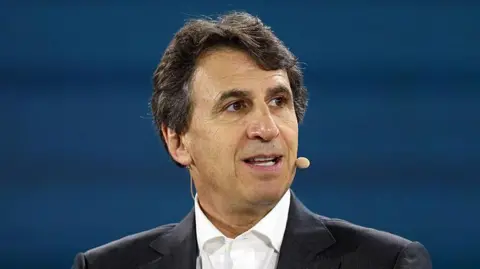
Marc Rowan
Getty Images
Billionaire Marc Rowan is the CEO of Apollo Global Management, a large private equity firm headquartered in New York.
Rowan was seen as a contender to become US treasury secretary for Trump's second term.
Ajay Banga
Getty Images
Ajay Banga, president of the World Bank, has advised a number of senior US politicians, including President Barack Obama, during his lengthy career.
Born in India in 1959, Banga became a US citizen in 2007, and later served as the CEO of Mastercard for more than a decade.
Former US President Joe Biden nominated him to lead the World Bank in 2023.
Robert Gabriel
Robert Gabriel, a US national security adviser, will be the final member of the "founding executive board".
Gabriel has worked with Trump since his 2016 presidential campaign, shortly after which, according to PBS, he became a special assistant to Stephen Miller, another of Trump's key current advisers.
Nickolay Mladenov
Getty Images
The White House statement also said that Nickolay Mladenov, a Bulgarian politician and former UN Middle East envoy, would be the board's representative on the ground in Gaza.
He will oversee a separate 15-member Palestinian technocratic committee, the National Committee for the Administration of Gaza (NCAG), charged with managing the day-to-day governance of post-war Gaza.
The NCAG will be led by Ali Shaath, a former deputy minister in the Palestinian Authority (PA) which governs parts of the occupied West Bank not under Israeli control, will head that new committee.
The Syrian army is moving into areas east of Aleppo city, after Kurdish forces started a withdrawal.
Syrian troops have been spotted entering Deir Hafer, a town about 50km (30 miles) from Aleppo.
On Friday, the Kurdish Syrian Democratic Forces (SDF) militia announced it would redeploy east of the Euphrates river. This follows talks with US officials, and a pledge from Syrian President Ahmed al-Sharaa to make Kurdish a national language.
After deadly clashes last week, the US urged both sides to avoid a confrontation. President al-Sharaa is seeking to integrate the Kurds' military and civilian bodies into Syrian national institutions.
In a statement to state-run news agency Sana, the Syrian army said its forces "began entering the western Euphrates area", and declared it had established "full military control" of Deir Hafer.
The military urged civilians not to enter the operations area until it is secured and "cleared it of all mines and war remnants".
Images showed Syrian forces advancing towards the area, including with tanks.
The move comes after Kurdish leader Mazloum Abdi agreed to pull back his US-backed SDF "towards redeployment in areas east of the Euphrates", responding to "calls from friendly countries and mediators".
US special envoy Tom Barrack and Mazloum Abdi are set to meet later on Saturday in Erbil, the capital of Iraqi Kurdistan.
In recent days, the Syrian army had urged civilians to flee the Deir Hafer area, with at least 4,000 people leaving, according to Syrian authorities.
EPA
Syrian civilians cross a water canal as they flee eastern Aleppo in northern Syria
Before the Kurdish withdrawal, President al-Sharaa said he would make Kurdish a national language, and recognise the Kurdish new year as an official holiday.
The decree, announced on Friday, is the first formal recognition of Kurdish national rights since Syria's independence in 1946. It stated that Kurds were "an essential and integral part" of Syria, where they have endured decades of oppression under previous rulers.
Despite the apparent easing of tensions, disagreements linger. In response to the decree, the Kurdish administration in Syria's north and north-east said it was "a first step" but called for "permanent constitutions that express the will of the people", rather than "temporary decrees".
Meanwhile, after Syrian troops entered areas east of Aleppo, accusing Damascus of "violating" the agreement by moving in earlier than agreed.
Syria's army also accused the SDF of "violating the agreement", saying two of its soldiers had been killed by Kurdish forces as the military moved in.
Kurdish forces have been controlling swathes of Syria's oil-rich north and north-east, much of it gained during the civil war and the fight against the Islamic State group over the past decade.
Following the ousting of longtime leader Bashar al-Assad in late 2024, President al-Sharaa has been seeking to integrate the Kurdish bodies into Syrian institutions.
In March 2025, the SDF signed a deal with the government to that effect. Almost a year on, the agreement is still not implemented, with each sides blaming the other.
Credit card debt is an increasingly heavy burden for millions of Americans.
Selena Cooper, 26, is among those dealing with the strain. A former paralegal at the Social Security Administration, she was left without a stable income when the US government shut down a few months ago. She lost her job permanently after Christmas.
Cooper first missed her credit card payments in October, when her paycheques ground to a halt. Since then, she said her debt across her three credit cards has accumulated to $6,000.
Last month, her card issuers Capital One and American Express notified her that they were raising her interest rates due to late payments. The rate on her Capital One cards doubled to 16%, while the one on her Amex jumped from 10% to 18%, she said.
Credit card rates have caught the attention of US President Donald Trump. Last week, he proposed capping them at 10% for one year from 20 January - an idea that Cooper said "would help a little bit, but it's still not going to get me out of debt".
Cooper, who lives in Columbia, South Carolina, is now leaning on her photography business for income. "It'll pay small bills - but not my credit card debt," she said.
Selena Cooper
Selena Cooper said her debt across her three credit cards has accumulated to $6,000
Credit card interest rates have been rising in recent years. They averaged about 22% as of November, up from 13% a decade ago, Federal Reserve data shows. 37% of adults carry a credit card balance, and overall credit card debt in the US totals more than $1tn.
"It does show that consumers are feeling pinched, they're going to continue to feel pinched," Susan Schmidt, portfolio manager at Exchange Capital Resources in Chicago, told the BBC.
"I think the Trump administration is trying to find a way out of it."
Trump's proposal, which was among his campaign promises, was met with a swift backlash from bank executives, who say a cap would erode consumers' access to credit. Banks could cut credit limits or close riskier accounts.
Interest charges are a source of revenue for banks and other big lenders, amounting to $160bn in 2024, according to the Consumer Financial Protection Bureau - an agency that Trump largely dismantled last year.
Banks are already pushing to protect that income, arguing that a rate cap would backfire to the detriment of consumers. JP Morgan hinted at the possibility of legal action.
"People will lose access to credit on a very, very extensive and broad basis, especially the people who need it the most," Jeremy Barnum, JP Morgan's chief financial officer, warned on the company's earnings call on Monday.
Jane Fraser, Citigroup's chief executive, also pushed back against the proposal on Wednesday and warned of a "severe impact on access to credit and on consumer spending across the country".
Some analysts and economists agree that a cap, on its own, might not benefit consumers as much as Trump and lawmakers across the political aisle claim.
"A 10% cap may not be the right solution because the people that are already in trouble, that's not necessarily going to help them," said Schmidt of Exchange Capital Resources.
Benedict Guttman-Kenney, an assistant professor of finance at Rice University, said banks might respond by limiting how much they lend to people with lower credit scores, who are considered higher-risk borrowers. Those are the people most at risk of losing access to credit cards, he said.
Banks, he added, might also try to recoup their revenue elsewhere, like by raising annual fees or late fees.
"It's not clear that people are going to be better off," Guttman-Kenney said. "They're still paying similar amounts of money."
But he noted that some bank expenses are "bloated", meaning they have room to cut costs to keep their margins intact. They could, for example, trim down how much they spend on marketing, he said.
And a recent Vanderbilt University study found that Americans would save roughly $100bn a year in interest costs if a 10% rate cap were to be implemented.
"This is something people would see, they would notice, they would feel it," said Brian Shearer, a researcher at Vanderbilt's Policy Accelerator and the author of the study.
"This alone would impact their household budgets substantially."
Shearer questioned a key argument put forward by bank executives and their lobbyists: that any reduction in rates will necessarily lead to a reduction in lending. He pointed to banks' robust margins in the credit card market.
Interest payments, he added, do not account for the majority of the revenue that banks earn on credit cards.
"No policy is without some pros and cons," Shearer said. "To continue lending, banks would have to reduce rewards to some extent, especially to people with lower FICO scores (credit scores).
"However, the savings from interest, even to those people who lose some rewards, would far exceed the lost rewards."
'I'm losing sleep'
Morgan, 31, who asked to use only her first name, is also among those struggling to pay down thousands of dollars.
Since last May, she has been using her Discover card to pay for her two-year-old daughter's childcare, while unemployed. She said she decided to send her daughter to daycare because she needed the freedom, due to struggles with her mental and physical health.
Those payments have left her with $6,700 in credit card debt.
Morgan's husband works in the military and pays for the family's other expenses. Through a service member benefit programme, she secured an interest rate of roughly 3% on her credit card. Had she been forced to pay the typical 27% interest rate, sending her daughter to childcare would not have been an option, she said.
"I'm losing sleep over the $6,700, but I have a little wiggle room to be able to do that because once I get a job, I can pay it off," Morgan said.
That's why Trump's proposal to cap credit card rates at 10% struck her as a "step in the right direction".
"I hope it actually comes to fruition," she said. "It's one of the few things he's done that prioritises people over businesses."
Will the proposal go anywhere?
The idea to cap credit card rates has been floating in legislative circles for years, and it has garnered bipartisan support.
Senator Josh Hawley, a Republican, and Senator Bernie Sanders, a Democrat, last year introduced a bill to cap credit card interest rates at 10%.
Bloomberg via Getty Images
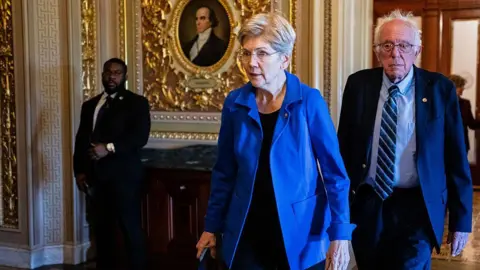
The proposal has received bipartisan support from the likes of Democrat Elizabeth Warren
Democratic Senator Elizabeth Warren said in a statement that she spoke with Trump this week and "told him that Congress can pass legislation to cap credit card rates if he will actually fight for it".
"If he really wants to get something done, including capping credit card interest rates or lowering housing costs, he would use his leverage and pick up the phone," Warren said.
Still, there are hurdles ahead. Getting Congress on board could prove challenging, despite some support on both sides of the aisle.
House Speaker Mike Johnson this week distanced himself from the rate cap proposal, citing "negative secondary effects" and a pullback in lending as a result. "It's something that we've got to be very deliberate about," Johnson said at a press conference.
And banks are poised to keep pushing hard against it.
"If the Trump administration backs down, I think it would be because of the bank lobbying," said Shearer, of Vanderbilt.
"This is their cash cow. They're not going to let it go easily."
Four people have been taken to hospital and several people have been arrested after a protest outside the Iranian embassy in London.
One protester climbed across balconies onto the embassy roof removing a flag on Friday night before being detained, said police.
It added police officers had been injured after missiles were thrown at them, although the ambulance service has not said whether it was police or protesters who were taken to hospital.
Demonstrations have been taking place outside the embassy after widespread anti-government protests in Iran, where more than 2,600 protesters have been killed, according to a US-based human rights group.
The man who removed a flag from the embassy's roof was arrested on suspicion of criminal damage, trespass on diplomatic property and assaulting police, the Metropolitan Police said.
It added "a number" of people had also been arrested on suspicion of violent disorder and a section 35 dispersal order had been imposed outside the embassy "as a result of ongoing disorder".
"A significant police presence remains in place, including additional officers who have been deployed during the evening to prevent further disorder."
A London Ambulance Service spokesperson said it was called at 20:45 GMT "to reports of an incident at the junction of Exhibition Road and Kensington Road".
Four people had been taken to hospital while two others were treated at the scene, it said.
Earlier this week the Iranian ambassador in London was summoned to the Foreign Office after the killings of protesters in Iran.
Last Saturday, two people were arrested at a protest outside the embassy where a protester also climbed onto the building's balcony and appeared to tear down the Iranian flag.
Shoppers on Oxford Street during the Boxing Day sales
A new year, a new beginning.
The latest monthly figures on the economy hardly confirm a change of gear, but nor do they back up the worst doom-mongers claiming decline and recession. It is neither doom nor boom, but a new year makes an opportunity to wipe the slate clean on policy, on a sense of certainty, and perhaps above all, the vibes in the economy.
There is one chart that might explain quite a lot about both the state of and the prospects for the UK economy. And it might say a fair bit about the political direction of the UK too.
It is consumer confidence. These are the long-running surveys that essentially put the nation on the economic psychiatric couch. How do you feel about the economy's prospects? Are you likely to buy a major piece of equipment? How are your personal finances?
There is a solid data source of consistently asked questions going back five decades - it is the measure now called the GfK Consumer Confidence Barometer.
I've been reporting on this metric for half of its existence. It's an imperfect science but the basic idea to reach the net confidence number is the optimism score minus the pessimism score.
The patterns then were interesting and consistent. And it was important as a predictor for those in power to stay in power. "It's the Economy Stupid", remember.
But has something significant changed in the water? This chart is quite extraordinary and a version of it has been circulated at the top of government.
A quick narration is in order.
This chart breaks down the headline net confidence number by age cohort.
Broadly speaking they used to move together, they were "correlated".
Younger people have a generally sunnier starting point but that dims as they age - not a great surprise - and all age groups react to events similarly.
Over the past decade you can see correlated declines in consumer confidence across all age groups in reaction to the post-Brexit vote era and the impact of the pandemic.
An interesting takeaway is how devastating the Liz Truss mini-budget in 2022 was for all age groups. A loss of confidence in the 45-day government and in economic prospects.
And up until 2024 all those lines move in tandem.
But what happens in late 2024? Divergence. Big time.
The under-50s' consumer confidence goes higher, and soars for the under-30s to highs not seen since Brexit.
But take a look at the bottom two red lines. Over-50s' and over-60s' consumer confidence collapses toward Truss-era levels.
How can it be that the over 50s, and pensioners in particular, are living through another collapse in economic confidence, and yet the young adult population is much more positive?
Well the dotted line is the 2024 General Election. And while correlation does not mean causation, that is when this age-related break occurs.
Votes affecting vibes
A possible explanation from political economy is this - the flow of causality from economic sentiment to political sentiment has reversed.
Where how you felt about your finances influenced how you voted, now how you voted influences how you feel about your finances and the economic outlook for the country.
Young people broadly on the liberal left are now happier after enduring a rolling series of crises so far this decade, and with a government they largely voted for in 2024.
The older, who voted Conservative and Reform predominantly, are unhappy and unconvinced. They think the country has gone to the dogs even more than usual.
One possible factor is the tone set by social media and the emotive doom-scrolling and rage magnets embodied in their algorithms. Is this demographic seeing the Mad Max-style dystopia presented on their social media feeds and responding with this negative outlook?
There is also some evidence in the US of respondents to one consumer sentiment survey exhibiting a political tint on their sense of economic confidence. In the transition between the Donald Trump and Joe Biden administrations at the end of 2020, Democrats respondents' economic confidence surged from 67 to 96, while Republicans' crashed from 100 to 59.
The Biden administration then bemoaned what staffers called the "Vibecession" - the subsequent sense of economic malaise not really reflected in good economic numbers.
Rates a double-edged sword
There are other economic factors at play.
This rebound in confidence for the young coincides with when the Bank of England started cutting interest rates. Rate cuts are good for young home seekers and jobseekers, but bad for older savers.
There are significant economic consequences if this picture is correct too.
It might help explain the curiously high and nearly double-digit UK savings rate. That looks like a pandemic-style aberration. Older Britain is sat on its savings, despondent about the country and the economy, refusing to spend its money and weighing down GDP, even as pay rises for workers remain higher on average than the rate of inflation.
The takeaways from this chart are also well-reflected in the early financial results we are getting from businesses.
Many retail results have defied the gloom. Some bosses that complain the most about National Insurance rises seem to be reporting healthy sales and profits having basically paid for the tax.
Pub chain Mitchells & Butlers "traded very strongly across the festive season with like-for-like growth of 7.7%". Fullers had an "outstanding five-week Christmas and New Year season across all parts of the estate", 8% up on an already strong festive period last year.
Obviously challenges remain in the level of price rises. But inflation is on its way down to the 2% target, with a conscious attempt from government to limit regulated price rises for rail and water.
More rate cuts will come slowly, and the impact of previous cuts will also filter into the household sector.
A mortgage price war may be on its way to help a housing market rebound after months of Budget uncertainty.
The government will hope to draw a line under a tumultuous 2025, with what they hope is an investment boom typified by recent announcements on Heathrow and on a new northern train line.
So there's a platform to defy the doom. But could people's now politically charged perceptions of economic confidence be a brake on all that?
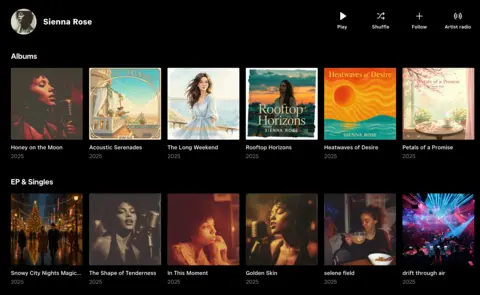
Sienna Rose has almost three million monthly listeners on Spotify
Sienna Rose is having a good month.
Three of her dusky, jazz-infused soul songs are in Spotify's Viral Top 50. The most popular, a dreamy ballad called Into The Blue, has been played more than five million times.
If she continues on this trajectory, Rose could become one of the year's hottest new stars.
There's only one problem: All the signs indicate she's not real.
Streaming service Deezer, which has developed tools to tackle AI music, told the BBC that "many of her albums and songs on the platform are detected and flagged" as computer generated.
Look closer and you'll see the indications of an AI artist. Rose has no social media presence, has never played a gig, has no videos, and has released an improbable number of songs in a short space of time.
Between 28 September and 5 December, she uploaded at least 45 tracks to streaming services. Even Prince, an artist known for restless creative mania, would have struggled to match that figure.
Her Instagram account, which is currently deactivated, featured a strangely homogenous series of headshots, all showing the gauzy, unreal lighting that's characteristic of AI image generators.
Tidal
On streaming service Tidal, Rose is also credited with albums of folk and ambient music, all uploaded last year, with different singers pictured in the artwork
Then there's the music itself. Songs like Into The Blue and Breathe Again sit neatly next to Norah Jones or Alicia Keys, full of jazzy guitar lines and buttery smooth vocals.
But many listeners have noted what they have identified as "AI artefacts".
Play Under The Rain or Breathe Again and you'll hear a telltale hiss running throughout the tracks.
That's a common trait of music generated on apps like Suno and Udio - partly because of the way they start with white noise and gradually refine it until it resembles music.
It's this quirk that enables Deezer to flag AI songs.
"When the [software] adds all the layers and the instruments, it introduces errors," explains Gabriel Meseguer-Brocal, a senior research scientist for the streaming company.
"They're not perceptual, we cannot listen to them, but they're easy to spot if you do a few mathematical operations."
The errors act like a fingerprint, Meseguer-Brocal says, with a "unique signature" that means it's possible to detect which piece of software was used to create any piece of music.
Sienna Rose
The mystery surrounding the singer poses bigger questions around AI-generated music
For casual listeners, there are other signs: Inconsistent drum patterns, bland lyrics, and a singer who never strays from the melody or lets rip on the final chorus.
That "generic" sound has been the biggest clue for some of Sienna Rose's listeners.
"So I went to look [at her profile] and I was like, 'This is AI'."
Another user posted on X: "Started listening to Olivia Dean (fantastic). Within two days Spotify recommended Sienna Rose, who has a similar, but more generic sound. Took me a few songs to realise she's AI."
Broadcaster Gemma Cairney told BBC Radio 4: "The photographs of her do look a little bit unreal... And having listened to the music, is there just some of the soul in the soul missing?"
To be fair, many others have fallen for Rose's songs.
Among them is pop star Selena Gomez, who used the Rose track Where Your Warmth Begins as the background for an Instagram post about Sunday's Golden Globes.
The song was later removed when questions about Rose's identity spread online, but Gomez's post took interest in Rose and her identity to a new level.
And many of the listeners who'd been playing Rose's music reacted with dismay when they learned she might not exist.
"I'm disappointed cuz a couple of her songs came on and the music isn't BAD," agreed another on Bluesky. "[But] somebody said once you know then it sounds soulless' and I agree."
AI music ban
Of course, it's entirely possible that everyone has got it wrong, and Sienna Rose is a real singer who shuns the limelight. Maybe she's in witness protection. Perhaps she's a real singer, stuck in a contractual dispute with her label, and releasing music under a pseudonym.
If so, I'm sorry. It must be crushing to have your music labelled as soulless "slop". But that's indicative of the problem facing the entire music industry right now.
AI software is becoming so sophisticated that clone artists are competing with genuine musicians.
In Sweden this week, a chart-topping song was banned from the charts after journalists discovered the artist behind it, Jacub, didn't exist.
There are many people - both in tech companies and the business side of the music industry - who want to see AI succeed.
The costs of launching an act like Sienna Rose are practically zero, but her music is making an estimated £2,000 in royalties per week.
Compare that to the K-Pop industry, where labels invest an average of $1m (£750,000) per member of a girl or boy group per year, and you can see the attraction.
Interestingly, several of Rose's songs are credited to New York indie record label Broke - who have a track record in turning viral artists like bbno$ and Ndotz into chart stars.
If you visit their website, Rose isn't listed as one of their signings - but British dance act Haven are.
If that name rings a bell, it's because they got into trouble late last year for creating a song using an AI clone of Jorja Smith's voice.
Their song, Run, was removed from streaming services after record industry bodies issued takedown notices, alleging the track violated copyright - but was re-recorded with human vocals, and entered the UK Top 10 two weeks ago.
The BBC has contacted Broke to ask about their relationship with Sienna Rose, but has yet to receive a reply.
The BBC has also contacted another label, Nostalgic Records, which lists Rose on its website.
Nostalgic Records' biography claims she is "London-based" and says she is "not just a performer, but a storyteller of the heart".
Reuters
The pop star Raye says fans prefer genuine, heartfelt music over computer-generated emptiness
Deezer says 34% of the songs uploaded to its streaming service - about 50,000 per day - are AI-generated.
"Eighteen months ago, it was around 5% or 6%," says Meseguer-Brocal. "It's kind of shocking how quickly it's increasing."
Still, Deezer hasn't gone as far as online music store Bandcamp, which this week announced it was banning all AI-generated music.
In a statement, Spotify defended the presence of artists like Rose on its playlists.
"It's not always possible to draw a simple line between 'AI' and 'non-AI' music," a spokesperson said. "Spotify does not create or own any music, and does not promote or penalise tracks created using AI tools."
In the meantime, a backlash against AI music is growing.
Last year, artists including Paul McCartney, Kate Bush, Damon Albarn, the Pet Shop Boys and Annie Lennox released a "silent album" protesting against companies who train their AI models on copyrighted work without permission.
Speaking at the Ivor Novello Awards in 2024, pop star Raye told me she believed fans would always choose real music over algorithmically-generated filler.
"There's no reason to feel a threat," she said. "I don't write because I'm trying to be the best writer. I write because I'm trying to tell my story.
"I'm trying to lift off some weight I've been carrying or I'm trying to express myself and feel better."
At the same event, Kojey Radical said he wasn't worried about AI when he couldn't even trust his washing machine to start at the right time.
"Why is everyone trying to make me scared of the robots?" he laughed.
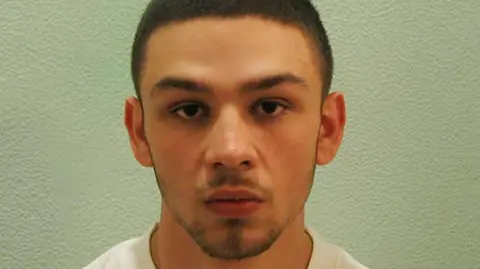
Justice Secretary David Lammy has intervened to block the transfer of a killer to an open prison after it emerged he had released drill music with lyrics referencing the murder, under a pseudonym.
Jake Fahri was sentenced to life in 2009 for killing 16-year-old Jimmy Mizen by throwing an oven dish at him that shattered and severed the arteries in his neck.
He was released on licence in 2023 but was later recalled after the Sun published a story that alleged Fahri was making music, including about the murder, as balaclava-clad artist TEN.
Two years on, the Parole Board has said he should now be moved to an open prison - but a Ministry of Justice spokesperson said Lammy's intervention was for "public protection".
In its decision summary, the board had said Farhi had initially disputed that the music was "about his own life" but after being recalled to prison, he accepted that he was the artist TEN.
It added that Farhi "needed to reflect" on "why he failed to be open and honest with the professionals managing his case" but this "could be achieved" in an open prison.
Lammy's reversal has been welcomed by Mizen's mother Margaret, who told the Sun she was "shocked" by the Parole Board's initial recommendation.
"I would much prefer this decision didn't have to be made because he would have turned his life around. I'm really sad that he hasn't," she said.
But the reversal shows Farhi had "not changed his attitude".
"He got into the witness box at his trial and lied through his teeth. Clearly, he hasn't changed, and I'm glad the justice secretary has seen through it."
Farhi had been given a minimum 14 year prison term - but, as with all minimum terms, that is the point at which release can be considered, usually with conditions attached about the criminal's behaviour outside prison.
Music by TEN was showcased on BBC 1Xtra. who were unaware of his real identity at the time of broadcast.
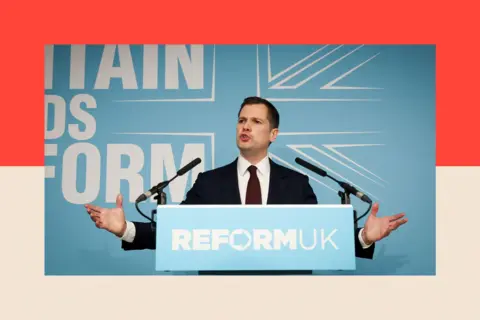
There is fresh paint in Reform HQ - and a fresh face in its line-up.
Before Thursday, the last time Robert Jenrick walked into Millbank Tower, a fabled address in Westminster where lots of political campaigns have been run, was decades ago as an eager Conservative activist.
Now, he's Reform UK's biggest prize so far - the best-known Tory to defect, and a favourite of Conservative party members.
Like or loathe Jenrick's tactics he has campaigning guile, a knack for grabbing headlines, experience of government, knowledge of Parliament and, of course, insider knowledge of what Conservative leader Kemi Badenoch and her team are up to.
So how will this big political character adapt to a new political tribe? And could his huge move be swallowed up by a big fight on the right, at a time when Reform UK are busy trying to appeal to the whole country?
From speaking to Jenrick yesterday, he is plainly deadly serious about his political future, hitching his wagon to the biggest party in the polls right now. But any defection brings with it deep questions about whether that person can be trusted.
Some Conservatives are accusing him of lying and treachery. They say he sat in meetings with colleagues in the last seven days discussing party strategy normally.
He even, one source claimed to me, told the chief whip when challenged on the morning of his defection that it was "nonsense" and that he was "gobsmacked".
EPA-EFE/REX/Shutterstock
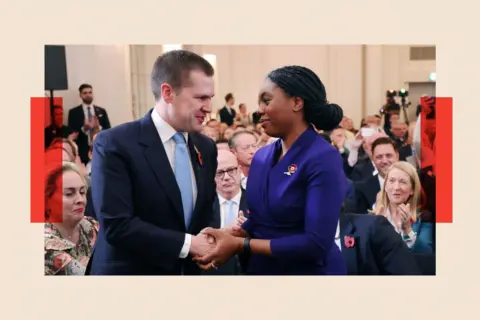
Badenoch became Conservative leader in 2024, beating Jenrick in a members' vote
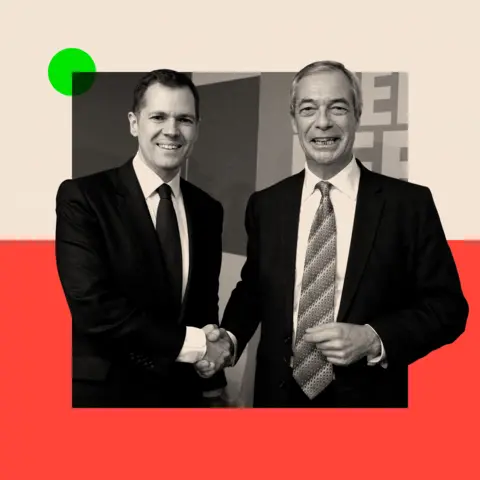
Hours later, Jenrick did appear grinning alongside Reform UK leader Nigel Farage for the public handshake sealing the deal after, remember, being sacked.
Did he serially deny thinking about going to Reform in the last few months?
Yes.
Do we know now that he'd been talking to them since the autumn?
Yes to that too.
Jenrick's answer to accusations of lying, and to the evidence he misled people, is to claim he is the one now being truly honest about the state of the country and the demise of the Conservative Party. He told us that he'd only made a final decision to leave at Christmas.
Whether you have sympathy for him, think his behaviour is appalling, or something in between, there's clearly a poisonous row raging over what he did. That row does nothing for the sense of trust in politicians.
He wouldn't be drawn on whether it was one of his own team who leaked his plans to defect, but you can be sure today won't be the last word on that.
EPA/Shutterstock
One of the reasons for Jenrick's exit from the Tories is that he wanted to strike a more strident tone than his colleagues were willing to do. Political parties traditionally stand or fall on being able to disagree privately but agree in public. Without that discipline, it's chaos.
We asked him if he now agreed with Reform's position on benefits for bigger families – his answer was that the party "needs to think it through". Not exactly the same as the script.
And what about the NHS? Jenrick wasn't ready to agree with Farage's previous comments that it could possibly move to an insurance-based model. But it highlights an area where Reform will be under pressure to take a clearer position.
Political parties aren't just about what colour your banner or tie is, but what you believe in and stand for.
Once upon at time, Jenrick was seen as a 'Cameroon', a devotee of David Cameron's Waitrose-style politics: modern, socially liberal, middle-class-friendly. It is one thing to shift right, shaped by changes in the country and his own experience at the Home Office, for which he quit government in frustration. It's another to take the leap into a party that has a whole different system of beliefs.
And politicians are by nature ambitious people. Jenrick told me he hadn't been offered a job by Farage, but it's crackers to imagine that he doesn't want a prominent position.
How will his arrival go down with Reform's small number of other big names - Richard Tice or Zia Yusuf? Ambition - for themselves and their party, and, they'd say, the country - is what gets politicians out of bed in the morning. Sharing the spotlight is not something they all exactly love.
Jenrick told me he and Farage's previous barbs against each other were just "rough and tumble".
But given their exchanges have involved trading insults including fraud, hypocrite and unserious, we'll have to see how their working relationship evolves.
Reuters
Jenrick's defection raises one of the biggest questions in politics right now; whether Reform UK can, as Jenrick says he wants to, "unite the right".
It has spent months miles ahead in the polls even as the Tories have pepped up a touch in recent weeks. But as Jenrick himself used to claim, there is a risk that if voters choose Reform that will split the votes on the right, making it easier for Prime Minister Keir Starmer to win next time round.
Truly "uniting the right" would require the Tories limping off - or, what right now seems far-fetched, the opposite. Or indeed doing a deal, which both groups swear blind they wouldn't.
There's no sign Badenoch has the appetite for anything other than a fight to the death.
As Chris Mason wrote yesterday, there is a risk that recruiting Jenrick and others gives Reform the flavour of being a repository for grumpy Conservatives, not the radical insurgent force Farage would like to claim. But nothing would suit Labour more than for the two to stay locked in combat, reminding the public of years of Tory spats and showing that both Reform and the Conservatives are focused on each other, not No 10.
Jenrick has clearly thought deeply about leaving the party that gave him his career and the opportunity to wield power. Over time, you can see that he has come to believe that the problems of the country need something more radical than either of the traditional big parties are prepared to countenance.
Reform will now have his knowledge and backing to help answer that call with a credible offer to the public. The Conservatives, in his view, need more than a fresh coat of paint.
BBC InDepth is the home on the website and app for the best analysis, with fresh perspectives that challenge assumptions and deep reporting on the biggest issues of the day. Emma Barnett and John Simpson bring their pick of the most thought-provoking deep reads and analysis, every Saturday.Sign up for the newsletter here
Conservative Party leader Kemi Badenoch has insisted Britain is not broken after her former minister Robert Jenrick criticised the party for failing to campaign on that line.
Writing in the Daily Telegraph, she said: "Ours is still one of the most successful, resilient and influential countries on Earth," adding that telling voters their "country is finished" only "drags them down".
She also insisted that the Conservatives were stronger after Jenrick was sacked, ahead of his defection to Reform.
In an interview with the BBC's Laura Kuenssberg on Friday, Jenrick said a shadow cabinet meeting where colleagues failed to agree that the country was broken had been the final straw for him.
In her editorial, Badenoch said there were problems in the UK, some of which were getting worse, but that the country's best days lay ahead.
She insisted the Conservatives were best placed to offer solutions to the country's problems, saying that Reform were destined to fail as they welcomed "toxic people" who "destroy organisations".
"A movement built on grievance and serial disloyalty is doomed to fail, and they will be at each other's throats soon enough," the opposition leader wrote.
Speaking to BBC Newsnight, Reform UK deputy leader Richard Tice praised Jenrick as "the only cabinet minister who resigned on a matter of principle from the Conservative government".
This was in reference to Jenrick's decision to resign from Rishi Sunak's government, saying it was not going far enough to find a solution to fast-rising immigration levels.
Tice continued: "That makes him uniquely qualified to actually to explain where things went so badly wrong on both legal and illegal immigration, which is to the fury of tens of millions of British people."
Badenoch said that Jenrick's defection "was never about principle, it was about ambition" and "every criticism he now makes occurred when he was in government".
The Conservative party are now a "stronger and more united team", she wrote.
Badenoch hopes her sacking of Jenrick will strengthen her position as Tory leader and make her look decisive.
But Reform UK now has a new, prominent MP who is intent on publicising what he sees are the many mistakes of his former party.
Four people have been taken to hospital and several people have been arrested after a protest outside the Iranian embassy in London.
One protester climbed across balconies onto the embassy roof removing a flag on Friday night before being detained, said police.
It added police officers had been injured after missiles were thrown at them, although the ambulance service has not said whether it was police or protesters who were taken to hospital.
Demonstrations have been taking place outside the embassy after widespread anti-government protests in Iran, where more than 2,600 protesters have been killed, according to a US-based human rights group.
The man who removed a flag from the embassy's roof was arrested on suspicion of criminal damage, trespass on diplomatic property and assaulting police, the Metropolitan Police said.
It added "a number" of people had also been arrested on suspicion of violent disorder and a section 35 dispersal order had been imposed outside the embassy "as a result of ongoing disorder".
"A significant police presence remains in place, including additional officers who have been deployed during the evening to prevent further disorder."
A London Ambulance Service spokesperson said it was called at 20:45 GMT "to reports of an incident at the junction of Exhibition Road and Kensington Road".
Four people had been taken to hospital while two others were treated at the scene, it said.
Earlier this week the Iranian ambassador in London was summoned to the Foreign Office after the killings of protesters in Iran.
Last Saturday, two people were arrested at a protest outside the embassy where a protester also climbed onto the building's balcony and appeared to tear down the Iranian flag.
Taking paracetamol while pregnant is safe and there's no evidence it raises the risk of autism, ADHD and developmental issues in children, say experts behind a major new review.
Pregnant women "should feel reassured" by the findings, they say, which contradict controversial claims from US President Donald Trump last year that paracetamol "is no good" and pregnant women should "fight like hell" not to take it.
His views were criticised at the time by medical organisations worldwide. Experts say this latest review, in a Lancet journal, is rigorous and should end the debate over its safety.
But US health officials maintain that "many experts" have expressed concern over its use during pregnancy.
The US President shocked many doctors worldwide when he and his administration claimed paracetamol or a branded version called Tylenol - which is seen as the go-to painkiller for pregnant women - could be linked to autism in children, if taken during pregnancy.
Those claims led to confusion among women and concern among health experts, and prompted this new research.
Published in The Lancet Obstetrics, Gynaecology & Women's Health, it looked at 43 of the most robust studies into paracetamol use during pregnancy, involving hundreds of thousands of women, particularly those comparing pregnancies where the mother had taken the drug to pregnancies where she hadn't.
The researchers say using these high-quality studies of siblings means they can dismiss other factors such as different genes and family environments, which makes their review "gold-standard".
The research also looked at studies with a low risk of bias and those that followed children for more than five years to check for any link.
"When we did this analysis, we found no links, there was no association, there's no evidence that paracetamol increases the risk of autism," lead study author and consultant obstetrician Professor Asma Khalil, told the BBC.
"The message is clear – paracetamol remains a safe option during pregnancy when taken as guided," she added.
This reinforces guidance from major medical organisations in the UK, US and Europe on the safety of the common painkiller.
Any previously-reported links between the drug and an increased risk of autism are likely to be explained by other factors, rather than a direct effect of the paracetamol itself, the review says.
"This is important as paracetamol is the first-line medication we recommend for pregnant women in pain or with a fever," said Prof Khalil, professor of maternal fetal medicine at City St George's, University of London.
Health advice warns that women can run the risk of harming their baby if they don't take paracetamol to bring down a high temperature or relieve pain when pregnant. This can increase the risk of miscarriage, premature birth or developmental problems in babies.
Medical experts not involved in the research have welcomed the study's findings, saying it will help reduce worry among women.
Prof Grainne McAlonnan, from King's College London, said expectant mothers "do not need the stress of questioning whether medicine most commonly used for a headache could have far reaching effects on their child's health".
"I hope the findings of this study bring the matter to a close," she said.
Prof Ian Douglas, from the London School of Hygiene and Tropical Medicine, said the review was "well-conducted" because it excluded studies of lower quality, where no account was taken of important differences between mothers who use or don't use paracetamol during pregnancy, such as underlying illnesses.
According to Prof Jan Haavik, molecular neuroscientist and clinical psychiatrist at the University of Bergen, the study provides "strong evidence" that use of paracetamol during pregnancy does not increase the risk of autism, ADHD or intellectual disability and "should effectively put this question to rest".
It is widely believed by scientists working in this field that autism is the result of a complex mix of factors, including genetic and environmental ones.
Getty Images
In a speech in September 2025, President Trump said his administration was linking paracetamol (or acetaminophen) to autism and urging pregnant women to largely avoid the pain reliever
A spokesman from the US Department of Health and Human Services said "many experts" had expressed concern over the use of acetaminophen - the US name for paracetamol - during pregnancy.
For example, a review in August 2025 led by Dr Andrew Baccarelli, dean of the Harvard T.H. Chan School of Public Health, found that using acetaminophen during pregnancy may increase children's autism and ADHD risk, and urged caution over "especially heavy or prolonged use".
Months earlier, Health Secretary Robert F Kennedy Jr had pledged to find out the cause of a steep rise in reported autism cases.
In a controversial speech in the Oval Office in September, the US president said doctors would be advised not to prescribe the pain reliever to pregnant women.
The US Food and Drug Administration (FDA) then issued a letter to clinicians urging them to be cautious about the use of acetaminophen in pregnancy, while also saying it was still the only drug approved for treating fevers during pregnancy.
On its website, the FDA says "a causal relationship" between the drug and neurological conditions "has not been established".
Health officials in the UK have stressed that paracetamol remains the safest painkiller available to pregnant women.
Justice Secretary David Lammy has intervened to block the transfer of a killer to an open prison after it emerged he had released drill music with lyrics referencing the murder, under a pseudonym.
Jake Fahri was sentenced to life in 2009 for killing 16-year-old Jimmy Mizen by throwing an oven dish at him that shattered and severed the arteries in his neck.
He was released on licence in 2023 but was later recalled after the Sun published a story that alleged Fahri was making music, including about the murder, as balaclava-clad artist TEN.
Two years on, the Parole Board has said he should now be moved to an open prison - but a Ministry of Justice spokesperson said Lammy's intervention was for "public protection".
In its decision summary, the board had said Farhi had initially disputed that the music was "about his own life" but after being recalled to prison, he accepted that he was the artist TEN.
It added that Farhi "needed to reflect" on "why he failed to be open and honest with the professionals managing his case" but this "could be achieved" in an open prison.
Lammy's reversal has been welcomed by Mizen's mother Margaret, who told the Sun she was "shocked" by the Parole Board's initial recommendation.
"I would much prefer this decision didn't have to be made because he would have turned his life around. I'm really sad that he hasn't," she said.
But the reversal shows Farhi had "not changed his attitude".
"He got into the witness box at his trial and lied through his teeth. Clearly, he hasn't changed, and I'm glad the justice secretary has seen through it."
Farhi had been given a minimum 14 year prison term - but, as with all minimum terms, that is the point at which release can be considered, usually with conditions attached about the criminal's behaviour outside prison.
Music by TEN was showcased on BBC 1Xtra. who were unaware of his real identity at the time of broadcast.
There is fresh paint in Reform HQ - and a fresh face in its line-up.
Before Thursday, the last time Robert Jenrick walked into Millbank Tower, a fabled address in Westminster where lots of political campaigns have been run, was decades ago as an eager Conservative activist.
Now, he's Reform UK's biggest prize so far - the best-known Tory to defect, and a favourite of Conservative party members.
Like or loathe Jenrick's tactics he has campaigning guile, a knack for grabbing headlines, experience of government, knowledge of Parliament and, of course, insider knowledge of what Conservative leader Kemi Badenoch and her team are up to.
So how will this big political character adapt to a new political tribe? And could his huge move be swallowed up by a big fight on the right, at a time when Reform UK are busy trying to appeal to the whole country?
From speaking to Jenrick yesterday, he is plainly deadly serious about his political future, hitching his wagon to the biggest party in the polls right now. But any defection brings with it deep questions about whether that person can be trusted.
Some Conservatives are accusing him of lying and treachery. They say he sat in meetings with colleagues in the last seven days discussing party strategy normally.
He even, one source claimed to me, told the chief whip when challenged on the morning of his defection that it was "nonsense" and that he was "gobsmacked".
EPA-EFE/REX/Shutterstock
Badenoch became Conservative leader in 2024, beating Jenrick in a members' vote
Hours later, Jenrick did appear grinning alongside Reform UK leader Nigel Farage for the public handshake sealing the deal after, remember, being sacked.
Did he serially deny thinking about going to Reform in the last few months?
Yes.
Do we know now that he'd been talking to them since the autumn?
Yes to that too.
Jenrick's answer to accusations of lying, and to the evidence he misled people, is to claim he is the one now being truly honest about the state of the country and the demise of the Conservative Party. He told us that he'd only made a final decision to leave at Christmas.
Whether you have sympathy for him, think his behaviour is appalling, or something in between, there's clearly a poisonous row raging over what he did. That row does nothing for the sense of trust in politicians.
He wouldn't be drawn on whether it was one of his own team who leaked his plans to defect, but you can be sure today won't be the last word on that.
EPA/Shutterstock
One of the reasons for Jenrick's exit from the Tories is that he wanted to strike a more strident tone than his colleagues were willing to do. Political parties traditionally stand or fall on being able to disagree privately but agree in public. Without that discipline, it's chaos.
We asked him if he now agreed with Reform's position on benefits for bigger families – his answer was that the party "needs to think it through". Not exactly the same as the script.
And what about the NHS? Jenrick wasn't ready to agree with Farage's previous comments that it could possibly move to an insurance-based model. But it highlights an area where Reform will be under pressure to take a clearer position.
Political parties aren't just about what colour your banner or tie is, but what you believe in and stand for.
Once upon at time, Jenrick was seen as a 'Cameroon', a devotee of David Cameron's Waitrose-style politics: modern, socially liberal, middle-class-friendly. It is one thing to shift right, shaped by changes in the country and his own experience at the Home Office, for which he quit government in frustration. It's another to take the leap into a party that has a whole different system of beliefs.
And politicians are by nature ambitious people. Jenrick told me he hadn't been offered a job by Farage, but it's crackers to imagine that he doesn't want a prominent position.
How will his arrival go down with Reform's small number of other big names - Richard Tice or Zia Yusuf? Ambition - for themselves and their party, and, they'd say, the country - is what gets politicians out of bed in the morning. Sharing the spotlight is not something they all exactly love.
Jenrick told me he and Farage's previous barbs against each other were just "rough and tumble".
But given their exchanges have involved trading insults including fraud, hypocrite and unserious, we'll have to see how their working relationship evolves.
Reuters
Jenrick's defection raises one of the biggest questions in politics right now; whether Reform UK can, as Jenrick says he wants to, "unite the right".
It has spent months miles ahead in the polls even as the Tories have pepped up a touch in recent weeks. But as Jenrick himself used to claim, there is a risk that if voters choose Reform that will split the votes on the right, making it easier for Prime Minister Keir Starmer to win next time round.
Truly "uniting the right" would require the Tories limping off - or, what right now seems far-fetched, the opposite. Or indeed doing a deal, which both groups swear blind they wouldn't.
There's no sign Badenoch has the appetite for anything other than a fight to the death.
As Chris Mason wrote yesterday, there is a risk that recruiting Jenrick and others gives Reform the flavour of being a repository for grumpy Conservatives, not the radical insurgent force Farage would like to claim. But nothing would suit Labour more than for the two to stay locked in combat, reminding the public of years of Tory spats and showing that both Reform and the Conservatives are focused on each other, not No 10.
Jenrick has clearly thought deeply about leaving the party that gave him his career and the opportunity to wield power. Over time, you can see that he has come to believe that the problems of the country need something more radical than either of the traditional big parties are prepared to countenance.
Reform will now have his knowledge and backing to help answer that call with a credible offer to the public. The Conservatives, in his view, need more than a fresh coat of paint.
BBC InDepth is the home on the website and app for the best analysis, with fresh perspectives that challenge assumptions and deep reporting on the biggest issues of the day. Emma Barnett and John Simpson bring their pick of the most thought-provoking deep reads and analysis, every Saturday.Sign up for the newsletter here
Plaid Cymru's Rhun ap Iorwerth is hoping to be Wales' next first minister
Plaid Cymru leader Rhun ap Iorwerth says he would prefer to form a minority government than enter a coalition with another party after the Senedd election.
Previous polls have suggested Plaid and Reform UK are battling to come out on top - but with neither party winning enough seats to be able to pass laws and spending plans without the support of opposition politicians.
Polling expert Dr Jac Larner from Cardiff University said the latest poll could see Plaid win 45 seats, which would leave it four seats short of a majority in the new 96-seat parliament.
Recent polls have sparked ongoing speculation around how Plaid would govern if they won the election but failed to win more than half the seats.
Speaking to the Gwleidydda podcast on BBC's Radio Cymru, ap Iorwerth said it was his party's "wish" to form a minority government made up of only Plaid ministers.
He said the latest opinion poll "confirms what I've felt for a while, which is that we can - if we fight an effective election and build trust with people - lead a minority government and do that successfully".
He added that he was "determined that that minority government would make it clear from the start to whoever else is in that part of the [political] spectrum that we want to work together".
"We'll look at who we can work with, issue by issue, policy by policy, budget by budget and so on," he added.
"I think it could be the beginning of a period of mature cooperation within government."
Ap Iorwerth's interview with Gwleidydda was part of a series the podcast is doing with prominent figures from all the major parties.
Getty Images
No party has ever won a majority of the seats in Cardiff Bay
Responding to ap Iorwerth's comments, Prof Richard Wyn Jones from the Wales Governance Centre at Cardiff University told the podcast: "Of course it's easier to say that when the opinion polls suggest at the moment they aren't far from a majority.
"If you've got a small minority, it much more difficult to run a government."
He also suggested the comments could be a way to "avoid questions and accusations" from the Conservatives and Reform UK that victory for Plaid Cymru at the election would still put Labour in a position of power.
What happens if there's no majority?
No party has ever won a majority in Cardiff Bay, and the upcoming changes to the voting system make it highly unlikely that will change at this election.
Labour has won the most seats at every previous Senedd contest, but without a majority it has always had to strike a deal of some kind with an opposition party.
At times that has led to formal coalitions. This is where at least one member of an opposition party joins the government's ministerial team – giving their party a voice at the cabinet table in exchange for its continued support.
Cardiff Bay has also seen agreements short of a full coalition, with the most recent example being the cooperation deal between Labour and Plaid Cymru between 2021 and 2024.
This saw the Welsh Labour government commit to deliver some Plaid Cymru policies, in exchange for Plaid's support when it came to passing the government's annual budget.
If his party wins the election, Rhun ap Iorwerth is hoping he can avoid both of the above options and run a minority government, where votes are agreed on a case by case basis.
Ultimately what the next first minister decides to do will depend entirely on the makeup of the new Senedd.
After all, as former US President Lyndon B. Johnson said: the first rule of politics is to learn how to count.
Sienna Rose has almost three million monthly listeners on Spotify
Sienna Rose is having a good month.
Three of her dusky, jazz-infused soul songs are in Spotify's Viral Top 50. The most popular, a dreamy ballad called Into The Blue, has been played more than five million times.
If she continues on this trajectory, Rose could become one of the year's hottest new stars.
There's only one problem: All the signs indicate she's not real.
Streaming service Deezer, which has developed tools to tackle AI music, told the BBC that "many of her albums and songs on the platform are detected and flagged" as computer generated.
Look closer and you'll see the indications of an AI artist. Rose has no social media presence, has never played a gig, has no videos, and has released an improbable number of songs in a short space of time.
Between 28 September and 5 December, she uploaded at least 45 tracks to streaming services. Even Prince, an artist known for restless creative mania, would have struggled to match that figure.
Her Instagram account, which is currently deactivated, featured a strangely homogenous series of headshots, all showing the gauzy, unreal lighting that's characteristic of AI image generators.
Tidal
On streaming service Tidal, Rose is also credited with albums of folk and ambient music, all uploaded last year, with different singers pictured in the artwork
Then there's the music itself. Songs like Into The Blue and Breathe Again sit neatly next to Norah Jones or Alicia Keys, full of jazzy guitar lines and buttery smooth vocals.
But many listeners have noted what they have identified as "AI artefacts".
Play Under The Rain or Breathe Again and you'll hear a telltale hiss running throughout the tracks.
That's a common trait of music generated on apps like Suno and Udio - partly because of the way they start with white noise and gradually refine it until it resembles music.
It's this quirk that enables Deezer to flag AI songs.
"When the [software] adds all the layers and the instruments, it introduces errors," explains Gabriel Meseguer-Brocal, a senior research scientist for the streaming company.
"They're not perceptual, we cannot listen to them, but they're easy to spot if you do a few mathematical operations."
The errors act like a fingerprint, Meseguer-Brocal says, with a "unique signature" that means it's possible to detect which piece of software was used to create any piece of music.
Sienna Rose
The mystery surrounding the singer poses bigger questions around AI-generated music
For casual listeners, there are other signs: Inconsistent drum patterns, bland lyrics, and a singer who never strays from the melody or lets rip on the final chorus.
That "generic" sound has been the biggest clue for some of Sienna Rose's listeners.
"So I went to look [at her profile] and I was like, 'This is AI'."
Another user posted on X: "Started listening to Olivia Dean (fantastic). Within two days Spotify recommended Sienna Rose, who has a similar, but more generic sound. Took me a few songs to realise she's AI."
Broadcaster Gemma Cairney told BBC Radio 4: "The photographs of her do look a little bit unreal... And having listened to the music, is there just some of the soul in the soul missing?"
To be fair, many others have fallen for Rose's songs.
Among them is pop star Selena Gomez, who used the Rose track Where Your Warmth Begins as the background for an Instagram post about Sunday's Golden Globes.
The song was later removed when questions about Rose's identity spread online, but Gomez's post took interest in Rose and her identity to a new level.
And many of the listeners who'd been playing Rose's music reacted with dismay when they learned she might not exist.
"I'm disappointed cuz a couple of her songs came on and the music isn't BAD," agreed another on Bluesky. "[But] somebody said once you know then it sounds soulless' and I agree."
AI music ban
Of course, it's entirely possible that everyone has got it wrong, and Sienna Rose is a real singer who shuns the limelight. Maybe she's in witness protection. Perhaps she's a real singer, stuck in a contractual dispute with her label, and releasing music under a pseudonym.
If so, I'm sorry. It must be crushing to have your music labelled as soulless "slop". But that's indicative of the problem facing the entire music industry right now.
AI software is becoming so sophisticated that clone artists are competing with genuine musicians.
In Sweden this week, a chart-topping song was banned from the charts after journalists discovered the artist behind it, Jacub, didn't exist.
There are many people - both in tech companies and the business side of the music industry - who want to see AI succeed.
The costs of launching an act like Sienna Rose are practically zero, but her music is making an estimated £2,000 in royalties per week.
Compare that to the K-Pop industry, where labels invest an average of $1m (£750,000) per member of a girl or boy group per year, and you can see the attraction.
Interestingly, several of Rose's songs are credited to New York indie record label Broke - who have a track record in turning viral artists like bbno$ and Ndotz into chart stars.
If you visit their website, Rose isn't listed as one of their signings - but British dance act Haven are.
If that name rings a bell, it's because they got into trouble late last year for creating a song using an AI clone of Jorja Smith's voice.
Their song, Run, was removed from streaming services after record industry bodies issued takedown notices, alleging the track violated copyright - but was re-recorded with human vocals, and entered the UK Top 10 two weeks ago.
The BBC has contacted Broke to ask about their relationship with Sienna Rose, but has yet to receive a reply.
The BBC has also contacted another label, Nostalgic Records, which lists Rose on its website.
Nostalgic Records' biography claims she is "London-based" and says she is "not just a performer, but a storyteller of the heart".
Reuters
The pop star Raye says fans prefer genuine, heartfelt music over computer-generated emptiness
Deezer says 34% of the songs uploaded to its streaming service - about 50,000 per day - are AI-generated.
"Eighteen months ago, it was around 5% or 6%," says Meseguer-Brocal. "It's kind of shocking how quickly it's increasing."
Still, Deezer hasn't gone as far as online music store Bandcamp, which this week announced it was banning all AI-generated music.
In a statement, Spotify defended the presence of artists like Rose on its playlists.
"It's not always possible to draw a simple line between 'AI' and 'non-AI' music," a spokesperson said. "Spotify does not create or own any music, and does not promote or penalise tracks created using AI tools."
In the meantime, a backlash against AI music is growing.
Last year, artists including Paul McCartney, Kate Bush, Damon Albarn, the Pet Shop Boys and Annie Lennox released a "silent album" protesting against companies who train their AI models on copyrighted work without permission.
Speaking at the Ivor Novello Awards in 2024, pop star Raye told me she believed fans would always choose real music over algorithmically-generated filler.
"There's no reason to feel a threat," she said. "I don't write because I'm trying to be the best writer. I write because I'm trying to tell my story.
"I'm trying to lift off some weight I've been carrying or I'm trying to express myself and feel better."
At the same event, Kojey Radical said he wasn't worried about AI when he couldn't even trust his washing machine to start at the right time.
"Why is everyone trying to make me scared of the robots?" he laughed.
It's a busy day at Woodlands Checkpoint, Singapore's main land crossing on the border with Malaysia, and thousands of cars are slowly trundling past the watchful eyes of customs officer Belinda Liaw and her team.
Suddenly Liaw steps forward, signalling at a white Toyota van to stop. Her team swarms the vehicle immediately, their blue-gloved fists knocking all over the chassis to check for false compartments. Others question the driver, rifle through his belongings and scour his mobile phone.
They are searching for vapes - which the Singapore government has spent months waging war against.
Vapes or e-cigarettes have been banned in the city-state since 2018. But in recent years drug-laced vapes, known by their street name K-pods, have become popular on the black market - unnerving a country known for its zero tolerance of drugs.
Authorities have launched a harsh crackdown, putting in place tough punishments with more targeted laws on the way. Now, if you get caught with an e-cigarette in Singapore, you could be jailed, sent to state rehab, or even caned. A massive public health campaign has blanketed the island, warning Singaporeans of the dangers of vaping.
It comes as many countries consider tighter regulation. A World Health Organization (WHO) bulletin has called Singapore's campaign a "turning point" that will "influence the next decade of global tobacco and drug policy".
Could others follow suit?
"Okay, you can go."
Back at Woodlands Checkpoint, Liaw and her team of customs officers wave off the driver they were searching - he was clean.
Most vapes come to Singapore from Malaysia. Liaw told the BBC they once found vaping supplies stacked inside air-conditioning equipment and cartons of light switches. Another time, they searched a bread van and discovered thousands of vapes nestled within trays of buns.
In recent months smugglers have changed tactics by bringing in smaller batches squirrelled away in various parts of the vehicle - hence the thorough knocking.
Elsewhere at the checkpoint, the BBC saw officers screening lorries with large X-ray machines before climbing inside to inspect cargo, slashing through plastic wrapping with pen-knives and peering inside pallets with torchlights.
"The [smugglers'] methods are evolving, so we're evolving too… we have to work harder to detect more cases and stop all these vapes from coming in," explained Liaw.
Singapore Immigration and Checkpoints Authority
Boxes of vaping supplies were discovered in air-conditioner equipment (photo blurring done by authorities)
Singapore Immigration and Checkpoints Authority
Singapore immigration officers have previously found vapes concealed in false compartments in vehicles (photo blurring done by authorities)
But an underground market for e-cigarettes continued to thrive online. Singaporean vapers have told the BBC that even after 2018 they could easily purchase vape supplies via forums and chat apps.
Then, in recent years, a new product emerged on the black market – K-pods. These are vapes laced with etomidate, a type of anaesthetic which has the same mind-numbing effect as ketamine, hence the nickname.
Soon, videos of young people passing out in public or acting erratically on public transport – all after puffing on K-pods - went viral. Last July, a random test of 100 seized vapes found about one third contained etomidate.
The news shocked Singapore. Many asked how this was possible in a country that prides itself for keeping out most drugs through severe punishments, even for marijuana use, and a mandatory death penalty for traffickers.
Authorities quickly swung into action. Prime Minister Lawrence Wong declared that vaping was now a drug issue and his government would crack down not only on K-pods but all vapes.
"The vapes themselves are just delivery devices. The real danger is what's inside," warned Mr Wong last August. "Right now, it's etomidate. In future, it could be something worse, stronger, far more dangerous drugs."
In September the government rolled out new penalties for vapers including state-mandated rehabilitation and fines of up to 10,000 Singapore dollars (£5,765; $7,780).
The punishments are more severe for sellers, particularly those caught with drug-laced vapes. They could be jailed for up to 20 years and receive up to 15 strokes of the cane - a painful punishment where convicts are flogged on their buttocks.
Foreigners face the same punishments and can also be deported.
Strict rules have been introduced in schools where students caught with vapes could face suspensions, expulsion, and also caning.
More penalties are expected in the next few months, as the government comes up with legislation targeting etomidate and other drugs that could be found in vapes.
"Vape bins" have been placed across the island for users to dispose their devices without penalty. Authorities have also been conducting roving patrols and bag checks at bus and metro stations to catch those reluctant to voluntarily give up their vapes.
A hotline has been set up for the public to report anyone suspected of vaping – more than 2,600 reports were lodged in the first nine weeks.
For the last few months, it has been hard to escape a massive anti-vaping public health campaign.
Local media outlets have run countless stories on the dangers of vaping, while adverts have been plastered everywhere on the island and on social media. Many of them reference popular movies and TV shows in an effort to reach out to youths.
Gov.sg / Stop Vaping
Anti-vaping adverts like this one have blanketed Singapore's public spaces and social media
One advert has the tagline "Final Destination - ICU". Another, called "Danger Things", depicts vaping as something out of a zombie movie and references the Netflix hit Stranger Things.
Yet another advert references the TV show Breaking Bad - about a chemistry teacher turned druglord - with the tagline "Breaking Dad".
Singaporean authorities, who arrested nearly 2,000 people for vaping offences between September and November, say their clampdown has yielded results. They point to a declining percentage of drug-laced vapes which now make up less than a tenth of seized e-cigarettes, according to police figures.
Not many in Singapore appear to publicly oppose this crackdown – the majority of Singaporeans have long supported the government's tough drug policies. But online and in private, there are some who complain that the new restrictions go too far.
One vaper, who asked to be identified with the pseudonym Michael, said it "wasn't right" that the government was "strong-arming" him into giving up vaping.
"Cigarettes are known to be bad for you, right? Yet they're legal. Vaping is a big question. So do you want something that you know is going to harm you, or will you take a chance?"
"That's a personal choice, I think, and to just blanket-ban [vapes], I think it's sloppy, it's lazy… let the people choose for themselves," said Michael, who says he uses regular vapes.
Another vaper, who wanted to be known by the pseudonym Toby, said he could understand the need for a harsh crackdown, particularly to protect teens from gaining access to drugs via vapes. "It's not the most popular move, but it certainly is the most efficient… it's cutting the head off a snake," he admitted.
But he pointed out that before the crackdown, most e-cigarette users in Singapore were, like him, using regular vapes and not K-pods.
He felt the ban was not fair because "one bad apple spoils the whole batch. I feel that for a lot of the adults who don't take drugs, they have to suffer [this ban]… and they would have to go back to smoking," said Toby, who plans to switch back to smoking cigarettes.
Other Singaporeans have also questioned if the proliferation of drug-laced vapes was in part caused by the government's 2018 ban.
This, in turn, led to the rising popularity of K-pods and the need for a harsher crackdown, which the Jom editorial deemed "the Great Panic of 2025".
In response, a Singapore health ministry spokesperson told the BBC that the government banned vaping before it becomes as "entrenched" as cigarette smoking, to "pre-emptively stop new harmful and addictive products from entering the market and prevent a new set of associated health issues".
"The fact that a black market can sell illicit substances to a small minority cannot possibly be the justification to make abuse of the substance a legitimate mainstream habit."
The dean of the Saw Swee Hock School Of Public Health at the National University of Singapore, Teo Yik Ying, has argued that Singapore did the right thing as "an outright ban has contained the problem".
"In contrast, countries that legalised vapes saw demand explode and youth uptake surge while illicit actors thrive anyway. In other words, regulation in lieu of a ban does not prevent illicit trade – it amplifies it by creating a vast consumer base to serve," he wrote in a commentary published last year.
Singapore's stance stands in contrast to some countries, like the UK, which see vaping as a less dangerous alternative to cigarettes and thus useful for helping people quit smoking.
The National Health Service (NHS) notes that while vaping is "not completely harmless" and that non-smokers and youths should not take it up, it is "less harmful than smoking".
The NHS also states that vaping is "one of the most effective tools" for smoking cessation.
Peter Hajek, a clinical psychologist and director of the health and lifestyle research unit at the Queen Mary University of London, argues that banning vaping is "detrimental to public health".
"It stops smokers who find giving up nicotine difficult from using a method that would help them avoid smoking related cancers, heart disease and lung disease; and it protects the cigarette trade from its much less risky competitor," said Prof Hajek, who has received research funding from manufacturers of stop-smoking medications but has no links with any tobacco or e-cigarettes manufacturers.
Banning all vapes because some e-cigarettes could contain drugs was akin to "banning suitcases because some people can carry drugs in them," said Prof Hajek. "Just ban drug vapes."
But there is also growing concern about the health implications of e-cigarette use, as the number of vapers worldwide swells to an estimated 100 million.
Research in recent years indicates that vaping could potentially harm users' health by impairing blood vessels and causing lung injuries.
The WHO's current advice states that vaping has "not been proven effective" at the population level in helping smokers quit cigarettes.
Both the WHO and US Centre for Disease Control and Prevention (CDC) insist that e-cigarettes are not completely safe and more research needs to be done on vaping's long-term effects on health.
Singapore's government has made up its mind.
It argues that vape pods could contain much higher doses of nicotine than cigarettes, making vaping "more addictive" and thus tougher to quit.
Singapore also argues that vapes are not safe because they contain "cancer-causing" chemicals, toxins and heavy metals. Some organisations like Cancer Research UK point out that the levels of these chemicals are low and that "there is no good evidence that vaping causes cancer".
While the level of its crackdown is rarely seen elsewhere, Singapore is far from the only country that has restricted vaping. At least 46 countries now ban the sale of vapes, while another 82 have some form of regulation.
The UK's Tobacco and Vapes Bill, which would ban the sale of vapes to under-18s and restrict vape advertising, is making its way through parliament. Australia has made e-cigarettes available only through doctors' prescriptions to quit smoking, while Belgium has banned disposable vapes with plans for further restrictions. Malaysia is targeting to ban all vapes this year.
Much of these efforts are aimed at limiting vape access for youths, a key target market for e-cigarette companies. The WHO estimates there are at least 15 million children – aged 13 to 15 years old – who use e-cigarettes, and that children are nine times more likely than adults to vape.
"If we're not careful, we're going to get a [vaping] epidemic that starts with the younger generations that would just get worse over time," said Yvette van der Eijk, who researches tobacco policies with the National University of Singapore.
She pointed out that cigarette smoking was "an example of how things can turn out if you don't nip these kind of issues in the bud", and warned the world was at risk of "repeating history" if it does not curb vaping soon. A ban like Singapore's, she said, was "more prudent".
But few places in the world are like Singapore, whose tiny size and powerful government have enabled it to effectively enforce a strict ban.
There is also the question of how long any country, let alone Singapore, could sustain a prolonged and exacting war against vapes.
In recent months following the crackdown, vapers in Singapore say it is still possible to get their supplies.
And when it gets too difficult, they can simply cross the border into Indonesian and Malaysian towns, which have reportedly seen thriving demand for vapes from travelling Singaporeans. One Indonesian tourism official has touted the nearby island of Batam as an "alternative [place] to enjoy vapes".
Toby, the vaper who is switching to cigarettes, pointed out that Singapore's crackdown treats vaping as a vice, and "any vice is like a cockroach".
"You can try to kill it, try to enforce against it - but you can never fully get rid of it."
Artemis II Crew: left Christina Koch, back Victor Glover (pilot), front Reid Wiseman (commander), right Jeremy Hansen
The first crewed Moon mission in more than 50 years could be launched by Nasa as soon as the first week of February.
The Artemis II mission, which will last about 10 days, could take its astronauts further into space than anyone has been before.
It aims to set the stage for an eventual human landing on the lunar surface for the first time since the Apollo missions of the 1960s and 70s.
When does Artemis II launch?
Nasa's planned launch window opens on 6 February and runs into the spring. The US space agency wants the rocket to blast off before the end of April.
A date will not be set until final checks on its Space Launch System (SLS) rocket, the Orion capsule - which carries the crew - and ground systems are completed.
The mission will be launched from the Kennedy Space Center in Florida.
Who are the Artemis II crew and what will they be doing?
Artemis II's crew of four includes Nasa's commander Reid Wiseman, pilot Victor Glover and mission specialist Christina Koch. A second mission specialist, Jeremy Hansen of the Canadian Space Agency, will also be on board.
The mission involves the first crewed flight of SLS and Orion.
Once they are safely in orbit, the astronauts will test how the Orion spacecraft handles. This will involve manually flying the capsule in Earth orbit to practise steering and lining up the spacecraft for future Moon landings.
They will then head out to a point thousands of kilometres beyond the Moon to check Orion's life‑support, propulsion, power and navigation systems.
The crew will also act as medical test subjects, sending back data and imagery from deep space.
They will work in a small cabin in weightlessness. Radiation levels will be higher than on the International Space Station, which is in low‑Earth orbit, but still safe.
On return to Earth, the astronauts will experience a bumpy return through the atmosphere and a splashdown off the west coast of the US, in the Pacific.
Will Artemis II land on the Moon?
No. This mission is to lay the ground for a lunar landing by astronauts in the Artemis III mission.
Nasa says the launch of Artemis III will take place "no earlier than" 2027. However, experts believe 2028 is the earliest possible date.
The final choice of a spacecraft to take the crew down to the lunar surface has not yet been made. It will either be SpaceX's Starship lander or a craft designed by Jeff Bezos's Blue Origin.
New spacesuits made by US company Axiom are also not ready.
When Artemis III finally flies, the astronauts will be heading to the Moon's south pole.
After this, the aim is to have a sustained human presence on the Moon.
Artemis IV and V will begin building Gateway, a small space station circling the Moon. After that, there will be more Moon landings, extra sections added to Gateway, and new robotic rovers on the surface. More countries will be involved in keeping people living and working on and around the Moon for longer periods.
The last crewed Moon mission was Apollo 17, which landed in December 1972 and returned to Earth later that month.
In all, 24 astronauts have travelled to the Moon and 12 of them have walked on its surface, all during the Apollo programme.
America first went in the 1960s, primarily to beat the Soviet Union to assert its geopolitical and technological dominance. Once that goal was achieved, political enthusiasm and public interest ebbed, as did the money for future Moonshots.
Artemis grew out of a desire to return humans to the Moon, this time for a longer-term presence built around new technology and commercial partnerships.
Do other countries plan to send astronauts to the Moon?
Several other countries have ambitions to put people on the Moon in the 2030s.
European astronauts are set to join later Artemis missions and Japan has also secured seats.
China is building its own craft, targeting a first landing near the Moon's south pole by 2030.
Russia continues to talk about flying cosmonauts to the surface and building a small base sometime between about 2030 and 2035. Sanctions, funding pressures and technical setbacks mean its timetable is highly optimistic.
India has also expressed ambitions to one day see its own astronauts walking on the Moon.
Following the success of Chandrayaan 3's landing near the lunar south pole, India's space agency set out a goal of sending astronauts to the Moon by about 2040. This would be part of a push to move its human spaceflight programme beyond low Earth orbit.
The Trump administration has named US Secretary of State Marco Rubio and former UK prime minister Sir Tony Blair as two of the founding members of its "Board of Peace" for Gaza.
Trump's Middle East envoy Steve Witkoff and the president's son-in-law Jared Kushner will also sit on the "founding executive board", the White House said in a statement on Friday.
Trump will act as chairman of the board, which forms part of his 20-point plan to end the war between Israel and Hamas.
It is expected to temporarily oversee the running of Gaza and manage its reconstruction.
Also on the founding executive board are Marc Rowan, the head of a private equity firm, World Bank chief Ajay Banga and a US national security adviser, Robert Gabriel.
Each member would have a portfolio "critical to Gaza's stabilisation and long-term success", the White House statement said.
Trump had said on Thursday that the board had been formed, calling it the "Greatest and Most Prestigious Board ever assembled at any time, any place".
Further members of the board would be named in the coming weeks, the White House said.
Sir Tony was UK prime minister from 1997 to 2007 and took the UK into the Iraq War in 2003. After leaving office, he served as Middle East envoy for the Quartet of international powers (the US, EU, Russia and the UN).
It comes after the announcement of a separate 15-member Palestinian technocratic committee, the National Committee for the Administration of Gaza (NCAG), charged with managing the day-to-day governance of post-war Gaza.
Ali Shaath, a former deputy minister in the Palestinian Authority (PA) which governs parts of the occupied West Bank not under Israeli control, will head that new committee.
The statement also said that Nickolay Mladenov, a Bulgarian politician and former UN Middle East envoy, would be the board's representative on the ground in Gaza working with the NCAG.
Trump's plan says an International Stabilisation Force (ISF) will also be deployed to Gaza to train and support vetted Palestinian police forces and the White House statement said that US Major General Jasper Jeffers would head this force to "establish security, preserve peace, and establish a durable terror-free environment".
The White House said that a separate "Gaza executive board" was being formed that would help support governance and includes some of the same names as the founding executive board as well as further appointees.
The US peace plan came into force in October and has since entered its second phase, but there remains a lack of clarity about the future of Gaza and the 2.1 million Palestinians who live there.
Under phase one, Hamas and Israel agreed a ceasefire in October, as well as a hostage-prisoner exchange, a partial Israeli withdrawal, and an aid surge.
Earlier this week Witkoff said phase two would see the reconstruction and full demilitarisation of Gaza, including the disarmament of Hamas and other Palestinian groups.
"The US expects Hamas to comply fully with its obligations," he warned, noting these include the return of the body of the last dead Israeli hostage. "Failure to do so will bring serious consequences."
However the ceasefire is fragile, with both sides accusing each other of repeated violations.
Almost 450 Palestinians have been killed in Israeli strikes since it came into force, according to Gaza's Hamas-run health ministry, while the Israeli military says three of its soldiers have been killed in attacks by Palestinian groups during the same period.
And humanitarian conditions in the territory remain dire, according to the UN, which has stressed the need for the unrestricted flow of critical supplies.
The White House has released the names of the members who will form the Trump administration's new "Board of Peace" for Gaza.
With the US president as chair, the board will oversee the work of a committee of Palestinian technocrats tasked with the temporary governance of Gaza - and its reconstruction.
Each member of the "Board of Peace" is expected to be in charge of a portfolio that will be "critical to Gaza's stabilisation", the White House added. But it is not yet clear who will be responsible for which priorities.
Former UK Prime Minister Sir Tony Blair had long been talked about as a potential member of Trump's "Board of Peace, with the US president confirming back in September that he had expressed an interest in joining the body.
The former Labour Party leader was the UK prime minister from 1997 to 2007 and took the country into the Iraq War in 2003, a decision which means some may view his presence on the board as controversial.
After leaving office, he served as Middle East envoy for the Quartet of international powers - the United Nations, European Union, US and Russia - from 2007 to 2015.
Sir Tony is the only founding member of the executive board who is not a US citizen.
Sir Tony previously described Trump's plans for Gaza as the "best chance of ending two years of war, misery and suffering".
Marco Rubio
EPA
As US Secretary of State, Marco Rubio is central to the Trump administration's approach to foreign policy.
Before Trump's return to office, Rubio had spoken out against a ceasefire in Gaza, saying that he wanted Israel "to destroy every element of Hamas they can get their hands on".
US Special Envoy to the Middle East Steve Witkoff, a real estate magnate and golf partner to Trump, will also be on the board.
Earlier this month, Witkoff announced the start of phase two of Trump's plan to end the war in Gaza, adding that it would see the reconstruction and full demilitarisation of Gaza - including the disarmament of Hamas.
He added that he expects Hamas to "comply fully with its obligations" under the deal, or face "serious consequences".
Witkoff has been a central figure in US-led efforts to negotiate a peace deal between Russia and Ukraine, including holding a five-hour meeting with Russian President Vladimir Putin in Moscow in December.
Jared Kushner
EPA
Jared Kushner, the US president's son-in-law, has also played a key role in the Trump administration's foreign policy negotiations.
Alongside Witkoff, Kushner has often worked as a US mediator for the Russia-Ukraine and Israel-Gaza wars.
At a talk at Harvard University in 2024, Kushner said "Gaza's waterfront property could be very valuable... if people would focus on building up livelihoods."
Marc Rowan
Getty Images
Billionaire Marc Rowan is the CEO of Apollo Global Management, a large private equity firm headquartered in New York.
Rowan was seen as a contender to become US treasury secretary for Trump's second term.
Ajay Banga
Getty Images
Ajay Banga, president of the World Bank, has advised a number of senior US politicians, including President Barack Obama, during his lengthy career.
Born in India in 1959, Banga became a US citizen in 2007, and later served as the CEO of Mastercard for more than a decade.
Former US President Joe Biden nominated him to lead the World Bank in 2023.
Robert Gabriel
Robert Gabriel, a US national security adviser, will be the final member of the "founding executive board".
Gabriel has worked with Trump since his 2016 presidential campaign, shortly after which, according to PBS, he became a special assistant to Stephen Miller, another of Trump's key current advisers.
Nickolay Mladenov
Getty Images
The White House statement also said that Nickolay Mladenov, a Bulgarian politician and former UN Middle East envoy, would be the board's representative on the ground in Gaza.
He will oversee a separate 15-member Palestinian technocratic committee, the National Committee for the Administration of Gaza (NCAG), charged with managing the day-to-day governance of post-war Gaza.
The NCAG will be led by Ali Shaath, a former deputy minister in the Palestinian Authority (PA) which governs parts of the occupied West Bank not under Israeli control, will head that new committee.
Taking paracetamol while pregnant is safe and there's no evidence it raises the risk of autism, ADHD and developmental issues in children, say experts behind a major new review.
Pregnant women "should feel reassured" by the findings, they say, which contradict controversial claims from US President Donald Trump last year that paracetamol "is no good" and pregnant women should "fight like hell" not to take it.
His views were criticised at the time by medical organisations worldwide. Experts say this latest review, in a Lancet journal, is rigorous and should end the debate over its safety.
But US health officials maintain that "many experts" have expressed concern over its use during pregnancy.
The US President shocked many doctors worldwide when he and his administration claimed paracetamol or a branded version called Tylenol - which is seen as the go-to painkiller for pregnant women - could be linked to autism in children, if taken during pregnancy.
Those claims led to confusion among women and concern among health experts, and prompted this new research.
Published in The Lancet Obstetrics, Gynaecology & Women's Health, it looked at 43 of the most robust studies into paracetamol use during pregnancy, involving hundreds of thousands of women, particularly those comparing pregnancies where the mother had taken the drug to pregnancies where she hadn't.
The researchers say using these high-quality studies of siblings means they can dismiss other factors such as different genes and family environments, which makes their review "gold-standard".
The research also looked at studies with a low risk of bias and those that followed children for more than five years to check for any link.
"When we did this analysis, we found no links, there was no association, there's no evidence that paracetamol increases the risk of autism," lead study author and consultant obstetrician Professor Asma Khalil, told the BBC.
"The message is clear – paracetamol remains a safe option during pregnancy when taken as guided," she added.
This reinforces guidance from major medical organisations in the UK, US and Europe on the safety of the common painkiller.
Any previously-reported links between the drug and an increased risk of autism are likely to be explained by other factors, rather than a direct effect of the paracetamol itself, the review says.
"This is important as paracetamol is the first-line medication we recommend for pregnant women in pain or with a fever," said Prof Khalil, professor of maternal fetal medicine at City St George's, University of London.
Health advice warns that women can run the risk of harming their baby if they don't take paracetamol to bring down a high temperature or relieve pain when pregnant. This can increase the risk of miscarriage, premature birth or developmental problems in babies.
Medical experts not involved in the research have welcomed the study's findings, saying it will help reduce worry among women.
Prof Grainne McAlonnan, from King's College London, said expectant mothers "do not need the stress of questioning whether medicine most commonly used for a headache could have far reaching effects on their child's health".
"I hope the findings of this study bring the matter to a close," she said.
Prof Ian Douglas, from the London School of Hygiene and Tropical Medicine, said the review was "well-conducted" because it excluded studies of lower quality, where no account was taken of important differences between mothers who use or don't use paracetamol during pregnancy, such as underlying illnesses.
According to Prof Jan Haavik, molecular neuroscientist and clinical psychiatrist at the University of Bergen, the study provides "strong evidence" that use of paracetamol during pregnancy does not increase the risk of autism, ADHD or intellectual disability and "should effectively put this question to rest".
It is widely believed by scientists working in this field that autism is the result of a complex mix of factors, including genetic and environmental ones.
Getty Images
In a speech in September 2025, President Trump said his administration was linking paracetamol (or acetaminophen) to autism and urging pregnant women to largely avoid the pain reliever
A spokesman from the US Department of Health and Human Services said "many experts" had expressed concern over the use of acetaminophen - the US name for paracetamol - during pregnancy.
For example, a review in August 2025 led by Dr Andrew Baccarelli, dean of the Harvard T.H. Chan School of Public Health, found that using acetaminophen during pregnancy may increase children's autism and ADHD risk, and urged caution over "especially heavy or prolonged use".
Months earlier, Health Secretary Robert F Kennedy Jr had pledged to find out the cause of a steep rise in reported autism cases.
In a controversial speech in the Oval Office in September, the US president said doctors would be advised not to prescribe the pain reliever to pregnant women.
The US Food and Drug Administration (FDA) then issued a letter to clinicians urging them to be cautious about the use of acetaminophen in pregnancy, while also saying it was still the only drug approved for treating fevers during pregnancy.
On its website, the FDA says "a causal relationship" between the drug and neurological conditions "has not been established".
Health officials in the UK have stressed that paracetamol remains the safest painkiller available to pregnant women.

 Login
Login
 EPA
EPA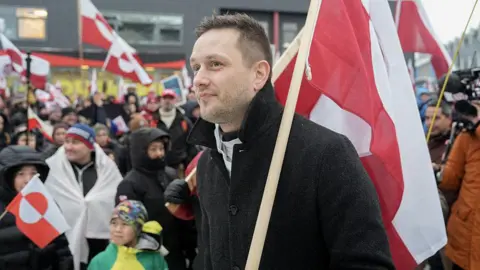 AFP via Getty Images