Reading view

There are new articles available, click to refresh the page.

Funeral fraudster motivated by money, says ex-worker

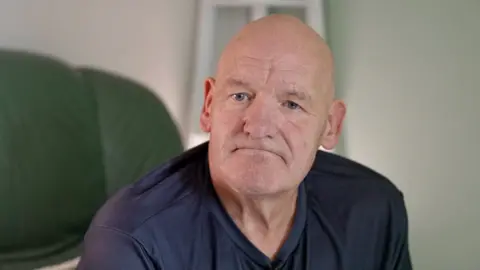
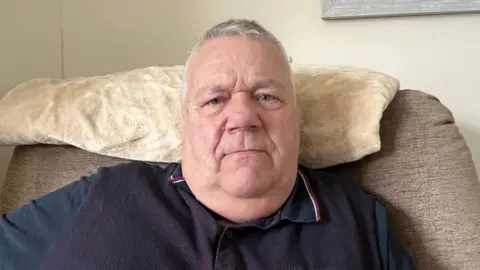
BBC Patrick Moore sitting on a green chair looking at the camera wearing a navy blue top. He has a bald head and is looking glum at the camera.BBC
Patrick Moore went to Humberside Police about Robert Bush

"I think he was living beyond his means," says Patrick Moore about disgraced undertaker Robert Bush.

Moore is trying to explain why his former boss hoarded 30 bodies and half a tonne of human ashes at Legacy Independent Funeral Directors in Hull.

A judge at the city's crown court earlier told Bush he is going to prison for preventing the burials of 30 people and giving grieving families the wrong ashes.

He also fraudulently sold funeral plans and stole from 12 charities, including the Salvation Army and Macmillan Cancer Support.
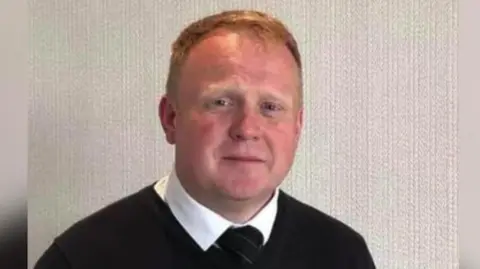
Legacy Independent Funeral Directors Robert Bush, undertaker, sits looking at the camera. He has short ginger hear and wears a black jumperLegacy Independent Funeral Directors
Robert Bush wrote on social media that his funeral home was a "special place"

Moore, 65, says he was a "general dogsbody" at Legacy.

And he insists he did not know Bush had kept 30 bodies after their families had held funeral services. He says he knew of only three deceased people on the premises.

But the father-of-two says it became clear to him that "there was something wrong" in Bush's business affairs.

"Every time the phone rang, Rob was real jumpy… but I knew that was because he'd been getting phone calls and threats to be cut off from his electric.

"He'd put his laptop in one of these places [a pawnbroker] for a couple of days to get some money.

"Anything that he could sell, he'd sell it."

Although his Facebook account has since been deleted, posts showed Bush was selling a hearse, cars and even trying to give away a mortuary fridge that, according to the advert, "ran cool not cold".

A county court hearing in May 2024 highlighted Bush had debts amounting to almost £55,000, including to local councils for unpaid cremation and burial fees.
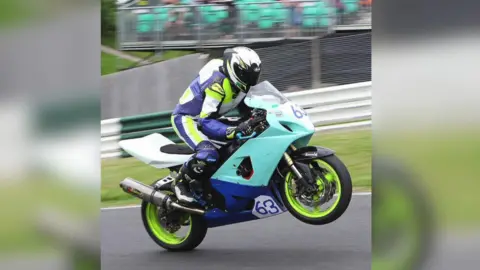
Facebook/Robert Bush Robert Bush riding a motorbike on a race track. He is wearing blue white and green leathers and a white helmet and sits in a crouched position over the handlebars. The bike is coloured blue, green and white.Facebook/Robert Bush
Robert Bush enjoyed motorbike racing and often posted on social media about racing his own bikes

According to Moore, Bush had been making his own coffins to save money – on occasion staying up all night at the firm's Hessle Road parlour.

He advertised these on social media as being "handcrafted" and "special".

Several local funeral businesses have told the BBC they would not supply Legacy with coffins, for fear they would not be paid.

Kevin Moxon, a former police officer who opened a funeral home in Hull six months before the investigation, claims he was warned about Bush.

"Other people within the funeral profession have said, 'don't get involved with him, don't lend cars, don't supply coffins'.

"The rumour was that you wouldn't get paid."

Bush oversaw about 2,000 funerals during his career. He began by working for other undertakers before setting up his own business.

So what happened to the money, paid by bereaved families?

Bush spent it, according to Moore.

Facebook/Robert Bush Two motorcycles, coloured light blue and white, parked on a concrete floor in what appears to be a garage. Each has the number 63 on the front.Facebook/Robert Bush
Two of Robert Bush's track bikes that were listed on a selling site, photographed by a mortuary fridge on Legacy premises.

He invested in racing bikes and splashed out on expensive track days, often posting videos of his lap times on social media.

His family home was in an exclusive street where property values reach half a million pounds.

And he enjoyed holidays abroad.

Despite his debts, Bush flew to Los Angeles in March 2024 to watch motorcycle racing.

"Rob was in America and I was looking after things for about four days," says Moore.

"He said if anybody comes just don't answer the door. Simple as that, that was what I got.

"Don't answer the door."

Bush's crimes may never have come to light, but for what happened when he was in America.

Moore says he used a stretcher, borrowed from another funeral service, to collect a body from a local nursing home.

Two men, who came to retrieve the stretcher, saw inside Legacy's premises.

Moore recalls: "While I was talking to one of them, the other one went in the fridge.

"They had seen it shouldn't be like this."

One of the men rang the police. Shortly afterwards, Moore went to the station.

The father-of-two says he had previously challenged Bush about practices at Legacy.

"Just the state of everything and I could see, when I was working with Rob, I could see there's something wrong here."

But Moore says his boss "always had an answer for everything".

"He was good at that."
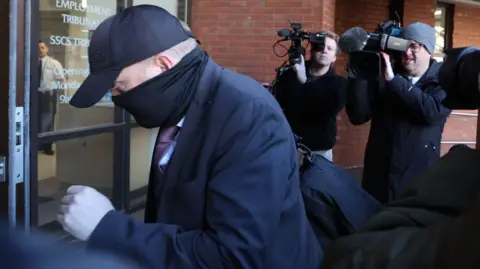
PA Media A man wearing a black baseball cap and black face covering and dark suite walks into a court building. He has a black hold-all on his shoulder.PA Media
Bush arrives at Hull Crown Court on Thursday

Moore's account was integral to the investigation – one of the most intricate in Humberside Police's history.

Thirty-five bodies and half a tonne of human ashes were discovered at Legacy's premises by officers in March 2024.

In contrast to the air of respectability which greeted grieving families, Moore says the rear of Legacy's premises was like "something out of a horror movie".

Thirty-one of the remains discovered by police were those of loved ones whose families had already held funerals.

Those families had been told by Bush their relatives had been cremated.

More than 100 families had been presented with the ashes of strangers.

One of those families was that of baby Sunny Beverley-Conlin, who was born prematurely in May 2022. They held a funeral and were given ashes.

In March 2024, police found their son's body, still at the funeral home, and the family were told the ashes were not Sunny's.

Moore insists he had never seen Bush mixing up ashes.

"If I had have known, I would have been [to the police] a lot earlier," he says.

'Good actor'

Bush was the only person charged in relation to the Legacy investigation.

One victim's family says Bush operated behind a veneer of respectability.

"He genuinely seemed like a lovely guy. He seemed sad for us. Sympathetic.

"He was a good actor."

Emma Hardy MP, who represents many of the victims in the constituency of Hull West and Haltemprice, describes Bush as a "complete conman" who "made out that he cared".

"Anyone who treats people in that way is utterly without compassion," she adds. "He's a completely selfish individual who was thinking about his business, his money [while] disregarding human life."

Hardy says she does not accept the excuse that Bush was struggling financially, pointing out that he had a "large house" and enough money for holidays "while knowing all the time he was enjoying himself that he had left 35 human bodies in his funeral parlour".

The Legacy case has led to calls for the funeral industry to be regulated. Currently, it is not.

According to Hardy, there are more checks and regulations to set up a sandwich shop.

"You can set up tomorrow as a funeral director. Pop your name on the front of the shop and off you go. And nobody comes to look at anything."

Bush, formerly of East Yorkshire and now living in West Yorkshire, was granted conditional bail until he is sentenced on 27 July.

Listen to highlights from Hull and East Yorkshire or Lincolnshire on BBC Sounds, watch the latest episode of Look North.

Download the BBC News app from the App Store for iPhone and iPad or Google Play for Android devices
Tiger Woods crash bodycam footage released by police

Woods crash bodycam footage released by police

To play this video you need to enable JavaScript in your browser.

This video can not be played

Media caption,

Watch bodycam footage of Tiger Woods' arrest

ByLorraine McKenna
BBC Sport Journalist
  • Published

Police have released body camera footage showing Tiger Woods after he clipped a truck and rolled his car in Florida last month.

The 15-time major winner, 50, was arrested and charged with driving under the influence and submitted a written plea of not guilty via his lawyers on Tuesday.

He was also charged with property damage and refusal to submit to a lawful test.

Woods has been given permission by a judge to seek treatment overseas, and said he will be stepping away from professional golf to focus on his recovery and health.

Nobody was injured in the crash, but Woods had to crawl out of the passenger door to free himself. He passed a breathalyser test but refused a urinalysis test for other drugs, according to Martin County Sheriff John Budensiek.

In the arrest affidavit, an officer wrote Woods was "sweating profusely", his pupils were "extremely dilated" and his movements were "lethargic and slow".

In the video, Woods, who is wearing a blue polo shirt, shorts and dark sunglasses, is seen being handcuffed as officers question him.

He is told they suspect his "normal faculties are impaired" by an "unknown substance". Authorities then find two white pills, which were identified as hydrocodone - an opioid used to treat pain - in his pocket.

Woods, who remains still while officers search him, is asked does he have anything else on his person, to which he replies he does not.

On Wednesday, it was announced that Woods had turned down the role of United States Ryder Cup captain when the biennial tournament takes place in Ireland in 2027.

Related topics

UK and allies discuss sanctions to stop Iran blocking Strait of Hormuz

Reuters Close up of a ship on blue water in the background. In the foreground are rocksReuters
The amount of cargo traffic in the Strait of Hormuz has drastically decreased since war broke out

A coalition of about 30 nations are to discuss plans to reopen the vital Strait of Hormuz shipping lane in the Middle East, at a virtual summit hosted by the UK on Thursday.

The virtual summit is expected to consider what diplomatic and political steps could be taken to reopen the important shipping route, though the US was not set to attend.

Iran has attacked several vessels in the strait in response to the war waged against it by the US and Israel, severely disrupting energy exports and sending global fuel prices soaring.

On Wednesday, US President Donald Trump said it was for other nations to "build up some delayed courage" and reopen the route.

Trump said allies "should have done it" earlier, adding: "Go to the Strait and just take it. Protect it. Use it for yourselves."

Washington has repeatedly accused allies of not doing enough to secure the shipping route or to support its war effort, leaving the UK and other nations weighing how to contribute to securing the strait without becoming involved in the wider war.

Foreign Secretary Yvette Cooper is set to chair Thursday's virtual meeting.

The summit was expected to involve governments which signed a joint statement in mid-March calling on Iranian forces to halt attacks against commercial ships.

That statement was supported by some Gulf nations, as well as France, Germany, Japan, Australia and others.

The statement says: "We express our readiness to contribute to appropriate efforts to ensure safe passage through the Strait.

"We welcome the commitment of nations who are engaging in preparatory planning."

The talks come a day after Prime Minister Sir Keir Starmer said the UK was "exploring each and every diplomatic avenue that is available" to reopen the route.

He also said British military planners would consider what could be done in the future to "make the Strait accessible and safe after the fighting has stopped".

At the same time, governments around the world are weighing how to respond to cost-of-living pressures triggered by rising energy prices.

About a fifth of the world's oil and gas passes through the Strait of Hormuz.

The price of a barrel of Brent crude, the global benchmark for oil prices, has jumped from $73 (£55) to well over $100 in recent weeks.

'I haven't slept for days': Iranians describe mounting desperation after a month of war

EPA Smoke rises after an airstrike in central Tehran, Iran (1 April 2026)EPA

Warning: this article contains details which some readers may find distressing.

Until that moment the war was something happening in other parts of Tehran.

It had not touched the lives of "Setareh" and her colleagues. Then she heard an ominous noise and vibrations reached into the office.

She called out to her workmates: "I think it's a bomb." They left their desks and climbed the stairs to the roof of the building.

"We saw smoke rising into the sky, but we didn't know what place had been targeted," she recalls.

"After that, everyone working in the company panicked. People were shouting and screaming and running away. For one to two hours the situation stayed like that complete chaos." That same day her boss shut the business and laid off his staff.

Despite strict state censorship, the BBC has been able to use trusted sources on the ground to obtain testimony from a range of Iranians in different parts of the country.

We cannot give Setareh's real name or say what kind of work she does - no detail that might possibly identify her to the regime's secret police. But we can say that she is a young woman from Tehran who loved going to work, where she could meet her friends, share stories of their lives and, of course, there was the guarantee of weekly wages.

Now the nightly bombing has stolen her ability to sleep naturally. She lies awake worrying about the present, and the future.

"I can honestly say I haven't slept for several nights and days in a row. I try to relax by taking very strong painkillers so I can sleep. The anxiety is so intense that it has affected my body. When I think about the future and imagine those conditions, I truly don't know what to do."

By "those conditions" she means economic hardship and her fear of future street fighting between the regime and its enemies. The war has cost Setareh her job and she is running out of money.

Millions of Iranians are in a similar position. Even before the war, the economy was in deep crisis, with food prices rising by 60% in the previous year. Setareh describes mounting desperation as people run out of resources to survive.

"We cannot afford even basic food. What's in our pockets does not match market prices... Iran has also been under sanctions for years, and the problems created by the Islamic Republic means that during this time we couldn't build any savings, at least enough to survive now or depend on something. To put it simply, the people I thought might have money to lend also don't have anything."

Economic hardship spurred the huge nationwide protests of late 2025 and early 2026, and Setareh believes it will happen again.

"I don't know how this massive wave of unemployment will be handled. There is no support system and the government will do nothing for all these unemployed people. I believe the real war will start if this war ends without any outcome." The outcome she wants is the end of the regime.

We received information from sources on the ground in six different cities. These were conversations with individuals from a cross-section of society - shopkeepers, taxi drivers, public sector workers and others.

All described growing economic pressure and most spoke of their hope that the war might bring about the fall of the government.

EPA Iranians shop in a bazaar in Tehran, Iran (24 March 2026)EPA
The prices of basic foodstuffs were rising steeply for Iranians even before the war began

"Tina" is a nurse in a hospital outside Tehran and is worried about shortages of medicine.

"The shortage is not yet widespread, but it is starting," she says.

"The most important issue is that this war must not reach hospitals. If the conflict continues and infrastructure is targeted and medicines cannot be imported, then we will face very serious problems."

She is haunted by the images of war that she's witnessed in recent weeks. In the aftermath of bombings, bodies arrived at the hospital "that were not recognisable... some had no hands, some had no legs - it was horrifying".

A recurring memory is the pregnant young woman caught in an air strike early in the war.

"Because of bombardment in her area - her home was close to a military centre - their house was damaged. When they brought her to the hospital, neither the mother nor the foetus was alive.

"Both had died. She had been just two months away from giving birth but sadly neither she nor her baby survived. It was a very terrible situation."

It is an image made more poignant by stories from Tina's childhood. Her mother was pregnant with her during the Iran-Iraq war of the 1980s and told her of having to flee to bomb shelters as Iraqi missiles struck their city. Nearly a million people - Iranians and Iraqis, military and civilian - are estimated to have died in the conflict, with Iran suffering the greatest number of casualties.

The war's legacy made Tina want to work as a nurse.

"Hearing those stories always made me stop and think, to imagine myself in those circumstances and place myself in her situation. Now, I find myself in the same kind of situation my mother once faced. I cannot believe how quickly history repeats itself."

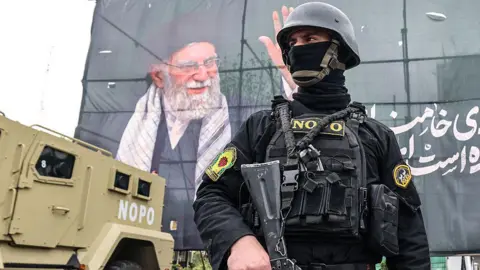
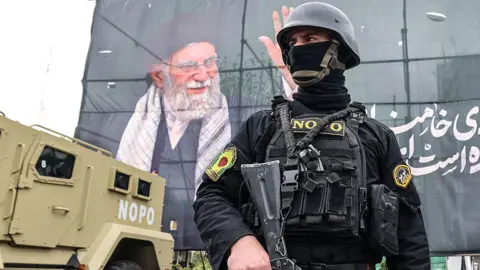
AFP A member of the Iranian security forces stands guard next to a banner honouring the assassinated Supreme Leader, Ayatollah Ali Khamenei, in Tehran, Iran (31 March 2026)AFP
Security forces continue to be deployed on the streets of central Tehran

Any public show of dissent in Iran is extremely dangerous. The regime has deployed its internal security forces and loyal supporters to patrol the streets. There are arrests, torture and executions. Iranians have no doubt about the danger they face if they speak out.

During January's anti-government demonstrations, the regime killed thousands of its own citizens and "Behnam" - a former political prisoner - believes it would easily do the same again.

He keeps a supply of antibiotics and painkillers in his flat in case there is renewed street violence. He is still in hiding after being shot during the last protests. Holding up an X-ray of his torso, Behnam shows the metal fragments that remain lodged in his body.

"They ambushed us in one of the alleys - the alley leading to the square. They fired bullets and tear gas," he says.

"Once you see how easily your life can be threatened - that a simple incident or a twist of fate can mean death or survival - after that, your life no longer holds the same value for you. And that experience makes you care less about yourself."

As a child, he listened to his parents' accounts of regime violence. Fear was the defining factor in their lives. There were stories of family members having fingernails pulled out by the Revolutionary Guards. He heard about the humiliation and agony of a male relative who had heavy weights tied to his testicles during torture.

"We all grew up knowing someone talented in our family - a cousin, an uncle, an aunt - whose future was destroyed just because another relative had been involved in banned political activity," he says.

"I will not heal until the day we are free and in a free world [can] look back on the suffering we endured in an unfree world, and in the end laugh at it. I am certain that day will come."

One month into the war, with US President Donald Trump threatening to bomb Iran "back to the stone ages" and regime repression tightening, the time of laughter seems very far away.

Additional reporting by Alice Doyard

BBC boss Tim Davie says it was 'very clear' Scott Mills had to go

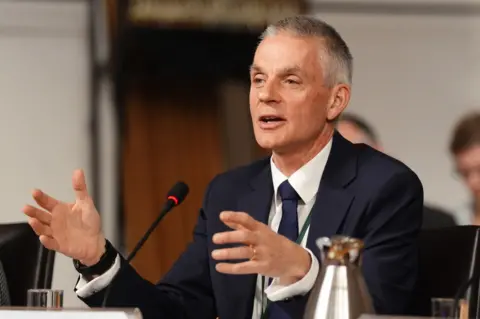
PA Media Picture of Tim Davie from March 2026 in a blue suit with a white shirt and a matching tiePA Media
Tim Davie spent almost six years as director general of the BBC

Outgoing director general Tim Davie has ended his tenure at the BBC by saying it became "very clear" the former Radio 2 DJ Scott Mills had to be sacked, after the corporation received "new information".

"We're trying to act fairly," Davie said when he was asked about Mills during an all-staff call. "It was new information quite recently that we received that made it very clear about the decision we had to make."

Davie, who became director general in September 2020, is replaced by Rhodri Talfan Davies for the next six weeks, before former Google executive Matt Brittin takes over permanently on 18 May.

A look back at how Tim Davie dealt with BBC scandals over the years

Davie, who has spent nearly six years in the top job, said Mills' sacking "was a real shock to the organisation".

"When something happens where I think there's a lot of grief, there's a lot of shock, I think all I would say is we're trying to act as the leadership with kindness," he added.

BBC Breakfast's Sally Nugent questioned him about when the organisation had learned there was a problem.

He reiterated a statement from Wednesday, which stated the BBC was made aware in 2017 of the investigation into allegations of serious sexual offences, but that new information had recently come to light that led management to sack Mills last Friday.

"I think people need to look at the statement; we made [it] as clear as we can. We obviously have to be sensitive when you've got personal information, and we work carefully through it, but the statement is really clear," he said.

When asked if staff culture had changed during his tenure at the BBC, he said: "It'll never be fully fully fixed, but I think it's changing, I really do."

He added: "I think if you come in and behave in a way that some of this industry saw 20 years ago, it just would not be acceptable, you want to create an environment where it's just ludicrous to do that."

The executive said he felt "real progress" had been made, adding: " I think the industry is kinder.

He also talked about people in senior positions in the industry "who have had a lot of power - and if they misuse it, that has not been called out, let's face it".

"I do think we've reached a point where people behaving badly now, you can see we're not going to tolerate it," he added.

Davie, who took over from Lord Tony Hall, has faced a number of challenges and controversies during his time in the top job, including the BBC broadcasting a racial slur during last month's Bafta Film Awards.

It later said it was the result of a "genuine mistake", and is examining why it was not removed from iPlayer sooner.

The corporation also apologised last summer, after a livestream of Bob Vylan's Glastonbury set, in which chants of "death, death to the IDF (Israel Defence Force)" was available to watch on BBC iPlayer for more than four hours.

Davie was also in charge when Huw Edwards, one of the BBC's highest paid and well-known newsreaders, pleaded guilty to making indecent images of children.

Davie resigned in November 2025, alongside head of news Deborah Turness, after criticism that a Panorama documentary misled viewers by editing a speech by US President Donald Trump.

Trump is now suing the BBC for several billion dollars, for defamation over the way Panorama spliced together his speech, which he claims made it appear he had directly encouraged his supporters to storm the US Capitol on 6 January 2021.

In March, the corporation urged a Florida court to dismiss the lawsuit, using the defence that the documentary was not available to watch in the US.

Davie also spoke about how it felt to be at the centre of a BBC controversy or crisis.

"There are days when you're in the middle of a crisis, the snappers are outside your house… you do feel fear, and I'm not going to miss that. It's been hard," he said.

"Plus you've also got sometimes editorial mistakes - and they are mistakes, they're not people deliberately doing stuff - that can be really tough."

Davie steps down after more than 20 years at the corporation, having served as the 17th director general.

When asked what he was proudest of, he said it was "all the amazing creative work" produced by the organisation.

"The heartbeat of this operation is journalistic and editorially. I love the work, I love the fact this year we will be celebrating 100 years of David Attenborough - I've met a few [great people] in my job, but you meet David Attenborough and you go 'ok this is it, this is the beating heart'," he added.

Prince William praises £20m milestone for Bowelbabe fund

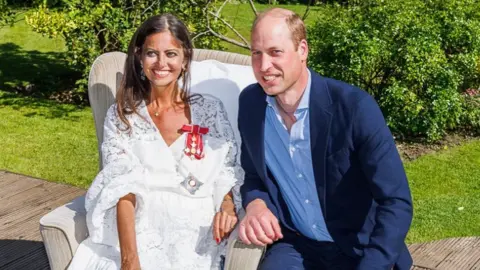
Deborah James Princew William in a blue suit and shirt crouched next to Dame Deborah James, in a white dress with a medal pinned to it.Deborah James
Prince William has hailed the "incredible milestone" for Dame Deborah James' Bowelbabe fund, which has surpassed £20m

A cancer research fund set up by Dame Deborah James has been hailed as an "incredible milestone" by the Prince of Wales after it hit the £20m mark.

The Bowelbabe Fund, set up in May 2022 shortly before Dame Deborah died of bowel cancer, has reached the milestone in less than four years, having initially aimed to raise £250,000.

Prince William praised the "amazing legacy" of Dame Deborah, from Woking, Surrey, and her fund in a message on Instagram in which he wrote: "Deborah is in our thoughts today, as are all those who loved her."

Dame Deborah's mother, Heather James, added: "Deborah would be absolutely over the moon if she were here today to see this."

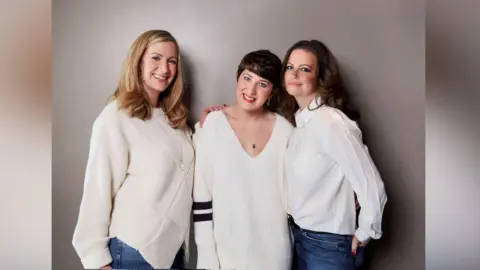
Claire Wood The original line up of the the BBC's You, Me and the Big C podcast. Left to right: Rachael Bland, Lauren Mahon and Dame Deborah James. All three are smiling to camera. Rachael is wearing a white jumper and jeans, Lauren is wearing a white jumper with two black stripes on the sleeves and Deborah is wearing a white shirt and jeans.Claire Wood
Dame Deborah hosted the You, Me and the Big C podcast with Rachael Bland, left, and Lauren Mahon

Heather James added: "She was so passionate about supporting research that would help give more people affected by cancer more time with their loved ones."

Speaking to BBC Breakfast, her father Alistair James said: "She set this up in the last few weeks of her life and if she knew we had managed £20.5m even Deborah with her energy probably wouldn't believe what happened."

A spokesperson for Cancer Research UK, which benefits from the fund, says the money raised had been used to support 16 research projects, including a "Bowelbabe vaccine" aimed at boosting immunity against bowel cancer.

'True testament to Deborah's legacy'

You, Me And The Big C podcast host Dame Deborah was given a damehood for her fundraising efforts, which soared past £1m in the first 24 hours.

The honour was personally conferred by Prince William, who joined her family for afternoon tea and champagne while she was receiving hospice-at-home care.

Michelle Mitchell, chief executive of Cancer Research UK, said: "Reaching this £20m milestone is a true testament to Deborah's incredible legacy.

"Thanks to research, more than half of people diagnosed with bowel cancer in the UK will survive the disease.

"But there is still much more to do."

Follow BBC Surrey on Facebook, on X, and on Instagram. Send your story ideas to southeasttoday@bbc.co.uk or WhatsApp us on 08081 002250.

Related internet links

Investigation into IVF clinics in northern Cyprus after UK families given wrong sperm

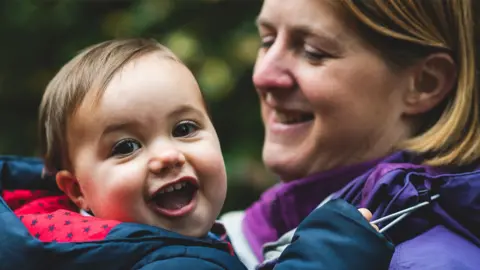
Keith Bridle/ BBC James, pictured as a young child, is held by his mother Laura in an outdoor setting, with greenery in the background.Keith Bridle/ BBC
Laura and her partner say the wrong donor-sperm was used to conceive their child, James

The government in northern Cyprus has said it is launching an investigation after several British families told the BBC they believed they were given the wrong sperm or egg donors during their IVF procedures at local fertility clinics.

The Ministry of Health in the Turkish-occupied territory said their cases had been "taken into serious consideration" and they were investigating whether clinics had breached "laws and regulation".

The public will be informed of its findings, it added.

Northern Cyprus has become one of the most popular destinations for British nationals seeking fertility treatment abroad, experts say.

The privately-run clinics promise low prices, high success rates and a sunny holiday.

European Union laws do not apply, but it does have its own fertility legislation and its Ministry of Health oversees clinics.

However, unlike the UK, there is no independent fertility regulator upholding standards.

  • Have you been affected by the issues raised in this story? Contact the BBC at: fertilityinvestigation@bbc.co.uk

The government announcement has come 48 hours after a BBC investigation revealed the parents of seven children believed the wrong sperm or egg donors were used during their fertility treatments at several clinics in northern Cyprus.

Most of the families have completed commercial DNA tests which appeared to confirm their fears.

One of those families discovered their two children were not biologically related after doing an accredited test, which can be used in UK courts.

Same-sex couple, Beth and Laura, were each the biological mother to one of their children and had asked their clinic, Dogus IVF Centre, to make sure the same donor was always used to ensure the children were blood relatives.

They had carefully selected a donor who had undergone extensive health and psychological screenings.

However, genetics expert Prof Denise Syndercombe Court of King's College London, concluded it was unlikely either child was related to the family's requested donor and confirmed that the two children came from different sperm donors.

Beth and Laura's doctor at the time, Dr Firdevs Uguz Tip, denies any responsibility, and Dogus IVF Centre has not responded to the BBC's questions.

The BBC investigation has caused outrage in northern Cyprus.

It has appeared on the front page of several newspapers there, with one outlet describing it as a "scandal".

Local MP Dogus Derya said the BBC's findings revealed "the lack of supervision of IVF centres operating in our country" which "has become a serious problem".

The Ministry of Health for northern Cyprus did not respond to the BBC's request for comment before the release of its investigation, but has since shared a statement.

"Following the publication of your report, the necessary legal review and investigation process has been promptly initiated," Health Minister Hakan Dinçyürek said.

"Our ministry remains fully committed to exercising the highest level of diligence throughout all stages of this process and to taking all necessary legal steps accordingly."

  • Details of organisations offering information and support with infertility are available at BBC Action Line

Infant shot dead on New York street by men on motorbike, police say

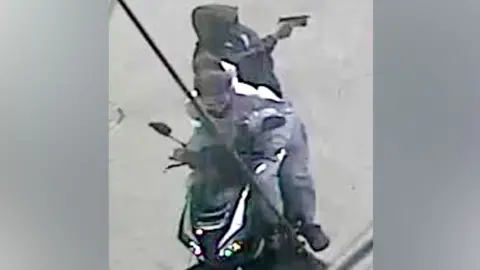
NYPD CCTV footage of the two suspects on a moped.NYPD
Police believe they have apprehended the shooter while the driver remains at large

A seven-month-old girl was shot and killed in while sitting in her pushchair in "broad daylight" in New York City's borough of Brooklyn, police have said.

Police believe the baby was the unintended victim of a suspected gang-related shooting.

Footage from the scene shows two men driving against the flow of traffic through the Williamsburg neighbourhood when a man sitting on the back of the motorbike takes out a gun and fires "at least two rounds", New York City Police Commissioner Jessica Tisch told a news conference.

The bike then crashed and the suspected shooter was apprehended, but a "massive" manhunt was under way for the driver, she said.

"A life that had barely begun was taken in an instant," New York City Mayor Zohran Mamdani said.

"Today is a devastating reminder of how much more work there is to be done to combat gun violence across this city."

Several adults and children, two of whom were in buggies, had been on a street corner when the shooting occurred.

The seven-month-old's parents ran for cover in a nearby corner shop, where they realised their child had been shot, the BBC's US partner CBS reported.

"All the kids started ducking in the corner. The family went to the store and the mom started screaming when she noticed the baby was bleeding from [her] head," witness Bernius Maldonado told CBS.

Emergency services were called at around 13:21 local time (17:21 GMT).
The child was taken to the nearby Woodhull Hospital where she was pronounced dead. Police reported no other people killed or injured in the incident.

"As a mother, I cannot imagine the pain that this family is feeling or the grief that they now carry with them," Tisch said. "It is unspeakable."

Footage seen by police showed the suspects crashing into a car shortly after fleeing the scene.

Both suspects were throw from the moped - but the rear passenger landed so hard he lost "both of his shoes", Tisch said.

An ambulance was called for the injured male and was brought to Brooklyn Hospital, where he was then taken into police custody.

Investigators believe he fits the description of the shooter, based on the clothing he was wearing and his appearance, but was taken into custody as part of an unrelated investigation.

Police are working to connect him to the shooting.

Iran's focus on survival means same regime still firmly in place

Getty Images member of the Iranian security forces stands guard next to a banner honouring Iran's slain supreme leader Ayatollah Ali Khamenei in Tehran on 31 MarchGetty Images
Supreme Leader Ayatollah Ali Khamenei was killed at the beginning of the US-Israel war against Iran, launched on 28 February

Donald Trump's prime-time Wednesday evening address on the war with Iran was intended to project control, but it also laid bare a central contradiction.

The US president declared Iran's military capabilities - its navy, air force, missile programme and nuclear enrichment infrastructure - largely destroyed, presenting the conflict as nearing its end.

Yet he coupled that with threats of further escalation in the coming weeks.

The result is a message that cannot quite decide what it is: victory declared, but not secured.

The rhetoric sharpened further with his warning that Iran would be bombed "back to the stone ages, where they belong".

That remark has had a tangible effect inside Iran, fuelling anger across social media - including among those opposition supporters who had previously viewed Trump as a potential agent of change.

Rather than encouraging internal pressure on the system, for some it has reinforced a sense of a country under siege.

Trump has also doubled down on the claim that "regime change" has effectively already taken place in Iran with the assassination of Supreme Leader Ayatollah Ali Khamenei along with many other top officials and commanders, producing what he called a "less radical and much more reasonable" leadership.

There is little evidence to support this.

Power in Tehran remains structurally unchanged. Authority still flows from the supreme leader's office, though how much direct control is exercised in practice, particularly under current conditions, is less clear.

But there has been no institutional rupture, no ideological shift. Masoud Pezeshkian remains president. Mohammad Bagher Ghalibaf still leads parliament. Abbas Araghchi continues to shape foreign policy.

Commanders and many officials killed in strikes have been replaced by figures from the same ideological ranks who are, if anything, more hardened by wartime conditions.

This appears more like regime resilience than regime change. That resilience is not accidental.

Iran's war aim is not victory in the conventional sense, but endurance.

Getty Images A crowd at the funeral of Alireza Tangsiri, commander of the Iranian Revolutionary Guard Corps' navy, in Tehran on 1 April.Getty Images
Crowds pictured at the funeral of Alireza Tangsiri, head of the Islamic Revolutionary Guards Corps (IRGC) navy, in Tehran on Wednesday

For years, Tehran has operated on a simple premise: survival against a superior military power constitutes success. In its enduring confrontation with Israel and the US, Tehran has always believed that conflict with one would draw in the other.

"Still standing" is not a fallback outcome - it is the objective. One month into the war, the Islamic Republic's command structures still function, its state apparatus holds, and its deterrent, though degraded, is not broken.

By that measure, Iran's position remains significant.

It retains leverage over critical energy routes, particularly the Strait of Hormuz, through which roughly a fifth of global oil supply passes. That alone gives Tehran disproportionate disruptive capacity, even under sustained attack.

For Washington, this creates a dilemma.

If the US disengages now, it risks validating Iran's core lesson: endurance works. If it continues, it faces mounting costs with no clear path to decisive victory.

Trump's speech reflects that bind. By claiming success while continuing the war, he is attempting to reconcile two competing imperatives: demonstrating strength while avoiding prolonged entanglement.

Against this backdrop, Pezeshkian's assertion shortly before Trump's speech that Iran has the "necessary will" to end the war reads as calculated signalling rather than concession.

His open letter to the American public, posted on social media on Wednesday, questioned whether "America First" was being served and whether the US was acting as a proxy for Israel.

It was aimed squarely at domestic US audiences already uneasy with the conflict - an attempt to widen political pressure in Washington without altering Iran's negotiating position.

Iran's red lines for ending the war appear unchanged. They are:

  • Regime survival and sovereignty
  • Credible guarantees against future US and Israeli strikes
  • Meaningful, enforceable sanctions relief
  • Retention of deterrence capabilities

So far, there is no sign that Iran is willing to compromise on these demands.

That could yet change as the US-Israeli bombing continues. There is no doubt that it is having a significant effect on Iran's military capabilities and on its economy, which was already in freefall before the war began.

If the regime survives the war, it will have to rebuild a country reeling from these crises.

But survival would have a deeper consequence: deterrence itself. For years, the implicit threat of a large-scale US or Israeli attack acted as a constraint on Iran. If it emerges intact after direct confrontation, the credibility of future threats diminishes.

That shift is already shaping regional calculations.

Some Arab states, initially opposed to the war, are now reportedly urging Trump to see it through rather than risk leaving behind a more confident Iran.

From their perspective, an inconclusive end may prove more destabilising than the conflict itself. They, more than Washington, will bear the consequences, they fear.

The US is therefore caught in a familiar but acute dilemma. Leaving risks validating Iran's model of endurance. Staying risks deeper entanglement in a war with no clear endpoint.

So far, a new Iran has not emerged.

If that is still the case when the war ends, the question will be whether Washington can align its claims of success with a reality in which the adversary it sought to transform remains, fundamentally, the same.

UK says Iran holding world economy 'hostage' with Hormuz attacks

Reuters Close up of a ship on blue water in the background. In the foreground are rocksReuters
The amount of cargo traffic in the Strait of Hormuz has drastically decreased since war broke out

A coalition of about 30 nations are to discuss plans to reopen the vital Strait of Hormuz shipping lane in the Middle East, at a virtual summit hosted by the UK on Thursday.

The virtual summit is expected to consider what diplomatic and political steps could be taken to reopen the important shipping route, though the US was not set to attend.

Iran has attacked several vessels in the strait in response to the war waged against it by the US and Israel, severely disrupting energy exports and sending global fuel prices soaring.
On Wednesday, US President Donald Trump said it was for other nations to "build up some delayed courage" and reopen the route.

Trump said allies "should have done it" earlier, adding: "Go to the Strait and just take it. Protect it. Use it for yourselves."

Washington has repeatedly accused allies of not doing enough to secure the shipping route or to support its war effort, leaving the UK and other nations weighing how to contribute to securing the strait without becoming involved in the wider war.

Foreign Secretary Yvette Cooper is set to chair Thursday's virtual meeting.

The summit was expected to involve governments which signed a joint statement in mid-March calling on Iranian forces to halt attacks against commercial ships.
That statement was supported by some Gulf nations, as well as France, Germany, Japan, Australia and others.

The statement says: "We express our readiness to contribute to appropriate efforts to ensure safe passage through the Strait.

"We welcome the commitment of nations who are engaging in preparatory planning."

The talks come a day after Prime Minister Sir Keir Starmer said the UK was "exploring each and every diplomatic avenue that is available" to reopen the route.

He also said British military planners would consider what could be done in the future to "make the Strait accessible and safe after the fighting has stopped".

At the same time, governments around the world are weighing how to respond to cost-of-living pressures triggered by rising energy prices.
About a fifth of the world's oil and gas passes through the Strait of Hormuz.
The price of a barrel of Brent crude, the global benchmark for oil prices, has jumped from $73 (£55) to well over $100 in recent weeks.

'Be serious... don't speak every day': Macron criticises Trump approach to Iran war

Macron calls Trump's remarks on his marriage 'inelegant'

The Iran war requires a "serious" approach that does not change every day, Emmanuel Macron has said, in an apparent reference to US President Donald Trump's seemingly contradictory remarks about the conflict.

"This is not a show. We are talking about war and peace and the lives of men and women," the French president told journalists upon arrival in South Korea for a state visit.

"When you want to be serious you don't say every day the opposite of what you said the day before," Macron added.

"And maybe you shouldn't be speaking every day. You should just let things quieten down."

Macron was answering questions on the US-Israel war in Iran, which has now entered its second month. France and other European countries have supported some of the US operations in the region, but have so far resisted getting dragged into the war.

Trump and his administration have so far offered mixed messages on the conflict, at various times suggesting that a ceasefire was near, that the war had already been won or that the US was going to fight on.

Macron also addressed Trump's recent comments in which the US president said he was reconsidering his country's membership of Nato.

"Alliances like Nato are valuable because of what is unspoken – meaning the trust behind them," Macron said, arguing that casting doubt on one's commitment to the organisation emptied it of its substance.

Partners sign agreements and show up if issues arise, Macron added, "rather that commenting on them every day to say that you will or will not respect them".

"I feel like there is too much chatter, it's all over the place," he said.

He added he was unwilling to comment on an operation that the US and the Israelis "decided on by themselves", Macron said. "They then lament that they are alone in an operation they decided on alone. It's not our operation."

Macron also mentioned the US strikes on Iran in June 2025, which Trump said had "obliterated" Iranian nuclear facilities.

However, in the wake of the February 2026 war the US president said it was the "last best chance to strike at Iran's nuclear weapons programme".

"I remind you that six months ago were told that everything had been destroyed and all had been sorted out," Macron noted.

He argued that international observers were needed to check the nuclear development situation in Iran, and a framework to prevent further enriching.

"You still have today and you'll still have in the future people who have the know-how, hidden laboratories, etc. So it's not targeted military action even lasting a few weeks which can sort out the nuclear problem for good."

Trump has been on the offensive against France, which he accuses of failing to help in the war on Iran.

At a private lunch on Wednesday, Trump mocked Macron by imitating a French accent and saying that his wife Brigitte "treats him extremely badly" and that Macron was still "recovering from the right to the jaw".

Trump was likely referring to a 2025 video which showed Macron being shoved in the face by Brigitte.

Macron dismissed the comments as "neither elegant nor up to standard".

"I won't respond to them, they don't deserve a reply," he said.

The comments on Macron's marriage have been exceptionally bad received in France, where even staunch Macron critics came to his defence.

"For Donald Trump to speak to him like that and to speak of his wife in such a manner - I find that absolutely unacceptable," said Manuel Bompard of hard-left France Unbowed party.

Tehran has retaliated to the strikes on its territory by closing the Strait of Hormuz, a key waterway which enables the passage of a large proportion of the world's energy supply. In the absence of a quick resolution to the closure, Trump has said the countries most affected by the disruption should solve the problem themselves.

Macron pushed back against the idea of a military operation to liberate the strait, saying it was "unrealistic" because it would take too long and be too dangerous.

"It would expose anyone crossing the strait to coastal threats from the [Iranian] Revolutionary Guards, who possess significant resources, as well as ballistic missiles, [and] a host of other risks," he said.

Meet the in-laws who entered Race Across the World to honour a dying wish

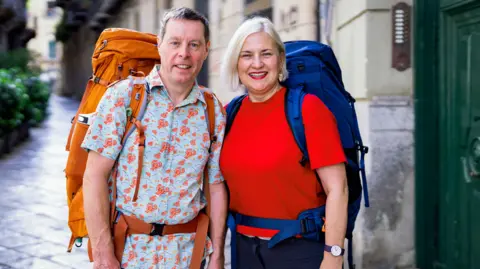
BBC Mark Blythen, in his 60s, who has short grey hair and is wearing a short sleeved blue shirt with a lobster pattern and a large orange backpack, stands next to Margo Oakley, who has short blonde hair, a red t-shirt and a large blue backpack. BBC
Mark Blythen and Margo Oakley had a "fractious" relationship for more than 40 years

When Margo Oakley, now 59, was introduced to her older sister's new boyfriend her first impressions of the "po-faced" and "judgey" young man were not great.

And for Mark Blythen, 67, his feelings about his girlfriend's "loud and wild" younger sibling were mutual.

But more than 40 years later the pair became the first set of in-laws to compete on Race Across the World - the BBC show that offers a £20,000 cash prize to the first of five duos to reach the finish line without the aid of phones, internet or air travel and with a limited budget.

They told the BBC the decision to enter the intense TV contest together followed the "last wishes" of Mark's wife and Margo's sister Julia, who died from the rare blood cancer myelofibrosis in 2022.

Mark, from London, met Julia, from Liverpool, while they were both students at Huddersfield Polytechnic, even though initially she was dating one of his flatmates.

"She hit him over the head with a brolly and then about three weeks later I went out with her," he said.

Mark revealed the one thing he and Margo agreed on in those early days was that Julia was "out of my league".

Handout A smiling woman in a white dress, white blazer and black shoes is being physically carried by a grinning man with dark brown hair.Handout
Julia and Mark were together for about 40 years

"It took us 23 years to get married but as soon as I met Julia, she was the person I knew I wanted to be with," Mark said.

"She was gregarious, she was funny and she was just everything I wanted in someone, a partner."

His first introduction to Margo came during a weekend visit to Liverpool.

"He wasn't what I imagined her going out with," Margo said.

"He was quite po-faced about me and my friends. We were young, we were having fun. He seemed judgey."

"I was very judgey," Mark agreed.

The pair said they "rubbed along" over the years since then, with occasional "eruptions".

But Julia was "the glue that held us together", they said.

And one thing Margo never doubted was Mark's commitment to her sister.

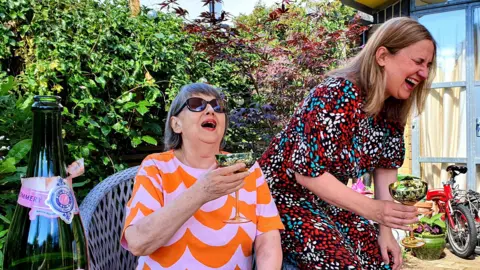
Handout A woman with short grey hair, an orange and purple print top and sunglasses sits in a garden chair and grins while holding a glass of champagne. Perched on the arm of the chair is another woman, with longer light brown hair and wearing a red, black and blue print dress, she is laughing and has her eyes closed.Handout
Mark said Margo (pictured right) would provide Julia (left) with fun and joy during her illness

"I have to say, he was a good husband. He was very, very devoted to her. He couldn't have been more," she said.

"I mean, in a way, and that's part of really the story of the race, in a way he put a lot of who he was aside just because he worshipped her so much."

After decades of not seeing eye-to-eye, Mark and Margo's relationship developed a new dimension in 2019 when Julia became ill.

She had a particularly aggressive form of the disease, and despite undergoing a stem-cell transplant, her condition deteriorated.

As Mark cared for his wife, he said he came to value Margo's visits for the impact they had on her mood.

"One of the things about caring for somebody is that it's very easy to just get lost and focus on caring for someone," he said.

"People that are being cared for, they need to have fun and Margo provided that fun. I think that's what kept Julia going for so long, that Margo would come down and raise her spirits."

Margo said she noticed the toll Julia's illness was taking on Mark.

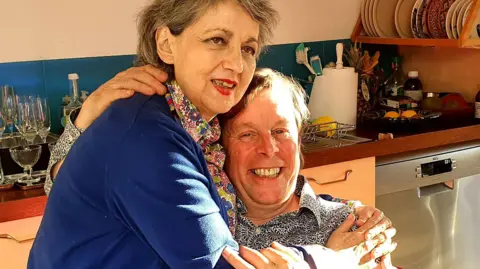
Handout A woman with short grey hair and a blue jumper embraces a man, wearing a black and white patterned shirt, as he sits on a kitchen chair. Handout
Mark said he did not realise how much of a toll caring for Julia during her illness had taken

"When he was caring for Julia, he didn't even know, realise how much it was taking from him," she said.

"We had different roles, but also as well, I knew Mark, like every carer, needed support."

While their relationship had been strengthening anyway, Julia explicitly told them she wanted them to remain close after she was gone.

"It was Julia's last wishes, and it was literally last wishes, that the friendship that Margo and myself had formed continued and we strengthened and we didn't lose it."

Margo said that while her sister had wanted their relationship to continue, how they went about it was an open question.

"You don't really have any blueprint for it, you know, it's an unusual relationship for all those years of friction," she said.

Both Mark and Margo said Julia was a big fan of Race Across the World, but "would never have gone on it" herself.

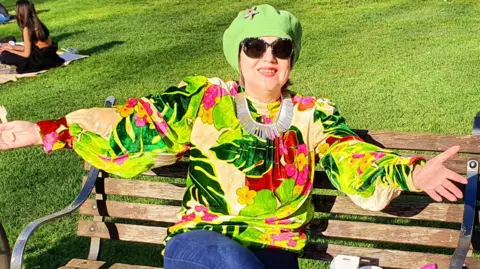
Handout A woman with a green hair covering, a bright green, red and yellow floral print blouse and jeans, wearing large sunglasses sits on a park bench in front of a grassy field smiling with her arms outstretched.Handout
Julia wanted Mark and Margo to maintain their newly forged bond after she died

The inspiration to apply hit Margo suddenly.

"I saw the race advertised and I just thought 'that really speaks to me'. I was looking for adventure because I have a lot on in my life in Liverpool because I care for my mum.

"As soon as I saw the race advertised, just something, I have no idea, spoke to me and said, ask Mark. A voice kind of told me, ask Mark...

"I didn't think twice. And very quickly I asked him and immediately he said 'yes'."

The pair did not want to reveal too much about what went on during filming to avoid spoilers - but said the "magical" journey towards the final destination - Mongolia - featured "real highs and really big lows".

"I don't think that's a spoiler to say, that's the nature of the race. Even the lows, there was absolute magic and alchemy in them," she said.

"Some of the lows, that's where the absolute gold is wasn't it?"

"You find the treasure at the bottom", Mark agreed.

Margo said she believed the excitement and joy in taking part in the race and the sadness of losing Julia would be relatable for people who have experienced loss.

"There's beauty in holding both those things, of sadness and joy of life and honouring her," she said.

The new series of Race Across the World begins at 21:00 BST on Thursday 2 April on BBC One and BBC iPlayer.

Listen to the best of BBC Radio Merseyside on Sounds and follow BBC Merseyside on Facebook, X, and Instagram. You can also send story ideas via Whatsapp to 0808 100 2230.

Funeral director who kept bodies for months admits 30 counts of preventing lawful burial

BBC Breaking NewsBBC

A funeral director has admitted preventing the burials of 30 bodies and stealing donations made to charities by mourners.

Robert Bush, 48, was arrested after police investigated Hull-based Legacy Independent Funeral Directors following a report of "concern for care of the deceased" in March 2024.

Bush, formerly of East Yorkshire and now living in West Yorkshire, pleaded guilty at Hull Crown Court to 30 counts of preventing a lawful and decent burial, and one of theft relating to charitable donations.

He previously admitted presenting families with the ashes of strangers and fraudulently selling funeral plans. He will be sentenced at a later date.

This breaking news story is being updated and more details will be published shortly. Please refresh the page for the fullest version.

You can receive Breaking News on a smartphone or tablet via the BBC News App. You can also follow @BBCBreaking on X to get the latest alerts.

We thought we'd buried my grandma, but her body was still at the funeral home

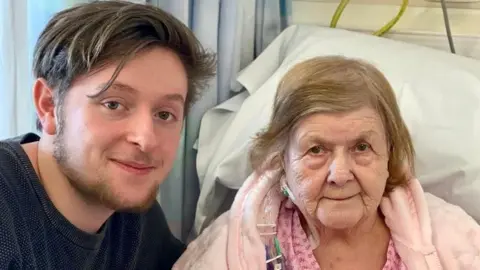
Tristan Essex Tristan Essex on the left next to Jessie Stockdale who is in a hospital bed wearing a pink dressing gown.Tristan Essex
Tristan Essex says his memories of his nana, Jessie Stockdale, are "tainted" after Robert Bush kept her body for five months after her funeral

Warning: This article contains details some people may find distressing.

Tristan Essex says his memories of his nana, Jessie Stockdale, are now "tainted" after funeral director Robert Bush kept her body for five months after her family were told her funeral had taken place.

Bush, who ran Legacy Independent Funeral Directors in Hull, has admitted a series of offences, including preventing the burials of 30 bodies, after police uncovered widespread wrongdoing at the business.

According to Tristan, with the benefit of hindsight, there had been warning signs.

"There was an awful smell in the funeral directors," he recalled. "My grandma was changed into different coffins every time we viewed her, and we obviously picked a specific coffin.

"She was put into larger coffins which were wider, longer, different colours, different trims. She was in at least three or four different coffins.

"We complained because the frill on the coffin was splattered with blood.

"There was black, thick mould around the inside of the coffin as well."

Victims and their families have been waiting for justice since the investigation began two years ago.

Bush, 48, specialised in low-cost funerals and claimed on his company's social media to offer "dignified personal care".

Behind the scenes, officers found a very different picture.

Humberside Police described its inquiry as "complex, protracted and highly sensitive", triggered by a report of "concern for care of the deceased" in March 2024.

Within days, 35 bodies and half a tonne of human ashes were recovered from the firm's premises on Hessle Road in Hull.

The body of Tristan's grandmother, Jessie, was among those discovered.

Tristan, 26, said his family were "knocked off our feet" when they were told Jessie was a victim.

"Thirty-five bodies were found inside Legacy and one of them had an ankle bracelet with my nana's name on," he said.

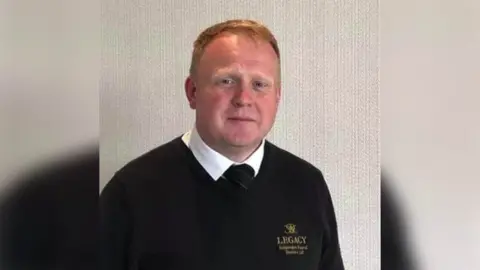
Legacy Independent Funeral Directors Robert Bush has short ginger hair. He is wearing a white shirt, a black tie and a black jumper.Legacy Independent Funeral Directors
Robert Bush, 48, abused the trust of those at their lowest ebb

Bush had been due to stand trial in October, but during a hearing at Hull Crown Court on Thursday he admitted 30 counts of preventing a lawful and decent burial.

He also pleaded guilty to one charge of stealing money from charity collection boxes.

The admissions followed others in October last year, when Bush pleaded guilty to 35 offences of fraud by false representation, relating to the proper care of remains and the return of ashes. Four of the charges related to giving women ashes that he falsely claimed were those of their unborn babies.

He also previously admitted a charge of fraudulently running a business. This related to the sale of funeral plans. There were 172 victims relating to this count alone.

In total, there were 254 victims of Bush's crimes, police said.

Many families were distraught to learn ashes they were given did not belong to their loved ones.

Some had unwittingly worn the ashes of strangers close to their body in the form of specially made jewellery.

One told us how a friend had the ashes mixed with tattoo ink and pushed deep into their skin.

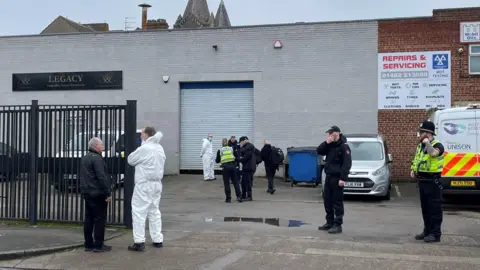
PA Media Police and forensic officers, wearing white suits, stand outside Legacy Independent Funeral Directors off Hessle Road in Hull.PA Media
The parlour in Hessle Road, Hull, has been described as "a hoarder's house"

Bush's disregard for the dead and their families did not end there.

More than 1,000 items, including love letters, baby clothes and treasured possessions belonging to the victims were found on the funeral director's premises, a crisis response team told the BBC.

"It was like a hoarder's house," said Kevin Curreri of Kenyon Emergency Services.

The team is typically brought in by governments in the wake of natural disasters, plane crashes and terrorism incidents.

This time, it was appointed by Hull City Council to recover the scene, after police had finished with it.

According to Curreri, human remains and personal possessions had been treated "so disrespectfully" that it showed "a pretty significant breach of trust".

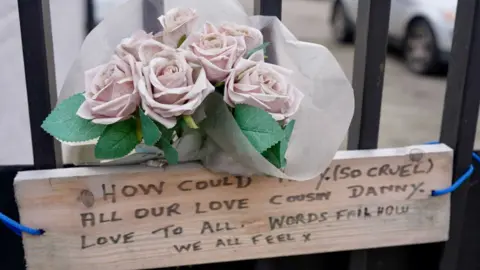
Linsey Smith/BBC A sign and a bunch of fake flowers attached to the black railings around the former Legacy premises.Linsey Smith/BBC
Families left tributes to their loved ones at the former Legacy parlour in Hessle Road, Hull

Following the police searches, floral tributes were left outside the parlour.

Some of the notes attached to them demonstrated the unbridled rage felt towards the person responsible for causing this close-knit community so much heartache.

In stark contrast to Bush's large detached home in Kirk Ella – a desirable village in the East Riding of Yorkshire – his funeral business, which opened in 2010, stood in Hessle Road, a working-class street that was once the beating heart of Hull's fishing industry.

Bush hid behind a veneer of respectability, his neighbours painting a picture of a family man who was willing to run errands and help complete DIY tasks for them.

Professionally, too, nothing appeared to be too much trouble for Bush, with some of his customers telling the BBC how he had offered them the chance to pay him in installments when they told him they were struggling to cover a relative's funeral costs.

One woman said Bush had personally bought their funeral flowers when they ran out of money.

"I just felt so grateful," she said. "I didn't ask questions."

Emma Hardy, MP for Hull West and Haltemprice, said Bush had deliberately pushed low-cost funerals at a vulnerable community.

"He pretended he was their friend," she said.

Bush was anything but.

Kevin Newton sat on a chair looking directly into the camera. He is wearing a blue top.
Kevin Newton bought a funeral plan from Robert Bush to save his children from financial burden

Not even charities escaped his greed.

Bush stole an unknown amount of cash from charity collection boxes. The donations, in memory of loved ones, were made at funeral services Bush organised.

Families believed the money would go directly to causes close to their hearts.

But it did not.

Between September 2017 and 6 March 2024, a number of good causes, including the Salvation Army, Macmillan Cancer Support, Dove House Hospice, Help for Heroes, the RNLI and Oakwood Dog Rescue were deprived of their funds.

More than 170 people bought non-existent funeral plans through Legacy, including 70-year-old Kevin Newton.

He paid £2,239 in 2012 for his plan.

Kevin said he was "mortified" when he contacted a third-party insurer and was told there was no trace of the plan on its database.

His daughter, Kerry, 36, said: "It's absolutely shocking because it's a lot of money for my dad to fork out and it's not like he can [afford it] again.

"It's unforgivable."

Kevin was able to recover the money as he paid using a card.

The funeral business was dissolved at a court hearing in May 2024 with debts of more than £40,000.

Bush has been bailed to be sentenced on 27 July.

Listen to highlights from Hull and East Yorkshire on BBC Sounds, watch the latest episode of Look North or tell us about a story you think we should be covering here.

Related internet links

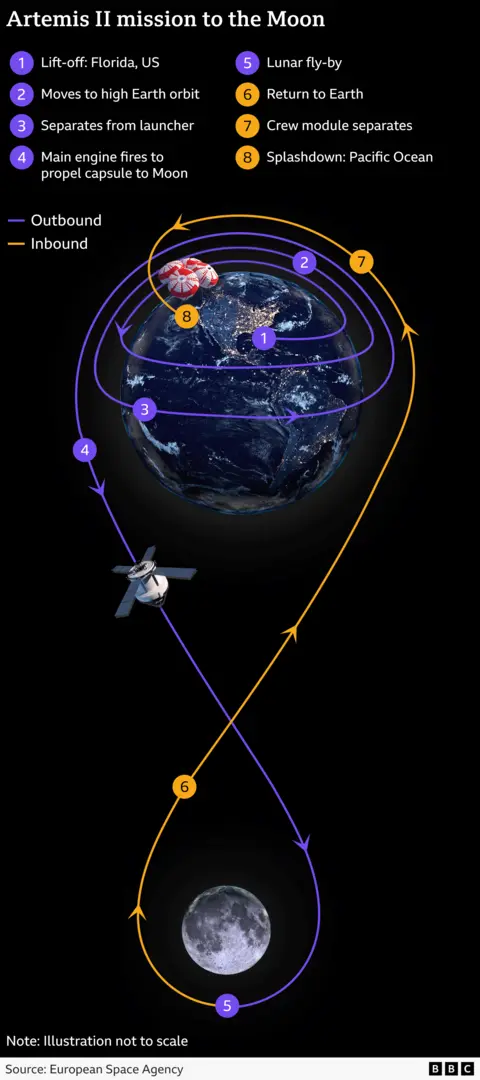
Artemis II is in orbit - what happens next?

Watch the moment Artemis II blasts into space on historic mission

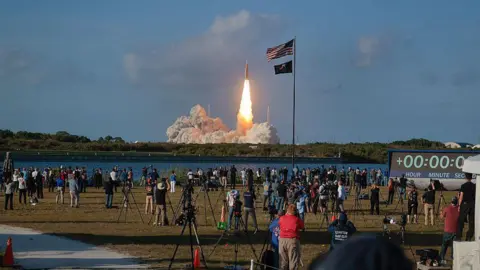
You could almost hear a sigh of relief from Nasa on Wednesday as its Artemis II rocket finally blasted off.

There's a lot riding on this mission - the safety of its four astronauts, Nasa's reputation, and the credibility of America's claim to be leading the new global space race.

There are mundane questions too: Could the onboard toilet break again? When can the crew nap?

Here's what the next 24 hours should look like for Artemis II.

Where are the astronauts now?

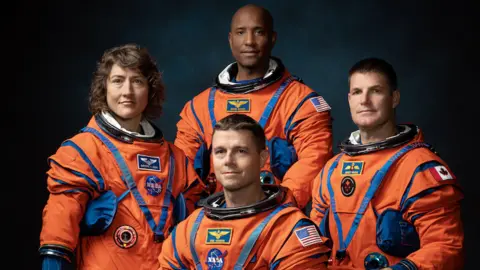
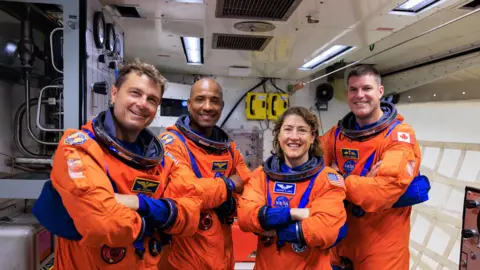
Commander Reid Wiseman, Victor Glover, Christina Koch and Jeremy Hansen are now orbiting Earth about 42,500 miles away, testing out the Orion spacecraft.

The craft's solar wings were fully deployed not long after launch, giving it power to help sustain its journey.

About the size of a minibus, its never been flown in space before by humans so pilot Victor Glover is spending the day pushing it to the extreme.

Nasa want to be sure Orion is voyage-worthy before the crew push on into deep space from where there is no easy return.

They're testing out the life support systems too. But if something goes wrong, the crew has specially-designed suits that could keep them alive for around six days.

What are the crew doing?

Unlike the Apollo missions in the 1960s and 1970s, we can watch a huge amount of what's happening on this voyage as Nasa livestreams the mission.

Cameras above the astronauts' heads show them checking monitors, holding up mobile phones, and pressing buttons.

Then about eight hours after launch, the crew were allowed their first sleep onboard.

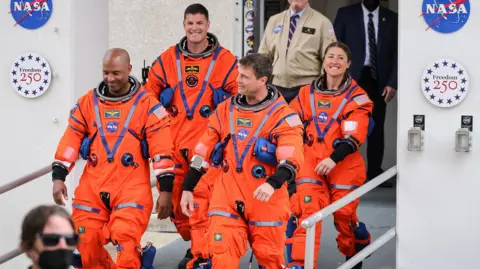
EPA Astronauts Victor Glover, Jeremy Hansen, Reid Wiseman and Christina Koch walk of a Nasa building before launchEPA
The crew are "safe, secure and in great spirits", according to a Nasa official

On the radio the crew use to communicate with mission command, we heard Commander Reid Wiseman asking where are the team's pyjamas.

He asked for their "comfort garments", before the astronauts went into the sleeping area for about four hours.

Schedules in space are incredibly strict. Every minute is accounted for by Mission Control.

The crew can sleep for about four hours at a time, adding up to eight hours over a 24-hour period.

Sleeping in space can be tricky. The crew must strap themselves in, and generally some astronauts struggle to nod off as their bodies adapt to weightlessness.

But others say their best sleep ever is in space.

This crew have strict instructions to exercise for 30 minutes every day to protect their muscle and bone density as they live without gravity.

Reid Wiseman and Victor Glover went first, testing out Orion's "flywheel exercise device", which is about the size of a carry-on suitcase.

Christina Koch and Jeremy Hansen were scheduled to exercise later on - using the wheel for rowing, squats and deadlifts.

We assume they've had their first meals too, from Nasa's tailor-made Artemis II menu.

NASA A view of Earth from Orion spacecraftNASA
The crews' view from the Orion spacecraft during the last few hours

There is no fridge in Orion, so a lot of the food is freeze-dried and activated using water from an onboard tap.

The crew were allowed to pick their meals in advance, which include macaroni cheese, beef brisket, and five different hot sauces.

They're allowed two drinks a day, including coffee or a "chocolate breakfast drink".

And crucially, as far as we know, the toilet is working. During launch, the facilities broke, raising worries that the team would have to spend 10 days in a craft without a toilet.

After giving astronaut Christina Koch instructions on how to fix the specially-designed loo, Mission Control radioed the crew: "Happy to report that toilet is go for use.... We do recommend letting the system get to operating speed before donating fluid".

When do they go to the Moon?

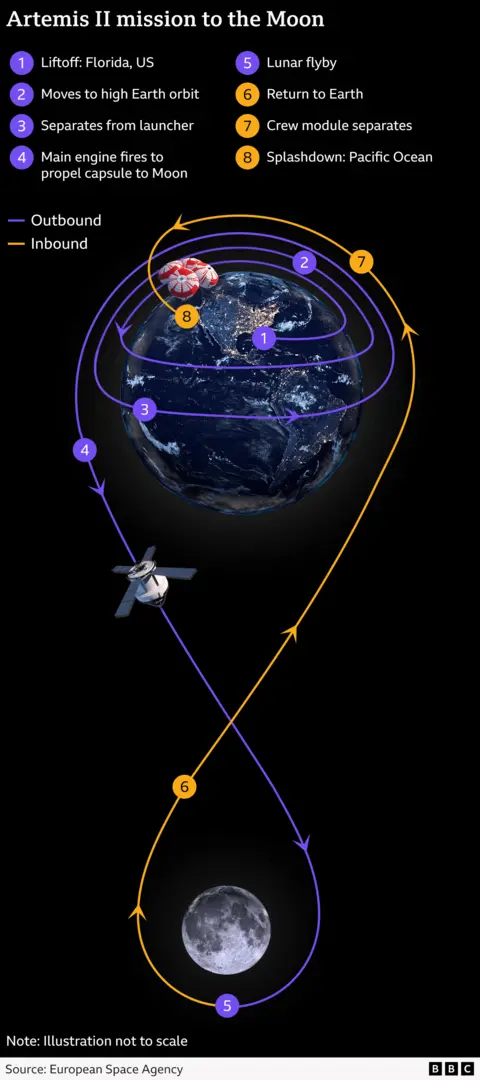
Today is building up to the snazzily named "trans-lunar injection" burn. Basically, it is a massive push that will propel them out of Earth's orbit and on course to the Moon.

It is supposed to happen Thursday night UK time, but if there are problems, it could be postponed or even cancelled.

A cancellation would be a major setback for Nasa and America as it tries to become the first country to land humans again on the lunar surface by 2028.

If it all goes to plan, the burn will fire for six minutes to send them on a trajectory around the Moon that also uses lunar gravity to slingshot them back to Earth.

Eventually they should fly 6,400 miles (10,299km) beyond the far side of the Moon, which always faces away from the Earth.

That's meant to happen on Monday (6 April). The astronauts will be the first people to see some areas of the far side, although probes from countries including India and China have previously documented this region.

They'll be taking photographs and making observations of this mysterious place for us to see and learn from back on Earth.

Fifa is charging up to $10,990 for World Cup final tickets in first open sale

The $11k World Cup final ticket - what we learned from first open sale

The World Cup on display on a white stand prior to the draw in December in Washington with Fifa World Cup 2026 in big gold letters in the background.Image source, Getty Images
Image caption,

World Cup tickets were put on open sale for the first time on Wednesday

By
Football issues correspondent

The first open sale of tickets for the 2026 World Cup showed Fifa is charging up to $10,990 (£8,333) to be at the final.

It is thought to be the most expensive ever general admission to a football match.

In its World Cup bid book, the US, Canada and Mexico said tickets to the final would cost a maximum of $1,550 (£1,174).

Then, when the first batch of tickets went on sale in December, the most expensive was listed at $8,680 (£6,581).

Tickets for the Qatar World Cup final cost the equivalent of $1,604 (£1,214) for the top-priced seat.

Establishing the actual cost of tickets for this summer's tournament is difficult as Fifa has never released its pricing structures.

It is also using a version of dynamic pricing, whereby prices change at the start of each sales point depending on past demand.

Late last year the cost of the initial ticket releases was described as a "monumental betrayal". In December, Fifa announced a small number of $60 (£45) tickets.

On Wednesday tickets were put on open sale for the first time - and gave another glimpse at what is being charged.

What prices have been observed for the final

It is impossible to assess the overall ticket pricing with no information on the prices, or the volume available in each category.

Going through the Fifa ticketing website and seeing what is still available and what is being charged gives a good indication. However, that does not confirm if there are either more expensive tickets still, or if more were available in more affordable categories.

From what has been observed, ticket prices for the World Cup final increased by as much as 38% in the open sale compared to December's release.

Apart from the $10,990 (£8,333) category one ticket:

  • Category two was up 32.78% from $5,575 (£4,227) to $7,380 (£5,596).

  • Category three increased 38.23% from $4,185 (£3,173) to $5,785 (£4,386).

Fifa also gave no advanced notice of which games would be available on Wednesday, or at what prices, as the "last-minute sales" period began.

Those who did get through found that prices had gone up for the most in-demand fixtures - including the top teams and other key knockout games.

What we learned when we joined the queue

BBC Sport joined the queue for World Cup tickets alongside the supporters on Wednesday at about 15:20 BST.

A holding message was in place, and at 16:00 this changed to a red circle with the message: "Almost there…"

By 17:00 a countdown clock had appeared. We were two minutes from the front when the time suddenly jumped back up to 15 minutes.

When we did gain access, we experienced the same technical glitch as thousands of fans.

Supporters who logged on early were wrongly directed into a queue for "PMA tickets", reserved for fans of this week's play-off winners.

Once through, users were sent to a page where a code was required to open up a sale for those fixtures.

By the time the mistake was realised, those supporters were forced to start again at the back of the correct virtual line. Any chance of securing a ticket for one of the more attractive matches had gone.

Fifa did not provide a reason for the error but said that by 17:00 the links were working properly.

Once back in the queue it took six hours and 14 minutes to be granted access to the ticket page.

Of the 72 group games, 35 matches were listed with tickets available - but there was no allocation for the England or Scotland games, or any of the knockout matches, when we initially made it through.

Across the 35 matches, prices ranged from $140 (£106) to $2,985 (£2,261). The average price of those displayed was $358 (£271).

The most expensive group stage match seen was the first of the tournament between Mexico and South Africa at $2,985 (£2,261), with only a tiny proportion of the 87,000 capacity available.

Additionally, we were able to view corporate hospitality packages, including one for England v Panama which was $124,800 (£94,444) for a luxury suite with 24 match tickets, food and drink - $5,200 (£3,935) per person.

The availability of games appears to be changing all the time, and Fifa has indicated new tickets could be released for any game right up to kick-off.

By 08:00 on Thursday, 13 games were still showing - though six of these only had wheelchair companion tickets, which should not be sold to the general public.

Controversially, Fifa has not made free tickets available to the assistants of fans using wheelchairs. Tickets must be bought at full price and they may not be situated next to each other.

The USA's opening game against Paraguay on 13 June had the most tickets still on sale, with 1,406 category one tickets priced at $2,735 (£2,072).

Canada's first match against Bosnia-Herzegovina was the only other match with relatively good supply - 846 category one tickets still on sale at a cost of $2,240 (£1,697).

Fifa's resale platform, which will likely bring even higher prices - with both buyer and seller charged a 15% fee - reopens on Thursday.

Iranian Nobel laureate suffered suspected heart attack in prison, family says

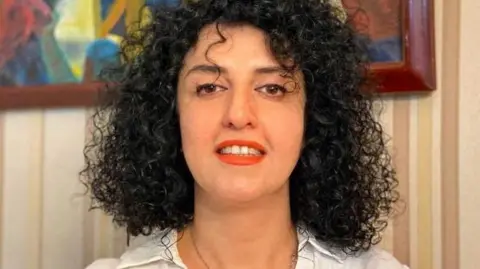
Reuters Narges Mohammadi (file photo)Reuters
Narges Mohammadi was moved to a prison in north-west Iran after being handed an additional seven-year sentence (file photo)

The brother of Iranian Nobel Peace Prize winner Narges Mohammadi says he fears her life is in imminent danger after she suffered a suspected heart attack in prison in north-western Iran.

Hamidreza Mohammadi, who is based in Norway, told the BBC that the 53-year-old human rights activist was found unconscious in her bed by fellow inmates at Zanjan Prison last week.

She was taken to the prison infirmary but officials refused to transfer her to a hospital despite her history of heart and lung problems, he said. She also suffers from severe blood pressure fluctuations.

He demanded that she be released immediately for a thorough medical examination.

He also warned that strikes and explosions near the prison since the start of the US-Israeli war with Iran a month ago had only added to her stress.

"This war has had a terrible effect on prisoners in Iran. If the prison gets hit, if the prisoners need immediate medical attention, they will not get anything and their lives are in danger," he told the BBC's Newsday programme.

"It's been really difficult for her family... Her children have gone through a lot. Now they experience very uncertain time when they don't know even if in the future there will be any peace or if their mother is going to live or die," he added.

Narges Mohammadi, the vice-president of the Defenders of Human Rights Center in Iran, was awarded the 2023 Nobel Peace Prize for her activism against female oppression in Iran and promoting human rights.

She has spent more than a decade of her life in prison. In 2021, she began serving a 13-year sentence on charges of committing "propaganda activity against the state" and "collusion against state security", which she denied.

In December 2024, she was given a temporary release from Tehran's notorious Evin prison on medical grounds.

She continued campaigning while undergoing treatment and was arrested in the north-eastern city of Mashhad last December after giving a speech at the memorial ceremony of a fellow human rights activist. Her family said she was taken to hospital after being beaten on the head and neck during the arrest.

A few weeks later protests against Iran's clerical establishment swept across the country. At least 6,508 protesters were killed and 53,000 others arrested in an unprecedented crackdown by security forces on the unrest, according to the US-based Human Rights Activists News Agency (HRANA).

In early February, Mohammadi was sentenced by a Revolutionary Court in Mashhad to an additional seven and a half years in prison after being convicted of "gathering and collusion" and "propaganda activities", her lawyer said.

She was transferred without warning the following week to Zanjan prison and has been allowed only limited communication with her family since then.

Last Sunday, her legal team and one family member were allowed to visit to visit her in prison under heightened surveillance.

The Free Narges Coalition said in a statement on Tuesday that "her general health was extremely poor, and she appeared pale and weak with significant weight loss when brought to the visitation room by a prison nurse".

It then cited Mohammadi's cellmates as saying that on 24 March she "was found unconscious in her bed, with her eyes rolled back", and that this lasted more than an hour. She was carried to the prison infirmary by fellow inmates, where medication was administered to restore her consciousness, it added.

"Despite this medical emergency, and evident indications of a heart attack, authorities refused to transfer Mohammadi to a hospital or allow her to visit a specialist."

Mohammadi also reported that she had suffered debilitating headaches, nausea, double vision since her violent arrest, and that bruises were still visible on her body, according to the coalition.

"According to the Iranian law, in wartime, when they [authorities] cannot guarantee safety of the prisoners, especially prisoners who are not dangerous to society, they must be allowed to leave the prison until the war is over," Hamidreza Mohammadi said.

"But not only [have they not done] it, they have denied all the political prisoners any medical attention, and their excuse is 'it is wartime'. So our demand is that she immediately be released for a thorough medical examination."

"We know her medical history, we know that she has heart problems and pulmonary problems. She must be in a hospital."

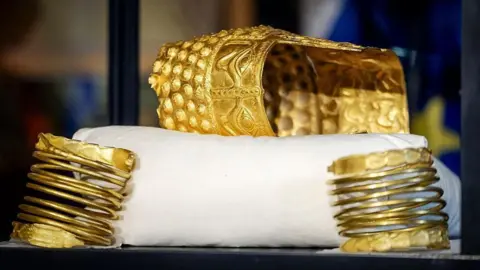
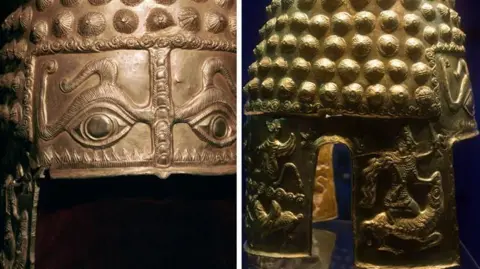
Ancient golden helmet recovered more than a year after Dutch heist

ANP/AFP A gold helmet and two gold braceletsANP/AFP
Two of the recovered bracelets were exhibited with the crown, but one bracelet is still missing

A 2,500-year-old golden helmet considered one of Romania's greatest treasures has been recovered more than a year after it was stolen during a raid on a Dutch museum.

It and two golden bracelets dating back to about 450BC were unveiled as having been returned to the museum on Thursday, secured behind a glass case with two armed police guarding them. A third bracelet has not yet been found.

The theft of the Coțofenești helmet and bracelets by an armed gang who broke into the Drents Museum in Assen caused outrage in Romania and raised questions about security for priceless artefacts on loan to other countries.

"It's a long-awaited result," Romanian prosecutor Daniela Buruiană told journalists.

"We are happy that we are now witnessing here the recovery of the Romanian artefacts," she added.

The treasures, which date from the Dacian era - an Iron Age civilisation that existed roughly where Romania is now - had been on loan from Romania's national history museum when they had been stolen.

Their theft prompted a spat between the two governments that led to the Dutch government paying a reported €5.7m (£5m; $6.5m) in insurance compensation.

Romanian officials refused to discuss what would happen to that money now.

Getty Images A golden helmetGetty Images
The helmet was finally returned to authorities on Tuesday, a year and two months after it was stolen

Robert van Langh, director of the Drents Museum in the northern Netherlands, said the helmet had been slightly dented but could be restored. The bracelets remained in perfect condition, he said.

Romanian prosecutor Rareș-Petru Stan spoke of the "major impact" that the theft had had in his home country, and praised his Dutch colleagues for their "hard work and keeping the faith".

"We are continuing the investigation to find the last bracelet," he added, "and we are grateful that we will be able to return this treasure to the Romanian people."

Dutch public prosecutor Corien Fahner revealed that the helmet and bracelets were handed over to authorities on Wednesday following negotiations involving lawyers for the three suspects.

Two men in their mid-30s and one aged 21 will face trial later this month.

The suspects were arrested within days of the gang using explosives to break into the museum, but by then there was no trace of the priceless items.

Art experts have suggested that the helmet and bracelets were stolen to order by a criminal gang.

Several Dutch provincial museums have been targeted in recent years because of the difficulty in providing adequate security for priceless artefacts. The helmet and bracelets were in a glass case that provided little resistance to the armed group.

In 2024, two works by Andy Warhol were stolen from a gallery in the southern Netherlands, and six years ago a Frans Hals painting called Two Laughing Boys was stolen from a small museum in the central town of Leerdam.

The former head of the national history museum in Bucharest, Ernest Oberländer-Târnoveanu, faced considerable domestic criticism for loaning the gold objects abroad and lost his job within days of the theft.

He spoke of his relief that the helmet had been retrieved.

"This is a unique item in European and even global cultural heritage," he told RTL Nieuws. "The helmet is an important social and political symbol of Dacian civilisation."

Baby shot dead in pram in New York City, police say

NYPD CCTV footage of the two suspects on a moped.NYPD
Police believe they have apprehended the shooter while the driver remains at large

A seven-month-old girl was shot and killed in while sitting in her pushchair in "broad daylight" in New York City's borough of Brooklyn, police have said.

Police believe the baby was the unintended victim of a suspected gang-related shooting.

Footage from the scene shows two men driving against the flow of traffic through the Williamsburg neighbourhood when a man sitting on the back of the motorbike takes out a gun and fires "at least two rounds", New York City Police Commissioner Jessica Tisch told a news conference.

The bike then crashed and the suspected shooter was apprehended, but a "massive" manhunt was under way for the driver, she said.

"A life that had barely begun was taken in an instant," New York City Mayor Zohran Mamdani said.

"Today is a devastating reminder of how much more work there is to be done to combat gun violence across this city."

Several adults and children, two of whom were in buggies, had been on a street corner when the shooting occurred.

The seven-month-old's parents ran for cover in a nearby corner shop, where they realised their child had been shot, the BBC's US partner CBS reported.

"All the kids started ducking in the corner. The family went to the store and the mom started screaming when she noticed the baby was bleeding from [her] head," witness Bernius Maldonado told CBS.

Emergency services were called at around 13:21 local time (17:21 GMT).

The child was taken to the nearby Woodhull Hospital where she was pronounced dead. Police reported no other people killed or injured in the incident.

"As a mother, I cannot imagine the pain that this family is feeling or the grief that they now carry with them," Tisch said. "It is unspeakable."

Footage seen by police showed the suspects crashing into a car shortly after fleeing the scene.

Both suspects were throw from the moped - but the rear passenger landed so hard he lost "both of his shoes", Tisch said.

An ambulance was called for the injured male and was brought to Brooklyn Hospital, where he was then taken into police custody.

Investigators believe he fits the description of the shooter, based on the clothing he was wearing and his appearance, but was taken into custody as part of an unrelated investigation.

Police are working to connect him to the shooting.

What nearly went wrong on Nasa's space mission - and what still could

Getty Images NASA's Artemis II Space Launch System rocket and Orion spacecraft blasts off from the Kennedy Space Center. A vertical pillar of flame erupts from the rocket as it shoots off into the blue sky.Getty Images

In the tense final hours before Nasa's astronauts flew into space, a series of technical issues threatened to ground their landmark mission.

A faulty toilet and issues involving two safety systems were reported over the radio.

Nasa managed to resolve the problems by being "quick on their feet", an official later said.

The Artemis II crew are now hurtling around the Earth's orbit, carrying out final tests and checks before they head towards the Moon.

Here's what nearly went wrong - and what still could.

'Toilet is go'

The crew quickly discovered that even a trip to the Moon comes with very down‑to‑earth plumbing problems.

Sensors in the spacecraft's waste‑management system threw up some readings they did not expect, according to flight controllers.

Astronaut Christina Koch reportedly acted as a plumber, dismantling parts of the toilet under instruction from mission control.

Watch: How will the Artemis astronauts go to the toilet in space?

"Happy to report that toilet is go for use," mission control later said over the radio. "We do recommend letting the system get to operating speed before donating fluid".

The lack of gravity in space means waste management is a key issue in space travel.

Nasa has spent more than $23m (£17.4m) developing the "Universal Waste Management System".

Both men and women are able to use the system, which includes a funnel attached to a hose to process urine while using gentle airflow to eliminate spills.

A specialised seat allows for stools to be sucked into a sealed container, with tethers and restraints being used to stop the crew from floating away.

The Orion - the spacecraft on which they're travelling - also has plenty of backup options, from alternative collection bags to different ways of routing liquids.

Issue with safety systems

There were also issues reported with the flight termination system and the launch abort system - two safety systems that protect astronauts and the public.

The flight termination system allows engineers on the ground to destroy the rocket if it veers off course. It reportedly had a communications issue, which was resolved by using hardware from the previous Space Shuttle programme.

The launch abort system is Orion's emergency escape tower, designed to pull the crew capsule away from the rocket in the event of an emergency during launch or ascent. It reportedly gave a higher-than-expected temperature reading, but it was judged that it wouldn't affect the launch.

With these issues resolved, the countdown clock was held at 10 minutes while engineers went through final preparations.

We then heard the staccato rhythm of the calls by each engineer responsible for the rocket's critical systems.

One by one the voices came back: "Booster, go", "GNC, go", "Range, go" - each reply, a tiny release of tension and a build-up of expectation.

"Artemis II, this is Launch Director – you are go for launch," the crew was told. "We go for all humanity," Commander Reid Wiseman responded.

The rocket then launched into the sky, to the awe of those watching at the Kennedy Space Centre and around the world.

Graphic showing the Earth and the Moon, with the spacecraft’s figure of eight orbital trajectory highlighted. Specific points are labelled. These are: 1. Lift-off at the Kennedy Space Centre, 2. Orbit around the Earth, 3. Rocket separation, 4. Main engine fires to take spacecraft to the Moon, 5. Lunar fly-by, 6. Return to Earth, 7. Crew module separates, 8. Splashdown in Pacific Ocean

Trying to break spacecraft

Now safely in the Earth's orbit, the crew have been directed to spend hours quietly trying to break their spacecraft - on purpose.

They cycle computers through different modes, switch radios between ground stations and relay satellites, and deliberately move around the cabin to see how the life‑support system copes as carbon dioxide and humidity build up.

Engineers also command small thruster firings and check the European‑built service module responds exactly as the models predict.

All of this is designed to answer a simple question: is the ship healthy enough to risk flying hundreds of thousands of kilometres from home with no quick way back?

If any of these tests throws up something they do not understand, Nasa will not hesitate to call off the trans-lunar injection burn and use Orion's engine to bring the astronauts straight back to earth.

Additional reporting by Esme Stallard and Tom Bennett

How a chance meeting shaped Canadian Jeremy Hansen's mission to the Moon

Watch the BBC's interview with Artemis astronaut Jeremy Hansen

Long before he was chosen to orbit the Moon in the ongoing Artemis II mission, Jeremy Hansen was a young cadet at the Royal Military College of Canada. He carried a dream - and had a chance interaction that would help shape his future.

In 1995, during his first year at the military college, Hansen met one of his heroes: Canadian astronaut Chris Hadfield.

That was before Hadfield had served as commander of the International Space Station. But Hansen saw in his compatriot much of what he aspired to be: a fighter pilot and an astronaut.

Hansen asked Hadfield for his email address, and got it on the spot.

The brief encounter marked the beginning of a journey that would see Hansen follow closely in his hero's footsteps - first as a fighter pilot, and then by joining the Canadian Space Agency (CSA) in 2009.

Throughout his astronaut training, his mentor along the way was Hadfield, a young Hansen told the BBC in 2014.

The simple but lasting advice he was given: follow what makes you passionate.

"Jeremy has been getting ready for this flight since he was five years old," Hadfield told Canadian singer Emm Gryner in a podcast in March.

Hansen, now 50, grew up on a farm near London, Ontario, where his fascination with aviation began early.

As a child, he came across a page in an encyclopedia featuring Neil Armstrong and the picture of an astronaut on the Moon from the 1969 Apollo mission.

"That page is still burnt in my brain," Hansen told Spaceflight Now in an interview posted last month.

Soon after, he transformed his childhood treehouse into his own imaginary rocket ship.

In his teens, he went on to join the air cadets youth programme, and to study space science and physics at university.

He eventually became a fighter pilot, flying CF-18s out of the army base in Cold Lake, Alberta, and working with North American Aerospace Defense Command (Norad).

Fourteen years after joining the CSA, Hansen was selected for Artemis II: the first crewed mission to travel around the Moon in more than 50 years.

Over the course of 10 days, the crew of four astronauts will travel farther from Earth than any human before them.

Hansen is the only non-American on board. He is joined by mission commander Reid Wiseman, pilot Victor Glover, and fellow mission specialist Christina Koch.

Watch the moment Artemis II blasts into space on historic mission

In an interview with the CSA, Hansen said he was aware that the Artemis II mission might not go smoothly.

"To do something that has never been done before means that your team is very likely to face failure," Hansen said. "I like the fact that in space, we are committed to bold goals to the extent that we will not let periodic failure stop our forward progress," he said.

For the mission, Hansen is carrying four Moon-shaped pendants, each with a birthstone representing his wife and three teenage children.

His blue spacesuit has a mission patch he commissioned Anishinaabe artist Henry Guimond to design, with contributions from Dave Courchene III of Sagkeeng First Nation, Manitoba.

The heptagonal shape and the animals on it refer to a set of indigenous teachings that guide how people should treat one another - with love, respect, courage and humility.

Hansen has said the patch is his way of recognising the Indigenous peoples in Canada and their traditional knowledge.

Earlier this week, he told the BBC science editor Rebecca Morelle and 13 Minutes podcast presenter Tim Peake that he was excited for his first views of Earth during his first hour of space flight.

He anticipated that the mission would later afford him a view with the Moon in the foreground and Earth hanging in the distance.

"I hope humanity will stop for a moment when four humans are on the far side of the Moon, and just look at some of the imagery that we are sharing - and just be reminded that we can do a better job as humans of just lifting each other up," he said.

"Not destroying but creating together."

Funeral director admits preventing 30 burials and theft

BBC Breaking NewsBBC

A funeral director has admitted preventing the burials of 30 bodies and stealing donations made to charities by mourners.

Robert Bush, 48, was arrested after police investigated Hull-based Legacy Independent Funeral Directors following a report of "concern for care of the deceased" in March 2024.

Bush, formerly of East Yorkshire and now living in West Yorkshire, pleaded guilty at Hull Crown Court to 30 counts of preventing a lawful and decent burial, and one of theft relating to charitable donations.

He previously admitted presenting families with the ashes of strangers and fraudulently selling funeral plans. He will be sentenced at a later date.

This breaking news story is being updated and more details will be published shortly. Please refresh the page for the fullest version.

You can receive Breaking News on a smartphone or tablet via the BBC News App. You can also follow @BBCBreaking on X to get the latest alerts.

Storm Dave set to batter UK with gales and blizzards over Easter weekend

Storm Dave set to batter UK with gales and blizzards over Easter weekend

A man clutches his hat while walking along a windy seafront with rough waves in the backgroundImage source, Adam Vaughan/Shutterstock
ByBen Rich
Lead Weather Presenter
  • Published

Storm Dave has been named by the Met Office and threatens to bring severe gales and blizzards in the north of the UK over the Easter weekend.

Yellow warnings for wind and snow have been issued for Saturday night and Sunday with a deep area of low pressure expected to pass across the north-west of the country.

Damage, power cuts and travel disruption are likely.

It is just one part of a very mixed Easter forecast which will bring heavy downpours alongside spells of warm sunshine.

A storm spun up by a powerful jet stream

Huge temperature contrasts across the USA and Canada have helped to supercharge the jet stream - the flow of strong winds high in the atmosphere that spins up weather systems and guides them around the globe.

And confidence is growing that this will propel a deep area of low pressure towards the UK on Saturday.

A pressure chart showing a deep low and a set of weather fronts passing across the UK
Image caption,

The centre of Storm Dave is expected to pass across the north of Scotland

The Met Office has issued yellow warnings for wind covering all of Scotland and Northern Ireland, as well as large swathes of northern England and north Wales.

The warnings are valid at various times on Saturday afternoon, overnight and into Sunday.

Widespread gusts of 50-60mph (80-97km/h) are expected with the chance of 70mph (113km/h) gusts in exposed areas, especially around coasts.

Central and northern parts of Scotland could see winds peaking at 80-90mph (129-144km/h) with large waves bringing dangerous conditions along the coasts.

Winds as strong as these bring the threat of damage, power cuts and significant travel disruption.

Some roads and bridges could close, which could have major impacts on what is predicted to be the busiest Easter in four years for drivers.

Disruption to train and ferry services is also possible.

A weather map showing yellow warnings across the north of the UK
Image caption,

Numerous yellow warnings have been issued by the Met Office for Saturday and Sunday

A Met Office warning for snow has also been issued for parts of north-west Scotland during Saturday evening and overnight.

5-10cm (2-4in) of snow may accumulate, mainly over high ground above 200m (650ft) elevation, with a small chance of 20cm (8in) in a few locations.

Coupled with the strong winds this could give blizzards, drifting and blowing snow, and very poor visibility on the roads.

A mixed bag of Easter weather

Storm Dave is just one part of a weather story that will bring a real variety of conditions across the UK over the long weekend.

Good Friday will start mostly cloudy with outbreaks of rain.

Many parts of England and Wales will hold on to grey and damp weather for much of the day but in Northern Ireland and Scotland some sunny spells should develop - albeit with a scattering of showers.

It will be fairly windy with a wide range of temperatures - from 7C (45F) in northern Scotland to 15C (59F) in eastern England.

A band of cloud and rain will move northwards across the country on Saturday - turning to snow over Scottish mountains - with a few sunny spells either side of this zone of wet weather.

Winds will strengthen through the day ahead of Storm Dave's arrival.

Sun and snow on Easter Sunday

Easter Sunday will be a day of big weather contrasts as the storm begins to loosen its grip.

Strong winds will continue to blow across Scotland, Northern Ireland and northern England, bringing a chilly feel and frequent showers.

Some of these will be wintry over hills and mountains but snow is even possible at low levels in the north of Scotland for a time.

Further south it will be breezy with a few showers, but for large swathes of Wales and southern England it should be predominantly dry with sunny spells.

Three lambs in a field of green grass, bathed in sunshineImage source, BBC Weather Watchers / Peter and Leah
Image caption,

Temperatures on Easter Sunday will range from 7C (45F) in northern Scotland to 13C (55F) in southern England

As winds ease on Sunday night things will get cold with a touch of frost developing in many areas.

However after a cold start to Monday temperatures will climb through the day thanks to southerly winds, reaching 11-17C (52-63F) by the afternoon.

Most areas will be dry with patchy cloud and sunny spells, which is expected to bring high or very high pollen levels.

UV levels expected to peak at moderate in the sunniest spots.

Beyond the Easter weekend the forecast looks rather changeable with warmth likely to give way to April showers and perhaps more strong winds - although computer weather models disagree on the details.

You can always keep up-to-date with the longer range prospects with our monthly outlook.

King and Queen give away money in ancient Easter tradition

PA Media King Charles III and Queen Camilla arriving at St Asaph Cathedral, DenbighshirePA Media
It is the second time the service has been held in Wales in its 800-year history

King Charles III and Queen Camilla have been taking part in the annual Maundy service in north Wales, only the second time the service has been held in Wales in its 800-year history.

The King and Queen attended the service at St Asaph Cathedral, Denbighshire, in a ceremony featuring music by Welsh composers and musicians.

The event takes place annually on the final Thursday before Easter Sunday and commemorates the Last Supper and the importance of humility and service to others.

The Dean of St Asaph Cathedral, Nigel Williams, said they were "deeply honoured" to host the service, hoping it would be a "memorable experience" for those who attended.

Reuters King Charles and Queen Camilla posing for a group photo outside St. Asaph Cathedral. Four children can be seen stood infront of the royals, each holding flowers.Reuters
King Charles and Queen Camilla posed for a group photo after attending the service

The first recorded Royal Maundy service was held in 1210 by King John and commemorates the Last Supper of Jesus Christ, with the distribution of alms becoming a tradition.

Charles will present gifts to 77 men and 77 women from Wales and other dioceses across the UK in recognition of outstanding Christian service and for helping people in their communities.

Recipients will be given two purses – a white purse including a set of specially minted silver Maundy coins totalling 77 pennies, to match the King's age, and a red pursue containing a £5 coin marking 100 years since the late Queen's birth, as well as a 50p coin celebrating the 50th anniversary of The King's Trust charity.

The last time the Maundy Service was held in Wales was in 1982 in St Davids, Pembrokeshire.

Gregory Cameron bishop of St Asaph stood outside St Asaph Cathedral
The Bishop of St Asaph, the Rt Revd Gregory Cameron admitted he was "nervous" about leading the "ancient" service on Maundy Thursday

Grahame Davies, director of mission for Church in Wales, said it was "hugely significant" for the service to be held in north Wales for the first time.

The Bishop of St Asaph, Gregory Cameron, said the Royal Maundy was a "deeply meaningful occasion which we are pleased to welcome to St Asaph".

He admitted he was "nervous" about leading the "ancient" service on Maundy Thursday which marks the day of the last supper when Jesus washed his disciples' feet.

The Cross of Wales, a gift from the King to the Christians of Wales, will be used in the service. The Cross headed the King's 2023 coronation at Westminster Abbey.

Diocese of Bangor Susan and Roger stood outside standing next to each other. Susan has long grey hair and glasses on top of her head. She is wearing a black polo shirt and navy blue jacket. Roger has short grey hair. He is wearing glasses, a dark grey blazer, green vest, striped shirt and tie with blue, green and purple fish on it.Diocese of Bangor
Husband and wife Susan and Roger Whitehouse from Tywyn are among those who the King will present Royal Maundy gifts to

Among those who will receive gifts from the King are Susan and Roger Whitehouse from Tywyn, Gwynedd.

The couple said they were "very surprised" to be recognised together, having never sought recognition for their service.

"We've simply tried to serve where needed," they said.

"Our faith informs what we do and why we do it, and it has drawn us deeper into the life of the church while also helping us look outward to the wider community."

Reuters A police officer pulls a tarp over the words "Not Our King" painted on a wall outside St. Asaph Cathedral.Reuters

Crowds lined the high street in St Asaph ahead of the royal couple's arrival, while graffiti saying "Not our King" was also covered up at the cathedral before the visit.

Workers in hi-vis jackets were seen attempting to remove the message which was sprayed using red paint on a wall in the grounds of the cathedral.

A small group of republican protesters with flags and banners calling for the end of the monarchy also gathered across the road from the cathedral as the King and Queen arrived.

Thin, purple banner promoting the Royal Watch newsletter with text saying, “Insider stories and expert analysis in your inbox every week”. There is also a graphic of a fleur-de-lis in white.

Sign up here to get the latest royal stories and analysis every week with our Royal Watch newsletter. Those outside the UK can sign up here.

Everything you need to know about Nasa's Artemis II mission

NASA The image shows four astronauts in bright orange space suits posing for a formal group portrait against a dark background. The suits are bulky with blue joints, straps and pockets, emphasising their technical design. Three astronauts stand behind one who is seated, all facing the camera. They all have fairly neutral expressions, keeping the focus on the uniforms. Mission-style patches and flags, including US and Canadian flags, are visible on their arms and chests. Soft, focused lighting makes the vivid orange suits stand out dramatically.NASA
Artemis II Crew: left Christina Koch, back Victor Glover (pilot), front Reid Wiseman (commander), right Jeremy Hansen

Nasa's target of a March launch for the first crewed mission around the Moon in more than 50 years has been delayed after a fault was detected.

Nasa had set a target of 6 March, but 24 hours later said the newly discovered fault made a March launch "out of consideration".

The Artemis II mission, which will last about 10 days, could take its astronauts further into space than anyone has been before.

It aims to set the stage for an eventual human landing on the lunar surface for the first time since the Apollo missions of the 1960s and 70s.

When will Artemis II launch?

With a March launch no longer being considered, the next possible dates are April 1, 3, 4, 5 and 6.

A potential February launch was ruled out after a pre‑flight test - known as a wet dress rehearsal - was cut short when hydrogen rocket fuel leaked from an umbilical connection linking the launch tower to the rocket.

Beyond resolving the technical issues, mission planners also have to wait until the Moon is in the right part of its orbit, so launch windows are timed accordingly.

In practice, this creates a pattern of roughly one week at the start of each month when the rocket can be pointed in the right direction, followed by about three weeks with no launch opportunities.

Watch: Timelapse shows Nasa rocket's 12-hour journey to launch pad

Who are the Artemis II crew?

Artemis II's crew of four is made up of Nasa commander Reid Wiseman, pilot Victor Glover and mission specialist Christina Koch. A second mission specialist, Jeremy Hansen of the Canadian Space Agency, will also be on board.

Wiseman is a US Navy veteran of 27 years. A pilot and engineer, he lives in Baltimore, Maryland. He was selected as an astronaut by Nasa in 2009 and served as Flight Engineer aboard the International Space Station (ISS) for Expedition 41 in 2014.

Glover was selected as a Nasa astronaut in 2013. He previously served as the pilot of SpaceX Crew-1 and holds three master's degrees. He was born in California and is married with four children.

Koch grew up in Michigan and became an astronaut in 2013. She worked on the International Space Station in 2019, setting a record for the longest single spaceflight by a woman. She also participated in the first all-female spacewalk.

Hansen joined the Canadian Space Agency in 2009 after a career as a fighter pilot. He became the first Canadian to lead astronaut training at Nasa's Johnson Space Centre and will be the first Canadian to go to the Moon.

What will the Artemis crew do during the Moon mission?

The mission involves the first crewed flight of Nasa's gigantic Space Launch System (SLS) rocket and the Orion space capsule.

Once they are safely in orbit, the astronauts will test how the Orion handles. This will involve manually flying the capsule in Earth orbit to practise steering and lining up the spacecraft for future Moon landings.

They will then head out to a point thousands of kilometres beyond the Moon to check Orion's life‑support, propulsion, power and navigation systems.

Graphic showing the Earth and Moon, with the Artemis II's figure of 8 orbital trajectory highlighted. Specific points are labelled. These are: 1. Lift off at the Kennedy Space Centre, 2. Orbit around Earth, 3. Rocket separation, 4. Main engine fires to take spacecraft to the Moon, 5. Lunar flyby, 6. Return to Earth, 7. Crew module separates, 8. Splashdown in Pacific Ocean.

The crew will also act as medical test subjects, sending back data and imagery from deep space.

They will work in a small cabin in weightlessness. Radiation levels will be higher than on the ISS, which is in low‑Earth orbit, but still safe.

On return to Earth, the astronauts will experience a bumpy return through the atmosphere and a splashdown off the west coast of the US, in the Pacific.

Will Artemis II land on the Moon?

No. This mission is to lay the ground for a lunar landing by astronauts in the Artemis III mission.

Nasa says the launch of Artemis III will take place by 2028. But experts believe that is a very ambitious timeline.

The final choice of a spacecraft to take the crew down to the lunar surface has not yet been made. It will either be SpaceX's Starship lander or a craft designed by Jeff Bezos's Blue Origin.

New spacesuits made by US company Axiom are also not ready.

When Artemis III finally flies, the astronauts will be heading to the Moon's south pole.

After this, the aim is to have a sustained human presence on the Moon.

Artemis IV and V will begin building Gateway, a small space station circling the Moon. That will be followed by more Moon landings, extra sections being added to Gateway, and new robotic rovers operating on the surface.

More countries will be involved in keeping people living and working on and around the Moon for longer periods.

An illustration showing how the Artemis II astronauts will be arranged in the Orion crew module at launch. The four astronauts sit reclined, in two rows of two, facing up with their backs to the ground. During the mission the four crew members will spend 10 days in about nine cubic metres of living space. The image shows that the crew module makes up about half of the Orion spacecraft - with the service module being around the same size - and that, on the launchpad, Orion is only a small section of the 98m (320ft) Space Launch System rocket.

When was the last Moon mission?

The last crewed Moon mission was Apollo 17, which landed in December 1972 and returned to Earth later that month.

In all, 24 astronauts have travelled to the Moon and 12 of them have walked on its surface, all during the Apollo programme. Of the 24 to have been to the Moon, just five are still alive.

America first went in the 1960s, primarily to beat the Soviet Union to assert its geopolitical and technological dominance. Once that goal was achieved, political enthusiasm and public interest ebbed, as did the money for future Moonshots.

The Artemis programme grew out of a desire to return humans to the Moon, but this time for a longer-term presence built around new technology and commercial partnerships.

Do other countries plan to send astronauts to the Moon?

Several other countries have ambitions to put people on the Moon in the 2030s.​

European astronauts are set to join later Artemis missions and Japan has also secured seats.

China is building its own craft, targeting a first landing near the Moon's south pole by 2030.

Russia continues to talk about flying cosmonauts to the surface and building a small base sometime between about 2030 and 2035. However, sanctions, funding pressures and technical setbacks mean its timetable is highly optimistic.

India has also expressed ambitions to one day see its own astronauts walking on the Moon.

Following the success of Chandrayaan 3's landing near the lunar south pole in August 2023, India's space agency set out a goal of sending astronauts to the Moon by about 2040. This would be part of a push to move its human spaceflight programme beyond low Earth orbit.

Additional reporting by Kevin Church and Emily Selvadurai.

How memories of my grandma are tainted by funeral boss's crimes

Tristan Essex Tristan Essex on the left next to Jessie Stockdale who is in a hospital bed wearing a pink dressing gown.Tristan Essex
Tristan Essex says his memories of his nana, Jessie Stockdale, are "tainted" after Robert Bush kept her body for five months after her funeral

Warning: This article contains details some people may find distressing.

Tristan Essex says his memories of his nana, Jessie Stockdale, are now "tainted" after funeral director Robert Bush kept her body for five months after her family were told her funeral had taken place.

Bush, who ran Legacy Independent Funeral Directors in Hull, has admitted a series of offences, including preventing the burials of 30 bodies, after police uncovered widespread wrongdoing at the business.

According to Tristan, with the benefit of hindsight, there had been warning signs.

"There was an awful smell in the funeral directors," he recalled. "My grandma was changed into different coffins every time we viewed her, and we obviously picked a specific coffin.

"She was put into larger coffins which were wider, longer, different colours, different trims. She was in at least three or four different coffins.

"We complained because the frill on the coffin was splattered with blood.

"There was black, thick mould around the inside of the coffin as well."

Victims and their families have been waiting for justice since the investigation began two years ago.

Bush, 48, specialised in low-cost funerals and claimed on his company's social media to offer "dignified personal care".

Behind the scenes, officers found a very different picture.

Humberside Police described its inquiry as "complex, protracted and highly sensitive", triggered by a report of "concern for care of the deceased" in March 2024.

Within days, 35 bodies and half a tonne of human ashes were recovered from the firm's premises on Hessle Road in Hull.

The body of Tristan's grandmother, Jessie, was among those discovered.

Tristan, 26, said his family were "knocked off our feet" when they were told Jessie was a victim.

"Thirty-five bodies were found inside Legacy and one of them had an ankle bracelet with my nana's name on," he said.

Legacy Independent Funeral Directors Robert Bush has short ginger hair. He is wearing a white shirt, a black tie and a black jumper.Legacy Independent Funeral Directors
Robert Bush, 48, abused the trust of those at their lowest ebb

Bush had been due to stand trial in October, but during a hearing at Hull Crown Court on Thursday he admitted 30 counts of preventing a lawful and decent burial.

He also pleaded guilty to one charge of stealing money from charity collection boxes.

The admissions followed others in October last year, when Bush pleaded guilty to 35 offences of fraud by false representation, relating to the proper care of remains and the return of ashes. Four of the charges related to giving women ashes that he falsely claimed were those of their unborn babies.

He also previously admitted a charge of fraudulently running a business. This related to the sale of funeral plans. There were 172 victims relating to this count alone.

In total, there were 254 victims of Bush's crimes, police said.

Many families were distraught to learn ashes they were given did not belong to their loved ones.

Some had unwittingly worn the ashes of strangers close to their body in the form of specially made jewellery.

One told us how a friend had the ashes mixed with tattoo ink and pushed deep into their skin.

PA Media Police and forensic officers, wearing white suits, stand outside Legacy Independent Funeral Directors off Hessle Road in Hull.PA Media
The parlour in Hessle Road, Hull, has been described as "a hoarder's house"

Bush's disregard for the dead and their families did not end there.

More than 1,000 items, including love letters, baby clothes and treasured possessions belonging to the victims were found on the funeral director's premises, a crisis response team told the BBC.

"It was like a hoarder's house," said Kevin Curreri of Kenyon Emergency Services.

The team is typically brought in by governments in the wake of natural disasters, plane crashes and terrorism incidents.

This time, it was appointed by Hull City Council to recover the scene, after police had finished with it.

According to Curreri, human remains and personal possessions had been treated "so disrespectfully" that it showed "a pretty significant breach of trust".

Linsey Smith/BBC A sign and a bunch of fake flowers attached to the black railings around the former Legacy premises.Linsey Smith/BBC
Families left tributes to their loved ones at the former Legacy parlour in Hessle Road, Hull

Following the police searches, floral tributes were left outside the parlour.

Some of the notes attached to them demonstrated the unbridled rage felt towards the person responsible for causing this close-knit community so much heartache.

In stark contrast to Bush's large detached home in Kirk Ella – a desirable village in the East Riding of Yorkshire – his funeral business, which opened in 2010, stood in Hessle Road, a working-class street that was once the beating heart of Hull's fishing industry.

Bush hid behind a veneer of respectability, his neighbours painting a picture of a family man who was willing to run errands and help complete DIY tasks for them.

Professionally, too, nothing appeared to be too much trouble for Bush, with some of his customers telling the BBC how he had offered them the chance to pay him in installments when they told him they were struggling to cover a relative's funeral costs.

One woman said Bush had personally bought their funeral flowers when they ran out of money.

"I just felt so grateful," she said. "I didn't ask questions."

Emma Hardy, MP for Hull West and Haltemprice, said Bush had deliberately pushed low-cost funerals at a vulnerable community.

"He pretended he was their friend," she said.

Bush was anything but.

Kevin Newton sat on a chair looking directly into the camera. He is wearing a blue top.
Kevin Newton bought a funeral plan from Robert Bush to save his children from financial burden

Not even charities escaped his greed.

Bush stole an unknown amount of cash from charity collection boxes. The donations, in memory of loved ones, were made at funeral services Bush organised.

Families believed the money would go directly to causes close to their hearts.

But it did not.

Between September 2017 and 6 March 2024, a number of good causes, including the Salvation Army, Macmillan Cancer Support, Dove House Hospice, Help for Heroes, the RNLI and Oakwood Dog Rescue were deprived of their funds.

More than 170 people bought non-existent funeral plans through Legacy, including 70-year-old Kevin Newton.

He paid £2,239 in 2012 for his plan.

Kevin said he was "mortified" when he contacted a third-party insurer and was told there was no trace of the plan on its database.

His daughter, Kerry, 36, said: "It's absolutely shocking because it's a lot of money for my dad to fork out and it's not like he can [afford it] again.

"It's unforgivable."

Kevin was able to recover the money as he paid using a card.

The funeral business was dissolved at a court hearing in May 2024 with debts of more than £40,000.

Bush has been bailed to be sentenced on 27 July.

Listen to highlights from Hull and East Yorkshire on BBC Sounds, watch the latest episode of Look North or tell us about a story you think we should be covering here.

Related internet links

Dozens more people tell BBC of 'alarming' safety breaches at Travelodge hotels

Wendy Griffith said her "heart aches" for the victim of a sex attack at a Travelodge in Maidenhead

A woman has told the BBC how she was "trapped" in her Travelodge hotel room for an hour last summer while a naked man banged on her door and performed "vile" sex acts in the corridor.

Wendy Griffith is among a growing number of guests who believe the chain has failed to take "alarming" experiences seriously "for years" and has been consistently "fobbing people off".

Dozens of people have shared their stories after the BBC revealed how a woman woke up to a man sexually assaulting her in her bed at the chain's Maidenhead branch in 2022 after staff gave him a key card and her room number.

A Travelodge spokesperson said it was "deeply sorry" to hear about Wendy Griffth's experience. Earlier this week, Travelodge's CEO, Jo Boydell, apologised to people that have had "frightening" experiences.

Outside of Travelodge London Straford hotel. It looks like a block of flats with branding on the first floor
Wendy Griffth was targeted by a man at Travelodge London Stratford in July 2025

The company, which is based in Thame, Oxfordshire, said it had already "strengthened" its room access policy.

Marketing consultant Wendy Griffith, from Norfolk, was staying at Travelodge London Stratford in July 2025 when she said a man started banging on her door.

She then witnessed him through the door's peephole performing sex acts.

She recalled "rising panic" over the hour as she was "essentially trapped" in the middle of the night trying and failing "multiple times" to contact hotel staff.

With no room phone and no emergency contact number in her room, she used her mobile to try and call the Travelodge website number.

She said she was "incredibly traumatised and not able to summon help", then dialled 999 in desperation.

"The police were incredible," she remembered, "given I was a female staying in a hotel room on my own, three cars pulled up within five minutes to arrest the man.

"It was a very dramatic scene, he attempted to run back in his room, barricade the door, the police had to force their way in, use pepper spray."

The man, Trevor Reece, 40, pleaded guilty to outraging public decency in September 2025.

He was sentenced by magistrates to four months of alcohol dependency treatment and ordered to pay £185 court costs and £50 compensation to his victim, which she says has yet to be paid.

In a previous interview with the BBC, Travelodge chief executive Jo Boydell said the company had made changes to its policies

"The impact that has resulted in terms of the psychological impact, the flashbacks, the impact to my business, my livelihood, all of it, and my situation was not as extreme as the lady in the Travelodge Maidenhead hotel," Wendy Griffth told the BBC.

"When I saw the story break recently, I broke down in tears because it was validation - that other people were experiencing these issues with Travelodge - and just complete and utter devastation that that had happened to that woman.

"That could have potentially happened to me and that's what keeps me awake at night."

She subsequently discovered, during a lull in the hour she was targeted, her tormentor - who was also a hotel guest - had gone to reception and asked for a replacement room key but gave her room number instead of his own.

"That moment when the desk clerk said 'he asked for a key to your room' the blood drained from my body," she recalled.

She said he was only refused as the clerk told her he knew the man was a long staying guest and the number he gave was not his own room.

She insisted Travelodge's responses to her subsequent complaints, which the BBC has seen, have been "categorically not good enough" and she feels "dismissed" and "palmed off".

She said no-one from Travelodge "proactively" offered her a refund, she had to chase them and her case was "pushed out" to the firm's insurers which denied liability.

She also believes CEO Jo Boydell's response to the 2022 Maidenhead attack has been "poor" and was shocked to hear her admit to not being aware of it until the attacker's trial at the end of 2025.

"To take so long to respond," she said, "and now only under media scrutiny and pressure and the fact that their business looks bad," she said.

"If there is ever a situation in your hotel where the police have become involved, that should be an automatic escalation to the CEO for a formal investigation."

A Travelodge spokesperson said: "We were deeply sorry to hear about the distressing experience Ms Griffith had at our London Stratford hotel and our handling of her case.

"We have since rolled out training to all of our hotels to ensure that the hotel phone number is on every key card wallet given to a customer so they can reach our team at any time, day or night."

Charlotte Bingley A woman looks straight at the camera. She has curly brown hair and is wearing a pink topCharlotte Bingley
Charlotte Bingley, from Birmingham, is among many people who have contacted the BBC about their Travelodge experiences

A growing number of MPs have also demanded better hotel safety procedures and the privately-owned hotel chain's crisis over guest safety continues to escalate.

The BBC has been contacted by people who have been "terrified" by "strangers" coming into their rooms and many have provided evidence of their subsequent complaints to Travelodge and direct emails to its CEO.

Others have reported accidentally walking into occupied rooms after being given the wrong room key.

The guests said Travelodge's responses had been "lacking", "dismissive", "totally uninterested" and "appalling".

One described three room key mistakes in one night.

Charlotte Bingley, from Birmingham, checked into a Travelodge in the south west of England in February and within an hour an "intimidating" staff member entered her room without knocking.

"I've never been so scared in my life," she said, "I really thought he was going to really hurt me and I was [shouting] 'just get out of the room'."

She said it took "ages for him to leave" and as there was no inside lock on her door, she was "petrified" he would "come back in the middle of the night", so she left.

She described the company's response to her repeated complaints - which the BBC has seen - as "despicable".

A Travelodge spokesperson said: "Our response to Ms Bingley was wholly inappropriate and we are very sorry.

"The team member has since been dismissed and no longer works for the business

"Any case of unauthorised access to a guest's room is a significant cause for concern and what happened to Ms Bingley was very upsetting and shouldn't have happened."

Gordon Hollingsworth A woman and a man appear together in the photo. The man has short grey hair and he is wearing shaded glasses. The woman has blonde hair and is smilingGordon Hollingsworth
Sian and Gordon Hollingsworth said their complaints about a "total failure" of security procedures were "glossed over"

Gordon Hollingsworth, from Essex, said a stranger walked into his and his "horrified" wife's room at midnight at Travelodge Leatherhead in January.

He recalled the unknown man being "as stunned as I was", having been given the key to the couple's room by staff.

He said he rarely writes complaints, but was so shocked by the "lack of organisational care and procedure", he contacted Travelodge because he "could see the very obvious threat".

He "took exception" to how they responded and said: "They just glossed over it. With no mitigations in place to prevent reoccurrence... that will repeat itself."

A Travelodge spokesperson said: "Any case of an unauthorised person entering a guest's room is a significant cause for concern and what happened to Mr Hollingsworth and his family was very upsetting and shouldn't have happened and we have apologised for this."

Sophia Farley, from Bournemouth, was also dissatisfied by Travelodge's reaction to her complaints about "dark figures" appearing in her room at night at the London Belvedere in June 2025.

She emailed CEO Jo Boydell spelling out that she was "shaken and frightened" and stressed her customer service team's initial reply "minimises what was a significant safeguarding failure" and was "wholly insufficient".

She told the BBC when she heard about the Maidenhead attack: "My first thought was, if that happened years ago, why did that then happen to me?

"Nowhere near as bad for me as it was for that poor young woman, but it could have been."

A Travelodge spokesperson said: "Our initial response to Ms Farley was inappropriate.

"In a subsequent response, our Customer Services team apologised profusely to Ms Farley for what happened during her stay, acknowledged her experience and confirmed we had retrained the hotel team. We subsequently processed a full refund of her stay at her request."

Wendy Griffth A Travelodge key card holder which is showing a phone number for staffWendy Griffth
Travelodge London Stratford has since put its direct-to-staff phone number on the front of its key card holders

In response to growing numbers of people reporting safety issues at the hotel chain, Wendy Griffiths said she felt a "responsibility" to speak up.

"If this many incidences are occurring of reported cases, what is not being reported because women are too afraid to come forward?" she said.

"I want compensation for not just myself, but for [other] victims and I want to make sure that this doesn't happen to other women."

She did receive a "profound and sincere apology" from Travelodge London Stratford's manager and her calls for improvements prompted the hotel to print a staff contact number on its key card holders.

A Travelodge spokesperson said: "We have recently commissioned an independent review which will look at every aspect of our room security procedures and in the meantime we have also strengthened our room access policy and brought in additional training for colleagues.

"Our focus remains on ensuring that everyone feels safe when staying in our hotels."

If you have been affected by issues in this story, BBC Action Line has details of available support.

You can follow BBC Berkshire on Facebook, X, or Instagram.

Funeral director admits preventing 30 burials and stealing donations

BBC Breaking NewsBBC

A funeral director has admitted preventing the burials of 30 bodies and stealing donations made to charities by mourners.

Robert Bush, 48, was arrested after police investigated Hull-based Legacy Independent Funeral Directors following a report of "concern for care of the deceased" in March 2024.

Bush, formerly of East Yorkshire and now living in West Yorkshire, pleaded guilty at Hull Crown Court to 30 counts of preventing a lawful and decent burial, and one of theft relating to charitable donations.

He previously admitted presenting families with the ashes of strangers and fraudulently selling funeral plans. He will be sentenced at a later date.

This breaking news story is being updated and more details will be published shortly. Please refresh the page for the fullest version.

You can receive Breaking News on a smartphone or tablet via the BBC News App. You can also follow @BBCBreaking on X to get the latest alerts.

Dream of space travel reignites with journey to circle the Moon

Watch the moment Artemis II blasts into space on historic mission

Nasa's Artemis II mission thundered away from Florida's coast, taking its four crew members on their historic journey to circle the Moon.

There was a deep rumbling as a sheet of brilliant white flame suddenly erupted, momentarily engulfing the whole launch pad as the mightiest rocket Nasa has ever built rose into the sky.

Nasa's Space Launch System (SLS) majestically crept upwards - slow at first, then gathering pace, riding on two blinding pillars of flame that crackled and roared with increasing volume until the rumbling was almost deafening, a sound we could feel in our bodies as we watched on in amazement, three miles (4.8km) away from the launch pad.

There were small cheers from those in the know as the rocket past the moment of maximum danger - one minute and 10 seconds into the launch. This is where the pressure hits the rocket the hardest, and when engineers know that even a small structural weakness can be disastrous.

There was no weakness, and SLS arced out over the Atlantic like a fiery white angel, leaving a white smoky trail as the sound subsided and the spacecraft disappeared from view, shrinking to a single bright star as it chased the Moon.

Chip Somodevilla/Getty Images Artemis is taking off in the distant background, and people watch, many with tripods. The US flag flutters above them on a flag pole.Chip Somodevilla/Getty Images
Spectators are kept at a safe distance, but the deep rumbling of the rocket launch can still be physically felt

Afterwards, there was a giddy euphoria among staff at the Kennedy Space Center.

One person told me they felt quite emotional and another said they wanted to cry – no doubt a release of tension built up over the past few months when Artemis II came close to launch, but ended up being scrubbed for various reasons.

Tonight, though, Nasa employees were laughing and clapping - this is the moment that they have spent years working towards. There is still work to do, but for now they are bathing in the moment of triumph.

In the hour before take-off there were issues which threatened the launch.

They concerned the launch abort system, which enables Nasa engineers to eject the astronauts and blow up the rocket if there is a malfunction.

The countdown clock was held at 10 minutes while engineers resolved the problem. They worked quickly, but it was an agonising wait to see if the launch could still go ahead.

Then came the staccato rhythm of the calls by each engineer responsible for the rocket's critical systems: "booster, go", "GNC, go", "range, go" – each reply, a tiny release of tension and a build-up of expectation.

"Artemis II, this is launch director," said Charlie Blackwell-Thompson, the first woman to hold the position at Nasa.

"You are go for launch," she told the crew. "We go for all humanity", Commander Reid Wiseman responded.

Cheesy words in normal circumstances, but that was the moment our spines began to tingle and we knew we were about to witness history.

Gerardo Mora/Getty Images A group of people watches the launch, most holding phones or cameras up to the sky.Gerardo Mora/Getty Images
Many thousands of people gathered at viewing locations around the Kennedy Space Center in Florida to watch the launch

The Kennedy Space Center was built to send astronauts to the Moon, but that hasn't happened since 1972 when Apollo 17 blasted off. Today, the centre was back in business, doing what it was made for.

The press corps headed outside, where clouds that had threatened to cancel the launch had evaporated.

As the countdown clock restarted, the atmosphere turned to electric anticipation.

The four RS 25 engines and twin solid rocket boosters lit up, driving more than 8.8 million pounds of thrust into the Florida evening sky.

"God Speed Artemis II" Blackwell-Thompson said in another echo from the past. The same words were used in a launch from here in 1962 to send John Glenn, the first American to orbit the Earth, on his way.

NASA Four astronauts stand side by side inside a cramped white spacecraft or support module, wearing bright orange launch and entry suits with blue trim and mission patches. Their arms are folded confidently across their chests.NASA
On their way to the Moon: Commander Reid Wiseman, pilot Victor J Glover, and mission specialists Christina Koch and Jeremy Hansen

I have been lucky enough to see launches of the Space Shuttle to the International Space Station from the Kennedy Space Center. Those launches are almost as impressive in flight, surging into space with an enormous bang and rising at the speed of a bullet.

But the SLS launch was not only more beautiful, it meant much more: a moment full of emotion for all those who saw it, perhaps because it reminded us of what humanity can do when it comes together, or perhaps because we may be entering a new era of space travel.

In the 1990s, I had the opportunity to speak to Neil Armstrong, who, in 1969, became the first person to ever walk on the moon.

Our discussion came at a time when the dream of human space travel seemed to be over. I asked him whatever happened to that dream? He smiled and said "the reality may have faded but the dream is still there and it will come back in time".

Today was the day the dream returned.

❌