Jordan Schneider: Tony, give us the 101 on what a National Security Strategy is, and then we’re all going to go around and say one nice thing about it.
Tony Stark: There are three major U.S. government national security strategy documents. The first is the National Military Strategy, which applies to the uniformed services but is rarely noticed outside the Joint Staff.
Next is the National Defense Strategy (NDS), which is the Pentagon’s primary strategic document. It’s the one most people in the field care about because it’s a Cabinet-level document, even if it isn’t overtly political. Legally, a new NDS is required every four years, and developing a new NDS takes 6 to 18 months. New administrations are given a little extra time — about a year and a half — to publish their first one.
The NDS is written at the “action officer” level, which includes General Schedule (GS) employees, field-grade officers, contractors, and think tank experts. Then it is passed up to the Deputy Assistant Secretary level in the Office of the Secretary of Defense (OSD) — their equivalents are three-star generals — and then to the commands, the undersecretaries, and so on.
Finally, there’s the National Security Strategy (NSS), which is historically the most political of the documents because it comes out of the White House, not the Pentagon. The NSS is a guiding vision of the administration’s goals and incorporates all elements of national power. Historically, this is also the blandest document — its wide scope reads more as a political statement than a defense plan. The new Trump administration just released its first NSS. While the NDS has been ready for a while, they were likely waiting to publish the NSS first.
At 29 pages, the new NSS is the right length for a public national strategy document. There are usually non-public, classified annexes and other materials.
Justin McIntosh: The document correctly focuses on economic re-industrialization and re-energizing the defense industrial base — issues we’ve previously discussed. It puts those ideas forward in its “answers” section. But…
Jordan Schneider: No “buts.”
Justin McIntosh: Okay! Yes, that’s where the focus should be.
Jordan Schneider: The straightforward questions in the document are nice. The Q&A rhythm is interesting and provocative. It’s focused. There’s a section of questions like, “What should the U.S. want overall?” and “What does the U.S. want from the world?” There’s no artifice about how transactional it’s going to be — what you see is what you get.
Tony Stark: If I were framing a strategy document for the American people, this is how I would structure it. A clear layout saying, “This is what we want. This is why we have a strategy. What are the ends, ways, and means? What does that mean?” It’s written in a clear, accessible way, without many buzzwords. Although what replaced the buzzwords wasn’t great.
Jordan Schneider: Avoiding policy jargon in this document seems to have been a conscious choice.
Justin McIntosh: But it lacks nuanced, impartial language and contains statements that our adversaries will exploit. A comment on the necessity of securing borders said that any sovereign nation has the right to control them. The PRC and Russia can easily seize on a statement like that. This is a kind of language previous administrations have avoided, because they didn’t want a quote interpreted as agreeing with the Chinese or Russian position.
Trump and Xi chat in South Korea, October 30, 2025. Source.
Tony Stark: The document does not change U.S. policy towards Taiwan. If anyone tells you it does, they are wrong. However, it does give the PRC political and legal ammunition. They can now say, “But you said you wouldn’t interfere in the internal affairs of others,” pointing to our supposed principles of non-interventionism.
The document also says we do have to intervene sometimes. This amounts to talking out of both sides of your mouth — we reserve the right to do whatever we want. The “flexible realism” section is a fancy way of saying we’ll do whatever is convenient. Historically, that has been U.S. foreign policy in practice, but that doesn’t mean it’s what we should aspire to.
Justin McIntosh: I don’t have a problem with them laying out the “ends, ways, and means” discussion up front, but it has limitations. That linear framework is well-suited to military decision-making, but a national strategy needs to be more pragmatic and flexible. At the national level, you control all the resources. You can marshal all those resources toward any goal that is deemed important. That makes the “ends, ways, and means” calculation irrelevant because you will find a way to make it happen.
Jordan Schneider: The Trump administration’s focus on “ends, ways, and means” raises the question — how weak do they think the U.S. really is?
Reducing the U.S.’s power to an “ends, ways, and means” calculation only works in military contexts — counting ships and battalions to see how many wars you can fight. The U.S.’s power to achieve economic and national security ends is elastic. The means to those ends can grow dramatically when the president builds a consensus around them — once the nation decides something must be done, it finds the capacity to do it.
It’s a mistake to define goals downward because those goals inevitably change. Consider the border — the Biden administration didn’t prioritize the issue and struggled to find the means. The Trump administration’s intense focus on the border unlocked congressional funding and operational capacity. The resources didn’t appear from nowhere — the will to use them did. This dynamic applies globally. To believe the U.S. cannot act because it lacks on-hand capabilities is a severely limited way of thinking about our power to shape events.
Mixed Signals
Tony Stark: The document’s focus on military and economic power isn’t unique, but its goals do not align with a realistic budget. It calls for both bolstering deterrence in the Indo-Pacific and shifting our entire global military posture to the Western Pacific, which would drain resources from Europe and Latin America. We have to assume this will happen.
This creates deep concern for our allies, but that matters for the U.S. too. The Germans will be wildly pissed about how they are described in the document. Asian allies are told to “do more,” a demand that ignores their significant recent efforts. Getting allies to increase defense contributions was an accomplishment of the first Trump administration that continued under Biden. The call to “do more” is now an outdated talking point — they are doing more. Japan is considering exporting weapons for the first time.
Justin McIntosh: Worse still, when allies make the kinds of statements the U.S. wants — like Sanae Takaichi declaring a PLA incursion into Taiwan a national security threat to Japan — the administration’s response is silence. Based on the reporting of Xi and Trump’s call, it appears the U.S. did not affirm that position. Instead of backing Japan’s strong stance, the message was to “calm it down.”
The Trump administration is sending mixed signals. Does it want allies to spend more on defense, develop a stronger defense mindset, and care more about their own security, or not?
Jordan Schneider: Let’s do some reading from the scripture here.
“A favorable conventional military balance remains an essential component of strategic competition. There is rightly much focus on Taiwan, partly because of Taiwan’s dominance of semiconductor production, but mostly because Taiwan provides direct access to the second island chain and splits Northeast and Southeast Asia into two distinct theaters. Hence, preventing a conflict over Taiwan, ideally by preserving military overmatch, is a priority. We will also maintain our long-standing declaratory policy on Taiwan, meaning that the United States did not support any unilateral changes to the status quo in the Taiwan Strait.”
From that, it sounds like a good idea for Japan to make its role in deterrence transparent. How seriously should we take any of these documents?
Tony Stark: I wish Eric were here for another briefcase-carrier rant. In the 2010s, a gripe of mine was hearing mainstream national security people, the ones in the know, say strategy documents don’t matter. That is a clear indicator they either haven’t written a good strategy document or haven’t marshalled the resources and people to execute it. I’ve occasionally had to metaphorically beat somebody over the head with a strategy document.
One problem is that people don’t read strategy documents. I have been in meetings with theater-level commands who’ve asked me, “What are you quoting from?” And my response is, “The National Defense Strategy.” They’ll ask me to send it to them. It’s a public document.
Justin McIntosh: “No, no, we meant the classified annex, Tony. Obviously, we’ve read the public one.”
Tony Stark: “The super-secret one that wasn’t even fully distributed to your command.”
Justin McIntosh: The document doesn’t matter, and there isn’t a robust national security apparatus anymore — at least in this administration — it’s as if the President is the sole decision-maker. Trump has consolidated his counsel — it’s a smaller group than it was.
Another problem is that the strategy document’s promises are often the opposite of what the president himself has done. The strategy specifically addresses deterring propaganda aimed at Americans, clearly referencing China, and yet TikTok is still legal here.
When X turned on a filter showing where accounts came from, it revealed so-called Mongolian accounts weren’t Mongolian, and supposed Uyghur accounts were run from mainland China. Pro-MAGA accounts were operated from VPNs in India and China to target Americans. Where was the action on that propaganda? We kept TikTok, and no one has suggested the government force X to shut down foreign influence accounts. These goals are in the document, but the follow-through is missing.
Tony Stark: Every administration struggles with inconsistencies between its strategy and actions. That’s the nature of a democracy — it’s the nature of any government worldwide. This strategy document’s main issue is its unusual use of national security language. The strategy says the administration opposes disinformation, but what do they consider disinformation? There are direct quotes that frame concepts like “de-radicalization” and “protecting our democracy” as a fake guise — that inclusion is wild.
On foreign policy, the document critiques the U.S. for focusing too much on projecting “liberal ideology” into Africa — it’s unclear if that means big ‘L’ or small ‘l’ liberal. Let’s assume it’s both. The most stunning part is that the National Security Strategy of the United States explicitly frames the concept of “protecting our democracy” as a ruse. That is insane.
The parts of a strategy document that truly matter are the ones that diverge from the previous strategies. While I’ve critiqued previous strategies, this document is on another level.
Justin McIntosh: The large section on China is a good example. It would be great if the administration enacted many of the listed actions — I’d be all for it. The cognitive dissonance between the strategy document and the administration’s actions is troubling.
Jordan Schneider: Six months ago, the AI action plan included interesting language about new export controls on semiconductor manufacturing equipment. Those controls are paused because Stephen Miller’s current job is to avoid upsetting China. This directive came after a Chinese official was angered by a Financial Times article on Alibaba and the PLA. Stephen Miller’s Twitter banner is a picture of him shaking hands with Xi. This is hard to square with official strategy documents demanding military overmatch.
You can try to connect those dots and argue that the goal is to keep the economic relationship calm while we re-industrialize and build up our military. Okay, maybe. But that still doesn’t explain the U.S NSS includes sovereignty language seemingly copied and pasted from Putin’s playbook.
Traditional Values, Universal Wings
Tony Stark: The document is also very undergraduate. That is not a critique of the accessible language — I also try to write for a wider audience — but of the concepts themselves. If an undergraduate at the University of Texas at Austin were assigned the paper topic — what should a national security strategy be — this would be that paper.
Jordan Schneider: There are 14 bullet points where each sentence is about seven words long.
Tony Stark: What does this all mean? The language in the National Security Strategy should not shock anyone — it’s consistent with the administration’s usual rhetoric. What has changed is that this language is now the official guidance — it has leverage in bureaucratic fights. The influence may not be immediate, but it will be cumulative. The real test will be when the National Defense Strategy comes out. Someone who worked on it texted me last night and said, “Well, they set the bar low, so this is great for us.”
Justin McIntosh: They’re being pragmatic. What troubled me was the traditionalist language at the end.
“Finally, we want the restoration and reinvigoration of American spiritual and cultural health, without which long-term security is impossible. We want an America that cherishes its past glories and its heroes, and that looks forward to a new golden age. We want a people who are proud, happy, and optimistic that they will leave their country to the next generation better than they found it. We want a gainfully employed citizenry—with no one sitting on the sidelines—who take satisfaction from knowing that their work is essential to the prosperity of our nation and to the well-being of individuals and families. This cannot be accomplished without growing numbers of strong, traditional families that raise healthy children.”
Tony Stark: “We will use every means to protect our precious bodily fluids.”
Jordan Schneider: Wait, if you’re raising a disabled child, or if your child is sick with a fever, then you are not contributing to the restoration of American cultural and spiritual health? Wow.
Tony Stark: That is what RFK Jr. said — if your kid is sick, that’s not a good societal contribution.
Justin McIntosh: His miasmas are off, or whatever non-germ-theory medicine he peddles but doesn’t practice.
Tony Stark: The Midi-chlorians from Star Wars.
Justin McIntosh: That language is reminiscent of what you see from Putin and China’s family planning policies. It is the exact type of language that Xi and Putin use to justify pro-natalist policies and promote traditional families and traditional gender roles. Reading about the one-child policy in Dan Wang’s Breakneck is heartbreaking if you have children. It’s striking how similar the NSS’s language is to China’s early discussion of the one-child policy.
Tony Stark: In a reasonable time, there would be ten articles asking, “What does this mean? How is the government going to encourage people to have more kids?” Now, it’s something I don’t even want to read about.
After COVID-19, as the “China Rising” narrative was gaining prominence in 2021 and 2022, discussions began in national security circles about how the U.S. population is numerically outmatched. Although we are solving that problem with robotics, it was a talking point among traditionalists. They argued that the U.S. won the Cold War by embracing traditional values. That’s not how we won. We won thanks to Skunk Works and the Soviet Union’s economic mismanagement.
This argument has surfaced before in national security circles — it’s not a new phenomenon. The other common concern is protecting our food supply — I’m surprised it was not mentioned in the document. But, to quote a former coworker of mine, “We have Buffalo Wild Wings and the Chinese don’t. I think we’re okay.”
Cheerleaders perform during a baseball game at Taoyuan International Baseball Stadium in Taiwan, May 2018. Source.
Jordan Schneider: That would be a great cultural export. Maybe that’s what the world needs.
Tony Stark: Are there Buffalo Wild Wings locations in Shanghai or Beijing?
Justin McIntosh: I’m sure there’s one in Taipei. [Note from Lily: Taiwan does not have a Buffalo Wild Wings, but it does have three Hooters locations.]
Tony Stark: Is the food different, or is it universal?
Justin McIntosh: It’s universal, but like McDonald’s in Japan, it’s better.
Tony Stark: Another American cultural victory. We don’t need to change anything.
Justin McIntosh: You can watch a baseball game while eating Buffalo Wild Wings in downtown Taipei.
Tony Stark: During COVID, my former American University professor, Justin Jacobs, uploaded all his lectures on Spotify — excellent lectures on the history of China and Japan. He has an episode about why baseball is played in Taiwan but not on the mainland. He discusses the Japanese occupation of Taiwan and the differences in Confucian culture and masculinity. Prof. Jacobs is an amazing resource for East Asian history.
Jordan Schneider: I asked Gemini what other regimes this resembles. It suggested Vichy France, Fascist Italy, and modern Hungary.
Justin McIntosh: I wonder what Grok would say…
ChinaTalk is a reader-supported publication. To receive new posts and support our work, consider becoming a free or paid subscriber.
This December, we’re teaming up with GiveDirectly to send cash to 800 impoverished families in the Bikara region of Rwanda. Studies show that direct cash transfers have a multiplier effect of 2.5x in local economies and reduce infant mortality rates by 48%. Your donation is also tax-deductible in the United States. The link to give is here, and the deadline for donations is midnight on December 31st. Please consider donating if you can!
is a researcher focused on semiconductors, AI, China, and Taiwan. He holds a Master’s degree in Regional Studies — East Asia from Harvard and was recently a summer fellow at the Centre for the Governance of AI (GovAI).
High-bandwidth memory, or HBM, remains the key bottleneck for China to catch up in manufacturing advanced AI chips. As Moore’s Law has more or less held steady, logic nodes have continuously progressed.
However, the rate of memory chip progression has been slow compared to logic chips. Thus, AI operations are often “memory constrained,” meaning that compute is sitting idle waiting for the memory chip to feed it data on which to perform operations. HBM was created to address this “memory wall” by stacking multiple memory chips on top of each other to boost memory bandwidth. As AI chips continue to get better, HBM remains a critical component for scaling. Simply put, if you care about the AI race and AI chips, then you must care about HBM.
Although China’s memory champion CXMT has been closing the HBM gap, the three memory giants of SK Hynix, Samsung, and Micron continue to be more than two generations ahead of CXMT’s HBM2. Assuming export controls hold steady, China’s HBM advances will continue to be stymied by a lack of advanced equipment.
For perspective, achieving the industry’s current HBM3E and HBM4 would be a tremendous achievement for China. As of November 2025, the most advanced AI chips in use use HBM3E. H100s, B100s, and other leading GPUs tap into HBM3E for memory, while Nvidia’s upcoming Rubin GPUs will use HBM4. If CXMT can achieve HBM4 quickly, then they will be able to crack a key part of making advanced GPUs. However, even if they are able to make HBM4 several years down the line, competitive AI chips will likely have meteored beyond contemporary standards to handle workloads unimaginable today.
Ray Wang’s piece earlier this year in ChinaTalk mapping CXMT alongside other memory giants helps policymakers keep an eye on China in the rearview mirror. But past HBM2, when will CXMT hit a wall? Given the current state of export controls and Chinese technological development, what node of HBM can China be expected to reach?
The Three Ingredients: DRAM, Base Die, and Packaging
Making HBM is a difficult endeavor, and the product’s performance ultimately comes down to three factors: the DRAM dies that compose the HBM, the base die that routes the signals coming in and out of the memory stack, and the packaging that binds the DRAM dies together.
Different bottlenecks exist within each of these three HBM components that will hinder CXMT’s progress at different HBM generations. Each merits its own discussion.
DRAM
The memory industry uses a different terminology to mark node sizes compared to the logic industry. Instead of referring to a node by nanometer, the DRAM industry has begun to use letters for its advanced nodes. They started first with 1x, then 1y, and then 1z; afterward, they moved to the Greek alphabet, with 1α after 1z, and then 1β, and then 1γ. (Samsung and SK Hynix use the English 1a, 1b, and 1c instead, but this article uses Micron’s terminology.) Just to demonstrate the gap between each generation, between Micron’s 1β and 1γ nodes, the product speeds increased by 15% while reducing power usage by 20%.
As of 2025, CXMT is three generations behind the leading memory manufacturers, making the 1z node while the big three are shipping 1γ. With the 1z node, however, CXMT can produce DRAM for HBM up until HBM3.
But what must CXMT do to achieve beyond the 1z node? To get to 1α and beyond, CXMT must shrink DRAM cells even further, which requires advanced tools in lithography, etching, and deposition.
Lithography
Two of the most difficult steps in DRAM manufacturing are forming the bitline contact (BLC) and storage node contact (SNC). The BLC is the physical connection between periphery transistors that decide what memory needs to be fetched to amplify their signals and the capacitors that actually hold the memory.
As shown above, patterning and etching the BLC must thread the needle so as to contact the source/drain of the array transistors rather than the buried wordline (BWL) shown in teal.
The case is similar for the SNC, the physical connection between the bitline and capacitor. As shown below, the SNC must be etched through layers of different materials to again connect with the source/drain of the array transistors, instead of the BWL.
As DRAM nodes progress, the pattern density and critical dimensions of these processes get stricter, and greater precision is required. Eventually, EUV lithography is needed for these processes.
However, Micron has used techniques like self-aligned quadruple patterning (SAQP) to continue to use DUV up until its 1β node. Chinese manufacturer SMIC has used similar techniques to stretch DUV use for advanced nodes in the past, like its 7 nm Huawei chip. CXMT is likely even better at utilizing SAQP given the memory industry’s lengthier history with the process. Even for 1γ, Micron only uses EUV for one layer of the process, likely either the BLC or SNC step.
Thus, CXMT can likely also stretch its DUV use until 1β. After that, considering Micron has attempted to delay EUV use until the last possible moment, 1γ and beyond will become extremely difficult without access to the export-controlled EUV equipment. Without EUV, advanced nodes will either be impossible to make or of terrible yield; according to some estimates, using EUV, while more expensive, saves about 3-5% yield for advanced nodes while decreasing process steps by 20-30%. Without EUV, CXMT’s progress in DRAM will likely be stalled at the 1γ node, meaning HBM4E and beyond will be difficult for China to achieve from the DRAM standpoint alone.
Etching
For etching, the picture looks more favorable for CXMT. Advanced etching is required for the steps above, as well as for creating capacitor holes. These holes, which hold the memory charges, have small critical dimensions, high pattern density, and are very deep. Etching narrow yet deep holes like this can lead to a variety of defects, shown below, and thus require advanced tools with high aspect ratios (ratio of height to diameter). Aspect ratios reached 40:1 in the 1x era, with estimates for advanced nodes closer to 60:1.
The U.S. has imposed export controls on advanced etching equipment, including anisotropic etchers (the ones needed for capacitor etch), though China has been able to domestically produce equipment defying the controlled parameters.
For etching through silicon nitride for the capacitors, BLC, and SNC, Chinese products include Naura’s Accura NZ and Accura LX, as well as AMEC’s Primo nanova. Technical specifications about Chinese products are not widely available, though the Primo nanova is specifically advertised for the 1x node and beyond. Although this means the product probably cannot be stretched to cutting-edge nodes, Naura’s tools may work well enough.
Regardless, the existing Chinese offerings demonstrate that China is not too far behind on equipment for capacitor etch. These tools are susceptible to having exaggerated capabilities or scaling issues with manufacturing, but, especially compared to lithography, they’re not so far behind. China holds 10% of the global dry etch market and is self-reliant for about 15% of its advanced etching needs. The country’s rapid growth in the industry also demonstrates that etching obstacles may not be so solid. In short, China’s HBM progress will probably not be meaningfully hindered by DRAM etching bottlenecks.
Beyond etching, advanced deposition tools are required for DRAM manufacturing, but the story is very similar to etching: China can already produce the tools required, so it will likely not be a bottleneck. China is self-sufficient for 5-10% of its deposition needs and is also rapidly accelerating its indigenization efforts.
Through-Silicon Vias (TSVs)
Another step in DRAM manufacturing for HBM is the formation of through-silicon vias (TSVs), diagrammed below. This front-end-of-the-line process forms the vertical connections that allow stacked DRAM dies to communicate and function together. Without TSVs, the concept of HBM and of nearly all advanced packaging would be impossible.
For making TSVs, the most important process again is etching. TSVs require precise etching through DRAM dies to later deposit the material that serves as the vias connecting all the wafers together. The U.S. has imposed export controls on etching equipment specifically for TSV formation (EC 3B001.c.4), but again, China’s domestic manufacturers have been able to defy these parameters.
TSV critical dimensions currently range from 3-5 µm with depths of less than 100 µm. As nodes progress, DRAM dies are getting thinner, and both the depth and CD will decrease. Currently, China already offers equipment to satisfy these TSV requirements. AMEC’s TSV300E advertises a TSV CD of down to 1 µm and can achieve depths of several hundred microns. Naura’s PSE V300, though not publishing its specs, likely achieves a similar performance. Chinese product specs may be exaggerated or with lower throughput, but empirically, TSVs do not seem to pose an issue for CXMT given its capacity rivals other leading memory makers.
Having already achieved likely self-sufficient capabilities in TSV formation, CXMT will not be bottlenecked from this step in HBM manufacturing.
High-κ Metal Gate (HKMG)
Another process difficult in DRAM manufacturing is implementing the high-κ metal gate (HKMG). As shrinking DRAM cells for performance gains becomes increasingly difficult, HKMG has served as another means to increase device speeds.
As shown below, periphery transistors on a DRAM die are normally advanced by shrinking distances between the source and drain while also thinning the gate insulator. However, when insulator thinness reaches its limit, leakage issues emerge, and HKMG is used to solve them.
HKMG replaces traditional gate materials in periphery transistors to accelerate electron flow and prevent power leakage. Partially due to implementing HKMG, SK Hynix was able to achieve a 33% boost in speed with a 21% decrease in power usage.
The HKMG process has been adopted by memory makers since, and CXMT is now beginning its adoption process too; however, some reporting indicates that CXMT is struggling with its HKMG implementation, leading to reduced yield and slower manufacturing ramp-up. Other memory makers have adopted HKMG in their process flows around the 1z node, where CXMT is stuck now, so the company must hurdle the HKMG barrier to keep pace.
Incorporating HKMG in DRAM processes is difficult, partially because of the simultaneous processing of the periphery and array on a single wafer. The thermal budget of the array, or how much heat the structures are able to withstand, is relatively low; this means that the standard HKMG processes for logic nodes cannot be so replicable for DRAM. Although CXMT is currently struggling with HKMG, this doesn’t seem like an insurmountable issue. The bottleneck seems to be the more amorphous challenges of experimenting and perfecting process flows rather than a concrete wall of equipment inaccessibility. The equipment required for HKMG generally relates to the deposition tools in which China seems more or less self-sufficient.
Because of the lack of “hard” barriers like lack of access to tools, HKMG adoption will likely not be a serious hindrance to China’s HBM advances.
Base Die
The HBM DRAM dies sit on top of the base die. Among other functions, the base die routes signals coming in and out (I/O) of the memory stack. Ultimately, regardless of how strong the memory dies are, the power of the base die determines the upper limit of memory bandwidth for HBM.
As HBM nodes have progressed, the number of pins on the base die has increased, along with the data transfer speed of those pins. As a result, memory makers have used more advanced DRAM nodes to function for the base die to satisfy the requirement. Around the HBM4 generation, though, memory makers are compelled to use more expensive logic nodes to handle the workload. As such, memory makers are now partnering with TSMC to manufacture their base nodes for advanced generations.
The advanced logic nodes used for base dies will pose a problem for CXMT in its HBM advancement. Without EUV lithography, SMIC has been struggling to advance beyond 7 nm without abysmal yield.
For HBM4, CXMT can retrace Micron’s steps and continue to use a 1β DRAM die for base die functions. However, this decision would have significant drawbacks. Not all HBM4 are created equal, and by using a memory-process base die, Micron has emerged with HBM4 worse than SK Hynix and Samsung. While Micron’s product meets the JEDEC minimum of 8 Gbps per pin and goes to 9 Gbps, SK Hynix and Samsung have been able to reach 10 Gbps per pin and beyond via logic node base dies. Micron claims that they have begun sampling HBM4 with 11 Gbps, but Irrational Analysis explains why this is probably misleading.
Regardless, Micron has conceded that memory nodes are not best suited for the base die after HBM4 and has partnered with TSMC to produce the base die for HBM4E on an advanced logic node. For CXMT, this likely means that using 1β DRAM dies for HBM4 will result in a subpar product, and that HBM4E will be difficult to make without SMIC making breakthroughs in logic nodes.
However, lower cost HBM4 and 4E may be possible for CXMT. Although memory makers are producing their most advanced base dies for HBM4 at 5 nm and below, they are also offering alternatives with cheaper 12 nm base dies. 12 nm base dies can get the job done, but the products with more advanced logic offer smaller interconnect pitches for memory performance and lower power consumption. These make the 5 nm base dies attractive for AI workloads desired by customers like Nvidia.
Although CXMT could theoretically partner with TSMC for its base dies, as they would likely not fall under export control restrictions, my conversations with experts suggest that TSMC may not accept such orders given geopolitical tensions. Essentially, without access to advanced logic nodes for the base die, CXMT will likely struggle to make competitive HBM4 and HBM4E. They will likely be able to makeHBM4 with non-leading-edge 12 nm base dies. Perhaps they will even be able to secure orders from TSMC for advanced nodes, but the amount of question marks here makes CXMT’s success uncertain.
Packaging
Packaging is how the entire HBM stack comes together, and one element in particular is relevant. The “glue” that binds DRAM dies to each other, or bonding, is critically important. Stacking so many dies together creates thermal issues that bonding plays an important role in addressing; further, more efficient bonding with minimal gaps between dies is important to enable further stacking. As HBM has evolved from stacking only four dies to now up to sixteen, efficient bonding has been a key enabler.
Die Bonding
A possible struggle for CXMT will be succeeding in die bonding, but not because of export controls. Currently, export controls do not restrict the sale of bonding equipment used for HBM.
The two primary methods for die bonding in HBM are thermocompression bonding with non-conductive film (TC-NCF), used by Samsung and Micron, and mass reflow-molded underfill (MR-MUF), used by SK Hynix. SK Hynix adopted MR-MUF early on since HBM2E, and because of the decision, SK Hynix has been consistently lauded as creating superior HBM.
MR-MUF involves heating and connecting all the stacked dies at once, rather than one at a time like in TC-NCF. The real magic potion for MR-MUF, though, is the epoxy molding compound (EMC) used to fill the gap between dies.
MR-MUF has both better throughput and thermal dissipation than TCB. This is important both to scale production of HBM, but also to manage its heat requirements. By using MR-MUF, SK Hynix is able to stack more dies with fewer usage problems. HBM failures are the number one cause of AI chip failures, so MR-MUF to manage heat grants a real competitive edge.
Following SK Hynix’s footsteps, CXMT is reportedly adopting MR-MUF for its HBM3 and beyond; however, adoption is not like flicking a switch. To reap the benefits of MR-MUF, CXMT must solve several issues. First, MR-MUF is inferior to TC-NCF in managing die warpage. As DRAM dies become even thinner, CXMT will take time resolving this issue, just as SK Hynix has. SK Hynix solved this issue with a process it calls “advanced MR-MUF,” which adds a step of temporary bonding to the process — a step which CXMT may imitate.
Secondly, material acquisition may pose a problem. Competition, not export controls, may bar CXMT from acquiring the EMC for MR-MUF. SK Hynix has an exclusive deal with the Japanese materials company NAMICS for providing its EMC. SK Hynix’s material has been co-developed over years with NAMICS, and the material must be suited for each company’s process flow. Some Chinese sources suggest that CXMT’s EMC supplier is the domestic company Huahai Chengke (华海诚科), but this is still unconfirmed. Even if CXMT uses a domestic supplier, it will likely take years to work together to achieve a high yield.
Because of the extra steps from DRAM making to die bonding via MR-MUF, CXMT’s yield for its HBM3 in 2026 will likely take time to ramp up. Some experts claim that CXMT’s HBM3 yield likely won’t break 40% until the latter half of 2026, partially because of the MR-MUF adoption process.
In the end, though, CXMT’s early bet on MR-MUF will likely turn out to be a good idea in the long term, if not the short term. The advantages of the process are clear, and the bonding process only seems to be a short-term stumbling block. Though not a strict bottleneck, adopting MR-MUF will likely cause CXMT to slow production of HBM3 and beyond, but will not serve as a bottleneck for advanced generations.
Unanswered Questions
It is difficult to gauge CXMT’s capabilities or breakthroughs with 100% certainty. Unlike Chinese model developers, China’s chip manufacturers like to play their cards close to their chest. Because of the sensitive nature of their work, which is relevant for national security goals, or perhaps just because of the nature of the industry, CXMT rarely makes public statements. Perhaps this will change if CXMT undergoes its IPO as planned in 2026.
As such, certain details about China’s memory ecosystem are unanswerable without insider information. Some specific questions are listed below, and ChinaTalk invites anyone with color to reach out with answers or leads:
DRAM Node Sizes
What are the critical dimensions of the latest DRAM nodes and their aspect ratios?
What are the critical dimensions for TSVs in the latest HBM generations? How many TSVs are now included on a single DRAM die?
Chinese Equipment Ecosystem
How good are AMEC and Naura’s etching equipment for mass production? How good is China’s deposition equipment in practice? How true are the advertised specs?
CXMT Struggles
What part of HKMG adoption is CXMT struggling with?
Who is CXMT’s EMC provider for MR-MUF?
If anyone has answers to any of these questions, or has information related to prior analysis, please respond to this email or reach out to jordan@chinatalk.media!
Conclusion
Overall, CXMT is progressing at a steady pace for making HBM, but this trend is likely not to hold forever. For each step of the HBM process — DRAM, base die, and packaging — different bottlenecks will appear to stall CXMT’s progress or compel them to make sub-par HBM. First, the lack of advanced logic for base dies will likely lead CXMT to make lagging-edge HBM4. Even if CXMT utilized a memory node for its base die for HBM4, this would result in an estimated 10% decrease in memory bandwidth. After HBM4, both the base die constraint and the lack of EUV for DRAM manufacturing will cause trouble.
Summary of Conclusions:
But CXMT should not be written off. The industry chose HBM as the best option for memory in AI chips because it was the path of least resistance. With export controls, that may not be true for CXMT and China. Other alternatives for alleviating the memory bottleneck have been discussed, including using hybrid bonding, high-bandwidth flash (HBF), a unified cache manager (UCM), compute in memory (CIM), ferroelectric RAM (FeRAM), and magnetic RAM (MRAM). All of these options have their own problems and are nowhere near adoption, but they present opportunities for China to move off the beaten path and achieve memory self-sufficiency in its own way. If any U.S. administration reverses export controls, though, China will be able to more quickly follow the path for HBM development and catch up in the AI chip race.
For now, though, with HBM remaining the preeminent option, CXMT will have its work cut out for itself.
ChinaTalk is a reader-supported publication. To receive new posts and support our work, consider becoming a free or paid subscriber.
, the new interim Executive Director of CSET who substacks at , makes her ChinaTalk debut. Present since the founding of CSET, Helen has had a front-row seat to the drama shaping today’s AI world — including a stint on OpenAI’s board.
Today our conversation covers…
What it means to run CSET in 2025, and how to keep think tank work rigorous and relevant in the age of AI,
The “good-faith” vs “dark arts” actors shaping Washington’s AI policy debate,
What her recent trip to China revealed about how Beijing is thinking (and not thinking) about AI,
Why AI progress might stay “jagged,” and what that means for AI policy,
The 2026 Tarbell Fellowship is now open. You could come work with us at ChinaTalk! Apply here.
Don’t just take it from me. Take it from our current Tarbell Fellow, , on his experience so far:
“Tarbell placed me at ChinaTalk for a year, fully funded! It’s been a dream setup to report seriously on China, tech, and AI. The fellowship’s training covers both journalism and the fundamentals of AI, which makes it one of the best on-ramps for people who didn’t come up through traditional reporting or AI pathways.
I always thought about tech journalism but assumed I missed my chance after college. Tarbell gave me another shot. ChinaTalk gives me the freedom to chase questions I’m genuinely curious about in the China–AI space, paired with a team that constantly reads each other’s work, shares articles, and brainstorms ideas. You’ll be producing impactful work for a large audience, but you’ll also be learning every day.
At ChinaTalk, I spend my time digging into the semiconductor supply chain, Chinese AI models, U.S.–China relations, and whatever else I get excited by. If that sounds like your idea of fun, apply!”
Think Tanks in the Age of AI
Jordan Schneider: As the new interim Executive Director of CSET, are you excited to rip up everything they’ve created and remake it in the image of Helen Toner? What is your vision for the future of CSET?
Helen Toner: If there’s one thing that I have learned from the many friends and colleagues who’ve rotated in and out of government, it’s that your day-one mission should be reorganization. Step in, tear everything up, and change the org structure.
No, I’m kidding. It’s exciting and an honor to be in this position. After Jason and Dewey, I’m stepping into big shoes. I’ve been at CSET since its founding in 2019, so it’s exciting to shepherd the organization into a new phase.
CSET’s success is built on a foundation of excellent work, and I want to continue that. The core of our mission is to produce intellectually independent research that is driven by evidence and data.” Our data science team is unique in the think tank world — their data powers our analysis. On every project, we make sure our analysis is rigorous and driven by the best evidence we can find. We care that our work is technically informed.
One of our founding goals at CSET was to show a different way for think tanks to operate, and ideally, inspire others to follow us. I think we’ve been really successful there. You now see RAND with a huge emerging tech and national security effort, and CSIS doing more translations and data visualizations — things that were core to the CSET model and are now much more common in Washington.
That’s great, because it proves our model works. Of course, it also means we have competition, so we have to show what makes CSET unique and where we provide particular value. Our deep expertise on China is a perfect example. We have a whole range of China specialists woven throughout our team, covering everything from language to specific subject matter. I’m excited to lean into that and to keep evolving. Emerging tech never stands still, so we have to keep figuring out where we can add the most value.
Jordan Schneider: I agree that CSET has raised the bar for discourse in Washington — it’s why I gave CSET ChinaTalk’s only “Think Tank of the Year” award back in 2022. It’s been heartwarming to see your standard of using real evidence on thorny topics like chip controls, immigration policy, or the PLA’s use of AI resonate so strongly in the broader debate in Washington.
But at the same time, we’re seeing a paradox. Since 2019, it feels like facts matter less than ever. Arguments get reduced to tweet-shouting matches, and remarkably, those shouting matches are now becoming central to the actual policy debate on AI. What’s your take on these two trends happening in parallel? What’s the synthesis?
Helen Toner: I think there are multiple layers here. You have the headlines in the New York Times or the Wall Street Journal, but there is also work happening beneath the surface. The U.S. government has millions of employees, and the subject matter experts doing the work are interested in details and evidence. There’s a steady demand from them for the kind of support we provide, and they are very responsive to facts.
Another example is the discourse around recent AI legislation. Take California, for example. Last year, the discourse around the SB 1047 bill was awful. Then this year, they convened a governor’s panel, published a report, adopted its recommendations, and passed a less controversial bill. It’s a crazy turnaround. We saw something similar with the EU Code of Practice — it looked like it was going to fall apart, but then it came together. I don’t want to sound too pollyannaish, there’s a lot to be concerned about. But it’s important to remember that sensible work is still getting done.
Jordan Schneider: I started ChinaTalk in 2017, and CSET started in 2019. Back then, the intersection of U.S.-China relations, emerging technology, and national security was not a front-page topic.
Helen Toner: When we said we wanted to have a whole organization focused on emerging tech and national security, and people were like, “A whole organization? Like, four people?”
Jordan Schneider: It’s been a wild adjustment for this space to go from an idea funders would laugh at to something presidents tweet about all the time. But that shift has also brought in layers of bad faith. Back when this community was smaller, there weren’t many people playing dirty.
I think CSET has its heart in the right place and is doing earnest, yeoman’s work. But there are snakes in the grass everywhere now. There’s so much money riding on this research, and that wasn’t true a few years ago. I admire your pollyannaishness — I think it’s good for your mental health. But is the most effective option to put out good research and facts? Or are “dark arts” needed to have that research shape policy?
Helen Toner: I don’t think the only options are “put a white paper on your website” or “go full political dark arts.” There’s a lot of space in between. From the beginning, we’ve done more than publish research — we actively seek out the relevant policymakers, brief them, and work with their teams on legislation. Now, we’re also thinking about how the internet has changed what that means for us. Should we be doing videos? I’m not sure, but we should at least consider it.
Another big shift, which I know you follow, is the trend toward individual brands over institutional ones. Some of our people are eager to give that a go, while others — especially those from the intelligence community — are like, “Oh God, shoot me before you make me go on Twitter.” We’re exploring that space — finding ways to keep doing good-faith, fact-based work while operating effectively in today’s ecosystem.
Jordan Schneider: I worry that an organization where good-faith, facts-focused people are comfortable is fundamentally different from one with “dark arts” specialists. The cultures and incentives don’t mix.
Helen Toner: Will there be a ChinaTalk “Dark Arts Think Tank Award”? Who would that go to?
Jordan Schneider: Wow, I don’t know. I can’t give any names here — this is for public consumption. But I agree that there will always be an audience for grounded data, and someone needs to provide the facts.
Helen Toner: When we talk about “the Facts,” it’s not about some ideas being more virtuous than others. But if you want to accomplish something and care about results, then you need to know what the world looks like.
We worked closely with the Biden administration when they were considering outbound investment controls — asking them, “How will you implement these controls? Do you have the necessary information to do it effectively?” This isn’t about taking a holier-than-thou position. It’s about the reality that if you don’t know what’s going on, you’re going to try things that backfire — and most people want to avoid that.
Jordan Schneider: A better framing might be that it’s better to have data in the discussion.
It’s remarkable what a single researcher can do in recent years with an “individual brand”. It’s wild to think that CSET was around before we could ask ChatGPT what The PLA Daily 解放军报 says. I can now code data visualizations in two hours, which I used to assume would require a CSET-level team and budget. How do you think these new tools change what a solo researcher or a small team can accomplish? Does this change how CSET operates?
Helen Toner: We’re looking at it from the opposite side — what unique things can our larger team do that an individual still can’t? Our data team is tackling a huge data science problem called “entity resolution”. That’s figuring out that “Google London” and “DeepMind” are both “Google” in a massive dataset of text. It’s a huge, messy problem, and using language models in a carefully designed and validated pipeline, we blew past previous results.
We also analyzed ~3,000 AI contracts the PLA is buying and used language models to parse that data. As a larger team, we can do things an individual researcher can’t. We can validate our results and test different models — like when to use an expensive, frontier model versus a lighter one that’s faster and can handle high volumes. We’re doing tons of experimentation there, and the team is coming up with some really cool stuff.
Jordan Schneider: CSET was early on important AI topics, but has remained ideologically neutral — you were writing about semiconductor export controls in 2020, but have not published an “AI will arrive in 2027” style analysis. Is now the time? Are the odds of those radical changes high enough that you need to start spending your team’s time and budget exploring them?
Helen Toner: I have a unique perspective because I have my feet in two worlds. I’m from the AI safety community, which is in that mindset, but most of my team at CSET is not “AGI-pilled.” We’ve done a lot of work on scaling and red-teaming, but not the “OMG AGI” work. We are currently hiring someone to work on frontier AI issues, and I’m hoping to increase our work in that space.
Jordan Schneider: What are you excited for this person to do?
Helen Toner: I’m excited about the “Frontier AI” framing. I’m glad RAND is now researching AGI, but the concept of AGI is messy and contested — it’s not clear what, if anything, is there. There has been a giant gulf between the AI systems we have — those we can touch and test — and hypothetical concerns about future AGI. But in two years, that gulf has gotten smaller. Now we can look at current systems and extrapolate future ones — which makes this topic amenable to CSET’s evidence-based methods.
I’m psyched for this research. It won’t be “CSET predicts AGI in 2027,” but it’s important to consider the possibility of AGI or superintelligence on timescales soon enough to matter for policy. Watch this space.
The Jagged Frontier
Jordan Schneider: You’ve expressed the view that AI progress could stay jagged. Can you elaborate on that?
Helen Toner: The idea comes from Prof. Ethan Mollick, and possibly also Andrej Karpathy. I highly recommend following Mollick’s AI work on Substack, LinkedIn, or Twitter. His idea was a “jagged frontier” — that AI is good at some tasks and surprisingly bad at others.
I recently gave a talk on this, arguing we should take seriously the idea that AI’s progress might remain jagged. Right now, most people fall into one of two camps — either they think AI is all hype and a “nothing burger” — or they’re in the “AGI by 2027” camp. That group believes powerful AI will become a drop-in remote worker or an automated AI engineer. Both are non-jagged views of the future. The question of what persistent jaggedness would look like is underexplored.
Jordan Schneider: The “jagged frontier” idea is more nuanced than mainstream discourse on AI — the Twitter brain, swinging wildly between “it’s over” and “we’re so back.” Why do you think people resist the possibility of uneven AI development — that the next model won’t solve everything? Why does the jagged idea struggle to gain traction, even though it is our current reality?
Helen Toner: Most people agree today’s AI is jagged, but they believe the future will be different. I think that’s because we use humans as a reference point — we believe that what’s difficult for us must be universally difficult, instead of seeing it as a product of our own evolution. Since the 1950s, we’ve debated — are we recreating the human mind, or building useful machines?
We’re currently far down the “build useful machines” path, but the idea of recreating the human mind is built into the field. I think this is why people expect AI to be more human-like than it is.
Jordan Schneider: There’s money involved now — the AI hype is backed by enormous financial incentives.
Helen Toner: Jaggedness doesn’t only refer to the troughs where AI struggles — there are high peaks as well. In the next 5-10 years, I expect us to exploit the heck out of those peaks. But the way we do so must account for the troughs.
Jordan Schneider: Is jagged AI more tractable for policy research? Is CSET’s work more relevant in that scenario?
Helen Toner: If jaggedness persists, fast takeoff scenarios are less likely — scenarios like an automated AI researcher that makes ten years of progress in six months. That would be a hard world for policy to operate in — there isn’t time for the government to form a commission, write a nice report, and debate it in the next legislative session. Jaggedness leads to slower AI progression, which gives us time to reflect, experiment, and adapt.
I’m not certain jaggedness will persist, but the idea is underrated in the AI community. At the same time, we should consider the possibility of non-jagged, rapid AI progress. It could still happen, although it’s not my best guess.
Jordan Schneider: There’s a resource allocation problem in AI policy research. Should we focus on a tangible, near-term jagged frontier — like AI’s impact on cybersecurity — or on the sci-fi futures of self-improving AI? People are drawn to speculative, sci-fi scenarios — a cybersecurity paper won’t go viral like “AGI by 2027” did. But there is value in working on a more probable future.
Helen Toner: There is a lot of low-hanging fruit in research on jagged development, and a lot of possible futures. What will AI be good at? What tasks will it struggle with? What does that mean for adoption and integration?
A jagged frontier means we are unlikely to fully automate complex jobs or goals. Instead, we will get powerful AI advisors and a “centaur” model of human-AI teaming, which you mentioned in the AI girlfriends podcast. Future human-AI collaboration scenarios are underexplored because predictions of super-powerful AI assume everything will be automated. They focus on abstract problems like alignment, not the messy, practical details of human-machine teaming that a jagged world would demand.
Jordan Schneider: After writing a paper on AI honeypot espionage, I decided to do some experimenting. Over the past few days, I’ve tried to fall in love with an AI, and it’s not lovable in the slightest.
When it comes to personal comfort and consolation, AI jaggedness is very apparent. There has been a lot of recent reporting about people who’ve developed close, intimate relationships with AI, but it’s not doing it for me. What should I make of that, Helen?
Helen Toner: Have you tried the Grok anime goth girl? You need to find the right one for you.
Jordan Schneider: It was bad — really repulsive. Even if I’m not the target audience for these AIs, if they were smart, they would have figured me out after 10 minutes of conversation — the way TikTok figured me out after 45 seconds of swiping. These models cannot do that — that’s an important detail.
The lack of personalized learning is a huge hurdle for AI in the workplace. Instead of learning from user input, models are trained and dropped into organizations, leaving people to figure them out. If the future of this technology depends on personalization that fits like a glove — professionally and personally — then we need to solve this.
Helen Toner: There’s a long way to go. We held a workshop in July about automating AI R&D and the potential for an “intelligence explosion” takeoff. We need to question underlying assumptions — what does progress look like? What are the gaps? How soon can we fill them? We’ll examine this in an upcoming CSET paper.
Jordan Schneider: There’s tension in our view of AI’s capabilities. It’s easy to overlook its limitations in work you do not do yourself, but in your own work, you can feel the jaggedness firsthand. You have an intuitive sense of where AI is exceptional and where it’s uneven.
Ironically, AI engineers are the most optimistic about AI’s capabilities — maybe a little high on their own supply. But the proof is in their paychecks — companies are hiring them in droves because AI cannot do their jobs.
Helen Toner: There are many sources of jaggedness.
A key source of AI’s jaggedness is the context window — how easy is it to input the organizational or practical context of a task? Some professions, like software engineering or marketing, are easily digestible for an AI because you can copy-paste the relevant code or creative brief. But most jobs can’t be reduced to a text file — their context is messy and organizational. We haven’t fully grasped how this single limitation will shape what AI can do and how quickly it can do it.
AI Debates in China
Jordan Schneider: Helen, you were in China recently. How was that trip?
Helen Toner: It was great to be back in China. In 2018, I was in Beijing for 9 months, studying Mandarin and learning about China’s AI ecosystem. But between my green card, the pandemic, and having kids, it had been ages since I was there. I went for a quick five-day trip to Shanghai for the World AI Conference, which was gigantic. You know what Chinese conferences are like — the huge stage, the flashing lights. Robots were walking around everywhere, something you couldn’t get away with in the U.S. Kids were petting little quadruped robots that were roaming the floor. It was a good time.
A robot dog display at the 2025 Shanghai World AI Conference. Source.
Jordan Schneider: Were you recognized?
Helen Toner: No, definitely not. Not that anyone told me.
Jordan Schneider: What’s your sense of the U.S.-China AI dialogue and opportunities for discourse or cooperation?
Helen Toner: People in the AI safety community often ask why there isn’t a U.S.-China dialogue on avoiding a race to superintelligence. The answer is that there is no agreement on what the problem is, or what the U.S. and China’s interests are. At a Chatham House discussion I recently attended, the Chinese organizers were divided on whether to focus only on superintelligence or broader development questions as well. Within their team, there was no consensus on the core issues. These conversations are a good start, but we still have a long way to go.
Jordan Schneider: A core AI policy question is how the U.S. and Chinese ecosystems will relate to each other. What are the other key questions that will define the field for years to come?
Helen Toner: On the national security side, the U.S.-China dynamic is a big one, covering both competition and the potential cooperation on AI. Military integration is another huge question. The focus is shifting from developing advanced AI to how it changes a military’s operational concepts and the way it fights. This is an adoption challenge.
There are also serious risks around cyber and biosecurity, but we might get lucky, and the threats are manageable. I’m personally more concerned about cyber, but I know well-informed people with access to classified information who are deeply worried about the bio risks.
Outside of national security, we’ll see more community-level issues, particularly around data centers. A narrative about their water use is gaining traction, and while the data may not show an unusual amount of consumption, the community perception is strong enough to create backlash. There are also social questions. We do not have a framework for dealing with AI companions, especially for children, and the impact of AI on labor and jobs is not going away.
AI Parenting Advice
Jordan Schneider: Do you have any AI parenting takes, Helen?
Helen Toner: I have a three-year-old and a one-year-old, so thankfully, we’re not there yet. But I worry the “engineer-brained” approach to parenting reduces child-rearing to a set of tasks. The idea that if an AI can entertain or teach a child “better” than a human, then it’s a net win, misses the point. The relationship between a parent or teacher and a child is a huge part of what it means to grow up and learn. AI should be a tool to enhance connection, not replace it. If an AI generates a story, read it to your child, but do not be too utilitarian. What are your thoughts?
Jordan Schneider: Abstracting love is a high bar for AI.
Kids are wired by billions of years of evolution to trust a warm, sweaty mammal. An AI can certainly teach them physics or math better than I can, and outsourcing that is one thing. But the biological need for connection is another. Primate studies show the same thing — the monkeys want to be held. Trying to engineer that need away is playing with fire. Maybe a robot will get there in 20 years, but you’re running hard against evolution. No offense to anyone using Midjourney for children’s books — I have that tab open right now.
Japanese snow monkeys embrace in the cold. Source.
Helen Toner: I think there are good ways to do it.
Jordan Schneider: Absolutely. But the sci-fi future where kids don’t need loving parents for connection or as models of how to relate to other humans seems a long way off.
Helen Toner: There is a This American Life story that sticks with me, about a single dad and his daughter. He was a physicist, and she would ask him astronomy questions like, “Why do stars...?” or “Where did the Earth come from?”. Kids love to ask “why” questions. He found answering them stressful, so one day, he asked her to write down all of her questions. He locked himself in his office and wrote up a gigantic set of answers for her. The interviewer on the show asked the girl what she thought, and she said, “I wanted to hang out with my dad.” It’s so tragic. Don’t do that with AI.
On Calling Timeout
Jordan Schneider: My theory is that CSET only exists because of Jason Matheny. The national security risks of China’s rapid AI growth were completely off the radar for these funders. It took an exceptional person they trusted, like Jason, to convince them to build a community around this idea.
Before CSET, there was no tech team with deep China expertise. I spent years trying to make the case that competition with China mattered, that AI was more than one small piece of a larger puzzle, but people were unconvinced — that idea was ’too spicy’ or too far out.
There was a brief moment during the 1st Trump administration when it became a mainstream concern. Many corporate blogs, including that famous OpenAI document, were suddenly about beating China. But that moment has passed, and it feels like the issue is becoming less relevant again.
Helen Toner: It’s an interesting time for China+AI policy. When I started in this space around 2017, people in AI would ask, “Why talk about an AI race with China?” and then give AI-specific reasons why it wasn’t a race. I had to explain that they were missing the bigger picture. The U.S. national security apparatus was orienting towards strategic competition with China. For them, AI was only one small manifestation of that competition, and the AI community’s arguments were seen as irrelevant noise.
Jordan Schneider: I remember people telling me, “Oh, but if we say this, will it accelerate the race?” Bro, come on.
Helen Toner: Is strategic competition with China still the main goal of the U.S. national security apparatus? People outside the tech world are not sure — the current U.S. policy toward China is unclear. That’s disconcerting in some ways, but it also creates potentially productive space.
Jordan Schneider: In the 1st Trump administration, U.S.-China competition was a central pillar — Jake Sullivan wanted “as large a lead as possible.” But in Trump 2.0, focus on China has waned, and now we’re mobilizing against Venezuela while ignoring Chinese boats in the Philippines.
For years, I’ve thought that the U.S.-China AI race was inevitable. In many ways, it has already happened — we now have bifurcated ecosystems for AI chips, models, and hyperscalers. These dynamics seem resilient to the day-to-day whims of policymakers. How durable is this rivalry? If the American president is not focused on this issue, do the competitive dynamics of the last decade have enough momentum to continue on their own?
Helen Toner: I don’t know how resilient the rivalry will be. The competition was never about AI — competition with China was the organizing principle of the U.S. national security apparatus, and AI was one part of that. The U.S. AI sector now uses that narrative as justification for everything from faster data center permits to avoiding AI regulation. If those arguments lose force, I’m not sure what will happen.
My own prediction has always been that China’s internal demographic and economic challenges would eventually cool the rivalry, though I thought it would take longer, maybe till the 2030s. With a president who is hard to predict and an increasingly isolationist MAGA base, and a new focus on the Western hemisphere, disengagement with China could be stickier.
Helen Toner: Hilarious episode in the sitcom that we live in.
Jordan Schneider: Exactly! This was a bill Congress passed almost unanimously, and then the president decided he was not concerned with an issue Congress had a bipartisan consensus on — that is an interesting detail. I’m not sure how illustrative that is.
Helen Toner: Another source of tension in the Trump coalition right now is between the “tech right” and MAGA. They have disagreements about whether to charge ahead with AI — whether AI is the best thing since sliced bread, or the devil, or the Antichrist. There is a lot of division, but both sides are less concerned about competition with China. The tech right wants to sell to China, and the MAGA world would prefer to slow the rate of development.
Jordan Schneider: Corporate self-interest could be a reinforcing driver. U.S. firms do not want to compete with Chinese companies on their home turf. Once Chinese EVs start taking market share, or Huawei chips threaten Nvidia, the game changes. The question will become, is access to China’s market worth giving up our own? The likely answer is no. U.S. companies will demand the same protected home base that Chinese firms have used to their advantage, which only accelerates the competition.
Helen Toner: Wait, they can operate here? I thought it was a one-way street.
Jordan Schneider: Bill Bishop often invokes a Xi Jinping quote that essentially says, “Our goal is to become more self-reliant at home and make the world more dependent on us.” This mindset was in the rare earths saga, where China’s escalation was a self-inflicted wound. It showed a willingness to compete in a way that alienates American elites. You can admire their ambition, but the U.S. will not accept Chinese competitors dominating key verticals — especially in the tech sector that underpins the U.S. stock market.
Helen Toner: We’ll see. I do not know how we can ban Chinese open-source models, which I think is one of the biggest threats to U.S. market share. Using open-source Chinese models presumably displaces API market share for OpenAI, Anthropic, or Google.
Jordan Schneider: They are not un-bannable — stopping individual downloads of Chinese software is a fool’s errand, but that’s not the real game. The real game is preventing billion-dollar companies from being built on Chinese open-source models, and the government has plenty of ways to do that. They can block Chinese models from government contracts, tie it up in FCC compliance issues, or make it a mandatory risk disclosure. If the U.S. government really puts its back into it, it can find a way.
Helen Toner: The government procurement restriction is a good point. Public company disclosures — that’s interesting. I agree, these policies can make it harder.
Jordan Schneider: Or change the incentives. Switching tangents, can you pitch some of the best recent work from CSET — what do you admire and plan to build on?
Helen Toner: One of our most exciting new papers analyzes 2,800 PLA AI contracts. The initial piece focuses on who is buying, and the key finding is that while the largest contracts go to state-owned enterprises, the bulk are awarded to “non-traditional” private companies and universities. More research is coming on what they’re buying.
Our work on DoD AI integration has also been impactful. Interestingly, our research has been valuable to government officials because it is public. Internal reports are often classified and hard to share, so a URL they can circulate is a game-changer. Our paper “Building the Tech Coalition,” which analyzes their use of Project Maven and the internal talent required, is a great example of this.
Number three is our work on AI and biorisks. The debate has been narrowly focused on controlling AI models, so our “Toolkit for Managing Biorisks from AI” broadens the conversation by outlining a full range of policy options, which has been helpful for policymakers.
Jordan Schneider: Let’s do two more, oldies but goodies.
Helen Toner: For oldies but goodies, I’d point to our outbound investment work, where we asked the Biden administration, “If you want to control outgoing investment, do you know how to do that? What data do you have, and what data would you need?” That implementation was a classic example of our work.
Our explainers have been surprisingly impactful. We published one about the differences between generative AI, large language models, and foundational models. A government agency was trying to decide which terminology to use in an influential policy document, and told us the explainer directly influenced their policy. Straightforward research like that has a good track record.
Jordan Schneider: Would you like to recommend some mood music to end the episode?
Helen Toner: The great China and AI scholar, Matt Sheehan, told me instrumental playlists are the best way to focus, so I’ve been listening to a lot of instrumental music. There’s a great James Brown instrumental album. Why not some instrumental James Brown?
In the wake of Salt Typhoon, what does the future of secure telecom look like?
To find out, ChinaTalk interviewed John Doyle, a former Green Beret who spent a decade building Palantir’s national security practice before founding Cape, which calls itself “America’s privacy-first mobile carrier”. Also joining the conversation is Dmitri Alperovitch, chairman and co-founder of Silverado Policy Accelerator, founder of CrowdStrike, and an angel investor into Cape.
We discuss…
Why telecom data is so valuable to adversaries, and what China discovered in the Salt Typhoon campaign,
Cape’s founding thesis, including what makes Cape’s cell network so much more secure than major providers like AT&T,
How wars are run on commercial cell networks, and how Russia and Ukraine’s reliance on that has been exploited over the course of the war,
Other instances of telecom data weaponization, including by Hezbollah, Israel, and Mexican drug cartels,
Taiwan’s plan for dealing with undersea cable sabotage,
What it takes to cultivate engineering talent in telecoms, and why Huawei has stayed innovative while US providers stagnated.
Jordan Schneider: Dmitri, why don’t you kick us off — what was Salt Typhoon all about?
Dmitri Alperovitch: Salt Typhoon came to the fore in late 2024, maybe a little bit earlier, when the government discovered there was a huge compromise of major telcos — AT&T, Verizon, and others — by China. Specifically, a Chinese contractor in Sichuan that they ultimately sanctioned for this effort. They were breaking into telcos to get access to call records, sensitive information that telcos have to facilitate law enforcement operations, and voicemails of key political figures. There were revelations that they targeted the Trump campaign in particular during last year’s election.
At the time, I was serving on the Cyber Safety Review Board, which was tasked with investigating Salt Typhoon. The Cyber Safety Review Board is an executive order-created board within the government that combines private sector members with government members to investigate major national security-impacted cyber intrusions. I was actually shocked in the course of our work that the government was shocked. If you know anything about signals intelligence agencies, the first thing you would do is go after telcos. That’s where the crown jewels are. John knows this well from his military career — it’s an invaluable source of information and intelligence on your opponents or adversaries. The idea that no one had seemingly asked, “Would China do this to us?” was baffling. As we’ve seen in revelations from various leaks like Snowden’s, this is something the US intelligence community might be doing to our adversaries. Why would we be shocked that China would do this to us?
That was surprise number one. But in general, I’ve been concerned for many years — and that was one of the reasons I got so excited about investing in Cape — about the fact that our mobile devices are arguably the most valuable source of information about us. They contain really sensitive information: they track our location, have access to cameras and microphones, and contain text messages. People usually put things in text messages that they don’t even put in emails. The telcos have the location data, call records, voicemails, and they can do many things without our knowledge or control.
One of the things we investigated on the CSRB prior to the Salt Typhoon investigation was a cybercrime group called Lapsus$. It was a bunch of teenagers who broke into most of the major companies around the world — Microsoft, Nvidia, and others — with almost no technical skills, primarily leveraging a technique known as SIM swapping. They would bribe or, in some cases, threaten employees at telcos, or oftentimes resellers of telcos, to initiate a SIM swap. A SIM swap is essentially when your phone number gets cloned to another device. It’s a completely legitimate technique when you get a new phone, lose your phone, or upgrade your phone — you initiate a SIM swap where a new SIM card is activated in a new device for you.
But threat actors like Lapsus$ have been doing this surreptitiously to essentially clone your phone number and get SMS two-factor authentication on that device. This would allow them to VPN into companies if they were able to social engineer a password reset through the employee help desk, as these guys were doing. Many companies around the world are still relying on SMS-based authentication, and it seems like every financial institution, in my experience, is still using SMS and not even providing other forms of authentication that are more secure.
I was very concerned that telcos and phone makers have all this information about you and can do pretty much anything they want with it. The telcos in particular can resell it and violate your privacy. From a security perspective, threat actors can break in and tap into those sources of data, and there was nothing you could do about it. Then John came along with Cape and actually offered a solution.
John Doyle: Dmitri just gave basically the entire initial investment thesis of Cape. The Salt Typhoon story has been an enormous focus for us. Three and a half years ago, when I started the company — well first, I should give a little bit of background. Cape is a cellular network. If you’re an AT&T subscriber right now, you can switch and become a Cape subscriber. We’re a worldwide cell network focused on improving privacy, security, and resilience over commercial cellular above the industry baseline.
The Salt Typhoon story is interesting for many reasons. Three and a half years ago, when I was out trying to raise a seed round to start Cape, I would say in pitch meetings, “China has completely infiltrated the telecommunications networks. China has full visibility into what you’re doing with your phone.” People didn’t quite laugh you out of the room. We had been down the Huawei road, and people were aware of some of the vulnerabilities, but it didn’t quite hit home the way it has since the Salt Typhoon news broke. Now we’ve all learned unequivocally: China has completely infiltrated the cell phone networks and can watch everything you’re doing on your phone.
The other thing I would underscore from what Dmitri said is that in his very adroit two-minute introduction to the problem and to the company, we covered SIM swap attacks, carrier breaches, and insecure two-factor authentication over SMS. Your takeaway there is that this problem is really broad. There’s not one specific vulnerability we’re trying to patch. We’re not just trying to patch SolarWinds and then we’re done. This is a literal PhD field of study: what’s wrong with the protocols that run the global cell network, how can they be exploited by bad actors, and how do we remediate them? It’s endlessly interesting, and there’s no shortage of work for us here at the Cape team. But those are some really good examples of why this is a problem.
Dmitri Alperovitch: I should pat myself on the back by saying that I invested long before Salt Typhoon ever manifested on the scene.
John Doyle: That is true. Dmitri saw it also. Full credit.
Jordan Schneider: By way of more introduction, I want to shift the camera over to Ukraine. One of the really remarkable things about this war is the amount of commercial cell phone usage happening on both sides of the front. It has always struck me as a big puzzle because obviously, you turn a phone on and then people can find out where you are and can try to kill you. But at the same time, the utility of these phones is just so important over the course of this war that people are willing to take those risks and put themselves in situations where the cost-benefit ends up on the side of choosing to use your cell phone — and not just because you want to swipe TikTok in Bakhmut or whatever. John, why are soldiers in Ukraine using them as well? Clearly, Americans are not going to stop using cell phones, but why?
John Doyle: It’s a really important question, and there’s an important insight underneath it: wars really run on commercial cellular networks. When I was in the Army from 2003 to 2008, we were in Iraq, and I was a communications guy on a Special Forces team. I would jump out of airplanes with 160 pounds of radio equipment in a rucksack between my knees. Every single time, I also had a cell phone in my cargo pocket. Despite all that — probably hundreds of thousands of dollars worth of communications gear — the thing I knew would always work every time I turned it on was my cell phone. [A quick note from John from the future: In a minute, Dmitri is going to make a joke that made me feel like this rucksack story implied that I have jumped into combat. I want to be clear that I’ve never done a combat jump. I’ve only jumped in training. I’m being careful because I don’t want to claim more cool guy points than I’m entitled to. But I do stand by my broader point, which is that cell phones have been an informal part of the comms plan, at least since I was in the army.] That network’s only gotten better and better.
The telecommunications network is the best communications platform we’ve ever built. The iPhone is one of the best products ever built. It’s so ubiquitously adopted that you see things like Ukraine, where — as a quirk of history — Russia was invading Ukraine literally as I was checking into the WeWork to start Cape in 2022. Like everyone, we watched that unfold on TV. One of the really surprising early revelations was that the Russians were leaving physical cellular infrastructure intact as they advanced into the country. The reason we learned quickly was that they were relying on their cell phones at least as heavily as the Ukrainians were.
To this day, both sides are fighting the war primarily on commercial cell, despite the fact that they’re literally targeting missile strikes against each other based on cell phone location data. That’s how deep the adoption and — you could say — addiction to cellular devices as a communications platform runs.
We saw an interesting turn in the story in June of this year when the Spiderweb attacks happened. That’s when the Ukrainians snuck drones into Russia, woke them up, and piloted them remotely over Russia’s own commercial cellular network to hit strategic bombing targets in a really spectacular attack. When Salt Typhoon happened, everyone asked, “Why are we so surprised this happened?” Spiderweb is another moment where we thought, “Wait, of course this is a way to carry out a really spectacular attack.” It was a highly successful attack and it relied on the commercial cell networks.
Those are just proof points for the thesis we’ve had at Cape from the very beginning: even in times of conflict, even in the most acute of circumstances, people turn to the cell network first. That’s good because it’s amazing and performant, and we know how to use it — for all the reasons that we love cell phones. As long as you fix what’s broken, and that’s where we come in.
Dmitri Alperovitch: I can provide a few more anecdotes. As you know, Jordan, I’ve been pretty involved in analysis of this war and talking to folks in Ukraine on a daily basis. With Spiderweb, one of the things that’s actually been a trend line in Russia — not just with Spiderweb, but with these other long-range strike attacks on infrastructure from Ukraine — is that the Russians have been turning off cellular networks in particular regions whenever they detect a drone strike. Both cellular networks and the internet itself may get turned off regionally whenever they see a swarm of drones coming toward a particular set of infrastructure.
On the other side of the equation, the Ukrainians have been using cellular networks as part of their air defense missions. With these swarms of Shaheds coming every single night into Ukraine, they have mobile units all over the country that are chasing them, trying to track them, trying to shoot them down, often communicating via cellular networks. They have a huge network of acoustic sensors all over the country to detect the motor, which is pretty loud — it’s like a lawnmower in the sky. The Shahed drones are detected and tracked, oftentimes communicated over cell networks.
A couple of years ago, there was a major hack and disruptive attack against Kyivstar, the largest telco in Ukraine. There was speculation inside Ukraine that it was an attempt to impact that air defense network. At the same time, they were launching huge missile and drone attacks into Ukraine in a somewhat coordinated fashion. It’s very tightly linked on both sides to defensive measures against these drone attacks.
A couple more anecdotes for you. On my last visit to Ukraine, I went to visit senior officials in the Defense Ministry and the intelligence agencies. I was completely shocked that in nearly every single case, these officials — the first thing they do when they sit down — take their phones out of their pockets and put them in front of them. In every meeting, I was thinking, “Thank God you’re not fighting the United States of America, because we’d all be dead right now.” They’d identify us by geolocation, and missile strikes would go into these buildings. The lack of OPSEC at the highest levels and operational levels is just absolutely mind-boggling.
The SIGINT that’s active on both sides — on the Russian side, on the Ukrainian side, both against strategic and tactical use of cell phones at the front — is mind-boggling. The type of information they’re able to collect is absolutely insane. I’ve seen what the Ukrainians are collecting against the Russians. Hopefully, when the United States fights, there’s a little bit more OPSEC involved. I was actually surprised to hear that John was able to take his phone on missions because usually it’s prohibited in the US military, and people do get in trouble for it. But it’s hard to enforce, particularly when there are few other ways to communicate reliably, as John said.
One other anecdote I heard from folks in the intelligence services — during the initial invasion in 2022, the Russians left the cellular infrastructure intact so they could use it for communication, but they were bringing in Russian phones. Ukrainians identified Russian forces because new phones were activating on the Ukrainian networks. The Ukrainians immediately pulled every single new phone that was activated on February 24, 2022, inside Ukraine and started geolocating them. Lo and behold, they would find command posts and immediately target them with artillery strikes. A lot of Russian generals died because of that heuristic.
Jordan Schneider: Is this how they got the moms’ phone numbers to start texting them to tell their kids to come home?
Dmitri Alperovitch: I think that was done by capturing phones off the dead. By the way, the Russians quickly got wind of this tactic and instead started stealing phones from the Ukrainians to defeat it. But then the Ukrainians responded by building social media bots where you could easily submit a notification that your phone was just taken by the Russians, which would immediately flag that phone as suspect.
Jordan Schneider: I want to stay on why John brought his phone on missions.
John Doyle: Thank you, Jordan. I really like to defend myself on this point. Dmitri just low-key instigated an Article 15 investigation retroactively into my military career. The phone was switched off, first of all. Second of all, there’s a story I love to tell. When I left Palantir to start Cape in 2022, I talked to a teammate of mine, a guy who was an alumnus of what we call Tier One Special Operations Forces — the elite of the elite, the folks who really do this stuff at a high level. I told him in broad strokes what my idea was, what I was working on, and how I was thinking about the problem. He laughed out loud and said, “Man, we always had this rule — you’re not allowed to take your cell phone on the objective. And every single time we took our cell phones on the objective, because we knew if you really got in trouble and needed to get help, that’s the best way. You flip on your cell phone, you make a phone call.”
I’m not saying it’s right. I’m not going to argue that the policy wasn’t to leave your phones at home. But I wasn’t the only one toting a cell phone — and it was always off.
Dmitri Alperovitch: That’s a good point.
Jordan Schneider: Well, look, Al-Qaeda and Iraq’s SIGINT capabilities are not quite the same as the Russians or the Chinese.
John Doyle: Right. China’s capabilities were essentially the reason we were able to raise money to start this company. That was basically the market insight — the vulnerabilities in the cell phone network accrued to our benefit from a national security perspective for a long time when we were focused on counterterrorism. Everyone was happy to understand the network from that position, and it only ran in one direction because Al-Qaeda and ISIS were not technically sophisticated enough to turn the tables.
But when the Pentagon shifted focus to China and Russia as primary adversaries, all of a sudden, we were facing technically sophisticated foes. Those vulnerabilities were suddenly relevant in both directions. This problem that had been interesting for a long time suddenly became a DOD problem. Defense tech was a big booming industry, and you’re able to raise money if you’re working on important problems. There was nobody building in this space, and that’s basically how we were able to get the company off the ground.
Dmitri Alperovitch: John, good OPSEC is so hard to do. We saw this just this summer during the Iran-Israel war. Based on open-source reporting, the Iranian commanders were smart enough to know that they shouldn’t carry cell phones, but their drivers didn’t. Effectively, because their drivers were taking them everywhere, the Israelis knew exactly the locations of the meetings and were able to target them in real time. It’s just so hard to do because these things have become almost an extension of our arms. If you leave it behind — John and I know this from going to SCIFs for classified briefings where you can’t take a phone into a SCIF — you feel naked. You’re thinking, “Oh my God,” even though you’re only in there for a few hours.
John Doyle: Or the kids’ school needs to get in touch with me.
Dmitri Alperovitch: Right, exactly. It also takes you back to the Stone Ages. I remember I had a meeting inside a classified facility — you can’t bring your phone into the cafeteria — with someone once years back, and that person had an emergency and had to cancel. But I had no way of knowing. They couldn’t contact me. I didn’t have a cell phone. I couldn’t check my email. I was waiting for them until I finally gave up. It was like, “I remember this from the ’90s before cell phones” — it was really problematic. You don’t think of it anymore, how that problem got solved. Those are places where you can’t bring your cell phone, and it’s still a huge issue.
John Doyle: Yeah, it’s the classic seniority question — how long do you have to wait if someone’s not showing up? Do you give them 15 minutes? Do they get 20?
The point about the Iranian drivers is an important one, and it’s interesting to bring that home to the US. Our equivalent of that is the folks who maintain the hypersonic missile systems, or the people who go in advance to catch the bombers when they’re flying. It’s the same problem. The operational security of those folks is just as critical as the people on the pointy end.
When you realize that — as you rightfully have — and you see that the problem has gotten quite large, you need a solution. The solution is not to tell people not to use their cell phones. Even Sergeant John, who would go on to found a company dedicated to this problem, couldn’t be convinced to leave his phone at home. Not only that, but people won’t even endure a degraded user experience on their phones. If you hand them a work phone where they can only download six apps, people will just buy a burner and take it also.
The way we think about that problem is we hold as a design constraint that your phone has to work just like any premium cell service. Otherwise, people will have a shadow phone and you can’t solve the problem. That is hard. It means we have to do a lot of really technical work at the network layer in particular. But it’s also the only way to get at the root of the issue.
Dmitri Alperovitch: Education doesn’t really work on this thing — not just because of the huge value you get from a cell phone, obviously in war zones or otherwise, but also because so many people just don’t appreciate how much data is stored on them and what can be done with this data.
Another anecdote from Ukraine — an FBI agent told me that in the first six months of the war, they had all these exchanges where Ukrainian intelligence folks were coming over. They would go into the FBI headquarters building — the Hoover Building — and of course you have to leave your cell phone in the locker at the entrance of the Hoover Building. All the Ukrainian intelligence folks were asking, “What is this? Why do we have to do that?” These were intelligence community folks in Ukraine who did not appreciate that you have to do this. The agent told me that on his next visit to Ukraine, when he went into an agency building, they suddenly had lockers too.
Cartels, Hezbollah, and Call Data Records,
Jordan Schneider: John, you mentioned Russia and China. If we’re worried about them, how are the cartels with their surveillance capabilities?
John Doyle: Oh man, it’s a great question. There was a recent story out of the US Embassy in Mexico — cartels had used very technically sophisticated means and advanced tradecraft to identify who the counter-narcotics agents working in that embassy were. They went out and killed some of their sources.
To talk more specifically, the data they were getting was call data records, which are the records generated every time you use your phone. If I call you, it’s “this number called that number, the duration was such and such, and the location of the towers was such and such.” Or if you connect to the internet, you get your IP address and some of the high-level metadata. Those are called CDRs, or call data records.
The cartels were able to access them in Mexico. I don’t actually know how they did it, although I will say that data is available on the commercial market for just about anywhere in the world. If you go looking for it, you can just buy CDRs — and that’s consistent with the terms of service of your cell phone carrier, unless you’re a Cape subscriber. But anyway, they did this CDR analysis and were able to really easily figure out who the counter-narcotics agents were, and the identities of the Mexican folks who were working with them. Then they went out and killed them. The threat is certainly relevant on that front as well.
Dmitri Alperovitch: There was a similar story, I think 15-plus years ago, out of Lebanon where Hezbollah did the exact same thing with US and Israeli assets that were infiltrating Hezbollah. Through the use of tracking their locations — and where they were actually turning off the phone because they were about to go into a meeting and didn’t want to be tracked — that in itself was a signal for Hezbollah. In Lebanon, certainly at the time, they had full control of the telco network. They were able to see these weird patterns of turning on and turning off of cell phones on the network. That was an indication that it was likely an asset that was trying to penetrate them.
John Doyle: A version of that story comes up a lot, and it’s interesting both because it illustrates how ubiquitous and how always-on our phones are — that it’s an anomalous network event when you switch your phone off. It’s also interesting how frequently that turns out to be the answer: you just figure out where people are turning their phones off, drop a pin in the middle of that radius, and there’s something interesting happening right in the middle there.
Dmitri Alperovitch: Not to make John feel any worse, but when he was turning his phone off, the enemy would know he was going on a mission, right?
John Doyle: Probably. Well, I was a pioneer. We were still figuring out the rules of the road at that point. We’re talking about a Nokia flip phone. This is old school.
Jordan Schneider: On Lebanon and Hezbollah, the whole Israel using the beepers is another interesting case of, “Oh, you think you’re being cute by trying to get around this problem.” Presumably, the whole idea was they recognized that doing stuff over commercial telecommunications wasn’t going to work, so they tried to have some alternate solution.
Dmitri Alperovitch: I was talking to the Israelis about this after that operation came to light, and they said that Hezbollah did get pretty sophisticated about the use of cell phones because the Israelis had been so successful in penetrating them and using them for targeting. They consciously switched to beepers, which the Israelis were like, “Oh, great, we can now leverage that. By the way, we can put more explosives into a beeper or walkie-talkie because they’re bigger devices than cell phones.”
Part of the plan was also that the walkie-talkies in particular would be worn by Hezbollah commanders on their chests when they would go into battle. You can imagine what would happen if you rig an explosive and make it go off during a fight. The Israelis were upset that they had to trigger it early because Hezbollah was shipping those beepers to Iran for investigation — the battery drainage was too high, so they started to suspect something. But the plan was always to wait for the war to start and have these guys go into battle with the walkie-talkies on their chests and blow themselves up.
Building a Secure Cell Network
Jordan Schneider: On that smiley note, let’s come back to John with a little more of the commercial history. The dream is to build a parallel to a global functioning Verizon that anyone can use — 5G, 6G — and still be more secure than they would be otherwise. Where do you start when that’s what you’re aiming toward?
John Doyle: That’s a great question. It’s way harder than we thought it was going to be. You start like any good startup — you just start doing things and seeing what works and what doesn’t work. More concretely, you need to start in the US. Our goal from the beginning has been to build something that consumers can benefit from, that consumers value and use. But national security has been at the heart of the company from the very start — specifically US national security.
You start in the US because if your phone doesn’t work in the US, then it’s always going to be a niche “pull it off the shelf in times of emergency” solution. Frankly, the problem is just as much domestic as it is international. That was a little counterintuitive at the start, but then Salt Typhoon taught us — if you didn’t already believe it, which you should have — you knew for a fact after Salt Typhoon.
That’s a long way of saying that you start in the US. What we build at Cape is software. We build all the software it takes to run a cell network — call routing, messaging, authentication, billing. All those things are the platform we build. You have to rent towers. We were not then, and we’re still not rich enough as a company, to build brand new physical infrastructure all around the United States or own all that spectrum. We rent space on towers from major carriers. But we’re different from every other virtual operator like the Mint Mobiles of the world in that, past the tower, everything passes through our software. That’s how we have so much control over how much data we collect about you and how we protect that information. That’s where we can make all of our privacy and security guarantees.
We started in the US, and that’s been an odyssey. It’s been amazing. We have a really great network now that we’re very proud of. Consumers are signing up for it, and national security folks are using it. There’s still work to be done, but it really is becoming real.
Then you inevitably need to go international. The other half of this problem lives overseas. We’ve accomplished that expansion both broadly via aggregators that can get you access in 190 countries more or less overnight — although my engineering team would point out it’s 11 months of work to get overnight access to the global network. Then you also can go country by country. As an example, we went with the Navy to Guam in response to their being the canary in the coal mine on Salt Typhoon and Volt Typhoon. In response to that compromise, we went to Guam in partnership with the Navy and installed on top of the telcos there to test our remediation of those threats. We can do country-by-country expansion and make heightened security promises and privacy promises as we do that.
The summary is that it’s very hard. It’s regulatorily and technologically complex. But with a small but mighty team of engineers, you can get it done.
Jordan Schneider: I’m just old enough to remember when people talked about Apple as this small operating system that the hackers weren’t spending as much time focused on because there wasn’t enough value behind getting into that OS. I’m curious how you guys conceptualize the idea that everyone who is worth hacking is now going to be on the Cape network.
John Doyle: We think about that problem in a few ways. First, early on in the conversation here, Dmitri said that telcos are the crown jewels because they have so much information about you. That’s really true, except for Cape. One of the fundamental decisions we made early on was to collect as little information about our subscribers as possible to run a functioning telco and then retain it for as short a period as possible as the realities of a business allow.
In practice, what that means is we retain call data records for about three days because if we have a dispute with one of our carriers about how many gigabytes we have to pay them for, we have to be able to settle the dispute. But then after that, we just delete it. Those call data records are not linked to any detailed portrait of you as a person — your mother’s maiden name, your Social Security number, and all that data that your current carrier probably collects. We just don’t collect it. We have a really novel way of managing payment via a third-party processor, so we’re hands-off on all your payment data. Even in the event that we’re breached, there’s considerably less to steal. That’s our starting point.
Then we’ve done a lot of work around deploying in commercial cloud, which has significant security advantages. One of the stories that came out of Salt Typhoon was the cottage industry of vendors around the telcos that service and provide parts of their stack. I won’t go into a ton of detail because it’s not my information to share, but they help them accomplish some of the ancillary functions you need in order to be a compliant telco. At least some of the origin of that breach was via that cottage industry of vendors.
The Cape ethos from the beginning has been that we buy as little as we can. We build everything ourselves. There’s a little bit of hubris here, I guess, but we do a considerably better job of building it than most of the partners we evaluated in the space. We have a lot of confidence in our approach.
Dmitri Alperovitch: One of the things I didn’t fully appreciate when I was investing was — why wouldn’t Verizon, AT&T, or T-Mobile just do this? It seems like offering better security is something you could upsell to consumers. There’s value in that.
The reality is that selling customer data is part of the core business model for these carriers.
They make a ton of money by collecting call records and geolocation data, then selling it to various data brokers. They don’t want to give up that business because it’s a huge revenue stream for them.
What John is doing by focusing specifically on security and building robust security capabilities into the network — starting with the simplest principle of just not collecting data you never need — is a huge advantage over everyone else who are in the business of collecting that data to sell it.
John Doyle: That’s a really good point, and it also sets up one of my favorite topics, which is the other reason Verizon, AT&T, and T-Mobile can’t do this. Their business model, in addition to monetizing subscriber data, is centered around being big enough to own and administer spectrum.
These are enormous companies that own nationwide spectrum, which is a really expensive asset. They own this physical infrastructure, and they administer it. Then they act as systems integrators on top of that asset. They buy their mobile core software — the thing we build and deploy — from one of a couple of vendors, along with all the other pieces you need to bolt together to run a telco.
In and of itself, it’s an amazing feat and a really hard thing to accomplish, but very little of that, if any, is built in-house. Their core competency is not actually building the technology that powers the network — they just administer it. It would be a big shift for a carrier like that to start building the software internally. They don’t have that function.
Jordan Schneider: Let’s come back to the Verizon-AT&T comparison. There are many sexy things that software engineers can do nowadays. Telecom has not been one for a while. How are you thinking about recruiting and then getting up to speed on this ecosystem, which doesn’t have a lot of people tweeting about how cool it is?
John Doyle: We’re trying to change that. I would say getting from 10 to 35 on the engineering team was pretty hard. We had the hardcore early folks who were all in on the problem, and then we were trying to build a critical mass of engineering talent to come work on a telco.
A lot of attention is rightfully paid to the fact that through Huawei, China was able to take ground in the cellular network around the world via subsidized rollout — they sold the equipment as cheaply as possible to all these network operators. It’s a really effective strategy, and it’s not wrong to focus on that. Are they spying on us via Huawei equipment? Probably. Although it turns out they’re even spying on us via our own carriers.
The less appreciated part of that story is that over the last 20-plus years, via Huawei, China has built one of the most valuable companies in the world and accumulated all this capital and all this talent around 5G, which has turned out to be a critical technology area. The US just has not had an equivalent. We have not had that accumulation of talent, that accumulation of capital.
Our last great manufacturer of telecommunications equipment was Lucent, which was sold from the US to a French company in 2006 — right before the iPhone came along and really informed us that we’d all be using cell phones for the rest of our lives whether we wanted to or not. With that as background, it has turned out to be a strategic disadvantage for the United States. China has Huawei, therefore, they have people who understand the telco stack deeply. They have a huge core of really talented engineers who work on it. They have a capital base, so they can continually do R&D on this stuff. The US just hasn’t had that natively.
My long-term vision for Cape is to be that answer. Right now, we’re 85 to 87 people strong, and we’re focused on a really specific set of problems. But it’s a better engineering team than you’re going to find anywhere else in telco — I’m confident in saying that.
To the second part of your question about our talent strategy — from the very beginning, the plan was to attract really top-end software engineers and give them a little bit of room to learn telco and 5G. It’s hard on the front end, both from a recruiting perspective and from a time-to-value perspective, because people need to ramp up on what we’re building. But it’s really starting to pay off now. Literally outside my door, there’s a room full of people building really amazing stuff. They came from Palantir and Anduril and Coinbase and all these sexier companies that you’re alluding to. But now they’re building the next telco together. It’s quite cool.
Jordan Schneider: Well, let’s continue on the pitch then, John. What is fun about engineering these systems?
John Doyle: The network is deeply technical. It’s complicated. There are frustratingly legacy parts of the stack, where if you open the door, the whole thing falls apart. They can’t be touched, basically. But it’s deeply technical, really hard, and a little obscure.
Then the scale of things you build is automatic. We’re live in 190 countries, and when the engineering team builds a feature and deploys it, it goes live at that scale immediately. That’s really cool.
The other, maybe cuter example — from my perspective, when we finally got the network live and David Dunn, our head of network engineering, called me. He did the “Watson, come here, I need you” first phone call on Cape — the feeling was exactly like when you were 8 years old or however old you were and you got your first walkie-talkies. Everyone kind of remembers that sensation, the miracle of remote communication. It was like that, but it reaches all around the world and is definitely hard.
Not every single day feels like that, but there are a lot of those moments where you’re finally getting to build the walkie-talkie you wished you had when you were 8 years old.
Jordan Schneider: Cute. All right, beyond building a thing, you’ve got to sell it. What has that been like?
John Doyle: Selling to the government is famously hard. Selling to defense is famously hard. Some uniquely hard things about our business and our product include the fact that the government has been buying cell phone service for a long time. A lot happens on cell phones, but no credible alternatives to the major carriers have existed in our space until Cape.
What that means is there’s a big contract vehicle right now that the Department of Defense uses to buy all of its domestic cell phone service. If you’re a battalion commander in the 82nd Airborne and you want to buy 20 cell phones for your staff, you go to an office called Spiral 4 and say, “I need 20 cell phones” — last year’s iPhones or whatever. It’s the only place you can go to get domestic cell service.
The incumbents on that contract are the big three, and then a couple of resellers bid on it. The contract gets awarded strictly on lowest price. That’s fine. They are all roughly equivalent networks, and it makes sense from that perspective.
But Cape is a little bit premium. We’re a little more expensive because it’s expensive to build the things we build. We’ll never win a lowest-price bidding war against the big three. Plus, they have owners’ economics on their networks. The price is not the point anyway. The point is we’re solving problems that no one else has solved.
But bureaucratically, it’s legally impossible for the program office currently to buy that cell service any other way. One of the things we’ve been working on is saying, “Look, guys, if your criticism is Cape is too expensive and it’s not worth it, then that’s fine. Say that to us and we’ll go away.” But nobody’s saying that. They’re just saying we can’t technically pay for additional security and additional privacy.
We’re doing a lot of work to just try to get the rules changed. If the buyer would like not to give China full visibility into their communications and their troops’ whereabouts while they’re using their cell phones, and they’re willing to pay 10 bucks a month more for that, then they should have that option. It’s surprisingly hard to get that done, but we’re making progress.
John Doyle: He did a great job. The spirit is right. The intent is right. Acquisition reform has been an increasingly popular topic, and rightfully so. Commercial-first is such an important part of that. We think of what we’re doing as a commercial-first technology.
Now the hard part starts. Secretary Hegseth is not the first person to stand at a podium and announce acquisition reform is on its way. It’s famously hard to drive deep bureaucratic change at the Pentagon, but I’m hopeful. It’s a righteous mission, and I hope that he’s able to do it.
A Nightmare in Taiwan
Jordan Schneider: Commercial telecom in the Taiwan context — what’s your take, Dmitri?
Dmitri Alperovitch: Just like in all these conflicts we’ve talked about, there’s going to be huge dependence on the mobile communications network in Taiwan. There are going to be a lot of questions about resiliency.
The first thing the Chinese are likely going to do in the event of an invasion — or even a blockade — is cut the submarine cables that go to Taiwan. Those cables provide the vast majority of their communications with the outside world, but cutting them is going to have cascading effects on internal networks as well.
We know that the Internet is quite brittle. When one service fails, you can have these cascading effects that no one anticipates. We just witnessed that a few weeks ago with AWS. One service within one of their regions on the East Coast fails, and then it reverberates across the entire AWS network. Everyone using AWS experiences outages around the world as a result.
Take something like DNS — the Domain Name System for resolving domain names to IP addresses — which relies on connectivity to root servers. If you can’t connect to those root servers because the submarine cables are cut, then a bunch of things that operate even just internally within Taiwan will start to fail.
You want to have other ways of communication. The great thing about the cellular network is that you’re increasingly starting to build in capabilities to connect to Starlink and other satellites, at least for emergency messaging. iPhone and other phones are starting to offer that.
This is going to be a pretty vital way for Taiwanese forces and emergency responders to communicate with each other in the event of that contingency. Having something that’s reliable and that can’t be used for targeting purposes by the Chinese is absolutely essential. John, I don’t know how much you can talk about this, but there’s quite a bit of interest in the region generally in Cape for that very reason.
A cell tower in the mountains overlooking Jiaming Lake in Taiwan. Source.
John Doyle: That’s spot on, both in terms of the enormity of the problem and the reality that backhaul off the island is really constrained and really hard.
Our opinion is that a terrestrial cellular network — whether a carrier or virtual carrier — is the perfect integration point to manage all the complexity you’re describing after the cables get cut. If you have limited backhaul off an island like Taiwan, the correct way — and the easiest way and the most robust way — to prioritize how you use that bandwidth, whether it be Starlink or other means, is over the cellular standards.
This works both because everyone already has the platform in their pocket — everyone already has their cell phone — and because if you’ve done the right things on the SIM card in advance, you can have a relatively graceful degradation of service. You can provide connectivity to an entire population with prioritization as needed for things like government officials and people doing the most important work.
We are working hard to offer support in that region. Hopefully, we’ll have some news coming out soon on that front. Certainly, if you built the company we’re building and started attacking this problem when we did — literally in the middle of the Russian invasion of Ukraine — then you inevitably wind up where we are: focused on Taiwan as a problem and thinking about what problems we would have liked to have solved in Ukraine in advance and how we can get that solution into Taiwan before we hit a crisis or conflict.
Jordan Schneider: I want to stay on the degraded Taiwan communication ecosystem. Where does the data come from in that context? Is it all from the sky then?
John Doyle: That’s a good question. Basically, yes. It doesn’t necessarily all have to be from the sky. There are other ways to get data off the island at medium range. Technology like microwaves and lasers can provide some amount of backhaul. But the real fat pipe that you want to have access to for moving large amounts of data is the sky.
Certainly, Starlink is the most famous example here and the best known. But there are other low Earth orbit constellations, and then there are other constellations — both government and commercial — at higher altitudes as well. All of those have different constraints and different qualities that make them advantageous in certain situations. But short answer: yes, you want to look to the sky, and that’s where you get most of your backhaul.
Jordan Schneider: Currently, when people think of satellite cell service, it’s SOS text messages when you’re on a mountain hiking or something. But presumably you can do more than just that now. Can you serve 30 million people? Maybe not live streaming, but phone calls and stuff? What’s the optimistic case?
John Doyle: An important constraint to have in mind: even when we finally fill up all of low Earth orbit with as many satellites as can fit, if we assume a couple of advances in antenna technology and dedicate all of those satellites to direct-to-cell service — that’s what you’re describing when you’re a hiker in the Grand Canyon and you want to get an SOS text message out; direct-to-cell is the tech that allows your cell phone to talk directly to a satellite — there’s still not enough bandwidth to meaningfully offload the traffic that passes over the terrestrial cellular network every day.
This is not to downplay how impressive and important that technology is, but it does underscore that it will always be supplementary to the terrestrial physical infrastructure. Now, to bring it back to Taiwan: assume the cables have been cut. There are still ways — and we have our own opinions on how — you can continue to operate intra-island and even maintain a highly performant cell phone carrier. People can talk to each other within the island in a relatively uninterrupted way. You need to manage your scarce resource, which is backhaul, and prioritize which traffic gets on and off the island.
Jordan Schneider: Okay. Cables that are running on Taiwan to various cell towers can still talk to each other relatively normally, but if I’m trying to stream something from Netflix, which is hosted in a data center in Malaysia, then I’m going to have a tough time.
John Doyle: That’s right.
Jordan Schneider: On the tactical and operational side of what a commercial cell network can do, we had some examples from Dmitri on triangulating where Shaheds are falling. What else makes this so addictive, even when it puts your life at risk? What logistical or operational things can you do in Ukraine because everyone has cell phones connected to commercial networks that would not have been possible in, say, 1987?
John Doyle: If Russia had invaded in 1987, if there were no cell phones or the network was taken down, the biggest difference would have been the lack of connectivity for the civilian population.
The way those folks benefited from the network remaining available was primarily in two ways. Number one is morale — just the ability to stay in touch with friends and family who have left or friends and family over distance. This turned into a really long conflict, and the political will of the population is a really critical factor in the resilience against the invasion. It’s an amazing way to keep morale high or to boost morale.
The other is crowdsourced intelligence, especially in the early days. But even now, you see civilians contributing to the intelligence picture. They’re able to do that because they’re connected to the network and connected to their friends and family who are also in the military and also prosecuting the war over the cellular network. It’s relatively seamless to pass along what they’re seeing.
Jordan Schneider: The other thing that has really struck me is these photos of Ukrainian command and control literally on Discord and Skype. Then you text the people who are out and about on Signal, right? The idea that this technology is so valuable that you are willing to be the intelligence official who walks around with a phone. What is the friction of not having that in 1987?
John Doyle: In 1987, you had to set up a radio. You had to set up a communications outpost. You had to do all this work to maintain a line of communication that you just don’t have to do now.
Signal and Discord, in a really important way, have been ahead of the networks in that Signal solved the problem of end-to-end encryption for consumer communications. You can now protect the content of your communications with a high degree of certainty using Signal. It’s an amazing messaging app and it’s a very frictionless experience.
Where Cape fits in — and what we like to say — is that Signal protects the messages and we protect the messenger. The part that’s been lagging is: while you’re out running around sending and receiving Signals, the metadata associated with your location and your activities is not protected until you have a carrier like Cape in place.
Jordan Schneider: Even in 2005, give us a little more color on those hundreds of thousands of dollars’ worth of things. Were they heavy? Did it take a long time to set up? People have this image of radio men in World War II, but presumably you were working with a little better stuff than that guy on Omaha Beach or whatever.
John Doyle: Maybe a little better. You organize your communications plan if you’re a comms guy in the military according to something called PACE. You have a Primary, Alternate, Contingency, and Emergency communications plan. If one system fails, you go to the next and the next.
Examples of stuff I had in that rucksack include radios for line-of-sight communications, and really, really good walkie-talkies with very heavy batteries that we could use to talk back to people who were a little farther away from the front lines than we were.
Further down the contingency list were things like satellite communications, which in those days meant these little foldable satellite dishes that you would unfurl and point at the sky and try to get just the right elevation. If you got a good connection, you could get pretty decent communications over satellite.
My favorite — and this is way down the PACE plan — was high-frequency communications, which is ham radio operator stuff. You measure out an antenna and you’re like, “Okay, we’re going to communicate on this frequency, so I need a 37-foot antenna,” and you roll it out on the ground. You can talk a really long way over high-frequency communications, but you’ve got to get it just right. I never had the opportunity to do that operationally, although we did a lot of training on it, and I was always fascinated by it.
But each one of those — line-of-sight communications, satcom, and high frequency — those are all different boxes. That’s a 30-pound brick that rides in your rucksack, and it’s got its own batteries associated with it and its own antennas and whatever. All that gear rides around in your rucksack, and if you need to make communications, then you just start working down the PACE list.
The cell phone is better. It’s a lot better. It’s much lighter. I love Signal, and it doesn’t work everywhere. We’re not fully replacing those boxes. Ninety-whatever percent of the world’s population is covered by cell coverage, but not that much of the terrestrial surface area is. There’s a time and place for other comms also.
Jordan Schneider: Our reported SEALs hanging out on North Korean beaches — I don’t think they’re connecting to the local telecom.
John Doyle: We haven’t tested our network in North Korea. I can’t say whether it works or not. I’ll come back for an update if we ever find out.
ChinaTalk is a reader-supported publication. To receive new posts and support our work, consider becoming a free or paid subscriber.
Zixuan Li is Director of Product and genAI Strategy at Z.ai (also known as Zhipu 智谱 AI). The release of their benchmark-topping flagship model, GLM 4.5, was akin to “another DeepSeek moment,” in the words of Nathan Lambert.
Our conversation today covers…
What sets Z.ai apart from other Chinese models, including coding, role-playing capabilities, and translations of cryptic Chinese internet content,
Why Chinese AI companies chase recognition from Silicon Valley thought leaders,
The role of open source in the Chinese AI ecosystem,
Fears of job loss and the prevalence of AI pessimism in China,
How Z.ai trains its models, and what capabilities the company is targeting next.
Jordan Schneider: Zixuan, could you introduce yourself?
Zixuan Li: Hi everyone, I’m Zixuan Li from Z.ai. I manage a lot of things, like global partnerships, Z.ai chat model evaluation, and our API services. If you’ve heard of the GLM Coding Plan, I’m actually in charge of that, too. I studied AI for science and AI safety at MIT, where I did research on AI applications and AI alignment.
Jordan Schneider: Let’s do a little bit of Zhipu AI’s backstory. When was it founded? How would you place it within the broader landscape of teams developing models in China?
Zixuan Li: Zhipu AI and Z.ai were founded in 2019, and we were chasing AGI at that time, but not with LLMs, but with some graphic network or graphic compute. We did something similar to Google Scholar called AMiner. We used that type of thing to connect all the data resources from journals and research papers into a database. People could easily search and map these scholars and their contributions. It was very popular at that time.
However, we shifted to the exploration of large language models in 2020. We launched our paper, GLM, in 2021. I believe that was about one year ahead of the launch of GPT-3.5, so it was a very, very early stage. We were one of the first companies to explore large language models. After that, we continuously improved the performance of our models and tried a new architecture. GLM is a new architecture, actually, but we’re going to explore more in the future.
I believe we became famous with the launch of GLM 4.5 and 4.6 because they are very capable in coding, reasoning, and agentic tool use. That’s more useful compared to the previous version. People may know us through Cloud Code, KiloCode, and other tools. We need to combine with these top products to gain fame.
Nathan Lambert: What does it take to transition from the models you were early to developing into things that get international recognition? I’ve known of Z.ai and your work for years, and then it’s like a snap of the fingers, and suddenly, this model is on everybody’s radar that’s paying attention. Did this feel like something that was going to happen overnight, or what does that feel like when you go through it? How do you get to that moment? There are a lot of people that want to do that at their companies.
Zixuan Li: That’s a very interesting point. In 2024, everyone was interested in the Chatbot Arena. We saw GPT-4 and Gemini performing very well there. That was our interest because we pay attention to end-users’ experience, such as deciding which answer they prefer when presented with two options. We did a lot of work on that and performed very well on the Chatbot Arena, ranking maybe sixth to ninth.
In 2025, with the launch of Manus and Claude Code, we realized that coding and agentic functions are more useful. They contribute more economically and significantly improve people’s efficiency. We are no longer putting simple chat at the top of our priorities. Instead, we are exploring more on the coding side and the agent side. We observe the trend and do many experiments on it. We need to follow the trend and also predict the future.
Jordan Schneider: Let’s talk a little bit about the talent and the internal culture that allowed you to put out GLM 4.5. What do you think is different about, or what distinguishes, Z.ai from other labs both in the US and China?
Zixuan Li: First of all, we are more collaborative inside the company. Everyone is working on a single target. We have the heads of separate teams — the pre-train team and the fine-tune team — but they are working very closely. They sit next to each other, working on the single goal of trying to build a unified reasoning, agentic, and coding model. As we illustrated in our tech report, we first built three separate models (teaching models). We then distilled those three into one single model, GLM 4.5. That was our goal, and I believe that is how we built GLM 4.5 more efficiently compared to other companies, which are very young.
Another point is the talent. I believe that nowadays, the head of the team needs to do the research and the training themselves. You cannot let others do this stuff for you. Why is that? Because things change so fast. Maybe during your training, Claude 4 or GPT-5 comes out; anything can happen. You need to feel the trend yourself. You need to combine the results from experiments and the trends — what’s going on within your competitors’ teams — to feel the move yourself. It’s super important. Even our founder does the experiments himself and looks at the papers. You need to do things simultaneously, not just set goals for people and let others do the work for you.
Nathan Lambert: It seems very fast-paced. Before we started recording, you also mentioned that there are a lot of PhD students involved. I was just wondering if these are people who are actively pursuing their PhDs, new graduates, or a mix of all of them. I work at a research institute, which is very open-source, and we have many full-time students who are part of it. When you look at other closed labs in the US, there isn’t nearly as much intermingling with academic institutions. That could be a really powerful thing if you have this, because there is extreme talent there. I’m just wondering if you feel like there’s an open door between some academic institutions and your work.
Zixuan Li: Definitely. There are a lot of ongoing PhD students here, and I believe they are simultaneously pursuing their academic goals and working on GLM, but they can combine them. If you are doing a truly innovative job, like training a unified agentic coding model, it’s one of your greatest achievements ever. People won’t say, “I need to do another research, let me finish this first, and then I’ll go back to GLM.” They will try to treat GLM as their single biggest achievement. Everyone is really devoted to this stuff. We hardly see anyone who isn’t devoted to training GLM.
Jordan Schneider: What does the talent market look like in China right now? What’s the hierarchy, what are employers looking for, and what is the talent looking for?
Zixuan Li: On the research and engineering side, companies are looking for papers, GitHub code, competition performance, and your experience using GPUs and training models. For the non-technical side, they’re looking for how you will grow the model’s performance and expand the brand. If you’re going to be a product manager, for example, your vision in this area and how you execute are very important. The requirements are pretty similar across the board.
You mentioned hierarchy. In terms of hierarchy, large companies choose people first because they have more money and can pay more, companies like ByteDance and Alibaba. For startups like ours, we need people to fight together. You need to fight against other competitors and drive yourself to finish goals because you don’t get paid as much. You need ambition. You must truly enjoy working with really young, talented people and trying to build something like GLM that seems to come from nowhere and beat other competitors’ models.
Nathan Lambert: How big would you say the number of people actually training the model is? In the US, it’s accepted that the core research and engineering staff normally doesn’t get to be more than one to two hundred people at places like OpenAI. There’s a lot of support around them in terms of product and distribution. Do you feel like this is similar?
Zixuan Li: The core small research team is similar, about 100 to 200 people. I think that’s enough because you need to be focused, right? There are other people preparing data and doing product work, but for the core team, you don’t need that many people. You need to stay focused, and these people need to be really talented; they cannot make many mistakes.
Irene Zhang: Is that different at bigger companies?
Zixuan Li: For bigger companies, there might be different groups. They have more GPUs and can do more exploration. For example, at ByteDance, they are chasing top performance not only in text generation but also in video generation, speech, and other areas. They can allocate resources to multiple teams. But inside these teams, I think the core members are still the same — maybe 10 to 20, and the other 80 or 100 people are doing the training or data preparation work.
Jordan Schneider: What’s the thought process behind so many Chinese models open sourcing in recent years?
Zixuan Li: First, I think we need to devote more to the research area. Llama’s doing this, Qwen is doing this, and Kimi’s doing this. We are also doing this. We want to contribute more to academia and the exploration of all possibilities. I think that’s our top priority.
But beyond that, as a Chinese company, we need to really be open to get accepted by some companies because people will not use your API to try your models. Maybe they deploy on Fireworks, maybe they use it on Groq, or maybe they download to their own chips. It’s not easy to get famous in the United States because people just don’t accept your API. They need to be stored in the US. I think it’s necessary to be open right now for people to use our models.
Nathan Lambert: This is what our company does. It’s like where I work — I wouldn’t be able to sign up for the API service at the enterprise level. But I distill from multiple Chinese models when I’m training. I’m using multiple models and might come across this, so it’s not surprising, but it’s good to articulate it.
Zixuan Li: We also learned from DeepSeek because our flagship model was closed source back in 2024. But when DeepSeek R1 launched, we realized that you can be really famous for open sourcing your model while getting some business return through API or other collaborations. You need to expand the cake first and then take a bite of it.
Jordan Schneider: Why is it so important for Chinese model makers to get famous in the US or achieve global adoption more broadly?
Zixuan Li: Because I think there’s a better ecosystem for developers and research still in the United States. You need to get accepted by the top researchers because if we don’t open source our models, we’ll never have an opportunity to join this conversation. It’s important because we learn from X, from YouTube, from Reddit every day, and all the Chinese tech media are also paying attention to US KOLs or influencers.
Jordan Schneider: This was very surprising, I think, to both Nathan and me — how recursive it was, where the Chinese media covers the Chinese models that the Americans are talking about. It’s a very curious trend.
Zixuan Li: Because you have people like Andrej Karpathy, Sam Altman, and Elon Musk. They not only talk about their own models but also what’s going on elsewhere. Everyone knows — if they post a tweet, everyone knows what’s going on, what models they’re picking, what preferences they have, their views on maybe Qwen versus Codex. All the social media will try to grasp their core ideas immediately. That’s very important. We also learned this from DeepSeek.
Frankly speaking, we used to neglect the importance of the global economy previously because we thought we needed to sell our products and APIs directly to Chinese enterprises. But nowadays, Chinese enterprises are still paying attention to the global brand and your global performance.
Irene Zhang: This reminded me of something I’ve been curious about. We know the conversation is recursive. We know that Chinese tech pays a lot of attention to what Silicon Valley is looking at. But is there anything about the AI debate or discourse in China that Western media tends to miss? In your opinion, are there any issues or debates or things that people are really interested in that people in the English-speaking discourse tend to not understand?
Zixuan Li: I just talked to a professor from Germany yesterday, and he mentioned some models that he knew people are talking about these days — Llama, Qwen, even Mistral — but not GLM. There are many people still unaware.
Nathan Lambert: This person’s a little out of date in the SF circles. More people are talking about GLM than Mistral and arguably Llama these days. You’ve made a lot of progress.
Zixuan Li: We’ve made a lot of progress, but we track the discussion on Reddit and other social media, and we still see a lot of people asking what GLM is. Is it a good model? Where does it come from? It comes from nowhere or similar stuff. We still need to do a lot of things because we only have 20,000 followers on X. People don’t have a very deep understanding of GLM compared to other models.
Nathan Lambert: I think DeepSeek has like a million. It’s remarkable.
Zixuan Li: Also, Mistral and Cohere get much more attention compared to Kimi and Z.ai. We still need to do better in our branding and our engagement in the technical community.
Jordan Schneider: You mentioned selling API access to Chinese companies. Tell us a little bit about adoption in China. What’s the sales process like? Do they all just have VPNs and use Claude? What’s it like trying to do enterprise sales in China?
Zixuan Li: You have two types of enterprises. One is companies that can’t use APIs because they need to deploy the model on their own chips. They cannot accept sending data to other companies — not even to Z.ai or even Alibaba. That’s a requirement for those companies. There are teams deploying DeepSeek for them — not from DeepSeek itself, but other companies can deploy DeepSeek for them. They usually build on top of the DeepSeek model with RAG, data storage, workflows, and other things.
The other type uses APIs — those are maybe tech companies and media companies. These companies accept APIs because they need to standardize their workflows. For API companies, they choose based on the balance between performance and price. ByteDance is doing great in that area. I believe ByteDance dominates the API services. Qwen is still trying to sell its APIs because Qwen 3 Max is a closed source version. If you’ve heard of it, they have open sourced some models but also keep some things closed source for selling.
For us, we have open sourced our flagship models, so we are frequently asked, “Why is your service different from the open source version? Because we can deploy the open source version ourselves.” We need a better engineering team, we need faster decoding speed. We need to do more on top of just having a good model. That might be our unique selling point. We need to do searches, we need to build our MCP. We’re trying to get a competitive advantage over other GLM providers.
Jordan Schneider: Is that annoying or fun?
Zixuan Li: It’s fun. It’s fun because I think it’s necessary to open source your models, so how you get a bite in that case is really important. We’ve been figuring it out for a long time, but recently we found that subscription is a good idea — a GLM coding plan. With subscription, your users become more sticky. They love this area because you don’t have to worry about how one prompt consumes tokens in your dialogue. Maybe inside Claude, a round of interaction will consume a million tokens, but you don’t have to worry about it. We’ll figure it out for our users.
Nathan Lambert: Do you think you have meaningful adoption there? Because in the US market, I could start using Claude, Codex, Gemini, and whatever all for free with some basic Cursor. I was wondering — are people in the US actively using this? Is this a growing market that you think you’re going to eat into? Qwen has one, and I might have tried it, but I’m always like, “Oh, I have my ChatGPT subscription.” I’m just wondering if, on the ground, it feels optimistic as something that is really shifting the needle.
Zixuan Li: It’s definitely very optimistic because we don’t have to persuade 50% of people to do this — maybe you only need 5%. But 5% is a huge market. If 5% of Claude users shift their model to GLM, it’s a huge market.
Nathan Lambert: It’s growing so fast, too.
Zixuan Li: But not just for Claude, because we’re trying new ideas like role-playing. Many people on Silly Tavern are using GLM and Janitor AI because we do very well in role-playing. We’re trying to have more markets — coding markets, chat markets. Maybe one day Meta will be using our model.
Jordan Schneider: All right, we’ve got to take a step back and explain role playing. What is it? How do you make a model that’s good at it? What are people using it for?
Zixuan Li: Before GLM-4.6, for models like GLM-4.5, we were relatively weak in role playing because we hadn’t trained on that kind of data. We needed to create some data and let the model follow the instructions. For role playing, if you have a very long system prompt and you don’t train on that kind of stuff, the model will forget who it is and forget all the instructions. It will just use its general performance to do the conversation. For a role-playing task, if given very long instructions, it must strictly follow those instructions and show more emotion or more specific behavior based on them.
Jordan Schneider: Just to be clear, this is people having a conversation, for example, saying, “I’m a Japanese pirate, I’m raiding the coast of Taiwan in 1570, and I want to plan an attack to defend the fort.” People write out like five pages of background.
Zixuan Li: We also tried something very interesting, like Family Guy. We have our own Stewie, and you just give a description of what the characher does and his history, and then you can create your own Stewie. We perform very well in text generation. If we had some speech model, we could recreate a Stewie there too.
Jordan Schneider: Was there a specific kind of pre-training data or RL that you needed to do to get this? How do you make a model that is really good at pretending to be cartoon characters?
Zixuan Li: It’s mainly post-training data.
On AI Optimism and Translating Chinese Memes
Jordan Schneider: There’s a big discussion of late in the US about people being worried that folks are falling in love with AI. There’s this whole discussion about AI psychosis, where ChatGPT, for example, convinces people who trust it too much to harm themselves. I’m curious about your broad sense of that type of discussion in China generally, and then internally in your firm, about the question of people using AI for emotional support.
Zixuan Li: I just read a post from OpenAI yesterday. They invited a lot of experts to try and train a model that is not addictive. They trained data to ask ChatGPT to say it’s an AI instead of saying it’s a human being, not letting people get attached to ChatGPT anymore.
But from a broader audience perspective, not many people at Z.ai are looking into this yet because our model’s capabilities are not there yet. If we had a model that could perform like GPT-5, then we could move on to removing the addiction.
Still, the performance is not on par with these top closed-source models, which we need to chase first. When we chase these models, we shift our focus to data collection and data preparation. Sometimes, the model behavior will change dramatically. If we do some similar things on our previous model, it will be outdated in the next version. Performance is still very relevant currently.
Nathan Lambert: I’m guessing this is somewhere in the rundown, but what is the balance of optimism versus fear of AI as a long-term trajectory in your lab versus China generally? I think there’s a very big concentration in the US of people who worry deeply about the long-term potential of AI, whether it’s a powerful entity or a concentration of power or other things. Then there are people who just think this is the most important technology ever invented, and we have to be really serious about it. I’m just wondering where on this spectrum you think the lab’s culture is, or if it’s not really something that’s debated, and you’re just focused on, “We’re building a useful thing, and we’re going to keep making it better.”
Zixuan Li: I think developers fear the most. When you use code, when you use Codex, you get that fear in a very concrete way. It can do all the tasks for you, especially for junior developers. For writers or other managers, though, I think it’s simpler because we already have SaaS and other technologies helping them. Large language models like ChatGPT are just another helper for them. So, I don’t feel fear coming from the general public, but specifically for developers and data analysts. They fear the most because they try out the new models and new products more frequently than the general public, so they can feel the power.
Many people use DeepSeek and other chatbots. DeepSeek can help you brainstorm ideas, polish your writing, or do translation for you, but they don’t believe that this work can replace them. But for developers, it’s a different story.
Jordan Schneider: What are the main fears? Is it just people’s jobs getting taken away? Or is it AI taking over the world? For the people who are worried, what exactly are they worried about?
Zixuan Li: Probably jobs being taken away.
Nathan Lambert: Those fears are pretty different than in the US. There’s definitely a huge culture — not a majority of the people, but a very vocal minority — that influences a lot of the thinking about the risks of AI well beyond just job loss. Job loss is almost an assumption for many people in the US, but there are added fears on top of this. I think that is a very different media ecosystem and thought ecosystem.
Zixuan Li: I definitely know about this because I lived there. Obviously, everyone at MIT was talking about how AI will change the world, not on the positive side, but on the negative side.
Irene Zhang: Why do you think this is? Is it that Chinese society is a little more practical, or is it just that job loss feels more imminent, or is it because it’s less of a market-driven economy?
Zixuan Li: I believe that people just know about DeepSeek. Maybe only 1 million people follow the latest trend, and a billion people do their work daily and are not impacted by AI. The more you learn about it, the more fear you have.
Irene Zhang: What is the vibe among these younger engineers you’re talking about? Specifically, the junior folks who are a little scared. I’m generally curious what gets them into this work in the first place and what makes them want to work at places like Z.ai?
Zixuan Li: At Z.ai, we lack people. There is no fear about losing jobs here because we have a lot of things to do. For other companies, especially large enterprises, they may have 10,000 people doing similar things, such as data analytics and back-end engineering work. They might think that if other people start using coding tools or agentic tools, maybe they only need 50% of their current staff.
They can do nothing, though. They need to wait for their bosses or the founders to make the decision, like what’s happening at Amazon. For layoffs, you can do nothing — you just wait for the results.
Irene Zhang: I’d like to ask about translation because Z.ai’s models are very strong in making very contextually rich translations from Chinese to English and deploying them onto social media. Could you talk a bit more about the process behind that, if you know? What is the secret sauce to translating memes?
Zixuan Li: We are doing very well in translation, especially the translation between Chinese and English. I think we are on par with Gemini 2.5 Pro. You mentioned memes — memes are one of our weapons because we prepared the data and understand the culture. We can even translate emojis. For example, if you enter a sentence talking about AI and you use a whale emoji to replace DeepSeek, we might translate this back to DeepSeek. However, if the sentence is actually about animals, we will translate the emoji into “whale.” We understand the context.
Irene Zhang: Is this because Chinese internet talk is just so cryptic?
Zixuan Li: Yes, Chinese netizens are very novel. They sometimes use emojis. People also use abbreviations, so all those things need to be translated correctly.
Jordan Schneider: I remember a few years ago there was all this discussion that it was going to be really hard to train Chinese models to speak colloquially because all the data is behind walled gardens. For example, Tencent has the Tencent data, Xiaohongshu has the Xiaohongshu data, and Alibaba has its own data. Was that a problem for you guys doing this more colloquial, internet-speak work? Or is there enough out there that you can just scrape stuff and figure it out?
Zixuan Li: We need synthetic data. We do not have the actual data — we cannot scrape WeChat, but we know what people are talking about, especially in the public area. In the open area, we can observe what’s going on on Xiaohongshu and on TikTok, for example. We especially pay attention to their comment area because people are very novel in their comments.
When the “TikTok refugees” situation happened, we actually benefited from it because more people and more software needed auto-translation. We are trying to conquer some large customers through our translation capabilities.
Jordan Schneider: Does anyone train on danmu 弹幕 data [Ed. the rolling comments that appear on top of Bilibili videos]?
Zixuan Li: Definitely. We are trying to collect memes from everywhere, especially for our vision model, because memes are always in image format. We are trying to understand them with our vision model. I think it’s very interesting and also very necessary because if you cannot translate the comment in a very accurate way, customers will not purchase your model.
It’s unlike YouTube. If you use YouTube’s auto-translation, it won’t grasp the exact meaning. People just need to understand, “Oh, this English version is about this, and I can read it in Chinese. 80% is enough for me.” But for apps like X, Reddit, Xiaohongshu, or WeChat, you need to understand 100% of the comment area.
Nathan Lambert: Is it a challenge to balance data across different cultures? Since you are marketing to Western users as well as having your domestic market, is that a technical challenge to feel like you have to do both excellently?
Zixuan Li: It is a challenge. We can do very well in Chinese and English, and we are trying to explore more in French and even Hindi. We can perform very well in, I believe, about 20 languages. Beyond that, we are still exploring the data and the software. We need to register on their software to see what people are doing out there. Sometimes it’s hard to figure out. We are trying to learn from Gemini and GPT-5 why they do so great in translation.
Domestic Training and Hitting the Data Wall
Jordan Schneider: Do you guys train outside of China as well, or only on domestic clouds?
Zixuan Li: We do the inference outside China, but all the training is going on here.
Jordan Schneider: How do you feel about Huawei chips and software? Are they going to make it?
Zixuan Li: We are going to use them because we have multiple models, like GLM-4.6 and the upcoming 4.6 Air, as well as our previous version. We need to find the best use case for all sorts of chips: domestic chips and Nvidia chips. We need to classify the use case. One customer may need 30 tokens per second, and another customer may need 80 tokens per second. For one customer or one use case, some chips are enough, and for others, we need better chips and better inference techniques.
Irene Zhang: Do you try to do any API sales or just enterprise sales in general outside the US or China?
Zixuan Li: We have two platforms. Inside China, our platform is called Big Model, which is a simple translation of “large language model.” It’s BigModel.cn. We also have Z.ai, which is our overseas platform. I’m actually in charge of API Z.ai. All of our services are hosted in Singapore. I’m an employee of a Singaporean company.
Irene Zhang: Do you see much demand for Z.ai coming from non-US countries, like other countries?
Zixuan Li: We see demand from a lot of countries — India, Indonesia, even Norway and Brazil. However, it depends on who’s using Reddit and X, because we basically grew our user base on X, Reddit, and some on YouTube. We are trying to expand to platforms like Telegram, which might shift the proportion of our users. India and Indonesia are huge markets. More revenue, however, comes from the US compared to other countries because they pay more. They buy the Pro plan or Max plan instead of the Light plan. In terms of users, India has the most, but the US market generates 50% of our overseas revenue.
Irene Zhang: Building off of what we were talking about earlier — that walled gardens didn’t matter — does Z.ai have any thoughts about doing AI search on the Chinese Internet, and what that will look like in China, where there increasingly is no unified, open internet?
Zixuan Li: That’s a challenge for us product builders. Google doesn’t have a search API, and Bing is trying to stop its search API. There are other third-party providers like SERP, which basically just scrape the data — they quickly send a request to Google and scrape the page. This is also very challenging for builders like Perplexity and even ChatGPT.
We need to rely on the technical side, nowadays using our own technology or trying to gather multiple resources from different platforms. That is very reasonable. There are other technologies, like manuscript, that just browse the Internet themselves without using an API. That’s more doable these days. When you want to see multiple resources and try to distinguish the best use case or the best resources, you need to really log into an account and see the data yourself, read the page yourself, instead of just using whatever API gives you.
Nathan Lambert: Where are you planning to take your models next?
Zixuan Li: Right now, we are exploring on-policy training and on-policy reinforcement learning. We are quite mature in off-policy reinforcement learning, but for on-policy learning, we still need to explore more. Also, multi-agents.
When you look at Z.ai chat, it actually acts like a single agent. One model does the search, comes back, does another round of search, then comes back, and it can generate slides, a presentation, or a poster, things like that. But it’s all performed by a single actor, the one GLM-4.6
Nathan Lambert: Do we think we have to change our models a lot in order to do this? So much of 2025 has been changing the training stack away from “we are a chatbot” to “we are an agent.” What do you think we should change the most about our models, given that the faster model, like the Air model, might be more useful because you can have more of them?
Zixuan Li: That’s the reason why we need to do a very solid evaluation because we have different product solutions. Currently, the single agent works very well on our platform. We need to do more to try out different ideas and see whether we can improve the speed and performance with a multi-agent architecture and other possibilities. For single agents, it has better context management because you have the best model that can see all the context ahead of the current conversation and follow the instructions up to that point. For multi-agents, however, you need to compress the context for each agent, and that might lose some context or information.
Nathan Lambert: Or the orchestration is hard. If you give four agents the same context, they might all try the same thing, and they might not work together well.
Zixuan Li: Yes. If even one agent has a hallucination, it will ruin all the research. We are also trying to make a longer context window and a longer effective context window. We all know that you can say your model can do a one-million context window, but it actually performs very well only inside 60k or maybe 100k.
Nathan Lambert: You can release whatever size of context model you want, but the question is whether or not it actually works.
Zixuan Li: Exactly.
Nathan Lambert: How much do you think it’s going to be scaling the kind of transformers that we have — making the long context better, just improving the data — versus if there are fundamental walls that this is approaching? It’s kind of the low-hanging fruit question. Do you just think there’s a ton to keep improving, or is it kind of easy to find the things to do, and you just don’t have time?
Zixuan Li: It’s not easy. We believe it’s the architecture thing. Data can improve performance, but it cannot cross the wall. There is a wall. We need a better architecture, better pre-training data, and better post-training data.
Nathan Lambert: Do you think you’re starting to hit this wall, or do you kind of see it coming already? Is this something you’re forecasting, or are you seeing, “Oh, this specific thing — data alone is not solving it for us”? People in the US who are training these models just don’t talk about it; they say, “I can’t say.” I’m curious. The models I train are smaller — I think our biggest model is about 30 billion scale. When you scale up, you start to see very different limits to what’s happening.
Zixuan Li: We need to do some experiments. GLM is a 355-billion-parameter model, but we cannot do experiments with this large model. We need to do experiments with some smaller models, maybe 9 billion or 30 billion parameters, and test our hypothesis. Ninety percent of the time, we just fail, because you cannot win every time with experiments. You need to do a lot of scientific work to finally get the right answer.
If you are talking about whether the GLM-4.6 architecture will hit the wall, there is actually a wall. We need to shift our focus and start from maybe a new architecture or a new framework for doing this stuff.
Nathan Lambert: It sounds like these bigger runs were not necessarily barely making it, but definitely stressful for you.
Zixuan Li: Yes, it’s stressful. We are going to use some engineering solutions to try to compress the text windows to make our users happy. You don’t normally need one million tokens yet. If it cannot perform very well, you can compress the context window to 60k or 30k to make it work.
Jordan Schneider: You mentioned earlier that all the inference is abroad, but training is at home. What’s the rationale behind that decision?
Zixuan Li: The rationale is very simple — we provide services to overseas customers. I think it’s a requirement to store the data overseas. That is a very strict policy for our Z.ai endpoint. We change that privacy policy every month to make it stricter and more coherent with people’s expectations.
For the training, I think it’s simpler because we don’t have many resources. We only have these resources, and we need to utilize them.
Jordan Schneider: But doing it on Azure or AWS in Malaysia or Singapore — is that too expensive, or too slow? Do you guys already have enough chips at home? What’s the thinking there?
Zixuan Li: I don’t think it’s very slow — it’s fast because we change the location of not only the GPU but also the CPU and the database. If they are all in Singapore, it is still very fast. If you have to go back from Singapore to mainland China and then go back to Singapore, it will be slow.
On the training side, I think it’s very simple. We’re not OpenAI or Anthropic; we don’t have to choose between Amazon and Google and their own infrastructure. They are doing very complicated things. For us, I think we are still in the initial stage. We don’t have many complicated structures with these large inference providers, so things are still simple here.
Jordan Schneider: For now.
Zixuan Li: For now, yes.
Jordan Schneider: Irene or Nathan, any more training questions before we wrap up?
Nathan Lambert: Only sensitive questions that I don’t expect to have an answer to: How big is your next model? How many GPUs do you have?
Zixuan Li: For our next generation, we are going to launch 4.6 Air. I don’t know whether it will be called Mini, but it is a 30-billion-parameter model. It becomes a lot smaller in a couple of weeks. That’s all for 2025.
For 2026, we are still doing experiments, like what I said, trying to explore more. We are doing these experiments on smaller models, so they will not be put into practice in 2026. However, it gives us a lot of ideas on how we are going to train the next generation. We will see. When this podcast launches, I believe we already have 4.6 Air, 4.6 Mini, and also the next 4.6 Vision model.
Nathan Lambert: A good question is: How long does it take from when the model is done training until you release it? What is your thought process on getting it out fast versus carefully validating it?
Zixuan Li: Get it out fast. We open source it within a few hours.
Nathan Lambert: I love it.
Zixuan Li: When we finish the training, we do some evaluation, and after the evaluation, we just release it. We don’t send the endpoint to LM Arena or to other analysis companies to let them evaluate it first and then release the model. We don’t have that. We also don’t have a “nano banana” thing to try and make it famous before it’s launched because we are very transparent. We believe that if you want to open source the model, the open source itself is the biggest event.
Irene Zhang: Do you try to time the release with a market event or anything?
Zixuan Li: We are trying to do some marketing from my side, and I want to make the rollout longer. I want a week for me to collaborate with inference providers, benchmark companies, and coding agents, and let everyone trial the model before it’s released.
From the company’s perspective, if open source is the most important thing, you only need to prepare the materials for the open source itself. You need the benchmarks and maybe a tech blog. It is very stressful for me because I need to negotiate with multiple partners within several hours. “We have a new model coming in two hours, maybe three hours. Maybe you are sleeping, but this is huge.” We don’t give enough time for people to connect to the model or do the integration, but we’re trying to post your tweet afterwards.
Jordan Schneider: Now, in America, we have our own thing, 002.
Zixuan Li: What is 002?
Nathan Lambert: Midnight to midnight with a two-hour break. It’s so dumb.
Zixuan Li: Hours vary a lot, even inside the company. Someone might leave the company at 7 p.m., while someone else will never leave the company. For me, I work 18 hours a day because I need to negotiate with US large firm CEOs or the founders of coding agents. I need to discuss with Fireworks, with LM Arena, and with Kilo Code CEOs. I have to follow their time and do meetings, sometimes at 2 a.m. or 3 a.m. That’s all possible.
For our researchers or the engineering team, your brains can only work maybe eight hours a day. If you feel tired, you need to get some rest. It’s impossible to ask a top researcher to work 24 hours a day. That would mean you are either working inefficiently or you are just attending meetings. But if you want to read papers, do experiments, and write code, eight hours is enough.
Irene Zhang: That’s very sensible.
Nathan Lambert: My PhD advisor always said that you can completely change the world if you do four hours a day of top technical work. Just go walk in the sun after that — you did a good job.
Irene Zhang: How do you explain the value of your work to, let’s say, high school kids in Beijing? Or your grandmother?
Zixuan Li: It’s hard. I can only say I do something similar to DeepSeek. Everyone in high school, and even in kindergarten, knows about DeepSeek.
For developers, it’s simple: we are one of the best coding LLMs you can find, especially in China. But for high school students, they always ask, “We have DeepSeek, what are you doing? Why do we need you? Are you doing a similar thing, or are you better? Are you faster?” That’s very tough.
We still need to improve the model performance. That’s the top priority. Product experience is the second. Without a solid model, nobody will pay attention to you. If we are at the same level, only the most famous one gets all the attention.
Irene Zhang: So you think the salience of AI models, generalized across society, came straight out of DeepSeek and the kind of nationalism associated with that?
Zixuan Li: There is a hype. They got so famous, even in China, so we are unknown even here. I believe a lot of students in Tsinghua University haven’t tried GLM or haven’t even heard of this company. Everybody knows the famous names, but not everyone goes to this building to visit Z.ai, right? DeepSeek is all over the news and social media, so it’s really tough to explain our contribution and our value.
Irene Zhang: Do you think Chinese society is starting to find AI to be more valuable, or is it getting scarier than valuable?
Zixuan Li: We are not there yet. AI is not so strong as to make people fear it because there is still hallucination, and it’s still not always following instructions. There are still a lot of issues to solve before it becomes more fearful or terrifying for people.
Jordan Schneider: We end every episode with a song. Does Zhipu have a theme song, or what do people listen to when they code around the office?
Zixuan Li: Actually, no. Our founder loves running, but music not so much. He is a pro in the marathon. The founder of Moonshot really loves music, but our founder doesn’t have much interest in it. For our anniversary, we have a half-marathon to celebrate.
Nathan Lambert: I’ve got to go do this. I’m going to go run the Z.ai half-marathon next year.
Correction: A section of this transcription originally recorded Zixuan as saying, “In 2025, with the launch of Moonshot’s Kimi Chat (Kimi K2 model), we realized that coding and agentic functions are more useful.” It is, in fact, “In 2025, with the launch of Manus and Claude Code, we realized that coding and agentic functions are more useful.” The transcript has been updated
ChinaTalk is a reader-supported publication. To receive new posts and support our work, consider becoming a free or paid subscriber.
A reminder: this is the conversation I wanted to have with Jake, not the one you want me to have. For other recent interviews that get more into the Biden administration around the withdrawal of Afghanistan, the pace of arming Ukraine, and America’s handling of Israel’s invasion of Gaza, see all theseothershowshe’s donethis year.
Playing to Win
Jordan Schneider: Jake Sullivan, Biden’s former National Security Advisor, currently a professor at the Harvard Kennedy School, and my near peer in podcasting. Jake, welcome to ChinaTalk.
Jake Sullivan: Thank you for having me. Now I have a whole different vantage point on being a guest on a podcast, so I’ll spend my time silently judging you.
Jordan Schneider: Great, we’ll have an impromptu masterclass.
You’re calling your new show The Long Game. What are your reflections on how crises interact with the goal of maximizing national power, or however you want to define the long game?
Jake Sullivan: Part of the reason we’re calling it The Long Game is that it’s incredibly important for us to lift our heads up and out of the smoke of immediate crises and ask, how do we put the US on the strongest strategic footing going forward? That really is the ultimate essence of the long game — how do we marshal and husband the sources of American power in service of our national security, our prosperity, and our values? That’s the ethos behind The Long Game.
Now, to your question about the interaction between crises and the long game — it takes an enormous amount of discipline, especially in my time in the seat when we were dealing with a lot of crises and a lot of different types of incoming, to say we’re going to set aside the time, the effort, the resources, and the top-level attention to actually focus on the long game. I’m actually quite proud that through Ukraine, the Middle East, Afghanistan, Chinese balloons, and lots of other stuff, we set aside the time to really invest in our alliances, invest in our industrial base, and invest in a set of technology policies that advanced America’s capabilities and helped protect those capabilities from being used against us.
That requires discipline — a huge amount of discipline — and I tried to bring that discipline with me to work every day. I was also lucky to have a lot of people who were assigned to the long-game things and not just the crises, who had no trouble banging on my door and saying, “Jake, don’t forget we have to be working on this issue,” whether it was chip controls or infrastructure projects in Africa or what have you. Having that kind of team around you — people who keep you honest and say we’re not going to let you just get swallowed by the inbox — that was very important as well.
Jordan Schneider: Is there a design fix around this? Should there be two NSAs — the firefighter and the long-term person? Why does this need to be one job?
Jake Sullivan: That’s a great question. Maybe it’s right that if you think about the close advisors to the President, there shouldn’t be any reason you couldn’t have two people essentially dividing the job. My overall reaction is that it’s probably a process fix better done with other senior people who are devoted to specific crises, not just someone who’s like, “I come in and handle all crises.”
A National Security Advisor should actually have both the dispensation and the instinct to say, “I’m just not going to spend a lot of time on this particular set of issues. I’m going to have the Principal Deputy do that, or an envoy do that, or someone else in government do that, because I need to be allocating more of my time to the longer-term things.” That’s probably a better way to do it than formally dividing the role into two.
One thing I reflect on from my time in government is, should I have just more consciously and systematically said, “This is something I’m putting on someone else’s plate, and I will check in on it every now and again, but it’s not going to be something I’m responsible for”?
Jake Sullivan and Zelenskyy in Kyiv, November 2022. Source.
Jordan Schneider: What were the things that you decided you needed to own and drive personally very aggressively, and why did you make those calls?
Jake Sullivan: First, I felt I was unusual as a National Security Advisor in that I thought I had to be at the table as an advocate, a designer, and to a certain extent an implementer of domestic industrial policy. I thought it was important that we have the national security perspective on that and that we’d be pushing that forward on chips, on clean energy, on infrastructure. That was one thing that I put a lot of effort into, particularly in the first two years.
Second, I thought the intersection of technology and national security was going to be defining. We created from whole cloth a new directorate on Technology and National Security, and I saw it as my responsibility to stay on top of that set of issues — yes, semiconductor export controls, but also other areas, such as biotech, quantum, and as I mentioned before, the clean energy transition.
Third, I believed from the beginning that a defining feature of modern geopolitics is the competition between the US and China. I thought it was my responsibility to play a central role in the design and execution of our China strategy and in the management of the US-China relationship.
Those were areas that I felt, regardless of what else was going on anywhere else in the world, I had to be focused on. Tied to all of those — industrial policy, technology policy, US-China — were allies. That meant husbanding and stewarding our relationships with core allies: the G7 plus India, Korea, and Australia. I put a lot of thought, energy, and effort into trying to elevate those relationships so that they were in the strongest possible state.
Jordan Schneider: That is a lot of stuff.
Jake Sullivan: Yes. I didn’t even mention the war in Ukraine. Or the multiple overlapping crises in the Middle East, or the drawdown from Afghanistan. There’s a lot going on. But the things I just named — they’re also interconnected. They’re not just different piles of work. At our best moments, they were a coherent strategy that we were trying to drive.
Jordan Schneider: You were one person both pushing the long-term stuff and being the crisis manager — what are the upsides to having that all be on your shoulders?
Jake Sullivan: First of all, if you just take it from the top, the President of the United States has to do everything. There is no division of that job into multiple different units. At some point as you go up any institution, any organization, you get to a CEO or a cabinet secretary or a President or a National Security Advisor. The question is, can you have a multi-headed monster at the top of the National Security Council enterprise? That’s difficult because you’re trying to execute and run a process that allocates time, energy, resources, priority, and then unity of vision and coherence of execution across everything. At the end of the day, you need a single point of accountability for that. That’s why it has to be basically in the job of the National Security Advisor.
But I also believe that theories of delegation and relative levels of personal engagement on different issues have to be an important part of how someone in that role thinks about what they’re doing day to day.
On Age, Experience, and Getting Ground Down
Jordan Schneider: What do you think the pluses and minuses were of being the second-youngest National Security Advisor when you started the job?
Jake Sullivan: It’s interesting — I’ve thought a fair amount about this, and it may strike some of your listeners as surprising. I was 44 years old when I took the job. That’s only a couple years younger than Kissinger was when he took the job.
Jordan Schneider: He was 45 and a half. ChatGPT made us a chart. Not sponsored, by the way. McGeorge Bundy was 41, which is insane. Condi was 46. You’re not an outlier on the young side. The mean is 53.
Jake Sullivan: There are a number of National Security Advisors around my age. When I took the job, I felt very young in a way because you tend to think of the black-and-white photographs of people with gray hair. But that’s a solid list of folks in their mid-to-late 40s entering this job — in some cases not with a lot of government experience at all coming before them, in other cases, like Condi, with quite a substantial amount of government experience.
Pluses of being on the younger side include energy, stamina, the capacity to really dig in and do the job full bore, full scale, 24/7. Being willing to push the envelope and be creative and dynamic and say we’re going to do things a different way, we’re going to have a theory of the case and try to execute against it — that youthful vision, energy, and creativity matters. That’s not just the single person acting as National Security Advisor — it’s also the team they build and the dynamic they build.
In my case, I felt I was able to build a very flat structure where everyone could come in, challenge, question, raise ideas, and feel like they had a voice. There wasn’t some oracle up top with hierarchy. That made for a much better — well, first of all, it was a better working environment, just more fun to work in that way. But I also think it allowed us to develop more interesting, more creative, more dynamic strategies in critical areas.
As for downsides… having done this job for four years. I understand deeply, to my bones, the value of experience — both positive experience and hard-won experience. There’s no substitute for it. There’s actually no substitute for experience as National Security Advisor. It is a truly unique type of seat to sit in that in some ways nothing can really actually prepare you for.
Jordan Schneider: More on that then. What was year-four Jake Sullivan able to do that year-one Jake Sullivan couldn’t?
Jake Sullivan: Actually, the most interesting part about experience is that to essentially metabolize experience, you need distance. Ask me in a year and I’ll give you an answer to the question. I’m being a bit glib, but what I mean is it’s less that in year two I was suddenly able to do things I couldn’t do in year one. It’s more the accumulation of that experience and then stepping away and being able to say, “Okay, I now have lessons learned — things that worked well, things that didn’t work well.” As this conversation goes on, I’ll point out some of those, I assume.
Sometimes I think that actually the right way for someone to do a job like this is to come in for two years, leave for six months, and then come back for 18 months — or in for 18, out for a year, back. I don’t know, whatever it adds up to. Leaving even for a little while just gives you an angle on what you were doing in the trenches that you just don’t have when you’re sitting in those trenches. That’s an interesting model for how to think about this going forward: you serve for a while, then you step away for a little while, then you come back and say, “Okay, now I’ve actually had the chance to metabolize that experience.” But anyway, that’s an idle thought for others to consider down the road.
Jordan Schneider: On what dimensions do you feel like experience gets accrued?
Jake Sullivan: The first dimension is living through a crisis, and actually having to stare square in the face the hard trade-offs and the imperfect choices, the lack of clear information, the need to form assumptions in the shadow of uncertainty. You can read all about that, but until you actually have to live through it, you’re not going to fully understand what both the opportunities and limitations are. That’s one.
Second is converting vision into action. How do you actually turn the idea of an industrial strategy into results? You’ve got to go through the thick and thin of that and make progress, but also come up short, to really be able to expose and understand what the obstacles are, what the modes of operating are, and how we could have done things differently — faster, more ambitiously, more creatively. Those are a couple of examples of where having to actually do something is what teaches you what works, what doesn’t, and how to be most effective.
Jordan Schneider: What about on the management side?
Jake Sullivan: On the management side, it comes down to a combination of how do you get the best out of people. Experience can come both ways, to be honest with you. One thing that I observed over the course of my time in government is that you get ground down. Your kindness, your patience, your sense of joie de vivre just get ground down. You become more impatient. Government is hard, so you become harder. I had to constantly fight against that. That’s an asterisk, a proviso — set that aside. That’s how too much experience, too much time in the trenches can actually degrade you rather than enhance you.
But how you actually get the most out of a team, how you run a process, what works and doesn’t work with respect to trying to surface and crystallize options for the President, how to make the government as a whole all pull in the same direction — these are things that require trial and error. It’s a very human exercise. Any particular group of people is going to have its own psychology, its own operating capacity. You can take experience from one administration and it won’t map neatly onto another. But there are some broader lessons that you can learn from it.
Jordan Schneider: In 20th-century American history, we have a bit of a pendulum. On one side, we have FDR and Trump — presidents just winging it. On the other side, we have the reactions to that — Truman being like, “Man, this FDR guy was crazy, we need to create the NSC,” or the Biden administration saying, “This Trump guy was crazy, we need to bring in a Yale Law School person to organize things.” After doing this job, how do you see the trade-offs of both models?
Jake Sullivan: This is going to maybe be true to brand, but I actually think that the right answer is to try to land in the middle of that pendulum. What I mean by that is — rigorous, fair, honest process is really important to the long-term strength of the United States and to the discipline of strategy on the big picture. But I also believe that a President and a National Security Advisor need a theory of what’s really important, and they need to get after it.
I had two people that I really looked at to try to approximate — not emulate, because I couldn’t live up to these two guys — but approximate. They were Brent Scowcroft and Zbigniew Brzezinski. Scowcroft for process and for being an honest broker and for not coming in and just calling the shots, but rather teeing up the debates of principles to the President. Brzezinski, because he had a theory of geopolitics and a worldview that helped shape and drive decision-making, even as he dealt with a bunch of crises on the edges and margins of that. A blend of those two strategies is the best way to pursue statecraft.
Breakneck Industrial Policy
Jordan Schneider: Are there dimensions on which you wish you’d had more freedom of maneuver? What felt the most constraining?
Jake Sullivan: You’ve had Dan Wang on your podcast — I thought his book Breakneck was just incredibly thought-provoking and interesting. His overall thesis is that America is run by lawyers — of which I am one — while China is run by engineers. There’s a truth to that. Democratic administrations are even more run by lawyers.
It would have been great to have more freedom of maneuver to actually just build at speed and scale than we were able to accomplish, because we had every conceivable obstacle to being able to do that — from the defense industrial base to infrastructure to building a semiconductor fab in Arizona. That would be one area where more freedom of maneuver, more capacity to move fast, would have helped.
Two: The US is funny. We’re the richest country on the planet, with deep and liquid capital markets and a massive federal budget, and yet our ability to mobilize capital in an intentional way to serve national security ends, both domestically and globally, is wanting.
I would have loved more freedom of maneuver to be able to offer a value proposition to the countries of the Global South for building infrastructure and competing with the Belt and Road Initiative. It was hard to even get nickels and dimes to be able to do that.
That was maddening because for pennies on the dollar, we could have competed more effectively and can to this day compete more effectively. We’re not doing it because we can’t get that money.
Jordan Schneider: In that vein, what homework would you give researchers, future administrations, and anyone listening?
Jake Sullivan: We really need a deep and rigorous study of what the objectives of industrial policy are, what the limits of industrial policy should be, what tools work and don’t work, and then once it’s being applied, what are the obstacles to actually executing in a way that delivers results on a reasonable timeframe. To the extent those obstacles need to be adjusted, how do we adjust them?
That entire chain of questions — people are looking at some of it. Some of my former colleagues, like and , who were central to the CHIPS Act effort, are really doing a deep study of some of this today [now on substack at ]. But there is not a body of work on this, in part because industrial policy was basically considered unacceptable to work on. We’ve got to bring it front and center, and not just with the core economics profession — that’s got to be a dialogue between national security professionals and economists coming up with a range of answers to those questions that are rooted in empirics and evidence and rigorous study.
I would ask anyone out there who’s thinking about contributing to the national security literature of the future — this, to me, is a set of questions for which we need better answers than we have. Those answers will be in large measure defining of whether we’re able to pursue an effective strategy.
What If’s on Rare Earths and US-China Escalation
Jordan Schneider: The CHIPS Act is a long-game play, but there is a world in which you implemented the October 7th controls and China decided to play the rare earths card early. If you had woken up in that world, what would you have done?
Jake Sullivan: First of all, we wouldn’t wake up the next day and think about what to do, because we thought about that before we did the controls. We thought about retaliation risk. We thought about how to structure a strategy to protect our most advanced technology without getting on an escalation ladder that could end in harm to us or a downward spiral, or as we’ve just seen recently, the need for us to basically blink and back down.
We executed the controls in a way consistent with this theory of “small yard, high fence,” precisely to avoid the massive counterreaction that we have seen once President Trump decided to slap on 145% tariffs. That was a credible and sensible strategy.
Now, it’s totally fair to ask — and this gets to the point of hard-won experience — we knew that rare earths were a supply chain vulnerability for the United States. We knew that China was weaponizing it. We were explicit about that, open about that. We took steps on it. I could send you a note with a whole list of things that would all look like perfectly credible steps one would take to try to reduce that supply chain vulnerability. And yet it obviously didn’t end that vulnerability or even really, truly dramatically reduce it. Why?
I’ve reflected on this question, and there are a few reasons. One reason is that it is a new set of muscles for the government to intervene in markets where the markets have failed or where a competitor like China has taken advantage of those markets to dominate supply. We were trying to build that muscle.
Second, it’s a dynamic game. We made investments in US firms, we also made investments in allies, and China was counterreacting by cratering the price or driving a particular processing plant out of business. We hadn’t yet fully gotten up to speed in terms of that reaction-counterreaction.
The thing that concerns me right now is the Trump administration is taking good steps on this and they’re obviously motivated, but it’s still linear from where we were. We need to go really nonlinear. We need a much more aggressive strategy, in my view.
If I’d woken up the next day after the imposition of the semiconductor export controls and they’d played the massive rare earth card, I would have said drop everything — we need to solve this within the shortest possible span of time and essentially have Operation Warp Speed to get it done.
That is what the Trump administration should do. They’re moving in that direction, but now is the moment for more alacrity. I say that as someone recognizing — not enough alacrity in our administration, in the end, not enough alacrity. I’m worried that that remains the case today.
Jordan Schneider: Zooming back, we have two countries that are competing, which are deeply economically intertwined. Say you solve rare earths — it seems to me that insofar as the two countries have an enormous amount of economic interaction with each other, there will still be ways for either country to squeeze and cause the other one pain, even if it’s not commercial. We saw Volt Typhoon — “What the hell are you doing in our water treatment plants?” I’m sure you told them to knock it off and they didn’t.
It’s a game worth playing, but what does the incremental resiliency-building help the US when it comes to these negotiations? To use a wrestling metaphor — if you’re winning points in the round, but your opponent could still pin you if they really felt like they needed to.
Jake Sullivan: As far as homework — let’s fully map the vulnerabilities as far as we can see them. Let’s ask where they are. Let’s test this hypothesis you put forward that there is simply no end to interdependence and that there will be some fundamental vulnerability that can be exploited by China or, for that matter, by the United States. That is worth a deep dive, not just all of us talking back and forth about it.
I have three answers to this question.
There are different forms of vulnerability. Some act very fast, and the pain can be applied asymmetrically, powerfully, and swiftly. Some act much more slowly and give you time to adjust, or they act in a way that harms the country imposing that action, so there’s some degree of deterrence. That’s one answer — let’s not just have a list of all the interdependencies, but we need to isolate the examples that are like rare earths. How many of those are there actually?
I would prefer to have fewer vulnerabilities rather than more. If I can take some bullets out of your gun, could I still end up dead? Maybe. But if you gave me the choice between you having a full magazine and less than a full magazine, I would say let’s make investments to do that.
This is really important — the more a country shows it has the muscle to be able to adapt and adjust if another country tries to weaponize interdependence, the more of a broader-based deterrent effect it ends up having. Having the wherewithal to relatively rapidly identify and then close a gap, even if you know there are other gaps out there, has a knock-on effect on those other gaps too. For all those reasons, we should still have a resilience strategy, though I do acknowledge that this is a very legitimate question.
Part of the answer to it has to come down to a cost-benefit analysis of trying to deal with this resilience. In the rare earths case, the cost-benefit analysis seems to be pretty straightforward. This is not a massive market. It doesn’t require us to move heaven and earth to resolve the vulnerability. It requires some determined, concerted action, and we should take it.
On Yards and Fences 固若金汤
Jordan Schneider: The closest thing we got to a Sullivan Doctrine was given in September 2022 — “Given the foundational nature of certain technologies, we must maintain as large of a lead as possible.” There’s the maximalist version of that, where everything gets cut off, you’re Stuxnet-ing private companies. Then there’s the “small yard, high fence” version of Biden vintage, where every day you put out new export controls, and the next day we’re recording an emergency podcast talking about all the loopholes. I’m curious about your reflections on what the calculus was and what was constraining it. Was it domestic stuff? Was it political economy? Was it worries about retaliation? How did the level end up getting set?
Jake Sullivan: One element is retaliation risk. We talked that through, right? If you just say to China, “We’re essentially cutting you off altogether,” then you’re going to induce a really dramatic reaction. That’s what happened when we fired a bazooka of 145% tariffs — they fired a bazooka back.
A second element is trying to actually have some discipline about a threshold above which you have national security concerns and below which you’re just talking about broad-based commercial or consumer applications. We wanted to have the American idea that we’re not in favor of a total technology blockade. We are just in favor of focusing on those elements of technology that have genuine national security and strategic implications for us.
A third aspect is what you said about political economy — you’re trying to bring allies along, you’re trying to bring your private sector along, you’re trying to organize a government that has very different views on this.
If you and I sat down for an hour and went through ‘22, ‘23, and ‘24 — do I think we got all the calibrations right, all the levels? Of course not. First of all, in ‘22, they knocked out the interconnect and had the H100, and we had to update the controls in part because that interconnect speed criteria didn’t make sense. We were learning as we went — the stockpiling of some of the manufacturing equipment, those timelines we could walk through. But we were executing a novel strategy, trying to make sure that we were nurturing and sustaining our advantages, protecting our most advanced technologies, while at the same time dealing with this other set of considerations.
I had breakfast with a guy I respect a huge amount in the technology field who was basically like, “My only objection to ‘small yard, high fence’ is that it should be ‘big yard, high fence.’” He had an argument — we should control legacy chips, control it all. I actually think the experience of this year and how things have played out compared with the experience of the last three years is a good argument for “small yard, high fence” — for a particular style and strategy of a pretty aggressive policy that is conducted with a degree of care and precision. That was a more sustainable policy for the United States over the longer term than just letting it rip. Now, it’s hard to say for sure that that’s right. There’s no algorithm for this, but that was the judgment that we reached, and that’s why we proceeded the way that we did.
The last thing I would raise on this is, having watched President Trump do what he has done with our allies, was the right answer just FDPR — the Foreign Direct Product Rule — from the start? Basically, don’t negotiate with our allies over coordinated semiconductor manufacturing equipment controls. Just tell them they’ve got American content, you’re not selling, done. I think about that sometimes. That comes down to a question of what are the longer-term costs of treating your friends that way? I believe that there are genuine longer-term costs for that that are real and strategic and meaningful. But I can’t prove that. That’s something we’re going to have to watch over time because now we’re running a real lab experiment.
Jordan Schneider: All right, let’s talk about China. There was kind of a big yard with FDPR. Should we have been more aggressive with FDPR, for example, to really put maximal pressure on Huawei? Do you think China would have freaked out?
Jake Sullivan: The yard could have been smaller than it is, I guess. Here’s what I would say about some of these arguments — like, if only you do this extra thing on Huawei, then that happens. It reminds me of the “real socialism has never been tried” argument. Look, it’s possible you’re right — just one more crushing sanction or export control.
By the way, I’m being glib because you may be right. But the question that one has to grapple with is some of the assumptions that underpinned the Huawei controls that were put in place in the Trump administration and the statements about what would happen as a result of those controls — not the next, better version later down the line — didn’t quite bear out. We have to grapple with that, too. You may be right that just taking more steps in the Biden administration could have made all the difference.
Jordan Schneider: I identified the biggest “what if” is FDPR on equipment earlier, because the big chart is the one where SME exports double and double again and double again. It’s going to keep doubling. That seems to me to be the big fork in the road.
Jake Sullivan: It’s a big question, and I’m not sure what the right answer is. We had a thesis with respect to our allies — you work with them rather than coerce them. That obviously meant China got access to more manufacturing equipment than if we had just coerced them. But in a net assessment of the overall health, vitality, and strength of those relationships and how they would play out in — to coin a phrase — the long game, that’s a big question.
President Trump is testing that question because he’s basically saying, “I don’t buy it. I can go punish all these people as much as I like, and they’re just going to have to keep being friends because they have no other choice.” He seems to think that’ll just be how it is. I happen to think what’s more likely is you get a group of countries that were coming along with us to de-risk from China, who now are sitting there thinking, “I’ve got to do what I’ve got to do today, but over time, I need to de-risk from the United States.” In the end, that is not going to be a winning strategy.
These are the kinds of calls that you have to make in the shadow of uncertainty. I will say we didn’t have knockdown, drag-out fights about FDPR. There was a general sense that we should try to negotiate this with our allies rather than just club them over the head. There are also other ways to get at this challenge than FDPR — like timelines on implementation and how companies went about allowing the stockpiling despite government agreements and so forth. That’s for another time, maybe over a drink.
Taiwan, Pelosi and the Risk of Accidental War
Jordan Schneider: You were present at the beginning of the Xi era. What do you believe about him that’s not the consensus?
Jake Sullivan: He is more improvisational than the theory that he’s just set out a coherent strategy that they are just going to execute. He’s basically like any other leader of any other big, unruly country, and he’s got to make a lot of stuff up as he goes along.
Jordan Schneider: Accidental conflict is something Americans worry about. I’m personally skeptical that if two countries really don’t want to fight, they can trip into a war neither side really wants. Am I wrong here? Is this something I should be more scared of?
Jake Sullivan: It’s such a fair question. It’s almost like a shibboleth — the risk of mistake, miscalculation, escalation. Ships bumping into each other in the South China Sea, and all of a sudden, you’re in World War III. I share a degree of your skepticism. There are restraining factors that can allow disengagement and de-escalation.
But let me give you a hypothetical scenario, and you tell me if it worries you. As you know, the PRC is pressing closer and closer to the island of Taiwan in the air and on the sea, bumping up against fewer and fewer nautical miles offshore, right? They’re doing that with manned aircraft, they’re doing it with ships, they’re doing it with drones. At some point, let’s just say Taiwan says, “We can’t tolerate this anymore. We’ve got to fire a warning shot, or we’ve got to do a fake dogfight with one of these planes to show them that we’re not tolerating the continued encroachment.” Then one thing leads to another and those two planes splash down. You think the next day it’s cool? Does that bother you? Does that worry you?
Because that scenario does worry me. Do I think automatically we’re off to the races? No. But that kind of scenario, in an already unstable operational environment — I don’t know that the risk of a tactical mistake leading to a change in the strategic situation — I’m not at one end of the spectrum on this that you’re pushing against, but I’m not quite where you are either.
Jordan Schneider: It wouldn’t be a nice thing. You’d lose some sleep over it.
Jake Sullivan: That’s the thought experiment to me. Why would you lose sleep over it? Because you’d be like, well, there is a possibility — maybe not that immediately the invasion force comes flowing over the horizon, but rather that it leads to a change in the national conversation on the mainland. It leads to arguments that we just can’t tolerate this, there has to be punishment and so on. Can that contribute to a shift in a negative direction that raises the risk of outright conflict? It can. I don’t want to overstate the case because I take your point, but that kind of scenario worries me more in a way than the US and China bumping up against each other.
India-Pakistan is another example where I think a mistake can lead to very rapid escalation. To me, it’s a little bit more condition-specific than just in the abstract.
Jordan Schneider: But isn’t the lesson of the most recent India-Pakistan crisis almost the other thing? It’s like, okay, we have a game now and we just play it every five years.
Actually, it probably doesn’t feel like that if you’re getting woken up at 4 o’clock in the morning.
Jake Sullivan: You know what? I’ll take that point. That’s fair because I basically agree with you that at the end of the day, the two sides don’t want to go to all-out war, so there are reasons for them to end up not doing so. I withdraw the India-Pakistan example.
Jordan Schneider: Was it a mistake for Pelosi to go to Taiwan?
Jake Sullivan: Look, I want to be fair to the Speaker. I’m going to answer your question, but I want to do it in a fair way. I spoke with her about going to Taipei, and she basically said to me, “All you White House Democrats and Republicans — you’re all too restrained. I should be able to do what I want to do, and nobody should tell us whether we can go to a city.” She was pretty clear and direct in her view.
I believe that the cost to Taiwan of that visit far exceeded the benefit to Taiwan of that visit. For me, it’s pretty simple calculus.
Jordan Schneider: How so?
Jake Sullivan: Well, it led to not just an immediate reaction by China that put a huge amount of pressure on Taiwan, but it led to a change in the operational environment around Taiwan that has not gone back to the way it was before — substantive, negative changes in Taiwan’s immediate environment. On the positive side, some symbolism, I guess.
Supporters of Pelosi’s visit hold signs outside her hotel in Taipei, August 2022. Source.
Managing the Stress of Putin’s Nuke Threats
Jordan Schneider: On the accidental risk stuff, speaking of you getting stressed out — the Putin nuclear scenario is probably the scariest thing you had a 5-10% chance of seeing, I assume. You’ve already given some reflections on this, but maybe from — we had all these NSC management questions — this is the big one. What sticks with you?
Jake Sullivan: This is fall of ‘22. The Ukrainians are on this counteroffensive in Kherson and Kharkiv, and the intelligence community at the most senior levels comes to the President and says, “If there’s a catastrophic collapse of Russian lines and Putin feels that he’s in danger of potentially losing the war, there’s a 50% chance — a coin toss — that he will use tactical nuclear weapons to avert that defeat and shore up his lines.”
By the way, this is not just people guessing out of thin air. These are people who have studied this issue, are watching everything going on, who have amassed a fairly broad-based view across the intelligence community of this judgment. You’re the President of the United States, and you’re like, “All right, we’ve got to deal with that. Can’t be paralyzed by it. You’ve got to keep supporting Ukraine, but we’ve got to deal with that.”
We gathered in the Situation Room. We ran tabletop exercises. What would happen? What would we do in response? What would they do in response to our response? Not very pleasant scenarios, all told. We communicated directly with the Russians about the consequences of taking such an action. Of course, we reached out to, among others, China to get them to weigh in as well.
But this is the kind of thing where the difference between a commentator saying, “I don’t think it’s a very serious risk,” and actually being in the seat, having the responsibility to the American people of taking very seriously what sober, senior intelligence professionals are telling you while also continuing to support Ukraine — that was very real and very challenging.
I do not believe that this was all just BS. This was a risk. If it had happened — the first nuclear use since Hiroshima and Nagasaki — the United States would have had to take meaningful action in response. That action could easily have led to a totally different form of escalation between us and Russia. It’s good it did not happen. A lot of people look at the fact that it didn’t happen and say this was all overblown. I think we had some influence over it, and events on the battlefield had some influence over it as well.
Jordan Schneider: We’ve talked about a few different escalatory ladders — the econ-tech fights, planes hitting each other in the sky. But this is different than what they were theorizing in the ’50s and ’60s. Thoughts? What’s my question here?
Jake Sullivan: I think your question is, how the hell do you deal with that?
It raises a question about risk tolerance, right? You’re walking on a narrow mountain path and there’s a steep cliff off to one side — one side’s the mountain, the other side’s a steep cliff. The path is, call it five feet wide. Do you walk right on the edge, saying, “I don’t think I’ll slip”? Or do you walk up against the mountain?
A lot of the debates over the nuclear escalation thing is, why weren’t you closer to the edge? Why were you closer to the mountain? The right answer on this is you have to keep moving forward. You’ve got to go from point A to point B. You can’t stop providing weapons to Ukraine, intelligence to Ukraine, capacity to Ukraine. But you also have a responsibility to the American people not to fall off the cliff.
Jordan Schneider: Can you talk about psychologically, yourself and your team? It’s one thing to be in the CIA for 30 years and be thinking about Russian nuclear posture. It’s another thing when it’s the week when it’s more risky than any time since the ’80s or even the ’60s.
Jake Sullivan: One thing that I’m playing around with in my head — I don’t want to say it wrong because it’s going to sound somehow like I didn’t take my job seriously enough, and I took my job deadly seriously — is that stress and stakes and consequences normalize. What I mean by that is the human capacity to just adjust to your circumstances.
I was an associate at a law firm in Minneapolis working on commercial litigation. We had these cases that kept me up at night. I stressed out over whether we got something right or wrong. I second-guessed and recriminated, the whole thing. Then I end up in this nuclear scenario. These are night and day. But somehow human beings don’t just have an infinite level of calibrating stress. They just have their bands, and then they’re presented with things. Some of them are life-or-death situations, and some of them are life-or-death decision-making situations. You get up in the morning and you go to work and you do your job and then you go home at night and you execute your responsibility to the best of your ability to do so.
I don’t have a better answer than that, but I don’t feel like, “Oh, I was some special person.” I was just a guy who had a job. This was the problem presented in that job, and I had to deal with it. A lot of it is just about being able to inhabit that mindset and say, “I’ve got to go to work. This is my job today.” But that didn’t mean I didn’t sweat through a lot of shirts.
Jordan Schneider: It’s a good point. The Marines fought on Peleliu and Iwo Jima. You’re going to an office.
A more intense workplace than the West Wing
Jake Sullivan: Exactly. This is such a good way of putting it. Somebody is walking into the teeth of gunfire at Omaha Beach who, a year before, was a schoolteacher in my hometown of Minneapolis.
The ability to normalize just your situation — this is my job today. That’s so much more real than anything I had to deal with. Yet we all have really stressful and complicated situations in our lives. Even when something is objectively not that high stakes, I don’t begrudge people that they feel super stressed in that situation because they’re just operating within the range we all operate of stress and stakes based on their lived experience.
Jordan Schneider: But there have been very few humans in human history who have stared down a non-zero risk of nuclear war and managed through it. Even then, it still is a unique experience.
Jake Sullivan: It’s a lot. It is a lot. It’s heavy. The other important thing is we’re all just human beings leading three-dimensional lives while dealing with all of this — dealing with family stuff or health stuff or whatever the case may be. I talked before about how you can get ground down in these jobs and lose a certain sense of who you are. There is a way in which the stress and the stakes harden you. You don’t even quite realize it at the time.
Being vigilant for that, to try to remember at the end of the day that it’s your job to be a good and decent person, is a really important thing. That requires more discipline than often in a given day you can bring to bear.
Jordan Schneider: You said on a podcast you still don’t sleep well. Did you sleep well before?
Jake Sullivan: In Trump one, there was a period where I had a really hard time sleeping post-2016. But yeah, I would say I slept pretty well. I don’t now, because in many ways, a lot of the things that we dealt with had no perfect outcomes achievable. The outcome was going to be painful in one way or another. There were some painful outcomes, and then they happen and you’re like, “Well, what if I’d done this? Or what if I’d done that? Or what if we had done this? What could we learn from that?” You turn it over in your head, and then you do all of that with perfect hindsight, which is a super problematic thing to do because you could only make those decisions in the moment.
But I don’t know — that’s just going to be what it is for me for a while. I don’t think that’s a bad thing. In a way, the completion of discharging your responsibility in a job like I had is not to walk out the day you’re done and just go, “All right, someone else’s problem.” It’s to continue to wrestle with it indefinitely. That’s part of the service.
Jordan Schneider: You mentioned earlier that you think the thinking around AI and national policy is really poor. What are the hottest questions you wish there was better thought on?
Jake Sullivan: Let me be absolutely clear. If I said that, I don’t mean to say it’s really poor. I mean to say that we’re in the early innings. There are brilliant people thinking about this, and they’re thinking thoughts way beyond in complexity and sophistication that I could think. My concern is that we are designing strategy — and who’s the “we”? Because it’s a combination of this government plus these big private companies that are driving the frontier, without really fully unearthing the assumptions underlying those strategies.
A world in which we are rapidly approaching AGI and ASI versus a world in which it’s a boundary and jagged pathway towards greater capability — what you would do across a range of different inputs is different in those two worlds. Yet I don’t think we sit and work out what our relative confidence is in one world as opposed to the other. What are the can’t-fail or the must-dos, the no-regrets moves? Then what are the things we have to be able to adjust as we gain more information?
That’s just one example of many where getting technologists and strategists together to really go through the underlying assumptions of where all this is going is important. Most of this conversation floats above at a plane of abstraction. As a result, we pursue a policy with a lot of hidden assumptions that we haven’t fully validated or unearthed. That’s my main concern and something I’m turning over in my head and thinking about how to articulate better than I just did.
Jordan Schneider: Maybe more broadly, the process of gathering information, even though it’s under uncertainty and you’ll never get to much less 80% confidence with some of these things — how did you think about it and the sources, and how did that evolve over time for you?
Jake Sullivan: First of all, when you’re in government, access to information is amazing. My friend Kurt Campbell likes to say, “When you’re in government, the shit comes to you. When you’re out of government, you have to go find the shit.” There’s a simple, crude elegance to that. We could have senior people from the AI labs come in and actually present to us where they were and their capabilities and where they were going and what concerned them — literally in the flesh, just do it. We could also get all of the industry data and analysis synthesized by a team of people at any agency in the US government and supply it to you as well.
The biggest weakness on the US government side in terms of the consumption of information is that we tend to over-prioritize classified information over unclassified information because we somehow think it’s more special. Particularly in technology, it’s the unclassified information where you really find out what the hell is going on. But basically, all you can do is try to bring in as much as you can.
Then I believe in the debate method — basically having people on opposite sides or at different ends of the spectrum on a given question of what’s likely to happen actually debate it out, unearth it, and figure out where they agree and where they disagree and isolate the points of disagreement. That method gives you the best confidence that you’ve actually kicked the tires on all the potential perspectives. Then you just have to decide where you land, where you fall.
Jordan Schneider: Trump two does not seem to see China as the threat that you guys and Trump one seemed to characterize it as. Two questions fall out of that — to what extent do you think, if he really tries, he can change the tenor of this relationship? How structural is the competition, basically? Second, given that this is what they’re seeing, if you had foresight into this, would the bias have been to push harder or push less hard?
Jake Sullivan: The second’s a good question. Increasingly, it’s going to be a salient question because we are going to see more swings in US foreign policy in the years ahead. Future National Security Advisors will have to contemplate dramatic departures one way or the other. We’re seeing that play out right now.
On the first question, here’s what I think — It’s structural. The United States and China are two big, ambitious, dynamic countries with proud people who want to succeed and frankly don’t want someone else calling the shots or having undue influence or having greater capacity than they have. We have two different political systems, two different value systems. Therefore, competition is a feature of the relationship.
What I don’t think is structural is that it has to be conflict. Where we have the ability to influence things is to manage that competition effectively. But the idea that you can just wish the competition away and go with win-win, peaceful coexistence and all these kinds of phrases — I don’t really buy that. Frankly, I don’t think China buys it deep down either.
President Trump can talk about the G2, and I completely agree he looks at this through an economic lens, a mercantilist lens, and not a lens of strategic competition. But at the end of the day, these structural factors will shine through. I have to think about whether it would have made us do something different. That’s a bit of a mind-bender, projecting back and then forward, but it’s a totally reasonable question.
Jordan Schneider: You talked earlier about the personal weight of all this, and you said somewhere that you almost envy the people who can have more confidence in their calls. The irony, of course, is this new book about McNamara at war. He’s the one who projected the most confidence out of any of these folks, and he had panic attacks. It was actually all a cover for all his insecurity.
Jake Sullivan: I was being a little wry when I said that. That’s understated Minnesota wryness. What I meant was I just find it so interesting that people can assert things like, “Yes, it’s this.” You’re like, “Congratulations, I’m so glad that you just know that.”
Going back to the point about hard-won experience — most of these issues do not have easy calls. They have trade-offs and they have puts and takes. I really admire the self-confidence because I could sleep at night super easily then. It’s just a hell of a lot less pain and suffering, but I don’t think it’s right.
Jordan Schneider: I have three book recommendations for you.
Feeding Ghosts — this one is best suited for midnight reading. It’s actually a graphic memoir. It just won the Pulitzer. It’s a personal history with the US-China arc in it that I can’t wait for you to read.
The Social History of the Machine Gun — it is probably the most stylishly written military history I’ve ever come across. It goes through the technology, the companies, the acquisition side, and then the human and strategic implications. Fantastic. Someone’s going to have to write the social history of the drone. We didn’t get to drones today. We’ll have you back maybe. But that book’s a real treat.
To Run the World: The Kremlin’s Cold War Bid for Global Power. [Ed. Check out ChinaTalk’s interviews with the author here and here].
Final thing — what feedback do you have for ChinaTalk? What do you want to put on my plate or our team’s plate?
Jake Sullivan: Actually, bringing on some more people on the future of manufacturing, supply chains, industrial strategy — all the things that we were talking about a little bit ago that deserve so much more depth. Getting folks in to really unpack a lot of the kinds of questions Dan was posing that Chris Miller has been thinking a lot about. I know you do this, but doing a dedicated series on this subject with a specific emphasis on the particular challenge China poses and what the United States should be using government tools for to deal with it, and what we should not be, so that we don’t try to out-China China. That’d be a piece of advice I would give.
Why are Chinese moving to Tokyo? Takehiro Masutomo 舛友雄大, who worked for Nikkei in Tokyo and Beijing, has written a fascinating book about Japan’s new Chinese diaspora. Through interviews with Chinese immigrants who’ve moved to Japan, he explains what draws Chinese dissidents, intellectuals, billionaires, and middle-class families to Tokyo. The book is called Run Ri: 潤日 Following the Footsteps of Elite Chinese Escaping to Japan, and it’s only available in Japanese and Traditional Chinese for now.
Today’s conversation covers…
How Chinese intellectuals are following in Sun Yat-sen’s footsteps by creating Chinese bookstores and community events in Japan,
How underground banking networks help wealthy Chinese transfer money beyond Beijing’s $50,000 annual limit,
Why some middle-class Chinese families prefer to send their children to Japanese schools,
Backlash against Chinese immigrants,
Why Chinese immigrants are more optimistic about Japan’s future than most Japanese.
Thanks to the US-Japan Foundation for sponsoring this Q&A.
Tokyo’s New Dissidents
Jordan Schneider: Why’d you want to write this book?
Takehiro Masutomo: Back in 2022, I realized many of my Chinese friends that I had met in Beijing had moved to Tokyo. I thought this was an interesting new trend. Then, in November of 2022, there was a big protest in Tokyo echoing with the White Paper movement 白纸抗议 in mainland China. That was quite a departure from previous generations of Chinese residents in Japan.
I also witnessed the opening of some Chinese-language bookstores in Tokyo, such as One Way Street bookstore in Ginza. I thought Chinese immigration to Japan could be a new, emerging trend. That’s how I decided to look into this phenomenon.
Jordan Schneider: I remember seeing the former mainland journalist turned YouTuber Wang Zhi’an 王志安 saying he was doing YouTube from Tokyo. I wondered if he had dissident-adjacent friends there. There’s a second wave of Chinese who immigrate to Japan, who have money but are also unsatisfied with the life that mainland China can provide.
Your book walks through a number of different push and pull factors for wanting to leave China and being attracted by Japan. Since you mentioned the White Paper movement, it might make sense to start with the refuge for liberal intellectuals. Talk a little bit about what you uncovered in your reporting on this community.
Takehiro Masutomo: A good example is how we now have a lot of new Chinese-language bookstores in Tokyo. I don’t know if our listeners know how many Chinese bookstores there are now in Tokyo — as far as I know, there are five bookstores here. I heard there’s just one Chinese bookstore in Washington, D.C., which opened just last year, JF Books.
Jordan Schneider: Shout out to JF Books. I’ve been to a handful of talks there. I’m curious if it’s the same thing in Japan, where these bookstores double as community gathering spots. They hold lots of events and talks, and it’s a place for the liberal community to congregate and discuss ideas.
Takehiro Masutomo: The same here. They regularly host events — almost every weekend. Before, I don’t think there were any such activities, especially before the pandemic. But after the pandemic, I’m busy attending all these different events. There are too many nowadays.
They often have their own chat groups online or on WeChat. It functions as a community. There are five bookstores in Tokyo — the Chinese community is already dense enough to accommodate that many.
Jordan Schneider: When you talk to some folks in this scene, what do they appreciate about their lives in Japan versus in China?
Takehiro Masutomo:There’s much more space to discuss anything freely. I’m sure that’s a big plus. If it were a decade ago, I think people could have almost any kind of academic events or current affairs-themed activities in Beijing or Hong Kong, but it’s impossible these days. Tokyo provides them with this alternative space.
Jordan Schneider: How many Chinese in Japan do you think left for political reasons?
Takehiro Masutomo: Well, I don’t think it’s a huge number, but it’s somewhere in the hundreds.
Jordan Schneider: There is a fun historical parallel here with Sun Yat-sen, of course, who spent several years in Japan.
Takehiro Masutomo: I think some people started to see a parallel with the late Qing period. At that time, Japan accommodated a lot of Chinese revolutionaries, like Sun Yat-sen and others. Maybe something similar is about to happen in Tokyo.
Jordan Schneider: Let’s maybe turn to another community — the folks who are coming there for a new lifestyle. Who are they and what are they looking for in Japan?
Takehiro Masutomo: There are different layers in terms of their asset size. I would say there are maybe three categories — super rich, upper middle class, and middle class. They have different kinds of lifestyles here. They live in different areas in central Tokyo. They really enjoy the lifestyle here, for example, going to nice restaurants. Tokyo has many world-class restaurants.
Jordan Schneider: But there’s good food in China, too.
How do the super-rich get their money to Japan? Ostensibly, you can only take $50,000 a year out of the mainland.
Takehiro Masutomo: For the case of Jack Ma and other billionaires, maybe the story is a bit different. They already had enough assets overseas for a long time. But I think the majority of those wealthy Chinese people who recently arrived in Tokyo have different options to transfer their money from the mainland to Japan.
I think a prime example is underground banking. I visited a few underground banks in Tokyo and learned that when they buy real estate properties here, they often pay in cash. They can get large amounts of cash through underground banks.
Jordan Schneider: Are we talking RMB — taking physical RMB out of China?
Takehiro Masutomo: To be precise, they first need to transfer money in RMB in mainland China from their own accounts to the seller’s account. After the bank operators confirm the money was actually transferred in mainland China, they give cash in Japanese yen.
Jordan Schneider: What do these underground banks do with that? How does it work?
Takehiro Masutomo: It’s a bit complicated. It involves not just Japan and China, but third countries.Simply put, I think it’s a parallel system together with ongoing goods trade. They need to balance their accounts, and that’s how this underground bank operation comes in.
Jordan Schneider: These underground banks are piggybacking off of other business activities that are going on. You just say, Oh, I sold a little less or had a little more revenue, and that’s how they transfer money out of China?
Takehiro Masutomo: That’s my understanding.
Jordan Schneider: What’s the motivation for super-rich people? They come to Japan for food. What else?
Takehiro Masutomo: Well, many of those super-wealthy Chinese people are semi-retired, including Jack Ma himself. They like the kind of retirement life here. Medical services in Japan are much better than those available in mainland China on average. They also enjoy traveling around Japan. I notice they like to have parties in their homes or at exclusive private membership clubs.
Jordan Schneider: What are these membership clubs? How do these membership clubs feel about all these nouveau riche Chinese people showing up?
Takehiro Masutomo: There are different kinds of private clubs operated by Chinese people nowadays in Tokyo. Some of them are restaurants, but they don’t take reservations, and it’s only for those members or the friends of those rich people. There’s another kind — for example, it’s attached to a resort office. These resorts, like the one in Hokkaido and so on, are not open to the public.
Jordan Schneider: Is there a lot of overlap and social interaction? I mean, I can’t imagine many Chinese immigrants speak Japanese, and I can’t imagine a lot of rich Japanese who are in these clubs in the first place speak Chinese.
Takehiro Masutomo: It’s not just about their own private clubs. For example, there are other Western-type clubs here, including the American Club. I think it’s getting filled with Chinese members these days. That’s also interesting.
Jordan Schneider: We’ll get world peace started at the American Club in Tokyo. By the way, if anyone wants to invite me to a secret Chinese club in Tokyo, I’ll fly out for that.
Snuffing out the Midnight Oil
Jordan Schneider: Let’s go one social stratum down. You talk a lot about families where the parents believe raising their children in Japan will set them up with different, better opportunities and less stress. For these families, Japan is a place they want to build their life and their future. First off, do the husbands come too, or is it just the wives with the children?
Takehiro Masutomo: At least for those I interviewed, they tend to come as families. The husbands also live here.
Jordan Schneider: It’s not like a place to park the family you don’t want to deal with.
Takehiro Masutomo: No, it’s having real life here. That’s maybe different. These people tend to live in the city center here in Tokyo, especially in the high-rise condominiums around Tokyo Bay. I went there for interviews many times, and the ratio of Chinese residents is going up fast.
Education is definitely a big motivator. More wealthy Chinese immigrants send their kids to top international schools here, including the American School in Japan.
Jordan Schneider: I had a Jack Ma sighting in New York City. I was walking on Central Park South one day, and he was outside the Essex House Hotel. He’s incredibly physically distinctive — he’s like 5’2”, you will not mistake this man and his face. He seemed like he was having a good time, even though it was rainy. I wish him all the best, but this is a real jet-set lifestyle that Jack’s been living. I guess he’s been back in China of late.
I think we should take a step back. Can you put some numbers around this? What has the broader trend of immigration looked like in Japan over the past few years?
Takehiro Masutomo: From the data I checked, the number of new Chinese immigrants I’m talking about today is roughly about maybe a bit less than 100,000. The number of Chinese residents in Japan now stands at 870,000. But the new immigrants I’m talking about are about up to 100,000.
Jordan Schneider: That’s post-COVID.
Takehiro Masutomo: Yes, something like that.
Jordan Schneider: From a school perspective, you wrote that Chinese immigrants believe that there are top schools in certain districts of Tokyo and that competition is less intense than it would be for the Gaokao and trying to get into Peking University, etc. Is that true? How much more relaxed is the Japanese education system?
Takehiro Masutomo: Good question. I’m always surprised when they talk about educational situations in mainland China. It’s far beyond my wildest imagination. Their kids normally study from early morning to midnight — that’s totally normal in China, according to those interviewees. It’s totally different from the situation in Japan. Kids here are more relaxed normally.
“Night Reading” 《夜读图》painted by Qi Baishi 齐白石 in 1930.Source.
You mentioned this area in Tokyo — it’s called Bunkyo-ku 文京区. That’s where the University of Tokyo campus is located. I noticed a lot of new Chinese immigrants tend to move into Bunkyo-ku, a particular ward of Tokyo, because they believe the public elementary schools there are better than others. But it’s a myth because in Japan, the public school system is quite solid and there’s no difference among different public schools. It’s interesting.
Jordan Schneider: It’s a real estate marketing game then?
Takehiro Masutomo: Exactly.
Jordan Schneider: Is it cheaper to raise kids in Japan? Is there government daycare or other benefits?
Takehiro Masutomo: Tuition fees in Japan are cheaper than those in Shanghai or Beijing. I checked the data some time ago. If you compare the tuition fees for international schools in Tokyo, it’s half the fee in Beijing or Shanghai. Much cheaper. It’s reasonably priced in the eyes of Chinese parents. That’s partially why they want to come to Japan. Also, of course, the competition is not as fierce as in China.
Sichuanese Restaurants and Anti-Gaijin Politics
Jordan Schneider: Do the parents speak Japanese? Are there well-paying jobs open to Chinese nationals who don’t speak Japanese? What are they doing all day?
Takehiro Masutomo: One of the traits of these newcomers is that they don’t have a good command of the Japanese language, because they suddenly decided to come to Japan, and they are at least middle-aged or older. Acquiring a new language is challenging. Typically, they can only speak basic Japanese.
I don’t think there are many job opportunities for those people. But if you are a professional working in mainland China, maybe you can do something similar here. You set up your own company here, and you can open a consulting firm, a restaurant, or a real estate agency.
Jordan Schneider: There was a lot of news a few years ago of Chinese nationals trying to cross the border from Mexico to the U.S. These were lower-class immigrants coming for strictly economic reasons — not “I want my kid to have a more chill time in middle school.” I know there’s been a large influx of foreign workers to Japan over the past few years. I imagine that’s mostly from South Asian countries, but are there Chinese who fit in that bucket?
Takehiro Masutomo: The number of foreigners living in Japan has increased rapidly over the past several years, and now the ratio has reached about 3% of the total population. As you rightly pointed out, many of them are either from Southeast Asia or South Asia.
It’s a different category from those newly arrived Chinese immigrants here. The Chinese don’t do part-time jobs and so on. I would say it’s different categories. A lot of these newcomers choose Japan because Tokyo offers the best cost-effective quality of life. Inflation is mild here, and there’s this effect of the weakening Japanese yen. For them, many things are quite cheap.
Another key reason Japan is attractive to Chinese immigrants is that Japan has been relaxing its long-term visa over the past decade or so. Many recent Chinese immigrants had been to Japan as tourists in the 2010s, and then the Japanese government had been relaxing even long-term, residential-type visas. That’s why they could apply for those long-term visas and they could easily get one of those. It really makes a sharp contrast with many Western countries.
Jordan Schneider: How’s the Chinese food nowadays? Has it gotten a lot better to serve this audience?
Takehiro Masutomo: It’s more diverse these days. I sometimes go to Chinese restaurants because Chinese people want to have dinner with me there. It’s interesting — there are a lot of Sichuan restaurants and so on. It’s very authentic. Every time I go, I’m surrounded by Chinese diners. I don’t often see any Japanese customers in these Chinese restaurants. It’s completely a Chinese world.
Jordan Schneider: Let’s talk about the sort of broader Japanese response to this trend. In the most recent election, there was some xenophobic pushback specifically oriented towards Chinese nationals. What’s your characterization of that?
Takehiro Masutomo: Ever since I started to cover these new Chinese immigrants, I thought that it deserves nationwide discussions — whether or not to accept these Chinese immigrants more proactively or not. That has been in my mind for a long time. But to my surprise, during the recent upper house election in July, these so-called “foreigner issues” suddenly became a big topic.
I think it’s an accumulation of people’s frustration — there has been a lot of sensational reporting about immigrants, specifically about Chinese immigrants. It’s not written by me, but by many other tabloids, magazines, and TV shows, highlighting how these wealthy Chinese people are buying up a lot of properties here, suggesting that recent hikes in property prices may be attributed to those Chinese buying sprees. That’s one thing.
I recall that several months ago, a magazine reported that the number of Chinese students at, for example, Tokyo University has increased significantly over the past few years. Now they are close to 20% of the graduate student cohort.
Jordan Schneider: Do they pay more for tuition?
Takehiro Masutomo: I don’t think there’s a difference in tuition between local Japanese students and international students. That’s different from Western countries. In the U.S., of course, you distinguish the tuition fees between home students and international students, but it’s not the case here. Maybe for those Chinese people, the tuition fee is quite reasonable here too.
A New Golden Age for Japan?
Jordan Schneider: Can you share some more stories from your interviews? What were some interesting perspectives you heard over the course of these interviews that surprised you about their motivations, reflections on China, or reflections on their experience in Japan?
Takehiro Masutomo: Many Japanese people are quite pessimistic about their future because we are facing a depopulation issue and we are all getting older. I was surprised by how optimistic these new Chinese immigrants are about Japan’s future. Some of them even said Japan is going to enter a new golden age. That’s an interesting perspective.
Jordan Schneider: That’s so funny. The most optimistic people in Japan are recent Chinese immigrants.
Takehiro Masutomo: Another interesting phenomenon is Chinese intellectuals gathering in Tokyo. Many interesting things are going on — there’s now even a Chinese publisher based in Tokyo. I know him personally, and he started to run a Chinese language publisher. His business has become quite successful. He’s selling his Chinese books not just in Tokyo, but also in other countries. Not in mainland China, of course, but in Taiwan or other Western countries.
What’s more interesting is that some people say these intellectuals, combined with wealthy Chinese people, could eventually become a political force, potentially challenging the CCP in many years to come. There’s a small number of Japanese scholars and diplomats now discussing whether Japan could have the second Sun Yat-sen here. That’s definitely something we should watch out for in the future.
Jordan Schneider: That’s fascinating. Who from this community should I have on the show? Who are some of the most interesting figures?
Takehiro Masutomo: You mentioned Wang Zhi’an — he’s becoming quite popular here among those newcomers. There is also a lawyer from mainland China named Wu Lei 伍雷. He’s hosting a lot of events himself, and he’s quite big here. There are also other influential intellectuals I cannot name in public.
One example I can share is Liu Xia 刘霞, the wife of Liu Xiaobo 刘晓波, who now lives in the Kansai region. She used to live in Germany.
Jordan Schneider: Are there any other little hotspots outside of Tokyo?
Takehiro Masutomo: Resort areas are getting quite popular amongst Chinese people, including Niseko and Furano (both in Hokkaido), and other cities like Karuizawa or Hakuba around Mount Fuji. These areas are also getting hot. Some people want to live there, so they are building their own villas. Some of the newly built villas in those resort areas are now owned by wealthy Chinese people.
Inume Pass, Kōshū by Katsushika Hokusai, 1829. Source.
There are also Chinese developers building hotels and condominiums. There are a lot of real estate projects going on, some of which are really big. I know there is an ongoing project where the developer aims to build up to 10,000 units in one area alone. Well, that’s a really huge project. If they eventually realize that size, it’s unprecedented because if they could build 10,000 units, that would be by far the biggest real estate project in Japan. It’s getting a bit crazy.
ChinaTalk is a reader-supported publication. To receive new posts and support our work, consider becoming a free or paid subscriber.
Anonymous contributor “Masa Rick” returns to ChinaTalk. Last year, Masa Rick discussed China’s growing interest in the Middle East. Today’s report assesses how the UAE in particular has been responding China’s advances toward the region.
The United Arab Emirates has emerged as a formidable player in artificial intelligence, leveraging its immense financial resources, influence over the Global South, and a deliberate balance between the United States and China.
So when Emarati tech-investment firm MGX joined the likes of OpenAI, SoftBank, and Oracle in pledging $7 billion to Stargate, the move was perceived as the UAE pivoting away from Chinese partnerships and toward the United States. Has the swing vote officially been cast?
The reality is more complex. This report examines China’s strategic interests in the UAE, the UAE’s need for Chinese expertise, and whether Abu Dhabi is genuinely decoupling from Beijing or simply playing both sides to maximize its AI dominance. The evidence shows that the UAE is still probably playing both sides: leaning toward the US for access to chips, while hedging their bets with Chinese brains.
Current landscape: why is the UAE working with China?
The stereotype in China toward the Middle East goes something like this: “the deep-pocketed, oil-rich gulf countries will invest in anything that helps them diversify their economies away from oil.” But that stereotype obscures more than it reveals. The UAE, in particular, is not simply throwing money at Chinese firms. Rather, it demands the best technology, regulatory clarity, and alignment with its national priorities to boost its domestic growth (indigenization). Chinese PE/VC executives who go to Abu Dhabi to raise capital often lament the Western preference that Middle Eastern elites seem to have: after all, most Emirati elites were educated in the UK or other Western countries.
The UAE also prefers sustainability over quick results. As Hazem Ben-Gacem, former co-CEO of Investcorp (a global-investment firm backed by the Abu Dhabi sovereign fund Mubadala), put it, Emirati investment patterns can be summed up in three concepts: “patience,” “strategically distributed,” and “long term.” That approach hardly aligns with the interests of Chinese investors, who have little interest in ending up “trapped” in the UAE.
Caixin: “Cross-regional investment of private equity in the Middle East and Asia”; red = “Middle East deals involving Asian investors”; black = “Asian deals involving Middle Eastern investors”; 100亿美元 = US$10 billion
Even so, the UAE’s pickiness does not imply that it will stop engaging with China in developing its AI capacity. The UAE’s sovereign wealth funds, for example, are still prime targets for Chinese firms seeking capital — especially as China’s AI sector faces mounting financial pressures due to US sanctions and chip export controls.
In February 2024, Emirati AI firm G42 was prompted by the US government to divest from China — but that $105 billion investment was simply transferred to another Emirati investment vehicle called Lunate, an arm of the Tahnoun bin Zayed Al Nahyan’s business empire. Given Lunate’s significant investments in Chinese firms, a CSIS team led by Greg Allen argued in a January report that this spinoff represents more of a reorganization than true divestment. So far, their argument has aged well: in the past few weeks, Lunate’s holding in Alibaba has increased to 30.48%.
The UAE government has also continued its engagement with China in the telecom sector — which doesn’t exactly scream divestment from China, either. According to the CSIS report,
Huawei and UAE’s state-owned telecommunications company e& launched a 5G cloud edge computing platform called 5G Edge Box. The announcement came just months after e& launched a similar 5G edge cloud computing platform with Microsoft.
The UAE and other nondemocratic gulf states are also prime targets for Chinese cooperation because of their shared disregard for environmental regulations and human rights (exemplified by recent China-UAE joint military exercises in Xinjiang of all places). Rather than navigating Western restrictions, China and the UAE can remain focused on “pragmatic cooperation” — as well as extending non-Western tech capacity (like building data centers) and norms (like setting data-security standards) to the Global South.
The UAE, in other words, is no bystander in the global AI race.
Is the next DeepSeek going to be Emirati?
Investment is only half the picture. China and the UAE show no signs of slowing down their academic and research cooperation — as evidenced by Mohamed bin Zayed University of Artificial Intelligence (MBZUAI), the only AI institution in the world where Chinese researchers dominate the academic roster.
The jury is still out on whether MBZUAI’s AI investments will ultimately boost the UAE’s tech capabilities. But in light of DeepSeek’s success with a small team of engineers from a very short list of Chinese universities, it’s not farfetched to imagine a major leap in AI innovation coming out of MBZUAI in the near future.
Since its founding in 2019, MBZUAI has been massively alluring to top-notch Chinese scholars for several reasons:
Chinese researchers, especially in STEM, face growing US scrutiny over espionage and national-security concerns. MBZUAI lets US-trained Chinese researchers work without these constraints.
MBZUAI has resources. A Chinese source claims MBZUAI “is equipped with top-tier GPU facilities, including over 800 NVIDIA GPUs, 400 A100 GPUs, and 400 V100 GPUs.”
And MBZUAI has Eric Xing, the university’s president since 2021 and a leading voice in ML research. With someone of his stature at the helm, his position not only attracts significant talent from top-tier institutions, but also legitimizes UAE’s intentions. For example, Xing was recently spotted in Paris, meeting French officials and forging connections with French institutions to launch their AI initiatives in Europe.
MBZUAI has assembled a star roster of Chinese researchers, some of whom were Professor Xing’s advisees and others well-known within their respective fields. Of the 77 current faculty members on their directory, 25 are from mainland China, and three more are from Taiwan — including a Taiwanese-German “celebrity” scholar. The inclusion of Taiwanese professors seems to be highly intentional, too. Tei-Wei Kuo 郭大維, one of the Taiwanese professors, recently resigned from the board of Foxconn; now he can bring his insights on semiconductor supply chain management to Abu Dhabi. (A full list of all current Chinese and Taiwanese faculty at MBZUAI is produced at the end of this article.)
The composition of MBZUAI’s board of trustees also provides insights into UAE’s intentions on AI innovations: it’s a top-down initiative with immense financial resources and unlimited partnership possibilities (as seen by, for instance, Lisa Su’s entry and Li-Kai Fu’s exit).
Khaldoon Khalifa Al Mubarak (chair)
Corporate Positions:
Managing Director and Group Chief Executive Officer, Mubadala Investment Company (sovereign fund)
Board Positions:
Vice Chairman, MGX
G42 (Board Director)
Abu Dhabi Commercial Bank
Emirates Global Aluminium
Abu Dhabi National Oil Company (ADNOC)
Emirates Nuclear Energy Corporation
New York University Board of Trustees (instrumental in establishing NYU Abu Dhabi Campus as well)
Governmental:
Chairman of the Executive Affairs Authority ( Serving as an Advisor of MbZ, President of UAE)
Presidential Special Envoy to China
Jassem Mohamed Bu Ataba Al-Zaabi
Board Positions:
Vice Chairman, e&
Chairman, Modon Holding PJSC
Vice Chairman, Abu Dhabi Holding Company (ADQ) (sovereign wealth fund)
Board member, Abu Dhabi Investment Authority (ADIA) (sovereign wealth fund)
Board member, Abu Dhabi National Oil Company (ADNOC)
Board member, First Abu Dhabi Bank (FAB)
Governmental:
Secretary General, Artificial Intelligence & Advanced Technology Council
Board member, Tawazun Economic Council (the defense and security acquisitions authority for the UAE Armed Forces and Abu Dhabi Police)
Chairman of the Department of Finance
Chairman, Abu Dhabi Pension Fund
Vice Chairman, UAE Central Bank
Saif Saeed Ghobash
Board Positions:
Board Member, Mubadala Investment Company (sovereign fund)
Governmental:
Secretary General, the Abu Dhabi Executive Council
Under-Secretary, the Department of Culture and Tourism - Abu Dhabi
Rima Al Mokarrab Al Muhairi (aka the designated quasi-NGO/think tank person)
NGO:
President, Ideas Abu Dhabi (partnership with a US-based NGO Aspen Institute)
Governmental:
Executive Director, the Executive Affairs Authority of Abu Dhabi (advisor to the President of UAE)
Board Positions:
Chair, Tamkeen LLC
Board of Trustees, NYU
Board Member, the Emirates Centre for Strategic Studies and Research (think a think tank)
Vice Chair, Zayed University
Professor Daniela Rus (aka “the academic”)
Director, the Computer Science and Artificial Intelligence Laboratory (CSAIL) at MIT
Dr. Lisa Su (aka “The Semiconductor Giant”)
Corporate Positions:
CEO of Advanced Micro Devices (AMD)
Peng Xiao
Corporate Positions:
CEO, G42
Board Positions:
Board Member, MGX
Martin Edelman (aka “the lawyer”)
Corporate Positions:
Senior of Counsel, Paul Hastings
Partner, Fisher Brothers
Advisor, Mubadala Investment Company
Board Positions:
Board Member, MGX
Board Member, Lionheart Strategic Management
Professor Eric Xing (aka “the Academic” + face of the university)
Corporate Positions:
CEO and Founder, Petuum Inc.
What about MBZUAI’s students?
MBZUAI offers students free tuition and covers their living stipend. So who’s coming?
So far, it seems the only ones to jump on the bandwagon are US-educated Chinese students: the university’s current student body is about 30% mainland Chinese, according to an admissions officer based in China (private conversation with me). MBZUAI advertises to prospective students funding opportunities for ambitious research projects as well as work opportunities post-graduation: “80% of graduates decided to stay in the UAE, working for companies like ADNOC (UAE national oil company), G42 AIQ (subsidiary of G42) and TII (AI research institute).”
MBZUAI aims to be Abu Dhabi’s Stanford. Before you send in your application, however, it’s probably worth contemplating the following:
Look to NYU Abu Dhabi as an example of an Emirati-led institution, and you might want to reconsider studying there if you value academic freedom at all;
Stay on the lookout for MGX’s next moves on Stargate: Sam Altman is making the rounds to drum up more funding for the $500 billion project, stamping out any skepticism from Elon Musk on the way. And keep an eye out for the conferences that will take place in the AI and technology UAE from October to December — who will be attending and, more importantly, who will be sponsoring.
Zilan Qian is a program associate (research) at the Oxford China Policy Lab and holds a Master’s degree in Social Science of the Internet from the University of Oxford.
Trigger warning: the second half of this article explores suicide.
“The US-China AI race is a race between Chinese — those in the US vs. those in China.”
This joke has real-world references. It is no secret that Chinese engineers and researchers make up a meaningful percentage of the AI workforce in the US. According to the Paulson Institute’s Global AI Talent Tracker 2.0, by 2022, US institutions relied more on Chinese AI researchers (38%) compared to US AI researchers (37%). Yet, this tracker still underestimates the Chinese AI talents in the US, because researchers are only counted as Chinese if their undergraduate degree is from a Chinese institution. That excludes a massive number of China-born AI researchers who did their undergraduate degrees in the US.
Meanwhile, China’s own AI progress, almost 100% powered by China-born Chinese, has grown at an unmatched pace. Besides the industry performance that can compete with the US, in 2024, China’s AI research publication output matched the combined output of the US, UK, and European Union, and now commands more than 40% of global citation attention.
People often cite China’s talent pipeline as one of its most valuable strategic resources — a system to admire or even emulate. Unfortunately, this view is fundamentally wrong. The system is highly inefficient, with a low cost-return rate: the top STEM genius everyone sees at the summit is built upon the bodies of massive numbers of talented students who failed to reach the top.
This piece is not about the life stories of successful Chinese AI or STEM talents. It is not about how the talent system works — but about how it does not. It explores the price paid to create this talent pool and the untold mental health stories behind it, as experienced and witnessed by me.
How to Build an “AI Talent Pipeline”
I grew up in Hangzhou, which is known today as one of China’s booming AI and robotics hubs. I went to some of the city’s top middle and high schools, the kinds of places that sit at the center of the country’s STEM pipeline. A middle school senior several years ahead of me became the co-founder of xAI, and another high school senior cofounded Pika AI.
My high school reliably produces at least one International Olympiad gold medalist in STEM subjects every two years, and a recent student just outperformed OpenAI in the International Olympiad in Informatics (IOI). All except one of my high school classmates majored in STEM, and about half of them went on to Zhejiang University (ZJU) — the alma mater of DeepSeek’s CEO. A handful of my friends are doing PhDs in CS, EE, or ML at leading Chinese and Ivy League-level overseas universities, some supervised by professors listed on Times AI 100.
IOI leatherboard showing three Chinese high school students overperforming OpenAI, one of them being a student from my high school.
On paper, this is the kind of pipeline many places dream of building. In practice, living inside it felt far less enviable.
In elementary school, most parents enrolled their kids in Olympic math training. Some of my peers juggled six different math tutoring classes a week. Later, these math programs began to lose popularity, replaced by coding, Python, and machine learning courses. By the time I entered middle school, coding had become a standard path.
The after-school care activities provided by a mid-tier elementary school in Hangzhou in September 2025, which includes “LLM application”, “military model making”, “augmented reality (AR) coding”, “Visual algorithm programming (pure logic), “Creative Robotics,” and, perhaps most ordinary yet strangely out of place in this lineup, “creative children’s painting.”
Before the first day of middle school, the school coding team held a 2-hour math exam to recruit new members. Out of 650 students in my cohort, more than 100 were selected for the first round. Over the next two years, that number shrank to about 15. At first, we trained for half a day a week, later a full day. This came on top of 7 am-to-5 pm schooldays (which would eventually stretch to 7 am-to-9 pm, 5.5 days a week) and weekends packed with supplemental classes.
The reward was clear: perform well in provincial programming competitions and you could secure a spot in a top high school. The risk was equally clear: most students could not balance this with preparing for the high school entrance exam, and eventually lost both the opportunity to enter a top high school through programming competitions and the regular path through the high school entrance exam (高中招生考试, which is usually known as 中考). In my city, 95,000 students sat for that test each year, and my high school (the top 1 in the city) recruited less than 300 through exams (and another 300 through other means).1
High school further raised the stakes. Prestigious schools ran Olympiad teams in math, informatics, chemistry, physics, and biology. At my school, at least 400 students entered these training streams, but fewer than 30 students in total might reach the national stage representing the province. There, fewer than 5 in total get selected into the national team and advance to international competitions. At the peak of the system, winners of international and occasionally national competitions were guaranteed admission to Peking or Tsinghua University, while reaching the national stage may get certain admission priority compared to others in the Gaokao. In 2022, the admission rate of Peking and Tsinghua combined in Zhejiang Province was 0.16%.
The training often began with one day per week and escalated to full weeks or even months devoted entirely to Olympiad preparation. Meanwhile, boarding school meant a 6 am-to-10 pm schedule, with Sundays spent back at school by noon and weekends set aside for extra classes. For those who fell behind, catching up to peers who had been preparing for the Gaokao full-time was almost impossible. The later you were eliminated from the Olympiad track, the more closing the gap and getting into a good university via the Gaokao became a hopeless endeavor.
If you do make it past the Gaokao, the grind continues in university. A friend at Zhejiang University once told me that during exam months, she slept only three hours a night. In her dorm, six students rotated sleep so that someone was always awake to wake up the others after their allotted three hours.
In 2020, Beijing University of Posts and Telecommunications changed its trash bins from the right to the left, because the old version had a curved top, and students complained that it was hard to put computers on top and do programming wherever they needed. The new version has a flat top to enable students to program on it.
If one is to continue in academia in China, metrics for academic publications create mounting pressure. To obtain a CS-related PhD from Zhejiang University, students are required to publish at least two articles in SCI as the first author, and at least one needs to be in a CAS Zone 2 journal (at least the top 15% of the respective discipline). Other universities have similar publication requirements. And for those who stay in academia, the pressure only intensifies! China’s 非升即走 (“up or out”) tenure system sets strict timelines for publications and funding, with no second chances for those who fall short.2
Across all these stages, the structure looks less like a ladder of opportunity than a staircase with a trap door at every step. Each milestone comes with an award for the top STEM students–admissions priority — but also punishes those who fail.
A recent screenshot of a PowerPoint circulated on Chinese social media about the requirements made by a PhD advisor to their students (sources not verified). According to the PowerPoint, the advisor requires 11 hours of work daily, from 8:30 to 22:30, with six fingerprint check-ins and security camera monitoring. Students must propose their own research topics, write their own reports, and present in English during group meetings. They are also expected to write their papers independently, only during vacations, with two papers reaching an impact factor greater than 10, a threshold that is exceptionally challenging to achieve given that only around 2% of the academic journals have an impact factor greater than 10. Absences must be made up, and severe punishment will be administered if employees are found playing video games or watching DVDs.
And there is no cushion for failure. If you fail to get into a good middle school because you split your time between coding camp and the high school entrance exam, you have very little chance of getting into a good university. The scarcity of resources means that at a mediocre high school (meanwhile, around 50% of middle schoolers do not even get into academic high schools), you would have no chance of getting good STEM coaches and support to continue exploring your talents in high school.
The other door to good universities — taking the Gaokao — is also closed to most, if you cannot get into good high schools. The best two high schools in my city each sent more than 140 students to the best university in my province (Zhejiang University) in 2024 (and more than 40 each to Peking and Tsinghua Universities). The 10th high school (which is still considered good in academic performance) sent 19 students, whereas most schools ranking below that had single-digit or no admissions.
Meanwhile, an average university does not offer great resources for its STEM students. The 2021 Nature study shows that a Chinese STEM student’s university experience is a high-stakes filter. While only students in elite institutions achieved significant growth in critical thinking and academic skills over four years, the average STEM student at a non-elite university saw virtually no skill gains and often experienced a decline. This stagnation is particularly notable because these average Chinese students begin university with skills significantly surpassing those of even top students in peer countries like India and Russia. Their considerable initial talent is thus arguably wasted because the Chinese system reserves the resources necessary for continued skill development exclusively for the small cohort admitted to the most selective, “elite” institutions.
This is a system of ruthless natural selection: only the brightest continue, and the rest are quietly discarded.
The Human Cost of Building the STEM Talent Pipeline
Trigger warning starts here…
In the autumn of 2018, I was waiting at a psychiatry clinic to address my burnout problem after preparing for the Gaokao and the SAT at the same time. Suddenly, the machine voice called out a familiar name: a high school classmate from the Olympiad team. Teachers had described him as a future national champion, someone destined for Peking or Tsinghua and top national science labs. We saw each other in the waiting room but did not speak. The silence was an agreement to pretend we did not know each other.
Mental health was rarely spoken of openly, but the signs were widely available. I knew many classmates whose middle or high school experiences left visible or hidden scars. One had long marks on her arm from self-harm. Another took a gap year halfway through high school. A few transferred to middle/high schools abroad. Three more took gap years later, during their university studies overseas.
All of them were once the students that teachers and parents placed the highest hopes on — top of the class, members of math or informatics Olympiad teams. Yet few became the “talent” they were trained to be. Many ended up in very good places — Oxbridge, the China Academy of Art, consulting, or finance — but not in the elite Chinese labs or international research institutes that had once seemed their destiny. These alternative paths offered equally sustainable futures, often at a lower personal cost, particularly for those with the economic or social resources to pursue them. But they were not outcomes you could announce proudly among peers. Foreign degrees, artistic pursuits, and wealth were desirable — but they were secondary to being regarded as exceptionally gifted in STEM and proving yourself through your own intellect, specifically inside the traditional ivory tower.
However, not everyone is lucky enough to find a path and make it through. During the 2020 Gaokao year, with Covid-19 disruptions compounding the stress, there were at least three high school students rumored to have committed suicide in the city. None were publicly acknowledged. Local schools, authorities, and media downplayed the incidents.
When I returned for a middle school reunion last year, one teacher told me there are now “one or two cases [of students committing suicide] every semester” in the city. My friend, who is beginning a PhD in CS at the best provincial university, said his department had two student suicides in 2024.
Even public data confirms the trend. A 2023 study published in the China CDC (Center for Disease Control and Prevention) Weekly 中国疾病预防控制中心周报 reported that while overall suicide rates in China have declined, the rate among children and adolescents has risen. Between 2010 and 2021, suicide deaths among urban and rural children aged 5-14 substantially increased, as did deaths among 15-24 year-olds from 2017 to 2021, surpassing three per 100,000.
Graphs of age-specific suicide mortality by geographic location in China, 2010–2021 included in the study. (A) Suicide mortality in children aged 5-14 years old by location. (B) Suicide mortality in adults aged 15-24 years old by location. (C) 25-44 years old. (D) 45-64 years old. (E) 65 years or older.
However, the pressure is not limited to students. Young academics, especially those working in STEM, also struggle with mounting research pressures. A 2025 study compiled 130 verified suicide cases in China’s academic and scientific circles from the 1990s to 2024. It found that work and academic pressure were the leading factors, cited in 53 percent of cases. More than half of those who died worked in science and engineering fields. The most affected age group was 20-29, accounting for 53 percent of cases. And the numbers are rising: 38 cases were recorded from 2000 to 2009, 52 from 2010 to 2019, and already 38 between 2020 and 2024.
Graph compiled by a WeChat account based on the research, showing that science and engineering account for 56.15% of total suicides, humanities and social science for 28.46% and medicine for 10.77%.
How to Hide the Cost
The figures above almost certainly underestimate the problem. They capture only the cases that slip through layers of silence. Suicide in China’s education and research system is managed through a multilayered regime of suppression.
At the first level, teachers (for student suicides) and school administrators downplay or conceal incidents. Their incentive is straightforward: avoid public criticism and protect their own careers. Local governments then step in to prevent negative publicity, leaning on media outlets and social platforms to delete or bury reports. If those measures fail, the central government becomes involved, concerned primarily with preserving social stability.
To be fair, investigations can be carried out at each stage. Teachers and schools usually notify local police; the education bureau may research the cause of suicide, and the central state would also mandate a more thorough investigation. There are many cases where public attention was enough to push for good investigations and the central state’s public acknowledgement. But many more cases do not survive until that stage, and investigations often leave room for more speculation.
For example, when a 17-year-old boy suddenly fell to his death in his high school in 2021, school administrators swiftly seized his body and drove to the funeral parlor, while notifying his mother only two hours later and banning her from entering the campus. Meanwhile, local police aggressively censored posts on social media and blamed the death on a “personal issue.” Although public dissent was large enough to force a central authority-mandated re-investigation, local police again ruled out foul play and claimed the family had “no objection.”
Some students make dark jokes that the only way to guarantee graduate school admission (保研) is if your roommate suffers something life-threatening. In cases of rape or suicide, some universities quietly offer guaranteed admission to those who report the incident, so the case doesn’t become public. The humor is bitter, but the logic is rooted in lived experience where tragedy is normalized, even instrumentalized, in a system that prefers silence to awareness and change.
Screenshot of a Zhihu discussion thread regarding providing guaranteed graduate school admission to the roommate of a student who committed suicide. The top answer, with 34k likes, said: “When the incident happened, you thought the school would say: ‘Please don’t spread the news, we will offer you guaranteed admission.’ What the school actually did was: ‘Strictly ban posting anything on Zhihu, Weibo, or Tieba (popular Chinese social media platforms); if found, students will be expelled from the school,’ while making a lot of effort to tune down public dissent by giving money to Weibo to ask them to remove/censor people’s posts.”
This censorship compounds the stigma already surrounding mental health. Seeking help is seen as wasting precious study time. Shame still lingers around mental health despite some recent improvements in awareness.
The Collective “Dream”
What do I see as the secret of China’s AI talent? A “human sea attack 人海战术”: massive scale creates fierce competition that elevates top performers, while accepting enormous attrition as the system’s operating cost. Enough talented students enter the pipeline that losing most along the way still produces exceptional outliers at the top.
But scale and attrition alone don’t fully explain the system’s output. There was also an ideological component. After I left China to study abroad, I met many students from Oxbridge and the Ivy League. Many are very smart, but probably few of them could compete with my Chinese classmates within the Chinese system. The elite students in the UK and the US were brighter in another way — passionate and determined as individuals.
Meanwhile, we had been taught to be passionate and determined as a collective.
“Though hardships endure, never cease striving forward, with utmost loyalty in service to the nation; 忧患其久 不辍奋进 精忠报国. Only seeking great achievement, to pass on the torch, for future generations to rely upon. 唯求大成 薪火相继 后学所凭.”
These lines come from my high school’s school song. Back then, studying STEM carried an implicit patriotic mandate — the ideal was to become a pure scholar advancing the nation through knowledge. This was the greatness we were all supposed to be pursuing, the torch in our hands, and the shared future into which we were meant to channel our passion.
Of course, this patriotic mandate is different from the one China had decades ago. The years of pure scientism and old scientific nationalism in China have faded. Many students now consider practicality over ideology, choosing economics or finance over foundational sciences, to the extent that the state started to censor such narratives as negative emotions. Mental health awareness has grown. Overwork is no longer universally celebrated as dedication to the nation.
Yet the embedded ideology of techno-nationalism, or — in the parlance of modern propaganda — “science and education for the development of the nation” (科教兴国), remains powerfulfor individuals, especially when geopolitical pressures reinforce it. Regardless of whether ordinary Chinese think they are racing with the US, many of us have been trained to race, especially in STEM, from the very beginning of our lives.
The core question about China’s talent system is not whether China can continue producing top AI talent through this system. It can, at least until its population shrinks drastically. It is not whether other countries can have as many native talents as China has — they can, if they have enough people to lose. The question is whether we have paid enough for this race, and whether the next generation will be willing to pay more — both racing internally against each other, and externally against other countries.
ChinaTalk is a reader-supported publication. To receive new posts and support our work, consider becoming a free or paid subscriber.
The high school’s alternative recruitment drive brought in 300 additional students via two main channels: test-waived admissions (保送名额) for the top 1-10 students in feeder middle schools, and separate provincial exams (省招) to secure top STEM talent from high schools in neighboring counties.
Historically, Chinese academics enjoyed more permanent “iron-rice bowl” 铁饭碗 style employment without these formal up-or-out reviews. However, many Chinese universities now operate a fixed-term “tenure-track” system: junior faculty (assistant professors or post-docs) are given roughly six years to meet strict criteria—mostly around publications and grants—and then either receive a permanent (tenured) appointment or leave the institution.
The system resembles the US tenure track, where junior faculty undergo a six- to seven-year review. However, in the US, meeting the evaluation criteria is generally sufficient to secure tenure. Except in a handful of elite institutions, faculty in American academia are unlikely to be denied tenure at the end of their review periods, and elite-school tenure-track scholars generally have flexibility to move to other institutions. Whereas in China, simply fulfilling the metrics set by the university is often not enough. Candidates frequently need to exceed expectations by a significant margin, which has led some to describe the process as a tournament, with multiple rounds of competition to secure a position. Others characterize China’s tenure system as a “bet-on agreement” (对赌协议) between the individual and the university: if the researcher succeeds, they gain tenure and its associated benefits; if they fail, they may lose their position entirely and, in some cases, be required to repay relocation or housing subsidies.
Mandarin Peel is an International Relations graduate student based in Taiwan. His work focuses on U.S.–China tech competition, Indo-Pacific geopolitics, and Taiwan. You can find more of his writing on X and on Substack, where he also publishes work from fellow researchers.
The October 2025 KMT chairmanship election came at a time of reckoning for the party. The KMT faces a difficult challenge — being the party that regards Taiwan as Chinese — trying to get elected by a public whose own identity conceptions trend the opposite way.
At first, 73-year-old Hau Lung-pin 郝龍斌, a central figure of the deep blue wing of the KMT’s old guard, was the favored candidate for the position, having built a strong network within the party over his long career. Though he has historically leaned pro-China even for the KMT, he was running to help the KMT win elections. Toward that end, his vision for the party’s new core message would step more in line with the current trends in Taiwanese identity conception: “Pro-America, not kneeling to America; Peaceful with China, not sucking up to the CCP” “親美不跪美,和中不添共.”
His main competition, and the eventual victor, was Cheng Li-wun 鄭麗文, a 55-year-old candidate with fewer connections but not without charm or vision. A brash and charismatic campaigner, she instead sought to use growing mistrust of America, brewing since the beginning of Trump’s second term, and convince voters to be unapologetically pro-China and Chinese while refusing to be a “piece in the chess game of two great powers” — a favorite metaphor of Taiwanese America-skeptics (疑美論). “This is my promise, and it’s not just elected as party chair: in the future, all Taiwanese will proudly and confidently say ‘I am Chinese.’ This is what the KMT needs to do!”
Perhaps as controversial as Cheng’s remarks was a deepfake video that emerged of Hau Lung-pin and city councilmember Liu Caiwei 柳采葳 kissing at a press conference. Hau said that posts like this were coming from “overseas” accounts seeking to influence the election. His close ally Jaw Shaw-kong 趙少康 even directly accused China of election interference. This marked a turning point as officials of the party that had previously disputed such claims are now making them too. Hau cited a National Security Bureau report that found over 1,000 videos about the election on Chinese TikTok over 20 YouTube accounts — at least half of which were posting from outside of Taiwan.
“False flag” operations, in which an actor attempts to actually convince the public that a fake event is real, are a much smaller piece of the pie, however. Jerry Yu, senior analyst at Taiwan’s Doublethink Lab, told me in an interview that the main function of AI generation for propaganda has not been to increase quality or to convince viewers that the videos are real, but to increase scale by speeding up the creation process.
YouTube DeepFake channels
Disinformation sloperations are, however, using AI to boost their strategic sophistication, if not video quality. For example, most of the channels did not begin by posting propaganda. In the months prior to the KMT chair election, numerous accounts sprang up praising Taiwan’s natural beauty or culture. Then, seemingly out of nowhere, the channels would suddenly switch to posting pro-Cheng propaganda via DeepFakes realistic enough to fool your grandparents (and maybe even your parents). These channels exemplify the speed-over-quality strategy of AI propaganda; if the makers of these videos are trying to convince people they’re real, they’re certainly not trying that hard.
The accounts build up viewership and favor with the algorithm before eventually posting content about Taiwanese politics. One such case is 萤火 (Firefly), whose earliest available post is a full-stack AI slop story about the kind-hearted Taiwanese strangers who volunteered to help an apparently homeless American. For three months, the channel pursued its niche of faceless voiceovers retelling heartwarming stories of the Taiwanese people’s magnanimity toward foreigners. Then, after months of buttering up Taiwan, it switched to the most common model for YouTube DeepFake channels: a woman who looks like a Chinese model sitting in front of a camera and praising Cheng Li-wun and Han Guoyu 韓國瑜 at the expense of DPP politicians and the KMT old guard. Other channels — whose niches include documentaries about wild animal species, post-travel reflections on the dark sides of Japanese culture, and erotic stories about wife swapping — all switched to videos of one of several deepfaked women sharing identical political views.
Yu noted that many of these channels write their subtitles in simplified characters, which is strong evidence that the accounts come from Mainland China. The uniformity of their style is also indicates that they are part of a coordinated effort.
I took a look at the database of Taiwan-facing, pro-Cheng Li-wun, AI-based videos created by a partner of DoubleThink to see when these channels started cropping up, when they first began posting videos about Cheng, and where the channels have gone since.
The timing of the video proliferation gives us information as to whether the accounts were astroturfing or simply riding an existing pro-Cheng wave. At least one account with the same essential style as all of the rest released its first deepfake model Cheng Li-wun video on September 17th, the day that Cheng Li-wun announced her candidacy. Just one channel mentioned her before she announced her candidacy, arguing in late August that Cheng would be a good candidate. The new mentions of Cheng reached their peak just the week after her announcement. That they came out in droves and copied the exact format of those that had already supported her suggests strongly that this is a coordinated campaign.
Before they began posting videos of Cheng Li-wun, most would have videos from the same deepfaked character that they used to talk about Cheng Li-wun, also talking about Taiwanese domestic politics — even if they started out as political, they’d typically not start by talking about Cheng. Or, they’d switch to apolitical slop, the vast majority of which now seems to focus on Chinese entertainment industry gossip.
Following the election, the majority of the channels have switched to posting apolitical slop — presumably to continue growing their audiences until the next election comes around and it’s time for them to go back to politics. We have an army of accounts that were once Cheng Li-wun keyboard warriors and will almost definitely return to influence an election when needed.
Though there are no methods to definitively measure the influence of these campaigns, Yu points to how much of an underdog Cheng was when she entered the race: “She was not popular in the KMT.” He claimed that if the videos were not making a “big difference,” then Cheng Li-wun would not have won. That’s a pretty strong statement, but altogether, the evidence shows a serious and impactful operation. Some of these channels got millions of views, and they started in earnest early on during Cheng Li-wun’s campaign, when Hao Lung-pin was considered the clear favorite.
One common topic for the video is essentially “why Cheng Li-wun is the best candidate.” One video speaks about her “four trump cards” 四張王牌: (1) her grasp of the KMT’s innerworkings combined with her campaigning experience; (2) her understanding of the DPP, being a former member; (3) her ability to promote “blue-white cooperation” 藍白合作 between the KMT and the Taiwan People’s Party; and (4) her tacit support from Lu Shiow-Yen 盧秀燕, the popular mayor of Taichung. Another appeared more neutral, respectfully critiquing each candidate’s debate performances while describing Cheng Li-wun as “steady, accurate, and decisive (穩,準,狠)” and saying that she showed the best prospects for attracting young people to the KMT.
On the other hand, Cheng ran an excellent campaign. Even if she was a dark horse, she had a lot going for her aside from just the campaigns — she gave strong speeches, won over important KMT figures like Ma Ying-Jeou 馬英九, and pushed a more inspiring vision for the party and won with a sizable 14.3-point margin. Her margin above a majority, however, was slim at only 0.15 percentage points.
Going above 50% of the vote has permitted pro-Cheng sources to call the election a strong mandate for Cheng to shape the party’s direction. Lu Xiaodan 陸小蛋, a Deepfake channel with nearly 1.5 million views and ~12 thousand subscribers, said: “More than half of the vote – that’s a key number. It’s not a close call; it’s overwhelming support. It represents the will of the grassroots” (超過半數的得票率,這個數字很關鍵。不是險勝,是壓倒性的支持。這代表基層的意志). That Cheng’s supporters have taken this small threshold and run with it as a mandate for change demonstrates the impact that a psyop can have, even if it only moves the result by a fraction of a percent.
“Lu Xiaodan” stresses the political significance of Cheng Li-wun surpassing the 50% threshold.
TikTok
Also released in September, though having no clear connection to the KMT election, has been a remix of DPP legislator Wang Shijian 王世堅 on the Legislative Yuan’s floor slamming then-Taipei Mayor Ko Wen-je 柯文哲 for his supposed failure to properly prepare the city to host the 2017 Summer Universiade. Of course, political remixes in the same vein as “Good For Nothing” 沒出息 have been around at least since Schmoyoho’s “Auto-Tune the News” — such songs have been popular for over 15 years, and voice-altering technology this good has existed since at least 2024.
But LLMs now let you make dopamine-inducing political content like never before — such as a music video where DPP legislator Wang Shijian 王世堅 impersonates Elvis and grooves out to “Good For Nothing”. The account that posted that video has posted multiple versions of the same song and also demonstrates how Sora 2 — which came out during the height of the race — may provide a leg up for election-influencing operations.
The account behind these videos, ‘gourmet.cookathome,’ seemed to switch from manual edits of the news to mostly posting AI-generated videos on October 3rd, shortly following the release of Sora 2. I compared the viewcounts from 16 days after its adoption of AI-generated videos with the equivalent period prior and found that while the average viewcount showed almost no change, the number of videos released increased by 60% — bringing the total viewcount from just over 600 thousand in the previous period to nearly one million.
As for the viral song “Good for Nothing,” Yu speculates that it at least has potential to be part of a longer-term operation. In addition to being memeable, Wang Shijian 王世堅 is known within the DPP to call out his party when he believes they have done wrong. So, if following Wang Shijian’s establishment in the Chinese and Taiwanese meme canons, we start to see a mass of Douyin and TikTok videos of Wang criticizing his own party, there will be a case that the song itself was part of a misinformation op. The video already seems to have reignited support for him, including renewed calls for him to run for mayor of Taipei City.
The Betting Website
Another piece of the AI-generated puzzle came in the form of a gambling website whose creation coincided closely with the lead-up to the election. Its X account is an apparent dummy come to life: created in January, it made a few posts about soccer and then went quiet before beginning to promote its AI-based prediction market platform in late September.
The website’s homepage was dedicated to the chair election during the final days of the race. The company is clearly run from Mainland China, with the announcement post as evidence: It specifies that Taiwan is part of China and then spells Cheng Li-wun’s name in mainland pinyin rather than the Wade-Giles romanization.
The website’s interface is pretty slick, but contains the hallmarks of being designed by an LLM: the rounded edges of the boxes, the emojis beside the text, and the text animations make it look like any standard 2025 AI startup website with a casually vibe-coded front end.
The timing of the website’s release coincides with the creation of most of the Deepfake accounts. The KMT chairmanship election was one of the first bets announced on the website, and some of the previous bets showed signs of being fake. For example, the only event under “Chess” was the “2025 World Championship”, a match that doesn’t exist (chess world championships only take place every other year). If the website was indeed vibe-coded just for this election, it’s a strong case study demonstrating the potential of the newfound ease of creating a professional-looking website for election manipulation.
Of course, it could have been a coincidence, and the fake posts of previous events exist to demonstrate their intentions to continue expanding their project, which has only just taken off. But that still begs the question: Why would a mainland Chinese prediction market startup pick a Taiwanese political party’s internal election as one of its first actual bets to run?
Professional political bettor Domer theorized on ChinaTalk about the possibility of prediction market numbers influencing a candidate’s chances to win an election: “[T]hey can say, ‘I have momentum. Here’s proof. Someone’s betting on me. My price is going up.’” What he didn’t predict was that one could accomplish the same ends by simply creating a betting website that can say, whether true or false, that a certain candidate is winning.
Conclusion
More striking than the quality or the persuasiveness of this wave of slopaganda is its rhythm. Deepfake accounts that oscillate between algorithm-friendly nothing-burgers and slews of videos from kind-of-obviously-fake beautiful women with AI-generated voices, scripts, and body motions. Innocuous remixes potentially intended as sleeper psyops making their way into your feed. An AI startup with an unusable product or a fake website with a scarily good interface. All done in broad daylight, with little attempt to hide the seams.
What a strange kind of invisibility: It’s easy to provide probabilistic evidence but impossible to provide conclusive proof. Even as those disseminating the information barely even seem to be trying to cover it up, they know that even if they’re found out, there will be no consequences, and they will still have garnered the positive feelings they needed. At least those behind the apparent campaign must have thought that their messaging would be influential, but no one can prove the sway definitively. The ambiguity feeds the machine and allows it to keep generating more of the same. Influence campaigns target social media users who keep eating the slop no matter what it’s filled with — like pigs to the slaughter.
ChinaTalk is a reader-supported publication. To receive new posts and support our work, consider becoming a free or paid subscriber.
Our first-ever Supreme Court-driven emergency pod! Oren Cass, the founder and chief economist of American Compass, and Peter Harrell, former Biden White House official, host of the Security Economics podcast and, as of a month ago, a Georgetown Law scholar, have joined to discuss:
Why Trump’s most arbitrary tariff impositions might be the most easily defensible in the Supreme Court case,
Why this Supreme Court case probably has no real bearing on negotiations with China,
The USMCA as a template for negotiating with Asia,
What tariff negotiations can tell us about Trump’s philosophy on decoupling from China,
How the U.S. can compel allies to take defense seriously.
Jordan Schneider: Oren, why don’t you kick us off?
Oren Cass: I love the case as a legal matter. While partisans on both sides will tell you this is a clean-cut decision, I think there are actually many very close legal questions, which is fascinating.
The reality is that we are almost surely going to get a decision that attempts to put down some long-term markers for how the court thinks about these questions, while on the specifics of the tariffs, essentially trying to stall. The court will probably give a bunch of new guidelines and principles and then remand the case back to a lower court to figure out how to implement them. It’s a little bit like what you saw them do with the presidential immunity question.
The result will be that everyone will have a better sense of how the court would initially decide this, but there will be more time before anything is actually resolved. In the interim, the administration will have to figure out what it wants to move on through other authorities, what it wants to keep fighting on, and what, if anything, it wants to legislate. Anyone who’s looking for a clear-cut and decisive victory or devastating loss will almost surely be disappointed.
Peter Harrell: I might disagree a bit with you, Oren, on that. I heard a majority of the court was skeptical that the International Emergency Economic Powers Act (IEEPA) authorizes at least all of the tariffs that Trump has imposed under IEEPA. While we could see a decision that holds that some IEEPA tariffs are authorized and then kicks the case to lower courts to sort out the exact parameters, I think we are more likely than not to find that at least the “universal and reciprocal” tariffs (the 20% on Vietnam, 15% on the European Union, 19% on Thailand, etc.) are not authorized under IEEPA.
I could be wrong, but I heard a fair amount of skepticism from the Chief Justice, Justice Barrett, and even Justice Gorsuch on the extent of the IEEPA’s authorization.
To your broader point, even if the court does strike down a decent chunk of the IEEPA tariffs, the administration has fallback options, as Ambassador Greer and other administration officials have said. I think we will see the administration work through other authorities to put some of the tariffs back together.
I agree with you that the decision may be narrow in some sense, as it will be about what this 1977 emergency power statute says. However, I also think we will get some broader discourse in the opinion about how the Supreme Court thinks about its major questions doctrine and about executive power versus congressional power generally. I think this is a decision that students and lawyers will be reading for some time to come because it will have broader ramifications beyond just a particular case on tariffs.
Jordan Schneider: The weird wrinkle of all this is that if the administration didn’t have “Liberation Day,” but just spent a few more months writing some Section 232 findings, or even had ChatGPT write the Section 232 findings, the standing for the Supreme Court to jump in and say, “You can’t do this,” would have been much smaller than the route the Trump administration ended up choosing. Am I wrong on that?
Peter Harrell: All of us who think about trade law are now unpacking these other statutes and thinking about what he could do under them and what their limits are. For your audience, Jordan, who may not be deep in the weeds here, the tariffs at issue in this case are the IEEPA tariffs — the universal and reciprocal tariffs, the so-called fentanyl tariffs on Mexico, China, and Canada, the tariffs on India over its oil import purchases, and the tariffs on Brazil over issues with former President Bolsonaro. It is not the product tariffs, so we are not talking about the steel and aluminum tariffs or the car tariffs here.
When I look at estimates from the Yale Budget Lab and others, roughly 70% of the tariffs Trump has imposed this term are at issue.
I think Trump has used this statute for two reasons. First, as you suggested, Jordan, the alternatives all require process. Trump has done a bunch of Section 232 investigations on cars, steel, and aluminum. But, as we are seeing with the fact that he has had a Section 232 on semiconductors for six or eight months that he has not yet completed, these things take time. Trump is not known as somebody who has a lot of patience when it comes to trade policy, and he does not want his administration to wait months and months before putting tariffs in place. IEEPA has let him avoid the time and fact-finding element that other statutes require.
The other thing is that if you really unpack these other statutes, I think he will find some substantive constraints on them. Now, a lot of these statutes haven’t been litigated much, so we will see what substantive constraints emerge. For example, Section 301, which he used to impose tariffs on China during his first term (something I very strongly agreed he was correct to do), arguably has some substantive limits. The quantity of tariffs must be tied to an unfair trade practice by the foreign country. With China, it is very easy to justify even much higher tariffs based on unfair trade practices. But if you wanted to maintain, say, a 10% tariff on Australia, a country we have a trade surplus with, it is difficult to identify an unfair Australian trade practice that merits a 10% tariff. You might be able to find something, maybe related to how they regulate our big tech companies, but I do think he would find some substantive constraint on some economies.
As I think about it, if he loses and decides not to go back to Congress, I think he can recreate more than 50% of the tariffs. But I do not think it is 100%, even after he jumps through all the hoops that these other statutes require.
Trump announcing his tariffs on “Liberation Day” (April 2, 2025). Source.
Oren Cass: I agree with Peter. I think the universal global tariff is the piece that is the hardest to justify under either IEEPA or through a Section 301 or Section 232, and it is probably the piece where you are most likely to need legislation if you actually want it to be a permanent part of policy.
The irony is that the stuff people are most frustrated with Trump over — the stuff that seems most unsubstantiated, like, “We don’t like the ad that Canada ran, so here’s another 10% on Canada” — is in a lot of respects the stuff that is most defensible under IEEPA or under an executive authority where the premise is, “Look, we’re negotiating here. We are using tariffs quite explicitly as a tool of foreign policy to try to strengthen our hand in negotiations.” You could not possibly do that through legislation. You couldn’t go back to Congress in the middle of a negotiation and say, “Hey, now we want you to do X instead of Y because that’s what we threatened at the table yesterday.”
This is where I agree very much with Peter that at the end of the day, within everything that has happened under IEEPA, there are actually just a lot of different rationales and different legal implications. That’s where maybe we disagree a little bit — I think it is very likely that the court’s take is going to be to try to draw out those strands and then send it back for somebody else to figure out. I think it is very unlikely that the Supreme Court would simultaneously try to distinguish all of these different things de novo. That would also at some point become new findings of fact that you would need to then implement. That is where I think you will see the Trump administration ultimately get some breathing room. But then, in terms of what U.S. Trade policy is going to be for the next decade, we probably and hopefully need to start laying down something more permanent than an emergency power before we look forward.
Jordan Schneider: Peter, I’m curious to what extent the specter of the fentanyl tariffs being taken off potentially impacted the negotiations between Xi and Trump at APEC.
Peter Harrell: I actually don’t think that the specter of Trump losing tariffs in court has that much of a meaningful impact on the China negotiations. I’m not even sure it has that much of a meaningful impact on any of the negotiations, but China in particular. Because there is an existing Section 301 on China and because there are other Section 301 investigations underway (an existing one from Trump’s first term and one on Chinese shipbuilding), China is the country he could most quickly and easily pivot to these other dials to re-impose the tariffs. I think it has almost no relevance to the China negotiations.
It has only limited relevance to some of the other negotiations. When I talk to European and Japanese officials, they are all watching this court case with great interest, but they also understand that Trump could recreate at least a portion of these tariffs under other authorities. They have a pragmatic view — “If Trump loses this, he can recreate some of it under other authorities, so why would we anger him by provocatively walking away from the trade deals we’ve just signed?” I do think that if he loses in court, you might see the European Union move more slowly to implement some of its commitments under the trade deal while Trump figures out his next steps, but I don’t think you would see a lot of walking away.
One final point — I do think we would have seen a pretty different case yesterday if a much narrower set of tariffs had been on the table. If the tariffs had just been on India for its purchases of Russian oil — something we’ve long used IEEPA sanctions to deal with — I think you would have seen a very different tone yesterday. But the Justices are looking at a whole panoply of tariffs, and that framed the skepticism we heard yesterday in many ways that we wouldn’t have heard if Trump had, in fact, used this more judiciously.
The question I wanted to ask Oren, sort of looking forward, is about Congress. The small-c constitutionalist in me thinks if we are going to have a reform in U.S. trade policy as big as the one we are currently undertaking, that is fundamentally a congressional prerogative. For this sort of thing, you should go to Congress and get legislative change. I’m also a realist, having dealt with Congress for many years, and I know all the challenges of getting Congress to do anything. I am interested in hearing your thoughts: Do you think there would be a path now in Congress, or over the next year and a half, to getting Congress on board with major changes in U.S. trade policy, or do you think, practically speaking, we are just not there?
Oren Cass: I think there is definitely a path forward. I divide the tariff policy question into three camps — the global tariff question, the reciprocal tariffs and negotiations with allies, and then China.
All of the reciprocal stuff going on, trying to strike new deals — do you ultimately get a USMCA that needs to go to Congress? Maybe. I don’t know what it would look like to legislate that piece of it. That’s why I’m most sympathetic to figuring out how the president has the authority to conduct what feels more like foreign relations to me.
When it comes to the global tariff, when it comes to China, I think there’s a path to move in Congress, and I think it is what we need. If you’re going to have a stable new expectation domestically and globally of what U.S. trade policy is, there is some — not a lot — bipartisan support for some sort of global tariff. If you didn’t have the incredible polarization of Trump on top of things, you could certainly see a world where Democrats would be at least as enthusiastic as Republicans about doing something here.
When it comes to China, I think there is definitely support. The main move would be to repeal Permanent Normal Trade Relations (PNTR). That is where you have very substantive and promising legislation with many co-sponsors. If you made a political push on that, it is hard to envision who exactly these days would be fighting to maintain PNTR with China.
I think those are the two places the administration should focus, and there is some potential that they could or would. Ultimately, it comes down to — can anything move through Congress? You have to be sympathetic to some extent to an administration saying, “Well, if we can’t even fund the government, it is hard to envision getting a big bipartisan win for the president on elements of the trade stuff.”
Fortress North America
Jordan Schneider: Oren, we talked earlier about how Australia should be the most excited about this ruling, not really China. You have this vision of a grand strategy of reciprocity. I’m curious — to what extent could a Supreme Court ruling back the president into the type of global trade relations that you’d actually be more excited about?
Oren Cass: I don’t know that a Supreme Court ruling could have that direct effect. I think in a world where you get the kind of ruling I think is most likely — one that signals to the administration, “You have a little more time here, but you do need a different plan” — that is probably the best prospect to then see a focus on moving in Congress, which I think would be useful.
But in terms of what the overall strategy is, that is where we’re still waiting and really need the clarity from the administration, mostly from Trump himself, on where this is all going. Is the goal to get a big deal with China, or is there a recognition that there isn’t really a deal to be had?
We are right at the point now where what a renegotiated USMCA is going to look like is very much in focus. I see that as the linchpin of whatever we are building. USMCA, as it is structured and agreed to, will be the template. The administration needs to articulate very clearly what we actually want from USMCA if we are going to not just demolish the old system (which I think needed demolishing) but actually be building something better.
Peter Harrell: I very much agree with you, Oren, that USMCA is the linchpin. We are right now getting comments due to USTR on what stakeholders want out of USMCA, and I think this is going to be the central issue. If the Trump administration is going to succeed over the next three years in building a new order, as opposed to just putting the final nails in the coffin of the old order, this is absolutely the linchpin.
There are a couple of reasons for that, not least that these are the trading relationships where we have by far the most leverage. We import 80% of Mexico’s exports. These are wildly asymmetric trading relationships in terms of our leverage. Putting aside all the strategic interests we have in North America, this is the opportunity we have from a tactical negotiating perspective to really negotiate something very new and very interesting. I certainly hope the Trump administration takes advantage of it.
I was actually quite interested two weeks ago when we got the first actual deal text of what some of USTR might be thinking from the Cambodia and Malaysia trade deals. There are actually a lot of interesting provisions in there to unpack. I give the administration quite a bit of credit for some of the details they put in those deals. But we can make those much more real and deeper in the USMCA context. That is where we can really start the process of building a new order.
Jordan Schneider: You want to highlight some of them, Peter?
Peter Harrell: Yes, we can start with the China-focused provisions of the Cambodia and Malaysia deals. A lot of this will, of course, need to be implemented, but let’s start with the promising parts.
You saw both Cambodia and Malaysia agree that if the U.S. raises a tariff or non-tariff barrier — for example, a restriction on Chinese telecommunications equipment — we can notify them, and they have committed to taking comparable action under their domestic law. If that is followed through, that is a huge win for the United States.
It was also interesting in Malaysia. One of the things the Trump administration and others worry about is what Chinese companies are doing in third countries — are they setting up factories in Malaysia and then dumping products into the U.S. market? Malaysia and Cambodia committed that if we raise concerns with them about the actions of Chinese companies in their markets that impact our market, those countries would take action. Both countries also committed to setting up an investment screening law. These are commitments we have to see implemented, but there were some very promising signs coming out of those deals.
Oren Cass: I want to jump in on the USMCA point quickly. I agree exactly with what Peter was saying about these other deals — both that they are very interesting, and that how robustly you can implement those sorts of commitments with Cambodia remains to be seen.
Those kinds of commitments in a USMCA, however, become a total sea change in the way trade policy is conducted globally. In my mind, what is so important about USMCA is, firstly — it’s where we have the most leverage. We should treat Mexico and Canada well, respectfully, and as equal partners, but they do not really have other options, creating a unique opportunity for the U.S. to define what it wants.
Then, because of the history going all the way back to NAFTA, there is a capacity to robustly implement and enforce commitments in a way that will become a proof of concept for this stuff actually happening beyond just being on paper.
Finally, if we successfully structure USMCA in a way we want, it then becomes a fallback for us relative to all other negotiations — what some folks in Washington are now calling Fortress North America.
If the U.S. were truly going it alone, you could have real concerns. But if the U.S. is going forward with USMCA, with the size of that full market, the security commitments, and the diversification that Mexico and Canada bring, the U.S. can credibly say, even to Japan or the EU, “Here are the USMCA-like terms. We would love to have you in our trading bloc. If you’re not up for that — if you are insisting on remaining open to China, if you’re not willing to commit to bringing greater balance to trade — then good luck to you, because we actually have something better than continuing to work with you in the way you have been working.” If we can get this right, the U.S. then has the foundation to build from an improvement on what the prior system has been and a credible fallback for any other negotiations taking place.
The signing of the USMCA at the G20 Summit in Buenos Aires. November 30, 2018. Source.
Jordan Schneider: Peter, how credible is “Fortress North America” — the trade side of the Monroe Doctrine?
Peter Harrell: I think this could be pretty credible, and I do think it creates, as Oren says, this potential gravitational pull that then gives us more leverage in our trade negotiations elsewhere. I think this is pretty credible. It will require complicated, tough negotiations, and it will require a disciplined and sustained focus on this issue over six or nine months, which has not always been the President’s strong suit. I know that his trade team — Ambassador Greer and Secretary Lutnick — see this. I am optimistic that we are going to see a very interesting deal come out of this. We are going to see a bit of an attractive fortress that other folks will start wanting to join, starting in the back end of next year.
Oren, I really enjoyed your recent piece in Foreign Affairs where you argue for a grand strategy of reciprocity. The way I read your piece, you are arguing there should be three core elements to a trading bloc — commitments to take care of our own security, commitments to balanced trade, and commitments to getting China out of our operating system. I wonder if you could unpack how you are thinking about this and how feasible you think it is as a strategy.
Oren Cass: I think it is certainly feasible, given the steps we are already taking in this direction. We are seeing in these negotiations with countries that should be U.S. Allies on all three fronts an acknowledgment that this makes sense.
It is a starting point for other countries to acknowledge that the U.S. has a legitimate concern about balanced trade. Frankly, these other countries do as well. The funny thing about Germany or Japan, which have been the flip side of a lot of these imbalances once you set China aside, is that their economies are suffering from it as well. It has been a problem for Germany and Japan to be suppressing domestic consumption and relying so much on exporting. There is a potentially mutual benefit in moving to a more balanced model.
Likewise, when you think about China, everybody enjoys the short-term sugar high of the cheap stuff from China, but everybody also recognizes the long-term danger. One of the really interesting effects of the way the U.S. has started to confront China is that it heightens that pressure on everybody else. People ask why the U.S. didn’t just get together with allies and agree to confront China together. The answer is because no one else would have been willing to do that. The Biden administration tried that for four years, and asking nicely just doesn’t get you anywhere.
Peter Harrell: Yes, we certainly talked about it.
Oren Cass: It is not a novel concept that Western democracies should confront China, and obviously, that would have been great. The reality is that for many of the same reasons the U.S. political system refused to address it for so long, other market democracies have had a real problem doing anything about it, and cajoling just did not get us where we needed to go.
Credit to Trump: when you actually say, “Fine, watch this,” not only do you prove you can do it, and obviously, this is not free — there are costs — but it has not destroyed the U.S. economy to have very high tariffs on China and to be starting to drive a real decoupling. All those surpluses then start to backwash instead into the EU, and the EU now faces a much sharper choice than they were before. At least they are really put to the choice now in a way that they were trying to avoid.
You see these model agreements, even with Cambodia or Malaysia. You have certainly seen Mexico take the need to confront China more directly very seriously. Canada is busy on its quasi-liberal fainting couch about all of this, but at some point, they will get serious as well. That side of it is painful and costly, but it is in the mutual interest of all of these countries.
The third piece, security, is the same story. Cajoling and saying, “Hey, guys, wouldn’t it be great if you actually took your own security seriously?” is not a novel concept. We tried that for a very long time, and it simply did not work. What you are now seeing within the Trump framework is much more serious commitments in Europe and Japan to actually taking responsibility for security in their regions. It is a realization that that is good for them. It is expensive, but it would be much better if Japan, Korea, and Australia could credibly deter China over Taiwan. Plus, if Taiwan actually spent on its own defense, instead of everyone looking over their shoulder, wondering if they’ve done enough homework. The same applies to the EU — if they want to deter Russia and be secure in Europe, the way to do that would be to deter Russia and be secure in Europe. By putting them to these choices, it is understandable why they are sulking and frustrated, but if you step back and look at it from a neutral perspective, it all actually makes a lot of sense.
Jordan Schneider: I did a show last night with Jake Sullivan, and “How hard could you have pushed the Allies?” was, not surprisingly, a theme. The one hypothetical he did deeply entertain was the one where you just do the Foreign Direct Product Rule (FDPR) on the semiconductor export equipment and say, “Sorry, Korea, sorry, Japan, sorry, Netherlands, we’re the hegemon. Deal with it.” I’m curious about your reflections on this. My hypothesis was that Biden went into office with the central thesis being, “We need to repair our alliances.” If that is your core principle, then doing the thing that Oren highlighted — the United States saying, “Do this and stop that,” but rarely saying “or else” — your “or else” credibility just isn’t really there.
Peter Harrell: President Biden was very alliance-focused. Going back to his days in the Senate and as Vice President, he truly believes, going back to his memories of the Cold War, in cooperative games rather than confrontational games. A clear directive from the President was that we should focus on working things out and use inducement-oriented cooperation on China, as opposed to a threat-heavy approach with our allies.
I do think one of the lessons of the Trump era that we should be taking seriously as a country is that sometimes you need to be prepared to deliver a firmer “or else” message. That is a really important takeaway.
I actually think there is another, deeper critique of the Biden administration’s trade policy — although it had a clearly thought-through geopolitical logic (“Let’s get our allies and partners on board”), I actually think the Biden administration did not have a clearly thought-through economic logic of what it wanted out of trade policy. It was too internally torn — are we now in an era where, from our own economic self-interest, we actually want higher tariffs because we are trying to onshore manufacturing to the United States? Or are we still in some version of a neoliberal world order, at least among allies and partners, where there are very low barriers?
What you saw was an effort at a trade policy purely through the lens of geopolitics and not through the lens of economics. I posit that that was never going to work. Trade policy has to be about your economic vision — what do you want economically as a country out of this, not just geopolitically. That was the more foundational challenge, though I agree that when it comes to China, there is a clear lesson — we should have been prepared to be a little bit more stick-heavy.
Chip Bargaining + Trump’s China Philosophy
Oren Cass: Peter, I totally agree with your characterization of the Biden administration on the economic side. It seems to me less that they were unclear than that it was a house divided against itself. Ambassador Tai had a very clear economic perspective, but Secretary Yellen probably had a very clear opposite economic perspective, and I’m not sure that was ever resolved.
The China question is really interesting, though, because I look at Jake Sullivan’s “small yard, high fence”formulation, the first half of which is “small yard.” It seems to me that even toward China, the view was that the relationship was going to be viewed solely through a geopolitical lens, and there was this very small set of national security concerns to be narrowed as far as possible to ensure that a hypothetical broader, constructive relationship could still flourish. I’m curious if you think that’s fair to say that’s where the administration was or how you think “small yard, high fence” translates as a China policy.
Peter Harrell: I have two responses to that. First, Oren, I agree. When I say that the Biden administration did not have a coherent economic theory of the case on what it wanted out of trade policy, I very much agree that that was probably the result of many diverse views in the administration that were never reconciled. It was a problem of getting to coherence among divergent views.
On the question about China, it is interesting because I think, on one hand, many of the senior officials in the Biden administration, including the President himself, bought into this conceptual frame of a small yard of restrictions with a high fence, where most trade and most relations would be allowed to continue. I do think the administration was both internally divided and never got to a coherent perspective on how wide that yard is.
I remember once I was in Europe, and a friend showed me a meme going around about Jake Sullivan’s speech. It was a photo of a European chateau surrounded by acres and acres of lawn, with meme language saying, “This is Jake Sullivan’s yard.” There were certainly views about how wide the yard was.
Jake, to his credit, actually did have a view that it should be narrow. I think other people thought it should be wider. This is one of the fundamental questions we as a country need to coherently resolve — do we think we should have a 20% decoupling with China? Should we have a 50% decoupling? Or do we have an 80% or 90% decoupling? We need to start with what we think the end state should be and then build from that.
I personally am in favor of a fairly broad decoupling. I don’t worry too much about furniture, shoes, and garments from a national security perspective, but I do think we should have a pretty broad decoupling from China because I think it is in our strategic interest to do so. I also think, over time, it might actually provide some strategic stability to the U.S.-China relationship to be more decoupled, because we wouldn’t have these ongoing blow-ups and concerns about rare earths and things like that. We could have a less economically dependent relationship where we could then talk about strategic issues and maintaining geopolitical stability. That is not the view in my party (Democratic) or certainly not in the Biden administration. I think there was not a view that we should be 60% decoupled — I think it was sincerely something much narrower.
Oren Cass: I appreciate you making that point about this actually being a potentially more stable relationship because I think that’s super important. The thing that drives me most nuts in these conversations is this finite, descriptive term — I won’t use “midwit,” but it’s appropriate — for the idea that, “Well, countries that trade with each other don’t go to war, and if we disrupt our trade relationship, doesn’t that ensure World War III?”
I honestly don’t know where this idea came from. We had two world wars break out among countries that were literally bordering each other and closely economically intertwined. Then we had a 50-year Cold War where we agreed to have two systems that were mostly separate, and that was a far more stable arrangement that allowed for much less hot conflict. I don’t understand why we think that trying to manage the integration of these two completely different economic and political systems, two countries that are adversaries, is somehow a more stable world than one where we actually do decouple and concede each other spheres of influence. That strikes me as a much more stable arrangement.
All that being said, you see in the Trump administration almost an inversion of what you were describing for the Biden administration, Peter. In this case, you have much more consensus on the economic picture, but much less clarity on the geopolitical side. A lot of that comes from President Trump himself, who has been too consistent on China. You go back 30 or 40 years ago, his attitude was, “We’re getting screwed, we need a better deal.” When he ran for president in 2015, “China’s screwing us, we need a better deal,” was the almost out-of-the-Overton-window hawkish position. Everyone got locked in their heads that Trump is the China hawk. They spent his first term trying to get a deal, and he got the Phase One deal, which did not resolve a lot of the fundamental issues.
Since 2015, broader economic and political views in Washington have shifted so far that “We just need to get a better deal with China” is now the sort of dovish position, almost outside the window to the other side. As far as I can tell, that’s still exactly where he is. Trump still thinks we are getting screwed by China and need to get a better deal. You see him very focused on this idea of how to get a deal with China, which makes him the ultimate China dove within the Trump administration.
There is a very clear focus economically on this idea of reindustrialization, reshoring, and balanced trade that is consistently held and articulated by Trump, by Vance, by Bessent, by Lutnick, by Greer. That is terrific. On the question of what the actual goal or end-state status quo with China should be, I don’t think we are hearing as much clarity as we need to see.
Peter Harrell: That’s a really interesting point. It does look to me like former President Biden and a bunch of his senior staff saw China as a geopolitical threat — lots of focus on Taiwan, lots of focus on the military strategic issues. Economics were important but were probably less important overall than the strategic issues.
I look at Trump, and to your point, it is very interesting — it is not at all clear to me he sees China as a strategic threat or a military enemy. He clearly sees them as a trading threat and as a country that has been ripping us off for years. But he also thinks everyone else has been ripping us off for years. It looks like he may think, “If I can resolve the trade issues with China, I’m not as worried about these strategic issues.”
Oren Cass: The two best proof points of this are,
He is still very interested in Foreign Direct Investment from China. You have seen him out on the campaign stump saying, “Maybe we should get BYD to come build factories in the United States.” If this is just about the economics and there is no geopolitical or strategic concern, then yes, we like that Toyota is here, so we should get BYD here.
The other place you see this is on the advanced AI chips. There are people trying to do this “galaxy brain” argument where, “If we can get China hooked on the Nvidia chips, this will ensure that China adopts an American AI stack.” This sounds like things people were saying about moving production to China in 1999. The actual motivation seems to be, “The goal was to sell more stuff to China. One of the things we are really good at making is advanced AI chips, so we should sell them to China.”
That is wrong, but I have more respect for it because if you only care about the economic side and you do not think about the geopolitical side at all, then it kind of makes sense. On both these issues, you see very clear, ongoing, robust debate within the Trump administration. This debate is not from a bunch of people who are unsure, but from different people with very concrete perspectives. In a sense, Trump himself is the outlier on some of this at this point.
Jordan Schneider: The weird thing is that in the Biden administration, when there were disagreements, you just kind of didn’t really have any action or decisions. In Trump world, when there are disagreements, we just change our minds three times.
Oren Cass: You get them all at the same time. Exactly.
Peter Harrell: Yes, indeed. I’m curious about the chips issue, Oren, because you have obviously been writing quite a bit about this lately. From where I sit, having seen that Trump got through his meeting with Xi without seeming to put the high-end Nvidia chips on the table, I viewed that as a very important development for U.S. national security. Credit to the team around Trump and to Trump for seeing that we should not be putting our highest-end capabilities in the hands of the Chinese, given the intense competition and where we are in the state of the race. I am curious if you think this is going to stick. There is a piece of me that’s a little worried: It was great in Asia that you didn’t do that, but are we going to see Jensen in the Oval Office in another three weeks and some revisiting? How do you think we can make sure this sticks going forward?
Oren Cass: You described the dynamic exactly right, Peter, which is that there’s a live-to-fight-another-day element here. I don’t think this reflects a resolved, finalized, “not selling chips to China” policy. But look, at the battle-by-battle level, there was a meeting where that could have gone either way, and it went the right way, and that’s great. That’s certainly better than the alternative.
More broadly, this is ultimately best understood as one dimension of the larger China discussion. That’s part of the reason I’ve become so interested in it — we’ve been doing a lot of work on it at American Compass — it is very much the tip of the spear litmus test for how you think about China because it is so clear and discreet.
To your point, yes, there’s this much broader discussion — what exactly does decoupling mean? What share of trade are we talking about? How much is it trade versus investment? What does it mean for allies? All of that is super important, but it doesn’t lend itself as nicely to a clear pro/con debate in a lot of cases. It’s really important to have clear, distinct questions that you can anchor on, which make people put their underlying assumptions on the table and say, “Look, if you believe X, you come out this way on the question. If you believe Y, you come out this other way.” That’s where something like, “Does it make sense to sell advanced chips to China?” or “Does it make sense to have BYD investing in the U.S.?” are such useful places to focus the policy discussion.
On the chip debate, I think it’s very much moving in the right direction. It’s notably a place where you’re seeing Congress be somewhat active even in the face of the Trump administration. The GAIN AI Act, which is frankly a very narrow policy — all it says is you can’t sell advanced chips to China where there is literally an American company saying, “No, please let us buy the chip instead” — even that the Trump administration initially signaled its opposition to. That did not stop Republican senators, Senator Banks, and Senator Cotton, the co-sponsors, from saying, “Sorry, we think this is important.” It’s in the Senate version of the NDAA.
That is one very important political dimension to it. Another is looking at where the tech sector is aligning around this stuff. We all know Jensen at this point, and it is genuinely bizarre to me how far out he and Nvidia have gone in ways that have just ruined for a generation their credibility as at all interested in either good-faith political engagement or the American national interest. If I were a long-term shareholder, I would be very upset that that’s the way that they’ve gone.
Jensen is trying to talk his book on selling into China even as he increasingly goes into arguments that, to try to make his case, he now has to be out there saying he actually doesn’t even think it matters who wins on AI, or he thinks China’s going to win on AI, or he thinks China wants to be a market country where American companies succeed. The arguments just get increasingly ludicrous in a way that makes it harder and harder for the administration to say they’re siding there. You’re seeing the rest of the tech sector get pretty fed up with it too. It was really notable — you had Palantir’s chief technology officer write an op-ed in the Wall Street Journal essentially calling Jensen Huang a useful idiot.
Jordan Schneider: In the Wall Street Journal, and then the next week signing a deal with them.
Oren Cass: Right, so this is then another really good example. Palantir signs a deal with Nvidia, and the way they celebrate it is to say, “We’re so proud to be working with Nvidia because Nvidia’s technology is so key to U.S. leadership in the geopolitical competition with China and re-industrialization.” It’s such an incredible passive-aggressive move.
Obviously, everybody is scared of Nvidia because they want Nvidia chips. You even had Microsoft come out publicly and say they supported the GAIN AI Act. I think everything has been moving in a good direction on this. We are winning in the present tense, the fight. But as Peter noted, and I would acknowledge, you are always one Oval Office meeting and tweet away from heading the other direction. So frankly, this is another argument for Congress to be involved, as we were talking about back in the broader trade context. The question of our export control policy toward China ultimately should be legislated, permanent, and stable. It is an issue where there is bipartisan agreement, where this is Congress’s role, and I think they should make a law.
Jordan Schneider: Two things. First, listeners of the show will have heard many guests who are in favor of strong export controls to China. What is remarkable to me is how hard it has been to find someone to talk the other side of this who isn’t directly financially compensated by firms that would make money if export controls were lifted. It’s not for lack of trying for me to get another side of the debate, but if you’re out there and you’re sharp on this stuff and you want to make the case, send me an email.
Peter Harrell: Jensen should come on the podcast.
Oren Cass: Jensen is eager to say foolish things on every podcast. I’m surprised he hasn’t called.
Jordan Schneider: I’ve sent the email.
On the second point, say you actually have legislation — does that change the sort of escalation/dominance dynamics around this stuff? If China is trying to undo something, then they can threaten X, and then Trump will have to tell his Commerce Secretary, “Don’t do Y.” But if it comes out of a bill, then it’s less easy to negotiate about. Then, trying to threaten the Senate Commerce Committee gets them even more angry and they say, “Go screw yourself.” I’m curious how you think this escalation stuff would play out if it was really Congress that took the front role here.
Oren Cass:Peter, I’m curious what you think about those dynamics generally these days.
Peter Harrell: Let me offer a couple of thoughts, first on the export controls front because we’re talking GAIN AI, and then maybe coming back to the trade front.
The way I see it, for national security reasons, we should not be in the business of offering our most advanced chips to China. I don’t think this is something we should be negotiating over as part of our trade deals. There are plenty of other things we can negotiate with China. The idea that Congress would take this particular issue off the negotiating table, I see that as being in the U.S. interest rather than against us. From a negotiating perspective, it cuts both ways. The administration can’t offer it, but again, I don’t think they should be in the business of offering it. The flip side is they can just tell the Chinese, “I wish we could talk about this issue, but I can’t. We’re going to have to work something else out.” It changes that negotiating dynamic, but it doesn’t necessarily make it an unfavorable negotiating dynamic.
On the trade front, and this was a little bit lost in the debate yesterday back to the Supreme Court case, I actually think from a negotiating escalation/dominance perspective, there is more flexibility in the other trade statutes than they get credit for. I look at Trump’s first-term trade actions on China, and he used Section 301 pretty effectively to counter-escalate when China escalated on the U.S. That use of Section 301 to counter-escalate was upheld through the intermediate appellate courts when that got litigated. So I actually think that these other tools, once an administration does its homework — certainly for more competitive and adversarial countries like China — to build the regulatory basis for these tariffs, I think they would still find these tools to be reasonably effective.
From a negotiating leverage perspective, it is certainly true that Trump couldn’t use a Section 301 to threaten 10% tariffs because he is angry about a TV ad. But, on the other hand, he shouldn’t be doing that anyway.
Oren Cass: The point about it being good to take things off the table when we don’t want them on the table is exactly right.
The one other thing I would just add about the escalation/dominance discourse is that there’s almost a “tell” in the phrase escalation dominance. It sounds super exciting and cool, and it’s what all the people who in the past would have been planning various wars are now really excited to game out. It’s not clear to me that either side here wants to do any of that. It’s a little bit like mutually assured destruction, where I think both sides accept that they can cause massive pain to the other side. Who can shoot the most nuclear weapons at the other side is at some point not an especially important determinant.
Especially because in this case, I think we’re actually moving toward a situation, you can call it a détente, but a situation where both sides actually do kind of want to decouple. If you believe the U.S. wants to decouple, then you have that side. President Xi’s policy for a long time now has been to essentially develop total self-sufficiency, to not be dependent on anybody, certainly not the United States, for anything. While China certainly enjoys being able to sell lots of stuff to the U.S., one thing we’re seeing is that insofar as China’s commitment is simply to grow manufacturing and export, they have other places they can do that. Longer run, they are much like Germany and Japan — they are going to have to address their domestic imbalances and domestic consumption.
It seems to me that both sides kind of want to be at a 40% or 50% tariff with a slow but steady and not too disruptive decoupling. The rest thus far has proven to be, and I think rationally should be understood as, a lot of theater.
Jordan Schneider: I don’t think that’s the right way to characterize the Chinese view. There are many Xi speeches about how he wants to get the world more dependent on China and have leverage. Decoupling to the tune of 20% where we are now to 50%, or 80% over the next five to 10 years is going to be uneconomical and cost billions of dollars on either side. How much near-term GDP growth are we willing to put on the table in order to have China have less leverage? Is the way you’re characterizing this, Oren, that it’s okay for the U.S. to have these economic nukes pointed at us, because I don’t know how you follow a lot of the reciprocity stuff that you were pushing without facing down the enemy getting a vote here?
Oren Cass: No, I don’t think so at all. Maybe I was a little bit unclear in what I was saying. A huge part of the decoupling is that you, in effect, disarm those nukes over time. Where you’re seeing the U.S. focus first is on, alongside the sort of just general shifting of supply chains, things like semiconductors, things like rare earths that are the immediate concerns. The point in my mind is that I don’t think the U.S. necessarily wants to or expects to preserve some sort of weapon pointed at China in this respect.
I agree with your point that obviously China would love to have leverage over countries, would love to have the U.S. dependent on it for some of these things. At the end of the day, though, that sort of isn’t up to China. China got to do that as long as everybody else was being really stupid. But if the U.S. actually takes seriously the need to rebuild a rare earths capacity, China can’t stop it from doing that. What would that even look like? It would be China saying, “We’re going to fire the gun now essentially and try to stop you from developing a rare earth’s capacity by threatening that if you try, we’re going to cut off rare earths now.” Yes, they could cause a lot of pain doing that. But as we’ve already seen over the last six months, even loading the gun just leads to more rapid commitment to building up the alternative capacity. And in firing the gun, the U.S. has a lot of guns it can fire back.
If you actually game it out, I just don’t see an end state. From either the U.S. or the China policy planning perspective, I don’t see how you could be expecting to plan for a world where you’re maintaining that kind of leverage long term. If you accept you’re not going to have it, then the question is, what’s the path from here to there? Is it worth blowing up a bunch of stuff on both sides in the meantime, or would you rather minimize the cost to your own side? I think both sides are rationally trying to do it in a way that minimizes the cost to their own side.
Peter Harrell: Jordan, my view is much less informed about Xi’s thinking than yours is, and I’m very well aware of that. It does seem to me that while Xi probably does want to keep the world broadly hooked on certain Chinese choke points, he has to be clear-eyed that if the U.S. continues to stay organized the way we have been over the last couple of years, and particularly frankly, on rare earths this year as the Trump administration has gotten very serious about it, he is going to lose that leverage at least vis-à-vis the U.S. Maybe the Europeans won’t get organized. He might be able to keep that leverage over other partners. I hope not, but he might. It just strikes me as a solvable problem from our perspective, and he strikes me as not stupid, so he has to be able to see that coming.
Jordan Schneider: It’s interesting what’s solvable and what’s not solvable. Is the world going to recreate the solar manufacturing ecosystem on the scale that China has, or the EV manufacturing ecosystem on the scale that China has? Perhaps. But rare earth seems like a much more manageable thing. We’ll see.
Supreme Court Improv
Peter Harrell: I listened to two and a half hours of the Supreme Court argument. I think this is the first one I’ve heard in maybe 10 years, and I just have some anthropological observations I’d be curious about both of your thoughts on. First off, it was refreshing to hear political discourse that is sharp and grounded, and they’re talking about facts. Second, I have this new hobby of listening to podcasts where these Orthodox or Ultra-Orthodox rabbis give their interpretations about the week’s parsha, and every eighth word is in Yiddish or Hebrew. Also, when I listen to Chinese podcasts, I understand about 85% of it. That was kind of what I felt here, where they’re just jumping around between all these cases, and you can kind of get the gist, but there is this level of arcana that is pretty impenetrable.
It did feel odd that we’re referencing people from 250 years ago, like they really matter today. There are not many other venues in society where we’re going back. It is kind of rabbinical, right, where you care about Rashi or Rambam the same way you care about Jefferson or Madison and how they thought about tariffs in 1802, or what have you.
The last thing — those poor solicitors, man, this is really stressful. They just get interrupted all the time, and they’ve got to think quickly on their feet. There was one moment in there where some judge said, “This point doesn’t make sense anymore.” After four back and forths, the government lawyer said, “Yeah, I guess so. Okay, let’s just move on.” That must be a lot. It’s very much like theater, like improv. You’ve got to know your stuff incredibly well.
Peter Harrell: Hopefully, you want to watch some more, right? Is this your future entertainment here? Instead of podcasts, you can listen to Supreme Court oral arguments.
I have a couple of reactions to that, Jordan. First of all, I agree with you. It is refreshing to hear a lively debate where you have people who clearly have an open mind and are grappling with multiple sides of an issue. I actually think this is what we want our court system to be doing. It did not strike me as particularly partisan. That’s not to say you couldn’t see Justices’ views coming into the courtroom — of course, you could. But you saw Justices grappling in a serious way with the complicated issues in front of them.
I agree it’s got to be hard for the lawyers arguing these cases. They were all, I’m sure, mooted many, many times. I’m sure they did lots of rehearsals for this. This is not something you wing it going into, but you certainly do have to think on your feet.
History — that is kind of the way our law works. You’re trying to build off of precedent. You’re trying to think about what the precedents are. You’re trying to relate the precedents to the facts in front of you. On the thing that came up that is most historical in that case—and here I’ll go a little weedy—the challenge the government has in this case is that, as you heard the Solicitor General concede, there is no other part of American law where the phrase “regulate... importation” includes the power to tariff. There’s no other phrase in American law where “regulate” by itself includes the power to tariff. The government’s argument, and it’s certainly true, is that back in the 1790s to 1820s, everyone understood “importation” as including a power to tariff. They kind of have to rely on this early historical understanding of that phrase because of the absence of more contemporaneous precedents in support of their position.
Jordan Schneider: One more question for both of you guys. Do the arguments actually matter? There are hundreds of pages written on all of this. Is the quick quip you have in response, which was only going to be about 150 words anyway, actually going to persuade a judge one way or another?
Oren Cass: I agree that that oral argument seems majestic and open-minded and the kind of deliberation we want. If this case were being heard two years ago about a Biden administration use of IEEPA to try to force a global climate agreement, do you think those nine judges would have simply been asking exactly the reverse set of questions in preparation for voting exactly the opposite way, or do you think this is how the conversation would have gone?
Peter Harrell: You would have seen a different lens. I think you would have seen a shift in the window of the debate there for sure. I actually don’t think you would have seen a radical 180, though. I think you probably would have seen the Chief Justice, Justice Roberts, and Amy Coney Barrett being a little bit more skeptical, but they had some skepticism yesterday. I think you would have seen Kagan and Justice Jackson more sympathetic to the government. But I think you would have seen them worrying about some of the presidential concerns that we saw Justice Gorsuch asking about yesterday.
And how this might play out over time. I do think it would have been a shift, but I don’t think it would have been a 180.
To your question, Jordan, about whether the oral argument does matter — I think probably in many cases it doesn’t matter. As you say, there are literally thousands of pages with all the amicus briefings and everything else in front of the court. But I do think there may be a couple of moments that I could see mattering yesterday.
For example, the strongest intuitive argument that the government has going for it — not really legal, we can talk about the legal — the strongest intuitive argument that the government has going for it is that if IEEPA would let President Trump embargo the world (and IEEPA does form the basis of embargoes on Russia and embargoes on Iran), if IEEPA would let us embargo the world, why does it not allow a tariff as a lesser measure? If it would allow an embargo, why doesn’t it allow a tariff? You could see a couple of the Justices really trying to grapple with that sort of intuitively very appealing argument.
What you heard the Oregon lawyer say, which got a laugh in the courtroom, was, “Well, it’s not that the tariff is a donut hole — it’s that it’s a different kind of pastry.” I think that is the kind of thing that will matter. If the Justices are not going to read a tariff authority into IEEPA, they will have to be persuaded that the tariff is just different from these other kinds of powers that are in IEEPA. I don’t know where that will come down, but that debate strikes me as something that you could actually see the Justices grappling with. A couple of them seemed open on the question, so maybe it will matter.
Jordan Schneider: Yeah, PolyMarket had it from 40% down to 20%.
Oren Cass: Wait, in which direction? What’s the contract for?
Jordan Schneider: There were two. I cannot believe PolyMarket hasn’t started sponsoring ChinaTalk yet I’m starting to get a little offended! The market was “Will the Supreme Court rule in favor of Trump’s tariffs?” It was at 40% when the debate started and is now sitting at 25%. Then there’s another market — “Will the court force Trump to refund the tariffs?” which started at about 8% and is now up to 16%.
Market on the Supreme Court ruling as of November 6th. Source.
Much of the coverage we do at ChinaTalk relies on WeChat, the Tencent super-app where most Chinese people send messages, consume content, and share updates with friends and family. WeChat is a huge information ecosystem and an arguably essential resource for following the latest news in China’s AI landscape.
Where should you go on WeChat (and on the broader Chinese internet) to learn about what’s happening in AI? The ChinaTalk Cinematic Universe brings you a comprehensive guide to following AI on WeChat, featuring:
How to make your WeChat work like Substack;
Various types of AI media outlets;
And how to read beyond WeChat.
We’re also looking to run a weekly roundup of the most interesting Chinese developments around AI in the newsletter. If interested, submit a sample here. We pay!
How WeChat Works
Specifically relevant for our purposes is the “Official Accounts” tab. It’s a little like a Substack ecosystem inside WeChat: anyone can open an Official Account on WeChat and publish articles to their subscribers’ feeds — and reading and sharing Official Account articles is a daily occurrence for WeChat users. Government organs, public service authorities, news media (both state-run and independent), and corporations alike use Official Accounts to communicate with citizens.
A screenshot of my (Irene’s) WeChat Official Accounts home page. The circles on top are quick links to Official Accounts I click into most frequently, and the rectangles below are articles by Official Accounts I subscribe to, arranged in a mostly-chronological feed.
Subscribing to relevant Official Accounts is the most streamlined way to read Chinese tech news directly from the source. WeChat makes it very easy for non-Chinese speakers to navigate by putting a “Translate Full Text” option at the top of every article, although the quality of translation remains mediocre relative to what ChatGPT can deliver.
Our Favorites
For headlines:
新智元 AI Era
Founded in 2015 by Yang Jing 杨静, then a researcher at the Ministry of Civil Affairs-affiliated Chinese Association for Artificial Intelligence, AI Era is one of the earliest and most successful media-entrepreneurship ventures to focus on AI in China. AI Era hosted the inaugural World AI Conference (WAIC) back in 2016. Its feed is a blend of repackaged stories from Western tech media, accessible explanations of new ML/AI research, and content for aficionados. While AI Era doesn’t produce a lot of original reporting, it is a solid one-stop shop for keeping up with the Chinese AI Joneses.
QbitAI is an AI-focused media startup whose Official Account similarly reaches many in China’s AI community. Its coverage is relatively accessible and includes popular trends.
Where to start:
How vibe-coding is changing Haidian 海淀, the Silicon Valley of Beijing;
The AI technology stack behind Xiaohongshu/Rednote, China’s trendiest social app.
机器之心 Synced
Founded in 2015, Synced is a leading source of information on emerging tech in China. They cover machine learning research much more closely than more generalist tech publications, and they host their own directory of models.
RoboSpeak is a joint media venture between Zhongguancun Rongzhi Specialized Robotics Alliance (ZSRA), a Beijing-based robotics industry organization, and the startup incubator TusStar, earning financial support from a variety of public and private partners. Its work lies between journalism and think-tank research, and is well-known in the Chinese robotics community.
Where to start:
An interview with Professor Wang Hesheng 王贺升 of Shanghai Jiao Tong University, who will serve as general chair of the 2025 IEEE/RSJ International Conference on Intelligent Robots and Systems (IROS) in Hangzhou;
Observations from the 2025 China International Industry Fair.
For business-savvy reportage:
36氪 36Kr
36Kr calls itself a platform for “participants of China’s new economy.” It’s a business media outlet with a heavy dose of tech reporting — the TechCrunch of China, if you will — and consequently produces some of the best original Chinese-language reporting on technology as a business. Their deep understanding of the relationships between technology, Chinese society, and the economy makes reading their work particularly informative for analysts.
How entrepreneur Wang Laichun 王来春, whose company Luxshare will build OpenAI’s first consumer device, went from Foxconn factory girl to “the richest Teochew businesswoman”.
A highly abridged translation of ’s article she wrote for us on ‘Why America Builds AI Girlfriends and China Makes AI Boyfriends’ article! See below for her commentary on what they took out.
Thanks to 36kr’s translation, my relatives in China can finally read my work—and thanks to its selective censorship, they don’t have to worry about me running into political trouble! Here are the things that the translation removed, which I guess partly because it is politically sensitive and partly because the translator thought my article was too long:
The Regulatory Comparison: The original introductory analysis comparing U.S. regulatory concerns (FTC inquiry on child use) with Chinese concerns (AI Safety Framework 2.0 on social order and childbirth) was entirely removed. This seemed an editorial choice, as the translators began the translation with their own introduction of my article.
The Core Political Analysis: The entire section linking the Chinese government’s motivation for regulating AI boyfriends to the demographic crisis, low birth rates, and the government’s historical use of the “leftover women” label was omitted. I still credit them for mentioning the stigma of “leftover women,” even though they erased who created it.
The Geopolitical Risk: The discussion detailing the rise and disappearance of the Chinese app Talkie from the U.S. App Store—and its analysis as a potential “more powerful TikTok” national security threat due to intimate persuasion and data risks—was also removed.
Sexual Content Details: The detailed explanation of monetizing sexuality via “freemium” models, including specific mentions of “unblurred explicit images” and ‘NSFW’ features, was heavily condensed. Only the thesis statement “both models seek to capitalize on sexuality to attract and retain users” remained.
Finally, the translator replaced “inside the Great Firewall” (防火墙) with “inside the Great Wall” (长城) when the article shifted to describe the AI companion market in China, suggesting an artistry in how some master the subtleties of translation under censorship.
钛媒体 TMTPost
Another tech-focussed media outlet with a solid journalistic track record, the “TMT” in TMTPost stands for technology, media, and telecommunications. Its coverage of entrepreneurs and Big Tech firms in China is particularly strong. We previously translated TMTPost’s 2024 interview with Unitree CEO Wang Xingxing 王兴兴.
Where to start:
A conversation with Xu Zhijun 徐直军, a rotating chairman at Huawei, about AI compute;
AIstory is a new media brand under Beijing Zhen’gu Media Group (北京真故传媒有限公司), best known for the nonfiction publishing platform TrumanStory 真实故事计划 . The company was founded by Lei Lei 雷磊, a former Southern Weekly and GQ reporter in China, and has excelled at long-form, human-centered reporting despite China’s brutal journalistic landscape. AIstory focuses on humanizing the impact of AI on Chinese society and unearths particularly unique angles beyond labs, policymakers, or investors.
Why DeepSeek created even more busywork for Chinese low-level bureaucrats.
硅星人Pro
By Afra:
A Chinese-language WeChat publication at the intersection of AI, technology, and culture. Its core reporting covers the fast-moving world of large models—DeepSeek, R1, and every new version that emerges—alongside architecture strategies, compute efficiency, cost dynamics, and the competitive landscape shaping the global AI race.
But 硅星人Pro’s regular features dive into tech culture and labor issues, exploring how AI and automation collide with the realities of work, inequality, and the everyday life of engineers, gig workers, and startup employees.
Sometimes you find sarcastic, sometimes salty voice. Readers can expect sharp takes on the AI bubble, founder dramas, job replacement anxieties, ageism in the tech industry, and the broader involution of both Silicon Valley and China’s own innovation scene.
GeekPark (极客公园)
By Afra:
GeekPark (极客公园) is one of the few Chinese tech media outlets that consistently produces in-depth, long-form original reporting on China’s technology industry.
Among domestic outlets, it’s often seen as the closest equivalent to Western tech media: blending narrative reporting, analysis, and insider access in a way that feels more like The Verge and Wired than a typical WeChat information feed.
For wonky analysis (suggested by Bitwise):
中国信息通信研究院 China Academy of Information and Communications Technology
CAICT is a research institute directly under China’s Ministry of Industry and Information Technology, specializing in research on the digital economy and technology policy. Their Official Account publishes helpful executive summaries of their reports and official readouts from various Chinese conferences related to AI. Its feed is certainly less exciting than many of the other Official Accounts mentioned above, but it is a very helpful resource to understand where technocrats in Beijing are placing their attention.
A list of example cases for digitalizing the manufacturing industry in China.
阿里研究院 Alibaba Research Institute
Alibaba’s in-house industry research think tank produces many interesting reports about AI applications, safety, and governance. You should take their findings with a grain of salt on account of their corporate ownership, but their work is nevertheless interesting.
Where to start:
Official transcript of CEO Eddie Wu’s September 2025 speech on the path to AGI;
In contrast to the ARI above, Tencent’s in-house think tank works more broadly across social science and humanistic topics. Their work, influenced by the thorough penetration of Chinese citizens’ private lives by Tencent products, has a stronger focus on how AI is shaping Chinese society.
Where to start:
Annual survey on the Chinese public’s views on generative AI;
Cyber Zen Heart (赛博禅心) is one of the growing AI influencers on WeChat. He updates at breakneck speed, often catching the pulse of a new model, tool, or meme before the mainstream discourse picks it up. Beyond commentary, he has quietly shaped the scene: helping many early AI consumer apps think through their go-to-market strategy, coaching founders on how to generate buzz, and amplifying their launches to wider audiences.
The account is run by the owner, nicknamed”Big Smart”, of Beijing Haidian’s AGI Bar, a late-night hangout where AI founders, hackers, and artists cross paths. His posts swing between news update, “omg this is awesome”-bait articles, and deliberately confusing memes—half koan, half hype cycle. That mix makes him feel like “China’s Lenny” (as in Lenny Rachitsky): a guide and amplifier for a new generation of builders. I wrote about my experience in the AGI bar here.
半导体行业观察
半导体行业观察 is one of China’s most dedicated WeChat publications tracking the chip world. It dives deep into the nitty-gritty technical details of semiconductor design, fabrication, and packaging—so deep that, to a casual reader, it can sometimes feel painfully dry and even boring for someone like me. Where the account shines is in its close tracking of China’s domestic chip research and development. Like many chip-focused outlets, the tone occasionally reflects the geopolitical tensions surrounding semiconductors.
LatePost 晚点
LatePost (晚点) is often described as “China’s version of The Information”: known for high-quality, deeply sourced reporting on business and technology. Its editorial strength lies in exclusive founder interviews, inside scoops, and longform articles that cut through hype to reveal how China’s leading companies. The LatePost podcast—published under the same name—has become a must-listen for anyone trying to understand China’s AI ecosystem.
Luo Yonghao’s Crossing Road 罗永浩的十字路口 is a new longform podcast hosted by Luo Yonghao—once a smartphone entrepreneur, now one of China’s most recognizable internet personalities. Think of him as a mix between Joe Rogan and Lex Fridman in a Chinese context: curious, blunt, and willing to let conversations stretch out for hours
Each episode runs about 3 hours, giving founders, cultural figures, and celebrities the space to share deeply personal stories and unfiltered thoughts. Among the standout episodes is Luo’s marathon conversation with He Xiaopeng, founder of XPeng Motors—widely regarded as a must-listen for anyone who wants to understand the ambitions, struggles, and psychology behind China’s EV wave.
Beyond WeChat
The downside to WeChat’s Official Account ecosystem is that its comment function is often restricted, and it can be hard to go beyond the article if you are looking for more context. Other parts of the Chinese internet can offer more community-based insights on technology and provide direct access to insiders’ views.
CSDN
CSDN, China’s first open-source community, is a web forum for developers that dates back to 1999. Discussions on there feel like a mix of Stack Overflow and Hacker News, and contain many useful technical resources. ChinaUnix is another similar forum.
Zhihu
Imagine if Quora still had loyal users — that’s basically Zhihu. Though it has deteriorated from its heyday as a bastion of liberal debate on the Chinese internet in the 2010s, Zhihu remains a platform where scholars, thinkers, and technologists are quite active. Our story on Kimi relied heavily on Moonshot AI engineers’ commentary on Zhihu, and so did this guest post by Mary Clare McMahon on Huawei’s attempts at bypassing Nvidia CUDA.
Xiaohongshu…?
Yes, that Xiaohongshu/Rednote. If you know what you’re doing, it can be a uniquely valuable resource. Xiaohongshu has an especially strong network effect for academic and tech-focused communities. Searching for ML/AI-related keywords on Xiaohongshu eventually leads you to professors, entrepreneurs, and investors influential in the space, as well as many, many anonymous insiders posting offhand observations and rumours in comment sections. It’s arguably the closest thing to getting those elusive-but-unreliable “vibes on the ground.”
Between language barriers and the Great Firewall, it can seem difficult to get reliable information about the world of technology in China. We hope that by highlighting these great Chinese-language resources, we can encourage more people to conduct their own open-source research and enrich debates in the English-speaking world.
Have other Official Account recommendations? Reply to this email or drop your suggestion in the comments!
We’re also looking to run a weekly roundup of the most interesting Chinese writing on AI in the newsletter. If you’re interested, submit a sample here. We pay!
ChinaTalk is a reader-supported publication. To receive new posts and support our work, consider becoming a free or paid subscriber.
Why do leaders with vast expert bureaucracies at their fingertips make devastating foreign policy decisions? Tyler Jost, professor at Brown, joins ChinaTalk to discuss his first book, Bureaucracies at War, a fascinating analysis of miscalculation in international conflicts.
As we travel from Mao’s role in border conflicts, to Deng’s blunder in Vietnam, to LBJ’s own Vietnam error, a tragic pattern emerges — leaders gradually isolating themselves from their own information gathering systems with catastrophic consequences.
Today our conversation covers…
How Mao’s early success undermined his long-term decision-making,
The role of succession pressures in both Deng’s and LBJ’s actions in Vietnam,
The bureaucratic mechanisms that lead to echo chambers, and how China’s siloed institutions affect Xi’s governance,
The lingering question of succession in China,
What we can learn from the institutional failures behind Vietnam and Iraq.
Jordan Schneider: Let’s kick it off with Mao Zedong. You start the clock after independence. I’m curious, when you think about leaders like Mao who followed their instincts to achieve a remarkable place in world history — Mao bet on himself again and again and won. When Stalin pressured him to make a deal with the Nationalists, Mao said, “No, we’re going to fight and we’re going to win in the end.” Then the Japanese invaded and shifted the balance of power, and in the end, history worked in Mao’s favor.
Most leaders experience a series of successes and luck over the decades it takes them to reach power, which can build psychological confidence in their own instincts. As we think about the interaction between bureaucracies and leaders — when leaders trust their gut over other advice — how does that confidence in their instincts shape their later decision-making? When their instincts conflict with expert advice, do they trust themselves over the system?
Tyler Jost: That’s a great question. You could probably break it down into three categories of explanation.
First, some psychologists think human beings are hardwired to be overconfident. There’s a baseline tendency across the human population that when presented with gambles, people make riskier choices than they probably should, given a dispassionate look at the data.
Second, there’s a category which I think Mao probably fits into — certain personalities tend to be more risk-accepting than others. This could be because some people are comfortable with risks and taking gambles. It could also be because the way we perceive risk can vary among people. Some people might perceive the gamble of war as less risky than others. Mao probably falls into that category.
The third category has to do with the political phenomenon you’re talking about. In foreign policy decision-making, we often study the decisions of presidents, prime ministers, and dictators — leaders who have climbed up the political ladder. They’re already in office. That could trigger a “hot hands” phenomenon — “Look, I was able to get here, this must mean my views are good, and as such, I should trust those instincts as opposed to the data around me.”
Jordan Schneider: I’ve been going back to Ian Kershaw’s histories of Hitler. There are just so many calls in the 1930s where Hitler’s gut was right and the Allies folded. Invading Poland kind of worked out, and invading France went better than anyone could have imagined. There was a point when Hitler’s generals were about to kill him because they thought the calls he made in the late 1930s were too risky.
Then he made some epochal blunders — declaring war on the US, invading the Soviet Union — it’s understandable that someone who went from jail for a failed coup to nearly dominating Europe 20 years later could become overconfident and make terrible calls.
Tyler Jost: This is a book about miscalculation. Both historians and political scientists often try to evaluate individual decisions based on outcomes — if things turned out well, it must not have been a miscalculation, whereas if things didn’t, it must have been. That’s actually a problematic approach to history.
You can make a decision that ends up working out even though it was based on horribly inaccurate views of the world, and vice versa. If we really want to study the quality of decision-making, we have to start with temporal analysis. We have to look over time rather than examining any single decision.
If you had a 5% chance of things going your way according to the data, then that’s still a 5% chance. But if you keep making that bet over and over again, eventually it will catch up with you. For methodology— and this applies equally when doing historical analysis — you want to take a bird’s-eye view. What is the pattern of success and failure over time as opposed to specific instances in isolation? The book tries to go deep in particular cases to illustrate the mechanisms, but it’s important to start with base rates.
When Mao Stopped Listening to Bureaucrats
Jordan Schneider: You can tell a story of the 1930s where the international world is weak and ripe for toppling, but suddenly the most Jewry-Bolshevik infested one happens to be the one still fighting even after losing millions of people in the summer and fall of 1940. You can draw terrible extrapolations based on a limited set of data points.
Let’s return to Mao. From an epistemological perspective, you have a ton of material from the Nianpu 年谱 of what the daily leaders are discussing and the documentation of their decision-making. Were you surprised that all of this was out there for you to sink your teeth into once you started investigating?
Tyler Jost: The Chronicle of Mao Zedong or Mao Zedong Nianpu 毛泽东年谱 was released just before I started graduate school. I don’t think I realized then how lucky I was in my timing. The party archives publishes compendia of daily activities of senior revolutionary-era leaders, such as Mao’s meetings with his advisors and Mao’s meetings with the Politburo. Not just the ones that were released or publicized in The People’s Daily 人民日报, but the private ones as well, where the real action happened.
I stumbled into this, knowing I was interested in writing a dissertation about decision-making. It so happened that the most detailed records pertaining to Mao’s decision-making had just been released by the party.
Jordan Schneider: Give us an overview. You periodize Mao’s administration from 1949 to 1962 and from 1963 to 1976. Let’s start in that early era. What was the national security decision-making apparatus that he was working around?
Tyler Jost: Through all of these frameworks, start with the leader. I’m interested in miscalculations about questions of war and peace. The assumption at the starting point — this is a theoretical assumption you could question, but I try to show empirically that it’s sound — is that you have to get the leader on board. Leaders make the final call on big decisions in foreign policy. There could be other subsidiary decisions that low-level bureaucrats get to make on their own, but the starting point for any analysis has to be the leader.
This is an easy assumption that aligns with the historical understanding of Mao’s era. Mao was a dominant force in decision-making. The reason I say that the period between 1949 and 1962 was different from roughly 1963 to the end of Mao’s life is that the system Mao created when they founded the government in 1949 was, comparatively speaking, quite integrated.
What do I mean by integrated? There were many mechanisms by which the leader was able to reach down into the Chinese party-state and extract information needed to make decisions. There was an unusually high status of the Foreign Ministry, which was a function of the fact that many individuals who went into the Foreign Ministry early on had been part of the military and had revolutionary credentials. This included Zhou Enlai 周恩来, who was the first foreign minister and concomitantly the Premier 总理 of the country at the outset. His replacement, Chen Yi 陈毅, was similar — one of the Ten Marshals 元帅/大将.
So that’s a diplomatic core or critical mass of diplomatic information that Mao had access to. Then obviously there’s the military. The military already had a high standing and good access to get information up to Mao. From the late 1940s to the early 1960s, Chinese leaders’ ability to get the information they needed from the state system was pretty good.
Jordan Schneider: Okay, let’s take it to 1962. What was happening between the mainland and Taiwan?
Tyler Jost: 1962 is four years into the Great Leap Forward. The Chinese economy is doing incredibly poorly. There’s a suspicion that perhaps the regime is not fully stable. In the spring of 1962, Chiang Kai-shek, who had been monitoring the situation on the mainland very closely, got it in his head that this was his last favorable opportunity to take serious military action (“Project National Glory/國光計劃”) against the mainland to foment a revolt that would ultimately topple the communist regime.
He takes a series of actions, from writing in his diary about how serious he is about military action against the mainland to setting up internal Taiwan military bodies, convening military planning meetings, and reaching out to the Americans to see whether they would support something.
Unfortunately for Taiwan — and this is eventually what’s discovered by Mao — this is a year after the Bay of Pigs in the Kennedy administration. The US and Taipei had signed the Mutual Defense Pact a couple of years prior, which essentially gave veto authority to the US for any major military operations, including the one Chiang had in mind in 1962. Chiang essentially has to decide whether he’s going to go it alone, go back on the treaty commitment, or just back off. That’s the scene setter before we get to the mainland side of things.
Jordan Schneider: What did Mao know? When did he know it, and what was the decision space he was facing once he started hearing whispers of Chiang restarting the civil war?
Tyler Jost: Mao gets a pretty early wind that something serious is happening in the spring of 1962 through intelligence channels. He immediately engages with the bureaucratic establishment. There’s a series of Politburo, Central Military Commission, and Leading Small Group 领导小组 meetings, all of which are activated to determine what China should do.
What’s remarkable about this — because this is 1962, four years into the Great Leap Forward — is that the Foreign Ministry is at the table, military officers are at the table, and there’s pretty candid discussion, particularly given that Mao early on in the crisis seems to indicate he’s taking the chance of an invasion seriously.
Beijing eventually lands on a two-pronged strategy. One in which the PLA is going to mobilize, but do so publicly to showcase that it’s aware of what’s happening and prepared to defend itself militarily. But then critically — and this is where the Foreign Ministry and Zhou Enlai play a big role — they activate a diplomatic channel that the PRC has with the US.
Remember, this is the Cold War, so there’s no formal diplomatic recognition between the two countries, but there is an ambassador-level channel in Warsaw through which the two sides can communicate. The Foreign Ministry officials, including Foreign Minister Chen Yi, have this intuition that Chiang Kai-shek is probably going rogue, and it’s unlikely the US is behind it. If the US isn’t behind it, they’ll likely be able to rein Taipei in.
That’s exactly what they do. They reached out to the US in Warsaw in the summer of 1962, and received a message loud and clear that was personally approved by Kennedy. It’s fascinating — I trace that message from Kennedy to the US ambassador in Poland to Wang Bingnan 王炳南, the representative from the PRC side. We have both the US cable and now the Chinese cable. We know the distribution list for the cable on the Chinese side. It goes not just to Mao Zedong, but to all the senior Politburo members, members of the Diàochábù 调查部 (the domestic and foreign intelligence agency at the time), Foreign Ministry, CMC, and so forth.
Wang says in his memoir — and I think this is proven by Mao’s subsequent actions — that the information coming through the Foreign Ministry channel had a big impact on Mao’s thinking. You can imagine it breaking very differently. Think about the First Taiwan Strait Crisis or the Second Taiwan Strait Crisis — Mao had previously used violence to achieve his military goals. He doesn’t in ‘62 — he’s more circumspect, in part based upon the information the Foreign Ministry was able to gather for him.
“Independent”《獨立》 by Taiwanese artist Yuan Jai 袁旃, 1997. Source.
Jordan Schneider: There were other times in the 50s where he saw the upside of escalating — in the Korean War and then in the Taiwan Straits, where he seemed to think, “We need to make sure our revolutionary fervor is still high.” It’s interesting that the Great Leap Forward, as you argue, has him calibrate down how aggressive he’s willing to be in running risks. So Mao, good job, you avoided World War III in 1962, but seven years later you’re back at it again. What was he thinking in the China-Soviet border disputes in ’69 that almost brought us to global thermonuclear war?
Tyler Jost: It’s probably an exaggeration to say either of those would have resulted in a world war. Things certainly were worse in ’69 compared to ’62.
Again, it’s important to provide some context. By 1969, the Sino-Soviet Split 中苏交恶 was well underway, and the two sides were increasingly confrontational, both vying for leadership in Africa and Southeast Asia, and also along their shared border. They had unresolved territorial disputes dating back to the founding of the PRC. A series of skirmishes, particularly on the northeastern part of China’s border, began to escalate in the late 1960s.
Alongside this is the Soviet invasion of Czechoslovakia under the so-called Brezhnev Doctrine in 1968. The combination creates real anxiety in Beijing about what might happen. Mao gets it in his head that some sort of Soviet military action needs to be countered, and the right strategy is through a clear demonstration of military force — hit first, demonstrate resolve, and the Soviets to back off.
Mao was wrong on two fronts. First, the Soviets would not back off. Second, he misjudged the severity with which the Soviets were contemplating military action prior to China initiating conflict in March of ’69.
From the behavioral indicators of the Soviet Union — what does the Soviet Union do in response to the ambush in March of ‘69? They escalate, both locally in the northeastern part of the border and by August, opening another front in the western part of China’s territory. By fall 1969, the Soviet Union was making veiled nuclear threats. How serious those threats actually were is debated quite fiercely among historians. But China took the threats seriously.
Based upon the Soviet records we have prior to March 1969, there’s no indication that military action was in the offing. In other words, Mao creates the type of military escalation he fears through his own actions. From that perspective, I argue that the Sino-Soviet border conflict in 1969 was a miscalculation on Mao’s part.
There are many ways of trying to rescue rationality or good judgment from disaster. There are potential ways to say, “Well, maybe Mao was after this or that,” and in the book, I try to address each one. But the argument the book makes about why this miscalculation occurs has to do with how institutions linking the leader to the bureaucracy had changed.
Unlike ’62, the lead-up to and then the Cultural Revolution 文化大革命 itself had decimated the connective tissue between Mao and the foreign policy bureaucracy. This begins around 1962 as Mao starts contemplating his own death. The quote nominally ascribed to him is “What will happen after I die?” Mao increasingly feared that what he observed during the Great Leap Forward was a premonition of the lack of revolutionary zeal that would overtake the Party after he was gone. In that regard, he was absolutely right.
How do you prepare for that? You need to begin attacking key leaders within the bureaucratic establishment who you perceive to be not revolutionary enough. This happened as early as fall 1962 and continued. The way Mao made decisions in ’63, ’64, ’65 shifted. The forums he used became more insular and exclusionary. All of this built up to the atomic bomb that Mao unleashed upon the foreign policy bureaucracy in the Cultural Revolution.
Jordan Schneider: Is it fair to consider ideology versus cold calculation as a variable? In 1962, he was burned by a dumb series of ideologically driven decisions that starved tens of millions of people, and he was reconsidering. By 1969, he was at a very different point, and he was seeing ghosts — both in the Party and around the world — which led him to read the Soviet Union poorly.
Tyler Jost: There are several ways to think about ideology. I want to emphasize that it’s important as a driving force in foreign policy decision-making, not just in China but in other countries as well.
One way to think about ideology is as a baseline set of left and right limits about what is permissible to political debate.
In Beijing, the Cultural Revolution narrowed the range of politically permissible opinions one could potentially have. This is bound up in how the institutions I discuss in my book are expressed. These institutions are the rules governing how a leader and a bureaucrat are supposed to interact. There’s a literal sense in which those rules can shape information flows between actors.
If I eliminate the Politburo, that removes a mechanism by which information flows upward to the leader. The transaction costs associated with getting information to the leader might be higher, but there’s also a strategic element to how bureaucratic actors respond to rule changes.
The rupture of connective tissues between leaders and bureaucrats — fragmenting the system — signals to bureaucrats about the political and ideological environment. In environments where this connective tissue has been stripped away, bureaucrats become more cautious in their reporting.
ChinaTalk is a reader-supported publication. To receive new posts and support our work, consider becoming a free or paid subscriber.
They end up spending energy not on determining the true state of the world, but rather on figuring out what they think the boss believes.
In that type of environment where information flow between leaders and bureaucracies is poor, bureaucrats focus on three questions: “How can I find out what the boss thinks? How can I find information that confirms that prior belief? And if I can’t do either of those things, how can I make my report so vanilla that no matter what the leader actually thinks or what actually happens, I remain safe?”
The result is either ideologically charged information designed to confirm what the leader has deemed ideologically correct, or reports so stripped of meaningful content and filled with ideological dogma that they’re no longer useful to the leader.
Jordan Schneider: This reminds me of Hitler. There was someone who walked around with what they called a “Führer machine” with big fonts because Hitler’s eyesight had deteriorated by the time the war started. Whenever they saw Hitler feeling down, they would print out an article saying how awesome and amazing he was and how everything was great. When you reach the point where you need psychological boosters of feeding leaders information that makes them feel good, you’re probably not in the best state for good, hard-nosed national security, analytical decision-making.
Tyler Jost: Indeed. One argument I encountered early in this project was that once leaders destroy this connective tissue, they know they’ve done so. They know their subordinates, being rational and strategic players, have incentives to provide biased information. Shouldn’t a rational leader then discount everything supplied to them?
In that fragmented institutional arrangement, it might seem to revert to a single leader making decisions independently, without necessarily making the situation worse. The argument I make in the book is that while this might theoretically be true, if we accept that human beings are prone to bias and enjoy hearing good news about themselves without properly discounting information that confirms their priors, then this situation can lead to an echo chamber.
Jordan Schneider: Another interesting dynamic you explore is fears of a coup. This was obviously relevant in Hitler’s case and very relevant for Mao as well. They began to wonder, “Are my generals going to shoot me and throw me overboard?” With Mao, Stalin’s case hung over him as the disaster he wanted to avoid — losing revolutionary edge and having the founder of the nation thrown under the bus.
Tyler Jost: Precisely. The book argues that these institutions don’t arise deus ex machina — they don’t appear out of nothing. They’re political choices informed by leaders’ calculations about how much threat the bureaucracy poses to their political survival and agenda, and how much they need that bureaucracy to accomplish their goals while in office.
The most troubling combination, exemplified by the Cultural Revolution, occurs when leaders perceive the bureaucracy as threatening.
In Mao’s case, he was concerned about what the bureaucracy would do after he was gone and felt the need to rekindle revolutionary fervor in the party. The worst scenario is when leaders both fear the bureaucracy and are inwardly focused on domestic rather than international policy.
You can imagine a different world where you fear the bureaucracy but face a threatening international environment and have ambitious international goals. In that case, you would need to balance your fear with the demand for information that only the bureaucracy can provide. The worst combination occurs when you fear the bureaucracy, but you’re inwardly focused and have no need for their expertise. In that situation, why assume any risk? You simply cut them out.
The Other Vietnam War
Jordan Schneider: Let’s fast forward to Deng Xiaoping in 1979. What was Deng thinking in ’79 when he ended up invading Vietnam?
Tyler Jost: The 1979 case is a forgotten war, but it shouldn’t be because it’s really consequential, both in terms of the geopolitics of the Asia Pacific region for the last stretch of the Cold War and what it tells us about decision-making in China and its potential pathologies.
China decided to launch a punitive war against its southern neighbor, Vietnam, in 1979. The logic that Deng consistently articulated both internally and externally was that China needed to punish Vietnam for its invasion of Cambodia and its growing relationship with the Soviet Union through a demonstration of battlefield strength.
The PRC planned to invade for a short period of time to display the power of the People’s Liberation Army (PLA). They frequently used the phrase that they were going to “teach a lesson” to their southern neighbors. The analogy at the forefront of decision-makers’ minds, particularly Deng’s, was the 1962 war with India, where this strategy worked reasonably well.
In 1962, the Indians underestimated Chinese military capabilities. The battlefield demonstration that fall showed that the PLA was a force to be reckoned with. They had the upper hand at the border, and India revised its policies accordingly.
That success wasn’t replicated in 1979. To be fair to Deng Xiaoping, China did eventually achieve its tactical military objectives. However, the strategic motive — the real reason why China invaded in the first place — was not met. There are these quotes from newly available Vietnamese archival evidence where they state, “It was not China who taught us a lesson; it was we who taught them a lesson.”
Even though the PLA eventually reached its tactical objectives, the high casualty rate and slow advance demonstrated how severely the Cultural Revolution had damaged the PLA. The military prowess that the war was supposed to highlight in the eyes of Vietnamese decision-makers failed to materialize. From that perspective, the strategic calculation failed.
Jordan Schneider: What were the analytical errors that Deng made in this decision?
Tyler Jost: Part of it stems from misunderstanding the state of the PLA. Most evidence suggests that Deng eventually realized this prior to the invasion, around January. Ironically, most good information Deng received right before the invasion came through informal channels because people were afraid to speak candidly in more formal settings.
By that point, Deng had already committed himself to pushing this forward as part of his political agenda, making it difficult for him to back down by January.
There was another set of geopolitical and diplomatic errors: a lack of consideration for how Vietnam would respond if the PLA didn’t perform as well as it had in 1962, and a failure to assess what that would do to Vietnamese perceptions of PRC capabilities and resolve. That question was never asked. The debate around the war was very shallow.
In December 1978, the months prior to the war, they also misread the US. This is interesting because it’s sometimes suggested — partly as a political strategy Deng employed after the war failed to achieve many of its strategic objectives — that the war was a way of demonstrating China would be a good ally to the US. The narrative implies the US was secretly encouraging China to take this action, and Deng was taking one for the team to establish good credentials and secure normalization and healthy relations against the Soviet Union in the 1980s.
Deng Xiaoping visits the US, February 1979. Source.
What we now know from US archives is that President Jimmy Carter actively discouraged the invasion. Deng Xiaoping took his famous trip to the US in January 1979, right before the invasion. Carter discouraged him both in small groups of advisors and in one-on-one meetings. Carter told Deng, “You have other options available to you. You could move your forces to the border and engage in a series of limited operations which might draw some Vietnamese forces north away from Cambodia without risking the international backlash this war will create.”
Jordan Schneider: The Vietnamese had defeated the Americans. Did the Chinese think the Vietnamese were unprepared? Regardless of the internal assessment of the PLA, the fact that Deng thought Vietnam wouldn’t be ready for a fight after spending 15 years battling the most advanced military in the world — and that they couldn’t stand up to China — is absurd.
Tyler Jost: It’s interesting. This dovetails with your first question about why people tend toward optimism in their assessments when they don’t examine data. This would be one potential data point supporting that first category of explanation.
Jordan Schneider: What do you think about Joseph Torigian’s argument that this was actually just a way for Deng to solidify power domestically? Hua Guofeng 华国锋 was leaving the scene, Deng was coming in, and almost everyone in the bureaucracy disliked the decision. But Deng said, “I’m going to show who’s boss. We’re going to do this anyway.” This was how he fully demonstrated to the system his control over the PLA — by forcing them into doing something they didn’t want to do, showing he was the new Mao.
Tyler Jost: There are two ways of thinking about this argument. Joseph’s book discusses it, but the most detailed articulation of this political motivation comes from Xiaoming Zhang’s excellent book Deng Xiaoping’s Long War.
The first interpretation, which Professor Zhang emphasizes, is that the PLA needed reform. Deng needed to demonstrate the military weakness of the PLA to drive organizational reforms within the military. The interesting thing is that the primary evidence for this logic comes from a speech given toward the end of the conflict.
There are two ways to read this. Deng was certainly aware of what he called “bloatedness” within the military in the 1970s. However, it’s very difficult to find anything in the historical record prior to the war where he states that the war would allow him to pursue this political agenda.
One interpretation of the fact that this document appears toward the end of the conflict is that perhaps he felt this way all along, which is certainly possible. We must be circumspect about asserting what leaders believed at certain points. But to me — and Joseph wrote this in his book as well — that speech reads quite defensive, as though Deng was trying to justify what he’d done. From that perspective, one could argue it was an ex post rationalization for what China gained from the war, rather than a belief Deng held throughout.
The second interpretation is as you articulated it — Deng knew the position would be unpopular, but pushing through an unpopular policy would demonstrate political strength, affirming his position vis-à-vis Hua Guofeng. That’s also possible.
The weakness in that argument is the intimate involvement Deng had in planning the war. If we accept that the war didn’t go as Beijing hoped and Deng was responsible for planning it, that’s an enormously risky move because he tied himself to the planning process. While possible, this explanation wouldn’t account for many other aspects of the overall decision-making process.
Jordan Schneider: More broadly, do you get more erratic decision-making when you have a leader who feels comfortable in power, or when they’re at the beginning or end of their reign, or when they perceive domestic threats?
Tyler Jost: Going back to our discussion about the Cultural Revolution, there’s an analogous argument here as well. The political contestation inside Beijing is important to the story I tell in my book.
Elite politics were quite contentious in the mid-to-late 1970s, making it beneficial to keep institutions fragmented.
The connective tissues ripped out from the Chinese system during the Cultural Revolution weren’t repaired. Most attempts to restore connections between leaders and the bureaucracy didn’t happen until after the Hua-Deng power struggle subsided in the 1980s.
Jordan Schneider: Fast-forwarding to 2025, much discussion revolves around whether Xi Jinping will stay in power. It’s important to internalize that China’s last major military action began right after a power transition. Xi will eventually die, leading to another power transition with volatility that might cause leaders to make terrible decisions. This insecurity appears in many of your case studies, causing people to narrow their information sources and make increasingly reckless decisions.
Tyler Jost: That’s exactly the right question to ask. While I don’t speculate about Xi Jinping and Taiwan, the succession problem and the institutional choices Xi must make to navigate those perilous waters deserve more attention. War could theoretically result from power balance shifts, perceived lack of American resolve, or miscalculations before that point. However, the succession problem remains the unnoticed elephant in the room that will become more obvious as time passes.
Jordan Schneider: Is there another case study of succession-driven decision-making?
Tyler Jost: Mao’s case is the primary succession example. You can view the 1969 conflict as rooted in institutional choices Mao needed to make to secure his legacy after his anticipated death in 1976.
The succession problem can also be viewed from the other side of the transition — whoever inherits power is likely in a politically precarious position because of the types of people that leaders, particularly personalist ones, bring into their inner circle toward the end of their tenure. These successors inherit foreign policy problems and dysfunctional institutions that make them prone to miscalculation. That’s what happened in the 1979 war.
Jordan Schneider: Toward the end of a leader’s tenure — whether democratically elected or autocratic — you argue, the quality of their advisors declines. Can you choose a case study to illustrate this?
Tyler Jost: One of the most fascinating aspects of foreign policy decision-making is how political selection institutions — what we typically describe as the difference between democracy and autocracy — both matter and don’t matter.
One benefit of democracy is that outgoing leaders don’t have to worry about what happens after they leave office and face constraints on how they can arrange the political landscape after their departure. In that sense, autocracy creates more opportunities for the pathological institutions my book discusses.
Nevertheless, democratically elected leaders can still fear what bureaucracies might do to them politically. Two cases examine this in depth. The first is the Indian side of the 1962 Sino-Indian border war and Nehru’s apprehensions about the foreign policy establishment, particularly the Defense Ministry and military and intelligence apparatus.
The second example occurred right here in the US — the reconfiguration of the National Security Council under Lyndon Johnson after he assumed office following JFK’s assassination in 1963.
Jordan Schneider: Let’s discuss Vietnam. After JFK was assassinated, LBJ was suddenly in charge of JFK’s people, who hated his guts and were about to kick him off the ticket before JFK died. Take it from there, Tyler.
Tyler Jost: The argument in my book is that these dynamics you described — this unusual path to power in 1963, coupled with LBJ’s psychological predispositions — led Johnson to be tremendously paranoid that the bureaucracy threatened his political agenda. His primary focus was passing two hugely consequential pieces of domestic legislation pertaining to civil rights and the Great Society. We have him on record, both during and after his presidency, saying that these were his priorities.
Jordan Schneider: You quote him saying that Great Society legislation was “the one woman I truly loved.” As a serial adulterer, that statement carries weight coming from LBJ.
Tyler Jost: Earlier, we discussed the worst possible political environment for institutional efficiency and effectiveness. It’s a situation where you deeply fear the bureaucracy while focusing on domestic agenda items. The irony is that while Johnson inherited a reasonably well-functioning foreign policy decision-making apparatus, he intentionally took steps to undermine it.
Johnson established a very insular forum for his decision-making process known as the “Tuesday Luncheon,” which excluded a vast swath of the national security bureaucracy from important discussions. His reasoning was clear. In a retrospective interview quoted in Doris Kearns Goodwin’s book Lyndon Johnson and the American Dream, Johnson stated he knew the bureaucracy would punish him through information leaks that would make him look bad. He believed that when he held National Security Council meetings, information would “leak out like a sieve.” In contrast, these Tuesday luncheons never leaked anything.
Johnson’s logic for reorganizing the decision-making institutions was entirely political — a careful calculation he made. However, he paid a big cost for this approach. While making the most consequential choices of the second half of the Cold War for the US, he committed perhaps the biggest blunder in American Cold War history. It cost him politically in 1968, and he decided not to run for reelection because he knew he would lose.
Jordan Schneider: Let’s dive deeper into 1965. What information didn’t Johnson receive that might have led him to avoid escalation in Vietnam?
Tyler Jost: You can trace this back even further to the summer and fall of 1964. Several key individuals expressed deep apprehension about escalation in Vietnam — George Ball, Chester Cooper in the National Security Council, and others in the State Department’s intelligence apparatus (INR), like Allen Whiting.
All these individuals were systematically sidelined. There’s a myth that George Ball was given a voice in the spring of 1965, but in my book, I demonstrate that his influence was minimal compared to what he tried to communicate to Johnson earlier in the summer and fall of 1964.
As a result, all key decisions regarding escalation occurred in a very insular setting. LBJ was advised principally by McGeorge Bundy (National Security Advisor) and Robert McNamara (Secretary of Defense), with Dean Rusk present but clearly suffering from a degree of imposter syndrome. Johnson made the call for escalation based on a very narrow set of information and considerations, and the results speak for themselves.
The Making of Siloed Institutions
Jordan Schneider: Fast forward to 2016. Let’s discuss Trump’s national security decision-making in this context.
Tyler Jost: I should caveat this by saying that the study doesn’t consider the Trump administration’s decision-making institutions in any way, shape, or form, but it has a theoretical framework that we could apply. We can think about Trump’s position coming into office in 2017 and what happened within the decision-making structure.
Generally speaking, President Trump inherited a number of international problems in 2017, ranging from North Korea to Afghanistan to other parts of the Middle East. The demand for information and advice from political advisors or the national security establishment remained substantial. However, Trump came in with healthy skepticism and limited experience dealing with the foreign policy bureaucracy.
These two countervailing forces — the threatening aspect of his position and the demand for solutions to Afghanistan and North Korea — placed him in a middle ground that the book discusses.
I call it a “siloed institution” where you limit what any single bureaucracy can do independently while still depending on them.
It resembles a hub-and-spoke system with the leader at the center. Individual bureaucratic nodes gain access and relay information upward, but they don’t communicate effectively with one another or coordinate particularly well.
Some evidence suggests this might have occurred, at least at the margins. Journalistic accounts have revealed that lower-level components of the National Security Council system — which have existed for decades and serve as connective tissue at the deputies and sub-deputies levels for information sharing, policy coordination, and analysis — were perhaps less frequently utilized. This would be consistent with the arguments.
The outward-facing signaling or messaging strategy sometimes appeared confusing. While it’s possible Trump was orchestrating some strategic plan behind the scenes, from an outside observer’s perspective, it seems some foreign policy actions weren’t as well-coordinated as they could have been. That said, in the broader scheme, the first Trump administration doesn’t resemble anything like what we saw under LBJ, much less during the Cultural Revolution. It’s important to maintain this comparative reference point.
Jordan Schneider: What about in Trump’s second term?
Tyler Jost: It’s early days. Trump hasn’t revoked the National Security Council. He may have established some parallel structure behind the scenes that we’re unaware of, similar to the Tuesday luncheon, which would send signals to the bureaucracy with a chilling effect even at the highest levels. Within the framework of the book, which focuses on high-level institutional interactions between leaders and bureaucracy, it’s difficult to ascertain from the outside how much Trump has pushed things even in the direction of LBJ.
Warning signs exist, however. The reorganization of USAID is particularly informative to people within the bureaucratic establishment. To be fair, having a Foreign Ministry or Department of State oversee USAID’s responsibilities isn’t unheard of. Placing their personnel within the State Department isn’t outlandish. It’s entirely reasonable for a president to have a foreign policy agenda that curtails foreign aid distribution.
Whether we agree with that policy is separate from how it affects the decision-making process. The means, process, and scope of organizational change bound up in the USAID actions represent the biggest warning sign. We shall see what unfolds in the coming months and years.
Jordan Schneider: I take your point, Tyler, about it being early days on the bureaucratic reorganization front. However, you can also examine the personnel perspective regarding the types of senior advisers now in place, which presents a very different complexion than what we saw in Trump’s first term and feels more like late Mao than early Mao.
Tyler Jost: That’s a fascinating point. The book doesn’t focus centrally on appointing loyalists versus experts, but other areas of political science address that trade-off. They don’t necessarily conceptualize institutions as I did — they think more in terms of hiring criteria, whether it’s credentials for the job or absolute fealty to the leader. It’s an analogous political problem.
The book can’t speak as directly to this question, making it somewhat more difficult to apply the framework to the first versus the second Trump administration along this dimension. Nevertheless, it’s an important question we should continue to monitor.
The “red versus expert” debate is simply one way of articulating the standard expertise-versus-loyalty trade-off that many economists and political scientists have discussed. Some people think this debate is unique to China, but while the formulation may be uniquely Chinese, this represents a perennial political problem.
Jordan Schneider: It’s an LBJ issue, too — he didn’t want people leaking. What do you gain and lose by leaning “red” or leaning “expert”?
Tyler Jost: You can think about this issue in both functional and strategic terms. In the functional sense, imagine a stylized model where you have two candidates. One possesses all the indicators and benchmarks suggesting they’ll excel at the job. The other lacks those attributes but demonstrates complete loyalty — they’ll do exactly what you want once in office.
Often, these indicators aren’t so stark, and typically, you seek people with elements of both qualities. But keeping the model simplified — from a functional perspective,if you choose the candidate without expertise (defined by indicators of job performance), you’re reducing government capacity. You’ve screened candidates solely on loyalty rather than competence, limiting their ability to perform effectively.
The strategic dimension requires more nuanced thinking. Imagine both candidates secure positions and face choices about how to perform their duties and what risks they’ll take to advocate for what they believe is right. The candidate with strong performance credentials has something to fall back on when speaking truth to power. They can justify diverging from the leader’s view because they have experiences underpinning their judgment.
Contrast this with the candidate chosen solely for political loyalty. They have little foundation except the leader’s trust in their allegiance. This fundamentally shapes how they seek information. They’ll likely pursue data confirming what the leader wants to hear and demonstrate risk aversion in identifying new developments in the international environment. This leads to those bland, vanilla reports characteristic of fragmented institutions.
Jordan Schneider: It’s a leveraged bet on the leader’s gut instinct — if you go more “red,” you get more of the leader in whatever policy emerges, for better or worse.
Tyler Jost: Precisely. The book was inspired by a wave of political science literature examining how individual leaders shape foreign policy — something that captured my imagination in graduate school. Where my analysis intersects with this approach is recognizing that when institutions tear away the connective tissue between leaders and the bureaucracy, foreign policy increasingly shows the leader in absolute terms. This isn’t necessarily beneficial — that’s the twist my book offers. Only when institutions incorporating bureaucratic perspectives are established do outcomes begin to look substantially different.
Jordan Schneider: Let’s conclude with Xi. We discussed the post-Xi era, but let’s talk about Xi himself. How is he handling all this?
Tyler Jost: We should be even more cautious about drawing inferences regarding Xi than with Trump because the information environment is quite poor. I’ll make two points.
First, I’m reasonably convinced Xi Jinping inherited those middle-ground siloed institutions I described — the hub-and-spoke model where information reaches the leader but with limited horizontal sharing between bureaucratic actors. This conclusion stems partly from the system’s own statements justifying institutional changes they implemented, such as establishing the National Security Commission early in Xi’s first term.
Some argue that these institutional reforms solved all problems, but I’m skeptical for several reasons. The National Security Commission essentially renamed its predecessor, the National Security Leading Small Group, signaling Xi’s political power — similar to Joseph Torigian’s argument about Deng Xiaoping pushing for war with Vietnam as a power demonstration. But the composition of these groups didn’t change substantially. Additional staff may have been added, but public reporting indicates the National Security Commission has focused more on domestic issues than international security problems.
What made the system “siloed” when Xi took office was primarily the segregation of military decision-making via the Central Military Commission from the civilian bureaucracy. That division between these two systems remains the most prominent feature of what Xi inherited. His response hasn’t been to integrate the military with civilian bureaucracy at lower levels. Instead, he appears to have doubled down on direct, unilateral control of the military through the Central Military Commission. This gives him more control but at a cost — it allows the military to channel information directly upward without vetting by other bureaucratic elements.
Second, we might ask whether the system has deteriorated under Xi. Unlike the Cultural Revolution, where systemic changes were obvious to outside observers, the formal structures of decision-making haven’t undergone a dramatic transformation. However, the dismissal of minister-level positions in the Foreign Ministry and military apparatus operates at a different level — focusing on personnel rather than institutions. This likely creates a chilling effect. Lower-level bureaucrats report fear of speaking truth to power, which isn’t surprising.
We must be careful about these inferences, though. Most indications of the chilling effect from Xi’s anti-corruption campaign and personnel decisions come from very low levels. What remains unclear, at least publicly, is how the bureaucracy interacts with political leadership — the primary focus of my book, which argues this is the most important area to examine. We don’t know if the same fear of speaking truth to power shapes those higher-level interactions. It may be some time before we can conclusively characterize decision-making under Xi’s system.
Jordan Schneider: From a Western policymaker perspective, given these new uncertain variables about how information travels upward, what should officials be thinking or doing differently if they might be in this complicated situation rather than a clean information environment?
Tyler Jost: This is an important question with both assessment and strategy components — what we should think and what we should do.
On the assessment side, we should incorporate into our calculations the possibility that Beijing may develop a completely different perspective on the international environment. This could result from Xi Jinping’s independent judgment or from judgments based on the information presented to him, combined with his personal understanding of the situation.
Regarding strategy, the challenge is substantial. It requires a two-step approach: first, identifying early signs of misperception forming on the Chinese side; second, attempting to correct that misperception. However, if the institutional structures themselves are causing China to develop misperceptions, then direct interaction with the leader may be the only effective channel for shaping their worldview.
If the bureaucracy won’t transmit quality information for any of the reasons we’ve discussed — whether related to personnel, institutions, or other factors — then lower-level interactions won’t be effective. Military demonstrations, actions in the South China Sea or Taiwan Strait, export controls — all these signals get filtered through the bureaucracy in ways that may prevent belief changes at the top. This forces us to consider that altering beliefs on the Chinese side might require direct interaction with the Supreme Leader, making face-to-face diplomacy one of the few means available to meaningfully influence the situation.
“We Were Wrong, Terribly Wrong”
Jordan Schneider: Tyler, across all your case studies, is there one moment or meeting you wish you could have witnessed firsthand?
Tyler Jost: Probably all of them. There’s the meeting in fall 1961 with Nehru and his advisors, where foreign policy was pushed to its limit. There were meetings in January, February, and March in Beijing between Mao and his subordinates that led to the Sino-Soviet border clash.
There’s also January 29, 1965 — the date when the “Fork in the Road” memo was drafted primarily by Bundy and McNamara and delivered to LBJ. I believe they met that same day. While different theories exist about the true turning point of the Vietnam War, my personal assessment, as presented in the book, is that this was the decisive moment. It would have been fascinating to witness these meetings firsthand.
Jordan Schneider: Can we discuss how terrible that memo was? It was high school-level, B-minus work. It’s embarrassing.
Tyler Jost: What’s interesting is that, unlike the Iraq War generation of American leaders who maintained until their deaths that they did nothing wrong, the Vietnam era advisors were deeply troubled by what happened. McNamara states in his memoirs that, “We were wrong, terribly wrong.”
The body of a US paratrooper killed in action in the jungle near the Cambodian border is lifted up to an evacuation helicopter, May 1966. Source.
McGeorge Bundy, who didn’t publish memoirs but left a draft available in the Kennedy Library in Boston, makes two points. First, he acknowledges that communism in Asia could have been contained at much lower cost than the escalation in Vietnam — undermining the rationale that motivated him. Second, he identifies his greatest mistake as National Security Advisor as the shallowness of analysis he provided to LBJ, which is remarkable since that was his primary responsibility.
Bundy understood this was his job, particularly from his years with Kennedy. However, Johnson’s choices made it difficult for advisors like Bundy and McNamara to perceive the situation accurately. Bundy, in particular, was a hawk, so Johnson’s system allowed the analysis to excessively reflect Bundy’s personal perspective. This bias is evident in both the memo we mentioned and in several others Bundy wrote the following month, most notably after the attacks at Pleiku.
Jordan Schneider: It’s fascinating that these Vietnam era officials didn’t gaslight us, while the Iraq War ones maintained their positions until death. My assumption is that the independent variable is 58,000 versus 4,000 American military casualties. There’s an undeniable truth to that number and a shock to the societal fabric that might not have seemed as important when compared to Korean War, World War II, or World War I death tolls.
Vietnam crossed a threshold of public awareness in the US.
That factor, combined with the definitive way the war ended, made a difference. By the time Rumsfeld died, we had ISIS in Iraq, but the outcome remained somewhat unresolved, unlike in Vietnam where the Viet Cong clearly took over the country.
Tyler Jost: You should consult some of my colleagues who have studied the Iraq War in depth. This comparison between Vietnam and Iraq officials is an interesting point about the independent variable. I’ve used this comparison multiple times without explaining the difference. What strikes is how unusual it is for advisors to admit they made mistakes in the decisions they were most responsible for. This tells us something important was happening in the lead-up to Vietnam.
Of course, other explanations exist. There are more self-interested interpretations where they might have been trying to salvage their reputations. At certain points in his memoir, McNamara’s analyses about why they were wrong seem completely misguided. For example, he claims the US had extensive expertise regarding the Soviet Union but none regarding Southeast Asia. This is objectively false.
The problem wasn’t a lack of experts in the State Department or National Security Council. The problem was that when these experts wrote memos to be sent to the President, officials like McNamara blocked them, saying, “No, absolutely not. This isn’t going anywhere.” McNamara did this for specific reasons, and we can understand why he acted as he did.
Tragedy appears in the opening lines of my book. These events are tragic and with the benefit of hindsight, one wishes things had been different. The cold reality is that these outcomes are so firmly rooted in politics that even if we hope decision-makers would rise above such forces, politics remain powerful enough to ensure these patterns will continue perpetually as a result of contestation between political actors.
Jordan Schneider: Let’s close with your opening lines then:
“One of the tragedies of international conflict is that it often achieves so little. History is replete with examples of states charging headfirst into international confrontations that left them no better off and often much worse off than where they started.”
Rob Lee, a former Marine and Russia expert at FPRI, has spent significant time on the frontline in Ukraine. He joins Shashank Joshi, defense editor of The Economist and of Breaking Beijing and our newly minted Second Breakfast podcast to discuss the war in Ukraine, technology on the battlefield, and the future of warfare.
Today, our conversation covers:
Whether Ukraine represents a revolution in military affairs and what lessons the war holds for other theaters
Why 80% of casualties in Ukraine are caused by UAVs,
The limits of FPVs and UAVs, tactics to counter UAV attacks, and the role of unmanned ground vehicles,
Institutional friction within the Ukrainian forces,
How Chinese components and commercial drones from DJI are shaping the battlefield.
Drone incidents over Europe, burden sharing, and what NATO is learning from the war,
Plus: what music Ukrainian soldiers are listening to on the battlefield.
Jordan Schneider: A defense-tech talking point is that 70% of casualties on the battlefield today are caused by drones. Rob, what should we make of that?
Rob Lee: We should question statistics when they don’t have a clear source, because they anchor our views of modern warfare. Are the percentages authoritative? Are they replicable in other conflicts?
I visited the front line in Ukraine last summer and spoke with more than 15 battalion and brigade commanders, or their intelligence officers (S-2s). I asked each the same question, “What percentage of current casualties are from Unmanned Aerial Systems (UAS)?” 80% was the most common answer, with a range of 75-95%. This is the number cited by senior Ukrainian officials, like Pavlo Palisa.
Artillery and UAS are complementary, so it’s hard to distinguish between them. In many cases, artillery is important for destroying tree lines, which allows UAS to drop grenades on exposed troops. Artillery also helps to canalize Russian units — Russian infantry avoids open fields, sticking to tree lines. UAS can then drop mines to funnel them in a specific direction — there’s a profound psychological effect of having a 155mm or 152mm shell land near you. Artillery isn’t obsolete. Commanders of elite UAS units said that although UAS cause more than 50% of casualties, they do not operate in isolation, and artillery plays a key role.
I think 80% is a decent estimate for the majority of casualties on both sides. It’s impossible to know the exact number. I would caveat that brigade commanders do not see all casualties — some are outside their direct command. They also do not see all Russian casualties from HIMARS strikes, for example. This high percentage also shows Russia adapting to infiltration tactics — they often move only one or two soldiers at a time. Using artillery on a single soldier doesn’t make sense, it is more efficient to use a First Person View (FPV) drone or a Mavic to drop a grenade. 80% is a good estimate.
This number is dictated by the nature of the fighting in Ukraine — the infiltration tactics and the prevalence of dismounted, small-scale infantry assaults are why UAS play an outsized role. In large-scale dismounted infantry assaults, artillery is the main killer. I spoke to the Deputy S2 for a battalion fighting North Koreans in Kursk. He said that during the first days of the North Korean assault, so many Russian Intelligence, Surveillance, and Reconnaissance (ISR) UAVs flew overhead, the Ukrainians couldn’t use their own artillery effectively. Once that changed and they could use artillery again, they inflicted heavy casualties on the North Koreans, forcing them to shift from platoon-sized attacks to smaller, squad-sized units.
Keep in mind, in the next war NATO fights, UAS may not cause 80% of casualties. In a large-scale, conventional war, artillery would likely be the main killer, at least initially. Things have changed dramatically since the 2022 invasion. A brigade commander estimated that in the summer of 2023, artillery caused 90% of casualties. He now believes 80% are from UAS. That shift is important. It is important to ask how this will apply to future conflicts.
Shashank Joshi: We saw an essay a couple of months ago from General Zaluzhnyi, who was the commander-in-chief of Ukraine’s forces. He’s now based in London, away from the front, so take his views with a pinch of salt. In his office, there are banks of video screens where he watches drone strikes from Ukraine. He’s still digitally plugged into the front.
In his essay, he supports the 80% figure and writes that traditional means of protection, like fortifications, armor plating, and even individual body armor, are negated by the scale, lethality, and accuracy of modern UAVs. Someone with a bird’s-eye view of the conflict reached that conclusion.
I agree it’s a mistake to cite that figure without considering the role UAVs play in other operations. Even with artillery strikes, the observation is going to be facilitated by UAVs. I see UAVs and artillery as symbiotic means of firepower, or nearly symbiotic. It would be a mistake to ignore that context.
Tony Stark: Are we talking about catastrophic kills or disability casualties? What is the modern FPV capable of in terms of disabling and disrupting enemy operations?
Rob Lee: Employing armor is very difficult, and UAVs are the main problem. Early in 2023, FPVs were overhyped — they were a new, immature technology. How to employ them wasn’t clear — there weren’t many available radio frequencies, so you couldn’t use many in proximity to each other without signal interference — and there were other issues. FPV capabilities have since matured, and crews are now experienced using this technology.
For vehicle losses, it depends. For units that fought at Kursk, repelling Russian assaults from both the Russian Airborne Forces and Naval Infantry, Javelins played a big role. This is surprising because Javelins have a greater risk at an accurate range. Armor assaults are uncommon now. We are seeing some in the eastern direction where overcast weather limits the ability of ISR UAVs to fly, and Russia is trying to take advantage of that before winter. But many vehicle losses are due to UAS — a combination of remote mining, FPVs, or night bomber UAS.
Social media can be distorting. One of the best night bomber UAV units in Ukraine is the Lasar Group of the National Guard. They have about 90 crews, are extremely well-led, and have a very efficient targeting cycle. According to their internal data, they’ve damaged or destroyed 2,000 tanks and more than 3,000 BMPs or BTRs, and a large number of artillery systems. They mainly operate at night because UAVs are easier to shoot down during the day. Their success has pushed Russia to keep its tanks further behind the front line at night. In June, they destroyed more artillery than the top four or five UAV units combined. But you do not see this because they aren’t posting footage.
For armored assaults, more than 50% of losses are from FPVs or mines dropped from UAVs. Anecdotes are important here. In May, the 20th Mechanized Brigade faced two turtle tanks — well-made by former Wagner fighters. The brigade told me it took more than 60 FPVs to stop those two tanks, and the first tank wasn’t even stopped by FPVs but by its own gearbox, which exploded. The UAV commander said if that hadn’t happened, the tank would have made it to their front line — it was that well-built. There’s a video of the tank afterward with a lot of FPVs stuck in the external wiring, none of which stopped it. The vast majority of vehicle and infantry casualties are from UAS.
Tony Stark: There is a discussion about battlefields becoming more transparent with modern technology. I’m not sure I agree. How do you conduct surprise at the tactical and operational level, given those circumstances?
Rob Lee: The last time there was an operational surprise was the Kursk offensive. The Kursk operation is interesting for a bunch of reasons, but the operational security was very tight. My understanding is that General Syrskyi led it himself, taking direct command. The brigade commanders had to sign non-disclosure agreements — they weren’t allowed to tell their superior command that they were moving to Kursk.
The reconnaissance was compartmentalized. There are a lot of lessons for us about how to conduct such an operation, but also what you can and can’t tell subordinates before an offensive. Most of the soldiers who were moved to Sumy thought they were defending, not preparing for an offensive operation. That was the last time we’ve seen a real breakthrough. At the time, Russia didn’t have strong UAS capabilities in the area. The Russian units there were not well-trained — they were conscripts. They had built good fortifications, but they weren’t tied into a coherent defensive system.
Since then, we’ve not seen an offensive breakthrough or much success on either side. Ukraine has made some attempts — in March, there was an operation in Belgorod to relieve pressure on Kursk. In April, they conducted an operation towards Kursk with some of their best assault units, including the 225th and 425th assault battalions, and ran into substantial issues there. Without the element of surprise, success is difficult.
Neither side can achieve air superiority or effectively leverage aviation to set the conditions for breaching well-fortified defenses. My view is that success depends on degrading, suppressing, and destroying UAS teams. The reconnaissance and fires aspects are also key. Both sides are prioritizing those, but neither has successfully set the conditions to take more than a village or launch a small-scale tactical assault.
Modern communication technology also complicates the situation. Everyone has a cell phone — you can’t really prevent people from having them, so you have to plan with that in mind. Both sides know their soldiers will call home — both sides have signals intelligence capabilities and listen in on those conversations.
Commanders sometimes lie to their soldiers, saying, “We’re getting rotated off the front line, we’re going this direction,” to misdirect their adversary. Both sides are using deception tactics.
Jordan Schneider: Why don’t they ban cell phones then? Are cell phones necessary for communication, or is it that in 2025, you can’t send someone anywhere without one?
Rob Lee: Cell phones are used for military communications — probably too often — and this is true on both sides. If you go to a command post, you’ll see Discord and Google Meet open. I know soldiers who use Google Meet to talk to a drone pilot during a firefight. On the Russian side, Telegram is often used to overcome their internal communication problems.
Both sides are scaling up their Signals Intelligence capabilities. I do not know enough to speak intelligently about it, but it’s clear they pull a lot of data. A big priority now is figuring out how to sift through all this data quickly and make it actionable. That will be a major focus of AI and machine learning development for the military — how to turn raw information into intelligence.
Shashank Joshi: The cardinal principle has always been that it is easier to persuade an adversary of what he already suspects than to introduce a new idea. We saw this in the planning for D-Day and the Normandy landing. A key element of the Kursk offensive was the ruse that Belgorod was the real target — that deception boosted Ukraine’s chances.
Deception is a fascinating topic now because it is difficult to pull off in the modern world. Creating false chatter on your comms is an age-old technique, but you have to maintain the deception across all channels of communication. You have to make the Belgorod operation appear real in every way.
On a tangent, Jordan, I know you read widely. R.V. Jones, the wartime British scientist, wrote a great book, The Wizard War.
Jordan Schneider: Oh, what a classic!
Shashank Joshi: He gave a lecture at CIA headquarters in 1993 called “Some Lessons in Intelligence.” It’s a fantastic reflection on the nature of modern deception, taking lessons from World War II and considering how to apply them to new conflicts. I encourage everyone to read it.
Where is the Frontline?
Jordan Schneider: Rob, Michael Kofman asked you where the drone swarms are? We’ve now seen soldiers using Xbox controllers to guide drones — it seems like many of these roles could be automated in 5, 10, 20 years. You and Shashank wrote that infantry stationed on the front line for 200 days were instructed not to shoot enemy soldiers crossing their positions. If that’s true, then why are they even there? So, why are humans still sent to the battlefield? From what you’ve seen, which roles will be automated first, and what tasks will still need a person on the ground?
Rob Lee: I’ve been hearing people say we’re going to have swarms “this year” for the last two years. There is a Ukrainian company called Swarmer working on this — the Wall Street Journal wrote an article about them a few months ago. I do not know the full extent of their success. There is often a lot of talk about AI in a swarm, but “AI” is often a misnomer. In many cases with FPVs, there’s a form of terminal guidance where, once the camera is on something, you can click a button and it will more or less follow the target. That will mitigate the loss of the video feed. I wouldn’t call it AI, but some people do.
I know there are attempts to improve a UAV’s ability to read terrain and target on its own, without a human in the loop. I think the goal is being able to send a UAV into a grid square and have it locate targets on its own. I do not know how soon that will be. In some ways, it’s less important for Ukraine right now because they are mostly targeting Russian infantry, one or two guys at a time. You do not need sophisticated AI for that.
I do not think we should assume infantry will be obsolete anytime soon. You still need someone on the ground to hold territory. It is an interesting point about Ukrainian infantry being told not to engage unless they have to. It calls into question what they actually hold — what is the front line? How real is it? Are these soldiers an observation force, even though they aren’t fighting all the time? I’m not sure how to describe their role.
One of the problems recently is that the maps we use for Open Source Intelligence are increasingly less accurate. This is not because the cartographers are worse, but because with infiltration tactics — where soldiers are walking 10 kilometers past the front line — it’s unclear what a geolocated reference point means. Does it mean they’re holding the point? Does it mean they just dropped a flag there? The Russians will drop a flag from a UAV and post it publicly so their commanders will think they have advanced further than they did.
One thing we’ve seen throughout this war, as in most wars, is a constant innovation, countermeasure, adaptation cycle. There is a lot of work on creating mesh networks and on creating UGVs and UAVs that can operate and bounce signals off each other. Some people are skeptical of that. Part of the issue in Ukraine is that only a few companies, like Silvus, make radio signals that are strong enough to create a mesh network, and they’re expensive and only available in low quantities, making it cost-prohibitive. There are other adaptations, like using cell towers near the front line to improve 3G connections.
Using UAVs and Unmanned Ground Vehicles (UGVs) is still a manpower-intensive activity. An FPV team is normally four soldiers, and you have to constantly rotate them out. UGV teams may be larger. When Ukraine conducts an assault, the task organization for a 4-8 man assault group will include an FPV team, a night bomber UAV team, and two Mavic teams in support. That’s four UAV teams supporting a 4-8 man infantry team. The ratio of UAV operators to infantrymen in those cases is 2-to-1 or 3-to-1. One of the big questions going forward is what that ratio should look like for us. It’s not clear what the perfect ratio is. It’s also difficult because Ukrainian brigades are mostly defending. They’ve been defending for two years, few units have recent offensive experience, and the technology keeps changing. Assault units are compensating by fielding more UAV operators than infantrymen in operations.
Jordan Schneider: Why does it take four people to run a drone team? And why can’t the pilots be a thousand miles away?
Rob Lee: The pilot can be a thousand miles away. That’s one of the unique things. Operation Spiderweb was conducted by pilots in Ukraine, hitting targets all across Russia. The Lazar group’s pilots operate from Kyiv to deploy the drones to the front line, hundreds of miles away. In reality, we could have pilots in America piloting UAVs in Ukraine right now if we wanted to, though there would be some interesting legal implications. We’re moving in a direction where pilots can operate far from the front lines.
For FPVs, it’s typically a team of four because they deploy relatively close to the front line. You have to have someone deploying the UAV somewhat near the front. One person will be an engineer in charge of the munitions — depending on the target, you want to use a different munition, and you have to know how to use the initiator properly. A lot of people have lost hands or been killed by improperly assembling FPVs, as many munitions are homemade. So, one person is an engineer. The pilot and co-pilot roles are interchangeable, but the co-pilot often navigates. You’ll often have a fourth team member flying a Mavic to spot the target and talk the FPV onto it. It could even be more than four people. You might have one person managing antennas, and another as a driver. They often have to walk the last two or three kilometers to their position without a vehicle, so you need enough people to carry all the equipment.
With UGVs, maintaining communications is difficult. You often have to have a UAV acting as a repeater for the signal to the UGV. You also need the UAV for the pilot to see, because looking from the UGV’s camera on the ground, you do not see very much. You also need a maintenance person and other support. Ukraine is looking at creating UAV battalions in all its brigades. They’re forming UGV companies that might become battalions. We’re talking about hundreds of people. The task organization and the table of organization for these units are changing, and it’s going to have to change for our military as well.
Shashank Joshi: When we talk about swarms, people often think a swarm is a lot of UAVs all at once. That’s not what it means in a technical sense. A swarm is when each UAV is communicating with the others — there’s a degree of coordination within the group. The technical case for this is clear — you can overwhelm an adversary and also minimize the amount of pilot involvement. Imagine a single pilot able to select a target and launch hundreds of UAVs that can then autonomously approach it.
We have missiles that can do this. The Brimstone missile, that the UK has provided to Ukraine, is an example. Ukraine fires them off trucks, which I’m not sure the UK is even capable of doing. Those Brimstone missiles, which were designed about two decades ago, can each observe what the other is doing. If one missile picks a tank, another missile in the swarm can pick a different tank, so you’re not wasting munitions on the same target. That’s the fundamental appeal, along with saving pilot capacity.
The problem is that physics is a thing. If there is intra-swarm communication, how is that message being sent from one airframe to another in flight? Typically, there will be some kind of radio signal. It may not be subject to the same jamming as the main control signal because it will have a different frequency and strength, but you still have to send these signals between drones that are close to one another. When you get to a large number of UAVs in flight, there is more interference, and you struggle to send signals. This is a problem with all uncrewed systems — theoretical capabilities are different from practice. The simple issue of getting messages to and from the drone is at the heart of the operational limitations.
Rob Lee: Weather also plays a bigger role for UAVs and UGVs than it does for artillery. It is a consistent problem, including for the Starlink systems used in many of these UAVs. As Shashank is saying, there are so many basic problems that come up that make this much more difficult than people imagine.
Tony Stark: Autonomy on the battlefield is an iron triangle between capabilities, cost, and survivability. Capabilities include both effectors and sensors, as well as computing power. Cost includes not only the price of a single system but also industrial scaling. Survivability isn’t just about surviving enemy fire, but also about resistance to dust and required maintenance. Trying to get that equation right in a swarm is really hard. You can have effective, jam-resistant means of communication, but that also makes the swarm cost more than you want at a tactical level. When you actually see a swarm on the battlefield, it will be because someone has solved that equation.
Jordan Schneider: Or solved it for a point in time until the adversary adapts. The underlying question is whether we’ve lived through a revolution in military affairs. Even if advanced AI can replace pilots, you still need someone nearby to set up the system — drones can’t fly that far without trade-offs.
Shashank Joshi: When you’ve made a system that has a long range, can operate in all weather, is jam-resistant, can communicate with other aircraft in a swarm, and has a large payload to cope with up-armored defenses — congratulations, you’ve invented a cruise missile. You can do it cheaper than existing cruise missiles, but at that stage, you have only invented a very decent cruise missile.
Tony Stark: I saw a video over the weekend of a Ukrainian soldier being evacuated by a UGV. I’ve heard reports of this for a while. As a former infantryman, the idea of an unaccompanied wounded soldier being evacuated by a UGV makes me uncomfortable, but I understand operational necessity. How common are UGV evacuations? Is that the best use for them right now? How does it compare to other applications?
Jordan Schneider: Is a UGV a ground robot that can walk like a dog, or is it a little truck?
Shashank Joshi: Normally, they trundle along on treads instead of ambulating.
Rob Lee: UGVs have become a significant focus for Ukraine this year, primarily to offset their shortage of infantry personnel and reduce casualties by taking over dangerous missions. Roughly 90% of UGV missions are logistics — last year, probably 70% or more of UGVs were procured for this purpose. Some units that invested in this technology early, such as the 3rd Assault Brigade and the Khartia Brigade, are more experienced in their use, but adoption is becoming common across all units.
UGVs excel at transporting heavy equipment — up to 300 lbs of ammunition, food, and water. They can carry items that are too heavy for UAVs, such as a .50-caliber machine gun. This ground-based logistical support complements the use of night bomber UAVs, like the Vampire drone, that were previously the main method for resupply. Now, it is common for the engineer sections within Ukrainian brigades to operate both UGVs and night bomber UAVs to support their battalions.
While UGVs have been tested as remote weapon systems, their use in direct combat is challenging. The camera often shakes, making it difficult to aim, and an observation drone is usually needed overhead to confirm where rounds are landing. More critically, signal loss is a frequent problem. UGVs are vulnerable targets — they’re smaller than a truck, but big enough to be easy targets, and Russian forces constantly hunt them with FPV drones. Both sides heavily target roads and supply routes, and any vehicle spotted — be it a truck, an infantry squad, or a UGV — will be attacked. UGVs are often hit.
UGV casualty evacuations are becoming more common, though I’m not sure of their scale. Many brigades reserve this function for extreme situations where the UGV is the only viable option, such as reaching a wound that cannot be treated at the front line or accessing positions that are nearly impossible to get to otherwise. There are reports of soldiers with catastrophic injuries, including lost legs, remaining at the front for days or weeks before evacuation is possible.
The main risk for these missions is signal loss. A disconnected UGV can leave a wounded soldier stranded, alone on the battlefield. There are videos of Russian FPVs striking UGVs during an evacuation and then dropping grenades on the wounded soldiers, highlighting the danger of these missions.
The fundamental challenge for all UGV operations is maintaining a stable signal. Unlike UAVs, which operate high in the sky with a clearer line of sight to their antenna, UGVs are on the ground where the Earth’s curvature, terrain, and obstacles consistently interfere with the signal. To overcome this, operators often need a UAV to fly overhead and act as a signal repeater. Some UGVs are equipped with Starlink for satellite communication, but Starlink doesn’t work under tree cover or in forests. These necessary redundancies make operating UGVs more complex and expensive.
Successful UGV deployment requires more meticulous route planning than for UAVs. The operator must balance the need for concealment from enemy drones with the need to maintain a clear signal, as the very features that hide the UGV can also block its connection. While some units deploy ground-based signal repeaters from elite manufacturers like Silvus, this is a costly solution limited to specific areas. Ultimately, a UGV’s effectiveness is limited not by its battery life, but by its signal range, which is shorter than that of a UAV.
There is a significant need for a terrain-mapping system that would allow UGVs to navigate autonomously, but this technology is underdeveloped. For now, their applications are mostly logistics, with some casualty evacuation and limited remote weapon use. Mine-clearing and demining are also valuable roles for UGVs. Additionally, they are used as “kamikaze” drones; some small units are used for this purpose, but in more extreme cases, UGVs have been loaded with 500-pound aviation bombs and driven into targets like bridges to destroy them.
Europe’s Homework from the Battlefield
Shashank Joshi: These systems are being used extensively elsewhere — the Israel Defense Forces (IDF) have used them in Gaza. For them, it is an easier task, as Gaza is a much smaller piece of ground — the entire territory would represent a minuscule patch of the Ukrainian front line. That makes visibility and communications easier. The IDF has used UGVs for a variety of missions, patrolling, sentry duties, setting explosives to breach targets, and the long-standing UGV task of mine and bomb clearance. Ukraine isn’t the only testing ground where we are seeing these developments.
Tony Stark: How many of these lessons are European allies and the American military absorbing? The US seems willing to adopt only the convenient lessons. How much does this translate into budget and policy changes, rather than just a discussion in military schoolhouses?
Shashank Joshi: We need to ask two questions. First, whether we are living through a true revolution in military affairs or seeing incremental changes that, while tactically important, are not a transformation of warfare. Second, which lessons from Ukraine are relevant to other conflicts, and which lessons are unique to Ukraine? These debates are ongoing, partly because we do not know the context of the next war, but also because the answers themselves are unclear. Different observers reach different conclusions.
At the tactical level, the British are in an interesting position with regard to Ukraine. Like the US, they have supported Ukraine at the theater and strategic levels, helping train and advise Ukrainian forces from European headquarters and maintaining a close relationship with the Ukrainian high command. But British forces have been tactically involved inside Ukraine to an extent that the US hasn’t. When I look at British Army training and doctrine, I see an effort to absorb lessons from Ukraine on force organization, the structure of squads and companies, and how to build more effective “kill webs” in an environment of constant surveillance.
The UK is still reluctant to adopt the Ukrainian model of warfare. Admiral Sir Tony Radakin, the UK’s Chief of the Defense Staff, said, “We would not fight like Ukraine. The British way of warfare is rooted in an expeditionary and maneuverist mindset.” He has suggested the UK would prefer to fight like Israel, citing the Israeli attack on Iranian sites using long-range air-launched missiles.
Jordan Schneider: Everyone would like to fight that way.
Shashank Joshi: That’s the criticism. You may not be interested in positional warfare, but positional warfare is interested in you.
Last summer, the British Defense Review stated that ~10% of new spending should go toward innovative projects. A source involved in that review later regretted its vagueness, because it allowed existing systems like the F-35 fighter jet and attack submarines to be mislabeled as “innovative capabilities” — the exact interpretation the authors wanted to avoid. The lessons from the Ukraine war are part of an ongoing intellectual debate. There is no consensus on new ways of fighting, or different equipment and spending patterns.
Jordan Schneider: Describing it as an “intellectual debate” is generous. The real question is whether you are being serious about it. What would be your barometer for gauging if institutions are responding to this war with appropriate seriousness and first-principles thinking?
Shashank Joshi: If you look at what NATO does, you do see lessons being learned. For example, NATO has contracted Palantir to build the Maven Smart system, a digital targeting web that can fuse intelligence from different sources. It is a command and control system that brings us closer to the vision of “any sensor, any shooter” that we’ve discussed before.
General Chris Donahue, head of Allied Land Command, is developing the “Eastern Flank Deterrence Line,” which invests in low-cost interceptors and firepower and merges them into a Ukraine-like system. But they’re concerned that current UAV systems may be obsolete in 18 months — should they buy today’s models or wait for tomorrow’s? NATO thinks it needs to invest in the command and control systems that allow it to deploy UAVs most effectively.
For me, the true test would be if armed forces are running exercises, simulations, and modeling that test a wide range of scenarios. If Ukrainian officers visit these exercises and recognize elements of their own fight, and see it as a serious effort, that would be a measure of success.
Jordan Schneider: The split screen in my head is that we need to have less DEI and more warrior culture and to start a war with Venezuela. Thoughts on all of this?
Rob Lee: According to my contacts in the US military, they are trying to learn from Ukraine. I’ve noticed younger service members often see developments in Ukraine on social media platforms like Twitter and Telegram. Older senior generals are less plugged into this open-source information and may be missing key developments, like the role of FPVs.
European countries are making this a priority. The UK is focused on it, and I hear Denmark is as well. The Baltic countries know this war is directly relevant to them. But there are legitimate questions about how these lessons apply to a different kind of war, such as one against China in the Asia-Pacific, which is the US Marine Corps’ focus.
For European defense, if Russia is the main threat, then Ukraine is the ultimate teacher. Ukraine demonstrates daily what is and isn’t effective against the Russian military. The sense of urgency in Ukraine, that exists nowhere else, drives adaptation. There is a lot we should be learning, including that FPVs are here to stay. Other low-cost adaptations, like using a small number of helicopter crews to shoot down thousands of Shahed drones with a significant success rate, are things we should at least be practicing. Ukraine is doing this for a reason.
Russia also keeps adapting and innovating — scaling up its UAV force and creating an unmanned systems force. Elite units at the Rubicon Center, a very effective organization, are responsible for all unmanned systems development — UAVs, UGVs, and naval drones. They have at least eight or nine combat detachments in Ukraine and are constantly spreading lessons and innovations, and using analytics to inform their research and development. This unit is a priority for funding and personnel. The Russian military we see in the future could look very different from 2023.
The innovation cycle in Ukraine is very quick, and both sides are learning. Anytime Ukraine develops an adaptation, Russia copies and learns from it faster than we do because the lessons are more painful for them. I guarantee you, Russia learned more from an embarrassing operation like “Spiderweb” than we did. They’re probably already thinking about how to conduct a similar operation against European countries. In some ways, any new Ukrainian innovation eventually becomes a threat to us, because Russia will learn from it and could apply it against NATO. There’s a tremendous amount to learn, but countries are learning.
Jordan Schneider: We’ve now seen drones fly over airports all over Europe, which is an alarming development. I remember shortly after it happened, you said on a podcast with Mike Kofman that everyone should be aware that this could happen anywhere in the world. It’s shocked me that there isn’t a sense of urgency, at least in America, to install drone defense systems around airports or elsewhere. Shashank, are you surprised Putin’s play hasn’t triggered more concern? Describe the response so far.
Shashank Joshi: There’s a genuine attribution problem here and an intelligence gap. When you speak frankly with officials, they suspect the drones in Europe were Russian activity, but for the drones on the US East Coast last year, they also believe an element of mass hysteria was involved. Distinguishing real threats from false alarms is difficult.
Two weeks ago, I interviewed Mark Rutte, the Secretary-General of NATO, and pressed him on why they could not confirm these drones were Russian. It became clear that they do not know. The official line is that the investigation is ongoing. This suggests one of two possibilities, either the intelligence is so highly classified that they can’t publicly attribute the drones to Russia — rendering the information useless because it can’t trigger a public response — or there is a genuine lack of intelligence.
Another factor is that even if you suspect the drones are Russian, you have to be very careful about shooting them down. As we speak, the British Defense Secretary is loosening the rules of engagement to allow more shoot-downs of drones over military bases. But, imagine if downed UAVs fell on a village or a vehicle, killing or injuring civilians, it would be a political scandal 10x worse for the minister in charge than the fact that a hostile state flew a surveillance drone over a base. The political incentives are a major constraint.
There’s also an economic problem — how do you develop cost-effective interceptors? How can you shoot down enough drones without depleting the stock of interceptors needed for wartime? This is less of a problem for a few quadcopter sightings over a base, but it is a critical concern for decoy drones flying into a country like Poland. You can shoot down one or two, but expending your entire stock of air-to-air missiles on these drones is a strategic win for the Russians. We desperately need an alternative solution.
I am seeing those solutions emerge in the form of low-cost interceptors designed by various companies, as well as other means of interception, including directed energy. Progress is being made. But this isn’t only a technical problem; it’s also a problem of political incentives.
Made in China Neutrality
Jordan Schneider: When you are talking to people on the front, does China come up? Is it a relevant variable in their calculations? Are they annoyed or confused about China’s role in the conflict?
Rob Lee: The UAVs — either as complete systems or components — are mostly coming from China. The DJI Mavic is arguably the most important UAV in this war, particularly the Mavic 3, the Mavic 3T, and now the new Mavic 4 line. Autel, another Chinese company, also produces common quadcopter-type UAVs. These drones are used for reconnaissance and for dropping grenades. They’re cheap, costing only a few thousand dollars, and the Mavic 3T, with its effective thermal camera, is the main reconnaissance system for nighttime operations.
A critical technical step for Ukraine is that they have to hack, or “jailbreak,” the firmware for every Mavic they use. The standard DJI software reveals the operator’s location — this feature needs to be disabled before use on the front line. The Ukrainians report that the Russians receive their Mavics pre-jailbroken from China, whereas Ukraine has to do it themselves for every Mavic. In March, Vadym Sukharevsky, commander of Ukraine’s unmanned forces, estimated Russia had a 6-to-1 advantage in the number of Mavics, which he considered significant. The supply of drones is a major issue. A Ukrainian brigade commander in the Pokrovsk area told me that the biggest problem for adjacent units was a lack of Mavics, even more so than ammunition shortages.
China is also the source for fiber optic cables, with supplies reportedly increasing significantly this year. These cables can be used to make FPV drones immune to electronic jamming, which is a key advantage. Russia is also operating several new UAVs, such as the Garpiya — a knockoff of the Shahed drone — and other modern kamikaze drones like the VTU, which are built with Chinese components.
While China isn’t providing direct military equipment like ammunition, its role in providing dual-use technology is a major advantage for Russia. Ukrainian commanders know they’re at a disadvantage because Russia can procure these systems from China so easily. Ukraine also sources engines and other components from China, but its procurement process is more difficult. While China hasn’t provided direct military aid, given the dominant role of UAVs in this war, its support is an important factor.
Jordan Schneider: China’s Foreign Minister, Wang Yi, reportedly told some European diplomats, “If we were actually supporting Russia, this war would have been over years ago.” Shashank, what are your thoughts on that comment?
Shashank Joshi: He is being cocky — raw industrial capacity alone is not the recipe for victory. But there is a kernel of truth to his point. We spend a lot of time analyzing what China is giving Russia and how close it’s come to providing direct armed support. On certain systems, such as armed UAV designs, China has arguably crossed that line. Even if China isn’t transferring the explosive payload, it’s transferring UAVs designed to be armed. But it isn’t happening on a decisive, war-winning scale compared to what Russia is producing itself — it’s a niche capability.
There was a moment in this conflict where Russia could’ve been in a more difficult position. Had the Ukrainians been able to press their advantage in late 2022, or if the 2023 offensives had gone differently, Russia could’ve been in serious trouble. I think if the Russians had been facing a potential collapse, China would’ve been more likely to step in. They had the stockpiles and the industrial capacity to fill many of Russia’s needs for basic artillery and other systems.
The reason they didn’t is twofold. First, the threshold for engaging was very high because it would’ve meant blowing up their relationship with Europe, which the Chinese want to protect. If they were going to take such a drastic step, it would’ve to be out of necessity, and it was not necessary. We know the Russians gave wish lists to the Chinese early in the conflict, and the Chinese didn’t provide the bulk of what they wanted, even covertly.
Second, China’s motivation would have been to prevent a major Russian defeat, not to accelerate a Russian victory. If you look at the conflict now, while Ukraine’s forces face problems of corrosion and Russia faces long-term economic troubles, no one would seriously argue that the Russians are on the verge of collapse. As long as that’s true, China has other geopolitical interests to protect. The more uncertain US-China relations become, the more China will try to preserve some flexibility in its relationship with Europe, and that will restrain it from providing all-out military aid to Russia.
Jordan Schneider: Oh my god, the UK-China spy scandal.
Shashank Joshi: Crazy, crazy story. Total mess.
Jordan Schneider: Absolutely.
Shashank Joshi: I can’t tell you definitively why this case collapsed. Initially, my gut feeling was that the Crown Prosecution Service — which is independent from government leadership, unlike in the US, I’m sorry to say — dropped the case because government witnesses wouldn’t testify that China is a national security threat. This is a requirement under the arcane 1911 Official Secrets Act used to charge the two individuals. If the government wouldn’t provide a robust assertion that China is a national security threat to satisfy the Official Secrets Act, then I could see why prosecutors dropped the case.
But after seeing the government’s evidence — specifically the three witness statements by Matthew Collins, the Deputy National Security Advisor — that explanation doesn’t hold. Those statements lay out the full spectrum of Chinese espionage. They discuss China’s authoritarian status and the challenge it poses, its influence operations, and its willingness to co-opt people early in their careers to influence policy, not just steal secrets. Taken together, I do not know what more the prosecutors could have wanted. They claim they were only 5% short of what they needed for a potential conviction, but I can’t imagine what more they needed.
Jordan Schneider: It’s wild and ridiculous. I’m not a UK legal expert, but it seems like there was a political decision to pull this case. I do not see another explanation.
Shashank Joshi: No, I do not think that’s true. We should not underestimate the Crown Prosecutor’s (CPS) independence. Prime Minister Starmer is a former Director of Public Prosecutions and former head of the CPS. He is strictly by the book on these matters and wouldn’t quash the case behind the scenes. That’s not how the system works.
It’s possible they decided to withhold evidence to avoid declaring in open court that “we are petrified of China and China is a massive national security threat.” But the witness statements do not soft-pedal the threat from China, if they were trying to avoid a diplomatic row, these are not the statements they would have provided. I think the prosecution was overly risk-averse or incompetent.
As this was going on, the government was grappling with its broader position on China, including the major decision to approve the new Chinese Embassy in East London. The proposed site is the former Royal Mint, where the Opium Wars ransom was taken in the 1840s. Amazingly, this detail has not been picked up by the British press. I find it incredible that the Chinese want to build their gigantic, Bond-villain-style mega-embassy on that exact spot. That decision was delayed again, and we are back in limbo, with the Chinese threatening grave consequences if the project is not approved. The hot potato has been kicked down the road again, to mix metaphors.
Trump’s ADHD Peace Process
[note: this show was recorded before Trump announced sanctioned on Russian oil]
Jordan Schneider: We will have to check on this again in a month or two. It seems likely the Trump administration will be inconsistent on this issue — wanting a quick solution and being agnostic about the long-term consequences. How much of these high-level summits and political dramas ripple down to the people on the front lines?
Rob Lee: There is an element of this that affects the Ukrainians who are fighting. They want American support, and for some, there is an idealistic view of the US as the leading democratic country and a global supporter of freedom. They see themselves as fighting against authoritarianism and oligarchy, and for democracy. For Ukrainians who deeply American ideals, it’s hard to see the US come short of its values.
For most soldiers, they may be frustrated, but their day-to-day reality is unchanged. The Russians have not stopped attacking. They know that even if the US increased weapons deliveries, it wouldn’t immediately end the war or the threat from Russia. Most Ukrainians are realistic — they understand that Russia will be a long-term threat even after a ceasefire or a peace deal is reached.
Ukrainian soldiers do watch developments in the US. During the Trump-Zelensky meeting in February, I was on the front line and watched the video with a mortar battery commander in his apartment. It was a very awkward moment that no one was happy about. It’s always a strange feeling for me, as an American, to be there and wonder what they think of me and if these events change their trust. In the end, we all recognized that the meeting went poorly and hoped for things to get better. By contrast, I was at the front during the recent Trump-Zelensky meeting in July, and the mood was more positive.
While Donald Trump’s rhetoric changes constantly — sometimes favorable to Ukraine, sometimes very negative — what matters is what the US is actually doing. Since taking office, Trump has continued providing the aid and intelligence sharing that the Biden administration had established. It seems that intelligence sharing is as strong, if not stronger, than it was before. If the US is providing intelligence for deep strikes into Russian refineries, that’s notable. The big policy change was the creation of a system allowing European countries to buy US munitions for Ukraine, and that appears to be continuing. Other systems, like air-launched missiles, are expected to arrive in the next few months.
The rhetoric will go up and down, but if the US continues to provide critical weapons that Europeans cannot produce themselves — like Patriot interceptors and Guided Multiple Launch Rocket Systems (GMLRSs) — and Europe can buy these systems, it’s not the worst-case scenario. Some Ukrainians probably have a lower opinion of the US than they used to, but many still view the US favorably and don’t judge us for Trump’s rhetoric.
The key question is whether the Trump administration will coerce Ukraine to accept Russia’s proposal. If they threatened to cut off Patriot interceptors, GMLRS, or intelligence sharing, that would be significant. But if the US continues to assist Ukraine while stating a desire for a deal, there’s no real policy change.
Shashank Joshi: There are two fundamental points here. First, Donald Trump has not endorsed the Russian demand for land swaps — where Russia would cede claims in Kherson and Zaporizhzhia in exchange for the unoccupied parts of the Donbas. Instead, he favors a freeze in the conflict. I think a freeze could benefit Ukraine, if it’s followed up properly, a view I might not have held 18 months ago.
Second, Trump is still selling the Europeans weapons to provide to Ukraine. I asked NATO Secretary-General Mark Rutte if selling these weapons on commercial terms was less beneficial than the previous policy. He said no, the PURL scheme is at cost price, not commercial terms, and is relatively favorable. So long as those sales continue, and depending on whether you believe systems like Tomahawks were ever seriously on the table, US policy is fundamentally unchanged.
As the Europeans accept more financial burden for arming Ukraine, we need to consider what a European-led peace process might be. If the situation in the spring is unchanged — Ukraine’s position stabilizes after a brutal winter campaign against its energy grid, and Russia continues achieving minimal gains at a high cost — Russia may reconsider its position. Europe needs to have a vision for a peace process. For all his faults, Trump did initiate a peace process, albeit in a cack-handed and ludicrous fashion. Europeans need to accept that reality, but I don’t think the mentality in Europe is ready for that.
Rob Lee: The negotiation on Tomahawks at the last meeting was notable as a signal that Trump was less afraid of escalation than the Biden administration, not because the missiles themselves would be a game-changer. The number of Tomahawks provided would have been small, with minimal effect on the front line.
The important question is what other systems Trump might provide through the PURL system, such as Army Tactical Missile Systems (ATACMS). If his stance is that he won’t offer aid, but will sell whatever Ukraine wants, then some of these systems could be quite useful. The ERA air-launched missile, if it works, is low-cost and well-stocked, and could make Russia’s position difficult.
We focus too much on Trump’s ever-changing, daily rhetoric instead of what the US is actually doing. Looking at 2026, the war will become more costly and risky for both sides. Both economies are strained, while deep-strike capabilities are improving and critical infrastructure is frequently targeted, and casualties are very high. Although Russia is incurring immense losses, it is not clear where its breaking point is — be it economic, political, or in casualties. Russia has an unusually high tolerance for cost. Can Ukraine, a smaller country, continue to bear similar costs?
Shashank Joshi: Key variables on both sides are obscure or finely balanced. Russia’s demands are so draconian, it’s easy for Ukraine to reject them. If Russia offered a reasonable deal and a secure future for Ukraine, the decision to keep fighting would be harder. For now, it is in Ukraine’s interest to run these risks. Victory isn’t guaranteed, but it has a good chance of frustrating Russian objectives and sowing doubt among Russian leadership.
But we should be humble and accept that the balance could tip. After a rough winter, a Russian reconstitution, or a change in European politics — which I do not see on the horizon — the prognosis for Ukraine could worsen. I’m not confident predicting the outcome.
Jordan Schneider: The day after the Trump-Zelensky meeting in the White House, Rob and I discussed this with Mike Horowitz. Rob’s interpretation was the “taco trade,” where nothing changes, Trump doesn’t move in one direction or the other. But in a year, who knows what he’ll think. There’s a chance he could swing wildly, either siding with the Ukrainians and sending the CIA to blow up oil refineries or siding with Russia.
Shashank Joshi: People have to remember it cuts both ways. Trump isn’t taking risks on behalf of Ukraine. But the reverse is also true — he won’t spend massive resources to please the Russians either. If Trump thinks Putin is dragging his feet, he will detach himself. His tendency to retreat from difficult situations cuts both ways. He won’t coerce Ukraine in a meaningful way, because Ukraine still has things to offer him. We need to detach from the swings of Trump’s pendulum and focus instead on the longer trajectory of his vision, which is limiting the US’s exposure.
Jordan Schneider: The likely scenario is that the US keeps selling weapons to Europe and providing intelligence. Maybe there is a 10% chance Trump swings towards Ukraine, and a 10% chance he swings towards Putin. What I count on most is his deep and abiding ADHD. If something is not working, his attention will be diverted before he goes too far in any direction. That doesn’t mean adopting a different strategy — if yelling at Zelensky in the Oval Office does not get him anywhere, sending ICE to New York City will become his new focus.
Ukranians Soldiers Listen to Lady Gaga
Jordan Schneider: What is popular in the bunkers in Ukraine? What playlists are people downloading on Spotify before they go into airplane mode?
Rob Lee: You hear Western music. There is a song called “Fortress Bakhmut” that became popular during the battle, and it’s still played. Some songs are made for the military or are about the war.
Jordan Schneider: What genres of music are common? Pop, rock?
Rob Lee: It is the military, so there are probably a lot of metal and a lot of rap, similar to music tastes in the US military. I am sure it varies a bit. There are also a lot of women fighting, and they may have different music preferences. There is a joke that a lot of soldiers, even in the tough branches, like “white girl music.” There is always a love for Lady Gaga or Katy Perry. “Bad Romance” came out right before my Afghanistan deployment, and that became the song of our deployment.
Jordan Schneider: From an entertainment perspective, if they are on these two-to three-month rotations, are soldiers downloading shows on an iPad on Netflix to watch? They can’t be busy all the time.
Rob Lee: For Ukrainians, it depends. The infantrymen who go to the “zero line” don’t have tablets. They probably have phones, but connectivity is limited by heavy jamming, so they’re probably not watching TV. For the soldiers at a command post a couple of kilometers from the front line, everything is available. They can play video games and watch Netflix. If you go into a battery command post, and the movie Delta Force may be on one screen and an Xbox on another. It is a mix of entertainment, similar to what US or UK military personnel do downrange.
Jordan Schneider: Well, if anyone wants to write a review of Battlefield 6 from the perspective of someone fighting in Ukraine, I would be happy to run that article.
ChinaTalk is a reader-supported publication. To receive new posts and support my work, consider becoming a free or paid subscriber.
Jordan Schneider: Tobias, on the last show we did, Ishiba was on the ropes. Why don’t you pick the storyline up from late July 2025?
Tobias Harris: We last spoke during that weird interregnum. There had been some premature media reports saying Ishiba was going, which he then denied. After that, the pressure from within the LDP for him to leave just ratcheted up. He had lost two elections and lost the LDP’s control of the Diet — how could he not take responsibility? He managed to push that off for about a month.
Finally, in early September, the LDP released its Upper House election autopsy, analyzing what went wrong and how they got into this situation. The report’s overall conclusion was that the LDP had lost touch with too much of the electorate. There were sins of omission and sins of commission, but the bottom line was that Ishiba had not done enough to fix the situation. The subtext, of course, was that he was going to have to go. His situation became untenable, and within a few days, he was out.
Prime Minister Ishiba resigned on September 7, 2025. Source.
This led into September and a relatively more subdued leadership campaign compared to last year. We had five candidates instead of nine, though in practice, it was really a race among three. The campaign was shorter and involved less crisscrossing the country. The ambitions of the candidates seemed scaled back. It was just a very different experience compared to last year — and last year was not that long ago. The comparisons were very fresh and made it apparent just how much the party had changed in a year’s time.
Jordan Schneider: Who were the contestants?
Tobias Harris: All five had run last year. That was the other thing — we had heard from all of them, so what were they going to say that they didn’t last year?
We had, of course, the now-new Prime Minister Takaichi Sanae (高市 早苗). Koizumi Shinjiro (小泉 純一郎), who was Ishiba’s second agricultural minister, also ran again. We had the now-former Chief Cabinet Secretary Hayashi Yoshimasa (林 芳正), and Motegi Toshimitsu (茂木 敏充), who had been a foreign minister and senior cabinet minister for much of the second Abe administration and into the Suga administration. Rounding out the group was Kobayashi Takayuki (小林 鷹之), the young, generational-change candidate of the right wing.
We had all these familiar names and very familiar dynamics. It really ended up being a race between Hayashi, Takaichi, and Koizumi for the job.
Jordan Schneider: Was this a case of Koizumi dropping the ball? Did Takaichi really blossom this time around? How do you want to apportion the blame and the credit for how this election turned out?
Tobias Harris: It’s a mix of all of the above, which may be a dodge.
As a quick refresher on LDP elections, they had the option to use emergency rules but didn’t. They held a full election, which means every dues-paying member who meets certain qualifications gets to vote. Those votes determine proportionally how votes are distributed among the candidates, equaling the number of votes cast by the party’s national lawmakers. That’s the first round. If no candidate gets a majority, it goes to a runoff.
What ended up happening was that Takaichi, who is pretty popular with a plurality of the LDP’s rank-and-file, was poised to do well. She actually ended up outperforming her polling by anywhere between five and 10 points.
That was a pretty sizable polling miss. Either that, or there wasn’t a lot of polling in the final days of the campaign, and it’s possible many late-breaking, undecided voters broke for her. That’s certainly possible.
Even so, when you really look at it, Koizumi only underperformed slightly. I don’t think that’s ultimately why he lost. He lost because he wasn’t quite strong enough with the rank-and-file, and Hayashi ended up being a little too strong with them. When you look at their combined vote, they got around 47% together, compared to Takaichi’s 40%. The moderate part of the party just did a bad job strategically. If they had decided, “You know what, one of us has to be the person to inherit the mantle of Ishiba and Kishida, carry it forward, and we’ll join forces,” I don’t think Takaichi wins in that circumstance.
Before the race, there was a lot of talk about how Kobayashi would hurt Takaichi’s vote. That didn’t happen — Kobayashi wasn’t really a factor. But Hayashi and Koizumi were both strong enough to hurt each other, yet not strong enough individually to overwhelm Takaichi. That really is the story.
In fact, I went and crunched the numbers. Things could have gone very differently if just two or three thousand votes across the country had swung. It didn’t just matter that Takaichi won overall. It mattered where her votes were distributed. In the runoff, what matters is the 47 prefectural chapters, each of which has one vote. According to party rules, those votes are awarded to the candidate who wins the most votes in each prefecture.
Takaichi won 36 of the 47 prefectures. But when you look at the margins, there were something like 11 prefectures where Koizumi was within 500 votes of winning. If he had flipped those, it would have given him more votes. More importantly, a lot of the Diet members were following the results in their home prefectures. You probably had enough on-the-fence lawmakers who looked and thought, “Well, okay, the voters in my prefecture voted for Takaichi. Therefore, I guess that’s how I’m voting.”
If Koizumi flips more of those prefectural chapters, the race maybe looks different. It might have been an even closer race than it ended up being. It didn’t end up being that close in the second round, partly because many of those swing voters just went to Takaichi because she won the popular vote. But it could have been a very different race if the votes had been distributed just a little differently.
Jordan Schneider: What are the meta takeaways from this? Given your argument that there wasn’t a big shift in the electorate towards the right, is there a structural problem with the LDP moderates that they can’t get their act together? Do we just have two big egos? Of course, we have two big egos — these are people who want to be prime minister. What brought us down this path, aside from a handful of coin tosses?
Tobias Harris: Look, Ishiba won last year, so clearly the reformist, moderate part of the party has strength. One of the reasons it was surprising that Takaichi won is that the LDP’s electoral defeats last year and this year were concentrated among the right wing. The parts of the party that suffered most, like the former Abe faction, lost 40 or 50 members over the last two elections. There was every reason to think it would be difficult for Takaichi to even match her performance from last year because the parts of the party she needed were smaller. It certainly looked as if she was coming in with a disadvantage.
What ended up happening was not a big swing to the right. As we’ve established, she won because she had a unified plurality while the other part of the party was divided.
In that context, she also had an argument that was perhaps clearer than what either Koizumi or Hayashi were making. Her argument was, “Look, the reason why we’re suffering is that the party has moved too far to the center. We’ve lost the voters who were excited about Abe, and they’ve gone to Sanseitō and the Democratic Party for the People. The answer to our problem is simple — we just need to shift back to the right. Those voters will return, we’ll get them excited, and everything will be fine.”
Were enough voters convinced of that logic? I suppose you could say that. Koizumi’s answer was somewhat vague. I don’t think he had a clear, one-line explanation for how to fix what ailed the party. Hayashi, even more so, as Chief Cabinet Secretary under both Kishida and Ishiba, wasn’t really in a position to say, “We need dramatic change.” He was somewhat handicapped by having to be the continuity candidate.
In some ways, it’s hard to beat something with nothing. It’s not that Koizumi was offering nothing — it just wasn’t a clear, strong signal that could match what Takaichi was saying. Now, whether it works remains to be seen. There are real questions about whether that strategy will prove to be a cure-all. We’ll see what happens.
Takaichi’s Background, Rise, and Style
Jordan Schneider: Takaichi. Who is this person? What should we know about her?
Tobias Harris: She’s been in politics for a long time. She was elected the same year Abe was first elected, 1993. The “class of 1993” has now produced Abe as Prime Minister and Kishida as Prime Minister. It’s been around for a while.
She actually spent some time in parties other than the LDP early in her career because the ’90s were tumultuous. You had parties breaking apart, new parties forming, and the LDP was out of power when she first entered the Diet. It was a confusing time.
In the ’90s, she quickly gravitated towards Abe as part of this emerging group of new, young, ideological conservatives. They saw the end of the Cold War, the LDP being out of power, and the breaking of the economic bubble as an opportunity to make a new kind of politics and introduce wide-ranging reforms. She was quickly part of this group, wound up in the LDP, and really rode Abe’s coattails in some ways in her career.
She was pulled along when he became Prime Minister for the first time, and she was around him when he was “in the wilderness.” When he came back, she ended up in important roles throughout his second administration. He really was her patron. He helped her along and sponsored her. When she ran for the leadership for the first time in 2021, he was basically her campaign manager. She very much sees herself as committed to the same project, as carrying his work forward, dedicated to the “unfinished task of Abe-ism.” That’s very much who she is as a politician.
Takaichi celebrating her win of a Lower House seat as part of the “Class of ’93.” Source.
I will say, personality-wise and just who she is, she’s very different from Abe in a few important ways.
Unlike Abe, she is not a dynastic politician. He was a political blue blood through and through — grandson of a prime minister, son of a long-serving foreign minister who should have become prime minister. Abe felt he had inherited a political legacy he was responsible for carrying forward, which helped him move to the top of the LDP quickly.
Takaichi was not that. She’s from a more middle-class or working-class family in Nara and had to rise on her own. The expectation was that a college education wasn’t even appropriate for her. Her parents discouraged her from going to Tokyo. She really had to pull herself up and into politics. She did not have a parent helping her along and pushing her into the family business.
That makes her different in important ways. It gives her a more approachable charm and probably explains the pretty fanatical following she has among some of the grassroots. People really respond to her in ways that I think are quite genuine. She’s not everyone’s cup of tea, but for parts of the party, they really respond to the fact that she is, I guess you could say, more “salt of the earth.” Some people find that very appealing.
The other thing about her is that she’s really a policy wonk. She really commands the details of many different issues, through and through. She likes talking about it. When she has these conferences, she’ll speak at length and really likes to get down into the details.
This is very different from Abe. The thing about Abe was that he was a big-picture visionary — “This is the way I want to take the country,” and “This is how I think about what Japan needs to be.” With Takaichi, I find her visionary image-spinning can be a little derivative of Abe’s. She is much more comfortable when she starts getting into the details of policy. She’s a very, very different kind of politician in those ways.
Jordan Schneider: Let’s talk a little bit about having the first female prime minister.
Japan has a relatively low percentage of female Diet members compared to other democratic countries. Is it surprising that Japan’s first female prime minister comes from the right wing? How do we put all this together?
Tobias Harris: Given that the number of non-LDP prime ministers since 1955 is very small, the odds obviously favored someone from the LDP. The LDP, in particular, has few women. I was looking at these numbers today — the LDP has 38 female lawmakers between the two houses of the Diet, which is less than 10% of its 395 lawmakers. Apparently, between cabinet and sub-cabinet posts, a little more than 25% of those female lawmakers are now in the government in some form. There just aren’t a lot of women.
There’s something a little sui generis about Takaichi’s path. Not many women have endured as long as she has or successfully navigated LDP politics to get to a position where she could actually contend for the leadership. There haven’t been many female candidates for the leadership in the first place.
Did she get there entirely on her own? Clearly, she needed Abe’s patronage. I don’t think she gets to where she is without Abe giving her positions when he was able to do that. That’s not to diminish her political talents or her capabilities. She is a capable retail politician and has a strong command of many different policy issues. She’s formidable. But with the LDP being what it is, I don’t think that alone was sufficient to get her to the top, unfortunately. That’s just the reality.
Subsequently, whoever the next female prime minister ends up being may be able to do it by being a power in their own right, not someone who needed an Abe to pull them along. Or maybe Takaichi ends up being that patron herself. One thing to look at is how she’s using her power. Not so much the cabinet posts — only two of her 18 cabinet members are women — but more of the sub-cabinet posts are going to the younger generation of women. Clearly, she sees herself as being in a position to cultivate the next generation of female talent in the party and give them opportunities to develop those skills. So they won’t be as dependent on a powerful man using his power to help them along. It’s a little different, and it just reflects the time she was coming of age in Japanese politics. That was her pathway.
Jordan Schneider: She’s married to a parliamentarian who brought three kids from a prior marriage. Are any of them in politics? Is there a dynasty in the making?
Tobias Harris: I don’t get the sense that that’s what she’s trying to do. But if your father and stepmother are both Diet members, the chances you might be drawn into politics are probably high. Sometimes, though, the opposite happens. Abe’s older brother, for example, was exposed to it, hated it, and wanted nothing to do with it. It’s possible they might just find the whole thing repellent and have no interest.
One more note about Takaichi herself — she is a thoroughly political being. She is just so steeped in it — it really is her life. Yes, there are lots of stories about her hobbies — how she’s a fan of the Hanshin Tigers, she likes cars, and she had been a heavy metal drummer — but ultimately, this is someone who is thoroughly in the arena, a lot like Abe was. Ishiba teased her for her work ethic, the fact that she is really tireless, keeps long hours, and is just devoted to doing the work. That really is who she is as a politician in a lot of ways.
Jordan Schneider: Let’s talk about some of her policies. We’ll start with international relations and national defense. What’s remarkable about her agenda?
Tobias Harris:She is a hawk through and through. There’s really no question about that. She sees the world as dangerous, which is pretty much a consensus position in Japanese politics now, but she sees it with a greater urgency and has been sounding the alarm for longer. She sees the risks Japan faces being on the front lines, facing off against three nuclear-armed states right in its neighborhood that are working increasingly close together.
She sees a world of challenges. That includes traditional military threats, but it’s also food security, energy security, economic security, supply chains — it’s all of that. She sees many threats that Japan must essentially steel itself and harden itself against. Both last year and this year, when you look at how she has campaigned, that has been the essence of her message — we need a strong Japan because it’s a dangerous world, and I’m going to do what it takes to meet those threats.
Jordan Schneider: ChatGPT told me that one of the kids is a prefectural assembly member in Fukui.
Tobias Harris: The prefectural assembly is usually a stepping stone to national politics, so I wouldn’t be surprised.
Jordan Schneider: Yes, around 40 years old. ChatGPT can find basically nothing about the two daughters. Good for the Japanese press for keeping them under wraps. Will it stay like that?
Tobias Harris: I don’t know if that state of affairs will last. In general, the first ladies and the family aren’t in the spotlight nearly as much as they are in the United States. When family members of prime ministers in Japan wind up in the press, it’s usually because something has gone wrong.
Abe’s wife, Akie, was involved in the scandal with a school getting a sweetheart deal on some land. She was a patron of it, which resulted in a lot of unfavorable attention on her and her associations. That wasn’t great. There was also the scandal with Prime Minister Kishida’s son, who was working as one of his father’s aides and basically using government resources to go on shopping trips. Generally speaking, when the children of leaders are in the public eye, it means things aren’t going well. Something’s wrong.
Jordan Schneider: It’s just such a split screen from Kamala’s step-kids and how out there they were, or Biden’s grandkids as well.
Tobias Harris: Maybe it tells you that America doesn’t have a monarch and yet treats its presidents’ families and presidential candidates’ families as if they are royal families, more so than Japan, which actually has an imperial family. The imperial family, of course, gets lots of press coverage and their goings-on get lots of attention. The media focuses on them instead of the family of the head of government.
Defense and Dealmaking
Jordan Schneider: Referring back to her agenda, what is her vision, and how, if at all, does it contrast with our most recent two prime ministers?
Tobias Harris: When you look at what she wants to do, a lot of it is putting Japan’s strengthening of its capabilities first, before anything else. Before cooperation with the United States, before cooperation with other countries, Japan has to do a lot more to defend itself. That means more defense spending, efforts to strengthen the Self-Defense Forces, and acquiring new capabilities for them.
One theme she’s been pretty insistent on for some time is Japan’s need for a proper equivalent of the CIA. You need a true national intelligence director. Right now, Japan has disparate intelligence functions spread across different parts of the government. She wants an intelligence agency directly under the cabinet and the Prime Minister, basically at the same level as the National Security Secretariat created at the beginning of Abe’s second administration. You’d have the National Security Advisor and, I guess, Japan’s DNI, for lack of a better term. She feels Japan has a real deficiency in its intelligence-gathering and analysis capabilities and needs to do more.
There’s a whole range of steps that need to be taken to raise Japan’s capabilities to another level, to complete the work of giving Japan a full national security establishment. I’ve argued in my book and elsewhere that building that establishment was one of Abe’s goals and accomplishments, but clearly, there was more to do. It took Kishida to get defense spending raised to another level. The intelligence apparatus questions were not really addressed systematically during the Abe years. There’s more to do, and she seems poised to move that to another level.
Jordan Schneider: We also have Koizumi as Defense Minister.
Tobias Harris: Yes, which is not bad for him and his resume. He’s done agricultural policy, he’s been the Environment Minister, and he’s done a lot of work in a party capacity on Social Security reform. He has not really had the foreign and national security policy portfolios. He is not necessarily a defense policy expert.
What we have seen in the Defense Ministry over the last several years is that the ministers are generally drawn from what are called “policy tribes” (zoku) in the LDP — groups of specialists in different policy areas. For the most part, with a couple of exceptions, the Defense Minister has been drawn from those ranks. Koizumi is not one of them.
He would probably say that because he comes from Yokosuka, which has a large U.S. Naval base and a large Japanese Maritime Self-Defense Force base, he has an innate understanding of defense issues from being in the constituency and working with military authorities. But he’s going to be doing a lot of work to get up to speed. He’s going to be in a position of dealing with big questions with the United States, signaling Japan’s ability to spend more on its own defense. We’re going to be coming up on host-nation support talks in the not-too-distant future. These are big issues, and he’s going to have to step it up.
Jordan Schneider: What was her calculus in putting him there?
Tobias Harris: Both Hayashi, Koizumi, and Motegi are in the cabinet, and Kobayashi is in a senior party post. In the interest of party unity, she wanted to keep all the rival candidates on her side to try to head off some sort of anti-Takaichi movement headed by one of them. It’s the Lyndon Johnson line about wanting your enemies inside the tent.
Ultimately, it’s about giving them work to do, keeping them on board, and forcing them to be part of making the Takaichi government a success. Abe did this as well. He was always trying to co-opt his would-be rivals. This is an old technique.
Jordan Schneider: Can we be serious on national defense if Koizumi is running the defense establishment?
Tobias Harris: Look, it’s a parliamentary system. Oftentimes, you get people doing different jobs and building up expertise on their way up. There are very few political appointees in any ministry, so there’s a lot of dependence on the bureaucracy and, of course, increasingly on uniformed Self-Defense Forces personnel. That’s all just part of it being a parliamentary system — you do the jobs, and then you acquire the expertise and experience.
If it goes well, he can end up in a position where he now has this expertise in addition to his other experiences. I don’t think it’s necessarily cause for alarm, any more than some other, perhaps more concerning, Cabinet appointments we could talk about, maybe less from a national security standpoint.
If you listen to some parts of the Japanese commentary, there’s this idea that Koizumi is somehow not smart, that he’s...
Jordan Schneider: A lightweight.
Tobias Harris: Yes. I frankly have never understood that line. If anything, from the moment he arrived in the Diet, he has been very reluctant to buy his own hype and has repeatedly shown a willingness to put in the work. He’s done not-particularly-glamorous jobs and taken on things that are not the most high-profile positions.
We saw this when he became Agricultural Minister earlier this year. Deployed correctly, his star power and his ability to command media attention can be useful. He took over while the government was dealing with a rice price crisis, and he immediately threw himself into high-profile measures — “I’m going to sit down and talk to retailers.” He used his ability to command media attention to actually move the government’s agenda.
Deployed correctly, he could be a real asset. There’s just a tendency to write him off as just a pretty face, but I don’t actually think that’s true. He has shown an ability to learn, to do the work, and to try to become a more well-rounded political leader.
Jordan Schneider I’ll give him six months to bone up, but we’ll be expecting a ChinaTalk appearance. Apparently, he does speak halfway decent English. The offer is outstanding. We won’t go straight for the PM. We can start with the Defense Minister.
Koizumi Shinjirō: your ChinaTalk debut awaits. Source.
Were there other remarkable aspects of her Cabinet announcement or her first few days on the throne?
Tobias Harris: We can talk overall about the Cabinet. This goes back to her including Hayashi and Koizumi in it. There are a lot of different philosophies about forming a cabinet. Ishiba’s cabinet, for example, relied heavily on friends and allies. In some ways, that might have done him in. He did not reach out to Takaichi to give her a high-profile job, nor did he reach out to the right wing of the party. His cabinet was very much, “I want to be in power with the people I trust most. I feel like I can’t trust anyone else.” It ended up being Ishiba surrounded by his lieutenants.
I don’t know if that ultimately did him any favors. It meant a lot of his most vociferous opponents were not in jobs that restricted their ability to speak out. He ultimately had this persistent bloc of the party that had nothing better to do than criticize how he was governing. That didn’t work well for him.
Takaichi, perhaps recognizing that her victory was not as overwhelming and preponderant as it seemed, reached out to Koizumi and Hayashi. There’s a pretty broad balance of distribution among members of various former factions, representing all different stripes. This is not just a bunch of right-wingers.
One thing I have flagged, though, is relevant to how Japanese governments work. The composition of the cabinet matters a lot for political reasons. But if you want to look at how the government is actually going to work, you have to look at the Prime Minister’s Office (the Kantei) and who is in the jobs most immediately around the prime minister. That tells you who the sounding board is, who’s sitting around the table making decisions and setting priorities, who’s delivering the prime minister’s will directly to the bureaucrats, and who’s deciding how the government communicates its messages.
That group is much more conservative. The people around her — her Chief Cabinet Secretary, her Deputy Chief Cabinet Secretaries, the aides and advisors — are much more uniformly from the right wing of the party. For the cabinet posts, she did the politically expedient thing. She brought in rivals and people who had to be rewarded. But when you look at who’s in the key decision-making roles, it’s a much more conservative group.
Jordan Schneider: How are you expecting her conservatism (and that of her team) to manifest?
Tobias Harris: The most obvious thing will be on a couple of issues. One is national security. To some extent, there’s a consensus here. Kishida was the one who got the deal done to get defense spending to 2% of GDP in the first place. He pushed through changes that allow Japan to acquire strike capabilities. There’s a pretty broad consensus in the party. This isn’t necessarily a conservatives-versus-moderates issue.
Will having this conservative team give it more of an edge, a little more stridency, a willingness to push harder and faster? Yes. She has already talked about how she wants to move up the timeline for revising the three strategy documents, which outline, among other things, the five-year plan for defense spending. On the normal schedule, that wouldn’t be until 2027. She said at her first press conference yesterday that she wants to do that sooner.
Had Koizumi or Hayashi won, I don’t think they would be talking like that. The tone is different on that score. In general, you can see what she is doing that Ishiba was not. Pressing on the gas pedal on defense is one thing.
The other thing: to be a conservative in the LDP now is to be a fiscal dove. She tried to tone back some of the rhetoric. Last year, she ran as practically a modern monetary theorist. This year, she tried to trim it back and at least gesture in the direction of fiscal responsibility. But fundamentally, she still thinks deficits don’t really matter — that there are urgent needs, and if it means running bigger deficits to spend more on defense and other things, then we’ll do that.
That is something that absolutely differentiates her from pretty much any other candidate who might have become prime minister. Everyone else was much more cautious about it. Ishiba was very cautious. The question is whether she’s going to be able to get away with that, given the condition of the bond market already. The bond vigilantes are keeping a watch out. That’s going to be one of the major questions that determines her durability. It’s a major difference and something that will color how she governs.
Other things that might make her different — clearly, even though the consensus within the LDP and across parties on foreign population issues has changed, she centered that in her campaign more than any other candidate. She talked about the need to get foreign tourists to “behave themselves” more and cracking down on lawbreaking by foreign residents. She took a much more strident stance on that, has already created a cabinet portfolio to deal with these issues, and will likely be setting up a headquarters to oversee them. She’s going to move in a more strident direction, partly because she’s trying to head off a threat from the LDP’s right, from Sanseitō as well. She has to have an answer to these issues. That’s another area where she’s going to lean into taking a more hawkish stance compared to others.
Coalition Challenges
Jordan Schneider: Let’s jump forward to her policy agenda. The LDP doesn’t have a majority on its own, so she’s in a coalition government. She swapped. We have a new partner. What is that dynamic? How stable is this all likely to be, Tobias?
Tobias Harris: We have to step back. This has been one of those months where a decade’s worth of events seem to have happened. From the moment she won on October 4, less than a week later, six days later, the LDP’s 26-year-old coalition with Komeito ended. Komeito is a centrist, nominally pacifist Buddhist party that supported the LDP both in government and during their three years in opposition. That coalition broke down.
To some extent, the writing had been on the wall for a while. Komeito’s electoral strength had been declining, and plenty of people on the LDP’s right had tired of relying on a party that consciously described itself as a “brake” on the LDP’s more right-wing tendencies. There was a sense that the coalition would break sooner or later.
This immediately created a problem for Takaichi. By not bringing Komeito into the government, instead of going into the prime ministerial vote with a minimum of 220 votes (13 shy of a majority in the lower house), she was 37 votes shy. This was a much trickier challenge. It created a window of opportunity for opposition parties to try to organize a campaign for someone else to become Prime Minister. The talks got started and looked like they were making progress in overcoming policy differences, but they ultimately failed.
They failed because the LDP managed to pry away one of those parties — Ishin no Kai (日本維新の会), the Japan Innovation Party. This is the Osaka-based party. You could describe it as neoliberal, quasi-populist, or conservative. Ishin had been in talks to possibly elect Tamaki Yuichiro (玉木 雄一郎) as Prime Minister. Then, they got a call from the LDP saying, “We’ll talk.” Within a couple of days, it became clear there would be an arrangement between Ishin no Kai and the LDP to ensure Takaichi would become Prime Minister.
Jordan Schneider: Are they just hanging out in bars? How is this actually going down in real time?
Tobias Harris: There’s a lot of that in Japanese politics. In the back alleys of Nagatacho and Akasaka, near the Diet members’ office buildings, a lot of business gets conducted in drinking establishments. Does it exclusively happen there? Not necessarily. Some of it is formal conferences, and some of it is text logs and surreptitious messages. My understanding is the dialogue between Takaichi and Ishin actually started with a text, which then led to more formal discussions. Politics is politics, right? Same anywhere.
The thing that was uncertain is that Ishin is a weird party. I’ll freely admit I struggle with them because I don’t know Osaka. I’ve spent loads of time in Tokyo. Every time I’ve lived in Japan, it’s been in the greater Tokyo area. I’ve been to Osaka, but never for long, so it’s a mystery to me. Ishin no Kai has had almost a monopoly on power in greater Osaka for 15 years now. I don’t entirely understand how they’ve made it work.
I wrote a review of a Japanese book I read on the first decade of Ishin no Kai. I was trying to understand their ups and downs. It seems they have these periods where they look like they’re booming, expanding nationally, and becoming a major third party to challenge the LDP from the right. Then, everything collapses, they retreat to Osaka, and they have to fight to hold on to it. A couple of years later, they have another boom. This has happened two or three times. It’s a very strange party, and I don’t understand how they’ve endured in Osaka as they have. But that’s who the LDP is now relying on.
It’s not a straightforward coalition. It wasn’t a one-for-one swap because Ishin decided they didn’t want any cabinet posts. They have an “external cooperation agreement.” As far as I know, looking at the text, all they promised to do was vote for Takaichi to become Prime Minister, which they did. Now they are in a position to say, “You’re not doing what you promised,” regarding a lengthy document listing all the policies the LDP has now promised to implement.
In most cases, the promises are vague — “We’ll study this,” or “We’ll set up a headquarters to study that.” But some promises are very specific and have specific timetables. If the LDP backs away, the barriers to exit for Ishin are very low.
I should note, it has been two days. They signed this on Monday — it’s Wednesday. One of the leaders of Ishin has already come out saying, “If we feel the LDP is not living up to its bargain, we will leave.” Takaichi has been Prime Minister for one day, and her partner is already threatening to quit.
Jordan Schneider: What happens if they do?
Tobias Harris: In practice, nothing. You just have a minority government. Technically, they are a minority government now. Unlike in other democracies with external partners, this is not a “confidence and supply” agreement, as far as I know. Ishin has not promised to side with the government on a no-confidence motion. It has not promised to vote for the government’s budget. All of its support is conditional. It is entirely conditional on Ishin feeling that the LDP is acting in good faith to implement the policies it wants.
In theory, they could leave, and Takaichi would still be Prime Minister and her government wouldn’t collapse. The question becomes, would they feel so bitter over the LDP’s breach of faith that they would support a no-confidence motion? That’s the real question.
If it happened before the budget passes, it would be a crisis. We can presume the assumption is that Ishin will vote for the budget next year. The government will ensure Ishin’s preferences are included when drafting it. But if Ishin is dissatisfied before then, all of that is up in the air. What does the budget look like? Where will the LDP get the votes? That becomes the most important question. But that’s only if Ishin leaves before late March.
Takaichi and Yoshimura Hirofumi (co-leader of Ishin no Kai) hold up the pact signed between their two parties. October 20, 2025. Source.
Jordan Schneider: Okay, so the coalition splits off, it’s a minority government, and they can’t pass a budget. Do we get elections? What happens next?
Tobias Harris: If things are so bad they can’t pass a budget, yes, we’d likely get a no-confidence motion that passes, which would trigger an election. They would “fight it out” at the polls. That would be my presumption if the relationship with Ishin broke down that badly.
Passing a no-confidence motion is hard. There’s a reason Ishiba didn’t actually face one — only one party, the Constitutional Democrats (CDP), is big enough to submit one independently, and they were reluctant. No other party wanted to take the lead. Ishiba escaped without one. You still have to get all the opposition parties on the same page, agreeing, “Yes, this is the time.” It also depends on Takaichi’s popularity. Are things going her way? (Presumably, if the coalition falls apart, they aren’t.) There’s no guarantee, but that would be the mechanism.
The reason one of Ishin’s leaders is already threatening to quit is that they made compromises that are causing friction. The LDP and Komeito broke up, proximately, over political finance reform. This was the fallout of this slush fund scandal that destroyed the factions, at least nominally, and really dragged down the LDP support. The party was supposed to really commit to tightening up regulations on donations — basically who can donate, who can receive donations, how should they be reported.
Earlier, at the start of this year, there had been some pretty extensive debates between the government and the opposition parties about what that should look like. Those talks ultimately broke down because on the one hand you had parties like the CDP and Ishin no Kai calling for basically a total ban on corporate political donations. The LDP is saying, “No, we can’t do that, that’s too much, but we should have a bunch of rules to increase transparency, much more accessible reporting, lower thresholds for reporting and things like that.”
Then you had this middle solution that Komeito and the Democratic Party for the People came up with, which was, “Well, we don’t want an outright ban, but it’s not enough to just do more transparency. Let’s limit the organizations that can receive donations.” Instead of every politician having their little fundraising support group, if corporations want to give money, it has to be to either the national party or prefectural party. That was the compromise proposal.
In the coalition talks, Komeito said, “Hey, we have this proposal. We want you to sign on to it. We want to make this happen.” Takaichi generally has just thought the LDP didn’t have to reform anything — this was not a real issue, not a serious issue. It might also have to do with the fact that the right wing of the party is where the slush fund scandal originated from, and the people implicated in it tend to be her supporters. She was maybe constrained in taking a more aggressive approach to this issue. That ultimately is what led Komeito to say, “Okay, fine, we’re done. We can’t join the government because you won’t sign on to this.”
Enter Ishin no Kai, which has an even more hardline position on this. The LDP is like, “We just pushed away our longtime coalition partner, who was offering a more modest proposal. Sorry, your proposal for a total ban is a complete non-starter.” Ishin no Kai says, “Okay, fine.”
Jordan Schneider: Why do they want corporate money in politics? Why is it important to the LDP?
Tobias Harris: Elections are expensive, and the LDP is really good at raising corporate money. Those majorities don’t fund themselves. If you have an overwhelming advantage in fundraising, are you going to unilaterally disarm? It makes sense that smaller parties want restrictions — they are more dependent on public funding, while the LDP supplements public funding with private funding.
The LDP told Ishin the ban was a non-starter. Ishin then turned around and said, “Okay, if we can’t do that, we have another core political reform idea: there are too many Diet members. Let’s eliminate 10%.”
Jordan Schneider: I love this as an idea.
Tobias Harris: I actually hate it. When you do the math, the lawmaker-per-capita number in Japan is much better (fewer voters per representative) than in the United States, which has three times as many people. Having worked for a Diet member, I’ve seen the relative lack of distance between national lawmakers and voters, and I think that’s a good thing. When that ratio is lower, you have more opportunities to actually see your representatives, interact with them, and be listened to by them. Frankly, there’s no reason for Japan to cut the number of lawmakers.
For Ishin, this is partly about the urban-rural split. There’s been some correction, but urban Japan (where Ishin is centered) is still relatively underrepresented. They see too many seats for rural Japan, and this is a blunt instrument for fixing that.
They came back with this counterproposal and said, “We’re not going to accept, ‘we’ll study it.’ It has to be done during the Diet session that started yesterday.” You have until the end of the year to draw up this legislation and get it done. Takaichi said, “Fine, we’ll do it.”
She didn’t run this by her party. Immediately, LDP members were saying, “Wait a second. What seats do you plan on cutting? Whose seats are on the chopping block?” You immediately got pushback. You have the Secretary-General of the LDP saying yesterday — one day after signing the agreement — that this is going to be difficult to do. You also have pushback from other parties saying you can’t make a change like this without all-party buy-in. This is too big of a reform to just be something that “we’re the government and therefore we can just at a stroke get rid of a bunch of seats.”
They are setting up a pretty brutal fight within the LDP, between the LDP and Ishin, and between the government and the opposition. Public opinion hasn’t weighed in yet because basically they had a week to process this. Some of those voters who may feel like they’re going to lose representation may have thoughts about this.
Jordan Schneider: How do they kick people off the island? That was why I was so excited about this — the Hunger Games nature of it.
Tobias Harris: It wouldn’t happen until the next election. It’s like redistricting between elections. They just eliminate a district and say, “Good luck finding another,” which does create these “Survivor” situations. In depopulating prefectures, they’ll say, “You had four constituencies, now you only have three.” That means…
Jordan Schneider: Whoever gets the most donations from Toshiba gets to…
Tobias Harris: You end up with these scrambles. It’s not just the incumbent — other parties had candidates in that constituency who also want to run. You get a musical chairs situation where they’re taking a chair away.
There’s talk that if they do it, they would mostly eliminate seats from the proportional representation (PR) lists, not the constituencies. The electoral systems are mixed. This has small parties really upset because they rely on PR seats. The LDP would probably stand to gain the most, even more than Ishin, because the LDP does best in the single-seat constituencies. Small parties have a hard time winning those.
The interests slice in many different directions. It is a big change to spring on everyone, and they only have two months to figure it out. We’ll see.
Jordan Schneider: Any other dynamics to watch? “Japan First”?
Tobias Harris: We haven’t really talked much about the United States. Trump will be in Japan in less than a week. A week from now, he’ll be on his way home. This is a test for Takaichi right out of the gate.
There has been a lot of fretting, particularly in articles over the last couple of weeks, when it was unclear whether Japan would even have a new prime minister. The Foreign Ministry was worried the new leader wouldn’t have enough time to be briefed properly. When Ishiba first met Trump earlier this year, he had about 36 hours of briefings, and the ministry wanted the new prime minister to have at least that much. They needed the new leader in place by a specific date to get that done. It’ll probably be fine.
There’s already talk that this will be an “Abe nostalgia tour” for Trump. They’re expected to go to many of the same stops he visited with Abe in 2019, and Trump is scheduled to meet with Abe’s widow, Akie. Takaichi, at least in the near term, will be able to play that “Abe card.” The fact that she was so close to him means they can bond over their shared affection, which will play a part in ensuring this initial meeting goes well.
This probably explains why she immediately said, “We’re going to move quickly to raise defense spending.” In practice, working out the details will still take time, but being able to tell Trump, “Hey, last week I became prime minister, and the first thing I announced was raising defense spending,” is not a bad opening line.
Her team is also positioned for this. She made Motegi foreign minister, and his calling card has been “I negotiated a trade deal with Trump during the first Trump administration and he called me a tough negotiator. I’m going to be able to really build a good relationship.” The relationship’s in good hands. Akazawa, who negotiated the trade deal for Ishiba, is still in the cabinet in a different role, but will still probably be a channel for communication. In the near term things will probably be okay.
The bigger questions remain — How interested is this administration in Asia in the first place? How durable is the commitment to defend Japan? How committed is Trump to a mutually beneficial trading relationship? There are real questions about the implementation of the trade deal that was signed.
All those questions are for after next week. Next week is about the immediate rapport. Will they get along? What relationship will they have off the bat? I suspect it will be fine.
Jordan Schneider: It’s helpful that she’s a politician through and through. She knows she just has to subsume herself to this. She presumably has plenty of experience subsuming herself to horrific male egos over the course of her career. Having to hold that for two days... I don’t know. We’re rooting for her. I feel like she’s got this.
Tobias Harris: Yes, it will be nerve-wracking, and everyone will be watching to see what the rapport is like. But just from what we’ve seen of Trump — to the extent we can understand his feelings — the way he talks about Abe suggests a real, genuine affection, to the extent he feels genuine affection for anyone. There does seem to be real sentiment there. The fact that Takaichi certainly shares that affection will go a long way.
Even if Abe were alive and somehow Prime Minister again, he wouldn’t have gotten a pass on the tough negotiations. He still would have had to negotiate and find a package that would make Trump happy. The result probably would have looked very similar to what Japan ended up getting under Ishiba. Ultimately, Japan’s interests are Japan’s interests, and any Japanese government would try to hold the line in much the same way Ishiba did.
Takaichi, to the extent that she does what this administration wants — raising defense spending, contributing more to host-nation support, signing up for economic security measures regarding China — can minimize friction.
The question is, will there be a point at which the Trump administration asks for things Japan doesn’t want to do? As Takaichi herself said during the LDP leadership campaign, is there a point — like this idea of Japan giving the U.S. $550 billion — where the actual mechanics are very unfair to Japan? Is there a point where it becomes very hard for Takaichi, or any Japanese leader, to say, “No, we can’t go along with this”? We don’t know yet because we’re still waiting for the details, but that’s a real question.
Takaichi is a nationalist. She wants to stand up for a strong Japan. That includes saying “no” if the United States does something that makes Japan look weak or harms its interests.
This is the duality of the Japanese right-wing. They are very committed to the U.S. alliance. There’s an appreciation that the alliance is the best pathway to bolster Japan’s strength and relevance, and practically, Japan needs the U.S. for regional security. On the other hand, in some corners, there is outright anti-Americanism. In other corners, it’s more “America-frustration” or skepticism, recognizing that the two countries are not aligned 100% on everything.
Sometimes, particularly (but not only) when Democrats are president, there’s a feeling that US values are not necessarily Japanese values. For the right wing, this often surfaces around historical issues. Republicans have criticized Japan over historical issues. The George W. Bush administration and Abe had a fight over the “comfort women” issue. Republicans in Congress were criticizing Abe for his statements about that issue. The bottom line is that the Japanese right has a complicated relationship with America.
Jordan Schneider: I started listening to this meta-podcast called The r/BillSimmons Podcast about The BS Report, about how Bill Simmons’s podcasting has changed and gotten worse over time. One of the main critiques is that basically he doesn’t watch the games anymore. His heart’s not in it. He doesn’t even know what he’s talking about. He’s just making dumb jokes.
Whenever I do a show with you about Japan, Tobias, I feel like I’m inhabiting that post-pandemic Bill Simmons energy. On the tech and China stuff, I actually know what I’m talking about, but not at all when it comes to the minutiae of intra-Japanese party drama.
I’d like to thank you, Tobias, for your patience, and thank the audience as well for their patience as I go on this long journey to understand this country better. Thank you to the US-Japan Foundation for sponsoring this podcast.
Tobias, it’s always a pleasure. I learn a ton and I can’t wait to check in in a few months — once the government falls apart, or not. To be sure, there will be plenty more drama to come.
Zilan Qian is a fellow at the Oxford China Policy Lab and an MSc student at the Oxford Internet Institute.
This “AGI Bar” recently opened in Shanghai, where people openly poke fun at the hype surrounding AGI by stating that this bar is “all about bubbles.”
Many big tech, VC, and AI startups like ByteDance, ZhenFund, and Z. ai sent congratulatory flower baskets when the AGI bar opened.
Not many people would point to this bar and say that China is racing towards AGI. Otherwise, the U.S. has zero chance of winning, because AGI is diffused to even bars in China. AGI is a buzzword for business in this context, period.
This is the consideration needed for people who want to know whether China is taking AGI seriously. Before you ask anyone who works on China and AI how AGI-pilled China is, ask yourself two questions: what do you mean by AGI, and who do you mean by China?
This post provides one piece to the picture by looking into a giant AGI wiki made by an open-source community in China. As this piece will show that, for AI hobbyists in China, “AGI” stands for Western tech aura and a desire for quick money.
What is “Way to AGI”?
Created in April 2023, the “Way to AGI” wiki is a collaborative knowledge hub hosted on the Bytedance-developed platform Feishu 飞书 (known internationally as Lark). It functions much like a shared giant Notion workspace — users can upload documents,1 create events, and leave comments on each other’s posts.
Since its launch, the wiki has attracted over 2 million unique visitors and generated 4.5 million total views for its front page. For context, the actual Wikipedia page on “artificial general intelligence” received about 2.1 million views globally during the same period.
The wiki is maintained by the Way to AGI community, an open-source AI collective boasting 8 million members interested in AI and 200,000 active developers,2 according to data published on its community forum. While slightly smaller than the largest AI-focused subreddit, r/ChatGPT (11.2 million members), it far exceeds r/OpenAI (2.5 million members) and the r/agi subreddit (82,000 members)3. The community appears to receive implicit support from tech companies, notably ByteDance — which owns both the Feishu platform and Coze, an AI app frequently discussed on the wiki. It also claims to form collaborations with other tech organizations and AI startups like Alibaba, Huawei, Tencent, Zhipu AI, and Moonshot AI.4
Driven by the belief that “AI will reshape the thinking and learning methods of everyone, and bring them unprecedented powers,” the group shares a wide range of AI-related resources on this wiki as part of its collective journey — the “way to AGI.”
Or so they believe they are. This is a “Way to AGI” if and only if the following formula holds:
1. AGI = Silicon Valley
“When you look long into an abyss, the abyss looks into you.”
The AGI community may not be AGI-pilled, but they are definitely Silicon Valley-pilled. Discussions, learning paths, and citations overwhelmingly reference Western, especially Silicon Valley, sources. “AI leaders”, recommended podcasts, and must-listen talks come predominantly from the other side of the Pacific Ocean.
Proof 1: Silicon Valley > Nobel/Turing Prize > Chinese CEOs >> Musk: Ranking the AI leaders
The wiki has a “top AI leader” leaderboard, which is regularly updated to include the top voices of what are perceived as “AI leaders” worldwide.5 On this board, Silicon Valley dominates by a landslide. Satya Nadella (Microsoft), Jensen Huang (Nvidia), Jeff Bezos, and Sam Altman lead the rankings, with Stanford’s Fei-Fei Li placed even higher than the three canonical AI “godfathers” — Geoffrey Hinton, Yann LeCun, and Yoshua Bengio.
The first China-based figure on the leaderboard is Robin Li 李彦宏, Baidu’s CEO, ranked ninth (Times AI 100 2023). His high position is somewhat surprising, given that ERNIE, Baidu’s flagship LLM, isn’t considered China’s strongest model. But Baidu has been an OG player in China’s AI ecosystem, investing in research long before the current LLM wave. It has also invested in full-stack AI development, including the recent open-source AI platforms PaddlePaddle 5.0 and Baige 4.0.
Other Chinese names on the list include:
Liang Wenfeng 梁文峰— CEO of DeepSeek (Times AI 100 2025)
Zeng Yi 曾毅— Professor on AI ethics, Chinese Academy of Sciences (Times AI 100 2023)
Wang Xingxing 王兴兴— CEO, Unitree Robotics (Times AI 100 2025)
In total, seven people from China made the top 26 list compiled by Chinese AGI watchers themselves, with mostly CEOs from private tech companies, and several do not explicitly focus on frontier AI research. The list is likely also heavily influenced by Western rankings, as at least 23 of the 26 have appeared in the Times 100 AI rankings during 2023-2025. (’s Metis list does not appear to be an influence…). Profile photos of Clem Delangue and Marc Raibert are also directly taken from Times 100 AI 2023. However, the latest updated date (July) is before the release of Times 100 AI 2025, so the ranking foresaw Liang Wenfeng and Wang Xingxing’s debut on the 100 AI list.
Among all people listed, Elon stands out. He is the only one with a unique non-professional picture taken from a 2018 prank post for the release of the Tesla Model 3.
Despite many of these “leaders” being AGI-pilled, the ranking itself is not. With each leader having one selected quote to highlight their beliefs in AI, only two of the 26 selected quotes discuss AGI. Others focus on AI’s commercial promise, industry potential, and future trends. For instance, the selected quote from Liang Wenfeng, likely one of the most prominent voices in China advocating for AGI, is about open source as a strategy for both commercial value and brand reputation.
Proof 2: Commercial Success > Technical Depth >> AGI Research: Curating Western AI Voices
While hero-worshipping Silicon Valley leaders might be dismissed as superficial fandom, the community’s choice of information sources reveals deeper structural biases.
The section of “recommended foreign information outlets” has 129 sources, with 24 starred as must-read recommendations. Stratechery tops the list, while Lex edges out Dwarkesh. Most of the recommended sources have deep Silicon Valley associations, with one-third focusing on investment. The rest are C-suite executives or top researchers from big-name tech companies like OpenAI, Google, and Nvidia. Although some of the figures from big tech are AGI-focused, the list itself does not appear to be curated for AGI expertise. Rather, the even distribution of top profiles from big tech, mixed with prominent VC voices, reads more like a collection of Silicon Valley’s most commercially successful figures.
The 24 “must-read” outlets.
When we zoom out to the full list, the AGI flavor dissipates further. Among the remaining 105 sources, approximately 25-30% focus on investment, while 35-40% feature key figures from big tech companies and AI startups. About 15-20% come from U.S. universities, predominantly California institutions like Stanford, UC Berkeley, and Caltech. Around 10% consists of journalism and media outlets covering Silicon Valley and venture capital culture, while only a handful represent more independent technical sources like Stephen Wolfram, Nathan Lambert, Lex Fridman, Sebastian Raschka, and SemiAnalysis.6
Out of 129 total sources in a wiki titled “Way to AGI,” only three are explicitly AGI-focused: Eliezer Yudkowsky (founder of MIRI and LessWrong), Ben Goertzel (who helped popularize the term AGI), and John Schulman (chief scientist at Thinking Machines Lab and co-founder of OpenAI), with perhaps two others (Demis Hassabis and Ilya Sutskever) operating in AGI-adjacent territory. Thus, if one wants to “study AGI” through these sources, they are probably learning how big names in Silicon Valley think about AI. And while Silicon Valley thinks about AI in many ways, the most appealing one to this community seems to be how AI can be used to make money.
2. AGI = Quick Money Knowledge:
But emulating Silicon Valley success requires significant time and capital investment. For users seeking faster returns, the wiki pivots from Western voices to Chinese practice: offering step-by-step guides for building and monetizing AI products domestically. Eager novices come here for quick profits, while the “AI pros” they aspire to become are simultaneously seeking to profit from them.
Step 1: Learn just enough
Following the “syllabus” of this wiki, the first step is an introduction to AI, where it uses “what is ChatGPT…and why does it work” as a basic guide. From there, you then learn how to install and subscribe to ChatGPT (step-by-step from how to register a Google account to how to add your credit card, and of course, using a VPN7). There are seven “must-read” entry-level documents, six of which are Chinese translations of English sources, from the book “What Is ChatGPT Doing … and Why Does It Work?” to articles explaining transformer, stable diffusion, and diffusion models for video generation. The only original content is the seventh section, “Easily Understand 20 AI concepts,” which uses only two or three sentences in Chinese metaphor to explain each concept related to AI, from the chain of thought to the chatbot arena.
The 20th concept: hallucination, briefly explained as AI making up stories. The example goes: “You: Who was China’s first president? LLM: “Li Bai (Chinese poet in 700 AD).” You: What’s your evidence? LLM: “I dreamed of it.
Not every introductory content is that introductory, but they are definitely “quick to learn” and extremely “practical”. You can master “Python + AI Without Coding Experience in 20 Minutes,” or know how to “gather LLM Data” through a 400-word article. For some reason, knowing how to select the best GPUs for model reasoning through comparing 38 kinds of Nvidia’s chips, including the H100 and A100, is also categorized as “entry-level content.”
A partial screenshot of the guide.
Step 2: Developing “skills”
After (supposedly) mastering these “introductory” concepts, you can then dive into area-specific learning: AI agents, AI drawing, AI video, AI music, AI character + audio combination, AI 3D, ComfyUI workflow, or AI coding. Let us take “AI agents”, which seems to be one of the trending focuses for developers on their way to AGI now. Here, you will start with a Chinese translation of Maarten Grootendorst’s A Visual Guide to LLM Agents.
Then you will read guides on how to create your own simple “AI agents” without any coding through ByteDance’s Coze platform by only prompting a few lines of description of the agent’s characteristics. The guide will not teach you to create the next autonomous system that can navigate complex real-world tasks. Instead, it mostly shows you how to build AI chatbots that act like a language teacher, or an AI workflow that generates outreach emails based on company profiles.
Interested in building, but have no idea what to build? There are loads of examples and analyses showing you the potential of integrating these “AI agents” into different real-life scenarios, as well as analyses of what’s trending in the AI agent market right now. Here, AI chatbots, workflows, and agents literally mean the same thing. Participation matters more than precision under the buzzing excitement of AGI.
Coze’s platform with different “agents,” which are not very agentic.
Step 3: Practice in contests
After learning how to create your AI “agent”, you can participate in various “Agent co-learning pop-up contests (智能体共学快闪比赛)” to exchange with other people about how to build better bots/agents. Some smaller contests and workshops usually range from a few hours to a day online, with participants entering their own “agents” and experienced developers as judges to see who the winners are. Winners of these small skill contests receive a virtual certificate of “the coolest AI agent.”
The certificate of the winning “agent,” an “anti-scam assistant for parents,” in the May 2024 contest.
Meatier contests also exist, such as the “AI Agent Olympics 2025.” This “global” contest was co-hosted by Rednote, Weibo, Z.ai (which builds the frontier LLM GLM-4.5), and flowith.ai, with “Way to AGI” as one of the guest collaborators. Branding itself as “the first AI agent creation contest in 2025 worldwide,” the contest offers winners monetary awards (15000 RMB, or about US$2100) as well as social media exposure (via Weibo and Rednote). Despite sponsorship from Z.ai — the only AI startup in China openly claiming to be interested in AGI besides DeepSeek — and “Way to AGI,” there is no single mention of “AGI” on the contest website. Instead, the contest’s organizers state that “the rights to intelligence (智能) should not belong to any corporation, but instead should belong to a community of mankind (人类共同体),” with the last phrase strikingly similar to the CCP’s diction “a community of shared future for mankind (人类命运共同体).”
Don’t expect to see some crazily AGI-pilled individuals or the next DeepSeek founder in this contest. According to the bios of group members published on the platform, your peers will likely have some professional background related to AI, perhaps as a prompt engineer, as a product manager at a big Chinese tech firm, or as a full-stack developer. But you will also likely see people who were previously working as graphic designers, visual editors, or real estate agents — jobs that are very susceptible to AI replacement and were hit hard by China’s economic crisis — asking to form groups for related competitions. The poster of the AI Agent Olympics 2025.
Step 4: Believe that you can monetize your agents, while actually being monetized yourself
The way to AGI may be important, but perhaps the way to money is more important. The final step tackles the question of how to quickly monetize your new knowledge. Massive materials on product management are available in this section: how to understand and create demand for agents, where AI agents integrate into companies’ workflows, and experiences shared by so-called “AI agent product managers.” However, even with this general knowledge, there is still a real gap between your immature “AI agents” and AI products that can actually earn money.
There are many “AI pros” who first offer some free learning materials claiming to fill that gap. They will share some introductory content that showcases the great potential of the AI agent market and how easy it is for people with no background to make a profit. Later, they introduce paid core lessons that they argue offer “systemic structure, professional guidance, personalized plans, and feedback” for more efficient learning. Effectively, this so-called “open-source AGI community” becomes the first step for some people to hook novices into their closed-source AI coaching business.
Some titles of AI pros: “Top blogger for the RedNote-AI drawing course; officially partnered content creator with MidJourney; Senior design expert at a Fortune 500 company; former Creativity Lead and VP at a Fortune 500 company; guest lecturer for Posts & Telecommunications Press; and author of MidJourney AI Drawing: Business Case, Creativity, and Practice”
For example, in the AI Agent co-learning section, one member “shares” a piece of great paid content she “recently came across” (she is likely the person who runs the paid course). The screenshot below is how she justifies having paid for lessons (up to 5000 RMB/700 USD) in the open-source community: “It is like exercising in your home or going to the gym for guidance. Different people have different demands. The open-source community offers a wealth of resources suitable for disciplined self-learners. Recently, there have been many new entries to this community, and everyone is asking if there are suitable entry-level courses. Compared to learning from the text in the wiki, most people prefer the teachers to teach step-by-step.”
3. AGI ≠ Deep and Grand Knowledge: The Abandoned Projects
The emphasis on quick monetization comes at a cost. Buried beneath the layers of get-rich-quick content lie the remnants of more ambitious intellectual projects, which now serve as evidence of the roads not taken on the way to AGI.
AGI≠ AI Research
This community did attempt serious scholarship. Early projects included comprehensive translations of Google DeepMind research papers, philosophical explorations tracing the concept of “agent” back to ancient Greece, and an ambitious database cataloging AI agent papers from research groups worldwide, complete with translated Chinese abstracts.
But these initiatives couldn’t compete with monetized content for sustained attention. The AI agent paper database, launched in mid-2023, aimed to index AI agent research papers, provide reviews, and translate English abstracts into Chinese, but was abandoned by December 2023.
AGI ≠ AI Governance
Another abandoned project is the “Global AI Law Handbook (全球AI法规手册).” Originally conceived as an ambitious project to track, summarize, and translate AI-related legislation worldwide, it ceased updating Chinese regulations in mid-2024 and coverage of other jurisdictions by late 2023. Lost within its archived pages are translations of significant policy documents: the official EU AI Act interpretation from 2023, the UK Parliament’s pro-innovation AI regulation framework, Biden’s AI safety and security standards, and the Blueprint for an AI Bill of Rights. Some of these regulations remain active today; others, like the project itself, have been abandoned.
The handbook section has since pivoted toward narrower, more commercially oriented content — focusing on practical AI copyright guidance in China, including analysis of AI-generated artwork copyright disputes, while increasingly hinting at paid legal consultation services for users.
AGI ≠ AGI: the missing debate
Perhaps the most telling irony of this massive “AGI wiki” is what’s conspicuously absent: any serious discussion of AGI itself. Among hundreds of documents covering everything from GPU comparisons to monetization strategies, only two articles specifically address AGI as a concept — both written by the same author reviewing industry trends in 2023 and forecasting those in 2024.
The 2023 review reveals the community’s priorities starkly: the author spent literally zero percent of the text explaining what AGI actually is, and dedicated one brief section to “the Road to AGI (迈向AGI之路)”, mainly to forecasting GPT-5’s 2024 release and near-AGI capability (both did not happen), synthetic data training, and emergent behaviors. Then he dives into five detailed sections on development trends and business opportunities.
The 2024 forecast still devotes its main content to analyzing business and investment trends in AI products. After devoting 75% of the article to business trends and 20% to geopolitics, the author finally begins to discuss how actors might control and monopolize AGI technology. However, this discussion ends up going nowhere, with the author pointing out how individual voices are increasingly unheard under grand narratives put forward to celebrate the promise of AI. “I don’t want to talk more about the problems of AGI, because there is no point simply talking about this problem.”
This article captures the irony of “Way to AGI” well. Even though this wiki is titled “Way to AGI,” serious analyses of AGI are packaged in massive amounts of business buzzwords to attract attention. Only glittering investment bubbles and Western tech jargon can survive along the way to AGI, while more serious learning finds no way out.
Rather than leading to AGI, this wiki serves as a way for individuals to feel empowered and hopeful by engaging in AI discussions driven mostly by business interests. The motivation that drives many to this platform — the economic anxiety from AI disruption and China’s macroeconomic recession — gets buried beneath the promise that “AI will reshape the thinking and learning methods of everyone, and bring them unprecedented powers.”
The deeper paradox is: while “Way to AGI” promises to empower people through AI and make the path to AGI accessible to everyone, the only serious discussion of AGI feels profoundly disempowered. The community’s only AGI analysis retreats from complexity and laments powerlessness in the face of larger forces. To some extent, this AGI wiki is similar to the AGI bar, where people indulge in bubbles and avoid reality. Perhaps only by avoiding serious engagement with AGI itself can people maintain the promise and excitement that AGI represents. The moment AGI becomes real, with its implications for power, control, and human agency, the bubble begins to burst.
ChinaTalk is a reader-supported publication. To receive new posts and support our work, consider becoming a free or paid subscriber.
However, this figure should be interpreted with caution. The community’s definition of ‘active developers’ likely includes users who create AI-generated content (videos, audio, images) and those who use no-code/low-code AI tools, rather than exclusively traditional programmers.
It is likely that these relationships are not formal “collaboration” per se, but more informal and minor associations like sponsoring one event hosted by the community.
Using a credit card online might seem like a basic skill for most Westerners, but it is not often encountered in China. People usually use other digital payment methods, mostly commonly scanning QR codes.
Last month, Irene and Lily went to South Korea to report on a twinset of robotics conferences. Here are a few notes from their travels.
On Korean Beauty
Irene:
Hallyu — the “Korean Wave” of pop culture that began spreading internationally in the 2000s — taught my generation of Asian Americans/Canadians how to style ourselves. We grew up with few relatable points of reference in mainstream Western culture, as our physical features rarely aligned with American beauty standards. K-pop built an alternative, affordable framework during our coming-of-age, and it was impossible to miss its influence even if you (like me) never consumed much of the music or TV dramas.
Goryeo (the royal dynasty that ruled the Korean Peninsula from 918 to 1392) began sending women by the hundreds as tributary gifts to the Chinese empire during the Tang dynasty. The Middle Kingdom, from then on, routinely scoured the Peninsula for beauties. The third Ming emperor, Yongle, was recorded to have favored a concubine surnamed Kwon from Joseon (the dynasty that followed Goryeo). After Kwon died at the age of 20 in 1410, the Yongle Emperor sentenced perhaps thousands of women from his harem to death on suspicion of poisoning Kwon, according to one Korean chronicle.
Japan’s colonial rule forced between 50,000 and 200,000 Korean girls and women into sexual slavery as “comfort women” for the army. After the Second World War, another vast sex trade sprang up around American-led army bases across South Korea, with girls and women trafficked by their own government to provide “morale” to UN troops and bring in millions of foreign money for the economy.
Beauty remains one of Korea’s most prominent exports. Multilingual advertisements for plastic surgery sprawl throughout Seoul’s affluent Gangnam neighborhood. There is seemingly an Olive Young on every street corner and endless high-end options in shining department stores. The industry works hard to conceal the dark historical context behind Korea’s coerced preoccupation with female beauty, while continuing to push what sociologist Rosalind Gill calls the “surveillant gaze”: symbolic images of measuring tapes, cameras, and microscopes that incite women to constantly monitor and regulate themselves. K-pop labels routinely debut girls as young as fourteen to appeal to teens, both locally and internationally. Appearance-based discrimination is endemic; journalist Elise Hu writes in Flawless: Lessons in Looks and Culture from the K-Beauty Capital that for Korean women in the 21st century, looking pretty is “the price of entry in the labor market.”
Lily:
I’m a size small in America, a medium in Taiwan, and a large in South Korea.
For a country with such a famous beauty industry, the selection of lip colors and finishes is extremely limited. Nearly every Korean lip product is sheer, glossy, and pink, formulated to stain your lips for a longer-lasting effect. Eyeshadow palettes lack pigment and are similarly uninspired. While American makeup brands market their products as tools of self-expression, cosmetic advertisements in Korea use words like “perfection” 완벽 and “improvement” 개선 to draw consumers’ attention.
We found this book in Seoul’s Starfield Library, which was overflowing with influencers.
Korean sunscreen, however, is excellent, as are the face masks and jelly foundation cushions (provided you can find one in your shade). The products are very affordable compared to American cosmetics. I browsed many Olive Young stores that were packed with shoppers, yet the single aisle dedicated to American and European brands was always totally desolate.
An example of a Korean foundation cushion. Idols and cartoon characters are prominently featured in cosmetic advertising/packaging. Source.
Dark, matte, opaque lip colors like this are very rare in Korea. Source.
Similarly, people seem to prefer beige or pink nail polish. I got a set of dark red gel nails done during my trip, and while the service was very fast with lots of attention paid to cuticle care, the final product was unfortunately lacking due to the technician’s lack of experience shaping stiletto (pointed) nails.
People don’t wear much color here either, and instead opt overwhelmingly for beige, white, black, brown, or muted shades of blue.
A storefront in Hongdae.
On Korean Food
Korea excels at making coffee taste good, and Korean people love coffee so much that we saw people sitting in cafes drinking coffee at 9 o’clock at night. In a similar vein, this country doesn’t rise particularly early — most businesses (including many coffee shops/cafes) don’t open until 10 or 11 am. Survey data indicates that South Koreans are highly sleep-deprived compared to other developed nations.
October is the peak month for gejang, raw crab seasoned with soy sauce. I was skeptical at first, but the crab we ate was incredibly fresh with a delicate and complex flavor.
Gejang with a side of raw shrimp.
One of my favorite dishes was North Korean-style cold noodles 물냉면, which are made of buckwheat and would fall apart if served hot. They come with julienned apples and a boiled egg, and are served in a refreshing broth with a bit of vinegar.
America supplied the ROK with food aid during the Korean War, and as a result, South Korea developed a serious taste for corn. Convenience stores carry cream-filled cornbread, corn-flavored ice cream, corn-flake-filled granola bars, corn chips, and rice balls full of corn and tuna. Teas made from roasted corn and corn silk are also popular beverages. Only 1% of this corn is actually grown in Korea — the vast majority is imported from the US.
Korea also consumes a truly staggering amount of fake sugar — ice cream proudly labeled “low sugar” is packed with stevia. The yogurt drinks and matcha lattes I ordered in cafes were sweetened with stevia by default, as were bottled teas and protein shakes in convenience stores.
Korean convenience stores have wonderful smoothie machines. For 3,000 KRW (US$2.10), you can pick out a cup of frozen fruit and have it blended in front of you. Be sure to purchase your fruit cup before you blend it to avoid violating smoothie procedure.
Chinese people have a joke that when you vacation in Korea, you get constipated due to the lack of green leafy vegetables. This joke ignores Kimchi and salads, of course — but it’s rare to find blanched greens of the sort that are ubiquitous in China and Taiwan.
Irene’s travelogue in Gwangju
I read Anton Hur 허정범’s 2022 short story “Escape from America” on the bus from Seoul to Gwangju. The great translator of contemporary Korean fiction writes his own dystopian tale: in a not-so-distant future, politics force him and his husband to flee America for South Korea, where democracy persists but their marriage is not recognized — a “reverse-Miss Saigon scenario,” the narrator notes sardonically. Fears of martial law, borders, gender wars — it all felt eerily prescient in the first months of new presidential administrations in both Korea and the US.
Korea’s Gwangju Uprising is often forgotten as an early chapter in the waves of pro-democracy movements that shaped postwar Asia. In part, that’s because the news simply didn’t get out. Only one Western reporter — Jürgen Hinzpeter for West Germany’s public broadcaster, whose experience was dramatized in 2017 by the film A Taxi Driver — was on site when troops began violently containing protesters on May 18th, 1980. Korean media was heavily censored at the time, and many outside South Jeolla Province, of which Gwangju was then the capital, did not learn of the killings until much later. The military dictatorship installed an effective blockade of the city for ten days, cutting off roads and phone lines, while local students and workers built a short-lived self-governance commune and organized themselves into citizens’ battalions.
Chun Doo-hwan 전두환, then-lieutenant general of the military and the main orchestrator of the massacre, officially became president three months later in 1980 and remained in power until 1988. For years after the massacre, Gwangju was a forbidden topic. The novelist Han Kang 한강, who became Gwangju’s most famous daughter with her Nobel Literature win in 2024, was in Seoul in 1980 and only found out about the atrocities from her father’s secret album of Hintzpeter’s photographs years later. The official death toll stands at 164 civilians, but many more disappeared or were not identified in time; the actual number of deaths may be in the thousands. An “unknown martyr” grave in the Gwangju May 18 National Cemetery contains the body of a 4-year-old child shot in the neck.
“That afternoon there was a rush of positive identifications, and there ended up being several different shrouding ceremonies going on at the same time, at various places along the corridor. The national anthem rang out like a circular refrain, one verse clashing with another against the constant background of weeping, and you listened with bated breath to the subtle dissonance this created. As though this, finally, might help you understand what the nation really was.”
— Human Acts, Han Kang (trans. Deborah Smith)
The “gwang”/광 in Gwangju corresponds to the Chinese character 光, which means light; Gwangju, then, is the Land of Light. I’ve never been to a city with as many commemorative statues as Gwangju. There is an entire park dedicated to statues in the western part of the main city, the government having commissioned artists to explore and immortalize the city’s history. A walk through the park crescendos with a large metal depiction of three students, their arms reaching forward and their faces bearing solemn expressions in a surprisingly socialist-realist style. Under their bodies is an entrance to an underground chamber, in which the names of all known victims surround another statue, this one of a mother holding the body of an agonizingly young teen — a modern Korean Pietà.
Gwangju is not just expressive about its past; it is passionately, thoroughly meticulous. The Jeonil Building, one of the city’s most iconic structures, has been renamed Jeonil 245 after the 245 bullet traces found on its top floors. The directions and depths of each trace conclusively prove that paratroopers shot at people from helicopters, a fact often disputed by those seeking to minimize the extent of cruelty inflicted on Gwangju’s people. Jeonil 245 contains an entire exhibition dedicated to repudiating false claims about Gwangju, including the oft-repeated far-right conspiracy that North Korea instigated the uprising. The nearby 518 Archives is a ten-floor building that houses documents about the events of May 1980. The top floor allows visitors to watch traffic underneath from the exact same windows where Catholic clergymen watched the military brutalize young students marching from Chonnam University. Some of those clergymen would later stage hunger strikes for democracy and clemency for protestors throughout the 1980s. The Old South Jeolla Provincial Hall, where resistance forces staged their last desperate fight, is currently being restored. Every single exhibit I went to was free to enter and had decent-to-excellent English signage.
This is because Gwangju knows its memory can be inconvenient. In the South Korean narrative, Gwangju’s dead are now martyrs who gave their lives for today’s democracy, but that extraordinary achievement does not feel complete. President Yoon Suk-yeol 윤석열, who demanded the death penalty for Chun Doo-hwan while a law student in the 1980s, briefly imposed martial law of his own in December 2024. Korean politics today, haunted by the North-South division, still struggles to move past Red Scare paranoia. On the American side, Washington’s complicity in the Gwangju Massacre is a delicate topic for the US-ROK alliance. President Jimmy Carter’s administration, judging maintenance of the security status quo in the Peninsula to be more important than its people’s democratic aspirations, authorized the use of South Korean troops under the Combined Forces Command against protestors. Declassified documents show that US intelligence judged the protests to be “riots” caused in part by “deep-seated historical, provincial antagonisms” in Jeolla, and feared exploitation by Pyongyang even without any evidence of North Korean instigation. Gwangju became one of the darkest, yet most obscure, chapters of the Carter years; the legacy he left in Asia was barely acknowledged when he passed away at the end of 2024. And finally, across the East China Sea, Gwangju strikes too obvious a parallel with China’s own event that must not be named. Han Kang’s Human Acts has never been translated into Simplified Chinese by any mainland publishing house, so Chinese readers have to resort to pirating the Taiwanese translation.
Efforts by public history institutions and civil society have allowed the year 1980 to persist in Korean popular memory, even before Han Kang’s recent Nobel win. UNESCO officially listed documents of the Gwangju Uprising on the Memory of the World Register in 2011, prompting a wave of public commemoration. In 2013, the K-pop boy band SPEED released a two-part music video set in Gwangju for their song “That’s my fault” 슬픈약속, to popular acclaim. Note how, at the 11:30 timestamp mark, the second video directly quotes the last broadcast made by Gwangju’s citizen militia at the end of the Uprising:
Protest songs from the Gwangju era have also outlived the Uprising. March for Our Beloved (임을 위한 행진곡), the most well-known one, is now a social movement ritual across Asia, having been adapted by activists in Hong Kong, Taiwan, Thailand, and mainland China for a variety of causes. Citizens in Seoul once again sung it while protesting Yoon Suk-yeol’s martial law declaration in December 2024:
Gwangju today is known as Korea’s progressive hotspot, and there is indeed a Portlandia-esque energy coursing through the city. Hipster cafes, lush green parks, and private museums weave around statues of death and survival across the city’s main arteries. The central square, where protestors gathered again to call for the ousting of Park Geun-hye 박근혜 during the 2017 Candlelight Revolution, doubles as a futuristic plaza for the Asian Culture Center (ACC), which showcases experimental art from across the continent. I visited on a rain-drenched day, and there were still large crowds at the ACC enjoying a pan-Asian food festival and open-air dance film screening. The ACC’s ten-year anniversary exhibition, Manifesto of Spring, sports a headline piece with a brassy premise: in a not-too-distant future, democracy collapses in the West and a political refugee tries to immigrate to “Seoul Land” by participating in a population growth program.
The Land of Light, like the rest of us, is surrounded by the haunted fires of history. It insists on sifting through the ashes.
“Why are we walking in the dark, let’s go over there, where the flowers are blooming.”
ChinaTalk is a reader-supported publication. To receive new posts and support our work, consider becoming a free or paid subscriber.
Tourism in Seoul
Lily:
Seoul is an underrated tourist destination. The city is full of beautiful green spaces connected by excellent public transit, and the early October weather was perfect for long strolls through the sloping streets.
Bongeunsa Temple.
“Etiquette is an unchanging form of respect.” Seoul’s metro mascot, an anthropomorphized train named Ddota (또타), reminds you not to run on the escalators or let your children misbehave.
The Korean writing system is a joy to learn, and just a little bit of study can really enrich your experience in Korea. It’s phonetic, and the letters elegantly fit together to form syllable blocks. The shape of the letters is also roughly based on the shape of your mouth when pronouncing each sound (for example, “ㄱ” makes a hard “g” sound, “ㄴ” makes the “n” sound, and “ㅈ” makes the “ch” sound). Irene and I had a great time sounding out menu items, buttons on appliances, and public transport signs, discovering tons of cognates with Chinese in the process. If you add a Korean keyboard to your phone, you can use the letter “ㅗ” to give someone the middle finger over text, and represent crying faces with “ㅠㅠ” and “ㅜㅜ”.
A statue of King Sejong, the inventor of the Korean writing system.
I spent two weeks around the Bay Area in September. What follows are my reflections.
Dreamers encouraged. Writes Didion, California is “out in the golden land, where every day the world is born anew. The future always looks good in the golden land, because no-one remembers the past. Here is the last stop for those who came from somewhere else, for all those who drifted away from the cold, and the past, and the old ways.”
On the East Coast, if you start a conversation about the new thing you’re building, the first five questions you’ll get will be about how it won’t work. After experiencing the Bay Area energy, my wife decided that she could found a company and has spent the past month furiously vibecoding.
I’ve been bugging a prominent SF-based podcaster to do more political coverage with little success. I get it now. The weather is too nice, nature too inviting. I heard some light H-1B chatter, but we’re in the AI boom times, there’s too much tech to be excited about to get too worried about something as normie as the state of the Republic. And thanks to Lurie, homelessness is now tamed enough to make the poors someone else’s problem again.
DOGE energy is defensive to a level I haven’t come across in people politically involved before. The mantra that “DOGE is net positive and anyone who doesn’t agree can go fuck themselves” seems pervasive for anyone who’s stuck it out. Honestly, it’s understandable cope for the young SWEs who signed up to improve government services but ended up getting blamed for (/actually) taking vaccines away from babies. It’s striking that many people in the tech right I met say that good things are happening but that early DOGE really set back the one thing they have the most context on.
I was last in SF in 2023 and on that trip spent an afternoon at OpenAI’s office. Even six months after ChatGPT dropped, it still felt like a plucky research lab, albeit one with money for Tartine pastries and a lobby cueing off the Amazon Mr. and Mrs. Smith reboot aesthetic.
Left: OpenAI. Right: a house for two assassins who kill for the lifestyle
It’s now Meta, complete with the novel addition of door guards with American flag eyeglass straps and general SOF energy who will under no circumstances let you tailgate into the building.
The best neighborhood is the Presidio, a federal land run by a trust that keeps the park nice, new buildings out, and serves as a great landlord for hedge funds. One guy who worked there said a main draw was that “it’s federal land so none of that homeless shit flies here, baby!” It’s gorgeous but should probably be YIMBY’d out of existence. If Trump ever truly splits from the Elon/Thiel nexus, it would be a great troll move to throw some Trump Towers on top of their family offices.
Banyas, Berkeley, and South Bay
I went to a Slate Star Codex meetup at Lighthaven. There was an EUV lithography textbook lying around, so I read that, spotted Aella crocheting, and chatted with Pradyu about the Singaporean economy. A twenty year old told me he was founding DoorDash for Swaziland (“It’s pretty developed so it makes for a great beachhead”). Sam Kriss said something ahistorical about political violence and it started to rain so I went home.
The next day, I did not have the energy to make it to the banya, so deputized voice-of-a-generation JASMINE SUNto report:
The sauna visit is planned in an 87-person Signal chat with strict attendance enforcement. It’s inspired by the Jewish “schvitz”—a Yiddish word that can also mean “to sweat” or “to be nervous” or “to persevere”—but here describes the ritual of men gathering in steam rooms to gab about politics and business. Our host isn’t actually Jewish, but rather a garrulous New Yorker who self-identifies as spiritually so. He often invites acquaintances to schvitz within 15 minutes of talking. I find him very persuasive.
At 8:30pm on a Monday, I take a $24 Uber to Archimedes Banya in the far southeast of the city, then pay $67 to enter for up to three hours. If your last experience in a sauna was at a Korean-style luxury jjimjilbang, with unending plates of tiled dragonfruit and crab-in-the-shell, featuring nap pods and pool tables and rooms of pink Himalayan salt, the rawness of the SF Archimedes Russian banya experience will come as something of a shock.
It’s crowded on a weekday night. It has a clothing-optional policy, heavy on the optional; you’re guaranteed to see skin of all ages and genders and kinds. The staff are gruff and only speak in a yell. The hot room is extraordinarily hot. If you happen to be wearing jewelry, you’ll soon feel it burn. A steady stream of sweat pours down from my chin to my collar. Next to us, a hairy man lies face-down getting whipped by a prickly bundle of branches and leaves. He’s paying extra for this service. I try not to look.
I’m here with a troupe of nine 20-somethings. Seven are men and half work at a16z. The host is eager to share various snippets of banya lore: Did you know the Warriors come sometimes? Ilya used to play chess here. Have you read the n+1 piece about our New York schvitz? Apparently the New York chapter is more bond talk and less AI; another person says he’s “raising funds” for a DC venue. The host reminds me that he’s turned down several reporters’ requests to attend, but I’m just a lowly Substacker, which grants me a slot.
We discuss the NVIDIA lobby, the state of media, and the Chinese century. “You’ll never hear me say a bad word about China,” one says, waist deep in the pool. “[David] Shorism is Maoism,” another adds without elaboration. We then implore a visiting East Coast friend to move to SF. “This is the only place where anything happens,” we say with the confidence of people who really believe it. He says he’ll do it if he gets a job with the Lurie administration. “But he hasn’t texted me back.”
A friend apologized for the “off-road experience” after I pulled onto his Berkeley side street. “It’s scheduled for a 2027 repave!”
With Airbnb practically illegal, I used Kindred to book a place in Northern Oakland for what came out to $50 a day. I had a great experience on the platform and highly recommend it. Referral link here.
Berkeley Bowl is overhyped. I see the novelty of fresh pistachios and fourteen apple varietals, but if the cost is rotting fruit and $18 black lives matter bread loaves, I’m fine buying at Whole Foods, where grocery spend helps to underwrite AI chip demand! Also, Union Square Cafe blows Chez Panisse out of the water.
Berkeley is integrated into a city, while Stanford is a country club that keeps the plastic on its furniture. It’s set back from its town, which is oriented not at college kids but 50-something VCs. A state school with 10k undergrads per grade compared to Stanford’s 1,700 gives the Berkeley campus so much more life. The kids seemed to be having more fun, not stressed about software jobs disappearing before they graduate. And Stanford campus having a Rodin’s Gates of Hell sculpture creaking every few minutes is terrible energy.
Palo Alto’s library had a book sale of primarily Asian language titles. My favorite sighting was a textbook for national-level competitive high school chemistry in Chinese. At the playground, I heard mostly Beijing accents having anxious-brag conversations about their kids’ education.
The South Bay’s suburbs, bland food, and perfect weather felt as alienated from the rest of the country as the perfect suburb dug underground in Hulu’s Paradise. Marin, though, offers an endgame lifestyle.
Mill Valley houses nested in hills gave off Oahu suburb energy, accented by backyard redwoods. The town, one friend quipped, “boasts the highest ratio of black lives matter flags to black lives in the nation!”
We drove out to an elk reserve at the tip of Inverness. It felt like Altus Plateau from Elden Ring.
On the road back, we stopped at Point Reyes and had perfect pastries in the lavender garden of a bakery. Next to it was a small park that doubled as a NIMBY temple celebrating all the farmers that the Marin Agricultural Land Trust had subsidized to stay operating. One property they were particularly proud of saving from houses has “breathtaking reservoir views, easy access to major highways, and residential zoning.” Thanks to MALT, cows instead of humans will get to enjoy that view!
This trip was partially a test to see if we wanted to move to the Bay. Even with two weeks of perfect weather, I’m not sold. Hiking and utopian energy does not outweigh a real metropolis, community, and family.
My first day back, I had a meal at Cafe Mono (with a very friendly ML researcher who dropped in from SF), checked in on the Met’s China collection, and saw a superlative production of The Brothers Size. Better luck next time, California.
Bay Area food and ‘hiking with stroller’ recs behind the paywall. One includes a croissant that my wife said “tasted as good as the one I had immediately after giving birth.”
ChinaTalk is a reader-supported publication. To receive new posts and support our work, consider becoming a free or paid subscriber.
On Sunday we dropped one of our best shows of the year featuring former top China analyst for the CIA talking through what’s really going on inside the PLA purges. Have a look at the transcript, listen in on your favorite podcast app or watch the video on YouTube.
Chinese tourism has returned to Kinmen and Matsu, but cross-strait tension is limiting its impact. Jordyn Haime flew from Taipei to Kinmen to investigate China’s aspirations for the ROC-governed island and to explore the role of tourism in geopolitics.
Finding the Chinese tourists in Taiwan-controlled Kinmen is easy: just follow the electric scooters. They accelerate no faster than 25 kilometers per hour, tutting leisurely along Kinmen’s cross-island roads. You can see them gathered in dense clusters outside Poya and Cosmed — favorite shopping destinations for cosmetics and skincare among Chinese tourists — or parked nearby popular spots for social media photoshoots (known on Chinese social media as “check-in points” or 打卡点). That’s where I met Mike, Jenny, and Juan-juan, three twenty-something Fujianese among a crowd of many lined up at the side of the road to snap a picture in front of an aesthetically pleasing bus stop.
Xiang’an International Airport in Xiamen, as seen from Kinmen.
They came here during China’s “golden week” — the 8-day national holiday in China encompassing National Day (国庆节) and Mid-Autumn Festival (中秋节) — to escape the masses of crowds traveling elsewhere in China.
“Since everyone is traveling throughout the mainland, hotels are more expensive. Coming here [to Kinmen], it’s still pretty close, but there’s still a feeling that you’ve left the region (出境),” Mike said. “Left the region, not the country — that part’s very important!”
What is there to do in Kinmen when, for the most part, Chinese tourists (referred to colloquially as 陆客) have little interest in visiting the leftover military infrastructure scattered throughout the island, now transformed into museums and memorials?
“Just take pictures, watch some movies, eat. You can have more of a relaxing trip here, a simple one,” Mike said. Later, they plan to see the new Conjuring movie, which never got a release in China. Other Chinese, too, took advantage of Kinmen’s proximity to catch cult films like Demon Slayer, released in Taiwan two months earlier than in China, and An Unfinished Film, which is banned.
Chinese tourists posing at a bus stop in Kinmen. Jordyn Haime for ChinaTalk.
It’s been about a year since Taiwan’s Kinmen and Matsu islands reopened to mainland Chinese tourists. Kinmen is located about 6 kilometers from the Chinese port city of Xiamen, a distance that takes just 30 minutes to cross by ferry. As such, mainland tourism has been one of Kinmen’s primary industries since 2008, when the cross-strait engagement mechanism known as the “mini three links” (小三通, meaning postal, transportation, and trade links), aimed at improving development in Taiwan’s offshore islands, was expanded. But all that was put on hold in 2020, when the mini three links were suspended due to COVID-19.
Tourism between Kinmen, Matsu (another group of outlying islands governed by Taiwan), and China’s Fujian Province gradually reopened in 2024. But travel remains extremely limited, and local tourism industries have yet to fully recover. Restrictions on the Chinese side stipulate that only residents of Fujian Province are allowed to travel to Kinmen and Matsu, and the number of flights and ferries made available remains limited, with ferry service about half as frequent compared to pre-pandemic frequency. In the year since reopening, only about 190,000 mainland tourists have entered Kinmen, compared to 800,000 in 2019. Chinese tourism also has yet to resume in the rest of Taiwan, with negotiations apparently stuck in a holding pattern. This has created a significant tourism deficit across the strait: Taiwanese people made more than 4 million total trips to China in 2024, according to the People’s Daily, while Taiwan’s tourism industry has failed to fill the gap left by Chinese tourists five years ago.
“Both sides won’t talk to each other, and it’s us working people who get left behind,” one Kinmenese shop owner said.
…
For China, the restoration of the “mini three links” has also meant resuming plans to integrate Kinmen into Xiamen via economic and political coercion, where people-to-people exchange and tourism play an important role. The new Xiamen-Zhangzhou-Quanzhou tourism corridor, established in 2024, aims to promote “comprehensive integrated development with Kinmen” as part of its “cross-strait integrated development” plan announced in 2023. The framework aims to more deeply integrate the two sides by improving communications, trade, and infrastructure development, and creating more opportunities for Taiwanese people in Fujian, including in employment, education, and cultural exchanges. The goal, in Beijing’s words, is to create a “Kinmen-Xiamen living circle” (金厦同城生活圈). In 2019, Xi Jinping proposed the “new four links” (新四通), connecting Kinmen, Matsu, and Fujian by linking their water, gas, and electricity systems, as well as new bridges to the mainland.
Left: “Cross-strait harmony, happy Kinmen” sign at the Kinmen Shuitou ferry port. Right: “The two sides of the strait are one family, working together toward a common dream,” seen at the Xiamen Wutong ferry port. Photos courtesy of Ari Fahimi.
Plans for the Xiamen-Kinmen bridge, to be connected via the new airport at Dadeng island, as seen at a war tourism park in Xiamen. Plans for connection with Kinmen, or Kinmen’s use of the airport, have not been finalized. Photo courtesy of Ari Fahimi.
One of those new links includes the proposed construction of a “peace bridge” that would physically connect Xiamen and Kinmen via Xiamen’s Dadeng Island, where a new international airport is being built in visible proximity to Kinmen’s northernmost points. The proposal remains stuck in the legislature in Taiwan. The DPP sees it as a threat to national security, but it has received considerable support among the KMT and in Kinmen. A 2021 survey found that Kinmenese are generally positive about the prospect of “integrated development in a broad sense,” with the hope that it could improve economic development and employment opportunities. Many I spoke with believe they’d be able to retain their democratic political system, even under deeper economic integration with China.
“If it will bring economic benefits to Kinmen, why wouldn’t I accept this? Politics doesn’t need to involve itself in the economy,” said Huang Yu-ru, who opened a Kaoliang shop at the Kinmen ferry port last year. She says she travels to Xiamen once or twice a month to pick up products she ordered from Douyin. “China is making rapid progress, and Taiwan has been stagnant for a long time. The economy should be the priority. If everyone is hungry, who will care about politics?”
Travelers arriving at Kinmen’s Shuitou ferry port. Jordyn Haime for ChinaTalk.
The identity of Kinmen and its residents is distinct from both sides of the Strait. Kinmen’s Hokkien dialect is closer to the one spoken in Quanzhou than it is to the ones spoken on Taiwan’s main island. Between the 17th and 20th centuries, huge numbers of Kinmenese emigrated to Malaysia, Indonesia, and Singapore. Money, culture, and architectural tastes from across colonial Southeast Asia gave Kinmen’s identity a uniquely cosmopolitan side. It remained part of China while Taiwan proper was colonized by Japan (1895-1945) and was a holdout for Republic of China (ROC) forces after the CCP declared victory in the Civil War in 1949, experiencing intermittent shelling and bombing from China until the U.S. established relations with the PRC in 1979. As Taiwan democratized, Kinmen residents began visiting their families across the water in Fujian, a process made much easier by the opening of the “mini three links” in 2001. Once an economy that relied almost entirely on its soldiers, a demilitarizing Kinmen now increasingly leaned on Chinese tourism — and a sorghum-based clear liquor called Kaoliang 高粱 — for income.
A KMT stronghold, Kinmen’s residents say they get the best of both worlds: the economic benefits from China and the democratic political system from Taiwan. They want to keep it that way, and most of all, they don’t want a war, its memory far more recent than for most Taiwanese.
“Kinmen and Xiamen were originally connected by commerce and trade, and by our way of life. It was only because of the civil war and cross-strait political relations that they became separate,” said Li Chih-hung 李志鴻, who owns a local specialty shop in Jinhu and sits on the township’s representative council. “Look at us now. We go to Xiamen for shopping. We go to Xiamen for food. The atmosphere between the two sides of the strait is already quite okay. The economies are already integrated.”
Li Chih-hung at his shop in Jinhu. Jordyn Haime for ChinaTalk.
Today, Kinmen and Matsu both technically remain part of the administrative subdivision of Fuchien, Republic of China, a designation that no longer has functional power; after democratization, administrative power was transferred to the county governments of Kinmen and Lienchiang (Matsu).
“I am Fujianese, not Taiwanese,” Chen Yu-jen 陳玉珍, Kinmen’s representative to the Legislative Yuan, told me in her office in Taipei, shortly after she had returned from a 10-day visit to China.
She visits China more frequently than probably any other legislator, she told me, a fact that has sparked controversy in Taiwan proper. She’s supportive of deeper economic integration between Kinmen and Xiamen, and proposed the establishment of an “offshore free-trade demonstration zone” for Kinmen and Lienchiang in Taiwan’s legislature earlier this year.
“I try to study what they’re doing there,” she said. “China, in many aspects, is very advanced, more advanced than Taiwan.”
She says that China wants to use Kinmen “as a model to let Taiwanese know: if you are friends with us, we will help you integrate with Xiamen into a prosperous city. But the Chinese want to take all of the Republic of China. They will not take Kinmen only.”
…
The situation today remains far different from the pre-COVID era, with factors besides just politics complicating the idea of “integration.” The backslide in China’s economy has contributed to the decline in tourism numbers, local lawmakers and business owners said. Those who come are spending less money and less time here than before the pandemic. “They just come to take some pictures, buy bubble tea and fried chicken, and then go back home,” said Li. One retailer who sells tribute candy (貢唐), a Kinmenese specialty made from crushed peanuts, said she doesn’t service mainland tourists at all because she doesn’t have WeChat or Alipay, which requires a Chinese bank account. That’s been a big problem for the police in Kinmen, too, who are unable to collect ticket fees from Chinese tourists who only use those digital pay apps. (Taiwan bans the use of Chinese apps on government devices due to national security concerns.)
Wind Lion Plaza, a luxury shopping mall built for Chinese tourists in 2014, now sits nearly abandoned (apart from a coffee shop and a movie theater) in Kinmen. Jordyn Haime for ChinaTalk.
With the current state of China-Taiwan relations, it’s difficult to imagine things getting much friendlier anytime soon. The Chinese government refuses to cooperate with the DPP despite the Taiwan government’s expressed openness to Chinese tourists. It was the Chinese government that first suspended individual travel to Taiwan in 2019 and banned Chinese students from enrolling in Taiwanese universities in 2020. And it continues to escalate its military and gray zone coercion of Taiwan, putting the Lai administration on high alert for national security breaches. Actions by Lai’s government in the name of security — including deportations of pro-China influencers, new restrictions on Chinese immigrants, and a ban on Taiwanese group travel to China — have been controversial and have further aggravated the relationship.
Tung Sen-pao 董森堡, a local legislator representing Kinmen’s first voting district, says both sides are at fault. Flying to Kinmen and then taking the ferry to Xiamen through the mini three links has become cheaper than flying to any other Chinese city, he says, making Kinmen the most affordable entry point and leading to extreme congestion at airports, especially when flying from Kinmen back to Taiwan’s main island. “People often write to me saying that their parents need medical treatment [in Taiwan] and can’t book flights,” he said, adding that it’s a problem that could be solved through more communication.
“Both sides have an ‘ostrich mentality’ — pretending not to see the situation. There are normal channels for communication, and travel and exchanges can be normalized. Otherwise, I think it would severely harm the rights of the people of Kinmen.”
ChinaTalk is a reader-supported publication. To receive new posts and support our work, consider becoming a free or paid subscriber.
Jon Czin spent years as a top China analyst at the CIA, served as China Director on Biden’s National Security Council, and now works at the Brookings Institution. We discuss what Xi’s fourth-term means for China’s top leadership and military, Taiwan, and the US. We cover:
How Xi’s mafioso-style “decapitation strategy” has kept the PLA in line and why he’s purged more generals than Mao.
Cognitive decline and how end-of-life thinking might be shaping Xi’s succession plans and Taiwan strategy.
Tariffs, rare earths, and China’s appetite for pain vs. America’s.
Beijing’s parochialism and its limits in the Russo-Ukrainian conflict.
What intelligence work on China actually looks like and whether or not Xi’s era is duller than previous generations.
Plus: who might succeed Xi, comparing the Politburo Standing Committee to a frat house, and why chips and TSMC matter much less in Xi’s Taiwan calculus than most think.
Jordan Schneider: Let’s start with the PLA. You have this remarkable line in one of your pieces that Xi has now purged more members of the Central Military Commission than Mao ever did. What are we to make of this?
Jon Czin: Yeah, it’s a little bit of – to use George W. Bush’s term – fuzzy math. It depends on how you count, and we spent a lot of time looking at this. But he’s on pace right now to have numbers that are comparable. Half of the uniformed members of the PLA have been removed or are missing.
Every summer we get this germination of rumors about Xi’s health or the possibility of a coup, but it felt even more intense this summer, in part because there were so many purges in the PLA. Some people saw that as a potential sign of weakness. Some argued that Xi was somehow losing his grip on the military.
But as we make clear in the piece, I’m skeptical of that argument. From practically day one of Xi’s tenure in office, he has been laser-focused on ensuring that the PLA is under his thumb. The anti-corruption campaign has been an important tool – there are genuine reasons he wants to pursue anti-corruption, but there’s an important instrumental purpose. It’s the key lever of power, and it’s been very clear from the outset that he wants to subordinate them to himself.
The second aspect that I added in a separate piece is that it’s also a question of who’s been purged from the PLA so far. My very rough heuristic for understanding the people in Xi’s network is that it’s a two-tiered structure. If Xi is the center of his own political solar system, there are two echelons to it. There are the people who are inside the asteroid belt – most of the Politburo Standing Committee. On the military side, I’d include people like Zhang Youxia (张又侠), where it’s not just that they’ve crossed paths in their careers. There’s an affinity that goes all the way back to their fathers, who both served in the Fourth Field Army in China’s Civil War together. You see that in Joseph Torigian’s excellent biography of Xi Zhongxun.
For others who’ve been removed, like Li Shangfu (李尚福), the former Defense Minister, or He Weidong (何卫东)), there might be some personal nexus – maybe they crossed paths. There’s this school of thought that if you were in the 31st Group Army in what used to be the Nanjing Military Region and you crossed paths with Xi, that could accelerate your career. But from my perspective, these guys are disposable. Xi can make them and he can break them. His ability to do that only enhances his authority rather than diminishes it.
Leading the “monkeys” – Xi Jinping, Zhang Youxia, and He Weidong in Jan 2024. Source.
Jordan Schneider: Generals being disposable was not really a thing for most of Chinese history. Generals had a ton of staying power in Mao’s China. But fascinatingly, instead of doing the pussyfooting around with purges in the PLA that you saw post-Mao, as you very colorfully point out, he went after the monkeys instead of the chickens in his first few years. How does that reform push relate to his broader priorities? And why are we still seeing this 15 years later?
Jon Czin: There are several reasons. When Xi got back to Beijing– keep in mind, it was the first time he was back in Beijing since serving as mìshū (秘书) (secretary) for Minister of National Defense Geng Biao (耿飚) back in the early ’80s – he was frankly appalled by the extent of corruption inside the PLA. The Arab Spring only accentuated that anxiety that corruption was rife. The Xu Caihou (徐才厚) case was all about pay-for-promotion. You can’t build a competent organization if people are getting promoted because they’re greasing palms. That’s a very real concern for him.
Part of Xi’s heritage as a princeling is that he understands how important and central the PLA is to political power. It’s the opposite of the approach previous Chinese leaders took, especially in the post-Deng era, where the military, because of its insularity, was the last place they were able to shore up their political position. Xi said, “This is going to be the place that I start, because if I can figure this out – it’s high risk, but high reward – I will dominate the system because I will have subordinated the PLA to my will.”
Another reason that’s less instrumental and more about policy is that the PLA reforms we saw in that 2015-2016 period were really a centerpiece of Xi’s reform agenda. Especially in the post-Mao era, we tend to see economic reforms as the locus where senior leaders want to focus their political firepower. But for Xi, it was really those military reforms. The system was overdue for a correction. They had a very antiquated command structure and it only became more cumbersome over time. It’s about getting it under his thumb, but there’s also a real substantive policy reason why he wanted to do it. There’s also a compounding effect, because the fact he was able to shake up the high command and streamline it only further enhanced his authority and power over it.
Jordan Schneider: Once you’re the king, you can mess with these poor little nobles all you want, because at the end of the day, it’s your kingdom. Being able to establish that as early as he did seems more reflective of confidence than worry about an internal coup.
Jon Czin: Exactly. By going after Xu Caihou and Guo Boxiong (郭伯雄), the guys who would have signed off on every general officer promotion – it’s very risky. To use the mafia analogy, it’s like going after made men and living to tell about it. It’s a decapitation move. You’re going to cut off the head of the network instead of the usual approach of nibbling around the edges and going after people’s pawns or protégés on this political chessboard. By doing that, you send a powerful signal to everybody else in the PLA to be on notice, because they all would have owed their promotions at some level to Xu Caihou, even if they didn’t have a direct nexus with him. Just by doing that and doing it with impunity, instantly people are terrified and Xi gets a lot of wasta inside the system.
Jordan Schneider: I want to come back to 2011-2013. Are you more scared of the Arab Spring – remembering that the PLA did not jump to attention in 1989? Or are you more scared of generals not liking the way you’re treating them and their subordinates and their bureaucracies, and being worried about an internal uprising or coup? It’s clear that Xi chose Route A instead of Route B. To what extent do you think that was a choice that was baked in or something from his personal background or just a sign of the times in that moment? Maybe it comes back to a broader question: to what extent was a centralizing leader in 2012 something that the Party was inevitably going to produce versus one who was going to continue to play by the Deng-era rules?
Jon Czin: Yeah, this is the theory – if Xi didn’t exist, he would have to be invented. I tend to think that Xi had an opportunity. There was a sense of malaise in the Party at the end of the Hu Jintao era. The leadership was adrift, and people, even inside the system, were calling this a lost decade and saying that Hu Jintao and Wen Jiabao were basically living off borrowed time and the vigor and reform efforts of Zhu Rongji (朱镕基) and Jiang Zemin from the previous administration.
From my perspective, though, to pursue that line of thought is to deny Xi his unique agency. There was an opening. There was an appetite for greater central control. There was a sense of drift in the Party, but Xi took a crowbar to that opening. The people who backed him in the system didn’t necessarily think that they were going to be the ones who ended up getting hit in the head with the crowbar in some instances. That was always going to be his impulse.
Part of the impulse inside the system is that power in that system tends to be monistic anyway. There’s a tendency for it to centralize. Alice Miller, citing Aristotle, has a great line about this in a very old issue of China Leadership Monitor from 20 years ago, where she talks about how oligarchies are subject to both centripetal forces and centrifugal forces. The natural correction when you start to see this drift, like we saw in the Hu Jintao era, is for the centripetal forces to kick back in and try to say, “No, we need to get our act together. We need a leader who can pull us together.”
Xi was very adept in how he did this. This has always been my mental model of how he operates and the way he was able to centralize control. Because he’s a princeling and he has these networks throughout the system that he was born with, the way Xi approaches the political networks inside the CCP is like – if an electrician comes to my house and I took back the wall and started messing around with the wires, or if Hu Jintao started to do that, even though he’s an engineer, we’d probably get electrocuted. But Xi knows which wires he can touch and which ones he can cut safely and which ones are going to zap him.
Jordan Schneider: Were there ever any wires that could have zapped him at any point?
Jon Czin: Going after people like Zhou Yongkang (周永康), Xu Caihou, Guo Boxiong – that was dangerous. It looks obvious in retrospect, but at the time, if you’re Xi Jinping and you’re a brand new leader just getting up to speed, this is really dangerous. There could have been some meaningful backlash. Part of the art of what he did – maybe it made it a little bit easier by going after elders and people who had already retired from the system, and their links were somewhat attenuated at that point. It also made it more gratuitous. I remember some people saying at the time, “Well, why would he go after these people? They’re already retired. Why not just neutralize them and let them die a quiet death or live a quiet retirement?” But you’re going after the guys in the system with the guns. It’s as simple as that. That’s going to be challenging in that system.
No quiet retirement for grey-haired Zhou Yongkang on trial in June 2015. Source.
Jordan Schneider: The other thing that he did so smartly was to do it right away. It’s like the idea of the President’s first hundred days. You can undermine or wait out a guy who’s got a year left, two years left, but eight or nine years? For everyone else in the system who’s seeing this battle – who are you going to side with? What’s the better bet? If you don’t have time on your side and you see this actor who’s moving with real agency, who’s young and vigorous, who just beat out other competitors. We already saw Bo get put aside. His ability to push rivals into jails is something that has been demonstrated once in a very spectacular way. For him not to allow anyone to start complaining or build up a rap sheet against him, for the first moves to be these anti-corruption moves – that probably really helped.
Jon Czin: That’s right. It was a blitzkrieg – speed was definitely one of his big advantages. By going after the retired guys, if you’re a mid-ranking officer or even a relatively senior officer, which horse are you going to back? The guy who just retired or the guy who’s going to be making all the decisions for the next 10 – now we’re going into 20 – years? That changes everybody else’s calculus throughout the system.
Red and Expert in the PLA
Jordan Schneider: Let’s talk about the dynamics of red versus expert in the PLA, what Xi saw, and how he’s tried to shape it over the past 10 years.
Jon Czin: He’s definitely put more emphasis explicitly on the red part of this. What’s really interesting is that there’s this casual notion that the PLA over the last 20 years has been professionalizing. I talk about this in the piece, but that’s not quite right. There was maybe an incipient tendency in that direction during the Hu Jintao era, that because they were becoming more proficient, they were modernizing. But from the Party’s perspective, they don’t want a professional PLA in the sense that Samuel Huntington would have called it – apolitical and politically neutral.
You can see that on the pages of Jiefangjun Bao (解放军报 PLA Daily) on a regular basis where Xi excoriates this idea and reminds them: “You are the armed wing of the Chinese Communist Party. That is mission number one, two, and three.” You could even see that earlier in his tenure. You would see signs of a backlash against the idea of having a state military. We wouldn’t see the debate or the advocates saying we need a state military, a national military rather than a Party one, but we would see the backlash – which suggests to me there was some debate percolating at that point that Xi very much wants to squash.
He wants them to be red. That is paramount to him. But he hasn’t gone light on the expertise necessarily. It’s not like the guys that he’s elevated to these positions lack the competence or the wherewithal, even if they’ve gotten helicopter promotions. One of the things that’s very much on Xi’s mind is the fact that the PLA hasn’t been to war since its war with Vietnam in the late ’70s and then maybe some skirmishes throughout the ’80s. It hasn’t seen blood, it hasn’t been shot at in anger. Given how small the pool is of people with that experience, there are people in the high command who were involved in that fighting, and Xi’s put a premium on that.
Jordan Schneider: Aren’t there two guys who were majors in 1979 and who’ve stuck around past age 67?
Jon Czin: Yeah, that’s right. Xi likes that. He wants somebody who’s been shot at, who has seen blood in the field. Now that I think about it, it comports with Joseph Torigian’s biography of Xi’s father and what it means for Xi’s own mindset. Xi likes people who suffered a little bit, who’ve been hardened, who’ve been tempered. He doesn’t want somebody who’s only known ease and glory and prosperity.
Jordan Schneider: Talk about the idea of a political versus apolitical military.
Jon Czin: There is a real difference, and it can feel a little abstract sometimes. In our own system, for instance, we have a long tradition of having an apolitical military – one that doesn’t insert itself into politics. In addition to that long-standing culture, you also have various layers of mechanisms to ensure civilian control of the military. You have civilians who populate the Office of the Secretary of Defense who have to sign off on things. We obviously have a civilian Secretary of Defense. China has none of that. That’s a really stark difference. They don’t have the same kind of checks and acculturation to ensure political neutrality and to ensure that the Party doesn’t get involved in politics.
But it’s also not part of their self-conception. Part of the PLA’s conception in its own mind is that they are the ones that conquered China for the Chinese Communist Party. Especially for the ground forces, that is their history and that is their legacy. One pithier way to bring this home for listeners: imagine this would almost be like if there were an armed wing of the Republican Party or the Democratic Party, and they come to power and that’s who becomes the armed forces. They are loyal to them and their job is to keep them in power. That is the PLA’s original raison d’être. That is an important facet that is core to its being.
Jordan Schneider: The argument you’re making, which is interesting, is that in the early years when Xi showed up to Beijing, he didn’t necessarily see that red energy, but saw an organization which was entirely a self-contained institution that was professionalizing. It was more like 1870s Germany than this bleeding red mechanism.
Jon Czin: That’s right. They were more preoccupied with operational proficiency, building out their navy, maybe even acquiring overseas military access – the big flashy stuff – rather than with long sessions of indoctrination in Marxist ideological tenets. It’s important to keep in mind that in any system, even in a highly professional one, by design the military is a relatively insular institution. There’s a reason people in Washington call the Pentagon the puzzle palace. It’s very technologically advanced, it’s got its own culture, its own intricate layers of bureaucracy and personal networks. That’s true of any military.
But if you’re talking about the PLA, the only real meaningful bridge from the civilian side of the Party to the military is Xi Jinping himself. You might have some contact or exposure as a provincial official – maybe there are mobilization exercises and you might have some contact – but really that nexus with the PLA, because it’s so politically salient, is so closely guarded. That’s why there are no other civilians on the Central Military Commission. Even when Xi is hanging out with the Central Military Commission or the PLA, he’s in a uniform, he’s not in civilian garb.
Jordan Schneider: I love this line where you say that Xi hauled the entire high command to historic revolutionary sites where Mao institutionalized the Party’s control of the military. You wrote this before the Quantico shenanigans over the past few weeks…
Jon Czin: I originally said “schlep,” but the editors took it out and made me say “hauled.”
Jordan Schneider: This is why you don’t write for Foreign Affairs and you write for ChinaTalk instead.
Xi’s Taiwan Playbook
Jordan Schneider: Let’s talk Taiwan. You make this argument that Xi’s had a lot of success in power consolidation, corruption fighting, and PLA modernization. The economy? TBD. But also, does he really care all that much? It seems like second or third priority for him. But with Taiwan, which is clearly something he cares about deeply, we haven’t seen much momentum towards a solution that he would be proud to have written in the history books next to his time as party chairman. Let’s reflect on the past decade-plus of Xi Taiwan policy and how it could potentially evolve into a fourth term and a post-2028 election.
Jon Czin: That’s a great point. In my mind, what really stands out is that if you rewind to a decade ago, Xi’s Taiwan policy, following from the Hu Jintao policy, was actually bearing some fruit. The big culminating event would have been 10 years ago when Xi Jinping shook hands with then-Taiwan President Ma Ying-jeou in Singapore. That would have been the first time you had a meeting like that between the head of the CCP and the head of the ROC since the Marshall Mission in 1946 when Mao met with Chiang Kai-shek. For Xi, he loves that kind of historical precedent. But it also ended up being a high-water mark for his Taiwan policy. Of course, he’s had to deal with Tsai Ing-wen and the DPP ever since then, pretty much.
All smiles when Ma Ying-jeou and Xi Jinping met in Singapore in November 2015. Source.
Going into the last election on Taiwan in early 2024, I was worried that Xi and those around him were going to realize, frankly, the intellectual bankruptcy that’s been at the core of their Taiwan policy. What you’ve had over a longer trajectory – initially going back to Hu Jintao – was a softer approach, a very Marxian approach. The line of thinking was that if we change the economic structure, the political superstructure will change. As China’s economic clout grows and economic ties with Taiwan become closer, Taiwan’s just eventually going to come into China’s orbit. It’s going to fall like an apple off a tree into their growing gravity.
After the election of Tsai, you see a clear pivot from Xi towards a more coercive approach. But that hasn’t really been working. What they’ve done in Hong Kong, as everyone knows, has only further alienated Taiwan. It seems like politically the island has actually only gotten further away from the mainland. Where does that leave Xi and his strategy?
During the election in 2024, there was probably a real alignment between China’s outside voice and inside voice in the sense that they were relieved that the KMT won in the LY (Legislative Yuan). They were saying publicly afterwards, “The fact that the KMT has won in the LY election shows that most people don’t support the DPP and its pro-independence policies, yada yada.” But that’s also how they soothed themselves that night, saying, “It’s okay, our policy is still viable, we don’t need to do a fundamental rethink yet at this point.” It keeps hope alive.
Frankly, the failure of the DPP’s recall campaign this summer probably gives Beijing a bit more consolation – maybe they don’t have to really think about this. But what if the DPP did have a full sweep in 2024? Where does that leave Xi? Does he start to get antsy? That’s part of what I worry about, and I argue this in the China Leadership Monitorpiece: what happens when Xi gets to his fourth term and he’s staring down the barrel of 80? If the DPP is still in power, does he have to have a deeper rethink?
He’s shown a proclivity throughout his career that when he gets frustrated, he does something to try to shake up the dynamic. As we saw in Hong Kong, he’s not just content to let things stay on cruise control if he doesn’t think it’s going in the right direction. That doesn’t necessarily mean he’s going to all of a sudden have an appetite for the million man swim after 2028. But you could see him giving a long and hard look at some of those more coercive options that people talk about in Washington.
Jordan Schneider: Yeah. The idea of him all of a sudden, overnight turning into Putin seems a little far-fetched with the track record that we have of over a decade of him not just straight up invading countries.
Jon Czin: That’s right. In some ways, Putin is obviously an important partner for him, but he’s also a useful foil for him. Xi has a much greater appetite for risk than others in the Chinese system, e.g., a Hu Jintao or Jiang Zemin. But that’s, in the big scheme of things, that’s a low bar to clear. He doesn’t have that same penchant for outright violence and risk-taking that Putin has. He’s much cagier and much more methodical in how he goes about taking risks. It’s not that he doesn’t take them, but they’re much more calculated risks than gambling on the roulette table.
Jordan Schneider: Jon, often in conversations I have, people don’t start with domestic Taiwanese politics or Xi end-of-life thinking, but they start with this idea of the Silicon Shield. Where do you put the availability of access to Taiwanese chips or the broader economic fallout that an escalation could impose in the calculus?
Jon Czin: No pun intended, I would decouple the two. The chips and TSMC actually rank very low on Xi’s priorities when it comes to this. Even though he’s got this techno-industrial fetish, he has enough confidence that China will figure it out over time. If he made the decision to go for Taiwan, he’d scuttle it. He’d do what he needed to take the island, and it wouldn’t factor very high in his considerations.
That’s separate from the broader economic fallout. The kind of cataclysm that could produce is very much on his mind and really gives him real pause. The way I think about it is that if he were to go for some full-scale invasion, he’s basically gambling not just with his legacy, but with everything that the Party has achieved since the death of Mao – all the progress it’s made, all that it’s built up. It could really damage or undo the Party’s legitimacy. He feels like if he’s going to go in, he wants that level of surety because it’s really putting all the chips on the table. He’d rather not do that.
What he’d rather do in the meantime, with a coercive approach, is to demoralize Taiwan over time, keep up the drumbeat of pressure, and hope that it starts to cause the foundations of Taiwan’s polity to crumble over time. He doesn’t necessarily want to go for the blunt force trauma first. That’s the optional last resort, given the costs.
Jordan Schneider: The irony of all of this is that if China evolves in a different direction, this all of a sudden becomes a lot more appetizing. The carrots that have been placed in front of Taiwan since the death of Mao have not been that compelling. The early ’80s was the height of this discussion when we had the most liberal version of domestic China. For it to ever really happen in a happy way, that’s really the development we’re going to have to see. But coercion into this just does not seem like a viable strategy.
Jon Czin: It’s interesting because you make that point about in the early ’80s when this was really a real possibility. Again, Joseph’s biography has been on my mind all year after reading it this summer, because it’s so good. Who would have been the person in the central leadership secretariat with the most experience dealing with Taiwan and the KMT and doing united front work? It was Xi’s old man, Xi Zhongxun.
That gets to another important facet of this. If you poke around in the open source material, it’s not clear who has Xi Jinping’s ear on Taiwan policy. There’s not somebody like a Liu He (刘鹤) you can point to and say, “This guy’s very influential with him.” A lot of that is because, again, he’s a princeling and Xi Zhongxun’s son in particular. He thinks that he’s got his own best handle on this issue because he understands this idea almost genealogically. Who knows how much they ended up discussing it? But if you pair that with his own career trajectory as well...
Jordan Schneider: And Xiamen, right? He dealt with this stuff.
Jon Czin: He dealt with this stuff in Xiamen and Fujian and Zhejiang. He would have been vice governor during the Taiwan crisis in the ’90s. He would have had a front-row seat to this whole dynamic for the previous 30 years. My suspicion about this is that rightly or wrongly, he has a lot of self-assurance on this particular set of issues. That’s why we haven’t seen somebody as his obvious consigliere on this in particular.
Succession Without a Script
Jordan Schneider: Let’s talk cognitive decline. The actuarial tables give us a 3% chance a year of a dramatic stroke or him dying, and that steadily creeps up to 3.2%, 3.5%.
But there’s also: “the guy gets old” and even if he’s still around and can be on for five, six hours a day – we’re already seeing him dialing it back with this Li Qiang dynamic where Xi’s doing less international travel, meeting with less of the Prime Minister of Swaziland, etc. Setting aside a stroke or some very dramatic thing where he’s out of commission, what are the different pathways to think of Chinese politics over the next five or ten years if he’s just slowly losing his edge over time?
Jon Czin: There are the actuarial tables, but as I note in the CLMpiece, there’s also just common sense observation. This is a guy who’s now in his 70s. He’s obviously overweight and a smoker – maybe former smoker. He’s been doing this impossible job of governing the world’s largest country for the last dozen or so years. He’s got to be tired. That just takes a toll on him. He’s living in this highly fractious political environment where he’s doing things like purging people on a regular basis. He senses threats even when there might not be any. That is just emotionally exhausting. If you’re living in that environment your whole life, and then you’re the king and you’ve got to deal with this on a daily basis to make sure you’re on your A game, in and of itself…
Jordan Schneider: Maybe it works the other way too. Is this just what gets him out of bed every day? Mao always wanted to be a poet at some level, right? And that’s what he got to do during his repose as emperor starting in the ’60s and ’70s. I mean, Xi lives for this. This is what gets him out of bed every day, I’m sure.
Jon Czin: You’re probably right. It’s like a shark – he’s got to stay in motion. Without the game, he would wither. That’s probably a real possibility for a guy like him. You’re right about Mao too. Mao became a poet, but to everybody’s detriment, because now we’re left with this Delphic model of leadership where people go to him and they’re like, “Okay, I talked to the boss, but what does he really want us to do?”
That becomes one of the dangers as Xi ages. People talk about the succession question, but this is going to be one of the real conundrums. Number one, does he name a successor? I don’t think he will until he gets into his fourth term. But then the perennial challenge is always, you’ve got to build your successor up enough that he can stand on his own two feet once you’re gone, but not so much that you feel like they become a threat to you. Even if he does start that process of building up an heir, does that mean he in some ways moves to the second line and you end up with this more fractious political environment, like we saw in the Mao era, where he’s just giving oblique or unclear guidance, and then people are running with that until they run afoul of the line? That becomes a much more precarious political dynamic.
An ailing Mao Zedong, four months before his death in 1976. Source.
What does Xi think about it? But then what do people around him start to think? They can observe the boss even at a distance. They can do the math and realize that this guy is just getting older. At some point he’s going to have to deal with this question, especially since by the end of his fourth term in office, he’d be 79 pushing 80. It’ll shape the political jockeying that happens around him as people try to ingratiate themselves. “Maybe I could be the heir apparent, or maybe my protégé could become the heir apparent, and I could be some kind of party grandee.”
Big picture, there are two ways for this movie to play out. It’s either going to look like Death of Stalin where the military is going to be involved, where it’s potentially punctuated by violence or a nominal heir apparent being displaced. Or it’s going to be like the movie Conclave – where there is a lot of subterfuge and backstabbing, but it all happens quietly and much more subtly offstage. All anybody sees at the end is the black smoke emanating from the chimney.
Jordan Schneider: Speaking of Xi leaning into the late Deng model or the Mao model, unless health really puts him on his back foot – being Deng and having to fire Zhao Ziyang and having to fire Hu Yaobang – that’s not something that must excite him. The fact that he has two historical examples of this going really badly, plus the fact that we have this whole cult of personality. He likes a lot of this job. He surely thinks he is absolutely indispensable to the future of the Party. There’s so much of him which is going to just try to push off dealing with this whole succession thing. Him moving to the second line strikes me as a very low probability event absent real health issues.
Jon Czin: Yeah, that’s a very fair point. He would be disinclined to do that unless he really feels himself slowing down. Deng and Mao each had to run through three successors before they ultimately landed on somebody who stuck, but not really, even in the case of Hua Guofeng. As a princeling. Xi’s got to be cognizant of that at some level. He undid the old model that Deng put in place where China had figured out some peaceful way to transfer power, even if it was rocky or imperfect. He’s blown up that old system. But he’s got to figure this out at some point. As I say in the paper, he’s created a Henry VIII problem for himself. Whereas Henry VIII spent his whole life obsessed with who was going to succeed him, Xi has done the opposite. He’s tried to procrastinate as much as possible about this question and at the same time, destroy the old way of doing it.
Jordan Schneider: As you point out, the potential successors who don’t have real PLA connections, like Hua and Zhao and Hu – they don’t stick around because some other Party person is going to have that connection. The fact that he is just not letting that develop at all is going to make it really hard for whoever else shows up to stick.
Jon Czin: Yeah, that’s exactly right. Xi had a leg up even though he had relatively thin military credentials. What did he have? He had three years as a mishu to Geng Biao in the late ’70s, early ’80s, he had Peng Liyuan, his wife, and maybe some peripheral exposure during his time in the provinces. In the post-Deng leadership, his princeling connections put him head and shoulders above Li Keqiang or anybody else from his generation. It’s the old line: “ in the land of the blind, the one-eyed man is king.” That’s Xi Jinping. He may not have been Deng when he started, but his colleagues weren’t Chen Yun and Yang Shangkun and other guys who were powerful in their own right.
One other aspect of this that’s really interesting in terms of how the succession plays out: there’s a big difference between Xi getting one or two chances to orchestrate his own succession and dub his own heir versus him just dropping dead tomorrow. They’re both going to be fraught and pretty rocky. But in terms of who gets top billing, how this all plays out – that will be very consequential going forward.
Jordan Schneider: Please elaborate.
Jon Czin: Okay, let’s go with the “he drops dead tomorrow” playbook. What happens then? It’s unclear. Some people don’t appreciate the fact that there is no line of succession in Chinese politics like we have in the United States. It’s not like you go from the president to the vice president to the speaker of the House. There’s nothing like that that’s codified. In fact, for most of Xi’s tenure, the vice president is a sinecure for an otherwise retired official. They’re not even on the Politburo Standing Committee. It really throws open the door to who gets the ring.
If I had to take a guess, the person who would seem potentially most well-positioned to do that would be Cai Qi (蔡奇). He holds so many of the key portfolios in the Party. He’s running the General Office from the Politburo Standing Committee, which, by the way, is the job that Stalin had under Lenin and became the General Secretary position eventually. Cai is also on the National Security Commission, giving him another leg up because of the link to the PLA. Unlike other members of the Politburo Standing Committee, it gives him an excuse to engage with those other power ministries – with the security services and the PLA. The downside for a guy like Cai Qi, if I think about this, is that could also make him the guy who has a target on his back right away.
If I can deduce this all the way from Washington, surely his colleagues in Zhongnanhai can figure this out too. I think of the Death of Stalin scenario. Does he become like Beria, the guy that everybody else decides to gang up on? He obviously doesn’t have the same kind of stigma that Beria had, but...
Jordan Schneider: He hasn’t killed everyone’s aunts and uncles.
Jon Czin: Yeah, exactly. He doesn’t have that kind of hideous reputation, and he’s not the source of resentment in the same way. But it’s possible everybody else gangs up on him and then they decide among themselves who should get the ring. My suspicion is that they will probably be able to figure this out, though. This has been a limiting factor even in a crisis like Tiananmen. As fraught as that was for the leadership, they still have a sense that this needs to be bounded. Because if this gets out of control and leaves the corridors of power, and you had people doing what Zhao Ziyang did and reaching out to constituencies and the public, then things could really unravel.
Especially for these guys that are like what Jiang Zemin was in 1989, where they don’t have a power base of their own necessarily – they are mindful of that as well. They need to preserve the system and figure this out. So there’ll be conflict, but it’ll probably be bounded in some ways, would be my guess.
Jordan Schneider: Like the hang together versus hang separately.
Jon Czin: Yeah, exactly. But it’s totally different if he has an opportunity to start to groom somebody.
Jordan Schneider: Let’s tease out that scenario.
Jon Czin: If he has the chance to groom somebody, maybe that person sticks, but it’s just then the main question is going to be a function of time.
Jordan Schneider: Let’s stay on this for a second. Where is he even getting data points about 50-somethings? Is he having dinner with these people? He’s getting reports on their mayoral performance? It’s a hard information problem because he doesn’t have personal relationships with the people who aren’t in his age cohort.
Jon Czin: Yeah, bingo. This is the downside of Xi having populated the whole Politburo Standing Committee with his old buddies. I’ve jokingly called this Xi’s frat house. Can you imagine walking into a meeting of the Politburo Standing Committee where you’re the boss and you look around the table and with the exception of Huang Kunming (黄坤明), you’ve known all these guys for 30, 40 years?
Jordan Schneider: Yeah. Weird.
Jon Czin: Yeah. That’s got to be very comfortable for him.
Jordan Schneider: It’s interesting because usually presidents have one of those guys or two of those guys. But then everyone else is from the professional class. We’re going to have Bobby Kennedy, but then we’re going to have 10 other pros.
Jon Czin: It’s got to be very comfortable for him in some ways. If he does abide by the informal term limits – the “seven up, eight down” rule, which he actually has for the most part (he’s made some exceptions, like with Zhang Youxia and others, and he could make more exceptions, but in ones and twos) – that means that a lot of those guys on the Politburo Standing Committee who he has those deep relationships with are going to have to go at the next Party Congress. Then what is he going to have to rely on? It’s going to be his protégés’ protégés, or what I like to call his friends’ friends. Not necessarily the people who are truly in his own inner circle.
Tea time with the Politburo Standing Committee. New Year’s Eve 2025. Source.
It’s a great question – how does he get information about them? The people who are in Xi’s orbit, even the ones who are inside the asteroid belt, my suspicion is that they don’t all necessarily like each other. If you look at their backgrounds and where Xi connected with them, he collected these guys at different points in his career. They don’t all necessarily like each other. This is why it’s so important that people around him will start thinking about the succession process even if Xi doesn’t. All those people who are in that inner circle, would start thinking about how to position their own protégés to ingratiate themselves with Xi so that somebody from their network is the person who ultimately gets the nod rather than somebody else. That creates a much more frothy and fraught political environment in Beijing, even more so than what we’ve seen already in this third term.
Jordan Schneider: You’d almost rather have six people in their 50s show up as opposed to just one person in their 50s show up. Because then there’s just this whole weird dynamic, succession drama. “Okay, I got to purge this guy.” If we’re thinking on a 10-year horizon and we’re going to do this two more times. Then yeah, let’s have these people hang around for a little while and...
Jon Czin: You’re planning to live to 150 so you’re squarely middle-aged at 75.
Jordan Schneider: The thing is, does only he get to live to 150 or does the frat house also get the quantum livers and what have you?
Jon Czin: It probably depends. If you stay in his good graces, you still get the magic serum.
There’s another conundrum. Maybe he would want to pick somebody who’s from that inner orbit to be an heir apparent, somebody that he could trust, somebody that could carry on his legacy. But the problem is, you can’t trust anyone.
Trust falls are not part of the CCP indoctrination system, I don’t think. Also, to the extent that these are people you trust and would think about handing the mantle to, they’re also old. What’s the benefit of handing the mantle over to somebody who’s just five years younger than you and could also have similar health problems and people could also be eyeing him as well? You’re going to want somebody that’s a lot younger, and for Xi, they’re going to look like whippersnappers to him.
Jordan Schneider: For those people in their 50s, there’s this very interesting dance where they have to look good but not too good because you can’t overshadow the guy or you can’t have too many new ideas. Just the fact that we have this ideological Xi Jinping Thought cage around all these folks means that their ability both to distinguish themselves as the most capable of their age cohort is limited. But then, you have to make sure this guy doesn’t think you’re too handsome and vigorous and popular. There’s some golden mean there.
Jon Czin: Yeah. It’s the old line, “the nail that sticks up ends up getting hammered down.” That’s the name of the game for their system. It’s exactly the needle that Xi threaded. People forget this because it feels almost like ancient history at this point, but Xi went into Shanghai as Party Secretary after becoming the heir apparent at a time where they had just gone through a major corruption scandal. Under Hu Jintao, the then-Party Secretary Chen Liangyu (陈良宇) had thumbed his nose at the leadership. Hu Jintao, for the first time or the only time I can think of in his tenure, mustered himself to go after this guy and topple him from the Politburo.
Xi trod very lightly in Shanghai. It was Scylla and Charybdis for him. He had to do enough to show that he was serious about anti-corruption, but not so much that he started to piss off the wrong people and jeopardize his own chances. It was a hot potato to take that job and pull that off. It’s such a striking contrast with what we were talking about earlier about once he came into power and how hard he went after everyone once he had the ring.
The other point I wanted to make too, Jordan, is going back to the summer with the coup rumors, but the tacit assumption of that is that it’s going to be Xi Jinping versus some other constituency in the Party. From my perspective, that moment passed a long time ago. If there was going to be a backlash against him, it would have had to materialize much earlier – when he was going after the monkeys instead of the chickens during that first term and he was taking down a lot of these made men. Once he did that, it became much harder for other people in the system to conspire against him and marshal their forces. It’s almost like a bad game theory problem. If I reach out to you to depose the boss, you have every incentive to sell me out to the boss and ingratiate yourself and further climb up.
This is part of what I’m trying to argue in the piece. The real dynamic now is not about Xi versus some other constituency. I hesitate to reach for the Mao era analogy, but it’s almost like the Mao era in the sense that they’re all Xi Jinping acolytes, but the fractiousness is going to be among each other as they try to muscle out their rivals for positions and promotions and for the sake of their own network. That is going to be the really crucial dynamic in the next 5 to 7 years. Not Xi versus some antipode in the system because he’s eviscerated all those possibilities. It’s going to be among his own people.
The American Dimension
Jordan Schneider: I’m proud of us for doing an actual, quote-unquote, traditional ChinaTalk episode. We haven’t really mentioned America in our first whole hour, but I do want to talk about what agency, if any, America and Western allies have on these internal succession dynamics.
Jon Czin: For the most part, very, very little. Never mind having an impact on them. It’s very hard for a lot of people even to see into and to get a sense of what’s going on inside the system. We are not a big factor. To the extent that we are, it’s not necessarily in the foreground, but we’re seen almost in these very Leninist terms as a structural force of history – as the avatar of late finance capitalism. We’re declining, we’re dangerous, and we’re very powerful, and you’re going to need a leader who’s got the stomach and the wherewithal to deal effectively with the United States and who is strong enough to shepherd China for the next phase of what Xi likes to call the “new era.” But outside of that, on a more tactical basis, day to day, it doesn’t play a large role for these internecine politics.
In the past, as an American policymaker, there’s this notion that you want to try to cultivate some kind of relationship with key people inside the political system. But what’s counterintuitive is that having that nexus actually makes it much harder for that person to ascend the ranks. It’s baggage. That makes them vulnerable to criticism that they’re too sympathetic or too cozy with the United States.
Jordan Schneider: And you only got promoted because of your CIA bribe. There’s a kiss of death. It’s the mirror-image of America funding the NGOs in Russia.
Jon Czin: Yeah, exactly. It’s like, “Hey, you were really smiling in that photo op in the Great Hall of the People. That was like two degrees too much smiling.”
Jordan Schneider: Speaking of standing up to American imperialism, Liberation Day was followed by retaliatory tariffs and a rare earths ban. This is potentially the most dramatic Chinese coercive move against the US that we’ve seen since their support for Ho Chi Minh. It’s a very dramatic disjuncture from what you saw in Trump 1 or in Biden, where Trump’s trade war seemed to be just, “All right, we’re going to keep this with the trade war things and some stuff will get more expensive, whatever.” But if I was Xi, I think I’d be taking the lesson of the impact that the rare earths controls had on getting the Trump administration to really rethink their Chinese economic and broader policy to heart. What’s your read on them deciding to push back at the beginning of Trump 2?
Jon Czin: The way you contextualize it is right. In the first Trump administration, during the first trade war, it was almost palpable that Xi and his lieutenants were groping around for some adequate countermeasure to the initial tranche of tariffs. My operating model for how they were behaving at the time was they wanted countermeasures, and the paradigm was “no escalation, no concessions.” They wanted to do enough to show that they were pushing back, but at the same time, try to make as few meaningful concessions as possible.
From my view on the inside during the Biden administration, I was really struck by how little pushback we got for a lot of our competitive actions. I was involved in planning for President Biden’s first in-person meeting with Xi Jinping in November 2022. Just a month before that was when we dropped the first big export controls. The reaction was very muted – they kvetched, but not that much. They didn’t really do anything for a long time. Even with the subsequent efforts to tighten those export controls and plug some of the gaps, you didn’t really see much movement from the Chinese side or much in the way of a response, which was really striking. Maybe not until summer of 2023, but even then they were relatively restrained.
Jordan Schneider: Let’s stay on that diagnosis here. Do you think they were surprised? They didn’t listen to ChinaTalk, didn’t realize how big a deal it was? Did they just think they could build the chips on their own? What’s your analysis of what the Biden administration did right in boiling the frog?
Jon Czin: It was clearly the lack of access to ChinaTalk first and foremost. But the other factors – one is that we were very focused on our competitive actions, but we did have this parallel track of diplomacy. We were managing the competition, to use the phrase that was getting thrown around at the time. Those diplomatic engagements helped offset the pressure that would accrue from pursuing these competitive actions against China.
They were also surprised, especially with the initial tranche that came out. It took them a while to figure out how exactly they wanted to respond. But having that regular cadence of high-level diplomatic engagements made it hard for them to say, “Well, now is the time for us to retaliate.” It constrains them in some ways because when you have those meetings, they’re by definition positive meetings. They backstop whatever it is that you’re pursuing or put a limit on how harsh the response might be. When you got to Trade War 2.0 and Liberation Day, we didn’t have that. We didn’t have that diplomacy to backstop it.
Jordan Schneider: I want to stay on 2022 for a second. What was your experience with the Pelosi visit, Taiwan missiles – how was that experience for you, Jon? Everything you wanted and more from government service?
Jon Czin: Yeah, I got three years of government service in a single year. That was a remarkable year in so many ways. If you rewind, you go back to February 2022 – Russia invades Ukraine. Shortly after we had the engagement between National Security Advisor Jake Sullivan and Yang Jiechi in Rome. That was a very intense period and I disappeared into a giant vortex for a period of time. I went back to work in the new year and I basically disappeared. When I came out on the other side of that, after Jake had met with Yang Jiechi and President Biden did his phone call at the end of that week with Xi Jinping, it was springtime and flowers were blooming in my backyard, and I hadn’t seen any of that happening in the preceding several months.
The other moment that year that was really crucial, that was really punctuated by a high point of tensions, was the Pelosi visit to Taiwan. That was incredibly intense. I basically disappeared that summer and did not see my family – sent them on vacation on their own and just moved into the office.
Nancy Pelosi speaking next to Tsai Ing-wen in Taipei, Taiwan. August 2022. Souce.
Jordan Schneider: What were the dynamics that summer in particular that you were trying to manage?
Jon Czin: It was definitely an anxious period. The key thing was how do you bound this problem set and keep things from getting out of control, especially given the way that Beijing responded. From my perspective, this was a manufactured crisis on Beijing’s part. They chose to react this way. The Trump administration had sent the HHS Secretary but they chose not to lob missiles over Taiwan. We cited the precedent at the time that Newt Gingrich had gone to Taiwan back in the 1990s. There was precedent for this. It’s a separate branch of government. Pelosi was going to go.
Jordan Schneider: But she’s part of the Democratic Party, Jon. Of course, you have agency to tell her what to do.
Jon Czin: And of course, both of our political parties have central discipline inspection commissions that enforce the party’s code? No. That’s the big difference. That’s what you wonder about – where is the breakdown in their system? Because you do have people in the system like the embassy, of course, but even people like Yang Jiechi (杨洁篪), who had been an interpreter on the Chinese side and who was the top foreign policy official during that time. There are pictures of him interpreting for Deng in his meetings with Reagan going back to the ’80s. He clearly has a very finely grained sense of our system and how it operates. But I don’t know if that expertise necessarily percolates all the way up in the system. I don’t know if it was people just not getting it and mirror-imaging and saying, “Yeah, but they’re part of the same party and therefore there’s command and control and this is intentional,” or if it was convenient – this is a way to put pressure on the US and hold them accountable for the choices of Congress. That was a key facet of all of this.
Then, how do you signal that this is not okay? That our objective is to preserve peace and stability in the Taiwan Strait and deter additional Chinese countermeasures that could be even more escalatory. What’s striking is that it was a choice on their part. But if you consider a larger historical arc, after all of the military modernization, as dramatic as it’s been, the response, you could argue, was qualitatively similar to what happened in the 1990s, where they got angry and lobbed missiles over Taiwan.
There were things that they did differently in this go-around. Obviously, they had the capacity to operate on the eastern side of Taiwan and have more of a chokehold than they did in that previous crisis. But it was a similar response, after all is said and done. It’s not clear to me from their perspective what they actually accomplished. I suppose you could argue that it created a new normal in the Taiwan Strait and we’ve seen an uptick in military activity that’s been sustained in the Strait since then.
Jordan Schneider: Yeah. But do you trade that for convincing Biden to put export controls on chips? It’s a tricky calculus.
Jon Czin: It was clear that the technology piece was going to be part of the administration’s policy throughout. The big question was when and how big the scope should be. Even the creation of a separate directorate on the NSC for technology and security policy signaled its importance.
Jordan Schneider: Let’s pick up on the other piece of this. American officials over and over telling China not to give Russia weapons. By the end of the Biden administration, Blinken was saying, “You guys are doing this. We see you.” Then over the past few months, you had even more explicit reporting. Wang Yi (王毅) went to Europe a month or two ago and basically said, “Look, without us, they’d have lost this war already.” Reflections on American agency over that dynamic over the past five years.
Jon Czin: You’ve seen Wang Yi’s talking point from a couple of other Chinese diplomats as well: “No, no, no, we’re not supporting Russia because if we were, they’d be winning this war.”
Jordan Schneider: He said it both ways. He said they would have lost already and they would have won already.
Jon Czin: It’s another great example of saying the quiet part out loud. It was especially surprising coming from Wang Yi, who’s usually otherwise very deft in these engagements, saying, “Yeah, they have to win because if the US is no longer focused on this, then they’re just going to turn towards us, toward China.” Truly saying the quiet part out loud.
But I would say this – we are an important factor in this entente between Russia and China. But what people don’t appreciate is how important this was to Xi, even going back to the start of his tenure. The data point I always point to is that Xi’s first state visit after becoming General Secretary and President was to Moscow to meet with Putin. That was a very clear signal early on that he wanted to put a premium on this relationship. Of course there’s the stat that in the years since then, they’ve met 40-plus times, they’ve called each other best friends. There’s a little bit of a bromance there that may or may not be real, but that’s certainly the image that they want to project.
What the war in Ukraine really did was intensify that dynamic that was already underway. There was already an entente between the two sides. It accelerated and intensified that dynamic. They have gone further and have deepened that relationship. The US is a factor in this. They very much see things through that Kissingerian triangular dynamic, and they want to hug each other close because they see themselves in this longer, tougher competition with the United States. That’s an important factor.
The tactics we use to entice one side away from the other don’t really matter that much because it’s so baked into their worldview. The strategic choice has been made. At this point in the war, from Xi’s perspective, even if there’s grumbling among experts or people in the system about it, he feels like he made the right bet. This was a smart play – back the Russians and keep them in the game and keep them involved in this fight to make sure that Putin doesn’t lose this war.
I don’t think it’s really possible to drive a wedge between the two of them, given how they see a deep alignment of their strategic interests. The best you can do is limit it to the extent possible. Even that is very challenging and quite difficult because you are dealing with two very formidable powers in their own right.
Jordan Schneider: For the record, this was July of 2025. The reporting said that Wang Yi told the European Union’s top diplomat that Beijing didn’t want to see a Russian loss because it feared the US would shift its whole focus to Beijing. Then he said the negative version: Wang rejected the accusation that China was supporting Russia’s war effort, insisting that if it was doing so, the conflict would have ended long ago. I don’t know if he’s right about that.
It’s not necessarily just a materiel thing. There’s also some stochastic element. If Russia’s doing better, then the amount of aid that the West would have given Ukraine would have increased. He’s arrogant here. We’ve seen surges of new Western wonder weapons not do what they’re supposed to do. It also doesn’t seem to be Russia’s problem that they have enough materiel to do their stuff. That’s not really the limiting factor here. What’s your take on that as an analytical assertion?
Jon Czin: It’s wonderful because it’s so impolitic because it puts down the Russians at the same time that it allows China to deny that they’re playing a role. Look, their support has been consequential. There have been other US officials who have said this on the record. It’s real and it’s not trivial. But if you’re playing with the counterfactual – okay, if China supported Russia, but what kind of support would that be?
People forget about this too – because we’ve become accustomed to thinking about China as a global power, yes, China cares about its entente with Russia. Does China care what happens in Ukraine? Not especially. Which is in and of itself a limiting factor. They don’t want to see Putin lose. They have some negative end states they want to avoid. They want to maintain Russia as a strategic partner. But what actually happens in terms of the specifics on the ground? There’s a certain parochialism to how they conduct their foreign policy. It’s like, “How is this going to affect me? Is this going to affect me? You guys figure it out and we will posture as the proponents of peace in the meantime.”
Jordan Schneider: Yeah. The Elbridge Colby-Xi Jinping parallel – there are some nice little lines to draw there. But no, it’s an interesting counterfactual. Are they going to do the North Korean thing of literally sending troops? In no universe would that happen. Then we get to the stocks of old stuff. Would you send old artillery shells? Is that going to win the war for the Russians? I don’t think so. For the more exquisite stuff, China has limited capacity for all their fancy missiles, just like the West does. How much? Even if they wanted to lean in, were they really going to hand over all of their long-range strike capabilities? Are we going to give fighter jets? Are we going to put our economy on a war footing to manufacture 10 or 100x more drones for the Russians to use? Also no. The reasonable ceiling of what even a different leader besides Xi wanted to lean in more was probably just giving them old stuff, which I don’t think would have been decisive over the past three years.
Jon Czin: Yeah, maybe. There are probably a few different ways it could play out. But this idea of putting all the chips on the board was probably not in the cards because it wouldn’t necessarily serve their interest to get directly involved. I had this really funny moment. Joining a think tank, I now participate in all these track-two dialogues with Chinese counterparts. We were talking at one point about this very issue, and it was right after North Korea had sent in its own troops to support Russia’s war. I had a Chinese counterpart, someone who had towed the party line for hours on this issue, lean into me and say, “It’s so stupid. Why would they do that?” This is why you do these things. Because you sit there for hours listening to stuff that you could use ChatGPT to generate, and then you get that one little illuminating nugget that’s really telling about their strategic thinking on this issue.
Jordan Schneider: It’s also illustrative of how seriously we should take the Taiwan war invasion. Because if you really wanted to do something, you would want to test your gear against what NATO is bringing to the table and you would want to have your command and control ecosystem actually do the thing.
Jon Czin: I could see some constituency making a case for that in their system. But yeah, it’s a big step.
Jordan Schneider: It’s a big step. Fair. All right. I took us on a 30-minute detour. We should get back to rare earths.
Jon Czin: You can fix it in the editing and make it linear.
Jordan Schneider: Absolutely not. Okay, we have China not physically punching back around Mariupol, but economically using rare earths to reportedly surprise the Trump administration and cause a substantial rethink in how aggressively America is going to economically take on Beijing. What’s your interpretation of all that?
Jon Czin: My interpretation is that a lot of this got lost. What was striking to me were the not-so-subtle signals that China started sending after election day, after Trump won the election in 2024 and before Inauguration Day. At the end of the Biden administration, there were obviously all these export controls and competitive technology policies that were getting buttoned up during that period or pushed out during that period. We saw China respond, unlike that 2022 period or earlier, with great alacrity. They were responding and they were responding fairly forcefully and pretty quickly.
The take at that time, especially in the Wall Street Journal and the Financial Times, was, “Oh, they’re sending a signal to the new administration.” But what they were also doing was building up leverage in anticipation of Trade War 2.0. They had very clearly spent the intervening years thinking about how they would respond to this and how they would retaliate. That was the first wave of them test-driving some of these new toys and tools that they had come up with in the intervening years.
There was a real misdiagnosis about how China was going to respond to this. In fairness to the administration, a lot of people who would have served in Trump 1.0 would have said, “Look, we can push the Chinese and they’re not going to do much in response. Look what happened in Trump 1 – we hit them with these tariffs, the sky didn’t fall. They wanted to negotiate with us, so it’ll be okay.” In fairness to them, if they looked at what happened in the Biden administration, there really wasn’t much of a meaningful response to a lot of these measures. You could see why they would feel, if not complacent, pretty assured that China’s response might be muted.
The other thing that happened is that a year ago in 2024, all the discussion in Washington was about Peak China because of their economic doldrums. I haven’t heard this firsthand, but my suspicion is that whoever briefed Trump on China’s economy as they were gearing up for Liberation Day and Trade War 2.0 – if they were smart, they would have led with the fact that China’s real estate sector was a mess and was the locus of all their economic problems right now. That would just leap out at his imagination and make him think, “I’ve got a lot of leverage. If I hit these guys, they’re not going to hit me back.” That’s the story of what happened in the first trade war. There was an exaggerated sense of the fragility of China’s economy that fed into this. They underappreciated the ways in which Xi and his team had been thinking about this methodically and preparing for it over the intervening four years.
When this happened, it was clear just from the speed with which they responded – they weren’t formulating new options. They clearly were locked and loaded for Trade War 2.0 when it happened, which is why it escalated so quickly. They were ready for this. It’s remarkable to me that they’ve gone just within the space of six months or so from getting hammered by the Trump administration to now seeming like the administration is trying to mollify them in the run-up to a leader-level summit.
Jordan Schneider: Yeah, I just read an article in Semafor that said America doesn’t have economic escalation dominance over China, which is wrong. But it’s interesting that you saw Bessent recently saying, “Oh, we could do stuff around engines, we could do stuff around chemical inputs.” There clearly is a menu of things that if Trump wanted to continue to raise the stakes, he could have. But the psychological game that Xi was able to do, getting the CEOs of Ford and GM to say, “Look, we’re not going to be able to make cars anymore” wormed into his head. Say you’re still sitting in the White House and the President asks you, “All right, what’s my tat if they gave me the rare earths tit, aside from buying 10% of every minerals company in America?” What coercive stuff would be on your menu?
Jon Czin: There are things we could do, but the bigger question is then to what end? Are you trying to escalate so you get them to back off eventually? It’s not just a question of what tools you have, but what appetite do you have for pain? That’s the really hard part. Xi demonstrated during this – he’s got more appetite for pain than we do. He’s not going to have voters who are going to start complaining about an expensive Christmas, and he’s not going to have to deal with that.
We do have points of leverage. There are select things we could do. The aviation sector is the obvious one that people like to point to. But again, to what end is that really going to accomplish what you’re trying to do if your goal is to try to demonstrate that you have escalation dominance and get them to back off? I’m not an economist, but if you look at Trade War 1.0 and 2.0, it hurt China, but the effect was on particular firms or particular sectors. It didn’t necessarily have a big macroeconomic impact on China.
Jordan Schneider: One of the many initial theses around Liberation Day was that this is a way to force America and the world to decouple from China. We’re recording this October 7th and we’re sitting in the middle of a government shutdown. There’s this Republican line: “we don’t even care about the government being shut down because then we can fire all these people and this actually plays into our hands.” The world where China concedes is the one where China believes that Trump doesn’t care about the pain. But what we’ve seen over the past six months is that he, in fact, does care about the pain. The closer we start getting to midterms, the more salient it is. This sequencing that some Republican influencers talk about – “All right, we’re going to settle the Ukraine war and then turn our energy to China” – the window is closing for there to be any kind of domestic energy behind eating the economic costs that would come from taking a more escalatory route from an economic perspective.
Jon Czin: I’ve heard this before. “After we’re done dealing with these global hotspots, we’re going to pivot to Asia. It’s really going to happen this time.”
But the other salient point is that time is actually on Beijing’s side in this negotiation. It’s one of the chief assets they have, aside from these countermeasures. Beijing’s banking on the fact that as the administration gets closer to the midterm elections, they’re going to want to have something to show for this prolonged negotiation with China. The Chinese side thinks this means Trump may start negotiating against himself or get antsy for a deal.
That’s only going to augment Beijing’s leverage in these discussions. If you look back at Trade War 1.0, that’s what happened. That’s how we ended up with Phase One. Trump got antsy for a deal and he said, “Just let’s just do the deal and we’ll call it Phase One, and then we can figure out the rest of it later.” From Beijing’s perspective, that’s what they’re trying to do.
Having the summit – President Trump saying we’re going to do two more engagements – only buys China more runway. The President of the United States has publicly committed to additional meetings, even though China hasn’t necessarily. That gives them, if their goal is to run out the shot clock, a lot of runway.
I hate to say it, but I give them credit for how well they have played this so far. Even if you rewind to earlier this year, when there was the initial meeting between Bessent and Greer and He Lifeng, after that agreement, rather than having this grand coalition that was going to focus on China’s unfair non-market practices – which probably has some merit to it – instead, the only two countries at that point that the United States had some kind of side deal with for tariff relief were our closest ally, the United Kingdom, and our nominal chief rival, China.
From Beijing’s perspective, that’s an amazing feat of diplomacy. And what did they pay for this? All they did was go back to status quo ante before Liberation Day. All they did was pull back the measures that they had imposed. They’re getting all of this on the cheap.
Jordan Schneider: Let’s come back to cognitive decline. Both leaders are trending in that direction over the next three years and banking on three years of everything being hunky-dory seems like a wrong bet. It’s hard to project out. Is it a balloon? Is it this? Is it the Tibet border or something? But I don’t think it’s going to be this chill the whole time.
Jon Czin: No, that’s right. The name of the game for Beijing, even if there are exogenous shocks like a balloon or whatever the case may be, is that they have an incentive to try to manage it for the next year for the reasons I laid out. Right now in the run-up to a summit where the US side, for example, is trying to mollify Beijing. There are issues like the soybeans that are cropping up. The Commerce Department just added a variety of Chinese subsidiaries to the Entity List. It’s fraught.
What I worry about is that coming out of the summit, if there are good vibes coming out of it and it doesn’t go off the rails, you’re going to have a resuscitation of this discussion about détente with China or some kind of meaningful rapprochement. But these first few months demonstrate that you can give pretty remarkable concessions on two of the chief sources of friction in the relationship – on Taiwan and on technology competition – and still not really have any meaningful attenuation of the structural drivers of the competition. It doesn’t feel warm and fuzzy right now, necessarily. It’s more of a ceasefire than some kind of more meaningful or deeper détente.
Jordan Schneider: Interesting. Let’s stay on the cognitive decline stuff.
Jon Czin: Yeah. It’s going to be a thing, because you’re dealing with two leaders who are in their 70s and aging in very stressful jobs. It’s emblematic of the state of the competition between the two countries, and this is something I’ve been thinking about a lot. Yes, the US and China are both superpowers, but they’re both really dysfunctional in really profound ways. China obviously has its own deep pathologies with corruption. The real estate sector encapsulates so many of those pathological dynamics where it’s embedded with corruption and the failings of local government financing.
As an objective observation, our own system is not functioning the way it should. We struggle to pay our bills on time and we don’t make the repairs we need to our infrastructure. If we were in a homeowner’s association, we’d be on some kind of probationary status.
Sometimes the competition gets framed in terms of which side is more dynamic, but it’s really about two older people who have a lot of maladies, and the question is, who can cope better with their maladies? It’s about sprinting across the finish line. It’s like the movie Grumpy Old Men – it’s like Walter Matthau and Jack Lemmon shaking their fists at each other as they approach the finish line on their walkers. Not to be glib about it, but that’s my mental model for how this competition is going to play out in the next few years. It’s going to be cranky, and it’s going to be ugly, and it’s going to be cantankerous.
Jordan Schneider: That was a dark... That’s probably the most accurate summation of the next five years of US-China relations you’ve heard on this podcast, Jon.
The Life of a China-Watcher
I want to think about your intellectual development. On the one hand, being in the Agency the whole time, you get to read the secrets, but you don’t really get to go to China. I’m curious about the strengths and weaknesses of developing as a China watcher when that is the intellectual milieu that you grow up with over the decades.
Jon Czin: It is interesting. Unfortunately, this has become true for a lot of China watchers now, especially after COVID and everything else. It’s hard to peer in. The first resort for many China watchers is you’re relegated to doing textual analysis. That’s just part of the price of doing business if you’re doing this kind of work – going through the Party Congress work reports, going through the press conference from the NPC, and not just reading those, but then doing side-by-side juxtaposed readings to see what’s changed over time.
My job wasn’t to opine about US policy the way I did just now. On a day-to-day basis, my job was to think about how this looks from Xi Jinping’s desk. As someone who had majored in political science in college, what was striking was that this was not a social scientific enterprise. I wasn’t thinking about this in terms of some regression analysis or plotting points. To do this work, whether you’re in government or out, is much more humanistic in my mind and it requires a lot more moral imagination. It’s more like being a historian where you’re just going to read a mountain of paper and then try to make sense of it and try to tell a story that is coherent and faithful to the evidence that you do have.
I don’t want to say it’s literary, but you are trying to think – if I’m this guy and I put aside my priors as a Western, small-L liberal, how does this world look? How do I try to navigate it? There’s actually a lot of discipline that comes along with that in order to be able to do it well. But that art of trying to see how it looks from Xi’s desk is something that’s harder to find on the outside. There are obviously people, like I keep talking about Joseph Torigian, who are able to do that. But that perspective can sometimes get lost because it is such a big, crunchy dynamic. You can spend all day thinking about other aspects of the competition or thinking about what the US should be doing to respond to what we’re seeing from China.
Since I’ve left government, that’s always my starting point. When I’m thinking through these problems, the first thing I try to do is look atwhat the Chinese are saying, look at what they’re doing, because the context is so much more important than the text. Then thinking about, how does this look from Xi’s desk? And then you work from there.
Jordan Schneider: On what dimensions do the secrets help you build mental models and develop your sense of the place? And when is it irrelevant or beside the point? Can we answer that one?
Jon Czin: It’s challenging. It’s just having other sources of information. But the real core part as an analyst is building that mental model in the first place and doing it in a rigorous way. The way I was trained is that you’re not just chasing the latest reporting and then retrofitting some kind of interpretation on what’s going on in Chinese politics. You want to have some kind of a priori notion of what’s going on. Then to be intellectually honest, you do basic things like lay out signposts. “Okay, if there is going to be a coup against Xi or if Xi is losing power in the system, these are the things that I would expect to see.” Having that in place ahead of time helps you sort the evidence as it comes in, rather than saying, “I saw this wild video on YouTube from the Epoch Times, and there’s clearly going to be a coup.” That’s a big part of the rigor of it.
What’s valuable about being at the Agency to do that kind of work is that there’s a focus on it in a way that you don’t necessarily get in academia and on the outside. This is hard to study from the outside. It’s not necessarily in vogue to focus on leadership politics in other countries if you’re trying to get your PhD in political science. If you’re a comparativist, you’re trying to put things in comparative perspective and do a lot of math around it. That’s challenging. Whereas, when you think about the CIA and what it was designed to do, it was designed to follow a country with a big scary military and an opaque leadership. This is the place’s original raison d’être. That’s what I would say about how this has all shaped my perspective on how I do this kind of work.
Jordan Schneider: Yeah, it’s interesting because you have a cohort doing this. You have this bright line of “look, we’re not analyzing American politics,” which does not exist in think tanks. It’s so much easier and more natural to start with the end of the report instead of the beginning or middle – “Okay, what should America do about this?” – and then you back into your reading of the Chinese system. Because that’s how the funding works and the incentives are all about having impact on policymakers. But maybe the most useful thing is just to build a mental model of who the actors in the system are, what they’re working towards, and how successful or unsuccessful they are over time.
Jon Czin: It’s funny you say that. Coming from the Agency and having grown up there professionally, especially when I started doing policy jobs. I would go from analyzing things and then I would have my boss when I was at the Pentagon say, “Okay, so what do we do about it, Jon?” For me personally – I’m a lifelong runner – it’s like if you’re a runner and you think, “Yeah, I can do a triathlon,” and then you get on a bicycle and you’re like, “I’m feeling a lot of burn in places I didn’t expect to.” You thought you were in good shape, but this is an adjacent muscle set. It’s good to have both. But I obviously got a huge dose of that at the NSC.
Leaving government too, it’s really striking to me. When I engage with people in my current role at Brookings, I walk into the mindset of “Okay, have I read everything Xi has said in the last week? Do I have my ducks in a row?” I’m still in that groove from being an analyst. But then 80% of the questions are about doing Pekingology on the Trump administration. In the early days, it was like, “Where does Musk fit in his orbit? Who’s up? Who’s down?” I’m comfortable doing this, but for their system.
Jordan Schneider: Yeah. Is there any aspect of – both of us were born at the wrong time in the sense that Xi’s kind of boring? We had this big bang – he comes in, he does all this stuff – but we’re in cruise control on a lot of different dimensions. The leadership stuff, even the PLA modernization stuff, the economic reform stuff, it’s all status quo. They just keep drawing out the line. But you know, ’40s, crazy; ’50s, crazy; ’60s, crazy; ’70s, crazy; ’80s, crazy; 2000s, some stuff. China is more important than it’s ever been as a percentage of global national power, but from an elite politics dynamism perspective, we are at a true nadir.
Jon Czin: That is so funny to hear you say that. I had a friend and mentor when I was in government who spent a good chunk of his career in the Hu Jintao era. When people were committing suicide and Bo Xilai is getting purged and Guo Boxiong is getting purged and Xu Caihou and all these guys who were seen as untouchable. It’s this incredibly volatile and dynamic moment in Chinese politics and I remember this colleague saying to me, “Jon, this is so cool. You get to cover all this stuff now. I spent most of my career in the Hu Jintao era. I feel like a middle-aged divorcée. I gave Hu Jintao the best years of my life.”
At one level, I see what you mean. It can look kind of boring, especially when you’re doing the medicinal work of plowing through all the speeches. You’re right, there is a lot of continuity. But if you try to see how the system looks from the inside, if you’re an official, what’s been going on in China over the past year is almost operatic. From the politics perspective, you have a vice chairman of the Central Military Commission who’s just gone missing with no explanation. You have people disappearing left and right. You have people getting rotated out of key positions like the Organization Department. This got lost in the shadow of Liberation Day – people just getting swapped out of their positions out of nowhere, which is usually not a great sign for one’s political health. It is one of those things where you kind of have to squint a little bit to see it.
But that’s part of one of the things that makes following Chinese politics so interesting. On the surface it looks really smooth, but if you peek under the hood a little bit and think about how it looks to people in the system, it’s Game of Thrones.
I’ve talked to colleagues and friends who are Russia specialists, and there’s always such an interesting juxtaposition if you look at the two political systems. Putin is obviously also a very personalistic autocrat. But there is, as a casual observer from the outside, a level of chaos in that system and violence that the CCP just doesn’t tolerate. Even watching that horrible tragedy with Navalny, all I could think as a China watcher was they would have squashed this guy 20 years ago. There’s no way they would have let him on social media posting all this stuff. This guy would have disappeared a long time ago. Or even this phenomenon of people falling out of windows. Yes, people in the CCP get purged and bad things happen, but it’s all kept quiet or kept in the family.
Jordan Schneider: Yeah. We talked about the military adventurism dynamic, but there aren’t CCP assassination squads in Europe and America or Tokyo killing these dissidents on YouTube. The level of obnoxiousness of democratic subversion…
Look, it’s there. You have stuff happening in city councils. We had this big mess in the UK Parliament, but it’s just an order of magnitude more conservative than what Putin has done abroad.
Jon Czin: Yeah, right. Nobody’s getting polonium in their tea. But it’s an interesting compare and contrast exercise when you think about US engagement with Russia, because even though the relationship is more fraught and more violent, there’s also this kind of built-in familiarity from the Cold War. We’ve all seen this movie before and we watched it together. It was striking to me when I was at the NSC – the Strategic Security Dialogue that we had with the Russians about really sensitive issues about nuclear weapons and nuclear doctrine, those continued until pretty much the outbreak of the war.
Whereas – and my old boss Kurt Campbell just had an essay about this in Foreign Affairs – getting the PLA to talk about anything even remotely adjacent to that is almost fantastical. You’re kind of chasing a unicorn to have those conversations. It’s interesting because in a lot of ways we’ve actually had a much closer relationship with China over the previous four decades. We have closer people-to-people ties and we obviously have the commercial relationship. Despite all that, when it comes down to those really sensitive geopolitical issues, we can still talk to the Russians in a way that is very hard to fathom with China.
Jordan Schneider: Yeah. My two cents on that is – if you go through the late ’50s and early ’60s with another country, you kind of get it. About how this isn’t a joke. And China has never had a nuclear scare. There’s a level at which their system just doesn’t take this stuff all that seriously. Then on the Russia side, there is an aspect of, “Oh, we’re still talking to the Americans about nukes, that means we’re a great power.” Whereas China can get that “oh, we’re in the game” feeling from other dimensions than discussing ADIZ zones.
Jon Czin: Part of it from the Chinese perspective too is, “You want to talk to us about nuclear weapons, you talked to the Soviets about nuclear weapons, and how did that turn out for them? What’s the angle here? What’s the trap?” But you’re right, because there is an impulse in some quarters of Washington that I’m sympathetic to – people want to get to some kind of détente. If we’re in this kind of more 1950s-like moment with China, people say, “Well, how can we fast forward and get something more like the 1970s between the US and the Soviet Union, where it’s a more stabilized competition?” I can understand that impulse, but from the Chinese side, without having had that shock or that scare, it’s going to be very hard emotionally and intellectually for them to get there.
The things that have gotten the US side on this path – everybody always goes back to EP-3 as the touchstone moment. From our side, that was an “oh, shit” moment. “We need to have meaningful crisis communications or military-to-military engagement or those sorts of things.” I don’t have evidence of this, but I think that from the Chinese side, they saw that as an effective model of crisis management. They were able to hold onto the pilots for more than 10 days.
Jordan Schneider: They got their apology.
Jon Czin: They got their apology. What’s the problem here? Going dark is part of what we need to do because in that system you need to confer and get your act together. But also as a tactical matter, you could easily see somebody in that system making the case, “This was actually quite effective. Going dark and being opaque actually enhances our leverage with the Americans. The longer we go dark, the more cautious they’re going to be and the more they’re going to try to reach out to us.”
Jordan Schneider: The idea of an accidental World War III starting between the US and China over jets hitting each other or something just strikes me as pretty far-fetched. I’d be curious for your take on that, because that is the whole line of thinking of why this is important, although it just seems like an incredibly low probability event.
Jon Czin: I get that perspective. But I’ve been thinking about this a lot lately. I worry about the risk of some kind of accident, some kind of collision. It’s probably inevitable at some point, just given the nature of how much steel is out in the water and how much is up in the sky. But does that necessarily lead to some kind of cataclysmic conflict? You’re right. Objectively it’s harder to see that.
Part of the challenge for the policy community is that if you’re in the seat, you want to foreclose that possibility. The issue is that there’s a trade-off for constantly trying to pursue this. You’re constantly going after the PLA and you’re constantly going after an institution that has little to no interest in talking to you. Even in a crisis, they still have to respond to the political bosses and that’s really the crucial channel. You’re not going to be able to figure it out on your own between the Joint Staff and the Minister of National Defense who, oh, by the way, is not even in the CMC anymore. Not even a state counselor. At this point, it’s like talking to a glorified errand boy.
Jordan Schneider: If we’re in a situation pre-boats crashing into each other where both sides do not want war to happen, then the argument that a war or a dramatic escalation is that something would have to change in either leader’s mind or a shift in the domestic political temperature, from not wanting a conflict to actively wanting one, or escalating to the point where the other side has to escalate. It just doesn’t strike me that an event we both agree is an inevitability, like Taiwanese troops getting run over, or a collision in the Philippines (which is kind of unbelievable that it hasn’t actually happened yet) would be a trigger. Yes, that we haven’t had deaths. But it’s just, everyone’s got to price it in at some point. If you want to start a war, you’re going to start it in a more clever way than running into a boat and then launching an invasion nine days later.
Jon Czin: Yeah. There’s this presumption sometimes that it’s going to be the Chinese side that’s going to feel the pressure to up the ante, that they’re going to have to placate the nationalists inside the system. But actually, with Xi Jinping so powerful and so dominant in the system and having been so tough with the United States, I don’t really think he has to cover his political flanks in the way a Hu Jintao would have or a weaker leader would’ve had to. That’s the paradox. Xi is tougher on the United States in some ways, but because he has so much control, he also has more flexibility than a weaker leader might have to fend off those voices and say to the PLA, “Settle down, guys.” Or whoever else in the system might perk up in that kind of moment and say, “Xi, you’re being too weak on the Americans or you’re being too weak on Taiwan.” I don’t think he has to worry about that.
You’ve seen that with how they’ve played the trade war – they got very inflammatory with the rhetoric after Liberation Day, and now we’re on the path to a summit just six months later. It’s not like necessarily they’ve got total control and their ability to control this is mechanistic. But I don’t think they have to worry about it as much as some people on our side think. The same goes true for how this plays out politically in the United States. If there is an accident, people will be upset about it. But will people really have the appetite or the willingness to go to war, especially in this kind of political moment right after what happened after 9/11 and the response that we had that was so over the top, especially when you’re dealing with an adversary that is so formidable?
That’s a big rationale for China’s military modernization, of wanting to be prepared for an actual conflict, but also an element of deterring the United States. “Yeah, you guys can come into theater, but this is not going to be 1996 redux, where we actually have real capabilities and we’re able to hold your assets in jeopardy.”
One last thing that I would leave you with too, Jordan, is that I’ve been very struck since I left government, especially since there’s been so much conversation about the National Defense Strategy. There’s a bipartisan commission that’s charged with evaluating the Pentagon’s progress against the National Defense Strategy. The National Defense Strategy gets promulgated and then there’s this independent commission done through RAND. It assesses, “If these were your objectives, how did we do? Or how are we doing against the criteria this administration has laid out for the National Defense Strategy?”
If you look at the last one that came out, the last commission report and what it had to say about China in particular, the language in it is very stark. The last two NDSs have said that China is the pacing challenge for the US military. China’s military continues to outpace the United States in a growing number of domains. There’s actually one line in there too where it says they’ve negated the US military’s advantages in the Western Pacific.
Jordan Schneider: I was just going to come back to India and Pakistan.
The fact that they’ve figured out how to keep a lid on it. I mean, they do have more practice, and there is a dance which you’ve seen a number of times. But that as another counter-example to a crisis leading to World War III is something that folks should price in at some level.
Jon Czin: Because you mean India and Pakistan have grown accustomed to dealing with this and have figured out how to…
Jordan Schneider: Yeah. A thing can happen over 72 hours between two nuclear-armed powers and then cooler heads can prevail repeatedly. These are two very big, scary militaries, but if the leaderships don’t want to do it, you can even start escalating but get off the ladder at some point before cities start getting wiped off the map.
Jon Czin: I always think about the history of this when you go back to the ’50s, the Quemoy-Matsu crisis. It was in the second one, if I recall correctly, where the Chinese were shelling Taiwan on alternating days. Mao’s telling everybody to settle down and scaring the hell out of Khrushchev because he’s like, “It’s fine, it’s fine.”
Jordan Schneider: Alright, we’ll call it there. Thanks Jon. It was a ton of fun. Thanks for being a part of ChinaTalk.
ChinaTalk is a reader-supported publication. To receive new posts and support our work, consider becoming a free or paid subscriber.
Nick Corvino joins ChinaTalk this year as a Tarbell Fellow, fresh off completing his master’s in China Studies at the Yenching Academy of Peking University.
Beijing’s restrictions target only industrial-grade synthetics used in chip fabrication and precision manufacturing. They can be important for wafer-slicing saws, polishing tools, and lithography optics, where extreme hardness and heat resistance are critical. Without them, producing advanced semiconductors and other high-tech components becomes significantly more difficult.
China is the world leader in synthetic diamond production, though by how much depends on whom you ask. Industry analyses suggest it accounts for roughly half of global output, while China Daily has claimed as high as 95% (this is too high..). It also dominates the manufacturing of key machinery such as high-pressure, high-temperature (HPHT) presses. This mix of capacity and machinery could let China squeeze parts of the chip supply chain, though its edge is less dramatic than some RREs like Terbium and Dysprosium.
What do diamonds do?
A diamond is made entirely of carbon atoms, each one tightly bonded to four others in a neat, repeating lattice. That structure gives it an uncommon mix of traits: it’s both the hardest material on Earth and one of the best conductors of heat. In practice, that means diamond can withstand enormous pressure without deforming and transfer heat faster than copper while remaining an electrical insulator.
These qualities are what brought synthetic diamonds into the semiconductor world. As chips for AI training grow hotter and denser, synthetic diamonds are becoming increasingly valuable for managing the resulting thermal load.
Since the 1950s, scientists have been able to make diamonds from scratch. These synthetic diamonds are molecularly identical to natural ones, but are grown in labs instead of forming underground. By recreating the extreme heat and pressure found inside the Earth’s mantle, or by building them atom by atom in controlled chambers, manufacturers can now produce crystals tailored for industry. That breakthrough allows the diamond industry to scale, no longer solely dependent on what can be dug out of the ground. Synthetic diamonds are now a critical component in slicing semiconductor wafers, printing chip designs, and improving radar capabilities (see the ‘Applications’ section for details).
High-pressure, high-temperature press. By compressing carbon to extreme pressures and temperatures, these machines replicate the conditions deep inside the Earth, allowing diamond crystals to form in a controlled lab environment. Source.
Why China Leads in Synthetic Diamonds
China’s work on lab-grown diamonds began in the early 1960s, when researchers set out to make the country self-reliant in what were then called “superhard materials.” At the time, China couldn’t easily import industrial abrasives or natural diamonds, so it built its own high-pressure, high-temperature presses to produce them domestically. In 1963, China created its first synthetic diamond, becoming the fifth country in the world to do so. The effort echoed a broader post-war ambition to dominate foundational materials, such as rare earths and magnets, that technology and industry increasingly depended on.
Over the following decades, provinces like Henan and Shandong industrialized around diamond production, helped by cheap energy, access to carbon feedstocks (the raw materials that provide carbon atoms), and state support for superhard materials. By the 2000s, China was already producing the most synthetic diamonds in the world and had built an entire supply chain ecosystem around them.
China’s ‘Diamond Capital’
There are various places in China that have become the global hub for something highly specific. In the rare earth industry, the city of Baotou (包头市) in Inner Mongolia processes more than half of China’s rare earth minerals. Similarly, Dan Wang’s Breakneck describes how Zheng’an (正安) in Guizhou became “guitar city,” a small inland county that now makes about one in every seven guitars worldwide.
If Baotou is the rare-earth powerhouse, Zhecheng County (柘城县) in Henan Province plays the same role for synthetic diamonds. Home to fewer than a million people — very small, by Chinese standards — it has transformed from an agricultural county into China’s “Diamond Capital.” Local factories produce everything from micron-sized diamond powders to gemstone-quality crystals. Zhecheng now accounts for around half of China’s synthetic diamond output — roughly 4 million carats annually — and exports to more than 50 countries, amounting to an estimated 25–40% of global production.
Zhecheng also has the advantage of local clustering. Raw carbon feedstock suppliers, HPHT press makers, polishing workshops, and logistics firms all sit within literally a few square kilometers. That concentration lowers transaction costs, spurs reinvestment, and locks in process knowledge.
The Zhecheng Diamond Trading Center, complete with street lamps shaped like diamonds. Source.
Overcapacity?
Just because China produces the most synthetic diamonds doesn’t mean it has the most leverage. In fact, the opposite may be true.
Like other parts of China’s manufacturing sector, the synthetic diamond industry could suffer from overcapacity, with too many producers chasing too few profitable markets, driving desperation to export abroad. Even the industry’s largest Chinese firms, including North Industries Group Red Arrow, Henan Huanghe Whirlwind, and Henan Liliang Diamond, reported sharp declines in revenue and profit in 2023, with their share prices staying relatively flat ever since and only modestly rising following the MOFCOM announcement. And Zhecheng County’s GDP per capita was ¥36,079 in 2024 (about $5,000), well below both the provincial and national averages. If China tightens export controls, it will inflict pain on domestic workers and manufacturers as well as overseas buyers.
How much do other countries depend on China?
How quickly could other countries scale production if China restricted exports?
Outside China, a handful of nations maintain smaller yet capable synthetic diamond industries focused on high-end or specialized applications. Element Six, a De Beers subsidiary headquartered in London, is the most prominent non-Chinese producer, manufacturing advanced diamond materials for cutting tools, optics, and semiconductor cooling. In East Asia, Japan has a few synthetic diamond companies, such as Sumitomo Electric and Tomei Diamond, and South Korea has ILJIN Diamond. India is taking a slightly different approach, favoring the slower, more expensive chemical vapor deposition process, which yields higher-purity stones than China’s majority HPHT method. Russia still leads in natural industrial diamonds — about 40% of global output — but that segment is increasingly obsolete compared to synthetic materials.
The United States has its own producers, including Hyperion Materials & Technologies and Applied Diamond Inc., but they lack China’s industrial scale. According to the U.S. Geological Survey, the U.S. remains heavily dependent on China for imports — roughly 77% of its industrial diamond supply — while another 8% comes from South Korea, 5% from the UK, and the rest from a long tail of countries.
Producing industrial diamonds at scale requires not only thousands of presses but also a dense network of coating, bonding, and classification facilities—and, crucially, the decades of process know-how now most concentrated in China. Western producers also face tougher environmental permitting for powder-handling and metal-bonding operations.
However, as diamond analyst Paul Zimnisky told ChinaTalk:
“In mainstream high-tech applications, the global industry is still in a nascent phase — so it is still to be determined who will ultimately be the biggest players in this space.”
China has not achieved a complete monopoly across the diamond supply chain, nor does there seem to be a segment or tool within the chain that only China can produce. Other countries can make key inputs, such as diamond presses, precision abrasives, and CVD materials, just not at the same scale. So, China’s leverage is real, but compared to entrenched sectors like rare earths, where it processes ~90% of global supply, the diamond industry has real global players who could likely step up to the plate and take advantage of the market opportunities export controls would open.
Applications
Diamond Saw!
The diamond wire saw (one of the diamond products China restricted) is a thin metal wire coated with fine diamond dust, used to slice huge blocks of silicon into the flat wafers on which chips are built. The process demands extreme precision. Each wafer must be perfectly smooth and even, because even microscopic irregularities can throw off the alignment of the billions of transistors that will later be etched onto its surface.
Not every wafer is cut this way. Older or lower-end manufacturing lines sometimes use slurry-based wire saws, where loose abrasives like silicon carbide are suspended in fluid to do the cutting. But over the past decade, diamond-coated wires have become the preferred choice, since they cut faster, waste less silicon, and leave cleaner, flatter surfaces. Synthetic diamonds, grown under controlled conditions, are uniform in size and hardness, allowing the wire to stay cool and cut with consistent precision.
That precision matters because every step of chipmaking builds on the wafer’s surface. Lithography machines must focus light with nanometer accuracy; deposition and etching layers have to align perfectly on top of one another. If the wafer is even slightly uneven or warped, this can mess up every subsequent step in the chip-making process.
(You can also buy a commercial-grade diamond saw at your local Home Depot!)
Optics and Lithography
Diamonds can also appear inside lithography systems, particularly in EUV machines that print the smallest and most advanced chips. The light inside these systems is so powerful that ordinary materials would warp or degrade, so manufacturers use diamond to handle the heat and maintain optical stability.
Diamonds can also be used to polish the mirrors and lenses inside lithography machines to near-atomic smoothness, a requirement for maintaining optical precision at nanometer scales, where even microscopic surface flaws can blur or misalign the projected chip pattern.
Wildcard: Diamonds as Future Chips?
Diamonds don’t just have to make semiconductors — they could one day become them. A semiconductor is a material whose ability to conduct electricity sits between a conductor and an insulator (hence the name ‘semi’ in ‘semiconductor’), allowing precise control over electrical current. Diamond’s wide band gap and exceptional thermal conductivity make it theoretically better than silicon for handling high voltages and extreme heat.
Researchers in Japan, the U.S., and China have already built prototype diamond transistors, but they’re still costly and hard to produce. Doping a diamond with boron atoms can turn it into a semiconductor, though the process remains difficult to control. More practically, companies like Diamond Foundry are experimenting with embedding small pieces of diamond into silicon chips to keep them cool and increase energy efficiency.
Military
Diamonds are also an important defense material beyond AI. Their hardness and thermal conductivity make them valuable for tooling munitions and cooling high-power radar and laser systems.
Unanswered Questions
After a week of research, here are the questions I couldn’t crack:
How quickly could non-Chinese producers scale if restrictions bite? Other countries can do chemical vapor deposition and make diamond saws — but how long would it take to match China’s scale and cost advantage if they were suddenly asked to increase supply?
Is there a single segment of the supply chain that only China (or another country) truly controls and can’t yet be replicated? My best guesses are:
the human know-how and culture in Henan;
HPHT press manufacturing and tooling (my current estimate is that China produces 80–90% of HPHT diamonds globally, though much of this output is low-cost and not high-enough quality for many industrial uses); and
catalyst & ultra-pure graphite feedstocks, since China is really good at graphite refinement and metallurgy.
Are governments planning for this? Who is implementing policies to reduce these vulnerabilities?
If you know the answer to any of these, or work in the diamond industry, I’d love to hear from you! Shoot me a message at: nick@chinatalk.media
Lily’s Notes on Diamond Jewelry
MOFCOM explicitly excluded jewelry-grade diamonds in the export controls. Why? It certainly would have hit Americans where it hurts — the USA is the world’s largest consumer of diamond jewelry, and in 2024, nearly half of all diamond engagement rings sold in the US contained lab-grown diamonds.
But Beijing is keen to argue that the new export controls are matters of national security, and not just an attempt to generate leverage in negotiations with the US. Restricting exports of gem-grade diamonds would undermine that argument, since they are very obviously not dual use.
Paul Zimnisky also noted that Indian producers are well-positioned to acquire market share in the wake of Chinese controls on industrial diamonds. If China also restricted exports of jewelry-grade diamonds, Indian suppliers would be incentivized to expand production to fill the gap. That would reduce the profitability of the nearly 1,000 Chinese firms that deal in lab diamonds — most of which are small businesses — even if the controls were temporary.
On diamond prices
In the wake of the new export controls, industrial diamond producers could pivot to producing gem-grade material (the playbook for this upgrade is not new). Such an abrupt increase in supply would decrease prices and eat into gem-grade diamond producers’ profit margins, as well as drive natural diamond prices even lower to compete.
But in fact, lab diamonds have already driven natural diamond prices down. In the words of diamond industry veteran Jon Phillips, “The diamond market has stabilized, but that doesn’t mean it’s not ripe for another downfall… [Natural diamonds] are inextricably tied to the lab-grown market.”
Chinese lab diamonds are available for 1/20th of the price of an equivalent natural diamond, with one-carat faceted stones available for as little as 1,000 RMB (~US$140). That price difference has helped lab diamonds grow from 1% market share in 2015 to about 20% today. That’s bad news for Botswana, which relies on diamond mining for 30% of its GDP, but certainly a win for enjoyers of sparkles the world over.
In addition to price and aesthetic considerations, there’s also an element of national pride that drives Chinese consumers in particular to choose lab diamonds. As Beijing-based jeweler Cheng Cheng 成诚 told ChinaTalk:
“From 2019 to 2023, many of my clients would ask about the difference between natural and lab-grown diamonds and tended to favor natural ones…. By 2024 and 2025, however, I’ve felt that many customers have become very comfortable with lab-grown diamonds. …
One reason for this shift is that lab-grown diamond manufacturing is centered in China. Confidence in “Made in China” products has grown rapidly, and Chinese consumers strongly recognize the country’s fast-developing lab-grown diamond technology.”
Some consumers will always prefer a gem that was formed over millions of years by geologic processes. But the beauty of lab-grown gemstones is that they expand the range of possibilities for artistic jewelry designs.
ChinaTalk is a reader-supported publication. To receive new posts and support our work, consider becoming a free or paid subscriber.
Tianyu Gems 天钰珠宝 in Guangxi province offers letter-shaped diamonds. Source.
A rabbit-shaped lab diamond from Gujarat, India. Source.
Released 34 days apart, the US and China’s AI action plans reveal starkly different governance philosophies despite surface similarities. In this piece, Irene Zhang breaks down what we can learn by contrasting these two strategies. For example, China’s State Council document is comprehensively techno-accelerationist, targeting 70% AI adoption by 2027 and 90% by 2030 across everything from manufacturing to “philosophical research,” with job displacement explicitly accepted and trial-and-error encouraged society-wide. The Trump administration’s plan, led by OSTP, David Sacks, and NSA, frames AI through US-China competition, mentioning “national security” 24 times versus China’s single mention, focuses on worker retraining and careful sectoral experimentation, dividing the world into American versus Chinese technological spheres.
Moonshot AI’s Kimi K2 — an open-weights, 1-trillion-parameter MoE “non-reasoning” LLM — represents an alternative development path from DeepSeek’s hedge-fund cocoon. Built by a globally trained team, backed by Alibaba VC, and shaped by China’s compute limits, K2 openly borrows DeepSeek V3’s EP+DP/MLA architecture, exemplifying a fast-iterating, open-source research culture that Chinese labs are now embracing.
In this column, Afra makes the case that Alibaba CEO Eddie Wu is an AGI believer. At its 2025 Yunqi Conference, Wu delivered a sermon on Artificial Superintelligence — calling AGI inevitable and ASI humanity’s next leap. This newfound prophetic tone departs from China’s usual instrumentalist, utilitarian tech discourse. Since the 2020 Ant IPO crackdown, Chinese firms have avoided grand visions and focused on compliance — but Wu’s speech could represent a “vibe shift” toward ambition and imagination.
China’s exam-oriented education system creates a paradox for AI adoption — while wealthy urban students access robotics and coding, most Chinese schools remain dominated by pen-and-paper exams until university, with rural schools suffering from dangerous buildings, half the schooling years of Beijing (Tibet), larger class sizes (45+ students, some 56+), and fewer teachers per capita than the US (1:16 vs 1:13.26). Minister of Education Huai Jinpeng is pushing AI integration to address these inequalities — advocating for “smart campuses” and the creation of a national education LLM.
Chinese homework-solving apps like ByteDance’s Gauth and Zuoyebang’s Question.AI have dominated US download charts, with Gauth reaching 2 million daily active users globally versus only 800,000 for its Chinese equivalent “Doubao Loves Learning.” Lily Ottinger argues that the international versions are deliberately optimized for cheating — showing answers before steps, featuring aggressive monetization, and solving problems across all subjects for free — while Chinese versions emphasize educational features like study planners, parent oversight tools, and detailed explanations. Gauth’s superior performance on advanced calculus problems suggests ByteDance invests more resources internationally, where homework-dependent education systems create greater demand compared to China’s exam-heavy system. Both apps employ selective censorship: Gauth initially blocked criticism of Trump but now answers freely while subtly misrepresenting China’s presidential term limits as “informal” rather than constitutional; Question.AI refuses Tiananmen Square questions entirely. Ottinger warns that these apps risk creating educational inequality — wealthier students will attend tutoring centers while others automate homework — and predicts potential US bans if regulators notice Chinese companies profit from undermining American education while offering more pedagogically sound products at home.
History
The Party’s Interests Comes First
Joseph Torigian’s biography of Xi Zhongxun reveals the CCP as simultaneously a religious organization and mafia — where suffering paradoxically deepens loyalty and persecution is a badge of honor. Our epic two-part interview explores the life of Xi Zhongxun, father of Xi Jinping, from his life as a young revolutionary to his purge and eventual rehabilitation.
*The Long Shadow of Soviet Dissent: Disobedience from Moscow to Beijing
This ChinaTalk episode with historian Ben Nathans and longtime reporter Ian Johnson explores how Soviet dissidents built a moral and intellectual movement by demanding that the USSR live up to its own laws — a strategy pioneered by mathematician Alexander Volpin that later echoed in China’s rights-defense (维权) activism. Through episodes like the 1966 Sinyavsky-Daniel trial, dissidents transformed “socialist legality” and show trials into moral theater, using underground samizdat networks to expose the state’s hypocrisy and preserve truth.
The Pacific War
We explore Ian Toll’s incredibly expressive Pacific War trilogy, examining both his innovative narrative techniques and strategic questions about WWII’s Pacific theater. The conversation covers whether Allied victory was predetermined after Pearl Harbor, how Japan’s domestic political instability drove its military aggression abroad, the evolution of kamikaze tactics as a resource-scarcity solution, and the crucial role of media management in shaping military leaders like MacArthur and Halsey into national heroes. Part 1 and Part 2 here.
Xi and Putin Weaponize WWII’s Legacy
This article by Joseph Torigian examines how Xi and Putin have leveraged the 80th anniversary of WWII’s end to legitimize authoritarianism and territorial expansion from Yalta to Kaohsiung. Both leaders lost family in the war, and now view themselves as inheritors of an unfinished struggle against Western hegemonic forces. Yet their instrumental use of history — through censorship, patriotic education, and civilizational rhetoric — carries risks. As Russia suffers from war fatigue, brain drain, and demographic decline, and China must manage the tension between anti-Western signaling and its dependence on Western trade.
Taiwan Confronts its WWII Legacy
This article by Jordyn Haime examines Taiwan’s fraught relationship with its WWII history — - while the ROC did the majority of the fighting against Japan in the mainland, over 200,000 Taiwanese served in Japan’s Imperial Army as colonial subjects, and 2,000 Taiwanese women were enslaved as “comfort women.” While Taiwan’s DPP government celebrated the anniversary by praising the liberal international order, Haime attended the non-governmental memorial in Kaohsiung honoring the Taiwanese who fought under Japan. After the KMT takeover in 1945, these veterans were politically “forgotten” during 38 years of martial law to avoid labeling them as Han traitors (漢奸). Taiwan’s democratization has reopened space for confronting these contradictions, but Haime argues that achieving true transitional justice will require acknowledging Taiwan’s role in supporting the Japanese war effort.
Taiwan, Ukraine, and the Future of War
*Closing the Taiwan Strait Deterrence Gap: Lessons from Air University Wargaming
Air University’s extensive 2023-2024 wargames challenge the conventional wisdom that Taiwan cannot defend itself without direct US intervention. The study found that a $14.6 billion force modernization centered on asymmetric capabilities could destroy up to 75% of PLA amphibious assets and “stop an invasion cold.” The optimal force design abandons prestige platforms indigenous submarines, Abrams tanks, and large warships in favor of 7 XQ-58 drone squadrons ($756M), 20 Chien Hsiang anti-radar drone squadrons ($2.54B), layered air defense systems ($7B), 30 Kuang Hua VI missile boats ($369M), 300 “Sea Baby” and 400 “Jet Ski” unmanned surface vessels ($166M), 200 unmanned underwater vehicles ($100M), 400 Hsiung Feng-III/IIE anti-ship missiles ($1.7B), and enhanced space/cyber ($2B). This strategy targets PLA’s two-phase invasion plan with simultaneous swarms of aerial, surface, and subsurface drones plus subsonic/supersonic missile salvos that “no fleet in history” could counter. Taiwan’s reported $20 billion supplemental defense budget now under Legislative Yuan consideration appears aligned with these asymmetric recommendations, representing potentially “the most decisive move in that direction in modern Taiwan history” if passed.
*Second Breakfast
The ChinaTalk team has launched a new defense podcast! Second Breakfast brings together a handful of washed vets to talk current events and the future of warfare. For example, our third episode discusses what Ukraine and Lebanon teach us about the U.S.’s blind spots, why the U.S. homeland is vulnerable to adversary attacks and cyber sabotage, and whether Taiwan’s semiconductor “shield” is a deterrent or liability.
Deterring a Taiwan Invasion: Lessons from Imperial Japan
Imperial Japan’s 1944–45 defense plan for Taiwan, Operation Sho-2Go, rapidly transformed the island from a logistics hub into a fortress. Amid fierce resource jockeying, this posture convinced US planners that invading Taiwan (Operation Causeway) would be far costlier than taking Okinawa. Drawing on Japanese-language archives, JASDF Col. Hirokazu Honda shows Sho-2Go’s mix of force buildup, concealment, and asymmetric shock as the key to deterrence. The piece argues modern Taiwan can adapt these lessons: rapidly scale active/reserve forces, expand subterranean and redundant C2 infrastructure, prioritize mass asymmetric systems over exquisite platforms, and signal resolve — proving credible deterrence is achievable even under adversary air/sea superiority.
Robotics
Why Robots are Coming
Robotics researcher Ryan Julian outlines the near-term trajectory of general-purpose robots, arguing that widespread deployment in logistics, material handling, and light manufacturing is “baked in” over the next 3-5 years. Unlike self-driving cars, industrial robots can provide linear utility at partial autonomy (50% labor reduction still creates massive value), allowing faster deployment in commercial spaces where safety bars are lower. Julian predicts hundreds of thousands to millions of industrial robots within a decade, followed by more dexterous manufacturing tasks (bolts, wiring harnesses) in 7-10 years.
DeepSeek didn’t spring from nowhere, argues: it grew from Hangzhou’s distinctive ecosystem that empowers private firms without classic Silicon Valley ingredients like deep VC pools and elite university clusters. Hangzhou hosts a budding tech scene — the “six little dragons” (Unitree, Deep Robotics, Game Science, BrainCo, Manycore Tech, plus Alibaba) — but this piece argues that Hangzhou’s edge is “flexible governance,” where officials act like facilitators that fast-track IP, smooth out licensing agreements, and solve practical problems for small, scrappy companies.
Decoupling and Export Controls
Smuggling Nvidia GPUs to China
Gamers Nexus editor Steve Burke unearthed the complete GPU smuggling supply chain from the US to mainland China in a three-hour YouTube documentary, contradicting Nvidia’s claims that GPU smuggling is a “non-starter.” Burke interviewed US-based Chinese buyers purchasing export-controlled chips on Craigslist, Chinese middlemen who aren’t even sure which chips are banned, repair shops, and university researchers using smuggled A100s. This episode is packed with crazy characters — definitely worth revisiting if you missed it the first time.
The full documentary is now available on YouTube (after initially being removed via DMCA).
*MP Materials, Intel, and Sovereign Wealth Funds
In this podcast, Daleep Singh, Peter Harrell, and Arnab Datta argue that critical minerals markets are broken due to extreme price volatility and a lack of WTI-equivalent futures infrastructure. To tackle Chinese dominance in REMs, the July 2025 DoD-MP Materials deal uses Defense Production Act authority creatively, but makes MP Materials “a national champion… crowned without contest.” This interview discusses whether the deal can succeed and explores alternatives like a Strategic Resilience Reserve or a sovereign wealth fund, and is particularly relevant today as the trade war has heated up again.Modern Japan
Dan Wang joins the podcast to discuss his book Breakneck, exploring China’s “engineering state” versus America’s “lawyerly society” through the lens of brutal social engineering projects. Wang argues China’s engineering mindset — treating society “as liquid flows” where “all human activity can be directed with the same ease as turning valves” — enabled four decades of 8-9% growth lifting hundreds of millions from poverty but also created “novel forms of political repression humanity has never seen.” We also did a show with Dan Wang + Ezra + Derek!
Afra hosted a Chinese-language reading group for Ezra Klein’s Abundance with Chinese immigrants — academics, lawyers, AI investors, engineers — who jokingly called themselves the “Ezra Thought Study Group.” They discuss the poverty of the American imagination, China’s bureaucratic advantages, America’s “China envy,” and the consequences of the US and China “doomscrolling each other’s social feeds.” Participants highlighted Bay Area defense startups (Anduril) as innovation bright spots compared with China’s widespread “crossing the river by feeling American stones” approach.
Jordan presents a practical playbook for breaking into China-adjacent policy, from learning Mandarin to starting a Substack. Expect to be wrong sometimes, state confidence levels, welcome critique, and cultivate humility. Bonus guidance covers security-clearance common sense, book reviews as a low-risk on-ramp, developing long-form depth in your writing, time/attention hygiene for social media, and first-hand tips on finding a niche.
Lily Ottinger takes a look at Kyrgyzstan — Central Asia’s most democratic state, which has seen rapid growth and record-low unemployment in the wake of Chinese investment. Post-2013 BRI projects now dot Bishkek and Osh — highways, airports, a BYD factory, and a mega ski resort (target winter 2026) — while Chinese buses and equipment support public transit and parks. Public opinion, once wary of Beijing and warmer to Moscow, flipped markedly after 2022. On the ground, Chinese migrants are present in mining, restaurants, and import retail, often without Russian/Kyrgyz language skills. Overall, Kyrgyzstan’s boom showcases BRI-enabled development and rising pro-China sentiment alongside enduring sensitivities about foreign labor and elite capture.
Jake Newby, author of the China music Substack Concrete Avalanche, presents his official playlist of China’s best new music. It includes Kazakh and Tibetan experimental folk, Shanghai cold wave, and post-rock with an electrified guqin.
The Cold Window Newsletter surveyed nearly all new 2025 Chinese short-story collections and finds the “no good literature” complaint false: despite domestic distrust of establishment writers, a recent plagiarism scandal, and limited overseas attention, standout work — often by women of the post 1980’s generation — thrives, mixing dreamlike, speculative intrusions and internet realism, with serious treatments of abuse and many long novellas. The top five picks: Shao Dong’s grounded realism (notably “Recreational Dancing”); Mo Yin’s genre-literate, reference-dense sci-fi (“City of Dreams”); Guo Shuang’s sharp class/fandom portrait (“Push Out the Pig”); Du Li’s dense, unsettling nightmarescapes (“The Cuckoo Vanishes”); and #1 Zhang Tianyi’s exuberant, idea-rich myth/pop-culture remixes (esp. “The Beanstalk”).
This grab-bag conversation with Nate Silver explores reputation and legacy-building as a public intellectual, how AI will and won’t change politics, and the future of prediction markets as aggregators of knowledge. Regarding the future of American politics, the conversation covers the impact of bad models and public narrative formation (including misconceptions about DeepSeek), as well as how to shift the public’s political opinions over the long term.
This interview with Domer, Polymarket’s top trader, explores the emerging profession of for-profit political forecasting — where bettors wager millions on elections, wars, and policy moves. Domer explains how prediction markets evolved from small hobbyist platforms to billion-dollar ecosystems offering real-time price discovery for geopolitical risk, yet still operate largely as solo “rōnin” endeavors. He details how traders gain an edge through deep research and emotional detachment, and how biases (including the tendency to overestimate unlikely events like a Taiwan war) and insider-trading risks shape market behavior. Markets can create feedback loops, where wealthy actors manipulate odds to manufacture political momentum, and they now react to news within seconds. Domer argues these markets discipline punditry by forcing participants to “put skin in the game.”
ChinaTalk is a reader-supported publication. To receive new posts and support our work, consider becoming a free or paid subscriber.
Tarun Chhabra is the head of national security policy at Anthropic and previously served as the Deputy Assistant to the President and Coordinator for Technology and National Security on Biden’s NSC.
Today, our conversation covers…
Why the US needs to maintain an advantage in the race for AI development against China,
Whether the US’s AI industry is prepared for future competition from China,
The lawyers vs. engineers debate, and what the US needs to build AI supply chains,
How government and industry can work together to across the AI development process.
Jordan Schneider: Part of the original justification for banning exports of American chips and semiconductor manufacturing equipment was the idea that these pieces of technology could directly contribute to PLA capabilities. We’re recording this during the week of a military parade, and I’d love to hear you give your most convincing unclassified case for why these technologies directly contribute to arming a strategic adversary.
Tarun Chhabra: Thanks again for having me, Jordan. The Wall Street Journal just published a good piece this week about how the PLA is using commercial AI technology. But this really goes back to when Jack Ma 马云 disappeared — that was essentially the end of any dissent or pushback from China’s tech companies regarding support for the national security apparatus.
It’s been a safe assumption since then that dual-use technologies enabling capabilities for the PLA or China’s intelligence services will be used that way. You can ask your favorite LLM for examples, and you’ll find plenty. One that obviously comes to mind — particularly because it was a focal point of the outbound investment restrictions — is cyber capabilities.
A straightforward example is Chinese hyperscalers providing the equivalent of cloud services and cybersecurity services to national security actors in China. Obviously, they’re going to offer AI services as well. Unless you think the AI somehow won’t be part of that package — which I don’t know how you’d conclude — it’s a pretty straight line from cloud and cyber services to frontier AI models.
Jordan Schneider: We have different layers of an AI race. I’m curious about your topology and how you’d rank them on their ability to build defensible advantages.
Tarun Chhabra: I think about it as the race to the frontier, the race for diffusion globally, and then the race for adoption — which encompasses both national security and economic applications.
On the race to the frontier, it’s about power, talent, and chips.
This is partially why Anthropic focuses so much on addressing power and permitting barriers to build more AI infrastructure in America, and why we emphasize export controls — because we think hardware is our advantage for the next several years.
On the diffusion side, it’s also why we focused on export controls. We don’t think our hardware should be powering Chinese data centers, either to help them reach the frontier or to compete with U.S. companies or other trusted companies globally. The same principle applies to adoption. The more we succeed in adoption, the more compute you’ll need at the enterprise level for national security actors as well.
Jordan Schneider: When debating how to structure export controls, let’s start on the chip-making side. What are the variables you tried to optimize for, and what should current policymakers focus on moving into 2025?
Tarun Chhabra: We have a significant advantage when it comes to chip making. The U.S., together with allies — obviously Taiwan, and stemming from our dominance in the supply chain along with close allies like the Netherlands and Japan — holds this position.
The question is, how long can we ensure that we maintain that advantage? This comes down to our ability to control that technology during the period in which China has yet to indigenize it, certainly at the level that enables scale in production or very advanced production. It also entails working on components and servicing as well.
Irrespective of who’s in office, here are the next things we ought to be doing: We should do more on the component side — this is also in the interest of the tool-making companies to defend their advantages. The servicing piece is really important as well in the industry. These are the next steps we should take to defend our advantage in chipmaking.
Jordan Schneider: How much do you buy the argument about China’s will to indigenize? The will and capability to indigenize remains a live subject of debate across all the different layers of our AI future.
Tarun Chhabra: The shot was fired during the first Trump administration with actions against ZTE and Huawei. From that point forward, maintaining dependence on the United States for advanced dual-use technologies was a bad bet from their perspective.
But there’s also a broader historical story here, which you’ve probably discussed with Dan Rosen and others — the history of China’s industrial strategy over the last several decades. Name any sector where it has worked for us to say we’ll just keep them addicted to the technology.
“The Campaign” (《会战》, 1971), by Cai Bing (蔡兵). Source.
The pattern in China’s playbook is pretty clear — buy it until you can make it. Once you can make it, kick out the U.S. competitor. Eventually, once you can make it at scale and subsidize it, try to eat up their global market share. It’s happened over and over again. You name the sector, and given the leadership’s focus on AI, there’s next to no likelihood that we can stop the indigenization train.
The real question — which I know you’ve talked to Lennart Heim and Chris Miller about — is what do we do in the interim? The other question I would ask is: where would China be today if we didn’t have the controls? We can cite various developments, but where would they be if they had the talent, the energy, and also had the chips? We’d be in a much tighter race today, and we don’t want to be there from a national security perspective.
Jordan Schneider: Why is that hypothetical such a confusing thing? The SMIC base case is that they would be further along than even Intel is today if not for controls. Is this a particularly hard hypothetical?
Tarun Chhabra: You and I tend to be in violent agreement on this point, which makes it hard for me to understand why that isn’t the question we should ask. That’s why someone like Dario Amodei says DeepSeek shows the importance of maintaining, if not strengthening, controls. They have incredibly talented AI engineers in China, power, and capital — it’s just about the hardware, and it’s for this window.
The other layer of controversy is, how much does this window matter? Our perspective is, we’re not seeing a significant slowdown in the saturation of benchmarks. We still think you’ll see transformative capabilities over the next three years.
We should all discount this in a healthy way, but if we believe it’s just over — more likely than not, or 60% or 70% — and you talk to folks about how they assess that, the implications are significant from a grand strategy perspective. We ought to be preparing for that, and from my perspective, we shouldn’t try to make this a close race.
Jordan Schneider: The other wrinkle that folks haven’t necessarily priced in is that you guys are training on Trainium, and Google’s figured out how to train on TPUs. The idea that CUDA is this “one layer to rule them all” — that if you can get them stuck on it, you’ll have control forever — we’ve seen multiple companies already figure it out, and they only had commercial motivations, not their head of state telling them they had to do it.
Tarun Chhabra: I was just having this conversation with some of our colleagues internally this week, and they’re making the same point. Yes, Anthropic is a well-funded company with really talented engineers working on the hardware problem, but if we’re able to do exactly what you just said, and a nation-state is committed to doing it, then they can probably get there.
Jordan Schneider: You mentioned increased capabilities — this is weird sci-fi stuff. I’m curious, looking backward, how much that ethos or that single-digit, low double-digit probability played into policymaking. What’s your perspective going forward on how folks should adapt for the possibility of those types of futures?
Tarun Chhabra: What we’re seeing right now with our coding model — our engineers are using it for about 90% of tasks. That’s going to take longer to diffuse across the economy or even the broader tech sector, but people doing national security work often need to do a lot of coding, especially for cyber operations. The applications in cyberspace are pretty significant.
We have a demo showing what it would cost to replicate the Equifax breach — you could probably do it for well under fifty cents of tokens. If you tried to replicate that globally, you could probably do it for under $10,000. That alone should ring the alarm bell, and that’s with current capabilities.
If we think about nation-states trying to make cyber operations more autonomous in their attacks against us, and the need to defend against them and have a viable policy in cyber defense alone, that’s a clear and present problem today.
Jordan Schneider: In trying to talk people into this worldview, what typology of skepticism do you run into nowadays in Washington?
Tarun Chhabra: That’s a good question. Some skepticism is pegged to “this model came out and it wasn’t everything I expected it to be” — whatever model that might be. Using a data point of one isn’t a great way to assess this necessarily.
Another skepticism is that adoption is slower than the most optimistic projections suggested for certain uses, like coding. Then there’s the view that it’s taking longer to penetrate the physical world in manufacturing than very optimistic projections thought it might.
But going back to the counterfactual, we ought to re-baseline the questions. If I had told you three years ago that we would have coding models that could do 90% of our software engineers’ development work today, or that we could have a significant impact on cybersecurity, you might have believed me, but many people would have been understandably quite skeptical.
When the chip controls went into place in 2022, although a big focus was LM development and views on where that was going, the easiest thing for people to understand at the time was that the chips themselves are used in computers that do nuclear modeling or design weapons systems. That’s true, but not at the scale that would really be impacted by export controls. This has been a perpetual issue — how do you get people to think a year or two ahead when you’re on this exponential curve?
Jordan Schneider: You used to be a speechwriter. The Jake Sullivan line that will ring out in national security textbooks for years to come: “Given the foundational nature of certain technologies such as advanced logic and memory chips, we must maintain as large of a lead as possible.”
As you said, 1%, half a percent, maybe 2% of these chips are probably going directly toward nuclear modeling or similar uses. The ongoing tension is that the vast majority will be for commercial use. You can have different opinions about whether the U.S. should be supporting broad-based growth of China, but this tension is built into anytime the government gets involved with technology — these aren’t night vision goggles.
Tarun Chhabra: The key issue here goes back to the question you asked at the beginning: we know this dual-use technology will end up supporting national security capabilities for a country that is actively planning military operations against the United States.
You have to accept that there’ll be some collateral impact in some cases to address that problem. Then you adjust based on what kind of advantage you think these capabilities are going to provide. If you think they could be transformative, then you take more risk on that front.
Jordan Schneider: There’s that level, and also the strategic level of what you’re doing to the relationship with your enemies and with your allies by controlling this technology. What’s the right way to conceptualize how the U.S. should be relating with the world — excluding China, Russia, North Korea — when it comes to AI?
Tarun Chhabra: We want to build as large of an ecosystem as possible that’s trusted and where U.S. AI and U.S. technologies are prevalent and even dominant. That’s the world we’re trying to build.
The question is: how do you do that? This is a decision not just between enterprises, but also one that governments will take. We often talk about the United States and fellow democracies working together on these issues. This is important not just from the standpoint of opening up markets — it’s also really important for our intelligence relationships with key allies. We want to make sure we continue to be interoperable across many layers of our relationships, both national security and economic.
But I want to come back to the point about “as large of a lead as possible.” Understanding the historical context is important because if you go back to the days of CoCom, the idea was not that we would give the Soviets an “n minus 2” advantage. That concept basically came after the collapse of the Soviet Union, when we did not have an arch geopolitical foe plotting to fight a war against us.
Jordan Schneider: We were selling arms to China as of 1995.
Tarun Chhabra: Exactly. That was the context in which the “n minus 2” concept became more popular. If you believe we are in a strategic competition with China, if you see that they are planning to fight us and target our troops and critical infrastructure, then you have to revisit that concept.
Software, Hardware, or Both?
Jordan Schneider: The idea of AI contributing to a new revolution in military affairs — we have Andrew Marshall saying: “The most important goal is to be the best in the intellectual task of finding the most appropriate innovations in the concepts of operation, making organizational changes to fully exploit the technologies already available and those that will be available in the next decade or so.” It’s not just having the models, it’s figuring out how to use them. This is a thing you guys are doing now. Where are we on this? Why don’t you respond to that quote?
Tarun Chhabra: This is where I’d actually give real credit to the current administration because they’re really focused on AI adoption, certainly across government, but also in the national security space. You see that with contracts from the Defense Department. Anthropic has one, OpenAI has one. Google and others have these as well. They’re laser-focused on accelerating adoption.
It can’t just be a question of “let’s use the chatbot” or “let’s bring the model in.” It needs to be, how can we use the models to re-engineer some of our mission space? That’s what Marshall was talking about. That’s really the much harder task that people are rightly focused on right now in the administration. That’s what we want to do together as well and have people on our team who are focused on partnering with the national security agencies to do exactly that. I see that as core to our mission. If we say we’re focused on helping support democracies, protecting national security for the United States and allies is foremost in that as well.
Jordan Schneider: The divide historically has been the ideation that Andrew Marshall was involved in. The doctrinal innovation that Andrew Marshall is talking about happens in-house basically. Then the military has toys, and they figure out how to play with them in different ways. Over the past 10 years or so, as you’ve seen on many different dimensions, commercial technology has leaped past what the department and the services are comfortable with or have an understanding of.
We have more of defense as a service, and you see more players trying to sell into the government, not only with products that are required, but with products that fit into their vision of a doctrinal future that they try to sell into Congress and the Pentagon. This makes sense at one level, maybe a little scary at another. I’m curious — how forward-leaning should you be? What is the right posture for someone coming in with new capabilities to bring into these organizations?
Tarun Chhabra: The responsibility of companies that are developing new capabilities is to ensure that policymakers and the military and the intelligence community have insight into where we think the technology is going, and certainly insight into where we see early adopters in the private sector taking the technology so that they can try to get on top of it as soon as possible and figure out how to employ it in doctrine.
That’s something we definitely can do. But obviously, the doctrine needs to come from the government. The planning needs to come from the government. There are lots of ways where we can have a really productive exchange, pressure-test some ways of doing things at the invitation of the government, of course, and say, “Hey, you could do it this way.” But look, that’s not a foreign concept. We’ve done that with a lot of other technologies, too.
Sometimes we take the idea too far that AI has come out of the totally private sector, with no government involvement. A lot of technologies that have been really important for national security — they may have been funded, yes, there may have been research funding that helped get them going. But there has been a lot of adoption of civilian technologies, as you know, and then they’re brought in and there’s a give and take between the civilian sector, the private sector and the military about how to adopt them.
Jordan Schneider: We see a bit of the future of warfare in what Israel is able to do in Iran and what is happening in Ukraine. But these are trend lines that you can trace and track over time, and you see things changing. When folks imagine the world of fast takeoff, you can paint futures in which there are very radical discontinuities in what militaries can do. I’m curious about your perspective on this.
Tarun Chhabra: You will see some discoveries that come out of leading corporations or the research community that are using the compute and using the models, particularly when they have access to certain kinds of data, specialized data. But where we want to go for the government — I hope we can empower them — is to be a force in their own right in some of these discoveries.
When we get to capabilities like that, an example that’s probably fairly straightforward today is the Department of Energy national labs. The labs have developed over decades a corpus of really incredible scientific data, in some cases experimental data. The question is, is there a way for them to use that data to potentially build a new platform for scientific discovery? As you know, the labs often are important partners for the national security community as well. That’s one example where today you could already see if we put the pieces together, there might be real capability to take advantage of transformative capabilities in the near future.
Jordan Schneider: I feel like it would be hard to imagine today someone really pulling a rabbit out of a hat — pulling the equivalent of a nuclear weapon out of a hat — given the current technological paradigm we have on September 4, 2025. If things get faster, that may change, right? Or could it not change because everyone’s going to be feeling this at the same time?
Tarun Chhabra: Well, that particular example — we actually just did some work that we announced a couple of weeks ago, where we worked with the NNSA on classifiers because we actually want to make sure that people can’t do what you just said out in the wild. That’s something we’re working through with the Frontier Model Forum. We hope that other frontier labs are going to adopt similar safeguards as well.
But there’s one way to answer your question: are we prepared in the physical world for what capabilities may be coming online? That is honestly one of the things that worries me most, which is a topic you’ve talked to many of your other guests about. If you do the net assessment of where we are in our defense industrial base — U.S. versus China today — in our broader manufacturing base, are we doing enough to be poised to take advantage of some of these capabilities down the line?
That’s another responsibility that we have as frontier labs to help ensure that we will be poised to do that. Some of our best partners in that space are going to be some of your recent guests — people who run defense firms that are AI-centric and are already using frontier models and thinking about how they’re going to be able to use that to scale production. But that is a space where we actually need more people thinking two years ahead about what happens if we reach this capability but we have the status quo in our defense industrial base.
Jordan Schneider: This is really fun doing two shows in the same day that echo each other because I get to ask you the same exact questions and see what your different answers are. Thank you for that provocation from Dan Wang: “I can’t distract us from broader American deficiencies. If the U.S. and China were ever to come to blows, they would be entering a conflagration with different strengths. Would you rather have software or hardware?”
Tarun Chhabra: We need both. The answer is not to accept the status quo. From my perspective, the answer is to prepare to take advantage of the capabilities that are going to come online. That means much more work with the physical world.
Jordan Schneider: AGI and nihilism can run in a lot of different directions. One thing I just alluded to — the idea that you can spawn Dr. Manhattan from your data centers and then just stride the globe and do whatever you want. Something that also comes out of that is, yeah, you don’t have to do the hard work of building munitions capacity, and you also don’t have to do the hard work of dealing with annoying allies, because whatever, you’ll have God on your side in maybe not two to three years, but whatever, you’ll extend it out a little bit. I wouldn’t say Dario maybe doesn’t buy into all of that, but you can squint at some of his writing and see some echoes there. What are the futures that people should really consider and what are the fallacies of AI solving all of your problems that folks shouldn’t fall into?
Tarun Chhabra: Look, I don’t think nanobots are going to save the world next year, but some of this comes from a view that it’s hard to know what these capabilities are going to yield in a relatively short period of time — by which we may mean a couple of years. It’s hard to know what advances they may give us in advanced material development or in manufacturing processes.
There’s actually, maybe counterintuitively, a dose of humility in saying it’s pretty hard to say that we ought to just build more of the status quo infrastructure when we may be on the cusp of some of those capabilities. It’s actually going to be a hard thing to manage — how do we build an infrastructure that might look really different, or could look really different, with the capabilities that are coming online in a couple of years?
Jordan Schneider: Just tech as a component of national power and how it ranks and fits into the other components of that if you’re looking at great power competition.
Tarun Chhabra: Well, I’m a little biased probably right now, but I’ve been of the view that frontier AI and biotech, and particularly the convergence of the two, are going to be very powerful tools, and they’re going to be potential vulnerabilities if we fall behind or don’t make certain investments.
But look, it is a physical and real reality today that if your adversary thinks you’re going to run out of munitions in a couple weeks into a conflict, you’re going to have a hard time doing serious deterrence. We have to live in the current paradigm and we have to ensure we’re strengthening, bolstering deterrence while we prepare for a totally new paradigm that’s really still hard to actually piece together in the mind’s eye.
Jordan Schneider: There’s a Williamson Murray quote that I won’t read in full because people will hear it in the prior interview. But basically the idea that revolutions in military affairs happen at the tactical and operational level and oftentimes strategic decisions — smart or poor — wash out whatever cool stuff you come up with with your blitzkrieg or deep battle or what have you. As we talk about all these things, does it even matter if our treaty allies go a different direction or India decides that they actually really do want to be super friends with China?
Tarun Chhabra: It matters a lot from so many vantages. But to your question about the tactical level, this is why it’s a really good idea that the army has Detachment 201, because that will help people start to use the technology and think about the technology and how to operate with the technology at the tactical level and not just how we drop it into ConOps at a super high level. We have to do both at the same time. That’s really hard to do.
But frankly, it’s a reality that most people in the business world are dealing with right now. Every day, you have CTOs who are saying you will adopt this technology. You’ll tell me how you’re re-engineering your business processes. At the same time you’ve got to use the stuff today with your current process. That’s just how everyone is doing it right now.
The national security community, in that sense, is not distinct. We often will bring together senior national security policymakers with the frontier labs, which is good to do, but in some ways their peers are more so the C-suites of major companies that are trying to adopt really quickly and are in a competitive atmosphere trying to do so. The worry about it is that competition is very real day to day in the market for a lot of companies. When it comes to militaries and intelligence, it may sometimes be harder to see until you have some sort of strategic surprise, which we want to avoid.
ChinaTalk is a reader-supported publication. To receive new posts and support my work, consider becoming a free or paid subscriber.
Lawyers vs. Engineers
Jordan Schneider: Okay, what we do here is think about the next 20 years of U.S.-China relations and try to think of a net thing. Yeah, it’d be nice to have better frontier AI. It’d be nice to have AI adoption. But would I trade that for Japan maybe? Probably not. You know, on the hierarchy of things you would want America to get right over the next 20 years, my sense is that screwing up the relations with the other most important developed and developing countries is something that has a higher probability to be a bigger deal for the rest of the 21st century than export control policy or whose model passes which benchmark first.
Tarun Chhabra: Look, there is a way to do all of these things together.
There’s a way to try to maintain strong bonds with your allies and also try to maintain AI leadership within the alliance.
That is particularly where you have allies who are actually bought into the strategic threat posed by China. A lot of them are, but they’re also facing countervailing economic interests. In some cases they’re getting pressure, coercion from China as well.
It requires really active efforts, really active diplomacy to keep those bonds strong. I hope that’s something that we can continue to do. If you say that you really want to ensure that it’s American AI that’s used around the world, you want to start with your allies. You want to make sure they trust that AI, they believe they’re invested overall in the stack, feel like they’re a part of the supply chain where that makes sense because ultimately these are high stakes, high dollar, big corporations involved. There’s a political calculus too for a lot of this, just given the stakes.
Jordan Schneider: You spent a lot of time doing tech diplomacy. What takeaways do you have from that experience? What works, what doesn’t, how to do it right?
Tarun Chhabra: Connecting the dots in an allied government is not always straightforward. It’s not always straightforward in the US government either. Leadership from the White House really matters in that regard — having your Commerce Ministry, your defense and intelligence interests, and your diplomatic interests all come together to make decisions that can be really hard for allies. When it comes to market share worries about coercion from China, there’s really no substitute for that kind of coordination. This isn’t to say there isn’t an important role for many actors in government, but without the White House being involved and without their counterparts being involved in head-of-state offices, it can be really hard to get things done.
The other key factor is that being a first mover really matters sometimes. Seeing the seriousness of purpose that presidential decisions bring into relief shows allies that the US is serious about certain decisions and that we need allied support to make things happen. I found that pretty consistently over and over again.
Jordan Schneider: Any countries you want to shout out for being good at this?
Tarun Chhabra: Some of our key allies are actually building new muscle in this space. There were governments that consulted with the previous administration about building new offices in their head-of-state offices to coordinate technology policy because they shared the view that there needed to be some head-of-state coordination mechanism. Frankly, I saw most of our top allies building that new muscle — whether Japan and Korea, who are calling it economic security (and it does go beyond technology to include dual-use technologies), India, or Australia. Everyone’s doing it differently, but everyone was basically building that muscle between technology competitiveness and economic security. That’s a really good thing — having some coordination function to figure out where we can make our interests align.
Jordan Schneider: Let’s talk about more ligaments. There’s an analysis piece, there’s a future-casting piece — doing chip controls pre-ChatGPT took some foresight. Then there’s an execution piece where once you do this thing, you need the people to run with it and make what you say a reality. Do we still need new offices? Is it just talent? What are the building blocks that the US government should invest in?
Tarun Chhabra: You definitely need the talent, and that’s really hard. Finding people who have the technical depth and can also operate in the policy world is not easy. I was lucky to have an incredibly talented team working on these issues. But I really think the role matters. Having folks whose job it is to wake up every day and think about the technology war that China is fighting against us, and whose job is to try to make America much more competitive in key technologies, really matters. Without that, there are countervailing interests — trade interests, bilateral relationship interests that encompass much more. If that interest isn’t at the table, it has a real impact.
Jordan Schneider: You were a lawyer, used to wrangling with lawyers, and now you’re working with lots of engineers. Continuing on Dan Wang’s view of the world — America as now a lawyerly society in contrast to China’s more engineering-focused approach — people were frustrated, myself included, at the pace of the rollout of a lot of these controls. It felt like there were lawyers or maybe other things getting in the way. Did you buy this? Is this what ails America? Too many laws or too many lawyers?
Tarun Chhabra: We have lawyers, too. But look, we work with some of the most amazing engineers anywhere in the world today who are building amazing technologies. Even outside the company, there are amazing engineers who want to use the technology and are developing stuff that we wouldn’t have imagined. That’s the magic. I’m not sure that I buy the full typology — I love Dan, but we have a healthy argument about this sometimes.
The question about the pace of controls or debates we have over technology policy, especially when it comes to restrictions, is a give-and-take about industry interests, national security interests, and trying to strike the right balance. We built an architecture to entertain that debate. The problem becomes when you’re missing a piece of that set of interests at the table. If you ask the person who was leading technology and national security policy whether we could have done more, faster, of course the answer is yes. But the key thing was bringing the questions to the table, bringing the proposals to the table, having a strategy to maintain our technology leadership — when for a long time, China was fighting the war against us and we weren’t fighting back. Credit to Matt Pottinger for getting that going, especially in the 2018-2019 timeframe with some of the big actions they took then.
One thing I’m proudest of is that we built a really strong bipartisan consensus for a lot of the action. Some of that was very apparent in statute — there was the CHIPS bill, there was action on TikTok. But there was also broad support for executive actions, whether that was export controls to maintain AI leadership, outbound investment restrictions, data security restrictions, or ICTS actions on vehicles coming from China because of the cybersecurity risk posed there. That’s something that is sometimes underappreciated.
Jordan Schneider: That’s lawyer energy building bipartisan consensus, not engineering energy.
Tarun Chhabra: Look, if you think you’re in a multi-decade contest with China over technology, there’s no other way to do this. There’s got to be a bipartisan consensus that can transcend administrations. I was very privileged to inherit work that Matt and his team had done at the NSC with others in the first Trump administration. We tried to build on that and broaden the consensus more and fight back on a much broader range of sectors.
Jordan Schneider: Another piece of tech diplomacy is directly with China. The shoe that didn’t drop until 2025 was rare earth controls. I’m curious about any reflections you have on being able to ramp up what you did without having the type of response that we’ve seen from China over the past few months.
Tarun Chhabra: There was a very concerted strategy to be pretty clear internally on the actions that we needed to take for US tech leadership, while also maintaining a diplomatic channel and explaining really clearly why we were doing it and why we were doing it when we did it. That strategy was designed to ensure we could take all the steps we needed while trying to mitigate that blowback. I can’t speak to how the administration thought about where we are today, but the situation China wants us to be in is one where they get our most advanced technologies in exchange for commodities. That was definitely at play when it came to efforts to coerce our allies. As you know, there were restrictions put in place on gallium and germanium against US allies in retaliation for some of the tech controls already, but not at the level that was imposed later.
Jordan Schneider: Before this, you gave us a list of some of your greatest hits — outbound investment, ICTS. Pick your favorite. Which one doesn’t get the love it deserves?
Tarun Chhabra:One thing I worry about not getting much limelight today is biotech policy. There’s lots of attention on AI policy, rightly so. The National Security Commission on Biotechnology did a great report. [ChinaTalk has some thoughts on that…] There were bipartisan members of Congress who were on that commission. They made some pretty astute observations about where China was going and where we will be in a net assessment if we stay on the current course — the kinds of dependencies we’ll be in on China and the long-term economic impacts of doing that. I would highly recommend that report and hope it gets much more attention. I hope that we find a way to invest in our R&D architecture while China is increasing theirs very, very quickly.
Jordan Schneider: That was my takeaway. Spending a lot of time thinking about this and reading that report deeply, the levers are not nearly as straightforward and sexy as the ones that the government is able to pull when it comes to manufacturing equipment and AI chips. It’s not fun stuff like FDA reform and investment into universities, as opposed to “here’s this machine where if we take it out the whole edifice crumbles.” It’s harder to have something be salient when the upside is more drugs for people.
The disturbing part of that report for me was their italicized vision of the future where China cures cancer, but we’re not allowed to get it or we’re charged exorbitantly for China’s cancer cure. It’s like, “Well, but we cured cancer,” right? The dual-use downsides of breaking this ecosystem, which right now seems to be much more — I don’t know, I’m less concerned with the potential futures that I see for the AI one and I’m also less convinced that doing things which would take the potential of one-sixth of the world’s scientists offline or reduce their productivity would be a loser for America and society at large. But I do buy the argument that the process knowledge involved with coming up with and scaling new drugs is not something you want to completely outsource to anywhere.
Tarun Chhabra: That’s the worry. You put your finger on it — the status quo is not necessarily sustainable because the status quo is trending toward greater and greater dependency, both on the manufacturing side, but also on the drug development side and on the clinical testing side. The government did impose restrictions in January on some advanced, high-throughput, high-fidelity biotech equipment. But you’re right that that’s one piece of a much bigger puzzle in the case of biotech that is going to require a lot more streamlining and regulatory reform because if you’re doing biomanufacturing, you don’t know what agency to go to in many cases depending on what your product is. That’s an area where I hope there’s much more focus and it doesn’t happen because of some big surprise.
Jordan Schneider: Did I send you the Quad Monkeys pitch?
Tarun Chhabra: No, I don’t think I did.
Jordan Schneider: Oh wow, I did a bad thing for America. But yeah — India. We can’t get Chinese monkeys anymore. India has all the monkeys, but there are regulatory reasons. There’s some lobbyist who’s been really trying on this for a long time now. It deserves its own podcast.
The AI companion stuff. You want to talk about that? It’s not about mass precision; it’s about mass intimacy, Tarun. This is the future of warfare. We’re developing closer and closer emotional bonds with our AI chatbots. If you thought stealing an SF-86 was bad, the amount you can learn about someone or directly influence them by seeing their chatbot logs, controlling their chatbot companion, which doubles as your best friend, therapist, spouse — this seems to me like the revolution in not even military affairs, but just social affairs, which nation states can very much play a big role in exploiting.
I’m worried about this. Thirty percent of American AI companions are headquartered out of China right now. Should I be? Am I crazy? It seems wild that this is something that we’re okay with.
Tarun Chhabra: I mean, you’re right to be worried about it. It’s an extension of the concern we have about China’s ability to manipulate information or information space.
Jordan Schneider: If you thought TikTok was bad, those are still videos, right? This is not your friend. You still have to pay off the influencer to say nice things about X party versus having them in your AR glasses, seeing the entire world you interpret.
Tarun Chhabra: This is one where you can already see what the future could look like if we don’t make certain decisions. In the same way that if you think about what is the state of today’s cybersecurity, and if we do nothing and we have the world of IoT descend on us, and you’re getting daily software updates from China — these are worlds that are coming very soon, and for some reason, it’s really hard sometimes to get your head around it. But that’s absolutely a concern.
Part of it goes to the point that we were discussing earlier, which is when you have companies headquartered in China that are able to use frontier American AI for certain applications. What will they do with it? Will they be used in the ways that you’re describing, let alone much more direct applications for national security? That’s something that, as a company, we’ve now taken action to address.
Jordan Schneider: This is your thing now — having companies make less money because you tell them it’s the right thing to do. What’s the rationale behind this policy change?
Tarun Chhabra: This is very much a leadership decision. You’ve talked to Dario directly about how he sees US-China competition on AI, so you’ll find this wholly consistent with what you’ve discussed with him before. We’ve long had a policy stating that China is not a supported region for selling our frontier AI. But over time, we’ve seen many Chinese companies headquartering in third countries and from there getting access to all these services.
The concern is whether this access aligns with the spirit of our policy of not supporting China as a supported region. How will that access benefit applications that could be used for national security by Chinese actors? When it comes to the competition for the AI stack globally, will it enable Chinese applications — building on our models — to then compete against American companies around the world? There’s also a really thorny technical challenge of detecting distillation, which becomes even harder when you have high-volume throughput happening.
For all these reasons, we think it’s more consistent with our position on export controls and national security to simply not provide our services to those entities.
Jordan Schneider: This speaks to a broader question of where you want to be able to control the stack. If you’re going to split it off and let China build on it, are we selling chips into China that China can then use to build models and companies? Are we selling chips into Malaysia that China can build models and companies on? There’s been an active debate for years about where on that stack it’s okay to let China play. You have these massive Oracle contracts with ByteDance, which exemplify one answer to that question. What’s the right framework for thinking through this?
Tarun Chhabra: The administration is right to focus on US AI dominance. What does that look like? What does the stack look like?
To me, it should be American models using American chips and AI data centers powering US applications, together with our closest allies.
That’s what we want to see. The debates you’re seeing now are about US chips fueling Chinese data centers. The change we’re making is about US models fueling AI applications in China that could ultimately undermine US national security.
Jordan Schneider: If you don’t like where things are headed, where is it easiest to change course two years from now? Pulling the models out from under folks — models seem pretty easy to fast-follow and steal. But are customers sticky? Are data centers sticky? Is the way you train things sticky? These are all open questions. It’s not super straightforward.
Tarun Chhabra: Yes, in some ways they’re open questions, but we also have to factor in that the Chinese Communist Party has a very strong view about what they want to see — a full Chinese stack. They’ll take the chips while they can, of course. The question is: what are we going to do until China gets to that phase? If we believe that really significant, even transformative capabilities are coming online, should we not take more risks now to enable the US to really have AI dominance?
Tarun Lore and Advice
Jordan Schneider: You’ve had nine months now. Are you reading anything fun? Taking any trips? Give the folks some recommendations.
Tarun Chhabra: Yes, I’ve taken some good trips. I’m originally from Shreveport, Louisiana, so I’ve seen a lot more of my parents, which has been great. I’m out to San Francisco pretty frequently as well — India, Australia. Some good trips and seeing former colleagues as well.
The book I’m reading now is Joseph Torigian’sbook, which is great. When he was still a pre-doc, Rush Doshi and I brought him into a project we were doing at Brookings while the book was still a dissertation. It’s really cool to see his book out, and I highly recommend it. The way he blends the official party discourse with personal stories is really powerful.
Jordan Schneider: We end every episode with a song. You got one that captures our AI future? The true essence of export controls?
Tarun Chhabra: True essence of export controls... I’m a big country music fan, having grown up in Louisiana. I’ve recently discovered Steven Wilson Jr. Maybe we could sign out with some of his music.
Jordan Schneider: We need a little bit of Tarun lore. The Shreveport to AI policy pipeline is not the most robust. What do you want to tell the kids to live their policy dreams?
Tarun Chhabra: I’ve been incredibly lucky to have really great mentors. I still remember — I spent a year in Moscow after college, and one of my college advisors happened to be traveling there. This was actually Chip Blacker. If you ever met him and had dinner with him, he was carrying on about what my life would look like in 20 years. I was asking, “What do you mean, Chip? How do you know that?” He said, “No, no, you’ll do this and you’ll do this, and then we’ll talk.”
I’d never had anyone express confidence in where I might go in my life. I grew up in Louisiana, and my parents are immigrants. They provided a privileged upbringing, but they didn’t really go to college. Having someone just say, “No, I take it for granted that you’ll be able to do interesting things in the world” — that still sticks with me.
Jordan Schneider: Anyone listening to China Talk, I have absolute confidence you’ll be able to do interesting things as well. A tiny bit more lore. From Shreveport to wanting to go to Moscow in the first place — give us a little more color here.
Tarun Chhabra: I was a Cold War geek growing up. I was very interested in Cold War history. The fact that Hoover was at Stanford was a huge draw for me. I was particularly interested in post-communist societies. I did a summer abroad in Cuba after I graduated from high school. It was with Wake Forest — I think it was the second year American students were allowed in.
Jordan Schneider: This is very early days, right?
Tarun Chhabra: The Pope had just visited for the first time. That was my interest in Russia as well — what was going on in 2000, 2002, and 2003. It was such a different time.
Jordan Schneider: Why do you have a day job? I want you to take a year off. Give us the memoir, man. We’ve got a lot of good stuff here.
Tarun Chhabra: I saw Boris Yeltsin drunk at tennis matches in Moscow. It was really something.
Jordan Schneider: Could he play, or was he watching tennis?
Tarun Chhabra: He was watching the final.
Jordan Schneider: Final question — give China Talk some homework. What’s the more ambitious version of what we’re doing?
Tarun Chhabra: The question you were asking earlier about what these futures look like — in a way that’s unafraid and brings together people who know a sector deeply but who can talk to people who see what’s coming in AI — is really important from a strategic perspective. We try to do it, and I also need your recommendations for who’s doing that really well. That’s some of the most important work we could be doing right now.
In 1953, the CIA overthrew Iran’s government with suitcases of cash and a handful of operatives. In the 2010s, ISIS could recruit and deploy terrorists entirely through online interaction. But by 2030, the most effective intelligence operations won’t rely on either playbook—they’ll be conducted through AI companions that billions will trust with their deepest secrets.
The espionage landscape is undergoing its most fundamental transformation since the Cold War. Biometric surveillance and digital tracking have made traditional human intelligence operations increasingly perilous—a case officer can’t simply meet an asset in a park when facial recognition cameras blanket every street. Simultaneously, declining trust in media institutions has undermined conventional information warfare, as populations grow inured to traditional propaganda.
But a new vector is emerging that bypasses both problems entirely. AI companions soon will know us more intimately than any human confidant—seeing through our smart glasses, remembering every conversation, and offering always-on perfectly calibrated emotional support.
This creates an extraordinary intelligence opportunity. A foreign adversary with access to a population’s AI companions doesn’t need to recruit individual spies or craft convincing propaganda. They gain direct, continuous, and intimate access to millions of targets simultaneously. The same technology that helps you draft emails and talks you through your divorce can identify who has access to classified programs, who’s bitter about a missed promotion, and exactly what words would convince them to betray their country.
The thesis is simple but stark: AI companions will become the most important intelligence battleground of the 21st century. The nations that dominate this technology—both in deploying it abroad and defending against its excesses at home—will possess intelligence advantages not seen since Enigma was cracked. The United States must act immediately to ensure American AI companions achieve global adoption while preventing adversary companions from embedding themselves in American life.
The Companionship Revolution
The relationship in Her is no longer science fiction, it’s already here. Half of teens in America today regularly interact with AI for companionship on generalist apps like ChatGPT and specialized ones like Character.ai. On OnlyFans this year, people will spend over $10bn for primarily AI-generated interaction.
And today is the worst service AI companionship will ever provide. In the near future, AI companions will have expanded memory, able to cue off your entire text and email history as well as past photo albums and videos. Once integrated into smart glasses, they’ll see what you see, absorbing your entire life with higher fidelity than any friend, therapist or lover could. We’ll all soon have access to always-on, always-emphathetic, always-saying-the-right-thing AI companions. These systems will become the, to use a DARC coinage, “small gods” of our daily lives: ever-present, all-knowing, and increasingly indispensable.
AI companionship will not just be for heartbroken teens but adults with power. Four out of five CEOs wrestle with loneliness, and it’s a truism in politics that “if you want a friend in Washington, get a dog.” But pols still need friends, and AI will play far more emotionally substantive roles than slobbering on you when you’re home for the day.
Even if elites with huge egos can resist the pitch-perfect AI flattery they’ll soon receive, they’ll have to lean on them at work to outcompete competitors. Today, forward-thinking leaders like Sweden’s Prime Minister “use AI quite often.” As leaders who leverage AI outcompete those who raw dog their careers, the percentage of elites who are AI-dependent will only increase over time.
This is not as strange as it might seem. For decades now, fully online relationships have motivated people to vote and give money. We’ve also had two decades of recruiting for terrorism conducted entirely online. We need only look at Al-Qaeda, ISIS, and incel culture. AI will take these interactions, scale them, and tailor them for a higher success rate.
The implications for spying and influence operations will be enormous. Let’s take spying first. During the Cold War, one case officer could handle maybe five agents due to the risk and operational complexity of acquiring information from human sources. For instance, the CIA could only contact CKSphere, its ‘billion dollar spy’ in the Russian military R&D ecosystem, once every few months with occasional letters that often left him feeling alone and underappreciated.
Now an entire political class hooked on an AI companion that an adversary nation has access to can boil the ocean for secrets and turncoats. And that outreach won’t be in the form of generic outreach like the videos the CIA recently produced for disaffected Chinese bureaucrats. Instead, strategies to influence and recruit will be better than any hand-crafted note a case officer could have come up with, leveraging the data already collected about the target, picking the right day when they are frustrated about a missed promotion, and using just the right words to have the highest chance of success. An always-on AI giving you continual support, encouragement and suggestions would be so much more effective than hurried quarterly meetings in parks and the occasional letter that past case officers could manage. And it will be good enough that many targets won’t even be aware they’re leaking secrets.
Beyond trying to influence individuals, AI companions will also supercharge influence operations as we open up entire populations not just to tailored feeds of user-generated content but tailored friends we’ll ask who to vote for and where to protest. AI companions and AI-mediated information will shape our views even more than social media has. Even today, ChatGPT users click through to original links in less than one in a thousand queries. As models get more capable and emotionally resonant, we will question their conclusions less and less. State actors with access to turn the dials of adversary nations’ popular AI companions will change voters’ decisions and even spark domestic unrest.
Countries that fully leverage AI companion-powered espionage and protect their people will have an enormous advantage as this technology grows ever more embedded in our lives.
Winning in a World of Computational Espionage
The ability to exploit this vector for national advantage relies principally on a nation’s capacity to gain global consumer adoption for its AI companion products. This race is still in its early days, but we can already sketch what the critical components of competitiveness will be and take a snapshot today of how the US and Chinese ecosystems compare.
Into the medium term, two likely drivers that will determine which nation winds up achieving victory as the AI companion superpower.
Capabilities vs. Cultural Customization
Many of the factors normally discussed to characterize global AI competition like training data, compute, and AI engineering talent still apply. The ecosystem that pushes the technological frontier and has the most compute to deploy models business cases will probably also be able to make the best companions.
This is in part due to the fact that better models will be more able to flexibly adapt to cultural context. At the moment, it is unclear whether the taste of the AI firm delivering the companion will matter or if the technology will be good enough to just meet the consumer where they are. There may exist a period of competition where local firms with worse tech stacks attempting to deliver tailored cultural companionship experiences will be able to outcompete giant American or Chinese AI companies.
But, much of what we know suggests that this will not be a durable advantage over time. Silicon Valley engineers who may know less about what Alsace or Marathi people want in a partner but their models will figure it out for them. And any advantages the Chinese ecosystem may have in terms of productization will probably be swept away by which firms are at the algorithmic frontier.
Willingness to Lean into Sex
Porn, banned in China, is far and away the most popular use case for VPNs in the PRC today. As China has no porn stars, generations of Chinese men have fallen for Japanese talent like Sola Aoi who has parlayed her explicit fame into tens of millions of weibo followers. Another, Ai Uehara, already has their own Mandarin-language AI companion app today. If this pattern plays out again and politicians, generals, AI researchers, and the broader Chinese public come to prefer more sexually explicit foreign AI to serve as not just a sex partner but a broader emotional labor outside of short intimate moments, that could provide a unique vector for influence. We’ve already seen early stages of this trend with Chinese users falling in love and mourning the loss of OpenAI’s 4o model.
Western companies have fewer compulsions around sexing up their products. We’ve seen Elon’s X.AI ship a sexualized AI girlfriend. While OpenAI is turning down dials on dependency after the recent spate of suicide reporting, OpenAI’s February 2025 model card update did not prohibit sexualized content for all use cases besides sexualizing minors. The two heaviest global hitters in the NSFW AI companion space are American with Janitor.AI at 100m MAU Canadian with SpicyChat.ai at 50m.
That said, this tweet yesterday was an encouraging sign.
But this may be less an edge than it seems at first. Most have a limited appetite for how many minutes a day they want to consume sexually explicit content. While the Chinese internet is purged of pornographic content, there is still room for flirty livestreams and AI boyfriends. Perhaps on-prem mods swapped via sketchy Baidu cloud folders could bridge the gap between your Chinese daily driver companion and a spicier add-on for intimate moments, allowing it to pick up on your regular model’s memories, so hopping on a VPN to get the scaled up western firm-provided AI sex experience might not be such a draw.
On the global side, Chinese developers are not shying away from making NSFW products for an international audience. CrushOn.AI for instance, founded by ex-ByteDance staff, had 20m MAU for its website alone, making it the third largest nsfw chat website. So today, there are tens of millions of people around the world exposing their most intimate fantasies to a Chinese AI company.
The Next Ten Years
Most people, including those with power and secrets, will in the next ten years develop professional and emotional dependence on AI. Domestic political campaigns, international influence operations, and global spycraft will increasingly play out mediated through the AI companions we trust. The nations that leverage this opportunity abroad and harden their societies at home to this threat will have a massive new vector to gain advantage over their adversaries.
As of the time of writing, America risks falling behind. Some of the most popular apps built for AI companionship are built by Chinese technology companies and used by millions around the world. Last month, eight hundred thousand users downloaded Talkie, an AI companion app released by Shanghai-based Minimax. MiniMax likely generated around $70 million in revenue in 2024, the bulk of which was driven by the American market. In turn, Talkie and its competitors are spending heavily to advertise on platforms populated by young internet users.
We need policies that adapt to these realities today. On the defense side, American policymakers should immediately ban all Chinese AI firms from selling AI companions into the US market to preempt a vulnerability with more potential to cause havoc than TikTok’s short videos ever were. Counterintelligence agencies should aggressively screen for vulnerabilities in those who develop AI companionship. Offensively, the American intelligence community should invest heavily in AI case agents and begin the process of building successors to Voice of America to thrive in a world where information is mediated through AI companions.
In the early cold war, intelligence advantage came from cash, operatives and ideals. In 2030, it will come from control of AI companions that billions will trust with their secrets. America needs to prepare now or it risks getting out-loved.
ChinaTalk is a reader-supported publication. To receive new posts and support our work, consider becoming a free or paid subscriber.
Last week, China’s Ministry of Commerce published new regulations governing the export of rare earths. It added five new elements — holmium, erbium, thulium, europium and ytterbium — to the list of elements under export controls. The Ministry now requires foreign companies to obtain licenses in order to export products containing over 0.1% of any of these elements or made with Chinese technology. The regulations also place a default ban on any rare earths exports destined for military use abroad, as well as applying stringent scrutiny over exports to buyers involved in manufacturing advanced semiconductors or “artificial intelligence with underlying military applications”. For more on this new chapter in the trade war, see the show we just did with the 2Chrises, former export control official Chris McGuire and Chris Miller of Chip Wars fame. Transcript, podcast, or YouTube below.
But how is China reacting to the current situation? Today, ChinaTalk rounds up leading analyses from industry experts and news media to dive further into the context behind these new restrictions. We look at:
How state media is shaping the narrative;
Why Chinese rare earth stocks rallied, and what the domestic industry thinks;
Distinguishing between the rocks themselves and the processing technologies;
And why this marks a milestone in Beijing’s approach to export regulations.
But first…we’re running our first personal classified in a minute! Michelle is a good friend of ChinaTalk who’s looking for love!
Hi! I’m a Taiwanese girl living in the Bay who loves her work, stays busy, is a homebody, and has a soft spot for all things beautiful and well-designed.
My simple pleasures: that rare text that makes me smile like an idiot.
The quickest way to my heart is: Witty banter, dressing well, forehead kisses, and good music. If you’re into Doja Cat, SZA, Tyler, or rap / chill Rnb we’ll vibe. Will that person be you? Respond to this email to connect!
Michelle’s selfie.
State media: mining’s bad?
China’s new regulations have drawn many comparisons with the US’ Foreign Direct Product Rule and are seen as a response to American semiconductor export controls. Most commentary from Chinese state-run sources shied away from explicitly naming the US, preferring instead to describe these regulations as part of China’s pursuit of “major-country diplomacy” on the world stage. Xinhua News Agency’s op-ed on the topic opened with a rebuttal of strategic interpretations of the export controls:
Some countries’ media have labeled this move a “diplomatic card” or “strategic weapon” deployed by China amid trade frictions. Yet if we view this policy upgrade within the broader framework of global governance norms, China’s own industrial development needs, and international responsibilities, a fairer and more rational conclusion emerges: as a major global supplier of critical minerals, China is proactively aligning with widely accepted international practices, raising its governance standards, and fulfilling the responsibilities of a major power. This is not a spur-of-the-moment “tactical countermeasure,” but a step rooted in China’s deeper need for sustainable industrial development and in sync with the global trend toward standardized management of strategic resources. Its ultimate goal is the sustainable use of strategic resources and shared global development.
The People’s Daily’s Zhongsheng 钟声 column, usually seen as China’s authoritative diplomatic voice, similarly stresses that the export controls are about international security rather than US-China relations:
China has consistently fulfilled its non-proliferation obligations and responsibilities in the relevant fields, working to safeguard international peace and security. The fundamental rationale for imposing export controls on medium and heavy rare earths is to ensure that the resources are used for lawful, peaceful purposes; the measures do not target any particular country or region. By ensuring that rare-earth–related items are not used for military purposes or in sensitive domains, China demonstrates the responsible conduct of a major power firmly committed to world peace and security—an approach aligned with the shared interests of global security governance.
Interestingly, many state media reports and op-eds supporting the policy have focussed on the environmental consequences of rare earths mining. They seem to imply that with export controls, China will somehow be able to reduce the impacts of mining on Mother Nature. Also in the Xinhua op-ed:
Through reform, China is steering its rare earth industry away from the outdated model of “growth at the expense of the environment,” toward high-quality, sustainable development. In doing so, it safeguards its own ecology while providing the global supply chain with a more reliable and transparent foundation. Regulation is the path to long-term prosperity: a well-governed, environmentally responsible Chinese rare earth industry will ultimately benefit international users.
The Beijing News 新京报 (owned by the CCP’s Beijing Municipal Committee) goes even further, arguing that the environment is actually the Ministry of Commerce’s primary concern!
Beyond the necessary reciprocal responses, this round of rare-earth export controls is driven more by a holistic focus on resource conservation and sustainable development.
Rare-earth mining imposes substantial environmental costs, and prolonged, high-volume exports have continually increased China’s ecological burden. By enforcing stricter export management under the new rules, the policy aims to steer the rare-earth value chain toward higher value-added, lower-emission segments and to promote resource use that is greener and more intensive/efficient.
While rare earths are foundational to many technologies enabling our climate transition, the mining and refining of these elements do have negative environmental impacts. The process that extracts rare earths from the earth’s crust produces significant amounts of toxic waste. China, in part, obtained its world-dominating lead in rare earths mining through lax regulations surrounding the disposal of toxic waste — with severe health consequences for residents of mining areas like the Inner Mongolia Autonomous Region, where some villages are known as “cancer villages”. Progress in making rare earth mining less harmful in China has been meaningful, but slower than ideal.
Farmland soaked in toxic waste near Baotou, Inner Mongolia, China’s rare earths capital. Photo by Mo Weinong 莫伟浓 of Guangzhou Daily.
That being said, the link between controlling exports and reducing the industry’s environmental impact is tenuous at best. The regulations offer nothing in the way of actually protecting the land or people from the harms of rare earths extraction. Instead, this is probably a way for state media to set narrative guidelines domestically and frame the upcoming trade war as prosocial, in order to preemptively assuage concerns that such moves could make life harder for average Chinese people.
Industry is Annoyed
Chinese miners and refiners will find it harder to sell their products, which is probably bad news for their bottom lines. However, censorship makes it challenging for anyone to voice opposition. Some subtle references to export control violations of domestic Chinese origin can be found in this guide to compliance, published by e-commerce industry publication 勤曦运营 Qinxi Operations three days after the new regulations were published:
It’s important to note that this applies not only to foreign organizations and individuals. Even domestic operators must obtain the appropriate license if, after export, the goods remain under their actual control and they wish — once the goods have arrived in the stated destination country — to re-export them to other countries or regions, thereby changing the final destination country or end user.
In practice, there have already been multiple cases in which domestic exporters, without authorization, re-exported dual-use items that had been shipped to Country A on to Country B and were found to have committed smuggling. Such conduct is readily deemed by judicial authorities to constitute smuggling of rare earths by concealing the true export information through transshipment via a third country. Practitioners should take this very seriously: goods may still be subject to regulation even after they have been exported overseas.
Enforcing new export controls is a multi-agency bureaucratic operation: Qinxi expects the Customs Administration, China’s Coast Guard, regional Public Safety Bureaus, and the national security apparatus to all be involved. Their guide also gives useful historical context to China’s securitization of rare earths exports:
Under Article 22 of the Export Control Law, China imposes export controls on dual-use items to safeguard national security and interests and to fulfill non-proliferation and other international obligations.
The four announcements issued on [October] 9th likewise state at the outset that the purpose of rare-earth controls is to “safeguard national security and interests” and to “meet the needs of fulfilling international non-proliferation obligations.”
This is also reflected in the control codes assigned to rare-earth-related items in the notices: the third digit in each code is “9,” indicating that these items are “related to other national-security factors.” It is thus clear that dual-use rare-earth items are closely tied to China’s national security, and the state will inevitably subject them to strict oversight. The regulatory measures being issued are trending toward increased stringency.
For example, beyond the strict control now imposed on the circulation of rare-earth items overseas (as noted earlier), in December of last year the Ministry of Commerce issued the “Announcement on Strengthening Export Controls on Certain Dual-Use Items to the United States” … The scope has thus shifted from restrictions limited to a specific country or region to an unqualified, global restriction: the target of control has moved from “the United States” to “the world.” Moreover, Announcement No. 61 uses the term “may” with respect to military end use, meaning that if regulators cannot be completely certain that a rare-earth item will not be used for military purposes, they are likely to deny a license. If an exporter proceeds without authorization, the export may constitute the crime of smuggling.
A photo of a Chinese Coast Guard ship sailing in the South China Sea, February 15, 2024. (China Foto Press/CGTN)
Given the wider context of unstoppable demand, CITIC’s equity research team remains optimistic about outlooks for rare earths and recommends continued strategic allocation to the rare-earth value chain. They write:
New-energy vehicles, wind power, and energy-efficient motors are aligned with low-carbon, environmental policies, and humanoid robots may become a new growth driver. We expect global demand for NdFeB (neodymium-iron-boron) magnets to reach 329,000 tons in 2027, implying a 2024–2027 CAGR of 13%.
By our estimates, the NdFeB industry’s CR4 (top-four concentration ratio) is about 29% in 2024; as leading companies bring new capacity online, we expect CR4 to rise to 42% by 2026.
Long-term perspectives on Beijing’s trade relations
Finally, some analysts have offered perspectives that place these regulations in a longer time horizon, in order to try to understand what might come next for rare earths, advanced manufacturing, and the trade war.
Ni Jianlin 倪建林 of Dacheng Law Offices, the Chinese law firm previously integrated with Dentons, wrote a blog post about the new regulations. He puts forth thoughts about China’s successful rare earths industrial policy:
Why can a single Chinese technical control leave the world’s major industrial countries on the back foot? The reason is that the core of modern industrial competition has shifted from “owning resources” to “commanding the ability to turn resources into value.”
In terms of reserves, the world is not short of rare-earth ore; the real bottleneck lies in the complex, high-barrier process chain between ore and functional materials usable in high-end manufacturing. Mining is only the starting point. The key is refining raw ore into high-purity rare-earth oxides, and then further processing them into high-performance magnetic materials for chips, electric motors, and missile systems. At present, roughly 90% of the world’s rare-earth refining and separation capacity is concentrated in China.
This pattern is no accident, but the result of more than three decades of continuous technological accumulation and policy guidance. In the 1970s, Chinese scientist Xu Guangxian developed the “cascade extraction theory,” achieving efficient separation of individual rare-earth elements at a cost just one-tenth of that abroad at the time. In the decades that followed, China kept innovating in separation and purification, environmental management, and energy-efficiency control — raising wastewater recycling rates to over 95% and overcoming the technical and compliance hurdles that Western countries struggled to clear due to high environmental costs. Today, China can achieve 99.9999% ultra-high-purity rare-earth refining and has mastered the core formulations and sintering processes for NdFeB permanent magnets, forming a closed-loop supply chain from resources and technology through to manufacturing.
Faced with this reality, the United States is not without responses. During the Trump administration, Washington rolled out increased funding and crafted plans such as the Critical Materials Strategy to rebuild a domestic rare-earth industry system. Yet these actions started too late and moved too slowly — projects typically take three to five years to go from approval to actual production — making it hard to ease supply-chain dependence in the short term. US firms have also tried to seek alternative supplies via allies such as Australia and Canada, but those countries’ output is limited, and the separation and refining steps still rely on Chinese technology and equipment.
Indeed, Chinese analyses tend to emphasize that not only does China want to flex its ability to control rare earths supplies, it also seeks to preserve its edge in refining technologies. CITIC’s report mentioned the construction of a “technological moat” for rare earths. 工业能源圈 Industry and Energy Zone, the industry-focussed blog run by Shanghai-based Jiemian News, reports on the novelty of technology-based controls in the Chinese policy context:
The “Technology Control Announcement” explicitly brings five categories of key rare-earth technologies and their carriers under control: rare-earth mining technologies; smelting and separation technologies; metal smelting technologies; magnet manufacturing technologies; and technologies for recycling and reusing secondary rare-earth resources.
According to the analysts cited, this is the first time that “technology control” [技术管控] has been clearly written into a domestic policy document.
As for the backdrop to the Announcement, they believe it is linked to current overseas efforts to poach rare-earth talent: “In recent weeks, you can see related high-salary job postings on recruitment sites in the United States, Australia, and elsewhere.” The core aim of tightening controls on technology is to achieve closed-loop controls across the entire industry chain.
The analyst further explained that China had already been controlling rare-earth items; the newly added technology controls are intended to close the loophole of “controlling items but not technology.” If foreign actors were to break through technical barriers by luring away talent with high pay, the earlier controls on items would be diluted. Therefore, the essence of technology control is to firmly regulate every aspect of the rare-earth industry chain and establish a comprehensive control system.
ChinaTalk is a reader-supported publication. To receive new posts and support our work, consider becoming a free or paid subscriber.
Chris Brose is the President and Chief Strategy Officer at Anduril Industries. He’s been at the forefront of the debate about how America needs to change in order to win a future war against a high-tech adversary like China. He’s the former staff director for the Senate Armed Services Committee and the author of The Kill Chain: Defending America in the Future of High-Tech Warfare.
We discuss:
Why the U.S remains dangerously vulnerable to low-cost drone attacks and what it would take to get serious about defending the homeland,
How bureaucratic logjams and budget dysfunction stall America’s adoption of counter-drone and other critical defenses,
What the Ukraine war reveals about the future of warfare and what the US has yet to learn from it,
Why confidence in American technological superiority is misplaced, and why state-of-the-art weapons may not guarantee a quick or decisive war,
How humans will make military decisions in the age of AI.
Chris Brose: We were out in Ohio for the Ohio State-Texas game, which was awesome. We’re sponsoring OSU because of we’re building a major factory in Columbus.
Jordan Schneider: You guys are building a factory in Ohio? Why are we not building factories in places that can’t be blown up easily?
Chris Brose: Ohio is definitely on the list of places that cannot be blown up easily. It’s inland in a good location. This doesn’t necessarily need to be a deeply buried target. If we’ve got foreign adversaries bombing the American mainland and our production facilities, we’ve crossed into really bad territory a long time ago.
Jordan Schneider: Fair enough. Speaking of being afraid of catastrophic homeland attacks, what Israel did to Iran, what Ukraine was able to do to Russian bombers — that hasn’t completely sunk in here. How freaked out should folks be about that sort of drone attack?
Chris Brose: I don’t want people to lose sleep over it daily, but they should be freaked out about it. We’re living on borrowed time in this regard. We’re looking at the proliferation of low-cost drones, the ability to make homemade drones with explosives integrated (very similar to what the Ukrainians or the Israelis have done), and orchestrate a similar type of attack in the United States against a critical military target or other types of targets. That is eminently in the realm of the possible.
This is a 9/11-style problem that we’re still adopting a September 10th mindset to. To some degree, those types of attacks have been a wake-up call for those who weren’t already awake to this problem. The US Government is putting more energy into thinking through what we need to do to get ourselves secure on the homeland against these kinds of proliferated potential drone attacks.
Jordan Schneider: What does actually being serious look like?
Chris Brose:Being serious means first recognizing the vulnerability we have, rather than hand-waving it away. Then it’s moving with urgency to solve the problem. Funding’s also necessary to buy capability and get it fielded to the critical sites that you need to defend. An enormous amount of policy and bureaucracy is going to have to be settled and broken through in order to do this.
When you look at counter-drone in the United States, there are multiple different government agencies that own different parts of the airspace. They have policy control over different functions in terms of what you can do to defend against assets from aerial attack. Typically, this has resulted in paralysis. Government agencies and congressional committees fight with one another and yell at one another, but they don’t solve the problem.
The real challenge is going to be, can we bust through all of that policy and bureaucratic logjam and actually start getting solutions fielded in an integrated way that protects the places that need to be most protected?
Jordan Schneider:Andrew Marshall had a quote on the development of new sources of military advantage:
“The most important thing is to be the first, the best in the intellectual task of finding the most appropriate innovations in the concepts of operation and making organizational changes to fully exploit the technologies already available and those that will be available in the course of the next decade or so.”
“The fundamental thing that has to be true is that we have independent conviction on what the right answers are. As we’ve scaled, when we have a business unit that doesn’t have that, the results are trash. It’s obvious that they don’t have the vision.”
What is the right division of labor between the government and the private sector for imagining the futures that Andrew Marshall is alluding to?
Chris Brose: I agree with the Marshall quote, but I could also argue the inverse. He’s saying organizational and operational change enables government or the military to harness technological innovation and change. That’s true. But the reverse is also true — unless and until you have real technological change and adoption of new technology, it’s very difficult for the government to understand and envision new ways of operating and organizing.
The division of labor in that regard is that the government will understand its problems. To the greatest extent possible, they need to rely upon private companies, innovators, people who are thinking creatively about different types of solutions, who understand the available technologies that many in the government don’t fully understand or appreciate, and how they can be combined together into solutions that well-meaning people writing military requirements might not necessarily come up with on their own.
The role of the government then is taking those new capabilities and doing what they uniquely need to do — figuring out new ways of operating and organizing themselves to take maximum advantage of what these new capabilities offer and genuinely present new types of dilemmas to the adversary. Industry can’t do that for them. The best that industry can do is set them up and enable them with new capabilities, additional capacity, and basically other predicates that open up the opportunity for them to really rethink how they operate and organize.
Jordan Schneider: But this is a new dynamic. Anduril, the defense tech sector at large is saying that 30 or 40 years ago, this would all be happening in-house, more or less in the government.
Chris Brose: Yes and no. You could even argue that less of this was happening in-house 30 or 40 years ago. We’ve gone through this period in the US where we had an incredibly vibrant industrial base, a defense industrial base, back during World War II, early-mid Cold War, late Cold War. What we’ve seen over the past generation is this hyper-consolidation — post-Last Supper things that people have talked about — that has really created something that has never existed in the United States from an industrial base standpoint: a hyper-concentration of defense manufacturing and development in basically five or six companies.
That is very opposed to the way our industrial bases traditionally functioned, where the government had a lot more diversity, a lot more partners, a lot more competition, a lot more pressure for innovation that was happening in the private sector because there was very much a perform-or-die type approach. Since the 1990s it’s been a bunch of companies that are too big to fail. The results of that are things that are now becoming very apparent to people.
Jordan Schneider: Staying on this, I’m curious about your sense of where the new doctrine comes from. You wrote about this in your book about how, at the end of the day, when you’re talking about great powers, people have roughly equal toys. It’s how you use them that ends up providing you the edge in a new military revolution or a new age of combat.
And it seems like what Anduril and this new defense ecosystem is envisioning is playing more of an active role in imagining what that doctrinal future is than defense contractors were 20 or 40 years ago.
Chris Brose: Because we’re at the cutting edge of technology, we absolutely understand the capabilities that we’re building and providing, and the opportunities that open up to operate differently and to structure and organize the military differently. We’re going to be less opinionated on those operational and organizational questions just because that is clearly the domain of the government.
To answer your question directly, the new ideas and the really game-changing ideas for operational and organizational change will come from the government and the military. In my experience, they will typically come from lower levels, not necessarily higher levels. It’s more of an organic bottom-up type of innovation as opposed to someone on high whose first name is “Secretary” or “Chief” mandating that the organization change.
But what I wrote about in my book and still believe to this day is that you have to have both together. Oftentimes, when you have bureaucratic disruptors — people in government who are seeking to change at a lower level — if they don’t have the top cover from political leadership or military leadership, they tend to get squashed. At the same time, you’ve seen many examples of well-meaning political leaders or military leaders who want to change their institution. They have a vision of where it needs to go, but they can’t bring the organization in line to follow them and to get it adopted in a way that when they roll out of their job in two or three years, it stays.
On the government side, there needs to be an empowering of lower-level disruptors, operational leaders and commanders who are going to oftentimes push those novel ideas up. But you need change agents at the top who are looking for those people and those ideas and really trying to drive it through.
Jordan Schneider: You had this very striking line in the conclusion of Kill Chain — “It is hard to escape the conclusion that America is still not serious.” How has the balance of serious versus non-serious shifted across different universes of organizations?
Chris Brose: Let’s first determine what we mean by “serious.” Seriousness is judged not by what people say, but by what they do in terms of actions they’re taking, money they’re moving, programs they’re starting — whatever the metric is.
When I wrote my book, as I looked back in recent decades, I was shocked by how many people have been saying more or less similar things to what I wrote in my book. Andrew Marshall is obviously a top example. These aren’t brand new ideas. What’s shocking is how often we have failed to do the very things that we said were necessary and important.
For me, the definition of “serious” is — are we actually doing the things that we say we need to do? Are we changing our institutions at scale, not just science projects and innovation theater? It’s impossible to argue that we haven’t made progress in the last five years, but are we as a country serious yet? No, I still don’t believe that we are. We’re getting there, and there are people who are doing their level best with the powers that they have to be serious and change their organizations.
But I look at, for example, the budget process, where the Department of Defense is on a full-year continuing resolution, which means they’re locked into the budget from a year ago and lose flexibility in what they’re able to do because we can’t agree as a country how much money we should be spending on defense. At the beginning of the fiscal year, the Department of Defense actually needs an appropriated budget so they can move out with the process of changing themselves.
It’s hard to argue that we as a country are serious when that kind of behavior is still happening and, frankly, becoming more mainstream. If we were serious and we started to get our act together, that wouldn’t happen. I’m not an expert on the Chinese Communist Party’s budget process, but I’m pretty sure that the Chinese military is getting its money at the start of their fiscal year.
Jordan Schneider: Well, they do have other problems, but let’s get to an executive branch example.
Chris Brose: The counter-drone example is a really good one. We have massive vulnerabilities in this country. Operation Spiderweb could absolutely 100% happen here today. I don’t think it would actually be that difficult to orchestrate.
If we’re continuing to remain vulnerable to that kind of an attack — a 9/11-style surprise, violation of sovereignty, loss of life, loss of critical military assets — if we’re still squabbling over the terms of policy and bureaucracy, if we’re not spending the money to a degree that we need to spend to solve this problem, if we’re not leaning on new companies that are bringing new technologies and capabilities to bear, not just in demonstrations but fielded and performant in operations, again, it’s hard to argue that we’re serious.
But there are people now that I can point to who are absolutely moving out with seriousness. Just as one example, the Secretary of the Army and the Chief of Staff of the Army should be commended for how much they are trying to do to change their organization. The Army is the largest military service with the most people, the most money, and the most things. It is a very difficult supertanker to turn around. In a matter of months, you have two leaders, civilian and military, who are trying to cut away from old legacy capabilities that they don’t need anymore, and are trying to reorganize themselves from a procurement and acquisition, and technology adoption standpoint. They’re rethinking how the Army needs to operate.
Nothing is off the table there. Obviously, the proof will be in the pudding and all of the actions that need to follow. But there’s an enormous amount that’s been done already. That’s an example of how much committed senior leaders can really change their organizations and adopt change for the better.
ChinaTalk is a reader-supported publication. To receive new posts and support my work, consider becoming a free or paid subscriber.
Lessons from Ukraine
Jordan Schneider: Williamson Murray and MacGregor Knox wrote, “Revolutions in military affairs take place almost exclusively at the operational level of war. They rarely affect the strategic level, except insofar as operational success can determine the largest strategic equation — often a tenuous linkage. So revolutions in military affairs remain rooted in and limited by strategic dividends and by the nature of war. They are not a substitute for strategy, as so often assumed by the utopians, but merely an operational or tactical means.”
When people look at Ukraine and at the future of war in general, there is a bias to sell your thing, get attention, raise money, to envision something utopian or promise something that is like a complete game changer. But one of the big takeaways for me from Ukraine is that folks should have relearned the lesson that operational silver bullets don’t exist. You have this wild dance where things are changing all the time, and whatever you started with is not what you’re going to end up with two years later, much less six weeks later.
Chris Brose: There are examples of military technological revolutions that have a strategic impact. Nuclear weapons come to mind. A lot of what we’re seeing in the cyber domain is certainly something that has strategic implications. When you start looking at the reality of nation-state adversaries deeply disrupting and destroying in many respects the fabric of the way of life of another country, because they can target critical infrastructure, they can target the lifeblood of what we in this country frankly take for granted on a day-to-day basis. That has a pretty significant strategic impact.
AI and autonomy speed up and increase the scale of warfare, where it begins to take on a strategic implication. But your point about Ukraine is right. America has had to learn this.
For the past generation, we’ve assumed that we’re far ahead in terms of military technology, that we can afford to have a very small number of very exquisite things that are going to do the work for us. If, God forbid, we find ourselves in a conflict, it’s not going to last very long. We’re not going to shoot many of those weapons. We’re not going to lose a lot of things. We’re not going to have to replace a lot of things. That’s been a bit of our lived experience.
Ukraine is much more of a back-to-the-future type moment, where you realize that actually, every war that we’ve fought has lasted a long time. Where we’ve ended up is not even remotely close to what we started with. That pace of innovation and change and adaptation and learning is the whole game. How quickly can you understand the changing character of the battlefield, what your adversary is doing, what technology enables you to do, roll that into learning and development and fielding of new capability, operational and organizational change that comes from that? Recognizing that all of the gains that you might be able to eke out are themselves going to be fleeting. Whether that’s a matter of weeks or months or maybe a year, you’re going to have to keep that cycle incredibly tight and incredibly fast.
We’ve frankly missed an enormous opportunity as a country to really think about Ukraine as a catalyst for changing the way we operate. The Department of Defense, and the US Government in general, deals with things that it plans for, and it deals with things that it doesn’t plan for. For the latter, in my experience, it generally wants to say, “I didn’t see this coming. I don’t want to have to deal with this. I’d rather just get back to the regularly scheduled program.”
That’s how we’ve addressed Ukraine. We have provided a lot of support over a few years, but we’ve largely just grabbed things that were off the shelf — legacy programs of record, stockpiles of weapons, many of which have been very useful to them, but many of which have not been useful in the least.
We’ve really missed an opportunity to recognize that in supporting Ukraine, we have an opportunity to adopt that pace of change ourselves, to realize that this is the absolute frontier of warfare right now. If we can’t solve these problems for ourselves, let alone what they’re going to look like, God forbid, in a China scenario, which is all 10x worse, we are going to find ourselves on the back foot if we end up in a conflict like that.
There’s a lot more we could have done in terms of really looking at this as a proving ground for new technologies and new capabilities that could not just help the Ukrainians win, but help the US military change itself at scale with a lot more speed. Perhaps there’s still an opportunity to do that.
If, God forbid, we ever find ourselves in a conflict with China, all of the assumptions of Ukraine apply. It’s not going to be short. In all likelihood, we are going to lose a lot of things, we are going to have to replace a lot of things, and we are going to have to change and adapt at a speed that we’re really not used to as a country.
US Army graphic from TRADOC on the evolution of UAVs within kill chains. Source.
The Problem of Scale
Jordan Schneider: Let’s talk about scale for a second — another big lesson of Ukraine. We had a guest on the show a few weeks ago who left the CIA. I asked him, “What’s your favorite document?” He goes, “Well, this thing’s public. Each Chinese province has a war scaling exercise where they get all the companies in the room and work out, ‘Okay, how are we going to build 100x of this, 100x of that?’” America did that until 1947 and basically stopped. It was very striking to me. Another Brian Schimpf quote about how this was something that you guys are explicitly planning when you think about building things is finding partners that could go 10x or 100x. Reflections on that? Is this something that other people have going through their heads?
Chris Brose: I can’t speak for other people. The way we think about it is that the amount of capability that the United States is going to have to have for a peer fight is probably an order of magnitude larger than what we have become used to or accustomed to over the past 30 years. This isn’t a new insight. If you go back to World War II, for example, we won that by outproducing our adversaries. We were producing at a scale that was just eye-watering.
In the past 30 years, we’ve become enamored of the idea that we could basically build a military that is irreplaceable. It’s small, exquisite, and echnologically bleeding edge. And because we were far ahead of our competitors, if we ever had to fight, it was not going to last long. We weren’t going to lose much, we weren’t going to have to produce much or replace much. That’s just ahistorical in terms of what the experience of the United States at war has been since we were a country.
If the problem becomes, “All right, how do I 10x or 20x production of vehicles and weapons and not just do it once, but sustain it as a function of time — perhaps in mountains, perhaps in fields, perhaps on islands or at sea or in outer space — because I don’t want to limit options in the future,” then everything’s on the table. But the real question becomes, how do you actually design capabilities to be mass-produced?
If you look back at World War II, that’s what we were doing. You could take over the Willow Run automotive facility and go from making commercial cars and trucks to making B-24 bombers. Those bombers weren’t wildly different than the commercial vehicles that were being built on those lines prior. It’s impossible for me to believe that a Ford factory today in Michigan could build B-21 long-range strike bombers. Every aspect of it has just become completely different and divorced from commercial supply chains, manufacturing, etc.
But when we look at this problem, it is absolutely doable. When Tesla entered the automotive industry, they were laughed out of the room by Wall Street and by traditional automotive manufacturers because the production targets that they were putting on the board and the speed with which they were claiming to be able to do it had never been done before. Today if you look at one of those Tesla Gigafactories, they’re producing four to five thousand vehicles a week. Yet when you look at the production that passes for large scale in the defense industrial base, it’s a few hundred weapons a year, maybe a few thousand weapons a year, but it’s nowhere close to what commercial manufacturing is able to achieve.
The first premise needs to be, you need to leverage as much of the commercial industry as you possibly can. You need to design weapons and military capabilities to be mass-producible. If you don’t do that, there’s no way at all downstream that you’re going to solve that problem with more money or more feeling or anything else you might want to apply to it.
At the level of design, you have to simplify it. You have to make conscious decisions to lean on commercial manufacturers who have tons of capacity and, in the event of a war, could easily be flipped over from being 5% defense, 95% commercial to the other way around at the direction of the government. But if you’re not making those choices at the beginning, you’re never going to be able to produce at the scale that you want, and you’re never going to be able to sustain that over time.
Whether it’s autonomous fighter jets that we’re building for the Air Force or robotic undersea vehicles or weapons of all kinds, that design principle is at the core of everything that we’re doing. That’s why we’re going to be able to make good on the commitment we’ve made that we’ll be able to do 10x production of what typically passes for large-scale production in the defense industrial base.
Jordan Schneider: A provocation from Dan Wang’s new book Breakneck:
“AI can’t distract us from broader American deficiencies. As relations between the US and China become more hostile, the chances of a conflict grow. The US is facing a peer competitor that has four times its population, an economy with considerable dynamic potential, and a manufacturing sector that can substantially out-produce itself and its allies. If China and the US ever come to blows, they would be entering a conflagration with different strengths.” Would you rather have software or hardware?
Chris Brose: It’s a false choice. I say this as a company that is trying to be leading edge in both. At the end of the day you’re going to need hardware. There’s just no two ways around it. As long as human beings exist in the real world and occupy physical space, hardware is going to continue to be relevant.
At the same time, what’s really changing is that previously we’d always faced this choice between you could have mass, but it was going to be dumb, or you could have precision, but you weren’t going to have quantities of it. The real opportunity now is that you can put those two things together, and you can do it at an affordable price. You can have low-cost weapons, low-cost drones that are also enabled by highly intelligent, highly capable software. You get both mass and precision at an affordable price.
Putting aside the US and China, what this does is it opens up the level of geopolitical competition to countries that previously would not have had access to that level of throw weight in the international environment because they had been limited by size of territory, size of population, size of economy. What’s happening now technologically, both in terms of software, AI and autonomy, as well as in low-cost manufacturing and other kinds of product production changes that are occurring, is the ability for a small country to actually punch enormously above its weight from the standpoint of military capability.
Jordan Schneider: We have the floor being raised — precise mass or mass precision, we haven’t decided yet. Lots more people can do crazy drone attacks on a waste treatment plant halfway across the world. But there’s also this other aspect of what Dan was getting at: you’re trying to make production and supply chains that can go 10 or 20x, but it is hard to compete from that perspective with the world’s factory, right? What’s going to have to give there?
Chris Brose: Unless we’re prepared to just say at the outset, “We’ve really screwed this up for the past 40 years and we might as well surrender,” the question becomes: okay, you have to accept the reality of where you are, which people are starting to do. But it still seems the case that people haven’t wrestled fully yet with the implications of what 40 years of essentially US outsourcing and deindustrialization at a time of Chinese hyper-industrialization has really brought us to.
The shipbuilding example is a good one that’s often used — 220 times the capacity of shipbuilding in China relative to the United States. If we get into a conflict and we start losing ships, this is going to be a really hard problem for us to solve.
The answer isn’t to go back in time and try to recreate a bunch of old industrial muscle that we’ve lost. The answer is what we’re trying to do, what a lot of other new companies are trying to do, which is try to create new and different muscles that can actually be put in place much faster.
As I look at where we are as a company, we have millions of square feet of production capacity that are coming online all over the United States, in allied countries. It’s happened in a matter of a couple of years really. The ability to scale that as we become a larger company, as other companies become larger — it’s just that those factories are going to have to be building different things. They’re not going to be building aircraft carriers and destroyers and long-range strike bombers. They’re going to be building autonomous fighter jets and robotic submarines and low-cost cruise missiles and drones and other things that can be built quickly, where you have a workforce that is skilled enough to be able to mass-produce those kinds of things in the United States.
We are absolutely in a bad way from a hardware and manufacturing capacity standpoint. We have given up an enormous advantage in this country, and China has absolutely seized that. We are where we are. That being said, I don’t for a moment believe that all hope is lost. Going back to your point, if we are serious, there is an ability to create new production capacity in this country to mass-produce the kinds of military systems that we’re going to need to generate and sustain deterrence. If we end up in a conflict, God forbid, to be able to fight it, sustain it, and win it over time.
Jordan Schneider: Coming up to the strategic level, another way to answer China’s ability to manufacture is, as you alluded to, getting the rest of the world on board as well. You wrote pretty compellingly that on the one hand it would be nicer for allies to do more and spend more money, but let’s not forget that they are actually allies. It’s been a weird few months. We’ve seen Europe say they want to spend more, but also say they want to have their own homegrown stuff. Take this wherever you want to.
Chris Brose: There’s been enormous change in recent months — tariffs, political shifts, and upheaval of existing practices. But the sky isn’t falling.
We’ve made a clear break with the past, signaling to business, government, and allies that we’re moving away from the old order. Much of that arrangement wasn’t great anyway. The question is: what comes next?
Look at European commitments to increase defense spending, which are considerable. For years, we dutifully read talking points to NATO allies that they needed to spend more. Some did, most didn’t. Now they’re actually doing it seriously, and the administration deserves credit.
Unsurprisingly, with all this uncertainty, European governments want that investment creating sovereign, homegrown capability — employing their people and ensuring they’re not dependent on others. With the US speaking similar words, it’s not surprising to hear this from Europe too.
This still creates opportunity for US companies. If we can’t just produce in American factories and ship to Europe — because it’s politically problematic for our allies — there are other ways. We’re collaborating with major European defense companies like Rheinmetall and setting up indigenous operations in allied countries, genuinely becoming part of their industrial base. Look at Rolls-Royce or BAE. They’re British companies, but as much part of America’s industrial base as Boeing or Lockheed Martin.
The US has a great advantage in our dense network of allies bound by common interests and values. The question that’s always bedeviled us is how to operationalize that at scale, how to multiply the power of all these countries to generate offsetting mass to China, for example.
That’s imminently possible right now with all this churn and acceptance that we’re not going back to the past. We’re building something new. I’m eagerly awaiting government action to chart how we collaborate with main allies in Asia and Europe. It’ll look different than historically. That’s okay. There’s enormous opportunity for those thinking creatively and moving aggressively when people are serious about solving problems.
Jordan Schneider: Speaking of sovereign capability and things looking different than they did before, how do you feel about nationalizing primes and putting the Defense Department on the Anduril cap table?
Chris Brose: I understand why the government is considering equity stakes in defense contractors. For years, a handful of hyper-consolidated companies have relied entirely on government contracts while delivering late, over-budget programs. The government owns all the downside without real control over performance. The market has become such that you can’t even call it a market. It’s hyper-consolidated with too-big-to-fail players that the government doesn’t really have options.
For the government to come in and say, “If you want me to build you another facility to produce more, right now I want a piece. I want to be at your board, at your table, with a real voice for how you’re running the company, how you’re using profits, how you’re structured” — I totally get why this is a conversation we’re having now.
But this would be catastrophically bad right now. Unlike Intel, which serves commercial markets, defense contractors operate in a monopsonistic environment where the government is the only customer. For the government to award contracts to companies it partially owns creates massive conflicts of interest. It’s the same reason defense secretaries must divest holdings in defense companies.
In an environment where you effectively had hyper-consolidated large defense companies you could count on one hand, it would make sense for the government to say, “In order to compel performance, in order to keep programs on cost, on schedule, I want to have more agency over how these companies are functioning.” I get that.
But the timing makes this doubly ironic. After a generation of walking away, we finally have an explosion of new defense tech companies. Dozens are being funded by billions in private capital, building innovative capabilities, competing against the legacy players. Taking ownership stakes in the largest incumbents just as this competitive renaissance emerges would undermine the very dynamism we need.
In a market with only a handful of players, government ownership might make sense to compel performance. But when energy, money, and talent are rushing back into defense to create real competition, this is deeply problematic.
Autonomy and Arms Control
Jordan Schneider: The future of command and control — what won’t humans be doing? What will humans still be doing, maybe five, ten, twenty years down the road?
Chris Brose: First, we need to separate command and control. They get bundled together and are often referred to as C2, but command and control are very different things. In a human setting, commanders who are providing their intent — their overall objectives and guidance — to subordinate agents, whether those are people or, in the future, could be robotic systems. Those commanders are not telling them every single thing to do.
They may trust certain subordinates more and give them a wider berth or more flexibility in what they’re able to do. But those commanders are providing the left and right limits under which the forces that report to them are making decisions and operating. Control is executed more at that subordinate level. There are instances where a commander will reach down and directly control an outcome because it’s important for that individual or for the mission. But the way the US military functions is very much around delegation of authority to the lowest level. It’s what makes us different than the Chinese military or the Russian military, and it’s a massive superpower.
This delegation of authority is the whole basis of command and control. This is why I don’t think it’s crazy at all to take that exact framework and apply it to how human beings in the future will be interacting with robotic systems or autonomous systems. You still have a human commander in charge who is fundamentally making a couple of big decisions.
One is determining whether some object on the battlefield is a legitimate military target. That is something I think we want a human being to decide. The decision may be enabled by a lot of technology like sensors and machine learning but at the end of the day, a human being needs to say yes, that is a legitimate military target that I want to do something about.
The follow-on action of doing something about it — the controlling or initiating an act of violence — is something that we’re going to want a human being to at least say, “This is a decision that I want to take.” My own view is that, beyond that, most of this can actually be automated. It can be a set of practices or robotic systems where human beings can still execute commands but be more reliant upon autonomous systems or processes to engage in the control of the decisions they’re setting themselves.
Jordan Schneider: Waymo, right? Everyone has this vision. The pitch they’re making is, “Look, this is better than 99.9% of drivers, or it’ll get there soon. You should trust us instead of driving.” There is a long and storied history of targeting decisions gone awry. Why do you think there should be human beings deciding which, I don’t know, Venezuelan boats to blow up?
Chris Brose: A human being will make the final decision. It’s a classification decision enabled by technology, but determining civilian versus legitimate military target — I’m not sure we’re ready to hand that off to robots.
But I would tell you that most of these decisions, all of these decisions, are highly contextual and circumstantial. I find the debate often becomes this very monolithic debate of, in the abstract, what are we willing to delegate to robots.
This conversation looks very different for offense versus defense. In defensive operations — protecting against inbound enemy drones, weapons, missiles threatening a ship, base, or city. You’re going to delegate a lot more because the speed at which you have to make that decision is much faster. The requirements are much faster, and the consequences of being wrong are much higher in terms of actual loss of life to your own forces or population.
For offense, for force projection — going out to find and destroy enemy targets — we’ll be more cautious about what we delegate to autonomous systems without human-in-the-loop supervision.
Another example — the way the US military operates is not that we’re going to go fight wars that are endless in time and space. We are going instead to identify very specific geographic locations that we are going to define as areas of active hostility. This is US military doctrine. It’s the law. Inside these carefully drawn zones, commanders relax thresholds for using force due to mission and force protection risks. This doctrinal framework can absolutely be adopted for autonomous systems. It’s not loose killer robots everywhere for all time. It’s communicating to the world: “Don’t go here because I’m treating this as a battlefield,” while giving our forces more leeway to use force they might not employ elsewhere because the mission must succeed and you must protect the humans operating there, military and civilian.
Jordan Schneider: It seems there’s a lot of competitive pressure in delegating more. Maybe the tech isn’t ready, and this is a 2040 or 2050 thing. But when you have autonomous systems that can escalate situations with strategic consequences you didn’t intend, that’s probably where you still want human oversight.
Chris Brose: That pressure is there. If militaries see an operational advantage to be gained by delegating more to autonomous systems, by removing human control that slows processes down, if it enables them to operate at larger scales because you can now have a human-to-machine relationship or ratio that enables one human being to deploy or supervise lots of robots or weapons — countries are going to do that.
I would say China especially is going to do that because, to the extent that I understand it, their entire military structure is based on the belief that senior leaders do not trust their subordinates. They do not want empowered lower levels with guns running around with their own ideas and opinions.
It’s not a huge logical leap for me to believe that the Chinese military, as a matter of doctrine, is going to be far more willing to delegate these kinds of decisions to robots that they believe they can control, as opposed to human beings who may have a mind of their own — a group of folks who are armed who decide that they might not want to follow orders, or they might not like the regime, or they might want to take matters into their own hands.
Jordan Schneider: I’m not sure how you spent your Tuesday night, but let’s do China parade takes. I’ve got one from the peanut gallery — their CCAs seem much bigger, and some are tailless compared to the Fury.
Chris Brose: I’ve been too busy this week to read deeply into all the moment-by-moment takes of what’s been coming through. The Chinese Communist Party puts on a hell of a parade, hats off. It was super impressive. The marching is very high level. I did not have a chance to see every piece of the military system rolling through.
I’ll offer an opinion related to a question I have. The benefit of these things is that you get to showcase your hardware. Arms control and verification are built around this idea of “I can see things in the real world, I can observe them, I can count them.” This is how we did arms control with the Soviet Union. How many warheads do you have? We’re doing open skies observations of deployed nuclear forces, et cetera.
But how do you verify the level of autonomy of a robotic system? How do you verify what the software of that system enables the drone or robotic submarine to be able to do? That is a massive operational advantage for a country. Their collaborative combat aircraft are probably not going to look wildly different than ours. Their fighter jets certainly don’t because they have a very long and effective history of stealing those industrial designs from the United States.
China’s “Loyal Wingman” type autonomous drones on parade. September 2025. Source.
If you see two drones that look more or less alike, one of them may have a level of software that is 10x better that enables it to do wildly more effective things in operations than the other one that looks identical to it. How do you verify that? How do you understand what its capabilities and limitations are? How do you begin to even think about an arms control regime for these types of capabilities?
We’re all better off not getting into an arms race dynamic. But the reality that people have to contend with is that this is an incredibly difficult set of technologies to observe, to verify, to understand what it’s capable of doing and what the military advantages that each respective country is gaining from those technologies are.
I’m realistic/cynical about the prospects for getting into some type of arms control regime on AI-enabled systems or autonomous systems for those reasons.
Jordan Schneider: That’s the lesson of the ’60s, ’70s, and ’80s as well. You had arms control, but it was on stuff that didn’t matter because both countries could still totally blow each other up. And by the way, you had SALT, and then SALT ended three years later and they tried to do it again. Everyone was still trying to make new and better tanks and bombers and fighters at the same time. I share your pessimism on this one.
Chris Brose: People spend a lot of time thinking about arms control for AI. I’m all for having that conversation. I want the advocates of it to start from a realist understanding of the world in which we’re living, to understand the consequences of getting into a one-sided arms control negotiation, of limiting ourselves. The reason arms control worked between the United States and the Soviet Union, such as it did, was because both sides had nuclear arms.
Jordan Schneider: They weren’t giving them up.
Chris Brose: They were limiting them, fundamentally. Your point is right. They still had nuclear arsenals that could destroy the planet multiple times over. They didn’t necessarily need to build two and three times more, but they would have had that dynamic constraint not been put in place. But the point was that constraint, to the extent it was effective, was effective because you were counting things you could count. You were measuring and observing things you could measure and observe.
I don’t know how you do that on software. We’re going to be reluctant to hand all of our source code over to the United States government if they didn’t pay for it. Why in the world are we going to do that to the Chinese so they can verify the level of autonomy that our collaborative combat aircraft has, so they know what its capabilities and limitations are? It’s just never going to happen.
It’s fine to have that conversation, but let’s actually have a debate from a position of facts and reality rather than hopes and dreams.
Jordan Schneider: On the other side of this, you have stuff like chemical weapons or blinding lasers and stuff like that. It just seems to me to be a very different category than this all-purpose technology which is going to go into everything.
Chris Brose: Also true. The other little inconvenient fact about chemical weapons is the reason nations engaged in arms limitations for chemical weapons after World War I is that they realized they didn’t work very well. They were played out. By 1917, it was shoot mustard gas at the trench over across from you, and the wind changes and it blows it all back into the faces of your own soldiers.
There was an incentive for these countries to limit weapons that they themselves had developed, had used, and found to be not as effective as they had thought. There’s a realism governing why they engaged in these kinds of arms control in the first place. But to be very clear, they built them, they used them, and only then did they engage in a limitation.
Jordan Schneider: Now it’s like cluster bombs are back, landmines are back. You don’t use the thing until...
Chris Brose: You don’t use those things until you realize that you need them. Ask the Ukrainians about landmines and cluster munitions or area destruction capabilities. They absolutely have a need for them. What is the easiest way to clear a minefield? It’s not driving robotic bulldozers through it. It’s hitting it with a cluster bomb.
For a long time we had this luxury. We took this vacation from world history and we thought that we had somehow gotten beyond all of the lessons that we had learned in previous wars. We thought that we could do without this or we would never need to produce at the scale that we did in the past. And here we are, back to the future.
Orban’s Cannons
Jordan Schneider: Speaking about lessons from world history, you mentioned you were reading 1453, an account of the Ottoman siege of Constantinople by Roger Crowley, which is very well written. What struck me was the story of Orban, who’s this mercenary gun master. He was from Hungary or Wallachia.
He first goes to the Byzantines but they’re too poor. So he goes across the river and hangs out with Mehmed II, who signs a big contract. He makes the biggest gun the world has ever seen. His cannon could shoot 700-pound rocks. It was able to knock down this wall that had been improved upon over the course of 2,000 years. But Mehmed the Conqueror says, “Keep shooting it, keep shooting it.” Orban’s like, “I see these cracks, maybe we shouldn’t.” And it eventually blows up and kills him. What lessons does this story have for the future of defense acquisition?
Chris Brose: Pay attention to the limitations of your technology. To take a step back: Why am I reading this book? I’ve been on this weird Middle Ages kick for the past couple of years because I find that we do, as a country, an incredibly terrible job teaching history to kids. I have a 12-year-old and a 15-year-old and it is just shocking how bad their historical education is.
I find myself needing to be a history teacher to my children. It’s frustrating because history is literally the written record of the most interesting stuff that’s ever happened. How can teachers make this boring?
My dad was a historian. I’m not a history major, I’m not a trained historian. I’m just interested.
Jordan Schneider: What was his period?
Chris Brose: It’s actually very germane to this conversation — he studied and wrote on changes in technology, specifically 19th and 20th century Europe with a focus on Germany. He actually wrote a very cool book called The Kaiser’s Army, which is about how the German military learned all of the wrong lessons from the Franco-Prussian and Austro-Prussian Wars. That really didn’t set them up well for the opening days, weeks, and months of World War I. You can find it on Amazon. It’s not a bestseller, but it’s a great read.
As for the Middle Ages, people see it as a “dark age.” You had the Greeks and Romans, and then things picked back up with the Enlightenment and the Renaissance. In this thousand-year period, some stuff happened. Wars, plagues, barbarians, the Crusades, and then the Renaissance brought us into modernity.
But I find this period fascinating. To answer your question, there’s a through line in the siege of Constantinople that has everything to do with technology and innovation, with Orban’s guns being a great example of it. The Ottomans and the Arabs before them had broken their teeth on the walls of Theodosius for years and centuries. The reason Constantinople was able to survive, despite the protracted state of decadence of the Byzantine Empire, was because they were surrounded by water on three sides and these impregnable walls on the other.
But Mehmet realized that this innovation could smash through those walls. Beyond that, Mehmet literally dragged his fleet out of the water, over the mountains, and brought it down into the Golden Horn — it’s amazing. I traveled to Istanbul many times in my last job with Senator McCain, and I regret that I only appreciate all of the history now in retrospect. I’m very eager to go back.
Jordan Schneider: There’s a really good military museum, actually. It has the chain that blocked the Golden Horn, it has the Orban cannons…
One of Orban’s cannons, still visible today at the military museum in Istanbul!
Chris Brose: The panoramic painting of the whole siege...
Jordan Schneider: I was there on my honeymoon. I told my wife, “Can I just get one day to look at the war stuff?”
Chris Brose: Did you hike the wall?
Jordan Schneider: Yeah, you can walk on the side inside. The amount of stuff is incredible. You have some Roman stuff, you got the Byzantines. The mosques are spectacular. Hagia Sophia is overcrowded and a bit much. But the tier-two mosques, you have this experience of serenity of being one of ten people. Shehzade Mosque took the cake for me.
Chris Brose: It’s so fascinating. Everybody thinks, well, in the year 476 the Roman Empire just disappeared. No, it actually went on for another thousand years in Constantinople.
Jordan Schneider: More cannon lore from Crowley— “The psychological effects of the artillery bombardment on the defenders were even more severe than its material consequences. The noise and vibration of the mass guns, clouds of smoke and shattering impact on stone dismayed seasoned defenders. To the civilian population, it seemed a glimpse of the coming apocalypse.” Which one of your platforms is most likely to give us a glimpse of the coming apocalypse?
Chris Brose: I don’t think that we will be giving anybody a glimpse of the apocalypse. We’re certainly not building anything on the order of Orban.
Jordan Schneider: You’ve got to aim higher, man. I’m a little disappointed in that answer.
Chris Brose: But to the question of striking fear into the hearts of our adversaries, the work that we’re doing undersea — we’re building a large diameter and an extra-large diameter autonomous undersea vehicle. We have a phenomenal partner and program in Australia working with the Australian Navy on that. That is an incredibly cool and deeply scary system.
It’s electric-powered, it’s super silent. It can show up in places that are a long, long way away from where it went into the water. It’s wildly accurate, carries all kinds of very interesting cash and prizes. This is the kind of offsetting advantage that I would hope gives our adversaries pause. Every morning, they’d wake up and be thinking, “This isn’t the kind of day that I want to make a run at a US ally or partner or US interest or something else that we value.”
When AI is a Double Agent
Jordan Schneider: All right, I have a weird one — we’ve talked about mass precision. We have precise mass. I have this vision of mass intimacy. AI is coming. We talk to it all the time. And it is growing into less of just like Microsoft Word and more of a companion to lots and lots of people. The espionage and social engineering power that you could have by controlling a decent percentage of a nation state’s therapists, spouses, or best friends just seems wild and just as scary as a secret silent submarine.
Chris Brose: Absolutely. These are the kinds of things that sound like science fiction. Let’s say hypothetically that an adversary of the United States stole an enormous amount of classified information about people in the United States government who hold security clearances. They have a deep knowledge of who people are. Let’s say they have an active cyber campaign and operation to gather more of that information. They can build an AI agent that is capable of identifying and making contact with a person and, over a period of time, becoming intimate with them such that that person begins divulging information about themselves that is compromising.
This isn’t crazy at all. I would be surprised if it isn’t happening. These are incredibly precise, very strategically important, highly consequential types of operations that previously would never have really been possible. This is here now.
To your point about our increasingly intimate relationship with AI and AI agents, it’s only going to become more that way. The nefarious weaponization that is possible with those types of things — I don’t even think we’ve scratched the surface in terms of the level of creativity that people are going to put against this.
Jordan Schneider: Would I rather have an SF-86 or someone’s ChatGPT logs? ChatGPT logs every time. The SF-86 is a point in time. It’s everything you are willing to tell the government. But whatever problems you have in your life, in real-time, you are engaging with technology with those things nowadays. And by the way, 30% of the US AI companion market is currently owned by Chinese companies. We’ll see how that one plays out. If you’re worried, if you think TikTok is sketchy, there’s a bigger worry than just getting the assistant secretary of whatever’s stuff. You can do societal-level things.
Chris Brose: It’s absolutely “both and.” People have become more familiar with threats posed by platforms like TikTok or deep Chinese involvement in American technology and access to our daily data. When you consider things most Americans don’t think about — how this changes intelligence gathering, cultivating assets, and compromise — it’s an incredibly powerful tool.
The amount of information we put into the digital environment and our willingness to become intimate with systems that understand us deeply, that know how to exploit things we’d only share in intimate relationships — that’s all pretty terrifying. They know what to look for.
The Courage to Be Serious
Jordan Schneider: What’s the book that needs to be written? What would the Kill Chain sequel look like? New chapters?
Chris Brose: Writing Kill Chain was uniformly awful. I was working full-time at Anduril with a wife and two kids, writing in my free time on an aggressive ten-month schedule. It was just pain and suffering. I’m fortunate I don’t have to write for a living. I’m not currently working on another book and am probably looking to keep it that way.
What’s the book that needs to be written? There are plenty, but we’ve said all these things already. We know the problems, we know what’s wrong, we have an increasingly clear view of the threat. Washington gets caught up in process questions and mistakes changing a process for better outcomes. JCIDS was consigned to history and we’re better off for it, but nobody should think eliminating a process inherently gets better outcomes.
Jordan Schneider: Things still need to be joint somehow, right?
Chris Brose: I’d submit that we have absolutely everything needed to do what we say we need to do. All the authorities, plenty of money, phenomenal people, world-leading technology. There’s nothing missing. There’s no process, budgetary, or other roadblock standing in our way.
We’re fundamentally limited only by our imagination, will, and seriousness to conceive new capabilities and ways of organizing. It’s just a matter of senior leaders making their institutions do new things rapidly. There’s nothing standing in the way of our doing that.
It’s not to say more books, articles, and podcast don’t need to be published. It’s important to keep people focused on this. But too often, people want to believe that unless we reform procurement or change budgets or fix DoD funding, we can’t change. That’s almost a cop-out. It’s scarier when people realize they have everything needed to do what they say is important. Which begs the question: what are you going to do?
Jordan Schneider: I feel like not a lot of people would agree with you. Why do you believe that?
Chris Brose: I’ve participated in lots of reform, and I know a lot of the authorities that exist. In the Senate, we produced hundreds of pages of acquisition reform. I’m not sure how much was even needed.
When you look at the massive flexibility that exists for the government to acquire what it wants, it often comes down to political will. You could use that authority, but it’s risky, it’s hard. Someone won’t like it. Someone might protest. That doesn’t mean you can’t do it.
Too much of our defense world relies on a priesthood claiming magical knowledge of procurement. Senior leaders have disempowered themselves. A lawyer says you can’t do something. Then you ask them to show you the statute that says you can’t. If they can’t show it to me, I assume I can.
We have enormous authority to create new programs, field new technology, and scale it up. We obviously have talent and technology. We’re spending nearly a trillion dollars on defense annually. You should be able to build a damn good military for that.
I’m not sitting here saying we need to cancel all the traditional programs. We need both, the traditional ones and new, non-traditional, low-cost, mass-producible systems. We have the budget for all of it. If we don’t do this and keep pouring money into old programs, we’ll spend everything without significant increases in capacity or capability. And we will only put ourselves at greater risk in the future.
McCain Memories
Jordan Schneider: The reason things are not happening might come down to this very moving end of The Kill Chain, where you talked about John McCain, who you worked for for a long time, passing, and how dejected you felt.
“The same pessimism occupied me on my third occasion when my emotions about McCain overwhelmed me. It was an overcast and unseasonably cold October morning in Annapolis, Maryland, where McCain’s final resting place lies in a small cemetery on the coast of Chesapeake Bay at the US Naval Academy. It was the first time I had been back to his grave since his death. And it did not take long for all those old emotions and feelings of gratitude to come rushing back. But what was different this time was the overwhelming sense of sadness at the inescapable realization that things in Washington had not gotten any better since McCain’s passing. Indeed, they had gotten worse. Significantly, inexplicably, undeniably worse.”
Chris Brose: That was what I felt at the time. To put some context around it — when McCain passed, I had this hope, primarily when we were sitting at the National Cathedral at his funeral, that maybe this would help to galvanize a critical mass of people to say, “Hey, this guy had worked for literally decades to try to make these processes better, to try to make the DoD better, to make programs perform better, ultimately to get our warfighters the capabilities they need to deter conflict and win.”
I hoped maybe his passing would galvanize people to get their act together—stop fighting over budgets, continuing resolutions, government shutdown threats. All these costly, time-wasting distractions from arming our warfighters.
Part of me knew that wouldn’t happen — politics builds up cynicism. When I visited his grave a year later, I realized that moment of unity, reflection on his legacy, hadn’t led us to be more serious about hard decisions. When I went back up and visited his gravesite a year or so later, I realized, “Man, there was this hope, this moment that maybe we could have had where everyone was united, everyone realized and was reflecting on this guy’s legacy and what he did.” He wasn’t perfect, but he was way better than the rest. I hoped his memory would lead us to be more serious and make hard decisions.
The thing that I get asked about a lot with McCain, what was it like working for him? What was different about him? There are plenty of smart people in Washington. There are tons of decent and hard-working people. There aren’t a lot of courageous people. There aren’t a lot of people who are willing to take an action or a decision knowing that it is going to blow back on them, knowing that despite it being the right thing to do, they are going to suffer an immediate political or other type of consequence for their action. I don’t see that a lot.
That’s what these times call for. I hoped people would be more courageous about hard votes and decisions that let us function like a normal country. We’ve defined deviancy down so much. We’re just trying to get back to normal. Maybe we could have the courage to do that.
At the time that I was writing, the political uncertainty, volatility, and fighting were worse even than they had been when I left the Senate. Five years later, there are bright spots, but until we do more of what we say we need and stop doing unserious, detrimental things that tie our warfighters’ hands, it’s hard to believe we’ve reached a level of seriousness McCain would be happy with.
Jordan Schneider: For young listeners with little McCain memory, what else should they know?
Chris Brose: Watch his concession speech. When people didn’t want him to concede, wanted to keep fighting, he gave an incredibly moving statement about unifying as a country to solve real problems. He said, “It’s time to move on. It’s time to unify as a country and go solve the real problems that matter. We’ve fought over our differences. Now it’s time to focus on governing and moving into the future.”
The thing that was always cool was that he would do all the meetings, he would do all the work, but he always left time to do something fun and interesting and generally culturally and historically significant. On the many trips we made to Istanbul, we saw a lot of amazing history in that city. We went to Mongolia, had a long meeting with the president of Mongolia, who then invited us to go fishing out in the Mongolian steppe. We sailed down the river, paddled down the river with his security detail, and caught fish.
I’ve sat in a lot of meetings in my time in government. Meetings are meetings, and whether you’re working for this principal or that principal, they’re not wildly different. It’s those experiences that McCain always sought out — to do something interesting, to see something significant, to go to a place that he’d read about and see in person. Places that I know I’ll never go back to. I feel incredibly fortunate that I got to do that with a person like that.
Jordan Schneider: Last one for you. What’s the more ambitious version of ChinaTalk? What can I be doing better or bigger?
Chris Brose: What you’re doing is important. For those of us who are not as expert in China, who don’t spend as much time thinking about it, it’s a phenomenal service and resource with the diversity of guests you bring on and the focus and deep level of insight you provide. What’s bigger and better than that? I don’t know. You could get a primetime talk show. You could expand from China to Russia. I don’t think these are things that you necessarily want to do, but what you’re doing is terrific. Honestly, I wouldn’t mess with it because it’s working.
ChinaTalk is a reader-supported publication. To receive new posts and support our work, consider becoming a free or paid subscriber.
Mood Music:
ChinaTalk is a reader-supported publication. To receive new posts and support my work, consider becoming a free or paid subscriber.
As China prepares to select taikonauts for its first-ever manned moon landing, a new space race is quietly taking shape — not just over who will next set foot on lunar soil, but over who will shape the rules and norms governing humanity’s expansion into the cosmos.
What happens when 1960s space treaties meet 2020s tech? And how will Beijing and Washington compete to define space’s legal frontier? Pseudonymous contributor Ari fills us in.
Ari is pursuing a master’s in Chinese Studies with a focus on China’s international-relations strategy. Ari graduated with honors from Harvard with degrees in social studies and environmental science, studying in particular the geopolitics of energy and critical minerals in Latin America.
Concept art for the International Lunar Research Station. Source.
The Outer Space Treaty of 1967 was negotiated long before the technology to mine celestial bodies even existed. But our ability to extract celestial resources has grown exponentially since then, and the tech for a wide range of space resource activities — from asteroid mining and satellite telecommunication, to defense and space tourism — is now just decades, if not years, away from commercial-scale deployment. International law has not caught up to these developments, and negotiations to update space treaties in the United Nations have languished in the face of sticking points over dual civilian-military uses of outer-space exploration. In the absence of clear international guardrails, space-faring nations and private actors are rushing to develop the capabilities to mine lunar regolith and secure their access to valuable celestial resources.
Meanwhile, China has experienced a stunning transformation and become a space-faring nation over the past six decades. In the 1960s, China, still embroiled in the Cultural Revolution, was technologically inept, critically underdeveloped, and seemingly destined to watch from the sidelines as the United States and then-USSR battled to launch astronauts into orbit. Today, China has in most respects overtaken Russia as the United States’s chief rival in shaping international norms around conduct in the “final frontier” — and China’s increasing tech prowess has coincided with increasing assertiveness in influencing international norms and principles according to its interests.
Perhaps unsurprisingly, the United States and China have gone about shaping international norms differently. Their divergent approaches have profound implications, not only in the contest for global influence, but also for national defense and the renewable energy transition — that is, requiring bountiful quantities of rare minerals.
In short:
The United States and China have both attempted to pass legislation and establish norms around outer space exploration and use within the United Nations.
When this has failed, though, the United States has continued its law-based approach, pursuing norm-building agreements and legal partnerships outside the UN system.
In contrast, China’s approach, when faced with UN setbacks, has shifted to pursuing project-based initiatives, including activities at the International Lunar Research Station.
Gaps in International Space Resource Governance
The space economy is valued at $630 billion globally, nearly doubling in size over the last decade, and is set to reach $1.8 trillion by 2035. Discoveries of water, helium-3, and rare minerals on the Moon and near-Earth asteroids have led to a surge in public and private interest regarding the mining and use of these resources.
Rights of appropriation and use are subject to significant debate in the corpus of law governing outer space. Article I of the Outer Space Treaty asserts that space is “the province of all mankind,” and all nations — regardless of developmental status — have the right to freely “explore” outer space and “use” its resources. (The drafters of the Outer Space Treaty, however, did not define the scope of the word “use.”) Article II stipulates that the Moon and other celestial bodies are “not subject to national appropriation by claim of sovereignty, by means of use or occupation, or by any other means.”
Article II’s “non-appropriation” clause can be interpreted in two different ways:
As a prohibition on a state’s appropriation of an entire celestial body — ie. claiming the Moon or another near-Earth body as its sovereign territory, or
As a prohibition on claiming ownership over only celestial resources, including those extracted from the body’s subsoil. (Evidence from early drafts of the Outer Space Treaty suggests that the treaty’s drafters intended this more expansive interpretation.)
And even if space-faring entities can legally own resources they have mined, there is uncertainty about how they can legally be used:
In-situ mining entails using mining resources on the surface of celestial bodies asteroids to generate rocket propellants, energy, and life-support gasses necessary for lunar settlement and for propagating further space exploration.
There is also growing interest — and technological potential — for ex-situ resource extraction, such as bringing water, minerals, and other resources to Earth for additional processing and commercialization.
How can these disputes be resolved?
International norms often develop through customary international law. CIL “consists of rules of law derived from [1] the consistent conduct of States [2] acting out of the belief that the law required them to act that way”; the second prong of CIL is called opinio juris. CIL is developed not through written treaties between states, but through state practice. For example, when the United States first sent astronauts to the Moon in 1969, Neil Armstrong returned with moonrocks that became the property of NASA. But in 1973, Nixon ordered fragments of the samples to be distributed to 135 foreign heads of state and all 50 states. Whether Nixon’s worldwide distribution of the moon fragments developed CIL or not depends on whether Nixon distributed the fragments because he felt legally obligated to do so.
In this case, Nixon likely did not do so under opinio juris given the lack of historical precedent regarding property rights around space resources. Nevertheless, as cases of space-resource utilization become more prevalent, the paucity of clear international guardrails will both generate considerable uncertainty and present opportunities for space-faring actors to fill gaps in their stead.
The American Approach
The United States approaches outer-space norm-building primarily through promulgating domestic legislation and building multilateral voluntary codes of conduct.
Congress in 2015 passed the Spurring Private Aerospace Competitiveness and Entrepreneurship Act, or SPACE Act, which sought to address the growing liability facing private space actors. This law marked the first time any government legislated on the question of private companies’ legal right to space-resource ownership. Other countries have since followed suit. In 2017, Luxembourg passed the law “On the Exploration and Utilization of Space Resources,” which states that “space resources can be appropriated (Les ressources de l’espace sont susceptibles d’appropriation)” and also permits private corporations to explore and use space for commercial purposes. Japan, the United Arab Emirates, and Liechtenstein have also recently passed domestic space legislation guaranteeing property rights in space.
Watch out, universe — Luxembourg is coming through. (Source)
Meanwhile, the United States has leveraged its bilateral relationships to generate codes of conduct. In 2020, the United States launched the Artemis Accords, a series of multilateral agreements to build consensus and generate new international norms of conduct in outer space. The Accords seek to establish “a common vision via a practical set of [non-binding] principles” to govern the exploration and use of outer space outside of the UN system. The Accords emphasize the importance of reserving outer space for peaceful use cases, in addition to reinforcing the idea that “the extraction and utilization of space resources… complies with the Outer Space Treaty.” As of January 2025, 53 states are Artemis Accords signatories.
Indian Ambassador Taranjit Sandhu signs the Artemis Accords at a ceremony with Deputy Assistant Secretary for India Nancy Jackson, NASA Administrator Bill Nelson, and Indian Space Research Organization Representative Krunal Joshi, June 2023. Source.
The Artemis Accords and domestic space legislation cannot themselves bind all states to shared rules and principles. Although the Artemis Accords are meant to shape state practice in theory, they are voluntary, and thus their influence on state activities in practice is yet to be determined. The Accords have also been criticized by key space-faring actors — such as Russia, Germany, and China — who are skeptical of attempts to act unilaterally to establish precedent over an issue of global concern. Nevertheless, although domestic laws alone cannot generate CIL, domestic space legislation may be replicated by other states hoping to foster a lucrative space industry — and these activities could generate norms that, over time, evolve into binding customs.
China’s Approach
While the United States is building customs outside the UN, China is generally committed to negotiating laws and establishing norms within the purview of formal international legal institutions. Even so, when conventional avenues for formal law-building are blocked, China isn’t opposed to operating within gray zones of international law to secure its access to critical space resources.
China has been a leader in outer-space negotiations at the United Nations, conducted mostly within the UN Office of Outer Space Affairs (UNOOSA). China is the largest voluntary contributor to UNOOSA, which allocates most of its funds to equip developing states with space data to mitigate and respond to natural disasters.
In response to gaps in international outer space law, China and Russia jointly submitted drafts of the “Treaty on Prevention of the Placement of Weapons in Outer Space and of the Threat or Use of Force against Outer Space Objects” (PPWT) to the plenary session of the Conference on Disarmament (CD) in Geneva. The PPWT proposed new legal instruments and a multilateral conflict resolution mechanism to prevent the weaponization of outer space, but the proposal was blocked by the United States. The U.S. representative to the CD argued that the PPWT is “fundamentally flawed,” in that it does not explicitly prohibit the deployment of space-based weapons disguised as civilian commercial activities, nor does it restrict the development, testing, or stockpiling of Earth-based weapons that can shoot down targets in orbit. Critics also noted the lack of verification mechanisms to ensure compliance — a death sentence given Russia’s abysmal track record of (not) complying with past arms control agreements.
Another point of contrast: unlike the United States’s highly law-based approach to international consensus-building, China is shaping outer-space norms through project-based initiatives:
In 2004, China launched its Chang’e Lunar Exploration Program 嫦娥工程. In 2013, China successfully landed a lunar rover on the Moon — the first state to visit the Moon in 30 years. Six years later, in a historic moment, China landed a rover on the far side of the Moon, returning two kilograms of lunar regolith to Earth. The Chang’e program is an early stage of China’s long-term project to solidify a permanent economic and military presence on the Moon.
China has fostered bilateral agreements for project-based collaborations on the International Lunar Research Station. Thus far, the Chinese National Space Agency has over 170 such cooperation agreements, or MOUs, with more than 50 national space agencies and international organizations. The ILRS, on track to be finalized in 2028, will use lunar regolith to construct a base, mining ice and helium-3 to support permanent settlement.
The Chang’e-4 lander, photographed by the Yutu-2 rover (玉兔二号) on the far side of the moon. Source.
China is not engaging in norms-based consensus building like the United States. There are no clear examples of China actively attempting to promulgate space norms internationally. China’s actions, though, will undoubtedly leave a significant footprint going forward — by being among the first to land boots on the Moon and leading project-based collaborations around lunar settlement, China will set the standard and lay the groundwork for other actors to follow.
China’s International Legal Approach in Context
What are the implications of these divergent strategies for shaping outer-space norms?
The United States is responsive to a blossoming private space sector seeking legal guarantees from their government to safeguard their capital investments. With avenues for providing those safeguards blocked at the international level, the United States has not hesitated to act unilaterally and leverage its web of alliances to develop norms toward peaceful, sustainable, and commercially viable uses of space — with or without the rest of the world on board. This strategy reflects the United States’s historical leadership in designing international law and institutions reflective of American interests, values, and free-market economic principles.
China’s outer-space strategy emerged from a different historical backdrop. China initially approached the international order as a “regime taker” in the post-Mao era, complying with laws and institutions shaped by European colonial powers. Since it acceded to the WTO in 2001, however, China has taken an increasingly assertive approach to international governance in alignment with its own values and interests. Yet, despite such increased assertiveness, the Chinese Communist Party remains at least nominally committed to promoting international decision-making within the UN system. China refers to this approach as “Upholding Multilateralism and the UN-centered International System” 维护以联合国为核心的国际体系.
China’s operations within the United Nations are strategically advantageous. The United Nations, in theory, has an equalizing effect on international law-making by providing all states with the opportunity to shape shared rules of conduct. As the self-proclaimed leader of the Third World, it’s unsurprising that China has refrained from leveraging consensus-building mechanisms outside of traditional multilateral institutions. Nevertheless, China may also uphold the UN system in service of realist aims; China has significant influence over UN decision-making as a member of the Security Council and as the world’s second-largest economy.
By virtue of China’s state-centered economic model, space innovation and commerce are highly regulated or outright owned by the state. Experts argue that China is not likely to promulgate domestic space legislation due to the risk of inadvertently restricting state ownership of valuable space resources and scientific data. China may promulgate a domestic regulatory regime in the coming decades — if economic factors and international trends toward widespread adoption of private property in space necessitate such measures.
At a fundamental level, China and the United States are realist actors working within loose international frameworks. Their strategies demonstrate not only their diverging visions for a future international order, but also diverging international imperatives. Without agreement on space-resource governance, outer space risks becoming controlled by a powerful few rather than benefiting all humanity.
ChinaTalk is a reader-supported publication. To receive new posts and support my work, consider becoming a free or paid subscriber.
China’s Ministry of Commerce (MOFCOM) just announced a sweeping new package of REM exportcontrols, claiming extraterritorial jurisdiction over the entire AI chip supply chain in the process.
To find out more, ChinaTalk interviewed Chris McGuire, who served as Deputy Senior Director for Technology and National Security at the NSC during the Biden administration and was on the pod last week talking Nvidia vs Huawei, and , author of Chip War who is now on substack!
We discuss…
What the new export controls do, and how on earth China plans to enforce them,
How the restrictions will impact the semiconductor supply chain, the auto industry, and manufacturing more broadly,
What concessions China is hoping to extract, and how the US should approach upcoming negotiations,
Xi Jinping’s tolerance for economic pain,
How rare earths friendshoring could undermine China’s leverage.
It was weirdly difficult to find photos of rare earth manufacuting in China. Source.
A Rare Earth Bombshell
Chris McGuire: Last night, the Chinese announced a significant expansion of their controls on rare earths (translation by CSET here). We’ve been seeing this trend develop — it’s the kind of lever that the Chinese have been pulling harder and harder since 2023, when the first controls were implemented. Obviously, they’re dominant in the rare earth space, though it’s much lower on the value chain than where the US is dominant in the technology space. Nonetheless, it’s an area where they’re trying to exert leverage and influence.
The controls were quite expansive, and people are still digesting them. Broadly, there’s a large swath of rare earths and magnets that are now controlled. The regulations also expanded the end-use controls onto a variety of specified applications. Defense purposes are one category, but they also specifically named semiconductor manufacturing.
The controls very much mirrored US regulations. Basically, any use of Chinese rare earth for the production of a logic chip at 14-nanometer or below, or a memory chip at 256 layers or more, is captured. Additionally, any product that contains Chinese rare earth content exceeding 0.1% of the total value is captured anywhere in the world. This mirrors the US de minimis rule, where anything with US content that fits the description is controlled to China for certain very specific items. China is now saying that any product with even a very small amount of Chinese rare earth valuation is controlled, and the ability to make products for certain end uses is controlled no matter what if you’re using Chinese rare earths.
Crucially, there’s an extraterritorial element to this as well, which was not the case in some of their previous controls. It’s very expansive. The legal analysis suggests it would impact basically the entire technology supply chain. The potential implications would be significant. Obviously, there are big questions about the practical reality and enforcement — whether they can actually enforce this, whether they intend to, and what their ability is to actually get firms to comply.
You have some sectors where there’s very heavy usage of these rare earths, requiring large quantities and therefore large suppliers. The semiconductor industry actually uses smaller quantities, so enforcement might be a little different. Nonetheless, this represents a significant expansion of the scope of their controls. It’s notable in the lead-up to the APEC conference and also following the US 50% rule that came out a couple of weeks ago.
Jordan Schneider: Whoever in China is copy-pasting the regs that Chris wrote is more than welcome to come on ChinaTalk and show us how it’s really done.
Who Has Escalation Dominance? Playing the Pain Game
Jordan Schneider: Chris Miller, what’s the potential industry impact?
Chris Miller: The impact of how this would play out if actually implemented is complicated and hard to understand. We should separate the impact of actual implementation from the negotiations that are probably going to ensue before implementation. We should tackle both of those.
The interesting dynamic to me is that if you look at the use of rare earths in the chipmaking process, they’re predominantly — at least magnets are — used in the machines that make chips, where magnets are indeed required. Although many of these companies have done a fair amount of stockpiling, it’s not the case that if you stop selling magnets, the chip industry grinds to a halt. Maybe it gets more complicated to build new tools for expansion.
The other direct chip industry impact that the regulations called out was non-magnets — other rare earths that are used in some of the materials and consumables. They specifically mentioned sputtering targets, for example. It’s really unclear how strong of a position China has here. We’ve just never run the experiment in real life. It’s possible that China can really limit production of these items, but we’re also talking about really small volumes. It’s also possible that if China does implement the controls, there are ways to source from other companies or source secretly in ways that China can’t detect.
All that’s to say, if China actually carries the controls out, it might not be as immediately impactful in the chip industry as China hopes, with a pretty wide uncertainty interval. But we should probably turn to the question of what it means for the rest of the economy if China carries them out, because that’s where you would have probably pretty disruptive impacts.
Jordan Schneider: Yeah, let’s start by playing out the scenario where they actually do the thing, and then later on we can discuss what the leverage is here. I just got a text — “Jordan, if you’re doing an emergency pod on this, is the PRC going to send MOFCOM export compliance officers to hang out in Indonesia?” Maybe they’ll actually be better at it than we are. How could this actually manifest in practice if they really wanted to push the button on these regs?
Chris McGuire: That’s a big question. The problem the PRC has had is that there’s a secondary market here that they don’t have as much insight into. Obviously, they’ve tried to centralize control over the rare earth market to reduce the ability of firms to just buy rare earths through cutouts or similar channels.
Ultimately, look, there are two things. Take firms like TSMC that are using rare earths for production — theoretically, that’s not allowed without a license. They could apply for a license. If they didn’t apply for a license, the PRC could try to send an end-use check to Taiwan. I don’t think that would go over too well.
Alternatively, they could try to say, “Well, TSMC is clearly violating because there’s no way you could sustain production without rare earths” — although, as Chris said, they very well might have a very large stockpile. But then again, what’s the leverage that they have over those companies? Are they going to say, “Sorry, TSMC, your products are no longer welcome in China”? I don’t really think so. That’s a very empty threat, and obviously, that would cause more pain.
That point actually highlights where the United States and allies still have fundamental leverage in this space. We talked about this a little last time, but the tit-for-tat here is dangerous. It’s notable that there was an agreement on rare earths and minerals, and that appears to have been — I don’t want to say gone by the wayside — but obviously the Chinese are ratcheting back up on it.
There does need to be a US response. Because of these dynamics, the US does have escalation dominance in this space. We can talk about specific options, but a lot of the products the Chinese regs are targeting are ultimately very critical to the Chinese economy and ones that they cannot source domestically. Cutting those off is probably not realistic for the Chinese. If the United States and others were to cut those products off to China and to no one else, there would be a lot of pain felt.
I’m skeptical of the idea that this shows the Chinese have escalation dominance in this space. I don’t think they do. But it’s incumbent on the United States to show that they not only have tools to respond, but they’re also willing to use them. Our lack of willingness to respond forcefully to some of this stuff before is why we’re in the situation we’re in, where the Chinese feel empowered to ratchet back up on rare earths.
Chris Miller: I agree with you, Chris, that the US has escalation dominance in the sphere of semiconductors. We could shut down much of China’s chip production domestically because they require a larger share of materials and consumables than we require from them.
But what we saw in April was that China bet it could respond in a different sphere. We impose tariffs, they impose magnet controls. That had a big impact on the automotive sector, for example. My worry is less about the semiconductor-specific dynamics and more about what happens if China follows through with this. What’s the impact on the rest of the manufacturing base in the United States, which, as we know, does need magnets and other materials that are mostly sourced from China?
In April and May, we found that the White House was very sensitive to any disruptions in the auto supply chain — not surprisingly. That, to me, is where the uncertainty lies. What happens if these controls ricochet through other segments of the economy where it’s less clear that the US has this position of escalation dominance? Then you end up with a standoff: the US threatening to escalate in one sphere, China threatening to escalate across the manufacturing base. Who feels most compelled to back down? Who feels most able to bear economic cost?
I don’t know the answer to that, but I worry about it.
Chris McGuire: I don’t disagree with that. There are ways the US can escalate in other areas as well. I agree that if you’re focused very narrowly on semiconductors, obviously the US has more escalation dominance in that space. But what I was thinking about is broadly in the technology industry — the United States retains escalation dominance, and that’s a much broader area and sector where there could be much more immediate pain felt on the Chinese side than in semiconductor manufacturing or some of the other measures that were imposed before, like airline parts.
For instance, if the Chinese are saying you need a Chinese license to make any 14-nanometer chip in the US, a reciprocal measure on the US side would be requiring a US license to ship any 14-nanometer chip to China. That would have a pretty dramatic impact on the entire Chinese economy pretty quickly. That means no iPhones, no computers — and not just those chips, but any products containing those chips. It’s not to say that all those would be banned, but the US would be saying, “Hey, we need a license,” just as the Chinese are saying they need a license. That’s actually a pretty tit-for-tat move, but it’s a pretty high pain point on the Chinese economy. That would have big ripple effects.
You could always escalate that further. Is China going to retaliate on APIs? Is the US then going to impose financial sanctions on banks and dollars? Yes, there’s further up the chain that we could go — that’s probably the highest place up the chain. But even expanding the space a little broader than just semiconductors, there are places where we underestimate the amount of pain that — or, sorry, overestimate the amount of pain that — the Chinese would be willing to tolerate. It actually might be more painful than people think.
Chris Miller: Yeah, that seems to me to be a key question. My mental model is that the Chinese are usually willing to tolerate more pain than we are because their political system allows them to ignore short-run impacts on living standards to a much greater degree. It seems to me that anything involving manufacturing supply chains, the Chinese have a stronger position considering their willingness to tolerate more pain than we do.
I’m not sure it’s credible for us to say we’re going to impose controls on a broad range of chips, since, as you say, that would begin implicating smartphone supply chains and much else. I wonder whether the US eventually says, “Actually, we’re better off retaliating or threatening retaliation in a sphere that’s not in manufacturing supply chains — it’s in a political or military or financial domain.” We’ve learned a lot over the last couple of months about the White House’s willingness to stomach economic pain and Beijing’s.
Chris McGuire: There’s a question of what people would do and a question of what they should do. But basically, an equivalent measure here — an equivalent license requirement in an equivalent part of the sector — has the advantage that you’re not expanding the box that much. If they’re going to be targeting the advanced chip sector, then you respond with reciprocal measures. Then any move that targets things outside of that means the other side is escalating, not you. It’s actually pretty easy to justify as a reciprocal move. If they’re going to require a license, we’re going to require a license. But that license requirement would potentially pose more pain on the Chinese side than on the US side.
As you said, maybe there are auto firms in the US that are more impacted. But there are also Chinese auto firms that would be pretty impacted by that. What’s the impact on BYD going to be if all of a sudden they can’t source from TSMC until they get a license? Same with Xiaomi, same with NIO.
The Chinese perceive that they have the ability to take moves like this and reshape the game board and exert their leverage over the United States without receiving tit-for-tat actions back that really cause them acute pain. They were willing to do it before, and now they’ve shown they’re willing to do it again. Without a strong reaction back that shows we’re willing to apply acute pain too — acute short-term pain, not long-term strategic pain, because as you said, Chris, we would clearly lose that — but acute short-term pain, I don’t see how this dynamic changes. But there is a way to remind the Chinese that we have a lot of big levers to pull in this space as well.
Chris Miller: That makes sense. The other key dynamic here is that the Chinese now clearly believe — and the rest of the world has increasingly bought into the thesis — that they have a durable long-term position in their dominance over rare earth mining, but especially refining. One way to look at this is: what’s easier to replicate, a rare earth processing facility and mining for heavy rare earths, or an EUV tool? We’re betting on the latter. Big steps that would show China’s making the wrong bet if it’s betting on processing facilities — and help the rest of the world realize that this is not a real credible threat over the long run — would shape how the rest of the world responds to this.
Jordan Schneider: Yes, it’ll be a very funny kind of flip if everyone who makes the argument, “Oh, putting export controls on China is just making them indigenize faster,” doesn’t apply the same logic to the rest of the world figuring out how to refine some rare earths and build diamond saws or whatever else is on that list. What’s good for the goose should be good for the gander, especially now that we have an administration where the continuity in terms of state capitalism and industrial policy seems to be stronger than one might have guessed going from Trump 1 to Biden and into Trump 2.
Chris McGuire: Yeah, completely agree. It’s worth reiterating that we obviously do need to dramatically reshore and friendshore rare earth production. The good news is that it seems possible.
Most estimates suggest that with a real, full, serious political commitment — also with buy-in from Congress and allies — you’re probably talking about less money than was spent on the CHIPS Act.
Meanwhile, we’re talking about $10 billion just to bail out farmers in the context of the short-term trade deal. In the context of some of these US-China dynamics, it actually wouldn’t be horribly expensive. If that’s what it takes to get us out of this mess, then that should be a no-brainer.
It’s good that the administration is spending time, energy, and effort prioritizing this. They just need to keep doubling down on it. But we also have to recognize that the world doesn’t stop until we get there. The world keeps going, and we have to keep using our influence even while we’re in a little bit of a trickier situation.
Jordan Schneider: I wonder if any other country is going to try to squeeze an American choke point in order to get a better trade deal, or if this is really a China special.
Chris Miller: There aren’t that many real choke points in the world economy. We’re going to find out how much of a choke point rare earth refining actually is. It’s only in the last couple of months that the world has made a serious effort to diversify. My guess is that it’s a choke point only in the short run. Outside of TSMC, Samsung, and SK Hynix, the number of durable choke points are actually pretty limited.
Chris McGuire: The tooling companies sit below that, but I would agree.
Jordan Schneider If China wanted to pop the AI bubble, what would the move be? I was joking to Chris McGuire after our last show that once China really starts to internalize Chris’s narrative that Huawei can’t compete with Nvidia in the medium term, then lights will start going off in Western data centers or what have you. I’m curious — specifically in the high-end compute ecosystem and what you need to build that out — that stuff is packaged in Taiwan, not China, right? I’m not sure if there are any direct links. Are there?
Chris Miller: A lot of the components of a server do still come from China. The companies involved all say they’re trying to diversify, but when you get the cables, resistors, and capacitors, there’s a lot that is sourced from China. Now again, are those durable choke points or short-term choke points? That’s an open question. But if you wanted to cause short-term pain, there’s no doubt that China could.
Chris McGuire: Yeah, there definitely were some packaging facilities for advanced chips a few years ago in China, but most of those have been sourced out. People have seen that’s no longer a really viable location. But yeah, that’s right. There are undoubtedly still places in the supply chain where removing a node would hamper production. But the number of places where you could do that and hamper production for years — not months, maybe even weeks — is relatively limited.
Frankly, even rare earths is a bigger one because it’s more structural, but with a serious political push, it’s probably something that could be addressed. In one to two years, you could at least get some pretty serious production back online. It does require real coordination and resourcing, but it’s possible. That’s not the case with a lot of the higher-value things.
Yeah, it’s not impossible. You could throw a lot of rocks and create a lot of irritation. But are you going to completely knock down the target with that strategy? I’m skeptical.
Chris Miller: Jordan, you should tell us how much pain Xi Jinping is willing to suffer. You’re the China expert, after all.
Jordan Schneider: Well, at a meta-societal level, he thinks that Chinese individuals and Chinese society have enormous tolerance for pain. This is his life narrative, right? An incredibly painful upbringing and then a lot of the cultural stuff as well. COVID — keeping that on through Omicron much longer than other people — is probably a relevant data point here. Maybe I’ll record a better answer afterwards.
Chris Miller: This is the key question. If the White House’s willingness to tolerate pain is a low amount and China’s is a high amount, then if you’re the US, you’ve got to find a strategy that takes into account that asymmetry, and that’s hard.
Jordan Schneider: It’s interesting, though, because the White House has a lot of tolerance for pain on many different dimensions. What all the tariffs have done to the American economy is pretty dramatic, and that’s something they have, by and large, settled in on. I don’t necessarily think that what China’s going to do on rare earths is going to change bond yields to the extent you saw in late April.
Chris Miller: Isn’t that what they’re threatening? You could say the opposite. Tariffs — the way we’ve phased them in after the April shock — have increased inflation very marginally and will have an impact on corporate margins. But you can’t see that in any macro data unless you look very carefully. Whereas when there were threats to auto supply chains functioning, there was an immediate political reaction from the US.
I worry that if China actually implements these as they say they’re going to — assuming negotiations and US threats around them fail — then the impact could again be pretty substantial on the industrial base. Not semis-focused, but more everyone else uses rare earth magnets. That’s why the US has got to think about the potential asymmetry of willingness to bear cost when devising a strategy. That’s why Chris is right that you’ve got to escalate back in ways that would inflict a fair amount of pain to equalize the dynamics.
Deadline Dynamics
Chris McGuire: To be clear, you don’t actually have to inflict that pain. There’s actually a way that you have the threat, and it gets you to the détente without actually doing any of this. It’d be better if all of this went away. To be super practical, the Chinese license requirement goes into effect on December 1st. If we put into effect an equivalent license requirement on December 1st on 14-nanometer chips — it’s not draconian, but an equivalent license requirement on 14-nanometer or less chips in effect on December 1st — it’s very likely that we get to December 1st and both of those go away. It’s pretty similar to the massive tariff escalation that never actually went into effect.
The signaling is important. It’s also important to remind the Chinese that they can’t really operate with impunity in this space. Keep in mind, the biggest Chinese company by far by market cap is Tencent, which is wholly reliant on US technology still. The second biggest is Alibaba, extremely reliant on US technology. Huge moves that massively impact the two largest Chinese companies — not to mention everything under that — are going to alter Xi Jinping’s calculus for sure. He thinks we’re just not going to do that.
Chris Miller: I agree totally about the December 1st deadline being meaningful. This is clearly intended to be a move in advance of the negotiations. The question is, does the US have a countermove that’s credible?
Chris McGuire: One thing I’d note — any countermove the United States takes should be something that is a tit-for-tat escalation that they’re also willing to take off the table for the foreseeable future. A significant mistake would be to escalate with policy measures that are under consideration and that we independently judge are necessary for national security purposes — the ones in the hopper. But then they’re tied to this Chinese counteraction. If we just reach for what’s available, it very well could negate those measures in the future because they have to come off when the Chinese say, “Okay, we’re going to reduce or take off our rare earth controls.” But then we have no ability to actually execute that action in the future because obviously the Chinese would escalate.
It has to be something that we wouldn’t otherwise do, but we will do in response to this. That’s why a reciprocal license requirement that’s pretty broad is something that’s appealing to me and makes a lot of sense.
Chris Miller: One other point on the Chinese side — if they threaten it but don’t implement it because we’ve got some retaliatory threat that we then negotiate and both pause — but this is still hanging in the background, it might actually be a pretty dangerous strategy for China. If they’ve got this sword of Damocles hanging over everyone, people look at it and begin building their own rare earth processing facilities. We find out that after a couple of years, this actually degrades pretty rapidly.
It seems like a risky thing for China to threaten and not actually use. If we’re right that this degrades pretty quickly in terms of its durability as a choke point, then this might be something that, if you threaten it and don’t use it, it actually ends up going away.
Jordan Schneider: We’re just going to have a total flip of all the dynamics we’ve seen in the Chinese semiconductor ecosystem over the past three years. Every rare earth company in China is going to have the greatest Q4 of their existence. There’ll be stockpiling — all of this equipment is going to go abroad. We’ll have a big startup boom. Every investor and their mother is going to try to find a new diamond saw or boule manufacturing equipment.
I hope people are paying attention. Even if this gets negotiated out of existence for the next six months or year or two years, the fact that this is on paper should wake a lot of folks inside Washington and in the broader financial startup investment community to the reality that this is a need that is going to come back at some point. Once you have a system that takes this stuff seriously enough to write the regs and convince everyone that we’re going to publish it and put it in your hand for the negotiation, yeah, it doesn’t just disappear.
Chris McGuire: Yeah, we’re definitely in a world where things get turned upside down sometimes. But look, to close on this — the Chinese are obviously evolving in how they’re using export controls. It’s really funny to see them literally mirroring the thresholds that are in our controls and the de minimis exception, which was a relatively recent innovation in our controls. They’re obviously reading them really closely and then just putting them back on us. Credit to them — we spend all the time thinking about it, and then they’re fast followers on the same thing and everything.
But you know, this dynamic is not new to the Trump administration. Obviously, there’s been a significant escalation. We talked about this a bit last time, but the Biden administration dealt with this issue too. The Chinese have evolved in their thinking. But my experience in the Biden administration was that clear and concise messaging behind the scenes was actually effective in deterring a more significant escalation in the rare earth space.
Now obviously it’s out in the open, so the behind-the-scenes messaging probably needs to be done in public now first so that everyone’s on an equal playing field, and then you can move to that. As long as we’re not a step down, you don’t want to be negotiating from a position of weakness, which is where we’d be if we don’t do something reciprocally. But once you get to that position of equality, if not a position of strength, the quiet, behind-the-scenes messaging to the Chinese works: “Hey, listen, you really don’t want to go down this road because it can end pretty badly for you. There are a lot of tools that we could use to escalate that would be effective and would be pretty painful for you.” They would obviously never admit that, but their actions showed they recognize it, and it could still be effective.
Jordan Schneider: I know you were focused earlier on not expanding the box, but the two really resilient things are the chips and then the financial system access. That’s the other one that we haven’t really seen played, but it’s there and it’s not going away. It’s not like the Chinese haven’t tried to do RMB internationalization, but yeah, have fun selling this stuff to Iran and Russia.
Chris McGuire: That’s the sword of Damocles that’s hanging over all this. You can get to equal footing with reciprocal tit-for-tat escalation within the box. But then the private messaging can be, “Hey, we have things outside the box. You don’t want to go outside the box because if you go outside the box, we go outside the box. That’s a dangerous place to be for you.” Then you’re talking about the utility of the dollar and limitations there. We don’t want to be in that world either. That definitely gives them pause.
Bearish on a Grand Bargain
Jordan Schneider: What lessons from negotiating with Hamas and Bibi do you think Trump can take to the rare earths showdown?
Chris McGuire: Wow, I hadn’t thought through that one yet. You don’t want to be negotiating from a position of weakness. Going into APEC in a position of weakness — having the Chinese say, “We are putting our controls over your entire technology supply chain,” and we’re just saying we’re going to work it out — will be very difficult in an in-person negotiation with Xi. At the very least, his perception would be “I have the upper hand,” and therefore, he’s not going to give an inch on anything. That’s not something that’s Trump’s instinct either.
Don’t negotiate from a position of weakness, and also be firm. Look, the Trump administration put a lot of pressure on both sides, and we’ll see how this broader agreement pans out. No one cares at all what I have to say about the Middle East — I wouldn’t pretend to talk about it — but that said, if something holds, the Trump administration put pressure on Israel and on Bibi, and the United States actually has a lot of weight and leverage. That’s true in every relationship — our relationship with allies, our relationship with China. The United States really does have the ability, if it’s serious, to influence negotiations in big ways.
Other countries take advantage of the fact that we’re a little hesitant to escalate in big ways. The person who recognizes this dynamic the most is actually Donald Trump, who has been very willing to escalate in very dramatic ways in certain circumstances. We’ll see how it plays out here.
Jordan Schneider: Yeah, it’s interesting. The line Trump — Axios reported it — Trump saying to Bibi after he got Hamas to agree to their side of the deal: he’s presenting the points to Bibi, Bibi’s complaining about it, and Trump goes, “Why are you always so fucking negative?” It’s just brilliant.
Chris McGuire: Not an unreasonable question.
Jordan Schneider: But the interesting thing here is, what are the prospects for — okay, we have this escalatory path that Trump is working towards, and on the other side of this, we have this grand bargain that folks have been chatting about. The Chinese side put out this idea of investing a trillion dollars into the US. Unclear whether Congress is going to be cool with that, to be clear. Or the administration.
But I wonder if there are some neurons in his brain where that is the path. He’s very nimble in this perspective — he can be telling everyone that Lutnick is a communist spy who should be fired, and then three days later, he’s buying 10% of the company and Lutnick’s an American hero. I can see a world in which this escalates, but there’s also a path where this weirdly brings us faster to some big bear hug between the two countries.
Chris McGuire: Yeah, we don’t know, right? Who knows for sure? I won’t pretend to know. I don’t know what that grand bargain looks like. What’s actually in the concentric circle? What’s in the Venn diagram in the middle that’s actually in both countries’ interests and is big and substantive? I just still haven’t — I don’t know.
Massive Chinese investment in the US — first of all, there are a lot of people in the US system that have big worries about that from national security purposes. That’s why we have CFIUS. It’s why CFIUS has ramped up so many cases. But also from a domestic political perspective, Trump has campaigned since 2016 on “the Chinese are taking our jobs and our manufacturing.”
Jordan Schneider: If we’re kicking out the South Koreans, are we going to trade them for the Chinese?
Chris McGuire: Exactly. They want to reshore US manufacturing, US jobs, US businesses. If that’s the goal, then where’s the Venn diagram? The Chinese want to purchase more of our products, but they’ve actually purged a lot of our products, and there are certain things that we don’t want to sell them. I’m sure people will be able to craft some smaller thing like that Phase One trade deal last time and paint it as a bigger thing. But in terms of an actual large-for-large deal, I just don’t know what’s realistically on the table.
Personally, I don’t think the administration is actually that interested in the trillion-dollar investment idea. There are a number of people — potentially including the President — who see that’s not necessarily a good offer. Obviously, we’ll see.
Jordan Schneider: Yes, it would be like a big waving of the white flag from a domestic reshoring manufacturing perspective.
Chris McGuire: You’ll get a lot of US companies that would advocate against that too. How are US automakers going to feel about BYD opening up giant auto plants in Georgia? Probably not great. I’m pretty sure they’re going to make that pretty well known to the White House. They’re very good at that. There are a lot of forces here that will have influence and can’t be ignored.
Jordan Schneider: I’m curious from the primes’ perspective — they don’t need that much of this stuff to make the weapons. This seems like a solvable problem if you’re Raytheon or whoever.
Chris McGuire: Yeah, there are two ways of thinking about that. The first is: can you get enough through either stockpiling or secondary markets? Secondary markets — one way of putting it. Smuggling is what we say when the Chinese do it too. But there might be ways, when talking about smaller quantities, you can probably make that happen. Talk to someone who’s a deeper expert in the very particular materials.
The second thing is: as we’re expanding production of these things, presumably there’s a nonlinear impact on each amount of production. The first 10% of the materials is more valuable than the last 10%. It’s not like you have to — even if we need 50% of the world supply for some mineral, even getting to 20 or 30%, you’ll be able to cover your defense production base. You’ll be able to cover your critical infrastructure, and then the leverage goes down quite a bit. The primes could benefit much earlier in the reshoring process than others, just from a basic math standpoint.
Jordan Schneider: Anything else?
Chris McGuire: There are big questions about the implementation of this. With some of the US controls that we did — the bigger moves on export controls that the United States has taken over the years — it was pretty clear this was going to more or less stop the thing that we were trying to stop. There would be some small-scale smuggling, but it was going to move markets quite a bit and have some impact on the sector.
Whereas with this, there’s a lot more uncertainty about their control over the supply chain and how much various firms use and what the near-term impacts are going to be, as Chris was going through. Maybe the Chinese have mapped this out better than we have and actually know that this will be super painful in certain areas. But there’s also a lot of uncertainty on both sides here. The Chinese just don’t have a lot of levers or options, so there’s a reason they keep coming back to this bullet — it’s the one they have.
Jordan Schneider: If you are an expert in one of these rare earths that made it onto this list and you’d like to come on ChinaTalk or just chat anonymously about what the market looks like in your particular ecosystem, that would be really fun. Reach out: jordan@chinatalk.media.
Chris McGuire: Here’s one other thought — it’s interesting that China has actually also explicitly told their companies not to comply with some of our controls. They’ve told their companies those controls are illegal and not to comply with them — some of the end-use controls. We could do that with our companies, too. I don’t know how much that would actually change behavior because ultimately you need to put pressure on China to reduce the control. Firms may or may not want to actually get crosswise with the Chinese government.
But particularly ones that might not care about getting crosswise with the Chinese government — either because they don’t have a lot of sales to China or because they’re so indispensable that China needs them more than they need China — I don’t know, it could be helpful in signaling that not complying with the Chinese law is not going to get them in any legal trouble with the US. That could be something to consider. Lawyers should think about that.
But as part of a package of responses, in addition to escalating, telling firms “we’re not going to be upset if you don’t comply with that Chinese law” — it’s actually, again, reciprocal with what the Chinese are doing.
Jordan Schneider: The US government is shut down. Are the people who need to come up with the package for this at their desks today, or are they watching one battle after another?
Chris McGuire: Who knows? It depends on agency to agency. I would say even when all the people are at their desks, the critical minerals talent in the US government is very thin. That’s actually a longstanding issue. There’s been some talent exodus on some high-tech topics recently, which concerns me. When I was in the White House, there were some people — particularly at the US Geological Survey, for instance — who are really good folks on this. I hope those people are excepted employees right now and are at their desks. No idea if they are.
But look, there are still diamonds in the rough in the US government — that’s a little harsh — but there are pearls of wisdom. In the critical mineral space, there are a few. But like many topics, it’s just a few. As this becomes more important, it is unbelievably critical that the US government has more people internally and at its active disposal who can give it unbiased, impartial, and thorough advice. The Chinese are looking at our technical measures and taking technical measures back, and we have to understand them and be able to respond.
Tensions Aren’t Going Away
Jordan Schneider: This is kind of weird timing from a macro diplomatic standpoint because we had Geneva, we had these nice talks, and then Trump got a little cranky. They’re not buying the soybeans. We had Bessent at Treasury start talking about maybe raising the heat on chemical stuff and airplanes. We had the 50% rule, which we talked about in the last episode, and then this comes out.
On the one hand, it makes sense for them to keep this as a card to maybe discuss in a negotiation as opposed to putting it out. But what’s your reflection, Chris, on what this thing means for the broader underlying tensions in the relationship?
Chris McGuire: Yeah, some of the things that happened post-Geneva — the soybean stuff is one thing, but the 50% rule, for instance, was not a response to the soybean purchases and reallocation to Argentina. Those were completely separate tracks. But what that shows is just how hard this relationship is to keep in a place that moves you towards this grand bargain. There are certain structural things on both sides, but particularly on our side — given that they generally benefit more from the free flow of capital than we do — that people think they have to do to rebalance the relationship.
Take the 50% rule. The way the Entity List worked and the fact that subsidiaries weren’t captured that were majority-owned — which was not how the Treasury rules work — is just obviously a broken system. In some ways, this is normal regulatory maintenance where good government should look at your authorities and how they work and say, “Is this achieving the intent of the authority and of our use of it?” The clear answer was no. If you list a company, you should block the exports to the company, and they shouldn’t just be able to make a carve-out right away. There was a move to fix that. That’s not a new policy intent. It’s not announcing that we are fundamentally changing our approach to the Chinese economy or our economic or technological or strategic relationship with China. It’s just saying we have a tool that’s not really working — we have to fix it.
But we can’t do that without engendering a pretty significant response the other way. That’s a big structural problem because it puts the United States in this position where we basically have to accept that we have either tools that don’t work or parts of the system that are clearly disadvantaging us. We either just have to take that and eat it — which works more and more against us — or we have to take those measures. Then you have to balance either getting in an escalation spiral or trying to avoid the escalation spiral through various deterrence messaging and things like that, which you can do. But either way, you’re not moving towards this “we’re super friends” grand bargain.
I just don’t think there’s a way to both correct the fundamental structural imbalances in the trade system — which every administration has tried to do for several years — and have a grand bargain that actually is significant and mutually benefits the United States and China. You kind of have to pick. Fundamentally, most administrations have ended up prioritizing the correction of trade imbalances.
Jordan Schneider: Oh, and mystery still abounds. The MOFCOM announcements were numbers 55, 56, 57, 58, and then it jumped to 61 and 62. There are potentially 59s and 60s. Did they get cut at the last minute? Were they too spicy?
Also, lab-grown diamonds used for decorative or jewelry purposes are not controlled by these export controls, which was very nice of them. MOFCOM, we appreciate you being respectful of cuffing season.
Oh, and if you are in the diamond saw industry, we’d love to have you on ChinaTalk to discuss!
Last week, Jensen Huang said that China is “nanoseconds behind” the US in chipmaking. Is he right? Today, Chris McGuire joins ChinaTalk for a US-China AI hardware net assessment. Chris spent a decade as a civil servant in the State Department, serving as Deputy Senior Director for Technology and National Security on the NSC during the Biden administration and back at State for the initial months of Trump 2.0.
Today, our conversation covers:
Huawei vs Nvidia, and whether China can compete with US AI chip production,
Signs that chip export controls are working,
Why Jensen is full of it when he says China is “nanoseconds behind”
What sets AI chips apart from other industries China has indigenized,
How the US has escalation dominance in a trade war with China, and the significance of BIS’s 50% rule,
Chris’s advice for young professionals, including why they should still consider working in government.
Jordan Schneider: When thinking about AI hardware between China and America — or the global friends manufacturing ecosystem — what are the relevant variables?
Chris McGuire: You’ve got separate production ecosystems. There’s the US production ecosystem that is largely designed in the United States and manufactured largely in Taiwan. Then there’s the Chinese AI ecosystem, especially for AI chips, because we’ve separated them through regulations. Chinese AI chips are made in China. They’re not made at TSMC anymore; they’re designed in China. We’re talking about two separate ecosystems.
Fundamentally, it comes down to the quantity of chips they can make and the quality of those chips. The important thing here is what matters. There are a number of variables, but the key factor is the aggregate amount of computing power. You can aggregate large numbers of worse chips to a point — not like Pentium II chips, but assuming you’re talking about reasonably sophisticated AI chips, you can aggregate large numbers of them to produce very large amounts of computing power. What matters is the aggregate quantity of computing power, which is a function of quality times quantity of the chips.
Jordan Schneider: Let’s start with quality, because we had some interesting news come out of Huawei over the past week. Alongside Alibaba, they announced their roadmap for their AI accelerators over the next few years. It’s interesting because there are numbers attached to what they’re promising their engineers and customers that you can then compare to what Nvidia has told its customers and investors. What was your read on what Huawei is projecting on the quality side to be able to do over the coming years?
Chris McGuire: There’s a lot of hullabaloo around this announcement. Huawei was projecting out to 2028 and saying they’re going to make all these great AI chips. But actually, a lot of the coverage didn’t dig into the details of the announcement that much. When you do that, especially when you compare it to Nvidia, AMD, or other American companies, you see that they’re stalled. This makes sense because they’re probably stalled at the 7-nanometer node, which means they’re not going to benefit from increasing transistor density in the ways that ours are. They have to find other ways to make their chips better, and that’s very hard. There’s a huge avenue of quality improvement where they’re stalled out.
To give you an idea — their best chip today is the Ascend 910C, which is two 910B processors that are packaged together into a single chip. On paper, that has around the performance on paper of an H100, though a little worse. There’s a lot of reason to believe that, in terms of actual performance, it performs quite a bit worse. But if we’re looking at the stated teraflops of the chip and also the memory bandwidth, it’s around the same, a little bit worse.
Given that, the question is where they go from here. The interesting thing is their roadmaps for the chips are coming out. Keep in mind, the H100 was a chip that came out three years ago, and the best Nvidia chip now is about four times as powerful as that. If you look at where their roadmap goes, they won’t produce a chip that’s better than their best chip today until the end of 2027. The chips they’re making next year are going to be actually lower in terms of performance and lower in terms of memory bandwidth — at least one of them will be — than the 910C.
There could be some technical reasons for that. It could be that they’re moving to a one-die rather than two, so maybe they have one die that is slightly better than the 910B die. There could be other reasons for that. We don’t know how many 910Bs were made at SMIC. We know that a lot of them were made at TSMC and illegally smuggled in, which is a longstanding enforcement issue — there was a big problem there. We know that, but we don’t know how many were made at SMIC. Maybe a lot more of them were made at TSMC than we think, which would be bad from an enforcement perspective and pose a strategic problem. But from a question of what SMIC’s capacity looks like going forward, that would be good news for the United States. It means they’re struggling to make chips. Again, we don’t know that, but it’s a possibility.
The key takeaway is China’s not going to make a chip as good as the H100 until 2027 — late 2027, Q4 2027 — so they’ll be five years behind at that point.
Meanwhile, if you look at Nvidia’s roadmap, the chip they’ll make in Q3 2027 is projected to be 26 times the performance of the Huawei chip they’ll release the same year. What we’re seeing is a huge performance gap. There’s a big performance gap right now — probably around 4x between our best chip and their best chip. Based on the stated roadmaps of Nvidia and Huawei, that’s stated to increase by a factor of six or seven over the next two years. That’s significant.
Jordan Schneider: The Huawei fanboys would come back at you, Chris, and say, “Chips, who needs them anyway? We’re talking about racks and the Huawei AI CloudMatrix. Huawei’s got some optical magic to take their chips, and even though they’re not as power performant, we’ll dam up some new rivers and figure that out on the backend.”
From a quality perspective, how much can you make up the gap, abstracting up one level from chip to system?
Chris McGuire: There’s a big question of how much you can aggregate chips together. When we were doing this analysis in the government in 2024 at the NSC when I was last there, and also in the analysis I was doing at the State Department earlier this year, the operating assumption was that there’s not a cost to aggregation. There could be some, but it’s difficult to model. Frankly, that seems to be something that the Chinese could overcome. I don’t doubt that they’re making good improvements on the CloudMatrix system.
But the key thing there is, number one, we always assumed that they would be able to aggregate the chips without any loss. The lack of loss is not that surprising. But number two, what matters is how many racks can you make. It doesn’t matter how many chips you can put in a rack if you can’t make that many racks. It comes down to the production quantity question. If they’re putting 15,000 chips in a rack but can only make four racks, then it doesn’t give them that much advantage.
Jordan Schneider: It’s fair to say that there are other design firms in China making AI chips, but we can round them down to zero. No one is going to be doing stuff dramatically better than Huawei anytime soon. With that in mind, let’s turn to the quantity side of the ledger. Where do you want to start us, Chris?
Chris McGuire: This is an area where there is some fierce debate publicly. The US Dept. of Commerce said Huawei can only make 200,000 chips this year. Many others say they could make millions of chips this year. There’s legitimate uncertainty here. Personally, if the government put out a number, there’s probably good reason for that. But let’s entertain the uncertainty.
The number of chips they can make is a function of what their yield is on the fabrication, what the yield is on the packaging, and their allocation of AI chips to other 7-nanometer needs — smartphone chips, et cetera — where there’s huge production. They do have a huge interest in having a domestic smartphone industry. We’ve seen that they make over 50 million smartphone chips a year. When you combine all that, the question is: how many can they actually make?
My takeaway from Huawei’s roadmap is that because they are not getting significant scaling advantages on chip quality — which again makes sense given they’re not advancing in node — and they also face other significant constraints that we haven’t talked about yet on HBM, which they’d have to supply domestically, they’re more or less stuck on chip quality and advancing very slowly. They have to massively ramp production quantity in order to compete with the United States.
It’s unknown where they are right now, but let’s say that they’re 10x behind us. It could be closer to 50 to 100x. If the gap between us is then increasing by a factor of six or seven over the next two years, they’re going to have to make up 60 to 70x times production — assuming they’re at 10x — to reach our level of aggregate compute capability. That’s probably impossible. The quantity that they would need to scale to is so high that it presents significant strategic problems.
Jordan Schneider: This is the key distinction that folks don’t price in when they try to make the EV or solar or even telecom analogy. You have the entire weight of global capital now pouring into Nvidia chips manufactured with TSMC. That isn’t the same as with Nortel and Ericsson, or Ford not caring about EVs, or solar companies barely existing in US manufacturing. We are ramping on both a quality and quantity perspective at a truly world-historic scale.
It’s not that China is competing with a zombie industry in the West or something that China has identified as the future that the West hasn’t. Huawei and SMIC are having to compete with the flagship of global capitalism at the moment. While having the challenge — there are loopholes, there are challenges with the export control regime — the fact that you are not allowed to get tailwinds from TSMC anymore, or there are hiccups in what tools you are and aren’t allowed to buy, makes it a tall order to replicate all this domestically at scale when you are competing with the rest of the world as a collective unit.
Chris McGuire: That’s exactly right. It is not all those industries where they’ve been able to leapfrog in production or where we have ceded our interest to China. This is the linchpin of the global economy right now. Not only do they have to catch up from way behind, but they also have to do it without the equipment that we’re using. The equipment that we’re using, to be clear, that the Chinese don’t have — these are the most sophisticated machines that humans have ever made.
There’s a logical argument here: “Hey, China’s good at indigenizing stuff.” They are. They’re great at it. We’ve seen this in industry after industry.
But this is the single hardest thing on earth for them to indigenize, because the tools that they have to use to make the chips are the thing that they can’t access.
Those are the most complicated machines on earth. They could do everything — it’s logically possible they could indigenize everything on earth except for an EUV machine, not to mention many of the other tools that are also sophisticated and used in the production process. That’s why this is a unique sector.
We have to be on guard because it is super important. It is the foundation of US technological supremacy. It’s an area where we should take few risks, because if this one goes away, a lot of other things follow from there and it becomes problematic. But we are protecting it decently right now, and we should make sure we have 100% confidence in that. But I don’t see the numbers here — the Huawei chip design numbers or their production numbers — and think there’s about to be an all-out competition where they’re going to equal our companies and we’re going to be on equal footing globally, competing for markets around the world. When you do the math and look at it, that doesn’t become a realistic possibility.
They will be able to produce significant numbers of chips, but not enough to be able to meet domestic demand for AI, given that the compute demands for AI are also increasing so rapidly. To understand this, you have multiple exponentials working at the same time. You have exponentials in terms of chip design getting better. There’s exponentials in terms of production capacity, although that one’s more linear. And then there’s also exponentials in terms of compute demand. It’s very hard for China to make up all of those simultaneously, which is good news. That’s great for us.
The fact that there’s so many headlines celebrating the breakthroughs — it’s all relative to where they are. Look at the Bloomberg headline yesterday that said Huawei is going to make 600,000 Ascend chips next year and that’s going to be double their production. This shows that they’re doubling production and they’re competing. That means that they’re making 300,000 chips this year, if that’s true, which validates Commerce’s numbers of 200,000. You’re in the same ballpark. And that is a very low number.
600,000 GPUs is not going to be enough to fill the Colossus 2 data center that Elon Musk is building. Keep in mind, these are also substantially worse chips. Nvidia is making — Jensen said this year — 5 million GPUs total, and then each of those is probably five to six times better right now. But next year might be 10 times better than each Huawei chip. You’re getting to the point where we’re making 50 times more chips than they are.
It’s important for people to keep that in mind when they’re seeing all these headlines that say they’re catching up. But the math doesn’t check out when you see that. It’s possible there are breakthroughs and that number goes down, but we have a huge buffer. If we’re at 50x or 20x China or even 10x China, we’re in good shape relative to them. Again, my risk tolerance is very low and we should push that number as high as possible in the gap. But the headlines aren’t consistent with the math.
Jordan Schneider: Are there more numbers you want to talk about?
Chris McGuire: To give an idea of the quantity: if you assume Nvidia is making 7 to 8 million chips in 2027 based on current roadmaps, which is a 25% increase over 4 to 5 million in each of the next two years, that seems reasonable. We can nitpick with that, but it’s in the ballpark.
Let’s operate under the assumption, for the sake of simplicity — which is probably not accurate — that all the chips Huawei and Nvidia are making are their best chips. What that comes out to is Huawei would need to make about 200 million chips in 2027 to equal Nvidia.
In terms of production quantity, let’s be generous and say they’re at 30% fabrication yield, 75% packaging, and 50% allocation. That means they would need 11 million wafers — most of TSMC’s total production, which is 17 million wafers a year, devoted to Ascends.
If those numbers go down a little — and they’re probably lower than that — if you say it’s 10% yield, which is low but could be right, 50% packaging yield, and 25% allocation, then China needs to stand up an entire TSMC across all of TSMC’s production devoted to Ascends in order to make enough to equal Nvidia. That is not possible. It’s not possible that they can get the tools and have the capacity to do that quickly.
History’s Most Complicated Supply Chain
Jordan Schneider: Is this the right variable to be focusing on — Huawei total production versus Nvidia total production? Nvidia sells to the world — well, maybe not to China, TBD — but from a balance of national power perspective, should we only be counting the GPUs that are in the U.S.? Should we only be counting the GPUs that are in U.S.-owned hyperscalers?
Chris McGuire: That’s a fair question. Maybe we are providing for the world and they’re providing just for themselves. There’s a lot of debate and concern about whether China is going to be able to export AI to compete with us globally, which is absolutely something we should think about and consider. But for them to do that, they still need to fill their domestic market.
Their domestic market is going to be huge. Our domestic market is huge. A huge percentage of Nvidia’s production is going to the U.S. market right now. We’re at well over 50% of global compute.
Even if you slice it up a little bit and say, “Okay, China’s going to put all these efforts into a single firm, they’re not going to do anything internationally,” does that give them the capacity to maybe support one AI firm to be a real competitor in the Chinese market? Potentially. But you’re talking about significant constraints on their ecosystem there. It’s going to be very hard to compete with our robust and dynamic ecosystem at that point, and it’s still going to be difficult. That’s giving them a lot of generous assumptions.
Also, as the compute continues to scale, it’s scaling faster than China can scale production. There’s a fundamental problem they’ll face. In the next generation of models in 2028, 2029 — absent a massive indigenization of tooling — this problem will get worse for them, not better. Unless the United States lets up on its vice grip on tools and compute.
Jordan Schneider: It’s such a wonderful irony that America has been beaten on scale in so many industries over the past few decades. But once people get focused and once there’s enough money in it, then this is Rush Doshi’s “allied scale ” idea. Maybe America couldn’t do it on its own. Intel isn’t the one pulling their weight here. But when you add up the global ecosystem — what the European toolmakers can provide, the manufacturing out of Taiwan and Korea, the Japanese tool makers, and the design capabilities coming out of the U.S. — it adds up to something that China cannot be self-sufficient in at a scale which can compete over the long term globally with what America and friends have to offer.
Chris McGuire: This is the most complicated supply chain in human history. They’re very good at indigenizing supply chains — they’ve done that in numerous industries. But if there’s one that’s going to be the hardest for them to fully indigenize, it’s this one. The evidence says that they’re struggling.
They’re struggling partly because it’s hard, and partly because the United States, over multiple administrations of both parties, has taken some good steps to prevent them from moving up the value chain, and Huawei’s roadmap shows that it’s working.
It’s interesting because when you look at where Huawei was, designing chips is not a problem. The Ascend 910A in 2020 had better specs than the V100, which was the leading Nvidia chip at the time before the A100 came out in 2020.
Huawei designed, on paper, the most powerful AI chip in the world in 2019, and they made it at TSMC. What’s changed? They didn’t make any AI chips until 2024 because they got cut off from TSMC.
Then the chip that they made was substantially worse. They’ve been forced to rely on their domestic production, which has been very hard for them to scale from a quality or quantity perspective to compete with the West.
Jordan Schneider: Cards on the table — I find this very compelling. A lot of your assumptions you’re taking from Huawei bulls. The 600,000 to 700,000 estimate is something that Dylan Patel wouldn’t disagree with, something he said in his own piece.
But the headlines that Huawei has been able to generate from its reporting — from having 100 chips in Malaysia to White House officials tweeting, “China’s expanding abroad” — what is it about Huawei’s messaging, American views of China, lack of technical sophistication among reporters? How have they been able to build themselves up as such a heavy hitter in this space when they’re really in single-A compared to the TSMC and Nvidia ecosystem?
Chris McGuire: There’s not a good understanding of how good our chips are. You could say maybe there’s not a good understanding of how bad Chinese chips are, but I’d flip that. Nvidia is an amazing company doing amazing things. They’re producing unbelievably powerful chips that keep getting better every year, and they’re also increasing the rate at which they’re coming out. They were previously on a two-year cycle; now they’re on a one-year cycle.
There’s a reason why the demand for these chips is completely through the roof, why they’ve become the most valuable company on Earth, and why all the next five most valuable companies are scrambling over themselves to get their product. They’re good, and no one else is able to do what they do. No discredit to AMD and others that are also making great chips — American companies are doing incredible stuff in this space, and that’s not fully appreciated.
Jordan Schneider: When you have Jensen Huang saying, “They could never build AI chips.” That sounded insane, and when he said, “China can’t manufacture.” China can’t manufacture? If there’s one thing they can do, it’s manufacture. Or when he said, “They’re years behind us.” Is it two years? Three years? Come on. They’re nanoseconds behind us. Nanoseconds.
When you have him saying that China is nanoseconds behind, it’s not true. He knows it, and his engineers know it. I’m sure they’ve done teardowns galore of Huawei architecture, and they know the same thing. What you’ve talked about over the past 30 minutes, Chris, is not secret. The reason that Nvidia is valued at $4 trillion is because of that fact. This is a widely held opinion. But you have their CEO — because he’s trying to shape a narrative that he needs to sell into China — saying something patently false.
Chris McGuire: I agree it’s patently false. You look at the data and it’s patently false. I will also say that everything I was saying was focused on total processing performance. You could make a valid point that memory bandwidth is also important. That’s what everyone’s saying about why the H20 needs to be controlled, which is correct.
How do they stack up in memory bandwidth? There is still a significant gap there as well. The Nvidia chips, even looking at the two roadmaps, are going to be 4x better, potentially 8x better on memory bandwidth too. I want to clarify: Franklin says, “Well, he’s just looking at one part of it.” If you look across the stack, the gap is increasing.
But to your question, we’ve created this perverse incentive structure. When we said, “You can’t export, this is the line, you can’t cross it. End of story.” It was simple. That’s the line. That’s it. That was the kind of “as large of a lead as possible” approach, because you need to hold the line and then the gains will compound over time.
Now that the logic has changed, we’re saying,“We can sell chips, but only if they’re slightly better than the best Chinese chip.” It created this incentive for industry to completely overhype the capabilities of Chinese chips in quality and quantity in order to get access to the Chinese market. That incentive structure is perverse.
If there’s a legitimate need for it, that’d be one thing. If there was massive quantity of these chips, especially if China was able to fill its domestic demand for AI compute with domestic chips, it would be a different conversation. We should think about what American companies should be able to export there. But that’s not the world we’re in because of the constraints on their production and because of the increases in AI compute needs. We’ve created this incentive structure for companies to overhype China.
There is one other element that’s significant, that we should be real about — there is a significant Chinese propaganda campaign about this. National Security Advisor Jake Sullivan even said that publicly once in 2024 at an event. We know that part of China’s strategy is to convince the West that their measures are futile and that they’re not working. Every single time there’s a breakthrough, there are five South China Morning Post stories talking about how amazing it is and how China’s crushing the West, et cetera. But that doesn’t make it true. That doesn’t change the math. It doesn’t change the dynamics. But we are susceptible to that.
The nature of our system is such that it gets traction here. Math is hard. It’s a convenient narrative that also fits the correct narrative in a lot of other industries. It’s easy to convince us that this is the same when, in fact, it’s quite different.
Jordan Schneider: Let’s talk about policy changes that could dramatically allow Huawei, SMIC, and CXMT — the Chinese memory provider — to inflect in a way that would make the multiples that you’re projecting for Nvidia plus TSMC to be ahead of them different over time. How would you rank the things you would be most worried about if the West started to ease off export controls and what it could do to the curves that Matthew laid out?
Chris McGuire: Number one is something that Dylan Patel highlighted in his piece and something that we haven’t even talked about here but is significant. Everything that I’m talking about is looking at logic die production, and that is a constraint. It probably is a constraint at a higher level because I’m assuming that they can scale that at 10x. It’s still going to be 5-10x below where we are.
But that’s something where, okay, maybe they can use the tools they have and keep acquiring equipment given the regime to build out their fab base significantly. They’re still going to be constrained by HBM because HBM is their number one constraint now. They previously had unrestricted access. They don’t anymore. HBM stacked exports have been cut off, so they’re running through their stockpile now. That will run out. They don’t produce very much HBM domestically. They’re going to be very constrained. CXMT has had some problems being able to produce HBM3 at all.
If CXMT is allowed to produce large amounts of HBM, that’d be a problem. Or if HBM controls are rolled back in the context of a negotiation and we change the policy so we can export HBM to China, that removes the biggest constraint that’s on top of everything I said that could push things down even further. That is probably the number one biggest obstacle they face right now, and maintaining that is very important.
The second thing is there are still a lot of tools that are going through. When I look at this, what I see is the controls have probably been more effective than the media narrative suggests because they seem to be struggling to produce very large numbers. If they’re making 600,000 chips next year, that’s a very low number and it’s not a competitive number for a national AI industry at the quality of chips that they’re making. That means that the controls are working now.
We should not take any risk. There’s some risk that they’re able to figure out much more effective means of producing chips. We could zero out that risk by clamping down on SME exports to China significantly. But that’s where we are now. They are still able to get a lot of tools, especially for non-restricted fabs. There’s a subset of tools that will make it next to impossible for them to advance, especially for them to do 5 nanometers.
But they could order very large numbers of tools and then scale their 7-nanometer production and large amounts of 5-nanometer production. The math means that’s still going to be insufficient. But why take that chance? If the status quo happens and they continue to buy large numbers and divert, that’s probably the point when they’re going to struggle. But can DeepSeek continue to make good, if not frontier models, while the rest of the ecosystem suffers? If they really centralize all efforts into one entity for the next one to two years, but not after that?
Jordan Schneider: The other way the balance of chips changes is if Nvidia gets to export to China. We had a very interesting arc over the first few months of the Trump administration where it seemed like they were going to ban H20 exports, then they unbanned them, and then China said, “No thank you — we actually don’t want this stuff anyway.” Chris, what is your read on that arc?
Chris McGuire: The most likely explanation is that this is a negotiating ploy. It would be foolish to turn down chips that would help them. There’s so much demand for AI compute that having H20s allows them to have their cake and eat it too. There would still be room for every single domestic chip.
China can protect markets and make clear that they’re going to ensure there’s enough demand. They can protect the market for exactly the number of chips that they’re able to make themselves. Once they guarantee all those are sold, every Nvidia chip goes in on top. That’s well within their power.
Jordan Schneider: That is a game that the Chinese industrial policy ecosystem is well practiced at. We’ve seen domestic suppliers slowly but surely eat market share as their capacity comes online — everywhere from shipbuilding to EVs to handsets. That is a normal trend.
But the retort would be that all these CNAS papers about chip backdoors have become paranoid that these are the same thing as Hezbollah beepers or something.
Chris McGuire: It’s possible, but if that were the case, then they wouldn’t want Blackwell chips either, because there’s an equal risk of Blackwell chips having backdoors as Hopper chips. It seems like they do still want Blackwell chips. That says to me that the stance on Hopper chips is more a negotiating ploy — “Hey US, if you’re so desperate to send us AI chips, then only give us the best ones. We’re not going to take the second-best ones because we think this is now a point of leverage that we have over you as opposed to the reverse.” If that’s the case, we should take that, pocket it, and move on.
There’s also a possibility that they are overestimating their own production.
If you think the Chinese system, does someone walk through this math with Xi Jinping and show him their numbers versus our numbers? Do they explain that because of the differences in quality, it’s going to be hard for them to ever catch up, and the slopes are working against them on the curves? Probably not.
That’s not going to be a briefing that people in an authoritarian system are incentivized to give their leader. They want to paint a more optimistic picture. If that’s the case, then maybe the leadership does believe that they’re going to catch up soon, in which case, more power to them — let them try. We should let them try without the benefit of massive amounts of US tooling as well. But that perception works in our favor.
Jordan Schneider: It was an interesting arc when the October 2022 export controls hit. I remember writing all these articles about what the Chinese response was going to be — certainly there would be retaliation, right? But there was reporting that they were like, “Eh, we’re fine. We’ll figure this out on our own.”
The fact that Beijing didn’t realize how big of a deal this was points to an information gap. They’re hearing about tons of shiny stuff coming during their briefings from the big fund, from people who are scared of being thrown in jail.
At that point, there’s a notable disconnect — while these restrictions are critically important for China’s semiconductor ecosystem, senior Chinese leadership and negotiators don’t seem to prioritize unwinding the Biden administration’s policies
Chris McGuire: The response at the time was “We’re going to indigenize and we’ll see you on the battlefield” — metaphorically — “We’re going to compete.” That’s admirable and is consistent with the history of most other industries. That is the response, and they’ve done very well at that.
The point here is that we think this industry is different. That was the case in 2022, and it’s the case now. The fundamentals of it are different from the industries that the Chinese have been so successful in. That doesn’t mean that they will not be successful here, but it’s going to be harder and we can’t assume it given they were able to do it in the past.
Chip Controls and Escalation Dominance
Jordan Schneider: Chris, what’s your read on why it took until Liberation Day for the rarest card to finally be put on the table?
Chris McGuire: First, Liberation Day was a significant escalation in a much broader element of the trade dynamic than anything before that. We’re talking about hundreds of percentage points of tariffs. That’s a fundamentally different escalation on the US side, so the Chinese were going to escalate to a greater degree as well.
Second, the Chinese now have a better understanding of these restrictions and have better tools to address them. They were taken by surprise in October 2022, and it took some time for them to wrap their heads around what tools they had to respond. That’s why we didn’t see any direct response in October 2022, but we did start to see a Chinese response in 2023 and 2024.
Third, this requires careful management. When the Trump administration went all out on tariffs, it became such a big escalation on both sides. But there are other cards that the United States has to deter China from retaliating against us. The Biden administration did think about that, and there was some careful messaging behind the scenes with the Chinese on this point, making them aware that we have a bunch of cards. The message was clear: we know what we’re doing. We have these actions in this space, and they’re consistent with our original objective. We’re very clear with you that this is the course of action we intend to take, and we’re continuing down that path. That doesn’t preclude various other activities that we’re discussing with you. But if you massively escalate in other areas, we have other areas where we can massively escalate as well.
The US has other ways to impose massive costs on Chinese companies in the short term. Any large Chinese technology company is still reliant on semiconductors from TSMC that are designed with US tools to continue to function and exist, and it’s within our authorities to take those off the game board immediately.
The idea that the Chinese have escalation dominance because of rare earths is incorrect. There are significant moves that the US could take but chooses not to.
But if we’re not willing to use those tools or even talk about those tools, or the Chinese don’t perceive that we’re willing to, then it becomes a lot easier for them to escalate on rare earths and get escalation dominance over us.
Major export controls against major Chinese companies would be massively painful for them. Cutting any Chinese banks off the US dollar or anything like that would be massively painful for them. The US has escalation dominance. I don’t think we’ve been willing to use it, and that has reversed the dynamics here. But again, the fundamentals massively favor us.
Jordan Schneider: There was a lot of reporting that the Trump administration was surprised that rare earths were thrown on the table — shook, even — all of a sudden the administration thought, “Oh wow, this is bad. We need to figure out what’s going on and find a response.” Then you had stuff like the MP Materials deal. Encouragingly, last week, Bessent started to sound cranky and said, “Look, aircraft engines, chemicals — we can take this in a lot of directions that you guys [China] are not going to enjoy.”
Xiaomi and every Chinese handset manufacturer need TSMC to provide reasonable domestic products and compete globally. These are things that will take a week for the pain to be felt, and where the solution to them is more painful than putting in some mines and building some refinery plants in Australia.
The idea that America has ceded escalation dominance on economic coercion because China found something that made the US feel some pain boggles the mind. I thought President Trump would say, “Fuck it. We’ll play that game.” It is unfortunate that he seems to be more willing to play this game against allies than against adversaries. But maybe this is changing with the Bessent talk and with the Putin Truth Social post from last week. We will have three and a half years of this. I am confident that we will reach a point when this game will be played again and Trump will be ready to pull more economic triggers. We’ll have to see.
Chris McGuire: To give a concrete example of where we could mirror — the controls on magnets had a significant impact on our auto industry. US auto firms were saying, “Hey, we’re going to shut down soon if this doesn’t get solved.” That is a strategic problem for the United States.
I wonder how long BYD 比亚迪 would be able to operate without access to US technology or chips from TSMC. Probably not that long. Many BYD cars use 4-nanometer chips to run their ADAS systems. BYD has done a great job indigenizing most of their supply chains, everything from legacy semiconductor fabs to the ship carriers that move the cars around the world are all owned and made by BYD. The one thing that they have not been able to indigenize that they still need for their sophisticated chips is advanced semiconductor production.
Things keep coming back to this, and it becomes a little repetitive — “Oh, you guys keep talking about chips” — but it’s because it’s the foundation of so many products and it’s the area where the US has advantages. In this example, a tit-for-tat escalation would have been: “Hey, our auto firms are about to shut down because we don’t have rare earth magnets. BYD is going to shut down because they’re not going to get chips until we resolve this.” Then we could pull both those back to make sure that we’re not taking either of those actions while continuing to take the necessary separate actions on AI. That’s one way we could have gone about it and could still if this rears its head again.
Jordan Schneider: On Trump 2.0 tea leaf reading, we had a BIS 50% rule, which is something that the Biden administration never got across the finish line. What is it? Why does it matter? And what does it imply about the future of policy?
Chris McGuire: This is a good change that BIS made this week. It’s important and will have a significant impact. It may not affect AI chips directly, but will have a substantial trickle-down effect on all of export control policy.
The way that export controls work is there are certain things that are controlled countrywide — and those are the most important and robust controls that we can implement. But for a number of other things, we control them to entities of concern. The entity goes on the entity list, and then all US exports — or many, depending on what the licensing policy is — are blocked to them.
The way it worked until this week was that every single subsidiary had to be specifically listed on the list. If it wasn’t listed, then exports were okay. It was a presumption that exports are fine unless the subsidiary is specifically listed. This creates massive loopholes and is easy to exploit. Someone can create a subsidiary that isn’t listed, and then it becomes easier to export to them. There are various due diligence requirements, but that checks a lot of boxes and makes it much easier for firms to export.
The Dept. of Commerce flipped that assumption. They said, “We’re still going to list entities and their subsidiaries for clarity, but our assumption now is that if you have knowledge that an entity is a majority-owned subsidiary of an entity on the list, then automatically all exports are blocked.”
That means any company that is a wholly owned subsidiary of Huawei or SMIC or others — CXMT, YMTC, et cetera — are now on the entity list, whereas before they were not. That’s a significant change.
This also applies globally. It applies to Russia, it applies to Iran. There was a shell game that a lot of entities played and it never made sense. The Treasury Department, with respect to sanctions, has exactly this rule. They say if we list an entity on the SDN list, then if there’s an entity that’s majority-owned by one of those firms, it’s also covered. We expect people who do business with entities to do their own research and make sure that they’re not inadvertently working with companies that are on the SDN list. If you do, then you are held responsible.
Export controls are going to work the same way now, and they should. There’s no reason why one should be fundamentally different from the other, given what we’re concerned about — the diversion risk is substantial. This is a good change. To the point of where export control policy and China policy are headed and how this will play out over the next few years, this is indicative of the fact that we don’t really know. This is a good change, filling a big loophole that the Biden administration was not able to close.
It’s something the Trump administration has talked about from the beginning. Despite all the trade talks and narrative that everyone is walking away from controls, this action was still taken. That shows that there are still people who want to rebalance the relationship in ways that are in our interest and fix the loopholes in the tools we have.
This isn’t a perfect solution. There will be Chinese counter moves. Chinese companies will create shell companies that own 51% that aren’t affiliated with the parent in order to get around it. It will still be a whack-a-mole game. That’s why technology-based controls are going to be most important, because that’s the only way we can be sure that we’re not playing whack-a-mole. This will make companies think twice. It will increase the amount of due diligence that’s necessary and closes loopholes that were being abused as of last week.
Jordan Schneider: Chris, what is your thesis on the loopholes and the fact that we would record ChinaTalk podcasts about them three days after the regulations came out, and then they would change maybe six or twelve months later?
Chris McGuire: I lived a lot of that.
One point is that government is about compromise. These things are hard, and they do have — or have the potential to have — significant impacts on US businesses. There’s a lot of lobbying from businesses. It’s one thing when you’re on the outside of the government to throw stones, but it’s different when you’re making the decisions that are going to reshape industries and economies. People are careful, particularly Democrats are careful and deliberative. That means the default is to be cautious.
The totality of the approach that has been taken — and has been taken bipartisanly in Trump 1 and Biden administrations — was an assertive and different policy than the United States typically takes with respect to technologies or economic issues, and it’s important to keep that in perspective.
There were some loopholes that people pointed out right away — things that some of us tried to fix and weren’t able to. Sometimes that’s because of US industry concerns. Sometimes it’s because of working with allies, and those were tough negotiations where we weren’t able to get everything we wanted, but we were able to get a lot. Sometimes it’s that regulating on the frontier is hard. The government has gotten better about doing that starting in 2022. There were some big fundamental errors in the first 2022 export controls that did take a long time to correct. That is a function of how long it takes to get something through the system.
The controls in 2022 had loopholes that were a result of technological developments that happened while we were developing the controls. That is something that’s going to happen in this space, and the government has to be nimble in responding. The failure on the government’s part with respect to those controls was in its slow response. We should be able to fill loopholes quickly and agilely while also admitting that they’re going to happen. We should do our best to make sure that they don’t, but as long as we’re able to fill them quickly, that’s the goal here.
Jordan Schneider: What’s your normative argument for why America should be hobbling domestic Chinese AI hardware production?
Chris McGuire: Number one, if you buy into the idea that AI is going to be one of the most important things in all elements of the economy and also for national security, then it’s an area where we need to maintain the largest possible lead as a fundamental principle. That’s the baseline here.
Our ability to control the AI ecosystem as the United States and allies is limited only by China’s ability to make an alternative ecosystem themselves.
If they don’t have a domestic semiconductor ecosystem, then their influence over the entirety of the AI ecosystem is going to be inherently either reliant on us or next to zero.
If you think this is the thing that’s going to underpin the global economy and US technological supremacy and national power generally going forward in every single element and domain, then the single biggest risk you could take to US leadership is to allow the Chinese to make advanced chips. That’s the bottom line here.
Store-Bought Supercomputers
Jordan Schneider: What’s the best answer you can give about how AI hardware matters for the military balance of power?
Chris McGuire: There are three big areas I’ll flag.
The first is backend logistics and decision making. It’s kind of boring, but the US armed forces is the world leader in backend logistics and decision making. The reason we’re able to get munitions on target anywhere in the world in 24 hours is partly because we have amazing capabilities, but it’s also that we’re good at logistics.
We’re able to position tankers around the world and they know exactly where right away. We have a lot of experience at this, and we do a lot of training and drills. If you can automate all that — that’s just one discrete example — that takes away a significant source of the US’s military advantage.
If you have optimal decision making and can make optimal use of your resources, it will allow you to have significant effects on the battlefield, regardless of the actual equipment there.
The second is cyber capabilities. A lot of people talk about AI plus cyber, but in the operational context, you can imagine how significant it would be if you have capabilities that can get around defenses easily and exploit vulnerabilities and put sophisticated malware into entities. That would allow you to do significant things that quickly change battlefield dynamics.
The third is autonomous systems, and this is where AI inference is really important. Having a good AI model that you put on a bunch of drone systems to autonomously work together and take actions in a comms-degraded environment on their own will change the battlefield. But you’re going to need massive inference capabilities to do that. The number of queries that will be needed, especially if it’s on the edge, you’re going to need all these systems to be processing these inference queries on the system. Or if it’s not in a comms-degraded environment, they’re all going to have to be going back home constantly, and that’s going to require very big inference clusters.
If we’re talking thousands or tens of thousands of drones, all of these are going to be constantly having inference-heavy requests on the AI models. You’re not only going to need a sophisticated model, but you’re going to need a lot of infrastructure to support the compute needs of your battlefield.
Those two are going to be reliant on having the hardware to make this model that’s super sophisticated and also be able to operationalize and run it in real time. The more capacity you have and the better those capabilities are, the more you’ll be able to do.
There are both military and commercial needs. If you assume that they prioritize military needs, then you could take a bite out of your commercial inference capacity in order to support that. True, but the more that you constrain this — and also as those compute needs are going to go up for the military capabilities — the more that will be a constraint going forward. That’s an area where not only do we not want American hardware supporting Chinese military processing capabilities, but we also shouldn’t want American hardware supporting the broader ecosystem that enables the Chinese to us foreign chips for commercial purposes and domestic chips to power the military purposes.
This is all an aggregate AI chip pool. If we’re contributing to the pool but not contributing to the military capabilities themselves, you’re indirectly contributing to the military capabilities.
Not to say that China should be completely cut off — maybe there are ways to aggregate that — but even if China is completely reliant on US cloud, which is a separate debate that we could have, that’s something where in the event of a conflict you could shut that off right away and which imposes hard choices on the Chinese. Whereas if you export them the chips and they have a large supply of chips, then they can slice and dice for their military and commercial purposes.
Jordan Schneider: The other important normative question that I’m going to keep asking a lot on ChinaTalk is: to what extent do you think it is America’s responsibility to keep China down economically?
It’s a bit of a false question because as you said, Chris, if this is what you are most worried about let AWS sell access to Nvidia chips into China from data centers in Malaysia and you’ll figure out the latency. The visibility that the US has on what that’s being used for — whether it’s optimizing grocery logistics or optimizing PLA logistics — is something that you can look at. In the event of a conflict, then you don’t have this strategic resource that you are able to mobilize against American interests.
Given that semiconductors are dual-use technology, how do you address the argument that U.S. export controls are primarily about constraining China’s rise rather than legitimate security concerns?
Chris McGuire: I completely agree with your point that this is a false choice because there are ways to manage the competition such that we provide access — if that’s your choice — to the full American AI stack. By “full,” I mean US chips on US cloud, potentially running US models to the Chinese in ways that allow them to benefit economically, but give you the lever in a crisis. There’s a separate question on whether, given the dual-use nature, that’s a good idea. This is a hard dynamic because the policies that we’re taking have historical precedent.
We’re preventing adversary access to supercomputers, and that has been longstanding US policy.
The US has long controlled supercomputers to the Soviet Union. There were some efforts to collaborate, but they involved intrusive verification measures. That’s an area where we have always doubled down on compute processing.
The difference is that supercomputers are now available in a box off the shelf from Nvidia, AMD, and others. That’s the dynamic that we’re responding to: what do we do in that circumstance? Whereas previously they had to have them built at US national labs and it required all sorts of specialized expertise, now they don’t. This sophisticated technology that the United States has long guarded closely has become commercialized and commoditized, which is great for innovation but poses hard policy challenges with respect to this longstanding policy of preserving our edge on supercomputers.
The question there is: what do you want to preserve? Do you want to preserve a longstanding approach that maintaining our edge in compute is key to national competitiveness? Or do you want to argue that restricting commercial products is going to have deleterious impacts on our long-term vision for the global economy? The former outweighs the latter, and it means that there are costs to this. It probably means that we can’t have our cake and eat it too with respect to Chinese AI — or the Chinese can’t have it. If we take this approach, our ecosystems are going to be further and further apart and the onus is on them to indigenize. We are going to move our separate ways.
What we should do is find other ways to make sure that the Chinese can benefit from advances in, and even the use of, US models. The Chinese could use US models to support their companies, at least right now. I know Anthropic has moved to cut that off because they have national security concerns on that front. That is a frontier where once you have concerns there, it becomes difficult. But there are multiple hurdles that we could jump over before we have to say we’re completely separate — whether it’s cloud access or model access. Maybe that’s where we end up, but it’s certainly a false choice right now.
Jordan Schneider: What’s your take on the Silicon Shield argument — the idea that keeping China dependent on Taiwanese manufacturing is what’s stopping World War III?
Chris McGuire: The Chinese view Taiwan more in a historical context than through this economic and technological context. The Chinese know that a significant action vis-à-vis Taiwan would be flipping the game board.
There would be significant actions on either side, and the ability for them to operate as normal in that environment would be limited. No matter what, the Chinese recognize this. They’re looking more at what is their military capability and their readiness and what are the political dynamics and where’s the United States going to be, rather than what does this mean for our semiconductor production or our technology companies.
They know a move on Taiwan means they would incur substantial economic costs. The question is, are they willing to bear it? But I don’t think this factors nearly as much into their decision-making as the military balance of power and the overall geopolitics and whether or not they think this is something that they can implement and execute.
Jordan Schneider: The idea of cutting off BYD and Xiaomi from TSMC chips is what triggers an invasion does not make sense.
Chris McGuire: This is something that we’re going to have to grapple with. these are also scarce resources. 3-nanometer lines at TSMC are sold out and in very high demand. There are questions on whether it makes sense that we allow US tools to be used to make Xiaomi chips — Xiaomi three-nanometer chips at TSMC — when American companies would presumably use that fab capacity if they didn’t. You could have a complicated debate on this, but that’s a reasonable policy question.
Inevitably, as technology gets more important, these chips get more important and the fab capacity is not going to advance at the quantity that you need to support all the technological needs that we’re seeing, especially as you see growth in robotics and other fields that are dependent on AI. Are we going to continue to allow China to design their own chips on these lines for their own companies? It’s a separate question of whether they can have any of them. Certainly them having US chips is fundamentally better than them having custom-designed chips. But this is something that we’re going to grapple with in the next one to two years because it will be increasingly unsustainable.
Advice for Young Professionals
Jordan Schneider: Chris, what do you want to tell the kids? You had a remarkable arc in the civil service over the past decade, but this is a tricky time for young people thinking about replicating the path you took. Any reflections you want to share or advice you’d want to give?
Chris McGuire: It’s cool that ten years ago I was in grad school, writing various papers and thinking about what to do in government. Now I talk with so many people who are in grad school writing papers about the things that we did — not only the specific policies, but also this entire area. This idea of technology competition is in vogue now, and a small number of people have pushed effort and policies in the last couple administrations to make this a new topic.
Li Kong’an 李孔安, 1986. “为祖国学习 Studying for the Mother Country.”Source.
That’s an amazing experience, and you can’t have that anywhere else but in government. You can write things on the outside and work at companies, but actually being able to craft the policies that design the future of technology competition — there’s nothing like it. Anyone who is interested in this space should aspire to do that because we need people who care about it and also know the details. We need people who can translate both the technical details up and the bigger picture policy descriptions.
If you’re interested in that space, please don’t look at any current headlines and say, “Well, I shouldn’t work in government.” You could think about how best to position yourselves and what angle to take, but we desperately need people in government.
It’s a tricky moment for the civil service. I dealt with my share of good and also bad civil servants, so I recognize that there’s a wide spectrum of capacity there. But I do have big concerns about the government’s technical expertise, particularly on these topics — not export controls alone, but anything with respect to AI and semiconductors and future forms of computing, quantum computing, things like that.
It’s hard to get people into government who know this stuff and care about it and can connect the dots on policy. The government needs to prioritize getting those people and keeping those people. There’s always lip service to that, but it’s not happening. Those people are leaving.
These are very hard policies to craft and implement, but they’re also hard to maintain because regulating at the frontier means that you have to constantly be updating and innovating. If we’re going to have a technology policy that actively tries to preserve America’s edge via technology protection policies, you need to be maintaining that every day. If you let it atrophy, it’s like water — it will seep through the cracks and eventually fail. That requires people who know this and are good.
I hope that the government sees that and recognizes that and prioritizes bringing those people in. I know there are people coming in who are good, and it’s a matter of prioritizing those voices and listening to them from a technical perspective, to make sure that the right information is being briefed.
We are in a difficult moment now. But we have no choice but to continue to encourage young people who are interested in this to go do it, because there’s no other US government to work for.
There’s no alternative place to do this massive policy stuff that is going to shape the future of all these industries. We need the people to be there to do it.
Jordan Schneider: Another lesson of your career, which I love your take and reflection on, is the continual learning aspect. You have an MPP, you spent two years at McKinsey, not Intel. But this episode illustrates that you’ve been able to push yourself to be at and stay on the knowledge frontier when it comes to AI and technology competition for almost a decade now. That energy and that determination to stay up on this stuff is not something that you see in every civil servant and is not something that the systems in the civil service are incentivizing for. What pushed you to spend that time learning all this? And what systemically do you think can be done to encourage people to stay on the knowledge frontier?
Chris McGuire: When I joined the civil service, I wasn’t doing emerging technology. I was doing nuclear weapons policy. I started doing nuclear arms control, which was an area I was interested in and had some historical connections to.
Jordan Schneider: What are your historical connections to nuclear weapons?
Chris McGuire: My grandfather was on the Atomic Bomb Casualty Commission, and he lived in Hiroshima from 1947 to 1949, studying the effects of the bomb. He was a pediatric hematologist, so he focused specifically on the effects on children and wrote some of the initial papers showing that nuclear weapon exposure leads to leukemia. He did the statistical analysis that demonstrated that proof. Growing up, I talked with him about that work.
Jordan Schneider: I love this lore.
Chris McGuire: Yeah. It’s a very complicated set of decisions around nuclear weapons use, but it became ingrained in me very early that this is important to US strategy, US power, and how we shape our view of the world. It became a topic that when I left the private sector and asked myself, “What do I actually care about? What do I want to work on?” — the strategic issues around nuclear weapons were the thing that pulled me.
I went to State. I actually had the US-Russia nuclear weapons portfolio, working on the New START Treaty and the INF Treaty. I oversaw the INF withdrawal when we discovered the Russians were cheating in 2018-2019. But it became apparent to me that this was last century’s strategic competition.
The next century is in emerging tech. The arms races aren’t going to be in nuclear weapons production — they’re going to be in AI and various other technologies.
I made an active effort to pivot into that area from nuclear policy.
That background gave me the strategic logic and baseline. My job there was translating these highly technical policy measures to the Secretary of State or other principals in terms of why this matters and how it works. That’s the very same skill you need with respect to AI policy.
What was helpful to me was being entrepreneurial within the civil service. I was constantly seeking out the next opportunity to push myself forward, learn more, and move up. That’s not something that, at least in State Department civil service, is structurally encouraged. It’s more, you are in your job, you’re going to be the expert, and you’re going to be in that job for 20 years because we need an expert in this for 20 years. That’s not how the economy works anymore, and it’s not what young people want to do.
If you are in the civil service, you have to seek out those opportunities yourself. If you sit back, the default will be that you stay in place. I was lucky — being at the right place at the right time, one job leading to another. But if you’re entrepreneurial about it, you put yourself in position to get lucky. I would highly encourage anyone in that space to constantly be seeking new jobs, details, or opportunities. I definitely pushed the limits of the amount of time you could be detailed away from the State Department without working there. It was a joke for many people inside the department.
But I was always pursuing the goals of the department, the country, and the government. I was working for people who wanted me to stay, and I was always able to stay because the mission was important and we’re all ultimately on the same team in the government. Even if you have to ruffle a few feathers with various backend HR people who are frustrated — “detailed again?” — if the National Security Advisor wants you to be there, who cares what the deputy head of the HR office has to say? You have to manage all the relationships, but if you’re good and you’re wanted and you’re entrepreneurial, you can do interesting things.
Jordan Schneider: It’s really interesting comparing that missile gap analogy to the AI stuff. We had a conversation about various exponentials when it comes to AI hardware. I’ve spent a fair amount of time over the past few months listening to nuclear podcasts after all the news around what’s going to happen to the American nuclear umbrella and the rate at which the technology develops with the new launchers and missile sites and bombers or submarines.
Comparing that to a new Nvidia chip every year and four AI video models dropping this week — I’m sure it was blowing people’s minds in the ’40s and ’50s and ’60s and ’70s. There were ranges of outcomes and it was unclear who was going to be able to scale up production and deliver weapons systems. But the amount of dynamism you see with emerging technology versus the nuclear missile second-strike dance is apples and oranges in the 2020s.
Chris McGuire: It’s interesting to think back. There were some crazy ideas out there in the ’50s — let’s put nuclear reactors in everything. Let’s put them in cars, in airplanes. We’re going to use nuclear explosions to power spaceships with a giant lead shield behind the spaceship to propel it forward to Mars. People were saying, “Well, this would work,” but will the physics work in ways that don’t kill a ton of people? There was a crazy dynamic thinking in that space, but less manifested in the physical world. The manifestations in the physical world were slower but still significant in the ’40s, ’50s, and ’60s — not at today’s timescale.
Li Du (李度) & Ying Yan (应岩), 1987. “Our Past, Present and Future.” Source.
With AI, we have yet to see many of the physical manifestations of these advancements. It’s still not real for people. But once we start to see more capability advancements in the robotic space and the coupling of that, it’s going to be real.
On your nuclear weapons point — this is a strategic issue. Our procurement timelines for nuclear delivery systems, which are super important and underpin our deterrence architecture, are 30 years. How confident are we that those systems are going to fill the need they fill today in 30 years, given advances in AI and technology? How confident are we that ballistic missile submarines are going to continue to be invulnerable second-strike capabilities in 30 years? Are they going to be undetectable still? I don’t know. It’s not that hard to imagine advances that would make it easier to detect those assets in ways you can’t right now. What does that mean for our strategic calculus? There are synergies here that are concerning. We should be thinking through these issues. There are people thinking about this, of course, but I question whether — given Pentagon procurement timelines and things — we’re going to be at the frontier of responding.

 Login
Login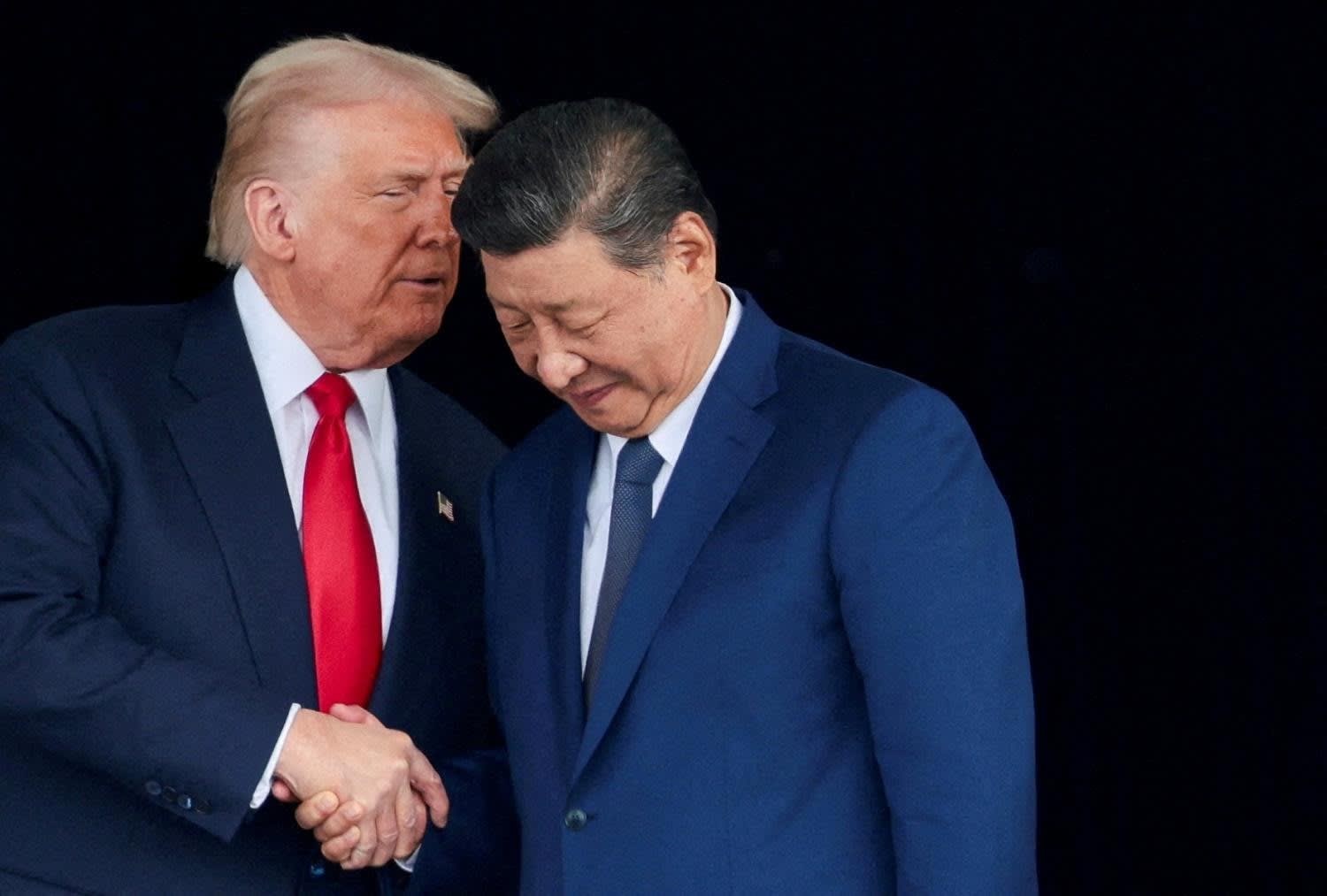



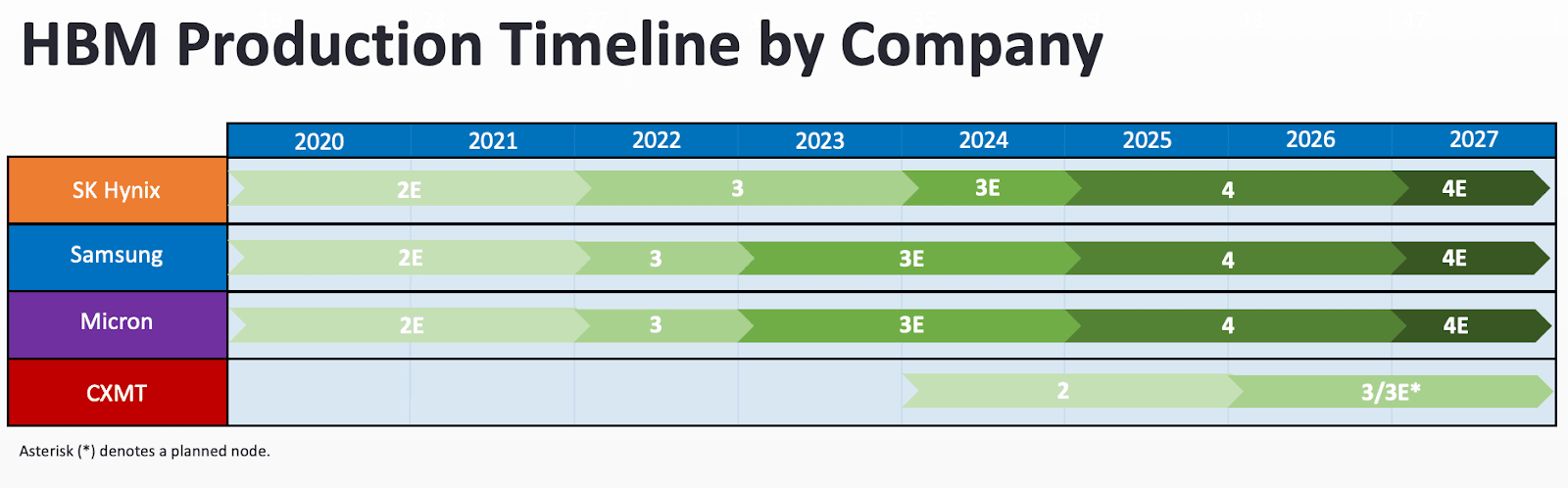
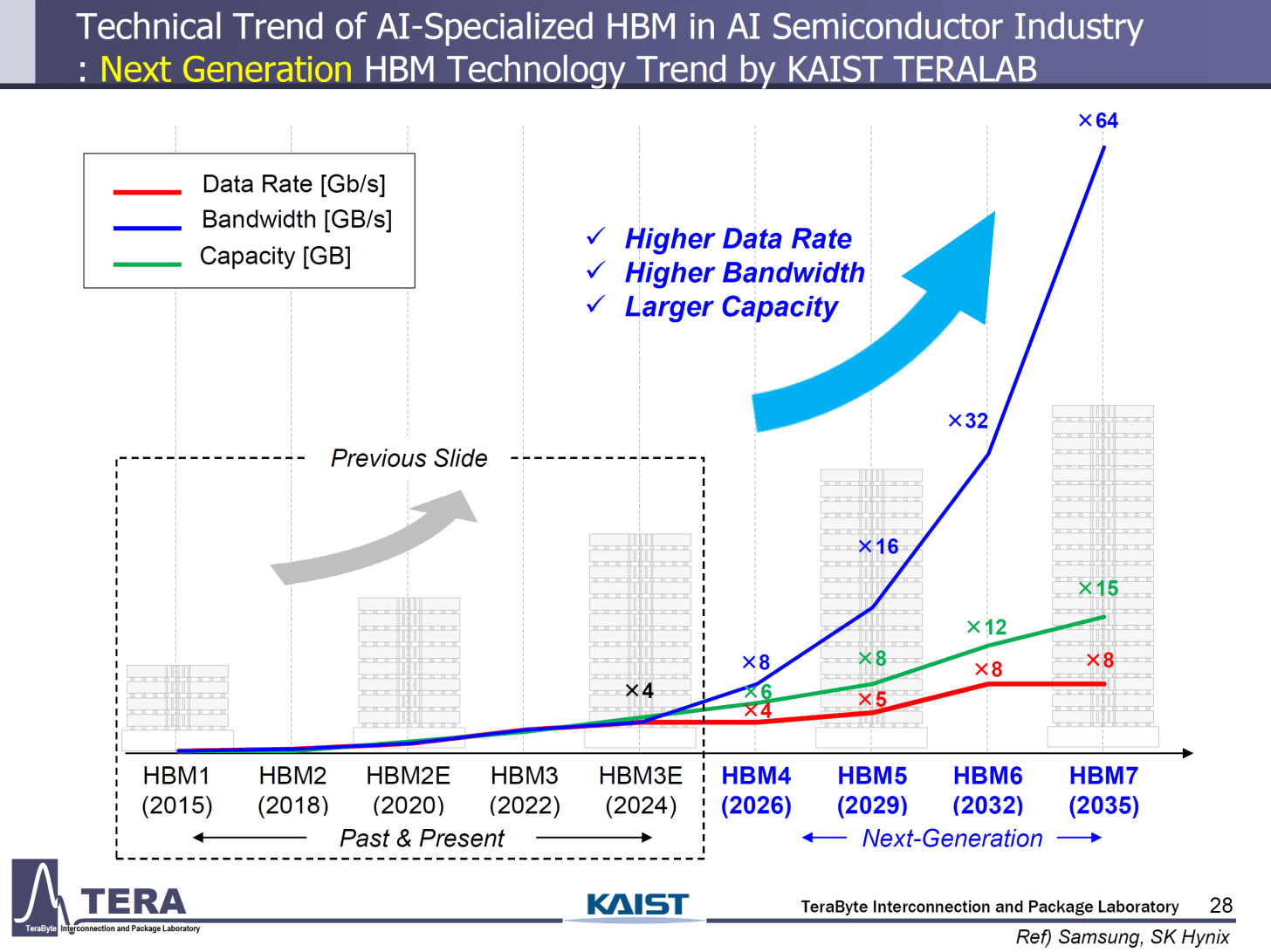
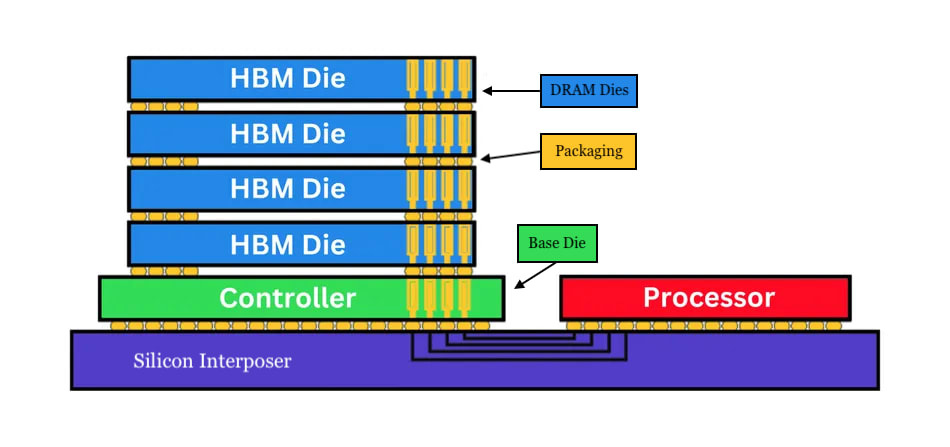
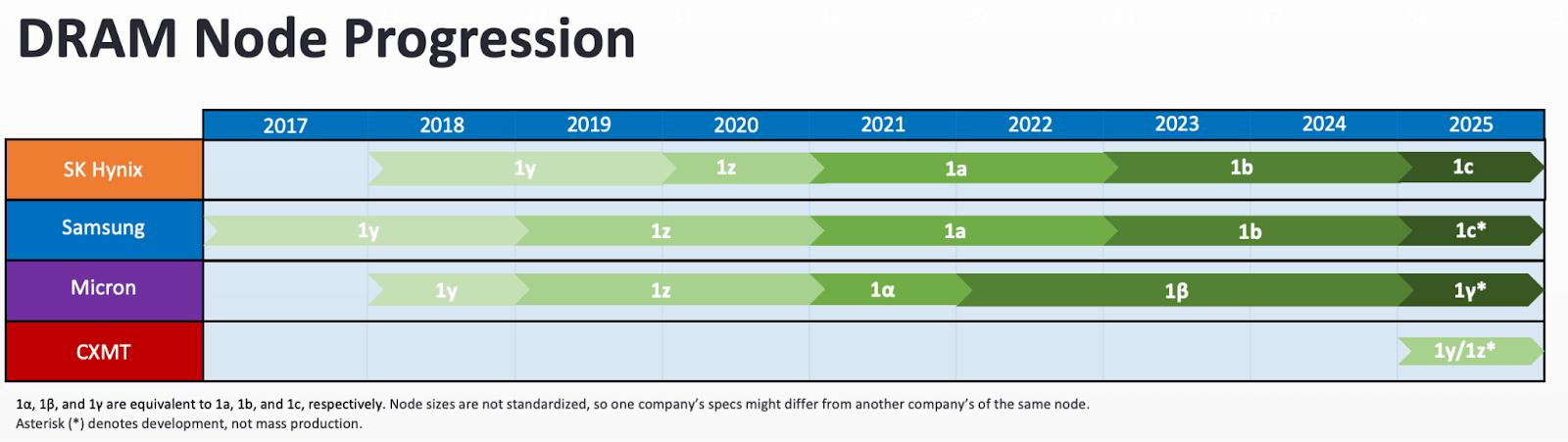


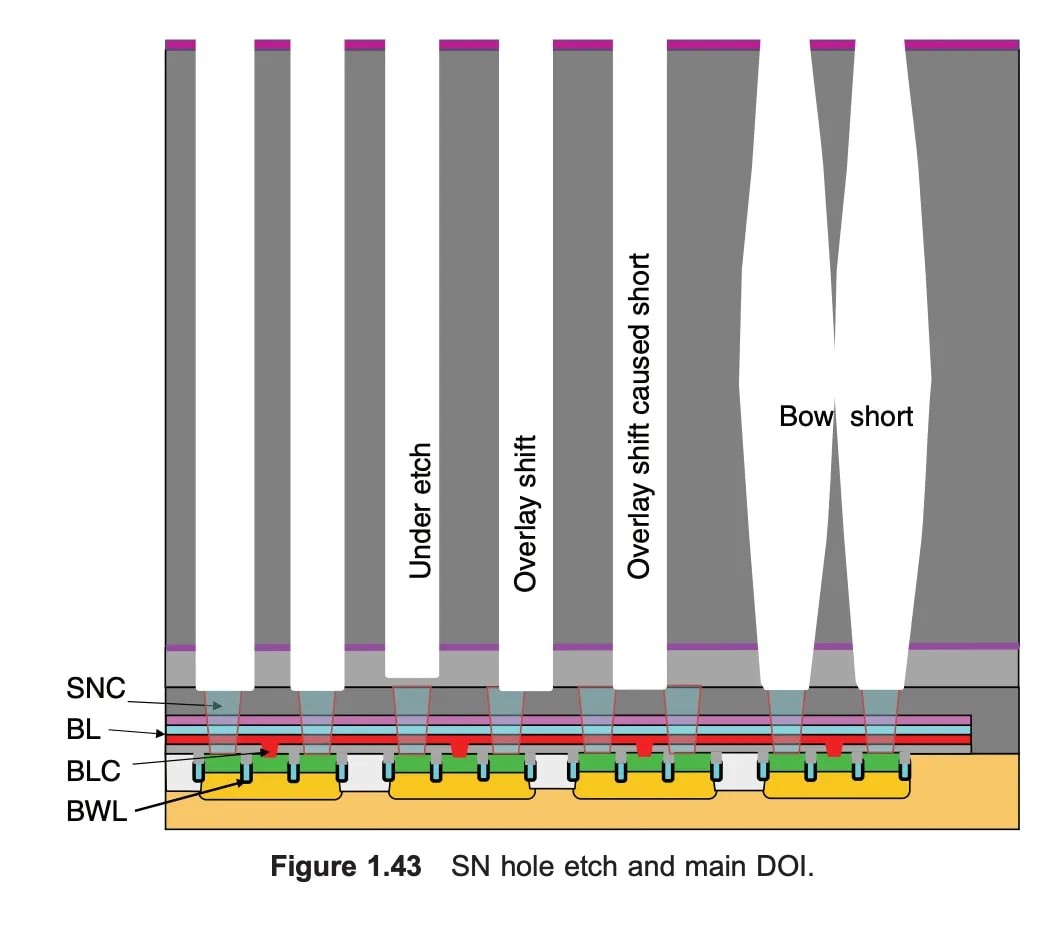


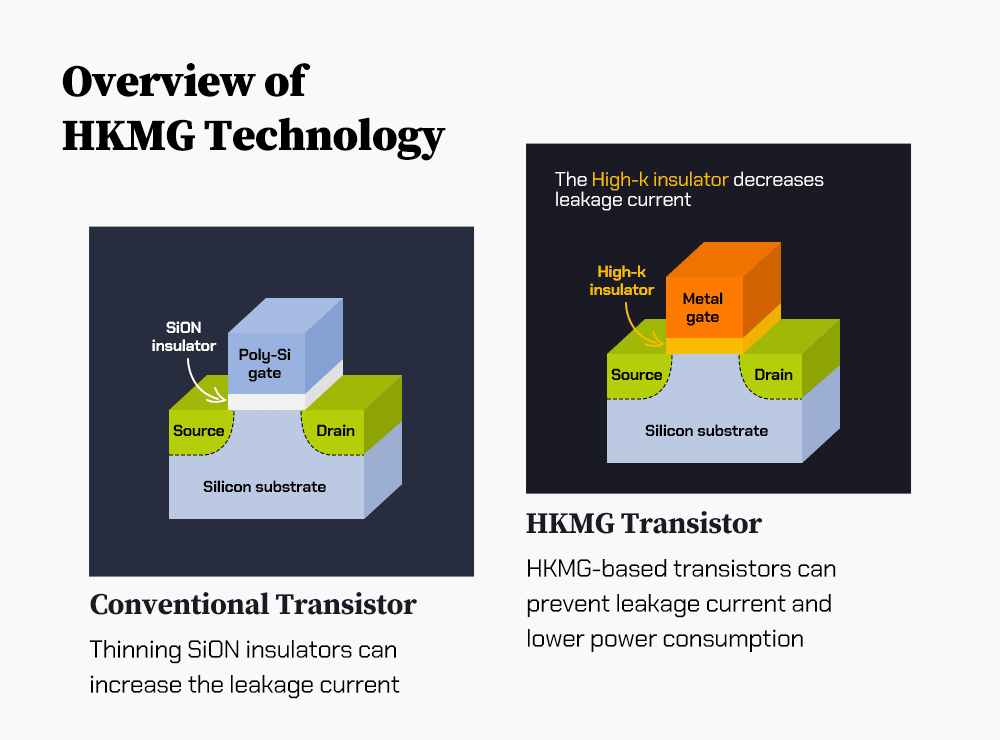

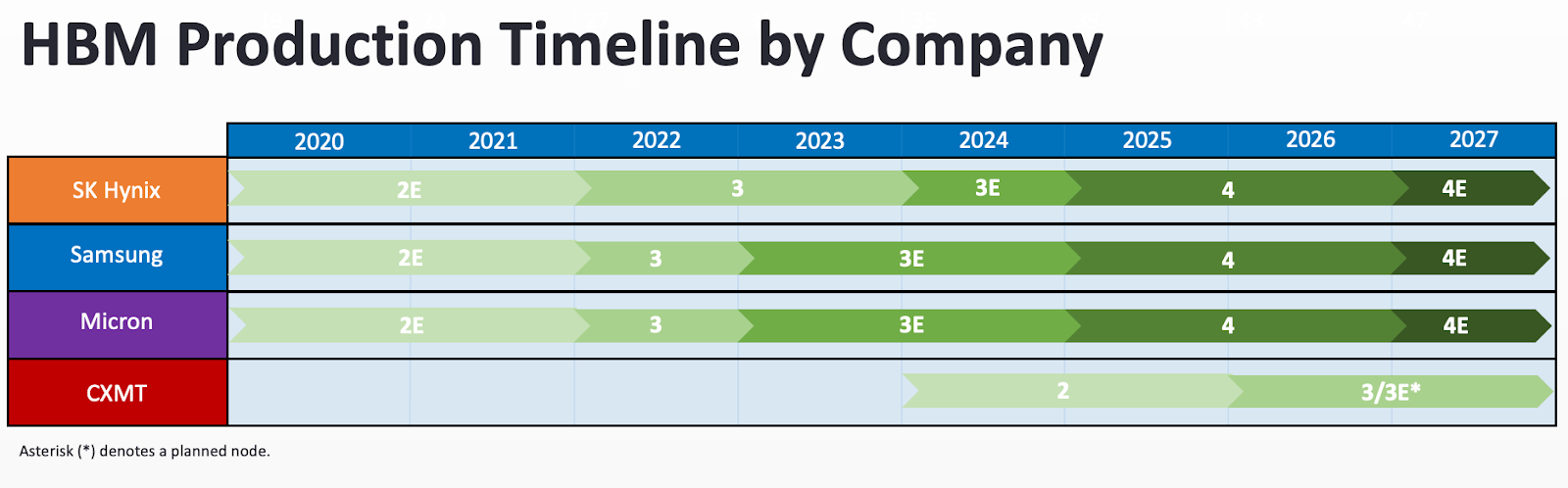




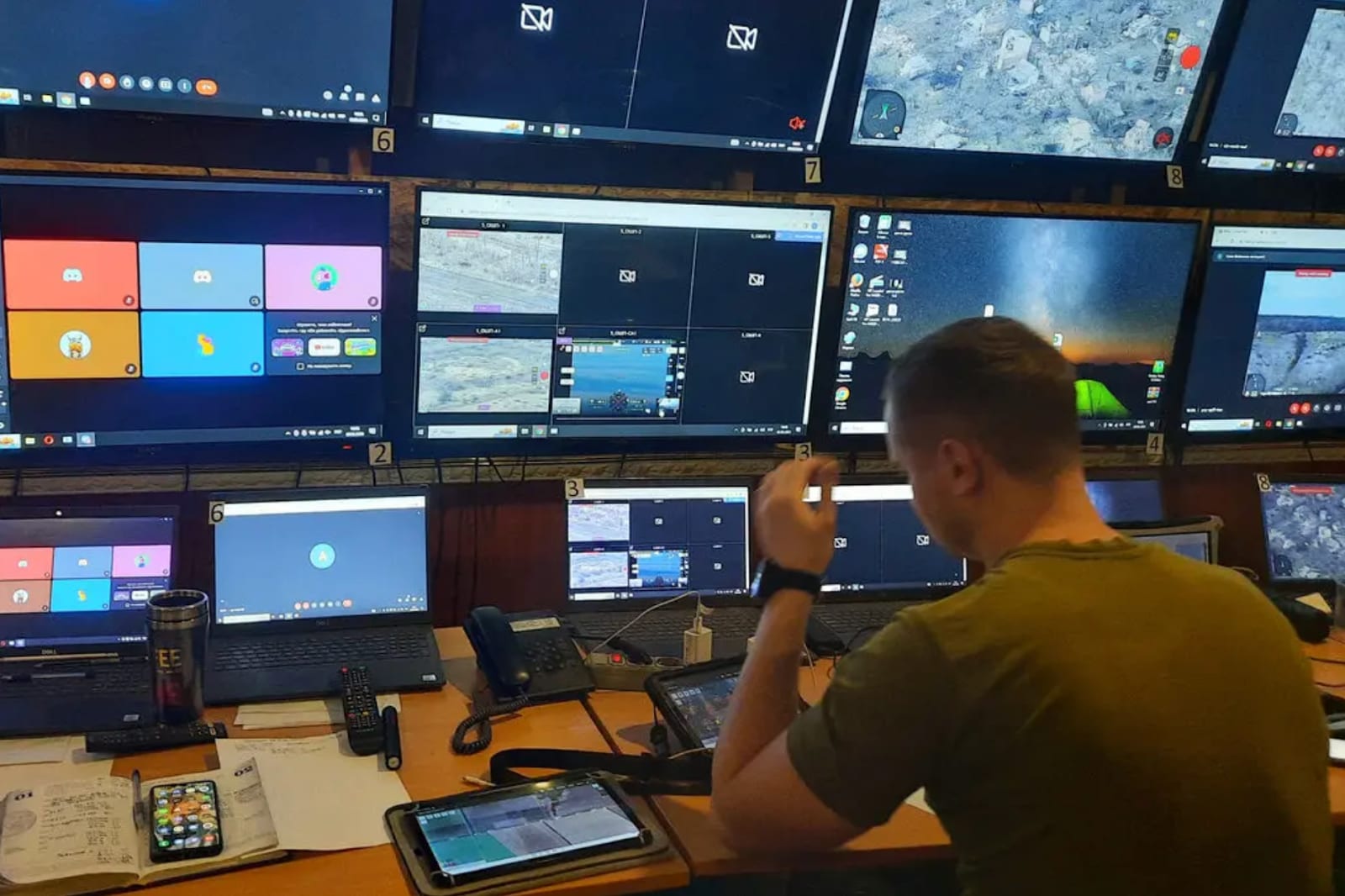




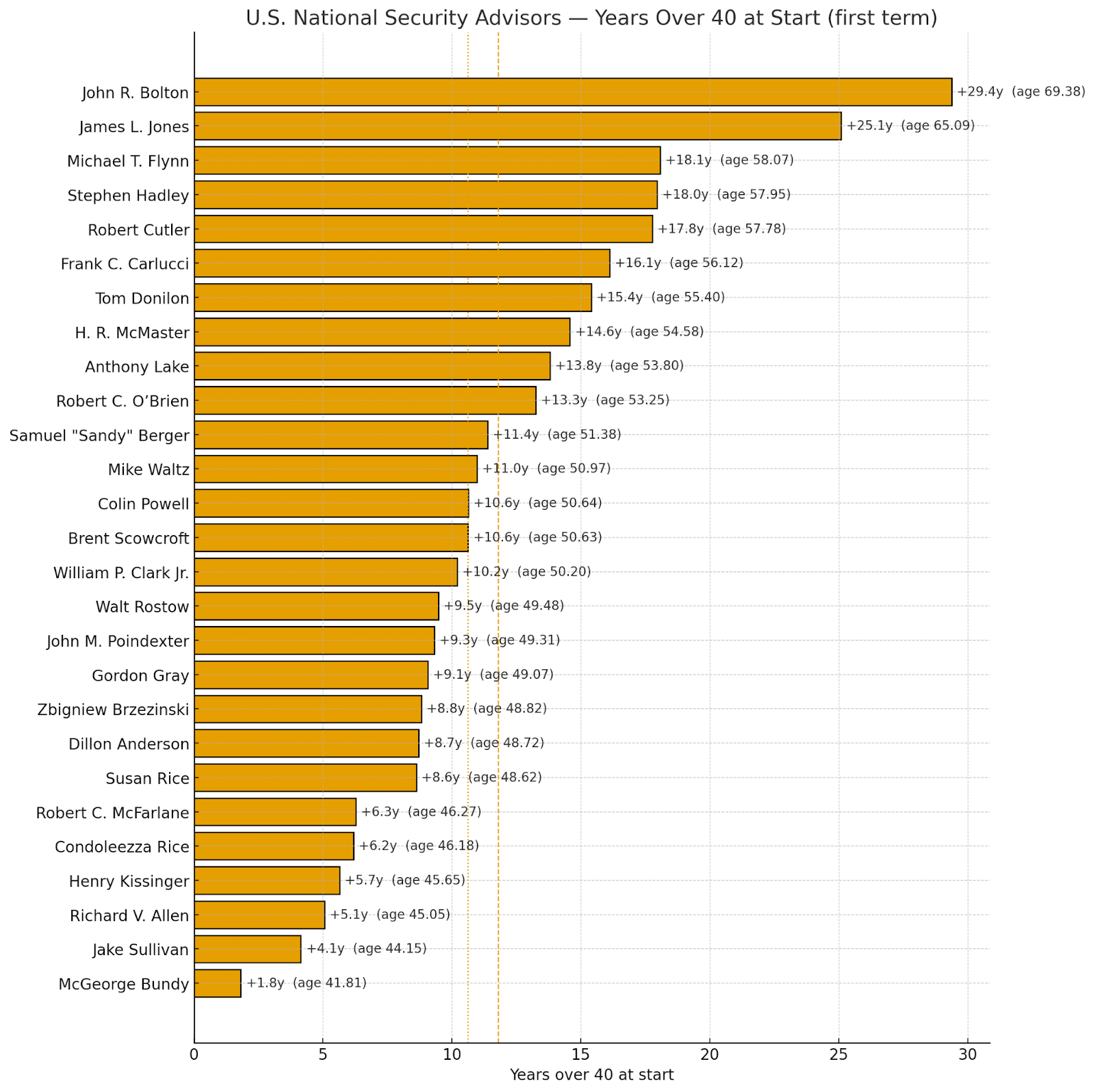
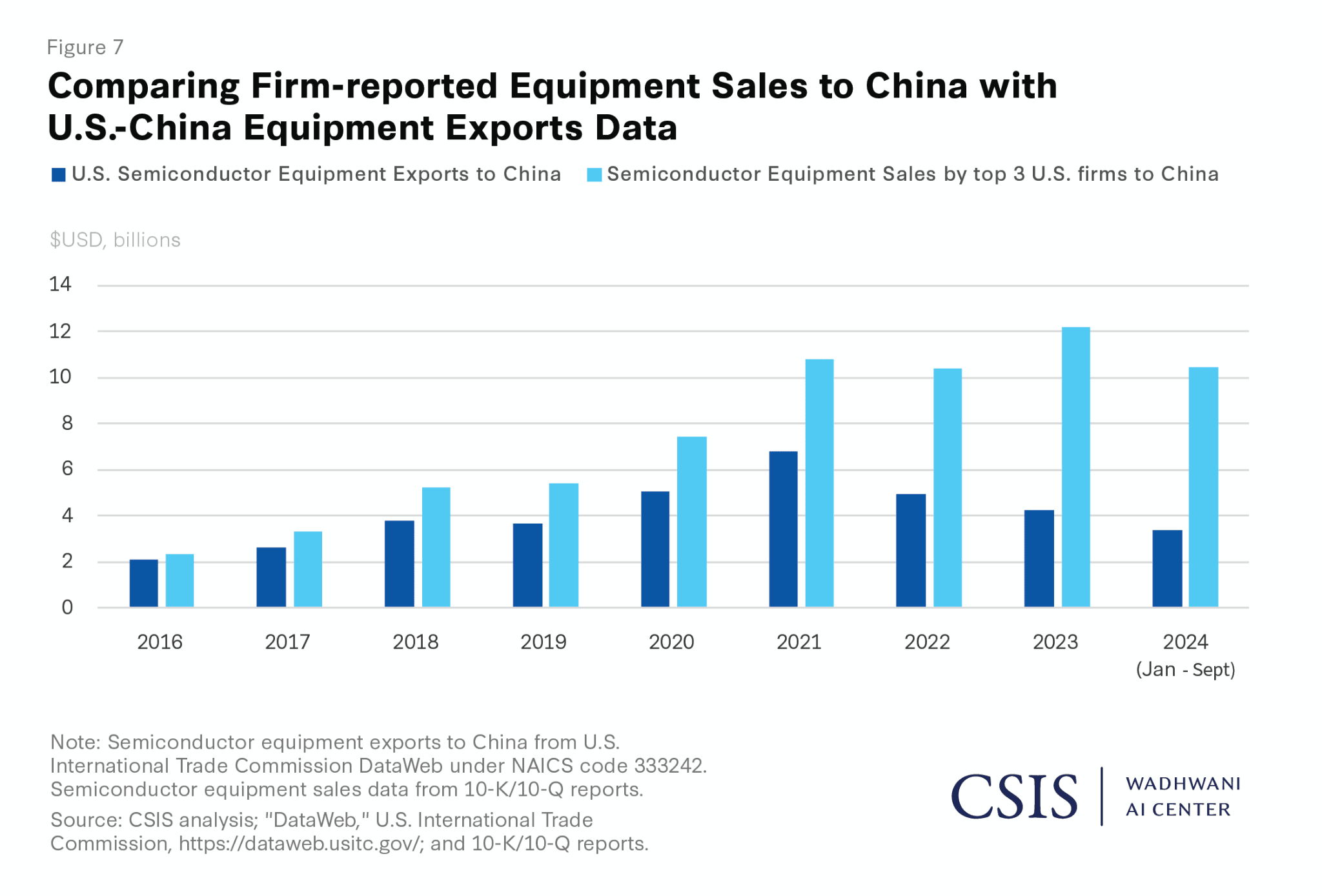
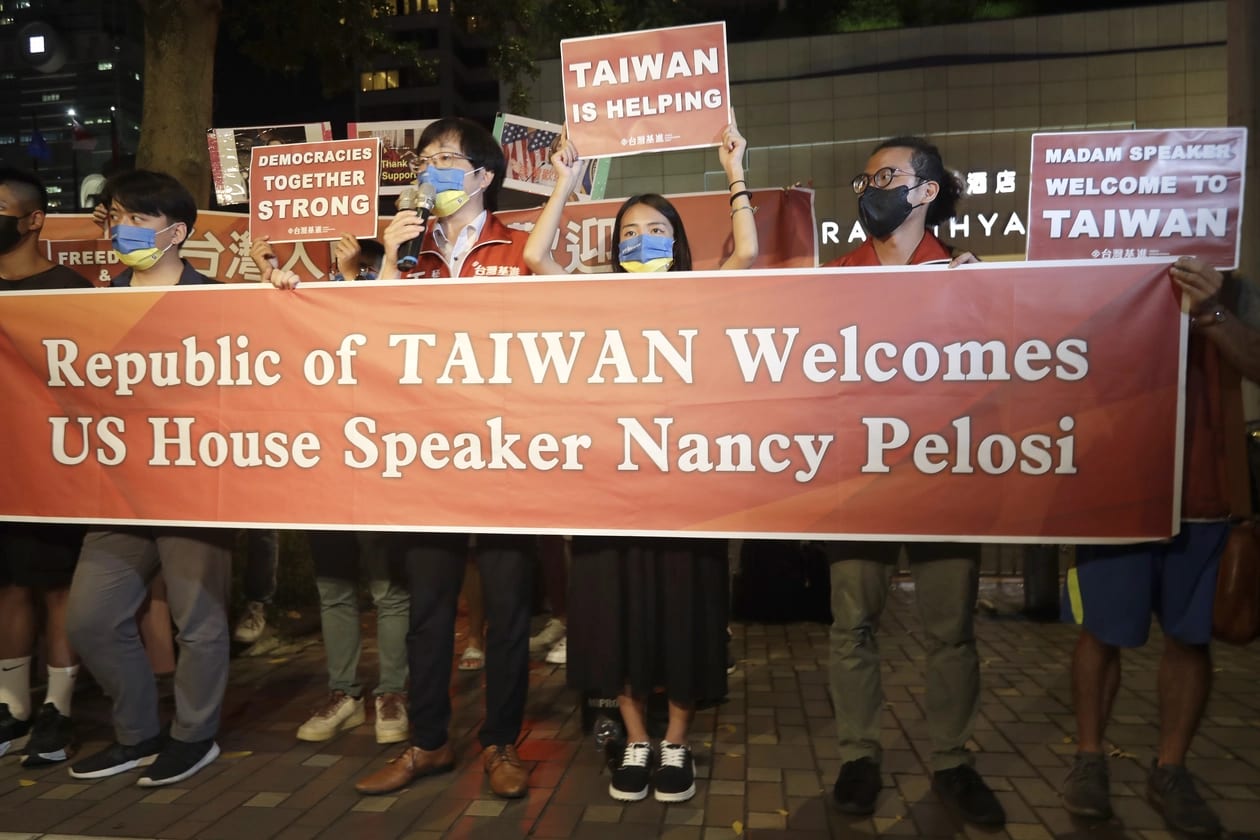






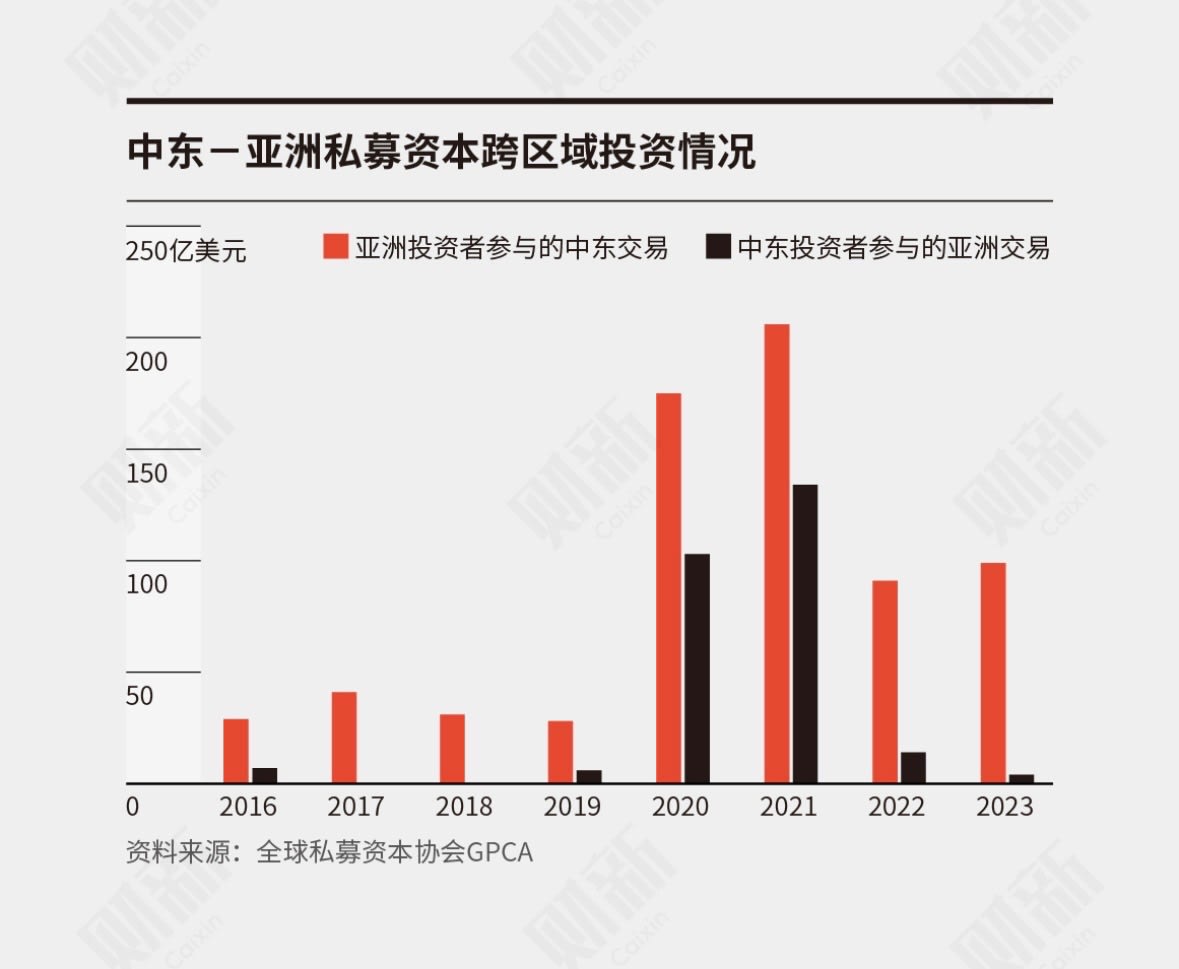

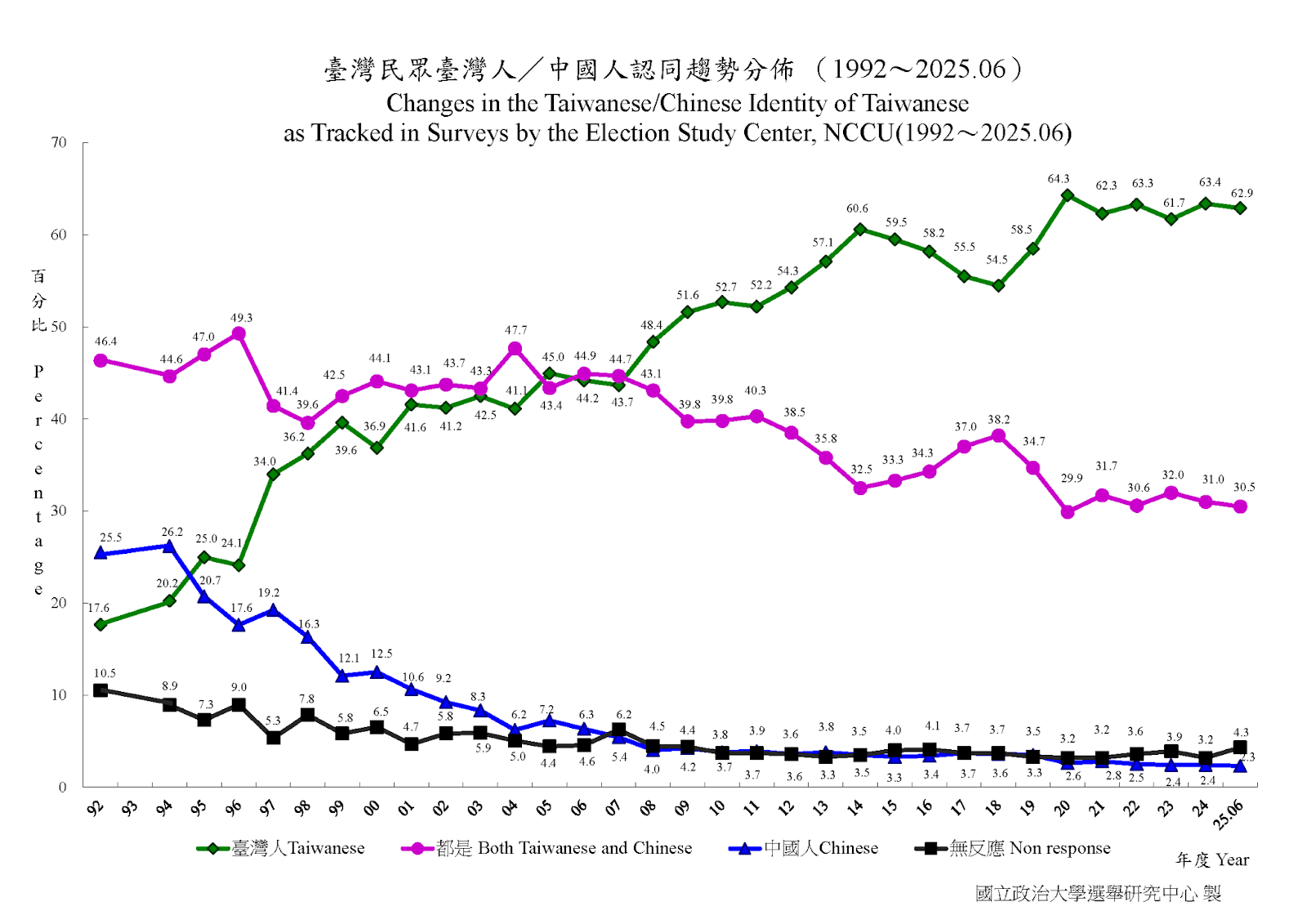






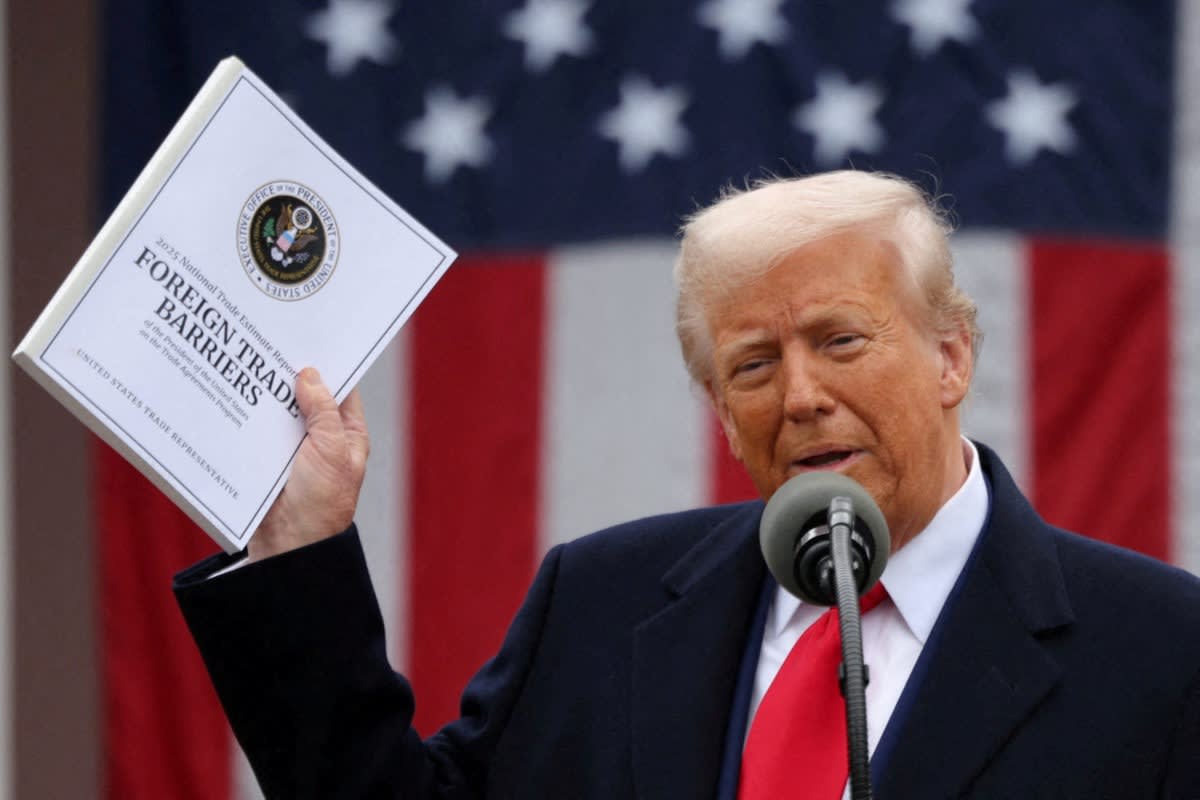
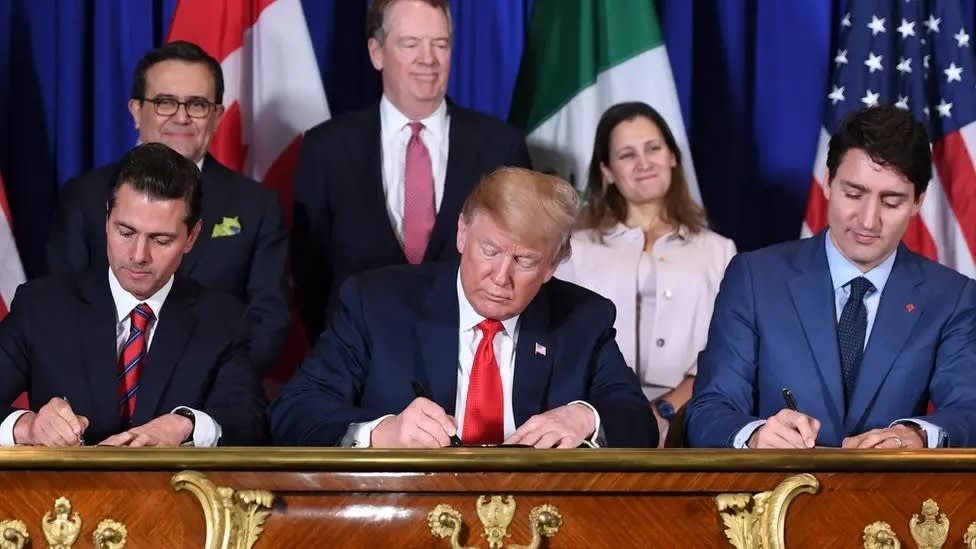
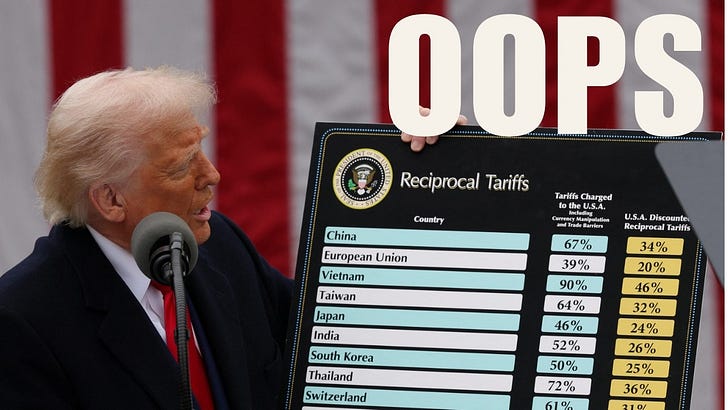



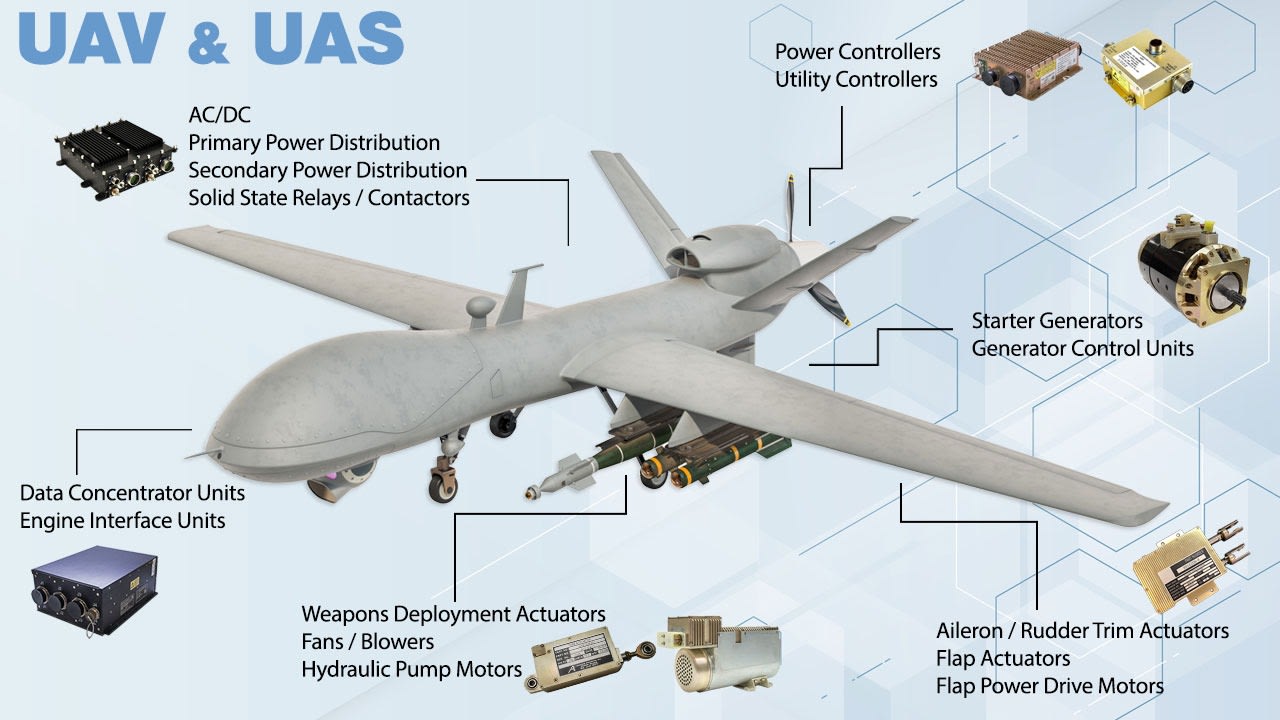





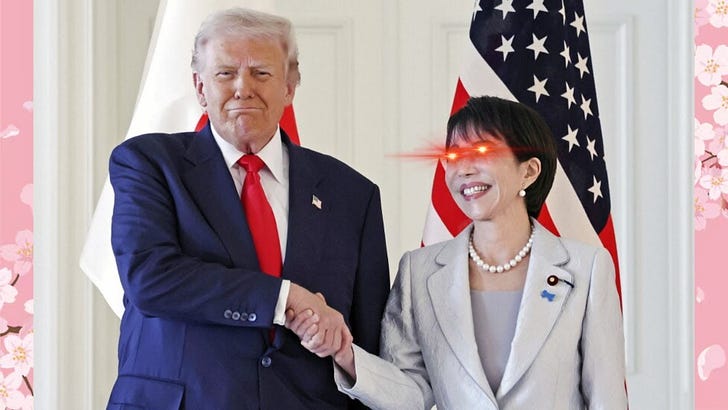



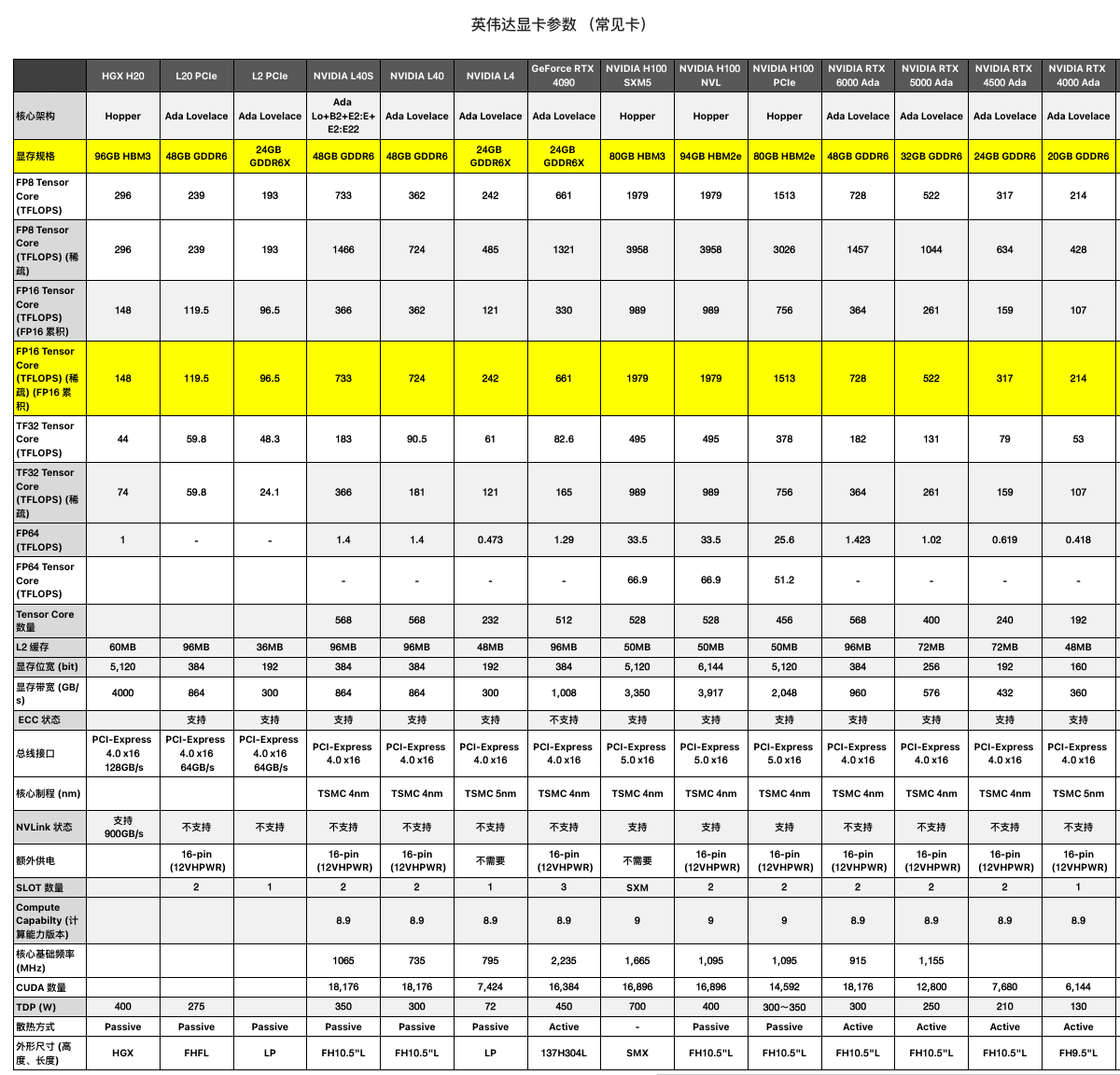







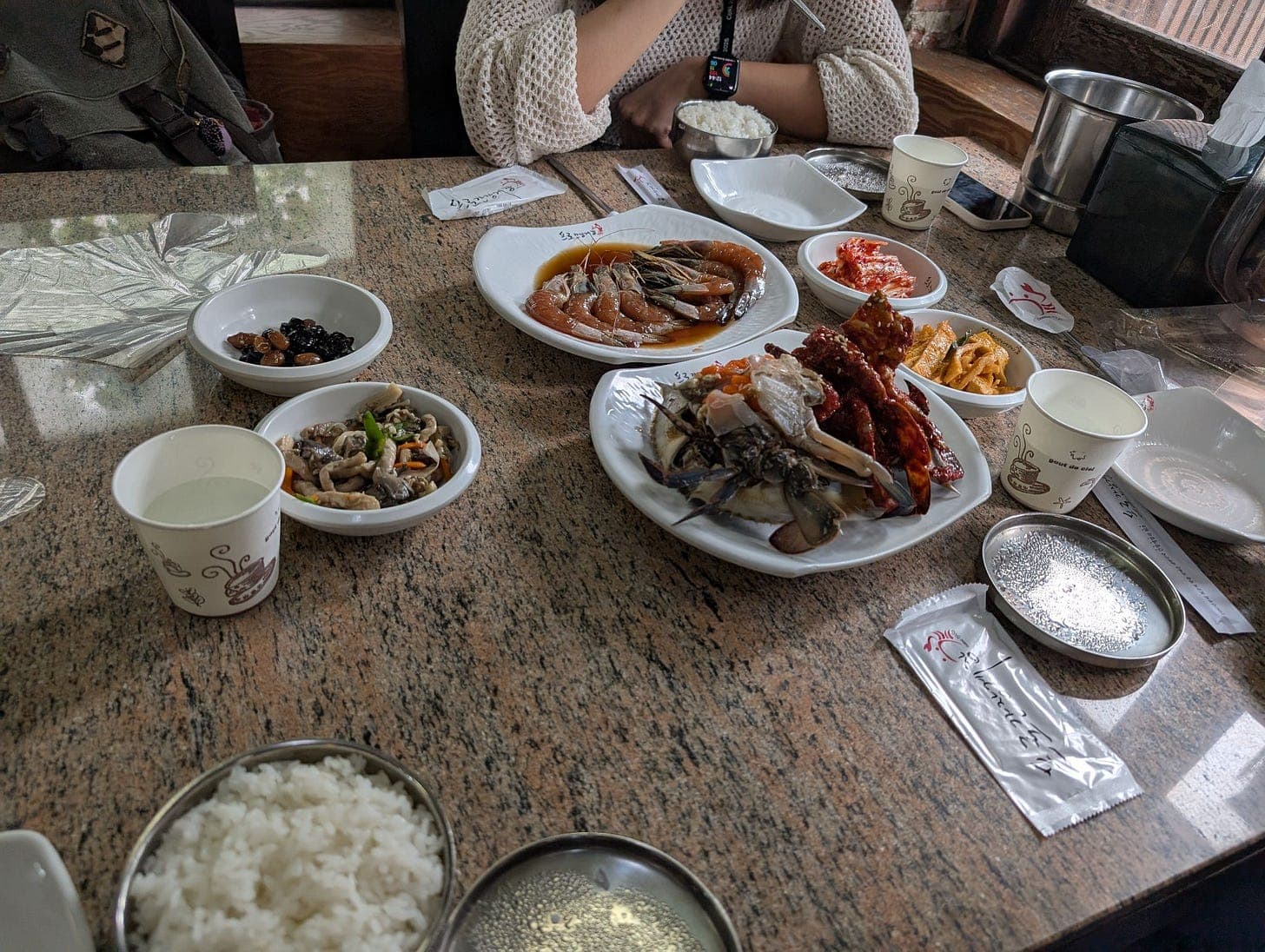




















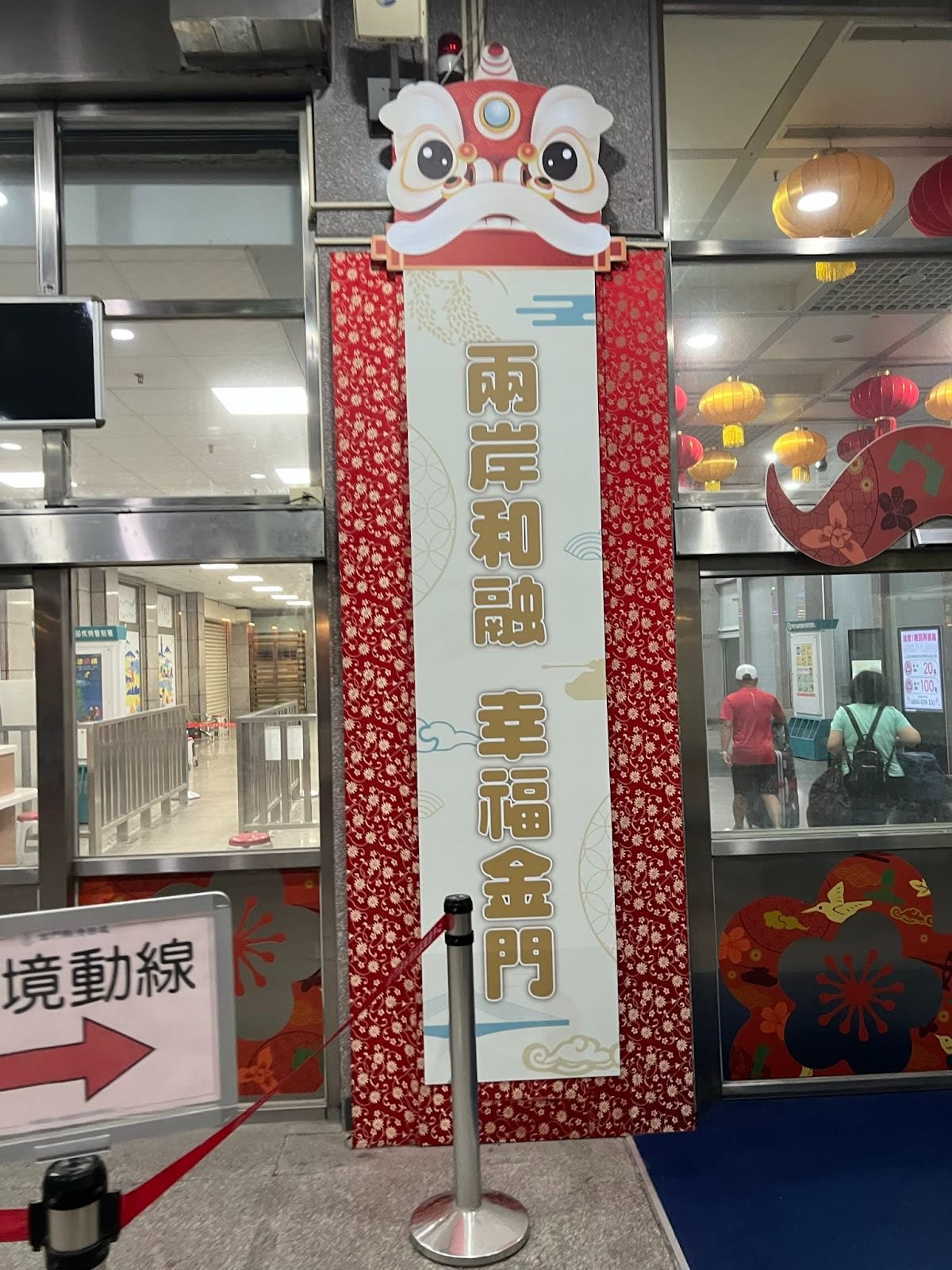





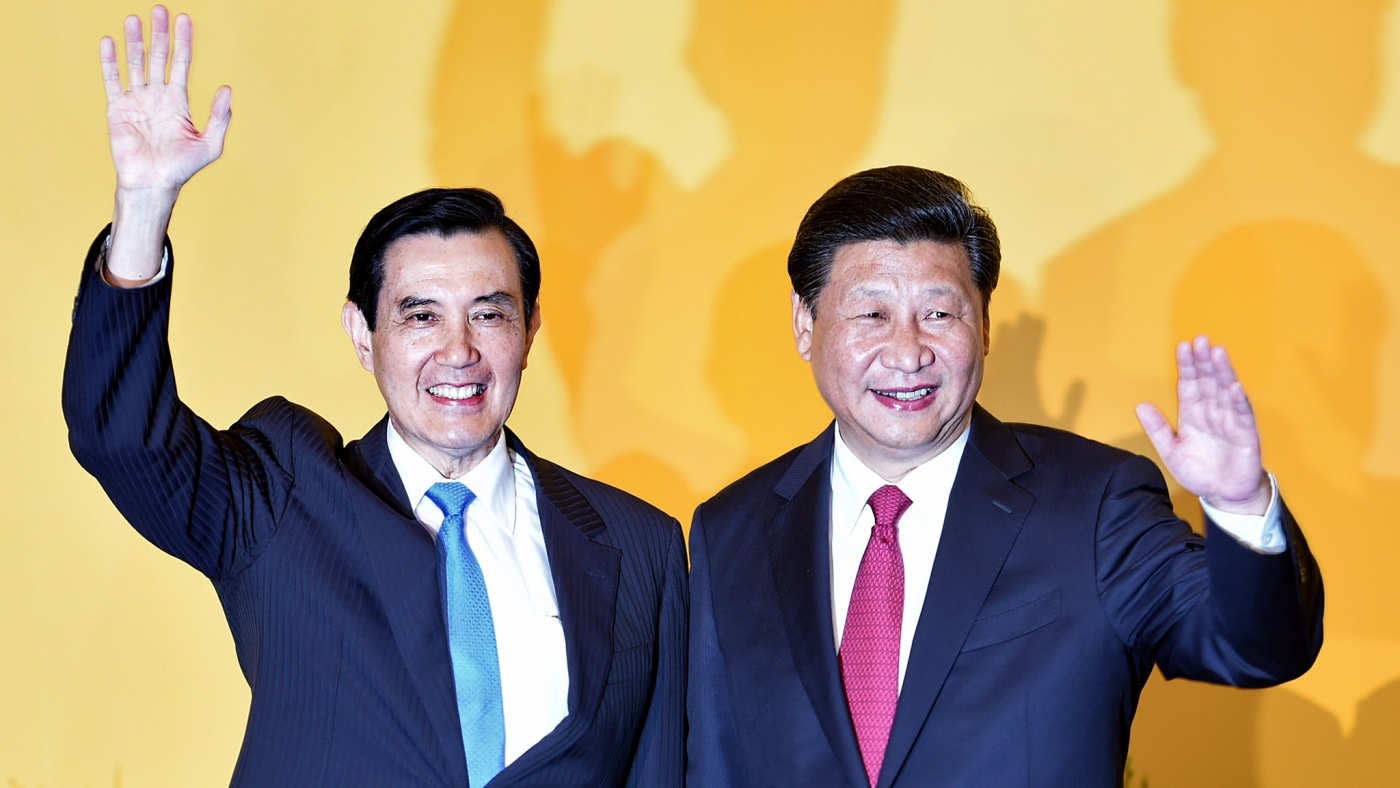
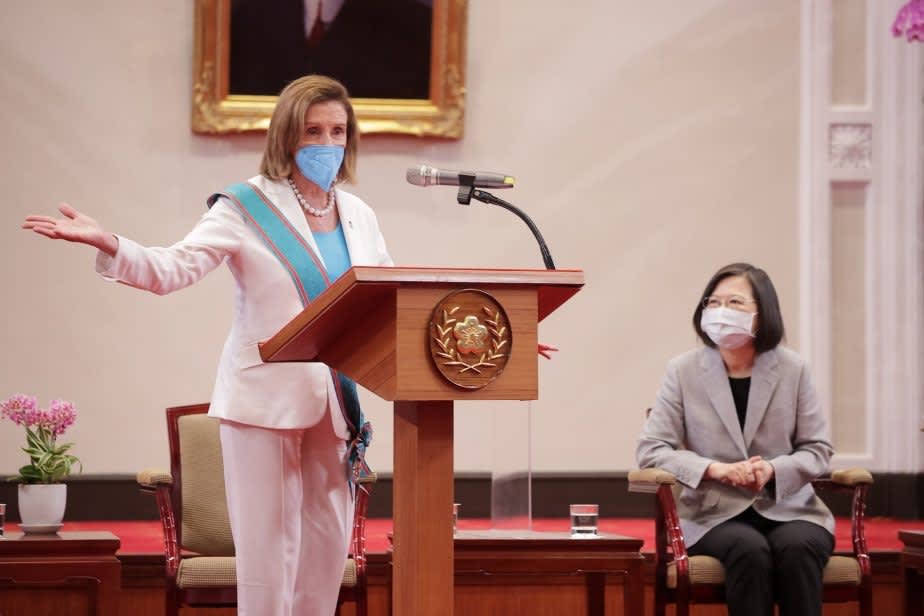
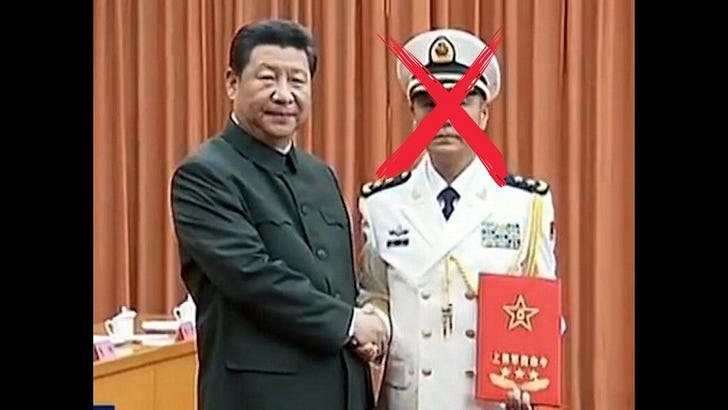









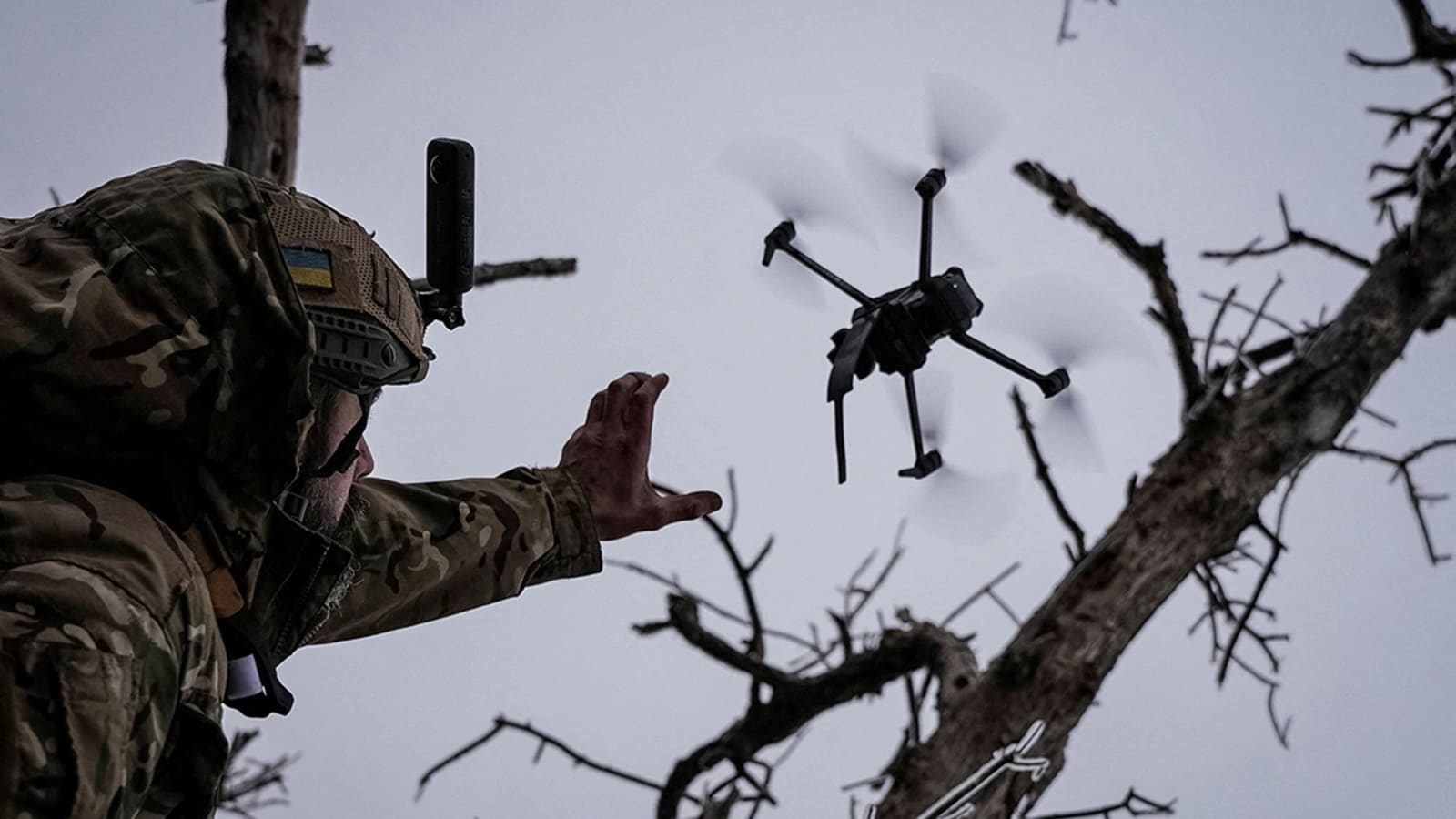
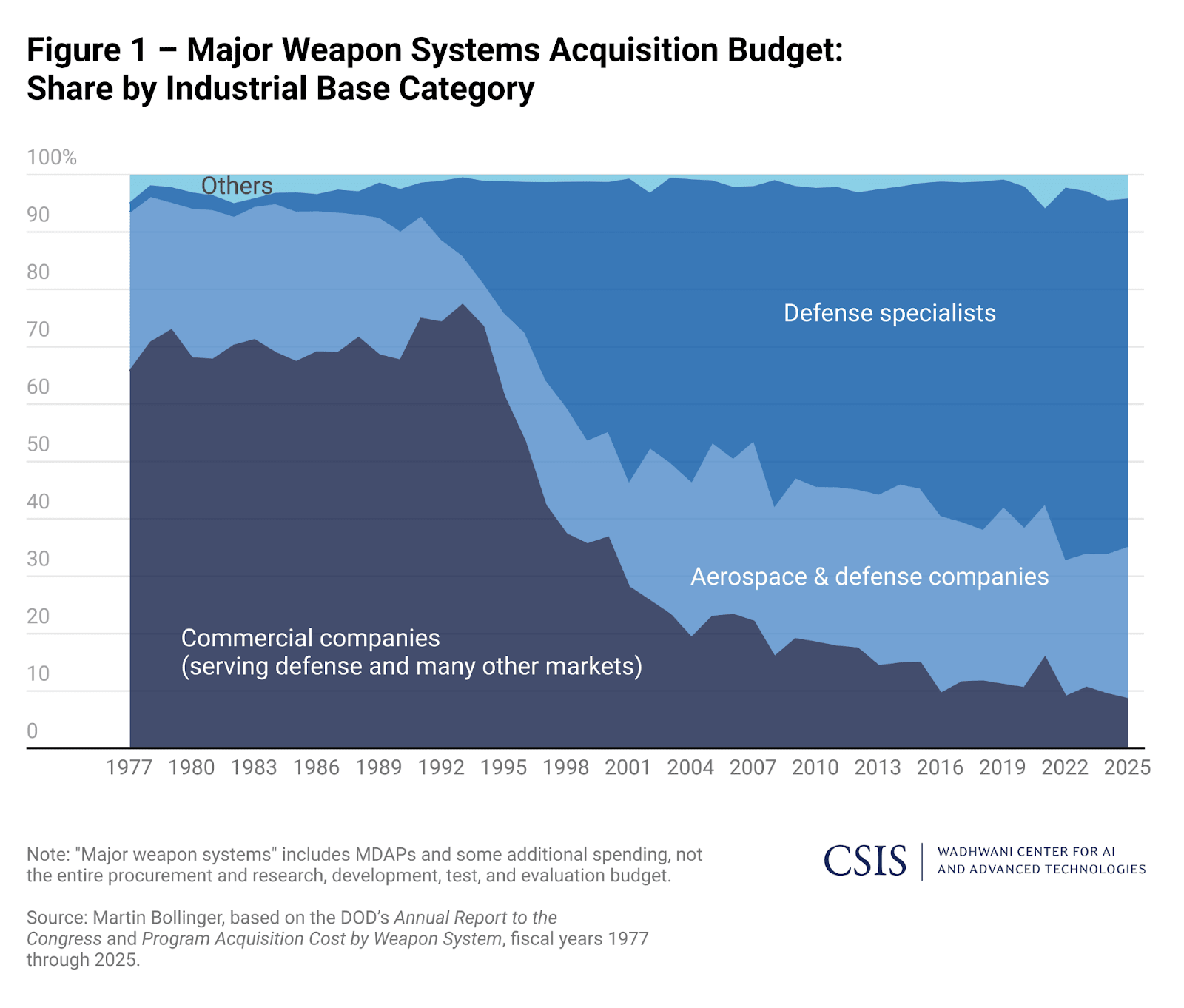
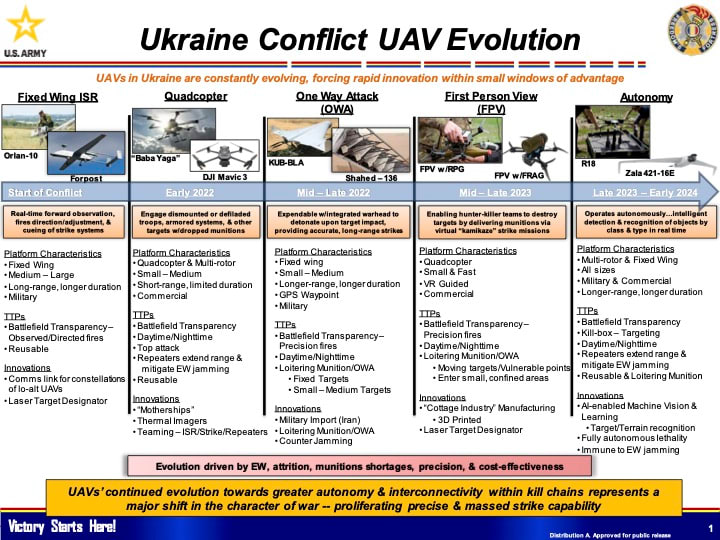
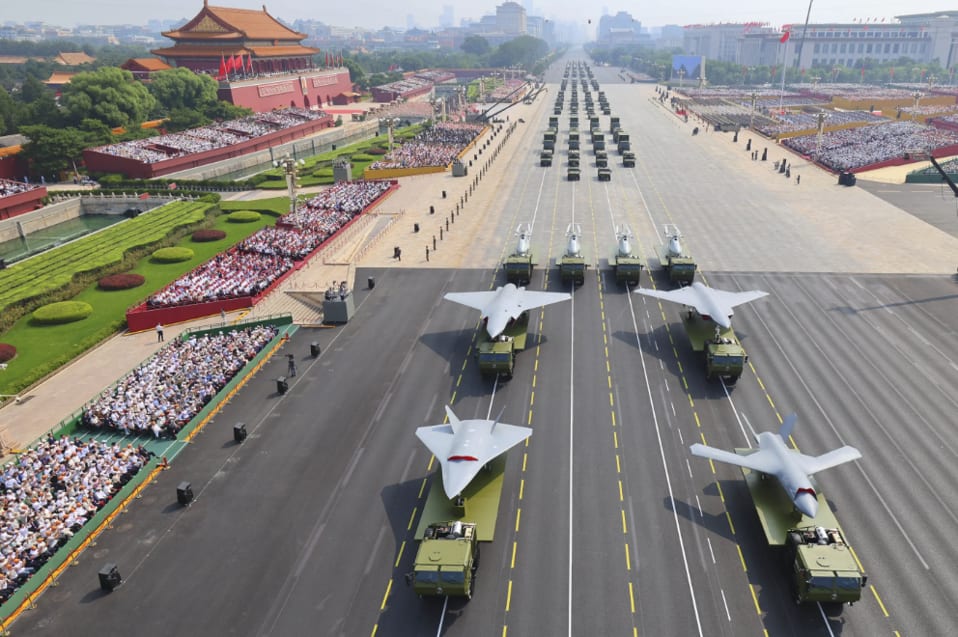


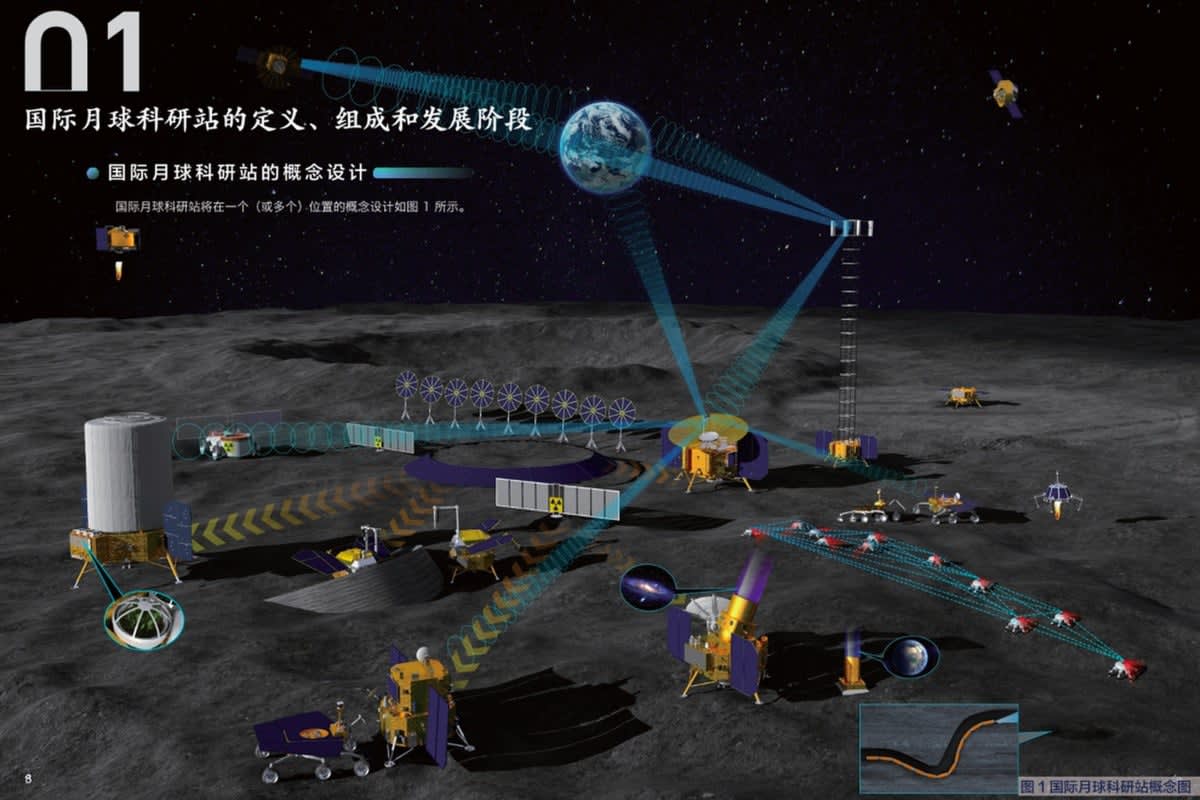

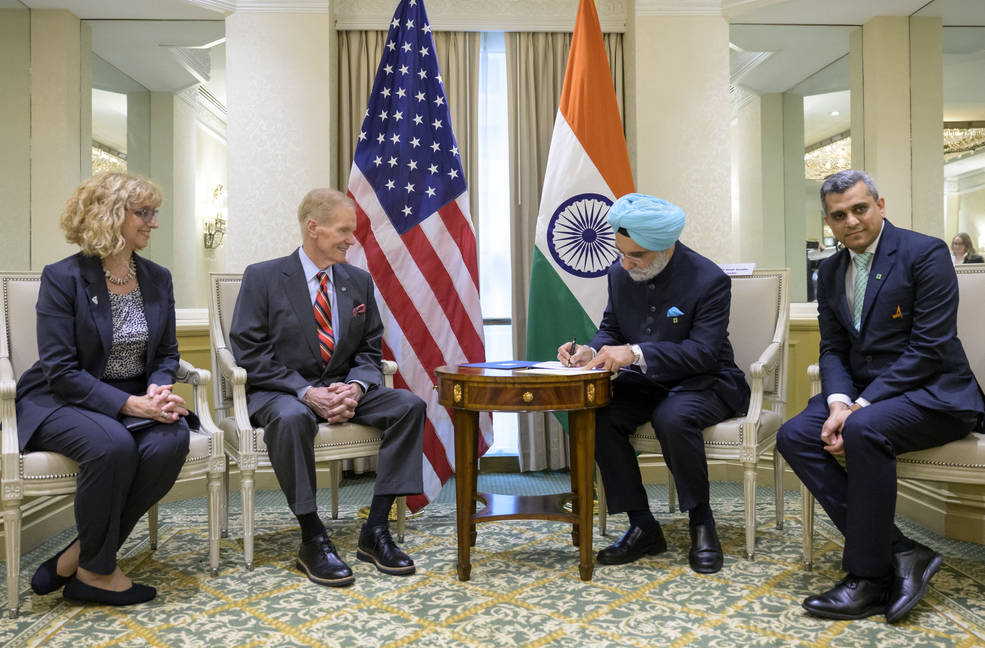

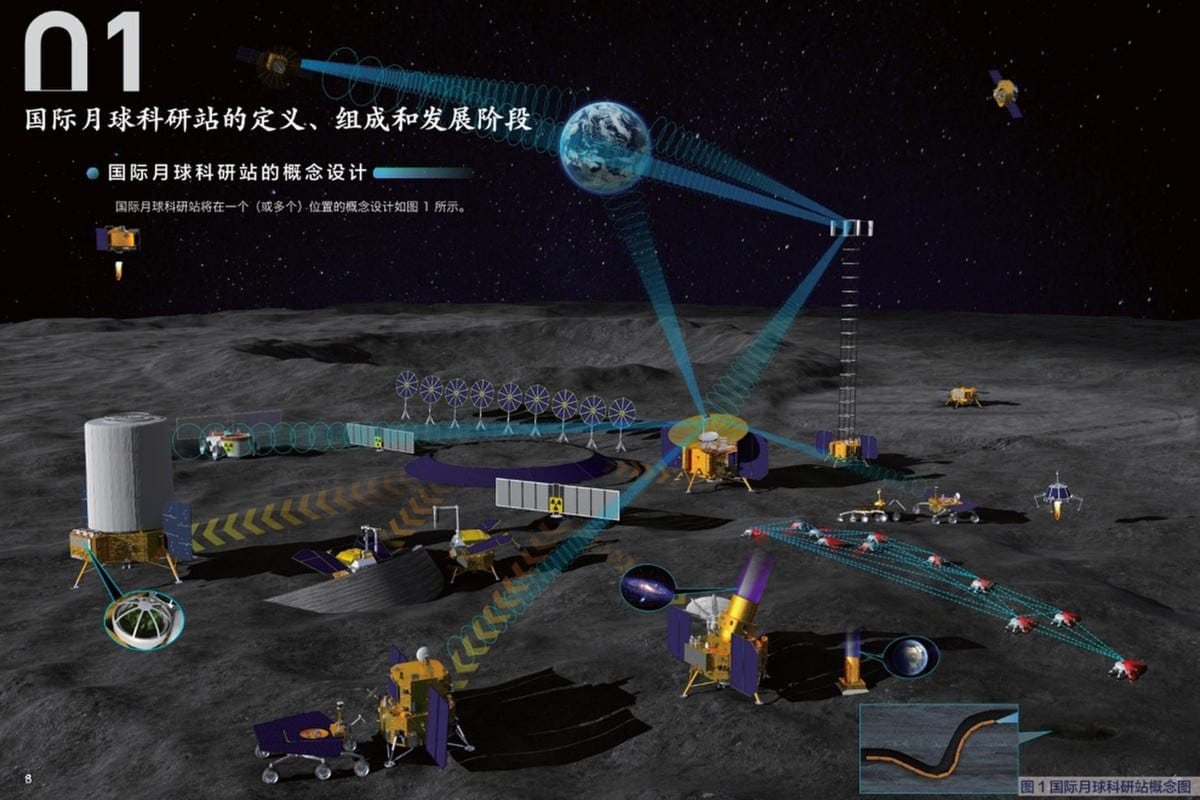








.jpg)

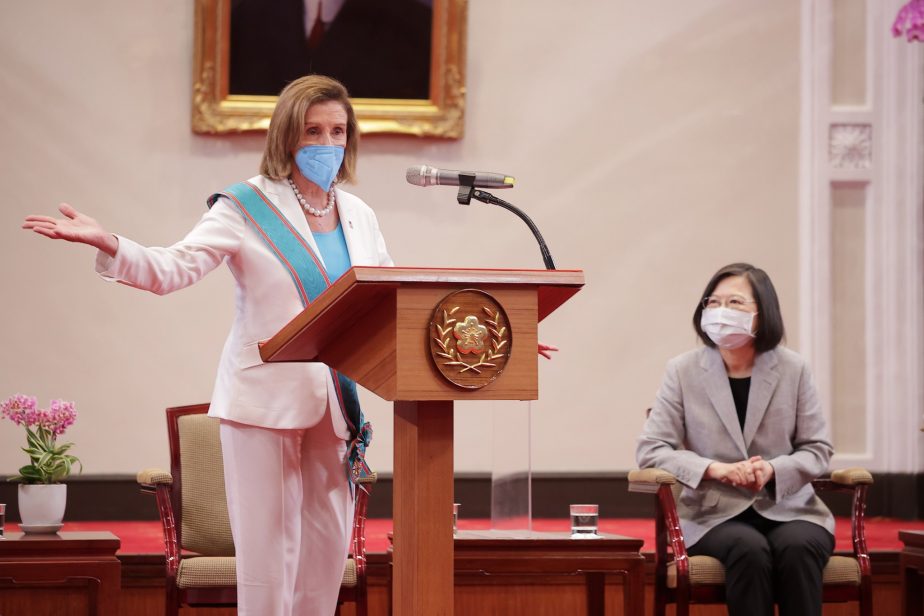


#/media/File:NVIDIA_H100_(%E6%9E%81%E5%AE%A2%E6%B9%BEGeekerwan)_025.png)