Login
LoginCFR's Mike Froman on Détente 2.0 and Running a Think Tank
is president of the Council on Foreign Relations, former U.S. Trade Representative, and a substacker. He joins ChinaTalk to discuss:
Why his 1992 dissertation on détente is suddenly relevant again – and why “positive linkage” fails to change adversary behavior,
How mutual assured destruction has shifted from nuclear weapons to rare earths, supply chains, and technology, and why the U.S. and China are stuck in a costly, uncomfortable stalemate,
How think tanks work — salary levels, where the money comes from, and what to expect from Mike’s tenure.
Listen now on your favorite podcast app.
Détente Redux
Jordan Schneider: We’re going to take it all the way back to 1992. You did your dissertation about this idea of détente and how it evolved from the ’50s all the way through the end of the Reagan administration. Coming to your conclusion, the echoes of where we are today and that theme seem to be very striking. Why don’t you pick a quote and then kick it off from there?
Mike Froman: “To retain the support of the American public, U.S.-Soviet relations must be based on reciprocity. Détente suffered no greater liability than the public’s perception that the Soviets exploited it at the United States’ expense. To be reciprocal, however, U.S. policy must embody reasonable expectations.”
Mike Froman: I thought I was writing a historic piece. The end of the Cold War came. I put the book on the shelf, thought it would never be opened again. And yet, Jordan, there you found it and indeed have highlighted that there might be some relevance to the U.S.-China relationship today.
Jordan Schneider: I played this game with Kurt Campbell. He did his thesis on Soviet relations with South Africa and the tensions of how the U.S. navigated that dynamic. Everything’s coming back.
We’re sitting here in the fall of 2025. We have a president who is probably as far towards the “let’s do détente” mindset as you could have gotten in this political moment. What do you think are the bounds of what an American president today could domestically go towards if they were in a détente mindset?
Mike Froman: The issue of détente back in the old Soviet days was — was it a strategy to transform the Soviet Union by engaging with it, or was it a reflection that we had to engage with it because we had overwhelming common interests? Some of those are the same questions that come up today in the U.S.-China relationship. Do we think we can fundamentally change the trajectory of China, or do we just simply have to accept it and live with it, coexist with it, and create some rules of the road for managing potential conflicts?
Any president right now figuring out how to coexist with China will have to determine — where do we need to cooperate on issues of national security? Where do we have to compete around the economy and technology? And where do we have to be very careful to manage potential conflicts that could blow up and create a kinetic conflict between us — whether around Taiwan, the South China Sea, or otherwise? Balancing those different baskets of interests is the most challenging thing for any administration to deal with.
Jordan Schneider: You wrote, “The theory of using détente as a means of transformation was based largely on the misguided assumption that the U.S. could use cooperation on common interests as a source of leverage over conflicting ones. Positive linkage was not particularly effective, however, because success in areas of common interest did not easily translate into success in areas of divergent ones.”
You published this book in 1992, which is a key moment of translating that kind of — in your estimation — flawed thinking of how we went about this with the Soviet Union to the next 25 or 30 years of American policy towards China. Can you talk about those parallels?
Mike Froman: Yes. The U.S.-China relationship is quite a bit different than the U.S.-Soviet relationship, first and foremost because of our economic interdependence. Russia and the Soviet Union were never terribly significant economic players in the global economy, whereas China very much is. We have developed over the last several decades a great deal of interdependence with them.
The leverage question’s a little bit different. Could you use economic leverage — the fact that we have a common interest in maintaining strong trade relations — as positive linkage into other issues? Or could you cooperate in areas like climate change, which both sides thought at one point were of common interest, and translate that into broader cooperation in other issues?
Having said all that, you’re right to point out that it’s proved to be relatively limited. In China’s view, they in many respects separated areas of common interest from areas of potential conflict and from areas of competition, and were unwilling to allow cooperation in one area to really affect their interests and how they pursue them in the others.
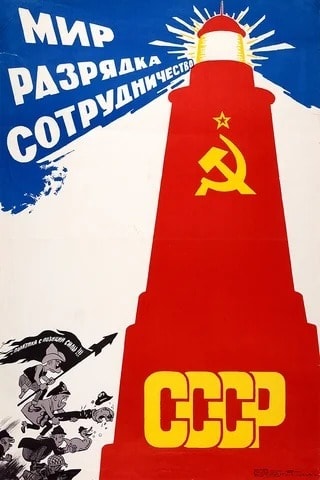
Jordan Schneider: What is your sense of why the theory of the case was so directly ported over to China? The argument through the Clinton administration, Bush administration, first half of Obama was basically — we’re going to develop leverage, develop these common interests and they’ll see the light. We didn’t get that these are both two party-led systems. There are some commonalities, but there are pieces of learning that maybe folks overlooked from that experience. It felt like a brave new world. Given your view over the past 30 years of this arc, what do you think got lost in translation there?
Mike Froman: If the Cold War was defined at least in part by an ideological battle between Western liberal, capitalist, market-oriented, democratic-oriented principles and the communist totalitarian principles of the former Soviet Union, the view at the end of the Cold War was that it was much more of a unipolar moment. Not necessarily U.S. hegemony, but the hegemony of the open liberal democratic capitalist perspective.
That was embraced by China. If you go back to the days of Jiang Zemin and Zhu Rongji and the reform trajectory that they laid out, they were very much on the path towards market-oriented reforms, opening up — not necessarily democracy. Those who thought that opening up on the economic side would lead to political pluralism were probably being overly optimistic. But there was certainly a view that China was on a path towards greater integration in the global economy, which they have been, and greater market-oriented policies to help lead them there.
They were on that trajectory for quite a while. It didn’t go as far or as fast and it wasn’t as linear as people expected. The advent of President Xi, who was willing to either stop or reverse some of those reforms, was probably not as anticipated as proved to be necessary.
There was this dominance of a set of principles that we thought could bring China into the international system and bring the U.S. and China into a more cooperative relationship. What happened was that China changed course and didn’t go as far as we expected. Indeed, China reversed many of the gains that we thought we had seen.
Escalation Dominance and Stalemate
Jordan Schneider: Escalation dominance — a phrase we thought was dead and dusted in the bin of history — is now back. Is this the right mental framework folks should be using when thinking about these trade wars? What is and isn’t useful when trying to take the arms control frameworks and put them onto what you’re seeing with the U.S. and China with respect to economics and technology?
Mike Froman: There certainly is a rigorous competition between the two in technology, economics, and military. The Chinese buildup of both its conventional and nuclear forces is very much top of mind.
Where the analogy may play out — it does come from nuclear weapons, but it’s not necessarily the escalation issues. It’s really back to the notion of mutual assured destruction. What we’ve seen more recently in the U.S.-China relationship is we have leverage in terms of access to our markets and access to our technology, but China too has leverage in terms of their capacity to control critical choke points of key technologies — whether it’s critical minerals, rare earths, magnets, et cetera. That’s, in my view, probably just the tip of the iceberg of the kinds of technologies and products that they control and that they have now demonstrated a willingness to use their leverage with us.
If anything, we’ve reached a stalemate where both sides realize that neither can escalate in a costless way. Indeed, it may require them to sit down and come up with some rules of the road for managing the relationship going forward.
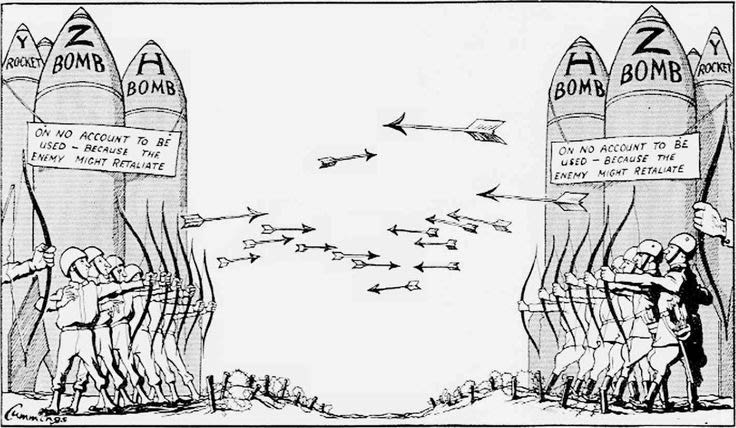
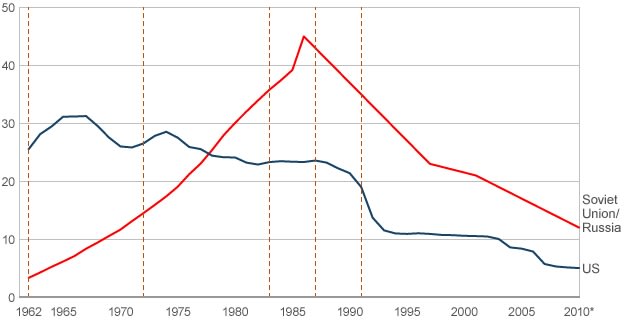
Jordan Schneider: There’s this misreading of the history of the Cold War that once you had mutually assured destruction, everything was cool by the 1970s, which, as you as well as anyone know, was not necessarily the case. You had both countries developing new weapons systems and wrestling for that nuclear primacy and escalation dominance.
If we are in a world now where the U.S. and China both understand that they can take big, painful chunks of GDP without going to war or doing incredibly aggressive cyber attacks, where does that lead us? Because the game doesn’t stop, right? We’re still having different moves that both sides can play.
Mike Froman: Exactly. The competition doesn’t stop. As you said, back in the Cold War, it wasn’t all sweetness and light once you hit mutual assured destruction, but it did prevent a direct nuclear exchange between the two largest nuclear powers. They had to find other ways of positioning vis-à-vis each other, whether through proxy wars or other elements that allowed them to try and gain some advantage over each other.
That’s probably true here in the China relationship as well. It’s likely to lead to a certain degree of selective decoupling, whether it’s on advanced technology issues where we’ll go our way and China will go its way. The question is for the rest of the relationship — to what degree can there be a normalization of trade and other interactions?
There is a lot of non-strategic trade. The Trump administration is evolving in its views towards — what can we actually grow or produce here in the United States and where do we actually need to import from other countries? Can we take T-shirts and sneakers and toys from China without compromising our national security? I would think so. Allowing them in at a decent rate is good for particularly low-income Americans who spend a disproportionate amount of their disposable income on the basics of supporting their family.
But there are likely to be some technologies that we’re going to want to keep out of China’s hands, and China is going to have some choke point technologies that they can control over us. Hopefully that again reaches some sort of balance.
Jordan Schneider: Say we’re in 2028 and both countries have had three years to do more economic securitization and the size and amount of the bites that each country can take out of the other one diminishes. America has a few more mines. China does a better job of making semiconductors. Is the world in a more or less safe place? Or does just the fact that each side is still going to have this leverage — if they are the world’s two largest economies and still do trade — is that still the salient thing? Does playing around the edges even mean all that much?
Mike Froman: It’s unclear at this point because it’s very much a work in progress. It’s only been in the last few months that we’ve seen China’s willingness not only to turn off access to a particular batch of technologies like the magnets back in April 2025, but demonstrate a willingness to put in place a whole export control licensing system which could disrupt global supply chains in fundamental ways. They’ve now demonstrated their capacity to do that. We’ll see how they actually go about implementing it.
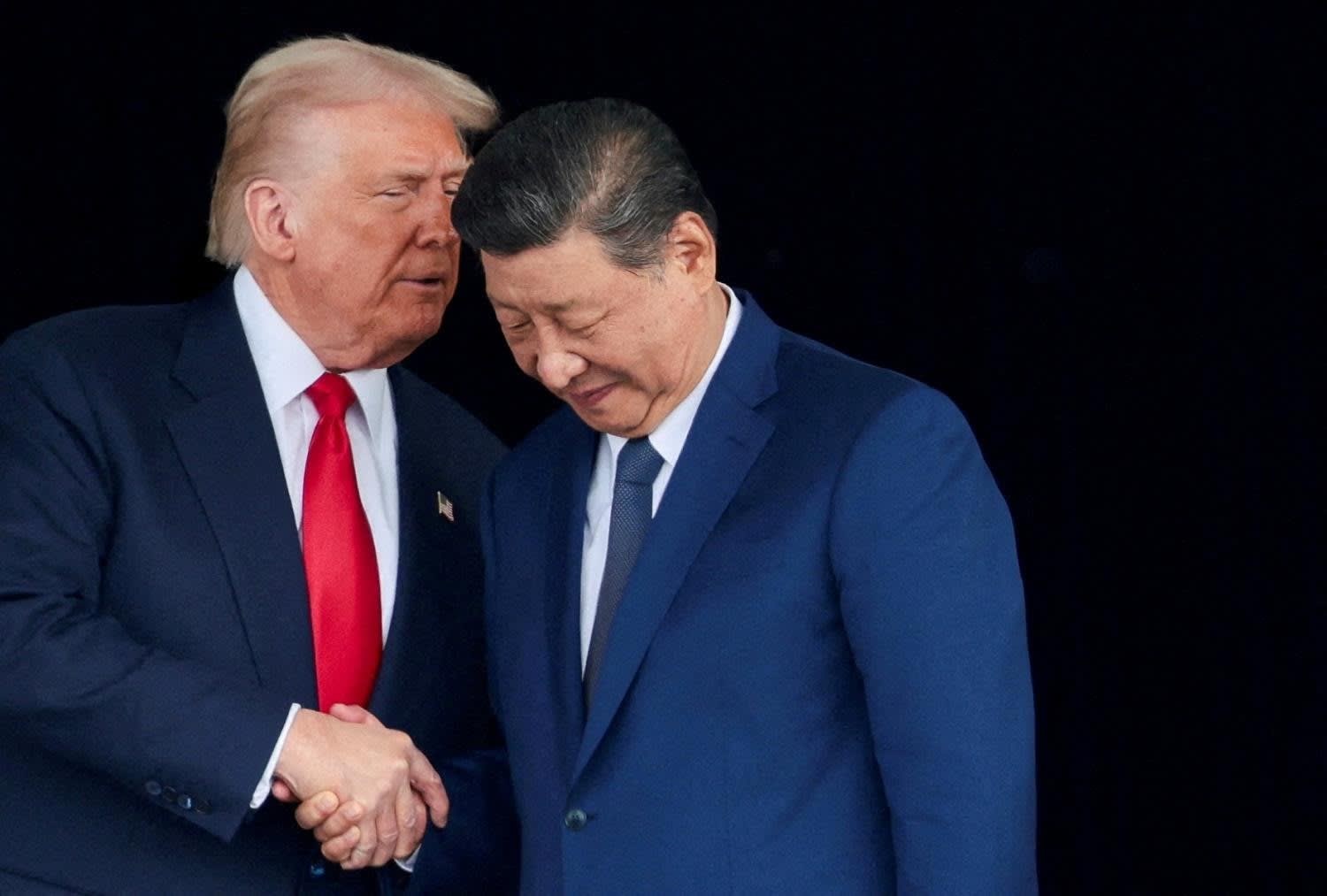
This ultimately could be, ironically, a force for stability with each side recognizing that the other side has some significant leverage. But to me, the bigger issue is we’re not really dealing with the other very significant questions in the relationship. The summit that President Trump and President Xi had in Korea — the main issues were fentanyl, soybeans and TikTok. We’re not asking ourselves: how do we get to the fundamental relationship between the two economies around China’s strategy of export-led growth, excess capacity, high subsidization of critical areas? How do we deal with that and the potential ongoing tensions that’s likely to create going forward?
Whether we’re on a more stable or a less stable path, in my view, depends on whether we get to those underlying issues and try and resolve some of those. Those have not yet been put back on the table, let alone issues like Taiwan, South China Sea, North Korea, nonproliferation, et cetera.
Jordan Schneider: We just had a whole conversation about how using international diplomacy as a means of domestic transformation is a bit of a fool’s errand, right?
Mike Froman: It’s not about domestic transformation. If you remember back in the Soviet Union, the idea was if we engaged with them or took other actions vis-à-vis them, somehow their system would collapse. They would see the values of democracy, the values of market orientation and everything would fall apart. They would inevitably collapse.
This isn’t about making China collapse. It’s about seeing whether we can come up with rules of the road so that China and the rest of the global economy can coexist without undue tension. Right now we’re not really dealing with those issues.
Jordan Schneider: If we’re defining “dealing with those issues” — for my first job out of college, I covered trade policy for the Eurasia Group. I was listening to every single one of your speeches trying to figure out if this meant like the U.S.-China BIT was 7% more likely to happen.
With the second Trump administration, there are two disjunctures that we’ve seen from the past 20 years of American foreign policymaking. The biggest one is just the risk tolerance and the ability to take big swings that may end up being either illegal or backfiring horribly, which the presidents that you worked for were a little more reluctant to do, for better or for worse.
If you’re sitting as USTR and you have the threat of putting 50% tariffs on the countries you’re negotiating with — be it China with a U.S.-China BIT or with all the allies that you were talking around with the TPP — to what extent do you think that unlocks new political economies and new negotiating paths that weren’t possible if at the end of the day you have a president who just wants to be nice to the countries that we have treaty allies with?
Mike Froman: The Trump administration’s threat and use of tariffs has created very significant negotiating leverage and has gotten countries to come to the table on a whole range of issues — whether it’s fentanyl, migration, or economic issues — and to agree to things that they previously would very likely not have agreed to. The administration in the short run has very much demonstrated that access to the U.S. market is a source of negotiating leverage and other countries have responded to it. They haven’t been happy about responding to it but that’s okay.
The question is what are the longer-term implications and whether it makes it more difficult to gain their cooperation on some other issue down the road. But only time will tell. In the meantime, if you had asked people a year ago whether we would have this raft of agreements that the administration has rolled out with anywhere between 10% and 25% or 30% tariffs on other countries — quite asymmetric agreements in many respects — most people would have said it was highly unlikely, but it has proven to be the case.
Purely from a negotiating point of view, if you have the capacity with credibility to put tariffs on regardless of your international obligations and regardless of the long-term implications, you can probably get a fair amount done in the short run.
By the way, the Trump administration’s skepticism about some of the mechanisms of engagement with China — like these big bilateral fora that we managed for years: the Strategic and Economic Dialogue, the Security Economic Dialogue, et cetera — I share some of that skepticism. They involved thousands of person-hours of work and produced communiqués which I don’t think necessarily advanced the ball that far and show the limitations of that form of diplomatic engagement.
That doesn’t mean there aren’t other forms of engagement that make sense, including ones backed up by a series of potential actions. But certainly it’s healthy to look back and say, what did these things accomplish and where can we do better?
Jordan Schneider: Looking forward, if there is a Democratic president in 2028 — a president that you would want to work for, who was less scared to play hardball the way the Trump administration has when it comes to access to the American domestic market — a president that you would be more sympathetic to in terms of their ultimate aims, where would you want to see the new leverage that has clearly been brought to the fore when it comes to domestic market access? How would you want to use those cards?
Mike Froman: Ultimately, it’s in the U.S. interest not to go it alone in a lot of areas, but to bring allies and partners into the arena. Using whatever leverage we have to get allies and partners to work with us on difficult issues — including a common approach to competition, a common approach to adversaries, a common approach to national defense, whether it’s support for NATO or engagement vis-à-vis China — those are all very important.
We don’t have to have everything reshored to the United States. If we have coalitions of the willing, coalitions of the ambitious, trusted allies and partners who we can work with to make sure we’ve got adequate supply to critical inputs that we need for our national security and for our competitiveness more broadly — I would use whatever leverage the U.S. has to bring our allies and partners to the table with that goal in mind.
Jordan Schneider: This idea of economic security is very nebulous. The Fed has this clear thing they’re trying to do — 2% inflation, full employment. It feels like all these discussions about what economic security is very quickly go into here’s what we should do for this sector, here’s what we do for that sector, here’s what we should do for this technology. But there’s not an overarching framework of what the end state we’re trying to achieve or work towards is.
I want to run an essay contest around how to define it in more concrete ways with numbers attached. How would you frame that question? If you had an answer or an equation off the top of your head, I’d be curious for that as well.
Mike Froman: First of all, you should read our recently released CFR task force report on economic security. The task force was co-chaired by Gina Raimondo, former Commerce Secretary, Justin Muzinich, former Treasury Deputy Secretary in the Trump administration, and Jim Taiclet, who’s the CEO of Lockheed. We had a couple dozen CFR members with a wide range of backgrounds in technology and defense.
I flag that because one of the fundamental sets of questions that the task force was focused on is — what are the parameters? What are the guardrails? What are the limiting principles on economic security?
For decades, the focus of economic policy really had been on efficiency — the most efficient supply chains around the world. Companies put their factories and sited their suppliers where it made most economic sense to do so. A lot of that ultimately led to China, given not just the labor differential, but also its infrastructure, its management practices, and just how efficient it was as a manufacturing floor for the U.S. We found ourselves overly dependent on one country, or in the case of semiconductors, on Taiwan and China.
What economic security fundamentally means is really proper risk management. The number one principle of risk management is diversification. You want diversified supply chains, resilient supply chains. Particularly when it comes to national security core interests — such as the materials that go into a missile or into an F-16 — we can’t be dependent on our adversary for them. Figuring out where to draw that line is the goal.
It’s easy to say missile parts, F-16 parts — we should not be dependent on China for those. But what about active pharmaceutical ingredients? What about the supply chain for semiconductors? What about PPE that we saw during COVID? Where do you draw the line?
That’s the big challenge for policymakers going forward because each of these involves a trade-off. There’s a reason the manufacturing was sited in China — it was the economically most efficient thing to do. Any other approach is going to be, almost by definition, more expensive, less efficient. That may well be worth the cost. The question is, how much are we willing to pay additional for whatever product it is in order to have more resilience, more redundancy, more diversification, and better national security?
We ought to be willing to pay something. The question is how much. Maybe we’re willing to pay a fair amount to make sure our semiconductors, our missile parts, our F-16 parts are made in the United States or in a close ally’s jurisdiction. But we may not be willing to pay quite as much to make sure our sneakers and our T-shirts and our socks are made in the United States. That’s the kind of conversation we should be having — really about trade-offs.
Jordan Schneider: My question was an implicit critique of that report because I think it skipped the base question and then went pretty quickly to this sector, that sector, the other sector.
Mike Froman: Let me push back on you, Jordan. It decided, instead of focusing just on the theoretical, to say — here are three critical sectors. We could have picked a dozen. Here are three critical sectors. Let’s see what it looks like through the lens of a particular use case. Whether it was AI, quantum, or biotechnology, those each have particular needs that need to be addressed. Everybody would agree that at least in those three areas, we need to be a leader in those technologies. How do we maintain that leadership?
Jordan Schneider: The core issue here is escalation dominance — when can China inflict enough politically visible pain on American policymakers to force them to back down?
When we define it down to even the non-perishable consumables — I am the father of a young child and hit this weird crunch where the tariffs made it such that you couldn’t find car seats because every car seat in the world is made in China, apparently. It just seems to me that there’s just so much that is going to be dependent on the two countries.
Maybe there’s some 80/20 or 90/10 principle where we’re still going to rely on China for 90% of the screws that go into the F-16s, and if they take 10% away, we’ll still have this much of our military capacity back. But closing the loop for all the things like you did in the 1960s relative to the U.S. and Soviet Union is not feasible.
It seems like there are two relevant variables here. One is the long-term GDP cut that China can make from being dominant in something. The other is how much short-term political pain can an adversary use to squeeze American policymakers to do something that they wouldn’t otherwise want to do. Is there another aspect to it? Am I missing something here?
Mike Froman: That captures it. But what you’re pointing out is very much the importance of distinguishing between the strategic and the non-strategic. That points to the broader relationship as well.
In the Biden administration, it was the phrase “small yard, high fence.” What goes in the yard for control, and how small can you keep it? They were pretty selective and pretty targeted in terms of how they viewed that. Maybe some things would need to be added, maybe some things can come out of it. But the question is: what should be deemed as strategic either from the perspective of keeping key technologies out of China’s hands or ensuring that we have redundancy so we’re not overly dependent on China? And what can go anyway? What can be sold anyway?
Even in the height of the Cold War, we were buying wheat from the Soviet Union. Wheat was seen as non-strategic and we could buy wheat from them and still be at odds over various issues. With China, where are we willing to draw that line? To me, that’s really the question for the next phase. As the Trump administration engages now, there’s been a stabilization of escalation and de-escalation. The next phase should be: how are we going to define this relationship going forward?
Jordan Schneider: The ability to cause pain to the other side is always going to be there, but what tool you use to cause pain is the question. We’ve thankfully had some great norms develop around the use of nuclear weapons. We’ve had some norms around the use of conventional forces — TBD on those. All of the cyber stuff between the U.S. and China thus far has been of the snooping, not of the blowing up power plants variety.
But the fundamental question I have around economic security is — say that China wants to retain leverage on the U.S. and get politicians to do things they wouldn’t otherwise do in their druthers. It just seems like there are so many levers that you can pull as a peer competitor in the 2000s. It makes me worried that we’re working toward an end state of being resilient if the other side doesn’t want you to be resilient. It seems like a marathon where the end isn’t even something that’s realistic. You see what I’m getting at, Mike?
Mike Froman: I do. I sense that you’re feeling overwhelmed by the challenge. But that should be our opportunity to rise to the challenge. There’s a certain urgency, I believe, in one, assessing what the key dependencies are. And two, assessing what it takes to address them. Is it a combination of tariffs, industrial policy, investment, and regulatory changes? What is the toolbox that we need?
Thinking very strategically about that — including where allies and partners can play a role because they’ve got capacity in certain areas that we don’t, or because they can supplement our capacity and help us get to scale more quickly — and building a bipartisan, ongoing consensus around what it takes is an urgent need. That helps you get to that point of saying, yes, it may seem overwhelming, but you’ve got to start somewhere.
That’s what we’re doing right now. That’s what the CHIPS and Science Act did during the Biden administration. It said we cannot be 100% dependent on Taiwan and China for the packaging, etc., of chips. We’re going to begin to rebuild chip manufacturing capacity in the United States. The question is, what additional sectors do we need to do?
Take shipbuilding. Everybody believes we need more ships, whether it’s for the Navy or for merchants or otherwise. We don’t have a huge amount of shipbuilding capacity anymore. Can we work with Japan, Korea, and Finland on icebreakers? Who can we partner with to get there?
Mission, Money, and Talent at the CFR
Jordan Schneider: You gave me a little transition there — building a bipartisan consensus for decades of policymaking going forward. That seems to double as your vision for what the point of a think tank or CFR is, particularly now. What are the KPIs we’re going to give for Mike Froman’s reign as president of the CFR?
Mike Froman: Our mission is to inform U.S. engagement with the world. There are lots of different ways to engage. Our job is to flesh out what are the different mechanisms for engaging with these goals in mind that we’ve just been talking about. What are the trade-offs involved? What are the costs and benefits of going down one path or the other and helping policymakers in their decision of how to pursue that? Also helping opinion leaders and the broader American public understand and get their input on which of those trade-offs they’re comfortable with. That’s an important part of what the Council does.
We’re focused on policymakers like most think tanks, but we’re also focused on the broader American public through broad education efforts and media efforts, digital, etc., programs around the rest of the country with the goal of getting their input into how they view the role of the U.S. in the world and to help inform policymakers accordingly.
Jordan Schneider: How are you going to do things differently? What’s the Mike Froman twist on all this?
Mike Froman: We’re taking a step back and saying, just as the Council did — the Council was founded in 1921 after the end of the First World War, after the defeat of the League of Nations — to organize around trying to push back against trends of isolationism. In 1948, it was a place where the Marshall Plan and NATO were very much being worked on. In 1991, at the end of the Cold War, there was a lot of talk about geoeconomics and bringing economics into the national security sphere as well.
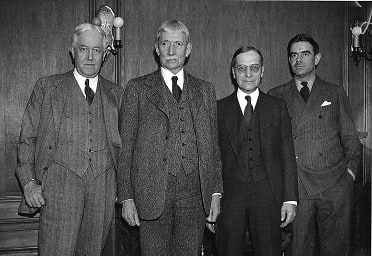
This is another one of those inflection points. As a Council, we’re going to take a step back and say, where do we go from here? We’re going through a major disruption right now. Fundamental questions about the nature of the global economy, of the trading system, of alliances, of how to manage adversaries, how to compete — these are all on the table. How can we help policymakers and the broader public understand different options for pursuing U.S. national interests and the trade-offs involved in each?
It’s a major studies effort, a major research and analysis effort, but also a major education effort — engaging with more audiences, non-traditional audiences, different kinds of media to engage with the rest of the country and get a sense of their input as well.
Jordan Schneider: From an internal organization structure perspective, what do you think of the model? What needs to change?
Mike Froman: The Council’s been around for a long time and is actually well-positioned for this moment in history because we’re not just a think tank focused on trying to influence the couple thousand people in Washington that are sitting in these meetings and trying to make decisions. We’re also focused — as a membership organization, a publisher of Foreign Affairs, an educational organization that provides material to high schools and colleges — on the broader American public. We do events all over the country. We’re relatively well hedged to both work with policymakers on one hand and work with the rest of the country on the other hand.
Jordan Schneider: Let’s talk about money for a second. I assume you were on the other side of this in terms of large corporations funding various research efforts. What do you think about where funding comes from for think tanks in general, CFR in particular, and what makes sense and what doesn’t?
Mike Froman: Our funding’s obviously all public. It’s all on our website. It’s transparent. We don’t take any money from any government institution, including the U.S. government. We don’t take any money from corporations for research. Corporates can be members like other members and send their employees to our events, but they can’t involve themselves or set the agenda or influence our research agenda. That allows us to remain nonpartisan, allows us to remain independent. It’s one of the reasons that both our research and analysis and our publications are viewed highly as being independent and credible in that space.
What that means is we rely on — we’re a membership organization, so individuals pay dues. We’re blessed to have members who are philanthropic. We get money from foundations, some of the standard foundations that work in this area. That’s where our funding comes from. We have an endowment that’s been built up over the years as well, again, because of the generosity of our individual members.
Jordan Schneider: I’ve been on the other side of this, where you have a funder who is a corporation that wants you to write a certain thing. Do you think it’s unseemly? The dance is tricky, right? But without that, it would kind of only be CFR and Heritage left standing. There’s a lot of foreign government money as well.
Mike Froman: I’m not going to criticize my peers. I would just say that we’re lucky and we have a concerted strategy to make sure that we’re able to remain independent. That means no government money, no corporate money for research. That allows our fellows total freedom of speech. They can write whatever they like. As an institution, we take no institutional positions. We try to put our best research and analysis out there and make it available as broadly as possible.
Why are salaries so low
Jordan Schneider: Entry-level research associates come in with a $55K to $58K pay band at CFR. What are your thoughts on that, Mike?
Mike Froman: We would love to — we’re very lucky to have a great set of research assistants and entry-level people. There are a lot of people who want to go into the field of international relations. This is their first job. By the way, we view one of our core objectives of CFR as helping to identify, promote, and develop the next generation of diverse foreign policy expertise. We spend a lot of effort and time — whether it’s our interns, our research assistants, our junior staff, our term members — really focused on who the up-and-coming generation are, and what we can do to help them develop the skills and the expertise to succeed in that field.
As a nonprofit, obviously we’re subject to constraints, but we always look at what the market is and try our best to make sure we’re getting the very best quality people for the resources that we can expend.
Jordan Schneider: But it’s not a lot of money, right? These are really big, hard, important questions. It bums me out that we lose talent because folks who are coming out of school with debt or just see an opportunity to make 4x right out of college look at this field and say, “How can I go down this route?” It breaks my heart, really.
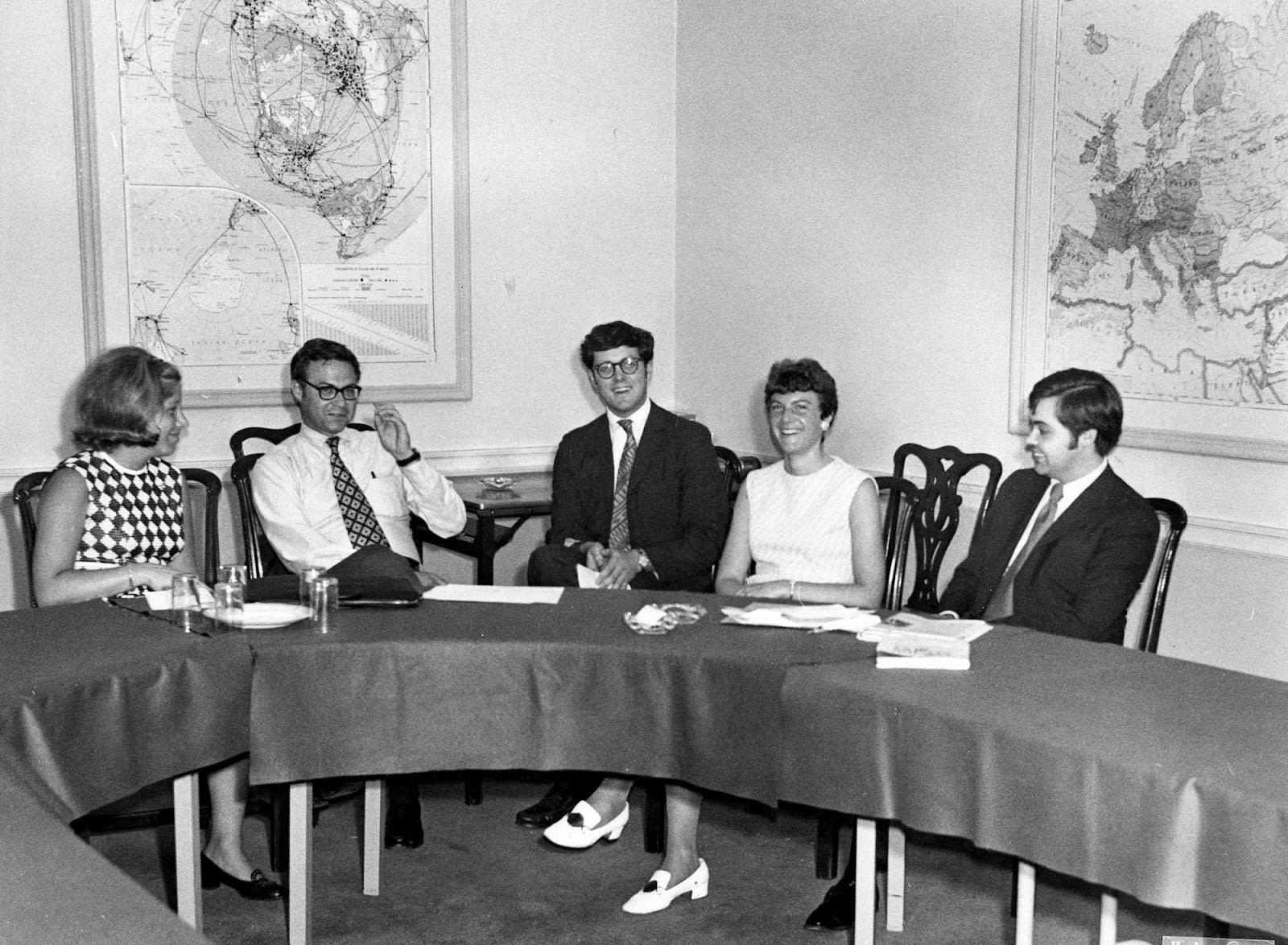
Mike Froman: Having been at the beginning of my career once upon a time, I can relate to that. Luckily, we have a lot of interest in the Council by people coming out of college, coming out of graduate school. There’s significant demand for the openings that we have. We have a great group of junior staff and research assistants. I’m really impressed with them, and we take a lot of effort to make sure we’re doing everything we can to develop them professionally.
But I also say, Jordan, we’d be delighted to take a major donation from you to the Council to help endow a new research assistance endowment program if you like.
Jordan Schneider: That was my next question. I am surprised that there isn’t some rich person out there who doesn’t want to have the next generation all be Mr. and Mrs. X fellows. Then they get to make $10 or $20 grand more. It’s not that much money in the grand scheme of things for all of the kudos and accolades you would get and all of these fresh young faces saying thank you so much, Mr. or Mrs. Whoever.
Mike Froman: We have been very fortunate to have some of those donors participate.
Jordan Schneider: How do you split your time? What’s the weekly daily pie chart? You’re now a take artist on Substack as well. How do you think about where your time should be spent?
Mike Froman: I live in Washington, and I spend about three days a week on average in New York and two days a week at our office here. Every week’s a little different. I travel around the rest of the country as well, doing events for CFR members and others.
I split my time between my own research and writing — as you say, I have a weekly column that I put out on Fridays that then gets posted on Substack. It’s part of our newsletter as well. I spend a lot of time working with our senior leadership team on our programming here, making sure that we are presenting a nonpartisan slate of participants here on our stage for events on all the major issues. I spend a certain amount of my time on internal management. We’ve got a great management team here, so I’ve been able to defer to a lot of them in terms of managing people and systems and things here, budgets, etc. Of course, a certain amount of time on fundraising. I do a bit with the press, a bit with the media to be helpful and out there. That fills a week.
Jordan Schneider: If you took a pill and could sleep 10 fewer hours a week, where do you think you would spend it? Doesn’t have to be on the job.
Mike Froman: On the job, I would probably spend it digging further into our research and analysis and doing more in that area. That’s the direction I’m heading in. I’ve been here for a couple years. I wanted to spend the first couple years really getting my arms around the place as an institution. Now I’m working more closely with the fellows on this big project of taking a step back — our Future of American Strategy initiative — and looking at some of these big questions going forward.
Jordan Schneider: It’s a weird time, right? Doing the work that I do in Trump one or Biden felt like the residence was much more direct to the sorts of wavelengths that the most important decision makers in the country were on. Now we’re in a brave new world. There are lots of strains of thinking in American policymaking.
Going back to the 1940s and the origin story of CFR — man, isolationism is back. We got Nazis going on the most popular right-wing podcasts. Doing things in the normal, mainstream way, trying to optimize for the solutions that you, me, George H.W. Bush would all see as reasonable goals for American policymaking is not shared by a significant chunk of one of the two parties in America.
In this new paradigm we’re in, to what extent do the bounds of thinking, the ways of working in a mainstream foreign policy think tank, have to change? On the other hand, in which ways should things stay the same?
Mike Froman: First of all, I don’t view President Trump or his administration as isolationist. You can’t be isolationist and talk about taking over the Panama Canal, Canada, and Greenland. That’s expansionist. This president has spent more of his first 10 months on foreign policy — whether it’s getting involved in particular conflicts, traveling abroad, hosting foreign leaders — probably more than just about any other president in recent memory. He is deeply engaged in the world.
As I said, our mission is to inform U.S. engagement in the world. There are lots of different ways to engage. He is engaging with it in a different way than several of his predecessors, but he is deeply engaged. For a think tank that’s focused on that, it is to say — this is the way this president is engaged. What are the costs and benefits? What are the trade-offs involved? What are the alternatives? What could be done to ensure ultimately that the U.S. meets its national interests? That’s what our role has always been. That’s what our role is now.
Jordan Schneider: What do you think are the unique challenges of this job relative to others you’ve had in your career?
Mike Froman: That’s a great question. I worked in the public sector. I’ve worked in the private sector. This is the first time I’m running a nonprofit organization, a think tank. The challenge is to maintain its position as a nonpartisan, independent source of research and analysis in what is a very partisan environment. Every day we think, how do we make sure, whether it’s our membership or the people who participate in our meetings and are put on stage or the engagement we have with the administration, how do we make sure that we are fulfilling our obligation as a nonpartisan institution going forward? That is a new and different level of challenge now probably than in the past, just because of the broader nature of the political environment.
Jordan Schneider: Do you spend much time with AI? Have you been using it to research or write at all?
Mike Froman: Not really.
Jordan Schneider: Maybe this is my pitch to you, Mike. The tools are enabling young talent to learn much faster and be much more prolific than they ever were in the past. My critique of the model that I grew up with — you have senior fellows and then you have RAs who hang out for two or three years and then go on their merry way, and most of their job is directly supporting or just serving as a research assistant to someone senior — what the research tools which now exist allow folks who are really sharp and motivated to do is just get up these knowledge hills much more quickly.
Obviously there are things that ChatGPT can’t teach you. A lot of this think tank game is one of relationships, be that with folks in Washington or in the media or what have you, or the subtleties of how to shape an idea so that it will resonate with different audiences. On the more contentful learning stuff, you can run a lot further as a 23-year-old than you could even 10 years ago. I would encourage — challenge, maybe — you and the organization to imagine raising the bar for what the top tier of young talent can aspire to do.
Mike Froman: To that point, Jordan, we started about a year ago opening the door for our RAs to publish on CFR.org in conjunction with their fellows or on their own as well, recognizing, as you say, first of all, we have a terrific group of people with or without AI tools and quite expert in their own way for their stage in their career. We wanted to give them an opportunity to develop their portfolios as well.
Jordan Schneider: Cool. Two thumbs up for that.
It’s clear that demand exceeds supply for policy analysis roles. I see this when I put job descriptions out. I’m sure you guys see it as well. There are people willing to not make a lot of money to do this work because they think it’s really interesting and really important. It seems like we, as a country, are leaving some money on the table from an idea generation perspective. The fact that we don’t just have 10 times as many people trying to understand what makes the Chinese rare earths ecosystem tick… where are we on the production curve of idea generation for think tanks?
Mike Froman: It’s probably always been more applicants than roles for these kinds of jobs. It’s probably particularly acute right now just because changes in the government mean that a lot of people who expected to go into the government or into the intelligence community are probably not seeing the same pathways that they saw before. Same thing for a lot of NGOs or nonprofits, particularly in the development field. People who are planning on going into that area are probably seeing the jobs disappear.
On the positive side, virtually every company is figuring out that they need geopolitical advice. They need to understand the impact of the changing geopolitical environment on their business. Many of them are setting up offices to bring in people with foreign policy interests and ideas into their ecosystem. That’s another avenue that didn’t fully exist five or 10 years ago and now is a much more vibrant part of the market for ideas. It’s think tanks, obviously, being one piece of it. Universities also. But then the private sector is now another place where people can go and develop careers if they have an interest in this area. Can I ask you a question Jordan? Who among the CFR fellows is your favorite.
Jordan Schneider: Oh man, I don’t know if I can choose…
It’s interesting, right, this whole think tank model, because on the one hand, you are these independent atoms, kind of like professors who can do their own thing. But I imagine also as a president, you want to see synergies develop in-house, as opposed to if one’s sitting here and the other is at Brookings.
Given that you have all these stallions who are going to want to run in their different directions, how do you think about to what extent you’re going to want to get them playing together and rowing in the same direction versus going off and optimizing their time how they want?
Mike Froman: What I hear from you, Jordan, is that we have so much great talent that you can’t possibly choose who is the best one. I appreciate that endorsement of CFR.
To answer your question, because it is timely and it is one of the things that I brought to the Council as a bit of an innovation — we’re doing a lot more collaboration among the fellows. runs our China Strategy Initiative and he pulls in a wide range of fellows from CFR, but also from other think tanks and universities into his project to answer questions — What is China thinking? What is China doing? How do we compete and how do we engage? Those are the four pillars of his initiative. It involves dozens of folks across the Council, including our cadre of China fellows.
We’ve done the same, for example, on economics. Our Real Econ initiative, which is Reimagining American Economic Leadership, now has about a dozen or so fellows who touch trade and economics in one form or another and are working together on a whole series of projects. That’s a little bit new for the Council — these clusters of fellows coming together, working on collective projects, as well as working on their own books and their other projects. As you said, it adds that synergy. It’s not about having them all pull in the same direction intellectually because we welcome the diversity of their perspectives, but adding them together and seeing what we can produce on China, on economics, on technology, on energy and climate in ways that are additional is very important.
Jordan Schneider: One person you didn’t name is Tanner Greer, in the Rush Doshi extended universe. The other failure mode, which you have thankfully avoided, is this deification of PhDs as the only way to have relevant credentials or insight that would allow you to play under the bright lights of a CFR fellowship. Tanner has had a classic China arc of living in the PRC, speaking, teaching grade school, being a tutor, and just having a blog on the side. He’s one of the most well-read and thoughtful people. He also provides a little bit of ideological diversity to the building, which is important in these trying times. I’m really excited to see what he does with those extra tools and leverage that you guys can bring to him.
Mike Froman: Thank you for raising him. He’s a great new asset for us. Of course, he’s running our Open Source Observatory, which is this effort to do mass translations of Chinese public documents and make them available to scholars and policymakers so you can read in their own words what they are actually saying, which oftentimes proves to be actually quite relevant to the policy direction they’re taking their country.
ChinaTalk is a reader-supported publication. To receive new posts and support our work, consider becoming a free or paid subscriber.
























































































.jpg)


_025.png)
.jpg)